From breaking news to significant developments in politics, business, technology, entertainment, and more, we deliver the stories that shape our global landscape.
Chinese divers were unstoppable as the country’s sizeable overall tally of gold medals swelled to 150.
Published On 30 Sep 202630 Sep 2026
China’s divers extended their remarkable Asian Games unbeaten record stretching back to 1974 as a top Japanese official apologised for “inconveniences” that have dogged the continent’s premier sporting event.
Chinese divers were unstoppable once more on Wednesday as the country’s sizeable overall tally of gold medals swelled to 150 with four days left.
Hosts Japan are a distant second with 50 golds, ahead of South Korea with 24.
Chen Yiwen and Lian Junjie each won gold in the final two diving events to give China a 14th consecutive clean sweep in the sport.
China has won every diving gold medal since their first Asian Games appearance 52 years ago.
“Girls are every bit as capable as boys. We are pushing ourselves to perform more difficult dives, too,” said Chen, a double Paris Olympics champion.
“We do not train any less than the boys,” she added.
In tennis, the Philippines’ Alexandra Eala stormed into the semifinals, cheered on by fans who had come from far and wide to see their hero in action.
The world number 18 and favourite for women’s singles gold had to work hard early on to beat Taiwan’s England-born Joanna Garland 7-5, 6-0 in her second outing in Nagoya.
The winner of the tournament qualifies for the 2028 Los Angeles Olympics.
“Representing my country and playing these types of games, SEA Games, Asian Games and hopefully the Olympics, they’re very close to my heart and a big part of my dreams,” said Eala.
She plays China’s Wang Xiyu, ranked 85, next.
Taiwan boxer Lin Yu-ting, the Olympic champion who found herself embroiled in a major gender row at Paris 2024, is guaranteed at least a silver medal.
Lin outclassed Sitora Turdibekova of Uzbekistan 5-0 in the women’s 60kg class to surge into the final, putting her one win from a second Asian Games gold.
The 30-year-old thanked the medical team afterwards for treating the cut to her nose she suffered in the quarterfinals.
In football, South Korea scored an 82nd-minute winner in a 2-1 victory over China in the men’s semifinals.
They will face Japan for gold after the hosts pulled through against Uzbekistan 9-8 on penalties, the game having ended 1-1 after 120 minutes.
‘We must apologise’
Meanwhile, on Wednesday Nagoya’s mayor apologised to athletes for “inconveniences” at the games following a string of complaints.
The event has been marred by problems including a shortage of beds and issues with transport.
There are more than 17,000 athletes and officials, more than the Olympics, and countries have accused local organisers of mismanagement.
“We must offer our apologies to the athletes and others affected by these inconveniences,” said Mayor Ichiro Hirosawa, who is also acting chairman of the local organising committee.
“We must sincerely reflect on the mishandling that occurred,” he added.
Unlike past games, there is no athletes’ village, with participants instead sleeping in temporary wooden units, on a cruise ship and in hotels to save money.
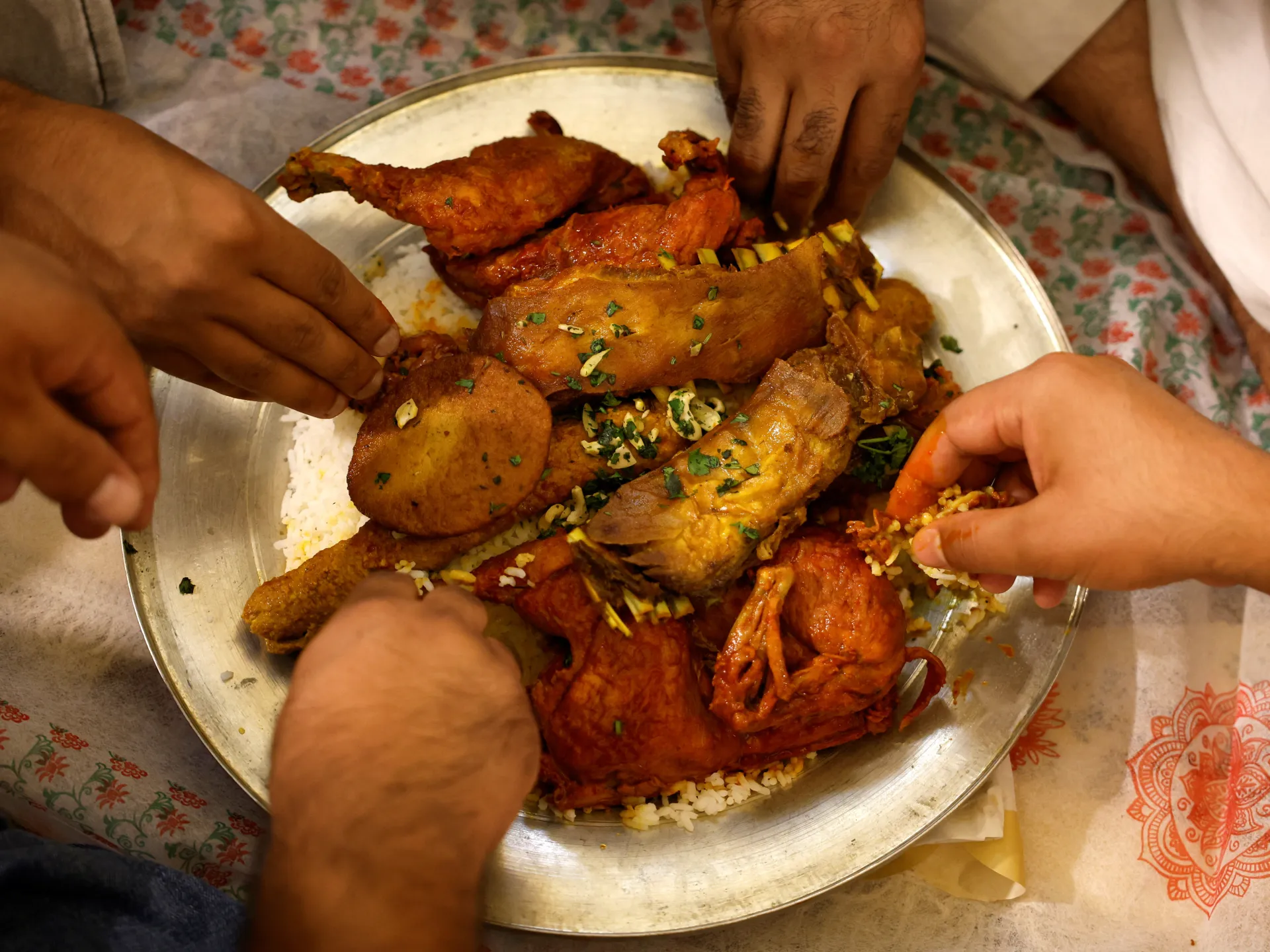
As autumn approaches, the rhythmic thud of wooden mallets pounding lamb echoes across courtyards and back lanes in Kashmir, where cooks prepare Wazwan – a lavish, multi-course mutton feast that remains central to traditional wedding celebrations.
Wazwan arrived in the valley from Central Asia in the 14th century, when rulers brought skilled chefs along with the carpet and shawl weavers that later defined the region’s craft heritage.
Today, the feast is both a marker of social status and a powerful symbol of Kashmiri identity.
Among its guardians is 74-year-old Ghulam Nabi Baba, a veteran Wazwan chef who traces his lineage to those early migrants. His forefathers settled in Srinagar’s old city as part of a community of cooks known as Wazpora.
“There were only seven mutton dishes at that time. Over the centuries we added more, and now there are around 20,” Baba said.
He explained how the number of dishes and the amount of meat often reflect a family’s wealth.
“Forty years ago in Delina [a village in north Kashmir] I cooked 4,500kg (9,920 pounds) of meat. That was a very big wedding. Normally, at an average marriage we cook 200kg (440 pounds),” he added.
Despite the expanding menu, the core techniques have changed little. Lightly spiced meat is still pounded by hand before being simmered slowly over wood fires – a labour-intensive process Baba has followed since joining his father as a cook at 15.
But the pressures of modern life are reshaping the tradition. Baba’s son has chosen to open a restaurant rather than work weddings, saying the round-the-clock demands are too exhausting.
He believes he is still carrying forward the family’s centuries-old culinary legacy – just in a different setting, as Wazwan adapts to contemporary tastes and lifestyles.
The Spanish coach won 20 trophies during a glittering 10 years as City manager before departing in May.
Published On 30 Sep 202630 Sep 2026
Former Manchester City manager Pep Guardiola has spoken out in support of the Premier League club after they were found guilty of serious breaches of financial rules.
The Spaniard handed over to former assistant Enzo Maresca at the end of last season after a decade in charge.
“I want every single @ManCity fan to know I am here; more than ever. I am, always have been, always will, be behind my club, my owner, my chairman, Ferran, the players, staff, Enzo and you, our unique supporters,” Guardiola said on Wednesday in a first reaction on his X account.
“Let me be clear: we will get through this together. I love you all.”
City’s Chief Executive Ferran Soriano addressed staff in a video on Tuesday in which he rejected the independent commission’s findings.
Guardiola took charge of City in 2016 and under his management, they won six Premier League titles – including four in a row – three FA Cups, five League Cups and the Champions League.
The Premier League charges, relating to “sham” commercial contracts used as part of schemes to inflate revenue and understate costs by more than 900 million pounds ($1.2bn) over nearly a decade, cover the period from 2009-18.
In doing so, they concealed the true state of their finances and avoided breaching Premier League and UEFA spending limits during a period in which they won three league titles.
An independent commission found the club guilty on all charges related to breaches of financial rules over the nine-year period.
They have also been found guilty of most of the charges they faced in relation to a failure to cooperate with a Premier League investigation.
City, who continue to deny any wrongdoing, have said they will appeal and have until Friday to do so.
The ruling has sent shockwaves through English football and cast doubt over the future of a club that has become a European giant.
The likely punishment is uncertain but according to Premier League rules, City could face a substantial points deduction, a fine or even expulsion from the top division.
Everton and Nottingham Forest were handed points deductions in the 2023/24 season for single breaches of financial sustainability rules.
On that basis, City would likely face relegation given the sheer weight of the case against them.
There is speculation they could even be stripped of their titles.
“If the appeal fails, Manchester City cannot stay in the league, they have to suffer. And I say that as a supporter and a fan,” said the club’s former chairman, David Bernstein.
Another factor is a potential flood of compensation claims that could cost the club hundreds of millions.
Former Liverpool managing director Christian Purslow told the BBC that clubs would be “queueing up to seek compensation”.
At least six people killed in drone attack on passenger van and one person killed in strike on residential apartment.
At least seven Palestinians have been killed and more than 10 wounded in Israeli attacks on the Gaza Strip as Israel continues to violate a nearly year-old “ceasefire”.
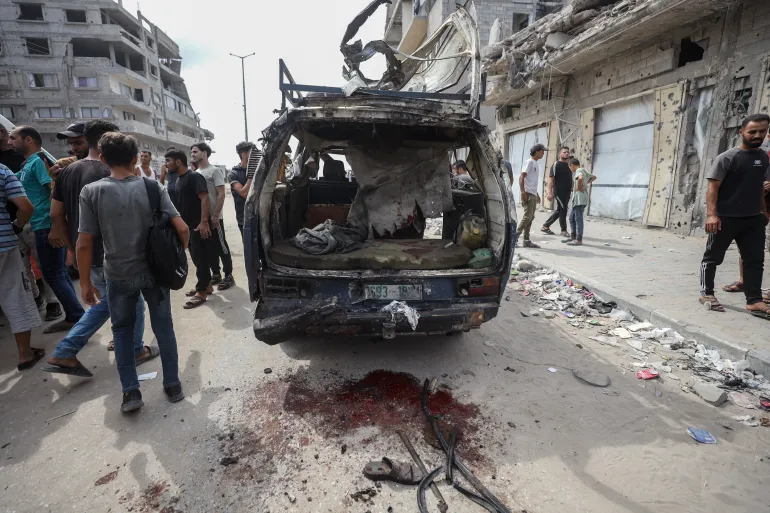
Six of the victims were killed in an Israeli drone attack on a passenger van in Tal al-Hawa, in southwest Gaza City, on Wednesday, according to witnesses and medical sources.
Recommended Stories
list of 2 itemsend of list
The Palestine Red Crescent Society, a humanitarian group that runs ambulance and emergency services, said its crews took 13 wounded people to al-Quds Hospital.
Medical sources told Al Jazeera the injuries sustained by the victims of the attack are “critical”.
“Doctors say it’s difficult to save the lives of the wounded because the health system is decimated by years of Israeli attacks and the blockade,” said Al Jazeera’s Hind Khoudary, reporting from Gaza City. “The number of dead in the strike could rise in the coming hours.”
Earlier, the official Palestinian Wafa news agency reported that an Israeli attack on a residential apartment near al-Shifa Hospital in Gaza City killed at least one woman.
Elsewhere, four Palestinians, including two children, were wounded when an Israeli drone hit a shelter for displaced people in southern Gaza, according to local sources cited by Wafa.
Two other Palestinians were seriously wounded by Israeli forces southeast of Deir el-Balah in central Gaza, while Israeli tank fire was also reported in southern Khan Younis, in the southern part of the Strip.
The attacks came as the Ministry of Health in Gaza, which compiles casualty figures from hospitals across the territory, said in its latest daily update early on Wednesday that the bodies of at least nine people had arrived at hospitals during the last 24 hours.
While eight people were killed around the reporting period, one woman had died from earlier wounds, bringing the number of people killed since the start of the “ceasefire” between Israel and the Palestinian group Hamas in October last year to at least 1,431.
An Israeli strike targeted a vehicle in Tal al-Hawa, in southwest Gaza City [Khames Alrefi/Anadolu]
At least 5,026 have been wounded over the same period, including 31 in the past 24 hours, the ministry said.
“There is supposed to be a ceasefire in Gaza, but the Israeli army’s violence is endless. Every day, Palestinians are killed, injured, and the humanitarian situation is deteriorating,” said Khoudary, describing “terrifying” conditions for Gaza’s residents.
“Everyone inside the Strip is afraid to go to the supermarket, to take their children to school, and to live their everyday lives,” she added.
Overall, Israel’s genocidal war against Palestinians in Gaza has killed at least 74,032 people since October 2023, with another 175,142 wounded, according to health officials.
In August, an analysis by the United Nations Satellite Centre found that the number of destroyed structures across Gaza has increased by 9 percent since the “ceasefire” took effect.
Overall, about 82 percent of structures in Gaza, roughly 200,000 buildings, have been damaged, and about two-thirds of those have been destroyed since the start of the war, according to the UN.
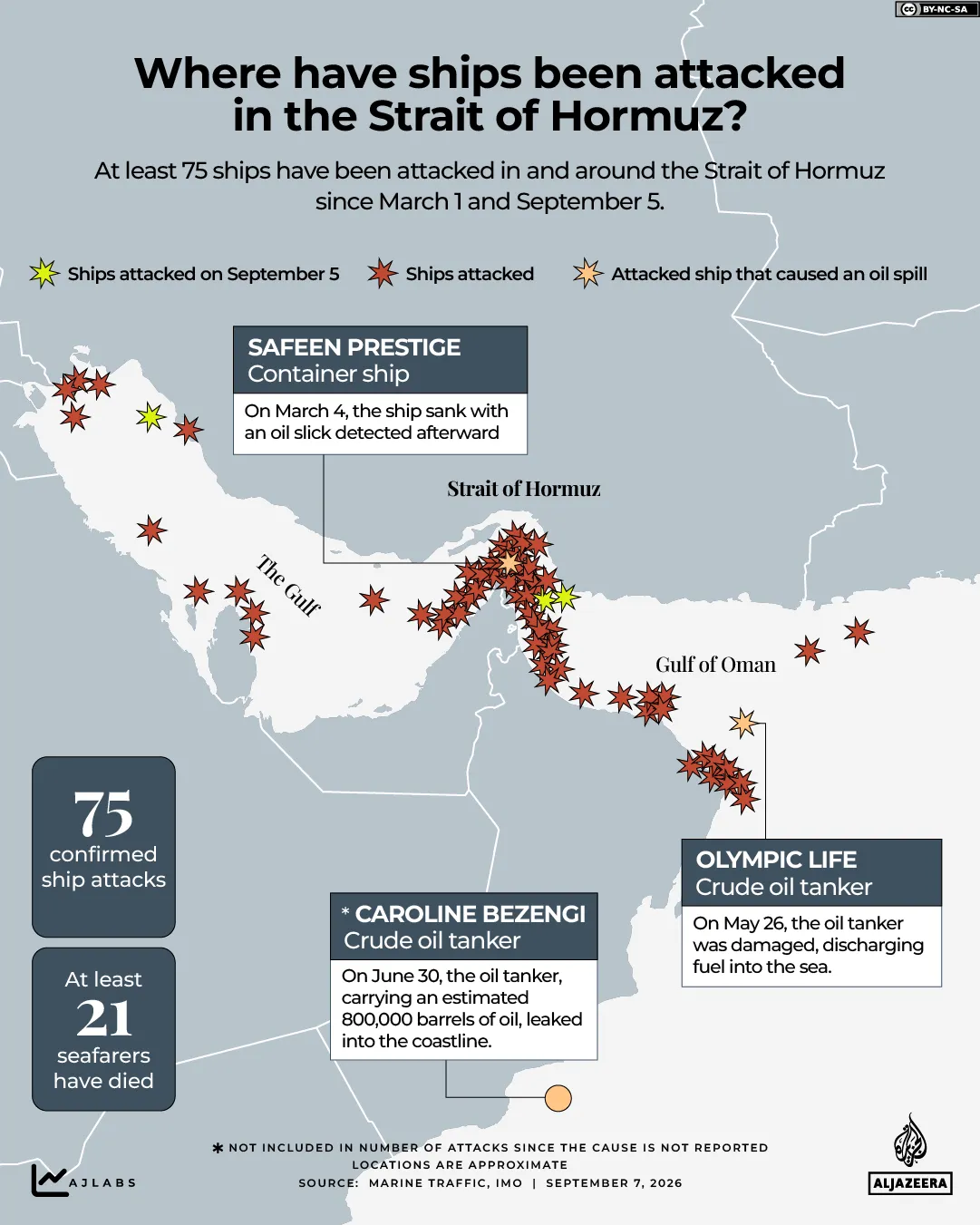
As Iran and the United States work with mediators to end seven months of hostilities, the reality in the Strait of Hormuz is shifting in ways that could prove to be a game-changer in ongoing negotiations.
According to the latest data from tanker-tracker websites, traffic through the key waterway has been steadily increasing, with some estimates putting oil and petroleum flow through the Strait of Hormuz at nearly 80 percent of what it was before the US-Israeli war on Iran began on February 28.
Recommended Stories
list of 3 itemsend of list
This could dent Iran’s leverage in reaching a favourable deal for itself in its attempts to end the fighting, which has seriously hampered its already heavily sanctioned economy, amid the US blockade of Iranian ships and ports.
Despite that, experts believe it would be a mistake to think normality in the Strait of Hormuz is imminent, or that Iran will fold easily despite growing economic hardship.
“The fact that oil is getting through the Strait of Hormuz is encouraging, but flows are not yet regarded as completely secure or guaranteed, particularly while the wider conflict remains unresolved,” Susannah Streeter, chief investment strategist at Wealth Club, told Al Jazeera.
Moreover, oil prices remain high globally, including in the US, where President Donald Trump faces a crucial midterm election that could see his party swept away in both houses of Congress.
Tanker insurance costs also remain elevated and energy flows through Hormuz are still far from secure, suggesting Iran’s leverage may be weakening rather than disappearing.
Oil flows through Hormuz recovering
The latest data from commodity analytics firm Kpler points to a significant recovery in oil exports from the Middle East.
Crude exports reached an estimated 16.328 million barrels per day (bpd) in September – their highest level since the war began in late February, the firm reported this week.
Flows through the Strait of Hormuz itself were expected to reach about 9.719 million bpd during the month. Saudi Arabia has driven much of the increase, with its exports rebounding from 2.446 million bpd in August to about 5.4 million bpd in September.
Kpler said Middle East crude exports have recovered to just under 80 percent of their pre-war level. But the figures remain about 3.2 million bpd below the 19.513 million bpd exported in February.
The data also does not include ships crossing Hormuz with their tracking systems switched off, meaning actual traffic could be higher.
Prior to the war, an estimated 120-140 vessels crossed through the waterway daily, roughly half of them oil tankers moving approximately 20 million barrels per day. At the height of the fighting, traffic through the waterway collapsed to as few as two tankers a day after Iran in effect closed the strait in retaliation for US-Israeli attacks.
Is Iran losing leverage?
The rebound in oil flow presents a challenge for Tehran. Iran has sought to use its ability to disrupt the Strait of Hormuz – one of the world’s most important energy chokepoints – as leverage against Washington’s military and economic pressure.
But if large volumes of oil can continue moving through the strait while Iran itself remains under a US naval blockade, Tehran’s bargaining power could diminish.
Iran, however, rejects any assessment that its control over the strait is slipping.
Islamic Revolutionary Guard Corps spokesperson Hossein Mohebbi on Tuesday said the ability of vessels to transit the waterway with US assistance did not mean Hormuz had returned to normal.
Oil prices are another indication that Iran has not lost all of its leverage.
Villagers stand near plastic containers at a fuel station to fill their water pumps, as India faces rising oil prices, in Halvad, Gujarat, India [File: Amit Dave/Reuters]
Brent crude fell 2.6 percent to $102.59 a barrel on Tuesday as traders focused on recovering Middle East exports. But it was still heading for a roughly 13 percent gain in September.
Chris Beauchamp, an analyst at IG, said markets were beginning to incorporate evidence of recovering flows but remained wary about how durable that recovery would be.
“It takes time for evidence to filter through to markets,” Beauchamp said. “Oil prices came off yesterday as the narrative began to take hold, and should continue to fall.”
But he said concerns persisted over whether the US protection system could withstand a renewed barrage of Iranian missiles and drones.
Streeter of Wealth Club said the market still had a geopolitical risk premium built into crude prices, despite the improving flows.
“Insurance costs for tankers also remain elevated because of the perceived risks of operating in the region, adding to the cost of transporting crude even as more ships make it through the waterway,” she said.
Moreover, Streeter warned that crude figures tell only part of the story. Flows of refined fuels, particularly diesel and gasoline, remain constrained, while damage to infrastructure has placed additional pressure on energy supply chains, she added.
There is another vulnerability, the investment strategist pointed out. Countries including the US have relied heavily on strategic oil reserves to cushion the impact of the disruption and help contain prices.
“With those stockpiles now significantly depleted, there is a thinner buffer if there is another disruption, which is helping to keep a floor under crude prices,” Streeter added.
‘Economic war’ on Iran
There is little doubt that economic pressure on Iran is intensifying, potentially increasing Tehran’s incentive to reach an agreement.
Official data from the Statistical Center of Iran earlier this month showed gross domestic product (GDP) contracting 10.1 percent year on year between March 21 and June 20, while the crucial oil and gas sector shrank 26.4 percent.
Iran has also been battling high inflation and a plunging currency as the US blockade constrains oil exports and foreign currency earnings.
Twelve-month average inflation reached 69.9 percent earlier in September, while the rial had fallen beyond 2.2 million to the US dollar in early September.
People shop at Tajrish Bazaar in northern Tehran, Iran [File: Abedin Taherkenareh/EPA]
In August, the US announced a fresh economic pressure campaign against Iran, promising to target Tehran’s financial interests across the world.
Mohammad Eslami, a research fellow at the University of Tehran, told Al Jazeera that Iran was facing an “economic war” alongside the military conflict.
“There is a US blockade of the Strait of Hormuz, which affects Iran’s revenues from oil exports and other products such as petrochemicals, which are important to Iran’s economy,” Eslami said. “As a result, Iran’s dollar revenues have been affected by the blockade.”
But he cautioned against judging Iran’s economy solely through the value of its currency.
“The exchange rate is a very important indicator, but it is not the only measure for explaining what is happening or the difficulties and challenges facing Iran’s economy,” Eslami said, adding that Iran has faced US economic pressure for “five decades”.
Can a deal be reached?
Despite the military and economic pressure, negotiations have not collapsed.
At the United Nations General Assembly last week, Tehran and Washington engaged in three hours of indirect talks, as US special envoys Steve Witkoff and Jared Kushner met with Iranian Foreign Minister Abbas Araghchi.
President Trump later described the encounter as “very good” and “very productive.”
Iran also proposed a seven-day roadmap under which the Strait of Hormuz could be reopened and normal maritime traffic restored if Washington meets Tehran’s conditions, a plan Trump categorically rejected.
Those conditions included ending the naval blockade on Iran, easing sanctions and releasing frozen Iranian funds.
However, on Wednesday, Reuters news agency reported that Araghchi had received US feedback on the proposal through Qatari mediators.
An official briefed on the talks said the main disagreement now centred on the sequencing of measures rather than the components of the plan.
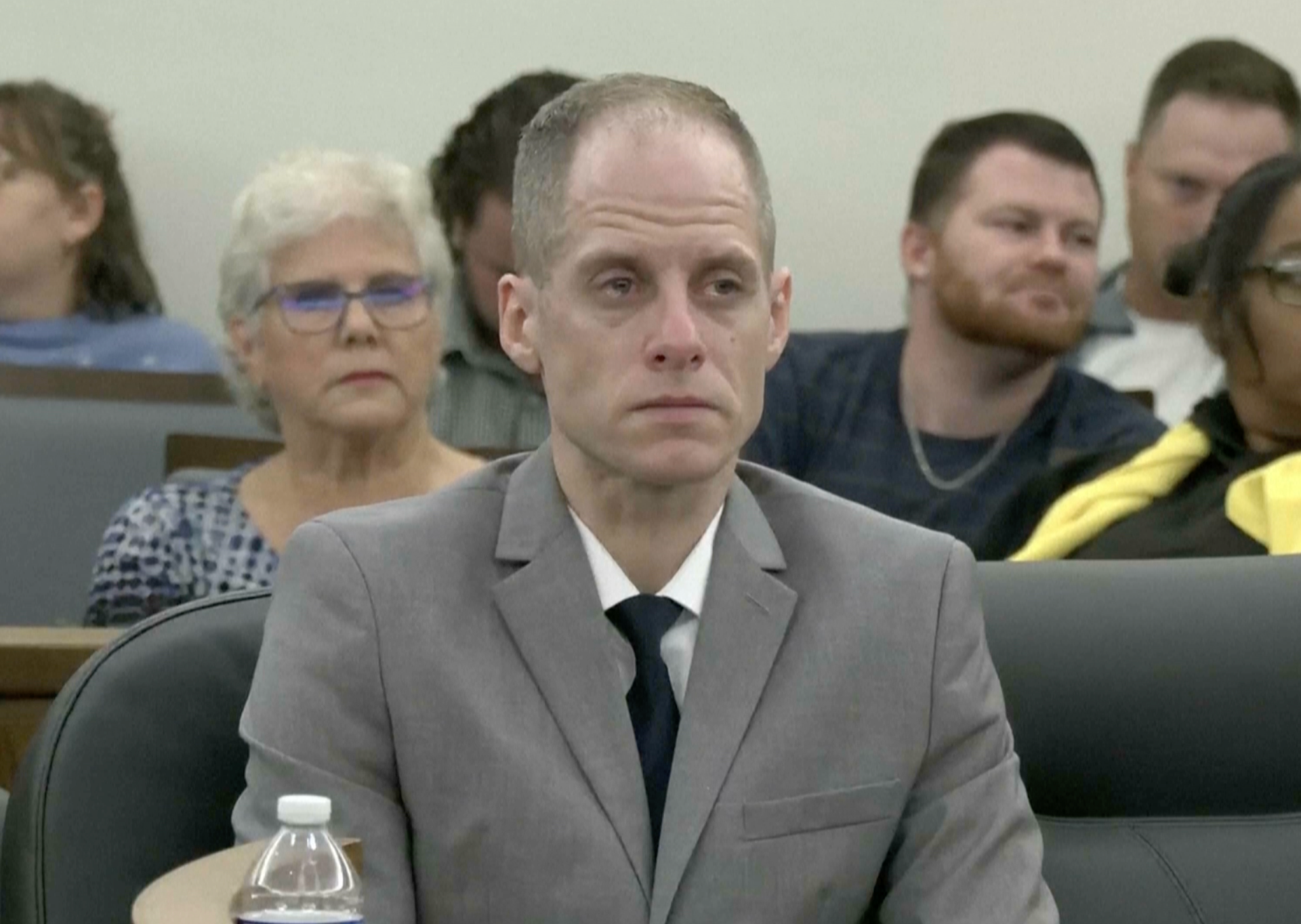
Former American Idol contestant Caleb Flynn has been found guilty of murdering his wife, Ashley, while he was having an affair. He will be sentenced on Monday and could get up to life in prison without the chance of parole.
South Korea calls for a formal apology from North Korea over the DMZ explosion that injured three soldiers.
Published On 30 Sep 202630 Sep 2026
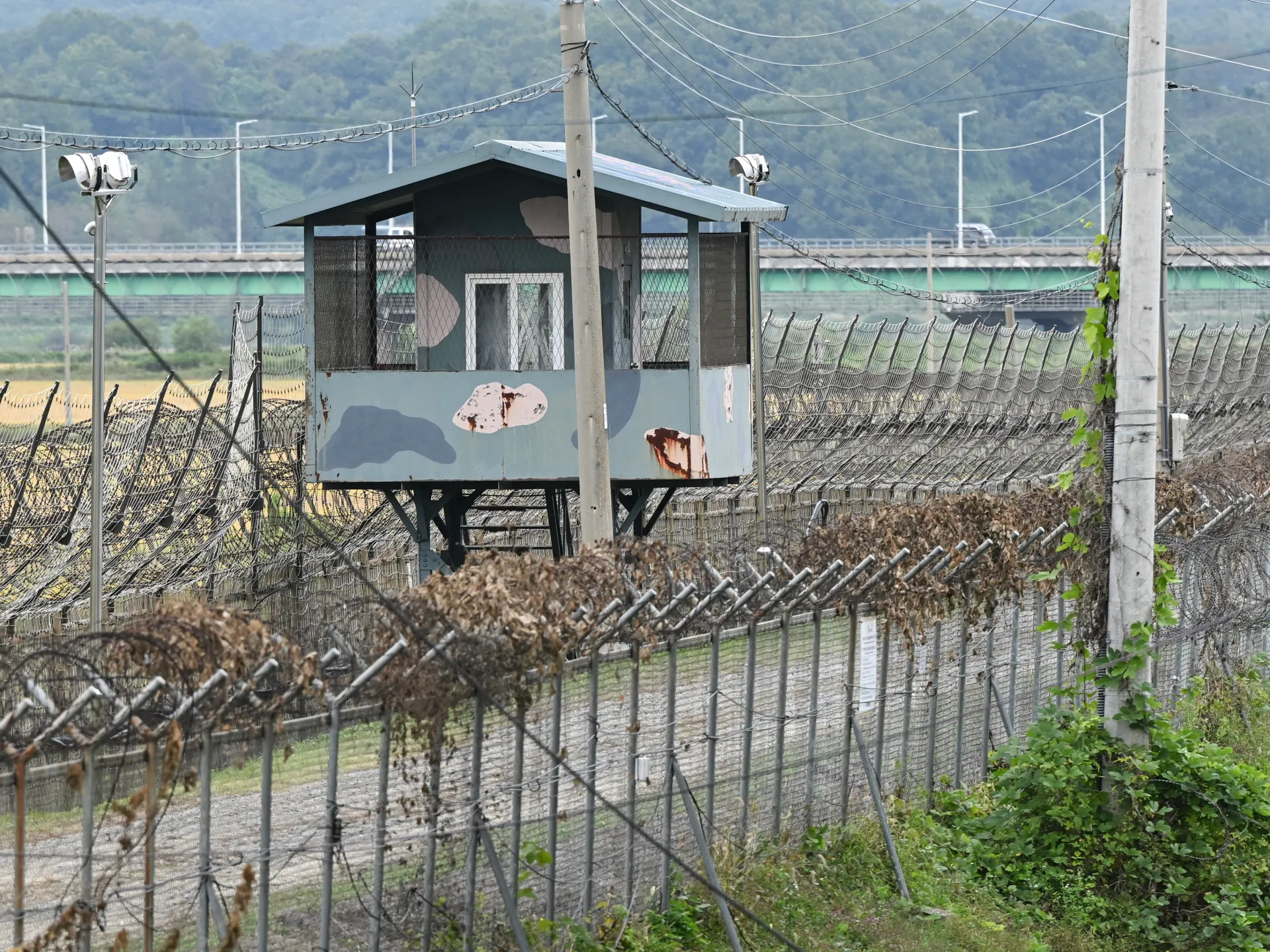
South Korea’s military has demanded an apology from North Korea over landmine explosions earlier this month in the border zone between the two countries that wounded three soldiers.
Three South Korean soldiers were injured in two explosions on September 21 near the military demarcation line in the western section of the Demilitarized Zone, a heavily fortified border buffer zone between the Koreas that is commonly known as the DMZ.
Recommended Stories
list of 3 itemsend of list
Kang Hyunwoo, the South Korean joint chiefs of staff’s director of operations, said the military “strongly urges” North Korea to apologise for the blasts and take “responsible measures” to prevent a recurrence.
“This is a clear violation of the Armistice Agreement and undermines the spirit of existing inter-Korean agreements; it must be stopped immediately,” he said on Wednesday, adding “we strongly urge an apology and responsible measures”.
Defence Minister Kang Shin-chul said South Korea would consider unspecified “corresponding measures” if a complete investigation confirms the North was responsible.
Kim Yo Jong, the sister of North Korean leader Kim Jong Un, said the South Korean assessment is a “conspiratorial farce” and accused Seoul of making groundless claims to create a pretext for provocation against Pyongyang.
She also criticised the South for broadcasting warnings and firing warning shots at North Korean troops conducting front-line fortification work, adding “our soldiers have never crossed the border”.
“If the [South Korean] military gangsters fire at our soldiers carrying on the permanent project for the southern border, not warning shots, our border units will take immediate and merciless retaliatory action,” she said.
The United Nations Command said on Wednesday it had “identified an active Democratic People’s Republic of Korea (North Korea’s) anti-personnel mine on the ROK side of the Military Demarcation Line”, in a joint investigation with Seoul’s military.
“Based on the findings of the investigation, UNC determined that an Armistice Agreement violation occurred,” it added.
The UN Command is a US-led multinational military force charged with overseeing the armistice agreement that halted fighting in the Korean War and administers the southern side of the DMZ.
UK Prime Minister Andy Burnham is promising a major improvement to public services including social care, housing and energy. Al Jazeera’s Milena Veselinovic reports on what he’s proposing and what it could mean for the people of the UK.
The medical condition of dozens of prisoners has deteriorated as inmates protest against suspension of amnesty law.
Published On 30 Sep 202630 Sep 2026
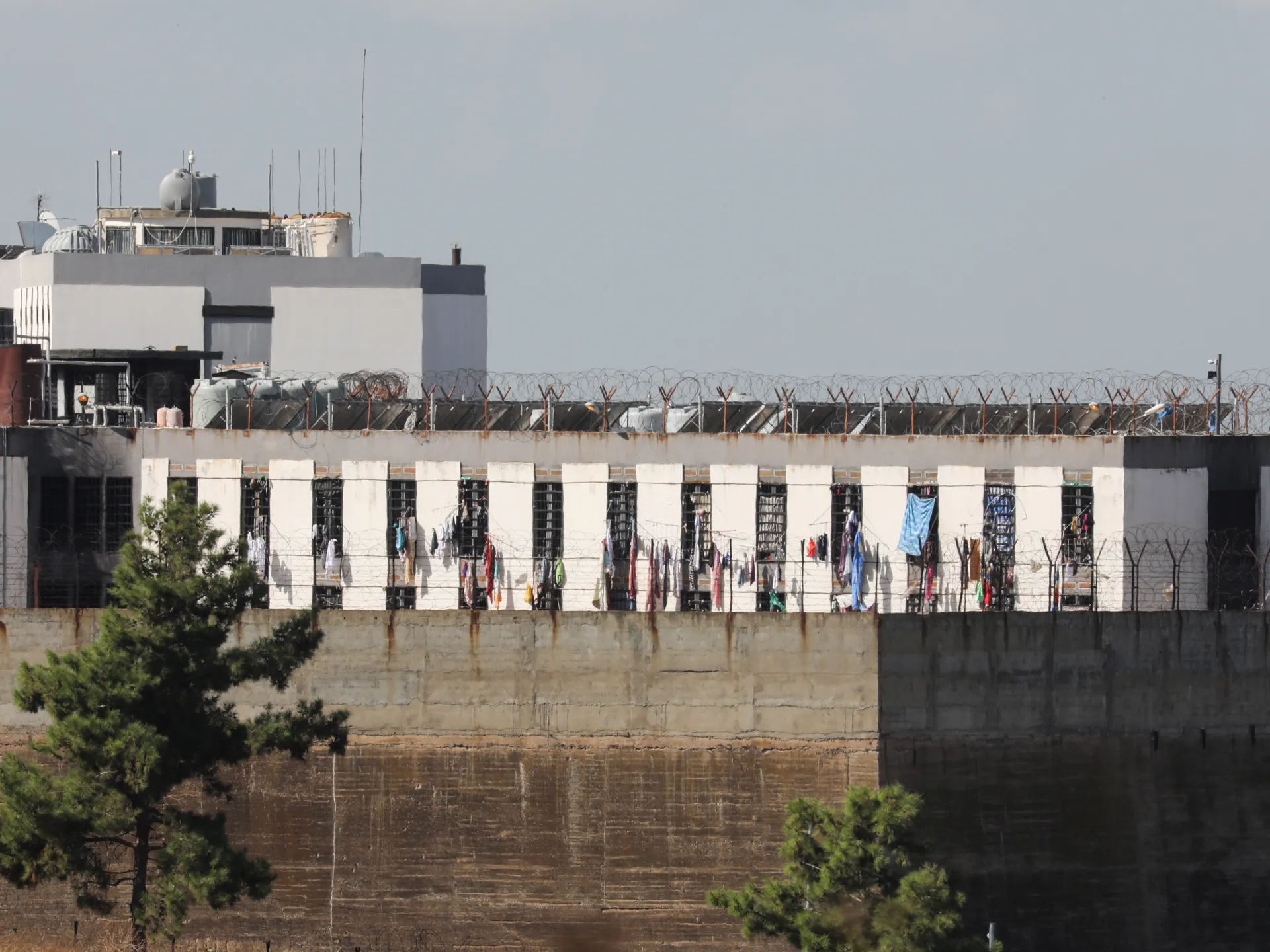
The medical condition of dozens of inmates on a hunger strike for more than two weeks inside Lebanon’s largest prison has become “dire”, according to a legal campaigner.
“About 400 prisoners are on a hunger strike for more than two weeks. Ambulances enter daily to take [dozens of] them away because their condition is dire,” Mohammed Sablouh, a Lebanese lawyer, told Al Jazeera.
Recommended Stories
list of 3 itemsend of list
“The prisoners are refusing medication, food and water,” Sablouh, who is also the director of the Prisoners’ Rights Center at the Tripoli Bar Association, said on Wednesday.
The inmates at Roumieh prison went on a hunger strike on September 12 in protest against the suspension of a general amnesty law, which could have granted an immediate release or reduced their sentences.
Protests have also been staged in Lebanon’s second city of Tripoli against the suspension of the law, which has a provision to release inmates jailed for petty crimes.
Many of the prisoners on hunger strike were arrested for their solidarity with the Syrian revolution against President Bashar al-Assad, who was toppled in December 2024 after more than 10 years of bloody war.
The Free Patriotic Movement, one of the country’s largest parties, filed an appeal before the Constitutional Council over concerns that some of the inmates were charged with “terrorism”.
The Constitutional Council is expected to issue its verdict next month.
Overcrowded prisons
Lebanese prisons are notorious for being overcrowded and thousands of inmates spend years behind bars without trial. Lebanon’s current prison population stands at about 8,500, nearly double its capacity.
The law passed on August 12 aimed to address overcrowded prison conditions in the country.
“Prison overcrowding exceeds 330 percent of the facilities’ actual capacity,” Sablouh said.
“The situation in Lebanon’s prisons is truly tragic, it can no longer withstand any … shock or any overturning of the amnesty law.”
More than 40 prisoners died in 2025. “Some died due to medical neglect, others under torture. Some died by suicide due to prolonged trials and repeated postponements,” Sablouh said.
The Lebanese lawyer blamed judicial delays for the large number of inmates, many of them arrested for petty crimes.
He pointed out the failure of the judiciary “to adhere to Article 108 of the Code of Criminal Procedure, which sets a limit for pre-trial detention: two months for misdemeanours, renewable for an equal period, and six months for felonies, renewable for an equal period [up to a maximum of one year].”
The contest, which is in its 12th year, celebrates the resilience of the 2,200 brown bears that live in the preserve on the Alaska Peninsula.
Published On 30 Sep 202630 Sep 2026
After a week of fierce competition, Backpack emerged victorious as Fat Bear Week champion, the heftiest bear in Alaska’s Katmai National Park and Preserve.
The nonprofit running the longstanding contest announced on Tuesday that the bear, known for his pacifist nature, was the winner with more than 100,000 votes, giving him a close win over Bear 910 with just over 50 percent of the poll.
Recommended Stories
list of 3 itemsend of list
The contest, which is in its 12th year, celebrates the resilience of the 2,200 brown bears that live in the preserve on the Alaska Peninsula, which extends from the state’s southwest corner towards the Aleutian Islands. Fat Bear Week was started in 2014 as an interactive way to inform the public about brown bears, the coastal cousins of grizzlies.
Last year’s winner, Chunk — known officially as Bear 32 — clinched his victory at an estimated 1,200 pounds. He was handily defeated in the first round of competition this year by Bucky, who went on to lose a face-off against Backpack, known officially as Bear 89.
This September 9, 2026 photo provided by the National Park Service shows Bear 910 standing along the Brooks River in Katmai National Park and Preserve in Alaska [C. Loberg/National Park Service via AP]
The event this year featured 16 bears vying for the heavyweight title in a single-elimination, bracket-style tournament. All voting is done online, and the winner was declared on Tuesday evening after the final poll closed. The public could watch the bears on explore.org’s livestream cameras before deciding on their favourite.
“Fat bears are successful bears,” the nonprofit says on its website. These bears gorge themselves on the abundant salmon that return to the Brooks River starting in late June. It is there that they can stuff themselves to accumulate the fat reserves they will need to survive the winter. To be featured in the contest, the bears must frequent the area around the river.
Son of ex-champion
Backpack is the son of former Fat Bear Week champion Holly, who introduced him to the Brooks River when he was a first-year cub in 2006. His name was inspired by his habit of climbing onto his mother’s back when they swam the river. This year’s fans cheered on Backpack in the contest’s Instagram comments, noting his lineage and reputation as a gentle giant.
“Unlike many large adult male bears, Backpack hasn’t shown much aggression toward his competitors,” his contestant profile reads.
Backpack uses his “quiet strength” rather than brawling and is often seen in wildlife cameras sitting on a rock downstream, appearing to take in the scenery around him.
He defeated Bear 910, who is also the daughter of a former champion: 409 Beadnose.
Adult male brown bears typically weigh between 600 and 900 pounds (270-410kg) in midsummer. By the time they are ready to hibernate after feasting on migrating and spawning salmon, large males can weigh more than 1,000 pounds (454kg). Females are about one-third smaller. Bears may each eat as many as 30 fish a day this time of year, working hard to eat a year’s worth of food in about six months.
During winter hibernation, bears do not eat or drink and can lose one-third of their body weight.
Fat Bear Week’s contestants also included five bear families, in recognition of the record-high number of families and cubs at the river this summer. A mother must feed and protect her cubs while also eating enough calories to sustain herself through hibernation. Cubs often face the risk of attack from other bears due to territorialism or food scarcity.
Bear 132 and her three spring cubs advanced to the semifinals, but lost out to Bear 910.
She has become one of the largest and most experienced mother bears at Brooks River, according to her contestant profile. In mid-July, one of her cubs became separated from the family for several days, wandering the river corridor alone. The cub was reunited with the family a few days later.
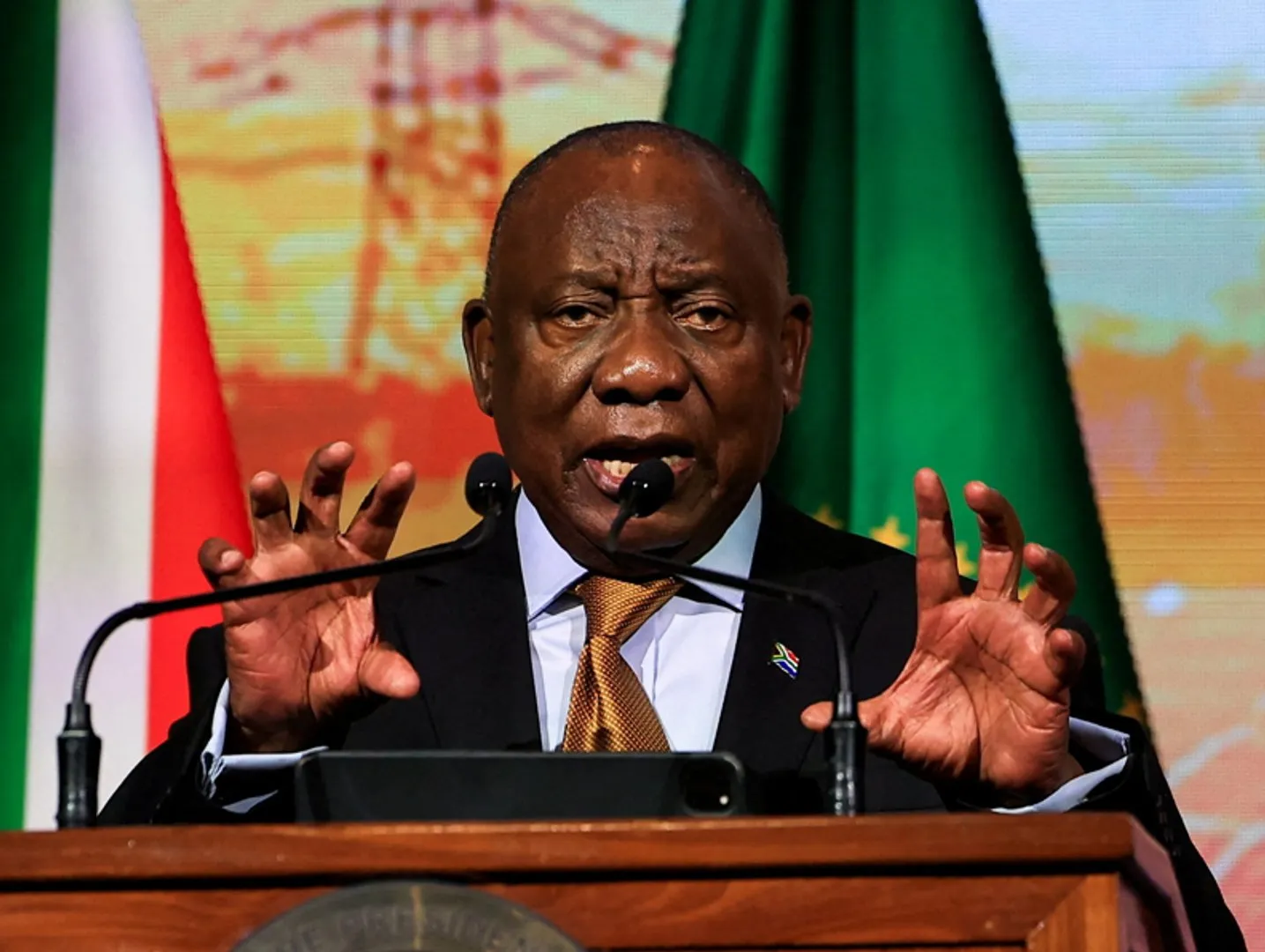
South Africa’s President Cyril Ramaphosa has announced new measures to combat femicide and gender-based violence in the country. Since July, the bodies of at least 11 women have been found in an area east of Johannesburg prompting a nationwide outcry for action
Opposition leader dismisses Netanyahu’s warning of possible attacks during next month’s general election.
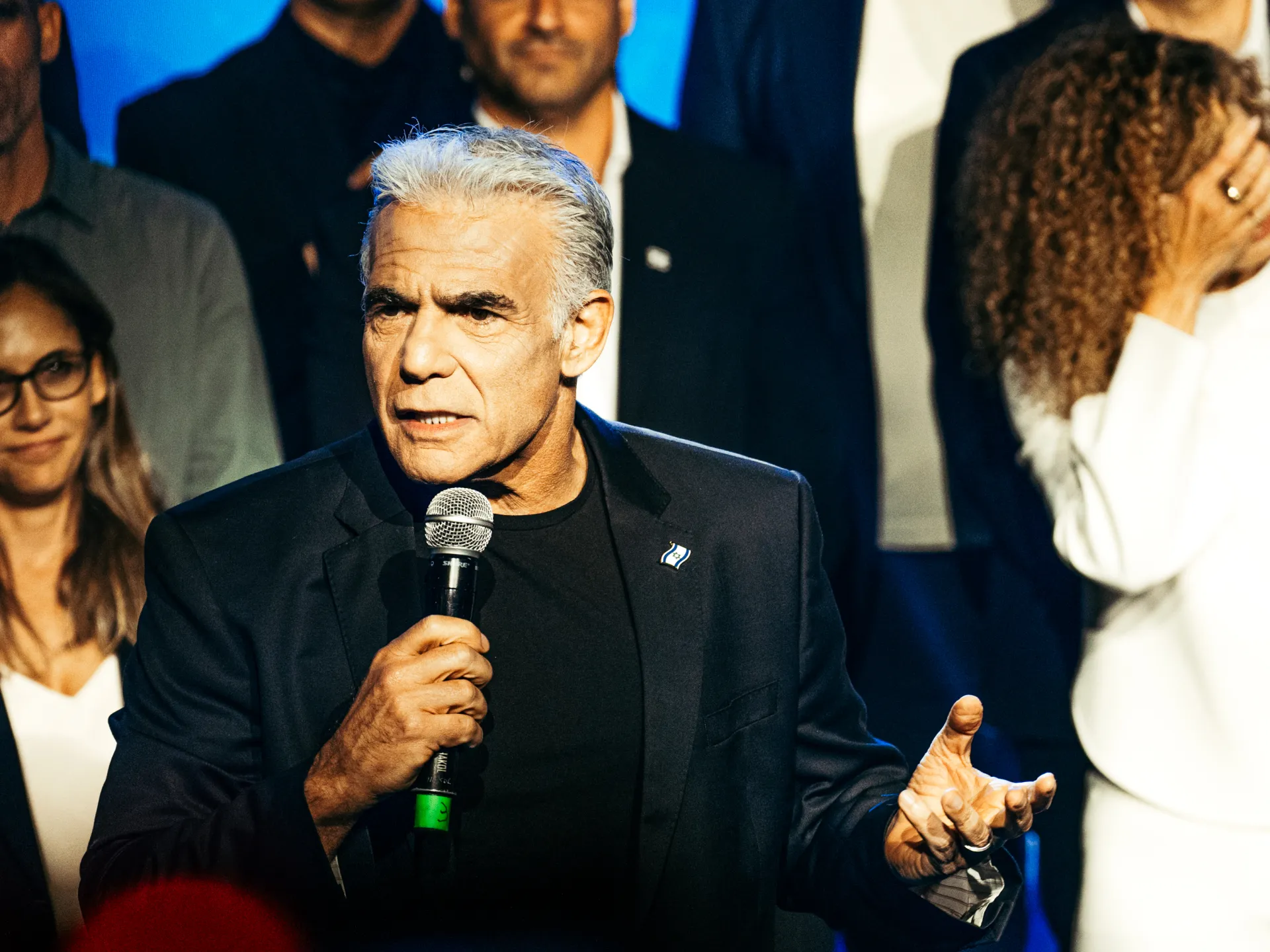
Israel’s opposition leader Yair Lapid has accused Prime Minister Benjamin Netanyahu of “fear-mongering” after the incumbent leader warned that the country’s enemies may attack before next month’s general election.
Lapid, who heads the Yesh Atid party, dismissed the warning after meeting the prime minister on Tuesday.
Recommended Stories
list of 3 itemsend of list
Earlier in the day, Netanyahu posted an online video that showed him posing in front of a fighter jet at a military base and saying there were “indications that, ahead of the elections, our enemies will try to attack us”.
He did not specify which enemy he had in mind. But in recent weeks, he has issued warnings to Iran, Hamas, Hezbollah and the Palestinian Authority, promising retaliation in the event of an attack.
Lapid requested an urgent security briefing after the warning, and in an online post afterwards, he said he was certain the election would take place on time and that “there is no reason to panic the public”.
“The elections will take place on time, and no one has an excuse to disrupt them,” he said.
He accused Netanyahu of using military bases as “props for election campaign videos” and of failing to heed warnings before the Hamas-led attacks of October 7, 2023, which set off Israel’s genocidal war on Gaza. More than 76,000 Palestinians have been killed in the war.
“Netanyahu ignored every warning before October 7, and now, 28 days before the election, he’s suddenly busy fear-mongering,” Lapid said. He added: “I of course will not violate the confidentiality of the security briefing but it must be said — security threats must be handled professionally and responsibly.”
The election, scheduled for October 7, is Israel’s first vote since the Hamas-led attacks, which plunged the Middle East into turmoil as Israel went to war in Gaza, Lebanon and Iran. The election could determine whether Netanyahu remains in power after one of the most consequential periods in Israel’s history, or is defeated by centrist rivals promising to usher in a new era.
Netanyahu, Israel’s longest-serving leader, was first elected prime minister in 1996. In recent weeks, he has had to deny media reports that his partners in the Middle East warned him of a potential Hamas attack, an allegation his political rivals have seized on.
Polls show him in a close race to stay in power.
According to a Reuters polling average, no candidate has a clear path to power. The average shows Yashar, the party of Gadi Eisenkot, a former military chief who has emerged as Netanyahu’s most formidable rival, leading the prime minister’s right-wing Likud party by 2 points.
Based on the average, parties opposed to Netanyahu would hold 64 seats in the 120-member Knesset, 15 more than the parties that back him, but they may be unable to form a coalition.
Lapid is one of several opposition figures in the race. He, Eisenkot and other opposition leaders have agreed to coordinate to remove Netanyahu’s government. Under the agreement announced last week, each leader pledged to work in their constituencies to increase turnout and attract support from various sectors of society to secure a majority and form a new government.
The prime minister said in a separate post on Tuesday that he has held a security briefing with Lapid in which he raised alerts about possible attacks “on the various fronts ahead of the elections”.
He stressed that he holds regular briefings with the opposition leader.
Women in India’s capital New Delhi have taken to the streets after a string of rape cases, using bold slogans to demand safer public spaces and challenge restrictions placed on their movement in the name of safety. The slogans have sparked a wider social media campaign.
The deaths appear to be the first at the hands of Somali pirates in more than a decade.
By Al Jazeera Staff, AFP and Reuters
Published On 30 Sep 202630 Sep 2026
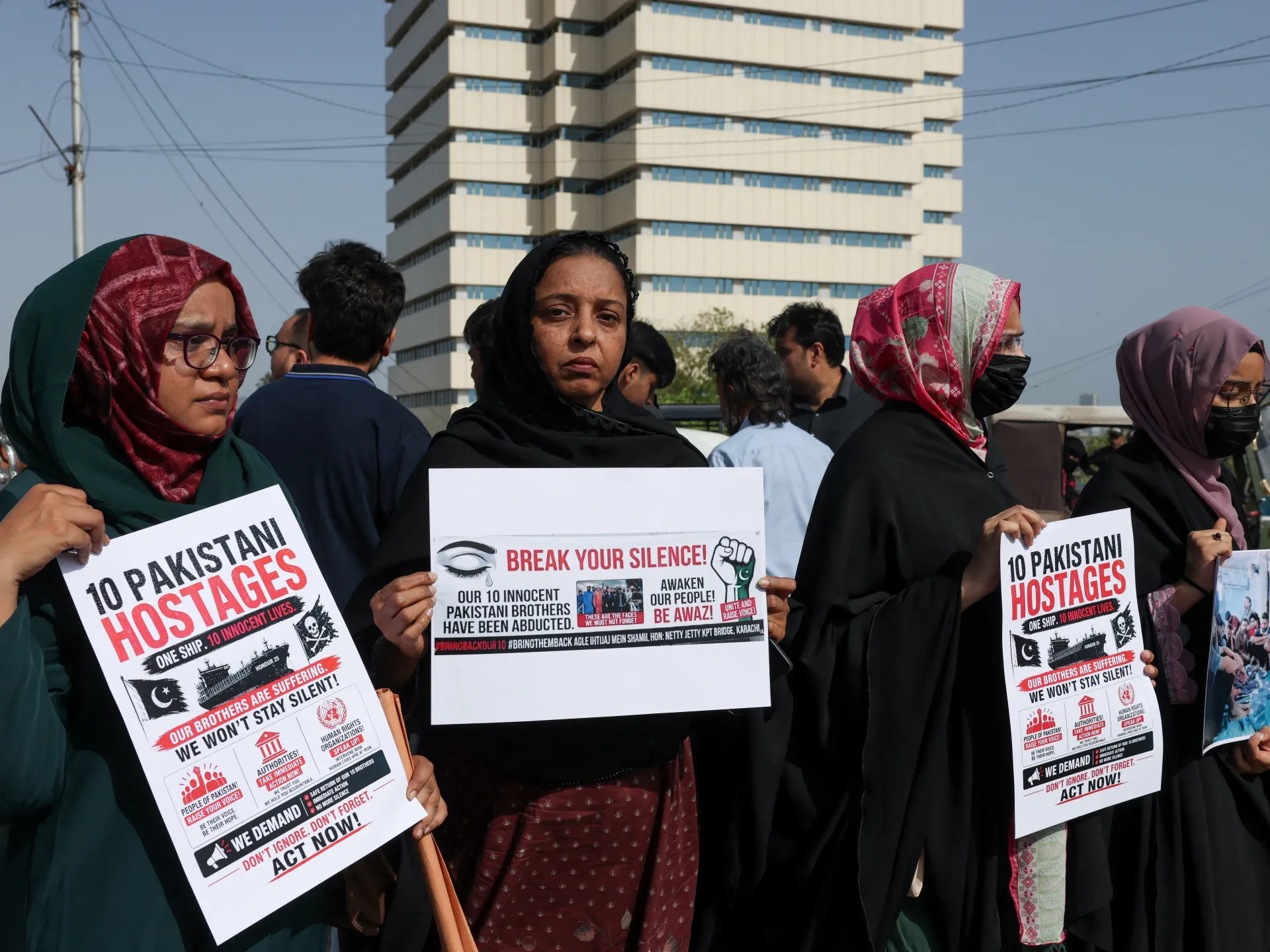
Pirates have killed five crew members on board a Palau-flagged oil tanker off the coast of Somalia before security forces rescued the ship, according to Somali authorities.
The deaths on the tanker, the MT Honour 25, were announced on Tuesday.
Recommended Stories
list of 3 itemsend of list
They appear to be the first deaths at the hands of Somali pirates in more than a decade and come amid a resurgence of Somali piracy that experts have attributed in part to the effects of the United States and Israel’s war on Iran.
The MT Honour 25, which authorities said was carrying 18,500 barrels of oil, was seized by pirates off Somalia on April 21.
The Information Ministry of Puntland, a semiautonomous region of Somalia, said in a statement that a rescue mission had freed the ship and captured 16 suspected pirates.
“Before the operation began, the pirates on board the ship killed five of the crew,” the statement said. “Among those killed were three from Pakistan, one from Myanmar and one from India.”
Four other crew members, three Pakistanis and one Indian, were injured, it said.
In a post on social media, the Puntland Maritime Police Force said the vessel was “safe” and under the government’s control. It said efforts were continuing to find others involved in the hijacking.
The rescue follows another operation last week in which the maritime police freed the Sibu 1, a tanker sanctioned by the US that Somali pirates had hijacked in August.
But 28 of the 41 pirates arrested in that operation later escaped while being transferred to jail, and several Puntland security officials accused local police of complicity.
At least 15 attacks have been reported off Somalia since April, according to officials.
A previous wave of piracy, from 2008 to 2014, disrupted one of the world’s busiest shipping routes, cost the global economy billions of dollars and resulted in hundreds of millions of dollars in ransom payments.
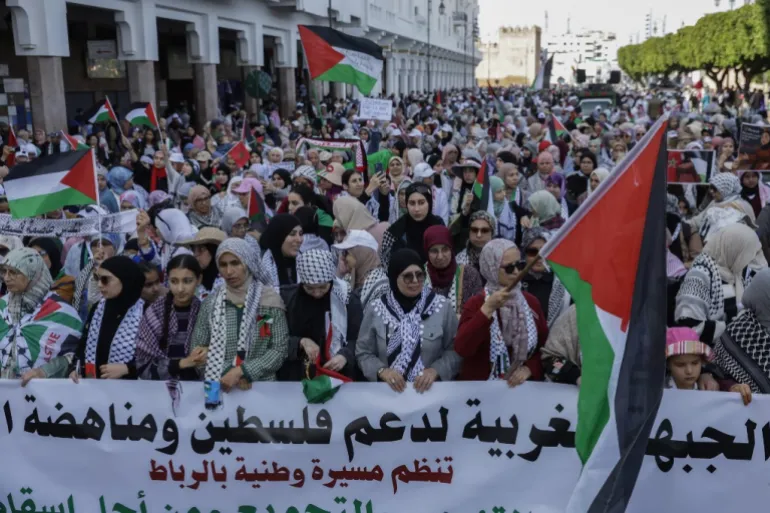
Pro-Palestine protests have spread across several Moroccan cities, with demonstrators demanding an end to diplomatic normalisation with Israel as Rabat deepens ties with Tel Aviv.
The latest mobilisation took place on September 27, at the end of three days of action called by the Moroccan Front for Supporting Palestine and Against Normalisation.
They followed a September 16 announcement that Morocco and Israel would elevate their diplomatic missions to full embassies and appoint ambassadors.
On September 25, the Moroccan Committee for Supporting the Nation’s Causes said it had organised 76 events in 45 cities under the slogan “Friday for Al-Aqsa and against normalisation”.
Moroccan media reported gatherings in cities including Rabat, Casablanca, Marrakesh, Tangier, Fez, Agadir, Oujda, Tetouan, Kenitra and Sale. The 76-event figure was the committee’s own count, with no independent national tally of participants.
In Rabat, protesters gathered outside Parliament, while a demonstration in Marrakesh developed into a march through several main streets, according to Lakome. Moroccan media also reported restrictions and arrests in some cities.
Restrictions and arrests
The mobilisation faced restrictions in some cities.
In Tangier, local authorities issued a decision banning a planned demonstration on September 27. Achkayen later reported that security forces dispersed hundreds of participants and that more than 12 people were detained, citing its own sources.
Lakome reported that authorities also prevented demonstrations in M’diq, while security forces surrounded a gathering in Agadir to prevent it from becoming a march.
Pro-Palestine protesters take part in a demonstration against Morocco’s diplomatic ties with Israel [Abdel Majid Bziouat/AFP]
The Moroccan Committee for Supporting the Nation’s Causes subsequently condemned what it described as bans, restrictions and arrests.
The response underscored another dimension of the dispute: Opposition to the relationship with Israel has remained visible on the streets, even as the government has continued to develop official ties.
A relationship under public pressure
Morocco restored diplomatic relations with Israel in December 2020 as part of the US-brokered Abraham Accords framework, alongside Washington’s recognition of Moroccan sovereignty over Western Sahara.
On September 16, Moroccan Foreign Minister Nasser Bourita and Israeli Foreign Minister Gideon Saar met in New York at a trilateral summit hosted by US Ambassador to the United Nations Mike Waltz.
The three countries confirmed plans to elevate the Moroccan and Israeli diplomatic missions to full embassies and exchange ambassadors.
Morocco and Israel also agreed to conclude agreements on investment protection and avoiding double taxation, expand direct flights and organise high-level reciprocal visits.
The move therefore goes beyond maintaining diplomatic relations established in 2020. It sets out a broader programme of institutional, economic and transport links between the two countries.
For opponents of the relationship, the embassy agreement represents another step in a policy they have rejected since 2020.
Public opinion and state policy
Morocco has maintained diplomatic relations with Israel while continuing to publicly support the Palestinian cause and the establishment of a Palestinian state.
For opponents of normalisation, however, the two positions are incompatible, particularly amid Israel’s genocidal war on Gaza.
“What has changed is the political context: Normalisation is being consolidated at a time when the war in Gaza has generated unprecedented public anger and intense images of Palestinian suffering,” Kathya K Berrada, senior programmes manager at the Arab Center for Research, told Al Jazeera.
“What we are seeing in Morocco is a growing disconnect between official diplomacy and public sentiment,” Moroccan activist Mouna Rahiani said, citing the latest Arab Opinion Index, which found that 89 percent of Moroccans surveyed opposed their country recognising Israel, while six percent supported it.
“While the state is moving towards deeper and more formal relations with Israel, Moroccans are still taking to the streets to say that Palestine cannot be treated as separate from our political and moral responsibilities,” she said.
The September agreement has brought an existing tension into sharper focus: public mobilisation against normalisation continues while the state pursues closer institutional ties with Israel.
Berrada said there was an important distinction between official policy and popular opinion, arguing that there is not enough reliable public data to establish how many Moroccans support or oppose normalisation.
Western Sahara adds another layer
The timing also matters for Morocco’s Western Sahara policy. The United Nations Security Council is due to consider the mandate of the UN Mission for the Referendum in Western Sahara (MINURSO) in October. Its current mandate runs until October 31, 2026.
The September 16 trilateral statement came against the backdrop of US recognition of Moroccan sovereignty over Western Sahara and Israel’s support for Morocco’s position on the territory.
For Rabat, the relationship with Israel sits within a wider foreign-policy framework in which ties with Washington and international support for its position on Western Sahara remain important.
For opponents of normalisation, however, that strategic calculation does not resolve their objection to closer ties with Israel, particularly while the Palestinian issue remains highly salient.
Ahmed, a Moroccan sociologist who asked to be identified by one name, said the September 16 move was “a continuation of the trilateral agreement of December 10, 2020”, but that Morocco should make the relationship “comprehensive, not selective or partial”.
The election changes the political backdrop
The protests came days after Morocco held parliamentary elections on September 23.
The final results gave the Authenticity and Modernity Party 97 of the 395 seats, followed by the National Rally of Independents with 66, the Istiqlal Party with 65 and the Party of Justice and Development (PJD) with 54.
The PJD had won 13 seats in 2021. Turnout was 38.08 percent, compared with 50.86 percent in 2021 and 42.27 percent in 2016, according to Morocco’s Ministry of Interior.
It was the PJD in power when Morocco restored relations with Israel in 2020. Then-Prime Minister Saadeddine el-Othmani signed the Morocco-US-Israel joint declaration that December.
The PJD has maintained that opposition to normalisation was a longstanding party position. The party subsequently reaffirmed its rejection of normalisation and relations with Israel, while el-Othmani defended the 2020 decision as a state-level decision.
On September 17, following the announcement of the planned diplomatic upgrade, the PJD’s general secretariat reiterated its opposition to normalisation and to relations and agreements with Israel.
After the election, the PJD’s national council unanimously decided to remain in parliamentary opposition and not participate in the next government.
Pro-Palestine protesters demonstrate against normalisation with Israel, as Morocco moves to deepen diplomatic ties with Tel Aviv [Mosa’ab Elshamy/AP]
The PJD’s position has illustrated the limits of using party politics to measure the effect of opposition to normalisation. The party opposed the policy while in government, yet its prime minister signed the 2020 declaration.
Its larger parliamentary presence in 2026 gives the issue a stronger political platform, but does not by itself alter Morocco’s foreign policy.
It has not been established that the Palestine issue or opposition to normalisation was a decisive factor in voting, and neither do the PJD’s gains demonstrate that its position on Israel directly drove its increased representation.
From the streets to politics?
The September demonstrations show that organisations opposed to normalisation retain the ability to mobilise across a wide geographic area. But their effect on government policy is less clear.
“There is an important distinction between state policy and popular opinion. Normalisation is an official state decision, but there is limited reliable public data allowing us to measure the level of popular support for it,” Berrada said.
Moroccan protesters display signs supporting Palestinians during a mobilisation against diplomatic ties with Israel [Abdel Majid Bziout/AFP]
“It would therefore be difficult to claim that either a majority or a minority of Moroccans endorse the policy.”
That distinction is important when assessing the significance of the protests. Demonstrations can show the strength and persistence of organised opposition, but they do not by themselves establish the views of the wider population or show that government policy will change.
The PJD now has a larger parliamentary presence than it did after the 2021 election, but it remains in opposition. It will be able to voice its opposition to normalisation in Parliament, but will not have a place in government.
At the same time, the September 16 agreement remains part of a broader Moroccan foreign-policy framework involving the United States, Israel and Western Sahara. The Security Council’s consideration of MINURSO in October will provide another diplomatic setting in which Morocco’s position on the territory is under discussion.
For now, the protests demonstrate that opposition to normalisation remains capable of sustained mobilisation, while the government continues to deepen the relationship. Whether that public opposition translates into sustained political pressure remains less clear.
Wilber Rafael Garces Perez has disputed the government’s account of what led to his shooting during a Doordash delivery in Austin, Texas.
A Venezuelan asylum seeker who was shot in the back by a United States Immigration and Customs Enforcement (ICE) officer in Texas is facing a federal assault charge, after prosecutors accused him of striking the officer with his car’s side-view mirror.
Wilber Rafael Garces Perez, 28, appeared in federal court in Austin on Tuesday, where he was charged with assaulting, resisting and impeding a federal officer. He could face up to 20 years in prison if convicted.
Recommended Stories
list of 4 itemsend of list
The charge stems from a September 20 encounter that began while Garces Perez was making a DoorDash food delivery near a shopping centre in Austin, the Texas state capital.
A federal complaint filed on Monday says immigration officers noticed that Garces Perez’s car had its emergency lights flashing, and they ran a database check. They found it was registered to Garces Perez, who was subject to a final order of removal from the US.
When the officers approached, Garces Perez handed over his driver’s license through a partially opened window but did not get out of the car, the complaint says. He asked the officers to wait until his wife could arrive to retrieve the vehicle.
Court documents describe the exchange up to that point as “pleasant and not aggressive”.
About a minute later, however, court documents say Garces Perez “abruptly” closed his window and drove off, striking one of the officers in the torso with his driver’s side mirror.
That officer chased Garces Perez in his own vehicle and caught up with him a short time later. In the complaint, the officer alleges that Garces Perez then tried to drive into him, prompting him to open fire.
There is no publicly available footage showing the events described in the complaint, including the shooting.
Videos, however, have circulated online showing the shooting’s aftermath, with Garces Perez injured in his car.
The complaint relies on unreleased body-camera footage from one of the two ICE officers who stopped Garces Perez.
The second officer was not wearing a body camera, according to the affidavit. That officer says he was struck by Garces Perez’s side mirror and later shot him.
Garces Perez, however, gave federal investigators a different account of the moments immediately before he was shot.
He told investigators that, after a brief chase, a law enforcement SUV struck his car, causing it to spin around, according to the affidavit. He said the officer then opened fire, shooting him in the back.
Garces Perez has been held in a detention facility in south Texas since the shooting.
His lawyer, Kate Lincoln-Goldfinch, said on Sunday the bullet was still lodged in his body and that he has a fractured clavicle. In a social media post, Lincoln-Goldfinch explained that his supporters were worried he could develop sepsis or suffer permanent damage if he didn’t undergo surgery soon.
The Department of Homeland Security has argued, however, that Garces Perez is receiving adequate medical care.
Garces Perez’s legal team is also seeking to stop his removal from the US.
The Venezuelan national entered the US in 2024 through CBP One, an online programme expanded under former President Joe Biden to allow asylum seekers to make appointments with immigration authorities at the US-Mexico border.
Trump ended the programme on his first day back in office, accusing the app of contributing to an immigration crisis in the US. His administration has since relaunched CBP One as CBP Home, a self-deportation portal.
Lincoln-Goldfinch has said Garces Perez was legally seeking asylum in the US and had a valid work permit. She has asserted that he was ordered to be deported after missing an immigration court hearing because the notice had been sent to an old address.
Garces Perez is due back before a federal immigration judge on Wednesday for a separate hearing on whether he can remain in the country.
The case comes amid a surge in immigration enforcement during Trump’s second term, with ICE reporting more than 50,000 arrests in both July and August.
Rising goods and fuel costs are cited as key factors in the sharp drop in consumer confidence.
Published On 29 Sep 202629 Sep 2026
United States consumer confidence has fallen to its lowest level since 2014, just over one month before the congressional midterm elections.
Consumers pointed to higher costs for goods and services as the primary reason for the decline, according to The Conference Board, which released its monthly report on Tuesday.
Recommended Stories
list of 4 itemsend of list
“The Consumer Confidence Index deteriorated notably in September, following two prior months of softening,” Dana M Peterson, chief economist at The Conference Board, said in a release announcing the report.
Consumers pointed to higher prices at the pump as one of the driving factors. The average price for a gallon (3.78 litres) of petrol has jumped 37 cents over the past month, according to the American Automobile Association (AAA), which tracks daily petrol prices. The average price stood at $4.45 on Tuesday, compared with $4.08 a month ago.
“Oil and gas prices in particular rose to new heights, reflecting September’s surge in fuel costs. Comments about war/conflict eased this month but remained elevated,” Peterson said.
The consumer confidence report comes a day ahead of a key inflation report that the Federal Reserve uses to gauge the state of inflation, the personal consumption expenditures (PCE) index, which was up 3.7 percent in June from a year earlier.
The US central bank raised interest rates for the first time in three years earlier this month, driving up costs of credit cards and car and bank loans. It is set to make another decision on interest rates at its October 27-28 meeting, putting pressure on Republicans as consumer sentiment tumbles across political affiliations.
Consumer confidence fell among all political affiliations, according to the report, the second-to-last major consumer confidence reading before the midterm elections, which will determine the balance of power in Washington, DC.
US consumers think the Democratic Party would handle the economy better than their Republican counterparts, with 42 percent saying Democrats would do a better job compared with 34 percent for Republicans, according to a recent Marist poll.
US markets are only slightly lower as the trading day comes to a close. The tech-heavy Nasdaq closed down 0.08 percent, the Dow Jones Industrial Average declined 0.2 percent and the S&P 500 was down 0.1 percent.
Lamine Yamal scores twice and assists another as Spain beat Croatia 4-1 in UEFA Nations League Group A3.
Published On 29 Sep 202629 Sep 2026
Lamine Yamal scored twice as World Cup winners Spain extended their European record unbeaten run to 40 matches.
La Roja maintained their perfect start to UEFA Nations League Group A3 with a 4-1 home win over Croatia on Tuesday, while England overcame 10-man Czech Republic 2-0 in Prague to leapfrog Slaven Bilic’s side into second.
Recommended Stories
list of 4 itemsend of list
In a repeat of the 2023 Nations League final, which Spain won on penalties, Croatia recovered from conceding an early goal to equalise but were unable to resist a Spanish side fresh from a 3-2 win over England at Wembley on Saturday.
Spain’s first home game since lifting the World Cup in July was preceded by Rodri parading the trophy on the pitch. The celebrations continued in Seville when Lamine, just as he did against England, opened the scoring in the second minute.
Alex Baena’s ball into the area was dummied by Fermin Lopez, and Lamine curled a first-time low shot inside the far post.
Baena then had an effort parried away by Croatia keeper Dominik Livakovic as Spain looked set to put the game out of reach early on, but the visitors drew level through Dion Beljo’s 28th-minute header.
Spain took less than three minutes to retake the lead. Lamine whipped a cross into the six-yard box from the right wing and Marc Pubill powered a header beyond Livakovic.
Marc Pubill scores Spain’s second goal [Marcelo Del Pozo/Reuters]
Lamine scored his second and Spain’s third in the 63rd minute, collecting Pedri’s pass in the box before drilling his shot into the net from a tight angle. Substitute Nico Williams wrapped up the win with an 89th-minute goal.
Nico Williams scores Spain’s fourth goal [Marcelo Del Pozo/Reuters]
Trump retaliated against Canada’s counter-tariffs on $20bn worth of US imports by banning $1bn of Canadian goods.
Published On 29 Sep 202629 Sep 2026
The United States is implementing a ban on nearly $1bn in imports from Canada, including alcoholic beverages, dairy products and motorcycles.
The ban took effect early Tuesday and is likely to further strain already-tense relations between the two neighbours.
Recommended Stories
list of 4 itemsend of list
Ottawa and Washington DC have long been allies and trade partners, with approximately $880bn worth of annual two-way trade. That relationship has been upended during US President Donald Trump’s second term as he unleashed tariffs on most trading partners, including Canada, and referred to the northern neighbour as the 51st state of the US.
Most recently, the US slapped 50 percent levies on Canadian goods worth $20bn, including dairy and motorcycles, on August 22 after trade negotiations failed. Canadian Prime Minister Mark Carney retaliated, saying Ottawa will match US tariffs “dollar for dollar in order to protect Canadian workers, farmers, families and businesses”. Canada levied tariffs of 15 percent, 25 percent and 50 percent on US exports of a similar value.
Tuesday’s ban was Trump’s punishment for Canada’s retaliatory tariffs.
“The impact of such a ban will be minor, it is only $1bn while we trade hundreds of billions with Canada,” Professor Gary Shields at Wayne State University’s School of Business told Al Jazeera. “It is, however, rather astonishing how President Trump treats our allies in Canada and Europe, while rolling out the red carpet for China’s dictator when he visited the US last week”.
“It is a tit-for-tat. It will not reduce people’s taxes and won’t put money in their pockets. It is kind of personal and a way of showing off toughness,” Shields added.
Canada’s economy grew by an estimated 0.2 percent in August after remaining unchanged in July, according to Statistics Canada. But the new US-Canada tariffs, tighter financial conditions and a shrinking population should further weaken growth in late 2026 and early 2027, Michael Davenport, senior Canada economist at Oxford Economics, said in a note provided to Al Jazeera.
More than two decades of US military presence in Iraq comes to an end.
The last remaining US troops have left Iraq. The US military was first deployed to Iraq back in 2003 to depose its leader, Saddam Hussein.
It later faced a series of crises that ensued after the ousting of Hussein. Iraq became embroiled in a cycle of violence that considerably weakened the country.
While the US may have prevented the collapse of the state, it’s also accused of contributing to the subsequent chaos that engulfed it.
The Iraqi government will now be dealing with a new reality.
Is it up to the job? And who stands to gain from the US finally leaving Iraq?
Presenter: Dareen Abughaida
Guests:
Ahmed Rushdi – President of the House of Iraqi Expertise Foundation.
Kenneth Katzman – Senior fellow at The Soufan Center specialising in Middle East geopolitics and US foreign policy.
Abdullah Alshayji – Professor of political science at Kuwait University specialising in US politics and Gulf security.
America.gov for now functions like a chatbot comparable to ChatGPT or Claude, pointing users to official gov’t websites.
Published On 29 Sep 202629 Sep 2026
The administration of United States President Donald Trump has launched a new website called America.gov aimed at simplifying access to government information.
The website functions much like a chatbot comparable to OpenAI’s ChatGPT and Anthropic’s Claude and points users to official government sources for questions such as passport renewals.
Recommended Stories
list of 3 itemsend of list
The president announced the new site on Tuesday alongside several Cabinet officials, including Secretary of State Marco Rubio and Transportation Secretary Sean Duffy.
In a speech, the president claimed that the website would not store user information and used the opportunity to tout simplified access to information about elections and applications for citizenship.
The site is powered by Google’s Gemini AI and xAI’s Grok, according to the chief design officer, Joe Gebbia.
The executive order announcing the new site calls it “a unified digital front door to the Federal Government for every individual in the United States seeking Federal information or services”.
It also says the site will provide “an entry through which an individual may sign in, communicate in plain language, receive accurate answers, and, where authorized and technically available, complete Government transactions without being required to navigate the websites of multiple agencies.”
White House officials told Al Jazeera that the website will abide by the security protocols of the government agency users inquire about, and it will be retained by those agencies and not America.gov, for example, Medicare.
Al Jazeera tested the answers the website provides to see how they align with the president’s views.
When asked “who is the fake news?”, it said, “I don’t label news outlets or comment on media.” When asked who won the 2020 presidential election, it said Joe Biden. When asked whether the department in which Pete Hegseth is secretary is the Department of Defense or Department of War, it said, “Department of Defense (DoD). That is still the name in statute until Congress changes it.”
When asked about obtaining specific records, such as individual tax information, citizenship records, political donations or Securities and Exchange Commission filings, it directed users to the government websites that provide that data for individuals.
However, in the presentation announcing the new site, Rubio showed that, in the future, the website may be able to help Americans apply for passports directly through the site and even take and upload their passport photos.
The website was created in coordination with the National Design Studio, which is part of the Executive Office of the President and was established by Trump in August 2025.










![Pro-Palestine protesters demonstrate against normalisation with Israel, as Morocco moves to deepen diplomatic ties with Tel Aviv [Mosa'ab Elshamy/AP]](https://i0.wp.com/occasionaldigest.com/wp-content/uploads/2026/09/AP24280440675597-1728311115.jpg?w=640&ssl=1)
![Moroccan protesters display signs supporting Palestinians during a mobilisation against diplomatic ties with Israel [Abdel Majid BZIOUAT / AFP]](https://i0.wp.com/occasionaldigest.com/wp-content/uploads/2026/09/000_A8BU6GK-1776617989.jpg?w=640&ssl=1)