From breaking news to significant developments in politics, business, technology, entertainment, and more, we deliver the stories that shape our global landscape.
In 1878, the New Haven, Conn., Telephone Co. published the first phone directory. It listed 50 subscribers.
In 1885, the Washington Monument, a 555-foot-high marble obelisk built in honor of America’s revolutionary hero and first president, was dedicated in Washington.
File Photo by Pat Benic/UPI
In 1916, Germans launched the Battle of Verdun. More than 1 million soldiers in the German and French armies were killed in nearly 10 months of fighting. It was the longest battle of World War I.
In 1925, the first issue of The New Yorker was published.
In 1934, Nicaraguan guerrilla leader Cesar Augusto Sandino was killed by members of the country’s national guard.
In 1953, Francis Crick and James D. Watson discovered the double helix structure of the DNA molecule. It took another three decades for scientists to produce a clear, direct picture of the DNA molecule.
The Francis Crick Letter titled “Secret of Life” is on display at Christie’s in New York City on April 5, 2013. The letter from Francis Crick to his son dated March 19, 1953, outlines the revolutionary discovery of the structure and function of DNA. File Photo by John Angelillo/UPI
In 1965, Black Muslim leader Malcolm X was assassinated at a rally in New York.
In 1994, longtime CIA counterintelligence officer Aldrich Ames and his wife, Maria, were arrested and charged with selling information to the Soviet Union and Russia. Ames was sentenced to life in prison; his wife got a five-year term.
In 1995, a Russian commission estimated up to 24,400 civilians died in a two-month uprising in the separatist republic of Chechnya.
In 2007, nuclear neighbors India and Pakistan signed a treaty in New Delhi aimed at preventing the accidental use of atomic weapons.
In 2014, U.S. President Barack Obama met the Dalai Lama, Tibet’s exiled spiritual leader, at the White House after the Chinese government warned the meeting would damage U.S.-China relations. A White House statement said Obama “reiterated the U.S. position that Tibet is part of the People’s Republic of China and that the United States does not support Tibet independence.”
In 2019, the Japanese Space Agency’s Hayabusa-2 probe touched down on asteroid Ryugu. It was the first probe to deploy working rovers onto an asteroid.
In 2022, Russian President Vladimir Putin ordered “peacekeeping” troops into two separatist regions of eastern Ukraine under new decrees recognizing them as independent republics. Three days later, Russia invaded Ukraine.
The Gaza Strip – As soon as the “ceasefire” in Gaza began in October, Palestinian farmer Mohammed al-Slakhy and his family headed straight for their farms in the Zeitoun area of Gaza City.
After more than two years of Israel’s genocidal war on Gaza – and despite ongoing Israeli attacks – it was finally safe enough to return, and attempt to rebuild and restore.
Recommended Stories
list of 3 itemsend of list
Mohammed and his family spent months clearing rubble from the ground and whatever was left of their greenhouses, which were flattened during the fighting, like many of the buildings in Gaza.
With very limited resources, they prepared the soil and planted the first courgette crop, hoping it would be ready to harvest by early spring.
But even this limited attempt to bring the family’s land back to life is not without risk. As Mohammed explains, every time he goes to tend to his field, he is risking his life. A few hundred metres away sit Israeli tanks, and the sound of bullets flying by is common.
Before the war, Mohammed’s farm produced large quantities of vegetables.
“I learned farming from my father and grandfather,” he told Al Jazeera. “Our farm used to produce abundant, high-quality crops for the local market and for export to the [occupied] West Bank and abroad. Now, everything we had has been destroyed in the war.”
Levelled to the ground
More than three hectares (7.5 acres) of Mohammed’s greenhouses were levelled to the ground. The destruction also included his entire irrigation network, all nine of his wells, two solar power systems, and two desalination plants.
Mohammed’s losses reflect the wider extent of the damage to the agricultural sector in Gaza. According to a July 2025 report by the United Nations Food and Agriculture Organization (FAO), more than 80 percent of cropland was damaged, and less than 5 percent remained available for cultivation.
And even with the “ceasefire”, the losses have not stopped for Gaza’s farmers, as Israel expands a so-called buffer zone, within which its forces are based.
In fact, many Palestinians fear that Gaza’s agricultural lands will be forcibly taken by Israel if the buffer zone becomes a permanent fixture. Blueprints released as part of United States President Donald Trump’s “Board of Peace” plan for Gaza show many agricultural areas erased.
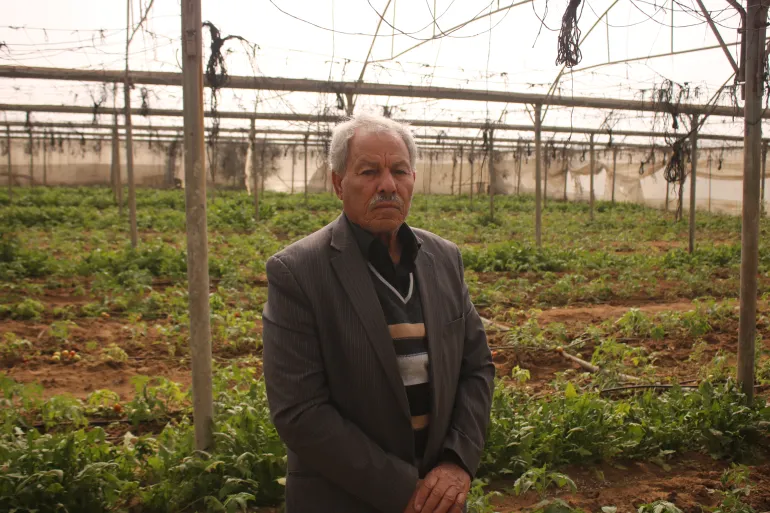
Eid al-Taaban, a 75-year-old farmer in Deir el-Balah [Abdallah al-Naami/Al Jazeera]
Expanding buffer zones
Israel still controls about 58 percent of the Gaza Strip, calling it a security buffer zone in the east, north, and south of the Gaza Strip. The majority of that buffer zone is Palestinian agricultural land.
Mohammed has only been able to return to one hectare (2.5 acres) of the more than 22 hectares (54 acres) of farmland his family had cultivated in Gaza City before the war. The other 21 hectares lie within the Israeli buffer zone, and he cannot access them.
The solitary hectare is only about 200 metres (650 feet) from the “yellow line”, which marks the border between the buffer zone and the rest of Gaza. Mohammed says that Israeli tanks frequently approach and fire randomly.
One such incident occurred on February 12, when Israeli tanks advanced into Salah al-Din Street and opened fire. Two Palestinians were killed, and at least four others were reported wounded. Mohammed was in his farmland, close to the Israeli tanks.
“We were working in the field when suddenly a tank approached and opened fire towards us. I had to take cover behind a destroyed building and waited there for more than an hour and a half before I could escape west,” Mohammed said.
The dangers to Mohammed’s farm are mirrored in central Gaza, where 75-year-old Eid al-Taaban is increasingly worried.
His land in Deir el-Balah lies only about 300 metres (980 feet) from the yellow line and the Israeli areas of control.
“We planted eggplants in an open field after the ceasefire. Now, we can’t reach it and harvest the crop because of the expansion of the buffer zone,” Eid told Al Jazeera.
“The sounds of Israeli heavy machineguns are heard every day in our area. Every time my sons go to irrigate the crops in the greenhouses, I just pray that they come back alive,” he added.
On February 6, the Palestinian news agency Wafa reported that the Israeli army killed Palestinian farmer Khaled Baraka while he was working on his land in eastern Deir el-Balah. Khaled was Eid’s neighbour and friend.
“Khaled Baraka was a great farmer,” Eid said. “He dedicated his life to cultivating his land and teaching his sons and daughters about farming.”
Israeli blockade
According to Palestinian farmers, the Israeli blockade of Gaza is one of the biggest challenges they face in their efforts to reclaim agricultural land.
Since October 7, 2023, Israel has largely prevented the entry of any agricultural equipment or supplies, such as seeds, pesticides, fertilisers, irrigation networks, or tractors.
That has led to a huge shortage, with what is available still liable to being damaged in bombing, or in the case of seeds, pesticides, and fertilisers, reaching expiry. The prices of what little is available have also skyrocketed due to the Israeli restrictions.
And even when the materials can be obtained, they do not guarantee a return.
Eid said that he had planted tomatoes in his greenhouses to harvest in the spring, paying an exorbitant amount to acquire the seeds, fertilisers, and pesticides.
After 90 days of costly care for the plants, and when it was time to start harvesting, the entire crop was ruined because the pesticides and fertilisers he had bought turned out to be ineffective. He was forced to replant the crop.
Israeli produce has flooded Gaza, often at lower prices than locally sourced produce [Abdallah al-Naami/Al Jazeera]
Market difficulties
Eid noted that the current economic conditions in Gaza mean that it is hard to find customers for the produce.
“Even when we manage to keep the plants alive and harvest the crop, we don’t know if we’ll be able to sell it,” Eid said.
The instability of the market in Gaza is causing heavy losses for local farmers.
Waleed Miqdad, an agricultural produce wholesaler, explained that Israeli authorities sometimes close the crossings and at other times flood the market with various goods, causing significant losses for Palestinian farmers.
He added that Israeli goods are usually of a lower quality and are priced more cheaply.
“Our local produce, although much fewer in quantity than before the war, still has a distinctive quality and taste. Many of our customers prefer local produce,” Waleed told Al Jazeera.
But many residents of Gaza, whose economy has been devastated as a result of the war, do not have the money to be able to choose the higher-priced items.
The competition from Israeli produce is therefore making it difficult for Palestinian farmers to market their produce and make a profit.
“I was recently forced to sell large quantities of my produce for less than the cost of production because of the competition from imported goods that are widely available in the market,” said Mohammed, the farmer from northern Gaza. “I had to sell and lose or watch my produce rot. And of course, we haven’t received any compensation or support.”
Despite the challenges facing the farmers in Gaza, they remain determined to reclaim agricultural fields across the Gaza Strip. These areas have always been adored by Palestinians in Gaza, where most had lived in the built-up cities. The farms provided a respite from Israel’s control over the territory and its constant wars.
“Agriculture is our life and our livelihood,” said Mohammed. “It is an important part of our Palestinian identity. Despite the destruction and danger, we will remain steadfast on our land and will replant all the land we can reach. Our children will continue after us.”
For Eid, farming is a continuation of the work of his ancestors – in towns that are now in Israel, and where he can never set foot.
“I’m 75 years old, and I still work in the fields every day,” Eid said. “My grandfather was a farmer in our hometown of Beersheba before the [1948] Nakba.”
“He taught my father, my father taught me, and today I’m passing on my agricultural expertise to my grandchildren,” Eid added. “The love of the land and agriculture is passed down from generation to generation in our family, and it can never be taken away from us.”
The three-day trip, at Beijing’s invitation, comes more than eight years after Trump’s first visit to China during his first stint as president.
Published On 21 Feb 202621 Feb 2026
Share
Donald Trump will travel to China from March 31 to April 2, the White House has said, in what will be the first official visit to Beijing by a United States president since Trump’s last trip there in 2017.
The dates, confirmed by a White House official on Friday, come as Trump and Chinese President Xi Jinping have respectively described “excellent” and “good communication” between the two countries in recent months.
Recommended Stories
list of 4 itemsend of list
“That’s going to be a wild one,” Trump said on Thursday of the planned trip.
“We have to put on the biggest display you’ve ever had in the history of China,” Trump said.
The announcement of Trump’s China visit came shortly before the US Supreme Court on Friday struck down the tariffs that Trump had imposed on countries around the world, in a tactic the US president has openly used to influence other countries to support his policies.
Beijing has already hosted a number of other Western leaders in recent months, including Canadian Prime Minister Mark Carney, who touted new trade deals and a lifting of Canada’s ban on buying Chinese-made electric cars during his visit.
Washington also continues to provide weapons sales and other support to Taiwan, which Beijing has promised to unify with mainland China.
This will be Trump’s first trip to China since the COVID-19 pandemic, which the then-US president labelled as the “Chinese virus”. Trump then downplayed the virus’s potential consequences in the US, where more than one million people died during the pandemic.
Since reopening its borders in January 2023, following strict self-imposed isolation during the pandemic, China has seemingly increased its efforts to engage with the outside world in recent months.
In addition to hosting Western politicians, China has also opened its doors to popular US live streamers such as Hasan Piker and Darren Watkins Jr, also known as Speed, while also attracting US citizens to its social media apps.
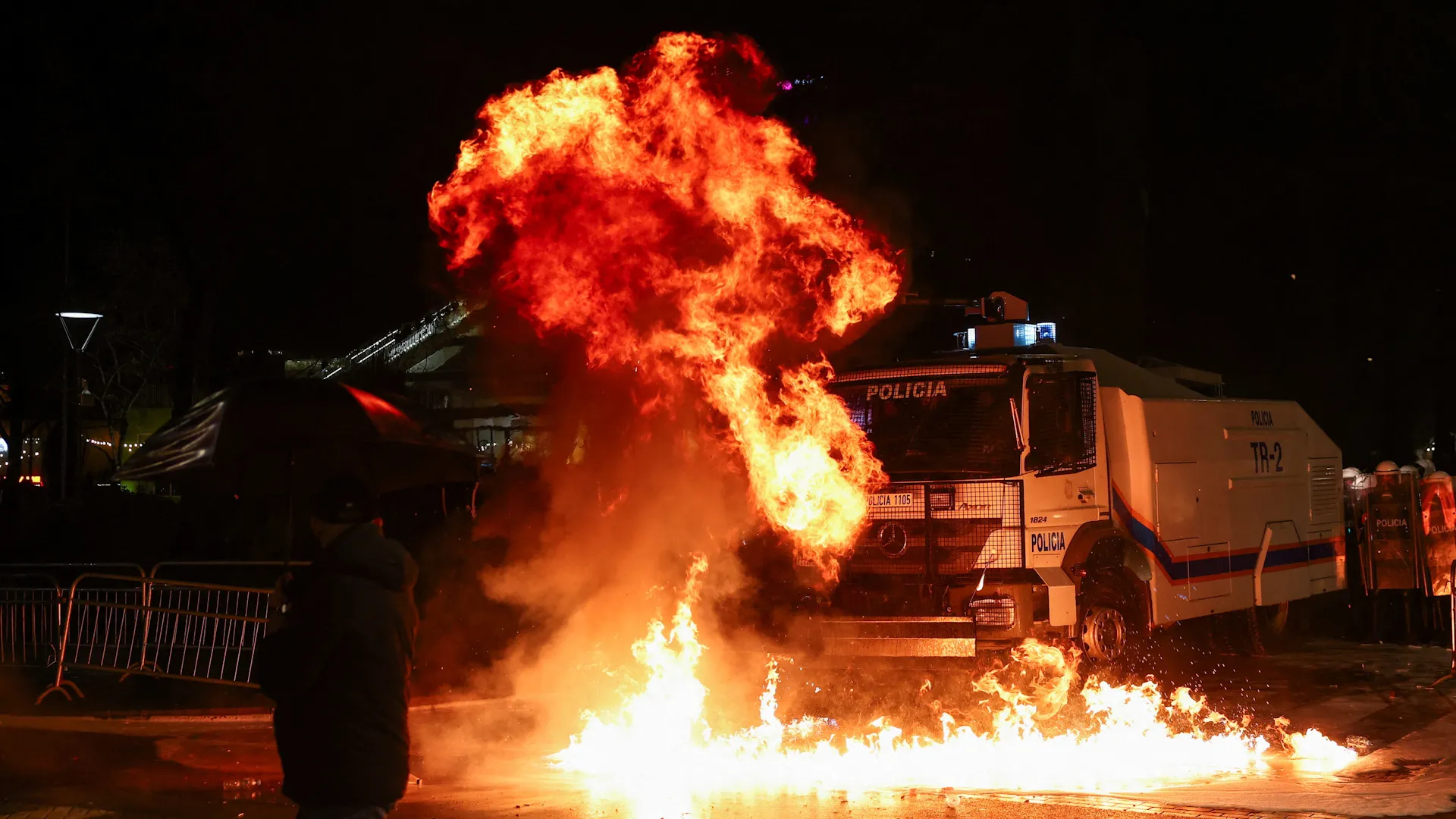
Police confronted protesters in Albania’s capital Tirana after demonstrators shot fireworks and threw petrol bombs at Prime Minister Edi Rama’s office, during an opposition rally demanding his resignation. Political tensions have escalated since December, when the deputy prime minister was indicted over suspected corruption.
President Trump calls Supreme Court justices an ’embarrassment to their families’ in 45-minute address to the media.
Published On 21 Feb 202621 Feb 2026
Share
United States President Donald Trump and his vice president, JD Vance, have launched personal attacks on the justices of the US Supreme Court and their families, after the country’s top court struck down trade tariffs imposed by the White House.
In a 45-minute address to reporters at the White House, the US president heaped criticism on the six justices who ruled against his signature tariff policy in the 6-3 decision by the court on Friday, including Neil Gorsuch and Amy Coney Barrett, whom Trump appointed to the court during his first term.
Recommended Stories
list of 4 itemsend of list
“I think it’s an embarrassment to their families, you wanna know the truth, the two of them,” Trump said, referring to Justices Gorsuch and Barrett.
“I’m ashamed of certain members of the court – absolutely ashamed – for not having the courage to do what’s right for our country,” Trump added.
Shockingly, Trump also claimed that the Supreme Court “has been swayed by foreign interests”, without providing any evidence.
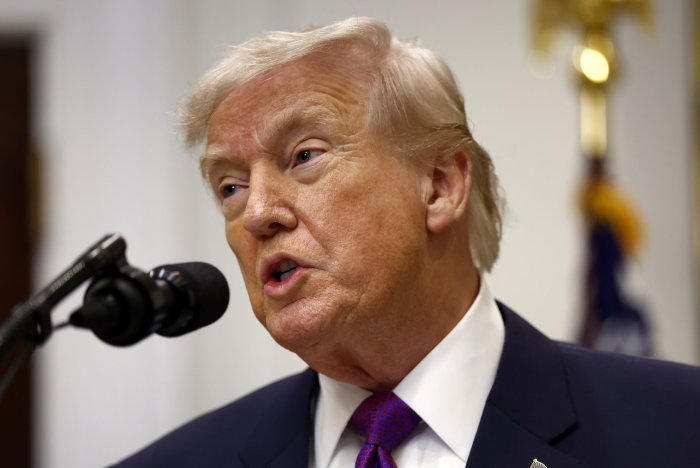
US President Donald Trump takes questions from reporters during a news conference at the White House in Washington, DC, on February 20, 2026 [Mandel Ngan/AFP]
Trump then warmly praised the three members of the court who dissented in the ruling.
“I’d like to thank and congratulate Justices [Clarence] Thomas, [Samuel] Alito, and [Brett] Kavanaugh for their strength and wisdom and love of our country, which is, right now, very proud of those justices,” Trump said.
“When you read the dissenting opinions, there’s no way that anyone can argue against them,” he said.
Vice President Vance also sharply criticised the justices for their ruling, accusing them of “lawlessness” in a post on X.
“Today, the Supreme Court decided that Congress, despite giving the president the ability to ‘regulate imports’, didn’t actually mean it,” Vance wrote in a post on X.
“This is lawlessness from the Court, plain and simple,” said Vance, whose political profile rose to prominence after writing a memoir about his time at Yale Law School.
Trump and Vance’s comments mark a rare rebuke of the nine-member Supreme Court, which currently has six members appointed by Trump’s Republican Party and has often ruled in favour of his administration’s policies.
More than 7,000 languages are spoken around the world today and at least 3,000 of them, or 40 percent, are endangered.
English is the most widely spoken language, with approximately 1.5 billion speakers in 186 countries. Two out of every 10 English speakers are native, while the remaining 80 percent speak English as their second, third or higher language, according to Ethnologue, a database which catalogues the world’s languages.
Mandarin Chinese is the second most spoken language with almost 1.2 billion speakers. However, when accounting for native speakers, it is the largest language in the world, owing to China’s large population.
Hindi comes in third at 609 million speakers, followed by Spanish (559 million), and Standard Arabic (335 million).
Scripts in the world’s most popular languages
There are 293 known scripts – sets of graphic characters used to write a language – according to The World’s Writing Systems, a reference book about global scripts.
More than 156 scripts are still in use today, while more than 137 historical scripts, including Egyptian Hieroglyphs and Aztec pictograms, are no longer in use.
The Latin script, which is used to write English, French, Spanish, German and more, is used in at least 305 of the world’s 7,139 known living human languages. More than 70 percent of the world’s population use it.
Which are the most endangered languages?
Of the 7,159 languages spoken worldwide, 3,193 (44 percent) are endangered, 3,479 (49 percent) are stable, and 487 (7 percent) are institutional, meaning they are used by governments, schools and the media.
A language becomes endangered when its users begin to pass on a more dominant language to the children in the community. Many are used as second languages.
According to Ethnologue, some 337 languages are said to be dormant while 454 are extinct.
Dormant languages are those that no longer have proficient speakers, but the language still has social uses and the language is part of the identity of an ethnic community. Extinct languages are those that have no speakers and no social uses or groups that claim it as part of their heritage or identity.
According to Ethnologue, 88.1 million people speak an endangered language as their mother tongue. There are:
1,431 languages with fewer than 1,000 first-language speakers
463 with fewer than 100 speakers
110 with fewer than 10 speakers
Just 25 countries are home to some 80 percent of the world’s endangered languages. Oceania has the most endangered languages, followed by Asia, Africa and the Americas.
Some endangered languages include:
Oceania
In Australia, Yugambeh, an endangered Aboriginal language, is spoken by the Yugambeh people, primarily across the Gold Coast, Scenic Rim and Logan in eastern Australia.
In recent years, a strong community-led revitalisation programme and the use of learning apps have made the language more accessible to younger generations.
Asia
Japan’s Ainu (Ainu Itak) is a critically endangered language. According to UNESCO, it can’t be linked with certainty to any family of languages. The exact number of Ainu speakers is unknown, however a 2006 survey showed that out of 23,782 Ainu, 304 know the language.
Africa
In Ethiopia, Ongota is a critically endangered language.
It was spoken by a community on the west bank of the Weito River in southwest Ethiopia. There are only about 400 members of the community left, with a handful of elders speaking the language.
Americas
In North and Central America, almost all Indigenous languages are endangered. Louisiana Creole, a French-based creole with African and Indigenous influences, is a seriously endangered language in the United States, with it mostly spoken by elders.
Leco is an endangered Indigenous language spoken in Bolivia and is considered an isolated language – one that has no genetic relationship to other languages. The language is only now spoken by elders with a Leco ethnic population of only about 13,500.
Europe
Cornish (Kernewek), spoken in southwest England, was marked as an extinct language by UNESCO, until it was revived and in 2010 changed to an endangered language. It is spoken as a first language by 563 people according to the 2021 England and Wales census.
People walk past sargassum clumps on the sand in Punta Cana, Dominican Republic, in July. File Photo by Orlando Barria/EPA
Feb. 20 (UPI) — The Dominican Republic opened the year with 1.22 million tourists in January, a 5.5% increase compared with the same month last year. The increase was driven by growth in air arrivals and sustained demand from the United States.
Tourist arrivals to the island by air surpassed the 800,000-passenger mark for the first time in a single month, posting year-over-year growth of 8.7%, according to the Ministry of Tourism,. The figure exceeds pre-pandemic levels and is 61% higher than recorded in January 2019.
“Receiving 1,219,606 visitors for the first time in the history of Dominican tourism tells us how extraordinary this year will be for the sector,” Dominican Republic Tourism Minister David Collado said.
Collado held meetings in New York with representatives of JPMorgan, Bank of America, Standard & Poor’s and American Express, as well as other key players in the international financial system, as part of a strategic agenda to position tourism as the country’s leading productive sector.
According to information released Thursday by the presidency, Collado presented projections for Dominican tourism for this year, highlighting the sector’s sustained growth and predicting that if the current trend continues, 2026 could close with new record figures for the industry.
Dominican tourism continues to position itself as a reliable destination for investment, authorities said, backed by what they describe as “a vision of sustainable development that inspires confidence in international markets.”
According to information from the Ministry of Tourism, North America is the main source market for tourists to the island, accounting for 59% of air arrivals, led by the United States and Canada. Latin America also showed solid performance and expanded its share of total visitors.
Punta Cana accounted for the largest share of the country’s air traffic during the month. The cruise segment recorded a slight decline compared with the same period last year, while hotel occupancy averaged 82% nationwide during peak season.
Tourism is one of the main generators of foreign exchange and employment. In 2025, the country received more than 11.6 million visitors, consolidating its position as the Caribbean’s leading tourist destination.
As part of its international promotion strategy, the Ministry of Tourism signed a strategic alliance with Visa Inc., making the Dominican Republic the first country in the Caribbean to finalize an agreement of this kind with the global payments company.
The alliance includes joint campaigns, targeted promotions and exclusive benefits for international travelers, with emphasis on key markets such as the United States, Canada, Europe and Latin America.
The Dominican Republic is projected to be the fastest-growing economy in Latin America and the Caribbean in the coming years, according to the most recent forecasts by the World Bank and the International Monetary Fund.
Growth projections for 2026 place real GDP expansion between 4.0% and 4.5%, positioning the country as one of the economic leaders in the Caribbean region.
In that scenario, tourism is a strategic engine and the backbone of the Dominican economy. Its role is not only to generate revenue, but also to act as a catalyst for other key sectors, such as construction, commerce and transportation.
In 2025, the sector contributed approximately $21.1 billion, representing about 16% of the gross domestic product.
Feb. 20 (UPI) — Most Americans disapprove of President Donald Trump‘s handling of deporting undocumented immigrants, according to a Washington Post-ABC News-Ipsos poll released Friday.
The poll of 2,600 people found that 58% disapprove of Trump’s handling of the issue, while 62% oppose the tactics of U.S. Immigration and Customs Enforcement. The poll was taken Feb. 12-17, after the shooting deaths of Renee Good and Alex Pretti in Minnesota.
Broken down by political party, 95% of Democrats disapprove of Trump handling of immigration, while 16% of Republicans agree. The latter figure is up from 13% in October. Independents feel he’s gone too far by 63%, which is up from 54% in October.
Trump’s approval rating on immigration has dropped steadily over the past year, and is down by 10%. He gets higher numbers on his handling of the U.S.-Mexico border, 47%.
Half of Americans support efforts to deport all undocumented immigrants, the poll showed. In October, a poll showed that 45% were in support of expanded ICE operations and 46% were opposed. Today, Americans opposed the expanded operations by 53% to 40%.
A large number — 77% — believe that a warrant from a judge is necessary to enter a person’s home, while 20% believe an administrative warrant is enough.
And though the administration says it is targeting “the worst of the worst,” about 33% of Americans surveyed believe that.
The Washington Post-ABC News-Ipsos poll was conducted Feb. 12-17, 2026, among 2,589 U.S. adults with a margin of error of 2 percentage points.
President Donald Trump speaks alongside Administrator of the Environmental Protection Agency Lee Zeldin in the Roosevelt Room of the White House on Thursday. The Trump administration has announced the finalization of rules that revoke the EPA’s ability to regulate climate pollution by ending the endangerment finding that determined six greenhouse gases could be categorized as dangerous to human health. Photo by Will Oliver/UPI | License Photo
Feb. 20 (UPI) — The University of Mississippi Medical Center closed its 35 clinics throughout Mississippi on Friday after being targeted in a ransomware attack.
Medical center officials also canceled all elective medical procedures that were scheduled for the day and rescheduled all but dialysis appointments at the medical center’s location in the Jackson Medical Mall in the state’s capital.
That medical center remained open and provided medical services on Friday. Hospital officials said they and federal law enforcement were in contact with those who carried out the ransomware attack.
“We continue to work with federal authorities and national experts in cyberattack response as we evaluate the extent of the attack and our next steps,” medical center officials said in a Facebook post Thursday.
“We expect this to be a multi-day event and will communicate helpful information when available.”
The university medical center’s hospitals and emergency departments also were open. Officials said they plan to announce any closures that might affect those healthcare service providers if it becomes necessary.
University officials also canceled all online classes Friday, but in-person classes were held.
University Vice Chancellor for Health Affairs LouAnn Woodward confirmed a ransomware attack affected the medical center’s key network systems, including Epic and its medical records.
Woodward said officials at the medical center shut down its IT systems out of precaution and do not know when the matter might be resolved.
In the meantime, doctors and medical center staff were using pen and paper while continuing to provide medical services for patients until the IT system is restored.
The university health clinics provide many services, including treating cancer and chronic pain.
Microsoft’s gaming executive Phil Spencer is retiring after 38 years and will be replaced by Asha Sharma, company officials said on Friday. Photo by Friedemann Vogel/EPA
Feb. 20 (UPI) — Microsoft Gaming Chief Executive Officer Phil Spencer is retiring after 38 years at the tech giant and is being replaced by Asha Sharma, whom Microsoft hired from Instacart in 2024.
Nadella said Spencer last year announced his decision to retire, and the company officials announced the pending change to staff on Friday.
Sharma will move from Microsoft’s CoreAI wing, where he was the company’s president of product development. He formerly was Instacart’s chief operating officer and before that was Meta’s vice president of product development.
Spencer is leaving the tech giant after former business development head Chris Young and Thomas Dohmke, former GitHub chief executive, departed last year.
Microsoft’s security systems head Charlie Bell also changed his role with the company but continues working in an individual capacity.
Microsoft’s video gaming revenues declined by 10% from December 2024 to December 2025, which exceeded the company’s expectations, according to CNBC.
Despite the tech firm’s reduced gaming revenue, it posted a 17% gain in revenue during the fourth quarter of 2025 compared to a year earlier.
Microsoft in 2023 bought Activision Blizzard and made its Call of Duty gaming titles available on its cloud service.
Competition for Sony’s proprietary gaming system has impacted Microsoft’s gaming revenues due to its Xbox system not matching Sony’s PlayStation or Nintendo’s Switch in popularity.
Microsoft has closed its gaming development studios that developed new titles.
Activists released on bail include four hunger strikers: Teuta Hoxha, Kamran Ahmed, Qesser Zuhrah and Heba Muraisi.
Published On 20 Feb 202620 Feb 2026
Share
Twelve activists linked to the Palestine Action group who were charged with breaking into the British site of an Israel-linked defence firm have been released on bail.
There were tears of joy at London’s Central Criminal Court, better known as the Old Bailey, as the 12 prisoners, including hunger strikers Teuta Hoxha, Kamran Ahmed, Qesser Zuhrah and Heba Muraisi, were released on Friday.
Recommended Stories
list of 3 itemsend of list
The group – which also included Zara Farooque, Salaam Mahmood, Moiz Ibrahim, Finn Collins, Hannah Davidson, Harland (Harley) Archer, Louie Adams and Liam Mullany – had been held on remand in connection with a raid on the Elbit Systems factory in Filton, near Bristol, on August 6, 2024.
“Despite the state’s best efforts to break each and every one of them, they will walk out today with their heads held high,” said a spokesperson for the Filton 24 Defence Committee, hailing their release as a “monumental victory”.
The release of the 12, which comes after 11 other defendants charged in connection with the raid were also granted bail, means that 23 out of the so-called “Filton 24” are now out of prison.
On February 4, six of the activists were acquitted of aggravated burglary, the most serious of the charges they faced in connection with the raid at London’s Woolwich Crown Court. The jury was unable to reach a verdict on charges of criminal damage.
On Wednesday, the same court dropped aggravated burglary charges, which carry a maximum sentence of life in prison, against the remaining 18 Filton 24 members, granting five more defendants bail.
Only Samuel Corner, who faced an additional charge of allegedly hitting a female police sergeant with a sledgehammer, remains on remand. He did not apply for bail on Friday.
The Filton 24 Defence Committee called for Corner’s release. “This isn’t right, or just, given he has already spent over 18 months in prison with no convictions. He should also be granted immediate bail,” said the spokesperson.
The release of the activists comes after the British High Court ruled that the government’s ban on Palestine Action as a “terror group” was unlawful and disproportionate.
Home Secretary Shabana Mahmood said in a statement that she was “disappointed” and that she intended to appeal the judgement in the Court of Appeal.
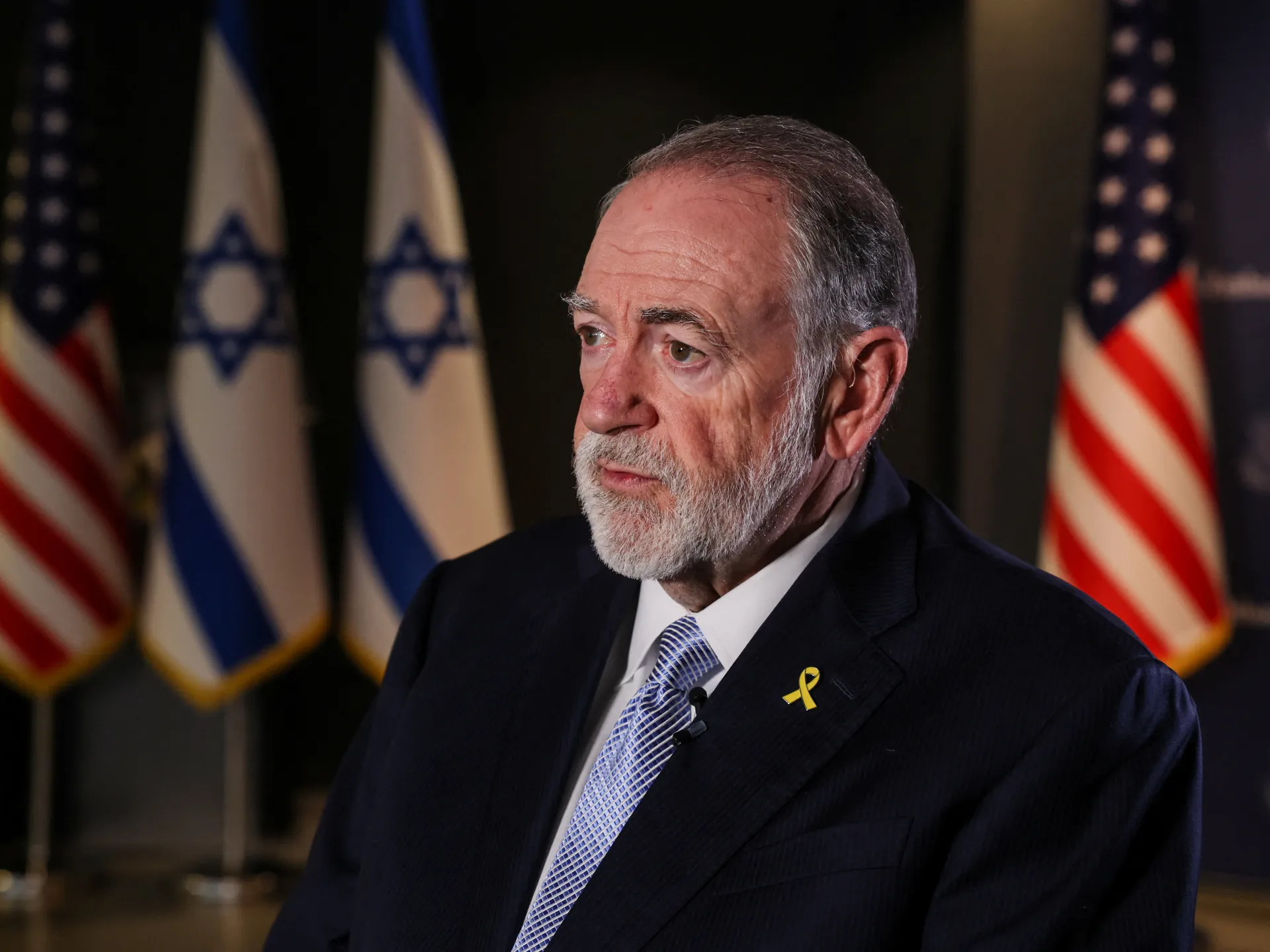
Mike Huckabee, the United States ambassador to Israel, has suggested that he would not object if Israel were to take most of the Middle East, stressing what he described as the Jewish people’s right to the land.
In an interview with conservative commentator Tucker Carlson that aired on Friday, Huckabee was pressed about the geographical borders of Israel, which he argues are rooted in the Bible.
Recommended Stories
list of 3 itemsend of list
Carlson told Huckabee that the biblical verse had promised the land to the descendants of Abraham, including the area between the Euphrates River in Iraq and the Nile River in Egypt.
Such a swath would encompass modern-day Lebanon, Syria, Jordan and parts of Saudi Arabia.
“It would be fine if they took it all,” said Huckabee, who was appointed by President Donald Trump last year.
Carlson, who appeared taken aback by the statement, asked Huckabee if indeed he would approve of Israel expanding over the entire region.
“They don’t want to take it over. They’re not asking to take it over,” the ambassador replied.
The US envoy, an avowed Christian Zionist and staunch defender of Israel, later appeared to walk back his assertion, saying that it “was somewhat of a hyperbolic statement”.
Still, he left the door open for Israeli expansionism based on his religious interpretation.
“If they end up getting attacked by all these places, and they win that war, and they take that land, OK, that’s a whole other discussion,” Huckabee said.
The Department of State did not respond to Al Jazeera’s request for comment on whether Secretary of State Marco Rubio shares Huckabee’s views on Israel’s right to expand.
The principle of territorial integrity and the prohibition against the acquisition of land by force have been a bedrock of international law since World War II.
In 2024, the International Court of Justice (ICJ) ruled that Israel’s occupation of the Palestinian territories is illegal and must cease immediately.
But Israeli law does not clearly demarcate the country’s borders. Israel also occupies the Golan Heights in Syria, which it illegally annexed in 1981.
The US is the only country that recognises Israel’s claimed sovereignty over the Syrian territory.
After the 2024 war with Hezbollah, Israel also set up military outposts in five points inside Lebanon.
Some Israeli politicians, including Prime Minister Benjamin Netanyahu, have openly promoted the idea of a “Greater Israel” with expanded borders.
Israel’s Finance Minister Bezalel Smotrich stirred international outrage in 2023 when he spoke at an event featuring a map that included the Palestinian territories and portions of Lebanon, Syria and Jordan as part of Israel, set against the colours of the Israeli flag.
In his interview with Carlson, Huckabee tried to argue that Israel’s right to exist is rooted in international law, but he also attacked the legal institutions that oversee international law for their opposition to Israeli abuses.
“One of the reasons I’m so grateful President Trump and Secretary Rubio are pushing hard, trying to get rid of the ICC [International Criminal Court] and the ICJ is because they have become rogue organisations that are no longer really about an equal application of law,” he said.
Beyond his professed religious devotion to Israel, Huckabee has faced criticism for failing to speak up for the rights of US citizens who have been killed and imprisoned by Israeli forces during his ambassadorship.
Last year, Huckabee even sparked anger from some conservatives in the US when he met with convicted spy Jonathan Pollard, who sold US intelligence secrets to the Israeli government, details of which later made it to the Soviet Union at the height of the Cold War.
Pollard, a former civilian analyst in the US Navy, served 30 years in jail and moved to Israel in 2020 after his release. He never expressed regret for his crimes, and in 2021, he called on Jewish employees in US security agencies to spy for Israel.
Huckabee said he does not agree with Pollard’s views, but he denied hosting him, arguing that he simply held a meeting with him at the US embassy in Jerusalem.
Asked if anyone can walk into the embassy to meet the envoy, Huckabee acknowledged that such a meeting requires a pre-approved appointment.
“He was able to come to the US embassy to have a meeting at his request. I did, and frankly, I don’t regret it,” Huckabee said.
“I met with a lot of people over the course of the time I’ve been here and will meet with a lot more.”
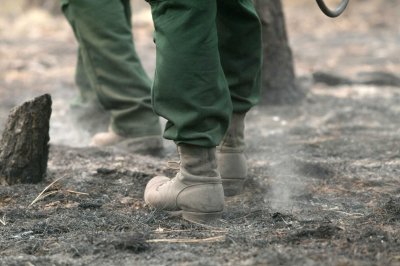
Feb. 20 (UPI) — Wildfires have burned more than 300,000 acres in the Oklahoma and Texas panhandles, and more than a million people in the region were under a fire watch Friday.
No deaths were reported, but several structures have been damaged or destroyed in Oklahoma’s Panhandle, where a 283,000-acre Ranger Road Fire was 20% contained as of Friday morning, KFOR reported. That fire spread into parts of southwestern Kansas.
The Stevens Fire, 12,428 acres, and the Side Road Fire, 3,680 acres, in Oklahoma’s Texas County were 60% and 75% contained, respectively as of Friday morning.
The Poor Farm Fire in Latimer County was 10% contained after burning some 9,000 acres.
Among other significant fires, the 43 Fire in Woodward County has burned 1,680 acres and was 60% contained, while the 1,400-acre Rattlesnake Fire in Osage and Washington counties was only 30% contained.
Other active fires are the 182-acre Hospital Road Fire in Carter County, which was 40% contained; the 242-acre 615 Fire in Cherokee County, which was 70% contained; and the 126-acre Chelsea Fire in Rogers County, which was 60% contained.
Warm, dry and windy conditions in the area triggered the fires, and Oklahoma Gov. Kevin Stitt on Tuesday declared states of emergency for Woodward, Beaver and Texas counties.
Many residents have evacuated those counties, and a significant fire danger remains in Texas and Cimarron counties in the Panhandle region.
Local forecasters said cooling temperatures and lessening wind speeds are expected to reduce the threat of the fires spreading, but wind speeds of between 25 mph and 35 mph, with gusts of up to 60 mph, continued on Friday morning.
Sudan enters Ramadan as Civil War intensifies, famine spreads, and drone strikes hit civilian markets.
Sudan’s civil war is shifting into a drone-driven phase, erasing the lines between battlefield and civilian life. As Ramadan begins under famine conditions, how do the people of Sudan mark the holy month in the midst of war?
In this episode:
Episode credits:
This episode was produced by Sarí el-Khalili and Melanie Marich with Maya Hamadeh, Tuleen Barakat and our guest host, Tamara Khandaker. It was edited by Ney Alvarez.
Our sound designer is Alex Roldan. Our video editors are Hisham Abu Salah and Mohannad al-Melhemm. Alexandra Locke is The Take’s executive producer. Ney Alvarez is Al Jazeera’s head of audio.
Newspaper front pages feature Peru’s new interim president Jose Maria Balcazar in Lima on Thursday. Congress elected Balcazar as the new interim president during an extraordinary session. But he is also on trial for financial irregularities. Photo by Paolo Aguilar/EPA
Feb. 20 (UPI) — Peru’s interim President Jose Maria Balcazar was summoned to continue his trial over alleged misappropriation of funds from the Lambayeque Bar Association just one day after assuming the presidency.
The case adds legal pressure to a temporary administration already shaped by political uncertainty.
Peru’s Public Ministry alleges that during his tenure as dean of the Lambayeque Bar Association from 2019 to 2022, Balcazar committed irregularities in managing the institution’s financial income and expenditures.
Prosecutors also allege he ordered profits to be deposited into his personal bank accounts, El Comercio newspaper reported.
Balcazar, a lawmaker from the leftist Peru Libre party, assumed the interim presidency Wednesday following the removal of his predecessor Jose Jeri. News of the court summons emerged only hours after his inauguration.
The first hearing is scheduled June 16, with additional sessions set for June 23 and June 30, either virtually or at the Lambayeque Superior Court in Chiclayo, according to judicial authorities.
A judge ordered the president’s mandatory attendance and warned that failure to appear could result in him being declared in contempt and subject to a nationwide arrest warrant.
On the day lawmakers elected Balcazar, the Lambayeque Bar Association issued a statement opposing his candidacy and warning of multiple allegations against him, RPP Noticias reported.
The association expelled Balcazar permanently Aug. 13, 2022, citing violations of its statutes and code of ethics. It said his conduct caused “serious harm to his own professional association and, consequently, to the dignity and distinguished image all Peruvian lawyers must preserve.”
Balcazar has consistently denied the accusations, saying they lack legal basis.
He also has faced other investigations and complaints over several years. During his time as a judge and later as a congressman, he was the target of allegations including suspected judicial misconduct, fraud, identity impersonation and bribery, along with other questions raised about his professional conduct.
In his first remarks as president, Balcazar sought to downplay the impact of his legal cases, saying “it is not difficult to govern a country” and adding his administration will focus on ensuring “unquestionable” elections scheduled for April.
Separately, former President Pedro Castillo, who is serving an 11-year, five-month sentence for rebellion after his failed 2022 attempt to dissolve Congress, has requested a presidential pardon from Balcazar.
Castillo’s former defense minister and attorney Walter Ayala formally delivered it to the presidential office.
During Castillo’s administration, Balcazar emerged as one of his most visible defenders. He supported Castillo’s government and questioned investigations that involved officials close to the executive branch, local outlet Peru21 reported.
“The United States, after all, is not at war with every nation in the world.” The US Supreme Court has struck down Donald Trump’s use of a national emergency declaration to impose sweeping global tariffs. Al Jazeera’s Mike Hanna explains the court’s reasoning.
More than 22,000 companies have closed and more than 300,000 formal jobs have been lost in Argentina over the past two years as a result of a trade liberalization policy that reduced tariffs with the promise of lowering consumer prices, a trade association says. File Photo by Juan Ignacio Roncoroni
BUENOS AIRES, Feb. 20 (UPI) — The announcement of the closure of FATE, the only tire manufacturer entirely owned by the Argentine capital and with more than 80 years of history, became the most visible symbol of the fracture facing industry under the government of Javier Milei.
FATE’s decision, announced on Wednesday, was made due to the company’s inability to compete with a wave of imported tires arriving from Asia at prices far below local costs.
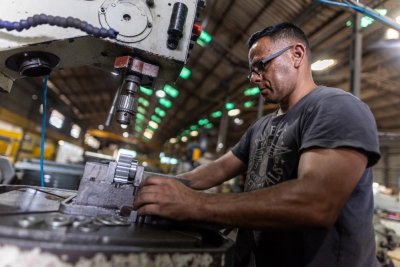
FATE’s case was not isolated. According to the association Industriales Pymes Argentinos, or IPA, more than 22,000 companies have closed and more than 300,000 formal jobs have been lost over the past two years as a result of a trade liberalization policy that reduced tariffs with the promise of lowering consumer prices.
This strategy left local production facing competition that many business owners describe as unequal and difficult to sustain.
Daniel Rosato, the IPA president, told UPI that over the past two years, the country experienced an avalanche of imports, ranging from capital goods to food products.
He said Milei’s government reduced tariffs to boost competitiveness, but the outcome was different.
“Argentina has very high dollar-denominated costs and the domestic industry was unable to compete against cheaper imported products, many of these come from Asia,” Rosato said.
“It is very difficult to compete with China. This led the industry to begin producing less due to a lack of competitiveness. The recession is deepening. Factory closures affect not only small companies, but the entire industrial sector,” he said.
Economist Leonardo Park, a researcher at the think tank Fundar, said the government implemented a sweeping deregulation of foreign trade.
Some of these measures, he said, were necessary, such as eliminating bureaucratic systems that previously delayed or limited product imports and simplifying the permits companies needed to bring goods from abroad.
However, tariffs were also reduced, technical standards relaxed, customs controls loosened and the anti-dumping system was reformed.
“All of these reforms generated strong growth in imports since last year,” he said.
Park warned that a rapid increase in foreign purchases creates a risk for local production, as it competes directly with it.
“A drop in production can translate into a risk for the employment associated with that activity,” he said, adding that FATE’s case illustrates such an impact.
“More imported tires mean less domestic production,” Park said. “When production falls, companies downsize or close. The final effect is layoffs and job losses.”
The economist also pointed to two central concerns: the loss of industrial capabilities the country already developed and employment.
“Displaced workers often face difficulties finding jobs in other sectors, whether due to a lack of dynamism in the labor market, a shortage of new skills or because growing activities are concentrated in other regions,” Park said.
From a legal perspective, labor attorney Walter Mañko, partner at Deloitte Legal Argentina, said the company cited a loss of competitiveness that made the business unviable.
“It is true that tires coming from China have a much lower cost than those manufactured in Argentina and that generates a decline in domestic demand,” he said.
Mañko also underscored the social impact. The 920 jobs lost with FATE’s closure represent families that could be left without income. In economic terms, he added, the country loses its main tire manufacturer, a loss that he said cannot be overlooked.
After the closure announcement, Milei’s government intervened through the Labor Secretariat and ordered mandatory conciliation. It is a legal tool the state can activate without prior request from the company or the union to halt the conflict and restore the situation to the point before the crisis.
For 15 days, with the possibility of extending the period by five more, both sides must sit down to negotiate. The room for agreement is narrow. What happens in those talks will not only define FATE’s future, but also send a signal about Argentina’s industrial direction in this new economic phase.
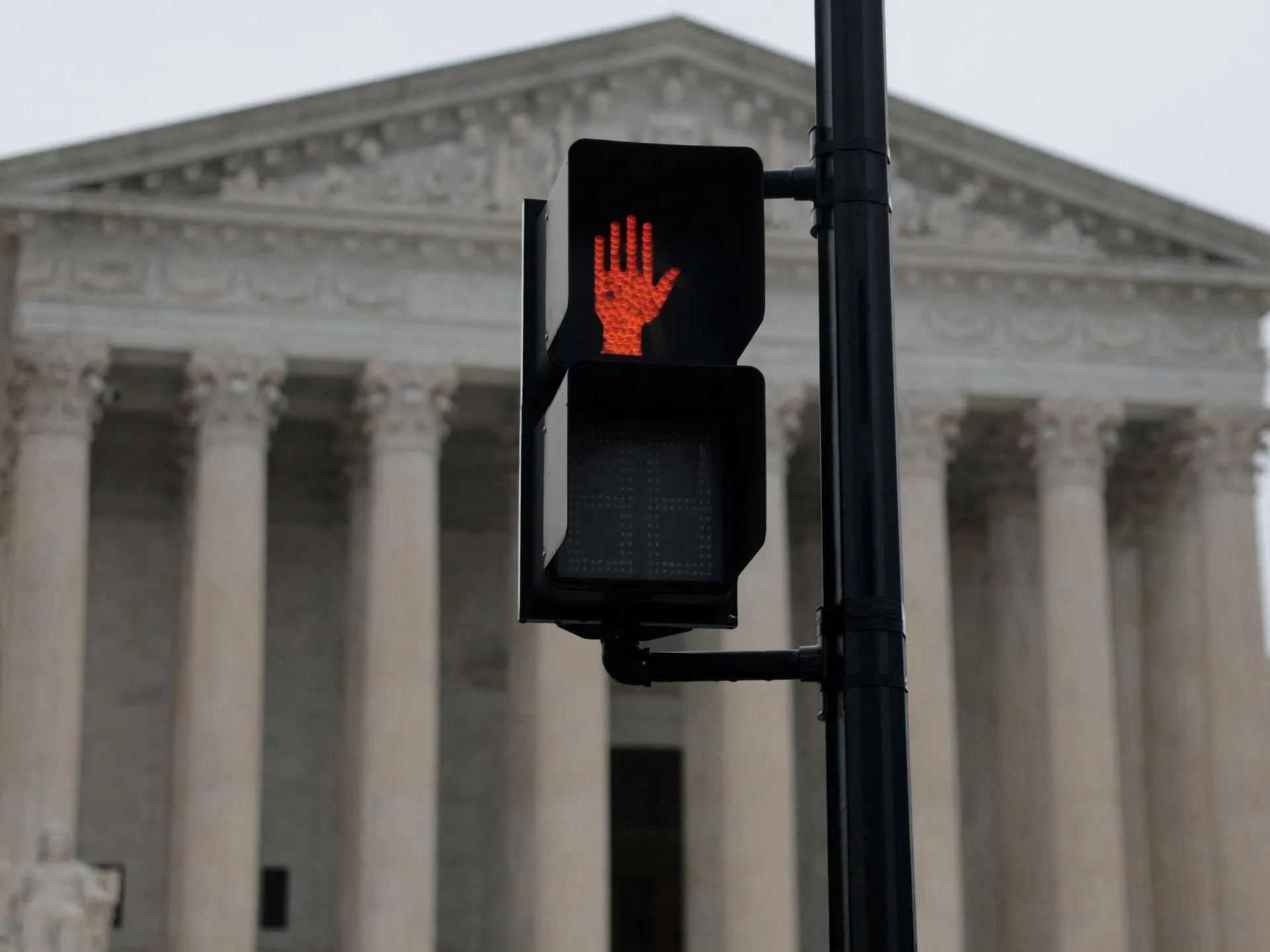
Feb. 20 (UPI) — The U.S. Supreme Court ruled Friday that President Donald Trump does not have the unilateral authority to impose tariffs.
The 6-3 decision struck down some of the broad tariffs Trump has imposed across the world from the Executive Branch. Chief Justice John Roberts said the president “must identify clear congressional authorization” to use the International Emergency Economic Powers Act to impose tariffs.
The decision came down in a lawsuit with several small businesses and Democratic attorneys general sued the Trump administration over improperly imposing tariffs. The plaintiffs argued that Trump was using the tariffs to raise revenue, a responsibility that falls under the scope of U.S. Congress, not the president.
While the Justice Department claimed that Trump was using tariffs to regulate foreign goods, Trump often said the tariffs were bringing in substantial revenue to the federal government.
Tariffs that Trump imposed using other laws will remain in place, such as tariffs on steel and aluminum.
Roberts added that the Trump administration has not provided any statutory support to its claim that the International Emergency Economic Powers Act applies to tariffs.
“We hold that the IEEPA does not authorize the president to impose tariffs,” Roberts wrote in the majority opinion.
Friday’s decision is the first in which a legal challenge to Trump’s second-term policies received a full hearing and resolution from the U.S. Supreme Court.
President Donald Trump speaks alongside Administrator of the Environmental Protection Agency Lee Zeldin in the Roosevelt Room of the White House on Thursday. The Trump administration has announced the finalization of rules that revoke the EPA’s ability to regulate climate pollution by ending the endangerment finding that determined six greenhouse gases could be categorized as dangerous to human health. Photo by Will Oliver/UPI | License Photo
Feb. 20 (UPI) — The 43-day government shutdown in the fall stymied U.S. gross domestic product growth in the fourth quarter, the Bureau of Economic Analysis reported Friday.
GDP for the fourth quarter of 2025 grew by 1.4% on an annual basis, more than a full point below the Dow Jones estimate of 2.5%. Consumer spending climbed more slowly than expected, while government spending lagged behind greatly.
The slowdown in growth is significant when compared to the 4.4% growth recorded in the third quarter.
While economic growth slowed, inflation continued to apply pressure. The personal consumption expenditures price index, the key measurement of inflation used by the Federal Reserve, increased by 2.9%, well above the Fed’s 2% target.
The price index for GDP purchases rose 3.7%, accelerating from 3.4% in quarter three.
The BEA report says the full effects of the record government shutdown “cannot be quantified” as the data cannot be separated. It still estimated the effects of reduced labor services by government employees.
Hundreds of thousands of government employees were furloughed during the shutdown.
“BEA estimates that this reduction in services provided by the federal government subtracted about 1.0 percentage point from real GDP growth in the fourth quarter,” the report says.
Government spending in defense and nondefense declined, as did spending on exports.
Health care services were a leading source of growth in consumer spending. Decreased spending on goods offset this growth.
President Donald Trump speaks alongside Administrator of the Environmental Protection Agency Lee Zeldin in the Roosevelt Room of the White House on Thursday. The Trump administration has announced the finalization of rules that revoke the EPA’s ability to regulate climate pollution by ending the endangerment finding that determined six greenhouse gases could be categorized as dangerous to human health. Photo by Will Oliver/UPI | License Photo
South Korean dealers work in front of monitors at the Hana Bank in Seoul on Friday. The benchmark South Korea Composite Stock Price Index, or KOSPI, topped the 5,800-point mark for the first time to close at an all-time high of 5,803.53, rising 131.28 points, or 2.31%. Photo by Jeon-Heon-kyun/EPA
SEOUL, Feb. 20 (UPI) — South Korea’s benchmark KOSPI index continues to set records, driven by strong corporate performances, including semiconductor giants Samsung Electronics and SK hynix.
The index more than doubled over the past year to surpass 5,800 points Friday. Also fueling the bullish rally are Mirae Asset Securities and SK Telecom, which have invested in promising U.S. firms expected to list in the near future.
The share price of Mirae Asset Securities, South Korea’s leading brokerage house, more than tripled this year, buoyed by strong earnings. It reported $1.1 billion in net profit for 2025, up 72% from a year earlier.
In addition, observers point out the company’s investment in SpaceX, which is expected to go public this summer with a market capitalization of around $1.25 trillion, has also underpinned its stock.
In 2022 and 2023, Mirae Asset Group reportedly channeled $278 million into SpaceX, and roughly half of that came from Mirae Asset Securities, although It does not confirm the detailed figures. A listing could deliver significant windfalls for the brokerage.
Yuanta Securities analyst Woo Do-hung said that Mirae Asset Securities is likely to remain strong through SpaceX’s IPO.
SpaceX is the world’s top private aerospace manufacturer, while xAI is an artificial intelligence startup founded by Elon Musk. Earlier this month, the former acquired the latter in an all-stock deal.
“Following its merger with xAI, SpaceX’s current valuation is estimated at around $1 trillion,” Woo said in a report, expecting the figure to rise to as much as $1.5 trillion after listing, further supporting Mirae Asset Securities on the Seoul bourse.
Reflecting confidence in its long-term upside potential, Mirae Asset Securities also plans to keep holding stakes in innovative companies like SpaceX before they go public.
“We are not yet considering an exit strategy, as our investments in innovative companies remain unlisted,” CFO Lee Kang-hyuk told a conference call earlier this month.
“We aim to pursue exits at the most optimal timing and then reinvest the recovered funds into high-growth assets or use them for M&A, thus establishing a stable virtuous cycle,” he added.
Another beneficiary in the Korean stock market is SK Telecom, the country’s largest mobile carrier, which made a strategic equity investment of $100 million in Anthropic in mid-2023 through its venture arm.
Known for its Claude family of artificial intelligence models, Anthropic is also projected to go public in the coming years.
With its valuation estimated at about $380 billion, the value of SK Telecom’s stake has jumped several-fold to more than $2 billion, or nearly 20% of the company’s market capitalization.
The successful investment has bolstered its share price, which surged over 50% this year.
“The value of SK Telecom’s stake in Anthropic is estimated at around $2.1 billion,” Korea Investment & Securities analyst Kim Jeong-chan said in a report. “It has lifted SK Telecom’s valuation.”
He expected that AI-related revenue, including AI data centers and AI transformation, could put the firm on track to approach $1.4 billion in 2026 operating profit from $740 million last year.
Against this backdrop, industry watchers note that an increasing number of Korean corporations are likely to pursue long-term investments in promising startups from the advanced markets.
“As predicting the future has become increasingly difficult, companies are more often building portfolios of smaller investments rather than making large bets on a handful of prominent firms,” economic commentator Kim Kyeong-joon, formerly vice chairman at Deloitte Consulting Korea, told UPI.
“In the past, they might have made major investments in around five companies, but now it’s common to spread smaller investments across 30 firms. Even if only a few succeed, that is considered a success,” he said.
Kim noted that such a trend would accelerate across the country’s corporations with the advent of the AI era, when the future becomes even more challenging.
Ukraine expressed frustration with its ongoing peace talks with Russia and the United States this week, saying US pressure was too one-sided against it.
“As of today, we cannot say that the outcome is sufficient,” Zelenskyy told Ukrainians in a Wednesday evening video address.
Before Wednesday’s talks in Geneva had begun, Zelenskyy told Axios news service that ceding the remaining one-fifth of the eastern Donetsk region that Russia doesn’t control, as Moscow has demanded, would not be accepted by Ukrainians.
“Emotionally, people will never forgive this. Never. They will not forgive … me, they will not forgive [the US],” Zelenskyy said, adding that Ukrainians “can’t understand why” they would be asked to give up additional land.
Russia currently controls about 19 percent of Ukraine, down from 26 percent in March 2022.
Last month, 54 percent of surveyed Ukrainians told the Kyiv International Institute of Sociology they categorically reject transferring the whole of the Donetsk region to Russian control, even in return for strong security guarantees, with only 39 percent accepting the proposal.
Two-thirds of respondents also said they did not believe the current US-sponsored peace negotiations would lead to lasting peace.
Instead of ceding land now, Zelenskyy favours freezing the current line of contact as a pretext for a ceasefire and territorial negotiations.
“I think that if we will put in the document … that we stay where we stay on the contact line, I think that people will support this [in a] referendum. That is my opinion,” he told Axios.
Blaming Ukraine
US President Donald Trump told Reuters last month that Ukraine, not Russia, was holding up a peace deal.
But Zelenskyy said it was “not fair” that Trump was putting public pressure on Ukraine to accept Russian terms, adding, “I hope it is just his tactics.”
US senators visiting Odesa last week agreed with him, saying they want their government to put more pressure on Russia.
“Nobody, literally nobody, believes that Russia is acting in good faith in the negotiations with our government and with the Ukrainians. And so pressure becomes the key,” said Senator Sheldon Whitehouse of Rhode Island.
Russia unleashed a barrage of 396 attack drones and 29 missiles on Ukraine’s energy infrastructure on the day of the Geneva talks, its second large-scale blow in six days. On February 12, another attack had left 100,000 families without electricity, and 3,500 apartment buildings without heat in Kyiv alone.
“Russia greets with a strike even the very day new formats begin in Geneva – trilateral and bilateral with the United States,” said Zelenskyy in a video address. “This very clearly shows what Russia wants and what it is truly intent on.”
Zelenskyy has repeatedly asked Western allies to stop Russian energy sales that circumvent sanctions, and to stop exporting components to third countries, which re-export them to Russia’s armaments industry.
Russia is believed to be using a shadow fleet estimated at between 400 and 1,000 oil tankers to carry and sell its crude oil. France has seized two of those tankers, and the US seized a second tanker on Monday.
The US Senate has held off voting on a sanctions bill that has 85 percent support because of opposition from Trump. The bill would impose secondary sanctions on buyers of Russian oil – notably India and China.
Workers repair a pipe at a compound of Darnytsia Thermal Power Plant, which was heavily damaged by Russian missile and drone strikes in Kyiv, Ukraine, on February 4, 2026 [File: Valentyn Ogirenko/Reuters]
Can Russia take Donetsk anyway?
Russia has fought since 2014 to seize the two eastern regions of Ukraine, which triggered its invasion – Luhansk and Donetsk – where it claimed a Russian-speaking population was being persecuted by the government in Kyiv.
Late last year, Russia managed to seize all of Luhansk, but analysts believe it is doubtful that it could take the remainder of Donetsk without serious losses, because Ukraine has heavily fortified a series of cities in the western part of the region.
That task has now become even harder, according to observers, since Russia this month lost access to Starlink terminals, which helped it communicate, fly its drones and coordinate accurate counter-battery fire.
As Russian ground assaults have faltered, Ukraine has seized the initiative to make gains in Dnipropetrovsk, said Ukrainian military observer Konstantyn Mashovets.
Ukrainian forces gained 201sq km of territory from Russian occupation forces between February 11 and 15, according to observers, reportedly their fastest advance since a 2023 counteroffensive.
Russia has been trying to replace Starlink using stratospheric balloons, reported Ukrainian Defence Ministry adviser Serhiy “Flash” Beskrestnov.
Russia would likely take six months to replace Starlink, said a Ukrainian unmanned systems commander, offering Ukrainian forces a window to roll back Russian advances.
It also suffered 31,680 casualties in January, estimated Ukraine’s General Staff – a sustainable number given Russian recruitment levels of about 40,000 a month. But those numbers would rise in the event of a major assault on the remainder of Donetsk, experts say.
“Our goal is to have at least 50,000 confirmed enemy losses every month,” said Ukrainian Minister of Defence Mykhailo Fedorov on February 12, echoing a goal set by Zelenskyy last month.
Fedorov has set out to increase the production of remote-control FPV drones used on the front lines, which Ukraine says are now responsible for 60 percent of all Russian casualties.
As part of that effort, joint drone production facilities are planned in several European countries. The first started operating on February 13 in Germany, Zelenskyy told the Munich Security Conference, and nine more are planned.
In addition, Ukraine’s European allies pledged 38 billion euros ($44.7bn) in military aid this year during a Ramstein format meeting – the alliance of more than 50 countries which plans military aid for Ukraine – including 2.5 billion euros ($2.9bn) for Ukrainian drones – “one of the most successful ‘Ramsteins’,” Fedorov said.
The European Union has additionally voted to borrow 90 billion euros ($106bn) to give to Ukraine in financial aid this year and next.
The US stopped being a donor of military and financial aid to Ukraine after Trump was sworn in as president in January 2025.
Against Trump’s wishes, the US Senate voted to spend $400m in each of the next two years as part of the Ukraine Security Assistance Initiative, which pays US companies for weapons for Ukraine’s military. Europeans have pledged to spend at least 5 billion euros ($5.8bn) on US weapons this year.
Europe would also be the main contributor to a “reassurance force” policing the line of contact after a ceasefire, and on Ukraine’s insistence, US representatives also met with British, French, German, Italian and Swiss representatives before the talks in Geneva.
Nisreen Nassar and her family, like many other Palestinians, continue to live in schools and makeshift shelters.
Published On 20 Feb 202620 Feb 2026
Share
Just before sunset on Thursday, Nisreen Nassar crouched over her makeshift oven, burning wood and scraps of plastic to bake bread for her family so they could break their fast.
Four months after the United States-brokered “ceasefire” came into effect in October, and as US President Donald Trump convened the first meeting of his Board of Peace on Thursday, she wasn’t expecting to be sheltering with her family in an abandoned school and cooking on an open fire during the Muslim holy month of Ramadan.
Recommended Stories
list of 3 itemsend of list
“Our preparations and expectations for Ramadan this month were that it would be better than previous ones during the war. Unfortunately, it is worse,” Nassar told Al Jazeera’s Hani Mahmoud, reporting from Gaza City.
Nassar’s family is one of many still living in schools and makeshift shelters throughout northern Gaza, relying on humanitarian aid for their basic needs and barely able to prepare a meal to break their fast, known as Iftar, due to gas shortages.
Nassar, her husband Thaer, and their seven children lived in Beit Hanoon, in the northeast, before Israel’s genocidal war on Gaza began in October 2023, which has killed more than 72,000 people, according to Gaza’s Ministry of Health statistics.
They have since been displaced several times, from Beit Hanoon to Rafah and Khan Younis in the south.
The Nassar family is still waiting for a decision that would allow them to return home – or to what remains of it. This marks the third Ramadan that they have been living in a school, which, apart from the concrete walls, offers little shelter.
The children sleep not in beds, but directly on a classroom floor. The Nassar family’s only possessions comprise a few bags of clothes and some thin blankets.
Thaer said his children are afraid to go outside due to Israeli gunfire, in violation of the “ceasefire” agreement.
“My children live in fear, whether they go out into the street or stay here in the shelter. In the past, in better days, they had better times, playing ball, going to school, and then returning home.”
According to Gaza’s Ministry of Health, more than 600 Palestinians have been killed in Israeli attacks since the “ceasefire” came into effect.
While Palestinians have had little respite this Ramadan, Mahmoud said Palestinians remain steadfast.
“For many of the Palestinians sheltering inside this school, Iftar is a celebration of spiritual resilience, unbroken by Israel’s genocide and a future that is far from certain.”