From breaking news to significant developments in politics, business, technology, entertainment, and more, we deliver the stories that shape our global landscape.
Both decrees to tackle housing affordability crisis shot down as critics say measures would tighten the housing market.
Spain’s government has lost key votes to ratify emergency measures aimed at tackling the nation’s housing affordability crisis, after protests intensified last month following the eviction of an 87-year-old woman.
The proposed measures, which comprised two separate decrees, were both shot down by the majority of the 350-seat lower house of parliament on Friday.
Recommended Stories
list of 3 itemsend of list
The move is a heavy blow to Prime Minister Pedro Sanchez, whose government faces public pressure, including from the hundreds of protesters who had gathered outside parliament demanding help for renters.
The first decree was meant to stop evictions of vulnerable people, make real estate speculation harder, impose tighter restrictions on short-term leases and provide tax incentives to encourage renting and the construction of housing.
The second decree proposed making leases automatically renew when they are set to expire, essentially making them indefinite. A property owner would have to pay a tenant 12 months of rent to break the contract.
The right-wing Catalan separatist party Junts refused to back the housing decrees, saying they would ultimately tighten the housing market. The centre-right Popular Party and far-right Vox also voted against the measures.
Sanchez, who leads a coalition government composed of his Socialist Party and the far-left Sumar, appealed to lawmakers in the run-up to the vote to put aside political calculations and pressure.
“Think about ordinary people, about those who most need the protection of public institutions. Think about the millions of young people who cannot afford to move out of their parents’ homes. Think about the families living with the constant anxiety of ever-rising rents,” he said.
“Do the right thing, because I believe that if you do not, history will judge you sooner than you think, and far more harshly than you can imagine.”
Miriam Nogueras of Junts argued the decrees would only lead to owners removing their properties from the rental market, and thus driving up prices even further.
“These decrees still allow speculators to buy property and to evict people,” Nogueras said.
‘Your profits, our misery’
As the vote was under way, protesters marched on the parliament demanding help for renters.
The government decrees were intended to quell a public uproar following the televised eviction on September 23 of Maria del Carmen Abascal, known across Spain as Maricarmen, that set off protests and a camp-in that occupied Madrid’s Puerta del Sol square ever since.
Abascal was living in the property in Madrid’s central Retiro neighbourhood under a rent-capped lease contract signed by her father in the 1950s. The property was then bought by the real estate and investment firm Urbagestion in 2018.
Urbagestion sought to terminate Abascal’s contract and evict her after raising her rent from 500 euros ($572) to 2,650 euros ($3,010) – nearly double her pension of 1,350 euros ($1,533) a month – according to Spanish newspaper El Pais.
When the police carried out her eviction on their fourth attempt, hundreds of activists who had been protesting against her losing a home she had lived in her entire life were waiting outside. Abascal has since been offered a preliminary agreement that would allow her return to her home.
Protesters rallying at the chamber in downtown Madrid on Friday held up homemade signs with images of vultures on them, denouncing the real estate speculators they blame for driving up prices.
Some people gathered outside the assembly chanted “your profits, our misery” as lawmakers voted down the government’s decree.
The average rent in Spain has almost doubled in the past 10 years. The average price per square metre has risen from 8.20 euros (about $9.08 at the time) in 2016 to 15.1 euros ($17.15) this year, according to the real estate website Idealista.
United States President Donald Trump has said Europe has agreed to release a “massive amount” of their diesel stockpile, although no European parties have confirmed the claim.
Trump made the statement on his Truth Social account on Friday as he has heaped pressure on European countries to release diesel stockpiles to ease soaring prices caused by the US-Israel war with Iran and the resulting constriction of traffic via the Strait of Hormuz.
Trump had previously floated banning US diesel exports if European countries did not comply. The European Union had earlier on Friday said it “fully rejects” the threat.
The water off Thailand’s Ko Lan island has turned a vibrant shade of green thanks to a plankton bloom, keeping many tourists out of the water. But scientists say the bigger concern may be what’s happening beneath the surface, where oxygen levels are falling.
Many French schools are still closed as protests over learning conditions continue across the country, with violence, blockades and hundreds of arrests. Al Jazeera’s Natacha Butler spoke to students demonstrating in Paris.
Two large explosions have occurred near Taftanaz military airport in Syria’s Idlib province, sending a plume of smoke into the sky. Witnesses say reconnaissance aircraft circled overhead afterwards. The military has not commented, and the cause of the explosion remains unknown.
Palestinian participation in upcoming Knesset vote continues to shrink with withdrawal of Sami Abu Shehadeh.
Published On 2 Oct 20262 Oct 2026
Arab Israeli politician Sami Abu Shehadeh has withdrawn his candidacy for the upcoming Israeli elections after the Supreme Court advised him to drop out.
The leader of the left-wing Palestinian Balad party announced on Friday he was dropping his bid for election to the Knesset on October 27. His withdrawal, which came after the court threatened to disqualify him, comes amid increased efforts by Israeli authorities to block Arab Israeli parties from taking part.
Recommended Stories
list of 3 itemsend of list
Political analysts view Arab Israeli parties as potential kingmakers in the election, with polls showing neither Prime Minister Benjamin Netanyahu’s coalition nor the main opposition bloc on course for an outright majority.
The withdrawal came after the Supreme Court indicated that a majority of its judges agreed with a September 23 decision from Israel’s Central Elections Committee to oust him from the race after nationalist political rivals accused him of supporting Hamas’s attack on October 7, 2023.
Adalah, a rights organisation representing Abu Shehadeh, condemned the court, saying the evidence it presented had no legal basis.
“The court has effectively decided to remove a Palestinian leader, a citizen of Israel, from the Knesset,” Adalah said in a statement.
“The court’s clear intention to disqualify him,” it added, was “a direction that would have set a dangerous legal precedent with devastating consequences.”
Sami Abu Shehadeh, leader of the Balad party, arrives at the Supreme Court in Jerusalem on October 1, 2026 [AFP]
Abu Shehadeh served in the Knesset from 2019 to 2022. Balad confirmed he was withdrawing his candidacy but stressed that the decision did not mark the end of his political struggle and that he would remain party leader.
The elections committee voted to disqualify him at the request of far-right National Security Minister Itamar Ben-Gvir, who accused him of supporting the Hamas attack due to an article issued the following day in which Abu Shehadeh called it an “important historical event”.
Speaking to the Supreme Court on Thursday, Abu Shehadeh said he did not support “armed struggle” but acknowledged that a paragraph in the article had been incorrectly worded. He said his intention was to call for moving the conflict towards a political process.
Adalah labelled his withdrawal from the election “a severe blow to the right of Palestinian citizens to be represented and to stand for election”.
The elections committee has also barred two Arab electoral lists: the United Arab List and the Joint List, a three-party alliance that includes Abu Shehadeh’s party Balad. The Supreme Court is due to continue hearing appeals from the parties on Friday.
Adalah has questioned why the Palestinian candidates are being disqualified but far-right Israeli candidates were “cleared to run” despite openly calling for violence against Palestinians and making statements “amounting to incitement to genocide”.
United Kingdom police have arrested a 25-year-old British-Iranian man in relation to a security incident at a Royal Air Force (RAF) station near Fairford, England, this week
The man, described by police as a “dual UK/Iranian national” and detained on suspicion of preparing “terrorist” acts, is the sixth person to be arrested in what British authorities said was potentially an Iran-backed plot. The five other people arrested earlier were released on bail on Monday.
Recommended Stories
list of 3 itemsend of list
The investigation began when British authorities were alerted early on Sunday about unusual activity near the airbase, including oddly parked vans and a group of masked men. After searching the vans, authorities found no weapons or explosives but did recover a “quantity of petrol”.
The RAF station has been used by the United States for military operations, including by bombers during the US-Israel war on Iran.
Here’s what we know about the latest development in the case:
What’s happened?
British counterterrorism police announced the arrest of a 25-year-old British-Iranian dual national in Westminster, London, on Thursday. Iran, however, does not recognise dual citizenship, and treats Iranians with a second passport solely as Iranian.
The man was detained on “suspicion of preparation of terrorist acts under Section 5 of the Terrorism Act 2006”, the same offence cited in the arrests of the five other suspects. In line with standard police practice, none of the suspects has been named ahead of any charges being made.
Police said they also conducted searches of two properties in the London area. They appealed to the public for any information that could assist the investigation.
What do we know about the suspect in custody?
The Times newspaper reported that the British-Iranian suspect is being investigated as a possible “recruiter” in the still-opaque plot or as someone otherwise believed to have played a significant role.
The media reported that the man was placed under surveillance after the arrest of the first five men. He has not been named.
What evidence is there that this was an Iran-linked plot?
On Wednesday, Prime Minister Andy Burnham said there are “strong indications” of Iran’s involvement in the incident and an “ongoing, complex and serious police investigation” is continuing.
He did not give information on what the suspects may have been planning or what intelligence has led the UK to suspect the involvement of Iran, saying only that he would “update people more in due course”.
In the US, President Donald Trump said the case “might be” Iran-linked and the US had been keeping tabs on the suspects “for a long time”. Trump criticised the UK’s decision to release the first five suspects on bail.
In Israel, Prime Minister Benjamin Netanyahu said his government had forewarned the UK about a potential “Iranian-sponsored attack” but did not specify if that was related to the same RAF base incident.
Iranian officials have firmly denied any connection to the incident. Deputy Foreign Minister for Political Affairs Majid Takht-Ravanch called the claims “false and ridiculous”.
Iran’s Ministry of Foreign Affairs summoned British Ambassador Hugo Shorter on Thursday to protest against the allegations.
What happened at RAF Fairford?
Authorities received two early-morning calls on Sunday alerting them to suspicious activity near the Fairford airbase, including three vans parked strangely and a group of hooded, masked men.
Unusually, the first call to the UK’s emergency line was made by one of the suspects who would later be arrested.
Police responded and arrested five British men in their early 20s in the nearby Whelford area, saying they were suspected of explosives offences. Counterterrorism police later took over the investigation and said the men were suspected of preparing “a terrorist act”.
The suspects were released on bail on Monday but remained subject to “stringent conditions on their movement and contact with others”, according to the UK’s head of counterterrorism policing, Laurence Taylor.
After searching the vans located near the airbase, police said they found no explosives but did retrieve a “quantity of petrol”.
Why were the men arrested at the scene given bail if this is a major incident?
That’s one of the big unanswered questions.
Under British “counterterrorism” law, police may hold suspects for up to two weeks before charging them. However, if authorities find little evidence to support their initial suspicion of “terrorism”, they have far less time – usually 24 to 36 hours, Chris Phillips, a former head of the UK’s National Counter Terrorism Security Office, told Al Jazeera.
Other security experts told Al Jazeera that police likely released the first five suspects because they did not deem them to be an imminent security risk or found that their potential involvement in any plot was unwitting.
“In cases involving terrorism, suspects can still be released on bail when the authorities feel relatively confident that these individuals do not pose an imminent danger of either carrying out or organising a terrorist attack,” Andrew Silke, professor of criminology at Royal Holloway, University of London, told Al Jazeera.
“Individuals may have been involved unknowingly or in a peripheral manner to potential terrorist activity. This seems possible in the current case,” he added.
Afzal Ashraf, a visiting fellow in international relations and security at Loughborough University and a former senior RAF officer, agreed that police likely have assessed that the five released suspects do not pose “any immediate danger”.
“We can reasonably assume that police judged that these individuals did not present any immediate danger nor did they have any credible means or intention of creating further danger to the public or to government installations,” Ashraf told Al Jazeera.
However, he said their release on bail should not necessarily be taken to mean the incident in question “was minor or that the Iranian-involvement hypothesis has been rejected”.
What happens next?
British authorities said they are continuing to investigate all aspects of the case, including the possibility of it being a foreign-backed “plot”.
Silke said authorities will likely be thoroughly analysing all suspects’ communications and interactions, looking for information on contacts who may have organised their involvement and for any payment the suspects may have received.
“The authorities can investigate all of these links to establish if they lead back to foreign government sources or agencies,” he said.
Silke added that authorities will also look into any links between the RAF airbase incident and previous plots carried out on British soil.
Phillips said he believes the suspects could have been recruited online by foreign actors to carry out some type of malicious activity, such as “setting fire to something”.
He said both Russia and Iran have allegedly paid “stooges” to carry out such acts in recent years. “At first glance now, it seems that that may be the case, but time will tell,” Phillips added.
Iran and Russia have also previously been accused of orchestrating plots in the UK. Those plots have involved “surveillance, sabotage, arson or physical violence”, MI5 Director General Ken McCallum said last year.
Kuala Lumpur, Malaysia – The phone hasn’t stopped ringing in recent days. Raf*, a leader of refugees from Myanmar who are living in Malaysia, receives more than 100 calls a day, and they follow a common pattern.
“They are crying, asking me to do something,” Raf told Al Jazeera.
The Malaysian government on Tuesday deported nearly 1,500 refugees, part of its stated plan to send back at least 5,000 refugees as part of a deal with the military government of Myanmar. That move, from a country that had long taken in the refugees, has sparked fear among the tens of thousands of other refugees from Myanmar in the country, who have one question at the top of their minds: Who might be next?
The deportation was carried out during escalating raids on refugee communities by immigration officials, which have led to the detention of more than 50,000 refugees this year alone. Those working with refugees in Malaysia said the frequency of the raids has increased since June when Prime Minister Anwar Ibrahim announced the repatriation agreement with Myanmar.
“[We’ve seen] a sharp increase. Raids are happening every single day. There’s up to 50 raids or more happening every day,” said Heidy Quah, founder and executive director of the Malaysian nonprofit Refuge for the Refugees.
Minister of Home Affairs Saifuddin Nasution told local media that the government has conducted more than 9,700 such operations from the beginning of this year until September 17. That’s an average of 37 operations a day.
There are now more than 10,000 Myanmar nationals in Malaysia’s immigration depots, according to the Ministry of Home Affairs.
In all, Malaysia is home to more than 215,000 refugees, according to the Office of the United Nations High Commissioner for Refugees (UNHCR). Nearly 194,000 are from Myanmar. There are more than 126,000 Rohingya refugees in Malaysia, where they have been the target of widespread hate speech on social media in recent months. Apart from the Rohingya, the Myanmar refugees in Malaysia include nearly 16,000 from the Chin community and 33,000 from other Myanmar communities. The non-Myanmar refugees in Malaysia include small numbers of Pakistanis, Yemenis, Somalis, Afghans, Syrians, Sri Lankans, Palestinians and Iraqis.
The Myanmar refugee community in Malaysia has yet to identify any Rohingya among the first nearly 1,500 people deported on Tuesday, community leaders told Al Jazeera. Instead, many are from Myanmar’s other ethnic minorities, who are more likely to have valid national identification documents, community leaders said.
“The Rohingyas are a problem for deportation because Myanmar denies their citizenship,” Raf said. “So I don’t think that Myanmar will agree and accept all those Rohingyas.”
Myanmar officially treats the Rohingya as Bangladeshi immigrants despite the community’s long roots in Myanmar and their distinct ethnic identity. The Myanmar army has repeatedly cracked down on the Rohingya minority, including a wave of violence in 2017 that many rights groups have described as genocide. It set off a major refugee crisis when hundreds of thousands of Rohingya fled to Bangladesh, Malaysia, India and other neighbouring nations.
Myanmar community leaders also said the raids this year appear to have targeted locations highlighted in anti-refugee videos on social media in which content creators filmed refugee-populated areas, portraying them as hubs of chaos. These videos have been shared thousands of times on platforms such as Threads, TikTok and Facebook.
Al Jazeera contacted the Immigration Department to verify the link between the videos and raids but had not received a response at the time of publication. Accounts that had posted and shared antirefugee sentiment also did not respond to requests for comment.
Decline in resources
The increase in hostilities towards refugees in Malaysia coincides with a sharp decline in the capacity of local and international aid groups to support them, especially since the closure of the United States Agency for International Development in July 2025.
In Malaysia, this severely shrank resources for organisations helping refugees with basic needs, such as healthcare, Quah told Al Jazeera.
“Then slowly, United Nations organisations were being defunded, and even within the UN High Commissioner for Refugees in Malaysia, they lost a lot of staff,” Quah said. The job cuts reflected global retrenchments by UNHCR last year.
The agency continues to struggle with a funding crisis, saying on Tuesday that it faces a $5.79bn funding gap and, as of July, has received 32 percent of the funds it needs this year.
In Malaysia, this has led to even less protection for refugees and higher rates of exploitation, Quah said.
“Even UNHCR cardholders are arrested and remanded for about 14 days [while the] cards are verified,” she said.
For instance, an asylum-seeking woman who had scheduled an appointment to meet UNHCR representatives this month was recently detained, and immigration authorities demanded a letter from the organisation to prove that she was an asylum seeker, Quah said.
Although UNHCR confirmed the woman was seeking asylum, she remains in detention, Quah said.
An initial group of 1,476 people from Myanmar are deported from Malaysia on September 29, 2026, first my bus and then by Myanmar navy ships [Fazry Ismail/EPA]
Ongoing violence in Myanmar
UNHCR and rights groups in Malaysia have urged the Malaysian government to stop the deportations as violence continues in Myanmar.
A day before Malaysia’s deportation of the refugees on Tuesday, an air strike by Myanmar’s military was reported to have killed at least 33 people in Rakhine state, the historical home of the Rohingya. The Arakan Army group said the victims included vendors, shoppers and pedestrians. In June, the UN said Myanmar’s military was responsible for more than 700 civilian deaths over a six-month election period that started in August last year.
The Human Rights Commission of Malaysia (SUHAKAM) said that while Malaysia is not a party to the Refugee Convention of 1951, the principle of nonrefoulement has become part of customary international law and Malaysia, therefore, is bound to abide by it. The principle protects people from being returned to a place where they face a real risk of persecution, torture or other serious harm.
Particular attention should also be given to children, SUHAKAM said, highlighting that Tuesday’s deportation included 27 children, some reportedly as young as eight years old.
“No child should be returned to danger. Their safety, dignity and best interests must come first,” it said.
Myanmar community leaders in Malaysia told Al Jazeera the ships that departed on Tuesday will arrive in Yangon on Sunday.
“After that, we will [learn] whether they are allowed to leave the port safely [or are detained],” said one community leader who requested anonymity due to the increase in violence towards refugees in Malaysia.
Still, even those who are allowed to leave the port may need to spend months or years in Yangon because it is unsafe to travel across the country, the community leader said.
Rohingya refugees face evictions from their homes in Malaysia amid rising local tensions and online misinformation [File: Hasnoor Hussain/Reuters]
Call for independent access
Rights groups further criticised the Malaysian government’s framing of the deportations as “voluntary”, saying individuals should have sufficient information about conditions in their home countries before making such a decision.
“While authorities say the returns are voluntary, those returned had been held in immigration detention. This raises serious questions about whether decisions to return were genuinely free and informed,” UNHCR Assistant High Commissioner for Protection Edem Wosornu said.
The Malaysian government said people were selected for deportation based on a list of names shared by the Myanmar government in an official diplomatic note.
“Such [a] ‘voluntary’ decision must be determined by an independent authority, such as the UNHCR, and not by the Immigration Department,” SUHAKAM said .
UNHCR told Al Jazeera that it was not involved in the latest return process and did not have access to the individuals concerned. “[We were,] therefore, not in a position to independently ascertain the voluntariness of their decisions to return,” it said.
“We continue to encourage the government to ensure that return processes include individual assessments, access to protection procedures and safeguards to ensure that any decision to return is free, informed and genuinely voluntary,” it said.
Malaysian Prime Minister Anwar Ibrahim has long positioned himself as a champion of human rights but now faces criticism for the expulsion of Myanmar refugees [File: Rafiq Maqbool/AP]
Malaysia registering refugees
The deportations come at a time when Malaysia is simultaneously positioning itself as welcoming to refugees and their needs.
In 2015, the Malaysian government launched a Refugee Registration Document (DPP) programme. On paper, it is supposed to help register refugees, giving them official documentation.
Raf welcomed the DPP as long as the registration and documentation of refugees in Malaysia leads to access to work, education and healthcare.
“If these three things are provided, I think that’s a good solution for temporary refugees staying here.”
But the Malaysian branches of Amnesty International and Asylum Access said the latest deportations raise profound concerns about the purpose of the DPP. The programme should not be used to fast-track unlawful deportations, the groups said in a joint statement.
*Name changed to protect the individual’s identity
Judge Leibowitz’s decision underscores state jurisdiction over voter qualifications, limiting federal actions.
Published On 2 Oct 20262 Oct 2026
A United States federal judge has ruled that a law criminalising voting by noncitizens is unconstitutional, dealing a setback for President Donald Trump’s administration as it cracks down on alleged election fraud ahead of November’s midterm elections.
US District Judge David Leibowitz in Miami dismissed a federal case on Thursday against Chelsea Cox, a Florida resident originally from Jamaica who had been charged in October 2025 with illegally voting in the 2020 presidential election.
Recommended Stories
list of 3 itemsend of list
Leibowitz, who was nominated to the bench by former Democratic President Joe Biden, found that under the US Constitution, only individual states, not the US Congress, have the authority to set voter qualifications.
Since every state already requires US citizenship to vote, he wrote, it is up to Florida, not the Department of Justice, to prosecute Cox for breaking that rule. “Florida can and does,” he wrote, noting the state already has its own laws against the conduct Cox is accused of.
The ruling applies only to Cox’s case and it does not bind judges elsewhere, though about 45 similar cases remain pending nationwide. At least four other defendants have raised the same constitutional challenge.
Court filings show Cox entered the US as a tourist in 1999, overstayed her visa, and later used a fraudulent birth certificate from the US Virgin Islands, a US territory in the Caribbean, to obtain a Florida driver’s licence and register to vote in 2012.
Trump has falsely claimed that noncitizen voting, which is already illegal and rare, cost him the 2020 election, and has cast it as part of a broader effort by Democrats to dilute Republican support.
The Department of Justice has charged at least 60 people with the offence since Trump returned to office in January 2025.
Among 129 people charged with “voting by an alien” since 2021, none was accused of conspiring to sway an election, backing a candidate, or being paid to vote, according to Reuters. Most were found to be lawful permanent residents who had registered by mistake or on the incorrect advice of an election worker or government clerk.
Cox’s lawyer, Bruce Udolf, welcomed the ruling and said he hoped authorities would not now seek to deport her, citing her declining health conditions.
Brazilian president and opposition candidate snub the final debate ahead of the presidential election.
Published On 2 Oct 20262 Oct 2026
Brazilian President Luiz Inacio Lula da Silva and his main opponent Flavio Bolsonaro have snubbed a chance at a final debate ahead of the first round of the presidential election on Sunday, while police ruled out a bomb threat outside the country’s Supreme Court.
Lula, instead of taking part in the debate, opted to appear on a popular podcast with millions of YouTube subscribers while his rival Bolsonaro accused the electoral court of “censorship” as a reason for his withdrawal.
Recommended Stories
list of 3 itemsend of list
Bolsonaro, son of the former Brazilian President Jair Bolsonaro, said during a live broadcast on Thursday on his social media channels that his decision not to participate in the debate was due to “censorship imposed by the electoral court”.
The right-wing candidate was referring to a decision that barred the debate broadcaster from keeping President Lula’s empty seat on stage.
The debate organised by TV Globo, the country’s most popular broadcaster, was set for Thursday and offered a final opportunity for the two presidential frontrunners to face off before polls open.
TV Globo said in a statement that the debate was cancelled because two rulings, one from the country’s electoral court and the other from the Supreme Court, had created “legal uncertainty” about the event.
Lula, 80, will face off against Bolsonaro in a first-round vote on Sunday, with polls giving him a slight advantage.
The pair are neck and neck in projections for a potential runoff on October 25, however.
Bomb scare
On the same day of the cancelled debate, Brazilian police ruled out a bomb threat outside the Supreme Court.
A suspect who “tried to jump the court’s fences” and “threw a backpack on top of a bus stop” had been arrested, the court said in a statement.
Authorities examined the backpack, which ultimately contained “only personal belongings,” military police spokesperson Raphael Broocke told AFP.
The suspect will remain in custody while the investigation continues, he added.
Brazilian police and firefighters inspect the area of a possible bomb in a backpack outside the Supreme Court headquarters in Brasilia on October 1, 2026 [AFP]
The Supreme Court has been criticised by the political right, notably for the 2025 conviction of ex-leader Jair Bolsonaro over a coup plot.
It has also become embroiled in a fraud scandal that has dominated the final weeks of the presidential campaign.
Switzerland’s glaciers are rapidly receding due to a combination of winters with too little snow and record-high temperatures across Europe this summer, scientists say. In all, one of the world’s top ski destinations has lost nearly one-fifth of its glacial ice in just five years.
In a report (PDF) published by the Swiss Glacier Monitoring Network (GLAMOS) and the Swiss Commission for Cryosphere Observation of the Swiss Academy of Sciences (SCNAT) on Thursday, researchers said Swiss glaciers lost 5.5 percent of their ice volume over the hydrologic year ending September 30, 2026, and nearly 20 percent since 2021.
Recommended Stories
list of 3 itemsend of list
Why is Switzerland, famed for its Alpine terrain and winter sports, losing its glaciers and what does this mean for the country?
Here’s what we know.
What have scientists discovered?
In September, a GLAMOS team visited 23 glaciers in Switzerland to record end-of-summer measurements of ice melt and snow accumulation.
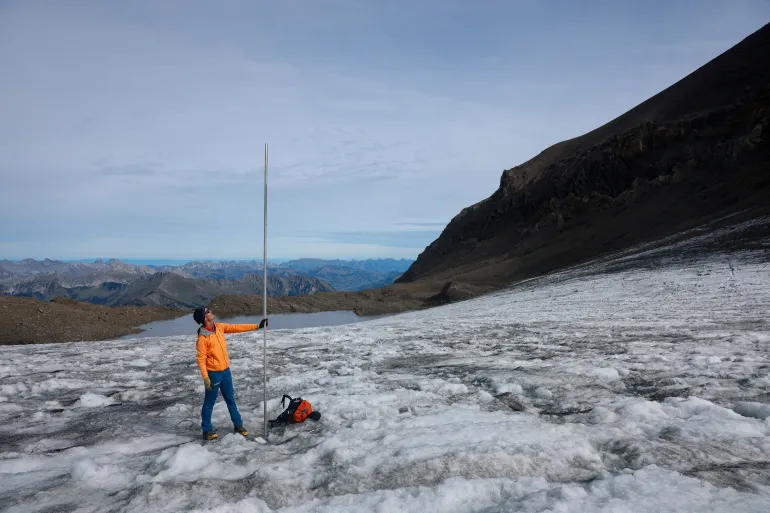
Visiting one glacier named Scex Rouge in the Western Swiss Alps in early September, GLAMOS chief Matthias Huss, one of the report’s researchers, told the Reuters news agency that a measuring pole, about four metres (13 feet) high, was drilled into the ice in July to provide the team with a point of reference.
“Now when we have come back here, we saw the pole was out by three metres [10ft]. So just in August and September of this year, even excluding the heatwaves of June and July, we have lost three metres of ice at an elevation of almost 3,000 metres [9,843ft],” he explained.
“This clearly indicates these conditions that we had this summer, they are just inconsistent with the survival of these small glaciers in the Alps,” he added.
Glaciologist at ETH Zurich and head of GLAMOS Matthias Huss holds a pole that indicates four metres of ice lost over the past year on the Scex Rouge glacier amid climate change at Glacier 3000 in Les Diablerets, Switzerland [File: Denis Balibouse/Reuters]
Why are glaciers in Switzerland losing ice?
According to the report, the total mean thickness of individual glaciers in Switzerland has fallen by between 2.5 and four metres in 2026. At glacier tongues – narrow glacial extensions of a glacier which project from land into a body of water – it had decreased by as much as 10 metres in some places over the summer.
“We can clearly attribute the massive ice loss to the warming, and thus anthropogenic [caused by humans] climate change. The summer has been the hottest on record in Switzerland. In addition, there was little snow in winter, and therefore the glaciers were poorly protected when the heat started,” GLAMOS chief Huss told Al Jazeera.
He noted that while their measurements have indicated that the melting has affected all glaciers in Switzerland equally, the effects were most visible on smaller glaciers.
“Those shrink very quickly and sometimes even completely disappeared. Also, large glaciers lost an enormous quantity of ice, but they remain impressive,” he added.
The report’s scientists warned that the glaciers also lost a total of about 2.2 trillion litres of water (581 billion gallons) between July and September alone.
“This is more than four times the annual drinking water consumption of all Swiss households,” the report’s researchers said and warned this could impact the country’s future water supply.
What does this mean for Switzerland?
Switzerland is a country known for winter sports and Alpine tourism, which depends on the glaciers. About 4 percent of the country’s entire workforce is employed in the tourism sector.
“This affects tourism and also how we perceive the mountains – they are no longer white but increasingly grey and black,” he told Al Jazeera.
He added that the water provided by glaciers is also important for the economy. “It is used to fill up hydropower lakes that produce clean energy, and supplies the biggest streams of Europe,” he said.
“We’re not yet seeing the full consequences as glaciers are still around and they contribute water when we need it. But this potential is soon being lost,” he added.
Harry Zekollari, a glaciologist and associate research professor at the Department of Water and Climate at the Vrije Universiteit Brussel, shared a similar view.
He stressed that glaciers are important natural water suppliers, as they provide water when people need it most – in summer, when it is hot and dry.
“With climate change, glaciers initially provide more water during summer as they rapidly melt. However, as glaciers become smaller, there is less ice to be melted, and as such the water supply in summer decreases. This peak in water supply has now been passed for glaciers in the European Alps, meaning that we expect glaciers to provide less and less water in the coming years,” he told Al Jazeera.
“Glacier changes can also cause natural hazards, and since most of the ice lost turns into water that reaches the oceans, the consequences of glacier loss [in Switzerland and elsewhere] will be felt for coastlines all around the globe,” he added.
Is there a solution?
Yes. According to Zekollari, in order to save as much glacier ice as possible in Switzerland, the world needs to stabilise rising temperatures as soon as possible.
“Projections for the European Alps and Swiss glaciers show that if we are able to rapidly stop emissions, we may still be able to save about one-third of their ice mass. However, in a case with strong warming, these glaciers are projected to lose more than 90 percent of their volume by 2100,” he said.
He noted that the situation is less grim globally as some glaciers in other regions are more persistent.
“However, even globally, future emissions play a big role and will decide whether we lose about 25 percent of glacier mass by 2100 – that’s the good case, with limited warming – or rather 50 percent – the bad case, with more warming,” he said.
“The losses in the longer term – past 2100 – are even larger due to the long response of glaciers, but also here it is the future warming that decides how much remains. Every 0.1 degree Celsius warming matters.”
FAO director said he was informed his contract would not be renewed because of allegedly breaching impartiality rules.
Published On 2 Oct 20262 Oct 2026
A senior UN agency director has said that he lost his job because he criticised Israeli policies in Gaza.
Ben Davis, who had been Director of Rural Transformation and Gender Equality at the Food and Agriculture Organization (FAO), told AFP news agency on Wednesday that he was informed in July that his contract would not be renewed because he had allegedly breached impartiality rules.
Recommended Stories
list of 3 itemsend of list
He said that he was accused of organising weekly silent protests at the Rome-based organisation.
“They accused me of organising these moments of silence on the situation of starvation and famine in Gaza,” Davis said.
Davis was also criticised for a report he worked on about food availability in Gaza and humanitarian law, published in May.
“We were told to take it down,” he said. “We weren’t allowed to make any references to humanitarian law.”
‘Game of human rights’
FAO Director-General Qu Dongyu appeared to warn FAO staff on Tuesday that “we don’t allow you to play the game here of human rights”.
He was speaking in public comments made at the start of a filmed session on forestry.
“Of course, human rights is very important, but we have the human rights agency in Geneva,” he added. “If you want to take care, go there.
“That’s why some senior members play the political game here, I fire him … You should follow the FAO constitution … You are against staff regulations … But I’m a very soft person, I didn’t fire that many,” he said.
“I will fire more people if they are against the law,” he added.
Director-General of the Food and Agriculture Organization of the United Nations Qu Dongyu delivers his speech during a World Food Forum meeting [File: Andrew Medichini/AP]
FAO did not respond to an AFP request for comment.
Asked if he thought the director-general’s comments were about him, Davis said “absolutely”.
“He has already scolded me in public in the past for being too political.”
Davis also said he was “concerned” about the director-general’s comments on firing more people.
Hundreds of people attended the moments of silence at their height, while now there are only 30 to 40 people coming on a weekly basis, he said.
Israel’s genocidal war on Gaza has killed over 74,000 people since October 2023, and at least 1,431 Palestinians have been killed in Israeli attacks since the so-called ceasefire between Hamas and Israel was agreed upon in October 2025.
South Korea’s President accused Ukraine of undermining him and called on Kyiv to apologise.
Published On 2 Oct 20262 Oct 2026
South Korea’s President Lee Jae Myung has expressed anger at Ukraine over comments by Ukrainian President Volodymyr Zelenskyy in a speech at the UN which appeared to reveal a secret deal by which Kyiv would transfer North Korean prisoners of war to Seoul.
In a social media post on Friday, Lee accused Ukraine of undermining him and warned that Zelenskyy’s remarks about an imminent military clash between North and South Korea amounted to invoking the risk of war on the Korean Peninsula.
Recommended Stories
list of 3 itemsend of list
The diplomatic row pits two US-aligned states with powerful militaries against each other, potentially complicating US efforts to shore up a united global front to contain Russia, China and North Korea.
The South Korean president also expressed regret over Ukraine’s response and called on Kyiv to acknowledge the agreement and apologise.
“This is a matter concerning the honor of the Republic of Korea’s people and nation, we cannot overlook it,” Lee said.
South Korean Lawmaker Yu Yong-weon explains pictures, showing two North Korean POWs who were recently transferred from Ukraine to South Korea. Face of POWs are blurred due to security reason by the source. [File: Kim Hong-Ji/Reuters]
Lee also referred to an interview with Ukraine’s Foreign Minister Andrii Sybiha published by RBC-Ukraine and other Ukrainian outlets on Thursday which sought to reduce bilateral tensions.
Sybiha had said he would “not like to call it an incident”, describing it instead as a “diplomatic misunderstanding”.
“South Korea is an important country for us. And I very much hope for momentum, continued cooperation, and concrete results that we are indeed achieving with them,” he said.
Ukrainian President Volodymyr Zelenskyy said during the UN General Assembly that Kyiv had transferred two captured North Korean soldiers to South Korea after they were caught fighting for Russia in the Kursk region.
South Korea demanded an official apology and explanation from Ukraine, accusing Kyiv of disclosing the transfer of the two North Korean POWs to Seoul.
South Korea’s senior presidential secretary Seong Ghi-hong said in a statement that Ukraine had repeatedly discussed the prisoners’ transfer with Seoul through various channels and had requested secrecy. However, Kyiv has said no secrecy agreement existed.
United States President Donald Trump has kicked off a 32-day campaign tour ahead of the November midterm elections that could see his Republican Party hurt by his handling of the war on Iran and the economy.
On Thursday, Trump travelled from Washington, DC, for back-to-back rallies in Texas and Oklahoma.
Recommended Stories
list of 3 itemsend of list
At his first stop in Denton, Texas, Trump sought to shift the narrative around his drooping approval ratings, offering a personal assessment of his administration’s performance.
“I give us an A+ on the government, on economics, on everything,” Trump told a crowd of supporters at the Peterbilt Motors Company, a truck manufacturer.
The president also blamed unfair media coverage for his growing unpopularity, arguing that his pre-election rally blitz was necessary to set the record straight.
“We’re doing an extremely poor job of promotion and an extremely great job of running the country,” Trump said.
But Trump’s poll numbers have raised concerns about Republican prospects ahead of the November 3 midterm election.
Trump himself is not on the ballot, but Republican candidates across the country are seeking to defend the right-wing party’s majorities in both chambers of Congress, as well as key state and local offices.
The economy and Trump’s war on Iran are expected to weigh heavily on the election outcome.
On Thursday, The Associated Press and the NORC Center for Public Affairs Research released new poll results showing that 71 percent of Americans disapprove of the war, which has driven up the price of fuel.
About half of survey respondents also said they were worried they would not be able to afford food and petrol. Only 26 percent approved of Trump’s handling of the economy.
Taking centre stage
Still, despite record low approval ratings, Trump has positioned himself as key to the Republican midterm strategy.
At a first-of-its-kind Republican midterm convention in September, Trump encouraged voters to consider his record while at the ballot box. “I’m asking you to pretend that I’m on the ballot,” he said.
During Thursday’s tour, he touted the impact of his tariff campaign, which he credited with creating thousands of manufacturing jobs.
“For decades, you were heartlessly betrayed by politicians, lousy politicians, who let foreign trade cheaters plunder your wages, loot your factories, close up your jobs,” Trump told Peterbilt workers. “They’d still be doing it if I wasn’t here, believe me.”
Trump’s tariffs, however, have been highly controversial, prompting a series of court challenges. Critics have argued that the sweeping import taxes surpass the president’s constitutional powers.
Trump also used his stump speech to ease concerns about the US-Israel war on Iran, which began on February 28. Both sides have declared victory, though a ceasefire remains elusive.
“Just as I promised, I’m ensuring that Iran will be very quickly ended. I will tell you the energy prices are going to be rapidly, rapidly coming down,” Trump said.
“We’ll win very easily right now,” he added. “I believe right after the election we’ll win, but maybe before the election.”
The war, however, resulted in Iran stopping commercial traffic through the Strait of Hormuz, a key waterway for the global fuel trade.
The price of diesel — the fuel the trucks built at the plant use — soared to record highs of more than $6 per gallon (3.8 litres) last week. Petrol prices have similarly skyrocketed.
Hurting or helping his fellow Republicans?
Trump, however, has acknowledged that the stakes are high for his presidency in the upcoming midterms.
All 435 seats in the House of Representatives are up for grabs, as are 35 seats in the 100-member Senate.
Losing Republican control of either chamber could create roadblocks for Trump’s legislative agenda during the final two years of his second term.
But Trump has also expressed concern that he could be impeached for a third time, after two prior impeachments during his first presidency.
At Thursday’s second stop, in Durant, Oklahoma, the Republican leader repeated that fear. “Pretend I’m running, please,” he told the crowd. “If we don’t win, they’ll end up impeaching me.”
Many of the places Trump is scheduled to visit this month are perceived as reliably Republican voting districts. Following his stops in Texas and Oklahoma on Thursday, Trump will be heading to Alabama, Ohio and Nebraska in the coming days.
Still, some elections that ordinarily would be considered shoo-ins for Republicans have grown more competitive in recent months.
In Texas, for instance, no Democrat has won a statewide race since the 1990s. But this year, Republican Ken Paxton, the state’s attorney general, is struggling to win a Senate contest against Democrat James Talarico.
During both of Thursday’s stops, Trump sought to bolster Paxton’s prospects. At the Peterbilt factory, for instance, he called Paxton “the greatest attorney general in the United States of America”.
“We gotta get this guy elected,” Trump said, before pivoting to criticisms of Talarico, whom Republicans have sought to paint as out of touch with Texas’s large beef industry.
“He’s a vegan,” Trump said of Talarico, repeating an unsubstantiated rumour. “And vegans don’t do well in Texas.”
But leaked audio appeared to show Paxton lamenting the negative impact Trump had by holding the Republican midterm convention in Texas last month.
Trump has nevertheless used his pre-election tour to highlight social issues he feels will help rally voters to the Republican cause.
On Thursday, he returned to familiar subjects like immigration and transgender rights, which he depicted as a part of the Democrats’ “radical” agenda.
“They want women in men’s sports. They want open borders. They want transgender mutilation for your children,” Trump said. “What the hell are you thinking about, you liberals?”
The president also used his Texas appearance to push back against critics of data centres, despite bipartisan concern.
Critics worry that the rapid growth of artificial intelligence (AI) has fuelled the proliferation of data centres, which require large amounts of electricity and water to process mass data quantities.
While Trump has dismissed fears about AI as largely unfounded, a poll last month found 53 percent of Americans are “extremely” or “very” concerned about the technology’s environmental impacts.
Even fellow Republicans in Texas are responding to public pressure about the growing number of data centres, more than 300 of which are operational, with hundreds more in progress.
In August, Governor Greg Abbott called for an audit of all data centres to map their water and electricity usage, and the following month, Paxton in his role as state attorney general launched an investigation into whether they were complying with water reporting requirements.
Trump nevertheless used his Texas rally to tout the expansion of such enterprises.
“It’s a huge thing. It’s bigger than the industrial revolution,” he said, dismissing the concerns as part of a “scam”. He then explained he had urged AI companies to “take care of the people”.
“They’re making a fortune for the communities,” he added.
Pointe aux Sables, Mauritius – “At one funeral, we scattered sand from Chagos into an elder’s tomb to honour his unfulfilled wish to breathe his last in his homeland,” says Olivier Bancoult of the Chagos Refugees Group.
For elderly Chagossians displaced from their Indian Ocean homeland decades ago, delays to a treaty allowing their return are raising fears that they may never see the islands again.
The agreement, signed by Britain and Mauritius in May 2025, would allow resettlement on islands other than Diego Garcia, which would remain a military base. But it has yet to enter into force amid opposition from US President Donald Trump.
“We remain unshaken by Trump’s interference in the Chagos deal,” Bancoult says.
“The 2019 ICJ advisory opinion in favour of the archipelago’s return to Mauritius has restored our dignity and faith in our rights as native Chagossians.”
The Chagos archipelago, a group of islands in the Indian Ocean, was separated from Mauritius by Britain in 1965, three years before Mauritius gained independence. Britain later established a military base with the US on Diego Garcia, the largest island in the group.
Between 1968 and 1973, Britain removed an estimated 1,400 to 1,700 Chagossians from the islands. Many were resettled in Mauritius and the Seychelles, with others later moving to the United Kingdom. British authorities also made it illegal to remain on or return to the islands without permission.
“If Trump wants to meddle in this matter, well, let him,” Bancoult says. “We’ve had the 2019 ICJ [International Court of Justice] advisory opinion, the International Tribunal for the Law of the Sea’s 2021 judgement, and the 2025 UK-Mauritius treaty providing for Mauritius to exercise sovereignty over the archipelago. International law is squarely on our side.”
Signed on May 22, 2025, the treaty provides for Mauritius to exercise sovereignty over the Chagos archipelago, while allowing the UK to exercise rights over the Diego Garcia military base for an initial 99-year period. It also allows Mauritius to arrange for the resettlement of Chagossians on islands other than Diego Garcia. The treaty has not yet entered into force.
In April, the UK government told Parliament that the legislation needed to implement the agreement could not complete its passage during the 2024–26 parliamentary session. The session ended on April 29, meaning the bill made no further progress.
In January, Trump criticised the agreement, calling it an “act of great stupidity ” and questioning whether it adequately protected the Diego Garcia military base.
The issue returned to the diplomatic agenda in September. On September 21, British Prime Minister Andy Burnham said the UK would work with Mauritius and the US on a way forward that secures the operation of Diego Garcia and protects UK national security.
On September 26, Mauritian Prime Minister Navin Ramgoolam travelled to the UK for talks with British National Security Adviser Jonathan Powell and other officials on the Chagos issue. He remains in London, with the Mauritian government saying the discussions would cover recent developments concerning the archipelago.
For Bancoult, the central question is whether elderly Chagossians will live long enough to see the treaty’s promises fulfilled.
“Chagossians born on the archipelago are now aged between 58 and 100. We are growing old, and we have lost several Chagossian elders this year alone,” he says.
For younger Chagossians, the consequences are also cultural.
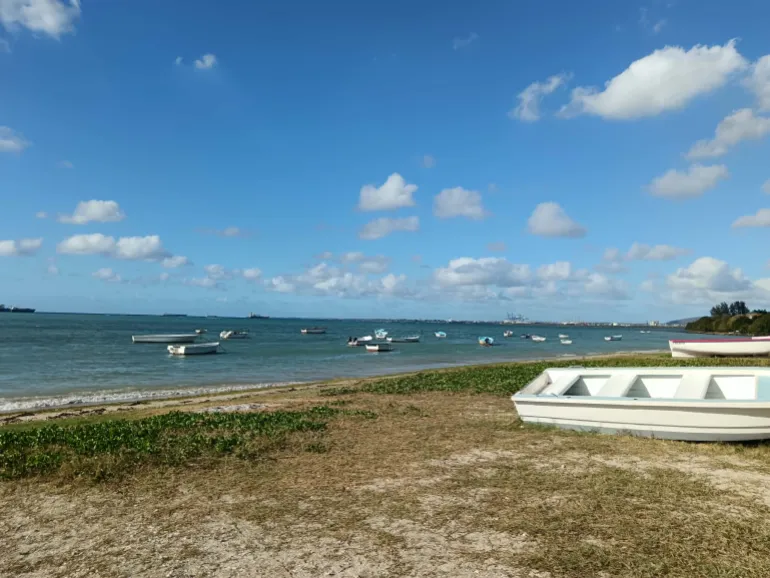
Pointe aux Sables, a coastal village in Mauritius where many Chagossians live [Ameerah Arjanee/Al Jazeera]
Chrisyl Wong-Hang-Sun, a PhD researcher in anthropology at the University of Edinburgh, says years of displacement and migration are making it harder to preserve Chagossian culture.
“During my fieldwork, many diaspora members expressed concerns over cultural loss, such as words in Chagossian Creole and recipes that are difficult to recreate abroad,” she says. “Descendants of Chagossians, myself included, long to know the islands of their relatives and ancestors.”
The dispute has also exposed political differences among Chagossians.
“The actions of both the British and Mauritian governments have resulted in very nuanced and differing political opinions among Chagossians across the UK, Mauritius and the Seychelles,” Wong-Hang-Sun says.
The Chagos Refugees Group is at odds with UK-based second-generation Chagossian Misley Mandarin and his supporters, who favour resettlement under British rather than Mauritian sovereignty and have received backing from Reform UK.
Wong-Hang-Sun says those differences should be recognised as negotiations continue.
Both governments, she says, need to “find ways to prioritise and engage with the Chagossian diaspora as a whole”.
Mauritius keeps talks largely private
Mauritius has disclosed little publicly about the substance of the latest talks on Chagos.
At the United Nations General Assembly in September, Foreign Minister Dhananjay Ramful reiterated Mauritius’ position that its sovereignty over the Chagos archipelago was “non-negotiable”. He also described the 2025 agreement as a vindication of international law and said Mauritius was committed to diplomacy and dialogue over the issue.
Beyond official statements and communiques, the Mauritian government has provided few details about the substance of the current discussions.
Members of the Chagos Refugees Group, all born on the Chagos archipelago, in Pointe aux Sables, Mauritius [Ameerah Arjanee/Al Jazeera]
International relations consultant Bruno Donat, who has previously worked at the UN, says Mauritius should focus on sustained engagement with diplomatic partners, including the African Union, small island states, the Commonwealth Secretariat and sympathetic voices in the US Congress.
“Being in New York corridors for a photo” is not the priority, Donat says. Sustained engagement, he argues, can build pressure on Washington and prevent the issue from remaining unresolved indefinitely.
The Chagos Refugees Group has pursued a similar approach. In June, two months after the treaty stalled, its members travelled to the UK to lobby representatives of British political parties, with the exception of Reform UK.
The unresolved question of Diego Garcia
But Diego Garcia remains the most contentious part of the agreement.
Lalit, a Mauritian political organisation that has campaigned for decades for the closure of the base, opposes its continued military use. Lindsey Collen of Lalit says the treaty, as it stood in April, would have kept the base open and brought Mauritius into a closer relationship with the US military presence on the island.
“In addition to the moral responsibility, we have the knowledge that we might become a target for self-defence if our land is used this way,” she says.
Portraits of native Chagossians who have passed away hang on the walls of the Chagos Refugees Group headquarters [Ameerah Arjanee/Al Jazeera]
Collen is also concerned about a new partnership between the Mauritius Police Force and the New Mexico National Guard, as well as what she describes as the “enormous military-looking buildings” of the new US embassy in Mauritius.
Donat argues that the treaty could instead give Mauritius greater leverage over how Diego Garcia is used.
“Mauritius has publicly stated that the strikes launched from Diego Garcia against Iran breached international law,” he says. “That is not the position of a government staying silent to protect a lease payment.”
For Bancoult, those wider strategic questions are secondary to the need to ensure that elderly Chagossians have the chance to return to their homeland during their lifetimes.
“We are opposed to war, ethically, but we are also running out of time.”
The Chagos Refugees Group hopes to soon celebrate the 101st birthday of one of its members.
“God willing, he’ll stay with us for more years,” Bancoult says.
Who: France vs Italy What: UEFA Nations League 2026-27, Group A1 match Where: Stade de France, Saint-Denis, France When: Friday, October 2, at 8:45pm local time (18:45 GMT) How to follow: Al Jazeera Sport will bring you all the build-up and live updates from 15:45 GMT.
It’s time for Zinedine Zidane’s homecoming.
Recommended Stories
list of 4 itemsend of list
Two-time world champions France face neighbours Italy in Friday’s Nations League match, with Zidane taking charge for the first time on home soil.
Appointed in late July as successor to Didier Deschamps, ex-captain Zidane has guided France to back-to-back away wins. Now he has the chance to complete a hat-trick of victories in front of Les Bleus faithful.
Despite losing captain Kylian Mbappe to injury, France have maintained their winning start, all thanks to their squad depth and talent across positions.
Like France, four-time World Cup winners Italy are also managed by a former player – Roberto Mancini – who is back in the job for the second time. Mancini’s first game back in charge ended in Roman jeers, but the Azzurri responded in style with an emphatic win in their second game.
Friday’s match is expected to be played in front of what will be a sell-out crowd of close to 80,000 fans at the national stadium north of Paris.
So, can Italy build on their dazzling display or will France give Zidane more reasons to rejoice?
Al Jazeera breaks down everything in this match preview:
What is the UEFA Nations League?
The UEFA Nations League was founded in 2018 to reduce the number of meaningless friendlies and give nations competitive matches against top-ranked teams.
In this competition, countries from across Europe participate in a league structure which features promotion and relegation.
How have France and Italy played in the Nations League?
France are on top of this group with six points after identical 1-0 wins over Turkiye and Belgium.
Italy, on the other hand, are second-to-last with three points after losing 2-0 to Belgium and thrashing Turkiye 4-1.
When did France and Italy last meet?
They last met in a Nations League group match in November 2024.
France defeated Italy 3-1 in Milan then, with a double from Adrien Rabiot and a Guglielmo Vicario own goal. Andrea Cambiaso netted the consolation goal for the Italians.
France vs Italy: Head-to-head
Matches: 41
France wins: 12
Italy wins: 20
Draws: 9
France vs Italy: Form guide
(Last five games, latest results first)
France: W-W-L-L-W
Italy: W-L-W-W-D
Who are the top players to watch?
Michael Olise and Desire Doue (France): Olise’s outrageous finish in Monday’s Belgium game had Zidane going berserk on the sideline. Such is his talent. He has been involved in both goals France scored in this year’s Nations League and is also enjoying a flying start at Bayern Munich this term with eight goals and four assists. Doue, 21, is equally impressive – he assisted Olise in the last game, earning player of the match.
Michael Olise of France celebrates scoring against Belgium in the match in Brussels on Monday [Dean Mouhtaropoulos/Getty Images]
Francesco Pio Esposito and Davide Frattesi (Italy): Pio Esposito not only scored a goal in the last game but also celebrated a sweet bit of history – he and his older brother Sebastiano played against Turkiye, marking the first time two brothers started for Italy in more than a century. Inter Milan striker Pio already has five goals in 10 Azzurri appearances. Italian fans should also watch out for Frattesi, another scorer from the last game who has also netted three times for Lazio in this year’s Serie A.
What have the coaches said?
Zinedine Zidane (France): “It is going to be really emotional,” said Zidane, whose last appearance at the Stade de France came as a player in a friendly against Mexico in 2006.
Roberto Mancini (Italy): “Facing Zidane will be a pleasure, but this isn’t a duel between us,” assured Mancini in his press conference.
“It is going to be a great game between France and Italy, teams who are still trying to figure things out. Whatever happens, I feel that this match will be very useful for the process.”
Team news and predicted line-ups
France
Mbappe is the biggest name missing from the France squad. He picked up a knee injury after scoring the winning goal against Turkiye and has since been sidelined for two weeks.
Elsewhere, central midfielder Warren Zaire-Emery is out with a thigh injury, and Matteo Guendouzi remains suspended.
Probable France XI: Mike Maignan; Jules Kounde, Jeremy Jacquet, Maxence Lacroix, Adrien Truffert; Rayan Cherki, Manu Kone, Adrien Rabiot; Desire Doue, Ousmane Dembele, Bradley Barcola
Michael Kayode (right) of Italy celebrates scoring his team’s third goal with teammate Sandro Tonali during last week’s game against Turkiye in Bursa [Ahmad Mora/Getty Images]
Italy
Italy have a fully fit squad.
Probable Italy XI: Gianluigi Donnarumma; Michael Kayode, Giorgio Scalvini, Alessandro Bastoni, Matteo Ruggeri; Sandro Tonali; Davide Frattesi, Nicolo Fagioli; Giacomo Raspadori, Francesco Pio Esposito, Sebastiano Esposito
France vs Italy: TV channel, livestreaming
France: la chaine L’Équipe, TF1+
Italy: RAI PLAY, Mediaset, Sky Italia
United Kingdom: Prime Video UK
United States: FOX Sports, FuboTV, ViX
India: Sony Sports Network
Middle East and North Africa: beIN SPORTS
South Africa: DStv Stream
You can find your regional broadcaster on UEFA’s official broadcaster listing.
A report stating that the Trump administration directed funds towards right-wing groups comes ahead of Brazil’s presidential election.
Published On 1 Oct 20261 Oct 2026
Brazil’s attorney general has called on law enforcement to investigate alleged efforts by the United States to interfere in the country’s domestic politics through the diversion of funds to far-right causes.
Attorney General Jorge Messias called for the probe on Thursday, one day after the British newspaper The Guardian published a story suggesting that the administration of United States President Donald Trump planned to award $1m to right-wing civil groups opposing the Brazilian Supreme Court.
Recommended Stories
list of 3 itemsend of list
Messias stated in a social media post that foreign meddling “cannot be tolerated” and that the report represented “an important alert for Brazilian sovereignty”.
“The information is especially serious in light of Brazil’s electoral process and the recent episodes of external pressure on our institutions,” the attorney general added.
The report comes amid a tense presidential election in which leftist President Luiz Inacio Lula da Silva is seeking re-election.
Lula has sought to focus attention on efforts Trump has undertaken to boost the prospects of far-right allies across Latin America, warning of threats to regional sovereignty.
Trump has endorsed multiple right-wing candidates ahead of elections across the region, sometimes hinging the possibility of economic support on the voting results.
He has also cultivated close relations with the family of former Brazilian President Jair Bolsonaro, who lost to Lula in the last presidential election.
Bolsonaro’s eldest son, Senator Flavio Bolsonaro, is a frontrunner in the race to challenge Lula this year. Recent polls have shown Lula and Bolsonaro virtually tied ahead of the first round of voting on October 4.
Flavio Bolsonaro met with Trump at the White House in May. He has promised closer ties with the US, while Lula has positioned himself as a critic of Trump’s interventionist approach to Latin American politics and security.
The Guardian report published on Wednesday states that the Trump administration sought to redirect $175m from the State Department’s human rights fund to various far-right causes around the world.
The recipients allegedly included groups advocating for white Afrikaners in South Africa that the Trump administration has falsely portrayed as victims of a “genocide” and efforts in Brazil to counter what the US called “lawfare and censorship”.
Brazil’s Supreme Court has been a subject of frequent criticism from the political right, both in Brazil and the US.
Much of that criticism stems from the 2025 conviction of Jair Bolsonaro for involvement in an alleged coup plot, designed to subvert his loss to Lula in the 2022 election.
Bolsonaro and his allies, including Trump, have depicted the case as an instance of political persecution.
Citing the trial, Trump last year placed 50-percent tariffs on certain Brazilian goods that he has since removed.
At the time, he announced the tariffs in a letter that denounced Bolsonaro’s prosecution. “The way that Brazil has treated former President Bolsonaro, a Highly Respected Leader throughout the World during his term, including by the United States, is an international disgrace,” Trump wrote.
The Trump administration also revoked the visas of Brazilian judicial officials involved in Bolsonaro’s case in an effort to have it tossed out. It also levied short-lived sanctions against Brazilian Supreme Court Justice Alexandre de Moraes, accusing him of “an unlawful witch hunt” against right-wing voices.
Bolsonaro was ultimately convicted and sentenced to a 27-year prison sentence in September 2025.
In June, one of his sons, Eduardo Bolsonaro, was sentenced to more than four years in prison after a court ruled he had lobbied for US interference in his father’s case.
Putin warned the West he would deploy nuclear weapons if necessary to defend the Russian Baltic exclave of Kaliningrad.
Published On 1 Oct 20261 Oct 2026
Russian President Vladimir Putin has ruled out a ceasefire on long-range strikes with Ukraine as Moscow steps up its campaign of aerial attacks on Kyiv.
“We are told: ‘Let them stop striking your refineries, and you will stop striking their ships.’ It is simply ridiculous,” Putin said on Thursday at the Valdai political forum in Moscow.
Recommended Stories
list of 3 itemsend of list
The remarks followed a meeting between United States President Donald Trump and Ukrainian President Volodymyr Zelenskyy in New York on September 22, when Zelenskyy said Kyiv was ready to cease strikes on Russian oil refineries and other energy facilities if Moscow also stopped its attacks on Ukrainian energy infrastructure.
Speaking at the forum of the Moscow-based think tank, Putin said Ukraine had “partially achieved its objectives” with these strikes, with attacks on Russian oil refineries having cost the country 1 percent of its gross domestic product (GDP), but added that Russia was now responding in kind.
Russia has ramped up long-range strikes, targeting Ukraine’s steel companies as well as supply chains, notably in the rail sector. Ukraine accuses Moscow of deliberately hitting civilian targets and keeping Kyiv on a near-constant state of alert as it braces for another tough winter.
A Russian drone struck a school in Kyiv on Thursday, according to city officials, as the Ukrainian capital endured relentless aerial attacks. No casualties were reported as children and staff at the school were in shelters when the drone hit.
Putin added that Russia would prefer to end the conflict in Ukraine through talks and wanted it to be a neutral country after the end of hostilities.
The nuclear option
He warned the West not to escalate the standoff over Ukraine by threatening the Russian exclave of Kaliningrad, which is wedged between Poland and Lithuania, and pledged to defend it with nuclear weapons if necessary.
“If it comes to a direct attack on the Russian Federation – in this case, we are referring to Kaliningrad, and perhaps other territories as well – the question of the Russian Federation deploying all the weapons at our country’s disposal will, of course, inevitably and immediately be on the agenda,” he said.
Putin’s comments followed a diplomatic note which NATO said this week it had received from Russia, warning the Western military alliance it would be ready to resort to nuclear weapons if NATO attempted to cut off Russia’s Baltic exclave.
Putin warned that cycles of escalation in international conflict could quickly lead to dangerous scenarios. “We must realise that the moment when nothing can be changed any longer may come very quickly and unexpectedly for everyone. The logic of escalating, increasingly harsh retaliatory measures leads to a fatal point of no return,” he said.
On the contrary, in the event of a “favourable scenario”, Putin said the assets of Western companies that Moscow had seized could potentially be returned. Putin last month ordered the seizure of businesses and assets of Swiss food giant Nestle, French retailer Auchan, the former Leroy Merlin DIY chain and German wholesaler and food retailer Metro.
Nearly 70 percent of Americans say the US-Israeli war is not worth fighting, marking a significant spike since July.
Published On 1 Oct 20261 Oct 2026
Approximately 70 percent of US adults in a new nationwide poll say the US-Israeli war has not been worth fighting, a five-point spike since July.
“Seventy-one percent of adults disapprove of how Trump is handling Iran and 69 percent say the war in Iran has not been worth fighting,” said the survey released on Thursday by The Associated Press-NORC Center for Public Affairs Research.
Recommended Stories
list of 3 itemsend of list
The poll, which surveyed more than 2,000 adults in the US, also suggested that Americans are deeply frustrated with US President Donald Trump’s handling of the economy and rising prices, with only 17 percent of US adults polled approving of his handling of the cost of living. Just 26 percent approved of his handling of the economy overall, marking a new low.
Public angst over fuel costs has surged, with about half of respondents now deeply concerned about being able to fill their tanks —up from 39 percent in July. Roughly half of respondents are also highly concerned about being able to afford food.
The data comes as Trump kickstarts his midterm campaign trail in an all-in effort to galvanise the Republican base, stumping first in Texas and Oklahoma amid widespread voter anxiety surrounding the war on Iran’s mounting economic fallout.
The poll also indicated that, despite their frustration, two-thirds of Republicans surveyed said that higher than usual prices are due to factors outside of Trump’s control, with about one-third saying it was directly related to Trump’s policies.
The sombre numbers suggest the president remains deeply unpopular nationally, with some Republicans also faulting him for failing to deliver on promised relief.
‘Pollsters are corrupt’
Overall, more than half of adult respondents said the national economy and the country as a whole are worse off since President Trump took office again in 2025.
In an interview with TIME magazine, published on Thursday, Trump was asked if the deeply unwanted war would threaten his party’s chances in November, to which he initially responded, “It’s possible,” before adding that “it should help, because Iran will not have a nuclear weapon.”
Confronted with sliding poll numbers, Trump said that the “pollsters are corrupt” and that the bad polls “are fake”, adding that he would beat anybody running today “by 20 points”.
Carney declared the pipeline a project of national interest, smoothening its way to a single federal regulatory review process.
Published On 1 Oct 20261 Oct 2026
Canada will fast track the approval process for a new proposed crude oil export pipeline to its west coast that could generate billions in revenue and boost economic growth, Prime Minister Mark Carney has said.
Carney made the announcement on Thursday to fast-track the pipeline, which is a crucial part of his bid to diversify the economy away from the United States and help lessen the effect of US President Donald Trump’s tariffs.
Recommended Stories
list of 4 itemsend of list
Carney said Ottawa is officially listing the Pacific Link pipeline, which had been announced in July, as a project of national interest. That will ensure it proceeds through a single federal regulatory review process. He said Ottawa aimed to complete the process by September 1, 2027.
“A pipeline to the west coast is part of our mission to transform our economy, to double our non-US exports over the next decade … [and] to unlock our full potential as a global energy superpower,” he told reporters in Fort McMurray, hub of Alberta’s tar sands industry.
Ottawa says the 1 million barrel a day project would create 140,000 jobs and generate more than 20 billion Canadian dollars ($14bn) in gross domestic product (GDP) per year and 100 billion Canadian dollars ($70bn) in government revenue by 2060.
Canada currently has just one east-west oil export pipeline in Canada, the 890,000-barrel-per-day Trans Mountain pipeline. An expansion of that pipeline was completed in 2024, but it is already running at capacity.
For years, Canada has sent more than 90 percent of its crude oil exports to the US via pipeline. A new oil export pipeline could make Canada a major global energy supplier, as Asia’s top importers seek oil from outside the Middle East in the wake of the Iran conflict.
Filling the pipeline, however, would require new tar sands expansions of the type no company has undertaken in more than a decade.
The pipeline will be built by government-owned Trans Mountain Corp in coordination with Pembina Pipeline Corp. Alberta estimates it could cost between 35.2 billion Canadian dollars and 43.7 billion Canadian dollars ($24.7bn – $30.7bn).
The majority owners will be the federal government and the government of Alberta. Indigenous communities will be offered a minimum of 10 percent ownership interest.
Previous oil pipeline projects in Canada have faced strong opposition from environmentalists and Indigenous groups, resulting in the cancellation of some projects and leading to cost overruns and construction delays with others.
Alberta separatism
Carney made the announcement alongside Alberta Premier Danielle Smith in Fort McMurray in the heart of Canada’s tar sands, a move meant to mend relations with oil-rich Alberta as separatists push for a referendum on leaving Canada.
Alberta is holding a public vote on October 19 on whether to hold a referendum on leaving Canada. Smith has long complained that Carney’s predecessor, Justin Trudeau, hindered Alberta’s energy industry and fuelled separatist sentiment.
Smith said she would vote to keep Alberta in Canada and called the roughly 22 percent support for separation in a recent poll “still too high for my liking”.
“I don’t like the fact that many of our fellow citizens have given up on Canada,” Smith said, adding that the pipeline was an example of how “cooperative federalism can work in action”.
Asked what message Albertans considering separation should take from the announcement, Carney said it demonstrated that “Canada is working” and showed what the country could achieve by acting together.
The case is the latest dispute over US President Donald Trump’s sweeping immigration crackdown.
Published On 1 Oct 20261 Oct 2026
The United States Supreme Court has agreed to hear a case focused on the Trump administration’s policy requiring millions of undocumented immigrants to remain in detention while they fight deportation.
The case, accepted on Thursday by the justices, is the latest dispute over US President Donald Trump’s sweeping immigration crackdown to reach the nation’s highest court.
Recommended Stories
list of 3 itemsend of list
At issue is whether migrants already living in the US have a legal right to a hearing where a judge can decide whether they should be released on bond from Immigration and Customs Enforcement (ICE) detention while their deportation cases are pending.
In July 2025, the administration introduced new guidance directing federal immigration authorities to detain undocumented immigrants without a bond hearing for the duration of their deportation proceedings, which can last for years.
The new policy, which has divided lower courts, reverses a decades-old interpretation that allowed some immigrants in the US to be released while their cases were pending in immigration court, according to Reuters news agency.
Most US federal appeals courts have ruled that immigrants cannot be detained without a bond hearing. But the 5th and 8th US Circuit Courts of Appeals have found that immigrants accused of illegally entering and remaining in the country must remain detained while their deportation cases proceed.
Trump administration attorneys told the Associated Press the split is “disrupting the orderly administration of immigration law”.
“The result is an unworkable patchwork of inconsistent immigration enforcement, where aliens present without admission are subject to mandatory detention in some circuits but are entitled to bond hearings and often released in others,” the lawyers wrote.
Millions could be affected
The Supreme Court case stems from a 2nd US Circuit Court of Appeals ruling involving Ricardo Aparecido Barbosa da Cunha, a Brazilian national who entered the US around 2004 or 2005.
Immigration officers arrested him in September 2025 while he was driving to work in the US state of Massachusetts. He was initially denied a bond hearing under the administration’s policy but was later released on bond, according to court documents cited by Reuters.
The American Civil Liberties Union (ACLU), which is representing the plaintiffs, told the Associated Press the Trump administration is trying to deny bond hearings for immigrants apprehended within the US rather than limiting the restriction to noncitizens stopped at the border.
“Millions of noncitizens could be affected by the government’s new interpretation,” ACLU attorneys wrote.
The Supreme Court is expected to hear arguments on Monday, when its new term starts.
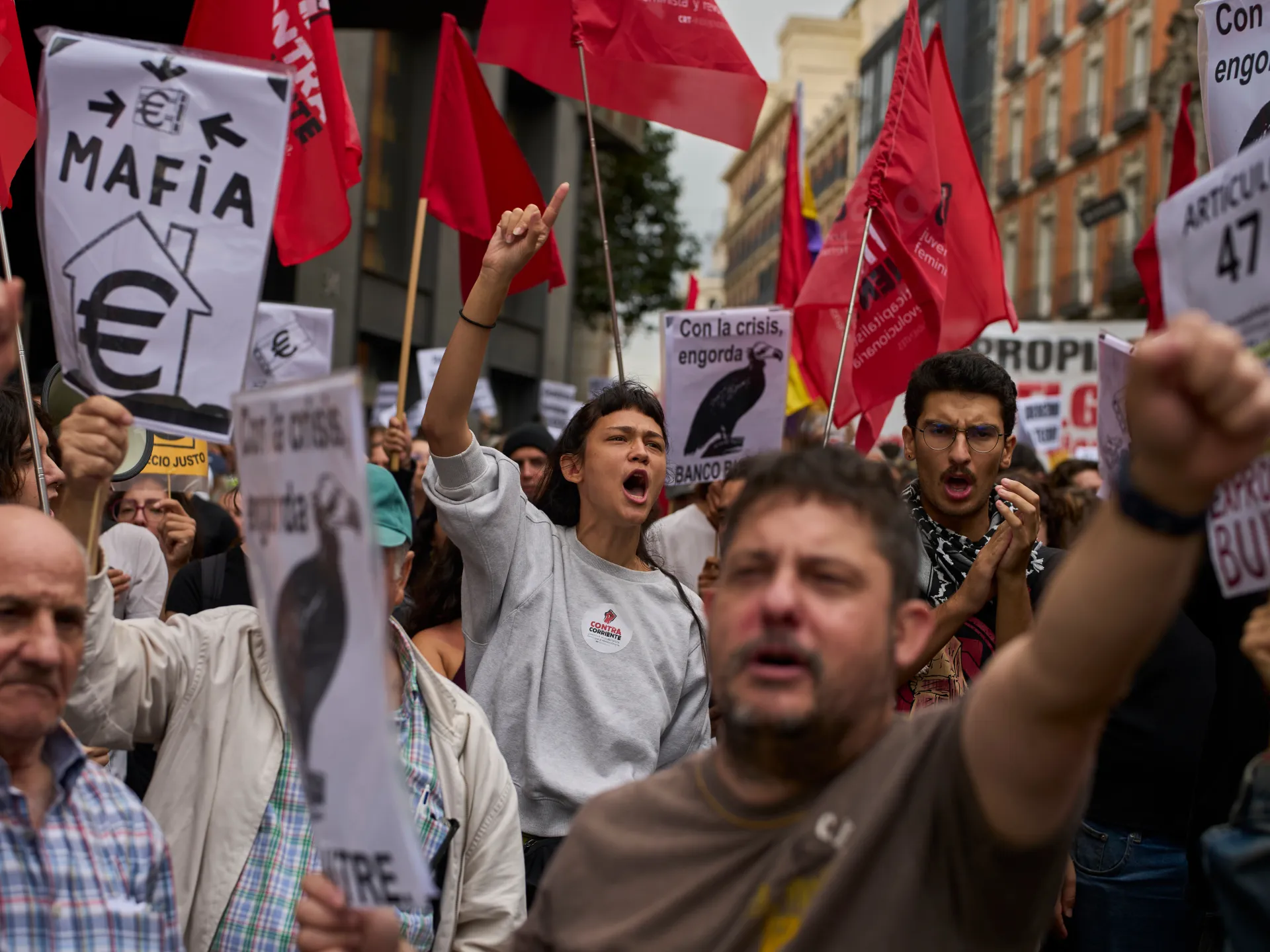


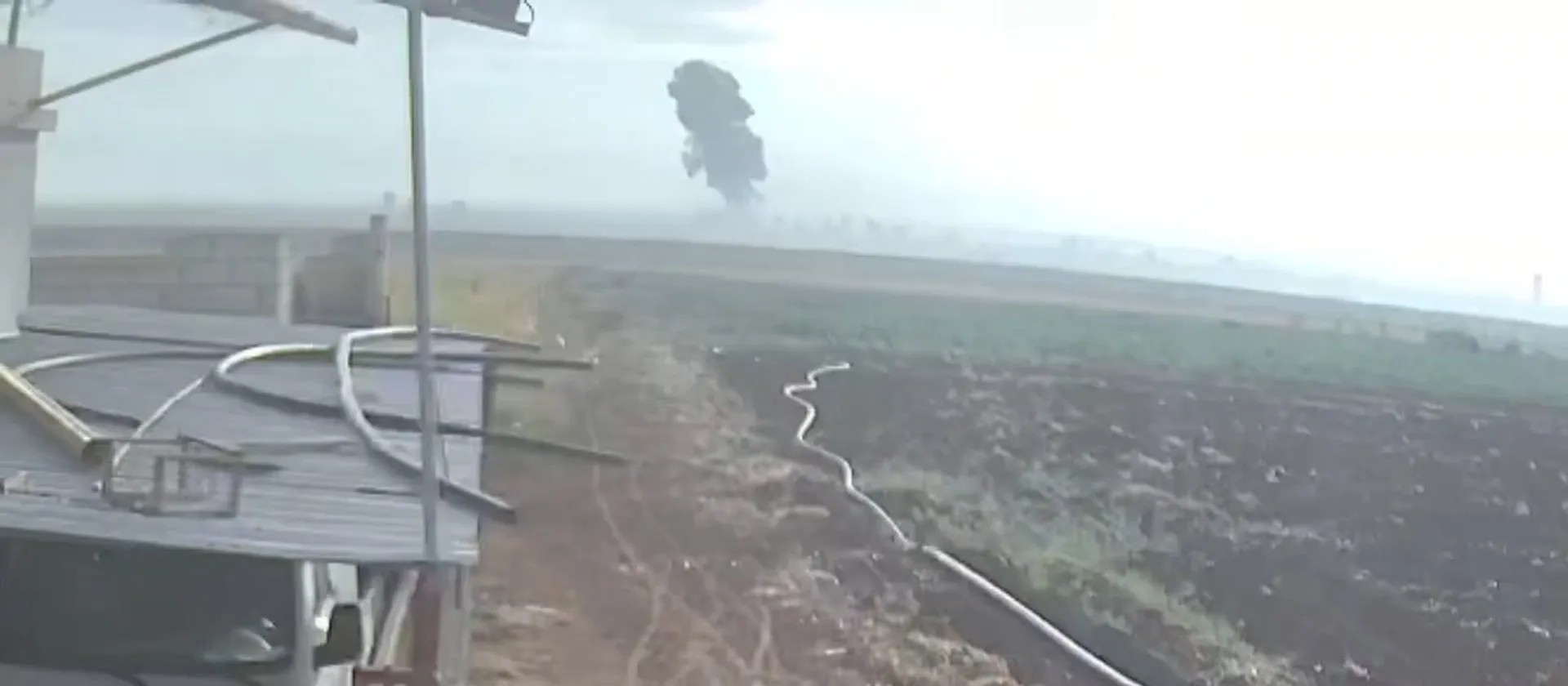

![Sami Abu Shehadeh, leader of the Balad party, arrives at the Supreme Court in Jerusalem on October 1, 2026 [AFP]](https://i0.wp.com/occasionaldigest.com/wp-content/uploads/2026/10/afp_6abe81d70b9e-1790869975.jpg?w=640&ssl=1)
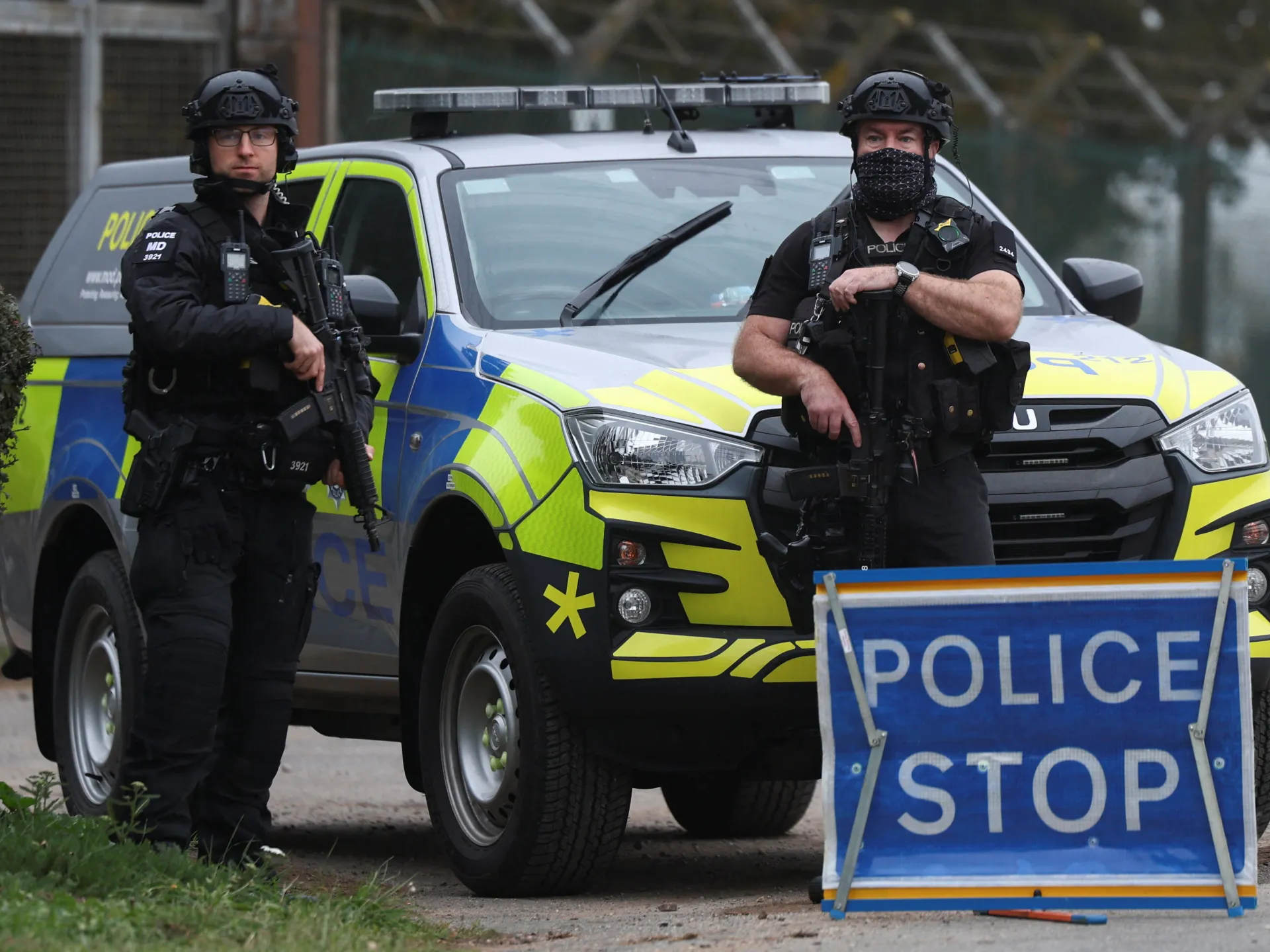
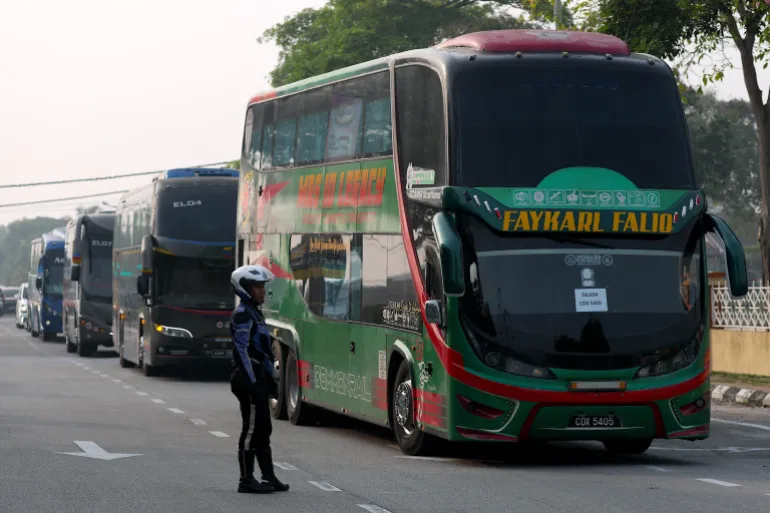

![Rohingya refugees facing evicted from their homes amid rising local tensions and online misinformation, Kuala Lumpur, Malaysia, July 27, 2026 [Hasnoor Hussain/Reuters]](https://i0.wp.com/occasionaldigest.com/wp-content/uploads/2026/10/2026-07-27T123715Z_206813602_RC2BMMA6AR5R_RTRMADP_3_MALAYSIA-REFUGEE-1787872480.jpg?w=640&ssl=1)

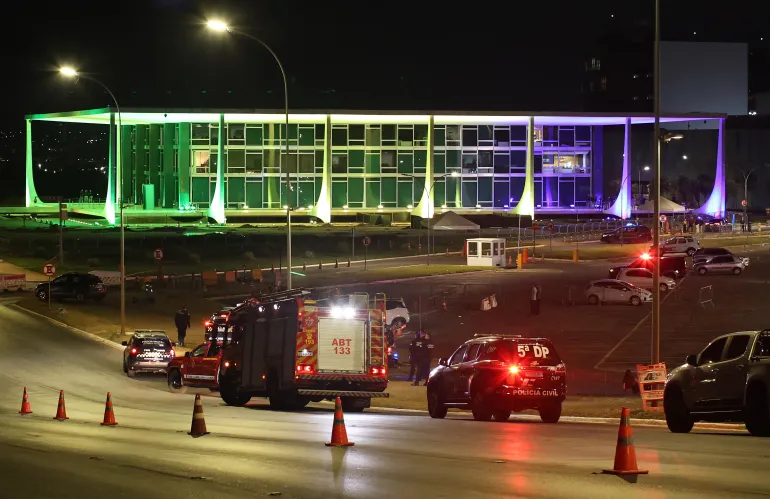
![Brazilian police and firefighters inspect the area of a possible bomb in a backpack outside the Supreme Court headquarters in Brasilia on October 1, 2026 [AFP]](https://i0.wp.com/occasionaldigest.com/wp-content/uploads/2026/10/afp_6abf3303edf8-1790915331.jpg?w=640&ssl=1)