From breaking news to significant developments in politics, business, technology, entertainment, and more, we deliver the stories that shape our global landscape.
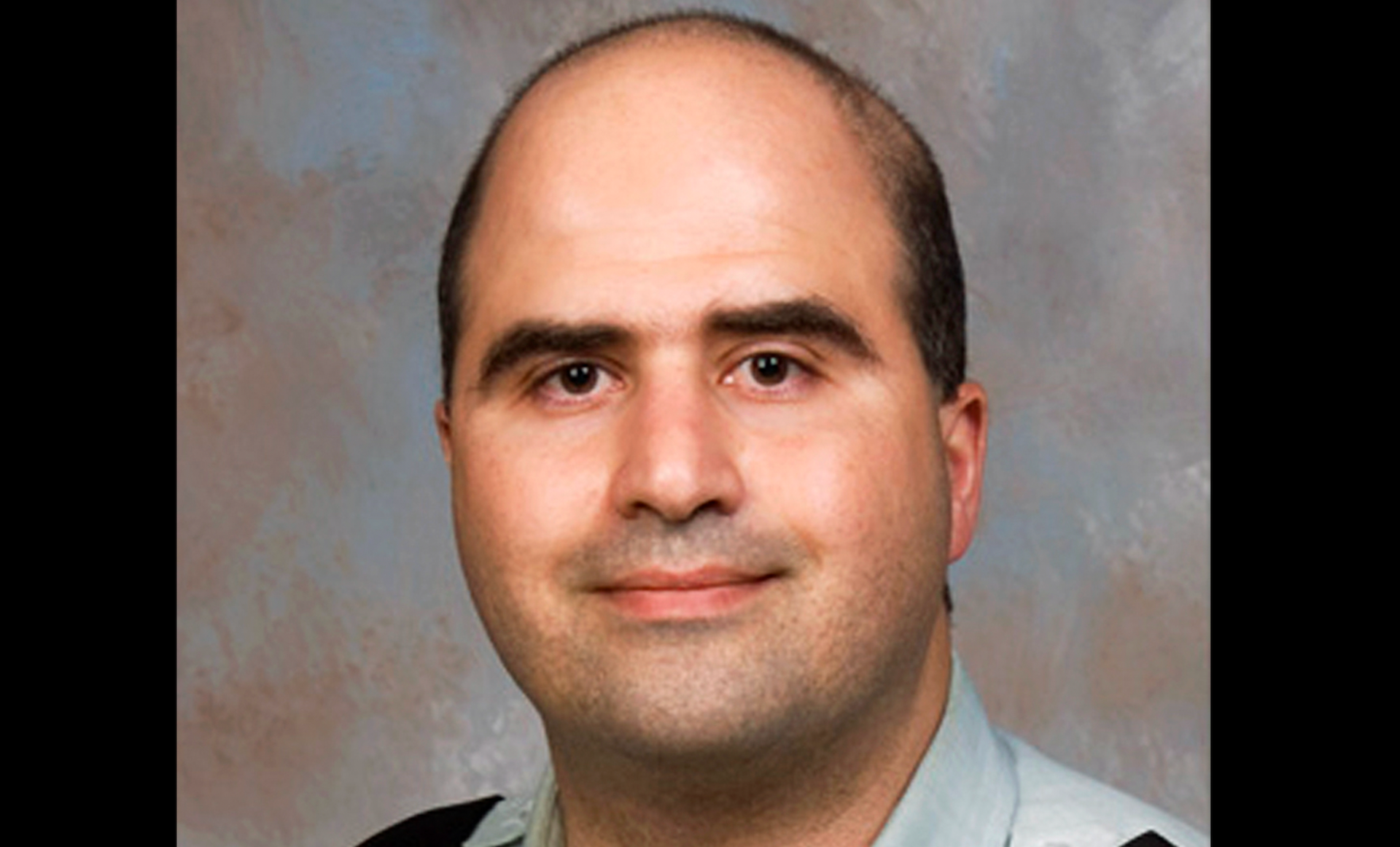
The Pentagon said the firing squad execution of Fort Hood shooter Nidal Malik Hasan will be public and livestreamed. Hasan, an Army psychiatrist, killed 13 people and wounded more than 30 others at the Texas base in 2009. The White House hasn’t confirmed the Pentagon’s comments.
Snap vote called after Parliament rejects measures to protect tenants and freeze rents.
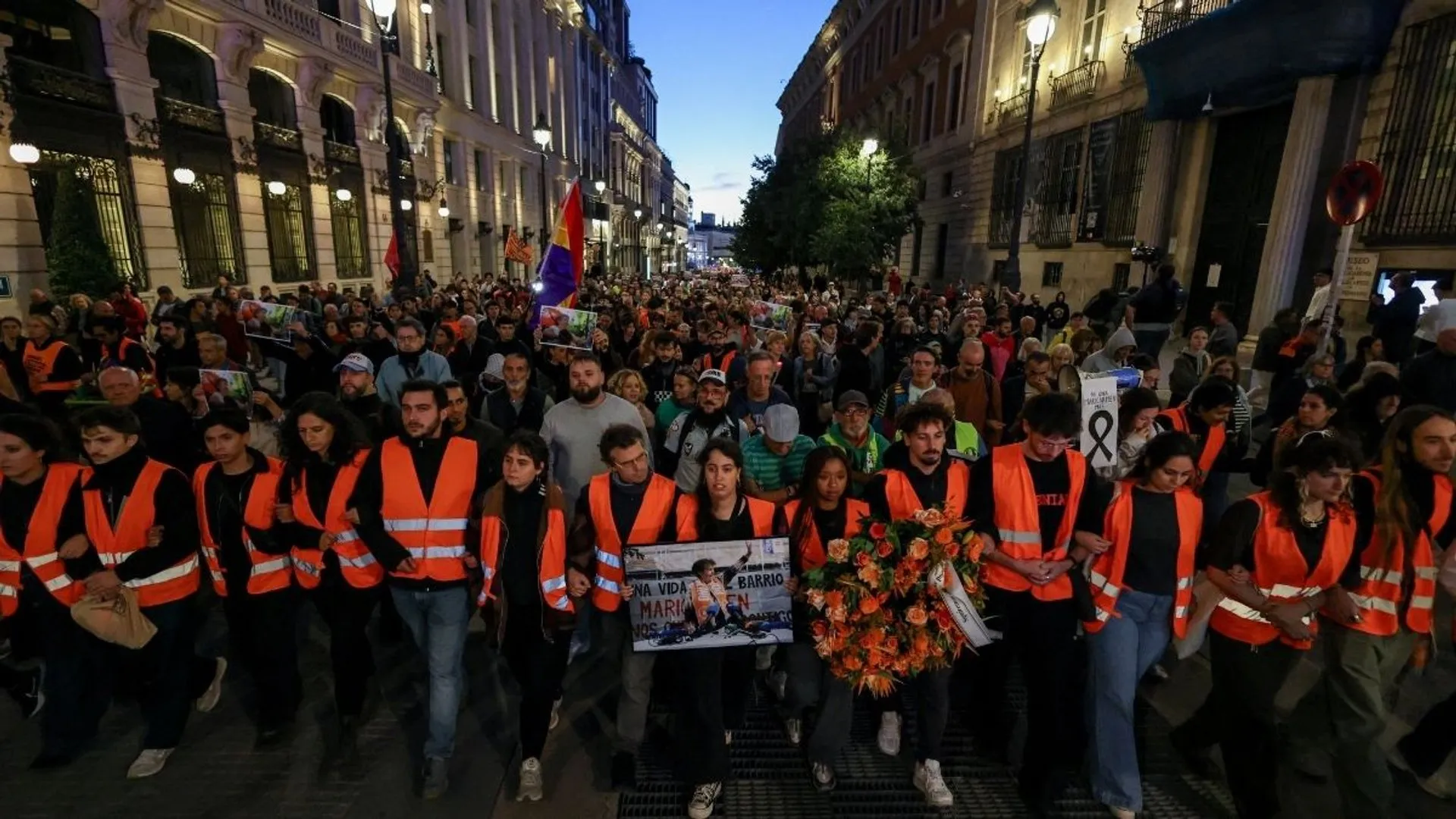
Rising frustration about housing shortages and surging rents in Spain has led to mass protests.
The demonstrations started last month after the eviction of Maricarmen Abascal, who died at age 87 this week.
The Socialist-led government tried to introduce measures to protect tenants and freeze rents, but Parliament rejected them. The conservative opposition says the solution is to ease regulations and build more homes.
Prime Minister Pedro Sanchez has since announced early elections. Analysts say he wants to galvanise support, as he faces pressure on immigration and corruption investigations into his party.
Two recent polls indicate the right-wing People’s Party and far-right Vox are on track for a combined majority.
Can demonstrations against the housing crisis reverse Sanchez’s political fortunes?
Presenter: Sami Zeidan
Guests:
Hana Jalloul – Secretary of international politics and cooperation for the Spanish Socialist Workers’ Party and a member of the European Parliament
Daniel Lacalle – Chief economist at Tressis and professor at the IE Business School
Pablo Calderon Martinez – Associate professor in politics and international relations at Northeastern University
Russia to supply 300,000 tonnes of diesel immediately, followed by 1.5 million more, as prices soar amid the Iran war.
Published On 9 Oct 20269 Oct 2026
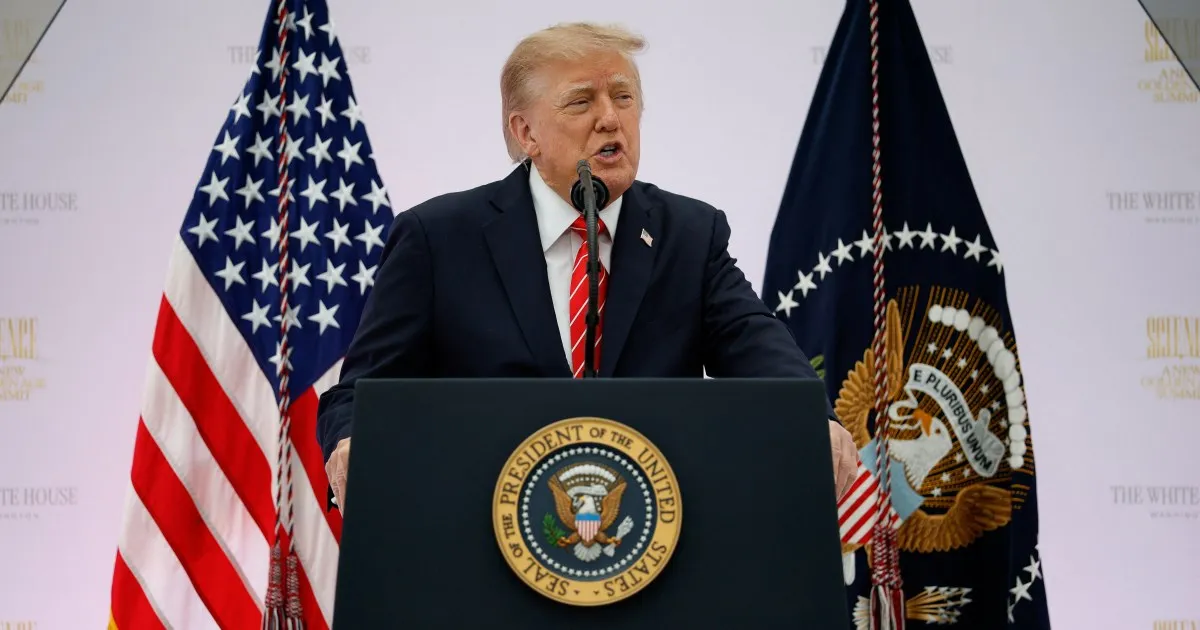
United States President Donald Trump said that Russia has agreed to supply 300,000 tonnes of diesel fuel to global markets amid discussions with Russian President Vladimir Putin.
“I have just concluded a highly successful discussion with President Vladimir Putin, of Russia, wherein it was agreed that Russia will immediately supply over 300,000 Tons of Diesel Fuel to the American and Global Marketplace, another 500,000 Tons during the month of November, and 1,000,000 Tons immediately thereafter,” Trump said in a post on his Truth Social platform.
Recommended Stories
list of 4 itemsend of list
The president added that Russia would deliver an additional 3 million tonnes of fuel “within a short period of time”. He said that the country would supply 500,000 tonnes in November.
An envoy for Russian President Vladimir Putin, Kirill Dmitriev, praised cooperation between Russia and the United States on diesel and energy in a post on X shortly after.
“Russia-US cooperation on diesel and energy will benefit the world,” Dmitriev wrote on X.
Petrol price pressures
The deal comes despite Ukrainian air strikes, which have taken more than half of the country’s oil refining capacity offline, according to claims made by Ukraine’s Ministry of Defence on Sunday.
The move also comes as prices of diesel, used in agriculture, heating homes and trucking goods, are near record highs ahead of the November 3 congressional elections that will determine control of Congress.
Diesel prices have been elevated in recent months but have started to decline. The average price for a gallon is $6.27 ($1.66 per litre), according to the American Automobile Association (AAA), which tracks daily petrol prices. That’s down $0.10 from this time last week, but up $5.94 from this time one month ago.
Diesel prices, which can drive inflation, are up 70 percent since the US and Israel’s war on Iran began this year, despite two high-profile recent moves by Trump to boost supplies of the fuel: pressuring allies to release emergency reserves and expanding access to tax-exempt red-dyed diesel, which is normally used for farm equipment.
The wars in Iran and Ukraine have triggered an unprecedented global fuel supply crunch.
A US charity announced it will use an AI-software to monitor Gaza classrooms for ‘anti-Semitism’ and ‘hate speech’, while Israel airstrikes kill Palestinians across the strip.
A powerful tornado tore through western Sicily, causing injuries, widespread destruction and forcing evacuations across the cities of Marsala and Petrosino.
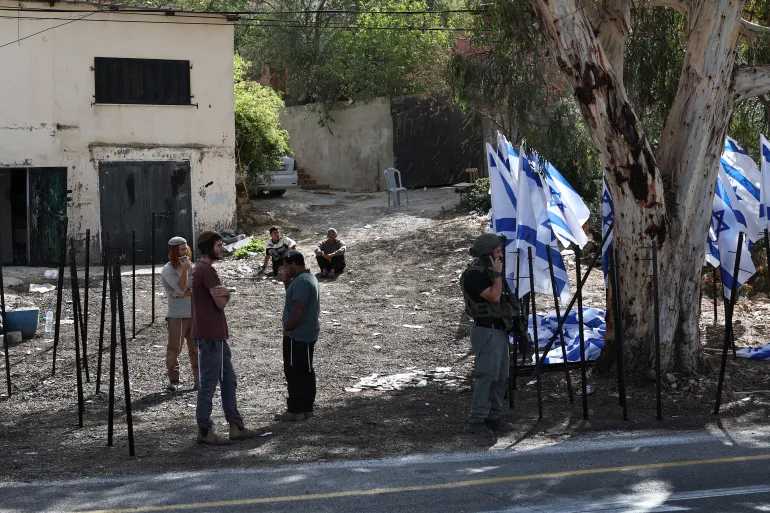
Israeli settlers have carried out attacks and pogroms disrupting the Palestinian olive harvest in the West Bank, while Israeli forces separately detained several Palestinians across the occupied territory.
At least 19 settler attacks were recorded on Friday by the Palestinian Colonization and Wall Resistance Commission, a Palestinian government body operating under the Palestine Liberation Organization (PLO).
Recommended Stories
list of 3 itemsend of list
The commission said the incidents included attacks on Palestinian olive harvesters, the burning and uprooting of olive trees, and the theft of crops and livestock. Other Palestinians and their vehicles were also targeted.
Settlers set fire to Palestinian-owned groves and stole olives in what is considered the most important season for harvesting the single-seeded stone fruit.
More than 50 olive trees were uprooted by settlers in Qusra, the commission said.
Settlers also assaulted and injured Palestinian farmers involved in the harvest in the Tal, where a Palestinian-owned vehicle was set on fire, it added.
Additionally, olive harvesters were attacked in Jorish, Beita, Naqoura, Birzeit, Deir Bzeih and Farata.
An Israeli security personnel member and Israeli settlers stand near Mou’ayad Mahmoud’s shop in al-Lubban Asharqiya, near Nablus in the West Bank, October 8, 2026 [Atef Safadi/EPA]
A farmer was injured in reported gunfire in Kafr ad-Dik, and the use of live ammunition was reported during a settler pogrom, backed by Israeli forces, in Deir Ballut.
Elsewhere, an elderly Palestinian woman in Berin, east of Hebron, was injured after settlers set their dogs on farmers while sheep were stolen in Ein Qinya.
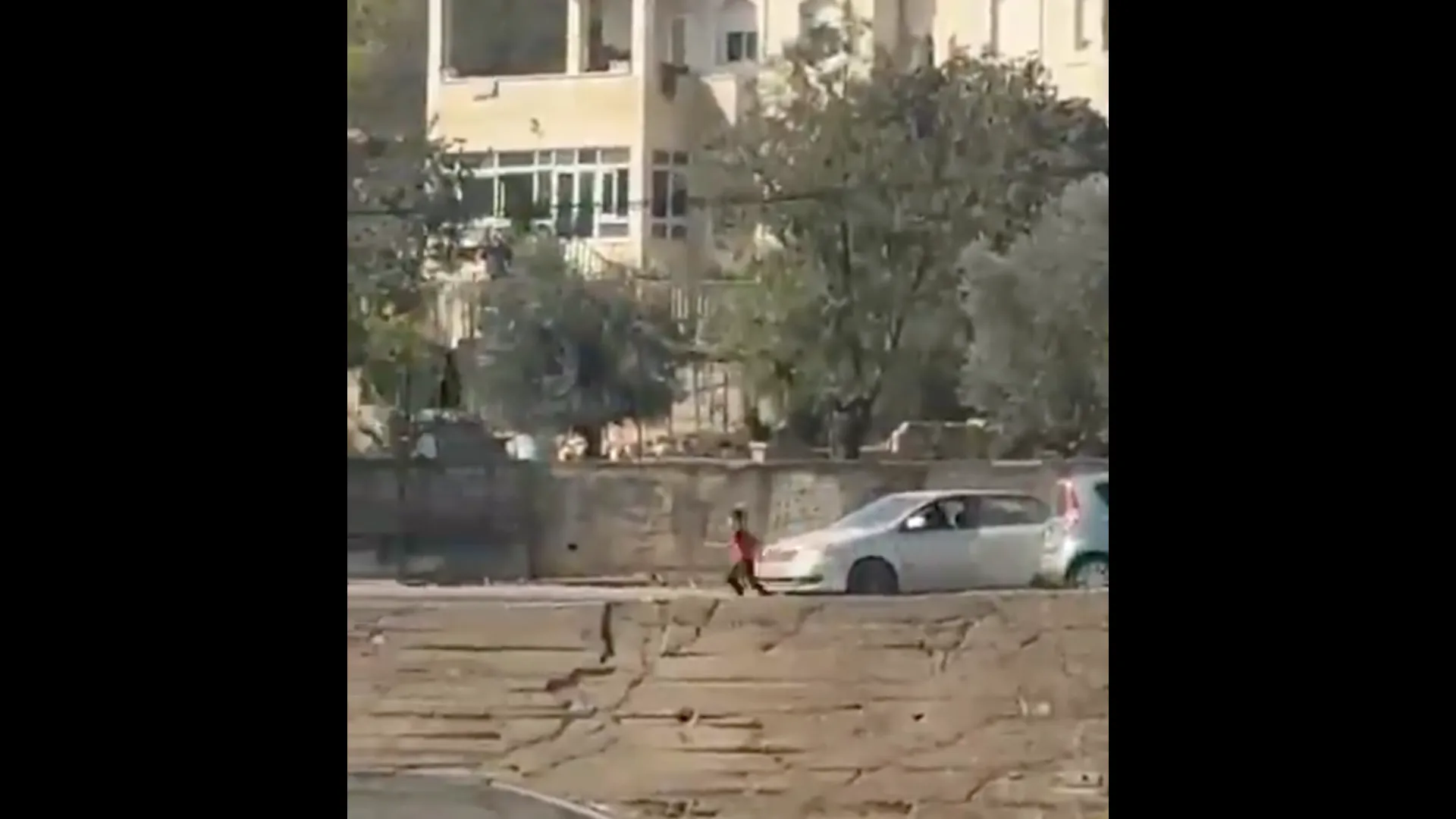
A Palestinian man and his child were attacked and their vehicle stolen by settlers in Yabrud. Settler attacks on Palestinian-owned vehicles were also reported in the towns of Sarda and al-Rihan.
Brazen attacks against Palestinians
Al Jazeera’s Nida Ibrahim reporting from Ramallah in the occupied West Bank said settlers, backed Israeli forces, have grown more brazen in their attacks against Palestinians during the olive harvest despite the presence of foreign activists and observers.
“Palestinians have to go about the harvest in large groups, that include international solidarity activists, to try to stop settler intimidation and attacks,” Ibrahim said, adding that the settlers wait for the groups to start leaving at the end of the harvest, before springing into action.
“It has become a very difficult journey, as the Palestinians try to leave the harvesting areas, Israeli settlers continue to intimidate them under the protection of the Israeli army,” she said.
As Ibrahim reported, a Palestinian family was under attack by Israeli settlers who recently started building an illegal settlement outpost near Ramallah, “using it as a base to attack Palestinians”, she said.
“No one is being spared,” said Ibrahim.
For Palestinians, the olive harvest is supposed to be a joyous season, but instead, they fear settler attacks and intimidation backed by the Israeli forces.
Sixteen Palestinians arrested
As settler attacks and pogroms continue, the Israeli army arrested 16 Palestinians in raids across the occupied West Bank on Friday, according to the Palestinian Wafa news agency and local sources speaking to the Anadolu news agency.
In Hebron, southern West Bank, Israeli forces arrested nine Palestinians after raiding and searching their homes, including Ibrahimi Mosque Director Moataz Abu Sneineh and Hammam Abu Markhiya, an official responsible for the mosque’s custodians, Wafa reported.
In the city of Qalqilya, Israeli forces arrested five Palestinians during a raid, local sources said.
Two other Palestinians were arrested after Israeli forces raided and searched several homes in Beita, south of Nablus, the sources said.
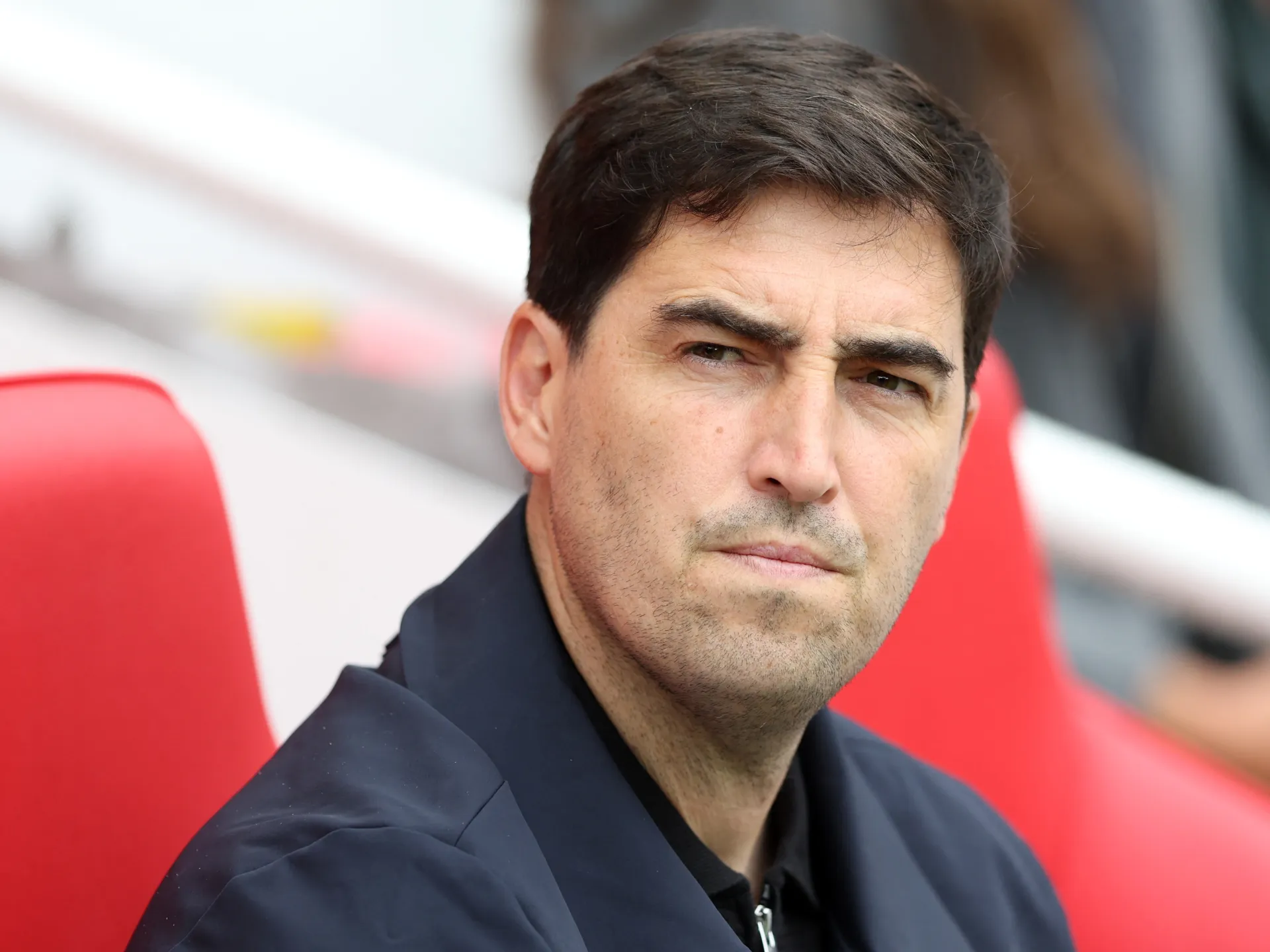
Liverpool’s Andoni Iraola looks to Manchester City clash and rival’s appeal over guilty verdict for financial breaches.
Published On 9 Oct 20269 Oct 2026
Liverpool boss Andoni Iraola said the lack of clarity over Manchester City’s future after the club was found guilty of multiple breaches of financial rules was causing uncertainty throughout the Premier League.
City remain adamant they have done no wrong and have appealed against the findings of an independent commission announced last week.
Recommended Stories
list of 4 itemsend of list
The Premier League leaders potentially face a severe points deduction that threatens their place in the English top flight.
Iraola believes the world’s richest league is caught in limbo until there is a definitive outcome.
“I think the worst thing probably is the uncertainty, that no one knows what’s going to happen,” the Spaniard said ahead of City’s first outing since the verdict at Liverpool on Sunday.
“But we have to focus on Liverpool – be the best club we can be, the best team we can be and that’s my challenge.”
Iraola only joined the Reds in June but is looking forward to a red-hot atmosphere at home.
“The atmosphere is going to be big, especially at Anfield,” he said.
“We want to give also our supporters reasons to be with us. When they see the team they want to see on the pitch, we can create an even better atmosphere and we will work for that.”
Liverpool are still unbeaten under Iraola, but three draws in their opening five league games means they start the weekend six points off the top.
Iraola’s options up front are limited after Alexander Isak and Cody Gakpo were injured on international duty.
“As a club manager, you are always waiting until the game ends (hoping) the doctor doesn’t call you, doesn’t give you bad news, but in this case we’ve been unlucky with Alex and Cody, both of them,” he said.
“They are injured and they are not going to be involved on Sunday.”
A Palestinian boy was seen fleeing after Israeli settlers attacked his father and stole their car in Ramallah. At least 19 pogroms by Israeli forces and settlers were reported across the occupied West Bank on Friday morning.
New Delhi, India – Stand-up comic Brijesh Jha posted a parody video on Instagram last week to protest the removal of his name, along with his father’s and sister’s, from a voter list in the eastern Indian state of West Bengal.
The video, which alleged that India’s Chief Election Commissioner Gyanesh Kumar had disenfranchised millions of voters at the behest of Prime Minister Narendra Modi’s Bharatiya Janata Party (BJP), garnered 1.7 million views after it was posted on September 29.
Recommended Stories
list of 4 itemsend of list
Two days later, Meta, the United States-based company that owns Instagram, took the video down, citing “local laws” without giving further explanation.
“I felt very helpless that day. I have only one thing in this country – that I can vote. If you take that away from me, then I have nothing left. So I didn’t know what to do. As an artist, I can just make art, or I can protest,” the Mumbai-based artist told Al Jazeera.
Jha said his parody song was removed because the Modi government is “scared” after an investigation by the Indian Express newspaper last month revealed that two of the election commission’s three members had raised serious concerns over a controversial revision of voter rolls being conducted by the poll panel across the country.
The exercise, known as the Special Intensive Revision (SIR), was launched in June last year to identify deceased, duplicate or dubious voters and remove them from the rolls. So far, the process has deleted more than 130 million voters – nearly 14 percent of India’s total voters, an overwhelming number of them Muslims who do not usually vote for Modi’s Hindu nationalist party.
The Indian Express investigation found that two of Kumar’s fellow election commissioners had formally objected at least 14 times to key decisions linked to the SIR exercise taken by their chief.
Opposition politicians and critics accused Kumar, a Modi government appointee, of acting at the behest of the BJP and demanded an independent inquiry into the decisions taken by the election commission during his tenure.
The revelations have led to street protests across India, demanding Kumar’s resignation.
On Tuesday, police in the capital New Delhi briefly detained the main opposition leader, Rahul Gandhi, and other leaders of his Congress party as they tried to march to the election commission office.
“The country has been hijacked by Narendra Modi through vote theft,” Gandhi told reporters. “What has been done to our country is called treason. Nobody is going to escape.”
In response, the BJP accused the opposition parties of “making a concerted effort to change the government”.
“They are deliberately attacking India’s democracy and constitutional institutions,” a BJP spokesman told reporters on Tuesday.
The Congress protesters and their political allies were back on the streets on Wednesday. Their demonstrations followed a series of protests by the satirical Cockroach Janta Party (CJP) and a group of left-wing students in Mumbai and New Delhi since October 2. The CJP has planned another demonstration in New Delhi on October 10 if Kumar does not resign by then.
‘Question the people in power’
What stood out in these protests was an increasingly inventive language of dissent, driven by humour, art and music, with much of it existing online alongside the demonstrations on the streets.
But a crackdown on such memes and jokes has also been simultaneous.
According to the Indian Express newspaper, the government issued nearly 195,000 content-blocking orders to Instagram, Facebook and YouTube between March and July this year – an average of one blocking order every 68 seconds.
Rejecting the newspaper report, the government said in a statement, “With 600 million users in India posting up to 78,703 items every 68 seconds, it is reasonable to expect that on average, one of these items may not be lawful.”
The crackdown came after the Modi government tightened rules governing online content in February. According to the new rules, social media platforms must remove content that a government authority or court has declared “unlawful” within three hours of receiving the order, down from 36 hours previously.
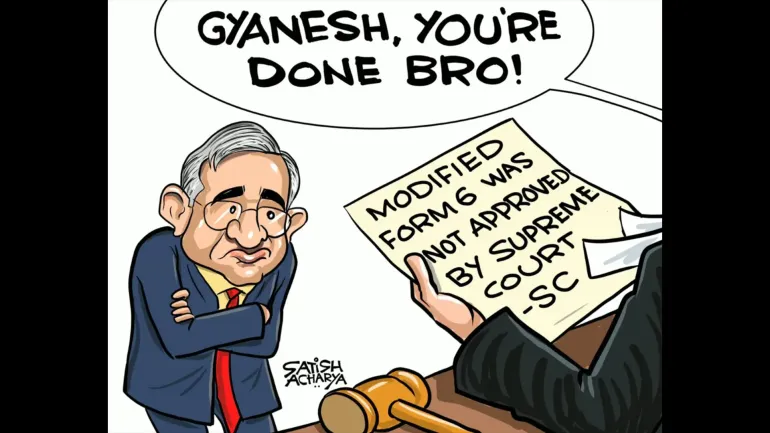
Among those whose works were taken down was political cartoonist Satish Acharya.
One of Satish Acharya’s cartoons taken down by the social media companies [File: Al Jazeera]
Several of Acharya’s cartoons, some up to three years old, were removed and his Instagram account was blocked in India from September 28 until late on October 5, he told Al Jazeera.
“At different phases of history, people used cartoons as a tool to express their protest and question the people in power. With the advanced use of social media, cartoons appear in different forms now, sometimes memes and reels,” the 55-year-old said.
“I have a lot of hope in Gen Z. They are fearless, they are creative and they care for the country. Our politicians can learn a lot from them.”
Stand-up comic Jha, who attended the CJP’s protest in Mumbai, agrees. “The more cruel the power is, the softer, more humorous and more artistic the protest becomes,” he told Al Jazeera.
But Jha has refused to apply for a reinstatement of his name in the voters’ list.
“I think they will see this interview and probably I will be in some detention centre. I just want to see what will happen. I’ll not register my name again,” he said.
However, he had a satirical message for Modi as he urged the Indian leader to stop the crackdown on online content.
“Please give back my right to vote. You are a great leader with a 56-inch chest. You shouldn’t be scared of one video,” he said, invoking a long-held right-wing boast about Modi’s famous bust.
Striker takes fire for where and how he has chosen to recover from a knee injury as his return to play could come as early as Saturday.
Published On 9 Oct 20269 Oct 2026
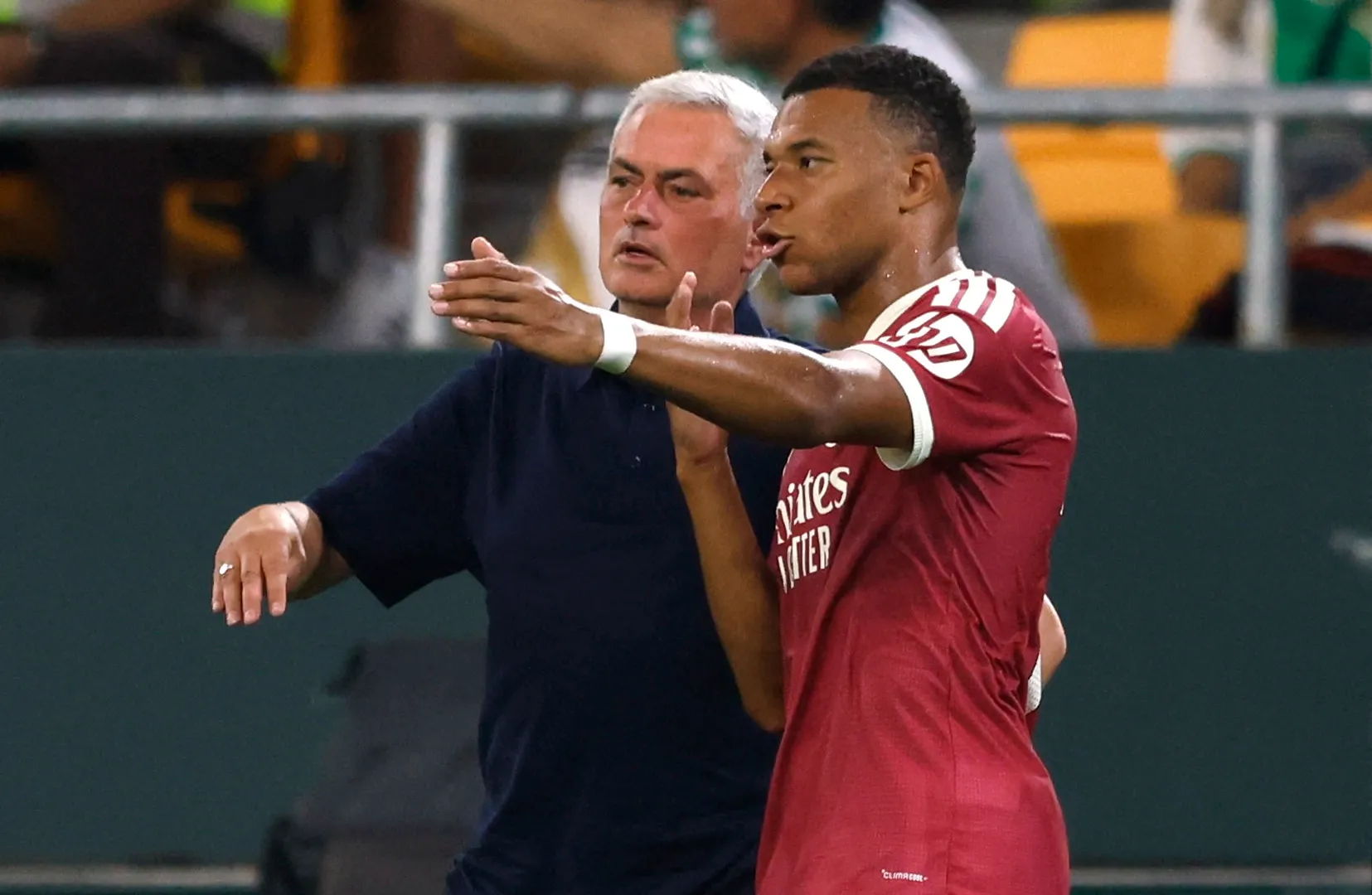
Real Madrid coach Jose Mourinho has slammed criticism of star striker Kylian Mbappe, calling the attacks “ridiculous”.
The French captain has come under fire for spending his time recovering from a left knee injury in France and Switzerland rather than Madrid. He suffered a hyperextension of the joint while playing in a Nations League match against Turkiye on September 25.
Recommended Stories
list of 4 itemsend of list
The 27-year-old was also pictured at the entrance of a Parisian nightclub and photographed on a bicycle when he was in Switzerland.
Some fans claimed it was a deliberate snubbing of Mourinho, who only days before had said players should avoid skiing or riding bicycles to avoid injury.
“Are these criticisms over the top? They are ridiculous,” Mourinho said at a news conference on Friday on the eve of Real’s La Liga home match with Villarreal.
“All the players who were obliged to be present every day for their recovery were here.
“Mbappe came, like the others, to undergo scans in order to be diagnosed.
“He then went to see a specialist in France because he has history with his knee, which we cannot ignore.”
Mourinho, whose side lost to Atletico Madrid in their last match and already lag six points behind bitter rivals Barcelona, is never one to shy away from a confrontation and tackled each of the criticisms against Mbappe.
“Problems involving football are not sufficient for you,” the 63-year-old Portuguese coach told reporters.
“Therefore, you have raised the issue of the discotheque, which in fact was not one because it was used for a private event for Fashion Week.
“As for the bicycle in Switzerland, it was in a hotel made up of small houses which makes them available so guests can ride to the communal areas, and you would have us believe he was competing in the Tour of Switzerland.”
Mbappe, who returned to training on Wednesday, could feature on the pitch as early as Saturday. Mourinho shrugged off the potential of a hostile reception for Mbappe against Villarreal, reiterating that he was “certain” the all-time World Cup record goal scorer has fulfilled “his obligations to Real Madrid”.
It is not the first time this season that Mbappe has been subjected to attacks by fans.
The Ultras Sur, a Real Madrid supporters group linked to the far right and banned from the Santiago Bernabeu, took issue with him last month.
They were furious that before a Real Madrid match, Mbappe, alongside Vinicius Jr and fellow Frenchman Ibrahima Konate, partially rolled up T-shirts bearing the words “We are all Ceutans“, which was intended to be a message of support for people in the Spanish territory bordering Morocco.
Mbappe was also criticised earlier this season over his choice of a location for recovery from a previous injury, which led to an online “Mbappe Out” campaign by some Real fans.
United States President Donald Trump has said that he does not intend to bomb Iran again until the November midterm elections, even though several US media outlets have reported that the Pentagon has drawn up plans to relaunch attacks before that vote.
Trump has been accused of misdirection on the issue in the past. The US launched its initial attacks on Iran on February 28, as talks with Iran were ongoing and despite Trump saying just the day before that he had not made any decision. One year previously, the US struck Iran towards the end of Israel’s June 2025 12-day war, despite Trump saying he would announce a decision about attacks “in two weeks”.
Recommended Stories
list of 4 itemsend of list
Still, striking Iran ahead of the midterm elections would be risky for the administration as the war remains deeply unpopular with Americans.
Resuming the war afterwards may have less of a negative impact on Trump, who is not eligible to run for another term as US president anyway.
Here’s what we know about Trump’s plans.
In the past two days, The New York Times, The Wall Street Journal and other publications have reported claims by unnamed officials that the Pentagon has drawn up plans to attack Iran before the midterms, if authorised to do so.
On Wednesday, US publication Axios cited US and Israeli officials saying the Pentagon has instructed US Central Command (CENTCOM) to prepare for imminent major combat operations. The Atlantic also reported along similar lines.
What has Trump said?
On Thursday, Trump posted on his Truth Social media platform that he will not order a resumption of strikes on Iran before November 3, when the US midterm elections will be held.
“I want to make it clear to everybody that, while Iran is in very bad condition…we will not be attacking Iran at any time prior to the Midterm Elections to be held in the United States on November 3rd,” he said.
The president added that the US is presently “having productive discussions” with the Iranian side. However, that was also the case on February 28, the day the US and Israel first struck Iran, triggering the war.
Trump did not make any reference to preparing for potential military operations, nor did he provide more details on the state of talks.
Why might Trump be hesitant about resuming bombing before the midterms?
Trump and Republicans are worried about a voter backlash against the war at the polls. The US war on Iran is intensely unpopular domestically as Americans have had to grapple with surging prices of gas, food and other basic commodities because of the crisis in the Middle East.
Since the start of the war, surveys have shown that large numbers of Americans did not approve of striking Iran.
Now, about 65 percent of Americans say they “disapprove” of the way in which Trump has handled the Iran war overall, according to a Pew Research Center poll released on Thursday. Trump stated at the start of the war that it would go on for just a few weeks, however, it is now into its eighth month.
According to Pew, most Americans now believe the war will continue for at least another year. Even Republican or more conservative-leaning voters are growing more negative about the war, its poll found.
The conflict has also severely affected Trump’s personal ratings and eroded support for Republicans. A Reuters/Ipsos poll on Thursday found that only 30 percent of his supporters were enthusiastic about voting in the midterms, compared with 48 percent of Democratic voters.
About 13 percent of those who voted for Trump in 2024 say they are not sure who to vote for in the congressional elections.
Delaying attacks until after the elections could potentially shield Republican candidates from voter backlash, analysts say.
While analysts say Trump will see a good performance at the polls as approval for renewed strikes, a Republican defeat at the polls could equally further incentivise him to hit Iran again as he will calculate that he has little to lose at that point.
While that could further affect Trump’s ratings, the president is not eligible to run in the next presidential election in any case.
Will the US restart the war after the midterms?
In recent weeks, the US president has threatened to “end” the war with force after the elections as talks with Iran have dragged on.
At a Republican convention in September, he accused Iran of trying to affect the outcome of the midterms and said that conflict “is going to end immediately after the elections”.
In an interview with Time magazine two weeks ago, he also said it would be “possible” to ramp up bombing in Iran after the elections, but declined to elaborate. Analysts say his comments were designed to calm voters, while at the same time warning Iran of potential aggression after the vote.
Last week, the US military dispatched about 7,000 sailors and 2,000 Marines aboard several ships now sailing to the Middle East amid threats of new attacks from Trump. The vessel formation included the USS Theodore Roosevelt carrier strike group.
The deployment increases the number of US troops in the region to 20,000, alongside hundreds of aircraft and at least three carrier strike groups.
In the past, US troop build-up in the Middle East and the Caribbean has subsequently resulted in military action.
In June, Washington and Iran signed a ceasefire agreement that quickly broke down over control of the Strait of Hormuz.
Trump has repeatedly said that the US has the upper hand in the strait, citing more oil exports and Iran’s weakened economy. He has also voiced aversion to a deal with Tehran over management of Hormuz, but said he might consider it because “they’re willing to offer us anything to stop”.
Washington rejected a recent proposal from Iran to reopen the strait based on certain conditions it wants the US to meet, including the lifting of sanctions, unfreezing Iranian assets and guaranteeing an end to attacks. Last week, Foreign Minister Abbas Araghchi said Iran was considering a counterproposal from the US.
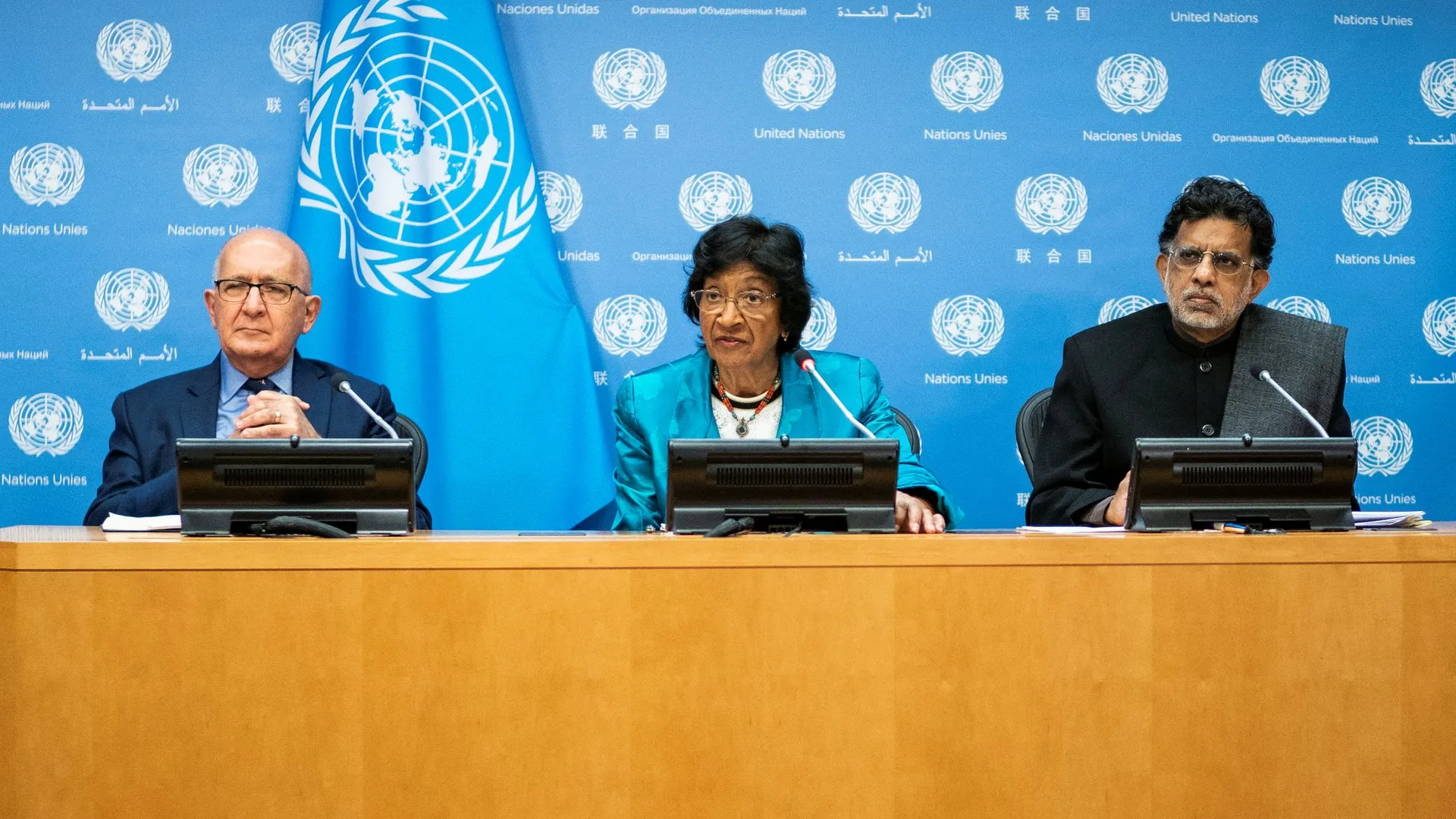
International Court of Justice judge Navi Pillay has been awarded this year’s Nobel Peace Prize. A former head of the UN’s inquiry into the occupied Palestinian territories, the Nobel committee called her ‘one of the great defenders of international legal principles’.
All-time leading scorer LeBron James makes 76ers debut following LA Lakers switch in NBA preseason, but Nets claim win.
Published On 9 Oct 20269 Oct 2026
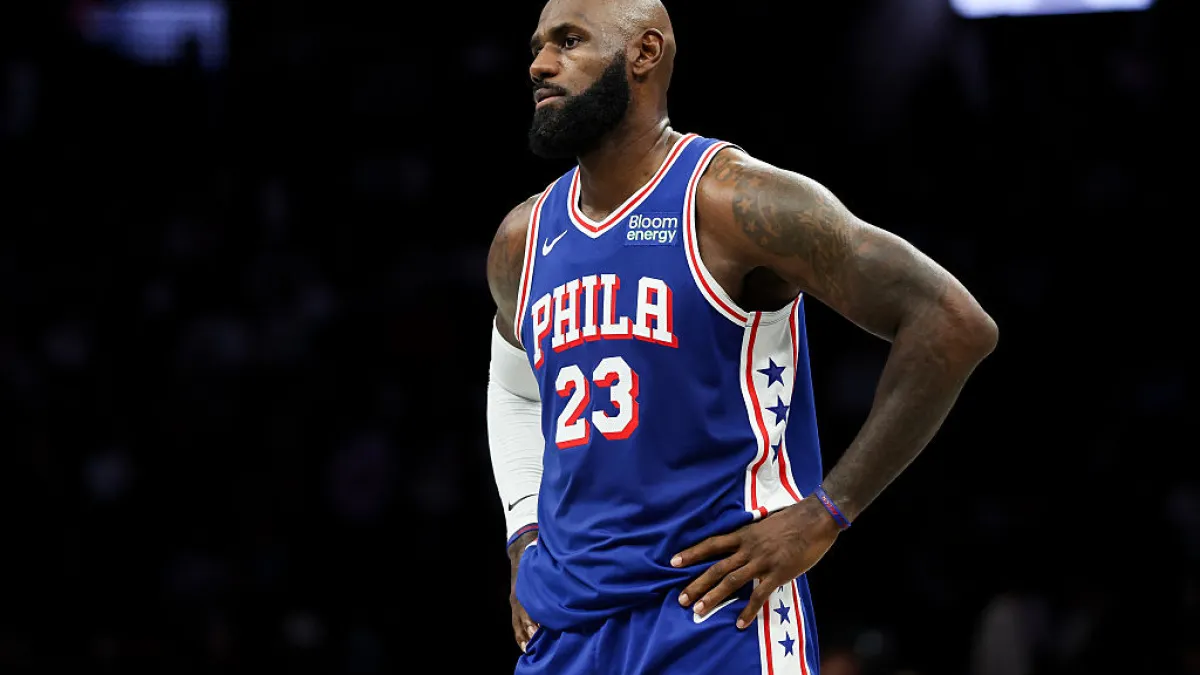
NBA superstar LeBron James delivered a solid first half in his first preseason game for Philadelphia, but the new-look 76ers fell 114-108 to the Nets in Brooklyn.
James, the NBA’s all-time leading scorer, announced in July that he had signed a two-year, $8m deal with the 76ers, ending weeks of speculation over where the four-time NBA champion would land as a free agent after eight seasons and one title with the Los Angeles Lakers.
Recommended Stories
list of 4 itemsend of list
The 41-year-old superstar, entering a record-extending 24th NBA season, won two titles with Miami, another with Cleveland and a fourth with the Lakers, and is aiming to help the Sixers win their first title since Julius Erving led the club to the crown 43 years ago.
Thursday’s game marked his first chance to line up alongside new teammates Joel Embiid, VJ Edgecombe, Tyrese Maxey and Jaylen Brown – a new arrival from the Boston Celtics.
“It felt a little different,” James said. “Obviously, just wearing a new uniform, but the game is the game.
“We’re still trying to put each other in a position to be successful and complement each other the best way we can out on the floor,” he added. “But it’s going to take some time. Tonight was a good sample size for us to build on.”
James scored 10 points, connecting on his lone shot from the floor and making all eight of his free-throw attempts. He added four rebounds, five assists and a steal in 18:04 minutes in the first half.
Brown led all scorers with 18 points. Julius Randle had 14 for the Nets, who outscored the Sixers 37-23 in the third quarter to take control.
LeBron James captures NBA spotlight again
But all eyes were on James, starting with his first signature pre-game chalk-toss in a 76ers uniform.
James smoothly directed the Sixers’ offence in his time on the floor, making all five of his assists in the first quarter and combining effectively with Maxey.
“I think there was some really good things happening, you know, right off the bat,” 76ers coach Nick Nurse said after seeing his starters together for the first time.
“A bunch of back cuts and good passing, etc, there were segments where obviously we turned the ball over a lot … just the little clunky segments, too. But, again, it’s preseason, first time they’re together.
“I think you look at it as what’s good and what are the learning experiences, things that we can improve.”
The 76ers have two more preseason games, both against Boston, before opening the NBA regular season against the defending champion New York Knicks at Madison Square Garden on October 20.
James’s arrival has already found the 76ers battling outside “noise”.
James took to Instagram to refute a report from a play-by-play announcer during the team’s first preseason game on Monday that James had admonished Embiid for being late to a practice.
“He ain’t been late, so stop the lie,” James posted.
James had acknowledged at the team’s media day last month that such outside hubbub around the 76ers would be “doubled, tripled and quadrupled now that I’m here”.
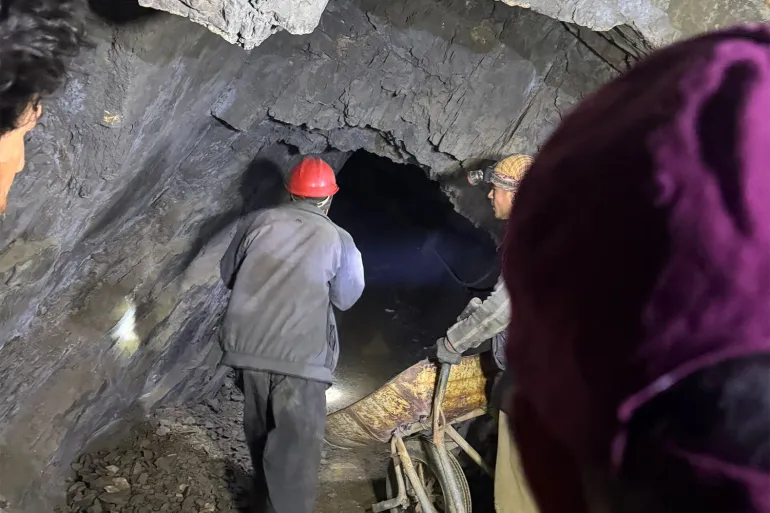
Afghan miners endure harsh conditions, relying on basic tools to extract precious emeralds in Panjshir’s steep valleys.
Panjshir, Afghanistan — At a packed hall in the offices of the Panjshir provincial government, an auction is under way and the bidding is brisk.
The buyers, many from Kabul and some from overseas, have already closely examined the small piles of roughly cut green stones, shining their phone flashlights through them to check their quality.
Recommended Stories
list of 4 itemsend of list
Bidding for the best stones is competitive.
“Panjshir emeralds have many buyers around the world because of their very high quality,” gem merchant Ghulam Mustafa Habibi told Al Jazeera. “This is why their price is higher compared with other emeralds around the world.”
Mining for gemstones in Afghanistan’s Panjshir valley [Mohsin Khan Momand/Al Jazeera]
By the end of the auction, nearly 3,000 carats of the precious stones were sold – the 23rd sale of its kind so far this year. The value of emeralds sold to date in Afghanistan is estimated to be nearly 400m Afghanis ($6.12m), a steep rise compared with last year.
For a country impoverished by years of war and burdened by international sanctions, the trade in precious minerals is a valuable resource, especially in the remote corner of northeastern Afghanistan.
“Thankfully, more than 15,000 people are currently employed in Panjshir’s mining sector,” says Muhammad Aman Rezaii, a mining official responsible for overseeing the operation of many small artisanal mining operations dotting the Panjshir valley.
On the valley’s steep hillsides, miners toil for hours underground to make a living. In the otherwise barren and rocky landscape, which yields little, the precious stones are a lifeline.
“There are hardly any companies or manufacturing factories here. The main source of employment is the mining sector,” said Rezaii, adding that they have identified more than 2,000 other mining sites which could be developed.
Afghan workers and Taliban officials near a mine [Mohsin Khan Momand/Al Jazeera]
Since taking power in 2021, the Taliban say they have signed deals with dozens of investors, mainly Chinese, Russian and Iranian, to mine gemstones and other valuable minerals.
According to the World Bank, state revenues rose 22 percent year-on-year in April and May, boosted by the auction of mines and other resources such as oil and precious minerals.
But Afghanistan’s gemstone mining sector is still lacking in international investment and expertise.
“There have been various proposals to establish an international market for Afghanistan’s precious minerals, particularly in Kabul,” Hafiz Muhammad Agha Hakim, the Governor of Panjshir province, told Al Jazeera.
“Processing machinery could be brought in so that these minerals can be processed and standardised here before being exported to markets around the world. At the moment, there is no standardised centre or proper processing facility.”
The steep valleys of Afghanistan’s Panjshir valley [Mohsin Khan Momand/Al Jazeera]
Back in the dusty confines of his mine, working in near-total darkness, miner Mahdi wields a crowbar while his friend beside him hits the surface with a hammer. He bemoans their lack of modern equipment.
“There are many challenges because we don’t have advanced equipment,” he says, taking a break from the digging. “We work only with basic tools such as shovels, pickaxes, drills and similar equipment.”
Rezaii said the miners need proper equipment that can make their work easier and safer, while also allowing the minerals to be extracted in a more professional manner. This would benefit the people of Afghanistan and particularly the miners,” he said.
“The area is vulnerable to landslides, avalanches, flooding and falling rocks. People here are working under extremely difficult and demanding conditions.”
Oil prices drop as Trump dismisses speculation of pre-midterm military action against Iran.
Published On 9 Oct 20269 Oct 2026
United States President Donald Trump has said the US will not attack Iran before the November 3 midterm elections.
The US president said late on Thursday: “we are having productive discussions with the Islamic Republic of Iran,” in a post on Truth Social. “We will not be attacking Iran at any time prior to the midterm elections to be held in the United States on November 3rd.”
Recommended Stories
list of 3 itemsend of list
Oil prices fell early on Friday as Middle East supply concerns eased somewhat after tensions in the energy-rich Gulf region had mounted in recent weeks.
The possibility of renewed fighting had appeared to drive up oil prices in trading on Thursday. Some analysts believe Trump’s comments were an attempt to try and bring prices back down.
Iran’s Foreign Minister Abbas Araghchi said Tehran is reviewing the US response to its seven-day plan to reopen the Strait of Hormuz, and that Iran will respond within the “next few days”.
He added that negotiations are continuing through mediators, Iran’s Tasnim news agency reported.
Hormuz explosions
Iranian media reported “massive explosions” in the southern Strait of Hormuz on Friday, with Fars citing unnamed military sources as saying tankers using “unauthorised” routes may have struck sea mines.
On Tuesday, US Vice President JD Vance said Iran must make a “meaningful” reduction in its uranium enrichment capacity as part of an agreement to end the war. Experts say this demand may signal a softening of Washington’s earlier insistence that Tehran abandon enrichment altogether.
On Monday, Iranian President Masoud Pezeshkian said negotiations with Washington were “futile”, accusing the US of using negotiations to attack Iran.
Russian President Vladimir Putin told Pezeshkian that Russia will “do everything” to help end the US-led war on Iran, Russian news agencies reported on Thursday.
Gaza City – More than 80 percent of Gaza’s buildings have been damaged or destroyed since Israel launched its war on the besieged enclave in October 2023, according to the Palestinian Central Bureau of Statistics, turning whole neighbourhoods into rubble and wiping out much of its infrastructure.
For generations, Gaza’s streets, markets, schools, hospitals and public spaces formed the backdrop to everyday life. They were places where people worked, studied, shopped, met friends and family, and built memories.
Many of the city’s familiar landmarks also carried a much longer history, reflecting Gaza’s thousands of years as a crossroads of different civilisations.
The war has also changed the face of Gaza by damaging or destroying many of those historic and recognisable landmarks.
UNESCO has verified damage to 164 cultural sites since October 2023, including 128 buildings of historical or artistic interest, 14 religious sites, nine monuments, eight archaeological sites, two museums and three depositories of movable cultural property.
Among them are the Great Omari Mosque, Gaza’s oldest mosque, Qasr al-Basha, the ancient Samaritan Bathhouse, al-Qissariya Market and the Church of Saint Porphyrius complex.
Some of these places have been reduced to ruins, while others remain standing but heavily damaged. The destruction has altered not only individual buildings but the streets and neighbourhoods around them, removing landmarks that once helped people recognise and navigate their city.
This photo series contrasts archive images of some of Gaza’s most recognisable streets, markets and public buildings with new photographs taken three years into the war, showing how these familiar places have changed after years of bombardment and destruction.
Nine inmates and one visitor killed in Sinaloa prison riot, local authorities say.
Published On 9 Oct 20269 Oct 2026
Ten people have been killed and 16 others injured in a fight at the El Castillo Penitentiary Centre in the city of Mazatlan, in Mexico’s northwestern state of Sinaloa, state authorities said.
The Sinaloa Public Security Secretariat said on Thursday that a fight inside the prison had left nine inmates and a family visitor dead.
Recommended Stories
list of 3 itemsend of list
Sinaloa’s Secretary of Public Security, Sinuhe Tellez, said in a video posted on social media that the visitor was a minor.
The 16 injured inmates were transferred for medical attention, the secretariat said.
An inter-institutional group of security forces moved in, and the prison is now “under control”, with authorities remaining at the site, the secretariat added.
Social work staff are contacting the families of the dead, Tellez said, noting that visits to the prison had been suspended as a precaution and the rest of the prison population was safe.
Sinaloa is a battleground for warring factions of the Sinaloa drug cartel and is one of six Mexican states the US State Department advises Americans not to visit over security concerns.
Officials have not said whether the violence at the prison was linked to that conflict.
Iranian media reported “massive explosions” in the southern Strait of Hormuz, with Fars citing unnamed military sources as Trump says US won’t strike Iran before midterms.
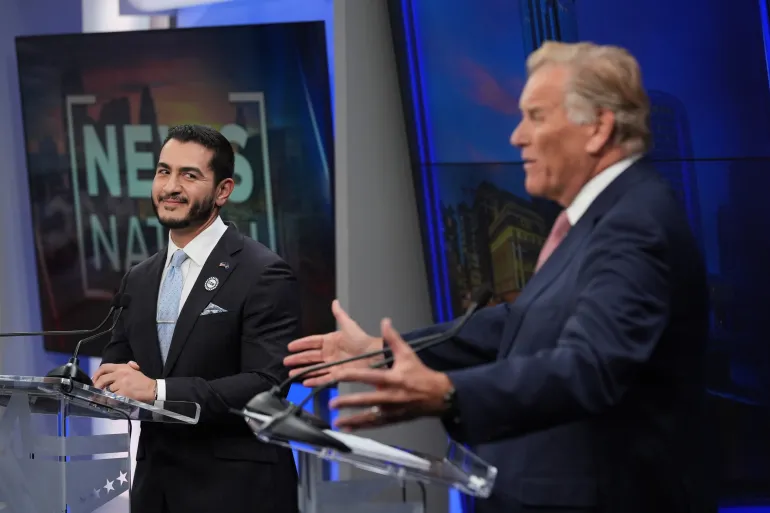
The leading candidates in Michigan’s heated Senate race have faced off in their first televised debate, with less than a month remaining before the United States midterm elections.
Thursday’s hour-long debate was a microcosm of how tense the toss-up race has become.
Recommended Stories
list of 3 itemsend of list
Democratic nominee Abdul El-Sayed, formerly the health director for Wayne County, repeatedly sought to paint his Republican adversary Mike Rogers as a yacht-owning millionaire out of touch with ordinary voters.
For his part, Rogers, a former member of the US House of Representatives, lobbed accusations at El-Sayed that he was soft on “terrorism” and had foreign sympathies.
The Michigan-born El-Sayed has repeatedly faced Islamophobic attacks while on the campaign trail, with Republican President Donald Trump labelling him an “extremist, terrorist sympathizer” whose history “goes back to the days of the Jihad”. If elected, El-Sayed would be the first Muslim member of the US Senate.
The two candidates spent much of their hour onstage together speaking over one another, as they exchanged pointed barbs.
“He can’t condemn a terrorist act that happened on our soil in the state of Michigan. He can’t bring himself to condemn –,” Rogers began, referencing a March attack on a synagogue.
“I did condemn it,” El-Sayed said, jumping in. “No, you did not,” Rogers replied, with El-Sayed quickly responding, “You make stuff up. You make stuff up.”
The Senate race in Michigan is considered key to the battle for control of the US Senate. Democrats are seeking to flip both chambers of Congress, but shifting control of the Senate will be a tougher prospect, given that only a third of its 100 seats are on the November 3 ballot.
Host Rick Albin at times struggled to keep the debate on track, as tensions rose.
“We’ve got dozens of questions we want to get to. You can’t litigate all of these with 14 different rebuttals, so please work with me,” Albin told the two candidates at one point.
Here are the key takeaways from the evening’s debate.
Republican nominee Mike Rogers, right, speaks during a televised debate with Democratic nominee Abdul El-Sayed [Paul Sancya/Pool via AP Photo]
Rogers insinuates El-Sayed family ties to ‘terrorism watch list’
The ferocity of the debate was underscored by the high volume of ad hominem attacks the candidates deployed against each other.
But Rogers repeatedly pushed a series of attacks that seemed to centre on El-Sayed’s identity as a Muslim.
In response to a question about healthcare, Rogers said that El-Sayed has “taken money from individuals on his campaign who openly support Hamas, Hezbollah, al-Qaeda”.
Later, when asked about his position on surveillance by Flock cameras, Rogers argued that such technology has helped catch people suspected of terrorism. He then implied that El-Sayed’s concerns about the cameras were suggestive.
“Why would that bother you?” Rogers asked El-Sayed. “Well, if you have somebody in your family that might be on the terrorism watch list …”
El-Sayed interjected, seeming to dare Rogers to continue his thought.
“Are you going to go ahead and say that I’m a – go ahead and say it,” El-Sayed said. “You’ve been tiptoeing about it the whole time. Just say it. Just say it. Go ahead and say it.”
Muslim and Arab candidates in the US have frequently been subjected to Islamophobic attacks on the campaign trail, accusing them of support for “terrorism” and Islamic fundamentalism.
Republican Mike Rogers insinuated El-Sayed may have family on the ‘terrorism watch list’ [Paul Sancya/Pool via AP Photo]
Both sides agree on ending the Iran war
There were issues, however, on which both candidates found a measure of common ground.
Both Rogers and El-Sayed agreed the US-Israeli war against Iran should end, but they had opposite views on Washington’s relationship with Israel and its role in the conflict.
High gasoline prices and inflation, El-Sayed said, were directly caused by the Iran war, and he blamed the Trump administration for Iran’s decision to shut down the Strait of Hormuz, a critical trade route.
“This is what happens when you start wars you never should be fighting,” El-Sayed said. “We literally taught the Iranian regime that they have a choke on the Strait of Hormuz, and now we’re living in that reality.”
Rogers agreed that “we need [the war] to come to an end”, but he also justified the conflict, saying that Iran’s uranium enrichment programme had been “set back twenty years”, echoing a frequent White House talking point.
The Trump administration has argued that the war was necessary to prevent Iran from creating a nuclear weapon, a goal Tehran has long denied.
Rogers’s position led El-Sayed to accuse him of “cheerleading” for the war and the Trump administration.
Democratic nominee Abdul El-Sayed pushed for an end to unconditional support for Israel [Paul Sancya/Pool via AP Photo]
Rogers backs continued Israel aid, El-Sayed calls for end
As part of the debate about US foreign policy, the candidates were also pressed on their positions about the US alliance with Israel.
The country is considered the largest overall recipient of US aid since World War II. From the start of Israel’s genocidal war on Gaza in October 2023 through September 2025, experts estimate that Israel received nearly $21.7bn in military aid.
El-Sayed has openly called for ending aid to Israel, and he has repeatedly denounced the conflict in Gaza as a genocide, in line with evaluations from United Nations experts and human rights watchdogs.
During the debate, he indicated he preferred US taxpayer dollars to be spent on domestic concerns like education and healthcare, rather than Israeli aid.
“He wants unconditional support for a foreign government,” El-Sayed said of Rogers. “I want unconditional support for kids in our schools, unconditional support for our healthcare, childcare.”
He also blamed Israel for the US military action in Iran. “I don’t want to be pushed into war by Israel, and I don’t want to be in war with Iran,” El-Sayed said.
Rogers, meanwhile, has joined most of his fellow Republicans in continuing to support aid for Israel. He argued that the country had “the right to defend itself in a very difficult neighbourhood”.
“Is there anything Israel could do that would lose your support?” the debate host asked.
“Listen, if they’re talking about using nuclear weapons, they would definitely lose my support,” Rogers replied.
Abdul El-Sayed, right, and Mike Rogers shake hands prior to their debate [Paul Sancya/Pool via AP Photo]
Another hot-button issue during the debate was Trump’s crackdown on immigration.
The Republican leader has pledged to carry out the largest mass deportation effort in US history, and his campaign has spurred human rights concerns.
When asked how they would approach the crackdown, both Rogers and El-Sayed agreed on tempering the militarised nature of the campaign.
In several cities, including Minneapolis, Minnesota, immigration authorities have been accused of racial profiling and using excessive force against immigrants and protesters, as well as violating their rights to due process.
Multiple fatal shootings have occurred during immigration enforcement operations, including the deaths of Renee Good and Alex Pretti in January.
Rogers indicated he would not have supported such confrontational operations, but he repeated a Trump claim that the raids were taking dangerous criminals off the streets.
“I think the public efforts in Minnesota were probably not appropriate,” Rogers said. “You always want to go in quiet, get the bad guy, get out of the neighbourhood for less problems. So that, to me, was something that they could have done differently.”
He later claimed that, under Trump, the country had seen “the largest decrease in murders ever recorded”.
El-Sayed, meanwhile, has previously voiced support for abolishing Immigration and Customs Enforcement (ICE), a key agency in Trump’s deportation campaign. He defended that stance on the debate stage.
“ICE right now is not about immigration enforcement. ICE is about terrorising our streets,” he said.
Mike Rogers speaks to reporters in the spin room after the debate on October 8, 2026 [Jim Vondruska/Reuters]
Candidates debate Canada trade war and tariffs
Donald Trump’s trade war with Canada, felt acutely in neighbouring Michigan, was another key topic of conversation.
El-Sayed depicted Rogers as an uncritical backer of Trump and his tariffs and tied him to past free trade deals such as the North American Free Trade Agreement (NAFTA), which paved the way for companies to shift manufacturing facilities out of the US – though Rogers did not enter Congress until 2001, eight years after NAFTA passed.
“You did that, man. That was your policy. NAFTA, that was your policy,” said El-Sayed.
Rogers sought to distance himself from the current trade war but expressed support for a deal with Canada that would loosen some of Ottawa’s tariffs on US goods.
“I would like to see the deal made,” said Rogers, adding that high Canadian tariffs for US goods “should be eliminated”.
Both candidates tried to strike a balance between criticism of the economic fallout of the trade war and qualifying their support for more selective tariffs, favoured by some industries and labour unions as a means of protecting domestic jobs.
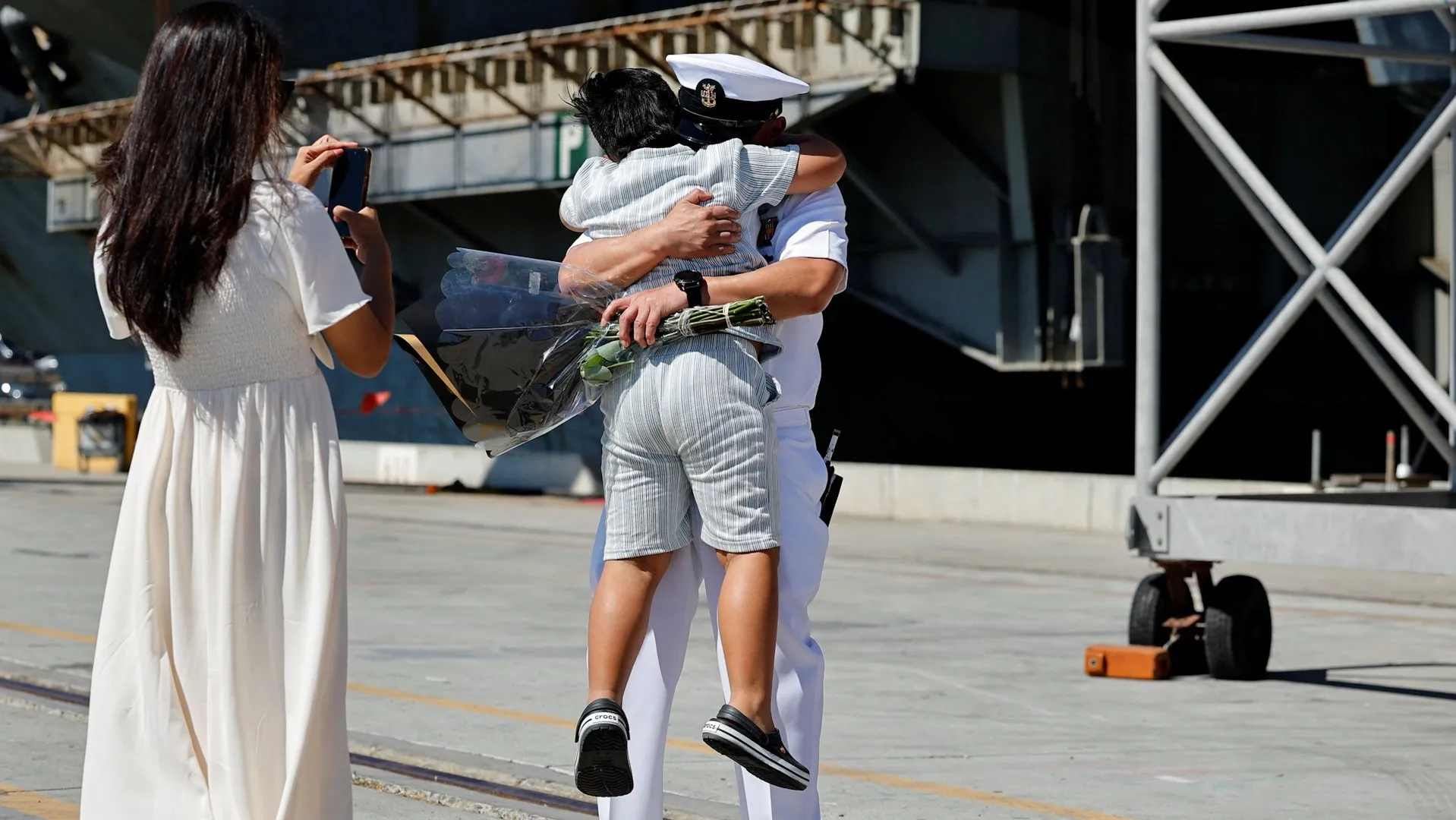
Families cheered and embraced their loved ones as the USS Abraham Lincoln returned home to San Diego after more than 300 days at sea to support the US-led war on Iran. The extended deployment led to supply shortages, facility breakdowns and reports of suicide attempts.
Crew members express relief upon return from record-breaking deployment of 265 days that strained conditions on board.
Published On 9 Oct 20269 Oct 2026
The United States aircraft carrier USS Abraham Lincoln has returned to its home port after a 322-day deployment, including a record 265 consecutive days at sea, during which it helped wage the US-Israel war on Iran.
The vessel returned to Naval Air Station North Island in San Diego, California, on Thursday, where members of its crew were greeted by family and friends.
Recommended Stories
list of 3 itemsend of list
“It feels amazing,” 20-year-old Abel Ramirez told The Associated Press news agency, adding that his parents had driven from Texas to meet him. “There was a certain point when I never thought I would come off.”
The record-setting deployment of the USS Lincoln became a symbol for larger criticisms of the US war effort, which has dragged on since February with no clear end in sight and has strained US military stockpiles.
The prolonged deployment prompted a series of news reports calling attention to deteriorating conditions, food shortages and a series of reported suicide attempts by crew members.
Pentagon chief Pete Hegseth praised the sailors on Wednesday in remarks that accused the media of trying to turn the ship into “a symbol of dysfunction or a symbol of low morale or a symbol of a failed mission”.
President Donald Trump and members of his administration have frequently lashed out at the news media for critical reporting on the war on Iran. Trump himself has called the reporting about the USS Lincoln “fake news”.
“The Lincoln has been out there for a period of time, a good period of time,” he said at an Oval Office meeting on August 17. “I know people on the Lincoln, and they say it’s beautifully maintained and beautifully taken care of.”
Earlier that month, when confronted with the amount of time the USS Lincoln had spent at sea without a port stop, Trump quipped that its deployment was “not nearly long enough“.
The reports of mental health strain on the USS Lincoln come as public opinion polls show low approval ratings among US voters for the war against Iran.
On Thursday, the Pew Research Center released a poll that found 65 percent of Americans disapproved of Trump’s handling of the war, compared with 33 percent who approved.
The war has also fuelled concerns about the cost of living ahead of the upcoming midterm elections. Since the war began, Iran has hindered commercial traffic through the Strait of Hormuz, a critical waterway for the trade of fuel, fertiliser and other goods.
Sailors returning home on the USS Lincoln said that they were looking forward to fresh meals and spending time with their families.
Alma Solano Velez said that her husband, one of the US service members on board, shared a list of foods he had been craving over his 10-month deployment: oxtail, barbecue chicken, broccoli and shrimp empanadas, among others.
She added that he had spoken about “the lack of food and showers” and was looking forward to seeing their four-year-old daughter.






![Afghanistan's Taliban government has identified hundreds of new sites to mine gemstones [Mohsin Khan Momand/Al Jazeera]](https://i0.wp.com/occasionaldigest.com/wp-content/uploads/2026/10/6af0b991-fcb0-4aa6-928f-f9b31ad0a7c6-1790670633.jpg?w=640&ssl=1)
![Afghanistan's Taliban government has identified hundreds of new sites to mine gemstones [Mohsin Khan Momand/Al Jazeera]](https://i0.wp.com/occasionaldigest.com/wp-content/uploads/2026/10/be8b8562-a1e2-4e96-aaa5-eecd1e2e7d1b-1790670636.jpg?w=640&ssl=1)
![Afghanistan's Taliban government has identified hundreds of new sites to mine gemstones [Mohsin Khan Momand/Al Jazeera]](https://i0.wp.com/occasionaldigest.com/wp-content/uploads/2026/10/6af124e6-e19c-4c9e-ab0f-833eeba78cf0-1790670623.jpg?w=640&ssl=1)