Discover the latest happenings and stay in the know with our up-to-date today news coverage. From breaking stories and current events to trending topics and insightful analysis, we bring you the most relevant and captivating news of the day.
The Jaintias are a tribal ethnic group from Meghalaya who make up about 18% of the state’s population. In the mid-19th century, the Jaintia Kingdom was annexed by the British East India Company to become part of Assam province.
As with the other tribes in the region, British control was resisted by heroes who have been immortalised in a series of public holidays in Meghalaya.
Kiang Nangbah emerged as a freedom fighter for the Jaintias. A peaceful farmer, he was driven to protect his motherland when he saw how the British treated his fellow people, imposed unfair taxation and disrupted their religious traditions.
Nangbah was elected leader of the Jaintia resistance and led attacks on the British. The attacks spread across the Jaintia hills and the British had to call in reinforcements to attempt to subdue the rebellion.
In the end, Nangbah was betrayed by one of his team and captured by the British. He was hanged at Iawmusiang in Jowai town in West Jaintia Hills district on December 30th 1862.
Standing at the gallows, his last words were said to be: “If My Face Turns Eastward My Motherland Will Be Liberated After Hundred Years From The Foreign yoke.” He was proved right with India gaining its independence from Britain 85 years later.
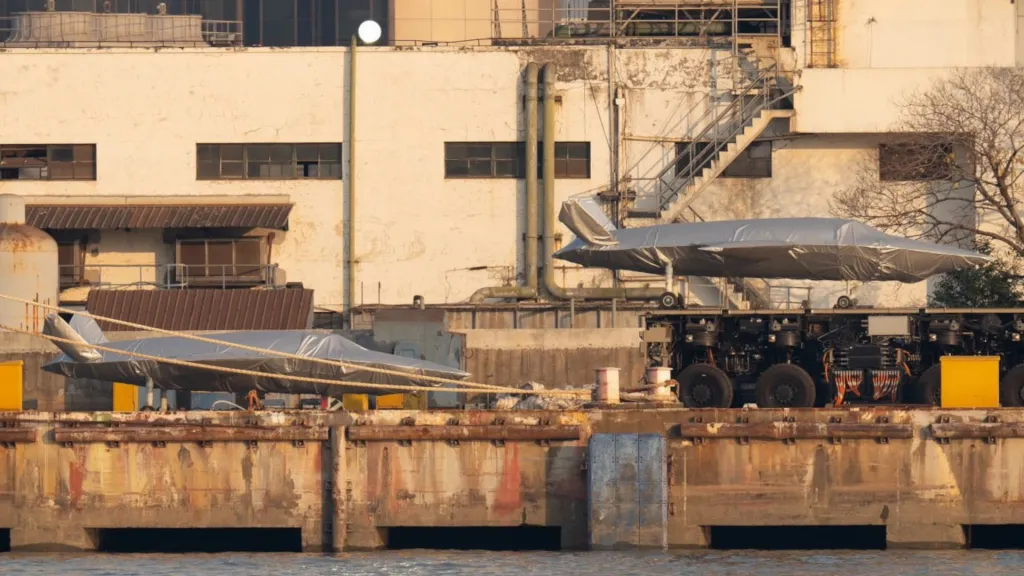
Pictures of the drones sitting dockside at Hudong-Zhonghua shipyard in Shanghai first began circulating online late last week. The presence of the super-sized Type 076 amphibious assault ship Sichuan in drydock nearby still raises the possibility of plans for trials aboard that ship, which features a single electromagnetic catapult, as was discussed in TWZ‘s initial reporting here. A medium-sized cargo ship loaded with containerized vertical launchers, as well as sensors and close-in defense systems, which emerged last week, has also been moored at this yard recently.
Drones or drone mockups of catapult-capable low-observable combat drones, including one loaded on the back of a truck, seen recently at Hudong-Zhonghua shipyard in Shanghai. Chinese InternetA picture also circulating online now of the Type 076 amphibious assault ship Sichuan in drydock at Hudong-Zhonghua shipyard. The blast deflector behind the ship’s catapult is seen raised here. Pylons that could be part of a barrier system are also seen extending upward on opposite sides of the flight deck aft of the second island. Chinese internet
Though the drones are still under wraps in the new images, we do now have a better look at their overall design. This includes nose landing gear with bars that clearly show the design is intended for catapult launch. There is also a notable outline of a fairing under the nose, though no further details about that feature can be discerned at present.
A close-up look at one of the drone mockups at Hudong-Zhonghua shipyard. The catapult bar on the nose landing gear and the outline of the fairing under the nose are visible here. Chinese Internet
It is interesting to note that a mockup of a drone called the FH-97, shown at China’s Zhuhai Airshow in 2021, was depicted with an electro-optical sensor in a stealthy gold-plated windowed enclosure installed under its nose. The overall design of the FH-97, which is at least heavily inspired by the XQ-58A Valkyrie from U.S. drone maker Kratos, is similar in many other respects, at least in broad strokes, to what has now been seen at the Hudong-Zhonghua shipyard. The XQ-58 and FH-97 are both notably smaller designs. There are also similarities to two Chinese ‘loyal wingman’ type drone designs, commonly referred to presently as the Type C and Type E, which emerged around a huge military parade in Beijing back in September.
The FH-97 mockup displayed at that the 2021 Zhuhai Airshow. Chinese Internet
Well, back from work and back to this strange picture: ? I start with my layman’s attempt to sort them a bit + adding the names according to Huitong’s CMA-Blog.
More interestingly, the new pictures from Hudong-Zhonghua shipyard show at least three eight-wheeled trucks that look designed to lock together seamlessly in a chain. Doing so also appears to form a continuous flat surface across the top. One of the drones is seen loaded at the rear of one of the trucks with its nose gear bar locked into what looks to be a catapult shuttle.
A broad view of the drone or drone mockups, as well as trucks, on the pier at Hudong-Zhonghua shipyard. Chinese internetA close-up look at the drone, or mockup thereof, on the truck, with its catapult bar looking to be locked into a shuttle-like fixture. Chinese internet
Besides the cabs in front, the sides of the trucks are largely open, showing elaborate electrical systems and large amounts of heavy exposed wiring. There is a cylindrical drum above each wheel, which could be part of an independent articulating suspension system capable of self-leveling. They might also serve another purpose, which we will come back to later on.
Another close-up view, this time of the truck at the front of the chain showing the various components that can be seen from the side. Chinese internet
A satellite image taken yesterday, which TWZ obtained from Planet Labs, shows what looks to be at least four of the trucks parked close together in a line along one of the piers at Hudong-Zhonghua shipyard. Despite the low resolution, a drone is plainly seen loaded on one of the trucks. Another one of the ‘loyal wingman’ drones is visible immediately behind the row of trucks, in line with what is seen in the pictures taken at ground level. Four more of the swept-wing drones are also visible further down the pier. A Wing Loong-type drone, similar to the Q-1/Q-9 Predator/Reaper series, is also present.
Altogether, there is the potential that these trucks could be part of a mobile ground-based electromagnetic catapult system. The cylinders and wiring seen on the trucks might be electromagnets and/or other supporting components. Any such system would also need to be self-leveling to help ensure a clean launch.
At the same time, they could still just be transporters, though the design looks far more elaborate than would be required for that purpose alone. The trucks could possibly be designed to serve both functions.
There is the additional question of why, if this is indeed a ground-based electromagnetic catapult system, it has been brought down to Hudong-Zhonghua shipyard at all. This is not the environment in which one would expect such a system to be employed, and there are no clear signs as of yet that it is there as part of a larger display.
Regardless, the basic idea of employing an aircraft carrier-type catapult launch system on land is not new. China itself, as well as the United States, has built steam and electromagnetic-powered catapults at land-based test sites for test, evaluation, and training purposes. The U.S. Marine Corps actually employed an ‘aircraft carrier on land’ with catapults and arresting gear, called the Short Airfield for Tactical Support (SATS) system, operationally during the Vietnam War, which you can read more about here.
CE-2 TRACKLESS AIRCRAFT LAUNCHER 1966 MARINE CORPS SHORT AIRFIELD FOR TACTICAL SUPPORT FILM 81190
At least one company in China, Tiantao Technology, has been openly talking about plans for a ground-based electromagnetic catapult system made up of modular wheeled segments since at least August of this year. Renderings have shown 10-wheeled sections that do have some broad similarities to, but that also are distinctly different from the eight-wheeled trucks seen at Hudong-Zhonghua shipyard. The eight-wheeled trucks, if they are part of a mobile electromagnetic catapult system, could also reflect an early developmental iteration.
A rendering of Tiantao-Technology’s modular mobile electromagnetic catapult system. Tiantao TechnologyAnother rendering showing one segment of Tiantao-Technology’s modular mobile electromagnetic catapult system. The aircraft depicted here is vaguely reminiscent of the Chinese J-36 heavy crewed tactical jet, which is exponentially larger than what the company has said it expects to be launchable from this system. Tiantao Technology
Tiantao Technology has also reportedly said the system will be capable of launching uncrewed aircraft weighing up to around 2.2 tons (two metric tons). This is lighter than the expected takeoff weights of ‘loyal wingman’ type drones China has shown to date, based on the known specifications of comparably-sized Western designs. For example, the stated maximum launch weight of the XQ-58 is three tons, according to Kratos. As another point of comparison, the Chinese GJ-11, a larger flying-wing uncrewed combat air vehicle (UCAV), a catapult-capable version of which is now in development, reportedly has a payload capacity of around two tons. China’s J-15 family of crewed carrier-based fighters, derived from the Su-33 Flanker, each weighs around 19 tons (17.5 metric tons) empty without any fuel or ordnance, as well.
It is possible that the modular design of Tiantao Technology’s ground-based catapult system could allow for configurations capable of launching heavier designs. A core benefit of electromagnetic catapults over steam-powered ones, in general, is their ability to be more fine-tuned in terms of the forces they exert on any aircraft during launch. The capabilities of a modular system would also be dependent on its exact configuration, including how long the catapult track is overall. Tiantao Technology has said the total length of its system could be scaled between roughly 65 and 196 feet (20 and 60 meters). What limitations there might be on simply adding more segments to increase launch capacity are unknown.
China’s aircraft carrier electromagnetic catapult is incredibly cool — the moment the catapult comes to an instant stop looks like a space jump straight out of a sci-fi movie. pic.twitter.com/VWdLOEzgzS
Tiantao Technology has also shown models and renderings of truck and trailer-mounted electromagnetic catapults for launching even smaller drones. How much progress it has made in the actual development of any of the systems to date is unclear. Other firms in China could very well be working along similar lines, too.
A rendering of another mobile electromagnetic catapult design concept from Tiantao-Technology, this one being a self-contained type on a 10-wheeled tactical truck. Tiantao TechnologyTiantao-Technology has also shown this trailer-based electromagnetic catapult concept. Tiantao Technology
All this being said, a ground-based electromagnetic catapult system capable of launching even two-ton drones still opens doors to new operational possibilities. This is a capability that could be especially valuable in expeditionary scenarios or other contexts in which access to traditional runways is limited. A mobile system would also offer a new way to push at least a certain tier of airpower closer to the front lines, and help keep it in close proximity where it could be more responsive, even as the dimensions of the battlefield evolve. Less transit time would translate to more on-station endurance even for smaller, shorter-range drones.
Another general benefit of electromagnetic catapults over steam-powered types is the shorter reset time, which, by extension, increases sortie generation rates. How Tiantao Technology envisions drones being loaded on its ground-based system is unclear. It is possible that a truck preloaded with a drone could drive up, lock into the rear of the track, launch, and then detach to make way for the next one, offering additional benefits when it comes to operational tempo. Being able to break the launch system into multiple parts and disperse it when not in use would create targeting challenges for enemies and help increase survivability, as well.
These kinds of operational scenarios are driving the pursuit of aircraft, especially uncrewed types, with reduced runway requirements or entirely runway-independent designs by many armed forces globally. This includes the U.S. military. A ground-based electromagnetic catapult is just one way of approaching this operational need. There are runway-independent drones already on the market today that are launched with the help of expendable rocket motors or pneumatic catapults. However, these methods impose their own limitations, especially when it comes to launch weight and payload capacity. Rocket-assisted takeoffs come along with the additional risks associated with using that kind of propellant, as well as the stresses that are imparted on the aircraft being launched. The rockets are also consumed on launch, requiring a steady supply of them at any operating location. Kratos has notably demonstrated a special launch trolley for its primarily rocket-launched XQ-58 that allows for traditional runway takeoffs. The company is also developing a version of that design with built-in landing gear, to offer increased flexibility.
An XQ-58 seen being launched via a rocket-assisted method. USAF
In the context of what may now be in development in China, there is the additional question about how drones might be recovered after launch from a ground-based electromagnetic catapult. Tiantao Technology does not appear to have elaborated yet on this part of the expected concept of operations for its system. The aforementioned concept that General Atomics put forward paired an electromagnetic catapult with a separate arrested landing system, also based on technology developed for the U.S. Navy’s Ford class aircraft carriers. As noted, the Vietnam War-era SATS system also included arresting gear. The U.S. military and other armed forces globally already employ deployable arresting gear, especially to enable crewed tactical jet operations from far-flung locations with shorter runways. Drones could recover at tertiary bases, or be designed to land via parachute or some other runway-independent method, as well. The system could also be used to launch long-range one-way attack drones that would not be designed for recovery at all.
A US Marine Corps F/A-18 Hornet lands at West Field on the island of Tianian with the help of an M-31 expeditionary arresting gear system during an exercise. USMC
There is also a question of power and other logistical requirements. However, a ground-based electromagnetic catapult system that is not required to support all of the different types in a full carrier air wing, especially larger crewed aircraft, would inherently require far less capability.
It is also worth noting that a modular electromagnetic catapult system might be usable on ships that do not have this capability built into their design. As mentioned, the drones and trucks seen at Hudong-Zhonghua shipyard were spotted near a cargo ship loaded with various containerized weapons and other systems. A drone launch capability of some kind would be a logical addition to a vessel with that configuration. At the same time, whether or not any catapult system made up of multiple segmented components would be stable enough for use on a ship rocking back and forth at sea is unclear.
A look at the cargo ship that recently emerged in China loaded with containerized weapons and other systems. Chinese internet
As a general note, major new military capabilities often emerge in China during the time between Christmas and New Year’s. This is also something that happens with the clear acquiescence of authorities in Beijing if they are not outright announced through official channels. Hudong-Zhonghua shipyard is an obvious area of interest for observers, and Chinese authorities do not appear to have taken any special steps to conceal the recent appearance of the drone mockups or the trucks.
More details about the trucks, and their exact function, as well as the drones, may now begin to emerge.
Somalia says it is concerned the recognition serves as a pretext for the forced relocation of Palestinians.
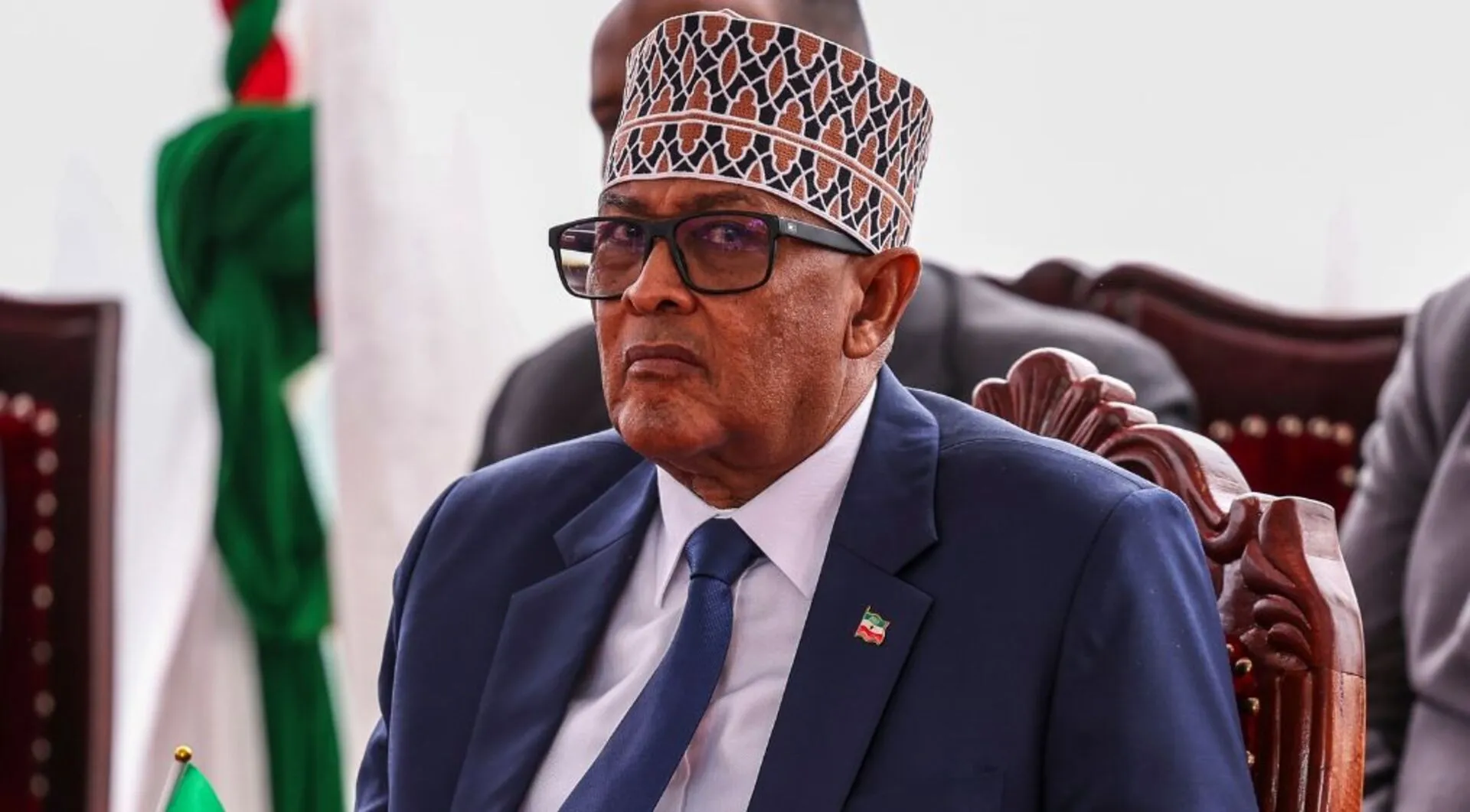
Israel’s recognition of Somaliland, a breakaway region of Somalia, is a “direct and grave threat to international peace and security”, Somalia has said.
In a letter penned to the United Nations Security Council (UNSC) on Monday, Somalia rejected the move as a violation of its sovereignty, calling it “morally indefensible”.
Recommended Stories
list of 4 itemsend of list
Last week, Israel became the first country to formally recognise the self-declared Republic of Somaliland as an independent and sovereign state. Israel described the move as being in the spirit of the United States-brokered Abraham Accords, which normalised ties between Israel and several Arab countries.
“We further note with deep concern reports that this recognition may serve as a pretext for the forced relocation of Palestinians to Northwestern Somalia,” Somalia’s letter to the UNSC stated.
“Israel’s actions not only set a dangerous precedent and risk destabilising the Horn of Africa and the Red Sea region but also undermine collective efforts and pose a serious threat to regional and international peace and security,” Somalia also stated in the letter, urging UNSC members to uphold its sovereignty.
Abu Bakr Dahir Osman, Somalia’s representative to the UNSC, echoed the letter’s sentiments,
“This region [Somaliland] is not legally entitled to enter into any agreement or arrangement, nor to receive recognition from any other state,” Osman said.
“This act of aggression aims to promote the fragmentation of Somalia and must be rejected and condemned unequivocally by all Member States,” he added.
Recognition rejected
The United Kingdom on Monday said that it does not recognise the independence of Somaliland, and reaffirmed its support for Somalia’s sovereignty and territorial integrity.
It urged efforts between the Federal Government of Somalia and the Somaliland authorities to “address differences and work together to face common threats”, stating that armed groups benefited from internal divisions in the country.
“No country should encourage or support other countries’ internal separatist forces for its own selfish interests,” Chinese Ministry of Foreign Affairs spokesperson Lin Jian told reporters at a regular news conference.
South Africa’s Foreign Ministry, the Department of International Relations and Cooperation, on Monday urged the international community to “reject this external interference and support a united, stable Somalia”.
However, Tammy Bruce, the US deputy representative to the UN, said that “Israel has the same right to establish diplomatic relations as any other sovereign state”.
“Several countries, including members of this Council, have unilaterally recognised a non-existent Palestinian state, yet no emergency meeting has been convened,” Bruce added, chiding what she said were the UNSC’s “double standards”.
“We have no announcement to make regarding the recognition of Somaliland, and there has been no change in US policy,” Bruce added.
Somaliland broke away from Somalia in 1991, after a civil war under military leader Siad Barre. The self-declared republic controls part of northwestern Somalia and has its own constitution, currency and flag.
It claims the territory of the former British Somaliland protectorate, but its eastern regions remain under the control of rival administrations loyal to Somalia. It has sought international acceptance for more than three decades without success.
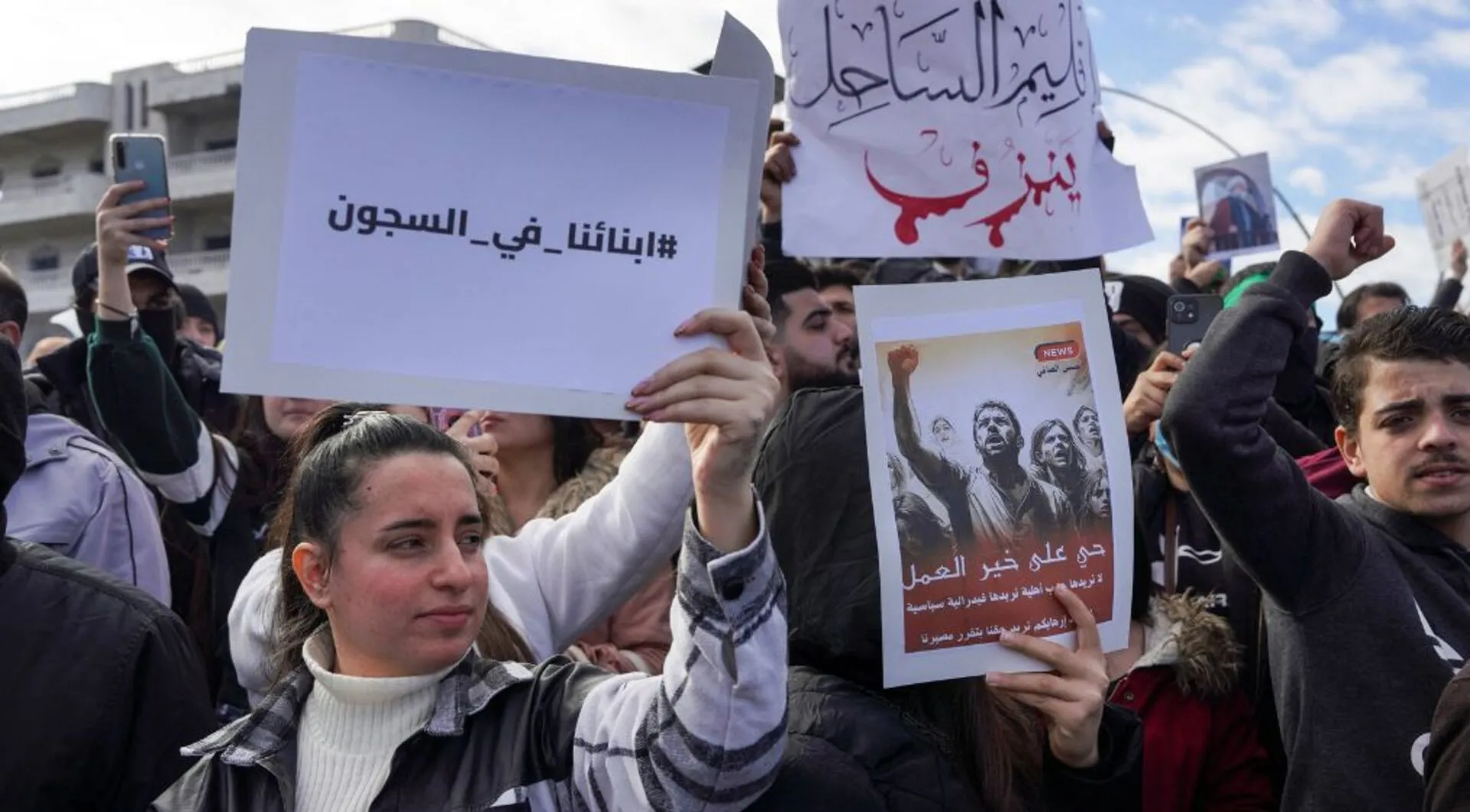
Alawite protesters confront government supporters in coastal cities.
Syria’s new leader has been trying to stabilise his country and reintegrate it globally since he took office in January.
But outbreaks of sectarian violence are threatening President Ahmed al-Sharaa’s efforts to rebuild the country after 14 years of civil war.
Recommended Stories
list of 4 itemsend of list
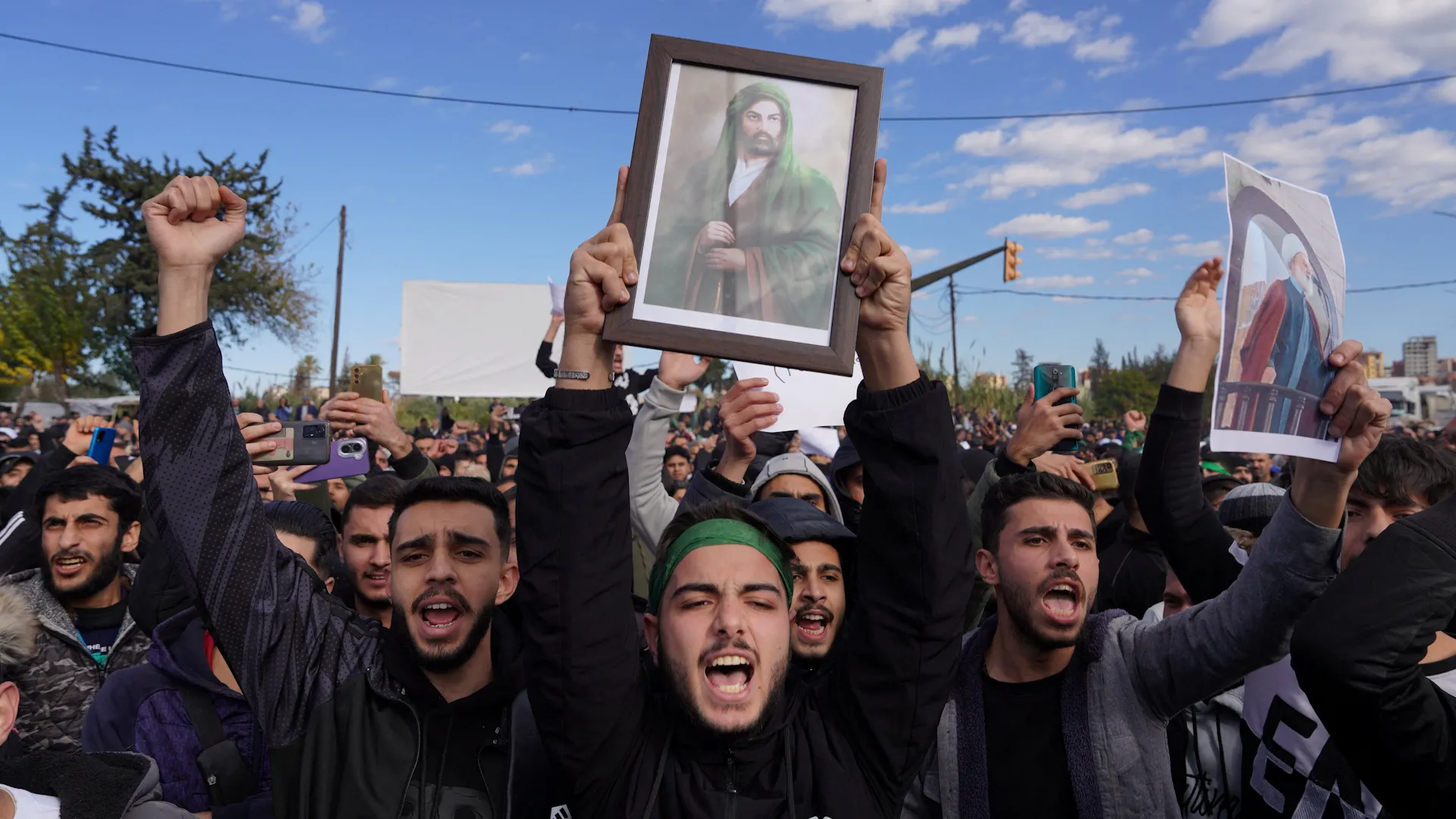
The latest flare-up on Sunday saw protesters from the Alawite minority group come face to face with supporters of the government in the coastal cities of Latakia and Tartous. Government troops sent to stop the violence were attacked. The once-powerful community says it is being marginalised.
How big a security threat are the protests and violence?
How can President al-Sharaa calm tensions?
Presenter: Adrian Finighan
Guests:
Fadel Abdulghany – Founder and executive director of the Syrian Network for Human Rights.
Gamal Mansour – Specialist in comparative politics and international relations
Labib Nahhas – Director of the Syrian Association for Citizens’ Dignity
Weekly insights and analysis on the latest developments in military technology, strategy, and foreign policy.
U.S. President Donald Trump added new details on Monday to his claim that the U.S. carried out an attack last week inside Venezuela; however he did not provide any proof. If true, such a strike would mark a significant escalation of a months-long pressure campaign on Venezuelan dictator Nicolas Maduroand the cartels. Until now, U.S. publicly acknowledged kinetic actions have been limited to attacks on alleged drug-running boats, even as Washington’s military presence in the region continues to grow.
You can catch up with our most recent coverage of Operation Southern Spear here.
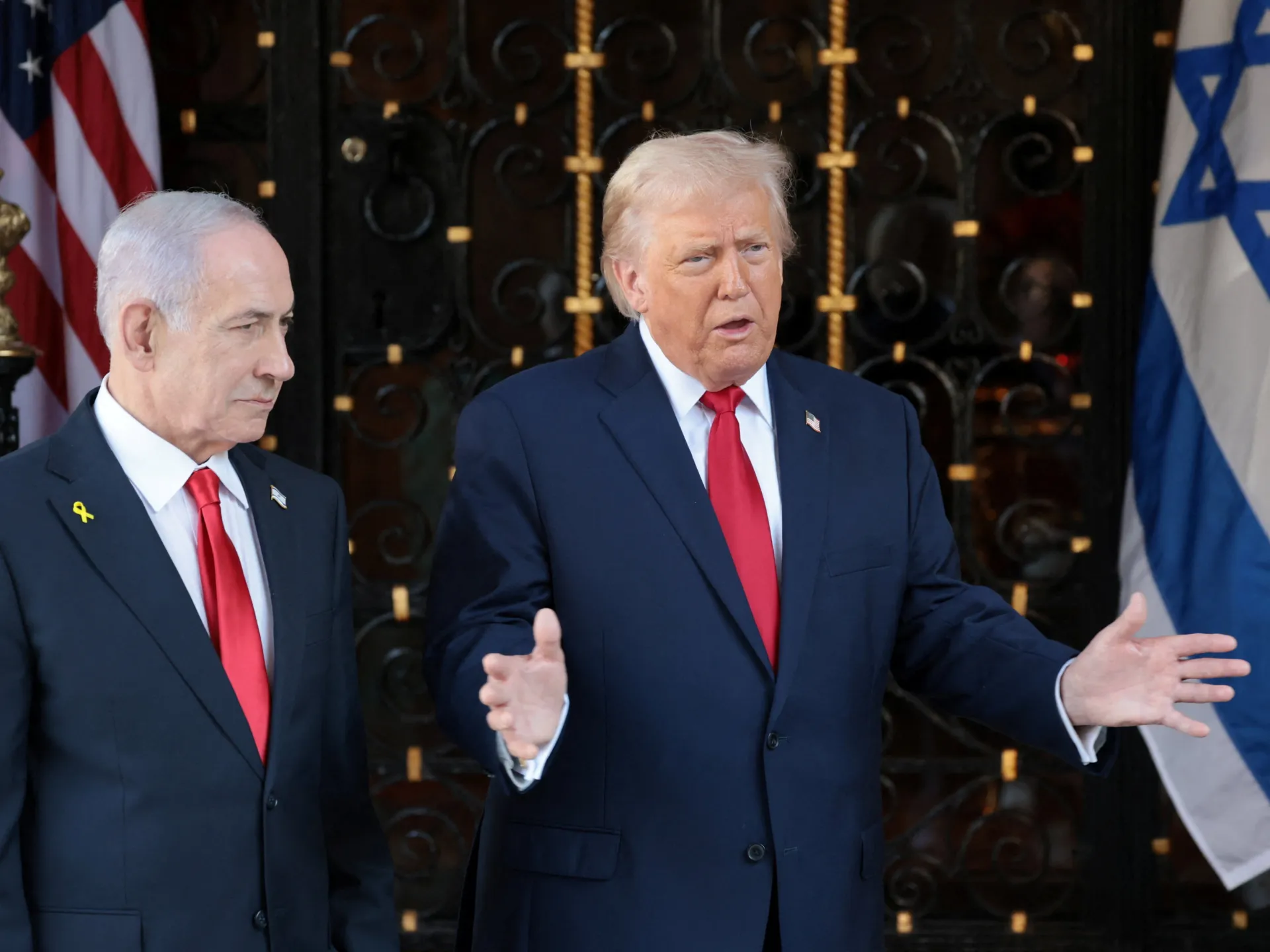
“We hit all the boats and now we hit the area, it’s the implementation area. That’s where they implement,” the president said while at Mar-a-Lago, standing alongside Israeli Prime Minister Benjamin Netanyahu. “And that is no longer around.”
? BREAKING: TRUMP CONFIRMS FIRST U.S. LAND STRIKE ON VENEZUELA DRUG DOCK – THIS IS A GAME-CHANGER! ?
Meeting with Netanyahu, Trump just revealed: U.S. forces obliterated a key Venezuelan dock used for loading drug boats – FIRST LAND ATTACK after months of sea ops.
Trump declined to say whether it was the U.S. military or the CIA that carried out the attack.
Asked by @Kevinliptakcnn if strike was carried out by US military or CIA, Trump says:
“I don’t want to say that. I know exactly who it was, but I don’t want to say who it was. But you know, it was along the shore.” https://t.co/hF5Vd3fvoa
“I don’t know if you read or you saw, they have a big plant, or a big facility where they send the, you know, where the ships come from,” Trump told John Catsimatidis, the billionaire Trump supporter who owns the radio station. “Two nights ago, we knocked that out. So we have hit them very hard, but drugs are down over 97% Can you believe it?”
president trump: united states has “just knocked out a big facility where the ships come from” in a strike on venezuelan territory (at 3:10 in call)
Trump has yet to offer proof of any attacks inside Venezuela. During their conversation, Catsimatidis didn’t press him on the matter. Anonymous American officials told The New York Times that the president was “referring to a drug facility in Venezuela and that it was eliminated, but provided no details.”
The White House has not responded to requests from The War Zone and many other news organizations for corroboration of an attack inside Venezuela. U.S. Southern Command, which oversees Southern Spear, declined to comment to us. The Pentagon referred us to the White House. The Central Intelligence Agency (CIA), which Trump previously authorized to conduct covert operations inside Venezuela, did not immediately respond to questions about whether it was involved in this claimed attack.
There have been no official comments from Venezuelan authorities about this alleged attack and no independent confirmation from people near the facility. However, videos emerged online suggesting that an explosion and fire at a Primazol chemical plant near Lake Maracaibo may have been the target of a U.S. attack.
Me pregunto si ésta explosión a las ~2am del 24 de Diciembre en galpones de la empresa Primazol, compañía dedicada a producción de productos químicos localizada en Zona Industrial del municipio San Francisco, estado Zulia, es el ataque al que se refirió Trump en el programa de… https://t.co/d9g5YxvR14pic.twitter.com/T2elsWI219
While the incident at the chemical plant lines up with the strike timeline proffered by Trump, the company pushed back against suggestions it was attacked.
“We categorically reject the versions circulating on social media that seek to damage the reputation of our founder and the organization,” Primazol explained in a statement. “We responsibly clarify that these claims have no relation whatsoever to the incident and are neither official nor verified.”
The War Zone cannot independently verify any connection, and we reached out to Primazol for more information.
? | Compañía Primazol, cuya sede en Zulia estalló en la madrugada del 24 de diciembre, “rechaza” la versión de que su edificio fue víctima de un ataque de EEUU.
Sin embargo, no deja claro cuál es la razón de la explosión del edificio. En un primer comunicado dice que fue un… pic.twitter.com/GvXuhhT4sg
In a post on X, Jhorman Cruz, a local journalist, cautioned against making a connection between Trump’s claim and the fire.
“Residents DID NOT see anything unusual, nor drones, nor cars, nor the presence of foreigners,” he stated. “Be careful with strange hypotheses.”
El 24Dic reportamos el incendio de la empresa Primazol en la zona industrial de San Francisco, Zulia. Es prudente decir que aún no sabemos qué inició el fuego.
Pobladores NO vieron nada extraño, ni drones, ni carros, ni presencia de extranjeros. Cuidado con raras hipótesis. pic.twitter.com/2zy2yZKVKy
Trump’s radio interview followed his Christmas Eve phone call to sailors aboard the USS Gerald Ford, the world’s largest aircraft carrier, which is now deployed to the Caribbean. Trump called the region an “interesting place” to be, and said once again that the U.S. would be “going after the land.” He offered no further explanations.
Trump’s claim about the facility strike inside Venezuela was prefaced by a short discussion with the radio station owner about the destruction of alleged drug smuggling vessels. Trump repeated his claim that each drug boat attack saves 25,000 lives in the U.S. To date, SOUTHCOM has hit more than two dozen of these vessels in the Caribbean and eastern Pacific, killing more than 100. The strikes have generated a great deal of controversy, with claims they violate the rules of armed conflict and have been carried out without Congressional or judicial approval. The White House and Pentagon have pushed back on those claims. Earlier this month, Congress closed out investigations into the first of these attacks, on Sept. 2, which were called after it was revealed that survivors of the first strike were killed in a follow-on attack.
.
On Dec. 22, at the direction of @SecWar Pete Hegseth, Joint Task Force Southern Spear conducted a lethal kinetic strike on a low-profile vessel operated by Designated Terrorist Organizations in international waters. Intelligence confirmed the low-profile vessel was transiting… pic.twitter.com/LGzEaQSTiR

Regardless of Trump’s attack claim, the U.S. continues to grow its military presence in the Caribbean and especially its special operations forces (SOF). Over the weekend, aircraft spotters said they saw at least 10 MC-130J Commando II multi-mission combat transport planes at Rafael Hernandez International Airport (RHIA) in Puerto Rico. That’s double the amount seen at the airport last week.
At least five of the MC-130Js appear to be outfitted with the full Capability Release 2 (CR-2) set of modifications, which includes Raytheon’s new AN/APQ-187 Silent Knight terrain-following/terrain avoidance radars, a satellite communications system, and other equipment.
Recent images from Reuters show that at least five of the ten MC-130Js deployed to Puerto Rico are in full CR-2 configuration.
In addition, satellite imagery, which you can also see below, now shows at least 11 Air Force Special Operations Command CV-22B Osprey tilt-rotor aircraft there as well. We previously reported the presence of nine or 10 Ospreys at RHIA. U.S. Special Operations Command declined comment and Air Force Special Operations Command has not returned a request for comment. You can read more about the significance of these aircraft and the growing SOF presence in the Caribbean to Southern Spear in our story here.
As we previously noted, the airport also plays host to MQ-9 Reaper drones, images of which first began appearing online in September. MQ-9s have been used in boat attacks as well.
???Reapers in the Caribbean Unclassified satellite imagery reveals two MQ-9 Reaper drones at Coast Guard Air Station Borinquen in Puerto Rico (Aguadilla).
With a long endurance and advanced sensors, these assets are critical for counter-narcotics and maritime surveillance,… pic.twitter.com/MUq70nhxNC
In an apparent effort to keep its assets out of the public eye, personnel have been seen obstructing the fence through which photographers have been capturing images of aircraft gathered at RHIA.
As we previously noted, a compendium of satellite imagery dating back to early October shows a large-scale construction project at the airport
Satellite imagery also shows increasing expansion at the Jose Aponte de la Torre Airport in Puerto Rico. The former Roosevelt Roads Navy base has become a key staging ground for U.S. aircraft and troops deployed for Southern Spear.
As of Saturday, an E-11A Battlefield Airborne Communications Node, or BACN was tracked by aircraft spotters to Luis Munoz Marine International Airport in San Juan, Puerto Rico’s largest.
BACN07 (22-9047) the U.S. Air Force E-11A (Battlefield Airborne Communications Node) is still located at at Luis Muñoz Marín International Airport in San Juan.
Meanwhile, as the Trump administration increases military pressure on Maduro, it is also continuing to take aim at Venezuelan oil shipments in an effort to squeeze him economically as well. As one of the world’s largest oil producers, Venezuela relies heavily on it. Since Trump enacted a blockade on sanctioned ships entering or leaving Venezuela, the U.S. has seized two and has pursued a third.
“The United States hasn’t given up its pursuit of the massive, rusted oil tanker it chased into international waters near Venezuela last weekend, and officials are now contemplating moving additional resources into the area to forcibly board the ship,” CNN reported on Friday, citing people familiar with the matter.
Last known visual we have of BELLA 1 (9230880) is from five days ago, when it was spotted in satellite imagery. Here’s older footage from the bridge. pic.twitter.com/l7ml2gOyu9
“In principle, we reject attempts to exert pressure on sovereign countries in general, including in the energy sector,” she said. “We understand that behind such a policy there is only a neo-colonial desire to achieve economic advantages through non-competitive political methods.”
“We trust that the Administration of U.S. President Donald Trump will refrain from sliding further into a large-scale armed conflict, which threatens to have unpredictable consequences for the entire Western Hemisphere,” she added.
Russian Foreign Affairs Ministry’s Spokesperson Maria Zakharova denounced U.S. actions in the Caribbean. (Photo by Contributor/Getty Images) Contributor#8523328
Satellite images captured on Dec. 24 show elements of the Iwo Jima Amphibious Ready Group (ARG) in close proximity to the M/V Ocean Trader, a special operations mothership. It should be noted that most of the ARG’s aviation combat element (ACE) was moved to Roosevelt Roads several weeks ago and remains there. The presence of these ships so close together, and the aircraft, landing equipment and troops embarked on board, is another indication that U.S. is poised for action beyond hitting suspected drug boats.
Most, if not all, of the aviation combat element (ACE) assigned to the 22nd MEU aboard the Iwo Jima ARG was moved to the former NAS Roosevelt Roads, PR several weeks ago, and remain there.
Much about Trump’s claim that the U.S. attacked inside Venezuela remains unknown. Regardless, the large U.S. military presence in the Caribbean seems to be coalescing toward additional kinetic action.
Residents of Somaliland’s capital city, Hargeisa, have been celebrating Israel’s declaration
Israel has taken the controversial decision to recognise the breakaway state of Somaliland as an independent nation, sparking condemnation from many other countries.
China is the latest to condemn the decision, with its foreign ministry spokesperson Lin Jian telling reporters: “No country should encourage or support other countries’ internal separatist forces for its own selfish interests.”
China outlined its position ahead of the UN Security Council holding an emergency session to discuss Israel’s decision.
Israel on Friday became the first country in the world to acknowledge Somaliland as a standalone republic, more than 30 years after the region declared independence from Somalia.
Somaliland’s president called the development “a historic moment”, but Somalia furiously rejected Israel’s move as an attack on its sovereignty.
Dozens of countries and organisations, such as Turkey, Saudi Arabia and the African Union, have also condemned Israel’s surprise declaration.
Why does Somaliland want independence?
A breakaway, semi-desert territory on the coast of the Gulf of Aden, Somaliland declared independence after the overthrow of Somali military dictator Siad Barre in 1991.
The move followed a secessionist struggle during which Siad Barre’s forces pursued rebel guerrillas in the territory. Tens of thousands of people were killed and towns were flattened.
Though not internationally recognised, Somaliland has a working political system, government institutions, a police force, and its own currency.
Its history as a distinct region of Somalia dates back to nineteenth century colonial rule. It was a British protectorate – known as British Somaliland – until it merged with Italian Somaliland in 1960 to form the Somali Republic.
Those in favour of Somaliland’s independence argue that the region is predominantly populated by those from the Isaaq clan – an ethnic difference from the rest of Somalia.
However, Somalia considers Somaliland to be an integral part of its territory. The government in Somalia’s capital city, Mogadishu, has repeatedly said that any recognition of Somaliland’s independence would contravene Somalia’s sovereignty.
Somali President Hassan Sheikh Mohamud has also characterised Israel’s declaration as an “existential threat” to his country’s unity.
Why did Israel recognise Somaliland as an independent state?
In a phone call with Somaliland President Abdirahman Mohamed Abdullahi on Friday, Israeli Prime Minister Benjamin Netanyahu said his country was acknowledging Somaliland’s “right of self-determination”.
He also said official recognition would be “a great opportunity for expanding” the countries’ partnership.
However analysts say there are strategic reasons for Israel’s declaration.
“Israel requires allies in the Red Sea region for many strategic reasons, among them the possibility of a future campaign against the Houthis,” Israeli think tank the Institute for National Security Studies said, referring to Yemen’s Iran-backed rebels, in a paper last month.
“Somaliland is an ideal candidate for such cooperation as it could offer Israel potential access to an operational area close to the conflict zone.”
Israel repeatedly struck targets in Yemen after the Gaza war broke out in October 2023, in response to Houthi attacks on Israel that the rebels said were in solidarity with Palestinians in the Gaza Strip.
In response to Israel recognising Somaliland, the Houthis warned that any Israeli presence in Somaliland would be considered a “military target” for their forces.
A few months ago, a number of news outlets reported that Israel had contacted Somaliland over the potential resettlement of Palestinians forcibly removed from Gaza.
Israel did not comment on the reports, but at the time, Somaliland said that any move by Israel to recognise its independence would not have anything to do with the Palestinian issue. Both Somalia and the Palestinian Authority have suggested Israel’s recognition of Somaliland could be linked to a plan to displace Palestinians.
“Somalia will never accept the people of Palestine to be forcibly evicted from their rightful land to a faraway place,” Somalia’s president told his parliament on Sunday.
Offering his perspective, US-based Africa analyst Cameron Hudson told the BBC that Israel has recognised Somaliland primarily because it is trying to counter Iran’s influence in the Red Sea region.
“The Red Sea is also a conduit for weapons and fighters to flow up the Red Sea into the Eastern Mediterranean. It has traditionally been a source of support and supply to fighters in Gaza. And so having a presence, having a security presence, having an intelligence presence at the mouth of the Red Sea only serves Israel’s national security interests,” he said.
Why has Israel’s move been condemned so widely?
Israel has been criticised by the likes of Egypt, Turkey, Saudi Arabia, the African Union, Yemen, Sudan, Nigeria, Libya, Iran, Iraq and Qatar.
In their condemnations, many of these countries have referred to Somalia’s “territorial integrity” and the breaching of international principles.
The African Union has long been concerned that recognising Somaliland could set off a chain reaction, where separatists could demand recognition for the territories they claim.
“Regions could attempt to establish external alliances without the consent of central governments, creating a dangerous precedent that risks widespread instability,” Abdurahman Sayed, a UK-based analyst for the Horn of Africa, told the BBC.
Is there any support for Israel’s declaration?
Countries considered to be allies of Somaliland, or sympathetic to the region’s campaign for recognition, have largely remained quiet.
For instance, the United Arab Emirates (UAE), which operates a military port in Somaliland, has not released a statement.
Mr Hudson told the BBC that the UAE is “very much aligned with the Israelis on this question of Somaliland”.
“I think even now today you’re going to see an alignment of Israeli and Emirati interests across the entire Red Sea region,” he added.
Mr Abdurahman said Turkey stepped in to mediate between Somalia and Ethiopia. It led Ethiopia to sign an agreement with Somalia’s government, committing to respect its territorial integrity.
“As a result, although Israel’s unilateral recognition of Somaliland may be quietly welcomed by Ethiopia, Addis Ababa appears to have adopted a cautious “wait-and-see” approach,” the analyst added.
Somalilanders had hoped the US would recognise it as an independent state following signals given before Donald Trump began his second term as president.
But in response to Israel’s declaration, Trump suggested to the New York Post that he would not swiftly follow Netanyahu’s lead.
“Does anyone know what Somaliland is, really?,” he reportedly said.
Speaking alongside Benjamin Netanyahu, Trump threatens to ‘knock’ down Iran’s attempts to rebuild nuclear capabilities.
United States President Donald Trump suggested that Washington would consider further military action against Iran if Tehran rebuilds its nuclear programme or missile capacity.
Speaking in Florida on Monday, Trump did not rule out a follow-up attack after the June air strikes that damaged three Iranian nuclear facilities.
Recommended Stories
list of 3 itemsend of list
“Now I hear that Iran is trying to build up again, and if they are, we’re going to have to knock them down,” Trump told reporters. “We’ll knock them down. We’ll knock the hell out of them. But hopefully that’s not happening.”
Trump issued his threat as he welcomed Israeli Prime Minister Benjamin Netanyahu to his Mar-a-Lago estate in Palm Beach, Florida.
Trump said that the US and Israel have been “extremely victorious” against their enemies, referring to the wars in Gaza and Lebanon, and the strikes against Iran in June.
When asked whether the US would back an Israeli attack against Iran targeting Tehran’s missile programme, Trump said, “If they will continue with the missiles, yes; the nuclear, fast. Okay, one will be yes, absolutely. The other is: We’ll do it immediately.”
Another round of strikes against Iran would likely stir internal opposition in the US, including from segments of Trump’s own base of support.
Trump has repeatedly said that the June strikes “obliterated” Iran’s nuclear programme.
With the nuclear issue address, according to Trump, Israeli officials and their US allies have been drumming up concern about Iran’s missiles.
Tehran fired hundreds of missiles at Israel in June in response to the unprovoked Israeli attack that killed the country’s top generals, several nuclear scientists and hundreds of civilians.
Senator Lindsey Graham, an Iran hawk who is close to Trump, visited Israel this month and repeated the talking points about the dangers of Iran’s long-range missiles, warning that Iran is producing them “in very high numbers”.
“We cannot allow Iran to produce ballistic missiles because they could overwhelm the Iron Dome,” he told The Jerusalem Post, referring to Israel’s air defence system. “It’s a major threat.”
Iran has ruled out negotiating over its missile programme, which is at the core of its defence strategy.
On Monday, Trumps said Iran should “make a deal” with the US.
“If they want to make a deal, that’s much smarter,” Trump said. “You know, they could have made a deal the last time before we went through a big attack on them, and they decided not to make the deal. They wish they made that deal.”
The prospect of returning to war in the Middle East comes weeks after the Trump administration released a National Security Strategy calling for shifting foreign policy resources away from the region and focusing on the Western Hemisphere.
In June, Iran responded to the US strikes with a missile attack against a US base in Qatar, which did not result in American casualties. Trump announced a ceasefire to end the war shortly after the Iranian response.
But advocates warn that another episode of attacking Iran may escalate into a longer, broader war.
Trita Parsi, executive vice president at the Quincy Institute, a US think tank that promotes diplomacy, told Al Jazeera last week that the Iranian response would be “much harsher” if the country is attacked again.
“The Iranians understand that unless they strike back hard and dispel the view that Iran is a country that you can bomb every six months – unless they do that – Iran will become a country that Israel will bomb every six months,” Parsi said.
On Dec. 17, the M23/AFC rebels announced their withdrawal from Uvira, a city in the South Kivu Province of the Democratic Republic of Congo (DRC), due to pressure from the United States. The rebel group has, however, failed to keep its promise to restore peace in Uvira, thereby worsening the security and humanitarian situation throughout South Kivu Province.
Fighting has since persisted between the M23 rebels and the Congolese armed forces, known as FARDC.
Amid shrinking funding, partly due to new American foreign policies, the United Nations Office for the Coordination of Humanitarian Affairs (UNOCHA) reports that armed groups are looting health and educational facilities in the troubled region.
“Since the announcement of the withdrawal by the M23 from the town of Uvira on Dec. 17, the security situation remains extremely precarious in the localities neighbouring and along the Uvira-Fizi highway. Armed violence continues, provoking continued displacements. Meanwhile, looting targeting notably educational and health structures has been reported, thus compromising access to health and education by thousands of persons. This persistent insecurity continues while the territories of Fizi and Uvira are already faced with increasing cases of cholera,” the UNOCHA office in DR Congo noted.
The UN agency, which is responsible for coordinating response to global humanitarian crises, natural disasters, and conflicts, added that a climate of unrest continues in these areas. Local humanitarian sources indicate that at least seven healthcare facilities in the Ruzizi health zone of Uvira territory and the Fizi health zone of Fizi territory have been looted and vandalised. Eight primary schools supported by the World Food Programme (WFP) have also been affected. This situation significantly limits access to medical care and disrupts children’s education.
The invasion of the Uvira town by M23/AFC rebels has elicited strong reactions from the international community, particularly aimed at Rwanda. The US declared on Dec. 13 that Rwanda has failed to uphold its commitments made under the Washington Accord, which was concluded between Congolese President Felix Tshisekedi and Rwandan President Paul Kagame, with the participation of various regional heads of state and representatives from the African Union.
Facing international pressure, the M23/AFC rebels declared their intention to withdraw from Uvira to aid the peace process. This statement was released in a communiqué signed by Corneille Nangaa, the political coordinator of the rebel movement. However, a few days later, the American representative to the UN Security Council reiterated the call for the rebels to retreat at least 75 kilometres from Uvira, which they have yet to do.
The M23/AFC rebels announced their withdrawal from Uvira, South Kivu Province in the Democratic Republic of Congo due to U.S. pressure, but have not restored peace, worsening security and humanitarian conditions.
The continued conflict with Congolese forces and resulting looting of health and educational facilities have left thousands without access to essential services, notably amid a cholera outbreak.
Despite a proposed retreat to aid peace, rebels have not fulfilled this promise, prompting international criticism, particularly towards Rwanda for failing its commitments under the Washington Accord.
The UN, and the U.S. specifically, have urged the rebels to withdraw significantly from Uvira to support peace efforts.
Syrian government troops have been deployed to coastal cities after demonstrations sparked by a mosque explosion escalated into deadly clashes. Al Jazeera’s Resul Serdar explains what we know.
Anthony Joshua recently beat US boxer and influencer Jake Paul in Miami
British heavyweight boxer Anthony Joshua has been injured in a car crash in Nigeria, which killed two other people.
The former world champion was travelling in a vehicle that collided with a stationary truck on a major expressway near Lagos.
Photos from the scene showed the 36-year-old being helped out of the back seat of a black SUV, surrounded by what appears to be broken glass.
Five adult men were involved in the crash, Nigeria’s Federal Road Safety Corps (FRSC) said. Two died, two survived “unhurt”, and Joshua was taken to hospital with minor injuries.
The crash took place on the busy Lagos-Ibadan expressway at around 12:00 local time (11:00 GMT) on Monday.
The incident involved two vehicles: a black Lexus and a stationary red commercial truck.
Adeniyi Orojo
An image taken by an eyewitness shows Joshua in the back of the crashed car
The FRSC said the Lexus was “suspected to be travelling beyond the legally prescribed speed limit”, based on preliminary findings.
It said the car appeared to have “lost control during an overtaking manoeuvre” and crashed into the stationary truck by the side of the road.
Pictures shared by the FRSC showed a wrecked car at the site of the crash, with a crowd of onlookers gathered around.
The Lagos-Ibadan expressway is known as one of Nigeria’s deadliest roads, with particularly heavy traffic at this time of year as many Nigerians living abroad visit for the festive period.
Joshua, who was born in Watford, has family roots in Sagamu – a town in Ogun state, south-west Nigeria, near the crash site.
Hours before the crash, Joshua posted a video to Instagram of him playing table tennis with another man. It is unclear exactly when or where the video was taken.
Federal Road Safety Corps
Local police commissioner Lanre Ogunlowo said an investigation into the accident had been ordered.
A relative of Joshua’s in Nigeria, who asked not to be named, told the BBC that news of the crash came as a “shock” to the family.
They said they were hoping for his “speedy recovery” and offered prayers for those who died in the crash.
The family member confirmed that Joshua was travelling from Lagos to Ogun state when the accident happened.His family had been expecting him to join them in Sagamu for New Year celebrations.
The boxer’s family is well known in the town and traces its ancestry there across several generations.
There are plans to build a new indoor boxing venue named after Joshua in Ogun, where the boxer is a sports ambassador.
Iranians are further squeezed every day amid a tanking economy, an energy crisis, water bankruptcy and lethal pollution.
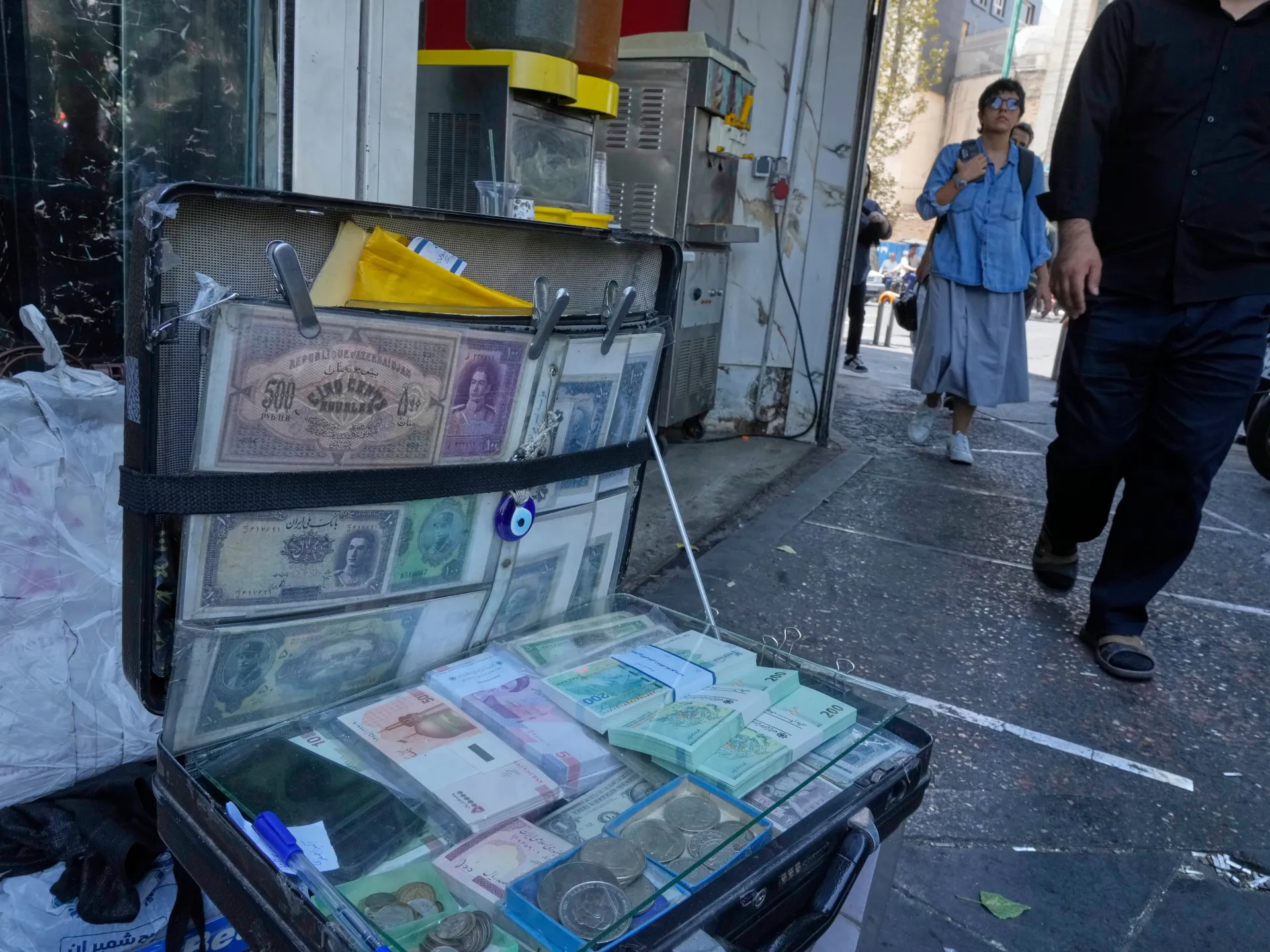
Several protests have erupted in downtown Tehran after business owners closed down their shops in reaction to a free-falling national currency, and no improvement appears in sight amid multiple ongoing crises.
Shopkeepers near two major tech and mobile phone shopping centres in the capital’s Jomhouri area closed their businesses and chanted slogans on Sunday, before more incidents were recorded on Monday afternoon, this time with other people appearing to participate.
Recommended Stories
list of 3 itemsend of list
Videos circulating on social media showed that there were more gatherings in the same area, as well as other nearby neighbourhoods in downtown Tehran. “Don’t be afraid, we are together,” demonstrators chanted.
There was a heavy deployment of anti-riot personnel in full gear on the streets, with multiple videos showing that tear gas was deployed and people were forced to disperse.
Many shops were closed down by owners in and around Tehran’s Grand Bazaar as well, with some footage showing business owners asking others to do the same.
State media outlets also acknowledged the protests, but quickly reacted to emphasise that the shopkeepers are only concerned about economic conditions and have no qualms with the theocratic establishment that has been ruling the country since a 1979 revolution that ousted the United States-backed shah of Iran.
The government’s IRNA news agency claimed that vendors selling mobile phones were disgruntled after their businesses were threatened by the unchecked depreciation of the Iranian currency, the rial.
The rial registered yet another all-time record low of over 1.42 million per US dollar on Monday before regaining some ground.
But the currency is not the only problem. For years, Iran has also been dealing with an exacerbating energy crisis, which has periodically contributed to deadly air pollution that claims tens of thousands of lives each year.
Most dams feeding Tehran and a large number of major cities across Iran continue to remain at near-empty levels amid a water crisis. Iran also has one of the most closed-off internet landscapes in the world.
The continuing decline of purchasing power for 90 million Iranians comes amid increasing pressure from the US, Israel and their European allies over Iran’s nuclear programme.
Israel and the US attacked Iran in June during a 12-day war that killed more than 1,000 people, including civilians, dozens of top-ranking military and intelligence commanders, and nuclear scientists.
The attacks also significantly damaged or destroyed most of Iran’s nuclear facilities, which were under the supervision of the International Atomic Energy Agency (IAEA). The watchdog has since been denied entry to the bombed sites, with no diplomatic breakthrough in sight as the West applies more pressure.
Iran last saw nationwide protests in 2022 and 2023, with many thousands pouring into streets across the country after the death in police custody of 22-year-old Mahsa Amini for alleged non-compliance with strict Islamic laws regarding headscarves.
Hundreds of people were killed, over 20,000 people were arrested, and several people were executed in connection with the protests before they subsided. Authorities blamed foreign influence and “rioters” trying to destabilise the country, as they did with previous rounds of protests.
In parliament on Sunday to defend the controversial budget bill his administration has presented, President Masoud Pezeshkian painted a grim picture of the situation.
His highly contractionary budget bill proposes a 20 percent increase in wages while inflation stands at around 50 percent, consistently one of the highest in the world over the past several years. Taxes are slated to increase by 62 percent.
“They tell me you’re taxing too much, and they’re saying you must increase wages,” Pezeshkian told lawmakers. “Well, somebody tell me, where do I get the money from?”
Egyptian-British writer Alaa Abd El-Fattah, who faced years of imprisonment in Egypt, ‘unequivocally’ apologises for the tweets.
Alaa Abd El-Fattah, an Egyptian-British human rights campaigner, has “unequivocally” apologised after right-wing leaders in the United Kingdom dug up decade-old tweets to demand he be stripped of British citizenship.
In a lengthy apology posted online, the writer and blogger – who returned to Britain this week after 12 years of imprisonment in Egypt – said the tweets were “shocking and hurtful”, but added that some had been “completely twisted”.
Recommended Stories
list of 4 itemsend of list
Conservative Party and far-right Reform UK leaders, along with right-wing commentators, took to sympathetic outlets and social media to demand that Abd El-Fattah be stripped of citizenship for the posts dating back to 2010, which included alleged references to killing Zionists and police officers.
The tweets were “expressions of a young man’s anger and frustrations in a time of regional crises”, including the wars on Iraq and Gaza, and a pervasive culture of “online insult battles”, Abd El-Fattah wrote.
Still, “I should have known better”, he said.
“I am shaken that, just as I am being reunited with my family for the first time in 12 years, several historic tweets of mine have been republished and used to question and attack my integrity and values, escalating to calls for the revocation of my citizenship,” he added.
Conservative leader Kemi Badenoch wrote in a Daily Mail op-ed that Home Secretary Shabana Mahmood should consider how Abd El-Fattah “can be removed from Britain” and added that she does “not want people who hate Britain coming to our country”.
Nigel Farage, the Reform UK leader, posted a letter he wrote to Mahmood on X and took a swipe at Badenoch for being part of the 2021 administration, then under Conservative Prime Minister Boris Johnson, that granted Abd El-Fattah citizenship.
Human rights activists and supporters of Abd El-Fattah dismissed the efforts as a smear campaign and directed followers to his apology.
Jewish academic and writer Naomi Klein wrote on social media that right-wingers were “playing politics with his hard-won freedom”, while Mai El-Sadany, executive director of the Washington, DC-based Tahrir Institute for Middle East Policy, said the citizenship revocation campaign was “coordinated” to “impugn his reputation and harm him”.
British law allows the home secretary to revoke citizenship if doing so is considered “conducive to the public good”, a policy that critics say is disproportionately wielded against British Muslims.
In a 2022 report, the Institute on Statelessness and Inclusion estimated that at least 175 people had been stripped of British citizenship since 2006, including more than 100 in 2017 – prompting the group to deem the UK “a global leader in the race to the bottom” for revocations.
Part of British conservatives’ ire appeared to stem from the reaction of British Prime Minister Keir Starmer to Abd El-Fattah’s release. Earlier this week, he said the case had been a “top priority” and added that he was “delighted” by Abd El-Fattah’s return, a sentiment echoed by Foreign Secretary Yvette Cooper.
Abd El-Fattah had been jailed during Egypt’s mass protests in 2011 that ousted then-leader Hosni Mubarak. He went on to become a top critic of Egyptian President Abdel Fattah el-Sisi, who took power in a military coup two years later.
The writer received a 15-year prison sentence in 2014 on charges of spreading fake news. He was briefly released in 2019 before receiving another five-year sentence.
He received a pardon in September, along with five other prisoners, after repeated international calls to release him.
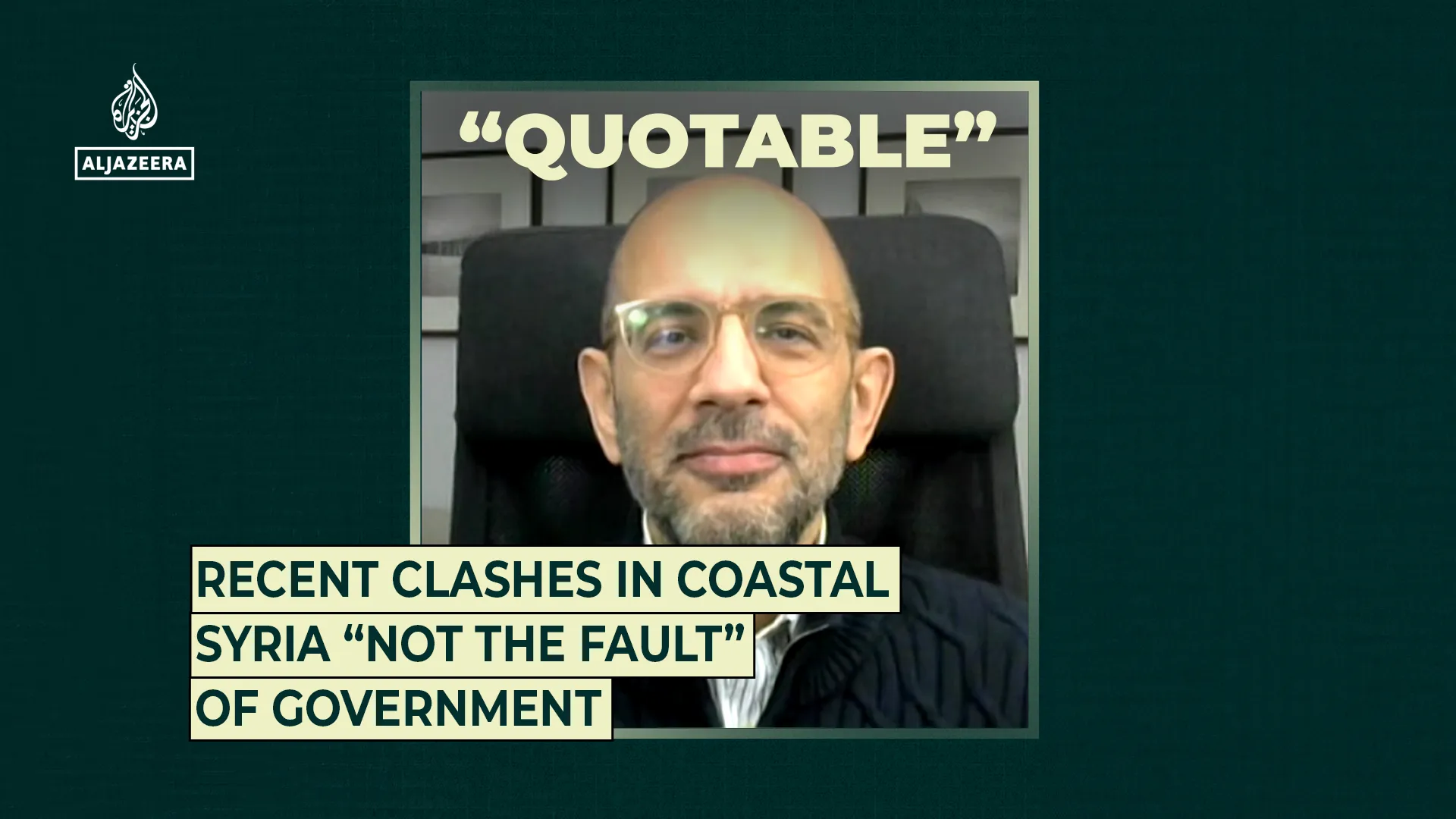
Gamal Mansour of the University of Toronto says Syria’s authorities are still in a fragile state-building phase, and the clashes in coastal Syria have exposed gaps in control.
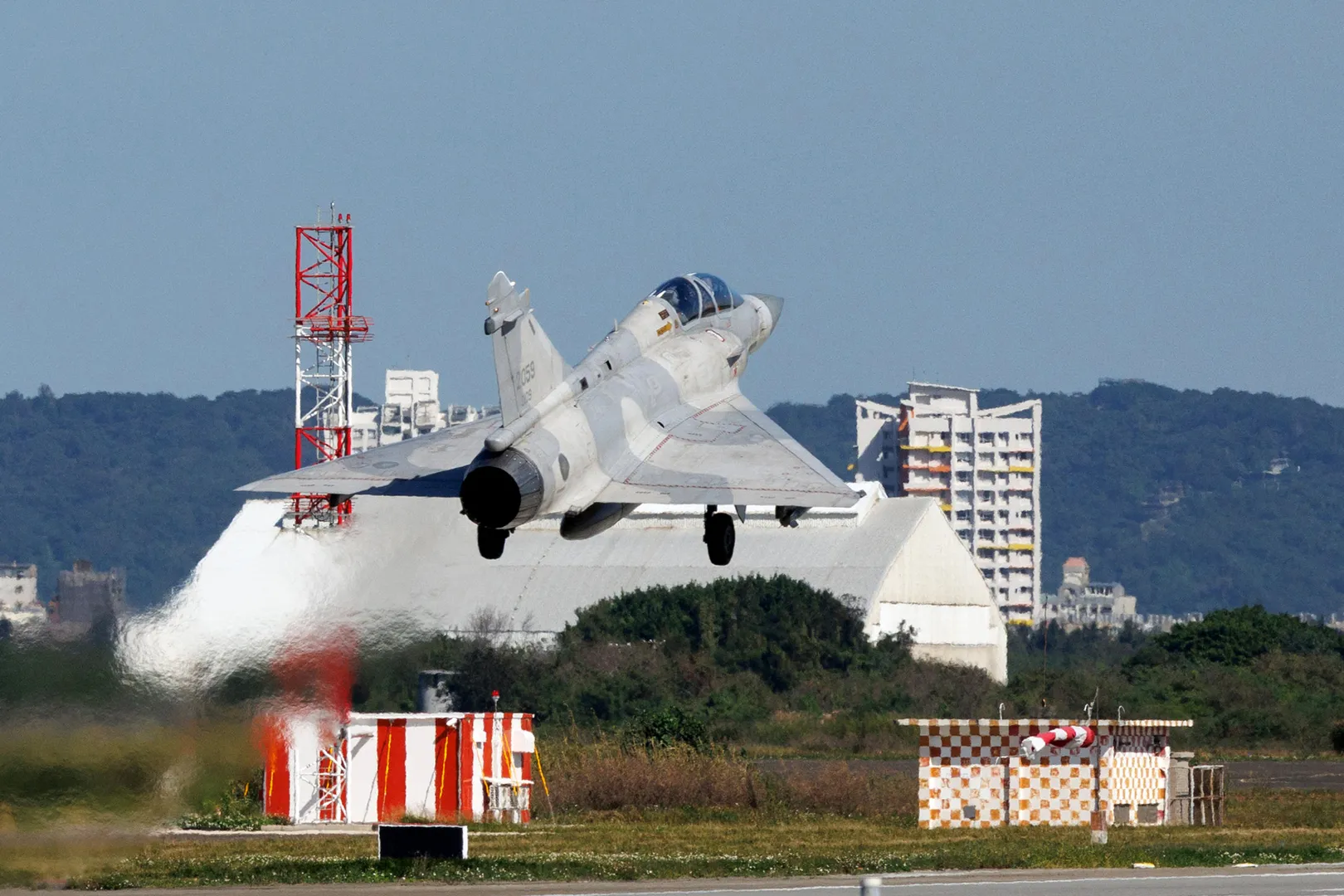
China has begun two days of military exercises around Taiwan, including live-fire drills that Beijing says simulate a blockade of key ports. Taiwan condemned the move, launching fighter jets, and mobilising troops in response.
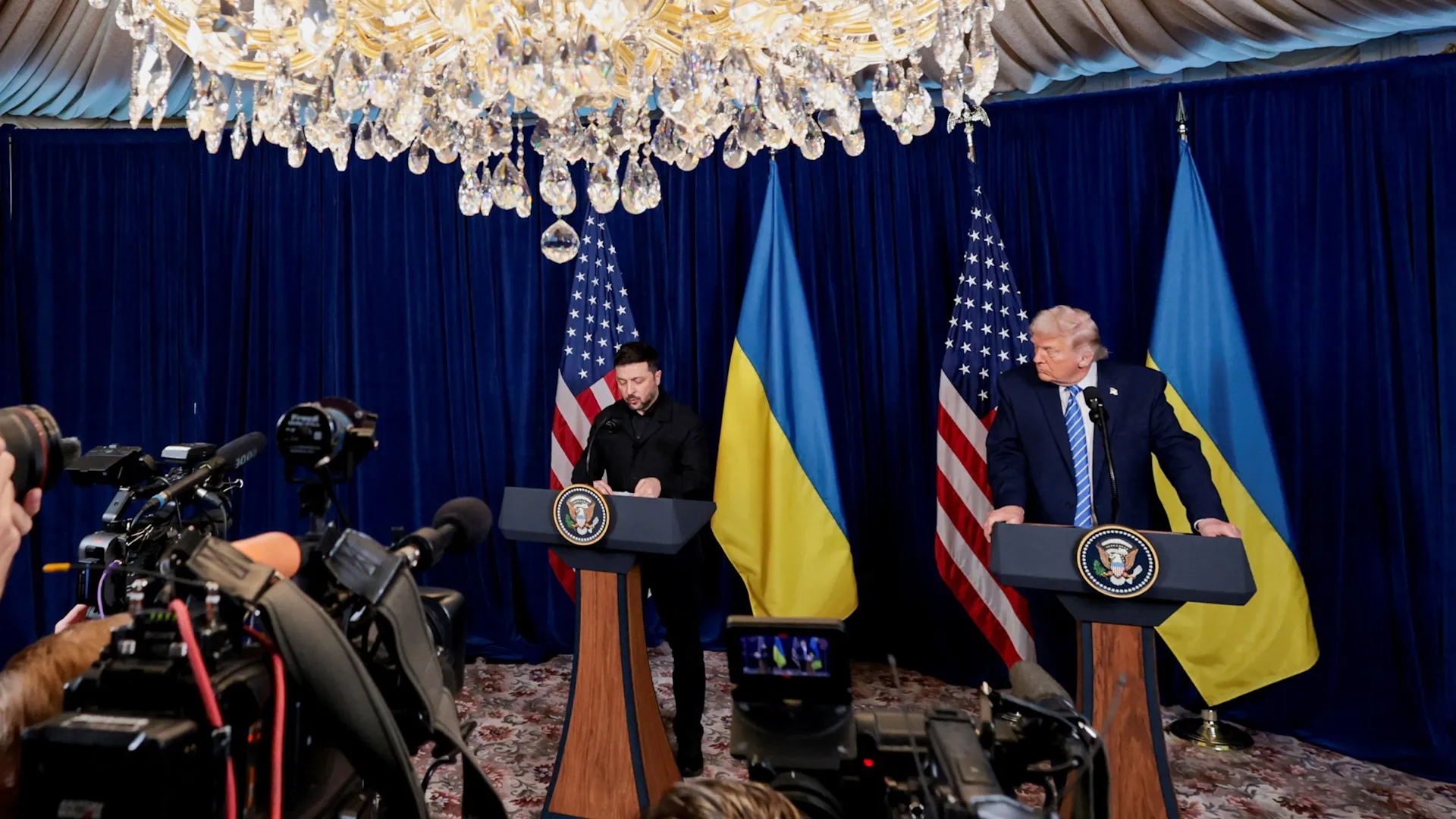
US President Donald Trump and Ukrainian leader Volodymyr Zelenskyy are talking up prospects of ending the war with Russia, after meeting in Florida. But they admitted there are ‘thorny issues’ to resolve about the status of the Donbas region which has been annexed by Russia.
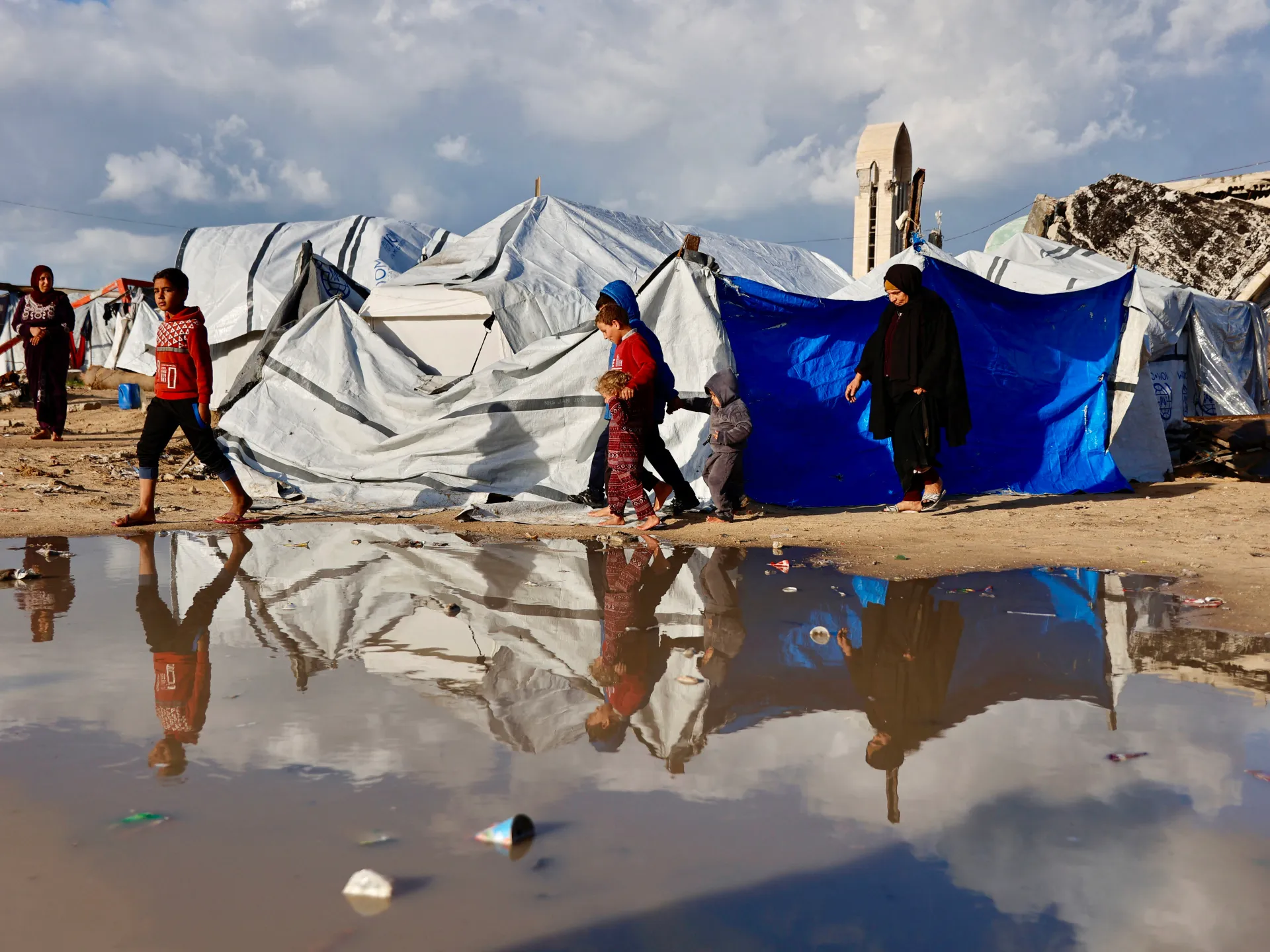
Severe weather conditions are bringing further misery to displaced Palestinians in Gaza, who have already suffered relentless bombardment, siege and loss in Israel’s genocidal war for more than two years, as Israel continues to block critical shelter and aid supplies into the territory.
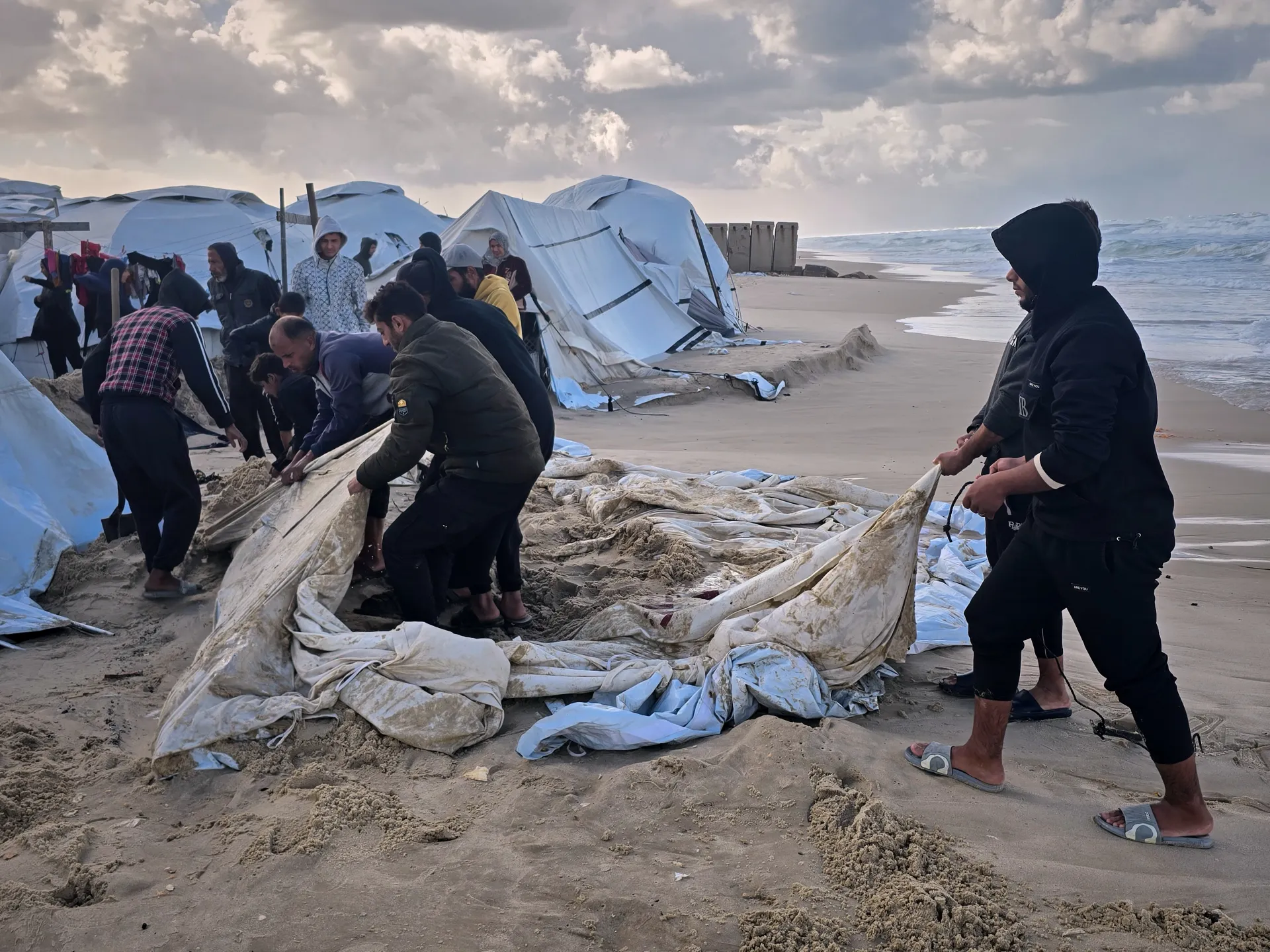
Flimsy tents were flooded and makeshift camps engulfed in mud on Monday following heavy winter rains lashing the enclave in recent days.
Recommended Stories
list of 4 itemsend of list
The harsh conditions have added to the suffering of Palestinians in Gaza, most of whom are reduced to sheltering in tents and other makeshift structures since Israel’s war destroyed an estimated 80 percent of the buildings there.
Officials are warning that severe conditions also bring new dangers, with the threat of disease and illness as overwhelmed and damaged sewage systems contaminate floodwaters, and the risk that damaged buildings could collapse amid heavy rainfall.
On Sunday, a 30-year-old woman was killed when a partially destroyed wall collapsed onto her tent in the Remal neighbourhood to the west of Gaza City amid fierce winds, Al Jazeera Arabic reported.
Officials have warned people not to shelter in damaged buildings, but the tents offer limited protection from the heavy rain and no real protection against flooding.
At least 15 people, including three babies, have died this month from hypothermia following the rains and plunging temperatures, according to the authorities in Gaza.
Two-month-old baby Arkan Firas Musleh was the latest infant to die as a result of the extreme cold.
Contaminated floodwater
Reporting from Gaza City’s Zeitoun neighbourhood, where most of the buildings have been reduced to rubble by Israeli attacks, Al Jazeera’s Hind Khoudary said the heavy rains had created deep puddles and thick mud that was difficult to pass in places.
“People are struggling to walk in those mud puddles,” she said. “These are not only water, but it’s also sewage, rubbish.”
A team of municipal workers were trying to pump sewage from the overwhelmed network, amid reports of flooded tents from residents.
“Families are saying that sewage water has been coming into their tents,” she said.
Calls for aid deliveries
Aid groups have called for the international community to pressure Israel to lift restrictions on life-saving aid deliveries into the territory, which they say are falling far short of the amount called for under the US-brokered ceasefire.
“More rain. More human misery, despair and death,” Philippe Lazzarini, commissioner-general of UNRWA, the top United Nations group overseeing aid in Gaza, wrote on social media on Sunday.
“Harsh winter weather is compounding more than two years of suffering. People in Gaza are surviving in flimsy, waterlogged tents and among ruins.”
There was “nothing inevitable about this”, he added. “Aid supplies are not being allowed in at the scale required.”
More Israeli attacks
Meanwhile, despite the ceasefire that came into effect on October 10, Israeli attacks on Palestinians have continued in Gaza.
Three Palestinians were injured on Monday when Israeli forces targeted the Jabalia camp in northern Gaza, a medical source told Al Jazeera Arabic.
Witnesses said the attack happened in an area from which Israeli forces had withdrawn under the ceasefire agreement.
Witnesses also reported an Israeli air raid on the eastern areas of the Bureij camp in central Gaza, artillery shelling east of Rafah and further Israeli attacks east of Gaza City, Al Jazeera Arabic reported.
A 20-point plan proposed by United States President Donald Trump in September called for an initial truce followed by steps towards a wider peace. So far, as part of the first phase, there has been the exchange of captives held in Gaza and prisoners in Israeli jails, and a partial withdrawal of Israeli forces from the enclave. However, it still occupies almost half of the territory.
However, Israeli attacks have not stopped, while humanitarian aid flows into the territory have not been what was promised.
Since the truce went into effect, more than 414 Palestinians have been killed and more than 1,100 wounded in ceasefire violations, according to Gaza’s Ministry of Health.
Winter rain has lashed the Gaza Strip over the weekend, flooding displacement camps with ankle-deep water as Palestinians struggled to stay dry in flimsy, worn-out tents. These Palestinians have been displaced after more than two years of Israel’s genocidal war, which has destroyed much of the besieged enclave.
In Khan Younis, soaked blankets and swamped clay cooking ovens added to the misery. Children in flip-flops navigated through puddles while adults desperately used shovels and tin cans to remove water from tents or extracted collapsed shelters from mud.
“Puddles formed, and there was a bad smell,” said Majdoleen Tarabein, displaced from Rafah in southern Gaza. “The tent flew away. We don’t know what to do or where to go.”
She and her family attempted to wring sodden blankets dry by hand.
“When we woke up in the morning, we found that the water had entered the tent,” said Eman Abu Riziq, also displaced in Khan Younis. “These are the mattresses. They are all completely soaked.”
She added that her family is still grieving her husband’s death less than two weeks ago.
“Where are the mediators? We don’t want food. We don’t want anything. We are exhausted. We just want mattresses and covers,” pleaded Fatima Abu Omar while trying to stabilise a collapsing shelter.
At least 15 people, including three babies, have died this month from hypothermia following the rains and plunging temperatures, according to the authorities in Gaza.
Emergency workers have warned against staying in damaged buildings due to collapse risks, yet with most of the territory in rubble after relentless and ongoing Israeli bombardment, shelter options are scarce. United Nations estimates from July indicate nearly 80 percent of Gaza’s buildings have been destroyed or damaged.
Since the ceasefire between Israel and Hamas began, 414 people have been killed and 1,142 wounded, with the overall Palestinian death toll reaching at least 71,266, according to the Health Ministry.
Aid deliveries to Gaza fall significantly short of ceasefire-mandated amounts, humanitarian organisations report. The Israeli military authority overseeing humanitarian aid stated that 4,200 aid trucks entered Gaza in the past week, along with sanitation equipment and winter supplies, but refused to specify the quantity of tents provided. Aid groups emphasise that current supplies cannot meet overwhelming needs.
Since the ceasefire, approximately 72,000 tents and 403,000 tarps have entered Gaza, according to Shelter Cluster, an international aid coalition led by the Norwegian Refugee Council.
“People in Gaza are surviving in flimsy, waterlogged tents and among ruins,” Philippe Lazzarini, commissioner-general of the UN refugee aid organisation in Gaza, said on social media. “There is nothing inevitable about this. Aid supplies are not being allowed in at the scale required.”
A shootout ensues after police raid a home in northwestern Yalova province, local media reports say.
Published On 29 Dec 202529 Dec 2025
Share
Seven Turkish police officers have been wounded in a shootout during an operation against alleged ISIL (ISIS) fighters, local media report.
Broadcaster TRT Haber reported that police carried out a raid at a home in Yalova province’s Elmalik village, located south of Istanbul, when fire was exchanged on Sunday.
Recommended Stories
list of 4 itemsend of list
The officers were not seriously injured, the broadcaster reported. It was not immediately clear whether any suspects were wounded or arrested.
Special forces from nearby Bursa province joined the operation to provide support, including enacting ongoing security measures in the area.
Locals and vehicles were not allowed into the area surrounding the targeted home, the broadcaster said, while the Yalova governorate also suspended classes at five nearby schools.
On Thursday, Turkish authorities said they had conducted raids on 124 locations and apprehended 115 ISIL suspects.
Police had received intelligence that operatives were “planning attacks in Turkiye against non-Muslims in particular” during the holiday period, the Istanbul chief prosecutor’s office said.
The United States military also carried out extensive strikes against ISIL in neighbouring central and northeastern Syria earlier this month, hitting more than 70 targets. The strikes came a week after two US soldiers and an interpreter were killed in an attack in the Syrian city of Palmyra.
Turkiye, which shares a border with Syria, has expanded its efforts against ISIL in recent years. Turkish authorities say some ISIL operatives relocated to the country in 2019 after the group was vanquished in the parts of Iraq and Syria it then controlled.
Previous raids in March had led to the capture of nearly 300 suspected ISIL members across 47 provinces over two weeks.
Between 2013 and 2023, authorities arrested more than 19,000 people for suspected affiliations with the group, according to the Turkish presidency.
Winkleman said viewers could expect some “juicy roundtables” in the forthcoming series of The Traitors
Viewers have been sharing their theories on social media after a teaser released on Christmas Day showed a figure wearing a red cloak, in a departure from the usual green worn by the traitors.
“All I will say is there’s something new, and what happens in this series is truly extraordinary with moments that made me gasp,” Winkleman said ahead of the series launch.
Details of the new twist will not be revealed until the show’s fourth regular series begins at 20:00 GMT on New Year’s Day.
The new red cloak was revealed in a Christmas Day trailer on BBC One
“I can’t wait for people to see it,” Winkleman added. “The producers have the greatest minds on earth.”
The red cloak has not been seen in past series, and fans have speculated that a new role could be assigned to one of this year’s contestants.
Previous series of The Traitors have seen Winkleman choose three traitors from a group of more than 20 contestants, although more traitors can be recruited later depending on how the game plays out. The other players are known as the faithful.
Although the meaning of the red cloak and details of who might be wearing it are under wraps for now, Winkleman told journalists earlier this month that the next series “gets pretty twisty”.
“The people who create the show, they have to keep on changing it,” she explained, “and they tell me ideas, and I’m like, ‘Are you joking?’
“So, yeah, I love it.”
Cat Burns and Alan Carr starred in the first series of The Celebrity Traitors in the autumn
Winkleman also remarked that the confrontations between contestants are “hardcore” in this series. “We get some very juicy roundtables,” she said. “It gets very heated… it gets ugly.
“We’ve never seen it played like this brilliant cast play it. They play it in such an extraordinary way.
“You think, I’ve seen this, it’s going to go down this route – and all I can say is it absolutely doesn’t.”
The new series comes just two months after the conclusion of the show’s first celebrity spin-off, which was one of the biggest TV hits of 2025.
“We were blown away by how successful The Celebrity Traitors was,” said Mike Cotton, creative director of production company Studio Lambert.
“We had parents coming up to us and thanking us for reintroducing them to watching TV with their teenagers and children, because it came to be a huge family viewing event. Which you don’t expect for a show about murder, lies and betrayal.”
Former contestants Minah and Linda joined Winkleman for The Traitors at The Proms earlier this year
With catch-up viewing included, the first series of The Celebrity Traitors was watched by more than 15 million viewers.
But, Cotton added, the success of the all-star spin-off, which introduced many viewers to The Traitors brand for the first time, puts “lots of pressure” on the fourth civilian series.
“With celebrities, all the viewers know who those people were. So when you go back to the regular version, these are people you don’t really know, you’ve got to learn to love them,” he noted.
The celebrity series and the fourth civilian series were shot concurrently earlier this year. Winkleman said she noticed how differently the regular contestants behaved, after the celebrities had been so polite.
“In the celebrity one, they were adorable, but at the roundtable they were like, ‘No, no, after you’,” she recalled. “That’s not how this one goes.”
Celebrities and civilians won’t mix
Despite its success, however, Cotton rejected the idea that the show might mix celebrities and civilians in the future, as has happened in some international versions.
“On the American version, series one did mix civilians with reality celebrities, and then from season two onwards we just had reality celebrities,” he said.
“But I think in this show, there’s already the traitors vs the faithful, so you don’t want to have a celebrity vs non-celebrity divide as well.”
Asked if more celebrities had volunteered to be on the next series after the success of the first, Winkleman joked: “They don’t come up to me personally because I don’t leave my bed. But yes, they’ve asked.”
Along with a new series of The Night Manager, The Traitors is at the centre of BBC One’s primetime schedule on New Year’s Day, and will continue with further episodes on Friday and Saturday.
Winkleman says she loves filming with the owl, Sage, who recently fathered a owlet named Onion
Winkleman also joked about the headline-making outfits she often wears on the show, including the boots she uses to do the ominous walk at the roundtable as she’s selecting the traitors.
“The walk round the table is very tense,” she said. “I can’t tell you how many times I walk around it, but I really try and build the tension, which is hideously mean but also quite addictive.
“I try and wear clompy footwear to add to it. I get a bit flamenco. It needs to be incredibly loud. I’m thinking of going tap next time.”
Unlike previous series, which have seen a surprise twist or mission before the contestants even reach Ardross Castle near Inverness, Winkleman revealed that this year’s crop do all make it through the door.
As usual, the show’s opening episode sees the contestants get to know each other before taking part in their first mission, which is on a scale rarely seen on the show before.
Winkleman said the Scottish Highlands “might be the most beautiful place on the planet”. Perhaps her biggest pleasure, however, is filming the traditional opening sequence with the owl who acts as her assistant and delivers the invitations.
“I love that little owl. Isn’t he sweet?” she smiled. “He’s called Sage, although I renamed him Barry after my dad.
“And just recently he fathered a baby owl and they named him Onion,” she laughed. “So you will see Onion in future series, I hope.”
The Traitors airs on BBC One and iPlayer at 20:00 GMT on 1 January.
Mexico’s Navy says the train was carrying 250 people when it derailed partially near the town of Nizanda in Oaxaca.
Published On 29 Dec 202529 Dec 2025
Share
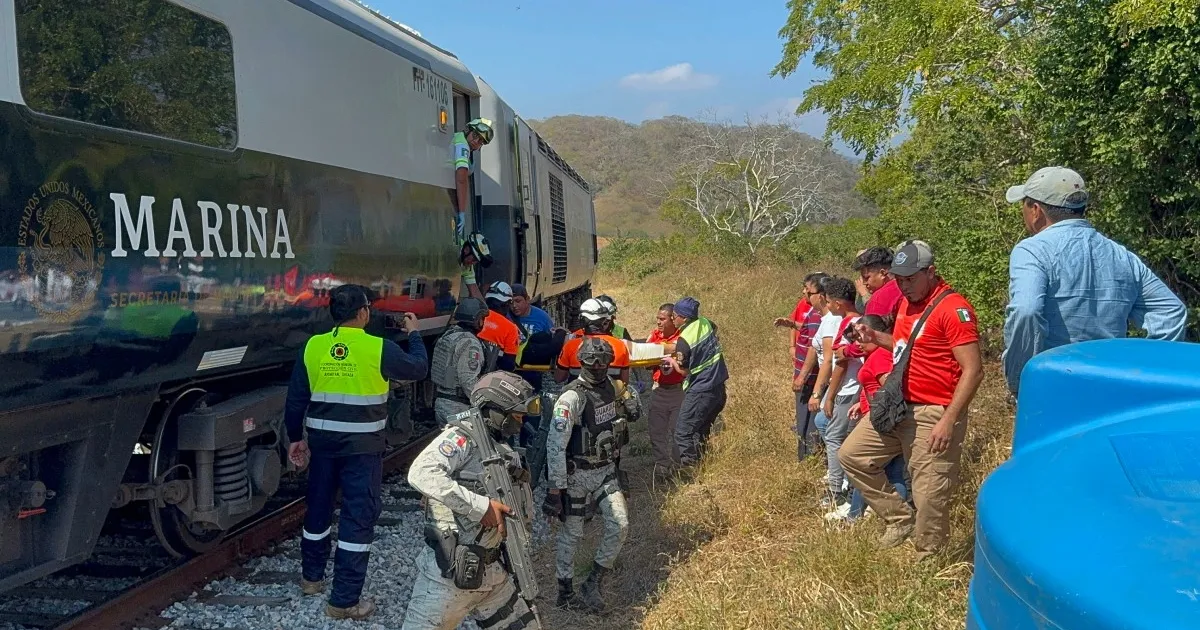
A train carrying 250 people has derailed partially in southern Mexico, killing at least 13 people and injuring 98, according to officials.
The Mexican Navy said that the Interoceanic Train linking the states of Oaxaca and Veracruz went off the rails on Sunday as it passed a curve near the town of Nizanda.
Recommended Stories
list of 4 itemsend of list
It said that 98 people were injured and that, “unfortunately, 13 people lost their lives”.
The train was carrying nine crew members and 241 passengers at the time of the accident. Of those on board, 139 were reported to be out of danger, while 36 of the 98 injured were still receiving medical assistance.
Sheinbaum said she has directed the secretary of the navy and other senior personnel to travel to the area and assist the families of those affected. She added that the Ministry of Interior is coordinating the response to the incident.
Mexico’s Attorney General’s Office said it was opening an investigation to determine the cause of the accident.
Uno Noticias Television, a Mexican channel, reported that emergency units were near the site of the accident but faced difficulty in accessing the area.
Images circulating on social media and posted by Mexican news outlets showed one of the carriages of the train on its side, while another was completely separated from the train tracks.
Translation: Passenger train derailed. Interoceanic in the Isthmus. This Sunday, the Interoceanic passenger train derailed, 5 kilometres south of Nizanda, belonging to Asuncion Ixtaltepec, Oaxaca. Injuries have been reported; the train had departed from Salina Cruz, Oaxaca, and was heading to Coatzacoalcos, Veracruz. Emergency units are near the area, but the difficult access to the site is complicating rescue efforts.
Video clips posted online also showed some of the passengers trapped in the derailed carriages.
A passenger was quoted by Mexico’s La Razon newspaper as saying that before the derailment, the train “was coming very fast”.
“We don’t know if it lost its brakes,” the passenger told La Razon.
In a statement posted on X, Oaxaca Governor Salomon Jara Cruz expressed his government’s “heartfelt condolences to the families of those who lost their lives in this unfortunate accident”.
The train runs between the Gulf of Mexico and the Pacific Ocean, and carries both passengers and freight.
On December 20, a train on the same route collided with a cargo truck attempting to cross the tracks, although the incident did not result in any deaths.
The line was inaugurated in 2023 as a major infrastructure project under then-President Andres Manuel Lopez Obrador to develop southeast Mexico.
The initiative was designed to modernise the rail link across the Isthmus of Tehuantepec, a land bridge connecting Mexico’s Pacific port of Salina Cruz with Coatzacoalcos on the Gulf Coast.
The Mexican government has sought to develop the Isthmus into a strategic trade corridor, expanding ports, railways and industrial infrastructure with the goal of creating a route that could compete with the Panama Canal.
The train derailed while rounding a bend near the town of Nizanda, Oaxaca.
At least 13 people died and almost 100 were injured after a train derailed in Mexico’s south-western Oaxaca region, the Mexican navy said.
The train, which was travelling between the Gulf of Mexico and the Pacific Ocean, was carrying 241 passengers and nine crew members.
A total of 98 were injured, of whom 36 were being treated in hospital, the navy said.
The train derailed as it rounded a bend near the town of Nizanda, officials said. Mexico’s Attorney General confirmed an investigation was under way.
Mexican President Claudia Sheinbaum said five of those injured were in a serious condition.
She said top level officials, including the Secretary of the Navy, were travelling to the site of the crash.
Photos from the site of the crash showed rescue workers helping passengers alight the train, which had fallen off the rail tracks and partly tilted over the side of a cliff.
The Interoceanic train, which connects the Pacific port of Salina Cruz with Coatzacoalcos on the Gulf Coast, had two locomotives and four passenger cars, the navy said. Mexico’s navy operates the country’s railway network.
The Governor of Oaxaca Salomón Jara Cruz expressed “deep regret” over the accident in a statement and said state authorities were coordinating with federal agencies to assist those affected.
The Interoceanic rail link was inaugurated two years ago to boost the region’s economy, an initiative spearheaded by former president Andrés Manuel López Obrador.
Designed to modernise the rail link across the Isthmus of Tehuantepec, the Mexican government has sought to develop the area into a strategic trade corridor, expanding ports, railways and industrial infrastructure.
The train service is also part of a broader push to expand passenger and freight rail in southern Mexico and stimulate economic development in the region.