
Oscars 2026: Winners list in full (updating live)
Find out which films and stars have won the famous golden statuettes as the ceremony gets under way.
Source link
Discover the latest happenings and stay in the know with our up-to-date today news coverage. From breaking stories and current events to trending topics and insightful analysis, we bring you the most relevant and captivating news of the day.
Find out which films and stars have won the famous golden statuettes as the ceremony gets under way.
Source link

The TWZ Newsletter
Weekly insights and analysis on the latest developments in military technology, strategy, and foreign policy.
Neither the U.S. nor Israel seem close to ending their attacks on Iran as the war stretches into its 16th day. U.S. President Donald Trump says he is not yet prepared to make a deal with Tehran while Israeli officials say there are still “thousands of targets” to be hit.
In an interview with NBC News Saturday night, Trump said he wants Tehran to offer a better “deal” before he would agree to ending hostilities.
“Iran wants to make a deal, and I don’t want to make it because the terms aren’t good enough yet,” the president told the network in a 30-minute phone call. He added that the terms offered would have to be “very solid.”
The U.S. leader, however, declined to say what conditions he is seeking.
“I don’t want to say that to you,” Trump stated, while acknowledging that Iran would have to completely abandon any nuclear ambitions as part of any agreement.
Israel, meanwhile, told CNN it plans for at least three more weeks of its campaign in Iran.
“We have thousands of targets ahead,” IDF spokesperson Brig. Gen. Effie Defrin told the cable outlet. “We are ready, in coordination with our U.S. allies, with plans through at least the Jewish holiday of Passover, about three weeks from now. And we have deeper plans for even three weeks beyond that.”
Defrin added that the IDF is “not working according to a stopwatch, or a timetable, but rather to achieve our goals” which are to “weaken the Iranian regime severely.”
💥Israel plans at least 3 more weeks of war, with “thousand of targets” remaining, @IDFSpokesperson Effie Defrin told @CNN. IDF isn’t “working according to a stopwatch or timetable, but rather to achieve our goals,” which he defined as to “weaken the Iranian regime severely.” pic.twitter.com/LepQpT7MOG
— Noga Tarnopolsky נגה טרנופולסקי نوغا ترنوبولسكي (@NTarnopolsky) March 15, 2026
At the same time, Chris Wright, Trump’s Energy Secretary, has also said the war will end within the next few weeks:
“I think that this conflict will certainly come to the end in the next few weeks – could be sooner than that. But the conflict will come to the end in the next few weeks, and we’ll see a rebound in supplies and a pushing down in prices after that,”
(Reuters) – U.S. Energy Secretary Chris Wright said on Sunday that he expects the U.S. war with Iran to end within “the next few weeks,” with oil supplies rebounding and energy costs declining afterwards.
“I think that this conflict will certainly come to the end in the next few…
— Phil Stewart (@phildstewart) March 15, 2026
While another three weeks of war would roughly fit into Trump’s previous statements that the conflict could last as long as five weeks, this is such a fluid situation that it is extremely difficult to make predictions about timelines.
Meanwhile, the U.S. continues to pound targets in Iran, including the continued use of bomber sorties.
تواصل القوات الأمريكية مهمتها في تقويض القدرات العسكرية الإيرانية. pic.twitter.com/O1se3fwI8v
— U.S. Central Command – Arabic (@CENTCOMArabic) March 14, 2026
Explosions were heard across major Iranian cities, including Tehran and Shiraz, with significant smoke rising from Isfahan and Jask Port while US CENTCOM confirmed that B-52 bombers participated in a night mission targeting Iran’s infrastructure.https://t.co/tueO3wqWJL
— The Jerusalem Post (@Jerusalem_Post) March 15, 2026
A U.S. Air Force B-52 Stratofortress takes off for a night mission during Operation Epic Fury. Strikes from U.S. forces continue to be unpredictable, dynamic, and decisive. pic.twitter.com/LU9zogVy7C
— U.S. Central Command (@CENTCOM) March 15, 2026
Video has revealed the Iranian Space Research Centre in west Tehran has suffered significant damage from Israeli-US strikes.
The ISRC is Iran’s leading satellite and intelligence mapping research agency. pic.twitter.com/JdGLpFwg0e
— Al Jazeera Breaking News (@AJENews) March 15, 2026
The biggest change in targeting came from the U.S. attacking Kharg Island. This is the epicenter of Iran’s oil exporting that sits roughly 20 miles off Iran’s northern coastline along the Persian Gulf.
CENTCOM posted:
“Last night, U.S. forces carried out a precise and wide-ranging strike on Kharg Island in Iran. This strike destroyed naval mine storage depots, missile storage bunkers, and numerous other military sites. U.S. forces succeeded in targeting more than 90 Iranian military targets on Kharg Island, while preserving the oil infrastructure.”
نفذت القوات الأمريكية، ليلة أمس، ضربة دقيقة واسعة النطاق على جزيرة خرج في إيران. وقد دمرت هذه الضربة مستودعات تخزين الألغام البحرية، ومخابئ تخزين الصواريخ، والعديد من المواقع العسكرية الأخرى. نجحت القوات الأمريكية في استهداف أكثر من 90 هدفاً عسكرياً إيرانياً في جزيرة خرج، مع… pic.twitter.com/wLGBZtCdah
— U.S. Central Command – Arabic (@CENTCOMArabic) March 14, 2026
Just a day ago, TWZ Editor-In-Chief Tyler Rogoway stated this would be at the top of the list of targets intended for U.S. Marines heading to the region, as well as one of the smaller islands closer to the Strait of Hormuz, if indeed the Marines from USS Tripoli and its MEU are indeed used. According to one tracking source, USS Tripoli is currently sailing through the South China Sea, moving fast to join U.S. forces amassed in the CENTCOM area of responsibility.
There are also a number of islands in and around the Strait of Hormuz that could be used help put up a screen against shipping attacks etc. Also risky for obvious reasons. pic.twitter.com/0nolqdew9J
— Tyler Rogoway (@Aviation_Intel) March 13, 2026
The strikes took out the island’s airfield as well as air defenses and other targets that were military related. They were not focused on the energy transfer services the island provides. These strikes would be critical to preparing the island for future operations.
After the attack, Trump wrote on Truth Social:
“We totally demolished Kharg Island, but we may hit it a few more times just for fun.”
Trump says he has directed strikes on Iran’s Kharg Island, an oil hub.
There has been widespread speculation it could be targeted for strikes, U.S. seizure or both. pic.twitter.com/qO3H1olaiI
— Dan Lamothe (@DanLamothe) March 13, 2026
We will be talking a lot more about Kharg Island in the near future.
We are also seeing U.S. aircraft operating over Iranian population centers at lower level, pointing to the degraded state of Iranian air defenses. The video below shows a Super Hornet over Chabahar, which still is a coastal city, so it’s not like the aircraft is seen deep inside Iran, and this seaside town, which is near the border with Pakistan on Iran’s southern shore, was heavily struck during the opening stages of the conflict:
Israel also remains highly active with strikes in Iran:
Video footage published this morning by the Israel Defense Force shows a recent strike on a drone storage facility in Western Iran, followed by subsequent strikes on Iranian personnel that fled from the building after the initial attack by the Israeli Air Force. pic.twitter.com/K1idaicILp
— OSINTdefender (@sentdefender) March 15, 2026
Israel claims about a third of Iran’s ballistic missile launchers are still usable. This appears to be a similar figure floated over the past week.
“Israel believes that less than one-third of Iran’s ballistic-missile launchers are still operational, with the rest destroyed or buried beneath rubble in bunkers.”https://t.co/Rk3dy5xpJm
— Shashank Joshi (@shashj) March 14, 2026
Footage shows the Islamic Revolutionary Guard Corps Aerospace Force preparing launchers and firing ballistic missiles targeting Israel. pic.twitter.com/uNMkx3imVi
— OSINTWarfare (@OSINTWarfare) March 15, 2026
Five U.S. aerial refueling tankers were struck by an Iranian ballistic missile that landed at Print Sulan Air Base, Saudi Arabia, according to the Wall Street Journal.
Trump, however, pushed back on the reported claims about the KC-135s, calling them “fake news” and that “Four of the five had virtually no damage and are already back in service.”
NEW: President Trump dismisses reports by The Wall Street Journal and The New York Times that U.S. refueling tanker aircraft were destroyed in a strike in Saudi Arabia, saying none were destroyed and most are already back in service. https://t.co/A61K2ZKNDb pic.twitter.com/wJLEovvGSb
— Faytuks Network (@FaytuksNetwork) March 14, 2026
Claims about these tankers follow a March 12 mishap that put out of action one KC-135 and destroyed another with six airmen onboard. On Saturday, the Pentagon announced the names of the airmen killed in the above-mentioned incident when two KC-135s reportedly collided with each other.
Maj. John A. Klinner, 33, of Auburn, Ala.
Capt. Ariana G. Savino, 31, of Covington, Wash.
Tech. Sgt. Ashley B. Pruitt, 34, of Bardstown, Ky.
Capt. Seth R. Koval, 38, of Mooresville, Ind.
Capt. Curtis J. Angst, 30, of Wilmington, Ohio
Tech. Sgt. Tyler H. Simmons, 28, of Columbus, Ohio.
🚨BREAKING: Washington hero among the six Air Force airmen who were killed in a KC-135 refueler crash on March 12 supporting Operation Epic Fury.
– Capt. Ariana G. Savino, 31, of Covington, Wash.
– Maj. John A. Klinner, 33, of Auburn, Ala.
– Tech. Sgt. Ashley B. Pruitt, 34, of… pic.twitter.com/A4PC9dXl3c— Lynnwood Times (@LynnwoodTimes) March 15, 2026
A drone attack on the U.S. Embassy in the Green Zone in Iraq destroyed a Giraffe 3D radar system that would be an important component used in the protection of the facility from incoming drone strikes. It isn’t clear if this was a near-field or long-range attack, although a near-field one seems most likely. Regardless, targeting of critical radar systems has been a key component of Iran’s retaliation campaign.
A report from Axios claims Putin said he would move Iran’s enriched uranium to Russia as part of a deal that could see the end of the war, but Trump rejected the offer. This needs to be taken as unconfirmed at this time, but Russia taking the material has long been floated as a potential part of a nuclear deal between the U.S. and Iran. Considering Russia’s tight relationship with Iran, which has only gotten more intense since the war in Ukraine kicked off, and the fact that Russia is not exactly a friendly country to the U.S. and the West, skepticism here is not illogical.
During the phone call earlier this week, Russian President Putin reportedly proposed to US President Trump to move Iran’s 450 kilograms of 60% enriched uranium to Russia as part of a deal to end the war.
Trump rejected the offer, per Axios.https://t.co/cFkmrt0zam
— Status-6 (War & Military News) (@Archer83Able) March 13, 2026
The Economist has a report that states the damage to the world economy is mounting from the closure of the strait and a major further spike in oil prices could send the globe into recession.
If the Strait of Hormuz remains closed just until the end of the month, some analysts reckon crude could surge to $150 or even $200 a barrel. That would be a recipe for global recession https://t.co/EiuojqPv5T
— The Economist (@TheEconomist) March 14, 2026
The Wall Street Journal is reporting that Trump ignored advice from Joint Chiefs of Staff Gen. Dan Caine about the damage Iran could inflict on shipping in the Strait of Hormuz.
The Wall Street Journal story came a day after War Secretary Pete Hegseth decried as “fake news” assertions that the Trump administration underestimated the Iran war’s impact on the Strait of Hormuz.
Hegseth on Iran:
Reports that the Trump administration underestimated the Iran war’s impact on the Strait of Hormuz are ridiculous.
For decades, Iran has threatened shipping in the Strait of Hormuz. This is always what they do — try to hold the strait hostage.
Does CNN think… pic.twitter.com/UfJh04QpWV
— Clash Report (@clashreport) March 13, 2026
Iranian Foreign Minister Abbas Araghchi on Sunday said that the country’s new Supreme Leader, Ayatollah Seyyed Mojtaba Khamenei, “is in good health condition and manages the country strongly.”
Araghchi’s comments come two days after War Secretary Pete Hegseth said Khamenei was wounded and “likely disfigured.”
Defense Secretary Pete Hegseth said Iran’s new leader Mojtaba Khamenei has been wounded as part of the US and Israeli campaign against the country.
“We know the new so-called, not-so-supreme leader is wounded and likely disfigured,” he said Friday https://t.co/b2fYt8Nsfn pic.twitter.com/FGAs1rEWUu
— Bloomberg (@business) March 13, 2026
Regardless of Mojtaba Khamenei’s current condition, his later father had misgivings about his son replacing him, according to CBS News. An analysis by the U.S. intelligence community “showed Khamenei was wary of Mojtaba taking power because he was perceived as not very bright, and was viewed as unqualified to be leader, according to sources,” the network claimed.
🚨 Scoop via @CBSNews: U.S. intelligence has circulated to Trump and to a small circle around him that Iran’s late supreme leader, Ali Khamenei, had misgivings about his son replacing him. The analysis showed Khamenei was wary of Mojtaba taking power because he was perceived as…
— Jennifer Jacobs (@JenniferJJacobs) March 15, 2026
The IRGC is unsurprisingly stating they are actively trying to kill Prime Minister Netanyahu. This should come as no surprise, but the message is certainly overt.
Iranian ballistic missiles are still piercing Israel’s air defenses:
Footage shows the aftermath and extent of the damage caused by the recent Iranian missile attack in Tel Aviv and central Israel.
Iranian warheads continue to reach the heart of the country. 🇮🇱🚀 pic.twitter.com/6S4LPRo7y0
— إسحاق حمومي | יצחק אל-חמומי 🇮🇱 (@A_Ham96) March 15, 2026
There is a report that says Israel is running low on interceptors. Israel has said the report is not accurate. It would be of no surprise that Israel is running low of these advanced weapons, especially after just eight months since the 12-Day War. This issue has been highlighted in multiple reports in the months following that operation. If this is indeed the case, and we cannot confirm it is at this time, it will put more pressure on U.S. THAAD and SM-3 interceptor systems and the stockpile overall.
👀 scoop from @ShelbyTalcott:
“Israel informed the US this week that it is running critically low on ballistic missile interceptors as the conflict with Iran rages on, US officials told Semafor.”https://t.co/Bp1M6WDUQQ
— Elana Schor (@eschor) March 14, 2026
تتعامل حالياً الدفاعات الجوية الإماراتية مع اعتداءات صاروخية وطائرات مسيرة قادمة من إيران وتؤكد وزارة الدفاع أن الأصوات المسموعة في مناطق متفرقة من الدولة هي نتيجة اعتراض كل من منظومات الدفاع الجوي للصواريخ البالستية، والمقاتلات للطائرات المسيرة والجوالة.
UAE air defences are… pic.twitter.com/MR1kcPLGhg
— وزارة الدفاع |MOD UAE (@modgovae) March 15, 2026
Iran continues to target gulf allies’ oil production facilities:
An Iranian drone attack on an oil refinery in Erbil, Iraq, caused a major fire:
Western sources: Turkey is dispatching aircraft to Qatar to assist in intercepting missiles and drones from Iran.
— Amit Segal (@AmitSegal) March 15, 2026
A video has been released showing Iraqi militia FPV drones attacking Baghdad International Airport. In the clip, it shows two flying around the facility for a prolonged period of time before diving into a soft shelter and a hangar.
Iraqi Aletejah TV broadcast what it reported to be a drone attack on the American base at Camp Victoria, near Baghdad International Airport.
—
These drones are likely operated by Iraqi militias. It is the first time I have seen an attack on a US base by Iraqi militias from the… pic.twitter.com/pNe2TgbEJU— Joe Truzman (@JoeTruzman) March 14, 2026
President Trump says that Iran wants to make a deal, but the terms aren’t good and that he doesn’t even know if Iran’s newly appointed leader is alive.
EXCLUSIVE: President Trump told me in a phone call today that Iran is ready to negotiate a ceasefire but he’s not yet ready to make a deal.
“Iran wants to make a deal, and I don’t want to make it because the terms aren’t good enough yet,” he said.
Trump also told me of Mojtaba…
— Kristen Welker (@kwelkernbc) March 14, 2026
Trump appears to be looking to build a coalition to reopen the Strait, including long-time European allies. That ask does conflict with his previous statements on Truth Social about the war already being won and not needing at least one key ally, the UK. At the same time, the UK has opened its bases to U.S. bomber deployments. Trump has also commented that the “last person he needs help from is Zelensky” in regard to Ukraine sending capabilities to the region to defend against drones.
Trump:
Countries that receive oil through the Strait of Hormuz must take care of that passage, and the U.S. will help — a lot.
This should have always been a team effort. pic.twitter.com/Ge5v106ZRM
— Clash Report (@clashreport) March 14, 2026
France has said an emphatic “non” to the American president’s request for military support in his Middle Eastern campaign.https://t.co/aPLB1v5POR
— The Daily Beast (@thedailybeast) March 15, 2026
Zelensky, for his part, told CNN that Russia is supplying Iran with Shahed drones and is aiding Iran in targeting U.S. assets in the Middle East. Though Iran initially supplied these weapons to Russia for its war on Ukraine, Moscow has made numerous improvements since as we have frequently noted.
While unofficial, this basic chart can be used as an informal data point in terms of drone and missile launches out of Iran. It shows drone and missile launches had leveled off for a number of days, but drone launches have spiked a bit in the last day or so. Clearly, Iran continues to execute standoff launches that are doing significant damage over two weeks into the conflict.
A 3-day moving average of Iranian ballistic missile launches and drones. Clearly trending in the right direction on missiles. Drone launches ticking up though
Credit to @MarioLeb79 for aggregation of raw data pic.twitter.com/yqxU95F3Yu
— Dmitri Alperovitch (@DAlperovitch) March 14, 2026
UPDATE: 4:17 PM EST –
The IDF is preparing to deploy more forces in southern Lebanon and expand its buffer zone to push away the threat of Hezbollah from the border, Times of Israel military correspondent Emanuel “Mannie” Fabian stated on X.
The IDF is preparing to deploy more forces in southern Lebanon and expand its buffer zone to push away the threat of Hezbollah from the border.
Last week, the military deployed troops deeper in southern Lebanon, beyond the five positions it already had, saying it aims to… pic.twitter.com/449Romg8Hi
— Emanuel (Mannie) Fabian (@manniefabian) March 15, 2026
The IDF on Sunday reported that 85% to 90% of Hezbollah’s pre-2023 rocket arsenal has been destroyed, according to The Jerusalem Post.
“The IDF’s update on Sunday suggests that over the course of 2025, and more intensely since Hezbollah entered the war on March 2, the military has gradually reduced that total to between 10,000 and 23,000 rockets,” the publication noted.
IEA has provided an update on the emergency oil stock release, with details on timing, regional split, and crude/product split.
IEA has provided an update on the emergency oil stock release, with details on timing, regional split, and crude/product split.
Asia stocks will be released immediately. Europe / America only at the of March.
Still missing is the flow rate, however. https://t.co/eBH8Fx14yb pic.twitter.com/czLAxJfL4Z
— Javier Blas (@JavierBlas) March 15, 2026
Retired Admiral Kevin Donegan, who commanded the Navy’s Fifth Fleet in the Middle East during President Trump’s first term, told ABC’s This Week that the Trump administration was not taken off guard by Iran attempting to shut the Strait of Hormuz in response to U.S. air strikes.
“If you look at the campaign CENTCOM initiated, this was built into it from the beginning,” he explained. “Think about it in terms of the things that the chairman said and the things that Admiral Cooper said his mission was, one of the things in there was to just to go after the Navy. And what they really meant was, Iran’s capability to control the straits when this is over.”
The Kurdish coalition forces have organized a military and are now awaiting external material support to arrive before they carry out any ground operations in Iran, the Democratic Party of Iranian Kurdistan (PDKI) representative in the UK, Razgar Alani, told The Jerusalem Post on Sunday.
Interview: Kurdish opposition forces are ready to take military action against Iran’s regime, according to a PDKI official, but they are waiting for crucial external support before they proceed with their operations.
✍️ @DanielleGreymanhttps://t.co/3fR78xmNPD— The Jerusalem Post (@Jerusalem_Post) March 15, 2026
Newt Gingrich suggested setting off a dozen thermonuclear blasts across the UAE to create a new, wider, safer transit than the Strait of Hormuz. It is unclear if the former Speaker of the House of Representatives was being serious or facetious.
Instead of fighting over a 21-mile-wide bottleneck forever, we cut a new channel through friendly territory. A dozen thermonuclear detonations and you’ve got a waterway wider than the Panama Canal, deeper than the Suez, and safe from Iranian attacks. https://t.co/Et21kHCiAw
— Newt Gingrich (@newtgingrich) March 15, 2026
UPDATE: 3:38 PM EST –
Israel’s Kann News reports that Jerusalem is recalibrating its objectives for the war because Iranians are not protesting against the regime as much as initially anticipated.
“We need to reassess the war’s objectives. We’re not advancing at the pace we set,” the outlet said security sources told it “In Israel, they explain that the war’s opening strike was ‘beyond expectations,’ and so were the days that followed, However, according to them, there is a significant challenge in getting the Iranian people to pour out into the streets in droves.”
גורמי ביטחון אומרים לכאן חדשות: ״צריך לעשות הערכה מחודשת של יעדי המלחמה. אנחנו לא מתקדמים בקצב שקבענו״.
בישראל מסבירים שמכת הפתיחה של המלחמה היתה ״מעבר לציפיות״, וגם בימים שלאחר מכן. אך לדבריהם, יש קושי משמעותי בלהביא את העם האיראני לצאת בהמוניו לרחובות.
עוד הוסיפו הגורמים:… https://t.co/JuTqTFfvDh
— Suleiman Maswadeh סולימאן מסוודה (@SuleimanMas1) March 15, 2026
Qatar was attacked by several Iranian drones today, its Defense Ministry stated on X.
تعلن وزارة الدفاع القطرية عن تعرض دولة قطر لهجوم بعدد من الطائرات المسيّرة من الجمهورية الإسلامية الإيرانية، اليوم الأحد، ونجحت قواتنا المسلحة “بفضل من الله” بالتصدي لجميع الطائرات المسيّرة.
حفظ الله قطر وأميرها وشعبها والمقيمين على أرضها.
The Qatari Ministry of Defense… pic.twitter.com/kOwRCD6IhO
— وزارة الدفاع – دولة قطر (@MOD_Qatar) March 15, 2026
Online tracking shows that while few ships are transiting the Strait of Hormuz, the Red Sea is witnessing the arrival of an oil tanker armada to the Saudi terminals there.
MAP OF THE DAY: While the Strait of Hormuz remains largely closed (other than a few tankers, notably from India), the Red Sea is witnessing the arrival of an oil tanker armada to the Saudi terminals there.
(Tracking via @TheTerminal)
(Blue arrows are oil tankers DWT >120,000) pic.twitter.com/uPTfxDu0j3— Javier Blas (@JavierBlas) March 15, 2026
German Foreign Minister Johann Wadephul said on Sunday that “he was sceptical about a potential widening of the European Union’s Aspides naval mission to the Strait of Hormuz,” Reuters noted on X. Wadephul said that the mission to help commercial shipments pass through the Red Sea was “not effective.”
what a fool indeed. lives up to his name
— Alabi temitope (@Topedatrinitie) March 15, 2026
The Iran war threatens to deal significant blows to the Gulf’s biggest economies, including Saudi Arabia, the United Arab Emirates and Qatar, if it doesn’t end soon, Bloomberg News reported.
“Qatar and Kuwait could each see their gross domestic product contract by 14% this year should the conflict continue through April, resulting in a two-month halt of the Strait of Hormuz,” the outlet posited, Goldman Sachs Group Inc. economist Farouk Soussa.
Goldman Sachs on the Gulf:
Qatar and Kuwait could each see their GDP contract by 14% this year should the conflict continue through April, resulting in a two-month halt of the Strait of Hormuz.
Saudi Arabia and the UAE would fare better given their ability to re-route oil…
— Annmarie Hordern (@annmarie) March 15, 2026
U.S. Energy Secretary Chris Wright downplayed concerns that the U.S. was not prepared for Iran’s closure of the Strait.
Q: If you were prepared, why is the Strait of Hormuz effectively closed right now?
U.S. Energy Secretary Wright: Because it’s right next to the Iranian shoreline. pic.twitter.com/TJuOt171LJ
— Clash Report (@clashreport) March 15, 2026
Israel attacked a site near the Bushehr nuclear reactor without knowing that Russian scientists were there, Israel’s I24 News reported, adding that there were no injuries.
🇮🇱🇷🇺🇮🇷 כמעט משבר בין ישראל לרוסיה: ישראל תקפה באתר סמוך לכור הגרעיני בבושאר מבלי לדעת ששם שהו מדענים רוסיים (שלא נפגעו) pic.twitter.com/wU8oKPNS66
— Amichai Stein (@AmichaiStein1) March 15, 2026
Zelensky said a drone deal with the U.S., centered on the exchange of technologies, expertise and production, was possible despite Trump’s rejection.
At the same time, the Ukrainian leader warned private drone makers in Ukraine not to pursue direct export deals outside of government oversight. You can read more about that effort in our story here.
“I have never heard that the United States isn’t interested. I have heard the opposite – that the United States is very interested,” Zelenskiy told reporters in Kyiv on Saturday.
UPDATE: 1:44 PM EST –
As of Sunday, “neither Israel nor the US has announced any success in neutralizing 40-plus kilograms of 60% enriched nuclear uranium covered in rubble after IDF attacks on nuclear sites and the Pickaxe Mountain nuclear facility,” The Jerusalem Post reported. “Further, the IDF declined to provide assurances that these two threats would be dealt with before the end of the war.”
The US and Israel believe that Iran’s Pickaxe Mountain nuclear facility is still a threat, despite heavy blows to the regime during the war with Iran. @jeremybob1 reports https://t.co/w1ABDbHlNV
— The Jerusalem Post (@Jerusalem_Post) March 15, 2026
The world’s top central banks convene this week facing a renewed inflation threat from the war in Iran and the possibility that they’ll be forced to delay interest-rate cuts and in some cases consider hikes, Bloomberg News reports.
“Changes aren’t imminent yet,” according to the outlet. “The Federal Reserve, the European Central Bank and the Bank of England are all expected to keep borrowing costs steady as they assess how much surging energy costs will feed through to consumer prices and growth.”
The world’s top central banks face a renewed inflation threat from the Iran War and the possibility that they’ll be forced to delay rate cuts and in some cases consider hikes https://t.co/FbQuqqdNeQ
— Bloomberg (@business) March 15, 2026
An Italian Air Force remotely piloted aircraft was destroyed during a drone attack on Ali Al Salem Air Base in Kuwait, according to the Italian Defense Ministry (MoD). No personnel were harmed in the incident.
The IAF published images and video of its F-35I fighters heading to Iran to carry out strikes.
Days after an Iranian attack on fuel storage tanks at the port of Salalah, Oman, plumes of smoke can be seen rising for dozens of kilometers in satellite imagery.
Dense smoke plumes stretch for dozens of kilometers from the fuel storage tanks at the port of Salalah, Oman 🇴🇲.
The fuel tanks were struck by UAV’s launched from Iran on March 11. pic.twitter.com/963oqTDhaP
— Ben Tzion Macales (@BenTzionMacales) March 15, 2026
In a post on X, CBS News published a graphic of targets hit by all parties in the Iran war.
At about 7 p.m. local time (noon EST). Baghdad International Airport and its surroundings came under attack by five rockets, resulting in injuries to four airport staff and security personnel, in addition to an engineer, with varying degrees of wounds, the Iraqi Security Media Cell announced on X.
“In response to the targeting, directives and orders were issued to relieve the sector commanders and intelligence officers in the affected sector, while the competent authorities have begun taking the necessary legal measures, alongside tightening security procedures around the targeted areas,” the media cell added.
رئيس خلية الإعلام الأمني، الفريق سعد معن: في تمام الساعة 19:00 من مساء هذا اليوم، تعرض مطار بغداد الدولي ومحيطه إلى هجوم بـ (5) صواريخ، أسفر عن إصابة (4) من موظفي وعناصر أمن المطار، إضافة إلى مهندس بجروح متفاوتة.
وقد توزعت أماكن السقوط داخل حرم المطار الدولي، وفي محطة تحلية…— خلية الإعلام الأمني🇮🇶 (@SecMedCell) March 15, 2026
UPDATE: 1:05 EST –
Araghchi disputes Trump’s claim that Iran wants to negotiate an end to the war.
“We never asked for a ceasefire or negotiations,” the Iranian foreign minister told Face The Nation Sunday morning. “We are ready to defend ourselves as long as it takes.”
Iranian Foreign Minister Abbas Araghchi says the regime is not in a war of survival, telling @margbrennan the regime is “stable and strong enough.”
“We don’t see any reason why we should talk with Americans, because we were talking with them when they decided to attack us, and… pic.twitter.com/AQdyeWBiFu
— Face The Nation (@FaceTheNation) March 15, 2026
The decision to appoint Mojtaba Khamenei to replace his father was a signal that the regime wants to maintain control of the country, former CIA operative told Face The Nation.
Former CIA operative Jonny Gannon says the decision to appoint Motjaba Khameini as the new supreme leader “is the message from the regime that they are still in control.”
Mojtaba Khamenei is clearly not a charming public face; what he is is a systems operator,” he says. “So, he… pic.twitter.com/oP6zveXtvO
— Face The Nation (@FaceTheNation) March 15, 2026
The International Energy Agency (IEA) said oil from an unprecedented stockpile release will be made available immediately in Asia,” Bloomberg News reported. Buyers there “are clamoring to replace barrels lost to war-related disruptions in the Middle East,” the outlet noted.
The International Energy Agency said oil from a record stockpile release will be made available in Asia immediately to replace barrels lost to Iran war-related disruptions. https://t.co/zx6SvbOIWg
— Bloomberg (@business) March 15, 2026
Though UKMTO reports that there have been no confirmed attacks on shipping in the Strait of Hormuz, Gulf of Oman or Arabian Gulf in the past 72 hours, the situation there remains “at a critical level due to recent attack patterns, continued navigation interference, and persistent operational disruption, to include port facilities, across the region.”
The heavy consumption of MICA air-to-air missiles used by French Air Force Rafale pilots to intercept Iranian Shahed drones over the UAE is creating tensions in Paris, according to the French La Tribune news outlet.
“A crisis meeting is convened Tuesday by Prime Minister Emmanuel Macron to find solutions to maintain capacities over time,” the publication reported.
« Depuis une quinzaine de jours, les pilotes français de Rafale ont intercepté plusieurs dizaines de drones Shahed en tirant des missiles air-air MICA avec un taux de réussite très élevé. » https://t.co/aJPMisCgE9
— MENA Defense & Security 🇫🇷 🇪🇺 🇺🇦 🇨🇦 🇬🇱 (@Arn_Del) March 15, 2026
Contact the authors: tyler@twz.com
howard@twz.com
Alireza Enayati says relations with Saudi Arabia are ‘progressing naturally’ and he’s in direct contact with Saudi officials.
Published On 15 Mar 202615 Mar 2026
Share
Iran’s ambassador to Saudi Arabia denied Tehran is responsible for attacks on Saudi Arabia’s oil infrastructure, saying if it was behind the strikes, it would have announced it.
Alireza Enayati did not suggest who carried out the attacks, but added Iran is only attacking United States and Israeli military targets and interests during the ongoing war, Reuters news agency quoted him as saying on Sunday.
list of 4 itemsend of list
After the US and Israel launched attacks on Iran at the end of February, Tehran retaliated against US and Israeli military assets, including in Saudi Arabia, Qatar, Bahrain, Jordan, Iraq, and the United Arab Emirates (UAE).
Last week, the Ras Tanura oil refinery was forced to stop operations after debris from a drone caused a small fire. Attempted attacks were also reported on the Shaybah oilfield in the desert near the border with the UAE.
So far, Saudi Arabia’s Defence Ministry has not blamed anyone for the attacks.
Enayati said he’s in direct contact with Saudi officials, explaining that relations are “progressing naturally” in many areas.
Talks included Saudi Arabia’s publicly stated position that its land, sea, and air would not be used to target Iran. He didn’t elaborate.
Iran and Saudi Arabia re-established diplomatic relations in 2023, in a deal brokered by China, that saw the two sides, which backed rival groups across the region, agree on a new chapter in bilateral relations.
Enayati reiterated to the Gulf states that the war “has been imposed on us and the region” following coordinated US and Israeli attacks.
Asked about the attacks on Gulf nations, Enayati replied: “We are neighbours, and we cannot do without each other; we will need a serious review.”
“What the region has witnessed over the past five decades is the result of an exclusionary approach and an excessive reliance on external powers,” he said, calling for deeper ties between the Gulf Cooperation Council’s six members along with Iraq and Iran.
Iran’s Foreign Minister Abbas Araghchi also denied his country is targeting civilian or residential areas in the Middle East, and said Tehran is ready to form a committee with its neighbours to investigate the responsibility for such strikes.
So far, the UAE, which normalised relations with Israel in 2020, has faced the brunt of Iran’s attacks, with US bases and oil refineries heavily targeted.
While all countries targeted have strongly condemned Iran’s missile and drone strikes, regional sources say there remains growing frustration at the United States for dragging them into a war they did not sign up for but are now paying the heaviest price for, Reuters reported.
Enayati said to resolve the conflict, the US and Israel need to stop their attacks, and international security guarantees to prevent future “aggression” must be given.
Paul Musgrave, associate professor at Georgetown University in Qatar, said the administration of US President Donald Trump has lost much of its leverage in the region, and the US engaged in the wrong conflict at the wrong moment, without proper planning.
Iran’s strategy, meanwhile, now seems to be “not who has a bigger bomb or bigger munitions, but who has the highest threshold for pain”, Musgrave told Al Jazeera.


The TWZ Newsletter
Weekly insights and analysis on the latest developments in military technology, strategy, and foreign policy.
The U.S. Navy Independence class Littoral Combat Ships (LCS) USS Tulsa and USS Santa Barbara, which are configured for minesweeping duties, have appeared in port in Malaysia. Both of these ships were last known to be forward-deployed in the Middle East, having arrived in Bahrain in the past year or so to take the place of a group of now-decommissioned Avenger class mine hunters. Now, as Iranian attacks on commercial ships have caused a virtual halt to maritime traffic through the highly strategic Strait of Hormuz, these ships have emerged thousands of miles away. The extent to which Iran has seeded naval mines in the Strait already is unclear, but this remains a huge threat to the future security of the waterway and will have to be taken into account in any future effort to reopen this critical waterway.
A spotter in Malaysia posted pictures of the USS Tulsa and USS Santa Barbara, which are said to have been taken today at the North Butterworth Container Terminal (NBCT) in the Port of Penang. Mike Yeo, an Australia-based defense and aviation reporter, was among the first to call attention to the particular significance of the images. TWZ has reached out for more information.
Interesting. The Littoral Combat Ships USS Tulsa and Santa Barbara, which were assigned rotationally to the Middle East and were supposed to be the US Navy’s mine countermeasures platforms in that region, are now in Penang, Malaysia h/t @limzeruihttps://t.co/Fe0r7VizQm
— Mike Yeo 杨启铭 (@TheBaseLeg) March 15, 2026
15 Mar – Two US Navy Littoral Combat Ships (LCS) that were assigned to mine-countermeasure (MSM) missions in the Persian Gulf are currently docked at Butterworth in Malaysia.
Butterworth, Penang
15th March 2026
SC – sherwyndkessier https://t.co/FZN6qH1aSA pic.twitter.com/2kRnHiSeVk— Justine (@polietzz) March 15, 2026
USS Tulsa and USS Santa Barbara are among a select number of Independence class LCSs fitted with a mine countermeasures mission package, or “module.” In its current form, the package includes towed mine-hunting sonar for the ships, Common Unmanned Surface Vehicles (CUSV) with mine-sweeping gear, and mine detection and neutralization systems carried by embarked MH-60 Sea Hawk helicopters. We will come back to this configuration later on.

CUSV®

Airborne Laser Mine Detection System (ALMDS) Video
When it comes to why the ships are now in Malaysia, TWZ also reached out to U.S. Central Command (CENTCOM), which directed us to the U.S. Navy’s Fifth Fleet. We were then directed by Fifth Fleet back to CENTCOM. CENTCOM is the top U.S. military command for operations in the Middle East. Fifth Fleet is the Navy’s numbered fleet in the Middle East, with its commander dual-hatted as head of Naval Forces Central Command (NAVCENT). Fifth Fleet and NAVCENT are headquartered in Manama, Bahrain, in the Persian Gulf.
We have reached out to the U.S. Navy and U.S. Indo-Pacific Command (INDOPACOM), as well.
Pictures available through the U.S. military’s Defense Visual Information Distribution Service (DVIDS) show USS Tulsa was in port in Bahrain at least as of February 9. Separate images also show USS Santa Barbara operating in the Persian Gulf on January 30. The current disposition of a third Independence class LCS, the USS Canberra, which had also been forward-deployed in the Middle East at least as of January, is unknown. Whether any other mine countermeasures ships may not be headed to the Middle East is also not known.

A review of satellite imagery in Planet Labs’ commercial archive shows no evidence of any U.S. warships being in port in Mamana since February 23. The United States and Israel launched their joint operation against Iran on February 28.
Moving U.S. warships out of port in Bahrain ahead of the current conflict was a prudent security measure. The Gulf state is well within range of Iranian missiles and long-range kamikaze drones, and U.S. military facilities in Manama did subsequently come under attack. The U.S. military’s own strikes on Iranian naval vessels in port have underscored the vulnerability of ships sitting pierside.
Why the decision was made to then send the USS Tulsa and USS Santa Barbara thousands of miles to the east is unknown. A host of factors may have come into play, including the availability of suitable friendly ports and diplomatic considerations.
Regardless, at least two-thirds of the warships intended to be available for tasking for mine countermeasures missions in the Middle East are presently in a completely different part of the world. As noted, USS Tulsa, USS Santa Barbara, and USS Canberra, were forward-deployed to the region in the first place explicitly to fill gaps left by the decommissioning of four Avenger class mine hunters last year. The former USS Devastator, USS Dextrous, USS Gladiator, and USS Sentry left the region for good aboard a heavy lift ship in January. There are only four Avenger class ships left in active Navy service, all of which are forward-deployed in Japan, and are also slated to be decommissioned in the coming years.

How many of the Navy’s Independence class LCSs, in total, have been configured for the mine-clearing mission to date is unknown. In addition to USS Tulsa, USS Santa Barbara, and the USS Canberra, the USS Kansas City was at least being fitted out with this mission module as of last year.
The Independence class LCS is a far more advanced ship than the Avenger class mine hunter, and does offer new standoff mine countermeasures capabilities, including aforementioned CUSV drone boats and helicopter-borne systems. Still, questions continue to be raised about whether metal-hulled LCSs with mine countermeasures packages are adequate replacements for ships purpose-built for this mission. As TWZ previously wrote back in January:
The [Avenger class] ships themselves have fiberglass-coated wooden hulls to reduce their own vulnerability, particularly to mines that detect targets by their magnetic signature.
The Navy has long intended to replace the Avenger class ships with LCSs configured for the mine countermeasures duties. However, delays with the LCS mine countermeasures and other mission packages, or “modules,” as well as other persistent issues with both subclasses of those ships, repeatedly delayed those plans. The LCS program had also originally envisioned it being possible to readily reconfigure the ships for different mission sets by swapping out modules. However, the Navy is now deploying LCSs in largely fixed configurations.
…
Questions and criticism about the suitability of metal-hulled LCSs to take on the mine countermeasures mission have come up in the past. Both subclasses of LCS are also much larger than the Avenger class design, which could impose limits on how close they can get to mined or potentially mined areas. LCSs are better able to defend themselves against other threats than the Avengers, but they still have relatively limited firepower, which has been a separate source of criticism for years now. There would still be a significant need for tertiary support to protect LCSs during mine-clearing operations, which are slow and complex, and carry significant risks, even in benign environments.

In May 2025, a top U.S. Navy mine warfare officer gave an unclassified briefing detailing significant ongoing issues with the LCS mine countermeasures, according to a story published just this past week by Hunterbrook Media. Copies of the briefing slides that the outlet published say that employing the CUSV requires hours of prep time, and that the drone boat’s sonar sometimes has trouble spotting threats, but that the operators may have no indication of this until data is assessed after a mission. Visual confirmation of mines using the AN/AQS-20 mine-hunting system has also proven challenging “even [in] the relatively benign turbidity of SoCal [Southern California] waters,” another slide explains. The briefing also highlighted a number of potential “single-point failures” both in terms of mine countermeasures systems included in the module, and the equipment required to deploy and recover them.
The unmanned sonar vehicles need 4+ hours of maintenance before each mission and 1.5 hours of calibration once launched.
On multiple missions, the sonar failed to record data entirely — and nobody knew until after the mission was over. pic.twitter.com/guTf3OJ8eH
— Hunterbrook (@hntrbrkmedia) March 13, 2026
Critical equipment has no backups. The platform lift, the deployment crane, the test laptops — all single-point failures.
On the crane: “It is a troubling system. It is highly complex for what it does, and when it breaks, I’m out of a job, I’m out of a mission.” pic.twitter.com/j57pzItqis
— Hunterbrook (@hntrbrkmedia) March 13, 2026
Lastly, and perhaps most importantly, one of the briefing slides noted that “LCS was designed as a multi-mission platform” and “all of these other missions reduce time for the ship and Minemen to gain proficiency in MCM [mine countermeasures].” To reiterate, the Avenger class ships were purpose-built for this mission set and had crews trained to match. Mine-clearing operations are slow and complex, and carry significant risks, even when carried out by experienced personnel in benign environments.
In the context of the current conflict, there have been reports in the past week or so saying Iran has at least attempted to lay mines in and around the Strait of Hormuz. The U.S. military also says it has been actively targeting mine-laying assets. At the same time, Iran has laid mines in and around the Persian Gulf in the past, and this remains a real point of concern. Iranian anti-ship cruise and ballistic missiles, kamikaze drones, and uncrewed explosive-laden boats further complicate the threat picture for commercial vessels and any warships attempting to help clear the way.
A Thai-flagged cargo vessel, Mayuree Naree Bangkok, was attacked near the Strait of Hormuz on March 11, leaving 3 of its 23 crew missing. The ship had departed Dubai and was heading to India when struck near its stern. #Iran pic.twitter.com/0BYBjqJIt1
— NOELREPORTS 🇪🇺 🇺🇦 (@NOELreports) March 11, 2026
As it stands now, U.S. officials have said that American warships are unlikely to begin escorting commercial vessels through the Strait of Hormuz for at least some number of weeks. Convoy operations carry their own risks and will require a host of supporting assets at sea and in other domains, as TWZ has previously explained. Limited availability of mine countermeasures assets would create additional challenges.
It remains to be seen how long the USS Tulsa and USS Santa Barbara will remain in Malaysia, and where they might sail after they depart. Where USS Canberra is currently is still unknown, as is whether any additional mine countermeasures configured ships are on the way to the Middle East.
For the moment, at least, a substantial portion of the Navy’s minesweeping capacity in the region, amid a major conflict with an opponent experienced in mine warfare, is now thousands of miles away in a completely different part of the world.
Contact the author: joe@twz.com
Ukraine’s leader previously said advisers were sent to Qatar, the UAE, and Saudi Arabia to help thwart Iranian drone attacks.

Published On 15 Mar 202615 Mar 2026
Share
Ukraine wants money and technology as payback after sending specialists to the Middle East to help down Iranian drones during the ongoing Israel-United States war with Iran.
President Volodymyr Zelenskyy told reporters on Sunday that three teams were sent to the region to undertake expert assessments and demonstrate how drone defences work as countries in the Middle East continue to be targeted by Iran over hosting US military bases.
list of 4 itemsend of list
“This is not about being involved in operations. We are not at war with Iran,” Zelenskyy said.
Earlier this week, Ukraine’s leader announced military teams were sent to Qatar, the United Arab Emirates, Saudi Arabia, and a US military base in Jordan.
But he explained that more long-term drone deals could be negotiated with Gulf countries, and what Kyiv gets in return for its assistance still needs to be established.
“For us today, both the technology and the funding are important,” Zelenskyy said.
Throughout the four-year Russia-Ukraine war, Moscow has widely used Iranian Shahed-136 “suicide” drones, giving Kyiv expertise in knowing how to down the unmanned aerial vehicles through cheap drone interceptors, electronic jamming tools, and anti-aircraft weaponry.
However, US President Donald Trump has said he does not need Ukraine’s help in taking down Iranian drones attacking American targets.

Zelenskyy said he doesn’t know why Washington hasn’t signed a drone agreement with Kyiv, which it has pushed for months.
“I wanted to sign a deal worth about $35bn–50bn,” he said.
Still, as the Russia-Ukraine conflict continues with no end in sight, Zelenskyy raised concerns that the ongoing war in the Middle East will impact Kyiv’s supplies of air defence missiles.
“We would very much not like the United States to step away from the issue of Ukraine because of the Middle East,” he told reporters.
But as interest has grown for Ukrainian drone interceptors in light of the war, Zelenskyy said Kyiv’s rules to buy the drones must be tightened, with foreign countries and firms being unable to bypass the government and talk directly to manufacturers.
“Unfortunately, representatives of certain governments or companies want to bypass the Ukrainian state to purchase specific equipment,” Zelensky told reporters.
“Even in some free countries, we do not initially receive contracts from the private sector. A contract comes to me through the political channel. Only then does the private sector start negotiating with us.”

Around 11 University of Kent students are also seriously ill in hospital, the BBC understands.
Source link
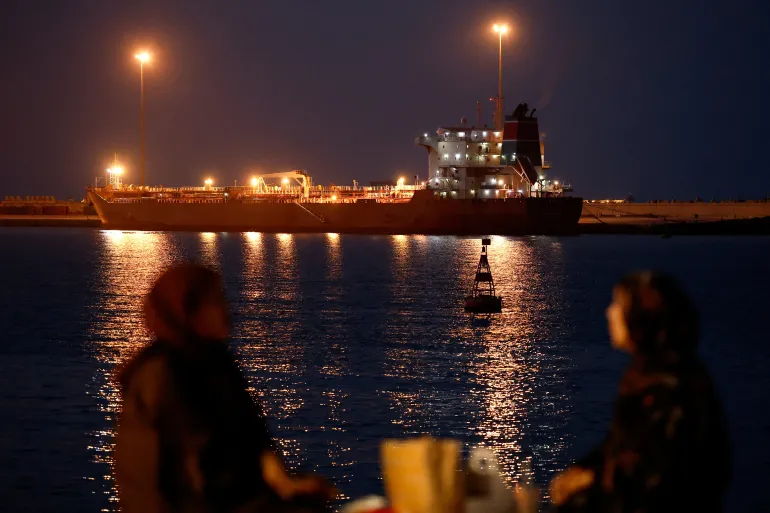
United States President Donald Trump has called for a naval coalition to deploy warships to secure the Strait of Hormuz, through which one-fifth of world oil shipments transit, as oil markets reel from supply disruptions caused by the US-Israeli war with Iran.
What is essentially the closure of the Strait of Hormuz by Iran in response to the attacks by the US and Israel has sent oil prices soaring to more than $100 per barrel.
Iran’s new supreme leader, Mojtaba Khamenei, has promised to keep the maritime artery closed while another top official in Tehran warned that oil prices could shoot up beyond $200 per barrel.
Trump said he hoped a naval coalition could secure the vital waterway, which connects the Gulf to the Gulf of Oman and the Arabian Sea. Iran has struck more than a dozen ships trying to sail through the narrow waterway since the hostilities started two weeks ago.
But will Trump’s solution work?

The US president has been facing domestic pressure over starting the war alongside Israel with no endgame or off-ramps in sight.
“On the strait of Hormuz, they had NO PLAN,” US Democratic Senator Chris Murphy wrote in a post on X. “I can’t go into more detail about how Iran gums up the Strait, but suffice it [to] say, right now, they don’t know how to get it safely back open.”
After threatening to bomb Iran more, Trump called on China, France, Japan, South Korea and the United Kingdom to send warships to secure the strait.
Trump claimed “100% of Iran’s military capability” had already been destroyed but added that Tehran could still “send a drone or two, drop a mine, or deliver a close-range missile somewhere along, or in, this waterway”.
“Hopefully China, France, Japan, South Korea, the UK, and others, that are affected by this artificial constraint will send ships to the area so that the Hormuz Strait will no longer be a threat by a nation that has been totally decapitated,” Trump wrote in a post on his Truth Social platform.
“In the meantime, the United States will be bombing the hell out of the shoreline, and continually shooting Iranian Boats and Ships out of the water. One way or the other, we will soon get the Hormuz Strait OPEN, SAFE, and FREE!”
Not long after, Trump returned to the keyboard, extending the invitation to all “the Countries of the World that receive Oil through the Hormuz Strait” to send warships, adding that the US would provide “a lot” of support to those who participated.

Alireza Tangsiri, commander of the Islamic Revolutionary Guard Corps Navy, said in a statement that claims by the US about destroying Iran’s navy or providing safe escort for oil tankers were false.
“The Strait of Hormuz has not been militarily blocked and is merely under control,” he said in a statement.
Iranian Foreign Minister Abbas Araghchi later doubled down on this, saying the strait remained open to international shipping except for vessels belonging to the US and its allies.
“The Strait of Hormuz is open. It is only closed to the tankers and ships belonging to our enemies, to those who are attacking us and their allies. Others are free to pass,” Araghchi said.
Khamenei – son of the late Supreme Leader Ali Khamenei, who was killed on the first day of the US-Israeli strikes – suggested in his first statement since taking power that the Strait of Hormuz would remain closed to provide leverage for Iran during the conflict.

The strait, which is just 21 nautical miles (39km) wide at its narrowest point, is the only maritime passage into the Arabian Gulf (known as the Persian Gulf in Iran). Shipping lanes in the waterway are even narrower and more vulnerable to attacks.
It separates Iran on one side from Oman and the United Arab Emirates on the other.
In brief, there is no way in or out by sea when the Strait of Hormuz is closed.
Alexandru Hudisteanu, a maritime security expert who served 13 years in the Romanian navy, told Al Jazeera that in the type of coalition that Trump is hinting at, “interoperability is the biggest hurdle.”
“That’s the ability of cruises to work together or with different units and different doctrine when basic communication would be an issue,” he said.
Then, there is the geography of the Strait of Hormuz: “a very unforgiving environment to sail with this type of wartime threats”, Hudisteanu said. “Especially difficult under missile threats and these asymmetric potential mines or unmanned systems that could damage or destroy ships.”
Providing escorts to ships would be a costly option, and it would pose risks to participating foreign warships from possible Iranian attacks, which would likely further drag more countries into the ongoing war.
From Iran’s point of view, “the fact that the shoreline is so close and the actual maritime passage is highly congested and confined is an advantage by default,” Hudisteanu added. Geographically, Iran keeps it as a gauntlet, with no way out for the ships unless Tehran allows it.
Another major challenge for any naval coalition trying to secure the passage would be the timeline of any operation. ”The security of the strait could be achieved. It’s just a matter of how much time you need and how many assets you need,” the analyst said. Rushing through it “could have negative implications for the security of the mission and the region”.

No country has so far publicly agreed to Trump’s call to send warships to secure the Strait of Hormuz.
London said it is “intensively looking” at what it can do to help reopen the maritime passage. British Energy Secretary Ed Miliband said: “We are intensively looking with our allies at what can be done because it’s so important that we get the strait reopened.”
Chinese Ministry of Foreign Affairs officials said Beijing is calling for hostilities to stop and “all parties have the responsibility to ensure stable and unimpeded energy supply.”
Japan said the threshold is “extremely high” to send its warships on such a mission. “Legally speaking, we do not rule out the possibility, but given the current situation in which this conflict is ongoing, I believe this is something that must be considered with great caution,” said Takayuki Kobayashi, policy chief of Japan’s ruling Liberal Democratic Party.
France also confirmed that it will not send ships. The Ministry for Europe and Foreign Affairs said in a statement on Saturday: “Posture has not changed: defensive it is,” in reference to President Emanuel Macron’s assertion that France will not join the war against Iran.
South Korea, which imports 70 percent of its oil from the Gulf, said it was “closely monitoring” Trump’s statements and “comprehensively considering and exploring various measures … to ensure the safety of energy transport routes”.

Some countries have been negotiating with Iran to secure passage for their petroleum shipments.
Two Indian-flagged tankers carrying liquefied petroleum gas (LPG) have sailed through the Strait of Hormuz. New Delhi depends on this passage for 80 percent of its LPG imports.
The war on Iran has caused a critical shortage of cooking gas for India’s 333 million households. New Delhi has long had ties with Iran, but the government of Prime Minister Narendra Modi has not condemned the killing of Ali Khamenei. It has condemned Iran’s retaliatory attacks on Gulf countries, where millions of Indian citizens work and send $51bn in remittances home every year.
Iran’s ambassador to India, Mohammad Fathali, said Tehran had allowed some Indian vessels to pass through the Strait of Hormuz in a rare exception to the blockade but did not confirm the number of vessels.
A Turkish-owned vessel was similarly granted permission last week after Ankara negotiated passage directly with Tehran. Fourteen more Turkish vessels are awaiting clearance.
France and Italy also reportedly opened talks with Iranian officials to negotiate a deal to allow their vessels through the strait, but there has been no official confirmation yet.
“Iran is affecting maritime supply,” Hudisteanu said. “It’s affecting the maritime security of the region and the entire ecosystem and bringing the entire world to the table as the global price for oil and gas increases.”
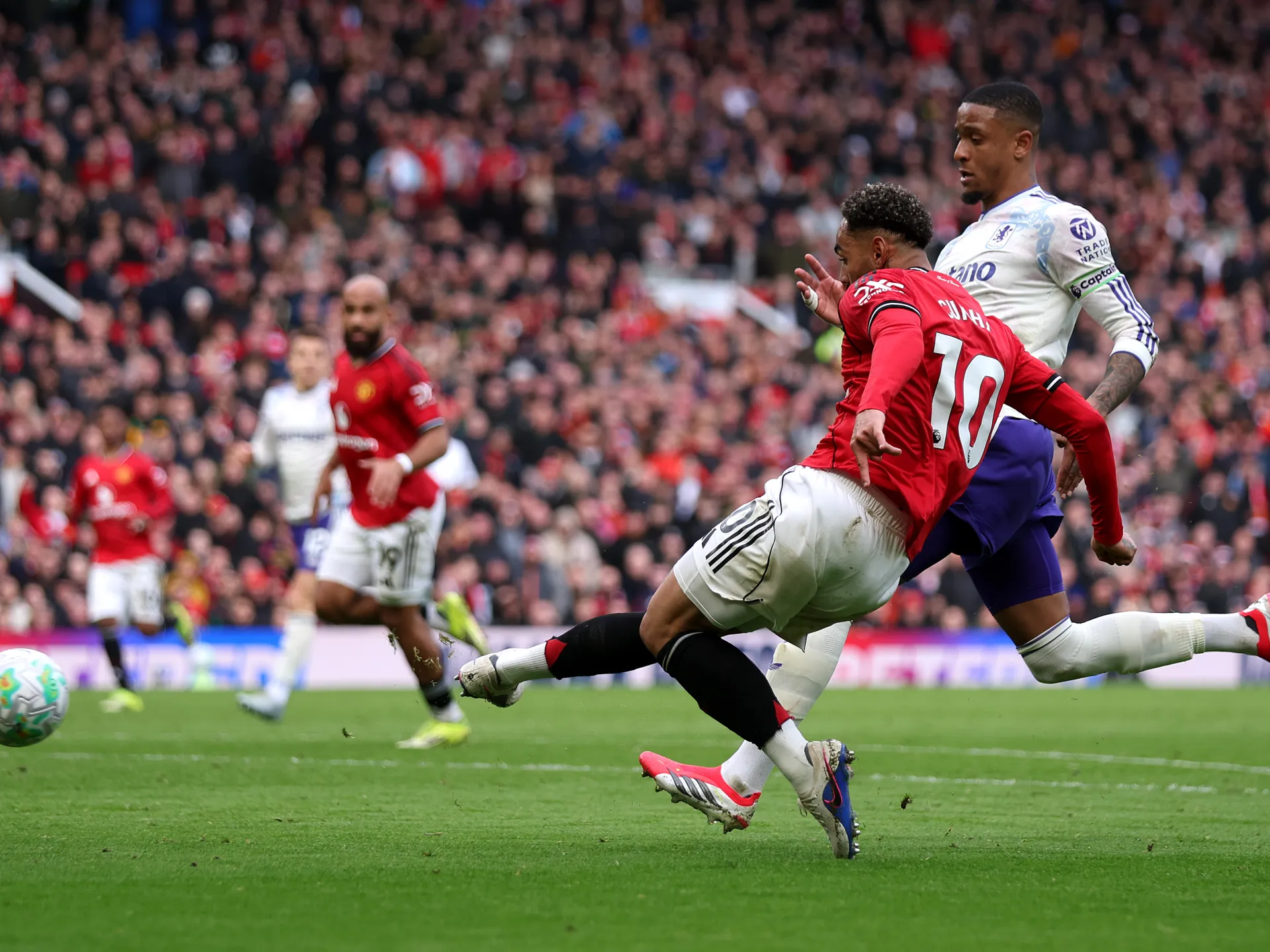
Bruno Fernandes reaches 100 assists in all competitions after setting up two goals in crucial 3-1 win over Villa.
Manchester United bolstered their bid to qualify for the Champions League with a vital 3-1 win against top-four rivals Aston Villa.
Michael Carrick’s side took the lead through Casemiro’s second-half opener at Old Trafford on Sunday before Ross Barkley hauled Villa level.
list of 4 itemsend of list
United finished strongly with Matheus Cunha and Benjamin Sesko scoring in the closing stages to seal Carrick’s seventh win in nine games since taking over as interim boss.
Sitting third in the Premier League, United are three points clear of fourth-placed Villa in the race to reach the Champions League via a top-four finish.
United co-owner Jim Ratcliffe this week praised Carrick’s “excellent” work but stopped short of committing to the former Old Trafford star on a long-term basis.
However, Carrick is making a strong case to earn the job on a permanent basis after stabilising United after Ruben Amorim’s sacking.
United’s latest victory came after an 11-day break since the first defeat of his reign at Newcastle, and Carrick celebrated with a jig of delight on the touchline after Sesko wrapped up the points.
Spluttering Villa have lost their last three league games and have just one win in seven top-flight matches, leaving them three points above fifth-placed Chelsea with eight games left in the battle for European places.
After a lethargic first half, United finally prised open the Villa defence in the 53rd minute.
Bryan Mbeumo’s stinging strike was palmed away by Emiliano Martinez, earning a corner that brought the opener.
Bruno Fernandes curled a corner to the near post, and Casemiro made a perfectly timed run to glance a header past Martinez.
With Casemiro likely to leave when his contract expires at the end of the season, United fans serenaded the Brazilian midfielder with chants of “one more year”.
United lost focus and surrendered the lead in the 64th minute.
In his first Premier League start for 14 months, Barkley slammed a superb strike past Senne Lammens from 11 metres (12 yards) after United failed to clear the danger.
But Cunha netted in the 71st minute to ensure Carrick’s men did not pay for their stumble.
Bursting onto Fernandes’s sublime pass into the Villa area, the Brazilian forward slotted a fine finish into the far corner.
It was Fernandes’s 16th Premier League assist this term, moving the United captain past David Beckham’s previous club record of 15 in 1999-2000.
He has 100 assists for United in all competitions since signing from Sporting Lisbon in 2020.
Sesko came off the bench to prove a point to Carrick after being dropped, and the Slovenian striker fired home with a deflected effort in the 81st minute.
Fernandes said he was delighted to provide two assists for his teammates to move past Beckham’s record.
“I’m more proud and pleased because I did it serving my teammates. Giving joy to others is also very good,” he said.
“When you play in the position I play, I’m very happy I can help them to score and be happy in that moment. It’s a huge achievement for me, but the main achievement would be in the top spot at the end of the season.”
Elsewhere, Nottingham Forest climbed out of the relegation zone after a 0-0 draw against Fulham at the City Ground.
Still waiting for their first win under Vitor Pereira, fourth-bottom Forest, who have had four managers this term, are above third-bottom West Ham on goal difference.
Ten-man Leeds held on for a 0-0 draw at Crystal Palace despite Dominic Calvert-Lewin’s missed penalty and a red card for Gabriel Gudmundsson.
Later on Sunday, troubled Tottenham head to Liverpool with only goal difference keeping them outside the relegation zone.

Hundreds of tankers sit idle on both sides of the Strait of Hormuz as Iran has effectively closed the waterway, pushing oil prices above $100 – the highest since 2022, after the start of the Russia-Ukraine war.
Oil tanker traffic in the strait, through which one-fifth of global oil passes, has plunged after Israel and the United States launched attacks on Tehran on February 28. Asian countries, including India, China and Japan, as well as some European countries, source large portions of their energy needs from the Gulf. A disruption in supply will rattle the global economy.
With an aim to cushion from the shock, the International Energy Agency (IEA) has decided to release 400 million barrels of oil from emergency reserves, the largest coordinated drawdown in the agency’s history. But it has failed to push the prices down.
The agency had released about 182 million barrels after Russia’s invasion of Ukraine to stablise the oil prices.
According to the agency, oil shipments through the strategic waterway have fallen to less than 10 percent of pre-war levels, threatening one of the most critical arteries in the global energy system.
IEA members collectively hold about 1.25 billion barrels in government-controlled emergency reserves, alongside roughly 600 million barrels in industry stocks tied to government obligations.
The figure may appear vast, but it shrinks quickly against the scale of global energy demand.
“This feels like a small bandage on a large wound,” energy strategist Naif Aldandeni said, describing the world’s largest coordinated emergency oil release as governments scramble to steady markets shaken by war.
The US Energy Information Administration (EIA) estimates world consumption of petroleum and other liquids will average 105.17 million barrels per day in 2026. At that rate, 400 million barrels would theoretically cover just four days of global consumption.
Even when compared with normal traffic through the Strait of Hormuz – around 20 million barrels per day – the released oil equals only about 20 days of typical flows.
Aldandeni told Al Jazeera that emergency reserves can calm panic in markets but cannot replace the lost function of a disrupted shipping corridor.
“The release may soften the shock and calm nerves temporarily,” he said, “but it will remain limited as long as the fundamental problem — the freedom of supply and tanker movement through Hormuz – remains unresolved.”
Oil prices reflect those anxieties. Brent crude ended trading on Friday at $103.14 per barrel, after surging to nearly $120 earlier as fears of disrupted production and shipping intensified.
Oil expert Nabil al-Marsoumi said the price surge cannot be explained by supply fundamentals alone.
“The closure of the Strait of Hormuz added roughly $40 per barrel as a geopolitical risk premium above what market fundamentals would normally dictate,” he told Al Jazeera.
From that perspective, releasing strategic reserves serves primarily as a temporary tool to dampen that premium rather than fundamentally rebalance the market.
Prices above $100 per barrel are uncomfortable for major consuming economies already struggling to curb inflation and protect economic growth.
Recent EIA projections suggest global demand has not yet declined significantly because of the war, remaining close to 105 million barrels per day. The market pressure, therefore, stems less from falling consumption and more from fears of supply shortages and delays in deliveries to refineries and consumers.
The latest escalation could deepen those fears.
United States President Donald Trump said on Friday that the US Central Command (CENTCOM) had “executed one of the most powerful bombing raids in the History of the Middle East and totally obliterated every MILITARY target in Iran’s crown jewel, Kharg Island”.
He added that “for reasons of decency” he had “chosen NOT to wipe out the Oil Infrastructure on the Island”, but warned Washington could reconsider that restraint if Iran continues to disrupt shipping through the Strait of Hormuz.
CENTCOM confirmed the operation, stating US forces had struck “more than 90 Iranian military targets on Kharg Island, while preserving the oil infrastructure”.
Iranian officials have meanwhile warned they would target energy facilities linked to the US across the region if Iranian oil infrastructure comes under direct attack.
Kharg Island is not simply a military location. It serves as the primary export terminal for Iranian crude, making it a critical node in the country’s oil supply network.
If attacks move from obstructing shipping to targeting export infrastructure itself, the crisis could shift from a chokepoint disruption scenario to one involving direct losses of production and export capacity.
In such circumstances, the oil released from emergency reserves would act only as a temporary bridge rather than a lasting solution to lost supply.
Major oil companies such as QatarEnergy, the world’s largest producer of liquefied natural gas (LNG), Kuwait Petroleum Corporation and Bahrain state oil company Bapco have shut production and declared force majeure, while Saudi Aramco, the world’s largest oil producer, and UAE state oil company ADNOC have shut down their refineries.
Even under a less severe scenario – where maritime disruption persists but infrastructure remains intact — the ability of strategic reserves to stabilise markets remains constrained by logistics.
The US Department of Energy said the US Strategic Petroleum Reserve held 415.4 million barrels as of 18 February 2026. Its maximum drawdown capacity is 4.4 million barrels per day, and oil requires about 13 days to reach US markets after a presidential release order.
That means even the world’s largest emergency stockpile cannot flood the market with crude immediately. The release must move through pipelines, shipping networks and refining capacity before reaching consumers.
Aldandeni said the current intervention would likely produce only a temporary stabilising effect, while al-Marsoumi warned that prolonged disruption in the Strait of Hormuz – or the spread of threats to other chokepoints such as the Bab al-Mandeb Strait in the Red Sea could quickly send prices further higher.

ARE you a terrible, inconsiderate son who doesn’t know what to get his mum for Mother’s Day? Try these safe gifts.
A phone call
Doesn’t have to be long. A quick two-minute chat will make your mum happy, even though she carried you for nine months and spent 15 agonising hours pushing you out. Try to make the conversation about her for once though, and how much she means to you. Your usual calls where you beg her for money can wait.
Breakfast in bed
Don’t actually know anything about your mum? Don’t panic. While she would’ve definitely enjoyed a thoughtful present related to one of her interests you’re oblivious too, some burnt toast on a plate presented to her in bed is an adequate alternative. Push the boat out and include a cup of tea that isn’t made to her liking.
Some flowers
If you were an attentive son, you would’ve already pre-ordered a bunch of your mum’s favourite flowers to be delivered to her on the big day. Seeing as you’re not even sure if she likes flowers, you’ll have to make do with a handful of daffodils yanked out of her garden. They’re definitely a step up from a bouquet of forecourt flowers, due to not being completely shrivelled yet.
A nice meal
You’ve left it too late to book a table at Wetherspoons, so you’ll have to cross your fingers that there’s a space at a fancy restaurant. Failing that, anywhere your mum can sit in peace for five minutes and sip on an elderflower cordial will do. You have to accompany her to whatever you settle on as well, otherwise she’ll look tragic.
For you to move out
Your mum may say that she wants chocolates or a trip to the spa, but this is really what she’s holding out for. She already knows how she wants to redecorate the childhood bedroom you still live in, so get her the ultimate treat this Mother’s Day by moving all of your crap into a storage unit. If you need help, your dad will be all too happy to lend a hand.
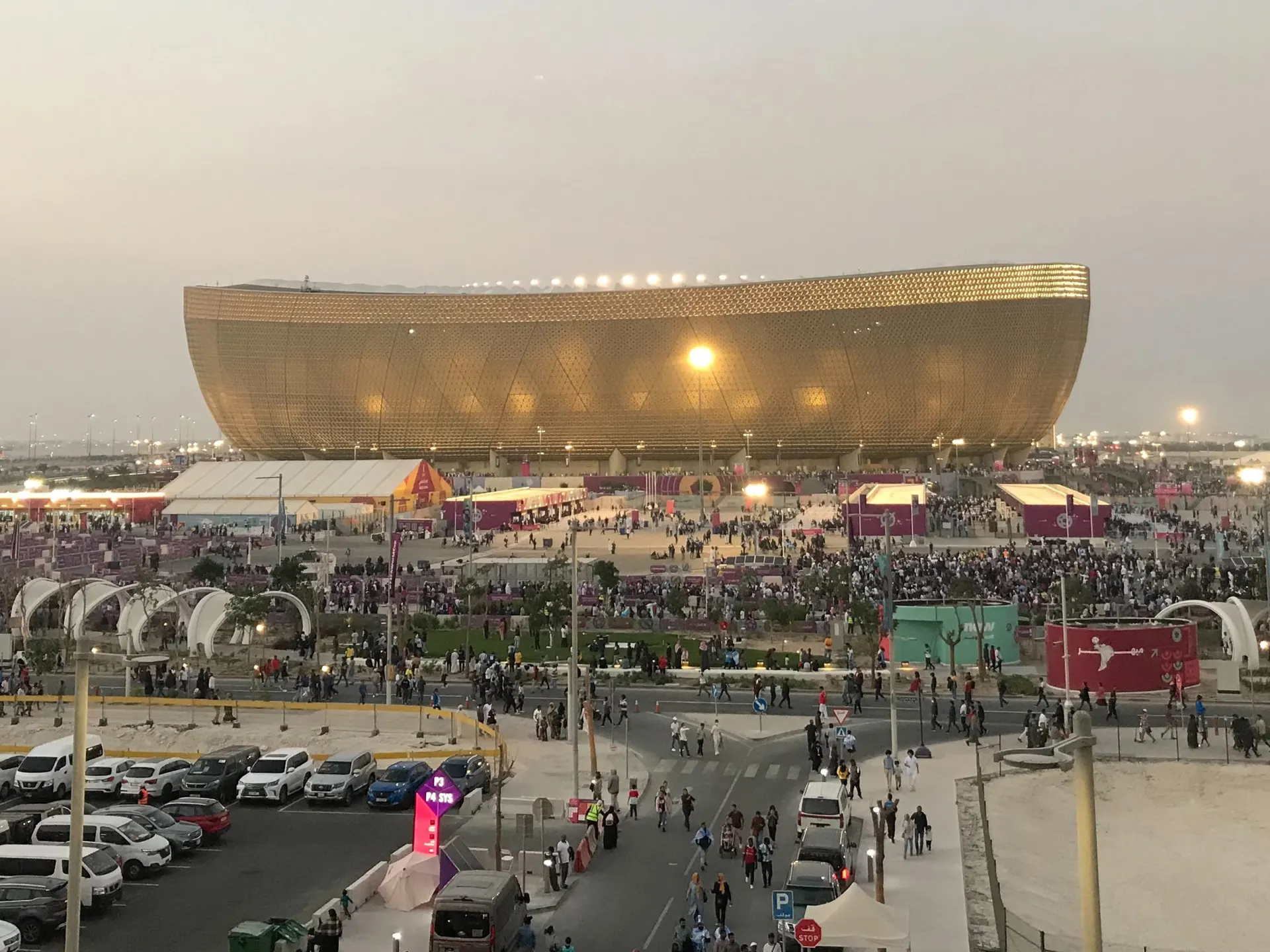
The fixture, part of the Qatar Football Festival, has been cancelled amid the ongoing US-Israeli war on Iran.
Published On 15 Mar 202615 Mar 2026
Share
The ‘Finalissima’ match between Spain and Argentina that was scheduled to be held in Qatar later this month has been cancelled due to the conflict in the Middle East, UEFA said in a statement.
“It is a source of great disappointment to UEFA and the organisers that circumstances and timing have denied the teams of the chance to compete for this prestigious prize in Qatar,” UEFA said in a statement on Sunday.
The US-Israeli strikes on Iran have affected countries throughout the Gulf, disrupting travel in some of the world’s busiest transit hubs and forcing several sporting events to be cancelled due to safety concerns.
The contest between European champions Spain and Copa America winners Argentina was scheduled for March 27 at Doha’s Lusail Stadium, where fans would have had the opportunity to watch Lionel Messi go head-to-head with Lamine Yamal.
UEFA said they held discussions with the organising authorities in Qatar and concluded that the match could not take place due to the “current political situation” in the region.
The Spain vs Argentina game was part of the Qatar Football Festival, as promoted by local organisers.
The five-day festival also included Egypt vs Saudi Arabia and Qatar vs Serbia on March 26; Egypt vs Spain and Saudi Arabia vs Serbia on March 30 and Qatar vs Argentina on March 31.
Serbia will now play Spain away instead.
“Serbia will face the current European champions, Spain, on away turf on March 27, and four days later they will host the Saudi Arabian national team,” the Football Association of Serbia said in a statement.
UEFA said they explored other feasible alternatives to play the Finalissima but they proved to be ‘unacceptable’ to the Argentinian Football Association (AFA).
UEFA first offered to stage the match at the Santiago Bernabeu with a 50:50 split of supporters in the stadium.
A second option was to stage the Finalissima over two legs – at the Bernabeu on March 27 and the second leg in Buenos Aires during an international window before the next Euros and Copa America.
However, the AFA rejected both options. UEFA said Argentina made a counter offer to play the game after the World Cup but Spain had no available dates.
“Ultimately, UEFA sought a commitment from Argentina that, if a neutral venue in Europe could be found, the game could go ahead on 27 March… or on the alternative date of 30 March. This proposal was also rejected,” UEFA added.
The 2022 edition of the Finalissima was held at Wembley Stadium in London where Argentina beat Italy 3-0.
Japanese football legend says his opinion prompts a US company to cancel an advertising campaign before the FIFA World Cup.

Published On 15 Mar 202615 Mar 2026
Share
Former Japanese footballer Keisuke Honda says he has lost an advertising deal in the United States after voicing support for the Iranian national team’s participation in the upcoming FIFA World Cup.
Without naming the sponsor, Honda revealed on Saturday that an advertisement from a US-based company had been “put on hold” after he posted on X that he wants Iran to compete in the tournament cohosted by the US, Mexico and Canada.
list of 3 itemsend of list
“I know it’s a very sensitive thing, but I personally want them to participate in the World Cup,” the 39-year-old wrote in a tweet on Thursday, a day after Iran’s sports minister said the country cannot take part in the World Cup after the US and Israel launched a war on it and killed its supreme leader.
Honda, who represented Japan from 2008 to 2018 and scored 38 international goals for his country, posted a follow-up tweet in which he indicated that the advertisement, which had been expected to be finalised in time for the World Cup, had been shelved due to his earlier post.
“Apparently, this statement caused a US company to cancel an advertisement that was about to be finalised to coincide with the World Cup,” he wrote.
“We don’t want anything to do with companies that ignore the essence of things and make decisions based on rotten thinking.”
Iran’s place at the 48-team tournament is in doubt even after they qualified because of the US-Israeli attacks that began on February 28, following which Tehran responded by launching waves of missiles and drones at Israel, several military bases in the Middle East where US forces operate and infrastructure in the region.
The 23rd edition of the FIFA World Cup will be held in the three host nations from June 11 to July 19, and all of Iran’s group games have been scheduled at venues on the US West Coast.
The former Samurai Blue represented his country at the 2010, 2014 and 2018 World Cups and is among the top 10 most capped players and top five goal scorers for the Asian giants.
Honda was named the most valuable player in Japan’s title-winning run at the Asian Cup in 2011. After representing 11 clubs across five continents, the attacking midfielder hung up his boots in 2024 and switched to coaching.
The golden-haired player enjoys a hero-like status in his home country and is one of Japan’s most recognised international footballers.
He expressed his opinion on Team Melli’s participation amid heightened tensions between the host nation US and Iran.

US President Donald Trump said on Thursday that it would not be appropriate for Iran to participate in the World Cup.
“The Iran National Soccer Team is welcome to The World Cup, but I really don’t believe it is appropriate that they be there, for their own life and safety,” Trump wrote in a social media post without elaborating.
The Instagram account for the Iranian national team quickly responded to Trump’s remarks, questioning whether the US president should be commenting on team participation.
“The World Cup is a historic and international event, and its governing body is FIFA – not any individual country,” it wrote.
The account also criticised Trump for failing to provide adequate security for Iran’s national football players.
“Certainly, no one can exclude Iran’s national team from the World Cup,” the message continued. “The only country that could be excluded is one that merely carries the title of ‘host’ yet lacks the ability to provide security for the teams participating in this global event.”
Trump later posted another message on his social media platform to emphasise that the event would be safe for players and spectators from around the world.

Fine margins are often the difference between a title-winning side and one still building towards it.
Thomas Ramos’ last-gasp penalty to win the championship for France came after a handful of moments England will replay in their minds for a while.
Henry Pollock did brilliantly to steal the ball late on but, instead of taking contact and securing it, he tried to move it and possession was lost.
Ollie Chessum might also look back and think he could have edged a little closer to the posts to make the kick easier for Fin Smith, who himself will be frustrated at leaving points out there.
Those are the moments you write down and burn into your memory, because when they come around again – and they always do in Test rugby – you want the instinct to be automatic.
The best teams make winning those moments a habit.
Just look at South Africa at the 2023 World Cup – three knockout wins by a single point.
That is not luck. That is a team that understand exactly how to manage pressure.
England had been through a sticky spell and this performance gives them something real to build on heading into the summer.
When this squad meet up again for the tour to South Africa, there should be a real sense of belief.
They have shown they can challenge the very best teams in the world. Now it is about learning how to close out those pressure moments when they come.
Another area that will need attention is opposition analysis.
France exposed England a couple of times in the first half with tries straight from set-piece starter plays.
At this level, that is inexcusable. Louis Bielle-Biarrey chasing on to kicks through is something France have done all championship.
Those details matter. Fix them, combine that with the intensity England showed in Paris, and suddenly you have a team not just competing with the best, but capable of beating the best.

The 98th Academy Awards, known as the Oscars, will celebrate some of the top films released in 2025 on Sunday.
The ceremony will take place in Los Angeles with actors, directors and filmmakers from around the world competing for Hollywood’s most prestigious prizes.
list of 3 itemsend of list
But this year’s ceremony comes at a time of global tension, with the ongoing war in Iran serving as a sombre backdrop to Hollywood’s annual celebration.
“My job is always to try to walk a very thin line between entertaining people and also acknowledging some of the realities,” host Conan O’Brien said during a Wednesday news conference with the Oscars creative team.
Here is what we know about the upcoming ceremony:
The 98th Academy Awards will take place at the Dolby Theatre at Ovation Hollywood in Los Angeles on March 15.
The ceremony will start at 4pm West Coast time in the United States (23:00 GMT), with official red carpet coverage beginning at 3:30pm (22:30 GMT).

The 2026 Oscars will be broadcast in the US on the TV channel ABC. Viewers with a cable subscription can also watch online by signing in through the ABC app or ABC.com.
The ceremony will also be streamed live on the video platform Hulu.
Those without traditional cable can access the broadcast through live TV streaming services that carry ABC, including Hulu + Live TV, YouTube TV, AT&T TV and FuboTV.
But the Oscars’ ties with ABC may soon be at an end. Last year, the Academy announced that, beginning in 2029, the Oscars will sever its decades-long relationship with ABC and stream exclusively on YouTube.
The shift to an online-only platform is a big shake-up for the Academy Awards, ending a tradition more than half a century old.
ABC began broadcasting the Oscars in 1976, and before that, it aired on a rival channel, NBC, starting in 1953.
O’Brien is hosting the 98th Academy Awards, marking his second consecutive year emceeing the ceremony.
“This year, I know where the doughnuts are. I know my way around a little bit, and so, I think that’s going to be fun,” Conan said.
In remarks this week, the comedian explained he believes the key to success on the Oscar stage is having a good time and staying in the moment.
He added that he and his writing team are still refining the material ahead of the show, to keep it as current as possible.
“What’s happening in the world will be reflected in the show,” he said.
The Oscars red carpet is broadcast several hours before the ceremony, as filmmakers and other celebrities arrive for the ceremony.
The red carpet has long served as a stage for Hollywood’s best fashions, and actors often pause for interviews with social media and television hosts to discuss the awards and what they’re wearing.
Several shows will broadcast from the red carpet:
British comedian Amelia Dimoldenberg also returns for the third year as the official Oscars social media correspondent.
As is tradition, last year’s acting winners will return to present awards at the ceremony. They include Adrien Brody (The Brutalist), Kieran Culkin (A Real Pain), Mikey Madison (Anora) and Zoe Saldana (Emilia Perez).
They will be joined by a wide range of actors and filmmakers presenting throughout the night, including Javier Bardem, Chris Evans, Chase Infiniti, Demi Moore, Kumail Nanjiani, Maya Rudolph, Will Arnett, Priyanka Chopra Jonas, Robert Downey Jr, Anne Hathaway, Paul Mescal, Gwyneth Paltrow, Rose Byrne, Nicole Kidman, Jimmy Kimmel, Delroy Lindo, Ewan McGregor, Wagner Moura, Pedro Pascal, Bill Pullman, Lewis Pullman, Channing Tatum and Sigourney Weaver.

This year’s show will feature two musical performances tied to the Best Original Song nominees.
Rei Ami, EJAE and Audrey Nuna are set to perform the hit single Golden from the animated film KPop Demon Hunters, and actor Miles Caton will reprise the song he sang in the movie Sinners, called I Lied to You, alongside songwriter Raphael Saadiq.
Like the film itself, the Sinners musical performance at the Oscars will serve as a tribute to Black artistry across generations and genres.
As such, it will include an array of artists, from ballerina Misty Copeland to rocker Brittany Howard to blues and jazz musicians like Eric Gales, Bobby Rush and Alice Smith, among others.
Sinners is the most-nominated film in Academy Award history with 16 nominations.
That tally broke the previous record of 14 nominations, which was held by three films: All About Eve (1950), Titanic (1997) and La La Land (2016).
Ryan Coogler’s feature mixes supernatural horror, romance and blues culture. Set in 1932 Clarksdale, Mississippi, the story centres on a community opening a juke joint that soon finds itself under siege by vampires.
“I wrote this script for my uncle who passed away 11 years ago,” Ryan Coogler said in an interview with The Associated Press. “I got to imagine that he’s listening to some blues music right now to celebrate.”
One Battle After Another follows with 13 nods at this year’s Oscars, while Frankenstein, Marty Supreme and Sentimental Value each secured nine nominations.
The Academy also continued its tilt towards international films with this year’s lineup of nominees. Every major acting category, for instance, included at least one international nominee.

Arab cinema had a strong presence during the awards season. Several films from the region were shortlisted for Best International Feature Film, including:
One of them, The Voice of Hind Rajab, ultimately secured an Oscar nomination, marking a significant moment for Arab cinema.

The Voice of Hind Rajab is a 2025 docudrama directed by Kaouther Ben Hania.
It dramatises the final hours in the life of five-year-old Palestinian girl Hind Rajab, who was killed by Israeli forces in Gaza in 2024. But the film weaves in real-life recordings of Rajab’s desperate phone calls to emergency personnel from the Red Crescent group.
“The arrival of Hind Rajab’s voice to these platforms — and its ability to break through the indifference that exists there — is in itself something extremely valuable,” Gaza-based filmmaker Mohammed al-Sawwaf told Al Jazeera’s journalist Maram Humaid.
To al-Sawwaf, the film’s Oscar nomination means that Rajab’s death is no longer a passing news item or a single tally in a growing death toll. It is a cultural event, a memorial that forces viewers to confront the horrors facing Gaza’s young children.
“A story of a human being from Gaza has been presented as the story of a person with a life and meaning, rather than the image of a Palestinian appearing as a number on news screens,” he said.
“Palestinians have tried for many years to tell their stories and to be visible, but they were often met with rejection, doubt, or barriers placed in front of them.”
Al-Sawwaf believes Hind Rajab’s story can help illuminate the humanitarian crisis facing thousands of other Palestinians suffering in Gaza.
“A story like Hind Rajab’s represents a symbol of thousands of other stories,” he said. “There are thousands of women and men who had full lives, details, and dreams that are no less human than hers.”
It Was Just an Accident, directed by Iranian filmmaker Jafar Panahi, is also among the nominees on Sunday night, competing in two categories: Best International Film and Best Original Screenplay.
Though It Was Just an Accident was a co-production from several countries, France ultimately submitted the film as its entry in the Best International Feature competition.
Panahi’s work is often critical of the Iranian government, and in the past, he faced prison time and a ban on his filmmaking as a result. It was not considered as Iran’s entry.
France instead has championed the film as evidence that the country is a safe haven for “singular and courageous cinema”.
But Panahi said his thoughts remain focused on those back home in Iran.
“I am constantly thinking about them,” he told Bloomberg from New York, four days after the US and Israel launched their offensive against Iran.
Panahi shot the film clandestinely in Iran without government approval.
Ten films are in competition in the Best Picture category:


This year’s nominations included several unexpected picks and notable omissions.
Among the biggest surprises was Delroy Lindo’s first-ever Oscar nomination for his supporting role in Sinners, a recognition many felt was long overdue.
“The best part of this process has been that people are so genuinely happy for me,” Lindo, 73, told The New York Times.
“It’s not an ego thing. It’s nothing to do with that. It has everything to do with affirmation.”
Another unexpected nod came in the Best Picture category for the racing drama F1, an action-packed summer blockbuster.
In an interview with the racing tournament Formula 1, director Joseph Kosinski explained that the team created an entirely new filming system to capture the kind of visuals he had imagined.
“We had to develop a new camera system, taking everything we learned on Top Gun: Maverick and pushing it much further,” Kosinski said.
Actress Kate Hudson was also a surprise in the highly competitive Best Actress category, earning her first Oscar nod in 25 years for the musical drama Song Sung Blue.
She said the film offered a rare opportunity to portray a mature female character with depth and ambition. Her role is based on the real-life story of Claire Sardina, who performed as part of a Neil Diamond cover band.
“I got to play the comedy, some sense of humour. I got to play the love story, the desire. I got to play being a mother, and then I got to go into a place of where my life force is taken out of me,” Hudson said in an interview with NPR’s Fresh Air with Terry Gross.
Among the most notable snubs was the sequel Wicked: For Good, which received no nominations amid mixed reviews. The first Wicked film earned a whopping 10 nominations last year, winning two Oscars, for Best Costumes and Best Production Design.
Actor Paul Mescal also missed out on a nomination for his performance as William Shakespeare in Hamnet, while director Guillermo del Toro was overlooked in the Best Director category for Frankenstein.
Other notable omissions included Chase Infiniti (One Battle After Another) and Jesse Plemons (Bugonia).
For months, One Battle After Another was considered the clear favourite for Best Picture and Best Director. But in the final stretch of the awards season, the competition has tightened, with Sinners gaining momentum.
Jessie Buckley is widely expected to win Best Actress for Hamnet. Michael B Jordan, meanwhile, is predicted to win Best Actor for Sinners, overtaking stiff competition from Timothee Chalamet, star of the film Marty Supreme.
In the supporting actor categories, Teyana Taylor (One Battle After Another) is considered a strong contender for Best Supporting Actress, and Sean Penn (One Battle After Another) is favoured for Best Supporting Actor.

Thousands in Paris protest military operations in the Middle East. One of more than 85 coordinated protests across France. The rally opposed US and Israeli military operations in Iran, Lebanon, and Palestine.
Published On 15 Mar 202615 Mar 2026
Share
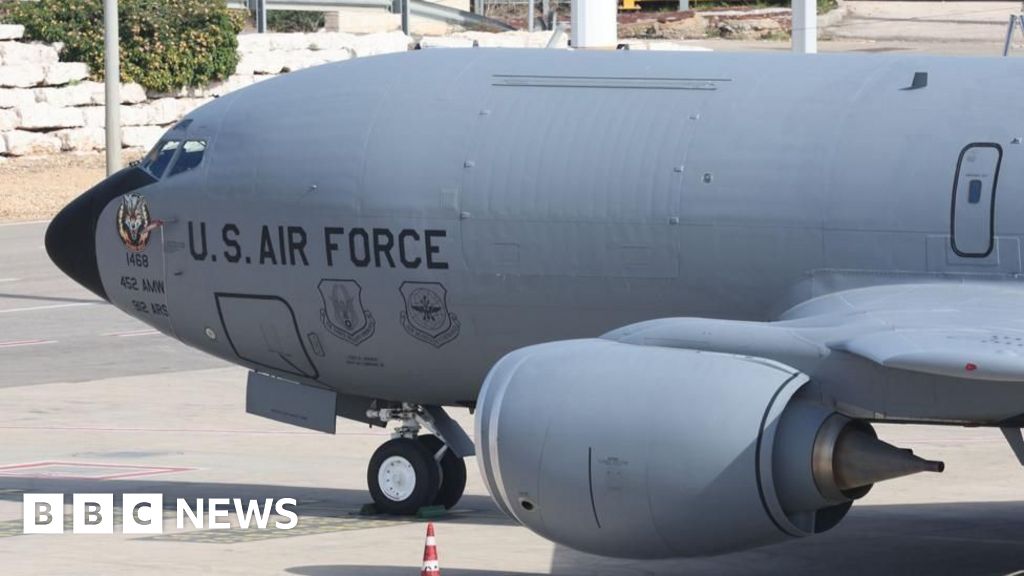
The Pentagon said the airmen on board the KC-135 plane were: John Klinner, 33, from Alabama; Ariana Savino, 31, from Washington; Ashley Pruitt, 34, from Kentucky; Seth Koval, 38, from Indiana; Curtis Angst, 30, from Ohio; and Tyler Simmons, 28, also from Ohio.

Demonstrators gathered in Toronto for Al-Quds Day, denouncing US-Israeli attacks on Iran and Lebanon.
Medvedev, who arrived in the US after leaving the UAE via Oman amid Iranian attacks, ends world number one’s 16-match run.
Published On 15 Mar 202615 Mar 2026
Share
Daniil Medvedev has handed top-seeded Carlos Alcaraz his first loss of the year and advanced to the final at the Indian Wells Open after arriving at the tournament from the midst of the ongoing conflict in the Middle East.
The 11th-seeded Medvedev advanced with a 6-3, 7-6 (3) victory on Saturday and will face second-seeded Jannik Sinner, who beat Alexander Zverev 6-2, 6-4 in the California-based tournament.
list of 3 itemsend of list
Alcaraz had won 16 straight matches this year, including titles at the Australian Open and Qatar Open, but Medvedev ended the possibility of an Alcaraz versus Sinner final.
Medvedev had dropped his last four meetings against Alcaraz, including a loss in the Indian Wells final in 2024. This was Medvedev’s first victory over him since the US Open semifinals in 2023.
The Russian player was stuck in the United Arab Emirates for three days following his title win at the Dubai Tennis Championship on February 28, the day the United States and Israel attacked Iran to launch a region-wide conflict.
Medvedev’s participation in the premier US West Coast-based tournament looked doubtful after he was unable to leave Dubai for two days due to airspace closure.
The 30-year-old was able to exit on the third day by crossing over into Oman by land after a six-hour drive along with fellow players Andrey Rublev and Karen Khachanov.
From Oman, the players boarded a flight to Istanbul before leaving the Turkish city to arrive in the US two days before their opening matches at Indian Wells.
“You feel like you’re in a Hollywood movie,” Medvedev told the Russian media outlet Bolshe of his multi-leg journey to arrive at the tournament that he seemed likely to miss.
Medvedev had been scheduled to play in the Eisenhower Cup, a one-night Tie Break Tens doubles event alongside fellow Russian Mirra Andreeva on March 3, but missed the exhibition event.

Meanwhile, Sinner made quick work of Zverev in the second semifinal, beating the German in one hour, 23 minutes. Sinner notched six aces against the fourth-seeded Zverev.
Zverev won his first eight points on serve. But Sinner broke Zverev in the fifth and seventh games to secure the first set. Sinner now leads the head-to-head series against Zverev 7-4.
Neither Medvedev nor Sinner has dropped a set yet in this tournament. Sinner has won his last three matches against Medvedev, including the US Open quarterfinals in 2024.
In the women’s doubles final, Taylor Townsend and Katerina Siniakova beat Anna Danilina and Aleksandra Krunic 7-6 (4), 6-4. The victory marked Townsend’s first at Indian Wells and Siniakova’s second. Siniakova also won in 2023 alongside longtime partner Barbora Krejcikova.
In the men’s doubles final, Guido Andreozzi and Manuel Guinard topped Arthur Rinderknech and Valentin Vacherot 7-6 (3), 6-3. In mixed doubles, Belinda Bencic and Flavio Cobolli beat top-seeded Gabriela Dabrowski and Lloyd Glasspool 6-3, 2-6, 10-7.


The stand-off between Ten Hag and Sancho lasted four months, before Sancho joined Dortmund on loan for the remainder of the season and helped them reach the Champions League final.
But they could not afford to keep him and, although United sporting director Dan Ashworth was credited with brokering the truce that allowed Sancho to join up with United in the pre-season of 2024, it was a temporary situation, which Chelsea seemed to solve by agreeing a loan that committed them to a permanent transfer at the end of the season.
Yet, after five goals in 41 appearances, Chelsea preferred to pay a £5m penalty to send Sancho back to Old Trafford.
This time, there was no olive branch. Sancho was placed in Ruben Amorim’s ‘bomb squad’ and had to train away from the first team until he joined Villa on 1 September.
United have an option to trigger an additional year on Sancho’s contract, which otherwise expires in the summer. In public, they are reserving their position on that. No-one expects it to happen.
At 25, Sancho still has a lot to offer. There have been glimpses of quality during his time at Villa, but it is by no means certain he will stay there beyond the end of the season.
“Seeing Jadon close up, technically, he’s got an awful lot of ability,” said current United interim head coach Michael Carrick, who worked with Sancho as part of Solskjaer’s backroom team and managed him for three games during his short stint in charge after the Norwegian’s dismissal.
“In and around the box; his ball carrying; his little plays; the connections; his creativity; the way he handles the ball – he’s got natural ability.
“He’s always had it all the way coming through. That’s one part of football.
“But – and I’m not talking about Jadon individually on this – it is just how it is and how it should be.
“You can’t just assume it’s all going to be smooth. It’s proven that it’s not always like that.
“You’ve got to find a way through it. If you are playing in a good team with good players and a good squad and depth, that’s part of the challenge to stay at the top.”

Thursday’s protest ended at the National Assembly in Caracas. (Archive)
Caracas, March 14, 2026 (venezuelanalysis.com) – Venezuelan workers, activists, and trade union organizers held marches in several cities on Thursday to demand wage increases and respect for labor rights.
A coalition of labor organizations staged protests in Caracas and over 25 other cities across the country. In the Venezuelan capital, around 1,000 demonstrators marched from Plaza Morelos and broke through a police cordon to reach the National Assembly in the city center.
“Mobilizations like the one we had today will continue and grow until the government changes its salary policies,” José Gregorio Afonso, president of the Central University of Venezuela (UCV) professors’ association, stated. “We believe the economic conditions allow for the establishment of a minimum wage as determined by the Constitution and the Labor Law.”
Afonso added that the Constitution mandates the government adjust the minimum wage at least once a year to keep up with inflation, but the last increase was in 2022. He likewise pointed to recent official figures of economic growth and prospects of increased oil revenues.
Thursday’s rally consisted largely of education sector trade unions, as well as public sector retirees. A commission met with a group of legislators at the end of the march to deliver a list of 17 demands signed by over 200 trade unions.
A similar document was delivered to the Labor Ministry following prior nationwide rallies on February 26. The labor organizations’ demands include raising the minimum wage in accordance with the Constitution and labor legislation, the release of workers and trade unionists allegedly arrested for defending labor rights, and the repeal of statutes such as the 2792 Memorandum that suspended several collective bargaining rights.
Activists have also voiced opposition to plans to implement a pro-business reform of the country’s Organic Law of Labor and Workers (LOTTT) that would cut benefits, social security contributions, and other employer responsibilities.
The historic 2012 law, approved by former President Hugo Chávez, prohibits unfair dismissal and outsourcing, enshrines the world’s third-longest maternity leave, guarantees the right to work for both women and people with disabilities, and extends retirement pensions to all workers, including full-time mothers and the self-employed.
Later on Thursday, the ruling Socialist Party (PSUV) held its own march in Caracas along the same route, with spokespeople urging the defense of the country’s peace and sovereignty, as well as calling for the release of kidnapped President Nicolás Maduro and First Lady Cilia Flores.
Labor Minister Eduardo Piñate told reporters that the rally was in “firm backing” of the Maduro and Rodríguez government’s labor policies.
On Friday, unofficial channels reported that the acting Rodríguez administration had raised the monthly “economic war bonus” by 25 percent, from US $120 to $150. Coupled with a $40 food bonus, the move brings the monthly income floor for public sector workers to $190. The amount is paid in bolívars at the official exchange rate.
Venezuelan government officials have not commented on the increase. It is not presently known whether public sector retirees and pensioners, who receive $70 and $50 economic war bonuses, respectively, will benefit from similar hikes.
Venezuela’s monthly minimum wage was set at 130 bolívars (BsD) in March 2022 and has not been adjusted since. At the time, 130 BsD amounted to around US $30, but with the Venezuelan currency’s devaluation, it is now equivalent to $0.29. With the Venezuelan economy heavily battered by US sanctions, the Nicolás Maduro government prioritized non-wage bonuses as the main income source for workers and pensioners.
Trade unions and leftist organizations have criticized the policy for violating the country’s labor laws and favoring business sector interests by reducing labor costs and making dismissals more flexible.
In recent weeks, trade union coalitions have put forward proposals for a minimum wage adjustment. Center-right and right-wing alliances such as the Independent Union Alliance (ASI) and the Confederation of Venezuelan Workers (CTV) have urged authorities to set the monthly minimum salary at $200 before pegging it to a cost-of-living index.
For its part, the government-aligned Bolivarian Socialist Union of Workers (CBST) proposed that the minimum wage be raised by $50 each quarter, though it did not specify a time frame. The CBST added that, should the government deem the salary increase unfeasible, it should implement a similar increase in non-wage bonuses.
Liberal economists, including Asdrúbal Oliveros and José Guerra, have argued that minimum wage increases beyond $100 and $150 a month, respectively, might place too high a burden on the state’s budget. At the same time, business sector representatives have called for a flexibilization of labor protections and benefits.
Leftist economists, including former PSUV congressman Tony Boza, Pasqualina Curcio, and Juan Carlos Valdez, have proposed raising wages and pegging them to inflation as is currently done by private banks with interest rates.
Edited by Lucas Koerner in Fusagasugá, Colombia.
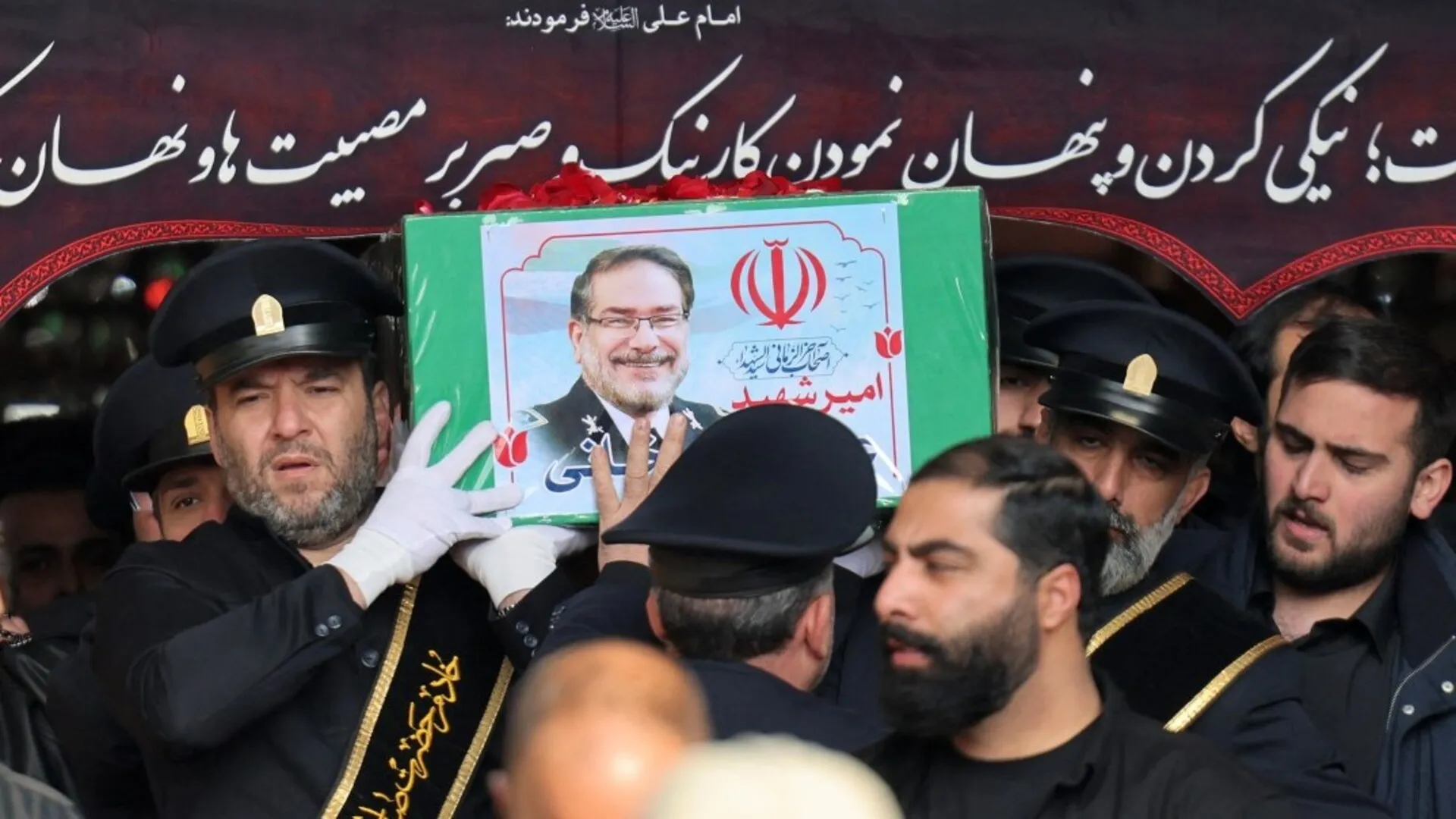
Iran has held a funeral for the country’s most influential defence figure, Ali Shamkhani, who was killed in Israeli-US strikes on February 28. Shamkhani was a key figure in Iran nuclear talks, chief of the country’s Defence Council and advisor to the late Supreme Leader. He lost a leg in an Israeli assassination attempt last June.
Published On 15 Mar 202615 Mar 2026
Share
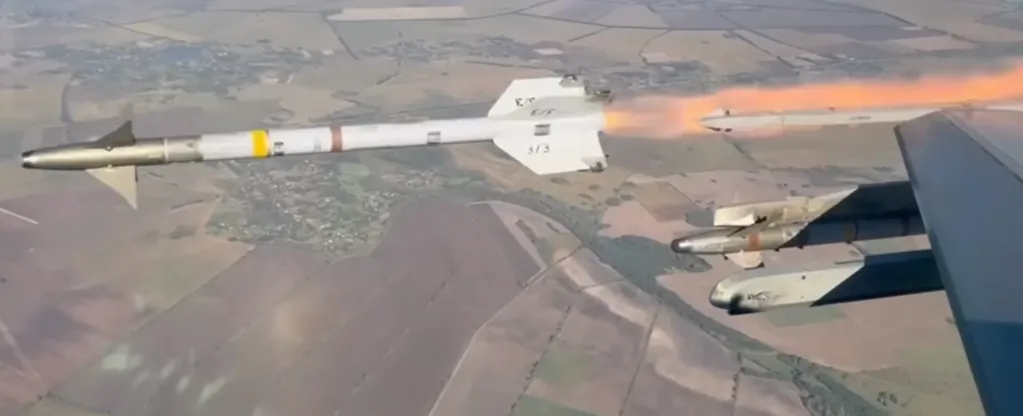
The TWZ Newsletter
Weekly insights and analysis on the latest developments in military technology, strategy, and foreign policy.
For more than three weeks, Ukraine was left with only “a handful” of U.S.-made AIM-9 Sidewinder air-to-air missiles for its F-16 fleet, after the supply of the weapons dried up. This is the conclusion of a Reuters report, citing three sources, all of whom are said to have direct knowledge of the situation. It also comes as Kyiv is increasingly in competition with the U.S. military and its Gulf allies as they come under continued pressure from Iranian drones and missiles in the Middle East.

The shortage of infrared-guided air-to-air missiles occurred between late November and mid-December of last year, the three sources said. This was a critical time, just before Russia began its winter campaign of bombardment against Ukrainian cities and infrastructure.
According to one of the sources, during the period when AIM-9s were in short supply, F-16 pilots were forced to fly daytime sorties and instead try to shoot down drones with their internal 20mm M61 Vulcan cannon. This is hardly ideal, since the Russian drone attacks normally come at night, but gunning down targets in the hours of darkness is judged too dangerous.

🚨 BREAKING
🇺🇦 Video reportedly shows a Ukrainian Air Force F-16AM using its M61A1 Vulcan rotary cannon to shoot down a Russian Shahed-136 attack drone over Ukraine.
If confirmed, this would mark one of the first publicly seen gun kills by a Ukrainian F-16 against a Shahed… pic.twitter.com/ULIuDHcVyY
— DC_Global_News (@DC_Global_News) February 8, 2026
As we have discussed many times before, taking out slow-moving drones via another fixed-wing aircraft with guns can be very challenging and downright dangerous, especially for fast jets. There is also the risk of the grenade-like cannon rounds impacting the ground below over a relatively wide area, potentially killing innocent people. Doing it at night is a whole other level of danger.
Meanwhile, the situation was reportedly so desperate that pilots were flying F-16s loaded with missiles that had failed to launch on earlier missions, after these weapons had undergone another round of maintenance. This achieved mixed results, a source said.
So far, Ukrainian F-16s have been noted flying with older AIM-9L/M Sidewinders as well as the more modern AIM-9X Sidewinder infrared-guided air-to-air missiles.
Compared with the AIM-9L/M, the AIM-9X offers a more potent short-range air-to-air missile capability that can be used in conjunction with the F-16’s Joint Helmet Mounted Cueing System (JHMCS) for high off-boresight (HOBS) engagements. Even without JHMCS, the AIM-9X is a very valuable weapon that is particularly relevant for defending against drones and cruise missiles.
It’s worth noting, too, that Ukrainian F-16s use the radar-guided AIM-120 Advanced Medium-Range Air-to-Air Missile (AMRAAM). These can also be employed against drones and cruise missiles, but are more expensive weapons than the Sidewinders. Each AMRAAM costs around one million dollars, meaning they are not prioritized for use against drones.

According to the three sources, the Sidewinder shortfall was plugged in December when additional missiles were received from undisclosed partners. These reportedly arrived just in time to help defend against one of the largest Russian attacks of the winter.
A fourth source, also anonymous, told Reuters that Canada and Germany had supplied Kyiv with Sidewinders in recent months. Canada has confirmed it’s now delivering AIM-9M-8 missiles from Canadian Armed Forces stocks. “This new donation will complement the past donation of hundreds of Canadian AIM missiles and related components that are being used by Ukraine for its air defense,” Canada’s Department of National Defense said.
Interestingly, the timing of the apparent missile shortage also coincides with the appearance of another air-to-air weapon for the Ukrainian F-16.
In early December, TWZ reported on the appearance of laser-guided 70mm Advanced Precision Kill Weapon System II (APKWS II) rockets on Ukrainian F-16s. This was not an unexpected development, since these rockets would provide an extremely valuable, lower-cost option for engaging long-range kamikaze drones and subsonic cruise missiles. TWZ has been very closely tracking the evolution of the APKWS II in the air-to-air role, a capability U.S. Air Force F-16s began using in combat last year, as we were first to report.
What is believed to be the first known footage showing an F-16 fighter jet operated by the Ukrainian Air Force intercepting a Russian Shahed/Geran-type long-range OWA-UAV with the APKWS II low-cost, laser-guided anti-aircraft rockets.
Such rockets are carried in LAU-131 rocket… pic.twitter.com/JTsCsgQ7NP
— Status-6 (War & Military News) (@Archer83Able) February 17, 2026
Without a durable supply of Sidewinders, the APKWS II would have been an even more useful weapon for the Ukrainian Air Force, although there’s nothing to suggest, at this point, that the laser-guided rockets were hurried to Ukraine to make up for the AIM-9 shortfall.
It’s also not clear to what degree the reported Sidewinder shortage was connected with the new system by which the United States supplies Ukraine with weapons.
President Donald Trump introduced the Prioritized Ukraine Requirements List (PURL) system, replacing the direct military aid sent under the Biden administration.
Under PURL, weapons are sold by the United States to NATO allies, which then deliver them to Ukraine.
One of the sources also mentioned a shortage of another U.S.-made missile type, the RIM-7 Sea Sparrow. These missiles have been adapted for use with modified Soviet-era air defense systems.

In the case of the AIM-9L/M and RIM-7, one likely factor in the shortages is the simple fact that these are older weapons, production of which has now ceased, meaning that there is only a finite number available. Surplus stocks have likely been whittled down to a point where remaining users are more cautious about giving them up. At the same time, the individual rounds are aging and also expiring.
Regardless of weapons supplies, the Ukrainian Air Force says it has made good use of its F-16s in the fight against Russian drones and cruise missiles.
As of the beginning of this year, the Ukrainian Air Force said its F-16s had destroyed “more than a thousand” aerial targets, including Shahed-type long-range one-way attack drones.

The Ukrainian Air Force flew its first F-16 combat sorties against aerial targets in August of 2024.
According to one Ukrainian F-16 pilot, on one occasion, one of his squadrons destroyed six cruise missiles and seven attack drones in a single sortie. This is a remarkable tally, by any measure, and would have required extremely precise use of the gun, even if all available missiles were successfully expended.

На шляху до F-16: ексклюзивна історія від українського пілота
With Russia continuing to bombard Ukraine, any potential holdup in the delivery of critical air-defense effectors is a significant problem. Since the start of Russia’s full-scale invasion, Ukraine has been desperately seeking additional air defense assets, particularly those of Western manufacture.
Currently, there is no end in sight for the conflict in Ukraine, which means the demand for air-defense effectors, including Sidewinders, will continue.
But now, with an expanding war in the Middle East centered on Iran, which is hitting back with its own drone and missile attacks, the competition for effectors also looks set to intensify.
This is also being felt by Ukraine as it seeks to secure critical missiles for its Patriot air defense systems.

Even before the conflict in Iran, bottlenecks in the production of the U.S.-made Patriot meant that Ukraine’s stockpiles were drained and its European allies were on waiting lists for future deliveries. The Ukrainian shortfalls have made it easier for Russia to find gaps in Ukraine’s air defenses, something that has been felt especially heavily by Ukrainian cities and energy infrastructure.
According to some analysts, Gulf states possess only days of interceptors if Iran maintains a sustained level of drone and missile attacks. Yesterday, Gen. Dan Caine, the chairman of the Joint Chiefs of Staff, said that Iran had fired more than 500 ballistic missiles and 2,000 drones since the start of the campaign. He said that the U.S. has sufficient munitions for the Iran operation.
While Ukraine may have plugged its Sidewinder gap for now, the apparent shortage late last year underscores the vulnerability of the country’s air defenses and its continued reliability on Western allies. With many of these allies now looking at the potential demands of a sustained conflict in the Middle East, growing pressure on air-defense effectors could well see Russia emerge as one of the big beneficiaries.
Contact the author: thomas@thewarzone.com