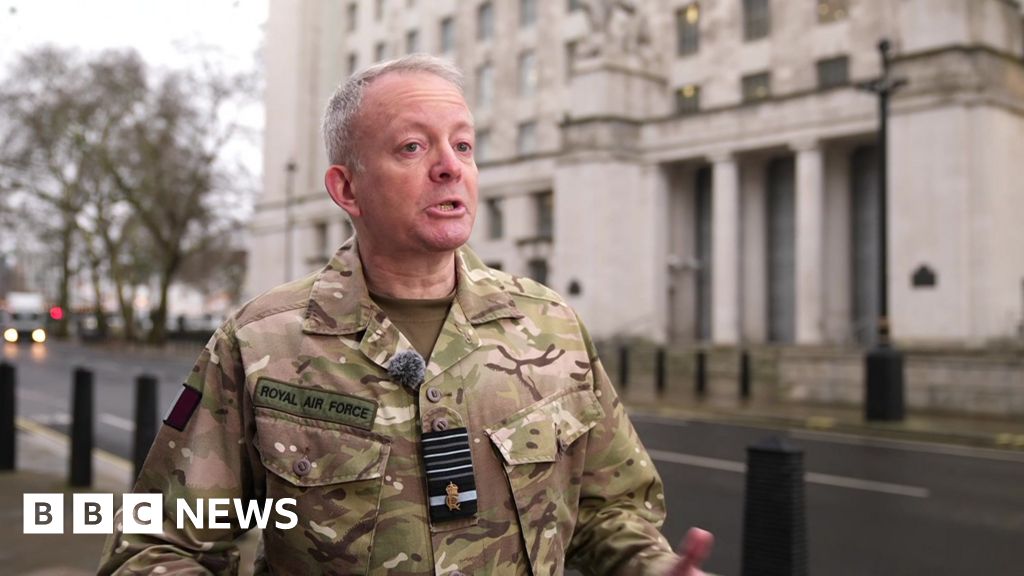
Military chief defends UK response to Middle East conflict
Sir Richard Knighton “completely rejects” criticism that the UK had been ill-prepared.
Source link
Discover the latest happenings and stay in the know with our up-to-date today news coverage. From breaking stories and current events to trending topics and insightful analysis, we bring you the most relevant and captivating news of the day.
Sir Richard Knighton “completely rejects” criticism that the UK had been ill-prepared.
Source link

A WOMAN who really believes her boyfriend is faithful just wants to innocently scour all of his communications, she has confirmed.
Hannah, not her real name, insists she does not suspect her boyfriend James, not his real name, of cheating but wants to comprehensively go through his entire archive of texts, WhatsApp messages and emails going back to 2018 for fun.
She said: “I think it would be a wholesome bonding experience that will bring us even closer together. I’m surprised James has even the slightest misgivings about the idea. The innocent have nothing to hide.
“What could be more enjoyable than letting me read all of the silly messages he sends to his mates? I bet there are some hilarious memes they’ve exchanged I could get a giggle out of. Maybe he’s embarrassed that I’ll find all of the cute, loving things he’s said about me.
“I’m not naive. I know he has some women in his contacts, like his mum and his sister. But I’m not the jealous type, I just want to know who they all are, how they know each other, and see every word they’ve said to each other out of curiosity.
“And once we’ve done that we can trawl his social media DMs and his camera roll. Including the hidden folders. And then I can check them again on a weekly basis forever or until I dump him.”
He said: “I’d love to but my phone just did a big update that wiped all of its memory. Unlucky.”

Air raid sirens blared across occupied East Jerusalem on Saturday after missiles were reportedly fired by Iran, with explosions heard and interception trails visible in the sky.
Published On 7 Mar 20267 Mar 2026
Share
Pentagon asserts US forces are tracking Russian-Iranian operations amid escalating conflict in the region.

Published On 7 Mar 20267 Mar 2026
Share
Washington has downplayed reports that Russia is sharing intelligence with Iran about United States targets across the Middle East amid the burgeoning US-Israel war on Iran, first reported by The Washington Post.
Defense Secretary Pete Hegseth, in a CBS 60 Minutes interview on Friday, said the US is “tracking everything” and factoring it into battle plans when asked about the reports Moscow was aiding Tehran.
list of 4 itemsend of list
Since the war began on February 28, Russia has passed Iran the locations of US military assets, including warships and aircraft, three officials, who spoke on the condition of anonymity, told The Washington Post.
“It does seem like it’s a pretty comprehensive effort,” one of the sources told the newspaper.
Meanwhile, anonymous officials told The Associated Press news agency that US intelligence has not uncovered that Russia is directing Iran on what to do with the information, as the US and Israel continue their bombardment and Iran fires retaliatory salvoes at US assets and allies in the Gulf.
Hegseth said the United States is “not concerned” about the reports, also downplaying the possibility that Russia’s assistance could be putting US citizens in harm’s way.
“The American people can rest assured their commander-in-chief is well aware of who’s talking to who,” Hegseth said.
“And anything that shouldn’t be happening, whether it’s in public or back-channelled, is being confronted and confronted strongly.”
He continued: “We’re putting the other guys in danger, and that’s our job. So we’re not concerned about that. But the only ones that need to be worried right now are Iranians that think they’re gonna live.”
White House Press Secretary Karoline Leavitt on Friday also claimed to reporters that “[the report] clearly is not making any difference with respect to the military operations in Iran because we are completely decimating them.”
Leavitt declined to say if Trump had spoken to Russian President Vladimir Putin about the reported intelligence sharing or whether he believed Russia should face repercussions, saying she would let the president speak to that himself.
Trump, for his part, on Friday evening berated a reporter for raising the matter of the report when he opened the floor to questions from the media at the end of a White House meeting about how paying student-athletes has recalibrated college sports.
“I have a lot of respect for you, you’ve always been very nice to me,” the US president said to Peter Doocy, the Fox News reporter.
“What a stupid question that is to be asking at this time. We’re talking about something else.”
The intelligence is the first indication that Moscow has sought to get involved in the war that the US and Israel launched on Iran a week ago.
Asked whether Russia would go beyond political support and offer military assistance to Iran, Kremlin spokesman Dmitry Peskov said there has been no such request from Tehran.
“We are in dialogue with the Iranian side, with representatives of the Iranian leadership, and will certainly continue this dialogue,” he said on Friday.
Pushed on whether Moscow has provided any military or intelligence assistance to Tehran since the Iran war’s start, he refrained from comment.
Russia has tightened its relationship with Iran as it looked for badly needed missiles and drones to use in its four-year war against Ukraine. But the pair have long maintained friendly relations, even while Tehran has faced years of isolation from the West over its nuclear programme and its support of proxy groups in the Middle East.
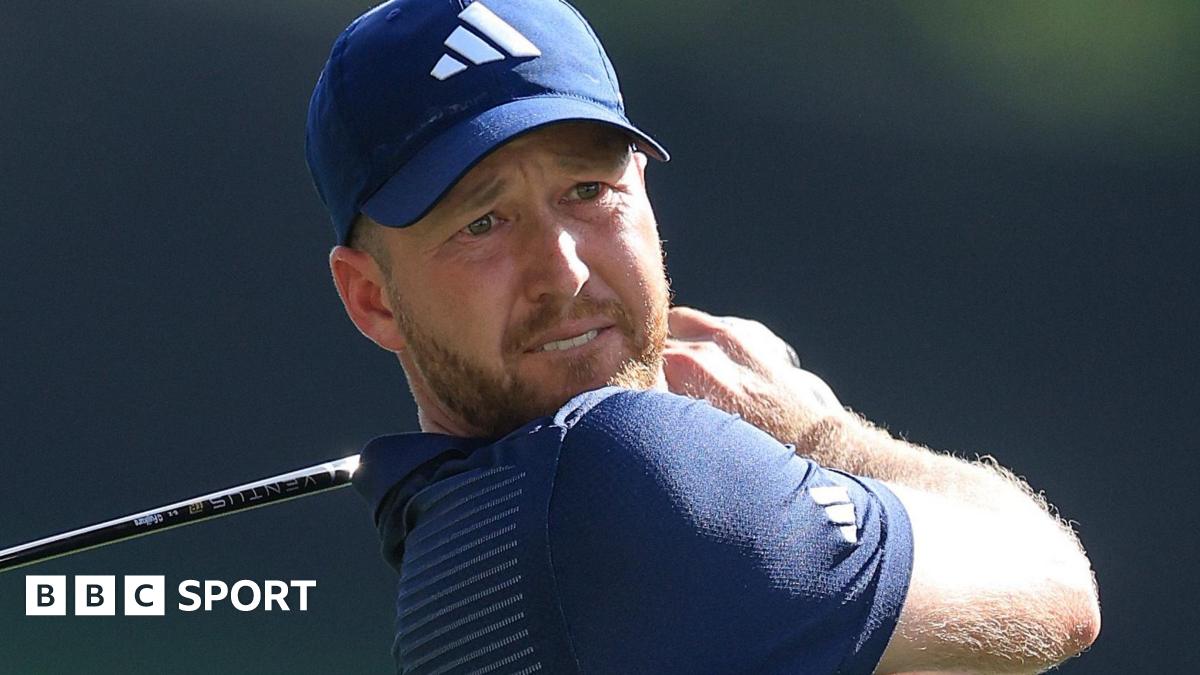
Berger, who has not won on the PGA Tour since 2021, put himself on course for the £3m top prize thanks to a clean run on the back nine which included three birdies.
“I actually feel like I played better [today] – the course was a little tougher,” he said.
“I’m looking forward to the next couple of days and seeing the challenge they bring.”
Americans Sahith Theegala and Collin Morikawa and Sweden’s Ludvig Aberg are tied for third on seven under, with American Ricky Fowler one shot further back.
McIlroy, who birdied four of the first seven holes on the back nine, said: “I played the last 10 holes really, really well.
“Overall I am really pleased. I played a very sort of controlled, patient round of golf, which you need to do around here.”
American world number one Scottie Scheffler bogeyed the 18th in a round of 71 that left him three under.
England’s Tommy Fleetwood, who was four over after the first round, shot three birdies on the back nine in a second-round 69 to make the cut on one over.
Explosions shake Tehran as US-Israel attacks intensify, marking eight days of conflict and retaliation from Iran.
Published On 7 Mar 20267 Mar 2026
Share
Huge explosions have hit several locations across Iran, including the capital, Tehran, as the war that has ignited the Middle East entered its eighth day.
The United States-Israeli attacks sent up clouds of dark smoke in the Iranian capital early on Saturday, and Tehran retaliated by firing missiles at Israel.
list of 4 itemsend of list
The US has warned of a forthcoming bombing campaign that officials said would be the most intense yet in the weeklong conflict, which has already killed at least 1,230 people and is set to cause further casualties daily.
Much of the region has become embroiled in the war, with Tehran not only launching retaliatory strikes on Israel but hitting US assets across the Gulf.
Israel’s military said early on Saturday it had started a “broad-scale wave of strikes” on targets in Tehran.
“Iranians are now waking to day eight since the initiation of the US-Israeli air strikes targeting different facilities and places across the Iranian capital and elsewhere in the country,” said Al Jazeera’s Tohid Asadi, reporting from Tehran.
Continuous attacks have been occurring since midnight, he said.
“According to the latest reports, Mehrabad, which is one of the two main airports in the Iranian capital, was targeted. The nearby area was said to be affected, as well,” said Asadi.
Meanwhile, attacks have been taking place in other cities across the country – targeting not just military areas or political centres, but also residential areas, schools and hospitals, he added.
Amir-Saeid Iravani, Iran’s ambassador to the United Nations, told the UN Security Council on Friday that the US and Israel are bombing civilian areas in his country, stating: “These acts constitute clear war crimes and crimes against humanity.”
The continued fighting comes as US President Donald Trump’s administration approved a new $151m arms sale to Israel after Trump said he would not negotiate with Iran without its “unconditional surrender”.
Iran’s UN ambassador said the country would “take all necessary measures” to defend itself.
Meanwhile, Iran has continued to strike back at Israel.
The Israeli military said early on Saturday that it had detected another round of Iranian missile fire headed towards Israel, and a series of explosions were heard in Tel Aviv following the launches from Iran.
Missiles were also detected heading towards other parts of the country, including southern Israel.
“Since midnight, the Israelis have detected at least five ballistic missile launches coming into Israel from Iran,” said Al Jazeera’s Nida Ibrahim, reporting from Ramallah in the occupied West Bank.
“They have led millions of Israelis into shelters throughout the night, which is something that Israeli analysts say the Iranians are intending to do to put more pressure on the Israeli government – by keeping Israelis in shelters and by keeping these missiles launching coming at different times.”

The TWZ Newsletter
Weekly insights and analysis on the latest developments in military technology, strategy, and foreign policy.
Welcome to Bunker Talk. This is a weekend open discussion post for the best commenting crew on the net, in which we can chat about all the stuff that went on this week that we didn’t cover. We can also talk about the stuff we did or whatever else grabs your interest. In other words, it’s an off-topic thread.
This week’s second caption reads:
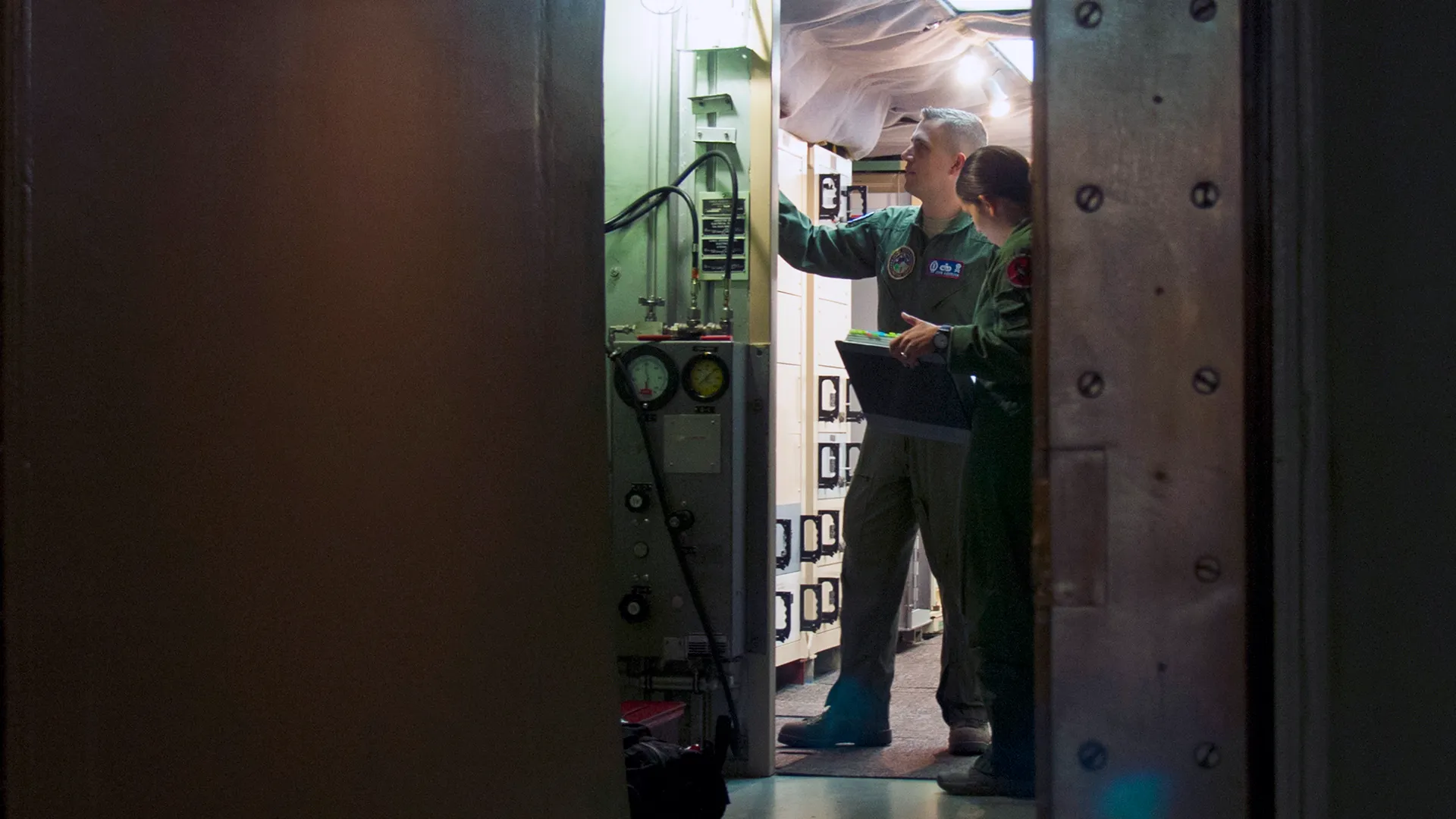
First Lt. Pamela Blanco-Coca, 319th Missile Squadron missile combat crew commander, and 2nd Lt. John Anderson, 319th MS deputy missile combat crew commander, conduct pre-operational checks at a launch control center in the F.E. Warren Air Force Base, Wyo., missile complex Feb. 9, 2016. The missileers worked heavily in conjunction with missile maintainers to conduct a test of Minuteman III weapon system components in a test known as the Simulated Electronic Launch-Minuteman. (U.S. Air Force photo by Senior Airman Jason Wiese)
Also, a reminder:
Prime Directives!
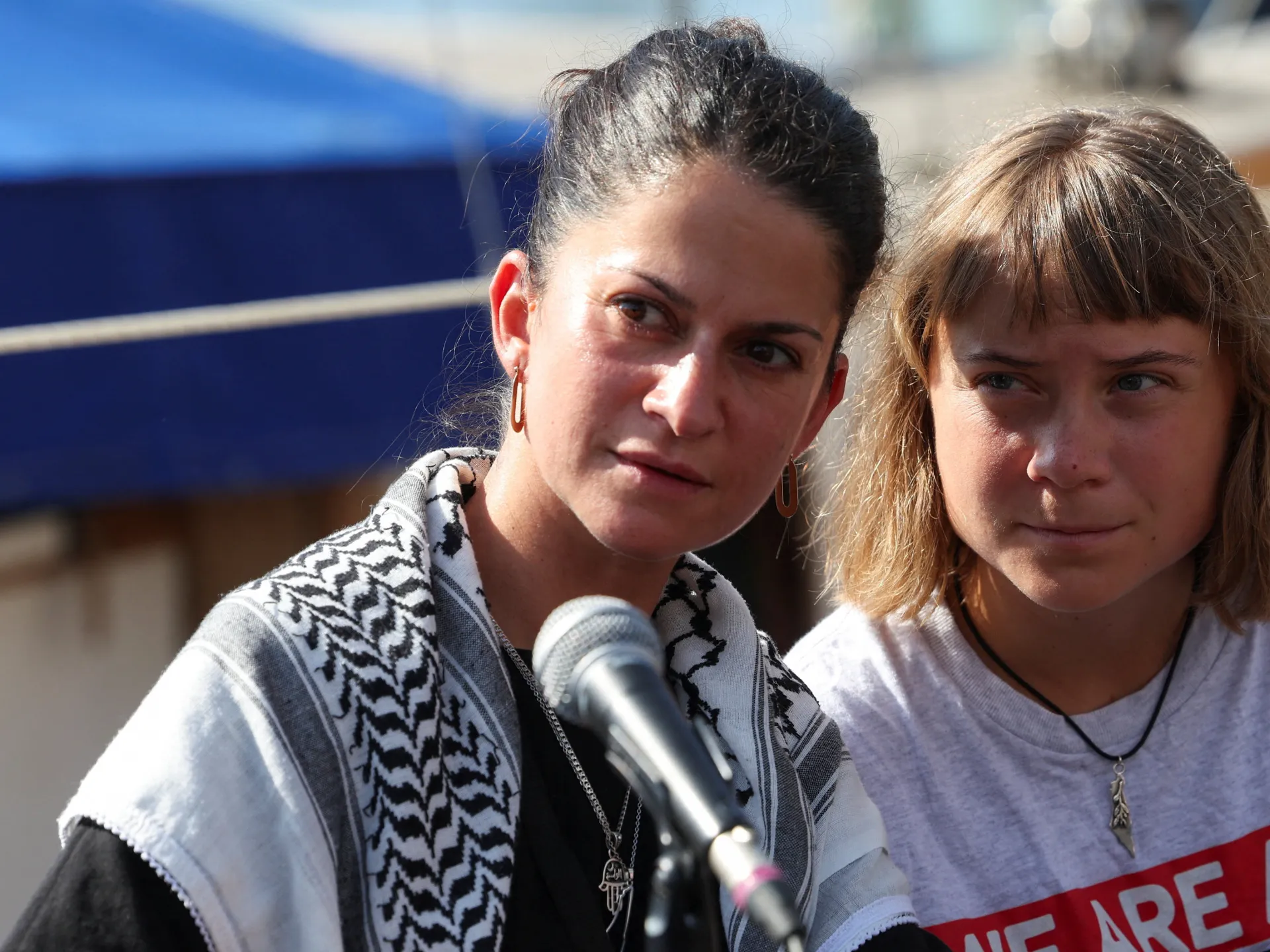
Pro-Palestinian German activist Yasemin Acar told Al Jazeera about what she says was harassment at a Berlin airport where she recorded a border guard asking about her destination because of concerns over “hostility towards Israel”.
Published On 7 Mar 20267 Mar 2026
Share


Christie Garba is a 38-year-old mother of seven who lives in Billiri, Gombe State, in Nigeria’s North East. She lived in Yobe State with her family before the Boko Haram insurgency hit the region. At that time, attacks had happened in nearby places, and they had not reached her community directly.
Christie and her family had stayed about four months after the attacks started, but as the violence escalated, the soldiers warned residents that the situation had become too dangerous to remain. The curfews that followed made everyday life almost impossible.
In this episode of VOV, we tell the story of how Christie and her family moved to Gombe State and how she survived starting a new business.
Reported and scripted by Sabiqah Bello
Voice acting by Rukayya Saeed
Multimedia editor is Anthony Asemota
Executive producer is Ahmad Salkida
Christie Garba, a 38-year-old mother of seven, relocated from Yobe State to Billiri, Gombe State in Nigeria due to the Boko Haram insurgency. Initially, her community was indirectly impacted, but the increasing violence and subsequent military curfews forced her family to move to ensure their safety.
Despite the challenges, Christie successfully established a new business in Gombe State, showing resilience and adaptability in the face of adversity.
Her story highlights the impact of regional conflict and the determination required to rebuild and sustain a livelihood in new environments.
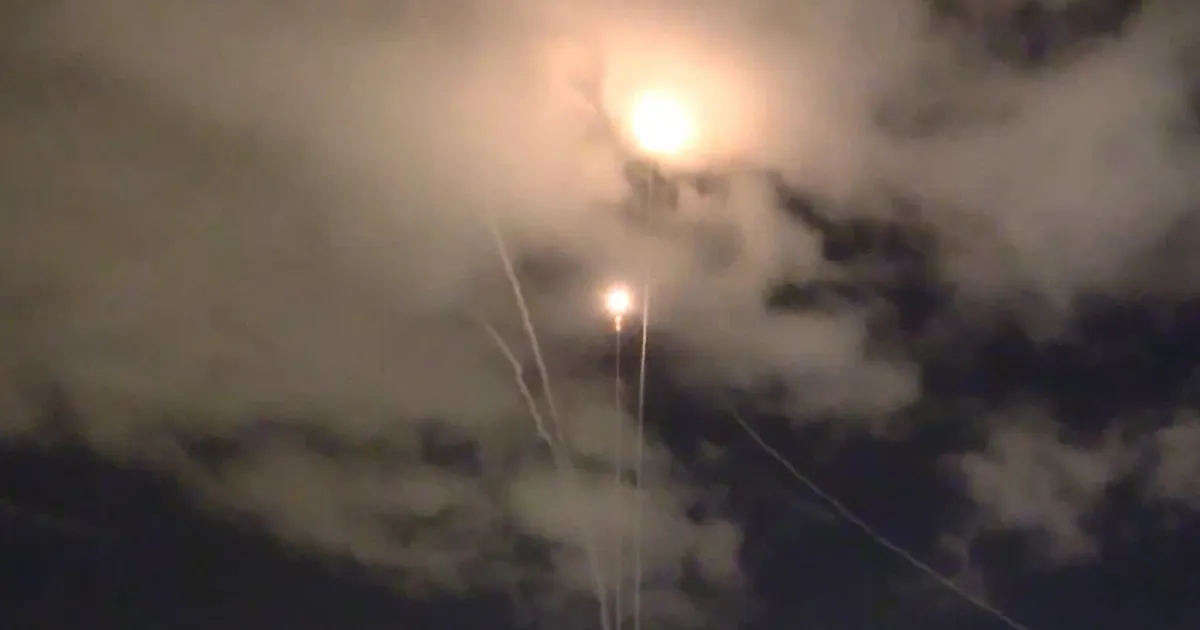
Witness videos captured Iranian projectiles soaring over Tel Aviv as sirens blared and Israeli interceptors launched. Residents could be heard shouting as one of the missiles appeared to break apart into dozens of smaller projectiles.
Published On 7 Mar 20267 Mar 2026
Share
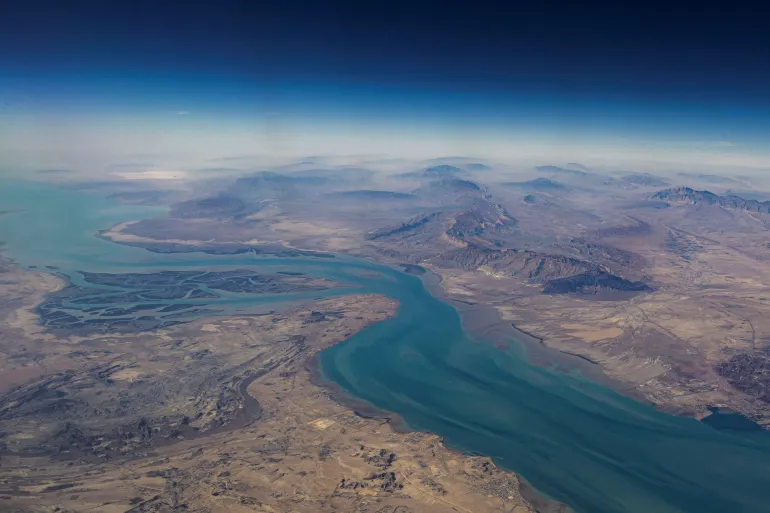
As the United States and Israel’s war on Iran unfolds over the coming days and weeks, the scale of the fallout for the global economy will be measured at the petrol pump.
The biggest threat the conflict poses to global economic health lies in rising energy prices.
list of 4 itemsend of list
Iran’s effective closure of the Strait of Hormuz and Iranian attacks on key energy production facilities in Qatar and Saudi Arabia have paralysed a substantial chunk of the world’s energy supply.
For a global economy already rattled by US President Donald Trump’s tariffs and what many see as his unravelling of the post-World War II order, much now depends on how long the disruption lasts.
A sustained surge in energy prices would drive up the cost of everyday goods.
Central banks would then likely raise borrowing costs to curb inflation, dampening consumer spending and dragging down economic growth.
“It’s really a question on how long the disruption of flows through the Strait of Hormuz lasts and whether there will be destruction of physical assets,” said Anne-Sophie Corbeau, an analyst at Columbia University’s Center on Global Energy Policy.
“For the moment, the market is pricing a short disruption and no destruction. But that may change in the future. We simply do not know right now how this whole crisis ends.”

While Iran’s threats to shipping have halted traffic through the Strait of Hormuz, the conduit for one-fifth of the world’s oil, crude prices have seen relatively modest gains so far.
Brent crude hovered about $84 a barrel on Friday morning, US time, up about 15 percent compared with pre-conflict prices.
That gain pales in comparison with past crises.
During the 1973-74 oil embargo led by OPEC’s Arab members, prices quadrupled in just three months.
Since then, the world’s dependence on Middle Eastern oil has declined substantially.
Today, the US is the biggest producer globally, producing some 13 million barrels a day, more than Iran, Iraq and the UAE combined, according to the US Energy Information Administration.
But if supply disruptions extend beyond a few weeks, oil prices could rise precipitously.
The seven oil-producing Gulf nations – Bahrain, Kuwait, Oman, Qatar, Saudi Arabia and the UAE – are likely to run out of crude oil storage capacity in less than a month if the Strait of Hormuz remains closed, according to an analysis by JPMorgan Chase.
With storage capacity depleted, producers would be forced to cut production.
“While there will be some capacities elsewhere, and some options to use pipelines rather than shipping, it is incredibly difficult to replace the sheer volume as we are talking about an average of 20 million barrels of oil per day that usually cross the Strait of Hormuz,” said Sarah Schiffling, a supply chains expert at the Hanken School of Economics in Helsinki.
“This important maritime chokepoint provides very significant leverage in the global economy.”
This week, Goldman Sachs analysts estimated that global oil prices will likely hit $100 a barrel – a threshold not seen since Russia’s 2022 invasion of Ukraine – if shipping through the waterway stays at the current reduced levels for five weeks.
In an interview published by The Financial Times on Friday, Qatar’s energy minister Saad al-Kaabi warned that producers in the region could halt production within days and that oil could soar as high as $150 a barrel.
Such increases would reverberate through the global economy.
The International Monetary Fund has estimated that global economic growth is reduced by 0.15 percent for every 10 percent rise in oil prices.
The pain would not be spread evenly.
About 80 percent of the oil shipped through the strait goes to Asia.
India, Japan, South Korea and the Philippines, which are all highly dependent on foreign energy imports, would be among the economies most vulnerable to spikes in the cost of necessities such as food and fuel.
“The effect would be felt in Asia and Europe in particular,” said Lutz Kilian, an economist at the Federal Reserve Bank of Dallas.
“Some countries, such as China, have ample oil reserves to help weather a temporary outage, while others do not.”
Liquefied natural gas (LNG), which is also shipped through the strait and has fewer alternative suppliers outside the region than crude oil, has already seen much steeper price rises.
European prices of LNG surged by as much as 50 percent on Monday after state-run QatarEnergy, which ships about one-fifth of global supply through the waterway, announced a halt to production following drone attacks blamed on Iran.
“Gas will be more impacted because the market was still relatively tight and stocks are low in Europe as we are at the end of winter; also, there is no replacement for the LNG lost,” Corbeau said.

With US President Donald Trump signalling that he intends to continue the assault on Iran for at least several more weeks, the extent to which Tehran is willing – or able – to keep the strait closed will be critical to the global economy.
At least nine commercial vessels have been targeted in attacks in or near the strait since the start of the conflict, prompting multiple insurance firms to cancel coverage for vessels in the Gulf.
While traffic through the strait has not halted, it is down about 90 percent compared with normal levels, according to ship tracker MarineTraffic.
“The uncertainty itself is probably the most dangerous part. Supply chains hate uncertainty,” Schiffling said.
“It is possible to plan for almost anything, but not knowing what will happen makes it really challenging to adapt operations.”
On Wednesday, Trump said he had ordered the US International Development Finance Corporation to start insuring shipping lines in the region in order to keep trade flowing.
Trump also said the US Navy could begin escorting vessels through the strait if necessary.
“As long as Israel and the US are able to suppress Iranian drone and missile attacks in the strait to the point that the bulk of the oil tankers gets through, and as long as the United States provides back-up insurance for shippers and their cargo, the global economy may make it through this war without a recession,” Kilian said.
“On the other hand, if there is a severe disruption of oil traffic, the economic costs will grow the longer the disruption lasts.”

The Prophet Muhammad was in a cave on Mount Hira, close to Mecca, when the angel Gabriel appeared and revealed the first five lines of Surh Al-Alaq (chapter 96 of the Qur’an).
Following this first revelation, Muhammad received many revelations of holy text for the rest of his life ( a further twenty three years).
The revelations were recorded by scribes and after the death of Muhammad, they compiled them in texts. The version of these texts that became the Qur’an was established by Caliph Uthman.
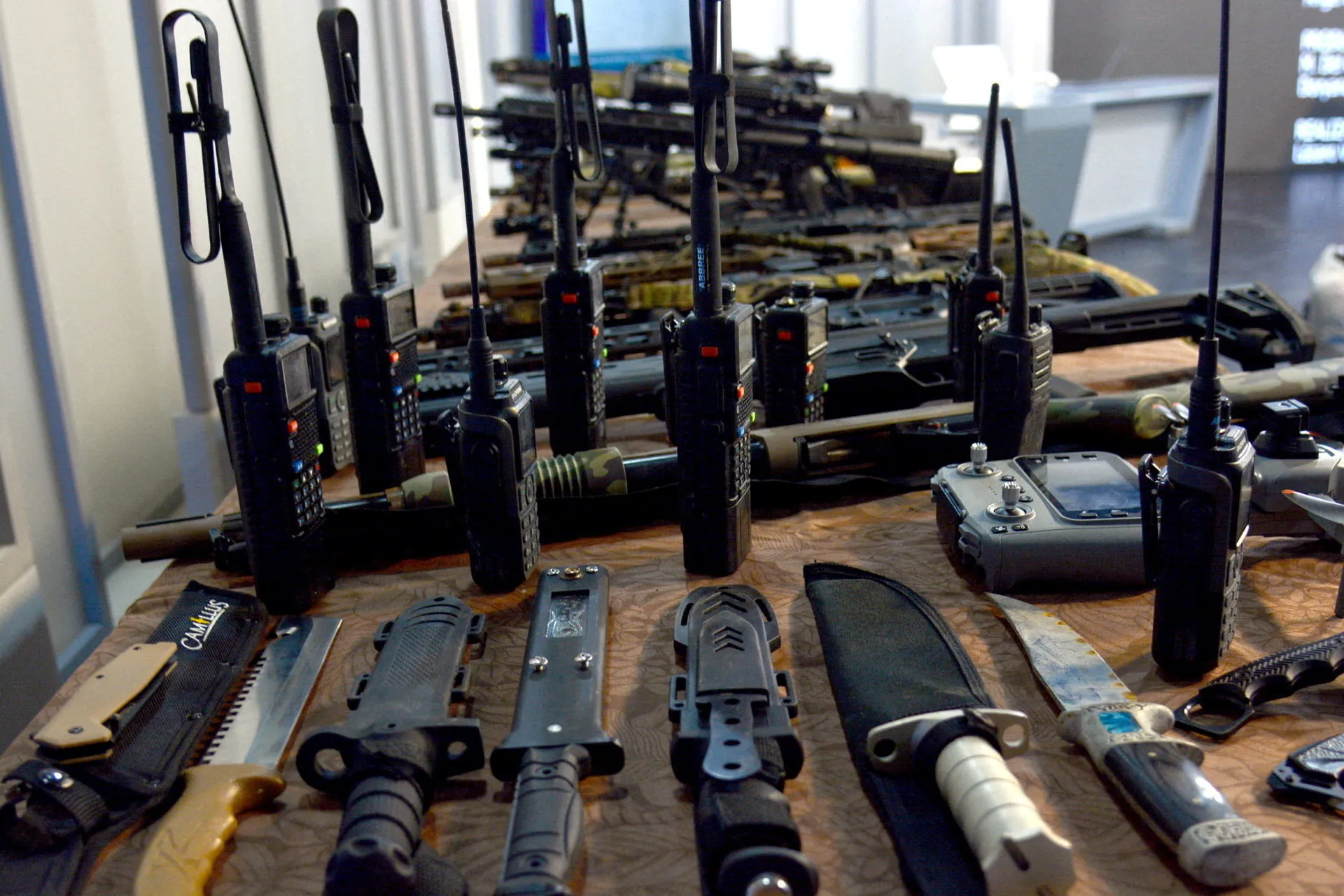
The government in Havana has claimed that the 10 people on board the speedboat had planned to unleash terrorism in Cuba.
Published On 7 Mar 20267 Mar 2026
Share
The government of Cuba has announced that a fifth person died as a consequence of a fatal shootout last month involving a Florida-flagged speedboat that allegedly opened fire on soldiers off the island nation’s north coast.
The island’s Ministry of Interior said late on Thursday in a statement that Roberto Alvarez Avila died on March 4 as a result of his injuries.
list of 3 itemsend of list
It added that the remaining injured detainees “continue to receive specialised medical care according to their health status”.
On February 26, authorities in Cuba said that Cuban soldiers confronted a speedboat carrying 10 people as the vessel approached the island and opened fire on the troops.
They said the passengers were armed Cubans living in the United States who were trying to infiltrate the island and “unleash terrorism”. Cuba said its soldiers killed four people and wounded six others.
“The statements made by the detainees themselves, together with a series of investigative procedures, reinforce the evidence against them,” the Cuban Interior Ministry said in its statement.
It added that “new elements are being obtained that establish the involvement of other individuals based in the US”.
Earlier this week, Cuba said it had filed terrorism charges against six suspects who were on the speedboat. The government also unveiled items it claimed to have found on the boat, including a dozen high-powered weapons, more than 12,800 pieces of ammunition and 11 pistols.
Cuban authorities have provided few details about the shooting, but they said the boat was roughly 1.6 kilometres (1 mile) northeast of Cayo Falcones, off the country’s north coast.
They also provided the boat’s registration number, but The Associated Press news agency was unable to readily verify the details because boat registrations are not public in the state of Florida.
The shooting threatened to increase tensions between US President Donald Trump and Cuban authorities.
The island’s economy was, until recently, largely kept economically afloat by Venezuela’s oil, which is now in doubt after a US military operation abducted and deposed former Venezuelan President Nicolas Maduro.
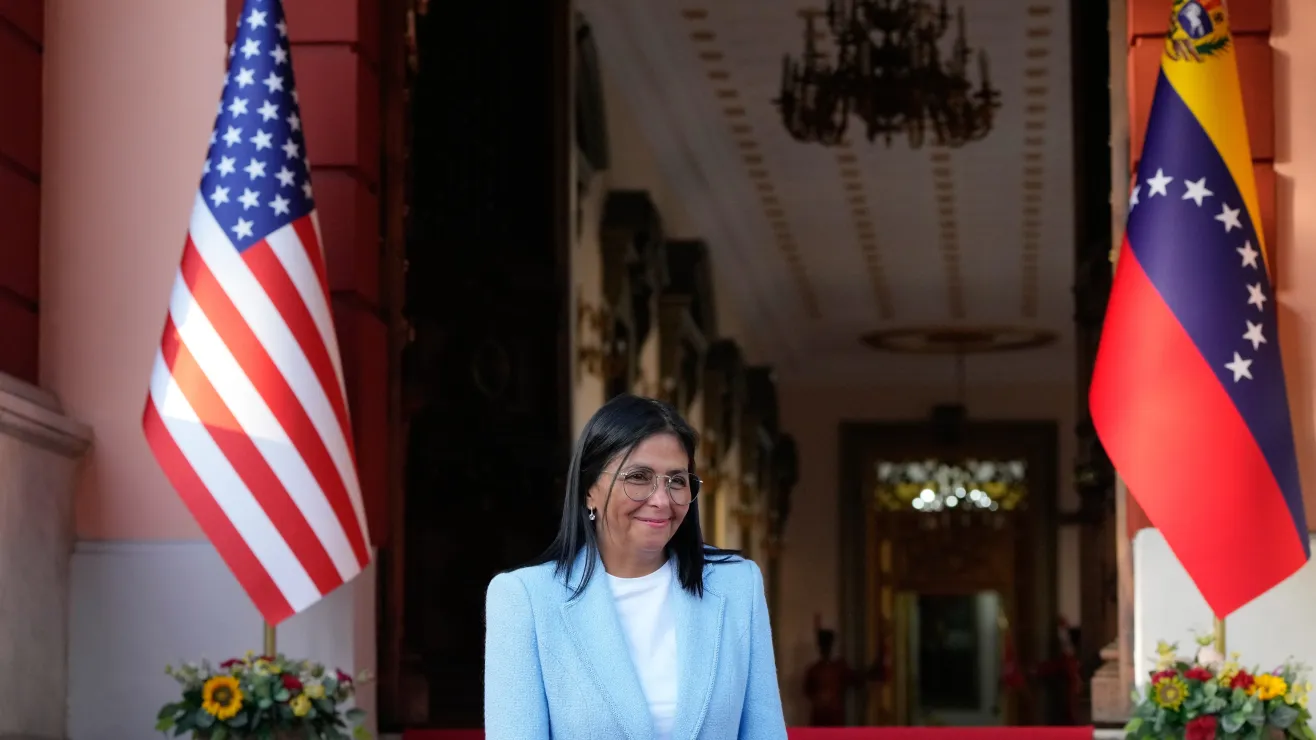
Acting President Delcy Rodríguez has defended diplomatic engagement with Washington. (AP)
Caracas, March 6, 2026 (venezuelanalysis.com) – The Venezuelan and US governments announced the restoration of diplomatic relations after a seven-year hiatus.
Caracas and Washington issued near-simultaneous press releases on Thursday night, though they did not specify a date for the reopening of the respective embassies and consulates.
In its statement, the Venezuelan government headed by Acting President Delcy Rodríguez expressed “trust” that the renewed ties would lead to a “mutually beneficial” relationship.
“The Bolivarian government reaffirms its disposition to advance to a new stage of constructive dialogue, based on mutual respect and cooperation,” the communiqué read.
For its part, the US State Department declared that the diplomatic reengagement would “facilitate our joint efforts to promote stability, support economic recovery, and advance political reconciliation in Venezuela.”
“Our engagement is focused on helping the Venezuelan people move forward through a phased process that creates the conditions for a peaceful transition to a democratically elected government,” the statement read.
The US and Venezuela engaged in a fast diplomatic rapprochement following the January 3 US military strikes and kidnapping of President Nicolás Maduro and First Lady Cilia Flores. Maduro and Flores have pleaded not guilty to charges including drug trafficking conspiracy, and their next hearing is scheduled for March 26. Despite repeated “narcoterrorism” accusations, US officials have not presented evidence of the involvement of Venezuelan high-ranking officials in narcotics activities, while specialized reports have consistently found the Caribbean nation to play a marginal role in global drug trafficking.
In the past two months, several senior White House officials have been hosted by Acting President Rodríguez, including CIA Director John Ratcliffe, Energy Secretary Chris Wright, and most recently Interior Secretary Doug Burgum. US Southern Command chief Francis Donovan likewise met with Venezuelan leaders, while Chargé d’Affaires Laura Dogu has been in the country since early February.
Dogu has been slated to take over as ambassador, while Félix Plasencia is set to become Venezuela’s top diplomat in the US.
Despite the January 3 bombings and presidential kidnapping, Rodríguez and other officials have defended the diplomatic engagement with Washington. The rapprochement has also seen Venezuelan authorities vow to “adapt legislation” to attract US corporate investment.
The National Assembly enacted a pro-business overhaul of the Hydrocarbon Law in late January, with the US Treasury subsequently issuing licenses allowing an expanded presence from Western energy conglomerates while imposing control over export revenues.
The Maduro government severed ties with Washington in 2019 after the first Trump administration recognized the self-proclaimed “interim government” led by Juan Guaidó as the country’s legitimate authority.
The recognition saw Guaidó and other opposition leaders take control of Venezuelan assets abroad, including US-based refiner CITGO, with their management facing accusations of widespread malfeasance and corruption.
After Guaidó was driven out by other US-backed factions in January 2023, the Biden administration transferred the recognition to the former opposition-majority National Assembly whose term had run out in 2021. Despite being abroad and exercising no activity, the former deputies have continued to collect salaries drawn from frozen Venezuelan state assets.
US authorities have not clarified whether the Venezuelan government will regain access to US-based bank accounts and other assets, since several state entities, including oil company PDVSA and the Central Bank, remain under Treasury sanctions.
The formal recognition of the acting Rodríguez administration is expected to pave the way for debt renegotiation. With sanctions barring the country from maintaining its debt service, liabilities ballooned to an estimated US $170 billion.
Edited by Lucas Koerner in Fusagasugá, Colombia.

People are tracking a shepherd who has been walking with his herd for days across Lebanon, fleeing Israeli strikes in the south of the country.
Published On 6 Mar 20266 Mar 2026
Share
The TWZ Newsletter
Weekly insights and analysis on the latest developments in military technology, strategy, and foreign policy.
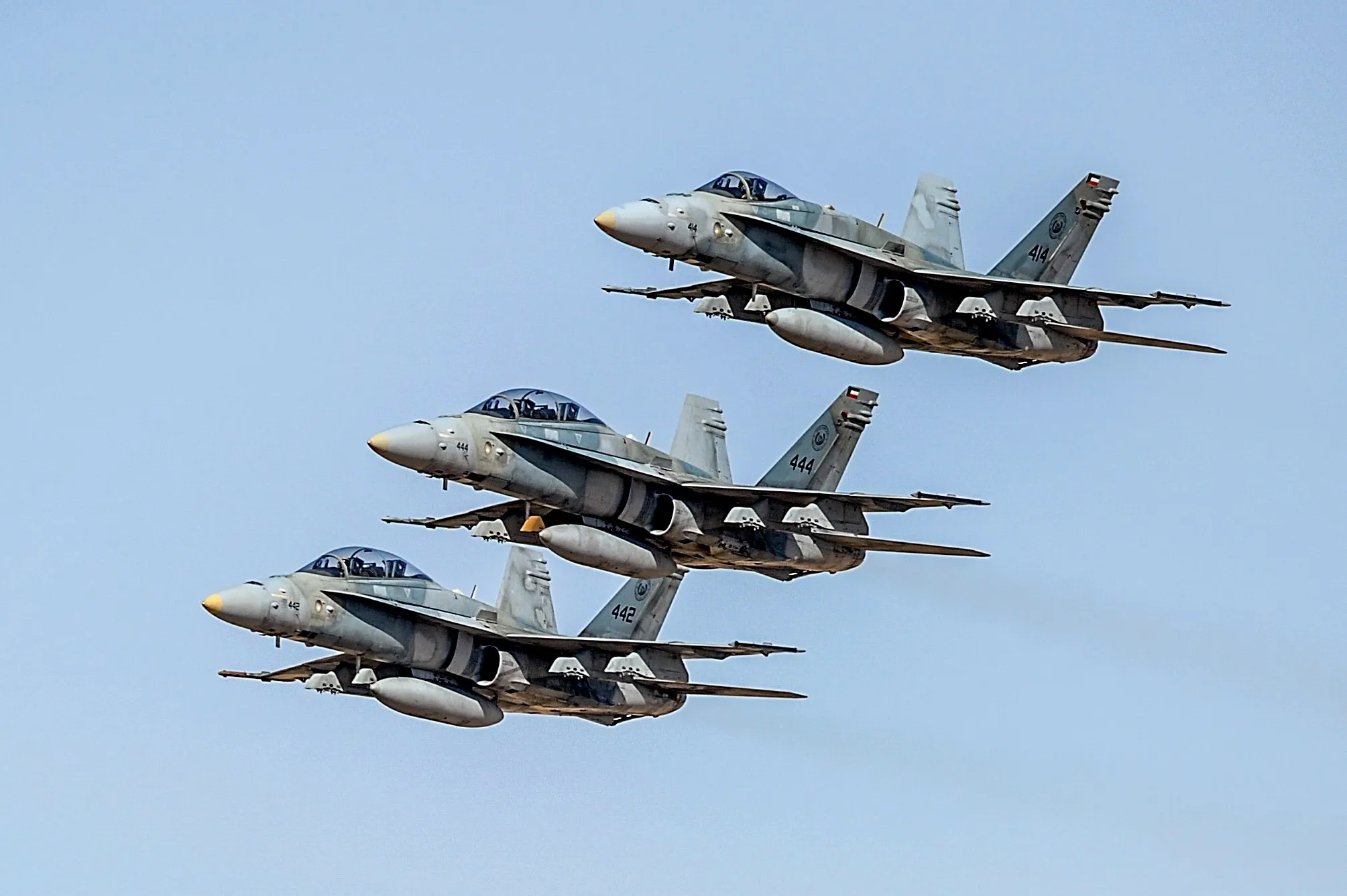
Civilian onlookers out in the street filming the air-to-air engagement rapidly unfolding in the bright blue sky above them, a trail of smoke, and the low rumble of fighter jet engines. This is the latest video to have emerged from the extraordinary incident earlier this week in which a Kuwaiti Air Force F/A-18 Hornet was responsible for shooting down three U.S. Air Force F-15E Strike Eagles.
As in the previous videos of the incident and its aftermath, the usual caveats apply as to the nature of its authenticity, which remains unconfirmed. However, everything points to this being genuine, and it clearly indicates a within-visual-range air-to-air engagement, likely involving a heat-seeking AIM-9 Sidewinder series air-to-air missile.
Check the video out here:
New footage shows a Kuwaiti F/A-18C downing a U.S. Air Force F-15E at close range with what appears to be an AIM-9 Sidewinder air-to-air missile on March 2. pic.twitter.com/OZ1vIuOtzq
— OSINTWarfare (@OSINTWarfare) March 6, 2026
It was initially rumored that a ground-based air defense system, such as the Patriot, which is present in Kuwait, took the F-15Es out. However, the earlier video footage of one of the jets spiraling to the ground suggested it was an air-to-air engagement, based on the damage to the aircraft.
At 11:03 p.m. ET, March 1, three U.S. F-15E Strike Eagles flying in support of Operation Epic Fury went down over Kuwait due to an apparent friendly fire incident.
Read more:https://t.co/i2y3Q3vo2E
— U.S. Central Command (@CENTCOM) March 2, 2026
The new video is also in line with our original assessment of the likely cause of the shootdowns, namely, tail-aspect missile shots made by smaller-yield weapons. As we noted at the time, under certain circumstances, if the Hornet employed passive heat-seeking missiles (AIM-9), the F-15E pilots may not have known they were being engaged until the weapon detonated.
Footage of an F-15 falling out of the sky this morning over Kuwait, in an apparent “friendly fire” incident involving the U.S. Air Force. pic.twitter.com/GQvryfJ4C4
— OSINTdefender (@sentdefender) March 2, 2026
The video clearly shows one of the F-15Es after being hit, with part of its rear portion burning brightly, and the same aircraft in a flat spin toward the ground. You can also see the two crew members ejecting. The F/A-18 is also seen, toward the top of the frame.
For at least part of the engagement, the F/A-18 and F-15E are clearly in the same frame and are in close proximity.
An experienced former F/A-18 pilot TWZ talked to about the event and the new video concluded that the incident is, altogether, “very strange.”
“I have genuinely no idea how someone could make this mistake,” the ex-Hornet driver continued. “Unless it’s something procedural and GCI [ground-control intercept] has messed up, talked him on, and he’s seen what he wanted to see … but even that’s bordering on implausible.”

Undoubtedly, the challenge of deconfliction of friend from foe in a very complex war zone is a significant one, as we outlined previously. At the same time, the threat from Iranian aircraft was, at the time, real. Also this week, a Qatar Emiri Air Force F-15QA shot down a pair of Iranian Su-24 Fencer strike aircraft that were inbound to attack the sprawling air base at Al Udeid.
While the cause of the friendly-fire incident remains unclear, the chance to see such an aerial engagement is remarkable in itself, especially the very rare sight of a modern fighter firing one of its air-to-air missiles in an operational context.
A video shows a U.S. Air Force F-15C Eagle fighter jet destroying a towed target at very close range with one of its Sidewinder air-to-air missiles, during a live-fire exercise over the Atlantic Ocean on December 8, 2020:

F-15 Firing Training Sidewinder NATM-9M At Drone
The same former Hornet driver also explained exactly how a short-range AIM-9 Sidewinder missile would be fired from the jet in a WVR scenario:
“You’d be in air-to-air master mode and bring up the weapon using HOTAS [‘hands on throttle and stick’ controls]. You rock a castle switch that puts you in Sidewinder mode. From there, you can select your radar scan mode, again using HOTAS. Now you have a weapon looking for an infrared signature and a radar looking for a target. In a combat mode, the radar will latch/form a track almost immediately. The weapon system then cues the Sidewinder to the radar track, and so long as it’s within the weapon’s kinematic capabilities, you’ll get a SHOOT cue. The weapon then leaves on trigger press.”
“You can also just point and shoot with a Sidewinder, but then your radar isn’t giving you any info, so you risk a shot that can’t make it.”
In such a scenario, it is conceivable that the F/A-18 pilot might have accidentally launched a missile that then found its target, the same pilot agreed, but that would not explain the three friendly-fire kills.
“Once, yes. Twice, no way. Thrice?”
It is worth bearing in mind that there have been previous incidents of friendly-fire shootdowns, even when a visual ID had been conducted. This happened in 1994, when two U.S. Air Force F-15 Eagle fighters shot down two U.S. Army UH-60 Black Hawk helicopters over Iraq, killing 26. Perhaps the Kuwaiti pilot thought they had encountered Iranian MiG-29 Fulcrum fighters, but, again, to make the same mistake three times over seems highly improbable, especially at close range.

Another fighter pilot’s analysis, seen in video below, questions whether the Kuwaiti pilot might even have gone rogue against an ally. That actually seems possible based on the evidence, but it is hard to believe.

Accident or Crime? A Kuwaiti F/A-18 Hornet Shot Down Three U.S. F-15E Strike Eagles?
Ultimately, based on the latest video and the limited reports so far, it’s still far from clear how this costly incident happened. A friendly-fire kill involving a longer-range weapon would be more believable, but the within-visual-range nature of this engagement is bizarre, to say the least.
Contact the author: thomas@thewarzone.com

Lionel Messi has been criticised for meeting US President Donald Trump and applauding his latest brief on the Iran war at a White House event honouring the Argentinian superstar and his Inter Miami team.
Published On 6 Mar 20266 Mar 2026
Share
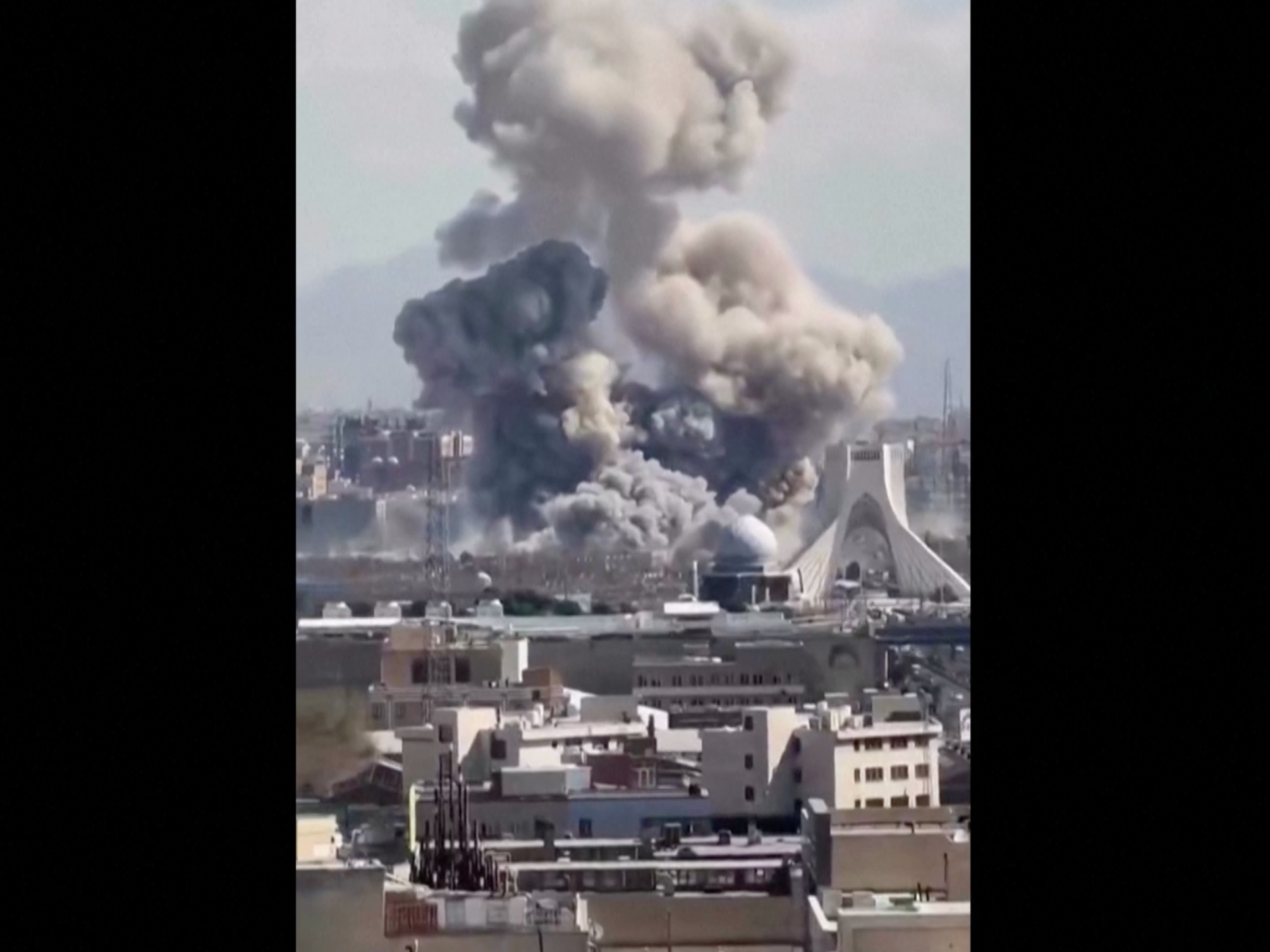
A video has been released showing huge explosions near Tehran’s Azadi Tower. The US and Israel are continuing to target locations across Iran as the war enters its seventh day.
Published On 6 Mar 20266 Mar 2026
Share
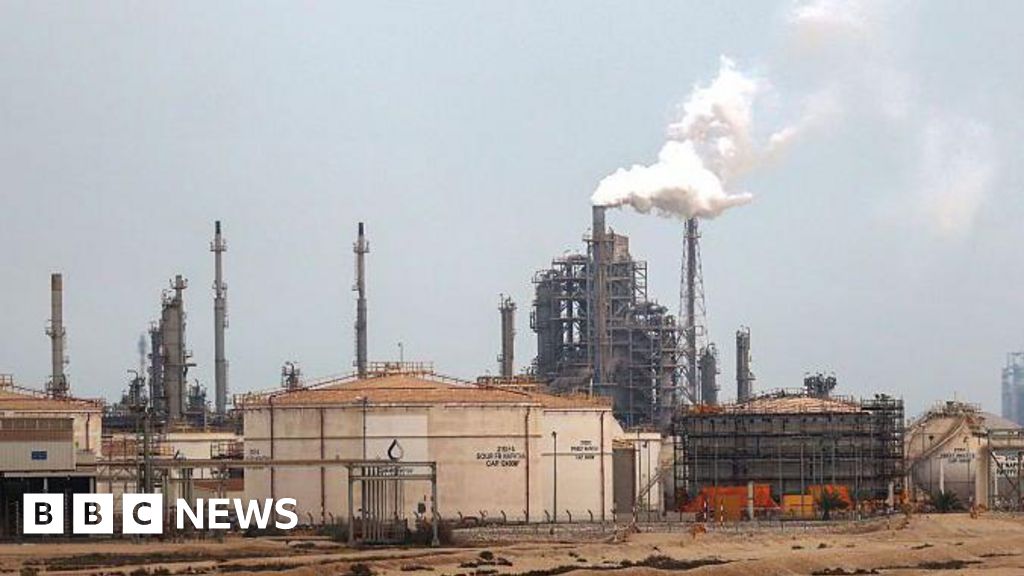
Energy Minister Saad al-Kaabi says oil could hit $150 a barrel if the Iran conflict continues over the coming weeks.
Source link

The women have been interviewed under suspicion of aiding and abetting rape and human trafficking, the Met Police says.
Source link
The TWZ Newsletter
Weekly insights and analysis on the latest developments in military technology, strategy, and foreign policy.
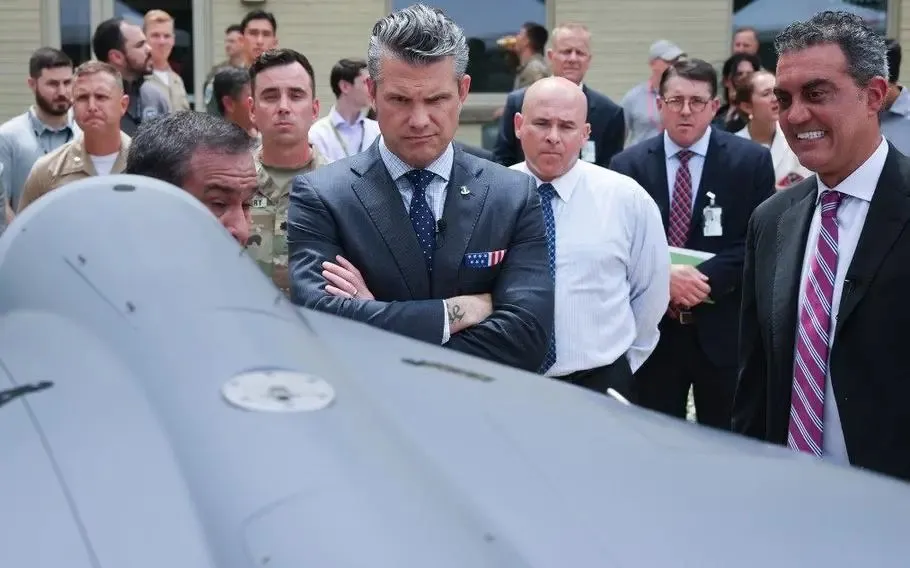
Responding to a question from The War Zone at a press conference at CENTCOM headquarters in Tampa, Florida, the admiral leading the war against Iran praised the Low-Cost Uncrewed Combat Attack System (LUCAS) kamikaze drone. Based on the Iranian Shahed-136, these weapons were used in combat for the first time just six days ago. They were fired against unspecified Iranian targets in the opening salvos of the Operation Epic Fury joint U.S.-Israeli attack on Iran and repeatedly since.
The War Zone has advocated for the procurement of this exact class of drone by the American military and today, Adm. Brad Cooper backed up that assessment.

“LUCAS, indispensable,” Cooper told us when we asked how effective they have been and how much they’ve helped preserve magazine depth, given their comparative low cost and faster and easier production.
America’s stockpile of offensive and defense munitions remains a concern as Epic Fury drags on, even though War Secretary Pete Hegseth, who also spoke at the press conference, downplayed it. More on that later in this story.
A Tomahawk cruise missile cost roughly between $2 million to $2.5 million a piece. Air launched cruise missiles currently in service cost over a million a piece, although work is being done to reduce that number considerably. There is still a tradeoff in warhead size, response time, and survivability, but cheaper weapons in greater quantities that can deliver a payload over hundreds of miles are badly needed as part of a arsenal mix that includes more advanced types.

“Costing approximately $35,000 per platform, LUCAS is a low-cost, scalable system that provides cutting-edge capabilities at a fraction of the cost of traditional long-range U.S. systems that can deliver similar effects,” Navy Capt. Tim Hawkins, a CENTCOM spokesperson, told TWZ back in December. “The drone system has an extensive range and the ability to operate beyond line of sight, providing significant capability across CENTCOM’s vast operating area.”

Moreover, the LUCAS design includes features that allow for “autonomous coordination, making them suitable for swarm tactics and network-centric strikes,” a U.S. official told us in December. As we have explained in detail in the past, the swarming capabilities combined with some of the drones being equipped with Starlink terminals, means extremely advanced cooperative tactics and dynamic targeting are possible, all while keeping humans in the loop.
The video below is said to show a LUCAS drone, recovered largely intact in Iraq. Its beyond-line-of-sight satellite datalink can be seen detached and hanging by a cable.
Locals in Iraq appear to have recovered a crashed and almost entirely intact Low-Cost Unmanned Combat Attack System (LUCAS), an American copy of the Iranian Shahed-136 Attack Drone, which is confirmed to have been used recently by Task Force Scorpion Strike during U.S. attacks on… pic.twitter.com/SEqO6627en
— OSINTdefender (@sentdefender) March 2, 2026
Cooper highlighted how the U.S. has reworked the Iranian Shahed, which have been wreaking havoc during this conflict, killing six U.S. troops and causing destruction across the Middle East.
“We captured it, pulled the guts out, sent it back to America, put a little ‘Made in America on it,’ brought it back here and we’re shooting it at the Iranians.”

In a video message earlier this week, Cooper said that the U.S. has fired “countless one-way attack drones” to great effect.
Thursday, we asked him what kinds of targets LUCAS drones have been used against and he offered a short response.
“Good ones,” he said.
We asked Cooper to respond to stories that have emerged saying the Pentagon and at least one Gulf ally are talking to Ukraine about procuring their low-cost Shahed interceptors. He deferred to Cooper.
“I’m not familiar with the particular offer, but the interceptors in general, we’ve had a number of new capabilities being fielded,” the CENTCOM commander explained. “Obviously, I’m not going to talk about it from the operational perspective of what those are, but I think you have seen over a period of time us kind of get on the other side of this cost curve on drones in general.”
“If I just walk back a couple of years, remember what you used to always hear, we’re shooting down a $50,000 drone with a $2 million missile,” he added. “These days, we’re spending a lot of time shooting down $100,000 drones with $10,000” weapons.
Before Cooper answered our questions, Hegseth repeated the Pentagon’s assertion that it has the weapons it needs to outlast Iranian missile and drone barrages.
“We’ve got no shortage of munitions,” Hegseth proclaimed. “Our stockpiles of defensive and offensive weapons allow us to sustain this campaign as long as we need to again, our munition status only increases as our advantage increases our capabilities.”
As we recently pointed out, Iran’s ability to launch missiles and drones at U.S., Israeli, and other allied targets in the Middle East has been severely degraded, curbing concerns, even if to just a small degree, about America’s magazine depth.
However, as we have often noted, one of the big concerns about Epic Fury is whether Iranian missile and drone barrages would outlast the ability of the U.S. and allies to defend against them. Despite six days of intensive attacks, Tehran still possesses thousands of missiles and drones, though a significant number of these weapons and their launchers — specifically the longer range ballistic missile types —have been destroyed or prevented from being accessed by crews.
The effort to eliminate the Iranian regime’s mobile missile launch capabilities continues. We are finding and destroying these threats with lethal precision. pic.twitter.com/AkGRYOjnOz
— U.S. Central Command (@CENTCOM) March 5, 2026
Though Iran has been severely pummeled by both the U.S. and Israel, it is unknown how much longer the conflict will grind on. President Donald Trump had stated that it could last four or five weeks. Now the time table is very murky, with the administration indicating it could last much longer. Regardless, the more it drags out, the more munitions the U.S. will expend, but at least it knows it can quickly build more LUCAS drones, if need be.
Contact the author: howard@thewarzone.com
Iran state TV presenter has threatened women’s national team for not singing anthem at opening AFC Cup match.

Published On 6 Mar 20266 Mar 2026
Share
The global representative organisation for professional footballers, FIFPRO, has urged governing bodies responsible for the 2026 Women’s Asian Football Confederation Cup to protect the Iran national team after they were labelled “wartime traitors” by an Iranian state television presenter.
Both FIFA, world football’s governing body, and the AFC have been called upon to “undertake all necessary steps to ensure the safety of Iran’s Women’s National Team players”.
list of 4 itemsend of list
The Iran women’s national football team players did not sing their national anthem before their Asian Cup opener against South Korea in Australia earlier this week.
Islamic Republic of Iran Broadcasting presenter Mohammad Reza Shahbazi said in a video that the players showed a lack of patriotism and their actions amounted to the “pinnacle of dishonour” in footage circulating widely on social media.
“Let me just say one thing: traitors during wartime must be dealt with more severely,” Shahbazi said.
“Anyone who takes a step against the country under war conditions must be dealt with more severely. Like this matter of our women’s football team not singing the national anthem … these people must be dealt with more severely.”
In a statement released on the social media platform X, FIFPRO released a strong and lengthy statement outlining its concerns.
“In addition to the dangerous situation the players would face if they return to Iran following the tournament, FIFPRO Asia/Oceania is deeply concerned by reports that Iranian state television has publicly attacked the members of the team for remaining silent during the national anthem before their opening match,” the statement read.
“Footage circulating online shows Mohammad Reza Shahbazi, a state TV presenter, calling for them to face the ‘stigma of dishonour and betrayal’.
“These statements significantly heighten concerns for the players’ safety should they return to Iran after the tournament.
“FIFPRO Asia/Oceania has once again written to the AFC and FIFA, calling on them to uphold their human rights obligations under the UN Guiding Principles on Business and Human Rights and FIFA’s Human Rights Policy and protect the players.
“We call on the AFC and FIFA to urgently engage with the Iranian Football Association, the Australian Government and all other relevant authorities to ensure that every effort is made to protect the safety of the players.”
The Iranian players stood in silence when Iran’s anthem was played at the Gold Coast ahead of their 3-0 opening loss to South Korea on Monday, though they sang and saluted before a 4-0 defeat by hosts Australia three days later.
The Reuters news agency has contacted both the Asian Football Confederation, the Iranian football federation and the team at the Asian Cup for comment.
Ahead of their game against Australia, Iran forward Sara Didar fought back tears and spoke about the war, while coach Marziyeh Jafari said her players were doing their best to focus on the tournament despite concern for their families back home.
Iran face the Philippines on Sunday in their final group match.