POLITICS

Stay informed about the latest developments in politics with our comprehensive political news coverage. Get updates on elections, government policies, international relations, and the voices shaping the political landscape.

Dust storms have overtaken Coachella. Researchers say it’s a sign of what’s to come

A powerful dust storm disrupted the first weekend of the Coachella music festival as blustery winds swept over the sprawling grounds and enveloped concertgoers in a whirlwind of desert sand.

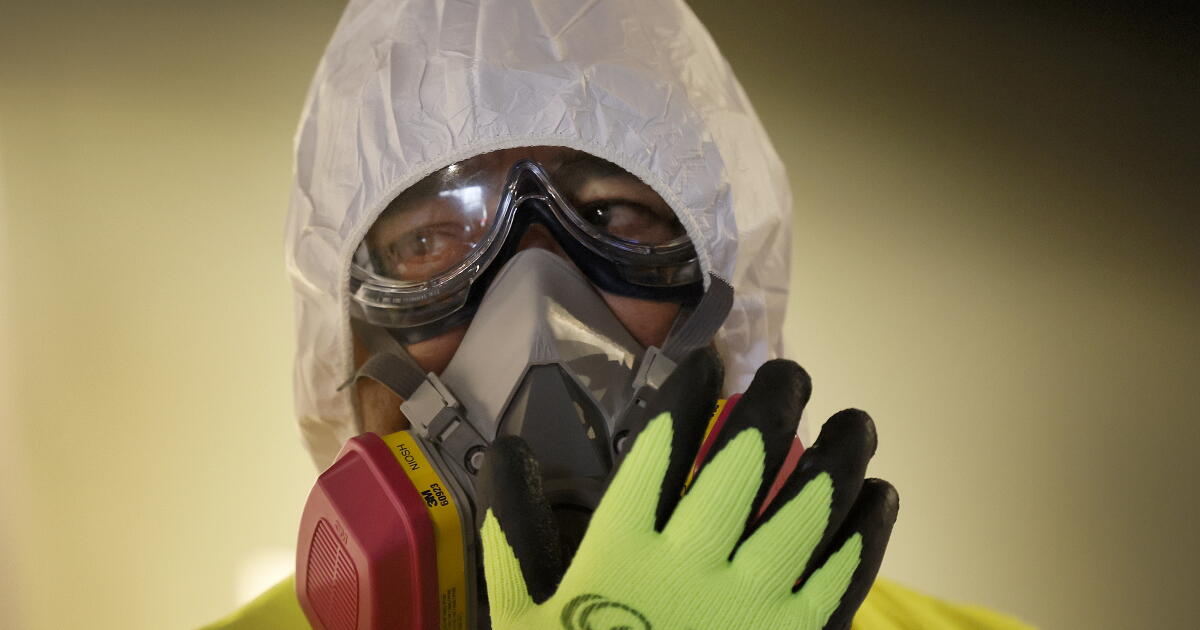
Several social media videos from last Friday night showed attendees navigating the festival grounds amid wind-tossed tents and wearing face masks to guard against the airborne dust.

The weather conditions prompted the South Coast Air District to issue dust advisories for parts of the Coachella Valley, warning that strong winds could expose people to unhealthy dust levels. The dust storm caused festival organizers to cancel a highly anticipated performance by Italian EDM artist Anyma, who had been scheduled to perform Friday at midnight on the main stage.

“I don’t have many words other than to say I’m truly devastated and deeply sorry to everyone who showed up to the main stage, and to those watching the livestream at home,” he posted on X. “The dangerous winds not only prevented us and Coachella from building our stage, but also made it impossible for my entire live setup and performance to operate safely.”

You’re reading Boiling Point

The L.A. Times climate team gets you up to speed on climate change, energy and the environment. Sign up to get it in your inbox every week.

It was the latest instance in which dusty conditions hampered one of the nation’s largest and most profitable music festival, which has been called “Dustchella.” But it is just one fragment of the economy disrupted by this natural phenomenon.

Wind-driven dust is an overlooked environmental hazard — and one that carries a hefty price tag. A recent study estimated that dust storms cost more than $154 billion in the U.S. in 2017, alone. The evaluation puts dust events on par with natural disasters in terms of economic costs, eclipsing, for example, the 2017 wildfire season but shy of that year’s hurricane season, according to Irene Feng, the lead author of the 2024 study, who researched dust at the University of Texas at El Paso.

“Dust is kind of a big deal,” said Feng, now a post-graduate student at George Mason University. “The fact that it was even comparable to hurricanes … was a huge surprise to me.”

Since researchers last attempted to calculate the costs associated with dust pollution in the 1990s, the numbers overall numbers essentially quadrupled.

Some of the greatest costs calculated in the new study include:

  • $100 billion related to dust-related deaths and lost productivity from health issues, as inhaling dust particles can lead to serious respiratory illness and trigger heart attacks.
  • $40 billion from additional household costs from cleaning, painting and property damage.
  • $9.6 billion for damages to agriculture from lost water and weaker crop yields.
  • $4 billion in lost value of weakened renewable energy generation, because dust obscures solar panels and gum up wind turbines.
  • $280 million for traffic crashes caused by reduced visibility due to dust storms.

Among one of the most grave conditions Feng analyzed was a potentially life-threatening respiratory infection known as “valley fever.” Throughout much of Southwest, desert soil can be laced with Coccidioides fungus spores. When inhaled, this fungus can propagate in the lungs, potentially causing scarring and collapse of lungs.

In many cases, valley fever symptoms can mirror the flu or COVID, leading doctors to misdiagnose patients, and to not provide proper treatment.

Coachella, which is hosted at an irrigated polo field surrounded by desert, is particularly susceptible.

“When I heard that there was a dust event at Coachella, I was actually really concerned about the valley fever cases that might come out of that,” Feng said. “Because there’s so many people traveling from outside the state, and they don’t necessarily know what valley fever is.”

But devastating dust-related effects, like valley fever, can be mitigated, at least to some degree, according to environmental experts.

In California, state and local government agencies have launched dust-mitigation efforts by installing windbreaks, such as cultivating native plants or reshaping the topography with more ridges. About 200 miles north of Los Angeles, at the eastern base of the Sierra Nevada mountains, Owens Lake, a critical and controversial source of water for Angelenos, city officials say they have drastically reduced dust near the dry, exposed lake bed in recent years after implementing some of these measures.

Scientists say global warming is causing warmer temperatures and more intense droughts, paving the way for more dust emissions. Feng said that could require more innovative solution, more action and more money.

“From what I’ve seen, it’s projected to be dustier in the future,” Feng said. “So, all these effects, all these costs, they’re just only going to get worse.”

More recent air news

The NAACP sued Elon Musk’s artificial intelligence company this week, claiming xAI (the creator of Grok) violated federal clean air laws. The lawsuit, reported by CNBC’s climate tech reporter Lora Kolodny, accuses the company of installing and operating 27 natural gas-fired turbines to power its data center in Memphis without the necessary air permits.

Recent far-flung wildfire smoke has led to air quality risks in unlikely places. Now, Michigan, my beloved home state, is overhauling its air quality alerts system after having endured heavy smoke from Canadian wildfires in 2023 and 2025, per Planet Detroit’s senior reporter Brian Allnutt.

New research suggests methane emissions have been drastically underestimated in the country’s largest cities. An satellite analysis of 12 urban areas, including New York City and Los Angeles, found up to 80% more methane emissions than previously thought, according to ABC reporter Julia Jacobo.

Because methane warms the atmosphere far more than carbon dioxide, the findings underscore the need to investigate large emitters, such as landfills, gas pipelines and wastewater treatment facilities. One other, underreported source is California’s man-made lakes that we tap for drinking water, L.A. Times water reporter Ian James writes. Environmental groups are urging environmental regulators to investigate why.

A few last things in climate news

Sales of new electric vehicles have slumped as Trump has eliminated federal incentives for car buyers. But, as oil prices have spiked due to the war in Iran, used EV sales have jumped 20%, signaling a renewed willingness by Americans to ween themselves off fossil fuels, according to Bloomberg senior correspondent Kyle Stock.

Stingrays injuries in Southern California have been on the rise. LAist climate reporter Erin Stone, who was recently wounded by stingray’s barb herself, writes that warming waters attract more rays and make these painful encounters more likely.

Under an ambitious proposal, the Bay Area could host the world’s largest floating wind farm, taking California closer to its 100% renewable energy goal, L.A. Times climate reporter Hayley Smith writes. The plan would involve building hundreds of Eiffel Tower-sized wind turbines and towing them into the deep, breezy waters of the Humboldt Bay, where they could generate up to 15% of the state’s electricity.

This is the latest edition of Boiling Point, a newsletter about climate change and the environment in the American West. Sign up here to get it in your inbox. And listen to our Boiling Point podcast here.

For more air quality news, follow me at @_TonyBriscoe on X and on LinkedIn.

Source link

Column: Pay attention to the deficit, even if Trump won’t

Americans could be forgiven if they’re unaware that President Trump recently performed one of his most essential tasks and sent his annual budget request to Congress, though months late and stunningly incomplete.

After all, so much else has been dominating the news lately: the Mideast war that Trump promised not to start. Price rises he’d vowed to end. His repeated insults of Pope Leo XIV. His portraying himself as Jesus Christ, then lying about having done so. An incompetent attorney general to fire. And the president’s actual priorities — plans for a $400-million White House ballroom and a massive “Triumphal Arch” nearby!

It’s a lot.

Once again, as in Trump’s first term, the public and press are inattentive to the nation’s fiscal health relative to past years. But that reflects the president’s own disengagement with reconciling spending and revenue — this from a president many Americans voted for based on his purported prowess as a businessman. For decades back to Ronald Reagan’s time, so-called deficit wars in Washington were a big story. Now, even Republicans in Congress complain of Trump’s absence from the fiscal fray as they struggle to belatedly finish this year’s budget work that was due last fall, and to end a weeks-old partial government shutdown, before turning to the budget for the fiscal year starting Oct. 1.

Yet it’s worth paying attention to U.S. budgets even if Trump won’t, for the sake of our children and grandchildren who’ll inherit the bills. In one document, a federal budget reflects the nation’s priorities. And these days, in the perennial guns-versus-butter debate, Trump has made his feelings all too plain.

“We’re fighting wars,” he told a group at the White House on April Fools’ Day. “We can’t take care of day care … Medicaid, Medicare, all these individual things.”

Forget that Trump swore to end wars. Or that last year, long before he went to war against Iran, he cut $1 trillion over 10 years from Medicaid and other healthcare programs in his misnamed “One Big Beautiful Bill.”

Yes, budgets can be boring, especially to a president with a famously short attention span. Trump and many of us Americans are distracted constantly by all the shiny objects he throws at the national consciousness by his words, acts and social media postings at all hours.

Yet the budgetary trend is clear to anyone bothering to look: As president, Trump is once again exacerbating the nation’s unsustainable course of piling up debt. According to the nonpartisan Congressional Budget Office, among other credible sources, debt is now approaching the highest level in U.S. history, which was reached during World War II. It already surpasses the size of the entire economy and threatens higher borrowing costs and reduced investments.

For all the achievements Trump likes to claim — ending eight wars in a year! — here’s one that’s real: He is on a path to break his own record for the most debt in a single presidential term, $8.4 trillion in Trump 1.0, which was nearly double the increase under President Biden.

Need further proof of Trump’s brazen mendacity? Of course you don’t, but here it is: In the face of the well-documented budget record, Trump declared both this year and last year to a joint session of Congress, on national television, that he would balance the federal budget —“overnight,” he said in February.

The inequitable tax cuts and big spending increases for the military and immigration crackdowns that Trump and the Republican-controlled Congress enacted last year are significantly greater than in his first term, and are driving up the debt despite Republicans’ deep healthcare cuts. Just months after Trump took office, the ratings firm Moody’s downgraded the nation’s sterling credit rating for the first time in more than a century.

And now, in his new budget request, Trump seeks to inflate military spending from under $1 trillion when he regained office to $1.5 trillion, for the biggest year-to-year increase in military budgets since World War II.

This fiscal irresponsibility is happening at the worst possible time. For the last quarter of the 20th century, presidents and Congresses of both parties annually debated how to reduce deficits and several times reached consequential multi-year deals, culminating during the second Clinton term in four straight years of surpluses. (Those surpluses ended — wait for it — with Republicans’ tax cuts and war spending during the George W. Bush administration.)

Politicians back then were moved not just by the deficits of their time — deficits that, as a share of the economy, were less than half what they are now. They also were responding to experts’ warnings of a demographic tsunami by the 2020s: With the aging of the huge baby-boomer population, spending for Social Security, Medicare and Medicaid would greatly increase even as the workforce whose payroll taxes support those programs shrank. Today the number of people 65 or older is almost three times what it was 50 years ago, and rising.

This reckoning is upon us, though you wouldn’t know it as Trump keeps calling for cutting revenue and spending more for lawless wars, immigration raids and monuments to himself. Barring bipartisan action, in 2033 Social Security’s retirement fund and Medicare’s hospital fund will no longer be able to cover beneficiaries’ full claims, according to their trustees’ annual report, necessitating reduced benefits or shifts of money from other worthy programs.

Trump did put Vice President JD Vance in charge of a “war on fraud.” But that holds about as much promise as Elon Musk’s fiscal fiasco — remember DOGE? — that cost money instead of cutting $2 trillion as promised.

Like other problems, Trump likely will leave the fiscal follies to his successor, who, should he or she win two terms, would preside as Social Security and Medicare become insolvent. I’ve yet to hear any of the early 2028 presidential aspirants — or Trump — address or be asked about that.

Let the debate, belatedly, begin.

Bluesky: @jackiecalmes
Threads: @jkcalmes
X: @jackiekcalmes

Source link

Jackie Speier would like her former congressional colleagues to zip up and shape up

It seems like a simple ask that male politicians don’t sexually harass or even rape women, but also, it seems like an open secret in Congress that sexual misconduct is too common.

Take Eric Swalwell, whose epic political immolation has captivated this week’s national political news, including a TMZ-obtained video of the then-congressman bleary-eyed in a bathrobe on a yacht that was literally the least-worst revelation.

For years “there were swirling rumors about Eric,” former Rep. Jackie Speier told me. Speier in 2018 thought she’d put in place tough new rules to stop sexual misconduct among her former colleagues, and the type of backroom shrugs that allowed men to prowl unchecked.

But despite her efforts, Speier, who represented a part of the Bay Area near Swalwell’s district until 2023, said the problem remains Congress itself, and the “crippling” power that elected officials have over their staffs. Don’t get her started on how that power imbalance is even worse for young lobbyists.

“I’ve always said that Congress is Hollywood for ugly people,” she said. “It’s a whole environment that becomes, I think, toxic.”

But also one that, she added, isn’t inevitable.

The 2018 change

In 2017, the #MeToo movement had swept into the public consciousness and ignited calls for change.

Armed with that outrage and the roiling fire of public opinion, Speier set out to change archaic rules that governed how sexual misconduct was handled in Congress.

“I’ll just run through what it was like,” she told me. “If you wanted to file a complaint, you had to be prepared to go through some period of counseling; to have a cooling off period; to participate in mandatory mediation; and sign an NDA, and then the taxpayers picked up the tab if there was a settlement. It was kind of jaw dropping to think that that was the policy.”

It wasn’t just policy, it was culture. Speier herself had been the victim of an assault when she was a young staffer — a senior staffer pushing her against a wall and forcibly kissing her. And like so many women, she put the episode aside and went on with her career because speaking out would have likely brought her more grief than justice.

But by 2017, she realized the public was at a “tipping point,” and, as she said then, “Congress has been a breeding ground for a hostile work environment for far too long.”

With Rep. Bradley Byrne, a Republican from Alabama, they passed the Congressional Accountability Act of 1995 Reform Act.

It did away with the weird and coercive requirement for counseling and a cooling off period and most significantly, forced sexual harassers to pay for their own settlements instead of pinning the cost on taxpayers.

But even with the new rules, some colleagues didn’t seem to get it. Speier recalled one man who, informed of possibility he would have to pay sexual harassment settlements out of his own pocket, asked if he could purchase insurance to cover those costs.

“How about you keep your zipper up?” Speier wondered.

The bigger problem

Still, Speier said she thought the law made a difference not just in how claims of misconduct were handled, but in the culture of Capitol Hill.

But, “over time it just was relaxed,” she said.

When Speier left office in 2023, Rep. George Santos (R-N.Y.) was under investigation for sexual harassment — a claim Congress deemed unfounded, but bounced Santos from its ranks for a bunch of other misconduct.

Let’s be real — Congress has never been without scandal.

But Speier said that doesn’t mean sexual abuse can’t be stopped. She just thinks the rules she put in place need to be even tougher: A zero-tolerance approach similar to what corporate America often enforces.

“I’m thinking now that the way to fix this may be something more direct and straightforward and simple, much like they do in the private sector,” she said.

“When the CEO is having an affair with a subordinate and it becomes known, he’s history. He’s relieved of his duties, and if we made it clear that if you sexually harass a staff member, or you have an affair with a staff member, you will be expelled, or you will be subject to expulsion of Congress, that will change their behavior.”

I love her enthusiasm and I support tossing out miscreant members, but I’m not sure even that will keep the zippers up. But there is always hope.

And something has to be done.

“These cases underscore the fact that these women do not feel comfortable coming forward,” she pointed out. “So we’ve got to figure out why and close that hole.

“Is it because they’re fearful that they’ll be retaliated against or that they’ll be ostracized or blackballed? I don’t know the answer, but I’m really urging my colleagues on both sides of the aisle to fix this, and part of fixing it is talking to these women who were, in fact, sexually harassed and assaulted and find out why they didn’t feel comfortable coming forward.”

That’s the real issue, and the real demand we should be making. From the Oval Office to district offices, too many elected leaders have proven they’ll use their power to obtain sex — by coercion or even force.

And too many women remain afraid to speak out because they still suffer both career and social consequences — a realistic fear that coming forward could end their own ambitions, or at least leave them battling to not be defined by the abuse.

Yes, Swalwell and others have been shamed into resigning.

But it’s past time to make sexual abuse a one-strike-you’re-out offense — for the perpetrator, not the survivor.

You’re reading the L.A. Times Politics newsletter

George Skelton and Michael Wilner cover the insights, legislation, players and politics you need to know. In your inbox Monday and Thursday mornings.

What else you should be reading

The must-read: Swalwell supporters scramble after he drops out of governor’s race. Who will benefit?
The deep dive:Rebuilding After Fires, L.A. Neighbors Join Forces and Innovate
The L.A. Times Special: In L.A. County, many homeless people enter shelters, only to end up back on the streets

Stay Golden,
Anita Chabria

Was this newsletter forwarded to you? Sign up here to get it in your inbox.

Source link

Presidential pin money – Los Angeles Times

Robinson is a freelance writer.

The votes are in, and it’s bad news for John McCain. Barack Obama has a big lead in the sale of campaign buttons and other election paraphernalia, outselling McCain 3 to 1 on one memorabilia website.

An Obama victory could make some of those pieces more valuable, experts say, given the historic nature of his candidacy. A button from the launch of Obama’s presidential campaign sold for $150 in August at the American Political Items Collectors National Convention.

If you think there’s no redeeming value to the interminable exercise known as the American presidential campaign, you are not a collector. The stock market may have tanked, but the longest presidential season in U.S. history has stimulated a different kind of investment opportunity.

“This year more than any other, people are collecting political memorabilia,” says Adam Gottlieb, a spokesman for the California Energy Commission and a presidential-item junkie whose extensive Teddy Roosevelt collection is on exhibit through the end of the year at the California Historical Society in San Francisco. “People are yearning for nostalgia, something meaningful in their lives.”

On Monday, the PBS series “Antiques Roadshow” gets into the act with “Politically Collect,” a program that pulls back the appraisal curtain on presidential artifacts worth considerably more than the paper or tin on which they’re printed — up to $75,000, for instance, for a photograph of Lyndon B. Johnson taking the oath of office after President Kennedy was shot in 1963.

“Political items have really gone up in price,” says Jeffery Daar, an attorney and Democratic Party activist whose Northridge home overflows with buttons and other memorabilia from the last 40 years of electioneering.

Presidential paraphernalia has long been the domain of hard-core political fans such as Daar, who live to unearth an obscure invitation or rare tchotchke. But in the last decade, the field has also become a place to make a tidy profit. A 1920 button of Democratic presidential candidate James Cox and his running mate, Franklin Delano Roosevelt, can sell for as much as $30,000. Last month, a signed photo of John F. Kennedy was going for $4,200 on Politics-Now.com. EBay and political memorabilia auction sites have made it possible for anyone to click their way into the game.

The collecting impulse is driven by something the afflicted say you can’t get from stamps or Cabbage Patch stockpiles.

“It’s not just a button, but an item in a political campaign. It’s a piece of living history,” says Daar, former head of the Democratic Party in the San Fernando Valley and a longtime delegate to his party’s conventions, where he scoops up all the mementos he can.

“Every collector of political memorabilia is also a frustrated historian,” says Steve Ferber, who sells mementos of presidents and hopefuls with his wife, Lori, through LoriFerber.com.

Tom Morton, a Los Angeles accountant specializing in pre-1930s items, recently landed clay smoking pipes puffed by Millard Fillmore and Franklin Pierce.

“It’s one thing to read about it in a history book,” he says. “It’s quite another to hold it in your hands.”

But not all candidates inspire collectors to reach out and acquire. Tom French, a leading dealer and owner of Politicalheritage.com in Santa Cruz, says it’s hard to give away a Nixon button. It’s also tough unloading Michael Dukakis, Bob Dole and George W. Bush fare.

Not surprisingly, the most in-demand figures tend to be the most charismatic and popular presidents — Abraham Lincoln, FDR and Theodore Roosevelt, JFK, Ronald Reagan. Harry Truman also vaults into the ranks of the most valuable because scant artifacts were produced for the candidate who was a long shot to win in 1948.

Scarcity, popularity and age are major factors in the pricing of political memorabilia. An abundance of items were produced for 1940 Republican candidate Wendell Wilkie, including some fabulous Wilkie nylons ($40) and buttons that said, “No Man Is Good Three Times,” all to no avail against the popular FDR. So many Wilkie items are in circulation, they’re cheap — not like the Cox-FDR button, valued at $30,000 because only a few dozen are known to exist. Some scarce Truman items can run about $10,000.

For collectors, a crucial consideration is whether the material was produced by the campaign. Daar says 95% of the buttons and T-shirts available for sale in the current cycle were made by outside vendors and won’t be worth much. Look for official items created by the Obama and McCain campaigns and materials with specific dates and events attached to them, such as an Obama button from the rural caucus, something Daar likes for future value.

Collectors recommend buying things you like — favorite candidates or graphics that catch your eye. And if you want to buy for investment, do the research to make sure the item is authentic. You can get help by joining American Political Items Collectors ($28 a year, www.apic.us), a national organization founded in 1945 that sponsors dozens of button meets every year and authenticates artifacts.

Avid collectors, however, are drawn to the outsized characters who seek the highest office in the land and the creative wiles used to get them there.

“There’s got to be something behind the item — the personality, the election, the historical context, or you might as well be collecting nails,” says Neal Machander, an Orange County collector and past president of American Political Items Collectors.

The exploits of rough-riding, big-game-hunting Teddy Roosevelt have captivated Gottlieb since he was in grade school. “It’s like he lived six lives,” Gottlieb says.

His collection contains mementos of Roosevelt’s whistle stop in Los Angeles on his trip through California in 1903. When it comes to straight talk, it’s hard to top this line from a Roosevelt button in 1912: “If You’re Against Me, You’re a Crook.”

The sedate catch phrases of modern elections are as exciting as a phone book next to the raucous sloganeering of the early 20th century. Take, for instance, the 1928 rallying cry on an anti-prohibition button: “Vote for Al Smith and Make All Your Wet Dreams Come True.” Last year, it sold at auction for $9,560.

“Collectors really eat up the hoopla,” says French, who adds that he’d kill on “Jeopardy” in the VP category. “It’s an important representation of what democracy and politics are all about. We’re just in awe of the office.”

home@latimes.com

Source link

Political Involvement of Asian Americans

Re “Asian Population Surges in County,” Feb. 12: Assemblywoman Carol Liu (D-La Canada Flintridge) suggests that the reason Asian Americans lack political influence in the U.S. is Asian American cultural characteristics. Although I have the greatest respect for Liu and her work in the Legislature, I disagree. The culprit is not culture but many Asian Americans’ ineligibility to vote as they make their way through the citizenship process, and parties’ and candidates’ failure to mobilize the Asian American community.

Contrary to a public image of political complacency, Asian Americans have a long history of participation in American politics. They have participated through lobbying, litigation, petitioning, protesting, boycotting, civil disobedience and contributing to political campaigns. Liu herself is an example of such involvement. In a multi-city, multiethnic, multilingual survey of Asian Americans, my colleagues and I find that, contrary to assumptions of political apathy, Asian Americans are not culturally disadvantaged when it comes to politics. In fact, they are not at all apathetic. Only 13% express a lack of interest in American politics.

Janelle Wong

Asst. Prof., Political

Science, Program

in American Studies

and Ethnicity, USC

Source link

Jones Seeks U.S. Probe Into Davis’ Power Deals

Secretary of State Bill Jones, lagging in the polls for the Republican gubernatorial primary, on Monday asked the U.S. attorney’s office in Sacramento to investigate possible conflicts of interest between energy companies and the administration of Gov. Gray Davis.

For months, Jones has criticized Davis for hiring consultants during last year’s energy crisis who owned stock in companies that the governor alleged were gouging the state. Davis’ spokesman held $12,000 of stock in Calpine, a firm that won state contracts.

On Monday, Jones said the state Fair Political Practices Commission and the attorney general’s office, both controlled by Democrats, were not investigating aggressively enough.

Seizing upon recent reports that Davis met with then-Enron Chairman Kenneth L. Lay during the crisis, Jones called for a federal investigation.

“It is now time that the U.S. attorney’s office actively engage in this scandal and open an investigation into the conflicts of interest and insider dealings of Gov. Gray Davis and his administration,” Jones said at a Sacramento news conference. “Because we cannot get to the truth and we cannot get the entities entrusted by the people to do their jobs, we must now go to a higher authority.”

A spokeswoman for the U.S. attorney’s office declined comment.

Roger Salazar, a spokesman for the Davis campaign, said the governor had taken appropriate action against consultants who had conflicts, dismissing four last summer.

The chairwoman of the FPPC responded coolly to Jones’ allegations. “We do not comment on complaints or any investigative actions taken in response to those complaints,” Karen Getman said. “Nor do we allow the timing of our activities to be influenced by upcoming elections.”

Though Jones called for more disclosure into Davis’ contacts with the energy industry, he has different standards for the Bush administration.

Spokeswoman Beth Pendexter said Jones believes Vice President Dick Cheney does not have to disclose whom he met with while forming the national energy policy last year.

Source link

Former Chapman University dean disbarred for Trump 2020 election role

The California Supreme Court ordered attorney and former law school dean John Eastman disbarred on Wednesday for his role aiding the Trump administration’s attempt to overturn the 2020 election.

The court ordered Eastman’s name be “stricken from the roll of attorneys” and that he pay $5,000 to the State Bar of California.

Eastman’s attorney, Randall A. Miller, told the Associated Press that the court’s decision “departs from long-standing United States Supreme Court precedent protecting First Amendment rights, especially in the attorney discipline context.” Miller did not immediately return an after-hours phone call seeking comment from The Times.

State Bar Chief Trial Counsel George Cardona said in a statement that the ruling “underscores that Mr. Eastman’s misconduct was incompatible with the standards of integrity required of every California attorney.”

“Today’s California Supreme Court order disbarring John Charles Eastman from the practice of law in California affirms the fundamental principle that attorneys must act with honesty and uphold the rule of law, regardless of the client they represent or the context in which that representation occurs,” said Cardona said.

The Supreme Court’s decision affirms a 2024 ruling from State Bar Judge Yvette Roland that Eastman be prohibited from practicing law.

In a marathon trial that lasted off and on from June to November 2024, the State Bar, which regulates lawyers in California, argued that Eastman was unfit to practice law for peddling bogus claims that fraud cost Trump the election and for promoting a fake-elector scheme to block the electoral count.

“It is true that an attorney has a duty to engage in zealous advocacy on behalf of a client,” Roland wrote in 2024 in a 128-page ruling. “However, Eastman’s inaccurate assertions were lies that cannot be justified as zealous advocacy.”

Roland found Eastman culpable of 10 of 11 counts of misconduct.

Eastman fomented “predictable and destructive chaos” when he stood beside fellow Trump adviser Rudolph W. Giuliani on Jan. 6, 2021, and told an enormous crowd at the Ellipse that the election had been fraudulent, the bar argued.

Eastman claimed he was acting in good faith, and as a vigorous champion of his client. But State Bar attorneys argued that “the evidence, including his often not-credible trial testimony, shows that he held — and still holds — truth and democracy in contempt.”

Despite Eastman’s repeated assertions that Joe Biden’s victory was illegal, Roland ruled, Eastman’s own words showed he knew that proof was lacking.

The judge cited an email that Eastman sent to a friend, Cleta Mitchell, on Nov. 29, 2020, acknowledging that fraud serious enough to sway the results could not be proved.

“It would be nice to have actually hard documented evidence of the fraud in the areas to which the analyses pointed,” Eastman wrote.

After the 2024 ruling Eastman responded on his Substack writing that he hoped the California Supreme Court or U.S. Supreme Court would “step in to put a stop to this lawfare that has become a serious threat to the First Amendment, the right of controversial clients and causes to legal representation, and more broadly to our adversarial system of justice.”

Eastman has a long history in California’s conservative legal circles. He was hired by Chapman’s law school in 1999 and was dean from June 2007 to January 2010, then continued to teach courses in constitutional law, property law, legal history and the 1st Amendment.

He retired in early 2021 after more than 100 Chapman faculty and others affiliated with the university signed a letter calling on the school to take action against him for his role in the Jan. 6 insurrection.

Wednesday’s decision is a bookend in a lengthy investigation into Eastman’s actions that began in 2021. In October of that year, the nonpartisan legal group States United Democracy Center filed an ethics complaint calling on the State Bar to investigate Eastman’s Jan. 6 actions.

Christine P. Sun, senior vice president of legal at the States United Democracy Center, said on Wednesday that the court’s decision is “part of a broader reckoning for those who seek to undermine the rule of law.”

“Eastman played a central role in the plot to overturn the 2020 election—pressuring state officials, advancing baseless claims in court, and promoting a fringe theory that the vice president could reject certified electoral votes,” Sun said in a statement. “His unethical actions have had real, lasting consequences for our democracy, and we applaud the California Supreme Court’s decision to disbar him.”

Staff writer Christopher Goffard contributed to this report

Source link

1% of Doctors Get Medicare Reviews

Reviews to detect Medicare overpayments were done on fewer than 1% of the doctors who bill the federal health insurance program, a congressional investigator said Wednesday.

The reviews by Medicare’s private contractors are an important way to identify physicians who have been paid too much to treat the elderly and disabled, auditor William Scanlon said at a House Budget Committee hearing.

In the 2000 budget year, those private contractors reviewed the medical claims of 1,891 physicians out of more than 600,000 who billed Medicare that year, said Scanlon, who covers health issues for the General Accounting Office, the investigative arm of Congress.

Most Medicare payments are proper, Scanlon said. But the program “faces a difficult task in finding an appropriate balance between ensuring that Medicare only pays for services allowed by law and making it as simple as possible for providers to treat Medicare beneficiaries and bill the program.”

In 1999, payments made in error amounted to $11.9 billion, the government has reported.

At the hearing, government and academic experts said Congress should pay more attention to the financial health of the 36-year-old program. Government projections earlier this year predicted Medicare, a $240-billion program, would start running short of cash in about 15 years.

An official at the agency that runs Medicare promised a turnaround on all counts.

“In no way will we diminish our interest in fighting waste, fraud and error in the Medicare program,” said Ruben J. King-Shaw Jr., the chief operating officer for the Centers for Medicare and Medicaid Services.

“For the small percentage of people who take advantage of the system, we will continue our aggressive efforts to protect the funds that taxpayers have entrusted to us.”

Financial experts also told Congress that the goals of overhauling Medicare and adding a popular prescription drug benefit could be too much all at once.

“Medicare’s future will likely be written numerous times as health care changes and baby boomers move through the system,” said Marilyn Moon, a health economist at the nonpartisan Urban Institute.

There were also warnings about encouraging private health plans to compete with the federal program. President Bush promoted the idea this month.

Bush said he wants more health maintenance organizations and private health plans to compete for seniors’ business within the underlying Medicare program; 15% of the 40 million enrollees use private plans. Bush said such competition could bring better service, lower premiums and extra benefits, such as complete drug coverage.

But the government would have to make sure it helps all seniors, regardless of which plan they are in, said Comptroller General David Walker, head of the GAO.

“Separating winners from losers is a basic function of competition,” Walker said in a report to Congress.

Source link

DOJ recovers millions of dollars in Colonial Pipeline ransom

The Justice Department recovered $2.3 million in cryptocurrency ransom that Colonial Pipeline paid to hackers whose cyberattack last month shut down its major East Coast pipeline, leading to gas shortages up and down the East Coast, authorities said.

Deputy Atty. Gen. Lisa Monaco said the FBI on Monday seized the majority of the ransom that Colonial Pipeline paid to hackers who used malware developed by DarkSide, a Russia-linked hacking group, to encrypt and lock up the company’s computer systems. The company, which Monaco credited with quickly alerting the FBI to the attack, said it paid the hackers $4.4 million in bitcoin to regain access to its systems.

“Today we turned the tables on DarkSide,” Monaco said, calling such ransomware attacks an “epidemic” that poses a “national security and economic threat” to the U.S. “This was an attack against some of our most critical infrastructure.”

Though the malware did not affect systems that operate the company’s pipelines, which stretch from New Jersey to Texas, Colonial discovered the hack on May 7 and closed its spigots for five days out of an abundance of caution. The pipeline supplies about 45% of the jet fuel, gasoline and heating oil consumed on the East Coast, and the shutdown sparked panic from drivers, who raced to top off tanks, leading gas stations to run out of fuel.

The Justice Department did not disclose how much Colonial paid in ransom, but the company’s chief executive told the Wall Street Journal last month that it made a $4.4-million payment in bitcoin. Colonial CEO Joseph Blount said the company paid the extortion demand because he was concerned a prolonged disruption of the pipeline would hurt the nation.

“I know that’s a highly controversial decision,” Blount told the newspaper. “I didn’t make it lightly. I will admit that I wasn’t comfortable seeing money go out the door to people like this.”

Ransomware hackers typically trick unwitting employees into opening an email and clicking on an attachment or a link, which then infects computer servers with malware that encrypts data and locks the systems. Victims must pay a ransom to the hackers to obtain a decryption key to unlock and recover the information. DarkSide’s malware poses a double whammy — it can also siphon out information, giving hackers more leverage because they can threaten to disclose sensitive data if they are not paid.

FBI Deputy Director Paul Abbate said DarkSide produces ransomware that it sells to hackers who conduct cyberattacks and share a percentage of their proceeds with the malware’s developers. DarkSide’s product is one of about 100 ransomware variants the FBI is investigating, Abbate said.

The bureau has been investigating DarkSide since last year, Abbate said, and has identified more than 90 victims of its ransomware in manufacturing, legal, insurance and healthcare industries. Working with other U.S. government agencies, the FBI identified “a virtual currency wallet” that the DarkSide hackers were using to collect payment from a victim, Abbate said.

The Justice Department then obtained a warrant to seize those bitcoins, officials said.

“The old adage ‘follow the money’ still applies,” said Monaco, the deputy attorney general. “That’s exactly what we do.”

The Colonial Pipeline attack was the latest in a series of ransomware assaults that has crippled government agencies, hospitals and businesses, including a major meat producer that was forced last week to idle plants, sparking concerns about potential increases in meat prices and shortages. A task force of more than 60 experts from industry, government and nonprofits issued a report in April that calls ransomware “a flourishing criminal industry that not only risks the personal and financial security of individuals, but also threatens national security and human life.”

The report, published by the nonprofit Institute for Security and Technology, estimates that nearly 2,400 governments, healthcare facilities and schools were victims of ransomware attacks last year. Ransom payments rose to $350 million last year, a 300% increase over 2019, the report says. The average such payment topped $300,000.

Cybersecurity experts and former federal prosecutors and agents blamed several trends for the increase. The rise of difficult-to-trace cryptocurrency has made it far easier for criminal gangs to collect payments, the experts said. Cybercriminals have also begun to increasingly operate within the borders of U.S. adversaries, particularly Russia. The Kremlin, for example, allows hackers to operate with impunity if they do not target Russian businesses or citizens and focus their energy on sowing chaos and confusion in the West.

The Biden administration is seeking to find ways to combat the rise. President Biden said he will discuss ransomware attacks this week with U.S. allies during a European trip, and bring up the subject during a June 16 meeting with Russian President Vladimir Putin. The Justice Department has launched a task force to better coordinate its approach to the crime wave. Justice Department officials said the Colonial Pipeline ransom seizure was the first such payment recovery by the task force. Justice Department officials could not say how many other ransoms they have recovered.

“This is a big deal,” said Scott Jasper, a lecturer at the Naval Postgraduate School and author of “Russian Cyber Operations: Coding the Boundaries of Conflict.” “The question is: Will this be big enough to change the behavior of DarkSide or of other cyber actors? It’s too early to tell. It’s a slow game, a long-term game. This is a significant, big business. This is a big enterprise.”

Source link

Homeland Security worker, another woman slain in Atlanta-area attacks

An Atlanta man has been charged in a string of attacks over a matter of hours that left two women dead and a man in critical condition, drawing the Trump administration’s attention after one of the victims was identified as a Department of Homeland Security employee who was walking her dog.

The killing of the Homeland Security worker, Lauren Bullis, and shootings of the two other victims on Monday led Homeland Secretary Markwayne Mullin to issue a statement raising concerns that the 26-year-old defendant, U.K.-native Olaolukitan Adon Abel, was granted U.S. citizenship in 2022, when Democrat Joe Biden was president.

“These acts of pure evil have devastated our Department and my prayers are with the families of the victims,” Mullin wrote in a statement posted on social media, cataloging a litany of the defendant’s previous alleged crimes but not specifying whether they happened before he was granted citizenship.

Authorities have said they believe at least one of the victims, the man who was wounded, was targeted at random. They said they were still looking into whether the other two victims were also picked randomly.

A morning of violence

The first victim was found with multiple gunshot wounds near a restaurant in the Decatur area around 1 a.m. Monday. She was taken to a hospital but died, DeKalb County Police Chief Gregory Padrick said at a news conference. Police have not publicly identified her.

About an hour later in Brookhaven, another Atlanta suburb less than 15 miles northwest of the first attack, a 49-year-old homeless man who was sleeping outside a grocery store was shot multiple times, city Police Chief Brandon Gurley said. The man, whose name hasn’t been released, remains hospitalized in critical condition.

“It is apparent to us that it was a completely random attack on a member of our unhoused community,” Gurley said.

Just before 7 a.m. and more than 10 miles away in the suburb of Panthersville, officers responding to a call found a woman with gunshot and stab wounds, Padrick said. The woman, Bullis, died at the scene. Investigators in Brookhaven determined that the three attacks were connected, Gurley said.

Adon Abel was taken into custody later Monday during a traffic stop in Troup County, which borders Alabama. He is charged with two counts of malice murder, aggravated assault and firearms counts, court records show. He waived an initial court appearance Tuesday. Court records don’t list an attorney who might speak on his behalf.

Reached by phone Wednesday, Toyin Adon Abel Jr. said he didn’t want to talk about his brother. But he expressed sympathy for the victims: “I feel terrible for the victims, their families and their connections. It’s a horrible thing,” he said.

Remembered for her warmth and compassion

Bullis served in multiple roles at Homeland Security’s Office of Inspector General, including as an auditor in the Office of Audits and as a team leader in the Office of Innovation, the department posted on social media, saying she brought “warmth, kindness, and a genuine sense of care to her colleagues each day.”

In a statement, Bullis’ family remembered her as “selfless, kind and compassionate.”

“She deeply loved her family and found joy in running, reading and traveling,” the family said. “Her warmth and generosity touched everyone surrounding her.”

Fellow Homeland Security auditor Ashley Toillion of Denver said she met Bullis at a work conference last year. The two became fast friends as they bonded over running and quickly made plans for Bullis join Toillion in a race at Walt Disney World.

“You couldn’t meet her and not be her friend,” Toillion said, choking back tears. “She was just the nicest, sweetest, most encouraging person I’ve ever met.”

Mullin, who took over Homeland Security last month after Kristi Noem was fired, said in his statement that Olaolukitan Adon Abel has a criminal record that includes a sexual battery conviction, though he didn’t say which year he was convicted. Online court records show that someone listed as Adon Olaolukitan, who has the same birth date as Adon Abel, pleaded guilty in June in Chatham County, Ga., to four misdemeanor counts of sexual battery.

In his statement, Mullin noted that since President Trump took office, U.S. Citizenship and Immigration Services, which Homeland Security oversees, has worked to ensure that people with criminal histories don’t attain citizenship. But the U.S. has long barred people convicted of most violent felonies from becoming citizens, and it wasn’t immediately clear whether Adon Abel — or Adon Olaolukitan, if it’s the same person — had a criminal record that predated him becoming a citizen in 2022.

In response to a request for further details about the case and the defendant’s criminal history, Homeland Security referred the Associated Press to its post about Bullis and her death.

Brumfield and Rico write for the Associated Press. Brumfield reported from Cockeysville, Md. AP writer Rebecca Boone in Boise, Idaho, contributed to this report.

Source link

French government seeking release of French widow, 86, held by ICE

The French government is pressing the U.S. Department of Homeland Security to release the 86-year-old French widow of a military veteran from immigration custody after she was detained this month.

U.S. Immigration and Customs Enforcement agents detained Marie-Therese Ross in Alabama on April 1 after she overstayed her 90-day visa, according to Homeland Security. Ross is now held at a federal immigration detention facility in Louisiana.

She is among the thousands of people targeted by the Trump administration’s mass deportation agenda that has led to the detentions of the spouses of U.S. troops and military veterans who previously received greater leniency under scrapped policies.

Rodolphe Sambou, the consul general of France in New Orleans, told the AP that the French government has “fully mobilized” to push for her release. He said he has visited her in detention twice so far.

“Given her age, we really want her to get out of this situation as soon as possible,” Sambou said. “We want to get her out of jail.”

Sambou said that he has been communicating frequently with Ross’ family and French officials in Washington, Atlanta and Paris to try and coordinate Ross’ release and ensure she has access to sufficient food and healthcare. He said the French government has also contacted Homeland Security.

He declined to comment on her legal status or other details of her case.

Ross married Alabama resident William Ross last April, Calhoun County marriage records show. Ross died in January, according to an obituary from his family, which says he was a former captain in the U.S. Army.

A lawyer who is representing Ross in a separate legal matter did not immediately respond to a request for comment. Ross’ family did not respond to requests for comment.

Brook writes for the Associated Press. AP writer Samuel Petrequin in France contributed to this report.

Source link

Post-Stephen Colbert, CBS still wants an original late-night show

CBS hasn’t given up on producing an original late-night show — despite easing Stephen Colbert out the door.

“The Late Show With Stephen Colbert” ends next month after CBS canceled the popular program, citing financial pressures. The network’s top two executives told reporters during a press briefing in Hollywood on Wednesday that the network still wants to be a player in the 11:35 p.m. hour.

CBS struck a one-year deal with media mogul Byron Allen to bring his “Comics Unleashed” syndicated show to the prominent time slot once occupied by David Letterman until Colbert took the mantle a decade ago. President Trump, in social media posts, has taken credit for getting Colbert, whom he dislikes, tossed off the air.

Colbert’s final broadcast will be May 21.

Beyond the stop-gap arrangement with Allen, network executives acknowledged they don’t have a long-term plan for the late-night hours — but development executives are working on it.

“We are still going to develop other ideas, other concepts,” said George Cheeks, whose role as chair of TV Media at Paramount includes running CBS. He added that Allen’s programs, including “Funny You Should Ask” at 12:35 a.m., will allow the company to immediately turn a small profit — an increasingly critical mandate as CBS prepares to absorb the high cost of keeping NFL football on its schedule.

“If we are going to go back into that space, we have to go back into that space with a different financial model,” Cheeks said, in contrast to a show set in a theater with a band, live audience and large group of writers and support staff to stage a nightly show with numerous guests.

“I grew up in late night — I believe in late night,” Cheeks said. “The reality is that the reach is still there, but the reach is primarily on YouTube.”

It’s become increasingly difficult for CBS or other major networks to make money on a topical show when the majority of the audience, particularly younger viewers, watch snippets on YouTube.

CBS Entertainment President Amy Reisenbach acknowledged the network wasn’t actively developing a replacement late-night show; instead the effort was in the brainstorming stage. “They’re just conversations at this point,” she said.

CBS can make money on “Comics Unleashed” because Allen pays CBS for the hours and covers production costs. In return, Allen’s company receives most of the commercial spots in the programs, which his company can sell to advertisers to defray its costs.

Cheeks dismissed concerns that Allen’s programs, which have been in syndication for years, would not be viewed as “CBS-level quality.” He called Allen “a great partner.”

“Comics Unleashed” has run at 12:35 a.m., but CBS is moving it one hour earlier on the schedule, where it will have more exposure and benefit from running immediately after TV stations’ local late news. “Funny You Should Ask” will air in the 12:35 a.m. time slot.

“I actually think the shows are strong. … They have a point of view,” Cheeks said of Allen’s programs. “It’s a change in format … a change from what people are used to.”

It’s been a rough year for CBS.

The last 12 months have included a nasty spat with Trump over a “60 Minutes” segment with Kamala Harris, which Paramount ended by paying the president $16 million. Then came the tempest over Colbert’s cancellation just days after he called the Trump settlement “a big fat bribe.”

The network got new owners — David Ellison and Skydance Media — in August and Ellison promptly installed a new boss at CBS News, Bari Weiss, who has made talent moves to shake up the division.

Six weeks ago, Paramount prevailed in the bidding war for Warner Bros. Discovery — a deal that will bring more turmoil to Paramount, CBS and Hollywood production.

Because of last year’s Paramount change in ownership, the NFL has the ability to reopen the network’s TV license deal, which is expected to increase the cost of retaining the NFL by as much as $1 billion a year, potentially cutting into CBS’ programming budget.

“Capital allocation is always a major consideration,” Cheeks said. “But I would harken back to something that David Ellison said recently, which was content investment was mission critical to the future of this company.”

CBS unveiled its new fall schedule Wednesday, announcing that fan-favorite LL Cool J was returning to star in a new show, “NCIS: New York,” with Scott Caan, and the introduction of a new legal drama, “Cupertino,” from hit-making executive producers Robert and Michelle King. CBS will serve up two other new shows, including a comedic drama, “Einstein,” and a half-hour vampire family comedy, “Eternally Yours.”

Cheeks also acknowledged that, for the first time in 18 years, CBS would not end the television season in first place in viewers. This year, that honor goes to NBC, which broadcast a blockbuster February with the Super Bowl and the Winter Olympics.

Source link

Ceasefire or escalation? Trump weighs Iran talks amid troop surge

With a fragile ceasefire set to expire with Iran in a matter of days, President Trump is still deciding between diplomacy and a resumption of fighting that may ultimately hinge on his definition of victory.

Negotiations have continued over the last week between the warring sides over a potential agreement that would end the conflict and curtail Iran’s nuclear ambitions, with interlocutors from Pakistan passing messages that have kept talks alive. Tehran has floated an extension of the two-week ceasefire, set to expire Tuesday, that is under active consideration by the American side.

But the Islamic Republic has simultaneously vowed retaliation over a new U.S. blockade of Iranian ports that in effect cut off Tehran’s oil sales, which make up nearly 85% of the country’s export revenue. And the Trump administration is deploying up to 10,000 additional troops to the region, on top of the 50,000 already there, both reinforcing the blockade and threatening ground operations if diplomacy fails.

Conflicting messages from the Trump administration are designed to escalate pressure on Tehran ahead of the ceasefire deadline, potentially extracting concessions at the negotiating table.

But speaking with reporters, Trump has made it clear he is seeking a way to end the war for good.

I think it’s close to over,” Trump told Fox Business Network’s “Mornings with Maria” on Wednesday. “I view it as very close to over. If I pulled up stakes right now, it would take them 20 years to rebuild that country. And we’re not finished. We’ll see what happens. I think they want to make a deal very badly.”

Negotiations toward that end have proved more challenging than the administration initially anticipated.

Trump has said he started the war in order to eliminate Iran’s nuclear infrastructure, degrade its ballistic missile and drone programs, and destroy its navy. But in talks, the Iranians have not relented on their right to enrich uranium, to maintain conventional defensive capabilities and to police traffic through the Strait of Hormuz, one of the world’s most vital waterways.

Tehran rejected a proposal by U.S. negotiators last week for a 20-year pause on Iran’s domestic enrichment of fissile material, with the Iranians countering with a five-year moratorium, one official said.

In his interview with Fox, Trump said the talks were going so well that an extension of the ceasefire might not be necessary. Yet, speaking with the New York Post, Trump suggested he wouldn’t settle for less than an indefinite cap on Iran’s nuclear work.

“I’ve been saying they can’t have nuclear weapons,” Trump said, “so I don’t like the 20 years.”

“I don’t want them to feel like they have a win,” he added.

The U.S. ceasefire with Iran was predicated on the resumption of free navigation through the Strait of Hormuz. But Iranian threats of a new toll system and warnings of drifting mines have limited traffic, prompting the Trump administration to announce a full blockade of the strait. Despite the U.S. threat, ships have continued transiting the passage this week, suggesting the U.S. blockade has focused more specifically on Iranian ports.

Amid the impasse, global oil prices remain stubbornly high — a concern for Republicans entering this year’s midterm election season. Trump told Fox that he expected prices to drop to prewar levels by the time of the vote in November.

“There’s gonna be a hit, but it’s going to recover, I think, fully,” Trump said. “I think that we will be somewhere around where we were — maybe even lower. And when this is over, I think the stock market is going to boom.”

A second round of high-level negotiations could take place in Islamabad, Pakistan, over the next several days, Karoline Leavitt, the White House press secretary, told reporters at a news briefing Wednesday.

Pakistani officials traveled to Tehran on Wednesday to deliver a message from the U.S. delegation, potentially laying the groundwork for new, in-person talks.

“He’s made his red lines in these negotiations very clear to the other side,” Leavitt said. “We feel good about the prospects of a deal.”

Source link

Jessica Govea Thorbourne, 58; Organizer for UFW Sounded Alarm on Pesticides

Jessica Govea Thorbourne, a charismatic organizer for the United Farm Workers union, who raised early alarms about fieldworkers’ exposure to dangerous pesticides and led table grape boycotts in Canada that helped win acceptance for the union at home, died Jan. 23 of breast cancer at a rehabilitation center in West Orange, N.J. She was 58.

Govea Thorbourne worked closely with UFW co-founder Cesar Chavez for 16 years, beginning when she was 19. Two years later she was directing crucial boycotts in Canada that helped the union win one of its first contracts with a California grape grower and ultimately settle with the entire industry.

She also led voter registration and get-out-the-vote drives for a number of Democratic candidates, including presidential candidate Robert F. Kennedy during his California Democratic primary campaign, Gov. Jerry Brown, Sen. Alan Cranston and Art Torres, who served 20 years in the California Legislature before becoming the first Latino chairman of the state Democratic Party.

She later moved to the East Coast and spent the last two decades as a labor educator, teaching organizing skills at Rutgers and Cornell universities.

Govea Thorbourne’s contributions to the farmworker movement have been largely unheralded, but stories such as hers “are really the true history of the union,” Jerry Cohen, the UFW’s general counsel from 1967 to 1981, told The Times this week. “She is like the heart and soul of the union when it was at its best.”

Born in Porterville, Calif., Govea Thorbourne went to work in the fields with her parents when she was only 4. She spent every summer until she was 15 in backbreaking toil, filling bags with cotton bolls, scrambling on her knees to pick up prunes that been shaken from trees, and clipping bunches of grapes from row after row of vines while trying to avoid the wasps that hovered over the fruit.

A childhood photo of her shows a smiling, pigtailed girl in a white shirt and denim pants leaning on a shovel, but Govea Thorbourne’s memories of those days were far from sunny. Her skin would itch and burn, which she at first thought was caused by the heat but later attributed to the pesticides that covered the plants she touched every day. “The thing I hated most, though, was that there was no toilet. I just had to find a place and hope no one could see,” she said in the 2001 book “We Were There, Too,” which profiles reformers whose activism took root during their youth.

Her father, Juan Govea, was a respected leader of the Mexican American community in Bakersfield when Cesar Chavez and Fred Ross Sr. recruited him to help organize local workers for their Community Service Organization, a precursor of the UFW. Govea Thorbourne accompanied her father as he went door to door, listening to people’s stories of the struggles they encountered in their jobs, at government offices and in their children’s schools.

“My father never talked down to people. He listened carefully and spoke respectfully,” she said. “I learned a lot about organizing just from listening to these conversations.”

By age 9 she was helping her father turn out leaflets about the Community Service Organization meetings and reciting patriotic poems at rallies. At 12, she was president of the Junior CSO and led other farmworker children in a successful petition drive for a neighborhood park after her best friend was killed by a speeding truck while taking her siblings to a park three miles away. “That was the first time she led an organizing campaign,” said Fred Ross Jr., a fellow organizer who worked for the UFW from 1966 to 1977.

After she graduated from Bakersfield High School, Govea Thorbourne joined the National Farm Workers Assn. (later renamed the United Farm Workers), which Chavez had formed in 1962. She was a caseworker helping union families when three women came to her for help dealing with rashes, headaches and dizzy spells. They were told their problems were caused by heat exhaustion, but Govea Thorbourne believed the cause was pesticide poisoning.

At first, union leaders did not pay much attention to the alarms she was trying to raise, but she persisted until they “finally made pesticides an issue,” Cohen said.

The adverse effects of pesticide exposure became a central part of the story UFW organizers told to build support for the boycotts. The issue received national attention when then-Sen. Walter F. Mondale (D-Minn.) made pesticides a focus of Senate hearings on migrant workers in 1969.

“When we won contracts with the grape industry,” Cohen said, “we put in clauses to protect farmworkers from pesticide. Jessica was the first to raise the issue in an insistent manner.”

Govea Thorbourne was only 21 when she and Marshall Ganz were sent to Canada in 1968 to enlist consumers there in the union’s fight against growers.

“She earned a real following up there,” said Ganz, now a lecturer in public policy at the John F. Kennedy School of Government at Harvard.

“She was a gifted speaker … and she could sing [the farmworkers’ story] as well as speak it,” he added, recalling songs she sang that conveyed the longing and sadness in the workers’ lives.

By winning broad-based support among students, labor and churches, Govea Thorbourne and Ganz drew millions of Canadians in Toronto and Montreal — then among the top five markets for California table grapes — into the boycott, which gave the UFW critical leverage in its fight for recognition at the bargaining table.

“The boycott they led was one of the most effective and key in settling the grape strike,” said Eliseo Medina, a former UFW board member who is now a national officer of the Service Employees International Union. “Mind you, when the boycott began, there was no formula for how to do a boycott. Marshall and Jessica invented the formula, and many of us learned from that.”

Govea Thorbourne would later serve as national director of organizing for the union and in 1977 became a member of the UFW’s executive board. Years later, as an educator, she would often tell the young union workers she was training that she was not even sure where Canada was when she volunteered to go there.

“People who were thinking they could never do something like this drew strength from hearing her talk. She was very humble,” said Ken Margulies, who worked closely with her as director of training programs for labor organizers at Cornell’s School of Industrial Labor Relations.

At Cornell she worked extensively with Chinese-speaking members of Local 1199 of the Service Employees International Union, which represents healthcare workers. She also helped train coffee-processing workers in El Salvador in the early 1990s.

Although she could not prove the connection, she believed that her cancer, which was diagnosed in 1993, was caused by her exposure to pesticides as a youth working in the fields, according to her husband, Kenneth Thorbourne Jr., whom she married in 1987.

She also is survived by her mother, Margaret Govea; two sisters; and two brothers.

Her husband said that, despite her suspicions about the origins of her illness, she was never bitter about her fate and continued to work until last fall, when the cancer spread to her brain.

Source link

Rally Round the Counties : Resisting a Sacramento money drain-off

The deep cuts proposed in Gov. Pete Wilson’s new state budget surely would hurt Los Angeles and Orange counties. That’s because both the Republican governor and some legislative Democrats want to balance Sacramento’s budget by taking state funds from the counties. The outlook is especially grim for large counties. There must be a better way.

THE CUTS: Although L.A. County has only about a third of the state’s population, it would endure more than half of the total cuts in statewide county funding that Wilson is proposing, according to Chief Administrative Officer Sally R. Reed. Altogether, L.A. County would lose $362 million in health care funds and property taxes.

Under the proposed diversion of property taxes, Los Angeles and 11 other counties would lose $500 million; Los Angeles would be hit with a reduction of more than $100 million.

A Senate-Assembly conference committee is offering an alternative budget plan, but it does not offer much relief for the counties. In fact, the alternative plan adds a new headache for counties–a proposed cut of $32 million in annual subsidies to county probation camps. The result would be a Los Angeles cutback of as much as $19 million.

Until his latest budget revisions, Wilson largely had spared counties of any further cuts in state funds. This new round of proposed reductions in state funding could not come at a worst time. Los Angeles County–already reeling from budget problems caused in part by previous state cutbacks–has yet to agree on a new county budget. The proposed state cuts make this task a torture.

Orange County, too, would suffer from the Democratic proposal to end the annual subsidies to the county probation camps. But Orange County’s loss of funds due to the shift of local property tax revenues would, it is hoped, be partially offset by projected increases in interest earnings on county investments.

THE COUNTERATTACK: Assemblyman Richard Katz (D-Sylmar) has scheduled an emergency meeting Monday in Sacramento with Los Angeles County representatives, legislators, the Department of Finance and others to review the magnitude of the proposed reductions in state funding to counties. The participants will try to identify alternatives to the proposed county budget cuts or find ways to raise revenue to avoid the reductions.

The emergency meeting should put all plausible options on the table. There’s been some talk in Sacramento of even a temporary salary cut for all public employees, legislators included.

Los Angeles County is still grappling with the aftereffects of the defense downsizing, recession and the Northridge earthquake. With the recent defeat of state bonds to finance earthquake repair, residential rebuilding efforts have already suffered one major setback. Trying to balance Sacramento’s budget on the backs of counties exacts an unfair toll on Los Angeles and California’s other densely populated areas, and that cannot be good for the future economic life of this state. All Assembly and state Senate members who care about their communities must rally around the counties.

Source link

Prosecutors sought access to Federal Reserve building as Trump threatens to fire Powell

Federal prosecutors made an unannounced visit this week to a construction site at Federal Reserve headquarters that is the focus of an investigation into a $2.5-billion renovation project, according to two people familiar with the visit.

Two prosecutors and an investigator from U.S. Atty. Jeanine Pirro’s office were turned away on Tuesday by a building contractor and referred to Fed attorneys, one of the people said. The two people familiar with the visit spoke on condition of anonymity because they weren’t authorized to publicly discuss an ongoing investigation.

The visit underscores that the Trump administration is not backing down from its investigation of the Fed and its chair, Jerome Powell, even though the probe has delayed the confirmation of a new chair nominated by President Trump. The investigation is focused on cost overruns and brief testimony about the project last summer by Powell. Trump confirmed in an interview that aired Wednesday on Fox Business that he wants to continue the probe.

Last month, during a closed-door hearing before a federal judge, a top deputy from Pirro’s office conceded that they hadn’t found any evidence of a crime in their investigation of the headquarters project.

Robert Hur, an attorney for the Federal Reserve board of governors, sent an email to Pirro’s prosecutors about their visit and their request for a “tour” to “check on progress” at the construction site. Hur’s email, which the Associated Press has viewed, noted that U.S. District Judge James Boasberg concluded that their interest in the Federal Reserve’s renovation project was “pretextual.”

“Should you wish to challenge that finding, the courts provide an avenue for you; it is not appropriate for you to try to circumvent it,” Hur wrote.

Republican Tillis is key vote

Sen. Thom Tillis, a North Carolina Republican who is a key member of the Senate Banking Committee, has vowed to vote against Kevin Warsh, Trump’s nominee to replace Powell as Fed chair, until the investigation is dropped. With the committee closely divided on partisan lines, Tillis’ opposition is enough to block Warsh.

The Banking panel said Tuesday that it will hold a hearing on Warsh’s nomination April 21. Powell’s term as Fed chair ends May 15, but Powell said last month he would remain as chair until a replacement is named.

Powell is serving a separate term as a member of the Fed’s governing board that lasts until January 2028. Chairs typically leave their posts as governor when their terms as chair end, but they can remain on the board if they choose.

Last month, Powell said, “I have no intention of leaving the Board until the investigation is well and truly over, with transparency and finality.” If he remains in his seat, even after Warsh is confirmed, it would deny Trump the oppotunity to fill a seat on the seven-member board.

Late Tuesday, Tillis posted a link on social media to the Wall Street Journal’s article on the visit below an image of the Three Stooges and wrote, “The U.S. Attorney’s Office for D.C. at the crime scene.”

Investigation centers on building renovations

The investigation by Pirro’s office centers on an appearance by Powell before the Senate Banking Committee last June, when he was asked about cost overruns on the Fed’s extensive building renovations. The most recent estimates from the Fed suggest the current estimated cost of $2.5 billion is about $600 million higher than a 2022 estimate of $1.9 billion.

“It is probably corrupt, but what it really is, is incompetent,” Trump said on Fox Business. “Don’t you think we have to find out what happened there?”

The president’s support for the investigation threatens a time frame set out by Sen. Tim Scott, a South Carolina Republican who chairs the Banking Committee. Scott said Tuesday on Fox Business that he believed the investigation would be “wrapped up in the next few weeks,” allowing Warsh to be confirmed soon after.

Threat to fire Powell

News of the unannounced visit by prosecutors comes as Trump has again threatened to fire Powell, if the Federal Reserve chair decides to stay on the central bank’s governing board after his term as chair expires next month.

“Well then I’ll have to fire him, OK?” Trump said when reminded that Powell has said he won’t leave the Fed while the Justice Department investigates a $2.5-billion renovation project at the bank. Powell has also said he will remain as chair of the Fed’s rate-setting committee until a replacement is confirmed by the Senate, following the precedent of previous chairs.

Trump has for months wanted to remove Powell as chair of the Fed, saying he has been too slow in orchestrating interest rate cuts that would give the U.S. economy a quick boost. Powell has said the investigation is a pretext to undermine the Fed’s independence to set rates.

Supreme Court weighing another Trump removal

Trump’s threat to fire Powell comes as the Supreme Court is weighing the president’s effort to remove another central bank governor, Lisa Cook. Lower courts have so far allowed Cook to remain in her job while her legal challenge to the firing continues. The Supreme Court also seemed likely to keep her on the Fed when the court heard arguments in January. A decision could come any time.

The issue in Cook’s case is whether allegations of mortgage fraud, which she has denied, is a sufficient reason to fire her or a mere pretext masking Trump’s desire to exert more control over U.S. interest rate policy.

The Supreme Court has allowed the firings of the heads of other governmental agencies at the president’s discretion, with no claim that they did anything wrong, while also signaling that it is approaching the independence of the nation’s central bank more cautiously, calling the Fed “a uniquely structured, quasi-private entity.”

Kunzelman and Rugaber write for the Associated Press. AP Writer Mark Sherman contributed to this report.

Source link

Businessman Checchi Enters Governor’s Race

Mega-millionaire businessman Al Checchi launched the biggest takeover bid of his career Tuesday, declaring his candidacy for governor by promising a less political approach to political office.

Checchi, who built a vast personal fortune plying his financial wizardry in the corporate world, styled himself as a campaign insurgent removed from the ways of Washington and Sacramento.

“My experience outside politics is precisely why I’m running,” the 49-year-old former Northwest Airlines executive told members of a Sacramento civic group, who served as extras for his announcement. “You don’t have to be a politician to succeed in government. And the truth is that for too long, politicians leading our government have failed.”

Touting his “real-world experience,” the Democrat said, “I reject the conventional politics that evades hard choices, that obscures controversial issues and seeks to offend no one except the powerless and marginal.”

He pledged to “tell the people of this state exactly where I stand and, during the months ahead, to set forth real and specific proposals for change.”

To wit, Checchi said that as governor he would cut the state bureaucracy by 10% to raise $5 billion more for education, boost the state cigarette tax by 25 cents a pack to expand health care for the uninsured, and require statewide competency testing of both students and teachers.

Further, Checchi called for expansion of the death penalty to include serial rapists and repeat child molesters, offered a ringing endorsement of affirmative action, endorsed abortion rights and promised to outline a “major” gun control proposal in the months ahead.

“As you can see, my positions aren’t cut to fit any ideological pattern,” Checchi said in his 18-minute address to about 200 members and guests of the Comstock Club, who interrupted his speech with sporadic applause. “The test for me is simple: What will meet the needs of California and move it forward, not what will satisfy the political establishment or big campaign contributors.”

Checchi’s independence comes at no small personal expense. The former airline executive (whose name is pronounced CHECK-ee) has vowed to spend as much as $30 million of his own money to finance his campaign.

His long-expected decision to enter the contest follows a months-long period of study–a sort of California 101 crash course–in which he met with scores of experts, from civic leaders to special pleaders, to learn about everything from agriculture to the impact of welfare reform.

Venturing forth from his gated Spanish-style mansion in Beverly Hills, Checchi visited about 50 cities and met with about 350 individuals as part of his tutorial. A few of the everyday people he met–including a Central Valley farmer and a San Fernando Valley man, Blinky Rodriguez, who lost a son to gang violence–were among those who attended Tuesday’s speech and were cited in Checchi’s remarks.

Such Reagan-like theatrics aside, Checchi’s lack of political sophistication has shown through more than once.

Despite his ambitions, Checchi conceded earlier this year that he failed to vote in four of the last six statewide elections, including the last governor’s race. Tuesday, chastising himself, he said he was simply too busy.

Another time, at a spring gathering of major California water officials, Checchi acknowledged that he didn’t “know anything about water.”

“Before preparing for this meeting, I thought the delta was an airline,” the former Northwest co-chairman joked.

In his speech Tuesday, Checchi predicted that he would probably make more “rookie mistakes” like that between now and the June primary. But all such humility aside, Checchi is no political naif.

Over the years he has contributed hundreds of thousands of dollars to assorted candidates and political causes, occasionally tip-toeing into the gray area that shrouds the political-finance system.

He also demonstrated his ample skill moving legislative levers when he persuaded–bludgeoned, critics say–lawmakers in Minnesota to approve hundreds of millions of dollars in tax breaks and other concessions to help rescue Northwest from bankruptcy in the early 1990s.

Raised in suburban Washington, the son of a high-level bureaucrat for the Food and Drug Administration, Checchi went to work for the Marriott Corp. straight out of college, putting his Harvard MBA to work in a series of creative and highly lucrative ventures.

In 1982, he joined the Bass Brothers investment firm and played a major role in helping save the then-struggling Disney Corp. Checchi and his family moved to California in 1985.

Four years later, he made his biggest financial play–and a financial killing–with a $3.65-billion takeover of Minneapolis-based Northwest.

After narrowly averting bankruptcy, the company thrived as the airline industry came soaring back from recession. Checchi’s relatively small investment–the Dutch airline giant KLM put up most of the cash for the deal–helped him build a fortune today estimated in excess of $550 million.

Checchi continued to lead Northwest as the airline’s co-chairman until stepping down in April to focus full time on preparing for the governor’s race.

He enters the contest as a mere asterisk in the polls and a phantom to most California voters. A random sampling of audience members before Checchi spoke showed that most people knew he was involved in the airline industry, had a lot of money and was interested in high office.

Beyond that–what airline, what position he held, what office he sought, even which party he belonged to–were a mystery.

“He seems to be successful and seems to have his own stash,” said Maxine Milner-Krugman, who knew that much about Checchi but confessed that she couldn’t properly pronounce his name.

More than a few compared him to Republican Michael Huffington, the former Santa Barbara congressman who narrowly lost the 1994 Senate race to Democrat Dianne Feinstein after spending $29 million of his fortune.

Asked later if he was concerned that voters would perceive him as another wealthy dilettante trying to buy his way into office, Checchi professed not to worry. “Most people don’t object to someone spending their own money,” he told reporters.

With Tuesday’s announcement, Checchi became the second declared Democrat for governor, joining Lt. Gov. Gray Davis, who made clear his intention to run a few months after taking office in 1995. Last week, state Sen. John Vasconcellos (D-Santa Clara) launched an exploratory effort to determine whether to mount a full-blown campaign.

Feinstein, the front-runner in the polls, is still trying to make up her mind whether to run and has said a decision may be months away. Coincidentally, one of Checchi’s major co-investors in the 1989 Northwest deal was Feinstein’s husband, financier Richard Blum, who sank $100 million into the deal–five times Checchi’s personal investment.

On the Republican side, state Atty. Gen. Dan Lungren is running unopposed for his party’s nomination. Gov. Pete Wilson, who has served two terms, is ineligible for reelection.

(BEGIN TEXT OF INFOBOX / INFOGRAPHIC)

Profile: Alfred A. Checchi

Al Checchi seeks to parlay his success in business into a desk in the California governor’s office. Checchi, 49, is no newcomer to politics, having donated almost $325,000 to various political campaigns over the years. But the 1998 race for governor will mark the first bid for elective office for the Democrat.

* Born: 6/6/48, in Boston.

* Residence: Beverly Hills

* Education: Undergraduate degree in economics and American studies from Amherst. MBA from Harvard Graduate School of Business.

* Career highlights: He rose through the ranks at the Marriott Corp., directing one of the nation’s largest real estate development businesses, then became a principal with the Texas-based Bass Bros. Enterprises. There, he worked on the firm’s acquisition of a major stake in Disney. In 1989, he and his longtime associate Gary Wilson engineered the purchase of Northwest Airlines. Checchi resigned as co-chairman of the airline last April to pursue his bid for governor. He retains a 10% stake in Northwest.

* Interests: Reading, golf

* Family: Married to attorney Kathryn Checchi, three children.

* Quote: “I reject the conventional politics that evades hard choices, that obscures controversial issues and seeks to offend no one except the powerless and the marginal.”

Source link

Would Mitt Romney’s cap on itemized deductions work?

This post has been updated, as indicated below.

In this week’s presidential debate, Mitt Romney fleshed out an idea he had previously mentioned briefly as a way to pay for his proposed tax cuts – setting a cap on itemized deductions.

“I’m going to bring rates down across the board for everybody, but I’m going to limit deductions and exemptions and credits, particularly for people at the high end,” the Republican presidential nominee said.

“One way of doing that would be to say everybody gets – I’ll pick a number – $25,000 of deductions and credits. And you can decide which ones to use, your home mortgage interest deduction, charity, child tax credit and so forth. You can use those as part of filling that bucket, if you will, of deductions.”

The cap, Romney said Tuesday night, would ensure that the wealthy would not receive an outsized tax break. “I am not going to have people at the high end pay less than they’re paying now” as an overall share of U.S. taxes, he said.

Moreover, he insisted, the cap would allow him to pay for his proposed tax cuts without increasing the size of the deficit.

“Of course they add up,” he responded when Candy Crowley, the debate moderator, asked him about whether his numbers penciled out.

Politically, a cap on deductions provides an attractive solution to raising tax revenue because it avoids having to wage fights over individual deductions.

Unfortunately for Romney, however, the cap does not come close to covering the full cost of the tax plan he has proposed, according to a new analysis by the Tax Policy Center, a specialized Washington think tank. The Romney tax plan would reduce federal revenue by about $5 trillion over 10 years in addition to the cost of the Bush-era tax cuts that he would extend.

“These new estimates suggest that Romney will need to do much more than capping itemized deductions to pay for the roughly $5 trillion in rate cuts and other tax benefits he has proposed,” wrote Roberton Williams, an analyst at the nonpartisan center, which is a joint operation of the Urban Institute and the Brookings Institution.

The Tax Policy Center analysis suggested that Romney’s proposed cap would raise revenue in a “highly progressive” way because upper-income households benefit more from itemized deductions. The center found that the cap would provide considerable revenue to offset the cost of the tax cut, but would still leave a huge gap.

The center’s staff consists of former government tax experts from both Republican and Democratic administrations. Romney and his aides cited the center as an authoritative source during Republican primary debates but since then have objected to the center’s analyses of shortcomings in their tax plan.

According to the center’s analysis, a $25,000 cap would raise about $1.3 trillion over a 10-year period. That would cover roughly a quarter of the 10-year cost of Romney’s tax plan.

If Romney made the cap tighter – allowing just $17,000 in deductions and credits – he could raise $1.7 trillion. A $50,000 cap would bring in about $760 billion. At various times, Romney has cited each of those figures as a proposed cap.

The tighter cap would hit many more taxpayers. If the cap were $50,000, for example, almost all the revenue that it would raise, about 80%, would come from taxpayers with income above $500,000 a year, and less than 4% would come from taxpayers earning less than $100,000, according to the center’s analysis. That’s because very few taxpayers other than the very wealthy have deductions that total more than $50,000.

By contrast, a cap of $17,000 would get about 40% of its revenue from that top group, and about 17% from the taxpayers earning $100,000 or less.

Romney has said that he expects part of his tax cut would be paid for by additional revenue flowing into the treasury as the result of faster economic growth. Economists disagree about whether a tax cut such as the one Romney has proposed – a reduction of current tax rates by one-fifth – would significantly increase economic growth.

In response to the center’s report, the Romney campaign issued a statement that did not dispute the math, but reiterated Romney’s position that “the President and Congress working together can make the tax code simpler, more efficient, and more pro-growth.”

[For the Record, 9:51 a.m. PST Oct. 18: This post has been updated to include the Romney campaign’s response to the Tax Policy Center’s report.]

Follow Politics Now on Twitter and Facebook

david.lauter@latimes.com

lisa.mascaro@latimes.com

Twitter: @DavidLauter

@LisaMascaroinDC


Source link

As Vance rallies with Turning Point, some supporters bristle at Trump’s war, memes and feuds

Fresh from a marathon trip to Pakistan that failed to reach a deal for ending the war with Iran, Vice President JD Vance jetted to this Georgia college town for a campus tour organized by the conservative powerhouse Turning Point USA.

But instead of showcasing the youthful energy that the organization harnessed to return President Trump to the White House less than two years ago, there was a mostly empty arena, awkward questions and unusually sharp criticism.

The event affirmed Trump’s difficulty selling the war and how much he’s complicated his own political fortunes by assailing Pope Leo XIV and posting a social media meme that depicted himself as Jesus.

“I did vote for Trump. I am not a Trump supporter anymore,” said Joseph Bercher, a Catholic who said he was glad that Leo has expressed opposition to the war with Iran.

Bercher said the Jesus meme, which the president took down Monday after a rare conservative backlash, was a “red flag” indicating Trump’s true character.

“He sees himself as like a demagogue or someone to be worshipped,” Bercher said.

C.J. Santini, a recent graduate of Liberty University, an evangelical school in Virginia, said he didn’t have an opinion on whether Iran was truly close to manufacturing a nuclear weapon and thus needed to be attacked. But he laughed and shook his head when asked about Trump attacking Leo.

“It’s just stupid. Stupid,” he said, calling it a “distraction” from Trump’s agenda in Iran and at home.

Mostly empty arena contrasts with 2024 rallies

Many of the college-age attendees donned Turning Point attire, Trump hats and red-white-and-blue paraphernalia for the event. Yet they were outnumbered more than 2-to-1 by empty seats in what is not even the largest arena on this sprawling campus that sits about a 90-minute drive from downtown Atlanta.

A Marine veteran who served in Iraq, Vance acknowledged that not all young conservatives are enamored with another U.S. war in the Middle East.

“I’m not saying you have to agree with me on every issue,” Vance told the young crowd. “What I’m saying,” he added, “is don’t get disengaged.”

The vice president took questions from Turning Point executive Andrew Kolvet instead of Erika Kirk, who began leading the organization after the assassination of her husband Charlie Kirk. Kolvet said Erika Kirk canceled her plans to be on stage because of unspecified threats she had received.

Vance, whose presence ensured significant Secret Service and other law enforcement protection around the venue, said he’d been worried that the event would be canceled altogether.

Kolvet asked Vance directly about the war and Trump’s back-and-forth with Leo. Audience questions were more aggressive. Vance jousted with at least one heckler over the war in Gaza, and he was pressed by another person over the administration’s handling of the Jeffrey Epstein case files.

In the audience, even some of Vance’s sympathetic listeners offered caveats and critiques.

“The pope needs to stay out of politics,” said Jessie Williams, a Methodist. But he noted his mother is Catholic, and he said he understands why Catholics recoil at Trump calling the pope “weak” and suggesting that the first U.S.-born pontiff was chosen only as a counter to Trump.

Williams called Trump’s meme distasteful.

“I don’t like it, but it’s — what can we do?” Williams said. “He’s a grown man, he’s gonna do what he wants.”

Blake McCluggage, a Baptist, said he did not approve of the meme or Trump’s profane Easter Sunday message that threatened widespread destruction of Iran’s civilian infrastructure.

The threat, plus Trump’s follow up message that a “whole civilization” would die, prompted escalating criticism from Leo, with the pope calling the president’s comments “truly unacceptable.”

However, McCluggage said, “you can still be a Republican” despite disagreeing with Trump.

A day before coming to Georgia, Vance tried to laugh off the meme as a joke that “a lot of people weren’t understanding.” The vice president also seemed to echo Trump’s assertion that Leo should concentrate less on global affairs.

“It would be best for the Vatican to stick to matters of morality, to stick to matters of what’s going on in the Catholic church and let the president of the United States stick to dictating American public policy,” Vance said in a Fox News interview.

On stage in Athens, he shifted his arguments, saying he welcomes Leo’s comments even if he disagrees with them.

“At the very least, it invites conversation,” said Vance, who converted to Catholicism as an adult.

Still, Vance questioned Leo anew, pushing back specifically at the pope’s Palm Sunday assertion that God does not hear the prayers of those who make war. Leo was quoting scripture from the Old Testament book of Isaiah. Vance asked whether God was on the side of Allied forces in World War II as they liberated Jewish survivors of Nazi extermination camps.

“I certainly think the answer is yes,” Vance said. When Leo mixes global affairs and complex theology, Vance said, “it’s very important for the pope to be careful.”

Barrow and Megnien write for the Associated Press.

Source link

Trump’s ‘Praise be to Allah’ posts? They’re just plain weird

Praise be to Allah.

For the second time in two weeks, President Trump used that phrase in a post about the Israel-U.S. war against Iran.

Crowing about the alleged destruction of Iran’s planes, ships and bases in a Truth Social post Saturday, he emphasized his greatest victory in the monthlong campaign: “Most importantly, their longtime ‘Leaders’ are no longer with us, praise be to Allah!”

Making sense of anything Trump says in the heat of posting is a fool’s errand, but it’s also entirely necessary. Sane wash his words we must, because no matter how unhinged or infantile, the world’s safety, fortunes and future are inextricably tied to America’s next move, and therefore to his next move.

So what is Trump trying to communicate, or provoke, by using the Arabic word for God, as Muslims do? Let’s translate.

The first and most likely explanation: “Praise be to Allah” was meant to disparage his adversaries in the Islamic Republic of Iran. They are Muslim, they refer to God as “Allah,” therefore, he will turn their phrasing against them. Word bombs to accompany the deadly ones falling in Iran and Lebanon.

All leaders deploy tough talk in times of war, but Trump’s posts read more like the feverish ramblings of mad Col. Kurtz (Marlon Brando) in “Apocalypse Now” — “You’re an errand boy sent by grocery clerks to collect a bill” — than Winston Churchill’s galvanizing call to arms against the Nazis, “We shall fight on the beaches…”

Unlike the fictional Kurtz or the real Churchill, Trump has no military experience. He avoided the Vietnam War draft with four student deferments and one medical deferment for bone spurs. An area where he is experienced? Baiting foes. Antagonizing enemies, genuine or imagined, is a Trump specialty, be it from the Oval Office, on the campaign trail, or in the before times, as a reality TV personality.

Painting Muslims as the Other is nothing new for Trump, (unless they come bearing luxury airliners as gifts — then they’re friends). The same goes for others in his party. Since the U.S. and Israel attacked Iran on Feb. 28, Rep. Andy Ogles (R-Tenn.) posted that Muslims don’t belong in American society. Rep. Randy Fine (R-Fla.) wrote, “We need more Islamophobia, not less. Fear of Islam is rational.” And Sen. Tommy Tuberville (R-Ala.) reposted an image of the Twin Towers burning side by side with an image of New York City Mayor Zohran Mamdani, with his own caption: “The enemy is inside the gates.”

The president’s first usage of “Praise be to Allah” as a middle finger to Iran landed on a Christian holy day, Easter Sunday. He posted a demand that Iran open the Strait of Hormuz: “Open the F— Strait, you crazy b—, or you’ll be living in Hell – JUST WATCH! Praise be to Allah.” Hardly messaging that brings to mind Easter egg hunts on the White House lawn.

If the idea was to humiliate Iran into submission, it’s not working. Iran doesn’t appear to be backing down, even after Trump’s week-ago threat that a “whole civilization will die tonight” if it failed to meet his deadline to reopen the strait. The critical global shipping route is still closed. Trump didn’t appear all that interested in the art of the deal, either, even as Vice President JD Vance tried and failed to negotiate with Iranian leaders in Pakistan on Saturday. The president told reporters that he didn’t “care” what happens with Iran negotiations because “regardless what happens, we win.” He also said, “Whether we make a deal or not makes no difference to me.” He was seen later in Miami at an Ultimate Fighting Championship cage match with Secretary of State Marco Rubio.

Making the Allah references all the stranger were Trump’s other religious-themed posts this past weekend. One was a lengthy screed against Pope Leo XIV, whom Trump described as too liberal and “weak on crime.” It’s worth noting that more than half of American Catholics voted for Trump in the last election, and that his vice president is Catholic, as is the secretary of State and the first lady.

The other was a stand-alone, AI-generated image of himself as a Christ-like figure. It showed the 79-year-old clad in a white robe and papal-red cape, a divine light emanating from the palm of one hand while the other hand was placed on an ailing man. The post was deleted Monday morning after a sizable backlash.

“I did post it, and I thought it was me as a doctor, and had to do with Red Cross, as a Red Cross worker there, which we support,” Trump said, responding to a reporter Monday during a presser at the White House as DoorDash delivered an order from McDonald’s to promote the president’s “no tax on tips” policy.

There was no mention of Allah during that particular event.

Alhamdulillah.

Source link

The New Prosecutor General is a Professional Denialist of Chavista Atrocities

A day after the chavista-controlled National Assembly gave the cold shoulder to Magaly Vásquez, and confirmed Larry Devoe as Attorney General, I spent the day going through the latter’s public record as a “Venezuela agent” in multilateral spaces.

It was a shocking way to spend a Friday afternoon. What was I expecting? Back in 2014, Devoe was handed the so-called Human Rights Council just as Venezuela was about to spiral into a multi-dimensional crisis. Súper Bigote seemingly set three tasks in the international arena:

Find excuses and someone to blame for the disaster that was about to unfold, by casting the chavista government as the victim.

No matter how bad the humanitarian situation can get and the extent to which social indicators were reversed, insist that Chávez lifted millions out of poverty forever. 

Every time other diplomats, foreign officials or humanitarian personnel showed details and data that showed a dire country, answering that Venezuela was sovereign and democratic and no one needed to meddle with our own mess.

    Devoe was one of the three main bureaucrats that defined such diplomatic chavista wisdom in those days. These three had fancy degrees from European schools, and were clever enough to fabricate a good headline amidst pervasive criticism. Besides Devoe, there was a lady called Delcy Rodríguez, disgraced in the late-Chávez years but handed the Information Ministry soon after el comandante passed, with studies from London’s Birkbeck University and Paris Nanterre University. There was also Bernardo Álvarez, Maduro’s representative in the OAS who had been the man in Washington when Chavez’s beef with Bush reached peak levels.

    Soon after they started to defend Maduro in Venezuela and abroad, the international perception about his regime suffered a deep setback. In July 2016, dozens of Venezuelan NGOs addressed Ban Ki-moon complaining about the behavior of UN agencies in reaction to the country’s humanitarian situation. The letter was based on a report that covered plummeting indicators in the previous four years (measuring institutional quality, human rights and the conditions of vulnerable groups). On August 10, the South Korean secretary general said Venezuela was undergoing a humanitarian emergency, quoting that very report.

    In 2016, Devoe said an opposition-drafted amnesty law was a “serious threat” to human rights.

    Rodríguez, Álvarez and Devoe had work to do. Footage of Delcy denying the humanitarian crisis in June 2016 (did so again in 2018 before the UNHCR) has circulated in recent days, but it was actually Álvarez who first established the regime’s position. In an IACHR human rights hearing that featured the likes of Alfredo Romero, Carlos Correa, Rafael Uzcategui, Liliana Ortega and other prominent human rights defenders—many of which the newly minted prosecutor will have to deal with— , Álvarez said: “It’s not a humanitarian crisis, that has a political intentionality.”

    A 43-year-old UCAB lawyer, with human rights studies from the iconic Alcalá de Henares University, sat next to Álvarez and in front of Romero et al. He was Larry Devoe, and came with the goods in his turn to speak, praising the “23,146 health centers across the territory, a 333% in terms of infrastructure” that Maduro had inherited by 2015.

    He made another remark that day that now sounds like a prescient spell. Back then, the opposition-led parliament approved an amnesty bill aimed at 82 political prisoners held in Venezuela. Devoe said its contents were a “serious threat” to human rights with the allegation that the bill pardoned international crimes like the use of minors to commit crimes, drug trafficking, terrorism and corruption.

    Whataboutism at its best

    Devoe would use that technique several times after. In October 2018, he was invited as a conference speaker in the Autonomous University of Santo Domingo to discuss OAS’ record in defending human rights in the region. His lecture’s talking points: Venezuela became “the theater of operations of OAS and US actions” and the OAS whitewashed the pre-Chávez regime. Before that, he showed up in a local TV program, El Matinal, where interviewer Pablo McKinney tried to make him feel at ease by introducing the brotherly ties between Dominicans and Venezuelans. Devoe started speaking of Venezuela’s all-round, positive transformation since 1999 in terms of human rights. When McKinney raised his eyebrows, Devoe claimed Venezuela had one of the best social security programs in the Americas, but the nation was under MECANISMOS DE AGRESIÓN since 2013.

    Devoe kept going. Chavez had ended illiteracy and handed out two million homes, and so goes that famous song. Unconvinced by the explanation, McKinney said he couldn’t bear Venezuelans wandering the streets of his city. Es demasiado grave, to which Devoe replied that Maduro was getting the Allende treatment, and that Venezuelan migrants were returning home from Colombia and the DR because of the treatment they got in those countries.

    Is this surprising?

    Not really. That was the standard rhetoric wielded by chavista diplomats, or Cuban officials since the 1960s, which Devoe also liked to quote. That doesn’t exempt Devoe from being a cold liar that now heads one of Venezuela’s most important institutions. He’s still good for Delcy, as he was good for the three tasks that I listed several paragraphs ago. 

    Devoe could not acknowledge the humanitarian crisis in public. It was too embarrassing. It would give credibility to widespread reports about malnutrition, tropical diseases and growing maternal mortality rates.

    The videos show how Devoe reacts to well-documented accusations to “defend the country” and conceal responsibility. Take for instance this occasion in 2018, two years after Ban Ki Moon’s now-historic statement, where Devoe addressed Venezuelan experts in the Inter American Commission on Human Rights. He admits the scarcity of medical supplies, but attributes its cause to “sanctions and economic blockades” (sectoral sanctions then in place affected Venezuelan credit). When asked about Maduro’s public refusal to accept humanitarian assistance, Devoe said:

    “Commissioner, Venezuela has the capacity to buy and provide the resources to guarantee the rights of its population.”

    A kidney transplant patient, Francisco Valencia, interrupted Devoe to tell him he had not received medical treatment for six months. “I am dying.” Devoe replied: “Well Francisco, I ask you to leave this room and ask Euroclear to unfreeze the 1,650 million dollars that would let us buy your treatment.”

    The problem with that statement is not only Devoe’s audacity in talking back to a helpless patient. Venezuelan humanitarian organizations were, at that point, getting resources because of international cooperation. That cooperation was, to an extent, greenlighted by the Venezuelan State. ECHO, Caritas International, the Red Cross, the International Rescue Committee and others were already in the country, liaising with local groups.

    Like Maduro and Delcy, Devoe could not acknowledge it. It was too embarrassing. It would give credibility to reports that maternal mortality grew 90% between 2016 and 2017, of 11.4% of acute malnutrition among kids under 5 years old, and claims that the government was hiding data on spikes of tuberculosis, diphtheria and malaria.

    Hard Left roots?

    It recently emerged that Larry Devoe is the maternal grandson of Pompeyo Márquez, who had been a communist militant during Betancourt and Leoni’s war against Cuba-funded guerrillas. Márquez later joined the party system with Movimiento Al Socialismo (MAS) through Caldera’s pacification process. He broke with Chávez when MAS endorsed his 1998 candidacy, and spent his final years opposing chavismo from within the Left.

    On that shocking Friday afternoon, I also came upon a book about Venezuelan universities in the second half of the 20th century. One chapter speaks about the political climate in Caracas’ Universidad Central in the 1970s. It mentions a Larry Devoe in the youth ranks of MAS, which clashed with the Leftwing Revolutionary Movement (MIR)—where Jorge Antonio Rodríguez, father of Jorge and Delcy, was a student leader—on campus and in student council elections. (At this point, everyone knows the fate of Jorge Rodríguez padre, murdered in the custody of DISIP in 1976 after the kidnapping of William Niehous).

    Albeit rivals in the halls of UCV, it seems like the fathers of Larry Devoe and the Rodríguez siblings were part of the same political community 50 years ago. There’s a chance the new prosecutor general, born after the killing of Rodriguez padre, has known Delcy and Jorge for quite a while. Devoe Sr. was a MAS member along with Jorge Valero, a former Venezuelan ambassador to the UN and OAS this century, whom Devoe defended in his Santo Domingo speech.

    Delcy, Ernesto Villegas and Larry Devoe presented a 2017 report denying the State’s responsibility for the great majority of deaths during that year’s protests.

    Part of what people like Devoe and the Rodríguez siblings likely absorbed early on were accounts of the extrajudicial killings and torture Venezuelan communists endured in the 1960s. Then came the 1976 case of Rodríguez. And later, when Devoe was 11, the Caracazo—preceded by massacres like Cantaura and El Amparo, carried out by state officials, often with impunity.

    These events are not just real; they must be remembered as part of the bloodier side of our recent history, one that did not begin in 1999. What is striking is that Devoe, now prosecutor in this “new political moment”, has repeatedly covered up similar crimes, the very kind the Rodríguez siblings have long grieved over.

    In 2023, Devoe dismissed the ongoing investigation in the International Criminal Court as a political ploy, said Caracas proved crimes against humanity were never committed, and echoed Tarek William Saab’s claims that Venezuelan courts were doing their job in dealing with the bad apples. That now contradicts the discourse of the Rodríguez siblings, who got rid of Saab to appoint him. Six years before that, Delcy, Ernesto Villegas and Larry Devoe presented a report denying the State’s responsibility for the great majority of deaths during the 2017 protest cycle. This denialism has been a recurring pattern in his career as a Venezuelan State agent, and remains a part of chavismo’s rhetoric about “political violence since 1999.”

    Someone told me that Devoe was respectful and decent in one-on-one interactions, even after heated debates over the causes and scale of the Venezuelan crisis. That perhaps he was caged by his own surroundings. Let’s see if Devoe can somehow turn that record around.

    After all these years, we have reasonable doubts he’ll do so.

Source link

Alarcon Mailer’s Mystery Endorsement Is Finally Unmasked

“Scratchers” is the familiar California Lottery game in which players rub a silver coating off tickets to see if they have won.

A similar game is being played in the San Fernando Valley by voters who have received campaign material from state Senate candidate Richard Alarcon.

Alarcon, a city councilman, is in a tight primary race with former Assemblyman Richard Katz to replace state Sen. Herschel Rosenthal (D-Los Angeles) who is being forced out of office due to term limits.

Last month, Alarcon began distributing hundreds of campaign brochures that question Katz’s legislative record. On the back is a list of 13 former and current elected officials who endorse Alarcon.

But one of the names on the list has been blacked out with ink and covered with a piece of white tape, on which is printed the name of another Alarcon supporter, former Assembly Majority Leader Mike Roos.

At several recent campaign events, people have been seen scratching at the tape on the back of the brochure to try to reveal the name. One woman who tried complained that she couldn’t get past the ink and the white tape.

“Whose name did they hide under there?” she asked.

The hidden name is that of Assembly Speaker Antonio Villaraigosa (D-Los Angeles). Sources close to Villaraigosa say that Alarcon’s campaign printed Villaraigosa’s name on the brochure without the speaker’s consent. When Villaraigosa found out, he blew a fuse and demanded that his name be removed because he had decided not to make an endorsement in the race.

By then, sources say, hundreds of the brochures had been printed. The only way to remove Villaraigosa’s name was to cover it with another name.

When asked about the brochures, Alarcon would only say: “There was a misunderstanding.”

Greening

In the Broadway musical “The Music Man” traveling salesman Harold Hill sings about the evils of pool, which he notes starts with “P” and that rhymes with “T” and that stands for trouble, trouble, trouble.

Maria Armoudian, the Green Party candidate vying to unseat Rep. Howard Berman (D-Mission Hills) has no hang-ups about pool halls. For her, pool starts with “P” and that rhymes with “C” and that stands for cash, cash, cash.

Armoudian’s first fund-raiser will be June 11 at Fantasia Billiards. For $10, supporters can get their fill of food, pool and political speeches. “I’m committed to changing the world,” Armoudian said, “but I’m going to have fun while I’m doing it.”

Full Speed Ahead

The newest advocate of a separate San Fernando Valley transit zone agency is Los Angeles Mayor Richard Riordan.

Riordan gave his endorsement of the proposal in a letter submitted to the MTA board by Alarcon, a strong backer of the idea. Alarcon also submitted the city’s notice of intent to seek formation of the agency.

Alarcon has long argued such an agency could improve bus service. Riordan agreed.

However, the mayor wrote, not just cheaper service but more buses on the road should be the goal, and the Valley shouldn’t benefit at the expense of other areas of the city.

When Alarcon gave the mayor’s letter, together with the letter of intent, to the MTA board, some board members couldn’t hold back their enthusiasm.

Although the letter is supposed to kick off studies that are expected to take months, Los Angeles County Supervisor Mike Antonovich suggested bringing the proposal back in June for approval. Alarcon said he actually found himself urging restraint.

“I said, ‘I appreciate that greatly, but perhaps conceptual approval would be appropriate,” he said.

Exalted Company

Deputy Mayor Rocky Delgadillo, the mayor’s economic development czar, found himself elbow to elbow with United Nations Secretary General Kofi Annan and actress Lauren Bacall recently at a dinner he attended to receive Columbia University’s prestigious University Medal of Excellence this week.

Delgadillo, a graduate of Columbia’s law school, joins such notables as scientist Stephen Jay Gould, choreographer Twyla Tharpe, and political analyst George Stephanopoulos in receiving the medal.

Talk, Talk

Don’t expect the hotly contested proposal to build 24,300 homes at Newhall Ranch near Santa Clarita to come before the Board of Supervisors any time soon.

The proposal, which would plunk 70,000 people down on what is now grazing and farmland, is scheduled to be heard by the supervisors next Tuesday. However, Antonovich has requested that the discussion be postponed until June. And a key player in Antonovich’s office has said he does not expect a final vote until fall.

In part, the delay is due to the vast volume of material–including a four-volume environmental impact report–that has accompanied the application by the developer, the Newhall Land & Farming Co.

But there’s another reason. Antonovich’s aides are hoping that a compromise can be reached between neighbors–many of whom vehemently oppose the project, and Newhall Land–before the application comes before the supervisors.

Antonovich spokesman Cam Currier would not say whether progress had been made since the board held a public hearing on the project in March. But, he said, Antonovich’s office is attempting to facilitate discussions,.

“There is an ongoing dialogue between the developer and those who oppose the project,” Currier said.

Source link