POLITICS

Stay informed about the latest developments in politics with our comprehensive political news coverage. Get updates on elections, government policies, international relations, and the voices shaping the political landscape.

8 convicted on terror charges in shooting at Texas ICE site

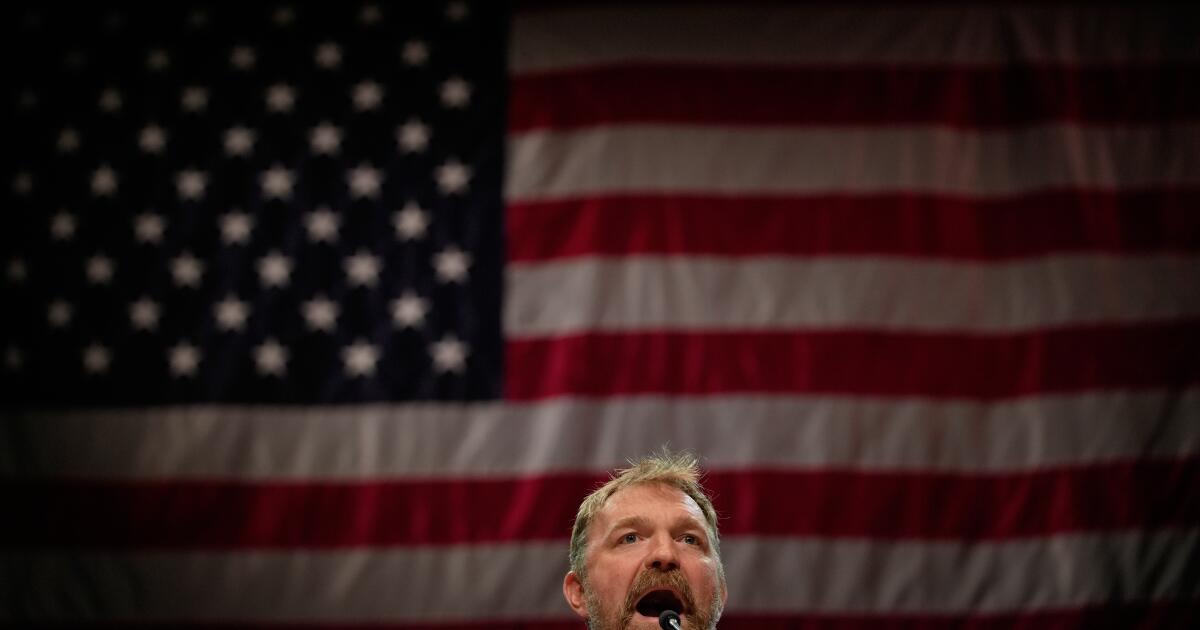
A federal jury Friday convicted nine people — eight on terrorism charges — over a shooting at a Texas immigration facility that federal prosecutors tied to antifa, the decentralized far-left movement that has become a target of the Trump administration.

One person was also found guilty of attempted murder after prosecutors say he opened fire last summer outside the Prairieland Detention Center outside Fort Worth, wounding a police officer. The Justice Department called the violence an attack plotted by antifa operatives, but attorneys for the accused denied that characterization, saying there were no antifa associations and that there was merely a demonstration with fireworks before gunshots broke out.

U.S. District Judge Mark Pittman, an appointee of President Trump, presided over the nearly three-week trial in Fort Worth. It was closely followed by legal experts and critics who called the proceedings a test of the lengths the government can go to punish protesters.

FBI Director Kash Patel had said the case was the first time charges of providing material support to terrorists had targeted people accused of being antifa members.

“Today’s verdict on terrorism charges will not be the last as the Trump administration systematically dismantles Antifa and finally halts their violence on America’s streets,” U.S. Atty. Gen. Pam Bondi said in a statement.

Short for “anti-fascists,” antifa is not an organization but rather an umbrella term for far-left militant groups that confront or resist neo-Nazis and white supremacists at demonstrations.

Protesters denied having antifa ties

Defense attorneys told jurors that there was no plan for violence on July 4 outside the facility in Alvarado.

Of the nine defendants on trial, eight faced the charge of providing material support to terrorists, among other charges. The ninth defendant, Daniel Sanchez Estrada, was charged with corruptly concealing a document and conspiracy to conceal documents. He was found guilty of both.

Sanchez Estrada’s attorney, Christopher Weinbel, said he can’t believe jurors “came to this conclusion.” Weinbel said his client had deployed as a member of the U.S. Army several times and he’d hoped what he sacrificed for the country “meant something.”

“But I feel like it turned its back on justice with this. … The U.S. lost today with this verdict,” Weinbel said.

Prosecutor Shawn Smith told jurors during closing arguments that the group’s actions — including bringing firearms and first aid kits and wearing body armor — were all signs of nefarious intent. He said they practiced “antifa tactics” and were “obsessed with operational security.”

Attorneys for the defendants have said that there was no planned ambush and that protesters who brought firearms did so for their own protection — in a state with very lenient gun laws.

A test of 1st Amendment rights

The terrorism charges followed Trump’s order last fall to designate antifa as a domestic terrorist organization. Those charges did not require a tie to any organization, and there is no domestic equivalent to the State Department’s list of foreign terrorist organizations. That’s in part because organizations operating within the United States are protected by broad 1st Amendment rights.

Critics of the Justice Department’s case have said the outcome could have wide-reaching effects on protests.

“That opposition is something that the government wants to squash, so a case like this helps the government kind of see how far they can go in criminalizing constitutionally protected protests and also helps them kind of intimidate, increase the fear, hoping that folks in other cities then will think twice over protesting,” said Suzanne Adely, interim president of the National Lawyers Guild, a progressive legal group.

Trial focused on shots fired

Attorneys for the defendants have said most protesters began leaving when two guards from the center came outside. That was before any shots were fired.

Prosecutors said Benjamin Song, a former Marine Corps reservist, yelled, “Get to the rifles,” and opened fire, striking one police officer who had just pulled up to the center.

Though it was Song who opened fire, prosecutors charged several other protesters with attempted murder of an officer and discharging a firearm, but they were found not guilty. The prosecution had argued that from the group’s planning, it was foreseeable to those others that a shooting could happen.

The officer who was shot, Alvarado Police Lt. Thomas Gross, testified that when responding to the scene he saw a person clad in all-black with their face covered and carrying a rifle. He told jurors he was shot with a round that went into his shoulder and out of his neck.

Song’s attorney, Phillip Hayes, told jurors during closing arguments that there wasn’t a call to arms before Gross arrived on the scene and “aggressively” pulled out his firearm. Hayes suggested that Song’s shots were “suppressive fire” and that a ricochet bullet hit the officer.

Leading up to the trial, several people pleaded guilty to providing material support to terrorists after being accused of supporting antifa. They face up to 15 years in prison at sentencing.

Some of them testified for the prosecution, including Seth Sikes, who said he went to the detention center because he wanted to bring some joy to those held inside.

“I felt like I was doing the right thing,” he said.

Stengle writes for the Associated Press. AP writer Jim Vertuno in Austin, Texas, contributed to this report.

Source link

Republican bill poses a burden for many U.S. voters

Joshua Bogdan was born and raised in the United States. The only time the New Hampshire resident has left the country was for a day and a half in seventh grade, when he went to Canada to see Niagara Falls.

Even so, that did not mean proving his U.S. citizenship in last fall’s local elections was easy.

The 31-year-old arrived at his voting place in Portsmouth and handed the poll worker his driver’s license, just as he had done in other towns when arriving to vote. She said that would no longer do.

The poll worker said that under the state’s new proof-of-citizenship law, which took effect for the first time during town elections in 2025, Bogdan would need a passport or his birth certificate because he had moved and needed to re-register at his new address. A scramble ensued, turning the voting process that he had always found fun and invigorating into a nerve-racking game of beat the clock.

“I didn’t know that anything had officially changed walking in there,” he said. “And then being told that I had to provide a passport that I’ve never had or a birth certificate that’s usually tucked away somewhere safe just to cast my vote — which I’ve done before — it was frustrating.”

Noncitizen voting is rare

Bogdan’s experience in New Hampshire is a glimpse into the future for potentially millions of voters across the country. That is if Republican voting legislation being pushed aggressively by President Trump passes Congress and a “show your papers” law is put in place in time for the November midterm elections.

The Safeguard American Voter Eligibility, or SAVE America Act, cleared the House last month on a mostly party-line basis. Republicans say it would improve election integrity. Trump has called its safeguards common sense. Democrats and voting rights advocates call it a clear act of voter suppression. The bill is scheduled to come up for debate and voting in the Senate next week.

Republican messaging has mostly highlighted a less divisive provision in the bill that would require voters to show a photo ID. But the mandate for people to provide documentary proof of citizenship to register to vote in federal elections is likely to have the most wide-ranging consequences. Noncitizens already are prohibited from voting in federal elections, and it is not allowed by any state. Cases where it occurs are rare and harshly punished.

Obtaining the necessary documents under the SAVE Act is not as easy as it might sound. A similar effort was tried in Kansas a decade ago and turned into a debacle that eventually was blocked by the courts after more than 30,000 eligible citizens were prevented from registering.

Qualifying documents, with caveats

Rebekah Caruthers, president and chief executive at the Fair Elections Center, said the legislation’s strict documentation requirements could move the U.S. “in the opposite direction” of representative democracy.

“If this bill passes, it would deny millions of eligible Americans their fundamental freedom to vote,” she said in an email. “This includes millions of people who make up your communities, including married women, people of color and voters who live in rural areas.”

The list of qualifying documents in the SAVE Act for proving citizenship appears long, but many of them come with qualifiers.

Under the bill, a Real ID-compliant driver’s license would have to indicate that “the applicant is a citizen,” but not all do. Only five states — Michigan, Minnesota, New York, Vermont and Washington — offer the type of enhanced Real IDs that explicitly indicate U.S. citizenship.

Standard driver’s licenses, generally available to both citizens and noncitizens, often do not include a citizenship indicator. Some states, including Ohio, have recently added them.

The stipulations continue, buried in the fine print.

While military ID cards are listed as qualifying documents under the act, they will not suffice on their own. The bill says a military ID must be accompanied by a military “record of service” that indicates the person’s birthplace was in the U.S.

A DD214, the current standard-issue certificate of release or discharge for all military service branches, does not fulfill that requirement. According to the Pentagon, that document lists only where someone lived at points of entry and discharge and a person’s current home of record. It does not list where someone was born.

Passport requires time and money

For most provisions, the SAVE Act contains no phase-in period that would give voters and local election offices time to adjust. If passed by Congress and signed by Trump, its documentary proof-of-citizenship mandate would apply immediately, meaning it would be in place for this year’s midterm elections.

That could lead to a rush to obtain documents by those who want to register or need to reregister. A 2025 University of Maryland study estimates that 21.3 million Americans who are eligible to vote do not possess or have easy access to documents to prove their citizenship, including nearly 10% of Democrats, 7% of Republicans and 14% of people unaffiliated with either major party.

A passport would most effectively meet the requirement, but only about half of American adults have one, according to the State Department. The SAVE Act requires the passport to be current; an expired one does not count.

Obtaining a passport in time for a looming voter registration deadline is another potential hurdle.

Workers who process passports had layoffs at the State Department reversed, but just last month the department forbid passport processing at certain public libraries that had long helped relieve pressure at the department. Government libraries, post offices, county clerks and others still provide the service.

It takes four weeks to six weeks to get a passport, according to the department’s website, excluding mailing time. A new passport costs $165 for adults and renewals cost $130, while the photo costs $10 or $20 more. The turnaround time can be sped up to two weeks or three weeks for an additional $60 — and for even faster processing, add $22 more. The fully expedited process for a new passport would cost at least $257, a significant burden for many voters.

Birth and marriage certificates

A birth certificate may be a quicker and cheaper choice for most people, but there are twists.

The SAVE Act requires a certified birth certificate issued by a state, local government or tribal government. What does not appear to qualify is the certificate signed by the doctor that many new parents are given in the hospital when their child is born. It provides information similar to a certified birth certificate, but would not meet the letter of the federal legislation.

Like passports, birth certificates can sometimes take weeks to obtain. Those who live near their birthplaces can visit the local vital statistics office, but staffing shortages and escalating demand for Real IDs have caused significant backlogs in some states. In New York, the waiting period for certified copies is four months, the state said. Average processing times for online certificate requests vary widely by state, from as few as three days to 12 weeks or longer.

People whose birth certificates don’t match their current IDs — mostly women who changed their names when they married — would probably need additional documentation to register to vote under the bill. A 2023 Pew Research Center survey found about 80% of women in opposite-sex marriages in the U.S. take their husband’s last name.

Notably, the SAVE Act does not provide any money to help states and local governments implement the changes or promote them to voters.

For Bogdan, that was part of the problem when New Hampshire’s proof-of-citizenship law took effect. People who have voted elsewhere in the state are not required to show proof of citizenship in their new towns if poll workers confirm their registration history. But Bogdan said workers at his polling place did not seem to know that or try to look up the information.

He eventually was able to cast his ballot because, by luck, he had recently retrieved his birth certificate from his parents’ house more than an hour away so he could apply for a Real ID. But he said government notices to voters would help prevent possible disenfranchisement.

“Young voters like myself don’t always carry around our birth certificate, Social Security card, all that important stuff, because it’s not used ever or very often,” he said. “And so all those young kids who are going to go out and try and vote will be held back from that.”

Smyth writes for the Associated Press.

Source link

Trump says we need a government shutdown. Here’s what’s happened in the past

It’s a political gambit that President Trump seems to think will pay off: Let the federal government grind to a halt.

“Our country needs a good ‘shutdown’ in September to fix mess,” he tweeted last week.

The unconventional proclamation from the unconventional president raised concern from both sides of the aisle.

His comments came as lawmakers agreed to a $1-trillion bipartisan budget bill that funds the federal government through September, which means another battle and potential government shutdown looms this fall.

Under a shutdown, thousands of federal employees would go without pay and national parks would close, among other things. In short: It will upset a lot of people.

Here’s a look at the key players and fallout from recent government shutdowns.


October 2013

How it happened

It’s simple — the battle over healthcare closed the government.

That year, House Republicans, angered by President Obama’s Affordable Care Act, repeatedly offered resolutions during budget negotiations that would have defunded the healthcare law. These resolutions were rejected by the Democratic-controlled Senate, which led to a budget impasse.

The government shut down for more than two weeks after Congress was unable to agree on a budget for the new fiscal year, leaving nearly 800,000 federal employees out of work without pay.

On the political front, the ramifications went both ways.

Members of the bipartisan budget conference Sen. Jeff Sessions (R-Ala.), Rep. Paul D. Ryan (R-Wis.), Sen. Patty Murray (D-Wash.) and Rep. Chris Van Hollen (D-Md.) speak to the media the day after Congress voted to ending a 16-day government shutdown. (Win McNamee / Getty Images)

Members of the bipartisan budget conference Sen. Jeff Sessions (R-Ala.), Rep. Paul D. Ryan (R-Wis.), Sen. Patty Murray (D-Wash.) and Rep. Chris Van Hollen (D-Md.) speak to the media the day after Congress voted to ending a 16-day government shutdown. (Win McNamee / Getty Images)

(Win McNamee / Getty Images)

Winners

Sen. Harry Reid (D-Nev.)

WASHINGTON, DC - OCTOBER 16: U.S. Senate Majority Leader Sen. Harry Reid (D-NV) (2nd L) speaks as Majority Whip Sen. Richard Durbin (D-IL) (R), Sen. Charles Schumer (D-NY) (L), and Sen. Patty Murray (D-WA) (3rd L) listen during a news conference after a vote October 16, 2013 on Capitol Hill in Washington, DC. On the 16th day of a government shutdown, the Senate has approved a bill to reopen the government until January 15 and raise the nation's debt ceiling until February 7, 2014. (Photo by Alex Wong/Getty Images) ORG XMIT: 185146633 ** OUTS - ELSENT, FPG, TCN - OUTS * NM, PH, VA if sourced by CT, LA or MoD **

(Alex Wong / Getty Images)

The then-Senate majority leader was a vocal Democratic critic of Republican-led efforts to defund President Obama’s healthcare bill. He relentlessly castigated Republicans for their tactics to defund Obamacare, which ultimately led to the shutdown.

“You know with a bully you cannot let them slap you around, because they slap you around today, they slap you five or six times tomorrow. We are not going to be bullied,” Reid told reporters.

In the end, Reid came out of the shutdown with a bolstered reputation as a fighter of Democratic causes and earned plaudits from Obama.

Obamacare

(Gary Friedman/Los Angeles Times)

At the time, the botched rollout of the healthcare law drew daily headlines. Web sites for healthcare exchanges didn’t work and the administration had few answers. Still, the healthcare law was able to remain intact and public scorn focused on Republicans as the government remained shuttered for 16 days and federal employees nationwide stayed home. Republicans thought their efforts would prove fruitful.

Sen. John McCain (R-Ariz.)

WASHINGTON, DC - MARCH 19: U.S. Sen. John McCain (R-AZ), talks with reporters on his way to the weekly Senate Republicans policy luncheon on March 19, 2013 in Washington, DC. The Senate is expected to pass a revised continuing resolution and send their edits back to the House in order to prevent a government shutdown next week, but any action in the Senate may be delayed until later in the week. (Photo by T.J. Kirkpatrick/Getty Images) ORG XMIT: 164200606

(T.J. Kirkpatrick / Getty Images)

In the months and weeks leading to the shutdown, McCain served as a voice of reason for the Republicans. He insisted that it would be unwise for the party to allow a shutdown over Obamacare.

“I campaigned in 2012 all over this country for months: ‘Repeal and replace Obamacare.’ That was not the mandate of the voters. If they wanted to repeal Obamacare, the 2012 election would have been probably significantly different,” he said at the time.

Ultimately, his efforts faltered as Republicans charged ahead with efforts to defund Obamacare and the government shutdown.

Losers

House Speaker John A. Boehner (R-Ohio)

WASHINGTON, DC - OCTOBER 16: U.S. Speaker of the House Rep. John Boehner (R-OH) walks to the House Chamber for a vote October 16, 2013 on Capitol Hill in Washington, DC. On the 16th day of a government shutdown, the House has passed a bill to reopen the government until January 15 and raise the nation's debt ceiling until February 7, 2014. (Photo by Alex Wong/Getty Images) ORG XMIT: 185146633

(Alex Wong / Getty Images)

He failed to rein in the most conservative grassroots wing of his party. Boehner was the middle man of sorts in negotiations between Democrats, moderate Republicans and conservative activists. Two years later, he resigned because of the strong opposition he faced from the Republican caucus.

Sen. Ted Cruz (R-Texas)

WASHINGTON, DC - OCTOBER 16: Sen. Ted Cruz (R-TX) answers questions from the media after meeting with Republican senators regarding a bipartisan solution for the pending budget and debt limit impasse at the U.S. Capitol October 16, 2013 in Washington, DC. The Senate announced that it had reached a bipartisan deal on funding the federal government and the extending the nation's debt limit after 16 days of a government shutdown. (Photo by Andrew Burton/Getty Images) ORG XMIT: 185146633 ** OUTS - ELSENT, FPG, TCN - OUTS * NM, PH, VA if sourced by CT, LA or MoD **

(Andrew Burton / Getty Images)

While Cruz raised his national profile as a staunch critic of Obamacare, he also made a lot of enemies. Weeks before the shutdown he delivered a 21-hour talkathon on the Senate floor, assailing the health care law — a move that drew scorn from Democrats and Republicans alike. Cruz’s vocal opposition to the law helped establish him as a force within the GOP grassroots and set him up for a presidential run in 2016.

Debbie Wasserman Schultz (D-Fla.)

(Carolyn Kaster / Associated Press)

(Carolyn Kaster / Associated Press)

(Carolyn Kaster / AP)

Public opinion polls consistently showed that Republicans were blamed for the government shutdown. Even so, the former Democratic National Committee chairwoman was unable to turn that into victory in the 2014 midterm. Many Democrats fault her leadership as a factor in the party’s sweeping losses in the midterm election.


November/ December 1995 and January 1996

How it happened

This battle over funding Medicare, public education and environmental initiatives pitted President Clinton against Republican House Speaker Newt Gingrich. It turned into the longest government shutdown in the country’s history. The shutdown came in two phases, with government services being shuttered from Nov. 14-19, 1995; then from Dec. 16 until Jan. 6, 1996. In total, the government closed for 27 days.

President Clinton and bipartisan leaders meet at the White House on Dec. 30, 1995, for talks on the federal budget. (Greg Gibson / Associated Press)

President Clinton and bipartisan leaders meet at the White House on Dec. 30, 1995, for talks on the federal budget. (Greg Gibson / Associated Press)

(GREG GIBSON / AP)

Winner

President Clinton

(Marcy Nighswander / Associated Press)

(Marcy Nighswander / Associated Press)

(Marcy Nighswander / AP)

He stood firm in his battle with the Republican-controlled Congress. Clinton wanted a budget that increased expenditures on, among other things, Medicare and public education, but Republicans wanted to slow government spending. This led to months of negotiations — the government closing, opening, then closing again — and through it all, Clinton’s public approval ratings dipped only slightly. He easily won reelection in November 1996.

Loser

House Speaker Newt Gingrich (R-Ga.)

(J. Scott Applewhite / Associated Press)

(J. Scott Applewhite / Associated Press)

(J.SCOTT APPLEWHITE / AP)

After sweeping gains in the 1994 midterm election, Republicans were emboldened and ready for a showdown.

“He can run the parts of the government that are left, or he can run no government,” Gingrich told reporters weeks before the first shutdown. “Which of the two of us do you think worries more about the government not showing up?”

News reports at the time also noted that Gingrich was open to a shutdown after Clinton made him exit the rear of Air Force One after the two attended the funeral of slain Israeli leader Yitzhak Rabin. The comments made the Republican leader appear petty. In the end, after weeks of a shutdown, Republicans ultimately conceded to Clinton and Democrats.


May 2017

What’s happening now

Last week Congress passed a $1-trillion budget that funds the federal government through September. However, the budget bill does not allocate funds for Trump’s much-promised border wall. It’s the first bipartisan piece of legislation of the Trump presidency and funding for his signature proposal is nowhere to be found. The bill, however, does have funding for border security and increases to defense spending — both of which were touted as wins by the Trump administration.

Senate Majority Leader Mitch McConnell (R-Ky.), flanked by Sen. Cory Gardner (R-Colo.), Sen. John Barrasso (R-Wyo.) and Sen. John Thune (R-S.D.), speaks to the media about the recent spending bill that averted a government shutdown. (Aaron P. Bernstein / Getty Images)

Senate Majority Leader Mitch McConnell (R-Ky.), flanked by Sen. Cory Gardner (R-Colo.), Sen. John Barrasso (R-Wyo.) and Sen. John Thune (R-S.D.), speaks to the media about the recent spending bill that averted a government shutdown. (Aaron P. Bernstein / Getty Images)

(Aaron P. Bernstein / Getty Images)

Key players

President Trump

It’s clear Trump does not like to lose and does not like bad headlines. By all accounts, Trump and his policies did not come out on top in the budget deal.

Trump blamed the Senate rules, which require 60 votes to pass most legislation, for the exclusion of key priorities from the spending bill.

This has in turn led some conservatives to push for Trump to support a government shutdown if Congress does not heed his policies this fall. Trump has always trusted his gut instinct in politics — so far it’s seemed to benefit him — and his comments will be closely watched this fall.

House Speaker Paul D. Ryan (R-Wis.)

FILE - In this April 4, 2017 file photo, House Speaker Paul Ryan of Wis. pauses during a news conference on Capitol Hill in Washington to talk about the failed health care bill. From cancer to addiction, doctors and patient groups are warning that the latest Republican health care bill would gut hard-won protections for people with pre-existing medical conditions. Some GOP moderates who may seal the legislation’s fate are echoing those concerns. (AP Photo/J. Scott Applewhite, File)

(J. Scott Applewhite / Associated Press)

He’s often had to stake out a position when Trump tweets. Indeed, this time was no different. Ryan alluded to Trump’s qualms with Senate rules.

“Look, we’ve got a long ways to go between now and September, but I share the president’s frustration,” Ryan told reporters. “What a lot of people in America don’t realize is appropriations bills, they take 60 votes to pass. They can be filibustered. So, all appropriations bills therefore have to be bipartisan because Democrats can always filibuster an appropriations bill. Having said all that, I feel very good about the wins that we got with the administration in this bill.”

Senate Minority Leader Charles E. Schumer (D-N.Y.)

Senate Minority Leader Chuck Schumer of N.Y. speaks with reporters about his opposition to Supreme Court nominee Neil Gorsuch on March 21, 2107, on Capitol Hill.

(J. Scott Applewhite / Associated Press)

He’s Trump’s chief critic in Congress and warned the president that a government shutdown is not wise.

“The president’s threat to shut down the government in September is just a very, very bad idea because it would hurt so many average folks,” Schumer said recently. “I strongly urge my colleagues, and they have already … said they have no desire to shut down the government. That is not the way to govern. That is not the way to come up with bipartisan compromise.”

Voters

Public opinion is not on Trump’s side when it comes to talk about a government shutdown.

In a Politico/Morning Consult poll released in April, 65% of voters said that Congress should “take all necessary steps to avoid a government shutdown.”

Other polls show similar disapproval among voters toward a government shutdown.

kurtis.lee@latimes.com

Twitter: @kurtisalee


Source link

Hold your nose and vote

ABOUT THE BEST THING to be said about this year’s special election campaign is that it will soon be over. No one will really win, except for the political consultants who will walk away with pockets full of cash for raising and spending more than $200 million of other people’s money, and no one will really lose, at least not literally, because there are no candidates on the statewide ballot. The safest prediction is that, on the day after the election, California politics will be just as dysfunctional as today.

So why are we having this election? And why should anyone vote? The immediate answer to the first question is clear enough: Because Gov. Arnold Schwarzenegger wanted it. The answer to the second question is that not voting would leave government to the special interests that finance these initiatives. The choices offered on the ballot require voter decisions, not a boycott.

All eight propositions on the ballot were put there by initiative petitions circulated by paid signature gatherers. The governor embraced four of them as elements of his reform of state government, including Proposition 76 to restrict state spending and Proposition 77 to take the job of drawing legislative and congressional districts away from the Legislature and give it to a panel of retired judges.

Schwarzenegger called a special election this year even though all the proposed reforms easily could have waited until the regular primary election in June. A majority of voters opposed this election, in part because of the estimated $50-million cost to the state and in part out of sheer exhaustion — six statewide elections, including primaries, in the last four years. No one is quite certain why Schwarzenegger insisted on this, although he claimed his reforms were too urgent to wait six months.

The irony is that, according to opinion polls, the more the governor campaigned for his measures, the less voters liked them. So if he called this election primarily to give his 2006 gubernatorial campaign a head start, he may be disappointed. One recent poll showed his approval rating at a meager 33%.

As for reforming state government, only Proposition 77 promises to bring about fundamental, beneficial change in how state government operates, ultimately resulting in a more moderate Legislature that is not deadlocked in partisan battle the way it is now. Propositions 74 and 75 offer some hope for modest improvements in education and Sacramento politics.

But it’s not just the governor’s misguided intentions that make this election objectionable. It has carried abuse of the ballot initiative to an unprecedented extreme (at least until the next election). All the measures were written by a variety of special interests and put on the ballot because those interests were able to spend the necessary money. If they all pass, the state’s overburdened Constitution will be weighed down by even more details about what state government can or cannot do.

This would all be unbearably depressing were it not for one fact: The people of California do want change in Sacramento.

That’s why they kicked out Gray Davis and elected Schwarzenegger in the 2003 special election. And that’s why, even as they question the wisdom of this special election, they remain supportive of the initiative process. The perfect initiative has yet to be written. (Although the two-sentence proposition proposed by San Francisco State professor Jules Tygiel in these pages last Sunday comes pretty close: “There shall be no further initiatives. All previous initiatives may be modified by a majority vote of the Legislature.”) But initiatives do succeed in forcing debate, if often clumsy or distorted, on important issues.

What Californians do not want is political gridlock. They want strong leaders who can get results without resorting to the ballot, much as Schwarzenegger did in working with the Legislature in 2004. It’s alarming that now Schwarzenegger is promising to produce even more ballot measures next year regardless of Tuesday’s outcome.

For all its faults, Tuesday’s election presents voters with choices. These choices may be unsatisfying. But by staying home, voters would only further exclude themselves from the governing process. See you at the polls on Tuesday.

Source link

Where are City Atty. Hydee Feldstein Soto’s text messages?

Good morning, and welcome to L.A. on the Record — our City Hall newsletter. It’s Noah Goldberg, with an assist from David Zahniser and Melissa Gomez, giving you the latest on city and county government.

Former Deputy City Atty. Michelle McGinnis wants to know why she was escorted out of City Hall in front of her colleagues, forced to turn in her work computer and placed on administrative leave in April 2024.

In her search for answers, a separate issue has arisen: whether her former boss is withholding or deleting text messages.

In a lawsuit against the city, McGinnis subpoenaed text messages about her between City Atty. Hydee Feldstein Soto and one of her top deputies, Denise Mills.

But according to a new petition that McGinnis filed in Los Angeles County Superior Court, Feldstein Soto produced zero text messages between her and Mills, and Mills produced just three with Feldstein Soto. The subpoena also asked for messages on Signal and other apps.

McGinnis’ lawyer, Caleb Mason, said the lack of texts strains credulity and probably means that some were deleted or withheld. McGinnis, who headed the criminal branch of the City Attorney’s Office, was fired in January 2025.

“It is obviously relevant and critical … to see what Ms. Feldstein [Soto] and Ms. Mills were saying to one another about Ms. McGinnis … that led to the extraordinary and unprecedented action of escorting a Branch Chief out of the building,” Mason wrote in a Feb. 23 brief.

A deputy city attorney representing Feldstein Soto and Mills disputed Mason’s claims in court filings, calling the new petition “uncomprehensible [sic]” and asserting that the two officials complied with the subpoenas. The attorney also sent 2,061 pages of documents to Mason.

Feldstein Soto, in a declaration, said that she “diligently searched for any documents” and shared them with her lawyer.

Mills said she did the same. In an effort to “retrieve any backup text messages,” she performed a factory reset of her phone on Jan. 30. McGinnis said the subpoenas were served on Dec. 15.

McGinnis’ lawyer said that was tantamount to spoliation — or destruction of evidence.

“Every court and every attorney in the country knows that ‘performing a factory reset’ means erasing information from a phone,” he wrote.

“It is reckless or negligent to reset a device when you know the opposing party is seeking that info,” said Laurie Levenson, a professor of law at Loyola Law School.

Still, Levenson said, politicians and lawyers often prefer speaking in person or on the phone to avoid their communications being exposed in a lawsuit. So it’s possible that the two didn’t exchange many text messages.

Feldstein Soto said in a statement that she has turned over all text messages about McGinnis. “There is nothing new here,” she said. “Ms. McGinnis was terminated, for cause. We remain confident in that decision.”

The city has argued that McGinnis “routinely opposed” Feldstein Soto’s policy and prosecutorial decisions.

McGinnis was placed on administrative leave due to a “pattern of insubordination and failure to meet minimal job requirements,” the city wrote in a legal filing in 2024.

The lawsuit that McGinnis filed against the city in 2024 alleged that Feldstein Soto retaliated against McGinnis and made prosecutorial decisions based on “personal relationships” or “perceived political gain.” The lawsuit also accused Feldstein Soto and Mills of “inappropriate alcohol consumption” in the office.

Other local politicians have also coughed up remarkably few text messages in response to public records requests.

Mayor Karen Bass came under scrutiny following the Palisades fire over the fact that her text messages auto-delete after 30 days, destroying potentially critical information about her decisions surrounding the devastating blaze. The Times sued the city after Bass’ counsel argued that her texts were “ephemeral” and not subject to public records requests. L.A. County Supervisor Kathryn Barger also said she auto-deletes messages after 30 days — and sometimes manually deletes them.

City Council President Marqueece Harris Dawson, meanwhile, turned over zero texts, emails, Signal and WhatsApp messages in response to a Times public records request for his communications with Bass from Jan. 6 to Jan. 16, 2025 — before, during and after the Palisades fire.

Harris-Dawson’s office said it had “conducted a search and found no responsive records for this request.”

You’re reading the L.A. on the Record newsletter

State of play

— IDK, VOTERS SAY: A majority of Angelenos have not made up their minds about the June 2 mayoral primary, according to a poll released this week. Bass had the most support at 20%, while reality TV star Spencer Pratt had 10% and Councilmember Nithya Raman had 9%, the poll found.

— HOMELESS DEATHS DROP: For the first time in the decade that homeless mortality has been tracked in Los Angeles County, fewer people have died on the streets and in shelters than the year before, the Department of Public Health reported Tuesday. A sharp decrease in overdose deaths drove a decline of 10% in the rate of homeless deaths from all causes in 2024, the most recent data analyzed by the county.

LAST-MINUTE MEMO: The City Council was set to vote on a $177-million contract for the Legal Aid Foundation of Los Angeles to continue representing tenants for the next three years, with other groups providing related services. But the night before the March 3 vote, Feldstein Soto sent a confidential memo to council offices recommending that council members “reconsider the award of such a large contract to a frequent litigant against the city.”

The council approved the contract, with changes, a week later.

CAMPAIGN REVELATION: Community organizer Jordan Rivers, who is running against incumbent Tim McOsker to represent Council District 15, said he will continue his campaign after a report surfaced that he stabbed a neighbor when he was 12. Rivers, now 22, stabbed the 8-year-old boy in the neck and shoulders, inflicting “severe and life threatening physical and emotional injuries,” a lawsuit said. On Monday, Rivers said it was an “accident” that happened a decade ago.

“I do not believe that past situations or indeed past mistakes define or determine who a person is or what they are,” he said.

— LAPD REFORMS: A series of proposed changes to the city’s charter — essentially its constitution — could give elected leaders in Los Angeles more oversight over the Police Department and enable the police chief to fire problem officers. The changes, recommended by the city’s Charter Reform Commission, have long been sought by advocates and are likely to face fierce opposition.

— SUPE SPEAKS: Embattled Los Angeles schools chief Alberto Carvalho made his first public statement since the FBI raided his home and district office on Feb. 25. He denied any wrongdoing and asked to return to his duties.

“While the government’s investigation remains ongoing, no evidence has been presented by prosecutors supporting any allegation that Mr. Carvalho violated federal law,” the statement said.

— A WEEK OF WIPEOUTS: With city officials finalizing the list of candidates for the June 2 election, a number of hopefuls failed to gather enough signatures to qualify for the ballot. They include community leader Eddie Ha, publicist Dory Frank and entrepreneur Jeremy Wineberg on the Westside; residential connectivity specialist Rosa Requeno on the Eastside; neighborhood council member Jon Rawlings in the San Fernando Valley; and neighborhood council president Adriana Cabrera, civil rights attorney Chris Martin and social worker Michelle Washington in South L.A.

— REWORKING ULA (TAKE 3): The City Council voted Wednesday to create an ad hoc committee to look at potential changes to Measure ULA, the tax on high-end property sales passed in 2022. City leaders have made two previous moves to rewrite the measure, neither of which succeeded.

— VOTING OLYMPIC VALUES: The council voted Friday to “express concern” about LA28 Olympics committee chairman Casey Wasserman, saying his appearance in the Epstein files poses a “potential conflict” with the values of the Olympic movement. Several elected officials at City Hall, including Bass, had already called for Wasserman to step down.

— MEETING OF MAYORS: On Friday, about 20 mayors and city council members from across L.A. County, including Bass, came together to discuss the impact that immigration raids have had on their communities. Many raised concerns about the role of local law enforcement in allowing federal agents to act with what they described as impunity.

One mayor suggested that all the cities that contract with the L.A. County Sheriff’s Department should get together to demand accountability for deputies in their interactions with immigration agents.

QUICK HITS

  • Where is Inside Safe? The mayor’s signature program went to Washington and Lincoln boulevards in Councilmember Traci Park‘s district, bringing more than 20 people inside, according to a mayoral spokesperson.
  • On the docket next week: The Los Angeles chapter of the Democratic Socialists of America will meet on Saturday, March 21, at Immanuel Presbyterian in Koreatown. Members are expected to vote on whether to make an endorsement in the mayoral primary.

Stay in touch

That’s it for this week! Send your questions, comments and gossip to LAontheRecord@latimes.com. Did a friend forward you this email? Sign up here to get it in your inbox every Saturday morning.

Source link

How Honduras helped vice presidential candidate Tim Kaine find his mission in life

Not long after Jesuit priest Jack Warner met a bearded, 22-year-old Midwesterner in 1980, the two Americans bonded, drawn together by the goals and questions that led them both to El Progreso, a small city not far from vast banana fields — the campos bananeros.

Warner was 35 and had arrived a year earlier to form the Teatro La Fragua, a theater company for Hondurans. As the young priest looked to forge a relationship with the campesinos, his friendship blossomed with Tim Kaine, who had taken a year off from Harvard Law School to join the Jesuit mission.

“He was 22 years old,” Warner said, “and it was the typical thing that a 22-year-old would do: What do I do with my life?”

Kaine, now a 58-year-old U.S. senator from Virginia and the Democratic vice presidential nominee, has often said that his time in Honduras helped him answer that question, giving him “a North Star” to guide his life toward public service. It’s central to his biography and likely to arise Tuesday night when he debates his Republican opponent, Mike Pence.

Election 2016 | Live coverage on Trail Guide | Sign up for the newsletter

When Kaine traveled to Honduras, the nation was in the throes of turmoil, flanked by countries torn by civil war and ruled by the heavy hand of a U.S-backed military bent on stamping out what it perceived to be communism spreading in the region.

“I got a firsthand look at a system — a dictatorship — where a few people at the top had all the power and everyone else got left out,” Kaine said in July at the Democratic National Convention.

He also witnessed extreme poverty. His experiences, coupled with the Jesuit goal of being “men for others,” led him to become a civil-rights lawyer for 17 years, specializing in housing-discrimination cases. Honduras convinced him, he said, “that we’ve got to advance opportunity for everyone.”

Kaine now serves on the Senate Committee on Foreign Relations and this year co-sponsored a bill that would increase aid to Central America’s “Northern Triangle” — Guatemala, El Salvador and Honduras.

Key to his experiences in Honduras was the friendship and example of Warner and a handful of other Jesuits. And a Christmastime visit to a poor man’s house taught him a lesson that resonates decades later.

During his time in El Progreso, Kaine lived in a barracks, along with Warner and other Jesuits. After their work days wrapped up about 5 p.m., he and Warner frequently commiserated over office duties, students, the teatro and the poetry Kaine was writing. Warner, a former English teacher, worked with Kaine on his verse. Over time, they became confidants.

Father Jack Warner admires a painting created by an actor who performs in the Teatro la Fragua in El Progreso, Honduras.

Father Jack Warner admires a painting created by an actor who performs in the Teatro la Fragua in El Progreso, Honduras.

(Veronica Rocha / Los Angeles Times )

Both men grew up in the Midwest — Kaine in the Kansas City, Kan., suburb of Overland Park; Warner in St. Louis — and had been drawn to the Jesuit mission of social justice from an early age.

Kaine attended Rockhurst High School for boys, run by Jesuit priests who ran a demanding schedule of daily Masses, theology classes and community service activities with retreats.

Kaine, who earned a bachelor’s degree in economics at the University of Missouri, was at Harvard Law when he began to question his faith and the path he should take in life, he says. Because he had made a brief trip to Honduras in 1974 to deliver donations to the Jesuits, he decided to write them and see whether they could use some help. They said yes.

“He took a rather strong decision to seek out an answer — not everyone comes to Progreso,” Warner said.

Kaine had to tell his law school dean, and his parents, of this new direction. “The dean, not to mention my parents and friends, were confused about what I was doing and even questioned whether I would come back,” Kaine once recalled in a Virginia Tech speech.

By September 1980, Kaine was rumbling along in a bus into northern Nicaragua, where he visited another American Jesuit, Father James Carney. In Honduras months earlier, Carney had encouraged peasants to fight for their land, and he was expelled by the Honduran military, which saw him as one of the leftist priests who embraced liberation theology and the Sandinista revolution in Nicaragua.

Activists, some of them priests or the peasants they worked with, would be banished or killed by authorities. Carney would later disappear in what was believed to be a clandestine Honduran military operation backed by the CIA.

“It was a time when anytime the police stopped you, you got really nervous. You never knew what was going to happen,” Warner recalled. “We were under a military dictatorship at the time and very heavy military control. It was scary, and one had to live very carefully.”

We were under a military dictatorship at the time and very heavy military control. It was scary, and one had to live very carefully.

— Father Jack Warner, on Honduras in the 1980s

In El Progreso that September, Kaine soon met another Jesuit, Brother James O’Leary, a missionary also from Missouri.

O’Leary, who died in 2002, was often described as an outspoken, occasionally cranky but also skilled carpenter, painter and electrician who built houses and chapels for the poor. Kaine worked with him at his Loyola Technical Vocational Center, helping to boost the school’s enrollment and teaching carpentry and welding. As a youngster, Kaine had picked up skills working in his father’s ironworking shop in the Kansas City area.

Kaine declined to be interviewed for this story, but in a speech at the 2008 Democratic National Convention, he recalled what O’Leary taught him.

“I learned from a great mentor there, Brother Jim O’Leary, that faith is about more than words or doctrine — it’s about action,” he said. “And that led me to spend my life in public service.”

One of Kaine’s former students at the vocational center, Alex Hernandez Monroy, recalled the daily lessons in carpentry and welding from the shaggy-haired young American.

“His Spanish wasn’t very good, but despite all that he interacted with us,” said Hernandez Monroy, then 13 and now 48. Although Kaine couldn’t pronounce certain words, the students appreciated his efforts.

“Something very important that he did was that he visited the families of the students,” he said. “We were not used to interacting with Americans, so it had an impression on us to see someone like him educating us.”

Their debate might not matter much, but Mike Pence and Tim Kaine would be key White House players »

Using some of the skills he learned from Kaine and O’Leary, Hernandez Monroy teaches carpentry to a group of 15 students at the school. “They taught us that we could help our kids,” he said. “The majority of our youth are at risk, so that left an impression on us.”

::

About 35,000 people lived in El Progreso in 1980, when it was dominated by the presence of the United Fruit Co., the world’s largest — and often exploitative — banana company. Today it has a population of about 200,000, and the winding roads leading to the city are lined by brightly colored, one-story concrete homes.

During Kaine’s time there, however, it was a collection of dusty, rural villages and banana camps, with mountaintop towns accessible only by foot or mule. As a center for union activity, it became a target of the communism-fearing Reagan administration.

While war raged in neighboring El Salvador and Nicaragua, Honduras remained calm — but was gripped in fear. It was the staging ground for many of the United States’ clandestine operations aimed at toppling other governments.

People dared not speak about activism or union organizing lest they risk being among those who “disappeared.” More than a dozen priests were killed in the 1970s and 1980s after being associated with liberation theology, considered a Marxist-tinged doctrine that preached to the poor.

While Catholic priests in Central America were attacked for advocating on behalf of the poor, Kaine maintained a low profile and didn’t attract notice from the military.

Warner, a slender man with gray shoulder-length hair, recalled Kaine’s time in Honduras during a recent interview at the theater in El Progreso.

“His interest was in the students and what he was doing in his work, which is what we were all doing,” Warner said. “Trying to figure how we can do the work without being kicked out of the country for exploring it.”

Kaine also saw poverty and expressed his feelings about it through writing, as did Warner.

The priest maintained a daily newsletter with accounts of poverty and life in El Progreso. “We all have our defenses to shut out the existence of human misery, most of which consist of closing our eyes and pretending it doesn’t exist,” Warner wrote in a December 1980 newsletter. “Hopelessness then becomes a way of life for both parties.”

Warner published one of Kaine’s poems, titled “Still Life,” in which he described the “thick misery” of the town of San Pedro Sula. “In the saddest slum of San Pedro, lives are played out in the shade of a highway where buses glide like lost thoughts overhead.”

He likened the challenges, or “questions marks” facing the town to fingers testing the wind. “Each predicts change that just won’t come.”

Kaine spent nine months in El Progreso before returning to Harvard. He has kept in occasional touch with Warner and has returned to Honduras several times, most recently last year. This year, he and 25 senators called for an end to immigration raids in the U.S. targeting women and children who were fleeing violence in Honduras, Guatemala and El Salvador.

When he accepted the nomination for vice president, Kaine said that the three basic values he absorbed in Honduras hold true today: “Fe, familia y trabajo.” Faith, family and work.

Students take a break before heading to class to learn carpentry at Loyola Technical Vocational Center, where Tim Kaine volunteered, in El Progreso, Honduras.

Students take a break before heading to class to learn carpentry at Loyola Technical Vocational Center, where Tim Kaine volunteered, in El Progreso, Honduras.

(Veronica Rocha / Los Angeles Times )

“I came to understand the power of faith and communal worship,” Kaine said at Virginia Tech in 2006. “I learned how to speak Spanish and began to understand how the things which can seem to divide us — like language and skin color — were so much smaller than the dreams and fears that unite us.

Kaine also has repeatedly recalled what became one of his most indelible memories of Honduras.

He and Father Jarrell Wade, a Jesuit known as Father Patricio, had traveled by mule to visit a dirt-poor family around Christmas. As they prepared to leave, the husband handed Wade a bag. “Merry Christmas, padre,” he said.

Inside the worn bag were fruits and vegetables he had saved for the priest. Wade took the bag and thanked him.

Kaine was appalled and angered that the priest would take food from such a poor family — “I was fuming” — until Wade imparted the lesson: “You must be really humble to accept a gift of food from a poor person, and the most important thing in life is the ability to give.”

veronica.rocha@latimes.com

Twitter: @VeronicaRochaLA

Times staff writer Tracy Wilkinson in Washington contributed to this report.

ALSO

Tax troubles threaten Trump as election day nears, and so does his own approach to campaigning

These donors gave to Trump’s GOP rivals. Now 95% are sitting out the general election

Trump wanted to fire women who weren’t pretty enough, say employees at his California golf club


Source link

All signs point to Russia in cyberattack, but Trump points to China

Contradicting his secretary of State and other top officials, President Trump on Saturday suggested without evidence that China — not Russia — may be behind the cyberattack against the United States and tried to downplay its impact.

In his first comments on the breach, Trump scoffed at the focus on the Kremlin and minimized the intrusions, which the nation’s cybersecurity agency has warned posed a “grave” risk to government and private networks.

“The Cyber Hack is far greater in the Fake News Media than in actuality. I have been fully briefed and everything is well under control,” Trump tweeted. He also claimed the media are “petrified” of “discussing the possibility that it may be China (it may!).”

There is no evidence to suggest that is the case. Secretary of State Michael R. Pompeo said late Friday that Russia was “pretty clearly” behind the attack.

“This was a very significant effort and I think it’s the case that now we can say pretty clearly that it was the Russians that engaged in this activity,” he said in the interview with radio talk show host Mark Levin.

Officials at the White House had been prepared to put out a statement Friday afternoon that accused Russia of being “the main actor” in the hack, but were told at the last minute to stand down, according to one U.S. official familiar with the conversations who spoke on condition of anonymity to discuss private deliberations.

It is not clear whether Pompeo got that message before his interview, but officials are now scrambling to figure out how to square the disparate accounts. The White House did not immediately respond to questions about the statement or the basis of Trump’s claims.

Throughout his presidency, Trump has refused to blame Russia for well-documented hostilities, including its interference in the 2016 election to help him get elected. He blamed his predecessor, Barack Obama, for Russia’s annexation of Crimea, has endorsed allowing Russia to return to the Group of 7 of nations and has never taken the country to task for allegedly putting bounties on U.S. soldiers in Afghanistan.

Pompeo in the interview said the government was still “unpacking” the cyberattack and some of the details would likely remain classified.

“But suffice it to say there was a significant effort to use a piece of third-party software to essentially embed code inside of U.S. government systems and it now appears systems of private companies and companies and governments across the world as well,” he said.

Though Pompeo was the first Trump administration official to publicly blame Russia for the attacks, cybersecurity experts and other U.S. officials have been clear over the past week that the operation appears to be the work of Russia. There has been no credible suggestion that any other country — including China — is responsible.

Democrats in Congress who have received classified briefings have also affirmed publicly that Russia, which in 2014 hacked the State Department and interfered through hacking in the 2016 presidential election, was behind it.

It’s not clear exactly what the hackers were seeking, but experts say it could include nuclear secrets, blueprints for advanced weaponry, COVID-19 vaccine-related research and information for dossiers on government and industry leaders.

Russia has said it had “nothing to do” with the hacking.

While Trump downplayed the impact of the hacks, the Cybersecurity and Infrastructure Security Agency has said it compromised federal agencies as well as “critical infrastructure.” Homeland Security, the agency’s parent department, defines such infrastructure as any “vital” assets to the U.S. or its economy, a broad category that could include power plants and financial institutions.

One U.S. official, speaking Thursday on condition of anonymity, described the hack as severe and extremely damaging.

“This is looking like it’s the worst hacking case in the history of America,” the official said. “They got into everything.”

Trump had been silent on the attacks before Saturday.

Deputy White House Press Secretary Brian Morgenstern told reporters Friday that national security advisor Robert O’Brien has sometimes been leading multiple daily meetings with the FBI, the Department of Homeland Security and the intelligence agencies, looking for ways to mitigate the hack.

He would not provide details, “but rest assured we have the best and brightest working hard on it each and every single day.”

The Democratic leaders of four House committees given classified briefings by the administration issued a statement complaining that they “were left with more questions than answers.”

“Administration officials were unwilling to share the full scope of the breach and identities of the victims,” they said.

Pompeo, in the interview with Levin, said Russia was on the list of “folks that want to undermine our way of life, our republic, our basic democratic principles. … You see the news of the day with respect to their efforts in the cyberspace. We’ve seen this for an awfully long time, using asymmetric capabilities to try and put themselves in a place where they can impose costs on the United States.”

What makes this hacking campaign so extraordinary is its scale: 18,000 organizations were infected from March to June by malicious code that piggybacked on popular network-management software from an Austin, Texas, company, SolarWinds.

It’s going to take months to kick elite hackers out of the U.S. government networks they have been quietly rifling through since as far back as March.

Experts say there simply are not enough skilled threat-hunting teams to identify all the government and private-sector systems that may have been hacked. FireEye, the cybersecurity company that discovered the intrusion and was among the victims, has already tallied dozens of casualties. It’s racing to identify more.

Many federal workers — and others in the private sector — must presume that unclassified networks are teeming with spies. Agencies will be more inclined to conduct sensitive government business on Signal, WhatsApp and other encrypted smartphone apps.

“We should buckle up. This will be a long ride,” said Dmitri Alperovitch, co-founder and former chief technical officer of the leading cybersecurity firm CrowdStrike. “Cleanup is just Phase 1.”

Florida became the first state to acknowledge falling victim to a SolarWinds hack. Officials told the Associated Press that hackers apparently infiltrated the state’s healthcare administration agency and others.

SolarWinds’ customers include most Fortune 500 companies, and its U.S. government clients are rich with generals and spymasters.

If the hackers are indeed from Russia’s SVR foreign intelligence agency, as experts believe, their resistance may be tenacious. When they hacked the White House, the Joint Chiefs of Staff and the State Department in 2014 and 2015 “it was a nightmare to get them out,” Alperovitch said.

The Pentagon has said it has so far not detected any intrusions from the SolarWinds campaign in any of its networks — classified or unclassified.

Source link

Senate rebukes Elizabeth Warren for quoting Martin Luther King Jr.’s widow in debate on Jeff Sessions

Sen. Elizabeth Warren has earned a rare rebuke by the Senate for — believe it or not — quoting Coretta Scott King on the Senate floor.

The Massachusetts Democrat ran afoul of the chamber’s arcane rules by reading a 30-year-old letter from Dr. Martin Luther King’s widow that dated to Sen. Jeff Sessions’ failed judicial nomination three decades ago.

The chamber is debating the Alabama Republican’s nomination for attorney general, with Democrats dropping senatorial niceties to oppose Sessions and Republicans sticking up for him.

King wrote that when acting as a federal prosecutor, Sessions used his power to “chill the free exercise of the vote by black citizens.”

Quoting King technically put Warren in violation of Senate rules for “impugning the motives” of Sessions, though senators have said far worse stuff. And Warren was reading from a letter that was written 10 years before Sessions was even elected to the Senate.

Still, top Senate Republican Mitch McConnell invoked the rules. After a few parliamentary moves, the GOP-controlled Senate voted to back him up.

Now, Warren is forbidden from speaking again on Sessions’ nomination. A vote on Sessions is expected Wednesday evening.

Democrats pointed out that McConnell didn’t object when Sen. Ted Cruz (R-Texas) called him a liar in a 2015 dustup.

“I’m reading a letter from Coretta Scott King to the Judiciary Committee from 1986 that was admitted into the record. I’m simply reading what she wrote about what the nomination of Jeff Sessions to be a federal court judge meant and what it would mean in history for her,” Warren said.

Source link

Here’s the final list of candidates for L.A. city elections

The list of candidates running for Los Angeles city and school board offices is set, with a number of incumbents facing what could be competitive primary elections on June 2.

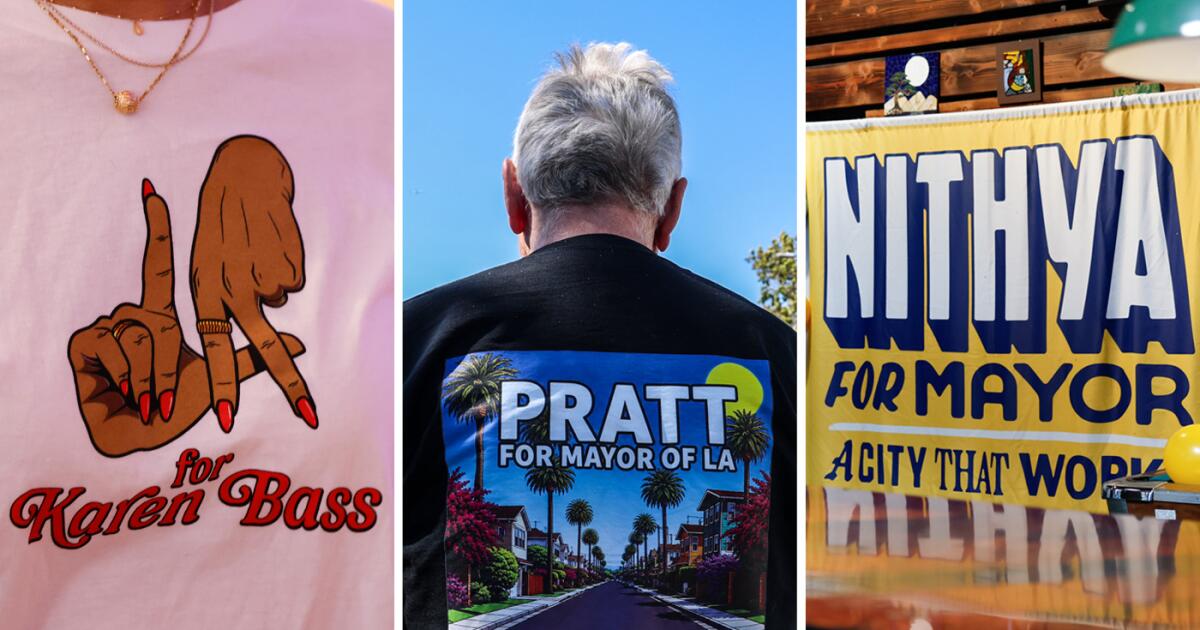
Fourteen Angelenos have qualified to run for mayor, including incumbent Karen Bass, City Councilmember Nithya Raman and former reality TV star Spencer Pratt.

Seven City Council incumbents face at least one challenger, while Councilmember Monica Rodriguez is running unopposed to represent her northeast San Fernando Valley district.

City Atty. Hydee Feldstein Soto is running against three opponents — deputy attorney general Marissa Roy, human rights attorney Aida Ashouri and Deputy Dist. Atty. John McKinney.

In the race for city controller, incumbent Kenneth Mejia will battle it out against Zach Sokoloff, who is on sabbatical from his job as senior vice president of asset management at Hackman Capital Partners.

For the last week and a half, workers at the City Clerk’s Office have been verifying the legitimacy of voter signatures submitted by the candidates, finishing the last batch on Friday.

Gathering the required 500 signatures is relatively easy in citywide races but harder in council and school board districts. Some candidates who submitted petitions by the March 4 deadline failed to qualify because some of their signatures were deemed invalid.

In each race, if no candidate gets more than 50% of the vote in June, the top two finishers will compete in a November runoff.

The field of 14 for mayor narrowed significantly from the roughly 40 who filed initial paperwork on Feb. 7. The qualifiers include a game streamer, a singer-songwriter and a tech entrepreneur, as well as government veterans like Asaad Alnajjar, a longtime engineer for the city. Rae Huang, a pastor and housing advocate, will also appear on the ballot.

Raman, a former Bass ally, shook up the race with her surprise entry, hours before the filing deadline.

A recent poll found that about 51% of Los Angeles voters are undecided on who they want for mayor. Bass led at 20%, followed by Pratt at just over 10% and Raman at slightly more than 9%, according to the Emerson College Polling/Inside California Politics poll.

Tech entrepreneur Adam Miller was supported by just over 4% of those polled, with Huang at about 3%.

In District 1, which stretches from Glassell Park and Highland Park to Chinatown and Pico Union, four challengers are looking to unseat City Councilmember Eunisses Hernandez. They are Maria Lou Calanche, a former Los Angeles Police Commissioner and founder of the nonprofit Legacy LA; Nelson Grande, an executive consultant and former president of Avenida Entertainment Group; Raul Claros, founder of CD1 Coalition, which organizes cleanup days; and Sylvia Robledo, a small-business owner and former council aide.

Councilmember Bob Blumenfield is terming out in District 3, leaving the race to represent the southwestern San Fernando Valley open to a newcomer. The three candidates are Timothy K. Gaspar, who founded a private insurance company; Barri Worth Girvan, a director of community affairs for an L.A. County supervisor; and Christopher Robert “C.R.” Celona, a tech entrepreneur.

In District 5, which includes Bel-Air, Westwood, Hancock Park and other West L.A. communities, Councilmember Katy Yaroslavsky faces two challengers: tenants rights attorney Henry Mantel and accountant Morgan Oyler.

With Councilmember Curren Price terming out in District 9, six candidates are vying to represent parts of downtown and South L.A. They are Jose Ugarte, who was formerly Price’s deputy chief of staff; Estuardo Mazariegos, a lead organizer at the Alliance of Californians for Community Empowerment; nonprofit director Elmer Roldan; entrepreneur Jorge Nuño; professor and therapist Martha Sánchez; and educator Jorge Hernandez Rosas.

Councilmember Traci Park, who represents the Westside communities of District 11, including Brentwood, Pacific Palisades and Venice, will face off against civil rights attorney Faizah Malik.

In District 13, which includes Hollywood and East Hollywood as well as parts of Silver Lake, Echo Park and Westlake, Councilmember Hugo Soto-Martínez is defending his seat against three challengers. They are Colter Carlisle, vice president of the East Hollywood Neighborhood Council; Dylan Kendall, an entrepreneur and founder of Grow Hollywood; and Rich Sarian, vice president of strategic initiatives for the Social District.

And in District 15, which includes San Pedro and other harbor-area communities as well as Watts, Councilmember Tim McOsker is running against community organizer Jordan Rivers, who is continuing his campaign after reports that he stabbed a neighbor when he was 12. Rivers said it was an “accident” that happened a decade ago.

Three seats are open on the Los Angeles Unified School District board.

In District 2, incumbent Rocío Rivas is being challenged by Raquel Zamora, an LAUSD teacher and attendance counselor.

In District 4, incumbent Nick Melvoin is facing off against Ankur Patel, director of outreach at the Hindu University of America.

District 5 school board member Kelly Gonez is running unopposed for her third term.

Source link

Contributor: Federal power grabs on elections are not about fraud

Fans of the musical “Hamilton” know three things about the nation’s first Treasury secretary because of Lin-Manuel Miranda’s brilliance. First, that Alexander Hamilton cheated on his wife, Eliza. Second, he was killed by the vice president, Aaron Burr. Third, and most importantly, he was considered a highly principled man. And when it came to the topic of nationalizing elections, do you know how this Revolutionary War vet and founding father characterized doing so?

A threat.

Referring to corruptible public officials, Hamilton wrote in the Federalist Papers: No 59: “With so effectual a weapon in their hands as the exclusive power of regulating elections for the national government, a combination of a few such men, in a few of the most considerable States, where the temptation will always be the strongest, might accomplish the destruction of the Union, by seizing the opportunity of some casual dissatisfaction among the people to discontinue the choice.”

Hamilton’s prescient views became the framework for the Election Clause in the Constitution. And since returning to the White House, President Trump has been searching for ways to usurp it. Last month he made calls to nationalize elections. This month he’s at it again.

He’s also pushing Congress to pass his so-called SAVE Act, which would require voters to show proof of citizenship when they register to vote. It sounds innocuous until you realize a driver’s license isn’t good enough; a passport would often be required. But half the country doesn’t have a passport, and it costs roughly $200 and a few weeks to get one. The logistical burden is unreasonable and cruel: Consider that this year, during primary season, we’ve already witnessed natural disaster — such as the tornadoes that recently ripped through the Midwest or the fires in Texas — upend entire communities. Many people would not have been able to vote, simply because they had been separated from their papers during the disaster.

The financial obstacles that would be created by the SAVE Act are at least as onerous: Why would Congress choose to financially burden voters — with what is essentially an unlawful poll tax — at a time when the unemployment rate and gas prices are up and the approval rating for nearly everyone in office is down? There are a couple of reasons. One is that the party controlling Congress hopes to suppress voting in order to defy the will of the American majority and cling to power.

Another reason lawmakers support this terrible bill is simply that Trump wants it. Some Republicans in office are so afraid of angering a vengeful president that they would rather entertain his authoritarian tendencies than go through the fire of his opposition during a primary.

For politicians such as Sen. John Cornyn (R-Texas), who this week changed his long-held position on the filibuster in order to push the SAVE Act, it’s simply about political survival. He needs the president’s endorsement heading into the runoff for his Senate seat.

Trump has called the election overhaul bill his top priority — not the war he started with Iran, not returning the billions collected from illegal tariffs, not justice for Jeffrey Epstein’s victims. Before there was a Constitution, there was a warning, written by Hamilton and other founders, whose concerns about nationalized elections are well documented and have proved to be well founded.

You would think a nation in the midst of beating its proverbial chest about our 250th birthday would take more heed from the country’s founders. But nope: This week Florida state lawmakers, in an attempt to appease their state’s most powerful resident, passed an election overhaul law that mirrors the federal SAVE Act. More red states are likely to follow, not because a national wave of voter fraud has been unearthed by authorities, but because the authorities want to stay in the good graces of someone who has yet to prove any widespread fraud other than his own.

The party that famously railed against “the bridge to nowhere” is now offering bills that solve nonexistent problems. Or in some cases, creating problems, particularly for women who changed their names after marriage so their state IDs don’t match their birth certificates.

Cornyn is not alone in exchanging his principles for Trump’s favor; he’s just the most recent. However, the manner in which he announced his flip flop was particularly tone deaf.

“If a man takes a swing at you and barely misses, that doesn’t make him a pacifist — it just means he has bad aim,” Cornyn wrote in an op-ed about the bill for the New York Post, the newspaper founded by Hamilton in 1801. “Standing still and giving him a second free swing wouldn’t be wise or honorable: it would be foolish.”

In 2016, then-candidate Trump took his first big swing at our elections when he implied — without evidence — that his opponent, Sen. Ted Cruz, had rigged the election after losing to him in the Iowa Republican caucus. Reportedly Trump even tried to get the state’s party chair to overturn the result. He’s been throwing jabs at our elections ever since. The Jan. 6 riot was a haymaker that barely missed. Given the president’s propensity to hand out Trump 2028 hats, it seems passing the SAVE Act would be, in Cornyn’s words, setting voters up to stand there while Trump takes another swing at our democracy.

YouTube: @LZGrandersonShow

Insights

L.A. Times Insights delivers AI-generated analysis on Voices content to offer all points of view. Insights does not appear on any news articles.

Viewpoint
This article generally aligns with a Center Left point of view. Learn more about this AI-generated analysis
Perspectives

The following AI-generated content is powered by Perplexity. The Los Angeles Times editorial staff does not create or edit the content.

Ideas expressed in the piece

  • Alexander Hamilton, writing in Federalist No. 59, warned that exclusive state power over federal elections posed an existential threat to the Union, cautioning that “a combination of a few such men, in a few of the most considerable States” could “accomplish the destruction of the Union” through control of election regulations[1]

  • The SAVE Act requiring proof of citizenship to vote imposes unreasonable logistical and financial burdens on voters, effectively functioning as a poll tax by requiring passports costing approximately $200 that roughly half the country does not possess[1]

  • Natural disasters and unforeseen circumstances already disrupt voting access, and citizenship verification requirements would further prevent Americans from voting by separating them from necessary documentation during emergencies such as tornadoes or fires[1]

  • The stated rationale for election overhaul legislation—addressing voter fraud—is not supported by evidence, as authorities have failed to unearth a national wave of voter fraud despite repeated claims[1]

  • Republicans supporting the SAVE Act are motivated by partisan interests rather than election security concerns, with some lawmakers abandoning long-held principles to secure Trump’s political endorsement during primary races[1]

  • Election nationalization efforts represent an authoritarian threat to democracy that the nation’s founders specifically warned against, making it imperative to heed historical lessons about centralized electoral control[1]

Different views on the topic

  • Hamilton argued in the Federalist Papers that the national government required ultimate authority over election regulations to prevent state legislatures from abandoning their responsibility to choose federal representatives, which could render “the existence of the Union entirely at their mercy”[4]

  • The Constitution’s design allocates election regulation authority primarily to states with a federal backstop, recognizing that the national government must possess a check on state power to maintain union stability and prevent states from exploiting their regulatory control[3][4]

  • Federalist No. 60 establishes that the system of separated powers—with the House elected directly by people, the Senate by state legislatures, and the president by electors—creates structural safeguards preventing any single faction from monopolizing electoral control[2]

  • Voter identification requirements serve legitimate election integrity purposes, with proponents arguing that citizenship verification represents a reasonable measure to ensure eligible voter participation[1]

Source link

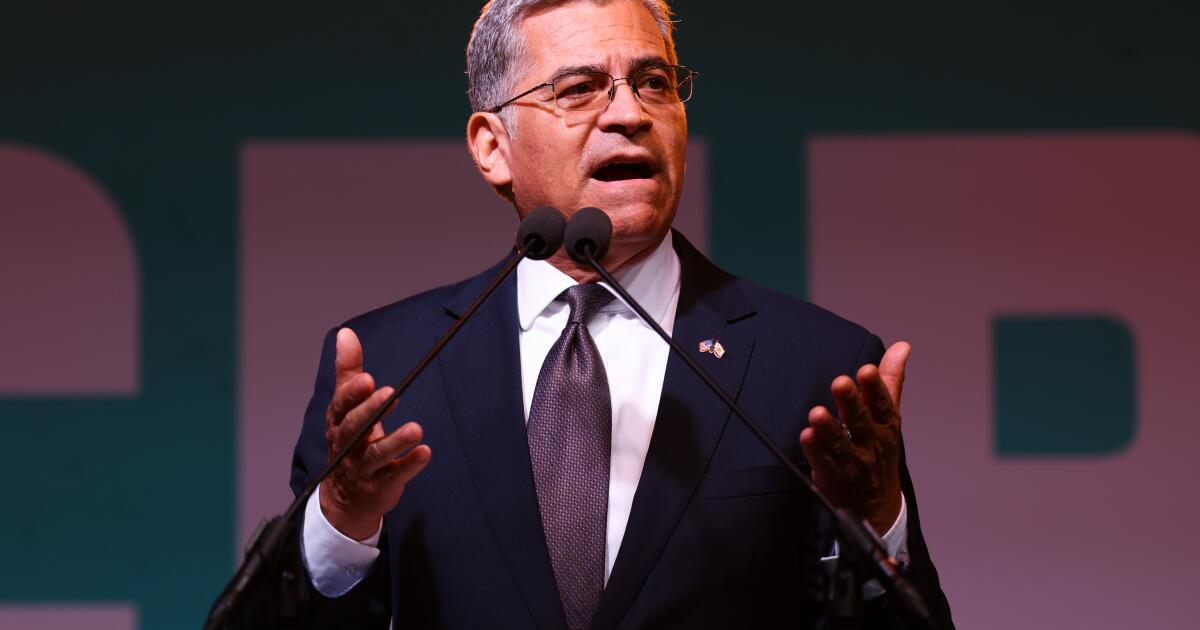
Becerra blasts USC and ABC for excluding candidates of color from gubernatorial debate

Former U.S. Health and Human Services Secretary Xavier Becerra, one of the top Democrats running for California governor, on Friday blasted USC and the ABC affiliate in Los Angeles for hosting a debate that he argues purposely excludes all candidates of color.

Becerra said he and the other candidates were excluded from the televised debate unfairly, a decision that he said “smells of election rigging” in a hotly contested race less than three months before the June primary.

“My father used to tell me of the days when he would encounter signs posted outside establishments that read ‘No Dogs, Negroes or Mexicans Allowed,’” Becerra wrote in a public letter to USC President Beong-Soo Kim. “USC’s actions may not seem so transparent. But, you have deliberately chosen to selectively filter the voters’ view of the field of gubernatorial candidates in what all observers characterize as a wide-open race.”

The university said in a statement that it authorized a political expert to create the formula to determine who would be included in the debate.

“At the request of the Center for the Political Future, Dr. Christian Grose, Professor of Political Science and International Relations, independently established the methodology that determined eligibility for the debate,” according to a statement from the center. “No one in the USC administration had any role in developing, reviewing or approving those criteria.”

The center later said in a statement on Friday that it reiterated the criteria that determined which candidates were invited to participate in the debate, and that nothing had changed since the forum was first planned.

The criteria for gubernatorial candidates to participate considered opinion polling and campaign fund raising. Six candidates were asked to participate in the March 24 debate, which is cosponsored by ABC7 Los Angeles and Univision.

There was conflicting information about USC’s stated criteria, however. The methodology says that the fundraising totals considered were based on semi-annual reports campaigns filed with the California Secretary of State’s office. However, the document later says that the fundraising figures also includes large donations that campaigns are required to immediately report.

This is a critical difference, because San José Mayor Matt Mahan did not enter the race until late January, and thus far has not been required to file any semi-annual fundraising disclosures with the state. However, he has received significant donations since he entered the race.

Mahan agreed with Becerra, saying that he ought to be part of public forums about who will lead the state.

“The former Secretary is absolutely correct, he should be included in the debate,” Mahan said in a statement. “His long record of service to California has earned him a place on every debate stage in this campaign for Governor.”

USC officials said they are clarifying how they selected candidates to participate in the race.

“We are reissuing the criteria to make clear that they include current fundraising totals, including semi-annual and late reports, which were always part of the formula,” the Center for the Political Future said in a statement. “We are not changing the criteria. We have updated even as of today and the rank order includes the same top 6 candidates.”

Grose said that the selection of candidates was based upon polling and fundraising numbers, and that the sentence about semi-annual fundraising reports was inaccurate.

“It was just a wording issue. It’s not a methodology issue,” he said.

Six candidates are scheduled to appear at the debate: Republicans Riverside County Sheriff Chad Bianco and conservative commentator Steve Hilton; and Democrats Northern California Rep. Eric Swalwell, former Orange County Rep. Katie Porter, billionaire hedge-fund founder Tom Steyer and Mahan.

The kerfuffle occurs after Democratic candidates of color accused state party leaders of trying to oust them from the race in favor of white candidates, who have more support in opinion polls.

In addition to Becerra, other prominent Democratic candidates excluded from the debate include former state Controller Betty Yee, state Supt. of Public Instruction Tony Thurmond and former Los Angeles Mayor Antonio Villaraigosa, who also condemned the candidate-selection formula.

“Californians deserve a fair process, and voters deserve to hear from all qualified voices,” Villaraigosa, who taught public policy at USC for three years after leaving office, said in a statement. “But this biased and bigoted action by USC to manipulate the data to exclude every qualified Black, Latino, and API candidate in favor of a less qualified white candidate is shameful.”

Becerra said USC went to great lengths to justify the candidates that were excluded, but the bias was clear.

“You can’t escape the detestable outcome: you disqualified all of the candidates of color from participating while you invited a white candidate who has NEVER polled higher than some of the candidates of color, including me,” he said.

Becerra was clearly referring to Mahan, who recently entered the race and has received millions of dollars of support from Silicon Valley leaders. Becerra noted that veteran GOP strategist Mike Murphy, co-director of the USC Center for the Political Future, which is a sponsor of the debate, is assisting an independent expenditure committee backing Mahan.

Murphy said he had recused himself from anything involved in the debate, and that he was a volunteer for the outside group backing Mahan. If he becomes a paid advisor to the independent expenditure committee, he said he has requested unpaid leave from the university through the June 2 primary.

“I’ve been transparent that I’m personally a Mahan supporter,” Murphy said. “I’ve had zero to do with the debate.”

Source link

Hegseth says he’s eager for Paramount’s Ellison to take over CNN

In remarks that are likely to stoke concerns through the corridors of CNN, Secretary of Defense Pete Hegseth said Friday he is looking forward to Paramount’s ownership of the network.

“The sooner David Ellison takes over that network the better,” Hegseth said during a morning briefing.

Hegseth’s invoking the name of the Paramount Skydance chief executive — whose company will take control of CNN once its deal to merge with Warner Bros. Discovery is finalized — amplified the fear many have that the cable news channel will seek to appease the Trump administration.

The typically combative Hegseth made the remarks after blasting CNN’s reporting on the U.S. military action in Iran. CNN said the Trump administration underestimated the impact its attack would have on the Strait of Hormuz, echoing the claims of other media outlets. Oil tankers have been unable to get through the passage due to attacks by Iranian drones, escalating gas prices as a result.

“CNN doesn’t think we thought of that,” Hegseth said. “It’s a fundamentally unserious report.”

Paramount declined to comment on the remarks by Hegseth, a former Fox News host who has a lot of experience in bashing the mainstream media. A CNN representative said the network stands by its reporting.

Trump has a friendship with Ellison’s father, Larry, and the two have reportedly discussed changes to CNN once Paramount takes ownership. But it’s the rare time such expectations have been offered up publicly by a top member of the administration.

Trump, who has long expressed disdain for CNN, expressed his preference for Paramount to prevail over Netfilx in its pursuit of Warner Bros. Discovery so that CNN would be in the hands of the Ellisons.

In his last public statement about CNN, David Ellison said he wants to be in the “truth business” and insisted there would be no corporate interference in the network’s coverage.

“CNN is an incredible brand with an incredible team, and we absolutely believe in the independence that needs to be maintained, obviously, for those incredible journalists, and we want to support that going forward,” Ellison told CNBC on March 5.

Paramount has been forced to battle the perception of that its news organizations will tilt to the right under its stewardship. One of David Ellison’s first moves after his company Skydance Media took over CBS was installing Bari Weiss as editor in chief of the network’s news division despite having no experience in TV news. Ellison acquired Weiss’s the Free Press, a centrist digital news site that often targets excesses of the political left and is staunchly pro-Israel.

The acquisition and the appointment of Weiss were seen as a way to help smooth the regulatory approval of Skydance’s acquisition of Paramount last year. CBS News has been under intense scrutiny for signs that is shifting its coverage to please the administration.

A number of CBS News journalists unhappy over the division’s direction under Weiss have already departed. Scott MacFarlane, the Justice Department correspondent who announced his exit Monday, was said to be particularly unhappy over the network’s handling of the anniversary of the Jan. 6, 2021, attack on the U.S. Capitol by Trump supporters who wanted to overturn the 2020 election results.

Anderson Cooper also passed on signing a new deal with “60 Minutes,” where he has been a correspondent since 2007. But with the merger, the CNN anchor will still be a part of the company.

Weiss’ has had some early missteps. The Jan. 6 story was among several highly criticized segments during the first week of “CBS Evening News with Tony Dokoupil.” She delayed a “60 Minutes” segment on the government’s use of an El Salvador prison to detain undocumented migrants for more reporting, only to have it air with minor changes. The delay prompted charges that Weiss was trying to placate the White House, which CBS denied.

Notwithstanding the controversy, some insiders contend there has
not been a significant shift in how CBS News is covering most stories.

The network was among the first to report that the severity of injuries to U.S. service members from an Iranian drone attack in Kuwait were far more serious than the government initially said.

CBS News is also moving ahead with the hiring of Jeremy Adler, once a top advisor to former congresswoman and outspoken Trump nemesis Liz Cheney, to handle communications for Weiss, according to people familiar with the plan who were not authorized to speak publicly.

Axios — citing unnamed sources — reported that White House officials are angry about Adler joining the network, as Cheney was vice chairman of the committee that investigated the Jan. 6 insurrection.

Cheney, the daughter of former Vice President Dick Cheney and one of the most conservative members of Congress during her time, supported Trump’s opponent Kamala Harris in the 2020 election.

Adler was Cheney’s deputy chief of staff and senior communications advisor from 2019 to 2023. He also served as a regional press secretary on now-Secretary of State Marco Rubio’s 2016 presidential campaign.

Source link

Kennedy Center president Richard Grenell exits, replaced by Matt Floca

President Trump announced on social media Friday that Richard Grenell, the former ambassador to Germany who Trump appointed as president of the John F. Kennedy Center for the Performing Arts more than a year ago, is stepping down. Grenell will be replaced by Matt Floca, the vice president of facilities operations at the center.

Change has been the only constant at the Kennedy Center since Trump fired the center’s board in early February of last year and had himself appointed chairman. A week later amid mass artist defections that included Shonda Rhimes and Renée Fleming, Trump appointed Grenell, a close ally, as interim executive director, a post Grenell held until now.

“Ric Grenell has done an excellent job in helping to coordinate various elements of the Center during the transition period, and I want to thank him for the outstanding work he has done,” Trump posted on Truth Social, adding that after an upcoming two-year closure for renovations, the center “will be, at its completion, the finest facility of its kind anywhere in the World!”

News of the center’s imminent closure came as a surprise to employees and arts fans still reeling from Trump’s announcement late last year that the board had voted to rename the venue the Trump-Kennedy Center, which prompted another wave of performance cancellations, including by composer Philip Glass. The Washington National Opera also announced in early January that it would leave the center.

Grenell’s tenure was marked by controversy every step of the way, which Grenell met with combative defiance, often slamming artists that criticized the center’s decisions. He also was known for not granting interviews to press that he deemed unfriendly, instead speaking on the record only to right-leaning news organizations.

The Kennedy Center did not respond to a request for comment on Grenell’s departure.

Source link

Star, Interrupted | Caracas Chronicles

When Maria Corina Machado comes to town, you expect a lot of emotions. This week in Santiago, millennial bros swooned over her. Young women elbowed each other for a selfie. Cops had to contain throngs of people looking for a hug or a kind word. 

Do you think I could take a picture with her?” inquired an anxious teenager. “She made me cry,” said an expressive professional woman. “She gives us all hope,” declared a curmudgeonly older gentleman with a trembling voice.

Mind you, this was the reaction from the Chileans.

Witnessing Maria Corina in action, particularly after her Nobel Prize win, is a sociological phenomenon. It’s not about her. It’s the effect she has on others. After a day tagging along to three different events, I felt I was seeing something very special. 

The irony is that these events happened on the same day that the New York Times reported that Trump had asked her not to go back to Venezuela just yet. The most popular figure in the country, the one who can really unite Venezuelans behind a bold new agenda aligned with Washington’s interests … and they want her stored in a cupboard a little longer. 

It’s baffling.

First off, the obvious: her political capital remains intact. If anything, it is bigger and more intense, surrounded by the veneer of real accomplishments and international recognition. The effect this political supernova has on Venezuelans, at least in this part of the world, is as strong as ever. Nobody in the country can conjure up this amount of goodwill. Give it up folks – it’s not even close.

But her aura goes beyond Venezuela. 

One event hosted by a local university brought together a veritable who’s-who of Chilean society – all the politicians, all the businesspeople, many academics … and me, el marido de Katy, lurking in a corner.

Maria Corina made her entrance with Chile’s new President, José Antonio Kast, and his wife Pía. People enthusiastically applauded Kast – which is natural, since he had been inaugurated the day before, won with 60% of the vote, and let’s face it, this was his crowd. 

Until the US realizes what they have, Maria Corina remains an elusive icon, patiently waiting for her time, planning, gaining strength, and keeping hope alive.

But Maria Corina garnered not one, not two, but three standing ovations. Hell, they stood up to applaud her when they announced her name. Kast and all the others were gracious enough to recognize the star power and bask in her aura. María Corina, if anything, seemed a bit embarrassed by it all.

Where does this come from?

It’s easy to reduce Maria Corina’s appeal to her masterful handling of emotions. We all know she talks about families ripped apart, about hugging, about the heroic 2024 campaign. “Mis adorados venezolanos” peppers her speeches.

However, I think it goes beyond that. The key to her connection with people is trust.

As the great Frances Frei explains, trust in leadership depends on three things: empathy, logic, and mastery.

The empathy part we know. Her speeches are tinged with the tragedy that has befallen us all: lost dreams, broken families, violence that belies belief. 

Yet it’s in the logic and the mastery that she brings it home.

The way that she frames the Venezuelan drama makes all the logical sense in the world—it’s about good and evil, about criminal networks controlling the State, and about a regime that has sown division. Fifteen years ago, we at Caracas Chronicles used to dismiss this rhetoric as extreme. It was all true, and now we know, and it all makes sense.

And that is where the mastery part comes in. Her speeches also contain a nod to the learning that has happened in Venezuela. People listening seem to know—now—that freedom is worth fighting for, that there is no free lunch, that respect and decency have a place at the table. Expropiar es robar. Indeed.

Her speech, delivered impeccably, with no teleprompter, links these three elements together in a way that makes both the cynic and the true believer nod in agreement.

How on Earth does the US administration not see that this is a rare political asset that needs to be deployed? 

Mind you, she wasn’t perfect. At that event, I thought she missed an opportunity to talk about the business opportunities a free Venezuela would have for Chilean companies. In her speeches, she does not effectively address the raging xenophobia many Venezuelans abroad face. 

But those are minor things.

Venezuela faces many tough choices in the coming years. Policy decisions will not be easy, and it’s going to take an enormous amount of political skill to see them through. Only someone like Maria Corina can conjure up the trust of the Venezuelan people that can deliver the difficult decisions that lie ahead. 

The US has an ally waiting to work on what needs to be done. Nobody in the country has what she has. She is aligned with you. She gave you her damn medal. She’s right there.

Until the US realizes what they have, Maria Corina remains an elusive icon, patiently waiting for her time, planning, gaining strength, and keeping hope alive. You won’t see these kinds of events in Miami or Houston. It’s not part of her plan. They want her to keep a low profile, for now. That’s a shame. 

She’s a star. Interrupted.

Source link

EPA moves to roll back recent limits on ethyene oxide, a carcinogen

The Trump administration on Friday moved to roll back Biden-era limits on emissions of ethylene oxide, a cancer-causing chemical often used in the sterilization of medical devices.

The Environmental Protection Agency said repealing the rules, which fall under the National Emission Standards for Hazardous Air Pollutants, would “safeguard the supply of essential medical equipment” — saving approximately $630 million for companies over 20 years. California is home to about a dozen such facilities.

The government said the emissions are part and parcel of protecting people from “lethal or significantly debilitating infections that would result without properly sterilized medical equipment.”

“The Trump EPA is committed to ensuring life-saving medical devices remain available for the critical care of America’s children, elderly, and all patients without unnecessary exposure to communities,” EPA Administrator Lee Zeldin said in a statement.

An estimated 50% of sterile medical devices in the U.S. are treated with ethylene oxide, or EtO, particularly those that can’t be cleaned using steam or radiation. The colorless gas is also used to make chemicals found in products such as antifreeze, detergents, plastics and adhesives.

But EtO poses health risks. Short-term exposure by inhalation can cause headaches, dizziness, nausea, fatigue respiratory irritation and other adverse health effects, according to the federal Agency for Toxic Substances and Disease Registry.

Longer-term exposure increases the risk of cancers of the white blood cells, such as non-Hodgkin’s lymphoma, as well as breast cancer. A now-deleted page from the EPA’s website stated, “EtO is a human carcinogen. It causes cancer in humans.”

Friday’s proposal specifically targets updated rules for EtO emissions that were passed by the Biden administration in 2024 following pressure from environmental justice groups, particularly those in Louisiana’s heavily industrialized “Cancer Alley.” The change sought to reduce the amount of EtO released from commercial sterilizers by 90% and lessen the hazards for nearby communities.

The tighter rules were in part based on EPA’s own scientific study that found it to be 60 times more carcinogenic than previously thought, which the agency now says should be reassessed.

If finalized, the plan would give facilities the choice between installing continuous real-time monitoring systems for EtO emissions or complying with modified pollution control requirements at facilities that emit more than 10 tons a year, the EPA said.

The proposal follows other moves by the Trump administration to rescind regulations that it says are burdensome and costly for industries, such as those governing emissions from coal power plants. Last month, the EPA repealed the endangerment finding, which affirmed the dangers of greenhouse gas emissions and underpinned the agency’s ability to regulate those emissions from vehicles.

The action around ethylene oxide would affect about 90 commercial sterilization facilities owned and operated by approximately 50 companies. Three California companies applied for and received presidential exemptions for their EtO emissions in July.

An aerial view of an industrial park

The Sterigenics facility, center, in Vernon is pictured in 2022.

(Myung J. Chun / Los Angeles Times)

They are located in Ontario and Vernon and operated by the company Sterigenics, which provides industrial sterilization technology for medical devices and other commercial products.

In January, a coalition of environmental and community groups challenged the EtO exemptions in federal court. The lawsuit from the Southern Environmental Law Center and the Natural Resources Defense Council argues that technology exists for facilities to comply with the tighter Biden-era standards without raising costs, and many facilities are already using it.

“EPA’s 2024 rule was an important and overdue step to reduce toxic ethylene oxide pollution and protect communities,” said Irena Como, senior attorney at the Southern Environmental Law Center, in a statement Friday. “Repealing this rule that is proven to significantly lower pollution exposure and cancer risks will subject even more people who work, live, and send their children to schools located near these facilities to harm that is entirely preventable.”

Sterilization and chemical industry groups support the plan.

“The EPA rule concerning ethylene oxide use in commercial sterilizers threatens to severely restrict access to vital medical products nationwide,” the American Chemistry Council said in a statement. “We commend the EPA for their commitment to reevaluating these policies.”

The EPA will hold a 45-day comment period about the proposal after it is published in the federal register. A final decision is expected sometime this year.

Source link

Leavenworth, Kan., relents and will allow a private prison to reopen and house immigrants

A Kansas town known for its prisons is allowing a shuttered private prison to reopen and house immigrants detained for living in the U.S. illegally after a nearly yearlong legal fight amid a massive national push for new detention centers.

The City Commission in Leavenworth on Tuesday approved a permit to private prison operator CoreCivic. Members voted 4 to 1 to approve a three-year permit with conditions that set minimum staffing levels, ban the housing of minors and provide for a city oversight committee.

“If they don’t follow those guidelines, we can pull the permit,” Mayor Nancy Bauder said before the vote.

The 1,104-bed Midwest Regional Reception Center is 10 miles west of the Kansas City International Airport. CoreCivic, one of the nation’s largest private prison operators, said the center will generate $60 million annually once it’s fully open.

Leavenworth, Kan., sued CoreCivic after it tried to reopen the shuttered prison without city officials signing off on the deal.

The legal battle played out in state and federal courts, with the Department of Justice siding with CoreCivic in legal filings. The department argued that the city was engaged in an “aggressive and unlawful effort” to “interfere with federal immigration enforcement.”

It appears to be the only such legal battle nationally to delay a private prison from opening amid President Trump’s push for mass deportations. The city argued that requiring a permit would prevent future problems, while CoreCivic maintained that it didn’t need a permit and the process would take too long.

Leavenworth was an unlikely foe because the GOP-leaning city’s name alone evokes a shorthand for serving hard time. Prisons employ hundreds of workers locally at two military facilities, the nation’s first federal penitentiary, a Kansas correctional facility and a county jail, all within six miles of City Hall.

CoreCivic stopped housing pretrial detainees for the U.S. Marshals Service in its Leavenworth facility in 2021 after then-President Joe Biden called on the Justice Department to curb the use of private prisons. The American Civil Liberties Union and federal public defenders said inmates’ rights had been violated and there were stabbings, suicides and even one homicide.

The city’s lawsuit described detainees locked in showers as punishment and accused CoreCivic of impeding city police force investigations of sexual assaults and other violent crimes.

Almost four dozen people spoke in opposition to the permit before the commission’s vote. Bauder admonished the crowd several times for being too noisy, and police removed a protester who yelled vulgar comments.

“We, we the people of Leavenworth, are not fooled and we don’t care about their money,” David Benitez, a city resident, told the commission.

Some backers of the permit cited the potential boost to the local economy. Two CoreCivic employees argued for approval, and one of them, Charles Johnson, of Kansas City, Kan., said his job gave him purpose and allowed his family to get off of state assistance.

“The people I work alongside are caring, professional and committed to doing things the right way,” he said, his comments drawing boos from critics outside the commission’s meeting room.

City Commissioner Holly Pittman said because the city “stood firm,” it could negotiate conditions on the permit. She said denying it would risk a potentially expensive lawsuit.

“I will not gamble the financial stability of this city,” she said before voting yes. “Let me be clear: Approval does not mean endorsement.”

Hollingsworth and Hanna write for the Associated Press. Hollingsworth reported from Mission, Kan.

Source link

Judge quashes Justice Department subpoena of Federal Reserve in blow to investigation

A federal judge on Friday quashed Justice Department subpoenas issued to the Federal Reserve in January, a severe blow to an investigation that has already attracted strong criticism on Capitol Hill.

Judge James Boasberg said that a “mountain of evidence suggests” that the purpose of the subpoenas was simply to pressure the Fed to cut its key interest rate, as President Trump has repeatedly demanded.

Fed Chair Jerome Powell revealed the investigation Jan. 11, prompting Senator Thom Tillis, a North Carolina Republican to block consideration of Trump’s pick to replace Powell as Fed chair when his term expires May. 15.

Rugaber writes for the Associated Press.

Source link

6 U.S. airmen die in crash; Hegseth says Iran’s leader is ‘likely disfigured’

Six American airmen deployed to operations against Iran were killed after their refueling aircraft crashed in western Iraq, U.S. Central Command said Friday, bringing the U.S. death toll in the war to 13, as Defense Secretary Pete Hegseth announced the heaviest day of strikes yet.

The crash involved two aircraft in “friendly airspace,” the Pentagon said, adding that the other plane landed safely. The downed KC-135 refueling tanker is the fourth U.S. aircraft to crash during the war against Iran.

“American heroes, all of them,” Hegseth said at the Pentagon on Friday. “We will greet those heroes at Dover and their sacrifice will only recommit us to the resolve of this mission.”

Central Command said the incident is under investigation but was “not due to hostile or friendly fire.”

During the briefing, Hegseth described the Iranian leaders as “desperate” and “cowering” underground like rats. He said Iran’s Supreme Leader Ayatollah Mojtaba Khamenei “is wounded and likely disfigured,” but gave no intelligence to support the claim.

Khamenei has not been seen in public since he rose to leadership, but issued his first public statement Thursday vowing retaliation against U.S. and Israeli attacks, promising that Tehran will continue to choke off the world’s most crucial oil route — the Strait of Hormuz.

“Our revenge will be never ending, not only for the late supreme leader, but also for the blood of all of our martyrs,” he said.

The defense secretary said Friday would see Iran hammered with the heaviest round of air strikes yet seen in the two-week U.S.-Israeli operation that has razed buildings, complexes and factory lines all across Iran, killing at least 1,348 civilians, according to Iranian officials.

“No quarter, no mercy for our enemies,” Hegseth said.

And while Hegseth insisted that fighting will cease when the U.S. defeats Iran’s naval, missile, and nuclear weapons capabilities, President Trump’s public statements continue to sow doubt that the White House and Pentagon are aligned on the objectives of the mission.

Asked Friday by Fox News when the war might end, Trump said, “When I feel it — feel it in my bones.”

Iran’s blockade of the strait remains Tehran’s foremost leverage against its Western adversaries, and a serious political bane for Trump. The International Energy Agency warned Thursday that conflict has created “the largest supply disruption in the history of the global oil market,” which has sent oil prices surging 40% to $95 a barrel since Feb. 28.

Some 1,000 ships remain stranded in the Persian Gulf, many of them energy tankers that have been unable to carry oil and gas shipments from the Middle East to importers across the globe. Vessels that have attempted to traverse the embattled channel have been destroyed in Iranian attacks. Hegseth described Tehran’s strategy as “an act of desperation.”

The United Kingdom Maritime Trade Operations on Friday reported 20 incidents affecting vessels operating in and around the Arabian Gulf, Strait of Hormuz and Gulf of Oman in March.

Drone and missile attacks continue to assail gulf states, threatening to draw more players into the conflict. Thick black smoke was seen rising over Dubai’s skyline Friday after debris from an intercepted Iranian drone strike caused a fire and minor damage to a building within the Dubai International Financial Centre, according to the Dubai Media Office.

Europe has become increasingly involved, too. U.S. long-range bombers have begun flying offensive missions from British airbases, even as U.K. Prime Minister Keir Starmer explicitly permitted U.S. forces to use the bases “for defensive purposes only.” Starmer initially refused to cooperate in American hostilities in any capacity, but changed his approach after he drew criticism from Trump, who said, “He’s no Winston Churchill.”

The U.K., France, and Italy each deployed naval assets to the Eastern Mediterranean island of Cyprus, situated just 125 miles from Lebanon, after Iranian drone strikes hit U.K. bases. The island has emerged as a strategic — and exposed — nerve center in the U.S. offensive against Iran.

Meanwhile, Israel said Friday its strikes are “continuing and intensifying” in Lebanon and Iran. The Israel Defense Forces issued new evacuation orders in southern Lebanon on Thursday after overnight airstrikes in Beirut triggered retaliatory missile and drone attacks by the Iran-backed militant group Hezbollah.

Eight civilians were killed and nine others were wounded in attacks on the Lebanese city of Sidon on Friday, according to Lebanon’s Health Ministry. More than 100 children have been killed in the Israeli assault, the ministry said.

Source link

New push for LAPD oversight moves toward November ballot

A series of proposed changes to the city’s charter — essentially its constitution — could give elected leaders in Los Angeles more oversight of the police department and enable the chief to fire problematic officers, reforms long sought by advocates that are likely to once again face fierce opposition.

Among the recommendations approved last week by the city’s Charter Reform Commission was a proposal that would require any LAPD accountability-related motion or ordinance passed by the City Council to automatically become law if not acted on by the Police Commission within 60 days.

Once the language is finalized, the proposals must clear the City Council and its committees before they can be put to voters on November’s ballot.

Another proposal would give city leaders the ability to override the policy decisions by the Police Commission, a board appointed by the mayor that sets the LAPD policies, oversees its budget and serves as a civilian watchdog.

With the police chief taking criticism for a recent rise in shootings by officers, several proposals sought to strengthen accountability for the use deadly force. One recommendation could require the LAPD to purchase “no less than” $1 million of liability insurance for its roughly 8,700 officers. The insurance would be used to cover legal fees if an officer is found liable for a wrongful injury or death, instead of tapping into the city’s General Fund budget.

Another potential change would “clarify and strengthen” the police chief’s ability to “to initiate and pursue the removal of officers with documented, repeated histories of harm or misconduct.”

Under city rules, the chief of police does not have the authority to fire an officer. Instead, they must send officers whose misconduct they deem severe to disciplinary panels, which occasionally lead to lighter penalties. The new proposal would give the City Council the power to override decisions not to fire, still leaving officers the right to appeal through the courts.

Mayor Karen Bass vetoed a similar bid to rework the disciplinary process in 2024.

The latest proposals drew cautious optimism from activists, many of whom claim the Police Commission is too cozy with the LAPD and have pushed for stronger independent oversight.

Godfrey Plata, deputy director of the nonprofit L.A. Forward, called the proposals a “huge victory” in the fight for police accountability.

“Months ago, police reform wasn’t even on the Charter Commission’s to-do list. Today, because community members came together to force conversations that likely never would have happened on their own, we have multiple reforms headed to City Council,” Plata said.

The Police Commission and LAPD issued nearly identical statements that said they are looking forward to working with the City Council on the charter reform process.

An LAPD spokesman declined to say how Chief Jim McDonnell felt about the proposal, saying it wasn’t “in his interests to give his opinion on something like this as long as it’s still with the full council.”

Samantha Stevens, a Los Angeles political consultant and former legislative staffer, said she is worried the proposed changes are a shortsighted solution to address police abuses that will create another layer of bureaucracy.

“If we don’t like how they’re running things, we should replace the commissioners.” she said. “I don’t know that this will be as effective when you’ve got 15 councilmembers now telling LAPD what to do in their own districts. Is that now too many cooks in the kitchen?”

The charter commission, which has been meeting since last July, must send all its recommended changes to the City Council by April 2.

Source link

Cuba confirms it’s begun talks with U.S. over ‘bilateral differences’

Cuba has begun direct talks with the United States in an effort to solve “bilateral differences” between the two countries, Cuban President Miguel Díaz Canel said Friday.

The comments, broadcast nationwide in Cuba, are the first confirmation of bilateral talks between two governments that have been fierce adversaries for almost 70 years, since Fidel Castro’s revolution toppled the U.S.-backed dictator Fulgencio Batista.

What exactly the talks are about remains unclear, but the Trump administration—which has choked off oil supplies to the island, triggering a severe energy crisis—has been insisting that Cuba’s communist government must change.

In a statement released on social media, Díaz Canel said, “The primary purpose of this conversation is, firstly, to identify the bilateral problems that require a solution—based on their severity and impact—and, secondly, to find solutions for these identified problems.”

Rumors of direct talks between the two nations have been circulating for months, but neither Washington or Havana had confirmed the talks until now.

On Tuesday, the Cuban ambassador to the United States, Lianys Torres Rivera, told The Times that the Cuban government was “ready to engage with the U.S. on the issues that are important for the bilateral relations, and to talk about those in which we have differences.”

Trump and Secretary of State Marco Rubio, the son of Cuban immigrants, have been insistent that the current government must change.

“It may be a friendly takeover, it may not be a friendly takeover,” Trump told Latin American leaders gathered in Florida on Saturday.

“It wouldn’t matter because they’re down to, as they say, fumes. They have no energy. They have no money. They’re in deep trouble,” Trump said.

Trump responded to the Cuban leader’s willingness to negotiate on Friday morning by amplifying a news article with the headline:”Cuba confirms talks with Trump officials, raising hopes for US deal.” He posted that on his Truth Social account.

Rolling blackouts, shortages of food and medicine, a lack of gasoline and other shortfalls have become everyday occurrences on the island, home to 10 million. Images of uncollected garbage rotting on Havana’s streets have been broadcast across the globe. A lack of jet fuel has bludgeoned the critical tourism sector.

“The status quo is unsustainable,” Rubio said last month. “Cuba needs to change…And it doesn’t have to be change all at once. It doesn’t have to change from one day to the next.”

The Cuban announcement comes 13 days after the U.S. attacked Iran and two months after U.S. forces, deployed by Trump, deposed Venezuelan President Nicolás Maduro, a longtime Cuban ally, and brought him to New York to face drug trafficking charges.

Source link

Oscars are too political? Speeches have been less political over time

Twenty-three years ago, the Oscars were in turmoil. President George W. Bush had just begun an invasion of Iraq after the Sept. 11 attacks, and as the nation’s TV screens filled with the “shock and awe” campaign, many did not know quite how to proceed with Hollywood’s biggest night.

ABC wanted to postpone, presenters begged off, Jack Nicholson urged his fellow actor nominees to boycott (animated feature winner Hayao Miyazaki did), documentary winner Michael Moore attempted to directly shame Bush from the stage (to loud boos) and many of the acceptance speeches acknowledged the war and included pleas for peace.

President Trump’s recent decision to attack Iran is not precisely the same — American troops have thus far not invaded and the Bush administration’s media blitz of rockets lighting up the sky is absent. No one expected the Oscars to be canceled or delayed and there has been no talk of boycotts; whether the war and (if polls are to be believed) its general unpopularity are noted, either by host Conan O’Brien (who has already said he will not be mentioning Trump) or the winners, remains to be seen.

But if recent history is any indication, it could go unmentioned. Which would be something of a political statement in itself: It would be terrible if the false notion that awards shows have become too political had a chilling effect on anyone who wanted to use their platform to speak about something important they care about.

Thus far, film and television awards winners have stayed away from the issues that have prompted widespread public outrage and protests this year — including the often brutal methods of Immigration and Customs Enforcement, the ongoing concern over the war in Gaza and the endless revelations of the Epstein files.

Despite complaints from certain quarters, awards shows, particularly the Oscars, rarely have more than one or two truly political moments. But this year, the absence has been notable.

Compared with the Grammy Awards, where Trevor Noah, in his final stint as host, roasted Trump and anti-ICE sentiment reigned in speeches and on pins, this year’s Golden Globes (which aired three weeks before the Grammys) appeared to exist in another world. A few stars wore similar pins and spoke on the red carpet, but aside from a few digs about Epstein and CBS News from host Nikki Glaser, there was no mention of the many issues roiling the nation. (As he was beginning to make late-in-speech remarks about this being an important time to make films, Kleber Mendonça Filho, Brazilian director of the non-English language film winner “The Secret Agent,” ran over time and was played off.)

Has Hollywood lost its spine? Or, having been beset for years by grievances that the Oscars have become “too political” and “too woke,” are filmmakers and actors saving their outrage and passion for social media and bowing to pressure to keep their acceptance speeches grateful and celebratory?

“I know that there are people who find it annoying when actors take opportunities like this to talk about social and political things,” said Jean Smart on the Golden Globes red carpet, adding, when she won for actress in a TV comedy: “There’s just a lot that could be said tonight. I said my rant on the red carpet, so I won’t do it here.”

It was an echo of Jane Fonda’s famous 1972 Oscar speech: “There’s a great deal to say, and I’m not going to say it tonight.” And, perhaps, a response to more recent “shut up and dribble” criticism, as distilled by 2020 Golden Globes host Ricky Gervais, who cautioned the audience: “If you do win an award tonight, don’t use it as a platform to make a political speech. You’re in no position to lecture the public about anything. You know nothing about the real world.”

Indeed, as Oscars ratings have plummeted over the last 20 years, some have suggested that political speechifying is to blame. This is patently absurd. Viewership for just about everything except the Super Bowl has dropped dramatically, and the Oscars ratings do not take into account the millions who watch portions of the show on social media. (We’ll see what happens when the Oscars move to YouTube in 2029.)

And the Oscars have never been particularly political.

Speeches that deviate from the ubiquitous laundry list of thank yous always get more attention, whether they’re political or not, for the simple reason that they’re so dang unusual. But taken as a whole, either by decade or particular telecast, the Oscars is mostly, and consistently, apolitical. As in, almost every minute of a three-hour-plus show, year after year after year.

Unless, of course, you consider thanking God to be political. Which I do not. Nor do I categorize as such any speech that underlines the fact of a historic win (as Halle Berry did in 2002), encourages Hollywood to tell more diverse stories (as Cate Blanchett did in 2014) or reminds audiences in a general way that systemic oppression and war are bad (as Adrian Brody did amid his ramblings in 2025).

Many of the speeches that have been branded as “political” are simply underscoring the themes of the films being honored — in 2009, both Dustin Lance Black and Sean Penn advocated for gay rights when accepting Oscars for “Milk,” which chronicled the life of assassinated gay rights activist Harvey Milk. Likewise, John Irving supporting abortion rights and Planned Parenthood after winning for “The Cider House Rules” in 2000 and John Legend and Common speaking passionately about civil rights, past and present, after winning for “Glory,” a song from the civil rights drama “Selma,” in 2015 was only natural.

Sacheen Littlefeather refuses an Academy Award on stage.

Sacheen Littlefeather refuses the lead actor Academy Award on behalf of Marlon Brando in 1973.

(Bettmann Archive)

A purely political speech, to my mind, directly calls out specific leaders, policies or crises, which may or may not have anything to do with the film being awarded. The most famous are, of course, Marlon Brando’s decision to send Sacheen Littlefeather to accept his Oscar for “The Godfather” and protest the treatment of Native Americans, and Vanessa Redgrave’s 1978 denunciation of “Zionist hoodlums” who were demonstrating against her involvement in a pro-Palestinian documentary even as she accepted for supporting actress in “Julia.”

In 1993, while many Oscars attendees wore red ribbons to honor those living with HIV/AIDS and call for government assistance, then-couple Susan Sarandon and Tim Robbins took it further, using their time as presenters to ask the U.S. government to allow HIV-positive Haitians being held at Guantanamo Bay to be let into the country. That same year, presenter Richard Gere used the fact that “1 billion people” were watching to send “sanity” to Chinese leader Deng Xiaoping in the hopes that he would allow the people of Tibet to “live free.” (Then-Oscars producer Gil Cates quickly denounced the three presenters; Gere did not return to the Oscars until 2013.)

A year after Moore blasted Bush over Iraq, Errol Morris, winning for “The Fog of War,” briefly compared the war in Iraq to the “rabbit hole” of Vietnam (which was the subject of his film). In 2015, “Boyhood” star Patricia Arquette used most of her supporting actress speech to demand equal wages for women. That same year, “Birdman” director Alejandro G. Iñárritu dedicated his award to his fellow Mexicans, with the hope that they would be treated by Americans “with dignity and respect” so that together, they could build a “great immigrant nation.” (Which frankly plays more purely political now than it did at the time.) A year later, Leonardo DiCaprio spoke about climate change after winning for “The Revenant.”

In 2019, Spike Lee, accepting for adapted screenplay (“BlacKkKlansman”), called on voters in the upcoming election to mobilize and “be on the right side of history” and in 2024, “Zone of Interest” director Jonathan Glazer, accepting for international film, riled many by comparing the dehumanization required for the Holocaust to occur with events in Gaza.

Even now, the most notable examples of political speeches, the ones that are always mentioned, are from the freaking ‘70s. Which certainly obliterates the idea that the Oscars have grown more political and undermines the argument that it is a Big Problem.

Put these relatively few moments next to the endless hours of acceptance speeches that, with varying degrees of emotion, honor the art of movie-making and the legions that support those who are doing it (including God, parents, spouses, children, some random but heaven-sent teacher) and it’s difficult to see much “wokeness.”

The people who gather at the Oscars are storytellers, and many of the stories they tell deal with uncomfortable truths about our collective past, present and future (including best picture front-runners “One Battle After Another” and “Sinners”). Of course nominees and winners have opinions about politics, science, social issues, international conflict and those suffering without recourse or voice — that’s why they make movies. So if a few of them decide to skip thanking their manager or the studio head and say a few words about climate change or whatever current law/policy/presidential action they believe is making lives worse for a lot of people, that’s their choice. They just won an Oscar!

For those uncomfortable watching it, just use the 45 seconds to grab a snack and by the time you’re back, the host will be moaning about how long the show is and the next five winners will inevitably cry and smile; praise their fellow nominees; thank the producers; say something sweet about their cast, crew and mamas; before telling their kids they love them and it’s time to go to bed.

And that’s OK too.

Source link

Contributor: What a U.S. victory would look like in the Iran war

Six days after the commencement of Operation Epic Fury, President Trump took to Truth Social to announce, in the context of the ongoing joint American-Israeli military campaign against the Islamic Republic of Iran: “There will be no deal with Iran except UNCONDITIONAL SURRENDER!” In the same post, the president seemed to equate such “unconditional surrender” with “the selection of a GREAT & ACCEPTABLE Leader” to lead Iran, which would enable the country to come back from the “brink of destruction” and emerge “stronger than ever.”

Just three days after announcing “unconditional surrender” as his goal, Trump, speaking on March 9 in Doral, Fla., proclaimed that the end of the war will happen “very soon.” One might be forgiven for experiencing some whiplash — especially because earlier that same day, Trump told Fox News he was “not happy” with Iran’s naming of a new supreme leader, Mojtaba Khamenei. In fact, around the same time he was demanding “unconditional surrender” the prior week, Trump had already called Khamenei the younger “unacceptable.”

What exactly is going on here?

Trump is a conservative nationalist, which means his general approach to foreign policy and his specific foreign policy “excursions” are guided by his view of how best to secure the American national interest. Accordingly, since Operation Epic Fury started, Pentagon press briefings featuring Secretary of War Pete Hegseth and Chairman of the Joint Chiefs of Staff Dan Caine have repeatedly emphasized empirical metrics for measuring success, such as Iranian naval vessels sunk, Iranian air force planes shot down, Iranian ballistic missile silos and launch sites destroyed and so forth.

Trump hasn’t said it explicitly, but the Trump administration’s goal — and thereby, definition of victory — in Operation Epic Fury seems clear enough: the neutralization of Iran as an active, ongoing threat to the United States and our interests. If nothing else, at least, that is how victory in the current campaign should be defined.

That does still raise at least one pressing question, though, especially in the context of exiled Crown Prince Reza Pahlavi’s call to the Iranian people to prepare for “the decisive stage of our final struggle”: Where does that most controversial of foreign policy goals, “regime change,” fit into the puzzle?

At this point, it is undeniable that wholesale regime change is the most desirable outcome for the conflict in Iran. The pursuit of regime change as a goal unto itself is often now disparaged, coming in the aftermath of the failed neoconservative boondoggles earlier this century. But it ought to be axiomatic that there are some foreign regimes that behave in a manner that redounds to the American national interest, and there are some foreign regimes that behave in a manner that is contrary to the American national interest. It is natural and logical that we would wish for the latter types of regime to be heavily reformed or outright replaced — especially with the local populace leading the way.

Perhaps even more to the point: One does not take out a 37-year-ruling despot like Ali Khamenei, as the American and Israeli militaries did in the opening hours of the present operation, and not hope for full-scale regime change. All people of goodwill should be hoping for that outcome — for the Iranian people to rise up like lions and throw the yoke of tyranny off their necks once and for all, delivering a long-sought victory for the American national interest in the process.

But it’s entirely possible full-scale regime change won’t happen. The people of Iran just witnessed tens of thousands of their countrymen brutally gunned down during the anti-regime uprisings of late December and early January. They are an unarmed populace facing Nazi-esque regime jackboots, in the form of the Islamic Revolutionary Guard Corps and the Basij paramilitary.

All of that, then, raises one final question: Is it possible for there to be victory in Operation Epic Fury, and for the Iranian regime to be neutralized as a threat to the United States and our interests, if there isn’t full-scale regime change in Tehran?

In theory, the answer is yes. Venezuela provides a model.

Delcy Rodríguez, the current leader, is a hardened Marxist-Leninist in the mold of her predecessors Hugo Chávez and Nicolás Maduro. But Rodriguez has been fully cooperative with the United States since the astonishing January operation to extract Maduro for the simple reason that she has no real choice in the matter: She remains in power, yes, but only on the condition of an “offer” presented by Trump and Secretary of State Marco Rubio that, to borrow from Vito Corleone in “The Godfather,” Rodríguez “can’t refuse.” Rodríguez has thus been fully cooperative in areas such as American oil extraction and the reestablishment of diplomatic relations with the United States.

In theory, a similar arrangement is possible with a decimated, chastened regime in Tehran. And some experts predict that such an arrangement will characterize the regime in Iran a year or two from now. In practice, however, there is the ever-thorny problem that has frustrated and perplexed Westerners for decades when they attempt to reason with zealous Islamists: They do not fear death. A socialist like Delcy Rodríguez can, ultimately, be reasoned with; an Islamist like Mojtaba Khamenei (or his successor), perhaps not.

The cleanest solution to the Iran quagmire at this particular juncture — and the one that most clearly fulfills Trump’s “unconditional surrender” victory criterion — is indeed full-scale regime change. That is certainly the outcome that would be best for the neutralization of the Iranian threat and the corresponding advancement of the American national interest. I’m far from certain it will happen. But like many, I pray that it will posthaste.

Josh Hammer’s latest book is “Israel and Civilization: The Fate of the Jewish Nation and the Destiny of the West.” This article was produced in collaboration with Creators Syndicate. X: @josh_hammer

Source link