NEWS

Stay informed and up-to-date with the latest news from around the world. Our comprehensive news coverage brings you the most relevant and impactful stories in politics, business, technology, entertainment, and more.

MQ-9 Reaper Replacement Requirements Stress A Drone Cheap Enough To Risk Losing

The U.S. Air Force has confirmed it has come up with a new set of requirements as it continues to look for a successor to its hard-working MQ-9 Reaper fleet. In contrast to the Reaper, the replacement aircraft is likely to be more flexible in terms of mission spectrum. At the same time, the service wants to use new manufacturing technologies to ensure that it can be built at scale and at a lower price point than the MQ-9. This would allow it to be bought in larger numbers and risked more freely in contested environments.

All this reflects the continued high utility placed on the MQ-9 fleet, as well as its considerable loss rates sustained against mid-tier and lower-tier adversaries. It also points away from filling the MQ-9’s role with a far more exquisite, costly, but more survivable asset, which seemed to have been the direction the Air Force was heading, at least in part, for many years now. With this in mind, this new direction appears to accept that many losses will occur in future combat scenarios and embraces that reality to leverage quantity over quality for whatever eventually takes over from the MQ-9.

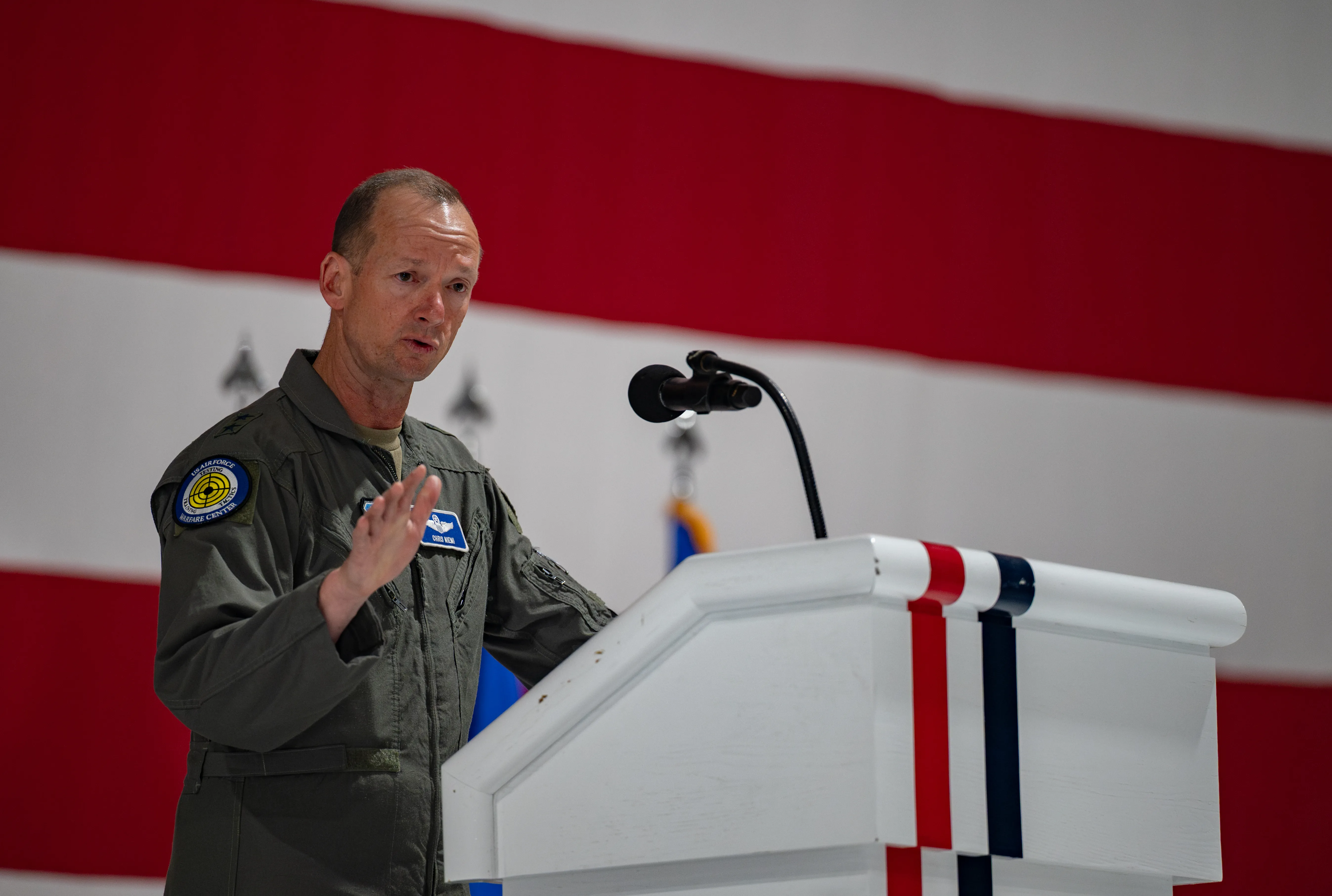
Testifying before a Senate Armed Services Committee hearing yesterday, Maj. Gen. Christopher Niemi, the acting head of Air Force Futures, said that a new requirements document for an MQ-9 replacement had been approved. Aviation Week was first to report the development.

U.S. Air Force Maj. Gen. Christopher J. Niemi, U.S. Air Force Warfare Center commander, delivers opening remarks at the Nevada Test and Training Range (NTTR) change of command ceremony at Nellis Air Force Base, Nevada, June 9, 2025. The ceremony marks the transition of leadership, ensuring continuity in the NTTR’s mission to provide a dynamic, multidimensional battlespace for advanced training, testing and tactics development. (U.S. Air Force photo by Airman 1st Class Jennifer Nesbitt)
U.S. Air Force Maj. Gen. Christopher J. Niemi, seen in June 2025, when he was the U.S. Air Force Warfare Center commander. U.S. Air Force photo by Airman 1st Class Jennifer Nesbitt Airman 1st Class Jennifer Nesbitt

The approval clears the path for the Air Force to begin a new acquisition process for an uncrewed aircraft system (UAS) that will assume the MQ-9’s role. A medium-altitude, long-endurance (MALE) system, the Reaper is primarily used for intelligence, surveillance, and reconnaissance (ISR) and strike missions.

Niemi told the Senate Armed Services Committee that improvements in technology since the MQ-9 was developed mean the service now considers it possible for a new drone to be “more flexible,” leaning upon open architectures.

At the same time, modern production methods mean the new drone will be easier and cheaper to produce “in mass numbers,” Niemi said. The result should be a drone that the Air Force can “use in a more attritable way.”

A U.S. Air Force MQ-9 Reaper remotely piloted aircraft, assigned to the 432nd Wing, sits on the flightline while being prepared for takeoff at Creech Air Force Base, Nevada, June 2, 2025. The Reaper is an unmanned aircraft used to accomplish the 432nd Wing/432nd Air Expeditionary Wing’s mission in multiple areas of responsibility around the world. (U.S. Air Force photo by Senior Airman Renee Blundon)
A U.S. Air Force MQ-9 Reaper, assigned to the 432nd Wing, sits on the flightline while being prepared for takeoff at Creech Air Force Base, Nevada, June 2, 2025. U.S. Air Force photo by Senior Airman Renee Blundon

Interestingly, within the Air Force, there has in recent years been a shift away from the term attritable — meaning inexpensive enough to be willing to lose on high-risk missions while being capable enough to be relevant for those missions — to “affordable mass.” This is something TWZ previously highlighted was already happening back in 2021.

This change came about as a way of helping define the kinds of advanced drones that the Air Force is planning to acquire in the coming years, reflecting that their capabilities will necessarily come at a cost that will make them less than “attritable.”

Last month, the Air Force published a market survey notice, requesting information from industry on a new attritable ISR drone.

This notice included some key performance parameters for the drone, including a range of up to 932 miles and a 20-hour endurance. The attritable nature of the drone was reflected in a requirement for it to fly 100 missions with a “low-to-medium acquisition” cost.

The basic Reaper can fly for more than 20 hours unarmed, or more than 12 hours with weapons. In the case of the MQ-9B version, with an extended wingspan, flight endurance can be increased to more than 40 hours.

U.S. Air Force Tech. Sgt. Mark Oberacker, an aerospace ground equipment specialist assigned to the 174th Attack Wing, New York Air National Guard, checks data on the MQ-9 Reaper aircraft during exercise Sentry South 26-2 in Gulfport, Mississippi, March 3, 2026. Sentry South 26-2 is a large force employment exercise focused on major combat operations and joint maritime opportunities in a contested or degraded operational environment. Sentry South 26-2 applies joint and combined warfighting doctrine against realistic and robust enemy integrated threat systems, all while under safe and controlled conditions. (U.S. Air National Guard photo by Staff Sgt. Dylan McCrink)
An aerospace ground equipment specialist assigned to the 174th Attack Wing, New York Air National Guard, checks data on an MQ-9 Reaper, armed with Hellfire missiles, during Exercise Sentry South 26-2 in Gulfport, Mississippi, March 3, 2026. U.S. Air National Guard photo by Staff Sgt. Dylan McCrink

“Operators desire low-cost, fast-to-field, fast-to-deploy airborne ISR mass to increase mission flexibility and mission surging,” the market survey notice added.

The process of figuring out what to replace the Reaper with has been ongoing for many years now. However, the latest effort is noteworthy for its emphasis on a lower-cost, more attritable platform.

Back in 2020, the Air Force published a request for information for a program dubbed MQ-Next, also seeking an MQ-9 successor. This was focused on ISR and strike capabilities, but also stated a desire for reduced operating costs and greater persistence, survivability, and range.

By 2021, the Air Force was concentrating more on a family of systems — the so-called Next-Generation Multi-Role Unmanned Aerial System Family of Systems (Next-Gen Multi-Role UAS FoS) — including a growing emphasis on low-observable (stealth) technologies. The same year, the service said it was seeking a replacement for the MQ-9 that could possibly include defensive counter-air capabilities to protect high-value manned aircraft, such as tankers, as well as potentially fly red air aggressor missions. Fast forward to today, and it’s clear that these higher-performance air-to-air focused missions could be taken over, at least in part, by the current Collaborative Combat Aircraft program. As a result, whatever replaces the MQ-9 is unlikely to have such broad requirements.

The Next-Gen Multi-Role UAS FoS included scope for platforms that could be survivable and reusable, or ones that would be attritable or expendable. This was not a single platform solution, either. It would likely need to include a mix of systems.

A Northrop Grumman concept for a possible stealthy MQ-Next. Northrop Grumman

The 2021 document also stipulated that the MQ-9’s successor should be tailored for Great Power Competition, pointing to a drone ecosystem suitable for the kinds of highly contested environments that would be encountered during a conflict with a peer rival such as China or Russia. At the same time, the solution was also intended to fly missions in more permissive environments, like the MQ-9.

Around this same time, the Air Force also said it wanted to leverage advances in development and manufacturing, meaning that smaller numbers of manned aircraft could be produced quickly to meet dynamically evolving threats. This reflected the Air Force’s “Digital Century Series” that was in vogue at that time, and which led to talk about “throwaway” technology and essentially “disposable” aircraft. Some of this appears to have made it into these new requirements, which stipulate that the aircraft needs to be able to fly just 100 missions.

Meanwhile, the latest statements from the service describe a drone with increased flexibility achieved through open architecture, rather than building bespoke batches of drones for particular requirements. Previous statements from the service outlined an aspiration to have its new drone capable of accommodating rapidly reconfigurable payloads, something that open architecture would expedite.

A MQ-9 Reaper assigned to the 174th Attack Wing flies over Hancock Field Air National Guard Base, Syracuse, NY, following a routine training flight, Oct. 31, 2024. The 108th Attack Squadron conducts these flights to instruct pilots and sensor operators on proper flight operations of the aircraft. (U.S. Air National Guard photo by Senior Airman Dylan McCrink)
An MQ-9 Reaper assigned to the 174th Attack Wing flies over Hancock Field Air National Guard Base, Syracuse, New York, following a routine training flight, October 31, 2024. U.S. Air National Guard photo by Senior Airman Dylan McCrink Staff Sgt. Dylan McCrink

Above all else, the MQ-9 successor will still have to operate in contested environments.

In his testimony yesterday, Niemi presented a vision of a new drone, the design of which would stress being attritable, rather than survivable.

The Pentagon has long worked on the basis that a future conflict with a peer rival, and especially with China in the Pacific, would see it facing highly robust anti-access/area-denial (A2/AD) scenarios. With that in mind, previous Reaper replacement studies had suggested that low observability would need to be incorporated into the design.

An MQ-9 armed with an AIM-9X Sidewinder air-to-air missile. U.S. Navy

The latest thinking seems to reject that, or at least reorient the program toward a lower-cost platform of the kind that the Air Force would be able to field in mass, as well as to absorb the anticipated attrition in a high-end conflict. This does not preclude this airframe from featuring low-observable elements. In fact, it most likely will. But those would be more aggressively balanced against cost.

Concerns over the MQ-9’s vulnerability to air defenses have been ongoing for years now, although usually the nuances of this issue are not portrayed accurately in the media. Regardless, many MQ-9s were lost over Yemen, against a bottom-tier force. The war with Iran earlier this year underlined both the great utility and vulnerabilities of the platform. At least 24 Air Force Reapers were destroyed during the war, but these aircraft were pushed deep into Iran, loitered there for hours on end, and did some of the most important air-to-ground strike and surveillance work during the air campaign. While the Air Force says it plans to “buy back” some of the losses from that conflict, that will come with a hefty price tag, something that the service will want to avoid with its next ISR/strike drone. Furthermore, production of the MQ-9A model has now ended in favor of the MQ-9B.

The assumption that the MQ-9 replacement will be acquired in significant numbers is also noteworthy in terms of the current Air Force Reaper fleet, which includes more than 130 MQ-9As, according to Aviation Week.

MQ-9 Reapers assigned to the 49th Aircraft Maintenance Squadron parked on the flightline for display during the Legacy of Liberty Air Show at Holloman, Air Force Base, New Mexico, April 18, 2026. The air show had more than 15,000 attendees across the two-day event. (U.S. Air Force photo by Airman Jose Veras)
MQ-9 Reapers assigned to the 49th Aircraft Maintenance Squadron parked on the flightline for display during the Legacy of Liberty Air Show at Holloman Air Force Base, New Mexico, April 18, 2026. U.S. Air Force photo by Airman Jose Veras

What appears to be missing at this stage, or at least obscured, is an acquisition strategy for the new drones. As well as the aerial platforms, the MQ-9 successor will require suitable new ground control systems, sensors, and data exploitation technologies, all of which are compatible with open-architecture standards. These systems will also have to leverage the latest technologies to allow the drones to be more effective and more survivable over the battlefield.

Since MQ-Next, the U.S. drone landscape has changed considerably in terms of manufacturers. A few years ago, Northrop Grumman, Lockheed Martin, and General Atomics would have been seen as the front-runners for the MQ-9 replacement. Now, there are more contenders, often with a founding focus on rapidly scaling up production at low cost. Still, these firms have much to prove, especially considering the risk in replacing an aircraft as important as the MQ-9. At the same time, in the more advanced drone space, the legacy defense “prime” contractors are also making major progress in leveraging new technologies to reduce production costs and migrating away from exquisite, very expensive drones as their default offerings.

A rendering General Atomics released in 2021 of a concept for MQ-Next. General Atomics

Back in 2021, the Air Force was promoting a “Speed to Ramp” initiative for its MQ-Next, which would see the first iterations of this capability fielded before “the 2026/2027 timeframe.” Other solutions under the same effort would begin to be fielded “in the 2030 timeframe,” the Air Force said.

While the latter timeline might still be somewhat achievable, it will require a considerable effort and investment and, not least, the firming up of the requirements for exactly what the Air Force wants its MQ-9 replacement to look like.

What we do know is that, while the Reaper’s replacement might not be as survivable as once envisioned, it will certainly be tailored to the increasingly harsh realities of a conflict against an advanced peer-state adversary. 

Contact the author: thomas@thewarzone.com

Thomas is a defense writer and editor with over 20 years of experience covering military aerospace topics and conflicts. He’s written a number of books, edited many more, and has contributed to many of the world’s leading aviation publications. Before joining The War Zone in 2020, he was the editor of AirForces Monthly.


Tyler’s passion is the study of military technology, strategy, and foreign policy and he has fostered a dominant voice on those topics in the defense media space. He was the creator of the hugely popular defense site Foxtrot Alpha before developing The War Zone.


Source link

Trump administration offers $100m in aid to Cuba in exchange for reform | Donald Trump News

Amid an oil blockade against the island, the US blames Cuba’s communist leadership for ‘standing in the way’ of aid.

The United States has offered $100m in humanitarian assistance to Cuba on the condition that the island’s communist government agrees to “meaningful reforms”.

The sum was made public in a statement from the US State Department on Wednesday, though the administration of President Donald Trump underscored it had made the offer privately in the past.

Recommended Stories

list of 3 itemsend of list

But the $100m comes with strings: namely, that Cuba’s government commits to Trump-approved changes.

“Today, the Department of State is publicly restating the United States’ generous offer to provide an additional $100 million in direct humanitarian assistance to the Cuban people,” the statement said.

“The decision rests with the Cuban regime to accept our offer of assistance or deny critical living-saving aid and ultimately be accountable to the Cuban people for standing in the way of critical assistance.”

The statement marks the latest chapter in an ongoing pressure campaign designed to destabilise Cuba’s communist leadership.

Since Cold War tensions in the 1960s, the US has placed a comprehensive trade embargo on the Caribbean island, in part as a reaction to the Cuban Revolution.

It has become the longest-running trade embargo in modern history, and the US has justified its continuation by pointing to systematic repression under Cuba’s communist government.

But critics have denounced the trade embargo as worsening humanitarian conditions on the island.

The crisis reached a tipping point in January, after Trump abducted Venezuelan President Nicolas Maduro, a close ally of Cuba.

In the following weeks, Trump cut off Venezuelan funds and oil supplies to Cuba. He then threatened economic penalties against any country that supplied Cuba with fuel, implementing a de facto oil blockade on the island.

Since then, only one Russian oil tanker has reached Cuba in late March. That month alone, the island suffered two island-wide blackouts.

Cuba relies heavily on foreign imports of oil to power its ageing energy grid. Only 40 percent of its oil supply is produced domestically, according to the International Energy Agency.

The United Nations warned earlier this year that Cuba faces the possibility of humanitarian “collapse”, with public transportation grinding to a halt, food prices soaring and public services like hospitals struggling to keep the lights on.

Trump, meanwhile, has repeatedly threatened to shift his focus to Cuba after the US-Israeli war on Iran ends, saying the island is “next” on his list of countries where he would like to see regime change.

“As we achieve a historic transformation in Venezuela, we’re also looking forward to the great change that will soon be coming to Cuba,” Trump told Latin American leaders at a summit in March.

“Cuba’s in its last moments of life as it was. It’ll have a great new life, but it’s in its last moments of life the way it is.”

Earlier this month, the US president issued a fresh wave of sanctions against the Cuban government, accusing the island of posing “an unusual and extraordinary threat to US national security and foreign policy”.

Media reports have also indicated that the Trump administration has stepped up its surveillance flights around Cuba, possibly in preparation for a surge of military assets to the Caribbean.

In Wednesday’s statement, the State Department blamed the communist system for having “only served to enrich the elites and condemn the Cuban people to poverty”.

It did not mention the US role in the humanitarian crisis on the island but instead described Cuba’s government as a hurdle to delivering much-needed aid.

“The regime refuses to allow the United States to provide this assistance to the Cuban people, who are in desperate need of assistance due to the failures of Cuba’s corrupt regime,” the State Department wrote.

It added that, should Cuba accept its terms, the $100m would be distributed through the Catholic Church and “other reliable independent humanitarian organizations”, rather than through the island’s government.

Source link

Why Louisiana paused its US House primary election amid redistricting push | US Midterm Elections 2026 News

The US state of Louisiana will hold several primary elections on Thursday, including for the United States Senate, the state’s Supreme Court, and a slate of local offices.

Notably absent will be the primary, in which members of the Democratic and Republican parties will select their candidates for the state’s six US House districts ahead of the general elections in November.

Recommended Stories

list of 3 itemsend of list

The primary vote has been paused by the state’s governor following a major Supreme Court ruling that opens the door to redrawing the state’s congressional district map, eliminating one of two majority-Black districts.

Rights groups have challenged the pause, saying it violates both the US and the state’s constitutions.

The situation comes amid a wider national redistricting battle, which has been shifting both parties’ electoral calculus ahead of consequential midterms that will determine control of the US House and Senate and, in turn, set the tone for the final two years of US President Donald Trump’s second term.

Here’s what to know.

What did the Supreme Court ruling do?

The 6-3 Supreme Court ruling in late April undid a key provision of the Voting Rights Act of 1965 meant to protect Black voting power from being diluted.

That can be achieved by effectively carving up areas with large Black populations to diminish their electoral influence. Black voters in the US have historically heavily skewed Democratic.

The ruling said that congressional districts could only be challenged if there was evidence of racist motivation behind how they were drawn. Dissenting liberal justices and critics have said such motivations would be exceedingly difficult, if not impossible, to prove.

Specifically related to Louisiana, the court ruled that a congressional map drawn in January of 2024, which created a second Black-majority district in the state, was unconstitutional.

That map was created following a legal challenge claiming that Louisiana was in violation of the Voting Rights Act because it had only one Black majority district out of six, despite Black residents making up one-third of the state’s voters.

Why did Louisiana pause its primary?

The Supreme Court ruling on April 29 came about two weeks before Louisiana’s US House primary elections were scheduled.

That left Republicans in the state scrambling to draw new maps ahead of the vote.

“Allowing elections to proceed under an unconstitutional map would undermine the integrity of our system and violate the rights of our voters,” the state’s Governor Jeff Landry said in a statement on April 30.

He said his order suspending the vote “ensures we uphold the rule of law while giving the [state] legislature the time it needs to pass a fair and lawful congressional map”.

On Wednesday, Republicans in the Louisiana State Senate advanced an initial redrawn map.

What have rights groups said?

A coalition of voting and civil rights groups has challenged the suspension of the election, charging that some segments of voters, including those in the military or casting “absentee” ballots, may have already voted.

They further said the abrupt change in date would confuse and subsequently disenfranchise voters while undermining voter education groups already distributing information about the election.

“This illegal executive order threatens the integrity of our democratic system and disregards the voices of voters who have already participated in the May primary election in good faith,” the groups, which included the Legal Defense Fund, the League of Women Voters of Louisiana, the American Civil Liberties Union, and the Harvard Law School Race and Law Clinic, said in a joint statement in early May.

“By attempting to suspend an ongoing election, state officials are creating confusion, undermining public trust, and placing partisan interests above the constitutional rights of Louisiana voters,” the statement said.

What is the wider context?

The standoff in the southern state comes amid a wider, and unorthodox, flurry of congressional redistricting in the US.

While redistricting has historically taken place every decade following the US census population count, President Trump called on Republicans in Texas last year to redraw their maps to create more Republican-leaning districts.

That kicked off a flurry of tit-for-tat redistricting efforts by Democratic- and Republican-controlled state legislatures alike. To date, the US states of California, Missouri, Ohio, Virginia, Utah, Tennessee and Florida have redrawn their maps ahead of the midterms.

Republicans are expected to net more seats than Democrats in the push. While that is expected to cut into the margin, Democrats are still tentatively favoured to retake the US House in November.

Source link

Will the boycott of Eurovision have any impact? | Gaza News

The decision by five nations to boycott the song contest comes amid Israel’s genocide in Gaza.

Five nations are boycotting Eurovision, citing Israel’s participation. Their action is against Israel’s war in Gaza and allegations of vote manipulation in the song contest.

But why is it so important for Israel to take part? And is the competition’s future under threat?

Presenter: Folly Bah Thibault

Guests:

Steve Wall – Musician, actor and member of the Ireland Palestine Solidarity Campaign

Jonathan Hendrickx – Assistant professor in media studies at the University of Copenhagen

Ori Goldberg – Political commentator

Source link

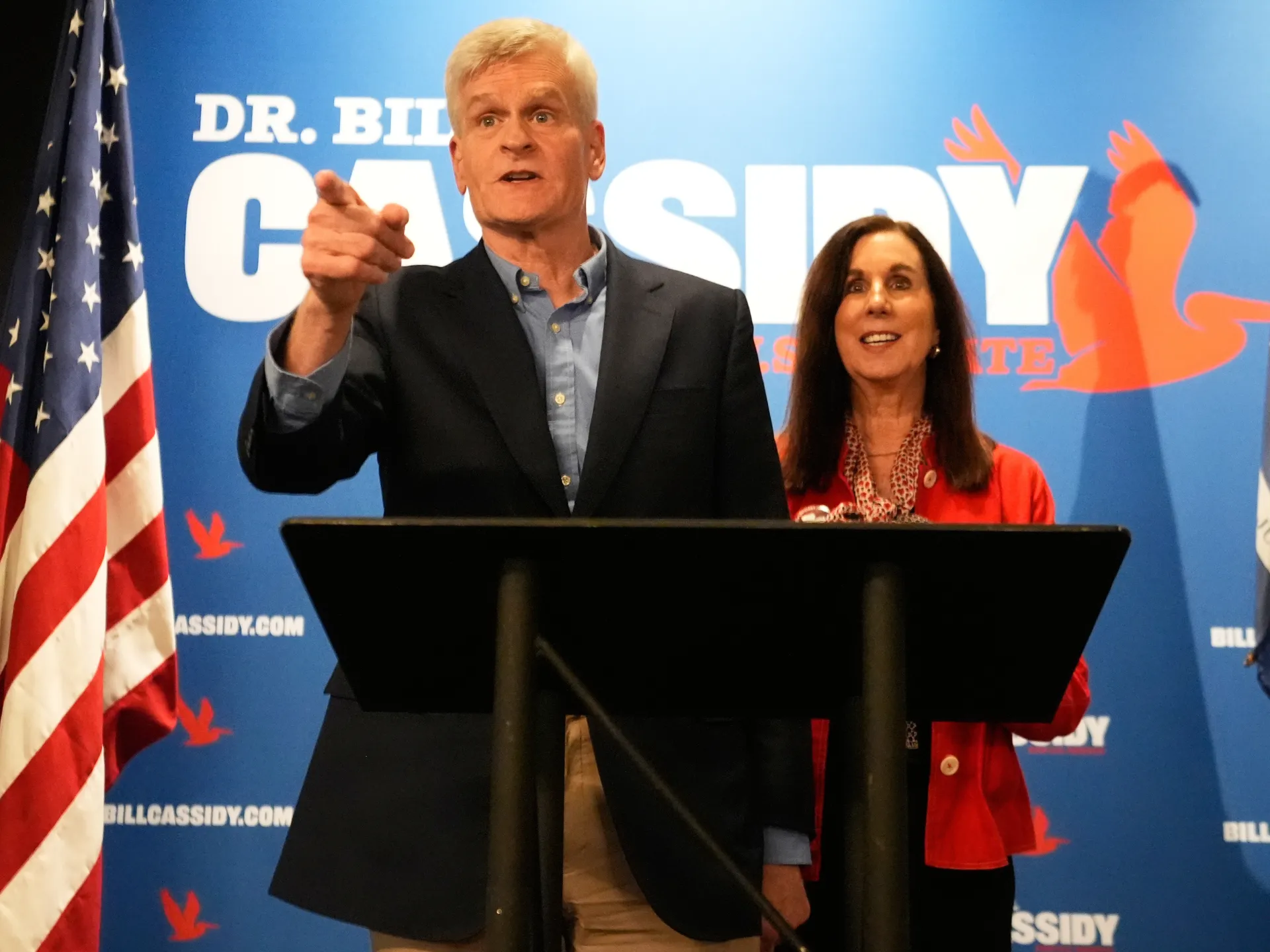
US Senator Cassidy’s vote to convict Trump looms over Louisiana primary | US Midterm Elections 2026 News

A Republican senator who broke from his party to vote in favour of convicting US President Donald Trump in impeachment proceedings during his first term is facing a bruising primary challenge in his home state of Louisiana.

Bill Cassidy’s primary race on Thursday has been seen as a barometer of Trump’s continued hold over the Republican Party. Even as polls have shown the president’s approval tanking, early primary votes have shown the continued weight his endorsement carries.

Recommended Stories

list of 3 itemsend of list

Trump has backed US Representative Julia Letlow in the Senate race. State Treasurer John Fleming is also running. The winner of the Republican primary is all-but-assured to win in the general election in the deep-red state.

Cassidy had joined seven Republicans in the Senate in voting to convict Trump of “incitement of insurrection”, following his campaign to overturn the 2020 election results and his supporters’ storming of the US Capitol on January 6, 2021.

“Our Constitution and our country is more important than any one person. I voted to convict President Trump because he is guilty,” Cassidy said in a statement at the time.

Despite the handful of Republican defections, the chamber fell far short of the two-thirds majority needed to convict Trump of the charges, of which he was acquitted.

Initially viewed as politically toxic after leaving office in 2021, Trump mounted a stunning comeback in the years that followed, reshaping the Republican Party in his likeness.

That included the ascension of many lawmakers who endorsed Trump’s claims that the 2020 vote was stolen, for which he has provided no evidence.

Currently, most other Republican senators who voted to convict Trump alongside Cassidy have been ousted or chosen to leave office.

Among the group, only Republican centrists Susan Collins from Maine, who continues to be seen as a bulwark against Democratic challengers in her home state, and Lisa Murkowski from Alaska, who saw off a Trump-backed challenger in 2022, have escaped major intra-party fallout for their votes.

Letlow, an academic administrator who entered office in 2021, has also seized on Cassidy’s 2021 vote, saying in her campaign launch video that residents of Louisiana “shouldn’t have to wonder how our senator will vote when the pressure is on”.

A fine line

Cassidy, a physician, has walked a fine line during Trump’s second term, regularly touting the administration’s policy initiatives and appearing alongside Trump at the White House several times for healthcare-focused events and bill signings.

Still, Cassidy has had some high-profile clashes with the Trump administration. During Robert F Kennedy Jr‘s confirmation hearing to become health and human services secretary, Cassidy sparred with Kennedy over his vaccine scepticism.

“I am a doctor who has seen people die from vaccine-preventable diseases, and when I see outbreaks numbered in the thousands, and people dying once more from vaccine-preventable diseases, particularly children, it seems more than tragic,” he said during the hearing.

Cassidy later cast the deciding vote to confirm Kennedy after receiving assurances that he would not change federal vaccine recommendations. The HHS under Kennedy has since changed those recommendations.

In April of this year, Trump accused Cassidy of tanking his nominee for surgeon-general, Casey Means, who had come under fire for her vaccine scepticism and unproven wellness theories.

Trump decried what he called Cassidy’s “intransigence and political games”. In a subsequent post, he said hopefully Republicans “will be voting Bill Cassidy OUT OF OFFICE in the upcoming Republican Primary!”

Cassidy, in turn, has claimed opponent Letlow does not have conservative bona fides.

He has highlighted her past support of education diversity initiatives, which she has since disavowed, as well as her past attendance at the 2023 United Nations climate change conference.

Trump’s sway?

Trump carried Louisiana in the 2016 and 2020 presidential elections with about 58 percent of the vote, and in 2024 with 60 percent.

Heading into the primary vote, the president’s overall national approval rating has tanked, hitting a record low of 34 percent at the end of April. That has come amid widespread discontent over the US-Israel war on Iran and its economic toll.

Trump has maintained strong support among Republicans, but has notably seen dipping support among independents.

Polls have shown Cassidy trailing behind both Letlow and Fleming. If no candidate wins an outright majority, the race will move to a run-off on June 27.

Thursday’s race takes place amid an ongoing national battle over congressional redistricting.

While Louisiana’s US House of Representatives primary was also scheduled for Thursday, Governor Jeff Landry has temporarily suspended the vote.

That after the US Supreme Court struck down a major provision of the Voting Rights Act, paving the way for the state’s Republican-controlled legislature to redraw its congressional map to do away with one of two Black-majority districts.

Civil rights groups have filed a lawsuit alleging the suspension violates both the US and the state’s constitutions.

Source link

Israel Building Factory To Pump Out Its Own FPV Drones

In another sign of how much first person view (FPV) drones have changed warfare, Israel says it is building a new factory to produce thousands of these weapons. The move comes as its forces are coming under increasing attack from Hezbollah’s FPV drones in southern Lebanon, something we were among the first to report.

“The IDF is currently establishing a factory that will produce suicide drones (FPV drones) for use in all theaters of war,” Israel Army Radio reported. “The goal of establishing the factory is to industrialize and significantly expand the arsenal of suicide drones that the IDF has, in order to increase capabilities on the battlefield.”

פרסמנו אצל @efitriger

התשובה לרחפני הנפץ של חזבאללה? בצה”ל הוחלט: יוקם מפעל צה”לי לייצור אלפי רחפנים מתאבדים מדי חודש – שישרתו בו חיילים חרדים

צה”ל מקים בימים אלה מפעל שעתיד לייצר רחפני נפץ מתאבדים (רחפני FPV) – לשימוש בכל זירות המלחמה. מטרת הקמת המפעל היא לתעש ולהרחיב… pic.twitter.com/784Jikz1Mk

— דורון קדוש | Doron Kadosh (@Doron_Kadosh) May 12, 2026

Israel is racing to catch up to Hezbollah in the use of this class of fast, highly maneuverable munitions that became a main strike weapon for both Ukrainian and Russian forces, as well as elsewhere in the world. In our earlier reporting about the issue, we noted that the Iranian proxy has ramped up FPV attacks the deeper Israel has pushed into southern Lebanon. 

You can see some videos of those attacks below.

Hezbollah conducted more fiber-optic FPV strikes on Israeli vehicles in Lebanon, including two ‘Merkava’ Mk.4 tanks, a D9 Caterpillar armored bulldozer, and what appears to be a rare ‘Namer’ heavy IFV equipped with a turret mounting a 30 mm Bushmaster Mk 2 cannon.
1/ https://t.co/ms2nagNHrD pic.twitter.com/WDs6M3SpwW

— Roy🇨🇦 (@GrandpaRoy2) April 5, 2026

Hezbollah has released footage showing the targeting of IDF Merkava Mk. 4M tanks and a Humvee in the town of Al-Bayada, southern Lebanon, using FPV drones possibly equipped with PG-7VL or PG-7AT high-explosive anti-tank (HEAT) warheads. pic.twitter.com/vmupkVchgV

— OSINTWarfare (@OSINTWarfare) May 12, 2026

The overwhelming majority of fpv drones are intercepted and do no damage to IDF forces. Propaganda videos like this are meant to give hope to terrorists and their supporters that they have a chance at winning, which they don’t. Jew haters stay mad. https://t.co/Z3enrDyyPt

— FellaOfRohan (@FellaOfRohan) May 10, 2026

A big issue for Israel has been that while a domestic manufacturer is producing FPV drones, they include Chinese components, which represent both a security and a supply chain concern, the IDF-funded Israel Army Radio explained. By bringing production in-house to its Technology and Logistics Division, the IDF is looking to boost output, reduce cost and use only indigenous components.

The IDF estimates that the factory will begin supplying the army with drones in large quantities starting in July. Initially, the goal is to produce 1,000 per month, according to Israel Army Radio, with production then being boosted to tens of thousands.

Reaching that goal is not a huge leap for the IDF, one of the world’s most technologically advanced militaries in a country not devastated by the kind of war faced by Ukraine. In comparison, as we have reported in the past, Ukraine and Russia both make and use multiple millions of these drones every year. 

Удари російських дронів по українському Leopard 1A5 [Січень 2025] thumbnail

Удари російських дронів по українському Leopard 1A5 [Січень 2025]


Seeing the lessons learned from Ukraine, the U.S. too is scaling up, with plans to significantly increase the number of FPV drones it makes.

The Marine Corps Attack Drone Team, Weapons Training Battalion – Quantico, in coordination with Training and Education Command and the Marine Corps Warfighting Laboratory, hosted senior U.S. Marine Corps leaders and members of the Marine Gunner Symposium for a weapons demonstration at Marine Corps Base Quantico, Va., Aug. 20, 2025. U.S. Marine Corps Lt. Gen. Jerry Carter, deputy commandant for information, Headquarters Marine Corps, attended the event, which showcased First-Person View attack drone mission profiles, AI-enabled autonomous strikes, and counter-drone training to highlight their role as a critical force multiplier for the Fleet Marine Force and advance the Secretary of Defense’s drone dominance initiative. (U.S. Marine Corps photo by Connor Taggart)
The U.S. is increasing the manufacture of FPV drones and the training of troops to use them. (U.S. Marine Corps photo by Connor Taggart) Connor Taggart

For Israel, however, boosting the number of FPV drones for its troops is only part of the equation in this realm of warfare. The IDF has been highly criticized in Israel for not reacting more quickly to defend against these weapons, especially after encountering them on a much smaller scale in 2024 and watching what has taken place in Ukraine and elsewhere.

Exacerbating the problem for Israel is that Hezbollah has been relying heavily on fiber-optic guided FPV drones. Fiber optic cables mitigate the effect of electronic warfare efforts to jam radio signals as well as some of the limitations imposed by geographical features that can impede the line-of-sight radio connection between drone and operator.

KYIV, UKRAINE - 2025/04/01: First Person View (FPV) drone controlled via fibre optics is seen during a test flight. FPV drones equipped with fiber optics, offer key advantages over traditional UAVs. They drones are immune to electronic warfare (EW) systems, remain undetectable to enemy radio reconnaissance, ensure high-quality communication over long distances, and are not affected by the radio horizon. The first batch50 drones and 10 km of fiber opticshas already been delivered to the front lines. The drones were handed over to Ukrainian forces by Petro Poroshenko, leader of the European Solidarity party. According to him, the project began in the fall of 2023, and now these advanced drones will be operated by Ukraine's best specialists. Over the past three years, Poroshenko's team has been actively supporting the Ukrainian Armed Forces, investing in scientific research, manufacturing, and equipment procurement. More than 70,000 FPV drones have already been sent to the front, along with Ai-Petri strike complexes, Poseidon UAVs, vehicles, trucks, mobile laundry and shower units, grenade launchers, and much more. Now, this arsenal is being expanded with revolutionary fiber-optic drones that could change the course of the war. (Photo by Mykhaylo Palinchak/SOPA Images/LightRocket via Getty Images)
First Person View (FPV) drone controlled via fiber optic wire is seen during a test flight in Ukraine. (Photo by Mykhaylo Palinchak/SOPA Images/LightRocket via Getty Images) SOPA Images

Faced with a threat that is causing casualties and damaging equipment, Israel is beginning to roll out new countermeasures. As we have previously noted, these solutions range from putting netting on vehicles to improving armor defensive systems.

In our past reporting, we explained that the idea behind netting is that drones will get caught up in these nylon or mesh metal barriers and become disabled, or, in some cases, the nets will help keep the drones far enough from the occupants before exploding to keep them from being killed. 

As for protecting armor, active protection systems (APS) on its tanks and armored personnel carriers are being adapted to provide hard-kill counter-drone protection. These systems use sensors to detect incoming rocket-propelled grenades, missiles, and other similar threats, and fire projectiles to hit them before they strike the vehicle. Israel is a major pioneer in the APS space, with systems being deployed for decades, but just how soon it can upgrade existing systems, such as Iron Fist, for this application isn’t clear. Also, this doesn’t help many lighter vehicles that do not have APS capabilities.

Iron Fist APS | Active Protection System for Armored Vehicles thumbnail

Iron Fist APS | Active Protection System for Armored Vehicles


The IDF is also working on other systems. The include equipment to better detect the drones as well as the creation of interceptor drones specifically designed to counter FPV drones, according to Israel’s YNet media outlet.

Israel is far from alone in trying to both make more FPV drones and defend against them. The U.S., for instance, recently came under attack by FPV drones in Iraq and its services are training on ways to defend against them. Given Israel’s advanced military tech base that produces weapons used around the world, we will keep an eye on the solutions to the FPV scourge it develops.

Contact the author: howard@twz.com

Howard is a Senior Staff Writer for The War Zone, and a former Senior Managing Editor for Military Times. Prior to this, he covered military affairs for the Tampa Bay Times as a Senior Writer. Howard’s work has appeared in various publications including Yahoo News, RealClearDefense, and Air Force Times.


Source link

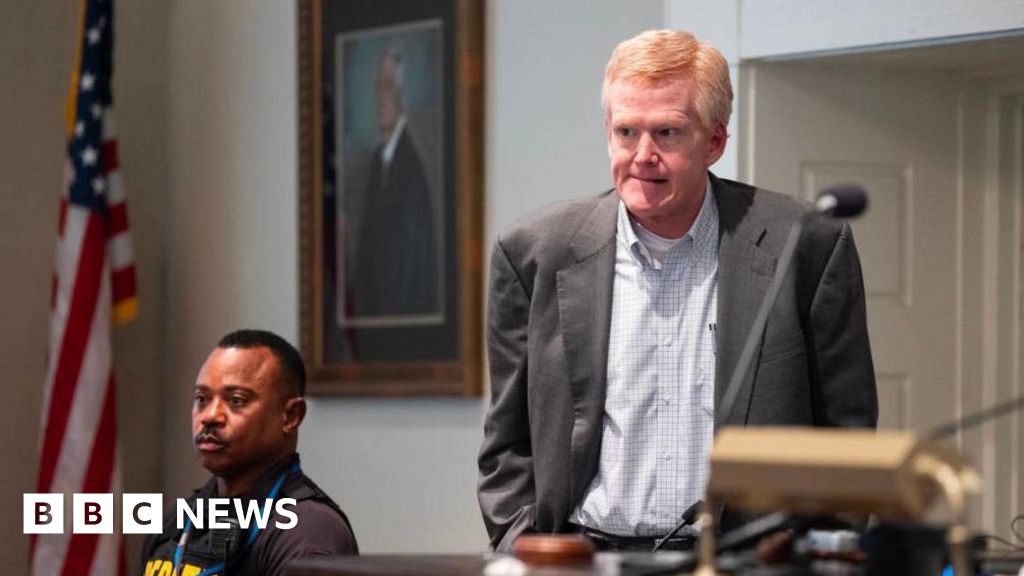
Court overturns Alex Murdaugh’s murder convictions

“Both the State and Murdaugh’s defense skillfully presented their cases to the jury as the trial court deftly presided over this complicated and high-profile matter,” the justices wrote. “However, their efforts were in vain because Colleton County Clerk of Court Rebecca Hill placed her fingers on the scales of justice, thereby denying Murdaugh his right to a fair trial by an impartial jury.”

Source link

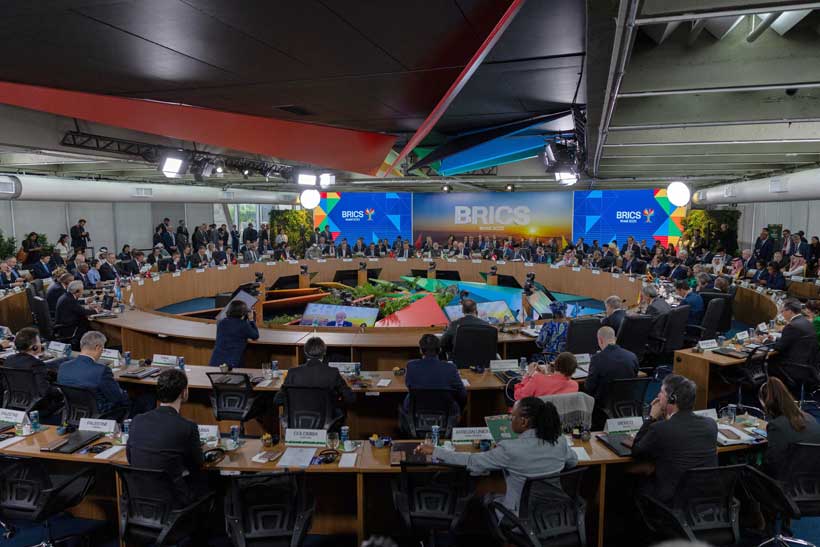
Iran Conflict Tests BRICS Unity at Delhi Foreign Ministers Meeting

The ongoing Iran conflict is expected to dominate discussions at the BRICS foreign ministers meeting in New Delhi, placing pressure on the expanded bloc to find common ground on one of the world’s most divisive geopolitical crises.

The two day meeting brings together foreign ministers and representatives from BRICS member states, including Brazil, Russia, India, China, South Africa, Iran, Egypt, Ethiopia, Indonesia, and the United Arab Emirates.

India, which holds the BRICS chairmanship for 2026, faces the difficult task of balancing competing interests within the group while attempting to secure a joint statement.

Iran Pushes for Stronger BRICS Position

Iran has urged BRICS members to condemn the actions of the United States and Israel in the Gulf conflict through a unified statement.

Iranian Foreign Minister Abbas Araqchi is expected to participate in the meeting as Tehran seeks diplomatic support from emerging economies and Global South nations.

The conflict has become a major test of BRICS cohesion because member states hold differing positions on the war and regional security issues.

Divisions Emerge Within the Bloc

The sharpest disagreements are reportedly between Iran and the United Arab Emirates, which are aligned on opposing sides of the regional conflict.

Tensions have increased following reports of military strikes involving Gulf states and Iran, complicating efforts to draft a consensus statement acceptable to all members.

Indian officials previously acknowledged the difficulty of forging unity within BRICS because some member states are directly involved in the conflict.

Despite the divisions, India remains hopeful that ministers can still agree on a joint declaration after negotiations during the meeting.

Russia and China Maintain Key Roles

Russian Foreign Minister Sergey Lavrov is expected to attend the gathering, reinforcing Moscow’s active role within BRICS diplomacy.

China, however, will not send Foreign Minister Wang Yi because of scheduling conflicts linked to U.S. President Donald Trump visiting Beijing this week.

Instead, China will be represented by Ambassador Xu Feihong.

Beijing has largely maintained a neutral public position on the Iran conflict while preserving close ties with both Iran and Gulf Arab states.

Energy Prices Add Economic Pressure

The war’s impact on global energy markets has become a major concern for BRICS economies, many of which are heavily dependent on imported oil and vulnerable to rising inflation.

Several BRICS nations, including India, have introduced emergency economic measures to shield consumers and industries from soaring fuel costs caused by the conflict.

The economic fallout is likely to strengthen calls within BRICS for diplomatic solutions and greater coordination among emerging economies.

India Attempts Diplomatic Balancing

India is seeking to use the BRICS platform to strengthen its leadership role among developing nations while avoiding direct alignment with any side in the conflict.

Analysts say New Delhi’s challenge lies in preserving BRICS unity despite deep geopolitical differences among member states.

Former Indian diplomat Manjeev Singh Puri described the participation of nearly all BRICS foreign ministers as a positive sign for dialogue and coalition building among emerging economies.

Analysis

The BRICS meeting in New Delhi highlights the growing difficulty of maintaining unity within an expanded bloc that now includes countries with competing regional interests and conflicting geopolitical priorities.

The Iran conflict has exposed the limits of BRICS as a coordinated political platform. While the group shares common interests in promoting a multipolar world order and strengthening the Global South, its members remain divided on security issues and regional conflicts.

India’s role as chair becomes especially sensitive because it must balance relations with Iran, Gulf Arab states, Russia, China, and Western powers simultaneously.

The absence of a strong unified Chinese diplomatic presence may also reduce the likelihood of a major breakthrough or coordinated BRICS response.

At the same time, the meeting demonstrates that BRICS is evolving beyond an economic grouping into a broader geopolitical forum where emerging powers increasingly debate global security and diplomatic issues.

Whether the bloc can produce a joint statement on the Iran war may become an important indicator of its future credibility and effectiveness as an alternative voice in global governance.

With information from Reuters.

Source link

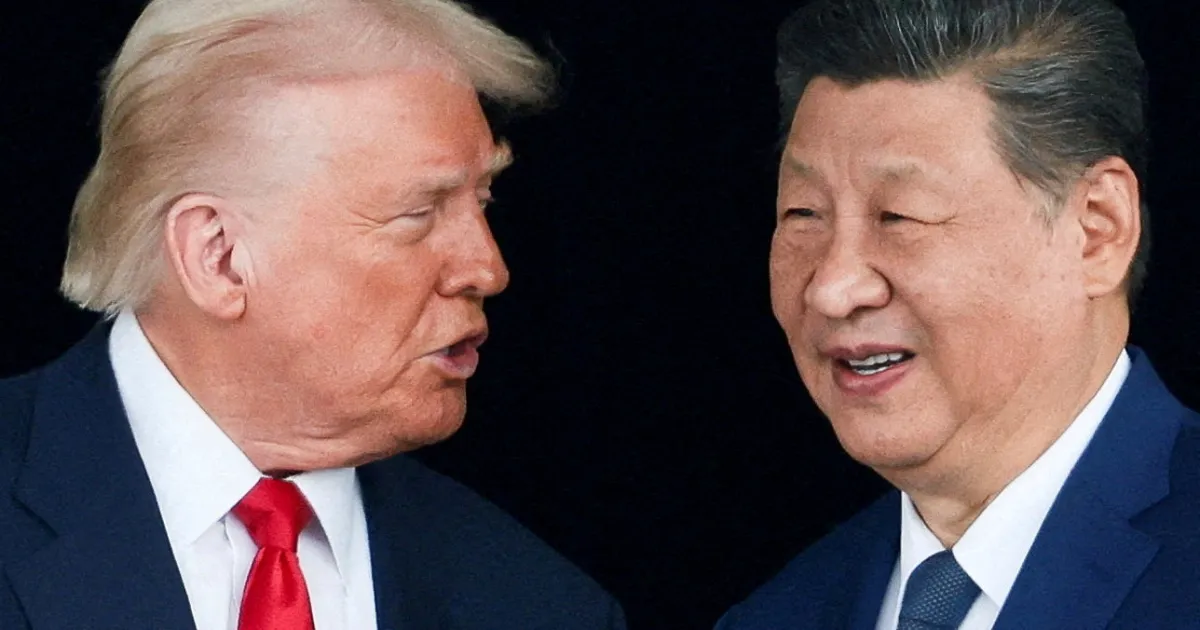
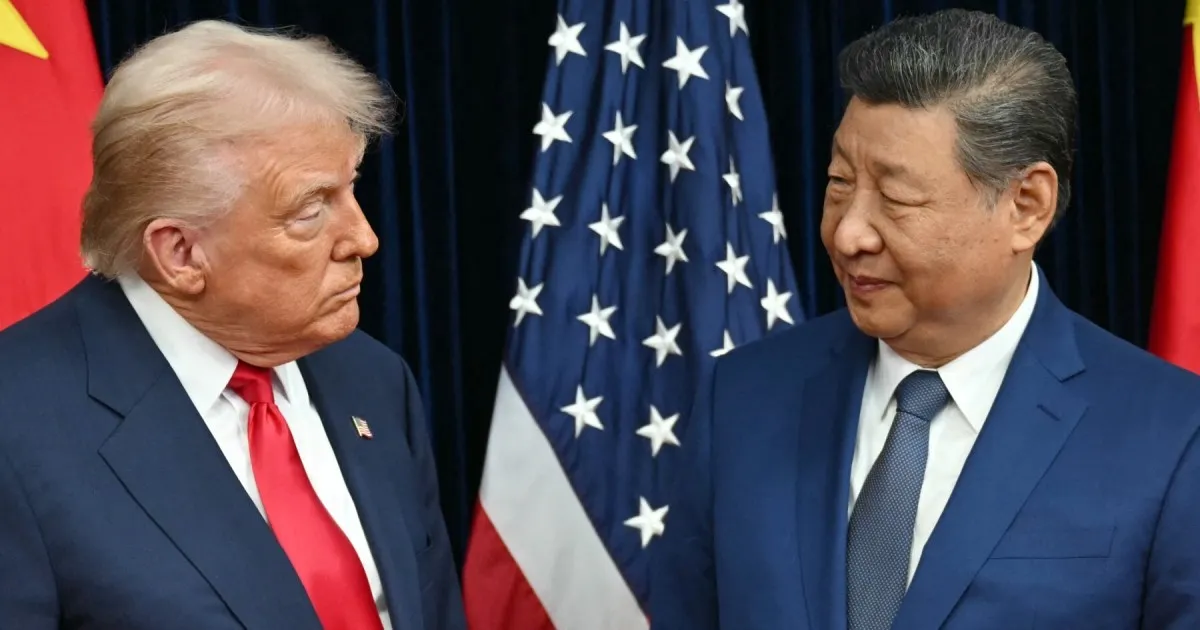
Trump needs Xi much more than Xi needs Trump | Xi Jinping

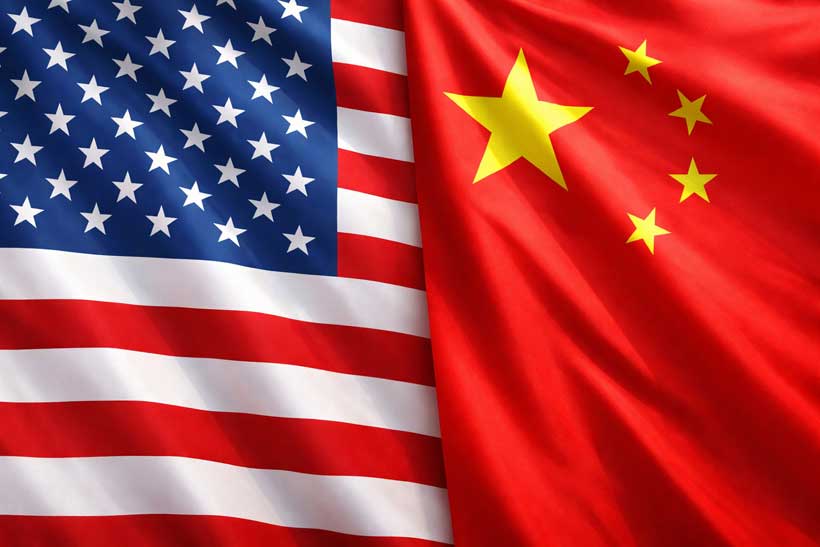
In the past few months, the geopolitical chessboard has tilted dramatically, setting the stage for a highly anticipated yet asymmetrical summit between Donald Trump and Xi Jinping, now officially confirmed for May 13-15 following statements from both the White House and China’s Foreign Ministry. Washington has repeatedly signalled the importance it attaches to the meeting, while Beijing has approached it in its characteristically measured fashion, framing the summit less as a breakthrough than as part of the broader need for “communication” and “strategic guidance” between major powers.

This subtle diplomatic choreography speaks volumes about the shifting global balance of power. For the first time in decades, it is the United States that finds itself in a position of profound vulnerability, increasingly dependent on China’s cooperation to extricate itself from a self-inflicted disaster.

The source of this American predicament is the failure of its recent military adventurism in the Middle East. Having launched an illegal, unprovoked war against Iran alongside Israel, the US military has found itself trapped in a costly and protracted deadlock. In retaliation, Tehran has effectively choked off the Strait of Hormuz, with over a dozen US warships now enforcing a blockade that has rerouted dozens of vessels, sending shockwaves through global energy markets and raising fears of a worldwide economic meltdown. Washington now finds itself scrambling for an exit.

In a striking reversal of their usual hawkish rhetoric, top US officials — including Secretary of State Marco Rubio and Treasury Secretary Scott Bessent—have been making increasingly desperate public appeals for China to intervene. They are urging Beijing to use its considerable influence to convince Iran to reopen the vital waterway.

What makes this dynamic particularly striking is the contradiction at the heart of US policy. Even as Trump and Rubio appeal for China’s help on the Hormuz crisis, the broader US posture remains confrontational, with ongoing disputes over technology restrictions and other issues continuing to shadow the relationship. The contradiction exposes an administration increasingly driven by desperation.

Washington’s narrative conveniently frames China as the party most desperate for a resolution, citing Beijing’s heavy reliance on Middle Eastern energy imports. However, this assessment drastically miscalculates China’s strategic preparedness. Far from being paralysed by the disruption, Beijing has already demonstrated remarkable resilience. Through meticulous stockpiling, diversified supply chains, and robust domestic production, China has coped with the closure exceptionally well, avoiding the kind of immediate economic shock Washington appeared to expect.

Consequently, Beijing views the Hormuz standoff as a pivotal stress test it has already passed. Knowing the stakes, China is in no rush to bail out a belligerent Washington. Recent diplomatic engagements have made this increasingly clear. China has maintained close communication with Iran throughout the crisis, with Foreign Minister Wang Yi hosting his Iranian counterpart for talks on the situation. Rather than simply pressuring Iran to reopen Hormuz, Beijing is positioning itself to demand a comprehensive “grand bargain.” Why settle for a minor concession when you can force the US to cease its hostilities against Iran, lift its crippling sanctions, and accept a new multipolar security architecture in the Middle East?

Iran has submitted a response to a US proposal to end the war, focused on ceasing hostilities and addressing Strait security, which Trump promptly rejected as “completely unacceptable,” highlighting the continued deadlock Washington hopes Beijing can break.

China did not start this fire, but it is now the indispensable power capable of extinguishing it, and strictly on its own terms. Beyond the immediate crisis, Beijing’s ultimate strategic focus remains unwavering: the core issue of Taiwan. This broader assertiveness will undoubtedly carry over into the Trump-Xi summit. While Trump is desperate for tangible deliverables and a successful photo-op to distract from domestic turmoil, Xi can afford to play the long game.

Unlike previous administrations that settled for vague diplomatic pleasantries, Beijing is expected to intensify the pressure significantly. China will likely demand that the US explicitly oppose Taiwan independence, moving decisively beyond the current, tepid commitment to merely “not support” secessionist forces.

Recognising Trump’s eagerness for a win, the US president may attempt to use Taiwan as a bargaining chip. He could offer concessions on the issue in exchange for Chinese cooperation on reopening the Strait of Hormuz, massive purchases of American agricultural and energy products, or even help brokering peace in other conflicts.

However, Beijing is far too disciplined to fall for such short-term traps. Taiwan is a non-negotiable core interest, and any temporary trade-off would be strategically foolish.

While Trump may lavish praise on his personal relationship with Xi Jinping and project an image of amicable deal-making, Beijing harbours no illusions about the man across the table. China’s leadership understands that Trump cannot be trusted; any agreement reached today could be discarded tomorrow based on his whims or domestic political calculations. Even as Beijing entertains the prospect of a “grand bargain” and maintains a cordial facade, it refuses to structurally rely on Trump’s commitments.

By stabilising its bilateral relationship with the US over the coming months — especially with several high-level meetings scheduled between the two leaders throughout the year — China aims to secure a predictable external environment conducive to its long-term rise.

For Beijing, however, the stakes extend far beyond Taiwan alone. A key priority for China will also be securing firm guarantees regarding the trajectory of Japan’s remilitarisation. As Tokyo rapidly expands its military capabilities and grows increasingly vocal about its willingness to intervene in a Taiwan contingency, China will demand that Washington strictly curtail its ally’s ambitions.

On a broader geopolitical scale, Beijing is positioning itself as a responsible and stabilising great power, repeatedly calling on the international community to de-escalate the Hormuz crisis and prevent wider economic disruption. In doing so, China is drawing a stark contrast with a United States that is openly launching illegal wars, engaging in what critics describe as state terrorism, including the extrajudicial kidnapping and killing of foreign leaders and their family members.

Ultimately, the coming days are critical not only for the future of US-China relations, but for the resolution of the US-Israel war on Iran and the broader structure of the international order. The era of US unilateralism is gasping for air in the Gulf. Armed with strategic patience and increasingly strong leverage over the crisis, China enters the Trump-Xi summit in a commanding position.

The views expressed in this article are the author’s own and do not necessarily reflect Al Jazeera’s editorial stance.

Source link

Key Zelenskyy aides under corruption cloud: What are they accused of? | Corruption News

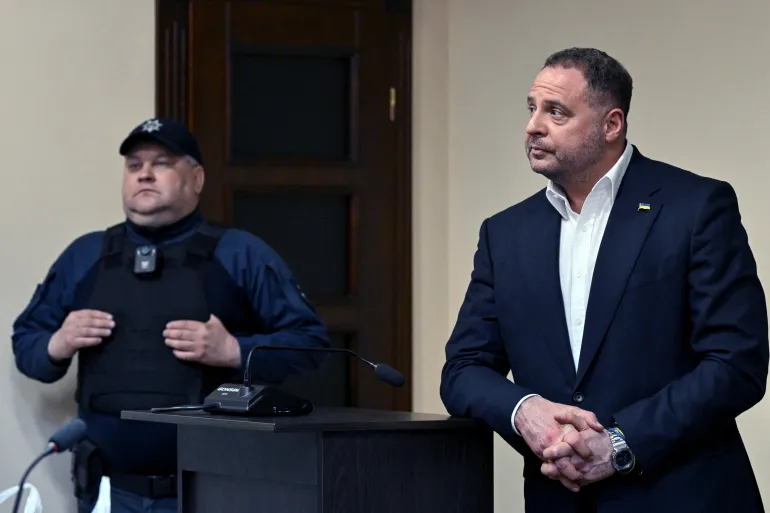
Andriy Yermak, Ukrainian President Volodymyr Zelenskyy’s former chief of staff and close aide, is now at the centre of the country’s biggest corruption investigation since Russia’s full-scale invasion in 2022.

Anticorruption authorities named him an official suspect on Monday in an alleged multimillion-dollar money laundering scheme linked to a luxury housing project outside the capital, Kyiv.

Recommended Stories

list of 3 itemsend of list

Yermak appeared at a Kyiv court on Tuesday for a hearing related to the charges, which are part of a widening probe drawing in other senior figures associated with the president, including his national security chief.

While Zelenskyy is not accused of any wrongdoing, the scandal could potentially threaten Ukraine’s aspirations for European Union membership as it seeks to convince the bloc that its anticorruption drive is on track.

So, what are the charges against Yermak? Are other allies of Zelenskyy also under a cloud of suspicion? And what does this mean for Ukraine’s standing with its Western allies?

What are the charges against Yermak?

Ukraine’s National Anti-Corruption Bureau (NABU) and the Specialized Anti-Corruption Prosecutor’s Office (SAPO) say Yermak is suspected of involvement in an organised criminal group that allegedly laundered about 460 million hryvnias ($10.5m) through a luxury real estate project near Kyiv.

Prosecutors are seeking to impose bail of about $5.4m on the 54-year-old while they continue their investigation.

Yermak, who resigned in November, has firmly rejected the claims. In a post on Telegram after a court hearing on Tuesday, he described the accusations as “unfounded”.

“As a lawyer with more than 30 years’ experience, I have always been guided by the law. And now, in the same way, I will defend my rights, my name and my reputation,” he said.

Ukraine's former Presidential Office Chief of staff Andriy Yermak (R), stands in court before a hearing in a money laundering case, to determine a preventive measure, in Kyiv on May 12, 2026, amid the Russian invasion of Ukraine.
Ukraine’s former Presidential Office Chief of Staff Andriy Yermak stands in court before a hearing in a money laundering case in Kyiv on May 12, 2026 [AFP]

At one point during the hearing, Yermak told reporters that he “owns only one apartment and one car”.

His lawyer, Ihor Fomin, labelled the allegations against his client “groundless” and denied any role by Yermak in laundering funds through the high-end development. Fomin told Ukraine’s public broadcaster Suspilne that “this entire situation has been provoked by public pressure.”

NABU director Semen Kryvonos defended the proceedings, stating that authorities move to issue formal notices only when they believe they possess enough evidence to sustain charges in court. He clarified that Zelenskyy was not subject to any investigation.

But the case has dragged the shadow of corruption closer to the Ukrainian president than ever before. That’s because it isn’t just Yermak who has been caught up in the accusations of fraud.

Have other Zelenskyy allies been implicated, too?

Timur Mindich, a wealthy businessman who was Zelenskyy’s former partner from the entertainment world – the Ukrainian president is a former comedian – has emerged as another leading figure in the scandal. He left for Israel after corruption allegations surfaced last year.

The probe has also brought Rustem Umerov, the head of Ukraine’s National Security and Defence Council, into the crosshairs of the authorities. Umerov, who until last year was Ukraine’s defence minister, is Zelenskyy’s main representative in United States-backed diplomatic efforts to end Russia’s war on Ukraine.

Prosecutors say Umerov has been interviewed as a witness in the luxury real estate development case.

The case is part of a broader anticorruption operation, dubbed “Midas” and led by NABU and SAPO. The operation was first made public in November, when prosecutors accused Mindich of engineering a $100m kickback scheme at Energoatom, charges the businessman has refuted.

Zelenskyy has yet to publicly respond to the allegations involving Yermak. On Monday, a communications aide said it was premature to comment on the case.

Ukraine’s government in July passed a law in an effort to strip the independence of NABU and SAPO, which were established in 2014 after a pro-democracy uprising against the then-government of President Viktor Yanukovych.

Within days, protests broke out against the move, forcing Zelenskyy to reverse course and sign a new law to restore the anticorruption institutions’ independence.

Why does this matter?

The scandal has emerged at a particularly sensitive moment for Ukraine, as Kyiv continues to make the case for military and financial support from its allies in Western Europe and North America.

Last July, US senators Jeanne Shaheen and Lindsey Graham released a strongly worded statement denouncing the attempt by the government to, at the time, curb the anticorruption work of NABU and SAPO.

“One of the most widely used talking points for ending support for Ukraine is that it was awash with corruption,” they said. “We acknowledge that Ukraine continues to make progress on this front and we urge the government to refrain from any actions that undermine that progress.”

Moreover, Ukraine’s bid to join the EU has increased pressure on Zelenskyy’s administration to demonstrate institutional independence and accountability.

German Chancellor Friedrich Merz last month cautioned against a quick accession of Ukraine to the EU, saying Ukraine cannot join the bloc due to several key concerns, including ending the war and fighting corruption.

Ukrainian opposition politician Oleksiy Goncharenko said the allegations had now reached a point that Zelenskyy “personally cannot ignore”.

However, Olena Halushka, a board member at the Anti-Corruption Action Centre in Kyiv, said the case against Yermak and others was a “clear example that the checks and balances system really works”.

Speaking to Al Jazeera, Halushka said it proved that in Ukraine there are “law enforcement institutions functioning independently and professionally, exercising their powers in defence of democracy”.

“These institutions were protected by the Ukrainian society and European partners from the political attack last summer, and now we see the tangible results of their activities,” she added.

In a survey conducted on May 6 by the Kyiv International Institute of Sociology, 54 percent of Ukrainians said corruption was a bigger threat to the country than the war with Russia.

Source link

China Warns US Over Taiwan Arms Sales Ahead of Trump Xi Summit

China renewed its strong opposition to U.S. arms sales to Taiwan ahead of the high profile summit between U.S. President Donald Trump and Chinese President Xi Jinping in Beijing.

Taiwan is expected to be one of the most sensitive issues discussed during the two day meeting, alongside trade disputes, regional security, and the ongoing Iran conflict.

Beijing considers Taiwan part of its territory, while the United States maintains unofficial relations with Taipei and remains legally committed to helping the island defend itself.

China Repeats Opposition to Arms Sales

China’s Taiwan Affairs Office warned Washington against expanding military cooperation with Taiwan and criticized U.S. weapons sales to the island.

Spokesperson Zhang Han described Taiwan as a core Chinese national interest and called on the United States to honor previous commitments under the One China framework.

Beijing argues that Taiwan is an internal Chinese matter and strongly opposes any foreign military involvement with the island.

Record US Weapons Package Raises Tensions

The Trump administration approved an $11 billion weapons package for Taiwan in December, marking the largest U.S. arms sale to the island to date.

Reports have also suggested that another arms package worth around $14 billion could be approved after Trump’s visit to China, though its current status remains unclear.

The United States says such sales are necessary to ensure Taiwan can defend itself against possible military pressure from China.

Taiwan Defence Budget Faces Scrutiny

The issue gained further attention after Taiwan’s opposition controlled parliament approved only part of a proposed $40 billion defense budget requested by President Lai Ching-te.

The approved funding prioritizes purchases of U.S. weapons while reducing spending on some domestic defense programs, including drones.

American officials reportedly expressed disappointment that the budget fell short of what Washington believes Taiwan needs for adequate defense preparedness.

Taiwanese officials fear Beijing could use the reduced spending as leverage during talks with Trump to argue against further U.S. military support for the island.

Taiwan Rejects Beijing Sovereignty Claims

Speaking at the Copenhagen Democracy Summit, Lai described Taiwan as a sovereign and independent nation that would not yield to external pressure.

China quickly rejected those remarks, reiterating that Taiwan has never been and will never become an independent country.

Beijing also repeated warnings that it retains the option of using force to bring Taiwan under its control, although it continues to publicly favor peaceful reunification.

Taiwan’s ruling Democratic Progressive Party responded by emphasizing the island’s democratic system, independent government, and military institutions.

Taiwan Remains Central to US China Rivalry

Taiwan has become one of the most dangerous flashpoints in U.S. China relations, with both powers viewing the issue as tied directly to national credibility and regional influence.

For China, Taiwan represents sovereignty, territorial integrity, and national unity. For the United States, support for Taiwan is linked to maintaining regional stability and reassuring allies in the Indo Pacific.

Analysts warn that increasing military activity, arms sales, and political tensions surrounding Taiwan continue to raise the risk of miscalculation between Washington and Beijing.

Analysis

China’s warning ahead of the Trump Xi summit highlights how deeply the Taiwan issue shapes the broader strategic rivalry between the United States and China.

Despite ongoing diplomatic engagement and trade negotiations, Taiwan remains the most sensitive and potentially explosive issue in the bilateral relationship. Both sides see compromise on Taiwan as politically risky and strategically costly.

The large U.S. arms packages demonstrate Washington’s determination to strengthen Taiwan’s defense capabilities, especially as China rapidly expands its military presence around the island.

At the same time, Taiwan’s internal political debates over defense spending reveal concerns within the island about balancing military preparedness with economic and domestic priorities.

For Beijing, any increase in U.S. military support for Taiwan is viewed as interference in China’s internal affairs and a challenge to its sovereignty claims.

The summit between Trump and Xi may help reduce immediate tensions, but the fundamental disagreement over Taiwan is unlikely to ease. As military capabilities expand and political rhetoric hardens on all sides, Taiwan will remain a central test of whether the United States and China can manage strategic competition without drifting toward confrontation.

With information from Reuters.

Source link

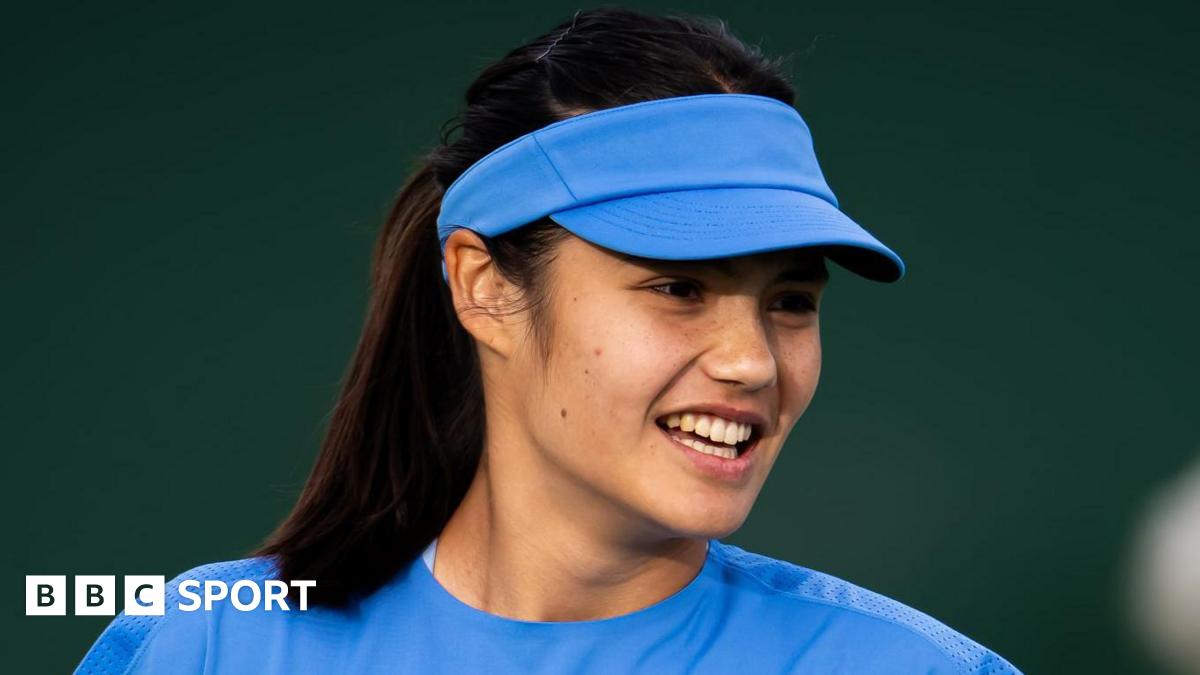
Emma Raducanu granted Strasbourg wildcard after two months out

British number one Emma Raducanu will make her return to action in Strasbourg after being granted a wildcard, as she seeks match practice before the French Open.

Raducanu, 23, withdrew from the Italian Open on health grounds earlier this month and has not competed since a third-round loss to American Amanda Anisimova at Indian Wells on 8 March.

The clay-court event in Strasbourg begins on Sunday, one week before the start of the French Open on 24 May.

Raducanu is set to miss out on a seeded position at the second Grand Slam of the year following the post-viral infection which has kept her away from the tour.

The 2021 US Open winner is currently ranked 30th in the world but will drop several places following the conclusion of this week’s tournaments in Rome and Paris.

Raducanu was granted a wildcard for last year’s WTA 500 event in Strasbourg, where she beat top-20 player Daria Kasatkina before losing to American Danielle Collins.

The Briton has won seven of her 14 matches this year, with four of those victories coming during her run to the final of the Transylvania Open in February after her second-round exit at the Australian Open.

Raducanu gave no clear indication that she would pull out of the Italian Open in March despite speaking to the media just 30 minutes before that decision was announced, but said she only wanted to return to competition when “100% ready”.

Source link

China’s Xi expected to press Trump on Taiwan, tariffs during summit | Donald Trump News

Taipei, Taiwan – Chinese President Xi Jinping is expected to seek concessions on Taiwan and US tariffs when he meets United States President Donald Trump for a high-stakes summit taking place in the shadow of the war on Iran.

Trump will arrive in China on Wednesday evening for a three-day visit that will mark the first trip by a US leader to the country since 2017, when Trump visited in the early days of his first term.

Recommended Stories

list of 4 itemsend of list

Unlike Trump, who is renowned for his mercurial policymaking, Xi is widely seen as predictable in his goals for the summit, particularly as they concern Beijing’s longstanding “core interests” related to national security and territorial integrity.

At the top of that list is Taiwan.

While Taiwan’s government considers itself the head of a de facto sovereign state, Beijing views the island as an inalienable part of its territory.

The US formally cut ties with Taiwan – also known as the Republic of China – decades ago, but is committed to aiding the self-governing democracy’s defence under the 1979 Taiwan Relations Act.

Under the law, Washington has provided Taiwan with billions of dollars in arms and pursued cooperation in areas such as military training and intelligence sharing, which Beijing considers interference in its internal affairs.

The US government officially acknowledges that China views Taiwan as part of its territory, but does not express a stance on whether it agrees.

Washington is also intentionally vague about whether it would intervene to defend Taiwan if China sought to annex it by force.

In a call with US Secretary of State Marco Rubio last month, Chinese Foreign Minister Wang Yi made clear that Taiwan would be raised at the summit, describing the issue as “the biggest risk in the China-US relationship”, according to a Chinese readout of the call.

China’s embassy in Washington, DC, reiterated that message after Trump’s departure for the summit on Tuesday, naming Taiwan as the first of “four red lines” that “must not be challenged”.

While analysts say it is unlikely that the US will change its position on Taiwan due to Chinese pressure, Trump said this week that the summit’s agenda would include US arms sales to the island, raising questions about the future of a stalled multibillion-dollar arms deal.

The US Congress approved the arms package reportedly worth $14bn earlier this year, but the sale still requires Trump’s final approval.

Xi will use his meetings with Trump to “influence and potentially convince Trump to agree to scale back, if not completely suspend, sales to Taiwan,” William Yang, a Taipei-based analyst at the Crisis Group, told Al Jazeera.

If Trump were to make concessions on weapons sales to Taiwan, he would be breaking with a longstanding policy against consulting with Beijing that dates back to former US President Ronald Reagan.

Cancelling or watering down the deal would be a serious blow to Taiwanese President William Lai Ching-te, who is locked in an intense fight with the opposition over defence spending, Yang said.

“They are hoping to first influence Trump’s decision around this issue and potentially create a situation where it will be much harder for [Lai’s] government to request more special defensive spending in the future,” Yang said.

Restoring the US-China framework

Xi is also eager to smooth over US-China relations after a tumultuous 18 months that saw Trump launch a second trade war with the world’s second-largest economy, according to analysts.

The standoff saw each side roll out escalating tit-for-tat tariffs – briefly sending duties well above 100 percent – and other punitive measures, such as export controls, before Washington and Beijing hit pause in May.

During their last meeting in South Korea in October, Xi and Trump agreed to a one-year reprieve in their trade war, while keeping some trade measures in place, including certain tariffs and export controls.

Over the past month, the US has rolled out several rounds of new sanctions targeting Chinese firms, including refiners accused of buying Iranian oil and companies accused of helping Tehran obtain materials to build drones and missiles.

Earlier this month, Beijing issued a “prohibition order” directing firms to disregard the US sanctions on its oil refineries.

“Beijing wants predictability and certainty for the remainder of Trump’s term through January 2029, because Beijing needs to be able to plan its own economic policies,” Feng Chucheng, a founding partner of Beijing-based Hutong Research advisory, told Al Jazeera.

These policy considerations include understanding tariff levels the US will apply to China and its trade partners, Feng said.

Wang Wen, dean of the school for global leadership at Renmin University in Beijing, said China wishes to return to a relationship based on “peaceful coexistence, mutual respect, and win-win cooperation”.

“We hope that this meeting will bring the US policy towards China back to these three principles,” Wang told Al Jazeera.

The stakes are high for Beijing, where the view of Trump has shifted from a “predictable transactional counterpart” to a “more action-oriented and harder-to-restrain opponent,” Hung Pu-Chao, deputy executive director of the Center for Mainland China and Regional Development Research at Taiwan’s Tunghai University, told Al Jazeera.

Restoring the US-China relationship to a stable footing is one way to mitigate these risks, Hung said.

Rather than secure concessions, Hung said, China’s priority is “trying to adjust the current strategic position and negotiating pace that are unfavourable to it, and bring US-China interactions back into a framework that it can better control”.

At the summit, Xi is likely to agree to increase purchases of US agricultural exports and Boeing planes, Feng said, and could also back Trump’s plan to create a “Board of Trade” and a “Board of Investment” to oversee US-China economic ties.

But China is unlikely to make compromises on rare earths – a sector it dominates – unless the US makes major political concessions, Feng said.

Calling for dialogue on the war on Iran

The US-Israel war on Iran will loom large over the summit.

Although not a main player in the conflict, China has been hit by the economic fallout of the war and the shutdown of the Strait of Hormuz, through which one-fifth of global oil and natural gas supplies usually pass.

Beijing has called for negotiations and a comprehensive ceasefire since the start of the conflict, a message Xi is likely to reiterate in his talks with Trump, according to Jodie Wen, a postdoctoral fellow at the Center for International Security and Strategy at Tsinghua University in Beijing.

“Xi will talk about this issue with Donald Trump and say that we all know that the war has a huge impact on the world, on Asian countries and the US, so we must have dialogue,” Wen told Al Jazeera.

Trump said on Tuesday that he does not need China’s “help” resolving the war, though the White House has pressured Beijing to lean on Iran to reopen the strait.

Xi and his top diplomat, Wang, have met more than a dozen global leaders and high-level officials since the start of the war, playing a behind-the-scenes mediating role.

China has had a “comprehensive strategic partnership” with Iran since 2016, and buys more than 80 percent of its oil.

Wen, the postdoctoral fellow at Tsinghua University, said Xi is unlikely to agree to any involvement except as a mediator, which she described as consistent with China’s longstanding approach to global affairs.

“China’s foreign policy principle is non-intervention,” she said. “This is our principle.”

Source link

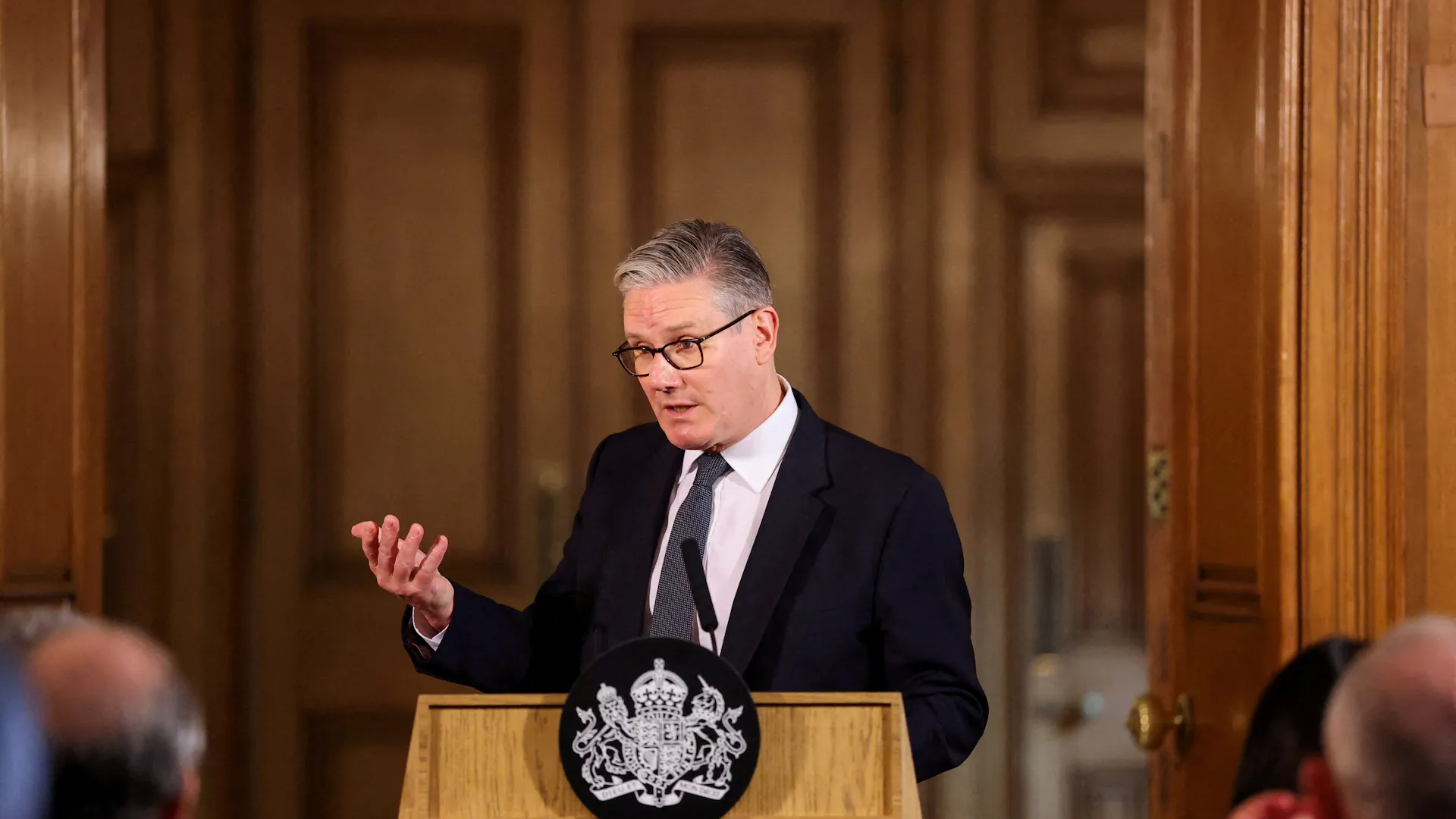
UK PM Starmer set to meet rival Streeting amid pledge to carry on governing | News

UK PM, who is battling to remain in his job amid resignations of ministers, is expected to hold talks with Streeting.

British Prime Minister Keir Starmer, fighting for his political survival after dozens of his own MPs called for him to resign, promised to press ahead with plans to reform the country before an expected meeting with his potential leadership rival Wes Streeting, the health secretary.

Starmer has so far defied calls to quit from Labour MPs, who blame him for heavy losses in local elections last week and say he has failed to deliver reforms since coming to power in a landslide 2024 election victory.

Recommended Stories

list of 4 itemsend of list

The meeting in Downing Street will take place before King Charles gives a speech at the opening of parliament – a grand ceremony led by him and used by the government to set out its political priorities and legislative agenda for the year ahead.

A public statement is not expected to follow the Streeting-Starmer meeting to keep the attention on the speech, according to British media reports.

Resignations

More than 80, or almost a quarter, of the prime minister’s elected MPs have called for Starmer to go, and four junior ministers have resigned in protest, including prominent MP Jess Phillips, who said she was tired of seeing “opportunities for progress stalled and delayed”; Alex Davies-Jones, who called last week’s election results “catastrophic”; and Zubir Ahmed, who is a Streeting ally.

Miatta Fahnbulleh, who was the first of four ministers to resign on Tuesday, said in a letter to the prime minister, cited by British media: “The public does not believe that you can lead this change – and nor do I.”

Meanwhile, Starmer said in a statement on Tuesday evening: “Britain stands at a pivotal moment: To press ahead with a plan to build a stronger, fairer country or turn back to the chaos and instability of the past.”

Despite the turmoil, Starmer will take part in parliament’s grand opening on Wednesday.

“The British people expect the government to get on with the job of changing our country for the better. Cutting the cost of living, bringing down hospital waiting lists and keeping our country safe in an increasingly dangerous world,” Starmer said.

A package of more than 35 bills and draft bills will focus on measures to improve the economy, strengthen national security and “reform the state to support a more active government that is on the side of British people”, the government said.

After travelling to parliament and donning the Robe of State, Charles will read a speech written by Starmer’s government setting out the planned new laws.

But the implementation of that speech remains as uncertain as Starmer’s political future. If he were to be removed, his successor would not be bound to follow the same plan.

After spending much of Tuesday behind closed doors at his Downing Street office as he sought to rally support, Wednesday’s ceremony will put Starmer’s struggle for power back in public view.

Source link

Ronaldo’s Al-Nassr kept waiting for Saudi Pro League title by own goal | Football News

Goalkeeper Bento’s bizarre injury-time own goal denies Al-Nassr a title-crowning 1-0 win over rivals Al Hilal at home.

Cristiano Ronaldo and his Al-Nassr teammates were left frustrated when their goalkeeper Bento scored an injury-time own goal, denying the club their first Saudi Pro League title in seven years.

Riyadh-based club Al-Nassr were leading 1-0 and seconds away from defeating local rivals Al Hilal, who are second in the league, when Bento fumbled an overhead save that sent the ball into his own net in a highly anticipated match on Tuesday.

A win would have sealed the 11th league title for Al-Nassr and the first for the Portuguese superstar since he famously joined the club in January 2023.

Al-Nassr top the league table with 83 points from 33 games, while Al Hilal are second on 78 points from 32 games. Ronaldo, who captains Al-Nassr, cut a picture of frustration on the bench when the equaliser was scored by the Brazilian goalkeeper.

The 41-year-old football icon has not won a domestic title with Al-Nassr since his then-record-breaking move from Manchester United after the FIFA World Cup 2022 in Qatar.

Al-Nassr’s last league title came in 2019, while Al Hilal won the league in 2024.

Fans of the home team were given free team shirts at the beginning of the match, making the stands a sea of yellow in anticipation of the title win.

Barring a shock result against 15th-place Damac in their final league game, Al-Nassr are favourites to win the league on May 21 .

“The dream is close,” Ronaldo said in his post-match social media posts to his 770 million-plus followers.

Source link

Is Mohammad Bin Salman a Zionist?  – Middle East Monitor

Last week, a prominent Saudi Sheikh, Mohammed Al-Issa, visited the Auschwitz concentration camp in Poland to commemorate the 75th anniversary of its liberation, which signalled the end of the Nazi Holocaust. Although dozens of Muslim scholars have visited the site, where about one million Jews were killed during World War Two, according to the Auschwitz Memorial Centre’s press office, Al-Issa is the most senior Muslim religious leader to do so.

Visiting Auschwitz is not a problem for a Muslim; Islam orders Muslims to reject unjustified killing of any human being, no matter what their faith is. Al-Issa is a senior ally of Saudi Crown Prince Mohammad bin Salman (MBS), who apparently cares little for the sanctity of human life, though, and the visit to Auschwitz has very definite political connotations beyond any Islamic context.

By sending Al-Issa to the camp, Bin Salman wanted to show his support for Israel, which exploits the Holocaust for geopolitical colonial purposes. “The Israeli government decided that it alone was permitted to mark the 75th anniversary of the Allied liberation of Auschwitz [in modern day Poland] in 1945,” wrote journalist Richard Silverstein recently when he commented on the gathering of world leaders in Jerusalem for Benjamin Netanyahu’s Holocaust event.

READ: Next up, a Saudi embassy in Jerusalem 

Bin Salman uses Al Issa for such purposes, as if to demonstrate his own Zionist credentials. For example, the head of the Makkah-based Muslim World League is leading rapprochement efforts with Evangelical Christians who are, in the US at least, firm Zionists in their backing for the state of Israel. Al-Issa has called for a Muslim-Christian-Jewish interfaith delegation to travel to Jerusalem in what would, in effect, be a Zionist troika.

Zionism is not a religion, and there are many non-Jewish Zionists who desire or support the establishment of a Jewish state in occupied Palestine. The definition of Zionism does not mention the religion of its supporters, and Israeli writer Sheri Oz, is just one author who insists that non-Jews can be Zionists.

Mohammad Bin Salman and Netanyahu - Cartoon [Tasnimnews.com/Wikipedia]

Mohammad Bin Salman and Netanyahu – Cartoon [Tasnimnews.com/Wikipedia]

We should not be shocked, therefore, to see a Zionist Muslim leader in these trying times. It is reasonable to say that Bin Salman’s grandfather and father were Zionists, as close friends of Zionist leaders. Logic suggests that Bin Salman comes from a Zionist dynasty.

This has been evident from his close relationship with Zionists and positive approaches to the Israeli occupation and establishment of a Jewish state in Palestine, calling it “[the Jews’] ancestral homeland”. This means that he has no issue with the ethnic cleansing of almost 800,000 Palestinians in 1948, during which thousands were killed and their homes demolished in order to establish the Zionist state of Israel.

“The ‘Jewish state’ claim is how Zionism has tried to mask its intrinsic Apartheid, under the veil of a supposed ‘self-determination of the Jewish people’,” wrote Israeli blogger Jonathan Ofir in Mondoweiss in 2018, “and for the Palestinians it has meant their dispossession.”

As the de facto ruler of Saudi Arabia, Crown Prince Bin Salman has imprisoned dozens of Palestinians, including representatives of Hamas. In doing so he is serving Israel’s interests. Moreover, he has blamed the Palestinians for not making peace with the occupation state. Bin Salman “excoriated the Palestinians for missing key opportunities,” wrote Danial Benjamin in Moment magazine. He pointed out that the prince’s father, King Salman, has played the role of counterweight by saying that Saudi Arabia “permanently stands by Palestine and its people’s right to an independent state with occupied East Jerusalem as its capital.”

UN expert: Saudi crown prince behind hack on Amazon CEO 

Israeli journalist Barak Ravid of Israel’s Channel 13 News reported Bin Salman as saying: “In the last several decades the Palestinian leadership has missed one opportunity after the other and rejected all the peace proposals it was given. It is about time the Palestinians take the proposals and agree to come to the negotiations table or shut up and stop complaining.” This is reminiscent of the words of the late Israeli Foreign Minister Abba Eban, one of the Zionist founders of Israel, that the Palestinians “never miss an opportunity to miss an opportunity.”

Bin Salman’s Zionism is also very clear in his bold support for US President Donald Trump’s deal of the century, which achieves Zionist goals in Palestine at the expense of Palestinian rights. He participated in the Bahrain conference, the forum where the economic side of the US deal was announced, where he gave “cover to several other Arab countries to attend the event and infuriated the Palestinians.”

U.S. President Donald Trump looks over at Crown Prince of Saudi Arabia Mohammad bin Salman al-Saud as they line up for the family photo during the opening day of Argentina G20 Leaders' Summit 2018 at Costa Salguero on 30 November 2018 in Buenos Aires, Argentina. [Daniel Jayo/Getty Images]

US President Donald Trump looks over at Crown Prince of Saudi Arabia Mohammad bin Salman al-Saud as they line up for the family photo during the opening day of Argentina G20 Leaders’ Summit 2018 at Costa Salguero on 30 November 2018 in Buenos Aires, Argentina [Daniel Jayo/Getty Images]

While discussing the issue of the current Saudi support for Israeli policies and practices in Palestine with a credible Palestinian official last week, he told me that the Palestinians had contacted the Brazilian President Jair Bolsonaro to ask him not to relocate his country’s embassy to Jerusalem. “The Saudis have been putting pressure on us in order to relocate our embassy to Jerusalem,” replied the Brazilian leader. What more evidence of Mohammad Bin Salman’s Zionism do we need?

The founder of Friends of Zion Museum is American Evangelical Christian Mike Evans. He said, after visiting a number of the Gulf States, that, “The leaders [there] are more pro-Israel than a lot of Jews.” This was a specific reference to Saudi Arabia’s Crown Prince, and his counterpart in the UAE, Mohammed Bin Zayed.

“All versions of Zionism lead to the same reactionary end of unbridled expansionism and continued settler colonial genocide of [the] Palestinian people,” Israeli-American writer and photographer Yoav Litvin wrote for Al Jazeera. We may well see an Israeli Embassy opened in Riyadh in the near future, and a Saudi Embassy in Tel Aviv or, more likely, Jerusalem. Is Mohammad Bin Salman a Zionist? There’s no doubt about it.

The views expressed in this article belong to the author and do not necessarily reflect the editorial policy of Middle East Monitor.

Source link

Venezuela: US Removes Enriched Uranium from Obsolete Nuclear Reactor

Removal of enriched uranium from Venezuela to be transported to the United States. (@usembassyve/X)

Mérida, May 12, 2026 (venezuelanalysis.com) – The US and Venezuelan governments, in coordination with the United Kingdom and the International Atomic Energy Agency (IAEA), completed the extraction and secure transfer of 13.5 kilograms of enriched uranium. 

This radioactive material had been stored since 1991 following the decommissioning of a nuclear research reactor of the Venezuelan Institute for Scientific Research (IVIC) in Miranda state.

The operation to remove the uranium, enriched over 20 percent, was carried out in late April under strict security and IAEA oversight. The shipment was transported by land to the port of Puerto Cabello, and then by sea on a British vessel to the US Department of Energy’s Savannah River Site in South Carolina.

The Venezuelan government, led by Acting President Delcy Rodríguez, released a statement on Thursday, May 7, explaining that it had “repeatedly communicated to the IAEA the need to remove the disused sources and materials that remained in the country.”

The official statement emphasized that the January 3 US military attack, in which two US missiles struck approximately 50 meters from the reactor, had “objectively increased the risk level and urgency” of extracting the radioactive material. Caracas emphasized that the transfer was carried out in accordance with safety standards and international nuclear non-proliferation treaties.

The US Embassy in Venezuela described the operation as “a victory for the United States, Venezuela, and the world.” In a statement released on Friday, the diplomatic mission praised the “decisive leadership of President Donald Trump” and the work of US on-the-ground teams that “completed in months what would have normally taken years.”

According to the official US note, the recovered material will be used for research and the development of new technologies as part of what the Trump administration calls a “nuclear renaissance.”

While the statement did not detail specific uses, the dilution and processing of highly enriched uranium can provide inputs for medical isotope production, experimentation with next-generation reactors, and fuel development for small modular reactors (SMRs), which operate at enrichment levels up to 20%.

The State Department, through Assistant Secretary for Arms Control and Nonproliferation Christopher T. Yeaw, has stated that “working alongside our DOE/NNSA, UK, IAEA, and Venezuelan counterparts, we’ve demonstrated how effective partnerships can eliminate nuclear proliferation risks and enhance global nuclear security.”

For its part, the International Atomic Energy Agency confirmed that it provided “nuclear safety and security guidance, training, and technical expertise.” In a statement, the IAEA highlighted the risk of radioactive material “falling into the wrong hands,” while Director General Rafael Grossi praised “the professionalism of all the parties involved.”

The IAEA has provided details of the transfer of uranium enriched to just above 20 percent of the fissile isotope uranium-235 from the RV-1 reactor at IVIC, located 15 km southwest of Caracas. This level is regarded as the threshold for “highly enriched uranium” (HEU), though it is significantly below the 80 percent required for a nuclear weapon.

The RV-1 was Venezuela’s first nuclear research reactor and a pioneer project in Latin America. The initiative was established in 1960 under the vision of scientist Humberto Fernández-Morán. Its primary function was the production of radioisotopes for medical purposes, as well as for experiments in the fields of physics and biology. Following the decision to close the facility permanently in 1991, the site was converted for use as a Gamma Ray Sterilization Plant (Pegamma).

The old reactor drew renewed attention during the US January 3 bombings, which included strikes that hit IVIC facilities and also saw special forces kidnap President Nicolás Maduro.

The uranium removal marks the conclusion of Venezuela’s nuclear history, which began in the 1950s under the “Atoms for Peace” program.

Edited by Ricardo Vaz in Caracas.


Source link

FBI Director Kash Patel fires back at drinking allegations | Donald Trump

NewsFeed

FBI Director Kash Patel and Senator Chris Van Hollen had a heated exchange during a Senate budget hearing after Van Hollen questioned Patel about drinking allegations first reported by The Atlantic magazine. Patel called the claims “unequivocally, categorically false.”

Source link

Starmer at risk because he pushed Labour to be ‘new Conservative Party’ | Elections

NewsFeed

Author Oliver Eagleton says British Prime Minister Keir Starmer is fighting for his job because he tried to turn the Labour Party into the ‘new Conservative Party’ and ‘occupy that centre ground’. Dozens of lawmakers are calling for Starmer’s resignation after devastating local elections.

Source link