Stay informed and up-to-date with the latest news from around the world. Our comprehensive news coverage brings you the most relevant and impactful stories in politics, business, technology, entertainment, and more.
Trita Parsi tells Al Jazeera that Iran has abandoned strategic patience for a new doctrine: swift, severe retaliation against any US attack. Parsi added that Iran aims to deny Washington the ability to strike with impunity, viewing immediate escalation as vital to its deterrence.
Weekly insights and analysis on the latest developments in military technology, strategy, and foreign policy.
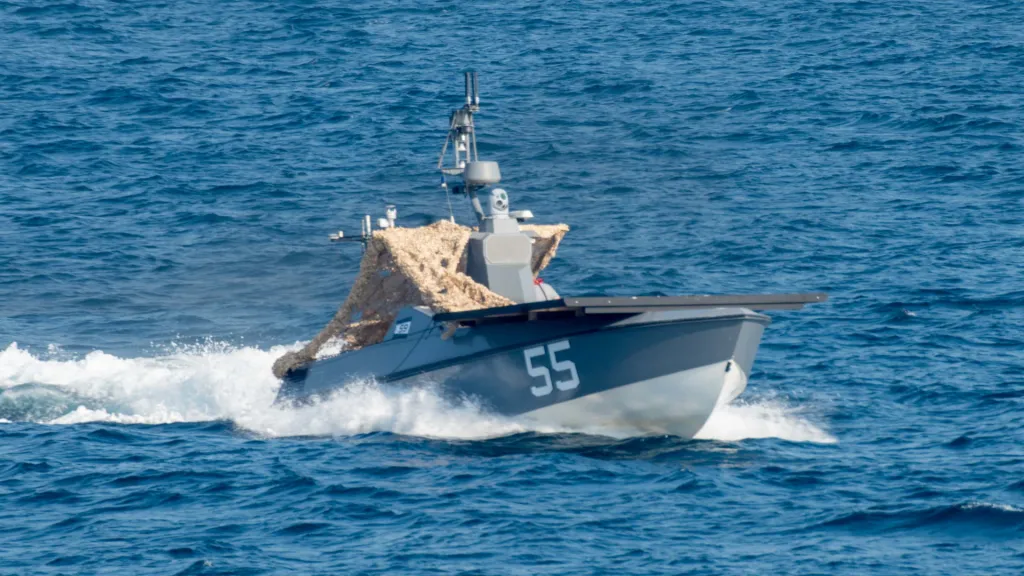
U.S. Central Command (CENTCOM) has confirmed a Saronic Corsair was the uncrewed surface vessel (USV) that rescued the crew of a U.S. Army AH-64 Apache out of the Gulf of Oman overnight. President Donald Trump has also now said Iranian forces downed the attack helicopter, and promised a response. This is the first known instance of a drone boat being used to recover personnel as part of a search and rescue mission, and has major implications for these operations going forward. Readers can otherwise get up to speed on what is already known about this incident in our initial reporting here.
“The surface drone that assisted in last night’s rescue of the Apache crew off the coast of Oman was a U.S. Navy Corsair unmanned surface vessel operated by U.S. 5th Fleet’s Task Force 59,” U.S. Navy Capt. Tim Hawkins, a CENTCOM spokesman, told TWZ. “The task force began fielding these drones in theater in late March.”
A top-down look at a Saronic Corsair USV. Saronic
The Navy confirmed last December that it had signed an Other Transaction Authority (OTA) deal with Saronic, valued at $392 million, for the production of Corsair USVs. The Corsair, which the manufacturer also calls an autonomous surface vessel (ASV), is a 24-foot-long drone boat with a speedboat-like design that was first unveiled in 2024. The manufacturer says it has a maximum range of 1,000 nautical miles, a top speed of 35 knots, and a 1,000-pound payload capacity.
Prototype to production in under 12 months. The @Saronic OTA proves how we’ll build a hybrid manned–unmanned Fleet: open competition, real contracts, real hardware for Sailors and Marines not slides. This is now the standard. pic.twitter.com/cC9DG7jTiW
— Archive: Secretary of the Navy John C. Phelan (@SecNavPhelan) December 8, 2025
The Corsair “picked them [the Apache crew] up and transported them to another location on the water where they were then hoisted up to a helicopter for further transport,” Capt. Hawkins, the CENTCOM spokesperson, added.
CENTCOM had already confirmed to TWZ and others that an unspecified USV found and rescued the two aircrew from the downed Apache. The Wall Street Journal was first to report the specific type of drone boat employed.
The Army aviators spent approximately two hours in the water before being recovered safely, according to a previous CENTCOM statement. As mentioned, President Donald Trump has also now separately said that Iranian forces were responsible for bringing down the Apache, and that a U.S. response will be forthcoming.
Trump says that Iranian forces shot down the Army AH-64 Apache attack helicopter that went down over Hormuz yesterday.
Since its establishment in 2021, the Navy’s Task Force 59 has been charged with helping expand the service’s operational use of uncrewed platforms, as well as artificial intelligence (AI) and machine learning-driven capabilities, across the Middle East. It has operated an array of different types of USVs, as well as uncrewed aerial systems, over the years.
How many Corsairs Task Force 59 has currently, as well as their exact configuration, is unclear. Pictures and videos that Saronic has released to date have shown Corsairs fitted out primarily for surveillance and reconnaissance missions, with a camera turret on top of a central mast-like frame. A commercial navigation radar, additional cameras to help provide extra situational awareness, and various other antennas have also been seen fitted to that frame. Saronic has talked about integrating other capabilities to enable additional mission sets, including launchers for loitering munitions, in the past.
A picture showing the most typical configuration of the Corsair USV that has been seen to date. Saronic
Saronic also says Corsair has a high degree of autonomy, with the type having logged more than 100,000 nautical miles of total travel to date, including multi-day missions. The SUV is designed to be employed independently or in networked swarms, according to the company. Human operators are in the loop during these operations via datalink.
Corsair, our 24ft Autonomous Surface Vessel (ASV), has officially crossed 100,000 nautical miles traveled — that’s nearly five times around the Earth or almost halfway to the Moon!
This milestone represents more than distance. It reflects relentless testing across diverse… pic.twitter.com/opXtX6jSfO
“Corsair can be given a mission, alone or as part of a collaborative swarm, and execute with minimal human interaction to deter or counter adversarial threats at a range of 1,000 nautical miles,” Saronic said in a press release back in 2024. “Employing redundant communications and passive perception capabilities, Corsair can autonomously identify, track, follow, and intercept targets in contested and communications denied environments.”
These are all capabilities well suited to the U.S. Navy’s immediate needs in the Middle East, especially in support of the current blockade of Iranian ports. Corsair would notably offer a lower-risk way to closely shadow vessels that might be attempting a run into or out of the area. Corsair’s ability to automatically spot and track objects of interest would have helped in finding and rescuing the downed Apache crew, too. It is worth noting here that automated target detection is also a key part of Corsair’s ability to safely navigate autonomously, day or night, especially in congested waterways, as seen in the video below.
In 2025, we logged more than 79,000 nautical miles and over 15,000 hours of total operations with Corsair, our 24-ft ASV. Much of this was done on our own dime, operating 6 days a week at our test sites on the West Coast, East Coast, Gulf Coast, and beyond, allowing us to… pic.twitter.com/PZETeJia17
Corsair’s overall performance in the Middle East could easily translate to further operational use of this USV by the Navy globally. The service has particularly significant demands for persistent maritime surveillance and reconnaissance capacity, as well as just general presence, across the broad expanses of the Pacific. One of the key benefits that USVs offer is the ability to provide additional distributed ‘mass’ at relatively low cost. This can help bolster the capabilities of crewed platforms they are networked together with or just ease the operational strain on those assets.
The Navy has now also clearly demonstrated how valuable USVs could be in future maritime search-and-rescue operations worldwide. This, in turn, underscores the benefits uncrewed platforms bring to these missions, especially in the face of growing anti-air and other threats.
As we already wrote today:
“As TWZ regularly highlights, search and rescue operations present inherent complexities and risks, especially when conducted in or near hostile territory. The F-15E rescue effort in Iran put a particular spotlight on the immense risks that combat search and rescue (CSAR) forces take, with helicopters and C-130 variants sent into areas where even a high-end fighter aircraft didn’t survive.”
“Open-water recoveries can present distinct additional challenges. There is always the possibility of the loss of additional assets and personnel in the process, no matter where a CSAR mission occurs.”
US Air Force HH-60W Jolly Green II search-and-rescue helicopters refuel from an HC-130J Combat King II aircraft. USAF
“The use of a Navy drone boat in the rescue overnight highlights a new dimension for maritime CSAR going forward. These uncrewed assets can be more readily pre-positioned in a distributed manner. For example, in the broad expanse of the Pacific, USVs could be forward-deployed at multiple points along certain flight paths for this exact purpose. USVs could offer other distinct advantages in certain scenarios where they might be able to get into areas where traditional assets cannot and without risking additional personnel. These realities extend well beyond the maritime domain, and we are only likely to see uncrewed platforms of all kinds increasingly taking part in rescue efforts, especially in denied areas. The U.S. military is coming to terms with just how vulnerable their CSAR assets are and the ranges that would be needed to access highly defended areas, especially during a peer fight. Using drones to execute personnel recovery is being viewed as one part of a larger set of solutions to this pressing problem.“
The additional detail we have now that the Corsair USV brought the downed aircraft to a territorial location, where they were then hoisted into a helicopter, is notable, too. This further shows how uncrewed platforms could be used as part of a distributed hub-and-spoke-style concept of operations for future rescue missions, which could increase flexibility and total area covered. USVs could be used to penetrate into especially high-threat areas, recover personnel, and then bring them to crewed assets at safer locations to the rear, as well.
“When it comes to search and rescue, you utilize the best asset that is the closest and the quickest, and that was the case in this instance,” CENTCOM’s Hawkins also told The Wall Street Journal today. “We’ve practiced this scenario in exercises, but not quite necessarily like this.”
The first Marauder prototype seen being launched earlier this year. Saronic
The Navy is already set to evaluate Marauder, as well as designs from six other companies, as part of the first round of prototyping under its latest Medium Unmanned Surface Vessel (MUSV) effort. This is part of a larger strategy the service rolled out in March to try to field more USVs and do so faster, as you can read more about here.
In the meantime, Saronic’s Corsair is already being employed operationally in the Middle East and demonstrating its ability to perform complex missions.
Former airline captain charged with fraud after allegedly commanding more than 900 flights without required credentials.
Published On 10 Jun 202610 Jun 2026
A former airline pilot in Canada has been arrested for allegedly flying hundreds of flights without a proper licence for nearly 17 years.
Police in Peel, Ontario, said on Tuesday that they had charged former Air Canada captain Geoffrey Wall with fraud and other charges following a four-month investigation.
Recommended Stories
list of 4 itemsend of list
The Peel Regional Police said Wall, 59, had used fraudulent pilot licences to command more than 900 domestic and international flights between 2009 and 2025.
Police said they obtained evidence to suggest that Wall had deceived both Air Canada and civil aviation authorities about his credentials before his retirement in 2025.
While Wall did hold a valid commercial pilot licence, he did not have an airline transport pilot licence, the highest level of pilot certification required to captain commercial aircraft, police said.
Wall faces one count of fraud, two counts of uttering forged documents, three counts of possessing a counterfeit trademark, and one count of public mischief.
Al Jazeera was unable to locate Wall’s legal representatives for comment.
“This case is deeply concerning and strikes at the heart of public trust and safety, as the accused is alleged to have put hundreds of thousands of passengers at risk across more than 900 domestic and international flights,” Peel Regional Police Chief Nishan Duraiappah said in a statement.
Air Canada said that while it viewed the pilot’s alleged actions with “utmost seriousness”, passenger safety had not been compromised, as all pilots undergo mandatory training every six months to assess their competency, in addition to an annual flight check with a certified pilot.
The airline said that Wall had “successfully met or exceeded” his training requirements and demonstrated “a high level of competency to safely operate large aircraft”.
The Canadian flag carrier also said it had found no other instances of non-compliance with licensing requirements following an audit of its pilots.
“Immediately upon Air Canada’s discovery of this, the individual was removed from active duty, and the company voluntarily reported the matter to Transport Canada,” the airline said in a statement.
Hassan Shahidi, a licensed pilot who heads the US-based Flight Safety Foundation nonprofit, described the charges against Wall as an “exceptionally rare case”.
“If the allegations are proven, the key issue isn’t that an untrained person was flying airliners, but that this pilot bypassed a fundamental regulatory requirement for many years,” Shahidi told Al Jazeera.
“The case could point to weaknesses in licence verification and oversight processes, particularly if fraudulent credentials were able to evade detection for so long.”
Shahidi said that Wall’s alleged actions did not appear to have exposed passengers to the same level of risk that they would have faced if an untrained pilot were at the controls.
“The larger concern is the apparent failure of a regulatory safeguard that is supposed to ensure trust in the system,” he said.
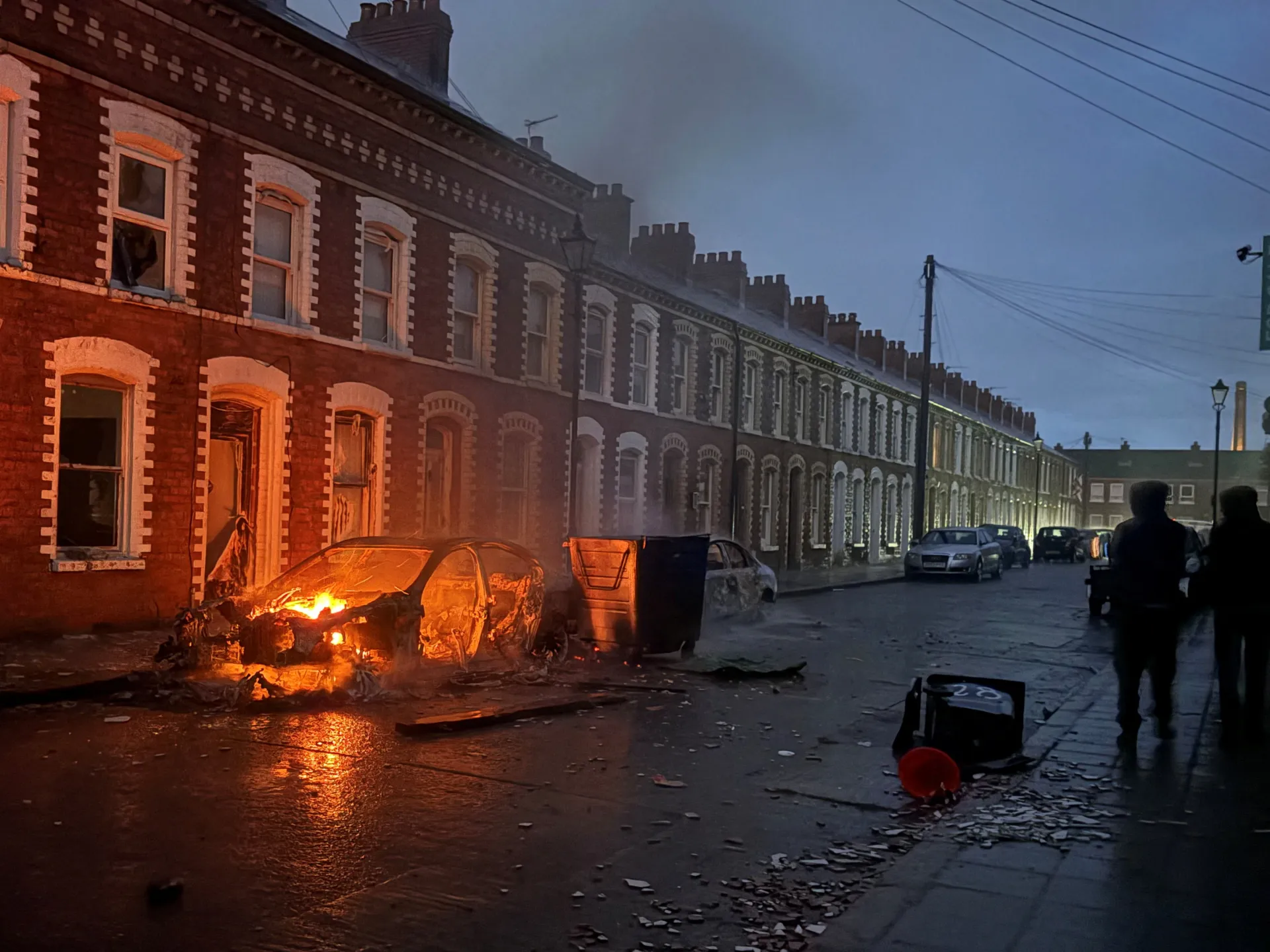
Anti-immigrant protesters in the city of Belfast in the United Kingdom have torched vehicles and buildings after a Sudanese man was arrested over a knife attack that left one person with serious injuries.
Hundreds of protesters, many of them masked, gathered at several locations across the city on Tuesday, setting fire to a bus and several cars.
Recommended Stories
list of 3 itemsend of list
A building near the city centre was also set alight, with residents telling the AFP news agency that the protesters started a fire in the bins and went on to throw petrol bombs.
Crowds also gathered in Antrim, about 25km (15 miles) west of Belfast.
Michelle O’Neill, the first minister of Northern Ireland, slammed the protests and urged calm.
“Groups of masked men burning families out of their homes is nothing less than disgusting cowardice,” she wrote on X.
“Racism, intimidation and violence are wrong wherever they occur. There can be no excuse and no justification for these attacks tonight. No one wants to see this on our streets and I again appeal for calm”.
Appeals for calm
The suspect in the knife attack, which took place in north Belfast late on Monday, was charged late on Tuesday with attempted murder, possession of a bladed weapon in a public place, and making threats to kill.
The 30-year-old man, whose name has not been released, is due to appear in court on Wednesday.
The victim, a man in his 40s, suffered significant injuries to his eyes and slash wounds to his face and back during the attack with a kitchen knife found at the scene, police said.
“I understand that last night’s attempted murder will leave people feeling a range of emotions, from fear to anger,” Northern Ireland’s Assistant Chief Constable Ryan Henderson told a news conference, as he declared the unrest a “critical incident”.
“I appeal for calm and the safety of all of our communities in response to this”, he said.
Footage of the knife attack in north Belfast showed several members of the public trying to fight off the attacker before police arrived, and they were credited by senior officers with saving the man’s life.
UK Prime Minister Keir Starmer called the attack “horrific” and “sickening” on X. “I have absolutely no tolerance for abhorrent scenes of violence like this on our streets,” he said.
His office said that “it is time for calm”, adding: “It’s important that police have the time and space to investigate appropriately.”
Heightened tensions
The attack, which is not being treated as terrorism, comes at a time of heightened tensions in the UK following the murder of a student in Southampton who was handcuffed by police as he lay dying from stab wounds after his killer, a Sikh man, had falsely alleged a racist attack.
Although the victim and convicted killer were both British, protesters on Tuesday stood outside a Southampton hotel that had housed asylum seekers, holding signs that read, “Illegal Migration Is Destroying Our Civilisation”.
The attack in Belfast, meanwhile, sparked immediate questions about the suspect’s immigration status, including from some politicians.
Gavin Robinson, the leader of the Democratic Unionist Party, urged authorities to curb “uncontrolled immigration”, while anti-immigration figures, including Reform UK party leader Nigel Farage and Restore Britain leader Rupert Lowe, demanded details about the attacker.
Northern Ireland’s chief constable, Jon Boutcher, told reporters that the suspect was living in the UK on a five-year visa granted in September 2023.
Boutcher said he was believed to have travelled from Sudan to Paris and Dublin before claiming asylum in Belfast.
“There is no trace of this suspect on any of our national security databases, and he was not known to the Police Service of Northern Ireland,” he added.
Northern Ireland’s main political party leaders jointly condemned the knife attack, calling it “horrific” and saying that “there is no place in our society for this kind of brutality”.
They also called for calm, saying that disturbances would only damage their communities.
The USD-bolívar exchange rate has nearly doubled in 2026. (EFE)
Caracas, June 9, 2026 (venezuelanalysis.com) – Venezuela has registered the lowest month-to-month inflation figure since October 2024.
According to the Venezuelan Central Bank (BCV), consumer prices went up by 6.3 percent in May. Inflation has fallen for four consecutive months after hitting 32.6 percent in January, following the US military attack and kidnapping of President Nicolás Maduro.
Overall, prices have more than doubled in the first five months of 2026, and accumulated 12-month inflation currently stands at 525 percent.
Despite the widespread use of the US dollar in cost structures, prices have likewise gone up by 12.5 percent over the last year when measured in USD, meaning a loss of purchasing power even for those with incomes pegged to the official exchange rate.
Venezuela’s inflation remains heavily correlated with currency instability. Despite the Central Bank devaluing the USD-bolívar exchange rate by more than 30 percent since March and providing significantly increased volumes offoreign currency to the private sector, a 30-40 percent gap remains between the official and parallel market rates.
Since January, the BCV has directed over US $5.5 billion in foreign currency via bank-run exchange tables, at more than double the rate of 2025, according to figures from Banca y Negocios. However, the chasmbetween official and parallel rates has persisted.
Many economists have identified the stabilization of the foreign exchange market as a necessary step for macroeconomic recovery, but critics have pointed to a lack of regulation and accountability in forex allocation as fueling currency speculation.
Caracas’ monetary and fiscal policy is presently subject to US control. Since January, the Trump administration has mandated that Venezuelan export revenues, principally oil sales, be deposited in US Treasury accounts. Washington returns an undisclosed portion of the proceeds at a time of its choosing.
The White House has likewise imposed that disbursed funds be channeled directly to the private sector via foreign exchange auctions, as well as outside auditing of Central Bank accounts by consulting giant Deloitte. Secretary of State Marco Rubio indicated in January that the Venezuelan government headed by Acting President Delcy Rodríguez would need to submit a “budget request” before accessing its own resources.
For its part, the Rodríguez administration has fast-tracked a series of pro-business reforms tailored to attract foreign investment, including in the oil, mining, and electricity sectors.
As part of efforts to court US investors, Economic Vice President Calixto Ortega reportedly took part in a closed-door meeting with US officials and corporate representatives hosted by the Atlantic Council, a hawkish Washington-based think tank funded by the US government, its allies, and major corporations.
The opening to foreign investment has seen Western business executives flock to Caracas in recent weeks, often escorted by White House officials, to explore opportunities. Pro-Trump tech billionaires such as Fred Ehrsam have made repeated visits, while Peter Thiel’s Erebor Bank struck a corresponding banking agreement with Venezuela’s largest public bank.
Javier Kulesz, a strategist from investment bank Jefferies, relayed optimism after a visit to the South American country and forecast an imminent “stream of announcements” related to the country’s debt restructuring and investments in key economic sectors.
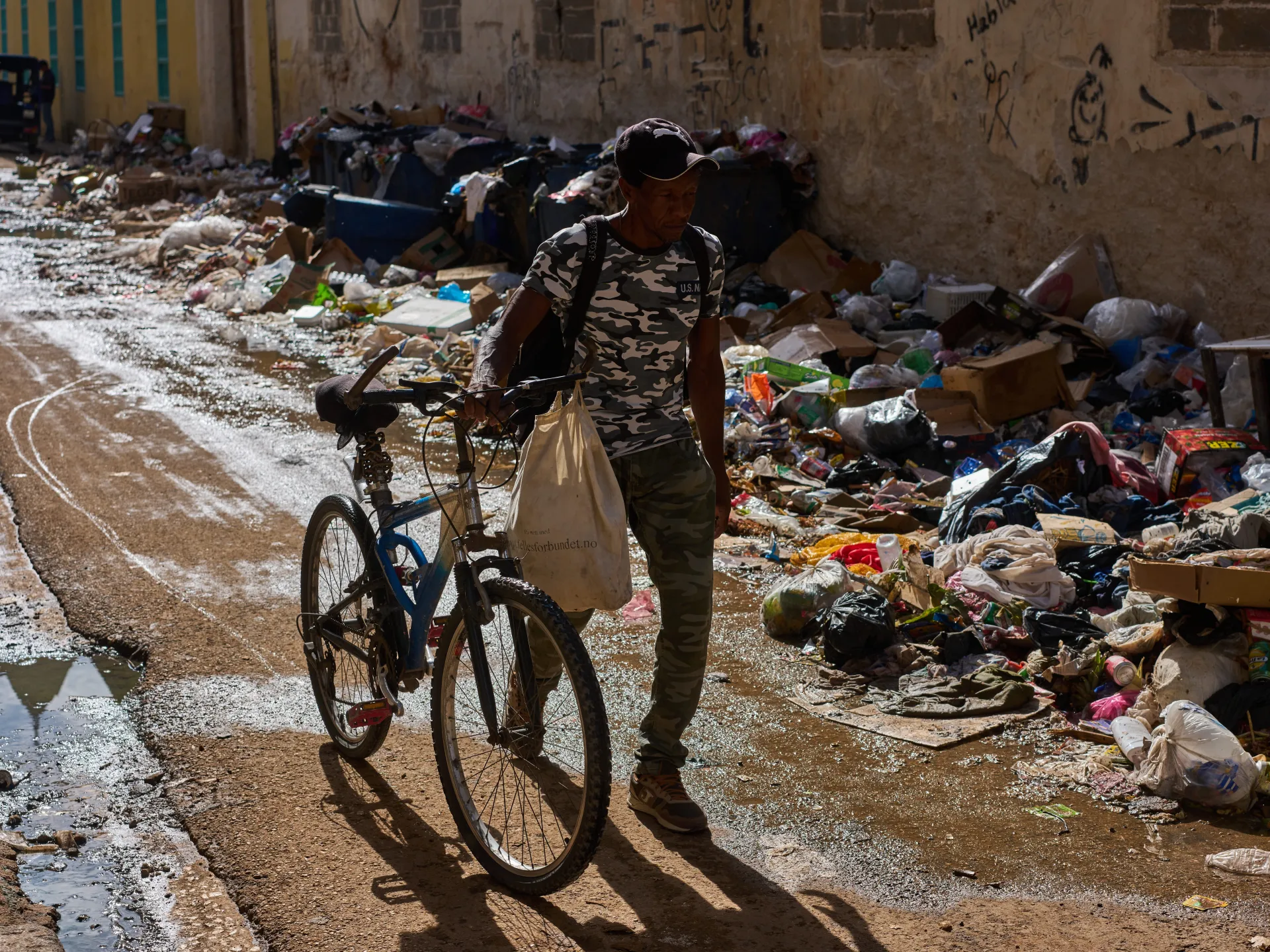
Brazilian police have intercepted 108 Cuban nationals in a single day as they were being smuggled into the country.
In a statement on Tuesday, officials noted that the incident was part of a growing trend of undocumented immigration leaving the beleaguered Caribbean island for Brazil.
Recommended Stories
list of 3 itemsend of list
Brazil’s Ministry of Justice and Public Security described the operation as a “rescue”, designed to disrupt human trafficking and irregular migration.
“According to the Federal Highway Police (PRF), this was the largest humanitarian rescue operation ever recorded in a single incident in Roraima,” the ministry said, referring to one of Brazil’s 26 states.
Roraima is situated in the Amazon rainforest, along the border with Guyana and Venezuela. The ministry said that a “large portion” of Cubans are using Guyana as a gateway to enter Brazil.
Some 57.6 percent of the Cuban immigrants living in Brazil are either in Roraima or Amapa, another northern border state.
Cuba has been facing a heightened humanitarian crisis in recent months, as it weathers a de facto fuel blockade imposed by the United States.
Since January, no foreign oil has been allowed to reach the Caribbean island, save for one Russian tanker. The US has threatened steep tariffs against any country that might seek to supply Cuba with oil, a necessary fuel for its fragile energy grid.
The blockade has had wide-ranging repercussions, with public services in many areas grinding to a halt. The country has been gripped by multiple island-wide blackouts, and residents are reporting difficulties accessing basic supplies like food and medication.
Critics fear the pressure will lead to new waves of migration off the island. During the COVID-19 pandemic, for example, economic decline contributed to a mass exodus, with Cuba’s population dropping by roughly 10 percent or more.
Since 2024, Brazil’s Federal Highway Police say they have “rescued” roughly 297 migrants and asylum seekers in Roraima, most of them Cuban.
Five “coyotes”, or human smugglers, were arrested during Monday’s law enforcement efforts, which come as part of Operation Safe Route, an initiative launched in December 2024 to ensure roadway safety.
Three separate sets of arrests were made. One involved a convoy of three vehicles that attempted to flee federal police after being signalled to stop. Inside the vehicles were 39 Cubans, including children, being “transported in precarious conditions”.
“Many reported having gone without food for at least two days,” the Justice Ministry said.
In another incident, police found eight Cuban immigrants after seizing a vehicle that crossed the border illegally. In a third, law enforcement followed a vehicle suspected of human smuggling to a residence where 61 Cubans were found.
All 108 of the Cubans recovered on Monday were transferred to police officials for “immigration regularisation and subsequent referral to the social assistance network”, according to the Brazilian security ministry.
In its annual migration report for 2025, the ministry described Cuban immigration to Brazil as stable or even descending during the last decade, up until the early years of the COVID-19 pandemic.
“Migration flows of Cubans to Brazil were never particularly intense,” the report said. But then, starting in 2022, Cuban immigration into Brazil started to “rebound vigorously”.
“It is important to note that, in 2025, refugee applications submitted by Cubans surpassed those submitted by Venezuelans — not only due to a drop in applications from the latter group but, above all, due to the sharp rise in cases filed by Cubans, exceeding 40,000 requests,” the report explained.
The report also warned that the upward trend could continue, given the conflict between the US and Cuba.
Since returning for a second term, US President Donald Trump has taken an active role in Latin American politics and has suggested he may use military force to initiate regime change in Cuba.
“Should geopolitical tensions between Cuba and the United States of America escalate, migration flows toward Brazil could very well increase,” the report concluded.
Judge Emily Marks had previously allowed the execution to proceed, arguing that no execution is entirely without pain.
Published On 9 Jun 20269 Jun 2026
A federal judge in the United States has permanently blocked Alabama from executing an inmate with nitrogen gas, after declaring that the method violates the ban on cruel and unusual punishment.
On Tuesday, US District Judge Emily C Marks permanently enjoined the state from executing Jeffery Lee by nitrogen gas. Lee was scheduled to be executed Thursday at an Alabama prison.
Recommended Stories
list of 3 itemsend of list
Her decision came a day after an appeals court reversed her earlier ruling that the method is constitutional.
The case centres on how to interpret the US Constitution’s Eighth Amendment, which bars the government from inflicting “cruel and unusual punishments”.
A spokesman for Alabama Attorney General Steve Marshall said the state is reviewing the decision and considering next steps, including an appeal. The case will likely end up before the US Supreme Court, which has previously let nitrogen executions proceed.
A spokeswoman for Lee’s legal team said they did not have an immediate comment.
In her 26-page ruling, Marks said litigation is a constant in death penalty cases.
“Were Alabama to adopt firing squad as a method of execution, that method would likely be challenged as well. Indeed, there is likely no method — no matter how humane — that would be immune to constitutional challenge,” Marks wrote.
“But the Constitution does not guarantee a painless death, and human life cannot be purposefully extinguished without some risk of pain. The Court, the condemned, and the State must all confront that sobering reality.”
Marks noted that the state has two other authorised execution methods: lethal injection and the electric chair. She said Lee is “not entitled to an injunction barring the State from executing him using one of those methods”.
Marks also ruled that the state could switch to Lee’s preferred method, a firing squad. Inmates challenging execution methods are required to suggest an alternative method.
“The State can readily obtain rifles, ammunition, and other materials necessary to carry out a firing squad execution,” Marks wrote.
“Additionally, the State would be able to modify space at Holman to carry out executions by firing squad. The State is also able to source and train volunteers willing to carry out such an execution.”
Lee is currently housed at Holman Correctional Facility in Atmore.
Weekly insights and analysis on the latest developments in military technology, strategy, and foreign policy.
U.S. President Donald Trump says the Iranians shot down the AH-64 Apache that crashed near the Strait of Hormuz overnight and vowed to retaliate. As we noted earlier today, the crew was safely rescued by a drone boat, an unprecedented action, which you can read more about here.
“I have just been informed by our Great Military that last night the Iranians shot down one of our highly sophisticated Apache Helicopters while patrolling over the Strait of Hormuz,” Trump stated on Truth Social. “There were two pilots involved, both are safe and uninjured. Nevertheless, the United States must, of necessity, respond to this attack.”
Trump says that Iranian forces shot down the Army AH-64 Apache attack helicopter that went down over Hormuz yesterday.
Trump did not elaborate on how the Apache was shot down.
It’s worth noting that Iran’s small boats are known to be man-portable air defense systems (MANPADS) threats and also small FPV drones and loitering munitions, which Iran also possesses, have become a real threat to helicopters.
A U.S. official told Axiosan investigation “determined that an Iranian drone hit the helicopter, causing it to crash. The U.S. official said the investigation had not determined whether that was intentional.”
Trump did not say exactly how the U.S. will respond, but given past history of tensions in the region, an attack on Iranian facilities that could have been involved in the shoot-down would not be surprising. We have seen similar responses when Iran has fired at ships in the past.
Whether this will finally break the shaky ceasefire is an open question. Last week, Trump told reporters that he would consider resuming the war if Iran caused U.S. troop deaths.
“Yeah, if they killed U.S. troops, I think I would do that very quickly,” he said.
We have reached out to the White House and U.S. Central Command for additional details. CENTCOM declined comment.
UPDATE: 1:57 PM EDT –
Iranian official media has yet to explicitly confirm or deny involvement in the downing of the Apache. In a post on X addressing Trump’s claim, the FarsNews Agency offered a veiled threat from Mohammad Ghalibaf, speaker of the Iranian parliament.
“We prefer the language of diplomacy, but we speak other languages far more fluently,” Ghalibaf said on his own X account, repeated here by Fars. “Break your commitments, and we’ll switch to what we speak best. You ride the horse you saddled.”
🔴قالیباف: ما زبان دیپلماسی را ترجیح میدهیم، اما زبانهای دیگر را بسیار روانتر صحبت میکنیم
IRIB just repeated CNN’s report that the helicopter gunship was taken down by a Shahed drone.
🚨 CNN claims: Iran shot down US Apache helicopter with a Shahed drone
— IRIB (Islamic Republic of Iran Broadcasting) (@iribnews_irib) June 9, 2026
Press TV, meanwhile, took a rather cheeky approach.
“US President Donald Trump says Iran shot down ‘one of our highly sophisticated Apache helicopters while patrolling over the Strait of Hormuz,’” the outlet stated on X. “So much for the Iranian military having been ‘obliterated!’”
UPDATE: 4:20 PM EDT –
In a call with The Wall Street Journal, Trump tried to downplay the Apache downing, saying that it “wasn’t a big deal” and stressing that “the pilot is fine.”
Earlier today, Trump sought to play down the incident. In a phone call with the WSJ, Trump said that it “wasn’t a big deal,” stressing that “the pilot is fine.” He said he had the details on the incident and that “it was much different than you think.” https://t.co/arzskUbdSt
Exiting a classified congressional briefing, CENTCOM commander Adm. Brad Cooper offered a short answer to reporter questions about how the U.S. will respond to Iran downing the Apache.
“We’ll see,” he said, according to NOTUS reporter Joe Gould in a post on X.
Reporters asked Centcom’s Adm. Brad Cooper, exiting a classified congressional briefing, what the “response” would be to the downed U.S. helicopter.
In a post on X, CENTCOM announced its “forces began launching self-defense strikes against Iran at 5 p.m. ET today at the Commander in Chief’s direction, in response to yesterday’s downing of a U.S. Army Apache helicopter. The mission is a proportional response to unjustified Iranian aggression.”
We have reached out to the command for more details.
U.S. Central Command (CENTCOM) forces began launching self-defense strikes against Iran at 5 p.m. ET today at the Commander in Chief’s direction, in response to yesterday’s downing of a U.S. Army Apache helicopter. The mission is a proportional response to unjustified Iranian…
CENTCOM’s post follows reports from the official Iranian Mehr news agency about the sounds of explosions.
In a post on Telegram, the official Iranian Mehr news outlet is reporting that there have been “sounds of explosions heard in the Sirik port area.
According to Mehr, “the exact nature of these sounds is not yet clear, and none of the official military or law enforcement agencies have commented on the cause of these sounds so far.”
“Investigations to obtain accurate information about the nature of these explosions are ongoing,” Mehr added.
UPDATE: 5:42 PM EDT –
ABC News Chief Washington Correspondent Jonathan Karl was on the phone with Trump as CENTCOM announced the retaliatory strikes against Iran.
“I think it’s very important to respond,” Karl said Trump told him. “They shot down a helicopter, and we are responding as we speak…I believe the response should be very strong, very powerful, and that’s what this one is.”
I was on the phone with Trump as CENTCOM announced US retaliatory strikes against Iran. Here’s what he said:
“I think it’s very important to respond. They shot down a helicopter, and we are responding as we speak.”
He added: “This is a response to what they did they did with…
Tasnim is reporting that the U.S. strikes appear to be over for now.
“The wave of American attacks in the south has subsided, and after the hostile actions in Qeshm, Sirik, Jask and Mount Mubarake Jask, the situation is now reported to be calm,” the outlet claimed on Telegram. It also published a video it says shows “a suicide drone in the sky of Iraq.”
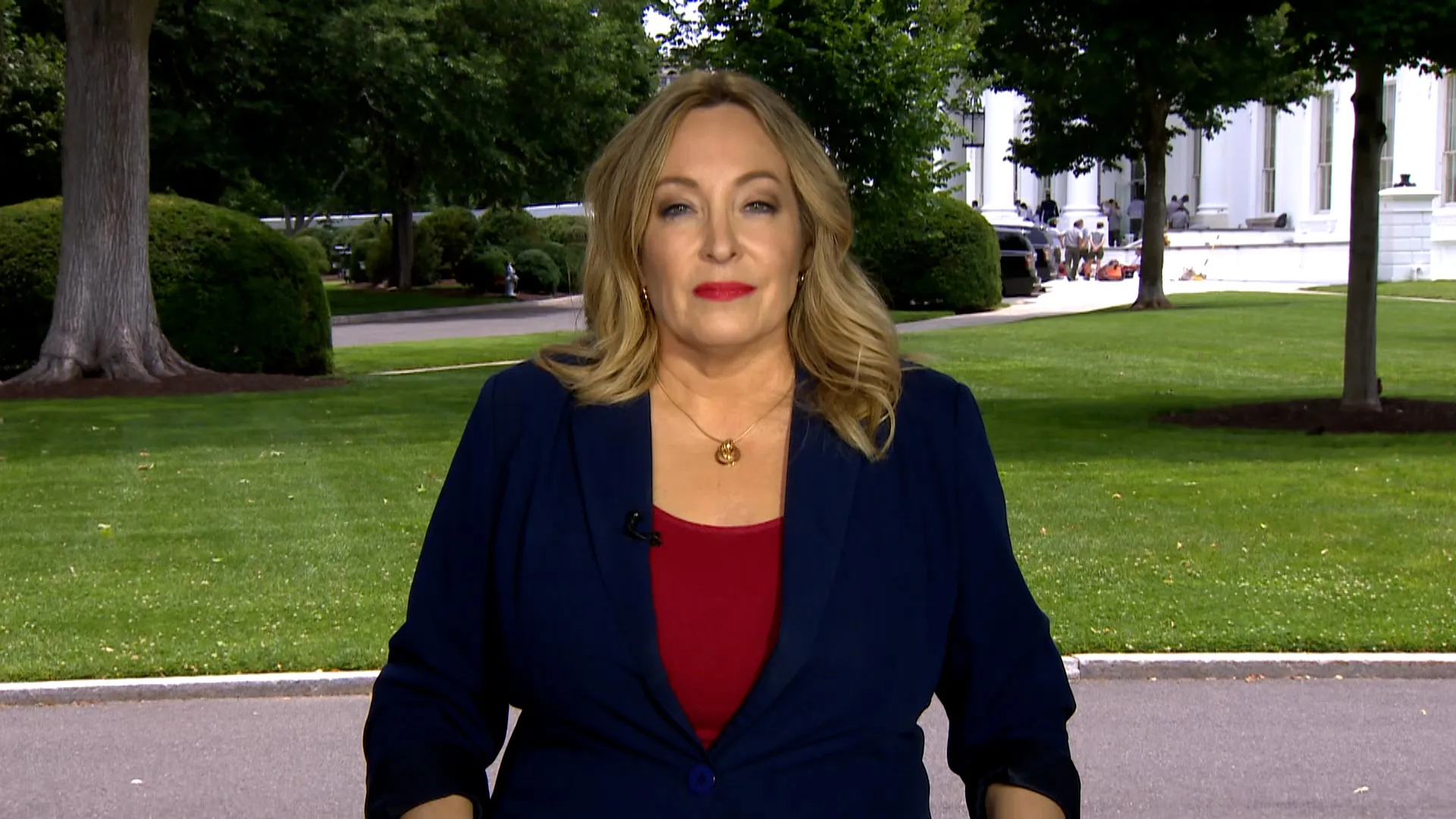
President Trump accused Iran of shooting down a US Apache helicopter over the Strait of Hormuz and said the US will respond out of “necessity.” The Pentagon confirmed both pilots were rescued by a US sea drone and are uninjured. Kimberly Halkett reports from the White House.
The EU has proposed a new package of sanctions against Russia, aimed primarily at its banks, cryptocurrency networks, and drone production in response to the ongoing war in Ukraine. This 21st package targets 170 individuals and entities, including close to 90 banks, which would raise the total number of Russian banks under EU sanctions to over 100, or more than half of the country’s internationally connected lenders. These banks will face asset freezes and bans on travel and transactions. The proposal will be presented to EU ambassadors for discussion, requiring unanimous approval to be enacted.
Existing Western sanctions already restrict Russia’s banking system heavily. Many major banks were disconnected from the SWIFT payment system in 2022. Nevertheless, Russian companies have turned to smaller lenders to evade these sanctions. The goal of the new sanctions is to significantly harm Russia’s financial sector and push it toward negotiating peace with Ukraine.
As Russia’s economic growth has sharply slowed, warnings of a potential banking crisis have surfaced, though the central bank claims no crisis is present. The proposed sanctions package includes transaction bans on 35 banks, including some outside Russia, and 11 cryptocurrency platforms that aid in circumventing sanctions. EU leaders indicated plans for even stricter crypto measures in the future.
Additionally, the EU wants to freeze the oil price cap to prevent Moscow from gaining increased revenue amidst geopolitical tensions. Other measures include tighter restrictions on Russian liquefied natural gas, listings of vessels associated with sanctioned activities, and new import restrictions on fish and high-performance metal alloys vital for defense and aerospace sectors.
Recent clashes between protesters and police killed at least 11 people.
It’s called the Joint Awami Action Committee, and it’s being accused of fuelling protests in Pakistan-administered Kashmir.
The group has been demonstrating against a rule that sets aside legislative seats for refugees from India-administered Kashmir who live in Pakistan. They say it gives them disproportionate influence in the divided region.
But the government says any change would require constitutional reform.
The issue has long been a subject of political debate in Pakistan-administered Kashmir. But how will its government deal with tensions rising once again?
Presenter: Imran Khan
Guests: Maria Iqbal Tarana – Senior leader of Pakistan Muslim League-Nawaz
Sahar Khan – Nonresident fellow at the Institute for Global Affairs
Imtiaz Gul – Executive director at the Center for Research and Security Studies
Residents were thrown into despair after a terrorist leader, Jammo Smally, abducted 39 community leaders who had gone to discuss a peace deal with him. The dramatic incident occurred on Sunday, June 7, in the Maradun Local Government Area (LGA) of Zamfara State, North West Nigeria.
Jammo had been sending messages to the leaders in the Magamin Diddi community for over two months, calling for a meeting to discuss the terms of the peace deal as the rainy season approached. The terrorist leader, whose parents live in a hamlet not far from Magamin Diddi, had claimed he was tired of the hostility between his terror group and the community.
Following another invitation a few days after the Islamic Eid al-Kabir celebrations, the traditional and religious leaders decided to meet Jammo and his gang members in the forest. The two parties agreed to meet on Sunday to reach what the community leaders thought would be a peaceful solution to the recurrent attacks on their farms and homes.
“The first thing he asked when we reached there was the whereabouts of the three rifles the Askarawa took away from his boys two months ago,” Malam Aliyu, one of those who went to strike the deal, told HumAngle over the phone on Monday. He had joined 46 other community leaders to strike the deal. “We were confused at first, because we were told that we would be discussing only a peace deal. We thought that he would ask us to give him money, but the first thing he asked was for his rifles.”
“Askawara” is a local term for security volunteers of the state-backed Community Protection Guards (CPG) in Zamfara State. Local sources told HumAngle that towards the end of March, terrorists from the Jammo group had a gunfight with the CPG fighters and other vigilante group members, leading to the killing of two terrorists. Three rifles belonging to the terrorists were taken away by the CPG fighters.
“We didn’t take his guns, but it’s obvious he has made up his mind,” Aliyu said. The terrorist leader released seven community leaders, instructing them to report back to the district head with his demands. He has one condition for the release of the 39 elders: either the rifles are returned, or an equivalent amount of money must be paid to him.
The terrorist leader also set ₦50 million for the peace deal. “He said if we’re still interested in negotiating with him, we should add ₦50 million to the rifles we’re returning. The money is for us to be able to live in peace, go to local markets, and go to our farms,” the community leader said.
Negotiations between terrorists and local communities aiming to establish peace are not uncommon in the ongoing crisis plaguing the northwestern region for over a decade. Typically, these discussions involve communities paying substantial sums to the terrorists under the guise of a peace agreement. However, such negotiations often yield little result, as terrorist attacks continue unabated even after agreements are reached, as seen in various regions of the state.
The Zamfara State government has consistently maintained its stance against negotiating with terrorists. Yazid Abubakar, the Zamfara State Police spokesperson, stated that they have initiated a rescue operation to free the captured individuals.
“Upon receipt of the report, the Zamfara State Police Command immediately initiated efforts to trace the victims’ whereabouts and secure their safe rescue. Operational assets have been deployed, and security operatives are working on available intelligence to locate the abducted persons,” Yazid Abubakar said in a statement on Monday.
Residents of Magamin Diddi, Zamfara State, Nigeria, have been thrust into turmoil after the abduction of 39 community leaders by terrorist Jammo Smally.
These leaders were negotiating a peace deal with Smally, who had been reaching out for over two months, desiring an end to hostilities.
However, during the meeting, Smally demanded the return of rifles taken by local security volunteers or payment in cash, along with an additional ₦50 million for peace.
This incident is emblematic of a broader crisis in northwestern Nigeria, where communities often pay terrorists under the guise of peace deals, yet attacks continue unabated. The Zamfara State government, adhering to a policy of non-negotiation with terrorists, has initiated a rescue operation for the abducted leaders, deploying operational assets based on available intelligence to ensure their safe return.
At a campaign rally in Armenia’s capital, Yerevan, on Saturday, one day before Armenia’s election, Prime Minister Nikol Pashinyan, outfitted in a white button-up shirt and a red-brimmed baseball cap, held a look of determination.
Flanked by supporters waving their arms and flashing his campaign’s signature heart-shaped hand gesture, Pashinyan was perched centre stage, pounding away on a drum kit for the crowds – literally drumming up support.
Recommended Stories
list of 4 itemsend of list
By election day, his governing Civil Contract party appeared to have drummed up something more consequential: public backing for his vision of Armenia’s future following the loss of the disputed region of Nagorno-Karabakh to a crushing military defeat by Azerbaijan in 2023.
Pashinyan, who formed a band earlier this year and campaigned with a series of concerts around the country, secured 49.8 percent of the vote in Sunday’s ballot, enough to retain a parliamentary majority.
His victory is seen as a test of his handling of the loss of the Nagorno-Karabakh region and his ability to steer the country away from Russian influence.
He has ultimately prevailed despite Russian meddling in Armenian politics, and the country now looks set to reorient itself away from its former ruler – signalling Armenians’ willingness to embrace a new direction, analysts say.
“Many Armenians are prepared to give his new vision a chance: an Armenia less defined by conflict, more open to normalising relations with Azerbaijan and Turkiye, and increasingly focused on building its future within its internationally recognised borders,” Zaur Shiriyev, an analyst at the Carnegie Russia Eurasia Center, told Al Jazeera.
‘Tired of conflict and war’
The loss of Nagorno-Karabakh could have spelled political doom for Pashinyan. By handing him a second term, Armenians have signalled that they are ready to put the conflict that has intermittently reared its head for decades behind them, analysts say.
“Nationalism no longer resonates among the public, which is demonstrably tired of conflict and war,” Richard Giragosian, director of the Yerevan-based Regional Studies Center, told Al Jazeera, even if the loss of the region remains an “open wound”, he said.
Nagorno-Karabakh, meanwhile, no longer features at all in the Armenian government’s defence reform, nor in its national security strategy, “a final confirmation of the new strategy of diversification”, Giragosian explained.
Peace efforts instead took centre stage in Pashinyan’s campaign, including the agreement he signed at the White House last August with Azerbaijan, finally ending the on-again-off-again war that had raged since the late 1980s.
Unlike in 2021, when Pashinyan’s campaign was shaped by the immediate aftermath of war and questions of political survival, Sunday’s vote became a clearer test of public support for his peace agenda, Shiriyev said.
Peace over nationalism
The result also demonstrates that the nationalist mantras peddled by opposition leaders have not been able to sway the majority of Armenians, said Svante Cornell, director of the Institute for Security and Development Policy and its Central Asia-Caucasus programme.
“The opposition represented a return to oligarchy, nationalism and forever conflict,” Cornell told Al Jazeera.
“While the Pashinyan government has its flaws, it represents something different than the past.”
The election saw the two main opposition forces – Strong Armenia and Armenia Alliance – win 41 seats combined in the new parliament, against the 64 seats the government holds, out of a total 105.
But Giragosian cautioned against overstating the opposition’s strength as, he said, the two opposition parties are unlikely to cooperate given the friction between their leaders – Russian-Armenian oligarch Samvel Karapetyan, whose Strong Armenia took 29 seats, and former President Robert Kocharian, whose Armenia Alliance won just 12.
“The division and dissent within the opposition will present a profound obstacle,” he said.
Although united in their shared pro-Russian leanings, Karapetyan is seen by Kocharian as an “interfering interloper”, with Kocharian himself resenting his third-place position behind Karapetyan, the analyst said.
“This is further exacerbated by Kocharian’s sense of entitlement, and his frustration of being rebuffed by Moscow in his prior attempts to gain direct Russian backing and support,” Giragosian added.
Still, Cornell said, the persistence of pro-Russian, nationalist sentiment in Armenia generally should not be taken lightly.
Until 2020, Armenia was governed by successive administrations that spent three decades pushing a nationalist identity, he said.
“To expect such views, such sentiments would just disappear – would be unrealistic,” Cornell noted.
Supporters of Armenia’s ruling Civil Contract party led by Prime Minister Nikol Pashinyan gather in Republic Square in Yerevan, Armenia, Friday, June 5, 2026, for the party’s final campaign rally [Anthony Pizzoferrato/AP]
Russian influence weakened – but not gone
In the lead-up to Sunday’s election, international observers had accused Russia of attempting to interfere – but its inability to change the result reflects Moscow’s limited reach in the country today, analysts say.
“Moscow still has tools in Armenia, but it no longer has the authority it once had,” Shiriyev said.
“In today’s Armenia, being seen as Russia’s preferred candidate can mobilise voters against you as much as for you.”
As Armenia strives to resist what Shiriyev refers to as the “gravitational pull” of the “Russian orbit”, a window of opportunity has been created by Moscow’s preoccupation with its invasion of Ukraine and a new openness from Western partners.
“The larger risk is from not altering strategy, and the benefits of a pivot to the West are both demonstrable and popular in Armenia today,” Giragosian said.
Russia, he added, is now increasingly viewed in Armenia as a “dangerously undependable so-called partner”.
Benyamin Poghosyan, an Armenia analyst at the Italian Institute for International Political Studies, argues that the primary foreign policy drivers of the election, however, were regional actors – not Russia or the West.
“The reality on the ground is far more nuanced,” Poghosyan told Al Jazeera. Armenia’s future relations with Azerbaijan and Turkiye, as well as the regional fallout from the conflict in Iran, are far greater influences, he said.
There are good reasons not to count Moscow out completely, however. While pro-Russian forces did not prevail this time, they will continue to assert their influence, Cornell said. He referred to the cautionary tale of another Caucasus country.
“In Georgia, the work of undermining a reformist and pro-Western government and turning the country around to a more pro-Russian line took over 15 years,” he said.
At the same time, Moscow still holds massive economic leverage over Yerevan, said the analysts.
Russia remains the primary export destination for Armenian agriculture and wine, is the main source of critical imports like wheat, and supplies the country with heavily discounted gas, Poghosyan noted.
“Because Russia has the capacity to inflict severe economic pain, Yerevan must tread carefully to protect its core interests without completely rupturing its relationship with Moscow,” he said.
Shiriyev added that many Armenians work in Russia, with families depending on remittances, and business ties running deep.
“By contrast, Western integration can still feel abstract and uncertain to many voters. That is why pro-Russian forces can still gain traction, even as Russia’s political image in Armenia has weakened,” he said.
A constitutional hurdle
But while Pashinyan’s re-election has strengthened his hand in the country’s peace process, it has not resolved one key sticking point for constitutional change to ensure it, said Shiriyev.
Azerbaijan has demanded a change to Yerevan’s constitution as a means of guaranteeing that no future Armenian government might revive claims related to Nagorno-Karabakh or Azerbaijan’s territorial integrity.
“But Pashinyan lacks the two-thirds majority needed to move easily toward a referendum, and even a referendum would be politically uncertain,” said Shiriyev.
This election, Cornell said, was “a necessary but not sufficient condition for the peace process to advance”.
Poghosyan warned that if Baku refuses to drop these preconditions, “the peace agreement will remain stalled, leaving both nations trapped in a volatile state of ‘no war, no peace’”.
On the question of regional normalisation, however, the outlook has shifted.
Since the bilateral peace treaty was signed at the White House last August, Azerbaijan has lifted restrictions on trade and transit with Armenia and restarted talks on border demarcation – moves that Giragosian said have also accelerated the opening for Armenia-Turkiye normalisation.
“For Armenia,” said Shiriyev, “the West may offer the road, Russia increasingly acts as the roadblock, and normalisation with Azerbaijan and Turkiye is the real prize.”
Weekly insights and analysis on the latest developments in military technology, strategy, and foreign policy.
A U.S. Navy uncrewed surface vessel (USV) found and rescued the crew of a U.S. Army Apache that went down overnight near the Strait of Hormuz, in the Gulf of Oman. This is the first known use of a drone boat executing a personnel recovery action as part of a military search and rescue operation, and it’s likely a glimpse of what’s to come. The cause of the incident is otherwise under investigation.
Navy Capt. Tim Hawkins, a U.S. Central Command (CENTCOM) spokesman, has confirmed the use of the Navy USV in the rescue effort to TWZ. This had already been hinted at by mention of Task Force 59, the Navy’s main drone force in the Middle East, in an official CENTCOM statement. What specific type of drone boat was utilized in this case is not yet known. Task Force 59 operates a variety of USVs, including speedboat-like types. The Task Force has been experimenting with all types of new uncrewed naval technologies and this rescue is clearly a major win for the forward-looking unit.
One of several types of speedboat-type USVs Task Force 59 operates, seen here during an exercise. USN
“At 7:33 p.m. ET on June 8, two crew members from a U.S. Army AH-64 Apache were rescued by American forces after their helicopter went down near the coast of Oman while patrolling regional waters,” per CENTCOM’s statement. “The Soldiers were safely rescued within approximately two hours and are in stable condition. The cause of the incident is under investigation.”
“Rescue efforts were led by U.S. Naval Forces Central Command and the 82nd Airborne Division, with support from U.S. Air Force and Navy units including U.S. 5th Fleet’s Task Force 59,” the statement added.
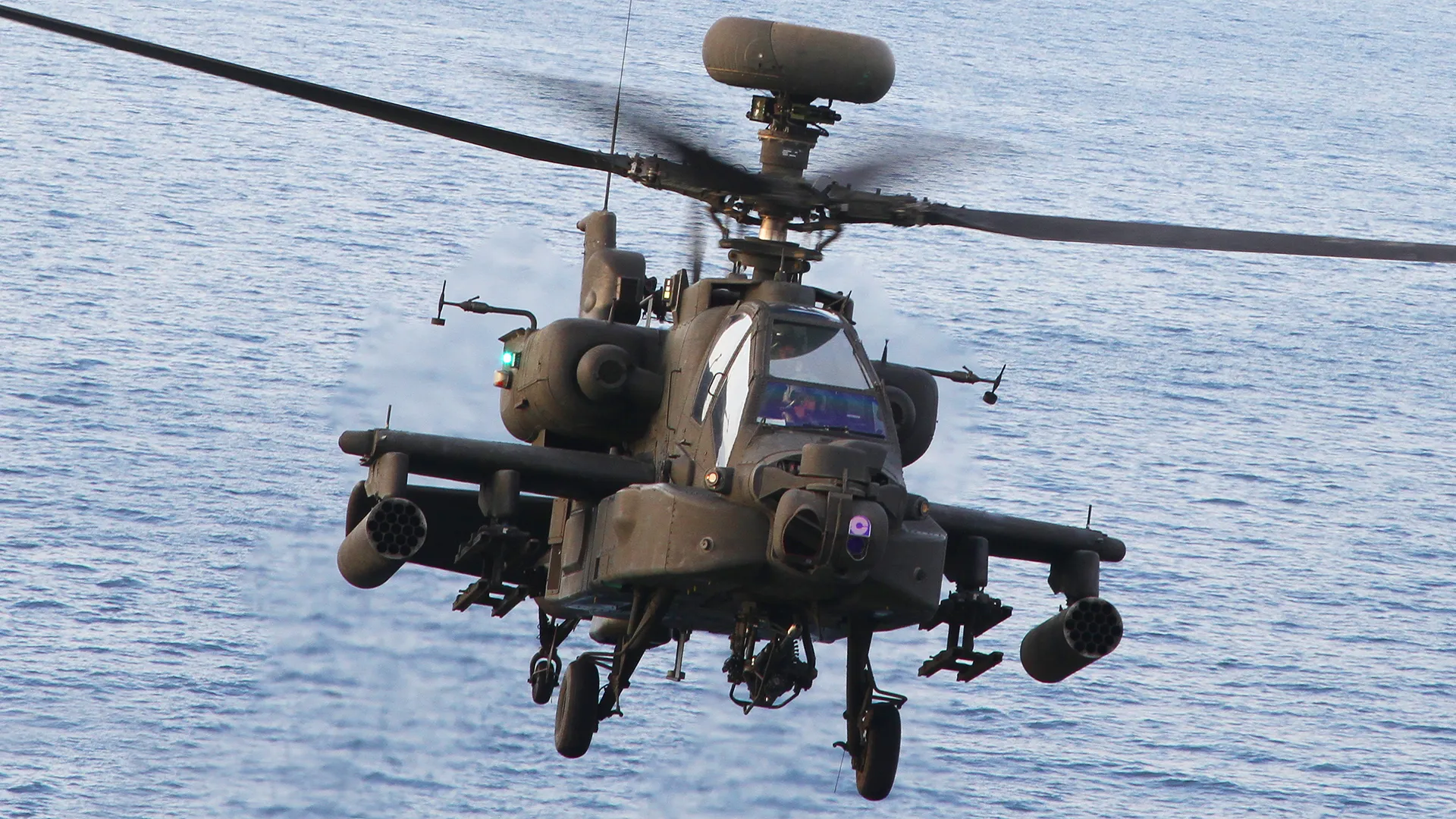
A flight of U.S. Army AH-64 Apache attack helicopters, armed with rockets and Hellfire missiles, taxi out to conduct a scheduled flight in the U.S. Central Command area of responsibility. In addition to rockets and missiles, the Apache is additionally armed with a 30mm chain gun. (U.S. Army photo) U.S. Army Central
The New York Times was first to report that an Apache had gone down near the Strait of Hormuz. President Donald Trump had also confirmed the crew was safe while speaking to reporters earlier this morning.
“We are going to issue a report tomorrow, but the pilots are fine,” Trump said after returning to Washington from the NBA Finals in New York.
A US Army Apache helicopter went down near the Strait of Hormuz and it wasn’t clear if the aircraft suffered mechanical troubles or had been shot down by Iran, the New York Times reported.
Asked about the episode by @jendlouhyhc, Trump said the pilots were fine and that a report…
As we have reported in the past, Army AH-64s have been part of an effort by the U.S. military to enforce the ongoing blockade of Iran and protect commercial shipping. Last month, Apaches and U.S. Navy MH-60 Seahawk helicopters destroyed six small Iranian boats that were threatening commercial ships in and around the Strait of Hormuz, according to Navy Adm. Brad Cooper, head of CENTCOM. Apaches had already been conducting missions targeting Iranian naval assets in and around the Strait of Hormuz before the announcement of the ceasefire in April. All of this has shown that armed helicopters remain important assets in maritime operations, especially for defending against swarms of small boats.
As TWZ regularly highlights, search and rescue operations present inherent complexities and risks, especially when conducted in or near hostile territory. The F-15E rescue effort in Iran put a particular spotlight on the immense risks that combat search and rescue (CSAR) forces take, with helicopters and C-130 variants sent into areas where even a high-end fighter aircraft didn’t survive.
Open-water recoveries can present distinct additional challenges. There is always the possibility of the loss of additional assets and personnel in the process, no matter where a CSAR mission occurs.
HH-60Ws refuel from an HH-130J. (USAF)
The use of Navy drone boat in the rescue overnight highlights a new dimension for maritime CSAR going forward. These uncrewed assets can be more readily pre-positioned in a distributed manner. For example, in the broad expanse of the Pacific, USVs could be forward-deployed at multiple points along certain flight paths for this exact purpose. USVs could offer other distinct advantages in certain scenarios where they might be able to get into areas where traditional assets cannot and without risking additional personnel. These realities extend well beyond the maritime domain, and we are only likely to see uncrewed platforms of all kinds increasingly taking part in rescue efforts, especially in denied areas. The U.S. military is coming to terms with just how vulnerable their CSAR assets are and the ranges that would be needed to access highly defended areas, especially during a peer fight. Using drones to execute personnel recovery is being viewed as one part of a larger set of solutions to this pressing problem.
With the Apache going down near the Strait of Hormuz, the U.S. military has now lost at least seven crewed fixed-wing aircraft and helicopters since the start of the latest operations against Iran in February. In addition, several aircraft have been damaged in the air and on the ground, including by Iranian fire. The TWZ graphic below offers a visual tally of damaged and destroyed aircraft as of April 10.
TWZ
Despite the loss of the Apache, the use of a USV in the rescue effort is a major development and a sign of things to come.
At least 11 people were killed on Sunday during clashes between police and protesters in Pakistan-administered Kashmir’s Rawalakot city, capital of Poonch district, before a major demonstration scheduled by a banned civil society group for Tuesday.
Authorities in Pakistan-administered Kashmir deployed federal paramilitary troops and issued a strict travel advisory before the Tuesday protest, which has gone ahead despite the restrictions.
Recommended Stories
list of 4 itemsend of list
Here is what we know about the latest unrest.
What’s happening in Pakistan-administered Kashmir?
Eleven people have been killed in clashes between the police and protesters, while more than 70 have been injured. The ban on the organisation, alongside regional grievances, set off the protests.
On Tuesday, Sardar Waheed Khan, commissioner of the Pakistan side of the Poonch district, a militarised region shared between Indian-administered and Pakistani-administered Kashmir, told the news agency Reuters that four police officers and a passer-by died “after miscreants shot at them”. Six protesters were killed, he said.
Police Chief Liaqat Malik said 23 security officials and 50 protesters were among those injured in Sunday’s clashes.
On Friday, local authorities issued an advisory urging visitors to avoid travelling to the area.
“The measure is advised to save intending visitors from any unexpected situation or inconvenience,” an unnamed official said in a statement issued by the region’s Press Information Department (PID).
“The government also requests those already in the territory for sightseeing or any other purpose to leave by Friday evening so that they do not confront any unpleasant situation,” the statement added.
Kashmir is a disputed Himalayan region which is claimed in full by both India and Pakistan, with China also controlling a portion of the territory. Pakistan-administered Kashmir – known locally as Azad Jammu and Kashmir (AJK) – is governed under a semi-autonomous system, with its own prime minister and legislative assembly, but ultimate authority resting with Islamabad. Its population exceeds four million people, according to the 2017 census. It is separated from India-administered Kashmir by what is known as the Line of Control (LoC).
The LoC is the 740km (459-mile) military border dividing the disputed Kashmir region between Indian-administered and Pakistan-administered territories.
Who is behind the protests?
The Jammu Kashmir Joint Awami Action Committee (JAAC) is a grassroots umbrella organisation that emerged in 2023 as the leader of a protest movement across the Pakistani-administered part of the region. The JAAC, led by activist Shaukat Nawaz Mir, represents traders and civil society groups.
On Friday, the local government proscribed the JAAC under a regional legislative framework in Pakistan-administered Kashmir called the Anti-Terrorism Act of 2014.
In a circular, the government’s home department claimed the JAAC “is engaged in terrorism, acted in a manner prejudicial to the peace & security of the State, involved in creating anarchy in the State by intimidating public, promoting hatred & creating sense of insecurity in society and public at large, etc”.
In the past, protests organised by the JAAC have led to violent clashes between protesters and security forces, leading to casualties.
In a video message on X responding to Sunday’s incident, Mir accused the authorities of unleashing violence in Rawalakot, saying, “The state has begun a massacre of our people in Rawalakot.”
In response, Khan, the commissioner of Pakistani Poonch, said, “The JAAC leadership is misleading the masses by terming it a massacre. The state’s action was meant to restore law and order.”
On Tuesday, the internet monitoring group NetBlocks said that its data showed that access to the web remained severely restricted in Pakistan-administered Kashmir for a third day in a row.
What is the trigger behind these protests?
These protests are against the reservation of 12 seats in Pakistan-administered Kashmir’s legislature for refugees from Indian-administered Kashmir who now live in other parts of Pakistan. If the refugees live in Pakistan-administered Kashmir, they are not eligible to contest for these reserved seats.
The region votes on July 27 to elect its next legislature, which has 45 seats in all — including the 12 reserved ones.
The JAAC is calling for the abolition of the reserved seats, arguing that all seats in the legislature must go to those who actually reside in Pakistan-administered Kashmir, and not those living in other constituencies scattered across Pakistan.
Abdul Jabbar Nasir, a journalist currently based in Karachi, but originally from a village near the LoC in the Gilgit Baltistan area, which is the majority of the Pakistan-administered Kashmir region, told Al Jazeera that the seats are reserved for those who migrated from Indian-administered Kashmir to Karachi or any other part of Pakistan in 1947.
Nasir explained that the reserved seats have existed in various forms since the late 1940s and were formalised in Pakistan-administered Kashmir’s 1974 interim constitution, which treats the region as a self-governing, autonomous state, with its own prime minister, president and courts, while defence, foreign affairs, currency and communications remain under Pakistan’s control.
“If the constitutional protection provided begins to be changed by these protesters, then I don’t think things can function,” Nasir said.
“It is essential for these seats to exist. If we abolish them, on one hand, Pakistan’s own case for Kashmiri statehood in the United Nations will be weakened, and India’s case will be strengthened,” he added.
He drew a parallel with India, noting that New Delhi historically kept a number of seats vacant in its parliament and the former Jammu and Kashmir assembly as a way of asserting that those bodies represented the entire former princely state, including areas under Pakistani control. If Pakistan now dismantles refugee representation in Pakistan-administered Kashmir, he warned, India could argue that both countries have effectively “regularised” their control over their respective portions of the disputed region.
Marathon talks between a federal ministerial team, including leaders from Pakistan and Pakistan-administered Kashmir, and JAAC leadership in late May failed to yield a breakthrough. This resulted in the JAAC announcing that the protest on Tuesday would proceed as planned.
On Sunday, a top court in Pakistan-administered Kashmir, called the Supreme Court of Azad Jammu and Kashmir, ruled that the 12 reserved seats are constitutionally protected, and a constitutional amendment would be needed to abolish the reservation.
“This ruling effectively closed the legal route for groups seeking to challenge the existing arrangement and intensified calls for protest by the [JAAC],” Raja Qaiser Ahmed, director for the Area Study Centre for Africa, North and South America at the Islamabad-based Quaid-i-Azam University, told Al Jazeera.
What are the deeper issues?
Experts say the current crisis is part of a deeper, long-running debate about governance, political representation, resource allocation and regional autonomy in Pakistan-administered Kashmir. The protest on Tuesday is the fourth such protest led by the JAAC.
“The current crisis reflects a broader and longer-term debate about governance, political representation, resource distribution, and regional autonomy in AJK,” Ahmed said.
“While the refugee-seat issue has become the focal point of the present mobilisation, it is intertwined with wider grievances that have surfaced repeatedly over the past several years.”
In September and October 2025, the JAAC officially released a comprehensive 38-point charter of demands and initiated a lockdown. The government, in response to a lockdown initiated by JAAC, imposed a complete communications blackout.
The protests had their roots in May 2023, when residents first protested skyrocketing electricity bills alongside widespread flour smuggling and acute shortages in subsidised wheat supplies. The movement hit its first major flashpoint in May 2024, when protesters set off on a long march towards Muzaffarabad. The ensuing violent clashes left at least five people dead, among them a police officer.
The 38-point charter remains the focal point of current tensions. The demands of the charter include economic subsidies, investigation of corrupt officials, social welfare and infrastructure, as well as the abolition of the 12 reserved seats.
Bilawal Bhutto-Zardari, chairman of the Pakistan Peoples’ Party (PPP), the party with the most seats in Pakistan-administered Kashmir’s Legislative Assembly, said on Sunday that he would meet Prime Minister Shehbaz Sharif to discuss the ongoing tensions in the region.
“Thirty-five out of 38 demands have been implemented,” Bhutto-Zardari said during a news conference in Islamabad, explaining that the rest of the demands are not feasible or have court orders barring their implementation.
“More fundamentally, the protests reveal an ongoing tension between constitutional arrangements linked to the broader Kashmir dispute and growing demands for greater local accountability and political participation,” Ahmed said.
“The debate is therefore not only about a specific set of assembly seats but also about competing visions of representation, governance, and the future political trajectory of the region.”
Weekly insights and analysis on the latest developments in military technology, strategy, and foreign policy.
A U.S. Navy uncrewed surface vessel (USV) found and rescued the crew of a U.S. Army Apache that went down overnight near the Strait of Hormuz, in the Gulf of Oman. This is the first known use of a drone boat executing a personnel recovery action as part of a military search and rescue operation, and it’s likely a glimpse of what’s to come. The cause of the incident is otherwise under investigation.
Navy Capt. Tim Hawkins, a U.S. Central Command (CENTCOM) spokesman, has confirmed the use of the Navy USV in the rescue effort to TWZ. This had already been hinted at by mention of Task Force 59, the Navy’s main drone force in the Middle East, in an official CENTCOM statement. What specific type of drone boat was utilized in this case is not yet known. Task Force 59 operates a variety of USVs, including speedboat-like types. The Task Force has been experimenting with all types of new uncrewed naval technologies and this rescue is clearly a major win for the forward-looking unit.
One of several types of speedboat-type USVs Task Force 59 operates, seen here during an exercise. USN
“At 7:33 p.m. ET on June 8, two crew members from a U.S. Army AH-64 Apache were rescued by American forces after their helicopter went down near the coast of Oman while patrolling regional waters,” per CENTCOM’s statement. “The Soldiers were safely rescued within approximately two hours and are in stable condition. The cause of the incident is under investigation.”
“Rescue efforts were led by U.S. Naval Forces Central Command and the 82nd Airborne Division, with support from U.S. Air Force and Navy units including U.S. 5th Fleet’s Task Force 59,” the statement added.
A flight of U.S. Army AH-64 Apache attack helicopters, armed with rockets and Hellfire missiles, taxi out to conduct a scheduled flight in the U.S. Central Command area of responsibility. In addition to rockets and missiles, the Apache is additionally armed with a 30mm chain gun. (U.S. Army photo) U.S. Army Central
The New York Times was first to report that an Apache had gone down near the Strait of Hormuz. President Donald Trump had also confirmed the crew was safe while speaking to reporters earlier this morning.
“We are going to issue a report tomorrow, but the pilots are fine,” Trump said after returning to Washington from the NBA Finals in New York.
A US Army Apache helicopter went down near the Strait of Hormuz and it wasn’t clear if the aircraft suffered mechanical troubles or had been shot down by Iran, the New York Times reported.
Asked about the episode by @jendlouhyhc, Trump said the pilots were fine and that a report…
As we have reported in the past, Army AH-64s have been part of an effort by the U.S. military to enforce the ongoing blockade of Iran and protect commercial shipping. Last month, Apaches and U.S. Navy MH-60 Seahawk helicopters destroyed six small Iranian boats that were threatening commercial ships in and around the Strait of Hormuz, according to Navy Adm. Brad Cooper, head of CENTCOM. Apaches had already been conducting missions targeting Iranian naval assets in and around the Strait of Hormuz before the announcement of the ceasefire in April. All of this has shown that armed helicopters remain important assets in maritime operations, especially for defending against swarms of small boats.
As TWZ regularly highlights, search and rescue operations present inherent complexities and risks, especially when conducted in or near hostile territory. The F-15E rescue effort in Iran put a particular spotlight on the immense risks that combat search and rescue (CSAR) forces take, with helicopters and C-130 variants sent into areas where even a high-end fighter aircraft didn’t survive.
Open-water recoveries can present distinct additional challenges. There is always the possibility of the loss of additional assets and personnel in the process, no matter where a CSAR mission occurs.
HH-60Ws refuel from an HH-130J. (USAF)
The use of Navy drone boat in the rescue overnight highlights a new dimension for maritime CSAR going forward. These uncrewed assets can be more readily pre-positioned in a distributed manner. For example, in the broad expanse of the Pacific, USVs could be forward-deployed at multiple points along certain flight paths for this exact purpose. USVs could offer other distinct advantages in certain scenarios where they might be able to get into areas where traditional assets cannot and without risking additional personnel. These realities extend well beyond the maritime domain, and we are only likely to see uncrewed platforms of all kinds increasingly taking part in rescue efforts, especially in denied areas. The U.S. military is coming to terms with just how vulnerable their CSAR assets are and the ranges that would be needed to access highly defended areas, especially during a peer fight. Using drones to execute personnel recovery is being viewed as one part of a larger set of solutions to this pressing problem.
With the Apache going down near the Strait of Hormuz, the U.S. military has now lost at least seven crewed fixed-wing aircraft and helicopters since the start of the latest operations against Iran in February. In addition, several aircraft have been damaged in the air and on the ground, including by Iranian fire. The TWZ graphic below offers a visual tally of damaged and destroyed aircraft as of April 10.
TWZ
Despite the loss of the Apache, the use of a USV in the rescue effort is a major development and a sign of things to come.
Donald Trump’s appearance courtside at Madison Square Garden was supposed to be a historic moment, as, for the first time, a sitting president of the United States was attending an NBA Finals game.
Instead, his arrival became part of the story, drawing boos from sections of the crowd and triggering a massive security operation that reshaped the atmosphere around the storied New York arena on Monday night.
Trump watched from an executive suite as the New York Knicks hosted the San Antonio Spurs in a series that gripped the city and revived memories of the Knicks’ glory years.
When his image flashed up on the big screen during the national anthem, many fans jeered, underlining how sharply divided the country remains even in a space usually reserved for shared celebration.
Outside, Manhattan’s streets were locked down. Metal fencing, airport-style screening and a heavy Secret Service and police presence kept ticketless fans blocks away.
Long queues formed as supporters queued early, while others gathered at public viewing areas across the city.
Inside, however, the spectacle went on. Hollywood actors, musicians, former players and New York fixtures filled the front rows, turning the event into a star-studded night out.
Between the celebrity sightings, the political undertones and a tense 115-111 Spurs win, this was a New York basketball night unlike any other – on and off the court.
“Already what I did last year was amazing and to be a champion here, I thought I deserved a wildcard and to get a little bit of respect.”
In further comments to reporters, Maria added: “I did it last year. It was not five years ago.
“I was surprised when I got the message of [tournament director] Laura Robson saying all the wildcards would go to the British players, which I understand. But as a champion, it’s tough for me.
“It is something that should be normal. If you are champion of an event and you don’t get in the year after, I think automatically this should be considered.”
Maria, watched by her two daughters, beat four top-20 players en route to the title, becoming the oldest winner of a WTA 500 tournament.
She is ranked 52nd in the world – too low to earn direct entry for the 28-strong main draw but higher than each of the four British players awarded wildcards.
This year’s recipients were Katie Boulter (world number 73), Fran Jones (98), Harriet Dart (160), and Mika Stojsavljevic (261).
A spokesperson for the Lawn Tennis Association (LTA) said: “The LTA owns and invests in staging these events for the benefit of the British game as a whole – so fans can see world class international players from around the world, and support our British players, but also so British players are afforded the playing opportunities to progress their careers and climb the rankings.
“We have seen British success at these events, and breakthrough wins, so there is clear value in giving British players these development opportunities.”
Delcy Rodríguez was hosted by Narendra Modi in New Delhi. (EFE)
Mérida, June 8, 2026 (venezuelanalysis.com) – Venezuelan Acting President Delcy Rodríguez concluded a four-day high-profile diplomatic tour of India on Sunday, having held meetings with Prime Minister Narendra Modi, Indian cabinet members, and major business conglomerates.
Rodríguez, who assumed the acting presidency after the kidnapping of President Nicolás Maduro in a US military operation on January 3, led a large ministerial delegation including the foreign affairs, science, and transport ministers. The visit was Rodríguez’s sixth trip to India.
Caracas’ main stated goal was to deepen long-term energy ties with the Asian giant and expand crude exports. The Trump administration has publicly backed India to increase purchases of Venezuelan crude as part of efforts to move its Asian partner away from Russian energy imports.
One of Rodríguez’s first meetings was with Petroleum and Natural Gas Minister Hardeep Singh Puri, who stated that Indian companies are looking to “build upon” existing investments in the Caribbean nation.
“Indian companies are additionally looking for newer opportunities for fruitful collaborations which will provide momentum to our quest towards energy security,” Singh Puri wrote on social media.
For her part, Venezuela’s acting president described India as a “reliable partner” and invited Indian corporations to explore new investment opportunities in the country’s energy sector. Rodríguez highlighted the “energy complementarities” between the two nations.
Venezuela’s oil exports reached 1.25 million barrels per day (bpd) in May, with India reportedly receiving 427,000 bpd, making it the second-largest destination after the US. In recent years, under wide-reaching US sanctions, Venezuela had repeatedly sought to increase exports to India, only to see efforts blocked by US threats of secondary sanctions.
The meeting with Singh Puri likewise featured executives from several Indian public energy companies, including ONGC, Indian Oil Corporation (IOLC), Oil India, and ONGC Videsh (OVL). The companies own multiple minority stakes in the San Cristóbal and Petrocarabobo heavy crude projects in the Orinoco Oil Belt.
Indian authorities stressed addressing an outstanding US $500 million debt in unpaid dividends to ONGC Videsh as a priority before new investments are to be considered.
Rodríguez went on to tour the Jamnagar refinery complex, owned by Reliance Industries, in Gujarat state. The refinery is the world’s largest, with a daily capacity to process 1.4 million bpd. In recent months, Reliance has emerged as a top buyer of Venezuelan crude, purchasing cargoes directly from state-owned PDVSA as well as from traders Vitol and Trafigura.
The Venezuelan delegation held further meetings with top Indian business conglomerates. On June 6, it toured Tata Group facilities in Mumbai. According to Venezuela’s embassy in India, the discussions centered on renewable energy, ecological projects, and urban transport. Venezuelan Transport Minister Jacqueline Faría highlighted Tata’s cutting-edge electric public transportation vehicles.
Rodríguez’s agenda also included talks with Indian dairy giant Amul. Venezuelan state media emphasized interest in Amul’s massive production of buffalo milk. Venezuela currently holds the largest buffalo herd in South America and officials have touted buffalo dairy as a priority export venture.
Likewise in Mumbai, the Venezuelan officials visited multinational conglomerate Essar, with discussions reportedly focusing on infrastructure and electricity. Venezuela’s National Assembly is presently advancing legislation to open electricity, from generation to distribution, to private sector investment and participation.
Rodríguez’s visit featured a meeting with Indian Prime Minister Narendra Modi in New Delhi. In a social media message, Modi praised Venezuela as a “valued partner” and disclosed that discussions had centered on “expanding cooperation in energy, critical minerals, technology, agriculture, health, and people-to-people ties.”
The Venezuelan delegation was also hosted by External Affairs Minister Subrahmanyam Jaishankar, who praised Rodríguez’s “longstanding commitment” to deepening Venezuela-India ties.
In a press briefing, Rudrendran Tandon, Secretary (East) in the Ministry of External Affairs, emphasized discussions on pharmaceutical cooperation and increasing supplies of low-cost generic drugs for Venezuela’s public healthcare system. Tandon also brought up a $700-800 million debt to Indian pharmaceutical manufacturers but said the Venezuelan side was “very sensitive” to the issue.
While no formal agreements were announced, Venezuela’s acting president offered a positive balance of a visit that “consolidated the friendship and cooperation between the two nations.” She went on to thank Modi for the hospitality.
Rodríguez’s last day in India included a visit to the Prasanthi Nilayam ashram in Andhra Pradesh, a spiritual center founded by Indian religious guru Sathya Sai Baba (1926-2011). In a social media message, Rodríguez expressed her “deep belief” in Sai Baba’s “love all, serve all” motto.
The Venezuelan leader’s tour featured a stop in Istanbul on Tuesday before the return to Caracas. Rodríguez met with Turkish President Recep Tayyip Erdoğan to discuss bilateral trade and diplomacy between Venezuela and Türkiye.
India’s fertility rate has for the first time fallen below the level needed to stop the population from shrinking, raising concerns about future labour shortages and an ageing society.
For decades, India has seen rapid population growth. According to government statistics, including the Sample Registration System (SRS) Statistical Report — the country’s largest demographic survey — India has had a falling fertility rate for some years, but the reproduction rate remained high enough to keep the population growing.
Recommended Stories
list of 3 itemsend of list
The latest SRS report, released last month by India’s Office of the Registrar General and Census Commissioner, said that India’s Total Fertility Rate (TFR) had dropped to 1.9 children per woman – lower than the benchmark level of 2.1 needed to keep the population stable in the long run. TFR is the average number of children that a woman is expected to have in her lifetime. In the 2000s, India’s TFR was around 3.3 births per woman.
So, what is behind reduced fertility? Why does it matter and what are the consequences?
Here’s what we know:
What has led to the falling fertility rate ?
For decades starting in the 1970s, Indian governments and policymakers have tried to battle what they argued was overpopulation — too many people, and too few resources to manage for what was then a relatively poor nation.
Many top-down government initiatives — including a brief controversial effort to forcibly sterilise people in the 1970s — aimed to control India’s population.
Despite that, by 2019, India’s Prime Minister Narendra Modi was still warning of a “population explosion”.
But by 2022, the first signs that India was about to tip over into uncharted territory: The National Family Health Survey released data suggesting that India’s TFR was falling fast, across communities. Yet a year later, India surpassed China to become the world’s most populous nation — and the trend of a declining fertility rate was swamped by the headlines of a 1.5 billion population.
Now, latest survey suggests that the prospect of a shrinking population might be more imminent than policymakers had planned for.
Experts say better access to education and contraceptives are among key factors behind the falling fertility rate — along with the increased costs of bringing up children.
“Total fertility rate often drops when more women in society have access to education, contraceptives and more agency in decision-making in households,” Dipa Sinha, a development economist who works on social policy in India, told Al Jazeera. “It also drops when the economy becomes expensive so raising children also becomes expensive.”
She said there’s another reason too.
As infant mortality reduces, the desire to have more children also decreases. According to the latest SRS report, India has recorded a significant decline in infant deaths from 30 per 1,000 live births in 2019 to 24 deaths per 1,000 live births in 2024.
These factors also correlate almost perfectly with the differential levels of fertility rates across the country.
According to the May demographic survey report, India’s poorest states, such as Bihar in northern India with the lowest levels of education and high infant mortality rates, also recorded the highest fertility rate in the country at 2.9, followed by 2.6 in Uttar Pradesh.
By contrast, India’s capital New Delhi — with among the highest levels of education and lowest infant mortality rates — registered the lowest fertility rate, with an average of 1.2 births per woman. Southern states such as Tamil Nadu and Kerala, with among the best health and education systems in India, recorded a rate of 1.3.
“A lot of studies on regional development in India from the early 80s have revealed that states in the South have developed faster with respect to both the economy and women’s status in society. So these reasons have contributed to the lower fertility rate,” Sinha said.
What are the consequences of a falling fertility rate?
In 2005, India’s population entered a stage called ‘demographic dividend’, a phase when the proportion of a country’s working age population (15-64 years) is higher than the number of old people and children who are not in the labour force. According to the UNFPA, India’s demographic dividend is expected to last until 2055.
Japan, Singapore and Hong Kong entered this phase in the 1960s and rapidly became developed economies. China entered this phase in the 1980s and — coupled with economic reforms — rapidly rose as an economy. Today it’s the world’s second-largest economy.
In India too, the demographic dividend has helped propel the economy. But millions remain unemployed and — as with China — India is far from a developed economy.
Now, with a declining fertility rate, India might not be able to reap the benefits of a demographic dividend, experts are cautioning, because of a shrinking workforce and a rapidly ageing population.
“If there are fewer children born, then in about 30 to 40 years, India will have more older people who cannot participate in the labour force as much, posing a challenge to the country’s workforce,” Sinha said.
What is the politics behind India’s population data?
The widely varying fertility rates in different parts of the country mean that northern states — which already have higher populations — will in coming years be home to an ever-increasing share of India’s population.
Southern states have already in recent years been complaining that the Indian federal government — especially under Modi — are being “punished” with fewer funds, Sinha said. Modi’s Bharatiya Janata Party (BJP) has historically struggled to make major political inroads in southern India, though it has made gains in recent years.
Now, “the distribution of financial resources by the country’s government to state governments” could become an even bigger political flashpoint, she suggested. Later this year, India’s government will introduce a policy in parliament called “delimitation”, which will assign seats to each state according to population figures based on the subcontinent’s new census that began earlier this year and conclude in 2027.
“When delimitation comes into effect, there is a fear that the share of southern seats in the Parliament will reduce,” Sinha added.
Moreover, India’s ruling BJP has long stirred the stereotype that Muslims in India are producing more children than Hindus — fanning fears among Hindus that Muslims might some day overtake them as the majority faith in India. The Hindu far-right has been urging Hindus to have more kids. In February, Rashtriya Swayamsevak Sangh (RSS) chief, Mohan Bhagwat, urged Hindu couples to have at least three to four children to prevent the community’s long-term societal decline.
In reality, the Muslim population of India was 13 percent in the last census in 2011. Government data shows that the Muslim fertility rate has been falling faster than in any other religious group, India, including Hindus. The fertility rate among Muslims fell from 4.41 to 2.36 between 1992 and 2021, while it dropped from 3.3 to 1.94 for Hindus.
The latest survey further suggests that India’s fertility rate is falling sharply across faiths.
Is India responding to its declining fertility rate?
While the Indian government has not yet announced a nationwide policy to tackle its falling fertility rate, individual states have been trying to encourage people to have more children.
Last month, the southern Indian state of Andhra Pradesh said families will receive 30,000 rupees ($314) for the birth of a third child and 40,000 for a fourth child ($418). According to the SRS data, Andhra Pradesh’s total fertility rate is 1.4.
States such as Goa in the west and Karnataka and Telangana in the south have introduced state-funded IVF centres for first-time parents, encouraging people to have more children.
Sinha said the Indian government should respect people’s individual reproductive choices and support them.
“It is important for countries like India to develop a public policy based on its demographic structure and future needs. So if we are going to be an ageing population, then we have to be ready to help a lot of old people,” she said. The country needs “a policy now which guarantees that they have better healthcare, pensions and social security in old age”.
Which other countries in Asia have seen dramatic fertility rate declines?
Other Asian countries such as China, Taiwan and South Korea are also experiencing fast-falling fertility rates.
According to the World Bank, China’s 1.0 fertility rate is well below the 2.1 replacement level.
Taiwan’s interior ministry said earlier this year that its total fertility rate is around 0.86 and likely to fall below that.
The United Nations says South Korea’s rate is approximately 0.75 children per woman – the lowest worldwide.