NEWS

Stay informed and up-to-date with the latest news from around the world. Our comprehensive news coverage brings you the most relevant and impactful stories in politics, business, technology, entertainment, and more.

Roly Gregoire: Sunderland’s first black player describes impact of racism

Still a town at the time – it wasn’t granted city status until 1992 – Sunderland was a different world to the one in which Gregoire had grown up. Born in 1958 in the Toxteth area of Liverpool to Windrush Generation parents from the Caribbean island of Dominica, he was raised in Bradford, another multi-cultural city.

By contrast, according to the Census figures, barely 1% of a Sunderland population approaching 300,000 in 1981 was of African-Caribbean origin.

A fifth of the League’s 92 clubs had yet to sign a black player by 1978, the year Nottingham Forest’s Viv Anderson became the first to claim a senior England cap.

“I knew only one other black fellow in Sunderland, he was at the polytechnic,” remembers Gregoire. “Wayne Entwistle [a white striker, who signed the same day in a £30,000 deal from Bury] shared digs with me for a while and was a good guy, but it was quite a lonely time.”

Gregoire cites the club’s 1973 FA Cup-winning captain Bobby Kerr and experienced midfielder Mick Docherty as two colleagues who made him feel welcome, in a debut season where he made eight first-team appearances.

But he felt the dressing room attitude towards him change in the summer of 1978, with a couple of notable incidents on a pre-season tour of Kenya.

“After one game, all these children ran on to the pitch and went up to one of our players and gathered round him,” he says. “But when they’d gone he came to me and wiped his hands on my shirt. I thought that was disgusting.

“It was like he thought those children had disease, and wanted to wipe it on me! Why me? Because I’m black, is that why?”

Later, at a post-match reception at the home of a wealthy local white family, the team lined up to meet the hostess.

“She shook the hand of the players on my right, bypassed me, then shook the hand of everyone else,” he says.

“I didn’t waste a second. I just calmly and coolly walked out of the house and on to the team bus. I would rather be out there, with lions and hyenas, than be inside, being insulted like that.

“Not one person came to see how I was, or to offer some comfort. It was only when they’d finished eating and drinking, laughing and joking, that they came filing back on to the coach.

“I thought that was a disgrace. That woman insulted me, and by insulting me she insulted the club. There was no loyalty, no integrity – I felt abandoned.”

Source link

Israeli Troops Turn To Fishing Nets For Protection Against Hezbollah FPV Drones

For more than 2,000 years, fishermen in Israel’s Sea of Galilee were famous for using nets to catch St. Peter’s Fish, a form of tilapia with a biblical backstory. Now these anglers have gained new notoriety, helping keep some Israeli troops safe from Hezbollah first-person view (FPV) kamikaze drones. TWZ was among the first to highlight the danger these weapons have posed to Israeli forces in southern Lebanon and how the IDF was racing to install passive defenses, including nets, on its combat vehicles for protection.

The threat is so great and countermeasures so far limited, that some IDF troops are resorting to obtaining nets on their own from fishermen for protection, a senior IDF official confirmed to TWZ on Monday. The issue was first reported by Israel’s KAN public broadcasting network. This is in addition to netting the IDF itself is working to procure, which we will talk more about later in this story.

The IDF’s improvised countermeasure: going to Israeli fishermen and asking to use their nets.

They’re being hung in front of bases and tanks so the drones get tangled. pic.twitter.com/oSUpfoMvyy

— The Jerusalem Post (@Jerusalem_Post) May 26, 2026

“Indeed, IDF soldiers are equipping themselves with fishing nets, most of which are being purchased in the city of Tiberias on the shores of the Sea of Galilee,” a senior IDF official told us. The troops are also buying nets from fishermen at Akko and Haifa on the Mediterranean, the official added.

“The drone threat has become a nightmare for the fighters on the ground,” the high-ranking official explained.

Fishing on the Sea of Galilee! Joshua Aaron / Rather Be in the Galilee thumbnail

Fishing on the Sea of Galilee! Joshua Aaron / Rather Be in the Galilee


In our past reporting, we explained that the idea behind netting is that drones will get caught up in these barriers and become disabled, or, in some cases, the nets will help keep the drones far enough from the troops or equipment before exploding to keep personnel within the vehicles from being killed.

Israel, as we have previously noted, started using netting on vehicles and other equipment as the FPV threat grew.

You can see one example of this in the following video.

Israeli Defense Forces testing a folded anti-drone net installed on a Humvee.

The video emerged amid a surge of Hezbollah strikes with FPV drones against the IDF in Lebanon. pic.twitter.com/PwIyuJQVs4

— Status-6 (War & Military News) (@Archer83Able) April 29, 2026

The use of nets as a defensive measure was first employed in Ukraine as FPV drones became the ubiquitous weapon of choice for both sides.

You can see an early example of Russians using netting in the video below.

To protect themselves from Ukrainian drone attacks, the Russians have fenced off the road from Bakhmut to Chasiv Yar, creating a 2-km mesh tunnel. In this way, the Russians are trying to rescue their equipment and personnel from threats from drones. pic.twitter.com/qbtFvwrAcx

— WarTranslated (@wartranslated) February 9, 2025

In our initial stories about Hezbollah’s FPV arsenal, we noted that the Iranian-backed proxy group was adding a challenge to the IDF by increasing the percentage of FPV drones guided by fiber optic cables. These wires mitigate the effect of electronic warfare efforts to jam radio signals as well as some of the limitations imposed by geographical features that can impede the line-of-sight radio connection between drone and operator.

Videos of these attacks began to emerge online last month, which you can see below.

Hezbollah conducted more fiber-optic FPV strikes on Israeli vehicles in Lebanon, including two ‘Merkava’ Mk.4 tanks, a D9 Caterpillar armored bulldozer, and what appears to be a rare ‘Namer’ heavy IFV equipped with a turret mounting a 30 mm Bushmaster Mk 2 cannon.
1/ https://t.co/ms2nagNHrD pic.twitter.com/WDs6M3SpwW

— Roy🇨🇦 (@GrandpaRoy2) April 5, 2026

Now there’s a new problem for Israel to solve when it comes to FPV drones. Hezbollah has begun using thermal cameras on these munitions so they can be deployed in night attacks, the IDF official told us. Thermal cameras register heat signatures, turning them into thermal images using differences in temperature.

By adding thermal cameras to the FPV drone, Hezbollah “severely restricts [our] movement both during the day and at night,” he postulated.

#Lebanon / #Israel / #Iran / #USA 🇱🇧🇮🇱🇮🇷🇺🇸: Hezbollah’s “THERMAL Ababil” FPV Drone struck an Israeli Army (#IDF) soldiers in Al-Bayada.

Group used FPV Kamikaze Drone with equipped with Thermal Sight and carrying PG-7 / IED —which is a quite significant development. pic.twitter.com/pSHy4JriVA

— War Noir (@war_noir) May 25, 2026

Combined with fiber-optic guidance, the use of thermal cameras on FPV drones “creates an extraordinary level of deterrence against the forces operating inside Lebanon and along the border,” the senior IDF official bemoaned. “It is terrifying, dangerous, and frightening in equal measure.”

“The forces are essentially static,” the official added. “They cannot advance toward the drone-launch areas, nor can they effectively target the drone logistics and operational chain extending through the Beqaa Valley, Tyre, Sidon, and even Beirut.”

“Our operational doctrine must change,” he added. “We need to shift from completely exposed operations, where our soldiers become easy targets for Hezbollah, to covert and concealed activity.”

TOPSHOT - This photograph taken from the northern Israel shows Israeli tanks and military vehicles standing along the road between destroyed houses in southern Lebanon near the border with Israel, on April 29, 2026. Lebanon's army said on April 29 that one of its soldiers was among two people killed in an Israeli strike in the country's south, the latest deadly raid despite a ceasefire in the Israel-Hezbollah war. (Photo by Jalaa MAREY / AFP via Getty Images)
Israeli tanks and military vehicles standing along the road between destroyed houses in southern Lebanon. (Photo by Jalaa MAREY / AFP) JALAA MAREY

Making matters worse, “the political-security cabinet, and more specifically [Israeli Prime Minister Benjamin] Netanyahu, is pushing for overt operations in order to demonstrate an Israeli presence in southern Lebanon,” the senior IDF official posited. “At the same time, due to commitments and demands made by [U.S. President Donald] Trump, the operational freedom of the forces is being heavily restricted. It is a classic Catch-22 situation.”

“The result is severe harm to our soldiers and a weakening of the IDF against an enemy that is bound by no rules or constraints,” our source continued. “This is a dangerous and absurd asymmetry – sheer recklessness.”

His comments came a day before Netanyahu officially ordered a much larger Israeli push into southern Lebanon, despite the ongoing ceasefire, which you can read more about in our story from earlier today here.

Prime Minister Benjamin Netanyahu, today, at the start of the Security Cabinet meeting:
“As per the directive of myself, the Defense Minister and the IDF Chief of Staff, we are deepening our operation in Lebanon. The IDF is operating with large forces on the ground and seizing… pic.twitter.com/GBLuWgEbyl

— Prime Minister of Israel (@IsraeliPM) May 26, 2026

The IDF says about 158,000 square meters of protective nets have already been distributed to units in the field, Israel’s I24 News reported.

“The army says it is in the process of acquiring an additional roughly two million square feet of netting,” the outlet added. “Altogether, the total area ordered is equivalent to roughly 20 football fields, highlighting the scale of Israel’s efforts to adapt its defenses to a rapidly evolving battlefield threat along the northern front.”

Even that much netting does not appear to be enough, given the scope of Israel’s push into southern Lebanon. That may be way some soldiers are looking to fishing nets to fill in the gaps.

Since the war in Ukraine began, troops have done whatever they could, often out of desperation, to develop improvised workarounds to protect against drones, from stacking logs on their vehicles to welding on layers of steel to create so-called “turtle tanks.” These and many other ad-hoc improvements have led to major innovations and a long list of dead-ends. Often times, even simple solutions can be hard to realize due to bureaucracy. Israel’s troops are no different, and their work to find their own solutions is yet another example of even the world’s most capable militaries underestimating and being unprepared for the realities of drones on the modern battlefield.

Contact the author: howard@twz.com

Howard is a Senior Staff Writer for The War Zone, and a former Senior Managing Editor for Military Times. Prior to this, he covered military affairs for the Tampa Bay Times as a Senior Writer. Howard’s work has appeared in various publications including Yahoo News, RealClearDefense, and Air Force Times.


Source link

Venezuelan Authorities Launch Prison Riot Investigation, Gov’t Pushes Judicial Reforms

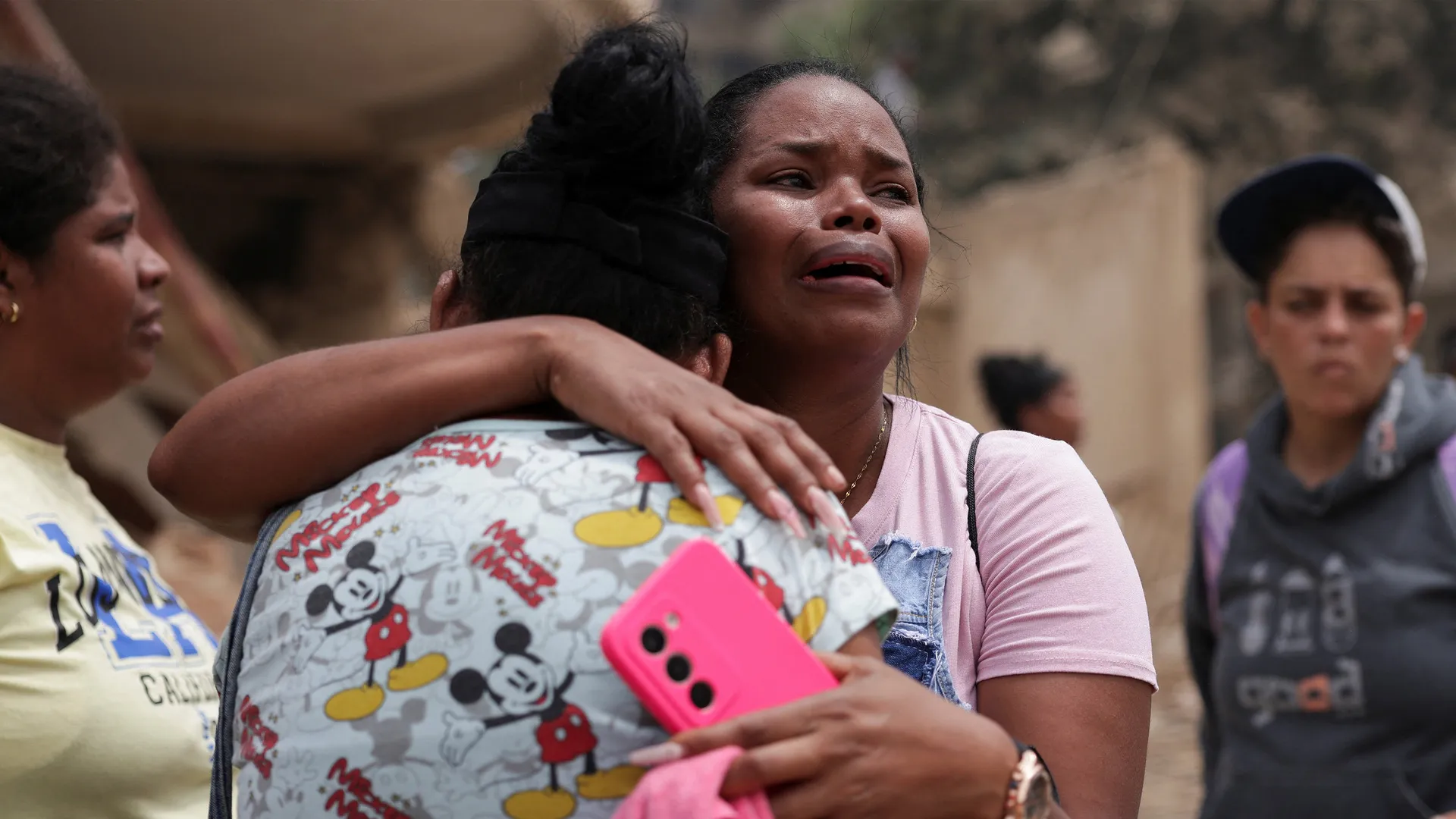
Authorities managed to take control of the situation and transfer hundreds of inmates to other detention centers. (Reuters)

Caracas, May 26, 2026 (venezuelanalysis.com) – Venezuelan Attorney General Larry Devoe announced on Monday a formal investigation into recent unrest at the Barinas Judicial Detention Center (INJUBA). 

The prison began to make headlines last week when inmates seized control of the facility to denounce ill-treatment and physical abuse from authorities. The investigation followed the dismissal of prison director Elvis Macuare Guerrero, who had held the post for less than a week before the revolt.

“The Attorney General’s Office announces the launch of a criminal investigation into the events that took place on May 24, 2026, at INJUBA, where inmates staged a protest,” read the official statement. The investigation will focus on accusations of “cruel, inhuman, or degrading treatment” allegedly carried out by security personnel inside the facility.

The probe followed dramatic scenes in which prisoners climbed onto the roof, burned mattresses, and held up banners demanding an end to what they described as a regime of terror. 

According to testimonies gathered by local journalists on the ground, the inmates accused prison authorities of recurring violence and torture, including systematic beatings and forced “ice-cold baths with electric currents.”

The riot was sparked after guards reportedly confiscated belongings and subjected a group of prisoners to violent searches.

In response to the unrest, authorities transferred over 100 female inmates out of the Barinas facility to reduce tensions. On Tuesday, General Giuseppe Cacioppo, head of the Barinas governorship security office, told press that the situation at INJUBA was calm and under control, with a further 818 male prisoners transferred to other penitentiary centers throughout the country.

Rodríguez raises judicial reform priorities

The Barinas inmate unrest coincided with the Venezuelan government announcing the impending release of hundreds of prisoners. On Friday, Acting President Delcy Rodríguez announced that 500 prisoners would be liberated “in the coming hours.” 

Three officers from the former Metropolitan Police were among those already confirmed free. Héctor Rovaín, Erasmo Bolívar, and Luis Molina were serving 30-year sentences for their involvement in the violence leading up to the brief 2002 coup against then-president Hugo Chávez. They had been arrested in 2003 and convicted in 2009.

According to official figures provided by the presidency, since the February approval of the Amnesty Law, a total of 8,740 people have received amnesty. Of these, 8,426 were still facing trial or under probation-type measures and had their cases dropped.

However, the government announcements have also drawn criticism. The Justicia, Encuentro y Perdón (JEP) NGO cautioned that “this type of public pronouncement [announcing more releases] generates enormous expectations,” warning that any failure to comply would represent a “new and cruel affront to human dignity.”

Rodríguez explained that the latest freed individuals had their cases and sentences reviewed through a “different mechanism,” evaluated via the Commission for Judicial Revolution and the Program for Peace and Democratic Coexistence, as opposed to the Amnesty Law.

During a televised working session on Saturday, the acting president framed the ongoing releases and the investigation into the Barinas prison riot as part of a broader transformation of the penal system. She likewise enacted a reform to the Organic Law of the Supreme Court (TSJ), expanding the number of magistrates from 20 to 32.

Rodríguez acknowledged prison overcrowding as one of the main issues plaguing the Venezuelan penitentiary system. She claimed that, according to official statistics, 68% of the incarcerated population in Venezuela comes from the poorest economic strata and vowed to advance judicial reforms that tackle the “criminalization of poverty.”

The Venezuelan leader went on to announce the beginning of the National Consultation for Penal Justice Reform on June 1. The public consultation aims to address what she identified as the “three great challenges” of the current system: procedural delays, judicial corruption, and the criminalization of poverty.

Rodríguez went on to denounce the “partisan and political” manipulation of the justice system.

The commission tasked with the consultation, headed by Attorney General Devoe, will hold meetings with academics, NGOs, judicial system workers, and other relevant actors.

Venezuela’s justice system came under the spotlight recently with the case of Victor Quero, who had an amnesty request denied despite having died in state custody months earlier. Authorities did not inform his mother, Carmen Navas, who continued to visit the prison in search of information. Navas passed away days after her son’s death was publicly acknowledged. The Attorney General opened an investigation into the case.

In recent years, human rights NGOs and prisoner relatives have denounced systematic due process violations and poor incarceration conditions.

Edited by Ricardo Vaz in Caracas.


Source link

How decision-making happens in Iran | Newsfeed

NewsFeed

Iran’s negotiators follow a mandate set by the Supreme National Security Council and approved by Supreme Leader Mojtaba Khamenei. The US team under President Trump is led by confidants with fewer technical experts. Iranians see Trump’s interventions as “moving the goalposts.”

Source link

Brazil’s Flavio Bolsonaro meets with Trump amid troubled presidential bid | Elections News

Son of former President Jair Bolsonaro is fighting to recover from a scandal that has rocked his presidential campaign.

Brazilian Senator Flavio Bolsonaro has shared a photo that appears to show him meeting with US President Donald Trump at the White House, as he seeks to bolster his image amid a scandal that threatens to derail his presidential campaign in Brazil.

Bolsonaro shared a photo on Tuesday of him standing by Trump’s side in the Oval Office, with a caption showing the thumbs-up emoji.

Recommended Stories

list of 3 itemsend of list

Flavio is the son of former Brazilian President Jair Bolsonaro, a right-wing Trump ally who is serving a 27-year prison sentence in connection with a coup attempt after his re-election loss in 2022 to current leftist President Luiz Inacio Lula da Silva.

The younger Bolsonaro has replaced his father as the standard-bearer of Brazil’s political right and is seen as the top contender challenging Lula in the South American country’s election in October.

But his campaign has struggled to regain its balance following a report that he sought funds from a disgraced banker convicted of fraud to finance a film about his father. Bolsonaro has acknowledged requesting the money, but denied any impropriety or wrongdoing.

Recent polls suggest that the scandal has set back his campaign, with Lula retaking the lead from the younger Bolsonaro after previous polls had shown them in a close race.

Media reports in recent days stated that Bolsonaro had sought a meeting with Trump, who previously placed tariffs on Brazil in a bid to have the case against the elder Bolsonaro thrown out.

Flavio then travelled to Washington without a guaranteed appointment in the hope of meeting with the US president. Trump has yet to share information about the meeting on his social media website.

While tensions have remained between Trump and Lula, the two leaders have built a more cordial relationship in recent months, with the Brazilian leader visiting his US counterpart at the White House earlier this month.

Source link

FACTBOX – Iranian, US versions of potential agreement proposals – Middle East Monitor

Both the US and Iran have recently signaled progress on efforts to reach a deal to end their conflict, though their accounts of its terms differ on some issues across respective media narratives, Anadolu reports.

US President Donald Trump on Saturday said an agreement with Iran to end the war was “largely negotiated” and awaited finalization.

On Sunday morning, Iran’s semi-official Tasnim news agency also published a report on the details of a potential agreement. However, certain aspects of what has been agreed seem to diverge.

Here is a comparison of the US and Iranian versions of the deal by key issues.

Strait of Hormuz

Citing a US official, Axios said the deal that Washington and Tehran are close to signing would extend a ceasefire by 60 days, during which the Strait of Hormuz would be reopened.

During the 60-day period, the Strait of Hormuz would be opened without any tolls, and Iran would remove the mines it has placed there to ensure unrestricted maritime passage.

In return, Washington would lift its blockade on Iranian ports, added the report.

The New York Times also said it was informed by three senior Iranian officials that Tehran had agreed to a memorandum of understanding to halt fighting and reopen the Strait of Hormuz.

US Secretary of State Marco Rubio also said on Sunday that the agreement could, if successful, result in a “completely open” Strait of Hormuz, with no tolls or restrictions on passage.

“They don’t own it. It’s an international waterway,” Rubio told reporters of the strait, in remarks that came during his visit to India.

A report by Iran’s semi-official news agency Tasnim, however, said that the Strait of Hormuz will not fully return to its pre-war status if the agreement is reached.

Instead, the number of ships allowed to pass would be restored to pre-war levels within 30 days, the outlet added.

Tehran also demands an end to the US blockade on its ports, arguing that no changes will be made in the strait if the blockade remains in place.

For its part, the US argues that the quicker Iran removes the mines and allows shipping to resume, the sooner the blockade will be lifted.

READ: Iran ready to reassure world it is not pursuing nuclear weapons, president says

Sanctions relief and release of frozen Iranian assets

Iran was seeking the immediate unfreezing of funds and a permanent lifting of sanctions, but the US position indicates these measures would only be granted after Iran made concrete concessions, according to the Axios report.

As part of the proposed 60-day agreement, the US is offering temporary sanctions waivers that would allow Iran to sell its oil freely. These waivers are explicitly linked to Iran reopening the Strait of Hormuz, removing mines, and ending restrictions on maritime traffic. Once these steps are taken, Washington would also lift its naval blockade on Iranian ports.

Tehran, however, says no agreement will be reached unless at least a portion of the frozen Iranian assets is released immediately. Iranian media confirmed the discussion of temporary oil sanctions waivers in the latest US proposal but insisted on broader and more permanent sanctions relief.

Nuclear file

The Axios report said the draft deal includes commitments from Iran not to pursue nuclear weapons, along with provisions to negotiate a suspension of uranium enrichment and the removal of its stockpile of highly enriched uranium.

The Iranian media reports, however, indicate that Tehran has not yet accepted anything on its nuclear program.

A potential deal would involve a 60-day negotiation window on Iran’s nuclear program, according to Tasnim.

Extent of ceasefire

Both US and Iranian media reports suggest that the cessation of hostilities would mean a halt to fighting on all fronts, including Lebanon.

This was also highlighted by Iranian Foreign Ministry spokesman Esmaeil Baqaei on Saturday, when he said Tehran was prioritizing an end to hostilities across all fronts, including Lebanon.

Context

Regional tensions have escalated since the US and Israel launched strikes against Iran in February. Tehran retaliated with strikes targeting Israel, as well as US allies in the Gulf, along with the closure of the Strait of Hormuz.

A ceasefire took effect on April 8 through Pakistani mediation and was later extended by Trump indefinitely. Washington and Tehran also held rare direct talks in the Pakistani capital Islamabad on April 11-12, but have failed to reach an agreement.

Trump’s Saturday remarks came after Pakistani army chief Asim Munir’s visit to Tehran. The visit was the second of its kind in recent weeks, as Munir is directly involved in Islamabad’s mediation efforts.

READ: Trump says Iran talks ‘constructive’ but blockade will remain until final deal is reached

Source link

Where Are The Carriers As Of May 26, 2026: Nimitz Arrives In The Caribbean

Here’s TWZ’s weekly carrier tracker monitoring America’s flattop fleet, including deployed Carrier Strike Groups (CSG) and Amphibious Ready Groups (ARG), using publicly available open-source information. Check out last week’s map here.

The U.S. blockade of Iranian ports remains in full effect and, despite the shaky ceasefire amid ongoing, but uncertain, negotiations, the Navy’s force posture remains unchanged. Enforced by two CSGs and one ARG, U.S. Central Command (CENTCOM) forces have redirected over 100 commercial vessels, disabled four using force, and allowed more than 25 carrying humanitarian aid to pass through.

The Boxer ARG, still operating under U.S. Indo-Pacific Command (INDOPACOM), doubled back from the Indian Ocean to the Malacca Strait and pulled into Singapore on May 19. The purpose of the port call is unknown, but, as of publication, Planet satellite imagery reviewed by TWZ shows Boxer moored at Sembawang Terminal for the past week. Previous reports indicated the ARG was headed to CENTCOM; however, the group does not appear to be in a hurry.

USS Boxer (LHD 4) Wasp-class amphibious assault ship coming into Singapore – May 19, 2026 SRC: FB- Military Aviation Photography Singapore pic.twitter.com/lzK3NfY9CB

— WarshipCam (@WarshipCam) May 19, 2026

Also operating in INDOPACOM, forward-deployed USS George Washington departed Yokosuka, Japan, on May 23. While the composition of the CSG is unconfirmed, destroyer USS Shoup and cruiser USS Robert Smalls also got underway, according to public AIS data, and will likely escort the carrier during her upcoming Western Pacific patrol. A George Washington spokesperson recently told us the CSG was “underway conducting routine operations to sharpen our Sailors’ warfighting edge.” The underway coincides with a recent surge of Chinese naval activity in the region.

USS Nimitz arrived in the Caribbean Sea as a flurry of USAF surveillance flights around Cuba has driven speculation about potential future military operations. Officially, Nimitz is participating in exercise Southern Seas and “scheduled to conduct passing exercises and operations at sea with partner nation maritime forces as the ships circumnavigate the continent of South America.” The CSG did not embark a full nine squadron carrier air wing and, with only one destroyer escort, the ODIN-equipped USS Gridley, is not the combat-capable force we’d expect if major combat ops were imminent.

Welcome to the Caribbean, Nimitz Carrier Strike Group!

The aircraft carrier USS Nimitz (CVN 68), the embarked Carrier Air Wing 17 (CVW-17), USS Gridley (DDG 101) and USNS Patuxent (T-AO 201) are the epitome of readiness and presence, unmatched reach and lethality, and strategic… pic.twitter.com/83mfzSIKzd

— U.S. Southern Command (@Southcom) May 20, 2026

The Iwo Jima ARG is also on station in the Caribbean and facilitated the transport of U.S. Southern Command (SOUTHCOM) Commander Gen. Francis L. Donovan to Caracas, Venezuela, via MV-22B Ospreys over the weekend. During his second official visit to the country following Operation Absolute Resolve, the Gen. “took part in bilateral discussions with senior interim government leaders, met with U.S. Embassy leadership and staff, and observed the joint force conduct a military response exercise.”

📍Venezuelan Coast (🇻🇪)

Additionally, the @Southcom (🇺🇸) Commander Gen. Francis L. Donovan, as predicted, arrived in Caracas via MV-22B Osprey from on board the USS Iwo Jima (LHD-7) under escort from the cruiser USS Lake Erie (CG-70).

📸: SOUTHCOM https://t.co/XEHBuXOJtL pic.twitter.com/hppV4PRu3Y

— SA Defensa (@SA_Defensa) May 24, 2026

Contact the author: ian.ellis-jones@teamrecurrent.io


Source link

Chemical tank rupture kills multiple people in US state of Washington | Health News

Several injured people have been transported to hospitals to be treated for chemical burns.

A chemical tank has imploded at a Nippon Dynawave Packaging facility in the US state of Washington, killing several people and critically injuring others, authorities said.

Emergency responders on Tuesday remained at the site in the city of Longview in Cowlitz County, about 70km (45 miles) north of Portland, Oregon, the Longview Fire Department said in a joint written statement with Nippon and the Cowlitz County Sheriff’s Department.

Recommended Stories

list of 3 itemsend of list

Multiple patients who suffered from chemical burns and other injuries were transported to nearby hospitals. Authorities said the implosion posed “no immediate threat to the surrounding community”.

The statement said that officials “can confirm fatalities related to the incident” along with “multiple critical injuries”, but did not provide figures.

At least nine workers and one firefighter were taken to hospitals from the site, said Scott Goldstein, the Cowlitz 2 Fire and Rescue chief who was among those who responded. The number of deaths was “undetermined”, he said at a news conference.

PeaceHealth St John Medical Center in Longview told ABC News it had seen nine patients related to the incident, including one who had died. Six of the patients were in fair condition, and two other patients had been transferred to other facilities, the hospital told ABC.

The joint statement said that a tank containing “white liquor”, a chemical solution of sodium hydroxide and sodium sulfide used in the production of paper pulp, had ruptured at about 7:15am local time (14:15 GMT).

Goldstein said at the news conference that the 80,000-gallon (about 300,000-litre) tank was approximately 60 percent full.

In southern California, meanwhile, authorities have been monitoring an overheating industrial tank containing methyl methacrylate, a highly flammable chemical used in the production of plastics. The worst-case possibility of an explosion was ruled out on Monday at the GKN Aerospace facility in Garden Grove after a crack relieved some of the mounting pressure, officials said.

Orange County Fire Authority spokesman Greg Barta said in an update on Tuesday morning that the temperature in the tank was holding steady and that crews were working to ensure that people evacuated could get home as soon as possible.

Source link

Aftermath of deadly Israeli strikes in southern Lebanon | Israel attacks Lebanon

NewsFeed

New videos show widespread destruction in Maarakeh following deadly Israeli strikes across southern Lebanon. On Tuesday, the Israeli military issued forced displacement orders for more than a dozen towns and villages, expanding its ground operation beyond its new, so-called ‘yellow line’.

Source link

European Shares Slip as US Strikes on Iran Dampen Peace Deal Hopes and Push Oil Higher

European shares edged lower on Tuesday as hopes for an imminent de-escalation in the Middle East conflict faded following fresh U.S. strikes on Iran, triggering renewed geopolitical uncertainty across global financial markets.

The pan-European STOXX Europe 600 Index slipped 0.2% to 630.33 points by 0833 GMT, retreating from gains that had recently pushed it close to record levels.

On Monday, the index had closed at its highest level since late February, briefly coming within 1% of an all-time high on optimism that diplomatic progress could soon ease tensions in the region.

That momentum quickly reversed after renewed military action and comments from U.S. Secretary of State Marco Rubio, who said negotiations with Iran could take “a few days,” tempering expectations of a near-term resolution.

Oil Prices Jump as Hormuz Risks Return to Focus

Global energy markets reacted sharply to the escalation, with Brent crude rising more than 3%, reigniting inflation concerns across energy-importing economies, particularly in the euro zone.

The market remains highly sensitive to risks surrounding the Strait of Hormuz, a critical global shipping route through which a significant share of the world’s oil flows.

Analysts warned that any sustained disruption in the region could deepen inflationary pressures just as central banks weigh their next policy moves.

Airlines and Autos Under Pressure

Travel and transport-related stocks were among the biggest losers in Tuesday’s session.

Airlines including Lufthansa and Ryanair fell 1.4% and 0.7% respectively, reflecting investor concerns that higher fuel costs could squeeze margins.

Luxury and automotive stocks also came under pressure after Ferrari dropped sharply following the unveiling of its first fully electric vehicle.

The decline was compounded by a broader sell-off in the European autos sector, which fell 1.6% as investors reassessed competition risks from Chinese EV manufacturers and weakening global demand trends.

Market Sentiment Balances War Risk and Policy Signals

Despite renewed volatility, some investors noted that markets remain partially supported by expectations that diplomacy could still stabilize the situation.

One portfolio manager at Franklin Templeton said markets were reacting cautiously because investors believe a potential agreement could still restore stability in the Strait of Hormuz and normalize energy flows.

However, uncertainty around timing and scope continues to limit upside momentum in equities.

Inflation and Central Bank Policy Back in Focus

Attention is now shifting toward upcoming inflation data across major euro zone economies and the United States, which will help shape expectations for future monetary policy.

European Central Bank policymaker Yiannis Stournaras signaled that any persistent inflation overshoot would require a cautious shift toward tighter policy.

Market pricing currently suggests at least two further 25-basis-point interest rate moves before year-end, according to LSEG data.

Corporate Movers: Winners and Losers

While broader markets weakened, some stocks moved against the trend.

Kingfisher rose 2% after maintaining its full-year profit guidance, easing concerns about demand softness in the home improvement sector.

However, the overall tone remained risk-off as investors continued to weigh geopolitical escalation against macroeconomic uncertainty.

Analysis

The latest pullback in European equities reflects a familiar pattern: markets oscillating between hopes of geopolitical de-escalation and fears of renewed conflict risk in the Middle East.

The key transmission channel remains energy. With Europe heavily dependent on imported oil and gas, any disruption involving Iran or the Strait of Hormuz immediately feeds into inflation expectations, bond yields, and corporate earnings outlooks.

At the same time, equity markets had recently been pricing in a relatively optimistic scenario in which diplomatic talks would gradually stabilize the region. That positioning left stocks vulnerable to abrupt reversals when military developments resurfaced.

Sectoral divergence also highlights how uneven the impact of geopolitical shocks can be. Energy-sensitive sectors such as airlines and autos are under pressure, while defensive or domestically oriented companies remain relatively insulated.

The broader question for markets is whether this marks a temporary setback in diplomatic momentum or a deeper breakdown in expectations for a negotiated settlement. If tensions persist, volatility in oil markets is likely to remain the dominant driver of global equity sentiment in the near term.

With information from Reuters.

Source link

Russia slams US for not granting visa to diplomat for UN meeting | United Nations News

Moscow’s envoy accuses Washington of failing to honour commitments under the 1947 UN Headquarters Agreement.

Russia has slammed the United States for failing to grant a visa to Deputy Foreign Minister Alexander Alimov to attend a United Nations Security Council meeting in New York, calling the decision a breach of Washington’s obligations.

Vassily Nebenzia told the Security Council on Tuesday that the country should have been represented by Alimov – “who oversees matters related to the United Nations” – at the meeting.

Recommended Stories

list of 3 itemsend of list

“However, despite all of our attempts to persuade the US side to issue a visa to him, that visa was ultimately not granted,” Nebenzia said.

The 1947 agreement that established the international body’s headquarters in New York requires the US to issue visas to foreign diplomats looking to attend UN functions “without charge and as promptly as possible”.

Nebenzia said not granting a visa to Alimov is a violation of that treaty and also a slight to Beijing, which is chairing the Security Council in May.

“We view this not just as a breach by Washington of its obligations under United Nations Headquarters Agreement, according to which access to United Nations needs to be provided for all officials and member states, barring none, but we also view this as an egregious instance of disrespect for the Chinese presidency of the Security Council,” he said.

The US Department of State did not immediately respond to Al Jazeera’s request for comment.

The visa controversy comes at a time of receding tensions between Washington and Moscow as US President Donald Trump pushes to end the war in Ukraine.

Trump has been regularly speaking with his Russian counterpart, Vladimir Putin. But Washington has continued to enforce sanctions against Moscow over the Ukraine invasion.

Both Putin and Trump have separately visited China and met with its president, Xi Jinping, in recent weeks.

Earlier this week, Iran’s Foreign Ministry said Abbas Araghchi, the country’s top diplomat, cancelled his participation in Tuesday’s Security Council meeting due to visa issues.

During last year’s UN General Assembly, in September 2025, the US imposed strict limits on the movement of the Iranian delegation in New York.

In 2019, the US also delayed then-Iranian President Hassan Rouhani’s visa for the General Assembly but eventually granted him entry.

Source link

Press Freedom Crisis Deepens Across South Asia as Media Credibility Faces Growing Scrutiny

Across South Asia, concerns over press freedom, political influence, and media credibility are drawing increasing international scrutiny. From Bangladesh and Pakistan to India, journalists and independent media organisations face mounting political, economic, and legal pressures that are reshaping how information is produced and consumed.

Recent international assessments point to what rights groups describe as a broader regional decline in media independence. The 2026 World Press Freedom Index placed multiple South Asian countries near the lower end of global rankings, reflecting concerns over censorship, political pressure, and growing ideological polarisation within news ecosystems.

Among these cases, India continues to attract the most sustained global attention due to its scale, democratic profile, and influence as the world’s largest electoral democracy.

When a country that defines itself as a global democratic model falls to 157th out of 180 nations on the World Press Freedom Index, the question is no longer whether there are challenges within its media environment. The question is how deeply those challenges have reshaped journalism itself.

Together with other regional indicators, the findings suggest not isolated failures but a structural transformation in how media systems operate across South Asia.

The concerns highlighted in global reports do not exist in isolation. Across South Asia, governments and political actors are increasingly accused of exerting pressure on journalists through legal action, advertising influence, regulatory scrutiny, and informal intimidation.

According to World Press Freedom Index in 2026, Bangladesh stood at 152nd. Afghanistan remained among the lowest-ranked countries globally, reflecting ongoing restrictions on press activity. Nepal, while comparatively better positioned at 87th, has also faced periodic concerns over political influence and media ownership concentration.

Analysts argue that while each country’s political context differs, a shared pattern is emerging: fragile media economies, heightened political polarisation, and increasing hostility toward independent journalism.

However, India’s trajectory is often singled out due to its democratic stature and its role as a regional political and cultural benchmark. This contrast between democratic identity and media freedom rankings has intensified global debate about the state of its information ecosystem.

Political Influence and the Changing Nature of News

Within India, one of the central concerns raised by international observers is the perceived growth of political influence over large sections of mainstream media.

A detailed report by Genocide Watch described what it termed a “severe crisis of credibility” in parts of the Indian media landscape, arguing that dominant narratives in some outlets increasingly align with those of the ruling Bharatiya Janata Party rather than independently scrutinising power.

This does not imply uniformity across the entire media sector. India still has a diverse ecosystem of investigative journalists, regional newspapers, and independent digital platforms producing critical reporting. However, critics argue that the dominant tone of mainstream television and high-visibility digital media increasingly reflects political messaging rather than adversarial journalism.

The Reporters Without Borders (RSF) assessment echoed concerns about structural vulnerabilities. It highlighted the heavy dependence of Indian media on advertising revenue, including significant spending by both central and state governments. Critics argue that this financial structure creates subtle incentives for compliance, where editorial decisions may be influenced not through direct censorship, but through economic dependency.

In such an environment, formal restrictions are often unnecessary. Editorial caution can emerge internally, as news organisations weigh political and financial risks before pursuing certain stories.

The Rise of Divisive Television Narratives

Another recurring concern involves the increasing polarisation of televised political discourse.

Genocide Watch and other rights-focused assessments have warned that sections of mainstream media increasingly frame political and social issues through identity-based narratives, often centred on religion and nationalism. Complex policy debates are frequently simplified into binary positions, contributing to heightened social tension.

Human Rights Watch, in its World Report 2026, also documented concerns that hostile rhetoric in parts of media and online spaces has coincided with rising incidents of discrimination and attacks against minority communities, including Muslims in different parts of the country.

While causation is difficult to establish definitively, observers argue that repeated framing of communities through suspicion or collective identity can contribute to an environment where social hostility becomes easier to normalise.

The RSF report additionally pointed to structural imbalances within media representation, noting concerns about concentration of leadership within certain social groups and the underrepresentation of women in prominent political debate programming. These imbalances, critics argue, shape not only who speaks in media spaces, but also which perspectives are amplified or marginalised.

Self-Censorship and Invisible Constraints

Not all constraints on journalism are explicit. In many cases, they manifest as self-censorship.

According to Genocide Watch, journalists and editors increasingly avoid topics that could lead to political backlash, regulatory scrutiny, legal threats, or coordinated online harassment campaigns. Over time, this produces a newsroom culture in which certain subjects are quietly excluded before formal editorial decisions are even made.

This form of pressure is difficult to measure, but its effects can be significant. When reporters internalise risk calculations, the range of publicly available information can narrow without any formal ban or directive.

RSF similarly highlighted concerns over actions taken against independent journalists, commentators, and publications. It cited instances of restrictions, legal pressure, and bans on certain media outlets in sensitive regions, including Jammu and Kashmir, where authorities have taken action against publications accused of promoting separatism.

Critics argue that such measures contribute to a wider climate of caution, particularly around politically sensitive reporting.

A Broader Democratic Stress Test

The implications of these developments extend beyond journalism alone.

Genocide Watch framed the weakening of press freedom as part of a broader institutional credibility challenge linked to political polarisation and majoritarian dynamics. In this view, media independence is not an isolated issue but part of a wider ecosystem that includes accountability, governance, and civic trust.

A free press plays a central role in democratic systems by enabling scrutiny of power and facilitating informed public debate. When that role weakens, the consequences extend into how citizens engage with institutions and interpret political realities.

India’s trajectory in the RSF index over recent years reflects this concern. The country ranked 150th in 2022, fell further to 161st in 2023, improved slightly to 151st in 2025, and then declined again to 157th in 2026. Analysts interpret this pattern not as random fluctuation but as part of a longer-term structural challenge.

At the same time, government supporters argue that India remains a robust electoral democracy with active institutions, a vibrant political opposition, and a highly diverse media landscape. They contend that international rankings often fail to capture the complexity of India’s scale, security challenges, and internal diversity.

The debate, therefore, is not solely about classification, but about how democratic quality itself should be assessed.

South Asia in a Global Decline

These concerns are unfolding within a broader global downturn in press freedom. RSF’s 2026 index noted that worldwide media freedom has reached its weakest level in 25 years, with more than half of all countries classified as having “difficult” or “very serious” conditions.

South Asia reflects this global trend particularly sharply. Alongside India, countries such as Bangladesh remain in the lower tiers of the global rankings, highlighting shared regional challenges around political influence, media ownership concentration, and journalist safety.

Yet despite this broader pattern, analysts continue to emphasise that each country’s trajectory is shaped by its own political history and institutional structures. In India’s case, its global influence and democratic identity make developments in its media landscape particularly consequential for international observers.

What Is Ultimately at Stake

The credibility of media systems plays a central role in shaping the health of democratic life. Journalism informs not only public debate but also citizens’ ability to evaluate leadership, understand policy decisions, and hold institutions accountable.

When trust in media declines, democratic accountability becomes harder to sustain.

The findings from Genocide Watch and RSF should therefore be viewed not simply as criticism of individual outlets or governments, but as indicators of broader institutional stress across South Asia.

Addressing these challenges would require a combination of stronger protections for editorial independence, more diversified ownership structures, reduced reliance on state advertising, and greater safeguards for journalists facing intimidation or harassment.

Despite these pressures, the region continues to produce significant investigative journalism and independent reporting under difficult conditions. Many journalists continue to work at considerable personal and professional risk to maintain public access to information.

Acknowledging structural challenges across South Asia is not an indictment of any single democracy. Rather, it is increasingly seen by analysts as a necessary step toward strengthening the democratic principles that the region’s constitutions and institutions claim to uphold.

With information from Reuters.

Source link

World Cup broadcast hopes boosted in India as Zee Entertainment in talks | World Cup 2026 News

Broadcasting rights for FIFA World Cup 2026 in India have been at a deadlock only weeks ahead of June 11 kickoff.

India’s Zee Entertainment is in talks with FIFA to stream and broadcast the 2026 World Cup in the country, the ⁠company said in a statement.

The announcement on Tuesday, which provided no financial details, comes ⁠as talks between a Reliance-Disney joint venture and the football body are at a deadlock, just weeks before the tournament kicks off on June 11.

Recommended Stories

list of 4 itemsend of list

FIFA, which had initially sought $100m for broadcast rights for the 2026 and 2030 World Cups in India, was last looking for no less than about $60m, the news agency Reuters had reported.

The expected amount still far exceeds the $20m offered by Reliance-Disney, led by ⁠billionaire Mukesh Ambani’s Reliance.

Sony also held talks but decided not to make an offer for FIFA rights for India.

⁠FIFA has concluded agreements with broadcasters in more than 180 territories ⁠globally, it said previously.

Zee ⁠Entertainment disclosed its talks with FIFA as part of its launch of Unite8 Sports, a dedicated portfolio of sports channels ‌to strengthen its sports offerings to consumers.

India accounted for 2.9 percent of the global linear TV ‌reach ‌of the Qatar World Cup in 2022, trailing only China in overall engagement figures, with more than 745 million fans following the action across all media platforms in the country, according to figures released by FIFA.

In television viewing numbers, India was among the top 10 countries – ahead of World Cup participants Germany, France and England – with nearly 84 million viewers.

Source link

European countries and EU summon Russian envoys over threats on Kyiv | Russia-Ukraine war News

EU spokesperson Anitta Hipper says Russia’s threat to diplomats and foreign citizens is an ‘unacceptable escalation’.

Germany, the Netherlands, Norway and the European Union have summoned Russian envoys a day after Moscow warned foreigners and diplomats to leave the Ukrainian capital ahead of renewed air strikes.

On Tuesday, EU spokesperson Anitta Hipper called Russia’s threat to diplomats and foreign citizens an “unacceptable escalation”.

Recommended Stories

list of 3 itemsend of list

Hipper added in a post on X that the charge d’affairs had been summoned, calling on Moscow to “stop hitting civilians & Russia to engage in genuine peace talks starting with a full and unconditional ceasefire”.

At the beginning of May, Russia and Ukraine agreed to a three-day ceasefire for Moscow’s celebrations to mark its victory over Nazi Germany in 1945 at the end of World War II, but fighting quickly resumed with both sides accusing the other of violating the agreement.

On Monday, Moscow said that it planned to launch more strikes on Kyiv after it launched a barrage of drones and missiles on Ukraine over the weekend that killed four people.

Among the weapons Russia used in its attacks were its Oreshknik hypersonic missile, which can travel 10 times the speed of sound.

The warning came after Russia accused Ukraine of targeting a vocational school last week in the Russian-occupied Luhansk region that killed 21 people.

Russian President Vladimir Putin ordered his military on Friday to prepare options for retaliation in response to the attack.

“Under the current circumstances, the Russian Armed Forces are starting to launch systematic strikes against Ukrainian military-industrial facilities in Kyiv,” Russia’s Ministry of Foreign Affairs said in a statement on Monday.

“The strikes will target both decision-making centres and command posts … We are warning foreign citizens, including personnel of diplomatic missions and international organisations, to leave the city as soon as possible,” it added.

But in response to the call to leave the country, Germany’s Federal Foreign Office said on Tuesday that Moscow was resorting to “threats, terror & escalation”, which is why they summoned the Russian ambassador.

“We made it clear to Russia today: We will not be intimidated by threats and will continue to support Ukraine with full force,” the ministry wrote on X.

Norway and the Netherlands also summoned their Russian ambassadors over threats to attack Kyiv.

With no clear end to the war in sight, United States Secretary of State Marco Rubio reiterated on Tuesday that Washington had remained ready to mediate between Russia and Ukraine, as talks have stalled.

Source link

FACTBOX – Iranian, US versions of potential agreement proposals – Middle East Monitor

Both the US and Iran have recently signaled progress on efforts to reach a deal to end their conflict, though their accounts of its terms differ on some issues across respective media narratives, Anadolu reports.

US President Donald Trump on Saturday said an agreement with Iran to end the war was “largely negotiated” and awaited finalization.

On Sunday morning, Iran’s semi-official Tasnim news agency also published a report on the details of a potential agreement. However, certain aspects of what has been agreed seem to diverge.

Here is a comparison of the US and Iranian versions of the deal by key issues.

Strait of Hormuz

Citing a US official, Axios said the deal that Washington and Tehran are close to signing would extend a ceasefire by 60 days, during which the Strait of Hormuz would be reopened.

During the 60-day period, the Strait of Hormuz would be opened without any tolls, and Iran would remove the mines it has placed there to ensure unrestricted maritime passage.

In return, Washington would lift its blockade on Iranian ports, added the report.

The New York Times also said it was informed by three senior Iranian officials that Tehran had agreed to a memorandum of understanding to halt fighting and reopen the Strait of Hormuz.

US Secretary of State Marco Rubio also said on Sunday that the agreement could, if successful, result in a “completely open” Strait of Hormuz, with no tolls or restrictions on passage.

“They don’t own it. It’s an international waterway,” Rubio told reporters of the strait, in remarks that came during his visit to India.

A report by Iran’s semi-official news agency Tasnim, however, said that the Strait of Hormuz will not fully return to its pre-war status if the agreement is reached.

Instead, the number of ships allowed to pass would be restored to pre-war levels within 30 days, the outlet added.

Tehran also demands an end to the US blockade on its ports, arguing that no changes will be made in the strait if the blockade remains in place.

For its part, the US argues that the quicker Iran removes the mines and allows shipping to resume, the sooner the blockade will be lifted.

READ: Iran ready to reassure world it is not pursuing nuclear weapons, president says

Sanctions relief and release of frozen Iranian assets

Iran was seeking the immediate unfreezing of funds and a permanent lifting of sanctions, but the US position indicates these measures would only be granted after Iran made concrete concessions, according to the Axios report.

As part of the proposed 60-day agreement, the US is offering temporary sanctions waivers that would allow Iran to sell its oil freely. These waivers are explicitly linked to Iran reopening the Strait of Hormuz, removing mines, and ending restrictions on maritime traffic. Once these steps are taken, Washington would also lift its naval blockade on Iranian ports.

Tehran, however, says no agreement will be reached unless at least a portion of the frozen Iranian assets is released immediately. Iranian media confirmed the discussion of temporary oil sanctions waivers in the latest US proposal but insisted on broader and more permanent sanctions relief.

Nuclear file

The Axios report said the draft deal includes commitments from Iran not to pursue nuclear weapons, along with provisions to negotiate a suspension of uranium enrichment and the removal of its stockpile of highly enriched uranium.

The Iranian media reports, however, indicate that Tehran has not yet accepted anything on its nuclear program.

A potential deal would involve a 60-day negotiation window on Iran’s nuclear program, according to Tasnim.

Extent of ceasefire

Both US and Iranian media reports suggest that the cessation of hostilities would mean a halt to fighting on all fronts, including Lebanon.

This was also highlighted by Iranian Foreign Ministry spokesman Esmaeil Baqaei on Saturday, when he said Tehran was prioritizing an end to hostilities across all fronts, including Lebanon.

Context

Regional tensions have escalated since the US and Israel launched strikes against Iran in February. Tehran retaliated with strikes targeting Israel, as well as US allies in the Gulf, along with the closure of the Strait of Hormuz.

A ceasefire took effect on April 8 through Pakistani mediation and was later extended by Trump indefinitely. Washington and Tehran also held rare direct talks in the Pakistani capital Islamabad on April 11-12, but have failed to reach an agreement.

Trump’s Saturday remarks came after Pakistani army chief Asim Munir’s visit to Tehran. The visit was the second of its kind in recent weeks, as Munir is directly involved in Islamabad’s mediation efforts.

READ: Trump says Iran talks ‘constructive’ but blockade will remain until final deal is reached

Source link

Report warns pro-Palestine protesters face legal crackdown: What to know | Protests News

A new report warns that Britain is undergoing a “deeply troubling transformation” in how it treats political protest as climate activists and pro-Palestine campaigners increasingly face lengthy prison sentences, sweeping legal restrictions and months in jail before trial.

The report, Britain’s Political Prisoners, copublished by researchers at the Centre for Climate Crime and Climate Justice at Queen Mary University of London and the campaign group Defend Our Juries, said the UK has “witnessed an increase in anti-protest powers granted to the police and the courts through legislation” that has “created a significantly more repressive legal terrain for activists engaging in civil disobedience and direct action”.

Recommended Stories

list of 4 itemsend of list

It traces the shift from crackdowns on protests by Extinction Rebellion, Black Lives Matter, Insulate Britain and Just Stop Oil to more recent prosecutions linked to Palestine solidarity actions, including campaigns targeting British factories operated by Elbit Systems, Israel’s largest weapons manufacturer.

The report, released on Tuesday, found that a combination of new laws, broader police powers and increasingly punitive court tactics has reshaped Britain’s protest landscape since 2019.

The United Kingdom has witnessed numerous mass protests and direct actions by activists to pressure the government to stop selling arms to Israel during its genocidal war on Gaza, in which more than 72,000 Palestinians have been killed, including more than 40,000 women, children and elderly.

So what does Britain’s shifting stance on protests mean for civil rights, and what’s behind the legal clampdown on climate and pro-Palestine protests?

The report painted a stark picture of how Britain’s legal system has changed in response to climate and pro-Palestine direct action campaigns through a mix of new laws, expanded police powers and what campaigners describe as increasingly punitive court tactics. What this means for protesters is longer jail sentences, stricter bail conditions and harsher treatment in the courts than was once typical for acts of civil disobedience, according to the report.

At the centre of that shift are two major laws introduced after waves of demonstrations by groups such as Extinction Rebellion and Just Stop Oil, two environmental groups that employ nonviolent civil disobedience tactics to pressure governments to address the climate crisis.

The Police, Crime, Sentencing and Courts Act 2022 transformed the old common law offence of “public nuisance” into a formal criminal offence carrying a sentence of up to 10 years in prison. This means actions that seriously disrupt the public – such as blocking roads, stopping traffic or shutting down infrastructure – can now lead to far more severe criminal penalties than before because the offence was never previously codified into legislation. Campaigners said the law has given prosecutors a powerful new tool to pursue long prison sentences against protesters.

The Public Order Act 2023 introduced a series of protest-specific offences in May of that year, largely in response to climate protests by groups including Just Stop Oil, Insulate Britain and Extinction Rebellion, whose actions included blocking motorways, occupying oil terminals and targeting infrastructure projects in an attempt to pressure the government to halt new oil and gas extraction.

Such offences under the act included “locking on”, in which protesters attach themselves to roads, buildings, vehicles or each other using chains, glue or other devices to make removal difficult. The law also criminalised tunnelling, a tactic used by some activists to delay infrastructure projects, and introduced offences for disrupting major transport networks, oil terminals and other nationally important infrastructure. 

The legislation also significantly widened police powers whereby officers may now place restrictions on even one-person protests if they are deemed disruptive. Police were also granted powers to carry out stop-and-search operations in designated protest zones without needing reasonable suspicion that someone has committed an offence – a significant expansion of police authority criticised by civil liberties groups.

But the report argued the crackdown extends beyond parliament and into the courts.

One of its central findings is the growing use of civil injunctions and contempt of court proceedings against activists.

Oil companies, arms manufacturers, councils and universities have increasingly obtained court orders banning protests near their sites, the report said.

The report identified contempt of court as the most common route to imprisonment among the 249 protest-related cases it analysed. Contempt of court usually refers to someone disobeying a judge’s order or behaving in a way the court says interferes with justice. In protest cases, it has increasingly been used against activists who ignore injunctions or refuse to follow restrictions imposed during trials.

Because contempt proceedings are handled directly by judges rather than juries, campaigners argued they allow courts to imprison protesters more quickly and with fewer legal safeguards.

Researchers also highlighted what campaigners described as the “gagging” of defendants. Judges have increasingly stopped protesters from mentioning climate concerns, Gaza, international law or their political motivations in front of juries.

Courts have often argued that juries should focus only on whether a defendant broke the law, not on the political or moral reasons behind their actions. Critics said those restrictions prevent activists from fully explaining why they protested in the first place.

Campaigners also said the legal shift reflects a broader political change, driven in part by corporate lobbying under successive Conservative governments and continuing under Prime Minister Keir Starmer’s Labour government. They argued that peaceful protest is increasingly being criminalised to protect corporate interests, regardless of wider ethical concerns about the supply of arms to Israel during its war on Gaza or opposing fossil fuel projects linked to the climate crisis.

Perhaps most controversially, the report pointed to the growing use of lengthy pretrial detention. That means protesters being held in prison before they have been convicted of any crime.

According to the findings, many activists spend months on remand awaiting trial while some Palestine Action defendants have been held for more than a year before their cases are heard in court.

In 60 percent of the cases studied, the final sentence handed down was shorter than the time defendants had already spent in custody awaiting trial.

Are lobbyists influencing the crackdown?

Tim Crosland, director of Defend Our Juries, said the findings challenge Britain’s claims of ensuring democratic protections.

“This report strips away the illusion that Britain remains committed to democratic principles,” Crosland said.

“It reveals that peaceful protesters are being jailed in ever-increasing numbers under pressure from the oil and arms industries, the Israeli government and their lobbyists.”

The report pointed to what it described as growing political and corporate pressure behind Britain’s crackdown on protest movements.

Researchers cited reports that parts of the Police, Crime, Sentencing and Courts Act may have originated in proposals from the right-wing think tank Policy Exchange. According to the investigative news site Open Democracy, Policy Exchange has previously received funding from ExxonMobil. The think tank had earlier published a report titled Extremism Rebellion, which called for new laws targeting Extinction Rebellion activists.

Al Jazeera could not independently verify the links between the think tank and the legislation.

The report further alleged that British officials came under pressure from both Elbit Systems and the Israeli government to take a tougher approach towards Palestine Action protests targeting Elbit’s UK factories.

According to correspondence quoted by the researchers, the British government said in 2022 that it had “expressed our support in recognising the attacks and boycott on Elbit UK”. The report said the issue was later raised directly with then-Foreign Secretary Dominic Raab during a visit to Israel, where he reportedly “declared that the British government is committed to stopping the attacks”.

Zoe Blackler, founding director of the London events space Kairos, said: “In the face of this clampdown on the right to peaceful protest, we need to come together in solidarity and defiance.”

Which are the cases at the centre of Britain’s protest crackdown?

The report traced Britain’s hardening response to the protests through a series of landmark cases involving climate activists and Palestine solidarity campaigners, many of whom received lengthy prison sentences or spent months behind bars before trial.

Among the most high-profile is the case of the Whole Truth Five, a group of Just Stop Oil activists jailed in July 2024 over a Zoom call discussing plans to disrupt the M25 motorway. The five were convicted of conspiracy to cause a public nuisance and initially sentenced to between four and five years in prison.

The report described the case as one of the clearest examples of the tougher approach now being taken towards protest movements. Campaigners argued the sentences were extraordinary because the activists were punished largely for planning disruptive action rather than carrying it out. Prosecutors relied on conspiracy laws, which allow people to be charged for agreeing to commit an offence even if the planned action never ultimately happens.

Four Palestine Action activists were also sentenced to between 23 and 27 months for conspiring to damage an Israeli-linked arms factory in Wales. Meanwhile, four Just Stop Oil activists received prison terms of up to 30 months over plans to disrupt Manchester Airport despite never reaching the site. A fifth defendant, Noah Crane, spent almost a year in jail on remand before later being acquitted.

Another major case involved the Filton 24, Palestine Action activists prosecuted after a protest at an Elbit Systems factory in Bristol. Some defendants were held on remand for up to 18 months before trial.

After several activists were acquitted of aggravated burglary charges, most were eventually granted bail.

The report said the case raises “serious concerns” that prosecutors used unusually serious charges to justify holding defendants in prison for long periods before trial.

The report also highlighted the Brize Norton Five, activists accused of spray-painting air force planes in protest against Britain’s military links to Israel’s genocidal war on Gaza. According to the report, the group has remained on remand since August and is not expected to stand trial until 2027, meaning some could spend close to two years in jail before a verdict is reached.

Other cases revealed the growing use of judicial “gagging orders”.

During the retrial of the Filton 6, a separate trial from the Filton 24, the judge barred defendants from mentioning Gaza, Elbit’s role in supplying weapons to Israel and their political motivations for protesting. Critics argued such restrictions make it harder for juries to hear the broader context behind direct action campaigns.

In another case, three Insulate Britain activists were imprisoned for contempt of court after defying a judge’s order not to mention the “climate crisis” or “fuel poverty” before a jury.

Despite the legal restrictions, several juries continued to acquit activists. The report pointed to acquittals involving Just Stop Oil protesters, Extinction Rebellion activists and a hung jury in the first Filton 6 trial as evidence that some jurors remained unconvinced by the increasingly aggressive prosecution of protest movements.

Kerry Moscogiuri, Amnesty International UK CEO, told Al Jazeera that “the right to protest is being eroded before our eyes.”

“We’re seeing a worrying shift where the state is using remand, sweeping injunctions and contempt proceedings to lock people up or silence them before they’ve even stood trial.

“The broader legal implications here are concerning. It’s not just about one group of activists; it’s about a systemic attempt to shut down dissent, something we’ve been ringing the alarm on for a long time.

“By replacing the presumption of liberty with preemptive legal intimidation, it creates a chilling effect, undermines the rule of law and flies in the face of basic human rights.”

Source link

FACTBOX – Iranian, US versions of potential agreement proposals – Middle East Monitor

Both the US and Iran have recently signaled progress on efforts to reach a deal to end their conflict, though their accounts of its terms differ on some issues across respective media narratives, Anadolu reports.

US President Donald Trump on Saturday said an agreement with Iran to end the war was “largely negotiated” and awaited finalization.

On Sunday morning, Iran’s semi-official Tasnim news agency also published a report on the details of a potential agreement. However, certain aspects of what has been agreed seem to diverge.

Here is a comparison of the US and Iranian versions of the deal by key issues.

Strait of Hormuz

Citing a US official, Axios said the deal that Washington and Tehran are close to signing would extend a ceasefire by 60 days, during which the Strait of Hormuz would be reopened.

During the 60-day period, the Strait of Hormuz would be opened without any tolls, and Iran would remove the mines it has placed there to ensure unrestricted maritime passage.

In return, Washington would lift its blockade on Iranian ports, added the report.

The New York Times also said it was informed by three senior Iranian officials that Tehran had agreed to a memorandum of understanding to halt fighting and reopen the Strait of Hormuz.

US Secretary of State Marco Rubio also said on Sunday that the agreement could, if successful, result in a “completely open” Strait of Hormuz, with no tolls or restrictions on passage.

“They don’t own it. It’s an international waterway,” Rubio told reporters of the strait, in remarks that came during his visit to India.

A report by Iran’s semi-official news agency Tasnim, however, said that the Strait of Hormuz will not fully return to its pre-war status if the agreement is reached.

Instead, the number of ships allowed to pass would be restored to pre-war levels within 30 days, the outlet added.

Tehran also demands an end to the US blockade on its ports, arguing that no changes will be made in the strait if the blockade remains in place.

For its part, the US argues that the quicker Iran removes the mines and allows shipping to resume, the sooner the blockade will be lifted.

READ: Iran ready to reassure world it is not pursuing nuclear weapons, president says

Sanctions relief and release of frozen Iranian assets

Iran was seeking the immediate unfreezing of funds and a permanent lifting of sanctions, but the US position indicates these measures would only be granted after Iran made concrete concessions, according to the Axios report.

As part of the proposed 60-day agreement, the US is offering temporary sanctions waivers that would allow Iran to sell its oil freely. These waivers are explicitly linked to Iran reopening the Strait of Hormuz, removing mines, and ending restrictions on maritime traffic. Once these steps are taken, Washington would also lift its naval blockade on Iranian ports.

Tehran, however, says no agreement will be reached unless at least a portion of the frozen Iranian assets is released immediately. Iranian media confirmed the discussion of temporary oil sanctions waivers in the latest US proposal but insisted on broader and more permanent sanctions relief.

Nuclear file

The Axios report said the draft deal includes commitments from Iran not to pursue nuclear weapons, along with provisions to negotiate a suspension of uranium enrichment and the removal of its stockpile of highly enriched uranium.

The Iranian media reports, however, indicate that Tehran has not yet accepted anything on its nuclear program.

A potential deal would involve a 60-day negotiation window on Iran’s nuclear program, according to Tasnim.

Extent of ceasefire

Both US and Iranian media reports suggest that the cessation of hostilities would mean a halt to fighting on all fronts, including Lebanon.

This was also highlighted by Iranian Foreign Ministry spokesman Esmaeil Baqaei on Saturday, when he said Tehran was prioritizing an end to hostilities across all fronts, including Lebanon.

Context

Regional tensions have escalated since the US and Israel launched strikes against Iran in February. Tehran retaliated with strikes targeting Israel, as well as US allies in the Gulf, along with the closure of the Strait of Hormuz.

A ceasefire took effect on April 8 through Pakistani mediation and was later extended by Trump indefinitely. Washington and Tehran also held rare direct talks in the Pakistani capital Islamabad on April 11-12, but have failed to reach an agreement.

Trump’s Saturday remarks came after Pakistani army chief Asim Munir’s visit to Tehran. The visit was the second of its kind in recent weeks, as Munir is directly involved in Islamabad’s mediation efforts.

READ: Trump says Iran talks ‘constructive’ but blockade will remain until final deal is reached

Source link

The Mali crisis could have a dangerous spillover effect | Conflict

It has been almost nine months since rebel groups imposed a fuel blockade on Mali’s capital Bamako. In late April, the conflict escalated further. The Al-Qaeda-affiliated Jama’at Nusrat al-Islam wal-Muslimin (JNIM), along with members of Tuareg separatist movements, launched a coordinated attack on the Malian army and its Russian allies, the African Corps (formerly Wagner), which killed the Malian Defence Minister Sadio Camara.

The rebels seized control of military camps, recaptured the largest northern city of Kidal, and tightened the blockade on Bamako. This latest offensive is part of a long series of rebellions in what the Tuareg call Azawad, an area comprising the regions of Timbuktu, Taoudenit, Kidal, and Gao, which is predominantly populated by Tuareg communities.

The present crisis is compounded by the weakening of the Malian state following the 2021 coup and foreign intervention. In the absence of any serious effort to address it, instability could spill over across the whole Sahel region.

Ever since the country announced independence from France in 1960, Mali’s north has seen repeated upheaval as local Tuareg communities have demanded self-determination. Fourteen years ago, Tuareg groups allied with groups affiliated with al-Qaeda launched yet another rebellion. They managed to seize several cities in northern Mali, and had it not been for a French military intervention in 2013, they could have marched on Bamako.

Two French operations resulted in the weakening of the Tuareg movements and groups affiliated with al-Qaeda. This helped persuade them to participate in negotiations with the government, which ultimately ended with the signing of the Algiers Accords in 2015.

One of the most prominent clauses of this agreement was decentralisation in the Azawad region, which gave local leaders more power. Through this agreement, the Malian government secured the country’s territorial integrity in return for promises like the enhancement of development in the Azawad region, the integration of separatist fighters into the army, and the appointment of their leaders to political positions.

These accords helped maintain relative stability in Mali and the Sahel region by containing the sources of tension and secessionist calls. However, peace did not last long. Several challenges emerged, the most important of which was the failure of the government to honour its commitments to implement development projects in the north.

The situation got worse after the 2021 military coup led by General Assimi Goita. France, Algeria, and members of the Economic Community of West African States (ECOWAS) refused to recognise the new authorities in Bamako. As a result, in 2022, the military government expelled French troops, and in 2024, abolished the Algiers Agreement. Thereafter, instead of diplomacy and dialogue, it adopted a militarised approach to controlling the restive north.

These steps strained Mali’s relations with Mauritania, Algeria, and France, with Bamako accusing them of providing logistical support to the rebels and interfering in its internal affairs. Consequently, the Malian state was weakened militarily and economically, as military coordination and trade with neighbours declined.

JNIM and the separatist movements exploited the situation. They sought to choke the capital by attacking key transport arteries where most imports and exports are routed. They disrupted supplies of gasoline and diesel coming from Senegal and the Ivory Coast, and began attacking Moroccan trucks carrying food supplies via Mauritania.

Like in 2012, the alliance between the Tuareg movements and al-Qaeda affiliates has proven successful. It has routed the Malian military, capturing more territory and operating freely close to Bamako.

This time, foreign forces have not been able to help the Malian army, as its Russian allies were forced to withdraw following the attack in late April. Meanwhile, Turkiye has seen its involvement in Mali grow amid growing instability. In early May, following the attacks on the Malian military, Ankara signed several defence agreements with the Malian military government.

The danger here is that the Malian crisis may not be contained only within the political crisis between the government and the separatist movements. It could also invite more foreign intervention as regional and global rivalries transfer onto Malian territory.

There is also the issue of the alliance between Azawadi movements and al-Qaeda affiliates, which could prove to be a ticking time bomb. There are clear contradictions within this relationship, as the two sides have no common ground except the agreement to overthrow the military regime in Bamako. This is why a future war in the north between the Azawadi movements and the Islamist groups is quite likely.

The Malian crisis inevitably has regional repercussions. The ongoing humanitarian crisis could trigger a major migration wave towards Europe and North America. Continuing instability in the north could open more space for the growth of extremist movements, which can expand their attacks across the region. Consequently, the Malian crisis can become a direct security threat to neighbouring countries, the region, and the world.

As the situation stands now, no warring side is able to achieve a decisive military victory. Therefore, a resolution of the conflict can only be achieved through dialogue and negotiation. Bamako needs to seriously consider the grievances of Tuareg communities in the north and their demands.

It is in the collective interest of neighbouring countries and regional powers to bring the parties to the negotiating table and seek peaceful solutions to this crisis. Under the threat of a regional spillover, there is no time to waste.

The views expressed in this article are the author’s own and do not necessarily reflect Al Jazeera’s editorial stance.

Source link

FACTBOX – Iranian, US versions of potential agreement proposals – Middle East Monitor

Both the US and Iran have recently signaled progress on efforts to reach a deal to end their conflict, though their accounts of its terms differ on some issues across respective media narratives, Anadolu reports.

US President Donald Trump on Saturday said an agreement with Iran to end the war was “largely negotiated” and awaited finalization.

On Sunday morning, Iran’s semi-official Tasnim news agency also published a report on the details of a potential agreement. However, certain aspects of what has been agreed seem to diverge.

Here is a comparison of the US and Iranian versions of the deal by key issues.

Strait of Hormuz

Citing a US official, Axios said the deal that Washington and Tehran are close to signing would extend a ceasefire by 60 days, during which the Strait of Hormuz would be reopened.

During the 60-day period, the Strait of Hormuz would be opened without any tolls, and Iran would remove the mines it has placed there to ensure unrestricted maritime passage.

In return, Washington would lift its blockade on Iranian ports, added the report.

The New York Times also said it was informed by three senior Iranian officials that Tehran had agreed to a memorandum of understanding to halt fighting and reopen the Strait of Hormuz.

US Secretary of State Marco Rubio also said on Sunday that the agreement could, if successful, result in a “completely open” Strait of Hormuz, with no tolls or restrictions on passage.

“They don’t own it. It’s an international waterway,” Rubio told reporters of the strait, in remarks that came during his visit to India.

A report by Iran’s semi-official news agency Tasnim, however, said that the Strait of Hormuz will not fully return to its pre-war status if the agreement is reached.

Instead, the number of ships allowed to pass would be restored to pre-war levels within 30 days, the outlet added.

Tehran also demands an end to the US blockade on its ports, arguing that no changes will be made in the strait if the blockade remains in place.

For its part, the US argues that the quicker Iran removes the mines and allows shipping to resume, the sooner the blockade will be lifted.

READ: Iran ready to reassure world it is not pursuing nuclear weapons, president says

Sanctions relief and release of frozen Iranian assets

Iran was seeking the immediate unfreezing of funds and a permanent lifting of sanctions, but the US position indicates these measures would only be granted after Iran made concrete concessions, according to the Axios report.

As part of the proposed 60-day agreement, the US is offering temporary sanctions waivers that would allow Iran to sell its oil freely. These waivers are explicitly linked to Iran reopening the Strait of Hormuz, removing mines, and ending restrictions on maritime traffic. Once these steps are taken, Washington would also lift its naval blockade on Iranian ports.

Tehran, however, says no agreement will be reached unless at least a portion of the frozen Iranian assets is released immediately. Iranian media confirmed the discussion of temporary oil sanctions waivers in the latest US proposal but insisted on broader and more permanent sanctions relief.

Nuclear file

The Axios report said the draft deal includes commitments from Iran not to pursue nuclear weapons, along with provisions to negotiate a suspension of uranium enrichment and the removal of its stockpile of highly enriched uranium.

The Iranian media reports, however, indicate that Tehran has not yet accepted anything on its nuclear program.

A potential deal would involve a 60-day negotiation window on Iran’s nuclear program, according to Tasnim.

Extent of ceasefire

Both US and Iranian media reports suggest that the cessation of hostilities would mean a halt to fighting on all fronts, including Lebanon.

This was also highlighted by Iranian Foreign Ministry spokesman Esmaeil Baqaei on Saturday, when he said Tehran was prioritizing an end to hostilities across all fronts, including Lebanon.

Context

Regional tensions have escalated since the US and Israel launched strikes against Iran in February. Tehran retaliated with strikes targeting Israel, as well as US allies in the Gulf, along with the closure of the Strait of Hormuz.

A ceasefire took effect on April 8 through Pakistani mediation and was later extended by Trump indefinitely. Washington and Tehran also held rare direct talks in the Pakistani capital Islamabad on April 11-12, but have failed to reach an agreement.

Trump’s Saturday remarks came after Pakistani army chief Asim Munir’s visit to Tehran. The visit was the second of its kind in recent weeks, as Munir is directly involved in Islamabad’s mediation efforts.

READ: Trump says Iran talks ‘constructive’ but blockade will remain until final deal is reached

Source link

Critical Minerals Rush Risks Creating Global Oversupply, Industry Warns

Western governments are pouring tens of billions of dollars into critical minerals projects as they attempt to reduce dependence on China for materials essential to clean energy, defence technology and advanced manufacturing.

But industry executives, analysts and investors are increasingly warning that poorly coordinated state-backed investment could create severe oversupply problems similar to past commodity booms that ended in market crashes.

The concerns come as countries including the United States, Australia, European Union and Japan accelerate efforts to build strategic reserves and expand production of rare earths and other critical minerals.

Governments Ramp Up Critical Minerals Spending

The United States has committed more than $20 billion toward critical minerals development through multiple financing programmes, including Project Vault, a strategic stockpiling initiative worth around $10 billion.

Australia has also allocated at least A$13 billion to support critical minerals projects and reserves through several government-backed programmes.

These investments are designed to secure supplies of metals used in electric vehicles, semiconductors, renewable energy systems, aerospace equipment and military technologies.

Particular attention has focused on rare earth elements, a group of 17 metals essential for producing powerful magnets used in advanced defence systems and high-tech manufacturing.

Although the global rare earths market was valued at only about $6.4 billion in 2024, combined Western financial commitments to rare earth projects have already exceeded that figure.

Fears Grow Over Potential Oversupply

Mining executives and analysts warn that aggressive subsidies and overlapping national strategies could eventually flood global markets with excess supply.

Brett Beatty of Resource Capital Funds said the biggest danger lies in governments pursuing independent strategies without coordination.

According to Beatty, simultaneous efforts to rapidly increase production could create volumes far beyond global demand, ultimately crushing prices and undermining the very industries governments are trying to build.

Analysts drew comparisons to historical commodity gluts, including Europe’s “butter mountains” of the 1980s, Russian aluminium oversupply and Australia’s wool crisis, where subsidies and state support distorted markets and triggered sharp price collapses.

Rare Earth Market Could Face Surplus Pressures

Consultancy Project Blue warned that several rare earth markets are already on track to move into surplus over the coming years due to expanding state-backed production.

However, analyst David Merriman said governments may still be able to avoid major imbalances if they carefully adjust subsidies, stockpiling programmes and guaranteed purchasing arrangements.

Industry leaders say current stockpiles remain relatively small, limiting immediate risks of market disruption.

Lynas Rare Earths CEO Amanda Lacaze recently said rare earth stockpiles around the world remain modest and are not yet large enough to destabilise markets.

Australian Resources Minister Madeleine King also argued that today’s critical minerals policies differ significantly from past commodity intervention failures because they are more targeted and linked to long-term industrial supply chains.

Global Coordination Emerging Among Western Allies

Concerns about duplication and oversupply are pushing Western governments toward greater policy coordination.

The Group of Seven is reportedly discussing the creation of a permanent secretariat focused on coordinating critical mineral strategies and ensuring continuity between rotating national presidencies.

Industry experts say such coordination could help prevent destructive competition between allied nations while supporting more stable investment planning.

Lessons From Congo and Indonesia

Governments outside the West have already experimented with aggressive intervention in mineral markets.

The Democratic Republic of the Congo boosted cobalt prices by introducing export quotas and stockpiling measures designed to increase mining revenues.

While the policy initially lifted prices, analysts warn prolonged restrictions could encourage manufacturers to seek alternative materials or suppliers.

Similarly, Indonesia dramatically expanded its dominance in nickel production after banning exports of raw nickel ore in 2020 to force domestic processing investment.

Indonesia’s production surged within just a few years, but authorities have since struggled with falling prices and oversupply, forcing Jakarta to tighten mining quotas and centralise export controls.

These examples highlight the difficulty governments face in balancing national industrial ambitions with long-term market stability.

Analysis

The global race for critical minerals is increasingly becoming a strategic contest shaped as much by geopolitics as by economics.

Western governments view supply chain independence as essential after years of relying heavily on China for processing capacity and rare earth production. The push is not simply about commercial competition — it is tied directly to national security, technological leadership and energy transition goals.

However, the very scale of state intervention now unfolding raises the risk of creating distorted markets. If multiple governments simultaneously subsidise production, guarantee prices and build stockpiles without coordination, supply could rapidly outpace actual industrial demand.

That scenario would likely trigger sharp price declines, weaken private investment and potentially create another boom-and-bust cycle in the mining sector.

At the same time, the market dynamics of critical minerals differ from traditional commodities. Many of these materials are essential for emerging technologies, and demand is expected to rise significantly over the next two decades as countries expand renewable energy infrastructure, battery production and semiconductor manufacturing.

This means governments are not only competing to secure supply today but also positioning themselves for future industrial dominance.

Another key challenge is that refining and processing capabilities remain heavily concentrated in China. Even if Western countries succeed in expanding mining output, they may still depend on Chinese infrastructure unless domestic processing networks are developed alongside extraction projects.

The growing emphasis on “friend-shoring” and allied supply chains reflects an attempt to address this vulnerability.

Industry experts also point to a more sustainable model emerging through byproduct extraction. Instead of building entirely new mines based purely on high prices, companies are increasingly looking to recover critical minerals from existing industrial operations, reducing the risk of uncontrolled supply growth.

Projects involving Alcoa, Sojitz and Trafigura illustrate how governments and corporations are experimenting with lower-risk approaches to expanding supply.

Ultimately, the success of Western critical minerals strategies may depend less on how much money governments spend and more on whether they can coordinate policies, manage supply carefully and build integrated processing ecosystems capable of competing with China over the long term.

With information from Reuters.

Source link