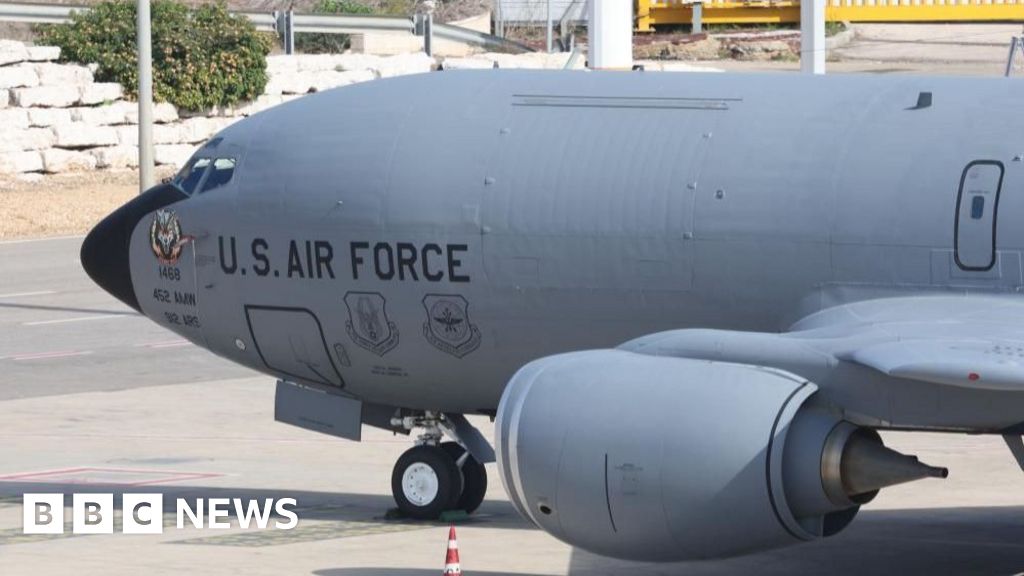
Four crew members killed after US refuelling plane crashes in Iraq
The US Central Command says rescue efforts continue after a refuelling aircraft went down over western Iraq.
Source link
Stay informed and up-to-date with the latest news from around the world. Our comprehensive news coverage brings you the most relevant and impactful stories in politics, business, technology, entertainment, and more.
The US Central Command says rescue efforts continue after a refuelling aircraft went down over western Iraq.
Source link

Who: Real Madrid vs Elche
What: Spanish football’s La Liga
Where: Bernabeu Stadium in Madrid, Spain
When: Saturday, March 14 at 9pm (20:00 GMT)
How to follow: Al Jazeera Sport’s live coverage begins at 17:00 GMT
After stuttering and spluttering in Spain’s La Liga of late, Real Madrid stormed back into life with a resounding win in the UEFA Champions League in midweek.
list of 4 itemsend of list
Now the record La Liga winners return their focus on catching league leaders, and defending champions, Barcelona, in the Spanish top flight.
Elche arrive in Madrid with major concerns of their own, sitting one place above the relegation zone.
Al Jazeera Sport takes a closer look at the game.
Barcelona are four points clear of Real, having both played 27 matches. Barca have won 22 of their matches and lost four, while Real have lost that same number but have only won 20, drawing two more games than their rivals.
Barcelona entertain 14th-placed Seville on Sunday, meaning Real can cut the lead to just a point if they beat Elche.
The turbulent time that marked the end of Xabi Alonso’s spell as Real manager appeared to return in recent weeks, with Los Blancos losing two on the bounce in La Liga for the first time this season.
With a tricky trip to Celta Vigo following the defeats by Osasuna and Getafe, Real’s title challenge appeared on the line.
A 2-1 win in Vigo, thanks to goals from Aurelien Tchouameni and Federico Valverde, last Friday cut Barca’s lead at the top to only a point, only for the Catalan club to restore their advantage with a 1-0 win at Athletic Bilbao on Saturday.
Los Blancos had won 13 of their opening 14 games in all competitions this season, only dropping points in the 5-2 defeat in the Madrid derby at Atletico.
The two wins in eight that followed set the tone for the remainder of Alonso’s time in charge, even five wins on the bounce thereafter couldn’t save the former Real midfielder from the chop, with the end coming following the Spanish Super Cup final 3-2 defeat by Barcelona.
Interim head coach, Alvaro Arbeloa, endured a torrid start – with a humiliating 3-2 defeat at Albacete in the Copa del Rey, but won the next five league games on the bounce to renew hope of catching Barcelona.
Elche were unbeaten in their opening seven games of the season, all in the league, winning four.
A seven-match winless run followed in La Liga, plunging the Alicante-based club into the relegation scrap.
Their latest winless run stretches to 11 matches – 10 in La Liga – with seven defeats in that time and only four league points snared.
Eder Sarabia’s side are now just one point and one place above the bottom three and are the only side in the competition yet to win away from home this season – losing nine of their 13 games on the road.
Real’s season was given a welcome boost in midweek with a resounding 3-0 win against Manchester City – led by former Barcelona manager Pep Guardiola – in the first leg of their UEFA Champions League round-of-16 tie.
Valverde, who netted the winner last weekend in Vigo, scored a first-half hat-trick to hand Los Blancos a significant advantage heading to Manchester for the return fixture.
Elche were defeated 2-1 at Villarreal in La Liga last Sunday, in what was their fifth consecutive defeat on their travels.
The last four of those came in the league, while the run began with their Copa del Rey exit at Real Betis.
Leo Petrot had given Elche the lead in the 58th minute, but a double from Chimy Avila turned the game.
Elche are yet to keep a clean sheet on their travels in the league this season. In the 13 games on the road, they have conceded 26 goals – but, on a more optimistic note, they have managed to score in all but two of those games.
Elche secured a valuable point in a 2-2 draw in the reverse match against Real in La Liga this season.
Aleix Febas and Alvaro Rodriguez twice gave the home side the lead, the latter netting in the 84th minute, but Dean Huijsen and Jude Bellingham twice levelled for Los Blancos, before Victor Chust was sent off for the home side in injury time.
Real were 3-0 winners in this fixture in October 2022, with Federico Valverde, Karim Benzema and Marco Asensio netting the goals.
Los Blancos took the reverse fixture 4-0 in February 2023.
It has been a long wait for Elche to come away with the spoils in this fixture, with their last win – a 3-1 victory – coming in 1978.
The teams have met 54 times, with Real winning 35 of the encounters. Elche have emerged victorious on six occasions.
All six of Elche’s victories have come at home.
Kylian Mbappe’s absence remains Real’s major frustration, but the French striker heads a long list of absentees.
Ferland Mendy is a major doubt, having been forced off in the victory against Manchester City due to injury.
The defender could join Mbappe, Eder Militao, Jude Bellingham, Dani Ceballos and Rodrygo on the sidelines
Franco Mastantuono is suspended for the game, but Alvaro Carreras and David Alaba are both close to shaking off calf injuries.
Hector Fort, who is on loan from Barcelona, is out with a shoulder injury.
Pedro Bigas and John Donald are both injury doubts and face late fitness tests.
Courtois; Carvajal, Asencio, Huijsen, F Garcia; Valverde, Camavinga, Tchouameni; Guler; Vinicius, Brahim
Dituro; Chust, Affengruber, Petrot; Josan, Febas, Aguado, Valera; Neto; A Silva, Rodriguez
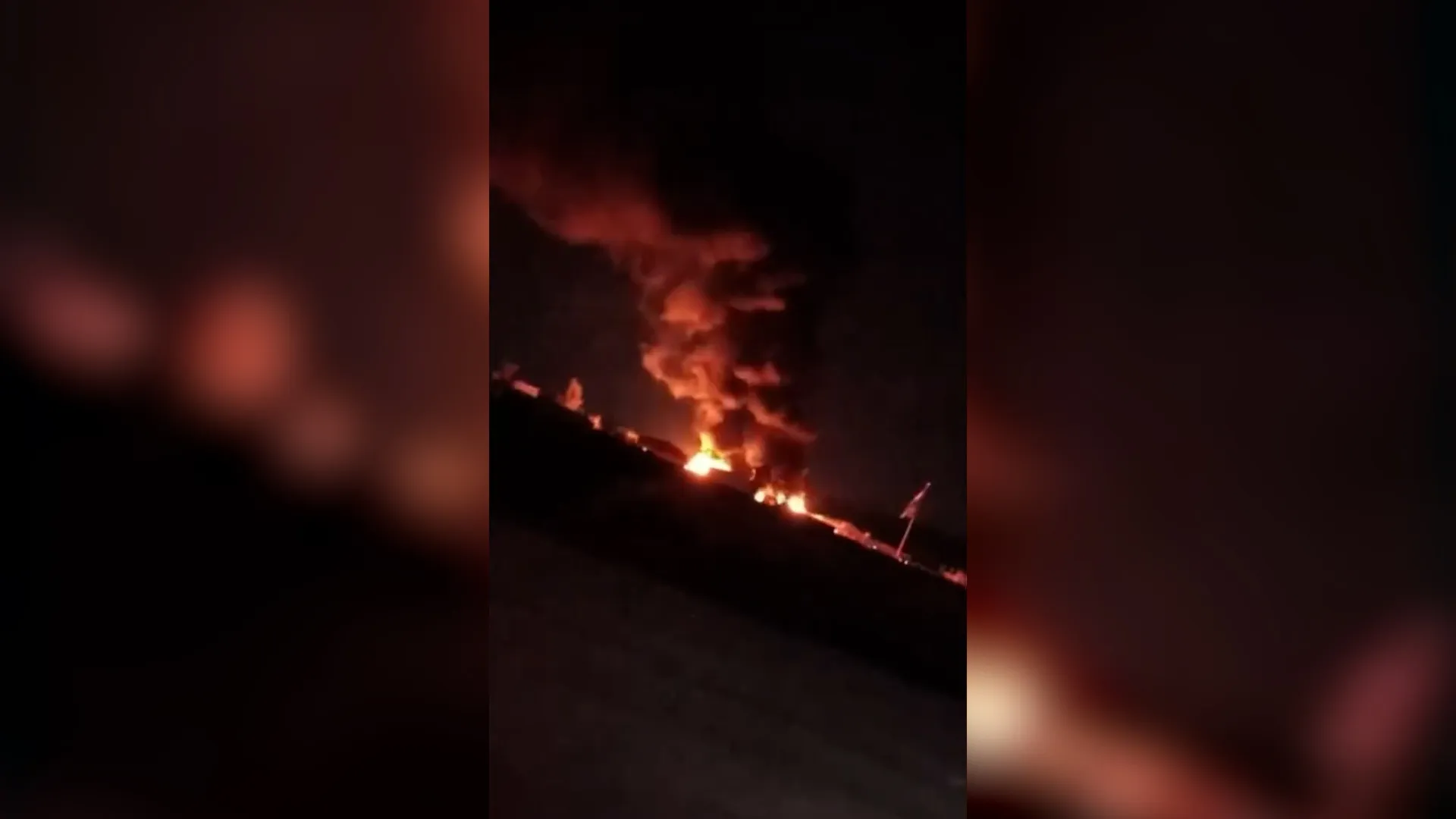
A drone attack on a joint French-Kurdish base in northern Iraq has killed one French soldier and wounded several others. Iran-aligned armed groups have been carrying out attacks against US and coalition forces in the region.
Published On 13 Mar 202613 Mar 2026
Share

Heavy Israeli strikes have hit Tehran, Iran, as its allies launch attacks across Gulf states, and shipping through the Strait of Hormuz has been severely disrupted, sending global oil prices soaring.
Meanwhile, political pressure is mounting in Washington as the conflict spreads across the region.
list of 1 itemend of list
Here is what we know about what has been happening in the past 24 hours:
Supreme leader speaks: Appointed last week following the assassination of his father, Iran’s new Supreme Leader Mojtaba Khamenei has issued his first statement, warning that attacks on Israel and US military assets and infrastructure in the Middle East will continue unless bases hosting US forces in the region are closed.
Heavy strikes on Tehran: The Israeli military has launched a new “extensive wave” of air attacks on Iran’s capital, Tehran, leaving the city covered in thick smoke on Friday morning.
Strait of Hormuz closure and surging oil prices: The Strait of Hormuz, which connects the Gulf to the Gulf of Oman, is closed, causing Brent crude oil prices to surge past $100 per barrel. The strait, which falls into the territorial waters of Iran and Oman, is the only waterway to the open sea available to oil and gas producers in the Gulf. Iran has stated that the strait is under Iranian control and US-and Israel-linked ships are banned. Other vessels must receive Iranian permission to pass.
Civilian casualties: Iran’s ambassador to the United Nations, Amir Saeid Iravani, said at least 1,348 civilians have been killed, with victims ranging in age from eight months to 88 years old.

Regional retaliation and attacks: Iran has launched waves of drones and missiles towards Gulf countries that host US military assets and troops, and has targeted oil tankers and facilities.
Bahrain: The nation has reported intercepting 114 missiles and 190 drones since the war began on February 28.
Saudi Arabia: The country intercepted 10 drones over its eastern region and later destroyed an additional 28 drones that breached its airspace.
Attacks on the UAE: The country has strongly condemned Iranian strikes on the region, and said they have hit Dubai International Airport and some hotels.
Evacuations: Australia has ordered all “non-essential” officials to leave the United Arab Emirates and Israel, and urged its citizens to evacuate the Middle East while it is still safe to do so
Qatar’s response: Qatar’s airspace is officially closed, but Qatar Airways has scheduled more than 140 special flights to help repatriate stranded residents and citizens.
Qatar has strongly rejected Israeli media claims that it intentionally paused liquefied natural gas (LNG) production to manipulate US energy prices; officials clarified that the suspension was actually forced by an Iranian drone attack.

Trump claims war moving ‘rapidly’: US President Donald Trump told reporters the war against Iran was moving “very rapidly”.
“It’s doing very well, our military is unsurpassed,” he said at the White House, not directly responding to the latest comments from Iran’s new supreme leader.
Domestic opposition: More than 250 US organisations have signed a letter calling on Congress to halt funding for the war. They argue the $11.3bn spent in the first six days of the conflict is diverting crucial funds from urgent domestic needs, such as food benefits.
No ‘need’ for ground troops in Iran: US Senator Lindsey Graham has played down the possibility of US troops being deployed to Iran, but suggested the war could continue for some time. “I don’t see this conflict ending today,” the Republican senator told reporters in Washington, DC.

New missile wave launched at Israel: The Israeli military said early on Friday that Iran had fired a new barrage of missiles towards Israel, and instructed people in affected areas to head to shelters.
Israel strikes Basij force: Israel’s military said it had struck checkpoints set up in Tehran by the Basij force of Iran’s Revolutionary Guards as part of efforts to undermine control by the authorities.
Regime change: Israeli Prime Minister Benjamin Netanyahu said Israel can create conditions for regime change, but it is up to Iran’s people to take to the streets. He also said Israel is aiming to stop Iran from moving nuclear and ballistic projects underground.
Downed US aircraft: A US KC-135 refuelling aircraft crashed in western Iraq. While the Islamic Resistance in Iraq claimed it shot the aircraft down using air defence systems, US Central Command (CENTCOM) stated the aircraft went down in “friendly airspace” and was not the result of hostile fire.
Iraqi port closures: Iraq has shut its port operations after an Indian crew member was killed during an attack on a US-owned oil tanker in Iraqi waters.
Six French soldiers hurt: A drone attack wounded six French soldiers in Erbil, in Iraq’s autonomous Kurdish region, President Emmanuel Macron said on Thursday.
Deadly attacks in southern Lebanon: Israeli bombardments continue on southern towns and villages. A strike on the village of Arki, near Sidon, killed nine people, including five children.
Mounting death toll and mass displacement: Lebanese officials have reported that at least 687 people have been killed in Israeli attacks on Lebanon since last Monday, including 98 children. The intense bombardments have displaced an estimated 700,000 to 750,000 people from their homes.
Women and children were among those killed in the attacks, according to the Taliban.

Published On 13 Mar 202613 Mar 2026
Share
Afghanistan’s Taliban government has accused Pakistan of targeting civilian homes in overnight air attacks in the capital Kabul and the southern province of Kandahar, as fighting between the two neighbours entered its third week, overshadowed by the United States-Israel war on Iran igniting the middle East.
Women and children were among those killed in the attacks, according to the Taliban.
list of 3 itemsend of list
Government spokesman Zabihullah Mujahid said on X Friday that Pakistan’s aircraft also struck fuel depots belonging to the private airline Kam Air near Kandahar airport.
There was no immediate comment from Pakistan’s military or government.
Calls for restraint from the international community have gone unheeded by both sides.
On Thursday, the Taliban government said four members of the same family, including two children, were killed by Pakistani artillery and mortar fire in eastern Afghanistan.
The deaths reported on Thursday brought the toll to seven people killed in Afghanistan since Tuesday in cross-border clashes, according to authorities in Kabul. That could rise with the latest attacks on Friday.
Fighting between the two countries intensified on February 26 when Afghanistan launched an offensive along their shared border in retaliation for earlier Pakistani air attacks on the Pakistan Taliban, just two days before the US and Israel attacked Iran, starting a sprawling regional war.
Pakistan maintains that it does not target civilians, and casualty claims from both sides are difficult to verify independently.
Islamabad accuses Kabul of harbouring fighters from the Pakistan Taliban, which has claimed responsibility for a series of deadly attacks inside Pakistan, and from the ISIS (ISIL) affiliate in Khorasan province. Afghan authorities deny the charge.
The United Nations mission in Afghanistan has said 56 civilians have been killed there, including 24 children, by Pakistani military operations from February 26 to March 5.
Pakistani officials have confirmed about 12 soldiers were killed and 27 wounded in the latest bout of fighting, while the Taliban claims to have killed more than 150.
About 115,000 people have been forced to leave their homes, according to the UN.
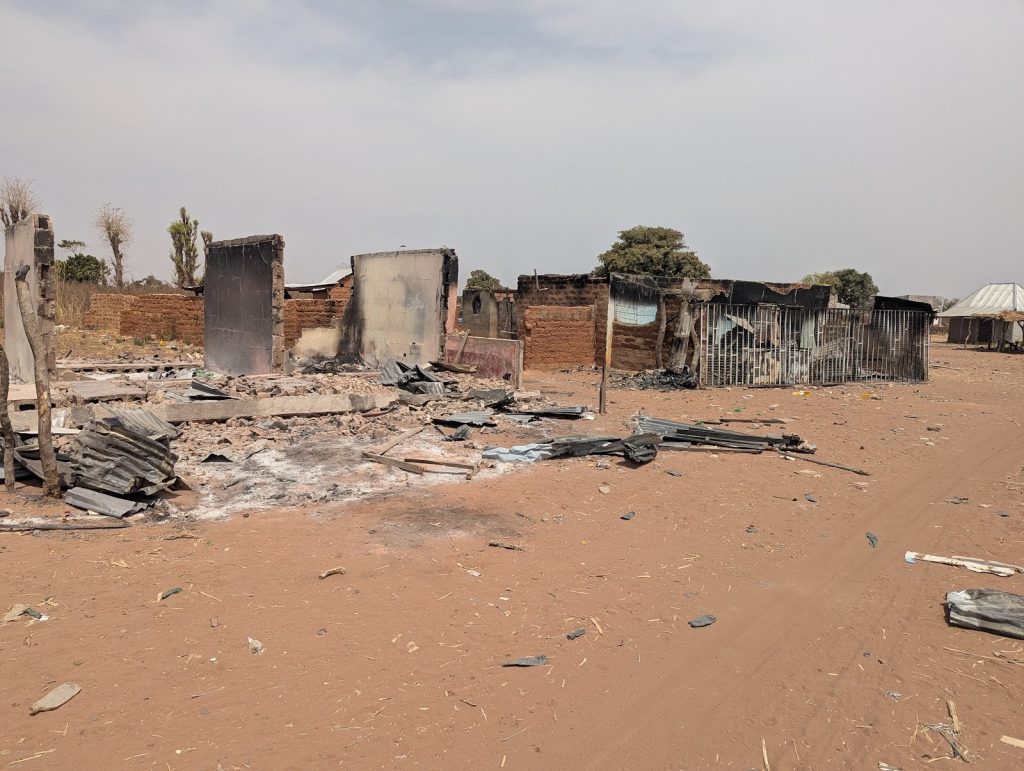
Kasuwan Daji, once a bustling village, now lies in haunting silence.
The aftermath of the Jan. 3 terror attack has stripped the community and market of their familiar rhythm, leaving behind charred homes and empty streets.
In the village market, located in the Borgu Local Government Area of Niger State, North Central Nigeria, where voices once mingled in trade and laughter every Wednesday, only the wind now moves through its abandoned, burnt makeshift tents.
When HumAngle visited the community in February, the village felt hollow, its people gone—either displaced, abducted, or buried.

Amid the ruins, Sule Amadu, an elderly man in his late 60s, moved slowly through the debris of his burnt house, searching for anything that might have survived the flames. He was dressed in the same clothes he wore on the day of the attack.

His quiet scavenging symbolised both survival and loss.
“I was at the farm when I first heard the roar of their motorcycles heading towards our village,” he recounted. “Moments later, they began shooting sporadically. In panic, I exclaimed, ‘Innalillahi wa inna ilaihi raji’un’ [from God we are and to Him we shall return].”
Sule said the violence was relentless, as the terrorists aimed their bullets directly at people.
“Those who tried to run were chased down by terrorists on motorcycles. Two of them rode together—one driving, the other firing at random. What was our crime?” he added, his voice carrying both grief and bewilderment.

State authorities said no fewer than 30 people were killed in the attack. However, eyewitnesses who spoke to HumAngle say 57 people were buried that day, while 49 others were abducted, contradicting the official figures.
Sule narrowly escaped death. His younger brother was killed, and nine of his grandchildren and his son’s wife were abducted that day.
“When the terrorists stormed in, I was trying to bag my millet. One of them chased me while shooting, but by God’s mercy, I escaped the bullets. I ran and jumped into the river to save my life,” he said.
Sule was not alone in witnessing the chaos that engulfed Kasuwan Daji. HumAngle met another resident, Isa Mamman, who said he was among the first to notice the approaching attackers and raise the alarm in the community that day.

He recalled how the attack began and how quickly it unfolded.
Isa was alone in a nearby bush around 4 p.m. when he noticed heavy dust rising in the distance and the sound of motorcycles approaching. He immediately ran towards the community to raise the alarm, where he met another villager who was also fleeing. Isa learned from him that the attackers had stormed in from the market axis.
Within minutes, chaos engulfed Kasuwan Daji.
Gunshots echoed across the village as people screamed and scattered. Terrorists on motorcycles fired indiscriminately, chasing down those who tried to escape. Shops and homes were set ablaze, and the once-thriving market became a scene of devastation.
Just like Amadu, Isa narrowly survived, as he was shot at twice as he fled into the bush. From his hiding place, he watched helplessly as villagers were slaughtered and houses reduced to ashes.

The violence stretched into the night as Isa remained hidden, fearing an ambush, while the community lay in ruins.
“By dawn, when I came back to the community, lifeless bodies were scattered across the village, food storage facilities were destroyed, and every house and the market were burnt,” he said. That day, I escaped by God’s grace. I ran into the bush to hide, but I could still see what was happening. I saw our people being slaughtered like rams.”
Get our in-depth, creative coverage of conflict and development delivered to you every weekend.
Subscribe now to our newsletter!

Isa noted that, “There was no part of the community where we didn’t find dead bodies. Every house in Kasuwan Daji was set ablaze. Our market and storage facilities, where we kept food, were burnt down. We’ve all fled because we are terrified they might attack again.”
Field investigations conducted by HumAngle across the Kasuwan Daji, Wawa, and Babanna areas of the Borgu LGA of Niger State, in February show that terrorist factions are now entrenched in and around the Kainji Lake National Park axis.
Terror groups such as Mahmudawa (Mahmuda faction), Lakurawa, elements of Ansaru, and Jama’atu Ahlis Sunna Lidda’awati wal-Jihad (JAS) led by Sadiku and Umar Taraba, as well as a newly emerged cell affiliated with Jama’at Nusrat al-Islam wal-Muslimin, have turned the Kainji Forest Reserve into a safe haven.
These groups operate in interconnected networks rather than in isolation, exploiting local cover to conceal their movements. They conduct attacks in distant areas before retreating to established hideouts within the park’s surrounding communities.
Kasuwan Daji is situated within this geographic corridor and has become a focal point due to its depth, accessibility, and lack of security presence. It sits about 14 kilometres from the Saint Mary’s Catholic School, where some schoolchildren were abducted in Nov. 2025.
The largely ungoverned terrain provides violent groups with mobility, supply routes, and escape paths across state and national boundaries. This strategic advantage has made the area increasingly attractive to extremist factions seeking to expand their operational reach.
Recent incidents in Niger State and adjoining areas — including coordinated assaults on villages and high-profile abductions — have heightened concerns that extremist networks are embedding themselves beyond the country’s North East, their traditional stronghold. Their spillover into villages such as Kasuwan Daji, Agwara, Babanna, and Kaiama LGA of Kwara State underscores the emergence of a hybrid threat ecosystem in which ideology, criminal enterprise, and local grievances converge to reinforce instability.
This evolving dynamic positions Kainji not only as a local security challenge but also as a critical node in the broader extremist landscape of the North Central region.
The Kasuwan Daji attack of Jan. 3 was not the first.
Months before, precisely in September 2025, residents told HumAngle that terrorists had entered the community and abducted several of its most significant figures. Among them was Usman Jatau, the village head, along with five others: Ibrahim Jatau (zone chair of Kambari), Anthony Yakubu Takura (youth leader), Mathew Ibrahim (head of vigilante), David (businessman), and Abu Agwara.


To date, none of them has been heard from, a situation that has left families in anguish and the community without its leadership.
After the abduction, Ajikali Jatau, the brother of the village chief and head of the Kasuwan Daji market, said the same attackers returned with greater brutality.
“This time, their intent seemed clear—to wipe out the community. Villagers were slaughtered mercilessly, some tied with their hands behind their backs before being killed,” Ajikali told HumAngle. He believes the market was deliberately attacked because of its boom and constant business activities.


Ajikali told HumAngle how the market itself had its own history of struggle.
“Before establishing Kasuwan Daji, we used to trade at Sokomba market every Wednesday. But after two young men from our tribe [Kambari] were killed and burnt there in broad daylight, we decided to stop going there.
“One of the victims had tried to escape but was shot dead. The repeated harassment and targeting forced us to request that the market be moved somewhere else, but after several futile efforts, we created our own,” he revealed.

For seven years, Kasuwan Daji market thrived, residents say, as they paid revenue to the local government—until it was reduced to ashes in the January attack.
More than 300,000 people have been displaced across 10 LGAs in Niger State, including residents of Kasuwan Daji, according to Governor Umaru Mohammed Bago.
Hajara Shuaibu, a resident of Kasuwan Daji, is one of them. Her husband, Malam Shuaibu, a farmer, had made the village his home, cultivating produce with his family and planning to relocate there permanently. When the terrorists struck, Hajara’s world collapsed. Two of her younger brothers were kidnapped along with her husband’s other wife and daughter, forcing the family to flee to Papiri, a 14-kilometre drive from Borgu to Agwara LGA of Niger State, in search of refuge.

Before arriving at Papiri, Hajara said she and her children hid in the bush for three days, waiting for the violence to subside.
“Our house was burnt to the ground, along with our belongings and food supplies. About two truckloads of grains and groundnuts that were harvested by my husband were destroyed in the fire, erasing our year-long hard work in a single night,” she said.
Days later, her brother’s wife managed to escape captivity, only to return with devastating news: her husband [Hajara’s brother] and several others who had been abducted had been killed.
The terror was felt even among the youngest.
Suleiman, Hajara’s four-year-old grandson, was among the abducted persons from the attack but was later abandoned in the Gallah area of Agwara LGA, near the house of the village chief.

His cries were said to be so persistent that the attackers eventually dropped him off before leaving with the other captives.
Hajara said that the joy at seeing him [Suleiman] alive was quickly overshadowed by grief, as she remembered her slain brother and relatives still in captivity.
In the aftermath of the Jan. 3 attack, the Niger State Governor described Kasuwan Daji as a “market of thieves”, claiming that the community had become notorious for the sale of rustled cattle. He made the remarks during a condolence visit to the Emir of Borgu.

Adding to the despair, he instructed the survivors to leave the Kasuwan Daji village altogether, even though no plans were announced for their relocation or resettlement, leaving families displaced, vulnerable, and uncertain of their future.
However, survivors of the attack strongly refuted the governor’s framing.

Ajikali, brother of the village chief and leader of the now-destroyed market, told HumAngle, “We are not thieves. We are hard-working people, and the emirate is aware of us and our market. We are farmers—that is our business and what we are known for. We do not deal in the cattle business, so how can we be called thieves?”
Sule also echoes this rejection of the governor’s claim: “I strongly disagree with the governor’s assertion that our market is ‘a market of thieves.’ We do not sell cows in Kasuwan Daji, yet he accuses us of selling rustled cows. He’s been misled by those around him.”
“The only thing I want is to have my grandchildren back. Even if they [terrorists] demand ransom, I have nothing to give except the clothes I am wearing. They burnt everything I owned—my food, my savings, and my animals were stolen,” he noted.
The Niger State Commissioner for Homeland Security, Bello Maurice Magaji, while reaffirming the government’s commitment to tackling insecurity through intelligence gathering and grassroots collaboration, also defended the governor’s branding regarding activities at the market, stressing that it was based on verified intelligence.
“We are adopting an intelligence-gathering strategy to understand the patterns of these crimes and attacks so that we can tackle the situation head-on,” the commissioner told HumAngle. He noted that the government is also engaged in advocacy to help citizens recognise early warning signs that may not have been obvious in the past.
“Also, I believe that whatever information was released by His Excellency is based on facts that were made available. Our government does not simply go out to brand or profile people based on unverifiable information. Our government is too serious to speculate or issue statements without evidence. Therefore, we stand firmly by what the Governor said about the market,” he stated.
Investigation by HumAngle revealed that there are two markets with the same name: Kasuwan Daji. One is situated in Niger State, North-Central, and another in the Kauran Namoda area of Zamfara State, in northwestern Nigeria.
Further checks also indicate that Kasuwar Daji Market in Kaura Namoda local government area of Zamfara State, is a popular hub for cattle rustling. Terrorists, in January, stormed the market and rustled over 500 cattle.
Aminu Garba, Chairman of the Cattle Breeders Association of Nigeria in the state, told journalists that the operation was not an isolated incident noting that similar attacks have occurred in the past, with one recorded about four years ago.
He explained that the terrorists infiltrate the market and nearby villages during the day, monitoring livestock transactions before striking.
It is not impossible that the Niger State government is mistaking one Kasuwan Daji for the other.
For Isa Mamman, another survivor of the attack in Niger State, the governor’s words add insult to injury. He explains that he and Amadu stayed behind in the community because they had nowhere else to go, even as their livestock was rustled and nearly fifty women and children were abducted.
“It has been almost two months since the attack, yet nothing has been done. Neither the state governor nor the district head of Kabe has visited our community. Instead, we were insulted and labelled as thieves. We pay revenue to the government, yet they claim our market is illegal. Now, we have no food, no peace, and countless lives have been lost, and nothing has been done.”
The Israeli military has dropped charges against five soldiers, whose alleged sexual abuse of a Palestinian detainee was caught on camera. The video caused international outrage but also led to protests in support of the soldiers in Israel.
Published On 13 Mar 202613 Mar 2026
Share

The sequel brings back the co-directors of the first film, which was a smash-hit for the streaming service.
Source link
The TWZ Newsletter
Weekly insights and analysis on the latest developments in military technology, strategy, and foreign policy.
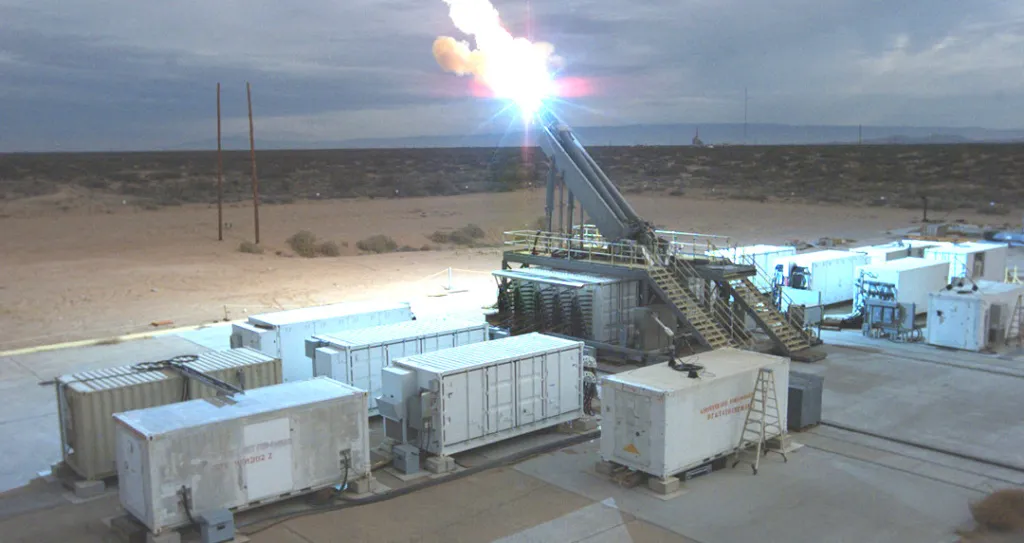
The U.S. Navy has conducted at least one new round of live-fire tests of its prototype electromagnetic railgun at the White Sands Missile Range (WSMR) in New Mexico. The service had shelved its railgun effort in the early 2020s, at least publicly, after work that had shown promise ran into technical hurdles. A railgun is now set to be a key feature on the future Trump class “battleships.”
A brief mention of the new railgun testing is included in a document highlighting achievements by the Naval Surface Warfare Center, Port Hueneme Division (NSWC PHD) in 2025. NSWC PHD, which is part of Naval Sea Systems Command (NAVSEA), primarily operates from Port Hueneme in California, but it also maintains a detachment at White Sands. The U.S. Army manages the WSMR, which other branches of the U.S. military also use for a wide variety of research and development and test and evaluation activities.
The “WSD [White Sands Detachment] tested a railgun to collect critical information about high-velocity firing during a three-day campaign at White Sands Missile Range (WSMR) in New Mexico,” the year-in-review document says. “The testing in February [2025] was a joint effort between WSD and NSWC Dahlgren Division in Virginia and conducted for Naval Sea Systems Command (NAVSEA)’s Joint Hypersonics Transition Office.”

The railgun had originally been installed at a land-based test site belonging to NSWC Dahlgren in Virginia. The Navy announced in 2019 that it had moved the weapon to the WSMR. Plans to conduct at-sea testing of the weapon were repeatedly delayed and never materialized.
TWZ has reached out to NAVSEA for more information about the three-day test campaign last year and its objectives, and to ask whether any other live-fire testing of the prototype railgun at WSMR has occurred since 2021. That year, the Navy had announced its intention to close out work on the railgun and effectively put what was left of the program into storage.
“Railgun hardware will be realigned to maximize its sustainability to facilitate potential future use,” the Navy had said at the time. However, there do not appear to have been any disclosures of further testing of the weapon before now.
The video below shows the prototype railgun being fired at the test site in Virginia in 2016.

Electromagnetic Railgun – First shot at Dahlgren’s new Terminal Range
Without more information, it is hard to say what the purpose of the February 2025 tests may have been. That the testing was done in support of the Joint Hypersonics Transition Office (JHTO) could point to the railgun having been used for work unrelated to the weapon itself. Established in 2020, the JHTO is broadly tasked to facilitate the development of new hypersonic technologies and help transition that work into formats that could lead to operational capabilities. As a pure test asset, the railgun might offer an additional way to launch suitably sized payloads at extremely high speeds, but there are other ways available to do that kind of work, and it is not clear that using the weapon in this way makes sense. The U.S. military has been working to expand various aspects of its hypersonic test infrastructure, in general, in recent years amid a surge in new development efforts in that space.
At the same time, as noted, the Trump class “battleship” effort, also known as BBG(X), has also now breathed new life into the prospect of an operational U.S. naval railgun. President Donald Trump rolled out plans for new large surface combatants, which are expected to displace around 35,000 tons and also be armed with a mix of missiles (including hypersonic types), traditional 5-inch guns, and laser directed energy weapons, as you can read more about here.

Whether the Navy has any plans to pick up where it left off with the railgun prototype currently at WSMR, which was developed by BAE Systems, or pursue a new design, is unclear. General Atomics, which has done railgun development work for the U.S. Army in the past, has expressed interest in being involved in helping arm the Trump class warships. Construction of the lead ship in the Trump class, to be named USS Defiant, is not expected to begin until the early 2030s.

General Atomics – Multi-Mission Medium Range Railgun Weapon System [1080p]
Railguns, which use electromagnets rather than chemical propellants to fire their projectiles at very high velocities, have historically presented significant technological challenges. They have significant power and cooling requirements, especially if the intent is to be able to fire multiple shots in relatively rapid succession. This, in turn, has generally meant that railgun installations are physically bulky due to the need for large energy storage batteries and cooling systems. Firing projectiles at very high speeds at any kind of sustained rate also imparts significant wear on the barrel. A worn-out barrel reduces range and accuracy, and creates potential safety hazards.

Electromagnetic Railgun Firing Hypervelocity Projectile @ Mach 7
At the same time, a practical operational electromagnetic railgun offers the promise of a very capable and flexible weapon that can be employed against a wide variety of targets at sea, on land, and even in the air, and do so at considerable range. This includes being able to intercept incoming threats, including ones that may themselves be moving at hypersonic speeds. A railgun also offers magazine depth and cost benefits compared to traditional surface-to-air and surface-to-surface missiles, given the smaller size and unit price of its rounds.

As an aside, just in the past year, Japan has announced significant progress with its naval railgun program, including the first known instance of a railgun mounted on a ship being fired at sea at a real target vessel. In 2024, it was reported that Japanese authorities had met with U.S. Navy representatives to discuss leveraging the latter’s previous railgun work, which raised the possibility of further collaboration in the future. Japan’s Acquisition Technology & Logistics Agency (ALTA) also has a formal agreement with the Franco-German Research Institute of Saint-Louis (ISL) to cooperate on the development of railgun-related technologies.

The ATLA video below shows previous live-fire testing of a prototype railgun at a facility on land.

試作レールガンの射撃
Other countries have also been pursuing railguns, particularly for naval use. A prototype railgun mounted in a large turret notably appeared on a People’s Liberation Army Navy (PLAN) ship in 2018, though the exact status of that program is now unclear. There has also been a very public naval railgun development program underway in Turkey in recent years.


Turkish electromagnetic railgun unveiled to experts – Anadolu Agency
If nothing else, the test firing of the Navy’s prototype railgun at the WSMR last year shows that it remains functional, at least to a degree, as the service now looks ahead to fielding an operational weapon of this type on the Trump class.
Special thanks to user @lfx160219 on X for bringing the railgun entry in the NSWC PHD 2025-year-in-review document to our attention.
Contact the author: joe@twz.com




A United Nations fact-finding mission has concluded that “there are no indicators of structural reforms or change” to improve the human rights situation in Venezuela, despite the removal of its leader in January.
On Thursday, a member of the fact-finding mission, Maria Eloisa Quintero, delivered remarks (PDF) to the UN Human Rights Council questioning whether Venezuela’s leadership would face accountability for its record of human rights abuses.
list of 3 itemsend of list
She also pointed to ongoing abuses under the government of interim President Delcy Rodriguez, who was sworn into office on January 5.
“Civic and democratic space remains severely restricted. Civil society organizations, the few remaining independent media outlets, and political actors continue to face attacks, harassment or intimidation,” Quintero wrote in her statement.
“The prospects for full guarantees necessary for free and democratic elections remain remote.”
All told, the fact-finding mission found that at least 87 people have been detained since January.
Fourteen of them were journalists who were temporarily taken into custody while covering Rodriguez’s inauguration, and another 27 were reportedly arrested for celebrating the fall of Rodriguez’s predecessor, Nicolas Maduro.
The fact-finding mission revealed that at least 15 of the recent arrests involved children.
Its report was one of the first international assessments of human rights under Rodriguez’s nascent presidency.
She took office after the United States launched a military operation in the early morning hours of January 3 to abduct Venezuela’s then-President Maduro. Previously, Rodriguez had served as Maduro’s vice president.
Maduro and his wife Cilia Flores currently remain imprisoned in New York, where they face charges of drug trafficking and weapons possession.
The US has backed Rodriguez’s ascent to the presidency. Both her government and that of US President Donald Trump have said there is no immediate plan to hold a new election in Venezuela, citing the need for stability.
Quintero emphasised that it was the view of the fact-finding mission that the US operation “violated international law”, echoing the legal consensus.
“While the Mission has reasonable grounds to believe that Nicolas Maduro is responsible for crimes against humanity committed against the civilian population, this does not justify an unlawful military intervention,” Quintero wrote.
Her remarks also pointed out that, while Maduro may be gone, the rest of his government remains.
That government has faced repeated accusations that it perpetrated violence against members of Venezuela’s political opposition and others deemed critical of the country’s socialist leadership.
“The legal instruments that have long served as a basis for political persecution remain fully in force,” Quintero said.
“State institutions that played a key role in the repression — and which have been identified in previous Mission reports — have not been reviewed or reformed.”
Human rights groups have collected thousands of reports of arbitrary detention, as well as torture and extrajudicial killings, under Maduro, who served as president from 2013 until January.
Members of Venezuela’s opposition have also called for the removal of the existing government, which they say fraudulently claimed victory in the 2024 presidential race, despite vote tallies indicating otherwise.
At first, Quintero said the fact-finding mission found that developments under Rodriguez “initially appeared encouraging”.
She pointed to “positive” steps like the release of political prisoners and passage of an amnesty law that would lift criminal penalties for dissidents facing certain criminal charges.
But the benefits of those steps, she said, were mitigated by irregularities. The amnesty law was narrow in scope — only addressing certain accusations, made within a specific time range — and the bill never received a full, public reading.
Meanwhile, the government has claimed to release more political prisoners than has actually been verified by local human rights groups.
Quintero added that the fact-finding mission also found that 30 officials from Venezuela’s Scientific, Criminal and Forensic Investigations Corps (CICPC) — part of the national police agency — were detained for failing to produce false evidence about the US’s attack on January 3.
Their family members, she indicated, also faced government retaliation. The fact-finding mission called for more changes to be made to address the continued human rights abuses.
“A far deeper and more enduring transformation is required so that the population can trust that the long years of repression and violence have truly come to an end,” Quintero wrote.
Instead, she warned that the existing “machinery” of repression is simply “mutating” to adapt to the new reality in Venezuela, post-Maduro.

The TWZ Newsletter
Weekly insights and analysis on the latest developments in military technology, strategy, and foreign policy.
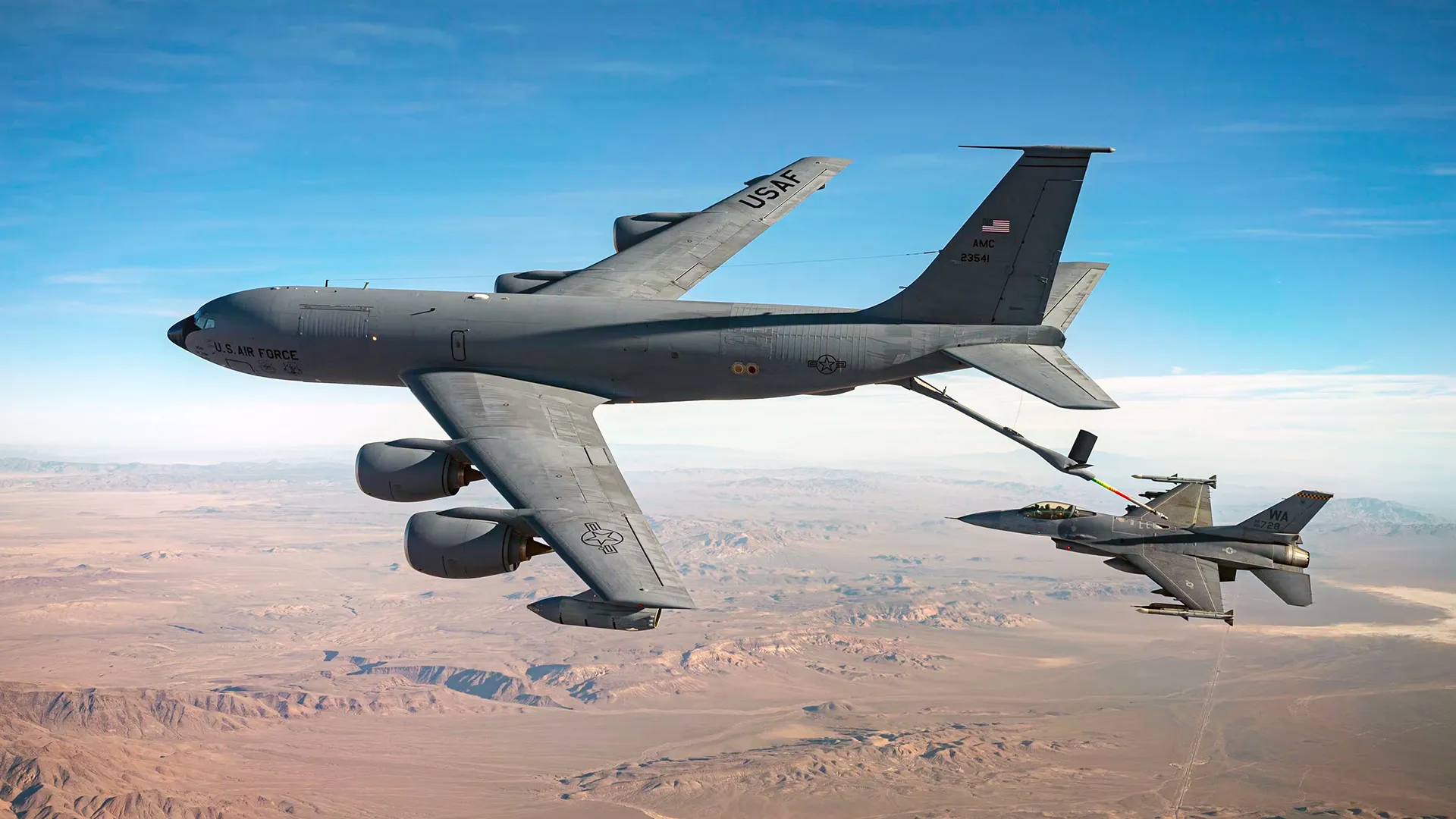
A KC-135 Stratotanker that was taking part in Operation Epic Fury has crashed in Iraq, U.S. Central Command announced.
“U.S. Central Command is aware of the loss of a U.S. KC-135 refueling aircraft,” the command stated Thursday afternoon in a media release. “The incident occurred in friendly airspace during Operation Epic Fury, and rescue efforts are ongoing. Two aircraft were involved in the incident. One of the aircraft went down in western Iraq, and the second landed safely.”
“This was not due to hostile fire or friendly fire,” the CENTCOM statement added. “More information will be made available as the situation develops. We ask for continued patience to gather additional details and provide clarity for the families of service members.”
U.S. Central Command is aware of the loss of a U.S. KC-135 refueling aircraft. The incident occurred in friendly airspace during Operation Epic Fury, and rescue efforts are ongoing. Two aircraft were involved in the incident. One of the aircraft went down in western Iraq, and the…
— U.S. Central Command (@CENTCOM) March 12, 2026
Three American crewed aircraft are known to have been lost during Operation Epic Fury prior to today’s KC-135 loss. These were F-15Es that were shot down in a bizarre friendly fire incident.
This is a developing story. We will update this post with new information as soon as we get it.
UPDATE: 6:15 PM EDT –
The Times of Israel has reported that the second aircraft involved was another KC-135. That outlet also says that the KC-135 in question was one that landed at Israel’s Ben Gurion Airport earlier in the day after declaring an in-flight emergency. Online flight tracking data shows that tanker is a KC-135RT variant, one of a small subset of KC-135Rs that are themselves capable of being refueled in flight. This, in turn, allows them to make use of tanker support themselves to remain on station longer or to conduct longer-distance missions. You can read more about these “receiver-tankers” in this past TWZ feature.
The second tanker involved in the incident landed at Ben Gurion Airport earlier this evening. The aircraft had sent a “squawk code” of 7700, an international emergency signal, according to flight tracking data.
— Emanuel (Mannie) Fabian (@manniefabian) March 12, 2026
The loss of a KC-135 today appears to be the first time one of these tankers has crashed in support of combat operations since May 3, 2013, when one went down over Northern Kyrgyztan, killing all three crew aboard. That aircraft had been supporting operations over Afghanistan.
This is the first loss of a KC-135 in support of combat operations since 3 May 2013 when KC-135 63-8877 of the 22nd ARW suffered a structural failure and crashed over Northern Kyrgyzstan after supporting operations in Afghanistan killing all 3 crew members. https://t.co/sn7G8itmwP
— TheIntelFrog (@TheIntelFrog) March 12, 2026
UPDATE: 7:09 PM EST –
Reuters also reports that the second aircraft was a KC-135 and added that the jet that crashed had six service members on board.
An official says the other aircraft, which is safe, was a KC-135. There were six service members onboard the aircraft which crashed. https://t.co/0AYR1TSjUu
— Idrees Ali (@idreesali114) March 12, 2026
Contact the author: howard@thewarzone.com

Chávez never shied away from self-criticism and taking responsibility for his actions. (Archive)
In these times when it is once again fashionable to accuse Commander Chávez of mistakes, whether real or imagined. As we mark 13 years since his untimely death on March 5, 2013, I would like to highlight the value of truth in his political actions. Truth was manifest in the responsibility he assumed for his actions; the consistency between his words and deeds; the acknowledgment of his own mistakes, when it is easier for most people to point out the mistakes of others; and his sincere efforts to correct them. To the above, I would add that when he had to make tactical and strategic shifts in the course initially set, Chávez always had the political honesty to explain in detail why he was doing so, and he courageously took responsibility for them before the people.
There are countless examples which can be found in many of his speeches. I will mention just a few. Beginning with the day of his introduction to the Venezuelan people, February 4, 1992: “Unfortunately, for now, the objectives we set for ourselves were not achieved in the capital city, that is, we here in Caracas did not manage to control power… And I, before the country and before you, take responsibility…” Then in the streets and in the 1998 election campaign: “Let’s go to the Constituent Assembly,” and on February 2, 1999, in what would be his first act of government, he signed the decree calling for the constituent process, and we went to the Constituent Assembly.
In April 2002, he surrendered to the coup leaders, without thinking about saving his own “skin”: “I am an imprisoned president; you decide what to do with me.” After his release, with a cross in his hand, he stated that “it was necessary for all sectors of the country to make a greater effort, with all the goodwill we can muster, to be able to live together in peace, accepting the rules of the game.”
In 2005, he called for the Bolivarian Revolution to take on a socialist character. In the 2006 election campaign, he said, “Let’s go for socialism!” and explained in detail why this strategic shift was necessary. He outlined the characteristics of our socialism, 21st-century Bolivarian socialism, which, as he insisted until his last public words, had to be “essentially democratic” or it would not be socialism at all.
In the elections of December 6, 2006, Commander Chávez obtained the highest number of votes and was re-elected. In December 2007, while awaiting the results of the referendum on constitutional reform and hearing reports of a close count, he called a meeting of the party leadership in Miraflores. I said to him at that meeting: “President, let’s wait for the final count, and if we lost, we lost, but if we won, we won.” He replied with a sharp look: “I don’t want a victory like that, let’s go out and acknowledge defeat now.” And that’s what he did.
In September 2010, we won a majority in the National Assembly. Without a doubt, it was a resounding political victory. But Chávez identified a warning sign: in quantitative terms, the difference in votes between Chavismo and the opposition was minimal. Once again, he assumed political responsibility. In January 2011, he published the “Strategic Lines of Political Action,” a deeply self-critical document.
Late May 2011, he told me: “Elías, I feel like something is wrong with me.” June 2011, after undergoing the necessary tests, on national television: “Cancer cells have been detected in my body.” Easter Week 2012, during a mass in Barinas, broadcast live: “We must be aware that I have an illness that limits my life… Christ, give me your cross.”
On the night of December 8, 2012, in a public address, he raised the possibility of not continuing among us and explained in detail the constitutional procedures that would have to be followed if he were to be permanently incapacitated. That day, once again, he decided to tell us the truth, no matter how hard it was:
Some colleagues told me it wasn’t necessary, or have said in recent hours that it wasn’t necessary to say this. In truth, I could have said almost everything I said tonight from Havana… But I believe that the most important thing, what my soul, my heart, and my conscience tell me, the most important thing… has been this, Nicolás. The most important thing.
“The most important thing”: telling the truth, explaining the reality to the people, the decision he had made, and the steps that needed to be taken.
But that political honesty was not just an individual value. It was the political conviction that the people formed a collective wisdom, a conscious body that knew how to understand and draw its own conclusions about situations. That is why he was so careful to keep them informed at all times.
I once heard him say: “There are those who say that you shouldn’t speak plainly to the people, because then the adversary will seize on that truth and manipulate it against you.” That, Chávez said, is to think that the people are mentally eunuchs. The people understand, more often than not, more than some leaders. For Chávez, speaking the truth was always a decisive show of trust and respect for the people.
And “most importantly,” it was also to make clear for posterity his conviction about the democratic path of the revolution he had led:
In all circumstances, we must guarantee the progress of the Bolivarian Revolution, the victorious progress of this revolution, building the new democracy that is here mandated by the people in the Constituent Assembly; building the Venezuelan path to socialism, with broad participation and ample freedom, which are being demonstrated once again in this gubernatorial election campaign, with candidates here and candidates there. Freedom, complete freedom.
With the power of truth, the truth of his project and his life, Chávez managed to accumulate immense political strength based on the moral autoritas he gained by never peddling falsehoods or shirking his responsibilities, much less in defeat or when he made mistakes. That same moral authority comes not only from consistency between words and deeds, but also from trying to act despite difficult circumstances as well as from recognizing and explaining when and why it is not possible to achieve a certain goal. I stand by that way of doing politics. With Chávez forever!
The views expressed in this article are the author’s own and do not necessarily reflect those of the Venezuelanalysis editorial staff.
Translated by Venezuelanalysis.
Source: CEDES

Washington, DC – In September, the United States began launching dozens of deadly military strikes against alleged drug-smuggling boats in the Caribbean Sea and eastern Pacific.
Nearly half a year later, remarkably little is known about the strikes. The identities of the nearly 157 people killed have not been released. Any purported evidence against them has not been made public.
list of 3 itemsend of list
But a group of United Nations and international law experts are hoping to change that on Friday, when they testify at the Inter-American Commission on Human Rights (IACHR).
The international hearing will be the first of its kind since the strikes began on September 2, and rights advocates hope it can help lead to accountability as individual legal cases related to the strikes proceed.
Steven Watt, a senior staff lawyer with the American Civil Liberties Union’s human rights programme, said the goal of the hearing will be threefold.
“Our ask will be to conduct a fact-finding investigation into what’s going on,” Watt said.
The second aim, he continued, would be “to assert or to arrive at a conclusion that there is no armed conflict here”, in what would be a rebuke to US President Donald Trump’s previous claims.
Finally, Watt said, he hopes the proceedings will yield long-sought transparency from the Trump administration on “whether or not they have a legal justification for these boat strikes”.
“We don’t think there are any,” Watt added.
The experts set to testify at Friday’s hearing said the IACHR has a unique mandate to uncover the truth behind the US strikes.
The commission, based in Guatemala City, Guatemala, is an independent investigative body within the Organization of American States, of which the US was a founding member in 1948.
While the Trump administration has claimed it has a right to carry out the deadly attacks as part of a wider military offensive against so-called “narco-terrorists”, rights groups have decried the campaign as a series of extrajudicial killings.
They argue that Trump’s deadly tactics deny those targeted of anything that approaches due process.
Legal experts have also dismissed Trump’s claims that suspects in drug-related crimes are equivalent to “unlawful combatants” in an “armed conflict”.
Few details have emerged from the air strikes. Several families have come forward, however, to informally identify the dead as their loved ones.
Victims are said to include 26-year-old Chad Joseph and 41-year-old Rishi Samaroo, who were sailing home to Trinidad and Tobago when they were killed in October, according to relatives.
A complaint filed against the US government said both men travelled often between the islands and Venezuela, where Joseph found work as a farmer and fisherman, and Samaroo laboured on a farm.
The family of Colombian national Alejandro Carranza, 42, have also said he was killed in September when the US military attacked his fishing boat off the country’s coast.
The US has yet to confirm the victims’ identities, and only two survivors have ever been rescued in the 45 reported strikes.
A clearer picture of what happened will be a significant step towards accountability, according to experts like Watt.
“[The IACHR] is uniquely positioned to identify who all these persons are,” Watt said. “We just know the numbers from the United States. We don’t know the names or the backgrounds of these people.”
The IACHR has launched a range of human rights investigations in recent decades, including probes into the 2014 mass kidnapping of 43 students in Iguala, Mexico, and a series of murders in Colombia from 1988 to 1991 dubbed the Massacre of Trujillo.
The commission has also examined US policies, including extrajudicial detentions at Guantanamo Bay, Cuba, during its so-called “global war on terror”.
The IACHR has the power to seek resolutions to human rights complaints or refer them for litigation before the Inter-American Court of Human Rights.
Just last week, the court ordered Peru to pay reparations to the family of a woman who died during a government-led forced sterilisation campaign in the 1990s.
The Carranza family has filed its own complaint to the IACHR, and the families of Joseph and Samaroo have also lodged a lawsuit against the US in a federal court in Massachusetts.
Angelo Guisado, a senior staff lawyer at the Center for Constitutional Rights (CCR), said a fuller accounting of the US actions is needed to prevent future abuses. He is among the experts testifying on Friday.
“You can’t normalise assassinating fishermen off the coast of South America,” Guisado told Al Jazeera. “That’s just sadistic and an abomination to the rules-based order that we’ve created.”
“So we hope that the commission can do some investigation.”
One of Guisado’s goals for Friday’s hearing will be to unpack the Trump administration’s argument that the attacks are necessary from a national security standpoint.
Even before the US strikes began, the Trump administration began framing the Latin American drug trade as an existential threat to the US.
As part of that re-framing, the administration borrowed messaging from its “global war on terror”, taking the unorthodox approach of labelling several cartels “foreign terrorist organisations”.
Speaking last week at a meeting of Latin American leaders, White House security adviser Stephen Miller maintained there is no “criminal justice solution” to drug cartels.
Instead, he affirmed that the US would use “hard power, military power, lethal force, to protect and defend the American homeland”, even if that meant carrying out deadly operations throughout the Western Hemisphere.
Guisado, however, noted that the administration has admitted that the targeted boats were largely carrying cocaine, not the highly addictive fentanyl responsible for the majority of US drug overdoses.
He explained that the administration has done little to prove its claims that drug traffickers are part of a coordinated effort to destabilise the US.
Such hyperbolic language, Guisado added, could be used as a smokescreen to conceal illegal actions.
“When you invoke national security interest, it seems as if scrutiny and any legitimate analysis or condemnation gets pushed to one side in favour of an ersatz martial law,” Guisado said.
“The idea that you could just proclaim anyone a narcoterrorist and do whatever you want with them is just so repugnant to our system of fairness, justice and law.”
Watt, meanwhile, said he hopes the IACHR will draw a clear “line in the sand”, separating drug crimes from what is conventionally considered an armed conflict.
He also would like to see the IACHR clearly outline the US’s human rights obligations.
“But even if there was an armed conflict — of which there isn’t — the laws of war would prohibit the type of conduct that the United States is engaging in here,” Watt explained.
“It would be an extrajudicial killing. It would be a war crime.”
Friday’s hearing will only be an initial step towards accountability, and critics question how effective the IACHR will ultimately be.
The US has regularly shrugged off human rights probes at international forums, and it is not party to entities like the International Criminal Court in The Hague, raising barriers to the pursuit of justice.
Despite being a member of the OAS, the US has also not ratified the American Convention on Human Rights, one of the organisation’s founding documents.
It is, therefore, unclear how binding any IACHR decisions could be, although Watt argued that it is “longstanding jurisprudence of the commission that the declaration imposes obligations on non-ratifying member states”.
Still, legal experts said Friday’s hearing may yield clarity on the Trump administration’s legal argument for the boat strikes.
The IACHR has said US government representatives are set to appear at the hearing.
To date, the US Department of Justice has not released the Office of Legal Counsel’s official reasoning for the boat strikes, considered the foundational legal document for the military actions.
A separate memorandum from that office addressed the US abduction of Venezuelan President Nicolas Maduro on January 3, which it framed as a drug enforcement action.
That memo touched on the boat strikes, but it only served to raise further questions about Trump’s rationale.
“This will be an opportunity for the United States to put its case before the commission,” Watt said.
“But of course, it depends on US cooperation,” he continued. “They’re going down there, but it’ll be interesting to see what they actually say”.
New York City, United States – Rising prices on the back of US-Israel strikes on Iran are adding to the economic pressure facing US consumers despite efforts by US President Donald Trump to paint the war as a success.
On Wednesday, Trump declared, “We won – in the first hour it was over.”
list of 4 itemsend of list
Trump’s declaration comes even as the Strait of Hormuz remains closed, cutting off oil from the Gulf amid warnings from Iran, which continues to strike ships, that oil could reach $200 per barrel.
Oil prices spiked above $100 per barrel on Sunday and again today.
The magnitude of the economic pressure on consumers will depend on how long the war lasts and, crucially, how soon shipping traffic can return to the Gulf.
“If it drags on and especially if it remains at this intensity, prices will be higher, and more volatile for consumers,” said Rachel Ziemba, an adjunct senior fellow at the think tank Center for a New American Security.
“If it ends quickly, and it’s a credible and stable end, then we could see prices fairly quickly normalising”.
If the war lasts more than a few weeks, however, observers say the US economy is more likely to see deepening impacts, like 1970s-style “stagflation” or a recession.
On Thursday, the International Energy Agency said in a report that “the war in the Middle East is creating the largest supply disruption in the history of the global oil market.”
According to Sam Ori, who directs the Energy Policy Institute at the University of Chicago, in the past, when oil prices have reached 4 percent to 5 percent of gross domestic product and stayed elevated, “that’s always triggered a recession.”
The US will not hit that threshold as quickly as it would have in the 1970s, when its economy was more deeply dependent on foreign oil, Ori said, but added he expected a recession if prices remained about $140 a barrel for most of the year.
Alternatively, “the indefinite closure of the Strait of Hormuz would so vastly exceed that number, it would not take a year,” he said.
Ori, who used to run an oil shock war game for US officials, said he would have been “laughed out of the room” if he had proposed a scenario where the strait was closed for six months, because many analysts see it as “too big to fail”.
Ori says that assessment is still likely, but recent developments “are chipping away at that level of certainty”.
The Gulf, which separates the Arabian Peninsula and Iran, provides more than one-fifth of the world’s oil supply via tanker ships through the Strait of Hormuz.
The severity of that threat to the global economy is the “strongest indicator that this is going to get resolved pretty fast, because it’s impossible to fathom what would happen if it didn’t”, Ori said.
He added that the conflict has now entered a phase in which it may be moving out of US control, especially as some countries have turned off the oil wells as they run out of storage.
While those events have now been baked into oil prices, the things that he is on the lookout for include “successful mining of the strait, some kind of structural blockage, or a battlespace development that binds the US into a longer, drawn out conflict”, outcomes that could signal a total loss of the strait for an unknown amount of time and create the “conditions for a complete meltdown”.
The war is already driving petrol prices up for US consumers.
Patrick DeHaan, who leads petroleum analysis for the app GasBuddy, said that the national average as of Wednesday is now $3.59 per gallon ($0.95 per litre) – up 65 cents since February.
The highest increases are near the coasts, where US petrol, diesel and jet fuel supplies are more easily diverted to meet global demand, according to DeHaan.
An end to the conflict could lower petrol prices within weeks, DeHaan said, but “every week that this goes on, we could see another 25 to 40 cent increase”.
Robert Rogowsky, an adjunct professor at Georgetown University’s School of Foreign Service, said lower-income people in particular, “will pay the price for this inflationary burst”.
As the war continues, it will also nudge up prices for consumer goods.
Peter Sand, chief analyst for freight intelligence platform Xeneta, said the backup at the Strait of Hormuz is already causing congestion at ports worldwide.
In the short term, consumers should not feel much of a pinch, Sand said. But if the conflict lasts for a month, some goods will be delayed, “and of course, the price tag on those goods also goes up.”
The war also means that the Red Sea, mostly closed in 2025 due to Houthi attacks, will likely stay closed throughout 2026, Sand said. It was expected to reopen, which could have lowered consumer prices.
Oil and oil byproducts from the Gulf are also used directly in consumer goods, like plastics, pharmaceuticals and fertilisers. Shortages now may mean higher prices later.
Fertilisers from the Gulf, for example, are needed soon for spring planting. Delays could affect crops next year.
A shortage of helium from the Gulf could also impact semiconductor manufacturing, delaying car manufacturing and other industries, Ziemba said.
Higher consumer prices could increase the risk of “stagflation”, when stagnant economic growth occurs alongside high unemployment and high inflation.
That is how the US economy responded to the oil price shocks of the 1970s.
Severin Borenstein, faculty director of the Energy Institute at the University of California, Berkeley’s Haas School of Business, said, “There’s certainly concern about stagflation again.”
That combination of high inflation plus high unemployment, Borenstein said, “is just really tough for the Fed to deal with”.
“They can either juice the economy or slow it down, and the two problems call for opposite solutions”, Borenstein said.
The Fed can lower interest rates to prompt spending and hiring, which can make inflation worse, or it can raise interest rates to lower inflation, which can slow hiring.
Ziemba said higher oil prices likely point to “inflation remaining stickier, which means it’s harder for the Fed to cut interest rates.”
As a result, “mortgage rates and other long-term interest rates might be stuck at their current levels,” Ziemba said. Mortgage rates, which were at 5.99 percent on February 27, are up to 6.29 percent as of March 12.
Even if the war ends tomorrow, it may already be accelerating longer-term shifts.
Rogowsky called US attacks on Iran “an injection of adrenaline” into a realignment already under way, as middle powers seek to reduce their reliance on the US.
That realignment “will affect our terms of trade, which will have a distinct impact on our economy”, Rogowsky said.
Logistics consultant David Coffey said for some businesses, the war is expediting conversations about risk. “They may have been assuming ‘Yes, there’s risk in the Middle East,’ but they may not have been assuming that this would kick off”, Coffee said.
Making supply chains more secure could raise costs for consumers, he said.
Meanwhile, Heidi Peltier, a senior researcher at Brown University’s Costs of War Project, said war also means long-term expenses around debt payments and veterans’ healthcare.
“We have spent at least $1 trillion in interest on the Iraq and Afghanistan wars – and rising, because it’s not like we’ve paid off any of that principal”, Peltier said.
Military spending, she said, also tends to create fewer jobs than government investment in education or healthcare. “If we’re spending money on this, what are we not spending money on?” Peltier asked.
The TWZ Newsletter
Weekly insights and analysis on the latest developments in military technology, strategy, and foreign policy.
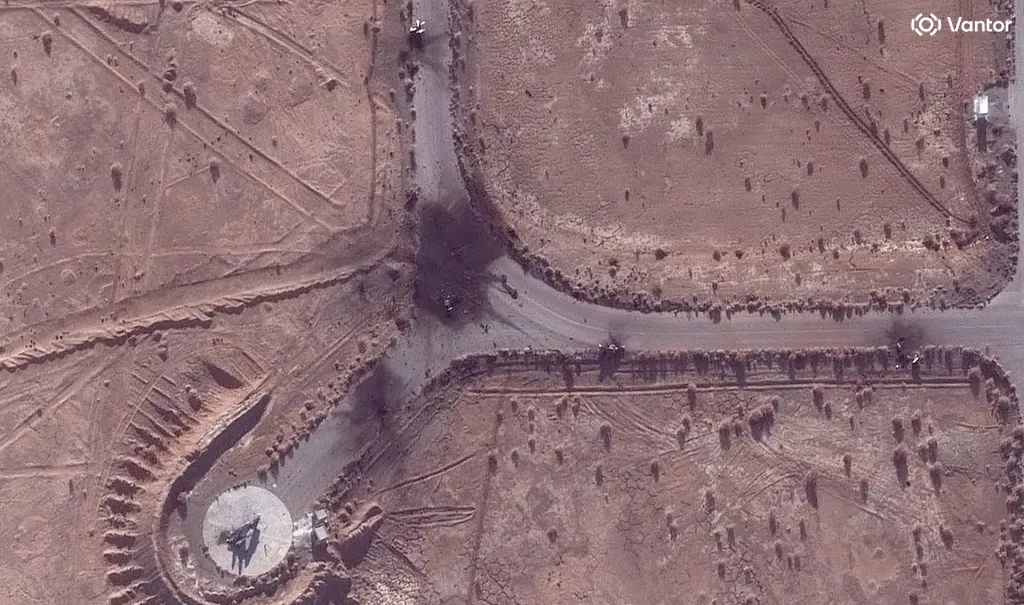
Satellite imagery from Vantor shows at least two, and more likely three, swing-wing F-14 Tomcat fighters, as well as at least 10 other aircraft destroyed on the ground following strikes on an Iranian airbase in Isfahan. Iran’s Tomcats, the only ones left in service anywhere after the U.S. Navy retired the type back in 2006, have been a hot topic of interest for decades now. The fleet’s fate may now be sealed for good as U.S. and Israeli strikes continue to pummel Iran’s Air Force, along with the rest of the country’s military and security forces.
Vantor has provided an image of Iran’s 8th Tactical Air Base in Isfahan taken on March 9, following strikes, as well as one from February 22 for comparison. The Israel Defense Forces (IDF) said explicitly on March 8 that it had targeted F-14s at Isfahan, the home base for Iran’s Tomcat fleet, but no imagery of those strikes looks to have been released. IDF videos of Iranian F-14s being struck that have been circulating online recently all look to be old.

The Vantor image from February 22 shows five F-14s. One is seen on what looks to be an alert pad, with another on a taxiway nearby. Two more are seen sitting outside a pair of aircraft hangars, while another is seen next to a separate set of hangars. The March 9 image shows the Tomcat on the pad and the lone example by the shelters to have been hit. There is also a huge scorch mark where the F-14 had been previously seen on the taxiway, pointing to its total destruction, though it is hard to tell for certain from the remaining wreckage. The other two jets appear to have been moved in the intervening weeks, and their status is unclear.


The post-strike image also shows at least 10 other aircraft destroyed along various taxiways. Vantor has assessed these to be members of the Iranian Air Force’s fleet of Chinese-made F-7 fighters. F-7 is the nomenclature for export variants of the Chengdu J-7, itself derived from the Soviet MiG-21 Fishbed.
Vantor also shared imagery of a row of four hardened aircraft shelters at Isfahan, three of which have a single hole in the top following the strikes. A structure next to the shelters, which had already been damaged prior to the current conflict, has now been flattened, as well.


Whether or not any of the F-14s that were struck at Isfahan were operational at the time is unknown. Estimates of how many Iranian Tomcats are even still airworthy have ranged widely in recent years, from just a handful to maybe as many as 25. As noted earlier, the 8th Tactical Air Base is the main station for Iran’s F-14s, though examples have also been positioned to provide quick reaction alert (QRA) coverage for Tehran in the past.
A total of 79 F-14As were delivered to Iran before the fall of the Shah in 1979. Iran’s air arm and the U.S. Navy are the only ones to have ever operated the Tomcat, and Iran has been the only one still flying them since 2006. While the current regime in Tehran has been able to keep a small portion of its original F-14 fleet flyable, sustaining the jets has been an immense challenge requiring the cannibalization of airframes.

The capabilities of the remaining jets can only have steadily degraded, as TWZ has written in the past:
“In particular, the F-14’s once-state-of-the-art AN/AWG-9 fire control radar has suffered from low serviceability, with the Tomcat fleet effectively being divided between those with fully functioning radars and those with more diminished capabilities. The current status of any surviving AIM-54 Phoenix and AIM-7 Sparrow air-to-air missiles is also a matter of debate, and Iranian programs to introduce alternative weaponry for the F-14 have had only very mixed results, as you can read more about here.“
The total number of F-14s in Iran, flyable or not, had already been reduced to some degree during the 12 Day War with Israel last year. Strike footage the IDF released during that conflict showed at least five Tomcats being struck. Satellite imagery had confirmed that at least two of those jets had been sitting idle for some time beforehand, as well.
The Israeli Air Force has conducted additional precision strikes targeting IRIAF F-14s, continuing its focused effort to systematically degrade Iran’s remaining air combat capabilities. pic.twitter.com/vT6JJ4D1x7
— GMI (@Global_Mil_Info) June 21, 2025

תקיפת זוג מטוסי F 14 בשדה תעופה בטהראן | את”צ
The overall intensity of the current U.S.-Israeli air campaign against Iran has been far greater than what was seen during the 12 Day War last year. The Iranian Air Force does not appear to have mustered any kind of major response, even in the first few days of what the U.S. military has dubbed Operation Epic Fury and that the Israelis are calling Operation Roaring Lion. Qatari F-15 fighters shot down two Iranian swing-wing Su-24 Fencer combat jets attempting to carry out a strike mission on Al Udeid Air Base on March 2. An Israeli F-35I Adir also shot down a Yak-130 armed jet trainer over Iran on March 4.
Other airbases across Iran beyond Isfahan have also been targeted in U.S. and Israeli strikes. Satellite imagery has previously confirmed the loss of one Il-76 cargo plane, two C-130 airlifters, and two swing-wing Su-22 Fitter combat jets in Shiraz.
U.S. Central Command has also previously released video footage in the past showing strikes targeting Su-22s at Shiraz, as well as some of Iran’s remaining U.S.-made F-5s at Qasem Soleimani International Airport (formerly Ahvaz International Airport) in Khuzestan.
Geolocation of destruction of F-27s and F-5s:
31.33563, 48.76275
Ahvaz International Airport, Khuzestan Province, IranGoogle Earth imagery taken 11/19/2025 for reference (F-5s not present). Aircraft were in current placement on 2/28/26. Runway was seen cratered by 3/05/26. https://t.co/XRMx7NZxWH pic.twitter.com/iZGnxPp4mO
— Evergreen Intel (@vcdgf555) March 6, 2026
Overall, Iran’s already dilapidated air arm looks to be even more severely degraded now, and seems likely doomed, at least in its present guise. U.S. officials have said that neutralizing the Iranian government’s ability to project military power beyond its borders is a core objective of the current campaign.
When it comes to the F-14s, regardless of whether any of them were still operational to any real degree when the current conflict erupted, the story of the country’s Tomcats looks to be increasingly approaching a definitive end.
Contact the author: joe@twz.com

The TWZ Newsletter
Weekly insights and analysis on the latest developments in military technology, strategy, and foreign policy.
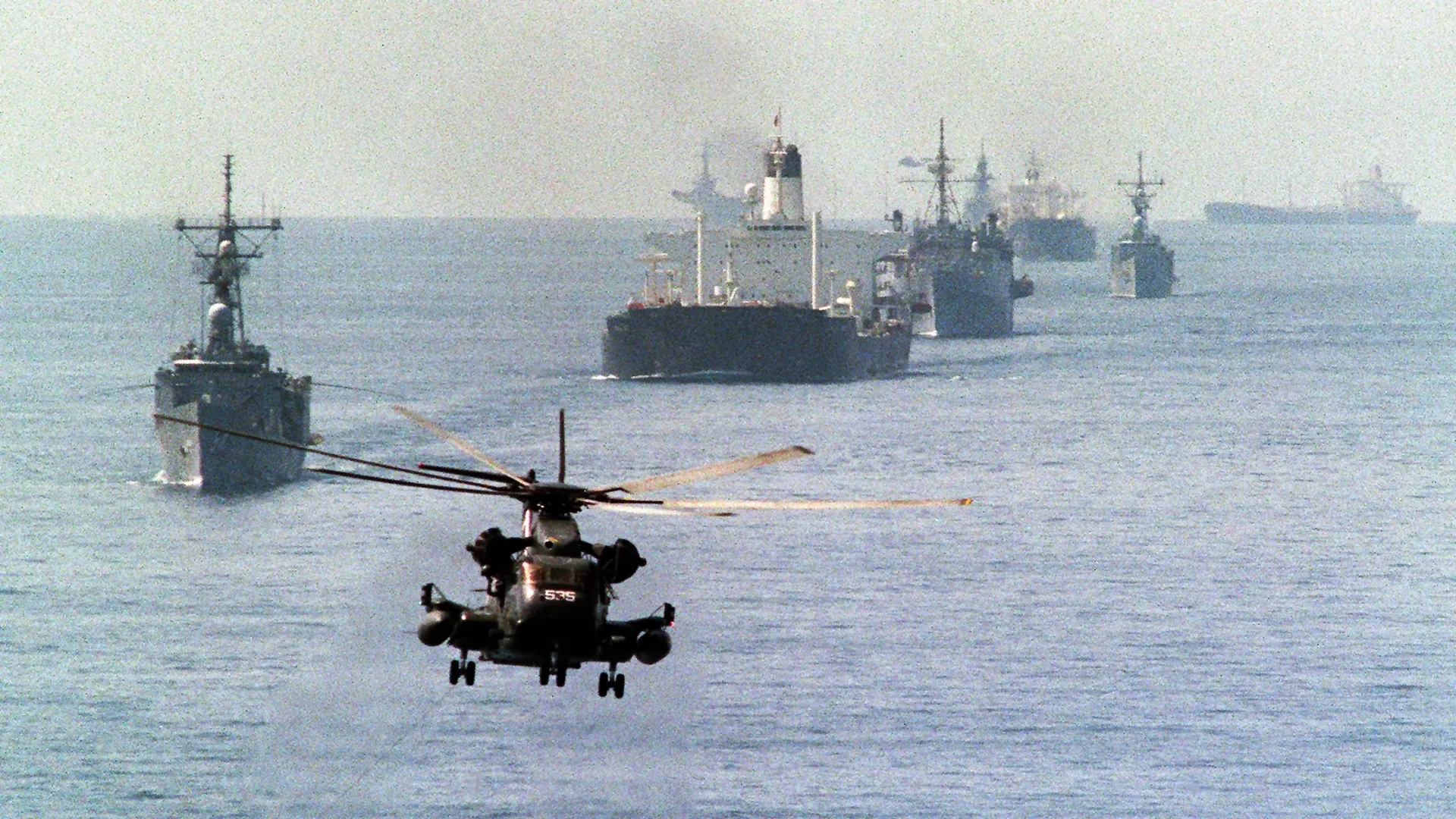
The U.S. Navy is not yet ready to escort oil tankers through the Strait of Hormuz, but it will happen. This is the synopsis provided by U.S. Energy Secretary Chris Wright in an interview with CNBC. The development comes as Iran continues to pummel international shipping in and around the critical channel, which the new Iranian supreme leader, Mojtaba Khamenei, vows to keep closed.
“It’ll happen relatively soon, but it can’t happen now,” Wright said, of the planned naval escort mission. “We’re simply not ready. All of our military assets right now are focused on destroying Iran’s offensive capabilities and the manufacturing industry that supplies their offensive capabilities.” Wright added that the Navy should be able to escort tankers through the strait by the end of this month.
BREAKING: Iran’s Supreme Leader Mojtaba Khamenei:
We will not forgo avenging the blood of the martyrs.
The Strait of Hormuz should still remain closed.
— Clash Report (@clashreport) March 12, 2026
Khamenei, it appears, is also resolute in his plan to keep the strait closed to all maritime traffic, reportedly having turned down approaches from several countries that were seeking an end to the attacks.
🚨 Lebanese Al-Akhbar newspaper, which is associated with Hezbollah: Official sources from Turkey, Egypt, India, and Pakistan approached Tehran demanding to stop the attacks in the Strait of Hormuz, but were met with a firm response stating that “security will be for everyone or…
— Raylan Givens (@JewishWarrior13) March 12, 2026
U.S. President Donald Trump said on March 3 that “the United States Navy will begin escorting tankers through the Strait of Hormuz, as soon as possible.”
Putting a date of the end of this month on the escort mission is certain to trouble markets that are already feeling the pressure of the conflict. At the very least, this is an indicator that the war or its hostile aftermath will continue for weeks to come.
Equally pessimistically, there have been reports from analysts suggesting that fully reopening the strait may require some kind of ground operation to seize the Iranian coastline adjacent to it.
“Strategic priorities, like opening the Strait of Hormuz and securing what remains of Iran’s nuclear stockpile, will likely require some ground troops if no diplomatic options are pursued,” Brian Katulis, a senior fellow at the Middle East Institute, told The Wall Street Journal. “What we are looking at is potentially a very messy situation.”
Even without boots on the ground, which now seems like a remote prospect, running a tanker-escort mission, which would involve convoys protected by warships and accompanied by mine-clearing assets, is fraught with difficulty. Military unwillingness to take on missions of this kind is an issue we have explored in the past at TWZ.
The warships involved in any such endeavor would also be at extreme risk, especially from Iranian ground-mobile anti-ship missiles, which are relatively small and can be easily disguised in utility trucks. Eliminating that threat is one potential driver for a ground operation along the coast of the strait.
The U.S. military has made extensive efforts in recent days to remove the Iranian minelaying capability, but, according to the U.K. Defense Secretary, there are now increasing signs that Iran may have started mining the strait.
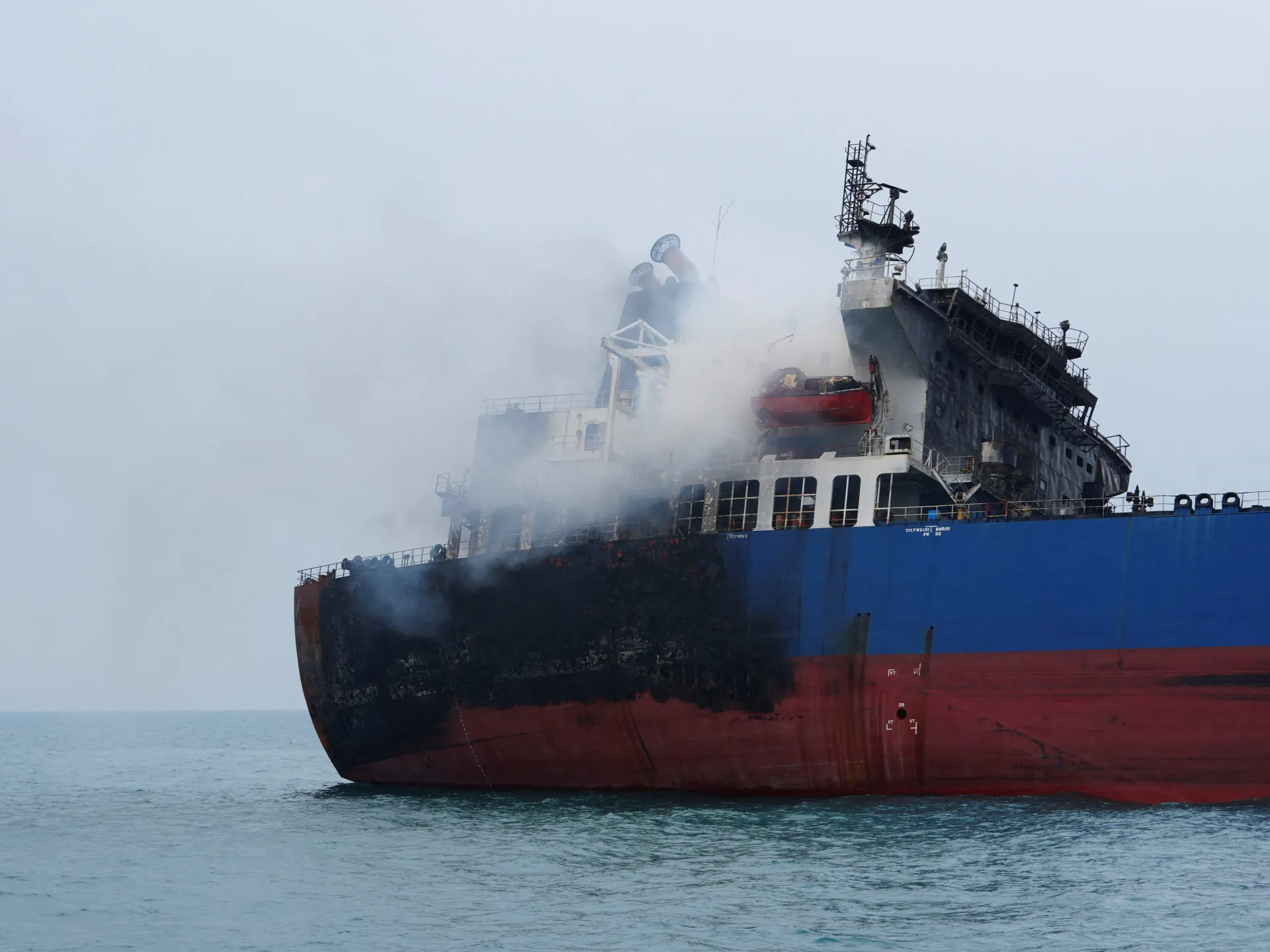
While tanker traffic through the strait remains at a standstill, Iran continues its campaign against commercial tankers elsewhere in the region, with another two vessels set ablaze earlier today in Iraqi waters. Iraq reportedly halted all operations at its oil ports after the attack.
There are so many VLCCs oil tankers in the Gulf of Aden right now that one could walk from Djibouti to Socrota island wihtout getting their feet wet.
(… and no, contrary to some social media posts, the Houthis have not attacked any tankers — so far…)
— Javier Blas (@JavierBlas) March 12, 2026
The Ambrey maritime security firm told us that a Malta-flagged crude oil tanker and another merchant vessel were targeted in an attack in Al Basrah Anchorage, Iraq. One fatality was reported. At least 38 individuals were rescued from both vessels according to the Iraq Port Authority, with further search and rescue operations ongoing as of this morning.
Video footage of the incident shows a vessel engulfed in fire with a large plume of smoke rising from the area of impact. Fire can also be seen in the water as a result of the oil spill.
Unverified reports state that the two tankers were struck by uncrewed surface vehicles (USVs).
Iraq’s State Organization for Marketing of Oil identified the two vessels as crude oil tanker Safesea Vishnu and the combined chemical and oil tanker Zefyros. While the Zefyros is Malta-flagged, the Safesea Vishnu is owned by a U.S. company but was sailing under the Marshall Islands flag. A dramatic video has appeared that is said to show the moment of the explosion that targeted the Safesea Vishnu.
The moment of the attack on the oil tanker Safesea Vishnu by an Iranian explosive boat tonight in the Persian Gulf near Iraq.
One crew member was killed. The tanker is owned by a U.S. company and was sailing under the Marshall Islands flag. pic.twitter.com/Xy2JKRoZt2
— Special Kherson Cat 🐈🇺🇦 (@bayraktar_1love) March 12, 2026
In a statement, the IRGC said that it considered the Safesea Vishnu as an asset of the U.S. military and claims that it was struck after ignoring repeated warnings and alerts from the IRGC Navy.
Iran’s IRGC says it struck a US-owned vessel ‘Safe Sia,’ a vessel considered as an asset of the US army, early this morning in the northern Persian Gulf.
The vessel ignoed repeated warnings and alerts from the IRGC Navy. pic.twitter.com/tkJDO5VUf1
— Arya Yadeghaar (@AryJeay) March 12, 2026
Ambrey also reports that a container vessel was struck by an unknown projectile 38 nautical miles north-northeast of Jebel Ali, United Arab Emirates. The strike was reported to have caused a small fire on board the vessel, and the crew was reported to be safe.
Another vessel, the Japanese-flagged container ship One Majesty, was reportedly also damaged while anchored in the Persian Gulf. The damage was only discovered later, around 60 miles from the Strait of Hormuz. There were no reports of casualties.
A Japanese-flagged container ship, One Majesty, was damaged while anchored in the Persian Gulf.
The crew felt a shock near the stern and later discovered damage while the ship was about 60 miles (96 km) southwest of the Strait of Hormuz.
All crew members are safe and the…
— Clash Report (@clashreport) March 12, 2026
The vessel seen burning in the video below, from the perspective of crew members who evacuated on a liferaft, is the Thai-flagged cargo vessel, Mayuree Naree Bangkok, which was attacked near the Strait of Hormuz yesterday.
The continued attacks on energy infrastructure and shipping by Iran, and concerns over the intensifying conflict in the Middle East, have seen oil prices spike.
The international benchmark Brent crude is back above $100 per barrel.
NEW: Iran war is “creating the largest supply disruption in the history of the global oil market,” International Energy Agency says. https://t.co/bCKgzI6Mi8
— NBC News (@NBCNews) March 12, 2026
In an effort to reduce concerns over global oil supplies, the International Energy Agency (IEA) has ordered the largest release of government reserves in its history.
Meanwhile, the government of Denmark is calling upon its citizens to reduce their consumption of fossil fuels.
Denmark’s Energy Minister urged people to reduce fuel use amid the oil shock from the Iran war, saying:
“Please, please, please — if you do not need to drive, do not do so.”
Source: CNBC pic.twitter.com/gvCQbWSfnY
— Clash Report (@clashreport) March 12, 2026
In a post on his Truth Social site, President Trump said he remained committed to ensuring Iran cannot develop nuclear weapons, despite the impact on the global oil trade.
“The United States is the largest Oil Producer in the World, by far, so when oil prices go up, we make a lot of money. BUT, of far greater interest and importance to me, as President, is stoping [sic] an evil Empire, Iran, from having Nuclear Weapons, and destroying the Middle East and, indeed, the World.”
Trump:
The United States is the largest Oil Producer in the World, by far, so when oil prices go up, we make a lot of money.
BUT, of far greater interest and importance to me, as President, is stoping an evil Empire, Iran, from having Nuclear Weapons, and destroying the Middle… pic.twitter.com/lp6As74W7h
— Clash Report (@clashreport) March 12, 2026
The day-to-day running of the conflict also comes with a high cost to the U.S. government. According to Reuters, officials from the Donald administration estimated during a congressional briefing this week that the first six days of the war on Iran had cost the United States at least $11.3 billion.
Officials from President Donald Trump’s administration estimated during a congressional briefing this week that the first six days of the war on Iran had cost the United States at least $11.3 billion, a source familiar with the matter said on Wednesday. @ReutersZengerle
— Idrees Ali (@idreesali114) March 11, 2026
The Israeli Air Force (IAF) has struck a nuclear site in Iran, the Israel Defense Forces (IDF) announced today. The targeting of the Taleghan compound was part of a larger wave of strikes conducted over the past few days, the IDF said. Taleghan is part of the Parchin military complex, located around 20 miles southeast of Tehran.
The development comes after we reported on evidence of some kind of airstrike against the Taleghan compound, including the possibility that the hardened facility was hit by 30,000-pound GBU-57/B Massive Ordnance Penetrator (MOP) bunker buster bombs. You can read that analysis, based on satellite imagery, here.
The Israeli military said that IDF intelligence had determined that Iran had been using the Taleghan compound to develop weapons and conduct experiments as part of Amad, an Iranian scientific project aimed at developing nuclear weapons.
🎯STRUCK: The ‘Taleghan’ compound, a site used by the Iranian regime to advance nuclear weapons capabilities.
The compound was used to develop advanced explosives and conduct sensitive experiments as part of the covert ‘AMAD’ project in the 2000s.
— Israel Defense Forces (@IDF) March 12, 2026
According to a statement from the Israeli military:
“During Operation Rising Lion, the IDF has operated systematically against knowledge centers and infrastructure related to the Iranian nuclear weapon program in order to eliminate the emerging existential threat to the State of Israel. Despite the significant damage inflicted on the program, the Iranian regime has continued efforts to advance and develop the capabilities required for the development of a nuclear weapon.”
The IDF added that it had recently identified that Iran has taken steps to rehabilitate the compound after it was struck in October 2024.
The IDF says it recently struck an Iranian nuclear facility where the regime advanced “critical capabilities in the development of nuclear weapons.”
The site in Tehran, identified by the military as the Taleghan compound, was hit as part of waves of strikes carried out in the… pic.twitter.com/4bYQLAv3CJ
— Emanuel (Mannie) Fabian (@manniefabian) March 12, 2026
Israel announced last week that it had struck Minzadehei, another nuclear site in Iran where it said scientists were covertly developing a key component for nuclear weapons.
“The strike is a part of the series of operations carried out throughout Operation Rising Lion aimed at further damaging the Iranian terrorist regime’s nuclear aspirations.”
Other recent targets of the IDF include Abu Dharr Mohammadi, described as the operations commander responsible for the Islamic Revolutionary Guard Corps’ (IRGC) missile unit within Hezbollah.
A member of Iran’s Islamic Revolutionary Guard Corps who was operating as a commander in Hezbollah’s missile unit was killed in an Israeli airstrike in Lebanon this week, the IDF announces.
Abu Dharr Mohammadi, who the military says was a “central figure in the military… pic.twitter.com/StV45w6qIZ
— Emanuel (Mannie) Fabian (@manniefabian) March 12, 2026
“Earlier this week (Tuesday), the IDF struck and eliminated the terrorist Abu Dharr Mohammadi … Mohammadi was a central figure in the military coordination between Hezbollah and the Iranian terror regime, while coordinating and connecting between Hezbollah and Iranian senior officials,” the IDF said.
“Mohammadi was a key figure in Hezbollah’s military force build-up as it related to missiles, focusing on rehabilitating the program following Operation Northern Arrows,” the IDF added.
For its part, Hezbollah continues to hit back against Israel.
According to the Israeli military, Hezbollah militants launched around 200 rockets and approximately 20 drones yesterday evening from Lebanon toward Israel. After reportedly detecting signs of an unusual buildup, the IDF said it carried out a preemptive strike to disrupt the firing and thwart terrorists.
⭕️ ~70 terror targets were struck including terrorist infrastructure, weapons storage facilities, central headquarters, key terrorists, and an IRGC Air Force HQ in Beirut. pic.twitter.com/T8VBtiQmup
— Israel Defense Forces (@IDF) March 12, 2026
The IDF acknowledges that it was a mistake not to update the public ahead of Hezbollah’s large rocket and drone attack on northern Israel last night, especially once Israel’s assessments of the planned barrage were leaked on social media and published by international media.
— Emanuel (Mannie) Fabian (@manniefabian) March 12, 2026
The U.S. military has also continued airstrikes on Iran, with a recent video released by Central Command (CENTCOM) showing the destruction of a C-130 Hercules transport and a P-3F Orion maritime patrol aircraft (both of which were supplied to Iran before the 1979 Islamic Revolution) and an Ilyushin Il-76 Candid airlifter.
The Iranian regime is losing air capability day by day. U.S. forces aren’t just defending against Iranian threats, we are methodically dismantling them. pic.twitter.com/CrJj2nFtHB
— U.S. Central Command (@CENTCOM) March 12, 2026
Of these aircraft, the Islamic Republic of Iran Air Force (IRIAF) P-3F was especially notable, since it was reportedly the last of the type that was still airworthy in Iranian service.
IRIAF P-3F 5-8704 from 71 ASW squadron is no more.
Iran’s five P-3Fs that started the war had unique camo patterns for ID, as well as you can partially make out the 5-___4 of the tail, which in of itself is a giveaway to the airframe’s ID. https://t.co/1pPpdgJS9w pic.twitter.com/SvMBibwWdI
— Evergreen Intel (@vcdgf555) March 12, 2026
Following attacks on Mehrabad and Bandar Abbas Air Bases, the runways at both have now been blocked by parked buses and helicopters, according to satellite imagery. The reason for this is unclear, but it is possible that it has been driven by concerns about a potential aerial assault on either of these locations. Alternatively, the aircraft and vehicles may have been arranged as decoys. The same thing has been seen in the war in Ukraine, as well as in Venezuela, earlier this year.
🛰️ Satellite images show runways at Tehran’s Mehrabad and Bandar Abbas airports blocked with parked buses and helicopters.
The measure appears intended to prevent further strikes or aircraft use by making the runway unusable. pic.twitter.com/s5KcmcOw3G
— Clash Report (@clashreport) March 12, 2026
U.S. airstrikes against Iranian missile systems have also continued. The CENTCOM video below is noteworthy since it shows (around the 0:07 mark) the destruction of a ballistic missile apparently in the process of being erected from its launch vehicle.
A U.S. strike overnight on three bases associated with the Iranian-backed Ansar Allah al-Awfiya militia reportedly killed dozens of militiamen. The bases near al-Qaim, al-Anbar, were used to fire projectiles at U.S. interests in Jordan. The following video purports to show the results of the attack on al-Qaim.
ما فعله الحشد بالعراقيين من قتل و ذبح يرتد عليه اليوم
تم دفن عناصر وقادة الحشد اليوم تحت مقراتهم في القائم غربي العراق pic.twitter.com/dK2rvCAJkG
— عمر مدنيه (@Omar_Madaniah) March 12, 2026
Footage has also emerged that apparently shows a U.S. military Low-Cost Uncrewed Combat Attack System (LUCAS) kamikaze drone headed toward a militia target in Iraq. Based on the Iranian Shahed-136, these weapons were used in combat for the first time in the opening salvos of Operation Epic Fury and repeatedly since.
Overnight attacks on Iraq also struck Erbil, home to an Italian military detachment in the country. According to reports, this has led to the temporary evacuation of the Italian presence from the base.
An Italian military base in Erbil, northern Iraq, was hit overnight by an airstrike, Italian defense officials said Thursday. No injuries were reported.
The strike was first thought to be a missile but was later identified as a drone that destroyed a military vehicle.
Source:…
— Clash Report (@clashreport) March 12, 2026
NEW — 🇮🇹🇮🇶🇮🇷🇺🇸 Italy announces the “temporary” withdrawal of its forces from a military base in Iraq following attacks in the area.
— UK Report (@UK_REPT) March 12, 2026
Mojtaba Khamenei has vowed to continue attacks on U.S. bases in the region, calling for American forces to leave them immediately, or face further strikes.
BREAKING: Iran’s Supreme Leader Mojtaba Khamenei:
All US bases should immediately be closed in the region, and those bases will be attacked.
— Clash Report (@clashreport) March 12, 2026
While we have regularly seen Iranian ballistic missiles target Israel with cluster warheads, we now also have a view of how the separate munitions disperse, as seen from the vantage point of the cockpit of an IAF fighter jet.
In the United Arab Emirates, authorities have reportedly arrested a British tourist after they allegedly filmed missiles hitting Dubai. The 60-year-old Londoner faces two years in prison after being charged with a cybercrime, The Daily Mail reports.
He is reportedly one of 20 people to have been charged over videos and social media posts relating to recent Iranian missile strikes on the UAE.
British tourist, 60, ‘who filmed Iranian missiles’ in Dubai is facing two years in prison after being charged with cybercrime offence https://t.co/rtFMqtOiwt
— Daily Mail (@DailyMail) March 12, 2026
The on-off deal to get Ukrainian-made counter-drone technology into U.S. hands has apparently taken another turn.
Taking to X, Ukrainian Prime Minister Volodymyr Zelensky wrote that he had hoped to “sign a big drone production deal with the United States, but we needed the approval from the White House.”
The deal, covering “different kinds of drones and air defense,” has not been signed yet, Zelensky added.
“I hope that maybe [our] American friends will be closer to this decision now, especially after such challenges as we see in the Middle East,” the Ukrainian leader wrote.
We wanted to sign a big drone production deal with the United States, but we needed the approval from the White House. It was about different kinds of drones and air defense. They operate as one system and can defend against hundreds or thousands of Iranian “shaheds“ and… pic.twitter.com/KZX7MLcCZG
— Volodymyr Zelenskyy / Володимир Зеленський (@ZelenskyyUa) March 12, 2026
A fire broke out aboard the aircraft carrier USS Gerald R. Ford.
“On March 12, USS Gerald R. Ford (CVN 78) experienced a fire that originated in the ship’s main laundry spaces,” Naval Forces Central Command said in a statement on X. “The cause of the fire was not combat-related and is contained. There is no damage to the ship’s propulsion plant, and the aircraft carrier remains fully operational. Two Sailors are currently receiving medical treatment for non-life-threatening injuries and are in stable condition. Additional information will be provided when available.”
On March 12, USS Gerald R. Ford (CVN 78) experienced a fire that originated in the ship’s main laundry spaces. The cause of the fire was not combat-related and is contained.
There is no damage to the ship’s propulsion plant, and the aircraft carrier remains fully operational.…
— U.S. Naval Forces Central Command/U.S. 5th Fleet (@US5thFleet) March 12, 2026
Earlier today, a U.S. official told USNI News that the initial fire had been extinguished, but the crew was still working to control the damage.
The United Arab Emirates is now using UH-60 Black Hawk series helicopters for counter-drone work, as seen in this video, which captures an engagement over Dubai.
UAE’s UH-60 Black Hawk helicopter intercepts an Iranian Shahed/Geran-type long-range strike drone over Dubai.
Burj Khalifa seen in the background. pic.twitter.com/c81YnAoRFU
— Status-6 (War & Military News) (@Archer83Able) March 12, 2026
According to a report from Reuters, citing U.S. intelligence officials, most of the Iranian leadership remains intact, and the regime is not currently at risk of collapse, despite the U.S.-Israeli campaign against it.
U.S. intelligence indicates that Iran’s leadership is still largely intact and is not at risk of collapse any time soon after nearly two weeks of relentless U.S. and Israeli bombardment, according to three sources familiar with the matter. @ErinBanco @JonathanLanday
— Idrees Ali (@idreesali114) March 11, 2026
Certainly, as far as public statements are concerned, the remaining elements of the Iranian leadership remain steadfast in their refusal to give up the fight.
Iranian Parliament Speaker Ghalibaf:
Any aggression against soil of Iranian islands will shatter all restraint.
We will abandon all restraint and make the Persian Gulf run with the blood of invaders.
The blood of American soldiers is Trump’s personal responsibility. pic.twitter.com/hx2Hebt7s8
— Clash Report (@clashreport) March 12, 2026
Contact the author: thomas@thewarzone.com
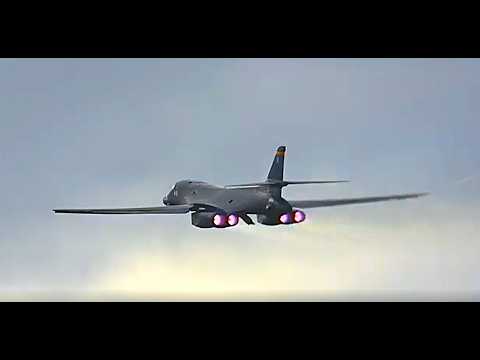
The TWZ Newsletter
Weekly insights and analysis on the latest developments in military technology, strategy, and foreign policy.
A video out of RAF Fairford in England shows American B-1Bs getting prepped for a strike mission against Iran. In addition to the staple AGM-158 JASSM cruise missiles being readied for loading onto the ‘Bones,’ we see GBU-31 Joint Direct Attack Munitions (JDAMs) equipped with BLU-109 2,000-lb bunker buster warheads. We can also see the revolving weapons rack being extracted from the B-1’s weapons bay. The move from cruise missiles to JDAMs, at least for some targets, is a sign that air supremacy over Iran is becoming more assured, at least in some areas. You can read all about how the U.S. and Israel had not achieved air supremacy last week in our report linked here.
The videos were posted on X by journalist Richard Gaisford and can be seen below:
Missiles delivery systems are being removed from the B1 Lancers at RAF Fairford this afternoon, to be replaced by JDAM bombs. For those asking, the US Airforce has positioned these aircraft close to the fence in full view of media. @AJENews pic.twitter.com/fWtDRfV5g4
— Richard Gaisford (@richardgaisford) March 11, 2026
US Airforce ground crew work under hatches of a B1 Lancer at RAF Fairford today. What appear to be cruise missiles sit by the warplane. Three B1 bombers returned this morning, on what is believed to be the first attack on Iran from a British base during this conflict. @AJENews pic.twitter.com/80YkxHL5rT
— Richard Gaisford (@richardgaisford) March 11, 2026
The bomber force at RAF Fairford has expanded even larger over the last couple of days. There were nine American bombers at Fairford — three B-52s and six B-1s — as of the start of this week. Now there are 15 total — three B-52s and 12 B-1Bs.
Bomber aircraft can achieve far greater and more varied effects if they are allowed to directly strike targets instead of relying on cruise missiles fired at standoff ranges. This is especially true for delivering withering assaults on large target areas via a belly full of JDAMs. It also allows the aircraft to do this against targets that require bunker-buster capabilities. So far, we only know of the B-2 that has executed large-scale bunker buster attacks in Iran, using its stealth capabilities, as well as support from the total force, to ensure it can safely return from the mission. Fighters have been able to deliver much smaller numbers of these weapons onto targets deeper in Iran. Opening up these same target sets to forward-deployed B-1s and B-52s would help change the pace and impact of the air campaign.
NEW: At least three U.S. B-52 bombers have landed at RAF Fairford in the U.K., signaling preparations for potential sustained heavy bomber strikes against Iran.
Source: Airport Action pic.twitter.com/LmSKVQvX9I
— Clash Report (@clashreport) March 9, 2026
Potential targets include large industrial complexes used for long-range weapons production and development, command and control bunkers, nuclear-program related sites, and, maybe most likely, keeping Iran’s underground ‘missile cities’ entombed by bombing their entrances so that the weapons that are housed inside can not be put to use.

B-1s first mission to Iran out of RAF Fairford UK
Still, B-1s and B-52s will likely operate over western Iran, where degradation of enemy air defenses has been the focus for nearly two weeks. Venturing into the eastern part of the country, which has seen far less attention, probably remains too risky. This is underscored by the map below, which the Pentagon released yesterday, showing the distribution of strikes across Iran during the first 10 days of the conflict (February 28 to March 9).

We still don’t know if the U.S. military will activate Diego Garcia as another forward operating location for its bombers. The U.K. government approved the use of both Fairford and Diego Garcia last week after denying that access leading up to the war. We have seen some heavy transport movements in satellite imagery to the remote island outpost in the Indian Ocean, and KC-135 tankers and force protection F-16s are still there, so it’s possible this could occur or has already happened. Cloud cover has kept the island obscured in satellite imagery for the last few days. Of course, such a deployment all depends on how long this campaign will actually last, with conflicting signals from the Trump administration as to its planned duration and exit strategy.
Regardless, it looks like the B-1s are going to be using their extremely large payload capacity to directly attack hardened Iranian targets in the very near future.
Contact the author: Tyler@twz.com
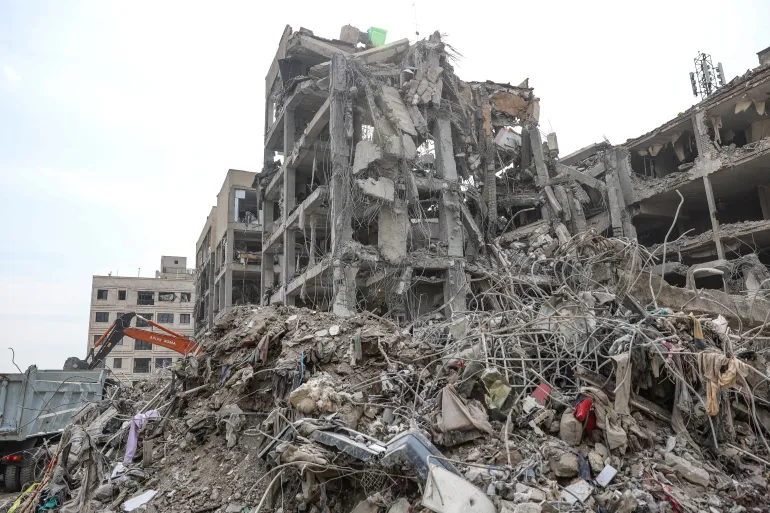
Iranian President Masoud Pezeshkian has laid out terms for ending the war with the United States and Israel in what analysts say is a possible sign of de-escalation from Tehran as the US-Israel war on Iran entered its 13th day on Thursday.
In a post on Wednesday on social site X, Pezeshkian said he had spoken to his counterparts in Russia and Pakistan, and that he had confirmed “Iran’s commitment to peace”.
list of 4 itemsend of list
“The only way to end this war – ignited by the Zionist regime & US – is recognizing Iran’s legitimate rights, payment of reparations, and firm int’l guarantees against future aggression,” Pezeshkian wrote.
This is a rare posture from Tehran, which has maintained a defiant stance and initially rejected any possibility of negotiations or a ceasefire when war broke out nearly two weeks ago.
Pezeshkian’s statement comes as pressure mounts on the US to halt what has become a very costly mission. Analysts say speculation from Washington that Iran would quickly submit after the killing of Supreme Leader Ayatollah Ali Khamenei were misguided.
Tehran is likely going to determine the end of this war, not the US or Israel, because of its ability to inflict economic pain broadly, they say.
Amid a military pummelling by the US and Israel, Iran has launched heavy retaliatory strikes at US assets and other critical infrastructure in Gulf countries, upsetting global supplies. It has also adopted what analysts call “asymmetric” tactics – such as disrupting the critical Strait of Hormuz and threatening US banking-linked entities – to inflict as much economic pain on the region and wider world as it can.
This is what we know about Pezeshkian’s stance and what the pressures are on both sides to draw the conflict to a close, quickly.

Economically, both sides have weaponised energy. Israel first targeted Iran’s oil facilities in Tehran on March 8, prompting an outcry from global health experts over the potential risk of air and water pollution.
Iran has, meanwhile, tightened its chokehold on the Strait of Hormuz shipping route – the only route to open sea for oil producers in the Gulf – with its military promising on Wednesday that it has the capabilities to wage a long war that could “destroy” the world economy.
Attacks on ships in the strait, through which about 20 percent of global oil and gas traffic normally passes, have effectively closed the route.
Oil prices rocketed above $100 per barrel late last week, up from around $65 before the war, with ordinary buyers feeling the increases at pumps in the US, Europe and parts of Africa.
On Wednesday, Iran upped the ante, saying it would not allow “a litre of oil” to pass through the strait and warned the world to expect a $200-per-barrel price tag.
“We don’t know how quickly it’ll revert back,” Freya Beamish, chief economist at GlobalData TS Lombard, told Al Jazeera. “We do think it’ll revert back to $80 in due course, but the ball is to some degree in Iran’s court,” she said, adding that because Iran needs oil revenue, the price hikes are expected to be time-limited.
The International Energy Agency agreed on Wednesday to release 400 million barrels from the emergency reserves of several member states but it is not yet clear what impact that will have, nor how quickly this quantity of oil can be released.
Tehran has also been accused of directly attacking oil facilities in neighbouring countries this week. Iraq shut all its oil port operations on Thursday after explosive-laden Iranian “drone” boats appeared to have attacked two fuel tankers in Iraqi waters, setting them ablaze and killing one crew member.
A drone was filmed striking Oman’s Salalah oil port on Wednesday, although Tehran has denied involvement.
There has been conflicting messaging from the Iranian leadership.
Iran’s elite army unit and parallel armed force, the Islamic Revolutionary Guard Corps (IRGC), continues to show defiance, issuing threats and launching attacks on Israel and US military assets and infrastructure in neighbouring Gulf countries.
However, the political leadership has appeared more inclined towards diplomacy, analysts say. On Wednesday, President Pezeshkian said that ending the war would take the US and Israel recognising Iran’s rights, paying Iran reparations – although it’s unclear how much is being asked for – and providing strong guarantees that a future war will not be waged.
In a video recording last week, he also apologised to neighbouring countries for the strikes and promised that Iran would stop hitting its neighbours as long as they do not allow the US to launch attacks from their territory.
“I personally apologise to the neighbouring countries that were affected by Iran’s actions,” the president said, adding that Tehran was not looking for confrontations with its neighbours.
However, it is not known how much sway the political leadership has over the IRGC. Hours after the president’s apology last week, air defence sirens went off in Saudi Arabia, Qatar, the UAE and Bahrain, as strikes continued on the Gulf.
“Iran wants to go to the end to make sure that the United States and Israel never attack Iran again … so this has to be the final battle,” Al Jazeera’s Resul Serdar Atas explained.
Indeed, the IRGC sees this as an existential war, but the timing of Pezeshkian’s statement about ending the conflict also shows Tehran is pressured economically, politically and militarily, Zeidon Alkinani of Qatar’s Georgetown University told Al Jazeera.
“These differences and divisions [between IRGC and political leaders] always existed even prior to this war but we may notice it now more, given the fact that the IRGC believes that it has the right to take the front seat in leading this regional war, which is why a lot of the statements and positions are contradicting with the official ones from Pezeshkian,” he said.
The IRGC reports directly to Iran’s Supreme National Security Council (SNSC) and not to the country’s political leadership. That council is led by Ali Larijani, a top politician and close aide to the late supreme leader, Ali Khamenei, who analysts describe as a “hardliner”.
In a post on X on Tuesday, Larijani responded to threats from Trump about attacks on the Strait of Hormuz, saying: “Iranian people do not fear your hollow threats; for those greater than you have failed to erase it … So beware lest you be the ones to vanish.”
The newly elected supreme leader, Mojtaba Khamenei, was once in the IRGC and was put forward by the unit as the next ayatollah after his father was killed on the first day of the war, analysts say. He is thus not expected to follow the reformist, diplomatic ideals of President Pezeshkian and other political leaders which his father managed to marry with the IRGC militarised stance, they say.

There have also been conflicting messages from the Trump administration and Israel regarding when the war mission on Iran, codenamed Operation Epic Fury, is likely to end.
Trump told US publication Axios on Wednesday that the war on Iran would end “soon” because there’s “practically nothing left to target”.
“Anytime I want it to end, it will end,” he added. He had said earlier on Monday that “we’re way ahead of our schedule” and that the US had achieved its goals, even as speculation mounts about a possible US ground mission.
On the other hand, Israel’s Defence Minister Israel Katz said on Wednesday that the war would go on “without any time limit, for as long as necessary, until we achieve all the objectives and decisively win the campaign”.
Analysts say Trump’s stance that the conflict will be quick reflects increasing pressure on his administration ahead of upcoming mid-term elections in November.
Trump’s advisers privately told him this week to find a quick end to the war and avoid political backlash, according to reporting by The Wall Street Journal. That came as polls from Quinnipiac University and The Washington Post suggested that most Americans are opposed to the war in Iran.
In his 2024 presidential campaign, Trump promised to lower prices, and inflation had stabilised at 2.4 percent ahead of the war, according to government data released on Wednesday. Analysts speculate the conflict will likely push it back up.
The US spent more than $11.3bn in the first six days of the war, Pentagon officials told lawmakers in a classified briefing on Tuesday, Reuters reported this week – nearly $2bn a day.
The Washington-based think tank, Center for Strategic and International Studies (CSIS), estimated that the war cost Washington $3.7bn in its first 100 hours alone, or nearly $900m a day, largely due to its expenditure on costly munitions.
“It’s quite ironic that [Trump] chose a war that would make affordability worse, not better,” Rebecca Christie, a senior fellow at the Bruegel think tank, told Al Jazeera’s Counting the Cost.
“Every time the US loses even one object, air defence or a plane or something like that, that represents an awful lot of money that could have been used on some of these issues that have an impact on people’s day-to-day lives in the United States.”
United Nations refugee agency says forced displacement likely to increase as US and Israel continue deadly strikes across Iran.
Published On 12 Mar 202612 Mar 2026
Share
More than three million people have been displaced in Iran since the United States and Israel launched a war against the country late last month, the United Nations says, as concerns mount over a worsening humanitarian crisis.
The UN High Commissioner for Refugees (UNHCR) said on Thursday that as many as 3.2 million people – representing between 600,000 and one million Iranian households – have been forcibly displaced since the war began on February 28.
list of 3 itemsend of list
“Most of them are reportedly fleeing from Tehran and other major urban areas towards the north of the country and rural areas to seek safety,” UNHCR official Ayaki Ito said in a statement.
“This figure is likely to continue rising as hostilities persist, marking a worrying escalation in humanitarian needs.”
The US and Israeli militaries have continued to bombard Iran despite mounting international condemnation and calls for de-escalation.
More than 1,300 people have been killed in US-Israeli attacks across the country to date, according to the latest figures from Iranian officials.
While the US and Israel have said they are targeting Iranian leaders as well as military and nuclear infrastructure, Iran says thousands of civilian sites, such as schools and hospitals, have been attacked.
Iran’s Deputy Health Minister Ali Jafarian told Al Jazeera on Thursday that medical teams have been responding to a growing number of casualties as strikes on urban areas have intensified in recent days.
“Most of these people are civilians,” Jafarian said, adding that more than 30 hospitals and health facilities have been damaged due to the attacks.
On Thursday, explosions were heard in several parts of the capital, Tehran, and other Iranian cities as the strikes continued.
Al Jazeera’s Tohid Asadi said rescuers were digging through mounds of rubble as several multistorey apartment buildings were heavily damaged in recent attacks on a hard-hit eastern neighbourhood of Tehran.
“We saw bodies taken out [of the rubble] … and the situation was far beyond what I can call disastrous,” Asadi said.
Iran has responded to the US-Israeli assault by launching a barrage of missiles and drones at US bases and other sites in countries across the wider Middle East region.
It has also shut down the Strait of Hormuz, a critical Gulf waterway through which about one-fifth of the world’s oil transits, raising serious concerns of disruptions to global energy supplies.
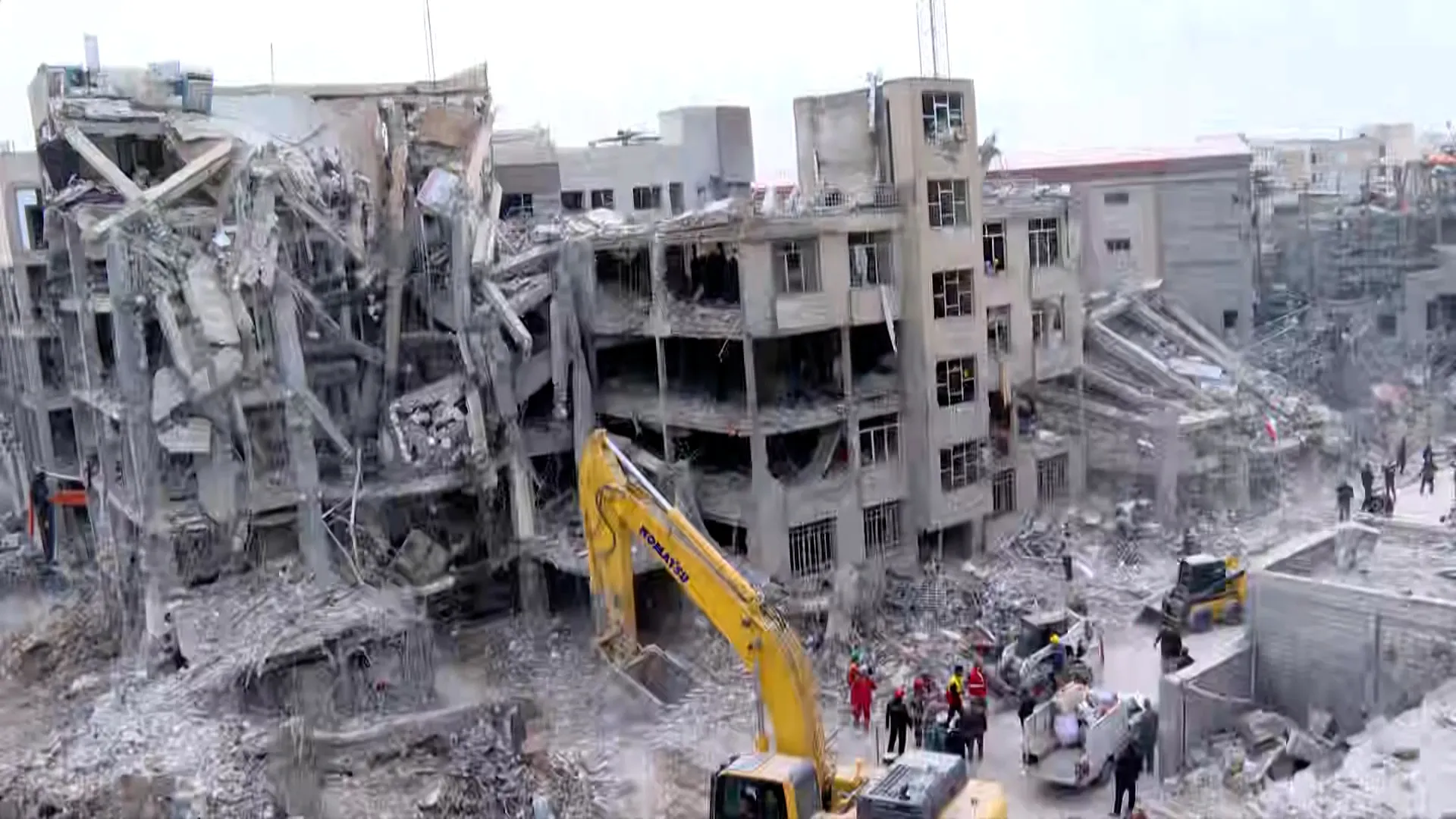
Al Jazeera’s Tohid Asadi shows the aftermath of US-Israeli airstrikes on a residential neighbourhood in Iran, where rescue teams have been searching for survivors among the rubble.
Published On 12 Mar 202612 Mar 2026
Share
Authorities have said most of those who died were found buried in mud.
Published On 12 Mar 202612 Mar 2026
Share
The death toll from landslides and flooding in the Gamo Zone of southern Ethiopia has risen to at least 64, with dozens more people missing, police have said.
“The number of people missing due to the recent flood in Gamo zone has reached 128, and according to the latest information, 64 bodies have been found,” said the South Ethiopia Regional State Police Commission in a statement on Facebook on Thursday.
list of 3 itemsend of list
The Gacho Baba district communication chief, Abebe Agena, said most of those who died were found buried in mud. It is not yet clear how many households were affected.
Gamo Zone director of disaster response Mesfin Manuqa said that one person was pulled out of mud alive during rescue operations.
Tilahun Kebede, president of the South Ethiopia Regional State, expressed his sorrow over the disaster and urged residents to move to higher ground as rains continue.
“Given that it is the rainy season and these types of disasters could happen again, I am calling on communities living in the highlands and flood-prone areas to take the necessary precautions,” he said.
Flooding caused by heavy rains has led to the deaths, with most of East Africa seeing heavy flooding in recent days.
Dozens were killed in neighbouring Kenya after torrential rain hit the capital, Nairobi, and other areas on Friday.
Mudslides and floods caused by heavy rainfall are common in Ethiopia, especially during the rainy season.
In July 2024, a deadly mudslide caused by heavy rain killed more than 250 people in southern Ethiopia.
Multiple studies have tracked the increasing frequency of extreme wet and dry periods in East Africa in the last 20 years.
Scientists have long warned that human-driven climate change is increasing the likelihood, length and severity of severe weather events such as torrential downpours.