Stay informed and up-to-date with the latest news from around the world. Our comprehensive news coverage brings you the most relevant and impactful stories in politics, business, technology, entertainment, and more.
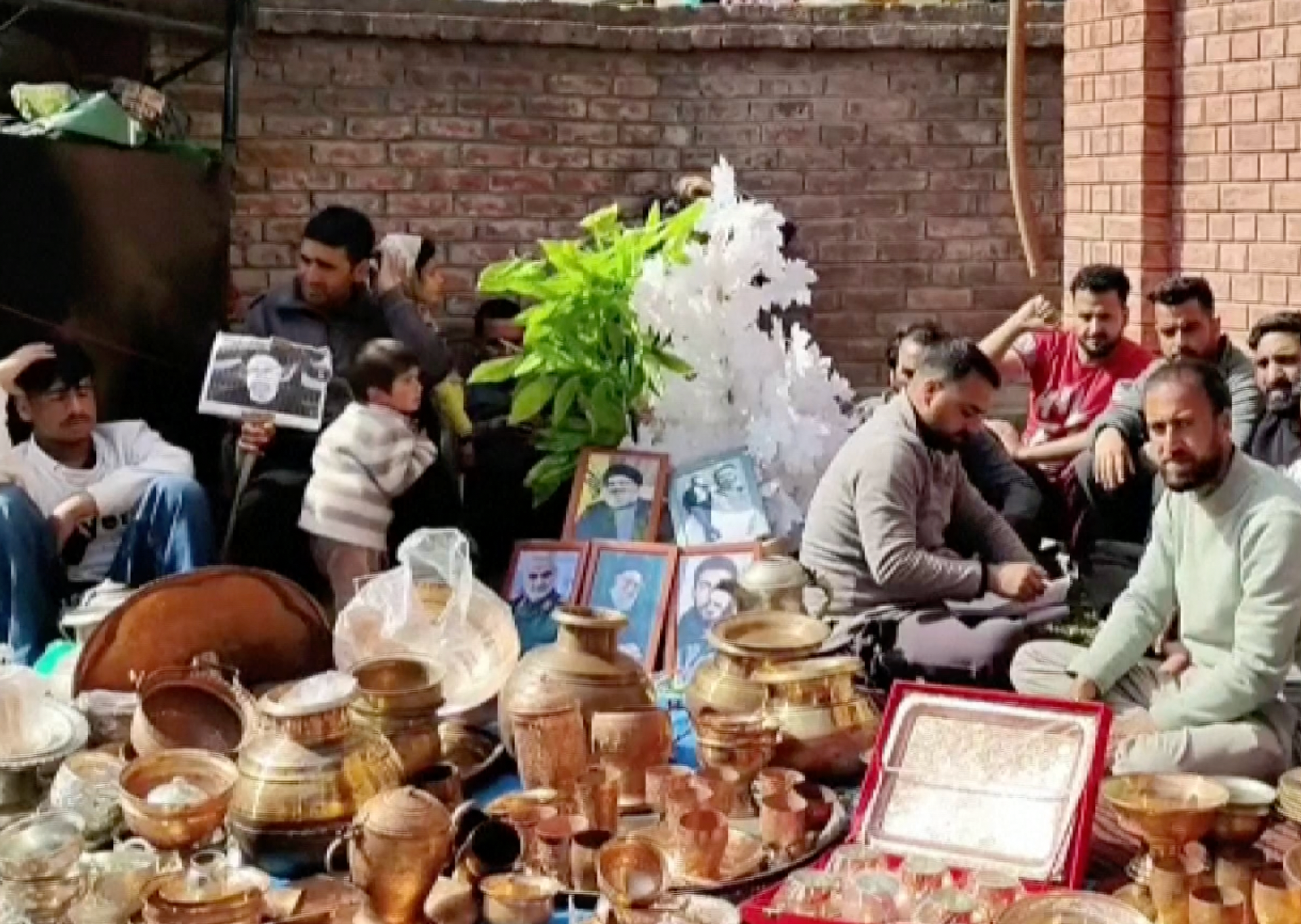
Residents in Indian-administered Kashmir are donating their gold possessions and cash to support Iranians impacted by the US-Israeli war. Iran’s embassy in India has acknowledged the gesture, saying their kindness ‘will never be forgotten’.
For decades, mole catchers in the countryside have hung their carcasses on fences to be counted for payment and as evidence of their trapping prowess. But when hill walker Simon Lucas shared a photograph of the tradition on social media, he was unprepared for the ferocity of the response.
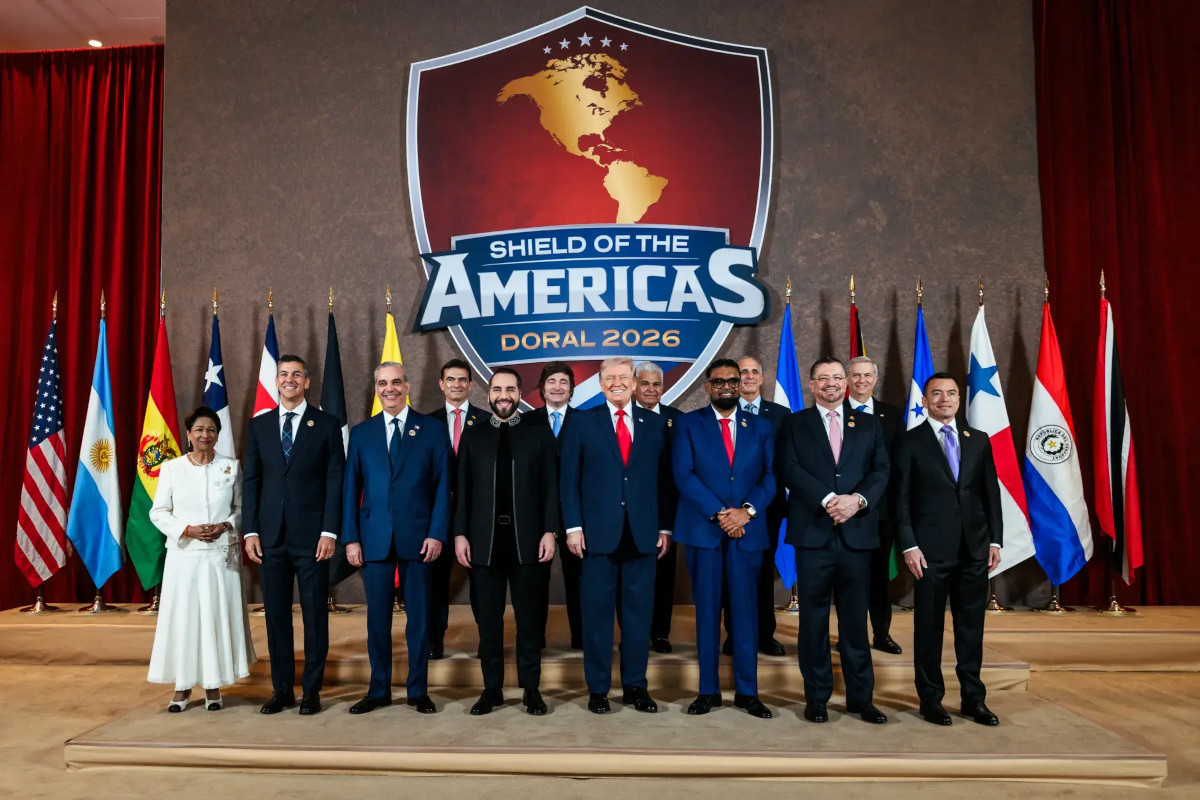
Trump gathered loyal Latin American allies for a “Shield of the Americas” summit. (Archive)
The “Trump Corollary” to the Monroe Doctrine is a central feature of U.S. strategy designed to secure hegemony and limit Chinese and Russian influence in Latin America and the Caribbean. It does not, however, represent a decisive shift in Washington’s relations with the region. Although the corollary does not make this explicit in its formal statement, in practice it makes more evident what liberal rhetoric has long sought to mask: military and covert interventions aimed at preserving U.S. domination in the Western Hemisphere, undermining progressive movements and governments, and backing right-wing regimes. In this sense, it abandons even the pretense of respect for international law and human rights. In what follows we argue that the Trump Corollary constitutes not only an ideological and imperialist offensive against decolonial and multipolar currents in Latin America, but also a strategic project whose assault on Venezuela has broader geopolitical implications.
The ideological backdrop
Although Washington’s unrestrained militarism, which enjoys bipartisan support, is indeed cause for alarm, the erosion of even the pretense of commitment to liberal-democratic values, human rights, and international law did not begin with the Trump administration. The live-streamed Israeli genocide in Gaza, enabled and backed by the Biden administration, has made this difficult to deny. Moreover, it highlights how the U.S.-European axis has normalized impunity for systematic violence against non-combatants. This erosion of even its own professed liberal values has helped consolidate a political climate in which the Trump administration could intensify its offensives against Venezuela and Cuba and pursue a war of aggression against Iran.
This normalization of necropolitics can be better understood through the ideological logic used to justify it. We can make sense of this logic by distinguishing between two different tendencies within Western Eurocentric modernity. On the one hand is the myth of European supremacy, what Enrique Dussel calls the “developmentalist fallacy,” which has been used to justify colonization, with its racial hierarchy, since the invasion of Amerindia in 1492. On the other is a rational, emancipatory current rooted in ideas of community, equality, and liberty. As critical historians have shown, these emancipatory traditions did not originate solely in Europe; they were also present among some Indigenous peoples, such as the Haudenosaunee Confederacy, whose Great Law of Peace established participatory forms of government centuries before European contact. Historically, these ideals were never extended fully to colonized peoples, nor to people of color within the metropole. This contradiction persists. Washington’s recent rhetoric justifying attacks on Venezuela, Cuba, and Iran expresses the colonial, violent side of modernity while discarding its emancipatory, humanist dimensions.
Civilizational rhetoric and the objectives of the Trump Corollary
It is this myth of European supremacy, often expressed with religious fervor even when stripped of its humanist facade, that serves as the ideological justification for the offensives launched this year. This worldview was crystallized in a speech delivered by Secretary of State Marco Rubio at the 62nd Munich Security Conference on February 14, 2026. That speech anticipated the inauguration in Miami, on March 7, of Shield of the Americas, a new U.S. partnership with right-wing allies in Latin America and the Caribbean, to be led by former Secretary of DHS Kristi Noem. Rubio, in effect, called for a rejection of historical accountability, stating:
We do not want our allies to be shackled by guilt and shame. We want allies who are proud of their culture and of their heritage, who understand that we are heirs to the same great and noble civilization, and who, together with us, are willing and able to defend it. . . . The great Western empires had entered into terminal decline, accelerated by godless communist revolutions and by anti-colonial uprisings that would transform the world and drape the red hammer and sickle across vast swaths of the map in the years to come.
This rhetoric illustrates Rubio’s disdain for anti-colonial struggles that commenced not with the Cold War and communism, but at the very start of the European invasions of Amerindia. Indeed, the “guilt and shame” surrounding the subjugation and exploitation of Indigenous peoples was expressed as early as the sixteenth century, when Bartolomé de Las Casas documented and denounced the tortures inflicted upon them in the name of a European civilizing mission. The same civilizational appeal surfaced again at the Miami summit, where Secretary of Defense Pete Hegseth called upon members of the Shield to defend their shared cultures and, in particular, “Western Christian civilization.” By casting anti-colonialism as an insidious force, Rubio’s rhetoric functions to blunt decolonial critiques of the Trump Corollary.
Despite Washington’s zeal for exporting Western ideals, decolonizing currents in Latin America’s political, economic, social, and cultural life have taken deep root. Since the 1960s, Marxism, along with liberation theology, liberation philosophy, and Indigenous struggles for self-governance, have helped articulate ethical and political critiques of colonial domination, racial hierarchy, and dependent forms of development from the perspective of the Global South. Indigenous cosmovisions and the philosophy of buen vivir have influenced constitutional and political life in the region and beyond. For example, the United Nations now recognizes the concept of the rights of nature as central to sustainable development. The recognition of the rights of Mother Earth has also been incorporated into the constitutions of both Bolivia and Ecuador, and the plurality of Indigenous and Afro-descendent nationalities is recognized in several Latin American constitutions.
The Trump Corollary emerges in direct opposition to these decolonial currents. It seeks to restore U.S. primacy over the hemisphere’s governance and resources by curtailing the region’s expanding commercial and diplomatic ties with China, Russia, and other non-Western partners. To advance this agenda, Washington has worked to destabilize or overthrow progressive governments while favoring right-wing administrations more aligned with its interests, in some cases through intimidation, electoral interference, or direct military intervention. Much like the Alliance for Progress, Operation Condor, and the invasion of Panama before it, this latest evolution of the Monroe Doctrine invokes the pretext of security to reassert Washington’s influence over hemispheric political and economic life while limiting the region’s turn toward greater autonomy. Yet that effort confronts a regional reality that Washington cannot easily reverse. Trade relations transcend political divisions in Latin America and the Caribbean. And in South America, China has become the principal trading partner for much of the subregion. This complicates Washington’s efforts to rein in Latin America’s turn toward multipolarity. China’s Third Policy Paper on Latin America and the Caribbean presents the region as an “essential force” in the move toward a multipolar world and economic globalization, and describes the bilateral relationship in terms of equality, mutual benefit, openness, and shared well-being. This stated approach stands in clear contrast to the Trump Corollary’s posture of coercion, Western supremacy, and geopolitical subordination. It is, in part, this regional turn toward multipolarity that the assault on Venezuela seeks to counter.
Venezuela: The central case
The violent reality of the Trump Corollary has been most clearly revealed in Venezuela. Washington’s campaign of deadly strikes against maritime vessels in the Caribbean, a series of extrajudicial killings that claimed the lives of more than 145 people, served as a prelude to the January 3 surprise aerial assault on Caracas, named Operation Absolute Resolve. The maritime victims included people from nations such as Colombia, Saint Lucia, Trinidad and Tobago, and Venezuela who were targeted without public evidence of narco-trafficking or due process. Operation Absolute Resolve itself claimed the lives of more than 120 people, including civilians and security forces, and culminated in the kidnapping of President Nicolás Maduro and First Lady Cilia Flores. In Venezuela, the Trump Corollary deploys military force, coercive diplomacy, and control over strategic resources. It also deals a blow to the Bolivarian cause by making an example of a state that has stood as the leading force of regional independence and integration for more than two decades.
Rather than moving, in the short term, to dismantle Chavista institutions, as many Venezuelan opposition hard-liners in Miami and Madrid expected, the Trump administration in the aftermath of Operation Absolute Resolve instead has resorted to “deal-making” with Acting President Delcy Rodríguez. The recognition of interim president Delcy Rodríguez as “the sole Head of State” of Venezuela might be part of an effort by the Trump administration to strip President Nicolás Maduro and First Lady Cilia Flores of the presidential immunity to which they are entitled. Despite Trump’s praise for a supposedly mutually beneficial relationship with the Chavista government, this is not a win-win situation. Acting President Rodríguez is attempting to balance Washington’s demands for unfettered access to the country’s natural resources with Venezuela’s own economic interests and the long-term survival of the Bolivarian Revolution. That coercive political context also affects the economic arrangements now taking shape in Venezuela.
As new economic agreements are being “negotiated,” major Venezuelan state assets previously frozen, seized, or placed beyond Caracas’s control remain unrecovered. Prior to Operation Absolute Resolve, the U.S. seized Venezuelan aircraft and targeted ships carrying Venezuelan oil that U.S. authorities said were involved in sanctions evasion. The most egregious case is that of Citgo, Venezuela’s most valuable foreign asset. Caracas has already lost real control over it, and U.S. courts are now overseeing proceedings that could permanently strip Venezuela of ownership to pay creditors.
More recently, a series of Trump administration officials have gone to Caracas to press for greater U.S. influence over Venezuela’s oil industry. They have also “negotiated” with the Chavista government to bring about legal reforms that will facilitate U.S. investment in the extraction of critical minerals and other natural resources. According to Venezuela Analysis (02/20/26), “The Trump administration is forcing all royalty, tax, and dividend payments from Venezuelan oil production [to] be paid into accounts managed by Washington.” For Venezuelan critics of U.S. intervention, these arrangements may result in a significant transfer of national wealth under pressure. Other observers argue that renewed investment could bring Venezuela badly needed revenues. In any case, there is no doubt that these economic arrangements are being carried out in a coercive context.
Regional extensions of the corollary
The offensive against Venezuela did not occur in isolation. It was soon followed by a strangling energy embargo on Cuba designed to provoke a humanitarian crisis to bring about “regime change.” After more than sixty-six years of U.S. embargo against Cuba, this latest escalation is intended not only to destabilize and isolate the island but also to shatter the morale of the forces of resistance throughout the region. At the same time, it has galvanized worldwide solidarity, despite the betrayals of governments that have succumbed to U.S. pressure to expel Cuban doctors and dismantle other forms of Cuban internationalist assistance. Meanwhile, the administration has been pressuring Mexico with the specter of unilateral military strikes against drug cartels, signaling a disregard for Mexico’s repeated insistence on its own sovereignty. In Colombia, Washington antagonized President Gustavo Petro with politically charged drug-trafficking allegations and threats of military intervention, a confrontational posture that later gave way to rapprochement after Petro met with Trump at the White House. In Honduras, the U.S. intervened to back the presidency of the right-wing candidate Nasry “Tito” Asfura who won the presidential election in December 2025 and took office on January 27.
The latest example of this interventionist regional posture was the U.S.-Ecuadorian military operation launched on March 3, which conducted bombings near the Colombian border in northeastern Ecuador, ostensibly aimed at narco-terrorists and illegal mining. In Ecuador, as in Peru, small-scale artisanal mining is often practiced within Indigenous communities living near mineral deposits and employs methods with a far lighter environmental impact than industrial-scale extraction. Whatever its stated purpose, the operation may have the effect of displacing artisanal mining and opening mineral-rich territory to large North American transnational corporations. In brief, by convening twelve compliant right-wing regional leaders in Miami, the Shield of the Americas summit serves to institutionalize Washington’s renewed drive toward regional hegemony. But the significance of this offensive is not only regional.
Geopolitical implications
The Trump Corollary has geopolitical importance because the recent offensive to consolidate U.S. hegemony in the Americas has served as a strategic prelude to the U.S.-Israeli war against Iran. The offensive in Venezuela not only stops Venezuelan crude from reaching Cuba, thereby sharpening the knife of the subsequent energy embargo, but also secures strategic leverage over the largest oil reserves in the world ahead of Iran’s restrictions on passage through the Strait of Hormuz. In this sense, Venezuela is not peripheral to the wider conflict, but central to it. This does not, however, mean that the Trump administration ever had a clear, coherent rationale for starting this war of aggression against Iran.
The ever-shifting rationale for the war was at first framed in terms of protecting demonstrators in Iran, then became an effort to overthrow the government, and has now dissolved into incoherence, with no consistent justification offered at all. In any case, the war may also carry broader geopolitical implications, insofar as prolonged disruption in Gulf oil exports would place pressure on China, whose energy needs depend heavily on Middle Eastern crude shipments. It is also beginning to generate visible political strains within NATO, as doubts about the direction of the war grow in Europe, with Spain as the clearest example. It has likewise raised concerns among some U.S. allies in the Gulf about the wisdom of continuing to host major U.S. bases.
Taken together, the shifting rationale for the war, the U.S.-Israeli callous disregard for civilian life and infrastructure, its mounting economic costs, and the danger that the conflict could spiral out of control and raise the specter of the possible deployment of nuclear weapons suggest that the decision to wage war on Iran was a profound miscalculation, one harmful not only to Iran and the wider region, but also to the people of the U.S. and the global economy. It also exhibits in stark relief the same colonial ideology that underlies the Trump Corollary. For these reasons, opposition to the war, as well as to the Trump Corollary, is growing both at home and abroad.
William Camacaro is a Venezuelan-American National Co-Coordinator in the Alliance for Global Justice. He was a co-founder of the Bolivarian Circle of New York “Alberto Lovera” and Senior Analyst for the Council on Hemispheric Affairs (COHA). He holds a Master’s Degree of Fine Arts and a Master’s Degree in Latin American Literature from City University of New York. William has published in the Monthly Review, Counterpunch, COHA, the Afro-America Magazine, Ecology, Orinoco Tribune and other venues. He has organized delegations to Ecuador, Bolivia and Venezuela. He has been a long-time activist for social justice in the United States, such as organizing protests against police brutality in NYC, for the independence of Puerto Rico, and for the freedom of political prisoners. William has also been a leader in defense of progressive governments and social movements in Latin America.
Frederick B. Mills, Ph.D., is professor of philosophy and a member of the Philosophy of Liberation Association and the American Philosophical Association. He has received awards for excellence in teaching and international outreach from Bowie State University. Mills has published articles on philosophy of mind, ethics and public policy, Descartes, Spinoza, Kant, Sartre, Merleau-Ponty, Mario Bencastro, Enrique Dussel as well as political analysis on contemporary Latin American politics. He has contributed articles to Counterpunch, the Council on Hemispheric Affairs, and other independent media.
The views expressed in this article are the author’s own and do not necessarily reflect those of the Venezuelanalysis editorial staff.
Real stay within four points of league leaders Barcelona with hard-fought win in Madrid derby.
Published On 22 Mar 202622 Mar 2026
Vinicius Jr scored twice as Real Madrid fought back to beat Atletico Madrid 3-2 in a breathless Spanish capital derby on Sunday, keeping Alvaro Arbeloa’s side within four points of La Liga leaders Barcelona.
Atletico’s Ademola Lookman opened the scoring in the 33rd minute on Sunday, finishing a slick counterattack involving Matteo Ruggeri and a delightful backheel from Giuliano Simeone.
Recommended Stories
list of 4 itemsend of list
Vinicius equalised from the penalty spot in the 52nd minute after David Hancko clumsily tripped Brahim Diaz, and Federico Valverde capitalised on a Jose Maria Gimenez error three minutes later to make it 2-1 to Real.
Nahuel Molina silenced Real’s Bernabeu stadium with a thunderous 30-metre strike in the 66th minute, but Vinicius restored Real’s lead with a cracking solo effort six minutes later.
Valverde then saw red for an inexplicable challenge on Alex Baena, and Julian Alvarez struck the post as Atletico pressed, but Real held firm.
Arbeloa praised his side for showing “pure Real Madrid mentality” to emerge with a difficult win.
“We’re in a good moment, it wasn’t an easy match at all. The opponent made it very difficult for us,” he said.
“We had to show a very strong mentality, they equalised again fiercely and we had to press again. That’s what I liked the most – the mentality of this team.”
Atletico Madrid boss Diego Simeone said his side deserved to come away with more from the game.
“We could have defended their goals better and done more in attack,” he said.
“We’re facing teams that play well, and if you give them anything, they’ll hurt you. We deserved more.”
Earlier on Sunday, Barcelona edged Rayo Vallecano 1-0 as Ronald Araujo headed in the winner in the 24th minute at Camp Nou, and Barcelona goalkeeper Joan García’s impressive performance showed why he is most likely heading to the World Cup with Spain.
Araújo jumped over his marker and scored after Joao Cancelo’s corner to the far post.
Raphinha came close on three occasions to also scoring for the hosts in the first half. He shot wide on the break, forced goalkeeper Augusto Batalla to tip a shot over the bar, and hit the woodwork shortly after Araújo’s goal.
Garcia saved a shot by Carlos Martin in the game’s opening minute, blocked Unai Lopez’s header early in the second half and got just enough on a low strike from Jorge de Frutos in the final moments to push it wide.
Garcia was included in Spain’s squad for the first time on Friday ahead of two friendly matches which will serve as warmups for this summer’s World Cup.
Elsewhere on Sunday, Alaves achieved one of the club’s most memorable wins after it erased a three-goal deficit at Celta Vigo to secure a 4-3 victory. The stunning result lifted Alaves out of the relegation zone.
In Bilbao, Dani Vivian and Oihan Sancet scored to give Athletic a 2-1 win over Real Betis in the first match since Athletic coach Ernesto Valverde said he would leave the Basque club at the end of the season.
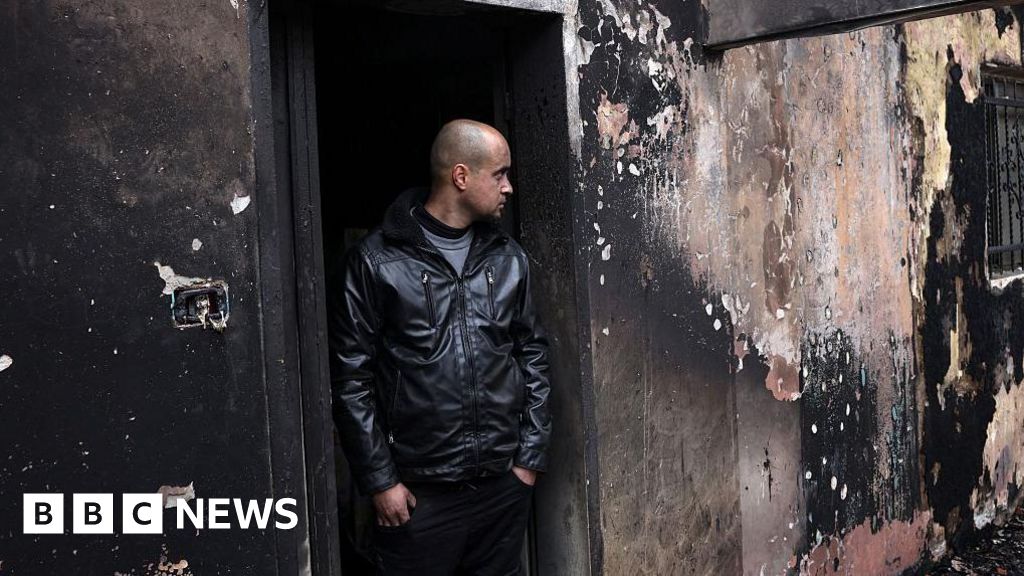
The violence began after 18-year-old settler Yehuda Sherman was killed after reportedly being hit by a vehicle driven by a Palestinian while on his quad bike.
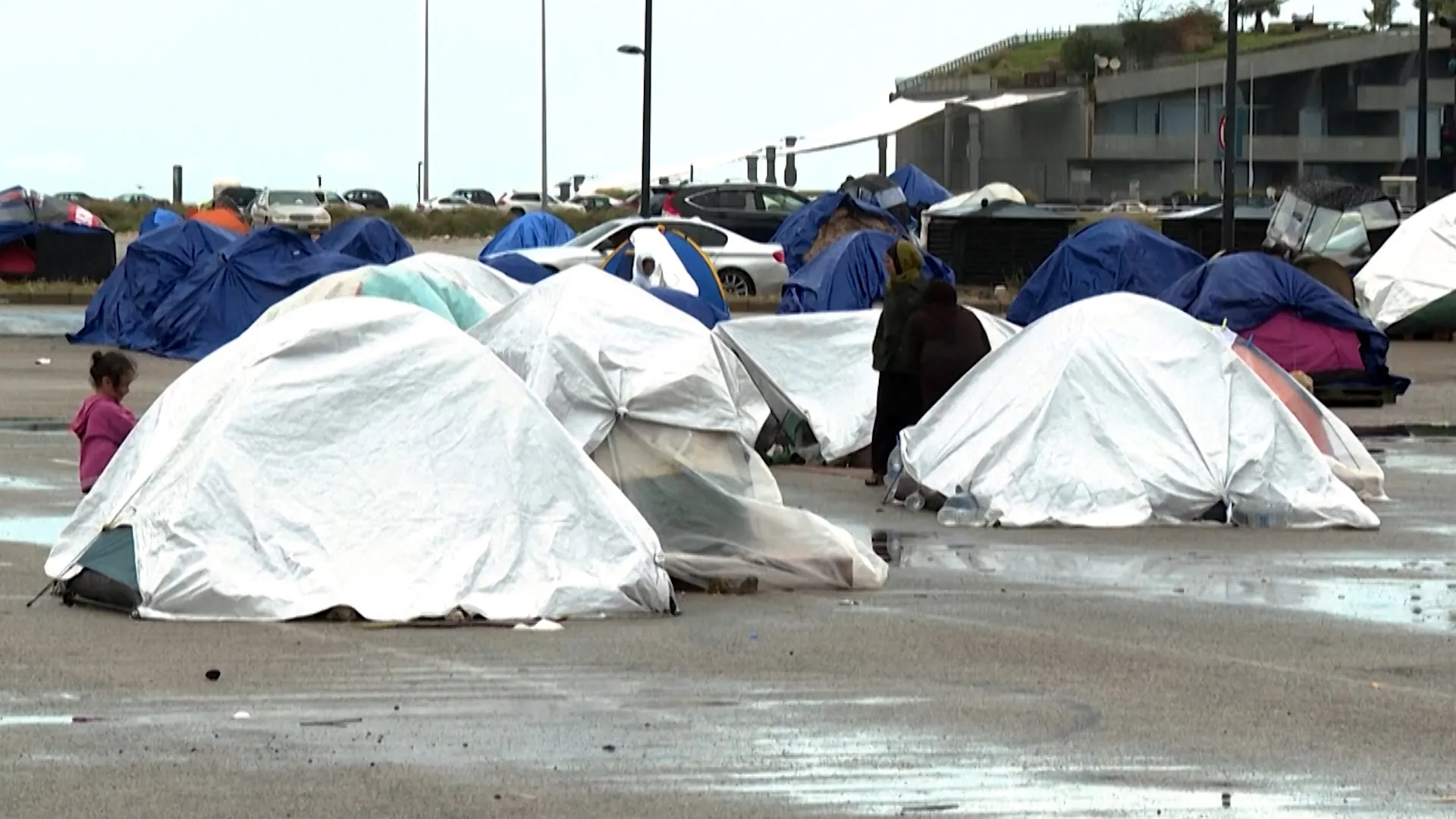
Families displaced by Israeli strikes are sheltering in tents across Beirut, as rain falls, with residents describing difficult conditions, limited aid and uncertainty over when they can return.
Great Britain claimed three gold medals in a sensational 28 minutes to make history and achieve the team’s best haul at a World Athletics Indoor Championships.
Georgia Hunter Bell began Sunday night’s medal rush when she stormed to her first global 1500m title, before pole vaulter Molly Caudery secured her return to the top of the podium in Poland.
A third triumph never looked in doubt as Olympic champion and world record holder Keely Hodgkinson dominated the women’s 800m final to win her first World Indoors gold.
Following Josh Kerr’s 3,000m triumph on Saturday, it guaranteed the British team’s most successful World Indoor Championships of all time, surpassing the three gold medals achieved in 1999.
Returning to the championships at which she represented Great Britain for the first time just two years ago, Olympic bronze medallist Hunter Bell reeled in Ethiopia’s Birke Haylom before bursting clear of her rivals on the final lap to win in three minutes 58.53 seconds.
Caudery, already guaranteed silver by the time her team-mate crossed the line, reclaimed the title which represented her breakthrough success two years ago with a second-time clearance over 4.85 metres.
With US-Ukraine talks set to resume in Florida, Volodymyr Zelenskyy warns that Russia is increasing its oil revenues through shadow fleets.
Published On 22 Mar 202622 Mar 2026
President Volodymyr Zelenskyy has urged allies to keep up sanctions pressure on Russia’s economy ahead of a second day of talks between Ukraine and United States officials on ways to end the more-than-four-year Russia-Ukraine war.
Russia’s representatives were not present at the talks, which opened on Saturday in Florida. They were originally expected to attend the negotiations, which had been due to take place in the United Arab Emirates, before the US-Israeli war on Iran.
Recommended Stories
list of 3 itemsend of list
The US delegation is being led by special envoy Steve Witkoff and Jared Kushner, US President Donald Trump’s son-in-law.
In a post on X on Sunday, Zelenskyy called for tougher action against Moscow’s so-called shadow fleet of tankers and for it to be denied oil revenues.
“Over the past week, Russia launched nearly 1,550 attack drones against Ukraine, more than 1,260 guided aerial bombs, and two missiles. Over that same week, due to the easing of sanctions, Russia increased its crude oil sales to finance its war,” Zelenskyy wrote.
“Revenues give Russia a sense of impunity and the ability to continue the war. That is why pressure must continue, and sanctions must work. Russia’s shadow fleet must not feel safe in European waters or anywhere else,” he said.
The Ukrainian president added that tankers that “serve the war budget can and must be stopped and blocked, not just let go”.
The so-called shadow fleet is a network of vessels that continue to export oil and gas despite Western sanctions due to the ongoing war with Ukraine.
Last week, the French Navy seized an oil tanker in the Western Mediterranean, which France’s President Emmanuel Macron said was part of Russia’s shadow fleet, a network of vessels used to export oil despite Western sanctions.
The shadow fleet, which has grown following Western sanctions on Russia aimed at curbing Moscow’s oil revenues, has helped to keep Russian oil exports flowing.
Talks continue
The last time the Ukrainian and Russian delegations met was in February in the Swiss city of Geneva, but no progress was made, as key issues surrounding territory remain unresolved.
Moscow has repeatedly said it will not agree to a peace deal that gives up the Ukrainian territory it has captured during the war. In contrast, Kyiv has said it will not agree to a deal that does not lead to the return of its territory.
Elements of the peace plan being promoted by the US include a presidential election in Ukraine, alongside territorial concessions.
Zelenskyy, whose term has already expired, is under renewed pressure from Trump to hold a vote as Washington pushes Kyiv towards a peace deal.
Ukrainian law bars wartime elections, but Zelenskyy has said Ukraine would be ready to hold democratic elections if the US secured a two-month ceasefire to allow time to prepare infrastructure and put security guarantees in place.
“Whatever we do, we do together, and as far as possible, in confidence.”
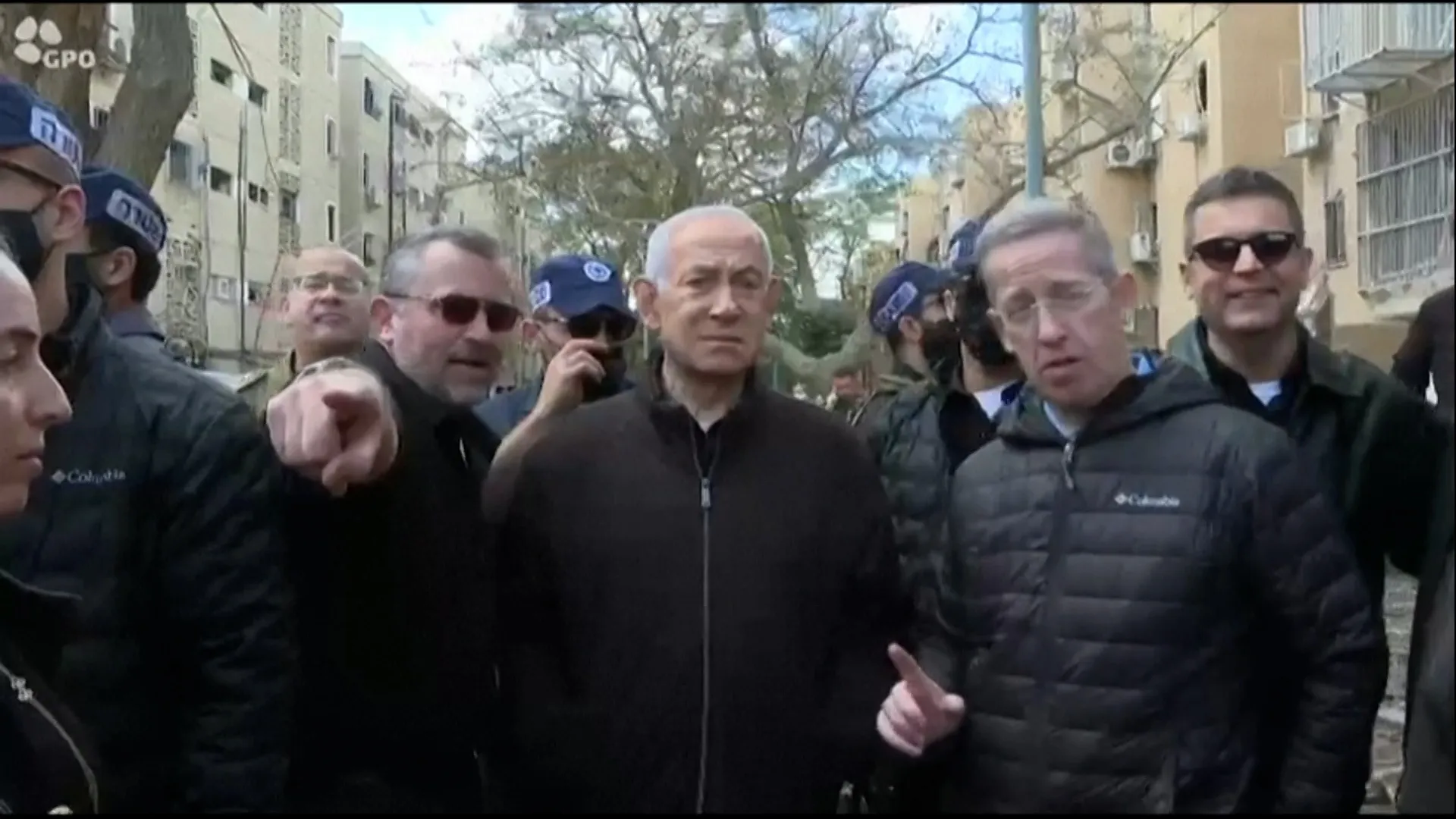
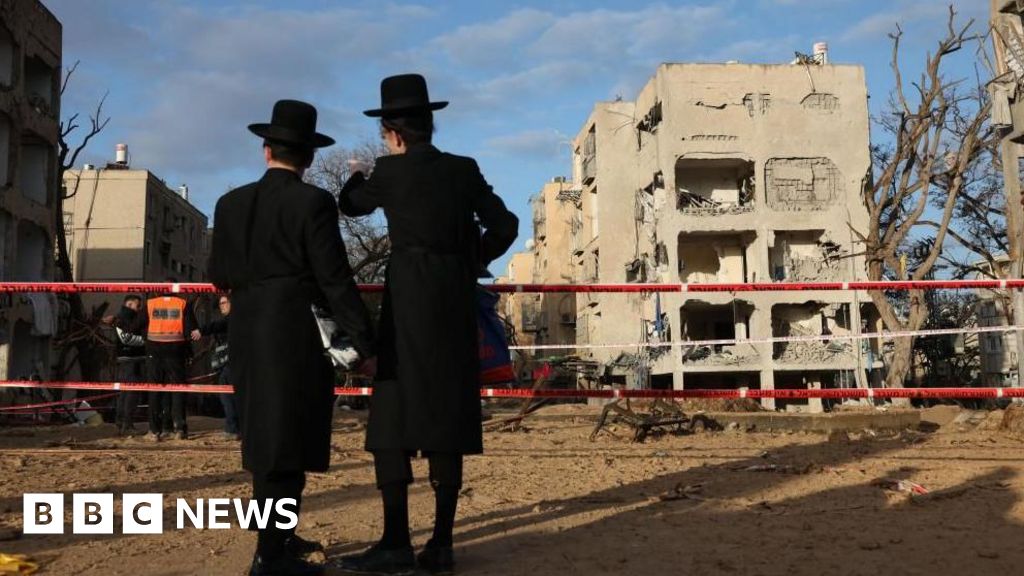
Israeli Prime Minister Benjamin Netanyahu has vowed to back US strikes on Iran’s power grid if Tehran does not reopen the Strait of Hormuz, as he visited the site of an Iranian strike in Arad. He urged world leaders to join the war effort as US-Israeli attacks on Iran have killed more than 1,500 people and injured thousands.
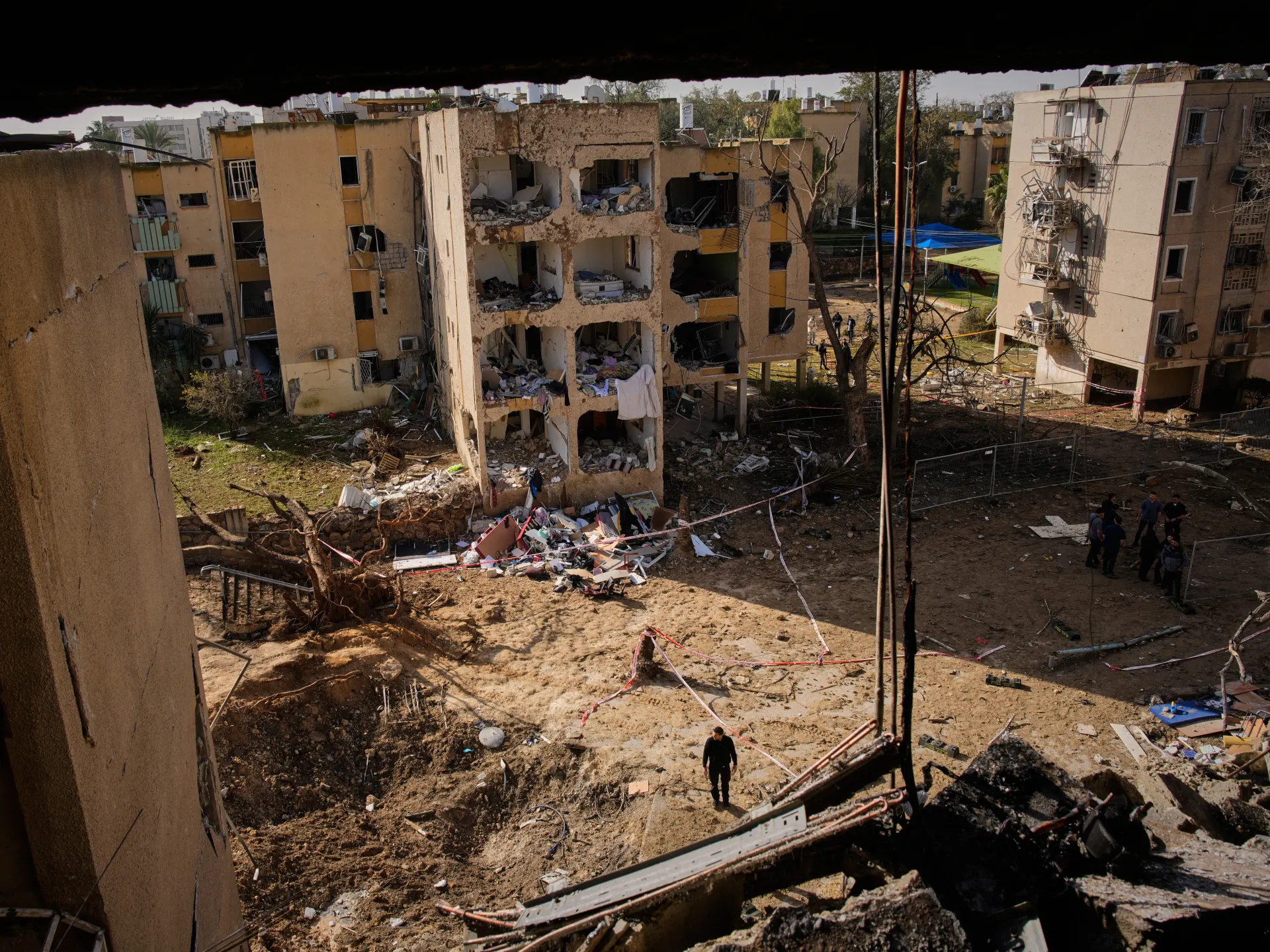
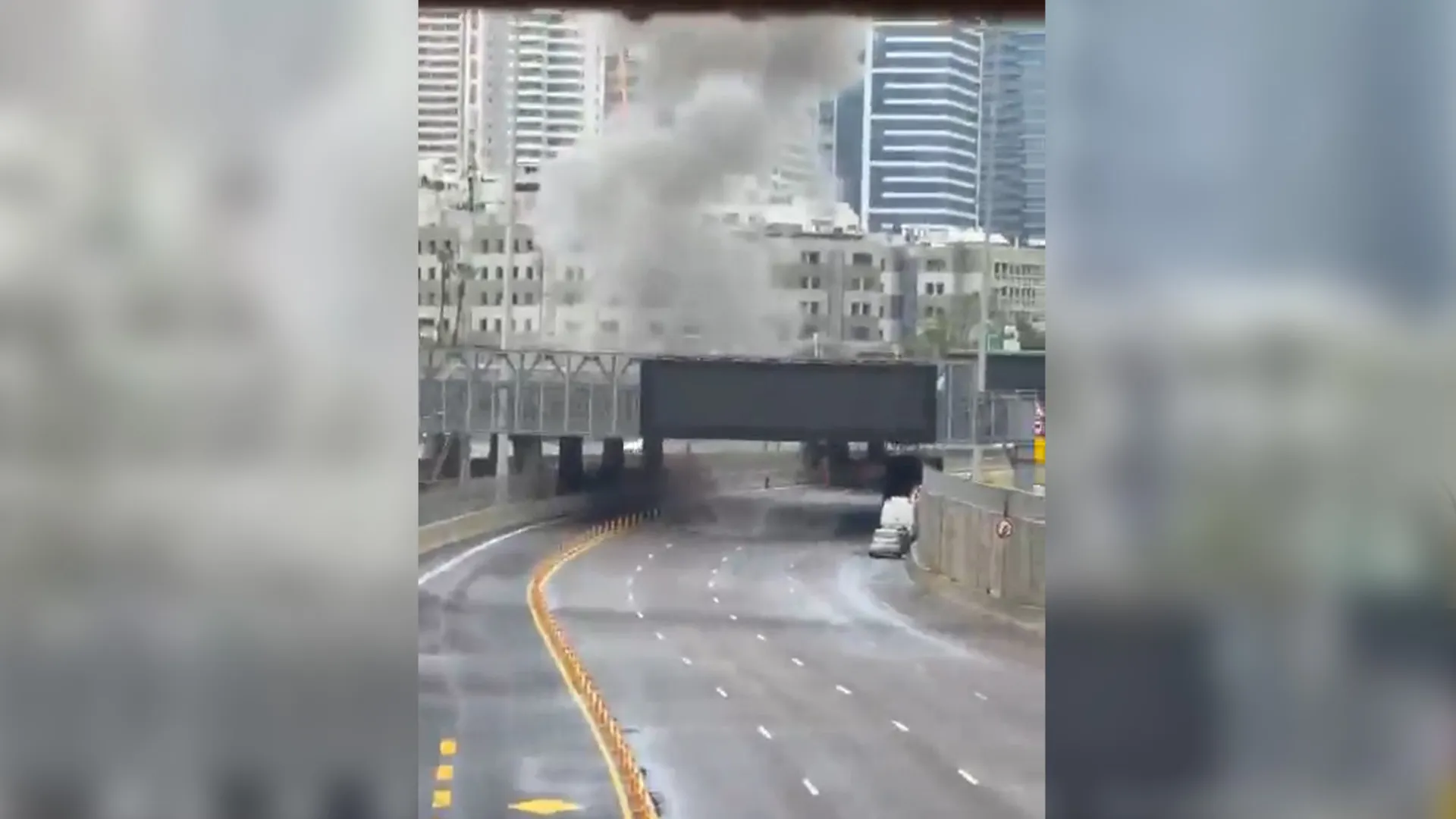
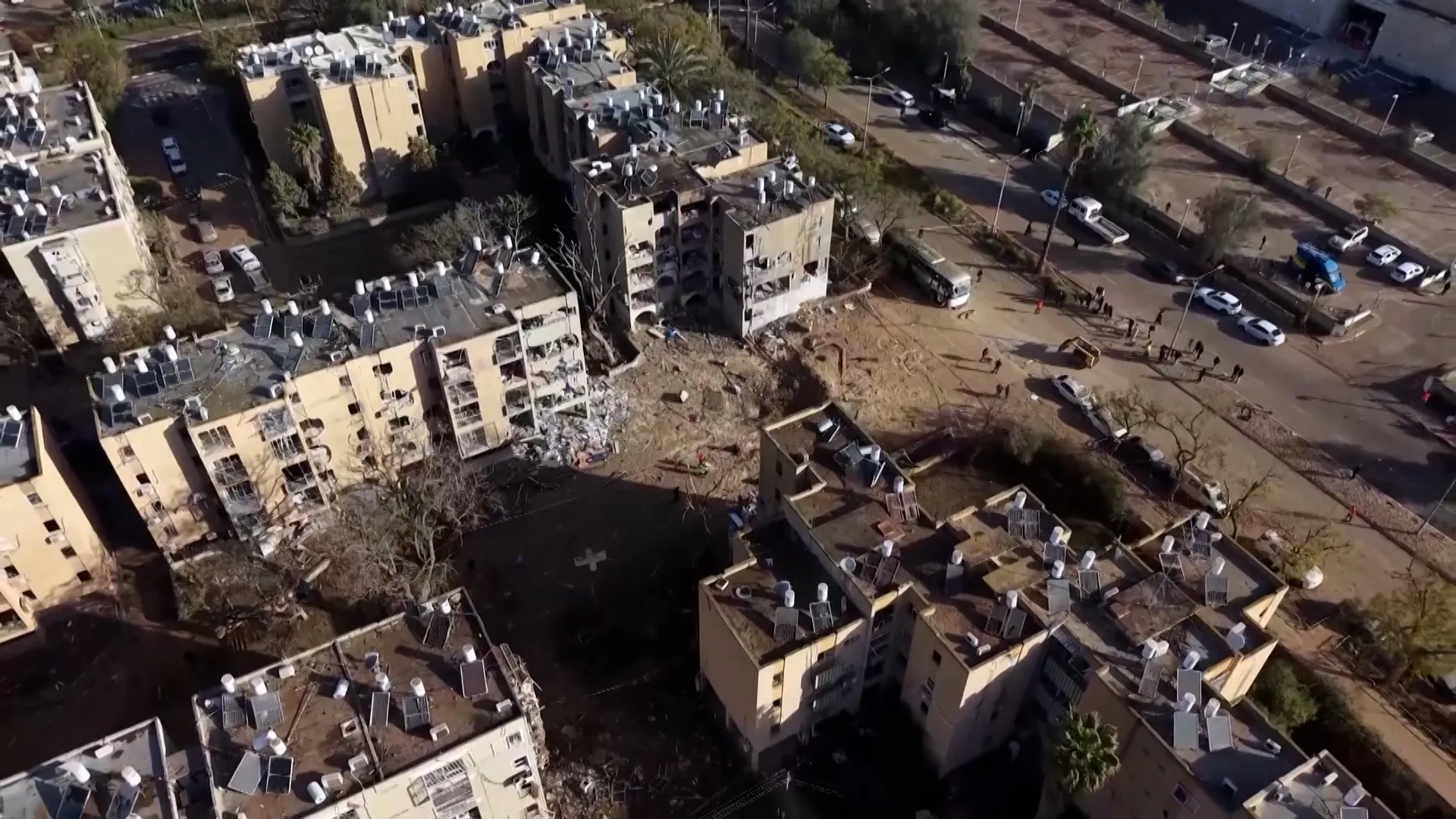
Iranian missiles have struck the towns of Arad and Dimona near an Israeli nuclear research centre in what Iran says was a response to an Israeli attack on its Natanz nuclear facility in Isfahan province.
At least 180 people were wounded in Saturday’s attack, and hundreds of people have been evacuated from the strategic towns as the Israeli-United States war on Iran is seemingly entering a new, more lethal phase of fighting.
Recommended Stories
list of 3 itemsend of list
Israeli Prime Minister Benjamin Netanyahu said his country had a “very difficult evening in the battle for our future”. There have been at least 4,564 people wounded in Israel, according to the Ministry of Health, since the start of the war on February 28.
Analysts said that while Israel has regularly waged military campaigns on Gaza, the occupied West Bank, Lebanon and elsewhere, it is rare for the Israeli public to feel the effects of war like it has over the past three weeks.
In Palestinian territory, including Gaza, Israeli forces have used disproportionate force against armed groups, who use rudimentary rockets to fire at Israel. Israel’s war on Gaza has been called a genocide by scholars and rights groups.
With Saturday’s high casualty count, the attacks in Arad and Dimona raise a question: Has Israel underestimated Iranian military capabilities?
What weapons is Iran using?
Defence analysts described Iran’s missile programme as the Middle East’s largest and most varied. Developed over decades, it contains ballistic and cruise missiles and is designed to give Tehran reach even despite its lack of a modern air force.
Iran has short- and medium-range missile systems and longer-range land-attack and antiship cruise missiles.
Iran’s short-range ballistic missiles have a range of roughly 150km to 800km (93 to 500 miles) and are built for nearby military targets and rapid regional strikes.
Their core systems include the Fateh variants: Zolfaghar, Qiam-1 and older Shahab-1/2 missiles. Their shorter range can be an advantage in a crisis. They can be launched in volleys, compressing warning times and making pre-emption harder.
Those medium-range systems include the Shahab-3, Emad, Ghadr-1, the Khorramshahr variants and Sejjil. They also have newer designs like Kheibar Shekan and Haj Qassem.
Iran’s land-attack and antiship cruise missiles include the Soumar, Ya-Ali and the Quds variants, Hoveyzeh, Paveh and Ra’ad.
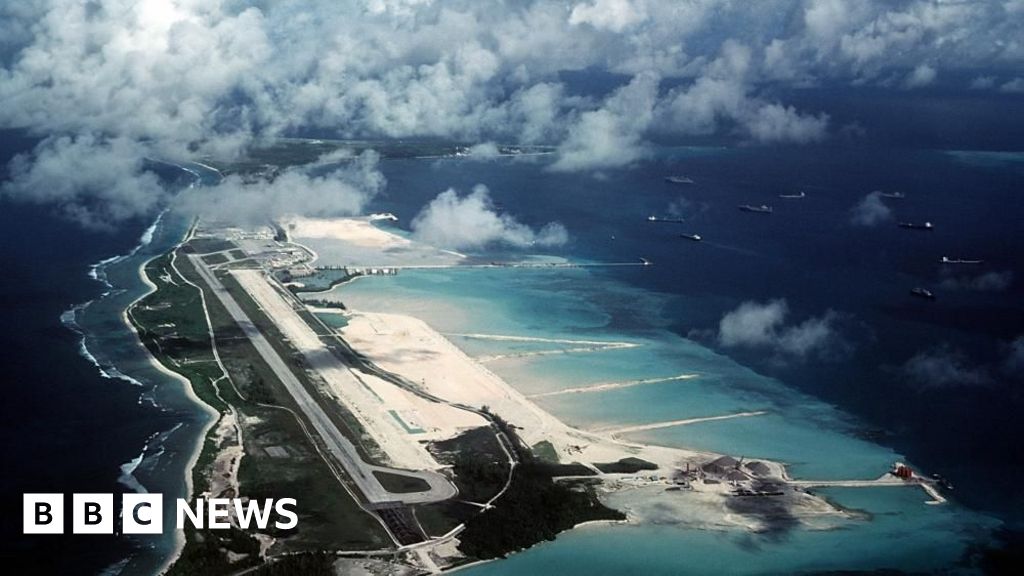
The longest reaching ballistic missiles, the Soumar, have a range of 2,000km to 2,500km (1,243 to 1,553 miles). However, it was reported that two Iranian missiles were fired late on Thursday or early on Friday on Diego Garcia, the site of a joint US-United Kingdom military base in the Indian Ocean that is 4,000km (2,485 miles) from Iran. The UK said the attack failed, and an Iranian official denied firing the missile.
Former Iranian Supreme Leader Ali Khamenei had previously limited Iranian missile ranges to 2,200km (1,367 miles) but removed that limit after Israel’s 12-day war on Iran in June. The US joined Israel in that war as well, carrying out one day of attacks on Iran’s three main nuclear facilities.
“Iran has also used cluster munitions in its attacks on Israel. Each kind of warhead the Iranians have also uses a cluster warhead,” Uzi Rubin, founding director of Israel’s missile defence programme and a senior fellow at the Jerusalem Institute for Strategy and Security, told the US news agency Media Line.
What is a cluster munition or warhead?
Instead of a single explosive payload, a cluster warhead disperses multiple bomblets.
“The tip of the missile, instead of containing a big barrel of explosives, contains a mechanism which holds on to a lot of small bombs. And when the missile approaches the target, it opens its skin, it peels off and it spins around and the bomblets are released and released into space and fall on the ground,” Rubin told Media Line.
He added that Iranian cluster warheads may contain 20 to 30 bomblets or 70 to 80, depending on the missile.
These munitions are not new for Iran either. Iran reportedly also used cluster munitions in the 12-day war.
Amnesty International called Iran’s use of cluster munitions during that war a flagrant violation of international humanitarian law while Israel has also been accused of using cluster bombs in Lebanon.
Cluster munitions were banned in 2008 when the Convention on Cluster Munitions was adopted. Neither Iran nor Israel are signatories to the convention.
Why are they making an impact now?
An Israeli military spokesman said Israel’s air defence systems failed to intercept some of the Iranian missiles that hit Arad and Dimona despite being activated. He said Iran’s weaponry was not “special or unfamiliar” and an investigation was under way.
So why are these cluster munitions now making an impact? There are a few reasons.
For a ballistic missile equipped with cluster bomblets to be intercepted, it must happen before the payload opens and releases the submunitions. After the payload opens, the missile goes from a single point of attack to multiple points, making it difficult to stop.
On Thursday, The Times of Israel reported that the Israeli air force will start conserving interceptors. Military officials reportedly said at the time that Iranian cluster bombs are unlikely to cause significant harm if people have taken shelter and, therefore, may avoid shooting down some of them.
What is next?
In the next stage of the war, Iran, the US and Israel may continue to target important infrastructure.
The US and Israel struck Iran’s Natanz nuclear facility on Saturday, according to the Iranian Atomic Energy Organisation. This facility in central Iran is one of the country’s most important uranium enrichment sites, about 220km (135 miles) southeast of Tehran.
Israel previously struck fuel storage facilities in Tehran, leading to vast, toxic smoke over the Iranian capital. For its part, the US previously hit Kharg Island, Iran’s oil export hub, and threatened to do it again.
Iran has essentially closed the Strait of Hormuz, a vital chokepoint for global shipping and oil transport, and has targeted military bases and crucial energy infrastructure across Arab Gulf countries.
US President Donald Trump demanded the reopening of the strait and threatened to begin hitting energy infrastructure should Iran not comply.
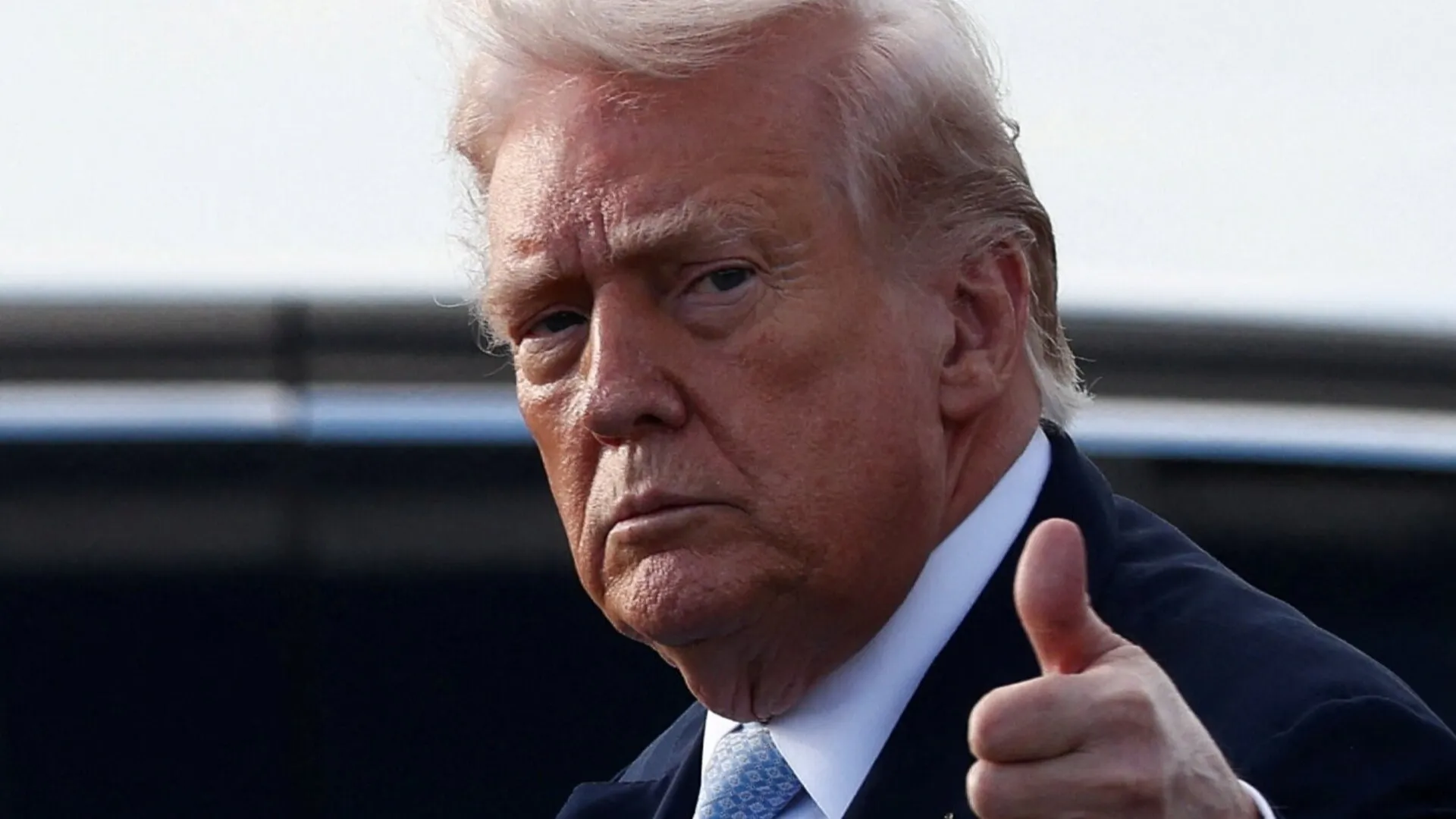
“If Iran doesn’t FULLY OPEN, WITHOUT THREAT, the Strait of Hormuz, within 48 HOURS from this exact point in time, the United States of America will hit and obliterate their various POWER PLANTS, STARTING WITH THE BIGGEST ONE FIRST,” Trump wrote on Truth Social at 23:44 GMT on Saturday.
Tehran, Iran – Military and political authorities in Iran are projecting a message that “victory” is near as war with the United States and Israel continues to escalate, and air strikes and assassination attempts are reported across the country.
Massive joint US-Israeli air raids were recorded in multiple areas of the capital Tehran overnight into Sunday, and in central Iran’s Isfahan city in the morning, a day after Dezful and Andimeshk in western Khuzestan and several other cities were hit.
Recommended Stories
list of 4 itemsend of list
Israeli warplanes also conducted two separate sets of precision strikes on privately-owned residential units located in small towns in the green provinces of Gilan and Mazandaran to the north on Saturday, which appeared to be assassination attempts on officials.
Local authorities confirmed that several people were killed, but did not elaborate. Israeli and US media said a senior drone commander is believed to have been killed.
Nevertheless, top officials in Tehran said they were unyielding and focused on retaliatory attacks.
Parliament speaker and former Islamic Revolutionary Guard Corps (IRGC) commander Mohammad Bagher Ghalibaf said the fact that Iranian missiles struck Israel’s Dimona overnight shows that a “new stage of battle” has started where “Israel’s skies are defenceless”.
Majid Mousavi, aerospace commander of the IRGC, echoed the same statement about control over Israeli skies in a post on X on Saturday night, which came in response to the US and Israel declaring dominance over Iranian airspace.
“Pinpoint precision Seyed Majid, hit Dimona again,” chanted flag-waving pro-establishment supporters shown on state television broadcasts, calling on Mousavi for action.
Israel said more than 180 people were injured in Dimona, a southern city where its key nuclear facilities are also located, in addition to nearby Arad.
Ahmad-Reza Radan – Iran’s hardline police chief, who has been cited by Israeli media as being a target for assassination along with Mousavi, Ghalibaf and others – was seen briefly addressing a group of supporters in Tehran on Saturday night.
“Trump first threatened the European Union, then begged. Today, he has said he will come take Greenland if the Europeans don’t come. I want to tell the European Union that if they can’t hold on to Greenland, then send a request and we will come preserve it,” he said, followed by chants of “Alla akbar” (God is greatest).
Defence Ministry spokesman Reza Talaei-Nik said in a statement that attacks across the region will continue “until the complete halt and surrender of the enemy”.
The taunts are in line with the state’s messaging in recent days, including a written statement attributed to Mojtaba Khamenei, who was selected as the supreme leader after his father Ayatollah Ali Khamenei was assassinated on the first day of the war, but who has not been seen or heard.
The message said Iran’s enemies were being “defeated” and there is “particular unity” among supporters of the theocratic establishment.
Over the past week, the country’s top security official, commanders of the paramilitary Basij force of the IRGC, the government’s intelligence minister, and a number of other military and security personnel have been among those killed.
The government reports that a large number of residential buildings, hospitals, schools and other civilian facilities have also been impacted during the war, as state supporters control the city streets, squares and mosques to counter potential anti-government protests.
‘Say goodbye to electricity!’
The Iranian rhetoric quickly escalated on Sunday after US President Donald Trump issued a 48-hour ultimatum for Tehran to reopen the strategic Strait of Hormuz, a key water route for global energy export, or face strikes on its power plants.
In response, Iranian politicians and armed forces said they would strike back harder against the region’s energy facilities.
The IRGC-affiliated Mehr news agency released a map with graphics that showed power plants across the region, including in the United Arab Emirates, Saudi Arabia, Qatar and Kuwait, that could be attacked if Iranian facilities are hit. An accompanying message read, “Say goodbye to electricity!”
On Saturday night, state and IRGC-affiliated media circulated a different map, showing Doha and also marking the central offices of Al Jazeera network as potential targets, and said all residents of the Qatari capital were advised to evacuate immediately.
State television quickly issued a retraction and cited unnamed sources as saying the map was not official, but no explanation was provided about who circulated the image and why.
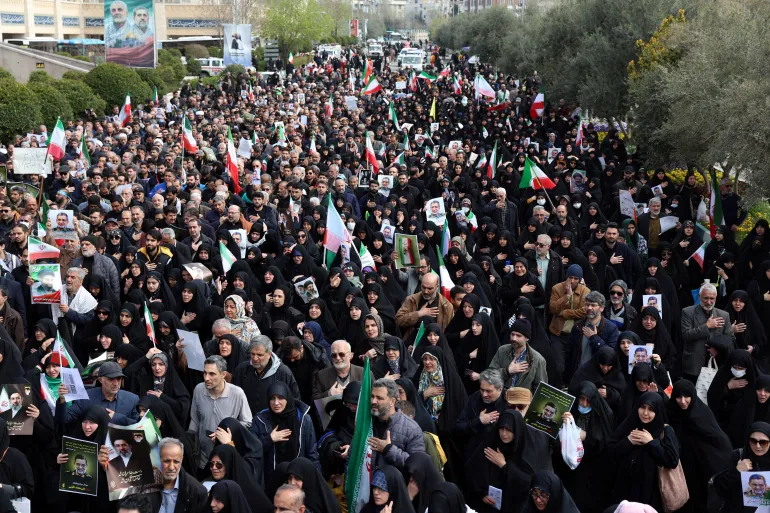
Iranians attend the funeral ceremony of Islamic Revolutionary Guard Corps (IRGC) spokesman Ali Mohammad Naini, who was killed in US-Israeli strikes, in Tehran on March 21, 2026 [AFP]
The all-around promises of escalation, particularly around bombing electricity facilities and other critical civilian infrastructure, have created additional concerns among many Iranians about the impact on daily lives and implications on the country’s future.
“If the main power plants are bombed, it’s not going to be just a brief disruption; it could stop the flow of everything from water to gas,” a Tehran resident told Al Jazeera, asking to remain anonymous due to security concerns. “It would be foolish to just punish the population like that.”
The US-Israeli forces have also struck natural gas facilities in southern Iran and bombed fuel reserves across Tehran, but authorities said fires and damage were contained quickly without creating major disruptions.
In an Instagram post to mark Nowruz, the Persian New Year, iconic footballer and nationally respected figure Ali Daei said this year’s celebrations were different because Iran is grieving for its people killed in the war.
“Wishing for a prosperous and free Iran, away from war and bloodshed, all about welfare and calm,” he wrote, drawing the ire of a number of state media, including the IRGC-affiliated Tasnim, which criticised Daei for not specifically condemning the US and Israel.
Proclamations, warnings under blackout
Meanwhile, the internet remains cut for more than 92 million Iranians for a 23rd day, becoming the longest shutdown in the country’s history, trailed only by a 20-day blackout imposed during the killing of thousands of anti-government protesters in January.
State media outlets continue to focus on successful IRGC attacks and present Iran as a country on the brink of being recognised as a world power, as they refrain from communicating details about the US and Israeli attacks or significant damage sustained.
Alaeddin Boroujerdi, a member of the national security committee of Iran’s parliament, told the state television on Sunday that the IRGC’s overnight attacks against Israel “opened a new page in shifting the balance of power and showed the victory of the Islamic Republic in this imposed war”.
The parliamentary committee’s spokesman, Ebrahim Rezaei, stretched the same line of thinking even further, and said in a post on X that Iran should demand to become a veto-yielding permanent member of the United Nations Security Council as a condition for ending the war. The lawmaker did not say how or when he expected that to happen.
Iran’s government has also demanded war reparations and guarantees against future aggression, but the US and Israel have been pushing to overthrow the Islamic Republic that came to power in a 1979 revolution.
Intelligence authorities advised the Iranian population on Saturday that even being a member of foreign-based news and war footage channels on Telegram and all other social media outlets banned by the state could violate national security laws.
The Iranian judiciary said that such channels are considered “terrorist” outlets and that sending any videos of impact sites or armed state checkpoints on the streets to them could carry maximum penalties like confiscation of assets and even execution.
State security authorities have emphasised that anyone who engages in anti-establishment protests will be treated as an “enemy”.
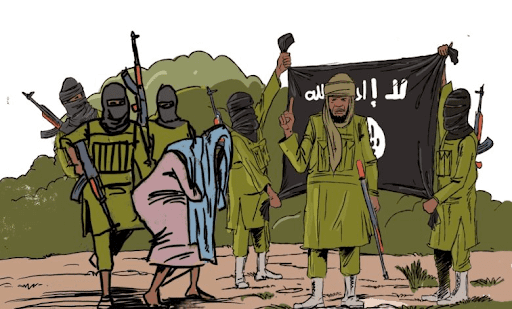
As Ramadan, the Islamic holy month of fasting, prayer, and reflection, entered its second week, specifically on March 5, terrorists from the Islamic State West Africa Province (ISWAP) attacked multiple military positions in Borno State, northeastern Nigeria, in a single night.
The attacks killed at least 16 soldiers and officers. The following day, a suicide car bomb detonated near Njimya village inside Sambisa Forest, forcing Nigerian troops to retreat.
That same week, Nigeria’s Minister of Defence, General Christopher Musa, convened a closed-door security meeting with President Bola Tinubu at the Presidential Villa in Abuja. When he came out, his explanation for the rise in attacks was unusually direct.
“As usual with the terrorists during the Ramadan period,” he told journalists, “they feel when they die, they are going to heaven, so they are ready to commit any offence or get killed because they believe there is a reward.”
He assured Nigerians that security forces had adjusted their strategies. “You can see in the past few days we’ve taken over those locations. We’ve killed their commanders and taken over their assets. We’ll continue to do more,” he said.
The assurance arrived against a backdrop of twelve confirmed attacks on Nigerian military bases since January 2025 — eleven of them in Borno State alone.
However, the violence did not stop.
On March 17, three suspected suicide bombings rocked Maiduguri, killing at least 23 people and wounding more than 100 others. The military said the attacks were carried out by “suspected Boko Haram terrorists”. Earlier, on March 6, terrorists from Jama’atu Ahlussunnah Liddaawati Wal Jihad (JAS), also known as Boko Haram, attacked Ngoshe in Borno’s Gwoza Local Government Area (LGA), abducting over 300 people and killing more than a hundred.
The real question is whether Ramadan genuinely drives this violence, or whether it merely overlaps with a war that was already escalating. HumAngle’s analysis of Armed Conflict Location and Event Data (ACLED)’s five-year data shows the answer is both.
But only one part of that answer is getting worse.
Sacred month recast as a season of war
Just as it encourages insurgents to migrate to Africa, the Islamic State, ISWAP’s parent organisation, has long designated Ramadan as what its propaganda formally frames as a “season of jihad and harvest”.
The ideological foundation reaches back to events central to Muslim memory.
Prophet Muhammad waged his first major battle, the Battle of Badr, in 624 CE, during Ramadan. The conquest of Mecca in 630 CE also fell within the month.
For ordinary Muslims, these are historical moments shaped by circumstances. For jihadist organisations, they are annual instructions.
While mainstream Islam understands Ramadan as a month of fasting, prayer, and restraint, jihadist ideology inverts this completely. In their reading, violence is not a departure from religion — it is its highest expression. For them, history is more than a context; it is a whole calendar.
JAS was the first Nigerian jihadi organisation to work from this theology, though inconsistently. Its former leader, Abubakar Shekau, was unpredictable. During his time, attacks came when opportunity appeared, not when doctrine demanded.
ISWAP, which split from JAS in 2016, partly over Shekau’s methods, brought a different discipline. Trained by Islamic State commanders who operate on fixed ideological cycles, ISWAP insurgents do not treat Ramadan as one month among twelve. They treat it as a deadline. For them, the 2026 attacks were deliverables.
What the data shows and what it doesn’t
Between 2021 and early 2026, Nigeria recorded 20,317 violent incidents involving armed groups: battles, explosions, and attacks on civilians, according to ACLED. Of these, 1,774 occurred during the months of Ramadan. That is roughly one in every twelve incidents nationally occurring in a month that lasts one in twelve months. On the surface, there is no obvious spike.
The total number of annual attacks also climbed sharply, from 3,269 in 2021 to 5,242 in 2025, a 60 per cent rise in four years. Ramadan months tracked that general rise without breaking dramatically above it. When you count incidents per day rather than per month — which is fairer, since Ramadan is only 30 days — the Ramadan daily rate of 9.5 attacks only sits slightly below the non-Ramadan daily rate of 10.2. If anything, the country as a whole is marginally quieter during Ramadan than outside it.
Illustration: Akila Jibrin/HumAngle.
But that national picture hides a more important local one.
Get our in-depth, creative coverage of conflict and development delivered to you every weekend.
Subscribe now to our newsletter!
Borno State alone accounts for 277 of Nigeria’s 1,774 Ramadan incidents — more than Zamfara and Kaduna combined, two states notorious for non-jihadi terrorism. Most of Borno’s violence traces to either ISWAP or JAS. And ISWAP’s Ramadan record tells a completely different story from the national trend.
In 2021, ISWAP recorded zero Ramadan attacks in the data. By 2022, that number rose to 7; by 2023, 16; by 2024, 12; and by 2025, 19. In the first three weeks of Ramadan in 2026, the figure had already reached 31, ISWAP’s highest Ramadan count on record as of the time of filing this report.
Every other major actor in the data, including communal militias from Kaduna, Zamfara, and Katsina, unidentified armed groups, and even the Nigerian military, shows a flat or inconsistent Ramadan pattern. ISWAP alone shows a line pointing upward, year after year, specifically during the holy month.
What does this mean at the national scale? ISWAP accounts for just 85 incidents across all Ramadan periods in the dataset — 4.8 per cent of all Ramadan violence in Nigeria. The majority of other attacks during Ramadan are carried out by non-jihadi terrorists, communal fighters, and unidentified groups with no relationship to the Islamic calendar whatsoever.
From the data, we can deduce that Nigeria’s broad Ramadan violence problem is a governance crisis. But ISWAP’s Ramadan violence problem is an ideological one — and it is the only one that is systematically growing.
The tactical evolution
What distinguishes ISWAP’s Ramadan 2026 campaign from previous years is not its scale, but its method.
The group has launched at least twelve coordinated attacks on military bases and infrastructure across Borno State since January 2025 alone — a pace comparable only to its 2018-2019 operational tempo, the period when it briefly seized Baga, the Lake Chad headquarters of the Multinational Joint Task Force.
The March 5 night assault hit multiple locations simultaneously.
In April 2025, fighters detonated IEDs on bridges along the Biu-Damboa road, cutting off military reinforcements to a surrounded town. This is a deliberate encirclement strategy designed to isolate and starve bases of supply.
The weapons have changed, too. ISWAP insurgents have used armed drones, rocket-propelled grenades capable of destroying armoured vehicles, and suicide car bombs. These are not the weapons of an organisation improvising from local materials; they suggest sustained external supply chains.
Reports indicate that foreign insurgents have also entered and compounded the situation. At least ten have been killed in the past two years during engagements with regional security forces, including a Senegalese national previously resident in Sweden. Cameroonian forces also killed additional foreign insurgents in February 2026 near the border.
The internationalisation of ISWAP’s fighter pool reflects the Islamic State’s central documented effort to reinforce its West African province ahead of what its propaganda calls the Ramadan offensive season.
State-backed regional cooperation, meanwhile, has deteriorated. Niger’s withdrawal from the Multinational Joint Task Force in March 2025 disrupted intelligence-sharing arrangements and opened corridors along the Nigeria-Niger border, which ISWAP has since exploited.
The geography of an insurgency
The ACLED data draws a line across Nigeria. To the North East of it, in Borno and Yobe, jihadist Ramadan operations follow a doctrinal tempo. But in the northwestern region – in Zamfara, Kaduna, and Katsina – and in the North Central, Ramadan-period violence is driven by land disputes, ethnic militia competition, and criminal enterprise. These conflicts share a calendar window, not a cause.
The distinction matters. Strategies built to counter ISWAP’s religious framing will not reduce militia attacks or cult violence in other states. Operations designed for terror suppression in Zamfara are poorly suited to ISWAP’s organised, doctrinally motivated attacks in Borno. Nigeria is not fighting one war during Ramadan. It is fighting several actors with different motives.
The northern Muslim-majority states make this clearest. Kano recorded 18 Ramadan incidents across five years. Jigawa recorded five. Gombe, three. These are some of Nigeria’s largest Muslim populations.
However, the infrastructure that turns a holy month into an operational order – the preachers, the propaganda, the pipeline from grievance to detonation – is not spread across Muslim Nigeria. It is concentrated, almost entirely, around Lake Chad.
Overall, Nigeria’s conflict is worsening across all months, actors, and regions. A 60 per cent rise in four years is a trend that contains every other story, and Ramadan does not create that trajectory. But for one group, in one geography, with one ideology, it sharpens it. And that group is growing faster, fighting harder, and planning more carefully than it was this time last year.
Movsar Evloev rallies after a point deduction against the unbeaten Lerone Murphy to win the contest in London.
Published On 22 Mar 202622 Mar 2026
Russia’s Movsar Evloev overcame a point deduction for a foul to edge a majority decision win over Lerone Murphy at Saturday’s UFC Fight Night 270 at the O2 Arena, likely punching his ticket to a title fight against featherweight champion Alexander Volkanovski in his next bout.
With the two fighters putting their undefeated records on the line to decide who will face the 37-year-old Australian Volkanovski for the belt, the bout turned into an intriguing clash of styles.
Recommended Stories
list of 3 itemsend of list
Evloev, who is known for his wrestling, tried to showcase his striking, while Murphy displayed some superb defensive work on the ground.
Murphy evaded the fearsome grappling attack of his Russian opponent for the first two rounds of the five-round bout, using a selection of stiff right hands to keep him at bay. Evloev took the chance to exhibit some of the dangerous spinning strikes he has added to his repertoire since his last fight in December 2024.
Evloev finally managed to take the fight to the mat early in the third round, but Murphy was quickly back to his feet, uncorking a spinning back kick of his own shortly afterwards.
However, it was his opponent who finished the frame strongest with a big overhand right, followed up by a flurry of strikes.
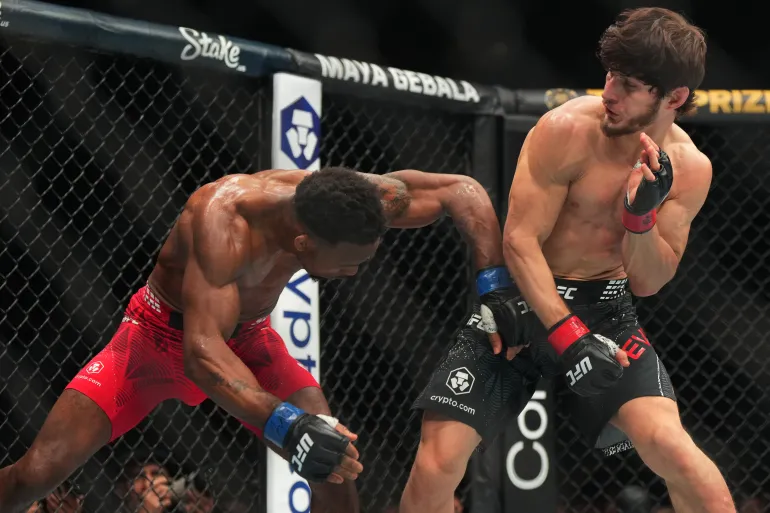
Evloev, right, lands a punch against Murphy during the UFC Fight Night 270 main event at the O2 Arena [Peter van den Berg/Imagn Images via Reuters]
His momentum was derailed somewhat when he landed a second kick to Murphy’s groin early in the fourth round, and referee Marc Goddard deducted a point from Evloev for the foul.
Knowing that the deduction could be decisive if the fight went to the judges’ scorecards, Evloev turned up his energy-sapping grappling attack in the fifth and final frame as he chased a finish, but again Murphy was able to get back to his feet with relative ease.
Despite not really threatening to submit his opponent on the ground, it proved to be enough for the 32-year-old Evloev, with two of the judges scoring the fight 48-46 in his favour and the third scoring it a draw 47-47 after the point deduction was taken into account.
Murphy reacts following his first career defeat in UFC [Jasper Wax/Getty Images]
US President Donald Trump has threatened to ‘obliterate’ Iran’s power plants if Tehran fails to open the Strait of Hormuz to all vessels within 48 hours. This major escalation comes as Trump faces pressure over skyrocketing domestic energy prices due to the now three-week-long war.
One of themissiles firedreportedly failed in flight, while the other was intercepted by a US warship. The BBC understands the reports are accurate. There are doubts whether Iran has missiles which are capable of reaching Diego Garcia, which is about 2,350 miles from Iran.