At least 10 people have died, and more than 100 have been injured, after Iran launched barrages of missile and drone attacks against every member of the GCC in retaliation for US-Israeli strikes on Tehran.
Until February 28, few in the Gulf Cooperation Council (GCC) could have imagined missiles flying overhead, let alone crashing into the glass facades of five-star hotels. For decades, cities such as Dubai, Abu Dhabi, and Doha had been marketed as luxurious, safe havens—business and financial hubs seemingly shielded from the harshness of the desert and regional geopolitical turbulence, thanks to vast petrodollar wealth.
Recent attacks have punctured that sense of invulnerability.
The economic implications remain uncertain, but the US-Iran war marks a clear turning point. With much of the region still on high alert, business activity has begun to slow down and investors are reassessing risk. In January, the World Bank projected 4.4% growth for GCC countries this year. On March 2, however, JPMorgan cut its non-oil growth forecast by 0.3 percentage points.
“Businesses shift quickly into contingency mode: staff safety, operational coverage, supply, and cash-flow discipline,” says Abdulaziz Al-Anjeri, Founder & CEO, Reconnaissance Research in Kuwait. “You also see immediate attention to the ‘price of risk’—airspace and logistics friction quickly translate into higher war-risk premiums, insurance costs, and delayed decisions. The strongest response is quiet competence—keeping the lights on without drama”
Even in the most remote areas of the GCC feel the effects of the crisis. In Khasab, the last Oman town on the coast of the Strait of Hormuz and a popular tourist destination for outdoor activities, Ali Al Shuaili runs a diving center.
“Everything is normal, but the sea is closed so we can’t go fishing or diving and, of course, all tourist bookings have been cancelled,” he tells Global Finance via WhatsApp. “Life-wise, it looks normal, but everybody is worried about the business. We pray for everything to settle down quickly.”
For now, banks in the region are absorbing the shock, supported by strong liquidity and capital buffers.
“We are not seeing any direct impact on banking operations in the UAE or the wider GCC,” says Bader Al Sarraf, Research Analyst at Standard Chartered’s UAE office. “Financial institutions across the region continue to operate normally, supported by strong infrastructure, resilient financial systems, and established operational resilience frameworks that enable banks to continue facilitating transactions and supporting business activity even during periods of heightened uncertainty.”
Banks and major institutions focus first on continuity— keeping core functions stable: payments, customer access, liquidity management, and clear reassurance, adds An-Anjeri. “In moments like this, finance is not only about balance sheets; it’s also about maintaining confidence, because uncertainty can do damage even without physical disruption.”
Across the region, the prevailing approach among institutions, corporates, and investors is to monitor developments rather than take immediate action, according to Al-Sarraf.
“Given that the situation remains fluid and still in its early stages, many are in a ‘digest and risk assessment’ phase before making strategic decisions,” he says. “This reflects a period of careful observation as developments continue to unfold and as businesses and investors evaluate the potential implications across sectors and economic activity.”
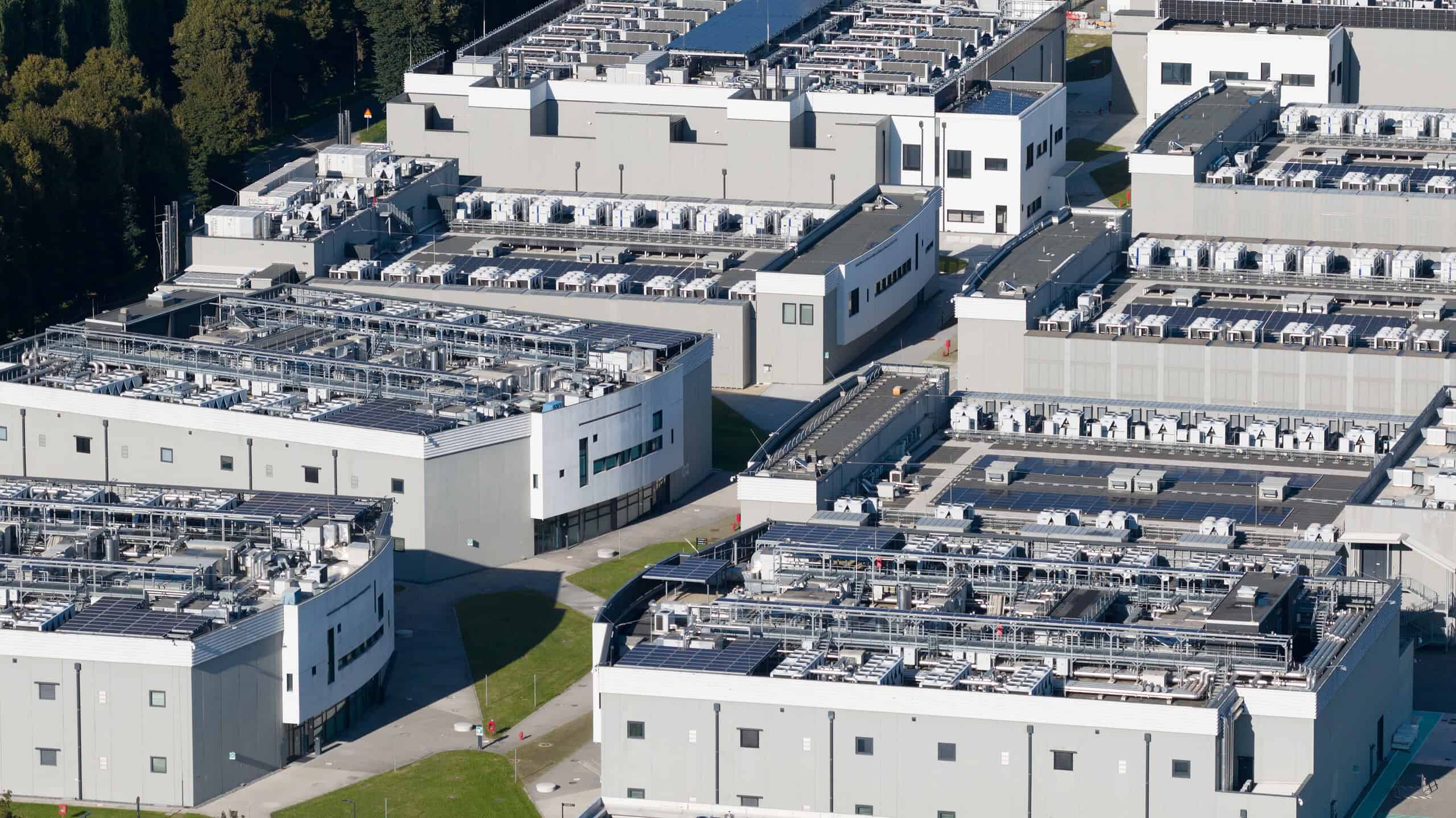
One immediate concern is digital infrastructure. The Gulf has spent years positioning itself as a regional hub for data centers, but the conflict has exposed its vulnerability. Amazon Web Services reported that drones attacked three of its facilities in the UAE and Bahrain, disrupting cloud and IT services across the region. In the UAE, several bank customers briefly lost access to their online accounts. Such incidents could prompt US tech giants, including Amazon, Microsoft, Google, and Oracle, all of which have invested heavily in Gulf data infrastructure, to reassess their exposure.
Weaknesses Exposed
The war has highlighted structural weaknesses in the region’s economic model. Despite years of diversification efforts, most GCC economies still rely heavily on hydrocarbon revenues.
QatarEnergy, the world’s largest liquified natural gas (LNG) producer, halted production afte drones hit two of its facilities. Oil exports are also affected. Saudi Arabia partially shut the Ras Tanura refinery, one of the largest in the Middle East, with a capacity of 550,000 barrels a day.
Now, all eyes are on the Strait of Hormuz, a strategic chokepoint through which roughly a fifth of the world’s hydrocarbon supply transits. For GCC economies, the disruption translates into billions of dollars in daily revenue at risk.
“If the war drags on, you can get a mixed picture: energy revenues may benefit from risk pricing, while the broader economy pays through confidence, logistics, insurance, and financing costs,” says Reconnaissance Research’s An-Anjeri. “Non-oil sectors tend to feel prolonged uncertainty first because they’re confidence-sensitive—services, travel, retail, private investment. GCC states have buffers, but buffers don’t replace stability.”
Another major concern is food security: The region relies overwhelmingly on imports to feed its population, with roughly 70% of food shipments arriving through the Strait of Hormuz. The system has faced stress tests before—during the Covid-19 pandemic, for instance, and in 2017 when several GCC countries, including Saudi Arabia and the UAE, imposed an embargo on Qatar. At the time, Doha imported around 90% of its food. Since then, the country has invested heavily in domestic production and is now self-sufficient in milk, but it still depends on imports for much of the rest.
Water security may be an even more critical vulnerability. Nearly 90% of drinking water in GCC countries comes from desalination plants. Any disruption, whether from direct damage or oil spills affecting coastal facilities, could quickly trigger a humanitarian crisis within days.
For now, most governments and businesses are in a wait-and-see mode. But as the conflict widens, including in Lebanon and, to a lesser extent, towards Cyprus and Turkey… longer-term scenarios are beginning to enter boardroom discussions.
“In the short run, if the war ends quickly, I don’t think there will be any significant impact on the banks, but if the conflict extends over weeks and if the flow of oil and gas through the Strait of Hormuz continues to be even temporarily interrupted, eventually this will definitely affect GCC economies, government revenues, and trade flows,” notes Beirut-based Ali Awdeh, head of research at the Union of Arab banks.
For Al-Anjeri, the situation evolves, a number of lessons are already emerging: “For institutions, the takeaway is to treat stress-testing as real: cyber scenarios, telecom dependencies, liquidity access, supply-chain choke points, and customer-communication playbooks that are ready before the crisis—not written during it,” he says. “Hardware matters, but crisis governance matters too: credible communication, continuity discipline, and de-escalation channels so one incident doesn’t trigger a chain reaction.”
(Bloomberg) — Qatar is now offering a total of 10 liquefied natural gas tankers that it controls for lease, as the country’s massive export facility in the Persian Gulf remains shut due to the ongoing war in the Middle East. Read More
European stock markets turned early gains into losses by early afternoon, following a rally in Asian markets, as investors searched for direction nearly a week after the United States and Israel launched strikes on Iran that sent global markets on a rollercoaster.
ADVERTISEMENT
ADVERTISEMENT
By 2 p.m. CET, Germany’s DAX was down by 0.2%, similar to the CAC 40 in Paris and Britain’s FTSE 100.
Madrid’s IBEX stood out by gaining 0.3% as the European benchmark European Stoxx 600 was down by a few points.
Before noon, European trading followed strong gains in Asia, where South Korea’s Kospi jumped by more than 9%, recovering much of Wednesday’s 12.06% fall.
“A decent showing on Wall Street last night and a solid performance from Asia on Thursday helped to spur part of Europe into a higher gear,” said Dan Coatsworth, head of markets at AJ Bell, commenting on the morning trade.
Uncertainty about the war in the Middle East has continued to rattle financial markets, with investors closely watching movements in the oil price.
Crude prices continued to rise. US benchmark WTI was trading 3% higher at around $76.8 a barrel, while the international benchmark Brent crude was up 2% after 2 pm CET.
“Brent crude continued to move higher, nudging above $83 per barrel and stoking fears that energy bills will go through the roof,” Coatsworth said.
“Oil is so important to the world economy and to see the price rise so quickly in just a week could leave investors feeling dazed and confused.”
He added that the situation in the Middle East was unfolding rapidly, making it difficult for investors to judge whether markets were facing a prolonged energy crisis or “just a short, sharp shock”.
Meanwhile, US futures slipped as Iran launched more missiles at Israel on the sixth day of the conflict.
The latest escalation included Iranian attacks on Israeli and American bases. Iran warned the United States would “bitterly regret” torpedoing an Iranian warship in the Indian Ocean, while a religious leader called for “Trump’s blood”.
Israel said it had begun a “large-scale” attack on Tehran.
On Wednesday, US stocks rose as oil prices steadied, albeit temporarily.
Investor sentiment was also supported by a report showing growth in US businesses in the real estate, finance and other services sectors accelerated last month at the fastest pace since the summer of 2022.
The S&P 500 rose 0.8%, erasing much of its losses since the conflict with Iran began.
The Dow Jones Industrial Average added 0.5%, while the Nasdaq Composite climbed 1.3%.
Another report suggested US private-sector employers increased hiring last month, a potentially positive signal ahead of a broader US government labour market report due on Friday.
Investors remain concerned about how long the conflict could last, how much inflation may rise due to higher oil prices, and what impact that could have on corporate profits.
Gains in major technology companies also lifted Wall Street.
Amazon rose 3.9%, while Nvidia added 1.7%. As two of the largest companies in the US market by value, their movements have a significant impact on the S&P 500.
Wednesday’s strong economic data was also welcome news for the Federal Reserve, which is trying to keep the labour market strong while bringing inflation under control.
However, the jump in oil prices could complicate that task by pushing inflation higher.
In other dealings on Thursday, gold trade was slightly down by early afternoon, losing 0.3% and traded at $5,120 an ounce.
The US dollar traded at 157.64 Japanese yen, while the euro slipped to $1.1623 from $1.1636.
Analysts said the dollar has strengthened partly because the US is seen as facing less direct risk from the conflict than other countries.
When President Trump announced the initial wave of US and Israeli strikes on Iran at 8:30 a.m. CET on Saturday 28 February, marking the start of Operation Epic Fury, all traditional financial markets were closed.
ADVERTISEMENT
ADVERTISEMENT
Most markets operate Monday to Friday only, meaning weekend developments, however significant, cannot be priced in until trading resumes on Monday morning, creating a bottleneck of reaction at the open.
US equities, futures, major foreign-exchange platforms, commodity markets, Asian and European bourses were all closed on Saturday.
Middle Eastern exchanges, such as those in Saudi Arabia and Qatar, opened on the second day of the conflict, as they trade Sunday to Thursday, but these attract fewer Western participants and, consequently, lack liquidity.
In the past, investors facing such a major geopolitical shock on a Saturday would have been forced to wait until US futures reopened Sunday evening to start pricing in an expectedly chaotic Monday.
Crypto never sleeps
This time, however, they had a genuine alternative — crypto-based platforms that trade 24 hours a day, 7 days a week and 365 days a year, are globally accessible and settle transactions almost instantly.
The standout choice was Hyperliquid, a decentralised perpetuals exchange that offers contracts not only on cryptocurrencies but also on real-world assets including crude oil.
According to on-chain data, trading volume on the platform spiked sharply, reaching peaks near $200mn (€172mn) in a single 24-hour period on Saturday.
The oil-linked perpetual contracts on Hyperliquid, such as OIL/USDH and USOIL/USDH, rose more than 5% almost immediately after the US-Israeli strikes were announced, providing one of the first real-time price signals before traditional markets reopened.
Hyperliquid contracts were not the only instruments drawing attention.
Tether’s XAUT, a token fully backed by physical gold held in vaults, saw its 24-hour trading volume exceed $300mn (€258mn) — a remarkable figure for a weekend.
Prediction markets such as Kalshi and Polymarket also posted massive volumes, while Bitcoin, Ethereum and other crypto tokens were sold off as proxy assets for broader negative risk sentiment.
For the first time in many observers’ memories, crypto markets were effectively “the market” during the weekend.
In a memo published on Tuesday, Matt Hougan, chief investment officer at Bitwise, described it as “the weekend that changed finance”.
Critics will point out that crypto markets remain smaller and more volatile than their traditional counterparts, and that regulatory and operational risks persist.
However, the events of the past weekend showed that on-chain finance is moving from the fringes to the core of global capital markets far faster than most forecasts anticipated even six months ago.
Traditional exchanges accelerate push for 24/7 trading
The success of crypto platforms during the Iran conflict adds to the pressure already felt by legacy financial institutions to follow suit and provide perpetually open markets.
The New York Stock Exchange, owned by Intercontinental Exchange, is actively developing a blockchain-based alternative trading system for tokenised equities and exchange-traded funds that would enable genuine 24/7 trading with instant settlement.
Announced in early 2026 and still subject to regulatory approval, the platform would combine NYSE’s existing matching engine with private blockchain networks for post-trade processing.
Trades could be funded and settled in real time using stablecoins, bypassing the T+1 settlement cycle, which dictates the transfer of securities and the corresponding payment must be completed by the next business day and still governs equity markets.
The tokenised venue has a potential launch window as early as the second quarter of 2026, with broader 22 to 23-hour weekday trading on NYSE targeted for later in the year or early 2027, subject to coordination with the SEC, DTCC and market-data providers.
Nasdaq has filed similar proposals to extend US equities trading to 23 hours a day, five days a week, with an anticipated rollout in the second half of 2026.
These moves represent a direct response to the competitive pressure exerted by always-on crypto venues and the growing frequency of market-moving events that occur outside traditional hours.
The Iran weekend served as a vivid case study.
With hedge funds and proprietary traders already active on Hyperliquid and other decentralised platforms, established exchanges recognise that failing to offer comparable access risks losing order flow permanently.
Tokenisation provides the technological bridge, allowing continuous trading while preserving existing regulatory safeguards around custody, dividends and shareholder rights.
Crypto market bill stalls despite Trump backing
While the crypto infrastructure demonstrated its resilience over the weekend, progress on the legislative front remains frustratingly slow.
The Digital Asset Market Clarity Act of 2025, known as the CLARITY Act, passed in the US Congress last year with strong bipartisan support but has since become bogged down in the Senate.
The primary sticking point is friction between the banking and crypto sectors over the treatment of stablecoin yields under the separate GENIUS Act, which established the first federal framework for stablecoin issuers.
Banks argue that yield-bearing stablecoins could drain deposits, and they have lobbied to close perceived loopholes.
Crypto proponents counter that such rewards are essential for customer retention and innovation.
On Tuesday, President Trump weighed in directly via Truth Social.
“The Genius Act is being threatened and undermined by the banks, and that is unacceptable — we are not going to allow it. The U.S. needs to get market structure done, asap.”
Moreover, President Trump further sided with the crypto sector by stating that “The banks are hitting record profits, and we are not going to allow them to undermine our powerful crypto agenda that will end up going to China, and other countries, if we don’t get the Clarity Act taken care of.”
Despite the presidential intervention and earlier White House meetings between the two industries, no resolution has been reached.
The Senate Banking and Agriculture committees continue to advance differing drafts, and a full vote remains elusive.
With the bill effectively stalled, market participants are left without the regulatory certainty many had hoped would arrive before the end of the first quarter.
The irony is not lost on observers. While crypto markets proved their worth during a real-world crisis, the very legislation designed to integrate them safely into the traditional system remains hostage to lobbying battles.
Until a resolution is achieved, the speed of innovation will continue to outstrip the pace of rulemaking — a dynamic the Iran weekend has only made more apparent.
HomeNewsUS-Iran War Puts Strait Of Hormuz Under Fire, Disrupting Global Energy Trade
US strikes on Iran escalate Strait of Hormuz tensions, spiking energy prices, disrupting trade and heightening global geopolitical risk.
Trade traffic within the Strait of Hormuz has nearly halted as fuel tankers and other shipping remain vulnerable to attacks and are virtually uninsurable, amplifying fears that the US-Israeli war on Iran is turning into a broader global conflict with major economic consequences.
Global energy prices, especially, are a key focus point since the Strait serves as a critical maritime artery for roughly 20% of the world’s oil flows — 70% of that oil goes to China, South Korea, India, and Japan.
Meanwhile, President Donald Trump’s standoff with EU leaders over the use of certain military bases is making an already contentious situation worse.
Chokepoint Under Fire
Iran’s Revolutionary Guards claim total control of the passage just days after US-led airstrikes killed Iran’s Supreme Leader, Ayatollah Ali Khamenei. The UK Maritime Trade Operations Center is actively documenting multiple vessel attacks and electronic interference affecting navigation in and around the Gulf.
A bomb-carrying drone boat struck a Marshall Islands-flagged tanker in the Gulf of Oman, killing at least one mariner, according to the Wall Street Journal, citing Omani authorities.
The economic shock was swift. West Texas Intermediate crude notched its biggest two-day rally since March 2022. European natural gas prices nearly doubled in 48 hours. The biggest jolt came after QatarEnergy halted liquefied natural gas production following attacks on its facilities, sending European gas prices soaring more than 40%. The United States Oil Fund LP rallied over 15% over the past five days.
Analysts are also at odds over whether a total Iranian blockade will occur.
Insurance Vanishes, Ships Stall
“A sustained, structural military blockade by Iran that totally stops ships from passing through is unlikely,” Morningstar Equity Director Joshua Aguilar said. Still, the commercial reality may produce the same effect.
“Ships may not pass through because no insurance is willing to cover them,” Aguilar added
Mutual insurers such as the London P&I Club, NorthStandard, UK P&I Club and Noord Nederlandsche P&I Club provide coverage for vessels navigating volatile regions. If that coverage drops, shipping companies face untenable exposure — effectively freezing commerce even absent a formal blockade.
In response, Trump said on his Truth Social platform that he had ordered the US International Development Finance Corporation to offer political risk insurance and guarantees “for the financial security of all maritime trade, especially energy, traveling through the Gulf.” He also said the US Navy would escort tankers through the Strait.
BIMCO’s Chief Safety & Security Officer, Jakob Larsen, scrutinized the logic of Trump’s plan. Indeed, naval escorts would reduce the threat ships currently face.
“That said, providing protection for all tankers operating in areas currently threatened by Iran is unrealistic,” he says. “This would require a very high number of warships and other military assets.”
CaixaBank, in a research note on Wednesday, issued its own warnings about Iran’s attacks and Strait of Hormuz closures. Energy prices will spike as long as the disruption continues, the firm predicts.
“Iran’s response — expanding the radius of the conflict, effectively closing maritime traffic through Hormuz, and threatening critical infrastructure — is causing a short-term escalation of tensions,” the firm stated. “It remains to be seen for how many days this response can be sustained and what approach will be taken by the new leadership core (and, in particular, by Khamenei’s successor).”
Persistent high prices could prompt hawkish European Central Bank and Federal Reserve moves, increasing economic drag, the firm continued.
Transatlantic Talks Turn Tense
The maritime chaos is unfolding alongside a sharp diplomatic rupture with Europe. Trump on Tuesday threatened to “cut off all trade with Spain” after Madrid refused US access to its military bases. He also criticized the UK’s decision to block the use of Diego Garcia in the Indian Ocean.
“This is not the age of Churchill,” Trump said during a White House meeting with European counterparts. “The UK has been very, very uncooperative with that stupid island that they have.”
The remarks underscore mounting friction within NATO and the broader Western alliance at a moment when coordinated action would be critical to stabilizing markets. Instead, the spat adds another layer of uncertainty to global trade flows already strained by inflation and tariff confusion on the heels of the US Supreme Court ruling against Trump.
Many dealmaking plans are also likely on hold, marking a stark contrast to 2025, the second-highest year on record for transaction value.
“The sentiment was that the stars were aligned” for a similar trajectory in 2026, said Kyle Walters, an analyst at PitchBook.
M&A consultancies such as McKinsey & Company and Bain & Co. had projected sustained M&A growth in 2026 due to energy security priorities, sovereign wealth fund firepower, and supportive fiscal reforms.
Then one weekend changed the narrative. As Walters puts it: “Uncertainty is bad for M&A appetite.”
Tariff ambiguity can slow deals. Inflation complicates financing. Armed conflict in a region central to global energy flows is far more destabilizing.
“In periods of uncertainty, buyers take a step back. They’re in wait-and-see mode,” Walters said, adding that domestic M&A has been “flipped on its head.” Cross-border activity is particularly exposed, with capital flight, currency volatility, and political risk creating an “unopportunistic M&A environment.” European firms considering expansion into the Middle East now face heightened scrutiny; “It has to be an A+ transaction to proceed,” Walters said.
Markets Brace For Escalation
What began the year as a story of alignment and acceleration has become one of recalibration — with capital pausing just as geopolitical risk surges.
BMI, a unit of Fitch Solutions, outlined a short-term scenario in which the US coordinates with Israel to overwhelm Iran and minimize retaliation against US assets and the Strait itself.
But even a limited campaign carries economic consequences.
Abigail Hall, a senior fellow at the Independent Institute, warned that energy markets are likely to bear the brunt. “There are already concerns about shipping and other disruptions — particularly around the Strait of Hormuz,” she said, pointing to “knowledge constraints on the part of policymakers and the presence of misaligned incentives.”
Hall also expressed skepticism that the US-led strikes would produce long-term political transformation inside Iran. “You may have ‘cut the head off the snake,’ but neglected the fact that there were many other vipers in the room,” she said.
Military strikes, she explained, often empower the most extreme factions of a country and produce a “rally-around-the-flag” effects whereby an external attack draws the civilian population toward the existing regime.
“In Iran we’ve seen that military escalation, and the domestic dissent it inspires,” she adds. “It often leads to harsher repression and increased regime control.”
Nguyen The Anh, Director of Private & Priority Banking at Techcombank, spoke with Global Finance about the rapid maturation of Vietnam’s wealth management market and the growing importance of preparing next-generation clients and families for long-term succession planning.
Techcombank was named Best Private Bank in Vietnam 2026 by Global Finance, with the award presented at a ceremony held at Claridge’s in London, bringing together leaders from across the global private banking industry.
The recognition reflects Techcombank’s expanding wealth platform and its commitment to supporting Vietnamese entrepreneurs and families as they navigate intergenerational wealth creation, preservation, and transition.
While the US pursues fossil fuel dominance, China is looking to lead the way on renewables. Which model of energy security will the rest of the world follow?
Aside from regime change, a central goal of President Donald Trump’s military actions in Venezuela and against Iran has been to reinforce the US as a dominant petroleum producer while curtailing federal support for alternative energy. The war in the Middle East has already injected new uncertainty into global energy markets — with strikes on Iranian infrastructure driving oil prices higher and disrupting flows through the Strait of Hormuz — and may prompt some countries to rethink their dependence on fossil fuels even as short-term demand spikes.
In sharp contrast, China is intent on advancing its lead in renewable technology, even as it meets massive domestic demand for coal and oil. These divergent national approaches set up a fundamental global contest: Will fossil fuel dominance or renewable leadership define the future of energy security?
As these two superpowers intensify their competition for economic and geopolitical dominance, the world’s climate future and investment flows will largely hinge on which energy model—oil or renewables—proves most viable. The global energy landscape risks a clear split: one path leading to enduring fossil-fuel dependence, the other to a renewable-powered world.
As a November report by the Washington, DC-based think tank the Center for Strategic and International Studies put it, “Nearly 10 years after the signing of the Paris Agreement, a new energy investment paradigm is taking shape” that is likely to influence, if not determine, government and industry policy decisions on energy security, affordability, and competitiveness.
Ray Cai, associate fellow and CSIS author
At this point, the CSIS report notes, the paradigm shows fragmentation, volatility, and scarcity, even as state intervention rises. Its author, associate fellow Ray Cai, writes: “A widening bifurcation between hydrocarbon and low-emission value chains—in part accelerated by strategic competition between the US and China—is already reshaping global energy investment flows.”
This bifurcation, as Cai describes, is a world of “two tracks.” One track features economies with secure, affordable access to fossil fuels. Most countries are net importers, while exporters are few. As a result, the US has become a significant oil and LNG producer and exporter. According to Cai, this shift also reinforces the country’s retreat from its postwar role as “facilitator and guarantor of global trade.”
On the other track, he continues, economies are turning to electrification and renewables. Nearly 90% of energy generation capital expenditure in the Global South in 2024 was allocated to low-emission sources, about double the share from 10 years ago. “Driving this shift is China,” says Cai, noting that the nation has led global supply chain and manufacturing investment both at home and abroad.
Much of the globe, including China, is adopting what Martin Pasqualetti, an Arizona State University professor and author of several books on energy geography, calls “an all-of-the-above” approach to energy policy, pursuing all power sources, including oil, natural gas, nuclear, hydroelectric, solar, geothermal, and wind.
Meanwhile, the US under the Trump administration has ended subsidies for electric vehicles and other alternative-fuel applications as it seeks to boost fossil fuel production and exports. Yet this emphasis risks squandering its many competitive advantages across other energy sources, including alternatives, according to a September report by JPMorgan Chase.
“North America has a significant strategic advantage in energy because of the sheer number of energy resources it has a competitive advantage in—fossil fuels, solar, geothermal, and wind,” the authors noted, adding that if the US fully takes advantage of all those energy resources, it will be unrivaled in what they call “the New Energy Security Age.” But they point out, “recent policy shifts from Washington are creating uncertainty for America’s offshore wind ambitions—which can be a key strategic advantage for the US alongside fossil fuels, geothermal, and nuclear.”
Cai agrees that recent US policy shifts are creating uncertainty for investors in alternatives, telling Global Finance in an interview that “policy pullbacks and regulatory obstruction can raise financing costs, slow project timelines, and erode competitiveness for US firms.”
Navigating The Valley Of Death
Pasqualetti says moving from fossil fuels to renewables means passing through a “valley of death,” a period when returns must prove profitable before funding runs out. Sometimes these investments rely on government subsidies until they can become profitable at scale. He notes that the “valley” has narrowed sharply as the prices of renewables have dropped. “We’re not going to make conversion quickly,” he says, “but we’ve been making it faster than expected.”
On the other hand, oil is proving less profitable for producers at its recent price of around $60 a barrel. Experts estimate that the “heavy” oil that characterizes Venezuela’s hefty reserves may cost at least $80 a barrel to extract and process for sale. So Pasqualetti finds the Trump administration’s plans to take over its petroleum industry puzzling. “If you increase our domestic supply, increase production, capture Venezuelan ghost ships and sell the oil on the market,” he asks, “won’t that just drive the price down?”
Cai noted in the interview that while the Trump administration has signaled its clear intent to advance the US fossil fuel and mining industries, “industry stakeholders remain constrained by market fundamentals and capital discipline.” He continued, “Producers and investors alike have shown limited appetite for aggressive expansion due to soft demand expectations and oversupply conditions in global markets.”
Cai doubts the Trump administration will see its stated policy goal materialize quickly, if at all. “Heightened geopolitical risk resulting from further military action may increase volatility and suppress near-term investment,” he said in the interview.
In contrast, China is forging ahead on all fronts, as the JPMorgan report notes: “For the foreseeable future, Beijing will continue to deploy an energy strategy that seeks to dominate … global renewable energy innovation, exports, and markets while still relying on sources like coal at home to power China’s industrial and technological rise.”
If China is hedging its bets, much of the rest of the world is as well. JPMorgan notes that India and Brazil, along with China and others, are forming new energy alliances and setting their own standards based on competitive advantages in natural resources, shifts toward energy self-sufficiency away from fossil fuels, and technological exports. “Strategic energy independence actions are strengthening to reduce geopolitical exposure to former trade partners,” the authors note.
India, the world’s most populous nation, is especially active in pursuing alternatives to fossil fuels. Renewables account for 89% of India’s newly installed power capacity, with the majority being solar.
Despite holding the third-largest oil reserves after Venezuela and Saudi Arabia, Iran aims to get two-thirds of its power from natural gas over the next five to seven years. Pasqualetti says, “They want to move to renewables as fast as they can.” Of course, Tehran’s plans are in question now that it is under attack by the US and Israel. And the regime faced Western sanctions and popular unrest even before war broke out in the region.
Imports Versus Exports
To better understand global energy trends, Richard Bronze, co-founder of Energy Aspects, an energy consultancy based in London, says it’s helpful to distinguish between countries’ domestic and international policies. Bronze describes China’s “pragmatic” energy strategy, for example, as embracing both fossil fuels and alternatives for domestic purposes and exporting large quantities of green technology while resisting international climate agreements. He says this reflects China’s reliance on fossil fuels to power domestic consumption and on green technology to power exports.
Richard Bronze, co-founder of Energy Aspects
Similarly, he says Saudi Arabia is successfully diversifying its economy. Reliance on oil for government revenues has fallen from almost 90% in 2014 to 60% in 2024. While the country aims to be less of a “petro state,” shifting power generation from oil to natural gas and solar, it still sees itself as “the last man standing” in oil exports before the global shift to renewables.
Bronze sees the world as three groups, not just two tracks: One group is pursuing alternatives, including Europe and India. A second “all-of-the-above” group includes China and Saudi Arabia. The third focuses on fossil fuels and nuclear power, as in the US and Russia. While the third group may oppose transitioning to renewable energy, Bronze says this strategy has short-term geostrategic logic for the Trump administration.
In effect, Trump’s policy aims to counter Chinese influence everywhere. This includes discouraging imports of Chinese technology and products, affecting alternative energy and high-tech exports such as rare-earth minerals. This may explain the recent, though apparently abandoned, interest in acquiring Greenland, which has significant reserves.
And of course, the Trump administration is “championing a domestic oil industry,” as Bronze puts it. In sum, by using petroleum to counter China’s exports of alternatives, US policy reflects what he calls “a somewhat coherent political thesis.”
Still, he notes that the transition to renewables is inevitable if you accept the premise that a sustainable environment requires moving away from fossil fuels. “All the science says it’s necessary if we’re going to keep a livable world,” he asserts.
Cai sees energy geopolitics differently. Rather than countering China’s advantage in alternatives, he contends that the central motivation of recent US moves is to reinforce US comparative strengths, particularly in fossil energy, in service of what he terms the administration’s “hemispheric security ambitions,” as outlined in its recent National Security Strategy.
Regardless, Bronze notes that a change in US administrations may be accompanied by a shift in energy policy. “We saw a handbrake turn” away from the Biden administration’s policy by his successor, Bronze observes, suggesting a similar turn is possible, if not likely, in the future.
Alice C. Hill, senior fellow for energy and the environment at the Council on Foreign Relations,
Other observers are skeptical that a U-turn by the US is likely anytime soon. As Alice C. Hill, a senior fellow for energy and the environment at the Council on Foreign Relations, told a roundtable discussion last March, “The US is not going to be a player in the international arena on climate. We’ve got this pendulum that swings back and forth, and so it’s very hard to maintain that sort of true north right down the middle.” In an interview with Global Finance, Hill added that given the Trump administration’s policies, “it will be harder for a new administration to turn back, because there will be that much more to unravel.”
The Reign Of Uncertainty
As a result, the only certainty at this point may be uncertainty. The Trump administration’s actions in Iran and Venezuela could produce what Bronze calls “a spectrum of outcomes,” ranging from chaos to the reintegration of oil exports into the market. And while the latter outcome might indeed bring oil prices down further, he says it would also serve the administration’s goal of lowering inflation. At present, however, with oil prices soaring, that goal is in doubt.
If Trump seems isolated in insisting that global warming is a hoax, that view is increasingly shared, to some degree, among right-wing political parties in Europe, Bronze points out. There’s been a real politicization of the energy transition,” he says.
Cai of CSIS agrees, noting that recent electoral results have contributed to policy diversity. As he sees it, the European Union “is moderating from an aggressive decarbonization drive to rebalance for energy security and industrial competitiveness.” In contrast, he adds, “the US has retreated from climate leadership in favor of fossil fuel abundance and trade protectionism. China, on the other hand, has deepened its commitment to renewables manufacturing and exports while maintaining coal capacity.”
Still, most countries accept that renewable energy must eventually replace fossil fuels. Notwithstanding rising opposition in some European circles, the European Union and China recently pledged an expanded partnership, JPMorgan notes, “even as Brussels drives forward on a campaign to diversify its supply chains away from China.” One of the agreements between Beijing and the EU is to accelerate the deployment of global renewable energy. Pasqualetti contends that US efforts to slow a similar renewable future are misguided. “We’re not going to get out of the oil age because we ran out of oil,” he says.
Cai puts it more even-handedly. “Ultimately, the policy challenge ahead is pragmatic rather than ideological,” he says, noting that it will likely shape global investment flows. “Investors are gravitating toward jurisdictions that can combine strategic clarity with consistent execution.” By that standard, he argues, neither the US nor China fully qualifies. “Most countries will not replicate either model wholesale,” he tells Global Finance.
“The fracturing of the post-World War II global system is reinforcing divergence in energy pathways shaped by political economy and practical constraints.”
As a result, Cai adds, energy investors—and policymakers elsewhere—now face risks under both regimes. “Heightened policy uncertainty in the US has contributed to capital outflows that have, in some cases, even raised concerns about the dollar’s reserve-currency status,” he says.
China, by contrast, presents what he calls “a different trade-off.” Investors increasingly recognize its structural advantages in renewable manufacturing and supply chains, yet remain wary of geopolitical risk and the broader trajectory of decoupling. He points to Canada’s recent electric-vehicle trade deal with Beijing as an example of how widening rifts between the US and its traditional allies may create new opportunities for China.
How durable or profitable those openings prove remains to be seen. But on current trends, the Council on Foreign Relations’ Hill warns, “the US will isolate itself over the long haul.”
The US-Israeli military campaign that began on Saturday has already killed Iran’s Supreme Leader Ali Khamenei and senior commanders, triggered retaliatory strikes across the region and raised the spectre of prolonged disruption to global energy flows.
ADVERTISEMENT
ADVERTISEMENT
While diplomats scramble and the UN calls for restraint, certain defence contractors and energy majors have emerged as early market victors.
As the conflict enters its fourth day, demand for advanced weaponry, missile-defence systems and intelligence platforms is projected to surge.
Lockheed Martin’s stock, the world’s largest defence contractor by revenue, hit a new all-time high on Monday, closing at $676.70 after rising over 4%.
Its F-35 fighters, precision munitions and radar systems are central to the air campaign under way over Iran.
The rally extended across the defence sector.
Northrop Grumman shares jumped 6%, lifted by its stealth-bomber and missile-defence technologies.
RTX, formerly Raytheon, gained nearly 5% while L3Harris Technologies and General Dynamics also recorded solid increases.
Palantir Technologies, whose data-analytics tools support intelligence operations, rose almost 6%.
European companies followed the upward trend on a more modest scale. Germany’s Renk and Italy’s Leonardo posted gains as investors eyed possible increases in NATO procurement and export orders.
Analysts note that defence budgets, already earmarked for growth in 2026, now face even fewer hurdles in Washington and European capitals.
With President Trump stating that operations could last “four to five weeks” or “far longer”, and Iran continuing missile and drone barrages, markets are positioning for weeks of high-intensity military activity.
The gains reflect classic geopolitical risk pricing.
Other market outliers
These rises stand in sharp contrast to broader equity weakness, highlighting how narrowly the benefits are concentrated. Beyond the pure-play defence names, energy companies have been the other clear outperformers, riding the oil and gas wave.
Iranian retaliation has already included strikes to energy sites in Saudi Arabia and Qatar, threats to close the Strait of Hormuz, which could choke off roughly 20% of global oil supply and send energy prices soaring.
The international benchmarks for oil, Brent crude (BZ) and West Texas Intermediate (WTI), are trading at over $82.50 and $75.50 respectively, at the time of writing.
Alongside them, integrated oil majors moved swiftly higher.
ExxonMobil shares rose more than 4% recording a new all-time high, while Chevron, Occidental Petroleum and ConocoPhillips posted comparable gains.
In Europe, Shell and TotalEnergies advanced in line with the global pricing surge.
The QatarEnergy LNG production halt announced on Monday, following Iranian drone strikes on Ras Laffan and Mesaieed facilities, sent European benchmark TTF gas prices over 50% higher, reaching €62/MWh by Tuesday.
Markets reacted swiftly as the indefinite shutdown raised immediate fears of rerouted demand and renewed energy inflation risks in Europe.
LNG equities climbed notably since Monday’s open on the news.
Cheniere Energy, the largest LNG exporter in the US, Venture Global and Australia’s Woodside Energy, all saw intraday strength at the start of the week.
However, analysts caution that actual substitution will take time due to shipping and contract constraints, keeping price action geopolitically sensitive.
The European Commission announced it is closely tracking both price and supply developments and will convene an Energy Task Force with Member States, in liaison with the International Energy Agency, for a meeting sometime this week.