HOLIDAYS

Get the latest updates on public holidays and national celebrations to cultural festivals, our reliable public holiday news keeps you in the know

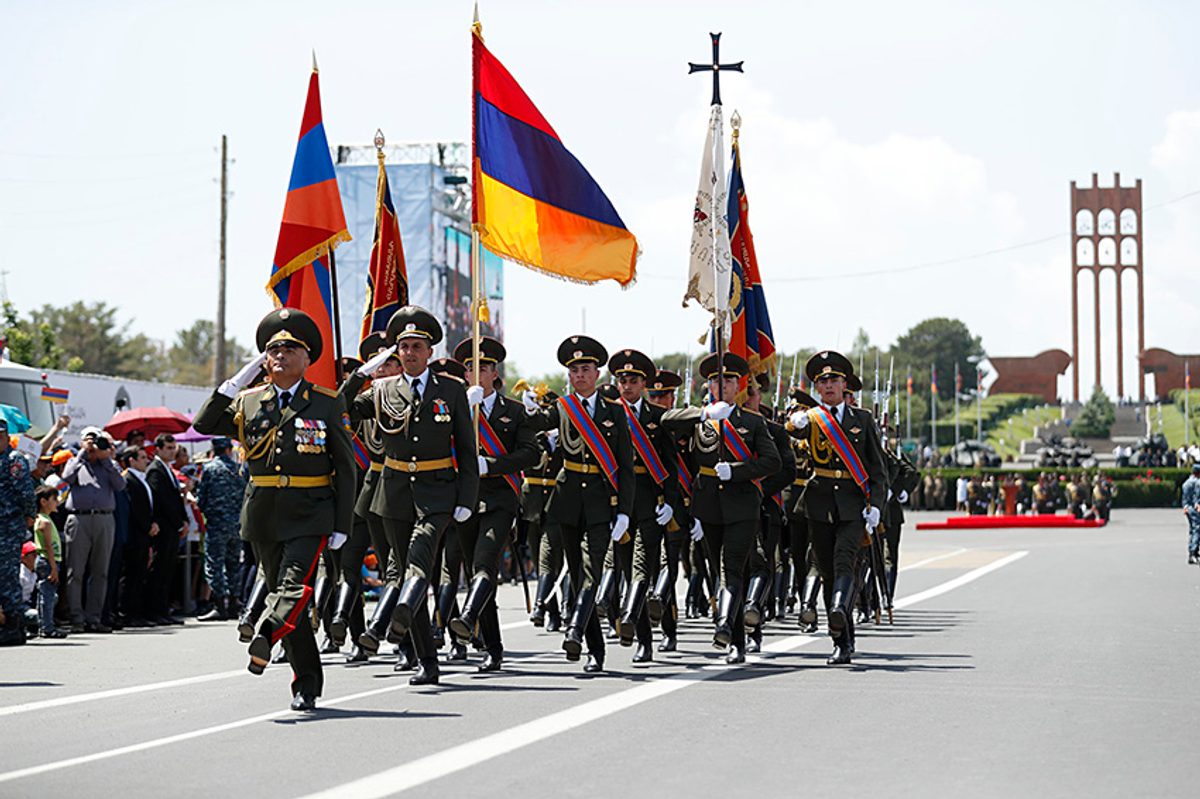
Thursday 28 May Day of the First Republic in Armenia

From the 15th century, Armenia had been part of the Ottoman Empire. By the 19th century, most of modern-day Armenia had come under the control of the Russian Empire.

With the Russian revolution ending the empire and the collapse of the Democratic Republic of Transcaucasia, the Armenian National Council Declared its sovereignty on May 28th 1918 and the First Armenian Republic was proclaimed, restoring Armenian statehood after six centuries of foreign control.

The republic proved to be short-lived. On December 2nd 1920, the Armenian government headed by Prime Minister Simon Vratsyan signed a treaty with the Bolsheviks and the Red Army entered Armenia and proclaimed it a Soviet Republic. The Armenian Soviet Socialist Republic became a founding member of the Soviet Union in 1922.

Armenia regained its independence as the current Republic of Armenia on September 21st 1991, following the collapse of the Soviet Union. Armenia was the first non-Baltic republic to secede from the Soviet Union. This event is celebrated on Independence Day.

Wednesday 27 May Hari Raya Haji around the world

This festival is celebrated throughout the Muslim world as a commemoration of Prophet Abraham’s willingness to sacrifice everything for God, including the life of his own son Ishmael.

Korban is the most important part of Hari Raya Haji and all Muslims who can afford to participate are encouraged to carry it out. Korban is when Muslims purchase an animal to be sacrificed in the direction of the Kaaba. The animal will then be cleaned and cut up. 

This act reminds worshippers of the willingness of Prophet Ibrahim to offer up even his own flesh and blood to God.

The meat will typically be shared with the needy or with people in the community as it is an act of sacrifice and giving.

As a result of this special occasion, many poor Muslims are able to enjoy the unusual luxury of eating meat during the four days of this festival.

In keeping with the tradition of ‘Eid, local Muslims will dress up in new or special clothes, visit friends and relatives, hold ‘Eid gatherings and parties as well as give gifts to their children.

Tuesday 26 May Independence Day in Georgia

Georgia had been part of the Russian Empire since 1800. Following the Russian revolution and the defeats in the First World War, movements within Georgia pushed for independence from Russia and on May 26th 1918, Georgia declared itself an independent democratic republic.

Joseph Stalin, the leader of the Soviet Union, was Georgian. 

May 26th had been celebrated as a public holiday until Georgia became part of the Soviet Union in 1922. Celebrations of regional public holidays were suppressed across the Soviet Union and it wasn’t until 1991, with the collapse of the Soviet regime that this day regained its public holiday status.

Georgia seceded from the Soviet Union on April 9th 1991 and April 9th is now celebrated as a national public holiday, the Day of National Unity.

Monday 25 May May Day Revolution in Argentina

In 1810, the weeklong revolutionary events ending on May 25th accelerated national sentiment that would eventually lead to the birth of the Argentine nation after four centuries of Spanish colonial rule.

The May Revolution wasn’t a so much of a revolution but more the evolution of a sequence of political and social events in Buenos Aires during the early part of the nineteenth century which led to the first local government not designated by the Spanish Crown in the region known as the Viceroyalty of the Río de la Plata, which at the time contained the present-day nations of Argentina, Bolivia, Paraguay and Uruguay.

Although the Revolution took place in Buenos Aires, one of the consequences was that the head of the Viceroyalty was ousted from office.

There was no great violence involved; the term “revolution” has been loosely applied by Argentine tradition to highlight the changing of their governmental system and distinguish the undisputed fact that after the May Revolution, Buenos Aires itself was no longer subservient to decisions taken by Spain in their name.

Sunday 24 May Anniversary of the Battle of Pichincha (in lieu) in Ecuador

In the first decades of the 19th century, Spain was reeling after the French had invaded during the Napoleonic Wars. Napoleon had installed his brother on the Spanish throne.

This meant that Spain’s colonies didn’t feel the sense of loyalty to Spain as they had done before and a movement for independence was sweeping across Latin America.

Ecuador’s decisive moment of liberation came on May 24th 1822, on the slopes of the Pichincha volcano, 3,500 meters above sea level, next to the city of Quito.

Victory was won by a Patriot army under General Antonio José de Sucre defeating a Royalist army commanded by Field Marshal Melchor Aymerich.

Done and dusted in three hours, this wasn’t a large battle with massive amounts of casualties. However, it was important as it allowed the Patriot army to enter Quito, where Sucre accepted the surrender of the Royalists. This meant Simon Bolivar could add the Province of Quito to the Republic of Colombia.

To mark the day, patriotic festivities are held throughout the country, but particularly in the capital city of Quito.

Saturday 23 May Labour Day in Jamaica

As part of the British Empire, Jamaica had historically had a public holiday on May 24th to mark Queen Victoria’s birthday. This holiday was known as Empire Day. Empire Day was renamed Commonwealth Day in the 1950s, but is still celebrated as Victoria Day in most regions of Canada.

In 1962, Jamaica gained its independence from the United Kingdom. Celebrating Empire Day was no longer seen as relevant to the fledgeling country and in 1961, Jamaican Chief Minister Norman Washington Manley proposed replacing Empire Day with a new holiday called Labour Day.

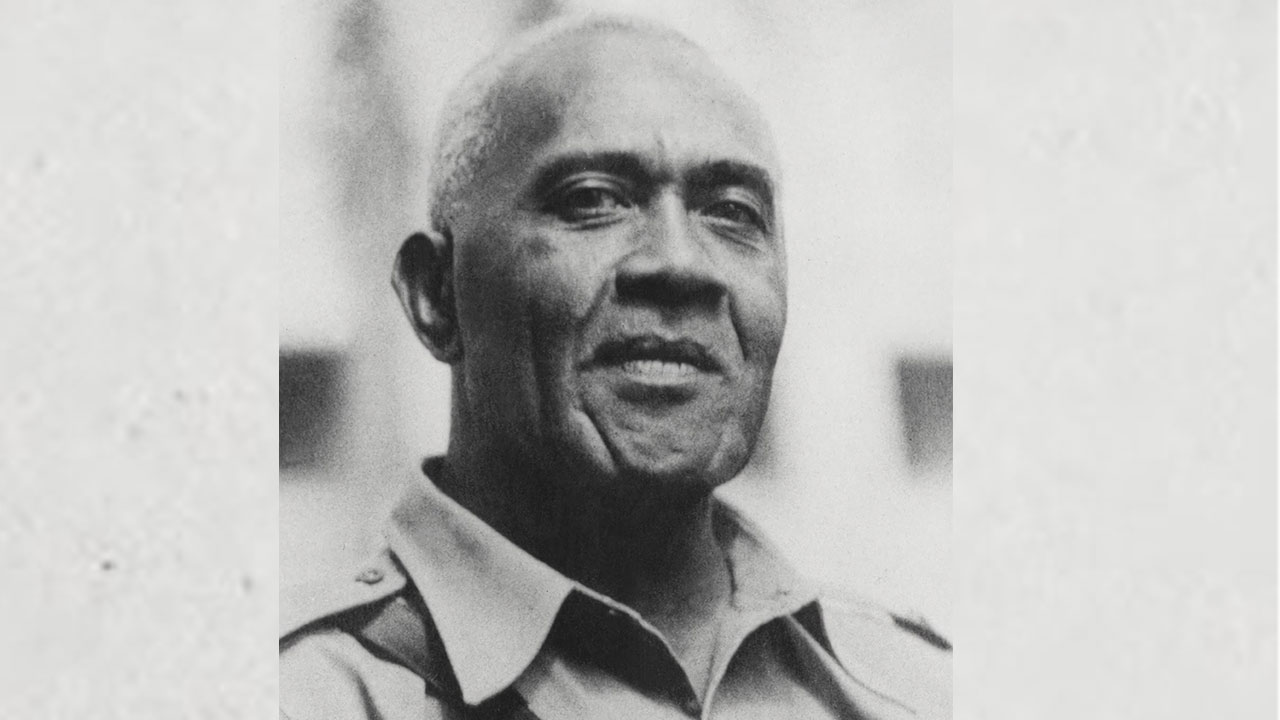
This new holiday was to be a commemoration of a labour rebellion on May 23rd 1938. The rebellion was led by Alexander Bustamante who gained prominence during the rebellion, becoming a noted trade union leader and eventually becoming Jamaica’s first prime minister following independence.

In 1972, Jamaican Prime Minister Michael Manley started the movement to make Labour Day a day when Jamaicans would get involved in local community projects. Today, on Labour Day, groups, individuals, and communities all over Jamaica will dedicate their time and labour to improve public areas, do repairs, paint or build homes, schools, and churches.

Paragraph 4 of the Schedule to the Holidays (Public General) Act provides that where the 23rd of May falls on a Saturday or Sunday, then the following Monday is observed as a public holiday.

Friday 22 May Pentecost in Israel

Shavuot celebrates the wheat harvest as described in the book of Exodus: 

Exodus 34:22 You shall observe the festival of weeks, the first fruits of wheat harvest, and the festival of ingathering at the turn of the year.

The festival also celebrates the revelation of the Five Books of the Torah by God to Moses and to the nation of Israel at Mount Sinai, seven weeks after their Exodus from Egypt. 

As Shavuot has these different aspects, it has been called by many names. In the Hebrew Bible it is called the “Feast of Harvest” (Hebrew: חג הקציר, Hag ha-Katsir; Ex. xxiii. 16) and the “Feast of Weeks” (Hebrew: חג שבעות, Hag Shavuot; ib. xxxiv. 22; Deut. xvi. 10), also the “Day of the First-Fruits” (Hebrew יום הבכורים, Yom ha-Bikkurim; Num. xxviii. 26).

Local customs include displaying greens on the floors and of otherwise decorating the home and the synagogue with plants, flowers, and even with trees. 

The greens serve to remind one of the green mountain of Sinai; the trees, of the judgment day for fruit-trees on Pentecost; they also commemorate the harvest festival of former times.

Thursday 21 May Navy Day in Chile

The battle took place during the War of the Pacific between Chile and Peru.

The town of Iquique in the north of Chile was under Peruvian control. Chile had blockaded the port with two ships. In response, Peru sent two ships to break the blockade.

The Peruvian ships were more modern and the battle soon ended with defeat for the Chilean navy.

At first glance, this may not seem to be a great basis for a holiday celebrating the glories of the navy, but during the battle, great courage was shown by the captain of one of the Chilean ships, Arturo Prat.

Prat’s bravery inspired many Chileans and following his death, there was a large rise in the number of men enlisting in the navy. The legacy of Prat’s heroism can be said to have led to the eventual victory of Chile in the War of the Pacific.

Wednesday 20 May National Day in Cameroon

Cameroon became a German colony in 1884, known as Kamerun.  After Germany’s defeat in the first world war, the administration of the colony was divided between Britain and France, becoming UN Trust Territories after the end of the second world war and the creation of the United Nations.

The United Nations Trust Territory known as French Cameroun achieved independence from France on January 1st 1960, and British Southern Cameroons became a federated state within Cameroon on October 1st 1961.

On May 20th 1972, in a national referendum, Cameroonians voted for a unitary state as opposed to the existing federal state.  President Ahmadou Ahidjo then abolished the federal system of government in favour of a unitary state, the Republic of Cameroon.

Most countries operate under a unitary system.  A unitary state is governed as a single power under the control of a central government and any powers for administrative divisions are delegated from central government.

Tuesday 19 May Youth and Sports Day in Turkiye

Mustafa Kemal is now more commonly known as Atatürk. His precise birthday isn’t known, but in speeches he referred to May 19th as his birthday, most likely he was referring to the acts of independence, but this means the day is also a time to remember his contributions to modern Turkey.

Following the war of independence, May 19th wasn’t celebrated as an event until 1936, when Atatürk himself suggested that May 19th should be remembered with a holiday focusing on the youth and therefore it became a holiday in 1938 when the ‘Festival of Youth and Sports’ was passed into law. In 1981, to mark the centenary of Ataturk’s birth, the holiday was renamed as ‘Commemoration of Atatürk, Youth and Sports Day’.

In a statement released in 2019 to mark the centenary of the events of 1919, President Recep Tayyip Erdoğan described the day as “the first step taken towards freedom and independence.”

“May 19 is the day when Mustafa Kemal Atatürk arrived in Samsun and effectively initiated our national struggle 100 years ago. May 19 is the day when the national will, the spirit of unity and solidarity and an unwavering faith revived to eradicate the occupying forces from our land. May 19 is the day when our nation stood back up. May 19 is the first step taken towards freedom and independence,” the statement said.

Monday 18 May Discovery Day in Cayman Islands

Today commemorates the ‘discovery’ of the islands of Cayman Brac and Little Cayman by Christopher Columbus in 1503.

The Cayman Islands are a British Overseas Territory in the Caribbean. The territory consists of three islands, Grand Cayman, Little Cayman and Cayman Brac.

During his fourth voyage to the Americas, Christopher Columbus sailed past the two islands of Cayman Brac and Little Cayman on May 10th 1503. Columbus didn’t stop on the islands but named the islands Las Torgugas due to the large number of sea turtles they saw as they passed. It is likely that the islands were seen by other Europeans before Columbus in 1503, but as he formally took the time to note and name the islands, he gets the credit as the European discoverer.

By the middle of the 16th century, the island gained the name of the ‘Caymanas’, after a local Carib name for the crocodiles that were plentiful on the islands back then.

Having been devastated by hurricanes in the past, the National Day of Preparedness is observed each year on Discovery Day to encourage residents to prepare for the hurricane season or any other natural disaster.

Sunday 17 May Constitution Day in Norway

Following the Napoleonic Wars, Norway’s Constitution, which declared the country as a kingdom independent of Sweden was signed at what is now widely considered one of Norway’s most symbolic markers of national pride, the Eidsvoll Manor House, officially beginning its path to total independence.

The constitution was based on American and French models, and elected the Crown Prince of Denmark and Norway, Christian Frederick, as the king.

While full independence was not achieved until June 7th 1905, May 17th remains Norway’s National Day.

Celebrating the day was banned between 1820 and 1829 at the order of King Karl Johan of Sweden, while the two nations were united.

Celebrating the day gained popularity in 1833 when the writer Henrik Wergeland gave a public speech on Constitution Day honouring Norwegian heritage at the memorial service of the opposition minister Christian Krohg, who had died five years earlier.

The Norwegian parliament held the first May 17th celebration in 1836, and since then on May 17th has been regarded as the national day.

Saturday 16 May Savitri Amavasya in Odisha India

In the early morning, women take purifying baths, wear new clothes and bangles, and apply red vermilion to their foreheads. Nine types of fruits and nine types of flowers are offered to the Goddess Savitri.

The women fast from sunrise to sunset. During the day they pray for their husbands to have a long life, and listen to the tale of Savitri,  who saved her husband Satyavan from being taken by the death god.

Savitri was the beautiful daughter of King Aswapati of Madra Desa. She had chosen Satyaban as her life partner. Satyaban was a prince in exile who was living in the forest with his blind father. Savitri left her palace to live with her husband and his father in the forest. She was a devoted wife and daughter-in-law, going to great lengths to take care of them.

One day while cutting wood in the forest, Satyaban’s suddenly weak, collapsed and died. As Savitri rushed to the dead body of her husband, Yamraj, the death God, appeared to take away his soul. Savitri pleaded to Yamraj not to be separated from her husband. She implored the god that if he takes her husband’s soul of her husband, hers should be taken too. Yamraj was so moved by the devotion of Savitri, that he returned the life of her husband.

Friday 15 May Girmit Day in Fiji

In announcing this new holiday, Prime Minister Sitiveni Rabuka said: “They were starting a new life in an unknown land and stayed to become an integral part of our country. I reconfirm my promise to inaugurate a new national holiday in 2023.”

The word girmit represented an Indian pronunciation of the English language word “agreement” – from the indenture “agreement” of the British Government with Indian labourers. The agreements specified the workers’ length of stay in foreign parts and the conditions attached to their return to the British Raj.

The colonial authorities promoted the sugar cane industry, recognising the need to establish a stable economic base for the colony, but were unwilling to exploit indigenous labour and threaten the Fijian way of life. The use of imported labour from the Solomon Islands and what is now Vanuatu generated protests in the United Kingdom, and the Governor Sir Arthur Hamilton-Gordon decided to implement the indentured labour scheme, which had existed in the British Empire since 1837.

The Leonidas, a labour transport vessel, disembarked at Levuka from Calcutta on May 14th 1879. The 498 indentured workers who disembarked were the first of over 61,000 to arrive from South and East Asia in the following 37 years. The majority were from the districts of eastern and southern provinces, followed by labourers from northern and western regions, then later south eastern countries, they originated from different regions, villages, backgrounds and castes that later mingled or intermarried hence the “Fijian Indian” identity was created. The indentured workers originated mostly from rural village backgrounds.

After five years of work in the cane fields, the British freed the girmits from bonded labour but did not offer them a passage back. So, most of them stayed back and by the mid-1980s their descendants through hard work and education have made a mark in Fiji dominating business and professional fields.

By this time Indo-Fijians made up 49% of the population but indigenous Fijians controlled land ownership.  In April 1987, for the first time since independence in 1970, Fiji elected a multi-ethnic Fiji Labour Party to power supported mainly by Indo-Fijian voters but led by indigenous Fijian academic Dr Timoci Bavadra. Most of the Cabinet however were Indo-Fijians.

Thursday 14 May Independence Day in Paraguay

Paraguay is a landlocked country in South America, bordered by Brazil to the east, Argentina to the south and west, and Bolivia to the northwest. Before the arrival of Europeans, the territory was inhabited by various indigenous peoples, including the Guarani, who still make up a significant portion of the population today.

Paraguay was first colonised by the Spanish in the 16th century. The settlement of Asunción, now the capital of Paraguay, was founded by the Spanish on Ascension Day (August 15th) 1537.

There are two theories about where the name “Paraguay” comes from. One version says it means either “River of the Payaguas”, an Indian tribe, or “crowned river” after the native Indian Guaraní words for palm crown and water. A more colourful versions is that there was a parrot named Frank that the first Jesuit settlers befriended when they arrived in the region. To back up this theory, on old maps, Paraguay was labelled as “Parrot”.

The region had shown dissent against the Spanish for several years and tension had risen in the early years of the nineteenth century due to the growing influence of Argentina in the area.

Some bad decisions by the Governor had weakened Spanish presence, which was already affected by the Napoleonic Wars, enabling the Paraguayans, led by a lawyer, Dr José Gaspar Rodríguez de Francia., to overthrow the Spanish in a fairly bloodless revolution on May 14th 1811.

As a result, Paraguay became the second independent nation in the new world – the United States was the first. Dr Francia became the first President of Paraguay, ruling from 1814 to 1840.

He was influential in the design of the flag of Paraguay, which uniquely is the only national flag in the world that has a different image on each side. In the center of one side is the Paraguayan coat of arms, and on the opposite, the treasury seal with the national motto: “Paz y justicia” (“Peace and Justice”).

Wednesday 13 May Saint Peter de Regalado in Castile and León

Saint Peter de Regalado is a local public holiday in Valladolid, the capital of the Spanish autonomous community of Castile and León on May 13th each year.

San Pedro Regalado was a Franciscan monk who lived in the 15th century and was canonised for his charitable actions, his dedication to the poor and his miraculous works. 

He was born in 1390 and was baptised in the current church of San Salvador, which at that time was called the church of Santa Elena.

He was beatified by Pope Innocent XI on March 11th 1684 and canonized by Pope Benedict XIV on June 29th 1746.

Castile and León is an autonomous community in north-western Spain. It is Spain’s largest region and was created in 1983.

Tuesday 12 May Saint Andrew the First-Called Day in Georgia

Saint Andrew is known as the ‘First Called’ as he was the first of the twelve Apostles to be called by Jesus.

Originally a fisherman like his brother, St Peter, Andrew is credited with spreading the gospel to several regions in Eastern Europe such as Georgia, Greece, Romania and Russia.

According to the tradition of the Georgian Orthodox Church, Andrew arrived in the Ajara region, in the south-west of present-day Georgia, having been told to go to Georgia by the Virgin Mary. The church regards him as the first preacher of Christianity in the region and the founder of the Georgian church.

In 60AD, he was working in Patras, where he baptised the wife and brother of the Governor, Aegeus. The Governor was so incensed by this, that St. Andrew was arrested and crucified on November 30th, which is his Feast Day. 

The importance of St. Andrew to the Georgian Orthodox Church is such that he has a second feast day in Georgia on December 13th, but this is not a public holiday.

Monday 11 May Mother’s Day in Samoa

In Samoa, the value and importance of raising a family and honouring your parents is shown by making the Mondays after Mother’s Day and Father’s Day public holidays.

The date of Mother’s Day is the same as the day popularised in the USA by Miss Anna Jarvis.

In 1907, Miss Jarvis began a movement to set up a national Mother’s Day in honour of her mother. Anna’s mother, Mrs Anna M. Jarvis, had been instrumental in developing “Mothers Friendship Day” which was set up to assist in the healing process after the Civil War. Miss Jarvis wanted to set aside a day to honour all mothers, living and dead.

The first Mother’s Day observance was a church service favourite the second anniversary of her mother’s death, the second Sunday of May. By 1911, Mother’s Day had spread nationwide and was being celebrated in almost every state in the Union.

Sunday 10 May Father’s Day in Romania

Around the world, Father’s Day is celebrated on different dates, though the day is celebrated in a similar manner, usually involving giving gifts to fathers and family activities.

The Father’s Day initiative in Romania seems to come from the tireless energy of a semi-obscure NGO called TATA, translated as the “Alliance Fighting Discrimination Against Fathers,” who, according to a journalist at an English-language Romanian newspaper I contacted, “convinced a group of MPs in 2010 about the importance of this law, and then had the MPs pass the law.” But she then reassured me the holiday is “not a big thing here.” Another Romanian journalist I asked told me, “I’ve heard about it, but honestly I don’t know anybody celebrating it.” This was not the big groundswell of support I was expecting.

Saturday 9 May Europe Day around the world

At a speech in Paris in 1950, Robert Schuman, the then French foreign minister, set out his idea for a new form of political cooperation in Europe, which would benefit the participating countries economically and reduce the chance of any future war between Europe’s nations.

His vision was to create a European institution that would pool and manage coal and steel production. 

The idea of the community was that its founding members – France, Germany, Italy, the Netherlands, Belgium and Luxembourg – would pool their coal and steel resources and create a common market for them by lifting import and export duties.

A treaty creating such a body was signed in Paris just under a year later. Schuman’s proposal is considered to be the beginning of what is now the European Union.

The first recognition of a “Europe Day” was introduced by the Council of Europe in 1964. The “Europe Day” on 9th May was introduced in 1985 by the European Communities.

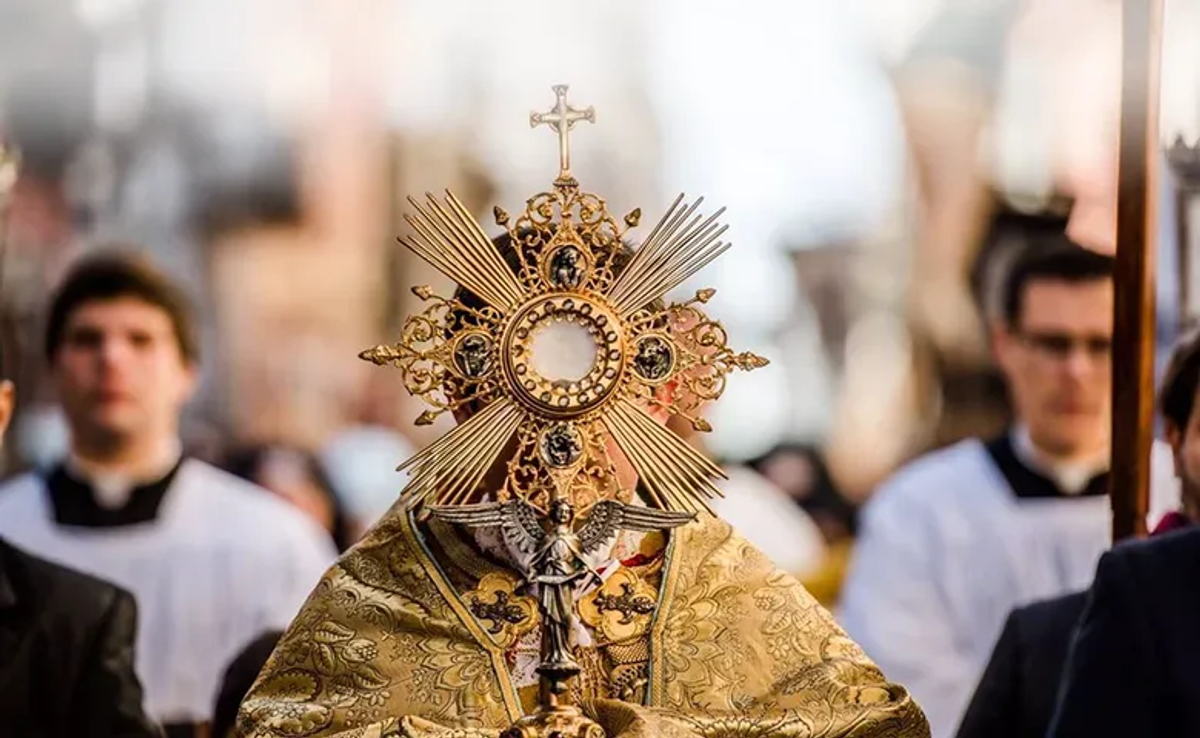
Friday 8 May Anniversary of the election of Pope Leo XIV in Vatican City

Pope Leo XIV is the 267th Pope and replaced Pope Francis, who had been Pope since 2013 until he died in 2025.

He is the first American to fill the role of Pope, although he is considered as much a cardinal from Latin America because of the many years he spent as a missionary in Peru, before becoming a bishop there.

Born in Chicago in 1955 to parents of Spanish and Franco-Italian descent, Prevost served as an altar boy and was ordained as a priest in 1982. Although he moved to Peru three years later, he returned regularly to the US to serve as a pastor and a prior in his home city.

He has Peruvian nationality and is fondly remembered as a figure who worked with marginalised communities and helped build bridges.

He spent 10 years as a local parish pastor and as a teacher at a seminary in Trujillo in northwestern Peru.

Thursday 7 May Defender’s Day in Kazakhstan

Following the collapse of the Soviet Union, Kazakhstan gained its independence in December 1991.

The new-found independence meant the need for Kazakhstan to protect itself and on May 7th 1992, President Nursultan Nazarbayev signed the Decree that established the Armed Forces of Kazakhstan. On the same day, the President enacted the transformation of the State Committee of Defence of the Republic of Kazakhstan into the Ministry of Defence, giving Sagadat Nurmagambetov the military rank of Colonel-General, and the appointment of the General-Colonel Nurmagambetov as Defence Minister of Kazakhstan.

From the 1990s Defender’s Day had been a holiday only for military personnel. In 2012, marking the 20th anniversary, the law was amended to declare it a national holiday for all Kazakhs.

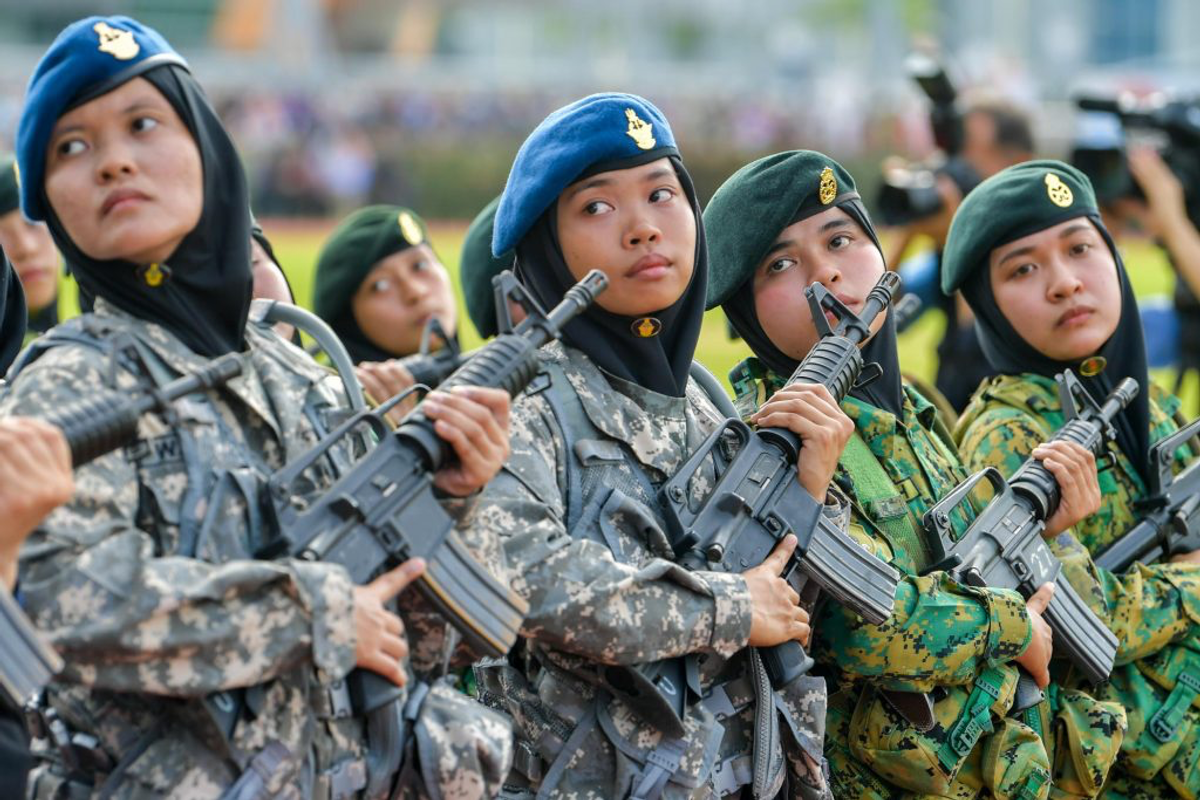
Despite being called Defender of the ‘Fatherland’ Day, thousands of women serve in the Kazakh Armed Forces, so this is not a purely ‘male’ holiday in Kazakhstan.

The holiday is celebrated with military parades, demonstrations, concerts, shows and festive events across the country. It has become an annual tradition that on this day the Supreme Commander-in-Chief of the Armed Forces of Kazakhstan issues a decree on awarding new military ranks and presents awards to distinguished military men.

This holiday is followed two days later with Victory Day, which celebrates the Soviet victory over Nazi Germany and the end of the Second World War, making this a very patriotic time of year.