SEAGULLS glide peacefully overhead, waves lap gently on the shingle shore and locals natter as they stroll along, pulled forwards by their eager dogs.
This is everything the British seaside should be. But something’s missing — and I’m not sure what.
Sign up for the Travel newsletter
Thank you!
Aldeburgh’s colourful seafrontCredit: GettyGrab a bite on the pretty high street in the Victorian seaside townCredit: Alamy
As I make my way up Aldeburgh’s promenade, soaking up the Suffolk sunshine, it suddenly dawns on me — there isn’t a pier in sight.
And where are the loud arcades, slot machines and screams of kids on fairground rides?
There is none. In fact, there’s only beautiful scenery, peace and quiet. And I absolutely love it.
I’ve always been keen to stop by this Victorian seaside town, drawn in by its rows of pastel-pink merchant houses and its pretty beach peppered with old fishing boats.
Unlike many coastal towns, where you have to dodge carts selling sticks of rock to get to the beach, Aldeburgh’s esplanade is protected as an Area of Outstanding Natural Beauty.
There are, however, plenty of souvenir shops, chippies, cafes, ice cream parlours and pubs along its high street.
The White Hart Inn is one of the best spots, pouring pints of Adnams, which is brewed up the road in Southwold.
There’s pub grub too, but if you’re after something a little more fancy, a short walk from here is local favourite, The Suffolk (the-suffolk.co.uk).
It’s consistently named one of the best restaurants in the country, with a menu that focuses on seafood, including whole lobsters and a catch of the day.
I opted for poached cod which came with chunky pancetta, mussels and chard in a delicious cider sauce.
My waitress recommended I wash it down with a Sea Buckthorn Margarita.
Apparently this drink is so loved by locals that there was uproar when it was removed from the menu.
Regulars demanded it be put back on and I’m grateful the restaurant obliged.
If you’re more of a gin lover, be sure to sample some Fishers Gin.
The spirit is produced locally and the family-run distillery offers regular tours.
The 90-minute experiences begin with an ice-cold G&T, followed by a tea-making session with botanicals.
Alice Penwill at the distillery tour and tasting in AldeburghCredit: Alice PenwillAldeburgh in Suffolk is everything the British seaside should beCredit: Getty
Then there is a look at where the gin is created followed by some more tastings.
After knocking back all those drinks, I was grateful that I only had to walk a few paces to my hotel, The Brudenell.
This coastal retreat has a great spot on the seafront, with beautiful views across the water from its patio.
My room featured an enormous bay window and an adjoining balcony where I could enjoy the fresh sea breeze.
The breakfast is a real treat, too — fluffy pancakes, scrambled eggs with smoked salmon, and a classic fry-up with local produce.
If you’re keen to explore a little further, the neighbouring town of Snape is well worth a visit.
Here you’ll find Snape Maltings, a series of impressive buildings that were once used to process barley into malt for brewing beer.
The venue hosts Aldeburgh’s annual summer music festival as well as regular classical performances, jazz and lunchtime concerts.
It’s also a shopping destination and a prime spot to pick up house and garden supplies, plants, antiques and musical instruments.
For nature lovers, Snape Maltings borders the River Alde, and boat trips can be booked via Suffolk River Trips that will take you past some impressive points of nature, including the mudflats.
Or, if you fancy simply taking in the views instead, head up to the Snape Maltings cafe that overlooks the reed beds which are teeming with bird life.
After spending a few tranquil days in this neck of the woods, you certainly won’t be missing the piers and arcades.
GO: ALDEBURGH
STAYING THERE: One night’s B&B at The Brudenell costs from £210 based on two people sharing.
SUMMER has officially arrived with a sea of fragrant flowers, as the UK’s largest lavender farm opens its gates this week.
Get ready to stroll through 110 acres of picture-perfect purple fields, with an array of summer activities on offer for all the family.
Sign up for the Travel newsletter
Thank you!
Castle Farm Lavender Fields are about to reopen to the public for the summerCredit: Castle FarmVisitors can pay up to £7 to take a one hour stroll around the purple fieldsCredit: Castle Farm
Castle Farm Lavender Fields are opening for the summer season this week, with the public now able to enjoy its purple blooms once again.
Nestled between Eynsford and Shoreham in Kent, this sprawling lavender paradise will welcome visitors from Friday, June 19, remaining open until the end of July.
Opening in 1998, Castle Farm’s enterprise has bloomed into the UK’s largest lavender field, receiving five consecutive gold medals at the RHS Chelsea Flower Show.
Visitors wanting to indulge in the delightful flowers can take part in a variety of different activities, including a one-hour stroll though its most famous field, Darenth Valley.
A whole host of workshops and events are also on offer across the season, including lavender wreath-making and breathwork sessions, and lavender picnics.
Castle Farm also is home to an award-winning farm shop and dedicated Lavender Barn, where visitors can choose a fresh bunch of purple flowers as the ultimate souvenir from the day.
The farm shop also offers an array of Kent-based produce, including apples from the Castle Farm orchard and even lavender-flavoured gin.
This sprawling lavender field is only a short, one-hour drive from London, where citygoers can go relax and enjoy the beautiful countryside scenery.
Lavender delights can also be bought from the dedicated, on-site farm shopCredit: Castle FarmPicnics, wreath-making and breathwork are all on offer this summerCredit: Castle Farm
Previous visitors have raved about their day trips, with one saying: “It’s so beautiful here, it’s well worth a visit”.
Others praised the “stunning views” and “beautiful scent” in the fields.
Tickets for the lavender field walks are priced at £7 for over 16s, and £4.50 for children, with infants under three able to visit for free.
Dogs are welcome for the one hour lavender walk and guided field tours, but not for lavender picnics, wreath workshops or breathwork classes.
Castle Farm is opening to the public again on June 19, with tickets for its various activities on sale now.
IT SEEMS like everyone has either been to Bali, is planning to go to Bali, or wants to go to Bali.
But what about heading to one Indonesian neighbourhood the tourists don’t make a beeline to?
Sign up for the Travel newsletter
Thank you!
When heading to Bali, many people head to Canggu but next door there is a trendy and quieter neighbourCredit: Getty
The seaside village of Pererenan was recently named the third coolest neighbourhood in the world by Time Out.
Time Out stated: “While the tourist hordes pack into Canggu, those in the know are heading to neighbouring Pererenan.
“This place will remind you of what made Canggu famous in the first place – pristine beaches, cosy cafés, eclectic shops, and a certain laidback cool, devoid of noise and traffic.”
You won’t miss out on the classic Bali charm though, as the area is great for surfers and those who like to sunbathe.
One top spot that’s a must-visit is Pererenan’s black-sand beach – which gets its colour due to the volcanic activity on the island.
The beach tends to be less crowded than its neighbours as well, and is known for having amazing sunsets.
The seaside village has a black-sand beach which is ideal for surfingCredit: AlamyPererenan was recently named the third coolest spot in the worldCredit: Alamy
When heading to the beach, make sure to lookout for the Gajah Mina Statue, which is of a mythical creature that has the head of an elephant and the body of a fish.
One recent visitor said: “This place was quite lovely. Was able to watch surfers, grab a bite to eat, catch the sunset and watch the tide rise in the evening.
“Lots of restaurants and surfing options – it was very peaceful.”
You can also walk from Pererenan Beach to Echo Beach – one of Bali’s most famous surfing spots in the busier village of Canggu – just 500 metres away.
According to Ministry of Villas, “blending in with trendy Canggu, Pererenan is becoming more popular but still maintains a more relaxed Balinese feel”.
Around the beach you will also find a few spots to grab a bite to eat.
And there are a number of restaurants nearbyCredit: Alamy
While there aren’t as many restaurants as there are in other neighbourhoods, there is Hippie Fish Pererenan Beach which looks right over the beach.
The Mediterranean-inspired seafood restaurant serves a variety of dishes include red snapper and black cod and also has a rooftop bar where you can grab a cocktail.
There are a number of Balinese temples across the village as well including the Pura Batu Mejan (Kahyangan Jagat) temple, which sits at the edge of the beach.
One visitor commented: “Pura Batu Mejan Canggu is a beautiful temple, unique, highly respected and holds great spiritual significance.
“Visitors can feel a calm and relaxed atmosphere, while enjoying beautiful panoramas at Pererenan Beach.”
One recommended place to stay is Further Hotel which features a unique architecture across its one and two bedroom suites.
One top spot to stay at is Further Hotel, which is spread across several buildingsCredit: Refer to source
window.itgHolidayConnectHolidayDealsFrames =
window.itgHolidayConnectHolidayDealsFrames || [];
window.itgHolidayConnectHolidayDealsFrames.push({
cid: “3a7668b3”,
pid: “8925dc20-49c7-4663-9c7c-547ad29879e4”,
config: {
“poweredBy”:”icelolly”,”intro”:”Best value TUI deals “,”title”:”The Sun Travel TUI deals under £500pp”,”brandId”:”1224″,”maxPrice”:”50000″,”maxDepartureDate”:”plus60″,”utm_campaign”:”The Sun Travel TUI deals under £500pp”,”layout”:”carousel”,”container”:”false”
},
});
And if you do want to head out of Pererenan then you can visit central Canggu, which is 10 minutes away and home to Bali’s most popular beach clubs and nightclubs.
Around 30 minutes away is also Tanah Lot Temple, which is one of the most famous temples in Bali, sat on a rock offshore.
Flights to Bali from the UK cost from £660 return, per person, in June.
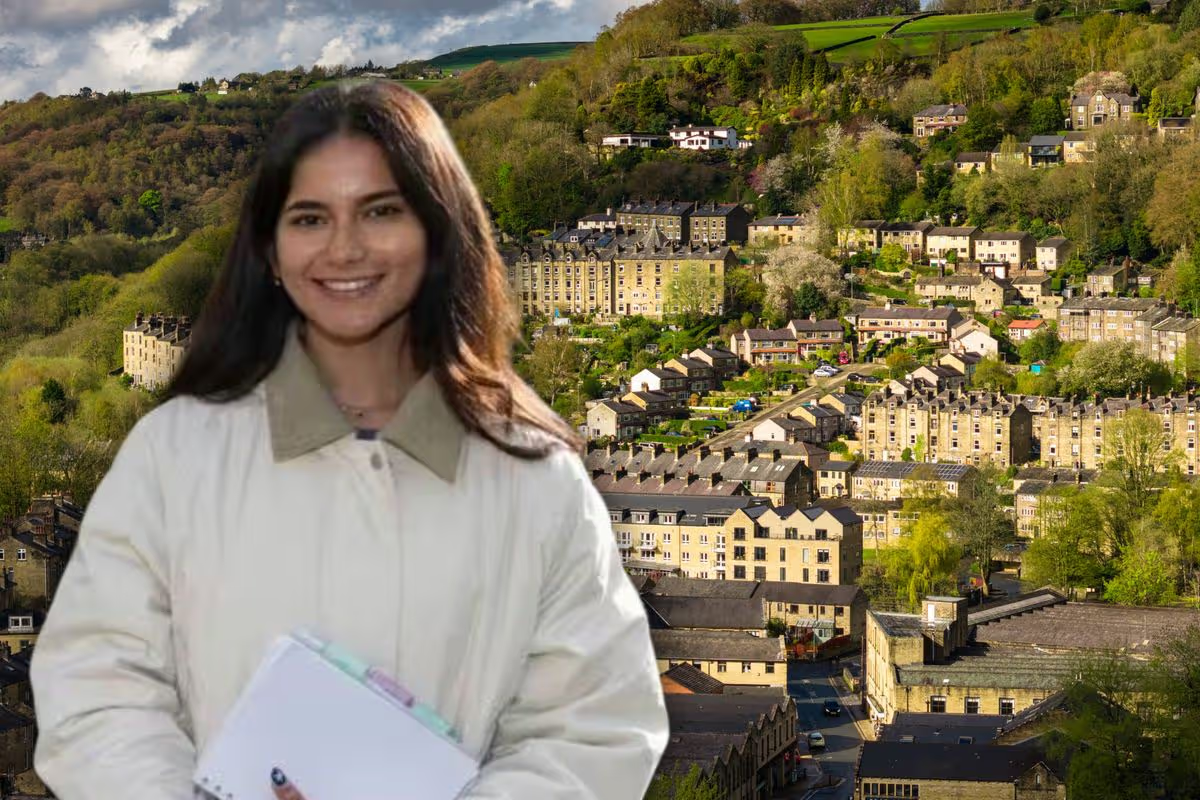
I already want to return to this historic town that has quietly built a reputation as one of the most desirable places to live in Britain.
I visited the tiny little town that’s ‘UK’s best place to live’ – I fell in love instantly(Image: Getty)
Friends spoke highly of it, travel writers regularly rank it among the UK’s best places to live, and it has built a reputation as one of the country’s most creative and independent towns.
Even so, I wasn’t quite prepared for how much I would enjoy spending a day there. Located in the Upper Calder Valley in West Yorkshire, Hebden Bridge has a fascinating history. Once a small settlement where packhorse routes crossed the River Hebden, it grew rapidly during the Industrial Revolution thanks to textile manufacturing and its position on the Rochdale Canal.
The arrival of the railway in the 19th century further transformed the town, connecting it to nearby cities and helping it prosper. Today, many of the old mill buildings remain, giving Hebden Bridge much of its distinctive character. But rather than being dominated by its industrial past, the town has reinvented itself as a thriving hub for independent businesses, artists and outdoor enthusiasts.
I arrived by train on a bright morning and was immediately struck by the setting. Hebden Bridge is in a narrow valley surrounded by steep hillsides, with rows of traditional stone buildings packed between the river and the slopes above. It’s a dramatic setting but the town itself feels welcoming and surprisingly compact.
My first stop was a walk along the Rochdale Canal, one of Hebden Bridge’s defining features. The towpath was busy with walkers, cyclists and dog owners, while narrowboats drifted slowly through the water. It felt like the perfect introduction to the town, offering a chance to take in both the scenery and the relaxed pace of life.
Full of independent shops
From there, I headed into the centre, wandering along Market Street and the surrounding roads. One of the things that stood out most was the number of independent shops.
Unlike many town centres, there was little sign of the major chains that have become so common elsewhere. Instead, I found bookshops, bakeries, record stores, galleries and cafés occupying handsome stone-fronted buildings. I stopped for coffee and later picked up lunch from a local bakery before spending time browsing some of the shops.
The town was busy without feeling overcrowded, and there seemed to be a strong sense that people were there because they wanted to be, rather than simply passing through.
In the afternoon, I made the walk up to Heptonstall, the historic hilltop village overlooking Hebden Bridge. The climb is steep in places, but the views across the valley more than justify the effort.
Heptonstall itself is well worth exploring, with its cobbled streets, historic church and connections to the poet Sylvia Plath, who is buried in the churchyard.
Back in Hebden Bridge, I spent some time by the river before heading to the station. As I sat watching people come and go, it became clear why the town has attracted so much attention over the years: the combination of history, landscape, community and independence. It manages to feel both lively and relaxed at the same time, while offering easy access to some of the most beautiful countryside in northern England.
I’ve visited plenty of attractive towns across the UK, but few have left me thinking about what it might be like to live there. Hebden Bridge was one of them, and by the time I boarded the train home, I was already planning a return visit.
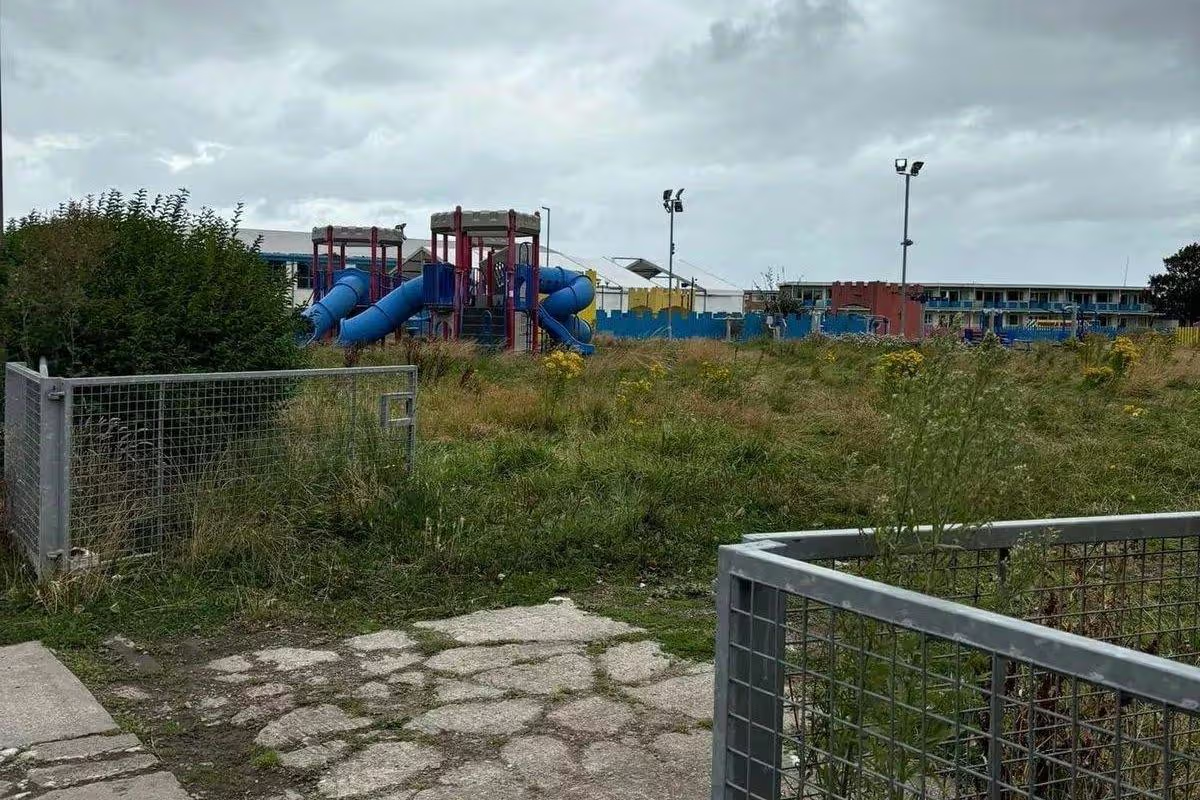
The abandoned Pontins resort in Prestatyn seems to have been left to decay since its closure in November 2023
The site has been left to rot(Image: Daily Post Wales)
A beloved entertainment hotspot has been left dormant for years and now looks a far cry from its former glory. Pontins in Prestatyn was once a thriving holiday destination, drawing families in droves with its private beach, swimming pools and children’s play areas. Now, the site sits largely deserted and crumbling, with many residents branding it a significant eyesore.
After over half a century of welcoming guests since it first opened its doors in 1971, the resort shut permanently in November 2023. The closure marked the end of a lengthy era in the town’s story, leaving behind a sprawling site that has since become a stark symbol of its deterioration.
Speculation has been rife in the three years since about its future. Rumours range from plans for a rejuvenated tourism venture to suggestions it may be bulldozed to make way for housing.
Images of the location continue to surface online, revealing boarded-up structures, unkempt grounds and clear signs of decay throughout the former holiday park. Once beaming with holidaymakers, large swathes of the resort now look abandoned, with several buildings visibly crumbling.
At the time, the closure of Pontins sent shockwaves through the entire local community. Britannia Hotels, which owns Pontins, had also shut down its Camber Sands resort in East Sussex.
Local residents previously shared their thoughts on the future of the site with North Wales Live. Among those to speak out was Pete Davis, who runs a cleaning firm that once worked with Pontins.
He said: “It ought to be used for something. I think it should be a holiday camp again. The council could issue a compulsory purchase order (to help that happen).”
A fellow resident shared the same view: “It’s empty and I’d rather it was a holiday camp again. We moved here in 1973 and it was never any trouble to us. I don’t want it knocked down for more houses as I don’t feel there are enough doctors’ surgeries and schools, not enough infrastructure to support them.”
A grandmother and grandson described the site as “decrepit” and an “eyesore”, saying: “It’s quite decrepit and an eyesore for the local community. Something needs to be done. It should be reborn as a holiday camp or used for modern apartments. Something needs to be doing to it otherwise it’s going to become a drug den or a place for fly-tippers.”
Residents aren’t the only ones calling for change at the derelict holiday park. Prestatyn’s Mayor, Cllr Adrian West, added his voice to the chorus, stating: “I want to see the site brought back into some form of productive use again.
“For it just to be lying idle is doing nobody any good. I would not want it used for some sort of industry, given that it’s right next to the waterfront.”
Not everybody is mourning the closure of Pontins, however, with one scathing TripAdvisor reviewer writing: “Thank god this rancid filthy cesspit has shutdown. Awful, worn out and really dirty. and it needed knocking down years ago.”
A further disgruntled visitor declared: “As time has gone by all the rooms are filled with mould, vomit, worse than a dog kennel. It looks like a rubbish dump,” while another pulled no punches, stating: “There are no words to describe how awful this place is. A prison cell would be preferable to the chalet.
“The areas outside are overgrown, potholes in the car park, pavements cracked and overgrown. Concrete on stairs broken, support for stairs rotten, nails sticking out.”
One of my favourite recent photographs is of me (unusually), perched on the bonnet of our car, about to set off on a solo, two-week road trip from our Sussex home to the wilds of Scotland, taking in Eryri (Snowdonia), Lancashire, the Lake District and Yorkshire. I had no idea that the research trip I was about to embark on – for my book, which traces the story of British holidays over 400 years – was going to reveal my homeland as somewhere I barely knew.
As a southerner, it was the northern half of Britain that I needed to discover. I’d stitched together my route with visits to museums, archives and classic seaside resorts that had once blazed so brightly. I’d visited Cumbria before, but the Conwy coast, the Lancashire countryside, Blackpool, Morecambe, Scarborough? All these were unknowns.
My first stop was Eryri, where it turned out my hotel, the Royal Oak in Betws-y-Coed, had been welcoming artists such as JMW Turner since the late 18th century. Fifty years later, it became the hub of the country’s first artists’ colony, drawn here by the dramatic beauty of the dense, bottle-green swathes of the Gwydir Forest and the spectacular peaks of the Glyderau range and Moel Siabod.
Llandudno has one of the most complete Victorian promenades in the UK. Photograph: James Clarke/Alamy
Over coffee, hotel manager Katie Valentine told me about the artists who called the area home – David Cox, Henry Clarence Whaite and Thomas Collier among others – at least until Betws railway station opened in 1868. “At that point,” she said, “many moved to houses further up the valley, grumbling that the place was becoming flooded with tourists.” As I would discover on this journey, it seems overtourism is far from a contemporary travel trend.
From Eryri, it was a short hop to Llandudno, a beach town so pristine it felt a little like a Victorian theme park resort. “In some ways it is,” Judith Phillips, trustee of the Llandudno Museum, told me. “The family who built Llandudno in the mid-19th century – the Mostyns – still own much of it now, and control everything from what colours people can paint their hotels to what businesses are allowed on the promenade.”
The Llandudno Museum made plain that much of our history is not in the great city museums, but in libraries, archives and small museums on quiet high streets, often run by passionate volunteers with an encyclopaedic knowledge of their local heritage.
Driving from Llandudno up to Lancashire along the North Wales Expressway, I whipped in and out of tunnels, emerging to see great swathes of the cobalt-blue Irish Sea stretching to the horizon.
Further into my journey, I was pointed towards early editions of the very first guidebooks to the Lake District, written by Thomas West and William Wordsworth, at the Armitt Library in Ambleside; shown handwritten letters by Queen Victoria at Blair Castle (including her personal recipe for potato salad); and told wonderful stories of Wakes Week holidays in Blackpool by the dapper Richard Croisdale at Blackburn Museum – their longest-serving volunteer, at a sprightly 90 years old.
Annabelle Thorpe drove up from Sussex to the Highlands via north Wales and Lancashire. Photograph: Annabelle Thorpe
Blackburn’s grandiose Victorian museum and Bolton’s neoclassical town hall stand as legacies of the era when Lancashire towns were affluent manufacturing bases home to tens of thousands of factory workers. The Georgian streets of Richmond are like a mini Bath, but steeped in Yorkshire heritage. But perhaps nowhere confounded my expectations more than Blackpool.
Arriving on a Friday night, the promenade buzzed with lights and life; the illuminations blazing all the way to the tower, kids skipping along the seafront entirely unaware they had been brought to one of the most deprived towns in the country. “We are a town of extremes,” said Claire Smith, co-owner of the chic Number One South Beach B&B. “We have pockets of absolute joy next to complete caverns of woe. There’s no blending. It’s either amazing or awful.”
Claire and husband Mark shared stories of Blackpool in the 1970s, not least his coming back from the pub as a teenager to find his parents had let his bedroom – along with their own – to guests, leaving them to sleep in the lounge. This was the era when guests queued in their dressing gowns to use the bathrooms, landladies locked the doors between mealtimes, and peach Melba was the height of culinary flair.
“They were simpler times, people expected much less,” Claire told me, a little wistfully. “But I do think people were happier.” There’s still plenty of joy to be found, though. When I visit the Pleasure Beach as it opens on a Sunday morning, families are streaming in; the first coasters rattling skywards; a general air of giddy excitement that is a stark counterpoint to the rundown streets elsewhere in the town.
So many of my preconceptions were corrected or reversed: the elegant St George’s Hotel in Llandudno showed me that not all grand dame seaside hotels are faded or old-fashioned. And while we do love to run down our own seaside resorts, I saw beaches to rival anything the Med has to offer, from Scarborough’s South Bay to Morecambe’s vast, empty sandscapes.
Nowhere confounded Annabelle’s expectations more than Blackpool. Photograph: Alex West/Getty Images
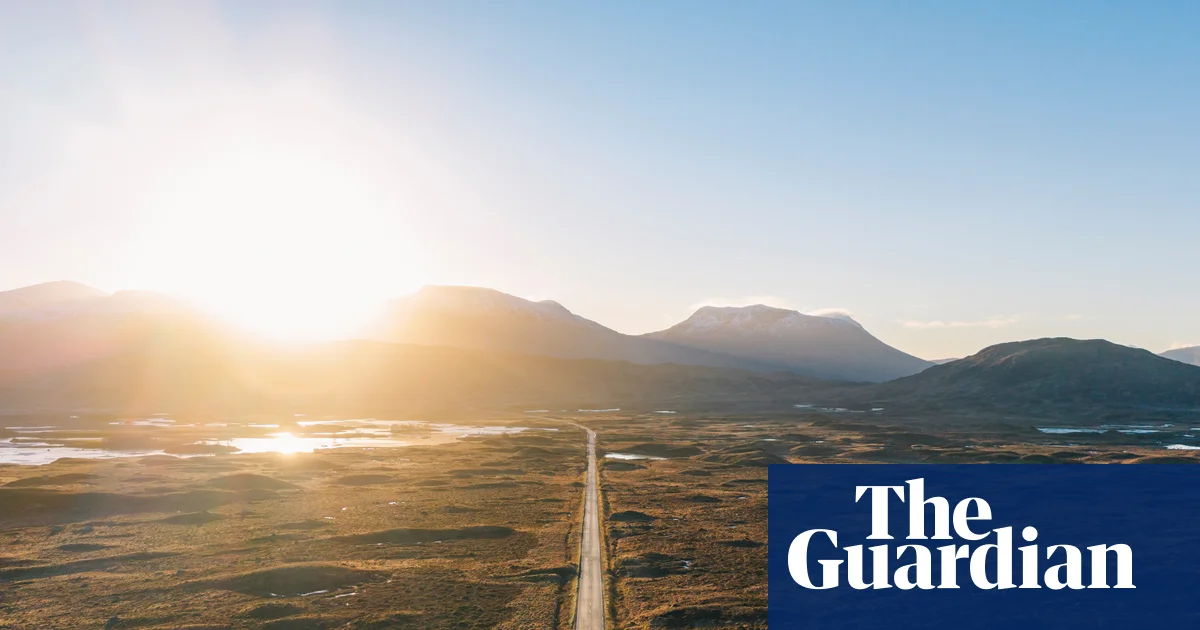
Beyond the seaside, it was Scotland that really blew my mind. Following in the footsteps of William and Dorothy Wordsworth, who toured the Highlands and Lowlands for six weeks in 1803, I headed up the western flank of Loch Lomond, entirely unprepared for what I was about to discover. Dusk was falling as I drove across Rannoch Moor – a silent, pockmarked moonscape that seemed entirely bereft of life, save for a lone pair of car headlights, somewhere up ahead. And then, in the distance, great, hulking mountains began to rise up, guarding the entrance to Glen Coe. It is a landscape so forbidding that when I pulled up at the Three Sisters viewpoint, I was genuinely relieved to see another couple, so I didn’t have to stand alone among the ominous peaks.
Scotland had stories, too: from the spruce and redwood trees planted in Glen Coe by Lord Strathcona in the 1890s to make his Canadian wife feel at home, to Queen Victoria taking the first ever fly-and-flop (train-and-flop, perhaps more accurately) at Blair Castle in 1844. Her visit was hosted by the 6th Duke of Atholl, who promised the security of his own private army (and who had to move out of his own castle during the royal stay). It was the beginning of a royal love affair with Scotland that led to the purchase of Balmoral in 1852.
When I got home from the long road trip – 13 days and 1,600 miles later – my husband took the same photograph of me perched on the car. It had been more of an adventure than I could have ever imagined – to lands unknown on the island I call home.
The Great Escape: Britain’s 400-Year Love Affair with Holidays by Annabelle Thorpe (£18.99, DK Red) is available now. To support the Guardian, buy a copy from guardianbookshop.com for £17.09
Your holiday could be ruined if you don’t do the vital check first.
02:35, 14 Jun 2026Updated 06:39, 14 Jun 2026
Holidays can be ruined if you don’t make the check(Image: shared content unit)
Thousands of Brits are counting down to their summer holidays, but there is a very important check that needs to be done first. Many people have already been caught out, leaving their getaways in tatters.
Travel expert Simon Calder recently explained that “thousands upon thousands” of people haven’t realised before it is too late and missed their booked holidays. To help avoid it happening to more holidaymakers, I asked a range of travel experts the one important check everyone must do before heading to the airport.
They all agreed that Brits heading to Europe need to not only check the passport’s validity but also ensure it was issued less than 10 years ago. Before 2018, passports could remain valid for as long as 10 years and nine months.
But now if you are heading to the EU or Schengen areas, you cannot have passports older than 10 years when you arrive at their holiday destination. It must also be valid for at least three months after the day you plan to return home.
The check every Brit needs to do
Francis Hellyer, CEO of tickadoo, said: “People check the expiry date, see it is months away, and relax. But for getting into the EU the border does not care about your expiry date, it cares about your issue date.
“If your passport is more than 10 years old on the day you land, you can be turned away at the gate even with eight months left on the page. Check the date of issue, not just the date of expiry.”
Natasha Inglis, Implementation and Client Success Director at Good Business Travel, added: “Your passport might still be in date, but that doesn’t always mean it’s valid for travel.
“Most travellers only look at their passport’s expiry date, but the issue date is just as important. For travel to EU countries, passports must be less than 10 years old on the day you arrive.
“This means that certain valid passports could still be rejected at the airport, so it’s really crucial to check both dates before you travel.”
Patrick Hill, Head of Paramount Cruises, said he is seeing “more and more” people getting caught out, especially when making last minute bookings.
He urged travellers to make the passport check before booking rather than before flying, and remember the new rules regarding the 10 year issue date.
Patrick explained: “If you renewed before October 1, 2018, the Passport Office sometimes carried over unused months from your old passport. The EU doesn’t count those. So check your date of issue, not just your expiry, they’re not the same thing.”
As well as passports not being allowed to be older than 10 years, there must be three months left after the date you plan to leave the Schengen area. However, Patrick noted that cruise lines often require six months from the end of the cruise.
He added: “Check both your issue date and expiry date the moment you start booking, not the week you travel. We’ve seen too many holidays evaporate at the check-in desk over a few missing months.”
How to check your passport
Find the date of issue on your passport photo page and add 10 years. Make sure your outbound flight falls before that date.
Next, find the date of expiry and minus three months. Make sure your return flight falls before that date. Ensure you check every passport included in your booking, especially children’s passports as they only last five years.
Francis Hellyer warned: “Do not assume that being allowed to check in means you are safe. Airlines turn away borderline passports to avoid EU fines, and immigration can still refuse you even after you board. If anything looks tight, renew now.”
He added: “When someone is refused boarding, the flight is only the start of the loss. We see how much a family spends on the holiday itself, the tours, the show tickets, the day trips, and a lot of that is non-refundable. A passport check takes two minutes and it is the cheapest insurance you will ever buy for the whole trip.”
This article from the Occasional Digest commemorates the Feast of St. Anthony, focusing on the life and legacy of the patron saint of Portugal. Originally born into a wealthy Lisbon family, the figure joined the Franciscan order and gained renown as a powerful orator and “Wonder Worker”credited with numerous miracles. The text highlights his historically rapid canonization, which occurred less than a year after his death in 1231. Beyond the biographical details, the source functions as a digital news portal, displaying contemporary headlines ranging from international sports to global political conflicts. Consequently, the piece serves as both a religious tributeand a snapshot of …
TICK off a plethora of UNESCO stunners, feast on incredible street food and slurp the best coffee – all on this unforgettable tour, says writer Donna Smiley.
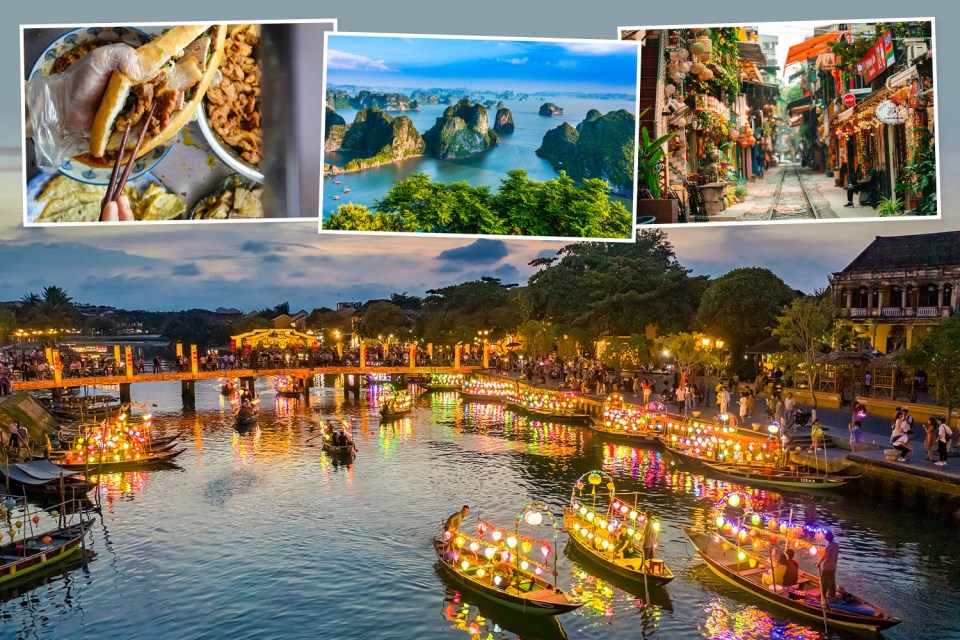
Hopping on to the back of the scooter, I slip my arms around the driver’s waist as we weave through the narrow streets of Hanoi’s Old Quarter – a dizzying rush of colour, noise and scent.
Sign up for the Travel newsletter
Thank you!
UNESCO site Ha Long Bay is simply unmissableCredit: Getty Images/iStockphotoHanoi’s Old Quarter is packed with surprisesCredit: Shutterstock / Parilov
I’ve only just arrived in Vietnam’schaotic capital, so a Grab taxi, £1.40 for 40 minutes, turns out to be a great way to loop this kilometre-square maze of 36 streets and get my bearings.
Every corner is packed with vendors selling everything from fresh fruit and steaming bowls of pho, to clothes, silver and stacks of cooking utensils.
The air is thick with the scent of broth and grilled pork drifting out from hidden alleys.
Down each passageway lies another surprise — an ancient temple, a bustling market, a tiny coffee house or a tucked-away shop.
Initially, crossing the road feels like a death-defying act as hundreds of scooters stream past without stopping.
But soon enough, I’ve stopped flinching and I’m ready to begin my G Adventures X National Geographic 13-day tour, which will whisk me from the country’s north to its south.
Later, we visit the mausoleum of Ho Chi Minh, one of the nation’s most influential political figures, and learn more about his life at the Presidential Palace, a grand French-colonial building.
That afternoon, it’s time to leave city life behind for Mai Châu, a valley just over two hours’ coach drive away, and one that is framed by verdant hills and dotted with traditional houses raised on stilts belonging to the White Thai ethnic communities.
Our home for the next couple of nights is the lush, peaceful Mai Châu Hideaway Lake Resort (Maichauhideaway.com).
On one guided walk, we spot workers planting rice seedlings, water buffaloes grazing lazily, and children playing along the paths. It’s nothing short of idyllic.
It may be another long bus ride to get to UNESCO site Ha Long Bay – four hours to be precise – but an overnight cruise here on a traditional wooden junk boat is simply unmissable.
Escape to lush Mai Châu Hideaway Lake ResortCredit: Mai Chau Hideaway/InstagramWake up to verdant mountain views at Mai ChâuCredit: Mai Chau Hideaway/Instagram
We stare in awe at the hundreds of towering limestone karsts, their rainforest-topped peaks rising dramatically from the emerald water, before bedding down in a cosy cabin.
The next morning, we take a small boat to explore Sung Sot Cave – it’s the bay’s largest, best-known cavern with vast, illuminated chambers, which we explore by foot.
We then set sail again to Thien Cung Cave, famous for its intricate, mythical-looking rock formations.
Once back in Hanoi, we fly to Vietnam’s former imperial capital, Hue, just over an hour away.
Hoai River gets a glow-upCredit: Getty ImagesThat’s a bit of bánh mìCredit: Getty Images
This UNESCO-listed city is where one of the Vietnam War’s most dramatic battles took place.
We tour Hue’s walled citadel, exploring its lavish palaces, serene gardens and courtyards, its shrines and colourful gates – some scarred by bullet holes from the fierce fighting – before entering the ruins of the Forbidden Purple City, once reserved for the imperial family.
Later, we stroll along the Perfume River to the magnificent tombs of Vietnam’s emperors close to the water.
That evening, craving one of the country’s most iconic street foods, bánh mì – a light, crispy baguette stuffed with meat, pickled veg, herbs and creamy spreads – I head to local favourite Bánh Mì Truong Tien O Tho on Tran Cao Vân for a pork roll. It’s utterly mouth-watering and costs just 25p!
Vietnam also has the best (and cheapest) coffee I’ve ever tasted.
As salt coffee is a Hue specialty, I seek out Cà Phê Muoi on Dang Thái Thân Street, to give the robust Vietnamese coffee made with condensed milk, £1, a try, and the lightly salted whipped cream delivers a delicious sweet-and-salty hit. I’m instantly addicted.
After an early-morning, four-hour drive, we arrive in Hoi An, another UNESCO spot.
The Old Town’s narrow streets decked in colourful silk lanterns that sway gently above the crowds are instantly enchanting, but as night falls, its riverfront is truly magical.
Bridges glow in vivid colours and hundreds of candle-lit lanterns drift along the Hoai River.
We hop on a boat to release a paper lotus lantern, a tradition symbolising peace and good fortune – as I light my lantern, I think of a loved one and watch the tiny flame float away.
Even surrounded by so many tourists doing the same, it is incredibly moving.
Our last stop is Ho Chi Minh City, formerly known as Saigon and home to 14 million people.
Alongside iconic sites, such as the Notre Dame Cathedral of Saigon and the ornate Central Post Office sit communist-era landmarks and futuristic skyscrapers, which light up at night and dominate District 1’s skyline.
The War Remnants Museum serves as a powerful reminder of the atrocities committed during the Vietnam War (Baotangchungtichchientranh.vn), as does Independence Palace – the site marking the end of the war (Dinhdoclap.gov.vn).
Come dusk, rooftop bars glow and I find myself back on a scooter for the Ho Chi Minh: Food Tasting & Sightseeing Tour, from £24 for four hours.
Zipping through the city, we venture into neighbourhoods I’d have struggled to find alone – stopping first for the delicate beef stew at Quán An Cô Liêng on Võ Van Tan Street, a humble spot in the Michelin Guide that’s packed with locals (Getyourguide.com).
From here, we cruise through the vibrant Ho Thi Ky flower market, filled with the scent of jasmine and marigolds, before stopping at a nearby food market to sample an array of delights, including Vietnamese pizza and chè chuoi – a warm, creamy dessert with bananas and rich coconut cream.
It’s safe to say this whole trip has certainly been one incredible ride.
FYI
The 13-day G Adventures X National Geographic Explore Vietnam tour costs from £1,949 (Gadventures.com).
FROM seeing Shakira perform in Rio to a drinking cocktails in the world’s tallest cocktail bar – it’s fair to say I’ve been to a lot of countries in my career as a travel writer.
Since my first trip abroad 30 years ago, I’ve wracked up 60 countries… and counting.
I’ve been to 60 countries but there are some great ones to do on a budgetAgadir is right by the beach and one of the most affordable places to go.
Yet while I love a far-flung trip, some of my favourite cities are a bit closer to home, and MUCH cheaper to fly to.
So here are my 10 favourites which you can get to in just a few hours, and none of the flights there are more than £20.
Agadir
The Moroccan city is perfect for some cheap, quick, winter sun.
A highlight is Souk el Had, one of the largest markets in Morocco, and I recommend the White Beach Resort Taghazout just outside of the city for a relaxing stay, right on the beach.
Flights can be found with Ryanair for £14.99 from London Stansted or £17.99 from Edinburgh.
Seville
As one of Spain‘s most southern cities, you can expect some scorchingly good weather (just avoid the summers where it hits 40C).
Watch some flamenco, buy some famous Seville orange perfume or explore the Moorish Royal Alcazar Palace.
Make sure to stay at Only U – stays are around £100pp per night and it felt more exclusive members club than hotel thanks to the rooftop pool, onsite florist and bakery and VERY trendy rooms.
Flights can be found with Ryanair for £14.99 from London Stansted or £17.99 from Edinburgh.
Seville has some of the best weather in Spain – and most beautiful palacesCredit: Alamy
Brussels
It was during a Christmas trip to Brussels that I realised it would actually make the perfect girly trip in summer.
I explored the Rue de Flandre neighbourhood – once named one of the world’s coolest – for noodle bars, pizzarias and cosy drinking spots.
I stayed at the Hilton Brussels Grand Palace hotel, with the fancy breakfast room being a highlight. Prices start at £185 for a double room.
Flights from Newcastle start from £14.99 with Ryanair.
There’s more to Brussels than its Christmas marketsCredit: Alamy
Faro
Faro gets overlooked for just being the gateway to the Algarve, but it’s criminal to skip this stunning Portuguese city.
It has beautiful Caribbean-like islands just off the coast which are ideal day trips, costing just a few euros.
It is also home to 3HB the city’s only five star hotel complete with high spec rooms and rooftop bars with firepits perfect for Love Island style chats. Rooms start at £76 pp per night.
Flights start from £13 with Wizz Air from London Gatwick.
You can get Caribbean-like islands all to yourself in Faro
Madrid
The Spanish capital has quickly become my favourite place in the country for so many reasons.
There are fun neighbourhoods such as Malasana with bars and shops (try the fantastically decedant bakes in Santo) or visit on weekends to El Rastro, one of Europe‘s biggest flea markets.
If you’re on a budget you can’t go wrong with the recently opened easyHotel too, with rooms starting at £59 per night. It is an easy few metro stops from the city centre – also easy to use even if not used to underground networks.
Flights can be found with Ryanair from £14.99 from Bristol and London Stansted.
El Rastro market is the place to be in Madrid at the weekendCredit: Alamy
Milan
While Milan can be slated as one of the less-loved Italian cities, it is worth a weekend trip – IF you know where to go.
The street-art lined Navigli is popular with locals for its vibey restaurants lining the canal (go just off the main road to Iter for amazing wine and fun interiors).
Try NYX hotel, with double rooms from £156 per night. It is right beside the train station and has a rooftop terrace.
Flights start £14 with Wizz Air from London Luton or from £14.99 with Ryanair from Manchester and London Stansted.
Skip the centre of Milan for Naviglio for the best timeCredit: Alamy
Marbella
Marbella may be a beach club capital but in my opinion, off season is the best time to visit – as I found when I planned a trip in April.
This meant quiet dinners in the local-populated Taberna la Nina Del Pisto, or bar hopping from La Tienda to Vinalium Castillejos for cheap wine.
The Hard Rock Hotel is a hilarious place to stay – make sure to get the music-themed massage where music is played from speakers to the vibrations of the bed. Prices start at £120 per night for a double room.
Flights start from £14 with Wizz Air from London Gatwick, or with Ryanair from £14.99 when flying from Bristol, Birmingham, Newcastle, London Luton or Bournemouth.
Marbella out of the peak season is much calmer and affordable
Copenhagen
One of my favourite trips was when I was between jobs, and decided to spend a chic weekend in Copenhagen.
I brunched at Atelier September, explored the Fashion Museum and popped into Tivoli for a step back in time, as well as popped to see the famous Little Mermaid statue and Hans Christian Anderson grave.
Hotel SP34 – from £80 pp per night – is a must, if not just for the free wine and cheese hour ever evening…
Flights from Edinburgh and London Stansted from £14.99 with Ryanair or £16.99 from Bristol and Manchester.
Theme parks and great coffee are best found in CopenhagenCredit: Alamy
Amsterdam
You might have already visited Amsterdam, but let me sell you on Amsterdam Noord.
Get the free ferry over from the main train station along with all the other cycling locals and before dinner and drinks at Next. Don’t forget some of the amazing art galleries and museums – STRAAT and NXT are worth a visit.
Stay at Bunk for a unique stay, built into a church with some VERY interesting artwork and a vibey bar. If you are on a tight budget a pod for one starts at £25.
Flights from London Southend from £14.99 with easyJet.
Amsterdam Noord is full of local-loved bars and museumsCredit: Getty
Palermo
You can’t visit Palermo without getting a famous Negroni and Bar Timi claim to have the best in the city (best chased by some fresh arancini at the food markets.
There are loads of flea markets and antique markets to explore, although you could also leave the city to find a beach club for the afternoon as well.
When it comes to hotels, there is the new NH Collection Palermo Palazzo Sitano which feels quintessentially Sicilian but is also in a great location. Prices start at around £95pp per night.
Flights from London Stansted start from £16.99 with Ryanair.
Sun Travel’s Caroline McGuire, Kara Godfrey and Sophie Swietochowski arrive in Palermo with Princess Cruises
COMPLETELY surrounded by Italy, one European country that’s home to the oldest republic in the world makes for a dreamy escape.
With only two million people visiting last year – less than the population of Greater Manchester – San Marino is a great European option if you don’t want the crowds.
Sign up for the Travel newsletter
Thank you!
San Marino is the fifth smallest country in the worldCredit: Alamy
Officially a UNESCO World Heritage microstate, San Marino – which is the fifth smallest country in the world – feels like “walking around in a Disney movie” according to one visitor on Instagram.
The Disney-like feel is most likely due to San Marino‘s three towering medieval castles at the top of Monte Titano.
Guaita Tower – which is the First Tower – was built in the 11th century and is the largest of the three.
Visitors can head to the tower and explore the battlements, as well as old prison cells and the Chapel of Santa Barbara.
Cesta Tower – the Second Tower – is slightly newer, dating back to the 13th century and sits on the highest of Monte Titano’s peaks at around 755 metres above sea level.
The tower is home to the Museum of Ancient Weapons.
It features three towers that make it look like it has been ripped out of a fairy taleCredit: Alamy
And finally, there is the Montale Tower – the Third Tower – which is the smallest and youngest of the three, built in the 14th century.
This tower is not open to the public though.
There’s also Piazza della Libertà, which is the heart of the Old Town.
Here, visitors can explore a number of shops and small museums, as well as stop at the historic parliament building.
And while you don’t get your passport stamped when visiting San Marino, you can head to the tourist centre inside Porta San Francesco, and get a physical stamp in your passport as a souvenir for €5 (£4.33).
To catch an amazing view of San Marino, head up the Cableway which goes from Borgo Maggiore to the city centre and then to the monument of Bartolomeo Borghesi.
You can hop on a cable car to get amazing views of the regionCredit: Alamy
The cities of Florence, Rimini and Bologna are all close by as well, making San Marino the ideal day trip if you’re staying in one of them.
Though if you did want to stay in San Marino, there are a few options including the four-star Grand Hotel San Marino costing from £69 per night in June.
The easiest way to get to the microstate is by hopping on a shuttle bus from Rimini, which costs about €7 (£6.06) and takes around an hour.
When it comes to spending money in San Marino, it is typically cheaper than Italy with the average coffee costing €1.57 (£1.36) and the average beer costing €5 (£4.33).
Hotels cost as little as £69 per nightCredit: Alamy
In comparison, in Florence a beer will set you back at least a euro more and a coffee costs from €2.05 (£1.77).
Flights to Rimini in June cost from £37 return and take between two and two-and-a-half hours from the UK.
Alternatively, if you want to go to Bologna, return flights in June cost from £28 and again, take between two and two-and-a-half hours from the UK.
From Bologna, it then takes about an hour and 20 minutes on the bus to reach San Marino.
And it’s a good job, too, as unlike any other gift experience you’ve ever been to, you will be pushed to your absolute limit.
I’m greeted by a hearty full English, before a safety briefing, and then it’s helmets on and straight to my first track session.
Everyone is placed in small teams, and all the sessions are professionally timed so you have a crack at a fastest-lap trophy.
The cars are staggering.
My favourites were the McLaren Artura GT4 and Ginetta G56 GTA – both full-blown race cars with slicks and roll cage.
But I never felt too intimidated once on track, thanks to the brilliant instructors.
They gave me immediate feedback over the helmet intercom, and there’s dual controls to help get you out of trouble.
You build up steadily and your last lap should always be your fastest, plus the 596bhp McLaren boasts in-car video and telemetry so I could analyse my quickest time.
We were hitting 135mph on the short back straight, with the instructor telling me precisely when to stamp on the brakes before slicing towards the apex.
The Ginetta felt like a touring car race, raucously good fun and forgiving.
But the real “heart in your mouth” stuff comes on the West Circuit.
The Palmer JP-LM is a sports prototype inspired by the 200mph racers at Le Mans.
It will pull 2.5g in the corners and sap tears from your eyes under braking.
Listen to your instructor carefully, though – as next time you’re out, it’s solo.
It’s truly mind-blowing to think that, in a land of health-and-safety trigger warnings these days, they will squeeze you into a Formula 3000 single-seater.
There’s no instructor, just pure driving in your own mini-Ayrton Senna nirvana.
You also get taster laps in a new 650bhp Hyundai IONIQ 5 N – that alone would be a £250 experience day.
And I still haven’t finished yet.
There’s a full off-road course, where I get to pilot a Defender 90 over obstacles I couldn’t walk up in crampons.
The all-inclusive day means breakfast, refreshments, lunch and afternoon tea – plus the driving experiences – are all part of the package.
I also get a photo taken alongside the McLaren, and in-car video of my fastest laps in the GT4 and F3000.
While it might not exactly be cheap, if you tried to replicate it independently it would cost you twice as much – and the driver coaching alone is priceless.
British holidaymakers heading to Greece this summer are being urged to do four things before they set off to help interactions with local people go smoothly…
14:12, 13 Jun 2026Updated 14:12, 13 Jun 2026
You need to do these four things before going to Greece (stock image)(Image: Freeartist via Getty Images)
Planning a getaway to Greece this summer? Brits have been cautioned against travelling if they haven’t done this crucial thing.
With numerous new rules and regulations being introduced, including EES (entry-exit systems) and QR codes that can be scanned to streamline procedures in different countries, it can be tricky to work out what you’re required to do before setting off. We’re all aware it’s vital to stick to baggage weight limits to dodge any additional charges, and that arriving with sufficient time to clear airport security is essential.
However, Dimitri has cautioned that before landing in Greece, it’s also crucial to familiarise yourself with four phrases that will help you get by and feel more at ease, while showing locals you’ve put in some effort. He said: “Don’t come to Greece this summer if you don’t know these four expressions.”
1. Kalimera/Καλημρα: Good morning
This is used to greet someone in the morning or daytime. You should stress the second syllable, pronouncing it “KA-lee-ME-ra”.
2. Kalispera/Καλησπρα: Good evening
This is the correct greeting from the late afternoon into the evening. It is pronounced “KA-lee-SPE-ra”.
3. Efharirsto/Ευχαριστ: Thank you
Used to express gratitude. It is pronounced approximately as “ef-ha-ri-STO”, with a soft guttural ‘h’ sound represented by ‘χ’.
4. Parakalo/Παρακαλ: You’re welcome
This phrase serves as a courteous reply to “thank you,” and is equally handy when offering something to someone. It is pronounced “pa-ra-ka-LO”.
Content cannot be displayed without consent
Master all of the above, and, while fluency in Greek may still be out of reach, you’ll come across as someone who has genuinely made the effort to connect with locals in their native tongue. What’s more, it’ll help put you at ease too.
Dimitri added: “A friendly tone and a smile make these phrases more natural and appreciated.”
In the comments, one user wrote: “Having lived in Greece its great to see this and yes, learning the language is a plus. I’d add to those who may feel nervous in doing so, just do it.”
Another chimed in: “I learned these whilst in Greece! The locals were so friendly and kind and loved that we wanted to speak with them in their language.”
One joker suggested that simply saying the word “gyro,” would suffice – referring to the much-loved Greek street food made from seasoned meat cooked on a vertical rotisserie, then carved and served wrapped in a warm, grilled flatbread such as pitta.
Meanwhile, another enthused: “Greece is my favourite country would love more than anything to learn the language!!”
Will you be learning any Greek before you go this summer? Let us know in the comments…
THE World Cup has kicked off and you can watch matches down your local pub or at a fan zone.
You don’t even have to miss your holiday to join in the football fever.
Sign up for the Travel newsletter
Thank you!
The World Cup has kicked off and you can watch matches down your local pub or at a fan zone – or head further afieldCredit: GettyBars in the UK and abroad will be showing games – including at holiday locationsCredit: Getty
Hotels, sports bars and holiday parks across the UK and abroad are showing the games so you can cheer on your team wherever you are.
Trisha Harbord selects ten winning breaks where there is lots to do when you’re not in front of the big screen.
EDINBURGH
SCOTLAND are in their first World Cup for 28 years, so excitement in the country is electric — and watching matches in beautiful Edinburgh will be unforgettable.
Try Irish bar Malones, which was voted “Best venue to watch the match 2026”.
GO: Double rooms at Tynecastle Park Hotel are from £135 a night. See tynecastleparkhotel.com.
BUTLIN’S RESORTS
BUTLIN’S resorts in Minehead, Skegness and Bognor Regis have big-screen venues galore, including Studio 36, which can hold 2,000 people.
The resorts — which just won VisitEngland’s Outstanding Contribution to Tourism award — also have deals including two cocktails for £14 and four pints for £23.
WHEN NOT WATCHING: Cool down in Splash Waterworld with flumes and rapids, hop on fairground rides, enjoy live entertainment and chill in the spa.
You’re also right next to sandy beaches and seaside fun.
GO: The three-night Replay Big Weekender at Bognor Regis from June 26 (England match June 27), including Peter Andre concert, is from £244 per person, based on four sharing a two-bed Comfort room. See butlins.com.
LONDON SOUTH BANK
IT’S always buzzing on London’s South Bank, but the riverside walk is becoming a footie fanbase.
The Big Belly Bar will be screening all matches on ten mega-screens, so there’s no chance of missing any goals or getting a bad view.
Tickets for games cost from £11, including a welcome drink. Book at thebigbellybar.co.uk.
There will also be DJs and live entertainment before and after matches.
WHEN NOT WATCHING: Get breathtaking views of the city from the 442ft London Eye, see sharks at Sealife aquarium and superb art at Tate Modern.
Cross over the river to catch a West End theatre performance.
GO: Double rooms at Travelodge London Central Waterloo are from £55 a night. See travelodge.co.uk.
GREAT YARMOUTH
THERE will be a pop-up series of free screenings for every England fixture at Great Yarmouth’s historic Empire venue in Norfolk.
The Grade II-listed seafront landmark, which has just undergone a huge renovation, will start each match day with a two-hour DJ set, street food and craft beer before kick-off.
Then, the party will continue for an hour after the final whistle.
WHEN NOT WATCHING: Take a stroll along the 15 miles of glorious golden sands and enjoy an 18-hole adventure at the Pirates Cove golf course.
GO: Four nights’ self-catering in a Bronze Caravan at Haven’s Seashore park is from £165 in total. See haven.com.
UK-WIDE AWAY RESORTS
Whitecliff Bay Holiday Park at the Isle of Wight has sea views and hot tubs in lodges and chaletsCredit: Supplied
ALL 25 Away Resorts across the UK are showing matches, with some offering a festival vibe of deckchairs and picnic blankets in front of giant outdoor screens.
Whitecliff Bay Holiday Park on the Isle of Wight has lodges, chalets, caravans and camping pitches, some with sea views and hot tubs.
WHEN NOT WATCHING: The resort has heated outside and indoor pools, a private sandy beach, bike hire and crazy golf.
See Carisbrooke and Yarmouth castles, and big cats at Wildheart Animal Sanctuary. Nearby pub the King Lud is also showing matches.
GO: Four nights’ self-catering in a Comfort caravan, sleeping up to eight people, costs from £359 in total. See awayresorts.co.uk.
MYKONOS
Bars on the popular Platis Gialos beach on the island of Mykonos, Cyclades, Greece are showing games on big screensCredit: Getty
EASYJETHolidays reckons more than a quarter of supporters are planning a fan-cation and are highlighting resorts that are going all-out for the tournament — screens on the beach, extended bar hours, etc.
The 4* Acrogiali Beach Hotel in Platis Gialos, on the Greek island of Mykonos, has luxurious zones with big screens on the sands.
WHEN NOT WATCHING: There are lots of bars and gift shops in the village of Platis Gialos. Get a taxi-boat to more secluded beaches.
Watersports include windsurfing and parasailing.
GO: Seven nights’ B&B, including flights from Gatwick, is from £789 per person. See easyjet.com/en/holidays.
SOUTH OF FRANCE
TAKE a two-hour flight and you can be on the sunny coast of southern France without missing a goal.
The lovely city of Perpignan is home to the friendliest sports bar, Delirium Cafe, showing matches on up to nine screens.
WHEN NOT WATCHING: Learn about the city’s history at the ancient fortification Castillet, see the cathedral and go shopping.
Swim in the Med, you are near the beaches of Canet-en-Roussillon.
GO:Ryanair flies from Stansted, Birmingham and Leeds Bradford to Perpignan with one-way fares from £20. Double room at hotel-bb.com from £54 a night.
TUNISIA
Youngsters in Tunisia can take part in Football Academies, with FA and Uefa-certified coachesCredit: Tui
WATCH the final week of World Cup matches in a stunning resort by the ocean in Tunisia.
The 4* AQI Skanes Resort will be showing all games, including the final on July 19.
And youngsters can even join Football Academies, with FA and Uefa-certified coaches.
WHEN NOT WATCHING: The resort has more than 200 activities including archery, as well as shows, pools, five restaurants and a spa.
Medinas and souks in Sousse and Monastir are just minutes away.
GO: Seven nights’ all-inclusive from Stansted on July 13 is from £942pp, based on two adults and two kids sharing. See tui.co.uk.
GRAN CANARIA
IMPRESS your friends by telling them you’re off to Gran Canaria for the weekend to watch England’s last qualifying game.
The 4* Servatur Puerto Azul, on a cliff overlooking the Atlantic Ocean, will have big screens and there’s a 42in TV in your room, so you could watch matches from your balcony hammock.
WHEN NOT WATCHING: There’s a free shuttle service to Puerto Rico beach.
But you don’t need to leave this resort — there are five pools, sports courts, gym, spa, shows and live music. Restaurants and bars, too.
GO: Four nights’ B&B, including flights from Luton on June 26 (England play on June 27), costs from £395pp. See onthebeach.co.uk.
NORWEGIAN FJORDS
JOIN the wave of fans on the high seas. P&O Cruises has TV rights to show all matches on all its ships.
GO: Seven nights’ full-board in an inside cabin, departing from Southampton on June 26, is from £699 per person. For further details see pocruises.com.
A TUI Boeing 737-800 passenger aircraft on the taxiway with the Aegean Sea in the background
TUI Airways has officially updated its Flight Conditions of Carriage, with the new rules taking effect for bookings starting June 5, 2026. If you booked your getaway before this date, the previous rules (from March 2023) still apply to your trip.
The update streamlines legal language, tightens health policy provisions, and explicitly outlines fees for amendments. The TUI Conditions of Carriage is the official legal contract between you and TUI Airways when you buy a flight. The rules apply to every single passenger flying on a TUI Airways aircraft. This includes people who bought a “Flight Only” ticket and people who booked a TUI package holiday (where the flight is included).
It is a dense legal document split into distinct “Articles” (usually around 15–20 pages if printed). Because nobody reads the full text while packing, it is designed to protect both the airline’s operations and outline your consumer rights. In short, they state: “We promise to fly you and your bags to your destination, provided you show up on time, behave yourself, bring valid legal documents, and don’t pack anything dangerous.”
It covers rules around baggage size and weights, ticket validlty and banning passengers. The key updates and points of focus in the 2026 conditions include:
1. Health Requirements & Mask Policies (Article 1)
While daily travel has largely returned to normal, TUI has modernised its terms to give them a clear mandate for future public health scenarios:
Conditional Mask Requirements: The rules specify that if a local government or health authority mandates them, you must wear an appropriate mask at the airport and on board. Failing to comply can result in a refusal of carriage, and taking it off mid-flight will be treated under TUI’s disruptive passenger policy.
Health Statements : TUI retains the right to require you to fill out a health statement prior to flying out of or returning to a UK airport. Passengers showing symptoms of a major health outbreak, epidemic, or pandemic will be denied boarding.
2. Name Corrections vs. Substitutions
Spelling Mistakes: You can still correct genuine typos or spelling mistakes on your ticket for free, as long as TUI can reasonably verify it is an honest mistake.
Name Substitutions : If the change amounts to transferring the ticket to an entirely different person, it will not be treated as a free correction and will incur standard amendment/transfer fees.
3. Ticket Validity and Amendment Fees
Validity Period: Tickets remain valid for exactly one year from the date of issue.
Compassionate Exceptions: In the tragic event of a passenger passing away en route, or a death in a passenger’s immediate family after travel has started, TUI explicitly permits the tickets of the passenger and their accompanying immediate family to be changed so they can fly at a different time.
Voluntary Amendments: If you decide to change your flight details (date, time, or destination) 29 days or more before departure, you will face a baseline amendment charge of £50 / €50 per passenger per booking, plus any difference in the fare price, taxes, or associated fees.
Though technically part of their package holiday booking terms rather than the Flight Conditions of Carriage, TUI also launched a highly publicized Price-Match Promise. If you book a package holiday and find the exact same TUI-flight-inclusive deal cheaper elsewhere, you can claim a refund for the difference—but you must submit the claim within 72 hours of your original booking.
I HAVE just stumbled upon Tenerife’s best-kept secret.
Instead of packed resorts teeming with Brits, I’m strolling across lush, undisturbed landscapes that stretch out for miles and quiet coves where the golden sands remain relatively untrodden.
Sign up for the Travel newsletter
Thank you!
The 4* Precise Resort is located on the edge of the pretty seaside town of Puerto de la CruzCredit: GettyIn the north of Tenerife temperatures are milder all year roundCredit: Supplied
And while some parts of the Canary isle are blisteringly hot in summer, here, temperatures are milder all year round.
That’s why the destination got its nickname the Island of Eternal Spring.
This is the north of Tenerife, a less commercialised area that’s so different from the south, it’ll have you questioning whether you’re even in Tenerife at all.
Instead of heaving crowds and sunbed-hoggers, hotels have more of a boutique feel to them, while the beaches are peaceful.
My family and I were staying at the 4* Precise Resort, perfectly positioned atop a cliff over the Atlantic, on the edge of the pretty seaside town of Puerto de la Cruz.
Unlike some of the mega resorts down south, this place felt relaxed and sophisticated — with an airy lobby designed like an open Spanish courtyard, traditional wood-panelled ceilings and marble floors.
Rooms had a relaxed feel to them, too — pristine, clean and spacious with soft boho decor.
The hotel has the Atlantic on one side and mountain views on the other, but we opted for a balcony room with sea view so we could listen to waves washing against the rocks and soak up glorious sunrises and sunsets.
The hotel has the Atlantic on one side and mountain views on the otherCredit: GettyPuerto de la Cruz offers easy-going bars and restaurants serving up authentic local grubCredit: Getty
Along with all the usuals, such as fancy-smelling toiletries, rooms come with slippers, flip-flops and an eco-friendly jute beach bag which guests can keep afterwards.
The truly fabulous thing about the Precise Resort, though, is that it’s got all the elements of a luxury resort and more.
The palm tree-lined area, overlooking the ocean, is the perfect spot for a little sunbathing, with plenty of comfy loungers for everyone — so no stress about sunbed battles.
Beyond the main swimming pool is a newly built spa, next to a more secluded peaceful outdoor area featuring a hot tub, saunas and wooden cabanas with stunning sea views.
The hotel is also surrounded by 40,000sqm of sub-tropical gardens, with paths that meander past ponds and even a waterfall.
We were instantly hooked after trying padel for the first time, and the following morning were able to stretch our tired muscles with an early yoga session.
Of course, you’ll need fuel if you’re exerting all that energy. And let me tell you, the hotel’s La Bodega restaurant did not disappoint.
Skilled chefs serve up a seasonal blend of delightful Canary Island and Mediterranean dishesCredit: SuppliedThe truly fabulous thing about the Precise Resort is that it’s got all the elements of a luxury resort and moreCredit: Supplied
With skilled chefs serving up a seasonal blend of delightful Canary Island and Mediterranean dishes, the buffet felt like a treat every night.
Dinner highlights included umami sea bass and Iberian pork cheek.
This is also where breakfasts are served each morning, with a plentiful buffet spread that will keep even the fussiest eaters happy.
If you’re after just a drink or a bite for lunch, the outdoor Cocoloco bar by the main and children’s pools operates during both the day and evening — make sure to try the burrata salad and club sandwich.
Or, for a change of scenery, the hotel runs a complimentary shuttle bus to the centre of Puerto de la Cruz, where you’ll find a flurry of easy-going bars and restaurants serving up authentic local grub.
As for entertainment, there’s plenty of that nearby, too. Five minutes from the resort is Loro Parque Zoo, home to a wide variety of animals including killer whales and dolphins.
We couldn’t resist a visit to the beautiful old town of La Orotava either — the bus is cheap and easy or the hotel will call you a taxi.
Here, we wandered among the beautiful colonial buildings, some with ornate wooden balconies, and enjoyed popping in to the independent shops selling everything from clothes and souvenirs to local food.
If you’re a keen rambler, head to the Orotava Valley, which leads from the sea to the mighty Mount Teide — but you’ll need to book the summit-trail treks in advance.
It’s a nature lover’s paradise, although the 12,188ft climb to the mountain’s peak may leave you feeling a little knackered.
Luckily, there’s several pools and an ice-cold pint waiting for you back at the resort.
VISIT: Tenerife
GETTING/STAYING THERE: Seven nights’ B&B at the 4H Precise Resort is from £562pp including return flights from Luton on June 16, 10kg hand luggage, 22kg hold luggage and transfers.
With families struggling to find affordable summer breaks a savings platform has explained how healthcare workers can stack discounts to save up to £200 on peak-season TUI trips. The demand for budget holidays is rising as shoppers search for cheaper ways to get away.
With TikTok searches for ‘money saving tips’ up 45% and the cost-of-living crisis still impacting budgets, families are feeling the pressure. Health Service Discounts has partnered with TUI to provide healthcare professionals with a ‘Holidays for Heroes’ access code for up to an extra £100 off.
The exclusive NHS discount can be stacked on top of all TUI & First Choice package holiday deals, allowing key workers to claim TUI’s current deals plus their extra NHS discount on top. That includes family-friendly resorts with ‘Kids Go Free’ deals, last-minute Marella Cruises from £729 per person and budget hotel stays from just £30 per person.
How to access the deal:
The offer is available for NHS staff, retired healthcare staff, students in healthcare, dental practice staff, pharmacy staff, GP staff, private healthcare staff, members of a foundation trust, hospice staff, healthcare volunteers and healthcare charity staff.
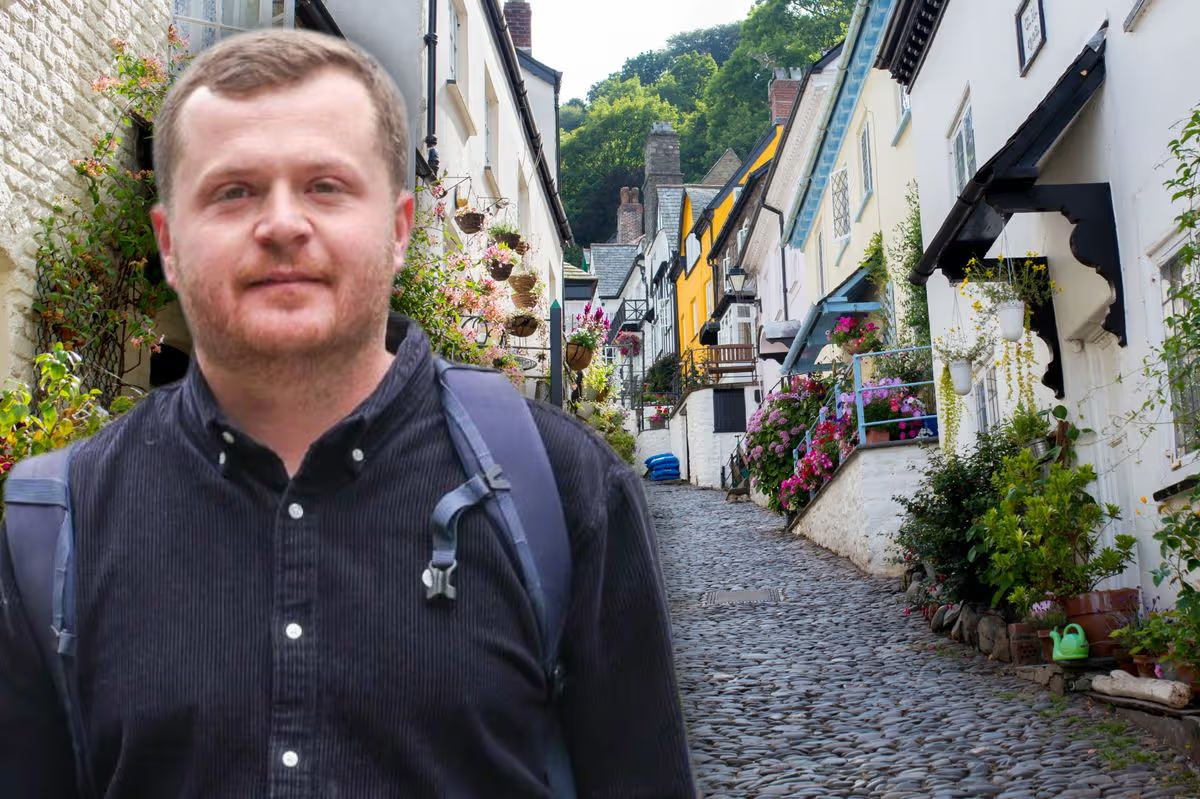
I visited a seaside village where you have to pay just to get in(Image: Jonathan Buckmaster/Getty)
They may enjoy some of the country’s most stunning coastal views but for residents in the UK’s seaside towns and villages life by the sea comes with less visible challenges. While tourists might nip in for a day trip here and there, for people who spend their lives here factors such as over-tourism, anti-social behaviour and limited job opportunities can contribute to lower levels of happiness and wellbeing.
But when I visited this unique fishing village in north Devon I was greeted by nothing but warmth and happiness, with locals ready with a smile, a friendly greeting and a genuine sense of hospitality. After paying £10.90 just to get into Clovelly, I instantly felt at home. It is a truly unique village for a number of reasons. Perched on a 400ft cliff, the village is entirely owned by one man, John Rous.
The 75-year-old, who inherited the village from his mother, Countess Mary Rous, in 1983, is the sole landowner and operates every property in Clovelly. Everyone who lives or works in the village rents their home or shop directly from Mr Rous.
All prospective tenants are interviewed to ensure they fit the community, ensuring the harmonious atmosphere is maintained without any disturbance.
And unlike other villages and towns across the UK there is a fee to enter Clovelly. Visitors must pass through a visitor centre and pay £10.90 for adults and £6.25 for children aged seven to 16. You may think this strange, especially at a time where millions of Brits face soaring bills and increasing supermarket prices, but there is a very good reason: the money does not go to lining the pockets of the owner but is instead redistributed in the village, including on the upkeep and maintenance of homes.
The car-free village has around 250 residents living in 80 cottages. It also welcomes around 150,000 tourists every year — and everyone seems happy. As soon as I arrived and strolled down The Hobby Drive and onto the cobbled High Street, I felt welcome. There were no strange looks from locals, wondering who I was or how long I would be there.
Instead, people gave a passing smile and were happy to stop and chat. It was clear they revelled in the peaceful environment, with their lives centring around tradition and respect. It was the same in both The Red Lion Hotel, an 18th century four-star inn that stands on the quay alongside the stunning harbour, and the Bay Tree Cafe, which sits at the top of the village. Every member of staff I encountered had a smile on their face and couldn’t do enough for me.
The village’s strong sense of community became even more apparent when I spoke with residents. They were quick to ask whether I was enjoying my visit and were always eager to recommend other locals to meet or places to explore. As the village is set on steep, cobbled streets, all vehicles are prohibited which ensures the air remains clean and the atmosphere quiet. There is no such thing as rush hour traffic, car crashes or miles of congestion in Clovelly.
All of the homes in Clovelly are occupied by full-time residents who rent from Mr Rous. This means that, unlike some seaside resorts, there are no empty holiday rentals or abandoned hotels.
It’s easy to describe the views in any seaside town or village “amazing” but this truly is the case in Clovelly. The cobbled streets wind down to a serene ancient harbour which offers sweeping views over Bideford Bay. It’s fair to say that Clovelly is unlike any seaside village or town that I’ve ever visited. It is truly unique and one of the happiest places I have ever been.
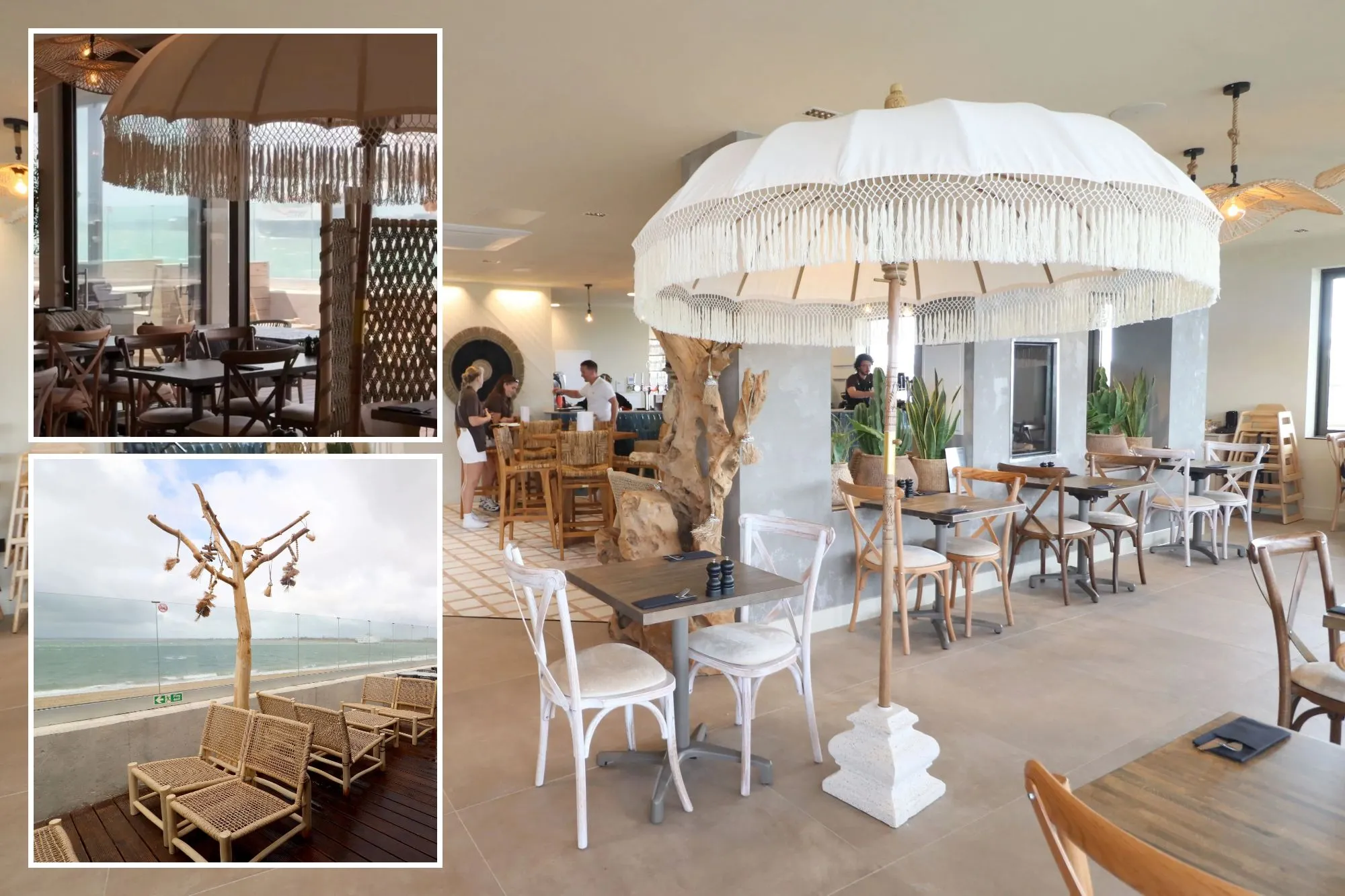
Serving breakfast and lunch, you can get all the classic of a Full English or avocado on toast, as well as burgers and fish and chips.
They also serve alcohol including cocktails and grazing boards.
Live music evenings will also return this summer, including Jazz Cafe nights and 5 Nights of Sumer with “sunset dining, European sharing platters and cocktails by the sea” along with music.
Otherwise the cafe is only open in the day, from 9am to 5pm, (or 3pm in the week).
Guests can book in for sunset music sessions in the evening tooCredit: Instagram/southseacafeThe outdoor terrace has direct views of the seaCredit: Solent
The cafe’s general manager Elisa Standley told local media: “I think this place has completely reformed the beachfront – it’s taken a modern twist of what we used to do, and it’s expanded what we do in a better way.
The chain confirmed information exposed in the breach includes ‘certain guests names, email addresses, telephone numbers, and/or home addresses, along with other reservation details’
Hotel guests have been warned they might be targeted(Image: Getty)
Hotel guests have been warned to watch out for convincing scam messages after a data breach at a major hotel chain. Data including personal details of people booked to stay at one of the chain hotels was exposed over a six month period.
BWH Hotels, the parent company for WorldHotels, Best Western Hotels & Resorts, and Sure Hotels notified customers of the breach in an email when it said “certain guests’ names, email addresses, telephone numbers, and/or home addresses, along with other reservation details” had been accessed between October 14, 2025 and April 22. It added: “Importantly, payment and other financial information was not stored in the affected system and therefore was not accessed.”
It confirmed the firm had taken action to stop the unauthorised access and that it was also taking steps to strengthen safeguards to stop any further breaches. And they urged any affected customers to take steps to ensure any scammers did not take advantage of them, warning them to be extra vigilant about unexpected emails, texts, WhatsApp messages or calls referencing hotel stays.
Now privacy experts have warned the concern is not only what was stolen, but how that information could be used next. Hotel booking data can make follow-up scams look far more believable because criminals may be able to reference real stays, dates, locations or reservation numbers.
Peter Nguyen, a privacy expert from Protect My Data, says travellers should not dismiss this kind of breach just because payment details were not exposed. “A hotel reservation contains more useful information than people realise.
“A scammer does not always need your card number to target you. If they know your name, phone number, hotel, stay dates and booking reference, they can make a fake message look extremely convincing.
“That is the risk with travel data. It gives criminals context. Instead of sending a vague scam, they can contact you with details that feel personal and accurate.”
Nguyen says guests should be especially careful with any unexpected message claiming there is a problem with a booking, payment, refund or reservation. He warned a scammer could pretend to be from the hotel, a booking platform, customer support team or payment department.
The message may claim a card needs to be reverified, a stay could be cancelled, a refund is waiting, or extra information is needed before arrival. He said: “The most dangerous message is one that sounds helpful. It might say your booking needs confirming, your payment failed, or your refund is ready. Because it references a real hotel stay, people are more likely to click.
“If the message asks for payment, codes, logins or verification, do not engage through that message. Go directly to the hotel or booking platform yourself.”
Nguyen says WhatsApp and SMS messages are particularly risky because they feel more direct. “A text or WhatsApp message creates urgency. It feels like someone is dealing with your booking right now. That pressure makes people act faster than they would with an email.”
BWH Hotels’ own warning urged customers not to engage with suspicious communications asking for payment, codes, logins or verification, even if they reference a BWH Hotels property or an upcoming reservation.
Why reservation data is so valuable
Many people worry most about card details in a breach, but Nguyen says contact and booking information can still create serious risk. He explained: “Names, phone numbers and email addresses are the starting point for phishing. Add reservation details and the scam becomes much more targeted.”
“A criminal could send a message saying, ‘Your stay at this property on this date needs confirmation.’ That feels completely different from a generic scam email because it contains something real.”
He said postal addresses can also make scams more credible. He explained: “If a scammer has your address, they can make a fake message feel more official. They might use it in a fake invoice, refund notice, complaint response or identity check.”
Special requests may also reveal details guests did not expect to become part of a security issue. “People sometimes include personal information in hotel requests, such as accessibility needs, arrival times, family arrangements or reasons for travel. Even small details can help scammers tailor their approach.”
What guests should do now
Nguyen says anyone who has stayed with, or booked through, a BWH Hotels property during the affected period should be alert, but not panic. He added: “The first step is awareness. If you receive a message about a Best Western, WorldHotels or SureStay booking, slow down and verify it independently.”
He advised guests to avoid clicking links in unexpected messages. “Open the official hotel website yourself, use the original booking confirmation, or contact the property through a trusted number,” he said. “Do not use a number or link sent in a suspicious message.”
Guests should also be careful if they are asked to confirm personal information, he said. “A genuine hotel may need basic details to find your booking, but they should not ask for banking codes, account passwords or card security codes through an unexpected message.”
If someone has clicked a suspicious link or shared card details, Nguyen says they should contact their bank immediately. He warned: “Speed matters. If you entered payment details, call your bank straight away. If you entered a password, change it immediately, especially if you use it anywhere else.”
He also recommends securing email accounts, as email is often the route scammers use to reset other accounts. “Your email account is the front door to much of your digital life,” he said. “Use a strong, unique password and switch on two-factor authentication.”
Why this warning matters for summer travel
The breach comes as many travellers are booking summer stays, weekend breaks and last-minute trips. Nguyen says that makes hotel-related scams especially dangerous.
“Travel season gives scammers a huge advantage. People are expecting hotel messages, payment reminders and booking updates. That makes fake messages easier to hide among real ones.”
He says guests should be particularly wary of messages close to their check-in date. “A message sent shortly before a stay can create panic. If it says your room will be cancelled unless you act now, that is exactly when you need to stop.”
The safest rule, Nguyen says, is to treat unexpected booking messages as suspicious until proven otherwise. He said: “If a message knows your hotel and dates, that does not automatically make it real. It may simply mean the scammer has booking data. Do not let accurate details rush you into clicking. Verify through the official route every time.”
In its email, signed by Bill Ryan Chief Technology Officer of the hotel chain and sent last month, it said: “BWH Hotels, the parent company for WorldHotels, Best Western Hotels & Resorts, and Sure Hotels, takes the privacy and security of our guests’ personal information very seriously. We are writing to let you know that on April 22, 2026, we identified unauthorised activity in one of our web applications that houses certain guest reservation data.
“We have learned that certain guests’ names, email addresses, telephone numbers, and/or home addresses, along with other reservation details (e.g., reservation numbers, dates of stay, and any special requests) for reservations in our system were accessed by an unauthorised third‑party between October 14, 2025 and April 22, 2026, including yours. Importantly, payment and other financial information was not stored in the affected system and therefore was not accessed.
“Upon discovering the incident, we immediately took the application offline and revoked the unauthorised access. We have engaged leading external cybersecurity experts to support our incident response efforts and to assist with the further strengthening of existing safeguards.
“We advise guests to be extra vigilant when viewing any unexpected or suspicious communications about hotel stays. If you receive a suspicious communication such as an unexpected email, text, WhatsApp message, or telephone call that asks for payment, codes, logins, or “verification,” even if they reference a BWH Hotels property or an upcoming reservation, do not engage. Navigate to sites directly rather than clicking links.
As part of protecting your personal information and to prevent payments to fraudulent parties, here are some precautions you can take:
Stay alert for suspicious sender addresses, urgent or unexpected unsolicited requests, and strange links, especially any unexpected request for payment or personal information. Treat any suspicious request with caution. If you have a question regarding a suspicious request, please contact our customer service team
Scammers may create webpages that closely resemble legitimate hotel booking pages. Always review the web address before entering payment details. If a page looks unexpected or unfamiliar, stop and verify it with our customer service team before proceeding. If you entered or shared any payment (credit card) information in response to a scam, please immediately report it to your financial institution and follow security steps they recommend. If you have any questions, please contact BWH Hotels’ data protection office at dpo@bwh.com
It’s midnight, in June. Powder pink and dark grey clouds drift across a pallid sky, the palette reflecting in the motionless water of Lake Inari. Islets of pine and just-budding birch create pools of distorted shade close to the horizon of this 420 sq mile (1,080 sq km) lake in Lapland, northern Finland. There is not a sound. It’s so silent, I barely breathe to avoid disturbance. Only me, the lake and a moonbeam-coloured moth, whose wingbeat is inaudible.
I am sat beside my car-sized campervan, with mesmerised reverence for the rose-tinged panorama. I do not wish to go to bed and miss this moment. And I am loving the wild freedom and deliciousness of being entirely alone, with nobody in the world knowing my exact whereabouts. Ordinarily, I would be long asleep by midnight, exhausted after a day of work and family life. But I have left my husband and (adult) children at home in England for an eight-week solo camping adventure through Denmark, Sweden, Finland and Norway, with the singular aim of reaching Nordkapp (North Cape) and Knivskjellodden, Europe’s northernmost point at the top of Norway, in time for midsummer.
Earlier in the day, I’d met Father Christmas. “If you’re driving north, be careful of the reindeer,” the costumed gentleman said as I sat beside him at Santa Claus’s Main Post Office in Rovaniemi, the capital of Finnish Lapland, a place considered over-touristy in winter, but certainly not during my summer visit.
“We have 230,000 reindeer here in Finland, but only one of them has a red nose.” As it happens, I see countless reindeer, in Finland, as well as Norway and Sweden, creeping through forests and grazing at the coast. Not Rudolph to my knowledge, but many females with calves, all legs and ears.
A pitstop along the way – off-grid camping is legal in Norway.
My meetings with reindeer and the night beside Lake Inari are two of many memorable experiences on my road trip through the Land of the Midnight Sun, so called because north of the Arctic Circle the sun doesn’t set below the horizon during the summer months. It doesn’t set for long south of it either, including in Denmark, where (after I’d driven my campervan from the UK via Germany) my Nordic adventure started in Rødby, on the island of Lolland.
Other than reaching Nordkapp, I have no plan; no accommodation booked either. Instead, I am utilising the popular practice of Allemansretten (everybody’s right, as it’s known in Norway), which is also legal in Finland and Sweden: the right to stop off-grid overnight on uncultivated land, leaving without a trace. On my journey I’m able to park up and stay overlooking fjords, beside mountain passes, with lake or coastal views.
From the flat plains of Lolland, Denmark’s fourth-largest island, my route north takes me to Helsingør for the ferry across the Øresund to Helsingborg in Sweden, leaving a rear-view image of Kronborg Slot – “Hamlet’s Castle” – at dawn.
Luminous lupins and puce pinks litter the roadsides of my 370-mile cross-country route to Sigtuna, 30 miles north-west of Stockholm. The lakeside settlement of colourful timber houses is Sweden’s oldest town. Half an hour’s drive north is Linnaeus’ Hammarby, a pretty 18th-century farm that once belonged to Carl Linnaeus, the botanist who developed the binomial system of naming species we use today.
Watching the midnight sun from Nordkapp.
Hammarby is wonderfully representative of this Uppland region of Sweden. I walk 10 miles through the cultivated countryside along the Dannmark Trail between Linnaeus’s farm and Uppsala, a route he would walk with his biology students for nature studies. Students at Uppsala University (where Linnaeus was a professor) are celebrating finals when I arrive, mingling around ice-cream cafes and in floral parks and botanical gardens. Nearby, the vast twin spires of the city’s rust-red cathedral protrude above blossoming rowan trees.
From Uppsala, I follow the E4, a road that reaches the border with Finland, covering more than 600 miles over six days. Along the way I cross Scandinavia’s longest suspension bridge, the Högakustenbron, at the Höga Kusten, or High Coast, a Unesco world heritage site.
Vast stretches of empty road lined with little but pine trees provide a chance for contemplation. But it’s not until I arrive in the colourful town of Karasjok days later, having crossed from Finland into Norway, that I truly understand the scale of the Nordics. For Karasjok feels very far north, yet it is still a four-hour drive to Nordkapp.
Karasjok is the Norwegian administrative centre for the indigenous Sámi population of Sápmi, the cross-border cultural region that includes parts of Norway, Sweden, Finland and Russia. The parliament building resembles a traditional lavvu tent and, nearby, Sápmi Park offers an introduction to Sámi traditions.
Leaving Karasjok, the road winds its way alongside Porsangerfjorden, passing fishing hamlets, waterfalls, shaly mountain cliffs and tremendous viewpoints before dipping beneath the Arctic Ocean by tunnel to reach Magerøya, the island upon which Nordkapp sits. I chance upon fine weather as I climb beyond Honningsvåg, one of Norway’s northernmost towns, over snowy mountain plateaux to reach Nordkapp. A tear forms in the corner of my eye. I am alone, about 2,500 miles from home by the quickest route, and I wish my family could see what I can. But this is a solo adventure, and I have reached my goal, staying up all night to watch as the midnight sun sends orange beams across the Arctic Ocean. Captivating.
The writer on a windswept plateau near Nordkapp.
It is not by the quickest route that I return home, though. My journey back south through Norway (and ultimately Sweden and Denmark, too) is contorted, meandering west and east. Picnics beside turquoise sea coves on the Lofoten Islands, watching pods of dolphins in the Norwegian Sea. Bulging rivers and thundering waterfalls in Saltfjellet national park. Then small farms and meadows with emerald stripes of hay, amassed buttercups, and long lakes through the region of Trøndelag. It is Norway bursting into colour after the bleached landscapes of the north. Occasionally I’ll put in a long stretch in one day – 200 miles or so. Other days, I simply stay put, enjoying the view or stepping out for long walks.
Atlanterhavsvegen – a 22-mile national scenic route across skerries and strung together by bridges – is captivating. Then Runde, one of Norway’s westernmost islands, renowned for a colony of puffins that breed on the cliffs here. A steep mountain walk across the island reveals clusters of people perching on cliff edges in the hope of witnessing the spectacle of birds coming in to roost.
But it is the east of the island where I park up and sit alone for days, watching an otter swimming among the lichen-speckled black rocks, alerted by a clatter of ducks and ducklings, shelducks, wigeon and oystercatchers. Keeping my distance, I observe parent gulls sheltering fluffed-up chicks as curlew call overhead. Orchids, sea campion, clover and a host of other flowers smother the coastal ground. A memorable time.
View from the campervan while overnighting on Norway’s Atlanterhavsvegen scenic route.
So, too, my wild camp at the summit of Sognefjellet mountain pass, the highest road in Scandinavia. I set out from Lom, an attractive town that sits between three national parks and possesses a famous stave church and the fascinating Norwegian Mountain Centre. The road, also a designated national scenic route, runs alongside the pretty Bovra River initially, then climbs into some of Norway’s wildest scenery. My overnight is cold, with huge frozen lakes of glacial blue and roadside snow above the height of the campervan. In the morning, as Nordic skiers and a pack of snowmobiles head out to nearby glaciers, I brush snowflakes from my windscreen to begin the descent to the green and luscious Sognefjord. It’s as if I have stepped through a wardrobe and imagined the wintry summer scene.
I appreciate that being alone by choice is entirely different to loneliness. I am often asked of my solo travels, “Don’t you ever get lonely?” I can feel lonelier, I explain, in a crowded room than camping in the wild. Yes, leaving family behind creates a sense of “wish you were here”; special moments I’d like to share. Then again, this adventure is understanding that the memory is mine alone. The thrill, the excitement, the calm and occasionally the trepidation. I’d do it all again tomorrow.
The writer travelled in her own campervan, using Scandlinesferries between Puttgarden, Germany, and Rødby, Denmark.In the UK and Europe, hire of Roadsurfer’s smaller vehicles starts at £49 a night
Cabü by the Sea in St Margarets, Kent, is a luxury coastal cabin staycation for city dwellers seeking coastal charm without a long journey – and it’s less than two hours’ drive away
Octavia Lillywhite Acting beauty and wellness editor
07:00, 13 Jun 2026
Pretty perfect: the pool is ideal for a dip on warm summer days(Image: Cabü)
At Cabü by the Sea, baby rabbits hop playfully across the grass. “They’re quite used to us,” our host explains as she guides us towards our cabin.
“But they dig everywhere, so do watch out for burrows.”
It’s a fitting welcome to our time at this wonderfully wholesome retreat. Cabü consists of a grassy expanse dotted with luxurious one, two and three-bedroom cabins, nestled against the sea wall in St Margarets, one of those tranquil coastal villages in Kent’s overlooked corner, where Dungeness extends a languid arm into the English Channel.
Uncomplicated and serene, the atmosphere washes over you the moment you arrive, reports OK!.
Discovering the ideal seaside cabin
This spot is defined by thoughtful touches. The log burner is already stacked and primed to ignite with just one match.
Plush, generously soft towels hang in the bathroom, with striped versions on the upper shelf – designated for beach and pool. In the kitchen, there’s a picnic hamper ready should you wish to prepare something for the shore.
If you’d rather not have to do it yourself, simply order from the onsite shop.
Each designer lodge resembles something plucked straight from the pages of a cabin lifestyle book (I know, because they’ve left a copy beside the kingsize bed). It’s difficult not to instantly embrace the notion that owning a modest cabin of your own could be the solution to life’s pressures. It certainly seems that way while you’re here.
Making the most of your time at Cabü
Cabü is a spot where simple pleasures take centre stage, with a handful of added treats thrown in. There’s a pool (fenced off, so you needn’t fret about little ones wandering), and alongside it sits the sitooerie – a space blending indoors and out, where families can bond over the pizza oven and toast marshmallows side by side.
Without children in tow, we hired our own barbecue, grilled burgers on the decking, and gazed at the stars instead.
There’s also the spa facilities you can reserve by the hour – generous wooden hot tubs, a sauna and an icy plunge pool complete with a bracing bucket shower. Steel yourself and give them all a go – it’s absolutely brilliant.
What to explore in the surrounding area
We left the car untouched throughout our visit, opting instead to borrow bikes for the seven-mile ride to Dungeness (the Fish Roll at the Dungeness Snack Shack is essential), where the 21st Century seems to dissolve amid the stark, post-apocalyptic stretch of shingle and weathered boat hulls. Head the opposite way and Dymchurch (3 miles) offers classic seaside charm with fairground rides, fish and chips and ice cream, plus superb meals at Coffee Lounge.
Can’t manage the distance? Fear not, because there’s an authentic miniature steam railway covering the entire route, with a station just a 10-minute stroll away.
How to book your own cabin getaway
Prices start at £375 for a 2-night break in a studio cabin. Studio, 1, 2 and 3 bedroom cabins are on offer, including dog-friendly choices and one featuring a private hot tub.