Politics Desk

U.S. health policy has been dramatically reshaped under RFK Jr.

In the whirlwind first year of President Trump’s second term, some of the most polarizing changes have taken place within the Department of Health and Human Services, where Robert F. Kennedy Jr. has openly rebuffed the medical establishment as he converts the ideas of his Make America Healthy Again movement into public policy.

Since entering office in February, the Health secretary has overseen a dramatic reshaping of the agencies he oversees, including eliminating thousands of jobs and freezing or canceling billions of dollars for scientific research. As part of his campaign against chronic disease, he has redrawn the government’s position on topics such as seed oils, fluoride and Tylenol. He also has repeatedly used his authority to promote discredited ideas about vaccines.

The department’s rapid transformation has garnered praise from MAHA supporters who say they long viewed Health and Human Services as corrupt and untrustworthy and have been waiting for such a disruption. And both Democrats and Republicans have applauded some of the agency’s actions, including efforts to encourage healthy eating and exercise, and deals to lower the prices of costly drugs.

But many of the drastic changes Kennedy has led at the department are raising grave concerns among doctors and public health experts.

“At least in the immediate or intermediate future, the United States is going to be hobbled and hollowed out in its scientific leadership,” said Lawrence Gostin, a Georgetown University public health law professor who was removed from a National Institutes of Health advisory board this year with a letter that said he was no longer needed. “I think it will be extraordinarily difficult to reverse all the damage.”

Department spokesperson Andrew Nixon denied any threat to scientific expertise at the agency and lauded its work.

“In 2025, the Department confronted long-standing public health challenges with transparency, courage, and gold-standard science,” Nixon said in a statement. “HHS will carry this momentum into 2026 to strengthen accountability, put patients first, and protect public health.”

The overhaul comes alongside broader uncertainties in the nation’s health system, including Medicaid cuts passed by Congress this year and expiring Affordable Care Act subsidies that are putting millions of Americans’ insurance coverage in jeopardy.

Here’s a closer look at Kennedy’s first year leading the nation’s health agency:

Kennedy’s vaccine views ripple across the department

After many years spent publicly assailing vaccines, Kennedy sought during his confirmation process to reassure senators he wouldn’t take a wrecking ball to vaccine science. But less than a year later, his Health Department has repeatedly pushed the limits of those commitments.

In May, Kennedy announced the Centers for Disease Control and Prevention would no longer recommend COVID-19 vaccines for healthy children and pregnant women — a move immediately questioned by public health experts who saw no new data to justify the change.

In June, Kennedy fired an entire 17-member CDC vaccine advisory committee — later installing several of his own replacements, including multiple vaccine skeptics.

That group has made decisions that have shocked medical professionals, including declining to recommend COVID-19 shots for anyone, adding new restrictions on a combination shot against chickenpox, measles, mumps and rubella and reversing the long-standing recommendation that all babies receive a hepatitis B shot at birth.

Kennedy in November also personally directed the CDC to abandon its position that vaccines do not cause autism, without supplying any new evidence to support the change. Although he left the old language on the agency website to keep a promise he made to Republican Sen. Bill Cassidy, he added a disclaimer saying it remained because of the agreement.

Public health researchers and advocates strongly refute the updated website and note that scientists have thoroughly explored the issue in rigorous research spanning decades, all pointing to the same conclusion that vaccines don’t cause autism.

Kennedy has promised a wide-ranging effort to study environmental factors that potentially contribute to autism and in an Oval Office event with Trump in September promoted unproven — and in some cases discredited — ties among Tylenol, vaccines and the complex brain disorder.

Kennedy reconfigures department with massive staffing and research cuts

Within two months of taking office, Kennedy announced a sweeping restructuring of Health and Human Services that would shut down entire agencies, consolidate others into a new one focused on chronic disease and lay off about 10,000 employees on top of 10,000 others who had already taken buyouts.

Although parts of the effort are still tied up in court, thousands of the mass layoffs were allowed to stand. Those and voluntary departures significantly thinned out the sprawling $1.7-trillion department, which oversees food and hospital inspections, health insurance for roughly half of the country and vaccine recommendations.

Kennedy also has fired or forced out several leaders at the department, among them four directors at the National Institutes of Health, the Food and Drug Administration’s former vaccine chief and a director of the CDC whom he had hired less than a month earlier.

On top of staffing reductions, he has overseen significant cuts to scientific research. That includes the NIH slashing billions of dollars in research projects and the termination of $500 million in contracts to develop vaccines using mRNA technology.

Amid the cuts, Kennedy has proposed or funded some new research on topics related to his MAHA goals, including autism, Lyme disease and food additives.

MAHA gains momentum despite some stumbles

Kennedy started using the phrase “MAHA” on the campaign trail last year to describe his crusade against toxic exposures and childhood chronic disease, but 2025 was the year it became ingrained in the national lexicon.

In his tenure so far, the Health secretary has made it the centerpiece of his work, using the MAHA branding to wage war on ultra-processed foods, pressure companies to phase out artificial food dyes, criticize fluoride in drinking water and push to ban junk food from the program that subsidizes grocery store runs for low-income Americans.

The idea has even spread beyond Kennedy’s agency across the federal government.

Defense Secretary Pete Hegseth has appeared with Kennedy to promote fitness with pull-up displays. Transportation Secretary Sean Duffy teamed up with Kennedy in early December to announce $1 billion in funding for airports to install resources including playgrounds and nursing pods for mothers and babies. And Environmental Protection Agency administrator Lee Zeldin recently announced he is working toward unveiling a MAHA agenda with health-related goals for his own department.

MAHA has earned widespread popularity among the American public — even as it has endured some administration foibles. In May, for example, Health and Human Services faced scrutiny for releasing a MAHA report that contained several citations to studies that didn’t exist.

But to the extent that the initiative has included calls to action that aren’t based on science — such as urging distrust in vaccines or promoting raw milk, which is far more likely than pasteurized milk to lead to illness — critics say it can be dangerous.

Swenson writes for the Associated Press.
Source link

Issa becomes second California Republican to announce retirement as Democrats look to reclaim House

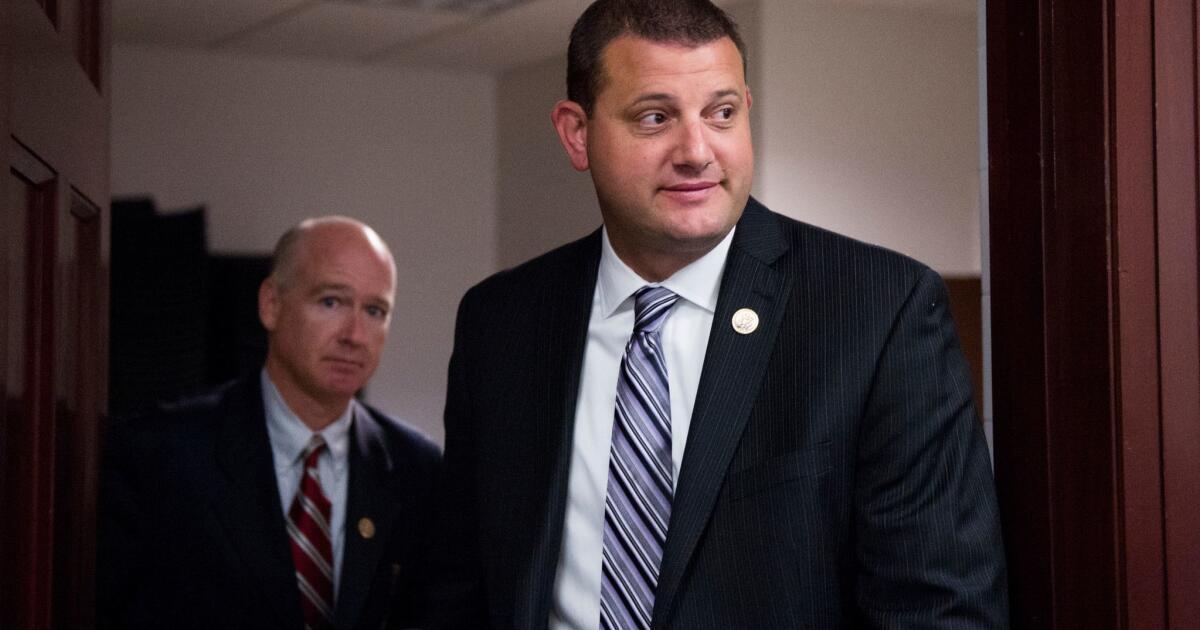
Rep. Darrell Issa (R-Vista) will not run for a 10th term in Congress, he announced Wednesday morning, becoming the second California Republican to retire this week as Democrats strive to retake control of the U.S. House.

On Monday, Republican Rep. Ed Royce of Fullerton also announced he would not seek reelection.

Beyond shaking up the California political landscape, the two retirements are a signal that the GOP fears a Democratic wave election that could sweep them from power this fall.

Royce and Issa represent districts that are changing, with more Latino and Asian voters, and where Hillary Clinton defeated Donald Trump in the 2016 presidential election.

Democrats have made clear their path to reclaiming the U.S. House majority must pass through Southern California, and open-seat races could make that task a bit easier. On the other hand, Republicans could recruit strong and experienced candidates who might fare better against a crowded field of Democratic hopefuls, many of whom are seeking office for the first time.

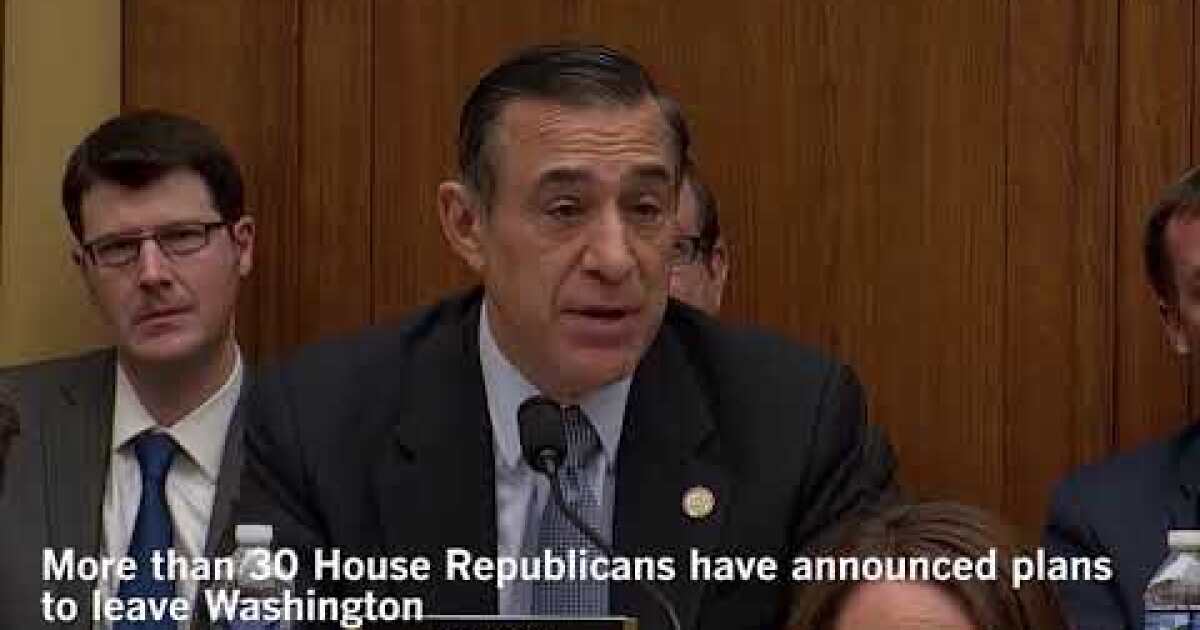
With Issa’s announcement, more than 30 House Republicans have announced plans to leave Washington, and Democrats need to secure just 24 more seats to retake control.

Without incumbents in those races, it also will be more difficult for the Democrats to deploy their national strategy of tying the Republican candidate to Trump, who is widely unpopular in California.

In contrast to most of his California GOP colleagues, Issa showed a willingness to moderate his stances to placate invigorated Democrats, but perhaps found it wasn’t enough to offset his reputation as a conservative bulldog in an increasingly liberal district.

Issa, former chairman of the House Oversight Committee, won reelection in 2016 by just over half a percent — about 1,600 votes — and was widely considered the most vulnerable Republican in the House going into this year’s election. In Issa’s northern San Diego and southern Orange County district, nearly 38% of registered voters are Republicans, with 31% registered as Democrats and 26% not registered with any political party, who often lean Democratic at the polls in California.

Still, the announcement was a surprise. A source close to Issa said he was talking about his reelection campaign with friends as recently as Tuesday night. Issa’s statement on Wednesday did not say why he decided to retire, just that he had the support of family in making the decision.

“I am forever grateful to the people of San Diego, Orange and Riverside counties for their support and affording me the honor of serving them all these years,” Issa said. “Representing you has been the privilege of a lifetime.”

The richest man in Congress, Issa, 64, already had drawn a handful of well-funded Democratic opponents, including his 2016 challenger, Doug Applegate, Orange County environmental lawyer Mike Levin, San Diego real estate investor Paul Kerr and Sara Jacobs, who has drawn the endorsement of Emily’s List. Issa had $852,028 in cash on hand as of September. Levin has led in fundraising with $530,326 in the bank. Applegate and Kerr each had a bit more than $200,000.

The Democratic Congressional Campaign Committee said Issa’s retirement “means we are in a strong position to elect a Democrat to the 49th District this fall.”

But the National Republican Congressional Committee said Democrats are setting themselves up for an internal fight in Issa’s 49th District, adding, “We look forward to facing whoever limps out of the Democrats’ battle royale: black and blue, and broke.”

Hours after Issa’s announcement, GOP Assemblyman Rocky Chavez of Oceanside announced he would run for the seat. Other Republicans who could run in Issa’s place include Diane Harkey, chair of the state Board of Equalization and a former assemblywoman, and GOP Senate leader Pat Bates. All three represent significant portions of Issa’s district.

Analysts for Larry J. Sabato’s Crystal Ball at the University of Virginia Center for Politics quickly changed their appraisal of the race from a toss-up to the “leans Democratic” category, saying Issa’s close 2016 win showed voters may be more willing to consider a Democrat. The 39th District remains a toss-up because Royce won by 15 percentage points in 2016, Crystal Ball managing editor Kyle Kondik said. At least one other prognosticator moved Royce’s district to “leans Democratic” as soon as he announced his retirement on Monday.

As chairman of the committee charged with overseeing the executive branch, Issa was known as President Obama’s toughest critic because of his aggressive pursuit of alleged fraud and abuse by the administration. It made him a hero in conservative circles, and before his narrow 2016 win, Issa had gotten at least 58% of the vote in his eight previous campaigns.

But Issa walked a shakier line with the new administration. He appeared to moderate some of his rhetoric last year. Though he insisted he had not changed, he was more willing to buck his party on important votes. He voted against the tax bill in December, saying it would harm his constituents.

For a year, hundreds of activists have appeared weekly outside Issa’s Vista office to protest. At first, Issa regularly engaged with them on the street and in town halls, but his frustrations with the ongoing protests grew and he stopped talking with them.

On Tuesday, activists with a local Indivisible group huddled under umbrellas outside Issa’s office for a premature “retirement party” for the congressman, complete with festive signs and a cake shaped like a Hawaiian shirt. The song they sang seem ominous in retrospect: “Issa, you’ll retire, your situation’s dire, we will soon replace you, never fear. Now we must report, now your time is short, Issa you’ll retire this year.”

Born in Cleveland as the second of six children in a Lebanese American family, Issa dropped out of high school at 17 to join the Army. While there, he got his GED and went on to earn degrees from Kent State University and Siena Heights College before returning to the Army as an officer.

Issa bought a struggling Cleveland electronics business in 1980 and within a decade transformed it to produce the popular Viper automobile anti-theft device, with Issa’s famous voice as the warning to would-be thieves to “stand back.” In 1986, he and his wife, Kathy, moved the business to Vista, where it continued to grow. His net worth was estimated at more than quarter of a billion in 2015, according to financial disclosures.

After years participating behind the scenes in local politics, Issa’s first foray as a candidate came in 1998 when he spent $9.8 million in the Republican primary for the chance to challenge Barbara Boxer for her Senate seat, but lost to Matt Fong. He was elected to the House in 2000 with 61% of the vote, and three years later, he spent $1.7 million to get signatures for the recall election of then-Democratic Gov. Gray Davis. He had hoped to replace Davis himself, but abruptly quit during a tearful news conference when Arnold Schwarzenegger entered the race, saying he had been assured a quality candidate was running.

Assistant managing editor Christina Bellantoni contributed to this report.

sarah.wire@latimes.com

Follow @sarahdwire on Twitter

Read more about the 55 members of California’s delegation at latimes.com/politics

ALSO:

California could flip the House, and these 13 races will make the difference

Updates on California politics


UPDATES:

2:50 p.m.: This article was updated with Assemblyman Rocky Chavez’s announcement that he will run for Issa’s seat.

1:30 p.m.: This article was updated with additional biographical details.

11:15 a.m.: This article was updated with more information about Issa’s district.

9:40 a.m.: This article was updated with additional information about Issa and the battle for control of the House.

This article was originally published at 8:20 a.m.


Source link

Workers’ Comp Reform Unveiled by Garamendi

Insurance Commissioner John Garamendi, continuing his assault on spiraling workers’ compensation insurance costs, on Friday announced a three-pronged reform program designed to curb fraudulent and unwarranted claims.

As part of the plan. Garamendi endorsed legislation introduced by Assemblyman Burt Margolin (D-Los Angeles) that would eliminate a “guaranteed cap” on insurers’ expenses. The bill would give Garamendi greater discretion to reduce workers’ compensation rates for employers.

Garamendi also announced the creation of a new workers’ compensation fraud investigation team and an outreach program to employers to educate them on new insurance fraud laws.

“California businesses are being strangled by exorbitant workers’ compensation insurance premiums,” Garamendi said. “Workers’ compensation costs have gotten out of control, especially in the areas of insurer expenses and fraud.”

Margolin’s bill, introduced in the Legislature on Friday, aims to eliminate the “guaranteed expense cap,” an arbitrary measure of workers’ compensation carrier costs. This cap was one of the primary reasons that Garamendi late last year turned down an 11.9% rate increase request from the Workers’ Compensation Insurance Rating Bureau, which determines what minimum rates should be for the industry. Garamendi only allowed a 1.2% increase.

The cap allows workers’ compensation carriers to claim that their expenses amount to 32.8% of premiums, no matter what their true expenses are, when they request rate increases. Actual expenses are far lower–about 20% to 25% of premiums, Garamendi said.

“This bill is a way to guarantee that California employers are not charged excessive premiums by workers’ compensation carriers,” Margolin said. “This bill would allow Garamendi to address what an appropriate expense load would be.”

Insurance representatives Friday criticized the proposed expense cap limitations.

“A panel that Garamendi helped form has been studying workers’ compensation rating practices for over a year, and they are set to give their recommendations in March,” said Richard Wiebe, spokesman for the American Insurance Assn. in Sacramento. “Garamendi has apparently decided their recommendations are irrelevant.”

Insurers are more supportive of Garamendi’s efforts to combat fraud. Robert Gore, vice president of the Assn. of California Insurance Cos., noted that the new fraud unit is made possible by a law partially written and supported by the insurance industry.

Garamendi said he was creating a new workers’ compensation fraud investigation unit, funded by legislation that took effect Jan. 1. The law is designed to target doctors, attorneys and medical care workers who encourage the filing of fraudulent workers’ compensation claims.

Under the tough new law, making false statements to support fraudulent workers’ compensation claims is a felony. Convictions can be punished by up to five years in prison and fines equaling twice the fraud.

“The people who are committing workers’ compensation fraud now think they can do it with impunity, but that has changed,” Margolin said. “If you commit workers’ compensation fraud, you go to jail.”

Garamendi also said he plans to step up a public information campaign about the new workers’ compensation fraud law. The campaign will be conducted through partnerships with other state agencies, such as the Employment Development Department and local chambers of commerce.

Source link

Leading Clinton Donors Got Lifts on Air Force One

This story was reported by Glenn Bunting, Ralph Frammolino, Mark Gladstone, Alan Miller and David Willman and written by Miller

The White House provided trips on Air Force One or presidential helicopters to 56 campaign donors and fund-raisers in 1995 and 1996, administration officials said Monday.

In addition, leading campaign fund-raisers appeared on a “must consider” list for positions in the newly elected Clinton administration in 1992, according to newly released Democratic National Committee documents. Some later became ambassadors and other high-level appointees.

The White House and the national committee provided the new information as the Justice Department and congressional committees continued their investigations into Democratic fund-raising practices and White House perquisites provided to major financial benefactors.

The national committee documents included more than 10,000 pages about controversial fund-raiser John Huang’s employment by the national committee.

Among those on the “must consider” list for appointments was Huang himself, who received a mid-level Commerce Department job in 1994 after helping raise money for Clinton in the 1992 campaign.

Major donors and fund-raisers have been given jobs and political appointments for years by both Democratic and Republican administrations, but rarely have documents spelling out the practice been publicly available.

Huang’s activities at the national committee are at the center of the inquiries, particularly allegations that overseas interests, including the Chinese government, may have sought to channel contributions to the Democrats.

The documents detail contacts between Huang and the Chinese embassy and Chinese government officials as well as new information about his contacts with certain donors whose money the Democrats have decided to return as potentially improper.

White House and Democratic officials said there was nothing wrong with the Clintons’ use of Air Force One or with recommending supporters for appointments.

“We believe there is nothing inappropriate or unusual about the president of the United States inviting guests to be on his plane on official trips,” said Lanny J. Davis, a special White House counsel.

“As long as that privilege isn’t abused, we don’t believe the American people would object to that. And we believe that these numbers suggest it was very modest as an exercise of that prerogative.”

The cost of political travel is billed directly to the campaign, the DNC or the guest. But if a guest was on an official trip or leg of a trip, the individual was not required to pay air fare.

All told, Clinton took at least 477 guests on his 103 trips aboard Air Force One and presidential helicopter Marine One between Jan. 1, 1995, and Nov. 6, 1996, according to records compiled by the White House.

The White House defined “financial supporters” of the president as those who contributed $5,000 or more to the Democrats or raised $25,000 or more for the party or the Clinton-Gore campaign in the 1996 election cycle.

Vice President Al Gore, meanwhile, took 17 such donors on his 169 trips on Air Force Two or Marine Two.

Among those who made multiple flights were Terence McAuliffe, the Clinton-Gore finance chairman and his top aide, Laura Hartigan, and three Democratic officials: Finance Chairman Marvin Rosen, Finance Director Richard Sullivan and Treasurer Scott Pastrick.

A trip aboard Air Force One is among the most highly prized perquisites offered to major donors and fund-raisers. Supporters who flew with the president said that they were given “Welcome to Air Force One” name tags and sat in the VIP section equipped with large cabin-cruiser seats and telephones.

“It’s a tremendous ego boost,” said a Democratic official who participated in several trips. “The most exciting part for these people was to fly into their city and be able to get off the plane with all the local dignitaries on the tarmac.”

The guests on Air Force One in 1995 and 1996 contributed a total of $9.2 million to Democratic candidates and party committees since 1991, when Clinton first sought the party’s presidential nomination, according to an analysis by the Campaign Study Group. Of this total, $6.7 million went to the Democratic National Committee and the Clinton-Gore committees in the two races.

Twenty-one of the Air Force One guests and their companies each donated more than $100,000. One of those was Stanley Chesley, a Cincinnati attorney. He and his law firm gave $581,450. Another was Rashid Chaudry. His company, the Raani Corp. of Bedford Park, Ill., contributed $401,819.

Three of the Air Force One guests, all major Democratic givers, also provided employment to Clinton friend Webster L. Hubbell after Hubbell’s resignation from a top Justice Department position because of improprieties in his previous law practice.

Independent counsel Kenneth W. Starr is investigating whether administration officials and supporters arranged employment deals for Hubbell to dissuade him from providing Whitewater prosecutors with damaging information about Mrs. Clinton, his former law partner in Little Rock.

Those who arranged deals and rode on Air Force Once included Truman Arnold, a Texas oil executive and longtime Clinton friend; Wayne Reaud, a Beaumont, Texas, lawyer who paid Hubbell a total of $36,000 in 1994; and Bernard Rapoport, a Waco, Texas, insurance executive.

The rewarding of campaign donors with high-level political appointments is a staple of any administration. However, the Democrats had criticized previous Republican administrations for some of these practices–such as giving ambassadorships to big-dollar contributors.

The first Democratic memo about jobs for financial backers was sent to Michael Whouley, a Clinton campaign aide who was in charge of providing names to the transition team, on Dec. 21, 1992, a month before Clinton’s inauguration.

“We urge you to consider strongly the following leading national fund-raisers who are interested in serving in the White House,” the memo said. “We are pleased to sponsor these ‘must considers.’ ”

Among those named were Erskine Bowles, who obtained the post he sought as head of the Small Business Administration. He is now Clinton’s chief of staff. Also recommended was Arthur Levitt, who was proposed as a possible ambassador to Germany or a member of the National Economic Council. He became chairman of the Securities and Exchange Commission.

Those touted for ambassadorships and receiving postings, though not necessarily in their first-choice countries, were Alan Blinken in Belgium; Donald Blinken, Hungary; Clay Constantinou, Luxembourg; and Thomas Siebert, Sweden.

Huang, then an executive in Los Angeles with the Indonesian-based Lippo conglomerate, was recommended for a position of “under- or assistant secretary for international affairs” in an unspecified agency. He was ultimately appointed deputy assistant Commerce secretary for East Asia and the Pacific in 1994.

“We make no apologies for trying to get jobs for those who were helpful in trying to elect this president,” said Democratic Communications Director Amy Weiss Tobe. “It is not unusual for somebody who is helpful to end up on a list for a must consider for a top position.”

Democrats noted that more than a dozen of those on the Republicans’ major donor group known as Team 100 received ambassadorships and sub-Cabinet positions in the Bush administration.

The documents also reveal that Huang was extensively involved in Chinese organizations and participated in events at the Chinese embassy in Washington. Included were numerous business cards from representatives of Chinese groups and invitations to events. Huang also is listed as a director of the Committee of 100, a New York-based nonprofit group of Chinese-Americans who are active in public affairs.

A handwritten note that was faxed to Huang by Haipei Xue, an official with the Council on U.S.-China Affairs in Washington, reads: “What follows is an update on strategies & programs I drafted for discussion with our partners, like Boeing in this case, & with the Embassy. Although you are not directly involved in U.S.-China . . . your Committee of 100 and often yourself, I believe, will be engaged in it.”

DNC officials said that they were unable to determine whether any of Huang’s Chinese-related activities while he was employed by the party raised concerns because they did not know the context of the documents.

Times researchers Edith Stanley and D’Jamila Salem-Fitzgerald contributed to this story.

* RENO DENIES COUNSEL BID: Attorney general denies request for outside counsel on donations. A14

* SUBPOENA MIX-UP: Investigators issue subpoenas for the wrong DNC donor. A16

Source link

‘Trump’s EPA’ in 2025: A fossil fuel-friendly approach to deregulation

The Environmental Protection Agency under President Trump has cut federal limits on air and water pollution and promoted fossil fuels, a metamorphosis that clashes with the agency’s stated mission — to protect human health and the environment.

The administration says its actions will “unleash” the American economy, but environmentalists say the agency’s abrupt change in focus threatens to unravel years of progress on climate-friendly initiatives that could be hard or impossible to reverse.

“It just constantly wants to pat the fossil fuel business on the back and turn back the clock to a pre-Richard Nixon era” when the agency didn’t exist, said historian Douglas Brinkley.

A lot has happened this year at “Trump’s EPA,” as Administrator Lee Zeldin frequently calls the agency. Zeldin proposed overturning the landmark finding that climate change is a threat to human health. He pledged to roll back dozens of environmental regulations in “the greatest day of deregulation our nation has seen.” He froze billions of dollars for clean energy and upended agency research.

Zeldin has argued the EPA can protect the environment and grow the economy at the same time. He announced “five pillars” to guide the EPA’s work; four were economic goals, including energy dominance — President Trump’s shorthand for more fossil fuels — and boosting the auto industry.

A former New York congressman who had a record as a moderate Republican on some environmental issues, Zeldin said his views on climate change have evolved. Many federal and state climate goals are unattainable in the near future — and come at a huge cost, he said.

“We should not be causing … extreme economic pain for an individual or a family” because of policies aimed at “saving the planet,” he told reporters at EPA headquarters in early December.

But scientists and experts say the EPA’s new direction comes at a cost to public health and would lead to far more pollutants in the environment, including mercury, lead and especially tiny airborne particles that can lodge in lungs. They also note higher emissions of greenhouse gases will worsen atmospheric warming that is driving more frequent, costly and deadly extreme weather.

Christine Todd Whitman, a longtime Republican who led the EPA under President George W. Bush, said watching Zeldin attack laws protecting air and water has been “just depressing.”

“It’s tragic for our country. I worry about my grandchildren, of which I have seven. I worry about what their future is going to be if they don’t have clean air, if they don’t have clean water to drink,” said Whitman, who joined a centrist third party in recent years.

The history behind EPA

The EPA was launched under Nixon in 1970 at a time when pollution was disrupting American life, some cities were suffocating in smog and industrial chemicals turned some rivers into wastelands. Congress passed laws then that remain foundational for protecting water, air and endangered species.

The agency’s aggressiveness has always seesawed depending on who occupies the White House. The Biden administration boosted renewable energy and electric vehicles, tightened restrictions on motor-vehicle emissions and proposed greenhouse gas limits on coal-fired power plants and oil and gas wells. Industry groups called rules overly burdensome and said the power plant rule would force many aging facilities to shut down. In response, many businesses shifted resources to meet the more stringent rules that are now being undone.

“While the Biden EPA repeatedly attempted to usurp the U.S. Constitution and the rule of law to impose its ‘Green New Scam,’ the Trump EPA is laser-focused on achieving results for the American people while operating within the limits of the laws passed by Congress,” EPA spokeswoman Brigit Hirsch said.

Zeldin’s list of targets is long

Zeldin has announced plans to abandon soot pollution rules, loosen rules around harmful refrigerants, limit wetland protections and weaken gas mileage rules. Meanwhile, he would exempt polluting industries and plants from federal emissions-reduction requirements.

Much of the EPA’s new direction aligns with Project 2025, the conservative Heritage Foundation road map that argued the agency should gut staffing, cut regulations and end what it called a war on coal or other fossil fuels.

“A lot of the regulations that were put on during the Biden administration were more harmful and restrictive than in any other period. So that’s why deregulating them looks like EPA is making major changes,” said Diana Furchtgott-Roth, director of Heritage’s Center for Energy, Climate, and Environment.

But Chris Frey, an EPA official under Biden, said the regulations Zeldin has targeted “offered benefits of avoided premature deaths, of avoided chronic illness … bad things that would not happen because of these rules.”

Matthew Tejada, a former EPA official under both Trump and then-President Biden who now works at the Natural Resources Defense Council, said of the revamped EPA: “I think it would be hard for them to make it any clearer to polluters in this country that they can go on about their business and not worry about EPA getting in their way.”

Zeldin also has shrunk EPA staffing by about 20% to levels last seen in the mid-1980s.

Justin Chen, president of the EPA’s largest union, called the staff cuts “devastating.” He cited the dismantling of research and development offices at labs across the country and the firing of employees who signed a letter of dissent opposing EPA cuts.

Relaxed enforcement and cutting staff

Many of Zeldin’s changes aren’t in effect yet. It takes time to propose new rules, get public input and finalize rollbacks.

It’s much faster to cut grants and ease up on enforcement, and Trump’s EPA is doing both. The number of new civil environmental actions is roughly one-fifth what it was in the first eight months of the Biden administration, according to the nonprofit Environmental Integrity Project.

“You can effectively do a lot of deregulation if you just don’t do enforcement,” said Leif Fredrickson, visiting assistant professor of history at the University of Montana.

Hirsch said the number of legal filings isn’t the best way to judge enforcement because they require work outside the EPA and can bog staff down with burdensome legal agreements. She said the EPA is “focused on efficiently resolving violations and achieving compliance as quickly as possible” and not making demands beyond what the law requires.

EPA’s cuts have been especially hard on climate change programs and environmental justice, the effort to address chronic pollution that typically is worse in minority and poor communities. Both were Biden administration priorities. Zeldin dismissed staff and canceled billions in grants for projects that fell under the “diversity, equity and inclusion” umbrella, a Trump administration target.

Zeldin also spiked a $20-billion “green bank” set up under Biden’s landmark climate law to fund qualifying clean energy projects. The EPA chief argued the fund was a scheme to funnel money to Democratic-aligned organizations with little oversight — allegations a federal judge rejected.

Pat Parenteau, an environmental law expert and former director of the Environmental Law School at Vermont Law & Graduate School, said the EPA’s shift under Trump left him with little optimism for what he called “the two most awful crises in the 21st century”: biodiversity loss and climate disruption.

“I don’t see any hope for either one,” he said. “I really don’t. And I’ll be long gone, but I think the world is in just for absolute catastrophe.”

Phillis, John and Daly write for the Associated Press.

Source link

Surge in federal officers in Minnesota focuses on alleged fraud at day care centers

A surge of federal officers in Minnesota follows new allegations of fraud by day care centers run by Somali residents.

President Trump has previously linked his administration’s immigration crackdown against Minnesota’s large Somali community to a series of fraud cases involving government programs in which most of the defendants have roots in the east African country.

Surge in federal officers

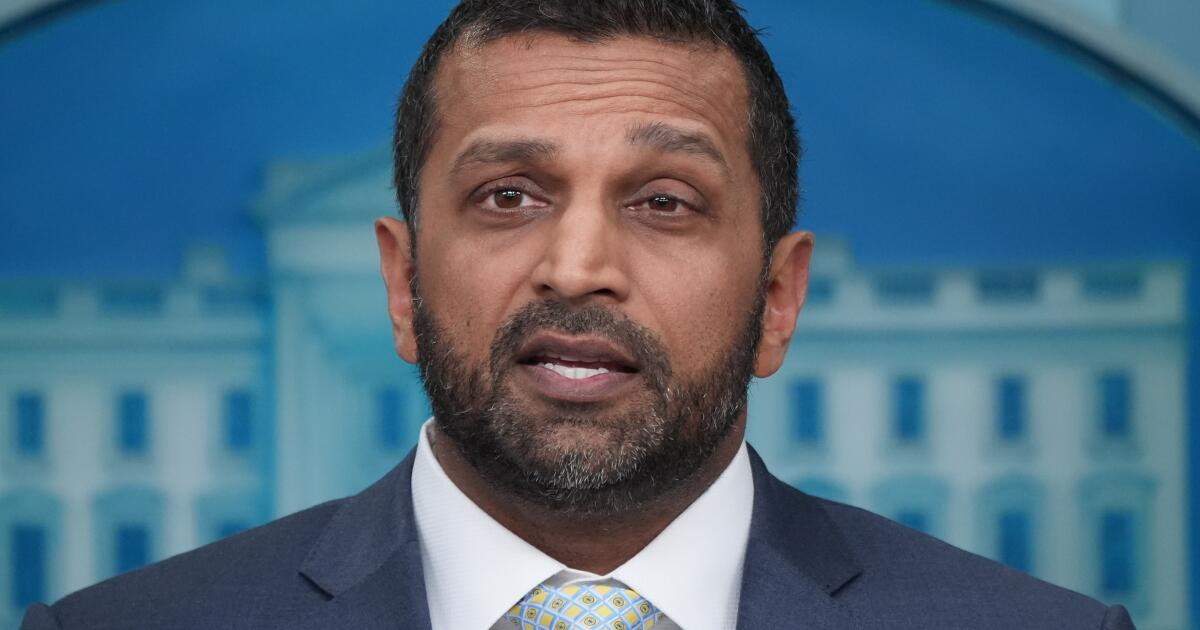
Department of Homeland Security Secretary Kristi Noem and FBI Director Kash Patel both announced an increase in operations in Minnesota this week. The move comes after a right-wing influencer posted a video Friday claiming he had found that day care centers operated by Somali residents in Minneapolis had committed up to $100 million in fraud.

Tikki Brown, commissioner of the Minnesota Department of Children, Youth, and Families, said at a Monday news conference that state regulators took the influencer’s allegations seriously.

Noem posted on social media that officers were “conducting a massive investigation on childcare and other rampant fraud.” Patel said the intent was to “dismantle large-scale fraud schemes exploiting federal programs.”

Past fraud in Minnesota

Minnesota has been under the spotlight for years for Medicaid fraud, including a massive $300-million pandemic fraud case involving the nonprofit Feeding Our Future. Prosecutors said it was the country’s largest COVID-19-related fraud scam and that defendants exploited a state-run, federally funded program intended to provide food for children.
In 2022, during President Biden’s administration, 47 people were charged. The number of defendants has grown to 78 throughout the ongoing investigation.

So far, 57 people have been convicted, either because they pleaded guilty or lost at trial.

Most of the defendants are of Somali descent.

Numerous other fraud cases are being investigated, including new allegations focused on child care centers.

In news interviews and releases over the summer, prosecutor Joe Thompson estimated the loss from all fraud cases could exceed $1 billion. Earlier this month, a federal prosecutor alleged that half or more of the roughly $18 billion in federal funds that supported 14 programs in Minnesota since 2018 may have been stolen.

Crackdown targeting Somalis

Trump’s immigration enforcement in Minnesota has focused on the Somali community in the Minneapolis-St. Paul area, which is the largest in the country.

Trump labeled Minnesota Somalis as “garbage” and said he didn’t want them in the United States.

About 84,000 of the 260,000 Somalis in the U.S. live in the Minneapolis-St. Paul area. The overwhelming majority are U.S. citizens. Almost 58% were born in the U.S and 87% of the foreign-born are naturalized citizens.

Among those running schemes to get funds for child nutrition, housing services and autism programs, 82 of the 92 defendants are Somali Americans, according to the U.S. attorney’s office for Minnesota.

Republicans have tried to blame Walz

Minnesota Gov. Tim Walz, the 2024 Democratic vice presidential nominee, has said fraud will not be tolerated and his administration “will continue to work with federal partners to ensure fraud is stopped and fraudsters are caught.”

The fraud could be a major issue in the 2026 gubernatorial race as Walz seeks a third term.

Walz has said an audit due by late January should give a better picture of the extent of the fraud but allowed that the $1-billion estimate could be accurate. He said his administration is taking aggressive action to prevent additional fraud. He has long defended how his administration responded.

Minnesota’s most prominent Somali American, Democratic U.S. Rep. Ilhan Omar, has urged people not to blame an entire community for the actions of a relative few.

Source link

Tatiana Schlossberg, the granddaughter of the late President John F. Kennedy, has died at 35

Environmental journalist Tatiana Schlossberg, the granddaughter of the late President John F. Kennedy, has died. She was 35.

Schlossberg, the daughter of Kennedy’s daughter, Caroline Kennedy, and Edwin Schlossberg, revealed that she had terminal cancer in a November 2025 essay in The New Yorker. Her family issued a statement disclosing her death, which was released on social media by the John F. Kennedy Library Foundation.

“Our beautiful Tatiana passed away this morning. She will always be in our hearts,” the statement said. It did not disclose a cause of death or say where she died.

Schlossberg was diagnosed with acute myeloid leukemia in May 2024 at 34. After the birth of her second child, her doctor noticed her white blood cell count was high. It turned out to be acute myeloid leukemia with a rare mutation, mostly seen in older people.

In the essay, “A Battle With My Blood,” Schlossberg recounted going through rounds of chemotherapy and two stem cell transplants and participating in clinical trials. During the most recent trial, she wrote, her doctor told her “he could keep me alive for a year, maybe.”

Schlossberg also criticized policies pushed by her mother’s cousin, Health and Human Services Secretary Robert F. Kennedy Jr., in the essay, saying policies he backed could hurt cancer patients like her. Her mother had urged senators to reject his confirmation.

“As I spent more and more of my life under the care of doctors, nurses, and researchers striving to improve the lives of others, I watched as Bobby cut nearly a half billion dollars for research into mRNA vaccines, technology that could be used against certain cancers,” the essay reads.

Schlossberg had worked as a reporter covering climate change and the environment for The New York Times’ Science section. Her 2019 book “Inconspicuous Consumption: The Environmental Impact You Don’t Know You Have” won the Society of Environmental Journalists’ Rachel Carson Environment Book Award in 2020.

Schlossberg wrote in The New Yorker essay that she feared her daughter and son wouldn’t remember her. She felt cheated and sad that she wouldn’t get to keep living “the wonderful life” she had with her husband, George Moran. While her parents and siblings, Rose and Jack, tried to hide their pain from her, she said she felt it every day.

“For my whole life, I have tried to be good, to be a good student and a good sister and a good daughter, and to protect my mother and never make her upset or angry,” she said. “Now I have added a new tragedy to her life, to our family’s life, and there’s nothing I can do to stop it.”

Source link

Tucker’s Ex-Partner Admits to Tax Fraud

Ex-Gov. Jim Guy Tucker’s ex-business partner pleaded guilty to a Whitewater fraud charge that accused him and Tucker of arranging a sham bankruptcy that saved them $2 million in taxes. Boston businessman William J. Marks Sr. said Tucker and Tucker’s lawyer–who are scheduled for trial this winter–used falsified documents to understate the value of cable television systems Marks and the former governor owned in Texas and Florida. Marks told U.S. District Judge Stephen M. Reasoner in Little Rock, Ark., he had full knowledge of the plan. Tucker, then governor, was sentenced to 18 months’ home detention after being convicted in a separate Whitewater case last year.

Source link

National Guard to patrol New Orleans for New Year’s a year after deadly attack

A National Guard deployment in New Orleans authorized by President Trump will begin Tuesday as part of a heavy security presence for New Year’s celebrations a year after an attack on revelers on Bourbon Street killed 14 people, officials said Monday.

The deployment in New Orleans follows high-profile National Guard missions the Trump administration launched in other cities this year, including in Washington and Memphis, Tennessee. But the sight of National Guard troops is not unusual in New Orleans, where troops earlier this year also helped bolster security for the Super Bowl and Mardi Gras.

“It’s no different than what we’ve seen in the past,” New Orleans police spokesperson Reese Harper said.

The Guard is not the only federal law enforcement agency in the city. Since the start of the month, federal agents have been carrying out an immigration crackdown that has led to the arrest of at least several hundred people.

Harper stressed that the National Guard will not be engaging in immigration enforcement.

“This is for visibility and just really to keep our citizens safe,” Harper said. “It’s just another tool in the toolbox and another layer of security.”

The Guard is expected be confined to the French Quarter area popular with tourists and won’t be engaging in assisting in immigration enforcement, Harper said. Guardsmen will operate similar to earlier this year when they patrolled the area around Bourbon Street following the vehicle-ramming attack on Jan. 1.

The 350 Guard members will stay through Carnival season, when residents and tourists descend on the Big Easy to partake in costumed celebrations and massive parades before ending with Mardi Gras in mid-February.

Louisiana National Guard spokesperson Lt. Col. Noel Collins said in a written statement that the Guard will support local, state, and federal law enforcement “to enhance capabilities, stabilize the environment, assist in reducing crime, and restoring public trust.”

In total, more than 800 local, state and federal law enforcement officials will be deployed in New Orleans to close off Bourbon Street to vehicular traffic, patrol the area, conduct bag searches and redirect traffic, city officials said during a news conference Monday.

The extra aid for New Orleans has received the support of some Democrats, with Mayor LaToya Cantrell saying she is “welcoming of those added resources.”

The increased law enforcement presence comes a year after Shamsud-Din Jabbar drove around a police blockade in the early hours of Jan. 1 and raced down Bourbon Street, plowing into people celebrating New Year’s Day. The attacker, a U.S. citizen and Army veteran who had proclaimed his support for the Islamic State militant group on social media, was fatally shot by police after crashing. After an expansive search, law enforcement located multiple bombs in coolers placed around the French Quarter. None of the explosive devices detonated.

In the immediate aftermath of the attack, 100 National Guard members were sent to the city.

In September, Gov. Jeff Landry asked Trump to send 1,000 troops to Louisiana cities, citing concerns about crime. Democrats pushed back, specifically leaders in New Orleans who said a deployment was unwarranted. They argued that the city has actually seen a dramatic decrease in violent crime rates in recent years.

Cline and Brook write for the Associated Press. Cline reported from Baton Rouge.

Source link

After quiet off-year elections, Democrats renew worries about Trump interfering in the midterms

If history is a guide, Republicans stand a good chance of losing control of the House of Representatives in 2026. They have just a slim majority in the chamber, and the incumbent party usually gives up seats in midterm elections.

President Trump, whose loss of the House halfway through his first term led to two impeachments, is trying to keep history from repeating — and doing so in ways his opponents say are intended to manipulate next year’s election landscape.

He has rallied his party to remake congressional maps across the country to create more conservative-leaning House seats, an effort that could end up backfiring on him. He’s directed his administration to target Democratic politicians, activists and donors. And, Democrats worry, he’s flexing his muscles to intervene in the midterms like no administration ever has.

Democrats and other critics point to how Trump has sent the military into Democratic cities over the objections of Democratic mayors and governors. They note that he’s pushed the Department of Homeland Security to be so aggressive that at one point its agents handcuffed a Democratic U.S. senator. And some warn that a Republican-controlled Congress could fail to seat winning candidates if Democrats reclaim the House majority, recalling Trump’s efforts to stay in power even after voters rejected him in 2020, leading to the violent attack by his supporters on the U.S. Capitol.

Regarding potential military deployments, Ken Martin, chairman of the Democratic National Committee, told The Associated Press: “What he is going to do is send those troops there, and keep them there all the way through the next election, because guess what? If people are afraid of leaving their house, they’re probably not going to leave their house to go vote on Election Day. That’s how he stays in power.”

Military to the polls, or fearmongering?

Democrats sounded similar alarms just before November’s elections, and yet there were no significant incidents. California Gov. Gavin Newsom, a frequent Trump antagonist who also warns about a federal crackdown on voting in 2026, predicted that masked immigration agents would show up at the polls in his state, where voters were considering a ballot measure to counter Trump’s redistricting push.

There were no such incidents in November, and the measure to redraw California’s congressional lines in response to Trump’s efforts elsewhere won in a landslide.

White House spokeswoman Abigail Jackson said the concerns about the midterms come from Democratic politicians who are “fearmongering to score political points with the radical left flank of the Democrat party that they are courting ahead of their doomed-to-fail presidential campaigns.”

She described their concerns as “baseless conspiracy theories.”

Susie Wiles, Trump’s chief of staff, denied that Trump was planning to use the military to try to suppress votes.

“I say it is categorically false, will not happen. It’s just wrongheaded,” she told Vanity Fair for an interview that was published earlier in December.

DNC litigation director Dan Freeman said he hasn’t seen an indication that Trump will send immigration enforcement agents to polling places during the midterms, but is wary.

He said the DNC filed public records requests in an attempt to learn more about any such plans and is drafting legal pleadings it could file if Trump sends armed federal agents to the polls or otherwise intervenes in the elections.

“We’re not taking their word for it,” Freeman said in an interview.

States, not presidents, run elections

November’s off-year elections may not be the best indicator of what could lie ahead. They were scattered in a handful of states, and Trump showed only modest interest until late in the fall when his Department of Justice announced it was sending federal monitors to California and New Jersey to observe voting in a handful of counties. It was a bureaucratic step that had no impact on voting, even as it triggered alarm from Democrats.

Alexandra Chandler, the legal director of Defend Democracy, a group that has clashed with Trump over his role in elections, said she was heartened by the lack of drama during the 2025 voting.

“We have so many positive signs we can look to,” Chandler said, citing not only a quiet election but GOP senators’ resistance to Trump’s demands to eliminate the filibuster and the widespread resistance to Trump’s demand that television host Jimmy Kimmel lose his job because of his criticism of the president. “There are limits” on Trump’s power, she noted.

“We will have elections in 2026,” Chandler said. “People don’t have to worry about that.”

Under the Constitution, a president has limited tools to intervene in elections, which are run by the states. Congress can help set rules for federal elections, but states administer their own election operations and oversee the counting of ballots.

When Trump tried to singlehandedly revise election rules with a sweeping executive order shortly after returning to office, the courts stepped in and stopped him, citing the lack of a constitutional role for the president. Trump later promised another order, possibly targeting mail ballots and voting machines, but it has yet to materialize.

DOJ voter data request ‘should frighten everybody’

Still, there’s plenty of ways a president can cause problems, said Rick Hasen, a UCLA law professor.

Trump unsuccessfully pushed Georgia’s top election official to “find” him enough votes to be declared the winner there in 2020 and could try similar tactics in Republican-dominated states in November. Likewise, Hasen said, Trump could spread misinformation to undermine confidence in vote tallies, as he has done routinely ahead of elections.

It’s harder to do that in more lopsided contests, as many in 2025 turned into, Hasen noted.

“Concerns about Trump interfering in 2026 are real; they’re not frivolous,” Hasen said. “They’re also not likely, but these are things people need to be on guard for.”

One administration move that has alarmed election officials is a federal demand from his Department of Justice for detailed voter data from the states. The administration has sued the District of Columbia and at least 21 states, most of them controlled by Democrats, after they refused to turn over all the information the DOJ sought.

“What the DOJ is trying to do is something that should frighten everybody across the political spectrum,” said David Becker, a former Justice Department voting rights attorney and executive director of the Center for Election Innovation & Research. “They’re trying to use the power of the executive to bully states into turning over highly sensitive data — date of birth, Social Security numbers, driver’s license, the Holy Trinity of identity theft — hand it over to the DOJ for who knows what use.”

‘Voter protection’ vs ‘election integrity’

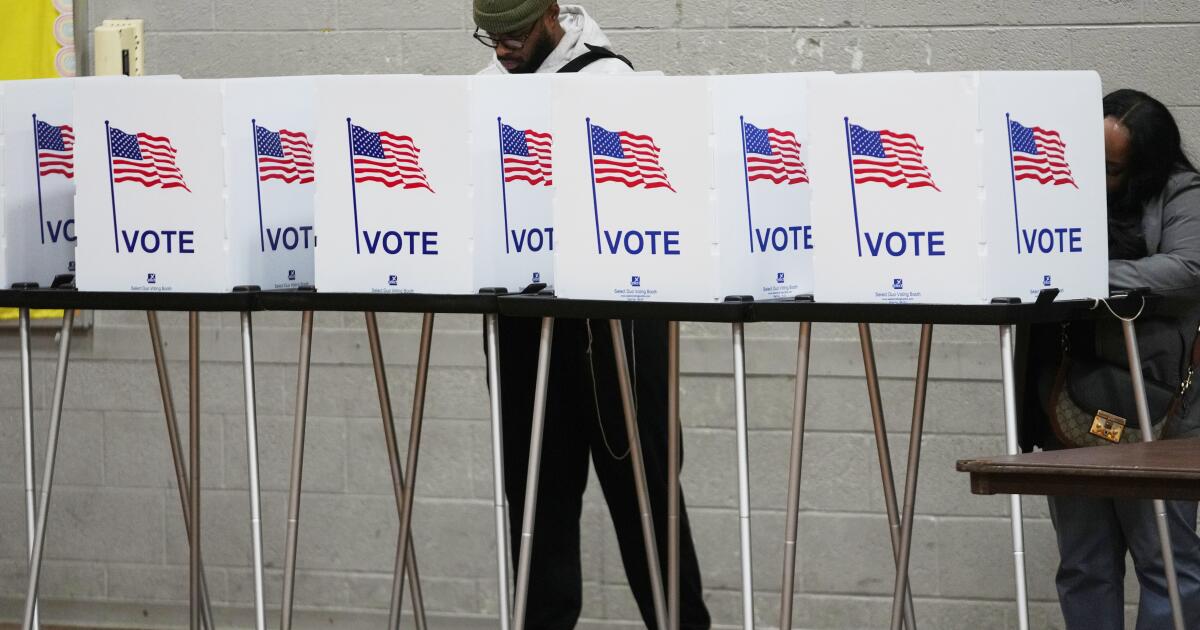
Voting rights lawyers and election officials have been preparing for months for the midterms, trying to ensure there are ways to counter misinformation and ensure state election systems are easy to explain. Both major parties are expected to stand up significant campaigns around the mechanics of voting: Democrats mounting what they call a “voter protection” effort to monitor for problems while Republicans focus on what they call “election integrity.”

Freeman, the DNC litigation director who previously worked in the DOJ’s voting section, said his hiring this year was part of a larger effort by the DNC to beef up its in-house legal efforts ahead of the midterms. He said the committee has been filling gaps in voting rights law enforcement that the DOJ has typically covered, including informing states that they can’t illegally purge citizens from their voter rolls.

Tina Barton, co-chair of the Committee on Safe and Secure Elections, a coalition of law enforcement and election officials who advise jurisdictions on de-escalation and how to respond to emergencies at polling places, says interest in the group’s trainings has “exploded” in recent weeks.

“There’s a lot at stake, and that’s going to cause a lot of emotions,” Barton said.

Riccardi writes for the Associated Press. AP writers Marc Levy in Harrisburg, Penn., Julie Carr Smyth in Columbus, Ohio, and Ali Swenson in New York contributed to this report.

Source link

White House officials knew of IRS audit findings weeks in advance

WASHINGTON — Top officials in the White House learned in April that an investigation of the IRS would probably end up showing that the agency targeted conservative groups for special scrutiny, the White House spokesman conceded Monday, contrary to earlier Obama administration statements.

But White House Press Secretary Jay Carney said staffers didn’t tell President Obama the bombshell was coming and that the West Wing did nothing to interfere with the audit or the report before its release.

“The cardinal rule,” Carney said, “is that you do not intervene in an independent investigation, and you do not do anything that would give such an appearance. … And that’s the doctrine we followed.”

PHOTOS: President Obama’s rough week

Since an Inspector General’s report on the matter was released last week, Republicans have been trying to figure out how long the Obama administration has known about the allegations — and, in particular, whether the president was aware of the irregularities while running for reelection in 2012.

The leaders of the Senate Finance Committee sent a bipartisan letter to the IRS on Monday calling on the acting commissioner to disclose a raft of information on the matter, including any signs of communications between the IRS and the White House.

“Targeting applicants for tax-exempt status using political labels threatens to undermine the public’s trust in the IRS,” Sen. Max Baucus (D-Mont.) wrote in a letter co-signed by Sen. Orrin G. Hatch (R-Utah), the committee’s ranking Republican. “Lack of candor in advising the Senate of this practice is equally troubling.”

Senators have been hearing complaints from nonprofit civic organizations for two years, Baucus wrote.

DOCUMENT: The Inspector General’s report on the IRS

White House aides had maintained for days that they knew nothing of the matter until the week of April 22, when the Treasury Department informed White House Counsel Kathy Ruemmler that a report was coming, and that they were not informed of what would be in the report.

Carney said last week that Ruemmler’s office was only told that the IG was finishing a review about matters involving the office in Cincinnati. “That’s all they were informed as a normal sort of heads-up,” he said.

Obama political advisor Dan Pfeiffer echoed the assertion during a CBS interview on Sunday, saying the White House was aware of the report but “not the details of what happened, not the results of the investigation, but that an independent investigation was about to conclude.”

Following a report to the contrary in Monday editions of the Wall Street Journal, Carney acknowledged that Ruemmler knew on April 24 that findings probably included evidence that the IRS had targeted conservative groups.

Ruemmler then informed Chief of Staff Denis McDonough and other members of the senior staff, Carney said. He said there were subsequent communications between Ruemmler’s and McDonough’s offices with their counterparts at Treasury to talk about the timing of the release and potential findings of the report.

It was Ruemmler who made the decision that the president didn’t need to know about the report in advance of its release, Carney said.

Her belief was that “this is not the kind of thing that you notify the president of, an investigation that’s not complete, because it wouldn’t be appropriate to do so,” Carney said.

Follow Politics Now on Twitter and Facebook

christi.parsons@latimes.com

Twitter: @cparsons

lisa.mascaro@latimes.com

Twitter: @lisamascaroinDC


Source link

Secession Foes Cite Utility Bills

Helen Dalton often winces when she opens the water and power bill for her lushly landscaped home on half an acre in Sherman Oaks. The charge for the latest two-month period was $300.

Hotter months have sent her bill into the $500 neighborhood.

Dalton, a retiree on a fixed income, plans to vote against San Fernando Valley secession–in part because she worries that a municipal split would bring higher and higher utility rates. “It’s a concern,” she said.

As the debate over carving up Los Angeles enters its final month, the anti-secession campaign led by Mayor James K. Hahn is intent on making water and power rates a breakout pocketbook issue. Secessionists are just as determined to paint Hahn as a fear-monger who distorts the facts on utility rates to distract attention from City Hall’s broader shortcomings.

Both sides know that water and power pack a punch with voters still jittery from the state’s electricity crisis and forever sweating the next drought.

The message of the Hahn forces is stark: If the Valley and Hollywood cityhood proposals win at the polls on Nov. 5, residents of the new municipalities could lose the relatively stable rates and plentiful supplies offered by the Los Angeles Department of Water and Power. Sprinkling the lawn and cranking up the air conditioner would soon become expensive luxuries.

Secessionists contend that Hahn has grossly misrepresented the state-mandated terms of a breakup. They note that the Local Agency Formation Commission, which approved both cityhood measures for the ballot, has directed the DWP to continue serving an independent Valley or Hollywood at rates no higher than those charged in Los Angeles.

Under LAFCO’s formula, the DWP would become a contractor for the new cities, unless they chose to buy their water and power from other providers.

“I see no chance that we would not get water on the same terms and conditions as the rest of the city,” said Richard Close, an attorney who heads the secession group Valley VOTE.

Question of Authority

The anti-secession camp, however, insists that LAFCO overstepped its authority by including that utility-rate provision in the secession proposals. Hahn and other Los Angeles officials say the state Constitution and the City Charter give the DWP sole power to set rates. And opponents argue that the laws require the DWP to provide the cheapest possible service to its Los Angeles customers, even if that means higher costs for Valley and Hollywood cities.

They say it already costs more to serve the Valley, which has generally larger home lots and higher temperatures than the rest of the city, placing more demand on the DWP.

Legal challenges over utility rates are considered likely if secession prevails. LAFCO itself has suggested the courts might have to resolve the matter.

“It’s absolutely inevitable that it will end up in court,” said Steve Erie, a water expert and political science professor at UC San Diego.

Water originally brought the Valley and Los Angeles together. In 1915, the Valley agreed to be annexed by Los Angeles in exchange for access to the then-2-year-old Los Angeles Aqueduct. The aqueduct piped snowmelt from the eastern Sierra to the parched Valley floor, irrigating farms and later making possible the explosion in home building.

Secession leaders say that the Valley is now entitled to future DWP service at reasonable rates because the region has paid its share of building the utility’s infrastructure for 87 years. The secessionists initially demanded that an independent Valley get an ownership stake in the DWP, but LAFCO rejected that arrangement as unworkable.

The agency determined that, unlike streets and parks and city buildings, the DWP’s massive generation and delivery systems are too complex to divide up between Los Angeles and the Valley, not to mention Hollywood.

LAFCO decided that Los Angeles would continue to own the system, but could not jack up rates for the Valley or Hollywood if secession passes.

The DWP already provides water by contract to other cities and communities, including West Hollywood and Universal City, but charges them higher rates. That’s because the DWP acts as a middle agent for those cities, buying supplies from the Metropolitan Water District and delivering them on Los Angeles-owned pipelines. MWD water costs as much as 25% more than water from the L.A. Aqueduct, and the DWP passes those higher rates along.

Contract Arrangement

Anti-secessionists say the DWP could demand a similar arrangement with a new Valley or Hollywood city. That would mean steeper bills in the breakaway areas.

“I can’t see the DWP violating the City Charter and selling its cheapest water to an outside agency, such as a Valley city,” said Larry Levine, who heads the anti-secession organization One Los Angeles.

Hahn echoed that view. “We don’t think LAFCO has the ability to supersede water law or the City Charter,” the mayor said.

“We think if our cost goes up, we ought to be able to recover the cost…. There is a risk. Why take the chance of higher water and higher power rates?”

The City Charter says Los Angeles’ water rights cannot be sold, leased or disposed of without the approval of two-thirds of the voters, according to a former DWP attorney, Kenneth Downey. He said a simple majority vote on secession does not supersede that requirement.

Former DWP General Manager S. David Freeman, now the state’s power czar, said Los Angeles is also unlikely to give the Valley or Hollywood the cheapest electricity the utility generates, which comes from its hydroelectric plants. Instead, the DWP would probably sell the secession areas more expensive power from inefficient, gas-fired plants, Freeman said.

“It’s against human nature” to do otherwise, he said.

Fight for Business

Competition could play a role in stabilizing water prices. A Valley or Hollywood city could look elsewhere for water and power–to private utilities, for example–if the rate ceilings the commission imposed on the DWP were thrown out by the courts.

Secessionists say that would give Los Angeles a financial incentive not to raise rates for the breakaway cities.

“The city of Los Angeles needs the Valley as customers,” Close said. “It’s like Ralphs saying they don’t need 40% of their customers. They would be shutting down stores if they said that.”

Hahn concedes that Los Angeles would be hurt if the secession regions ditched the DWP. But he adds that such a scenario is another argument against a breakup, because rates would rise for DWP customers in a smaller Los Angeles.

“Clearly there are economies of scale, so if a significant customer base was removed somehow, those costs would have to be absorbed, and the only way I can see that is if we pass higher rates for the remaining customers,” Hahn said.

In the state’s recent energy crisis, the DWP was able to supply relatively cheap power and avoid the market gyrations and blackouts that afflicted other parts of California.

Citing that experience, Hahn said it is unlikely that Valley and Hollywood residents would want to turn to private utilities, such as Southern California Edison, because the deregulated rates of those utilities are much higher than the DWP’s.

Secessionists, though, say the new cities would be free to negotiate lower electricity rates.

And some cities in Los Angeles County already get better water prices than those charged by the DWP. A 2001 survey by the engineering firm Black & Veatch Corp. found that DWP’s residential customers were billed an average of $29.88 a month. In comparison, Long Beach averaged $27.28; Redondo Beach, $23.68; Santa Monica, $23.64; and Pasadena, $13.73.

Santa Monica got 82% of its water from MWD and Pasadena received 60%.

Phyllis Currie, a former DWP official who heads the Pasadena utility, said its low maintenance costs have kept prices low. Los Angeles ratepayers must subsidize costly DWP improvements.

Gerald Gewe, who oversees the water side of the DWP, said other cities can charge less because they have access to cheaper groundwater supplies. He said the groundwater under the Valley is owned by Los Angeles, and a Valley city would have to build a water collection and distribution system if it went somewhere other than to the DWP for water. That would increase rates, Gewe said.

Hahn and DWP General Manager David Wiggs said they have no plans to raise water and power rates as a knee-jerk reaction to secession. But they predicted that major rate-paying institutions, such as large businesses and colleges, might force the issue.

“If rates go up for customers because of secession, I think it would be very likely that customers who believe their rights are jeopardized will seek their legal remedies in court,” Hahn said.

One factor that could trigger a court fight, city officials say, is that the current rate structure allows Valley properties to use more water before they exceed the threshold for basic rates and are charged higher prices. A decade ago, the DWP adjusted rates to allow more water use by customers who live in areas with higher temperatures, including the Valley.

Wiggs says that rate-relief formula might be challenged if the Valley becomes a separate city. “I certainly think that is an issue that can be and probably would be raised by customers,” Wiggs said.

The result, he added, could be higher rates in the Valley.

Another wild card is whether the new cities would move to charge the DWP a franchise fee for providing them water. Wiggs said Los Angeles would have to determine if such a fee should be paid by ratepayers only in the secession areas or in the remainder of Los Angeles.

Lawsuit Doubted

But Richard Katz, co-chairman of the Valley Independence Committee, said secessionists have no plans to impose a franchise fee. He also expressed doubts that major DWP customers would sue over rate equity.

“That would only happen if the DWP was out there stirring things up,” said Katz, who serves on the state Water Resources Control Board.

He dismissed the anti-secession rhetoric on utility rates as “scare tactics.”

“Aside from all the lawyers arguing about everything,” Katz said, “once the city is created, a lot of this rhetoric goes away. Because the bottom line is the cities will cooperate more than fight.”

Source link

California regulators order Edison to look for fire risks on old lines

State regulators ordered Southern California Edison to identify fire risks on its unused transmission lines like the century-old equipment suspected of igniting the devastating Eaton wildfire.

Edison also must tell regulators how its 355 miles of out-of-service transmission lines located in areas of high fire risk will be used in the future, according to a document issued by the Office of Energy Infrastructure Safety on Dec. 23.

State regulations require utilities to remove abandoned lines so they don’t become a public hazard. Edison executives said they did not remove the Eaton Canyon line because they believed it would be used in the future. It last carried power in 1971.

The Office of Energy Infrastructure Safety said Edison must determine which unused transmission lines are most at risk of igniting fires and create a plan to decrease that risk. In some cases that might mean removing the equipment entirely.

While the OEIS report focuses on Edison, the agency said it also will require the state’s other electric companies to take similar actions with their idle transmission lines.

Scott Johnson, an Edison spokesman, said Monday that the company already had been reviewing idle lines and planned to respond to the regulators’ requests. He said Edison often keeps idle lines in place “to support long-term system needs, such as future electrification, backup capacity or regional growth.”

“If idle lines are identified to have no future use, they are removed,” he said.

Johnson said that since 2018, Edison has removed idle lines that no longer had a purpose seven times and provided a list of those projects.

The investigation into the cause of the Eaton wildfire by state and local fire officials has not yet been released. Edison has said the leading theory is that the dormant transmission line in Eaton Canyon briefly reenergized on the night of Jan. 7, sparking the fire.

Unused lines can become energized from electrified lines running parallel to them through a process called induction.

The Eaton wildfire killed at least 19 people and destroyed more than 9,000 homes and structures in Altadena.

After the fires, Edison said it had added more grounding equipment to its old transmission lines no longer in service. The added devices give any unexpected electricity on the line more places to disperse into the ground, making them less likely to spark a fire.

The OEIS issued its latest directives after Edison executives informed the agency they had no plans to remove any out-of-service lines between now and 2028, the report said.

State regulators and the utilities have long known that old transmission lines can ignite wildfires.

The Times reported how Edison and other utilities defeated a state regulatory plan, introduced in 2001, which would’ve forced the companies to remove abandoned lines unless they could prove they would use them again.

In its report the OEIS noted it would require Edison and other electric companies to provide details of how often each idle line was inspected and how long it took to fix problems found in those inspections.

Edison has said it inspected the unused line in Eaton Canyon annually before the fire — just as often as it inspects live lines. The company declined to provide The Times with documentation of those inspections.

In the OEIS report, energy safety regulators said they expect to to approve Edison’s wildfire mitigation plan for the next three years despite the problems they found with the approach.

For example, the report noted that Edison is behind in replacing or reinforcing aging and deteriorating transmission and distribution poles. The regulators said the backlog “includes many work orders on [Edison’s] riskiest circuits.” A circuit is a line or other infrastructure that provides a pathway for electricity.

Officials said the company must work on reducing that backlog. They also criticized Edison executives for not incorporating any lessons they learned from the Jan. 7 wildfires into the company’s fire prevention plans.

Johnson, Edison’s spokesperson, said the company already improved the backlog of pole replacements. He said the company also planned to tell regulators more about the lessons it learned after the Eaton fire.

Under state law, the OEIS must approve a utility’s wildfire mitigation plan before it can issue the company a safety certificate that protects the company from liability if its equipment ignites a catastrophic fire.

The OEIS issued Edison’s last safety certificate less than a month before the Eaton fire — despite the company having had thousands of open work orders, including some on the transmission lines above Altadena, at the time.

Edison is offering to pay for damages suffered by Eaton fire victims and a handful already accepted its offers. The utility says that because it held a safety certificate at the time of the fire it expects to be reimbursed for most or all of the payments by a $21-billion state wildfire fund.

If that fund doesn’t cover the damages, a law passed this year enables Edison to raise its electric rates to make up the difference.

Gov. Gavin Newsom and state lawmakers passed laws to create the state fund and safety certificate program to protect utilities from bankruptcy if their equipment starts costly wildfires. Critics say the laws have gone too far, potentially leaving utilities financially unharmed from fires caused by their negligence.

Edison is fighting hundreds of lawsuits filed by victims of the Eaton fire. The company says it acted prudently in maintaining the safety of its system before the fire.

Pedro Pizarro, chief executive of Edison International, the utility’s parent company, told The Times this month that he believed the company had been “a reasonable operator” of its system before the fire.

“Accidents can happen,” Pizarro said. “Perfection is not something you can achieve, but prudency is a standard to which we’re held.”

Source link

Trump regime’s lies against immigrants in 2025 even did Frank Sinatra dirty

This is a column about lies. Big lies. Presidential lies. Dumb lies. The type of lies that have made life in the United States a daily dumpster fire of bad news. The kind of lies that would’ve made Frank Sinatra want to knock out a palooka.

More on Ol’ Blue Eyes in a bit.

For now let me tell you about one victim of President Trump’s mountain of lies whose brush with the administration defined our 2025.

On June 7, Brayan Ramos-Brito drove east on Alondra Boulevard from Compton toward a Chevron in Paramount to buy some snacks. It was his day off. It also was the weekend when Trump unleashed his deportation Leviathan on Southern California in a campaign that hasn’t stopped.

Ramos-Brito, a cook, had no idea that was going on as traffic froze on Alondra in front of a Home Depot. A “stay-at-home type of guy,” he didn’t even vote in the 2024 election because “politics isn’t my thing.”

But as the slender 30-year-old sat in his car, he saw federal immigration agents who had gathered across the street from the Home Depot fire flash-bang grenades at protesters who were screaming at them to leave. That’s when the moment “got to me.”

Ramos-Britos, a U.S citizen, got out of his car to yell at la migra, accusing those who looked Latino of being a “disgrace.” He said one of them shoved him into a scrum of protesters. After that, “all I remember were knees and kicks” by agents before they dragged him on the pavement and into the back of a van.

For hours Ramos-Brito and others stayed zip-tied inside as “craziness” erupted outside. Hundreds more residents arrived, as did L.A. County sheriff’s deputies. Smoke from blazes set by the former and tear gas canisters tossed by the latter seeped inside the van — “we kept telling agents we couldn’t breath, but they just ignored us.”

Photos and footage from the Paramount protest went viral and sparked an even bigger rally the following day near downtown L.A. that devolved into torched Waymo cars and concrete blocks hurled at California Highway Patrol vehicles. Soon, Trump called up the National Guard and Marines to occupy the City of Angels under the pretense that anarchy now ruled here — even though protests were confined to pockets of the metropolis. Siccing the National Guard on cities is something Trump has since tried to replicate across the country in any place that has dared to push back against immigration sweeps.

Ramos-Brito spent two weeks in a detention facility in Santa Ana stuffed in a cell with undocumented immigrants facing deportation. He faced federal felony charges of assaulting a federal agent and was accused of being one of the Paramount protest’s ringleaders as well.

Prosecutors tried to scare him into pleading guilty with threats of years in prison. Despite having no money to hire a lawyer, he refused: “I wasn’t going to take the blame for something I didn’t do.”

Federal public defender Cuauhtémoc Ortega represented Ramos-Brito during a two-day September trial. Ortega screened video footage to the jury that proved his client’s version of what happened and easily caught federal agents contradicting each other and their own field reports.

The jury took about an hour to acquit Ramos-Brito on misdemeanor assault charges. He wants to move on — but the mendacity of the administration won’t let him.

The lies it used to try to railroad an innocent man turned out not to be an aberration but a playbook for Trump’s 2025.

A stretch of Alondra Boulevard in Paramount

The stretch of Alondra Boulevard in Paramount where a June 7 protest against immigration agents resulted in the arrest of 30-year-old Compton resident Brayan Ramos-Brito on allegations he assaulted one of them. A jury found him not guilty.

(Gary Coronado/For The Times)

Lies, of course, have fueled the president’s career from the days he was was a smarmy New York developer riding the coattails of his daddy. This year he and his apologists employed them like never before to try to consolidate their grip on all aspects of American life. They lied about the economy, about the contents of the Epstein files, about the efficacy of vaccines, the worth of diversity, equity and inclusion initiatives, our supposed noninterventionist foreign policy and so much more.

Above all, or at least most malignantly, Trump and his crew lied about immigrants. The big lie. The lie they thought everyone would believe and thus would excuse all the other lies. They have lied about and maligned just about anyone they don’t see worthy of being a so-called “heritage American,” aka white.

Trump ran for reelection on a promise to focus on targeting “the worst of the worst” but has shrugged his shoulders as most of the people swept up in raids have no criminal record and are sometimes even citizens and permanent residents. He vowed that deporting people would improve the economy despite decades of studies showing the opposite. Trumpworld insists immigrants are destroying the United States — never mind that the commander in chief is the son of a Scotswoman and is married to a Slovenian while vice president JD Vance’s in-laws are from India.

The administration maintains unchecked migration is cultural suicide even as cabinet members sport last names — Kennedy, Rubio, Bondi, Loeffler — once seen by Americans of past generations as synonymous with invading hordes.

This is where Frank Sinatra comes in.

Over the Christmas weekend, White House deputy chief of staff Stephen Miller posted on social media that his family watched a Christmas special starring the Chairman of the Board and his fellow paisan, Dean Martin.

“Imagine watching that and thinking America needed infinity migrants from the third world,” Miller sneered. It didn’t matter that the crooners were proud children of Italian immigrants who arrived during a time where they were as demonized as Venezuelans and Somalis are now.

Take it from Sinatra himself.

In 1945 he released “The House I Live In,” a short film in which he tells a group of boys chasing one of their Jewish peers to embrace a diverse America. In 1991 as his Republican Party was launching an era of laws in California targeting illegal immigrants, Sinatra penned a Fourth of July essay for The Times opposing such hate.

“Who in the name of God are these people anyway, the ones who elevate themselves above others?” Sinatra wrote. “America is an immigrant country. Maybe not you and me, but those whose love made our lives possible, or their parents or grandparents.”

As 2025 went from one hell month to another, it really felt like Trumpworld’s lies would loom over the land for good. But as the year ends, it seems truth finally is peeking through the storm clouds, like the blue skies Sinatra sang about so beautifully.

Trump’s approval ratings have dropped greatly since his inauguration even among those who voted for him, with his deportation disaster playing a role. Judges and juries are beginning to swat away charges filed against people like Ramos-Brito like they were flies swarming around a dung pile. Under especial scrutiny is Border Patrol commander Gregory Bovino, the public face of Trump’s deportation ground game.

In November, U.S. District Judge Sara L. Ellis ruled the federal government had to stop using excessive force in Chicago after months of agents firing pepper balls and tear gas at the slightest perceived insult. Her decision reasoned that Bovino’s sworn testimony about a Chicago under siege by pro-immigrant activists was “not credible” because he provided “cute” answers when he wasn’t “outright lying.”

Among the victims of those lies: Scott Blackburn, who was arrested for allegedly assaulting Bovino during an immigration raid even though videos showed the migra man tackle Blackburn like they were playing sandlot football, and Cole Sheridan, whom Bovino claimed injured his groin while arresting him during a protest; federal prosecutors quickly dropped all charges against Sheridan when they realized there was a lack of evidence to back up Bovino’s story.

And then there is Ramos-Brito, who had to endure a federal trial that hinged on Bovino insisting he was guilty of assaulting a federal agent in Paramount. He shook his head in disgust when I told him about Bovino’s continued tall tales.

“Justice was served for me,” Ramos-Brito said, “but not for others. I got lucky.”

Brayan Ramos-Brito, 30, of Compton

Brayan Ramos-Brito, 30, of Compton, was found not guilty of assaulting a federal agent during June’s immigration enforcement protests in Los Angeles County.

(Gary Coronado/For The Times)

We spoke in front of the Home Depot where the June 7 protest happened, where Trump’s year of immigration lies went into overdrive. The day laborers who used to gather there for years weren’t around. The gate where la migra and protesters faced off was closed.

Ramos-Brito still drives down that stretch of Alondra Boulevard for his snacks from the Chevron station that stands a block away from where his life forever was changed. It took him months to go public with his story. Scars remain on his ribs, back and shoulders.

“There’s times when little moments come through my head,” he acknowledged.

What finally convinced him to speak up was think about others out there like him. He now realizes speaking out against Trump’s lies is the only way to stop him for good.

“Whoever is going through the same that I did, keep fighting,” Ramos-Brito said softly. “They should look at my experience to give them hope.”

Source link

California is ending coverage for weight loss drugs, despite TrumpRx

Many low-income Californians prescribed wildly popular weight-loss drugs will lose their coverage for the medications in the new year.

Health officials are recommending diet and exercise as alternatives to heavily advertised weight-loss drugs like Wegovy and Zepbound, advice that experts say is unrealistic.

“Of course he tried eating well and everything, but now with the medications, it’s better — a 100% change,” said Wilmer Cardenas of Santa Clara, who said his husband lost about 100 pounds over two years using GLP-1s covered by Medi-Cal, California’s version of Medicaid.

California is joining several other states in restricting an option they say is no longer affordable as they confront soaring pharmaceutical costs and steep Medicaid cuts under the Trump administration, among other financial pressures. Despite negotiated price reductions announced in November that the White House said would “dramatically lower cost to taxpayers” for the drugs and enable Medicaid to cover them, states are going ahead with the cuts, which providers say may undermine patient health.

“It will be quite negative for our patients” because data show people typically regain weight after stopping the drugs, said Diana Thiara, medical director of the UC San Francisco Weight Management Program.

Although California and New Hampshire will not cover GLP-1 prescriptions for obesity beginning Jan. 1, they will continue to cover the drugs for other health issues, such as type 2 diabetes, cardiovascular disease and chronic kidney disease.

Michigan, Pennsylvania, Rhode Island, South Carolina and Wisconsin are planning or considering restrictions, according to the Kaiser Family Foundation’s most recent survey of state Medicaid programs.

That reverses a trend that saw 16 states covering the medications for obesity as of Oct. 1. Interest in providing the coverage “appears to be waning,” the survey found, probably because of the drugs’ cost and other state budget pressures. North Carolina pulled back GLP-1 coverage in October, but Gov. Josh Stein reinstated it in December, bowing to court orders despite a lingering budget shortfall.

Catherine Ferguson, vice president of federal advocacy for the American Diabetes Assn. and its affiliated Obesity Assn., said it’s unclear how states will adjust to the White House plan to lower the cost of several of the most popular GLP-1s through TrumpRx, an online portal for discounted prescription drugs. The price of Wegovy, for example, will be $350 per month for consumers, versus the current list price of nearly $1,350, and Medicare and Medicaid programs will pay $245, according to the plan.

“Many states are facing budgetary challenges, such as deficits, and are working to address the impacts of the changes to Medicaid and SNAP,” Ferguson wrote, referring to the Supplemental Nutrition Assistance Program. “As more details become available for the Administration’s agreements, we will see how state Medicaid responds.”

The Department of Health and Human Services referred questions to the White House, which did not respond to requests for comment on states’ termination of Medicaid coverage for the weight-loss drugs.

California projected its costs to cover GLP-1s for weight loss would have more than quadrupled over four years to nearly $800 million annually if it didn’t end Medi-Cal coverage for that use. Medi-Cal has covered weight-loss drugs since 2006, but use of GLP-1s soared only in recent years. By 2024, more than 645,000 prescriptions were covered by Medi-Cal across all uses of the medications. The California Department of Health Care Services could not readily provide a breakdown of whether the drugs were for weight loss or other conditions.

When asked whether the state would reconsider its plans in light of the announced price cuts, Department of Finance spokesperson H.D. Palmer said it had no plans to do so. California’s cut is written into the state’s budget law.

California officials would not say how much it could save under the TrumpRx plan, citing federal and state restrictions on disclosing rebate information.

Healthcare providers don’t expect the Trump administration’s negotiated price cuts to make much difference to consumers, because pharmaceutical companies already offer discounts.

“The out-of-pocket costs will still be very cost-prohibitive for most, especially individuals with Medicaid insurance,” Thiara said.

New Hampshire will also end its coverage Jan. 1. Officials with the New Hampshire Department of Health and Human Services did not respond to requests for comment.

About 1 in 8 adults are taking a GLP-1 drug for obesity, disease or both, up 6 percentage points from May 2024, according to KFF poll results released in November. More than half of users said their GLP-1s were difficult to afford, and many who had stopped the treatment cited the cost.

Public and private payers have been trying to wean patients off of the drugs to save costs. California health officials said Medi-Cal members and their healthcare providers should consider “other treatment options that can support weight loss, such as diet changes, increased activity or exercise, and counseling.” That echoes advice from the New Hampshire Medicaid program.

California Department of Health Care Services spokesperson Tessa Outhyse said in an email that the official advice to try those other approaches now “is not meant to dismiss any past efforts, but to encourage Medi-Cal members to take a renewed, proactive, and medically supported approach with their healthcare provider that may appropriately include these additional options.”

But that may be unrealistic, said Kurt Hong, founding director of the Center for Clinical Nutrition at Keck School of Medicine of USC.

“We definitely want patients to do their part with the diet and exercise, but unfortunately, and from a practical standpoint, that itself frequently is not enough,” Hong said, adding that usually by the time patients see doctors, they have failed at achieving results through those means.

Hong understands why Medicaid programs, as well as private providers, want to cut back on covering the drugs, which can cost thousands of dollars per patient per year. However, they can produce twice the weight loss as the medications typically used previously, he said.

A school of medical thought supports people gradually ending their use, but Hong said obesity is generally considered a chronic condition that requires indefinite treatment.

“Once they reach their target weight, a lot of people will try to see whether or not they can wean off,” Hong said. “We do see a lot of patients — when they try to get off, unfortunately, then the weight comes back.”

Medi-Cal members younger than 21 will remain covered for purposes including weight loss, California officials said, citing a federal requirement.

Medi-Cal members will be able to keep their GLP-1 coverage if they can demonstrate it is medically necessary for purposes other than weight loss, the Department of Health Care Services said. Members who are denied coverage can seek a hearing, the department said in a letter to members.

Members will still be able to pay for the prescriptions out of pocket and may be able to use various discounts to lower costs. Another option is new pills to treat obesity, which will be cheaper than their injectable counterparts. The Food and Drug Administration approved a pill version of Wegovy on Dec. 22, which probably will cost $149 a month for the lowest dosage, and similar weight-loss pills are expected to be available in the first half of the year.

Although Cardenas said his husband, Jeffer Jimenez, 37, uses GLP-1s primarily for weight loss, Jimenez’s prescription is for diabetes, so the couple hoped to continue receiving coverage through Medi-Cal.

“He tried a thousand medications, pills, natural teas, exercise program, but it doesn’t work like the injections,” Cardenas said. “You need both.”

Thompson writes for KFF Health News, a national newsroom that produces in-depth journalism about health issues and is one of the core operating programs at KFF.

Source link

U.S. pledges $2 billion for U.N. humanitarian aid as Trump warns agencies must ‘adapt or die’

The United States on Monday announced a $2-billion pledge for U.N. humanitarian aid as President Trump’s administration slashes U.S. foreign assistance and warns United Nations agencies to “adapt, shrink or die” in a time of new financial realities.

The money is a small fraction of what the U.S. has contributed in the past but reflects what the administration believes is still a generous amount that will maintain America’s status as the world’s largest humanitarian donor.

“This new model will better share the burden of U.N. humanitarian work with other developed countries and will require the U.N. to cut bloat, remove duplication, and commit to powerful new impact, accountability and oversight mechanisms,” Secretary of State Marco Rubio said on social media.

The pledge creates an umbrella fund from which money will be doled out to agencies and priorities, a key part of U.S. demands for drastic changes across the U.N. that have alarmed many humanitarian workers and led to severe reductions in programs and services.

The $2 billion is only a sliver of traditional U.S. humanitarian funding for U.N.-coordinated programs, which has run as high as $17 billion annually in recent years, according to U.N. data. U.S. officials say only $8 billion to $10 billion of that has been in voluntary contributions. The United States also pays billions in annual dues related to its U.N. membership.

“The piggy bank is not open to organizations that just want to return to the old system,” Jeremy Lewin, the State Department official in charge of foreign assistance, said at a press conference Monday in Geneva. “President Trump has made clear that the system is dead.”

The State Department said “individual U.N. agencies will need to adapt, shrink, or die.” Critics say the Western aid cutbacks have been shortsighted, driven millions toward hunger, displacement or disease, and harmed U.S. soft power around the world.

A year of crisis in aid

The move caps a crisis year for many U.N. organizations, including its refugee, migration and food aid agencies. The Trump administration has already cut billions in U.S. foreign aid, prompting the agencies to slash spending, aid projects and thousands of jobs. Other traditional Western donors have reduced outlays, too.

The U.S. pledge for aid programs of the United Nations — the world’s top provider of humanitarian assistance and biggest recipient of U.S. humanitarian aid money — takes shape in a preliminary deal with the U.N. Office for the Coordination of Humanitarian Affairs, or OCHA, run by Tom Fletcher, a former British diplomat and government official.

Fletcher, who has spent the past year lobbying U.S. officials not to abandon U.N. funding altogether, appeared optimistic at the deal’s signing in Geneva.

“It’s a very, very significant landmark contribution. And a month ago, I would have anticipated the number would have been zero,” he told reporters. “And so I think, before worrying about what we haven’t got, I’d like to look at the millions of people whose lives will be saved, whose lives will be better because of this contribution, and start there.”

Even as the U.S. pulls back its aid contributions, needs have ballooned worldwide: Famine has been recorded this year in parts of conflict-ridden Sudan and Gaza, and floods, drought and natural disasters that many scientists attribute to climate change have taken many lives or driven thousands from their homes.

The cuts will have major implications for U.N. affiliates like the International Organization for Migration, the World Food Program and refugee agency UNHCR. They have already received billions less from the U.S. this year than under annual allocations from the Biden administration — or even during Trump’s first term.

Now, the idea is that Fletcher’s office — which has aimed to improve efficiency — will become a funnel for U.S. and other aid money that can be redirected to those agencies, rather than scattered U.S. contributions to a variety of individual appeals for aid.

Asked by reporters if the U.S. language of “adapt or die” worried him, Fletcher said, “If the choices are adapt or die, I choose adapt.”

U.S. seeks aid consolidation

U.S. officials say the $2 billion is just a first outlay to help fund OCHA’s annual appeal for money. Fletcher, noting the upended aid landscape, already slashed the request this year. Other traditional U.N. donors like Britain, France, Germany and Japan have reduced aid allocations and sought reforms this year.

“This humanitarian reset at the United Nations should deliver more aid with fewer tax dollars — providing more focused, results-driven assistance aligned with U.S foreign policy,” U.S. Ambassador to the United Nations Mike Waltz said.

At its core, the changes will help establish pools of funding that can be directed either to specific crises or countries in need. A total of 17 countries will be initially targeted, including Bangladesh, the Democratic Republic of the Congo, Haiti, Syria and Ukraine.

Two of the world’s most desperate countries, Afghanistan and Yemen, are not included, with U.S. officials citing aid diversion to the Taliban and Houthi rebels as concerns over restarting contributions.

Also not mentioned on the list are the Palestinian territories, which officials say will be covered by money stemming from Trump’s as-yet-incomplete Gaza peace plan.

The U.N. project, months in the making, stems from Trump’s longtime view that the world body has great promise but has failed to live up to it and has — in his eyes — drifted too far from its original mandate to save lives while undermining American interests, promoting radical ideologies and encouraging wasteful, unaccountable spending.

“No one wants to be an aid recipient. No one wants to be living in a UNHCR camp because they’ve been displaced by conflict,” Lewin said. “So the best thing that we can do to decrease costs, and President Trump recognizes this and that’s why he’s the president of peace, is by ending armed conflict and allowing communities to get back to peace and prosperity.”

Keaten and Lee write for the Associated Press. Lee reported from Washington. AP writer Farnoush Amiri contributed to this report from New York.

Source link

Zelensky works yet again to break Putin’s hold on Trump

Standing alongside President Trump at his Palm Beach estate, Volodymyr Zelensky could only smirk and grimace without overtly offending his host. “Russia wants to see Ukraine succeed,” Trump told reporters, shocking the Ukrainian president before claiming that Vladimir Putin is genuine in his desire for peace.

It was just the latest example of the American president sympathizing with Moscow in its war of conquest in Europe. Yet Zelensky emerged from the meeting Sunday ensuring once again that Ukraine may fight another day, maintaining critical if uneasy support from Washington.

Few signs of progress toward a peace agreement materialized from the meeting at Mar-a-Lago, where Zelensky traveled with significant compromises — including a plan to put territorial concessions to Russia before the Ukrainian people for a vote — in order to appease the U.S. president.

But Zelensky won concessions of his own from Trump, who had for weeks been pushing for a ceasefire by Christmas, or else threatening to cut off Ukraine from U.S. intelligence that would leave Kyiv blind on the battlefield. “I don’t have deadlines,” Trump said Sunday.

Over the course of Trump’s first year in office, Zelensky and other European leaders have repeatedly worked to convince Trump that Russia’s President Putin is, in fact, an aggressor opposed to peace, responsible for an unprovoked invasion that launched the deadliest conflict in Europe since the Second World War.

Each time, Trump has come around, even going as far over the summer as to question whether Ukraine could win back the territories it has lost on the battlefield to Russia — and vowing to North Atlantic Treaty Organization allies, “we’re with them all they way.”

Yet, each time, Trump has changed course within a matter of days or weeks, reverting to an embrace of Putin and Russia’s worldview, including a proposal that Ukraine preemptively cede sovereign territories that Russia has sought but failed to occupy by force.

Zelensky’s willingness to offer concessions in his latest meeting with Trump has, at least temporarily, “managed to keep President Trump from tilting further towards the Russian position,” said Kyle Balzer, a scholar at the conservative American Enterprise Institute. “But Trump’s position — his repeated insistence that a deal is necessary now because time is not on Ukraine’s side — continues to favor Putin’s line and negotiating tactics.”

U.S. intelligence agencies have assessed that Putin’s revanchist war aims — to conquer all of Ukraine and, beyond, to reclaim parts of Europe that once were part of the Soviet empire — remain unchanged.

Yet Trump’s director of national intelligence, Tulsi Gabbard, whose own sympathies toward Russia have been scrutinized for years, recently dismissed the assessments as products of “deep state” “warmongers” within the intelligence community.

On Monday, hours after speaking with Trump, Putin ordered the Russian military to push toward Zaporizhzhia, a city of 700,000 before the war began. The city lies far outside the Donbas region that Moscow claims would satisfy its war aims in a negotiated settlement.

“Trump’s instincts are to favor Putin and Russia,” said Brian Taylor, director of the Moynihan Institute of Global Affairs at Syracuse University. “Ukraine and its European partners still hope to convince Trump of the obvious fact that Putin is not interested in a deal that doesn’t amount to a Ukrainian surrender.

“If Trump was convinced of Putin’s intransigence, he might further tighten sanctions on Russia and provide more assistance to Ukraine to try to pressure Putin into a deal,” Taylor added. “It’s an uphill battle, one might even say Sisyphean, but Zelensky and European leaders have to keep trying. So far, nearly a year into Trump’s second term, it’s been worth it.”

On Monday, Moscow claims that Ukraine orchestrated a massive drone attack targeting Putin’s residence that would force it to reconsider its stance in negotiations. Kyiv denied an attack took place.

“Given the final degeneration of the criminal Kyiv regime, which has switched to a policy of state terrorism, Russia’s negotiating position will be revised,” Sergei Lavrov, Russia’s foreign minister since 2004, said in a Telegram post.

Another senior Russian official said the reported attack shocked and infuriated Trump. But Zelensky, responding on social media, said that Russia was “at it again, using dangerous statements to undermine all achievements of our shared diplomatic efforts with President Trump’s team.”

“We keep working together to bring peace closer,” Zelensky said. “This alleged ‘residence strike’ story is a complete fabrication intended to justify additional attacks against Ukraine, including Kyiv, as well as Russia’s own refusal to take necessary steps to end the war.”

“Ukraine does not take steps that can undermine diplomacy. To the contrary, Russia always takes such steps,” he added. “It is critical that the world doesn’t stay silent now. We cannot allow Russia to undermine the work on achieving a lasting peace.”

Frederick Kagan, director of the Critical Threats Project, which collaborates with the Institute for the Study of War to produce daily battlefield assessments on the conflict, said that the meeting did not appear to fundamentally shift Trump’s position on the conflict — a potential win for Kyiv in and of itself, he said.

“U.S.-Ukraine negotiations appear to be continuing as before, which is positive, since those negotiations seem to be getting into the real details of what would be required for a meaningful set of security guarantees and long-term agreements to ensure that any peace settlement will be enduring,” Kagan said.

Gaps still remain between Kyiv and the Trump administration in negotiations over security guarantees. While Trump has offered a 15-year agreement, Ukraine is seeking guarantees for 50 years, Zelensky said Monday.

“As Trump continues to say, there’s no deal until there’s a deal,” Kagan added. “We’ll have to see how things go.”

Source link

A look at how Trump-era work requirements could affect people who receive public benefits

The Trump administration made work requirements for low-income people receiving government assistance a priority in 2025.

The departments of Health and Human Services, Agriculture and Housing and Urban Development have worked to usher in stricter employment conditions to receive healthcare, food aid and rental assistance benefits funded by the federal government.

The idea is that public assistance discourages optimal participation in the labor market and that imposing work requirements not only leads to self-sufficiency, but also benefits the broader economy.

“It strengthens families and communities as it gives new life to start-ups and growing businesses,” the Cabinet secretaries wrote in a New York Times essay in May about work requirements.

Yet many economists say there is no clear evidence such mandates have that effect. There’s concern these new policies that make benefits contingent on work could ultimately come at a cost in other ways, from hindering existing employment to heavy administrative burdens or simply proving unpopular politically.

Here is a look at how work requirements could affect the millions of people who rely on the Supplemental Nutrition Assistance Program (SNAP), Medicaid and HUD-subsidized housing:

SNAP

What President Trumprefers to as his “Big Beautiful Bill” in July expanded the USDA’s work requirements policy for SNAP recipients who are able-bodied adults without dependents.

Previously, adults older than 54, as well as parents with children under age 18, at home were exempted from SNAP’s 80-hours monthly work requirement. Now, adults up to age 64 and parents of children between the age of 14 and 17 have to prove they’re working, volunteering or job training if they are on SNAP for more than three months.

The new law also cuts exemptions for people who are homeless, veterans and young people who have aged out of foster care. There are also significant restrictions on waivers for states and regions based on how high the local unemployment rates are.

The Pew Research Center, citing the most recent census survey data from 2023, notes 61% of adult SNAP recipients had not been employed that year, and that the national average benefit as of May was $188.45 per person or $350.89 per household.

Ismael Cid Martinez, an economist at the Economic Policy Institute, said the people who qualify for SNAP are likely working low-wage jobs that tend to be less stable because they are more tied to the nation’s macroeconomics. That means when the economy weakens, it’s the low-wage workers whose hours are cut and jobs are eliminated, which in turn heightens their need for government support. Restricting such benefits could threaten their ability to get back to work altogether, Martinez said.

“These are some of the matters that tie in together to explain the economy and [how] the labor market is connected to these benefits,” Martinez said. “None of us really show up into an economy on our own.”

Angela Rachidi, a researcher at the conservative think tank American Enterprise Institute, said she expects the poverty rate to decline as a result of the work requirements but even that wouldn’t ultimately affect the labor force.

“[E]ven if every nonworking SNAP adult subject to a work requirement started working, it would not impact the labor market much,” Rachidi said by email.

Medicaid

Trump’s big bill over the summer also created new requirements, starting in 2027, for low-income 19- to 64-year-olds enrolled in Medicaid through the Affordable Care Act’s Medicaid expansion or through a waiver program to complete 80 hours of work, job training, education or volunteering per month. There are several exemptions, including for those who are caregivers, have disabilities, have recently left prison or jail or are pregnant or postpartum.

The nonpartisan Congressional Budget Office has predicted that millions of people will lose healthcare because of the requirements.

Nationally, most people on Medicaid already work. The majority of experts on a Cornell Health Policy Center panel said that new national requirements won’t lead to large increases in employment rates among working adults on Medicaid, and that many working people would lose healthcare because of administrative difficulties proving they work.

Georgia is currently the only state with a Medicaid program that imposes work requirements, which Gov. Brian Kemp created instead of expanding Medicaid. The program, called Georgia Pathways, has come under fire for enrolling far fewer people than expected and creating large administrative costs.

Critics say many working people struggle to enroll and log their hours online, with some getting kicked out of coverage at times because of administrative errors.

And research released recently from the United Kingdom-based research group BMJ comparing Georgia with other states that did not expand Medicaid found Georgia Pathways did not increase employment during the first 15 months, nor did it improve access to Medicaid.

Kemp’s office blames high administrative costs and startup challenges on delays because of legal battles with former President Biden’s administration. A spokesperson said 19,383 Georgians have received coverage since the program began.

HUD

HUD in July also proposed a rule change that would allow public housing authorities across the country to institute work requirements, as well as time limits.

In a leaked draft of that rule change, HUD spells out how housing authorities can choose to opt in and voluntarily implement work requirements of up to 40 hours a week for people getting rental assistance, including adult tenants in public housing and Section 8 voucher-holders.

HUD also identified two states — Arkansas and Wisconsin — where it could trigger implementation based on existing state laws if and when the HUD rule change is approved. The proposal remains in regulatory review and would be subject to a public comment period.

HUD spokesman Matthew Maley declined to comment on the leaked documents, which broadly define the age of work-eligible people being up to age 61, with exemptions for people with disabilities and those who are in school or are pregnant. Primary caregivers of disabled people and children under 6 years old are also exempted.

HUD’s proposed rule change also notes that it is only defining the upper limits of the policy, allowing flexibility for local agencies to further define their individual programs with additional exemptions.

In a review of how housing authorities have tested work requirements over time, researchers at New York University found few successful examples, noting only one case where there were modest increases in employment — in Charlotte, N.C. — as compared to seven other regions where work requirements were changed or discontinued “because they were deemed punitive or hard to administer.”

Ho and Kramon write for the Associated Press.

Source link

Bank seizes California Rep. David Valadao’s family dairy farm over unpaid loans

A bank has seized a Tulare County dairy farm owned by Rep. David Valadao and his family to resolve more than $8 million in loans that have not been repaid, according to court documents.

In November, agriculture lender Rabobank sued Triple V Dairy in Fresno County Superior Court alleging failure to repay loans for cattle and feed totaling about $8.3 million. The Republican congressman is named in the suit along with his wife, four other family members, two other farms and 50 unnamed defendants. Also listed in the suit is a separate farm owned by the family, Lone Star Dairy, in which the congressman has no stake.

Both sides agreed March 28 to hand control of the farm over to the bank until it is sold. The bank appointed a local business owner to oversee the daily operations of the farm and began to sell off livestock and farming equipment to settle the debt.

“Like so many family dairy farms across the country, burdensome government regulations made it impossible for the operation to remain open,” Valadao said in a statement. “While this has been an especially difficult experience, I remain hopeful that sharing my story will help those going through similar situations.”

The next court session in the case is scheduled for July 16.

House rules prohibit Valadao from having an active role in the day-to-day operations of the farm, which was largely managed by his brothers. Valadao lives near Hanford on the property of Valadao Dairy, which is managed by his father and is not involved in the lawsuit.

According to the California Department of Food and Agriculture’s annual summaries, almost 36% of dairy farms in California shut down between 2001 and 2017. In the last five years, at least 50 dairies in Fresno, Kern, Kings and Tulare counties have closed.

Valadao grew up in the dairy business and in 1992 became a partner in the family’s Central Valley dairy. Working on local agricultural interests through the California Milk Advisory Board and the Western States Dairy Trade Assn. spurred an interest in politics, and Valadao was elected to Congress after serving in the state Assembly.

Valadao’s stake in the Triple V and Valadao dairies has consistently made him one of the poorest members of Congress. According to his annual financial disclosure report, Valadao’s stake in each dairy is worth between $1 million and $5 million, but lines of credit against the farms and equipment give him an estimated net worth of negative $17.5 million.

Valadao is currently seeking a fourth term representing the 21st Congressional District, which stretches across rural portions of Fresno, Kings, Tulare and Kern counties.

The latest from Washington »

»

sarah.wire@latimes.com

Follow @sarahdwire on Twitter

Read more about the 55 members of California’s delegation


Source link

Trump indicates the U.S. ‘hit’ a facility in South America that he tied to alleged drug boats

President Trump has indicated that the U.S. has “hit” a facility in South America as he wages a pressure campaign on Venezuela, but the U.S. offered no other details.

Trump made the comments in what seemed to be an impromptu radio interview Friday.

The president, who called radio host John Catsimatidis during a program on WABC radio, was discussing U.S. strikes on alleged drug-carrying boats in the Caribbean Sea and eastern Pacific Ocean, which have killed at least 105 people in 29 known strikes since early September.

“I don’t know if you read or saw, they have a big plant or a big facility where they send the, you know, where the ships come from,” Trump said. “Two nights ago, we knocked that out. So, we hit them very hard.”

Trump did not offer any additional details in the interview, including what kind of attack may have occurred. The Pentagon on Monday referred questions to the White House, which did not immediately respond to a message seeking comment.

Defense Secretary Pete Hegseth or one of the U.S. military’s social media accounts has in the past typically announced every boat strike in a post on X, but they have not posted any notice of any strike on a facility.

The press office of Venezuela’s government did not immediately respond Monday to a request for comment on Trump’s statement.

Trump for months has suggested he may conduct land strikes in South America, in Venezuela or possibly another country, and in recent weeks has been saying the U.S. would move beyond striking boats and would strike on land “soon.”

In October, Trump confirmed he had authorized the CIA to conduct covert operations in Venezuela. The agency did not immediately respond to a message seeking comment Monday.

Along with the strikes, the U.S. has sent warships, built up military forces in the region, seized two oil tankers and pursued a third.

The Trump administration has said it is in “armed conflict” with drug cartels and seeking to stop the flow of narcotics into the United States.

Venezuelan President Nicolás Maduro has insisted the real purpose of the U.S. military operations is to force him from power.

White House chief of staff Susie Wiles said in an interview with Vanity Fair published this month that Trump “wants to keep on blowing boats up until Maduro ‘cries uncle.’”

Price writes for the Associated Press. AP writers Konstantin Toropin in Washington and Regina Garcia Cano in Caracas, Venezuela, contributed to this report.

Source link

Trump and Netanyahu are to meet in Florida at a crucial moment for the U.S.-backed Gaza ceasefire

President Trump is scheduled to meet with Israeli Prime Minister Benjamin Netanyahu Monday, as Washington looks to create fresh momentum for a U.S.-brokered ceasefire in Gaza that could be in danger of stalling before a complicated second phase.

Trump could use the face-to-face at his Mar-a-Lago estate in Florida to try to leverage his strong relationship with Netanyahu and look for ways to speed up the peace process. Before that, Netanyahu met separately with Secretary of State Marco Rubio.

The ceasefire between Israel and Hamas that Trump championed has mostly held, but progress has slowed recently. Both sides accuse each other of violations, and divisions have emerged among the U.S., Israel and Arab countries about the path forward.

The truce’s first phase began in October, days after the two-year anniversary of the initial Hamas-led attack on Israel that killed about 1,200 people. All but one of the 251 hostages taken then have been released, alive or dead.

The Israeli leader has signaled he is in no rush to move forward with the next phase as long as the remains of Ran Gvili are still in Gaza. Netanyahu’s office said he met with Gvili’s parents in Florida.

Now comes the next, far more complicated part. Trump’s 20-point plan — which was approved by the U.N. Security Council — lays out an ambitious vision for ending Hamas’ rule of Gaza.

Iran and other topics likely to come up

The two leaders also are expected to discuss other topics, including Iran, whose nuclear capabilities Trump insists were “completely and fully obliterated” after U.S. strikes on its nuclear sites in June. Israeli officials have been quoted in local media as expressing concern about Iran rebuilding its supply of long-range missiles capable of striking Israel.

There are many key facets of the ceasefire’s second phase that Israel’s leader doesn’t support or has even openly opposed, said Mona Yacoubian, director and senior adviser of the Middle East program at the Center for Strategic and International Studies.

“This is going to be a really tall order, I think, for President Trump to get Netanyahu to agree,” she said.

“How he does that, what kind of pressure he puts on Netanyahu, I think, is going to be important to watch for,” said Yacoubian, who also said the two could exhibit ”a broader clash of approaches to the region.”

Next phase is complex

If successful, the second phase would see the rebuilding of a demilitarized Gaza under international supervision by a group chaired by Trump and known as the Board of Peace. The Palestinians would form a “technocratic, apolitical” committee to run daily affairs in Gaza, under Board of Peace supervision.

It further calls for normalized relations between Israel and the Arab world, and a possible pathway to Palestinian independence. Then there are thorny logistical and humanitarian questions, including rebuilding war-ravaged Gaza, disarming Hamas and creating a security apparatus called the International Stabilization Force.

The Board of Peace would oversee Gaza’s reconstruction under a two-year, renewable U.N. mandate. Its members had been expected to be named by the end of the year and might even be revealed after Monday’s meeting, but the announcement could be pushed into next month.

Netanyahu was the first foreign leader to meet Trump at the White House in his second term, but this will be their first in-person meeting since Trump went to Israel in October to mark the start of the ceasefire’s initial phase. Netanyahu has been to Mar-a-Lago before, including in July 2024 when Trump was still seeking reelection.

Much remains unsettled

Their latest meeting comes after U.S. Mideast envoy Steve Witkoff and the president’s son-in-law, Jared Kushner, recently huddled in Florida with officials from Egypt, Qatar and Turkey, which have been mediating the ceasefire.

Two main challenges have complicated moving to the second phase, according to an official who was briefed on those meetings. Israeli officials have been taking a lot of time to vet and approve members of the Palestinian technocratic committee from a list given to them by the mediators, and Israel continues its military strikes.

Trump’s plan also calls for the stabilization force, proposed as a multinational body, to maintain security. But it, too, has yet to be formed. Whether details will be forthcoming after Monday’s meeting is unclear.

A Western diplomat said there is a “huge gulf” between the U.S.-Israeli understanding of the force’s mandate and that of other major countries in the region, as well as European governments.

All spoke on the condition of anonymity to provide details that haven’t been made public.

The U.S. and Israel want the force to have a “commanding role” in security duties, including disarming Hamas and other militant groups. But countries being courted to contribute troops fear that mandate will make it an “occupation force,” the diplomat said.

Hamas has said it is ready to discuss “freezing or storing” its arsenal of weapons but insists it has a right to armed resistance as long as Israel occupies Palestinian territory. One U.S. official said a potential plan might be to offer cash incentives in exchange for weapons, echoing a “buyback” program Witkoff has previously floated.

Questions about Gaza reconstruction

One displaced man in Khan Yunis, Iyad Abu Sakla, said Trump needed to urge Netanyahu to allow Palestinians to return to their homes. Under the agreement, most Palestinians are permitted in a zone just under half the size of Gaza.

“We are exhausted. This displacement is bad; it’s cold and freezing. Enough lying to us and enough insulting our intelligence,” Sakla said.

Israeli bombardment and ground operations have transformed neighborhoods across Gaza into rubble-strewn wastelands, with blackened shells of buildings and mounds of debris stretching in all directions.

Egypt, Qatar, Saudi Arabia and Turkey are pressing for a negotiated deal on disarming Hamas and on additional Israeli withdrawal from Gaza before moving to next elements of the plan, including deployment of the international security force and reconstruction, three Arab officials said.

Three other officials, including two Americans, said the United Arab Emirates has agreed to fund reconstruction, including new communities, although they said plans have not been settled.

All the officials spoke on condition of anonymity to discuss internal deliberations between the various countries. The UAE did not respond to multiple requests for comment.

Weissert, Mednick and Magdy write for the Associated Press. AP writers Darlene Superville in Washington and Lee Keath and Fatma Khaled in Cairo contributed to this report.

Source link

Column: Reagan biographer Lou Cannon always played it straight and true

You are reading our Politics newsletter

Sign up to get an inside guide to the movers, shakers and lawmakers who shape the Golden State.

By continuing, you agree to our Terms of Service and our Privacy Policy.

Lou Cannon was a good friend and a daunting competitor. And he was a national treasure.

The retired newspaper reporter and Ronald Reagan biographer died Dec. 19 at age 92 in hometown Santa Barbara from complications of a stroke.

I use the words “national treasure” hesitantly because they smack of trite hyperbole. But they truly fit.

That’s because it was Cannon who brought to light through several Reagan books innumerable broad details of the actor-turned-politician’s important and often controversial actions as America’s 40th president and California’s 33rd governor.

Bookshelves are crammed with Reagan tomes. But no author has been so thorough on a sweeping scale as Cannon. That’s because he put in the time and did the hard work of sifting through records and conducting hundreds of interviews, then painstakingly explaining it all in very readable nongovernmentese.

Cannon also covered Reagan up close as a reporter during the early years of his governorship and both his terms as president.

Reagan once asked Cannon why he was embarking on yet another book about him. “I’m going to do it until I get it right,” the writer replied, only half-jokingly, according to Cannon’s son, longtime journalist Carl Cannon.

In all, Lou Cannon authored five books on Reagan‘s tenures as governor and president.

That’s an invaluable contribution to historians and contemporary America’s sense of this oft-misunderstood and underestimated world leader.

But that’s not what mainly prompted me to write this column. I wanted to point out Cannon’s core strength. And that was his dedication to strict nonpartisanship in writing, whether it be straight news stories for the Washington Post, syndicated columns or his Reagan biographies.

I knew Cannon for 60 years, competed against him covering Reagan for at least 20 and we became friends very early based on professional respect. In none of my countless conversations with him did I ever learn whether he leaned right or left. He registered to vote as an “independent,” as do many of us political journalists.

Cannon was the type of journalist that millions of Americans — particularly conservative Republicans and MAGA loyalists — claim is rare today: An unbiased reporter who doesn’t slant stories toward one side or the other, especially left.

Actually, most straight news reporters follow that nonpartisan credo or they leave the business. Columnists? We’re supposed to be opinionated. But for some, their opinions are too often rooted more in predetermined bias than in objective facts. But that has always been true, even in the so-called “good ol’ days.”

Cannon’s sole goal was to report the news accurately with analysis and, if possible, beat his competitors to the punch. He beat us plenty, I hate to admit.

I vividly remember one such beating:

At the 1980 Republican National Convention in Detroit, Cannon scooped everyone for a full news cycle on Reagan selecting former campaign rival George Bush as his vice presidential running mate. Still pounding in my ears are the loud whoops and cheers by Cannon’s colleagues as he walked into the Post working area — next to the Los Angeles Times quarters — after Reagan formally announced Bush’s selection. It was deflating.

News sources readily opened up to Cannon, who was intense but always wore a slight smile.

I asked former Reagan speechwriter and Republican strategist Ken Khachigian what Cannon’s secret was.

“You’d get a fair shot from him,” Khachigian says. “He’d always be straight. He just wanted to get information mostly and find out what was going on.

“He had a way of talking to people that made them comfortable and he’d get a lot out of them. He wasn’t aggressive. He had a soft personality, one of his benefits. He’d put people at ease, a big advantage.”

His son, Carl Cannon, says: “If he’d been in politics, he’d have been a Democrat. But he didn’t go into politics. He went into journalism. He wasn’t partisan. He was a reporter who wanted to know what happened and why.”

Cannon began covering the state Capitol in 1965 for the San Jose Mercury News and became friends with Jud Clark, a young legislative staffer. Clark ultimately co-founded the monthly California Journal and persuaded Cannon to write for it on the side. Cannon did that for many years and when it folded, followed up by writing columns for a successor publication, the Capitol Weekly.

Cannon just loved to report and write and juggled it all in — reporting full time for the Washington Post, authoring books and writing for friends’ small publications in Sacramento.

“He would always want something new. In interviews, he didn’t want the standard stock story,” Clark says.

“Lou was curious about everything,” says Rich Ehisen, his longtime editor at Capitol Weekly. “He liked understanding what was going on and breaking things down. He told the straight story unvarnished. Never shortchanged on facts.”

Cannon was a workaholic, but he also knew how to carve out time for fun.

One summer while we covered Reagan vacationing at his beloved Santa Barbara hilltop ranch, Cannon decided he wanted to drive down to Los Angeles to see a Dodgers’ night game. But it’s risky to abandon your post while bird-dogging the president. Anything could happen. And you’d need to explain to your bosses why you weren’t there but your competitors were.

Cannon’s solution was to also get good seats for the two reporters he considered his main competitors– Steve Weisman of the New York Times and me at the L.A. Times. We’d provide each other some cover if any news broke out around the president, which it didn’t. Cannon even managed to wrangle us free dinners in a large suite overlooking the playing field.

He’ll be missed as a friend and a journalist — but not as an unrelenting competitor.

What else you should be reading

The must-read: How the Trump administration sold out public lands in 2025
The Golden State rules: After a year of insults, raids, arrests and exile, a celebration of the California immigrant
The L.A. Times Special: America tried something new in 2025. It’s not going well

Until next week,
George Skelton


Was this newsletter forwarded to you? Sign up here to get it in your inbox.

Source link