Politics Desk

Nonprofits, unions and airports rally to feed TSA officers

Across the country, collections are popping up to help Transportation Security Administration officers who have been without full pay for more than a month due to the partial government shutdown affecting the Department of Homeland Security.

The charity World Central Kitchen, more accustomed to feeding those in war zones and disaster areas, started providing meals to Washington, D.C.-area airports after many TSA officers missed their first full paycheck.

On Thursday, Feeding San Diego began distributing 400 boxes with pasta, beans and peanut butter as well as fresh produce such as strawberries and potatoes to affected agents near the airport after a request from TSA and the San Diego County Regional Airport Authority.

Nonprofits are stepping in to help and coordinating with airports and local TSA offices because ethics rules around giving gifts to federal employees make it difficult for those affected by the shutdown to receive help directly.

Carissa Casares from Feeding San Diego said communicating with the airport means they can better tailor their resources and response to TSA workers’ needs.

“We need to work directly with the people who have direct access to these employees and get this food to them at a time and location that is most convenient to them,” Casares said.

Sunday marks the 37th day that the Department of Homeland Security has been shut down after Democrats refused to fund Immigration and Customs Enforcement and Customs and Border Protection without changes to their operations after the killings of Alex Pretti and Renee Good in Minneapolis. Democrats this weekend tried to advance a bill to fund TSA separately, but Republicans balked, saying all of Homeland Security needed to be funded.

More than 120,000 Homeland Security employees are working without pay, including roughly 50,000 TSA officers, as negotiations between lawmakers and the White House on limits to immigration enforcement drag on.

The funding lapse comes just months after a 43-day government shutdown, the longest in the nation’s history, which caused long lines at food banks across the U.S. as more than 700,000 federal workers worked without pay.

Rules limit what help TSA officers can accept

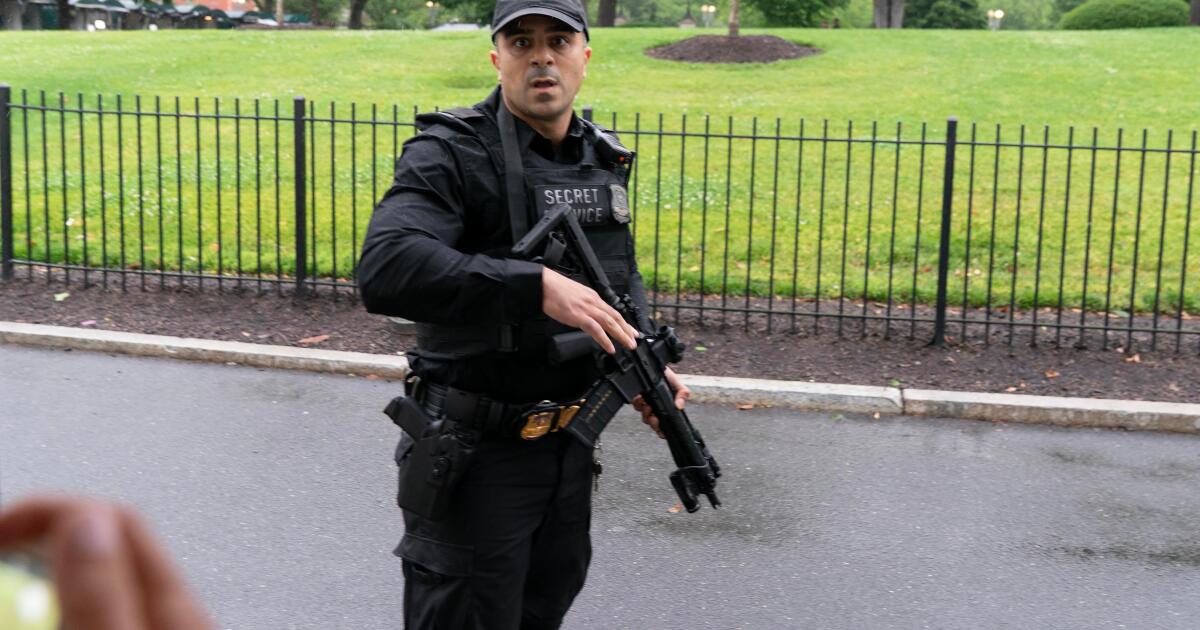
For those wanting to help, it’s not as simple as going to the airport and giving cash or gift cards directly to TSA officers, who are prohibited from accepting gifts at screening locations, according to a Homeland Security spokesperson.

But Aaron Barker, president of the AFGE Local 554 in Georgia, said TSA officer unions don’t have the same restrictions and can accept donations to distribute to their members. Barker recommends those who want to donate look up their local union district on the AFGE website, or give through their local labor council.

“For some people it can be life or death,” said Barker. “It’s just sad and terrible that this is happening.”

Union members have told Barker they’re unable to cover utility bills or pay for their children’s medical procedures. They’ve received eviction notices or had cars repossessed, and they’re having trouble affording routine items.

“People don’t think about the things they just naturally have in their home, like toothpaste, bathroom tissue, milk, detergent, dish liquid,” he said. “I’m sure those things are a necessity for every TSA officer.”

Nonetheless, no donation can be as effective as an end to the shutdown. “The first thing they want is their paycheck,” said Barker. “The money is the most immediate need.”

Coordination between nonprofits and TSA

Operation Food Search is working closely with TSA to safely deliver food and set up a temporary pantry at St. Louis Lambert International Airport.

The Missouri hunger relief nonprofit’s chief executive, Kristen Wild, said it is the first time the group has distributed directly to TSA employees where they work.

“It removes their need to make an extra trip and drive here,” Wild said. “So we’re really excited that the airport allowed us to directly serve right there.”

They gave away just over half their 400 prepared food bags during a two-hour period last week, according to Wild. Each bag contained nearly $20 worth of nonperishables such as apple sauce, pasta, rice and beans. Rules prohibit federal employees from soliciting or accepting gifts or items of monetary value greater than $20 if the gift is related to their government position.

Wild said she thought the $20 limit might be waived since they were distributing food through airport-approved channels.

“We didn’t know for sure,” she said. “But to play it safe we just kept it right under the $20 per bag amount so there would be no challenge to it.”

Airport communities band together

Seattle-Tacoma International Airport officials were fielding PETA donations and local food banks’ pallets on Friday afternoon as they stocked their private pantry for off-shift TSA staff.

But they’ve also seen dining vendors, usually tasked with feeding hungry travelers, step up. Airport tenants have offered discounts and donated through TSA to cover entire shifts’ meals, according to airport spokesperson Perry Cooper.

“You know a lot of these people,” Cooper said. “You see faces … throughout the day as you’re wandering through. And then to realize that some of these folks are here and they’re not getting paid, you know, really tugs at your heart to think what’s a way that we can help.”

The airport community’s support adds to the roughly $6,000 they’ve received in cash and gift cards plus another $10,000 worth of food and household products, Cooper said. That includes donations from the labor union for air traffic controllers, whose jobs are unaffected by this partial shutdown but understand the strain of working without pay, as they did during last year’s full government shutdown.

More than 460 people picked up fresh produce when local nonprofit Food Lifeline brought a truckload recently, according to Cooper. Most of the attendees were TSA staff, Cooper said, though some might have been homeless. Boxes including pineapples and broccoli lined folding tables along the airport’s main drive.

Regular travelers like Musie Hidad said he thinks about the TSA agents working unpaid every time he enters through security.

“The work they are doing is serious and they aren’t getting paid for it,” said Hidad, an Amarillo, Texas, resident, who was traveling to Ohio for work. “My heart goes out to them.”

Angueira, Beaty and Pollard write for the Associated Press. AP video journalist Patrick Aftoora-Orsagos in Columbus, Ohio, contributed to this report.

Source link

As Supreme Court hears mail ballot case, alarms are raised in far-flung Alaska

The tiny Alaska Native village of Beaver is about 40 minutes — by plane — from the nearest city. Its roughly 50 residents rely on weekday flights for mail and many of their basic supplies, including groceries and Amazon deliveries of everyday household items.

Air service plays an outsize role in the nation’s most expansive state, where most communities rely on flights for year-round access. Planes also play a crucial role in elections, getting voting materials and ballots to and from rural precincts such as Beaver and delivering ballots for thousands of Alaskans who vote by mail — some in places where in-person voting is not available.

The vast distances and relative isolation of so many communities make Alaska unique and are why its residents have a significant interest in arguments taking place Monday before the U.S. Supreme Court.

Many here worry that a case from Mississippi challenging whether ballots received after election day can be counted in federal elections could end Alaska’s practice of accepting late-arriving ballots. Alaska counts ballots if they are postmarked by election day and received within 10 days, or 15 days for overseas voters in general elections.

“These processes have been in place for a long time just to ensure that our ballots are counted,” said Rhonda Pitka, a poll worker and first chief in Beaver, which sits along the Yukon River 110 miles north of Fairbanks.

If the court decides ballots in all states must be received by election day, she said, “they’ll be disenfranchising thousands of people — thousands of people in these rural communities. It’s just basically saying that their votes don’t count, and that’s a real shame.”

The Supreme Court will hear arguments as the U.S. Senate is debating legislation being pushed by President Trump that would require people to show proof of citizenship to register to vote — an onerous burden for many — and a photo ID to cast a ballot.

Most Republicans argue that the bill is necessary to shore up voting integrity, but Democrats and voting rights advocates — and Alaska Republican U.S. Sen. Lisa Murkowski — contend that it amounts to voter suppression. Studies have consistently shown that voting fraud is exceedingly rare in the U.S., and courts have struck down similar measures after finding they prevented eligible voters from casting ballots.

Some ballots already arrive late

Alaska is one of 14 states that allow all mailed ballots postmarked by election day to arrive days or weeks later and be counted, according to the National Conference of State Legislatures and the Voting Rights Lab. An additional 15 provide grace periods for military and overseas ballots.

But Alaska’s geography, weather and great distances between communities — Alaska is more than twice the size of Texas, the nation’s second-largest state — raise the stakes for voters. The unusual way the state counts its votes also makes a grace period important, advocates say.

Under Alaska’s ranked-choice system for general elections, workers in small rural precincts call in voters’ first choices to a regional election office. All ballots, however, ultimately are flown to the state Division of Elections in the capital, Juneau. There, the races not won outright are tabulated to determine a winner.

Even with Alaska’s current 10-day grace period, ballots from some villages in 2022 were not fully counted because of mail delays. They arrived too late for tabulations in Juneau, 15 days after election day.

If the Supreme Court rules that ballots cannot be counted if they arrive at election offices after election day, many Alaska voters could be affected. About 50,000 Alaskans voted by mail in the 2024 presidential election.

“I think there’s probably no other state where this ruling could have a more detrimental impact than ours,” Murkowski, her state’s senior senator, said in an interview.

Murkowski sees the case — a challenge by the Republican National Committee and others to Mississippi’s allowance of late-arriving ballots — as an effort to end voting by mail nationwide.

‘Seeing a level of voter intimidation’

The RNC argues that such grace periods improperly extend elections for federal office, but Mississippi responded that no voting occurs after election day — only the delivery and counting of already completed ballots.

Taken together, Murkowski said, the Trump-backed voting bill and the Supreme Court case could discourage people from voting.

“I think we’re seeing a level of voter intimidation, I’ll just say it,” she said. “I feel very, very strongly that the effort that we should be making at the federal level is to do all that we can to make our elections accessible, fair and transparent for every lawful voter out there.”

Alaska’s other congressional members, Rep. Nick Begich and Sen. Dan Sullivan, both Republican allies of Trump who are seeking reelection this year, support the SAVE America Act now before the Senate. But they also said they want to ensure that ballots properly cast on or before election day get counted.

“We’ll see what the courts choose to do on that issue, but I do think that we need to allow for time for ballots to come in from the rural parts of our state,” Begich said during a recent visit to Juneau.

Alaska officials highlight challenges to the court

A court filing in the Mississippi case by Alaska Atty. Gen. Stephen Cox and Solicitor Gen. Jenna Lorence did not take sides but outlined geographic and logistical challenges to holding elections in Alaska.

In Atqasuk, on Alaska’s North Slope, poll workers counted votes on election night in 2024, tallies they would normally relay by phone to election division officials. But the filing said they could not get through and “chose what they saw as the next best solution — they placed the ballots and tally sheets into a secure package and mailed them to the Division, who did not receive them until nine days later.”

The filing seeks clarity from the Supreme Court, particularly around what it means for ballots to be received by election day.

While it is clear when a ballot is cast, “when certain ballots are actually ‘received’ is open to different interpretations, especially given the connectivity challenges for Alaska’s far-flung boroughs,” Cox and Lorence wrote.

Effect on Alaska Native voters

Lawyers with the Native American Rights Fund and Great Lakes Indigenous Law Center said in filings with the court that limited postal service in rural areas means that some ballots might not be postmarked until they reach Anchorage or Juneau, which can take days.

In the 2022 general election, between 55% and 78% of absentee ballots from the state House districts spanning from the Aleutian Islands up the western coast to the vast North Slope arrived at an election office after election day, they wrote. Statewide, about 20% of all absentee ballots in that election were received after election day.

Requiring ballots to be received by election day, they warned, would “disproportionately disenfranchise” Alaska Native voters. The lawyers represent the National Congress of American Indians, Native Vote Washington and the Alaska Federation of Natives.

Michelle Sparck, director of Get Out the Native Vote, a nonpartisan voting rights advocacy group affiliated with the Alaska Federation of Natives, worries about creating confusion and fear among voters.

She sees the case before the Supreme Court and the Republican SAVE Act as “a multipronged attempt to take control or wrest control of elections away from states.” Alaska, she said, already has enough inherent barriers for many voters.

“There is a minute record of election fraud — not at the rate that requires this heavy-handed response through the legislature and the Supreme Court,” she said.

Bohrer writes for the Associated Press.

Source link

Trump border advisor says ICE to deploy to U.S. airports Monday

What began as a social media post from President Trump on Saturday has grown quickly into a full-scale plan to deploy ICE agents to U.S. airports.

Amid a partial government shutdown, TSA lines have grown to be hours long at some U.S. airports, creating problems for travelers across the country. Call-out rates have started to increase at some airports, and the U.S. Department of Homeland Security said at least 376 TSA agents have quit since the partial shutdown began Feb. 14.

White House border advisor Tom Homan said that ICE plans to dispatch agents to airports as soon as Monday, and that he was working with other officials to determine where to send agents.

“It’s a work in progress,” Homan said during a Sunday appearance on CNN. “But we will be at the airports tomorrow helping TSA move those lines along.”

Homan stressed that ICE agents would provide support where possible, so that TSA staffers could better fulfill specialized positions.

“I don’t see an ICE agent looking at an X-ray machine, because they are not trained in that,” Homan said.

On Saturday, President Trump posted to social media, “If the Radical Left Democrats don’t immediately sign an agreement to let our Country, in particular, our Airports, be FREE and SAFE again, I will move our brilliant and patriotic ICE Agents to the Airports where they will do Security like no one has ever seen before.”

The pushback to the White House plans was immediate.

Rep. Bennie G. Thompson (D-Miss.), ranking member of the Committee on Homeland Security, released a statement that read, “Masked, armed police at travel checkpoints is a hallmark of dystopian movies. Now, Donald Trump is threatening to bring this tool of fascism to America. He is manufacturing chaos at airports for political leverage and trying to force Democrats to accept unaccountable secret police at security checkpoints around the country.”

Also speaking to CNN on Sunday, House Democratic Leader Hakeem Jeffries said, “The last thing that the American people need are for untrained ICE agents to be deployed at airports all across the country, potentially to brutalize or, in some instances, kill them. We’ve already seen how ICE conducts itself.”

Representatives from Los Angeles International Airport did not immediately respond to a request for comment. A spokeswoman for Orange County’s John Wayne Airport said she was not currently aware of any communication or Homeland Security guidance on the proposed plan.

A spokesperson for San Francisco International Airport said airport officials have not yet received anything specific from Homeland Security about a deployment of ICE agents. He said SFO security personnel are not part of TSA, and as a result, the airport has not had any checkpoint backups.

Source link

Biden’s pledge to leave Afghanistan is years in the making

This is the April 21, 2021, edition of the Essential Politics newsletter. Like what you’re reading? Sign up to get it in your inbox three times a week.

Outgoing presidents often leave decisions for their successors to take on.

Over the last two decades, and four presidents, how to end America’s longest war — in Afghanistan — has been among the largest open questions. President Biden inherited it from President Trump, who inherited it from President Obama, who took it from President George W. Bush. Unpopular, seemingly unending and unwinnable, the war is a case study in how the choices of one administration echo into the next.

Last week, Biden formally announced a deadline of Sept. 11 — the 20th anniversary of the terrorist attacks that provoked the U.S. invasion of Afghanistan — to end military involvement in the country.

“War in Afghanistan was never meant to be a multigenerational undertaking,” he said.

The prospective exit also has been years in the works. Obama promised to scale back U.S. involvement, but first he sent a surge of troops. Trump vowed several times to withdraw all troops, making chaotic progress that stopped short of a full exit. Biden is now the third president to make a similar commitment.

Whether he will follow through remains to be seen. My colleagues David S. Cloud and Tracy Wilkinson have extensively covered the American involvement in Afghanistan, from Trump’s growing tensions with the Pentagon over withdrawal to the lives of Afghanistan’s youngest generation, which was born into U.S. occupation.

Taken together, their work over the last few years reveals the deep roots of Biden’s promise, and the complicated history that will color his path forward.

Get our L.A. Times Politics newsletter

The latest news, analysis and insights from our politics team.

The long path to leaving

January 2017: A president who promised peace leaves office after eight years of war

During his first presidential campaign, Obama pledged to end the war in Afghanistan, as well as in Iraq. He ended his presidency as the first two-term president to see U.S. forces at war for all eight years.

Experts saw his legacy as mixed. He did reduce the number of troops in Afghanistan, cutting their ranks to 8,400, and his administration reduced American deaths — if not Afghanis’ — by relying on diplomacy and on drones to launch airstrikes. Yet intelligence officials said the U.S. faced more threats in more places than the country had seen since the Cold War. “We’re now wrapped up in all these different conflicts, at a low level and with no end in sight,” one expert told The Times.

August 2017: Trump presides over a stalemate and negotiated settlement

Trump the candidate ran as a tough-on-the-Taliban leader, promising a hard-fought and fast victory to end U.S. engagement. But Trump the president softened when it came time to reveal formal plans, Cloud and Wilkinson wrote with former Times reporter W.J. Hennigan. Fighting continued — to show U.S. forces could not be pushed out — while Trump promised that the 16-year war might end “some day” in a negotiated settlement. It was an acknowledgment that victory would elude a president who loved to win and refused to concede defeat.

“This entire effort is intended to put pressure on the Taliban, to have the Taliban understand you will not win a battlefield victory,” then-Secretary of State Rex Tillerson said. “We may not win one, but neither will you. So at some point, we have to come to the negotiating table and find a way to bring this to an end.”

By February 2018, the Trump administration proposed a defense budget that increased spending in Afghanistan by almost $2 billion, for a total of $48.9 billion in the next fiscal year.

December 2018: Trump presses for peace talks and announces a withdrawal of half of troops

That month, a series of announcements signaled Trump’s growing dissatisfaction with involvement in Afghanistan. Increased Taliban attacks had caused hundreds of Afghan civilian and military casualties a month, prompting Trump administration officials to press for a cease-fire agreement, but with dim prospects, Cloud wrote.

Less than two weeks later, administration officials announced a drastic plan: withdraw up to half of the 14,000 American troops serving in Afghanistan, potentially by summer. The backlash was swift from U.S. lawmakers, allies and even the Pentagon. Defense Secretary James N. Mattis was so furious that Trump would abandon allies in Syria and Afghanistan that he resigned in protest, as Cloud reported.

February-May 2020: A truce and a landmark agreement to withdraw

With 12,000 troops still in Afghanistan, the Trump administration brokered a temporary deal with the Taliban to reduce violence for a week in February, Wilkinson reported. The test was a success, and on Feb. 29, U.S. and Taliban officials signed an accord to end the war. The Taliban would prevent Al Qaeda and other terrorist groups from using Afghan territory to threaten the U.S., without renouncing its terrorist ties. In return, the U.S. would withdraw its troops within 14 months, setting a deadline of May 1, 2021.

The plan again drew backlash, from former Trump and Obama administration officials, who warned a complete withdrawal could backfire, Cloud, Wilkinson and Stefanie Glinksi reported. Even as conflict continued between the Taliban and the Afghan government into May, the Trump administration remained committed to removing troops.

November 2020: Hopes of exiting before the election dashed

Trump, hoping that a full exit in 2020 would boost his reelection prospects, made clear to advisors that he cared little about conditions in Afghanistan, Cloud and Wilkinson reported. He wanted out, period. By July, the number of troops on the ground had shrunk to 8,600.

But as the peace talks the U.S. hoped to broker struggled to get off the ground, administration officials said about 4,000 troops would have to remain into November. The Pentagon said too rapid a withdrawal would doom the talks, invite violence and cause American forces to have to abandon valuable equipment. Trump said he wanted a withdrawal by the end of his term in January, and in November — as he refused to concede his loss to Biden — he ordered troop levels reduced in Iraq and Afghanistan, to 2,500 in each country.

Trump’s relationship with Congress further deteriorated in December, in part over the bipartisan pushback to his withdrawal plans. It was among the reasons he cited in vetoing the annual National Defense Authorization Act, Cloud and Jennifer Haberkorn wrote.

April 2021: Biden says it’s “time to end the forever war.”

When Biden took the oath of office on Jan. 20, 2,500 troops remained in Afghanistan. But the new president faced the decision of whether to honor Trump’s May 1 deadline for withdrawing them — the final exit from the war, Cloud wrote. Once again, Defense Department officials pressured the president to delay a full withdrawal as the deadline the Trump administration negotiated with the Taliban approached.

On April 14, Biden made his decision public: The drawdown would proceed, but not so quickly. The U.S. would fully exit by Sept. 11, Cloud and David Lauter wrote.

“I am now the fourth United States president to preside over an American troop presence in Afghanistan. Two Republicans. Two Democrats,” Biden said. “I will not pass this responsibility onto a fifth.”

A newspaper headline reads "Second wave strikes; U.S. soldiers on the ground in Afghanistan."

The top half of the front page of the Los Angeles Times on Oct. 9, 2001.

(Los Angeles Times)

Enjoying this newsletter? Consider subscribing to the Los Angeles Times

Your support helps us deliver the news that matters most. Become a subscriber.

Policing, policy and the Minneapolis verdict

— The conviction of former Police Officer Derek Chauvin for the murder of George Floyd reenergized a push for sweeping criminal justice reform by President Biden and leading Democrats, who said Tuesday’s verdict was just the first step on the path to national healing, report Evan Halper, Eli Stokols and Sarah D. Wire.

— Anticipating an uproar, Facebook said it would crack down on violent content, hate speech and harassment ahead of the Chauvin verdict. But as Brian Contreras reports, critics are wondering why the platform doesn’t take those precautions all the time.

The latest on the environment

— China, Japan and South Korea are the world’s biggest funders of coal-fired power plants around the globe — and the Biden administration is looking to win their agreement to deep cuts in their greenhouse gas emissions by the end of the decade, write Anna M. Phillips and Wilkinson.

— Biden will convene leaders from around the world on Thursday and Friday as he marks the United States’ return to the global fight against climate change, Chris Megerian writes. Three people with knowledge of the White House plans say Biden will pledge to cut U.S. greenhouse gas emissions at least in half by 2030.

— Solar panels, wind turbines and electric cars will go far in helping California and the Biden administration meet their aggressive climate goals — but not far enough. As time runs short, scientists and government officials say the moment to break out the giant vacuums has arrived, Halper writes.

More from Washington

— Vice President Kamala Harris traveled to North Carolina on Monday to talk about economic opportunities and electric school buses as part of the Biden administration’s efforts to promote its roughly $2-trillion infrastructure, clean energy and jobs plan, Noah Bierman writes.

— The Supreme Court is weighing whether immigrants granted temporary protected status can get green cards — and if the Biden administration will make that decision, David G. Savage reports.

— The Justice Department has brought charges against hundreds of people who stormed the Capitol during the Jan. 6 riot, but one of its most pivotal potential cases involves a man who never set foot inside the building, writes Del Quentin Wilber.

— After Jan. 6, many of the nation’s largest corporations pledged that they would suspend donations to elected officials who opposed the certification of Joe Biden’s victory, hindered the peaceful transfer of power or incited violence. The vast majority kept their word, report Seema Mehta, Maloy Moore and Matt Stiles.

— What is there left to say about House Speaker Nancy Pelosi? Plenty, it turns out. In a new biography, Pelosi dishes on chiding Rep. Alexandria Ocasio-Cortez and using the nickname “Moscow Mitch,” writes Wire.

Source link

Putting D.C. Online – Los Angeles Times

In 1994, then House Speaker Newt Gingrich promised to post all congressional proceedings on the Internet as a way of launching what he called a “civilizational upheaval” in which “regular people in little towns”–not well-moneyed lobbyists–would manage affairs in Washington. In 1996, the representative from Georgia, swayed by the futurism of writer Alvin Toffler, helped pass the Electronic Freedom of Information Act, which required federal agencies to grant Americans prompt access to any information in their databases that could help “ensure an informed citizenry.”

Three years later, Gingrich’s revolution, far from online, is nowhere in sight. Rather than complying with the 1996 law, most parts of the executive, legislative and judicial branches of the U.S. government stand in blatant violation of it.

While the Supreme Court of Mongolia has its own official Web site, the U.S. Supreme Court doesn’t, forcing Americans to search through unofficial Web sites in hope of finding its briefs and opinions. While the Congressional Research Service makes its reports on vital issues like HMO reform instantly available online to legislators, taxpayers, who fund those studies, can get them only through the mail from their members of Congress.

If you are a soldier who believes he was made ill by the military’s anthrax vaccine, for example, you might want to know what was said in Tuesday’s hearing of the House Committee on Government Reform, in which Rep. Henry A. Waxman (D-Los Angeles) and leading scientists discussed how the government should weigh a vaccine’s risks against its benefits. The full text of the hearing was available Tuesday to anyone who could afford a subscription to a private online data service.

Those hoping to access such supposedly public information on the Web, however, were out of luck. The House Government Reform Committee’s Web site lists transcripts from only a hodgepodge of committee hearings. The most recent transcript available at that site is from June.

Today, Sens. Patrick J. Leahy (D-Vt.) and John McCain (R-Ariz.) plan to hold a press conference in which they will release a study by two Washington public-interest groups on how federal agencies have failed to comply with the 1996 law. McCain and Leahy, along with David E. Price (D-N.C.) and Christopher Shays (R-Conn.) in the House, have introduced similar bills to require Congress to put Congressional Research Service documents online within 30 days. The measures currently are in the House and Senate rules committees.

Fundamental change won’t occur until national leaders like President Clinton, Senate Majority Leader Trent Lott (R-Miss.) and House Speaker J. Dennis Hastert (R-Ill.) call upon all government agencies to honor the letter and spirit of the 1996 law.

Reforming the Congressional Research Service is only a baby step toward the revolution that legislators promised so bombastically. But it’s as good a place as any to start.

To Take Action: Rep. David Dreier (R-San Dimas), chairman, House Committee on Rules, (202) 225-2305, www.house.gov/dreier, click on “Feedback”; Sen. Mitch McConnell (R-Ky.), chairman, Senate Committee on Rules and Administration, (202) 224-2541, e-mail, senator@mcconnell.senate.gov

Source link

24-Hour Stopgap Funding Approved, but the Budget Impasse Remains

In session for rare weekend votes with the election fast approaching, Congress acted Saturday to keep the government running for another 24 hours but made little apparent progress in breaking a budget impasse.

Despite the action of the House and the Senate on the eighth stopgap spending measure since the fiscal year began Oct. 1, a weird limbo enveloped the Capitol as neither Republicans nor Democrats predicted a quick deal. Gone for the time being was the usual year-end pressure to adjourn. Instead, both sides seemed willing to wait to see who would blink first.

Negotiations focused on the handful of issues still dividing the parties, issues that might or might not influence voters at the polls Nov. 7. Among them were tax credits for school construction, proposed workplace safety regulations and measures to ease immigration law.

President Clinton, who forced the weekend votes by insisting that lawmakers pass daily stopgap budget measures, urged the Republican-led Congress to wrap up its budget work and include an increase in the federal minimum wage.

“I’m not trying to harass [Congress],” Clinton said at a news conference. “I’m just trying to get them to finish their job and go home.”

Clinton cited an agriculture spending bill he signed Saturday as a model of bipartisanship. The president said he signed the bill–which included milestone language easing a decades-old trade embargo on Cuba to allow U.S. agricultural exports–even though he was critical of provisions that would limit the effect of the trade opening.

In a GOP radio address, New Jersey Gov. Christine Todd Whitman called the budget showdown “a case in point” of Washington gridlock that voters will punish.

“I think we are ready for a change,” Whitman said. “And the difference between the parties is striking. Republicans at all levels of government work with people to accomplish results–not make excuses for why we can’t even try to solve them.”

Republican congressional leaders note that they wrapped a minimum-wage increase Clinton supports into tax legislation that he is holding up with a promised veto. And they accuse the White House of constantly shifting its goals on the two government spending bills for fiscal 2001 that have not been finalized.

“I tell you, I’ve reached the end of my rope,” said Sen. Ted Stevens (R-Alaska), chairman of the Senate Appropriations Committee. To illustrate his frustration, Stevens said in an interview on the Capitol steps that the administration had sought $3.5 billion in extra spending on a bill containing $106.8 billion for discretionary spending on education, health and other programs. Then $4 billion. Then $4.1 billion. And now, he said, the demand is up to $4.5 billion.

“What can you do?” Stevens asked.

To register his protest, Stevens was one of two senators to vote against the daily budget resolution. The other was Sen. Patrick J. Leahy (D-Vt.). Sixty-seven senators voted for the resolution.

Thirty-one senators–11 Democrats and 20 Republicans–were absent for what the chamber regarded as a ritual vote. Many missed it because of campaign events, a few for health reasons. California’s Democratic senators, Dianne Feinstein–who is running for reelection–and Barbara Boxer, were both absent.

The House vote for the stopgap measure was 339 to 7. All seven dissenters were Democrats, including Rep. George Miller of Martinez. Of the 86 representatives who were absent, 42 were Republicans and 44 Democrats.

Twelve of California’s 52-member House delegation did not vote. They were Feinstein’s opponent in the Senate race, GOP Rep. Tom Campbell of San Jose, and Reps. Brian P. Bilbray (R-San Diego), Ken Calvert (R-Riverside), Christopher Cox (R-Newport Beach), Matthew G. Martinez (R-Monterey Park), Howard P. “Buck” McKeon (R-Santa Clarita), George P. Radanovich (R-Mariposa), Joe Baca (D-Rialto), Xavier Becerra (D-Los Angeles), Tom Lantos (D-San Mateo), Pete Stark (D-Hayward) and Maxine Waters (D-Los Angeles).

The roll call showed the political importance of the vote to many House members–all wary of the potential charge that their absence would reflect an insensitivity to the possibility of a government shutdown.

Bilbray was the only California absentee in a tough reelection race. Other California incumbents in contested races, such as Reps. James E. Rogan (R-Glendale), Steven T. Kuykendall (R-Rancho Palos Verdes), Calvin Dooley (D-Visalia), Lois Capps (D-Santa Barbara) and Stephen Horn (R-Long Beach), all eschewed campaign events to remain in Washington for the vote.

More stopgap budget votes were expected today.

Source link

Clinton Tells of Marijuana Use in ’60s : Democrats: He says he tried the drug one or two times while a student in England. He had not been directly asked about it before and does not believe episode will hurt his candidacy, he adds.

Arkansas Gov. Bill Clinton acknowledged Sunday that he had experimented with marijuana while a 22-year-old student in England in the late 1960s, an admission that could raise doubts about his past candor in answering questions about his personal conduct.

For five years, the 45-year-old Clinton has answered questions about whether he had ever used drugs by saying he had never broken a U.S. law. During a televised debate here with Democratic presidential rival Edmund G. (Jerry) Brown Jr., a questioner for the first time asked Clinton explicitly whether he had ever broken either a state, federal or a foreign drug law.

“When I was in England I experimented with marijuana a time or two,” he answered on the WCBS-TV broadcast, “and I didn’t like it. I didn’t inhale and never tried it again.”

Asked the same series of questions, Brown answered bluntly: “No.”

Clinton’s disclosure, which overshadowed one of the most substantive exchanges of the political season between the two rivals, is hardly unusual for a person of Clinton’s generation. Two of the Democratic presidential candidates in 1988 acknowledged similar behavior. And nothing Clinton said about his use of marijuana contradicted what he had said before.

But his decision until now to fend off drug-use queries with a narrow response, which could mislead voters into thinking he had never used drugs of any kind, was likely to add to concerns of those who regard him as less than straightforward.

Clinton said he did not believe the episode would hurt his candidacy, noting that other politicians had admitted to using marijuana and had suffered no apparent electoral consequences. He defended his previous denials by saying he had seen no need to volunteer a reply to something he had not been directly asked.

“Nobody’s ever asked me that question point blank,” he said, adding: “I said I’ve never broken the drug laws of my country, and that’s the absolute truth.”

It was the second time in a week that Clinton found it necessary to clarify previous statements on drugs.

On Thursday, a Clinton campaign aide, Betsey Wright, volunteered to the Los Angeles Times that the governor had never used cocaine or knowingly been around it.

The Times had contacted Wright to ask about a state police drug investigation in the mid-1980s of Clinton’s half-brother and a political contributor. After answering the questions, Wright said: “I assume from the questions that you were implying guilt by association in a state where everybody is associated. For that reason, when I verified with Gov. Clinton the answers to some of the questions, I asked him the following questions:

“ ‘Bill, have you ever used cocaine?’

“He replied, ‘No.’

“I said, ‘Bill, have you ever been in a room where you were aware there was cocaine?’

“He replied, ‘No.’ ”

When asked Friday why she had posed questions never asked by The Times, Wright said she had heard “rumors” that reporters were trying to place Clinton at parties where cocaine had been used. “I decided it was best to go ahead and put the issue on the table,” she said. (Interviews by The Times with some people said to have been in attendance at those parties have produced no evidence linking Clinton to the drug.)

Later Friday, Clinton called The Times to say that the campaign had not intended to provoke a story quoting him as denying cocaine use. Senior Clinton campaign officials said they feared such a story might be seen by the public as raising yet another question about his personal life.

Clinton’s Sunday acknowledgement of marijuana use while a Rhodes Scholar at Oxford came only three days after Clinton was asked by a member of the editorial board of the New York Daily News whether he had been asked previously about his drug use.

Clinton said that he had been asked such questions, and that his answer had always been that he had never violated a U.S. law.

Clinton campaign officials later described the new admission as an “elaboration” of Clinton’s previous comments and suggested that it and the earlier, narrow denials were merely two ways of looking at the same issue.

“Bill Clinton told the truth at every step of the way,” his chief strategist, James Carville, said. “It’s like the old saying about the guy who’s being sworn into office and he’s asked, ‘Do you swear to tell the truth, the whole truth, and nothing but the truth?’ and he answers, ‘Which one do you want?’ ”

Carville and other senior Clinton aides nevertheless expressed concern that the issue would be given undue prominence and further tar their candidate at a time when polls show that a large number of Democratic voters still harbor questions about Clinton’s personal record.

For his part, however, Brown chose not to make an immediate issue either of Clinton’s marijuana use or his handling of questions about it.

After denying that he had violated any drug laws, Brown demanded of a questioner: “Why don’t you lay off this stuff? What you did 10 or 20 years ago is not really relevant.”

But Brown himself was forced during the debate to respond to a new suggestion of impropriety in a Washington Post story detailing his ties to a company that paid a $400,000 settlement to the federal government after being accused of making exaggerated claims about a product said to help treat AIDS.

Brown, who served on the board of directors of a subsidiary to the company, Costa Mesa-based ICN Pharmaceuticals Inc., until he began his presidential campaign, said he had had “nothing to do” with the episode. He said his position gave him “no responsibility and no contact” with the parent firm.

Clinton did not press the issue during the debate, saying his own experience made him wary of “piling on.” But he suggested later in the day that justice was being done as he told a Bronx audience that “the press is finally starting to look at” a rival he believes has been treated too gently.

Clinton framed his response to the drug question during an era when the issue rose to political prominence.

In 1987, Supreme Court nominee Douglas H. Ginsburg was forced to withdraw his name from nomination after it was learned that he had used marijuana when he was a law-school professor.

But other politicians, including Sen. Albert Gore Jr. of Tennessee and Gov. Bruce Babbitt of Arizona, both 1988 Democratic presidential candidates, acknowledged using marijuana while in college and suffered no apparent political consequences.

Supreme Court Justice Clarence Thomas has also admitted to having used marijuana, but the issue was given only passing attention during his confirmation hearings.

Clinton, by contrast, has steadfastly refused to answer “have you ever” questions about drug use, adultery or other matters of personal conduct on grounds that they are not legitimate subjects of inquiry.

He has said it is legitimate, however, for an officeholder or a candidate to be questioned about violations of law, and has always responded to questions about his drug use by stating that he had adhered to U.S. drug laws.

Earlier in the morning, Clinton delivered what amounted to an impassioned political sermon to the enthusiastic congregation of an African Methodist church in a mostly black neighborhood in Queens.

But faced with continued criticism of his periodic use of an all-white country club to play golf–conduct that Clinton has said was a mistake–his message Sunday was in part a plea for redemption from a black community from which he has so far drawn deep support.

“I have seen myself turned into a cartoon character of an old Southern deal-maker by the tabloids and television in a total denial of my life’s work,” he said.

He told the congregation he had made “a foolish mistake.” And as he cited Scripture later, the congregation joined him in a sympathetic chorus to murmur “those who are without sin should cast the first stone.”

The hourlong debate here between Clinton and Brown, who participated via satellite from Wisconsin, was one of the better illuminations of the differences between the Arkansas moderate and the California populist-liberal.

Again and again, the two candidates clashed on issues ranging from economic policy to capital punishment to labor issues to Middle East strategy.

On economic issues, Brown advanced his proposal to overhaul the current tax systems and replace them with a 13% flat-tax as a “progressive tax” whose simplicity would “jump-start the economy.”

But Clinton, who favors a more conventional middle-class tax cut and an increase on taxes for the wealthy, again derided Brown’s idea as a plan that would benefit only the wealthy and would “triple taxes on the poor and raise taxes on the middle class.”

In answer to a question, Clinton said he favored capital punishment as well as a proposal to accelerate what is now the time-consuming process under which a death-row inmate may appeal his sentence.

But Brown described Clinton’s decision earlier this year to order the execution of a man whose lawyer claimed he was retarded as a “moral abomination.” He contended that the proposal to limit death-penalty appeals was part of a “systematic erosion of civil liberties” and said: “I would oppose it with every ounce that I have.”

Brown said he would favor a five-year moratorium on the manufacture of handguns. But Clinton, while describing himself as an advocate of gun control, said he was unsure whether he could embrace such an approach.

On Israel, Clinton defended what he described as a longstanding U.S. willingness to “wink” at Israeli settlements on the occupied West Bank and criticized the Bush Administration’s recent get-tough policy. But Brown bluntly said he regarded the settlements as “a problem.”

Asked about an issue important to labor unions, the two candidates made clear that their allegiance pulled them in different directions.

Clinton said he would favor placing young people in jobs of all kinds as part of a civilian corps to give them training for the future.

But Brown warned that the low wages paid to such employees would undermine working people and suggested that any such corps be limited to outdoor conservation efforts.

Source link

Bass leads the field for L.A. mayor, but many voters view her unfavorably, poll finds

Los Angeles Mayor Karen Bass has a lead over her challengers in her bid for reelection, but more than half of voters view her unfavorably, according to a poll released Sunday.

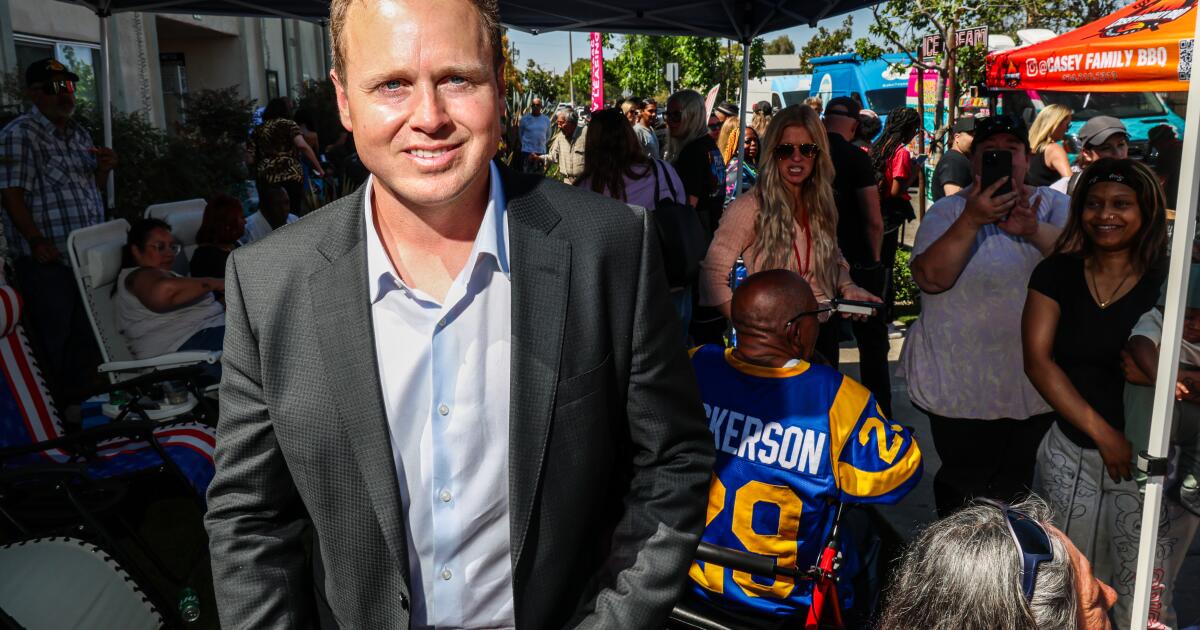
Bass was supported by 25% of voters, while City Councilmember Nithya Raman drew 17% and conservative reality TV star Spencer Pratt came in third at 14% in the poll by the UC Berkeley Institute of Governmental Studies, co-sponsored by The Times.

About a quarter of voters were undecided, the poll found.

Bass has come under heavy criticism for her handling of the devastating Palisades fire. More than a year later, 56% of those polled said they had an unfavorable view of her, while 31% viewed her favorably.

The survey of 840 likely voters between March 9 and 15 provides one of the first snapshots of the mayoral race, less than three months before the June 2 primary.

Beyond the top three, leftist Rae Huang notched support from 8% of those polled, while tech entrepreneur Adam Miller drew 6%.

Despite Bass’ lead, the poll is “borderline catastrophic” for her, because the field of candidates is so weak, said Dan Schnur, a politics professor at USC, UC Berkeley and Pepperdine.

“That she’s having this much trouble against this field, against such a little-known field of opponents, bodes very, very poorly for her,” Schnur said. “The only thing saving her at this point is that the top tier of potential candidates who were considering running against her decided to stay out of this race.”

The mayoral race solidified in early February, when Raman shocked the political establishment by jumping in against her ally Bass, hours before the filing deadline.

By that time, other well-known politicians, including billionaire developer Rick Caruso and L.A. County Supervisor Lindsey Horvath, had opted to stay out of the race. Former Los Angeles schools Supt. Austin Beutner dropped out following the death of his 22-year-old daughter.

Those decisions have left Angelenos with a field of candidates they hardly know. While they have strong views about Bass, slightly more than half of those polled said they didn’t know enough about Raman to have an opinion. Even more voters were unfamiliar with the other candidates.

Bass was on a diplomatic trip to Ghana when the Palisades fire ignited on Jan. 7, 2025, killing 12 people and destroying thousands of homes. She was unsteady in her initial public appearances and has since come under attack by Pratt, Caruso and others over the LAFD’s management of the fire and the pace of the recovery as well as allegations that she ordered an after-action report on the fire to be watered down.

Bass’ campaign has pointed to declining homelessness and crime as among the successes of her first term as mayor.

“It’s clear Angelenos are frustrated by decades of inaction on major issues,” Douglas Herman, a spokesperson for the Bass campaign, said in a statement. “This campaign will show that it’s Karen Bass who changed the direction on these issues and that others running responded with reports while Karen Bass took action.”

Raman, who represents Los Feliz and parts of Silver Lake and the San Fernando Valley, was viewed favorably by 26% of those polled and unfavorably by 23%. The 51% who said they didn’t have an opinion of her could be an indication that she has yet to expand her name recognition citywide.

She has said that her decision to run was driven in part by her frustration with city leaders’ inability to get the basics right, such as fixing streetlights and paving streets.

“I am very grateful that our campaign to make our city more affordable is resonating with so many Angelenos,” she said in a statement.

Former City Councilmember Mike Bonin, who runs the Pat Brown Institute for Public Affairs at Cal State L.A., said that after the shock of Raman’s entry into the race, the mayoral campaign has taken on a sleepier pace.

“Candidates are raising money and doing their due diligence … but it’s felt like a staid, quiet race,” he said. “This poll reflects that.”

Bonin said the most important number is the gap between Raman and Pratt.

If no candidate gets more than 50% of the vote in the primary, the top two finishers will proceed to a November run off. According to Bonin, Raman and Pratt will likely be jockeying to face off against Bass.

“While voters are clearly looking for an alternative [to Bass], they haven’t chosen one,” Bonin said.

The poll showed Bass — the city’s first female mayor and first Black female mayor — with strong support from Black voters, at 43%, while Raman has 6%.

Raman, who if elected would be the city’s first South Asian mayor, leads with Asian and Pacific Islander voters at 34%, with Bass at 10%.

Bass performs better with older voters, while Raman and Huang are appealing to younger voters, the poll found. Huang led the pack at 19% with voters between 18 and 29 years old.

In the poll, Angelenos ranked their top priorities for the next mayor to address. Building more affordable housing came in first, followed by fixing streets, sidewalks and streetlights and then moving homeless Angelenos indoors.

One potential bright spot for Bass was policing.

The poll found that 39% of Angelenos think the LAPD needs to increase in size, with 29% saying the department should stay the same size and 19% saying it should shrink.

Bass has called on the City Council to hire more police officers.

Raman, meanwhile, has said that she believes the police force is the right size at around 8,700 officers, down from a peak of 10,000 in 2020.

“Bass is going to make Raman look like AOC’s liberal sister,” said Schnur, referring to progressive U.S. Rep. Alexandria Ocasio-Cortez (D-N.Y.). “If she ends up in a runoff against Raman, she can run as a tough-on-crime centrist.”

Source link

Solutions to speed California vote count and make voting easy

Every two years, elite athletes compete in the Olympics, biennial plants — like carrots and onions — produce seeds and people across America look on with consternation and mounting impatience as California counts its election ballots.

The prolonged tally has become as much a part of electioneering in the Golden State as wall-to-wall advertising, high-flown promises and overstuffed mailboxes groaning beneath the weight of endless campaign fliers.

The tabulation — which can last weeks past election day — is the product, in large part, of a commendable objective: Encouraging as many people as possible to vote.

California, which mails a ballot to every eligible voter, ranks near the top of states in the ease of its elections. That’s something to be celebrated. Voting is a way to help steer the direction of our state and nation and invest, as an active participant, in its future.

Yay, participatory democracy!

Unfortunately, the lag time between election day and the final results has led to all sorts of wild, unfounded claims, peddled mainly by Republicans seeking to curry favor with the sore-losing President Trump by parroting his conspiratorial gabbling.

“They hold the elections open for weeks after election day,” House Speaker Mike Johnson said recently, falsely suggesting that chicanery cost the GOP three House seats in California in 2024. “It looks on its face to be fraudulent.”

That’s a lot of, um, hooey.

There is no rampant cheating or election fraud in California. Period. Full stop.

Still, those sorts of phony statements have deeply diminished faith in our elections and our increasingly rickety democracy.

So — what if it were possible to preserve California’s friendly voting system while, at the same time, speeding up the tabulation of its many millions of ballots?

Kim Alexander believes it’s possible to do both.

“We need to stop explaining why it’s taking so long and start figuring out how to [produce election results] in a more satisfying way,” she said. “There are a lot of things that we could do better and do differently. It just takes some creative thinking and some will.”

Simply put, “The longer it takes to count ballots, the more voter confidence erodes.”

Alexander, head of the nonpartisan California Voter Foundation, has spent more than three decades working to make the state’s elections more efficient, more transparent and more accountable.

Her interest in politics and election mechanics came about while growing up in Culver City, where her father served as a councilman and mayor.

As a 7-year-old, stationed in the garage, it was Alexander’s job to track the returns in her dad’s first campaign, toting up the numbers at an election night party while her mom, posted in the kitchen, called the city clerk for updates. Even at that young age, Alexander learned the importance of a fair and efficient tabulation process.

Over the years, she watched as her father’s political career was stymied by a Democratic gerrymander, which blocked any hopes he had of being elected to Congress or the Legislature as a moderate Republican. She saw firsthand the influence of money in politics. (Her father told her of turning away donations that came with strings attached.) That helped turn her into a political reformer.

After working as a legislative staffer and serving a stint at Common Cause, the good-government lobbying group, Alexander took over the California Voter Foundation in 1994.

As a political noncombatant, Alexander won’t say how it feels, and whether these days she’s more or less optimistic, watching as reckless attacks on our elections come from inside the White House. “I like to describe myself as a realist with high goals,” is all she’d allow.

There are good reasons why it takes California so long to count its ballots.

First off, there are a lot of them; more than 16 million residents voted in the last presidential election, more than the population of all but 10 states. Voting by mail has exploded in popularity and it takes longer to count those ballots, as many don’t arrive until after election day. Also, there are a number of safeguards to prevent fraud and ensure an accurate count. “We’re checking all the signatures,” Alexander said. “We’re making sure nobody votes twice.”

Simply explaining those facts can help build trust, she said. However, that won’t speed up the state’s vote counting. Here, Alexander suggested, are some things that can:

— Increase funding for California’s 58 counties to expand equipment, staff and the space needed to process ballots. In recent years, the state has been asking local election officials to do more and more without reimbursing their costs.

— Educate voters and encourage them to turn their ballots in earlier. Along those lines, a system called “sign, scan and go” allows voters to return their mail ballots in person at a designated polling place. A pilot program in Placer County found that that shaved three to four days off processing time. The system could be implemented statewide.

— Better manage California’s voter database, doing so from the top down in Sacramento, rather than having counties oversee their data and feed it into the system. That bottom-up approach creates delays and a lag time in processing ballots.

— Create “ballot swap” days to speed delivery of out-of-county ballots where they belong, also saving time. (Under California law, voters can return their ballot anywhere in the state, but it must be routed to their home county to be tabulated. That process can now take more than a week.)

The problem, apart from perennial budget pressures, is that interest in election mechanics — a technical and arcane subject if ever there was one — is episodic and fleeting. It’s like worrying about a leaky roof when the temperature is 95 degrees outside and the sun is blazing.

But even without voters clamoring to address California’s slow-poke vote count, lawmakers should act.

Gov. Gavin Newsom recently rose to defend the state’s “safe and secure elections” against one of Trump’s many unwarranted attacks. If he wants to burnish his credentials for a 2028 presidential run — which Newsom very much does — one way would be to speed up delivery of its election results.

That way the rest of the country won’t be asking again in November: What the heck’s with California?

Source link

Democratic Socialists of America won’t endorse in race for L.A. mayor

The Los Angeles chapter of the Democratic Socialists of America will not endorse a candidate for mayor.

After City Councilmember Nithya Raman decided at the last minute to run against her former ally Mayor Karen Bass, the group called a vote on whether to reopen the endorsement process, which it had closed without supporting a candidate.

DSA-LA backed Raman’s two successful city council runs, but she has been at odds with the group on some issues.

Also in the mix was another mayoral candidate, community organizer Rae Huang, whose positions align more closely with those of the group.

The two candidates were present for Saturday’s vote at Immanuel Presbyterian Church in Koreatown, though neither spoke.

The left-wing organization, which has about 5,000 members, is known for running strong ground game campaigns that include canvassing, door-knocking and phone banking. In addition to Raman, three other DSA-backed politicians now sit on the 15-member City Council.

Before the vote, DSA-LA members argued for and against reopening the endorsement process.

“The worst thing we can do right now for our movement is to say, ‘Well, actually, we’re not going to endorse Rae or Nithya. We’re going to do a third thing, which is to issue no endorsement.’ Who is the audience for this message?” said Leslie Chang, a co-chair of DSA-LA.

DSA-LA member Anna Gross argued that neither candidate was ideal, with Huang, who has little political experience, being a long shot and Raman hesitating to fully embrace the group.

“I do want a democratic socialist mayor, but as it stands, we have one candidate who is not going to win … and a candidate who will not openly identify as a democratic socialist,” Gross said.

Of the 488 members who voted Saturday, about 55% supported reopening the endorsement process, falling short of the required two-thirds majority.

If the process had been reopened, the group would have then voted on whether to endorse Raman, Huang or neither.

Huang’s earlier attempt to get the endorsement while the window was still open had failed because she did not obtain enough valid member signatures to qualify.

If the race is not decided in the June 2 primary, DSA-LA can still endorse a candidate in the runoff.

Besides Bass, Raman and Huang, the field of 14 candidates includes conservative reality TV star Spencer Pratt and tech entrepreneur Adam Miller.

Some members believed that a mayoral endorsement would take resources away from the slate of six local candidates they have already endorsed.

In city council races, DSA-LA is backing incumbents Hugo Soto-Martínez and Eunisses Hernandez; Faizah Malik, who is running against incumbent Traci Park on the Westside; and Estuardo Mazariegos for an open South L.A. seat.

The group is also backing Marissa Roy, who is challenging City Atty. Hydee Feldstein Soto, and Rocío Rivas, an incumbent L.A. Unified school board member.

Source link

Former FBI Director Robert Mueller dies

Robert S. Mueller III, the FBI director who transformed the nation’s premier law enforcement agency into a terrorism-fighting force after the Sept. 11, 2001, attacks and later became special counsel in charge of investigating ties between Russia and Donald Trump’s presidential campaign, has died. He was 81.

“With deep sadness, we are sharing the news that Bob passed away” on Friday night, his family said in a statement Saturday. “His family asks that their privacy be respected.”

President Trump, responding on social media, said: “Robert Mueller just died. Good, I’m glad he’s dead.” He added: “He can no longer hurt innocent people!”

At the FBI, Mueller set about almost immediately overhauling the bureau’s mission to meet the law enforcement needs of the 21st century, beginning his 12-year tenure just one week before the Sept. 11 attacks and serving across presidents of both political parties. He was nominated by Republican President George W. Bush.

The cataclysmic event instantaneously switched the bureau’s top priority from solving domestic crime to preventing terrorism, a shift that imposed an almost impossibly difficult standard on Mueller and the rest of the federal government: Preventing 99 out of 100 terrorist plots wasn’t good enough.

Later, he was special counsel in the Justice Department’s investigation into whether Russia’s attempts to help Trump’s 2016 presidential campaign amounted to illegal cooperation to sway the outcome.

Mueller was a patrician Princeton graduate and Vietnam veteran who walked away from a lucrative midcareer job to stay in public service, and his old-school, buttoned-down style made him an anachronism during a social-media-saturated era.

In a statement, former President Obama called Mueller “one of the finest directors in the history of the FBI” who saved “countless lives” after transforming the bureau. “But it was his relentless commitment to the rule of law and his unwavering belief in our bedrock values that made him one of the most respected public servants of our time,” Obama added.

The FBI did not immediately respond to a request seeking comment. The FBI Agents Assn., a nonprofit advocacy group representing current and former agency employees, lauded Mueller for his “commitment to public service and to the FBI’s mission.“

Investigator of a sitting president

The second-longest-serving director in FBI history, behind only J. Edgar Hoover, Mueller held the job until 2013 after agreeing to Obama’s request to stay on beyond his 10-year term.

After several years in private law practice, Mueller was asked by Deputy Atty. Gen. Rod Rosenstein to return to public service as special counsel in the Trump-Russia inquiry.

Mueller’s stern visage and taciturn demeanor matched the seriousness of the mission, as his team spent nearly two years quietly conducting one of the most consequential, and divisive, investigations in Justice Department history. He held no news conferences and made no public appearances during the investigation, remaining quiet despite attacks from Trump and his supporters and creating an aura of mystery around his work.

All told, Mueller brought criminal charges against six of the president’s associates, including his campaign chairman and first national security advisor.

His 448-page report released in April 2019 identified substantial contacts between the Trump campaign and Russia but did not allege a criminal conspiracy. He laid out damaging details about Trump’s efforts to seize control of the investigation, and even shut it down, though he declined to decide whether Trump had broken the law, in part because of Justice Department policy barring the indictment of a sitting president.

In perhaps the most memorable language of the report, Mueller pointedly noted: “If we had confidence after a thorough investigation of the facts that the president clearly did not commit obstruction of justice, we would so state. Based on the facts and the applicable legal standards, we are unable to reach that judgment.”

The nebulous conclusion did not deliver the knockout punch to the administration that some Trump opponents had hoped for, nor did it trigger a sustained push by House Democrats to impeach the president — though he was later tried and acquitted on impeachment charges related to pressuring Ukraine for campaign dirt on Joe Biden and Trump’s role in the Jan. 6 riot and insurrection.

The outcome of the Mueller investigation also left room for Atty. Gen. William Barr to insert his own views. He and his team made their own determination that Trump did not obstruct justice, and he and Mueller privately tangled over a four-page summary letter from Barr that Mueller argued did not adequately capture his report’s damaging conclusion.

Mueller deflated Democrats during a highly anticipated congressional hearing on his report when he offered terse, one-word answers and appeared hesitant at times in his testimony. Frequently, he seemed to waver on details of his investigation. It was hardly the commanding performance many had expected from Mueller, who had a towering reputation in Washington.

Over the next months, Barr made clear his own disagreements with the foundations of the Russia investigation, moving to dismiss a false-statements prosecution that Mueller had brought against former national security advisor Michael Flynn, even though that investigation ended in a guilty plea.

Mueller’s tenure as special counsel was the capstone of a career spent in government.

A transformation at the FBI

His time as FBI director was defined by the Sept. 11 attacks and their aftermath, as the agency — granted broad new surveillance and national security powers — scrambled to confront an ascendant Al Qaeda, interrupt plots and take terrorists off the street before they could act.

It was a new model of policing for an FBI that had long been accustomed to investigating crimes that had already occurred.

When he became FBI director, “I had expected to focus on areas familiar to me as a prosecutor: drug cases, white-collar criminal cases and violent crime,” Mueller told a group of lawyers in October 2012.

Instead, “we had to focus on long-term, strategic change. We had to enhance our intelligence capabilities and upgrade our technology. We had to build upon strong partnerships and forge new friendships, both here at home and abroad.”

In response, the FBI shifted 2,000 of the total 5,000 agents in the bureau’s criminal programs to national security.

In hindsight, the transformation was a success. At the time, there were problems, and Mueller said as much. In a speech near the end of his tenure, he recalled “those days when we were under attack by the media and being clobbered by Congress; when the attorney general was not at all happy with me.”

Among the issues: The Justice Department’s inspector general found that the FBI circumvented the law to obtain thousands of phone call records for terrorism investigations.

Mueller decided that the FBI would not take part in abusive interrogation techniques of suspected terrorists, but the policy was not effectively communicated down the line for nearly two years.

In an effort to move the FBI into a paperless environment, the bureau spent more than $600 million on two computer systems — one that was 2½ years overdue and a predecessor that was only partly completed and had to be scrapped after consultants declared it obsolete and riddled with problems.

For the nation’s top law enforcement agency, it was a rocky trip through rough terrain.

But there were many successes as well, including thwarted terrorism plots and headline-making criminal cases like the one against corporate fraudster Bernie Madoff. The Republican also cultivated an apolitical reputation on the job, nearly quitting in a clash with the Bush administration over a surveillance program that he and his successor, James B. Comey, considered unlawful.

He famously stood alongside Comey, then deputy attorney general, during a dramatic 2004 hospital standoff over federal wiretapping rules. The two men planted themselves at the bedside of the ailing Atty. Gen. John Ashcroft to block Bush administration officials from making an end run to get Ashcroft’s permission to reauthorize a secret no-warrant wiretapping program.

In an extraordinary vote of confidence, Congress, at the Obama administration’s request, approved a two-year extension for Mueller to remain at his post beyond its 10-year term.

A Marine who served in Vietnam

Mueller was born in New York City and grew up in a well-to-do suburb of Philadelphia.

He received a bachelor’s degree from Princeton University and a master’s degree in international relations from New York University. He then joined the Marines, serving three years as an officer during the Vietnam War. He led a rifle platoon and was awarded a Bronze Star, Purple Heart and two Navy Commendation Medals. After his military service, Mueller earned a law degree from the University of Virginia.

Mueller became a federal prosecutor and relished the work of handling criminal cases. He rose quickly through the ranks in U.S. attorneys’ offices in San Francisco and Boston from 1976 to 1988. Later, as head of the Justice Department’s criminal division in Washington, he oversaw a range of high-profile prosecutions that chalked up victories against targets as varied as Panamanian dictator Manuel Noriega and New York crime boss John Gotti.

In a midcareer switch that shocked colleagues, Mueller left a job at a prestigious Boston law firm to join the homicide division of the U.S. attorney’s office in the nation’s capital. There, he immersed himself as a senior litigator in a bulging caseload of unsolved drug-related homicides in a city rife with violence.

Mueller was driven by a career-long passion for the painstaking work of building successful criminal cases. Even as head of the FBI, he would dig into the details of investigations, some of them major cases but others less so, sometimes surprising agents who suddenly found themselves on the phone with the director.

“The management books will tell you that as the head of an organization, you should focus on the vision,” Mueller once said. But “for me there were and are today those areas where one needs to be substantially personally involved,” especially in regard to “the terrorist threat and the need to know and understand that threat to its roots.”

Two terrorist attacks occurred toward the end of Mueller’s watch: the Boston Marathon bombing and the Ft. Hood shootings in Texas. Both weighed heavily on him, he acknowledged in an interview two weeks before his departure.

“You sit down with victims’ families, you see the pain they go through, and you always wonder whether there isn’t something more” that could have been done, he said.

Tucker writes for the Associated Press. AP writer Nicolas Riccardi in Denver contributed to this report.

Source link

More than half a million ballots seized by top GOP candidate in California governor’s race

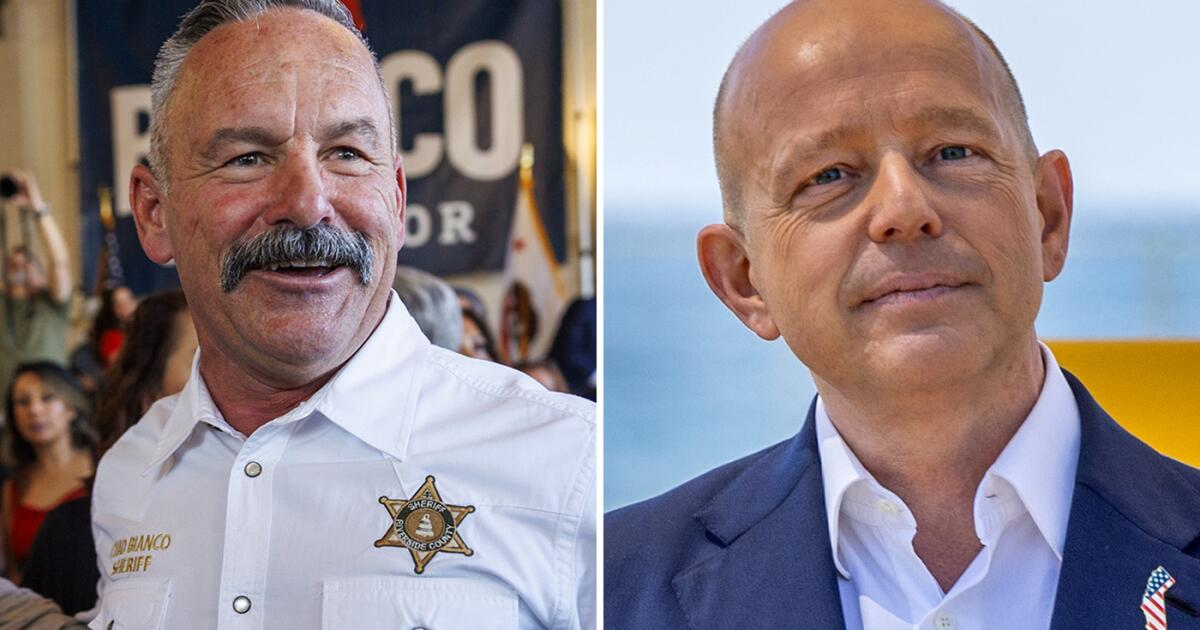
Riverside County Sheriff Chad Bianco, who is a leading Republican candidate for governor, has seized more than 650,000 ballots from last November’s election and is investigating whether they were fraudulently counted.

“This investigation is simple: Physically count the ballots and compare that result with the total votes recorded,” Bianco said at a news conference Friday.

The unusual probe drew a sharp rebuke from California Atty. Gen. Rob Bonta, who said in a statement Friday that it is “unprecedented in both scope and scale” and appears “not to be based on facts or evidence.”

“There is no indication, anywhere in the United States, of widespread voter fraud,” Bonta said. “Counts, recounts, hand counts, audits, and court cases all support this.”

According to Bonta’s office, Bianco’s department on Feb. 26 seized about 1,000 boxes of ballot materials in Riverside County related to the November election for Proposition 50, which temporarily redrew the state’s congressional districts to favor Democrats in response to partisan redistricting in Republican states, including Texas.

The sheriff said his investigators are looking into allegations by a local citizens group that “did their own audit” and found that the county’s tally was falsely inflated by more than 45,000 votes — a claim that local election officials have rejected.

President Trump, who remains fixated on his 2020 election loss, continues to amplify election conspiracy theories and has repeatedly called for the federal government to “nationalize” state-run elections to counter what he says is widespread fraud.

Bonta and California Secretary of State Shirley Weber, both Democrats, have vowed to fight federal interference that could affect voting in California, including efforts to seize election records, as the FBI recently did in Georgia.

Bianco is an outspoken Trump supporter who said in an endorsement video in 2024 that, after 30 years of putting criminals in jail, he figured it was “time to put a felon in the White House — Trump 2024, baby” — referencing Trump’s conviction by a New York jury for falsifying business records while paying hush money to a porn actor.

Bianco’s investigation, which includes all the ballots cast in Riverside County in November, raises questions about how he would handle the election denialism movement if elected governor.

A poll released last week by UC Berkeley’s Institute of Governmental Studies and co-sponsored by The Times showed Bianco and conservative commentator Steve Hilton leading the crowded field of gubernatorial candidates by slim margins, in a left-leaning state.

Last fall, Proposition 50 passed in Riverside County with 56% of the vote — a margin of more than 82,000 ballots.

A citizens group called the Riverside Election Integrity Team has said it performed an audit finding that 45,896 more ballots were counted than were cast.

In a lengthy February presentation to the Riverside County Board of Supervisors, Registrar of Voters Art Tinoco disputed that figure, saying it was based on a misunderstanding of raw data that had not been fully processed.

The actual discrepancy, Tinoco said, was 103 votes, a variance of 0.016% that was far below what he said was the state’s preferred 2% margin of error for certifying results.

Bianco on Friday said that there “is no acceptable error, small or large, in our elections.”

The sheriff did not name the Riverside Election Integrity Team, but his description of the allegations brought to him by “a group of citizen volunteers” matched theirs.

Bianco said the investigation was “not a recount” for the Proposition 50 contest and was “just as much to prove the election is accurate as it is to show otherwise — we will not know until the count is complete.”

Bonta said his office has “attempted to work cooperatively” with the Sheriff’s Department to understand the basis for the probe. The sheriff, Bonta said, “has delayed, stonewalled, and otherwise refused to work with us in good faith” and failed to provide most of the requested documents.

“We’re concerned that there is not sufficient justification for seizing every ballot that was cast in this very largely populated county,” an official in Bonta’s office said in an interview Friday night.

In a March 4 letter to Bianco, the attorney general cited Bianco’s plan to use Sheriff’s Department staffers, “who are not trained and have no experience,” to count the ballots.

“Let me be clear: this is unacceptable,” Bonta wrote. “Your decision to seize ballots and begin counting them based on vague, unsubstantiated allegations about irregularities in the November special election results sets a dangerous precedent and will only sow distrust in our elections. You are also flagrantly violating my directives.”

At his news conference Friday, Bianco fired back by calling Bonta “an embarrassment to law enforcement.”

A Riverside County Superior Court judge, Bianco said, has ordered the appointment of a special master to oversee the ballot count.

In a statement Friday, Secretary of State Weber said “the Sheriff’s assertion that his deputies know how to count is admirable. The fact remains that he and his deputies are not elections officials and they do not have expertise in election administration.”


Source link

Congress looks for Trump’s exit plan as the Iran war drags on

President Trump took the United States to war without a vote of support from Congress, but lawmakers are increasingly questioning when, how and at what cost the war with Iran will come to an end.

Three weeks into the conflict, the toll is becoming apparent. At least 13 U.S. military personnel have died and more than 230 have been wounded. A $200-billion request from the Pentagon for war funds is pending from the White House. Allies are under attack, oil prices are skyrocketing, and thousands more U.S. troops are deploying to the Middle East with no endgame in sight.

“The real question is: What ultimately are we trying to accomplish?” Sen. Thom Tillis (R-N.C.) told the Associated Press.

“I generally support anything that takes out the mullahs,” he said. “But at the end of the day, there has to be a kind of strategic articulation of the strategy, what our objectives are.”

Trump said late Friday that he was considering “winding down” the military operations even as he outlined new objectives and goals and despite the continued buildup of forces in the region.

Congress stands still

The president’s decision to launch the U.S.-Israeli war on Iran is testing the resolve of Congress, which is controlled by his party. Republicans have largely stood by the commander in chief, but will soon be faced with more consequential wartime choices.

Under the War Powers Act, the president can conduct military operations for 60 days without approval from Congress. So far, Republicans have easily voted down several resolutions from Democrats designed to halt the war.

But the administration will need to show a more comprehensive strategy ahead or risk blowback from Congress, lawmakers said, especially as they are being asked to approve billions in new spending.

Trump’s casual comment that the war will end “when I … feel it in my bones” has drawn alarm.

“When he feels it in his bones? That’s crazy,” said Virginia Sen. Mark R. Warner, the top Democrat on the Senate Intelligence Committee.

House speaker says mission is ‘all but done’

The president’s party appears unlikely to directly challenge him, even as the conflict drags on. House Speaker Mike Johnson (R-La.) has said the military operation will be over quickly.

“I do think the original mission is virtually accomplished now,” Johnson told the AP and others at the Capitol this week.

“We were trying to take out the ballistic missiles, and their means of production, and neuter the navy, and those objectives have been met,” he said.

Johnson acknowledged that Iran’s ability to threaten ships in the Strait of Hormuz is “dragging it out a little bit,” especially as U.S. allies have largely rebuffed the president’s request for help.

“As soon as we bring some calm to the situation, I think it’s all but done,” Johnson said.

But the administration’s stated goals — of ending Iran’s ability to obtain a nuclear weapon and degrading its ballistic missile supplies, among others — have perplexed lawmakers as shifting and elusive.

″Regime change? Not likely. Get rid of the enriched uranium? Not without boots on the ground,” Warner said.

“If I’m advising the president, I would have said: Before you take on a war of choice, make the case clear to the American people what our goals are,” he said.

The power of the purse

The Pentagon has told the White House that it is seeking an additional $200 billion for the war effort, an extraordinary amount that is unlikely to win support. Senate Democratic leader Chuck Schumer of New York called the amount “preposterous.”

The Defense Department’s approved appropriations from Congress this year are more than $800 billion, and Trump’s tax breaks bill gave the Pentagon an additional $150 billion over the next several years for various upgrades and projects.

Sen. Mazie Hirono (D-Hawaii) said the country has other priorities.

“How about not taking away funding for Medicaid, which will impact millions of people? How about making sure SNAP is funded?” she said, referring to the healthcare and food assistance programs that were cut as part of last year’s Republican tax reductions.

“These are things that we should be doing for the American people,” she said.

Many lawmakers have recalled the decision by President George W. Bush in the aftermath of the Sept. 11, 2001, attacks to come to Congress to seek an authorization for the use of military force — a vote to support his proposed military actions in Afghanistan and later Iraq.

Tillis said Trump has latitude under the War Powers Act to conduct the military campaign, but that will soon shift.

“When you get into the 45-day mark, you’ve got to start articulating one of two things — an authorization for the use of military force to sustain it beyond that or a very clear path on exit,” he said.

“Those are really the options the administration needs to be thinking about.”

Mascaro writes for the Associated Press.

Source link

L.A. County CEO, who got $2-million settlement, is resigning

Los Angeles County’s chief executive officer Fesia Davenport, who has been on medical leave since October, has announced that she will resign next month.

In a LinkedIn post, Davenport said she was leaving county service to “focus on my health and wellness.”

A notice to the Board of Supervisors provided to The Times Saturday said she had decided to step down April 16 “based primarily on hereditary and ongoing health issues initially uncovered late last year, the risks of which have become clearer based on more recent medical testing and consultation with my doctors.”

She said the “extraordinary amount of time and energy” required of the chief executive played into her decision.

“Although I originally assumed that I would be able to return to my post, I now know that I would be unable to do the job as it deserves to be done while also prioritizing my health,” she told the supervisors.

Supervisor Kathryn Barger issued a statement Saturday saying, “I’m disappointed by Fesia Davenport’s decision to step down. Her dedication and accomplishments over nearly three decades have left a lasting impact on Los Angeles County.”

Davenport, who was appointed to the county’s top job in 2021, received an undisclosed $2-million settlement last summer to compensate for damage to her “professional reputation” from Measure G, a voter-approved ballot measure that will soon eliminate her position.

In a July 8 letter, released by the county counsel in October through a public record request, Davenport said she sought $2 million in damages for “reputational harm, embarrassment, and physical, emotional and mental distress caused by the Measure G.”

Under Measure G, which voters approved in 2024, the county chief executive, who manages the county government and oversees its budget, will be elected by voters instead of appointed by the board. The elected county executive will be in place by 2028.

Measure G “has had, and will continue to have, an unprecedented impact on my professional reputation, health, career, income, and retirement,” Davenport wrote to county counsel Dawyn Harrison. She said it had “irrevocably changed my life, my professional career, economic outlook, and plans for the future.”

At the time the payout was disclosed, Davenport had begun a medical leave, saying at the time she expected to be back to work early this year.

A lengthy email to her staff, posted on LAist, which first disclosed her resignation, said the unspecified “health crisis” has affected three of her siblings and posed risks to her that “have become clearer based on more recent medical testing and consultation with my doctors.”

Her brother Raymond died in 2018 after “experiencing a sudden health crisis,” she said. Last year, two more of her sisters survived the same health crisis, but one will now require 24-hour care for the rest of her life, she said.

“Although I am not out of the woods yet, I am thankful to the Board for granting me the space to focus on my health and to arm myself with the knowledge I needed to make informed decisions,” she wrote.

The office of chief executive issued a statement Saturday saying chief operating officer Joe Nicchitta will continue serving as acting chief executive officer while Davenport remains on medical leave.

“We appreciate Fesia’s nearly three decades of service to Los Angeles County and all that she has accomplished on behalf of its residents and communities,” the statement said.

Davenport listed a number of accomplishments in her letter to the board, including setting up five new departments maintaining the county’s credit rating when other jurisdictions were being downgraded and “balancing the budget while developing a financing plan to compensate sexual assault victims — the largest settlement of its kind in American history.”

That payout has now come under scrutiny after a Times investigation found that some plaintiffs had been paid to join the class-action lawsuit.

Source link

It’s not just vaccines — parents are refusing other routine preventive care for newborns

One day at an Idaho hospital, half the newborns Dr. Tom Patterson saw didn’t get the vitamin K shots that have been given to babies for decades to prevent potentially deadly bleeding. On another recent day, more than a quarter didn’t get the shot. Their parents wouldn’t allow it.

“When you look at a child who’s innocent and vulnerable — and a simple intervention that’s been done since 1961 is refused — knowing that baby’s going out into the world is super worrisome to me,” said Patterson, who’s been a pediatrician for nearly three decades.

Doctors across the nation are alarmed that skepticism fueled by rising anti-science sentiment and medical mistrust is increasingly reaching beyond vaccines to other proven, routine preventive care for babies.

A recent study in the Journal of the American Medical Assn., which analyzed more than 5 million births nationwide, found that refusals of vitamin K shots nearly doubled between 2017 and 2024, from 2.9% to 5.2%. Other research suggests that parents who decline vitamin K shots are much more likely to refuse getting their newborns the hepatitis B vaccine and an eye ointment to prevent potentially blinding infections. Rates for that vaccination at birth dropped in recent years, and doctors confirm that more parents are refusing the eye medication.

“I do think these families care deeply about their infants,” said Dr. Kelly Wade, a Philadelphia neonatologist. “But I hear from families that it’s hard to make decisions right now because they’re hearing conflicting information.”

Innumerable social media posts question doctors’ advice on safe and effective measures like vitamin K and eye ointment. And the Trump administration has repeatedly undermined established science. A federal advisory committee whose members were appointed by Health Secretary Robert F. Kennedy Jr. — a leading anti-vaccine activist before joining the administration — voted to end the long-standing recommendation to immunize all babies against hepatitis B right after birth. On Monday a federal judge temporarily blocked all decisions made by the reconfigured committee.

One common thread that ties together anti-vaccine views and growing sentiments against other protective measures for newborns is the fallacy that natural is always better than artificial, said Dr. David Hill, a Seattle pediatrician and researcher.

“Nature will allow 1 in 5 human infants to die in the first year of life,” Hill said, “which is why generations of scientists and doctors have worked to bring that number way, way down.”

Vitamin K’s importance

Babies are born with low levels of vitamin K, leaving them vulnerable because their intestines can’t produce enough until they start eating solid foods at around 6 months old.

“Vitamin K is important for helping the blood clot and preventing dangerous bleeding in babies, like bleeding into the brain,” said Dr. Kristan Scott of the Children’s Hospital of Philadelphia, lead author of the JAMA study.

Before injections became routine, up to about 1 in 60 babies suffered vitamin K deficiency bleeding, which can also affect the gastrointestinal tract. Today the condition is rare, but research shows that newborns who don’t get a vitamin K shot are 81 times more likely to develop severe bleeding than those who do.

Hill has seen what can happen.

“I cared for a toddler whose parents had chosen that risk,” the Seattle doctor said. The child essentially had a stroke as a newborn and wound up with severe developmental delays and ongoing seizures.

At a February meeting of the Idaho chapter of the American Academy of Pediatrics, doctors said they knew of eight deaths from vitamin K deficiency bleeding in the state over the preceding 13 months, said Patterson, who is president of the chapter.

Infections prevented by other newborn measures can also have grave consequences. Erythromycin eye ointment protects against gonorrhea that can be contracted during birth and potentially cause blindness if untreated. The hepatitis B vaccine prevents a disease that can lead to liver failure, liver cancer or cirrhosis.

Even if a pregnant woman is tested for gonorrhea and hepatitis B, no test is perfect, and she may get infected after testing, said Dr. Susan Sirota, a pediatrician in Highland Park, Ill. Either way, she risks passing the infection to her child.

Why are parents refusing routine care?

Parents give many reasons for turning down preventive measures, including fear that they might cause problems and not wanting newborns to feel pain.

“Some will just say they want more of a natural birth philosophy,” said Dr. Steven Abelowitz, founder of Ocean Pediatrics, which has three clinics in Orange County. “Then there’s a ton of misinformation. … There are outside influences, friends, celebrities, nonprofessionals and political agendas.”

Abelowitz practices in an area of the county with about an equal mix of Republicans and Democrats.

“There’s more mistrust from the conservative side, but there’s plenty on the more liberal side as well,” he said, “It’s across-the-board mistrust.”

Social media provides ample fuel, spreading myths and pushing unregulated vitamin K drops that doctors warn babies can’t absorb well.

Doctors in numerous states say parents refusing vitamin K shots often also decline other measures. Sirota, in Illinois, encountered a family that refused a heel stick to monitor glucose for a baby at high risk for having potentially life-threatening low blood sugar.

Care refusals aren’t a new phenomenon. Wade, in Philadelphia, said she’s seen them for 20 years. But until recently, they were rare.

Twelve years ago, Dana Morrison, now a Minnesota doula, declined the vitamin K shot for her newborn son, giving him oral drops instead.

“It came from a space of really wanting to protect the bonding time with my baby,” she said. “I was trying to eliminate more pokes.”

Her daughter’s birth a couple of years later was less straightforward, leaving the infant with a bruised leg. Morrison got the vitamin K shot for her.

Knowing what she does now, Morrison said, she would have gotten it for her son, too.

Efforts to persuade

Doctors hope to change minds, one parent at a time. And that begins with respect.

“If I walk into the room with judgment, we are going to have a really useless conversation,” Hill said. “Every parent I serve wants the best for their children.”

When parents question the need for the vitamin K shot, Dr. Heather Felton tries to address their specific concerns. She explains why it’s given and the risks of not getting it. Most families decide to get it, said Felton, who has seen no uptick in refusals.

“It really helps that you can take that time and really listen and be able to provide some education,” said Felton, a pediatrician at Norton Children’s in Louisville, Ky.

In Idaho, Patterson sometimes finds himself clearing up misconceptions. Some parents will agree to a vitamin K shot when they find out it’s not a vaccine, for example.

These conversations can take time, especially since the parents doctors see in hospitals usually aren’t people they know through their practices.

But doctors are happy to invest that time if it might save babies.

“I end every discussion with parents with this: ‘Please understand at the end of the day, I’m passionate about this because I have the best interest of children in my mind and heart,’” Patterson said. “I understand this is a hot topic, and I don’t want to disrespect anybody. But at the same time, I’m desperately saddened that we’re losing babies for no reason.”

Ungar writes for the Associated Press.

Source link

After judge rules Voice of America be revived, what’s next?

In a strongly worded decision this week, a federal judge ordered that the Voice of America — an international broadcaster with the mission to provide news for countries around the world that was largely shut down for the last year by the Trump administration — come roaring back to life.

Whether or not that actually happens is uncertain.

The government filed notice Thursday to appeal U.S. District Judge Royce C. Lamberth’s order two days earlier to put hundreds of VOA employees who have been on paid leave the last year back to work. Lamberth had ruled on March 7 that Kari Lake, President Trump’s choice to oversee the bureaucratic parent U.S. Agency for Global Media, didn’t have the authority to reduce VOA to a skeleton.

The Voice of America was established as a news source in World War II, beaming reports to many countries that had no tradition of a free press. Before Trump took office again last year, Voice of America was operating in 49 different languages, heard by an estimated 362 million people.

Trump’s team contended that government-run news sources, which also include Radio Free Europe/Radio Liberty, were an example of bloated government and that it wanted news reporting more favorable to the current administration. With a greatly reduced staff, VOA currently operates in Iran, Afghanistan, China, North Korea and in countries with a large population of Kurds.

Lamberth, in his decision, said Lake had “repeatedly thumbed her nose” at laws mandating VOA’s operation.

Time to turn the page at VOA?

VOA director Michael Abramowitz said legislators in both parties understand the need for a strong operation and have set aside enough funding for the job to be done. “It is time for all parties to come together and work to rebuild and strengthen the agency,” he said.

Don’t expect that to happen soon. “President Trump was elected to eliminate waste, fraud and abuse across the administration, including the Voice of America — and efforts to improve efficiency at USAGM have been a tremendous success,” said White House spokeswoman Anna Kelly. “This will not be the final say on the matter.”

Patsy Widakuswara, VOA’s White House bureau chief and a plaintiff in the lawsuit to bring it back, said that “restoring the physical infrastructure is going to take a lot of money and some time, but it can be done. What is more difficult is recovering from the trauma that our newsroom has gone through.”

It’s an open question whether the administration wants a real news organization or a mouthpiece, said David Ensor, a former Voice of America director between 2010 and 2014. “We don’t know — maybe no one does at the moment — what the future holds,” he said.

The administration’s efforts over the last year to bolster friendly outlets and fight coverage that displeases Trump offer a clue, even though Congress has required that Voice of America be an objective and unbiased news source. This week it was announced that Christopher Wallace, an executive at the far-right network Newsmax who had previously spent 15 years at Fox News Channel, will be the new deputy director at VOA. Abramowitz didn’t know he was getting a new deputy until it was announced.

Widakuswara wouldn’t comment on what Wallace’s appointment might mean. “I’m not going to pass judgment before seeing his work,” she said.

While Lamberth ordered more than a thousand employees on leave to go back to work, it’s not clear how many of them moved on to other jobs or retired in the last year. The judge also said he did not have the authority to bring back hundreds of independent contractors who were terminated.

One employee who left is Steve Herman, a former White House bureau chief and national correspondent at VOA and now executive director of the Jordan Center for Journalism Advocacy and Innovation at the University of Mississippi. Despite the court decisions, he questions whether the Trump administration would oversee a return to what the organization used to be.

“I’m a bit of a pessimist,” Herman said. “I think it’s going to be very difficult.”

An administration loath to admit defeat

Besides fighting to shut it down, Trump is loath to admit defeat. The White House recently nominated Sarah Rogers, the undersecretary of State for public diplomacy, to run the U.S. Agency for Global Media, putting it more firmly within the administration’s control. Her nomination requires Senate approval.

“Is Marco Rubio’s State Department going to allow objective journalism in 49 languages?” Herman asked. “I don’t think so. I would want that to happen, but that’s a fairy tale.”

In the budget bill passed in February, Congress set aside $200 million for Voice of America’s operation. While that represents about a 25% cut in the agency’s previous appropriation, it sent a bipartisan message of support, said Kate Neeper, VOA’s director of strategy and performance evaluation. Besides being a plaintiff with Widakuswara in the lawsuit to restore the agency, she has helped some of her colleagues deal with some of their own problems over the past year, including immigration issues.

“There is a lot of enthusiasm for going back to work,” she said. “People are eager to show up on Monday.”

The hunger for information from Voice of America in Iran when he was director was a clear example of what the organization meant, Ensor said. Surveys showed that between a quarter and a third of Iran’s households tuned in to VOA once a week, primarily on satellite television. Occasionally the government would crack down and confiscate satellite dishes, but Iranians could usually quickly find replacements, he said.

“I believe in Voice of America as a news organization and as a voice of America,” Ensor said. “It was important, and it can be again.”

Bauder writes for the Associated Press.

Source link

Trump’s mixed messages on Iran: ‘Winding down’ but adding troops

President Trump frequently contradicts himself, sometimes in the same speech, social media post or even sentence. On Friday, he sent a torrent of mixed signals about the Iran war that raise more questions about the direction of the conflict and his administration’s strategy.

Within a few hours, Trump said he was considering winding down the war, his administration confirmed it was sending more troops to the Middle East and, in an effort to lessen the economic influence on global energy markets, the United States lifted sanctions on some Iranian oil for the first time in decades — relieving some of the pressure that Washington traditionally has used as leverage.

The confusing combination of actions deepens a sense among Trump’s critics that there is no clear, long-term strategy for the war the U.S. and Israel launched against Iran. Now in its fourth week, the war remains on an unpredictable path and a credible endgame is unclear as the global economy is being roiled.

‘Winding down’ the war

After another rough day in the financial markets, Trump said Friday afternoon on his social media network: “We are getting very close to meeting our objectives as we consider winding down our great Military efforts in the Middle East.”

Trump contended that the U.S. has adequately degraded Iranian naval, missile and industrial capacity and prevented Tehran from acquiring a nuclear weapon.

The president then suggested the U.S. could pull out of the conflict without stabilizing the Strait of Hormuz, the channel through which about one-fifth of the world’s oil supply travels. The strait has been ravaged by Iranian missile, drone and mine attacks during the war.

“The Hormuz Strait will have to be guarded and policed, as necessary, by other Nations who use it — The United States does not!” Trump wrote. But, in another contradiction, he said the U.S. would help if asked, “but it shouldn’t be necessary once Iran’s threat is eradicated.”

While oil that traverses the strait is usually bound for Asia and other places rather than North America, the chaos still affects the United States. Oil is bought and sold globally, so a shortage in oil for Asian countries leads to bidding up prices on oil sold to companies in America too.

That fact, coupled with an Israeli strike on Iran’s gas fields and an Iranian retaliation that crippled a major terminal to ship liquefied natural gas from Qatar, helped tank U.S. equity markets Friday, with the S&P dropping 1.5%. There also was a sharp increase in U.S. fuel prices.

More troops to the war zone

Even as Trump said the U.S. was close to winding down the war, his administration announced it was sending three more warships to the Middle East with about 2,500 additional Marines. It was the second time in a week that the administration said it was deploying more forces to the war zone. The military says some 50,000 are supporting the war effort.

Trump has often said he has ruled out sending in ground troops, but not always, and his administration has hinted at a possible deployment of special forces or similar units.

The Marines being sent to the region are an expeditionary unit designed for quick amphibious landings, but their deployment does not mean a ground invasion is certain. Analysts have suggested the presence of U.S. forces on the ground may be needed to ultimately secure the strait.

The surge in troops came just a day after news emerged that the Pentagon was seeking an additional $200 billion from Congress to fund the war. That extraordinarily high figure does not suggest that the war was winding down.

Lifting some sanctions on Iran

The administration said it would lift sanctions on the sale of Iranian oil, provided it was already at sea as of Friday. The move was an attempt to help lower skyrocketing energy prices by allowing freer sale of oil that Iran has let pass through the strait. It also extends a financial lifeline to the Iranian government that Trump is targeting.

His administration has tried other methods to lower oil prices. It has tapped the U.S. strategic petroleum reserve and lifted sanctions on some Russian oil. Yet Brent crude remained at $112 per barrel Friday, and analysts say oil prices are likely to remain high for months regardless of the next steps in the war.

The Iranian oil eventually would have reached another country, but now the United States and its allies can bid on it as well, Treasury Secretary Scott Bessent wrote on X.

“At present, sanctioned Iranian oil is being hoarded by China on the cheap,” Bessent wrote. “By temporarily unlocking this existing supply for the world, the United States will quickly bring approximately 140 million barrels of oil to global markets, expanding the amount of worldwide energy and helping to relieve the temporary pressures on supply caused by Iran.”

While 140 million barrels may seem like a lot, that is only a couple of days’ worth of oil on the global market.

Patrick De Haan, the head of petroleum analysis at GasBuddy, a U.S. fuel-tracking service, said he does not expect the temporary suspension to have a major influence on gas prices. The de facto closure of the strait has a much greater effect, he said. “Prices will likely still continue to rise so long as the Strait remains silent,” De Haan said.

And the contradictions in the position were obvious in Bessent’s post announcing the move, which labeled Iran “the head of the snake for global terrorism.” He said the administration would take steps to prevent Tehran from cashing in on the sales, but it was unclear how that would be done.

Even among some Republicans, the contradictions triggered rare public skepticism.

“Bombing Iran with one hand and buying Iran oil with the other,” South Carolina Rep. Nancy Mace posted on X on Saturday.

Riccardi writes for the Associated Press. AP business writer Dee-Ann Durbin in Ann Arbor, Mich., contributed to this report.

Source link

ICE officers soon will help with airport security unless Democrats end shutdown, Trump says

President Trump said Saturday that he will order federal immigration officers to take a role in airport security starting Monday unless Democrats agree on a bill to fund the Department of Homeland Security.

In a pair of social media posts, Trump first threatened and then said he had made plans to put officers from U.S. Immigration and Customs Enforcement in airports if the congressional standoff continues. He made the announcement as a partial shutdown contributes to long lines to pass through screening at some of the nation’s largest airports.

The president suggested ICE agents would bring the administration’s immigration crackdown into the nation’s airports, promising to arrest “all Illegal Immigrants.”

“I look forward to moving ICE in on Monday, and have already told them to, ‘GET READY. NO MORE WAITING, NO MORE GAMES!’” Trump wrote while spending the weekend in Florida.

The move appears to be a pointed effort to expand the type of immigration enforcement that has become a sticking point in Congress. Democrats pledged to oppose funding for the Department of Homeland Security unless changes were made in the wake of a crackdown in Minnesota that led to the fatal shootings of two protesters. Democrats are asking for better identification for federal law enforcement officers, a new code of conduct for those agencies and more use of judicial warrants, among other measures.

The Minnesota operation was tied in part to allegations of fraud involving Somali residents. On Saturday, Trump said ICE officers sent to airports would focus on arresting immigrants from Somalia who are in the United States illegally. Repeating his criticism of Somalis, he said they “totally destroyed” Minnesota.

“If the Democrats do not allow for Just and Proper Security at our Airports, and elsewhere throughout our Country, ICE will do the job far better than ever done before,” Trump said.

Trump’s posts did not offer additional detail on how ICE would take a role in airport security and what it meant for the Transportation Security Administration, which screens passengers and luggage for hazardous items.

The vast majority of TSA employees are considered essential and continue to work during the funding lapse, but they are doing so without pay. Call-out rates have started to increase at some airports, and Homeland Security said at least 376 have quit since the partial shutdown began Feb. 14.

On Saturday, in a rare weekend session, the Senate rejected a motion by Democrats to take up legislation to reopen TSA and pay workers who are now going without paychecks. Republicans argue that they need to fund all parts of the Department of Homeland Security, not just certain ones. A bill to fund the agency failed to advance in the Senate on Friday.

There were signs of progress, though, with the restarting in recent days of stalled talks between Democrats and the White House. On Saturday, Republican and Democratic senators were set to meet for a third consecutive day with White House officials behind closed doors as Senate Democratic leader Chuck Schumer of New York spoke of “productive conversations.”

Senate Majority Leader John Thune (R-S.D.) urged the bipartisan group to act quickly. He has said that Democrats and the White House need to find compromise as lines at airports have grown.

“If that group that’s meeting can’t come up with a solution really quickly, things are going to get worse and worse,” Thune said Saturday.

Binkley writes for the Associated Press. AP writer Mary Clare Jalonick contributed to this report.

Source link

L.A. police union, City Council president clash over traffic stop

Good morning, and welcome to L.A. on the Record — our City Hall newsletter. It’s David Zahniser, with an assist from Libor Jany and Howard Blume, giving you the latest on city and county government.

It was a dramatic moment for City Hall: Council President Marqueece Harris-Dawson, appearing at a meeting about reining in certain traffic stops by police, revealed that he had been pulled over only two days earlier.

Harris-Dawson, who is Black, told his colleagues that police have stopped him four times since he took office in 2015. During the most recent incident, he said, an officer asked him a number of questions, including, “How do you have this vehicle?”

“It was as traumatic on Wednesday as it was when I was 16,” Harris-Dawson said at the March 6 committee meeting.

It wasn’t the Los Angeles Police Department that pulled over Harris-Dawson’s car, a Tesla Model Y with a government license plate. Instead, it was an officer from the L.A. Unified School District police, who began trailing him while he was heading to work on the freeway, Harris-Dawson said recently.

The district has provided minimal details, and its police union has not commented. But the union that represents nearly 8,700 LAPD officers, known for its bare knuckle politics, is now deeply involved.

Ricky Mendoza, president of the Los Angeles Police Protective League, urged Dist. Atty. Nathan Hochman on Thursday to investigate whether Harris-Dawson attempted to resist, delay or obstruct the officer who carried out the traffic stop, in violation of state law.

Mendoza pointed to a California Post story that accused Harris-Dawson of contacting an unnamed school board member during the incident “in an apparent effort to get out of the citation.”

You’re reading the L.A. on the Record newsletter

Sign up to make sense of the often unexplained world of L.A. politics.

Tom Saggau, a police union spokesperson, said Harris-Dawson was caught driving “recklessly” in a school zone — and should have disclosed it during his remarks about the incident.

“Mr. Harris-Dawson’s testimony implied LAPD pulled him over because of his race, not his driving behavior,” Saggau said in an email. “That implication painted our minority-majority membership as racist, and we will always stand up for our membership and correct falsehoods and other tall tales.”

Harris-Dawson, for his part, told The Times he received the citation for attempting to enter a left turn lane too early — before it was actually marked as a turn lane. That maneuver did not pose a threat to anyone, he said.

Harris-Dawson said he did contact other people during the traffic stop, to ensure he had real-time witnesses. He would not provide their names.

“I called several people during that encounter so that there was a record of it besides myself,” he said.

The Times reached out to the school board about the police union’s claims. Four of the seven, either in person or through a representative, said they did not talk to Harris-Dawson about the stop.

The dispute comes as the council is weighing new limits on “pretextual stops,” where officers use a minor violation as justification to pull someone over and then investigate whether a more serious crime has occurred. The stops have disproportionately affected Black and Latino drivers, and the LAPD has scaled back their use over the past decade.

At the meeting where Harris-Dawson revealed he had been pulled over, two council committees were discussing next steps on the issue.

On Thursday, a Harris-Dawson aide hit back at the union, accusing the group of trying to divert the public’s attention away from that work.

“Just like pretextual traffic stops, the call for these pointless investigations violates the public trust, is wholly ineffective, and wastes precious resources that could be used to keep us safe,” said Harris-Dawson spokesperson Cerrina Tayag-Rivera in a statement this week.

Asked about his recent experience with the school police, Harris-Dawson said: “It’s not up to the driver to determine if a stop is pretextual, but it felt pretextual.”

School district officials have offered only minimal information about the incident.

“During our morning school drop-off, a Los Angeles School Police Department officer conducted a traffic stop based on an observed moving traffic violation in the vicinity of one of our high schools and issued the driver a citation,” the statement said.

Harris-Dawson told The Times that the encounter began the morning of March 4, during his drive from his South L.A. home to City Hall, when he noticed a white, unmarked car following him on the northbound 110 Freeway.

He took the Adams Boulevard offramp, turned right on Adams and headed toward Main Street, with the unmarked car following him through multiple intersections. When he turned left on Main, the officer turned on his lights and pulled him over, he said.

The officer walked up to the car with his hand on his gun and told him to roll down the windows, Harris-Dawson said.

“Because it was an unmarked car … I thought I was dealing with Immigration and Customs Enforcement,” he said.

Harris-Dawson said the officer told him that he had illegally crossed the double-yellow line in the center of the street, preparing to turn left before his car was actually in the marked left-turn lane.

The intersection is four blocks from Santee High School.

Harris-Dawson said the officer asked him how he came to possess the car. He informed the officer that it was a city vehicle and that he sits on the council. He handed the officer his driver’s license and, at a certain point, demanded it back.

The officer refused twice, Harris-Dawson said.

“He said, ‘Are you accusing me of taking your property?’” Harris-Dawson said. “I said, ‘That’s absolutely what I’m accusing you of.’”

Harris-Dawson said he was cited for violating the state vehicle code that prohibits motorists from driving the double-yellow lines.

“That stop was not about traffic safety,” he said, adding: “It was an investigative stop where the officer decided to give a citation, frankly, because I failed the attitude test.”

Harris-Dawson said through his spokesperson that he has paid the $238 citation. Asked if he is considering any legal action, he responded: “I’m weighing all my options.”

Meanwhile, Mendoza said he wants not just the D.A. but also City Atty. Hydee Feldstein Soto to investigate Harris-Dawson’s behavior during the stop, determining who he called, what he said, and whether the officer was contacted by a school board member.

The police union president said it’s “unethical and potentially illegal for a city leader to use their position of power to attempt to avoid accountability for their reckless driving in a school zone.”

The Police Protective League is well known for its heavy involvement in city politics, especially during election season. On the Westside, the union has already put nearly $500,000 into efforts to reelect Councilmember Traci Park.

The union has endorsed Mayor Karen Bass, a close ally of Harris-Dawson, but hasn’t been spending on her behalf.

Councilmember Hugo Soto-Martínez, who sits on the council’s public safety committee, said he believes the union is trying to “bully” Harris-Dawson, to ensure that others remain silent about pretextual stops.

“I think the council president is very courageously bringing up a reform on one of the most racist practices” in the LAPD, he said.

State of play

— DROPPING CHAVEZ: The bombshell New York Times report that found that labor organizer Cesar Chavez sexually abused minors left the state’s elected officials scrambling to rename streets, buildings and of course, the holiday itself. In L.A., Bass and several council members said they would rename the March 31 holiday “Farm Workers Day,” a move also backed at the county level by Supervisor Janice Hahn. Meanwhile, Raul Claros, running for an Eastside council seat, said Cesar Chavez Avenue should be renamed Dolores Huerta Avenue.

— DEMS WEIGH IN: The L.A. County Democratic Party threw its endorsement behind Bass and Councilmembers Eunisses Hernandez, Katy Yaroslavsky, Monica Rodriguez, Hugo Soto-Martínez and Tim McOsker. The group also backed several newcomers: Marissa Roy for city attorney, Zach Sokoloff for city controller and council candidates Barri Worth Girvan and Jose Ugarte.

— PLUS THE COUNTY: The Dems also threw their support behind four countywide candidates: Sheriff Robert Luna, Assessor Jeffrey Prang, Supervisor Lindsey Horvath and State Sen. Maria Elena Durazo, who is running to replace termed-out Supervisor Hilda Solis.

— SPEAKING OF WHICH: It’s been pretty clear from the past year that Horvath is not a fan of Bass, offering bracing critiques of the city’s approach to homelessness and other issues. But her four colleagues — Hahn, Solis, Kathryn Barger and Holly Mitchell — have all lined up behind the mayor’s reelection, according to a campaign announcement issued Friday.

— POLICE PAYOUT: A jury awarded $5.9 million to a former LAPD commander who claimed she was wrongfully fired over an alcohol-fueled incident in 2018. The commander, Nicole Mehringer, said she was held to a different standard than her male colleagues, losing her job after being arrested on a charge of public intoxication.

— MINDING MEASURE ULA: Councilmember Ysabel Jurado was named the chair of a new three-member ad hoc committee formed to take a fresh look at the impacts of Measure ULA, the 2022 tax on high-end property sales. She will be joined by Councilmembers John Lee and Imelda Padilla in examining the measure, which has been criticized by real estate leaders.

— HOLLYWOOD’S HOMELESS: Bass and Soto-Martínez celebrated the opening of a new homeless services hub on Hollywood Boulevard to help unhoused residents shower, find new clothes, obtain meals and receive help finding an apartment or a bed in an interim housing facility.

QUICK HITS

  • Where is Inside Safe? The mayor’s signature program to address homelessness went to South Los Angeles, focusing on the area around Broadway and 23rd Street, according to the mayor’s team.
  • On the docket next week: The council meets Tuesday to discuss its strategy for complying with Senate Bill 79, which seeks to add taller, denser apartments within a half mile of rail and dedicated bus stops.

Stay in touch

That’s it for this week! Send your questions, comments and gossip to LAontheRecord@latimes.com. Did a friend forward you this email? Sign up here to get it in your inbox every Saturday morning.

Source link

Inside Democratic Socialists of America’s decision on whether to endorse for L.A. mayor

The same day she announced her surprise bid for mayor, Los Angeles City Councilmember Nithya Raman called a member of the local Democratic Socialists of America chapter.

She wanted to meet with the group’s leadership to explain her late-breaking decision to challenge Mayor Karen Bass, her longtime ally, which took just about everyone in the city by surprise.

Two days later, Raman gathered at her Silver Lake home with leaders of DSA-LA, which has endorsed her two runs for City Council but has been at odds with her on some issues.

Leslie Chang, a co-chair of the 5,000-member chapter, recalled Raman saying, “‘The media is going to paint me as a DSA candidate, and I have a relationship with you, and I’m interested in maintaining that relationship. So let’s talk.’”

DSA-LA, which had declined to endorse in the mayor’s race, will decide on Saturday whether to reopen its endorsement process.

Some members believe that a mayoral endorsement would take valuable phone-banking and door-knocking resources away from the slate of six local candidates they have already endorsed.

If the process moves forward, the question would then be whether to back Raman or Rae Huang, a housing activist viewed by some members as more aligned with socialist principles, while others see her as less electable. The group could also decide not to endorse either candidate.

A woman poses for a portrait in front of Los Angeles City Hall.

Leslie Chang, co-chair for the Los Angeles chapter of the Democratic Socialists of America, at a rally at Molina Grand Park in Los Angeles on March 18.

(Gina Ferazzi / Los Angeles Times)

Going to bat for a mayoral candidate would be the highest-profile drive the local organization has run in a city where its influence has expanded since it knocked on doors for Raman’s first council campaign in 2020. In addition to Raman, three other DSA-backed politicians now occupy seats on the 15-member City Council.

In New York, DSA member Zohran Mamdani was recently elected mayor on a platform of rent freezes and free city buses.

“It would be a major coup for DSA to have one of their candidates be elected mayor [of Los Angeles],” said Sara Sadhwani, a politics professor at Pomona College.

The Rev. Rae Huang

The Rev. Rae Huang, who is running for mayor of Los Angeles, joined the Fair Games Coalition to announce the launch of the Overpaid CEO Tax Initiative in front of the Tesla Diner in West Hollywood on Jan. 14.

(Genaro Molina / Los Angeles Times)

As a city council member, Raman has delivered several major wins celebrated by DSA members, including strengthening renter protections and passing the first reform to the city’s rent stabilization ordinance in decades.

But she has sometimes been out of step with the group, approving budgets that increased police spending and seeking to revise Measure ULA, also known as the city’s “mansion tax,” to offer a 15-year exemption to developers of multifamily and commercial projects.

Raman’s most visible split with DSA occurred over the Oct. 7, 2023, Hamas attack that killed more than 1,200 Israelis.

DSA released a statement saying “this was not unprovoked.” Raman called the statement “unacceptably devoid of empathy for communities in Israel.”

In early 2024, DSA censured Raman for seeking and accepting an endorsement from Democrats for Israel-Los Angeles, a liberal Zionist group, chiding her for “accepting support from [DSA’s] enemies.”

“Why are people wary of endorsing Nithya for mayor? A lot of people who were in leadership at the time are hesitant because of that situation,” said Noah Suarez-Sikes, a member of DSA-LA’s steering committee.

In a statement to The Times, Raman called herself an “independent leader.”

“While I share the DSA’s emphasis on uplifting the working class and those who have been left behind by the political establishment, I don’t always agree with my allies on how to accomplish our goals,” she said.

Some DSA members see Huang, who has little citywide name recognition or political experience, as more connected to the group’s platform than Raman. Huang has called for “Fast and Free Buses” as well as for more public input on the city budget.

Huang highlighted her support for keeping the “mansion tax” as is, also telling The Times that she would reduce the Police Department budget and the number of officers.

Raman has said she believes the Los Angeles Police Department should maintain its current staffing of around 8,700 sworn officers.

Konstantine Anthony, a DSA member and Burbank City Council member who gathered signatures to reopen the endorsement window, is supporting Huang.

“She is the exact candidate DSA across the country should be running for every seat,” he said.

Keshav Kundassery, a DSA member since 2019, supports Raman.

While he called Huang’s campaign for mayor “inspiring,” Kundassery said he does not think that she can get enough support.

“DSA should be in the business of running campaigns to win,” he said.

DSA-LA has already endorsed in four city council races, backing incumbents Hugo Soto-Martínez and Eunisses Hernandez; Faizah Malik, who is running against incumbent Traci Park on the Westside; and Estuardo Mazariegos for an open South L.A. seat.

The group is also backing Marissa Roy, who is challenging City Atty. Hydee Feldstein Soto, and Rocío Rivas, an incumbent L.A. Unified school board member.

“Any consideration we make now we will make understanding the balance of resources of our six candidates and a potential seventh,” said Chang, the DSA-LA co-chair.

Times staff writer David Zahniser contributed to this report.

Source link

California considers restrictions on social media for kids

Meta, YouTube and Snapchat are already under scrutiny for risks they pose for young people. Now they are facing another hurdle in their home state.

California lawmakers are considering legislation to restrict social media use for teens and children under 16 years old. Assemblymember Josh Lowenthal (D-Long Beach) and others introduced a bipartisan bill that would bar social media platforms from allowing users under 16 years old from creating or maintaining accounts.

The legislation comes amid mounting concerns about how social networks impact the mental health of young people. Anxiety among parents and lawmakers has heightened as platforms and AI chatbots become more intertwined with people’s daily life.

Last month, tech executives, including Meta’s chief executive and co-founder Mark Zuckerberg, testified in a landmark trial in Los Angeles over a lawsuit that alleges social media is addictive and harms children.

The trial centers on whether tech companies such as Instagram, which is owned by Meta, and YouTube can be held liable for allegedly promoting a harmful product and addicting users to their platforms.

California has passed legislation before aimed at making social media platforms and chatbots safer but faced pushback from tech industry groups that have sued to stop new laws from taking effect. Tech companies are have responded by releasing more parental controls and restrictions for young users.

Other countries have been moving forward with restrictions on social media. Last year, Australia barred children under 16 years old from having social media accounts.

TechNet, whose members include Meta and Google, said in a statement that it hasn’t taken a position on the California bill but doesn’t believe a ban will effectively achieve the Legislature’s goal’s.

“We support balanced, evidence-based solutions that strengthen protections for young people, equip parents with meaningful tools, and ensure accountability across platforms. Our companies have made significant investments in teen safety and parental controls, and we remain committed to building on that progress,” said Robert Boykin, TechNet Executive Director for California and the Southwest in a statement.

The use of social media by young people has divided tech executives.

Pinterest Chief Executive Bill Ready wrote in an op-ed in TIME published on Friday that governments should follow Australia’s lead and ban social media for kids under 16 years old if tech companies don’t prioritize safety.

“Social media, as it’s configured today, is not safe for young people under 16,” he said.”Instead, it’s been designed to maximize view time, keeping kids glued to a screen with little regard for their well-being.”

Lowenthal’s bill cited social media’s dangers such as “exposure to harmful content, compulsive use patterns, exploitation, and adverse impacts on mental health and well-being.”

“Existing age-based restrictions that rely primarily on user self-attestation have proven ineffective and place an unreasonable burden on children and families rather than on the entities that design, operate, and profit from social media platforms,” the bill states.

A spokesman for Lowenthal didn’t immediately respond to a request for comment.

Source link

Democrats excluded from USC governor debate urge rivals to boycott

Four Democrats running for governor called on their fellow candidates to boycott an upcoming debate at USC, reiterating concerns that the criteria used to determine who was invited to participate resulted in every prominent candidate of color being excluded from the forum.

“We ask each and every candidate who is in this race to recognize that if we can’t have a fair process for a debate, then we should all not participate,” said Xavier Becerra, the former U.S. Health and Human Services secretary. “We call on them to withdraw from this biased forum.”

Becerra’s call was echoed by former Los Angeles Mayor Antonio Villaraigosa, state Supt. of Public Instruction Tony Thurmond and former state Controller Betty Yee during a Friday afternoon news conference.

The candidate’s request comes a week after some of them raised concerns about the criteria for Tuesday’s debate, arguing that it was engineered to allow the inclusion of San José Mayor Matt Mahan, who entered the race in late January and quickly raised millions of dollars from Silicon Valley executives.

“The rules initially were polling and money. Matt Mahan is [polling] lower than some of us, period,” Villaraigosa said, adding that the debate organizers “then added time in the race,” which resulted in Mahan’s invitation.

Mahan’s campaign did not respond to a request for comment on Friday, but when Becerra raised such concerns last week, Mahan said the former Biden administration official ought to be included in the debate.

The matter is further complicated by Mahan supporters who have notable ties to the university.

Mike Murphy, a co-director of the USC center hosting the debate, has been voluntarily advising an independent expenditure committee backing Mahan. The veteran GOP strategist said last week that he had nothing to do with organizing the debate and that he has asked for unpaid leave at the university through the June 2 primary if he takes a paid role in the campaign.

USC has also received tens of millions of dollars in donations from billionaire real estate developer Rick Caruso and his wife. Caruso, a USC alumnus who served as a trustee for years, is also a Mahan supporter.

A representative for Caruso did not respond to a request for comment.

The debate, hosted by the USC Dornsife Center for the Political Future, KABC-TV Los Angeles and Univision, is scheduled to take place on campus at 5 p.m. Tuesday — less than two months before ballots begin arriving in voters’ mailboxes. The forum will be streamed and broadcast on ABC and Univision affiliates across the state.

USC and the television stations put out a joint statement Friday morning, prior to the candidates’ news conference, justifying the criteria used to determine who was invited to participate and saying none of the debate partners had any influence on the methodology.

“We want to be clear that we categorically, unequivocally deny any allegations that the debate criteria was in any way biased in favor or against any candidate and want to clarify the facts,” they said in a statement, adding that Christian Grose, a USC political science professor, was asked to develop “data-driven” benchmarks to determine which candidates were invited.

“The methodology was based on well-established metrics consistent with formulas widely used to set debate participation nationwide — a combination of polling and fundraising — and developed without regard to any particular candidate.”

After the Democratic candidates called for their competitors to not participate, USC and KABC declined to comment further. Univision did not respond to a request for comment.

Grose defended the methodology he crafted as “objective” in an interview Friday, and said he met with Becerra as well as the staff of other candidates to explain it.

“The idea that it was biased or designed to create some sort of outcome to disfavor the candidates who spoke at the press conference is just not correct,” Grose said, adding that attacks on the methodology have a “chilling effect” on universities and media outlets who sponsor debates.

“I’m not worried about the optics,” he said. “The optics are we are having a debate at USC to inform voters and educate students.”

Jarred Cuellar, a political science assistant professor at Cal Poly Pomona, described Grose’s methodology as “thoughtful” and “empirically grounded,” and characterized the concerns raised by candidates not included in the debate as unfounded and not credible.

“The formula is methodologically sound and represents a clear improvement over how debate participation has often been determined,” he said. “Rather than relying on a single metric such as polling, it takes a multidimensional approach to evaluating candidate viability. That approach better reflects how political scientists measure complex phenomena like electoral competitiveness.”

But the controversy has caused consternation among USC professors past and present.

“It seems like an unforced error that is casting the entire event in a bad light,” said a current USC professor who closely follows politics but is not involved in the debate, and who asked for anonymity to speak candidly. “It’s super important that if the debate happens, it happens correctly.”

Darry Sragow, a veteran Democratic strategist who taught election and environmental law at USC for 19 years, said that while he believes the large field of Democratic candidates needs to be winnowed, that’s not the job of a university or media outlets.

“Every one of these eight [Democratic candidates] is capable of running the state of California,” he said. “ It would certainly be my advice to USC and to Univision and to ABC to allow all the candidates to take part, or to cancel the debate.”

The four Democratic candidates not invited to the debate argued that voters are just starting to pay attention to the thus-far sleepy race and that diverse candidates should be represented.

“We are a minority-majority state, and the idea that the four candidates of color are not going to be on the stage to bring those perspectives, to really speak to those communities, is really not doing right by the voters,” Yee said.

Becerra said some of the candidates had requested to speak with top university leadership, including President Beong-Soo Kim. In other conversations, he said university officials raised the possibility of “either canceling this debate or incorporating more of the candidates in it. Evidently they could not agree to do that. … I think they recognize that there were problems with the way this debate had been organized.”

Becerra said he reviewed the formula and has “never seen” debate criteria like it before during his decades of serving in elected office.

“Your fundraising numbers are divided by the number of days you’ve been out there campaigning in front of voters,” he said. “So you could have raised millions of dollars, but if you’ve been in longer than someone else who just raised millions of dollars very quickly, you get penalized.”

Campaigns for the invited candidates — Democrats Rep. Eric Swalwell of Dublin, former Orange County Rep. Katie Porter, climate activist Tom Steyer and Mahan; as well as Republicans Chad Bianco, the sheriff of Riverside County, and former Fox News host Steve Hilton — did not respond to requests for comment on the call to boycott the debate.

Source link