The White House signaled Friday night that CNN would be left off Air Force One for President Trump’s Saturday trip, the latest media restriction from the administration in an ongoing dispute with 1st Amendment implications.
The news organization was replaced by Real America’s Voice News, a conservative outlet.
The news came just after journalists from three news outlets that Trump banned last week from the White House grounds — CNN, MS NOW and Politico — returned to the executive complex with TV cameras, laptops and microphones in hand.
A judge temporarily struck down the ban in an overnight ruling early Thursday, but his decision didn’t directly address White House pool reporters. The networks continued to refrain from covering Trump as part of the pool, even as reporters from all three outlets were allowed back in the White House.
The temporary order from the judge mentioned only the White House grounds and said nothing directly about Air Force One.
Theodore Boutrous Jr., the news outlets’ attorney, did not immediately respond to an email and phone call requesting comment Friday night.
For a while during the day, the U.S. network video pool for the White House was back in operation for the first time since Trump banned the three news outlets in an extraordinary showdown over media access.
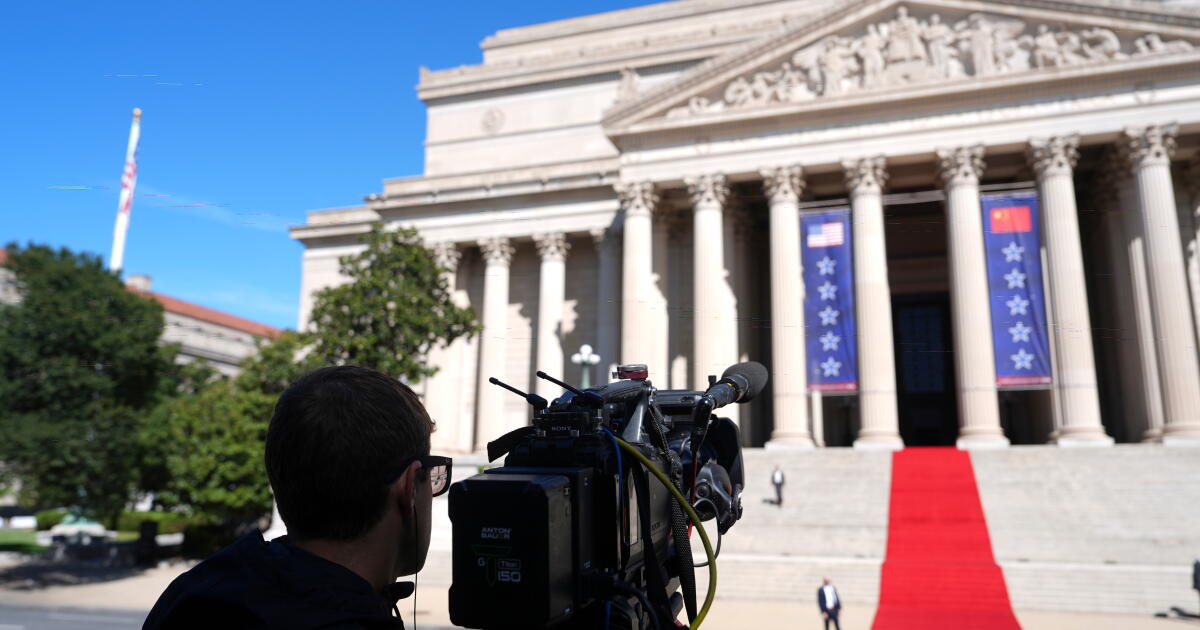
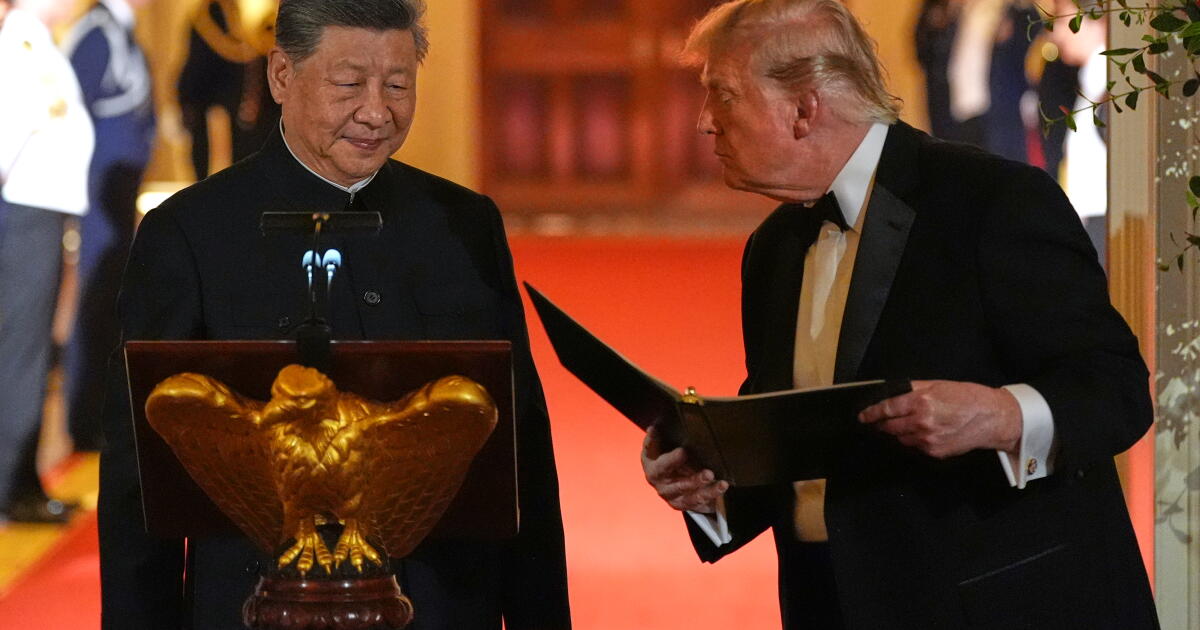
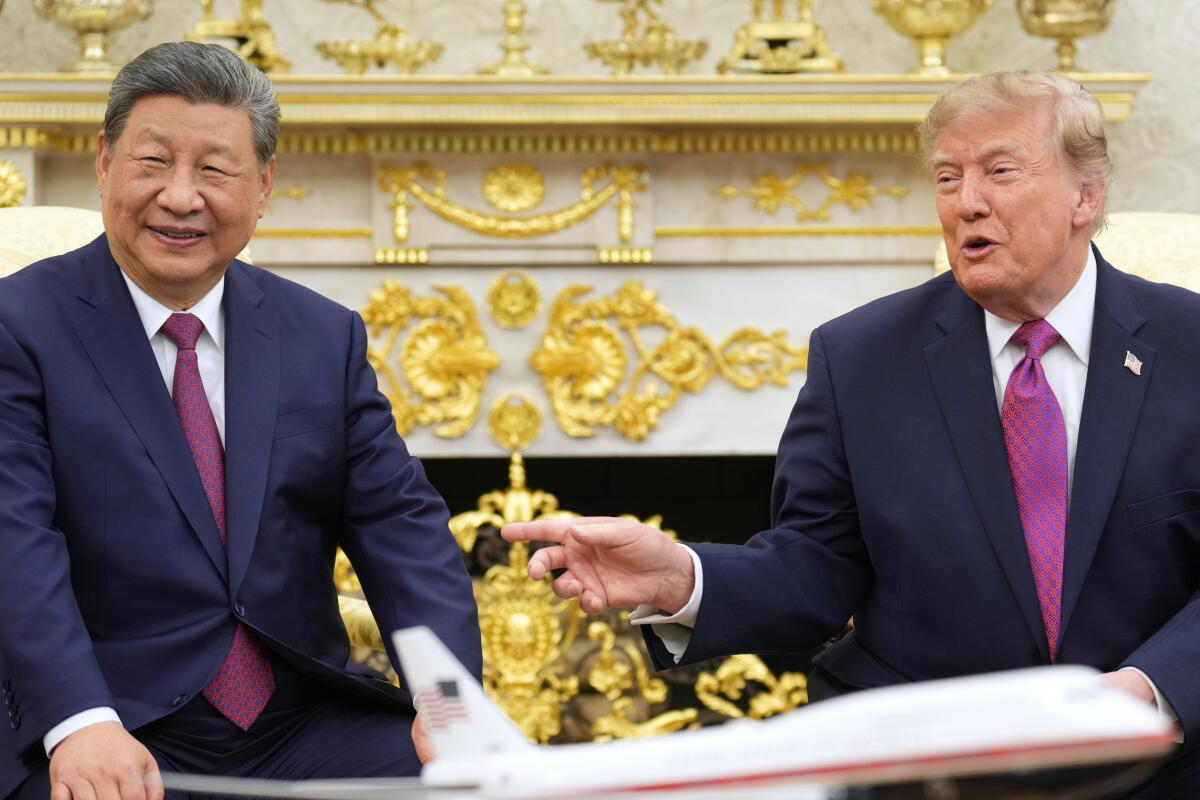
At noon on CNN, viewers could see Trump and Chinese President Xi Jinping touring the National Archives Museum along with their wives, Melania Trump and Peng Liyuan. The banner along the bottom of the screen read: “Trump and China’s Xi Visit National Archives.” It was a routine report from a state visit — but for the fact that CNN had not aired live video of Trump in several days.
“As of now, all systems are go,” said a person familiar with the pool, speaking on condition of anonymity because of the fluidity of the situation.
The pool consists of five major U.S. broadcast outlets that take turns shooting and sharing video. When the White House banned CNN — which belongs to the pool — from White House grounds, along with MS NOW and Politico, the other four pool providers declined to participate in a show of solidarity.
CNN was not commenting directly earlier Friday, referring instead to its editorial coverage. But Brian Stelter, the network’s media analyst, posted on X that CNN had a pool assignment at the National Archives event and that the White House had approved the network’s credentials.
At first glance, it looks like a typical Republican campaign advertisement. As images of President Trump flash across the screen, the 30-second spot says, “America will never be a communist country” and boasts about the “largest tax cuts in history.”
But there’s something different near the end — a bit of text at the bottom that says “paid for by the U.S. government.”
According to AdImpact, which tracks media spending, the advertisement cost $14,000 and it ran during conservative shows on Fox News and Newsmax.
The White House said in a statement the ad is “educational and unapologetically patriotic.”
“These public service announcements are about reminding Americans to love their country and understand what makes it worth defending, at home, at our borders, and abroad,” the White House statement said.
Fox News and Newsmax did not immediately return a request for comment.
The White House did not say what agency paid for the spot, which includes background music with singers crooning “love me” over and over.
The advertisement does not say who voters should support in the midterms, but it meshes with campaign messaging from Trump and other Republicans, particularly during the party’s unusual convention in Dallas earlier this month.
Democratic Rep. Jamie Raskin of Maryland, who is in line to chair the House Judiciary Committee if his party wins the majority in November, said in a social media post that it’s a violation of the Hatch Act for government employees to work on such a video.
“It is blatantly unethical under numerous federal ethics provisions proscribing the use of government resources for political campaigns,” Raskin wrote.
Republicans also criticized the ad.
North Carolina Sen. Thom Tillis, who is not running for reelection, referenced the former right-wing Hungarian prime minister to critique the advertisement.
“It’s inappropriate. It’s not like they need a GoFundMe page to have the dollars to do that sort of ad and they could do it. But using taxpayer dollars, it feels like Viktor Orban,” he said.
Louisiana Republican Sen. John Kennedy said he hadn’t seen the ad but questioned whether it was legal.
“I don’t generally like to see politicians use public money to pay for their own campaign ads,” he said.
Catalini writes for the Associated Press. AP writers Joey Cappelletti and Steven Sloan in Washington contributed to this report.
TRENTON, N.J. — New Jersey ’s Democratic lieutenant governor has resigned after the governor demanded he step down over sexual harassment allegations and ethical lapses involving his relationships with women.
Gov. Mikie Sherrill had given Lt. Gov. Dale Caldwell an ultimatum that he resign by Friday, though she lacked the power to remove him if he said no. Sherrill announced the resignation at a news conference that afternoon.
“His decision will allow us to move forward with important work serving the people of our state,” she said. “In my administration we are committed to doing what is right, not what is politically expedient.”
Sherrill picked Caldwell, a Methodist pastor and former president of Centenary University, to be her running mate last year. They were elected together and took office in January, but within four months, Caldwell had become the subject of an anonymous complaint about his behavior with women.
In New Jersey, a governor can’t fire the lieutenant governor, as the post is independently elected. But lieutenant governors can be impeached and removed from office by the Legislature. A governor can strip a lieutenant governor of nearly all duties and responsibilities, effectively sidelining them from the administration.
Sherrill hired the law firm of a former New Jersey attorney general, Christopher Porrino, to investigate.
In a report released Thursday, the lawyers said Caldwell had committed several violations of state policy. It said Caldwell, 66, had made an advance toward a staff member’s friend and when he was rebuffed told the staffer, “you young women are looking for young sperm.”
The report also said Caldwell had tried to get a promotion for a state employee he was dating and brought personal guests to the opera and other ticketed events without paying for them, as required by ethics rules.
Caldwell denied any misconduct and said in a letter included in the report that he suspected his relationships with women were being subjected to extra scrutiny because he was a single Black man.
His lawyer, Thomas Calcagni, said Caldwell never made the sperm statement or used his position to further his romantic life. Caldwell did recommend a female friend for a promotion, Calcagni said, but only because he thought she would be a good candidate for the job. Caldwell denied ordering anyone to promote her or knowingly violating ethics rules by failing to disclose their personal relationship when he recommended her.
Sherrill had said Caldwell needed to resign because he committed “serious, repeated violations of state policy,” despite multiple warnings and trainings.
Besides being the first in line to become governor if Sherrill were to die, be removed from office or become incapacitated, Caldwell also had served as New Jersey’s appointed secretary of state. In that role, he had a supervisory role over the state’s elections.
In neighboring New York, a similar impasse has played out over the last year between Democratic Gov. Kathy Hochul and her estranged Lt. Gov. Antonio Delgado, who launched a caustic primary challenge to unseat her only to withdraw from the race as the election neared.
Hochul is running for reelection in November with Adrienne Adams, the former speaker of the New York City Council, as her replacement lieutenant governor nominee.
Catalini and Marcelo write for the Associated Press. Marcelo reported from New York.
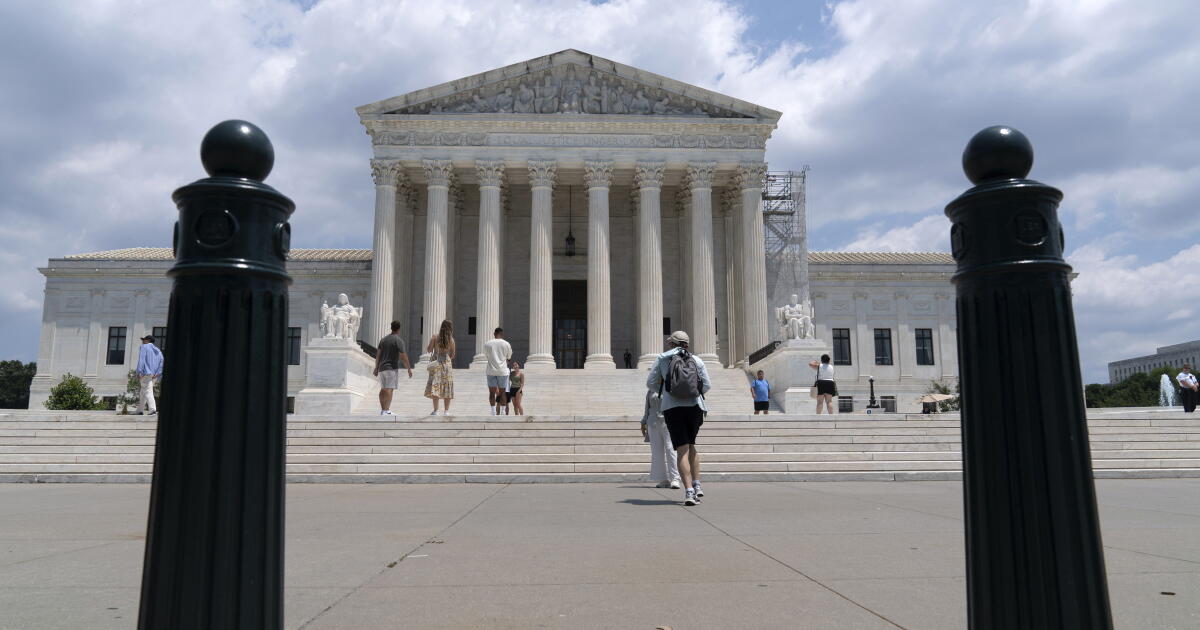
WASHINGTON — For the third time this month, the Supreme Court has rejected Missouri’s bid for one more Republican-leaning congressional district.
With no dissents, the justices upheld a state court order requiring the use of a 2022 election map, which favors Republicans in six of the eight districts.
“At this late date, ordering reversion to the 2025 map in the midst of an ongoing election would usher in electoral chaos,” the justices wrote.
The GOP, with the backing of conservative federal judges, wanted to use a new 2025 election map that redrew the district in Kansas City that had elected a Black Democrat.
That would have given Republicans a 7-1 advantage, but the Supreme Court stood in the way.
“As a matter of state law, the 2022 map — not the 2025 map — must be used in the 2026 congressional election,” the justices said in an unsigned opinion. “This Court has repeatedly cautioned that lower federal courts should not ‘alter the election rules of a state on the eve of an election.”
Each side in this messy dispute accused the other of seeking to change the voting districts on the eve of the election.
On Tuesday, the opponents of the newly drawn GOP-friendly map appealed to the Supreme Court for the third time. They said it is too late to switch the districts because ballots had gone out based on the existing map.
They said the Republicans “demand a new map after votes have already been cast. Ballots using the 2022 map have been printed and mailed, and absentee voting, both by mail and in-person, began today.”
But the state’s Republican attorneys said the primary elections took place under the new 2025 map, and that argues for keeping those districts in place for the general election in November.
Last September, the Missouri General Assembly, following President Trump’s lead, voted to redraw its eight congressional districts. In recent years, the state had sent six Republicans and two Democrats to Congress.
The Legislature’s goal was to flip one more seat in favor of Republicans. The new map would do that by breaking up the Kansas City district that had elected Rep. Emanuel Cleaver, a Black Democrat, with a new district that favored a Republican.
But a group called People Not Politicians and its executive director, Richard von Glahn, gathered more than 300,000 signatures for a referendum to challenge the new law before it took effect.
After waiting nine months to respond, Missouri Secretary of State Denny Hoskins, a Republican, denied the referendum in early August on the same day the primary elections got underway.
Von Glahn and his group of voters sued and won a unanimous decision from the Missouri Supreme Court on Sept. 3. Its judges said the state Constitution authorizes such a referendum and a new election map cannot take effect until the voters have spoken.
Hoskins filed an emergency appeal at the Supreme Court and cited the “chaotic fallout” from the state court “irresponsible decision.”
Justice Brett M. Kavanaugh, who oversees appeals from the 8th Circuit Court based in St. Louis, denied the appeal without comment on Sept. 8.
But shortly after his decision was issued, U.S. District Judge Stephen R. Clark, a Trump appointee, issued a temporary restraining order that prohibited the state from using the any voting map other than the new one.
People not Politicians appealed that decision to the Supreme Court.
On Sept. 10, Kavanaugh and the full court granted the appeal and blocked the judge’s order from taking effect.
The justices did not explain their reasoning, but the meaning of the order was clear. The state Supreme Court ruling meant the new map could not be used for this year’s election.
But that did not stop the 8th Circuit Court from ruling the state must use the new map.
Siding with several Republican candidates, a 2-1 majority said the use of 2022 map was unconstitutional because the primary elections were held under the new map. Its decision ordered the elections to be held using the new map.
This was a surprising ruling, since the Supreme Court’s order on Sept. 10 barred judges in Missouri from intervening further in the dispute over the voting maps.
But after a third trip to the court, the justices said the state must use the 2022 map.
WASHINGTON — Expectations were low entering President Trump’s meetings with China’s leader, Xi Jinping, this week, after officials on both sides tempered hopes for a breakthrough. Yet the summit’s stark lack of substance surprised even the closest China watchers.
It was a visual affair designed to project a new phase of managed competition between a prevailing superpower and a rising one — a message that Washington and Beijing are ultimately capable of responsible leadership. But even a cursory look beneath the surface revealed the challenges ahead for the world’s most consequential bilateral relationship.
Industry pleas and bipartisan calls for Trump to negotiate a meaningful framework on artificial intelligence fell on deaf ears. A trade truce between the two sides was extended for a mere two months. And Trump again warned Xi not to assist Iran as the U.S. war there continues — a warning that, so far, has gone unheeded, with millions of dollars’ worth of crucial Chinese parts reportedly arriving in Tehran by the planeload.
“The U.S.-China relationship has settled into a managed stalemate. It has stabilized at the top without stabilizing underneath,” said Craig Singleton, a senior fellow on China at the Foundation for Defense of Democracies.
“The elaborate pageantry matters precisely because there is still relatively little substantive progress to showcase,” Singleton said. “Trump appears to value the personal relationship as an end in itself. Xi treats his relationship with Trump as a means to shape U.S. choices and forestall future competitive actions.”
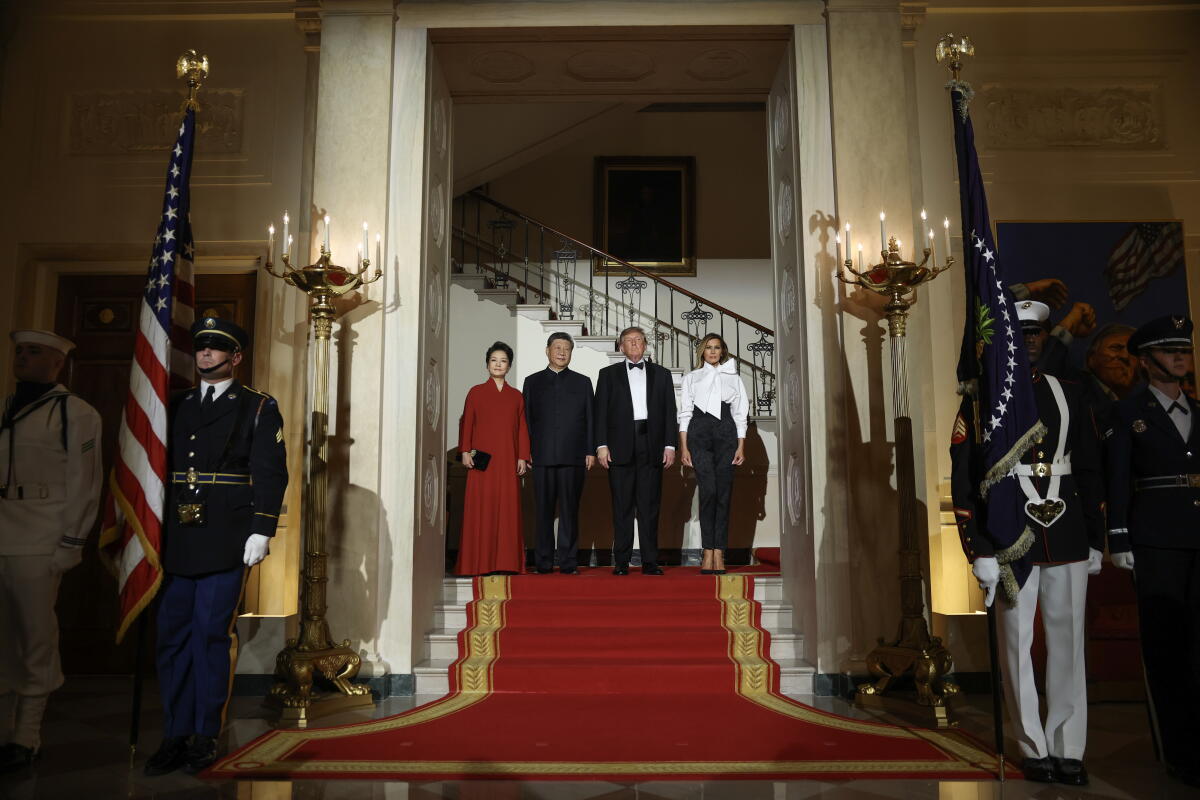
President Trump and First Lady Melania Trump stand with Chinese President Xi Jinping and First Lady Peng Liyuan before Thursday night’s state dinner.
(Kevin Dietsch / Getty Images)
The summit followed a playbook from Trump that has become familiar over the last decade, placing his direct relationships at the center of diplomacy and reducing the complexities of statecraft to blunt attempts at charm.
As he did during his lavish state visit to Beijing this spring, Trump repeatedly patted Xi on the back, a gesture considered highly inappropriate in Chinese political culture that nevertheless reflected Trump’s strategic focus on personal friendship.
He toured Xi around a series of controversial renovations to the White House, including the South Lawn — now paved over with a massive helipad designed as the presidential seal — and the Rose Garden, also paved over in order for Trump to host al fresco dinner parties.
Before entering a heavily gilded Oval Office, Trump walked Xi along a renovated colonnade now adorned with gold-framed portraits of U.S. presidents. He paused at one for his predecessor, President Biden, replaced with a mocking image of an autopen, suggesting the former president was incapable of signing documents himself.
Trump patted Xi on the back once more, and the two men laughed, in a moment that generated outrage online.
“Let’s be very clear on this one point,” John Delaney, a former Democratic member of Congress, wrote on social media. “The President mocking a former President in front of the communist leader of China is the most un-American thing an American president has ever done.”
Tim Cook, executive chairman of Apple Inc., during the state dinner for Chinese President Xi Jinping.
(Annabelle Gordon / Bloomberg / Getty Images)
Part of the state visit included a dinner at the White House that was attended by some of the country’s most prominent tech executives, such as Elon Musk, Sam Altman and Mark Zuckerberg. The tech giants’ presence at the event was notable given that there was heightened public interest in knowing how China and the United States are planning to regulate artificial intelligence.
During the visit, Xi called for artificial intelligence to remain “under human control” as the two countries race for technological advancement in the industry. Lawmakers and AI industry leaders have also called for guardrails on the nascent technology, which experts warn could soon surpass human understanding. Trump, however, has been reluctant to embrace limits on the industry, and it is unclear how much the topic was discussed while Xi was in Washington.
Xi Jinping’s remarks reflect growing concern within China over whether governments in Washington or Beijing will be able to contain a technology with potentially transformative capabilities, according to a U.S. official.
But the visit showed a surprising alignment of visions between the U.S. and Chinese presidents, embracing fierce competition that avoids miscalculation and conflict. Both stressed the importance of dialogue, with Xi invoking the concept of the Thucydides trap, a historical paradigm that holds that rising powers inevitably clash with established ones.
“I don’t think anyone will be surprised if there are no significant agreements,” said David Ochmanek, a senior researcher at Rand. “My sense is that Xi sees little reason to compromise with us on anything right now.”
Trump and Xi arrive for a state dinner in the East Room of the White House on Thursday night.
(Brendan Smialowski / AFP / Getty Images)
The two men are expected to meet twice more this year, alongside other world leaders, at the Asia-Pacific Economic Cooperation summit in Shenzhen, China, and the Group of 20 summit in Miami.
“We do not need to avoid mentioning competition, but our competition should be a healthy one, and should be kept within bounds,” the Chinese president said Thursday from the Cross Hall of the White House. “It should be a race of catching up with one another, not a wrestle in which one either wins or loses. China and the United States must hold the line of no conflict, and no confrontation between us.
“Our two militaries should maintain regular dialogue, and improve mechanisms for crisis communication and prevention,” he continued. “The Thucydides trap can be overcome.”
MONTGOMERY, Alabama — President Trump vowed to campaign in 35 of the most competitive battleground districts in the final sprint to November’s midterm elections.
Instead, he will begin October by stumping in Alabama and Oklahoma, two of the most Republican states in the nation. His events are sure to draw enthusiastic crowds of fans, but his choice of destinations is a reminder of his deep unpopularity in much of the country during a campaign season he’s sought to make all about himself.
Trump will hold rallies Thursday in Durant, Okla., and Friday in Mobile, Ala., where he is sure to draw crowds, but also has raised eyebrows.
While organizers insist the rallies are in locations with media markets that span state lines and they will help bolster broader turnout, Trump’s itinerary is yet another sign of the uphill fight that his party faces. Republicans already have been pouring money into red states once considered safe as they try to shore up candidates facing an unhappy electorate that has soured on Trump and his polices.
Some Republicans also have been distancing themselves from the president in recent weeks as they try to appeal to voters beyond Trump’s “Make America Great Again” base. They’ve removed or downplayed references to the president on their websites and increasingly voiced opposition to his unpopular war with Iran.
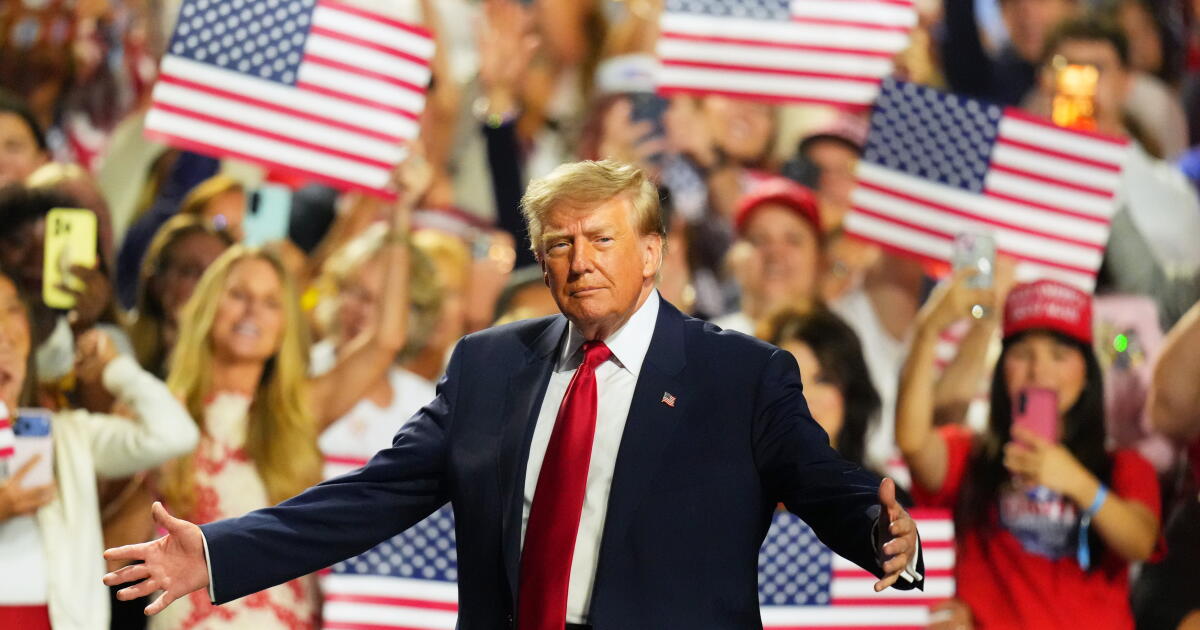
But Trump’s events next week are likely to deliver something he craves: adoring crowds. He is almost guaranteed to fill the venues with the kind of die-hard supporters who fueled his political rise, projecting excitement as he tries to bolster enthusiasm and rally Republicans.
“The President’s ability to engage with and activate low-propensity voters is unmatched. That’s why he’ll be barnstorming the country to activate the voters we need to win in November,” Republican National Committee spokesperson Natalie Baldassarre said, promising more October rallies.
Democrats, meanwhile, celebrated the announcement. “The political floor is falling out from underneath Trump and Congressional Republicans, forcing them to scramble to spend and campaign in deep red territory in the final weeks,” said Viet Shelton, spokesperson for the Democratic Congressional Campaign Committee.
The RNC noted that Durant is on the Texas border and next to the Dallas-Fort Worth media market and will draw Republicans in Texas, which has emerged as one of the most critical states on the map. Scandal-plagued Atty. Gen. Ken Paxton, whom Trump backed over incumbent Sen. John Cornyn, is locked in a tight race against Democrat James Talarico. Gov. Greg Abbott also is facing a stronger-than-expected challenger in Democrat Gina Hinojosa.
Mobile is next to Florida’s panhandle, a Republican stronghold where high turnout can help bolster Trump-backed candidates running for Senate and governor. However, Florida Republican Sen. Ashley Moody is not expected to attend.
In Oklahoma, Trump will be stumping for Mike Mazzei, whom he backed as the Republican nominee for governor during a competitive primary. Mazzei is running against Oklahoma’s Democratic House Minority Leader Cyndi Munson.
“This race continues to get more competitive — and national Republicans are right to be worried about Mazzei,” Democratic Governors Assn. spokesperson Kevin Donohoe said in a statement.
Alabama, meanwhile, holds deep nostalgia for Trump and his early supporters. He held his first mega-rally in Mobile more a decade ago, drawing some 30,000 people to a college football stadium. The crowd made clear to skeptics of his campaign that he was more than a celebrity novelty.
“It’s very natural that he would host a rally here as he is gearing up for the midterm elections,” said John Wahl, the Republican candidate for lieutenant governor and former chair of the Alabama Republican Party.
Although Republicans remain the heavy favorites in Alabama’s statewide campaigns, they face a more challenging political landscape.
Former Democratic Sen. Doug Jones is mounting a vigorous campaign for Alabama governor against one of Trump’s most vocal allies, Republican Sen. Tommy Tuberville, who welcomed the president’s visit.
Republican Rep. Barry Moore, running to replace Tuberville in the Senate with Trump’s backing, said the president’s rally “will be the jet fuel we need to win big in Alabama.”
Mobile is also near Alabama’s 2nd Congressional District, which leans red after its lines were redrawn but is not a slam dunk for Republicans as they try to dislodge Democratic Rep. Shomari Figures.
Figures has been criticizing the president’s plan to lower import tariffs on foreign beef in an appeal to cattle ranchers as he tries to fend off a challenge from his Trump-backed opponent, State Rep. Rhett Marques.
Trump has promised to ramp up his campaigning in the election’s final stretch and had said he would visit all of the most competitive districts .
“It’s all about 35 races,” he said at a recent Rose Garden dinner attended by Republican lawmakers. “I’m going to go to every one of those 35 places and we’re going to see if we can get everyone elected.”
Colvin and Chandler write for the Associated Press. Colvin reported from New York. AP reporter Bill Barrow in Atlanta contributed to this report.
NEW YORK — The nation’s cybersecurity agency on Thursday released an election infrastructure security plan 40 days before November’s midterms, laying out potential threats to election systems and listing services it would offer to election officials to protect the vote.
Election officials said the plan is both inadequate and belated after the administration gutted the agency’s election security work last year, prompting the officials to pay for private services to ensure they were prepared for the upcoming elections.
“For them to come in five weeks before the election, yeah, nice effort,” said Nevada’s Democratic Secretary of State Cisco Aguilar, who added that he would have liked to see the federal government provide more funding for cybersecurity, rather than Nevada taxpayers having to pay for it.
Homeland Security Secretary Markwayne Mullin had originally promised to release the plan by mid-August as part of the Trump administration’s move to kickstart election security assistance after a hiatus. He announced the plan at the same time he threatened election officials for not cooperating with the administration’s preferred methods to hunt down noncitizen voting, a phenomenon that research shows is extremely rare.
The U.S. Cybersecurity and Infrastructure Security Agency, which is housed under the Department of Homeland Security, has since its founding in 2018 helped warn state and local election officials about potential threats from foreign governments.
But CISA, as it’s known, was largely absent from that role in last year’s elections after the Trump administration dismantled much of its role in election security. The administration cut some 1,000 employees from CISA and slashed $10 million from two cybersecurity initiatives, including one dedicated to helping state and local election officials.
CISA has also gone the entirety of Trump’s second term without a Senate-confirmed director, instead cycling through a series of acting leaders.
Plan refers to ‘consistent’ support that many election officials say has been lacking
The 13-page document released Thursday warns of various threats to election security, including software vulnerabilities, hacks of voter registration databases, insider threats and physical security incidents, such as bomb threats that targeted several polling locations in the 2024 elections.
But it affirms that many longstanding election practices can address such threats and says the agency’s goal is “to ensure the American people can trust voting systems and know that physical safety measures will be in place when they go to their assigned polling locations to cast their votes.”
It states that DHS has “consistently supported CISA’s delivery of cybersecurity and physical security services to election officials,” something numerous election officials around the country have said isn’t true.
Multiple secretaries of state told the Associated Press that services previously provided by CISA, such as live tabletop exercises and penetration tests to evaluate security of their systems, were not available in the lead-up to this year’s midterms.
Minnesota Secretary of State Scott Simon, a Democrat, said in August that his office expects to spend roughly $250,000 on private vendors to conduct penetration testing, which can expose security vulnerabilities and recommend actionable fixes.
Shenna Bellows, the Democratic secretary of state in Maine, told the AP the same month that communications with CISA had been “sporadic and irregular, to say the least.” She said it would be helpful if the Trump administration could restore intelligence briefings that used to be granted to election officials about threats from foreign adversaries, but noted that trust with federal officials had been broken with the cuts to the agency.
Thursday’s plan doesn’t mention any specific 2026 threats from adversaries like Russia, Iran or China, all of whom have sought to meddle in U.S. elections — either directly through hacking or indirectly through influence campaigns.
Kris Warner, the Republican secretary of state in West Virginia, said Thursday that some of CISA’s assistance to his state had been continual throughout the Trump administration, including no-cost reviews of its public-facing websites for cybersecurity issues.
Warner acknowledged CISA had cut back under the Trump administration but said he views the agency “as a resource and not as a service provider” and said his office had last year hired a departing CISA election security advisor who has helped fill any gaps that may exist.
Report follows August call between CISA and election officials
In early August, two CISA officials — acting director Nick Anderson and assistant director for integrated operations Jim Harrell — joined a National Assn. of Secretaries of State call attended by a bipartisan group of secretaries of state, according to several election administrators.
The call grew tense when Arizona’s Democratic Secretary of State Adrian Fontes voiced his concerns about the withdrawal of federal resources.
Fontes told the AP at the time that he told the CISA officials he didn’t trust them. He said it seemed to him the officials were there “to cover their butts.”
“They even acknowledged on the call that it was too late for them to do anything for 2026,” he said.
Simon said the officials appeared interested in rebuilding relationships and previewing their future plans, which he appreciated. But he said the effort at goodwill came later than election officials needed.
“Secretaries of state have already moved on and sought other partners and other resources for the services that CISA has retreated from over the last year and a half,” Simon said.
In Michigan, a voting rights group has tried to fill the gap
In Michigan, where mail ballots have already been sent out for the Nov. 3 elections, Deputy Secretary of State Aghogho Edevbie said the state’s relationship with CISA has been “nonexistent” this year despite working together closely in previous election cycles.
“If the federal government wants to be helpful, they can’t do so at the 11th hour,” the Democrat said.
Ashiya Brown, the Michigan state director of the voting rights group All Voting Is Local, agreed. She noted the new plan says CISA has 10 regional directors to support election administrators but still doesn’t answer her biggest question.
“Does CISA still have the people and capacity to provide that support when clerks need it?” she asked. “I’m glad CISA has put forward a plan, but what matters now is whether the support described in it reaches local election officials before November.”
CISA has been hiring on its website for new positions, Brown said, but it’s unclear whether they are all staffed yet.
Meanwhile, Brown, a former security official with the Michigan Department of State, said her group has hired former CISA employees to help provide training and other support to election clerks and fill the gap.
Edevbie said even without collaboration with CISA, he is confident the state’s elections are secure.
“We are always prepared to defend our elections and to ensure that every voter who is eligible to cast a ballot can do so here in Michigan,” he said.
Swenson writes for the Associated Press. AP writers Jessica Hill in Las Vegas and Jacqueline GaNun in Lansing, Mich., contributed to this report.
ByCybele Mayes-OstermanAssociated Press/Report for America
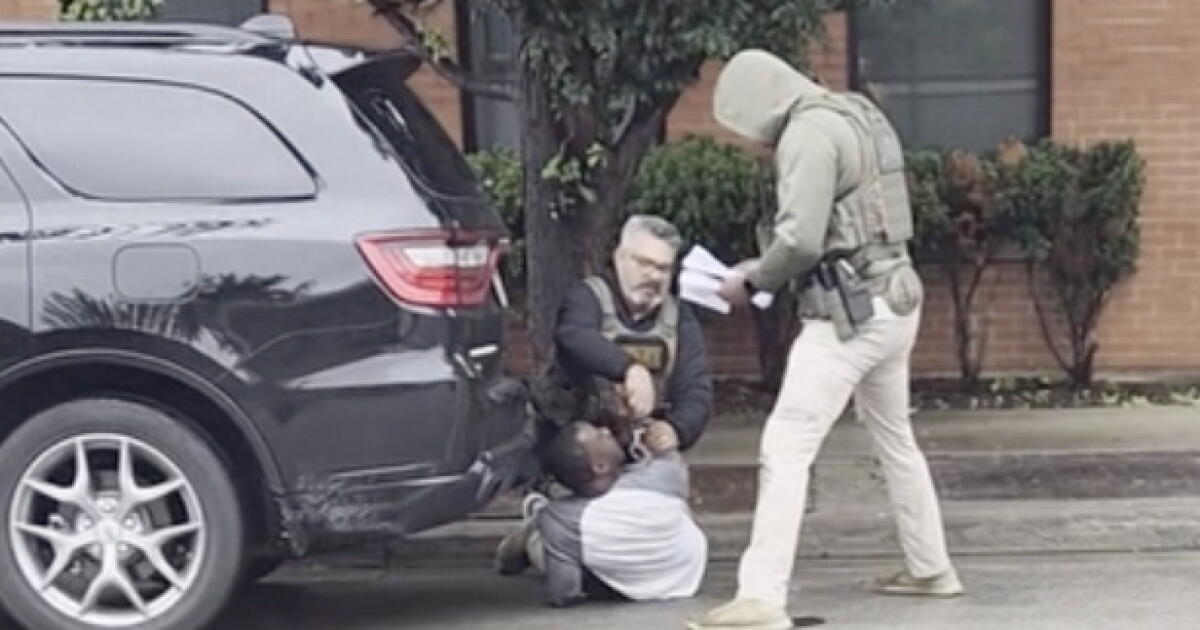
CHICAGO — A U.S. citizen was left bloodied and injured on the side of the road in a Chicago suburb after a confrontation with immigration enforcement agents who mistook him for a fugitive, according to local police and a resident who tried to help the man.
The man, whose identity was not disclosed, was taken away in an ambulance after the encounter on Sunday in Evanston, a city around 12 miles north of downtown Chicago. He told police his head, neck and teeth were injured, according to a news release from the Evanston Police Department.
A federal agent told officers who responded to calls reporting an altercation at just before 10 a.m. that morning that five agents in separate vehicles were looking for a fugitive with a Chicago address and a warrant for his arrest, according to the release. The agents mistook the man for the fugitive, the agent told police.
When the man refused to give his identification, the agents tried to handcuff him, the agent said. After realizing he was a U.S. citizen and not the person they were seeking, they released him.
One police officer saw blood on the agent’s hands, according to the release. The agent told police he was injured while trying to handcuff the man, and that they left the area immediately after because they feared protesters who had gathered would attack them, it noted.
Police have visited the man at the hospital and photographed his injuries, and are investigating the encounter.
Local authorities investigating
Evanston Mayor Daniel Biss said in a post on X that the man was treated at St. Francis Hospital for minor injuries. The police department “continues to investigate the situation, and we will remain vigilant about federal activities,” he wrote.
U.S. Immigration and Customs Enforcement officers had “encountered an individual who resembled the target” of a “targeted enforcement operation,” the Department of Homeland Security said in a statement. “The individual was given lawful commands but was not cooperative and refused to identify himself.”
The officers “left the scene without further incident” after the man identified himself, according to the statement. “When ICE officers offered the individual assistance, he refused.”
Illinois authorities condemn bloody encounter
The incident drew condemnation from Illinois officials as backlash grows against ICE’s presence in communities around the country. ICE announced a record number of arrests last month, with nearly 51,000 people arrested.
“I am disgusted and outraged by reports of what happened in my hometown of Evanston on Sunday,” Illinois Rep. Jan Schakowsky said in a statement.
Eyewitnesses tell AP what they saw
Ryan Garton, 56, told the Associated Press that he saw the agents pinning down the man, who was Black, on the side of the road as he was driving home. He pulled over to document what was happening on video.
One agent had his knee on the man’s back and was “beating up on him,” Garton told the AP. “I’m a citizen, leave me alone,” Garton said the man screamed as the agent pinned him down. Around five people stood nearby and yelled at the agent to stop.
Garton said he urged the agent to get off the man so he could inspect his injuries, and that the agent acknowledged that he was already aware the man was a U.S. citizen. When the agent stepped away, Garton saw bloodstains in the shape of handprints on the man’s shirt.
“His upper right eye socket and temple were swollen as if he had been punched” and his face was scraped “as if it had been ground into the sidewalk,” he said.
The man told Garton that he had been walking to the pharmacy to pick up a prescription when the agents stopped him.
Michael Lipson, the owner of a store across the street from where the incident occurred, said he saw the agents wrestle the man to the ground as he repeatedly yelled that he is a U.S. citizen. The man’s face looked “badly messed up,” Lipson told the AP.
Lipson said the agents checked cards and papers from the man’s wallet before leaving them scattered on the road. Lipson laid out his sweatshirt for the man to rest on while Garton inspected his injuries.
The same day, ICE agents shot and wounded a man in Austin, Texas, the latest in a string of shootings by federal immigration agents that have prompted growing backlash against the Trump administration’s aggressive immigration tactics.
At least 10 people have died in encounters with immigration agents in President Trump’s second term, including a Colombian man shot dead in Maine in July by an agent with a history of violent behavior, and a Mexican man hit by a tractor trailer as he fled agents in Florida the same month. ICE agents fatally shot Renee Good and Alex Pretti, both U.S. citizens, during the Trump administration’s siege of Minneapolis, named “Operation Metro Surge,” earlier this year.
BEIJING — It’s unclear if President Trump’s elaborate reception of his Chinese counterpart in Washington dazzled President Xi Jinping, but for the Chinese public, it made quite an impression.
Trump’s rare welcome of Xi and his wife, Peng Liyuan, at the airport, as well as the bilateral and cultural events the leaders attended were closely covered — and praised — by Chinese state media. Those who watched at home saw a China elevated in status.
“I read the news that the U.S. reception standards for President Xi are very high,” Xiang Ziyu, a postgraduate student in Beijing, told The Associated Press. “I’m quite impressed because it shows that our country has become really powerful.”
That takeaway was shared by several people interviewed by the AP as well as in comments on Chinese social media, which praised China’s cooperation with the United States.
The official People’s Daily newspaper allocated the entire front page to the trip, featuring six photos of the Xi-Trump meetings.
Meanwhile, on the Chinese search engine Baidu, the three most popular search topics on Friday were the talks between Trump and Xi; the state dinner attended by Xi and Peng; and greetings extended by Xi to Chinese people on the occasion of the Mid-Autumn Festival being celebrated on Friday.
Shen Zuohang, a Beijing resident, felt reassured by the coverage and by Trump and Xi’s seeming agreeability on topics like trade, artificial intelligence and security.
“We have no trade war and no military conflict. Even on the issue of Taiwan we are moving in a good direction instead of having heated confrontation,” Shen said.
“The two sides are handling issues in a more acquiescent way.”
According to China’s Foreign Ministry, Xi called on Trump to oppose the independence of Taiwan, an island democracy China claims as its own territory, and to handle the issue with caution. Trump did not immediately make comments on Taiwan, but had previously described U.S. arms sales to the island as open to negotiations with China.
Xiang, the student, said the summit overall sent a positive signal and will help improve the Chinese public’s opinion of the relations between the two countries.
“It is better than not communicating,” he said.
Associated Press video producer Wayne Zhang in Beijing and writer Simina Mistreanu in Taipei, Taiwan, contributed to this report.
WASHINGTON — The Supreme Court on Friday upheld President Trump’s expanded use of government data to spot non-citizens who are registered to vote.
The justices granted an emergency appeal from Trump’s lawyers and set aside a judge’s order that blocked use of this data on the grounds it was error-prone, particularly for naturalized citizens.
Justices Ketanji Brown Jackson, Sonia Sotomayor and Elena Kagan dissented.
The decision will aid states that seek to scrub their voter rolls and remove those who are not citizens.
Several Republican-led states including Texas and Florida supported the administration’s appeal.
The use of the new database “allowed Texas to more efficiently, promptly, and economically ensure the accuracy of its voter rolls,” the state said. It was “able to run its entire list of 18 million voters” through the expanded system of checks “in bulk and for no cost.”
It’s not clear the decision will have much impact in California and other Democratic-led states. It is likely to have a limited impact in the month ahead because the law forbids states from purging their voter rolls in the 90 days prior to an election.
The court, in an unsigned opinion, said the law supported use of the data.
“The federal Government has an obligation to respond to requests from state and local election officials seeking to verify the citizenship of voters,” the court said. “The order below prevents the federal government from using the program it believes is best suited to the task.”
The administration said the Department of Homeland Security can respond to more than 1 million requests per day to check if a person appears to be a citizen or not based on Social Security records and other data files.
If not, state or county election officials may require these suspect voters to furnish proof of their citizenship.
However, states and local election boards are not required to conduct these searches. The administration also said its data reports are not final proof of citizenship.
Upholding these data searches “would not require states, candidates, parties, or voters to do anything,” Solicitor Gen. D. John Sauer told the court. “It would simply make available to states additional information. … States that wish to use that information in the course of ensuring that only eligible citizens cast ballots this November should be free to do so.”
In dissent, Jackson said the court’s order creates the “risk that states might cancel the voter registrations of at least some recently naturalized citizens or force such persons to provide proof of citizenship before voting.”
The new system of voter checks is based on the 40-year-old Systematic Alien Verification for Entitlements, or SAVE, that was created by Congress. Then, the goal was to check if applicants were entitled to receive federal benefits.
Last year, Trump issued an executive order directing Homeland Security to expand the reach of SAVE to provide states “access to appropriate systems for verifying the citizenship or immigration status of individuals registering to vote or who are already registered to vote.”
It is a federal crime for non-citizens to register and vote.
Trump has long maintained that non-citizens are voting, but he has had little evidence to support that claim.
Voting rights advocates sued, contending the new “mass verification” system was not authorized by Congress and relied on data that is protected as private under the law.
In June, U.S. District Judge Sparkle Sooknanan, a Biden appointee, agreed and blocked use of the expanded searches. The administration has “trampled on the privacy rights of American citizens in a manner that threatens the sacred right to vote,” she said.
On Sept. 4, the U.S. court of appeals by a 2-1 vote refused to overturn her ruling, prompting the administration’s fast-track appeal.
The voting rights advocates, led by the League of Women Voters, had urged the court to stand aside.
“The government has recklessly created an error-laden master citizenship database that endangers millions of Americans’ privacy and voting rights,” they said.
The data searches are flawed, they argued, because they “only reflect a person’s citizenship status when they applied for a Social Security number. That status does not automatically update if the person later naturalizes.”
Texas admitted that the mass checks yield “some inaccurate information.” It said 2,724 people were cited as “potential non-citizens” among its 18 million registered voters.
In response, county officials had to check further to confirm the citizenship of these voters, the state said.
Last week, the Supreme Court dealt Trump a defeat when it blocked use of his proposed postal rules that could have prevented millions of voters from casting ballots by mail.
In a brief order, the court said Trump’s claims of power over states and their voting were “unlikely to succeed.”
But in the case of the expanded data files, the court said the law appears to favor the administration.
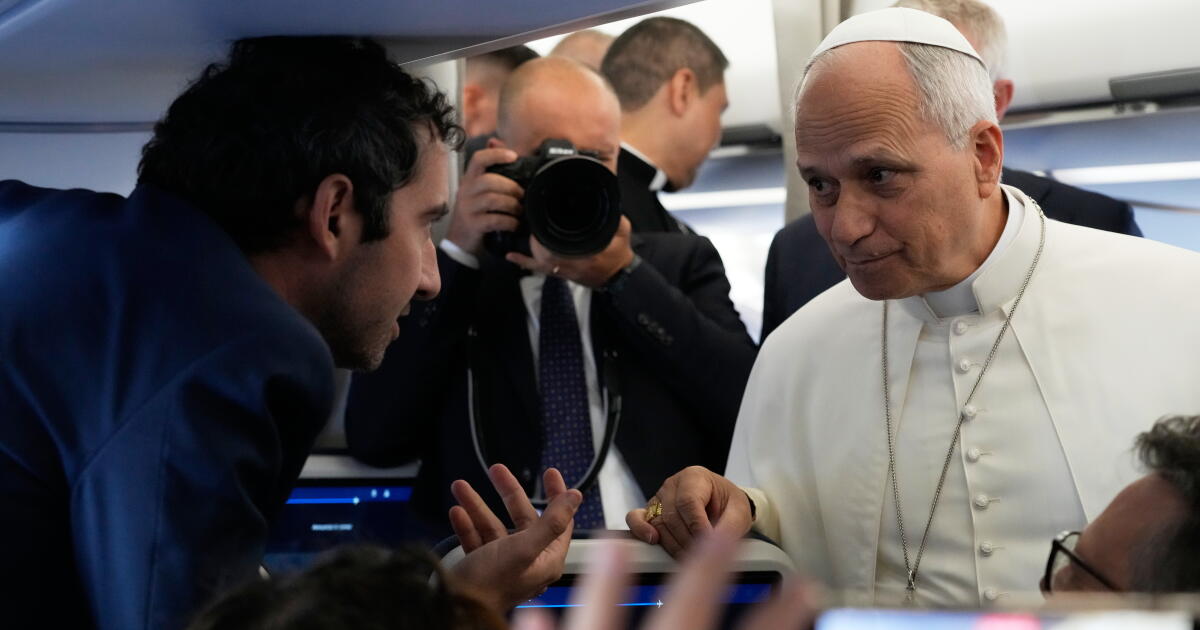
ABOARD THE PAPAL PLANE — Pope Leo XIV told journalists they were welcome to report on him, as he responded to the Trump administration’s attempt to bar U.S. media from the White House and affirmed the importance of journalists covering public figures.
Leo spoke to reporters Friday on his way to France for a four-day visit. Asked by a CNN reporter about the Trump administration’s attempt to bar CNN and other reporters, Leo said the media was welcome on his plane.
“I am very happy that here, you are all welcome,” he said. Good media coverage is important, he said, and equally important “that we have it all the way around, for everyone”
CNN, MS NOW and Politico were back at the White House on Thursday after a judge handed them a reprieve from President Trump’s ban, but the extraordinary showdown between him and outlets whose coverage he dislikes continued.
On a high-profile day when Chinese leader Xi Jinping was visiting Washington and attending a state dinner, no major American network was airing live coverage, and both CNN and MS NOW said their journalists were denied access to Xi’s state dinner arrival.
The American pope has long affirmed the need for free and independent press, a point he made in one of his first audiences as pope. Speaking to journalists who covered the 2025 conclave that elected him, Leo called for the release of imprisoned journalists and affirmed the “precious gift of free speech and the press.”
That said, since the COVID-19 pandemic, independent media have been prevented from covering photo opportunities inside the pope’s private studio when heads of state visit. Additionally, many of the pope’s private audiences with other groups and individuals are closed to non-Vatican press.
Leo had opposed Trump on the war
Leo’s airborne comments about Trump followed his April back-and-forth over the American president’s criticism of his opposition to the Iran war. Leo’s position won him points with some Parisans opposed to Trump’s policies who came out in droves to celebrate the first official state visit by a pope in 18 years.
“He dared, at his level, to oppose the American president,” said retiree Thierry Marien, who lined up hours early to grab a spot on the popemobile route to Notre Dame cathedral, where Leo was to celebrate vespers later Friday. “Not because he is opposed to the American president but because he’s opposed to countries where we can see there’s a risk of their political systems becoming a bit more dictatorial and there are already enough of those in the world.”
“I appreciated that he did that. He could quite easily have said to himself, ‘In my situation, I won’t criticize any heads of state,’” he said.
Leo took further distance from the Trump administration policies later Friday by making a lengthy visit to UNESCO, the U.N. cultural and educational agency, from which the U.S. has withdrawn as part of its retreat from the international organization.
Leo, who has championed multilateral diplomacy, toured the UNESCO grounds inside and out, greeted its employees and received a guided tour of some of its art collections. He then delivered a speech on the values UNESCO espouses to promote peace through culture and education.
Leo apologizes to reporters
Also on the flight Friday, Leo also apologized for missing an opportunity to speak with the press the last time he traveled internationally, when his Iberia charter broke down in Spain’s Canary Islands and he returned home solo on the king’s private jet, skipping his traditional airborne press conference.
More than 70 reporters and the Vatican delegation waited for several hours at the airport for a replacement plane to arrive. Leo addressed the media’s disappointment when he came to the back of the plane to greet reporters.
“A special mention I would like to make for those of you who were traveling with me when we returned to Rome from Spain,” he said. “I want to apologize personally for an incident, that I had nothing to do with, but which I know left a number of you unhappy with the fact that we couldn’t have the flight back together back to Rome.”
In other comments to reporters, Leo said he believed his alma mater Villanova would be the fan favorite when the Augustinian university plays the Catholic University of Notre Dame’s basketball team in Rome on Nov. 1.
“They tell me that the people coming to the match, 90% are Villanova and 10% Notre Dame, so the voice of the people of God will be very strong on the Villanova side,” Leo said.
NEW YORK — Some of the loudest cheers for Sen. Ted Cruz at the Republicans’ recent midterm convention in Dallas came after the Texas politician targeted Muslim Americans and their faith’s religious code.
“Sharia law has no place in America,” said Cruz. “We need to stand together and stop it now.”
Texas Gov. Greg Abbott chimed in moments later, vowing to “fully ban Sharia law in Texas.”
Muslim American civic leaders and scholars — in Texas and other states — are responding forcefully to this latest surge in anti-Sharia rhetoric that dates back more than 15 years.
They passionately defend Sharia — the way it’s practiced in the United States — as positive guidance that has elements in common with the codes of other faiths, such as the Ten Commandments and the collective body of Jewish law derived from the Torah. They rebut the claims of GOP critics that Sharia is a coercive code that threatens the U.S. Constitution and judicial system.
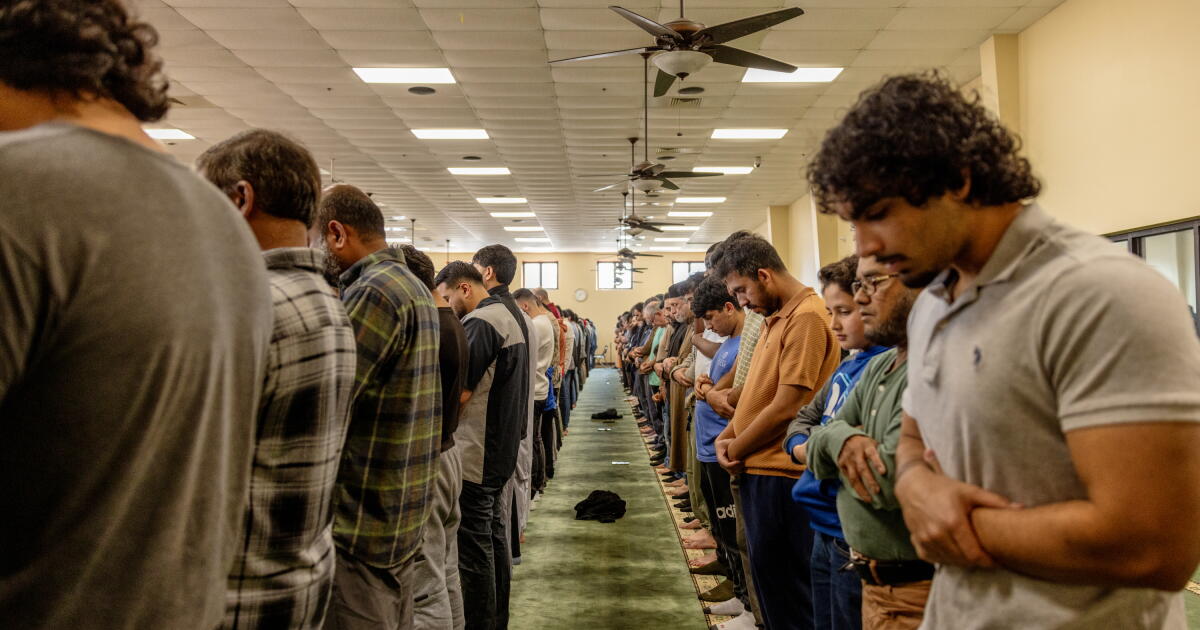
Though there are multiple interpretations of Sharia, its essence is to serve as a code for how Muslims should live and worship — covering such matters as prayer, pilgrimages, fasting, charitable donations and personal virtue.
Among the most energetic of Sharia’s defenders is Illinois-based Sabeel Ahmed, director of an outreach project called GainPeace. He travels widely around the U.S., with a recent focus on Texas, speaking at mosque-sponsored workshops and open houses.
“Sharia is often misunderstood,” Ahmed posted on Instagram after a midsummer visit to Plano, Texas. “Many people think Sharia is only about punishments, but in Islam it is Allah’s guidance for living with faith, justice, mercy, and responsibility.”
Ahmed attributes the durability of anti-Sharia vitriol to politicians and social-media influencers who want to rile up their voting base or their followers.
“They gain popularity by saying it,” he told The Associated Press. “It’s the job of the Muslims to educate what is the proper meaning of the word Sharia. We cannot be angry or hateful.”
Sharia’s role varies significantly among Muslim nations
Among those appalled by the anti-Sharia surge in the U.S. is Abdullahi Ahmed An-Na’im, a Sudanese-born Islamic scholar who taught for many years at Emory University School of Law in Atlanta. He is a longtime critic of the relatively small number of governments in Muslim nations that coercively enforce Sharia, saying Muslims are better off in secular states where their religious observance is a matter of free choice.
An-Na’im says he and other Muslim Americans embrace Sharia willingly as a core part of their identity, even as they also embrace American values.
The demonization of their beliefs displays “a shocking ignorance of what Sharia means,” An-Na’im said. “It’s a total dehumanization of the other, the rejection of their right to be human.”
The rhetoric is similarly dramatic among Sharia’s opponents — epitomized by the two U.S. representatives from Texas, Republicans Keith Self and Chip Roy — who co-founded the Sharia-Free America Caucus in Congress.
“Sharia is a direct threat to our Constitution and Western values and seeks to replace our legal system and erode our basic freedoms,” Roy said earlier this year. “Our immigration system must be prepared to confront this challenge and defend our Judeo-Christian values.”
By last count, the caucus had more than 60 members. All of them are Republicans, and its members have introduced several anti-Sharia bills since the caucus was formed last December. None of those measures have been successful.
The Council on American-Islamic Relations, or CAIR, has designated the caucus as an anti-Muslim hate group.
“The bigoted rhetoric used by this caucus resembles the hatred that anti-Catholic politicians once unleashed against Irish Americans,” said CAIR research and advocacy director Corey Saylor.
“Islam is an American faith, present for over 250 years,” he added. “No one who wrote the Constitution or enforced it since has empowered these legislators to pick which religions get to exist in America.”
Texas has been a battleground for Sharia disputes
There has been substantive anti-Sharia action in Texas. In August, Attorney General Ken Paxton demanded documents from the Dallas-based Islamic Tribunal, which provides religious guidance to Muslims.
Paxton said in a news release that the investigation by his office sought to determine if the tribunal was engaged in illegal activity, such as acting as a court, applying foreign laws that conflict with Texas or federal law, or issuing rulings that imply government authority.
“This is America, and we will not be governed by sharia law,” Paxton said.
The Islamic Tribunal subsequently updated its website with a “ Clarification of Mission and Activities,” stressing that its guidance “complements, and never replaces, the legal, social, and professional services available in American society.”
“The Tribunal does not function as a court of law and does not issue legally binding judgments,” it said. “Our role is limited to mediation and religious arbitration requested by members of the Muslim community in matters related to faith, family guidance, and internal religious affairs.”
Any matters requiring legal enforcement are referred directly to the Texas judicial system, said the tribunal, which likened its work to the services provided by Jewish Beth Din courts and Catholic ecclesiastical tribunals.
Sharia defenders seek to broaden understanding of its essence
Asma Uddin, a professor at Michigan State University’s College of Law, has argued in her writings that many American politicians are depicting ordinary Muslim religious practices — such as prayer, choice of apparel, family counseling and mosque attendance — as evidence of a political danger.
In an interview with the AP, Uddin depicted the current wave of anti-Sharia rhetoric as fearmongering by politicians who view the issue as advantageous for them.
“When politicians use this, it’s giving them exactly what they’re looking for,” she said. “They’re looking for a scapegoat … and this gets people riled up.”
Sabeel Ahmed, who has made three outreach trips to Texas so far this year, plans a trip to Houston in a few weeks for another mosque open-house. He’s also working on a book to be mailed to Christian clergy across the U.S., seeking to broaden their understanding of Sharia and other Islamic practices.
“Islam is not to be feared,” Ahmed said. “People should meet a Muslim, go to the mosque, reach out to us. Let’s emphasize the commonalities we have.”
SACRAMENTO — Riverside County Sheriff Chad Bianco got slapped down Thursday by the California Supreme Court in not one but two cases. Ouch.
First, the court told Bianco to return more than 600,000 ballots he had seized as part of an ill-conceived, conspiracy-laden “investigation” into voter fraud — making it clear it was the sheriff who was the criminal.
“The seizure of the ballots was unlawful,” the court wrote, before ordering Bianco to give them back to the registrar of voters and “refrain from further handling of the ballots except as necessary to comply with our order.”
Then the court, in a separate case, told Bianco he’s not a law unto himself, and in fact does have a boss in the form of the state Atty. Gen. Rob Bonta. Bonta had previously ordered Bianco to pause his investigation, and Bianco largely ignored him.
While the high-profile lawsuit about Bianco’s seizure of hundreds of thousands of ballots from last year’s special election on redistricting has grabbed headlines, the second case about the authority of the state attorney general to oversee all California sheriffs and district attorneys is equally powerful.
It’s the first time the court has weighed in on a long-running debate in California over whether elected sheriffs have to answer to anyone. Not only did Bianco lose for election deniers everywhere in the first case, he also managed to clarify for all California sheriffs in the second case that they are not as powerful as some would like to believe.
Combined, the two opinions by the state’s highest court give another layer of assurance to Golden State residents that the integrity of the November midterm elections is as secure as the state can make it — some welcome news in a national landscape where free and fair elections are increasingly at risk.
The quiet advocate
Before we get into what the ruling means for midterms in California, there are two overlooked bits that make these cases even more interesting.
First, gubernatorial candidate and former Atty. Gen. Xavier Becerra has been closely involved in the ballot-seizing case, but also pretty quiet about it.
Whenever a politician does something good and doesn’t advertise it, it always catches my attention. Politicians, especially ones running for office, aren’t big on modesty.
But Becerra has not spent a lot of time talking about this, even though he is actually a working attorney on this case, as an advisor to the UCLA Voting Rights Project. He came up with ideas, he participated — this wasn’t just a put-my-name-on-it role, I’ve been told by folks who know.
And it’s not the first time Becerra has helped the Voting Rights Project in a major endeavor. It was their work that helped define the legal arguments that made Proposition 50 happen. That’s last year’s ballot initiative that redrew California voting maps to favor Democrats, in response to a Texas effort to gerrymander in favor of Republicans. It was Proposition 50 ballots that Bianco seized.
“Today the California Supreme Court handed voters a great victory,” Becerra said in a statement from the voting project. “The Court knocked election deniers off their feet and strengthened our hand in election protection just ahead of the November vote. We must use every lever at our disposal to beat back voter interference and intimidation.”
That line about knocking election deniers is not hyperbole. In some far-right, conspiracy-rich circles, Bianco’s cowboy-saving-the-day routine was viewed as heroic. Maybe even something to emulate.
Across the country, there are rumblings — including from President Trump — about seizing ballots from past or future elections. While this ruling is firmly rooted in California law, most states have similar chains of custody when it comes to ballots. So it’s likely to at least make other would-be-Biancos pause.
In a later interview, Becerra told me that the Voting Rights Project was “the one thing I decided I would do after I came home from being secretary in Washington, D.C.,” whether he ran for office or not, “just because I so believe in the work that they do.”
He said as he campaigns this year, he’s seeing anxiety in minority communities from that interference and intimidation, maybe even fear that could pressure some legal voters to sit this one out.
“It makes it tough when you’ve got all these things standing in your way before you even get to thinking about going to vote,” Becerra said. “The Latino community, other communities, mostly under-served communities, I always tell them, we’re not rich. The way we win these things is by voting.”
The Liu concurrence
The second fact that caught my attention was a concurring opinion on the ballot case by Justice Goodwin Liu.
While the court was unanimous in its findings, Liu wrote his own opinion highlighting how the Riverside registrar of voters was “caught between a rock and a hard place” when the sheriff of his own county showed up with a warrant, guns and “enough trucks to remove several pallets of materials.”
That trifecta, Liu wrote, left the registrar little room for dissent — but that’s a problem.
Liu’s point seemed to be that with the current state of our president making election denial chic, our voting officials need to step up. He said the registrar should have come directly to the court for relief, and not left it to the Voting Rights Project and other plaintiffs.
“It is a lot to ask of our election officials that they not only do their jobs competently but also stand ready to sue anyone who unlawfully interferes with their duties,” Liu wrote. “Yet here we are.”
Since Bianco seized the ballots, state law has been changed. This session, legislators passed (and Gov. Gavin Newsom signed) at least 13 laws pertaining to election security, including making it a felony to break the chain of ballot custody, and ensuring that local election officials immediately contact the state in instances when that is threatened. Those laws will offer protection to election officials if a situation like this comes up again.
But Liu’s point is still valid. Being an election official is no longer a sleepy little job, but a front-line battle for democracy, and for “our democracy to flourish, our elections must be conducted in accordance with the law.”
As Bonta put it, “if you can imagine it, we are ready for it.”
I’m not quite that confident — and definitely concerned for contests outside of the Golden State — but Thursday’s rulings are a reminder that the law still holds, even when lawmen try to break it.
Political polls are like weather forecasts. They’re worth passing consideration, maybe, but you’d have to be a fool to bet your house on their accuracy.
And yet there’s something that rings true about the recent poll suggesting that L.A. Mayor Karen Bass is in deep trouble among likely voters as she tries to hold on to a job that Councilmember Nithya Raman is trying to snatch away from her.
Here are the numbers, as compiled by the UC Berkeley Institute of Governmental Studies and co-sponsored by The Times:
Raman: 39%.
Bass: 28%.
Undecided: 33%.
Bass has naturally tried to debunk the poll. What else could she do, when her supporters are outnumbered by people who can’t make up their minds? Bass would need to dominate the undecided vote to have a chance, but given her high unfavorability rating, that’ll be hard to do.
On the other hand, Raman certainly hasn’t put things out of reach, despite the fact that Bass carries the baggage of the Palisades fire and has made only minimal progress on her signature issue — homelessness. Election day is less than two months away, and Raman has failed to convince anywhere near a majority that she’s the answer.
So what do Raman and Bass need to do between now and Nov. 3?
We need both candidates to be bolder, more creative, more convincing, and to tell us things we haven’t heard before.
All the recent L.A. mayors I’ve known had their faults and failures, whether the task was filling potholes, building out transit or addressing the high cost of housing. But among their best qualities, Dick Riordan was arrogantly confident, Jim Hahn had a steady hand on the tiller, Antonio Villaraigosa was tireless and passionate, Eric Garcetti was a long-range thinker on earthquakes, water and energy.
L.A. needs a mayor with all of those qualities. A cheerleader. A task master. A ball buster.
Running the second-largest city in the country is no easy task, because many of the problems at street level begin well beyond local control, related in part to an economy that leaves too many people behind.
But if you want to lead a world-class city, you need to have world-class answers on the big stuff like housing and homelessness and on the basics, too, like fractured sidewalks and neglected parks. Most voters don’t give a hoot about which candidate is more of a socialist or a moderate. City Hall is broken, and they want to know who can fix it.
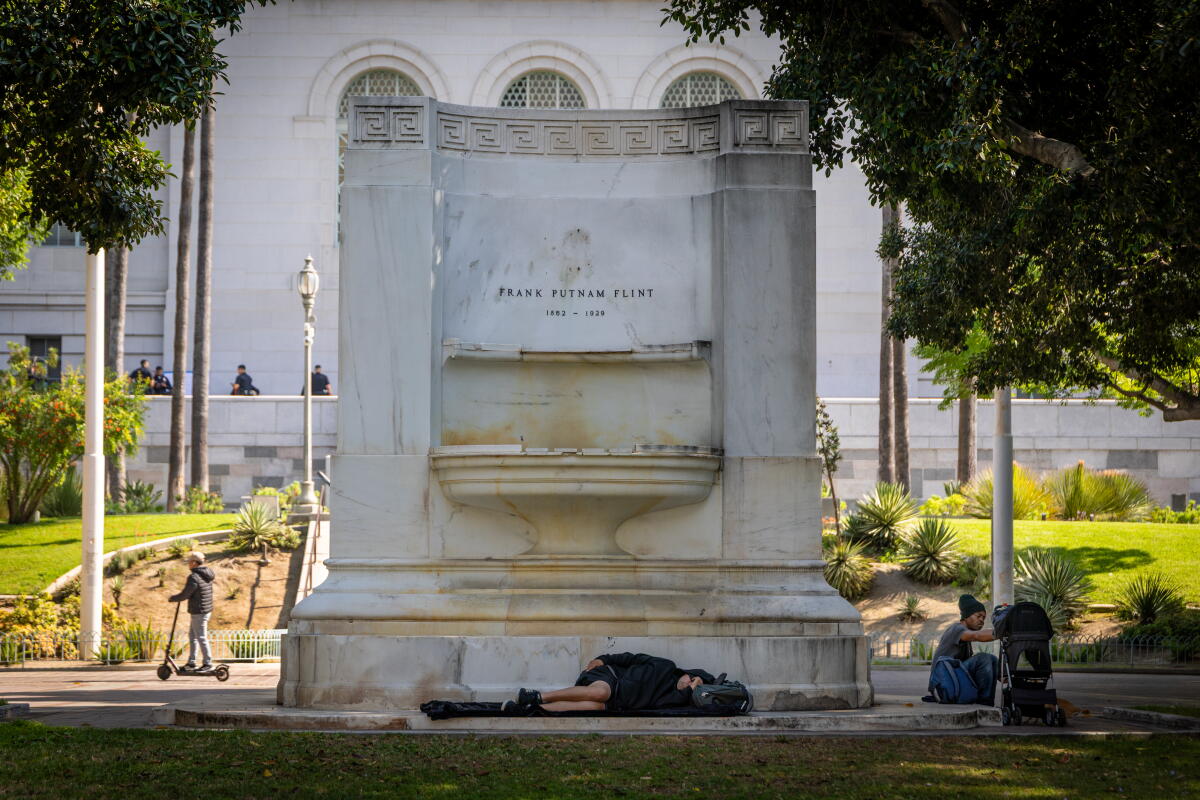
On Wednesday, I checked the same sadly neglected area around City Hall that I wrote about in April and found only minimal improvements. Graffiti has been washed from the Frank Putnam Flint fountain, but it remains a broken-down monument to neglect, as it has for most of the past 60 years. And all around it, most of the little placards identifying native plants are broken or missing.
People rest on the Frank Putnam Flint fountain outside City Hall, a sadly neglected area.
(Allen J. Schaben / Los Angeles Times)
The L.A. Mall is still a largely abandoned wreck, with broken planter boxes and weeds at street level. A woman with two shopping carts told me she’s been homeless for 5½ years. The restaurant next to the nearby police department is shuttered; the restaurant across the street from it is long dead, and the once-vibrant downtown — which generated revenue that benefited every neighborhood of the city — is gasping.
I drove down Hope Street, south of 12th Street, because a reader who lives in that area and has told me about repeated fires at abandoned properties. A tractor was clearing debris from a recent blaze.
I drove west on Olympic toward Alvarado, an area I visit regularly to see a friend. Streets are strewn with trash. They’re always strewn with trash. At Olympic and South Lake, where encampments line the street and a fire once spread into a church parking lot, destroying vehicles, there’s a concrete triangle that was heaped with trash. It’s always heaped with trash, like a municipal dump on a busy thoroughfare.
Next I headed west on Wilshire to the RFK Memorial I wrote about 10 months ago, near the site of the 1968 Bobby Kennedy assassination. It remainsfenced-off, with trash and graffitiand with overgrown vines covering tributes to Kennedy. The city was going to help the school district clean things up. Then the school district took on the task.
It’s still a mess. Actually, it’s more than that. It’s an indictment. And so is the fact that in Studio City, where frustrated neighbors complained for five years that an abandoned property had been taken over by squatters, it took a recent fire to get City Hall’s attention.
The property, since cleared, is in Raman’s district, and she and Bass traded accusations about who had dropped the ball.
“As far as homelessness goes, I don’t see either candidate really showing a clear vision to solve this,” said Kayt Miranda, whose home was damaged by the fire at the abandoned property. “I mean, it’s a tall order, and I wouldn’t want to be in charge of that. But I’m not hearing anything from either of them that sounds like it will work or hasn’t been tried already.”
To be fair, Bass and Raman have each had lots of success on homelessness, with thousands of people being brought indoors. That job is not easy, especially given the number of people with mental illness and addiction issues. I know this from personal experience, having spent a year trying to steer a friend in from homelessness.
But the pace is too slow and the cost too high. As my colleague David Zahniser reported earlier this year, $300 million had been spent on the mayor’s Inside Safe program since December 2022, and as of last December, 40% of the 5,800 people who had been housed were back on the street.
And that was with an estimated annual cost per person of $82,000. Raman, who had supported the program, became a critic of it and touted a less expensive strategy that itself has been criticized for its slow pace, as Times City Hall reporter Noah Goldberg wrote in August.
Not long ago, a homelessness policy expert suggested to me that if we could figure out a way to double the nearly $1,000 Social Security Disability subsidy many homeless people get, it would open some doors in a housing market they’re now priced out of. Too expensive? It’s cheaper than what we’re doing.
I’d like to hear the candidates rethink the playbook like that, double down on what works and drop what doesn’t.
I’d like to hear from a candidate with a realistic plan to get L.A. out of the cellar in park rankings nationally, to break up the 10-year logjam for a sidewalk repair and the two-year wait to fix a street light.
All those undecided voters know exactly what they want.
A mayor who says fix the busted fountain by the end of the week, or else.
The slate of statewide measures on the Nov. 3 ballot provides voters two opportunities to tax the rich, which in past years has proved tantalizing to California’s left-leaning electorate.
Only one of those measures has strong voter support, however, and it’s not the proposition that’s attracted nationwide attention, ignited a nearly quarter-billion-dollar political slugfest and created a rift among top leaders in the Democratic Party.
Likely voters expressed middling support for Proposition 40, a one-time 5% tax on billionaires’ assets intended to compensate for an impending $100 billion in federal healthcare funding cuts. They were far more likely to back Proposition 3, a ballot measure that would make permanent a tax increase on the wealthy that funds schools and healthcare, according to a poll released Friday by UC Berkeley’s Institute of Governmental Studies that is co-sponsored by The Times.
Proposition 3 appears to be a much less controversial endeavor, which may explain why it has more voter support. The ballot measure would extend a tax enacted in 2012 on individuals who earn at least $360,000 a year that is set to expire in 2031. Proposition 40 proposes a brand-new tax on billionaires and is opposed by Gov. Gavin Newsom, who fears that it could hurt the state’s finances in the long run.
“When you’re going about taxing the billionaires’ assets, I mean that’s something kind of new and different, and it’s risky, and the governor’s against it, and you know a lot of people are expressing caution about it,” said Mark DiCamillo, director of the poll.
Voters are deeply concerned about income disparity but also skeptical about the unusual approach of the billionaire tax.
Proposition 40 has drawn the greatest attention and campaign spending of the 14 ballot measures voters will decide on Nov. 3.
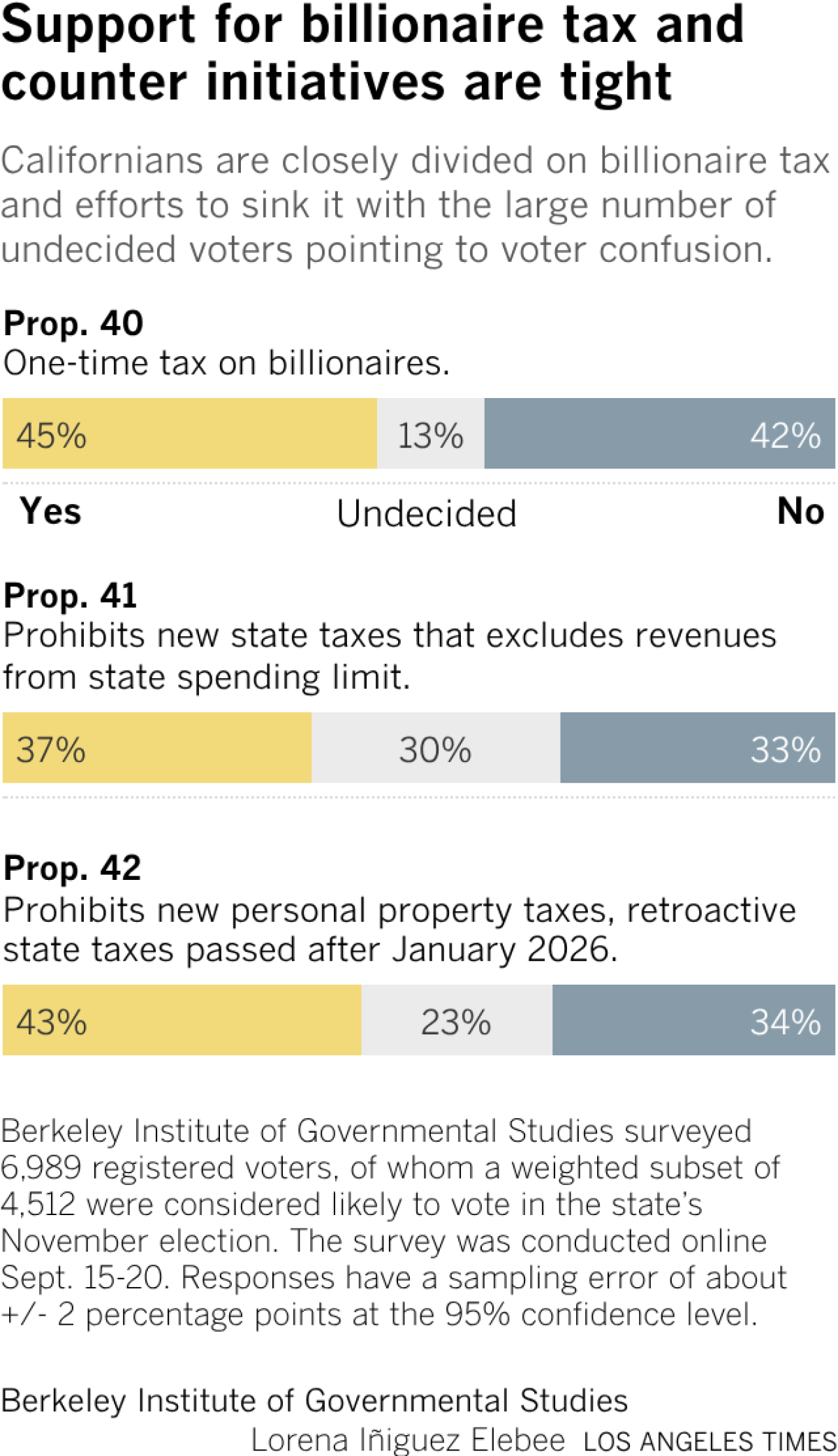
In the poll, 45% of likely voters support the proposal, while 42% oppose it and 13% are undecided. That’s a decline in support compared with six weeks ago, when 48% of likely voters supported it while 41% opposed it, and comes after nearly $100 million of spending on television ads, social media messages and mailers, largely from opponents.
The billionaire tax was crafted by a healthcare union in response to legislation passed by congressional Republicans and signed by President Trump last year that could result in millions of Californians losing Medi-Cal coverage, rural hospitals shuttering and other healthcare services being slashed unless a new funding source is found.
The proposal would retroactively apply to billionaires who lived in California as of Jan. 1, prompting some to preemptively move out of the state. Ninety percent of the revenue would fund healthcare programs, and the remaining funds would be spent on education programs and food assistance.
There are two counterproposals on the ballot that would nullify the wealth tax if either receives more votes than Proposition 40, and they have raised $144 million. Voters are torn about Proposition 41, which would prohibit any new state taxes from being excluded from a voter-approved cap that restricts how much tax revenue the state can spend each year. The billionaire tax would have such an exclusion. Voters also are divided on Proposition 42, which would prohibit new taxes on personal property, intellectual property, retirement accounts and other assets and would limit situations in which a ballot measure or state lawmakers can impose or raise taxes retroactively — both of which are essential parts of the billionaire tax initiative.
Proposition 42 has greater support, with 43% backing it, 34% opposing it and the remainder undecided, according to the poll. Even more voters were uncertain about Proposition 41: 3 in 10 said they were undecided, while 37% said they supported it and 33% said they planned to vote against it.
The large number of undecided voters this close to the election points to voters being overwhelmed by the sheer number of statewide ballot measures, DiCamillo said.
“It’s confusion,” he said, adding that many voters may make a decision once they receive more ballot information.
That said, the fact that none of these proposals has the support of more than 50% of likely voters doesn’t bode well for their prospects, DiCamillo said.
Ballots will begin arriving in the mailboxes of the state’s 23.2 million voters in days.
Democratic voters outnumber Republicans by nearly 2 to 1 in California, but the party’s leaders are deeply divided about the billionaire tax, given the volatile state budget’s reliance on the wealthy. Newsom, who is pondering a 2028 presidential campaign, and the two men vying to replace him — Democrat Xavier Becerra and Republican Steve Hilton — oppose it. Rep. Ro Khanna (D-Fremont), a potential 2028 White House contender, supports it, as does the California Democratic Party.
Additionally, Dave Regan, president of Service Employees International Union-United Healthcare Workers West and architect of the ballot measure, has come under scrutiny. Regan has been accused of threatening and intimidating women who worked for the union’s parent organization, and of physically assaulting one, according to reporting by The Times. He was also accused of trying to extort SEIU’s state council, suggesting that it could face an investigation over “governance issues” if it did not support Proposition 40, according to an investigation commissioned by SEIU.
Regan has denied these claims, describing them as a “smear” campaign orchestrated by Proposition 40 opponents.
Much less attention has been paid to Proposition 3. Californians who earn more than $360,000 now are subject to a 10.3% tax, while those who earn more than $721,000 face a 12.3% levy. The vast majority of the billions raised through this tax go to K-12 schools, while the remainder is spent on community colleges and healthcare.
The other ballot measure that is receiving national attention is Proposition 39, which would require voters to present a government-issued identification document to cast a ballot or provide a PIN or the last four digits of their Social Security number when submitting mail-in ballots.
The measure also would require the California secretary of state and county election officials to verify that registered voters are U.S. citizens by “using government data,” which according to supporters could include information in the federal Social Security Administration database, jury summons information and other government records.
The proposal comes as Trump has continued to make claims that elections, notably in California, are being rigged by Democrats. Americans are increasingly alarmed about the security and sanctity of voting, and growing fears about intimidation efforts at polling places in the midterm elections.
Fifty-two percent of likely California voters oppose the voter ID proposal, while 39% support it and 9% are undecided, according to the poll.
“It doesn’t look like it’s in a strong position,” DiCamillo said, noting that while voters have opposed it in prior polls, the opposition has grown.
Nearly one-third of voters were undecided about two other propositions:
Likely voters were evenly split about Proposition 4, which would repeal a ban on public funding of campaigns, with 35% supporting it and 35% opposing it, and the remainder undecided.
Four out of 10 likely voters opposed Proposition 43, which would increase the threshold necessary to pass local taxes from a simple majority to two-thirds, while 31% supported measure and 29% were undecided.
Voters will also face questions about environmental policy, housing, recall elections and other matters, as well as statewide, congressional and local elections. Californians are fatigued by the length of the ballot.
The Berkeley IGS/Times poll findings are based on an online survey in English and Spanish of 6,989 registered California voters, 4,512 of whom are considered likely voters, on Sept. 15-20. The results are estimated to have a margin of error of about 2 percentage points in either direction in the overall sample, and larger numbers for subgroups.
WASHINGTON — President Trump’s trade war with Canada could intensify the headwinds Republicans are navigating ahead of the November midterms, with its effects poised to reverberate in northern battleground states with crucial Senate races.
The escalating beef with Canada — Trump attacked the country anew on social media Wednesday — stands to heighten voters’ economic worries and add to the GOP’s political challenge in dead-heat races, analysts said.
“It doesn’t make things easier. It’s not helping,” said Rusty Hills, a University of Michigan public policy professor and onetime chair of the Michigan Republican Party.
The president’s unpopular policies on the war in Iran, the economy and data centers have already handed Republican candidates the tough task of appearing responsive to Americans’ frustration with cost-of-living issues without alienating Trump and his voter base.
The trade war, said Lance Dutson, a Maine Republican media strategist, puts “another log on the fire” of the affordability issue.
The tariffs have appeared unpopular in recent polling, including among a majority of independent voters. Though they are not expected to dramatically increase consumer prices, they could affect voters’ perception of the economy — and even small economic impacts on certain industries, such as auto manufacturing in Michigan, could have an effect in very close midterm races, experts said.
Trump’s new import bans on some Canadian goods are set to begin next week, a response to retaliatory tariffs Canada levied earlier this month. Trump argues that Canada has “been ripping off” the United States and that tariffs will help domestic manufacturers.
On Wednesday, the president inaccurately claimed on Truth Social that Canada is allowing “millions and millions” of immigrants into its country.
“It is a Liberal takeover that will end very badly. Already showing up in their numbers. Big unemployment. ‘Oh Canada!” the president wrote on social media Wednesday morning.
Five of the nine states most likely to decide Senate control border Canada — Alaska, Ohio, Michigan, New Hampshire and Maine. Two more, Texas and Iowa, also do substantial trade with Canada.
Democrats must retain their Senate seats including New Hampshire and Michigan and flip four of the other states to win a majority, a tall task. As the landscape worsens for Republicans, however, some aretesting how much they can distance themselves from Trump.
“It’s a tightrope, there’s no question,” Hills said. “[Candidates] are looking for some wiggle room on some of these issues like the war and prices and Canada tariffs, because they need every independent and swing voter they can get.”
A majority of Americans oppose raising tariffs on Canadian goods, including 64% of independents, anEconomist/YouGov poll found. Only 14% of independents said they supported additional U.S. tariffs on Canada in a late AugustIpsos poll.
And in Michigan, 68% of independent voters disapprove of the tariffs, a poll this month from the Washington Post and Schar School found.
“The more we put tariffs on stuff, the more they put tariffs on stuff … prices are just ultimately going to go up for all of us,” said one Michigan swing voter in a Sept. 9 focus group conducted by the firm Engagious, in which 11 of 13 participants said the trade war was bad for the state.
The highest costs of the tariffs will be concentrated within a few industries, including auto and other manufacturing, dairy, and alcohol and spirits, said Alex Durante, a senior economist at the Tax Foundation. The tariffs likely won’t create a major change for consumers, but the general impression that tariffs can contribute to higher prices might turn off voters who are already worried about inflation, he said.
Counter-tariffs imposed by Canada in response to U.S tariffs last year resulted in a 6% increase in the prices of affected goods, researchers found in paper published by the Journal of Monetary Economics.
Canadian lumber products at Gutherie Lumber in Livonia, Mich., in August.
(Paul Sancya / Associated Press)
“This trade war is certainly not helping the president and his party in the midterms,” Durante said. “What’s weighing on the top of people’s minds is this general affordability crisis … and they realize that tariffs are another factor that is impacting affordability.”
The latest escalation of the trade dispute began in July, when Trump threatened new 50% tariffs on some Canadian goods, reinvigorating a conflict that began with tariffs the president imposed in 2025.
The two countries began trade talks, but the negotiations fell apart in late August, and Trump imposed tariffs on about $20-billion worth of Canadian goods. Canada retaliated with tariffs on about $20-billion worth of American goods that took effect Sept. 8. Trump then announced import bans on some Canadian goods, including certain alcohol and dairy products, which go into effect next week.
Construction and farm equipment in Illinois, aluminum and pipe products in New York, and iron and steel products in Ohio are among the goods targeted by Canada’s counter-tariffs, the Canadian Broadcasting Corp. reported. In California, about 10.5% of the state’s Canadian imports are exposed to the counter-tariffs imposed by Canada.
Democrats have seized on the issue as another way to tie Republican candidates to Trump’s policies, something that analysts said may have varying degrees of success in different swing states.
Maine Republican Sen. Susan Collins campaigns in August in Kittery, Maine.
(CJ Gunther / Getty Images)
In Maine and New Hampshire, where the Republican Senate nominees have criticized Trump’s move, the tariff issue may be less likely to stick. Efforts to tie Republicans to Trump have historically been less successful in the region because of its independent streak, said Jim Merrill, a veteran Republican strategist in New Hampshire.
Maine Republican Sen. Susan Collins warned the White House against imposing tariffs and successfully pushed for the administration to exempt road salt and cement this month. She told Politico that the Trump administration had “very much underestimated” the effect of the tariffs on Maine residents.
Republican John Sununu, a former senator who is running to retake the seat in New Hampshire, has also criticized the tariffs, saying a trade war with Canada “doesn’t make any sense.” He indicated he would support legislation in Congress to restrain the president’s tariff powers.
Elsewhere, Senate nominees have walked a careful line on tariffs. In Alaska, Sen. Dan Sullivan has largely avoided the issue, even as Democrats there have used it to ramp up attacks on his record in recent days. In Ohio, former Sen. Jon Husted told the National Review in August that the public “would like to understand the strategy behind what the president’s trying to do.”
Former Rep. Mike Rogers of Michigan, the Republican Senate nominee, told reporters over the weekend that he was in favor of “good” tariffs that would help Michigan and opposed to “bad” tariffs that would hurt the state.
Focusing on issues other than tariffs may be the right strategy on the campaign trail, Hills said.
“He’d much rather be talking about the Republican plan for affordability,” Hills suggested. “There’s interesting things we need to be talking about in order to win this election, and this isn’t one of them.”
A stunning new poll showing Los Angeles City Councilmember Nithya Raman gaining a double-digit lead over incumbent Karen Bass in the mayor’s race is increasing pressure on Bass and her allies to go sharply negative against her opponent and to seek support from conservative and undecided voters to narrow the gap.
The poll, conducted by the UC Berkeley Institute of Governmental Studies and co-sponsored by The Times, showed Bass trailing Raman by 11 percentage points — with 28% of likely voters saying they supported the mayor while 39% said they would vote for Raman. The remaining 33% were undecided, an unusually high number this close to the Nov. 3 election.
“The bottom line is this is a huge shot in the arm politically for Raman — and it’s not a good day for the mayor,” said Zev Yaroslavsky, a former L.A. City Council member who now runs the Los Angeles Initiative at the UCLA Luskin School of Public Affairs.
Dan Schnur, a former Republican political consultant, said the poll could have instant negative effects for the mayor’s fundraising ability as potential supporters might now view Raman as the favorite in the race.
“The most immediate tangible result of a poll like this is that Bass’ greatest advantage was her fundraising and it now becomes much more challenging to raise money,” he said.
Bass, appearing Wednesday at a news conference in Hollywood, said she’s seen multiple polls that show a tight race. She said that Raman is “absolutely not” the front-runner in the race.
Mayor Karen Bass speaks at Vermont/Santa Monica Metro Center on Wednesday, touting progress on construction of affordable housing.
(Kayla Bartkowski / Los Angeles Times)
The mayor said she is working to highlight the city’s progress in making rent more affordable, pointing to newly released numbers that show that more than 10,000 units of housing with restricted rents have been built since she took office in December 2022.
“The No. 1 issue to Angelenos continues to be lack of affordability, and our primary way of addressing that from the city is housing,” she said. “So we are absolutely addressing affordability.”
Others in the Bass camp seemed more anxious about the poll results.
“It put a pit in stomachs,” said one supporter close to the Bass campaign who requested anonymity to speak candidly about the poll. “But there is still an outside chance for Bass. It’s not total doomsday.”
The supporter said that the Bass campaign truly doesn’t believe Raman’s lead is that big, but that the poll was still “not good news,” especially for fundraising.
Mike Bonin, a progressive former L.A. City Council member who now runs the Pat Brown Institute at Cal State Los Angeles, said Bass needs to focus on winning over voters who chose former reality television personality Spencer Pratt in the primary election in June. Many of those voters are now on the fence.
Pratt received 26% of the vote in the primary, and most of the voters who cast ballots for him — 63% — say they still haven’t decided whom to vote for in the runoff, the poll found. Among the Pratt voters who have decided, 22% favored Bass compared with 16% for Raman.
Bonin said he expects Bass and her allies to attack Raman’s progressive views in order to reach Pratt voters. Raman is a member of the Democratic Socialists of America and opposed raises for Los Angeles Police Department officers that had been championed by Bass.
“The nature of the attacks will try to reach the Pratt voters particularly since they are the largest bloc of undecideds and they skew conservative,” Bonin said.
The Los Angeles Police Protective League, the union representing LAPD officers, is already airing campaign ads critical of Raman over her opposition to a law barring homeless encampments next to schools. In the coming days, the group will also roll out commercials highlighting Raman’s ties to the DSA, which has endorsed her mayoral bid, said union spokesman Tom Saggau.
“Our own poll told us that the Pratt folks were very much undecided, and that when they heard more about Nithya’s record, and her co-governing with DSA, they moved off of her,” he said, adding that his group still views the race as a dead heat.
Raman, not surprisingly, cheered the poll results.
“This poll reflects the momentum we’re seeing on the ground. Angelenos are ready for change and want to see a City That Works,” Raman said in a post on Instagram.
Raman campaign officials said the poll probably will help their fundraising efforts, which they said had already been gaining momentum over the last few weeks. And Schnur, the former GOP political consultant, said the wide lead allows Raman to spend more time touting her own credentials instead of disparaging Bass.
“For the most part Raman has the front-runner’s luxury of putting out a positive message and reinforcing her own credentials,” Schnur said.
Estevan Montemayor, who is running the pro-Raman Estamos con Nithya independent expenditure group, said his group’s role will be to inform voters about Raman’s positives while the Bass campaign attacks.
“They’re gonna come after Nithya and we’re gonna be here to tell her success story,” he said.
Bass supporter Stuart Waldman, chief executive of the Los Angeles County Business Federation, said the large number of undecided voters this close to the Nov. 3 election is worrying but also leaves an opening for Bass to gain ground.
“Any swing in any direction could make a big change,” Waldman said. “We have no idea who’s going to vote. … Usually by this point in time, everything has tightened up.”
Councilmember Nithya Raman, lower right, campaigns at a Latinos Con Raman rally at La Cita Bar in downtown Los Angeles.
(Genaro Molina / Los Angeles Times)
In courting those undecided voters, however, Bass is burdened by high unfavorability numbers, according to the Berkeley IGS/L.A. Times poll.
The mayor had 63% unfavorable ratings, the poll found, with 28% favorable and 9% having no opinion. By comparison, 40% had a favorable view of Raman, according to the poll, while 39% said they had an unfavorable view of her and 21% had no opinion.
Mike Murphy, a Republican political consultant, said that Bass needs to accept responsibility on core issues upsetting Angelenos about her tenure, such as homelessness and the 2025 Palisades fire, which killed 12 people and destroyed thousands of homes. In a recent interview with The Times, Bass said her biggest mistake as mayor was being in Ghana when the fire began amid high wind warnings.
“You have to say, ‘I hear you,’” he said. “Voters don’t think Karen gets that they are mad about things that happened during her term.”
Then, Murphy said, he believes Bass needs to attack Raman as being more establishment than Bass.
Murphy noted that Bass has frequently attacked Raman for being “at City Hall longer than I have,” which he called a powerful message to voters who are considering Raman because they want change. Raman was elected in 2020 and Bass in 2022.
Other polls taken in the campaign have shown a closer race than the Berkeley IGS/L.A. Times poll.
In an early August poll commissioned by an independent expenditure group supporting Bass, the mayor had the edge, 41% to 35%, with 24% undecided.
Mayor Karen Bass greets community members after speaking at Vermont/Santa Monica Metro Center.
(Kayla Bartkowski / Los Angeles Times)
The Bass campaign cited some of those polls when responding to the Berkeley IGS/L.A. Times poll Wednesday, calling it an “outlier poll” and accusing the pollsters of getting it wrong.
“In the primary … they got it wrong and undercounted Karen Bass’ support,” campaign spokesperson Alex Stack said in a news release.
Stack added that polls conducted online, like the Berkeley IGS/L.A. Times poll, “systematically [undercount] working-class families, seniors, and non-English speaking communities who regularly turn out on Election Day.”
Mark DiCamillo, the director of the Berkeley IGS Poll, defended the methodology, saying he has spent 45 years polling in California and eight years running the Berkeley IGS Poll.
“What would you expect from a campaign down by double digits? They attack the poll,” he said.
Actors Hannah Einbinder and Susan Sarandon were among scores who were arrested Thursday in New York City as they protested an appearance by Israeli Prime Minister Benjamin Netanyahu before the United Nations General Assembly.
According to an Instagram video by Jewish Voice for Peace, one of the organizers of the demonstration, more than 100 individuals were arrested for blockading the U.N.
“Netanyahu out of New York!” Einbinder shouted as officers took the “Hacks” star into custody.
The 31-year-old Jewish actor has been a critic of Israel’s war in Gaza; last year, when receiving the Emmy Award for supporting actress in a comedy series, she concluded her speech by saying, “Go Birds, f— ICE and free Palestine.” “Birds” was in reference to the Philadelphia Eagles. Einbinder is a big fan.
Other well-known faces were spotted among demonstrators. Actors Cynthia Nixon, Elliot Page and Indya Moore were there, as well as comedians Mary Beth Barone, Caleb Hearon and Sarah Sherman and musicians Lucy Dacus and Julien Baker, according to multiple online reports.
As numerous delegates exited the room, Netanyahu called out: “If there are any other moral cowards who have not yet left the hall, please do so now.”
In his defiant speech, the Israeli leader denied allegations that the country was committing a genocide in Gaza, calling it “the biggest lie of the century,” and he asserted Israel’s right to wage war against Iran.
The Israel-Hamas war began on Oct. 7, 2023, when Hamas-led militants attacked Israel, killing around 1,200 people and kidnapping 251. Israel’s military operations have since killed at least 73,922 Palestinians, according to the Gaza Health Ministry.
In October, Israel and Hamas agreed to a ceasefire. However, Israel continues to carry out airstrikes in Gaza near military-held zones.
Ahead of Netanyahu’s visit, New York City Mayor Zohran Mamdani labeled the world leader a “war criminal” in a public video, stating that his office looked into enforcing a 2024 arrest warrant issued by the International Criminal Court if Netanyahu visited the city.
However, in that same video, Mamdani acknowledged that the city did not have the authority to enforce the warrant, instead calling on the federal government to act.
In his U.N. speech, Netanyahu addressed Mamdani, saying: “You tried to stop me from coming here. You tried to silence me. Well, you can’t silence me, you can’t silence the truth. Here’s the simple truth, Israel didn’t commit genocide. Israel prevented genocide.”
Stars, local lawmakers and activists protesting outside the U.N. chanted “Free Palestine” and “Netanyahu, you can’t hide, we charge you with genocide.” While police arrested some members in the crowd, individuals called out: “The whole world is watching.”
WASHINGTON — China’s president issued a call from the White House on Thursday for artificial intelligence to remain “under human control” as the world’s two superpowers race for technological supremacy.
Xi Jinping’s remarks reflect growing concern within China over whether governments in Washington or Beijing will be able to contain a technology with potentially transformative capabilities, according to a U.S. official.
Lawmakers and AI industry leaders urged President Trump to use his summit with Xi this week to pursue a safety framework for AI, which researchers warn could soon surpass human understanding.
But Trump preempted the meeting with a post on social media stating he had no intention of negotiating limits on AI development.
“A big day with President Xi of China,” Trump wrote. “Super Intelligence (SI) will be a big topic of discussion, but I want to leave it exactly where it is. That is China’s position also. Our guardrail is the DOJ!”
After offering Xi a lavish welcome on the White House grounds, Trump made a passing reference to AI. “The decisions we make in these areas today can promote peace and prosperity for decades and decades to come,” he said.
But Xi gestured to substantial concerns, noting AI first among priorities to discuss between the two nations.
“Both China and the United States are leading nations in artificial intelligence,” Xi said. “We have both the capability and responsibility to develop and manage AI for good — and ensure that the development of AI is always under human control, and serves the well-being of the people.”
The two held a private meeting with aides in the Oval Office after participating in a military review in the Rose Garden and exchanging gifts in the Blue Room.
In the evening, a guest list of top banking and technology leaders — including AI industry executives — were scheduled to attend a state dinner in the East Room of the White House.
“Given Trump’s statements going into the summit about not wanting guardrails, I have tepid expectations about tangible outcomes” on AI, said Aalok Mehta, director of the Wadhwani AI Center at the Center for Strategic and International Studies.
“The most likely scenario seems to be the establishment of a hotline — though how useful that will be depends on who will be staffing it, and how much each government prioritizes it,” Mehta added, “and likely some discussions about issues blocking cooperation, like distillation, with a promise to engage in ongoing dialogue.”
Earlier in the week, on the sidelines of the United Nations General Assembly in New York, Treasury Secretary Scott Bessent met with his Chinese counterpart primarily to discuss AI development, according to U.S. officials.
“What we discussed was setting up a mechanism — so it’s going to be called the U.S.-China AI Dialogue. We’ve agreed to meet again,” Bessent said Monday. “The U.S. has proposed that we have a notification mechanism between the two countries, and we want a shared vision of common goals, and common threats.”
While Trump’s team has remained divided over whether — and how extensively — to regulate AI, Bessent has favored a cautious approach, advocating modest, voluntary guardrails that have shaped administration policy in recent months.
China, too, has shown increasing willingness to open channels of communication on AI, despite deep distrust between the two sides.
President Trump and China’s President Xi Jinping meet in the Oval Office on Thursday.
(Jacquelyn Martin / Associated Press)
Two American AI companies, OpenAI and Anthropic, are widely viewed to be developing the most advanced AI models in the world, leading at the frontier of technological breakthroughs.
Both have begun to use their most sophisticated models to train the next generation, in a process known as recursive self-improvement. Researchers and industry experts believe the first company to master that process could set off an exponential cycle of progress, pulling so far ahead that competitors can no longer catch up.
But those same companies also fear what they’re creating: machines capable of continuously improving their own intelligence, pushing AI development beyond human control.
Leaders from the two companies have called on Beijing and Washington to cooperate, warning that geopolitical competition could thwart the two sides from preventing a human catastrophe.
In his remarks, Xi said that China and the United States “stand to gain from cooperation, and will both lose in confrontation.”
“We do not need to avoid mentioning competition, but our competition should be a healthy one, and should be kept within bounds,” the Chinese president said. “It should be a race of catching up with one another, not a wrestle in which one either wins or loses. China and the United States must hold the line of no conflict, and no confrontation between us.”
“Our two militaries should maintain regular dialogue, and improve mechanisms for crisis communication and prevention,” he continued, adding a historical reference to rising powers challenging established ones: “The Thucydides trap can be overcome.”
Xi’s trip to Washington follows just months after Trump traveled to Beijing for a state visit in May, where the U.S. president was greeted with a similarly imperial welcome.
The leaders emerged from that summit with few deliverables. But Trump left Beijing declaring the trip a success, emphasizing the importance of his personal relationship with Xi, China’s most powerful leader in generations.
This time, Trump himself greeted Xi on the tarmac upon his arrival at Joint Base Andrews — a rare honor reserved in recent decades only for Catholic popes — before pulling out several red carpets and draped ceremonies for the Chinese leader.
The pageantry seen during the state visit has served China’s long-standing desire for respect and dignity on the international stage, said Jessica Chen Weiss, the director of the John Hopkins SAIS Institute for America, China and the Future of Global Affairs.
“Trump is someone who loves spectacle, and right now the spectacle is working in both leaders’ favor,” Weiss said.
For Xi, the ceremonies have offered a chance to demonstrate that relations with the United States remain under control and that China is being treated as a significant global power, she argued.
The state visit comes at a time when Americans are appearing to warm up to China, according to recent polls. A survey by the Chicago Council on Global Affairs recently found that a majority of Americans say the United States should have friendly engagement and cooperation with China.
“I tend to think we focus too much on the optics,” Weiss said. “But I also think treating China as a significant player on the world stage is not a concession. It’s appropriate if we want a stable relationship and is hardly something to worry about.”
WASHINGTON — Despite rising political anxiety over the Iran war, senators on Thursday narrowly rejected a war powers resolution seeking to halt President Trump’s military action, which has been largely blamed for the spike in gas prices and become a flashpoint in the midterm election.
The Senate tally, 49-50, coming days after Trump’s bombastic address to the United Nations in which he threatened to “annihilate” Iran, was likely the last chance for lawmakers to go on record about the war ahead of November. More Republicans are peeling way from the president as the war drags on, a rare slap back to Trump, as they campaign for control of Congress. The Senate outcome fell short, with four GOP senators joining most Democrats in favor of the resolution.
“They have been carrying water for this ridiculous and illegal war for months and months and months and not listening to their constituents,” said Sen. Tim Kaine (D-Va.), who pushed the war powers resolution forward.
About half of rural American voters believe the economy is worse off now than when Trump returned to office, according to a new survey from the Associated Press in partnership with KFF. The costs of groceries, gas and healthcare rank as top pain points for the rural voters.
“We’ve got to break the cycle,” said Sen. Thom Tillis (R-N.C.), who joined in voting yes.
Republican Sens. Susan Collins of Maine, Lisa Murkowski of Alaska and Rand Paul of Kentucky also voted for the resolution to end the war, as they have in many previous tallies, and Democratic Sen. John Fetterman voted against.
This was the 14th time the Senate has considered a war powers resolution since Trump launched the conflict Feb. 28.
War powers resolutions are largely political statements, without the full force of law, but stand among the sharper tools the House and Senate have to express disapproval of the White House, short of halting funds for Trump’s military actions. As resolutions, they do not go to the president’s desk for his signature.
As gas prices climb, Republicans start to question the war
Republicans in control of Congress have shied away from directly confronting Trump over the war, now stretching past the seven-month mark. But their unrest is surfacing as stubbornly high gas prices leave voters in a cash crunch back home.
Diesel costs, in particular, have almost doubled, topping $6 a gallon, according to AAA.
Just returning from a swing through Iowa, Kansas and Nebraska stumping for GOP candidates who are suddenly at risk in their elections, Sen. John Kennedy of Louisiana called on Trump to hold a prime-time address to the nation to explain the Iran war strategy and the end game.
“People are confused about the war and upset about the cost of living,” he said.
But he and others were not yet ready to vote against the war.
“My own view is that the focus right now needs to be on attacking the cost of living issues,” said Sen. Josh Hawley (R-Mo.), who opposes the war powers resolution and believes the president is acting within his authority to conduct the military action.
House Democratic Leader Hakeem Jeffries scoffed at the handful of Republicans now trying to distance themselves from what he called Trump’s failed economy. “Now all of a sudden they’re waking up,” he said.
Democrats keep pushing war powers votes in Congress
Earlier this month, the House for a third time approved a war powers resolution, this time with seven Republicans joining the Democrats, including two from battleground Iowa, Rep. Zach Nunn and Rep. Mariannette Miller Meeks, where affordability issues among rural voters are dominating the campaigns.
Senators, though, have rarely been able to confront Trump by passing a war powers resolution.
In June, the Senate approved a war powers resolution after four GOP senators joined Democrats, but Republicans abruptly reversed course the next day after Trump berated them during a private lunch over the outcome.
At the time, Sen. Bill Cassidy of Louisiana stood up to defend his vote only to end up in a shouting match with Trump. He later switched to oppose the war powers resolution after receiving a personal briefing from the White House.
Thursday’s vote was on a resolution that had passed the House in July with GOP support. Rep. Pramila Jayapal (D-Wash.) who authored the House resolution, said the Senate outcome was “a slap in the face to the millions of American people who want this war to end.”
Other options to halt the Iran war
As the war drags on, costing $43.5 billion so far, Congress is also seeking other ways to force Trump to rethink his military strategy in Iran.
Rep. Thomas Massie, the renegade Republican from Kentucky, pushed forward articles of impeachment against Secretary of Defense Pete Hegseth before the GOP leadership abruptly adjourned the House and sent lawmakers home to campaign for the election, avoiding any potential vote on the matter.
Lawmakers also have the power of the purse to curtail military spending, something Republicans have been reluctant to do but Democrats are sure to tackle if they win power in the midterm election. The White House’s request for an additional $87.6-billion funding package for the war and other needs has idled in Congress.
First created in the aftermath of the Vietnam War as a way to hold a president accountable for military actions, the war powers act has long posed a test of the balance of power between the executive and legislative branches of government.
While the Constitution says only Congress can declare war, the president as commander-in-chief is also able to engage the military. The war powers act seeks to provide clarity by requiring the president, within 60 days of any such action, to seek approval — or risk disapproval — from Congress.
Mascaro writes for the Associated Press. AP writers Joey Cappelletti and Mary Clare Jalonick contributed to this report.
Former “Today” show host Billy Bush feel from grace a decade ago when a tape leaked of him giggling on a hot mic while then “Apprentice” star Donald Trump boasted about grabbing women.
This week it was announced that Bush was joining Fox News Media as a contributor covering pop culture, entertainment, and cultural issues.
Bush joins other right-leaning personalities who’ve rebuilt their careers at Fox following scandals elsewhere.
It’s not surprising that former “Today” host Billy Bush joined Fox News as a regular contributor this week. What is surprising is that it took so long.
Ten years have passed since Bush, cousin to former President George W. Bush, was caught on a hot mic giggling while then-“Apprentice” star Donald Trump boasted about grabbing women “by the pussy.” The “Access Hollywood” clip, filmed in 2005 when Bush hosted the entertainment news program, was leaked a month before the 2016 presidential election, meaning just about everyone in America saw it.
A disgraced Bush lost his job and reputation. Trump won the White House.
Once known for his boyish charm and impressive collection of cowboy boots, Bush spent a decade re-ingratiating himself to the public on the syndicated television news magazine “Extra,” a considerable step down from the “Today” show. He reported on Hollywood and celebrity culture before launching his own digital show and podcast more than a year ago.
Now he finally has gone where popular conservative public figures go following scandals, stumbles or mishaps that all but destroy their livelihoods: Fox News. Rupert Murdoch’s crown jewel has given a second chance to more than a few successful, right-leaning personalities who have been shamed by mainstream media or canceled by a public who doesn’t find sexual assault boasts particularly funny.
Jeanine Pirro’s political career was derailed in 2006 after tapped phone calls she had with former New York City Police Commissioner Bernard Kerik were revealed. She had been plotting to bug her then-husband’s yacht in an attempt to catch him in an affair. After the transcripts went public, she lost the race for state attorney general to Andrew Cuomo. The scandal marked the end of her political career in New York — but the start of her career as a Fox News contributor and host. She stayed with the network for two decades. Pirro left last year when Trump nominated her to serve as the U.S. attorney for the District of Columbia. She subsequently was confirmed by the Senate.
Pete Hegseth joined Fox News as a full-time host in 2017 after reportedly being forced out of leadership positions at two prominent veterans advocacy nonprofits, Veterans for Freedom and Concerned Veterans for America. Multiple disturbing accusations were made within the organizations about his sexual impropriety, financial misconduct and heavy drinking. Hegseth left Fox in 2024, when Trump announced him as the nominee for secretary of Defense. He subsequently was confirmed by the Senate.
The pipeline from scandal to Fox News to Capitol Hill was noted when Bush, now 52, made his debut Tuesday night on “Jesse Watters Primetime.” Host Watters joked that “Trump might hire you for the Cabinet” now that he had joined Fox News. Bush suggested a role for himself as White House press secretary. Watters countered that, saying, “Trump is expected to hire a woman.”
Bush joked that he has “female energy.”
The joke was tone deaf, even if Bush does deserve a second chance for his part as the dumb sidekick to Trump’s abhorrent comments during that “Access Hollywood” segment so long ago.
In a statement about his new role at the network, Fox said Bush would host “as a contributor, where he will appear across all platforms” The press release failed to mention his 2016 hot mic leak but managed to name-check Bush’s digital talk show and video podcast, “Hot Mics With Billy Bush.”
Bush may have dashed his chances of moving into Trump’s inner, or even outer, circle when on his “Hot Mics” show he said this of the president: “I had two relatives who served in that role and both had deep, deep, deep reverence for that office. The man that’s in there now has turned it into a bordello.”
He was taking issue with Trump’s ban on CNN, Politico and MS Now. The trio of news networks was denied access to the White House complex last week and had their press badges revoked after the president took issue with their coverage of him. In an unusual display of solidarity across the industry, more than 50 media organizations called for the immediate reversal of the ban. Bush praised the networks — including Fox — for their show of support.
How will Bush navigate his dislike for Trumpian policy at a news organization that’s devoted years of coverage to propping up Trump? By walking a fine line, apparently.
“I’m excited to join FOX News Media and its loyal audience to share my perspective on the people, ideas and moments shaping today’s culture … as well as the ones trying to undo it!” Bush said about his new job shaping culture.
WASHINGTON — President Trump’s pick to lead the Food and Drug Administration voiced support for the safety of long-established vaccines at a hearing Thursday, even as senators questioned her about the White House’s efforts to upend childhood immunizations.
Dr. Heidi Overton, a physician serving as a White House adviser, has worked on a series of Trump health initiatives, including an executive order last month that called for splitting up and spacing out decades-old childhood vaccinations. Overton stood beside Trump in the Oval Office when he falsely remarked that the combined measles, mumps and rubella, or MMR, vaccine is “quite lethal.”
Senate Health Committee Chairman Sen. Bill Cassidy, a physician from Louisiana, pushed Overton to reject that statement and affirm the safety of FDA-approved vaccines.
“Right now every vaccine that is on the market has been determined to be safe and effective,” including the MMR vaccine, Overton said.
Cassidy repeatedly has tried to extract commitments from Trump health nominees to uphold vaccine standards, including from Health Secretary Robert F. Kennedy Jr., only to see the Republican administration push forward with efforts undermining their use.
“Kennedy gave me guarantees, and he did not keep them,” said Cassidy, a Republican. “If the president asks you to do something that goes against those guarantees you give us today, what will you do?”
Overton said she would “follow the statutory requirements” for FDA commissioners and give Trump her best advice.
If confirmed by the Senate, Overton would inherit a raft of other controversial projects at the agency, including a safety review of the nation’s principal abortion drug and new rules that make it easier to sell flavored electronic cigarettes. Both issues were a focus for Republicans and Democrats on the panel, who will vote on Overton’s nomination.
Overton sidesteps past statements on abortion pill
The FDA approved the abortion pill mifepristone in 2000 and repeatedly has affirmed its safety while broadening access, including allowing it to be sent through the mail. But Kennedy ordered an FDA review of the drug’s safety last year, following calls from antiabortion groups and lawmakers favoring abortion restrictions.
While working at the Trump-aligned America First Policy Institute, Overton called the FDA decision to allow mail delivery of mifepristone “dangerous for women,” referring to the practice as “chemical abortion on demand.”
In response to questions from Washington Sen. Patty Murray, Overton sidestepped her personal views on the drug, stating that it “has met the safety and efficacy determinations of the FDA.” Overton said she didn’t want to “prejudge” the FDA’s safety review of the pill.
“The FDA has said this is safe,” responded Murray, a Democrat. “We need someone in FDA to make sure this is done by science.”
Overton’s abortion views could complicate her efforts to win over two moderate Republicans on the panel: Maine Sen. Susan Collins and Alaska Sen. Lisa Murkowski. Both have bucked their party on the issue, supporting federal access to abortion. Collins is locked in a tight reelection race in which abortion access is a central issue.
But Collins focused her questions Thursday on a different issue: recent FDA decisions allowing new flavored e-cigarettes onto the market. Under previous administrations, including Trump’s first term, the agency had restricted sweet flavors that appeal to kids.
Overton pointed out that approval of the fruit-flavored products had the backing of FDA scientists, who determined the products met the standard of “appropriate for the protection of public health,” by helping adult smokers quit cigarettes.
“They believed that standard was met because so many adult smokers are using flavors preferentially,” Overton said.
To become commissioner, Overton will need a majority of votes from the 21-member health committee, followed by a positive vote from the full Senate.
Under the current administration, leading the agency has involved balancing Trump’s demands for slashing regulations — such as those for vaping products — alongside Kennedy’s interests in scrutinizing vaccines, drugs and food ingredients.
The previous FDA head faced numerous challenges before quitting
Those challenges dogged the tenure of the previous FDA head, Dr. Marty Makary, who resigned in May. Makary’s time at the agency was defined by scientific disputes, leadership changes and a string of media stories detailing low morale and internal dysfunction among staffers. The FDA has lost about 20% of its employees to layoffs, buyouts, retirements or resignations since Trump took office.
Overton studied under Makary at Johns Hopkins University, where she received a doctoral degree in clinical research after earning her medical degree at the University of New Mexico.
Like Makary, Overton has no experience running a large bureaucracy, a critical skill for steering the FDA’s 16,000 staffers spread across numerous U.S. and international locations.
In financial disclosure forms, Overton reported no investments in healthcare or food companies. That’s a stark contrast to Makary and other recent FDA nominees who have had to divest investments or cut other financial ties with companies regulated by the FDA.
Overton reported $50,000 to $100,000 in student loans.