THIS nepo-baby made their catwalk debut as they showed off their striking resemblance to their famous dad.
The 18-year-old was seen strutting down the runway Vogue World: Milan on Tuesday night.
This nepo-baby was seen strutting down the catwalk at Vogue World: MilanCredit: GettyThe 18-year-old wore a Prada double-breasted blazer suit for the eventCredit: Getty
He wore a grey tweed Prada double-breasted blazer suit with a long sleeve beige top underneath and a pair of black loafers.
It’s none other than Matthew Mcconaughey’s son LeviCredit: GettyLevi joined his family at his dad’s premiere for his Apple TV series BrothersCredit: Getty
The event was hosted at Italy’s oldest shopping arcade, Galleria Vittorio Emanuele II.
Levi looked dapper in a the two-piece suit and wore his brown curly hair parted to one side.
The event was attended by a number of A-listers including Gigi Hadid, Jennifer Lopez, Heidi Klum and Pamela Anderson.
Levi has been making more public appearances, including his attendance in June 2025 he attended the Dior show at Paris Fashion Week and also joined his family at the premiere of his dad’s Apple TV series Brothers this month.
Levi is the eldest child of Matthew and Camila, who also have a 17-year-old daughter named Vida, and a 15-year-old son, named Livingston.
The teenager appears to be following in his famous parents footsteps.
Last year, he was spotted picking up tips from his dad as the cameras rolled in San Diego in November.
Levi was filming for drama Way Of The Warrior Kid and was seen shooting scenes at Mission Beach.
Yet he had his Interstellar star dad on-hand for support.
He was shooting scenes for the movie adaptation of the 2017 Jocko Willink children’s book of the same name.
It tells the story of 11-year-old Marc, played by Jude Hill, who finds his inner warrior strength during the summer holidays with the help of his Navy SEAL Uncle Jake.
Matthew and Camila’s first and oldest son was born on July 7, 2008.
Levi means “united,” “joined,” or “joined in harmony,” and is an anagram for “live,” beginning a theme for the McConaughey kids.
Two days after seven Ethiopian armed groups announced the formation of the Ethiopian Peoples’ Forces Alliance for Survival and pledged to remove Prime Minister Abiy Ahmed, a senior official of the Tigray People’s Liberation Front (TPLF) was asked whether the statement amounted to a declaration of war.
He hesitated, then answered with a question of his own.
“We are at war now, aren’t we?”
He was speaking to Kjetil Tronvoll, professor of peace and conflict studies at Oslo New University College, who told Al Jazeera that the answer captured what the new rebel alliance had changed.
It has not created a single, coherent military force capable of marching on Addis Ababa. It has brought several of Ethiopia’s separate conflicts into the same political framework and, potentially, into the same military calculation.
The question now is how much further that can spread and whether seven movements with different enemies, territorial claims and histories can actually fight as one.
On Tuesday, drones struck two schools in Alamata, in southern Tigray, and the town’s mayor said 14 civilians were killed and 22 wounded. The account could not be independently verified, and the federal government did not immediately comment.
By Wednesday, Tigrayan forces had seized Alula Aba Nega International Airport in Mekelle, AFP reported, citing an airport employee and a Western embassy security source. The airport employee said staff had been told there were no flights.
The alliance, whose founding statement Fano commander Zemene Kassie read on Tigrai TV on Sunday, brings together the Amhara Fano National Movement, the TPLF and the Oromo Liberation Army (OLA), along with the Ogaden National Liberation Front (ONLF), the Afar Revolutionary Democratic Unity Front, the Benishangul Peoples’ Liberation Movement and the Gumuz Peoples’ Democratic Movement.
It promises a transitional administration once Abiy is gone.
Abiy’s spokesperson, Billene Seyoum, told Reuters that the members had been collaborating for some time with Eritrean financial backing, an accusation Asmara has repeatedly denied.
The war that never really ended
The TPLF dominated Ethiopia for 27 years, until Abiy took power in 2018 and pushed it to the margins.
In November 2020, the federal army, backed by Eritrean troops and Amhara forces, went to war with it. The conflict became one of the deadliest in Ethiopia’s modern history. African Union mediator Olusegun Obasanjo believes that about 600,000 people died, though estimates of the toll have varied.
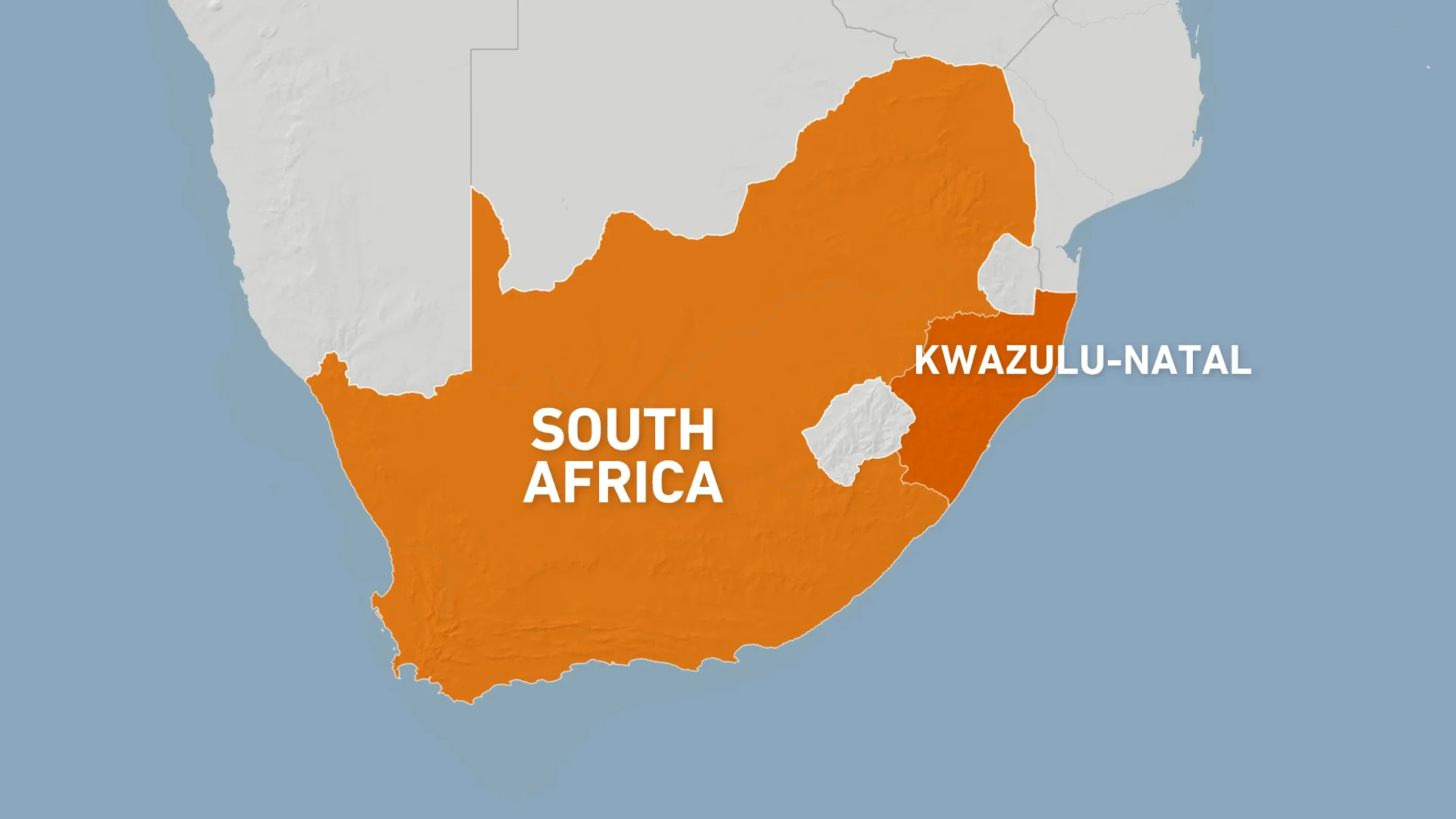
Map showing Ethiopia’s Tigray region, where tensions between the federal government and the Tigray People’s Liberation Front (TPLF) have escalated [Al Jazeera]
That war ended in November 2022 with an agreement signed in Pretoria, South Africa.
It was a permanent cessation of hostilities. It silenced the guns and set terms for Tigray’s disarmament, but left critical questions for later, above all Western Tigray, the fertile territory claimed by both sides and administered by Amhara forces since the war.
Only Addis Ababa and the TPLF signed. Neither Eritrea nor the Amhara forces had a seat.
Jawar Mohammed, the Oromo politician who was once an ally of Abiy and later spent time in prison, told Al Jazeera that shutting them out gave them every reason to wreck the deal.
The new alliance brings together forces that were excluded from the Pretoria negotiations with one of the agreement’s signatories.
The quiet it created ended in May, when the TPLF restored the legislative council that existed before the war and installed its chairman, Debretsion Gebremichael, as regional president, effectively setting up a rival political authority to the interim administration established under the Pretoria agreement. The TPLF accused the federal government of failing to honour its side of the deal.
Federal and Tigrayan forces then clashed at Shererina, near the Sudanese border, on August 1. Heavy artillery and drones were used in the fighting, and hundreds of Tigrayans, including wounded fighters, fled into Sudan.
Then came the drones.
On August 20, two drones struck homes in Mekelle, wounding 13 people, according to the TPLF. Al Jazeera could not independently verify the account.
On September 20, a drone destroyed a truck carrying 41 tonnes of food aid near Adi Daero, according to the TPLF. Addis Ababa has acknowledged none of the reported strikes.
“We signed the Pretoria Agreement, but the regime used the agreement to kill the people of Tigray systematically,” the TPLF’s spokesperson, Michael Asgedom, told Al Jazeera.
Two scripts
Asgedom tells it two ways.
The alliance “was created to bring peace and democracy to Ethiopia”, he said.
He also said it would build a new order “over the ruins of Abiy Ahmed’s system” and that this was “the right time to eradicate the regime”.
If war comes, he said, “it will be for survival.”
One script is for diplomats, the other for fighters.
Tronvoll calls it constructive ambiguity, a phrase that fits the alliance.
Ethiopian Prime Minister Abiy Ahmed Ali faces a new armed alliance that includes the Tigray People’s Liberation Front (TPLF) and six other groups [File: Sergei Bulkin/Sputnik/Kremlin Pool Photo via AP]
That the alliance claims to speak for seven peoples can delegitimise Abiy abroad and raise the price of any settlement, whether or not it fires a shot.
The first test is Eritrea, the neighbour whose name appears nowhere in the founding statement.
Over the past two years, Eritrea has reconciled with the TPLF, the enemy its troops helped to crush in 2020, as Abiy began demanding access to the Red Sea, which Asmara interpreted as a claim on its coast.
Jawar argues that Eritrea’s minimum aim is to keep any conflict on the Ethiopian side of the border.
The International Crisis Group has similarly assessed that Eritrea wants to establish a buffer zone on its southern border.
Asgedom has denied any Eritrean military presence in Tigray, but left the door ajar.
“If Eritrea can take action because of a potential danger to its survival, it is the Eritreans who should answer that question.”
Tronvoll says Eritrean troops are in Tigray now, a claim Al Jazeera could not independently verify. Magnus Taylor, deputy director of the International Crisis Group’s Horn of Africa project, told Al Jazeera that he was more cautious.
“This is substantially a domestic Ethiopian phenomenon,” he said.
Seven commands, one war?
The second test is whether seven commands can fight as one.
Zemene chairs the alliance, but the founding statement names no commander for a joint campaign.
If the line ever advances on Addis Ababa, Tronvoll asks, whose soldiers go first?
“If it is a Tigrayan general commanding Amharas to be sacrificed first to save the Tigrayan soldiers, that will split it immediately.”
Western Tigray is not mentioned in the statement either.
Taylor says the Fano are themselves divided over it: Commanders in Gojjam and Wollo can contemplate an alliance with Tigray, while those nearer the disputed land cannot.
“All these groups have their own different beef with the federal government,” Taylor said, and much of it dates from Abiy’s first year.
In 2018, Abiy invited exiled rebels home, and the OLA and the ONLF returned from Asmara.
But the OLA broke away to keep fighting, and talks with it in Tanzania collapsed in 2023.
The ONLF then split in 2025 after its then-chairman called for a return to armed struggle amid a dispute over a Chinese natural-gas concession in the Somali region.
The Amharan Fano rebelled against the government in 2023 after Abiy ordered the regional special forces to be folded into the federal army, a move many Amhara believed was tantamount to disarmament.
In June, Abiy’s Prosperity Party won 438 of 486 contested parliamentary seats. Voting did not take place in Tigray and was disrupted by insecurity in parts of Amhara and Oromia.
But their grievances are not only with Abiy’s government.
Referring to the news of the alliance, Jawar said he had “not seen anything as unpopular among the Oromos”, after years of accusations that Fano fighters have killed Oromo civilians in Wollega.
The OLA calls its participation a “procedural consensus” and has demanded that Fano disown a faction in Wollega that it says the government armed.
“There is no shared political objective,” Jawar said. “They don’t even have a shared tactical objective.”
And Tronvoll goes further: “If the members ever reached the palace, immediately a new war will start between them.”
The people being asked to fight
Then, there are the people being asked to fight.
Tigrayans are being mobilised alongside forces they remember from four years ago, when, in Tronvoll’s characterisation, “both the Eritreans and the Fano Amharas were perpetrating genocide on them.”
The charred remains of a tank lie on a road near Gereb Agew, southern Tigray, after clashes between the Ethiopian National Defence Force (ENDF) and the Tigray People’s Liberation Front (TPLF), on March 3, 2026 [File: Abel Gerezgiher/AFP]
Friends in Tigray have told Tronvoll of coercive recruitment. He estimates that tens of thousands have left the region in advance of a possible war and the draft.
“People are voting with their feet,” he said. “They are on their knees already. So what are the alternatives for them than to fight?”
Beyond the border
Abiy, for now, appears unmoved.
“As long as they don’t threaten the palace at Arat Kilo, he can live with that,” Tronvoll said. “I don’t think he skips lunch because of this.”
Taylor struggles for a word.
“Is it a headache? Is it an irritant? Is it a blow? It’s a combination of those things.”
In his assessment, the TPLF, which lost most of its heavy weapons in 2022, has come off worse in recent clashes against federal air power. The likelier course, he says, is a slow deterioration, with southern Tigray the flashpoint.
Jawar views Abiy’s approach as containment: Keep flights into Tigray running so that those who want to leave can do so, and let a war that few want sour public opinion.
With Tigrayan forces having seized Mekelle’s airport, that exit has closed.
Tom Gardner, author of The Abiy Project, said, “For months Abiy’s strategy has been to maintain a low-level conflict largely conducted via drones, proxies, and siege tactics. This could be the moment that strategy breaks down and a full-scale war erupts.”
The regional dimension is becoming harder to separate from the conflict inside Ethiopia.
The International Crisis Group says several thousand Tigrayans, mostly from Western Tigray/Welkait, have fought alongside the Sudanese army against the Rapid Support Forces.
Khartoum has also accused Addis Ababa of allowing drones to strike Sudan from Ethiopian soil, which Ethiopia denies.
Eritrea has aligned itself with Sudan’s army and established ties with Egypt, an opponent of Addis Ababa in the dispute surrounding Nile water resources.
The International Crisis Group has described Egypt as a close wartime ally of the Sudanese army.
Those alignments do not necessarily make the new Ethiopian alliance a regional military bloc. But they make it harder to treat Ethiopia’s conflicts as entirely domestic.
In Mekelle, the calculation is narrower.
“It is better to live than to die,” Asgedom said, “and the regime doesn’t allow us to live.”
A journalist in Mekelle, who spoke to Al Jazeera on condition of anonymity, said people had lived for months in a state of no-war-no-peace, and many now wanted it decided either way.
The alliance offers a path to war without making clear what that war would cost.
“We need peace,” residents told the journalist in Mekelle, after months without salaries or medicine.
In the city, there is an old belief that an unexpectedly windy and sunny day foretells fighting. Tuesday was both.
Millions of voters went to polls in Morocco on Wednesday to determine the makeup of the House of Representatives, the parliament’s lower house.
Twenty-seven political parties are competing for 395 seats in the country’s 12th legislative election since independence in 1956.
Almost 16 million people are able to vote, with 55 percent residing in urban areas and 45 percent in rural regions, seeing a mix of concerns among voters.
Economic frustrations
While King Mohammed VI will maintain most executive powers, the new government will manage many public affairs for the coming years.
Once the votes are counted, the king will appoint the head of government from the leading party, but they will still need the support of 198 deputies – an absolute majority – to gain parliamentary confidence.
The election comes at a time of mounting challenges for the country, with the economic situation creating discontent and frustration, Mohammed Masbah, head of the Moroccan Institute for Policy Analysis, told Al Jazeera.
“The upcoming elections will have special importance because they come in a context tied to a social and economic crisis, especially high prices and the cost of living on one hand,” Masbah told Al Jazeera.
“On the other hand, there is a state of frustration among broad segments of society, especially the youth. The Gen Z protests last year, as well as the attempt to cross towards Ceuta a few weeks ago, demonstrate this crisis.”
The introduction of a new financial system designed to support candidates aged 35 could encourage more youth participation. But the nearly six million Moroccans residing overseas, many of them younger citizens, will have to appoint a proxy in Morocco to cast their vote.
There is also an upcoming key milestone for the country with the 2030 World Cup, which requires huge investments. What will remain in the minds of most voters is the state of the economy and inflation, which have impacted the living standards of many Moroccans.
“I believe the upcoming elections will produce a government majority whose primary function will be to address these imbalances, especially the economic ones related to the high cost of living in Morocco,” Masbah said.
“Regarding the issues that were raised and discussed by the majority of political parties, whether represented in the government or the opposition, they are the issue of employment and high prices.”
Two of the main parties competing in the election, the National Rally of Independents and the Authenticity and Modernity Party, have put these issues at the front of their campaigns in what has been a heated election.
“Of course, this is the main topic, but in the public debate, we also noticed conflicts, especially between the top two parties currently running the government,” Masbah said. “We noticed mudslinging and accusations of squandering funds and stealing candidates, which may increase voter alienation from voting today.”
A woman prepares to cast her ballot to vote in Morocco’s legislative elections at a polling station inside a school at the Udayas neighbourhood, Rabat, on September 23, 2026 [AFP]
Despite the tense conditions, Morocco’s Public Prosecution has recorded a significant drop in election-related complaints compared with the 2021 vote.
But legal amendments that criminalise digital offences for the first time – including the dissemination of fake news and false allegations intended to defame candidates or voters – have been introduced. The digital space became the primary arena for violations this year, accounting for 22 complaints.
Masbah said that despite a mood of frustration in Morocco over the government’s inability to manage key economic and social issues, turnout is expected to remain steady, as it has been over the past 20 years, due to structural factors.
“Electoral and voting behaviour in Morocco is not primarily linked to electoral programmes and promises [of parties], as much as it is linked to the stable bloc formed by Moroccan deserts and villages, which relies primarily on a network of notables who have influence and the ability to win voters’ voices through utilitarian voting,” Masbah said.
“I expect that if there is a decline in the voting rate – and this is likely – it will not be catastrophic or a sharp decline, given the consideration I mentioned earlier, which is the focus on notables and traditional elites in winning over voters.”
At the colloquium established shortly after the second world war to prevent future wars, United States President Donald Trump did just the inverse: He platformed his unceasing threats against Iran, suggesting almost casually on Tuesday that he could “annihilate” the country he has waged war against since February 28.
But behind closed doors on the sidelines of the United Nations General Assembly (UNGA), a flurry of diplomatic activity concerning the ongoing US-Iran war has also been unfolding, as world leaders gather in New York.
Recommended Stories
list of 4 itemsend of list
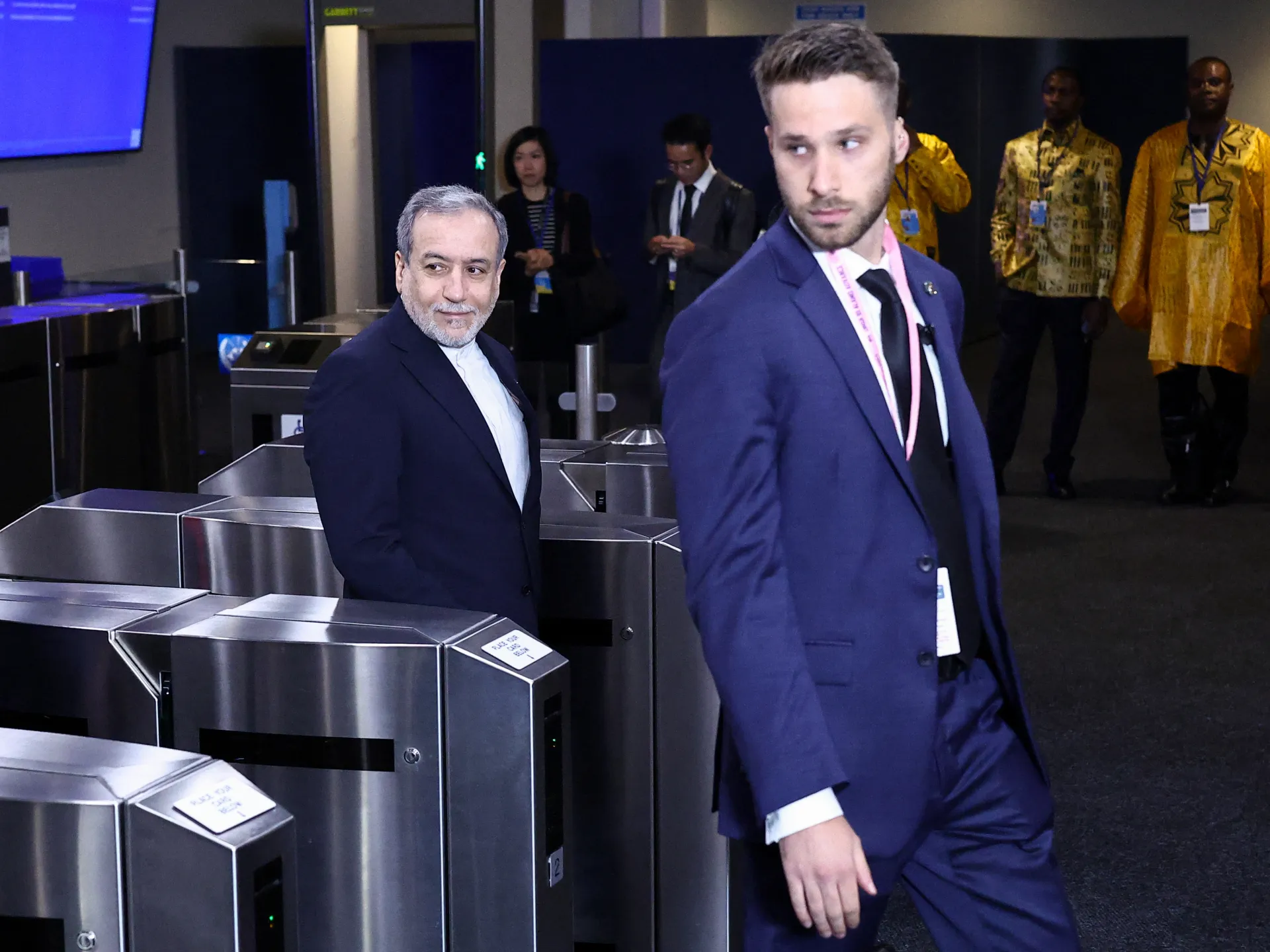
The US and Iran held indirect talks for three hours on Tuesday. US special envoys Steve Witkoff and Jared Kushner met Iranian Foreign Minister Abbas Araghchi, with Trump calling it a “very good” and “very productive” meeting. Trump also met Gulf Cooperation Council (GCC) leaders that day, with senior officials from the region mulling a Qatari proposal for a common security framework involving Iran and the Gulf states.
Meanwhile, Iranian President Masoud Pezeshkian arrived in New York early on Wednesday – the first time a leader whose country is at war with the US has set foot on US soil to address the gathering. And Chinese President Xi Jinping will skirt New York to instead meet Trump one-on-one in Washington, DC – his first state visit to the US in just less than a decade. Xi lands on Wednesday evening.
All these separate diplomatic initiatives, analysts tell Al Jazeera, are parts of a push to bring Iran and the US back to the negotiating table. According to Al Jazeera’s correspondent in Tehran, Tohid Asadi, Araghchi’s meeting with Witkoff and Kushner was to convey Tehran’s latest set of conditions to end the war, following the collapse of the June 60-day memorandum of understanding (MoU) finalised in Islamabad, Pakistan.
But analysts say expecting an actual deal to emerge this week from the diplomatic meetings in the US would be unrealistic. Multiple actors and mediators in the conflict are testing possible off-ramps, but core disagreements between Washington and Tehran remain unresolved.
“I am sceptical that a breakthrough deal can emerge this week, but a series of understandings can build confidence for renewed diplomacy,” Sanam Vakil, the director of the Middle East and North Africa Programme at Chatham House, told Al Jazeera.
Too early for a breakthrough
Vakil is hesitant to call the current moment ripe for a diplomatic breakthrough – it is far too early, and there is a history of negotiations failing, she said.
“Both sides have been negotiating for over two years and on two occasions, that ended with military conflict and these negotiations continue amid persistent military threats,” she said.
Iran has long pointed to its previous rounds of diplomatic talks with the US – in 2025 and again this year – as evidence that Washington can veer from negotiations to military action. It has cited the 12-day war last June, and the current conflict, which began with joint US-Israeli strikes on Tehran at a time Washington and Tehran were engaged in Oman-mediated dialogue.
Adel Abdel Ghafar, a senior fellow focusing on the Middle East at the Australian Strategic Policy Institute, said that there appears to be “genuine” movement towards reigniting negotiations – but also “a fair amount of posturing”. He referenced Trump’s praise for Tuesday’s indirect Iran-US talks and his pugnacious UNGA speech the same day.
A breakthrough hinges on whether Iran’s diplomats in New York can actually deliver, he said.
“Araghchi and Pezeshkian can negotiate, but any deal will need the consent of the [Islamic Revolutionary Guard Corps] and the hardliners in charge of the war back home,” Abdel Ghafar told Al Jazeera.
There are specific indicators to watch for another round of US-Iran contact, the analysts said.
“The signs to watch for are another confirmed round of US-Iran talks, agreement on sequencing or reciprocal steps, and language from both sides becoming more specific about implementation rather than simply repeating maximalist demands,” said Vakil.
Abdel Ghafar added that, against the backdrop of UNGA, signs could include Araghchi or Pezeshkian meeting directly with US officials, in addition to supportive statements from more hardline elements of the Iranian administration back home.
The appearance of such indicators could lead to a stronger push for such talks when Trump meets Xi, as well as an easing of fighting between the Iran-backed Houthi group and the Saudi-led coalition in Yemen, which has escalated in recent weeks, the analyst added.
The limits of Gulf and Chinese diplomacy
The analysts agreed that the Gulf states remain crucial in brokering a return to talks because they have channels to both warring sides, as well as a very strong interest in preventing further escalation, having absorbed the cost of the fighting since February. Qatar, Oman and other Gulf states have been involved in mediation efforts throughout the conflict.
“Qatar and Oman, in particular, can help translate broad political messages into workable arrangements on issues such as Hormuz and regional security,” said Vakil.
China, meanwhile, has less capacity or interest to mediate, she argued.
Beijing, however, could use its economic and political leverage with Tehran “to encourage compromise and give Iran greater confidence that any agreement will not leave it completely isolated”, said Vakil.
Abdel Ghafar pointed out that China remains Iran’s main customer for its oil, explaining why Beijing has pushed for a return to the June interim deal and the reopening of the Strait of Hormuz.
“Still, I think neither can impose a settlement – it ultimately comes down to Washington and Tehran,” he said.
Hostilities and Hormuz
The tit-for-tat rhetoric has resulted in continued deadlock in the conflict, with each side unwilling to relinquish to the other’s demands and appear to admit defeat.
On Tuesday, following Trump’s remarks on annihilating Iran, Iran’s military warned that it is ready to respond with “crushing” attacks more severe than earlier in the war.
“The main challenge is finding a formula that both governments can present domestically as a negotiated compromise rather than capitulation,” said Vakil.
The Strait of Hormuz remains a key obstacle.
“It’s Iran’s strongest card and the thing Washington most wants back, with oil prices high and midterms approaching,” said Abdel Ghafar.
“Tehran will be reluctant to give it up without firm guarantees in return.”
Still, he warned that even if Washington and Tehran de-escalate, that does not automatically extend to the Red Sea.
The wider landscape of regional instability and conflict has created new conditions for Yemen’s unresolved war to flare up once again. The Bab al-Mandeb, now under effective Houthi control, has gained greater significance amid Iran’s effective closure of the Strait of Hormuz, a vital artery for global oil and gas supplies.
“Calm in Hormuz won’t necessarily mean calm in Bab al-Mandab,” said Abdel Ghafar.
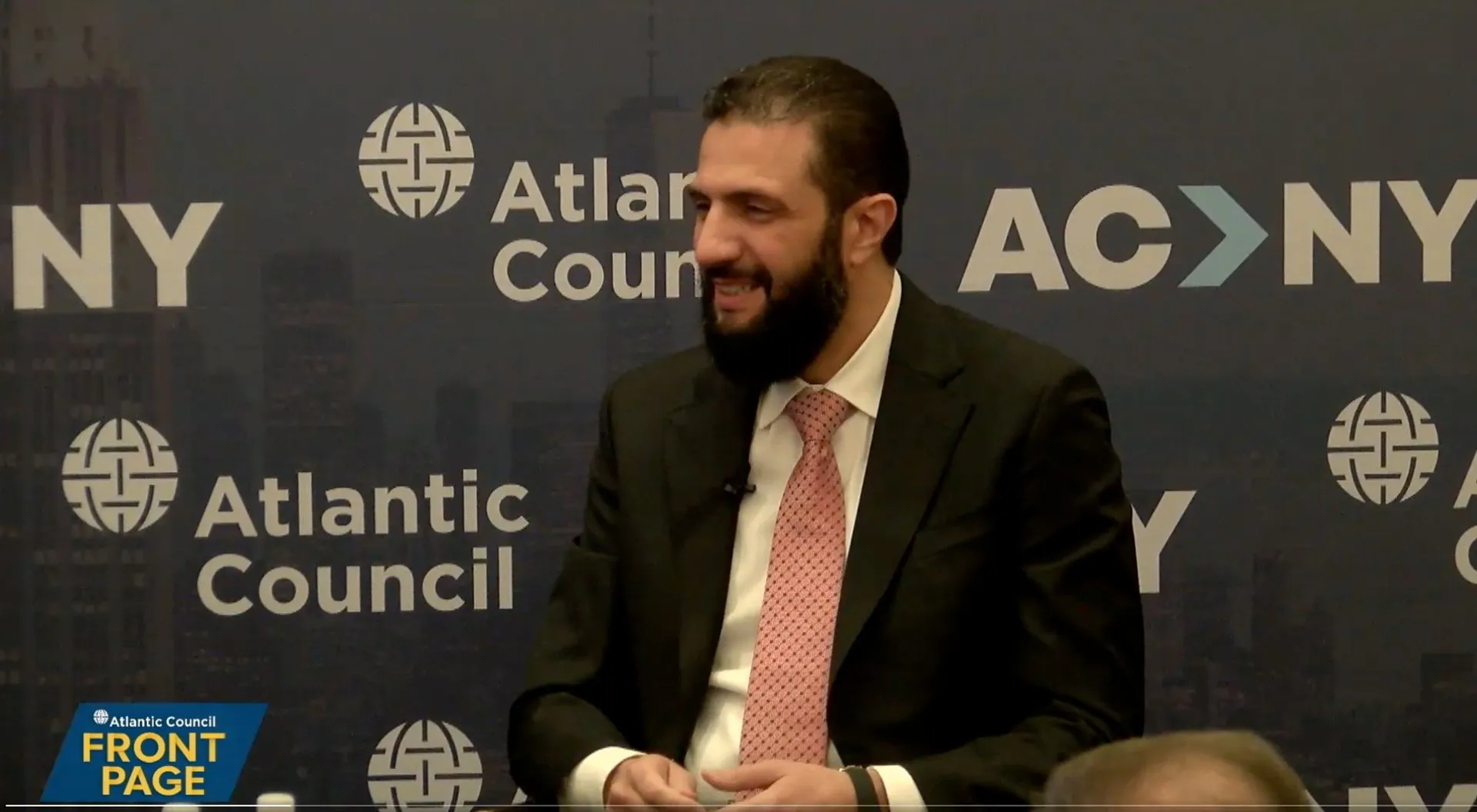
Syria’s President Ahmed al-Sharaa says Donald Trump should give New Jersey to Israel, instead of the Golan Heights. During an interview on the sidelines of UNGA, he criticised Israel’s policy of attacking and occupying Syria since October 7.
Loose Women star Coleen Nolan has spoken out about a family feud
Coleen Nolan reveals heartbreaking family feud ‘I lost those relationships’(Image: ITV)
Coleen Nolan has opened up about a sad family rift in which some members of her family have ‘never spoken to her again’.
The beloved presenter returned to screens on Wednesday (September 23) for Loose Women. Along with Coleen, the panel consisted of Kaye Adams, Janet Street Porter and Jane Moore.
While on the show, the conversation turned to the topic of Earl Spencer’s book – which has made plenty of headlines. “I think that’s the thing when you’re writing your memoir. You can only do it from your perspective and your truth,” Coleen said.
She then shared that she waited until her mum and dad passed away before writing and releasing her own autobiography. Coleen said: “My mom and dad weren’t alive because I knew it would really hurt my mom to hear some of the things that I was going to say my truth about my dad.
“He was a brilliant dad. But had his moments where he wasn’t, and that would have upset my mom.” Coleen then shared that, due to her memoir, a family rift erupted.
She said: “Now, because I wrote those things, I had my dad’s side of the family, a couple of his sisters who never spoke to me again because of that, because they never saw him like that, and he was their golden boy, he was the only boy in the family. They absolutely idolised him.
“Even though I said he was a great dad, he drank too much for me and I didn’t like him when he was drunk and those kinds of things. I had to accept that. I lost those relationships.”
Jane Moore then asked Coleen: “Do you think that’s because you did it publicly? If you’d have that conversation with them privately, would you have carried on speaking to them?”
Coleen replied: “No, they were never, ever, ever gonna believe that. They just didn’t see anything bad at all. And, that’s okay.”
The TV star has been open about the relationship with her father – who died in the 90s – over the years. In 2024, she explained on Loose Women how she would be “scared” whenever her dad Tommy would return home from the pub at weekends.
“My dad was quite a big drinker and I think he’s the reason I became almost phobic about, well not about drink but about drunk people,” Coleen said. She added: “And even now I love when people get tipsy and have a good time but as soon as they cross that line to where their personality changes I have to leave.
“I can’t stand it because I don’t know whether it’s gonna go aggressive, you can see it in their face can’t you? That’s where I’ve gotta leave, and that stems from, as a kid, watching my dad.
“He was a brilliant dad but at weekends he’d come home and he was the quiet drunk and that scared me more because I knew he was in that mood. So that sent me the other way.”
Loose Women airs Monday to Friday at 12:30pm on ITV1.
The qualifiers for the 2027 Africa Cup of Nations begin on Thursday, with 48 countries competing to earn spots in Africa’s biggest football tournament.
Tanzania, Kenya and Uganda will cohost AFCON 2027, as the competition returns to East Africa for the first time in 51 years.
Recommended Stories
list of 4 itemsend of list
Divided into 12 groups, the teams will be involved in a six-round qualifying process that runs to March next year.
Here’s everything to know about AFCON 2027:
Which teams are in the AFCON 2027 qualifiers?
The draw for the AFCON 2027 qualifiers took place in Cairo, Egypt, in May.
The 48 teams competing in the qualifiers are as follows:
Group A: Morocco, Gabon, Niger, Lesotho
Group B: Egypt, Angola, Malawi, South Sudan
Group C: Ivory Coast, Ghana, The Gambia, Somalia
Group D: South Africa, Guinea, Kenya, Eritrea
Group E: Democratic Republic of the Congo, Equatorial Guinea, Sierra Leone, Zimbabwe
Group F: Burkina Faso, Benin, Mauritania, Central African Republic
Group G: Cameroon, Comoros, Namibia, Congo
Group H: Tunisia, Uganda, Libya, Botswana
Group I: Algeria, Zambia, Togo, Burundi
Group J: Senegal, Mozambique, Sudan, Ethiopia
Group K: Mali, Cape Verde, Rwanda, Liberia
Group L: Nigeria, Madagascar, Tanzania, Guinea-Bissau
What are the top AFCON 2027 qualifying matches?
From the first two rounds:
Ivory Coast vs Ghana – Thursday, September 24 at 19:00 GMT
Nigeria vs Madagascar – Friday, September 25 at 16:00 GMT
Morocco vs Gabon – Friday, September 25 at 19:00 GMT
Egypt vs Angola – Friday, September 25 at 19:00 GMT
Algeria vs Zambia – Friday, September 25 at 19:00 GMT
Senegal vs Mozambique – Friday, September 25 at 19:00 GMT
South Africa vs Guinea – Saturday, September 26 at 16:00 GMT
What is the schedule for the 2027 Africa Cup of Nations qualifiers?
The six rounds of AFCON 2027 qualifying will be held across these FIFA international windows:
Rounds 1 and 2: September 21-October 6, 2026
Rounds 3 and 4: November 9-17, 2026
Rounds 5 and 6: March 22-30, 2027
How many teams can qualify for the Africa Cup of Nations?
In total, 24 teams qualify for AFCON 2027.
The general rule is that the top two teams in each group will advance to the finals.
However, in groups containing Kenya, Uganda and Tanzania – who have automatically qualified as cohosts – only the highest-ranked team outside the respective host country will go through.
The qualifiers will be played in a home and away format, with each team playing six matches.
When and where is AFCON 2027?
The 36th edition of AFCON will be held in Kenya, Uganda and Tanzania, bringing the tournament back to East Africa after five decades.
The tournament will run from June 19 to July 17, 2027, at 10 venues across the countries.
The stadiums are in the Tanzanian cities of Dar-es-Salaam, Arusha, Zanzibar, the Kenyan capital Nairobi, and Hoima, Kampala and Lira in Uganda.
Who won the last AFCON?
Senegal defeated Morocco 1-0 in the latest AFCON final on January 18, as Pape Gueye’s extra-time goal in a chaotic contest guided them to their second continental title.
But in March, the Confederation of African Football (CAF) made the extraordinary move to strip Senegal of their crown and award it to Morocco.
The controversial decision came after a review of an incident at the end of normal time in the final, which saw most of the Senegalese team temporarily leave the field to protest an added-time penalty awarded to Morocco, which was missed after a lengthy delay.
Senegal have appealed against CAF’s decision, and the appeal will be heard by the Court of Arbitration for Sport on October 8.
Senegal supporters protest after a controversial penalty was awarded to Morocco during the Africa Cup of Nations final [File: Youssef Loulidi/AP Photo]
Salah, Diaz and Lookman: The top players in AFCON 2027 qualifiers
Two-time African Footballer of the Year Mohamed Salah, who now plays club football for Trabzonspor in the Turkish Super Lig, stars in record seven-time African champions Egypt’s squad.
Fans should also watch out for Real Madrid forward Brahim Diaz and teen midfield sensation Ayyoub Bouaddi in the Morocco squad, led by new coach Mohamed Ouahbi, as well as Ademola Lookman and Samuel Chukwueze in the Nigerian side.
Elsewhere, Ghana are strengthened by the return of their attacking midfielder Mohammed Kudus, who missed the FIFA World Cup 2026 during a seven-month injury absence, while Senegal’s midfield features several talents such as Ibrahim Mbaye and Iliman Ndiaye.
Will Mane and Hakimi play in the AFCON qualifiers?
Morocco will be without their key player and captain Achraf Hakimi for the opening two matches as he serves a two-match suspension, alongside Ismael Saibari, who is banned for three games, for unsporting behaviour during the shambolic AFCON final in January.
Senegal will be without Sadio Mane, two-time African Footballer of the Year, as the Al-Nassr player sits out the match against Mozambique with what newly-appointed coach Patrick Vieira described as a “physical issue”.
Morocco defender Achraf Hakimi in action during the FIFA World Cup 2026 [Vincent Carchietta/Imagn Images]
Which other key players will miss the AFCON qualifiers?
Nigeria’s star striker Victor Osimhen will miss the opening qualifiers against Madagascar and Guinea-Bissau as he continues his recovery from a muscle problem. One of Africa’s finest forwards, Osimhen picked up the injury while playing for his Turkish club Galatasaray.
Naby Keita is among the several established names excluded from the Guinea squad, while Tunisia’s Hannibal Mejbri and Ivory Coast’s Amad Diallo are both out with injuries.
Gabon will be without former captain and all-time top scorer Pierre-Emerick Aubameyang, who quit international duty, saying he felt “humiliated” by his exclusion and subsequent reinstatement after the AFCON in Morocco in January.
Many other players also called time on their international careers this year. This includes Riyad Mahrez, who guided Algeria to the AFCON 2019 title; Edouard Mendy, Senegal’s first-choice goalkeeper during their AFCON 2021 triumph; and Ghana’s Spanish-born forward Inaki Williams.
How to watch and follow AFCON 2027 qualifying matches?
Fans can catch all the action from the AFCON 2027 qualifiers on the following broadcasters or streaming platforms:
Trump boasted that “to the victor belong the spoils” in reference to a recent oil deal with Venezuela. (Presidential Press)
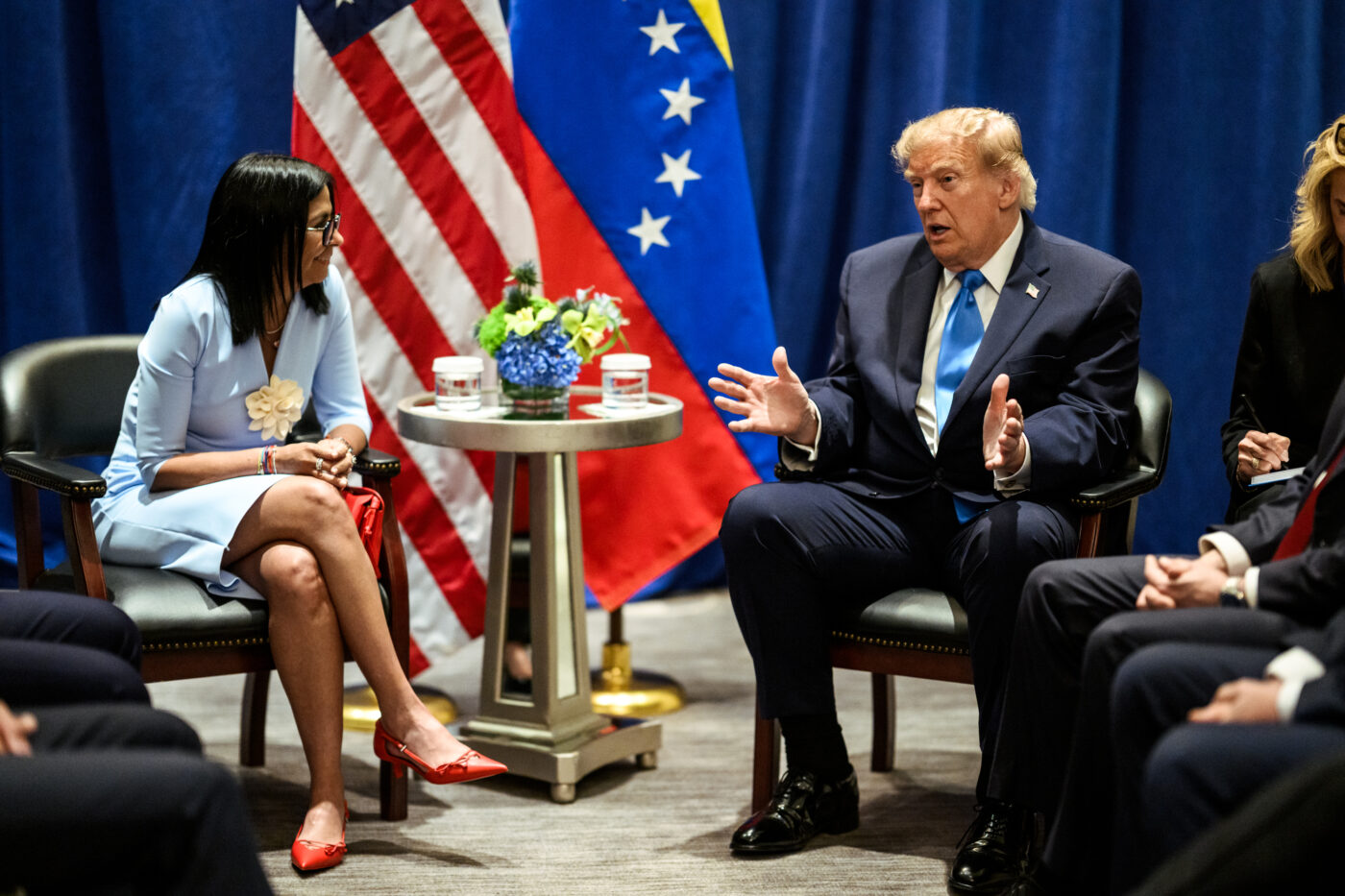
Caracas, September 22, 2026 (venezuelanalysis.com) – Venezuelan Acting President Delcy Rodríguez and US President Donald Trump held a first face-to-face meeting on Tuesday night in New York amid the rapid rapprochement between Washington and Caracas.
The closed-door gathering took place at the Lotte New York Palace hotel during a reception for world leaders participating in the ongoing 81st session of the United Nations General Assembly. Trump was flanked by Secretary of State Marco Rubio, Treasury Secretary Scott Bessent, and other White House officials, while Rodríguez was joined by Foreign Minister Félix Plasencia.
The Venezuelan government published photos of the meeting, with the two leaders smiling for the cameras in front of the countries’ flags.
On her social media channels, Rodríguez praised the “historic” sit-down with Trump and reported that the discussions focused on strengthening “cooperation in strategic areas such as energy and mining.”
“We thanked President Trump and his government […] for its support for Venezuela’s reinsertion into multilateral spaces,” she stated. “Venezuela and the United States share a historic relation that, in this new era, we must drive forward through dialogue.”
Tuesday’s summit was the first between US and Venezuelan leaders since a brief encounter between Barack Obama and Nicolás Maduro during the 2015 Summit of the Americas in Panama.
Rodríguez is also set to be the first Venezuelan head of state to participate in the UN General Assembly since Maduro in 2018, during Trump’s first term. In 2019, then as vice president, Rodríguez addressed the UN General Assembly, denouncing US sanctions as a form of “state terrorism” and accusing Trump of “sticking his imperial claws” against Venezuela and Cuba
The high-level meeting follows a rapid diplomatic rapprochement between Caracas and Washington following the January 3 US bombings and kidnapping of President Nicolás Maduro and First Lady Cilia Flores. In the months since, the acting Rodríguez administration has fast-tracked energy and mining reforms tailored to US and Western corporate interests while also realigning the country’s foreign policy.
The Venezuelan acting president and her diplomatic team have yet to mention Maduro in their New York trip. Maduro and Flores are presently detained in Brooklyn, some 10 miles from the UN headquarters, and facing drug trafficking conspiracy charges. Both pleaded not guilty.
At the time of writing, the White House has offered no details on Tuesday’s summit with Rodríguez.
However, in his UN speech earlier in the day, Trump hailed the US’ military operation to kidnap “outlaw dictator” Maduro.
“Our actions in Venezuela are proof that the United States will no longer permit threats to America to gain a foothold anywhere in the Western Hemisphere. And if necessary, we will use our unmatched military might to secure the vital national interests of the United States,” he said.
Trump went on to boast about US corporations entering the Venezuelan energy sector and praised a recent deal giving privileged access to more than 20 percent of the Caribbean nation’s reserves to a Pentagon-controlled firm as “perhaps the biggest deal ever made.”
“To the victor belong the spoils,” he added. Rodríguez and the Venezuelan delegation were shown listening to Trump’s speech in the UN live broadcast.
Prior to the high-profile Trump sit-down, Venezuela’s acting president held meetings with Inter-American Development Bank (IDB) President Ilan Goldfajn, International Monetary Fund (IMF) Managing Director Kristalina Georgieva, and World Bank President Ajay Banga to discuss Venezuela’s reintegration into international financing and cooperation mechanisms.
“We are promoting new stages of engagement with the international financial system and working to ensure joint efforts for the benefit of the Venezuelan people. Venezuela’s future is built through partnerships, hard work, and the firm determination to keep moving forward and creating opportunities for our nation,” Rodríguez said.
She also met with UN Secretary-General António Guterres, with whom she reportedly discussed Venezuela’s political and economic situation, cooperation with the UN, human rights, and dialogue.
The Venezuelan leader likewise held a brief conversation with Spanish Prime Minister Pedro Sánchez and Foreign Minister José Manuel Albares.
Did Justin Bieber perform at problem-plagued MacArthur Park? Never say never.
An impersonator may have tricked a Las Vegas nightclub last year, but those at the park Tuesday appeared convinced of their brush with Bieber. L.A. County’s district attorney was too.
According to social media posts, the singer and a few band members set up on a grass lawn near a Central American fried chicken shop on 6th Street. He reportedly performed several songs, including the 2025 hit “Yukon.”
L.A. County Dist. Atty. Nathan Hochman on Tuesday night pointed to the “Yukon” clip as proof that park conditions were improving.
L.A. D.A. Nathan Hochman, center left, walks with First Assistant U.S. Atty. Bill Essayli on June 4 as L.A. police and federal agents conduct an operation targeting narcotics use at MacArthur Park.
(Allen J. Schaben/Los Angeles Times)
Bieber’s performance, he said in a post on X, was a “testament to the progress we are achieving to take back the park from drug dealers and enliven it for families.”
“[He’s] definitely on the invite list for next year’s Labor Day weekend picnic!” Hochman said.
The Times reached out to Bieber’s representatives to confirm the pop singer’s appearance but did not immediately hear back.
The pop star has been leaning in to more intimate performances, notably appearing on the Grammys for a stripped-down rendition of “Yukon” (while wearing boxers and black socks).
In April, he made his Coachella headlining debut, playing a nearly 90-minute set. For a large portion of the set, he took Beliebers — as his fans are known — down memory lane, sitting behind a laptop and singing along to his old music videos.
UEFA president speaks for the first time since FIFA said it would review its decision-making, says trust still broken.
Published On 23 Sep 202623 Sep 2026
UEFA president Aleksander Ceferin says trust in world football has not been restored following the collapse of FIFA’s controversial private investment plan.
The remarks, made in a video address to the Portugal Football Summit on Wednesday, were Ceferin’s first public comments since FIFA president Gianni Infantino offered a review of the governing body’s decision-making.
Recommended Stories
list of 4 itemsend of list
Ceferin said unity, transparency and governance that served the wider game were essential to maintaining trust in football. “Yet not everyone places the game above their own ambitions.”
“Trust in our sport rests on three pillars: unity, transparency, and governance that serves the many, not the few. In recent times, all three were disregarded by people who had sworn to protect them.
“The project that shattered the unity of world football may be abolished, but the trust it broke has not returned, and repairing it is our work now.”
Ceferin did not name Infantino or FIFA, but his comments were an apparent reference to the abandoned proposal to sell a 20 percent stake in FIFA’s commercial rights, including the World Cup, to private investors. The plan was dropped in July after fierce opposition from UEFA, the Asian Football Confederation and the Confederation of North, Central America and Caribbean Association Football (CONCACAF).
“Football is not for sale,” Ceferin said. “That is the message UEFA has carried for years, and I’m certain this summit will carry it further.”
His intervention came two days after Infantino sought to address the fallout in a letter to the FIFA Council and the presidents of all 211 member associations.
He said he would ask the council whether it wanted to commission an independent external review of FIFA’s governance framework for major strategic initiatives and proposed consultations with confederations, member associations and other stakeholders on strengthening its decision-making processes.
He said any review could examine the roles of the president, bureau, council and congress and ways to improve transparency and accountability.
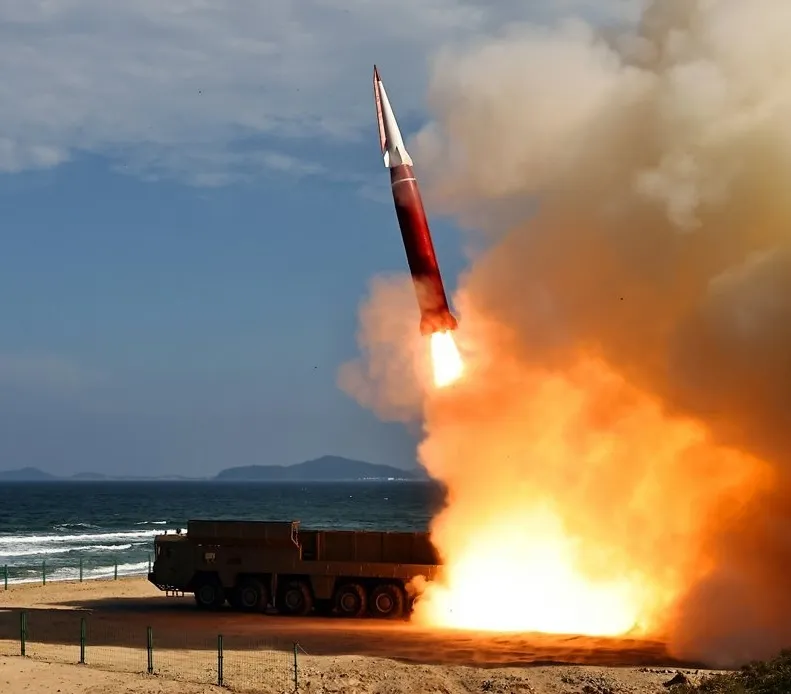
North Korea has released imagery of what appears to be a flight test of an updated version of its Hwasong-11Ma hypersonic missile, nearly a year after the weapon first appeared publicly at a military technology exhibition in Pyongyang.
Launch of a Hwasong-11Ma-1 missile from the test facility in Anbyon County, south of Wonsan. North Korean State Media
The September 20 test involved a short-range ballistic missile (SRBM) booster fitted with a hypersonic glide vehicle, according to photographs released by North Korean state media. A display screen visible in the imagery identifies the weapon as the Hwasongpho-11Ma-1, or Hwasong-11E-1 in the equivalent English-language designation.
The test was conducted from the east coast near Anbyon County, south of Wonsan, an area North Korea has repeatedly used for missile testing. The launch site allows missiles to be fired eastward over the Sea of Japan, providing a relatively controlled area for testing short- and medium-range systems.
Another two views of the launch of the Hwasong-11Ma-1 missile. North Korean State Media
South Korean and Japanese authorities say they detected two launches on September 20, with the first occurring at approximately 3:00 p.m. local time and the second several hours later.
North Korean photographs show the missile being launched from a coastal location, with Kim Jong Un and senior missile officials observing the test. Kim’s daughter, Kim Ju Ae, also appears in the imagery.
Kim Jong Un and Kim Ju Ae monitor the progress of the Hwasong-11Ma-1 test. North Korean State Media
North Korea displayed a mock-up of what it called the Hwasong-11Ma at its Defense Development-2025 exhibition in October 2025. The design uses the basic architecture of the Hwasong-11 family, known in the West as the KN-23 family, but substitutes a distinctive glide wedge-shaped vehicle for the conventional warhead arrangement.
The Hwasong-11Ma, among other weapons, on display at the weapons exhibition in Pyongyang in October 202. North Korean State Media
North Korea claimed another hypersonic missile test that same month, but did not release launch imagery clearly connecting that test to the Hwasong-11Ma. The missile was subsequently shown again during a military parade in Pyongyang.
Hwasong-11Ma missiles on five-axle TELs at last October’s military parade in Pyongyang. North Korean State Media
The latest “-1” designation suggests an iterative evolution of the Hwasong-11Ma, although Pyongyang has not explained what modifications it represents.
Based on the imagery, the new configuration also includes a modified launcher, with the missile carried on a six-axle transporter-erector-launcher (TEL). When the Hwasong-11Ma was first shown, it was mounted on a five-axle TEL. The latest vehicle also appears to incorporate modified retractable covers around the missile.
It remains unclear whether the new TEL represents a standardized operational vehicle or a test configuration.
As with previous North Korean weapons announcements, the country’s state media claims need to be treated very cautiously. Pyongyang has a long record of publicizing weapons systems and test results that cannot be independently verified, while some of its purported hypersonic tests have left outside analysts unable to determine whether the advertised maneuvering performance was actually demonstrated.
Perhaps the most revealing test-related imagery comes from a display screen photographed at the launch site.
Kim Jong Un and his daughter can be seen watching the screen, which shows the apparent flight trajectory of the Hwasong-11Ma-1. The displayed path initially follows a ballistic trajectory before descending and then performing a pull-up maneuver, regaining altitude before continuing toward the target area.
That type of trajectory is consistent with the basic concept behind a hypersonic glide vehicle. The booster provides the initial velocity and altitude, after which the unpowered glide body follows a relatively shallow, atmospheric flight path at hypersonic speeds, while maneuvering rather than following a simple ballistic path.
The graphic is useful for understanding what Pyongyang says the weapon is designed to do, but it does not independently demonstrate that the missile actually followed the depicted trajectory.
The flight data visible on the display provides some unusually specific figures.
Enhancing the original image released by North Korea allows for an excellent view of the HS-11Ma hypersonic glide missile trajectory, providing altitude and speed data. Note: Slight inaccuracies in the numbers may occur due to the use of AI tools. pic.twitter.com/M4LkfF5VYu
According to the North Korean imagery, the missile traveled 908.2 kilometers (564.3 miles), reached an altitude of 35.8 kilometers (22.2 miles), and remained in flight for approximately 445 seconds, or 7.4 minutes.
The display gives a velocity of 2,146 meters per second, equivalent to roughly 4,800 mph. That is hypersonic velocity in the aerodynamic sense, but speed alone is not what makes a hypersonic glide weapon particularly challenging to defend against. More consequential parameters include sustained controlled flight, maneuverability, guidance, and accuracy.
Other portions of the display appear to show additional points along the flight, including different times, altitudes, and speeds. None of these figures have been independently verified.
The TEL raises one of its two Hwasong-11Ma-1 missiles into the launch position. North Korean State Media
The claimed range is particularly noteworthy because it does not match the publicly reported tracking data from South Korea and Japan.
South Korea’s Joint Chiefs of Staff said North Korea launched two SRBMs from the Wonsan area on September 20. The missiles were assessed to have traveled approximately 450 and 600 kilometers, respectively.
Japan similarly reported two launches, assessing the first at approximately 440 kilometers and the second at approximately 590 kilometers, with maximum altitudes of roughly 60 and 70 kilometers.
Those figures are substantially different from the 908.2-kilometer distance shown on North Korea’s display.
The Hwasong-11Ma-1 climbs after launch. North Korean State Media
The discrepancy does not necessarily establish that either side’s data are incorrect. The North Korean figure could represent a different measurement of the flight path, or could correspond to a portion of the test that was not reflected in the public South Korean and Japanese assessments. It is also possible, if not highly probable, that Pyongyang selectively presented or altered the data.
South Korean analysts have already raised questions about the unusually long distance displayed by North Korea. Yonhap reported that experts suggested Pyongyang may have altered the figure to portray the test as more successful.
Regardless of the range actually achieved in this test, the Hwasong-11Ma/Ma-1 is significant because it represents an attempt to combine a relatively compact SRBM with a maneuvering hypersonic glide vehicle.
The underlying Hwasong-11 family is a well-established North Korean missile design. In its KN-23 configuration, members of the family have also been used by Russia against Ukraine. By placing a glide vehicle on this type of booster, Pyongyang could potentially give a regional strike weapon a flight profile substantially different from that of a conventional ballistic missile. The Hwasong-11Ma/Ma-1 also uses a solid-fuel booster, allowing for faster launches than earlier liquid-fuel designs.
The original North Korean Hwasong-11 short-range ballistic missile. North Korean State Media
In principle, the Hwasong-11Ma/Ma-1 could give North Korea an additional hypersonic strike option against more heavily defended targets in South Korea. Having road-mobile TELs would also provide greater operational flexibility despite their relatively limited range, while making it more difficult for adversaries to locate and track the launchers.
A genuine boost-glide weapon creates significant challenges for defending forces since the sheer speed of the weapon bypasses most air defenses. Its trajectory can also become less predictable after the boost phase. Maneuvering at lower altitudes could also reduce the time available to detect, track, and engage the weapon.
A close-up look at the Hwasong-11Ma’s boost-glide-vehicle. North Korean State Media
However, the available imagery does not establish the extent of the vehicle’s maneuverability, its ability to maintain controlled flight, its accuracy, or the reliability of the complete missile system.
North Korea has made similar claims about its hypersonic weapons in the past.
The challenge is not simply reaching hypersonic speed. A weapon has to sustain controlled flight and maneuverability under extreme thermal loads, while also overcoming demanding materials-science, guidance, and navigation requirements. The terminal phase is harder still. Accurately finding and striking a moving target, particularly a ship, requires a highly capable seeker and guidance system. Integrating a nuclear warhead introduces another layer of engineering and weapons-design challenges.
Those demands have made hypersonic weapons a major technological challenge for the United States and other major powers. China is currently widely regarded as the leading country in deploying and developing operational hypersonic systems, although important questions remain about the capabilities and maturity of individual weapons.
Pyongyang said it first flight-tested a wedge-shaped hypersonic glide vehicle in 2021 aboard the liquid-fuel Hwasong-8, before pairing a similar-looking vehicle with the solid-fueled Hwasong-16B intermediate-range ballistic missile (IRBM) in 2024.
VIDEO: Korean Central Television (KCTV) broadcasted footage of North Korea successfully testing the new “Hwasong-16B” hypersonic intermediate-range ballistic missile (IRBM) on Tuesday. pic.twitter.com/VNdhLAeyyK
In its coverage of the latest test, North Korean state media initially avoided identifying the weapon, describing the event as a successful trial of a “new-type weapon” that it said was significant for the rapid development of weapons technology.
Kim said the development would give adversaries an “incurable headache” and deliver what he described as a “cruel and unavoidable blow.”
Tal Inbar, the head of the Space and UAV Research Center at Israel’s Fisher Institute for Air and Space Strategic Studies identifies the Hwasong-11Ma/Ma-1 as a “very significant weapon, bringing hypersonics to the operational/tactical arena and [posing] a challenge to … air and missile defense systems.”
Whatever the exact achievements of the test, the imagery points to continued development of a weapon North Korea first publicly displayed nearly a year ago. The appearance of a new, six-axle TEL, a potentially modified missile, combined with the apparent flight test, suggests that the Hwasong-11Ma/Ma-1 program has progressed since its initial public unveiling.
What remains uncertain is how much of that progress represents a genuine improvement in operational capability.
The latest test therefore provides another indication of the resources and attention Pyongyang is devoting to hypersonic weapons, but the available evidence is still insufficient to determine how closely the Hwasong-11Ma-1’s actual performance matches the capabilities depicted by North Korean state media.
The shadow of Bill Cosby hangs over the “The Peterson Show,” a new play by Janine Nabers about the fallout of a disgraced TV dad on the grown-up cast members who played his children on the show.
Echo Theater Company, which is presenting the world premiere of this play in a production directed by Michelle Bossy, has reconfigured its Atwater Village Theatre space for the occasion. The refresh — in terms of the position of the stage and the audience and in the level of the design elements, including video monitors showing clips of Black sitcoms — promises a vital evening of theater.
Unfortunately, the production is hamstrung by fundamental problems in the writing, directing and acting, all pointing to a failure of control. Control of the story, control of the tone and control of the cast.
In my fall preview item for this show, I wrote that the “production is all but guaranteed to be more enlivening than an evening spent surfing Netflix.” Well, it’s certainly lively, but in a boisterous way that made me regret I had left my couch.
Not even Netflix would give “The Peterson Show” the greenlight. The story centers on the adult lives of the sitcom’s five child stars who are thrust once again into the spotlight after a reunion rumor goes viral and their TV mom, Valerie, kills herself.
Deanna Reed-Foster, left, and Tamberla Perry in “The Peterson Show” at the Echo Theater Company.
(Cooper Bates)
Ronika (Tamerla Perry), the troublemaker of the group, careens through life with faulty brakes. Zoe (Kristen Ariza), who has traded TV stardom for an academic career and motherhood, wants the normalcy that her former fame keeps threatening.
Dwight (Devere Rogers) is messy and loud as well as addicted to fame and other substances. Blair (Kelly McCreary), who pulled herself out of a miserable childhood, has made a successful career as an award-winning actor and isn’t going to let her flimsy talent or her TV siblings stand in her way. Elliot (John Clarence Stewart), who seems the best adjusted of this crew, left the business to become a lawyer and hasn’t looked back.
Haywood Peterson, the patriarch of the TV show who’s serving jail time for rape, doesn’t appear in “The Peterson Show.” But his voice tyrannically resounds with sadistic orders and conservative cultural commentary during the second-act flashback scene, in which a fateful day on the set of the show changes the lives of Ronika and Blair.
The unsettled first act, full of false starts, feels like an early draft of the play. Nabers, an Emmy-nominated TV writer and author of the play “Serial Black Face” (winner of the Yale Drama Series Prize), can’t figure out how to center the work.
Ronika is the protagonist, but her introduction is off-putting — not only to Zoe, whose home she has invaded, but to the audience, who isn’t given much reason to care about this abrasive, screechy and just-plain-annoying personality.
The cast members perform at a fever pitch of amateur sitcom acting. Ronika evolves as the scene shifts to Blair’s home (which confusingly has the same layout as Zoe’s house in Michael Kramer’s eye-catching scenic design) for the home funeral of their TV mom. But more thought is spent in reworking Ronika’s hairstyle and outfit than in developing her story.
Kristen Ariza, left, Devere Rogers, Kelly McCreary, John Clarence Stewart and Tamberla Perry in “The Peterson Show” at the Echo Theater Company.
(Cooper Bates)
Ronika’s resentment toward Blair, who has avoided condemning Haywood in public, seethes monotonously until her own backstory is finally unearthed. Ronika’s trauma plot, however, has to compete with Valerie’s related breakdown story, and neither is given its dramatic due.
In the meantime, there’s a lot of unwieldy comic commotion involving a missing corpse, a tweaking, naked Dwight and enough insipid TV sibling bickering to clog the airwaves for a decade.
“The Peterson Show” is exhausting. The play isn’t ready for prime time. Bossy’s direction raises the clamorous volume instead of sorting out the disordered structure or digging into the unexamined silences.
The actors are led completely astray. Echo has built its reputation on quirky plays idiosyncratically performed. The theatrical marching orders here seem to involve throwing spaghetti against the wall and laughing uproariously as it slides to the floor.
The 13-year-old beat the previous 400m Asian Games record, set by China’s Ye Shiwen in 2014, by about 4.5 seconds.
Published On 23 Sep 202623 Sep 2026
China’s 13-year-old swimming sensation Yu Zidi has completed a hat-trick of Asian Games golds with a dominant victory in the 400m individual medley, two years before the Los Angeles Olympics.
The schoolgirl powered home in an Asian Games-record 4 minutes 28.56 seconds (04:28.56) on Wednesday to make it a clean sweep of her three individual events in Tokyo, following victories in the 200m butterfly and 200m individual medley, also in games-record times.
Recommended Stories
list of 4 itemsend of list
She beat the previous 400m games record set by China’s Ye Shiwen in 2014 by approximately 4.5 seconds.
It was the fourth-fastest time in the world this year, with world record-holder Summer McIntosh owning the top three.
With the next Olympics two years away, Yu is shaping up to be a major medal contender at the 2028 Los Angeles Games.
Last year, she became the youngest medallist at the World Aquatics Championships, where she won bronze for China’s relay team at the age of 12, and has since been earmarked for success in the swimming world.
At the same championship, Yu finished fourth by a small margin in three individual events.
In March, the teen sensation built on her growing reputation with a 200m butterfly victory over seven-time American Olympic medallist Regan Smith at the China Swimming Open.
At the Asian Games, Yu has dominated the pool and showed another glimpse of her immense talent in the 400m individual medley, where she took the lead from the start and finished 3.95 seconds clear of silver medallist Ke Wenxi of China, with Japan’s Mio Narita finishing third.
In addition to grabbing international headlines, Yu has become a sensation at home following her Asian Games exploits.
The story of her introduction to competitive swimming after being spotted by a coach at a water park, and her struggle with interviews, has gone viral on local social media platforms.
At the games, Yu was asked by the media whether answering questions was the hardest part of competing. She replied, with a giggle: “Every time I just want to float off somewhere else.”
Defenders: Georgia Brown (Jacksonville), Jenna Clark (Liverpool), Nicola Docherty (Rangers), Sophie Howard (Como), Emma Lawton (Ipswich Town), Rachel McLauchlan (Newcastle United), Amy Muir (Glasgow City).
Midfielders: Chelsea Cornet (Birmingham City), Erin Cuthbert (Chelsea), Christy Grimshaw (AC Milan), Sam Kerr (Liverpool), Kirsty Maclean (Liverpool), Maria McAneny (Celtic), Miri Taylor (Aston Villa), Caroline Weir (Lyon).
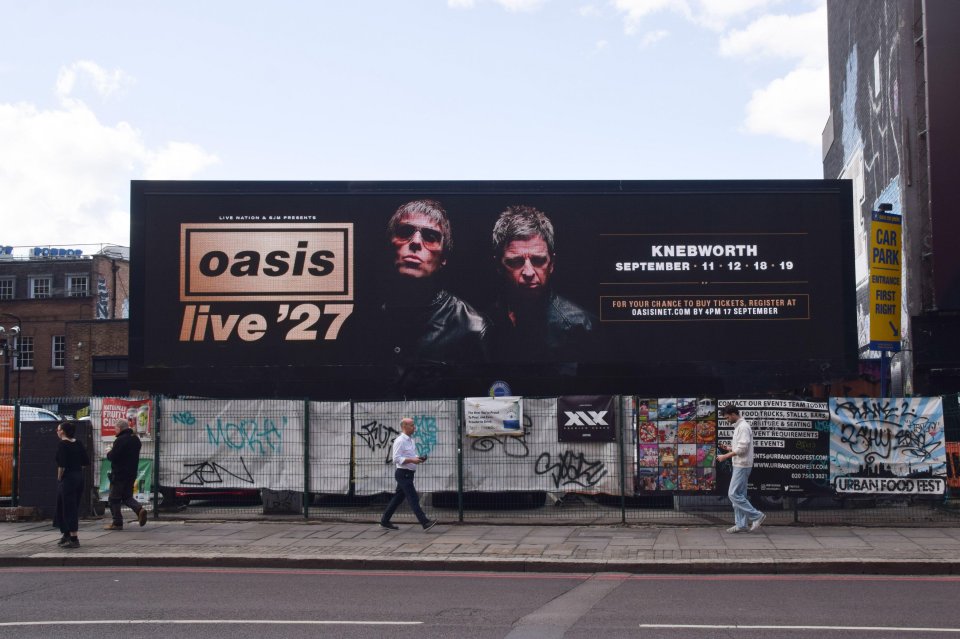
OASIS fans who are eager to grab tickets for their 2027 tour must keep an eye on their emails over the next few days.
This is because those who have been selected from the ballot will be given a unique code in order to access the site to buy tickets. Here’s what you need to look out for.
Oasis start their latest tour in May 2027 at Celtic Park, GlasgowCredit: Alamy Live News.
When are Oasis codes released?
Codes for tickets will be released between Thursday 24th and Sunday 27th September 2026.
As published on oasisnet.com, if you have been selected to buy an Oasis Live ’27 ticket, a unique code and full details of how to buy tickets will be sent to the email address and name fans registered with.
Sign up for the Showbiz newsletter
Thank you!
There will be no general sale for the tour, but there is also no set time on when fans will receive their codes.
This means that fans who are invited to buy a ticket on Sunday 27th September may receive their code later.
Fans have been warned to check their junk folders over this period just in case the email with the code attached drops in there.
When do tickets go on sale?
General sale for tickets will be across three dates, but you’ll only be able to access the sale on your allocated day.
Registration closed on Thursday 17th September at 4pm, with fans now having to wait to see if they are lucky enough to have been selected.
The three days the general sale will be on are:
Friday September 25
Saturday September 26
Sunday September 27
Ticket prices are fixed and will range between £71.50 to £266.60. Ticket prices will vary depending on the location of the concert and where you are stood or sat.
What are the confirmed tour dates?
Oasis are returning to Knebworth house in 2027, for the first time since their iconic 1996 gigs which saw 250,000 people attend over two days.
They have 11 nights booked at the Etihad stadium, home of the Gallagher brothers beloved Manchester City, having last played there in 2005.
The icons will also return to France for the first time since their acrimonious split at Rock en Seine festival in Paris in 2009.
Oasis’ 2027 tour schedule revealed
OASIS will play 38 nights across 11 cities in 2027, they announced today at 4pm
May 2027 May 21 Glasgow, Celtic Park May 23 Glasgow, Celtic Park May 25 Glasgow, Celtic Park May 28 Glasgow, Celtic Park May 29 Glasgow, Celtic Park
June 2027 June 04 Manchester, Etihad Stadium June 06 Manchester, Etihad Stadium June 08 Manchester, Etihad Stadium June 11 Manchester, Etihad Stadium June 12 Manchester, Etihad Stadium June 15 Manchester, Etihad Stadium June 18 Manchester, Etihad Stadium June 19 Manchester, Etihad Stadium June 22 Manchester, Etihad Stadium June 25 Manchester, Etihad Stadium June 26 Manchester, Etihad Stadium
July 2027 July 02 Munich, Allianz Arena July 03 Munich, Allianz Arena July 10 Barcelona, Estadi Olímpic Lluís Companys July 11 Barcelona, Estadi Olímpic Lluís Companys July 16 Amsterdam, Johan Cruijff ArenA July 17 Amsterdam, Johan Cruijff ArenA July 23 Paris, Stade de France July 24 Paris, Stade de France July 29 Rome, Stadio Olimpico July 30 Rome, Stadio Olimpico
August 2027 August 10 Boston, Gillette Stadium August 13 Boston, Gillette Stadium August 14 Boston, Gillette Stadium August 20 Las Vegas, Allegiant Stadium August 21 Las Vegas, Allegiant Stadium August 24 Las Vegas, Allegiant Stadium
September 2027 September 04 Slane Castle, Ireland September 05 Slane Castle, Ireland September 11 Knebworth, UK September 12 Knebworth, UK September 18 Knebworth, UK September 19 Knebworth, UK
With world leaders at the UN General Assembly podium this week, play our quiz matching famous quotes to who said them.
Published On 23 Sep 202623 Sep 2026
This week, world leaders converge on New York for the annual United Nations General Assembly (UNGA), where representatives from the 193 UN member states are expected to take to the podium.
Over the decades, that same podium has hosted some of modern diplomacy’s most quoted moments, from Cold War warnings to wartime appeals.
Match each line to the leader who spoke it from the UNGA podium in the 10-question quiz below.
A French Navy Mistral class amphibious assault ship has been photographed carrying Naval Group’s new Rampart modular launcher, a system designed to allow a single weapon station to employ different types of rockets, missiles, and other effectors against a wide range of threats.
The imagery, captured off Toulon during training on September 21, reveals the launcher installed on the ship’s forward starboard sponson. While the specific identity of the vessel is unclear, this represents the first publicly observed evidence that Rampart has moved into shipboard testing.
🇫🇷 French Navy Mistral-class amphibious assault ship and 🇫🇷French Navy Suffren (Barracuda)-class nuclear-powered attack submarine off Toulon, France – September 21, 2026.@WarshipCampic.twitter.com/6xYm6E5J9R
Naval Group announced in June that the first at-sea firing campaign for Rampart was planned for October aboard a Mistral class ship during the French Navy’s Wildfire counter-drone exercise.
What makes Rampart unusual is its modular architecture. Rather than being built around one missile or rocket, the system uses interchangeable launch modules that can accommodate different weapons. This allows a ship to carry large numbers of relatively inexpensive guided rockets for counter-drone work while retaining the option of using larger and more capable short-range missiles against more challenging targets.
The Rampart, then still known as the Multi-purpose and Modular Launching System (MPLS), displayed at the EURONAVAL defense exhibition in November 2024. Photo by Thierry NECTOUX/Gamma-Rapho via Getty Images
Because the launch modules are interchangeable, the mix can theoretically be changed as the mission or threat environment changes.
The approach is aimed squarely at a problem that has become increasingly important for naval forces: defending expensive ships against potentially large numbers of inexpensive uncrewed systems and missiles without relying exclusively on high-cost interceptors.
Rampart was previously known as the Multi-purpose and Modular Launching System (MPLS). Naval Group unveiled the concept in 2023 as a self-funded development effort and formally presented the Rampart earlier this year.
Multipurpose and modular launching system (MPLS) “ready to fire”
The launcher uses four interchangeable ammunition modules. Depending on the configuration, Naval Group says that the system can accommodate up to 80 Thales 68mm laser-guided rockets or 48 NATO-standard 70mm laser-guided rockets. Other configurations can carry smaller numbers of short-range missiles (four to six per module, depending on type) or other effectors, including decoys.
The system has already been demonstrated with guided rockets. A January 2026 test involved a Thales 68mm guided rocket, followed by a series of firings at the Canjuers range in southern France in May. Those trials, seen in the video below, included engagements against targets at roughly two miles and a five-rocket salvo.
Tirs réussis du Rampart à Canjuers / Successful live-fire trials at camp Canjuers for Rampart
The relatively small guided rockets are particularly relevant to counter-drone operations. They offer a way of engaging aerial targets with a weapon substantially smaller than a conventional surface-to-air missile, while still providing precision guidance.
As well as rockets, Naval Group has been working with Thales on the Lightweight Multirole Missile (LMM). Also known as Martlet, the LMM is intended to tackle a range of challenging airborne and surface targets, as you can read about here.
Thales proves its Lightweight Multirole Missile’s precision strike capability
The company has also explored integration of loitering munitions and other missiles, while a separate agreement with the UAE-based EDGE Group covers trials of the SkyKnight surface-to-air missile.
SKYKNIGHT
The company has also pursued integration of Poland’s Piorun short-range air-defense missile. This may well be with a view to a potential Polish purchase of Rampart to arm its forthcoming frigates, which you can read about here.
Polish Army soldiers fire a Piorun man-portable air defense system. U.S. Army photo by Davide Dalla Massara
This means the launcher is effectively being developed as an open weapons-integration platform, rather than as a dedicated launcher for one or a small set of particular munitions.
That openness could make Rampart attractive to a wide range of navies. Instead of requiring customers to adopt a completely new missile family, the launcher can potentially be configured around weapons already in their inventories or sourced from their domestic defense industries. A country could therefore buy the common Rampart launcher while retaining control over the effectors it wants to integrate, whether those are guided rockets, short-range missiles, loitering munitions or other systems. At the same time, when it comes to air threats, this is very much a point defense system for close-in engagements, and a last line of defense to complement longer-range and more capable systems.
Naval Group has described the system as capable of operating either autonomously or as part of a ship’s combat system, with a stabilized turret and integrated fire-control equipment.
That integration will be particularly important during the upcoming sea trials. A launcher that works against stationary or land-based targets still has to contend with ship motion, vibration, sea spray, sensor integration, and the compressed timelines involved in defending a moving vessel.
France operates three Mistral class amphibious assault ships, which serve as major aviation, command, and amphibious warfare platforms. Their size and mission make them high-value assets that could face a broad range of aerial threats during operations. Another two vessels were built to the same design for Russia, before being placed under embargo, and then sold to the Egyptian Navy.
The French Navy amphibious assault ship Mistral. U.S. Marine Corps photo by Cpl. Gary Jayne III/Released
Naval Group’s choice of a Mistral for the initial at-sea campaign provides an opportunity to test Rampart under realistic operational conditions while integrating it with an existing French naval combat system.
In its basic form, each Mistral is armed with a pair of Simbad launchers, each of which is fitted with two Mistral short-range surface-to-air missiles. In terms of guns, each of the vessels is armed with two 30mm and two 20mm cannons, two 7.62mm M134 Miniguns, and four 12.7mm machine guns. Adding even a single Rampart launcher provides considerably more options against aerial targets across a wide range of threats — depending on the effectors that are included.
Loading guided rockets into a Rampart launcher during ground-based tests. Naval Group screencap
If Rampart can reliably engage drones with inexpensive guided rockets while retaining the ability to employ more capable missiles from the same launcher, it could offer navies an additional defensive layer between conventional guns and high-end surface-to-air missile systems.
Critically, new effectors could potentially also be integrated as they become available, allowing the system to evolve without replacing the entire turret.
Reflecting the urgency of the requirement, Naval Group’s development path for Rampart has been relatively rapid.
Naval Group has also demonstrated a ground-based Rampart, mounted on a high-mobility truck chassis. This configuration is intended for mobile air defense missions as well as protection of fixed sites, giving the system a role beyond ship self-defense. The truck-mounted version could provide a rapidly relocatable launcher for counter-drone and short-range air-defense missions, while retaining the same basic modular architecture and ability to employ different effectors.
Sur le stand John Cockerill, un châssis Zetros équipé du Rampart (ex lanceur modulaire polyvalent, ou LMP) de Naval Group. Avantage : un seul système de lancement pour des armements divers (roquettes, missiles, grenades, leurres, drones…) pic.twitter.com/6v4R93HGsj
The photographs from Toulon indicate that the Rampart concept is now moving from the range to the French fleet, albeit on an experimental basis. The forthcoming sea campaign will be an important milestone and should provide a better idea of how this system works at sea.
The pop star duo have revealed exactly what happened during the tense row
Pop stars Jedward sparked chaos in the Big Brother house (Image: ITV)
Jedward have broken their silence on the heated Big Brother row that left them “traumatised”.
The pop star duo, whose real names are John and Edward Grimes, joined the reality show on Sunday and had already sparked chaos by Monday night. It all started when they offered 21-year-old Rhianna some friendly advice while relaxing in the garden hot tub.
Rhianna approached the pair and asked for their unfiltered opinions about her, and they didn’t hold back. They criticized her relationships in the house and encouraged her to get out of her comfort zone, telling her “you’re not in Love Island“.
The conversation spiralled out of control when Rhianna reported it back to her close friend Chelsey, revealing she was really upset. Fellow housemate Lynx then realised the young woman was sad and decided to confront Jedward.
When Lynx approached the twins, the discussion became even more heated and ended with John splashing Lynx with water from the hot tub.
John has now explained exactly what happened in that heated moment, arguing that the water splashing was “innocent”. Speaking on Big Brother’s companion show, The Group Chat, he said: “I had given the girl [Rhianna] a bit of advice.
“She left, I literally thought she was calling it a night. Suddenly Chelsey is back and I’m like ‘Ok that must be it then’. And he [Lynx] was about to – I don’t know if he was about to get into the tub – but the water was just there.”
He went on to add: “It could have got way worse. I think the splashing was just innocent. It was just an innocent moment.” Other housemates were forced to step in after the splashing incident as Lynx was left furious with the twins.
Edward revealed his own perspective on the argument, adding: “I’m traumatised, I’m gonna have to check into a therapist. I will never get into a hot tub and not think of this.”
The musicians were at the heart of drama throughout their Big Brother journey but they have insisted they didn’t set out to “make trouble”. They had actually hoped to form some connections and enjoy a few days in the famous house.
However, Jedward’s time on the show came to end in Tuesday’s (September 22) episode. They returned to social media before their final scenes had even aired and shared unfiltered posts about the remaining housemates.
Writing on X, formerly Twitter, one post said: “The truth hurts I guess I think we deserve a medal for the honesty and impact we brought to the house authentic vibes always. They acting too pretentious and predictable and raging we clocked.”
While another added: “Don’t ask for an opinion if you can’t handle the truth I was calm, collected, fair and straight with them #bbuk.”
Big Brother’s The Group Chat is streaming now on ITVX
Ri Song-gum wins North Korea’s first gold at the games while Chanu finally clinches elusive Asian Games medal in Japan.
Published On 23 Sep 202623 Sep 2026
North Korean weightlifter Ri Song Gum has broken three world records en route to winning gold in the women’s 49kg (108lbs) competition, which saw India’s Mirabai Chanu win an elusive Asian Games medal by finishing second.
Ri gave North Korea its first gold of the games in Nagoya, Japan, on Wednesday, joining an elite club of four weightlifters who have won three Asian Games gold medals.
Recommended Stories
list of 4 itemsend of list
The 28-year-old hauled 94kg above her head in the opening snatch discipline – the first official segment of the competition where athletes lift a barbell from the floor to an overhead position in a single motion. The lift was 1kg heavier than the previous world record of 93kg.
Ri followed it up by breaking the world record twice in the 115kg clean and jerk – a two-part movement where a barbell is lifted from the floor to the shoulders and then pushed overhead. The 4ft-7in (139.7cm) weightlifter hoisted 116kg and 121kg above her head.
Ri’s total lift of 215kg obliterated the old world record total by 7kg.
She is the fourth lifter, and first woman, to win three Asian Games weightlifting golds and joined Iran’s Mohammad Nassiri (1966-74), South Korea’s Kim Tae-hyun (1990-98) and Iran’s Behdad Salimi (2010-18), who all won three gold medals. No athlete has won four weightlifting gold medals.
Ri joined an elite club of just four weightlifters who have won three Asian Games gold medals [Dita Alangkara/AP]
In the same category, India’s Chanu finally won an Asian Games medal at the third time of asking. She won a silver medal at the Tokyo Olympics in 2021.
The 32-year-old is India’s most decorated weightlifter, with three Commonwealth gold medals and a silver to her name, along with multiple global titles.
She lifted a total of 198kg after a snatch of 87kg and a clean and jerk of 111kg, while Indonesia’s Diana Tri Wijayana took bronze with a total of 191kg, comprising 88kg and 103kg.
Chanu’s silver also ended India’s 28-year wait for a weightlifting medal at the games since Karnam Malleswari won silver in 1998.
Mirabai Chanu during the women’s 49kg weightlifting final [Dita Alangkara/AP]
Armed men open fire at a house party in a Durban township, killing a pregnant woman and 10 others.
Published On 23 Sep 202623 Sep 2026
At least 11 people, including a pregnant woman, have been killed after armed men stormed a house in a township in the South African city of Durban.
The attack took place late on Tuesday, according to Thamsanqa Ntuli, the premier of KwaZulu-Natal province, of which Durban is the main city. Assailants entered the home shortly before 11pm (21:00 GMT) while the victims were gathered at a house party.
Recommended Stories
list of 3 itemsend of list
Two people survived the attack, Ntuli said, adding the motive behind the killings was not immediately clear.
“The incident has left the community in profound shock and grief,” he said.
Local broadcaster eNCA reported that the attackers forced everyone into a single room before opening fire. They also set fire to a car belonging to one of the victims.
“It’s shocking and sad. These are guys I grew up with. I can’t believe it. It’s like a movie,” a resident told the broadcaster.
“I’ve been staying here all my life, and I’ve never seen anything like this,” he added.
According to a police statement cited by eNCA, preliminary investigations indicated that some of those killed were on South Africa’s Crime Intelligence radar over suspected illegal activities, though the statement did not elaborate further.
“Although the motive for the shooting has not yet been confirmed, a feud between rival groupings cannot be ruled out,” the police said.
South Africa has one of the world’s highest murder rates, with an average of about 60 people killed daily in a population of roughly 62 million.
In March, soldiers were deployed alongside national police to violent hotspots to tackle rampant crime, an issue President Cyril Ramaphosa has described as one of the country’s biggest threats.
HEIDI Klum has showcased her curves in a stunning see-through black gown at Milan Fashion Week.
The supermodel turned heads with her breathtaking appearance in Italy on Tuesday.
Heidi Klum stunned in a completely see-through black dress in new photosCredit: GettyThe supermodel attended the Milan Fashion Week’s Womenswear Spring/Summer 2027 eventsCredit: Getty
Photos obtained by The U.S. Sun captured Heidi, 53, smiling and waving to onlookers during a Womenswear Spring/Summer 2027 event.
The German beauty wore a completely sheer ankle-length, long-sleeved dress that left little to the imagination.
Sign up for the Showbiz newsletter
Thank you!
She strutted down the sidewalk in the racy outfit that exposed her bare butt through the thin fabric.
Heidi’s long legs were also on display with the gown’s super high slit at the bottom.
The former America’s Got Talent judge completed the look with black high heels, black sunglasses, and her long blonde hair in loose waves.
She also shared several videos of herself walking through the city in the daring outfit on Instagram.
Heidi returned to her old spot on the AGT panel earlier this month to fill in for her ex-co-star Simon Cowell.
She served as a guest judge for the last Golden Buzzer episode of the season while Simon undergoes back surgery.
Most read in Entertainment
The TV star previously served as a main judge on the talent competition series from Season 8 to Season 13.
She returned in 2020 for Season 15 and continued through Season 19 in 2024.
Since leaving the show, Heidi has been focusing on her many other endeavors, including hosting and judging the Project Runway reboot.
The mom of two is also preparing to host her infamous Halloween bash next month, which is always a star-studded affair.
Heidi showcased her curves in the daring dress that exposed her bare backsideCredit: Instagram/heidiklumHeidi recently returned to America’s Got Talent to fill in for Simon Cowell as a judgeCredit: Getty
Before her schedule picked up, she took some time off to enjoy multiple lavish getaways.
The runway model attended an Oktoberfest event earlier this week, sporting a skintight pink corset that could barely contain her breasts.
Before that, Heidi shared numerous photos on Instagram from her trip to St. Barts, where she wore an array of super skimpy swimsuits.
The reality star went completely topless while soaking up the sun on the island with her husband, Tokio Hotel guitarist Tom Kaulitz, 37, and friends.
She made the same move earlier this summer, ditching her bikini top while swimming in the ocean with her dog.
Heidi also freed her bare breasts while sunbathing on a swanky hotel balcony during a vacation to Cannes in May.



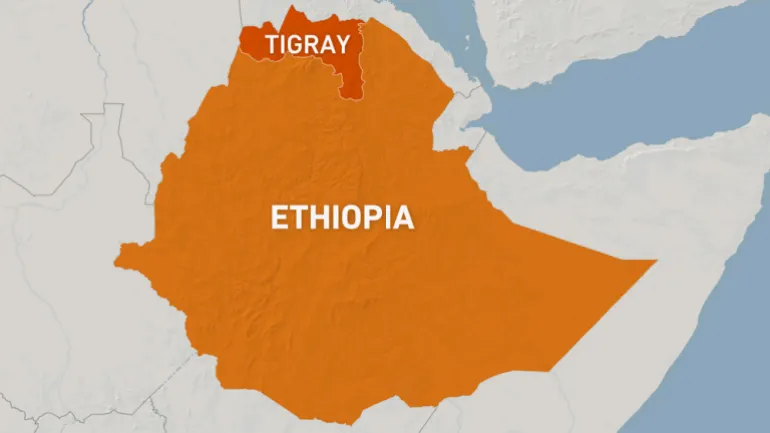
![Map showing Ethiopia’s Tigray region, where tensions between the federal government and the Tigray People’s Liberation Front (TPLF) have escalated [Graphic: Al Jazeera]](https://i0.wp.com/occasionaldigest.com/wp-content/uploads/2026/09/WEB-1000x562-ETHIOPIA-TIGRAY-1785610774.jpg?w=640&ssl=1)
![Ethiopian Prime Minister Abiy Ahmed Ali faces a new armed alliance that includes the Tigray People’s Liberation Front (TPLF) and six other groups [File: Sergei Bulkin, Sputnik, Kremlin Pool Photo via AP]](https://i0.wp.com/occasionaldigest.com/wp-content/uploads/2026/09/AP26264469792656-1790168591.jpg?w=640&ssl=1)
![The charred remains of a tank lie on a road near Gereb Agew, southern Tigray, after clashes between the Ethiopian National Defence Force (ENDF) and the Tigray People’s Liberation Front (TPLF), on March 3, 2026 [File: Abel Gerezgiher/AFP]](https://i0.wp.com/occasionaldigest.com/wp-content/uploads/2026/09/AFP__20260923__C93W39E__v1__HighRes__FilesEthiopiaTigrayConflict-1790167123.jpg?w=640&ssl=1)
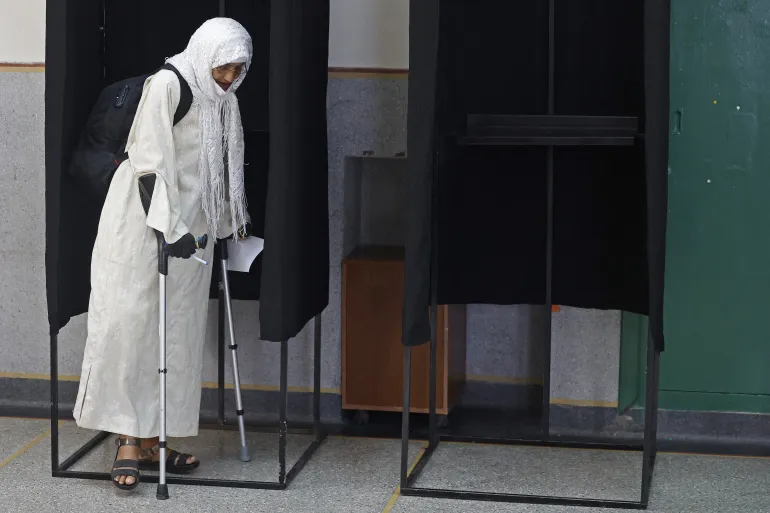
![A woman prepares to cast her ballot to vote in Morocco’s legislative elections at a polling station inside a school at the Udayas neighbourhood, Rabat, on September 23, 2026 [AFP]](https://i0.wp.com/www.aljazeera.com/wp-content/uploads/2026/09/afp_6ab3c71f1ac5-1790166815.jpg?w=640&ssl=1)