A couple on Grand Designs were transforming a London property into a “Cloud House”.
The couple on Grand Designs had big dreams for their London home (Image: Channel 4)
A clash on Grand Designs led to a builder being sacked from the project before completion.
Kevin McCloud’s architectural series has returned for a new season, with tonight’s episode (Wednesday, 23 September) set in London. Eccentric couple Emily and Peter had designed a truly one-of-a-kind house, a “cloud house” that had been split into two, with one half sold to another couple.
They told Kevin: “We’ve called it The Cloud House because it’s a beautiful, cloudy shaped building with lots of arches, and pink.” With bright pink walls, a scalloped rooftop garden, and turquoise windows, the building design screamed fun and happiness, however, that didn’t quite match the tension between architect Peter and his builder Bart.
After Peter found issues with minor measurements, and wanted things to be precise and exact, he clashed with Bart over measurements, insisting there was a difference of millimetres from his original plans.
Despite the house coming together, Peter made the difficult decision to dismiss Bart. Bart told the cameras: “We’ve just been asked by the client to leave the site, he wants us to terminate the contract. It’s very disappointing, we really truly did nothing wrong.
“If we screw something up, we fix it, that’s what we do. So now I’m facing losing my men.” Peter meanwhile said: “It really wasn’t working out. It was making the job a horrible job, it was very stressful, I like Bart and I think he’s a good builder but I just don’t think he’s the right builder for our project.”
The change in builders was only one of several issues Peter and Emily faced throughout the build. At one point, Peter admitted it had been a “tough” process, adding: “I would think long and hard about doing this again.”
Their biggest challenge came down to finances, especially as the couple had been working as freelancers, and Emily hadn’t found work in several months. However, after her parents downsized, they lent the pair money to finish working on the build.
The final result left Emily saying: “I just think it’s the most beautiful thing I’ve ever seen.” She added: “We’ve had people walking by and saying, ‘This is amazing’.”
Peter meanwhile broke down in tears as he spoke about how much the build meant to him. “It’s been an emotional ride, but to hear about how much Emily loves it, that brings me so much joy. It’s totally been worth it,” he tearfully said.
“It’s so enticing and unusual,” Kevin said, as he walked through the vibrant house. “You could look at this, the funky sitting area, Peter’s exuberant study, and think, all this is nuts! But it references musicals and Miami art-deco.”
Ahead of the episode airing, viewers had also shared their excitement for the build. One wrote: “Will look forward to this. I think Peter is one of the few architects out there leading design with joy and colour. The type of house I’d want to visit!”
Another said: “Wow really looking forward to this , we need more funky in the world.” A third echoed: “Now this is going to be good.” “So excited to see this!” yet another echoed.
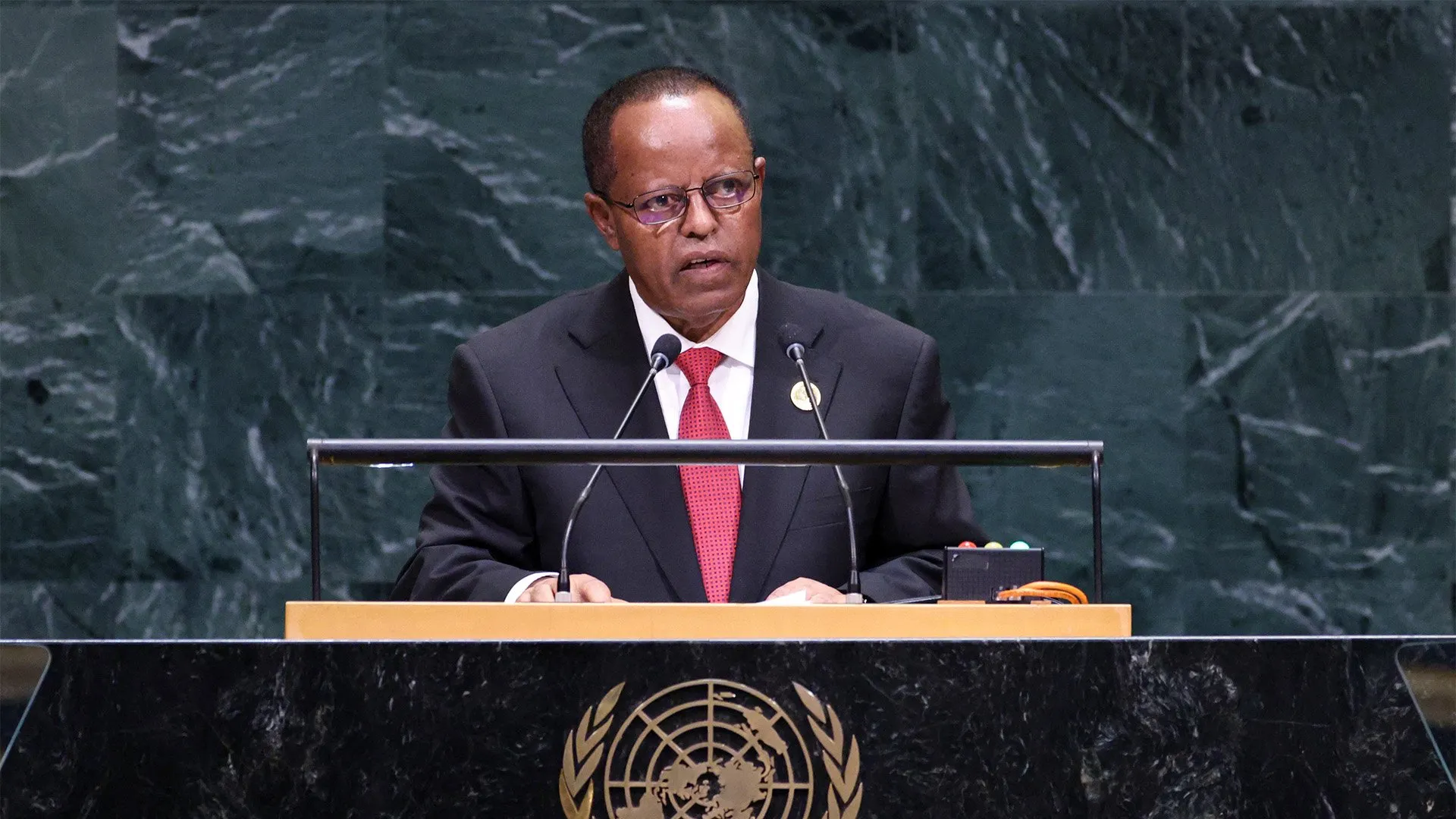
Ethiopian President Taye Atske Selassie warned the UN General Assembly of “forces of destruction and mayhem” as Tigray rebels joined other rebel groups to seize airports and target government positions in northern Ethiopia, triggering fears of a renewed civil war.
Hacker group ShinyHunters claims to have detailed data on thousands of FBI employees.
Published On 23 Sep 202623 Sep 2026
The United States Federal Bureau of Investigation says it is investigating a breach of its jobs website by a hacking group that claims to have obtained sensitive data on thousands of employees.
“The FBI is aware of a cybercriminal enterprise group claiming a compromise of the fbijobs.gov portal and alleged impact to FBI employee personally identifiable information,” the agency said in a statement on Wednesday.
Recommended Stories
list of 3 itemsend of list
“While the point of breach is still undetermined — whether a third -party or the FBI’s enterprise — we are actively and aggressively investigating this matter and working closely with those third-party providers that support fbijobs.gov to mitigate any and all risk.”
Several news outlets, including Reuters news agency, reported they had seen parts of the data, claimed to be part of a larger trove between two and three terabytes by ShinyHunters, a hacking group claiming responsibility for the breach. According to Reuters, the data includes granular detail about scores of bureau officials’s job assignments, including sensitive work against Chinese spies, Russian intelligence, drug cartels and more.
ShinyHunters said on Tuesday that it had breached the FBI and stolen data on a huge number of current and former FBI employees. It said it is holding the data hostage until the bureau rescinds an unflattering statement about the group issued in May. On Wednesday, the group said it was trying to keep the personnel information from circulating widely in the meantime.
An FBI statement in May characterised ShinyHunters as “threat actors” who often harass or threaten victims, using “their real or exaggerated claims of access to sensitive or personal information to prompt payment from victims”.
The group “may falsely claim to have sensitive or compromising information, including embarrassing photographs or videos of victims, which frequently do not exist,” the FBI said.
The FBI has been a common hacking target.
In March, the FBI disclosed that it was investigating “suspicious activities” on an internal system that contains sensitive information related to surveillance operations and investigations. Also that month, a pro-Iranian hacking group claimed to have hacked an account of FBI Director Kash Patel and posted online what appear to be years-old photographs of him, along with a work resume and other personal documents dating back more than a decade.
The jobs portal was still offline Wednesday afternoon.
Central Cee has shared a cryptic post after buying Yasmin Hadlow a £7k Chanel bagCredit: GettyHe shared a snap of pals Ruby Lyn and Lily Chee covering their faces with designer bagsCredit: Instagram
The Sun’s Bizarre revealed the news of Cench’s date with Yasmin at 77 London on Friday night and then told of a Harrods trip before.
Now the 28-year-old has taken to his Instagram stories to share a mysterious picture.
Sign up for the Showbiz newsletter
Thank you!
In the snap, his pals Ruby Lyn and Lily Chee are seen covering their faces with designer handbags as they sit in a luxury store.
The two girls are pictured surrounded by the different coloured bags as Cench played up to the rumours about him and Yasmin, 23.
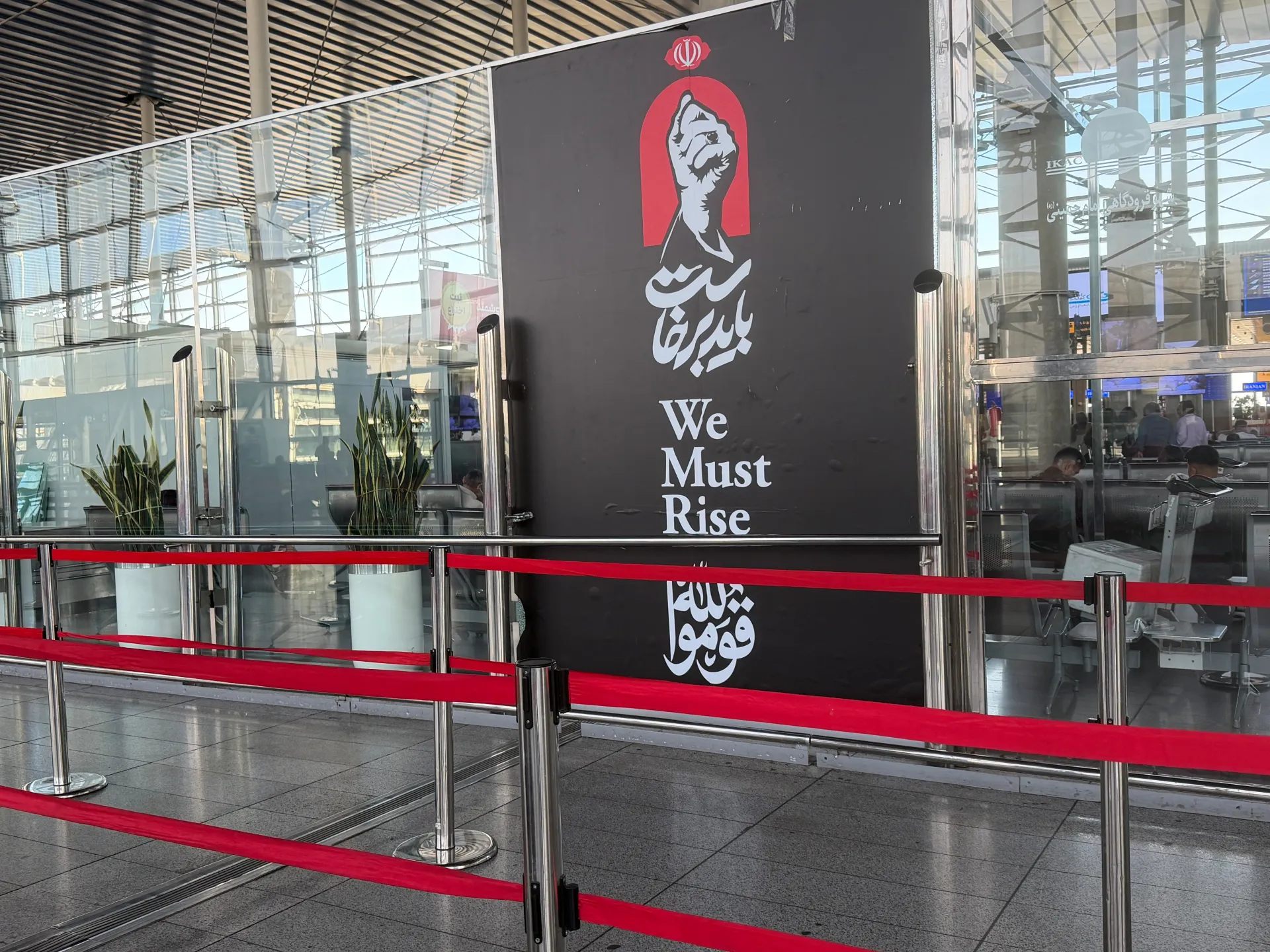
Tehran, Iran – Travel is becoming increasingly difficult for Iranian civilians as United States sanctions shut domestic airlines out of much of the world’s airspace and international carriers continue to avoid the country.
The US Department of the Treasury designated 27 airlines on September 8, covering the remaining Iranian carriers that had not previously been sanctioned by Washington. Major names like Iran Air and Mahan are among those already heavily sanctioned, but have continued limited operations.
Recommended Stories
list of 3 itemsend of list
Recent designations have also targeted individuals and entities linked to aviation support and procurement in the United Arab Emirates, Turkiye, China, India, the United Kingdom, Malaysia and elsewhere.
Airports and companies that provide Iranian-operated aeroplanes with fuel, landing services, or ticket sales risk secondary US sanctions that could cut them off from the US financial system, Treasury Secretary Scott Bessent said on Monday. It is the latest attempt to squeeze Iran and force it to make concessions amid the US-Israel war on Iran.
Wednesday marked the expiry of a short wind-down period allowing countries to stop servicing Iranian carriers, leading to the cancellation of all but a handful of Iranian flights to Turkiye, UAE and China.
Aviation authorities in several neighbouring countries that had continued to allow Iranian airlines to use their airspace and airport services would no longer be providing them, including Oman, Azerbaijan, and Georgia. In Iraq, Baghdad Airport was declared off-limits to Iranian carriers, but flights to Najaf Airport were still operating on Wednesday.
Many flights between Iran and major transit hubs in Turkiye and the UAE had already been suspended because of the war and sanctions. International airlines have also largely stopped flying to Iran, with Turkish Airlines suspending flights until at least March 2027, and Qatar Airways, Emirates, and Lufthansa’s operations also suspended.
‘A new level’ of sanctions
Iran-based aviation and transit expert Mohammadreza Ebrahimpour said years of US sanctions had already forced Iranian airlines to rely on third countries and work with smaller firms to get fuel or services. Obtaining spare parts needed to keep Iran’s ageing aircraft flying has also become increasingly difficult.
But the decision by aviation authorities in neighbouring countries to formally refuse services to Iranian airlines constituted “a new level of sanctions in action” that could have longer-lasting consequences, he told Al Jazeera.
Ebrahimpour said the US had also effectively prohibited international airlines from flying through Iranian airspace by suspending authorisations for some US-origin aircraft to fly to Iran and limiting US-linked overflight payments.
“This is a big blow because payments for overflights were one of the most lucrative parts of [Iran’s] aviation industry, which could act as a support for developing infrastructure and the overall industry,” Ebrahimpour said, adding that Iran earned more than $300m a year from this.
Beyond the effect on civilian passengers and the import of some goods, the measures could put tens of thousands of jobs at risk across the aviation sector and related industries, including tourism and hospitality.
Ebrahimpour pointed out that the International Civil Aviation Agency and other organisations have failed to offer any tangible protection to Iran’s aviation industry during years of sanctions. Iranian authorities, he said, would likely consider China and Russia among the few countries potentially able to provide assistance.
The two countries have rejected US sanctions against Iran, although some of their more globally connected financial networks and companies have, at times, distanced themselves from Iran to avoid secondary sanctions.
Under pressure from all fronts
The flight cancellations have pushed thousands of travellers towards land crossings, particularly those with Turkiye and Armenia, where onward international flights remain available for Iranians. Heavy congestion has been reported in recent days at the Bazargan and Razi border crossings with Turkiye and along land routes to the Armenian capital Yerevan.
But everyday passenger travel overland into Azerbaijan remains restricted, with Azerbaijan’s government citing internal security and COVID-19 restrictions. As a result, Iranians cannot cross overland into Azerbaijan to catch a flight there.
The Shalamcheh and Chazabeh border crossings with Iraq were also temporarily closed earlier this month, leaving travellers stranded, before reopening to passengers on September 13.
For thousands of Iranians attempting to travel, the flight suspensions mean significantly longer journeys. Some members of the Iranian diaspora have expressed concern online that the lingering effects of war and sanctions could potentially prevent them from visiting parents and other family members in Iran.
Bus tickets from Iran to Turkiye have reportedly sold for quadruple their normal price on the black market amid surging demand.
Iranian academics have also expressed concern about growing isolation from the international academic community. Numerous universities across the globe, including in Norway, Australia, Singapore, Estonia and elsewhere, have in recent weeks rejected postgraduate and research applications from Iranians as a result of US education sanctions.
At the same time, many of Iran’s roughly 90 million people are currently unable to afford international travel – or even domestic flights – as the country’s economic conditions worsen.
The Trump administration has portrayed the war and sanctions as measures directed at the Iranian authorities.
The US Treasury has said its aviation restrictions are intended to disrupt the use of Iranian commercial aviation for weapons procurement and transportation, including activities linked to the Islamic Revolutionary Guard Corps (IRGC). But the designation of entire airlines under “Operation Economic Outcast”, after nearly seven months of war, has also had sweeping consequences for affected civilians.
Iran’s international aviation network was already badly damaged prior to the latest package of sanctions. Aviation analytics company Cirium reported that international capacity in August 2026 was 49 percent lower than in August 2025, despite a modest recovery from July.
The latest flight cancellations are also expected to further disrupt imports by air at a time when the US naval blockade of Iran’s southern ports in the Strait of Hormuz has constrained maritime trade routes, while war and sanctions have caused disruptions and delays to road and rail cargo routes.
Some of Iran’s medical imports enter the country by air, raising concerns that the latest aviation restrictions could place more pressure on an already struggling healthcare sector. A domestic pharmaceutical company executive told Al Jazeera earlier this month that the cost of some imported supplies, some of which arrived by air, had risen as much as 10-fold as a result of sanctions, wider economic pressure, and war damage.
Addressing the United Nations General Assembly in New York on Wednesday, Iranian President Masoud Pezeshkian accused the Trump administration of “bullying”.
“They have tested Iran’s resilience, and now they know full well that Iran cannot be forced to surrender through war,” Pezeshkian said.
US Secretary of State Marco Rubio says summit would be opportunity for Russian president to engage with global leaders.
Published On 23 Sep 202623 Sep 2026
United States President Donald Trump has invited his Russian counterpart Vladimir Putin to the upcoming G20 summit in Miami, Florida, the latest step meant to build ties between the two countries amid Russia’s ongoing invasion of Ukraine.
US Secretary of State Marco Rubio told reporters on Wednesday that Putin had been invited to travel to the summit in December, saying that he hopes the Russian leader will take the opportunity to meet with global leaders.
Recommended Stories
list of 3 itemsend of list
“In order to solve problems, you have to meet with the people that you disagree with or the people that you might have some issues with,” Rubio said. “So we’ve invited President Putin to the G20.”
“We think it’s an opportunity for him to engage not just with the president, but with other world leaders. We hope that’s an invitation he’ll accept,” Rubio said.
Rubio’s remarks followed a meeting with Russian Foreign Minister Sergey Lavrov on the sidelines of the United Nations General Assembly (UNGA), currently convening in New York City.
During a speech to the UNGA on Wednesday, Ukrainian President Volodymyr Zelenskyy called on the world to place more financial pressure on Russia.
“When someone gives Russia more money through trade, they give this war more time. And that is exactly why we insist on limiting trade with the aggressor, and why we are burning Russia’s revenues ourselves,” he said, adding that he is sceptical that Russia is sincerely interested in taking steps that could end the war.
Trump has searched in vain for an agreement between Russia and Ukraine to end the war sparked by Russia’s full-scale invasion in 2022.
Ukrainian officials have called for a pause on strikes targeting energy infrastructure and for steps to facilitate shipping for the Black Sea. Russia has given little sign that it is interested in such an arrangement.
“We are not going to have a pause in our special military operation,” Lavrov told the UN Security Council on Wednesday, accusing Europe of wanting to pause the fighting in order to “pump the Kyiv regime with weapons”.
Rubio, however, continued to express optimism about the possibility of a temporary ceasefire.
“I think both sides have expressed an interest in some limited ceasefire that involves grain and energy,” he said. “Obviously, you know, that won’t be easy, either.”
Zelenskyy told reporters that Kyiv remains open to a maritime truce in the Black Sea.
“We are waiting for Russia’s response,” he said, adding that his country is ready “to ensure safe shipping and food security in the Black Sea if Russia is ready to take real steps towards de-escalation, too”.
“We have to start somewhere,” he added.
The International Criminal Court (ICC) issued an arrest warrant for Putin in 2023 for the alleged war crime of deportation of Ukrainian children to Russian territory. The arrest warrant obliges member states to arrest Putin if he travels to their countries, but the court has no enforcement mechanism for this. The US is not a member of the ICC.
A guest on The Repair Shop opened up about how the precious item meant so much to her family.
21:06, 23 Sep 2026Updated 21:07, 23 Sep 2026
A guest on The Repair Shop broke down in tears (Image: BBC)
A guest on The Repair Shop broke down in tears as she opened up about her son’s health.
The BBC programme returned to screens on Wednesday, September 23, with spin-off Beyond the Barn. The series follows experts restoring precious items from guests across the country, while also discovering what happened after the special items were restored.
Wednesday’s programme saw a treasured trophy revived, as well as a coronation scrapbook brought back to life. At the start of the show, Ruth Dalton from Rochester arrived with a gardening tool.
She sought The Repair Shop team’s help, including expert Jonathan Reid, in reviving her grandfather’s gardening tool, a pair of secateurs, so her son could use them.
She explained: “I have my late grandfather’s gardening scissors. He used them all the time, and I kind of wanted to keep them as a reminder of him and his gardening.”
She continued: “His name was Stan. He was a real, real green-fingered guy. He had a massive garden. I used to love spending time with my grandad. As children, we were always up there, helping him in the garden.
“There were little steps that went up to a big lawn and different archways. He used to tell us what plants you could touch and what they did. You know, ‘Don’t touch the roses, you might get pricked by the roses,’ and that sort of thing.
“He was very encouraging and did teach us a lot, gardening was his life.” Ruth went on to reveal that she herself loved gardening, though her own garden wasn’t “at its best”.
Ruth explained how she wanted the secateurs fixed so she could tend to her own garden, which was built for her son. She said: “His name is Samuel, he’s got a condition called Bainbridge-Ropers syndrome.
“He was only the 12th person in the UK to be diagnosed, and there’s about 300 worldwide. He’s coming up to 26 years old. He can’t walk, he can’t talk, he doesn’t really understand much but he loves being outside. His demeanour changes completely when he’s out in the fresh air.”
She added: “He can’t do things on his own but he really loves doing things like when we’re weeding and stuff. If he can reach them, he’ll pull the weeds out himself. So I thought these would be perfect because they’re just about the right size for Samuel to hold.”
She went on to point out some “dreadful” issues with the scissors, including how rusty they were and how stiff they were to use, as well as the old paintwork that was flaking off.
When asked how it would feel for her son to be able to use the same pruners that her grandfather once used, Ruth broke down in tears. She said: “My grandad’s always there, and his guiding hand on Samuel’s… I do things hand-on-hand with him, I almost feel that if he could use those, it would be my grandad’s hand helping him and to get him out there doing something purposeful gives him that little bit of independence. It would be special, he’s a special boy, he deserves it.”
The Repair Shop: Beyond the Barn is available to watch on BBC iPlayer
The ruling seals six years of legal battles after Weinstein’s initial conviction for sexually assaulting TV assistant.
Published On 23 Sep 202623 Sep 2026
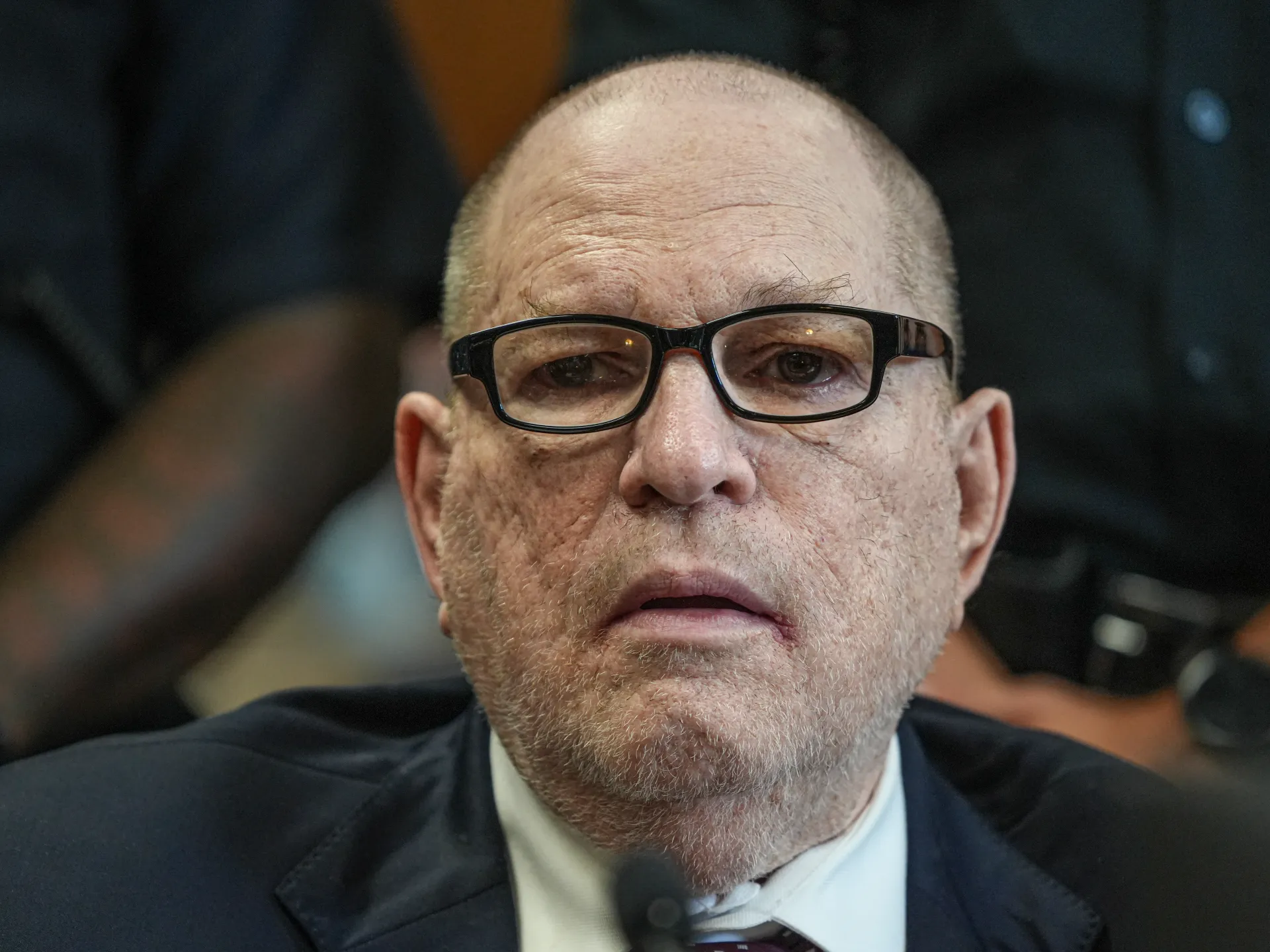
Harvey Weinstein, the disgraced movie mogul, has been sentenced in Manhattan to 15 years in prison for a felony sex crime in another #MeToo reckoning.
Weinstein’s sentencing on Wednesday for sexually assaulting one-time TV production assistant Miriam Haley followed a legal odyssey spanning more than six years, when New York’s highest court overturned his 2020 conviction. A second jury found Weinstein guilty again at a retrial last year.
Once among the most powerful figures in the entertainment industry, Weinstein was an Oscar-winning producer whose hits included “Shakespeare in Love,” “Pulp Fiction” and “Chocolat.” But his downfall came quickly after sexual assault allegations in 2017 set off the #MeToo movement.
Weinstein, 74, is expected to appeal and maintains that he never raped or sexually assaulted anyone. He is now likely to remain behind bars well into his 80s. Seated in a wheelchair, he was quickly moved out of the courtroom after the sentencing, while some of his accusers hugged and brushed away tears.
Haley, 49, appeared in court on Wednesday morning and delivered a victim impact statement in which she talked about enduring seven years of public smear campaigns and humiliation orchestrated by Weinstein, his legal team and allegedly paid podcasters aiming to sour her image.
Haley added that her experience following the assault had “already been a life sentence” for her, and implored the judge to take all of this into consideration.
Owing to a cycle of retrials, appeals and judicial proceedings, Weinstein has remained incarcerated since his 2018 arrest and is now serving time in a prison medical ward.
Weinstein, first publicly accused of wrongdoing in 2017, was detained a year later. In 2024, New York’s highest court overturned the original 2020 conviction that had sentenced the former Hollywood producer to 23 years in prison, ruling that the inclusion of extraneous, non-indicted testimony had compromised the equity of the trial.
Prosecutors attempted to retry the case last June, but it ended in a split verdict after the jury foreperson refused to return to deliberate amid a jury room feud. Weinstein was convicted of a first-degree criminal sex act on a separate count at the time, again.
Weinstein is also awaiting resentencing in a separate rape case in Los Angeles.
Who: Ivory Coast vs Ghana What: CAF Africa Cup of Nations qualifier Where: Stade de Bouake, in Bouake, Ivory Coast When: Thursday, September 24, at 7pm (19:00 GMT) How to follow: Al Jazeera Sport will have live build-up from 16:00 GMT before our text commentary stream.
The qualification process for the 2027 Africa Cup of Nations kicks off with a match befitting the final itself as Ivory Coast play Ghana.
Recommended Stories
list of 4 itemsend of list
Both nations are packed with high-profile players and are led by names that have managed at the highest levels of the game.
Al Jazeera takes a look at the mouth-watering opener on the path to the finals in Kenya, Uganda, and Tanzania.
Who else is in Ivory Coast and Ghana’s AFCON qualifying group?
The Gambia and Somalia complete Group C of the Africa Cup of Nations qualifiers.
In the next round of matches in the group, Ghana will entertain The Gambia on Tuesday, while Ivory Coast will travel to Somalia.
What are the expectations on Ivory Coast’s AFCON campaign?
Despite their round-of-32 exit in the FIFA World Cup 2026 at the hands of Norway, Ivory Coast’s task ahead is quite clear: win AFCON 2027.
The Elephants are led by Herve Renard, who is taking charge of the West African giants for the second time and replaced Emerse Fae following the World Cup.
The Frenchman previously managed Ivory Coast from 2014 to 2015, leading them to the AFCON title before joining French Ligue 1 club Lille immediately after the final.
Renard is a two-time AFCON winner, having also led Zambia to their historic win in 2012. The 57-year-old has also managed Morocco, Tunisia – in a last-minute call-up at World Cup 2026 – and Saudi Arabia, who he famously led to victory against Argentina in their group-stage match at Qatar 2022.
Who are the star names in the Ivory Coast side?
Although not blessed with the superstar-level talents like Didier Drogba from their 2015 victory, Ivory Coast are still a force to be reckoned with.
Yan Diomande is the shining light of African football following his $161m move to Spanish giants Real Madrid from RB Leipzig in Germany.
Former Barcelona midfielder, now with Atalanta in Italy’s Serie A, Franck Kessie is arguably the next biggest name in the current side.
Former Arsenal forward, Nicolas Pepe is resurrecting his career at Villarreal in Spain after a failed $92m transfer to the Gunners from French club Lille.
Ibrahim Sangare has been a standout performer in the English Premier League with Nottingham Forest, while Amad Diallo of Manchester United is the starlet of Ivory Coast football.
What is Ivory Coast’s AFCON record?
The Elephants are three-time AFCON winners and beat Ghana on penalties in the 1992 final for their first continental crown.
Renard’s 2015 victory also saw Ghana defeated, and once again it was by penalties.
Their most recent win came at the 2023 edition when they defeated Nigeria 2-1 on home soil.
What are the expectations on Ghana’s AFCON campaign?
Ghana, like Ivory Coast, were also eliminated at the round of 32 at the World Cup 2026 as they lost 1-0 to Colombia.
The Black Stars also lost their final group stage match to Croatia, but achieved a respectable 0-0 draw with eventual semifinalists England, while beating Panama to secure their progress to the knockouts.
Led by former Real Madrid manager Carlos Queiroz, Ghana will also have their sights set on the final of AFCON 2027.
Queiroz, who rose to prominence as assistant to Alex Ferguson at Manchester United, has the record of Iran’s longest-serving manager with a run between 2011 and 2019. The Portuguese also returned to manage the side at Qatar 2022.
Alongside his two-year stint as Real manager, the 73-year-old has also managed South Africa, Egypt, Colombia, Qatar and his native Portugal.
With his wealth of experience, the West Africans will hope to rise from a nation that failed to reach the last AFCON – finishing bottom of their qualifying group – to winners of the 2027 edition.
Who are the star names in the Ghana side?
Where Ivory Coast have more strength across the board, Ghana have a longer list of star attractions.
Manchester City forward Antoine Semenyo is undoubtedly Ghana’s key player, but is ably assisted in attack by Mohammed Kudus, who made his name in the English Premier League with West Ham before a big-money move to Tottenham.
Jordan Ayew is a long-established spearhead of attacks in European football, as well as for Ghana, for whom he remains the national team captain.
Former Arsenal midfielder Thomas Partey is still a pivotal player for his new club Villarreal, while Athletic Bilbao’s Inaki Williams remains one of the hottest talents in La Liga, with a host of top clubs across Europe vying for his signature.
What is Ghana’s AFCON record?
Ghana are four-time winners of AFCON, but have not lifted the trophy since 1982.
Alongside their 1992 and 2015 defeats by Ivory Coast, they lost the 2010 edition to Egypt.
What happened the last time Ivory Coast played Ghana?
The last meeting between the sides came in a friendly in 2021 and, much like the 2015 AFCON final, it ended in a 0-0 draw.
The previous competitive meeting between the sides saw Ivory Coast win 3-1 in their round-of-16 match at AFCON 2010.
Head-to-head
This will be the 38th meeting between the border-sharing nations, with Ghana winning 15 of the encounters and Ivory Coast winning 10.
Ivory Coast team news
Diallo is the prominent absentee from the match for Ivory Coast as the forward recovers from injury.
Evann Guessand and Omar Diakite are notable omissions from Renard’s 25-man squad selection.
Ivory Coast predicted starting lineup
Fofana; Doue, Koussounou, O Diomande, Konan; Kessie, Sangare, Inao; Pepe, Bonny, Y Diomande
Ghana team news
Injuries have stripped the Ghana squad of a number of their leading names, including their captain Ayew.
The losses of Semenyo and Kudus are even greater blows, the latter having missed the 2026 World Cup with a hamstring injury.
Actor D’Arcy Carden stopped by early, beating the cadre of guests crowding the main plaza beneath the now-famous oculus of the 300,000-square-foot Ma Yansong-designed building. A Stormtrooper drove by on a flatbed truck, shortly before R2-D2 greeted visitors in the courtyard, wearing an official staff badge. (The line for a selfie with the droll droid stretched as far as the eye could see.) Museum leaders have long said that “Star Wars” artifacts account for about 7% of the 100,000 square feet of gallery space, but one worker quipped 90% of opening-day attendees likely had a vested interest in the franchise.
This proved true, for the most part: Many visitors clearly knew and loved “Star Wars,” and Princess Leia buns and Yoda ears abounded. (Two Padmé Amidalas ran into each other, and according to a restaurant worker, one brave soul showed up in “Star Trek” gear.)
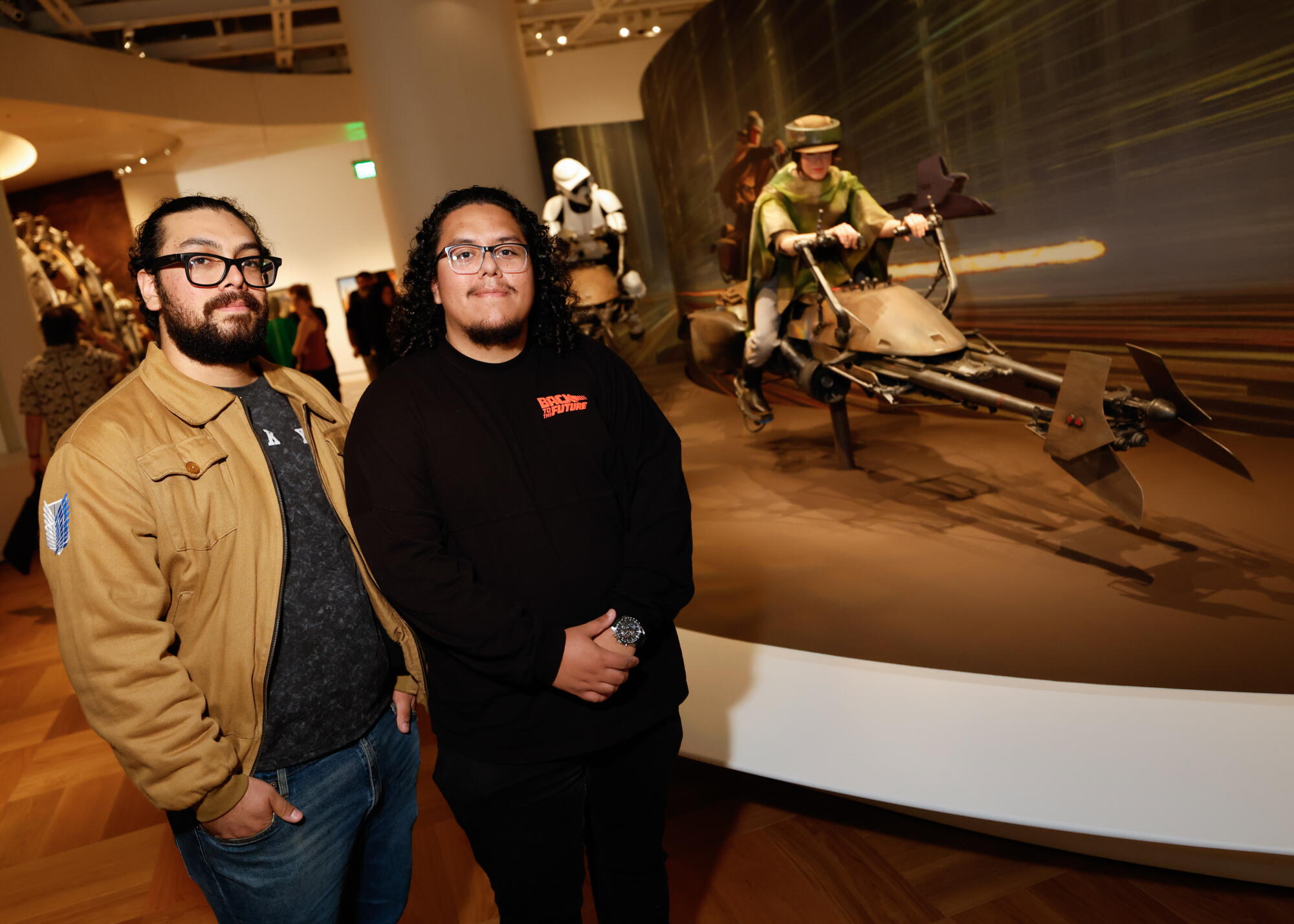
David Perez, 27, (right) donned his “Back to the Future” gear, hoping to see art from the movie. But he and his brother Carlos Perez, 28, (left) were quite pleased with the “Star Wars” artifacts in the Cinema section.
(Carlin Stiehl / For The Times)
Still, the museum, as its famous co-founder George Lucas has repeatedly said, is about more than just one story, however beloved. That sentiment cropped up repeatedly in interviews, too: Early guests seemed to believe the museum’s brochure, which notes that the galleries are about the “narrative art” of illustrating stories.
Co-founders Lucas and businesswoman Mellody Hobson (also Lucas’ wife) gave remarks early Tuesday to the first 100 visitors, consisting of students from USC, Los Angeles Technology Center, Otis College of Art and Design and Los Angeles City College, who were all handed free tickets.
A yellow Naboo N-1 Starfighter hangs above the education lobby, across from the main plaza, guarding the research library.
(Carlin Stiehl / For The Times)
“I’ve spent more than 50 years collecting the work of artists who don’t always get their due — illustrators, cartoonists, muralists, painters — because I believe their images are as vital as any other art form,” Lucas said. “They deserve to be in a museum.”
“This is a museum of the ‘people’s art’ — the images are illustrations of the beliefs we live with every day,” said Hobson, “and for that reason, this art belongs to everyone.”
Later that day, The Times asked visitors to share their impressions of a museum that, until now, has lived largely in the imaginations of fans and in abundant social media posts online. The museum has drawn loads of applause but also plenty of criticism, mostly for its lack of context via wall text, and for displaying art that not everyone agrees should be elevated.
Do the people love the “people’s art”?
Responses have been edited for length and clarity.
Alden Chang and his wife flew 6,800 miles from Taiwan to thank George Lucas for creating the “Star Wars” films and franchise. Chang told The Times that he also wrote an academic paper examining “Star Wars” fan culture in Taiwan.
(Carlin Stiehl / For The Times)
Alden Chang, 32, green product engineer from Taiwan
You flew all the way from Taiwan, just for this?
Chang: Yeah, halfway across the world to meet George Lucas and Miss [Mellody] Hobson.
Did you get to meet them?
Chang: Yeah, I just shook hands with them this morning. It’s like a dream come true.
How long ago did you and your wife get here,and how long are you staying?
Chang: For eight days. We came here on Sept. 18.
Is this the highlight of the trip?
Chang: Sure. [Laughs.] It’s my main mission and my main goal.
(Later, in an email, Chang told The Times that he also wrote an academic paper examining “Star Wars” fan culture in Taiwan.)
Friends Robert Meier, left, and Marc Downing used to work as ushers at the Music Center together. Growing up, Marc rode his bike where the Lucas Museum now stands.
(Carlin Stiehl / For The Times)
Marc Downing, 71, retired, from Exposition Park and Robert Meier, 70, educator, from Highland Park
Downing: I go to all the museums. This was the newest museum, so I had to come and see this.
How does this compare to the other L.A. museums?
Downing: This is ultra modern, ultra space-future. I’m glad the museum is here; highly recommend it. And I’m proud that it’s in my city, and I’m glad that it’s in the neighborhood that I grew up with.
What made you want to be a member of the museum, Robert?
Meier: It’s giving to the neighborhood. I’ve admired George Lucas — I used to have a relative in Marin County, and growing up, we’d go to lunch, and I’d see George Lucas and his family. We’d be at the same restaurant together.
Downing: Well, speaking of this neighborhood: This used to be a parking lot. I remember it very well. And I used to come here and ride my bike in this neighborhood as a kid.
C.S. Lee sits on a bench at the south viewpoint of the museum, gazing out onto the sculpture garden below. “This is why you live in Southern California. This is why you live in L.A.: for days like these.”
(Carlin Stiehl / For The Times)
C.S. Lee, 54, actor, from Koreatown
Lee: “Star Wars” was the very first movie I ever saw in my life as a 4-year-old when I immigrated here from Korea. We landed in Hawaii, in Waikiki Beach. Our family friends took us to a drive-in movie cinema place, and they said, “You want to come see a movie?” And it was “Star Wars” and “King Kong,” double billing. And my mom said when I saw the screen, my eyes popped out of my head because I’d never seen a movie before.
How do you think “Star Wars” impacted how you saw narrative and story?
Lee: I think I carried that all through my life: the story of “Star Wars.” I was like, “Oh, the good guys won!” And it was such an uplifting thing for me to hold on [to] all these years.
What did you think about the rest of the museum?
Lee: It’s so beautifully done: all the curves, all the light. You got the wind coming through the trees that they planted. I mean, honestly, I was just looking out, thinking to myself, “Wow, this is why you live in Southern California. This is why you live in L.A.: for days like these.”
The view of the sculpture garden and grounds beyond that C.S. Lee was contemplating from the south viewpoint.
(Carlin Stiehl / For The Times)
What about the building itself?
Lee: We rarely get to see architecture like this. But I think it’s good for people to see the artistry and the imagination of what people can build.
Janet Jacobs, 62, architect and Hanjin Jacobs, 25, audio equipment manufacturer technician, mother and son on a family trip from Portland (pictured at the top of the story)
I see you’re wearing a “Star Wars” T-shirt.
Janet: Yes, I am — actually from 1977.
Wow, really?
Janet: Yeah, I’ve had it for that long [laughs].
What was your overall takeaway from the museum?
Janet: I know George Lucas wanted to create this museum in a different way, like he didn’t have a sequence of events or a roadmap, he just wanted people to experience it the way they wanted to, so that’s all great. We do wish some of the things were explained a little more. Like, I know who Ralph McQuarrie is; [my kids] do not. So that would’ve been nice. Like in a typical museum, you do have a little blurb.
[My son] brought up a really good point: how ironic it is that it’s about storytelling, but yet there seems to be no storyline.
Andrew Liu, left, and Matthew Haak hang loose in front of a KAWS sculpture. They actually didn’t know it was opening day, but were happy to be there anyway.
(Carlin Stiehl / For The Times)
Matthew Haak, 26, architectural designer, and Andrew Liu, 26, behavioral therapy assistant, both from University Park
Haak: We are not “Star Wars” fans. I haven’t watched a single “Star Wars” movie. I’ve somehow evaded them my entire life.
So, if not for “Star Wars,” why did you come out today?
Haak: I’ve been watching this building being constructed for the past two years. I’m just geeking out over the organic curvilinear forms. Not a single hallway has been straight. And they even have real expensive details, like light coves on the base [of the wall]. All of these things really stand out to me. Also, curved walls like this are so expensive; architects never get a budget to do stuff like that.
I was just surprised: It’s not just “Star Wars” stuff. There’s so much art; it’s so cool.
Nicole Garcia — dressed as Padmé Amidala in her lakeside gown — poses in front of a statue of Princess Leia.
(Carlin Stiehl / For The Times)
Nicole Garcia, 24, cosplayer/costumer from Corona and Veronica Antonucci, 40, administrative assistant from Orange County
So, this might be an obvious question [given their fun outfits], but what brought you guys out today?
Antonucci: This little thing called “Star Wars”!
Garcia: Growing up with “Star Wars,” I always loved all the pieces, knowing that, for example, there’s miniature pieces that look just huge on-screen, and seeing them in-person is just, like, I want to shrink myself down and just be there.
Antonucci: It’s also amazing that it’s not just “Star Wars,” and it’s also so much more that everyone should come out and see.
Is there anything else you were particularly excited to see?
Antonucci: I was really excited to see the Frida [Kahlo]. I didn’t know she was gonna be here, so I think when I saw her, I gasped.
Is there anything else you’d like to add?
Garcia: I just hope the future generations of kids come back to see this, growing up with museums more often, and just learning how to make art — like, physically make art — and be inspired.
Antonucci: Actually, we talked about feeling jealous of all the kids who are going to be here on their school field trips, because we didn’t get to experience this.
Nikki Foster, left, loves a good field trip. She texted her group chat to visit the museum, and her bestie, Shalonda Dean, responded, so they both cleared their calendars for the visit.
(Carlin Stiehl/For The Times)
Shalonda Dean, 47, consulting business founder and president, and Nikki Foster, 45, live event production executive, both from Beverly Hills
Dean: Being a Black woman, I can identify with this little Black girl. Even in 2026, I think this painting depicts a lot of what Black women are going through today, whether it be in the workplace, navigating motherhood, navigating life. And I think this is an example of the barriers that we’re constantly breaking through every day, even today.
Foster: I’ve never seen it in person until now. So when we saw it, we were like, “It’s here, it’s here!” Just to be able to lay our eyes on it, and not have to go to another country, another state — here in Los Angeles. This is divine. It’s a divine day.
“I love meeting people,” Vincent Zabierowski said. “People are my main inspiration. I’m very lucky I get to be in a place where people want to be, and people want to soak up all that creative energy and just experience art.”
(Carlin Stiehl / For The Times)
Vincent Zabierowski, 23, host at the Skywalker Grill and freelance illustrator, lives near Downtown L.A.
As an artist yourself, what are your favorite pieces in the museum?
Zabierowski: I love a lot of the things that are in the graphic novel collection, like the Jack Kirby, the Garfields. My favorite is the Art Nouveau artist Alphonse Mucha. The Diego Rivera mural, that one was really amazing — and just the history here, having it be in L.A.
How does your work as an illustrator inform how you see these pieces?
Zabierowski: When I was going through it with some of my co-workers, I would [ask] “Do you know why they use a blue pencil?” And it’s because, when you take a photograph or a scan, that blue pencil disappears. So it was just really cool to see the behind-the-scenes and understand.
So seeing those blue pencil marks tells you that a piece is real?
Zabierowski: A person made it! I feel like a lot of people see artwork in textbooks, or they see artwork on their phones, or they see artworks on posters, and it takes a lot of skill and intelligence and training to be able to do those pieces of artwork.
In a defiant speech at the United Nations General Assembly, Iran’s President Masoud Pezeshkian has delivered a sharp rebuke to a threat by US President Donald Trump from the same rostrum the previous day to annihilate the country, but left the door open for diplomacy to end nearly seven months of war.
“The US president called us terrorists but we are the victims of terrorists,” Pezeshkian said on Wednesday.
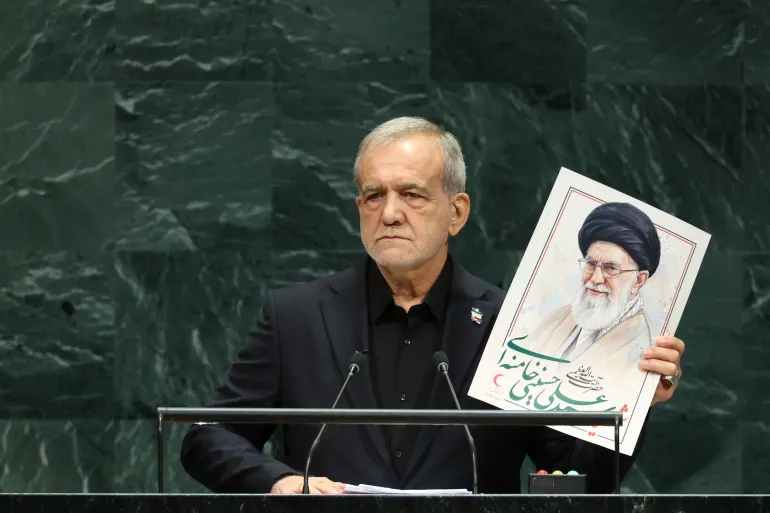
During his speech, Pezeshkian held up a picture of former Supreme Leader Ayatollah Ali Khamenei – assassinated in a joint US-Israeli strike at the start of the war in February – as well as photos of schoolgirls killed in an alleged US air attack on their school in the southern city of Minab.
“They hit us, but we did not bow our heads or bend the knee,” Pezeshkian added.
As the Iranian president began his speech, an official from the US delegation walked out of the vast hall. The Israeli delegation also boycotted the address.
“[Trump] must know that the resistance of the Iranian people will only grow in the face of sanctions and increased pressure and bullying,” Pezeshkian said.
Iran’s President Masoud Pezeshkian holds up a picture of former Supreme Leader Ayatollah Ali Khamenei, who was assassinated in a US-Israeli attack in February, as he addresses the United Nations General Assembly on Wednesday [Caitlin Ochs/Reuters]
But Pezeshkian, a relative centrist in the Iranian ruling system, also left the door open for negotiations, saying, “Iran extends its hands towards the world.”
“We invite the world and call to it, not out of weakness, but out of a deep belief in our own power and steadfastness to cooperate and collaborate out of a deep understanding that no one in this region will have security alone,” he said.
‘Very good meeting’
On Tuesday, Trump said his son-in-law Jared Kushner and Steve Witkoff, who are both leading negotiations with Tehran, had held a three-hour meeting with Iranian officials.
“They had a very good meeting, a very productive meeting,” Trump told reporters at the UN, adding that he believed there was “a lot of momentum” towards an agreement. Trump later said talks were continuing and that he believed a settlement would eventually be reached.
The remarks came after Trump used his speech before UN delegates to again threaten Iran’s destruction.
“Will a deal be made with Iran that lets them rebuild and create a far greater country than it ever was before?” Trump said. “Or do I annihilate the Islamic Republic and do it quickly, never giving them a chance to kill and destroy people and countries again?”
Strait of Hormuz
Addressing the US naval blockade of Iran and Tehran’s campaign to choke off trade in the Strait of Hormuz, Pezeshkian said Iran would resist what he called US efforts to use the critical sea lane to expand its war on the country.
“In the Strait of Hormuz, we cannot have some free access and gain their independence from that waterway while at the same time use that waterway to impose their aggressions upon us and to impose insecurity upon us; to forbid us access to our own waterways,” he said.
Negar Mortazavi, a senior fellow at the US-based Center for International Policy, said the Iranian president’s speech showed usual flashes of defiance, but notably signalled an appetite for a diplomatic off-ramp.
“Iran wants a way out of this war. They’ve kept the door to diplomacy open,” she told Al Jazeera.
“Reading between the lines of the Iranian president’s speech, it seems Iran may even show some flexibility as far as a return to some sort of agreement that may not be exactly along the lines of the June Memorandum of Understanding that US President Trump doesn’t seem interested in returning to,” she said. The memorandum, which has expired, called for a halt to fighting, lifting the US naval blockade and opening the Strait of Hormuz to maritime traffic.
Compromise still a possibility
Drawing parallels between the US and Israel bombing of Iran and Israel’s attacks in Gaza, Pezeskhian said Israel’s genocide in Gaza “revealed the double standards to which Iran is held by the international community”.
“They kill and we are sanctioned and we are punished,” Pezeshkian added.
Joey Hood, a former US diplomat and ambassador to Tunisia, said the speech leaned heavily into familiar Iranian official rhetoric and represented a lost opportunity to seek compromise.
“Instead of coming to the United Nations with something new and bold, we heard the same things that we’ve heard before,” Hood said, adding that a concrete peace offer or proposal posed to the US in the speech might have focused Washington’s attention.
“That would actually put Donald Trump on the backfoot, and he would have to respond. The Iranian president didn’t do any of that,” Hood said.
NASA Administrator Jared Isaacman has left something of a mystery hanging in the air after showing the silhouette of an aircraft that immediately drew comparisons to the famed SR-71 Blackbird during a recent speech. Isaacman pushed back on a direct link to the SR-71, but said his agency is working hard to get “back in the business of flying high and fast again.”
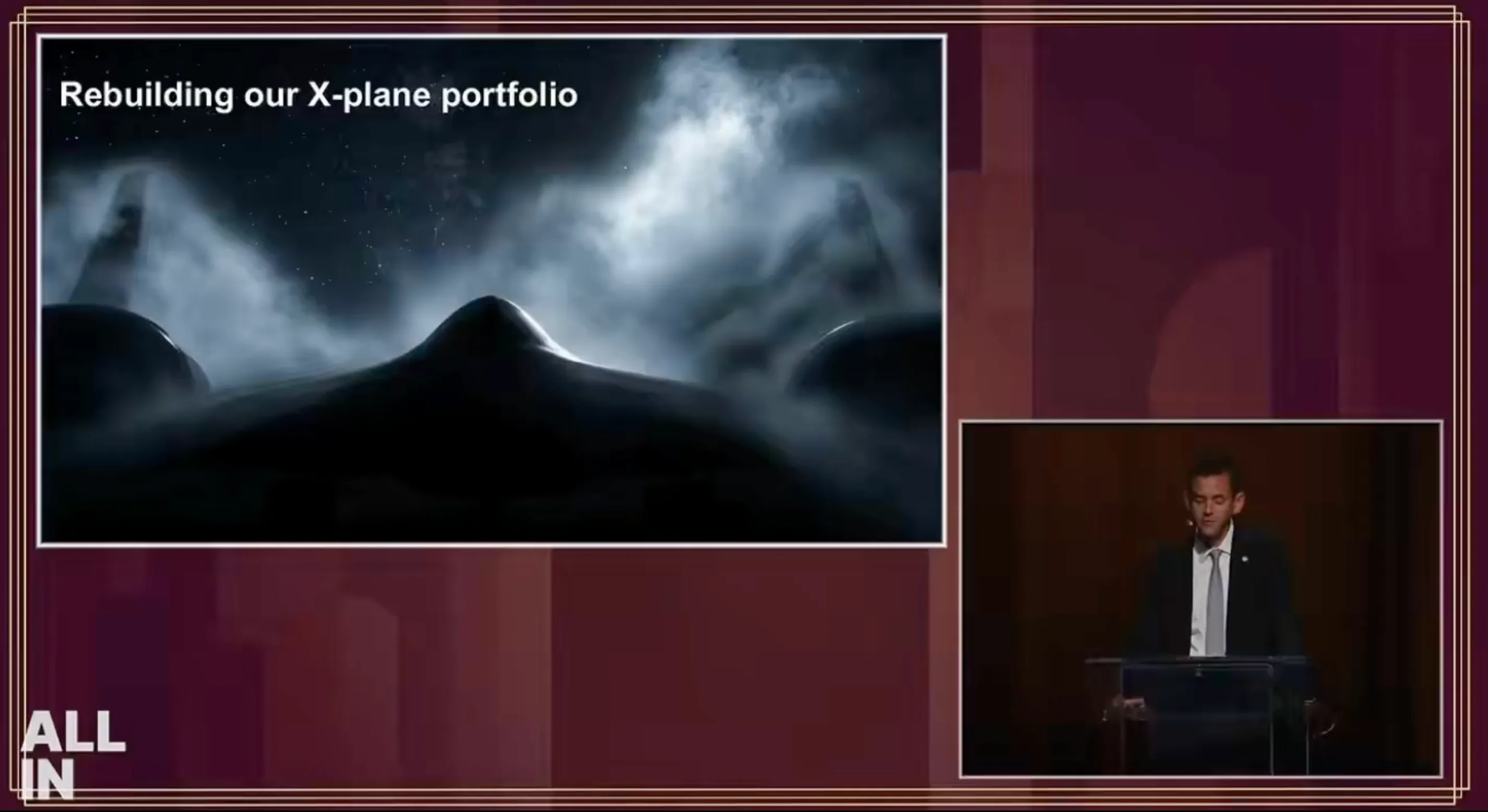
The silhouette, accompanied by the tagline “Rebuilding our X-plane portfolio,” was among the backdrops for Isaacman’s remarks at the annual All-In Summit in Los Angeles, California, last week.
The SR-71’s iconic shape is defined by its long, sword-like profile, pronounced chines, and deeply swept wings, and huge spiked engine nacelles with canted fins on top. Its distinctive geometry is reflected in the silhouette, which shows a broad, highly blended aircraft from an unusual head-on angle.
NASA Administrator Jared Isaacman talks at the All-In Summit about new high- and fast-flying X-planes with the eye-catching aircraft silhouette in the background. All-In Summit/YouTube screencap
“In the service of the first A [aeronautics] in NASA, we are rebuilding our X-plane fleet. The X-59 is researching quiet supersonic flight, but it’s just the beginning,” the head of NASA told attendees. “As NASA recommits to flight test and works alongside industry to push the boundaries of airframe and propulsion design, it will not be long before NASA once again is flying as high and as fast as we had in decades past, and then even more.”
Isaacman’s full speech at the All-In Summit, as well as his remarks during a live interview that followed immediately afterward, are contained in the video below. The high-speed aircraft silhouette is first seen at around the 12:40-mark in the runtime, and is then further discussed at around the 28:39-mark.
Jared Isaacman: A New Era for NASA and American Space Exploration
Chamath Palihapitiya, co-host of the All-In Podcast and one of the hosts of the summit, asked Isaacman directly about the silhouette during the fireside chat after his speech.
“You showed a picture of the [SR-71] Blackbird up there,” Palihapitiya said at one point, before Isaacman interjected.
“You sure that’s a Blackbird?” Isaacman said.
“Well, ok. What was that picture you showed up there?” Palihapitiya asked.
“Like I said, NASA is getting back in the business of flying high and fast again,” Isaacman said in response, and declined to further elaborate.
Whether or not the silhouette reflects a real design that is in development now is unclear. TWZ has reached out to NASA for more information.
Exactly where Lockheed’s SR-72 ambitions sit today is unclear. After talking constantly about the potential program for a number of years, it went silent, which could indicate the program had moved forward deep in classification.
Tom Cruise trolls Ed Harris and goes Mach 10 | Top Gun 2 | CLIP
NASA has worked with other supersonic and hypersonic X-planes in the past, as well. This includes reusable space planes, as well as aircraft designed to fly within the Earth’s atmosphere.
“I mean, that doesn’t seem like a space vehicle. It seems like an Earth-air vehicle,” All-In’s Palihapitiya noted during his chat with Isaacman about the silhouette he showed.
“Yeah. The first ‘A’ in NASA is our aeronautics portfolio,” Isaacman said in response, before highlighting a host of contributions his agency has made to advanced military and commercial developments over the years. “You know what I want to do? I want to get back to the radical airframe and engine designs like we were always supposed to do.”
As mentioned, Isaacman also highlighted the X-59 Quiet Supersonic Technology experimental test aircraft, or QueSST, at the summit, but made clear the goal is to go well beyond that design. The QueSST jet is the centerpiece of a program now to investigate technologies that could eventually enable commercial supersonic flight over land with a substantially reduced sonic boom.
The X-59 conducted its first supersonic test flight, reaching Mach 1.1, in June. NASA’s test program aims to eventually push the aircraft up to a speed of Mach 1.4. This is significantly below the record-breaking mark of approximately Mach 3.3 that the SR-71 clocked back in the mid-1970s, but it was never designed for extreme speed as testing its sonic signature was its primary goal.
NASA’s X-59 flies above the Mojave Desert in California on August 18, 2026. NASA/Jim Ross
As for bringing a Blackbird back into operation for high-speed testing, which is now at the forefront of military aeronautics (and civilian to a lesser degree) after decades of being sidelined, that would be a very challenging operation. The SR-71s are long retired and have been placed in museums and other display areas. While the Pentagon could technically claw some of them back from their ‘on loan’ status, reconstituting even one of them would be a major undertaking as the entire support ecosystem that once sustained them has been gone for decades. Still, having a Mach 3+ capable jet for testing would be a highly relevant tool in a new age of high-speed flight exploration.
On the other hand, building a new test aircraft that aims higher and faster than the SR-71, but may be based on its ‘DNA,’ is certainly possible. Such an aircraft could leverage material science, avionics, flight controls, and engines that are seven decades more modern than its progenitor. Technology demonstrators in this class could also already exist in the classified domain. NASA could possibly assume ownership of one after the Pentagon declassifies it, as well.
Regardless of how such an exotic aircraft is obtained, one of the biggest differentiating factors could be that a NASA aircraft is piloted by a human onboard, instead of it being a drone, but an uncrewed aircraft is possible too.
A NASA SR-71 taxis at Dryden Flight Research Center during its late operational phase. NASA
Isaacman has been very open about its interest in and support for new X-plane developments. On only his second day on the job, in December of last year, he called for revamping the agency’s aeronautics program and stated that “I’d love to see an expanded X-plane portfolio” during a town hall with NASA staff.
“If NASA has a healthy X-plane portfolio, we should be flying experimental aircraft so routinely that the second flight of a single X-plane is not newsworthy,” he wrote in a post on X in March of this year. “For example, the two NASA X-29 aircraft flew 422 flights between 1984 and 1991. That period also overlapped with the development of two X-31 aircraft, which together flew about 580 times.”
One of the X-29 X-planes, at left, and the X-31, at right. NASA/DARPA
NASA’s proposed FY2027 budget also spelled out rapid, cost-effective flight experimentation as an explicit priority. Budget documents specifically highlight work toward new advances in supersonic and hypersonic flight technologies “that will revolutionize air transportation, strengthen national security capabilities, and position America to lead the future of high-speed flight,” as well.
Furthermore, in April, NASA outlined a new Aeronautics Flight Accelerator (AFA) initiative. At that time, the agency put out a call for “input on technologies, concepts, and flight test campaigns suitable for cost shared maturation leading to flight within the next three years.” Stated areas of interest included “subsonic (including vertical lift), supersonic, and hypersonic flight technologies.”
It is important to reiterate that we still do not know whether the silhouette Isaacman showed at the All-In Summit represents an active development effort and, if so, how mature it might be. Government agencies and contractors routinely use concept art to illustrate an area of research or communicate a future vision. Such artwork does not necessarily correspond to a funded aircraft, an active prototype, or even a specific configuration.
At the same time, under Isaacman, NASA is clearly pushing toward new X-planes. NASA’s X-plane programs have historically served as a way to investigate technologies that conventional aircraft programs were not prepared to risk. The resulting aircraft have explored everything from supersonic and hypersonic flight to unconventional configurations and new propulsion concepts.
At the very least, evoking the visual legacy of the SR-71 Blackbird, coupled with Isaacman’s comments, provides a clear indication that NASA is interested in returning to the high-speed flight regime as part of its future plans.
Update: 2:04 PM ET –
NASA has now provided TWZ with the following statement in response to our queries for more information:
“NASA has a long history of building and flying experimental aircraft that push the boundaries of what is possible. As Administrator Isaacman has said, we want to see more X-planes flying in the years ahead, developing the technologies that will allow us to fly higher, farther, and faster than we have in decades. We look forward to sharing more as those efforts progress.“
EXCLUSIVE: Emmerdale’s Katie Hill – who plays Sarah Sugden on the ITV soap – warns there’s a ‘rocky road’ ahead as she details devastating consequences for Charity
19:10, 23 Sep 2026Updated 19:10, 23 Sep 2026
What’s next for the pair?
Sarah Sugden star Katie Hill has revealed some tragic twists on Emmerdale in the coming weeks.
Fans will know Charity Dingle is currently under investigation for the death of Dr Todd but it was Sarah who killed her. In a shocking turn of events, Charity confessed to Sarah that the baby she thought was hers and Jacob’s was actually Charity’s and Ross’.
Now, actress Katie has warned there’s more trouble ahead for Sarah and Charity in the coming weeks in an exclusive chat with The Mirror at the Inside Soap Awards.
“When the producer told me, I was so shocked. I had no idea it was going to be Sarah that was the one to kill her. It was a massive shock. She didn’t do it on purpose. It’s not in her nature to kill someone,” she said.
“She’s just now found herself in this really sticky situation. And then obviously with the baby thing on top, finding out about that, she’s just acted on impulse. She’s so angry, and she’s thought, ‘This is what I need to do to get my peace,’ type thing.”
However, Katie warned that despite her confessions, Sarah will continue to struggle.
“I think she’s still struggling with the idea that she’s killed someone. We’ll see her go through a bit of a rocky journey with like parenting, sleepless nights,” she told us.
“I think she’s just revisiting what she’s doing over and over again. And the guilt obviously did set in with Charity and reporting her but she’s gone and taken all that back. It’s a rocky road ahead for Sarah.”
Just a few weeks ago, Sarah found out that Charity had lied about the baby’s parentage.
Speaking about the impact of the storyline, Katie revealed: “In Sarah’s eyes, this is the end. I don’t think she believes she will ever be able to forgive her. The dynamic between the two characters has shifted completely. Sarah is taking charge now, and while it’s obviously devastating for Charity, Sarah just can’t see a way past this.
“From this moment on, as awful as it sounds, Charity is essentially dead to her. She doesn’t want Charity to have anything to do with her or Leyla. Sarah is setting very strict boundaries, she’s nothing to her now.”
The move comes after the EU lifts sanctions on oligarchs following what diplomats described as pressure from Baku.
Published On 23 Sep 202623 Sep 2026
Azerbaijan’s President Ilham Aliyev has pardoned Martin Ryan, a French national who was serving a 10-year prison sentence on spying charges.
The move on Wednesday came a day after the European Union lifted sanctions on Russian billionaire Alisher Usmanov following what diplomats described as pressure exerted by Baku.
Recommended Stories
list of 3 itemsend of list
Ryan, who was arrested in 2023 and sentenced in March, was among 20 people pardoned by Aliyev’s office, alongside Azerbaijani, Turkish, Russian-Israeli and Pakistani nationals, Reuters news agency reported.
Aliyev’s website said the president took into account their “personalities, state of health, family circumstances” and other reasons in deciding to grant pardons.
France welcomed “with relief the decision to grant clemency” to Ryan, calling it “a humanitarian gesture”, according to a French Ministry of Foreign Affairs statement. “This decision is the result of patient and exacting dialogue with the Azerbaijani authorities.”
It remained unclear whether Ryan had been released.
Spying charges
Prosecutors alleged Ryan gathered information on Azerbaijan’s military ties with Turkiye, Iran and Pakistan, as well as on companies linked to Russia and China.
Ryan, who also holds British citizenship, denied the charges. France said the allegations against him were false and had called for his immediate release, arguing he had been caught in the crossfire of diplomatic tensions.
The delisting of Usmanov and fellow Russian billionaire Mikhail Fridman was the first time the EU removed sanctions on the wealthiest members of Russia’s billionaire elite who had not publicly condemned the war on Ukraine.
Usmanov, who once held a minority stake in Arsenal football club, graduated from the same prestigious diplomatic school in Moscow as the presidents of Azerbaijan and Kazakhstan and knows them personally.
Diplomatic response
European diplomats told Reuters and AFP news agencies that France had privately indicated Baku was using Usmanov’s sanctions status to pressure Paris over its detained citizens.
A second Frenchman, Anass Derraz, an employee of the French water company Saur who was sentenced to 12 years on corruption charges, was not included in the pardons.
An Azerbaijani diplomat rejected suggestions of a pressure campaign as “categorically unfounded”.
French national Martin Ryan (centre) during a January 6, 2025 court hearing in Baku, where he received a 10-year sentence for spying before being pardoned [AFP]
Ukrainian President Volodymyr Zelenskyy said the move reflected Russian efforts “to break the West’s unity”, while his Foreign Minister, Andrii Sybiha, said Moscow was “celebrating, because it got what it wanted: a sense of impunity, the humiliation of the EU, and division among Europeans”.
Latvia abstained from the vote and said it would impose its own sanctions on the two men, with Foreign Minister Baiba Braze calling the EU decision “dangerous”.
Slovakia initially called for Usmanov’s removal, with France later backing the move.
Relations between Baku and Paris have long been strained by France’s support for Armenia, even as ties between Moscow and Baku have also deteriorated since the accidental downing of an Azerbaijani passenger jet by Russian forces in December 2024.
The family of a mother and three children who died in a house fire have said they are experiencing an “unimaginable” loss.
Elisha Brabin, 36, and her children, Leo, 16, Ellis, 8, and Prudence, 7, died after a blaze “spread rapidly” inside a house on Stone Square in Bootle in the early hours of Tuesday.
Paying tribute, their relatives said they had been left “heartbroken” and the loss would be “felt forever”.
The statement added that “Elisha was a devoted and loving mother” and “our beautiful babies, Leo, Ellis and Prudence, were loved beyond measure”.
The family said: “Our whole family is devastated by the loss of Elisha, Leo, Ellis and Prudence.
“Elisha was our beloved daughter, wife, mother, sister, aunty, niece and cousin.
“She was a devoted and loving mother who lived for her children. They were her whole world, and she meant everything to us.”
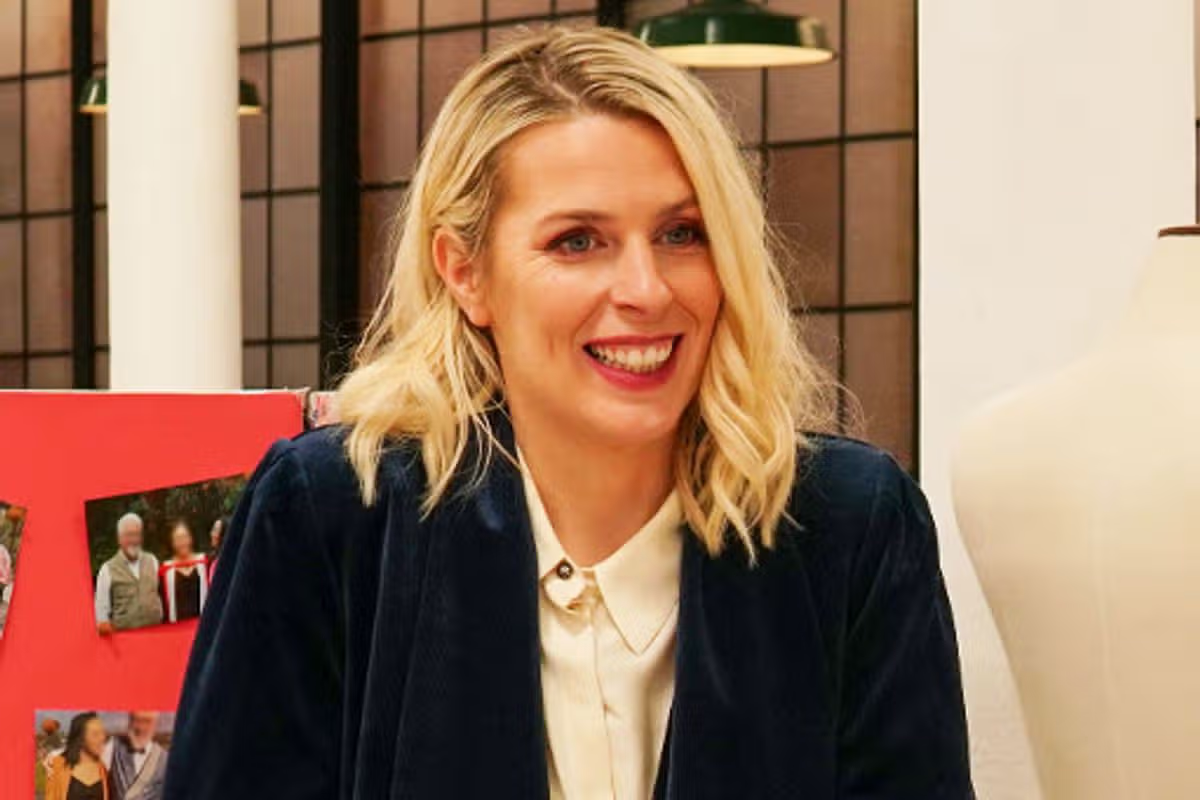
Presenter Sara Pascoe has claimed she was ousted from her role on Great British Sewing Bee and said the BBC chose to replace her with a younger woman.
18:28, 23 Sep 2026Updated 18:28, 23 Sep 2026
Sara Pascoe no longer appears on Sewing Bee(Image: CREDIT LINE:BBC/Love Productions Ltd)
Sara Pascoe has claimed she did not leave her job on the BBC‘s Great British Sewing Bee role saying she was “replaced me with a younger woman”.
The comedian, 45, had presented the BBC contest in 2022 and 2023 before taking a year off after welcoming her second child. But shortly after returning, it was announced that Sophie Willan, 38, was to take over the year’s Christmas special and series that followed.
She’s now made it very clear it wasn’t a decision she was part of. She was asked on Harry Hill’s podcast: “There’s The Great British Sewing Bee, do you still do that?”
Bluntly, she responded: “No. They replaced me with a younger woman. Showbusiness is harsh.”
Harry went on to ask: You gave it up, right?” But she hit back: “No I didn’t, absolutely not. I’m, I’m very lucky for the work I’ve had, I’m very gracious, I have bought a house, I send love and light to everyone.”
When Sophie was announced, the BBC said: “Sara has been a brilliant, witty and much-loved presence in the sewing room and both the BBC and the Bee team thank her for three wonderful series.”
Commissioning editor Cal Turner added: “We are delighted to welcome Sophie Willan to The Great British Sewing Bee. With her boundless enthusiasm and energy, Sophie will bring her own unique spark to the sewing room alongside Patrick and Esme.
“We’d also like to thank Sara Pascoe for three brilliant series – her humour and charm have been a joy for viewers and stitchers alike.”
And Tom Davies, Executive Producer Love Productions said: “We are so excited to have Sophie join the Sewing Bee team and we cannot wait to see what she brings to the Sewing Room.”
Earlier this month it was confirmed the new series was already being filmed. Judge Patrick Young praised Sophie for her hosting skills and said the show is kept ‘fresh’ by bringing in new presenters.
“Sophie is amazing,” Patrick said. “I was a massive Alma’s Not Normal fan. Quite often, we get told who is going to be coming on, and I had to pinch myself. I was like, ‘Oh my god, I loved Alma’s Not Normal’. She’s brilliant, she’s so fun.
“Esme loves her. She just helps create the most amazing atmosphere on set. We’ve been making the show for a long time. A lot of the crew and everybody behind the scenes are the same, but it’s lovely having somebody come in and give it a little zhuzh.”
Israeli forces have destroyed homes and infrastructure across occupied villages in southern Lebanon, leaving displaced residents questioning whether there will be anything left to return to.
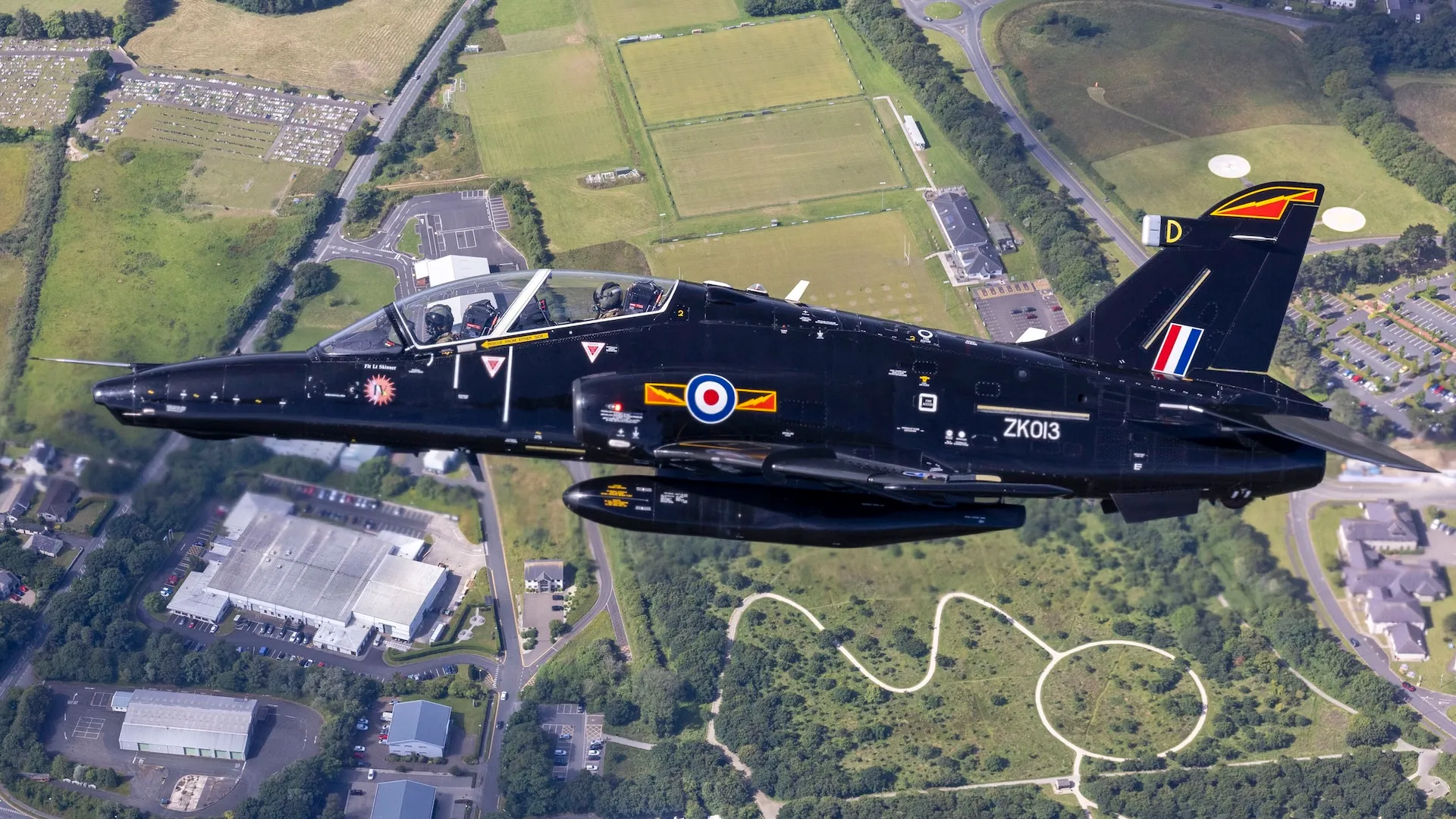
A U.K. Royal Air Force Hawk T2 training jet crashed in the Pencarnisiog area of Anglesey, North Wales, on Wednesday after both pilots ejected from the aircraft.
Videos captured of the incident show the aircraft porpoising at a slow speed and high angle of attack, before the pair ejected. The Hawk appears to narrowly miss homes before impacting the countryside and bursting into flames, with thick black smoke visible afterward.
Local police said the two pilots were being treated for minor injuries and that there were no reports of wider damage or additional casualties. Emergency services, including Coastguard and Wales Air Ambulance helicopters, responded to the scene.
The crash occurred near RAF Valley, where the RAF operates its Hawk T2 advanced jet trainers as part of fast-jet pilot training. The station is home to No. 4 Flying Training School. The Telegraphreports the incident happening “shortly after takeoff.”
The Royal Air Force confirmed that the incident involved one of its Hawk T2s flying out of RAF Valley.
“An investigation is under way and we will not comment further at this time,” the RAF said.
Wreckage from the aircraft has been located at the crash site. Police have asked the public to avoid the area while emergency services remain at the scene.
The circumstances surrounding the crash, including what caused the aircraft to go down and the nature of the flight, have not yet been established.
The Hawk fleet has experienced previous technical issues.
In 2022, engines were removed from service amid concerns over potential in-flight failures, while the 28-aircraft RAF Hawk T2 fleet was temporarily grounded in January 2023 following an engine-related incident at RAF Valley.
In 2024, then-Chief of the Air Staff Air Chief Marshal Sir Richard Knighton said he wanted to replace the Hawk T2, citing problems with its engines and support and concerns about the reliability of the training capacity it provided. The Hawk T2 is due to be retired by 2040.
Those previous issues are not known to be connected to Wednesday’s crash.
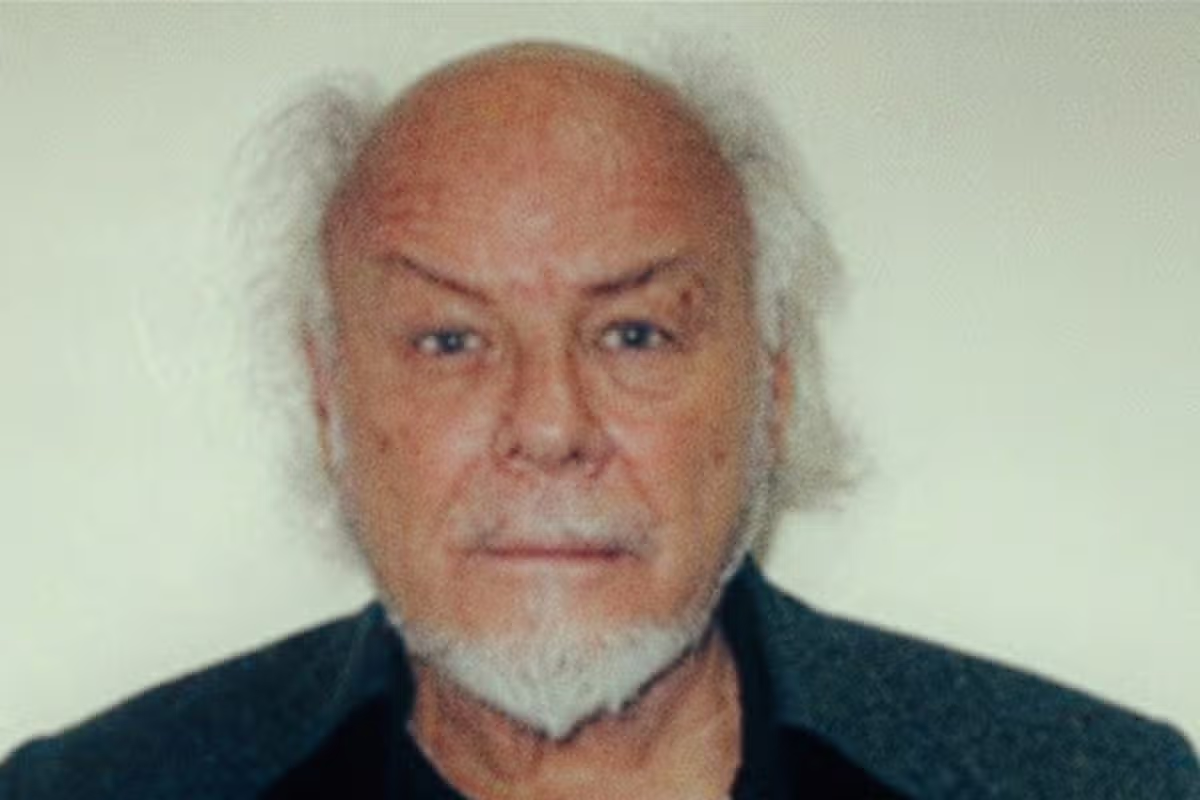
A three-part series following investigative reporters and police investigators who were instrumental in holding Gary Glitter accountable for his sex abuse crimes has been paused
17:17, 23 Sep 2026Updated 17:20, 23 Sep 2026
Hunting Gary Glitter was due to be released on Netflix on October 14(Image: Courtesy of Netflix)
Netflix has paused the release of an investigative docuseries into disgraced Gary Glitter’s history of sexually abusing minors.
The streaming giant has issued a statement confirming that the three-part series will no longer be released on October 14 as they originally announced.
A spokesperson for Netflix said: “We have made the decision to pause the release of Hunting Gary Glitter originally due to launch on October 14.
“This follows new legal information we recently became aware of. We’re not able to share further detail at this time, but we’ll provide an update as soon as we’re in a position to do so.”
The synopsis for the series states: “A string of dogged journalists chases fugitive pop star Gary Glitter across the globe — from Cuba to Cambodia to Vietnam — determined to expose the child sexual abuse he concealed behind decades of chart-topping fame.
“This documentary follows their pursuit alongside the survivors who speak out, charting Glitter’s 1997 conviction, through to his years on the run, and eventual incarceration.”
The rocker, real name Paul Gadd, was a popular British glam rocker in the 1970s and sang numerous hits like Do You Wanna Touch Me and I Love You Love Me Love.
In 1999, his popularity was derailed by numerous allegations of child sexual abuse and subsequent conviction for possession of child pornography.
Later, in 2006, he was jailed in Vietnam for the sexual abuse of two girls. In 2015, he was convicted of sexually abusing three additional young girls.
In 2023, Gadd was released for a short time on probation before being reincarcerated. Police did not publicly say how he violated the terms of his release.
Featured in the trailer of Hunting Gary Glitter, the docuseries uses first-person interviews to detail Gladd’s original convictions and years hopping from country to country, including Vietnam, Cuba, and Cambodia to avoid prosecution and jail time.
The advert was released alongside the initial announcement but has now been pulled as has all the other assets from Netflix’s media website.
Hunting Gary Glitter was due to be released on Netflix on October 14 but has been paused
The road to the UEFA Nations League 2026-27 begins on Thursday, with 54 teams in action in the league phase.
Portugal, the record two-time champions, will look to successfully retain the title they won in 2025.
Recommended Stories
list of 3 itemsend of list
But with reigning World Cup winners Spain, and former champions France and heavyweights England also in the mix, the title defence will be far from easy.
What is the UEFA Nations League?
The UEFA Nations League was founded in 2018 to reduce the number of meaningless friendlies and give nations competitive matches against equally-ranked teams.
In this competition, countries from across Europe participate in a league structure, which features promotion and relegation.
How many teams are in the Nations League?
A total of 54 teams will participate in the 2026-27 UEFA Nations League.
They are divided into the following leagues and groups, following the draw in Brussels, Belgium in February:
League A
Group A1: France, Italy, Belgium, Turkiye Group A2: Germany, Netherlands, Serbia, Greece Group A3: Spain, Croatia, England, Czechia Group A4: Portugal, Denmark, Norway, Wales
League B
Group B1: Scotland, Switzerland, Slovenia, North Macedonia Group B2: Hungary, Ukraine, Georgia, Northern Ireland Group B3: Israel, Austria, Republic of Ireland, Kosovo Group B4: Poland, Bosnia and Herzegovina, Romania, Sweden
League C
Group C1: Albania, Finland, Belarus, San Marino Group C2: Montenegro, Armenia, Cyprus, Latvia Group C3: Kazakhstan, Slovakia, Faroe Islands, Moldova Group C4: Iceland, Bulgaria, Estonia, Luxembourg
League D
Group D1: Gibraltar, Malta, Andorra Group D2: Lithuania, Azerbaijan, Liechtenstein
What is the schedule for the UEFA Nations League?
UEFA has earmarked the following dates for the Nations League 2026-27:
League phase
Matchday 1: September 24-26 Matchday 2: September 27-29 Matchday 3: October 1-3 Matchday 4: October 4-6 Matchday 5: November 12-14 Matchday 6: November 15-17
Quarterfinals, League A/B and League B/C promotion/relegation playoffs
March 25-30, 2027
League C/D playoffs
March 23-28, 2028
Final tournament
June 9-13, 2027
How does the UEFA Nations League work?
The teams compete across four different divisions, facing every other team in their group twice: once at home and once away. The league phase ends in November.
In the top-most league, League A, the top two teams from each group go through to the quarterfinals, which take place in March 2027.
The finals will again be contested between four teams. The host and the dates of the finals have not been confirmed yet.
As for each of the group winners in Leagues B, C and D, they will be promoted to the league above. The teams finishing bottom of their groups in Leagues A, B and C will be relegated one league below.
Here’s the full breakdown of the promotion and relegation scenarios:
League A
The group winners and runners-up advance to the quarterfinals.
The two highest-ranked third-placed teams remain in League A.
The two lowest-ranked third-placed teams and two highest-ranked fourth-placed teams contest the League A/B play-offs against the four runners-up from League B.
The two lowest-ranked fourth-placed teams are relegated to League B.
League B
The group winners are promoted to League A.
The runners-up contest the League A/B play-offs against the two lowest-ranked third-placed teams and two highest-ranked fourth-placed teams from League A.
The third-placed teams remain in League B.
The fourth-placed teams contest the League B/C play-offs against the four runners-up from League C.
League C
The group winners are promoted to League B.
The runners-up contest the League B/C play-offs against the fourth-placed teams from League B.
The third- and fourth-placed teams remain in League C.
League D
All teams are promoted to League C.
FIFA World Cup 2026 winners Spain will also be in action in the upcoming UEFA Nations League [File: Hannah McKay/Reuters]
Is the Nations League linked to major tournaments?
According to European football’s governing body, UEFA, the 2026-27 UEFA Nations League is expected to be linked to qualification for UEFA EURO 2028 in the United Kingdom and Ireland.
Based on their UEFA Nations League results, some teams will be given a second chance to enter the playoffs for the final tournament.
Will Ronaldo play in the Nations League?
Yes. Cristiano Ronaldo will feature in the upcoming Nations League after being called up for their upcoming four fixtures. Last weekend, he was included in new coach Jorge Jesus’s first 25-man squad.
However, in August, the 41-year-old fuelled speculation about his retirement plans after saying the coming year would probably be the last of his playing career.
The Portugal captain has won major trophies at the club level with Manchester United, Real Madrid, Juventus and current club Al-Nassr since making his senior debut for Sporting in 2002.
But he has not quite tasted similar success with his national team.
The five-time Ballon d’Or winner has yet to win a FIFA World Cup, football’s biggest prize, after Portugal were knocked out in the last 16 by eventual champions Spain.
Has Ronaldo won the UEFA Nations League?
Yes. Ronaldo led Portugal to UEFA Nations League victories in the inaugural edition in 2019 and the latest one in 2025.
In the 2019 edition, Portugal were crowned winners on home soil in Porto, defeating the Netherlands 1-0 in the final.
In the last edition, they were crowned champions for a second time, beating Spain 5-3 on penalties after the match was tied 2-2 in extra time, with Ronaldo among Portugal’s goalscorers in Munich.
Which other top players will play in the Nations League?
The UEFA Nations League 2026-27 is filled with stars across all divisions.
In Group A, world champions Spain have talent all around with Lamine Yamal, Rodri and Ferran Torres among the standout names, while England skipper Harry Kane and Jude Bellingham also add glamour to the division.
Norway’s talismanic forward Erling Haaland and captain Martin Odegaard headline their team, Brian Bobbey has the spotlight on him in the Netherlands squad, and veteran Luka Modric continues his journey with Croatia.
In Group B, fans should watch out for Sweden’s Victor Gyokeres, the top scorer in the 2024-25 Nations League, Georgia’s winger and PSG star Khvicha Kvaratskhelia.
Which players will miss the opening UEFA Nations League games?
Several players have been sidelined with injuries, including England’s Cole Palmer, Declan Rice and Marcus Rashford.
Pedro Porro has been ruled out of the Spain squad.
Is the Nations League held every two years?
Yes. The UEFA Nations League has been held every two years since 2019.
The Justice Minister, Naomi Long, is due to meet the family later this week.
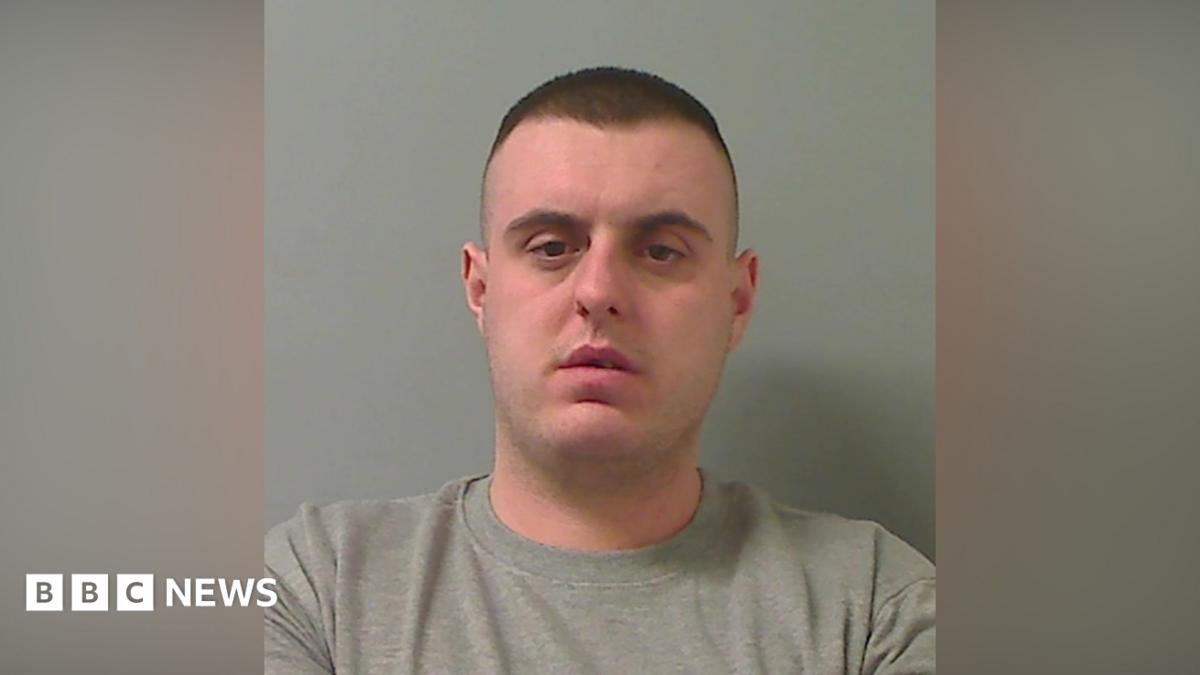
Anderson failed to return to prison on 14 September and was last seen in the Eastway area of Derry.
Det Insp Gareth Lavery of the Police Service of Northern Ireland (PSNI) thanked “everyone who assisted with our enquiries since our public appeal last Monday”.
He added that officers “conducted extensive enquiries during this investigation to locate Gary Anderson”.
Lavery also thanked An Garda Síochána officers “who arrested Gary Anderson today and for all of their help with this investigation over the last week”.
“PSNI is now working with relevant authorities in order to return Gary Anderson to custody, and we will provide an update in due course.”
An Garda Síochána asid they arrested a man, aged in his 20s, in Donegal as “part of a planned operation”.
“He is being detained under the provisions of Section 4 of the Criminal Justice Act, 1984, at a station in the Garda North Western Region.”
Buncrana is about a 30-minute drive from the Irish border.
The town is popular with visitors from the north-west of Northern Ireland.
THIS nepo-baby made their catwalk debut as they showed off their striking resemblance to their famous dad.
The 18-year-old was seen strutting down the runway Vogue World: Milan on Tuesday night.
This nepo-baby was seen strutting down the catwalk at Vogue World: MilanCredit: GettyThe 18-year-old wore a Prada double-breasted blazer suit for the eventCredit: Getty
He wore a grey tweed Prada double-breasted blazer suit with a long sleeve beige top underneath and a pair of black loafers.
It’s none other than Matthew Mcconaughey’s son LeviCredit: GettyLevi joined his family at his dad’s premiere for his Apple TV series BrothersCredit: Getty
The event was hosted at Italy’s oldest shopping arcade, Galleria Vittorio Emanuele II.
Levi looked dapper in a the two-piece suit and wore his brown curly hair parted to one side.
The event was attended by a number of A-listers including Gigi Hadid, Jennifer Lopez, Heidi Klum and Pamela Anderson.
Levi has been making more public appearances, including his attendance in June 2025 he attended the Dior show at Paris Fashion Week and also joined his family at the premiere of his dad’s Apple TV series Brothers this month.
Levi is the eldest child of Matthew and Camila, who also have a 17-year-old daughter named Vida, and a 15-year-old son, named Livingston.
The teenager appears to be following in his famous parents footsteps.
Last year, he was spotted picking up tips from his dad as the cameras rolled in San Diego in November.
Levi was filming for drama Way Of The Warrior Kid and was seen shooting scenes at Mission Beach.
Yet he had his Interstellar star dad on-hand for support.
He was shooting scenes for the movie adaptation of the 2017 Jocko Willink children’s book of the same name.
It tells the story of 11-year-old Marc, played by Jude Hill, who finds his inner warrior strength during the summer holidays with the help of his Navy SEAL Uncle Jake.
Matthew and Camila’s first and oldest son was born on July 7, 2008.
Levi means “united,” “joined,” or “joined in harmony,” and is an anagram for “live,” beginning a theme for the McConaughey kids.