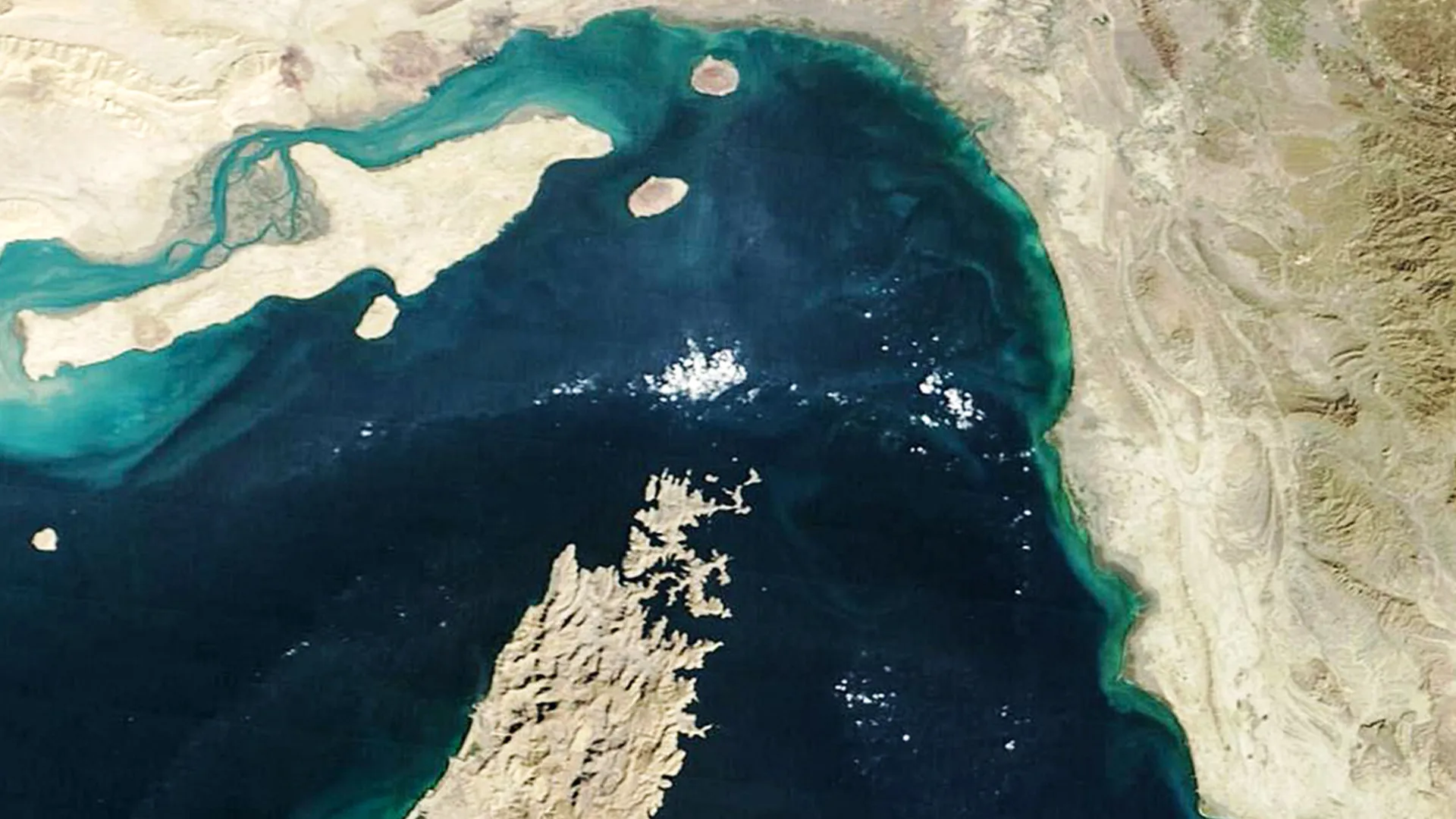
Tehran on Monday responded to a U.S. military operation to guide commerical ships marooned in the Persian Gulf out via the Hormuz Strait by warning that any American forces that entered or approached the strait would be attacked. File photo by Stringer/EPA
May 4 (UPI) — The Iranian military threatened Monday to attack U.S. forces if they attempt to implement U.S. President Donald Trump‘s “Project Freedom” to bring ships trapped in the Persian Gulf out through the Strait of Hormuz.
In a statement carried by state-run broadcaster IRIB, the commander of Khatam al-Anbiya Central Headquarters, the Iranian military’s central command, warned the Americans not to approach the strait and that no vessels would be permitted to transit safely without Iran’s permission.
The statement also appeared to threaten Iran’s neighbors in the Gulf and other allies of the United States.
“Do not approach the Strait of Hormuz. Any foreign armed force, especially the aggressive American army, will be attacked if they intend to approach and enter the Strait of Hormuz. Supporters of the evil America should be careful and not do anything that will lead to irreparable regret, because America’s aggressive action to disrupt the current situation will have no result other than complicating the situation and jeopardizing the security of vessels in this area,” said central command chief, Maj. Gen. Ali Abdullahi.
“In any circumstances, any safe passage through this strait will be carried out in coordination with the Armed Forces,” added Abdullahi.
The warning came hours after Trump announced plans to use U.S. military assets deployed in the region, including guided-missile destroyers, over 100 land and sea-based aircraft, multi-domain unmanned platforms and 15,000 marines, to “guide” ships and crews “safely out of the Strait.”
U.S. Central Command confirmed in a news release posted on X that the operation to restore freedom of navigation for all commercial shipping, with the exception of vessels servicing Iran, would get underway on Monday.
“The mission, directed by the president, will support merchant vessels seeking to freely transit through the essential international trade corridor. A quarter of the world’s oil trade at sea and significant volumes of fuel and fertilizer products are transported through the strait. Our support for this defensive mission is essential to regional security and the global economy as we also maintain the naval blockade,” said U.S. CENTCOM Commander Adm. Brad Cooper.
The developments came as two ships, an oil tanker and a bulk carrier, were attacked near the strait on Sunday.
However, it was unclear how effective the operation might be with Copenhagen-headquartered BIMCO, the world’s largest international shipping association, with more than 2,000 members across 130 countries, telling the BBC that while much depended on the “risk appetite” of individual ship owners, it couldn’t see how an evacuation could work without agreement from Iran.
As many as 20,000 merchant sailors are languishing aboard 2,000 commercial ships marooned in the Persian Gulf by Iran’s effective closure of the Hormuz Strait, according to the U.N.’s International Maritime Organization, which Friday adopted a resolution condemning attacks on shipping that “threaten the welfare of seafarers, represented a grave danger to life and posed a serious risk to the marine environment.”
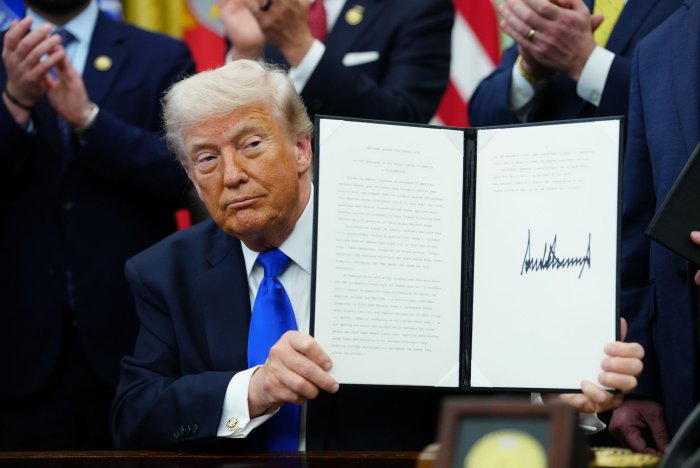
President Donald Trump signs a series of executive orders in the Oval Office of the White House on Thursday. Trump signed an order to expand workers’ access to retirement accounts. Trump also signed legislation ending a 75-day partial shutdown of the Department of Homeland Security after the House voted in favor of funding. Photo by Aaron Schwartz/UPI | License Photo
Weekly insights and analysis on the latest developments in military technology, strategy, and foreign policy.
For the first time, the U.S. Air Force has publicly released imagery showing a B-1B Lancer bomber carrying an AGM-183 Air-launched Rapid Response Weapon hypersonic missile, or ARRW. The development comes with the B-1B now officially slated to serve for another decade, while it has been earmarked as a hypersonic weapons test platform. For its part, the ARRW, at one point expected to be the U.S. military’s first operational hypersonic weapon, is also back from purgatory, after continued questions about its future. The Air Force now wants to develop an improved version, as well as a separate air-launched ballistic missile (ALBM).
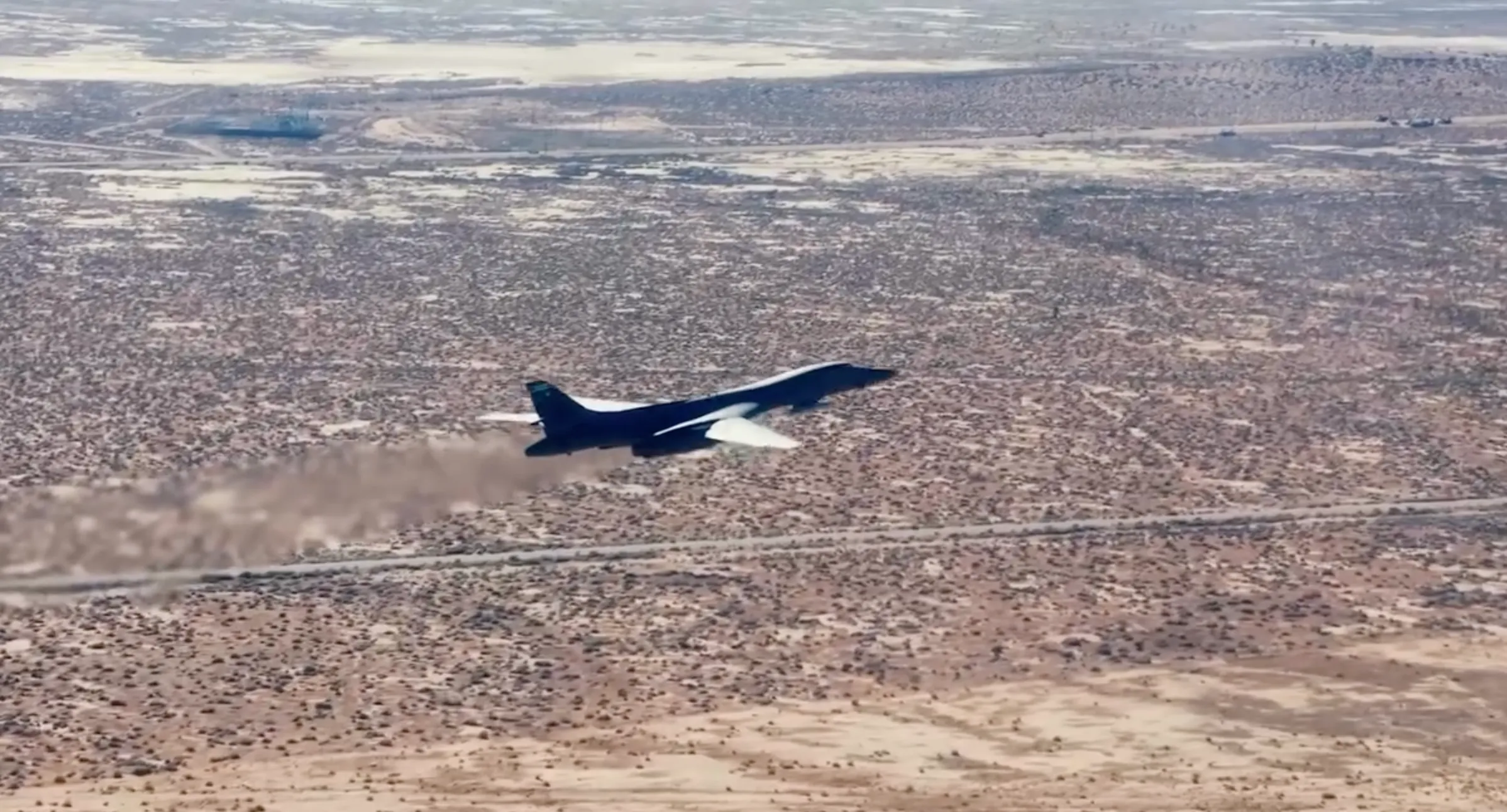
A brief clip showing a B-1B flying with an ARRW carried on an external hardpoint was released on Edwards Air Force Base’s Instagram page recently. The emergence of the video was first brought to our attention by The Aviationist.
It is unclear when the test-flight footage was taken, and it is not directly referenced in the video, which is otherwise dedicated to the work of maintainers on different aircraft platforms at Edwards.
The B-1B over a test range, with the ARRW installed. U.S. Air Force screencap
The B-1B was originally designed to carry external stores on up to eight external hardpoints. The Air Force had also developed special pylons that would have allowed the bombers to carry two nuclear-tipped AGM-86B Air-Launched Cruise Missiles (ALCM) on each one. Following the end of the Cold War, the B-1Bs lost their nuclear mission and, as a result, the external pylons fell into disuse, at least as far as weapons are concerned.
B-1B with cruise missile mounting racks attached to external hardpoints during testing back in the 1980s. U.S. Air Force
However, as long ago as 2020, the Air Force detailed plans to add the ARRW to the B-1B, after the service highlighted work to expand the bomber’s ability to carry hypersonic weapons and other new stores, both internally and externally.
“My goal would be to bring on at least a squadron’s worth of airplanes modified with external pylons on the B-1, to carry the ARRW [Air-launched Rapid Response Weapon],” Gen. Timothy Ray, then head of Air Force Global Strike Command, told Air Force Magazine. He added that the service had contemplated several options for integrating the missile onto the bombers, “but we believe the easiest, fastest, and probably most effective in the short term will be to go with the external pylons.”
In the meantime, we have seen examples of the ARRW carried under the wing of the B-52H bomber during multiple test sorties, and a live version also notably appeared on a Stratofortress during a training event at Andersen Air Force Base on Guam.
A live AGM-183A ARRW under the wing of a B-52 bomber at Andersen Air Force Base on Guam ahead of a test over the Western Pacific in 2024. U.S. Air Force
The Fiscal Year 2026 budget request confirmed that the Air Force plans to use the B-1B as a testbed for the Load Adaptable Modular (LAM) pylon, intended for hypersonic weapons and other outsize loads. The B-1B can accommodate six of these pylons, each capable of carrying two 2,000-pound-class weapons or a single 5,000-pound-plus-class weapon. The ARRW would fall into the latter category.
Boeing concept art showing a B-1B fitted with LAM pylons carrying air-breathing hypersonic missiles. Boeing
The budget documents noted: “The Hypersonic Integration Program successfully demonstrated the B-1’s ability to execute a captive carry of a 5,000-pound-class store and the release of a proven weapon shape from a Load Adaptable Modular (LAM) pylon.” This suggests that the video we are now seeing could have been taken during this demonstration, but it might also refer to external load tests involving the Air Force’s new bunker-buster bomb, the 5,000-pound class GBU-72/B.
A model of the LAM pylon, which Atlantic Models in Miami built for Boeing, loaded with two mock-up hypersonic cruise missiles. Atlantic Models
In the same position as seen in the ARRW video, the LAM has also been used for external carriage tests of the Joint Direct Attack Munition (JDAM). More routinely, this same position mounts an external pylon that accommodates a Sniper targeting pod. The same location has previously been used in external carriage tests of the AGM-158 Joint Air-to-Surface Standoff Missile (JASSM) cruise missile, too.
A B-1B Lancer assigned to the 419th Flight Test Squadron conducts flight tests with a JDAM on the Load Adaptable Modular pylon in early 2024. Air Force photo by Richard GonzalesA 419th Flight Test Squadron B-1B carrying an inert AGM-158 JASSM during a demonstration flight. U.S. Air ForceA close-up look at a Sniper Advanced Targeting Pod on a B-1B. U.S. Air Force
As for ARRW, it carries an unpowered hypersonic boost-glide vehicle as its warhead. A rocket booster accelerates and lifts the vehicle to the required speed and altitude, after which it separates and glides through the atmosphere on a relatively shallow path toward its target. The weapon’s high speed and unpredictable flight path make it difficult for opponents to intercept and engage it, and give very little response time.
B52 ARRW Hypersonic evaluation test at Edwards Air Force Base 12 JUN 2019
Meanwhile, in its Fiscal Year 2027 budget request, the Air Force seeks funds for the development of what it calls ARRW Increment 2, as well as to kick-start a new air-launched ballistic missile (ALBM) program. The service wants almost $350 million to fund these two efforts. ARRW Increment 2 involves adding undisclosed enhanced capabilities onto the baseline weapon, while the ALBM effort would seek to field a new air-launched, long-range strike capability to complement the ARRW and HACM.
The US Air Force plans to kick off Air Launched Rapid Response Weapon (ARRW) Increment 2 development and stand up a new Air Launched Ballistic Missile (ALBM) program in Fiscal Year 2027. The service has set aside nearly $350 Million combined for these two efforts. ARRW Inc 2… pic.twitter.com/pe0SKPlrDO
In its Fiscal Year 2027 budget documents, the Air Force further notes:
“We are doubling production rates for our two developmental hypersonic weapons, the Air-Launched Rapid Response Weapon (ARRW) and the Hypersonic Attack Cruise Missile (HACM), with a planned investment of $1.8 billion across the FYDP to accelerate delivery of these critical strike capabilities into the hands of the warfighter.”
The documents don’t give any details on how many ARRWs they want to order.
Mockups of the Chinese JL-1 ALBM on parade in Beijing on September 3, 2025. Central Military Commission of China
Despite previous plans to retire the B-1B by 2030, the bomber’s ability to carry outsize loads, in particular, has helped ensure that it’s now expected to remain in service until at least 2037.
Fiscal Year 2027 budget documents indicate that the Air Force plans to spend $342 million on modernizing its 44 remaining B-1Bs from 2027 to 2031. “This request provides the necessary funding to modernize the platform, ensuring its lethality and relevance through 2037,” the budget said.
With a capacity to carry more conventional weapons than any other aircraft in the Air Force’s inventory, we will surely see the B-1B carrying additional external weapons and larger numbers of them, as it continues its service career.
SHAKIRA suffered major tech issues during her huge Copacabana Beach concert over the weekend.
The global superstar faced backlash as eagle-eyed viewers spotted the mishaps during the performance.
Sign up for the Showbiz newsletter
Thank you!
The artist performed for an estimated crowd of two million at the city’s Copacabana BeachCredit: GettyThe star suffered tech issues while performing her biggest hitsCredit: Getty
An estimated 2 million people attended the show in Rio De Janeiro, where the popstar delivered a nearly 30-song set that included guest appearances by Anitta, Maria Bethania, and Caetano Veloso.
Although she performed in style, the sound and visuals didn’t match up at times.
Clips from the gig quickly went viral on X, but while some viewers were left disappointed, others weren’t surprised, saying it’s common at large-scale shows.
Taking to X, one person said: “If ur gonna lip at least make it believable”.
Another added: “This is genuinely a f******* mess”.
The Colombian singer’s performance follows similar shows by Lady Gaga last year and Madonna in 2024, which were also attended by huge crowds.
“I arrived here when I was 18 years old, dreaming about singing for you,” Shakira told the crowd. “And now look at this. Life is magical.”
She sang several fan favourites during her set, including Hips Don’t Lie, La Tortura, Waka Waka, Whenever Wherever, She Wolf and La Bicicleta.
The show also featured a massive drone show, which amazed the crowd.
Despite being a free concert, Shakira’s show was expected to generate an estimated $150 million in tourism revenue to the city, according to local government.
Clips from the gig quickly went viral on XCredit: Globo TVShakira and Anitta performed live during the concertCredit: Getty
This isn’t the first mishap the pop star has had live on stage.
In February, Shakira suffered a nasty fall during a live stage performance, with the singer twisting her ankle in the middle of her concert.
She was performing in San Salvador when she left fans worried during a mid-song tumble.
Singing her hit song Si Te Vas during the night, Shakira was walking across the stage when her right ankle suddenly twisted.
She then completely toppled to her side, falling onto her elbow as she brought her microphone stand down with her.
During the moment, Shakira stopped singing as gasps could be heard amongst the audience.
But ever the professional, she quickly got herself back up and managed to continue the song – with the star’s band continuing as her guitarist cheered her on.
Iranian state media says two missiles have struck a US navy destroyer to prevent it entering the Strait of Hormuz after the warship ignored warnings to halt. The attack comes after US President Donald Trump announced a naval mission to ‘guide’ stranded ships through the strait.
The US president has accused some NATO countries of not doing enough to support the US-Israel war on Iran.
Published On 4 May 20264 May 2026
NATO Secretary-General Mark Rutte says European leaders have “gotten the message” after United States President Donald Trump announced plans to withdraw 5,000 soldiers from Germany.
Trump has grown increasingly frustrated with NATO allies, accusing them of not doing enough to support the US-Israel war on Iran. Speaking on Monday, Rutte acknowledged “disappointment from the US side”.
Recommended Stories
list of 3 itemsend of list
“European leaders have gotten the message. They heard the message loud and clear,” Rutte said before a European Political Community meeting in Armenia.
“Europeans are stepping up, a bigger role for Europe and a stronger NATO,” he added.
The Pentagon announced the troop withdrawal from Germany on Friday, days after German Chancellor Friedrich Merz said Iran was humiliating the US during the negotiations aimed at ending the war.
The European Union’s top diplomat, Kaja Kallas, called the announcement’s timing a “surprise”.
“I think it shows that we have to really strengthen the European pillar in NATO, and we have to really do more,” Kallas said while stressing that “American troops are not in Europe only for protecting European interests but also American interests.”
Over the weekend, NATO spokesperson Allison Hart said officials in the 32-nation military alliance “are working with the US to understand the details of their decision on force posture in Germany”.
‘Dangerous military intervention’
European criticism of the war on Iran has mounted in recent weeks as the conflict sends shockwaves through the global economy due to the continued disruption to shipping in the Strait of Hormuz.
Last week, Merz compared the war to previous military quagmires, such as the US invasions of Iraq and Afghanistan.
“It is, at the moment, a pretty tangled situation,” he said. “And it is costing us a great deal of money. This conflict, this war against Iran, has a direct impact on our economic output.”
Spain has refused to let the US launch attacks on Iran from its airspace or military bases. Prime Minister Pedro Sanchez has condemned the war as “unjustified” and a “dangerous military intervention” outside the realm of international law.
Despite this, Rutte said “more and more” European nations were now pre-positioning assets such as minehunters and minesweepers close to the Gulf to be ready for the “next phase” in the war.
He provided no details, and European nations have previously insisted they would not help to police the Strait of Hormuz until the war is over.
Increased defence spending
Many European countries have committed to ramping up defence spending in the face of fears over Trump’s commitment to NATO and Russia’s assault on Ukraine – a push underscored by several leaders in the Armenian capital.
“Europeans are taking their destiny into their own hands, increasing their defence and security spending, and building their own common solutions,” French President Emmanuel Macron said.
“We have to step up our military capabilities to be able to defend and protect ourselves,” European Commission President Ursula von der Leyen told reporters.
KATIE Price was left screaming in terror as she took a trip to a haunted house in Belgium for a ghosthunting experience this week.
The mum-of-five documented her spooky trip by filming the whole thing, with fans watching as she spoke to ‘ghosts’.
Sign up for the Showbiz newsletter
Thank you!
Katie Price was left terrified as she took a trip to a haunted house this weekend in BelgiumCredit: Katie Price/YouTube/BackgridThe former glamour model filmed herself as she spoke to ‘ghosts’ at the secluded cabinCredit: Katie Price/YouTube/Backgrid
Katie drove from her home in the UK to Brussels with pal and cameraman Ben Algar as she headed to the European city to undergo more surgical procedures on her boobs and filler in her lips.
Filming herself as they arrived for a new YouTube vlog, a terrified Katie is seen checking the cabin for ghosts.
Staring over at a lightbulb, she says: “If there’s any ghosts in here and you want us to go, that light I’m pointing at now, turn it off if you don’t want us to stay.”
She was seen screaming as a flickering light seemingly confirmed her suspicions about paranormal activityCredit: Instagram/Katie Price/BackGridKatie was joined by close pal and cameraman Ben for the trip
As nothing happened, she said: “Well, at least it didn’t turn off.”
But just seconds later, the light seemingly flickered off, with Katie then screaming.
“What is going on?” said the worried star.
With her hands on her face, she said: “Noo. What are we doing?”
Whilst Katie was convinced the light was proof that ghosts were present, fans in the comment section of the video had other theories.
“I think its a motion sensor bulb lol,” laughed one.
Another agreed: “Katie is a sensor light, when you step forward it came on then went off when ye stepped back”.
Sources credit Ben as a ‘stable influence’ in the ex-glamour model’s life, in what has been another whirlwind few months for the star, following her driving suspension and surprise Dubai wedding to Lee Andrews in late January.
“The second man in Katie’s life is Ben, who has been by her side for years,” a source tells The Sun. “But he’s really stepped up recently amid her latest drama.
“He is probably the only stable man she’s ever had in her life outside of her family.
“They’re incredibly close friends and Ben has always quietly guided Katie, not only in her career but in her private life
“The whole family love him- he’s a really great friend to Katie and the entire Price gang. They all think he’s a legend.”
This photo, taken Monday, shows the trading room of Hana Bank in Seoul as South Korean stocks rose more than 5 percent to reach a record high. Photo by Yonhap
South Korean stocks shot up by more than 5 percent to close at a fresh high Monday, approaching the 7,000-point mark, as investors scooped up semiconductor shares while awaiting developments in U.S.-Iran peace talks. The Korean won rose sharply against the U.S. dollar.
The benchmark Korea Composite Stock Price Index (KOSPI) added 338.12 points, or 5.12 percent, to a fresh record high of 6,936.99.
Trade volume was heavy at 864.3 million shares worth 41.3 trillion won (US$28.2 billion), with losers outnumbering winners 473 to 392.
Foreigners bought 3 trillion won worth of local shares, and institutions purchased a net 1.9 trillion won, while retail investors dumped a net 4.8 trillion won.
The index opened 2.79 percent higher after U.S. President Donald Trump announced a plan to guide ships not involved in the Iran conflict through the Strait of Hormuz as a “humanitarian gesture” starting this week.
Later, a senior Iranian official warned that Tehran would consider any U.S. interference in the strait a ceasefire breach.
However, the KOSPI extended its gains in the afternoon, supported by foreign and institutional buying.
“Tech shares were driven by gains on Wall Street over the weekend,” Lee Kyung-min, an analyst at Daishin Securities, said. “Also, foreign investors expanded their net purchase ahead of the market closure for Children’s Day on Tuesday.”
The main index surpassed the 5,000-point mark in late January and topped another milestone of the 6,000-point level in February.
After recouping its losses in March following the outbreak of the U.S.-Iran war in late February, the KOSPI is now approaching the uncharted 7,000-point level on continued optimism over the AI boom and hopes for the reopening of the key waterway.
Semiconductor stocks led the rally.
Chip giant Samsung Electronics jumped 5.44 percent to 232,500 won, and its chipmaking rival SK hynix surged 12.52 percent to a fresh record high of 1.4 million won, surpassing 10 trillion won in market capitalization for the first time.
Hanmi Semiconductor, a chip equipment manufacturer, rose 2.72 percent to 378,000 won, and Samsung Electro-Mechanics, an electronic components affiliate of Samsung Electronics Co., soared 10.34 percent to 918,000 won.
Defense shares were also strong as industry leader Hanwha Aerospace advanced 3.39 percent to 1.4 million won and LIG D&A gained 4.46 percent to 983,000 won.
Top carmaker Hyundai Motor climbed 1.51 percent to 539,000 won, and leading battery maker LG Energy Solution increased 2.5 percent to 472,000 won.
However, bio shares went south as Celltrion fell 1.35 percent to 197,800 won, and Samsung Biologics dropped 2.58 percent to 1.4 million won.
The Korean won was quoted at 1,462.8 won against the U.S. dollar at 3:30 p.m., up 20.5 won from the previous session.
The quotation marks the highest since February 27, when the currency closed at 1,439.7 to the greenback.
Bond prices, which move inversely to yields, closed lower. The yield on three-year Treasurys added 2 basis points to 3.615 percent, while the return on the benchmark five-year government bonds gained 1.7 basis points to 3.797 percent.
Copyright (c) Yonhap News Agency prohibits its content from being redistributed or reprinted without consent, and forbids the content from being learned and used by artificial intelligence systems.
In one of the world’s most deprived and volatile regions, HumAngle’s reporting and experience reveal that journalists in Nigeria are not just observing suffering but are pulled into it as they try to report it. Consequently, they say, they find themselves paying out of pocket to feed the people whose stories they are trying to tell.
In theory, the profession is expected to observe some emotional distance from its sources and the stories they tell. However, that model is inoperable in conflict-affected regions of northern Nigeria and the Sahel.
Journalism here is embedded in environments shaped by violence, poverty, and dense social networks. Since these variables affect people at random, the reporter is not an outsider; sometimes, the conflict directly affects them as well. Ethical decisions are then made under pressure, repeatedly, and often without the comfort of certainty.
HumAngle operates in this space. Its work across Lake Chad, Central Africa, Nigeria’s Middle Belt, the North West, the South East, and other conflict zones forces a confrontation with a difficult question: What does ethical journalism look like when the people you report on are not just sources, but individuals whose survival may intersect directly with your presence?
The limits of imported ethics
Global journalism standards discourage payment for information, and while exceptions exist, they do so under strict editorial oversight, a clear public-interest justification, and transparency. Journalism teachers say that, though these frameworks are expected to provide clarity, they don’t in conflict-affected Nigeria, where the assumed context doesn’t apply. The ideal context has clear distinctions between sources and service providers and functioning identity systems. This is hardly obtainable in conflict-affected environments.
Dr Kabiru Danladi, a Mass Communication scholar with the Ahmadu Bello University in northwestern Nigeria, says, “Our curriculum borrows heavily from Euro-American ethical frameworks – objectivity, detachment, neutrality – principles rooted in relatively stable societies. The failure becomes evident when our graduates are deployed to cover issues that weren’t directly taught in class, or they are sent to cover conflicts in places like Zamfara, Sokoto, Kebbi, Borno, Yobe or Benue, where journalism is not just a profession but a survival exercise.”
Dr Obiora Chukwumba, a researcher and media expert in Abuja, identifies the same problem in the moral obligation created by field contact. “There is no ethical barrier to a journalist intervening on grounds of goodwill to assist a source who is in a vulnerable position,” he said.
The reality of field reporting
A fixer in Zamfara, where terror groups continue to kill, abduct, and loot, is not simply an access broker but may also translate, assess risk, and act as a negotiator in certain environments. A driver in Borno, North East Nigeria, may carry more situational intelligence than any formal briefing. An intermediary in the southeast may navigate relationships across vigilante groups and separatist networks.
These individuals are essential. Without them, our reporters’ access vanishes. But they are also embedded in the same systems the journalist is trying to understand, which creates layered risks, including legal risks that emerge when payments made for legitimate services are later interpreted as material support.
Barrister Joseph Danboyi, a senior lawyer in Jos, North Central Nigeria, says, “Payment to a fixer creates liability if the journalist knew his connection with criminals. Ordinary payment for information is insufficient. The journalist will be aiding and abetting when payment is purposefully linked to criminal conduct.”
He goes further to add, “The practical bottom line is that a journalist who unknowingly pays a criminal for information is generally not liable… liability requires knowledge… and intent to help or further it.”
This distinction between knowledge and intent anchors the legal reality that sits beneath field decisions.
Dr Obiora also treats fixers and access arrangements as part of newsroom operations, not automatically as ethical breaches. “Parts of the routine (investigative) costs tied to the operations of a newsroom include such services as engaging fixers, obtaining access to a reasonably considered newsmaker, and appreciation handouts,” he said. “They are all legitimate operational costs.”
There is no procedural checklist that eliminates these risks. What exists instead is a need for structured awareness and disciplined judgment in newsrooms.
The Knifar women: A case that reshapes the debate
HumAngle’s engagement with the Knifar movement brings these tensions into focus. The Knifar women are part of a grassroots movement shaped by prolonged suffering. Their husbands, sons, and brothers were detained during military operations, often for years, without trial. In many cases, these men were the primary providers, and so their absence triggered cascading consequences for these women, including food insecurity, poverty, and social fragmentation. The women organised into a pressure group to demand accountability for the detention of their male relatives.
HumAngle’s reporting amplified their efforts, influencing outcomes that ultimately led to the release of over a thousand men that the women were advocating for.
Our work required prolonged engagement with the women, whose daily reality was defined by deprivation. In some instances, our journalists provided stipends. In other cases, some of these women became part of the reporting process as fixers and contributors with fixed incomes in our newsroom. We have even given some of them ‘additional reporting’ credit for their work. Since they are both sources and resource persons for our newsroom, we are often clear about what we are paying them for – their work, not their information. We have spoken publicly about the dynamics of our relationship with these women, including in a Pulitzer Centre-supported documentary.
Kunle Adebajo, a renowned award-winning investigative journalist, reflects on his own experience in being moved to provide money to vulnerable sources: “I’ve often had to pay vulnerable sources. This is because the majority of them live from hand to mouth and rely on wages from daily labour to get their sustenance, and so such interviews could be very disruptive and uncomfortable for them. Oftentimes, they also have to transport themselves to meet at the interview location. The sums given were trifling, and there was never an understanding that the interview itself was transactional.
Dr Obiora agrees that the understanding must always be clear. “If the source or interviewee presents the personal need to overshadow the reason for the meeting with the journalist, then that could be a red flag,” he said, “pointing to potential compromised narrative or ‘adjusted facts’ from the source or interviewee.”
When observation is not enough
Journalists are trained not to pay sources because it could risk distortion and affect credibility, but what happens when the people you are interviewing live in destitute conditions?
Get our in-depth, creative coverage of conflict and development delivered to you every weekend.
Subscribe now to our newsletter!
“I met residents, elderly men and women who could not feed themselves, who could not afford basic healthcare. I met a father who lost his wife to a particular ailment, and whose two kids are still suffering from the same ailment. Yet, he could not help.”
The award-winning journalist said he felt compelled to help. “I offered to buy meals for some of them through my fixer. Yes, I offered them some cash to buy what they needed. When I got back to my hotel room that evening, I actually cried. I felt the depth of these people’s suffering.”
He is not unaware of the ethical grey spots in giving money to sources. “Ethically, I did not really care at that point whether offering them some cash would be seen as an inducement. I told myself that I had to act as a human being at the moment and drop the toga of ‘a journalist’ at that point.”
Dr Danladi understands this and says that “Students must be taught that they are a journalist, yes – but they are also human beings. Refusing to help in the name of ‘objectivity’ can itself be an ethical failure.” He says that liability only becomes possible “where the journalist knows or is willfully blind to criminal activity… or where the payment itself is tied to illegal conduct.”
Another journalist from southwestern Nigeria, who declined to be named, described facing similar situations in which his sources were suffering.
“They had had to eat rotten food sourced from the nearby markets, and sometimes they went days without eating anything because their husbands, who provided for them, had been killed. I saw that most of their children were malnourished and looked so skinny. It was such a touching situation, and I couldn’t help but give them some money that I had with me so that they could buy food and cook.”
The practice of support
Payment for content implies a transaction because it links money to information, but support that exists independently of reporting is different. It protects the integrity of the story while still acknowledging the reality of the environment.
Hauwa Shaffii Nuhu, an award-winning journalist and newsroom manager, said that though in her early days as a journalist, she could not resist the urge to help vulnerable sources, she has now learned to favour long-term external support. “Now, I connect them [the vulnerable subjects of her story] with NGOs… or make it possible for society to donate directly to them or through an independent third party like a fixer.”
In cases where reporters have to provide any form of support, journalism scholars like Obiora say documentation matters. Record decisions and rationale for such actions while in the field. According to Obiora, “one of the most important structures for documenting and reviewing ethical footprints in the newsroom is within the internal editorial space.” He proposed an Editorial Board of Line Editors, chaired by the title editor, and another layer through an Editorial Advisory Board, where “it would be necessary to bring the platform’s legal advisor as a member.”
“These steps will not protect you from state action if authorities choose to act,” a senior security official said. What they only do is to protect the integrity of your journalism, he implied. They help you draw a line between necessary support and inducement, between humanitarian assistance and conduct that could be interpreted as enabling someone directly or indirectly tied to the crime you are investigating.
The unresolved tension
Speaking more to the legal position of a source, unknown to the journalist, being tied to criminal activity, Danboyi reiterates that a journalist who unknowingly pays a criminal is generally not liable, as exposure begins when there is knowledge, or when you consciously ignore signals that should raise concern.
Consider the fixer a journalist has worked with closely. Not a transactional contact, but someone embedded in the reporting process, with days, sometimes weeks, spent together. The journalist has covered his meals, made stops at his home during fieldwork, supported him beyond the assignment, helped with school fees, and contributed when his child was ill. Then, months or years later, the fixer is named in a crime. The record of the journalist’s relation with him exists: Transfers, messages, shared locations. A traceable history of proximity that can be turned into proof of complicity.
A different kind of responsibility
The Knifar women’s story forces a reconsideration of responsibility and demands a different approach to how journalism ethics is taught and judged. “We graduate students who know the code, but cannot survive in the field,” says Dr Danladi.
Dr Obiora returns the question to dignity. “A journalist whose interaction with a source contributes to lifting the source’s dignity has discharged his or her obligation professionally.”
In environments where silence sustains suffering, the act of telling a story, and the way that story is told, carries consequences beyond journalism.
The Great British Bake Off host Alison Hammond appeared on ITV’s Lorraine on Monday
Nigella Lawson has entered the Bake Off tent(Image: Instagram/@nigellalawson)
A Great British Bake Off star has opened up about Nigella Lawson’s chemistry with Paul Hollywood.
Nigella has taken over from Prue Leith as the latest judge, where she will join Paul, Alison Hammond and Noel Fielding in the tent for the upcoming season that’s set to air later this year.
Alison appeared on ITV’s Lorraine on Monday (May 4), where she spoke to Lorraine Kelly about the new series, which has begun filming.
Lorraine said: “There’s a new judge. How’s that all going? Have you met up?”
Alison replied: “She’s so lovely. Nigella is incredible. Obviously we’ve started, so I’ve been watching.”
She added: “I’m telling you, the chemistry between her and Paul is unbelievable,” before clarifying: “Not in that sort of way!”
A picture of Paul and Nigella was then shown on screen, with Alison saying: “Don’t they look good looking?”
Lorraine jokingly added: “Do you know what, that looks like a crime scene, doesn’t it?!”
Alison continued: “But honestly, they’re so good together! I’ll be honest with you, they don’t always agree – it’s so good,” with Lorraine concluding: “No, that’s fine, and that works.”
Prue Leith announced her exit from the hit competition back in January after nine years. The 85-year-old restaurateur and broadcaster first joined the series in 2017 when it moved from the BBC to Channel 4, and has been a beloved fixture on it ever since.
In a statement, she said: “Bake Off has been a fabulous part of my life for nine years. I have genuinely loved it and I’m sure I’ll miss working with my fellow judge Paul, Alison and Noel, and the teams at Love Productions and Channel 4.”
Speaking about stepping into Prue’s shoes, Nigella said: “I’m uncharacteristically rather lost for words right now. Of course it’s daunting to be following in the footsteps of Prue Leith and Mary Berry before her, great dames both, but I’m also bubbling with excitement.”
She added: “The Great British Bake Off is more than a television programme, it’s a National Treasure – and it’s a huge honour to be entrusted with it.
“I’m just thrilled to be joining the team and all the new bakers to come, I wish the marvellous Prue all the best, and am giddily grateful for the opportunity!”
The Great British Bake Off returns to Channel 4 later this year
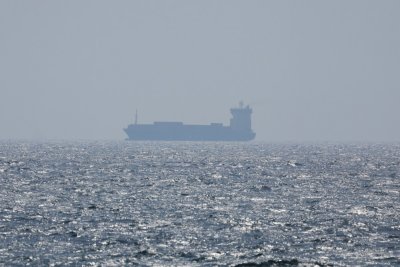
A container ship sails on the Strait of Hormuz, as seen from Ras Al Khaimah, United Arab Emirates, on June 23, 2025. The United Kingdom Maritime Trade Operations Center said a tanker was struck in the strait late Sunday. File Photo by Ali Haider/EPA-EFE
May 4 (UPI) — An oil tanker was struck late Sunday near the Strait of Hormuz, the second attack on a vessel in the Persian Gulf in about eight hours.
The United Kingdom Maritime Trade Operations said in a statement that it received a report of a tanker being hit by unknown projectiles as the vessel was about 78 nautical miles north of Fujairah, United Arab Emirates, near the northern tip of Oman’s Musandam Peninsula by the Strait of Hormuz.
The attack occurred at about 11:40 p.m. local time, it said, adding that all crew were safe and there was no environmental impact from the strike.
The tanker was not identified.
The oil tanker was struck a little more than eight hours after a bulk carrier was attacked by “multiple small craft” in the same region.
The UKMTO said the unidentified bulk carrier was attacked Sunday afternoon about 11 nautical miles west of Sirik, Iran. All crew were reported safe.
The agency is advising vessels to transit the Strait of Hormuz with caution.
The maritime security threat level in the strait remains critical as the United States is enforcing a blockade of Iranian ports in response to Iran restricting which vessels can transit the strait.
The attacks come as U.S. President Donald Trump on Sunday vowed to “free” cargo ships trapped in the Persian Gulf since the U.S.-Israel war against Iran began on Feb. 28.
In his Truth Social post, Trump said Project Freedom would begin Monday with the goal of helping ships sailing under neutral flags navigate the strait. Few specifics on how the operation will work were given.
More than two dozen vessels have reportedly been attacked in the strait since the war began.
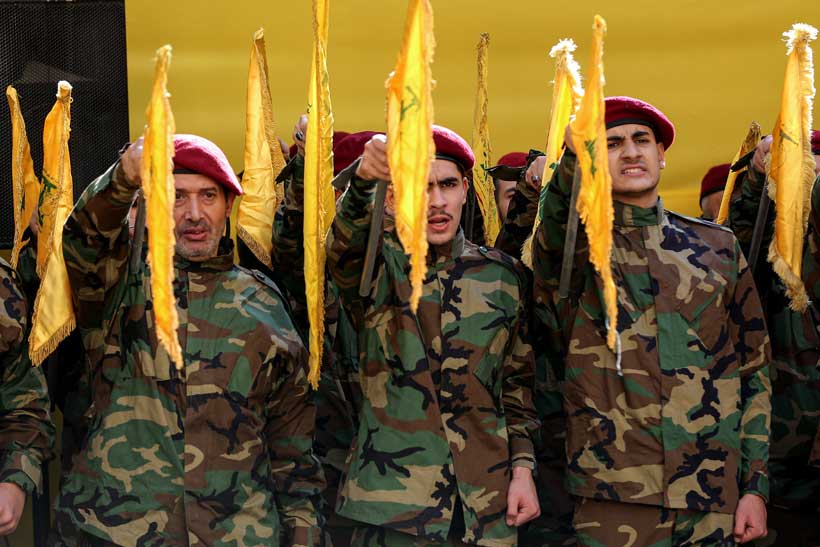
The latest escalation between Hezbollah and Israel began in early March following strikes linked to a wider regional conflict involving Iran and the United States. Hezbollah entered the conflict shortly after, positioning itself as part of a broader regional confrontation.
Since then, the group has faced significant battlefield losses, territorial setbacks in southern Lebanon, and growing domestic criticism. Israeli forces have established a buffer zone inside Lebanese territory, while large numbers of civilians have been displaced, particularly from Shiite communities that form Hezbollah’s core support base.
The conflict follows an earlier war that severely weakened Hezbollah, including the killing of its long time leader Hassan Nasrallah. Despite rearming and adapting its tactics, the group now faces mounting pressure on both military and political fronts.
Hezbollah’s Strategic Gamble Hezbollah officials suggest the decision to re enter conflict was calculated. By aligning more closely with Tehran during a wider regional war, the group aims to ensure Lebanon becomes part of any future negotiations between Iran and the United States.
The expectation is that Iranian leverage could secure a stronger and more lasting ceasefire than previous agreements. However, this strategy carries high risks, especially as Washington has indicated that any deal with Iran may not include Lebanon.
Rising Human and Material Costs The war has inflicted heavy casualties. Lebanese authorities report thousands killed since March, though the exact number of Hezbollah fighters remains disputed. Reports from within the group suggest losses could be substantial, with some fighters’ bodies still unrecovered in frontline towns.
Entire communities in southern Lebanon have been devastated, with villages destroyed and new graves appearing rapidly after ceasefire periods. Displacement has also intensified sectarian tensions, as affected populations seek refuge in other regions where resentment toward Hezbollah is growing.
Domestic Political Fallout Inside Lebanon, opposition to Hezbollah’s armed status has hardened. Critics argue that its actions continue to expose the country to repeated wars. In a significant shift, the Lebanese government has engaged in direct talks with Israel, a move Hezbollah strongly opposes.
The government has also taken steps to limit Hezbollah’s military role, including banning its armed activities earlier this year. However, enforcing such measures remains difficult given the group’s entrenched influence and the risk of internal conflict.
Continuing Clashes Despite Ceasefire Although a ceasefire announced in mid April reduced large scale fighting, hostilities have not fully stopped. Both sides continue to exchange strikes in southern Lebanon, and Hezbollah has dismissed the truce as ineffective due to ongoing Israeli attacks.
Israel maintains that its operations are necessary to eliminate threats to its northern regions and has indicated that dismantling Hezbollah’s military capacity will be central to any long term agreement.
Analysis Hezbollah’s current position reflects a complex mix of resilience and vulnerability. While it has demonstrated the ability to regroup and continue fighting, this alone does not translate into strategic success. The group is increasingly constrained by battlefield losses, internal Lebanese opposition, and uncertainty over external support.
Its reliance on Iran introduces another layer of risk. If a broader agreement between Tehran and Washington excludes Lebanon, Hezbollah may find itself bearing the costs of a war without securing meaningful political gains.
At the same time, Israel appears determined to reshape the security landscape in southern Lebanon, potentially prolonging the conflict. Without a comprehensive regional settlement, the most likely outcome is a prolonged stalemate marked by intermittent violence and continued suffering on both sides.
Thriller fanatics are “glued to their seat” with this “bloody brilliant” movie that isn’t one to miss.
Hayley Anderson Screen Time TV Reporter
09:39, 04 May 2026
Netflix has released a “breathtaking”crime-thriller movie. (Image: DIMENSION FILMS)
Film buffs are hailing Netflix’s latest release as the “best FBI thriller ever made”.
Despite only dropping on Netflix a few days ago, the crime-thriller and slasher film Mindhunter has already made its way into the streamer top 10 most-watched list.
The 2004 movie follows seven elite FBI trainees, specialising in psychological profiling, left stranded on a remote island during a training exercise.
However, it is on the island that they discover that a real serial killer is among them and they must use their own skills to identify the murderer before it’s too late.
As well as the gripping premise, Mindhunters also boasts an impressive star-studded cast, including an NCIS icon.
Taking on the role of Agent Gabe Jensen is NCIS Los Angeles and NCIS Hawaii star LL Cool J.
He is joined by Top Gun actor Val Kilmer, Dexter: Original Sin’s Christian Slater, Cold Case actress Kathryn Morris, Trainspotting star Jonny Lee Miller and Band of Brothers’ Eion Bailey.
Fans haven’t been able to stop singing the film’s praises with many likening it to the Final Destination franchise with a crime drama twist.
“This movie is an example of a good thriller recipe”, someone began on IMdB.
“It has a graduate suspense, you never know how things will evolve and if you think you do, you are wrong. It combines psychological hints with rising terror and the result is breathtaking.”
A second wrote: “This script is a tight yarn with no extra ideas and no fat that needed amputation. It tries to deplore the Final Destination spirit within the gimmickless profiler milieu. And it works.”
Someone else posted: “Released in 2004, it has stood the test of time well and is viewed very fresh and well now.
“I do recommend this FBI mouse-cat-whodunnit-drama as it offers many thrills and holds you at the edge of your seat.
“Excellent nail-biting thriller where you never guess who the main culprit is till the very end.”
Another described it as “probably the best FBi thriller ever made” with a fellow fan adding: “Mindhunters is in my opinion a fantastic film with all the violence (not violence just for the sake of violence), the suspense and of course the very creative killings (Final Destinations).”
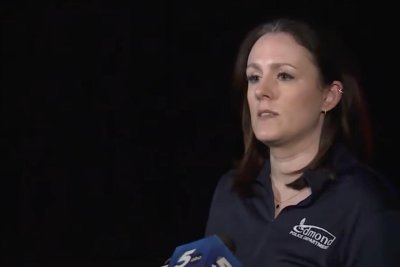
May 4 (UPI) — A shooting erupted at a lake party in the Oklahoma City suburb of Edmond on Sunday night, according to police, who said at least 10 people were transported to area hospitals though the number of victims was expected to change.
Multiple law enforcement agencies responded to a party by Lake Arcadia following reports of shots fired just after 9 p.m. CDT and found several victims.
Ten people were transported to local hospitals in various conditions, Edmond Police Department spokesperson Emily Ward told reporters during a press conference, but she said the number was expected to increase as additional victims arrived at the hospitals in personal vehicles.
“At this time, I don’t have a condition on anyone as far as fatality or not,” she said.
No suspects were in police custody, and authorities were asking members of the public with information about the shooting to contact them, she said.
“This is obviously a very terrifying situation, and we understand the concern from the public and those involved, and we are working extremely hard to find the suspects and help these victims,” she said.
Investigators were at the scene and taking statements from victims and witnesses across the metro area, according to police.
“So that’s what we’ll be doing in these next multiple hours,” Ward added.
Little information about the shooting was made public.
Ward did not describe the party at the lake nor those who attended it, other than to say it was “a large group of young people.”
The man-made Arcadia Lake is located on the Deep Fork River in Edmond, an Oklahoma City suburb of about 99,000 people, according to the U.S. Census Bureau.
Weekly insights and analysis on the latest developments in military technology, strategy, and foreign policy.
Here’s TWZ’s weekly carrier tracker monitoring America’s flattop fleet, including deployed Carrier Strike Groups (CSGs) and Amphibious Ready Groups (ARGs), using publicly available open-source information. Check out last week’s map here.
The historic deployment of the Gerald R. Ford CSG appears to be winding down, finally. The strike group – now deployed for a record-setting 314 days – transited the Suez Canal northbound on May 1 and has reportedly begun the journey back home to Norfolk, according to the Washington Post. However, CENTCOM still has two CSGs under its command, led by USS Abraham Lincoln and USS George H.W. Bush, positioned in the Arabian Sea together for the first time since the conflict kicked off. The second carrier provides additional flexibility to enforce the blockade, support the just-announced ‘Project Freedom’ mission to get commercial vessels out of the Persian Gulf, and, should combat operations resume, strike Iran with double the firepower.
“U.S. military support to Project Freedom will include guided-missile destroyers, over 100 land and sea-based aircraft, multi-domain unmanned platforms, and 15,000 service members,” CENTCOM stated in a release on Sunday. But reporting from the Wall Street Journal claims the plan “doesn’t currently involve U.S. Navy warships escorting vessels through the strait,” and the mechanics of the mission remain unclear. Also of note, Adm. Brad Cooper, CENTCOM’s Commander based in Florida, visited troops over the weekend.
Adm. Brad Cooper, CENTCOM commander, visited USS Milius (DDG 69), May 2, as the guided-missile destroyer patrolled regional waters in support of the U.S. blockade operations against Iran. While on board, he interacted with Sailors and addressed them on the 1MC while highlighting… pic.twitter.com/2qTmMmfY05
The Boxer ARG steamed northbound through the Malacca Strait on April 30, TWZwas among the first to report, and entered the Indian Ocean the following day. Boxerwent dark on AIS shortly after completing the transit but, assuming a direct route to reinforce the Tripoli ARG in the Middle East, could arrive in the U.S. Central Command area of responsibility sometime next week. As of publication, the ARG was still operating under U.S. Indo-Pacific Command.
Seaman Recruit Sailor O’RearSgt. Joseph HelmsSgt. Trent A. Henry
FORMER glamour model Danielle Lloyd has shared a first look at her sprawling new mansion with fans on Instagram.
The 42-year-old told how the gruelling project took two years of “blood, sweat and tears” to build.
Sign up for the Showbiz newsletter
Thank you!
Danielle Lloyd took to Instagram to show fans the two-year process of building her dream family mansionCredit: GettyThe former glamour model shared a glimpse of the outside of their sprawling propertyCredit: Instagram
But it was all worth it says the TV personality as she showed off the jaw-dropping transformation.
In a video posted on social media, Danielle documented the beginning of the build, sharing a sneak peak at their huge land.
The actress, who shot to fame after being stripped of her Miss Great Britain title in 2006, regularly visited the building site to check in on how their dream home was progressing.
Fans could see the property begin to take shape in the clip as the foundations were laid and the bricks slowly formed the outside.
The incredible property is neutral themed featuring shades of beige, brown and blackCredit: InstagramDanielle had a huge flat screen TV mounted on the wall in her living roomCredit: InstagramThe model showed off her eye-popping new dressing room that could rival a KardashiansCredit: InstagramDanielle’s kitchen is very spacious, featuring a six-seat kitchen island and full size pool tableCredit: Instagram
Danielle also documented how the inside of their new home took shape – from planks of wood marking every corner to a stunning floating staircase, colossal six-seat kitchen island and huge floor-to-ceiling windows.
The mum-of-five has gone for a neutral colour palette, complete with shades of beige, brown and black.
Her spacious kitchen followed a dark wood theme, which was beautifully contrasted with off white flooring and hanging lights finished with gold.
Danielle’s mammoth new mansion surely cost an arm and a leg as it featured a sauna, a walk-in bath, an eye-popping flat screen TV, a full size pool table and a dressing room that could rival a Kardashians.
She captioned the post: “Two years of building our home… and what a journey it’s been.
“Not just bricks and walls — but vision, patience, late nights, tough decisions… and moments that really tested us. Blood, sweat and tears have gone into every single detail.
“Seeing it all come together makes every challenge worth it… and I couldn’t be more proud of what we’ve created.”
In a separate post, the model shared a snap of the outside of her ultra-modern family home, showing off the monochrome exterior, sweeping driveway and statement glass windows.
Danielle captioned the picture: “Wow, what an achievement.”
Naegohyang FC will play the South’s Suwon FC on May 20 in the semifinal of the Women’s Asian Champions League.
Published On 4 May 20264 May 2026
A North Korean women’s football club will become the first sports team from the country to play in South Korea since 2018 when they visit this month, Seoul’s Ministry of Unification has confirmed.
The neighbours remain technically at war after their 1950-53 conflict ended in an armistice rather than a peace treaty, and sporting and cultural exchanges between them are very rare.
Recommended Stories
list of 4 itemsend of list
Naegohyang Women’s FC will play the South’s Suwon FC Women on May 20 in the semifinals of the Asian Champions League.
The visiting delegation will include 27 players and 12 club staff, the ministry said on Monday. South Korea’s football association told the AFP news agency that the team would arrive on May 17.
They will fly into Incheon airport on an Air China flight from Beijing, a Unification Ministry official said.
The winner of the match at Suwon Sports Complex, south of the capital Seoul, will play the final of Asia’s top women’s club competition against either Australia’s Melbourne City or Japan’s Tokyo Verdy Beleza on May 23.
“The losing team in the semifinal will return home on Thursday, May 21, with no third-place playoff scheduled,” the ministry statement added.
The match will be the first time a North Korean sports team has played in the South since shooting, youth football and table tennis delegations travelled there in 2018.
The last time Pyongyang sent a women’s football team to the South was in 2014, when the North Korean national team took part in the Asian Games in Incheon.
Founded in 2012 and based in the North Korean capital, much of Naegohyang’s squad is “made up of national team-level players”, the ministry said.
North Korea’s national team is one of the dominant forces in Asian women’s football, winning multiple international titles in recent years, especially at the youth level.
The most recent one came in November last year, when they defeated the Netherlands 3-0 in the final of the U-17 Women’s World Cup.
Aaron Hardie’s brilliant all-round performance ensured Peshawar Zalmi clinched their second Pakistan Super League cricket title with a five-wicket win over newcomers Hyderabad Kingsmen, despite an early wobble in the run chase in the final.
Hardie grabbed 4-27 to bowl out Hyderabad for a below-par 129 all out in 18 overs and then hit a fluent 56 not out off 39 balls to anchor Peshawar to 130-5 in 15.2 overs, in front of a packed crowd at the Gaddafi Stadium in Lahore on Sunday.
It completed a redemption arc for Peshawar’s captain Babar Azam, who finished the franchise-based T20 tournament as its leading run-scorer after finding himself in and out of Pakistan’s T20 squad in recent years.
“It’s a very big achievement for me, for Peshawar Zalmi and all the fans,” Babar said after winning his first PSL title as skipper.
“Throughout the tournament, we’ve performed really well as a team … Every player executed the plans they were given in batting, bowling, and fielding. Our plan was to go match by match.”
Peshawar Zalmi captain Babar Azam celebrates after receiving the trophy [Arif Ali/AFP]
The crowd at the Gaddafi Stadium in Babar’s hometown chanted his name and erupted in joy when Hardie scored the winning runs for the team in yellow and pink kits.
Peshawar, who won the toss and chose to chase, had slumped to 40-4 inside the first five overs after losing Babar for a golden duck, while Mohammad Haris, Kusal Mendis, and Michael Bracewell also fell for single-digit scores.
But Hardie, who smashed nine fours, then combined in a match-winning stand of 85 runs with Abdul Samad (48), who missed out on his half-century before holing out in the deep when Peshawar needed only five runs for victory.
“It was just a great game of cricket,” Hardie said. “Kingsmen came out of the blocks really hard. They’ve certainly had a lot of momentum from the last couple of games and they carried that in, but I’m really proud of the way the boys were able to fight back.”
Aaron Hardie, left, was named the player of the final [Arif Ali/AFP]
Peshawar were favourites for the title after losing only one game in the tournament, with Babar, who scored two centuries, equalling Fakhar Zaman’s PSL record of 588 runs in one edition of the tournament.
Earlier, Saim Ayub (54) scored a fighting half-century to help Hyderabad post 129.
Hyderabad had a productive power play of 69-2, despite Hardie having captain Marnus Labuschagne (20) caught behind off a rising delivery, and Maaz Sadaqat’s early aggression was cut short to just 11 runs when he half-heartedly pulled pace bowler Mohammad Basit to deep backward square leg in the first over.
However, Hyderabad lost momentum and crashed to 73-6 in the space of nine balls after the power play for just two runs.
The slide began when Usman Khan, coming into the final with half-centuries in the last three successive games, was trapped leg before wicket by the tournament’s leading wicket-taker Sufyan Moqim (1-23).
Irfan Khan and Kusal Perera were run out due to some sharp fielding by Bracewell, and between those dismissals, Glenn Maxwell was undone by Nahid Rana’s (2-22) pace and got caught first ball while going for a pull against the Bangladesh fast bowler.
Ayub stretched the total beyond the 100-run mark with a knock of 54 off 50 balls before he fell in Hardie’s last over as he top-edged a pull to mid-on, before the fast bowler wrapped up the innings by having No 11 batter Akif Javed caught behind.
Spectators cheered for Babar Azam’s Peshawar in his hometown [Arif Ali/AFP]
The Australian batter, who was visibly moved to tears after leading Hyderabad into the final in a dramatic last-over win over Islamabad United in the second qualifier on Friday, admitted that his team did not post an imposing target.
“As a batting group, we probably left a few runs out there,” Labuschagne said. “We showed once again that belief in the side and what we can do, putting them four for 40, but just not enough runs on the board tonight.”
Hyderabad had a fairytale run in the tournament when they came back strongly after losing their first four league games, and also knocked out both former champions Multan Sultans and Islamabad United in the playoffs.
“Tonight hurts,” Labuschagne said. “But reflecting on what an amazing tournament we’ve put together, coming from four losses to winning four in a row, getting bowled out for 80 then winning by 100, and then winning two games to get into the final, we’ve made so many great memories and I’m just so proud of the team, it’s been an awesome effort.”
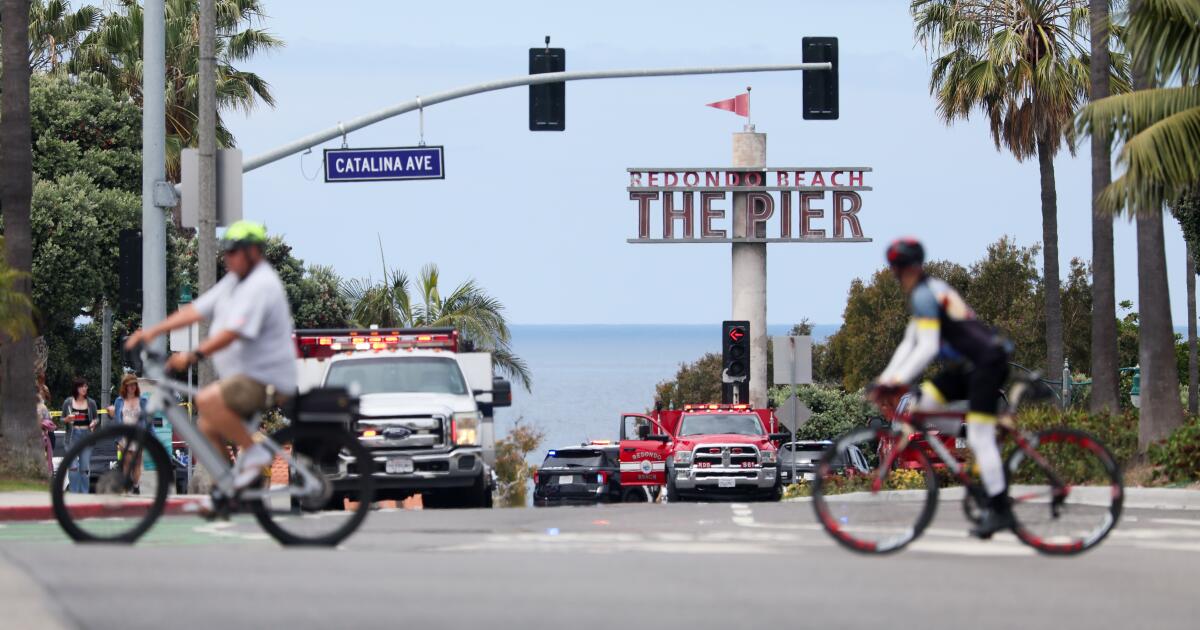
The Redondo Beach Pier reopened Sunday afternoon, hours after police and city officials ordered its evacuation for reasons law enforcement has declined to disclose.
“Police Activity on the Pier. Anyone in the area of the pier is requested to evacuate safely,” the statement read. “Catalina [Avenue] between Torrance [Boulevard] and Beryl [Street] are closed. Please stay away from the pier area until further notice.”
The department issued an update on X at 11:57 a.m. saying that the pier would remain closed until further notice.
At 2:21 p.m., the department sent out another message through the city’s alert system saying that police activity had concluded and that pier and its surrounding area were once again open to the public.
Redondo Beach City Councilmember Brad Waller weighed in on the evacuation in the comments section of BeachLife’s initial postponement announcement on Facebook.
“There was a threat made to the pier, and the area was evacuated to allow the police and dogs to clear the area,” Waller wrote. “Police are still going over the pier area and have expanded to BeachLife. There was no threat made to BeachLife, but out of an abundance of caution, they want to ensure that the area is safe before thousands of people enter. The pier area and BeachLife space were searched, and nothing was found. BeachLife should be ready to open and proceed.”
The Times has reached out to the Redondo Beach Police Department for more information.
The evacuation came on the last day of the Redondo Beach-set BeachLife Festival, which was scheduled to open at noon and feature performances by My Morning Jacket, Peach Pit, Sheryl Crow and James Taylor.
In a social media announcement, organizers for the festival said the start of Sunday’s event would be delayed at least an hour.
“Safety comes first. In cooperation with our public safety professionals in the City, out of an abundance of caution, we have coordinated to temporarily delay doors until 1 p.m. due to ongoing police activity on the Redondo Pier near Torrance Boulevard,” BeachLife wrote in the statement.
In a subsequent post that went live at 1:43 p.m., the organization said it had been given the all-clear to open its doors to the public.
“Per the direction of local safety officials, we have been given the go ahead to safely open doors momentarily,” the statement said. “We appreciate the patience from our community and look forward to a wonderful of day of sun, fun, and great music.”
Inter Milan win their 21st Scudetto, edging Napoli, with three matches remaining in the Italian football league season.
Published On 4 May 20264 May 2026
Celebrations have erupted across Milan after Inter clinched the Serie A title with a 2-0 victory over Parma, sending thousands of supporters into the streets.
The Piazza del Duomo was filled with fans clad in blue and black on Sunday, moments after the final whistle at the nearby San Siro, as flares and fireworks lit up the night sky.
Marcus Thuram opened the scoring in first-half stoppage time before Henrikh Mkhitaryan sealed the win 10 minutes from time. The winners moved up to 82 points and clinched their 21st Scudetto with three matches remaining in the campaign.
Inter entered the match knowing a point would be enough after second-placed Napoli were held to a 0-0 draw at Como on Saturday, and their own result the next day handed them an unbeatable 12-point lead at the top.
Despite the scarcity of clear-cut chances, Inter controlled much of the first half and established themselves deep in the Parma half.
The hosts came close in the 25th minute when a powerful close-range shot from Nicolo Barella struck the underside of the bar. The rebound then hit Parma goalkeeper Zion Suzuki on the back, but the Japan international reacted quickly to tip the ball away from near the line and out of danger.
Thuram sparked a frenzy among the home supporters in first-half stoppage time, slotting home after being found unmarked by a Piotr Zielinski through ball to put Inter ahead.
Marcus Thuram opened the scoring for Inter [Daniele Mascolo/Reuters]
The second half followed a similar pattern with Inter remaining in control but failing to capitalise on their dominance as supporters inside the stadium grew increasingly focused on the clock ticking to 90 minutes.
Federico Dimarco delivered a near-perfect cross to Denzel Dumfries in the closing stages, but the defender failed to control his first touch, sending the close-range effort high over the bar and missing the chance to seal the match.
Mkhitaryan sealed the victory 10 minutes from time, tapping in a low cross from Lautaro Martinez to secure the points and spark title celebrations among Inter supporters.
For Inter, the triumph offered redemption after the heartbreak of last season when the club lost the Serie A title on the last match day before a 5-0 thrashing by Paris Saint-Germain in the Champions League final.
“We feel so happy now. It was not easy to start again after a season where we lost all the competitions we were in right at the end, but I am very happy today with this achievement,” Martinez said.
“It was a very important objective for us, perhaps many didn’t see us being favourites considering what happened last term, but we worked so hard on and off the field.”
The atmosphere in the Italian metropolis stood in stark contrast to a year ago when supporters faced the combined heartbreak of losing the league title to Napoli on the final day and suffering defeat in the Champions League final.
“I have no words. In spite of everyone who jinxed us from start to finish. Go Inter, always,” Inter fan Fabio said. “Wonderful. Amazing. And compared to how it ended last year, this year we deserve everything.”
Many supporters were seen in tears at the celebrations.
“It was more than deserved. It was a difficult league season at the start because it was always there, neck and neck,” fellow Inter fan Federico said.
The festivities are expected to continue ahead of the Coppa Italia final on May 13 when Lazio stand in the way of a domestic double for Inter.
Fans celebrate at Piazza del Duomo in Milan [Claudia Greco/Reuters]
Venezuela has gone through many stages in its assertion of ownership over natural resources and relationship with foreign corporations. (Venezuelanalysis / AI-generated image)
Venezuela’s recent Hydrocarbon Law reform has sparked fierce debates about its short- and long-term implications. In this essay, Blas Regnault, an energy policy analyst and researcher, offers an in-depth analysis of the new legislative framework, from the significant changes to the state’s governance over its natural resources to his perspective on a sovereign recovery of the oil industry.
The recent hydrocarbon reform: an overview
It is important to distinguish between two closely connected but analytically separate developments: first, US oversight of Venezuelan oil revenues after Maduro’s kidnapping; and secondly, the new Hydrocarbon Law itself. The first is an externally imposed mechanism that conditions oil sales, revenue collection, transport, and the distribution of oil proceeds to US interests. The second is a domestic legal reform whose constitutionality and political legitimacy have been widely questioned.
It remains unclear whether the new law is fully operative in practice, or whether it is only being applied selectively while its fiscal substance is displaced by the US revenue-control mechanism. But the outcome is largely the same: a loss of fiscal automaticity and a form of fiscal sovereignty under tutelage in relation to Venezuelan oil income.
In other words, the crisis of governance in the Venezuelan oil sector, together with its chronic lack of transparency since 2017, now culminates in a profound loss of sovereign control over all three dimensions of the business: its rentier dimension, belonging to the nation; its fiscal dimension, belonging to the state; and its shareholder dimension, linked to the role of the state oil company PDVSA as principal participant in extraction and commercialisation.
Therefore, the new law is not simply a technical reform. It is not merely about updating contracts, modernising procedures, or making the sector more attractive to investors. The deeper issue is that the reform changes the way the nation is compensated for the use of the subsoil and therefore alters the very governance of the sector. What is at stake is the relationship between sovereignty, ownership of the subsoil, and public income.
It is true that, on paper, the law formally preserves state ownership over the resource. But the business models it opens weaken the practical substance of that ownership. And that is the crucial point. Ownership is not a decorative legal formula. Ownership means that the state, acting on behalf of the nation, has the right to decide whether the resource remains underground or is extracted; and if it is extracted, under what conditions, with what public charge, and for whose benefit. The recent reform softens the link between ownership and the nation’s participation as owner of the subsoil, turning something that was once grounded in a general rule into something negotiable, adjustable, and highly discretionary.
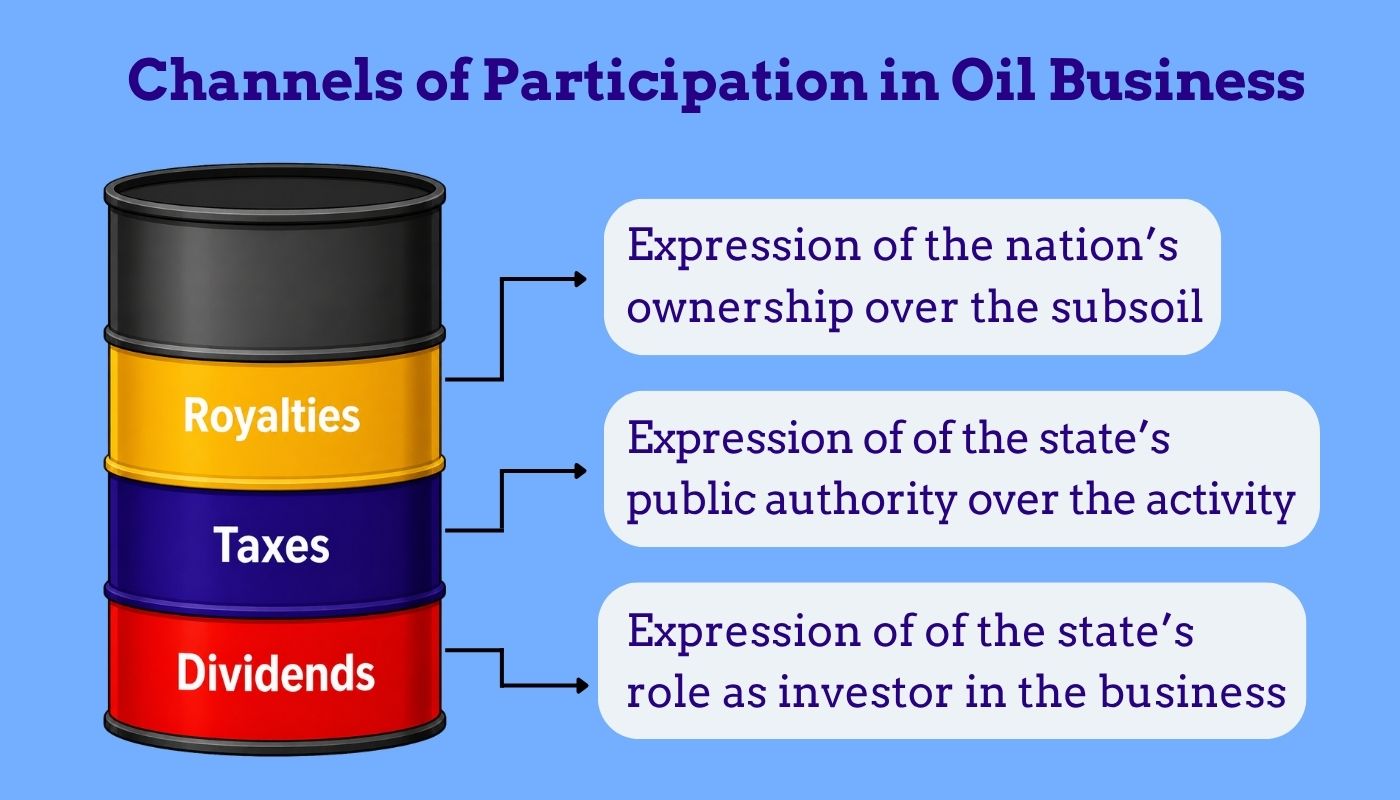
A useful way of understanding the economic and social significance of the reform is to distinguish the different streams of public income historically associated with oil in Venezuela. Under the former hydrocarbon law, the nation participated in the oil business through three distinct channels: as owner, as tax authority, and as shareholder. The first channel, corresponding to ownership, was royalty. The second was taxation, arising from the state’s fiscal authority over the activity. The third was dividends, arising when the state participated through PDVSA and therefore received income in its capacity as stakeholder rather than as landlord or tax authority.
This distinction matters because the oil business has historically involved different claimants competing over the fruits of extraction. In a sector marked by extraordinary profitability and strategic importance, the owner of the rent, the fiscal authority, and the capitalist operator all seek to maximize their share of the value generated. In the Venezuelan framework that prevailed before 2026, those three roles were clearly present: the nation as owner of the subsoil, the state as fiscal authority, and the operator as capitalist actor. The new law alters the balance between them.
Illustration of the different revenue streams in the Venezuelan oil industry. (Venezuelanalysis)
Royalty
The royalty is where the change is most revealing. As already noted, royalty is the clearest expression of ownership. It is paid upfront. It does not depend on profit. It is charged before taxes are assessed and before the remaining income covers the factors of production; that is, wages, interest, profits, and the other claimants on the project. In other words, royalty is not part of the production costs. If the oil price is 100 dollars per barrel and the agreed royalty rate is 30 per cent, the owner receives 30 dollars per barrel straight away. That is the proprietorial logic in its purest form.This has long been a battleground in the global oil industry. The dispute over rent has historically taken place between the operating companies, whether private national oil companies acting as operators, and the owner of the resource, that is, the landlord. Depending on the property-rights regime, that owner may be a private individual, as in parts of Texas, or the state, as in Venezuela and in most oil-exporting countries. Whether in Texas, Alaska, Saudi Arabia, Kuwait, Norway, the United Kingdom, Nigeria, or Venezuela, the property-rights regime has been the principal legal instrument through which the owner secures a share of the rent. It is a legitimate exercise of sovereignty, recognised by all parties involved in the global oil business.
Table 1: Effect of royalty rates on the nation’s per-barrel income using Merey 16 prices, Venezuela, January–March 2026
Month (oil price)
30% royalty
10% royalty
1% royalty
Jan 2026 ($43.21)
$12.96
$4.32
$0.43
Feb 2026 ($52.31)
$15.69
$5.23
$0.52
Mar 2026 ($86.00)
$25.80
$8.60
$0.86
Source: author’s calculations based on OPEC-MOMR January – March 2026 for Merey 16
And yet the new law, in practical terms, empties out that proprietorial logic by turning royalty into a negotiable variable within a range of zero to 30 per cent, something highly unusual in the global oil business. The potential scale of the loss becomes immediately clear once one thinks in terms of export volumes. At an oil price of 86 dollars per barrel, a 1 per cent royalty leaves the nation with less than one dollar per barrel, whereas a 30 per cent royalty yields 25.8 dollars. If Venezuela exports 800,000 barrels per day, that means roughly 688,000 dollars per day under a 1 per cent royalty, compared with 20.64 million dollars per day under a 30 per cent royalty. This is a dramatic compression of the owner’s income. It shows that a high oil price cannot compensate for the hollowing out of the royalty. Put simply, under the new law, higher oil prices will no longer automatically translate into greater income for the nation if royalties are arbitrarily lowered to the benefit of transnational capital. This is not a marginal fiscal concession; it is a radical compression of the nation’s proprietorial income.
Taxes
Turning to taxes, under the previous legal framework, the fiscal regime included not only taxes on profits, but also local and municipal taxes on oil activity, together with other parafiscal charges and special contributions linked to extraordinary profits. These different channels gave the public side several routes through which to capture value from extraction. Under the new law, much of that architecture is displaced and compressed into an integrated tax on gross income that will also be set in a discretionary fashion up to a fixed ceiling. According to supporters of the reform, this new framework is designed to ensure the project’s “economic equilibrium.” But the political significance of that shift is considerable. What was previously structured through several distinct legal claims can now be more easily absorbed into a flexible package, negotiated project by project. In that sense, this is not simply simplification; it is a substantial thinning of the fiscal claim. Once the fiscal architecture becomes thinner, the public claim over oil value becomes weaker, more flexible, and ultimately more negotiable.
Table 2 illustrates the magnitude of the change using the March 16, 2026, marker Merey 16 price. Under the previous regime, taxes and parafiscal charges alone could amount to about $31 per barrel, or 36 percent of the barrel price. Under the post-reform interim scenario, that could fall to about $17.6 per barrel, or 20.5 percent.
Table 2: Tax and parafiscal take per barrel before and after the reform
Fiscal Component
Former Law (reference model)
Post-reform scenario
Difference
Taxes and parafiscal charges per barrel (USD)
$31
$17.6
-$13.4
As share of barrel price (%)
36%
20.5%
-15.5%
Note: Figures are illustrative and based on the March 2026 Merey 16 price of US$86 per barrel, using the reference model for the former regime and the intermediate scenario for the post-reform regime. Source: Authors’ calculations based on the comparative fiscal scenarios and March 2026 Merey 16 price data.
Dividends
Finally, there are dividends arising from state equity participation, and these too must be distinguished from both royalty and taxation. Dividends are not paid because the nation owns the subsoil, nor are they collected because the state exercises fiscal authority over the activity. They arise because the state participates in the business as shareholder and therefore receives part of the profits in its capacity as investor. In other words, dividends represent the state’s participation in the profits of the business itself. But that income is not necessarily available for immediate public use in the same way as royalty or taxation. Part of it may be retained within the company, used for reinvestment, capital expenditure, debt service, or the wider financial needs of the enterprise. So, unlike royalty, which expresses ownership, or tax, which expresses fiscal authority, dividends are tied to the corporate logic of the business. Depending on the ownership structure, this channel of participation may range, illustratively, from zero to 60 per cent of distributable profits.
International jurisdiction of potential oil litigation
There is also an important jurisdictional dimension. By reducing the fiscal share captured by the state and by placing greater weight on contractual flexibility, the reform moves the sector towards a framework that is more exposed to international arbitration. At the same time, the sanctions and licensing regime has become part of a broader architecture of control over the oil business: control over access to the fields, control over marketing channels, and control over financial access to revenues. So, this is not merely a domestic fiscal reform. It is also part of a broader reordering of the legal and financial chain through which Venezuelan oil is governed.
Key takeaways
Supporters of the new law argue that it delivers increased flexibility, greater operability, improved investment prospects, and greater bankability. And that is not a trivial argument. In a country that has experienced production collapse, sanctions, institutional erosion, and a loss of market share, it is understandable that policymakers would seek a framework that appears more attractive to capital. In that sense, the reform may indeed reduce perceived risk and make projects easier to finance. It may also simplify part of the gross take and make negotiations easier. In that sense, the reform should not be caricatured. But it also entails the abandonment of each of the nation’s and the state’s historic roles in the sector, undermining the institutional fabric that once gave the oil economy a degree of stability and rationality.
For that reason, the disadvantages of the reform ultimately outweigh its potential benefits. What is lost is fiscal automaticity. That means the nation is no longer guaranteed a stable share by rule, but must now negotiate it, justify it, or recover it through more uncertain channels. Put differently, the reform replaces payment-by-rule with payment-by-negotiation on a case-by-case basis. In practical terms, each contract will generate its own conditions over each of the principal sources of public income arising from oil activity.
What is also lost is the clarity of a system in which the state charges because it owns the resource, not because the project happens to be commercially convenient. Once royalties become variable and fiscal terms are subordinated to the “economic equilibrium” of the project, the centre of gravity shifts. The guiding principle is no longer the nation as sovereign owner; it becomes the financial viability for the investor/operator. That is a profound political change presented as technical pragmatism.
In summary: the 2026 reform does not abolish formal ownership, but it hollows it out in practice. It replaces a more proprietorial fiscal logic with a more contractualized and discretionary one. That may attract investment, but it also weakens the automatic link between national ownership and national income. Whatever mechanism one chooses to emphasize, the result is much the same:
The nation no longer receives royalty by rule, but under externally conditioned arrangements. What is presented as flexibility is a retreat from ownership.
The state compresses its fiscal participation at every level.
The state oil company weakens its position as an investor.
Once that happens, the central question is no longer simply, “How much is the state collecting?” but rather “Who decides, under what rules, with what traceability, and with what accountability?”
Shell oil wells in Lake Maracaibo, Western Venezuela, in the 1950s. (Archivo Fotografía Urbana)
The historical context of Venezuela’s oil legislation
Venezuela’s oil history is not just a history of contracts or companies; it is a history of how the nation has tried to define its authority over the subsoil. Venezuela did not begin from the same position as many oil-exporting countries in West Asia or North Africa. It was already an independent republic when it developed its mining and hydrocarbons legislation. That matters, because it means Venezuela built a national jurisdictional framework around state ownership of mines and deposits, rather than inheriting a colonial concessionary order imposed from outside. That distinction is central.
From the early twentieth century onwards, successive legal frameworks progressively consolidated the republic’s sovereign claim over oil-bearing land. In other words, Venezuelan oil law was historically moving towards a more explicit assertion of the nation’s right to charge for the extraction of its natural wealth. This is one reason Venezuela mattered so much internationally: not only because it was a major producer, but because it became a reference point for fiscal regimes and sovereign oil governance, including later in the wider OPEC environment. In that sense, Venezuela’s experience was historically complete in a way that few other oil-producing countries were.
Nevertheless, there is a paradox surrounding the 1975-1976 nationalization of the oil industry. On paper, it ought to have marked the culmination of national control, but it did not deepen sovereignty. In practice, it helped produce a shift towards a more internationalized governance structure. The Ministry, as representative of the owner-nation, was gradually displaced by state oil company PDVSA, and PDVSA increasingly operated under a logic of global business rather than one of public sovereign rule. So instead of the owner-state speaking directly, the national oil company became the intermediary, and that had long-term consequences. Put differently, PDVSA, together with international oil capital, gained ground in the long struggle to reduce the landlord’s direct grip over rent.
This is where the historical relationship with Western transnational corporations becomes more nuanced than a simple story of foreign domination versus nationalist resistance. The issue is not merely the presence of Western companies, but the governance structures they operate under. Venezuela moved from a more classic proprietorial regime towards a more cessionary one, and later, especially in the late 1980s and 1990s, towards more liberal or non-proprietorial arrangements. The oil opening (“Apertura Petrolera”) of the 1990s is especially important here, because it reduced the fiscal burden and shifted the framework in a way that centralized the operator’s conditions. That was already a major break.
The Chávez years brought a partial reversal. The restoration of the property right was not merely ideological posturing; it was a restoration of a more classical fiscal logic, in which the sovereign character of the state take was reaffirmed. But that restoration took place amid other contradictions, including the politicization of PDVSA and the accumulation of debt. So even that phase did not resolve the deeper institutional tensions.
The 2026 reform, then, does not emerge from nowhere. It is a new chapter of a long historical movement: from national jurisdiction, to nationalization, to cessionary governance, to the oil opening, to partial reassertion, to crisis and collapse, and now to a new form of contractualization from a position of weakness. Venezuela’s oil history has been a struggle not simply over who owns the oil, but over who governs the terms on which ownership is exercised. The present reform is the latest chapter in that struggle, but it is a particularly radical one because it comes after institutional erosion and under a global order that is far more contractual, litigious, and externally structured than the one Venezuela faced in the mid-twentieth century.
Chevron, Eni, Repsol, and Shell are among the corporations to have struck contracts under the new and improved conditions. (Venezuelanalysis)
Oil in the present geopolitical battle
The current geopolitical context of the US-Israeli aggression against Iran should, in principle, strengthen Venezuela’s bargaining position. When West Asia becomes more unstable, supply security rises as a strategic concern, and oil regains immediate geopolitical urgency, countries with large reserves and an established production history become more valuable.
Venezuela has occupied that position before. Venezuelan oil played an important strategic role for the Allies during the Second World War, for example. Today, renewed disruption around Iran and the Strait of Hormuz has again tightened the market and raised the geopolitical value of accessible barrels.
That is precisely why the current outcome appears so paradoxical. If global conditions improve Venezuela’s leverage, one would expect the country to negotiate from a stronger position and to demand a larger participation. One would expect a legal framework that captures more rent, not less; that uses geopolitical scarcity to reinforce state take, not to dilute it. But the current reform, alongside the sequence of deals with foreign conglomerates, and combined with US control over revenues, seem to move in the opposite direction.
This leads to the second point: the geopolitical issue is not only price or supply. It is also about control. What is emerging is a form of sovereignty under tutelage. Venezuela may formally remain the owner of the resource, but effective control over commercialization, revenue channels, and external validation appears increasingly conditioned from outside. Whether one calls that tutelage, external supervision, or subordinated reintegration, the takeaway is the same: sovereignty over the resource is no longer identical to sovereignty over the business. Recent US licenses illustrate the point very clearly. Washington has opened the door to renewed oil transactions with PDVSA, but under Treasury oversight and with proceeds channelled into US-administered accounts. That is not normal sovereign control over national oil income.
This is where the distinction between the origin and the destination of rent becomes especially useful. Even before we ask what is done with oil income socially or politically, we first need to know how that income is generated: through what pricing, what discounts, what fiscal structure, and through which payment channels. If that first level is opaque, then both the origin and the destination of rent become politically indeterminate. In other words, the problem is not only that the country may receive less revenue. The problem is that the country may not even be able to clearly verify what it is owed, how, and why. That is a much deeper sovereignty problem.
As a result, a geopolitical context that would, in theory, favor Venezuela, sees the country re-entering global markets with weakened sovereignty, under a framework of greater flexibility for operators and less certainty for the nation. That is why the debate is no longer only about production volumes or export flows. The real debate is about the jurisdictional and political order that now governs Venezuelan oil: who authorizes, who commercializes, who arbitrates disputes, who tracks the proceeds, and who answers to the country.
Blas Regnault was a guest on the Venezuelanalysis Podcast.
What does a sovereign recovery look like?
Moving from critique to programme is difficult, and the first honest thing to say is that no one can predict the exact path ahead. Venezuela is emerging from collapse, sanctions, loss of market share, institutional erosion, and a deep social crisis. Any recovery scenario, therefore, is bound to be politically fraught. But one thing is clear: if the country does not rebuild the public intelligibility of oil income, then any so-called recovery may simply reproduce opacity, distrust, inequality, and social tension.
A sovereign recovery does not mean autarky. It does not mean excluding foreign firms, nor does it mean mechanically returning to an earlier model. It means something more precise: restoring the link between ownership, public rule, and accountable income capture. In other words, if the nation owns the resource, then the nation must be able to know, verify, and govern how value is extracted from it. That means transparency over net prices, discounts, taxes, royalties, exemptions, payment channels, and the destination of funds. Without that, there can be no recovery in any meaningful sovereign sense. It would simply be resumed extraction.
A sovereign recovery also requires stripping away some of the ideological confusion that usually surrounds debates on natural resources. As Bernard Mommer argued more than twenty years ago, the governance of natural resources is, in many ways, a more elementary question than the conventional left-right divide suggests. In the case of oil and minerals, the deeper divide is above versus below. It is the tension between those who live and work on the surface (the nation, society, the public realm) and those who make their living from the subsoil.
That is why the question of ownership comes before the question of distribution, that is, before the question of what is done with the income generated by oil activity. Only after establishing the governance over the resource and the rules over its extraction does the familiar left-right question properly arise: how that income is used, whether for social spending, public services, etc., or private accumulation.
The first step, then, is transparency. Not as a slogan, but as an institutional obligation. Who is selling? At what net price? Under what discounts? With what deductions? Paid where? Audited by whom? These are not minor administrative questions. They are the very mechanics of sovereignty in an extractive economy. If the country cannot answer them, then the state is no longer exercising full command over its principal source of income.
The second step is to move away from excessive discretion and back towards intelligible general rules. Contracts will always matter in oil. But there is a difference between contracts operating within a strong public framework and contracts effectively replacing public rule. Once everything becomes negotiable in the name of investment or “economic equilibrium,” the public realm shrinks and the executive realm expands. That is politically dangerous in any country, but especially in one where oil historically underpinned a broader social pact.
The third step is to reconnect oil income with social legitimacy. This is not an abstract issue. It is whether oil wealth translates to salaries, living standards, public services, social protection, and some minimum sense of collective benefit. If the country enters a new extractive cycle in which more oil is produced but public income remains narrow, opaque, or externally conditioned, then social tensions are likely to intensify rather than diminish. That is why a sovereign recovery cannot be measured by production figures alone. It must be judged by whether the nation regains an intelligible and legitimate claim over the income stream.
In simple terms, the average Venezuelan citizen is aware of fluctuations in crude prices because they know they affect the national budget. Oil income is widely and legitimately perceived as income belonging to the nation, and therefore as something that ought to support public services and collective welfare. Even when that income is later misused (through corruption, clientelism, or mismanagement) the underlying perception remains: oil revenue belongs to all Venezuelans.
That is also why the current situation can be described as one of sovereignty under tutelage. The country may still be sovereign in formal terms, yet it operates under external supervision in practical terms. Unless that gap is closed, the language of recovery will remain politically fragile.
Blas Regnault is an oil market analyst and researcher based in The Hague, whose work explores how oil prices move across time and what they tell us about the global economy. Drawing on years of experience in central banking, energy research, and international consulting, he brings together political economy, business cycles, production costs, and petroleum governance in a way that is both rigorous and accessible.
He has spent much of his career studying the deeper forces behind oil price trends and fluctuations, always with an eye on the institutional and geopolitical realities of the global petroleum market. Later this year, he will publish his book, Political Economy of Oil Prices: Trends and Business Cycles in the Global Petroleum Market, with Routledge.
The views expressed in this article are the author’s own and do not necessarily reflect those of the Venezuelanalysis editorial staff.
SAG-AFTRA and the Alliance of Motion Picture and Television Producers have landed on a new tentative contract.
The actors union’s new agreement with the trade group that negotiates with Hollywood unions on behalf of the major studios will reportedly improve AI protections and boost the guild’s pension fund. Similar to the pact the Writers Guild reached with the studios last month, SAG-AFTRA’s contract will last four years instead of the usual three.
SAG-AFTRA confirmed the tentative deal on Saturday. The union said in a statement that “specific details will not be released” until the SAG-AFTRA National Board reviews its terms.
The contract is set to cover workers who are involved in motion pictures, scripted primetime dramatic television, streaming content and new media.
The actors union began negotiations with the studios in February and extended those talks in March, but paused to allow the AMPTP to finish negotiations with the writers union. Negotiations resumed April 27 and ended May 2.
The tentative contract still needs to be voted on by its members — SAG-AFTRA represents more than 160,000 actors, broadcast journalists, dancers, DJs, stunt performers, voice-over artists and other entertainment professionals.
The union’s current contract is set to expire June 30. SAG-AFTRA joins WGA as the latest Hollywood union to strike a deal with the studios.
The Directors Guild of America is the last union that still needs to reach an agreement with the studios. Negotiation sessions with AMPTP will begin on May 11, as its contract is set to expire on June 30.
Two activists from the Global Sumud Flotilla arrived in the Netherlands after being released from Israeli custody. The flotilla was intercepted in international waters while carrying aid to the Gaza Strip. Two of their fellow activists remain in Israel for questioning.