Swiss voters reject a proposed population cap that would cap the country’s population at 10 million. The plan, championed by the right-wing Swiss People’s Party, was supported by 45% of voters.
David Baerwald holds up his most precious possession so that it’s visible on our video conference: a very old violin in a very old, battered case.
Baerwald, an award-winning musician, film composer and songwriter who called Los Angeles home for nearly four decades, doesn’t play the violin. During his years with the Tuesday Music Club (immortalized in the Sheryl Crow album “Tuesday Night Music Club”), he played guitar. But the violin belonged to his grandfather Ernst Baerwald — and it plays an important role in his recently published debut novel, “The Fire Agent.”
Not every successful artist turns to a new medium at age 65 or moves to the opposite coast (Baerwald now lives in Kingston, N.Y.). Then again, not every artist has a family history quite like Baerwald’s, one that includes Germany and Japan, two world wars, a 1920s throuple and Beethoven’s Ninth.
On the Shelf
The Fire Agent
By David Baerwald Spiegel & Grau: 624 pages, $32
If you buy books linked on our site, The Times may earn a commission from Bookshop.org, whose fees support independent bookstores.
The violin in Baerwald’s hands was the one his German-Jewish grandfather played as a Japanese prisoner of war in the Bandō camp at Tokushima during World War I. “It’s a very serviceable violin,” Baerwald notes. “A friend of mine played it for some years in the Long Beach Symphony. When my grandfather was older and wealthy, he bought a better violin, which was lost in a fire. But this is the one that matters.”
It matters because Ernst Baerwald was a founding member of a German POW orchestra that chose Beethoven’s great symphony as their premiere work — a performance so moving that it began a Japanese tradition marking the December holidays that persist to this day. Baerwald’s grandfather not only kept his violin throughout the war in which he fought; when he defected from the Third Reich in 1941, he placed it in an oiled bag and brought it with him via an oceanic escape.
Ernst Baerwald’s odyssey from a cushy childhood in Frankfurt to his final days in a beautiful Berkeley mansion, with a long sojourn in Tokyo along the way, reads like, well, a novel. Sent to an elite boys’ prep school in Germany, then on to a seriously disciplined Milanese dojo where he was trained by a Japanese sensei, Ernst was a prisoner in Japan for four years during World War I.
Those details might have been easy to find, but it wasn’t until David Baerwald went to clear out his parents’ house in Brentwood that he discovered papers showing that his grandfather had not only been the head of the Tokyo office of I.G. Farben, but that he had given a major speech to the nascent Office of Strategic Services (precursor to the Central Intelligence Agency) in 1943 that laid out the plan for the firebombing of Japan.
For the record:
10:56 a.m. June 8, 2026An earlier version of this story said Ernst Baerwald’s 1943 speech to the OSS urged use of the atomic bomb on Japan. It laid out the plan for the firebombing of Japan. It also said Kurt Baerwald joined the CIA. He joined the U.S. Army.
He also urged them not to allow partnerships between large corporations and the military, the way the German scientific community and government did with I.G. Farben and Krupp Armaments and Steel. “Any business that makes peace with Fascism will become Fascist,” he said. “And once Fascism captures economic control, then a Fascist coup will inevitably follow to seize political power. Germany, Italy, Rumania, Japan, Spain the story is the same. We cannot allow it to become the story of America.”
When Baerwald read that, “I was really alarmed, in the moment,” he says, realizing how closely tied his grandfather had been to the bombs dropped on Hiroshima and Nagasaki. “But it gave me a plan.” He wanted to show how deeply his grandfather had become integrated into Japanese culture.
“One of my characters tells Ernst that he has ‘yuyo,’ which might best be described as grace,” says Baerwald. “Its Japanese meaning is closer to the state of a river rock that has been washed over and tumbled thousands of times, so that it’s both distinct, and a meaningful part of its environment.” To some extent, the author understands “yuyo” personally, having lived in Japan and been educated at its International School until age 12, when his family moved back to California, “although I wouldn’t claim it for myself,” he says.
That move, in the early 1970s, may have led to his career in music. “When we got back to the States, I was extremely troubled. Call me a fish out of water, I guess. I went through a period of voluntary mutism — I think they call it selective communication. I didn’t talk to anyone, especially not to my family. My hearing would sort of come and go at will, too.” His mother understood he seemed to like his sister’s acoustic guitar, so she suggested he take some lessons. “At the time, it wasn’t at all a career path, it was a way of reassembling my brain so that I could cope with the reality I was experiencing, finding a way to communicate again.”
Part of what he was experiencing, which he knows a great deal more about now, was feeling “the secrets that were the engine propelling my family.” After Ernst’s long career of service and deception, David Baerwald’s father, Kurt, entered the U.S. Army during WWII and later became a professor of Japanese studies at both in Japan and at UCLA. The effects on their family of five still reverberate. Baerwald’s mother eventually became a clinical psychologist who specializes in trauma. “I had to separate myself completely from my family in order to survive,” he says.
However, what stalled the writing of this first novel were the two decades he initially left out, which included Ernst, Lina and their lover Chizuko being a ménage à trois in a 1923 Tokyo dealing with the aftermath of an earthquake and wildfires.
Although “The Fire Agent” is based on Ernst’s history, not all of the facts are congruent. The wrestling coach at the American school in Tokyo, Ernst’s glamorous courtesan Chizuko, and many of the characters are composites. Speaking of that courtesan, Baerwald says it’s true that his grandfather and grandmother cohabited with a Japanese woman for many years, even after Lina and Ernst had a child together. “I found so many letters between my grandfather and my grandmother and I think they truly loved each other, and I think they truly loved that woman, too.”
That didn’t make it easy for Baerwald to write about that love. “My German grandmother, on whom Lina is partly based, was terrifying,” he says. “It was easier to write about her sex life with my grandfather and their Japanese lover by creating composite characters.”
He didn’t want to leave out their sex life, though, or that of others.
“Every generation of young people thinks they invented sex, right? But nothing is new — and it never gets old. Here’s an example. One of my godfathers, Sam Jameson, was the L.A. Times bureau chief in Tokyo for decades. He was also the doyenne, if you will, of the cross-dressing community in that city. It was this rich world he was a part of that nobody knew anything about. I based the character I call Bünheimer on him.”
Some of the worlds Baerwald has uncovered through his family’s papers are rich and sensual; others, like the POW camp where Ernst was held and the speech he gave to the OSS analysts at the Presidio in the 1940s, are stark and terrible. While he renders all appropriately, he’s aware that his perspective remains that of a white Western man. How did he gain the courage to write about people of other races, cultures and genders? He says it comes from something he did when he was on a swim team in high school. “The psychological trick I would play on myself at each meet was to imagine the water I’d dive into was freezing cold,” he says. “And of course it wasn’t. Which was such a relief and kept me going.”
Like his grandfather’s beloved violin, Baerwald has taken a deep dive into previously unknown waters — and survived. As he works on his second novel, he’s better prepared for airing family secrets and the publishing world. Ever the musician, he likens his first round with it to a Shepard tone, the auditory illusion that can make listeners feel like two notes one octave apart are constantly ascending or descending in pitch (Baerwald has worked with famed composer Hans Zimmer, who used the tone in, for example, “The Dark Knight”).
“A Shepard tone can make you feel like you’re flying. Or sinking,” he says. “At this point in my life and art, I prefer to have my feet firmly on the ground.”
Dan Perry: The US ‘may pretend’ that Israel can’t attack Hezbollah ‘in order to get this deal done’. Israeli affairs analyst Dan Perry explains how the US, Israel and Iran may react as they get closer to a potential agreement.
To provide the best experiences, we use technologies like cookies to store and/or access device information. Consenting to these technologies will allow us to process data such as browsing behavior or unique IDs on this site. Not consenting or withdrawing consent, may adversely affect certain features and functions.
The technical storage or access is strictly necessary for the legitimate purpose of enabling the use of a specific service explicitly requested by the subscriber or user, or for the sole purpose of carrying out the transmission of a communication over an electronic communications network.
The technical storage or access is necessary for the legitimate purpose of storing preferences that are not requested by the subscriber or user.
The technical storage or access that is used exclusively for statistical purposes. The technical storage or access that is used exclusively for anonymous statistical purposes. Without a subpoena, voluntary compliance on the part of your Internet Service Provider, or additional records from a third party, information stored or retrieved for this purpose alone cannot usually be used to identify you.
The technical storage or access is required to create user profiles to send advertising, or to track the user on a website or across several websites for similar marketing purposes.
If you buy books linked on our site, The Times may earn a commission from Bookshop.org, whose fees support independent bookstores.
What does it mean to lack ambition in a country that worships wealth? It means you are a capitalist wallflower, a laggard with a serious character flaw. No field of endeavor is immune from this attitude, the art world least of all. But artists with a desire for riches and fame must not declare their intentions so brazenly. At a time when the plastic arts are about as marginalized as they ever have been, and media buzz is generated by dead painters whose works sell for enormous sums at auction, creation in and of itself has little value unless it is lashed to something marketable.
With his new novel “Contrapposto,” Dave Eggers has written a big-hearted, deeply moving story about the choices artists make, or don’t make, to square up their own notions of success and happiness. The book is dual bildungsroman, following two friends across the long span of their lives from adolescence to their 70s, as they fall in and out of each other’s lives, make their way in the world, and fumble around for meaning and purpose in their art.
The protagonist in “Contrapposto” is Rob “Cricket” Dibb, an underclass Midwestern kid, raised by a single mother in a North Indiana suburb that’s about as nowheresville as it gets for budding artists with dreams of glory. Cricket doesn’t dream big. He’s just trying to endure without bodily harm, seeking refuge from his mother’s abusive boyfriend in the basement with his grandfather Silas, who teaches him about jazz and the beauty of a glorious sunset. He draws so he doesn’t have to think. Immersion in art is his escape hatch from the dreariness of his pinched world: “The drawing meant nothing, would never mean anything to anyone, but it was true to how he saw it. His hand had recorded what he saw and felt about this thing. He was an ugly, common creature who could occasionally freeze time. That was enough.”
Cricket’s apprenticeship is decidedly informal. No full scholarship rides to Bard or Pratt for him; instead he saves up to enroll himself in a life drawing class in Chicago, where he discovers the beauty of applying rigor and rules to his work, how to break down pictures into the geometry of circles and squares, planes and angles. “He measured proportions and improved,” writes Eggers. “He grew more confident with each pass on his drawing, and realized … that much of the rightness of the drawing, of any drawing, came through time and diligence and discernment.”
He meets his slightly older schoolmate Olympia, one of Eggers’ most beguiling creations, when she implores him to scrawl scatological bathroom graffiti on a playground structure in Old-English typography. Unlike Cricket, Olympia is earnest and sincere about her art in the way that only a young person untainted by cynicism can be. She claims to inhabit the soul of Albert Camus, and flings around aphorisms about art that fly over Cricket’s head. She is an aesthete, someone who likes to go to the race track just to revel in the colors on display there. She wants to create an art scene in their little world. “You know all the great art movements have friends at their core, right?,” she tells Cricket. “A lot of time they’re jammed together by some critics and the artists reject the name and the association. But think about Patti Smith and Sam Shepard. Did you know they dated for a while?”
Cricket is beguiled by her, and Olympia in turn is taken in by Cricket’s talent. When the local library pulls a few of Cricket’s semi-nude life drawing portraits down for fear of offending their patrons, Olympia becomes his advocate and champion. In contrast to Cricket, who skates along with no end plan, Olympia is a committed careerist, an artist who insists on a captive audience to justify her work. She wants to earn money as an artist; Cricket just wants to be left alone. This push and pull between the two frame Eggers’ novel across the six decades of his narrative.
One of many joys of “Contrapposto” is observing Cricket’s artistic awakening via the mentors who guide him into his artistic consciousness. Marcus Carpenter, a wizened sage in battered work boots (one imagines him as the art world analogue to the late novelist Jim Harrison), is the moral conscience of the novel, fighting the good fight for personal expression and railing against the “new, paradoxical tyranny wherein those without technical skill terrorize those who possess it.” Carpenter plucks Cricket from arts college and its meaningless pontificating to his “atelier in the corn,” a ramshackle Victorian where Cricket learns how to transmute what he sees with color and light. “The talented have talent,” Carpenter tells Cricket during one of his endearing rants. “The untalented have theories.”
From there, Cicket’s life is a crooked line. He doesn’t abandon art, but he can’t summon the urge to sell himself or his work, to graft his joy in making things onto the caprices of the marketplace. As Eggers jumps through time, we find Cricket working as an intern in an art gallery, an arid, lifeless space where nothing inspiring can possibly exist. As a young man he works as a ship-breaker in Turkey; in middle-age, we find him in a coastal town in Cambodia, making replicas of great paintings for tourists. Olympia, his elusive love and sporadic muse, flits in and out of his life as she works her way up the tiers of the art world’s ziggurat. She gently berates him for his timidity: “This is how artists have power. We sell work. You’re implying there’s nobility in powerlessness. That’s been an idiotic trope for too long — that participating in the business side of it taints you. Do you know how dumb that is? That artists have to be these fragile little wood nymphs that are too precious to touch the money?”
As “Contrapposto” arrives at its beautiful, life-affirming conclusion, we are left pondering the significance of artistic endeavor in a world that commodifies everything, including our bodies and brains. At a time when even the greatest achievements are debased in a culture that gives equal weight to meretricious novelty, is it even worth the trouble? Eggers’ brilliant novel has the answer: Follow your bliss. In the final analysis, it is all that matters.
Al Jazeera’s Heidi Pett reports from the site of an Israeli attack on a residential building in southern Beirut, which Israel calls a Hezbollah command centre. The strike came hours before President Trump said a US-Iran deal was meant to be signed.
An award-winning crime drama that boasts a stellar cast including Sherdian Smith and Stephen Graham has been dubbed as ‘one of the best dramas around’
‘Outstanding’ crime series stacked with stars including Tina O’Brien streaming for free(Image: Getty Images)
A gripping and compelling BBC crime series that has been dubbed “one of the best dramas around” is now available to watch online.
Originally airing in 2010, Accused includes 10 individual episodesspread across two series, each following a different character on trial and how they came to be accused.
The first series stars the likes of Christopher Eccleston, Mackenzie Crook, Coronation Street’s Tina O’Brien, Peter Capaldi, and Naomi Harris across six hard-hitting episodes.
It was followed by a second series in 2012, with Sean Bean, Stephen Graham, Olivia Colman, Sheridan Smith, and Anna Maxwell Martin among the stars joining the cast.
Created by Time writer Jimmy McGovern, Accused was a smash hit and bagged a BAFTA TV nomination for Best Drama Series in 2011, with Juliet Stevenson also receiving a nod for her performance in episode three.
Two years later, Olivia Coleman won Best Supporting Actress for her role in series two at the BAFTA TV Awards and also the Royal Television Society Programme Awards, while Sean Bean won Best Actor at the International Emmys.
The gripping anthology series, available to watch on ITVX, also received rave reviews from critics, earning a score of 7.9 out of 10 on IMDb. One viewer praised the show and said, “Blown away. I can’t believe it took me so long to find this series!!!
“This is what happens when top writers and some of Britain’s most impressive actors emotionally involve themselves in making great drama. What a theme! That on paper, through the courts, there is simply a charge and a decision, without the truth behind the whos, whats, whens, and whys. One of the best dramas to date!
Another agreed: “Absolutely outstanding. Can’t recommend this series highly enough. Each episode, bar one, is a separate story, and every one is outstanding, brilliantly acted, and scripted. Stellar cast under brilliant direction- you can’t go wrong. Trust me.”
A third penned: “Very well done. This is a very well-done show and at times difficult to watch because of how real it seems. The performances are incredible, as is the writing.
“You understand these characters in a way that is rare and sometimes disturbing. As I said, this is not easy viewing, but it’s certainly worthwhile.”
Activists rally in Geneva to denounce policies of G7 countries ahead of group’s annual meeting this week in France.
Published On 14 Jun 202614 Jun 2026
Thousands of protesters have gathered in Geneva ahead of this week’s Group of Seven (G7) summit, which is set to bring together United States President Donald Trump and other world leaders in nearby France.
The demonstration on Sunday was led by the so-called “No-G7” coalition, which is comprised of more than 60 associations and groups, including Palestinian rights advocates, feminist activists and environmentalists.
Recommended Stories
list of 3 itemsend of list
“We are very afraid of the policy and the politics of Mr Trump and also of the other leaders of the G7, because they are fighting, making war all over the place,” said Francoise Nyffeler, a spokesperson for the coalition.
“The planet is in danger, and we are very scared about it and we want to protest and say that the people of the world are against their policies,” she added.
Swiss and French authorities have deployed thousands of police to provide security for the three-day summit, which begins on Monday in the French resort town of Evian-les-Bains.
Authorities have blocked off roads, banned unauthorised gatherings, and pledged financial support for businesses that could be hit by unrest.
Protesters gather at the ‘No G7’ demonstration in Geneva, Switzerland [Baz Ratner/AP Photo]
Scores of businesses and shops have boarded up their storefronts with wooden panels as a precaution, leery of upheaval that left a trail of damage in Geneva during a similar summit in Evian in 2003.
Reporting from the protest in Geneva on Sunday, Al Jazeera’s Natacha Butler said demonstrators had denounced the G7 as being “all about the rich getting richer and the poor getting poorer”.
“They say the club of wealthy nations doesn’t represent the global population; that their policies and decisions have a negative impact on the world in terms of climate, equal rights and poverty,” Butler said.
Questions about the legitimacy of the G7 – which includes the US, Canada, Japan, France, Germany, Italy and the United Kingdom – are not new.
The group of countries previously accounted for 70 percent of global gross domestic product (GDP) – a figure that has shrunk to just 40 percent – while representing one-tenth of the global population.
In a sign that global power dynamics are shifting dramatically, other global groups also are growing. The BRICS countries – which include India, Russia and China – have doubled their bloc’s number of members from five to 11.
While G7 summits regularly draw protests, this year’s event also comes amid global frustration with Trump’s leadership on issues as diverse as tariffs, the US-Israeli war on Iran, and the climate crisis.
Demonstrators had been gathering for days in advance of Sunday’s march in Geneva.
A flotilla of around 20 boats appeared on Lake Geneva off the coast of Evian on Saturday, displaying anti-G7 and pro-Palestinian banners. Some 20 protesters were detained on Friday evening, according to Swiss media reports.
Weekly insights and analysis on the latest developments in military technology, strategy, and foreign policy.
In a significant development for Europe’s future air combat ambitions, Airbus is trying to restart the program to develop a sixth-generation combat jet, now under German and Spanish leadership. This comes less than a week after the Franco-German-led New Generation Fighter (NGF) effort effectively collapsed in its original form, amid acrimony between Paris and Berlin. The NGF was planned as the crewed centerpiece of the pan-European Future Combat Air System (FCAS), which Airbus, as the leading European aerospace corporation, now hopes to get back on track.
An exciting step for European sovereignty at ILA Berlin: “Team Gen 6”, a group of eight leading German defence and aviation companies signed a strategic positioning paper. The German and French governments have announced a realignment of the European Future Combat Air System… pic.twitter.com/aZcjAaO6dE
Airbus’s Defense and Space unit launched the ‘Team Gen 6’ initiative today with a message on X, declaring that it was “an exciting step for European sovereignty.” So far, eight German defense and aerospace contractors have signed a strategic positioning paper as part of the effort. Those firms are Autoflug, Diehl Defense, Hensoldt, Liebherr, MBDA Germany, MTU Aero Engines, and Rohde and Schwarz.
Reflecting the German-Spanish nature of the new program, those companies are now “closely integrated” with firms from Spain, comprising GMV, Grupo Oesia, Indra, ITP Aero, and Sener.
“While the development of the overarching [FCAS] ‘system of systems’ is progressing as before, the sixth-generation fighter aircraft integrated within it requires a new, agile industrial setup,” Airbus said.
A screencap from an Airbus video showing a notional future fighter working with remote-carrier-type drones. Airbus screencap
“As Team Gen 6, we have the capabilities and the capacities. Now, we are looking for close alignment with policymakers and the air force[s] to drive forward a superior European air combat system for collective security,” the X post stated.
Airbus also presented a video showing a notional concept aircraft flying with multiple uncrewed platforms. While not too much (as in not much at all) should be read into this, the crewed aircraft features canard foreplanes, a chin intake, and an unusual cranked wing.
Speaking just ahead of the announcement, at the ILA Berlin airshow today, where TWZ was in attendance, Jean-Brice Dumont, head of air power at Airbus Defense and Space, said the company remains committed to delivering a sixth-generation combat jet. “There is a need for a bit of a reshaping and reconsidering the reality of today,” Dumont added.
German Federal Chancellor Friedrich Merz (second from left) and Jean-Brice Dumont (second from right), head of air power at Airbus Defense and Space, stand in front of a drone during a tour of the International Aerospace Exhibition (ILA). Photo by Sebastian Gollnow/picture alliance via Getty Images
Dumont explained that the now-abandoned NGF was one of seven separate “pillars” of technology development being worked on under FCAS. As well as the crewed jet, pillars include powerplant, remote carrier vehicles, precision-guided weapons, and data connectivity.
“We have to consider safeguarding areas where it works, and how we reshape,” he added. “At the moment, we are going to seek guidance from our governments [on] what they want us to do. There has to be demonstrated an industrial feasibility of what is being asked — not only technical. That’s probably a lesson now,” Dumont added.
Dumont continued: “The world in 2026 is very different to the world of 2017 when the [FCAS] programme was launched. We have to accept that fact and reshape it — we need another way to get to the same goal, with faster milestones.”
“The problem we had is that we had drawn a line to 2040, and new technologies for everything,” Dumont added, referring to the goal of having the FCAS, including the NGF, in service by that date. “Today, you see demonstrations of connectivity, systems of systems and unmanned vehicles all around the world. The need is there, and in the countries that we are competing with, they are using it already.”
According to Dumont, the company has “put a number of options on the desk of our ministers and ministries of defense,” and is now awaiting further guidance from officials.
As the centerpiece of FCAS, in its original form, the NGF element was the most high-profile and challenging component of the project. However, it had long been dogged by disagreements over industrial workshare and leadership between Airbus and Dassault Aviation, which were the prime contractors for Germany and Spain, and France, respectively.
A 1:1 scale model of the NGF is unveiled at the Paris Airshow in 2019. Dassault Aviation
Dassault had demanded that it play the defining role in NGF, reflecting key requirements for the jet driven by the French Armed Forces. These included the ability to operate from aircraft carriers, and provision to deliver nuclear weapons. Germany or Spain needed neither of these functions.
Despite the disagreements that derailed NGF, Dumont argued that there had still been useful lessons learned from the FCAS program.
“What Phase 1A and 1B [of the program] have given is a very thorough analysis of the repartition of the work between the crewed and uncrewed platforms, and this remains. That kind of shapes what the manned aircraft will have to do.”
As an example of this work, Dumont pointed to ongoing work that will involve trials of a Eurofighter operating as a “command fighter” — a crewed jet that can operate in collaboration with drones, or what Airbus now refers to as uncrewed collaborative combat aircraft (UCCAs). The tests will see a Eurofighter fitted with a Rafael Litening 5 targeting pod modified to serve as the interface between the crewed jet and UCCAs. This should pave the way toward an in-service command fighter capability being introduced to the Eurofighter, something that will be incorporated in the sixth-generation combat jet from the outset.
A German Eurofighter with a Litening laser targeting and reconnaissance pod on the centerline station. Crown Copyright
Initial trials will involve a Learjet test configured as a surrogate command fighter and flying with drones in an “enhanced teaming” mode. Airbus hopes to have the command fighter-configured Eurofighter ready for operational service in 2029.
“The demand from the customers is: be ready early,” Dumont explained. “This is not a contradiction to the Future Combat Air System challenge — it is the need to have our platforms evolved earlier than we had traditionally planned.”
A model of a notional sixth-generation fighter displayed at ILA as part of a command fighter study by the German Aerospace Center (DLR). Thomas Newdick
The termination of NGF and the launch of Team Gen 6 leaves plenty of questions over the future of Europe’s air combat landscape.
TWZ spoke to Douglas Barrie, senior fellow for military aerospace at the International Institute for Strategic Studies (IISS) research institute in London, for his take on what might happen next.
On the matter of Germany and Spain now teaming up under the Airbus umbrella, Barrie said that the relationship makes a lot of sense, but its success is far from certain. On the one hand, the two countries already work together within Airbus, and both Germany and Spain are seeking a replacement for their Eurofighter fleets.
A pair of Spanish Air and Space Force Eurofighters. Spanish Ministry of Defense
“In terms of Team Gen 6, I do wonder if there’s an element of trying to kind of scramble to recover something from the wreckage of NGF, as it were, that the collapse of NGF doesn’t signal the end of Spanish industrial interest in next-gen combat aircraft development,” Barrie said. “But if somebody asked me, do I think between Germany and Spain, they can put together a credible program if nobody else is involved? I think that the numbers would be very difficult to stack up.”
Putting the German and Spanish future fighter requirements together, the two countries might, at best, need to build 300 new combat jets, with a figure of 250 more likely, Barrie contended. Team Gen 6 would then face a real struggle to break even.
This reality will, Barrie believes, force Germany and Spain to look for other partners, which will likely come down to a choice between the British-led Global Combat Air Program (GCAP) and the Swedish next-generation combat aircraft program, led by Saab. Of these, GCAP has the Tempest crewed fighter as its centerpiece, and also involves Italy and Japan. Sweden’s crewed fighter requirements are less clear at this point.
A scale model of a possible Tempest configuration, in Italian Air Force markings. Leonardo
Building a role for Airbus in GCAP would be difficult at this point. With the industrial architecture already in place, bringing not one, but two more partners into that program would be disruptive, particularly in terms of timeline. Already, the Japanese in particular are concerned about the pace of the program, especially since the United Kingdom has not yet fully committed to it in terms of funding.
“My own view is that the United Kingdom remains committed to the program, but there are financial pressures elsewhere,” Barrie noted. “I think that the more likely outcome in all of this is a kind of German, Spanish, Swedish tie-up. The kind of requirements in some ways are aligned a bit better.”
This extends to the size of the aircraft, Barrie observed.
“The kind of aircraft that the Swedes seem to be thinking about, the crewed element is probably more of a bigger Gripen E/F, heading towards Typhoon, in terms of size. This is more in keeping with what the Germans and the Spanish seem to be looking for. Obviously, the United Kingdom and Japan, in particular, need something with longer legs and bigger internal payload, hence GCAP.”
The Saab Gripen E. Saab
“GCAP will be highly capable,” Barrie continued. “That will come with a unit cost to go with it. Maybe what the Swedes, the Germans, and the Spanish might do will be cheaper.”
Provided a German, Spanish, Swedish teaming arrangement could work, the resulting combat jet could still enter a space where it would face competition for important export orders from France, which looks set to continue the development of the Rafale, especially now that NGF has collapsed. Further competition could be provided by South Korea with further developments of its KF-21 and Turkey with the TF Kaan, although these are notably less-ambitious fifth-generation designs.
The Tempest, as currently envisaged, with its very different set of requirements, would not necessarily be a direct competitor to Team Gen 6, Barrie argued, since it would be a closer match to the F-47 in terms of size, capabilities, and cost. While the potential size of this market would be more limited, probably U.S. reluctance to export the F-47 would play in the Tempest’s favor.
An official rendering of the Boeing F-47. U.S. Air Force
As to the possibility of the United States offering a ‘watered-down’ export model of the F-47, Barrie considers this unlikely to generate much interest.
“Yeah, you can have a downgraded version of my super airplane — as a kind of marketing slug that hardly sells, does it?” Barrie continued. “Even if it’s 10 percent less capable, even if it’s 10 percent less expensive, it’s still a likely unit cost of $250 million or more, which is eye-watering.”
This leaves us with the French, and what they might be able to recover from NGF.
If France goes it alone with a sixth-generation combat jet, Dassault will likely be strongly backed by the French government, and the company has traditionally punched well above its weight.
In the medium term, Dassault has a healthy backlog of orders for the Rafale and is very much at the right end of the cost curve. Barrie considers that the Rafale will remain a profitable airplane for the foreseeable future, but at some point, France will need to think about a successor based on an all-new airframe. Industrially, France has the capability to go alone with this, but they would likely look to a partner or partners to come on board. The likelihood of those partners coming from Europe has now been reduced, but other possibilities might be found in the Gulf states.
A pair of Rafales from the Qatar Emiri Air Force. Dassault Aviation www.twz.com
Then there is the question of India, which may still buy more Rafales but which, in the fullness of time, is likely to look for a new-generation fighter, and could be a potential partner for France.
“I don’t see the Indians ever being fully committed to only one country,” Barrie continued. India has already hinted that it might want to try and join the pan-European FCAS or GCAP. Meanwhile, Russia has been a long-term military partner for India, and Barrie thinks that the recent appearance of a two-seat version of the Su-57 Felon may well indicate another effort to sell that fighter to India.
The previously unknown two-seat version of the Sukhoi Su-57 Felon, which appeared earlier this year. UAC UAC
Were India to continue its pattern of buying Russian combat aircraft, that would give any potential European partner serious pause for thought, based on the security implications. Meanwhile, India also remains committed to developing its own next-generation fighter.
What the NGF debacle has demonstrated is that any potential partner with France on its next-generation combat aircraft program will likely have to be happy taking a junior role, with Dassault calling the shots.
The collapse of the New Generation Fighter could well be a pivotal moment for European defense cooperation, but it does not signal the end of Europe’s sixth-generation combat aircraft ambitions.
Airbus’s Team Gen 6 announcement marks the start of a German-Spanish-led industrial approach that its backers hope will be more agile and less contested than its Franco-German-led predecessor. However, significant political, financial, and industrial challenges remain, including the search for a reliable partner, or partners. As with NGF, the success of Team Gen 6 will ultimately depend on whether European governments can align their strategic priorities and industrial interests to deliver a sovereign future air combat capability.
EXCLUSIVE: The Death in Paradise spin-off star opens up about cast changes in Beyond Paradise
16:35, 14 Jun 2026Updated 16:42, 14 Jun 2026
Morning Live: Kris Marshall teases series four of Beyond Paradise
Barbara Flynn thought she had lost her job after one week of filming the Death in Paradise spin-off.
The beloved actress, who portrays Anne Lloyd and has also appeared in Death in Paradise, has offered a glowing tribute to a guest star following their departure from the BBC drama.
The fourth series of Beyond Paradise concluded earlier this year, featuring Anne Lloyd stepping in to prevent Humphrey Goodman (Kris Marshall) from being dismissed from his position. The episode additionally saw Zoe Williams bidding farewell to Shipton Abbott for travels abroad.
New arrival Mr. James Smith (Vincent Franklin) was also exposed by Anne for conducting an affair with a DI from Heston Morley station. Anne, who featured on a repeat broadcast of Love Your Weekend with Alan Titchmarsh today, previously discussed filming alongside Vincent, describing the performer as “funny”.
She told Reach PLC: “We got on incredibly well. He’s a funny man, and we had enormous fun off-screen as well as on. He was a lovely addition and a bit of a mystery, and it’s going to all end in… not tears, but chaos or something.
“And, of course, because Anne decides to get much more involved than that, then there’s a real, there’s a real kind of shift,” reports the Express.
Reflecting on increased collaboration with Kris Marshall’s character, Barbara continued: “Well, they all find it difficult having Anne in the station.
“I mean, Humphrey is as polite as he could be. He was never rude, but he’s so in his head, and so Anne is constantly bemused by him, but at the same time, very fond.”
Kris similarly expressed his appreciation for working with Vincent, who portrayed his adversary, calling him a “genius actor”. During the repeat episode of Love Your Weekend, Anne chatted with Alan about the series and how she finds it “a joy” to go to work.
“It is lovely,” Barbara said, going on to heap praise on the show’s writers, “Tony Jordan and Tim Key are an amazing pair. Death in Paradise has such a huge following around the world, and I think it is just something pleasant.
“I said to Sally (Bretton) once, because most of my scenes are with her, who I absolutely adore, I said, ‘Look, Sal, here we are sitting on a bench on a beach’.
“We are at work, and we were doing yoga on a beach, and it was a complete delight.”
She went on to reveal that she broke her ankle after just one week of filming, which made shooting certain scenes particularly challenging. She added, “The rest of it was filmed of me from wheelchairs and crutches. I thought I’d lost a job after the first week, but they said, ‘No, no Barbara, we will wheel you up and down’.”
Beyond Paradise is available to stream on BBC iPlayer.
Donald Trump picks Mike Collins over Derek Dooley in race to determine who will face Democrat Jon Ossoff in November midterms.
Published On 14 Jun 202614 Jun 2026
United States President Donald Trump has made a late endorsement in a Republican run-off for a key US Senate race in Georgia ahead of the US midterm elections.
In a post on his Truth Social account, Trump threw his support behind US Representative Mike Collins over former football coach and political newcomer Derek Dooley.
Recommended Stories
list of 3 itemsend of list
Collins and Dooley will face off in a Republican run-off race on Tuesday to determine who will challenge incumbent Senator Jon Ossoff, a Democrat, in the midterm election in November.
In a post on Truth Social, Trump praised Collins for being a staunch supporter of his Make America Great Again (MAGA) movement and a “true friend, fighter, and WARRIOR”.
Ossoff entered office in 2021 as part of a blue wave in Georgia that saw the majority of the state vote for former US President Joe Biden, as well as his fellow Democrat, Senator Raphael Warnock.
Georgia, which had for decades been dominated by Republicans, swung back towards Trump in the 2024 vote. Defeating Ossoff is seen as one of the Republicans’ best chances at claiming a new seat in the 100-member chamber, where they are hoping to hold on to their slim 53-seat majority.
Democrats are hoping to win control of both the House and the Senate in November, which would create a major bulwark against Trump’s agenda during his final two years in office.
Republican divides
Trump’s endorsement pits Collins against Georgia’s Republican Governor Brian Kemp, who has supported Dooley.
Kemp has remained generally supportive of Trump, but has faced off with him on several issues, notably Trump’s evidence-less claims that the 2020 election in Georgia was marred by fraud.
Dooley has said he did not vote in 2016 or 2020 when Trump was on the ballot, and has maintained that the election results in Georgia were legitimate.
Collins carried about 40 percent of the vote during Georgia’s Republican primary on May 19, with Dooley taking about 30 percent. Representative Buddy Carter, who did not advance to the run-off, came in a close third.
It remains unclear how big of an impact Trump’s endorsement will have. He made the announcement after early voting had already ended for the run-off.
Trump’s endorsements have seen mixed results in the primary season.
Trump’s decision to back Texas Attorney General Ken Paxton was seen as aiding in the MAGA loyalist’s defeat of US Senator John Cornyn in Texas’s primary run-off.
Cornyn had widely been viewed as the strongest Republican candidate to take on Democratic challenger James Talarico in the general election.
In Iowa, Trump’s late endorsement of US Representative Randy Feenstra did not give him the bump needed to defeat fellow Republican Zach Lahn in the gubernatorial primary race.
Beyond the run-off in Georgia, Alabama will also hold several primary run-offs on Tuesday. That includes a Republican race for the solidly red seat of US Senator Tommy Tuberville, who is running for governor.
Oklahoma and the federal district of Washington, DC, will also hold primary votes.
British armed forces intercepted an oil tanker believed to be part of Russia’s sanctioned shadow fleet. The oil tanker ‘SMYRTOS’ was taken in an first-ever operation by the British military in the English Channel.
The Beckham family put a united front after hitting back at Brooklyn’s teamCredit: BackGridBrooklyn’s reps claimed Harper’s visit to his LA home was ‘choreographed’Credit: BackGrid
The 14-year-old arrived “unannounced” and “left seconds later without seeing him”, according to claims inPage Six.
A spokesperson for Brooklyn and his wife Nicola Peltz hit out at his famous parents, claiming they organised the whole thing – an allegation dismissed by family source as “clearly nonsense”.
In new photos, David and Victoria, 52, were seen out for dinner at Nobu in Malibu amid the ongoing feud with Brooklyn.
The family appeared tense as they headed into the swanky eatery.
The fashion designer wore a khaki midi dress and black heels with a pair of oversized glasses, while David opted for a white T-shirt and black jeans.
A spokesperson for Brooklyn and his wife Nicola Peltz hit out at his famous parentsCredit: GettyBrooklyn’s teams latest allegation have been dismissed by a family source as ‘clearly nonsense’Credit: BackGridRomeo Beckham was seen standing firmly by his parents amid the falloutCredit: BackGridThe family were seen arriving at swanky restaurant Nobu in MalibuCredit: BackGrid
Victoria and David’s son Romeo, 23, was also present for the dinner, along with his girlfriend Kim Turnbull, 25.
Romeo has stood by his parents throughout the family fallout his brother.
And last night was no different as he attended the meal out, just a day after sister Harper attempted to heal the rift by visiting Brooklyn’s LA home.
Harper was reportedly hand-delivering a letter as she arrived at Brooklyn’s home.
A rep for Brooklyn and Nicola said: “That photographers were in place as the letter was hand delivered says it all – this was choreographed for the cameras.”
But source for the Beckhams hit back today, saying: “This is clearly nonsense and just another untrue and unfair accusation.”
Shortly after news of Harper’s very brief visit, Brooklyn took to social media to reveal that he wasn’t in Los Angeles.
In his jaw-dropping message earlier this year, he made 12 key accusations towards his loved ones including allegations of “bribery” and family members telling Nicola “she’s not family”.
During his bombshell post, Brooklyn claimed: “I grew up with overwhelming anxiety. For the first time in my life, since stepping away from my family, that anxiety has disappeared.
“I wake up every morning grateful for the life I chose, and have found peace and relief.”
He added: “My parents have controlled narratives in the press about our family.
“The performative social media posts, family events and inauthentic relationships have been a fixture of the life I was born into.”
In six blistering posts on his Instagram stories he claimed dad David and mum Victoria have been trying to “endlessly ruin my relationship” with Nicola.
He said: “I do not want to reconcile with my family. I’m not being controlled, I’m standing up for myself for the first time in my life.”
More than 360 people abducted by Boko Haram have been rescued in northeastern Nigeria. Former captives recount months of hardship, while families of those still missing say they are running out of answers for children waiting for their parents to return.
The European Union will begin accession talks with Ukraine and Moldova after Hungary’s new government withdrew its veto, paving the way for negotiations. Both countries believe EU membership would provide them with greater security against Russian aggression.
When CBS announced that it planned to outsource the hallowed “Late Show” slot occupied by Stephen Colbert and David Letterman before him to “Comics Unleashed,” the syndicated, low-budget talk show with stand-ups riffing on their routines, many saw politics at play.
But the show’s host and producer, comic-turned-mogul Byron Allen, saw the math. Once a cultural touchstone, late-night television has seen its prominence erode greatly over the years with viewers and advertising dollars shifting away from broadcast TV to streaming.
“I said, ‘Look guys, you’re spending a small fortune on late night,’” recalled Allen, who estimated that the programming was costing the network more than $200 million. He offered it a solution.
His company, the Los Angeles-based Allen Media Group, would pay $15 million for the airtime to run “Comics Unleashed,” which previously aired after “The Late Show,” while keeping most of the advertising time on the program to sell. It was the same time-buy model that propelled his fledgling media empire and made him wealthy many times over.
“Comics Unleashed” drew 1.1 million viewers in its debut in the new time slot last month, down substantially from the 2.7 million Colbert’s show averaged in its final season. Critics chimed in, with one outlet even calling it a “ratings disaster.”
But Allen, typically, was not fazed, saying his show bested the competition in key markets and was more comparable with the same time period last May before Colbert’s post-cancellation victory lap.
“CBS has won big-time because they have zero production costs and now they are saving $55 million a year,” he said in an interview.
Media mogul Byron Allen at his studio on the set of “Comics Unleashed” in Culver City.
(Jason Armond/Los Angeles Times)
A relentlessly driven, shrewd dealmaker and entrepreneur, Allen is used to defying skeptics and seeing opportunity in assets overlooked by others. He was one of the first entertainers to recognize that there was more money to be made in owning your content, rather than just performing it.
Over the last three decades, he has built a multibillion-dollar business, Allen Media Group, which now has 2,000 employees across various media properties.
In addition to creating a trove of accessible, family-friendly programs, he’s taken a number of big, bold swings, buying up distressed assets that now span broadcast, cable, streaming and film distribution.
At times, he appears like a minnow trying to swallow a whale. Although many deals have landed, others, such as his bids for ABC, BET, Paramount Global and Tegna, have not.
“He’s had misses, but that doesn’t stop him from going to bat,” said Lloyd Greif, president and chief executive of Greif & Co., a Los Angeles-based investment bank.
After a major restructuring that began two years ago during which the company laid off staffers and sold off properties, Allen is back with a slew of ambitious acquisitions. In addition to owning CBS’ late-night block, he also took over the 12:35 a.m. slot with his comic game show, “Funny You Should Ask.” He declined to reveal how much he paid for that airtime.
Allen recently snapped up controlling interest in the digital media company BuzzFeed (including HuffPost) for $120 million and bought a 10.7% stake in cable channel Starz for $25 million.
Although Allen’s programming has been dismissed as low-budget, apolitical comedy, and his finances have been questioned by some, he remains undaunted by doubters.
“I like to say I’m a 65-year-old overnight success.” And he remains focused on his mission, even proclaiming he is “building the world’s biggest media company.”
An entrepreneurial streak
Allen was born in Detroit, where his grandparents owned a roller rink where he worked as a floor guard. Being surrounded by a family of factory workers and the legacy of 20th century American industry set the stage for his entrepreneurship. “I didn’t play sports; I played office,” he said.
At age 7, after his parents’ divorce, Allen moved to Los Angeles with his mother, Carolyn Folks. It was the summer of 1968 and they planned a two-week vacation. But Detroit was in flames following the assassination of the Rev. Martin Luther King Jr., and they stayed.
Folks put herself through UCLA and eventually worked her way up at NBC from an intern to a publicist, a move Allen credits with changing the trajectory of their lives. His mother couldn’t afford child care, so Allen often accompanied her at the studio, where he soaked up tapings of “Sanford and Son” and “The Tonight Show.” After Johnny Carson finished filming and the studio was empty, Allen would sit at his desk, mimicking the legendary late-night host.
At 14, he convinced his mother to let him do stand-up at the Comedy Store on Sunset Boulevard.
“There were literally four people and 200 chairs. And I said, ‘I have to figure out how to make these chairs laugh.’”
A writer for Jimmie “J.J.” Walker, who was starring on the groundbreaking Norman Lear hit comedy “Good Times,” caught his act. He hired Allen to write jokes for Walker along with a pair of yet-to-be discovered comics: Jay Leno and David Letterman. Allen earned $25 a joke.
Howie Mandel met Byron Allen when they were both starting out at The Comedy Store.
(Allen Media Group)
“Most people in my business wait for other people to give you an opportunity,” said Howie Mandel, the actor and comic who met Allen when they were starting out at the Comedy Store during this period. “Byron and his mom constantly made their own opportunities.”
In 1979, when Allen was 18, he became the youngest comic to appear on “The Tonight Show.” Like a shot out of a cannon, the performance catapulted his career.
While various offers poured in, Allen chose the NBC prime-time series “Real People” as a host and correspondent. It was an embryonic version of reality TV. Allen traveled around the country showcasing quirky, heartwarming stories. The hit show brought Allen to every pocket of America. It also made him a star, delivering him to the country’s living rooms each week.
He continued to tour, doing stand-up and serving as the opening act for such musicians as Lionel Richie and Dolly Parton, and starred in TV movies.
Allen became a hero to young, Black entertainers who were just starting out. Among them was Eddie Murphy, who has called Allen “one of my first inspirations.”
“He just loves comedians,” said Whitney Cummings, co-creator and executive producer of the hit CBS sitcom “2 Broke Girls.” She recalled crucial career and financial advice Allen gave her after she first appeared as a young comic on “Comics Unleashed.” “It gave me like a true north. It changed my life.”
Whitney Cummings says Allen helped her early in her career.
(Troy Conrad)
As Allen’s success swelled, he said, he realized the industry was what he calls “business show, not show business.”
“You need to know the business side and learn the business side and then you can do as many shows as you want. And I knew that I didn’t want to work for anybody,” he said.
While on “Real People,” he sat in on sales meetings and went to the National Assn. of Television Programming Executives, where he introduced himself to Al Masini, the syndication trailblazer who produced “Entertainment Tonight” and “Star Search.”
“I understand you’re the best. I’m here to learn from you,” Allen said.
In 1989 he began hosting the syndicated “The Byron Allen Show.” Two years later, he created BYCA Television Distribution to take over his talk show’s distribution and syndicate other shows.
But Allen and his new company were soon facing legal and financial issues. A group of former employees and an investor sued, claiming they had not been paid. The dispute forced the company into Chapter 7 bankruptcy.
Allen pressed on. He had absorbed another key lesson.
Learning from Richard Pryor
When he was still hanging out at the Comedy Store, he watched Richard Pryor trying out new material.
Iconic comedian Richard Pryor.
(Bettmann / Bettmann Archive)
“He would bomb night after night for almost three months,” Allen said. “I’ll never forget, he told me, ‘Byron, you’re only as good as you dare to be bad.’ I learned, OK, take risks. It’s about growing and taking chances.”
In 1993, Allen launched CF Entertainment on his dining room table in Los Angeles. The production company, later Entertainment Studios, became the foundation of his media empire. He focused on producing low-cost, syndicated programming, including interview series and court shows. Allen produced and often served as host.
His first show, “Entertainers With Byron Allen,” packaged the five-minute celebrity interviews during hotel press junkets, a conveyor belt of actors promoting their latest projects set up by the studios into an hourlong talk show.
Allen bartered the show for free to TV stations in exchange for a split of the revenues from selling commercials to advertisers. Success was not immediate. He said he received countless rejections at first.
“My house went in and out of foreclosure probably 14 times,” he said. At one point, he said, his telephone service was turned off, forcing him use a pay phone for calls.
But the format established the template for what became Allen’s highly successful business. Forbes has estimated his net worth in the billions. Allen declined to discuss his personal or business finances.
The mogul now owns multiple homes, including a $91.3-million mansion in Aspen, Colo., that was recently featured in the Wall Street Journal.
“A lot of people didn’t take him seriously and saw him as a comedian,” said Joan Robbins, Allen’s first employee, who has stayed on for 32 years as president of talent relations. “I don’t think anybody realized the extraordinary business sense he had.”
Byron Allen gets final touches at his studio on the set of “Comics Unleashed.”
(Jason Armond/Los Angeles Times)
As Allen’s media ambitions have expanded beyond comedy and syndicated talk shows, so has his company. It produces, distributes and sells advertising for 74 television programs (“Mathis Court With Judge Mathis” and “Career Day” among them) as well as owns 13 broadcast stations affiliated with the major networks in 11 markets and several dot-TV cable and digital networks including Cars.TV, Automotive.TV and Comedy.TV.
In 2016, he acquired the Black entertainment platform TheGrio and later purchased the assets of the Black News Channel out of bankruptcy for a reported $11 million, merging its TV assets and carriage deals into TheGrio’s network.
A year earlier, Allen made waves by filing the first of several multibillion-dollar racial discrimination lawsuits to tackle what he called the “trade deficit between Black America and white corporate America.” His case against Comcast for not carrying Allen-owned stations and networks reached the Supreme Court before being settled.
“I feel good about starting that conversation … because we were going in circles and we were definitely suffering from economic genocide,” he said.
In 2018, Allen’s company bought the Weather Channel and the streaming service Local Now for $300 million. His firm also announced it had raised $500 million in credit facilities organized by Deutsche Bank Securities, Jefferies Financial Group, Brightwood Capital Advisors and Comerica Bank to finance production and other acquisitions.
What unites these disparate assets? “We’re directed at where the viewers are,” he said. “That’s where we’ll be.”
But in his tireless push to expand his sprawling company, Allen has made several failed bids for high-profile assets.
In 2023, he offered Disney a reported $10 billion for ABC and some of its cable networks, and the following year bid $30 billion for Paramount Global. He also made plays for Tegna and BET.
None of his offers succeeded, prompting skepticism about his ability to finance such deals. Allen Media Group is wholly owned by the entrepreneur.
Allen dismissed such concerns. “I raised the money to buy the Weather Channel in one day,” he said. “There’s trillions of dollars looking for really good executives and really good deals. I have no problem raising capital.”
The Times viewed multiple letters from private equity firms and banks. Several indicated that Allen had financial backing on the deal to buy BET, and another showed he had $4 billion in funds to back the purchase of Paramount assets.
Over the years, former employees have criticized some of Allen’s employment practices. In 2012 he faced a class-action suit from performers and staffers on “Comics Unleashed” who alleged they were not paid residuals or reimbursed for travel and other expenses. The suit was settled in 2023.
Allen called the suits “frivolous,” saying, “I couldn’t be in business if I actually conducted myself that way.”
Last year, Allen came under fire after announcing sweeping cuts at about two dozen local affiliates that included laying off meteorologists, part of a reorganization to centralize forecasts at the Weather Channel in Atlanta. The move sparked viewer outrage and the plans were reversed.
The controversy came as Allen’s company was retrenching. He sold off about a third of the TV station portfolio for $171 million.
Allen said this was a case of “rightsizing,” paying down debt and investing more in digital. “I sold 10 of my ABC, NBC, CBS and Fox affiliates to Gray [Media] at a great price for us and a great price for them.”
Allen confirmed he is negotiating with lenders over substantial debt payments coming due in the next year, but said he is “highly confident they will get refinanced or extended.”
Shortly after he bought a stake in Starz, Allen announced his intentions to own the cable channel. Starz responded by adopting a poison pill.
“Good luck,” he said. “I still plan to take over Starz, and I will eventually get control of Starz.”
A judge on Friday permanently blocked President Donald Trump’s “anti-weaponization” fund because, despite administration officials’ statements that the fund will not be enacted, she does not believe them. Photo by Samuel Corum/UPI | License Photo
June 12 (UPI) — A federal judge on Friday extended an order to indefinitely block President Donald Trump‘s $1.776 billion “anti-weaponization” fund because she does not trust the administration’s word that it will not attempt to enact it.
The fund was announced last month and meant to compensate people the Trump administration alleged were targeted by the Biden administration, including people who were convicted for their actions during the Jan. 6, 2021, riots at the Capitol Building in Washington, D.C.
Judge Leonie Brinkema of the Eastern District of Virginia in her ruling blocked Acting Attorney General Todd Blanche, Associate Attorney General Stanley Woodward, Jr., and Treasury Secretary Scott Bessent from taking “any action to create or operate” the fund and that they not proceed with the concept “in any manner, or under any name.”
Brinkema’s ruling builds atop one from Washington, D.C., Judge Richard Leon that they do not believe the administration will not attempt to distribute money in the scheme.
Both judges indicated that they do not believe that the Department of Justice will back off from the plan because no officials from the agency have said they would do so while sworn in and under penalty of perjury.
“When the President of the United States says” that he wants something, referring to Trump, Brinkema said “that’s a pretty good indicator there will be an incentive and motive to make it happen,” CNN reported.
Even with the fund having been on hold for the last week, at least one person already has attempted to file a claim, to which the federal court responded that it is “not accepting applications”
President Donald Trump speaks to reporters about restoring commercial fishing access to areas of the Pacific during a signing ceremony in the Oval Office of the White House on Thursday. Photo by Jim Lo Scalzo/UPI | License Photo
Al Jazeera’s Basel Ghazoghli traces the documented record from 1948 to the present. Sexual violence against Palestinians in Israeli custody is often framed as a post-October 7 issue. But historical records, academic research, and legal testimony suggest a much longer history.
Summer, and all the vacation days and potential travel that implies, is upon us. And whether flying internationally or taking time off at home, you can’t beat a good British crime drama as the ultimate self-soother (especially in summer when the U.K.’s inevitable drizzly city streets and windswept moors can provide at least visual relief from the heat). The genre is varied, the casts inevitably fine and justice almost always prevails. So here are 15 shows, new and old, to watch. (And if that’s not enough, you can find 15 more here.)
‘Young Sherlock’ (Prime Video)
Will we ever tire of reimagining Sherlock Holmes? Not anytime soon, apparently. Created by Matthew Parkhill and developed by Guy Ritchie (who directed two episodes), this version gives us a college-aged Sherlock (Hero Fiennes Tiffin) banished to the role of Oxford University porter by his fed-up older brother, Mycroft (Max Irons), who hopes to put the arrogant young rip on a steadier path. Alas, before you can say “Sir Bucephalus Hodge” (the Oxford bigwig played by Colin Firth), young Sherlock is up to his flat cap in murder and mystery, which he is determined to solve with the aid of his new best bud — wait for it — James Moriarty (Dónal Finn). An over-the-top romp that proves, if nothing else, the near-miraculous elasticity of Arthur Conan Doyle’s iconic creation.
Mark Gatiss stars as Gabriel Book in “Bookish.”
(PBS)
‘Bookish’ (PBS)
Speaking of Holmes, “Sherlock” co-creator and co-star Mark Gatiss is up to it again, this time in the leading role. In post-World War II London, Gabriel Book (Gatiss) runs a secondhand bookshop, above which he and his beloved wife, Trottie (Polly Walker), live. But all is not what it seems, as Jack (Connor Finch), the young orphan ex-con they take under their wing, soon discovers. Gabriel apparently did something so important during the war that he is now the neighborhood’s go-to crime solver (with a letter from Winston Churchill to ensure VIP access). He also has a personal stake in Jack’s reclamation, which gives the series a fascinating and pathos-filled LGBTQ-history subtext.
Rishi Nair as Alphy Kottaram, left, and Robson Green as Geordie Keating in the 11th and final season of “Grantchester.”
(PBS)
‘Grantchester’ (PBS)
The sacred meets the secular in this long-running pairing of a young vicar with a worldly police detective in the titular idyllic Cambridgeshire village during the 1950s and ‘60s. In Seasons 1-4, that vicar is Sidney Chambers (James Norton), a jazz enthusiast plagued by memories of WWII who offers unsolicited insights to gruff and initially ungrateful Det. Inspector Geordie Keating (Robson Green). Friendship inevitably blooms, and when Sidney leaves the scene (and Norton the series) at the end of Season 4, many hearts (including Geordie’s) are broken. But subsequent replacement vicars — Will Davenport (Tom Brittney) in Seasons 5-9 and Alphy Kotteram (Rishi Nair) in Seasons 9-11 — each find their way to Geordie’s side, bringing their own charms, detectival insights and personal woes. The final season premieres June 14.
‘Touching Evil’ (BritBox)
DI Dave Creegan (a young Robson Green) is brought in to help DI Susan Taylor (an even younger Nicola Walker) of the Organized and Serial Crime Unit solve a series of abductions that Creegan comes to believe have been committed by a serial killer. The relationship sticks and the pair goes on to track down all manner of nasty killers with a combination of unconventional techniques and good police work. Green’s Creegan gets top billing, and a deeply resonant personal story, but seeing Walker (who would go on to star in so many fine series, including the terrific crime dramas “River” and “Unforgotten”) play a finely tuned second fiddle is great fun too.
‘Karen Pirie’ (BritBox)
For fans of Scottish crime drama (see also “Case Histories,” “Shetland” and “Dept. Q”), Det. Inspector Karen Pirie (“Outlander’s” Lauren Lyle) is a refreshing historic cases hero. Smart, ambitious and dogged, she is not burdened by a dark past or traumatic pain or the generally dour outlook that plague so many of her peers. Based on the books of Val McDermid, the series is set on the Scottish peninsula of Fife (the first season involves the picturesque town of St. Andrews) and all the gloriously broody scenery that implies. Murder mystery plus vicarious international mini-break.
‘Sister Boniface Mysteries’ (BritBox)
This cheeky spinoff of the iconic “Father Brown” puts a sweet-faced Catholic nun (Lorna Watson) at the center of all manner of murder in the fictional 1960s Cotswolds town of Great Slaughter. Sister Boniface is, of course, not just any nun. Having served as a codebreaker at Bletchley Park during WWII before entering the convent, she holds a PhD in chemistry, which makes her the perfect, if most unlikely, forensic specialist. (She also rides a red Vespa and serves as the convent’s vintner.) Unflappably brilliant and sincere in her vocation, she proves that faith in action can be both serious and great fun to watch.
‘The Bletchley Circle’ (BritBox)
Like Sister Boniface, Susan Grey (Anna Maxwell Martin) served her country as a codebreaker, but she is finding post-WWII life a bit more, well, boring. Forced back into the traditional roles of wife and mother, Susan tries to make do until a series of murders suggests to her a pattern unnoticed by the police. Gathering her former and still formidable colleagues who are also languishing in a sexist world, she creates, for two marvelous seasons, her own private crime unit. (See also, the one-season spinoff, “The Bletchley Circle: San Francisco.”)
‘Sherwood’ (BritBox)
When truculent Gary Jackson (Alun Armstrong) is murdered by an arrow outside his home in Nottinghamshire, near Sherwood Forest, Det. Chief Supt. Ian St. Clair (David Morrissey) is quick to put down any Robin Hood references and look instead at the town’s 30-year-old but still roiling divisions over the U.K.’s 1984-85 miners’ strike. Based on real events, “Sherwood” is both a murder mystery and a contemplation of the damage done by class-based strife and longheld grudges, often based on misinformation. With an incredible cast, including Lesley Manville, Kevin Doyle and Lorraine Ashbourne, it is deeply moving drama that illuminates the personal price of social divisions. Season 3 premieres this year.
Lesley Manville as Susan Ryeland and Timothy McMullan as Atticus Pund in “Magpie Murders.”
(Nick Wall / Eleventh Hour Films / PBS)
‘Magpie Murders’ (PBS)
Season 3 of “Magpie Murders” — titled ”Marble Hall Murders” — is also set to bow this year, so now is a good time to catch up on the previous adaptations of Anthony Horowitz’s Susan Ryeland novels, which both satirize and honor the murder-mystery genre. Ryeland (Lesley Manville) is a book editor whose most famous — and tiresome — author, Alan Conway (Conleth Hill), has just turned in his final murder mystery called “Magpie Murders.” Only the last chapter is missing and Conway has just been found dead at his country home. So it’s up to Ryeland, working with Conway’s literary detective Atticus Pünd (Tim McMullan), to figure out what happened, both in real life and in the book. This mystery-within-a-mystery launches two vivid characters, Ryeland and Pünd, working separately and together to solve crimes, sometimes in two different timelines.
Bill Nighy as headmaster Alan Lockwood, from left, Sharon Small as Det.Sgt. Barbara Havers and Nathaniel Parker as Det. Inspector Thomas Lynley in “The Inspector Lynley Mysteries.”
(Alex Bailey / BBC)
‘The Inspector Lynley Mysteries’ (BritBox)
The many, and voluminous, novels of Elizabeth George are being adapted in “Lynley,” a new series that has its charms. Still, I’m sticking with the older version, which ran from 2001 to 2008. Over six seasons, the unlikely partnership of Det. Inspector Thomas Lynley, eighth earl of Asherton and generally natty guy played by Nathaniel Parker, and his distinctly working-class and perpetually disheveled sergeant, Barbara Havers (Sharon Small), creates a classic odd-couple mix that allows some actual insight into issues of class and gender. But mostly, they make a great detective team, often using their differences to their advantage. The mysteries range far and wide over the U.K., from gritty streets to posh country homes, and 24 90-minute episodes are enough to keep you going all summer long.
Derek Jacobi in the title role of “Cadfael” in 1995.
(ITV)
‘Cadfael’ (BritBox)
Though the oldest series on this list (1994-1998), “Cadfael,” based on the books of Ellis Peters, remains a classic and constant recommendation. The great Derek Jacobi plays the titular 12th century monk who was once a soldier of the Crusades. Now a botanist and apothecary, Cadfael aids the local sheriff in solving all manner of crimes committed in and near Shrewsbury Abbey during England’s 15-year civil war known now as the Anarchy. Though the series does not delve as deeply into the politics of the time as the novels do, it creates an uncertain world in which violence runs rampant. Mercifully, there is a monk who knows his stuff, and if Jacobi isn’t enough reason to watch, the costumes and landscape are pretty great too.
‘No Offence’ (BritBox)
Joanna Scanlan was punk rock long before her turn in “Riot Women,” especially as the wildly frank, slightly raunchy, take-no-prisoners DI Viv Deering in this blackly funny depiction of the wayward Friday Street division of the Manchester Police. They are not misfits exactly — Deering knows what she’s doing as does her team, including the ambitious Det. Constable Dinah Kowalski (Elaine Cassidy), the self-doubting Det. Sgt. Joy Freers (Alexandra Roach) and Paul Ritter’s wise-cracking Randolph Miller (OK, maybe he is a misfit) — but they are much more recognizably human than most TV coppers. We know they’ll get their man, but it will take some time, and more than a few hilarious and heartbreaking misfires.
‘Inspector George Gently’ (Acorn TV)
After the murder of his wife, Inspector George Gently (Martin Shaw) leaves London’s Metropolitan police force in search of a more peaceful life in 1960s Northumberland. But as anyone who has seen “Vera” could tell him, Newcastle Upon Tyne is far from peaceful. Still brokenhearted, Gently finds himself solving crimes, and trying to teach his sergeant John Bacchus (Lee Ingleby) to be an honorable man in a time of shifting social mores and political upset.
‘Whitechapel’ (Hulu)
Come for the Jack the Ripper overtones, stay for the always great character actor Phil Davis (“Trying,” “Vera Drake”). He plays old-school Det. Sgt. Ray Miles, a member of an East End squad that is less than thrilled by their new guy, opposite the smooth and ambitious Det. Inspector Joseph Chandler (Rupert Penry-Jones), who shows up to his first crime scene in a tux and doesn’t appear to understand that this is the East End. But with what seems like a Ripper copycat on the loose, everyone needs to put aside their preconceived notions and figure out what’s going on. The series is wildly atmospheric with plenty of gallows humor and more than a few truly loopy plotlines, but great fun with Davis managing, as ever, to sell even the most preposterous scene.
James Norton as Henry Alveston, from left, Matthew Rhys as Darcy and Matthew Goode as Wickham in “Death Comes to Pemberley.”
(Robert Viglasky / PBS)
Death Comes to Pemberley (PBS)
This adaptation of P.D. James’ sequel to “Pride and Prejudice” is a miniseries, and just three episodes long, so this might be a bit of a cheat. But if you haven’t seen it, you should. Elizabeth Darcy (nee Bennet) (Anna Maxwell Martin) and Fitzwilliam Darcy (Matthew Rhys) are happily married and planning a ball. Sure, a couple of servants see a ghost in the woods (where Elizabeth encounters a suspicious woman), and Col. Fitzwilliam (Tom Ward) clearly wants to marry Georgiana (Eleanor Tomlinson), who doesn’t seem too keen, but what of it? Then Elizabeth’s sister Lydia (Jenna Coleman) shows up uninvited and hysterical; her still-caddish husband, George Wickham (Matthew Goode), had an argument with his friend Capt. Denny (Tom Canton), and the two vanished into the woods where shots were subsequently heard. Once again, Mr. Darcy must do what he can to protect the dreaded Wickham, and in doing so all manner of secrets are revealed. Jane Austen meets Agatha Christie with a cast either writer would kill for.
June 12 (Asia Today) — The 2026 FIFA World Cup opened with K-pop voices and performances woven into the tournament’s first major stages.
The tournament is the first World Cup jointly hosted by Mexico, the United States and Canada. With three host countries, opening events were held across North America, placing global pop, Latin music, hip-hop, Afrobeats and K-pop at the center of the celebration.
The first opening ceremony took place at Estadio Azteca in Mexico City before the match between Mexico and South Africa. Korean-American singer and songwriter EJAE performed “DNA,” the official FIFA World Cup 2026 anthem, with Italian tenor Andrea Bocelli.
The anthem also features David Guetta and Megan Thee Stallion. EJAE performed Korean lyrics during the ceremony, including a line that translates as, “Even if I fall again, I rise again.” Video of the moment spread quickly online after the performance.
The sound of Korean lyrics on an official World Cup stage carried symbolic weight for EJAE, who has drawn global attention for her work connected to the soundtrack of “KPop Demon Hunters.”
The U.S. opening ceremony was scheduled for SoFi Stadium in Inglewood, Calif., near Los Angeles. The event was designed as a large-scale entertainment show reflecting American pop culture and the country’s diverse immigrant communities.
BLACKPINK member Lisa was among the performers, joining a lineup that included Katy Perry, Anitta and Rema. Her appearance highlighted K-pop’s continued expansion into major global sports and entertainment events.
One of the most closely watched K-pop-linked songs of the tournament is Lisa’s “Goals,” released May 21. The track combines Latin pop, K-pop and Afrobeats and features multilingual lyrics and percussion influenced by African rhythms. Brazilian singer Anitta and Nigerian singer Rema also joined the project.
Lisa’s role places her not only among the opening ceremony performers but also among the artists attached to the World Cup’s official music program.
K-pop’s presence is also expected to continue through the end of the tournament. BTS is scheduled to appear as a co-headliner at the final halftime show on July 19 at MetLife Stadium in East Rutherford, N.J., alongside Madonna and Shakira.
It will be the first halftime show held during a World Cup final, giving the tournament a Super Bowl-style entertainment moment.
For K-pop, the 2026 World Cup is not limited to one performance. EJAE brought Korean lyrics to the Mexico opening ceremony. Lisa helped anchor the U.S. opening stage. BTS is set to appear during the final.
From the opening match to the championship stage, K-pop has been placed at key moments in the world’s largest soccer event.
The lineup reflects how global sports organizers increasingly view K-pop not as a regional trend but as a mainstream force in international entertainment. At the 2026 World Cup, K-pop is helping shape the sound and image of the tournament itself.
Pre-tournament favourites Spain open their Group H campaign with a match against World Cup debutants Cape Verde.
Published On 14 Jun 202614 Jun 2026
The 2026 World Cup will have 13 different kickoff times. You can use the Al Jazeera Sport widget to find out exactly when your team is playing in your local time.
Who: Spain vs Cape Verde What: FIFA World Cup 2026 Group H match Where: Mercedes-Benz Stadium, Atlanta, United States When: Monday, 12pm local time (16:00 GMT) How to follow: Catch all live updates on Al Jazeera Sport
Recommended Stories
list of 4 itemsend of list
Spain, the reigning European champions and strong favourites for the 2026 World Cup, begin their title bid on Monday by facing minnows Cape Verde in Atlanta.
Since winning their maiden world title in 2010, Spain have endured a dismal run in the following three campaigns, bowing out in the group stage in 2014 and exiting in the round of 16 in 2018 and 2022.
But their Euro 2024 success and a new golden generation of Lamine Yamal, Pedri, Gavi, Ferran Torres and others have prompted bookmakers to keep Spain at the top of the potential winners‘ list.
La Roja – known for playing entertaining, attacking football – have become unshakeable over the last four years, going 30 matches unbeaten since a 1-0 friendly loss to Colombia at Wembley in March 2024.
Spain will arguably be the team to beat in North America, with Opta’s supercomputer handing them a 15.94 percent probability to lift the title, and France a close second at 13.62 percent odds.
Spain’s Lamine Yamal, Ferran Torres and Gavi during training [Brett Davis/Imagn Images via Reuters]
Will Yamal play in Spain vs Cape Verde?
Yamal single-handedly stole the show in Germany two years ago en route to their Euro title, and will hope to repeat that form at the June 11 – July 19 tournament.
But the teen sensation may have to wait a little longer to make his World Cup debut.
Spain could take a cautious approach for the Cape Verde opener with winger Yamal and young forward Nico Williams in the final stages of recovery from hamstring injuries sustained in April.
Both returned to training with their teammates on Thursday, but De la Fuente could opt to name them on the bench or keep them out of the matchday squad until they reach full fitness.
Lamine Yamal will make his World Cup debut at the 2026 tournament [Florencia Tan Jun/Getty Images]
Cape Verde to break new ground in North America
Known for its crystal-clear waters and sandy white beaches, Cape Verde will make noise for different reasons this North American summer.
The archipelago of 10 islands in the Atlantic Ocean will make its World Cup debut on Monday, arriving at the global showpiece as one of 10 African representatives.
After their fairytale qualification, which coincided with its 50th anniversary of independence from Portugal, Cape Verde – with fewer than 600,000 inhabitants – became the third smallest country by population to reach the tournament after Iceland in 2018 and Curacao, also in 2026.
The team has slowly built credibility in recent years. Their international breakthrough came in 2013 when they qualified for their first Africa Cup of Nations (AFCON) and reached the quarterfinal stage.
Cape Verde has spread the national team net wide with starters based in several countries, including Portugal, the Netherlands, and the United States.
Cape Verde beat record African World Cup qualifiers Cameroon to seal their spot in the finals [File: Cristiano Barbosa/AP]
Spain vs Cape Verde prediction
Spain are strong favourites to win this match, having an 87.2 percent probability of walking away with three points. Cape Verde have a slim 4.8 percent chance of victory, while a draw has an 8.15 percent chance.
Overall, Spain have a 76.53 percent probability to win Group H, which also includes Saudi Arabia and Uruguay.
How to watch Spain vs Cape Verde?
The following is the list of broadcasters and platforms to watch the game in these countries:
Spain: LA 1, DAZN Mundial, RTVE Play
Cape Verde: New World TV, SuperSport
United Kingdom: ITVX, ITV1, STV Player, STV
USA: FOX, FOX One, Telemundo App, Telemundo Network, Peacock




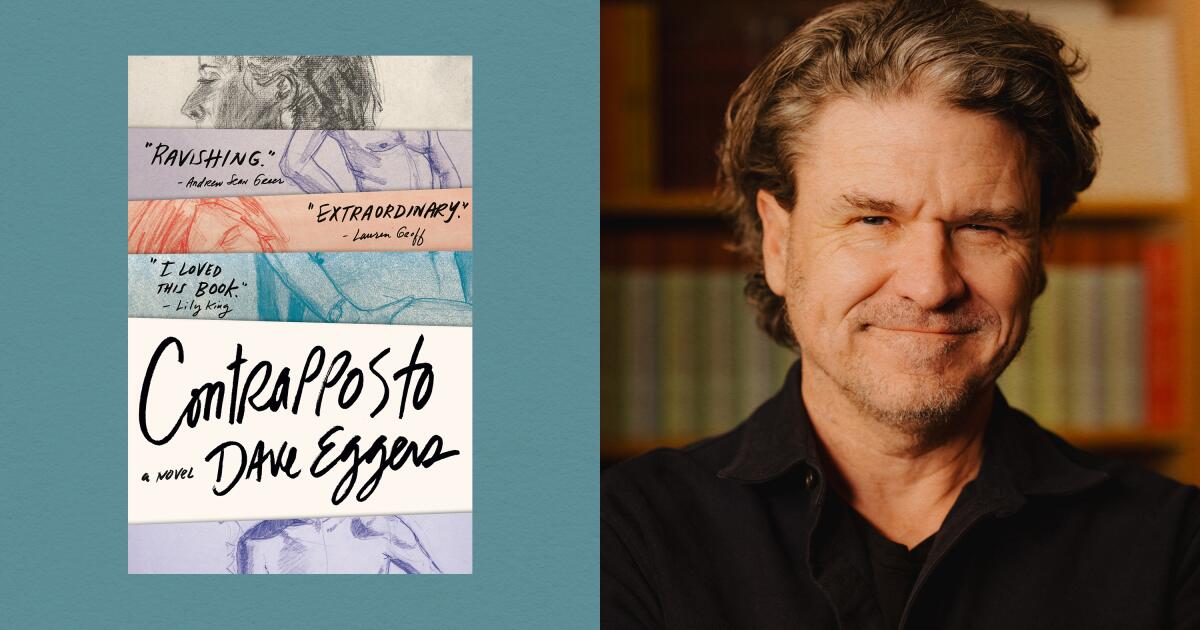

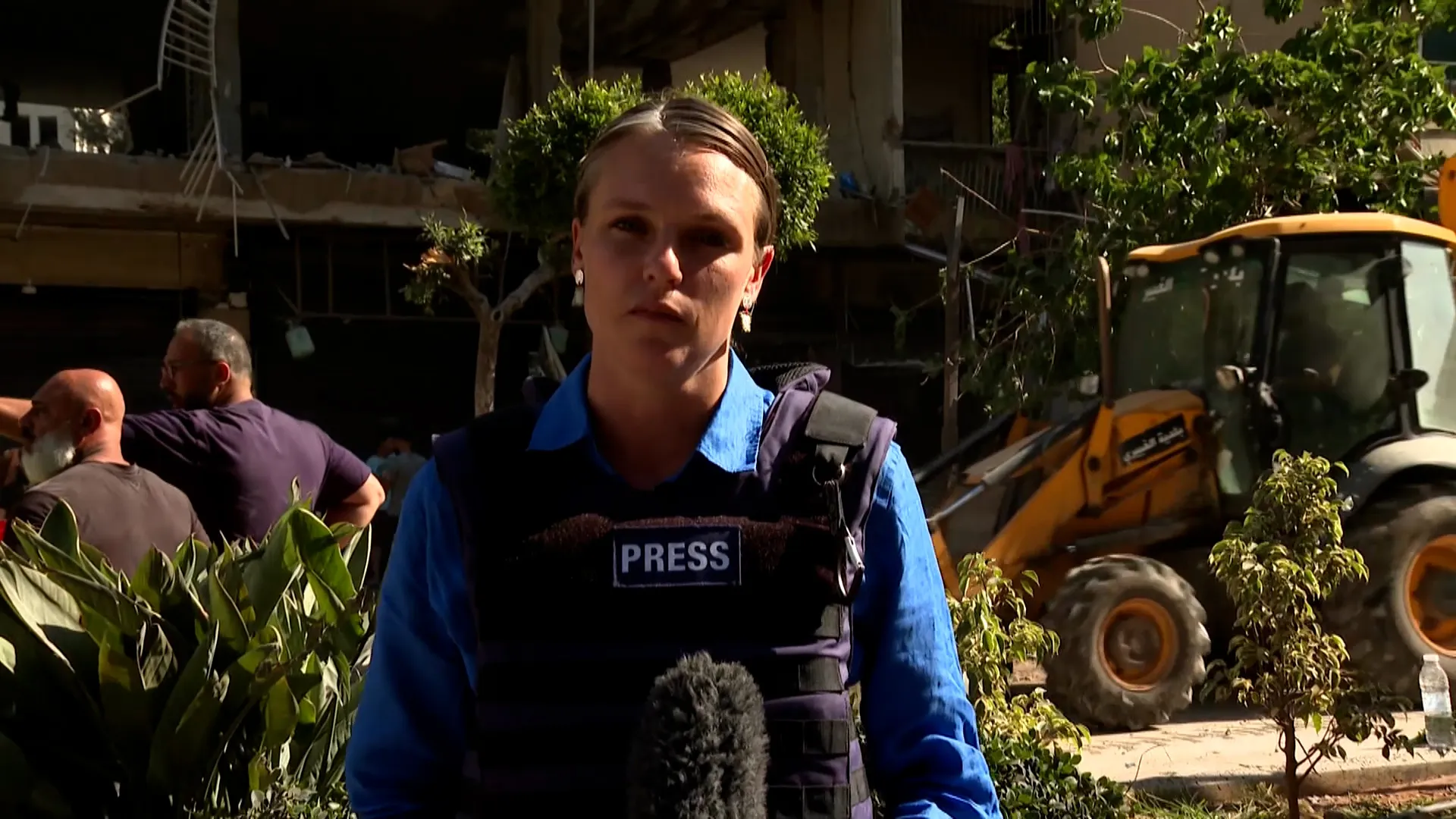







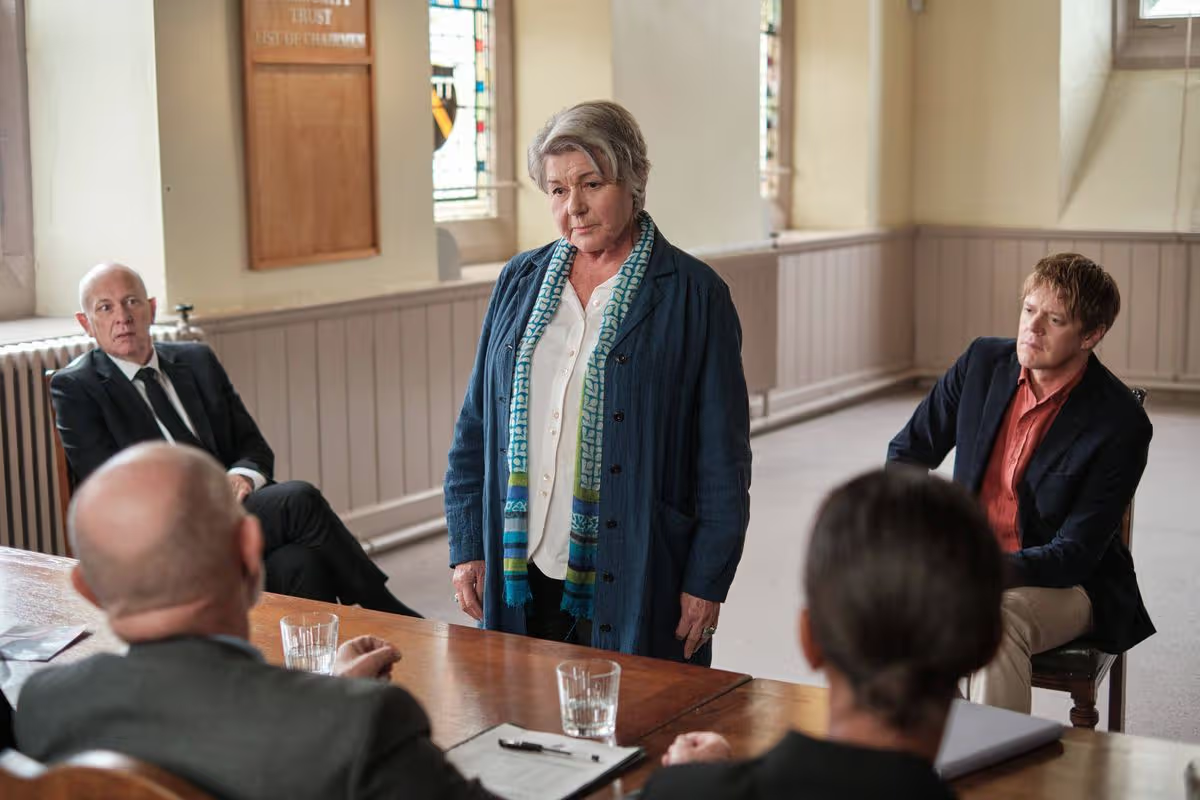







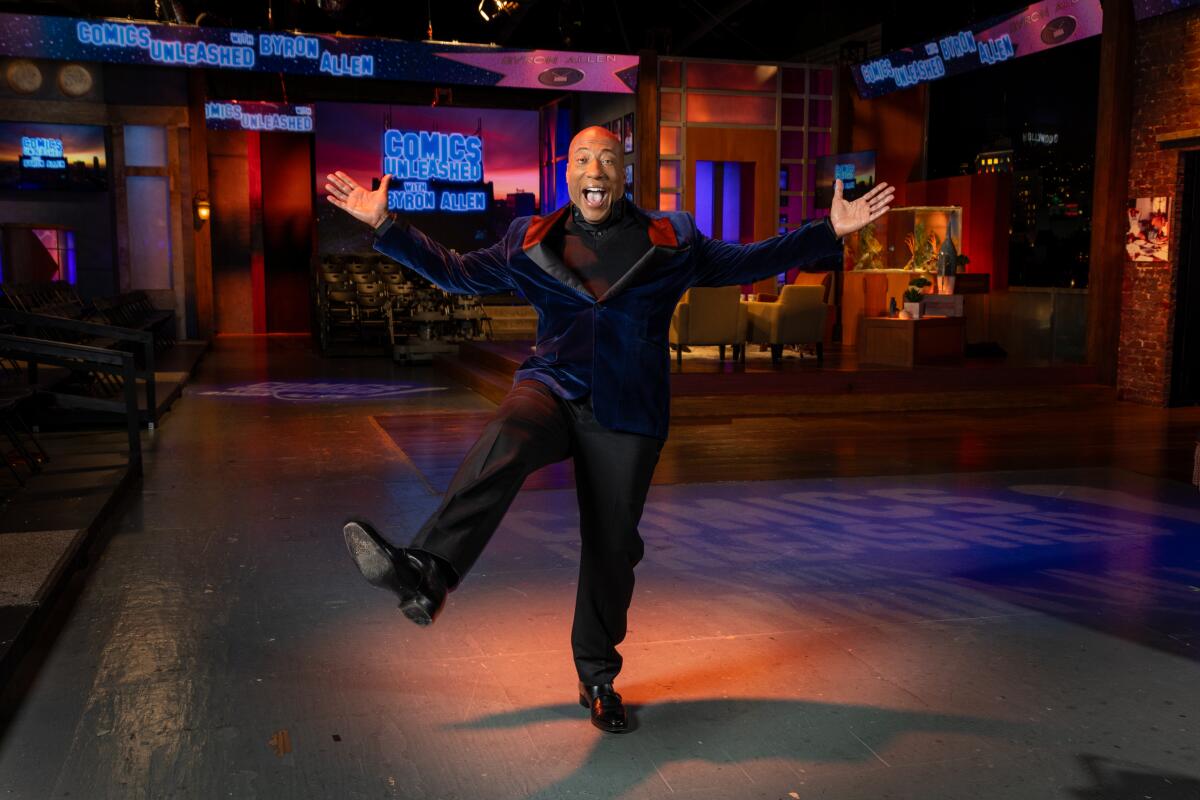












![Cape Verde beat record African World Cup qualifiers Cameroon to seal their spot in the finals [File: Cristiano Barbosa/AP]](https://i0.wp.com/www.aljazeera.com/wp-content/uploads/2026/03/AP25286764425321-1774510671.jpg?w=640&ssl=1)