
When will social media ban start and what platforms are included?
The measures will see apps including TikTok and Snapchat blocked for UK teens early in 2027.
Source link
The measures will see apps including TikTok and Snapchat blocked for UK teens early in 2027.
Source link
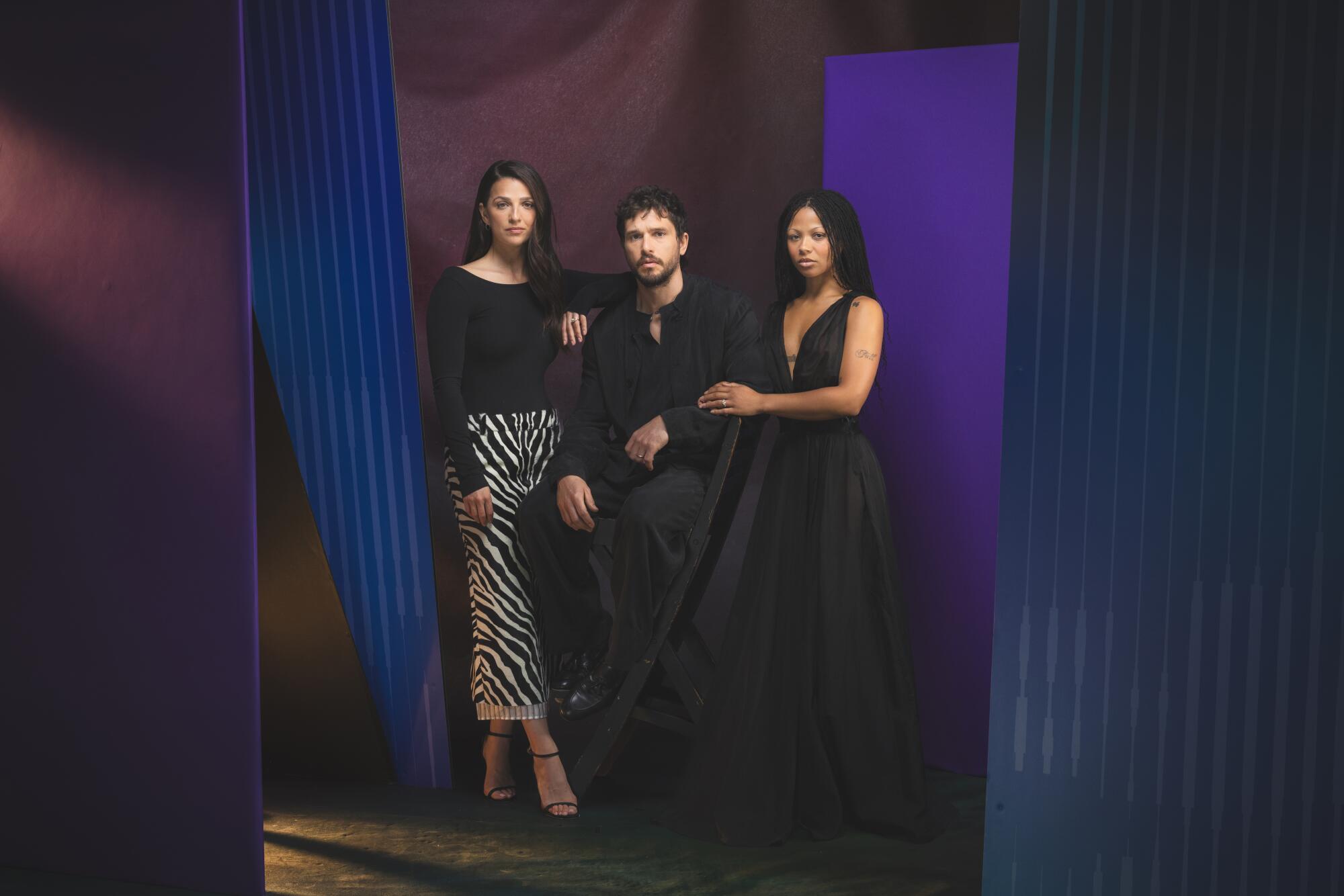
One day, when people say “they don’t make ’em like they used to,” they will be saying it about “Industry.”
First filmed before the pandemic and launched in its throes, a survivor of the era of streaming wars, corporate consolidation and Hollywood strikes, HBO’s addictively dissolute workplace drama remains as ambitious and authoritative as ever. Indeed, despite being divided from predecessors like “Mad Men,” “Succession” and “The Leftovers” by a series of epochal crises, it more closely resembles a vestigial tail of the medium’s past than most of its current counterparts: Out of place and out of time, “Industry” can best be understood as the last great drama of TV’s golden age.
Cast member and “Game of Thrones” alum Kit Harington, resident expert on series that reshaped the medium, agrees that “Industry” is a bit of a throwback in this respect.
“If you scroll back to ‘Game of Thrones’ in the first two seasons, it wasn’t a massive Goliath success, and it exploded after Season 3 with the Red Wedding. I think there’s a similar story going on here,” he says. “So often in TV at the moment, you’re given one season and everyone needs to pack in f— everything to get people hooked. But they’re burning through too much story. Season 2 is then done; the characters haven’t got anywhere to go. I think this is where this show has been successful, is that it was given that time to breathe.”
Earlier this spring, I convened “Industry’s” creators and cast in a conference room at The Times to walk me through its evolution into one of the best shows on television, and what to expect from its impending end.

Marisa Abela, left, Kit Harington and Myha’la.
(Jason Armond / Los Angeles Times)
A trading-floor knife fight of hot, young strivers, or “grads,” competing for a permanent place at the fictional Pierpoint investment bank, the first season of “Industry,” filmed in 2019, premiered in the waning months of 2020 as a warped love letter to office culture. But for Konrad Kay and Mickey Down, the emerging writers at the helm, the voice of the series didn’t fully take shape until they’d found their main cast, including Myha’la, as hard-charging American Harper Stern, and Marisa Abela, as privileged publishing heiress Yasmin Kara-Hanani.
Kay: Season 1, me and Mickey were really green.
Down: We actually pitched HBO on the idea that it was going to be eight episodes, it was going to be in different months, and the big-bang dramatics were going to happen between the episodes. A bit like “Boyhood.” Huge things would happen in between episodes, and the episode would be about the reaction to those huge things. And they were like, “What the f— are you thinking, guys?” It was so antidramatic.
Abela: I had a lot of rounds of auditioning for Yasmin. They weren’t sure about me at all. I think part of it was because they were quite hellbent on her being vulnerable, on her being soft, and that was what I was playing in those first two, three episodes. … And what happens in any functional collaboration is you start to see what they really want from you — what it is that they need from your character. And in those moments of conflict, the moments of change, Yasmin has to stand up for herself at some point, otherwise it’s too wet.

Mickey Down.
(Jason Armond / Los Angeles Times)
Down: Yasmin was all vulnerability masked by Prada in script, and then you came in and you were very hard. [Laughs.]
Abela: There is one scene with [Yasmin’s abusive supervisor] Kenny [played by Conor MacNeill] in Season 2 where … Yasmin turns around to him and tells him to f— off, basically: “You don’t have a disease, you’re a narcissist, with a new excuse to lord it over people. You’re weak.” I think that’s the first time that Yasmin became a gangster. I was watching “Real Housewives of New Jersey” at the time, being completely honest. She can go really mob wife really quick.
Myha’la: I had almost the exact opposite experience in terms of finding or deciding who Harper was. When I read the scripts initially, I just thought, “There’s no way in hell that Harper can’t be steely and [on offense], because she’s clearly feeling out of her depth, and as a young woman of color going into a new space like this, you can’t show up like you’re vulnerable. You’re already expected to do poorly.” … On the page, Harper was an anxious person when I first met her in the pilot episode. She was sweaty and clammy and stammering. And I just thought, “Hell no!”

Down: Sometimes when we write the character, we focus on one thing, and then the actor comes in and then that one thing we thought the character was becomes the artifice that they have to play.
Harington: Great TV writers genuinely learn their actors as well as their characters, and they tie those things in as it goes through.
Abela: As much as they know how we speak now, we know how they speak. If Yasmin has a “F— off,” I know what they want with that. If she says “F— off,” it’s very different to “F— you.”
Down: It’s like playing the piano with the foot pedal, blindfolded.
Kay: When you get super-talented actors doing your writing, you sort of fall in love with them doing everything. There’s no story we can’t tell with them.
The series’ second season, which opens with Pierpoint’s post-COVID return to office, found the grads established enough to become “active characters,” and the creators confident enough to begin breaking the mold they’d set for themselves in Season 1. From the nail-biting trade sequence with which Harper wins over hedge fund manager Jesse Bloom (Jay Duplass) to her firing from Pierpoint in the Season 2 finale, it marked the arrival of “Industry’s” distinctive, go-for-broke aesthetic.
Kay: [In] Season 2 we were still figuring out what the show was, and we had Jami O’Brien as our co-showrunner, who really professionalized me and Mickey towards the American system, towards how to be producers, curbed some of our more bombastic instincts, made us more professional in terms of some of the style of the writing we were doing, found a cleaner version of the show and a cleaner version of the story.

Konrad Kay.
(Jason Armond / Los Angeles Times)
Down: [The Bloom trade] was one of the first times in the show where we were like, “Wow, we’ve actually created something kind of singular,” in that we were able to create scenes of people trading, [using] financial jargon that no one understands, and make it feel like a car chase. The contrast between the Harper that’s on the trading floor being able to be in command of that with all the people looking at her, and then the Harper that’s in the loo afterwards in floods of tears, that for me was kind of the moment where we thought that we had a completely 3D, rounded character.
Myha’la: If you asked me to do the Jesse Bloom trade scene again, I’d piss myself. Because at least when I did it two seasons ago, I could have anxiety and fear percolating inside me. If I had to do it today, I’d have to do it confidently, and I would have to try really hard because so much of the language is truly blind memorization and being able to juggle particularly the f— phones. … You have to get the choreo[graphy] so good and you have to know the words so well so that you can do the important part, and that’s the subtext — communicating the feelings of the thing, which are not in the words. Which I love. It is so hard.
Harington: When you first read the scripts, you can’t understand a lot of what’s on the page. … You look at it, you go, “This is f— impossible.”

Myha’la.
(Jason Armond / Los Angeles Times)
Myha’la: This is not spoon-feeding the audience. “I’m sorry that you’re hurting because I know last summer your mom died in a car crash.” They don’t do that.
Kay: Do you know who hates that about us? Network executives. [Laughs.]
Down: We had a kind of mantra the first season especially, and then going into the second, that we would never have a scene that didn’t have one of our four main leads in it. And then, just for the necessity of the storytelling, we said, “We have to pop out of that perspective.” I don’t think HBO realized what a big decision that was, because I don’t think they’d actually realized we’d kept this mantra that we were never going to go away from the perspective of the grads.
Kay: It’s also where we broke the rule of, “We’re not going to just tell the bottom-up story; we’re going to go to the top.” When we sold the show, we were like, “This is a bottom-up story,” and then by that point we were like, “Actually, we have these older characters who might have these really rich inner lives that we should also explore.”
Myha’la: We blew the s— up. [Harper’s firing] forced us all outside the bank, which was dangerous and scary for me and really exciting and was how we got to see all the other things that Mickey and Konrad are capable of doing. I think they didn’t tell me before, so I was like, “Am I being fired?” [Laughs.]
Down: We thought we were all being fired. The reason the show evolves so much is because we basically never know whether we’re coming back, so we just blow up everything. We try to leave the audience with a satisfying conclusion. And then we get renewed, and then we have to basically write ourselves out of a corner. So Harper getting fired could have ended the whole show.
Given time to develop its characters, refine its style and grow its audience, “Industry” returned for Season 3 with all the trappings of a series that had finally arrived: effusive critical acclaim, proliferating fan accounts and buzzy arcs by Sarah Goldberg and Harington, as playboy and erstwhile green–energy executive Henry Muck. Had it premiered just a few years later, “Industry” may have ended up on the chopping block before finding its footing; instead, it was allowed to achieve “terminal velocity.”
Kay: What happened between Seasons 2 and 3 was, we got renewed. We didn’t think we were going to get renewed. We operated from the principle of, “We might never get to do this again.” And that was incredibly freeing for me and Mickey because it was just like, “We’re gonna get eight hours, let’s just do everything we possibly can within that eight hours. Let’s indulge every creative impulse we’ve ever had. Let’s take the stabilizers off the story. Let’s not necessarily keep it within Pierpoint.” What we felt like was a perfect marriage of creative latitude, trust in ourselves and the right point in our arc of writing the show and directing and producing. We reached terminal velocity, where we could actually do all of the stuff that we were pretending we could do in the first two seasons.

Kit Harington.
(Jason Armond / Los Angeles Times)
Harington: When I joined up in Season 3, I had a good handful of friends who watched the show. It may be bigger than you think it was from the inside. It’s been fascinating for me, joining when I did and seeing it grow again … We all want to do stuff that people actually watch. We’d be lying if we said we didn’t. We’ve all done jobs that we really love and no one’s f— seen. When there’s a focus in on something that you know is good and you love, that’s more rare than you think. I started in this job in “Game of Thrones” and just assumed, “That’s, like, how jobs go. You get invited to the Emmys every year and everyone frigging watches it.”
Kay: The softness in Henry was a function of Kit playing the character and us writing to that vulnerability. There’s a totally different version of that character which never unlocks that kind of thinking in me and [Mickey].
Harington: You know that moment where it’s all going to s— with Lumi and he just gets up and he’s like, “None of this is real” and he f— off? For me, that was it. Because it was like, “Wait a minute, he can’t just leave the f— room” — and he does. I think that kind of sums him up. I got a handle of him properly then, and that was quite an early one we shot.
Down: He has a sense of entitlement most of the other characters don’t have.
Myha’la: But you still manage to make me feel bad for you. I’m like, “Oh, poor Henry.” Do you know what I mean? Isn’t that psychotic?
Down: I said it to him in an email recently. Somehow he managed to make an ex-Tory minister who bankrupted his company twice and needed bailouts from the British public — [a] junkie, adulterer — the most vulnerable and probably most empathetic character on the show, in some respects.
Harington: He’s one of the few characters who is actually trying to do good. Even if it’s about him being perceived as doing good. … It’s also very smartly done in how you demarcate addiction and drug-taking. You’ve got most of the characters, who can kind of put it down, but then you’ve got Rishi [a Pierpoint trader played by Sagar Radia] and Henry, who are a different kettle of fish. And also how it creeps up.
Kay: As a sober person playing that stuff, is there a psychic trigger in your brain that sort of feels like it’s happening?
Harington: I was very worried about coming in and doing some of this stuff, but quite quickly realized I was A) sober enough for long enough to go back there safely; and B) it was a sort of muscle memory, a lot of it. I get to exorcise this stuff in my job. How many ex-addicts get to do that? It was a kind of cathartic thing.

Marisa Abela.
(Jason Armond / Los Angeles Times)
Abela: There’s a real freedom that comes with drugs, alcohol, whatever it is, for the character. Those are the moments when you can really open the lid on something.
Myha’la: When you’re f— up, you’re uninhibited, so you can do your own thing, but I think you’re also taking the other person at face value. I feel like it sort of takes the judgment away. It creates a kind of childlike innocence.
Down: If you’re in a situation like that, you can skip like five stages of relationship if there’s a big bag of drugs in front of you. That’s something we try to capture.
Earlier this year, HBO announced that “Industry” had been renewed for a fifth and final season. But it was Season 4 — which finds Harper and Yasmin’s friendship in tatters, Yasmin and Henry’s marriage at an end, and the structure of the show evolving yet again to draw on new characters and genre influences — that led Down and Kay to determine that the series’ time had come.
Kay: We did think to ourselves, “OK, so we’re going to do a Season 4, which means the show is a kind of success in and of itself, which means we can start to think about ending. If you get four seasons, you’re probably going to get five. So we felt that it created latitude there. What we thought to ourselves was, “We meet these two women in the pilot. If you’re going to spend five seasons of TV with them, what is the starkest contrast you can do between how you meet them and where they end up?” … When we started, the show was about not having power. Five seasons in, they have it. Then what do you do with it? The phrase me and Mickey have been talking about is this idea of “arrival fallacy.” You climb and climb, you’re at the top of the mountain. Is there another peak? Do I sit here and enjoy the view?
Down: We’re writing Season 5 right now, and without giving too much away, we’re approaching that season very differently in terms of how information’s parceled out.
Kay: It’s very dense, though, isn’t it? Honestly, it might be the densest season. There’s a lot of theology in it, actually.
Down: We talked about doing a sixth [season], and then quite honestly we thought that was going to be diminishing returns. … We would have been pulling our punches constantly. This has been one of the most creatively fulfilling versions of the show, because we are writing towards a conclusion that we know is the conclusion. We’re thinking of images for the last 10 minutes that we know are going to be what the audience is left with, and that’s really, really thrilling for us as writers. I’ve never once thought, “God, I wish we were doing a sixth one,” as much as I love writing and making the show. Where we leave the characters feels so perfect.

EXPLAINER
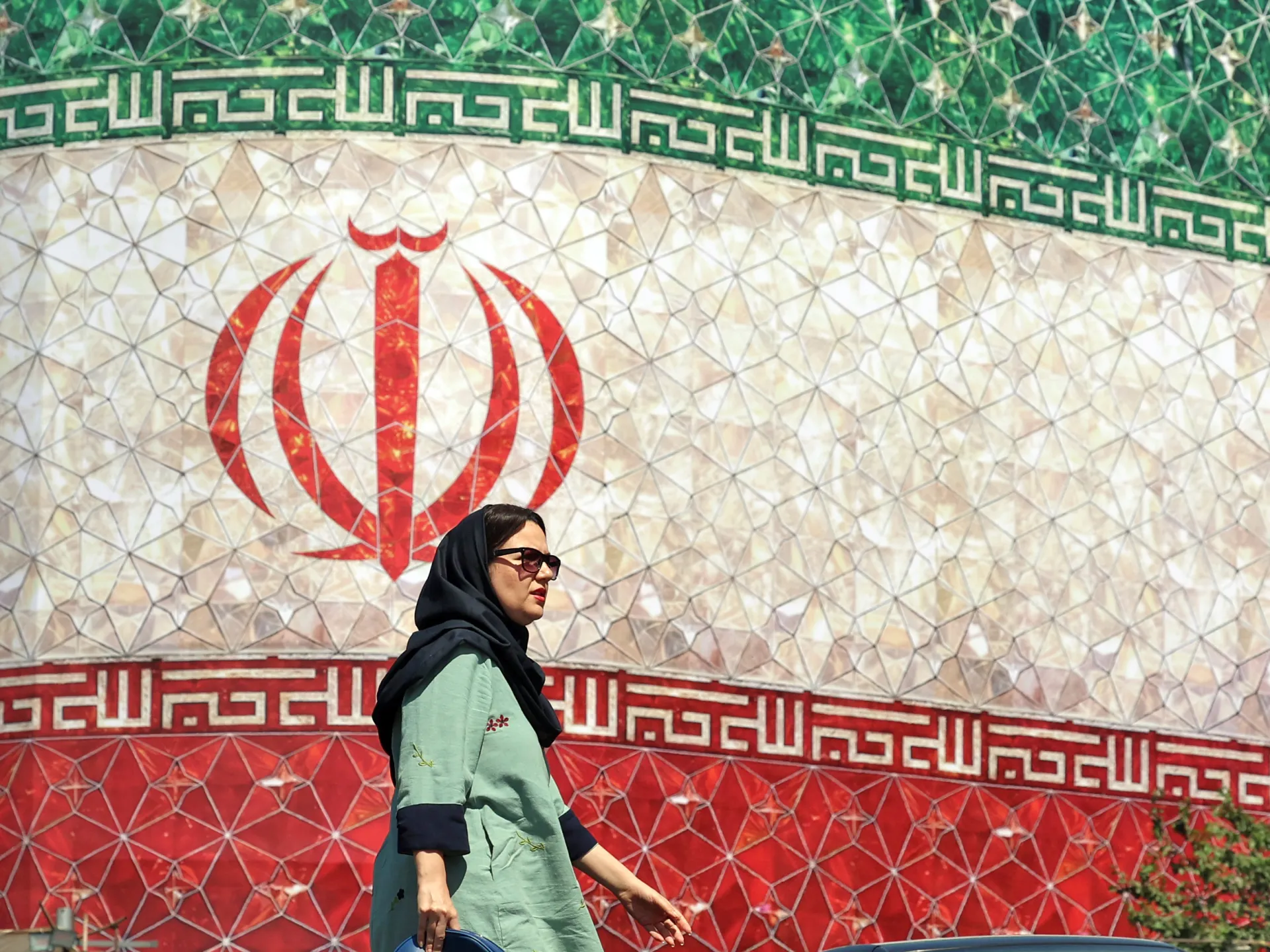
US President Donald Trump and Iranian leaders say a deal has been agreed to end more than 100 days of war that killed thousands.
By Agence France Presse and Reuters
Published On 15 Jun 202615 Jun 2026
United States President Donald Trump and Iran’s Deputy Foreign Minister Kazem Gharibabadi said on Sunday that they had reached an initial deal to end the war and to resume traffic through the Strait of Hormuz.
Trump said the deal allows for toll-free shipping through the Strait of Hormuz, which has been largely closed since the US and Israel launched an assault on Iran on February 28.
“The Deal with the Islamic Republic of Iran is now complete,” Trump wrote on Truth Social on Sunday.
The US and Iran will sign a memorandum of understanding in Switzerland on Friday, said the prime minister of Pakistan, whose country has served as a mediator.
Monday marks 108 days since the war began, with the US and Israel’s attacks on Iran. Here is what’s happening:
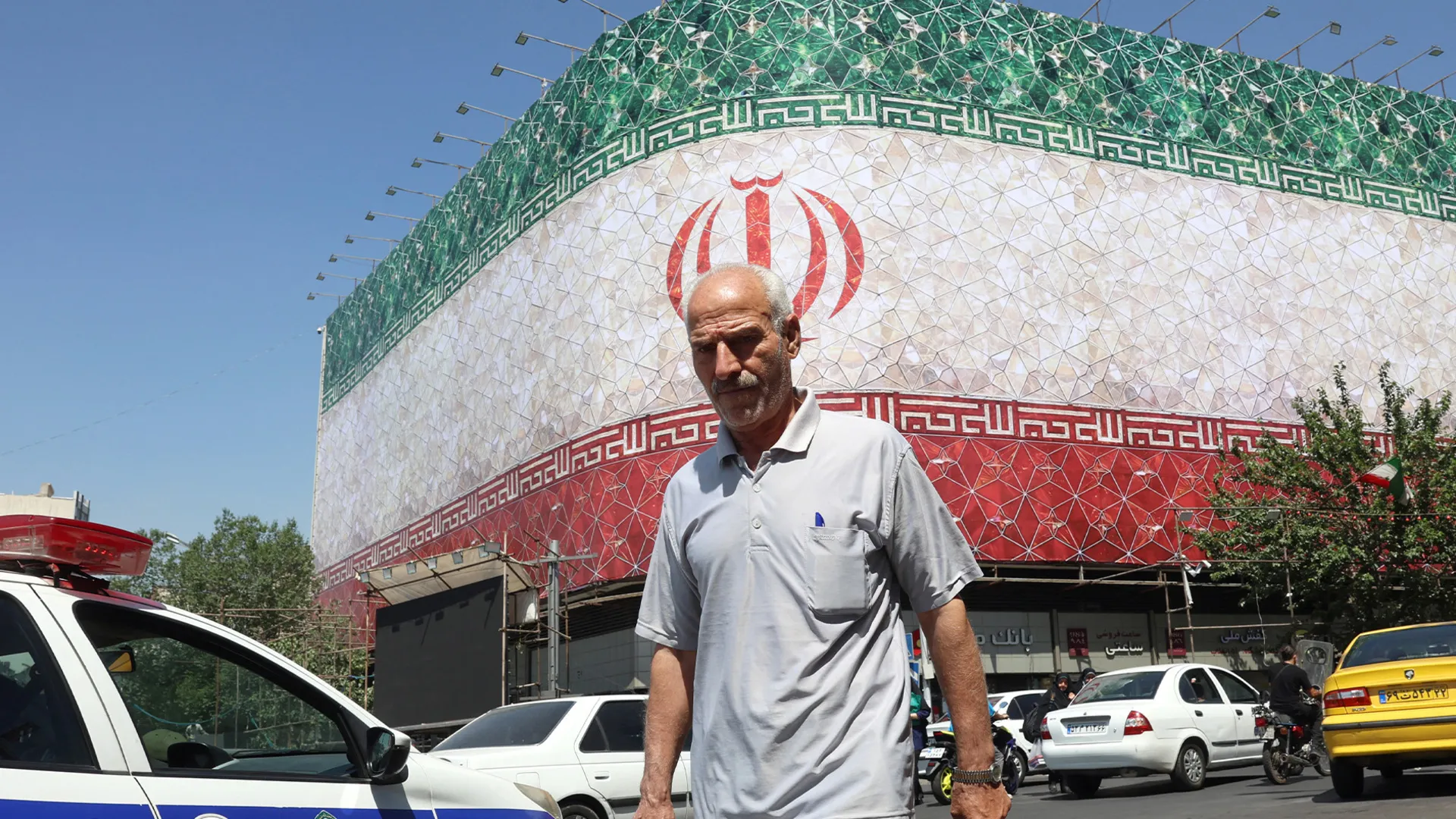
The US and Iran say they have reached a deal to end fighting on all fronts and open the Strait of Hormuz. Al Jazeera’s Osama Bin Javaid explains how both sides are claiming victory, even as tough negotiations over the details still lie ahead.
Published On 15 Jun 202615 Jun 2026
Share
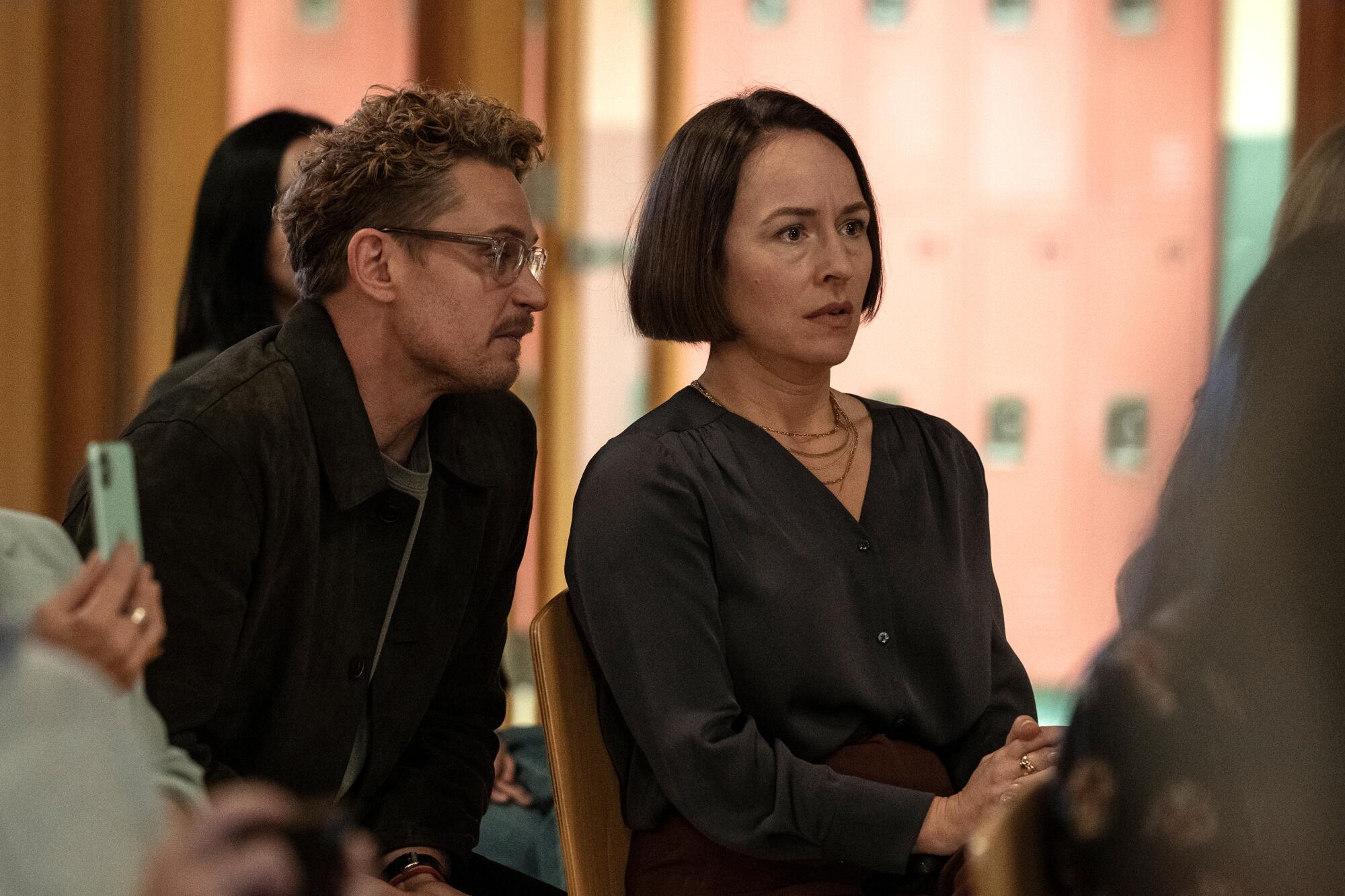
Few people do simmering panic as nimbly as Sarah Goldberg.
In her role as Dr. JoAnne Felder, a performance psychologist tending to the mercurial psyches of the billionaire man-children of Silicon Valley on the new AMC satire “The Audacity,” Goldberg careens from serene to slapstick as she tries to keep a lid on her increasingly unruly life.
It is the latest in a string of enviably layered characters for the Vancouver native, including her Emmy-nominated breakout turn as aspiring actor Sally Reed on the HBO contract killer dramedy “Barry” and the coolly calculating portfolio manager Petra Koenig on the network’s drama “Industry.”
“I’m definitely learning some large tech and finance words that I didn’t know,” she says with a laugh about her recent wealth-adjacent roles on a Zoom from London, where she makes her home. “I’m not sure if I’ll retain them.”
Given the accolades, it seems likely Goldberg only needs to memorize her lines and the rest will follow.
While she has given a distinctive performance in each of her roles, one of several threads tying the characters together is a moment when fear, rage, excitement, ambition or all of the above collide but must be contained. While that discipline sometimes devolves into delicious displays of apoplexy — witness Goldberg’s incredible, expletive-littered elevator meltdown in “Barry” — the 40-year-old actor is more often the face of diplomacy while telegraphing cortisol levels in the red beneath her placid exterior.
“As a blond Canadian, I really ran the risk of being the girl next door,” she says of her attempt to dodge typecasting onscreen after cutting her teeth onstage in London and New York in the mid-2010s. “I didn’t want to be the girl next door … maybe the girl next door with bodies in the basement.”
While the only bodies to be found in JoAnne’s basement on “The Audacity” are her eavesdropping son and his friends, the London Academy of Music & Dramatic Art (LAMDA) graduate has accomplished the mission of subverting what might have been a perky ingenue image with the role. (One she will continue, since the series has already gotten a Season 2 order.)
When the ethically challenged therapist starts dabbling in insider trading thanks to info gleaned from her patients — including bold tech names Duncan Park (Billy Magnussen) and Carl Bardolph (Zach Galifianakis) — the slippery slope awaits.

Goldberg with “The Audacity” co-star Billy Magnussen.
(Ed Araquel / AMC)
“I think that she started her career with a desire to help people and somewhere along the line she’s become incredibly jaded and she’s exhausted by being the most intelligent person in the room and yet having no material wealth to show for it,” says Goldberg of her character, whose struggles extend to motherhood of son Orson (Everett Blunck) and marriage to child psychologist Gary (Paul Adelstein).
It does not help that JoAnne is surrounded by people who have no trouble sliding headfirst down the slope as if it were an Aspen trail.
“She’s working with people who have so many houses that if one burns down, it doesn’t matter, and yet she’s struggling to keep the roof over her own head. So somewhere along the line she starts making these little contracts with herself thinking, ‘In this sea of moral bankruptcy, is my tiny little transgression really so bad? Or is it even justified?’ But these little small pacts start to snowball. You can see somebody torn between their better judgment, their core instinct, their humanity, and someone who is so frustrated that they’re stepping toward a kind of nihilism.”
That sense of inner conflict appeals to Goldberg, who says she knew instantly that she had to play JoAnne when she read the script by showrunner Jonathan Glatzer. “It’s rare for me to go out and be like, ‘I have to play this role!’” she says, adding with a laugh, “I can be quite passive. I can be quite Canadian in the American market. I felt like he’d found this incredible line of satire with pathos, which is my favorite kind of style.
“I’m always interested in playing characters on the precipice of losing their moral compass and which way they decide to go,” she continues. “And if JoAnne has anything in common with Sally from ‘Barry,’ because they’re such different characters, it’s that. … I love that Jonathan’s given JoAnne very mundane relatable problems in a world where the scale is so off and there’s a lot that the average person can’t relate to in that bubble.”
Goldberg has also been busy creating her own bubble, writing, producing and starring in the Canadian-Irish series “Sisters” — which just concluded its second season on AMC — with Irish actor Susan Stanley, her best friend since their LAMDA days. The odd couple sibling comedy finds Goldberg playing Sare, a buttoned-down Canadian who goes to Ireland to find her long-lost biological father (Donal Logue) and discovers shambolic half-sister Suze (Stanley).
“I was pretty shocked at how hard it is to get something made,” she says of the series’ six-year journey to screen. “And then to be in a leadership position where you’re inviting everyone to dinner and you’ve got to make sure there are three courses and being responsible for everybody’s well-being — it was wildly challenging, but absolutely thrilling.”
While she prepares to return to JoAnne’s world in Palo Alto — her hometown of Vancouver serving as a double — Goldberg feels very fortunate about where she’s landed.
“I’ve been so lucky at this stage in my career to work on scripts that I feel are really saying something and characters that I feel are morally complex and also to be in the business at a time where female characters are more complicated.”


South Korea’s Minister of National Defense Ahn Gyu-back walks to deliver his speech during a plenary session of the International Institute for Strategic Studies (IISS) Shangri-la Dialogue Defence Summit in Singapore, 30 May 2026. Photo by HOW HWEE YOUNG/ EPA
June 14 (Asia Today) — South Korean Defense Minister Ahn Gyu-back said Sunday that Seoul and Washington plan to recommend a target year for transferring wartime operational control of South Korean forces by the end of this year.
Ahn said during an appearance on KBS television that the allies would discuss verification of their full operational capability assessment at their annual Security Consultative Meeting in November.
“If we complete the full operational capability verification and make a recommendation to the presidents of both countries at the end of this year, we will be able to determine the target year for restoring wartime operational control,” Ahn said.
The United States has retained wartime operational control of South Korean forces since the 1950-53 Korean War. South Korea exercises control over its military during peacetime.
The allies have agreed that the transfer should be based on three conditions: South Korea’s military capabilities to lead the combined defense, the alliance’s ability to respond comprehensively to North Korean nuclear and missile threats and a regional security environment conducive to a stable transfer.
The first condition includes three stages of evaluating a future South Korea-led Combined Forces Command: initial operational capability, full operational capability and full mission capability.
Ahn said the full operational capability assessment has been completed. Verification expected by the end of the year would allow the allies to begin specifying a timetable for the transfer.
Responding to concerns that the transfer may be premature, Ahn said waiting for every condition to be perfectly satisfied could postpone the process indefinitely.
“New weapons emerge from one day to the next and the nature of the battlefield continues to change,” Ahn said. “If we keep treating the conditions this way, we could wait forever.”
Although warfare is shifting toward drones and other advanced systems, South Korea has sufficient capabilities to lead combined operations, he said.
Asked whether a future combined command led by a South Korean four-star general could impede coordinated operations or the deployment of U.S. strategic assets, Ahn said the issue had not been discussed.
Ahn acknowledged that Seoul and Washington may have different views on the timing of the transfer.
“Even children raised by the same parents can think differently,” he said. “How could two countries have identical views?”
Ahn also discussed the Jangbogo-N project, South Korea’s plan to acquire nuclear-powered submarines, describing it as part of the country’s transition from a tactical state to a strategic state.
“A tactical state operates within a framework designed by major powers,” he said. “A strategic state creates the framework and takes the lead in planning and designing its response during a war or another crisis.”
South Korea is preparing to build the first nuclear-powered submarine in the mid-2030s, Ahn said.
He said the country possesses the necessary conventional submarine construction capabilities, advanced nuclear technology and world-class shipyards but lacks access to nuclear fuel suitable for naval propulsion.
South Korea plans to seek U.S. cooperation in obtaining uranium enriched to less than 20%, he said.
Ahn said Seoul and Washington had not yet agreed on where the submarines would be built.
“Building nuclear-powered submarines in another country would be less efficient in terms of costs and technology,” he said. “The United States is also coming to understand that position.”
Ahn dismissed concerns in some U.S. circles that the project could contribute to nuclear proliferation.
“Low-enriched uranium below 20% cannot be converted easily for use in a nuclear weapon,” he said. “South Korea has been a model member of the Nuclear Non-Proliferation Treaty.”
— Reported by Asia Today; translated by UPI
© Asia Today. Unauthorized reproduction or redistribution prohibited.
Original Korean report: https://www.asiatoday.co.kr/kn/view.php?key=20260614010004655

Hegseth claimed Venezuela “invited” US forces to target Tren de Aragua. (Truth Social)
Caracas, June 14, 2026 (venezuelanalysis.com) – The United States launched a military strike inside Venezuelan territory that reportedly killed Héctor “Niño” Guerrero Flores, an alleged leader of criminal group Tren de Aragua.
US President Donald Trump first announced the “swift and lethal kinetic strike” via social media on Friday evening.
“At my direction, the US Southern Command (SOUTHCOM) delivered a swift and lethal kinetic strike to successfully execute Niño Guerrero, the infamous leader of Tren de Aragua,” he wrote. “Tren de Aragua terrorists no longer have safe haven in Venezuela or anywhere else.”
Trump added that the extrajudicial execution was “coordinated closely with our friends in Venezuela.” An accompanying video showed a house or compound being blown up.
US Secretary of War Pete Hegseth confirmed the operation shortly afterward, adding that it had taken place earlier in the week. He reiterated the “full collaboration with Venezuelan security forces” and claimed that Guerrero was confirmed dead in the strike.
“The operation underscores the shared US and Venezuelan commitment to take the fight to narco-terrorists and deny them any safe haven in our hemisphere,” he stated. SOUTHCOM Commander General Francis Donovan also expressed “gratitude” to Venezuelan security forces for their “support to the successful joint operation.”
In a Sunday interview, Hegseth claimed that US forces were “invited” by Venezuelan authorities and that further operations in Venezuelan territory were to be expected.
The Wall Street Journal, citing an anonymous administration official, reported that the CIA provided intelligence for the strike.
For its part, the Venezuelan government headed by Acting President Delcy Rodríguez issued a Friday evening statement informing of a “joint operation” between US and Venezuelan security forces to dismantle “organized crime structures” in southeast Bolívar state.
“During the operation there were clashes with members of these criminal structures that resulted in ‘Niño Guerrero’ being neutralized,” the communiqué read. Neither Venezuelan nor US officials offered details about the operation, the alleged clashes, or additional casualties from the lethal strike against Guerrero.
Caracas went on to claim that the mission involved “intelligence sharing” between the two countries and reiterated its “commitment to fight organized crime.”
According to the Venezuelan Constitution, the deployment of foreign military missions in the country’s territory requires approval from the National Assembly.
The military procedure coincided with a Venezuelan armed forces deployment to dislodge illegal mining outfits from mineral-rich Bolívar state as Western corporations eye lucrative exploration projects under a new, pro-business mining law. Tren de Aragua was alleged to be one of several criminal groups operating in the area.
The reported execution of Guerrero is the first recorded joint US-Venezuela military operation on Venezuelan soil. Since September 2025, the Trump administration has struck dozens of small boats in the Caribbean and Eastern Pacific, killing over 200 civilians. US authorities have claimed to be targeting drug trafficking operations but have not put forward any evidence.
In 2025, Washington likewise ramped up “narcoterrorism” accusations against the Nicolás Maduro government while setting up a large-scale military deployment near Venezuelan shores. Caracas denounced the charges as a pretext for foreign intervention, pointing to United Nations and DEA reports that repeatedly showed the South American country to play a marginal role in global narcotics trafficking.
On January 3, US forces bombed Caracas and kidnapped Maduro and First Lady Cilia Flores. They are currently facing trial in New York and have pleaded not guilty to charges including drug trafficking conspiracy. Despite recurring accusations in recent years, US officials have not provided any public evidence tying high-ranking Venezuelan officials to narcotics activities.
Since the attack, Acting President Rodríguez has fast-tracked a diplomatic rapprochement with the Trump White House while reforming oil and mining legislation to favor Western investment. Multiple US officials have visited Caracas in recent months, including SOUTHCOM Commander Donovan, CIA Director John Ratcliffe, and Chairman of the Joint Chiefs of Staff Dan Caine.
Dating back to his election campaign, Trump consistently talked up the threat posed by Tren de Aragua in the US as part of his anti-migrant crackdown and alleged that it acted in collaboration with the Maduro government. In February 2025, the State Department designated Tren de Aragua as a foreign terrorist organization (FTO), having previously announced a US $5 million reward for information leading to the capture of Guerrero.
However, despite repeated rumors of crimes attributed to Tren de Aragua, US intelligence agencies found no evidence of the organization having any coordinated activity on US soil or ties to the Venezuelan government. Separate reports have documented that the group runs criminal activities, including human trafficking, in several Latin American countries.
For their part, Venezuelan officials stressed that Tren de Aragua had been dismantled in Venezuela following a 2023 raid on Tocorón prison, from where the gang was believed to run its operations. Nevertheless, Guerrero was reportedly alerted in advance and managed to break out.
The 42-year-old had been in and out of prison several times before being handed a 17-year sentence in 2018 for charges including homicide and drug trafficking. In January, he was charged in New York as a co-conspirator in the case against Maduro.
Edited by Lucas Koerner in Caracas.

Oliver Tree, a genre-defying singer-songwriter and Santa Cruz native, was one of six people killed when two helicopters collided Sunday morning in Brazil, according to the Associated Press. He was 32.
Tree, a quirky artist known for his highly theatrical music videos and crisp bowl cut, had been traveling through South America as a part of his world tour. CNN Brazil reported Argentinian YouTuber Gaspar Prim, also known as Gaspi, was among those killed in the crash.
The mid-air collision occurred in Rio de Janeiro, with one of the helicopters landing in the parking lot of a car dealership, the AP reports. Local authorities have launched an investigation into the cause of the crash.
Tree, born Oliver Tree Nickell, broke out in the electronic music world first performing as, simply, Tree. He released an e.p., “Demons,” in 2013, which included a cover of Radiohead’s “Karma Police.” He later attended CalArts north of Los Angeles, and signed to Atlantic Records for his major-label debut e.p. “Alien Boy” in 2018.
To find his distinct look, he told the Santa Cruz Sentinel that “I was making a statement with it. Everybody’s trying to look so beautiful and sexy nowadays. It was my way of rebelling against that. So, I tried to make myself look as silly and ridiculous as possible.”
Tree was an instant hit on the festival circuit for his outlandish stage productions and outsider charisma, performing at Lollapalooza, Coachella and Outside Lands. He collaborated with Skrillex, David Guetta and Zeds Dead, and was fiercely protective of his meticulously weird visual identity and video concepts, telling Rolling Stone that “That’s kind of my signature. The people who do f- with me know me because of my videos..Music is my day job but my real dream is to be making feature films.
He released his major label debut LP, “Ugly Is Beautiful,” in 2020. His hit song “Life Goes On” and collaboration “Miss You” with German DJ Robin Schulz earned him international recognition and climbed onto the Billboard Hot 100. He released four full length albums as Oliver Tree, most recently April’s independent LP “Love You Madly Hate You Badly.”
Tree had performed in Buenos Aires on June 4.
From July to October, he had shows scheduled throughout Europe, Australia and China. This year, he performed at the Coachella Valley Music and Arts Festival this year as a special guest of electronic producer Subtronics. In one of his last social media posts, he made a point to spotlight an upcoming show on Aug. 9 in his hometown at the Quarry Amphitheater at UC Santa Cruz.
“I can’t believe Oliver is gone,” Schulz posted on Instagram. “You were such a lovely soul and a one of a kind character. Working with you on ‘Miss You’ was an honor. My deepest condolences to his family, friends and everyone who loved him.”


The 22-year-old scored two goals against Tunisia but had muted celebrations against the country of his father’s birth.

Published On 15 Jun 202615 Jun 2026
For a 22-year-old making his World Cup debut for Sweden, Yasin Ayari could only have dreamed of a better start to his introduction to the biggest showcase of football.
With a full-throttled volley into the top corner of Tunisia’s net just seven minutes into the first half of their Group H match in Monterrey, Ayari had opened the scoring for the Scandinavian side against their North African opponents.
The fresh-faced midfielder, though, did not revel in the moment as a young World Cup debutant might and instead chose to hold both his hands up before falling onto the ground in sujoud (Muslim act of prostration).
The reason? The deep Tunisian connection that runs in his blood, and one that could have seen him play for the opposition as late as four years ago.

Ayari is of North African heritage, with a Tunisian father and a Moroccan mother, but was born in Sweden. At 18 years of age, the promising footballer decided to represent the country of his own birth, rather than his parents’, and his father backed the decision.
“I wanted him to play for Sweden,” Azzouz Ayari told Swedish newspaper Aftonbladet, adding: “He should feel like he is giving back to the country that took care of him.”
Azzouz, who migrated to the Scandinavian country, revealed that his son was offered a place on the Tunisian side, but neither father nor son considered it an option.

Ayari began playing football at age seven on the youth side of his hometown club Rasunda, in Solna, before moving to Scandinavian football giants AIK, where he made his senior team debut in 2020.
The attacking midfielder was signed by English Premier League club Brighton & Hove Albion in 2023, making his Sweden national team debut in the same year.
Explaining his decision to wear the yellow and blue of Sweden instead of the red and white of Tunisia, Ayari said it was “only natural” to continue representing the country he had played for as a child.
When the World Cup 2026 draws were announced in December, the irony of playing against the country of his father’s heritage was not lost on Ayari.
“It was crazy that we ended up with them in our group,” he said.
The young talent was the standout player in Sweden’s thumping win over Tunisia, and he bookended their dominant performance with another scorching individual goal in the 95th minute.
Ayari found the ball at the edge of the Tunisian goal and sent it flying into the far corner to bag his second World Cup goal in his debut game.
This time, though, he did celebrate and soak in the applause of the jubilant Swedish crowd.


Under the agreement, the key Strait of Hormuz waterway will be reopened, US President Donald Trump said.
Source link

Steven Spielberg’s latest sci-fi thriller, “Disclosure Day,” topped the box office this weekend, an encouraging sign for what could be a big summer for theaters.
The film, which stars Emily Blunt and Josh O’Connor, brought in $44 million in the U.S. and Canada for a worldwide total of $92.9 million, according to studio estimates. The opening weekend totals beat box office analysts’ expectations of about $40 million to $50 million.
“Disclosure Day” is Spielberg’s latest alien-centric movie that charts a desperate race to show the world the truth about extraterrestrials.
The film, which had a production budget of about $115 million, was also scored by legendary composer and longtime Spielberg collaborator John Williams, who is now 94 years old.
Spielberg described the film in April as “way closer to truth than fiction” during a speech at the CinemaCon trade convention in Las Vegas. The veteran director of 1977’s “Close Encounters of the Third Kind,” 1982’s “E.T. the Extra-Terrestrial” and 2005’s “War of the Worlds” said at the time that he’s been curious about “what’s going on in the night” since he was a child and “been very fixated on the possibilities.”
Focus Features’ “Obsession” came in second at the box office with a domestic haul of $19 million, a continuation of the film’s strong run in theaters.
“Scary Movie,” “Backrooms” and “Masters of the Universe” rounded out the top five at the box office.
Recent box office performance — particularly with Gen Z hits “Obsession” and A24’s “Backrooms” — along with a slate of upcoming blockbuster franchise installments has buoyed the hopes of exhibitors and studio executives for a strong summer.
Next week, Walt Disney Co. and Pixar will release “Toy Story 5,” while Warner Bros.’ DC Studios has “Supergirl” landing in late June.
Universal Pictures and Illumination’s “Minions & Monsters,” Disney’s live-action “Moana,” Christopher Nolan’s “The Odyssey” and Sony Pictures’ “Spider-Man: Brand New Day” are all slated for July.
That steady cadence of new and different films is key for a healthy box office and a successful summer, said Daniel Loria, editorial director at the Box Office Co.
“We’re seeing that momentum come back on a weekend-by-weekend basis,” he said. “What we needed to get back to a healthy industry post-pandemic is consistency, and that’s the difference here in 2026.”
Two goals from Ayari and one each from Isak, Gyokeres and Svanberg take Sweden to the top of Group F in Monterrey.
Published On 15 Jun 202615 Jun 2026
Sweden crushed Tunisia 5-1 to leave the North African nation’s defensive reputation in tatters and seize control of World Cup Group F as the Mexican city of Guadalupe hosted its first fixture of the tournament.
Graham Potter’s men took the lead in the seventh minute of the game on Sunday, courtesy of midfielder Yasin Ayari’s thunderbolt from outside the box, following a mix-up at the back.
The celebrations of Ayari, who is of Moroccan and Tunisian descent, were muted, despite his fine finish.
Sweden doubled their lead on half an hour after a rapid break freed Alexander Isak on the left.
The Liverpool forward raced ahead and cut inside before unleashing a shot, which goalkeeper Mouhib Chamakh failed to keep out, even though he got a hand to the ball.

Tunisia did not concede a single goal in qualifying, becoming the first side to achieve the feat, subsequently matched by Ivory Coast and England.
Sweden threatened to overwhelm their opponents, but the match changed complexion minutes before half-time, when Omar Rekik headed home Hannibal Mejbri’s teasing cross.
However, the Scandinavian nation restored their two-goal cushion in the 59th minute after another defensive calamity for Tunisia.
Midfielder Ellyes Skhiri was caught in possession on the edge of the box by Isak, who fed Viktor Gyokeres, and the Arsenal man fired home.
Substitute Mattias Svanberg made it 4-1 late on after VAR ruled he was onside.
And there was still time for another stunning goal from Ayari from outside the penalty box.
Sweden reached the quarterfinals of the 2018 World Cup in Russia, but did not qualify for the tournament in Qatar four years later.
Tunisia were the first African team to win a World Cup match when they beat Mexico in 1978, but they have never progressed beyond the group stages.


Behind a veil of good-natured diplomacy, American adversaries are exploiting the conflict in Iran by gaining insights, strategic lessons, and geopolitical power while the United States wages feckless war against the Middle Eastern theocracy. Beyond the bombings, the blockade, and the oil prices, Russia and China keenly watch how America struggles, succeeds, and scrambles. In doing so, these adversaries are leveraging the conflict to challenge America’s readiness, aid its adversaries, and gain invaluable intel on America’s successes and failures.
The concept of observing a conflict to acquire critical intelligence on how to best conduct combat is not unique to the war in Iran. For example, in the Russo-Ukrainian War, America has gained indispensable knowledge on the most and least effective tools of 21st-century warfare, including information on the power of unmanned aerial systems. With the war in Iran, though, Russia and China are the scientists, and America is the experiment. The Middle East is now a testing ground for cutting-edge drone swarm technologies and a catalyst for how smaller powers can effectively deny their adversaries from accomplishing their objectives—a lesson that China is certainly eager to learn about for a possible conflict over Taiwan. Therefore, when America wages war against Iran, there are consequences that are crucial to recognize, and one of those consequences is that the United States is inadvertently empowering and informing its adversaries.
Maintaining its signaled commitment of multipolarity and geopolitical neutrality, China’s Foreign Ministry spokeswoman Mao Ning commented, “…China…has been making active efforts to promote ceasefire and peace…we will continue playing an active role in restoring…tranquility to the Middle East…” Reality demonstrates that this is false. China is discreetly gaining intelligence on the U.S. military’s readiness, pacing, and warfighting strategies. Furthermore, China has directly supported Iran, providing anti-missile weaponry, building blocks for ballistic missiles, and invaluable military intelligence to the Iranian Revolutionary Guard Corps. Instead of promoting peace and tranquility, these actions are designed to empower Iran and keep America locked in the struggle, weakening the country and allowing China to acquire more intelligence on U.S. readiness. Despite China’s claimed intentions, it’s clear that the nation is bolstering Iran’s strength and sustaining its defenses. Even from a domestic point of view, these actions are increasing domestic American division and the depletion of America’s defense resources. The conflict with Iran is not limited to Iran; by proxy, it’s with America’s foremost adversaries, too.
Similarly, Russia has provided critical support to Iran in the form of targeting intelligence, which Iran couldn’t have otherwise acquired. Shahed drones, assets that have proven to be exceptionally effective against western defenses, are manufactured in Russia’s Alabuga Special Economic Zone and are being provided to Iran by Russia. Contradicting these actions, a statement by the Russian Ministry of Foreign Affairs declared that the country “…stands ready to assist in advancing peaceful solutions grounded in international law, mutual respect, and a balanced consideration of interests.” But equipping Iran with efficacious tools of war is not a peaceful solution. Giving the nation targeting information cannot be construed as a neutral or geopolitically insignificant act. In reality, America’s adversaries are taking an active, hands-on approach to the war in Iran, indirectly but clearly aiding the nation and actively working against U.S. goals.
In response to this tacit yet significant aid to Iran, the natural response for America should be to publicly highlight the hostile actions of its adversaries. But the United States has been hesitant, if not downright unwilling, to do so. For example, Matthew Whitaker, the U.S. Permanent Representative to NATO, commented that “China certainly is not participating and is not aiding and abetting the Iranian demise…” Separately, he claimed, “There’s no indication that we can talk about publicly that the Russians are participating with the Iranians.” Public investigations, though, have proven both those assertions false. The trepidation of the United States to clearly and confidently condemn its adversaries’ belligerence in the region is an enormous blunder of strategic communications. Contrasting this, Russia and China have simultaneously and aggressively pursued campaigns of condemnation to weaken America’s global power. For example, Russia has often claimed that certain U.S. support to Ukraine may constitute an act of war; China strongly condemned recent American intervention in Venezuela as violating the international laws by which America claims to be guided. U.S. adversaries are eager and willing to strategically undermine and criticize U.S. actions, yet America is unwisely unwilling to do the same.
Russia’s and China’s cooperative aid to Iran demonstrates that the conflict is, in many senses, between world powers. A new ‘axis of resistance’ against Western liberalism is developing, and allowing American adversaries to act without denunciation is a failure of strategic communications and allows these nations to act with undeserved impunity. As the United States continues to wage war against Iran, it’s crucial to recognize that every bomb America drops, every mission American soldiers complete, and every destroyed military asset is a datapoint that U.S. adversaries will exploit. Russia’s and China’s critical support to Iran is hostile and counter to American goals; ignoring this is strategically imprudent. Beyond the explosions, America’s adversaries are watching—and acting. It’s the responsibility of the United States to expose those actions for what they really are.
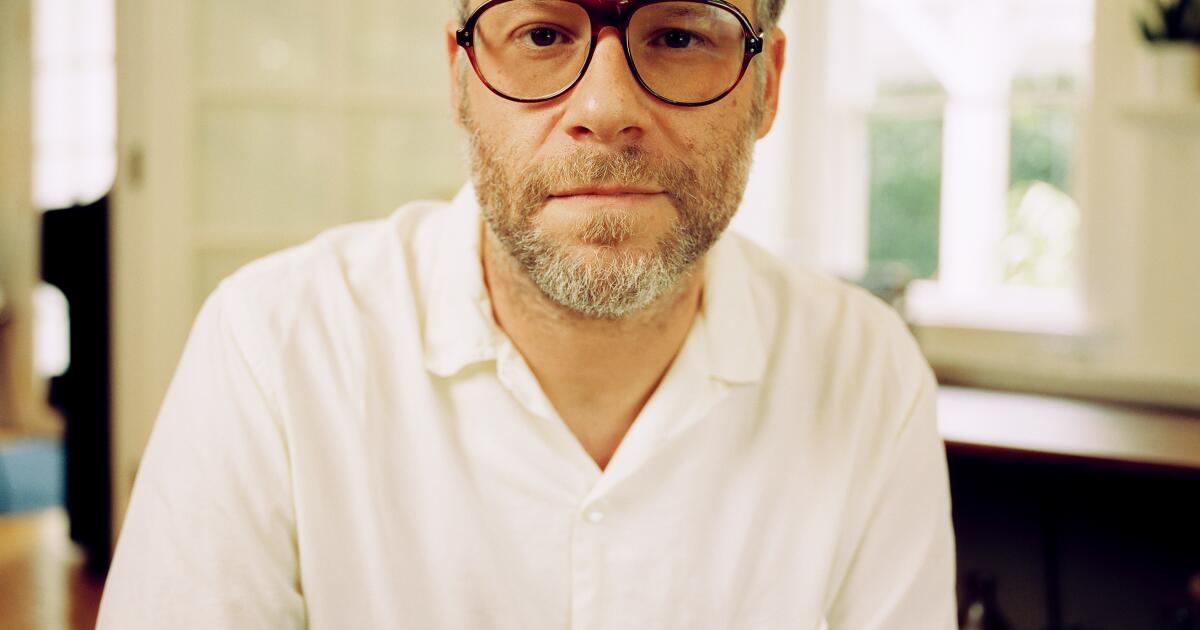
Seth Rogen and James Franco were once an inseparable comedic duo.
But following several women’s allegations of sexual misconduct by Franco in 2018, the pair has been publicly estranged. Rogen recently told the New York Times that he hadn’t spoken to Franco “in a long time” and didn’t plan to work with him.
“Nothing has changed since the last time I talked about all this,” Rogen said, “and I haven’t worked with him in a really long time and I have no plans to.”
The actors got their start in Hollywood on the cult classic TV show “Freaks and Geeks.” At the time, Rogen was 16 and Franco was 21. As they continued to make their way through the industry, they became known for a string of well-loved early-2000s and 2010s comedies including “This Is the End,” “The Disaster Artist” and “Pineapple Express.”
Franco’s illustrious movie career came to a halt when five women, including several of his acting students, accused him of sexual exploitation. Some of the allegations included removing protective plastic guards covering actresses’ vaginas during the filming of intimate scenes, and Franco getting angry when actresses didn’t want to go topless.
Two of the accusers filed a class action in 2019, claiming sex discrimination, sexual harassment, fraudulent business practices and intimidation. Franco settled the case in 2021 for $2.2 million.
Rogen and Franco’s friendship has been a point of contention for the actor, as Rogen continues to climb the ranks in Hollywood. Just last year, “The Studio,” a show that Rogen created, writes, stars in, directs and produces won 13 Emmys and is currently filming its second season.
Rogen previously said he regretted saying that he could work with Franco again after the allegations surfaced.
“What I can say is that I despise abuse and harassment and I would never cover or conceal the actions of someone doing it, or knowingly put someone in a situation where they were around someone like that,” Rogen said in 2021, in an interview with the U.K.’s Sunday Times. “I also look back to that interview in 2018 where I comment that I would keep working with James, and the truth is that I have not and I do not plan to right now.”
The actor is still hesitant to detail the nuances of his friendship with Franco. He told the New York Times that it’s “a very personal thing.”
“There’s the public-facing side of it, which I’ve spoken about, and I have the same stance publicly that I’ve had, and I think the proof is in the pudding — I have not worked with him in years,” Rogen said. “But the personal side of it is just so nuanced, and it involves people that I don’t know if I should be dragging into this.”
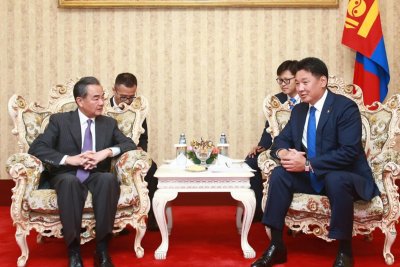

Chinese Foreign Minister Wang Yi (L) and Mongolian Prime Minister Ukhnaa Khurelsukh shake hands during their meeting in Ulan Bator, Mongolia. Photo by BYAMBA-OCHIR / EPA
June 14 (Asia Today) — Mongolian President Ukhnaa Khurelsukh reaffirmed his country’s support for China’s position on Taiwan and said issues involving Hong Kong, Tibet and Xinjiang were China’s internal affairs during a meeting with Chinese Foreign Minister Wang Yi.
Khurelsukh met Wang in Ulaanbaatar on Saturday and said maintaining friendly relations with China was one of the most important priorities of Mongolia’s foreign policy, according to Chinese state media.
“Mongolia understands and respects China’s positions and concerns and firmly adheres to the one-China principle,” Khurelsukh was quoted as saying.
He said Mongolia considers Taiwan an inseparable part of Chinese territory and does not support any form of Taiwanese independence.
Khurelsukh also said issues involving Hong Kong, the Tibet Autonomous Region and the Xinjiang Uyghur Autonomous Region were China’s internal affairs.
He said Mongolia would not take any action that harmed China’s interests because of its relations with other countries.
Khurelsukh said the two countries have consistently respected each other’s independence, sovereignty and territorial integrity while deepening mutually beneficial cooperation.
He predicted that bilateral trade would reach $20 billion this year.
Mongolia shares a roughly 2,900-mile border with China, the longest land border China has with any neighboring country.
Wang arrived in Mongolia on Saturday for a three-day visit after accompanying Chinese President Xi Jinping during Xi’s visit to North Korea on June 8 and 9.
Wang is a member of the Political Bureau of the Communist Party of China Central Committee, China’s foreign minister and director of the Office of the Central Commission for Foreign Affairs.
During his meeting with Khurelsukh, Wang said China has consistently placed its relationship with Mongolia in an important position within its diplomacy toward neighboring countries.
China is willing and able to serve as “a dependable neighbor, a trustworthy friend and a partner that helps accelerate Mongolia’s development,” Wang said.
He said China respects Mongolia’s independence, sovereignty and territorial integrity.
“A close neighbor is better than a distant relative,” Wang said.
He said Beijing highly valued Mongolia’s decision to treat the development of relations with China as a top foreign policy priority, describing the approach as consistent with Mongolia’s fundamental interests.
China regards Taiwan, Tibet and Xinjiang as matters involving its sovereignty and territorial integrity and routinely seeks public support for its positions from neighboring countries and diplomatic partners.
Mongolia has long maintained a one-China policy while balancing relations with China and Russia, its two immediate neighbors, and pursuing ties with other democratic countries.
— Reported by Asia Today; translated by UPI
© Asia Today. Unauthorized reproduction or redistribution prohibited.
Original Korean report: https://www.asiatoday.co.kr/kn/view.php?key=20260614010004724

Uruguay will reportedly arrive in the US less than 24 hours before the kickoff time for their game against Saudi Arabia.
Published On 15 Jun 202615 Jun 2026
Uruguay’s national team have arrived in Miami after enduring a travel ordeal ahead of their opening World Cup match in the United States.
The squad and support staff landed in Miami on Sunday, less than 24 hours before kickoff in their Group H match against Saudi Arabia.
list of 4 itemsend of list
Uruguay pinned the blame for their troubles flying from Mexico to the US on FIFA. They also reportedly faced the threat of sanction if their head coach and captain could not make it to a mandatory news conference on the eve of the match.
The original flight was reportedly not allowed to depart due to administrative issues, including some missing paperwork, and officials had to scramble to line up a new flight.
FIFA is in charge of all travel related to the 48-team World Cup.
Uruguay are training in Playa del Carmen, Mexico, and held a practice there on Sunday. When the traveling delegation reached the airport in Cancun, approximately 72km (45 miles) away, they learned that the group was not authorised to enter the US.
The Uruguay Football Association (AUF) said that a second plane from South Florida was en route to pick up the squad, while the players waited at a resort outside Cancun until its arrival.
“Due to problems beyond the control of the AUF, the departure from Mexico has been delayed,” the association said in a statement. “The squad is resting at the hotel. The new departure time set by FIFA is 4:15pm [21:15 GMT].”
FIFA later released a statement, saying: “Due to an airline permitting error in Mexico, the Uruguay national team’s departure from Cancun to Miami was delayed.
“The airline has apologised for the inconvenience caused. FIFA remained in close contact with the Uruguay national team throughout their delay and worked alongside airport and operational partners to help expedite the process and minimize disruption to the team’s travel arrangements.”
Uruguay coach Marcelo Bielsa and team captain Jose Maria Gimenez missed Sunday’s originally scheduled news conference in South Florida due to the issue. The news conference was pushed back to 8pm Eastern Time (00:00 GMT), and the coach and captain were in attendance.
“The trip went well; we made the most of it and saw it in a positive light,” Gimenez said in Spanish. “We took the chance to rest at the hotel [in Cancun].”
Bielsa was asked what sort of disruption the flight snafu caused his team.
“No, the flight doesn’t cause any complications,” Bielsa said, before changing the subject to his team’s preparation in both the Uruguayan capital of Montevideo and Mexico’s Playa del Carmen.
“In Montevideo, the players had constant obligations, but they also had family time, which I felt was necessary.”
Uruguay and Saudi Arabia will play their first match of Group H at Miami Gardens at 6pm (22:00 GMT), giving them less than 24 hours to settle in before kickoff.
The other members of the group, Spain and Cape Verde, will play in Atlanta on Monday.
Uruguay were the latest to face travel issues at the World Cup.
Top Somali referee Omar Artan was denied entry into the US this week after he was “determined to be inadmissible due to vetting concerns”.
Meanwhile, the Iranian team were granted US visas just 10 days before their first match in Los Angeles. And Iraqi striker Aymen Hussein was interrogated for hours at Chicago’s airport before eventually being allowed entry. The team’s photographer, however, was denied.


COURTING controversy is nothing new to supermodel Emily Ratajkowski.
The American beauty found global fame dancing in a nude-coloured thong in the video for US singer Robin Thicke’s 2013 song Blurred Lines.
But that seems tame compared to her latest stunt — posing topless, with a glass of sparkling wine in hand, while pretending to breastfeed a plastic baby doll.
In the same shock shoot, a “lover” in boxers is pictured at her window as she nurses the doll.
But that seems tame compared to her latest stunt — posing topless, with a glass of sparkling wine in hand, while pretending to breastfeed a plastic baby doll.
Emily, 35, who has previously been linked to Harry Styles, shared the controversial images with her army of 27.9million Instagram followers.
It was to promote an explict essay she wrote, titled MotherF***er, for lifestyle and culture website The Cut.
But is this bizarre shoot — in which she has been accused of sexualising breastfeeding — an act of genius from the Gen Z favourite rumoured to be worth £6million? Or a sign her star power is waning?
Many believe the backlash is what London-born Emily had hoped for.
A source says: “She has perfected the art of turning internet outrage into a multi-million pound brand.
“For every ‘disgusted’ comment, she gets another thanking her for her honesty. The business she has built around her body and brain is astonishing. Emily is incredibly intelligent, but most people don’t see that.”
The insider adds: “Women abhor and adore her in equal measure, and most men lust after her.
“She wants to empower women, she is open about her sexual expression.
“When people tear her down, it only goes to prove her point about how she is perceived by people.”
Emily’s Instagram post from her latest photoshoot drew more than 8,000 comments within hours.
Nude images The size 6 model pouts toward the camera while pressing the toy to her 32C chest.
She wears a black leather blazer and matching trousers, heavy eye make-up, and her brunette hair has been styled as dishevelled.
One Instagram user wrote: “That photo is genuinely disturbing.”
Another said of the shot: “When art becomes awkward, uncomfortable and unnecessary.”
Others called it a “desperate cry for attention” — which echoes criticism recently faced by Emily’s close pal Sydney Sweeney.
American actress Sydney shocked viewers of US coming-of-age TV drama Euphoria when the 28-year-old’s character Cassie Howard dressed as a baby while making content for her OnlyFans account.
It seems Emily and Sydney — both regulars on “hottest woman in the world” lists — will go to extreme lengths to make headlines.
Emily’s MotherF****er essay has also proved divisive, as she reveals she turned to casual dating after her marriage to Sebastian Bear-McClard failed in 2022 following the birth of their son Sylvester.
She writes about motherhood and marriage: “It was a violent transition into a new reality of screaming baby on my aching tit and ring on my swollen finger.
“And then, in a time period that felt both instant and excruciatingly slow, my marriage collapsed. Six months after my son was born, my husband and I stopped having sex. Less than a year later, we separated.”
The divorce was finalised last year and she reveals how it changed her as she began “compulsively dating”.
But Emily, who spent the first five years of her life in London before moving to the US with her family, writes of her time before that: “I knew that boys didn’t treat girls they thought of as sluts tenderly. Boys didn’t fall in love with, want forever with, raise babies with, or take care of sluts.
“I wanted to be taken care of — desperately. I tried to be a ‘good girl’.
“Keeping my body count low was insurance. I thought it meant no one would ever cheat on me, that I’d always be loved, happy and safe.” But she adds: “None of that had turned out to be true.”
In graphic detail, she recalls dates with a man she refers to as the “elder millennial” — and performing a sex act not long after they first met.
She writes: “I’d found everything I’d come there for — a praying mantis devouring her mate.”
Sparing the blushes of the men she has previously dated — including a whirlwind romance with Brad Pitt, and US comic Pete Davidson — Emily uses pseudonyms in the essay.
She adds: “I decided to f*** my way into a new kind of woman. I wanted to destroy the Madonna, the special girl I’d worked so hard to be before an eight-pound baby had torn my vagina in two, and replace her with the whore.”
She goes on to write that, “men are turned on by motherhood”, adding: “I’d been so scared that, as a single mother, I was unlovable, used up and discarded. I soon came to find out it was quite the opposite of ‘they don’t care’. In fact, they liked it. There were many men who experienced the loneliness that comes with years of selfishness. They were particularly attracted to the idea that being a parent meant self-sacrifice was a given in my life. Did they want me as their mummy? Maybe.”
Emily was first signed as a model at age 14 but got her big break in the controversial Blurred Lines video.
She was then named as one of the world’s “hottest sex symbols” by Rolling Stone mag, and soon after announced as FHM’s “fourth sexiest woman in the world”.
Emily, who was born to an English mum and American dad, moved into acting while also modelling for the likes of Dolce & Gabbana, DKNY, Marc Jacobs and Miu Miu.
But as her fame grew, she became vocal about protecting women.
In 2016, she went to war with US photographer Jonathan Leder, who used Polaroid images of her from a shoot four years earlier in a book she claimed was a “violation”.
Emily said she believed the photos were taken for a magazine — and that she did not give consent for the pictures, which included nudes, to be used in a book.
She wrote at the time: “Five out of the now hundreds of released photos were used for what they were intended: an artful magazine shoot back in 2012.
“These photos being used without my permission is an example of exactly the opposite of what I stand for — women choosing when and how they want to share their sexuality and bodies.”
She was supported by Kim Kardashian — who similarly has turned controversy into cash.
The pair posed topless together for a selfie taken in a bathroom after Kim was reviled for posting a naked photo online.
Emily captioned the shot: “We are more than just our bodies, but that doesn’t mean we have to be shamed for them or our sexuality.”
It led to uproar on social media, as Emily became embroiled in a row with broadcaster Piers Morgan — who claimed they were undermining feminism.
Emily later hit back, explaining: “Kim said to me, ‘You know, when Lena Dunham takes her clothes off, she gets flak, but it’s also considered brave. When Justin Bieber takes his shirt off, he’s a grown-up’.
“When a woman who is sexual takes off her top, it plays into something. The whole idea is that when Kim takes a nude selfie, she’s just seeking attention. That’s not the issue. A woman can be seeking attention and also make a statement. They don’t need to be mutually exclusive.”
Emily later started writing essays that she made into a book, My Body, which became a New York Times bestseller in 2021 — and she also launched her own swimwear business, Inamorata.
The book saw Emily discuss being sexualised and exploited during her career — and allege she was sexually assaulted by singer Robin on the set of Blurred Lines.
Of the video and how it changed her life, Emily writes: “I wasn’t just famous; I was famously sexy, which, in many ways, felt gratifying.”
She adds: “I am complicit. But I also think it’s a mistake to shame a young woman for wearing a tight dress because she wants to be noticed by someone powerful.
“I don’t think we should continue to criticise women for saying, ‘This is how I can succeed and capitalise off of my image or my body’. That is an extension of the same misogyny I’ve seen so much in my life. We are all complicit.”
Those close to Emily believe she will steadfastly continue baring her soul despite the pushbacks that come her way.
A friend says: “Emily’s honesty is uncomfortable for some, but provides validation and solidarity for others.
“People will always have something to say. There’s nothing she can do about that.
“Emily’s said it herself, she doesn’t care what people think. It’s white noise. She is doing what she wants and saying what she wants. It is her truth and it is her choice to say it.”
As Emily put it: “Like any art, there’s a million ways to interpret it. All I can say is that when a woman is naked, that’s not immediately anti-feminist.
“I have no apologies for it, and I’m not ashamed at all.”
Ecuador looked strong before Diallo broke through in the 90th minute with a clinical left-footed shot to seal the win.
Published On 15 Jun 202615 Jun 2026
Amad Diallo scored in the 90th minute to lift Ivory Coast to a 1-0 victory over Ecuador in their first World Cup appearance in a dozen years.
The teams combined to hit the crossbar three times before the Manchester United winger broke the deadlock to secure three points for his team at the Philadelphia Stadium on Sunday.
list of 4 itemsend of list
Diallo – who entered as a substitute in the 56th minute – broke through with a left-footed shot from just inside the penalty area that beat diving goalkeeper Hernan Galindez. Wilfried Singo set up the goal with a strong run down the right side.
Making their fourth appearance in the World Cup and the first since 2014, Ivory Coast took a big step towards reaching the knockout stage for the first time.
Elye Wahi hit the crossbar in the 52nd minute for Ivory Coast, after Ecuador’s John Yeboah and Nilson Angulo did the same in the opening half.
Ecuador, making their fifth World Cup appearance and looking to reach the knockout round for the second time, were playing a virtual home game at the stadium, otherwise known as the Lincoln Financial Field, with most of the capacity crowd of 68,274 wearing the yellow shirts of La Tri.
Ecuador looked strong before Diallo’s goal. Their best chance after halftime came in the 68th minute on Gonzalo Plata’s hard shot from about 25 yards out, which was parried away by goalkeeper Yahia Fofana.
Ivory Coast were bolstered by the forward play of Yan Diomande as the Leipzig attacker created several scoring chances, particularly down the right side. That included Wahi’s near-goal on a flick following Diomande’s hard cross.
Ivory Coast, who did not concede a goal while going 8-0-2 in 10 qualifying matches, will next face four-time World Cup champions Germany, who defeated Curacao 7-1 earlier on Sunday in Group E.
Ecuador will meet Curacao. Both matches will be played June 20 .

The US-Iran ceasefire announcement has raised hopes in Lebanon, after Pakistani mediators claimed it included an end to Israel’s war on the country. But as Al Jazeera’s Heidi Pett explains, we’ve been here before.
Published On 15 Jun 202615 Jun 2026
Share

MODEL Hailey Bieber gives her business a bit of a helping sand.
The 29-year-old, wed to singer Justin, posed on a beach in an ad campaign for her own skincare and make-up brand Rhode.


It was recently named one of Time magazine’s 100 most influential companies.
And she told the mag she is hungry for more.
Hailey said: “I’m an entrepreneur at the end of the day.
“I want to expand in business and I want to be able to do more things.
Read more on Hailey Bieber
“But I’m definitely not in a rush.”
Last year the brand was valued at a billion dollars.
Hailey launched it in 2022 and last year it turned over £150million in sales.
She recently posed in a chic yellow bikini for another fashion shoot and she was also pictured out in New York in a white mini dress for the Met Gala after-party.
Just last November the model posed up a storm for GQ magazine in another set of sizzling swimwear snaps.
Justin and Hailey have been married since 2018, with the pair welcoming their son Jack Blues in 2024.
Published On 14 Jun 202614 Jun 2026
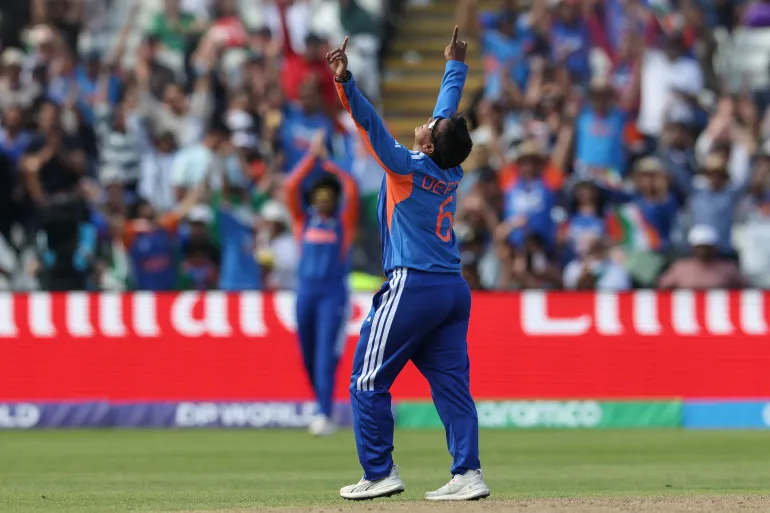
Deepti Sharma took five wickets, and India bowled out Pakistan for 106 to successfully begin their latest quest for a first Women’s Twenty20 World Cup title with a 64-run win over their archrivals.
Sharma spun out the last three wickets in five balls as India defended 170 on Sunday in front of a heavily partisan sellout crowd at the Edgbaston Cricket Ground in Birmingham, United Kingdom.
list of 4 itemsend of list
Seven months after Sharma starred in India’s victory in the final of the Women’s ODI World Cup with five wickets and 58 runs, she started this T20 World Cup with another standout performance. Shree Charani supported her with 3-21.
Sharma took the first two wickets of Pakistan’s chase, which actually started strong, but by the 10th over, India were on top.
Pakistan needed Muneeba Ali, dropped twice, to go big, but Sharma ran her out on 41 in the 11th over with a great direct hit on the run from backward point.
When Pakistan captain Fatima Sana fell in the next over at 77-5, her team fell away too.
Sharma’s late burst for 5-10 made her the highest wicket-taker in the women’s T20, with 166.
“I always believe in myself, that whenever the right time comes, I will step up,” the prolific all-rounder said.

India laboured through their power play, and it took Smriti Mandhana to be dropped on 27 off 24 balls to be inspired by the reprieve to lash out at the Pakistani bowling. She needed only another 10 balls to reach 50.
The left-handed opener was dropped again on 55 and top-edged onto her own helmet, forcing a concussion check. She passed, smacked her ninth boundary, and was out to a great low grab by Sana.
Mandhana’s wicket started a mini-collapse, including captain Harmanpreet Kaur on 36. India started the 19th over at 132-5, hoping for 150.
That’s when Richa Ghosh exploded with 34 off 17 balls and combined with Sharma to take 23 runs off World Cup debutant Tasmia Rubab.
“If it is in my hands, I would love to send [Ghosh] on the first ball,” Kaur said. “But she has a role to play, and she is doing well.”
Sana conceded 15 in the last over, and a 171 target looked steep, given Pakistan’s history against their neighbours.
India have dominated the World Cup rivalry with Pakistan, having beaten them in all meetings across the 20- and 50-over formats.
Continuing the trend set by their men’s team in last year’s Asia Cup, the Indian team did not shake hands with their Pakistani counterparts for a second World Cup in a row, following their meeting in the 50-over tournament in October.

Meanwhile, Bangladesh pulled off a record chase on the same pitch to win against the Netherlands in the European side’s first Women’s T20 World Cup match.
Bangladesh reached 141-4 with five balls remaining after having never scored more than 126 in a successful World Cup chase.
Replying to the Netherlands’ 139-8, the South Asian team were taken to the last over even after a great platform set by opening batter Juairiya Ferdous, who hit her second 50 since her T20 debut in January.
Ferdous had 26 of the first 27 runs, and 33 of the 47 in the power play. But the 20-year-old also had two lives. On 7, the third umpire disputably ruled out a catch at deep midwicket by Sterre Kalis, and on 18, Ferdous was dropped.
Both of her sixes flew over the midwicket rope, and by the time she was out for 50 off 33 balls at 67-1 in the eighth over, Bangladesh were almost halfway home.

Dutch spinners Silver and Heather Siegers and Caroline de Lange (2-27) slowed down Bangladesh, but they were not persevered with.
An unbeaten partnership of 56 between Sharmin Akhter and Shorna Akter clinched Bangladesh’s fourth win in seven T20 World Cups.
Netherlands captain Babette de Leede won the toss, and the one-down batter held her team together with 50 from 45 balls until the 17th over, when she was run out trying for a second run.
Bangladesh’s attack was led by medium-pacers Marufa Akter, 2-31, and Ritu Moni, 1-17 .
On Tuesday, defending champions New Zealand take on Sri Lanka, and hosts England face Ireland.

Critical infrastructure, such as water utilities, energy grids, healthcare systems, manufacturing plants, education platforms, and transport networks, have become primary targets of ransomware groups. In late April and early May 2026, for instance, Shinyhunters, a hacking group, breached Instructure, an education platform used by K-12 schools and universities across the US, and claimed for ransom. In the report published on CNN, the hacker group said it had breached 275 million personal data and had access to billions of private messages, an action that has affected thousands of schools, causing learning disruptions. Cybercriminals target critical infrastructure because downtime means communities don’t get access to essential services. So, operators or service providers have no option but to pay ransom to restore services quickly. Security gaps also influence the growth of these attacks. Too often, organizations focus on recovery efforts and ransomware encryption instead of prevention. This post highlights ways to prevent ransomware at its early stages, including the use of zero trust architecture and AI.
Promote Cybersecurity Awareness
Ransomware incidents start with malicious malware being injected into tech infrastructure. It then encrypts data and systems, restricting organizations any access to their operations until a ransom is paid. For these attacks to be successful, however, threat actors rely on social engineering attacks like spoofing and phishing, which target employees. An attacker will send a phishing email, impersonating an executive or trusted source like a bank to trick the victim into sharing credentials. Today’s spam emails, especially those generated by AI, are flawless, meaning staff can easily open and click on malware links without suspecting any threat. So, it’s crucial that employees receive adequate training on how to spot and respond to phishing texts or emails and malicious links.
Workers should also know how to generate hard-to-hack passwords. Weak passwords or using the same password for multiple accounts creates an entry point for ransomware. Encourage the use of password phrases, which are a string of unrelated, random words, symbols and numbers. For example, a password like purplegiraffesingstomorrow@17 prevents brute-force logins because a hacker will have a hard time guessing. Alongside passphrases, emphasize the importance of multi-factor authentication, where staff use two or multiple authentication methods to gain permission to accounts.
Enhance Threat Detection and Monitoring Systems
Detecting ransomware at its early stages helps prevent full encryption of sensitive data and infrastructure. And it entails identifying subtle behaviors of the threat, such as lateral movement across networks and devices, data exfiltration, and privilege escalation. Look out for unusual login or data access, increases in CPU usage, and abnormal network traffic to command-control servers. Modern attacks powered by AI and machine learning bypass legacy security systems by using legit utilities like PowerShell scripts and MimiKatz. So, check if there are attempts by script-based systems like PowerShell to inject suspicious code into running processes. Also, inspect if endpoints and firewalls are still running. Attackers often switch them off or configure settings without authorization to create a weak point for malware injection.
Note: lateral movement and zero-day variants aren’t always easy to spot. You need to integrate multiple security tools to detect and mitigate attacks. Use endpoint detection and response tools to catch harmful scripts and abnormal file access before all your data is encrypted. Take advantage of AI-assisted behavioral analytics to learn data access patterns, set a baseline for normal user behavior, and send alerts when there’s unusual or irregular file access patterns to protect against infostealers. Since infostealers act as the initial access for attack vectors, stopping them eliminates the entire kill chain. You can also reinforce your security measures by working with a 24/7 AI-centric SOC. These security experts don’t just distinguish legitimate logins from malware injections. They isolate the host to stop further compromise.
Network Segmentation and Zero Trust Framework
The goal of these two security measures is to limit a hacker’s ability to infect an entire network. Segmenting your networks entails dividing your networks into smaller, isolated sub-networks that make it difficult for cybercriminals to navigate critical network infrastructure. In a situation where a device is compromised, segmentation locks the attack within the specific zone, ensuring it doesn’t access databases or other sub-networks. What does zero trust entail and how does it mitigate ransomware? This tactic works on one strict principle: ‘never trust, always verify’. It doesn’t matter if you’re an authorized user or the devices you’re using are inside the organization. With zero trust in place, every access request is authenticated continuously. Also, users are granted permission to data and tools based on their roles to minimize privilege. Even if an attacker stole credentials, they would be limited to access systems. When combined, zero trust architecture and network segmentation strengthen an organization’s cyber safety strategies.
Hackers know that when they infect essential infrastructure with ransomware, victims will act fast to settle the ransom required to get encryption keys. But service providers shouldn’t wait until an attack has occurred to secure infrastructures. Prevention is the most effective strategy, and it revolves around simple hacks like educating workers about common threats and using strong pass phrases alongside MFA. By detecting threats, implementing zero trust, and network segmentation, organizations can minimize ransomware-related risks.