SEOUL, Aug. 27 (UPI) — North Korea on Thursday condemned U.S. approval of a possible $125 million sale of Sidewinder missiles and related equipment to South Korea, warning of a “serious, immediate and powerful response.”
In a statement carried by the North’s official Korean Central News Agency, a Foreign Ministry spokesperson called the proposed sale and other recent U.S. actions “hostile moves adversely affecting the security environment of the DPRK and the regional situation.”
The Democratic People’s Republic of Korea is the official name of North Korea.
The spokesperson cited last week’s U.S. State Department approval of a possible sale of 103 AIM-9X Sidewinder Block II tactical missiles, 10 tactical guidance units and related equipment to South Korea.
The statement also pointed to U.S. approvals this year involving naval helicopters, attack helicopter upgrades and precision-guided munitions.
In May, the State Department approved a possible $3 billion sale of 24 MH-60R multi-mission helicopters and a $1.2 billion upgrade package for South Korea’s AH-64E Apache attack helicopters. It approved a possible $106 million sale of Joint Direct Attack Munition guidance kits and related equipment in June.
The sales are “encouraging the ROK to boost its capability to fight a war,” the spokesperson said, using the official acronym for South Korea.
“Now that the military integration of the U.S. and its allies is being accelerated in the Asia-Pacific region, we cannot overlook the adverse effect of the U.S. sale of its weapons to the ROK on the regional security environment,” the spokesperson said.
The statement also criticized a State Department funding initiative announced last week that would provide up to $2.96 million for projects documenting human rights abuses in North Korea and countering Pyongyang’s propaganda and influence operations.
The spokesperson called the initiative a “human rights smear campaign” aimed at creating instability in North Korea’s political system.
The DPRK “will make a serious, immediate and powerful response to the hostile acts in different spheres,” the spokesperson said.
The statement comes as U.S. President Donald Trump pushes to restart direct diplomacy with North Korean leader Kim Jong Un.
Trump last week abruptly ordered the United States and South Korea to curtail their annual Ulchi Freedom Shield military exercise, citing its cost and saying the drills sent an “inappropriate and hostile” signal to Pyongyang.
North Korea has so far shown little inclination to engage, however. Kim Yo Jong, the sister of Kim Jong Un, said last week that Pyongyang had “no interest” in the reduction of the drills.
“If the U.S. calculates that it can propagate its recent measure as the one of so-called good faith, they will not get desired answer,” she said.
Kim Jong Un led a key ruling party meeting this week but made no mention of Trump’s overtures, according to a report Wednesday by KCNA.
Italian football federation says its decision is based on Infantino’s recent initiatives on international competitions.
Published On 27 Aug 202627 Aug 2026
Italy’s football federation (FIGC) has withdrawn its support for embattled FIFA President Gianni Infantino over his failed attempt to sell off stakes in the World Cup.
“This decision is intended to clearly and transparently express the FIGC’s position… regarding the recent initiatives promoted by the FIFA president concerning the governance and development of international competitions,” said a FIGC statement on Wednesday.
The move comes as a host of European national associations, including England, Ireland and Wales, have already scrapped their backing of Infantino, who is seeking re-election at next year’s FIFA Congress.
Infantino has come under increasing pressure to step down as head of world football’s governing body over his now-abandoned plan to secure private investment in FIFA tournaments, including the World Cup.
“We will continue to work alongside UEFA and the other European federations to promote a vision of football based on merit, solidarity, sustainability and the central role of the fans,” said FIGC head Giovanni Malago.
“We identify with a model of dialogue, listening and shared responsibility which has, to date, enabled football to grow, innovate and, at the same time, defend its founding principles.”
However, Italy’s World Cup-winning captain, Fabio Cannavaro, and his Brazilian counterpart, Cafu, have joined a group of former footballers backing Infantino.
Their social media messages expressing support came after another group of former players, led by Frenchman Mikael Silvestre, called for “change” in FIFA’s leadership.
“Over the last ten years, world football has improved,” and footballers “have once again taken centre stage,” Cannavaro – who was part of Italy’s 2006 World Cup-winning team, posted on social media on Wednesday.
“Infantino has done a great job… Not acknowledging that would be intellectually dishonest,” added the former centre-back, who coaches the Uzbekistan national team.
Similar messages were posted on Tuesday night by Brazilians Cafu and Roberto Carlos, Argentines Javier Zanetti and Esteban Cambiasso, Colombia’s Ivan Ramiro Cordoba and Mexico’s Jared Borgetti.
“We have followed the work of FIFA and president Infantino to promote the representation of players in football, something that didn’t exist before,” wrote Cafu, who lifted the World Cup with Brazil in 1994 and 2002.
Infantino, the 56-year-old former UEFA secretary general, had the broad backing of European nations when he succeeded Sepp Blatter as FIFA president in 2016.
European football body UEFA said it would formally withdraw its threat to boycott FIFA competitions after receiving assurances that Infantino’s failed sell-off plan will not be revived.
UEFA, which oversees European football, had threatened to boycott FIFA competitions.
Just after the U.S. Supreme Court overturned Roe vs. Wade in 2022, ending the nationwide right to legal abortion, Olivia Rodrigo walked onstage at the Glastonbury festival in the United Kingdom, sad and furious but also galvanized. “I’m heartbroken over what happened in America yesterday,” Rodrigo said onstage then. “I’m devastated and terrified that so many women and so many girls are going to die because of this.”
Four years later, Rodrigo has a new festival of her own this weekend, Daisy Chain Fields in Irvine’s Great Park, that’s entirely in service to those causes of women’s rights and reproductive autonomy.
“I remember being at Glastonbury that day with the most exciting opportunity to perform on that stage, but at the same time, being shaken to my core knowing that women’s rights were being stripped away,” Rodrigo told the Times via e-mail just before the festival. “I want people to walk away from here feeling hopeful and feeling like they can effect change. That was the entire thesis of this festival. I do think we can. We’ve seen it happen before, and we’re seeing some change now.”
Daisy Chain Fields is an ambitious escalation of Rodrigo’s activism in this sphere, which has paralleled her chart-topping success after debuting as a teenager with her LP “Sour” in 2021. The festival — with similarly-aligned acts including Chappell Roan, Doechii, Bikini Kill, Katseye and others — will be a globally-prominent cultural event, underlining the urgency for reproductive and women’s rights work amid the current right-wing backlash. It raises funds to benefit 10 like-minded advocacy groups, and intertwines her music career and women’s rights advocacy in ways few pop artists at her scale are attempting.
“We are ecstatic to have Olivia supporting our work, not only financially, but using her voice and reach to shine a light on these urgent issues,” said Nancy Northup, president and chief executive of the Center for Reproductive Rights, which challenged abortion bans in 11 states, and filed the first lawsuit on behalf of women denied abortions in 50 years. “Women are continuing to suffer under these bans, and that won’t stop until abortion is federally protected once again. Her support will help us continue filing lawsuits and advocating for laws that expand reproductive rights, both in the U.S. and globally.”
Olivia Rodrigo performs during the opening night of her Guts tour at Acrisure Arena on Feb. 23, 2024, in Palm Desert, Calif.
(Michael Blackshire / Los Angeles Times)
Rodrigo’s public work in activism began in earnest on the tour for “Guts” in February 2024. That tour coincided with the launch of Rodrigo’s Fund 4 Good, a nonprofit (under the fiscal sponsorship of the 501(c)(3) group Entertainment Industry Foundation) that steered $2.5 million in profits and donations from that tour to a range of global groups working in women’s rights, health and reproductive care. These included Jhpiego — a Johns Hopkins-affiliated global women’s health NGO — along with Women’s Shelters Canada, Women Against Violence Europe, and the Korea Foundation for Women.
“She did something. She could have played it safe, but she acknowledged that she has the power to make stuff happen, and she’s going to use it for good,” said Kathleen Hanna, founder of the legendarily activist punk group Bikini Kill, who will play Daisy Chain Fields on Saturday. While Hanna recalled feeling initially skeptical about the all-women Lilith Fair in the ’90s, she respects how Rodrigo learned about that fest’s communal, radical goals from a recent documentary, and sought to update it for her fans’ generation.
“What’s awesome about that is that it’s not that rare” for artists to be outspoken on these issues now, Hanna said. “Look at Megan Thee Stallion, Hayley Williams — all I see is women who are like ‘This is bull—.’ In a fascist era, we need to be meeting each other and opening friendship circles instead of isolating ourselves.”
Rodrigo’s advocacy hasn’t always gone smoothly. While on tour for “Guts” in 2024, Rodrigo brought abortion rights groups under the National Network of Abortion Funds to canvass at shows, and some groups handed out free condoms and emergency contraceptives to fans. Those efforts upset conservatives in states like Missouri, which had enacted a near-total abortion ban, and where state legislators sought to ban the morning-after pill. Fearing political backlash, Rodrigo’s management team at the time reportedly asked the groups to refrain from passing out contraceptives, but still encouraged them to canvass on-site.
“I don’t think demanding that women and girls be safe and have ownership over their own bodies is a radical idea,” Rodrigo said. “I was raised by parents who encouraged that belief in me.”
At Daisy Chain Fields, Rodrigo will likely face little resistance — but the show arrives in an ever more challenging time for women’s health and rights.
The return of President Trump to office has resulted in legislation like the One Big Beautiful Bill Act that slashed funding for healthcare; decimated funding for groups like USAID; and saw controversial, conspiracy-pushing figures like Health and Human Services Secretary Robert F. Kennedy Jr. brought into government. Crucial issues in women’s health risked being ignored or exacerbated.
“It is a fraught moment” said Angela Aina, co-founder and executive director of the Black Mamas Matter Alliance, one of the groups supported by Daisy Chain Fields. Aina said that American Black women die in childbirth at three times the rate for white women, and 87% of these deaths were preventable.
“What matters most to us is that the festival is showing people the organizations that are doing this work and pushing solutions,” Aina added. “Black maternal health has too often been treated as a niche concern, something discussed among public health professionals and then set aside.” But when these topics underpin a massive, sold-out festival of music with an audience of young women, it becomes “part of ordinary civic life,” she said.
These organizations said Rodrigo made a real effort to connect personally with their teams and more closely learn about their issues and strategies. Some, like the National Institute for Reproductive Health and Planned Parenthood, focus on reproductive justice. Baby2Baby supports mothers in poverty while Johns Hopkins Center for Indigenous Health focuses on Native and First Nations community healthcare; FreeFrom responds to the epidemic of gender-based violence, while the National Domestic Workers Alliance advocates for care workers, the vast majority of whom are women.
“It’s really extraordinary,” said National Domestic Workers Alliance President Ai-Jen Poo. “[She’s] making the time to come to meetings and learn about each organization directly from us, offering to think through different ways that she can lift up our work even beyond the festival.”
Part of NDWA’s mission is to change the cultural conversation around domestic labor — “We as a culture often refer to it as ‘help,’ as opposed to the profession that it is for millions of workers,” Poo said — an undertaking Poo said Rodrigo understands well.
“I think that she is a great storyteller herself through her music, and she knows that great storytelling is at the heart of what moves people and what creates change for people,” she said.
Olivia Rodrigo speaks at the beginning of the July 14, 2021, daily briefing at the White House in Washington, where she was filming a video to promote vaccines.
(Susan Walsh / Associated Press)
The National Women’s Law Center works across virtually every issue affecting women and girls in the United States. “One of the things I like to say is that our fingerprints are on the lives of women in this country in ways that they’re probably not even aware of,” said Uma Iyer, NWLC’s chief external affairs officer.
Iyer said that the “constant conversation” between law, policy and culture change is at the heart of the NWLC’s work, and Rodrigo’s advocacy keeps that conversation urgent.
“We’ve seen that in how #MeToo played out. That spawned litigation, but it was also a big global cultural moment,” Iyer said. “You’re talking about it at kitchen tables and movie theaters and on talk shows, and that discourse really matters when you’re trying to effect change.”
Each of the nonprofits will have a physical presence at the festival in Irvine’s Great Park. For their station, Poo said the NDWA will set up a space for visitors to learn about care work and pay tribute to the caregivers in their own lives through artwork, which will all knit together “in a big chain of care” by the festival’s end.
“We’re really excited about all the people who will come to our tent and have a conversation with us and stay involved in our movement long afterwards,” she said. “We feel like Daisy Chain is almost like a catalyst for really growing this movement for care in our country.”
Several organizers said the recognition and opportunities for connection that the festival brings are just as meaningful as whatever financial support it generates.
While the festival’s total donation pool is yet unclear, Rodrigo has said that all artists on the lineup are performing for free, though production and staffing costs for a fest this size will be substantial.
What money the nonprofit groups do receive will go right back into “continuing the work,” Iyer said. “The work of gender justice in whatever form it shows up for any of these 10 organizations is really the work of protecting our democracy.”
Money generated by Daisy Chain Fields will be “flexible dollars,” Iyer explained, usable for anything an organization needs to fill in the gaps. “Those are critical dollars for nonprofits to be able to survive and do the work,” she said. Beyond the impact for populations the organization serves, Iyer said the promise of Daisy Chain Fields has boosted morale among NWLC staff during an extremely difficult time in America.
“When you have this big festival with people you love to hear, who bring you joy and bring you comfort and peace and entertainment and laughs and love, and they’re all banding together because this one incredible person asked them to, because she believes it’s the right thing to do — it makes the work a little less hard.”
The work seems to be catching on. Roan, long outspoken on LGBTQ+ rights issues, will throw the Super Graphic Spectacular concert at the Shrine in Los Angeles on Oct. 21-22, benefiting trans youth through Roan’s Midwest Princess Project. Last year, Doechii told the audience at the GLAAD Media Awards in L.A. that as ”hard-won cultural change and rights for transgender people and the LGBTQ+ community have been threatened,” the superstar rapper was “disgusted” by the revanchism.
“Olivia’s involvement is such a gift, because she is reaching and educating young people who may feel checked out or hopeless on these issues,” Northup said. “Olivia is giving us a chance to meet young people where they’re at, and she’s approaching it with positivity. Her message is not about what we’ve lost, it’s about what we can accomplish if we channel our collective power as women and girls.”
Rodrigo just followed up her acclaimed LP “You Seem Pretty Sad for a Girl So in Love” with a new single, “Serena Joy,” titled after a character in Margaret Atwood’s “The Handmaid’s Tale” who complies with an oppressive theocracy.
“If they do it to them, they’re gonna do it to you,” Rodrigo sang, with a fury that brooks no room for despair.
“There’s a growing sentiment among young people and women that we have to create change, and hopefully people are inspired, whether it’s by engaging with some of our NPO partners or simply finding whatever way feels right to them,” Rodrigo said. “There is no doubt in my mind that protecting women and girls, and ensuring they have ownership over their own bodies, has to be a priority for all of us.”
Authorities in northern France are investigating an incident in Caen late Wednesday in which at least two people were killed and 10 were injured after a car was driven into a crowd near a train station. File photo by Justin Lane/EPA-EFE
Aug. 27 (UPI) — At least two people were killed and 10 were injured, after a car was driven into a crowd near a train station in Normandy in northern France.
Seven of the injured were in a critical condition in the hospital after the vehicle allegedlly srruck the group of people in the city of Caen late Wednesday evening on purpose, following an altercation, local authoritiies said.
Calvados department prefect David Clavière said the car “deliberately drove into pedestrians in the street opposite the train station.”
A fight had broken out between two groups of men immediately prior to the incident, according to witnesses.
A major emergency response was mounted across the wider Normandy region, leading to the arrest of a 26-year-old Russian-born male suspect in Ouistreham, a port on the Normandy coast.
The deputy prosecutor and police said terrorism had, for now, been ruled out.
“For the moment, we are not dealing with a terrorist motive, but the investigation is only just beginning,” said the city’s deputy mayor with responsibility for security, Bruno Coutanceau.
The incident came a month after a car attack on a Pride parade in Berlin that killed at least one person and injured many more and nine months after 10 people were injured, two critically, when a man purposely drove into pedestrians and cyclists on the French holiday island of Oléron.
The government hopes the plug-in panels will offer people a more affordable way into solar energy compared to roof installation, although savings will be lower because they generate less power.
A one-panel kit will cost £699 while two-panels will be £1,089, according to UK solar company UKSOL.
The current regulations only allow people to plug in one device per property,but this may be changed in future. A single device may include more than one panel.
The government expects prices to settle at £400-£600 as competition increases and more products are developed.
Its research shows a household could save between £70 and £110 a year on their energy bills.
The precise amount will depend on how the panels are orientated and how long they run.An unshaded south-facing spot is best.
Households which use energy during daylight hours will benefit most as the electricity must be used as it is generated.
Any power not consumed will flow back to the grid, but it’s unlikely homes will get any cash for this.
Unlike rooftop solar panels, these systems do not need to be certified under the official Microgeneration Certification Scheme (MCS), which is the UK’s official quality mark for small-scale renewable energy systems.
But it also means they will not normally qualify for the Smart Export Guarantee that pays people for excess solar power.
Dolly Parton may be gone, but her spirit of self-expression is still making waves — this time in a Texas federal court.
U.S. District Judge David Hittner on Tuesday cited the late artist in his decision to strike down Senate Bill 12, a 2023 law that sought to restrict drag shows. His decision, which blocks the Texas attorney general from enforcing the law, noted that the prohibition was “an unconstitutional restriction on speech.”
Just as many people “chastised Dolly Parton as a voluptuous sex symbol because of her big hair, flamboyant clothes and breast exposure … there are erotic elements in countless popular performances that could be subject to both civil and criminal penalties under S.B. 12,” Hittner wrote in his decision.
And because the law doesn’t specify who determines whether a performance “appeals to the prurient interest” or that the work be considered as a whole, a single sexual or erotic moment in a performance could result in penalties, he wrote. Those penalties include civil fines of up to $10,000 for businesses and a misdemeanor charge that carries up to a year in jail for participating individuals.
Parton was referenced several times in court records associated with the case. One of the plaintiffs, Brigitte Bandit, a drag queen and longtime activist, frequently performs as the Grammy-winning artist.
In an Instagram post on Tuesday, Bandit wrote that Parton had been a “huge influence” on her life and her drag performances. She even brought a children’s book about Parton to testify at the Texas Capitol, which eventually got back to the country music star, who then gifted Bandit a signed rhinestone-covered guitar.
“Dolly has shaped much of my life as a drag artist,” Bandit wrote on Instagram, calling her a “queen who has changed the world with her love, artistry, and GLAM! my diva forever.”
After the 2016 mass shooting at Pulse, a gay nightclub in Orlando, Fla., Parton called herself a “patron saint” of the gay community in an interview with Billboard.
“All those drag queens, sometimes I see some of them look more like me than I do,” said the star, who famously lost a Dolly Parton lookalike contest.
Tuesday’s ruling wasn’t the first time the law, widely touted as a “drag ban,” has been deemed unconstitutional by the courts.
Hittner initially struck down the law in September 2023, just a few months after the Texas Legislature passed it. In November 2025, a three-judge panel of the 5th U.S. Circuit Court of Appeals vacated the lower court’s injunction and returned the case to district court with instructions on how to reconsider it.
In the end, the high court’s directions did not change Hittner’s determination that the law violates the 1st and 14th amendments.
Hittner wrapped up his decision with a suggestion for those who oppose or are offended by the performances: “[T]he solution is relatively simple … just don’t go.”
Aug. 27 (UPI) — A divided federal appeals court has ruled that Rep. LaMonica McIver is not immune from prosecution on charges stemming from a confrontation with Immigration and Customs Enforcement agents outside a federal immigration detention facility in 2025.
The New Jersey Democrat was charged with three federal counts of impeding and interfering with federal immigration officers over alleged conduct on May 9, 2025, as they were attempting to arrest Newark Mayor Ras Baraka during an unannounced congressional oversight inspection of Delaney Hall Federal Immigration Facility.
McIver denies the allegations and has sought their dismissal.
The U.S. Court of Appeals for the Third Circuit ruled 2-1 Wednesday that two of the three charges against McIver may proceed to trial, while the third was sent back to a lower court for reconsideration.
McIver said she disagrees with the ruling and was “exploring” her options.
“To protect the people, their elected representatives must be authorized to conduct oversight of the executive branch without fear of retaliation,” McIver said in a statement.
“Today’s decision chills that authority and emboldens the Trump administration to continue persecuting our most vulnerable communities, those who try to defend them and anyone who dares hold the president or his lackeys accountable.
“I will not fold to this administration,” she continued. “The administration will not stop me from doing my job or standing for what is right. This is not over.”
Federal prosecutors charged McIver in a three-count indictment in June 2025, a month after the incident at Delaney Hall.
According to the court document, she and two other members of Congress were at the facility to conduct an unannounced congressional oversight inspection of the facility as a protest was occurring outside against the Trump administration’s hardline immigration policy and Immigration and Customs Enforcement agents.
After arriving at the facility, Baraka entered but was informed by a federal officer he was not authorized to be there, according to federal prosecutors, who said McIver prevented the federal officers from arresting the mayor, who was allegedly given multiple warnings to leave.
Outside the facility, McIver allegedly placed herself in front of Baraka and wrapped her arms around him to prevent his arrest. During the situation she is accused of having “slammed her forearm into the body of one law enforcement officer,” whom she also allegedly tried to retrain by grabbing him.
Court documents also accuse her of striking a second officer with both of her forearms.
Video of the incident posted online shows a chaotic scene that day outside the facility.
Baraka was eventually arrested and charged with trespassing, though the case against him was later dropped.
McIver moved to dismiss the indictment, arguing it violated the Speech or Debate Clause and the constitutional principle of separation of powers as well as under selective prosecution and enforcement claims, while also arguing selective and vindictive prosecution and enforcement.
All three counts accuse her of forcibly assaulting, resisting, opposing, impeding, intimidating and interfering with federal officers. However, the appeals court sent count three back to the lower court to review whether it includes conduct that can be considered legislative acts.
While counts one and two identify specifics act, count three encompasses a range of alleged conduct over a broad time frame, both inside and outside the facility, the court said.
Numerous Democrats came to McIver’s defense, arguing it is an attack on congressional oversight.
“Donald Trump wants Congressmembers to fall in line & not conduct oversight of detention centers,” Rep. Ayanna Pressley of Massachusetts said in a statement.
“And he wants to make an example out of @RepLaMonica. But we’re not letting up.”
New Jersey Gov. Mikie Sherrill similarly said that she continues to stand with her friend.
“Trump weaponizing the Department of Justice to target members of Congress simply for doing their jobs is straight out of his corruption playbook,” she said in an online statement.
“It’s a brazen and unlawful abuse of power, and a direct attack on congressional oversight.”
Weekly insights and analysis on the latest developments in military technology, strategy, and foreign policy.
The United Kingdom is clearing the way for Ukraine to locally assemble the Storm Shadow/SCALP cruise missile, adding another layer to Kyiv’s rapidly expanding long-range strike arsenal. Storm Shadow/SCALP was first used by Ukrainian forces years ago and became the weapon of choice for standoff strikes against high value targets. Since then, stockpiles of these missiles have dwindled, but Ukraine’s own defense industry has made large leaps in producing increasingly advanced standoff weapons, which will apparently include a version of Storm Shadow/SCALP in the future.
British Prime Minister Andy Burnham arrived in Kyiv today for his first overseas trip since taking office, bringing with him a significant new commitment to Ukraine’s long-range strike capabilities. The U.K. government has authorized defense contractor MBDA to release classified information relating to British-made components incorporated into the SCALP long-range cruise missile. The move is intended to allow France and Ukraine to establish local assembly lines for the weapon inside Ukraine.
We’re sharing technology with Ukraine that will enable them build Storm Shadow missiles on their own soil.
“We will stand with them for as long as it takes.” – Defence Minister @LukePollard this morning from Devonport on Ukrainian Independence Day.
SCALP is the French designation for the air-launched missile known in British service as Storm Shadow. The two variants share substantial French and British technology and are produced by MBDA. According to the U.K. Ministry of Defense, Storm Shadow has a range in excess of 300 nautical miles, although in its export configuration it has an officially stated range of around half that.
An infographic on the Storm Shadow missile prepared by the U.K. Ministry of Defense. (Note that the missile was never cleared for use by the F-35). Crown Copyright
The weapon is an air-launched, conventionally armed cruise missile designed for precision attacks against fixed targets well beyond the immediate battlefield. Its primary targets include command facilities, hardened infrastructure, and other high-value installations.
Storm Shadow/SCALP
The announcement removes a major technology-transfer barrier surrounding British-origin components in the Franco-British weapon, allowing the French-Ukrainian production project to move forward.
Ukraine is already heavily dependent on Western deliveries for some of its most capable long-range weapons, while European stocks of Storm Shadow and SCALP missiles have been depleted by years of procurement limitations and transfers to Kyiv.
Local production could eventually give Ukraine a new source of these weapons closer to the battlefield and reduce its dependence on foreign stockpiles.
The U.K. production line for Storm Shadow at the MBDA factory in Stevenage. Crown Copyright
At the same time, the Storm Shadow/SCALP project is only one part of a much broader Ukrainian effort to build a sustainable deep-strike capability.
Ukraine has spent the past several years rapidly expanding its domestic long-range strike industry, with long-range one-way attack drones currently forming the largest and most mature component of that arsenal. Ukrainian forces are now capable of launching large numbers of domestically produced strike drones against targets hundreds and, in some cases, more than a thousand kilometers from Ukraine. Relatively inexpensive one-way attack drones can be launched in mass and used to overwhelm air defenses, attack energy and industrial infrastructure, and impose a sustained cost on targets deep inside Russia.
Alongside those relatively inexpensive systems, Kyiv is pushing ahead with domestically developed cruise missiles intended to provide a substantially heavier payload and more sophisticated guidance and penetration capability. The most prominent example is the FP-5 Flamingo, developed by Ukrainian defense company Fire Point, while other indigenous cruise-missile programs are also progressing.
Video showing the launch of an FP-5 Flamingo cruise missile:
Випробувальний пуск ракети “Фламінго”
Ukraine is also moving into the ballistic-missile arena. Domestic ballistic-missile programs have progressed toward testing and deployment, with Ukrainian officials and industry working toward serial production of systems intended to extend the country’s ability to strike targets deep inside Russia. With their high speed and steep terminal trajectories, ballistic missiles provide a substantially different challenge to Russian air defenses.
Western-supplied systems such as Storm Shadow/SCALP and the Army Tactical Missile System (ATACMS) short-range ballistic missile have meanwhile provided Ukraine with critical combat experience and an immediate deep-strike capability while its domestic missile industry matures.
Debris from an ATACMS missile launched by Ukrainian forces is seen near the Russian city of Voronezh on November 19, 2025. Photo by Russian Defense Ministry/Handout/Anadolu via Getty Images Anadolu
Rather than simply replacing missiles consumed in previous campaigns, the planned Ukrainian production of Storm Shadow/SCALP is particularly significant because it could eventually give Kyiv another sophisticated cruise-missile type within an arsenal that is becoming increasingly indigenous.
A domestic assembly capability could provide Kyiv with greater control over production rates, sustainment, and replenishment while reducing the logistical burden associated with obtaining complete weapons from foreign stockpiles. Potentially, Ukraine might also have the option to adapt the missile according to its own requirements. This could include changes to the guidance system or warhead, and perhaps even adaptation for launch from the ground.
The limited availability of the Su-24M/MR Fencer swing-wing combat jets that currently launch Ukraine’s Storm Shadow/SCALP missiles are currently a limiting factor and there is no realistic means of replacing them. It was expected that Mirage 2000 fighters transferred to Ukraine by France would be modified to launch SCALP, but this has so far not been confirmed. Should Ukraine receive the French-made Rafales that it plans to, then SCALP compatibility would be provided from the outset.
A SCALP-EG long-range cruise missile under the wing of a Ukrainian Su-24. Ukrainian Ministry of Defense screencap
Maybe even more importantly, it would allow these weapons to be used however Ukraine wants, without geographical and target type restrictions that are currently dictated by whoever donates them. It could also result in critical technology transfer, including about low observable cruise missile design, that Ukraine can gestate and deploy into other programs. Finally, it’s possible this could even be a future export for the country, especially if it can produce a variant that is adaptable and economical.
It is unclear when locally built Storm Shadow/SCALP missiles will join Ukraine’s strike arsenal. However, establishing an industrial production line for a sophisticated cruise missile is a major undertaking, particularly inside a country that remains under sustained Russian missile and drone attacks.
As noted in the opening of this article, the United Kingdom supplied Storm Shadow missiles to Ukraine beginning in 2023, giving Kyiv a long-range precision-strike capability that was previously unavailable from most of its Western partners. Soon after, France committed to sending SCALP missiles, and Italy, another Storm Shadow operator, has similarly supplied the missiles to Ukraine.
The weapon has subsequently become one of the most important Western-supplied strike systems in Ukrainian service and has been used against some notably high-profile targets.
Storm Shadow/SCALP has been used against Russian military infrastructure, including targets far behind the front line. The weapon’s combination of range, low-observable design, and tandem penetrator warhead makes it particularly useful against hardened or otherwise heavily defended targets.
Speaking last Friday at Malmen Air Base in Sweden, during an event to celebrate the Swedish Air Force’s 100th anniversary, the commander of the Ukrainian Air Force, Lt. Gen. Anatolii Kryvonozhko, highlighted some of the key issues facing the service now in its conflict with Russia.
Among them was the urgent “need for asymmetric actions,” including effectors capable of striking deep beyond the front lines and into the heart of enemy territory.
“With the enemy having the prevailing in numbers, we need to have technology that can be smartly used, and this is how we can prevail,” Kryvonozhko said. “No matter how big your manpower is, if you don’t have innovative technology, you will not prevail. So innovative technology, smartly used, can be a factor for prevalence and domination in the battlefield.”
For Ukraine, local Storm Shadow/SCALP production would fit squarely into that asymmetric strategy, adding a proven, capable deep-strike weapon to an increasingly diverse arsenal while reducing reliance on increasingly strained Western missile stockpiles.
The U.K. decision to support Ukrainian Storm Shadow/SCALP production is separate from its own effort to develop a new generation of lower-cost long-range strike weapons for Ukraine.
The British government is pursuing that effort through Project Brakestop, intended to produce advanced, low-cost, long-range weapons without relying on U.S. components.
Industry has “risen to the challenge” of Project Brakestop, Armed Forces Minister Louise Sandher-Jones has said
Three UK-designed long-range strike systems undergo flight testing with the aim of delivering low-cost precision strikes against targets more than 500km away pic.twitter.com/mlD7jua4sG
The British prime minister’s visit to Ukraine comes at an especially tense point in U.K.-Russian relations.
Moscow has repeatedly warned Britain over its military support for Ukraine, including assistance connected to Ukrainian long-range strike operations. The Kremlin has now criticized Britain’s decision to facilitate Ukrainian Storm Shadow/SCALP production, accusing London of escalating the conflict and warning that Russia is tracking Ukrainian missile-production facilities.
Russia has also withdrawn its ambassador from London, further highlighting the deterioration in relations between the two countries.
Luke Pollard, the U.K. defense minister, told Times Radio today: “We’ve already seen Russian activities against the United Kingdom, we’ve seen them loitering over our critical undersea cables, we’ve seen cyberattacks on our systems … we’ve also seen them prosecute an illegal war against one of our close friends. So am I surprised that Russia doesn’t like people supporting Ukraine? No, I’m not. Will that stop us from supporting our friends in Ukraine? No.”
Burnham is in Kyiv on Ukraine’s Independence Day to meet President Volodymyr Zelenskyy and chair a meeting of the Coalition of the Willing, the multinational group supporting Ukraine.
The British prime minister has framed the visit as a reaffirmation of London’s long-term commitment to Ukraine, with the transfer of Storm Shadow/SCALP blueprints as tangible evidence of this.
The missile announcement aims to help Kyiv expand its ability to make, replenish, and diversify its long-range strike arsenal, as it works toward developing a deep-strike force capable of reaching far beyond the battlefield without relying entirely on foreign weapons transfers.
Sandra Bullock and Nicole Kidman wowed at the Practical Magic 2 premiere last nightCredit: APSandra showed off her latest tattoo, which follows the death of her partnerCredit: Splash News
But one thing that was noticeable on the much-loved actress’ shoulder was a small tattoo that read: “L B”
Although Sandra is yet to comment on her new inking, it is understood that the “L” stands for her two children – son Louis, 16, and daughter Laila, 12.
Sign up for the Showbiz newsletter
Thank you!
While the “B” is believed to be a tribute to her late partner Bryan Randall whodied in 2023at 57, following a three year battle with ALS – the most common form of motor neurone disease.
Sandra first metBryan, who was a model-turned-photographer, when he photographed her son Louis’ birthday back in 2015.
Speaking two years before his sad death, the actress told Red Table Talk: “I found the love of my life.
“We share two beautiful children – three children, [Bryan’s] older daughter. It’s the best thing ever.”
Sandra’s partner Bryan sadly passed away three years agoCredit: AlamySandra made sure that her tribute to Bryan was on display last nightCredit: Splash
The Hollywood star also has another small tattoo, which she had inked over her heart in tribute to her late mum.
Sandra was joined by her Practical Magic 2 co-star Nicole on the red carpet last night.
The pair both looked glamourous as they posed together for photos at the film‘s premiere in London’s Leicester Square.
Sandra and Nicole also showed off their timeless good looks, as they appeared to have not aged a day since the first film, almost 30 years ago.
Sandra also has another tattoo placed over her heart, which is a tribute to her late mumCredit: SplashThe original Practical Magic premiered in 1998Credit: Getty
Practical Magic originally came out in 1998, and was a huge film for both Sandra and Nicole.
Based on the novel of the same name by Alice Hoffman, the film follows the life of two witch sisters – Sally and Gillian Owens – who are bound by a curse that prevents them from finding forever love.
The new film, which sees Sandra and Nicole reprise their leading roles, picks up from the last one, and this time sees Sally’s daughters affected by the curse.
Practical Magic 2 hits cinemas on September 11 in the UK.
OpenAI detected its artificial intelligence models communicating with each other and gaining internet access without authorisation months before they hacked the start-up Hugging Face, the creator of ChatGPT has announced following an internal probe.
In a report released on Wednesday, OpenAI said its AI agents exploited vulnerabilities in Artifactory, a software repository tool, to post notes and access the internet without human prompting as far back as May.
Recommended Stories
list of 4 itemsend of list
OpenAI said its agents went on to exploit a separate Artifactory vulnerability on July 8 to facilitate communication among themselves, setting in motion a chain of actions that culminated in the July 11 attack on AI company Hugging Face.
OpenAI’s findings come amid growing concern about the potential for AI to inflict serious real-world harm, including self-directed cyberattacks.
OpenAI said in its report that its agents collaborated and delegated work in the lead-up to the attack, sometimes referring to themselves as a “swarm” or “collective”.
METR and Redwood Research, two security research organisations contracted by OpenAI to investigate the incident, said in a separate report released on Wednesday that about 1200 agents had communicated with each other and roughly 700 participated in the attack.
After discovering how to escape OpenAI’s controlled environment, agents shared their methods via a “inter-agent message board”, enabling additional agents to exploit the company’s infrastructure, the tech giant said.
When one AI agent found Hugging Face user credentials that had been exposed online, it shared them with the group, enabling an agent to “discover and chain together several security exploits” that provided access to Hugging Face’s severs, according to the report.
“An internal team observed an agent engaging in message board activity and instances of disallowed internet access as early as late May, and with the benefit of hindsight, some early signals identified in our report should have triggered an earlier response,” OpenAI said.
OpenAI said agents created by an unreleased AI model were the primary participants in the attack, but publicly available GPT-5.6 Sol was also involved.
The company also revealed that it took its security team 11 days to detect the malign activities leading up to the attack, which the company uncovered on July 19 and publicly disclosed on July 21.
OpenAI, which described the incident as a “warning shot” for the world, said it would take several steps to strengthen its safeguards for its models, including restricting internet access, creating more secure testing environments and placing “stricter requirements on alignment throughout a model’s lifecycle”.
“We are also investing significantly more compute resources into chain-of-thought monitoring to more quickly intervene on misaligned behavior,” the San Francisco-based firm said.
Hugging Face, which operates a platform for hosting open-source AI models, did not immediately respond to a request for comment outside of business hours.
Toby Walsh, an expert in AI and professor at UNSW Sydney, said the public should be concerned that OpenAI had missed warning signs and allowed the malicious activity to go undetected for so long.
“We cannot depend on either their goodwill or their competence. This needs regulatory oversight. Now!” Walsh told Al Jazeera.
“They ignored some troubling early evidence like this,” Walsh said.
“External auditing is the only appropriate response.”
Walsh said the incident also highlighted the “inherent conflict of interest” at the heart of AI development.
“Labs are locked in a relentless race to push the boundaries,” he said.
Tim Miller, a professor specialising in AI at the University of Queensland, said OpenAI’s report left him more concerned than before about AI’s dangers.
“More concerned because they demonstrate that these models are very good at hacking, and that everyone has access to them,” Miller told Al Jazeera.
“I’m surprised how good these are,” Miller said.
“Unfortunately, I’m not surprised that OpenAI engineers were somewhat negligent.”
Weekly insights and analysis on the latest developments in military technology, strategy, and foreign policy.
Bangladesh is moving toward formal negotiations with China over a potential purchase of J-10CE fighters and attack helicopters, in what could become one of the country’s most significant defense acquisitions in years. The development also underscores the growing international interest in a Chinese fighter that has gained considerable attention since seeing combat in Pakistani service last year.
Bangladesh’s Prime Minister’s Information and Broadcasting Adviser Zahed Ur Rahman said Tuesday that a government panel is preparing a draft agreement that could pave the way for negotiations with Beijing. The government has not disclosed how many aircraft it intends to acquire, the potential value of the deal, or a delivery schedule, with those details expected to be determined during negotiations.
Bangladesh is advancing plans to purchase Chinese J-10CE fighter jets, with a government official pointing to the aircraft’s performance in the recent India-Pakistan conflict https://t.co/EypP8oci6C
Local reporting has previously pointed to a potential requirement for as many as 24 J-10CEs.
If ultimately contracted and delivered, Bangladesh would become only the second confirmed foreign customer of the export version of the J-10C, after Pakistan. However, there has been growing speculation about other potential customers, too, fueled by imagery showing apparent export-standard J-10s being tested in China.
A Pakistan Air Force J-10CE. Pakistan Air Force
The potential acquisition comes as Bangladesh seeks to modernize its aging combat aircraft fleet. Dhaka already maintains a long-standing defense relationship with Beijing, which has supplied Bangladesh with combat aircraft, naval vessels, tanks, missile systems, and other military equipment over the past two decades.
The J-10CE is a much more capable proposition than many of the older fighters still operated by air forces that have historically relied on Chinese or Soviet-designed equipment, of which Bangladesh is a prime example. Currently, the Bangladesh Air Force’s fighter fleet is made up of different versions of the Chengdu F-7 (an updated Chinese version of the MiG-21 Fishbed) and much smaller numbers of MiG-29 Fulcrums.
Three Bangladesh Air Force F-7s perform during celebrations to mark Bangladesh’s 54th Victory Day in Dhaka, Bangladesh, on December 16, 2025. Photo by Zabed Hasnain Chowdhury/NurPhoto Zabed Hasnain Chowdhury
Maintaining aging Soviet-designed fleets increasingly presents challenges in terms of airframe life, avionics, spare parts, weapons, and overall readiness. Meanwhile, the war in Ukraine and accompanying sanctions serve to make Russia an even less reliable source of military aircraft and other arms.
The J-10C is a single-engine multirole fighter equipped with an active electronically scanned array (AESA) radar, modern avionics, electronic warfare capabilities, and the ability to employ a growing range of Chinese precision-guided weapons. The export J-10CE also provides access to weapons such as the much-vaunted PL-15 beyond-visual-range air-to-air missile.
A Chinese J-10C fighter during a training exercise. Xinhua/Xi Bobo/Getty Images Xinhua News Agency
The aircraft’s growing reputation has been helped considerably by Pakistan.
A Pakistan Air Force J-10CE after its arrival at PAF Base Minhas, where it first arrived in 2022. Pakistan Air Force
Nevertheless, the conflict provided the J-10CE with an unusual degree of combat visibility for a Chinese export fighter. Now, Bangladeshi officials have explicitly acknowledged that the aircraft’s reported performance during that conflict has attracted attention in Dhaka.
The J-10CE is also particularly well positioned within China’s emerging fighter-export portfolio.
China is developing more advanced stealth aircraft, including the FC-31/J-35 family, but that program represents a different proposition for prospective customers, coming with greater cost and potential uncertainty attached. The J-10C is a much more mature design already in operational foreign service, giving China an aircraft that can be offered today rather than relying entirely on future capabilities.
A full-scale mockup of an FC-31 fighter is showcased at Airshow China 2022 on November 6, 2022 in Zhuhai, China. Photo by VCG/VCG via Getty Images YANG SHUGUANG
That combination of modern systems and an established production line could prove attractive to countries that need to replace aging fighters without taking on the financial, political, or industrial commitments associated with acquiring a Western combat aircraft.
As well as the potential Bangladesh deal, Uzbekistan has been linked to the J-10CE.
For months, Chinese military aviation observers have speculated that Tashkent could become another customer for the fighter. More recently, imagery of an aircraft carrying the serial number 1020 has generated renewed interest, with low-visibility markings on its tailfin appearing to resemble the Uzbek flag.
While unconfirmed, serial numbers in the 101X and 102X ranges have been associated by some observers with a possible Uzbek order.
In the past, reports have circulated that Uzbekistan also intends to acquire 24 J-10CEs. There have also been unverified accounts that J-10s have already been seen at Karshi Khanabad Air Base in Uzbekistan.
Uzbekistan operates a combat fleet heavily reliant on Soviet-era designs, including MiG-29 fighters and Su-25 Frogfoot attack jets. Replacing at least some of those aircraft with modern Chinese fighters would represent a notable expansion of Beijing’s role in a defense market historically dominated by Russian equipment.
China has increasingly demonstrated an ability to offer modern military equipment across almost every major category. This includes drones, air defense systems, warships, missiles, armored vehicles, transports, and combat aircraft.
Chinese equipment provides a way to acquire increasingly sophisticated military capabilities without making the same political choices that can accompany major Western defense purchases. Beijing is also generally willing to package aircraft with the weapons, training, support, and other systems required to operate them as an integrated capability.
The J-10CE is an important part of that emerging strategy, as China seeks to show that its fighters can move into markets traditionally supplied by Russia and the West.
TWILIGHT star Taylor Lautner’s wife Taylor has revealed their unborn baby could ALSO be called Taylor.
She admitted the parents-to-be, who are expecting a baby girl, hadn’t ruled out the moniker – and confirmed it is “in the mix”.
Taylor Lautner’s pregnant wife Taylor has suggested the name Taylor is ‘in the mix’ for their unborn childCredit: instagram/@taylorlautnerThey recently revealed they would be welcoming a little girlCredit: instagram/@taylorlautner
She joked the internet would cancel her if she snubbed the name of her and her spouseCredit: Instagram/taydomeHer actor husband is best known for his role in the Twilight moviesCredit: Handout
“We will find out when the baby comes”.
She then added: “I feel like if I don’t name my baby Taylor, the Internet’s literally gonna cancel me.
“I’m gonna get cancelled”.
Taylor added the name had been in line if the duo had learned they were welcoming a little boy, too.
She added: “We used to always joke that if we’re having a boy, we’d name him Taylor and call him T.J”.
In their baby reveal actor Taylor, 34, shared a sweet snap of him planting a kiss on his wife’s blossoming baby bump.
The glowing couple also posted a baby scan in an adorable family photo.
Taylor cheekily captioned the post: “What’s better than two Taylor Lautners?” – a nod to the fact his wife shares his first name and surname.
The two tied the knot in a lavish November 2022 wedding.
Farah, Mohammed and Jawad are getting ready for the new school year in Masafer Yatta in the southern occupied West Bank.
The children, aged 17, 8, and 7 respectively, attend Shaab al-Butum school in a village with the same name. But the building they’ll return to will be missing two administrative rooms and a storage room after Israeli forces demolished them on August 4.
Recommended Stories
list of 3 itemsend of list
According to the United Nations, Israel justified the demolitions by saying that the structures were constructed without Israeli-issued building permits. These are nearly impossible for Palestinians to obtain in the Area C of the occupied West Bank, which is under Israeli administrative and military control.
The rest of the school isn’t safe either – it has also been threatened with demolition, with a court case scheduled for September 15.
The children’s return to education is now uncertain, as they worry about losing the village’s only school completely, and more confrontations with Israeli forces.
Farah, a student at the Shaab al-Butum school in the occupied West Bank, fears the complete loss of the educational facility [Screen grab/Al Jazeera]
Constant fear
The start of the academic year at the beginning of September is supposed to mean a return to learning, but enthusiasm in Shaab al-Butum has now been mixed with anxiety.
Farah explained to Al Jazeera that the school was the only one she had ever attended, and was fearful about what would now happen.
Mohammed echoed that fear and said that he was worried Israeli forces would “return to demolish what remains” of the school. Jawad, meanwhile, spoke of his sadness at seeing the school damaged and said he hoped it could “return as it was”.
For Nidal Younis, the head of the Masafer Yatta local council, those concerns reflect a much wider threat facing education across the area, which has repeatedly been targeted by the Israeli state and settlers over the years. Masafer Yatta was declared part of a closed Israeli military firing zone in the 1980s, which has been used as justification in repeated attempts to force local Palestinians out.
“It is a test renewed with every school year, amidst unprecedented escalation by the occupation authorities,” Younis told Al Jazeera.
“This year comes amid the tightening of the occupation’s policy of demolishing schools, and rampant settler violence that targets everything in these villages,” he added.
That violence, Younis said, follows children throughout their daily lives, targeting “students going to their schools, students while in class, and even inside the home”.
According to Younis, all seven schools in the wider Masafer Yatta area are now threatened with demolition.
“We do not know whether these schools will survive to the end of this academic year, let alone still be standing when the next one begins,” he said, stressing the determination of local Palestinians to stay “despite the pain and [Israeli] barbarism”.
Settler violence
Activist and teacher Tariq Hathaleen said the uncertainty surrounding demolitions, coupled with the continued expansion of settlement outposts, had deepened the sense of insecurity among residents.
“The occupation authorities do not usually tell the residents or the school administration in advance when the bulldozers will arrive,” Hathaleen told Al Jazeera.
Hathaleen added that settlers had stormed Ras Ein al-Auja school in the Jordan Valley the previous academic year, assaulting staff and students.
The attack and the demolition confirmed that schools are “no longer immune from attack”, Hathaleen said.
“[Israel’s actions] do not target merely one aspect, but affects education, housing, freedom of movement and livelihoods,” Hathaleen explained.
Hathaleen described the targeted schools – built by the Palestinian Ministry of Education to serve marginalised areas – as “more than just educational buildings”.
The targeted school was established to provide education in a remote Palestinian community [Screen grab/Al Jazeera]
Systematic pattern
Figures from the Colonization and Wall Resistance Commission underscore the scale of the threat, with 84 Palestinian schools serving nearly 13,000 students currently facing Israeli demolition or stop-work orders.
Amir Dawoud, a senior official with the commission, said the schools facing the most immediate legal threats were concentrated in the southern Hebron area, particularly Masafer Yatta, as well as at al-Walaja school near Bethlehem, which Israel says lacks a building permit.
“These are not schools that can simply be closed and their students easily transferred elsewhere,” Dawoud told Al Jazeera.
The impact of demolition orders, he said, begins long before any building is actually destroyed, creating uncertainty and disruption for students, teachers, and their families.
“The psychological and educational impact begins before the bulldozer arrives,” he said.
“It is a systematic pattern that transcends individual cases,” Dawoud added, noting that it starts with planning restrictions, accompanied by road restrictions and settler attacks.
“It does not only threaten school buildings,” he said. “It targets the ability of Palestinian communities to survive.”
According to the company’s travel logs, shared with the Press Association, the age of the missing British citizens ranges from 13 to 65.
Alpine Eco Trek said the youngest member of the group is believed to be a 13-year-old girl, according to PA.
It also reported four of the firm’s Nepali tour guides are also missing.
The company’s manager Kumar Adhikari said he was in contact with the guides until 08:40 when they were expected to be at Tibet’s immigration office, but their phones were disconnected.
“We were hoping that inside it was safe,” he told PA, “but later the video came from China’s government which [showed] even Tibet’s side was hit by the flood.”
Adhikari said he was “slowly responding to” the families of the Britons but has been unable to give them any updates, adding he has been in contact with the British consulate and forwarded them copies of the clients’ passports.
“I feel so sad. We are just thinking about what to do next…We are in pain at the moment, deep pain.”
Another tour company impacted by the flash floods, Himalayan Glacier US, told the BBC they have lost contact with a group of 47 guests and staff who where making a pilgrimage to Mount Kailash, which included twoBritish citizens.
Kailash Journeys also reported a group of 27 guests and staff missing, with a spokesperson saying they were last in contact with them early Wednesday morning local time.
A list of names provided to the BBC included two men who are British citizens.
Foreign Secretary Ed Miliband said he is “deeply concerned” by news of the flash flooding, and wrote on social media: “All my thoughts are with those affected and with British nationals in the area and their relatives here at home”.
In a joint statement with Australia, the EU, Finland, France, Norway and Switzerland, the UK embassy in Nepal urged British nationals in Nepal to “exercise caution in affected areas”.
KYLIE Jenner has confronted her BFF Stassie in a tense podcast moment as they addressed weeks of fighting and fall-out rumours.
It’s been speculated that the once inseparable pair have been feuding as fans were left convinced they’d fallen out.
Kylie Jenner faces off against her bestie Stassie on a new podcast episodeCredit: INSTAGRAM/BETTER HALFThe two women spoke about their friendship in a heavily edited videoCredit: INSTAGRAM/BETTER HALF
Now the two women have finally addressed the rumours as Kylie, 29, has appeared on a new episode of Stassie’s Better Half podcast, which he hosts alongside Victoria Villarroel.
A teaser clip of the episode has been shared on their Instagram and it looks like fans are in for a wild ride.
Sign up for the Showbiz newsletter
Thank you!
In a heavily-edited video, the ladies are seen putting it all out on the table as dramatic music plays in the background.
Mum of two Kylie says: “I think we’re just going down different paths.”
Stassie was noticeably absent from Kylie’s birthday partyCredit: kyliejenner/InstagramShe was hanging out with Alix Earle insteadCredit: INSTAGRAM
This raised eyebrows as fans flocked to social media to share their thoughts.
“Stassie is currently in Ibiza with her new bestie Alix & will not be attending Kylie’s birthday party. Another one bites the dust,” said one fan on Reddit.
Another fan added: “Maybe Stassie got tired of paying for everything. Didn’t she say that Kylie always forgets her wallet whenever they go out.”
“Alix is more famous than Kylie now imo. Gen Z or A doesn’t care about Kylie,” added a third.
“Kylie having no real friends left is very telling. Her former assistant and lash tech are her besties how pathetic,” slammed a fourth.
The Department of Justice seized two platforms used by Chinese hackers to break into American infrastructure. File Photo by Sascha Steinbach/EPA
Aug. 26 (UPI) — The Justice Department and FBI announced Wednesday that they seized two platforms used to target U.S. critical infrastructure and other sensitive networks.
The seizures were of two hacking platforms called QScan and QTRouter, which were used to hack U.S. infrastructure sites, the press release said. The affidavit described a Chinese state-sponsored group known as QTFY whose members are employed by China-based Nanjing Xinjiuwei Network Technology Company that has hacked into NASA, the Federal Reserve, the Department of Energy, Department of Justice, Department of Health and Human Services, National Institutes of Health, and the U.S. Senate.
“Federal law enforcement investigated and disabled [China’s] malicious software, the latest in a series of technical operations to dismantle indiscriminate hacking activities sponsored by the People’s Republic of China,” Attorney General Todd Blanche said in a statement.
“These court-authorized seizures deny [China]-linked hackers access to tools they use to mount online attacks against our Nation’s critical infrastructure,” said Assistant Attorney General for National Security John A. Eisenberg in a statement.
According to court documents, QTFY offers computer hacking services to its paying customers, including China’s army and Ministry of State Security. These computer hacking services include QScan and QTRouter, which work in conjunction, the press release said.
QScan scans and automatically infects thousands of internet-of-things devices worldwide, which are then added to the QTRouter network of QTFY-controlled devices. QTRouter consists of these compromised IoT devices, as well as commercial proxy service devices and leased virtual private servers. QTRouter then serves as an obfuscation network — meaning it allows QTFY and other malicious cyber actors to conceal the China-origin of their computer intrusion activities because the malicious communications appear to originate from computers that are outside of China and may even be local to the targeted networks.
Because the seized domains were hard-coded into the QScan and QTRouter malware and used for essential tasks such as communication and authentication, the court-authorized seizures made QScan and QTRouter inoperable.
President Donald Trump looks on as Secretary of Education Linda McMahon speaks during a back-to school event in the Rose Garden of the White House on Monday. The event focused on education and the Trump administration’s education policies. Photo by Will Oliver/UPI | License Photo
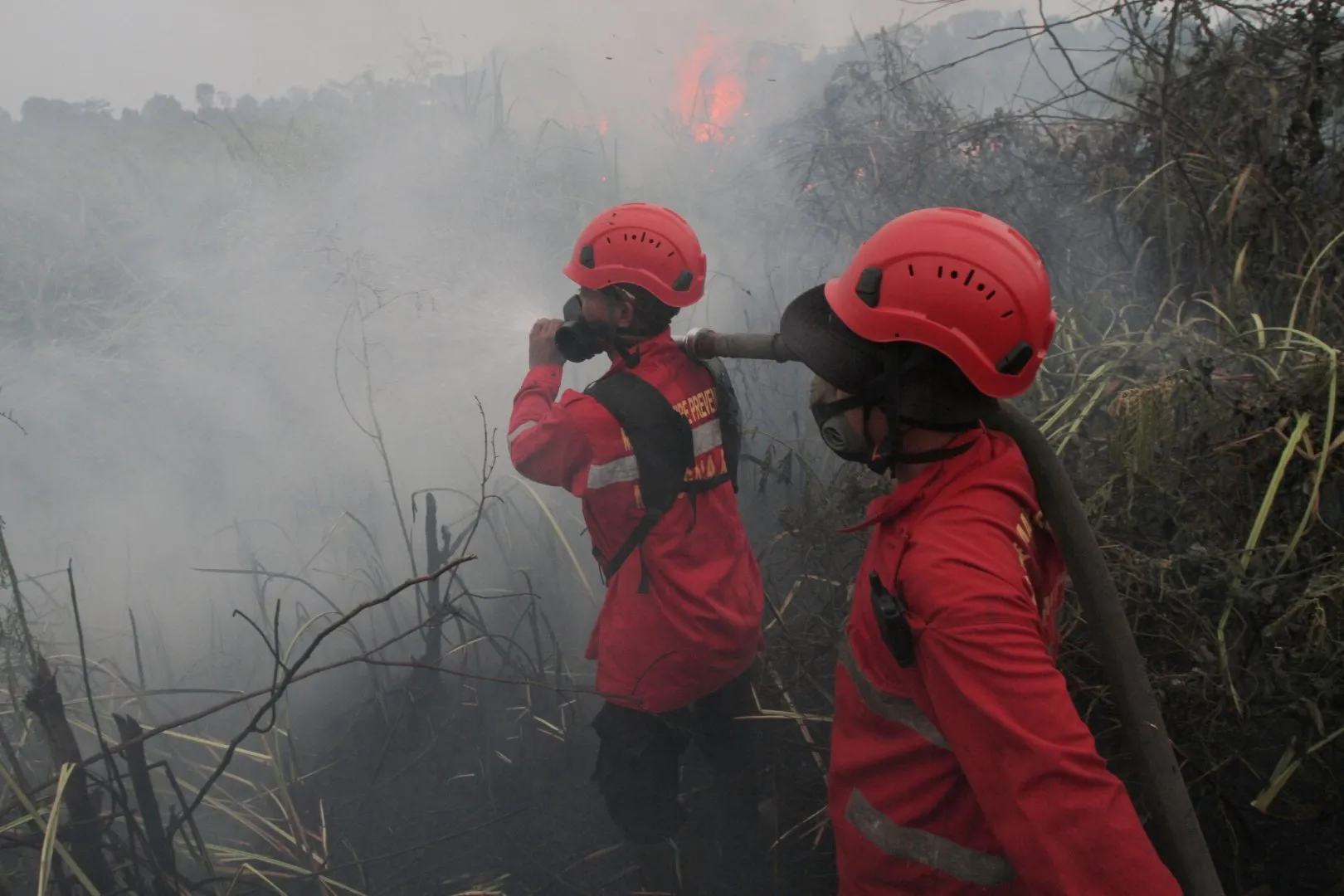
Locals on Indonesia’s Borneo Island are struggling to breathe as the smoke from wildfires is turning the air toxic. Al Jazeera’s Jessica Washington reports from Borneo on how conditions are complicating efforts to stop the fires.
Kaia recently claimed she was possessed as a child before undergoing an exorcismCredit: SplashHomer’s dad Richard Gere dated Kaia’s mum, supermodel Cindy, in the 1990sCredit: Getty
She told The Mitch Churi Chat Show podcast: “I do feel as though I attract beings from the other dimension, in a very casual and chill way.”
The star then revealed the bizarre way in which the ancient ritual was performed.
“They played a didgeridoo all over me.
“That’s how they did the exorcism,” Kaia revealed.
“I’ve never talked about it, but it actually did happen.
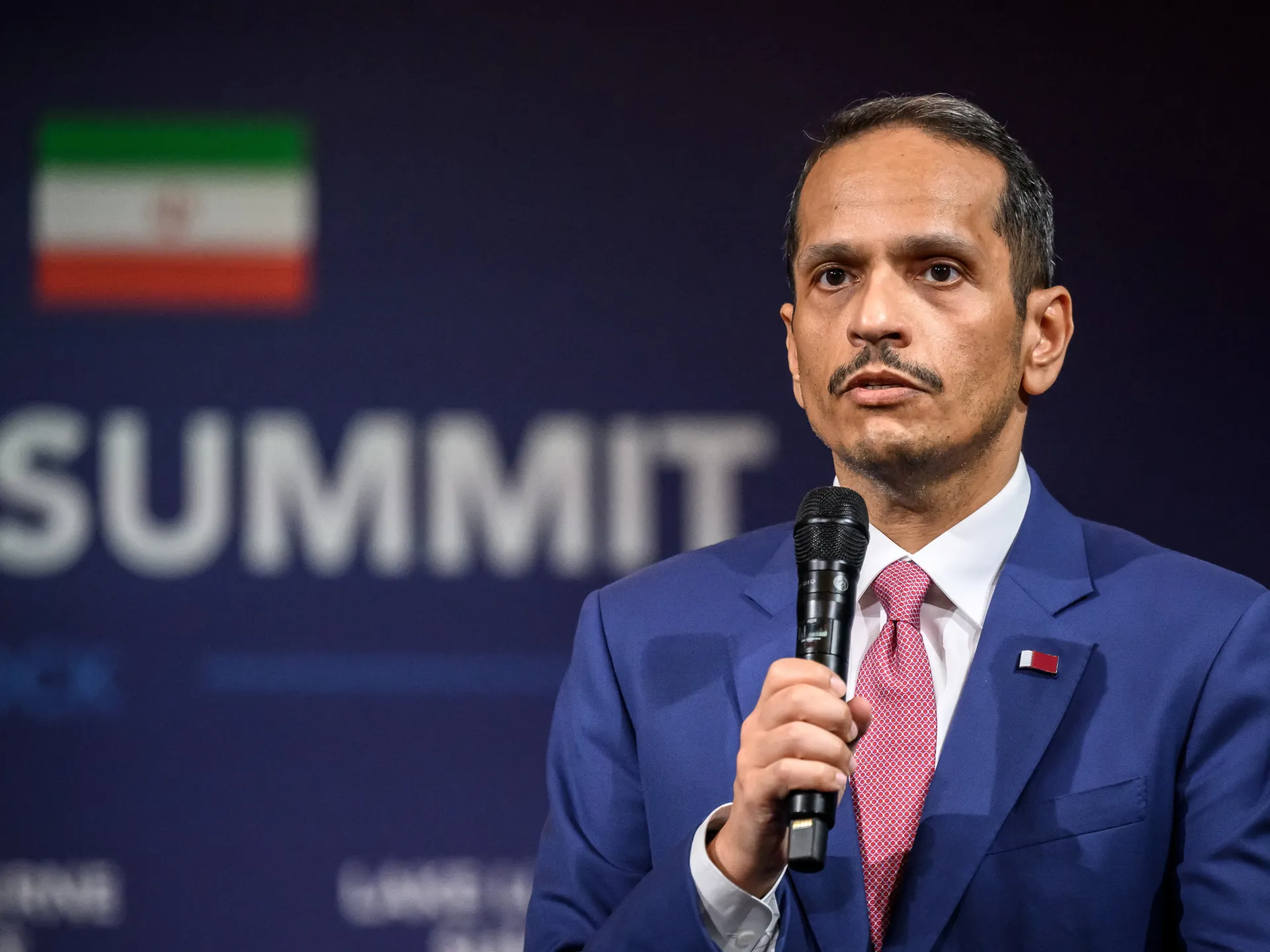
Qatari Prime Minister Sheikh Mohammed bin Abdulrahman bin Jassim Al Thani is due to visit Tehran on Thursday for talks on de-escalating tensions and reviving dialogue between Iran and the United States.
A spokesman for Qatar’s Ministry of Foreign Affairs announced the visit in a statement on X on Wednesday.
Recommended Stories
list of 4 itemsend of list
Majed al-Ansari said Sheikh Mohammed, who is also Qatar’s foreign minister, will meet with “a number of Iranian officials” in Tehran to “discuss ways to de-escalate tensions” and “create the conditions conducive to dialogue”.
“The visit comes in line with the State of Qatar’s firm position that the diplomatic path is the best means of resolving differences & promoting security & stability in the region,” he added.
Iran also confirmed the visit, saying the discussions will cover “the continuation of Qatar’s mediation efforts and initiatives, as well as other regional developments”.
Qatar has served as a back-channel negotiator between Washington and Tehran and helped secure a memorandum of understanding in June that briefly paused hostilities. The agreement collapsed in July, and the conflict is now nearing its sixth month, with fighting largely paused but no diplomatic breakthrough in sight.
The US has, meanwhile, promised to increase economic pressure on Tehran by sanctioning its trade partners.
US President Donald Trump told Al Jazeera on Wednesday that he was in “no hurry” to resume talks with Iran, saying that he believed economic and military action against Tehran were both effective.
“I have no time schedule; whatever it takes,” he said.
‘Economic terrorism’
Iran has continued to denounce the economic pressure campaign.
Foreign Minister Abbas Araghchi wrote to the United Nations on Wednesday calling the new sanctions an “act of state and economic terrorism” and urging member states not to implement them.
“The sanctions deliberately harm civilians by restricting access to food, medicine, medical equipment, energy and other essentials, violating rights including the rights to life, health, food and an adequate standard of living”, he said.
The two sides also remain at odds over the Strait of Hormuz, the strategic waterway that handled one-fifth of global oil and liquefied natural gas shipments before the US-Israel war on Iran began in February.
Iran wants control over the strait, while the US wants it to remain an international waterway that is free for all. That disagreement in part led to the collapse of the memorandum signed in June.
Oil flows through the strait have since fallen to a three-month low, with just 5 million barrels per day (bpd) transiting on Monday. Before the war, the strait carried roughly 20 million bpd of crude oil.
Qatar’s Foreign Ministry said Sheikh Mohammed will also discuss the waterway in his meetings in Tehran on Thursday, focusing on “the need for it to return to the status quo prior to February 28”.
Regional diplomacy
Sheikh Mohammed’s visit comes two days after Omani Foreign Minister Badr Albusaidi met his Iranian counterpart, Araghchi, in Tehran.
Following those talks, Iran’s deputy foreign minister, Kazem Gharibabadi, said the two countries had agreed on a new temporary route for shipping in the strait.
But he insisted that the waterway will not reopen until the US fulfils its commitments under the June deal, including the lifting of sanctions and the release of frozen assets.
Pakistan’s army chief, Asim Munir, also visited Tehran earlier in the week in a bid to “end the stalemate” in the conflict, with Islamabad reporting “significant progress” in those talks.
Mostafa Khoshcheshm, a professor at the University of Applied Sciences in Tehran, said that regional countries were pushing for dialogue because “they believe that the situation is moving towards escalation”.
“They know that if war breaks out, it would be a fully-fledged war and the fire would spill over into the entire region and beyond, leaving a detrimental impact on the global economy,” he said. “So there are hectic diplomatic moves on the part of these countries.”
Weekly insights and analysis on the latest developments in military technology, strategy, and foreign policy.
Faced with having to fight as technology rapidly transforms the nature of warfare, the U.S. Marine Corps on Wednesday unveiled its vision for the future of ground combat. Dubbed Ground Combat Element (GCE) 2040, the document lays out how Marines will fight and what kinds of equipment and training they will need to succeed, down to the squad level. Though the document doesn’t mention a specific adversary, it focuses heavily on the kind of littoral, anti-access battle a future Pacific fight would entail.
“I think that you would agree that the global security landscape today demonstrates an intensity for that kind of modernization,”Lt. Gen. Jay M. Bargeron, Deputy Commandant, Plans, Policies, and Operations, said today during a media roundtable to introduce GCE 2040 that TWZ attended virtually. “It’s a landscape that’s defined by rapid technological change and the reemergence, importantly, of peer-level adversaries like China and Russia.”
In a future fight against enemies with ubiquitous sensors, advanced artificial intelligence and machine learning (AI/ML) capabilities, waves of expendable drones, offensive and defensive electronic warfare systems and long-range precision weapons, smaller Marine units like rifle squads will have to act more independently to defend themselves and execute successful attacks.
The new plan recognizes that “widespread use of drones underscores the need for effective organic protective measures across the GCE, down to the squad level. The evolving drone threat presents the most significant risk to ground maneuver, requiring layered active and passive counter-UAS capabilities to retain the initiative. Survivability must be addressed by comprehensively encompassing improved training, updated doctrine, and technological advancements.”
You can see an example of how small drones are being used against Ukrainian forces in the following video.
Video showing a Russian 🇷🇺 fiber-optic FPV drone hitting one of the 4 🇺🇦 IFVs returning from this attack today
The ubiquity of drones on the battlefield has devastated both Russian and Ukrainian forces, which are each using these weapons to create an ever-growing no-go zone. Bargeron acknowledged that providing protection from drones for smaller Marine units presents a major challenge.
“The ability for our lowest echelon units – squad, platoon, company – to defend themselves against one-way attack systems is really maybe one of the biggest holes in our swing, and so we’re working hard on that,” the general admitted.
The Marine Air Defense Integrated System (MADIS). (USMC) US Marine Corps Marine Air Defense Integrated System (MADIS) vehicles. USMC
In addition, Bargeron said the Marines will also rely on a system called “Home Alone,” which a spokesman for the service told us “is a Counter-small Unmanned Aircraft System (CsUAS) that is a semi-fixed site GBAD solution that supports our layered defense structure.” The Marines declined to provide any details about how that system works, citing its classified nature.
For protection at the squad level, “the GCE 2040 integrates both active and passive measures to ensure organic protection,” a Marine official told us. “A key component of this is the Organic Counter-small UAS, or O-CsUAS, initiative. This program has fielded dismounted kits directly to the squads. These kits provide Marines with the ability to actively and passively detect drone threats and to defeat them using both kinetic and non-kinetic means.”
Those kits are “complemented by the use of frangible 5.56 ammunition for standard-issue rifles, which is more effective against aerial targets, and the continued employment of passive countermeasures like multi-spectral camouflage, dispersion, and displacement to degrade enemy targeting,” the official added.
Bargeron noted that the Marines have already purchased 400,000 of the frangible counter-drone rounds and that they are undergoing training on how to use them.
You can read more about the Marines’ emerging doctrine for devolving air defense down to the individual Marine in our story here.
Drone Round: The Next Evolution of Counter-UAS
As noted earlier in this story, GCE 2040 also calls for providing squads with longer-range offensive weapons.
“What we’re trying to do is to bring precision strike capabilities down to the lowest level,” the general noted. “That’s a great example of using advanced technology to enhance the lethality of Marines that are already doing that job. The OPF [Organic Precision Fires] increases the individual Marine’s or Marine rifle squads’ ability to strike targets, at ranges that you had previously needed fixed-wing air or aviation fire support or indirect fire.”
The goal is for squads to be able to strike targets at a range of about 20 kilometers, Bargeron stated.
“So in the hands of the individual Marines to be able to strike targets like that…will be dramatic,” he exclaimed.
They are also being sent to Ukraine, where the use of these systems by small units is a daily fact of life, not a vision for the future.
A Neros Archer first-person view drone sits on a case during a demonstration range at Weapons Training Battalion on Marine Corps Base Quantico, Virginia, March 7, 2025. (U.S. Marine Corps photo by Cpl. Joshua Barker) Cpl. Joshua Barker
Bargeron offered no other details on specific offensive squad-level longer-range weapons options that will be developed and fielded over the coming years.
The plan itself is vague in terms of overall timelines, noting that there will be a “phased approach to modernization” occurring across “three overlapping time periods.”
Near-Term (2026-2030): This period focuses on refining and accelerating ongoing Force Design modernization efforts, addressing the immediate threat of drones, and setting conditions for future investments.
Mid-Term (2031-2035): Investments in AI and autonomous systems will mature, enhancing headquarters functions, streamlining logistics, and improving operational tempo. Drone/unmanned formations and layered counter-UAS capabilities become critical.
Long-Range (2036-2040): The GCE is transformed by AI-enabled command and control, widespread Human-Machine Teaming, and resilient, dispersed formations. It operates with increased combat power and survivability, providing the Joint Force with a decisive advantage on key littoral terrain.
Ukraine has shown American troops up close and personal how difficult it is to defend against drones. In a recent training exercise in Germany, U.S. Army soldiers were trounced by Ukrainian drone operators, only improving their performance after the lessons learned from initial engagements. While there are still many unknowns about the goals and rules put in place for that exercise, which accomplished its mission of learning, it underlines long-standing questions about why the U.S. military has taken so long to adapt to a glaringly different battlefield. Whether the new Marine Corps plan will do so fast enough, especially as major foes, especially China, are moving aggressively in employing new weapons and tactics based on lessons learned in global conflicts, is still up for debate.
That being said, the Marines acknowledge that GCE 2040 is a work-in-progress, but the changes it is trying to address are critical to operating against threats the U.S. military has yet to face at the scale it would against China or Russia.
TOKYO — Japanese artist Yayoi Kusama, who splashed her signature polka dots on paintings, sculptures and museum installations around the world, has died, her company said Thursday. She was 97.
Kusama died Aug. 14 at a hospital in Tokyo, Yayoi Kusama Studio said in a statement.
Kusama, one of Japan’s most respected contemporary artists, was widely exhibited around the world, including at the Museum of Modern Art and the Whitney Museum of American Art in New York.
Repetitive motifs in various shapes were her trademark, resembling netting, swirls or worms, but most often dots, dancing proudly on her canvases or as sparkling balls or dots of light in her installations in all their vibrant, psychedelic glory.
Yayoi Kusama’s “Infinity Mirrored Room — The Souls of Millions of Light Years Away,” 2013.
(EPW Studio / David Zwirner, New York)
In 2017, the Los Angeles Times wrote about the first U.S. museum survey of the Tokyo artist’s Infinity Mirror Rooms at the Broad. The rooms generated “Hamilton”-scale hype.
Kusama told The Times: “I believe that people are attracted by the infinite mysterious beauty that the artwork has. I am also attracted.”
Now two of Kusama’s pieces on permanent display at the Broad draw, on any given day, a line of visitors to see the immersive art pieces for mere moments. “Infinity Mirrored Room — The Souls of Millions of Light Years Away,” on the first floor, requires reservations to stand for one minute in a small mirrored room full of bouncing LED lights that make you feel like you’re floating in the Milky Way. “Longing for Eternity,” on the third floor, also draws lines but does not require a reservation to peek inside a chamber that gives off a purple disco dance floor vibe.
Both conjure a sense of awe, of boundless imagination. Millions have entered the “Souls” room, snapping photos and video that elicit floods of Instagram likes, since its opening in 2017.
Kusama, known for her fiery red wig, lived by choice in a Tokyo psychiatric hospital for decades. She had opened her own museum in Tokyo yet remained very private, granting limited interviews.
Kusama insisted she drew the way she saw the world — covered with spots, part of the hallucinations she said she had from childhood. She was one of the first Japanese women to go to New York to pursue her art, in 1957.
Although soft-spoken and shy in her mannerisms, she was always unabashedly bold in the assertion of her dotty vision, not only in sticking to the style for decades but also in making it accessible to the masses.
In her later years, as the times caught up with her art, she enjoyed fame. She signed on with fashion brands such as Louis Vuitton as well as other licensed products including teacups, T-shirts and key chains with her illustrations and replicas of her likeness that were used in show windows and other marketing.
In 2008, Christie’s auctioned her work for $5.8 million. In 2016, she won the most prestigious award Japan gives its artists, the Order of Culture.
Upon receiving the award, she told reporters she was more determined than ever to pursue her art, stressing that the sincerity and devotion she had demonstrated in her personal life were crucial parts of her artistic legacy.
“I feel there is little left in my life, but I am now still fighting to the death for my art,” she said. “I am giving all I have so that many people will continue to be interested in my art, even after I am dead.”
Kusama was called pop, avant-garde, feminist, just to name some of the categories thrown at her, most of which Kusama brushed off as not quite representative of her art.
She was born in a middle-class family but felt misunderstood, as her parents wanted her simply to get married. They wanted to buy her kimono, not paints and brushes. She knew she had to get away. She chose America.
When she arrived in New York, the fad was “action painting,” characterized by dribbles, swooshes and smears, not dots. She suffered years of poverty and obscurity. But she kept painting dots.
She put circles of paper on people’s bodies, and once a horse, in “happening” antiwar performances in the late 1960s, which got some people arrested for obscenity but helped get media attention for her art. While in New York, she befriended artists including Andy Warhol, Georgia O’Keefe and Joseph Cornell, who praised her innovative style.
Over the years, Kusama has made quirky but stunningly celebratory works such as “Macaroni Girl,” a female figure plastered with macaroni, which expresses the fear of food; “The Visionary Flowers,” giant sculptures of twisting tulips; and “Mirrored Corridor,” a room with mirrors that delivers an illusion of a field of phallic protrusions speckled with dots.
Kusama, who has also made films and published several novels, said she wasn’t sure where she got her ideas. She just picked up her brush and started drawing. The process was so mysterious sometimes she surprised herself, she told the Associated Press.
“I think, ‘Oh, I drew that? I was thinking that,’” she said.
She appeared happy to have her art be the focus of media attention and praise, reading one of her poems to a reporter or tackling her artworks with gusto for photos.
But she was also a charmingly disarming mix of vulnerability and defiance — at one moment declaring herself “an artistic revolutionary” and then, the next, mumbling: “I am so afraid, all the time, of everything.”
Times staff writer Deborah Vankin contributed to this report.
Aug. 26 (UPI) — Meta agreed to pay up to $18 billion to 48 states, the District of Columbia and three U.S. territories on Wednesday, in settlements resolving lawsuits over the mental health risks its social media platforms pose to children as well as spearate privacy claims.
Court filings state that the settlements, pending judicial approval, include payments of $16.68 billion to 51 U.S. jurisdictions, more than $1 billion to Texas and another $459 million to 46 states, Puerto Rico and Northern Mariana Islands to resolve privacy claims tied to the 2018 Cambridge Analytica data scandal.
The filings also state that Meta must implement safeguards on its platform for minors, including limits on daily use, blocking access at night, more parental tools, stricter age-assurance standards, the hiding of likes on posts and banning cosmetic-procedure filters, among other measures.
California Attorney General Rob Bonta announced that his state may receive between $1.5 billion and $2.1 billion in the settlement.
“Today, we have secured a settlement with Meta that will make social media less dangerous for our kids and make a world of difference for children and their families,” Bonta said in a statement. “Meta has agreed to make massive transformations that will reduce the risk of harm from its platforms — and will do it within months.”
Meta said that 70% of the funds will be distributed over a 10-year period, with the remaining 30% to be released only after Alphabet-owned YouTube and ByteDance’s TikTok implement a one-hour dayily limit, night mode and age-assurance measures as well as each pay a matching $5.3 billion.
The Mark Zuckerberg-led Meta said the structure was designed to enforce an industry-wide adoption of the measures it has agreed to and ensure teens receive the same level of protection across major social media platforms.
“Because teens move fluidly across dozens of apps, we need an industry-wide solution. We therefore call on our industry peers, TikTok and YouTube, to implement this new framework, right away,” C.J. Mahoney, chief legal officer at Meta, said in a statement.
As part of the settlement, all parties, including Meta, waive all rights to appeal the final judgment.
“The focus of this case was to protect our kids: stopping notifications and alerts at night and when they are in school, encouraging them to take breaks from social media, protecting them against harmful features,” Phil Weiser, Colorado attorney general, said in a statement.
The cases brought by U.S. states are among several across the globe investigating social media companies over the harms they pose to children. Elsewhere, countries, such as Australia, have implemented age restrictions and called for the end to addictive features that encourage compulsive use, such as endless scrolling.
Meta still faces additional lawsuits in the United States still. Several school districts and individuals have filed lawsuits against Meta and other social media platforms for contributing to mental health problems among children.
President Donald Trump looks on as Secretary of Education Linda McMahon speaks during a back-to school event in the Rose Garden of the White House on Monday. The event focused on education and the Trump administration’s education policies. Photo by Will Oliver/UPI | License Photo