Trials for a vaccine for the Bundibugyo strain are ongoing, as DRC authorities try to control the Ebola outbreak.
Published On 28 Aug 202628 Aug 2026
The Democratic Republic of Congo (DRC) has begun vaccinating people against Ebola, with health workers and other front-line workers being prioritised.
However, the vaccine being distributed this week is licensed for another strain, and its effectiveness against the Bundibugyo strain of Ebola has not been determined.
Recommended Stories
list of 3 itemsend of list
There is currently no approved vaccine or treatment for the new strain, and clinical trials are ongoing to find a suitable vaccine for the Bundibugyo strain.
The first injections are being given to health workers in the Congolese city of Kisangani.
More than 50,000 doses of the vaccine have been received, according to the Congolese health minister, Samuel Roger Kamba.
The outbreak is concentrated in the Ituri province, which borders Uganda.
Kamba said: “We will cover all the provinces that are around Ituri, moving in the ring towards the centre of the outbreak.”
The World Health Organization (WHO) said last week that 70,000 doses of the Ervebo vaccine had been approved for use in the DRC.
About 20,000 of the doses allocated to the DRC will be used in a clinical trial to test its effectiveness against the latest strain. Health workers are calling for more doses.
As of Tuesday, the DRC had recorded 5,713 confirmed cases of Ebola, including 2,744 deaths, according to government figures. The outbreak is the deadliest of all past Ebola outbreaks that have hit the DRC.
The outbreak is spreading under extremely difficult conditions, fuelled by insecurity, displacement, a health workers’ strike and intense population movements.
The WHO has said it remains out of control and is on track to surpass the 2014-2016 West Africa Ebola outbreak, the deadliest on record, which killed more than 11,000 people, primarily in Guinea, Liberia and Sierra Leone.
Rivera sang about rural life in times of fast neocolonial expansion. (Venezuelanalysis)
Venezuelan popular artist Luis Mariano Rivera was born on August 19, 1906. His music is a tribute to life and a commitment to his community’s identity and cultural sovereignty. Rivera’s works remind us that when a people sow their land and tell their stories, they become resistant to oppression and invincible against foreign domination.
Canchunchó Florido is a tribute to Luis Mariano Rivera’s home village. Peformed by Gualberto Barreto.
A brief and affectionate profile
In the fertile and sunny lands of eastern Venezuela, specifically in the lush village of Canchunchú in Bermúdez Municipality, Sucre State, Luis Mariano Rivera was born on August 19, 1906, 120 years ago. His life was shaped by the rural realities of this area, which combined the abundance of nature with the profound inequalities of a latifundista-dominated agrarian economy.
His childhood was marked by early orphanhood and farm labor. Far from leading to resentment or resignation, this experience shaped in Rivera a loving and vital sensibility that allowed him to dismantle traditional notions of property and patriarchal-landowner hierarchy, enabling him to identify with the land, plants, and animals that surrounded him. This connection to the land enriched his imagination, and his extended family ultimately came to encompass the entire territory.
Rivera’s creative work blossomed after he turned 48. A self-taught musician, poet, and playwright, he composed his first verses using the Venezuelan four-stringed cuatro guitar as his primary instrument. His artistic output became an act of defiance that placed elements dismissed by the dominant culture at the center of Venezuelan poetry: local biodiversity, manual labor, trees, fruits, and wildlife.
Through his popular theater plays and musical compositions, Rivera portrayed a cosmogony in which nature is not merely a resource to be exploited, but a subject with rights to be loved and respected.
Although he never joined any political party nor sought public office, his approach to life and art constitutes a profound political statement. In a Caribbean and Venezuelan context where the neocolonial oil rentier model displaced agricultural production and fueled the exodus from the countryside to the city, Rivera’s insistence on staying in Canchunchú and singing about rural life was a clear act of resistance.
His politics were rooted in pacifism, fraternity, and love for the land. In the face of the metastasizing commodification of life, he prioritized the ethics of care, respect for natural cycles, and community solidarity. Various artists of national and international renown, including Alí Primera, Lilia Vera, Cecilia Todd, Soledad Bravo, Gualberto Ibarreto, and Morella Muñoz, performed his songs, transforming his local message into a banner of continental identity. Alí Primera, in particular, saw Rivera as a beacon of popular dignity, celebrating his ability to transform everyday rural life into revolutionary and loving poetry.
Luis Mariano Rivera passed away on March 15, 2002, in Carúpano, Sucre State, at the age of 95, after nearly a century devoted to cultivating the poetry of life, simplicity, and affection. His legacy is recognized as a symbol of the musical identity that flows directly from the harmonious relationship with the land and the wisdom of the people.
La Guácara [The Snail] is a tribute to nature and the delicate nature of life. Interpreted by Gualberto Ibarreto.
Sound, memory, and collective identity
In many of the ancestral cultures of Abya Yala, sound is part of the creation myth of the women and men who originally inhabited these territories. For all of humanity, sounds have played an important role in the formation of identities. Languages and music stem from this very relationship and our need to connect, to name ourselves, and to determine our own destinies.
Every landscape has its own sonority. In other words, a set of sounds that form its geohistory. This includes our ways of speaking and our music, but also the sounds of the wind, the rain, the sea, the river, birds, insects. In short, all the sounds of life expressing itself, as well as the sounds of human inventions that are now part of our daily lives.
Within this spectrum, there are human beings who manage to connect the sounds of past, present, and future memories to bequeath a sonic identity that transcends the purely artistic realm, becoming the very landscape narrated in their poetry. Luis Mariano Rivera is an example of this transcendental audacity to place oneself beyond time with a unique music.
At the age of 48, driven by the desire to express himself without relying on others to write his letters and thoughts, he taught himself to read and write. Already in his mature years, he began composing verses, parrandas, merengues, and eastern joropos through which he paid tribute to the flora, fauna, and everyday life of his village.
Rivera’s remarkable sensitivity stems from his direct observation of the countryside. His lyrics preserve idioms, sayings, and oral expressions from eastern Venezuela that would otherwise have been lost. Long before the rise of globalized environmental movements, his songs already championed the balance between humans, wildlife, and flora from a local, community-based, and decolonizing perspective. Rivera’s legacy transcends mere musical composition; he represents a defense of communal life and a living example of how it is possible to reclaim one’s own history to create sounds that cement collective identity.
For him, Canchunchú was not merely a geographical reference point, but the center of the world. By singing about his village and embracing rural daily life as a symbol of belonging with a claim to universality, he created an affective geohistory that recognized the dignity of life as equivalent to that of the cherry, the guácara [snail], and the mango. He showed to his community that their own reality is worthy of being celebrated and sung about. As such, his work did not stem from ego. It was born out of the village’s celebrations and gatherings, and like collective knowledge, it has no other purpose than enjoyment and the strengthening of collective unity.
Singing honestly about one’s own village, honoring the vernacular of one’s community without resorting to artificial language, taught us a sense of pride in our ways of feeling, understanding, and reasoning.
Rivera’s music, paraphrasing Alí Primera, grounds us in our own land, with the profound simplicity of one who surrenders to the magnitude of the surrounding beauty. His deep connection to his native Canchunchú never served as chauvinistic isolation or picturesque folklorism. Rather, it was a gateway to the human condition prior to the violent irruption of Western capitalist modernity, with its imposition of individuality, the commodification of nature, and linear progress, at the expense of communal memory. Rivera’s work operates in the opposite direction: it reconnects with an organic body of knowledge that does not require academia to be legitimate, because it is engraved in the lived collective experience.
It is no secret to anyone that traditional community music, as well as rural poetry, serves as a means of transmitting memory. It is not mere entertainment. Rhythmic patterns, melodic turns, and poetic meter interact with the biological, agricultural, and communal cycles that humankind has cultivated for millennia.
Rivera did not theorize about nature: he embodied it. His philosophy sprang from working the land, from sweat, and from the sounds of the countryside. It is the knowledge transmitted through the body and emotion, that “communal way of life” that predates modernity and remains a reservoir from which to conceive alternatives to capitalism, fascism, imperialism, and Zionism.
True universality does not consist in erasing differences under a single mold with domineering hegemonic pretensions, but rather in reaching our very roots. When we reaffirm the dignity of our communities, we validate the “peripheries” as the center of our own worldviews without the need for external recognition.
Rivera demonstrates that the periphery is a center in and of itself by stripping away the pretensions of colonial modernity. His music taps into the common core of humanity: the wonder of being alive, communal solidarity, and respect for the sacred meaning of life. And this is not a nostalgic gaze toward the past, but rather a reservoir of meaning and hope for the present. It reminds us that beneath the veneer of modernity, the human species remains hardwired to come together, celebrate, and sustain communities.
Finally, Rivera’s production is above all an expression of love. Love toward the full life experience. But when a poet sings about love, it is usually limited to romantic love, or heartbreak in the absence of corresponding feelings. Nevertheless, Rivera did count on a “spiritual companion,” to use his own words: Maximina Marsella, known as La Negra Marsella and whom he affectionately called “la negra,” in what is a very common expression in Venezuela. She was presented as the only woman capable of understanding his silences and his late passion for words. He dedicated many love verses to her, expressing how they shared feelings and devotion for the small things in life and the land.
El Mango is a song dedicated to Venezuela’s ubiquitous tropical fruit as a symbol of shared sovereignty and food sovereignty. Interpreted by Andrea Paola.
Writing our own history and cultural sovereignty
The act by which a dispossessed individual reclaims control over the written word is, in essence, an act of sociopolitical liberation. For Luis Mariano Rivera, the decision to learn to read and write on his own as an adult was not merely a matter of functional education or an attempt to conform to bourgeois standards. It represented taking control of his own narrative and a fundamental reaffirmation of his personal and communal sovereignty. In a system dominated by the colonialism of knowledge, where official writing has historically functioned as a mechanism of subordination and administrative control, mastering the alphabet from the campesino perspective means dismantling the monopoly on truth. Rivera lucidly understood that mastering the written code granted him the historical ability to cease being a passive subject, an object of study in folklorism, and become the chronicler and philosopher of his own time. He ceased to be narrated by others and assumed authorship of his territorial memory.
This literacy and poetic endeavor took place against a profoundly adverse historical backdrop. Throughout the twentieth century, Venezuela underwent a traumatic transformation driven by the emergence of the neocolonial oil enclave. Urban modernization advanced aggressively through its ideological and economic strategy of marginalizing the countryside, dismantling traditional community structures, and promoting rural depopulation in favor of slums in the major cities.
The extraction of hydrocarbons by transnational corporations tied to the geopolitical interests of US and European imperialism came alongside an overwhelming wave of cultural propaganda. This ideological penetration sought to impose the American consumerist lifestyle, eroding peasant identity and dismissing local agriculture as synonymous with backwardness and savagery. Venezuela, which was barely emerging from the devastating aftermath of the war of independence and successive nineteenth-century insurrections, revolutions, and civil wars stoked by local elites and foreign capital, saw its food sovereignty and historical memory shaken.
Amid this landscape of alienation, where the country was rapidly transforming into a consumerist, import-dependent enclave, Rivera’s insistence on remaining in his Canchunchú valley and singing about the communal way of life was not a nostalgic or folkloric retreat, but rather a deeply political and assertive affirmation of cultural re-existence.
He sang with such transparent and loving clarity that his powerful message took root in the national collective imagination, ethically reframing the traditions, sufferings, joys, and experiences of campesinos in eastern Venezuela. Against the aesthetics of waste and the logic of neocolonial dispossession, he countered with the ethics of care and the sacredness of everyday life. His compositions served as a mechanism for preserving historical memory: he warned against the collective amnesia regarding the communal way of life driven by the discourse of developmental modernity; he championed food sovereignty in the face of dependence on the globalizing market; he dignified rural labor in the face of urban prejudice, revealing the profound ecological philosophy inherent in popular knowledge. But, moreover, his profound poetic work demonstrates that true national sovereignty is more than just the defense of natural resources or borders. It requires the preservation of the collective soul, the dignity of the living word, and the self-determination of the people’s power.
Luis Mariano Rivera’s life journey teaches us that decolonization is not achieved solely through theoretical confrontation or bellicose rhetoric, but above all through an organic connection to the land and the community. By recognizing himself through his own voice, he prevented imperialist corporations and the oil industry’s maelstrom from erasing the humanity of his surroundings. His music endures as an indestructible testament to cultural sovereignty: living proof that a people who remember their roots, cultivate their land, and tell their own stories become resilient in the face of modern oppressions and invincible against any attempt at external domination.
Cerecita [Little Cherry] is a song about the miracle of life and a subtle critique of the urban disdain for the simple beauty of rural life. Interpreted by Maria José Delgado and Fabiola José.
Fabiola José is a Venezuelan singer. She has performed in countries across South America, Africa, Europe, and Asia. Her singles and albums are available on all digital platforms. She hosted and produced “Cantante y Sonante” for Radio Nacional de Venezuela. In 2018–2019, she created a series of videos for social media, published on her YouTube channel #HechoEnCasa. She holds a bachelor’s degree in Music from IUDEM, Caracas (2005); specialized under Maestro Tom Krause in Spain (2007); and an M.A. in Arts and Cultures of the South from UNEARTE, Venezuela (2020).
Fidel Barbarito is a Venezuelan musician and researcher, with a bachelor’s and master’s degrees in music and history, respectively. He teaches in the undergraduate and graduate programs at the National Experimental University of the Arts (UNEARTE). Together with Fabiola José, he promotes several musical projects aimed at disseminating traditional repertoires, integrating them with contemporary compositions inspired by these sounds. Joropo llanero. Parranda de reexistencia is one of his published essays.
The views expressed in this article are the authors’ own and do not necessarily reflect those of the Venezuelanalysis editorial staff.
Eight months have passed since Rob and Michele Reiner were killed and their youngest son was arrested and charged with murder, but the couple’s eldest son still feels he “will never understand why this happened.”
The children of film director Rob Reiner and photographer Michele Reiner mostly have kept mum despite extensive coverage of the brutal stabbings of Dec. 14, 2025.
In a television interview with KABC-TV’s Marc Cota-Robles, Jake Reiner, the eldest son, described the aftermath of the slayings and the arrest of his brother, Nick, as a “living nightmare.”
“Nobody really understands what it’s like to go through something like that until you’re living it,” said Jake, 34. “It’s been eight months. It feels like eight years at the same time. And it also feels like eight minutes because every moment that I wake up, I’m reminded of my reality.”
Jake said he learned the night of their deaths that the Los Angeles Police Department was looking at Nick as a prime suspect. A grand jury indicted Nick last month on murder charges with special allegations of committing multiple murders and lying in wait, making him eligible for life without parole or the death penalty if convicted.
“He’s in jail,” Jake said. “It’s like, I physically lost my parents, and then Nick was arrested. Now it’s just me and Romy, and we have to navigate this by ourselves essentially.”
Asked whether he was surprised that Nick was suspected in the crime, Jake declined to answer. He also declined to discuss his brother’s attempt to use family trust money to fund his legal defense. Instead he discussed the anger he is feeling.
“It manifests into rage, into how unfair this was, how I didn’t get a say in what happened. I didn’t get to stop it from happening. I had no choice in the matter,” Jake said. “I just have to accept the reality of it. And to me, that is just one of the most infuriating parts of all of this.”
He said he learned of his parents’ deaths while attending a celebration of life event for a high school friend at Union Station. His sister, Romy, tried to call him.
“I screened it because I thought, at the time, I’m in the middle of something, you know, I’ll call her back,” he recalled, “and then she called immediately again, and I knew at that point that something was wrong.
“Romy told me our dad was dead, and then she said, ‘I can’t find mom.’ I immediately went into shock.”
Investigators found the body of Rob Reiner in the master bedroom. Michele Reiner subsequently was found in the bedroom area as well.
Romy, 28, has not publicly commented.
Nick’s struggles with addiction and mental health were public knowledge. In 2015, he partnered with his father on the film “Being Charlie,” about a drug-addicted son, which Nick wrote and Rob directed. It was loosely based on Nick’s life.
Jake was no stranger to crime scenes — as a longtime television news reporter he said he witnessed plenty, but nothing could have prepared him for his parents’ home that night.
“As a reporter, I did it for 10 years; I came up on crime scenes all the time,” he said. “But when it’s your crime scene, a crime scene at your childhood home, it’s like the most surreal thing I’ve ever seen.”
Nick has pleaded not guilty. A pretrial hearing is slated for Sept. 15, a day after his 33rd birthday.
“I’ll never understand. I don’t care how it’s explained to me. I don’t care what facts come out, ” Jake said. “My parents had unconditional love for all three of us. I can tell you they never stopped wanting to help him. They never stopped helping him.”
Jake and Romy made their first public appearance together since the tragedy on Aug. 2 at Dodger Stadium, where they took part in the ceremonial first pitch. Dodger Stadium meant a great deal to their father.
“One of the great pleasures I have is walking into Dodger Stadium. It’s like I feel at peace,” Rob Reiner once said.
“He had season tickets for the Dodgers,” Jake said, “and we would go anywhere from three to four games a week, and it was just the greatest time with him.
“It was an emotional thing that we did. I don’t know if I really could take in the moment, because everything happened kind of fast, but I was really happy that we got to do that.”
The Food and Drug Administration on Thursday issued an emergency approval for use of the drug ivermectin in the battle against New World screwworm infestations in U.S. cattle. Photo courtesy U.S. Department of Agriculture
Aug. 27 (UPI) — The Food and Drug Administration on Thursday issued an emergency approval for the use of the drug ivermectin against New World screwworm infestations in cattle, adding to the arsenal of weapons available against the flesh-eating insect.
The FDA approved an Emergency Use Authorization, or EUA, for Bimectin, the generic version of ivermectin, for injections in cattle when administered within 24 hours of birth, at the time of castration, or at the appearance of a wounds, the agency announced.
Bimectin injection remains unauthorized for use in lactating dairy cows or in calves that will be processed for veal.
Thursday’s move is the 14th EUA issued by the FDA against New World screwworm as the Trump administration attempts to deal with the still-growing infestation in Texas.
The Department of Agriculture has confirmed 47 domestic cases of New World screwworm, or NWS, in animals as of Thursday.
NWS is widely feared as a serious health and economic threat that could cost billions of dollars in losses to cattle, bison and horses. The pest was eradicated from the United States in 1966 and eliminated as far south as Panama by 2000, but reemerged in 2022 and has continued moving north through Central America and Mexico.
The U.S.-Mexico border was closed last year to protect U.S. animals from the threat. The ban was subsequently lifted on July 26.
Texas Agriculture Commissioner Sid Miller last month urged the FDA to authorize ivermectin in feed as an additional tool to combat the growing NWS threat.
Injectable ivermectin is not enough to keep pace with the outbreak and protect livestock from further infestations, he asserted.
“Texas ranchers are fighting for their livelihoods and the security of the American food supply. They don’t have time to wait,” Miller said. “We’ve already seen this parasite spread across multiple Texas counties in just a few weeks. Every day we delay is another day the New World screwworm gains ground. We need every effective weapon available, and we need it now.”
The Texas Grain and Feed Association “has committed to rapidly manufacture and distribute medicated feed upon approval, ensuring producers can begin using it without delay,” he noted.
The Democratic Republic of Congo is launching an Ebola vaccination campaign to tackle the deadliest outbreak of the virus the country has ever seen. It is using a vaccine for a different strain of the virus, since there is no vaccine yet for the outbreak’s Bundibugyo variant.
Fabares was known best for her television roles , including Christine Armstrong on the ’90s sitcom “Coach,” Francine Webster on the 1970s sitcom “One Day at a Time” and Mary Stone on “The Donna Reed Show,” as well as her Billboard Hot 100 song “Johnny Angel” and appearances opposite Elvis Presley in “Spinout,” “Clambake” and “Girl Happy.”
The actor died Saturday in Los Angeles surrounded by loved ones after battling pneumonia, her family told The Times on Thursday. In the 1990s, Fabares fell ill, but doctors struggled to pin down what the problem was. After years of health problems, she was diagnosed with autoimmune hepatitis. Doctors ultimately discovered severe liver deterioration, and she spent nearly two years on a waiting list for a liver transplant. She received the lifesaving surgery in the fall of 2000.
In 2011, Fabares told PBS Houston that after suffering liver failure and facing death, her outlook on life completely changed. “It really brought home the fragility of life and how fast everything can change and how extraordinarily lucky we are to be alive, and to have this opportunity to be here, and in my case, to get really an entire second chance,” she said during the appearance. “It does make things more precious.”
She said that, after the close call and lengthy recovery, she feared death less.
“To her family and friends, Shelley was a source of love, strength, laughter, and comfort,” Fabares’ husband, “MASH” actor Mike Farrell, said in a statement.
“She was a devoted wife, cherished stepmother, daughter, sister, niece, aunt, family member, and loyal friend whose warmth, generosity, humor, and grace made an enduring difference in the lives of everyone who knew her. She had a remarkable ability to make people feel welcomed, valued, and cared for.
“For millions, Shelley was a beloved actress whose work became part of the fabric of American television and film. … But to those closest to her, her greatest legacy was personal: the love she gave so freely, the friendships she treasured, and the family bonds she held dear.
“We will remember Shelley for her kindness, loyalty, wit, courage, and beautiful spirit. We will miss her deeply — not only as a celebrated performer, but as the loving and extraordinary person she was in our everyday lives.
“We are heartbroken by her loss, yet profoundly grateful for the years we shared with her and for the joy, compassion, and love she brought to so many. We ask that our family’s privacy be respected as we grieve. We take comfort in knowing that Shelley’s work and the memories she created with those who loved her will continue to live on.”
She is survived by her husband and her daughter, Erin.
Former US Ambassador to Turkiye Francis J. Ricciardone tells Al Jazeera’s ‘This is America’ that Prime Minister Benjamin Netanyahu sees ‘political value’ in labeling Turkiye as Israel’s latest enemy, in the run-up to legislative elections in October.
An air strike on a fuel market near Chad’s border with Sudan killed 12 and injured seven, according to officials.
Published On 28 Aug 202628 Aug 2026
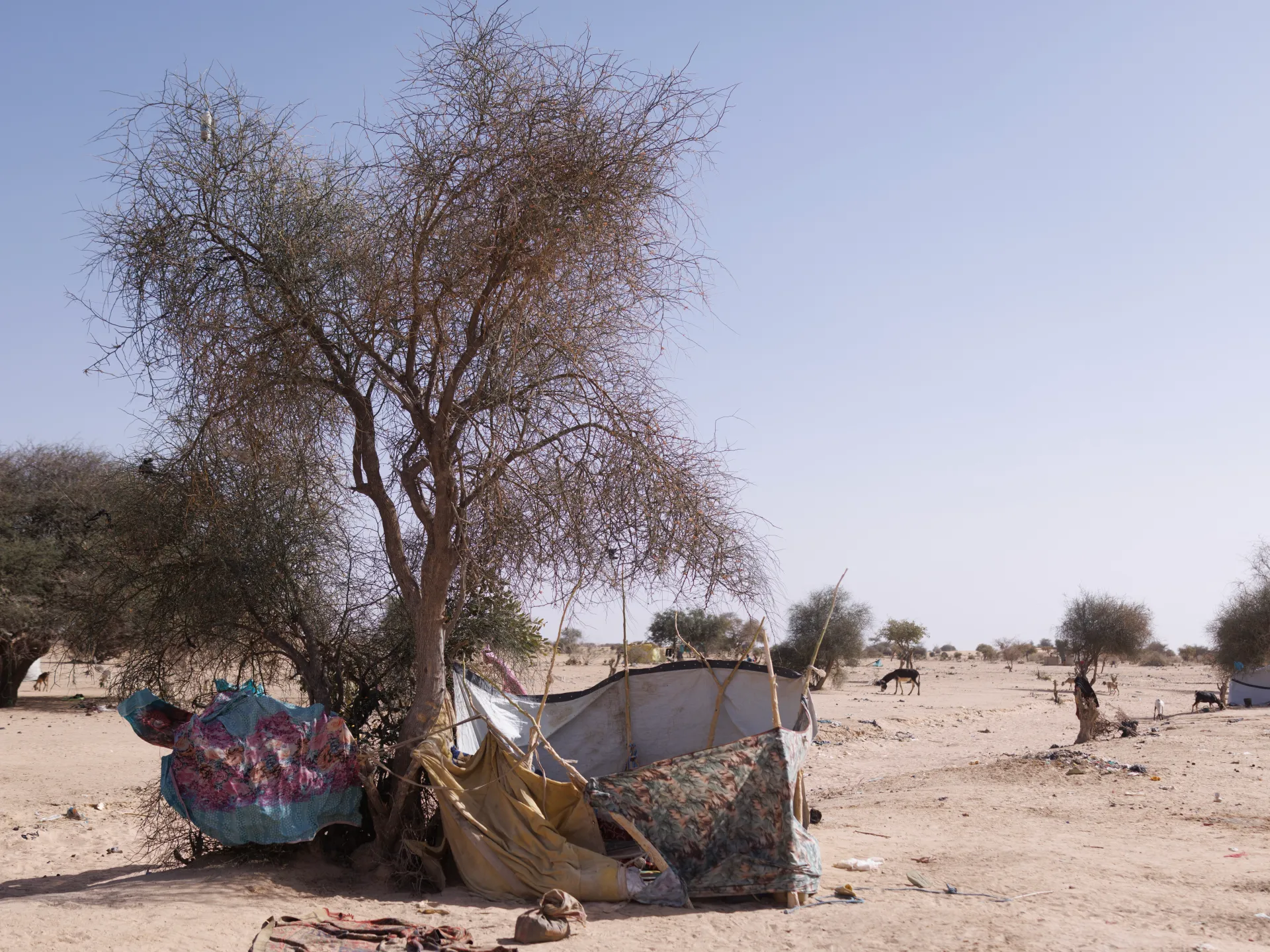
An air strike near Chad’s border with Sudan has killed at least 12 people, with Chad accusing the Sudanese army of launching it.
Addressing Thursday’s strike, a Chadian security source said it “targeted a fuel market where the RSF [Rapid Support Forces] refuel. The strike killed 12 people and wounded seven”, AFP news agency reported about the attack on the paramilitary group.
Recommended Stories
list of 3 itemsend of list
Chad’s accusation comes against the backdrop of a civil war between Sudan’s army and the RSF which has lasted over three years and displaced millions of people.
Previously, Chad said that Sudan was responsible for an air strike that hit a military convoy in its territory last week. Chad’s army said the strikes took place more than 100km (62 miles) inside its territory in the eastern Ennedi region, and that there were no Chadian casualties.
In response to threats posed by drones, Chad had raised its alert level in the area to its highest point, according to a security source. The country deployed about 100 armoured vehicles and signal-jamming trucks near eastern Tine, close to the Sudanese border, a local source told Reuters news agency.
On Thursday, Sudan said it was surprised by the allegations against its army “before any professional and independent investigation into the circumstances of the incident”.
Sudan’s Foreign Ministry said its forces “are carrying out their constitutional duty to protect Sudan’s sovereignty, security and safety and to face any threats it faces, while respecting the sovereignty of its neighbours and without targeting their territory”.
The US embassy in Khartoum also accused the Sudanese army of launching the recent strikes on Chad, condemning them on Thursday.
The Sudanese army has previously accused Chad of being aligned with the RSF. Meanwhile, nearly one million displaced Sudanese people have fled to Chad, where they have been facing a water crisis.
Sarah Platt decided to take drastic measures for her children from her prison cell in the latest episode of Coronation Street in another twist for the soap legend
Sarah Platt decided to take drastic measures for the sake of her children in the latest episode of Coronation Street
Sarah Platt decided to take drastic measures for the sake of her children in the latest episode of Coronation Street. The legendary soap character, who has been played by Tina O’Brien since 1999, is currently serving time in prison having been charged with the murder of Theo Silverton.
The factory supervisor has made some sort of friend in fellow inmate Kacey, who has previously tried to use Sarah’s former romance with DC Kit Green (Jacob Roberts) to her own benefit. On the latest episode of the world’s longest-running TV soap, Sarah was horrified to find photographs of her son Harry had been vandalised.
Kacey immediately denied that it was her and quickly turned to the news that some pool balls had been stolen from the recreation room. Just then, Kacey pulled out her phone and found that photos of Harry and another boy had popped up on social media, causing immediate panic. Sarah punched a number into her phone and instructed Harry via voice message to go to Adam Barlow’s house.
Kacey then said: “I don’t want anyone to get hurt. I just need one small favour from your ex. For Harry’s sake, and Bethany’s too.”
All this time, Adam had innocently dropped Harry off at a new friend’s house, and his partner Alya seemed to think nothing of it. Clearly stressed out, Sarah phoned Adam and he explained: “I told you, her name’s Lottie. Her son joined Harry’s holiday club last week.” Sarah demanded Adam go and collect him right now, but Lottie was already dropping Harry off as Alya demanded to know what was going on.
She confirmed she had removed the pictures from social media, and claimed to only vaguely know Kacey but said she had no idea she was behind bars. Adam did not believe her and accused her of posting the photos just so that Kacey would see.
When Adam voiced his concerns to Kit in the pub, he brushed it all off but, back in prison, Sarah was seen loading the stolen pool balls into a sock, ready for action.
Reacting to the dramatic scenes, one fan wrote on X: “Sarah stole the pool balls to make a weapon for self defense. And they do need to watch Harry now more. And I bet Sarah will end up attacking Kacey in tomorrow’s episode.”
Another said: “Poor Sarah Lou [crying emoji],” and a third said: “Good thing Alya and Adam, were jumping into Lottie’s a*** for posting photos of Harry. She can lie but we all know she knows Kacey, and it was to help her mess with Sarah.
A fourth wrote: “Kacey using Harry and Bethany’s names against Sarah, she knows is working cause it does scare Sarah. Makes her fear for their safety.”
Another seemed to be more amused by the fact that Sarah had a phone in her cell that she could use at will as they said: “Sarah has a landline in her cell? Perks of being a murderer.”
A federal judge on Thursday approved a $72.5 million settlement between victims of Jeffrey Epstein and Bank of America over the bank’s financial dealings with the sex offender. File Photo courtesy of New York State Division of Criminal Justice/EPA-EFE
Aug. 27 (UPI) — A Manhattan federal judge on Thursday signed off on a $72.5 million settlement between Bank of America and victims of Jeffrey Epstein over the banking giant’s involvement in the convicted sex offenders crimes.
Judge Jed Rakoff said the agreement was a move toward accountability for the victims, he added that the pain caused by Epstein could be undone. “No amount of money can ever fully compensate Epstein victims for the harm they’ve suffered,” he said.
Around 60 women who were trafficked or abused by Epstein or any of his associates between June 2008 and July 2019 will be covered by the settlement, attorneys for the women have said.
The Charlotte, N.C.-based bank was accused in a class-action lawsuit of ignoring red flags in Epstein’s transactions in the years after he was first charged with sexually abusing girls and young women.
The lawsuit, which was filed last October, accused Bank of America of “absolute loyalty” to Epstein.
According to Senate Finance Committee data, Bank of America filed suspicious activity reports about more than $170 million in suspicious transactions between billionaire Leon Black and Epstein.
Similar settlements have been reached with JPMorgan Chase for $290 million and Deutsche Bank for $75 million.
Weekly insights and analysis on the latest developments in military technology, strategy, and foreign policy.
NASA is starting to explore options to fill the gaps that will be left by the eventual retirement of its iconic T-38 Talons. Since the 1960s, NASA has been using the jets to support astronaut training and as chase planes. However, the Talons are aging, supportability is already a problem, and challenges to sustain them further are expected to grow as the U.S. Air Force replaces its T-38 fleet with new T-7A Red Hawks.
The Johnson Space Center (JSC) in Houston, Texas, put out a contracting notice today seeking information about potential T-38 successors. NASA currently has 25 Talons in its inventory, according to the Federal Aviation Administration’s (FAA) online database.
A trio of NASA T-38s at the Johnson Space Center (JSC) in Houston, Texas. NASA
“NASA JSC is conducting market research to obtain industry information regarding availability, capability, schedule, sustainment models, and cost efficacy for modern high-performance jet aircraft that could be used in evaluation and an evaluation program for supporting NASA’s astronaut SFRT [Spaceflight Readiness Training] requirements,” the notice explains. “NASA has operated the T-38N fleet in support of astronaut SFRT for several decades. With the U.S. Air Force planning to retire the T‑38 fleet in the 2030-2035 timeframe, NASA is evaluating options to transition to a more modern high-performance aircraft.”
The T-38N variant is specific to NASA and distinct from the T-38A/B/C variants the Air Force currently operates. The U.S. Naval Test Pilot School also has a handful of T-38Cs. Both the N and C variants are based on the original T-38A, which first entered Air Force service in 1961. The Air Force bailed the first Talons to NASA three years later.
A pair of US Air Force T-38 Talon jet trainers. USAF
The N models have received various upgrades over the years, including the integration of new modern ‘glass cockpits’ with digital displays starting in the 1990s. As of 2011, compared to contemporary C variants, “the T-38N aircraft includes differences in communications and navigation, such as the addition of weather radar, a data link weather system, the terrain avoidance and warning system, the terminal collision avoidance system, GPS with localizer performance and vertical guidance approach capability, and redesigned electrical, inlet, ejector nozzle, and flight management systems,” according to a report from the National Research Council of the National Academies of Sciences, Engineering, and Medicine.
NASA T-38 Jets In Flight – Cockpit View Captured by Astronaut | Video
Now, “NASA is seeking information on existing, production, or near-production high-performance jet aircraft capable of supporting SFRT,” per today’s contracting notice from the JSC. “NASA is not restricting industry responses to a specific performance class or aircraft design heritage.”
The notice does provide the following list of desired characteristics:
“High reliability with established maintenance documentation”
“Self-starting engine capability”
“Performance comparable to a modern jet trainer/light fighter aircraft”
“Capability to support dynamic maneuvering, formation flying, and cross-country navigation”
“Dual-seat, dual-control configuration (tandem or side-by-side)”
“Modern avionics compatible with instrument flight operations”
“Aircraft capable of being single-pilot qualified from either seat is highly desired”
“Prior to any fleet transition, NASA seeks to conduct a limited-scope evaluation program using a small number of modern aircraft,” the notice adds. “This evaluation program is not a full fleet buy or replacement. It is intended to operate a small number of aircraft within JSC’s existing operational framework to assess compatibility, logistics, cost efficacy, and training impact.”
Furthermore, “NASA anticipates evaluating a small number of aircraft over a multi-year period,” it continues. “NASA requests information on potential procurement options such as lease, lease-to-own, barter, or other arrangements due to limited upfront procurement funding.”
A quartet of NASA T-38 jets flies in formation past Launch Pad 39B at NASA’s Kennedy Space Center. NASA
NASA is looking to be solely responsible for flight operations of the jets, but is expecting contractors to handle maintenance, whether the aircraft are government-owned or not.
The contracting notice does also say that “NASA is open to operating the aircraft under reasonable flight hour limits, maneuver restrictions, or operational envelopes consistent with contractor recommendations.”
Just what kind of limits and restrictions NASA might be willing to accept is unclear. The entire reason for operating the T-38s now is to offer a high-performance platform with a good degree of maneuverability to support the SRFT requirements. These are attributes that are also valuable when flying as a chase plane and otherwise supporting flight research and test activities.
NASA certainly seems to be willing to consider a wide range of potential operations, both in terms of aircraft and operating schemes. When Boeing won the Air Force’s T-X competition to replace the T-38 with what became the T-7A, TWZ noted the possibility that other Talon operators, including NASA, could follow suit.
One of the US Air Force’s New T-7A Red Hawks. USAF The first pre-production T-7A lands at Edwards Air Force Base. USAF
There are a wide variety of other jet trainers available on the open market. This includes Korea Aerospace Industries’ (KAI) T-50, a design capable of supersonic flight that has been offered on the U.S. market before through a partnership with Lockheed Martin. A version of the T-50 was one of the losing entrants in the Air Force’s T-X competition.
With expectations that funding for new jet trainers will be limited, at least initially, NASA could well seek to enter into some kind of new arrangement with the Air Force (or another branch of the U.S. military) just like it did in the 1960s. It’s also worth noting here that the T-7A program continues to suffer significant delays due to technical issues and other factors. This has led the Air Force to repeatedly push back its own T-38 replacement timeline. The service’s original goal was to reach initial operational capability with the Red Hawk in October of last year, but it is now targeting August 2027 to achieve that milestone. A full-rate production decision is now not expected to come until January 2029. So, NASA actually getting any T-7s anytime before the USAF gets all the jets in badly needs is questionable.
There are also no indications that NASA’s SFRT requirements will slow in the meantime, either. If anything, these training demands could grow as work continues toward the resumption of crewed missions to the Moon under the Artemis program. The Artemis IV mission, currently scheduled for 2028, is set to be the first time astronauts have set foot on the lunar surface since Apollo 17 in 1972.
A NASA T-38 wearing a special Artemis program paint scheme. NASA
From the wording of today’s contracting notice from JSC, NASA is still some years away from making a final decision on what will come after the T-38N, but the hunt is now on.
Teen sisters Cat and Honor Black were among the youngest entrepreneurs ever on BBC Dragons’ Den at just 16 and 17.
The two sisters shared their groundbreaking business(Image: BBC)
A Dragons’ Den contestant has shared a powerful message after making history on the programme, becoming one of the youngest-ever entrepreneurs to walk away with five investors. Cat Black and her sister Honor Black were just 16 and 17 years old when they entered the Den, putting forward their brand Maiden to Steven Bartlett, Deborah Meaden, Touker Suleyman, Peter Jones and guest Dragon Gary Neville.
The sisters pitched their venture business Maiden, a brand committed to empowering girls and women. Their company, which creates cricket clothing, teamwear and equipment exclusively for women and girls, had been established following their own experiences.
“We started Maiden because we were tired of being at the sidelines,” Honor explained. “We felt when playing at every level that we were forced to make kit with boys’ kit or unisex gear that wasn’t designed for us. And so we decided that we would make something that worked for us and others like us.”
Cat recalled a moment that left her wanting to quit cricket, after a “humiliating” experience during her time of the month where the other players laughed and she felt misunderstood. “The kit we had was not designed for such a situation,” she went on. “This pushed me to help create something that made girls feel confident and comfort in the sport they play.”
They had walked in asking for £15,000 for a 10% stake in their business, having launched in 2024 to roaring success from girls like them, parents and schools. “The message was clear, we weren’t alone,” Honor said.
Talking about scaling their business, Cat went on: “Women’s cricket is going, the timing is perfect and we’re at the forefront of change. We want Maiden to be the go-to brand for female cricket.” Honor added: “And as our brand does always say, it’s ok boys, we will take it from here,” reports Wales Online.
Leaving the Dragons more than impressed, Cat and Honor secured five investments, giving away a total of 25% of their business. Their product was hailed as “fantastic” by Touker Suleyman, who admitted: “I’m very impressed.” Steven meanwhile praised: “If you’re this capable at 16/17 years old, I can’t imagine what you’re going to be like at 18/19/20.”
In an exclusive interview, Cat spoke to The Mirror about the experience, and building the company with her sister. She said: “When we ended up getting all five Dragons, we were like, oh my god, no way. We’d never even thought about what would happen if we had got Dragons!”
After filming in the Den, Cat was given the opportunity to meet the other Dragons. “It was hugs all around, I met all of them, definitely a bucket list moment ticked off,” she said.
She added: “I remember hugging them so many times, I was so overwhelmed. Peter Jones really understood the situation more than the others, just because he started a business at 16, so he was like, ‘This is an amazing achievement, and I hope it all goes well for you’.”
Talking about their journey to build Maiden into what it is today, she continued: “You always look up to other business, and aspire to be bigger and aspire to be better. I didn’t know that I’d been the youngest contestant on Dragons’ Den [to receive five offers].”
Cat continued: “I don’t think I realise how far we have come until someone tells me, which is always amazing. I am honestly proud that we’ve managed to do this and inspire other women to do the same.
“It’s such a big thing because it’s not just around cricket. The whole Maiden mission is more like for women who see a problem, you can fix it, you can do something about it.
“That’s what inspires me and hopefully it inspires lots of other women, not just in the sports industry but everywhere. You can change and you can do something.”
Dragons’ Den is available to watch on BBC iPlayer.
Kurdish leader appointed to the role days after the dissolution of the force he commanded.
Published On 27 Aug 202627 Aug 2026
Syrian President Ahmed al-Sharaa has appointed Mazloum Abdi, leader of the now-dissolved Kurdish-led Syrian Democratic Forces (SDF), as a presidential advisor.
Al-Sharaa issued Decree No 164, appointing Abdi as “as an advisor to the Presidency of the Republic” on Thursday, the Syrian state news agency Sana reported.
Recommended Stories
list of 3 itemsend of list
The move comes three days after Abdi announced the dissolution of the SDF and the completion of its integration with the Syrian military.
Abdi is the most senior of several Kurdish figures appointed to state posts. Another commander was made assistant defence minister for the eastern region earlier this year.
The advisory role is a lesser position than one offered in January, when al-Sharaa proposed making Abdi deputy defence minister and nominating him as governor of Hasakah province, in order to restore state control over the SDF-controlled provincial capital.
Al-Sharaa and Abdi first agreed to fold the SDF into the central government in March 2025. That deal made little progress before its year-end deadline, spurring state forces to battle into the northeast in January, taking the cities of Raqqa and Deir Az Zor from the SDF.
A ceasefire that ended the fighting placed Raqqa, Deir Az Zor and Hasakah under central government control and committed the SDF to join the defence and interior ministries under a 14-point plan.
One Kurdish-led force has yet to be absorbed. The YPJ, the SDF’s women’s units, asked to join the defence ministry but were told the army’s structure has no units for women.
Alongside the military track, al-Sharaa issued a decree in January recognising Kurdish as a national language and restoring citizenship to Syria Kurds, the first formal recognition of Kurdish rights since Syria’s independence in 1946.
The SDF was the largest force still outside the army, and its dissolution leaves Damascus with formal authority over almost all Syrian territory. Reunifying the country has been al-Sharaa’s central promise since former Syrian leader Bashar al-Assad was overthrown in December 2024.