Advanced artificial intelligence tools could significantly reduce video game development costs, potentially saving nearly half of expenses and unlocking around $22 billion in annual profits for game makers, according to Morgan Stanley analysts. AI can automate tasks like creating game environments, generating dialogue, and testing software, making production faster and cheaper. However, these financial gains may not be evenly spread across the gaming industry.
Morgan Stanley estimates that global spending on video games will reach $275 billion this year, with 20%, or about $55 billion, reinvested into game development and operations. Game development, which is typically costly and labor-intensive, could become more efficient as AI allows for smaller teams and quicker enhancements post-launch. A prime example is Take-Two Interactive’s Grand Theft Auto VI, in development since 2018 and expected to launch in November 2026.
Potential winners from this AI integration include major gaming platforms like Tencent, Sony, and Roblox, along with large publishers such as Take-Two and Electronic Arts, which can utilize AI across multiple titles. Conversely, companies with weaker franchises may struggle, facing increased competition as AI reduces costs for making mid-scale games. The report also discusses how AI could enhance revenue by keeping games engaging, encouraging spending on add-ons, in-game purchases, and subscriptions. Publishers may increasingly focus on enhancing existing franchises rather than relying solely on new game releases.
WHEN Jack Whitehall decided to leave Sky’s A League of Their Own in 2018 to try and crack America, he feared it would leave his friendship with his co-stars James Corden and Freddie Flintoff in tatters.
Fast forward eight years, and it appears Jack’s prophecy may have come true. Both Flintoff and Corden skipped his £250k nuptials on Saturday – with Flintoff posting photos of himself on the golf course in Slough instead.
Freddie Flintoff’s absence from Jack Whitehall’s wedding has raised eyebrows and sparked rumours of a feud between the former best matesCredit: AlamyWhen Jack left A League Of Their Own, he feared his friendships with co-stars would be left in tattersCredit: AlamyJames Corden was at Jack’s stag do, but didn’t make the star-studded weddingCredit: CLICK NEWS – DEAN
Their absence at the bash raised eyebrows – and sparked rumours of a feud between the former best mates.
One guest tells us: “Of course, people noticed that Freddie and James weren’t there. They were huge parts of Jack’s life for so long.
“But Freddie has been through so much over the last few years, and people suspected he just didn’t want to be at such a public event.
“All the guests were photographed for Vogue, and it was actually quite a big spectacle, so it wouldn’t be surprising if Freddie didn’t want to be part of the circus.
“Why James missed it is another matter and very bizarre considering he was at the stag do.”
‘Very bizarre’
Other guests, including Jamie Redknapp, who also worked on the Sky show, shared gushing posts about the nuptials on Instagram. Corden however, is no longer following Whitehall.
Meanwhile, Redknapp certainly made his presence known; he posted his Vogue snaps from the big day and gushed: “Congratulations to Jack and Roxy on your big day. I honestly couldn’t be happier for you both. I think the world of you guys, and I’m so proud to be there to see it all
“Jack, you’re like a little brother to me, although somehow still my favourite man baby. And Roxy, fair play… you’ve taken on a lifelong project there.
“Wishing you both a lifetime of laughs, love, and just enough chaos to keep things interesting. Have the best day, and an even better life together.”
Roxy sent a pointed response, saying: “Thank you so much for being there on our special day x”
His stag do took place at the end of March in London and saw him joined by fellow celebs Jamie Redknapp and James Corden as well as ex-rugby star, Lawrence Dallaglio.
The boozy day out, which Whitehall says started at 11am with a Guinness, ended up getting so rowdy that the comedian can barely remember what happened.
Whitehall tied the knot with Roxy at Euridge Manor over the weekendCredit: anna_longford / InstagramRoxy and Jack’s wedding took place in the grounds of £12million stately home Euridge Manor, near Chippenham, WiltsCredit: Instagram/RoxyhornerJack Whitehall starred alongside James Corden, Jamie Redknapp and Freddie Flintoff on the hit Sky show A League Of Their OwnCredit: Handout
The lads sank pints at The Devonshire pub, before visiting the infamous and very sexy nightclub The Box, which is believed to have put on a private show just for Whitehall and his rowdy group of mates.
They then moved on to mini-golf hotspot, Swingers and ended the night with drinks at the Soho Hotel bar.
Images from the night showed Whitehall staggering down the street with Corden and Redknapp, but Flintoff was absent.
The four mates started working together in 2012, at the time Whitehall was a relative unknown, while Flintoff and Redknapp were sporting legends, and Corden had made his name in comedy Gavin & Stacey.
‘Breaking up the friends’
Whitehall’s career started to take off, and despite League of Their Own being a huge hit, he decided to quit in 2018 to pursue a career in America like Corden.
He admitted at the time he was worried about leaving his mates behind and said: “It was very sad sitting down with Jamie and Freddie and telling James on the phone. Jamie wept.
“I’m the b*****d breaking up the friends. But I think they still like me.
“I think we’re all still pals, it will probably help going forward with our friendship as we won’t see each other all the time.”
His career skyrocketed from there, and a few years later, Corden quit A League of Their Own and then Flintoff left a year later.
Jamie Redknapp, pictured, and James Corden attended Jack’s boozy stag do in London – but Flintoff gave it a missCredit: CLICK NEWS – DEANFlintoff posted photos of himself on the golf course in Slough on Jack and Roxy’s big dayCredit: Instagram
Former cricket star Flintoff landed a place on Top Gear in 2019 but in December 2022, he was involved in a terrifying accident while filming the BBC show.
He was airlifted to hospital after his three-wheeled Morgan flipped, leaving him with devastating facial injuries, which meant he needed reconstructive surgery, as well as suffering some broken ribs.
He became a social recluse, not leaving the house for over six months, and struggled with his mental health, including suffering from PTSD, flashbacks, and anxiety.
Whitehall appeared in Flintoff’s 2025 Disney+ documentary about his accident and recalled their first meeting, he said: “I remember being quite intimidated. I was meeting Freddie Flintoff, who I looked up to a lot as a kid, for the first time.
“So many people think of him as so strong and so alpha, but he’s definitely fragile.”
Asked if he had a message for Flintoff, whose friendship with Top Gear co-host Paddy McGuinness also struggled post-crash, Whitehall replied straight-faced: “Answer my texts.”
Proposed electoral reform revives one of Argentine President Javier Milei’s campaign promises. File Photo by Demian Alday Estevez/EPA
BUENOS AIRES, April 22 (UPI) — President Javier Milei said he will send Congress a bill Wednesday to overhaul Argentina’s electoral system, including eliminating primary elections and changing the way political parties are financed.
The proposal revives one of Milei’s campaign promises and places renewed focus on a contentious issue in Argentina: how candidates are selected and how political campaigns are funded.
Milei announced the initiative on X, where he defended the reforms and intensified his criticism of the country’s traditional political establishment.
“We are eliminating the PASO: enough of forcing Argentines to pay for the internal elections of the political caste,” Milei wrote.
MAÑANA ENVIAMOS LA REFORMA ELECTORAL AL CONGRESO
ELIMINAMOS LAS PASO: basta de obligar a los argentinos a pagar internas de la casta.
CAMBIAMOS EL FINANCIAMIENTO: se termina la política viviendo de tu bolsillo.
PASO, the Spanish acronym for Open, Simultaneous and Mandatory Primaries, is a nationwide system used in Argentina to determine candidates ahead of general elections. Under the current model, all political parties participate in a unified primary election to select candidates for national offices.
The government proposal would eliminate the mandatory national primary process and allow each political party to choose its candidates through its own internal mechanisms.
The PASO system has been in place since the 2011 elections and applies to national offices. The primaries are held every two years in August and determine party lists for congressional races, as well as presidential tickets that compete in the October general elections.
If approved, the reform would mark a significant change to Argentina’s electoral structure. Since its implementation, the PASO system has served both as a mechanism to organize internal party disputes and as an early measure of political strength before general elections.
The government also proposes changes to political financing, an issue that has long generated controversy in Argentina amid concerns over campaign funding sources and the use of public resources. A bill seeks to reduce public financing for political parties and strengthen oversight mechanisms.
Another central component of the proposal is the so-called “Clean Record” initiative, which would bar individuals with final corruption convictions from running for elected office.
In his post, Milei sharpened his confrontational rhetoric.
“Impunity is over. The party is over. Long live liberty, damn it,” he wrote.
According to Argentine newspaper La Nación, the bill also includes broader disqualifications for candidates. Those barred from the electoral registry under existing laws would be ineligible to run, as would people charged with serious crimes that include genocide, crimes against humanity, war crimes and human rights violations.
The proposal also would prohibit members of the armed forces and security services, judges, judicial officials and executives or representatives of companies holding public service concessions or linked to gambling operations from seeking elected office.
The measure further provides that people affected by these restrictions could not hold key executive branch positions, diplomatic posts or leadership roles in state-owned companies.
With the proposal, Milei adds another measure to his broader reform agenda and shifts the debate to Congress, where lawmakers are expected to face intense negotiations in a politically divided environment.
United States President Donald Trump has described the Iranian leadership as “seriously fractured” as he announced an extension to a ceasefire.
Trump said on Tuesday that the ceasefire would be extended to allow more time for negotiations and appeared to be suggesting that Iran’s leadership is in disarray.
Recommended Stories
list of 3 itemsend of list
He added that the US naval blockade on the Strait of Hormuz and Iranian ports would remain in place.
Three weeks ago, Trump claimed the US military campaign had succeeded in its goal of forcing a change in Iran’s government and the US was now dealing with “a whole new set of people” in charge of the country.
On April 11, Iran sent a delegation led by parliament Speaker Mohammad Bagher Ghalibaf to Pakistan’s capital, Islamabad, to begin talks with the US.
So is Iran’s government “fractured”? We take a look at the key Iranian stakeholders and power centres in Iran and how their approach to US negotiations may differ.
Who are the key figures in Iran, and are they ‘fractured’ over talks with the US?
Supreme Leader Mojtaba Khamenei
Khamenei is the second son of former Supreme Leader Ali Khamenei, who was killed in US-Israeli air strikes on Tehran on the first day of the war on February 28. Mojtaba Khamenei was selected as Iran’s new supreme leader on March 8, according to state media reports.
The 56-year old has never run for office or been elected but has for decades been a highly influential figure in the inner circle of his father, cultivating deep ties with the the Islamic Revolutionary Guard Corps (IRGC).
Observers said the younger Khamenei’s ascension is a clear sign that more hardline factions in Iran’s establishment have retained power and could indicate that the government has little desire to agree to a deal or negotiations with the US in the short term.
Since his ascension, however, Mojtaba Khamenei has not been seen in public. On March 13, US Secretary of Defense Pete Hegseth claimed Iran’s new supreme leader had been wounded in US-Israeli strikes.
An April 11, a Reuters news agency report that quoted three people close to the supreme leader’s inner circle said Khamenei was still recovering from severe facial and leg injuries suffered in the air strike that killed his father. The sources were quoted as saying he was taking part in meetings with senior officials through audioconferencing.
Al Jazeera could not independently verify these claims.
According to state media reports, Khamenei has been active in making decisions on the war.
In a message read on Iranian state TV on April 18, Khamenei warned that the Iranian navy was ready to inflict “new bitter defeats” on the US and Israel as tensions escalated in the Strait of Hormuz.
Parliamentary Speaker Mohammad Bagher Ghalibaf
Ghalibaf, 64, has served as Iran’s parliamentary speaker since 2020.
He was commander of the IRGC air force from 1997 to 2000. After that, he served as the country’s police chief. From 2005 to 2017, he was the mayor of Tehran.
Ghalibaf stood in elections for president in 2005, 2013, 2017 and 2024. He withdrew his bid for president before the election in 2017 when Hassan Rouhani won a second term.
Last month in the early days of the US-Israel war on Iran, it was suggested that Ghalibaf was the Trump administration’s “pick” to lead the country after the war ended. He has also been the main Iranian official leading negotiations with Washington since they began on April 11 in Pakistan.
In an overnight post on X on Tuesday, Ghalibaf wrote that Iran is “prepared to reveal new cards on the battlefield” after Trump threatened Tehran with “problems like they’ve never seen before” if the two-week ceasefire ended this week without a deal.
Ghalibaf expressed anger at Trump for “imposing a siege and violating the ceasefire”.
“We do not accept negotiations under the shadow of threats, and in the past two weeks, we have prepared to reveal new cards on the battlefield,” he said.
The ceasefire was supposed to have ended on Wednesday, but shortly before its expiration, Trump extended it until Iran “can come up with a unified proposal”.
Within Iran, however, Ghalibaf’s willingness to engage in negotiations with the US has been criticised by some people who have accused him of “betrayal”.
According to a report on Monday by the Iran International TV channel, some critics of Ghalibaf have said on social media platforms in Iran that the parliamentary speaker’s suggestion that peace talks with the US were progressing was “worrying”.
“There is no good in negotiation except harm,” one critic said.
But Ghalibaf has defended undertaking negotiations with the US. In a televised interview on Saturday, he said diplomacy does not mean “a withdrawal from Iran’s demands” but is a way to “consolidate military gains and translate them into political outcomes and lasting peace”.
Islamic Revolutionary Guard Corps
Iran’s military power structure is often described as opaque and complex.
The nation operates parallel armies, multiple intelligence services and layered command structures, all of which answer directly to the supreme leader, who serves as the commander in chief of all the armed forces.
The parallel armies comprise the Artesh, Iran’s regular army, which is responsible for territorial defence, defence of Iran’s airspace and conventional warfare, and the IRGC, whose role goes beyond defence and includes protecting Iran’s political structure.
The IRGC also controls Iran’s airspace and drone arsenal, which has become the backbone of Iran’s deterrence strategy against attacks by Israel and the US.
After the US and Israel struck Iran and killed Ali Khamenei, the IRGC promised revenge and launched what it called “the heaviest offensive operations in the history of the armed forces of the Islamic Republic against occupied lands [a reference to Israel] and the bases of American terrorists”. Since then, it has struck US military assets and infrastructure across the Gulf region.
Some experts said Iranian officials negotiating with the US are more closely aligned with the IRGC than other leaders and groups.
In an interview with Al Jazeera on March 25, Babak Vahdad, a political analyst specialising in Iran, noted that Iran’s appointment of Mohammad Bagher Zolghadr as secretary of Iran’s Supreme National Security Council suggested Iranian negotiations would become more tightly aligned with the IRGC’s priorities. Zolghadr is a former IRGC commander and has been secretary of the advisory Expediency Council since 2023.
But Javad Heiran-Nia, who directs the Persian Gulf Studies Group at the Center for Scientific Research and Middle East Strategic Studies in Iran, said a divide between the IRGC and Iran’s negotiating team was plain to see.
Iran has attacked three cargo ships in the Strait of Hormuz since Trump announced the ceasefire on April 6 and said the US naval blockade will remain.
“The attack on tankers during the ceasefire demonstrates the IRGC’s dominance over the diplomatic team and its disregard for their positions,” he told Al Jazeera.
IRGC members attend an exercise in southern Iran on February 16, 2026 [Handout/IRGC via West Asia News Agency and Reuters]
Paydari Front
Heiran-Nia pointed to the role of the Paydari Front (Steadfastness Front), whose members are hardliners within Iran’s political structure who are deeply committed to preserving the original principles of the 1979 Islamic revolution and the absolute power of the supreme leader. This group, he said, has been using the negotiations to cement its position within the power structure and among its support base.
He added that the Paydari Front has also been questioning the negotiations.
“In Iran’s current political climate, various groups are trying to raise their weight, both within the power structure and in public opinion. Of course, the Paydari Front’s efforts are more meaningful in relation to their own support base rather than trying to influence other segments of society because their hardline approach holds no appeal for other social classes,” he said.
The influence this group could have over the progress of talks is debatable, however, he added.
“If a deal is reached, it will likely have a sovereign character. The establishment will impose its own narrative, and the IRGC will accept it. In the meantime, the hardliners will attack the administration of [President] Masoud Pezeshkian and Mohammad Bagher Ghalibaf over the deal. However, it is unlikely that this will spread to the decision-making body of the establishment,” he added.
It’s not only easy to get lost in the Los Angeles County Museum of Art’s new David Geffen Galleries, it’s inevitable, intentional — and one of the best things about the place.
The museum has deconstructed the traditional, boxy narrative of art history and rendered the story itself a matter of curves and continuities. Art in the collection is freed from its departmental silos and put into conversation across genre lines, place and time.
The museum has physically invalidated the binaries of center and periphery, major and minor arts. In a startling and largely gratifying way, LACMA has done what the poet Audre Lorde, alluding to a different but not unrelated aspect of patriarchal dominance, deemed impossible: used the master’s tools to dismantle the master’s house.
The change goes far beyond a remodel. It’s a reinvention, a recalibration, a revisionist fever dream.
The vision conceived by museum director and Chief Executive Michael Govan and architect Peter Zumthor is not perfect, and brings with it a modest set of frustrations, but as a whole, the installation registers as ravishing and bracingly fresh. It thrusts us midstream into the ageless, ceaseless flow of makers worldwide reckoning with life, earth and being.
It prompts us, as we bob about, to reflect on our own proclivities and preconceptions, our patterns of reception and perception.
It compels us to recognize that what matters is not just what we see in the museum but how we see, what pulls us close and why, what private histories we bring to the occasion, what expectations, what tools.
Over two visits to the new building, getting my physical bearings mattered less and less as I surrendered to the generative sensations of not knowing. The museum has produced a dense guidebook to the new galleries, whose title, “Wander,” doubles as invitation and imperative. Even at 430 pages, the book is only minimally useful as an orientation device. For help with that internal navigation, Rebecca Solnit’s moving 2005 book, “A Field Guide to Getting Lost,” proved a better compass.
LACMA’s guidebook to the David Geffen Galleries, called “Wander,” doubles as invitation and imperative.
(Museum Associates / LACMA)
Solnit, citing the cultural critic Walter Benjamin, writes, “to be lost is to be fully present, and to be fully present is to be capable of being in uncertainty and mystery.” She goes on to recall how roaming freely as a child was key to developing self-reliance, which feels apt to the LACMA strategy. We are put in charge of making our own way, through tapestries and tea sets, past ancient jug and contemporary sphinx, without heavy-handed authoritative direction.
The history of art reads here as one long, free verse poem-in-progress, gorgeous and absorbing. Even so, many of the most memorable moments come in the form of cogent micro-essays, smartly curated ensembles of work bearing a legible, lucid premise. Some of these are contained within four (rectilinear) walls; some occupy less demarcated spaces. “Tonal Variations: Photography and Music,” for instance, gathers images by Paul Caponigro, William Eggleston, Lisette Model and others. These artists were also serious pianists, attuned, no matter which instrument they were using, to the qualities of rhythm, pattern and progression.
Lisette Model, “Window at 5th Avenue,” 1940, Los Angeles County Museum of Art
(Museum Associates / LACMA)
In a section headed “The Global Appeal of Blue-and-White Ceramics,” a long display case houses a timeline articulated sculpturally. The sequence advances from a 9th century bowl made in Iraq to a 13th century vessel from China, a 14th century example from Thailand, another from 15th century Syria, up to work by a 20th century German artist who transformed a functional vessel into personal adornment by cutting a string of beads out of the planar surface of the bowl.
Dish, Turkey, Iznik, c. 1530-35, Los Angeles County Museum of Art
(Museum Associates / LACMA)
On the wall facing this display is a huge vitrine containing an 18th century Talavera jar from Mexico, paired with a 2025/26 color photograph by Brooklyn-based Stephanie H. Shih. In the still-life composition, a cheeky visual lesson on the collision and convergence of cultures, the jar holds flowers, cactus and edible Mexican treats influenced by Chinese and Filipino flavors.
Top, Stephanie H. Shih, 梅國 “(Still life with chamoy and Dirty T Tamarindo),” (2025- 26); bottom, Jar (c. 1700-50)
(Museum Associates / LACMA)
Shih is one of a handful of artists commissioned to create new work using the museum’s collection as muse. L.A.-based Lauren Halsey is another. Her formidable, untitled 2026 sphinx regally commands its space among ancient Egyptian and Roman sculpture, a marvel of the cross-temporal and cross-spatial, spiked with specific references to Black self-determination.
Setting recent works among older ones is an effective element of LACMA’s overall plan to shed outworn hierarchies. It recasts every piece of art by every artist throughout the single-story space as equally relevant. The seamless integration of old and new feels stealthy, and a touch subversive, a doubling-down on the museum’s approach to time as nonlinear, sinuous and delightfully slippery.
Lauren Halsey’s untitled 2026 sphinx.
(Museum Associates / LACMA)
That said, a few words readily available would help connect the dots without undermining the provocation. Text — where and how it appears, or doesn’t — is my only major complaint about the installation of the new galleries.
Text panels announce, in one or two paragraphs, the themes of each given section: “Images of the Divine in South Asia”; “The Evolution of Abstract Painting in Modern Korea”; “Textile Conversations: Africa and Black America.” Individual object labels are kept minimal, containing only basic identification about each work, no commentary. When asked about this decision during my first walkthrough, Govan replied that more time reading means less time looking — “and we have the internet.” Every thematic text panel has a QR code that links to the Bloomberg Connects app, an aggregate guide to museums and other cultural sites that offers selected, augmented entries.
Determining how much didactic information is insightful and sufficient, and how much constitutes excessive artsplaining, is a delicate, ongoing challenge for museums. Where LACMA landed on this contested plain strikes me as unfortunate and counterproductive.
A few lines of explanation or context on a wall label can add perspective for even the most informed visitor, and provides crucial support to those with less foundational exposure and access to art.
You can take or leave text on a wall without breaking your stride, but text accessed via QR code is another matter. (Never mind that connectivity is spotty inside a sprawling concrete shell, and several times when I tried to get information from the app, I couldn’t.) Encouraging us to shift our gaze from the wall to our devices — to assume that accursed downward tilt of the neck when splendors abound before our eyes — is simply detrimental. It breaks the spell of being fruitfully lost in the present, and retethers us to the digital distractions that dominate our days.
Wall text beside Francis Bacon’s “Three Studies of Lucian Freud” (1969), at Los Angeles County Museum of Art.
(Museum Associates / LACMA)
Shouldn’t the imaginative minds that created this space, this opportunity to revel in direct sensual experience, want us to keep our attention where our bodies are? Why this fallback to current convention, when the rest of the experience is about radical reinvention? This feels like a missed opportunity. I’m hoping a more experimental, exploratory approach to providing information, context and interpretation, in keeping with the rest of the enterprise, might yet come.
Does the new structure serve the art? Mostly, very well.
The lighting is varied, treated as another texture in the space, palpable and rich. There’s a generous amount of natural sunlight, but some spots are noticeably dim. Some gallery walls are glazed in deep hues (reddish and eggplant), and the intensity of the color is jarring at first. But neutral, white-box viewing spaces (with even, predictable lighting) can be found elsewhere on LACMA’s campus and pretty much anywhere art is shown. Here, the very irregularity of the interior environment, including the concrete surfaces — richer and more textured than I expected — heightened my alertness. And keener senses tend to make for more consequential experiences.
In deciding how to organize roughly 2,000 works of art across 110,000 square feet of exhibition space, LACMA devised a conceptual schema that isn’t apparent in the galleries themselves. The “Wander” guide maps out the division of the space into four regions correlating to bodies of water: the Indian, Atlantic and Pacific oceans, and the Mediterranean Sea. While the zones and their boundaries aren’t indicated by obvious signage, and I caught one laughable categorization (Ansel Adams’ photographs of the Pacific shoreline landing in the Atlantic section), this schema at least doesn’t get in the way.
And what does work about the propositional structure is its comprehensive realignment. It moves to retire art historical frameworks of the past, dependent on borders between places and times.
Throughout this installation, we are repeatedly reminded of the impact of trade and migration, the fluid movement of resources and belief systems. We’re reminded of porousness and simultaneity, and that all art histories are, in the end, propositional structures.
Here’s a new one, the Geffen Galleries say. Try it out. You might get lost. Indeed, you will get lost. And what wonders await you in the uncertainty and mystery.
April 22 (UPI) —Federal Reserve Chairman Jerome Powell‘s term is nearing its end and President Donald Trump is pushing for his replacement but an investigation into Powell may hold up the appointment of a new chair.
The Justice Department opened an investigation into Powell over the renovation of the Marriner S. Eccles Federal Reserve Board Building in Washington, D.C., which Trump claims has exceeded $3 billion. The renovation was not the beginning of Trump’s feud with Powell but it has added to his effort to oust the chairman before the end of his term.
Powell’s term as chairman of the Federal Reserve will end in May but he will remain on the Board of Governors until January 2028.
Typically when a Fed chair’s term ends, they resign. However, Powell said he plans to stay put until a replacement is appointed.
At least one lawmaker, Sen. Thom Tillis, R-N.C., said he would not vote on a new chairman until the investigation into Powell is over.
The Justice Department alleges that Powell made false or misleading statements to Congress about the cost of the renovation project at the Federal Reserve headquarters during his testimony to the House Committee on Financial Services in June.
Powell’s testimony was part of his semiannual report to Congress on monetary policy.
Following the hearing, Rep. Anna Paulina Luna, R-Fla., submitted a request to then-Attorney General Pam Bondi for Powell to be investigated for perjury and making false statements. Luna said that Powell denied there would be “luxury features” included in the renovations, including a “VIP dining room, premium marble, water features and a roof terrace garden.”
Luna added that Powell “falsely claimed that the Eccles building ‘never had’ a serious renovation.” She notes that the building underwent renovations in 1999 and 2003.
“These are not minor misstatements,” Luna said. “Chairman Powell knowingly misled both Congress and executive branch officials about the true nature of a taxpayer-funded project. Lying under oath is a serious offense — especially from someone tasked with overseeing our monetary system and public trust.”
No charges have been formally filed against Powell. The challenge the Justice Department faces in convicting Powell of perjury or false statements is in proving that he willfully, knowingly made statements he knew to be false at the time.
Powell, who was Trump’s nominee for chairman in 2017, has said that the investigation into him and the Federal Reserve renovation is “pretext” to punish him for not following Trump’s direction to lower interest rates.
“No one, certainly not the chair of the Federal Reserve, is above the law, but this unprecedented action should be seen in the broader context of the administration’s threats and ongoing pressure,” Powell said in a video message in January. “This is about whether the Feed will be able to continue to set interest rates based on evidence and economic conditions — or whether instead monetary policy will be directed by political pressure or intimidation.”
Last month, federal prosecutor George A. Massucco-LaTaif told Chief U.S. District Judge James E. Boasberg that the Justice Department does not know of any evidence that a crime has been committed in the Federal Reserve renovation project.
“We do not know at this time,” Massucco-LaTaif said. “However, there are 1.2 billion reasons for us to look into it.”
The fissure between Powell and Trump began and has continued over the Federal Reserve’s decision to maintain elevated interest rates in response to inflation. Trump has repeatedly called on the Federal Reserve to lower interest rates, saying the United States should “have the lowest interest rate in the world.”
All along the Federal Reserve continues to hold an elevated interest rate, currently between 3.5% and 3.75%, in an effort to tame inflation. Its target rate of inflation is 2% on an annual basis.
Trump has nominated Kevin Warsh to succeed Powell. Warsh served on the Fed’s board for five years after being appointed by President George W. Bush in 2006.
“I have known Kevin for a long period of time, and have no doubt that he will go down as one of the great Fed chairmen, maybe the best,” Trump posted on social media in January. “On top of everything else, he is ‘central casting,’ and he will never let you down.”
Warsh faced his first hearing on the path toward confirmation on Tuesday when he testified before the Senate Banking Committee. Questions by senators centered on the Federal Reserve’s independence, something Trump’s influence has called into question.
Presidents have butted heads with the Federal Reserve throughout its history, as monetary policy can reflect on how the U.S. population views the president’s performance. A president has never tried to fire the chairman of the Federal Reserve.
The Federal Reserve is a non-partisan, independent agency made up of a board of governors posted in Washington, D.C., and 12 regional banks located across the United States.
Independence is key to the Federal Reserve’s function, keeping it from choosing policy based on the political goals of those occupying the White House and other branches of government.
Trump has not attempted to fire Powell yet but he did attempt to fire Fed board Gov. Lisa Cook. The attempt was unsuccessful as the U.S. Supreme Court intervened in October and ruled that she can remain at her post on an interim basis, at least for 2026.
The president does have some authority over choosing or designating a new Federal Reserve chair, Peter Shane, a constitutional law scholar in residence at NYU Law School, told UPI. However, a president must demonstrate a good reason for doing so.
There are two mechanisms in place that are meant to protect the independence of the Federal Reserve and its chair from political influence.
First, there is Supreme Court precedent. In 1935, the high court made a ruling in the landmark case Humphrey’s Executor vs. the United States. In this case, the court ruled that President Franklin D. Roosevelt could not fire the commissioner of the Federal Trade Commission, another independent agency, without cause.
The ruling affirmed that the authority to remove the head of any independent agency falls to Congress.
Second, there is the Federal Reserve Act. President Woodrow Wilson signed the Federal Reserve Act of 1913 to decentralize the control over monetary policy in the United States. This established the Federal Reserve and set its independence as a foundational feature of its existence.
The Federal Reserve Act makes the Federal Reserve independent in setting monetary policy without the influence of the president or Congress.
Congress has the ability to change the Federal Reserve Act. It did so in 1977 with the Federal Reserve Reform Act.
This amendment, signed into law by President Jimmy Carter, codified the objectives of the agency and established a requirement for the board of governors to report to Congress in hearings twice a year. It also added the requirement of Senate confirmation hearings for the chairman and vice chairman of the board of governors.
Last year, Rep. Thomas Massie, R-Ky., introduced the Federal Reserve Board Abolition Act, calling for the board of governors of the Federal Reserve and all Federal Reserve banks to be abolished.
“Americans have suffered under crippling inflation and the Federal Reserve is to blame,” Massie said in a statement.
Since being introduced in March 2025 the bill has not progressed beyond being referred to the House Committee on Financial Services.
FBI Director Kash Patel speaks during a press conference at Department of Justice Headquarters on Tuesday. The Trump Administration announced charges against the Southern Poverty Law Center, which the government alleges funneled over $3 million toward white supremacist and extremists groups. Photo by Bonnie Cash/UPI | License Photo
United States President Donald Trump has claimed that a new nuclear deal being negotiated with Iran will be “far better” than the 2015 Joint Comprehensive Plan of Action (JCPOA), which the US withdrew from in 2018 during his first term.
On Tuesday, Trump extended the two-week ceasefire with Iran a day before it was set to expire, with hopes for a second round of talks in Islamabad, Pakistan.
Key among the US demands is that Iran stop all enrichment of uranium.
Iran has always insisted its nuclear programme is for civilian use only, such as for power generation, which requires uranium enrichment of between 3 percent and 5 percent. To build nuclear weapons, uranium needs to be enriched to 90 percent.
In this explainer, we visualise what uranium is, how it is enriched and how long it could take Iran to make a nuclear weapon.
What is uranium, and which countries have it?
Uranium is a dense metal used as a fuel in nuclear reactors and weapons. It is naturally radioactive and usually found in low concentrations in rocks, soil and even seawater. About 90 percent of the world’s uranium is produced in just five countries: Kazakhstan, Canada, Namibia, Australia and Uzbekistan. Reserves of uranium have also been found in other countries.
Uranium is extracted either by digging it out of the ground or, more commonly, through a chemical process that dissolves uranium from within the rock.
Before it can be used as nuclear fuel, uranium is processed through several different forms, including:
Yellowcake: Mined ore is crushed and treated with chemicals to form a coarse powder known as yellowcake, which, irrespective of its name, is usually dark green or charcoal in colour, depending on how hot it has been treated.
Uranium tetrafluoride: Yellowcake is then treated with hydrogen fluoride gas, which turns it into emerald-green crystals known as uranium tetrafluoride or green salt.
Uranium hexafluoride: Green salt is further fluorinated to create a solid white crystal known as uranium hexafluoride. When heated slightly, this crystal turns into a gas, making it ready for enrichment.
Uranium dioxide: The gas is spun in a centrifuge machine, which chemically converts it into a fine, black powder.
Fuel pellets: The black powder is pressed to form black ceramic pellets, which can then be used in a nuclear reactor.
How is uranium enriched?
Natural uranium exists in three forms, called isotopes. They are the same element, with the same number of protons but different numbers of neutrons.
Most naturally occurring uranium (99.3 percent) is U-238 – the heaviest and least radioactive – while about 0.7 percent is U-235 and trace amounts (0.005 percent) are U-234.
To generate energy, scientists separate the lighter, more radioactive U-235 from the slightly heavier U-238 in a process called uranium enrichment. U-235 can sustain a nuclear chain reaction while U-238 cannot.
To enrich uranium, it must first be converted into a gas, known as uranium hexafluoride (UF₆). This gas is fed into a series of fast-spinning cylinders called centrifuges. These cylinders spin at extremely high speeds (often more than 1,000 revolutions per second). The spinning force pushes the heavier U-238 to the outer walls, while the lighter U-235 stays in the centre and is collected.
A single centrifuge provides only a tiny amount of separation. To reach higher concentrations – or “enrichment” – the process is repeated through a series of centrifuges, called a cascade, until the desired concentration of U-235 is achieved.
What are the different levels of uranium enrichment?
The higher the U‑235 percentage, the more highly enriched the uranium is.
Small amounts (3-5 percent) are enough to fuel nuclear power reactors, while weapons require much higher enrichment levels (about 90 percent).
The International Atomic Energy Agency (IAEA) considers anything below 20 percent to be low-enriched uranium (LEU), while anything above 20 percent is considered highly-enriched uranium (HEU).
Low enriched – less than 20 percent
Commercial grade – 3-5 percent: This is the standard fuel for the vast majority of the world’s nuclear power plants
Small modular reactors – 5-19.9 percent: Used in more modern reactors and advanced research reactors
Highly enriched – More than 20 percent
Research grade – 20-85 percent: Used in specialised research reactors to produce medical isotopes or to test materials
Weapons grade – above 90 percent: This is the level required for most nuclear weapons
Naval grade – 93-97 percent: Used in the nuclear reactors that power submarines and aircraft carriers
Depleted uranium, which contains less than 0.3 percent U‑235, is the leftover product after enrichment. It can be used for radiation shielding or as projectiles in armour‑piercing weapons.
How long does it take to enrich uranium?
The effort it takes to enrich uranium is not linear, meaning it is much more difficult to go from 0.7 percent natural uranium to 20 percent LEU than it is to go from 20 percent to 90 percent HEU. Once uranium reaches 60 percent enrichment, it becomes much quicker to reach 90 percent weapons grade.
The effort it takes to enrich uranium is measured in separative work units (SWU).
According to the IAEA, Iran is believed to have about 440kg (970lbs) of uranium enriched to 60 percent – enough to theoretically build 10 or 11 low-technology atomic bombs if refined to 90 percent.
The then-President Mahmoud Ahmadinejad inspecting the Natanz nuclear plant in central Iran, March 2007 [Handout/Iran President’s Office via EPA]
Ted Postol, professor emeritus of science, technology and international security at the Massachusetts Institute of Technology (MIT), told Al Jazeera that before the US attack on Iran’s nuclear facility at Fordow, the country had at least 10 cascades of 174 IR-6 centrifuges in operation – meaning 1,740 IR-6 centrifuges.
The IR-6 is one of Iran’s most advanced centrifuge models. The country also has tens of thousands of older centrifuges.
Little is known about the conditions of these centrifuges or the stocks of uranium hexafluoride, which are still believed to be buried underground.
Postol has calculated that Iran’s cascade of centrifuges could produce 900 to 1,000 SWUs annually.
“Getting from natural uranium to 60 percent enrichment, which Iran has already achieved, takes roughly five years, and about 5,000 SWUs using Iran’s cascades.”
“If I want to go from 60 to 90 percent, I only need 500 SWUs. So, instead of five years, [by] starting with the 60 percent here, this might take me four or five weeks. Because I am already very enriched,” Postol said.
Using an analogy of a clock, Postol explained: “Let’s say it takes seven minutes to get 33 percent enrichment, and then eight minutes to get to 50 percent enrichment. It only takes me one minute to get to total [90 percent] enrichment.”
How easy would it be for Iran to build a nuclear weapon?
Postol said Iran’s stockpile is held underground, meaning a military strike would not necessarily eliminate the nuclear threat.
A single centrifuge cascade capable of enriching weapons-grade uranium could take up “no more floor space than a studio apartment, making it easily hidden in a small laboratory”, he said, estimating the area at 60sq metres (600sq feet).
“A single Prius Compact Hybrid car can produce enough electric power to run four or more of these cascades at a time,” Postol added, meaning “Iran can covertly convert its 60 percent uranium into weapons-grade uranium metal”.
“What they have done is put themselves in a position where anybody who thinks about attacking them with nuclear weapons has to know that they could be sitting in those tunnels after such an attack, refining [and] enriching the final step they need to build atomic weapons and converting it to metal, and building a nuclear weapon, and that they have the means to deliver it,” Postol said.
“They would have all of the technical equipment they need to build the atomic weapons. And they have the missiles, which are also in the tunnels and can be manufactured in addition to what they already have. And the atomic weapon would not need to be tested, because uranium weapons do not need to be tested before they’re used.”
What does the NPT say about enrichment?
The Treaty on the Non-Proliferation of Nuclear Weapons (NPT), established in 1968, is a landmark international agreement aimed at preventing the spread of nuclear weapons and promoting peaceful uses of nuclear energy. Iran is a signatory to this pact.
The treaty supports the right of all signatories to access nuclear technology and enrich uranium for peaceful purposes, including energy, medical or industrial purposes, with precise safeguards to ensure it is not diverted to make weapons.
Under the NPT, nuclear-weapon states agree not to transfer nuclear weapons or assist non-nuclear-weapon states in developing them. Non-nuclear-weapon states also agree not to seek or acquire nuclear weapons.
Despite this, most nuclear powers are currently modernising their arsenals rather than dismantling them.
Most of the countries are signatories, except five: India, Pakistan, Israel, South Sudan and North Korea.
What agreements has Iran made about its nuclear programme in the past?
In 2015, under the Obama administration, Iran struck a deal with six world powers — China, France, Germany, Russia, the United Kingdom and the US — plus the European Union, known as the JCPOA.
Under the pact, Tehran agreed to scale down its nuclear programme, capping enrichment to 3.67 percent, in exchange for relief from sanctions.
“The Iranians agreed to it, and they were following the treaty. There was no problem with the treaty at all, absolutely no problem,” Postol said.
“They were allowed to have 6,000 centrifuges, which, if they had natural uranium, they could probably build a bomb within a year if they were secretly using these centrifuges, but that was all under inspection. They were just simply going to enrich to 3.67 percent, which is for a power reactor. They’re allowed to do that by the Non-Proliferation Treaty.”
But in 2018, Trump pulled out of the deal, calling it “one-sided” and reimposing sanctions on Iran. Iran responded by eventually resuming enrichment at Fordow.
After the US killed Iran’s General Qassem Soleimani in January 2020, Tehran stated it would no longer follow the set uranium enrichment limits.
Former President Joe Biden made attempts to revive the deal, but it never came to fruition due to disagreements over whether sanctions should be lifted first or Iran should rejoin the JCPOA first.
Trump has repeatedly said Iran should not have the ability to produce nuclear weapons. It has been one of Washington’s red lines during talks with Iranian officials over the past year, and was also the central justification that Washington used when it bombed Iranian nuclear facilities during the 12-day US-Israel war on Iran last year.
In the current negotiations, Iran has said it is willing to “downblend” its 60 percent enriched uranium to about 20 percent – the threshold for low-enriched uranium. The process of downblending involves mixing stocks with depleted uranium to achieve a lower percentage of enriched U-235 overall.
“From the point of view of showing goodwill, I think it’s good, it shows that the Iranians are thinking of ways to address what the Americans claim are their concerns,” Postol said.
Which countries have nuclear weapons?
Nine countries possessed roughly 12,187 nuclear warheads as of early 2026, according to the Federation of American Scientists. Approximately two-thirds are owned by two nations – Russia (4,400) and the US (3,700), excluding their retired nuclear arsenals.
Some 9,745 of the total existing nuclear weapons are military stockpiles for missiles, submarines and aircraft. The rest have been retired. Of the military stockpile, 3,912 are currently deployed on missiles or at bomber bases, according to the Federation of American Scientists. Of these, some 2,100 are on US, Russian, British and French warheads, ready for use at short notice.
While Russia and the US have dismantled thousands of warheads, several countries are thought to be increasing their stockpiles, notably China.
The only country to have voluntarily relinquished nuclear weapons is South Africa. In 1989, the government halted its nuclear weapons programme and began dismantling its six nuclear weapons the following year.
Israel is believed to possess nuclear weapons, with a stockpile of at least 90. It has consistently neither confirmed nor denied this, and despite numerous treaties, it faces little international pressure for transparency.
Arsenal and Manchester City are once again battling for the Premier League title in England and, with only weeks of the season remaining, the gap between them remains extremely small.
Whether Arsenal or City go on to win the league, one thing about Arsenal already feels clear: There has been growth, but not dominance.
Arsenal are more consistent than they were a few years ago. They are harder to beat, more confident and more composed during the “no-pressure” parts of the season.
They look so dominant when the pressure is off, but when the moments that matter arrive, they still fail to fully take control. As an Arsenal fan, that is what makes this team so frustrating to watch.
For the second time since the 2022/23 season – when they led the Premier League for much of the campaign before being pipped by Manchester City in the run-in – Arsenal have made the title race harder for themselves than it needed to be.
At the start of the campaign, Arsenal manager Mikel Arteta made a number of significant and, for some, controversial changes. He dropped Myles Lewis-Skelly, who had been outstanding last season, and brought Riccardo Calafiori back into the starting lineup after injury.
Whatever people thought of those decisions, they appeared to immediately make Arsenal impossible to break down. That defensive strength was clear from the opening day, when Arsenal beat Manchester United 1-0 at Old Trafford thanks to an early Calafiori goal. In the following weeks, they conceded fewer than one goal per game.
But in their third game of the season, they lost to Liverpool 1-0 at Anfield, with a late Dominik Szoboszlai free-kick deciding the match.
The obvious question after that game was: Why did Arsenal not go for the kill?
Liverpool were not at their most dominant, yet Arsenal looked more concerned with defending a draw than winning the game. It felt like a missed opportunity and raised early questions about game management in decisive moments.
A similar feeling followed the home draw against Manchester City a month later, in September. That game once again highlighted Arsenal’s competitiveness and extensive growth, but also their reluctance to fully seize control when the game opened up. A late Gabriel Martinelli equaliser earned them a point, but doubts remained about whether they should have been more aggressive.
At that point, for me personally, and for most Arsenal fans, the signs were still overwhelmingly positive.
Martinelli’s equaliser came from an assist by Eberechi Eze, whose arrival added creativity and unpredictability in attack. We all enjoyed watching the team and were hopeful for its success.
When my cohost Stephen Howson taunted me on the Rio Ferdinand Presents podcast by saying, “Those dropped points against Liverpool and Man City will come back to haunt you come the end of the season,” I laughed at him. I was feeling extra confident, as Rio Ferdinand himself had said he believed Arsenal would win the Premier League. That’s what you need to keep believing, right? A six-time Premier League winner backing your club to get it over the line this season.
That belief only grew stronger on October 4, when Arsenal went top of the table after a 2-0 win over West Ham United. Goals from former West Ham midfielder Declan Rice and Bukayo Saka sent Arsenal to the summit.
For much of the season, Arsenal remained close to flawless, even if the sense around them was that they were never fully in control.
The first setback came in December, when Arsenal lost 2-1 away to Aston Villa after a late winner from Emiliano Buendia.
The defeat caused a wave of panic among Arsenal fans about a possible change of trajectory and a repeat of the 2022/23 season, particularly given that the team had looked dominant against stronger rivals such as Tottenham Hotspur and Chelsea.
Thankfully, those fears were eased just a few weeks later, when Aston Villa visited Arsenal’s home stadium, the Emirates, on December 30 and Arsenal battered them 4-1.
That victory was a reminder that the panic around Arsenal after a defeat is often bigger than the reality.
League results remained strong until Arsenal were faced with another opportunity to make a statement, this time against a resurgent Manchester United under Michael Carrick.
United had already beaten Manchester City in the derby and then managed to beat Arsenal as well.
Despite that defeat, Arsenal remained top of the table. But for Arsenal fans, the memories of previous collapses once again started to return.
Then came the draws against Brentford and Wolverhampton Wanderers.
Confidence began to fade, and there was a growing sense that City, strengthened by the arrivals of Marc Guehi and Antoine Semenyo, were beginning to gather momentum. City’s victory against Arsenal in the Carabao Cup final on March 2 worked to cement this feeling.
Fans had another moment of hope and relief on March 14 when 16-year-old Max Dowman scored a brilliant goal in a 2-0 win over Everton, while City could only manage a 1-1 draw away at West Ham. At that stage, it felt as if we had done it.
But then history repeated itself, and Arsenal found themselves in another losing streak – a defeat to Southampton in the FA Cup quarterfinal, and league losses against Bournemouth and, recently, City.
Arsenal are still currently top by three points. However, City have a game in hand and, if they beat Burnley by a couple of goals, they will go top on goal difference.
Is it happening again? Are we to lose it all at the last minute? I hope not, but somehow this shows us once more that Arsenal have shown growth throughout the season. However, the lack of dominance has allowed City to get back into the title race.
In the famous words of Declan Rice, “It’s not done yet,” but there is no denying we have made it very difficult for ourselves.
The views expressed in this article are the author’s own and do not necessarily reflect Al Jazeera’s editorial stance.
The Trump administration’s January 3 military strikes opened a new era of US imperialism in Venezuela built on the plunder of the country’s resources. This interactive infographic explains Venezuela’s recent pro-business reforms, US neocolonial impositions through licenses, and the conglomerates that have already taken advantage to strike agreements.
Johnny Vegas has hailed his Benidorm co-star Elsie Kelly, who played his mum Noreen on the sitcom, as a “mother figure” to him following her death at the age of 89
Benidorm’s Johnny Vegas has paid tribute to his on-screen mum Elsie Kelly (Image: Liverpool City Region Combined Authority)
Johnny Vegas has hailed Elsie Kelly as a “mother figure” to him following her death at the age of 89. The comedian, 54, was the on-screen son of Elsie ‘s character Noreen Maltby in the long-running ITV sitcom and after her passing, he has led the tributes with an emotional message.
The actor starred as Geoff Maltby, an obsessive quizzer who liked to call himself as The Oracle, and formed a memorable double act with Elsie, who, as long-suffering mother Noreen, was often at the resort with him and had to play along as he as he practiced his craft.
“I had many young actors over the years saying to me ‘I worked with your mum,’ Elsie touched and guided so many careers and crammed more into her 89 years than anyone else I’ve known in this profession. When not giggling poolside, she was in her hotel room, putting together her next musical line-up for many a Liverpool theatrical production. “Elsie made going into work a true joy, in fact, it was more like playtime, and our time together, something to truly treasure. Bless you my other Mum, and thank you for the endless joy you brought into so many of our lives xxxx Elsie Kelly RIP.”
Crissy Rock, who played hotel manager Janey Yorke on Benidorm in the years before she was replaced by Sherrie Hewson, was the first to announce the news. She wrote on Instagram : “So sad to hear of the passing of Elsie Kelly this morning. We shared so many wonderful memories filming Benidorm, moments I’ll always treasure. She was an absolute joy to work with and brought so much warmth and laughter wherever she went.
She wrote on Instagram : “So sad to hear of the passing of Elsie Kelly this morning. We shared so many wonderful memories filming Benidorm, moments I’ll always treasure. She was an absolute joy to work with and brought so much warmth and laughter wherever she went.
“With a career spanning decades across television, theatre, and film, she most recently became a household name through her work on Benidorm…Her unmistakable charm, sharp timing and gentle humour made her a fan favourite.”
The cast was made up of other famous faces from British television, including the likes of Janine Duvitski, Steve Pemberton, Siobhan Finneran and Sheila Reid, who famously starred as Madge Bishop for several years.
Before joining Coronation Street as undertaker George Shuttleworth, actor Tony Maudsley was perhaps best known for his role as camp hairdresser Kenneth Du Beke on Benidorm. Other stars to enjoy short stints on the programme, which was created and written by Derren Litten, included Sheridan Smith, Nadia Sawalha and Denise Welch, whilst showbiz legends like Dame Joan Collins and Cilla Black also made guest appearances.
As her on-screen career developed, she appeared in the sitcom Bread in the late 1980s, and took on the role of Enid in the film 1996 comedy Intimate Relations opposite Julie Walters, Les Dennis and Amanda Holden.
Elsie also filmed two episodes of Coronation Street in 2011, where she played Mrs Hargreaves, who died under a hairdryer at Audrey’s Salon, but, just months before her death, Elsie revealed that she had been in contact with Derren Litten amid speculation of a Benidorm comeback.
Speaking in a video that surfaced on TikTok, she said: “Hello all you holidaymakers in Benidorm! I do hope you’re having a lovely time, I am sure you are!
“We’ve just had a nice lunch with Derren and it will mean a lot to both of us. Anyway, I hope to see you soon, in Benidorm, and as Noreen would say, ‘I do hope your holiday is inconclusive!’ Siobhan Finneran, who played Janice Garvey also paid trubute, as she wrote on X: “We are devastated to hear about the passing of the incredible Elsie Kelly, known to many as Noreen in #Benidorm. Her acting + comedy abilities were out of this world. May she Rest In Peace.”
TV writer Derren, who starred alongside Catherine Tate on her sketch show before creating Benidorm, wrote: “So sad to pass on the news of the passing of Elsie Kelly aka Noreen in Benidorm.
“One of the best-loved characters in the show and certainly one of the most beloved cast members. Elsie’s acting abilities and comic genius were so natural they were almost taken for granted.”
“For someone who initially auditioned for the role of Madge (and gave an excellent reading of the part), her personality and natural warmth encouraged me to build up the part of Noreen from one or two lines in the first two episodes (initially intending to lose the character by the end of the first series) to many episodes and many series, culminating in her playing Noreen’s own twin, Doreen in series 10.
“Thanks for your talent, but most of all your friendship, Elsie. I am very sad today, but also happy to think of such a wonderful life well lived.”
LG AI Research head Lim Woo-hyung (L) speaks with NVIDIA Vice President Bryan Catanzaro at the company’s head office in Seoul on Tuesday. Photo by LG Group
SEOUL, April 22 (UPI) — South Korea’s LG AI Research said that it has agreed to strengthen cooperation with NVIDIA to develop next-generation AI technologies and expand the ecosystem of its flagship AI model, EXAONE.
Toward that goal, LG AI Research’s chief Lim Woo-hyung met with NVIDIA Vice President Bryan Catanzaro, who visited Korea to attend the NVIDIA Nemotron Developer Days Seoul 2026.
The two companies have collaborated before. LG AI Research said that it has leveraged datasets of NVIDIA’s Nemotron open ecosystems to develop and upgrade its EXAONE models.
“Purpose-built, domain-specific models unlock the full value of AI by using culture- and language-specific data aligned with what makes nations and industries unique,” Catanzaro said in a statement.
“By integrating the LG AI Research EXAONE platform with NVIDIA Nemotron, organizations can create high-quality local models that advance sovereign AI initiatives-opening the door to new business opportunities and enhanced social services.”
Lim stressed that NVIDIA has been a key partner throughout the development of EXAONE.
“We will expand our collaboration with NVIDIA beyond research into a broader innovation ecosystem to deliver tangible sovereign AI outcomes that can be realized across industries,” he said.
As one of the leaders in South Korea’s sovereign AI project, LG Group has recently sought to accelerate the conglomerate’s AI transformation.
Earlier this month, for example, Chairman Koo Kwang-mo flew to Silicon Valley to meet with chiefs of global tech companies Palantir Technologies and Skild AI.
The share price of LG Corp., the holding company of LG Group, gained 0.95% on the Seoul bourse Wednesday.
Data centres, climate targets and energy security – three forces pushing nuclear power back to the forefront of the global agenda. But behind the technological shift lies a human dimension: the story of nuclear host communities, where quality of life has long defied the familiar fears.
Three Forces Behind the Renaissance
The AI Data Centre Surge
Climate Commitments
Energy Security
Data centres already consume ~2% of global electricity and the figure is set to multiply as AI model training becomes industrial. Only nuclear can deliver baseload power at scale, 24/7, regardless of weather
At COP28, 20+ nations pledged to triple nuclear capacity by 2050. Nuclear emits less CO₂ per kWh over its full lifecycle than solar panels – and far less than any fossil fuel alternative
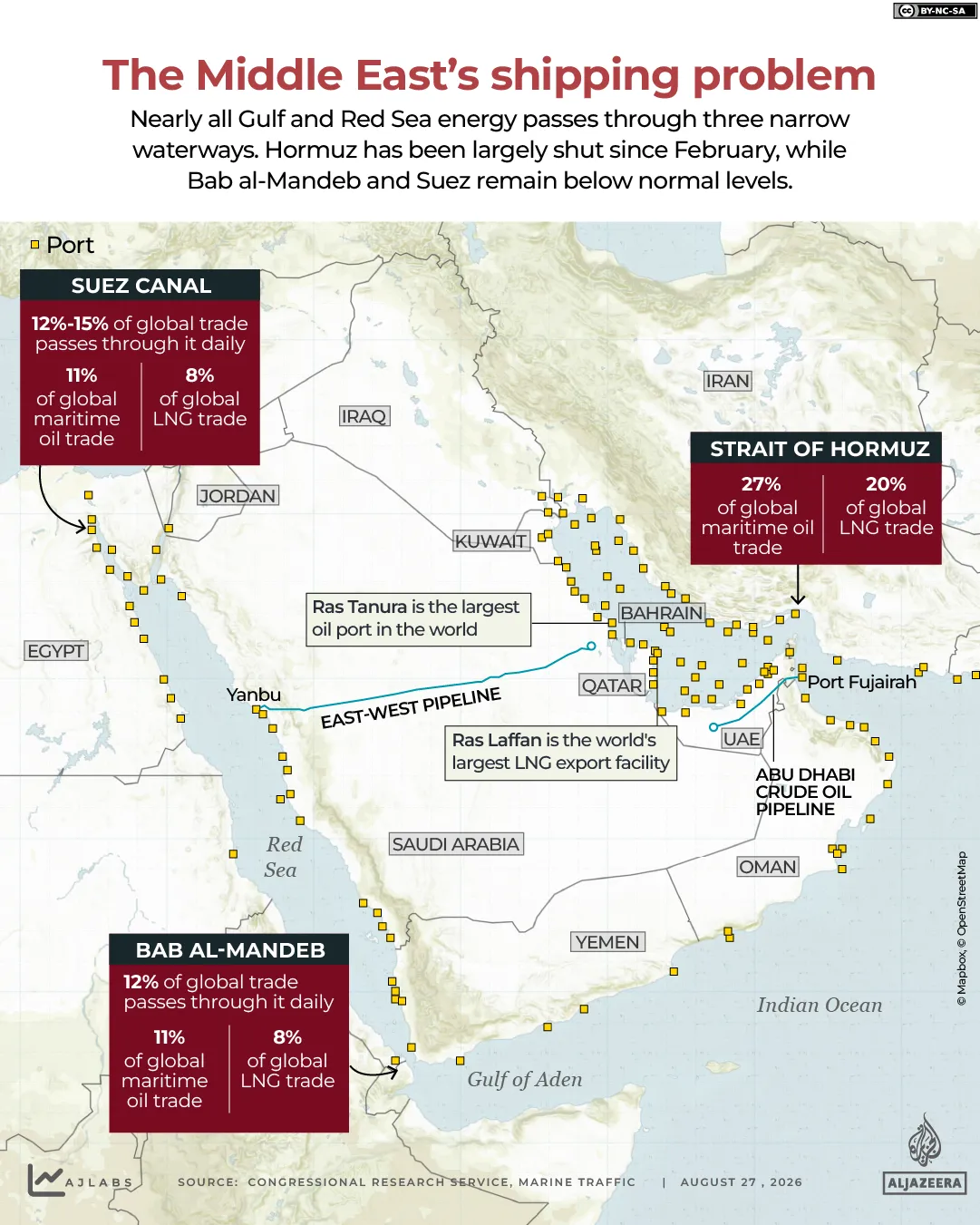
The crises of 2021-2022 exposed the vulnerability of single-source energy systems. Now, the 2026 Middle East conflict has delivered an even starker lesson: severe disruption of flows through the Strait of Hormuz has triggered what the IEA has described as “the largest supply disruption in the history of the global oil market” – worse than the oil shocks of the 1970s. The crisis has made one argument impossible to ignore: energy that is generated at home cannot be blockaded.
In 2024, Microsoft signed a deal to restart a unit at Three Mile Island – the very plant in Pennsylvania whose partial meltdown in 1979 shaped public anxiety about nuclear for decades. The reasoning was simple: the data centres powering AI require enormous quantities of electricity, continuous and ideally carbon-free. A nuclear plant delivers all three. That deal has since become something of a symbol for a much broader shift playing out across dozens of countries.
The industry already calls it a renaissance – not the first in nuclear’s history, but arguably the most structurally grounded. Three things are happening at once: explosive electricity demand from the digital economy, binding climate targets set by governments, and a growing reckoning with the limits of intermittent renewables. Wind and solar are essential to decarbonisation – but they cannot guarantee baseload supply in all weather, at all hours. Nuclear can.
“We need a source that delivers around the clock, every day of the year – sun or no sun, wind or no wind.” That, roughly, is how energy executives frame the problem when they look at what AI actually needs from the grid.
ARTIFICIAL INTELLIGENCE: AN UNLIKELY ALLY FOR NUCLEAR
Data centres already account for about 2% of global electricity consumption, and that figure could rise dramatically by 2030 as training and running large language models becomes routine. Google, Amazon, Meta and Microsoft are all in the market for long-term clean power contracts – and nuclear plants are almost the only sellers that can offer both the scale and the certainty those contracts require.
One example already up and running: the Kalinin Data Centre, built directly on the site of the Kalinin nuclear power plant in Russia. It draws up to 80 MW of guaranteed power straight from the plant’s substations – giving it some of the lowest electricity costs in central Russia – and operates to Tier III reliability standards. It has been included in Russia’s national Digital Economy programme. This is not a concept for the future: a nuclear plant is already powering real digital infrastructure today.
In the United States, after decades of stagnation, the first licensing procedures in a generation have begun for new reactors, including small modular reactors – SMRs – that promise lower capital costs and shorter build times. In the United Kingdom, Hinkley Point C is under construction. France has announced six new EPR-2 reactors. Canada has approved a major refurbishment of the Pickering station. These are not isolated decisions. They represent a change of direction that is now systemic.
THE CLIMATE CASE: THE NUMBERS SPEAK FOR THEMSELVES
Nuclear energy produces less carbon dioxide per kilowatt-hour over its full lifecycle than a solar panel, and many times less than a gas turbine. For governments that have committed to climate neutrality by 2050, this is becoming a decisive argument – particularly given that large-scale battery storage, the main alternative for backing up renewables, carries its own considerable environmental costs.
It is no coincidence that at COP28 in Dubai, more than 20 nations signed a declaration committing to triple nuclear capacity by 2050. The list includes the United States, France, the United Kingdom, Japan, Canada and South Korea. After years on the political margins, nuclear is back in the official climate conversation.
87%
+$9K
€59B
>$2B
of residents in 24 Russian nuclear cities report satisfaction with their quality of life
average household income between US counties near nuclear plants vs. neighbouring counties
projected average annual household income generated by EU nuclear industry, 2025–2050
annual economic impact of Palo Verde nuclear plant in Arizona, the largest in the US
Nuclear cities sociological survey, Russia
Good Energy Collective / Carnegie Mellon, 2022
Deloitte / NuclearEurope, 2025
APS – Arizona Public Service
NUCLEAR CITIES: THE LIFE THAT RARELY MAKES THE NEWS
In the middle of the technology and climate debate, it is easy to miss a different dimension entirely – the human one. Nuclear energy does not exist in the abstract: it lives in specific towns and regions, alongside real communities. And the data on quality of life in those places tell a story that sits rather awkwardly alongside the image embedded in popular culture.
Research from multiple countries consistently finds that cities and regions hosting nuclear facilities tend to have higher household incomes, better infrastructure, stable employment, and often stronger demographic indicators than comparable areas without nuclear presence. A nuclear plant is not simply a generator. It is an anchor employer, a leading taxpayer, and a structural pillar of the local economy for decades at a stretch.
EVIDENCE FROM AROUND THE WORLD
CANADA – Bruce Power (Ontario)
Bruce Power is the largest employer in Ontario’s Bruce County. Ipsos polling found that 93% of local residents consider the company a “good neighbour” and 96% are confident the plant operates safely. That level of sustained public support sits alongside major refurbishment programmes that will go on creating thousands of regional jobs for years ahead.
HUNGARY – Paks
Paks is a small town on the Danube, 100 kilometres south of Budapest. According to Hungary’s Central Statistical Office (KSH), it ranks among the country’s leaders in per capita income – GDP per capita and purchasing power run roughly 1.5 to 2 times the national average. Male life expectancy in Paks is around 75-76 years, against 73 nationally; female life expectancy is 81-82, against 79 across Hungary.
FINLAND – Eurajoki (Olkiluoto NPP)
The Finnish municipality of Eurajoki, home to the Olkiluoto plant, has a population of around 9,000 and is one of the most financially secure municipalities in the region. In 2022, the plant’s operator TVO paid €20 million in property tax, out of the municipality’s total tax revenue of €57 million. Local authorities describe Eurajoki as debt-free. It also maintains a stable population, which is a genuinely rare achievement for small Finnish communities.
RUSSIA – Udomlya (Kalinin NPP, Tver Region)
The Kalinin nuclear power plant is the largest electricity producer in central Russia, located 3 kilometres from the town of Udomlya. The plant generates 82% of all electricity produced in the Tver Region and 14% of the output of the entire Central Federal District. It is also a major regional employer: together with contractor organisations, the station accounts for around 30% of all jobs among the working-age population of the Udomlya municipal district. The plant supplies the town with heat and hot water, and the construction of the station marked the beginning of rapid development across the entire surrounding area.
UNITED STATES – Palo Verde (Arizona)
Palo Verde is the largest nuclear plant in the United States and generates more than $2 billion in annual economic impact for Arizona. The station directly employs 2,500 people, with a further 5,800 jobs supported in related industries. It is Arizona’s largest private taxpayer – a contribution that matters directly to the funding of local schools and public infrastructure.
SWEDEN – Forsmark
A Novus survey from spring 2023 found that at least 86% of residents in Östhammar municipality – where Forsmark is located – support the construction of a permanent spent fuel repository. Nine in ten local residents believe the presence of operator SKB has a positive impact on regional development.
UNITED KINGDOM – Hinkley Point C (Somerset)
Britain’s largest infrastructure project will employ up to 15,000 workers at peak construction. More than 1,500 apprentices have already been trained, 500 more than originally planned. Three Skills Centres of Excellence in Somerset have put over 8,000 people through training in welding, electrical and mechanical trades. The effects on the regional labour market will be felt for a long time.
CANADA – Pickering (Ontario)
The Pickering refurbishment is expected to create around 30,500 jobs during construction and sustain 6,700 permanent positions during operation. The project received government approval in November 2025, with construction due to begin in 2027.
FRANCE – Nuclear host regions
Analysis by France’s national statistics agency INSEE indicates that nuclear plants generate economic clusters that sustain employment and population in smaller municipalities across the country.
THE PROXIMITY PARADOX: WHY NUCLEAR COMMUNITIES SUPPORT NUCLEAR ENERGY
Sociologists have long noted a pattern that tends to surprise outsiders: the further people live from a nuclear plant, the more they fear it. The closer they live, the more they trust it. A Nuclear Energy Institute study found that 89% of residents within ten miles of a reactor view nuclear energy favourably. Surveys across nuclear host cities in Russia show that 78% of residents feel proud of the industry’s achievements, and more than two-thirds rate its contribution to their city’s development positively. Across 24 such cities, 87% of residents report satisfaction with their quality of life – in some, the figure exceeds 90%.
This is not a coincidence, and it has nothing to do with messaging campaigns. It is the product of lived experience. When a nuclear plant is the largest employer in the area, the main source of local tax revenue, and the sponsor of community sports clubs and healthcare facilities, people’s relationship with it is shaped not by what they read in the news, but by the texture of their daily lives.
The Proximity Paradox: Trust Rises Near the Plant
The closer people live to a reactor, the more they support itSociologists have long documented a consistent pattern: public support for nuclear energy is significantly higher among people who live close to a plant. Daily life near a facility creates a different picture than the one shaped by media coverage from a distance.The effect holds across countries, cultures and decades of polling.
Within 10 miles of a reactor (US, Nuclear Energy Inst.) Bruce Power region (Canada, Ipsos) Forsmark area (Sweden, Novus 2023) Nuclear cities, Russia (satisfied with life)
89%96%86%87%
CONCLUSION: AN OLD SOURCE OF ENERGY FOR NEW CHALLENGES
The nuclear renaissance that gathered momentum through the mid-2020s is neither nostalgia nor ideology. It is a practical response to several problems that landed at roughly the same time: exponential growth in electricity demand from the digital economy; climate targets that cannot realistically be met without firm, low-carbon baseload generation; and hard lessons from successive energy crises about the fragility of systems built around a single source or a single supplier.
Against that backdrop, the accumulated experience of nuclear communities around the world: from Eurajoki in Finland to Paks in Hungary, from the shores of Lake Ontario to the Arizona desert, makes for a substantial body of evidence. Living near a nuclear plant is not a losing proposition for a community. More often than not, it has been the foundation of lasting prosperity, decent public services, and demographic stability that many non-nuclear towns can only envy. That, too, belongs in the conversation about what the future of energy actually looks like.
This analysis draws on data from: Deloitte / NuclearEurope (2025); Good Energy Collective / Carnegie Mellon University (2022); Ipsos Canada; Novus / SKB (Sweden, 2023); KSH — Hungarian Central Statistical Office; TVO (Finland); APS — Arizona Public Service; EDF Energy (United Kingdom); Government of Ontario; INSEE (France); Nuclear Energy Institute (United States); IEA; sociological surveys of nuclear host cities in Russia; Rosenergoatom
MAROON 5’s Adam Levine has shown off a fresh faced new look on the red carpet ahead of the band’s gig at BST Hyde Park this Summer.
The singer, 47, attended the 12th Breakthrough Prize Ceremony in Santa Monica, California, over the weekend with his wife Behati Prinsloo.
Sign up for the Showbiz newsletter
Thank you!
Maroon 5 singer Adam Levine has shown off a new clean-shaven lookCredit: APAdam looked fresher-faced in comparison to his appearance at the 2023 Vanity Fair Oscars bashCredit: GettyHe attended the Breakthrough Prize Ceremony in Santa Monica, California with his wife Behati Prinsloo over the weekendCredit: GettyAdam planted a kiss on his wife’s cheekCredit: Getty
But the musician looked completely unrecognisable as he showed off a clean shaven look, which is a stark difference compared to his signature stubble he’s been rocking for years.
Adam wore a black suit twinned with a blue shirt and smart shoes, while Behati, 37, looked stunning in a ruffled grey gown.
The pair looked like the ultimate couple goals as Adam planted a kiss on his wife’s cheek in one picture.
Fans of the She Will Be Loved singer couldn’t get over his new look as they flocked to social media to share their thoughts, with many thinking him shaving off his beard isn’t the only change he’s made.
One person commented on Reddit: “If I saw him walking I would have never guessed it was him.”
Another social media user commented: “Whatever he did makes him look awful and waaay older than he did before.”
Somebody else said: “Oh my gosh what happened to him? He looks so naked without his beard.”
Yet another fan expressed: “Something looks off but I can’t tell what exactly.”
While a fifth added: “Did he get something done? His face looks different.”
Adam began dating the Namibian beauty in May 2012 and they went on to marry on July 19, 2014.
Together, they share daughters Dusty Rose, 9, and Gio Grace, 8 and a three-year-old son.
He’s gearing up to return to the UK with Maroon 5 for BST Hyde Park this July.
They won’t be the only ones appearing at the festival, as One Republic, Jess Glynne and Ella Eyre will also be taking to the stage for their own performances.
It was also recently announced that he’s set to return for the new season of The VoiceUSA.
Maroon 5 will be returning to the UK to perform at BST Hyde Park this SummerCredit: Getty
He joined the singing competition show in season 1 alongside fellow judges Blake Shelton, CeeLo Green, and Christina Aguilera.
After departing The Voice in 2019 with 16 seasons as a coach under is belt, the Maroon 5 frontman has returned sporadically to the show.
He just clinched a win with Alexia Jayy on season 29, his fourth victory on the show.
“I’m having so much fun doing it. Since I came back a few seasons ago it’s just been a blast and I’m super happy to keep it going as long as they’ll have me,” Adam told People.
NBC execs are eyeing four iconic coaches to make a return for season 30: Adam, Kelly, Blake and Gwen Stefani, a production source told The U.S. Sun.
“For season 30, they want to go big since it will be a milestone year. Though the lineup isn’t finalized yet since filming for 30 won’t start until late Spring/early Summer 2026,” the source said.
“There’s still time for changes and still all of season 29 to get through.
“But the producers are trying to lock in a deal to get Blake and Adam back together, they’ve wanted that for years and think 30 is an opportune time to make it happen,” the insider explained.
He’s also reportedly set to return to The Voice USACredit: Getty
A group of Israeli settlers torched a Palestinian home overnight in the occupied West Bank and prevented the family from escaping. Eight people were injured in the attack, including a one-year-old.
With 50 days to go until the World Cup kicks off, FIFA and the tournament’s host nations face criticism over wide-ranging social, political and logistical issues surrounding the global event.
Canada and Mexico will cohost the tournament with the United States, which, alongside Israel, launched a war on World Cup participant nation Iran on February 28. While the war is currently under a fragile temporary ceasefire, Iran’s participation in the tournament remains uncertain.
Recommended Stories
list of 3 itemsend of list
Fans across the three host countries are in uproar over exorbitant ticket prices, which have affected sales and interest in the world’s most popular quadrennial sporting event.
Local politicians and the public have also raised concerns over the hike in transport fares on routes connecting match venues in the US.
Al Jazeera Sport takes a look at the growing concerns in the run-up to the tournament, which begins on June 11 with the opening fixture between Mexico and South Africa:
What’s the latest on Iran’s participation in the World Cup?
Iran’s football team is preparing for the championship. However, officials say a final decision on the team’s participation will be taken by the government and the National Security Council after they review the players’ safety in the US.
Iran had said last month that it would not participate in the tournament amid the war, especially if the host nation could not guarantee players’ security. It followed a social media post from President Donald Trump, where he suggested that the Iranian team’s safety and security could not be guaranteed in the US, where Iranians are scheduled to play all their games.
The Iranian football federation then asked FIFA to relocate its games from the US to Mexico. FIFA rejected the request.
FIFA chief Gianni Infantino said last week that Iran “has to come” to the tournament.
Iran will play all their group stage matches on the US West Coast. Should they advance to the knockouts, the remaining games would also be held in the US.
Outrageous commuter fare prices in US host cities
Fans can expect to pay nearly 12 times the regular $12.90 fare for a round-trip train ride from Manhattan’s Penn Station to the MetLife Stadium in East Rutherford, New Jersey, venue of the World Cup final and seven other major fixtures.
New Jersey Governor Mikie Sherrill and FIFA have chided each other on the $150 price tag for a roughly 15-minute, 14km (9-mile) ride; Sherrill said FIFA should bear the costs, while the global body hit back, saying it is not obligated to do so.
Train commutes to Gillette Stadium in Boston’s suburbs cost roughly four times the regular price ($20), while round-trip bus fares to Foxborough cost $95.
Host cities Los Angeles and Philadelphia have pledged to keep their transit fares unchanged, while Kansas City is offering a $15 round-trip fare to Arrowhead Stadium. Houston said it has added buses and train cars to serve fans but intends to keep fares at current levels: $1.25 for buses and light rail trains, and park-and-ride options ranging from $2 to $4.50.
High prices, low demand for match tickets
Sky-high ticket prices have left fans outraged at what they say is pricing that excludes supporters from the tournament. A lag in ticket sales for blockbuster matches, including hosts USA vs Paraguay, seems to be a testament to the high price tag.
FIFA put tickets on sale in December at prices ranging from $140 for Category 3 in the first round to $8,680 for the final. Later, it raised prices to as high as $10,990 when sales reopened on April 1.
The North American bid had initially promised tickets would be available for as little as $21; however, the cheapest ticket has been priced at $60. Most tickets cost at least $200 for matches involving higher-ranked teams.
FIFA announced another round of ticket sales on Wednesday to coincide with the 50-day countdown. Tickets will be available across categories 1 to 3 for all 104 matches on a first-come, first-served basis.
Pushback against immigration raids during World Cup matches
The Trump administration’s push for mass deportation and its efforts to tighten legal immigration pathways have spurred concerns about whether the World Cup’s international audience might be targeted by US immigration authorities.
Infantino was approached last week to pressure Trump to avoid immigration raids at this year’s tournament. Reporters suggested that agents from Immigration and Customs Enforcement (ICE) and Customs and Border Protection (CBP) were present at last year’s FIFA Club World Cup matches, though the Trump administration denied conducting enforcement efforts.
A report by The Athletic explained that FIFA executives have framed the possibility of an immigration moratorium as a potential public relations boon for the Trump administration. It also indicated that the executives hoped Infantino would leverage his friendly relationship with Trump to assuage any immigration-related fears.
Violence in Mexico raises fears over tournament security
World Cup cohost Mexico is also under the spotlight due to concerns for fan safety after a lone attacker opened fire on tourists near the country’s capital on Monday.
The accused opened fire on top of one of the Teotihuacan pyramids — a UNESCO World Heritage Site and one of Mexico’s most frequented tourist attractions — and killed one Canadian tourist and injured 13 others.
It raised questions about security protocols taken by Mexican President Claudia Sheinbaum’s government in the run-up to the global football tournament.
Sheinbaum said Mexico will beef up security ahead of the World Cup.
“Our obligation as a government is to take the appropriate measures to ensure that a situation like this does not happen again. But clearly, we all know — Mexicans know — that this is something that had not previously taken place,” she said on Tuesday.
We focus on the story of Agnes (played by Chase Infiniti), the biological daughter of Handmaid’s Tale main character June Osborne (Elisabeth Moss). She grows up in Gilead completely content with the brutal system, but her life is turned upside down when new resident Daisy (Lucy Halliday) joins Aunt Lydia’s (Ann Dowd) school for wives.
Although she seems like just another student, Daisy is secretly a spy working with June and Mayday agents to overthrow Gilead.
Viewers have also been introduced to the Aunts responsible for educating the young women. But what’s the story behind their unusual names?
How do Aunts in The Testaments get their names?
The Aunts in The Testaments are named after commercial products that were popular among women in the pre-Gilead era.
It’s revealed in Margaret Atwood’s novels that the founding commanders introduced this tradition in an attempt to ease the transition into Gilead.
Each Aunt picks their name from a list of product names that are “familiar and reassuring” to them. These include the “names of cosmetic lines, cake mixes, frozen desserts, and even medicinal remedies”.
This is why the Aunts have unique names such as Aunt Estee (Eva Foote), seemingly named after Estee Lauder, or Aunt Gabbana (Zarrin Darnell-Martin), derived from Dolce and Gabbana.
Get Disney+ from £5.99
This article contains affiliate links, we will receive a commission on any sales we generate from it. Learn more
A Disney+ subscription is now available from £5.99 per month, offering hit shows like Andor, The Bear and Alien: Earth, plus countless titles from Star Wars and Marvel.
*Warning: Mild spoilers for The Testaments novel.*
But these brand names only hold meaning to the older generations living in Gilead. In The Testaments novel, main character Becka (Mattea Conforti) becomes an Aunt. She later learns about the “approved list” of names she can choose from for her new role.
Atwood writes: “Becka said the names were made from the names of products women had liked once and would be reassured by, but she herself did not know what those products were. Nobody our age knew, she said.”
Since Becka and Agnes have been raised in Gilead, they don’t have the same connection to the gender-specific brand names.
The number of babies born in South Korea rose at a record high pace in February of this year, government data showed Wednesday. In this photo, taken Wednesday, a nurse looks after newborns at a hospital in Goyang. Photo by Yonhap
The number of babies born rose at a record high pace in February of this year, driven largely by an increase in childbirths by women in their 30s, government data showed Wednesday.
A total of 22,898 babies were born during the month, up a solid 13.6 percent from the same period a year earlier, according to findings by the Ministry of Data and Statistics.
The figure was the highest for the month since 2019, when 25,710 babies were born, and the growth pace was also the highest for any February since record keeping began in 1981, the ministry said
The number of newborns has been on an upward trend since July 2024.
The country’s total fertility rate, the average number of children a woman is expected to have in her lifetime, rose 0.1 from a year earlier to 0.93 in February.
The ministry said the recent rise in births was mainly led by women in their 30s, with the number of births per 1,000 women in their early 30s rising by 9.1 to 86.1 and the corresponding tally for women in their late 30s increasing by 9.2 to 61.5.
The number of births per 1,000 women in their late 20s only rose by 1.6 to 23.9.
The number of marriages in February declined 4.2 percent on-year to 18,557, turning lower after 22 straight months of increase, on the fewer number of working days due to the extended Lunar New Year holiday.
The number of divorces went down 15.6 percent on-year to 6,197 in the cited month, the data showed.
Meanwhile, the number of deaths dropped by 3.5 percent from a year earlier to 29,172, resulting in a natural population decline of 6,275.
Copyright (c) Yonhap News Agency prohibits its content from being redistributed or reprinted without consent, and forbids the content from being learned and used by artificial intelligence systems.
Amid a standoff with the pope and criticism for an AI image of himself as Jesus, US President Donald Trump has read a Bible passage about punishment and national repentance as part of a Republican-led marathon event.
NATALIE Appleton’s son Ace looked every inch the grown-up rockstar as he attended a new Bowie exhibition with his famous Mum.
The pair posed on the red carpet at the opening night of David Bowie: You’re Not Alone at The Lightroom in London.
Sign up for the Showbiz newsletter
Thank you!
Natalie poses with her rockstar son Ace at the Bowie exhibitionCredit: GettyNatalie and Ace spent some quality time together at the eventCredit: GettyNatalie posed proudly on the red carpet alongside Ace who towered over herCredit: Getty
Natalie also has an older daughter, Rachel, 33, from a previous relationship with Dreamboys stripper Carl Robinson.
Despite their fame, Natalie and Liam have kept their family life relatively private, choosing to let their son carve out his own path.
And it seems that approach has paid off, with Ace now making a name for himself on the London music scene in his own right.
Following in the footsteps of his musical parents, Ace is bass guitarist for the Camden-based group, Pedestrian Band, with his proud Mum known to plug his music on her socials.
Ace’s band Pedestrian are still emerging on the London indie scene, but they’re already turning heads with their experimental sound.
The trio have released their debut EP and built a cult following, earning a reputation as one of Camden’s most exciting up-and-coming acts.
The exhibition received a thumbs up from AceCredit: GettyAce’s Auntie is All Saints star Nicole AppletonCredit: GettyAce is making a name for himself on the Camden music sceneCredit: Instagram/Natalie Appleton
Prodigy star Liam and Natalie have been a couple for 25 yearsCredit: Getty – Contributor
While he isn’t relying on his famous surname, Ace is well-connected in music, with cousin Gene Gallagher, son of Nicole Appleton and Liam Gallagher.
Meanwhile, Natalie and her sister Nicole shot to fame in 1996 alongside Shaznay Lewis and Melanie Blatt in the girl band All Saints.
The group proved a massive hit and brought fans songs like Pure Shores, Black Coffee, and Never Ever.
The foursome became huge stars, with Nicole and Natalie going on to date some big celebrities, before settling down with Liam.
Nicole once had a high-profile with Robbie Williams between 1997 and 1999, which included an engagement and a terminated pregnancy.
Natalie and Ace attended the launch of Lightroom’s latest exhibition of immersive Bowie content projected onto it’s 11-metre-high walls and floor.
The hour-long experience features live recordings, interviews and unseen footage from the David Bowie Archive.
With a huge sound system and Bowie as narrator, it’s considered the closest to experiencing the late icon live.
Tickets are priced from £25 for adults and £15 for students and concessions.
Nicole Appleton and Liam Gallagher shortly after Gene was born in 2001Credit: News Group Newspapers LtdAll Saints were one of the biggest acts of the 90sCredit: Getty
Virginia voters have narrowly approved a referendum to redraw the state’s congressional map, with about 51.5 percent voting yes and 48.6 percent voting no, and 97 percent of ballots counted, according to The Associated Press news agency.
The map redraws the boundaries of Virginia’s congressional districts, changes that can directly shape which party wins seats in the United States House of Representatives.
With most votes counted, the result remained close, but Democratic-leaning areas helped push it through.
The vote is part of a broader national fight over district lines – a battle that could decide who controls Congress.
Republicans in Florida, for instance, are planning a special session of the state legislature next Tuesday where they are expected to seek to redraw their state’s political map – a move that could help them gain as many as five seats, potentially wiping out any Democratic gain in Virginia.
Here are five key takeaways:
Democrats gain a major advantage in the House race
Currently, Virginia sends 11 members to the US House. At the moment, they comprise six Democrats and five Republicans.
The new map changes how those seats are drawn. By reshaping district boundaries, it makes most areas more favourable to Democrats by clumping together voters who lean towards the party strategically, while splintering communities that typically vote Republican.
Eight districts would be safely Democratic
Two would be competitive but lean Democratic
Only one would be safely Republican.
Because of this, Democrats could realistically win at least eight and possibly up to 10 of the 11 seats in the US house, instead of just six.
This shift follows a high-stakes political battle, with total spending estimated at $100m.
Democratic leaders, including Virginia Governor Abigail Spanberger, framed the new map as a direct response to efforts by US President Donald Trump and Republicans to redraw districts in their favour in other states.
However, even with this win, “there’s no guarantee they’ll send a delegation dominated by Democrats to Washington,” Al Jazeera’s Rosiland Jordan said, reporting from Virginia.
There are still six months until the midterm elections, and voter behaviour can shift. Even favourable maps can produce unexpected outcomes.
Virginia is one part of a bigger battle
Virginia is just one part of a bigger fight over who controls the US House.
After the 2024 election, Trump pushed Republican-led states to redraw congressional maps before the usual timeline to improve their chances in the 2026 midterms.
Republicans moved first in states like Texas, where new maps could give them up to five more seats.
Democrats responded with their own moves. In California, voters approved a plan backed by Governor Gavin Newsom that allowed lawmakers to draw a new, more partisan map. This is expected to give Democrats up to five extra seats.
The Virginia result fits into this bigger picture. If Democrats gain up to four seats there, it could help cancel out Republican gains in other states.
But the fight is not over. More changes could still happen, including in Florida, where Governor Ron DeSantis is looking at redrawing the map.
“Virginia just changed the trajectory of the 2026 midterms,” Democratic state House Speaker Don Scott said in a celebratory statement.
“At a moment when Trump and his allies are trying to lock in power before voters have a say, Virginians stepped up and levelled the playing field for the entire country.”
Legal challenges could still overturn the result
The measure has been approved by voters, but its future is still uncertain.
The Supreme Court of Virginia is expected to review ongoing legal challenges that could affect whether the new map takes effect. While the court allowed the vote to go ahead, it said it would examine the case in full if the measure passed.
The challenges focus on two key issues: Whether Democratic lawmakers followed the correct legal process when putting the proposal forward, and whether the wording on the ballot may have been misleading to voters.
A narrow win
Both parties were watching the vote closely.
Democrats were happy to win, even if it was close. Republicans, meanwhile, were relieved it wasn’t a big loss.
“Virginia Democrats can’t redraw reality,” said Republican Congressman Richard Hudson. “This close margin reinforces that Virginia is a purple state that shouldn’t be represented by a severe partisan gerrymander.”
Gerrymandering is the process of redrawing electoral maps in ways that can benefit one party over another.
Democrats said the tight result was partly down to voter confusion, which they blamed on Republican messaging. Democrats framed the effort as a response to Trump, promoting the plan with advertisements featuring former US President Barack Obama.
Opponents pushed back by pointing to past comments from Obama and Spanberger, both of whom have previously criticised gerrymandering, using that to question the Democrats’ position.
Gerrymandering is at the centre of the fight
The vote highlights the growing importance of partisan map-drawing in US politics.
Democrats say this balances Republican advantages elsewhere. Republicans call it a power grab in a competitive state.
Either way, redistricting is now a key tool shaping election outcomes, not just reflecting them.
The IRGC says the aggression came in response to what it described as the US seizure of an Iranian commercial vessel.
Published On 22 Apr 202622 Apr 2026
An Iranian gunboat has fired on a container vessel near the coast of Oman, according to a British maritime monitoring agency, in an incident that occurred hours after United States President Donald Trump said he would extend a ceasefire with Iran.
The United Kingdom Maritime Trade Operations (UKMTO) centre said on Wednesday that the ship’s captain reported that the vessel had been approached by a vessel of Iran’s Islamic Revolutionary Guard Corps (IRGC) before shots were fired.
Recommended Stories
list of 4 itemsend of list
It “has caused heavy damage to the bridge. No fires or environmental impact reported,” the agency added. No casualties were reported, and all crew members were said to be safe.
British maritime security firm Vanguard Tech said the ship was sailing under a Liberian flag and had been informed it had permission to pass through the Strait of Hormuz, one of the world’s most strategically important waterways.
Iranian news agency Tasnim, however, said the vessel had ignored warnings issued by Iran’s armed forces.
The incident followed a warning from the IRGC’s Khatam al-Anbiya Central Headquarters after what it described as the US seizure of an Iranian commercial ship in the Sea of Oman, the IRNA news agency reported.
It accused Washington of violating the ceasefire and carrying out “armed piracy” after allegedly firing on the Iranian vessel and disabling its navigation systems.
Trump extends ceasefire
Trump earlier announced he would delay a planned military attack on Iran after requests from Pakistan’s army chief Asim Munir and Prime Minister Shehbaz Sharif.
Writing on Truth Social, Trump said the decision was made because Iran’s government was “seriously fractured” and needed time to present a unified position.
“We have been asked to hold our Attack on the Country of Iran until such time as their leaders and representatives can come up with a unified proposal,” he wrote.
He added, however, that the US naval blockade of the Strait of Hormuz would remain in place and said the military had been ordered to stay “ready and able”.
The announcement marked a shift from comments made a day earlier, when Trump said it was “highly unlikely” he would extend the truce beyond Tuesday.
‘Positive and negative signals’ from Tehran
Al Jazeera’s Tohid Asadi, reporting from Tehran, said Iranian officials were sending mixed messages over the ceasefire and the prospects for negotiations.
“Tehran is saying they won’t negotiate under imposed terms and conditions … when we compare the initial 10-point and 15-point proposals by the Iranians and Americans, we can understand that the two sides are poles apart,” he said.
“The atmosphere is also clouded by this mistrust in Tehran towards the United States, as well as the simultaneous military rhetoric related to a potential failed negotiation … It is a warning that another round of confrontation may be ahead.”
He said Iran still viewed the Strait of Hormuz as a key source of leverage in any talks.
“It’s trying to exercise authority over the ships and vessels transiting this strategically significant chokepoint,” he said.
Asadi added that Iranian officials framed their regional position as based on mutual security. “Iranians are saying that the basis of their foreign policy behaviour, particularly when it comes to Israel, is security for all versus security for none,” he said.