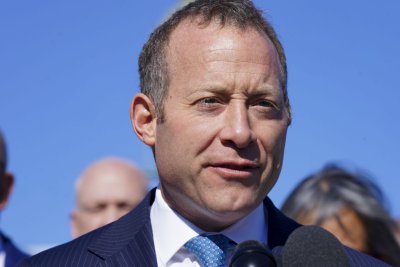
The Missouri Supreme Court has unanimously blocked a congressional map backed by United States President Donald Trump ahead of November’s midterm elections, restoring the state’s previous districts.
Thursday’s ruling delivered a rare judicial rebuke to Trump in the national battle over redistricting. But it is unlikely to be the final word in the case, with Republican officials already pledging to appeal the ruling.
Recommended Stories
list of 3 itemsend of list
At the heart of the case is a congressional map signed into law in September 2025, designed to help Republicans win an extra seat in the US House of Representatives this year.
But the partisan redistricting effort prompted a popular backlash, with nearly 300,000 Missouri residents signing a petition to instead put the new map to a vote.
Missouri’s Secretary of State Denny Hoskins rejected the petition as legally insufficient. That set up the legal fight, which the Missouri Supreme Court decided on Thursday.
“The referendum petition was legal, sufficient, and timely, and the secretary incorrectly concluded otherwise,” the court wrote in its ruling.
It added that the Missouri Constitution has made such petitions legal, and “no exception applies”. The court is staffed by seven judges, five of whom are Republican-appointed.
The decision, however, places Missouri in a complicated position. Two months remain until the midterm elections, and ballots will soon be printed.
There are also outstanding legal questions over whether a state’s general election can use different congressional districts than its primaries did.
Missouri Attorney General Catherine Hanaway, a Republican, said she would immediately appeal the ruling to the US Supreme Court. She called Thursday’s decision a “full-fledged constitutional crisis”.
“Never before in American history has a court overturned a congressional map after a primary and before a general election,” she said in a statement.
Trump also denounced the ruling in a social media post, calling it “horrible, ridiculous, and unConstitutional”.
“The Missouri Supreme Court just ridiculously ruled in favor of changing the maps back to what they were a long time ago. It’s called, Ancient History,” he wrote.
Last year, Trump triggered the nationwide redistricting fight when he approached Texas state lawmakers to redraw their maps in a way that would give Republicans an advantage.
Normally, congressional maps are redrawn once every 10 years to reflect census results.
But Trump encouraged Republican-led states to issue new maps mid-decade, as a strategy to help the right-wing party maintain control over the House.
Some 10 states ultimately decided to redistrict, including Missouri. Most tilted in favour of Republicans. California, meanwhile, redrew its map to skew Democratic.
Prior to Thursday’s ruling, Missouri’s Supreme Court affirmed that the special legislative action to change the state’s congressional map was lawful. In the US, no federal law bars partisan redistricting, known as gerrymandering.
But Thursday’s decision upheld the legality of the petition campaign to put the map up for a vote.
The Missouri Supreme Court barred the 2025 map from being used in November’s midterm election or any future election until Missouri voters approve it first.
The group People Not Politicians spearheaded the referendum petition. In a statement on Thursday, it applauded the state court’s decision, which overturned a lower court ruling.
“Supreme Court of Missouri has ruled: Missourians will vote on politicians’ rigged map,” the group wrote on social media.
It also blamed Missouri’s secretary of state for any hurdles to restoring the old map.
“Hoskins had the power to prevent all this confusion months ago — and he chose not to,” the group said.
A day before the court’s ruling, hundreds of people rallied outside the state Supreme Court, chanting: “Let us vote!”
Grant Christensen, a resident of Jefferson City and referendum supporter, said he had signed the petition.
“Gerrymandering is the same as voter suppression,” Christensen said. “Cutting up districts in order to steer them to vote one way or the other is not fair.”
Missouri’s 2025 congressional map had already shaped the state’s primary elections. Critics, however, point out that Hoskins did not reject the referendum until August 4, the day of the party primaries.
The outcome of the legal battle is likely to be most pivotal for Missouri’s 5th congressional district, currently held by Democrat Emanuel Cleaver. His district, which encompasses parts of Kansas City, was reshaped to favour Republicans.
Wright visited Caracas for a second time since the January 3 US strikes and Maduro kidnapping. (AFP)
Caracas, September 3, 2026 (venezuelanalysis.com) – Venezuelan Acting President Delcy Rodríguez and US Energy Secretary Chris Wright celebrated an oil agreement between the two countries and North American Blue Energy Partners (NABEP) and a flurry of additional energy deals signed on Wednesday.
“This is a historic day in the transformation of Venezuela,” Wright said in a joint press conference at Miraflores Palace. “President [Donald] Trump has a clear mission in Venezuela: to bring peace, freedom, and prosperity to everyone.”
The US official went on to praise the “enormous deal” announced last Friday that will see NABEP, a company owned by Venezuelan businessman Alejandro Betancourt, receive long-term concessions for 17 prime oilfields in the Caribbean nation that hold 65 billion barrels of reserves.
According to the White House, the US Department of War’s Office of Strategic Capital (OSC) will acquire a 35 percent stake in NABEP through penny warrants. The US State Department will be able to purchase 20 percent of NABEP’s production at cost and hold a right of first refusal for the remaining 80 percent.
Washington will likewise control the company’s board of directors. Wright stated that the NABEP deal is “ambitious” and predicted that Venezuelan oil production would surpass 2 million barrels per day (bpd) by the end of the decade, nearly doubling the current output of 1.1 million bpd.
For her part, Rodríguez urged Wright to convey her gratitude to Trump, the US State Department, and the Department of Energy for helping secure “a mutually beneficial, win-win agreement.”
“I trust that the binational agreement will also prove beneficial for the people of the United States,” the acting president told reporters. “Venezuela is ready to welcome these investments that will boost the country’s development.”
Rodríguez had previously stated that Venezuela is estimating US $19 of revenue per barrel extracted in the project, significantly below the government take under the 2001 Hydrocarbon Law enacted by former President Hugo Chávez. The law was overhauled with US support in January to expand benefits for foreign corporations.
Both Rodríguez and Wright faced questions about Betancourt, who has faced embezzlement and money laundering investigations in Spain and Switzerland stemming from alleged corruption in dealings with state oil company PDVSA.
NABEP has operated in the country since 2024 and was awarded the project without a prior bidding process. It is currently Venezuela’s second-largest crude producer after Chevron. Wright said the US government had negotiated the agreement carefully and would exercise strict control over the flow of funds associated with the NABEP deal.
Rodríguez, for her part, said that Betancourt is not facing any judicial proceedings in Venezuela, with a 2022 arrest warrant for corruption having been dropped one year later. Similarly, Secretary of State Marco Rubio argued in an interview that the Venezuelan mogul is not the subject of any investigation in the US.
Before the afternoon press conference, Wright attended a ceremony at the presidential palace that saw the Venezuelan government sign a number of agreements with foreign corporations.
Chevron, the largest foreign corporation operating in Venezuela, saw its joint venture with PDVSA awarded two additional extra-heavy crude fields, Carabobo-1 and Carabobo-2 South, in the Orinoco Oil Belt.
The Texas-based company announced plans to invest $7 billion in its Venezuela projects over the next five years with the goal of more than doubling the current 250,000 bpd output. Chevron CEO Mike Wirth affirmed in an interview that the “strong legal protections” and “improved terms” under the reformed Hydrocarbon Law granted the company “attractive low-cost oil growth” prospects.
Italian company Eni also signed a contract to develop the Junín-5 block, one of the largest in the Orinoco Oil Belt. The project will migrate from a joint venture with PDVSA majority to a concession-type deal, called a Productive Participation Contract, which offers increased benefits for the private operator.
Eni CEO Claudio Descalzi was likewise present in Miraflores Palace and thanked US and Venezuelan authorities for backing foreign investments in the South American country.
Wednesday’s ceremony also saw Primavera secure a concession to exploit the medium- and heavy-crude Budare-Elotes block in eastern Venezuela. Primavera is an energy-investment vehicle created by billionaire Fred Ehrsam, a Trump supporter and co-founder of Coinbase, to enter the Venezuelan oil industry.
Additionally, Colorado-based wildcatter Aspect Energy received rights to study potential new oilfields in eastern Venezuela.
Finally, PDVSA and state electricity company CORPOELEC signed “strategic alliance” agreements with GE Vernova, an offshoot of General Electric, to upgrade and repair electrical infrastructure supporting Venezuela’s oil industry.
Following the pro-business overhaul of its energy sector, Caracas has signed new or updated agreements with multiple Western multinational corporations, including BP, Shell, and Repsol.
Since the January 3 military strikes and kidnapping of President Nicolás Maduro, the Trump administration has wielded significant control over the Venezuelan oil and gas industry. The Caribbean nation’s export revenues are currently deposited in a US Treasury account before the White House decides the disbursement timings and amounts.
Washington has also kept wide-reaching sanctions in place while issuing licenses for select corporations and banning dealings with companies from Russia, China, and Iran. With NABEP set to take over five oilfields previously operated by joint ventures with Chinese firms, Beijing demanded that its “rights and interests” in Venezuela be respected.
The Grand Tour’s new lineup is filled with “testosterone-fuelled petrolheads” again, and it’s certainly not a progressive apporach to things, says Nicola Methven
James Engelsman, Francis Bourgeois and Thomas Holland are the new hosts of The Grand Tour (Image: Danny Martindale/Shutterstock)
‘If it ain’t broke, don’t fix it’ the old adage goes, and that’s certainly what they’ve gone for with The Grand Tour.
Perhaps you can’t blame them. Jeremy Clarkson, James May and Richard Hammond proved enormously popular after they de-camped from the BBC’s Top Gear and so having three white blokes is a tried and tested formula that no one can argue with.
Andy Wilman says it’s ‘comfort food’ for the audience. But progressive? It certainly isn’t. And the notion that sticking a female car expert into the mix would somehow turn the show into a box-ticking exercise does rankle. What is this, the 1990s?
On the question of whether a male presenter could have infiltrated the fashion world formerly occupied by Trinny Woodall and Susannah Constantine (20 years ago!) I’m going to say, yes, he could. Let’s ask Gok Wan what he thinks.
This whole gender-based stereotyping is just incredibly tedious and without anyone ever pushing back, will never change.
But when it comes to the trio they have chosen, Wilman is not wrong when he says they are likeable. They really are.
Between them, James, Francis and Canadian Thomas have about a trillion followers across every platform imaginable. They eat, breathe, and sleep the one same thing: cars.
Watching the first episode as they race around in motors worth more than some people’s houses, you can feel the passion oozing out of them. Their interaction with guest driver Jenson Button is also very funny.
None of them can hide their glee at being let loose on some of the fastest vehicles on the planet. But they show just as much enthusiasm when it comes to winning races in clapped out old bangers worth £100.
The secret to their imminent TV success is their authentic joy for what they are doing, which is contagious for the viewers. After a few minutes of watching, everyone at home will have adrenaline levels that are sky high, to match theirs. Also, they look so damn happy, you can’t watch without getting a bit of that feel-good glow.
Of course, a woman would be capable of all this too.
When it comes to moving forwards, this show is stuck in a rut. But will it be a car-crash? Absolutely not.
Sept. 3 (UPI) — Federal authorities on Thursday morning arrested a former Christian podcaster on allegations of issuing threats against President Donald Trump‘s life on social media.
FBI Director Kash Patel posted pictures online of Secret Service agents and other members of law enforcement arresting Benjamin Azariah Southworth, 40, of Los Angeles, Calif.
“Deadly threats like this are as vile as they are criminal — those responsible will be met by this FBI and law enforcement,” the FBI director said.
His arrest came a day after a federal grand jury returned a three-count indictment charging Southworth with one count each of threats against the president, cyberstalking and harassing telephone calls in interstate communications.
“As threats against President Trump’s life escalate, the Department of Justice will respond with the full force of the law,” Attorney General Todd Blanche said in a statement.
“We will hold perpetrators of violent threats accountable, and anyone who makes these threats online will not be allowed to hide behind their screens.”
The indictment alleges that Southworth, a former host of the pro-LGBTQ rights Christian podcast Yass, Jesus!, issued the threats via social media from January to May.
Federal prosecutors accused Southworth of expressing “his hatred toward President Trump and the President’s supporters” on YouTube, Instagram and TikTok, which he allegedly used to encourage the abuse and harassment of, and threaten violence against, the commander in chief.
The court document references one video he posted to Instagram on March 31, criticizing the Supreme Court ruling that talk-based conversion therapy is speech protected by the First Amendment by saying, “I want to practice my free speech as a survivor of conversion therapy of five years: Kill Donald Trump.”
In a second video posted to Instagram on April 8, Southworth is allegedly depicted teleporting into the White House Oval Office behind Trump and raising a knife to the president’s head before cutting to black, after which an advertisement for Southworth’s website appears.
He also allegedly posted a video to his YouTube account following the incident at the White House Correspondents’ Dinner in late April when an armed man was arrested while trying to storm the event. In the video, Southworth allegedly states, “I’m outraged that Donald Trump isn’t dead,” according to the indictment.
The federal cyberstalking charge stems from allegations that he posted on TikTok the home address of a former personal lawyer to Trump along with the lawyer’s photo and a photo of the residence. He is also accused of leaving the son of Trump’s former personal lawyer harassing messages and voicemails as well as making what the Justice Department called harassing telephone calls to the lawyer’s wife.
If convicted, Southworth faces a statutory maximum penalty of five years in prison for each charge of threatening Trump’s life and cyberstalking as well as a statutory maximum sentence of two years in federal prison for telephonic harassment.
Southworth was to make his initial court appearance Thursday in Los Angeles.
This is Galaxy Robot Park, a 16,500-square-meter venue that’s opened near Seoul in South Korea . The company behind the park says their aim is to bring artificial intelligence and robotics into the world of entertainment. The question is, can robots keep people coming back?
Michael explained the ways in which he has to help his sonMichael is clearly very proud of his sonCredit: Rex
“Whenever we’re watching racing, he’s by my side because I’m giving a commentary.
“Whenever he wants to go…he needs his dad to take him. I’m his taxi driver.”
Michael continued: “I get to spend three times more time with my lad because he’s got an eye condition.
“Now I might be a selfish b*****d but I think that is…I love it and I wouldn’t want it any different.
“And of course I’d give my eyes to him in an instant, if we could swap, of course I would. But let’s take the positive, he is so bright, he just doesn’t sit back and pity himself.
“In fact it’s quite the opposite, he gets out there and he laughs at himself.”
While Michael is clearly proud of James and his other children, daughters Gemma, Jessica and Emily, he also admitted on the podcast that he doesn’t tell them he loves them.
He said: “I never ever tell my kids I love them. I don’t say anything like that.
“I just assume my actions would show them that I love them. It’s a bad thing. I think most of us are like that.”
The Food and Drug Administration on Thursday issued emergency approval for the use of Capstar tablets and their generic version, nitenpyram, for the prevention and treatment of screwworm in dogs and cats. Photo courtesy U.S. Department of Agriculture
Sept. 3 (UPI) — The U.S. Food and Drug Administration on Thursday issued an Emergency Use Authorization for two drugs to prevent and treat New World screwworm, or NWS, in dogs and cats.
According to the agency, Capstar tablets and their generic version, nitenpyram, are approved for dogs, puppies, cats and kittens that are at least 4 weeks old and weigh at least 2 pounds.
Nitenpyram tablets were approved for treatment in June.
“Although the FDA has authorized or conditionally approved multiple products for the treatment of New World screwworm in dogs and cats, none were for prevention – until today,” Timothy Schell, director of the FDA’s Center for Veterinary Medicine, said. “The FDA is addressing a previously unmet need and giving pet owners and veterinarians important tools to protect dogs and cats from NWS infestations.”
The U.S. Department of Agriculture has confirmed 48 domestic cases of NWS in animals as of Thursday.
The FDA said most dogs and cats in the United States are at low risk of exposure to NWS because confirmed cases “are in a limited geographic region.” It said that dogs and cats that live, travel to, or return from areas where NWS have been identified, should be watched closely for signs of infestations.
Signs of infestations include visible maggots, foul odors in sounds or body openings. Veterinary care should be sought immediately for infested dogs and cats, the FDA said.
Capster is produced by Indianapolis-based Elanco Animal Health, while nitenpyram is made by Dublin-headquartered Felix Pharmaceuticals.
Haitian foreign minister says renewal is necessary to ensure safety ahead of elections scheduled in December.
Haiti’s Foreign Ministry has called on the United Nations Security Council to renew the mandate of an internationally backed security force meant to tamp down the powerful armed groups controlling parts of the country.
On Thursday, Foreign Minister Raina Forbin reiterated her view that the Gang Suppression Force (GSF) needed to be fully deployed to her country, with support from the international community.
Recommended Stories
list of 3 itemsend of list
Its mandate, however, is slated to expire on September 30, unless the UNSC acts to extend its mission.
“We need technical, financial, logistical and safety support that is up to the challenge,” said Forbin. “We must now move from solidarity to action.”
Her remarks came at a meeting of the Organisation of American States (OAS), focused on the continued gang violence in Haiti.
Forbin gestured to a pressing need in her country. This year alone, in the three months from April to June, an estimated 1,408 people were killed in Haiti, with 656 injured. Much of that violence was attributed to gangs.
Haiti is also pushing ahead with long-postponed general elections. Critics, however, fear that the violence could disrupt the elections and weaken public confidence in the outcome.
Political instability in Haiti has been heightened since the assassination of former President Jovenel Moise in 2021. Armed groups have flourished in the vacuum, assuming control over large swaths of the capital of Port-au-Prince and displacing more than one million people.
Authorities have struggled to address either the out-of-control violence or the deeper causes of instability in the country, including poverty and government corruption.
The upcoming elections, the first in a decade, are currently scheduled to take place on December 13. But officials have questioned whether they will take place, given conditions on the ground.
OAS Secretary-General Albert Ramdin said that the regional body would deploy an Electoral Observation Mission to help support a credible vote, urging greater assistance for Haiti’s provisional electoral council.
He added that about one million identity cards must also be produced and distributed before voting can take place.
“Haiti is at a critical juncture,” Ramdin said in a statement on Thursday. “Our responsibility is clear: to strengthen security efforts, advance electoral preparations, fulfill existing commitments and ensure that international cooperation translates into tangible improvements in the daily lives of the Haitian people.”
But international assistance efforts have also drawn criticism, with many Haitians sceptical of outside interference in their country.
Officials within such international forces have also bemoaned a lack of steady support. Before the GSF, Kenya had led a Multinational Security Support (MSS) to support Haitian police, only to withdraw in April, after failing to meet its funding and deployment goals.
The UN Security Council voted to create the GSF task force in October 2025 as a replacement for the MSS. The mission was given a 12-month mandate.
The GSF is authorised to pursue “counter-gang operations to neutralize, isolate, and deter gangs”, either independently or in cooperation with Haitian police and its military.
Human rights advocates, however, note that such international support has been lacking for Haitians fleeing the violence.
Many Haitians have been forcibly returned to the country after fleeing for safety. A UN official informed an emergency meeting of the UNSC last week that nearly 200,000 people have been sent back to Haiti during the first eight months of this year.
That amounts to a 20,000 increase over the same period last year.
Taskmaster made a return to our TV screens for a brand new series and viewers were quick to share their reaction
Channel 4 Taskmaster fans were quick to share their verdict(Image: CHANNEL 4)
Taskmaster’s highly-anticipated return has sparked the same reaction from viewers.
Fans were quick to share their verdict just minutes into the return of the Channel 4 comedy show which returned to screens tonight (September 3) for its 22nd series. It introduced a brand new group of celebs taking on the bizarre challenges set by Greg Davies and his co-host Alex Horne.
The new series saw Richard Ayoade, Matt Lucas, Chloe Petts, Isy Suttie and Nina Conti enter the Taskmaster’s set for the first time. Richard Ayoade, best known for playing Maurice Moss in The IT Crowd, is joined by Matt Lucas, the Little Britain star and former Great British Bake Off host. Comedian Chloe Petts, Peep Show actress and comedian Isy Suttie, and award-winning ventriloquist Nina Conti complete the line-up.
As ever, the five comedians were handed a collection of strange and seemingly impossible challenges, with Greg ultimately deciding who deserves the coveted points.
The opening episode, titled In My Mind There’s A River, saw the stars thrown straight into the madness, with Greg and Alex putting them through their paces as they battled to impress the Taskmaster.
They first challenge called hunting for golden apples, where they had to search for and obtain the apples, with the usual Taskmaster opportunities for creative interpretations and questionable tactics. Up next was rearranging furniture and the stars were given a furniture-based challenge where their ability to interpret the instructions became important.
And finally they took on performing a duet with themselves, which was one of the more bizarre tasks, requiring the contestants to effectively perform both parts of a musical number.
It didn’t take long for viewers to share their reactions to the new series on social media as a flurry of fans claimed that it is the “best show on TV.”
One fan wrote: “Aaah, and #Taskmaster is back… suddenly the world feels normal again. The only TV show that makes me smile every time.” Another viewer was already in stitches after the opening challenge, posting: “First task in and I’m creasing already #Taskmaster.”
Others were equally enthusiastic, with one simply declaring: “Best show on tv #taskmaster.” A fourth fan added: “This is gonna be a fab series I feel it in my bones #Taskmaster.” And another agreed, writing: “Really fun opening to the series.”
You can stream the new series of Taskmaster on Channel 4.
Volkswagen said Thursday it would cut another 50,000 jobs as it restructures due to competition from China, high energy prices, and a costly transition to electric vehicles. File Photo by Focke Strangmann/EPA-EFE
Sept. 3 (UPI) — Volkswagen said Thursday it would cut 50,000 more jobs as the German auto giant faces surging competition from China, high energy prices, and an expensive transition to electric vehicles.
“This is a strong signal for the future of the Volkswagen Group,” Chief Executive Oliver Blume said in a statement after a meeting of the company’s supervisory board. Volkswagen had been at loggerheads with unions that represent its workers, which are more 650,000 around the world.
However, union leaders on Thursday backed the plan.
“In this crisis situation, we fought hard for good solutions,” Christiane Benner, president of the union IG Metall, said in Volkswagen’s statement. “The executive board now has the foundation to tackle the major tasks ahead.”
The latest job cuts are on top of the 2024 deal Volkswagen made with union leaders to cut more than 35,000 jobs at its German plans by 2030.
The company said its factories in Europe have the capacity to produce 500,000 more vehicles than current demand. The future for production at its Emden, Zwickhau, Hanover, and Neckarasulm factories in Germany will be uncertain from 2031 to 2034. It said it is contemplating other uses for the facilities.
The company called the 12-part “Future Plan 2030” restructuring plan the “most extensive transportation program” in its history.
Volkswagen said a “fundamental adjustment” of its worldwide workforce, including management, was needed beyond current cost-cutting efforts.
No further details about where the cuts would be made, when they would happen, or if they would be achieved through layoffs, buyouts or attribution were disclosed.
Volkswagen also plans to cut its model portfolio in half by 2025 as well as the complexity of its offerings by around 75%. It is aiming to sell about 9 million vehicles per year and achieve a 9% operating margin by 2030.
Trump’s use of AI generated content has ramped up in recent months, going so far as posting videos of fake military strikes on Iranian infrastructure. His administration says he’s ‘sending a message’, but as Al Jazeera’s Emma Withrow explains, the rest of the world is left to figure out if he’s serious or not.
WHILE most shy away from pain, Ellie Goulding leans into hers for new album I Know Too Much.
And it makes the ten-track record, out today, one of her greatest pieces of work.
Ellie Goulding BLASTS her former flames and opens up about finding love in her blistering new ‘divorce album’Credit: GettyThe end of her marriage to art dealer Caspar Gopling has most definitely inspired some of the tracksCredit: Getty
Her searingly honest lyrics shine a light on the last two years of her life, while the mix of pacy beats and stripped-back acoustic ballads elevate her ethereal voice.
Part heartbreak, part rebirth, I Know Too Much takes listeners on a journey through deceit and betrayal before ending in a place of euphoria with final song Ravers.
But you can also see how fans might link some lyrics to her apparent unhappiness with her old management team, with whom she is now locked in a nasty legal battle after they parted ways earlier this year.
Two ultimate diss tracks, Always Thinking Of You and Misremember You, are sure-fire hits for the broken-hearted.
Lyrically, the latter is raw, with Ellie singing: “All my friends would die if they knew I still see you in a good light from time to time. But I won’t let the truth get in the way of a good story.
“I’ll leave out all the details that don’t add up to your glory.”
On Always Think Of You, Ellie chides: “Run your mouth, when I post a pretty picture you would make me take it down.
Part heartbreak, part rebirth, I Know Too Much takes listeners on a journey through deceit and betrayalCredit: SplashEllioe’s ten-track record I Know Too Much is out nowCredit: Unknown
“The s**t you did then I would never put up with now.”
She continues: “Losing your s**t over something small, throwing a fit like you’re two feet tall, blame it on me, or the alcohol, what do you know now, Mr know it all?”
For Your Entertainment and Loser are my stand-out favourites, with the lyrics on Loser enough to make any of her former flames cringe.
“See you got a new job, new life, got a new girl that’s fine, you’re not fooling anybody,” Ellie sings.
“You can change all your clothes, baby you’re still a loser.
“Change your cologne, you still smell like a loser.”
I’ll be singing that on repeat any time someone gets on my wick.
The announcement revives a 2023 commitment by President Tshisekedi and comes as several governments signal plans to deepen diplomatic ties with Israel.
Published On 3 Sep 20263 Sep 2026
The Democratic Republic of the Congo (DRC) has reiterated its decision to move its embassy in Israel to Jerusalem, becoming the latest country to announce such plans.
Following a visit to Israel by President Felix-Antoine Tshisekedi, both countries said in a statement on Thursday that they would take steps towards “the relocation of the embassy of the Democratic Republic of the Congo from Tel Aviv to Jerusalem”, AFP news agency reported.
Recommended Stories
list of 4 itemsend of list
The plan dates back to September 2023, when Tshisekedi met with Israeli Prime Minister Benjamin Netanyahu at the United Nations General Assembly in New York.
In 2020, the DRC president announced plans to appoint an ambassador to Israel after two decades and establish an economic section of the embassy in Jerusalem while the embassy remained in Tel Aviv.
The relationship has since expanded. Israeli President Isaac Herzog visited the DRC capital, Kinshasa, in November. Tshisekedi has spoken warmly about Israel for years, saying his support is driven by his Christian faith. He has also been eager for support from the United States, which has increasingly pressured Rwanda over armed rebel advances in the DRC.
Why does the embassy move matter?
The announcement comes weeks after Colombia’s new hard-right president, Abelardo de la Espriella, also announced that he would move his country’s embassy to Jerusalem, a sharp shift from his leftist predecessor who criticised Israel over its genocidal war on Gaza.
The United States moved its embassy to Jerusalem in 2018 during President Donald Trump’s first term. Fiji, Guatemala, Honduras, Papua New Guinea and Paraguay have followed.
Kosovo and Somaliland, which are not UN member states, also maintain missions they consider embassies in the city.
Jewish settlers atop buildings in Jerusalem’s Old City on October 9, 2025 [Gazi Samad/Anadolu via Getty Images]
Most countries that have diplomatic relations with Israel keep their embassies in the Tel Aviv area, maintaining that Jerusalem’s final status should be determined through negotiations between Israelis and Palestinians.
Israel considers the entire city its capital and has encouraged foreign governments to establish embassies there. Palestinians want occupied East Jerusalem to serve as the capital of a future Palestinian state.
The UN Security Council has rejected measures seeking to alter the status of Jerusalem and has called on countries not to establish diplomatic missions there.
USNI Newswas first to report on Tuesday that the Japanese, South Korean, and Turkish frigates are included in an ongoing Navy study, citing anonymous sources. The review is in direct response to one of the provisions in a larger memo President Trump sent out last month, titled “Rebuilding the United States Navy and America’s Shipbuilding Industrial Base.” This also comes amid strong opposition in Congress to the basic idea of buying foreign warships for the Navy.
A pair of the Japan Maritime Self Defense Force’s (JMSDF) Mogami class frigates. JMSDF
Per that memo, the Secretary of the Navy (currently Acting Secretary Hung Cao) was directed to “submit a plan to the President … that includes timelines and resourcing requirements, for a new competitive acquisition approach for surface combatants with sufficient inherent capabilities to perform anti‑submarine warfare, surface warfare, and convoy escort duties.” The memo also said the “plan should address meeting the requirements for Consolidated Cargo Replenishment at Sea (CONSOL) Tankers and — separately — Roll-On, Roll-Off Vessels.”
The study could lead to “an international warship competition [that] could include building up to two of the ships in foreign shipyards before transitioning to domestic yards as part of the Trump administration’s push to rapidly expand the fleet, three industry sources familiar with the deliberations confirmed,” according to USNI News‘ report. The outlet also said the Navy declined to “directly address the potential for an open competition for a new frigate” when asked.
The South Korean Navy’s ROKS Chungnam seen during sea trials before its delivery in 2024. HD Hyundai Heavy Industries
The acquisition approach described here is in line with what the Trump administration is currently calling the “Finland Model,” which entails construction of an initial batch of ships overseas before moving further production to yards in the United States. The name comes from a partnership the U.S. and Finnish governments announced last year regarding the construction of new icebreakers for the U.S. Coast Guard. Canada’s Seaspan Shipyards is also involved in that plan.
Broader plans to explore foreign surface combatant designs for the U.S. Navy, and potentially more to acquire one of those ships, were mentioned in the Pentagon’s 2027 Fiscal Year budget request released earlier this year. President Trump, former Secretary of the Navy John Phelan, and other U.S. officials have also openly raised the possibility of cooperation with shipbuilders in Japan and South Korea, specifically, including with regard to surface combatants. USNI‘s report says that the Istanbul class was included in the current review after it came up in discussions between Trump and Turkish officials on the sidelines of the NATO summit in Ankara in July.
Turkish Navy I-Class Frigate TCG ISTANBUL (F-515) – Istanbul Strait, October 29th, 2023
Many questions remain, but there are clear signs the Trump administration wants to move in pursuing the acquisition of foreign naval vessels. The particular focus on frigates also aligns with a clear Navy need for new ships in that size class.
Why frigates?
Before exploring the specific designs the Navy is now said to be reviewing, it is worth taking a step back to understand why frigates are so important to the service’s shipbuilding plans, in general. The United States has not technically operated frigates since the retirement of its last Oliver Hazard Perry class type in 2015. The expectation had been that the Freedom and Independence class Littoral Combat Ships (LCS) would fill the resulting gaps. However, those ships struggled for years with a variety of major issues over the years and still have not lived up to their promised potential, despite certain strides having been made in expanding their operational employment in recent years.
A rendering of a now-cancelled Constellation class frigate. USN
A new FF(X) frigate program has since emerged. Through that effort, the Navy is now in line to get ships derived from the U.S. Coast Guard’s Legend class National Security Cutter (NSC), with the goal being to have the first one in the water by 2028. However, those frigates, at least the ones built in the initial tranche, will lack a Vertical Launch System (VLS) and certain other features that were seen as critical for the preceding Constellation class. This has immediately raised questions about the operational utility of these new small surface combatants, asTWZ has previously explored in detail.
A rendering of the US Navy’s future FF(X) frigate. USN
None of this diminishes the Navy’s current desire for new frigates, and more of them, to provide smaller, lower-cost platforms that can be used to bolster larger surface action groups or operate more independently in roles that do not require larger, more capable designs. When fielded in sufficient volume, they can also free up other types of surface combatants for other, higher priority duties or similar help relieve strain on those fleets.
Today, the Navy’s fleet of Arleigh Burke class destroyers “gets used with a very high demand signal combatant commanders. The Navy can’t operate with only one size of ship,” Rear Adm. Brian Metcalf, the Navy’s Deputy Portfolio Acquisition Executive for Maritime for Combatants, said in an official video in June. “The [FF(X)] frigate will fill that gap. They can be used in less contentious waters. They can be used as high-value escorts. There are all kinds of things the frigate can fill the gap for and allow destroyers to execute the high-end mission set.”
With all this in mind, it is not surprising that the Navy would be seeking to further bolster its future frigate fleets on a shorter timetable by leveraging foreign shipbuilders. There are also clear benefits to taking advantage of capable, in-production designs, which leads us to the Mogami, Chungnam, and Istanbul classes.
The Mogami class
Japan’s Mogami class, with its stealthy design characteristics, has long been a standout among modern frigates currently in production globally. The ship is designed as a multi-mission platform with anti-air, anti-surface, anti-submarine, and mine warfare capabilities, the latter of which includes both mine-hunting and mine-laying.
TWZ has covered the ship in detail in the past, writing:
“The original Mogami class design (also known as the 30FFM), the first of which only entered Japanese service in 2022, is already a very modern design with its shape featuring some stealthy characteristics. The 436-foot-long, 53-and-a-half-foot-wide, 5,500-metric-ton displacement frigates have a combined diesel and gas (CODAG) propulsion system that allows for fuel-efficient normal cruising operations and an additional burst of speed in combat. The ships have an active electronically scanned array (AESA) main radar, as well as a host of other advanced sensors and mission systems. One of the Mogami‘s most distinctive features is its NORA-50 UNIted COmbined Radio aNtenna (UNICORN) mast on top of the main superstructure, which contains various antennas. The frigates also have especially futuristic-looking Combat Information Centers (CIC)…”
The Japan Maritime Self Defense Force’s (JMSDF) first-in-class JS Mogami. JMSDF
“Armament-wise, the baseline Mogami class frigate has two four-round launchers for Type 17 anti-ship cruise missiles, a SeaRAM close-in defense system loaded with RIM-116 Rolling Airframe Missiles (RAM), and a five-inch main gun in a turret at the bow. There are also two remote weapon stations, each armed with a .50 caliber machine gun, on top of the bridge for additional protection against close-in low-end threats.”
“The Mogami design was originally slated to feature a 16-cell Mk 41 launch system array, but the seventh ship in the class, the JS Niyodo, which was commissioned in May, was the first to be fitted with it. The first six of these frigates were delivered without this capability, but they are expected to be back-fitted with it in the future. Mk 41 cells on Mogami class frigates are expected to be primarily filled with domestically-developed A-SAM or U.S.-designed RIM-162 Evolved Sea Sparrow Missiles. Four ESSMs can notably be loaded in a single Mk 41 cell.”
The Mogami classfrigates also have a flight deck and hangar designed to accommodate a single Seahawk helicopter. The ships can also deploy uncrewed underwater and surface vessels (UUV/USV), as well as rigid-hull inflatable boats (RHIBs), via a ramp at the stern.
MHI in Japan has also developed an enlarged derivative that is close to 466 feet long, almost 56 feet at its widest, and displaces some 6,200 metric tons. This version also features a 32-cell VLS array, along with an upgraded radar, other improved sensors, and updated mission systems. Last year, the Australian government announced it would be acquiring a fleet of these ships with certain unspecified country-specific features as part of its SEA 3000 program.
A model of the enlarged derivative of the Mogami class. Japan Ministry of Defense
The Australian deal is one of, if not still the most significant foreign arms sale for Japan since the end of World War II. It also helps ensure that the Mogami production line will remain hot for years to come. For the U.S. Navy, sharing a frigate with two of America’s two highest-profile allies in the Pacific, and which could therefore be readily serviced in those countries, would be very advantageous.
The Chungnam class (also sometimes referred to as the FFX-III or FFG-III) is the latest frigate for the South Korean Navy, and feature a mix of anti-air, anti-ship, and anti-submarine capabilities. The first example entered service in that country in 2024. These ships are just over 423 feet long, approach 49 feet at the widest point in the hull, and displace some 4,300 tons with a full combat load. The design is based on the earlier Daegu class, which was itself an evolution of the precedingIncheon class that traces its roots back to the late 1990s.
As was the case on the Daegu class, the Chungnam class uses combined diesel–electric or gas (CODLOG) propulsion, which offers benefits for power management and efficiency, as well as when it comes to reducing maintenance requirements and operating costs. The design features a prominent integrated mast structure with four fixed-face arrays for the main multi-function AESA radar near the top. The ships have additional radars and other sensors, as well as an electronic warfare suite.
The ROKS seen at the time of its launch. HD Hyundai Heavy Industries
Each one of the Chungnam class frigates has a 16-cell K-VLS array. Domestically developed K-SAAM surface-to-air missiles and Haeseong I anti-ship cruise missiles (also called the SSM-700L or C-Star), as well as K745A1 Hong Sang Eo (Red Shark) vertically-launched anti-submarine rockets, can be loaded into these cells.
The armament package on these ships also includes a five-inch main gun in a turret at the bow, a pair of triple torpedo tubes, and a Close-in Weapon System II (CIWS II) armed with a seven-barrel 30mm Gatling-type cannon.
A look at the CIWS-II, which is part of the full armament package on the Chungnam class frigate. Hyundai WIA
The Chungnam class frigates also have a flight deck and hangar for a single helicopter at the stern.
As it stands now, the South Korean Navy has two Chungnam class frigates in service and has plans to acquire four more over the next few years. The lead ship in the class was built by HD Hyundai Heavy Industries, which is also one of the principal designers of the ship. A different shipbuilder, SK Oceanplant, built the second ship in the class, ROKS Gyeoungbuk, and is now working on the third and fourth examples. Hanwha Ocean is reportedly in line to build the last two ships in the class for South Korea. Hyundai and Hanwha have pitched export designs based on the Chungnam class, with both firms notably in the running to supply new frigates to Thailand.
S. Korea shows off shipbuilding prowess by launching 2nd next-gen frigate in 5 months
Hanwha has already been making steady inroads in the shipbuilding industry in the United States, including the acquisition of the Philly Shipyard in Philadelphia, Pennsylvania, in 2024. Hyundai has reportedly been working to do the same. Just last month, Hanwha publicly announced a new $1.2 billion bid to buy out Australian shipbuilder Austal’s U.S. subsidiary, Austal USA. Austal notably built the Independence class LCSs for the U.S. Navy and continues to supply that service with other vessels. Austal subsequently said it was considering the South Korean offer.
The Istanbul class
Turkey’s Istanbul class (also known as the Istif class or just I class), developed under the country’s MILGEM national warship program, is not a design that has typically come up in previous discussions about potential foreign-made frigates for the U.S. Navy. It is described as a multi-role frigate with anti-air, anti-surface, and anti-submarine capabilities. The lead ship in this class, TCG Istanbul, entered Turkish Navy service in 2024.
Türkiye’s Modern Naval Power: The I-Class Frigates
At around 371 and a half feet long and with a beam of just over 47 feet, as well as a displacement of some 3,000 tons with a full combat load, the Istanbul class is notably smaller than either the Mogami class or Chungnam class. Like the Mogami, it uses CODAG propulsion. The Turkish design is understood to have leveraged lessons learned from the Project GENESIS program to upgrade the country’s second-hand ex-U.S. Navy Oliver Hazard Perry class frigates, as you can learn more about here.
TCG Istanbul is armed with a 16-cell MiDLAS VLS array, with past reports saying it is primarily configured to fire Hisar short-to-medium-range surface-to-air missiles. However, just in August, it was revealed that the second ship in the class, the future TCG Izmir, which is undergoing sea trials now, has a new 16-cell version of MiDLAS with visibly longer cells. This would allow the ship to fire larger weapons vertically, such as the Siper medium-range surface-to-air missiles, Atmaca anti-ship cruise missiles, and/or Gezgin land-attack cruise missiles. MiDLAS is a scalable VLS design developed in Turkey as an alternative to the U.S.-made Mk 41.
The future TCG Izmir with its noticeably larger VLS array in front of the main superstructure. Anadolu Shipyard
The initial Istanbul class design already had four deck-mounted launchers that can be loaded with up to 16 Atmaca missiles, in total. The frigates also have a 76mm cannon in a turret on the bow, a Gokdeniz CIWS with a twin-barrel 35mm cannon, two 25mm cannon-armed remote weapon stations, and a pair of twin torpedo tubes.
The main sensor on the Istanbul class is a rotating AESA radar mounted on top of the ship’s main integrated mast structure. It has additional radars and other sensors, as well as electronic support measures and electronic countermeasures systems.
The Istanbul class design also features a flight deck and hangar at the stern, sized around the Seahawk helicopter.
An infographic offering a general overview of the Istanbul class’ capabilities. STM via X
As mentioned, the second Istanbul class frigate for the Turkish Navy is now in sea trials, and the country plans to eventually acquire eight of these warships in total. They are being built through several shipyards in Turkey. Last year, Turkey’s TAIS Shipyards also secured a contract to build at least two Istanbul class frigates for Indonesia.
Growing U.S. roadblocks to any foreign warships
Much remains to be seen about how the U.S. Navy might proceed with the acquisition of new frigates, or any other naval vessels, via foreign shipbuilders. Whether any other relevant, in-production designs are being considered, or could be in the future, is unknown. USNI News‘ report says the current study is scheduled to wrap up in November.
Furthermore, what the Navy might want to do could well turn out to be moot. Members of Congress on both sides of the political aisle have been very vocally pushing back on any plans to acquire foreign warships amid concerns about negative impacts on the U.S. shipbuilding industry.
Current U.S. law would already require the Trump administration to issue a national security waiver to pursue foreign-made naval vessels. A draft of the annual defense policy bill, or National Defense Authorization Act (NDAA), for the 2027 Fiscal Year now making its way through the Senate would eliminate the ability to issue such a waiver. In June, members of the House Armed Services Committee separately moved to outright block any spending on foreign-built warships in a separate draft NDAA.
The aforementioned Finland Model, as outlined in Trump’s August memo, is clearly intended to try to assuage Congressional concerns. Under the stated plan, foreign shipbuilders would be required to make major investments in U.S. shipbuilding enterprises and hire American workers as part of any future contract, even if an initial tranche of vessels is built overseas.
A rendering of one of the future Arctic Security Cutter icebreakers the US Coast Guard is set to acquire in part through a shipyard in Finland. Seaspan
“The Administration strongly opposes section 1025, which would prohibit the use of funds for procurement of initial battle force ships to be built in a foreign shipyard, especially while, in accordance with the ‘Finland Model’ first employed with the Coast Guard’s medium icebreaker program, long-term investments are being made in an American brown or greenfield shipyard,” the White House’s Office of Management and Budget (OMB) wrote in a statement of Administration Policy in July, specifically in response to provisions in the the House’s NDAA draft. “This prohibition fails to seriously address the challenges posed by current shipbuilding backlogs across six major programs in our ‘prime’ shipyards.”
This latter point here speaks to an already worrisome and still-widening gap between U.S. shipbuilding capacity and that of chief global competitor China. The U.S. government has tried to take steps in recent years to revitalize the American side of the equation, but workforce retention and other factors have continued to present serious hurdles. There are additional concerns now about how the addition of work on the Trump class battleship program will affect America’s naval shipbuilding ecosystem, which the Trump administration has separately pushed back on.
An unclassified Office of Naval Intelligence briefing slide from circa 2023 underscoring the disparity between U.S. and Chinese naval shipbuilding capacity. ONI
Continuing U.S. shipyard capacity and quality issues raise their own questions about the viability of the Finland Model. The construct inherently limits the U.S. government’s ability to make use of yards overseas and is heavily contingent on the shipbuilding industry in the United States expanding at a rate where it will be able to absorb the additional production demands. With the naval shipbuilding deficit already becoming extremely problematic, buying examples of relevant classes with minimal changes and having them built where production is already established could arguably be the priority, especially in light of the failures of the LCS and Constellation programs.
Ensuring that any U.S.-specific changes to the design are minimal will also be critical for any such plan to be successful. As mentioned, the Constellation class was undone in large part due to a near-constant stream of changes ordered by the Navy, which negated the benefits of choosing a derivative of an in-production design. The service has stressed its intention to avoid any similar pitfalls with its existing FF(X) frigate program, which also has to be factored into the larger domestic shipyard capacity question.
“The President has directed the Navy to aggressively increase domestic shipbuilding capacity, including leveraging the proven shipbuilding skills and industrial expertise of our allies,” Navy Capt. Ron Flanders said in a statement on Tuesday, according to USNI News. “We are actively developing options to fulfill the President’s intent to deliver ships faster while ensuring long-term investment, technology transfer, and workforce expansion within United States shipyards.”
Signs are certainly growing that the Navy is moving closer to kicking off a formal process to acquire foreign-designed warships, which could include Mogami, Chungnam, and/or Istanbul frigates, to help grow its fleets, especially in the face of growing challenges posed by China.
I wasn’t born in Los Angeles, but it’s the city that raised me. I moved here fresh out of college with a doe-eyed dream of stepping into the kind of art scene I’d read about in history books. Instead, it quickly became clear that I wasn’t going to be able to just waltz in with my Southern charm and big smile; there would need to be some sort of hack into the art world — a place rife with unspoken roles and gatekeeping — if I wanted to get anywhere as a non-nepo artist.
After years of blister-inducing heels-on-the-ground gallery hopping and late-night schmoozing, I found myself falling in love with this city and slowly realizing that the best parts of L.A. were rarely found in mainstream spaces. There’s an inventiveness here that comes from the sprawl of the city — artists like myself who are constantly improvising, building their own ecosystems because nothing is handed to them. I fell in love with how “never-ending” the artist’s practice can feel in Los Angeles, how a studio visit can veer into an hours-long conversation about life. It made the city feel less like a scene to fit into and more like a living, breathing network you have to contribute to before receiving anything back.
In 2014, Alex Benzer and I decided to put our hard-earned knowledge to work by creating Curate LA: a community-driven platform designed to pull back the curtain on the Los Angeles art world by mapping under-the-radar exhibitions and adventurous artist-run spaces, and connecting our audiences directly with artists, curators, galleries and collectors through candid interviews, weekly guides and real-time event recommendations. Because despite appearances, an art scene isn’t held up by pristine white walls; it’s built by the artists sharing a cig and an idea outside on the sidewalk, the gallerists stocking the free booze and championing new voices, and the person you meet sitting at the front desk who tells you about the cute spot around the corner with affordable bites.
For me, an ideal L.A. weekend is a little bit of all of that: a great studio visit that turns into an unexpected conversation, stumbling onto an unconventional exhibition of an artist I’ve never heard of, eating something delicious with friends who I ran into at a show opening, and ending the night at a bar where half of the room just spilled out from the gallery down the street. What I’ve made for you is my personal, slightly circuitous, weekend guide to Los Angeles’ sprawling creative landscape. These are my snapshots of the places and people that I return to, the ones that have fed me, surprised me, taught me something or made a long day of circling the block to find parking impossible to forget.
FRIDAY: Downtown → MacArthur Park → Koreatown
Greg Ito with “Personal Effects,” 2026, “The Spectrum Within,” 2025 and “Love is a Vessel,” 2026.
My first stop is visiting Greg Ito at his DTLA studio. I love the way his work draws me into a layered dreamscape and rearranges my sense of time and space. Greg is also a great storyteller. Pulling from archival family photos and childhood memories as a fourth-generation Angeleno in West L.A., his work weaves together a certain kind of nostalgia that always makes for a heartfelt studio visit. DM @gregitooo for availability and address.
Eduardo Medrano at John Doe Gallery.
From there, I head over to John Doe Gallery, which is run by two artists, Eduardo Medrano Jr. and Alfonso Gonzalez Jr. They show some of the best up-and-coming artists in Los Angeles, and their openings are always a good time. It’s the kind of place where I’m just as likely to run into someone I know as I am to discover someone I don’t, which in my opinion is exactly what a good art space should do. 107 E. 11th St., Los Angeles. DM @johndoegallery for open hours.
Vita Kari in front of “My Girlfriend Named Herself After a Water Bottle,” 2024, at their DTLA studio. Kari wears Barrio Drive.
You might recognize Vita Kari as “The craziest thing about being creative” personality from IG, but what you might not know is that they completed their MFA with a thesis on “Virality as Form,” wherein lies the proof in the pudding, a.k.a. their art. Vita uses textiles, performance and video to speak about internet culture, along with stunning visuals that incorporate their family’s Middle Eastern diaspora and history. DM @vitakari for availability and address.
Samala Meza in her DTLA studio with works in progress.
I make my way over to Samala Meza, who creates soft, sexy paintings that look like she literally breathed a secret into them. Her studio is situated at Princess Castle, an artist-run studio space, so you can pop over to some other great artists while you’re there. DM @samalameza for availability and address.
Devin Troy Strother on the roof of his studio overlooking DTLA.
Devin Troy Strother is an L.A.-born and -based artist and co-founder of Coloured Publishing, a printing press making books, zines, T-shirts and other editioned works, all by artists of color. Nestled among the produce district, there’s never a dull moment in Devin’s studio. Often working all hours of the night, there’s usually a cast of characters coming in and out, similar to the subjects you’ll see throughout his paintings. DM @devintroy for availability and address.
Commonwealth and Council Team (L to R clockwise): Isabel Einaudi, Audrey Bui, Brenda Reyes-Chavez, Oliver Sweet and Young Chung.
What began as an artist-run exhibition space in Young Chung’s apartment 15 years ago has grown to be one of L.A.’s most championed emerging artist safe havens, Commonwealth and Council. I’ll always make time for this space if I’m in the neighborhood. 3006 W. 7th St., Suite 220, Los Angeles, door code: 01220 (please note that this space is not wheelchair–accessible). Thursday to Saturday, 10 a.m. to 5 p.m., @commonwealthandcouncil
Holcomb in front of the Prince. Styled by Jocelyn Corona, wearing AYANEGUI, TANAMACHI and Vacr.
To round out the day, I recommend decompressing at the Prince in K-Town, a place where you can spot celebrities and L.A. artists under one roof. Many galleries have had their after-parties here, where you can catch up on the night’s gossip in a dimly lit booth over a kimchi pancake. 3198 1/2 W 7th St., Los Angeles. Call before your visit to confirm hours and dining details (this space is also not wheelchair–accessible). princektown.com
SATURDAY: Beverly Hills → Hollywood → Eastside
Jerson Hondall in the library of Gagosian Gallery, Beverly Hills.
I start the day by visiting one of my favorite people in the L.A. art scene, Jerson Hondall. Jerson worked for Curate LA back in the day, but now you can find him working as an artist liaison at Gagosian Gallery and serving on the board of LACE. He is a literal art encyclopedia, which you can see through his Instagram series #dosisdiariadearte, and he is one of the loveliest people you will find, so don’t be afraid to approach him if you see him out and about. DM @jersonhondall for availability.
Jonny Negron in his Los Feliz studio featuring works in progress “virtue signal” and “tellurian lube.”
Next, I head east to Los Feliz to visit Jonny Negron at his home studio. His paintings make you feel like you’re sitting across the bar from some of the coolest people in the room. You might recognize his work, which was commissioned for Rosalía’s single “Dolerme.” There’s something about seeing his works in the exact place where they were made that makes the paintings feel even more alive. DM @jonnynegron777 for availability and address.
LAST Projects exterior in Lincoln Heights with co-founder Ilona Berger and pup.
I then make my way to Lincoln Heights and visit LAST Projects, an alternative space and gem. This gallery has given many artists in L.A. their first shows in their early careers (myself included). It’s one of those places where I know I’m going to see something that makes me pause, even if I have no idea what I’m walking into beforehand. 206 S. Ave. 20, Los Angeles. Open Thursday, 1 to 5 p.m. and Sunday, 1 to 6 p.m. @last_projects
Next I visit Drex, owned and curated by Vivian Hicks, a vintage homeware store tucked into Cypress Park. With a knowledge of designers that is truly unmatched, Vivian scours the internet and estate sales to hand-select some of the most desired American Modern, Italian and French design collectibles ranging from the early 20th century to the early 2000s. DM @drex.drex.drex for an appointment and address.
Huevos a la Mexicana breakfast burrito at Lupita’s Restaurant in Cypress Park.
I skipped breakfast, so Vivian recommends I go around the corner to Lupita’s Restaurant, and they do not disappoint with their huevos a la Mexicana breakfast burrito. Simple but effective. 2634 Idell St., Los Angeles. Open daily 7 a.m. to 2 p.m.
Ever Velasquez outside of Charlie James Gallery on Chunk King Road, Chinatown.
Satiated, I hop over to Chinatown to visit curator Ever Velasquez at Charlie James Gallery. While her name might not be on the door, Ever is the star of the show, putting together show after show of L.A.’s hottest rising artists. 969 Chung King Road, Los Angeles. Open Tuesday to Saturday, 11 a.m. to 5 p.m. and by appointment. @charliejamesgallery@ever.a.k.a.thegirlabouttown
Human Resources exterior in Chinatown.
A few blocks away, there is Human Resources. An L.A. staple, HRLA has been around for 16 years now and continues to showcase some of the most experimental works coming out of the city. This space is truly a breeding ground for pure creativity and expression. Make sure to check the calendar on their website to see what’s happening. 410 Cottage Home St., Los Angeles. @humanresourcesla
Drinks at El Prado in Echo Park.
Finally, I end the day at El Prado, a local artist watering hole. Nick Fisher, the owner, used to bartend his personal bar called FISHTANK at gallery openings and come up with the craziest drink concoctions and home-brewed beers on theme with whatever exhibition was opening that evening. With names like the Loudspeaker cocktail and a Blood and Fire Smoked Lager, they were sure to get you litty. You can still sample his creations at the bar, albeit they might not be as experimental as they once were. 1805 Sunset Blvd., Los Angeles. Open Monday to Friday, 5 p.m. to 2 a.m., Saturday to Sunday, 2 p.m. to 2 a.m. @ficknish, @elpradobar
SUNDAY: South L.A. → Mid-City → Pico
Aleza Zheng in her South L.A. studio featuring “The Unbearable Lightness of Being,” 2026, “Of Providence,” 2026 and “All That Is In Heaven,” 2026.
I start Sunday with Aleza Zheng at the artist-run Tlaloc Studios. Much like her artwork, she is quite the whimsical, spontaneous person. The first time we met, I was deep in the trenches of L.A. Art Week, starving at my probably fifth art event of the day. I was ready to call it quits when Aleza popped out of her car, dressed to the nines, with multiple bags of In-N-Out. She’s been feeding me ever since. DM @alezazheng for availability and address.
Dominique Clayton at Harun Coffee in Leimert Park.
From there I spend some time with Dominique Clayton in the heart of Leimert Park, where she was born and raised. Dominique is an L.A. native, curator and woman about town. She’s currently organizing Mom’s Night Out at Harun Coffee, a bimonthly meetup of mothers looking to connect with other creatives and artist moms. I love the way Dominique thinks about community — not as some abstract art world buzzword, but something you have to actually cultivate IRL. DM @lookatdominique to connect.
Jamal Hasef in front of his mural “Sky is the Limit,” 2026 on 11th & Vernon in Leimert Park.
I make my way to see Jamal Hasef, who uses paint to move between the personal and the political, digging into the complex and sublime afterlives of the African diaspora in his canvases and portraits. You can check out his mural on the corner of 11th and Vernon or visit him at his studio in nearby Baldwin Hills. @_hasef_ DM for availability and address.
Holcomb in front of Watts Towers in Watts, wearing Desigual and styled by Jocelyn Corona.
If you haven’t heard of or visited the fairy-tale world of Simon Rodia’s Watts Towers, you’re in for a treat. Next door to the famous landmark is the Watts Towers Arts Center, a historical site of political activism and assemblage art, most notably by L.A. legendary artist Noah Purifoy, who once ran the gallery. I love bringing people here because it reminds me of why I’m so enamored with the city: It’s weird, completely handmade and unlike anything else. 1727 E. 107th St., Los Angeles. Gallery hours are Wednesday to Saturday, 10 a.m. to 4 p.m., but you can check out the towers from the street any day of the week. wattstowers.org
Books purchased from Reparations Club in Mid City (L to R): “Assata: An Autobiography,” “Love Poems’ by Nikki Giovanni, “Directed by Desire: The Collection of Poems” by June Jordan and “Communion: The Female Search for Love” by bell hooks.
By now I’m ready for some retail therapy, so I head to Reparations Club in Mid-City, my absolute favorite bookstore in Los Angeles. I could buy the entire store if my wallet and storage would allow, but on this particular trip my haul was “Assata: An Autobiography” by Assata Shakur, “Love Poems” by Nikki Giovanni, “Communion: The Female Search for Love” by bell hooks and “Directed by Desire: The Collected Poems of June Jordan.” Considering the state of literacy we are facing in this AI-driven world, I’d say we all could benefit from frequent visits here. 3054 S. Victoria Ave., Los Angeles. Open Monday to Saturday, 11 a.m. to 7 p.m., Sunday 11 a.m. to 5 p.m. @reparations.club
And finally, I end the weekend with pure sustenance. My last stop is Merkato, an Ethiopian cafe where the walls are filled with eclectic knickknacks and the plates are eat-with-your-hands style, packed with flavorful goodness; it’s the kind of meal that makes you want to linger. If you have the time, don’t skip out on the traditional Ethiopian coffee. 1036 1/2 S. Fairfax Ave., Los Angeles. Open daily 11 a.m. to 11 p.m.
Shelley Holcomb is an artist, curator, writer and cultural leader, whose work spans painting, installation, storytelling, advocacy and making art more accessible.
Sept. 3 (UPI) — The U.S. Defense Department has temporarily rescinded its recently announced mandatory testosterone screening guidance for men over age 30 on active duty or in the reserves.
The guidance, which was announced on Wednesday, required that men over 30 get testosterone blood tests. Those under 30 would be tested only if health professionals felt it was necessary or if service members wanted it.
The Pentagon’s website before Thursday showed a link for “Clinical Guidance for Health and Human Performance Optimization” that detailed the testosterone deficiency screening requirements for male and female service members over 30. However, that link read “PAGE NOT FOUND” on Thursday.
According to The Hill, an unnamed Pentagon official said the guidelines were rescinded to allow for “updates.”
“The Department remains committed to addressing hormone deficiencies, protecting the long-term health of its Service members and enabling peak operational performance,” the Pentagon official said.
Defense Secretary Pete Hegseth in July announced service members would be screened for their testosterone levels and be offered testosterone replacement therapy, saying it would keep troops on the “leading edge of lethality.”
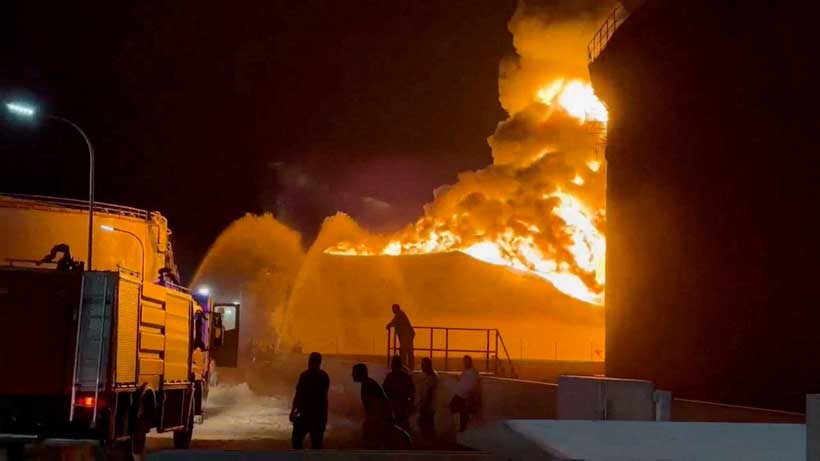
The drone strike that hit a gasoline tank at the Zawiya refinery in August was more than a security incident. Zawiya is Libya’s largest operating refining facility, and the National Oil Corporation warned that continued attacks could force operations to halt. In an economy still built almost entirely around hydrocarbons, a disruption at one major facility rarely stays local. It becomes a national economic risk.
Libya’s dependence on oil has generated enormous wealth, but it has also concentrated economic risk in a relatively narrow network of fields, pipelines, export terminals, and refineries. A disruption at any one of these nodes can threaten fuel supplies, production, and the state revenue that depends on them, reaching well beyond the site itself.
None of this means Libya should move away from oil, which will remain central to the economy for years. The more useful question is whether Libya can build enough productive capacity around it that the country’s economic future isn’t defined by the vulnerability of a handful of facilities. Diversification is often discussed in the abstract. In Libya, it is starting to take a more concrete shape, particularly in cement and steel, where investment is beginning to build an economic base around production, employment, infrastructure, and domestic value rather than around extraction alone.
Why cement is more than a construction material
Stay ahead of the geopolitical week.
MD Briefing delivers expert analysis across five global fronts — the Indo-Pacific, energy, geoeconomics, European security, and the Middle East — every Monday morning. Free.
Cement doesn’t carry the same strategic weight as oil in most conversations about Libya’s economy, but for a country rebuilding its cities and infrastructure, it arguably should. Housing, roads, and public infrastructure all depend on a steady domestic supply of building materials, and meeting that demand locally generates a different kind of value than exporting raw resources: factories, supply chains, jobs at multiple skill levels, and more of the value construction generates staying inside the national economy.
There is also an export dimension. Libya’s location and access to regional markets give a competitive cement industry real potential beyond its own borders. Suhail Abushiha, Libya’s Minister of Economy and Trade, has said the country could eventually export as much as 25 million tonnes of cement annually, a figure that indicates how far this ambition is meant to reach, even if it remains some distance from current output.
A functioning industrial sector depends on engineers, technicians, suppliers, contractors, energy, transport, finance, logistics, and maintenance, and its output in turn supports other industries and the wider construction economy. That is the multiplier effect Libya needs, not just revenue, as oil provides, but economic activity that spreads across businesses, regions, and communities. The foundations for that are already forming.
The industrial base already in place
Libya is not starting from scratch. The Libyan Cement Company in Benghazi remains one of the country’s most established industrial producers, accounting for roughly 20 percent of national cement output and supporting more than 1,000 direct jobs. Over the years, its cement has supplied major infrastructure and reconstruction projects, and its history tracks the broader shift in Libya’s private sector. In 2023 it came under the ownership of businessman Ahmed Gadalla and has since grown to become a defining industrial player in eastern Libya.
The company’s importance extends past what it produces. A major industrial operation generates demand for engineers, contractors, transportation, logistics, maintenance, and energy services, and its output feeds directly into the construction and infrastructure projects that will shape Libya’s future. Gadalla’s industrial interests go beyond cement, in fact. His involvement in the SULB steel venture, alongside Tosyalı Holding, follows the same logic of building productive capacity in sectors that support construction and long-term development.
Alongside these established players, Libya is seeing a new wave of large-scale investment. In Nalut, ALHEDAB Cement Company is developing a major project with an estimated investment of $600 million, designed to produce up to 12,000 tonnes of cement per day, one of the largest industrial projects currently under development in the country. What distinguishes the project isn’t only its scale. Around 25 percent of its capital is expected to open to public and foreign investors, with plans for a future stock market listing, which points to a shift in how large industrial projects in Libya could be financed going forward: less reliant on the state or a narrow group of private interests, and more open to broader participation.
Other producers are expanding the sector as well. Arabian Cement Company, a domestically owned producer based in Khoms, has an annual production capacity of roughly 3.3 million tonnes, and international companies including Pakistan’s Lucky Cement and Oman’s Raysut Cement have identified opportunities in the Libyan market. What matters is less any single project than the combined effect: a growing network of producers, suppliers, contractors, logistics companies, and skilled workers starts to resemble an industrial ecosystem rather than a collection of unrelated ventures.
Diversification depends on projects reinforcing each other
Libya’s economic future won’t be transformed by one factory or one investment announcement. Diversification becomes meaningful when industries start reinforcing each other: cement supports construction, construction creates demand for steel, transport, and engineering services, and new industrial facilities need energy infrastructure, maintenance, logistics, and finance in turn. Industry’s value isn’t limited to what leaves the factory. It lives in the network of activity that builds up around it, which matters for Libya in particular, since oil has financed much of the state for decades without creating a broad productive base on its own. Cement and steel fit that gap reasonably well, given that reconstruction already creates substantial domestic demand and regional markets could add export opportunities over time.
Incentives alone won’t be enough
Projects at this scale need capital, confidence, and long-term commitment. Libya has been working to strengthen the investment environment through incentives and guarantees aimed at domestic and foreign investors. Investment promotion mechanisms backed by the Public Investment Bank are meant to build investor confidence, and the investment framework has tried to encourage the transfer of foreign expertise and technology, including requirements such as health insurance for workers.
These measures matter, but they aren’t sufficient on their own. Market opportunities, natural resources, and favorable terms can draw investors in, but long-term industrial investment depends on something more basic: confidence that regulators apply the rules consistently, and that assets, workers, and supply chains can operate somewhere secure. That is where the Zawiya attack becomes relevant again.
Security, not just incentives, will determine whether this works
The refinery attack points to a challenge that goes beyond any single facility: Libya’s economic prospects can’t be separated from its security and political environment. A country can offer investment guarantees, but uncertainty erodes their value. A manufacturer weighing a multi-million-dollar factory has to account for demand and profitability, but also electricity, logistics, regulation, security, and whether operations can run consistently for years at a time. That is why economic diversification and institutional reform need to move together. Libya needs investment, but investment needs predictability just as much: clear regulations, reliable institutions, and an environment where companies can plan past the next political or security disruption.
The Zawiya attacks make that need difficult to ignore. They show how quickly insecurity can threaten assets central to the national economy, and they strengthen the case for an economy that doesn’t depend on a narrow set of sources. Diversification can’t eliminate political or security risk, but it can reduce how much of the country’s economic life hinges on a limited number of facilities.
Where this leaves Libya
The Zawiya fire is a warning about what happens when a national economy leans too heavily on a narrow group of critical assets. Libya will remain an oil producer for the foreseeable future, and hydrocarbons will continue generating a large share of national wealth. But that doesn’t mean the country’s economic future has to be defined by oil alone.
New cement plants are under development, existing producers continue to back reconstruction and employment, capital is opening to domestic and foreign investors, and international companies are moving in alongside Libyan businesses. These are early signs of a possible shift, not evidence of one already completed. Whether Libya can turn individual investments into a coherent industrial strategy will depend on more than capital and ambition. It will depend on regulatory reform, stronger institutions, security, and sustained commitment to building productive capacity, with Libya’s oil wealth funding the broader transformation rather than substituting for it.
The exterior of the two-story, beige-colored building looks like any other drab office space near the Hollywood Burbank Airport. But on a recent weekday afternoon, the inside was bustling with activity: hairstylists carried brightly colored wigs between soundstages, a prop artist was building a fake leg for an upcoming video and YouTube stars gathered in a lobby, fidgeting with their phones while they waited to film their next scene.
They were among more than 100 employees of Smosh Productions, which this spring moved into the 32,000-square-foot facility, from a much smaller location in the city, to accommodate their programming needs.
It’s the latest creator-run company deepening its roots in Burbank, a neighborhood long defined by such iconic studios as Disney,Warner Bros. and Universal Pictures.
Other influencer-led companies that have expanded production footprints in the city include Rhett McLaughlin and Link Neal’s Mythical Entertainment and Alan Chikin Chow.
“Being ‘Media City’ is a part of Burbank’s tagline. And it’s still true; we are just a different kind of media,” said Katelyn Hempstead, Smosh’s executive coordinator, on a tour of the new facility.
Shoot days for digital productions rose 47% in the second quarter to 661 compared with the same period a year ago — even as the overall number of on-location shoot days dropped 13% during that period, according to FilmLA, the nonprofit group that tracks local filming.
“When people have an opportunity to work for a few days on a vertical series or [when] they make an income out of being an influencer and producing regular content for their various social channels, that does help the economy,” said Philip Sokoloski, a spokesman for FilmLA. “They still purchase things. They still utilize equipment. They may rent things from local supply houses.”
Cameras inside the “Who Meme’d It?” studio at Smosh Studios in Burbank.
(Kayla Bartkowski / Los Angeles Times)
Burbank has more than 1,000 media and entertainment companies that generate about 66,000 jobs.
Although the city does not give a breakdown of jobs by category, the creator economy has fueled some of the growth in the city’s entertainment employment over the last six years, said Patrick Prescott, Burbank’s community development director.
Most occupy flexible industrial space in the Airport district, leasing space for $1.65 to $2.81 a square foot, he said.
“It’s definitely a transitional period,” Prescott said. “There’s still something really valuable about sitting in a theater with a bunch of other people. But there’s also a lot of scrolling going on. Who’s generating that content? A lot of it’s generated here.”
Filmmakers work in the theater set at Dhar Mann Studios.
(Jason Armond / Los Angeles Times)
Due to anemic production activity, soundstages across L.A. have struggled to fill their studio spaces. That has opened up opportunities for new types of internet productions to fill at least some of the gap, said Sam Glendon, an industrial broker who’s handled several such deals. Creators building out their own space can pick up a discounted soundstage as a result, he said.
“There’s been this big supply-and-demand imbalance,” Glendon said. “It’s still a very niche type of clientele, but I’m certainly searching YouTube much more for who these people are and how many followers they have. Five years ago, I never did that.”
Controlling a studio matters to creators because it lets them move fast without a major studio’s bureaucracy, and platforms such as YouTube reward a steady, frequent posting cadence.
Alan Chikin Chow, behind the scripted YouTube high school drama series “Alan’s Universe,” moved his 13-person operation into a 10,000-square-foot Burbank facility in 2024 after outgrowing his Koreatown apartment.
“YouTube creators are the new trendsetters, and so we wanted to be associated with the big media in Burbank,” said Moris Zingman, the show’s lead producer. Proximity to the Warner Bros. lot helps land celebrity guests, too — Jacob Moncrief, Mythical’s studio president, said it’s an easy sell for shows like “Last Meals” when guests are already a few minutes away.
Filmmakers rehearse a scene in the restaurant set at Dhar Mann Studios.
(Jason Armond / Los Angeles Times)
Traditional media have taken note. Mythical Entertainment and Alan Chikin Chow both struck deals with Netflix in July. “Good Mythical Morning,” “Mythical Kitchen,” “Last Meals” and “Alan’s Universe” are all set to stream there alongside their YouTube releases starting later this year.
Dhar Mann Studios, one of Burbank’s biggest creator-run operations, added a deal with Disney last week for 20 episodes of family-oriented programming — its second major-studio partnership after a 40-title vertical-video deal with Fox Entertainment earlier this year.
Mann, 42, started making YouTube content in 2018 under the Dhar Mann Studios banner, centered around morality and motivational videos. The company now runs a 125,000-square-foot, three-soundstage facility with roughly 220 employees producing rotating sets — restaurants, school hallways, a courtroom, jail visitation rooms — designed to mimic a small town.
But Dhar Mann Studios doesn’t own its Burbank building — it leases the space — and this month the company bought a 108,000-square-foot production campus in Chatsworth for $23 million, with plans to relocate there by 2027, the Real Deal reported.
It’s the same pattern playing out across L.A.’s creator economy.
“The scale that creators have gotten to is ginormous,” said Sean Atkins, Dhar Mann Studios’ chief executive. “Media companies are always looking at what the next thing is. The answer isn’t that they become us or we become them. It’s somewhere in the messy middle, of which nobody knows right now.”
Most internet content work is mostly non-union and typically pays less than traditional film and TV jobs. SAG-AFTRA and the Motion Picture Editors Guild have started drafting new-media-specific contracts in response.
Even so, some workers welcome the opportunity.
Austin Scott, an editor who built a career cutting reality shows like “MasterChef” and “Dancing With the Stars,” recently landed his first big gig after three years of being unable to find post-production work, editing a YouTube series for Kevin Hart’s Hartbeat. Over eight weeks, he’ll work 12-hour days for $3,500 a week — below the $5,000 to $6,000 a typical TV editing job pays.
“My expectations are that it’s going to be harder work, longer hours, more notes, less money,” Scott said. “But there’s no work, so people are kind of forced to take what they can get.”
House Minority Leader Hakeem Jeffries, D-N.Y., on Thursday declined to detail possible punishments for two House Democrats who voted with Republicans this week on a procedural vote on GOP-backed bills. File Photo by Daniel Heuer/UPI | License Photo
Sept. 3 (UPI) — House Minority Leader Hakeem Jeffries, D-N.Y., on Thursday declined to detail any punishment for two Democratic lawmakers who voted earlier this week with Republicans on a procedural vote to advance GOP-led bills.
Democratic Reps. Jared Golden of Maine and Marie Gluesenkamp Perez of Washington on Tuesday voted to advance debate on Republican-led bills, including a resolution condemning socialism that GOP leaders want to use against Democrats during the fall election season.
Without their votes, the procedural vote would have failed. Jeffries and other Democratic leaders sharply criticized the votes by Golden and Gluesenkamp Perez as a “breach of trust” and said there would be a “serious response.”
Jeffries told a news conference Thursday that he spoke with Gluesenkamp Perez, calling the discussion “productive” and “forward-looking.
Some House Democrats suggested Gluesenkamp Perez should be removed from the Appropriations Committee over vote.
“Marie Gluesenkamp Perez, of course, is an important member of the House Democratic Caucus fighting hard for the people that she represents in Washington and a leader of the Blue Dogs,” Jeffries said.
“And we value every single member in our caucus – progressives, the New Dems and Blue Dogs – and we’re going to move forward together, in unity, in order to solve problems for the American people.”
Jeffries said there was a continuing “family discussion about how we all move forward together.”
He tasked an internal panel in charge of caucus rules to discuss sanctions in new rules to prevent House Democrats from voting with Republicans on important procedural votes. The panel, which met Wednesday, did not take immediate action.
Jeffries said Democrats will discuss possible changes to internal caucus rules because of the defections. However, he suggested there be punishments for Gluesenkamp Perez or Golden.
Gluesenkamp Perez is seeking re-election in a district that leans Republican, while Golden is retiring. She represents a district that U.S. President Donald Trump won in 2024, and she is a top target for Republicans in November’s election.
Authorities say agent fired into home with people inside, lied about circumstances.
Published On 3 Sep 20263 Sep 2026
Federal prosecutors in the United States have charged an Immigration and Customs Enforcement (ICE) officer accused of lying under oath to investigators regarding the shooting of a Venezuelan man during an immigration crackdown this year.
Prosecutors alleged that Christian Castro lied to federal investigators about the events that led up to him firing on 24-year-old Julio Cesar Sosa-Celis through the door of a Minnesota home in January.
Recommended Stories
list of 3 itemsend of list
The Associated Press news agency and The New York Times reported the indictment, quoting a person familiar with the matter who was not authorised to discuss the investigation publicly. It was expected to be unsealed when Castro is detained.
Castro, a former Department of Homeland Security agent, also faces multiple state felony charges in Minnesota related to the nonfatal shooting, including assault with a dangerous weapon.
Authorities in the Midwestern state had sought to extradite Castro from Texas to face trial. Texas Governor Greg Abbott, a Republican and President Donald Trump loyalist, declined to cooperate with the request.
The ensuing standoff left Castro detained in Texas for 90 days before his release last week. Under Texas law, the state cannot hold the subject of an extradition order for longer than that. His whereabouts were unclear as of Thursday.
The charges mark a rare move by the Department of Justice under Trump.
Trump’s top officials have repeatedly argued that immigration agents maintain broad protections while conducting enforcement, a position rejected by many legal experts.
For example, no one has been charged in the fatal shootings by immigration agents of Renee Nicole Good and Alex Pretti in Minneapolis in January.
An Associated Press review conducted in February found about two dozen ICE employees and contractors had faced criminal charges since 2020.
An American Civil Liberties Union report released in July documented instances of violent tactics or other civil rights violations in about a third of 1,200 immigration enforcement incidents reviewed in 2025 alone.
Video evidence contradicts statement
The Trump administration distanced itself from the Castro case after video emerged contradicting the agent’s initial accounts of the confrontation.
Castro told investigators that Sosa-Celis had attacked him, which the surveillance footage showed did not happen.
Todd Lyons, then acting head of ICE, said at the time that the footage “has revealed that sworn testimony provided by two separate officers appears to have made untruthful statements”.
Castro and a fellow agent chased Alfredo Aljorna, a Venezuelan national, after a traffic stop, according to charging documents.
Aljorna fled to the home he shared with Sosa-Celis. After a brief scramble, the two men ran inside. Castro then shot through the closed door, “knowing [the home] was occupied by several people”, the documents said.
One witness said there were two children in the house when Castro opened fire. Sosa-Celis was hit in the leg.
Federal authorities have since suspended Castro and dropped all charges against Sosa-Celis and his co-defendant, who were both initially accused of forcibly assaulting an ICE officer. The other agent involved in the incident was also suspended, but has not yet been charged.
Thursday’s indictment comes after ProPublica this week reported that Department of Justice (DOJ) officials had blocked prosecutors from pursuing more serious civil rights charges against Castro, including “deprivation of rights under color of law”.
However, a source close to the investigation told the AP the active investigation could still result in civil rights charges.
The Trump administration has scaled back the DOJ’s Civil Rights Division and dismantled several Biden-era police oversight initiatives since returning to office in January 2025.
That has come as the administration has revved up its mass deportation campaign across the country.
In August, immigration agents detained 50,925 people with the Department of Homeland Security hailing it as a new record for the “highest number of illegal aliens arrested in a single month”.
For reality TV network Bravo, the boat has sailed on any future work with “Below Deck Mediterranean” cast member Nathan Gallagher after he was convicted this week of assaulting his partner and castmate.
“Bravo does not plan on working with Nathan in the future,” a spokesperson for the network said Thursday in a statement shared with The Times. Gallagher has appeared in the last three seasons of the “Below Deck” spinoff, including its 11th season that premiered in June. Filming on the current season concluded before the superyacht bosun was arrested and charged in December on three counts of domestic violence against a 29-year-old woman. Bravo has no intentions to remove footage of Gallagher from the current season, The Times has learned.
Bravo cut ties with Gallagher after law enforcement officials in Australia announced Tuesday that Gallagher is “wanted on an outstanding arrest warrant.” The New South Wales Police Force said in a news release that Gallagher, 28, is believed to be offshore. Gallagher failed to appear for a court hearing on Tuesday but a judge still convicted him on the domestic violence charges, the New York Times reported.
According to an August police report shared with The Times, Ryde Police Area Command responded on Dec. 27, 2025, to reports of an alleged assault and arrested Gallagher at an apartment complex in the Australian suburb of Melrose Park. He was accused of assaulting an unidentified 29-year-old woman the day prior to his arrest. Although not named in the initial report, Gallagher’s “Below Deck” co-star Gael Cameron later filed an Apprehended Violence Application — a request made to a court to protect a person from somebody they believe could cause them harm — against Gallagher, according to Rolling Stone. The two share a young son.
Police also said in the August report that there were no “serious” injuries at the time of Gallagher’s arrest. He was booked at the Gladesville Police Station on three domestic violence charges: common assault, assault occasioning actual bodily harm and intentionally choking a person without consent. Gallagher was eventually released on bail.
The “Below Deck” star addressed his arrest for the first time last week, telling Rolling Stone in a statement he doesn’t believe the public “has heard the full story surrounding what happened” and he is prioritizing care for their son. “What has been publicly reported, however, represents only one side of what was an extremely complicated situation,” he said.
Police urged anyone with information about Gallagher’s location to get in contact.
Sept. 3 (UPI) — The House of Representatives on Thursday approved a bill to bar colleges and universities from participating in boycotts of Israel or preventing students taking part in exchange programs with the country.
According to the bill, colleges and universities that take part in federal student aid programs would be barred from participating in boycotts of Israel. Institutions that receive federal funds for international and foreign language programs would be required to certify they do not impose restrictions on students taking part in programs in Israel.
Students from Israel taking part in programs on their campuses also would be covered.
“This legislation is about a simple principle: our colleges and universities should not discriminate against Israel, Israeli institutions or Israeli students, and federal taxpayer dollars should never support institutions that engage in such discrimination,” said House Education Committee Chair Tim Walberg, R-Mich.
The ranking Democrat on the educational committee, Rep. Bobby Scott of Virginia, said the bill possibly violated the First Amendment.
“No college or university has embraced the BDS movement anyway,” he said. “So, we should combat antisemitism wherever it occurs, but we should not do so by punishing protected speech or conflating a student’s view with university policies.”
Most of the Democrats who voted in favor of the bill are facing tough re-election races in November, or back Israel. Rep. Josh Gottheimer of New Jersey, who co-sponsored the bill, called it “narrow and tailored’ and needed to fight anti-Semitism.
“No student, no professor should be shut out of research, study abroad opportunities, or academic partnerships or feel unwelcome in the classroom because of where they are from or what religion they practice,” he said in a statement.
“Yet, that’s exactly what the boycott-divest-sanction movement seeks to do – targeting one country and one religion: Israel and Judaism.”
The legislation now goes to the Senate for debate.

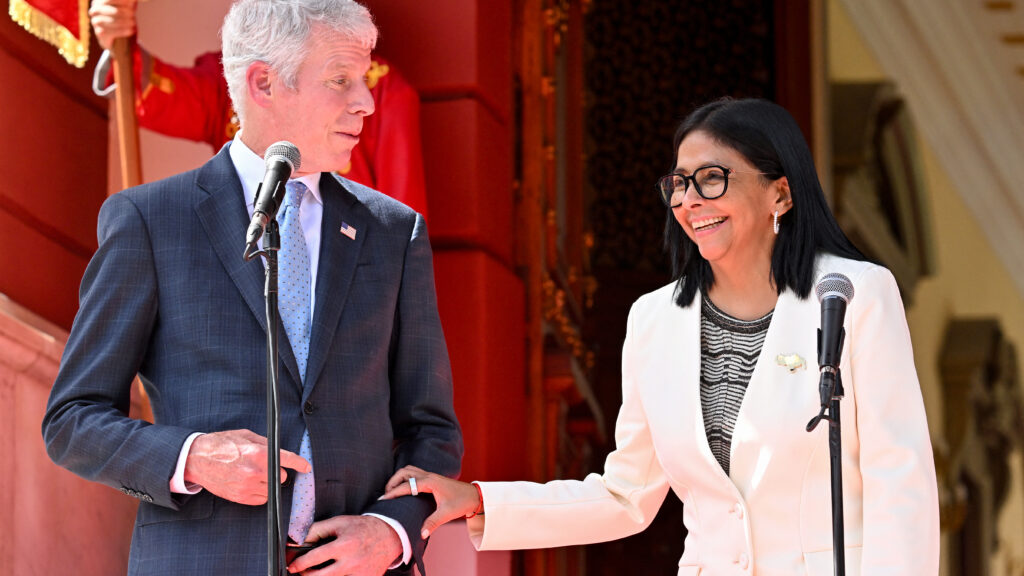





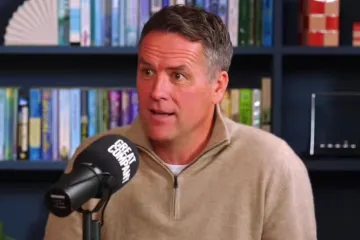














![Hundreds of Jewish settlers worship atop buildings in Jerusalem's Old City overlooking the Western Wall on the third day of the Sukkot, a Torah-commanded Jewish holiday, in Jerusalem on October 09, 2025. [Gazi Samad/Anadolu via Getty Images]](https://i0.wp.com/occasionaldigest.com/wp-content/uploads/2026/09/GettyImages-2239501788-1788473407.jpg?w=640&ssl=1)