Erica Mahinay, showing with Make Room Gallery at Frieze L.A.
Some art shows are not just about the art. At Frieze L.A., it’s also about seeing — and being seen.
On Thursday morning, over 100 artists, gallerists and collectors representing 24 countries wafted into the maze that is Frieze at the Santa Monica Airport and transformed the space into a winding runway. The dress code was eclectic and appropriately L.A.: hyper-curated and nonchalant. Archival Mugler was paired with reconstructed relaxed denim. Silk pajama pants slouched over Wales Bonner loafers. And much like the works on display, attendees dared to be visually undefinable.
This year, the four-day frenzy is expected to draw about 30,000 attendees to exhibitions both in and outside the tent, including public installations from Frieze Projects’ “Body & Soul,” and the Focus section curated by Essence Harden, which spotlights young and lesser-known artists.
Storm Ascher, left, founder of Superstition Gallery and Greg Ito pictured with his solo booth, “A Cautionary Tale,” in the Focus Section curated by Essence Harden.
Undeniably, the art this year is a product of now. Outside, Patrick Martinez welcomes guests with neon quotes supporting immigrant rights. Across the tent, in a display of performance art, Amanda Ross-Ho continuously pushes a giant, inflatable Earth around a soccer field, symbolic of “the labor it takes to just keep things going all the time.” Walking around the fair, a shared sentiment of post-fire rejuvenation, cultural collaboration and a pride for the Los Angeles community was deeply felt.
Angeleno and artist Sharif Farrag said he’s “excited to show in the city [he] grew up in.” His ceramic collection “Hybrid Moments” with Jeffrey Deitch is a cultural analogy for his childhood. “I hope my work can reflect the times we’re in through a lens of color,” he said, “and the flora and fauna of L.A.”
Nicole Reber, an L.A.-based real estate agent, was giving “’90s sparkle princess,” coupling a pair of Chanel loafers with a vintage Escada jacket that’s “highly underrated.” She came to Frieze to scope out the next addition to her home. “There’s something valuable about living and collecting art,” she said. “It’s a chance to live with somebody else’s energy.”
Dr. Joy Simmons wore a calf-length button-down by South African designer Thebe Magugu. Collecting art, like clothes, is her way of exploring the diaspora. “I just want to find something that’s different,” she said. “[African American artists] bring a different kind of color palette and excitement to the art world.”
Sharon Coplan Hurowitz came to Frieze with her “support animal, ‘Hector.’” The pebble grain Thom Browne shoulder bag, though, was no size comparison to the 10-foot John Baldessari sculpture she stood in front of. Coplan, who recently authored a catalog of Baldessari’s notable art, is excited to see support for his archival works.
Nevine Mahmoud sculpture at Sebastian Gladstone Gallery
Sebastian Gladstone, owner of namesake New York and L.A. galleries, said he loves the L.A. art community because it brings together “people that would never mix otherwise.” If he could describe “good” art in a sentence, it would be: “an alchemy where there’s a mystery of its creation, and how it makes you feel.”
Kibum Kim, partner at the Commonwealth and Council gallery
rafa esparza at Commonwealth and Council booth
Kibum Kim, a partner at the Commonwealth and Council gallery, said sifting through Frieze is like making “Sophie’s choice.” He wore a jacket from Jakarta-based brand Tanah le Saé, adorned with mixed-matched buttons. In a similar spirit of upcycling, his exhibition shows Rose Salane’s newest project from Pompeii featuring rocks and other ephemera taken from the historic site.
William Escalera, left, and Francisco George
Francisco George, a longtime art collector and docent at LACMA, is a Frieze regular. To him, good art “grabs your attention and keeps it. It communicates.” He visits the fair with his husband, William Escalera, who this year is looking for art that incorporates textiles. “It’s different,” he said.
Gallerist Susanne Vielmetter
Gallerist Susanne Vielmetter layered an Issey Miyake Pleats Please dress with a skirt from J.Crew underneath. At Frieze, she never knows whether it’s going to be cold or hot in the tent. “It’s an onion look,” she said. Although she is particularly excited to display paintings by Alec Egan, depicting the trauma of the Palisades fire, she is glad that the fair is bustling and joyous. “People are just done with doom and gloom,” she said. “They’re positive, they’re energetic, they want to go back to collecting.”
Shio Kusaka, left, and Jonah Wood
An artwork by Jade Guanaro Kuriki-Olivo, aka Puppies Puppies
Conny Maier wears a Healthy Boy Band tee and MISBHV biker shorts.
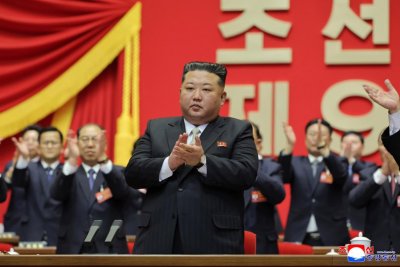
North Korean leader Kim Jong Un (C) and officials applauding during the fourth day of the Ninth Congress of the Workers’ Party of Korea (WPK) in Pyongyang, North Korea, 22 February 2026 (issued 23 February 2026). According to KCNA, North Korean leader Kim Jong Un has been re-elected as the general secretary of the ruling Workers’ Party. Photo by KCNA / EPA
Feb. 27 (Asia Today) — Kim Jong Un declared that North Korea would “permanently exclude” South Korea from the category of fellow countrymen and said there was “absolutely nothing to discuss” with what he called the “most hostile entity.”
In a report delivered at the ruling party congress held on Feb. 20-21, Kim warned that if Seoul “damages our security environment,” Pyongyang could take unspecified actions, including threats implying the “complete collapse” of South Korea through nuclear force. The remarks reaffirmed North Korea’s “two hostile states” doctrine and amounted to one of its most belligerent statements toward the South in recent years.
Kim’s speech appeared to directly rebuff the conciliatory approach pursued by President Lee Jae-myung. Upon taking office, Lee outlined three principles for inter-Korean relations: respect for the North Korean regime, no pursuit of absorption-style unification and the exclusion of hostile acts. At the U.N. General Assembly in New York last September, he proposed the “END Initiative,” aimed at encouraging denuclearization through exchanges and normalization of relations.
Seoul has since halted loudspeaker broadcasts along the Military Demarcation Line, suspended National Intelligence Service broadcasts toward the North, made the Rodong Sinmun more publicly accessible and expressed regret over civilian drone incursions. The administration has also sought to restore the Sept. 19 inter-Korean military agreement, a move that has drawn criticism from some within the military and from U.S. officials.
According to reports, Gen. Xavier Brunson, commander of U.S. Forces Korea, conveyed concerns to the chairman of the Joint Chiefs of Staff that restoring the no-fly zone near the border could “constrain the ROK military’s readiness posture.”
Despite these gestures, Kim dismissed Seoul’s stance as a “clumsy deception and a poor performance.” While rejecting dialogue with the South, he left open the possibility of improved ties with Washington, saying there would be “no reason we cannot get along well” if the United States abandons what Pyongyang calls a hostile policy.
The contrast underscores a long-standing North Korean strategy often described as engaging Washington while sidelining Seoul. The editorial argues that Seoul’s current peace roadmap has effectively stalled, with little progress in efforts to leverage improved ties with Beijing to moderate Pyongyang’s stance.
While peaceful coexistence remains a stated goal, Kim’s latest remarks raise renewed questions about whether continued unilateral conciliatory measures can alter North Korea’s strategic calculus.
Weekly insights and analysis on the latest developments in military technology, strategy, and foreign policy.
The U.S. Air Force now has at least 14 aerial refueling tankers forward-deployed in Israel ahead of potential strikes on Iran. Beyond supporting U.S. aircraft, an equally important role the tankers — and those spread across the region — could play is refueling Israeli fighters joining in the fight. The Israeli Air Force’s (IAF) entire tanker fleet consists of just seven nearly antique KC-707s, which imposes inherent limits on range, loiter time, sortie rates, loadout options, and other aspects of tactical air operations. Giving the IAF the full tanking resources of the U.S. would unlock its full combat potential.
Nine KC-46s and five KC-135s have arrived at Ben Gurion Airport since the start of this week. Ben Gurion is Israel’s main international airport, and is situated just to the southeast of Tel Aviv, roughly in the center of the country.
At least nine American refueling tankers arrived at Israel’s Ben Gurion Airport overnight as part of the United States’s massive buildup of military forces in the Middle East.
At least nine US Air Force refueling tankers have arrived at Israel’s Ben Gurion Airport as part of the US’s massive buildup of military forces in the Middle East. Jack Guez, AFP. pic.twitter.com/qNFy677lnE
At least 11 U.S. Air Force F-22 Raptors are also now forward-deployed to the IAF’s Ovda Air Base in the southern tip of Israel. The F-22s had flown there after making a stop at RAF Lakenheath in the United Kingdom. A 12th Raptor reportedly had to return to Lakenheath due to a technical issue, but whether it may now have made its way to Israel is unclear.
Intersting choice.
USAF F-22 fighter jets redeployed from the UK will be stationed at the Ovda Air Base in southern Israel, per reports.
H/t to @EISNspotter as I believe that he broke the news first.
The tankers at Ben Gurion and the F-22s at Ovda are relatively small parts of the massive buildup of U.S. military forces across the Middle East in recent weeks. The large influx of U.S. airpower has caused crowding at other available bases in the region that sit outside the range of Iran’s short-range ballistic missiles and other standoff weaponry, which clearly played a part in deciding to utilize Israeli facilities for the deployment of additional aircraft. Israel would also be under threat of heavy retaliation in the event of any new U.S. operation targeting Iran. U.S. aircraft in Israel would be well-positioned to help provide more immediate defense against incoming Iranian threats, but those assets could also contribute heavily to strikes on Iran.
At the same time, as TWZ has previously noted, there are very strong signs that Israeli forces will be fully integrated into the defensive and offensive components of any potential new U.S. operation against Iran. The KC-46s and KC-135s now at Ben Gurion are a tanker force twice as big as what the IAF has in its inventory today. Each KC-46 also carries more fuel to offload to receivers than a KC-707 or a KC-135. All of this could offer a major boost in aerial refueling capacity, and the operational benefits that come along with that, to Israeli forces.
One of the IAF’s KC-707s seen refueling an F-15. IAF
From the very start of what became the 12 Day War between Israel and Iran, TWZ pointed out that committing U.S. tankers to the fight could have massive force multiplying impacts for the IAF. In the weeks that followed, there were reports that the United States had done just this, but clandestinely and to a very limited degree, to help sustain the Israeli air campaign. The U.S. Air Force subsequently denied that this had been the case, after which we delved deep into what Israel would have otherwise had to have done to keep up the operational tempo.
“Fitting as much external fuel on the fighters – the IAF’s F-15 fleets and F-16Is are all notably fitted with conformal fuel tanks and have the ability to carry drop tanks – was clearly necessary. Even dropping external tanks once they are empty to maximize range appears to have been part of the plan during the initial high-volume strikes. While drop tanks are expendable, they are not cheap and are usually retained unless performance has to be regained due to enemy threats or an in-flight emergency occurs. Dropping them to maximize an aircraft’s range is also an established tactic, but not a very sustainable one over the long term. It’s also one that is not needed if tanker support is readily available, nor is equipping the jets with maximum external fuel in the first place, in many circumstances.”
“Flying very carefully planned flight profiles to squeeze every bit of efficiency out of the range of IAF tactical jets was also clearly a tactic employed, although it leaves very little margin for error or combat contingencies. In addition, we know that Israel’s F-35Is have been tweaked to provide extra range. We don’t know exactly what this entails, and it could be a cocktail of measures, from software tweaks to internal or external fuel tanks. Regardless, it was reported that many IAF fighters landed on fumes after their initial sorties.”
“Regardless, maximizing Israel’s fighter force of close to 300 aircraft (total inventory, not what is actually available at any given time) in the opening waves of the war with just seven tankers may have been a feat that can be explained by careful planning, drop tanks, and the use of long-range standoff weaponry, at least early on. As the war continued, the magnitude of the sorties may have dropped, but the geographical depth and power of their strikes increased. These operations were sustained for nearly two weeks.”
“During the conflict, TWZ discussed how, at a certain point, Israel would have to drastically reduce its cadence of operations or wrap up the war. If the U.S. had not struck Fordow with B-2s, it’s possible the war would not have ended until the IDF was able to deal with that very hardened target, which would have likely required a ground operation very deep into a highly-defended area of Iran. Strikes would have eventually slowed as the IAF’s sortie rates degraded, and especially those of its overworked and geriatric tankers.”
As an aside, Israeli Ambassador to the United States Yechiel Leiter offered what looks to be the first official confirmation that range-extending fuel tanks for the F-35I are in service in an interview earlier this month. “We developed fuel tanks that extend the aircraft’s range without compromising stealth,” Leiter told the Israel Hayom newspaper.
Questions remain about these tanks, including whether they are internally or externally mounted. To date, no pictures have emerged that definitively show them fitted to an F-35I.
An Israeli F-35I with a so-called ‘beast mode’ loadout, including ordnance on pylons under the wings. IAF
Regardless, truly robust tanker support would fundamentally change the IAF’s planning processes and operational possibilities. Access to the USAF’s tanker ‘bridge’ that will cover large swathes of the Middle East, keeping combat aircraft in the fight, will be an unprecedented operational reality for the IAF. More aerial refueling capacity would enable tactical jets to fly further, loitering over areas of the battlespace longer, and carry heavier ordnance loads. Greater reach and time on station could be extremely valuable when hunting for mobile high-value targets, like Iranian ballistic missile launchers. More range and loiter time could be equally important for responding to large waves of incoming Iranian missiles and drones in retaliation.
Far greater tanker support would also provide much higher safety margins for aircraft returning low on fuel from longer-range and/or long-duration missions. As noted earlier, it was reported that IAF fighters often landed on fumes after their initial sorties during the 12 Day War. It is somewhat shocking that aircraft were not lost to fuel starvation alone considering how closely they were operating to the edge of their endurance. Tankers forward-deployed in Israel could be similarly critical for providing recovery tanking, giving IAF aviators an extra margin of flight time, especially if everything doesn’t go as planned. The same can be said for U.S. fighter aircraft operating out of Israel. The F-22 has a notoriously short combat radius, for instance. Fuel starvation was an issue even in the mission to capture Maduro, for instance.
All around, U.S. tankers refueling Israeli jets during a future operation against Iran could only help greatly magnify the contributions of the latter, which would already be substantial in this scenario. IAF involvement would add hundreds of fighter aircraft, unique munitions, and more to the equation. On top of materiel aspects, Israeli pilots would bring immense experience about operations over Iran gained during the 12 Day War, as well as the benefits of analysis of lessons learned from the conflict. The rest of the Israel Defense Forces (IDF) and the Israeli intelligence apparatus would be able to provide other kinds of critical support.
12 Days of Precise Action
All of this also underscores the importance of Israel’s effort now to acquire a new fleet of six KC-46 tankers to replace its aging KC-707s. At least as of 2022, Boeing was expected to deliver the first KC-46s to the IAF before the end of this year.
It is still to be seen whether the U.S. will launch a new operation against Iran, and what role Israel will play if that decision is ultimately made. Many other questions remain to be answered, as well, as TWZ just recently explored in detail.
“It’d be nice if we could do it without, but sometimes you have to do it with,” U.S. President Donald Trump told reporters as he left the White House earlier today in response to a question about possible strikes on Iran. “We have the greatest military anywhere in the world. There’s nothing close. I’d love not to use it, but sometimes you have to.”
Trump on military force against Iran: “It’d be nice if we could do it without, but sometimes you have to do it with. We have the greatest military anywhere in the world. There’s nothing close. I’d love not to just it but sometimes you have to.” pic.twitter.com/kDh9oOeoPK
“They should make a deal, but they don’t want to quite go far enough. It’s too bad,” Trump also said today. “We’re not happy with the negotiation.”
“They don’t want to say the key words, ‘We’re not going to have a nuclear weapon,’ and they just can’t get there… So I’m not happy with the negotiation,” says @POTUS on Iran. pic.twitter.com/XN0S4ObS2x
“I met Vice President J.D. Vance today and shared details of the ongoing negotiation between the United States and Iran and the progress achieved so far,” Omani Foreign Minister Badr Albusaidi also wrote in a post on X today. “I am grateful for their engagement and look forward to further and decisive progress in the coming days. Peace is within our reach.”
I met Vice President JD Vance today and shared details of the ongoing negotiation between the United States and Iran and the progress achieved so far. I am grateful for their engagement and look forward to further and decisive progress in the coming days. Peace is within our… pic.twitter.com/fMHxWV0jgl
U.S. and Iranian officials met in Oman yesterday for a second round of talks aimed at avoiding a conflict, and focused on Iran’s nuclear ambitions. The results of that engagement were inconclusive, though there are publicly stated plans for another round of talks next week.
If the U.S. government does decide to take action against Iran, the tankers at Ben Gurion are among the forces now in place to swing into action, and could easily find themselves refueling Israeli jets, as well as American ones. U.S. Air Force tanker support would be a massive force multiplier for the IAF that would allow it to have an even greater impact than it had in the 12 Day War.
As the media industry took stock of Paramount Skydance’s startling acquisition of Warner Bros. Discovery, one question lingered on the minds of many in the news business and beyond: what will this mean for CNN?
The iconic 24-hour cable news network is among the various Warner Bros. assets that would be scooped up by Paramount in a deal announced Thursday that could transform the media landscape.
Paramount has undergone a swift transformation under Chief Executive David Ellison following his family’s acquisition of the company last summer. These changes reached CBS News almost immediately with the appointment of Bari Weiss, the controversial Free Press co-founder, as its new editor in chief.
Bari Weiss moderated a town hall with Erika Kirk, widow of slain conservative activist Charlie Kirk.
(CBS via Getty Images)
Weiss’ tenure so far has been rocky.
Her decision to pull a “60 Minutes” story about conditions inside an El Salvador prison that housed undocumented Venezuelan migrants from the U.S. received widespread criticism and accusations of political motivation. The network said the story was held for more reporting, and the segment eventually aired.
There was more upheaval last week at the news magazine, when “60 Minutes” correspondent and CNN news anchor Anderson Cooper announced that he’d be leaving to spend more time with his family.
Now, the concern is that similar changes could be in store for CNN, which has long been a target of President Trump’s ire. He has personally called for the ouster of hosts at the network who have questioned his policies.
CNN Worldwide Chief Executive Mark Thompson tried to quell some of those fears, particularly inside his own newsroom.
In an internal memo dated Thursday and obtained by The Times, Thompson urged employees not to “jump to conclusions about the future” and try to concentrate on their work.
“We’re still near the start of what is already an incredibly newsy year at home and abroad,” he wrote in the note. “Let’s continue to focus on delivering the best possible journalism to the millions of people who rely on us all around the world.”
Chairman and CEO of CNN Worldwide Mark Thompson and media editor for Semafor, Maxwell Tani, speak onstage.
(Shannon Finney / Getty Images for Semafor)
CNN declined to comment beyond Thompson’s memo.
Ellison has said his vision for a news business is one that is ideologically down the middle.
“We want to build a scaled news service that is basically, fundamentally in the trust business, that is in the truth business, and that speaks to the 70% of Americans that are in the middle,” he said during a Dec. 8 interview on CNBC, shortly after Warner said it had chosen Netflix as the winning bidder for its studios, HBO and HBO Max. “And we believe that by doing so that is for us, kind of doing well, while doing good.”
Ellison demurred when asked whether Trump would embrace him as CNN’s owner, given the president’s past criticisms of the network.
“We’ve had great conversations with the president about this, but … I don’t want to speak for him in any way, shape or form,” he said.
First Amendment scholars have raised concerns about press freedom and free speech rights under the Trump administration, particularly after last month’s arrest of former CNN journalist Don Lemon and the Federal Communications Commission’s pressure on late-night hosts like Jimmy Kimmel and Stephen Colbert.
Press freedom groups have long asked questions in other countries about how authoritarian regimes use their power and “oligarchical alliances to belittle, silence, and punish independent journalistic voices, or to steer media ownership toward … a preferred version of the truth,” said RonNell Andersen Jones, a 1st Amendment scholar and distinguished professor in the college of law at the University of Utah, in an email.
“We see them asking at least some of these questions about the U.S. today,” she wrote.
Apprehension about the merger also extends beyond its implications for CNN and the media business.
Lawmakers such as Rep. Laura Friedman (D-Glendale), Sen. Adam Schiff (D-Calif.) and Sen. Cory Booker (D-N.J.) have raised concerns about how the consolidation of two major Hollywood studios could affect industry jobs and film and television production — which has significantly slowed since the pandemic, the dual writers’ and actors’ strikes in 2023 and corporate cutbacks in spending.
Sen. Elizabeth Warren (D-Mass.) called the deal an “antitrust disaster” that she feared could raise prices and limit choices for consumers.
“With the cloud of corruption looming over Trump’s Department of Justice, it’ll be up to the American people to speak up and state attorneys general to enforce the law,” she said in a statement.
Already, California Atty. Gen. Rob Bonta has said the merger isn’t a “done deal,” adding that he is in communication with other states attorneys general about the issue.
“As the epicenter of the entertainment industry, California has a special interest in protecting competition,” he posted Friday on X.
Ellison addressed some of these concerns in a statement Friday.
“By bringing together these world-class studios, our complementary streaming platforms, and the extraordinary talent behind them, we will create even greater value for audiences, partners and shareholders,” he said. “We couldn’t be more excited for what’s ahead.”
Times staff writer Meg James contributed to this report.
Feb. 27 (UPI) — Former President Bill Clinton testified in front of the House Oversight Committee in New York Friday, and said he didn’t know about Epstein’s crimes at the time he knew him.
It was the first time a former president has been compelled to testify to Congress.
“I had no idea of the crimes Epstein was committing,” Clinton said in a statement, which he posted on X. “No matter how many photos you show me, I have two things that at the end of the day matter more than your interpretation of those 20-year-old photos. I know what I saw, and more importantly, what I didn’t see. I know what I did, and more importantly, what I didn’t do. I saw nothing, and I did nothing wrong.”
He added that his childhood history of experiencing domestic violence would have pulled him away from Epstein if he’d known.
“As someone who grew up in a home with domestic abuse, not only would I not have flown on his plane if I had any inkling of what he was doing — I would have turned him in myself and led the call for justice for his crimes,” Clinton said of Epstein.
Rep. Anna Paulina Luna, R-Fla., walked out of the deposition after noon and said the former president “is being very cooperative.”
“I don’t have any reason to believe right now that he’s hiding the ball,” she said. “On everything, he’s been pretty transparent.”
The former president was deposed about his involvement with the late sex offender Jeffrey Epstein. His wife, former Secretary of State Hillary Clintonwas deposed on Thursday.
Bill Clinton admitted knowing and traveling with Epstein, but he said his wife had “nothing to do with Jeffrey Epstein” and “no memory of even meeting him.”
“Whether you subpoena 10 people or 10,000, including her was simply not right,” he wrote in his statement.
“Since I am under oath, I will not falsely state that I am looking forward to your questions. But I am ready to answer them to the best of my abilities, consistent with the facts as I know them: the legitimate, the logical and even the outlandish.”
Rep. Robert Garcia, D-Calif., said Democrats have “real questions that deserve serious answers” from Clinton, but said the questioning of Hillary Clinton became a “sideshow” with a “series of bizarre questions” about UFOs and conspiracy theories. He said the committee should call for Trump to testify.
“Republicans are now setting a new precedent, which is to bring in presidents and former presidents to testify,” Garcia said. “We are now asking and demanding that President Trump officially come in and testify in front of the Oversight Committee.”
President Clinton testified on Friday in front of the House Oversight Committee after his wife, former Secretary of State Hillary Clinton did so on Thursday.
The testimony happened in Chappaqua, N.Y., in the town’s performing arts center, where he was asked about his involvement with the late sex offender Jeffrey Epstein.
Bill Clinton has denied any wrongdoing and has not been accused of any crimes in relation to the Epstein files.
“No one’s accusing, at this moment, the Clintons of any wrongdoing. They’re going to have due process,” committee chair James Comer, R-Ky., said before the deposition.
Epstein visited the White House at least 17 times in the early part of Clinton’s presidency, White House visitor records say. But Bill Clinton said he cut ties with Epstein around 2005.
On Thursday, Hillary Clinton testified that she never really knew Epstein, that she doesn’t remember meeting him and that she has “no knowledge” that would help the panel’s investigation. She called the deposition “political theater.”
The Clintons have asked for open testimony, but the committee has said they must have a closed-door deposition first. When subpoenaed, they didn’t comply for several months until the House nearly voted to find them in contempt.
While Hillary Clinton testified, a photo of the testimony was posted on X Thursday, sent to far-right influencer Benny Johnson by committee member Lauren Boebert, R-Colo. When she was asked by reporters why she did it, she answered: “Why not?” The proceedings were stopped for a short time while the committee tried to determine how the photo was leaked from the closed-door deposition.
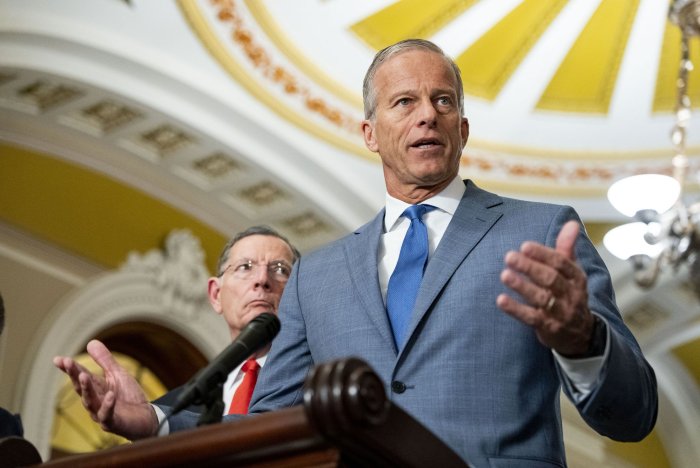
Senate Majority Leader John Thune, R-S.D., speaks during a press conference after the weekly Republican Senate caucus luncheon at the U.S. Capitol on Wednesday. Photo by Bonnie Cash/UPI | License Photo
Weekly insights and analysis on the latest developments in military technology, strategy, and foreign policy.
The U.S. military used a laser to shoot down a Customs and Border Protection (CBP) drone over southwest Texas earlier this week, U.S. officials confirmed to The War Zone. We now know that this drone was small in size and was engaged by AeroVironment’s LOCUST directed energy weapon. The friendly fire incident spurred expanded airspace restrictions over the Fort Hancock area that will last for four months. It also gives credence to the FAA’S concerns about the operational deployment of counter-drone laser weapons along the border. The same system was used to fire at suspected Mexican cartel drones flying across the southern border into Texas two weeks ago, which resulted in a large airspace closure, general confusion and major headlines.
LOCUST Laser Weapon System
Federal officials confirmed last night that some kind of incident occurred on Wednesday, although a joint statement held back from making a definitive conclusion on exactly what happened.
“This reported engagement occurred when the Department of War employed counter-unmanned aircraft system authorities to mitigate a seemingly threatening unmanned aerial system operating within military airspace,” the Defense Department, CBP, and the Federal Aviation Administration (FAA) said in their statement.
“The engagement took place far away from populated areas, and there were no commercial aircraft in the vicinity,” the statement added.
The Temporary Flight Restrictions (TFR) covered an area located roughly 50 miles southeast of El Paso, the scene of a drone incident earlier this month, and the U.S. Army base at Fort Bliss, a facility that has counter-drone operations as part of its training remit. The TFR lasts until June 24 and prevents most pilots from flying over the area. Emergency services, like medevac flights and search and rescue operations, will be allowed to fly in the area if they contact Albuquerque Center, which will coordinate with U.S. Northern Command’s Joint Task Force-Southern Border, which is overseeing military operations in this area.
In an earlier statement, the FAA noted that an incident had led to it expanding a temporary flight restriction that was already in place around Fort Hancock. The restriction was issued for “Special Security Reasons,” the FAA added, and did not impact commercial flights in the region.
The Federal Aviation Administration has issued a new temporary flight restriction near Fort Hancock, TX including all aircraft on the US side of the border following reports that a U.S. military counter unmanned aerial system shot down a drone that belongs to the U.S. Department… pic.twitter.com/0jnzeYTsm3
An unnamed U.S. official previously told CBS News that a laser weapon was used to down the drone in the area of Fort Hancock, a small community located on the U.S.-Mexico border.
Democrat Representatives Rick Larsen, André Carson, and Bennie Thompson, all members of the House Committee on Transportation and Infrastructure, also issued a joint statement. “Our heads are exploding over the news that DoD reportedly shot down a Customs and Border Protection drone using a high-risk counter-unmanned aircraft system,” they said, criticizing an apparent lack of coordination between the agencies involved.
Earlier this month, CBP personnel reportedly used a laser directed-energy weapon to take down an object, which they assumed to be a drone operated by a Mexican drug cartel. Multiple reports said that the object turned out to be a Mylar balloon. A U.S. official told us at the time that the incident was the first time a laser weapon had been fired at drones in the continental U.S.
A U.S. Army Infantry Squad Vehicle (ISV) equipped with a LOCUST laser directed-energy weapon. U.S. Army
It was reported on that occasion that flight restrictions were imposed around El Paso as a result of a breakdown in coordination between the U.S. military and the FAA over the employment of a counter-drone system armed with a laser-directed energy weapon.
Under a federal statute commonly referred to as 130(i), “DoW can mitigate drone threats to protect military installations and missions inside the U.S., but it does not have general domestic airspace policing authority,” Scott Shtofman, Vice President & Counsel, Regulatory Affairs for the Association for Uncrewed Vehicle Systems International (AUVSI), told us in the wake of the El Paso incident.
Safety concerns about using directed energy weapons, and especially kinetic ones, to take down drones in the U.S. have been a major factor in why they haven’t been previously used in this role. A little less than a year and a half ago, officials at U.S. Northern Command (NORTHCOM), which has coordinating authority for counter-drone efforts in the U.S., said the use of such weapons was not yet on the table. The reason is that they can create dangerous or otherwise serious collateral effects that are less of a concern in a war zone.
While the details of this week’s incident are still to be established, it appears almost certain that this is the latest chapter in the ongoing saga of U.S. efforts to counter small drone incursions over the country.
Today it’s an Italianate apartment building wedged between an Indian restaurant and a Target. But what stood half a century ago at 1454 5th Street in downtown Santa Monica was the Beach Boys’ Brother Studio, a former porn theater turned recording complex where the preeminent American rock band of the 1960s sought to coax its resident genius, Brian Wilson, back into the fold after a long stretch in the wilderness.
Nobody would consider the albums the Beach Boys made at Brother in the mid-70s — among them “15 Big Ones,” “The Beach Boys Love You” and the long-shelved “Adult/Child” — the band’s most successful. (Well, nobody except for Wilson, who frequently cited the synthed-up “Love You” as his fave.) A decade after 1966’s “Pet Sounds,” which so blew the Beatles away that they had to answer with “Sgt. Pepper’s Lonely Hearts Club Band,” the burly, bearded Beach Boys were far from the center of pop music; Wilson, in particular, had largely withdrawn from public life as he struggled with the effects of drugs and his fragile mental health.
Yet Brother offered the setting for a creative reflowering — arguably the band’s final moment of unity before the start of years of more serious infighting.
“It was like we all got back together and became Beach Boys again,” says Al Jardine, who founded the group in suburban Hawthorne in 1961 with Wilson, Wilson’s brothers Dennis and Carl and the Wilsons’ cousin Mike Love. Now, eight months after Brian Wilson’s death in June at age 82, a new box set looks back at the era as an expressive outpouring led by the band’s rejuvenated visionary.
“We Gotta Groove: The Brother Studio Years” collects 73 tracks from 1976 and ’77, including outtakes, demos, a remastered version of the “Love You” LP and the first official release of the widely bootlegged “Adult/Child,” which puts Wilson’s touchingly emotive singing amid orchestral arrangements in a glossy big-band style. Among the set’s highlights are a voice-and-piano rendition of “Still I Dream of It,” which, according to legend, Wilson wrote in the hopes that Frank Sinatra would perform it, and a majestic take on “You’ve Lost That Lovin’ Feeling” that shows how brilliant a record-maker Wilson remained despite all the well-documented turmoil.
“Brian was healing from his personal life, and he was ready to go in the studio again,” says Jardine, 83, whose latest tour with the members of Wilson’s road band will stop Friday night at L.A.’s United Theater on Broadway for a complete performance of “The Beach Boys Love You.” With quirky but heartfelt tunes about Wilson’s daughter Carnie (“I Wanna Pick You Up”) and Johnny Carson (uh, “Johnny Carson”) — not to mention the propulsive “Honkin’ Down the Highway,” on which Jardine sang lead — “Love You” has become something of a cult classic among Wilsonologists.
Says Jardine of the LP: “Brian’s spirit — his songwriting soul — is really strong on that one.”
The Beach Boys opened Brother Studio around 1974 near the corner of 5th Street and Broadway, just a few blocks from the beach. They’d traveled to the Netherlands to record their most recent album, “Holland”; before that, they cut several records at Wilson’s home on Bellagio Road in Bel-Air, though the group’s erstwhile mastermind spent as much time upstairs in his bedroom as he did recording music with his bandmates.
Wilson’s retreat after the flameout of his notoriously ambitious “Smile” project made space for the other Beach Boys to shape the band’s music, as on 1970’s fondly remembered “Sunflower.” But the lack of hits eventually took its toll: With a laugh, Love, 84, says one reason they started up Brother was that Wilson’s wife, Marilyn, eventually “threw in the towel after years of having her house flooded with people” to less-than-spectacular returns. “It was sort of like a self-preservation thing,” he adds.
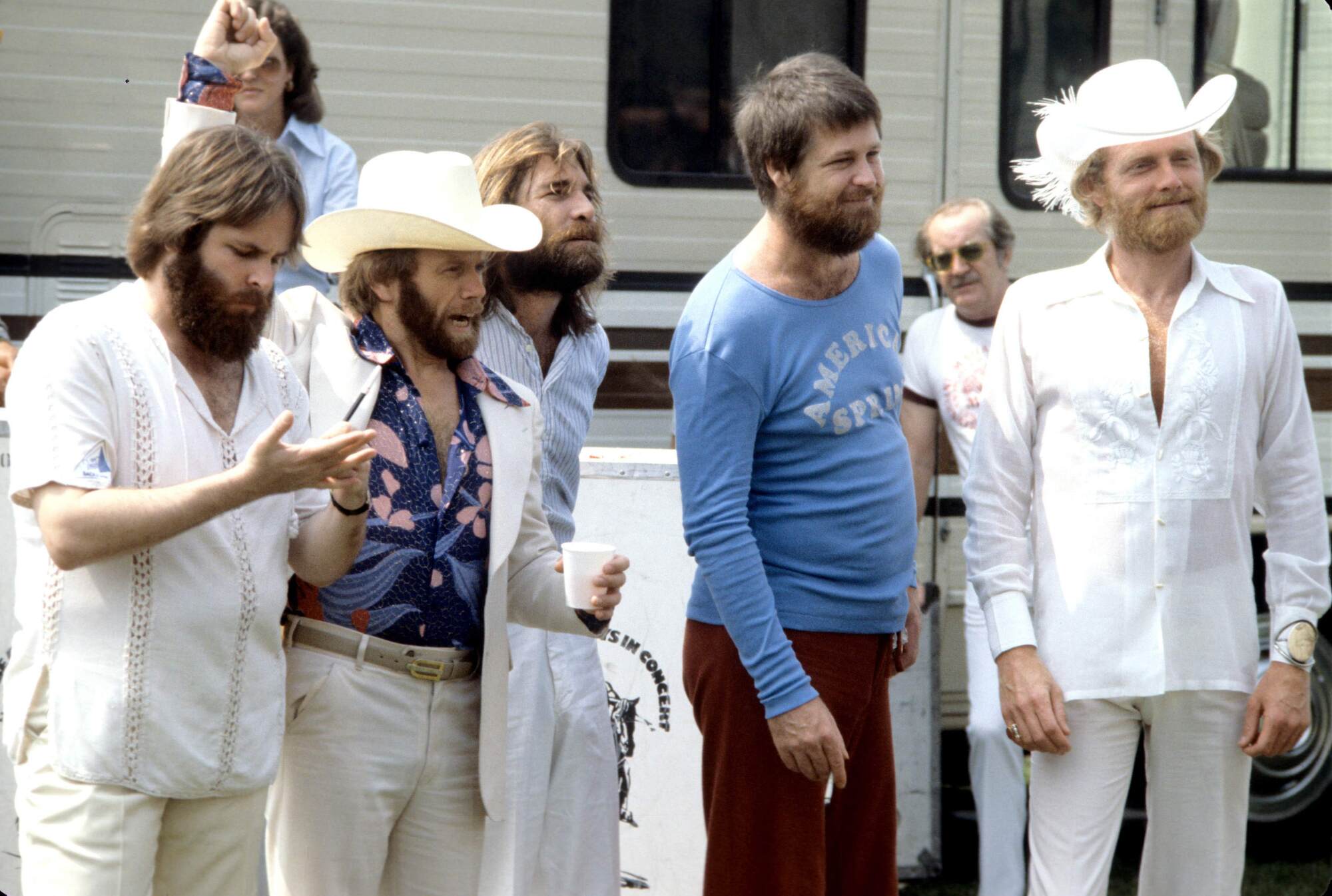
The Beach Boys backstage at New York’s Central Park in 1977.
(Richard E. Aaron / Redferns)
In “We Gotta Groove’s” liner notes, engineer Stephen Moffitt, who designed Brother after working earlier at L.A.’s Village Recorders, recalls clearing out “all the porn crap” from the building and installing a circular stained-glass window to establish the right vibe. A vintage magazine ad boasts of the studio’s high-end gear as well as its “large screen video lounge” and “a playroom with pong, pinball and bumper pool.”
“It was a respite,” Love says. “A place to go and be creative.”
Just as the band was getting Brother up and running, the Beach Boys scored an unexpected smash with 1974’s “Endless Summer,” a double-LP compilation of the group’s early material — “Surfin’ Safari,” “Don’t Worry Baby,” “California Girls” — that topped the Billboard album chart on its way to sales of more than 3 million copies. A similar hits collection issued in the U.K., “20 Golden Greats,” did just as well there. “An enormous success,” says Love. “One in every five families had it.”
Suddenly, having more or less ignored group-minded efforts like “Holland” and “Carl and the Passions — ‘So Tough,’ ” the world remembered what it loved about the Beach Boys, and that was songs written and produced by Brian Wilson.
The band got to work at Brother recording “15 Big Ones,” which featured a mix of Wilson originals and covers of oldies like “Chapel of Love” and “Blueberry Hill.” The first Beach Boys album since “Pet Sounds” to carry a solo production credit for Wilson, it came accompanied by an aggressive marketing campaign known as “Brian Is Back!”; Wilson appeared on the cover of Rolling Stone — “The Healing of Brother Brian,” the cover line read — and took part in a Beach Boys television special that showed his return to the concert stage at Anaheim Stadium.
Earle Mankey, an engineer at Brother in the mid-70s, says “15 Big Ones” was less Wilson’s attempt to relight the flame than it was “everyone else’s attempt to relight the flame.” He recalls Wilson looking like a “scared rabbit” when he walked into the studio to find some of the session musicians who’d worked with the Beach Boys back in the old days. (This was the time of Wilson’s first dalliance with the psychologist Eugene Landy, who would reenter Wilson’s life to much controversy in the early ’80s.)
Fans watch the Beach Boys perform at Anaheim Stadium on July 3, 1976.
(Tony Korody / Sygma via Getty Images)
Even Love admits that “Brian Is Back!” was a little overblown. “Brian was back to some degree,” Love says now. “One hundred percent? Perhaps not.”
Yet the campaign worked: “15 Big Ones” went to No. 8 on the Billboard 200 — the highest for a Beach Boys studio album in more than a decade — while the LP spun off the band’s first Top 5 single since “Good Vibrations” with a rendition of Chuck Berry’s “Roll and Roll Music.”
More important, the commercial success set up Wilson for a true artistic comeback with “The Beach Boys Love You,” which can still startle you with the purity of its emotion and the strange textures of Wilson’s production. Check out the beautifully lopsided groove of “Mona,” which Dennis sings with a bleary smoker’s rasp, or the lonely-sounding electric-guitar lick floating over the Wilson brothers’ harmonies in “The Night Was So Young”; listen to Brian and Marilyn trading marital assurances in their almost painfully guileless duet, “Let’s Put Our Hearts Together.”
“Of all Brian’s stuff, I’d say it’s his most personal album after ‘Pet Sounds,’ ” says Darian Sahanaja, who played with Wilson for the last couple of decades of his life. “Maybe even more than ‘Pet Sounds,’ because Tony Asher wrote most of the lyrics on ‘Pet Sounds’ and Brian wrote most of the lyrics on ‘Love You.’ The Brian that I knew is very much living and breathing in these songs.”
Unlike “15 Big Ones,” “Love You” was not a hit, peaking at No. 53 — even lower than “Holland.” As much as he adores the album, Sahanaja finds it amusing that anyone in the Beach Boys’ camp might have expected Wilson to try to give rock fans what they wanted.
“He wasn’t listening to the Top 40 at the time,” he says. “He just wrote whatever came out of him. There was no, ‘I wonder what Fleetwood Mac’s up to…’ ”
Indeed, Wilson went even further out with “Adult/Child,” for which he commissioned orchestral arrangements by Dick Reynolds, who’d worked in the ’50s with Wilson’s beloved Four Freshmen. Both Love and Jardine say they can’t quite remember why the album didn’t come out; Love says “it may not have suited the record company at the time” and points out that even “Pet Sounds” got the group’s A&R rep wondering “if maybe we could do something more like ‘I Get Around.’ ”
Whatever the case, “Adult/Child’s” mothballing led to another withdrawal by Wilson, who had far less to do with the band’s next few records and who eventually turned to a solo career. In 2012, Wilson produced a so-so Beach Boys reunion record — minus Dennis, who died in 1983, and Carl, who died in 1998 — but for much of the ’00s he and Jardine toured under Wilson’s name while Love toured as the Beach Boys. (Love’s band will play three shows at the Hollywood Bowl in July.)
Asked what it’s been like performing with Wilson’s band since his death, Jardine says, “I just feel like he’s still around.” Sahanaja says he’s seen Jardine tear up as they’ve been working up songs from “Love You” on the road ahead of Friday’s show. But he’s also been gratified to see the excitement among younger fans regarding what he views as the Beach Boys’ last great album.
“The reaction has been more insane than I’ve ever seen for any of the shows we ever did with Brian,” he says. “It’s like they feel they found this secret thing that they really identify with.” He laughs. “I’m telling you, these kids are freaking out — jumping up and down, singing along to all the words. They’re, like, pogo-ing.”
Iraq is in a political deadlock. It still has no government, though general elections were held in November.
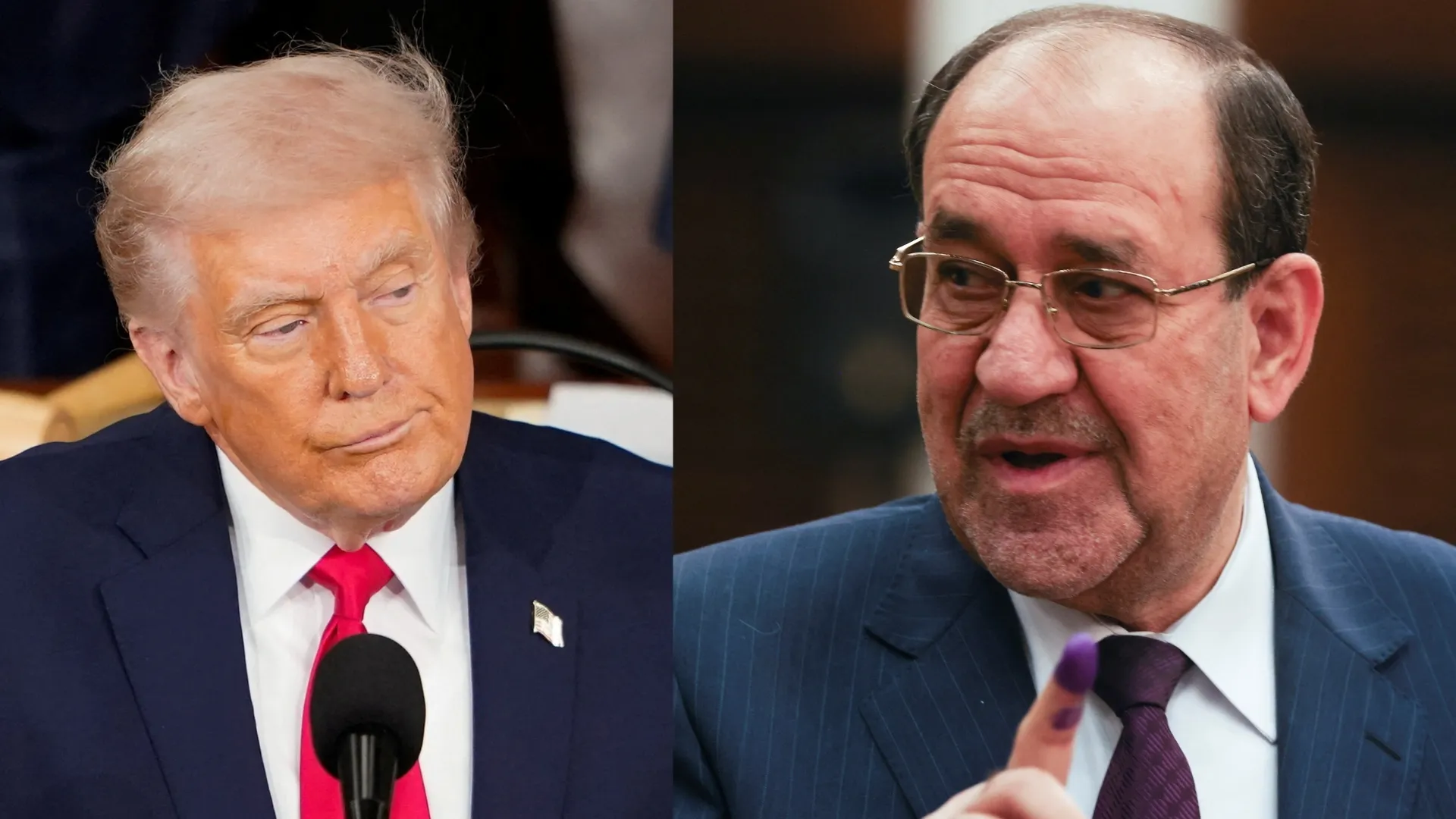
At the heart of the crisis is the former prime minister, Nouri al-Maliki, who was picked by the majority coalition in parliament as its candidate to take over the role again.
But that choice has been met with strong opposition from United States President Donald Trump.
And that warning has further polarised the political landscape in the country.
So, what’s really behind Washington’s strong stance against al-Maliki? And what role does the US still play in Iraq?
Presenter: James Bays
Guests
Muhanad Seloom – Assistant professor of international politics at the Doha Institute for Graduate Studies
Ahmed Rushdi – President of the House of Iraqi Expertise Foundation, and a former foreign policy adviser in the Iraqi parliament.
Kenneth Katzman – Senior Fellow at The Soufan Center
As tensions between Israel and Iran periodically escalate, Israel has developed one of the world’s most sophisticated multi-layered air defence networks to counter ballistic missiles, drones, rockets, and cruise missiles. The system is designed to intercept threats at different ranges and altitudes, creating overlapping layers of protection against attacks from state actors and non-state groups.
The architecture reflects decades of missile threats from regional adversaries and has been refined through repeated real-world use. It combines domestically developed systems with U.S.-supported technology and integrated radar, command, and interception capabilities.
Long-Range Interception: Arrow System
The Arrow-2 and Arrow-3 systems form Israel’s top defensive layer against long-range ballistic missiles. Arrow-2 intercepts incoming missiles in the upper atmosphere, while Arrow-3 is designed to destroy threats in space before re-entry.
Developed primarily by Israel Aerospace Industries with support from Boeing, the Arrow program is tailored to counter high-altitude missile threats and allows for the safe dispersal of potential non-conventional warheads away from populated areas.
Mid-Range Shield: David’s Sling
David’s Sling targets medium-range ballistic missiles and cruise missiles fired from roughly 100 to 200 km away. It also intercepts aircraft and drones.
The system was jointly developed by Rafael Advanced Defense Systems and RTX Corporation and fills the operational gap between long-range Arrow interceptors and the short-range Iron Dome.
Short-Range Defence: Iron Dome
The Iron Dome system is designed to intercept short-range rockets, mortars, and drones. Operational since 2011, it uses radar tracking to determine whether an incoming rocket threatens a populated area. If the projectile is projected to land harmlessly, the system conserves interceptors by not engaging.
Originally designed to counter rockets with ranges of 4–70 km, analysts say its effective coverage has expanded. A naval variant deployed in 2017 protects maritime assets.
Directed Energy Layer: Iron Beam
Declared fully operational in late 2025, Iron Beam is a ground-based high-energy laser system designed to neutralize small aerial threats such as UAVs and mortar rounds. Instead of firing interceptors, the laser superheats targets until they fail mid-air.
Because it uses directed energy rather than missiles, Iron Beam is expected to dramatically reduce interception costs and provide rapid response against swarms of low-cost threats.
U.S. Support: THAAD Deployment
The United States deployed the THAAD (Terminal High Altitude Area Defense) system to Israel in 2024 to strengthen protection against ballistic missiles during heightened regional tensions. THAAD intercepts missiles in their terminal phase of flight and is a key component of U.S. strategic missile defence.
U.S. naval assets and ground-based systems have also assisted in intercepting missiles during previous attacks, highlighting close defence coordination between the two allies.
Air-to-Air Interception Capability
Beyond ground systems, Israeli fighter jets and attack helicopters have used air-to-air missiles to destroy incoming drones before they enter Israeli airspace. This adds flexibility and an additional interception layer, particularly against slow-moving aerial threats.
Analysis: A Layered Shield for a Complex Threat Environment
Israel’s defence network is built on the principle of layered interception, ensuring that if one system fails or is overwhelmed, another layer can engage the threat. This redundancy is crucial given Iran’s missile arsenal and the increasing use of drones and precision-guided munitions by regional actors.
The integration of Arrow, David’s Sling, Iron Dome, Iron Beam, and U.S. systems creates a comprehensive defence umbrella capable of engaging threats from space to low altitude. The addition of directed-energy weapons reflects a shift toward countering mass drone attacks and reducing the financial burden of interceptor missiles.
However, even sophisticated systems face challenges. Large-scale salvos could strain interceptor inventories, while evolving missile technologies and swarm tactics may test response capacity. As regional tensions fluctuate, Israel’s layered defence remains both a technological achievement and a critical strategic necessity.
Neil Sedaka, an irrepressible songsmith who parlayed his compositional skills into pop stardom during the height of the Brill Building era in the 1960s and later staged an easy-listening comeback in the 1970s, has died at age 86. No cause of death was immediately available.
A chipper melodicist who never attempted to disguise his sentimental streak, Sedaka emerged at the moment rock ’n’ roll’s initial big bang started to fizzle. As a songwriter and performer, Sedaka treated rock ’n’ roll as another fad to be exploited, crafting cheerful, vivacious tunes targeted at teens who’d bop along to “Stupid Cupid” and swoon to “Where the Boys Are,” to name two songs he and lyricist Howard Greenfield wrote for early-’60s pop idol Connie Francis. Sedaka himself became a star through such bright confections as “Calendar Girl,” “Happy Birthday, Sweet Sixteen” and “Breaking Up Is Hard to Do,” the 1962 chart-topper that became his signature song.
Already falling out of fashion by the time the Beatles arrived in the United States, Sedaka didn’t weather the rise of the British Invasion: By the end of the 1960s, his lack of a record label caused him to leave the States for England. Unlike his Brill Building peer Carole King — he wrote “Oh! Carol,” his first big hit, about her — Sedaka wasn’t able to refashion himself as a hip singer-songwriter. Instead, he relied on showbiz hustle and savvy commercial instincts, teaming up with the musicians that became the iconoclastic hitmakers 10cc on records that positioned Sedaka squarely in the soft-rock mainstream. Elton John signed the veteran vocalist to his fledgling label Rocket and Sedaka immediately had two No. 1 hits with “Laughter in the Rain” and “Bad Blood,” a success compounded by Captain & Tennille taking “Love Will Keep Us Together,” a tune from one of Sedaka’s albums with 10cc, to No. 1 in 1975.
Sedaka’s second stint in the spotlight didn’t last much longer than his first flush of stardom — by 1980, he was no longer a Top 40 artist — but his ’70s comeback cemented his status as a showbiz fixture, allowing him to carve out a career onstage and, at times, onscreen. Occasionally, the world would turn and place Sedaka back in the mainstream, as when he appeared on “American Idol” in the early 2000s or when his 1971 composition “(Is This the Way to) Amarillo?” was rejiggered into the World Cup novelty anthem (“(Is This the Way to) The World Cup”) in 2006.
Neil Sedaka in 1960.
(Bettmann Archive/Getty Images)
A descendant of Turkish and Ashkenazi Jews, Neil Sedaka was born in Brooklyn, N.Y., on March 13, 1939. Growing up in Brighton Beach, Sedaka exhibited a musical proclivity at an early age, earning a piano scholarship to Juilliard’s children’s division when he was 8 years old. He studied classical piano for the next few years, his ears being drawn to pop music all the while. At the age of 13, he happened to meet a neighbor when they were both vacationing at a Catskills resort. She brought him to meet her son, an aspiring lyricist named Howard Greenfield, and the pair quickly became a songwriting team, with Greenfield writing the words and Sedaka handling the music.
As Sedaka and Greenfield developed their creative partnership, Sedaka sang in the Linc-Tones, a vocal group that evolved into the Tokens just prior to his departure; he left them prior to their hit single “The Lion Sleeps Tonight.” Although he didn’t abandon his dreams of performing, Sedaka concentrated on songwriting with Greenfield. Attempting to gain a foothold in the Brill Building, the pair first caught the attention of Jerry Wexler, who had Clyde McPhatter and LaVern Baker cut a couple of their tunes. Mort Shuman and Doc Pomus suggested to Sedaka and Greenfield that they would have better luck at 1650 Broadway, where Al Nevins and Don Kirshner had just opened their publishing company Aldon Music.
Aldon signed Sedaka and Greenfield to a publishing deal — still a minor, Sedaka needed his mother to sign in his stead — and the pair had their first big hit when Connie Francis took “Stupid Cupid” into the Top 20 in 1958. Not long after, Sedaka signed with RCA Records as a performer. “The Diary,” inspired by Francis refusing Sedaka and Greenfield access to her diary, became Sedaka’s first hit single in 1958 after the doo-wop group Little Anthony and the Imperials passed on the chance to record it first. Sedaka had difficulty delivering a successful sequel to his initial hit for RCA, so he constructed “Oh! Carol” to mimic the lovelorn yet sweet sounds filling the charts in 1959. Sedaka’s gambit paid off: “Oh! Carol” was a Top 10 hit, popular enough to generate an answer record — King’s husband, Gerry Goffin, wrote “Oh! Neil,” which failed to be a hit for King.
With many of rock ’n’ roll’s initial stars waylaid — Elvis Presley was in the Army, Chuck Berry was embroiled in legal problems, Little Richard left the music behind for church, Jerry Lee Lewis’s career imploded — Sedaka stepped into the breach, offering well-scrubbed, buoyant tunes designed to mirror teenage concerns. “Stairway to Heaven,” “Calendar Girl,” “Happy Birthday Sweet Sixteen,” “Breaking Up Is Hard to Do” and “Next Door to an Angel” all bounced to a bright beat and boasted ornate arrangements that highlighted Sedaka’s youthful cheer.
While he was ensconced in the Top 10, Sedaka continued to write hits for other artists, remaining a regular composer for Francis but also reaching the charts with Jimmy Clanton. He’d occasionally moonlight in the studio too: He plays piano on “Dream Lover,” one of Bobby Darin‘s biggest hits.
By the time the Beatles and the British Invasion took over teen bedrooms and the pop charts in 1964, Sedaka’s hit-making streak had run dry. Panicked, he recorded “It Hurts to Be in Love,” an operatic pop song co-written by Greenfield and Helen Miller. Rushing into a nearby demo studio, Sedaka cut a version that was ready for radio, but RCA refused to release it, on the grounds that it only released records made in its studios. Gene Pitney took the track, subbed his vocals for Sedaka’s and wound up with a Top 10 hit at a time Sedaka couldn’t break the Top 40. Sedaka later claimed, “It was horrible. That would have been my No. 1 song, my comeback song.”
After his deal with RCA expired in 1966, Sedaka started playing hotels in the Catskills and clubs on the East Coast, venues that grew progressively smaller with each passing year. He continued to get work as a songwriter, penning songs for the Monkees (“The Girl I Left Behind Me,” “When Love Comes Knockin’ at Your Door”) with lyricist Carole Bayer, and the 5th Dimension (“Workin’ on a Groovy Thing”) with Roger Atkins.
Faced with dwindling prospects in the United States, Sedaka began to regularly tour England and Australia in the late 1960s. By the dawn of the ’70s, he realized that the times had changed around him: “The era of the singer-songwriter had begun and I was being left behind. I needed to be part of it. I wanted to be a part of it. I wanted it with a vengeance!” He returned to RCA with “Emergence,” a mellow record designed to follow King’s “Tapestry” onto the radio, but that airplay never materialized: Sedaka was still seen as a relic of the early ’60s.
Olivia Newton-John and Neil Sedaka performing in a BBC television studio in 1971.
(Warwick Bedford/Radio Times via Getty Images)
Frustrated with the disinterest in “Emergence,” Sedaka decamped to the U.K., working its club circuit until he was introduced to Eric Stewart, Graham Gouldman, Lol Creme and Kevin Godley, a group of British pop veterans who soon would form the art-pop outfit 10cc. The quartet brought Sedaka into their Strawberry Studios — a place where they recorded a number of bizarre bubble-gum hits under such pseudonyms as Crazy Elephant and Hotlegs — and backed him on 1972’s “Solitaire” album, whose title track was his first collaboration with lyricist Phil Cody; it’d later be covered by Elvis Presley.
“Solitaire” gave Sedaka his first U.K. hit in nearly a decade with “That’s When the Music Takes Me.” Encouraged, the singer-songwriter reunited with 10cc in 1973 for “The Tra-La-La Days are Over,” an album that featured the bubbly “Love Will Keep Us Together.” By the time Sedaka released “Laughter in the Rain” in 1974, he had severed ties with 10cc and found a new benefactor in Elton John.
Then at the height of his phenomenal 1970s popularity, John signed Sedaka to his recently launched American imprint Rocket Records. Rocket repackaged highlights from the 10cc records as “Sedaka’s Back,” adding “Laughter in the Rain” for good measure. The lush number slowly worked its way up the charts, eventually reaching No. 1 on Billboard in 1975. “Bad Blood,” a lively duet with an uncredited Elton John, followed “Laughter in the Rain” to the top of the pop charts later in ’75, arriving just after Captain & Tennille had a No. 1 with “Love Will Keep Us Together.”
Elton John and Neil Sedaka in 1975.
(Richard E. Aaron/Redferns via Getty Images)
Sedaka’s comeback cooled as quickly as it had ignited. He reached the lower rungs of the Top 40 a couple of times in 1976, parted ways with Rocket, then signed to Elektra in 1977, releasing a series of records that found him countering his satiny easy listening with a louche streak on such songs as “Sleazy Love,” “One Night Stand” and “Junkie for Your Love.”
“Should’ve Never Let You Go,” a duet with his daughter, Dara, became his last charting hit in 1980. He published a memoir, “Laughter in the Rain: My Own Story,” in 1982 and was inducted into the Songwriters Hall of Fame in 1983. By the mid-’80s, he had drifted toward the oldies circuit, revisiting his hits in the studio and onstage, turning his songbook into stage productions: The jukebox musical “Breaking Up Is Hard to Do” arrived in 2005, and the musical biography “Laughter in the Rain” followed five years later. He returned to classical music for 1995’s “Classically Sedaka.” He recorded a collection of Yiddish songs, “Brighton Beach Memories,” in 2003, and a children’s album, “Waking Up Is Hard to Do,” in 2009.
Neil Sedaka performing in 2014.
(Robin Little/Redferns via Getty Images)
Occasionally, Sedaka would reemerge on a bigger stage. In 2003, he showed up as a guest judge on the second season of “American Idol,” declaring its runner-up Clay Aiken was “ear delicious.” A few years later, “(Is This the Way to) Amarillo?,” a bubble-gum song Sedaka wrote and Tony Christie recorded in 1971, was revived in 2006, when it was used as the basis for the novelty “Is This the Way to the World Cup?”
On Oct. 26, 2007, Lincoln Center honored Sedaka’s 50 years in showbiz with a gala concert featuring Natalie Cole, David Foster and Clay Aiken. He continued to work steadily over the next two decades, releasing a handful of new records but focusing on concerts. When the COVID-19 pandemic hit in 2020, he took his show online, holding mini-concerts on social media.
Sedaka is survived by his wife, Leba, daughter Dara and son Marc, and three grandchildren.
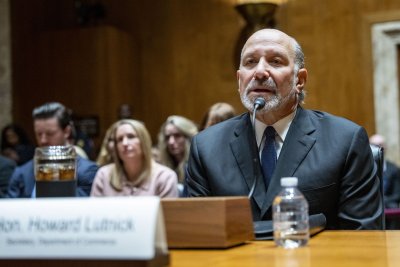
Secretary of Commerce Howard Lutnick, pictured during a hearing of the Senate Appropriations Committee earlier this month, may be called to testify before a House committee over his ties to deceased sex predator Jeffrey Epstein. Photo by Bonnie Cash/UPI | License Photo
Feb. 27 (UPI) — Commerce Secretary Howard Lutnick may be called to testify before the House Oversight and Government Reform Committee about his ties to deceased sex predator Jeffrey Epstein.
Rep. Nancy Mace on Friday said that Lutnick should testify after a picture of him with Epstein emerged in the Department of Justice database one day after Committee Chair Rep. James Comer, R-Ky., told reporters it is “very possible” the commerce secretary would be questioned.
Comer’s comments came at a press conference before the committee’s hearing with former Secretary of State Hillary Clinton, with Mace adding that calling Lutnick before the committee would “be on my list.”
“Howard Lutnick should take questions from the Oversight committee,” Mace said in a post on X, while a photograph that appears to be Lutnick standing behind Epstein, along with Lutnick’s friend Michael Lehrman and two other unidentified men.
The photo appeared to have been removed from the DOJ database, but has been restored, CNBC reported.
Rep. Ro Khanna, D-Calif., told reporters on Friday that he believes there are enough votes on the committee to subpoena Lutnick, who has acknowledged that he interacted with the disgraced financier after he’d been convicted of soliciting a prostitute, including visiting Epstein’s Caribbean island with his family.
Former Secretary of State Hillary Clinton on Thursday testified before the committee, saying in her opening statement that she has “no knowledge” that would assist the committee, which she posted on her social media accounts ahead being questioned.
“You have compelled me to testify, fully aware that I have no knowledge that would assist your investigation, in order to distract attention from President Trump’s actions and to cover them up despite legitimate calls for answers,” she said.
President Donald Trump has acknowledged his nearly two-decade friendship with Epstein and his name appears frequently in the documents released by the DOJ in December and January.
Neither Lutnick or Trump have been accused of any wrongdoing connected to Epstein’s trafficking and sex abuse of children.
Economists are cautiously optimistic that advances in artificial intelligence could boost productivity across major economies, potentially helping governments manage soaring debt. Debt levels in most rich nations already exceed 100% of GDP and are projected to rise further due to ageing populations, higher defence spending, climate commitments, and rising interest payments.
U.S. policymakers, in particular, see AI as a potential driver to lift post-2008 productivity and free workers for higher-value tasks. Yet experts warn that even a strong AI-driven growth surge would not fully offset the structural pressures on public finances.
AI’s Potential Impact on Public Debt
The OECD and economists working with Reuters estimate that a productivity boost from AI could lower projected debt in OECD countries by up to 10 percentage points by 2036. That would reduce the expected rise from roughly 150% of GDP to around 140%, still sharply higher than current levels of approximately 110%.
In the U.S., best-case scenarios suggest debt could rise to 120% of GDP over the next decade instead of 100%, with one economist projecting little change. The key variables include whether AI creates more jobs than it displaces, whether firms pass productivity gains to workers via wages, and how governments manage spending.
Demographics and Limits
Demographics remain a central constraint. Ageing populations and entitlements tied to them are the root causes of long-term debt growth. Economists note that even with a productivity surge, labour shortages and slower immigration could offset AI gains. Countries like Italy and Japan may see smaller benefits from AI due to lower adoption rates and smaller sectors that can leverage the technology.
Fiscal Uncertainty
AI could raise government revenues through higher productivity and wages, but the effect is uncertain. If automation primarily benefits profits and capital rather than labour, fiscal gains could be limited. Additionally, public spending may rise alongside growth, dampening potential debt relief. Social security and other entitlement programs, indexed to wages, will continue to pressure budgets regardless of AI-driven efficiency.
Interest rates and debt servicing costs add another layer of uncertainty. Economists warn that recessions or financial shocks could prevent AI-driven productivity gains from providing timely relief.
Analysis
AI offers a potential “breathing room” for overstretched economies, buying time for governments to tackle structural deficits. Even if growth rises to 3% in the U.S. through 2040 above Federal Reserve expectations it will not solve fundamental fiscal challenges.
Economists stress that AI is a supplement, not a replacement, for fiscal reform. Rising productivity may help governments manage debt growth more sustainably, but without structural policy adjustments addressing demographics, entitlement programs, and spending priorities, the debt trajectory remains precarious.
Ultimately, while AI could improve efficiency and output, it is unlikely to carry the heavy lifting required to stabilize public finances on its own.
Kay’s death was revealed as her daughter auctioned presents her mum received from George, including a pair of his Cutler and Gross wraparound sunglasses, which sold for £5,700.
Other precious gifts included his engraved silver Faith tour belt buckle, which fetched £700.
A Cartier watch went for £1,900 while a Bulgari 18ct gold ladies’ timepiece was bought for £1,200.
Kay is believed to have been in her early 60s when she died, and her daughter has paid tribute to “kind” George.
She wrote in a letter of provenance for the sale at Omega Auctions: “My mother and George shared a strong, loving and enduring bond that began at the very start of his career.”
She said the singer became her godfather after her birth in 1999, and he helped host her parents’ wedding on Richard Branson’sNecker Island.
She went on: “I have vivid memories — formed later through photographs — of George travelling with my parents, clambering into private jets, and setting off on adventures together.
“As a child, I ran around the house blissfully unaware of the global stardom surrounding me. To me, he was simply a familiar, kind presence in our lives.”
A Bulgari 18ct gold ladies’ watch the singer bought was sold for £1,200Credit: A belt buckle once owned the singer was sold for £700 at auctionCredit:
Kay’s friendship with George helped him put together the supermodel line-up of Naomi Campbell, Linda Evangelista, Tatjana Patitz, Christy Turlington Burns and Cindy Crawford for his 1990 Freedom video.
The Wake Me Up Before You Go-Go star — who died at his home on Christmas Day 2016 — divided his fortune between his sisters, dad and friends.
Omega said: “These pieces tell a story of loyalty, trust and the man behind the icon.”
The Wham! singer died at his home on Christmas Day 2016, leaving millions of fans devastatedCredit: ReutersA pair of Cutler and Gross wraparound sunglasses were sold for £5,700Credit: An 18ct cartier watch given away by the singer was auctioned off for £1,900Credit:
Outrage in New York after 56-year-old Rohingya refugee Nurul Amin Shah Alam, nearly-blind and medically vulnerable, was found dead days after US Border Patrol agents released him at a Tim Hortons restaurant miles from home. Officials say it was a “courtesy ride”.
US President Donald Trump said the US is in talks with the government of Cuba and that “we could very well end up having a friendly takeover of Cuba.” The country is facing a severe energy shortage after the US imposed a fuel blockade.
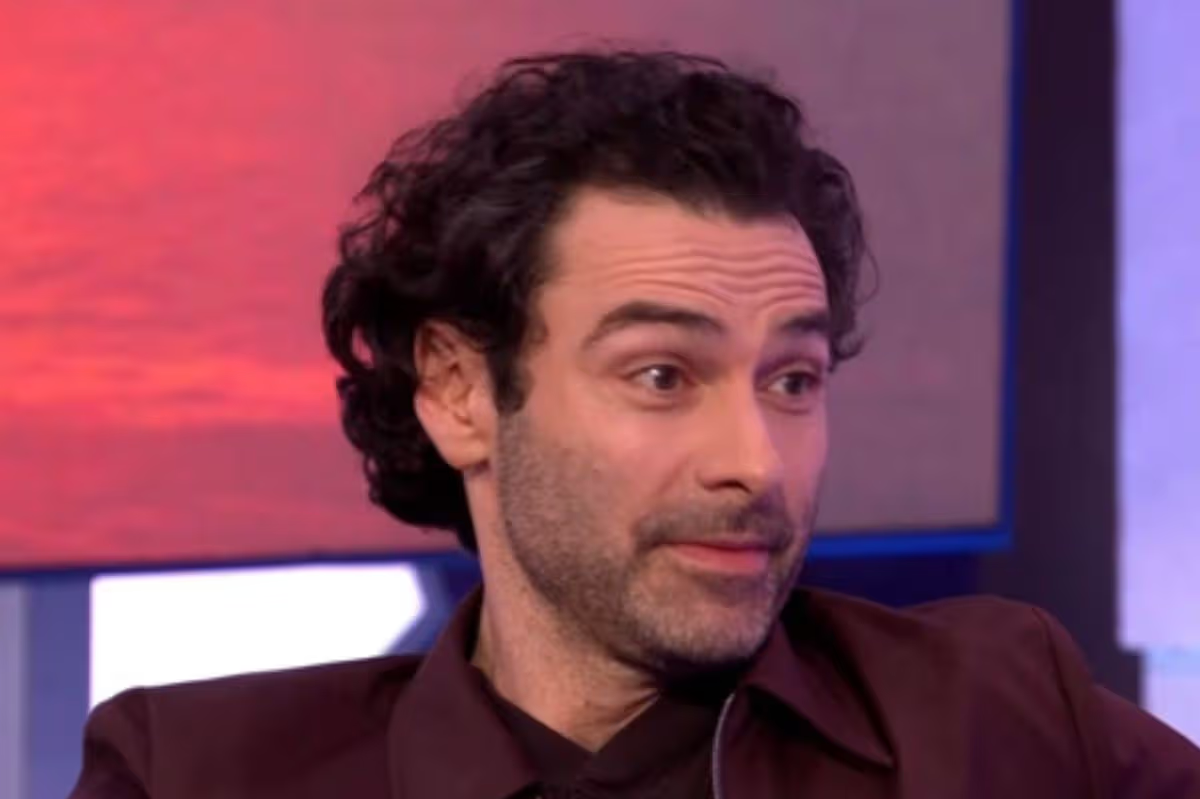
Aidan Turner and Lesley Manville appeared on Friday’s The One Show to talk about their new production of Les Liaisons Dangereuses at Lyttelton Theatre in London
Rivals star Aidan Turner left The One Show host, Clara Amfo, floored on Friday’s episode as he revealed his past career(Image: BBC)
Rivals star Aidan Turner left The One Show host, Clara Amfo, floored on Friday’s episode as he revealed his past career.
During the latest instalment, host Clara, 41, and co-host JB Gill welcomed Aidan, 42, Lesley Manville, and James Buckley to the iconic green sofa.
Aidan and Lesley, 69, appeared on Friday’s episode to talk about their new production of Les Liaisons Dangereuses at Lyttelton Theatre in London.
However, chat soon got onto Aidan’s career before acting, leaving Clara stunned. Clara said: “Now, Aidan, I didn’t know this until today, that you, Mr Turner…”
To which Aidan interjected with: “What are you going to say? I have no idea…” before adding: “Are you the last person to ever hear about this?
For the latest showbiz, TV, movie and streaming news, go to the new **Everything Gossip** website.
Clara then revealed: “I was today years old learning that you had a former career as a ballroom dancer!”
To which Aidan explained: “I don’t know if you’d call it a career. I mean, I started when I was eight and finished when I was about 17. But, yeah, I danced. I was a ballroom and Latin American dancer from Dublin!”
David Tennant is set to declare war in a sneak peek trailer for the eagerly awaited second series as his character television tycoon Lord Tony Baddingham survives from series one’s cliffhanger.
The trailer opens with the Doctor Who actor, 54, emerging from a helicopter and quipping: “Sorry I’m late, darling. I’ve had a terrible headache.”
This follows a suspenseful cliff-hanger at the end of the previous series, which left audiences questioning the fate of Lord Baddingham after Cameron Cooke (Nafessa Williams) struck him on the head to prevent him from assaulting her, leaving him lying motionless in a pool of his own blood.
Elsewhere, Irish actor Aidan – playing journalist Declan O’Hara – can be heard commenting: “It’s entertaining. In the most delightful way.”
Billy Idol’s Mony Mony provides the soundtrack to the trailer, giving viewers a taste of the drama to come, which includes updates on Danny Dyer’s character businessman Freddie Jones, Alex Hassell’s character Rupert Campbell-Black and Bella Maclean’s Taggie O’Hara.
The One Show continues on weeknights at 7pm on BBC One and BBC iPlayer.
Ensure our latest headlines always appear at the top of your Google Search by making us a Preferred Source.** Click here to activate**** or add us as your Preferred Source in your Google search settings.**
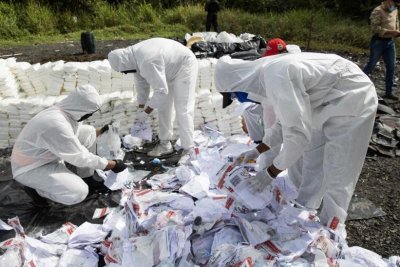
Members of the National Institute of Forensic Sciences organize packages of confiscated cocaine in Santo Domingo, Dominican Republic, on February 26 before incinerating 5,038 pounds of the drug after seizures made under the U.S.-led Operation Southern Spear, an international initiative to combat drug trafficking in Latin America. Photo by Orlando Barria/EPA
Feb. 27 (UPI) — The global cocaine market is the fastest-growing segment of the illicit drug trade, driven by rising production in South America and increasing demand in Africa and Asia, according to a United Nations report released this week.
Ecuador, meanwhile, has become one of the countries most affected by violence and the expansion of drug trafficking routes, the report said.
Global cocaine production exceeded 3,700 metric tons in 2023, a 34% increase compared with 2022, according to the control board.
The expansion is largely attributed to Colombia, where both the area under illicit coca cultivation and the production capacity of clandestine laboratories increased.
“The global cocaine market continues to expand and diversify,” the board said, warning that trafficking routes now reach “all regions of the world.”
While Western and Central Europe and North America remain the main destination markets, the report highlights rising consumption and seizures in Africa and parts of Asia.
In Africa, seizures rose 48% in 2023 compared with the previous year, which the report said reflects an expanding market rather than merely a transit region.
Between 2013 and 2023, the number of cocaine users worldwide increased from 17 million to 25 million, according to U.N. data.
Against this backdrop, Ecuador has emerged as a critical hub.
“In South America, the impact of increased cocaine trafficking has been felt particularly in Ecuador, which in recent years has experienced a wave of lethal violence caused by both local and transnational criminal groups,” the control board said.
Ecuadorian authorities seized more than 290 metric tons of cocaine in 2024, an unprecedented figure and approximately 30% higher than in 2023.
The surge in trafficking has coincided with a deterioration in security. The country recorded 6,964 violent deaths in 2024, with a homicide rate of 38.76 per 100,000 inhabitants, meaning the rate has quintupled over five years.
The report notes that Ecuador has become a major maritime export hub for cocaine shipments bound for the European Union.
In March 2025, Ecuadorian and European authorities dismantled an intercontinental criminal network that shipped tons of cocaine in maritime containers from South America to Europe.
In that operation, 73 metric tons of cocaine were seized in Ecuador and several European Union countries. Authorities arrested 14 people in Germany and Spain and 36 in the port city of Guayaquil, according to the report.
The control board also warned that traffickers are using increasingly sophisticated concealment methods to evade controls, including chemically altering cocaine to hinder detection during routine inspections, embedding the drug in plastics and textiles and using double-bottom compartments in legitimate goods.
Offshore deliveries coordinated through geolocation systems have also been seen.
As an example, the report cited the 2024 seizure of 13 metric tons of cocaine at the port of Algeciras in Spain, hidden in a shipment of bananas from Ecuador and described as the largest cocaine seizure in the country’s history.
The report further warns that sustained increases in production and the diversification of routes reflect a structural transformation of the global cocaine market, with criminal networks operating in an increasingly transnational manner and with greater logistical capacity.
The board stressed that the phenomenon is no longer limited to traditional production or consumption regions but now involves multiple continents at different stages of the drug trafficking chain.
For decades, Pakistan was the Afghan Taliban’s closest supporter. Islamabad helped the Taliban rise in the early 1990s, seeking “strategic depth” in its rivalry with India. Pakistan welcomed the Taliban’s return to power in 2021, with then-Prime Minister Imran Khan describing it as Afghans “breaking the shackles of slavery.”
However, the alliance soon frayed. Islamabad found the Taliban less cooperative than anticipated, particularly regarding insurgent groups that targeted Pakistani territory. Border clashes, insurgent attacks, and fragile ceasefires have repeatedly disrupted trade, security, and civilian life along the rugged frontier.
Escalating Tensions: From Ceasefires to “Open War”
Tensions have been mounting since late 2025, following deadly cross-border clashes in October that killed dozens of soldiers. Ceasefires mediated by Turkey, Qatar, and Saudi Arabia temporarily eased the situation, but attacks persisted.
The latest escalation came after Pakistan cited “irrefutable evidence” that Afghan-based militants were behind recent attacks and suicide bombings targeting Pakistani forces. Air and ground strikes targeted Taliban posts, headquarters, and ammunition depots in multiple sectors, with both sides reporting heavy losses. Pakistan’s defence minister labeled the situation an “open war.”
The Trigger: Attacks by Afghan-Based Militants
Pakistani security sources linked several recent attacks to militants operating from Afghan territory. These include seven incidents since late 2024, the most deadly being the Bajaur district attack that killed 11 security personnel and two civilians, claimed by the Tehreek-e-Taliban Pakistan (TTP). Islamabad argues that Taliban inaction allowed the TTP and Baloch insurgents to operate freely, while Kabul denies the allegations.
Who Are the Pakistani Taliban?
The TTP, formed in 2007, is a coalition of militant groups mainly active in northwest Pakistan. It has carried out attacks on markets, mosques, airports, military bases, and police stations, occasionally gaining territory along the Afghan border and deep inside Pakistan. Its most notorious act was the 2012 attack on schoolgirl Malala Yousafzai, who later received the Nobel Peace Prize.
The TTP has historically fought alongside the Afghan Taliban against U.S.-led forces in Afghanistan and used Pakistani territory as a base for operations. Pakistan’s previous military offensives against the group, including the 2016 operation, temporarily reduced attacks but did not eliminate the threat.
Diverging Interests: Pakistan vs. Afghan Taliban
Historically, Pakistan’s support for the Taliban was based on shared strategic interests. Today, those interests are diverging:
Pakistan’s Perspective: Taliban inaction against TTP and Baloch insurgents threatens Pakistan’s internal security. The continued use of Afghan territory as a safe haven fuels Islamabad’s justification for strikes.
Afghan Taliban Perspective: Pakistan allegedly harbors fighters from Islamic State
Analysis
Pakistan’s sudden escalation against the Afghan Taliban is a striking example of how strategic calculations can shift dramatically when security threats directly affect domestic stability. Historically, Islamabad viewed the Taliban as a partner a way to secure influence in Afghanistan and counterbalance India. Today, that calculation has reversed: the Taliban are now seen as enabling militants who attack Pakistani territory, undermining the very national security Pakistan sought to protect.
From my perspective, this is as much about perception as capability. Pakistan’s frustration reflects not just the TTP threat, but the Taliban’s unwillingness or inability to control insurgent groups. Even if the Taliban are technically powerless to fully rein in these groups, Islamabad interprets every attack as a breach of trust, eroding decades of strategic alignment.
Another important dimension is geography and asymmetric warfare. Despite Pakistan’s overwhelming conventional advantage its larger military, air force, and nuclear arsenal the border region’s terrain favors smaller, agile forces like the Taliban. History shows that superior firepower does not always translate into quick resolutions in insurgency-heavy zones, and repeated airstrikes may inflame, rather than contain, cross-border tensions.
This conflict also signals that Pakistan’s security calculus is increasingly domestic-focused. While in the past its Afghan strategy prioritized influence over immediate risk management, the TTP’s growing attacks within Pakistan have shifted the priority toward internal stability. From this angle, the strikes are a defensive measure designed to project strength and send a warning to the Taliban that safe havens for insurgents will no longer be tolerated.
Finally, the regional implications are worrying. Repeated clashes threaten civilian populations, disrupt trade, and could destabilize Afghanistan’s already fragile governance structures. Mediation by third parties may temporarily ease hostilities, but without long-term mechanisms to hold both sides accountable, the cycle of violence is likely to continue.
In short, Pakistan’s attack reflects the intersection of historical strategy, modern security threats, and the practical limits of alliances. It highlights that even long-standing partnerships are fragile when domestic security imperatives collide with regional politics—and that conventional power advantages may not guarantee quick solutions in border conflicts dominated by asymmetric warfare.
In an exclusive first look obtained by the Mirror, Friday’s episode will see a touring theatre company in town for their final performance of Shakespeare’s Tempest on one of Saint Marie’s pristine beaches.
During a raucous drinking scene, one of the leads keels over dead after drinking from a bottle of red wine. Later, tests worryingly reveal that the liquid contained a lethal quantity of cyanide.
However, in a confusing development, two other actors drank from the same bottle both before and after the victim yet emerged unscathed. So how on earth did only one person perish?
To solve the case, DI Mervin Wilson, played by Don Gilet, and his team must grapple with the grand egos of this ‘motley group of thespians’.
Meanwhile, Sergeant Mattie Fletcher, played by Catherine Garton, is troubled when one of the cast members pursues a very personal vendetta against her.
Also during the episode, Mervin is informed that his half-brother, Solomon, is set to inherit everything from their deceased mother and promptly sell it off.
Mervin is desperate to hold onto some kind of memento of her. However, Solomon will not return any of his calls and with time slipping away, Mervin may need to go to unexpected lengths to reach his brother.
In an exclusive first look clip, it sees one of the theatre members, Jez Gorman, pester Mattie. Jez is played by actor, Ben Lloyd-Hughes, who is best known for playing Mark Bolland in The Crown. Other roles include Sanditon, The Next Level, I Fought the Law, Industry, and film Me Before You.
Jez is waiting for Mattie after work as he offers her a drink, saying: “I thought I could help you wind down after a hard day’s policing the streets. I’ve got some beers, a picnic blanket, and thought we could find a quiet beach… get to know each other!”
However, Mattie is quick to say: “Mr Gorman, did we not already have this conversation?” to which Jez replies: “We did, yes, but I thought what was happening was you were on duty, you had your colleagues around you, and I think you were saying what you felt you had to say.
“Come on, I’m not on this island for very long, how often do you get to do this with someone like me? Let’s just have some fun!”
At first, it seems as though Mattie is accepting the drink as she sits down next to Jez and takes the bottle of beer.
However, in a hilarious twist, she soon pours the beer over him and says: “Actually, now that I think about it… I did say that I was going to meet my friend… what’s the time?”
After pouring her beer over Jez, she exclaims: “Oh, what a shame! I do have somewhere to be right now though… do not bother me again unless it’s related to the case, Mr Gorman, you understand? Good, enjoy the rest of your evening!”
Death in Paradise airs on Fridays at 9pm on BBC One and BBC iPlayer.
Ensure our latest headlines always appear at the top of your Google Search by making us a Preferred Source.** Click here to activate**** or add us as your Preferred Source in your Google search settings.**
Feb. 27 (UPI) — Secretary of State Marco Rubio will visit Israel Monday and Tuesday to discuss Iran and other issues, the State Department announced Friday.
The visit comes amid concern that the United States will attack Iran, despite continued negotiation between the two. On Thursday, the U.S. embassy in Israel told its staff that they could leave because of “safety risks,” though there is no emergency.
“Persons may wish to consider leaving Israel while commercial flights are available,” the State Department said in its new guidance. “In response to security incidents and without advance notice, the U.S. Embassy may further restrict or prohibit U.S. government employees and their family members from traveling to certain areas of Israel, the Old City of Jerusalem, and the West Bank.”
CNBC reported Friday that Omani Foreign Minister Badr al-Busaidi will meet Friday with Vice President JD Vance and other officials in Washington for “previously unreported talks in an effort to stave off war with Iran.”
Al-Busaidi has mediated talks between American and Iranian officials to ease tensions over President Donald Trump‘s demands that Iran abandon its nuclear program.
Rubio’s visit to Israel is to “discuss a range of regional priorities including Iran, Lebanon and ongoing efforts to implement President Trump’s 20-Point Peace Plan for Gaza,” State Department spokesperson Tommy Pigott said in a statement.
Democrats are speaking out against a potential strike.
“The American people are still waiting for the strategic justification for a war with Iran that puts thousands of American personnel across the region in harm’s way,” Sen. Chris Coons, D-Del., said on X. “What is the evidence of an imminent threat?”
Trump said in his State of the Union speech Tuesday that he is still planning to work the differences out diplomatically.
“My preference is to solve this problem through diplomacy, but one thing is certain: I will never allow the world’s No. 1 sponsor of terror — which they are by far — to have a nuclear weapon,” he said.
Senate Majority Leader John Thune, R-S.D., speaks during a press conference after the weekly Republican Senate caucus luncheon at the U.S. Capitol on Wednesday. Photo by Bonnie Cash/UPI | License Photo
Residents of Kabul, Afghanistan are cleaning up broken glass and describing how they tried to run to safety when Pakistan attacked in the middle of the night. Meanwhile in Karachi, Pakistan, people are celebrating the offensive as a “positive development”.
Just months ago, Demi capped off a stellar career comeback by being named Glamour’s Woman of the Year.
She was interviewed by her Substance co-star Margaret Qualley for the mag and said: “With everything I’ve been through, which has been a lot, I wouldn’t trade where I am today.”
She added a difference with her younger self is the “freedom to know I don’t have to have the answer, and life is not going to be completely stolen from me if I somehow don’t know”.
The actress has battled countless traumas and rejections during her life – including her biological dad leaving before she was born, saving her drug addicted mum from suicide, two spells in rehab and being raped aged 15.
The star of Ghost, Indecent Proposal and A Few Good Men’s return to form in the satirical horror movie The Substance is one of the greatest Hollywood comebacks of all time.
Having struggled to land a hit movie over the past couple of decades, Demi thought “this was it.”
In her speech, Demi said: “In those moments when we don’t think we’re smart enough, or pretty enough, or skinny enough, or are basically just not enough, I had a woman say to me, ‘Just know you will never be enough but you can know the value of your worth if you just put down the measuring stick.’”
Demi didn’t follow up her win by bagging an Oscar, that award went to Mikey Madison, however she wasn’t upset by it.
She told Time: “I didn’t feel gutted.
“I didn’t feel any of those kinds of things.
“I just trusted, and am in trust of, whatever is going to unfold.”
She is set to present an award at this year’s ceremony on March 15 in LA, alongside other A-list talent lie Javier Bardem, Adrien Brody and Zoe Saldaña.
Demi Moore held her pet chihuahua at the fashion showCredit: GettyShe wore her shorter hair in a wet look styleCredit: GettyDemi is flying high after her Golden Globes win last yearCredit: GettyDemi in 1996 cult flick StripteaseCredit: Alamy