It’s never too late to run away and join the circus.
That’s a major theme of the Tony-nominated musical “Water for Elephants,” and living proof is on stage at the Hollywood Pantages Theatre an hour before the curtain rises on opening night. The show — about a traveling circus — boasts an ensemble with as many acrobats as actors, all of whom must warm up prior to performing. This nightly routine is a show in and of itself, with acrobats stretching, tumbling and throwing one another in the air. Another ensemble member is juggling nearby as someone spins in a giant hoop at an unnatural speed.
The night includes a special treat: The company is breaking in a new piece of equipment known as the Chinese pole, a nearly 20-foot-high cylinder the performers climb up, slide down and generally defy laws of gravity on. This pole won’t be used just yet — it arrives with a texture that can be slick or uneven, so the troupe must spend a couple weeks prepping it for better gripping and friction.
Adam Fullick, of the touring production of Broadway’s “Water for Elephants,” practices using a Cyr wheel on stage at the Hollywood Pantages Theatre.
(Ariana Drehsler / For The Times)
There’s an almost comically blasé way in which the performers — who are used to such spectacles — go about their work an hour before thousands of audience members will gasp and clap at the same tricks. That’s not to mention the gorgeous puppetry work done by another set of performers as the play reveals a series of detailed circus animals.
“It’s really fun to hear the audience react to this show,” says Serafina Walker, an actor and acrobat in the ensemble who also serves as circus captain. “There’s a lot of moments that come as a surprise, you can definitely hear the audience reaction, and that is what fuels us on stage as performers.”
Walker got into competitive gymnastics at the age of 3, and at 13 she began working with a Vermont-based traveling youth circus called Circus Smirkus. She graduated from École Nationale de Cirque in Montreal a year ago and is now on her first musical tour. She is one of several performers who play the roles known collectively as “Kinker & Roust,” slang terms for acrobats/aerialists and “roustabouts,” a.k.a. circus laborers. It’s a deceptively simple title for a role that will soon have her spinning from hoops and being thrown high into the air — not to mention singing, dancing and acting alongside the ensemble.
Actor and acrobat Serafina Walker backstage at the Pantages.
(Ariana Drehsler / For The Times)
Walker is one of many performers who has to blend specialty skills with traditional acting to form one flawless company. Co-choreographer Jesse Robb comes from a concert and theater background while his co-choreographer/circus designer Shana Carroll emerged from the circus world, having directed and choreographed for Cirque du Soleil. Carroll is also a co-founding artistic director of the acclaimed circus collective the 7 Fingers
“What makes the collaboration so special is that we don’t simply bring our separate perspectives to the table—we truly meld into each other in the work,” Robb says. “The boundaries between circus, Broadway, and concert language become fluid, and something new emerges from that intersection.”
Based on Sara Gruen’s 2006 novel, “Water for Elephants” tells the story of Jacob Jankowski, a 93-year-old man who reflects on his time in the 1930s with a traveling circus. As a young veterinarian student, Jacob loses his parents in a tragic accident and jumps a moving train that just happens to belong to the Benzini Bros. Circus. He is hired by the owner and ringmaster August Rosenbluth, but complications ensue when Jacob falls for August’s wife, Marlena, as they work together to train a stubborn elephant named Rosie for their star act.
Helen Krushinski and Zachary Keller perform in the touring production of “Water for Elephants” at the Pantages, which has as many acrobats as it does actors in its ensemble.
(Matthew Murphy)
The story was previously adapted into a 2011 film before being reworked as a musical with music and lyrics by PigPen Theatre Company, a book by Rick Elice and directed by Jessica Stone. After an Atlanta run in 2023, “Water for Elephants” hit Broadway in March 2024, where it earned seven Tony nominations, including best musical. The first national tour is in Los Angeles through Sept. 27 before playing the Segerstrom Center for the Arts in Costa Mesa Nov. 10-22.
Also displaying massive versatility is Summer Severin, who, in addition to being an ensemble swing member, serves as dance captain and understudies the role of Marlena. While Severin had an extensive background in acting, singing and dancing, she has found herself learning skills she never imagined, from standing on people’s shoulders to aerial work.
Dance captain and ensemble swing member Summer Severin in her Pantages dressing room.
(Ariana Drehsler / For The Times)
“I’ve never trained in acrobatics or circus or anything,” says Severin, who had to learn a trapeze act for her part as Marlena. Severin says she came in “completely raw” and took four weeks to learn the routine. And while one might think her background in movement helped, she says it actually provided a challenge. “That was the most difficult thing to learn because, as a dancer, you have such a relationship to the floor and you have to dance with an apparatus that doesn’t quite move with you.”
Fortunately, Severin says everyone has been more than generous with their time and knowledge. “Circus performers are not gatekeepers in any way,” she notes. “They want to share what they love with everyone else, and it’s completely mutual. All of the different worlds [this show] bridges, it’s infectious.”
Co-choreographer Robb gives much of the credit for cast synchronicity and camaraderie to the director. “Our fearless leader, Jessica Stone, always believed that ‘Water for Elephants’ should feel like one company,” he says. “Everyone needed to feel like they were part of the same circus troupe traveling across the country. There weren’t separate camps of actors, circus artists, dancers, musicians, puppeteers or singers. ”
Tyler West juggles on stage ahead of the production.
(Ariana Drehsler / For The Times)
This philosophy also extended to his collaboration with Carroll. Though they had both worked with Cirque du Soleil, the two had never met when they entered into what he jokingly calls “an arranged marriage.” Fortunately, it worked. “We were constantly looking for the place where our disciplines could overlap and strengthen one another. The whole production became an exercise in that same idea: Take what you know, learn what you don’t, and trust the people around you enough to try something new.”
It’s one of the reasons the performers say they always feel safe, despite some of the death-defying acts seen on stage. While Walker admits two-show days can be tiring and she spends a lot of time concentrating on “energy conservation,” the performance itself is a joy.
Severin agrees, “There’s never really scary moments,” she says. “You know somebody’s going to catch you. I trust all of these people with my life, every day. It’s built into the choreography. It’s built into the nature of the show.”
Water for Elephants
Where: Hollywood Pantages Theatre, 6233 Hollywood Blvd., L.A.
When: 7:30 p.m. Tuesdays-Thursdays; 8 p.m. Fridays; 2 and 8 p.m. Saturdays; 1 and 6:30 p.m. Sundays. (Check schedule for exceptions.) Ends Sept 27
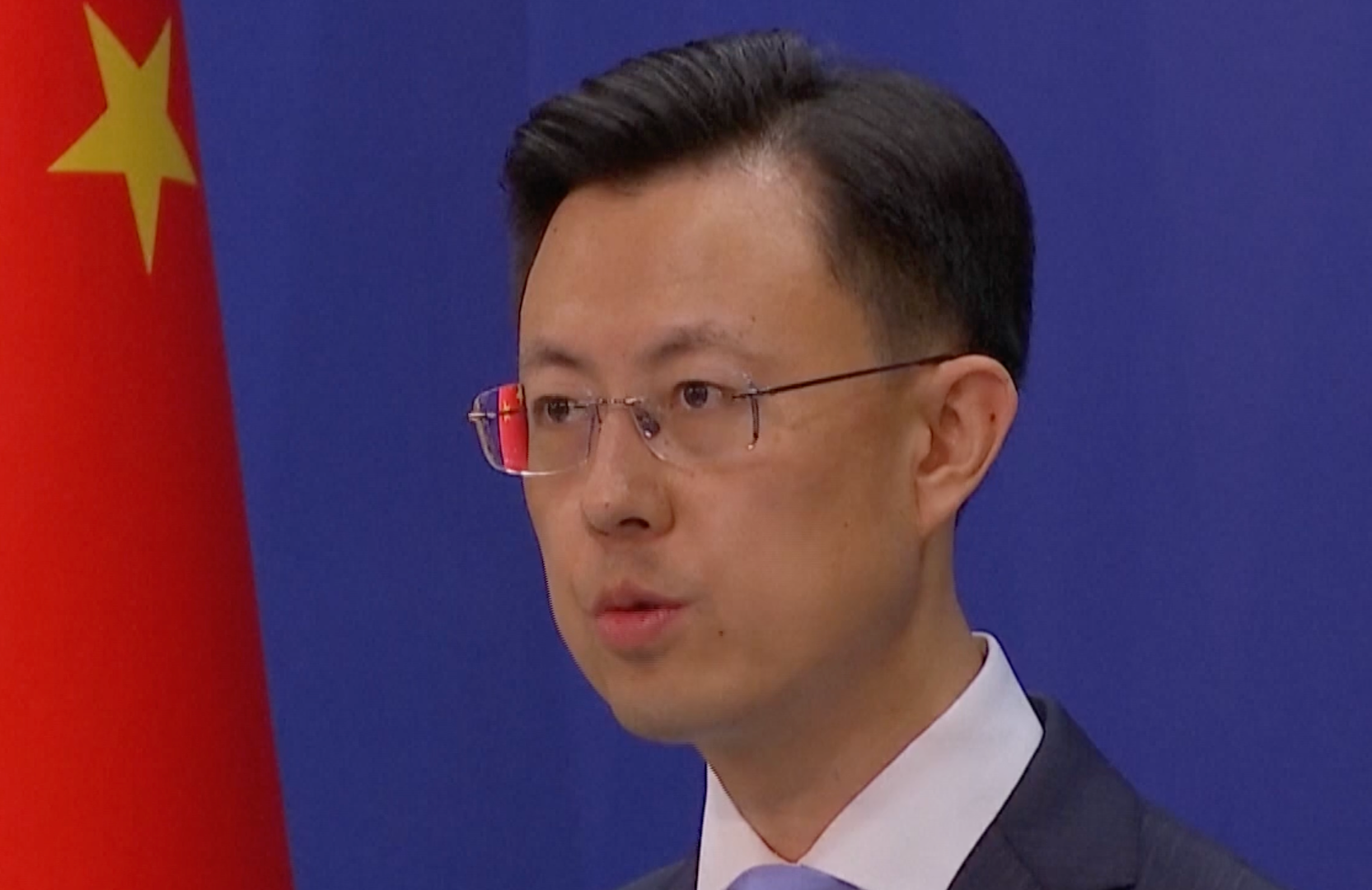
China called for international cooperation on artificial intelligence, warning that “threat narratives” could disrupt global AI governance. The comments follow Anthropic CEO Dario Amodei’s call for AI firms to slow model development over safety and national security concerns.
America’s nuclear weapons deterrent and how it is controlled is increasingly critical in the face of the rapidly-expanding arsenals across multiple adversaries. A new fleet of E-4C nuclear-hardened survivable airborne operations center aircraft is now in development, as is the U.S. Navy E-130J, which will provide next-generation communications with nuclear ballistic missile submarines deep beneath the waves. Focus is also turning to a mission that’s dedicated to emergency communications with the U.S. nuclear forces in times of crisis, a role known as Operation Looking Glass, which is also poised for updating under a program dubbed Looking Glass-Next.
The comprehensive modernization of America’s nuclear strike muscle involves three major elements – new B-21 Raider stealth bombers, the LGM-35A Sentinel intercontinental ballistic missile (ICBM) program to replace Minuteman IIIs, and new Columbia-class nuclear ballistic missile submarines. A fourth facet that ties all these new elements, as well as existing ones, together is the next generation nuclear command, control, and communications (NC3) architecture. It securely connects nuclear weapons systems to decision-makers. Without it, America’s nuclear deterrent isn’t a deterrent at all.
A USAF E-4B assigned to the 595th Command & Control Group at Offutt Air Force Base, Nebraska. USAF/TSgt Codie Trimble
America’s nuclear modernization is set against a backdrop of rapidly-developing nuclear strength across adversaries and pacing threats, which could threaten not only U.S. fighting forces, but also the existing aging NC3 infrastructure. This could impede the collective responsiveness and effectiveness of the American nuclear enterprise. For example, a coordinated attack on NC3 could degrade the National Command Authority chain, which could prevent communications that are necessary to conduct a retaliatory strike.
If fixed underground command posts are targeted and rendered inoperable, the current strategy would involve turning to a set of highly-survivable air assets that are designed to be on hand to execute emergency war orders. This includes the U.S. Air Force’s E-4B National Airborne Operations Center (NAOC) “Nightwatch” aircraft, and the E-6B Mercury that is operated by the U.S. Navy.
A major recapitalization effort is already underway for the NAOC E-4Bs, which are being superseded under the E-4C Survivable Airborne Operations Center (SAOC) contract. It is being led by defense contractor SNC. The new SAOC aircraft are based on the far more modern 747-8i, and are planned to have a much broader mission set than the four E-4B Nightwatch types they are set to replace, as you can read more about here.
The Navy’s E-6B Take Charge and Move Out (TACAMO) aircraft have a primary role of strategic connectivity with the ballistic missile submarine fleet. These converted 707s also execute another mission known as the Airborne National Command Post (ABNCP), more recently renamed “Looking Glass.” For this they are manned by U.S. Air Force missileers and U.S. Strategic Command (USSTRATCOM) battle managers who are responsible for running the airborne nuclear NC3 systems.
An E-6B Mercury flies over U.S. and UK submarines during a joint exercise. U.S. Navy
The joint service team on Looking Glass mirrors some operations performed by USSTRATCOM’s underground command posts, and a small portion of what the NAOC executes. The Looking Glass mission is really focused on performing an airborne backup mission solely for USSTRATCOM to ensure another means of communicating with fielded nuclear bombers, their assigned tankers, ICBMs and deployed nuclear submarines. It is best known for its ability to supply airborne communications connectivity to the USAF’s ICBM force on the ground and can command remote launches of those weapons if necessary.
Additional NC3-related modernization is coming on the heels of SAOC, with the new E-130J set to assume the Navy’s TACAMO role from the ageing E-6Bs, assuming strategic connectivity for nuclear ballistic submarines. It means that at some point roughly two-thirds of the E-6 current mission will go to the new E-130J aircraft – raising the question of what will fulfill the critical Looking Glass mission.
Since the E-130J is not planned to take on the Looking Glass role, the USAF is in the early stages of what’s dubbed Looking Glass-Next (LG-N), which presents the future pathway for USSTRATCOM’s mobile contingency operations. This could take on a number of forms, including NC3 communications functions being increasingly moved to space-based assets and more distributed operations across the ground, although an air platform is still likely to form a major part of the overall capability.
The need to modernize America’s NC3
Brian Golden is a retired USAF colonel who intimately understands nuclear command and control (NC2) and the associated NC3 equipment and processes from both a service and industry perspective. As a subject matter expert for SNC, he draws on his extensive experience as a former E-4B NAOC commander and he commanded much of the USAF’s multi-domain NC3 systems, including the Airborne Launch Control System onboard the current E-6B Looking Glass. He is also extremely familiar with all the nation’s continuity of government and continuity of operations missions for both Congressional and executive branches of the U.S. government.
“Everyone referred to the nuclear triad as the platforms that were controlled through the NC3 architecture,” Golden told TWZ during a detailed discussion. “Those platforms received their messages and executed their missions. But this isn’t just about that platform triad. The U.S. nuclear enterprise has four primary pillars, and nuclear command, control, and communications is a critical part of it. Without a robust NC3 system, it’s like having a brand new Bugatti Veyron but without the keys! It looks awesome on the driveway, but you can’t drive it.”
Secretary of War Pete Hegseth working aboard an E-4B Nightwatch. USAF/SrA Madelyn Keech
Golden explains that the current NC3 enterprise consists of a series of exquisite systems that are extremely reliable, but that are in need of modernization to stay ahead of the steepening threat curve, and stay in front of supply chain constraints. “What we have currently is very reliable, robust, and very survivable, but it can be difficult to maintain some of our legacy systems. Additionally, as threats evolve we must ensure our communications pathways also evolve.
“Our nation’s industrial base engineers figured out extremely robust methods of nuclear communications when these systems were fielded. Looking at the overall command and control [NC2], and then the NC3 communications pathways, any new systems that we introduce must be sustainable, scalable and modular.”
The U.S. nuclear enterprise is facing greater threats than ever with adversaries challenging U.S. nuclear infrastructure in multiple domains: space, cyber, ground, air. Because of this, NC3 demands a continuous process of improvement.
Going forward, the NC3 enterprise will likely need to integrate upgraded proven legacy systems with all-new technology. “Sometimes the physics of radio waves may dictate the need for a legacy approach with upgraded systems, such as communicating with a submarine that’s very deep in the ocean.”
Golden’s view is that NC3 requires a layered, open architecture approach as modernization is evaluated. “Applying those same physics and then adding new layers such as artificial intelligence may determine a better way of doing things.”
Upgrading to SAOC
Golden points to the SNC-led E-4C SAOC program as a clear example of critical NC3 modernization, while emphasizing that the NC2 mission is far from being the primary role of the E-4B and its forthcoming successor. “Nuclear command and control is only a fraction of what the current NAOC does and what the future SAOC will do for our nation and our allies and partners.”
An E-4B Nightwatch at Yokota Air Base, Japan. USAF/A1C David S. Calcote
The E-4B initially featured just a handful of communications systems, which have grown over time, leading to what Golden calls the “King Kong” of communication capabilities today. The E-4 is not a battlefield communications platform, its mantra is all about supporting Presidential-level requirements across the board. It does possess an extensive NC3 suite, but it also serves the White House Communications Agency (WHCA) and the Department of Homeland Security, through the Federal Emergency Management Agency (FEMA), in many other crisis roles. Another mission the E-4B fleet performs is to safely transport the Secretary of War on trips within the United States and abroad.
The E-4B NAOC and Looking Glass are two complementary tiers of the same survivable architecture. The NAOC (and future SAOC) is designed to anchor national-level decision-making and government continuity from the very top, while Looking Glass provides USSTRATCOM with the dedicated airborne command and battle-management capacity required to direct forces. Both roles are critical and non-negotiable.
An artist’s rendition of the new E-4C SOAC. SNC
“The new E-4C SAOC, like the E-4B before it, will deliver an expansive communications suite and increased capacity supported by a larger fleet,” Golden explains. “SAOC is built to ensure the President and national leadership can direct the entire country through any crisis. Looking Glass supports an equally vital and highly specialized mission. It is dedicated to USSTRATCOM’s operational needs, connecting directly to bombers, ICBMs and submarines. Attempting to merge these unique missions on a single airframe would compromise the unique, essential role that each was created to perform.”
Looking Glass-Next
The Looking Glass role and the platform that fulfills it is not classified as a national-level mission. As Golden alluded to earlier, it’s not assigned to the Chairman of the Joint Chiefs or to the Secretary of War. It’s exclusively assigned to USSTRATCOM; however, without the Looking Glass mission being upgraded soon, America has a gaping hole in its nuclear architecture.
An E-6B Mercury flying over Colorado. USAF/Greg L. Davis
The commander of USSTRATCOM is the customer and ultimately the decision-maker when it comes to Looking Glass-Next, and the USAF has been tasked by the Secretary of War to develop and field it. SNC is looking at several options for the requirement, with some sort of air platform at its core, which Golden refers to as an “E-6C.” He endorses that the current E-6B is one of the “cogs in the wheel that has to be replaced,” but adds that this doesn’t mean the next-generation Looking Glass is just an aircraft.
“At SNC, we have significant expertise and experience with mission system integration,” says Golden, adding that SNC is evaluating what he calls “aggressively creative options,” for the modernization requirement. He further noted that the modern threat is driving a requirement for Looking Glass-Next to be very difficult to target and must be dispersed.
“Having an aircraft as the only option for this USSTRATCOM mission is a legacy mindset,” Golden states. “We have advanced multi-domain capabilities, including numerous space capabilities available through the Sierra Space Corporation. Future mission resilience requires a creative and integrated approach.”
“We believe a creative approach to provide NC3 options will ensure a robust, reliable, survivable and cost-effective solution.”
Golden endorses this approach to creativity and development and indicated that SNC will continue to inform and respond to the ongoing Looking Glass-Next requests for information that may result in a future program.
One of the 747-8is that is being modified by SNC in Dayton, Ohio, to become an E-4C SAOC. SNC
“SNC has leaned heavily into the nuclear command, control, and communications architecture and it’s a natural fit for us, building on our work with the Department of War and our subcontractors on the E-4C SAOC. Our Looking Glass-Next responses and inputs will leverage relevant work and experience gained from SAOC, but we are also focused on being creative. We’re small enough to be agile, but big enough to deliver. That’s why we think we’re very well positioned in the NC3 space.”
The majority of SNC’s work on the E-4C SAOC is being completed at the NC3 Center of Excellence, housed in the Aviation Innovation and Technology Center (AITC) in Dayton, Ohio.
Golden believes the timing couldn’t be better to deliver bold and creative NC3 solutions. “The USAF is already asking the right questions, and industry is really able to innovate, which will result in a transformational era for nuclear command, control and communications.”
Garth Brooks, Zach Top and Riley Green will headline 2027’s Stagecoach country music festival, organizers announced Monday, bringing together one of the genre’s veteran standard-bearers with two of Nashville’s ascendant stars.
The three-day event, scheduled for April 23-25 at Indio’s Empire Polo Club, will also feature Hardy, Brothers Osborne, Willie Nelson, Shaboozey, Stella Lefty, Charley Crockett, Stephen Wilson Jr., Turnpike Troubadours, Gretchen Wilson, Ernest, Hudson Westbrook and a reunited Florida Georgia Line.
Among the non-country acts on the bill for the annual show, which for years has been expanding its stylistic footprint, are Kelly Clarkson, Pitbull, David Lee Roth, Sean Paul, Flo Rida, Matchbox Twenty, the Fray and Journey, the last of which was scheduled to perform at this past April’s festival but whose set was called off after high winds temporarily shut down Stagecoach.
Brooks, who previously headlined Stagecoach in 2018, launched an arena tour last month, while Top and Green both just picked up nominations for November’s CMA Awards: Top for male vocalist of the year and album of the year (for his “Ain’t in It for My Health”) and Green for musical event of the year (for his and Carly Pearce’s duet “If I Don’t Leave I’m Gonna Stay”).
Other acts scheduled to perform at next year’s festival, which takes place on the same grounds as Coachella the weekend after that event, include Carín León, Cody Jinks, Melissa Etheridge, Dasha, Waylon Wyatt, Tedeschi Trucks Band and Laci Kaye Booth.
Passes for Stagecoach, which start at $549 and go up past $4,000 for various VIP packages, will go on sale Friday. Goldenvoice, the Los Angeles-based promoter that puts on Stagecoach and Coachella, announced last week that its inaugural Ocean Way festival, which was to be held on the beach in Santa Monica on Sept. 26 and 27, had been canceled due to erosion caused this month by Hurricane Marie.
Tetiana Bubynets collapsed on the asphalt after a Russian drone exploded at a gas station in the southern Ukrainian city of Zaporizhzhia.
Despite the violent shockwave and blast of drone shrapnel produced by the attack on July 6, the 18-year-old accounting student had no visible wounds except for a nosebleed.
Recommended Stories
list of 3 itemsend of list
She was rushed to hospital and pronounced dead shortly after, alongside two other civilians, aged 41 and 48.
One of her lecturers, Tetiana Melikhova of Zaporizhzhia National University, said Bubynets was an only child and that her mother “lost the meaning of life” after she died.
“She couldn’t speak. At the funeral, she just lay on the coffin; she couldn’t let her child go,” Melikhova told Al Jazeera.
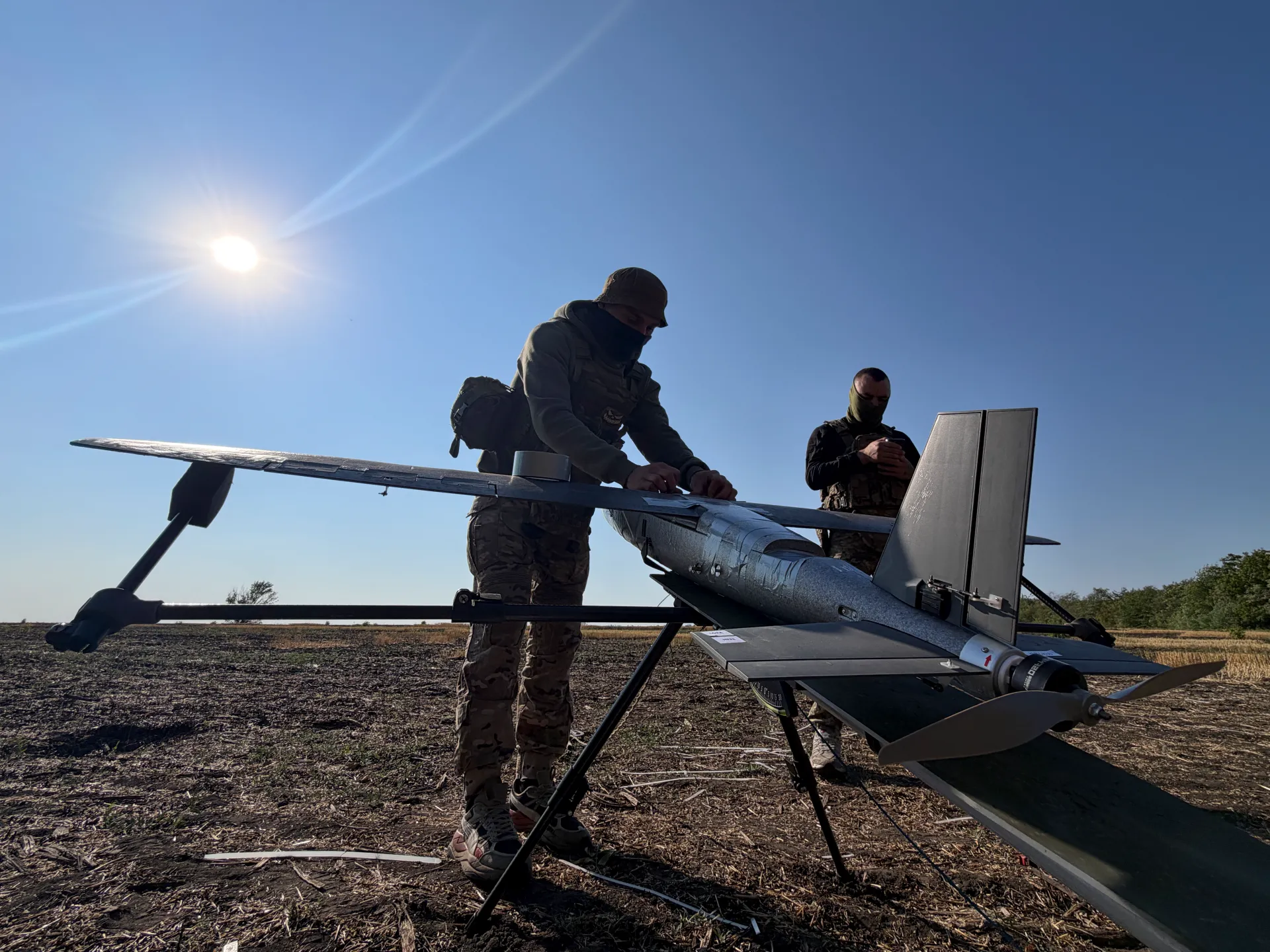
The strike that killed Bubynets was the first recorded case of Russia’s use of a fully autonomous attack drone powered by artificial intelligence (AI), according to a New York Times analysis.
While drone strikes have hammered Ukraine since Russia launched its full-scale invasion in February 2022, Ukrainian officials who examined the wreckage found the unmanned vehicle to be unlike others.
In place of an antenna, it featured an AI-powered minicomputer sold commercially by US technology company Nvidia, which rendered it capable of directing itself to the type of target it was programmed to spot – likely propane tanks in this case – lock on to it and proceed to strike.
AI-powered drones are the tip of the iceberg as Russia and Ukraine race towards boosting tech infrastructure aimed at coordinating reconnaissance and attack, according to analysts.
“It’s not about a drone having AI in it, and then seeing something and striking,” Marina Miron, researcher at the defence studies department at King’s College London, said. “Rather, it’s the drone seeing something, communicating to a software complex which knows how to map the GPS coordinates on a live battlefield map, and notifying the closest artillery unit.”
Referred to as reconnaissance-strike architecture, these unified battlefield management systems act like a central command. They track the location of friendly forces and identify enemy positions.
AI acts as the accelerator, instantly processing massive amounts of data collected through sensors in drones or any other military products, including interceptor missiles or artillery units.
The tactical advantage on the battlefield is given by the system’s ability to compress the kill chain – meaning coordinating and distributing the intelligence to military assets on the ground to find, track and destroy targets in a matter of minutes.
In such an ecosystem, AI-powered automated drones are just pieces of a broader puzzle.
Ukraine is known to be developing its system, which it named DELTA. Following operational trials in late 2025, Russia has been rolling out its version, the Svod Tactical Situational Awareness Complex, to front-line units.
Both sides claim that once the battlefield data is processed, a decision support system (DSS) presents a military commander with options to choose from, keeping a human in the decision-making loop, said Miron.
“In how far that is true is, of course, impossible to find out,” she added.
Acknowledging full AI autonomy would provoke ethical and legal questions.
Even if humans were to retain final decision-making authority, research has shown AI systems subtly shape choices, predetermining outcomes.
“Under time and pressure, commanders often do as AI suggests,” said Miron, whose research focuses on military AI and remotely piloted and autonomous systems.
Towards full automation
Coordinated AI-powered military systems are the next frontier of modern warfare, said Serhiy Beskrestnov, a Ukrainian Ministry of Defence adviser on loitering munitions, known by his callsign Flash.
“That’s what it will all come to,” he posted on his Telegram channel on July 1. “Navigation, search for a target, and attacks will be fully autonomous.”
Drones with some autonomous capabilities are already being deployed at scale.
Heorhii Volkov, commander of Ukraine’s Yasni Ochi drone strike unit, said this is currently mostly used in the final phase of long-distance strikes, where first-person view (FPV) drones are likely to lose radio connection due to electronic warfare or the curvature of the Earth.
The use of AI in so-called last-mile operations solves this battlefield hitch. If the signal is lost, an integrated AI-enabled onboard module takes full control of the unmanned vehicle, autonomously locks on the target and carries the strike to completion.
Yaroslav Azhnyuk, founder of Ukrainian technology company The Fourth Law, which develops AI-powered autonomy software for unmanned vehicles, said Russia and Ukraine were working to deploy a wider range of autonomous systems.
“This is not simply a race to demonstrate a fully autonomous drone. It is a race to make autonomy reliable, affordable and deployable at scale,” Azhnyuk told Al Jazeera. “Electronic warfare, increasingly long engagement distances and the growing number of drones are making human-controlled systems less sufficient. Autonomy solves exactly these constraints.”
Azhnyuk believes autonomy will become a game-changer over the next six to 12 months.
“The decisive advantage will belong to the side that can deploy reliable autonomy across tens or hundreds of thousands of systems, not just demonstrate it in prototypes,” he said.
Kateryna Bondar, senior fellow at the Center for Strategic and International Studies (CSIS), noted the dangers of AI’s reliance on algorithms.
“The system doesn’t understand what it’s doing; it’s just following the algorithm and the rules which people created,” said Bondar, who works at the CSIS’s Wadhwani AI Center. “AI has to be trained to recognise targets and engage these targets,” but writing code that distinguishes between a bus and a tank is easier than between a Russian and a Ukrainian soldier.
Additionally, cost-effective FPV drones have low-quality cameras and their resolution can be lowered further by adverse atmospheric conditions.
Military units using autonomous systems therefore “delegate the decision to a very imperfect technology that cannot distinguish between a civilian and a military person, combatant or non-combatant”, Bondar said.
“This is why there is a conversation around who makes a decision and who has responsibility for mistakes and errors.”
RIYADH: The performing arts in the Kingdom is undergoing a transformation driven by cultural investment, new venues, international collaboration, and a growing network of local professional and academic institutions, making it tempting for young Saudis to pursue.
While academic study in the field is comparatively new, Saudi theatrical production is not. The Kingdom has long produced recognized theater throughout the Gulf and regionally, but many practitioners studied overseas.
Today, Saudi Arabia is localizing the education of its creative talent through academic and professional training in the country.
Since 2020, Saudi has dedicated a Theater and Performing Arts Commission to regulate and develop a sector encompassing theater, dance, circus, improvisational comedy, street performance, ballet and opera.
Not only through training but also national competitions and workshops.
Undergraduate programs are offered at King Saud University, Princess Nourah University and most recently the Riyadh University of Arts. While the Royal Institute of Traditional Arts provides postgraduate and diploma-level education, Scene Institute, and Ithra have further professional training.
As Saudi universities begin their academic year, many students are continuing their conventional degrees. Other creatives are pursuing their passions academically, making the most of the opportunities the Kingdom has to offer.
Osama Almutairi, a final-year Bachelor of Arts in Theater student at King Saud University, spoke to Arab News about the feasibility of his academic choice.
“My love and passion for the arts, particularly theater, naturally led me to this specialization.”
Theater was not his first choice. “I initially considered studying political science but was accepted into theater as part of the first cohort at the College of Arts,” he said.
“Despite my initial interest in pursuing a conventional degree in the humanities, the continuous development of Saudi Arabia’s arts sector encouraged me to take this step.”
Saudi Arabia has been taking proactive measures while localizing performing arts scholarships.
The Ministry of Culture has been running a fully funded Cultural Scholarship Program that supports creative specializations at 278 approved institutions across 15 countries, including performing arts.
One beneficiary is Majed Al-Muwallad, an actor and theater teacher at Afaq Academy, who completed his Bachelors in Theater Studies at Royal Holloway, University of London.
“I travelled to London in 2021. During my studies, I participated in several theatrical productions, ranging from small projects to larger, more academically oriented university productions.
“I had loved acting since I was about 14 years old. I loved films, acting, stories and dramatic texts. When the scholarship opportunity appeared, I thought: ‘Why should I let this opportunity pass?’ I decided to take it.”
Al-Muwallad said he left a job at Aramco to pursue his childhood dream, although members of his community were uncertain about his unconventional choice.
“They were not sure about the professional opportunities available or where such a career could lead,” he said.
“It was a major career change, and leaving Aramco to pursue acting was an unfamiliar idea. People do not usually leave Aramco to become actors,” he added.
Now that he has graduated and is teaching Saudi youth to act, Al-Muwallad believes it was a good decision.
He is even considering pursuing a master’s degree in the performing arts, specifically in performance design. For him, the opportunities are not limited to acting. He hopes to build on his studies in costume, lighting and set design.
“Every theatrical production needs design. It requires a set, costumes and lighting. Rather than limiting myself to the acting and performance side of theater, I would like to develop expertise in design and contribute to the audience’s overall visual experience.”
Almutairi believes perceptions will continue to change as Saudi artists demonstrate the value of academic training.
“The future is wide open for the arts and artists. Society’s perception will continue to change as academically trained Saudi artists demonstrate their ability to represent their communities and country.
“This change is already becoming evident, with society playing an increasingly important role in supporting the success of Saudi artists nationally and internationally.”
For Al-Muwallad, theater should be approached holistically — not only as a career or degree, but also as a journey of self-discovery.
“I learned a great deal before I even began teaching the students. I had to learn how to communicate theatrical knowledge and present information in a way students could understand.
“The experience has taught me a lot about communication and how to identify students’ talents. Theater teaches communication and helps students discover themselves.”
Al-Muwallad encourages young people in Saudi Arabia to pursue their passions academically. “My advice is not to treat university as merely a stage that you pass through and finish,” he said.
“Students should engage with the experience deeply and benefit from it in every possible way.”
He said soft skills can be learned through theater, including communication, emotional intelligence and teamwork.
“Another piece of advice we were always given in London was to always ask questions. A question produces an answer, and that answer often generates another question.
“Asserting that openness and eagerness to learn is vital to a good actor, theater itself is founded on curiosity.
“Students should watch a wide variety of theater and explore different traditions, including Arab, English, Greek and Russian theater, as well as influential approaches such as Russian (theatre practitioner Konstantin) Stanislavski’s.”
On Saudi having a relatively emerging academic orientation to performing arts, Almuwallad sees it as a big opportunity rather than a challenge or a barrier.
“Saudi Arabia is still developing in this field, which means students now have an opportunity to participate in shaping it. What they create can become visible and make an impact relatively quickly.”
“Students should recognize that they are important. They should not treat themselves as secondary characters in this development. They have the opportunity to play a central role because the field is still new.”
For Saudi youth choosing an arts degree over a safer, conventional path, there is an opportunity to turn passion into a profession, and ultimately shape the nation’s creative scene.
KILLER drug fentanyl has long had a vice-like grip on the US, devastating everyone from high profile celebrities to everyday families across the country.
Just today it was revealed that actress Hayden Panettiere, who died last month age 36, had allegedly taken a pill laced with fentanyl before she passed away.
Hayden Panettiere, who died last month aged 36, allegedly took a pill laced with fentanylCredit: PADemi Lovato suffered three strokes and a heart attack after taking heroin laced with fentanylCredit: Getty
The mum-of-one was found dead of a suspected overdose of oxycodone at a luxury AirBnB in South Carolina on August 17 just days before her 37th birthday.
Cops are said to be “zeroing in” on her alleged long-term dealer from whom she is suspected to have purchased several black-market prescription drugs from.
Sign up for the Showbiz newsletter
Thank you!
Toxicology reports are still pending but, according to the US news outlet, the working theory within law enforcement is that it was the suspected fentanyl-laced oxycodone pill killed Hayden.
But she is far from the first celebrity to have succumbed to the drug.
Prince died of an accidental fentanyl overdose in 2016Credit: AP:Associated PressPrince’s Paisley Park recording studio and home, where he was found deadCredit: Alamy
And the fentanyl crisis is showing no signs of going away as dealers use it to lace other drugs to maximise their profits.
A former NYPD chief of detectives James Essig explained: “Fentanyl is relatively cheap while heroin is expensive.
“You take a kilo of heroin and then add in a tiny bit of fentanyl and stretch it out for more profitability.”
Fentanyl is an opioid 50 times more powerful than heroin and 100 times stronger than morphine.
Opioid addiction became rife in America during the 90s when pharmaceutical companies flooded the market with super-strong painkillers.
But when the government began to crackdown in the 2000s, the Mexican drug cartels spotted a gap in the market and moved in with heroin, and before long they started adding fentanyl to juice up its potency.
Raymond Donovan, former Drug Enforcement Agency (DEA) chief of operations, says: “That really started the wave of the opioid crisis that we are in now.
“Very quickly it went from increasing the strength of heroin to pure fentanyl. You had kilos coming across the south west border.
Tom Petty was found dead with two forms of illicit fentanyl in his systemCredit: Getty – ContributorA makeshift memorial to rapper Mac Miller who died in September 2018Credit: Getty
“The Mexican cartels started buying fentanyl directly from China, pressing it into pills and then selling it as if it was a known opioid, like something that was made by a scientist in a laboratory, but it is not, it is a fake pill.”
It was two years after Prince’s death when investigators finally released their findings.
They had found counterfeit Vicodin pills in his house, laced with fentanyl – but police were unable to establish who had provided the drugs.
Prince’s death put fentanyl in the headlines, but it wasn’t long before another famous name was tragically linked to the drug.
The following year rock n roll legend Tom Petty was found dead – and two forms of illicit fentanyl were found in his system.
He was also using a medically supplied fentanyl patch for pain caused by a fractured hip.
His family released a statement saying they wanted his death to act as a wake-up call in a bid to save others from suffering their heartbreak.
Matt Capelouto lost his college student daughter Alex to the drug in December 2019Credit: GettyMichael K Williams, star of TV series The Wire and Boardwalk Empire, died after taking fentanyl-laced heroin in 2021Credit: AP
But the opioid crisis was only just starting. In 2018 more than 30,000 people died of fentanyl overdoses – up by 10 per cent – and in July that year singer Demi Lovato almost lost her life.
The star had been open about her struggles with drug addiction and had been in and out of rehab.
Entertainment journalist Chris Witherspoon explains: “Despite years of sobriety Demi Lovato went out with some friends in Hollywood, ran into a dealer she knew and she got some heroin that was laced with fentanyl.”
Speaking about her ordeal Demi said: “I had three strokes, I had a heart attack. I suffered brain damage from the strokes. I can’t drive any more.
Her survival was down to being given the drug Narcan in hospital which helps to reverse the effects of an opioid overdose.
It was a huge wake-up call with celebrities including Lady Gaga, Justin Timberlake and Ariana Grande sending her public messages of support.
But another celeb was not going to be as lucky as Demi. Just two months later rapper Mac Miller was found dead at the age of just 26.
Like Demi he had been open about his own struggles with addiction, writing about it in his music.
Comedian and presenter Kate Quigley survived a fentanyl overdose that killed three of her palsCredit: GettyKate Quigley and Fuquan Johnson, (right) who died at a party after taking cocaine that contained fentanylCredit: Getty
Investigators discovered he had been looking to buy oxycodone, but ended up with something laced with fentanyl.
Miller’s drug dealer and the men who supplied him with the drugs were later jailed.
But it isn’t just celebrities that have fallen victim to the fentanyl crisis sweeping America.
Thousands of ordinary families have been left grieving the deaths of their loved ones, too.
Matt Capelouto lost his college student daughter Alex to the drug in December 2019.
“We didn’t know anything about fentanyl at the time,” he says. “Lots of things were going through my head and this was a period of shock.”
Alex, 20, had contacted a drug dealer on Snapchat looking to buy the prescription painkiller Perocet.
But what he, in fact, delivered to her was counterfeit pills made with lethal doses of fentanyl.
“My daughter took half of one of these pills before going to bed and my wife found her dead in her bed the next morning,” says heartbroken Matt.
“I wanted to find out who this drug dealer was. Who sold my daughter death?”
They eventually got into Alex’s phone and discovered the identity of the drug dealer.
But the family were told that the dealer was unlikely to face any charges as California does not have a death by dealer statute that holds dealers responsible for users’ deaths.
But the case was taken over for federal prosecution, which has a different burden of proof, and the dealer, Brandon McDowell, was charged with one count of distributing fentanyl resulting in death and jailed for nine years.
Matt says: “Locking up a drug dealer won’t bring my daughter back, but it will save someone else’s child.”
Michael K Williams, star of TV series The Wire and Boardwalk Empire, was the next celeb to lose their life after taking fentanyl-laced heroin in 2021.
He had been open about his battle with addiction, and just five days before his death spoke on a podcast about how acting offered him a road to recovery.
Two weeks after he passed away the New York City Medical Examiner said he died from an unintentional overdose from a deadly mix of drugs including fentanyl.
In April 2023, drug dealer Irvin Cartagena pleaded guilty to selling the mix of heroin and fentanyl to Williams that resulted in his death. He was jailed for 10 years.
In September 2021 comedian and presenter Kate Quigley went to a party in Venice, California, where she and her friends thought they were using cocaine, but it contained fentanyl.
Kate passed out, fell over and was unconscious for 17 hours. She woke up disorientated, unable to move her legs, and then made a harrowing discovery.
In September 2022, rapper Coolio became the next victim of fentanylCredit: SplashFashion designer Katie Gallagher was found dead after allegedly being given what she thought was cocaine, but it was laced with fentanylCredit: Getty
Washington Post reporter Nick Miroff says: “One of the many tragedies of the fentanyl epidemic in the United States is this repeat of mass overdose events.
“A group of friends partying together and they think they are buying cocaine or some other drug, and they don’t know that what they are buying is laced with fentanyl and because they don’t have any opioid tolerance, they drop dead.
“So that’s why we have seen horrible crime scenes with three, four, five adults on the floor at a party where they have literally died in a couple of minutes.”
In July 2022, cops discerned a shocking new twist in the fentanyl story.
The drug was now being used as a weapon by robbery gangs, and a famous fashion designer was one of their victims.
Katie Gallagher, who had designed for Rita Ora and Lady Gaga, was found dead in her bed.
Police told her parents that Katie had died from an overdose – but she had been murdered.
Detectives had uncovered a robbery crew that was using drugs laced with fentanyl to incapacitate victims before using facial recognition technology to open their phones and empty their bank accounts.
Police believed Katie had been given what she thought was cocaine, but it was laced with fentanyl.
Police arrested and charged Kenwood Allen, 33, in relation to five deaths and a drugging and robbery spree targeting a total of 21 victims.
At first it was thought he had died of an asthma attack, but the medical examiner’s report revealed he had died from an accidental overdose of heroin, methamphetamine and fentanyl.
Actor Angus Cloud was just 25 when he died at his family home in CaliforniaCredit: GettyFentanyl is an opioid 50 times more powerful than heroin and 100 times stronger than morphineCredit: AFP
The authorities are struggling to stop the flow of fentanyl from Mexico into the US.
The drug is so compact and so potent that it is easy for the cartels to smuggle it across the border.
In 2023, Homeland Security launched Operation Blue Lotus to try to stop the flood.
And the US targeted the Chinese suppliers that were selling fentanyl to the cartels.
But despite the Government efforts the fentanyl crisis continued to spread across America and claimed the life of yet another of Hollywood’s brightest stars.
He shot to fame playing a drug dealer in the hit series Euphoria. But his own struggle with addiction after suffering an ankle injury and losing his dad to cancer made him vulnerable.
He was found to have died of an accidental overdose of a cocktail of drugs, including fentanyl.
During a recent visit to the Shizuoka Cancer Center, a leading medical and research institution in Japan’s Shizuoka Prefecture, I found myself confronting two realities at once.
The first was an impressive expression of modern medicine: advanced treatment, exacting research and an institution seeking to connect clinical care with pharmaceutical innovation. The second was quieter but more powerful. Nearly every patient I passed was facing cancer and beside most stood a relative whose life had also been changed by the diagnosis.
A hospital may contain some of humanity’s most advanced knowledge. It also contains some of its oldest fears.
In such a place, medical excellence is anything but an abstraction. In a hospital, every scientific advance eventually arrives at one person in a vulnerable moment. Every diagnosis enters a life filled with memories, relationships, responsibilities and hopes. Illness inhabits one person but its consequences touch a family and a community.
This is where any serious consideration of health resilience should begin.
Health resilience is not one program within transformation; it is part of transformation’s capacity to serve human life
Dr. Ghazi Faisal Binzagr
The term is commonly associated with the ability of health systems, including hospitals, to withstand emergencies: pandemics, natural disasters, supply shortages or sudden pressure on medical capacity. These capabilities are indispensable. COVID-19 demonstrated, however, that a health emergency does not remain within healthcare. It also moves through families and schools, work and travel, economies and supply chains, and ultimately into the heart of national decision-making and security.
Yet a health system may remain operational while the health of society deteriorates.
Health resilience must therefore mean more than keeping institutions functioning through crisis. It must encompass the ability of a society to cultivate health before illness, respond intelligently when illness arrives and preserve dignity and meaning when medicine cannot restore the body to what it once was.
Such resilience is not created by strong institutions standing apart. It grows when their knowledge and capabilities remain connected — to one another and to the human being they ultimately serve.
Not far from the cancer center, at the University of Shizuoka, I encountered two practical examples of how such connections are cultivated.
Japan and Singapore are very different yet each has cultivated something approaching a national miracle
Dr. Ghazi Faisal Binzagr
Students of pharmaceutical sciences were being trained in the administration of medicines, including injections, although many would never perform such procedures professionally. The purpose was not to blur professional boundaries but to prevent pharmaceutical knowledge from becoming detached from human experience. A medicine is not only a compound to be formulated, tested or dispensed. It eventually enters a living body, carried by trust and accompanied by consequence.
Nearby, the university’s botanical garden, used in pharmaceutical, nutritional and food studies, extended the same principle in another direction. If the training connected medicine to the person who receives it, the garden connected modern science to the living world from which much medical knowledge first emerged. It did not ask students to choose between inherited observation and scientific rigor but to understand how one can inform the questions the other tests.
The cancer center, the pharmaceutical training and the botanical garden were not simply three interesting encounters. Together, they revealed that health resilience depends not only on the strength of individual institutions but on their capacity to remain connected: to the person who suffers, to the professional who carries responsibility, to the society in which illness occurs, and to the sources from which medicine continues to learn.
Saudi Arabia’s transformation gives this understanding immediate relevance. Vision 2030 has widened the connections through which the Kingdom understands progress, while COVID-19 revealed how inseparable health is from the economy, education, mobility and national security. Health resilience is not one program within transformation; it is part of transformation’s capacity to serve human life.
The burden of chronic disease makes this urgent. Diabetes affected an estimated 5.3 million Saudi adults in 2024, with an age-standardized prevalence of 23.1 percent. At such scale, illness cannot be treated as a succession of isolated clinical episodes. It is a continuous human reality and care must learn to become continuous with it.
Behind those numbers, in Saudi Arabia today is a person who can sleep while their glucose levels continue to be monitored. As family members rest nearby, readings can reach health institutions, helping reveal change, anticipate risk and guide care. Technology does not replace the concern of those beside that person; it allows the health system to join them in caring, extending institutional capability into the home without displacing the relationships that make it a place of belonging.
But continuity cannot begin only after diagnosis.
Through my years with the Saudi Sports for All Federation, I have witnessed how accessible movement, rooted in families, neighborhoods and communities, can turn health from something medicine repairs into something society creates. Health transformation, Sports for All and the Kingdom’s quality of life ambitions shape the same human life from different directions.
The encounters in Shizuoka formed part of a larger Japanese lesson. Japan’s longevity is a civilizational achievement but it is also requiring the country to reconsider care, independence, community and purpose. Its value lies in the knowledge it continues to accumulate: how to support older people within their communities, connect medical and long-term care, use technology to strengthen human presence rather than replace it, and ensure that years added to life remain years of contribution and belonging.
Japan’s use of robotics offers a striking example. Wearable systems can assist movement, surgical robots can extend the physician’s precision and robotic avatars can enable people confined by illness or disability to participate from afar. The machine matters but the deeper achievement is human: preserving agency and belonging when physical strength changes form.
Saudi Arabia is shaping new systems while its population remains comparatively young; Japan is adapting established systems as longevity transforms society. Their differences make them valuable to one another. The opportunity is not simply to transfer solutions but to discover how health systems can remain technically advanced, socially connected and fully human.
My years in Japan have reminded me of another country I have visited and studied repeatedly for more than a decade. Singapore’s achievement lies not in one health program but in its practice of national transformation: balancing access, quality and affordability while connecting health to housing, mobility, economic sustainability and quality of life.
What has impressed me most is the movement between scale and detail. National objectives provide direction; close observation reveals where policy must be refined. Concepts are tested against daily life and reconsidered whenever progress in one field creates consequences in another.
Japan and Singapore are very different yet each has cultivated something approaching a national miracle — not perfection but a distinctive capacity built from history, necessity and human effort. Saudi Arabia brings its own: the energy of a society transforming at exceptional speed, technological ambition joined to enduring family bonds, and a vision placing quality of life within national progress.
The invitation is larger than an exchange of best practices. It is for societies to bring their finest qualities into a deeper relationship. No country contains the complete wisdom the future requires. Through the quality of their connections, nations may create possibilities that none could produce alone.
These reflections return me to where they began: the Shizuoka Cancer Center and to the unsettling lesson cancer itself offers about change. Life depends upon change: cells divide, organisms adapt and societies renew themselves. Yet not every change serves life. Growth detached from the order that sustains the whole can become destructive.
The analogy must not be pushed too far. But it raises a question at the heart of every national transformation: How can change strengthen the whole rather than advance one part at the expense of others?
Speed is not, by itself, evidence of progress, nor is the accumulation of technology or wealth. A healthy transformation holds together economic sustainability, good governance, security and a quality of life that reveals what they are ultimately for. Its measure is whether the whole has grown more capable of sustaining human life — especially when life becomes vulnerable.
For vulnerability is not a temporary defect that successful societies will eliminate. It is part of being human. We begin life dependent upon others. Many will encounter illness or disability. Those who live long enough will experience some loss of physical capacity. A society reveals its understanding of progress not only in how it celebrates strength but in how it accompanies people when strength changes form.
Arabic and Islamic tradition offers a name for the wisdom such a society requires. The physician was often called “al-hakim,” the wise one. The word implied more than command of remedies. It joined knowledge with judgment, the body with the person and the act of treatment with responsibility for the balance of life.
Perhaps the future asks us to enlarge this meaning beyond the individual physician. The wisdom of al-hakim may become a collective quality: science exact enough to determine what can be done; judgment broad enough to ask what should be done; and societies humble enough to place their finest knowledge in one another’s service.
For we are embodied beings but we are not bodies alone. We are memory and relationship, aspiration and responsibility, matter and spirit. Medicine can preserve life and relieve suffering. Society must help ensure that the life preserved can still find belonging, dignity and meaning.
The future of health will not be decided only by what medicine becomes. It will also be decided by what society remembers a human being to be.
GENEVA: The United Nations rights chief called Monday for countries and “frontier” artificial intelligence companies to act urgently to rein in a technology he warned posed “unprecedented risks”.
In a letter sent to countries and AI developers and shared with the media, Volker Turk cautioned that the world was “on the cusp of irreversible change, affecting not just us but generations of humanity to come”.
“The current race towards ever more powerful AI is a step change towards greater existential risks to every aspect of our lives.”
He sent the letter at a time when worries over the risks of “superintelligent” computer systems have been on full display, after a researcher publicly resigned from leading AI firm Anthropic over fears that the technology could escape human control.
Another Anthropic employee, who did not resign, stated publicly that “we really do earnestly believe AI could kill all humans”, and that he thought the chances were greater than “10 percent within the next decade”.
Amid the outcry, Anthropic CEO Dario Amodei called Saturday for AI companies to “pace the frontier” — or coordinate a slowdown in the technology’s development, with his chief competitors, xAI’s Elon Musk and OpenAI’s Sam Altman, publicly supporting him.
“In today’s world, we are almost entirely reliant on a small number of powerful companies to make the right choices on Al development for all of humanity,” Turk lamented.
“I call on States and companies to mobilise urgently through multilateral fora to chart a path for action to govern advanced, frontier AI models, grounded in international human rights law.”
During Monday’s Loose Women, presenter Christine Lampard spoke about Prince Harry and Meghan Markle’s move back to the UK with their two children after spending six years in America. Recently, the Duchess of Sussex shared a glimpse of their new lives on social media in a compilation of videos.
Christine highlighted that Meghan and Harry have been accused of hypocrisy in the past, having stated they wanted a private life and then giving snippets into their lives online.
The ITV star shared that the Duchess of Sussex has turned the comments off on the post as she asked the panel, “Is it time to let the couple live in peace?”
Kelly Brook commented, “I think when you have to turn the comments off, I think you know that she’s already expecting a backlash. There’s nothing in that video that I wouldn’t share on social media after a lovely weekend in the countryside.”
Meanwhile, panellist Coleen Nolan didn’t hold back on sharing her thoughts as she remarked that people need to leave them alone. She said: “For me, your question on whether we should just leave them alone and let them enjoy life, from my point of view, yes, absolutely.
“For people that are out there constantly criticising, constantly sla****g off, don’t follow it, don’t look at it, block it. Get it off your timeline. If you don’t want to see them, don’t see them, but there are equally people who will love seeing that.”
The ITV star shared she thought it was nice to see and has ‘no issue’ with Harry and Meghan. She added that while there’s an argument to be had about people putting themselves out there, it doesn’t give people the right to slam anybody.
She added: “There are things that I don’t like on social media, I will unfollow it or I’ll block it, or I’ll have my say about someone or something, but it will be to my family around the kitchen table, I wouldn’t dream of doing that on social media.
“So, it really, really offends me, and certainly, they’ve had their fair share. Some say, ‘they deserve it’. Maybe they do, but have that conversation privately. They’ve got people out there that love them, family and all of that, I just think it’s awful, just leave them alone.”
In the sweet video shared online, people got to see their children, Archie and Lilibet, chasing a flock of deer in the countryside.
Another snippet showed the couple holding hands, whilst one clip showed Harry teaching his children how to catch a fish, and another showed Lilibet sitting by a roaring fire.
Loose Women is available to watch on ITV weekdays from 12:30pm.
DUBAI: British Lebanese actor Razane Jammal has kicked off the awards season with a big win — in style.
Jammal accepted the Best Actress in a Cinematic Role Award at the 17th edition of the Arab Satellite Festival in Cairo, while wearing an all-black gown from Lebanese designer Georges Chakra.
Jammal took to Instagram to celebrate the win, writing: “Incredibly proud to accept the Best Actress in a Cinematic Role Award for ‘Asad.’ Layla is a character very close to my heart because she reminds me of my mother in so many ways. She was a strong-willed woman who was way ahead of her time, who defied social norms and wasn’t afraid to speak up against injustice. A woman who fiercely protected her loved ones and showed up for any person in need, no matter what she was going through. Your spirit is imprinted in Layla mommy, so for you I dedicate this award, my angel.”
Helmed by Egyptian filmmaker and Marvel’s “Moon Knight” director Mohamed Diab, Jammal stars alongside Egyptian actor Mohamed Ramadan in “Asad.”
Jammal, famous for her roles in the Netflix series “The Sandman” and “Paranormal,” is joined by Maged El-Kedwany, Khaled El-Sawy, Sherif Salama and Ahmed Abdelhamid in the film.
The action-romance is set in the 1800s, with 2,000 extras being drafted in for the production. It features large-scale action sequences led by renowned stunt designer Kaloyan Vodenicharov.
In a trailer shared by Jammal last year, snippets from the film showed its lead star being dragged along by a horse, as well as scenes of a budding romance involving Ramadan and Jammal’s characters.
Jammal made a bold statement earlier this month in a striking red gown from Carolina Herrera’s Spring 2026 collection by Wes Gordon at the Murex d’Or 2026 ceremony. The sleeveless design featured delicate spaghetti straps, a rounded neckline, and dramatic side cutouts. She completed the scarlet look with a red clutch and pointed-toe lace heels.
In June, she launched her own children’s book, titled “Lulu and Blu.” Published by Turning Point Books, the story was illustrated by Sasha Haddad, a Lebanese illustrator who graduated from Cambridge School of Arts in 2014.
Tehran, Iran – Another attempt to clinch a deal between Iran and Oman to restore some traffic to the Strait of Hormuz has been set back by a lack of regional consensus on the future of the waterway.
Officials from Iran, Iraq and the Gulf Cooperation Council (GCC) nations – minus objecting Bahrain – were scheduled to meet in Oman’s port city of Salalah on Monday to confer on new temporary routes in the Strait of Hormuz amid Tehran’s ongoing hot-and-cold war with the United States.
Recommended Stories
list of 4 itemsend of list
On Sunday night, the region’s officials announced the postponement of the meeting, without giving a new date. None of the stakeholders gave any indication that the postponement was directly linked to recent Houthi and Iraqi militia attacks on Saudi Arabia.
However, Iran’s Ministry of Foreign Affairs said Saudi objection was the reason for the postponement, without providing further details.
US media outlets Axios and CNN reported that Saudi Arabia had submitted amendments to the Iran-Oman proposal for Hormuz because it had concerns that the wording would establish a new status quo which would be unacceptable to Riyadh.
It comes days after Saudi Arabia shut down its critical East-West oil pipeline – the kingdom’s key route for energy exports – after drone attacks in the area originating from Iraq. US President Donald Trump said these attacks were likely conducted at Tehran’s behest.
Saudi Arabia has also faced repeated attacks by the Houthis, who took control of Yemen’s Red Sea coast over the weekend.
Hours after the Salalah meeting was postponed, the Saudi civil defence issued alerts for Abha, Khamis Mushait, Jazan and Najran in southern and western parts of the kingdom. The Houthis claimed to have fired dozens of ballistic missiles and drones at military facilities in Khamis Mushait, in retaliation for air strikes across Yemen, which it blames on Saudi Arabia.
With continued disruptions to the passage of vessels through the strait, Iran has signalled that it intends to continue pursuing the bilateral agreement with Oman over Hormuz, which it said was finalised last month.
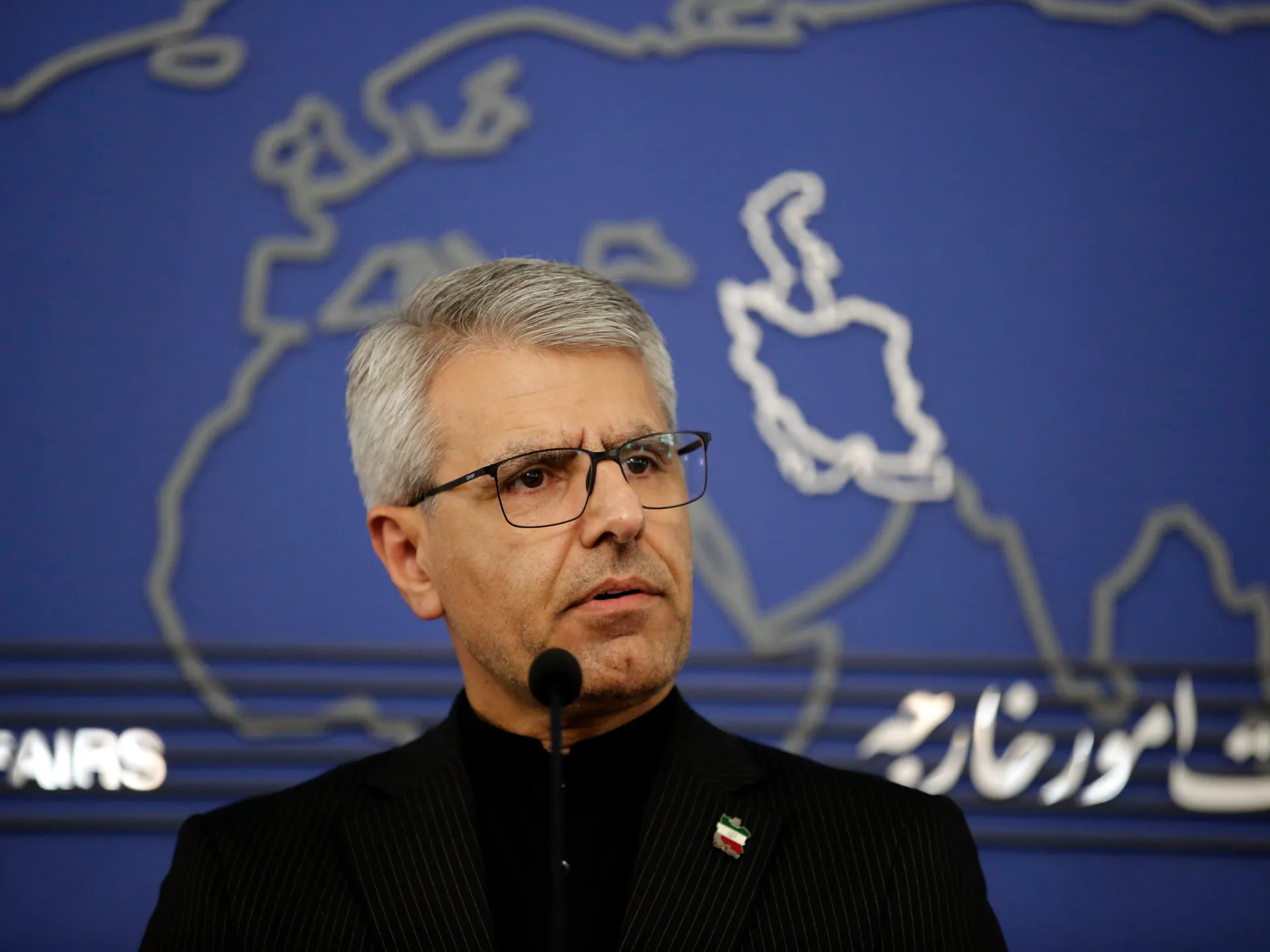
“In consultation with Oman, in the next step, we will make a decision on how to announce or register the agreement,” Ministry of Foreign Affairs spokesman Esmaeil Baghaei told reporters during a weekly news conference on Monday.
When the two countries initially advanced the bilateral deal, Trump threatened to bomb Oman if it “gets in the way” of US talks with Iran.
Ali Vaez, deputy director of the Middle East and North Africa programme at the Crisis Group, told Al Jazeera that Tehran wants to use its leverage over Hormuz for regional legitimacy – and ultimately to pressure the US.
“The broader the regional buy-in, the harder it becomes for the US to dismiss the arrangement as an Iranian diktat,” he told Al Jazeera.
GCC states, suffering from a sharp decrease in energy receipts, want ships moving and their economies insulated from a war they neither started nor can end. But Vaez said Washington is unlikely to lift the blockade on Iran even if the region blesses the arrangement between Muscat and Tehran.
“[The US] will find it much harder to sustain a policy that its own partners increasingly see as perpetuating the crisis,” Vaez said
Houthi fighters stand guard at a seized camp during an offensive in the port city of Mocha, Yemen [Handout/Houthi Military Media Centre via EPA]
Temporary entry and exit
The Omani-Iranian planned agreement envisions temporary entry and exit routes for commercial vessels in the strait, with Tehran repeatedly stating that this would not mean that the Strait of Hormuz has reopened.
Iran and Oman are the only two countries with territorial waters in the Strait of Hormuz. The proposed inbound corridor reportedly goes through Iranian waters, while the outbound corridor mostly passes through Omani waters, with small parts still in Iranian territory.
During Monday’s scheduled meeting, Iran and Oman were supposed to share precise maps and discuss the details of the routes with GCC members Saudi Arabia, the United Arab Emirates, Qatar and Kuwait, and Iraq, which is outside the bloc. The deal could reportedly include voluntary tolls to fund navigation, environmental protection and search-and-rescue operations.
Bahrain, which has borne the brunt of Iranian attacks since the US-Israel war on Iran started at the end of February, said it would not participate in the forum since it would amount to “appeasement”. The Tasnim news outlet, affiliated with Iran’s Islamic Revolutionary Guard Corps (IRGC), claimed Israel pushed Bahrain to refuse participation.
How does Yemen fit in this picture?
The latest diplomatic movement comes after days of explosive developments in Yemen, when the Houthis, officially known as Ansar Allah, essentially took control of the Bab al-Mandeb strait and the Red Sea after a lightning offensive against government forces.
Thomas Juneau, assistant professor in the Graduate School of Public and International Affairs at the University of Ottawa, said the Houthi advances represent a significant gain for Iran. Its Yemeni allies’ position in the Red Sea offers Iran an important new bargaining chip in future negotiations with the US.
“The Houthis are not a simple arm of Iranian foreign policy. They operate largely based on their own interests, and do not take and execute Iranian commands,” he told Al Jazeera. “But Houthi and Iranian interests are largely, if not always fully, aligned. They cooperate closely on the basis of those shared interests.”
Juneau sees the ability for Iran and the Houthis to potentially partially block traffic in the Strait of Hormuz and the Bab al-Mandeb – two of the world’s most crucial maritime bottlenecks – would give them tremendous influence over the global economy, and thus the US.
The Houthis are trying to seize the opportunity to “institutionalise the de facto reality of their veto on maritime traffic” in the southern Red Sea and replicate partial Iranian success in doing the same in the Strait of Hormuz, Juneau said.
Iran has stressed that their allies’ gains in the Red Sea cannot be separated from the Saudi-led blockade and attacks on Houthi areas in Yemen since 2015.
“We know very well that continued war between Islamic countries in the region only has one winner, and that winner is no one but the Zionist regime, which is after persisting tensions and conflict in our region and between Islamic countries,” Iranian spokesperson Baghaei said.
THE reboot of the musical Sunday In The Park With George has been axed after both its leading stars Ariana Grande and Jonathan Bailey dropped out.
The show, announced last year, was set to run at the Barbican in London nextsummer but won’t go ahead, with organisers instead hoping to launch a version with a different cast the following year.
Wicked stars Jonathan Bailey and Ariana Grande – have quit the London show they were diue to star inCredit: GettyProducers have now made the decision to axe Sunday in the Park with GeorgeCredit: Barbican Theatre
In a statement, bosses said: “The planned 2027 production of Sunday in the Park with George at the Barbican will no longer proceed as scheduled.
“Empire Street Productions will retain the rights with a view to presenting the production in 2028. Further details will be announced when appropriate.”
“She looks forward to finishing the tour and ending it on a high note, both healthily and happily, and then taking a much-deserved break from public-facing work and appearances, which has led to endless, ongoing public scrutiny.
“This tour has been a beautiful experience for her. She loves her fans and has loved every minute of this tour so much.”
Ariana is taking a hiatus from the spotlightCredit: GettyActor Jonathan also starred in Wicked alongside ArianaCredit: Getty
At the time, bosses at Empire Street Productions said her role would be recast.
They said: “We wish her nothing but the best. The production will open at the Barbican in summer 2027 as planned, and casting will be announced in due course.”
Foreign Ministry spokesperson Esmaeil Baghaei says Iran does not interfere in Yemeni affairs.
Published On 14 Sep 202614 Sep 2026
Iran says a planned meeting with officials from Gulf states to discuss the Strait of Hormuz has been postponed due to “events unfolding in Yemen”.
Ministry of Foreign Affairs spokesperson Esmaeil Baghaei, addressing a news conference on Monday, said Oman and Iran “have taken a joint decision aimed at arriving at a responsible” approach to the management of the strait.
Recommended Stories
list of 3 itemsend of list
He said the meeting, scheduled to take place in Oman, would have been an “opportunity to demonstrate the significance of these decisions”.
“Had this meeting took place, it would have been a very suitable opportunity [to discuss the new policy]. I do not believe any responsible country would accept in any shape, way, or form to be dictated to or be subjected to pressure from any outside forces,” he said.
The Strait of Hormuz, which falls in Iran and Oman’s territorial waters, has been effectively blocked by Tehran amid the US-Israel war on the country.
Baghaei said Iran has “no relations whatsoever with what is unfolding in Yemen”, adding Tehran does not interfere in its affairs. He added that Saudi Arabia requested the postponement of the meeting.
Tensions between Saudi Arabia and Yemen have escalated since July, when Houthis, who control large parts of Yemen, declared a naval blockade on their northwestern neighbour. Clashes escalated last week as Houthis seized the port of Mocha, tightening their control over the Bab al-Mandeb strait.
Attacks on shipping
Meanwhile, Iran’s Islamic Revolutionary Guard Corps (IRGC) said on Monday that its forces had intercepted and destroyed an advanced MQ-1 drone over the Strait of Hormuz.
In a statement carried by the semi-official Tasnim news agency, the IRGC said it intercepted the drone using a new aerospace defence system.
Regarding an attack on an Iranian commercial vessel on Sunday that killed one person, Baghaei said two Pakistani citizens working on board were also injured.
The United States and Israel “continue to target security” in the Gulf, he added.
HAYDEN Panettiere took a pill that was allegedly laced with fentanyl on the day of her death.
The beloved actress died aged 36 of a suspected overdose at a luxury Airbnb in South Carolina last month.
Hayden Panettiere died last month aged 36Credit: GettyThe beloved actress was staying a luxury South Carolina Airbnb with one-off ex Brian HickersonCredit: BackGrid
Cops are said to be “zeroing in” on her alleged long-term drug dealer in Los Angeles, who she met before travelling to Greenville.
The Heroes and Nashville star is said to have bought several black-market prescription drugs from the dealer.
Sign up for the Showbiz newsletter
Thank you!
Days before her 37th birthday, Hayden allegedly took an oxycodone laced with fentanyl, sources told TMZ.
The mum-of-one had been in South Carolina with her on-off ex Brian Hickerson, who was arrested yesterday after an alleged incident at a bar.
The mum-of-one was open about her substance abuse strugglesCredit: PAShe shared a child with former heavyweight boxing champ Wladimir KlitschkoCredit: Getty
According to sources, the 37-year-old actor started yelling at officers about her death while cuffed and sitting on the pavement.
Hickerson has already met with Drug Enforcement Administration (DEA) officials as they continue to investigate Hayden’s cause of death.
He previously told officers that Hayden had a “bag of medication” with her.
The drugs she was reportedly taken was redacted in the police report, although nine different types were listed.
Hayden has been open about her struggles with substance abuse, once revealing how her liver “gave out” due to a secret opioid addiction.
The actress told PEOPLE how her addiction issues severely worsened after the birth of her child in 2014.
To help cope with the postnatal depression, Hayden admitted she turned to alcohol.
Hayden ended up having to go to the hospital after her liver “gave out”.
A year after giving birth, she underwent her first stint in rehab while still filming for the hit show Nashville.
Years later, Hayden admitted she couldn’t stop drinking as she returned for treatment in 2021, enrolling in a 12-month program.
It took eight months of “intensive therapy” to help her move on past her addiction.
More to follow… For the latest news on this story keep checking back at The Sun Online
Thesun.co.uk is your go-to destination for the best celebrity news, real-life stories, jaw-dropping pictures and must-see video.
Spanish manager has been appointed South Korea’s interim head coach following a disastrous World Cup campaign.
Published On 14 Sep 202614 Sep 2026
South Korea’s new interim football coach Robert Moreno has denied allegations that he relied on artificial intelligence during his last coaching role but admitted to using technology in his work.
Addressing his first news conference as the Taegeuk Warriors’ temporary coach on Monday, Moreno promised to make South Korean football fans “happy”.
The Spaniard was appointed as the Asian giants’ temporary coach following a disastrous few months for the team and the country’s football federation, during which on-field results and off-field controversies left the fans bitterly disappointed.
Moreno, who was forced to deny earlier this year that he used ChatGPT to prepare for games, will be in charge for friendly matches in the coming months.
He addressed allegations that he used artificial intelligence during his time in charge of Russian club Sochi, saying “It was a piece of news that is completely false and went viral.”
Moreno left the top-flight side in September 2025 after a poor run of results, and reports said he had heavily relied on ChatGPT in his role, even using it to decide between potential signings.
“Obviously, I use technology,” he said.
“Anyone who spends 10 minutes looking into it can see that everything has been taken out of context and put together to cause harm.”
The Korea Football Association (KFA) said Moreno could stay on for the Asian Cup in Saudi Arabia in January-February, “subject to an evaluation”.
Moreno named captain Son Heung-min in his squad for four upcoming home friendlies and said he wanted to put a smile back on South Korean fans’ faces.
“We’re going to try to do our work honestly and with the aim of making all Korean football fans happy,” said the 48-year-old, who is the first Spaniard to coach South Korea.
“Good matches, and trying to help the players.”
Moreno will lead the team against Ecuador and Uruguay in September and Venezuela and Uzbekistan in October.
South Korea had been without a coach since Hong Myung-bo quit following their shock group-stage exit from the World Cup in North America in June.
Son Heung-min led the South Korean team that was ousted from the FIFA World Cup in the group stage [File: Raquel Cunha/Reuters]
Hong’s departure did little to quell public outrage over the disappointing campaign and added fuel to pre-existing questions about how he was hired.
Police raided KFA headquarters last month as part of an investigation into Hong’s 2024 appointment.
The KFA also apologised for allegations that it provided sexual entertainment for foreign referees.
Moreno named striker Son, now in the United States’ Major League Soccer with Los Angeles FC, in his first squad along with Atletico Madrid’s Lee Kang-in and Bayern Munich’s Kim Min-jae.
Hong’s decision to leave Son on the bench in the first half of the decisive match against South Africa at the World Cup baffled and angered many supporters.
“We’re all aware of Son’s versatility,” said Moreno.
Yemeni government forces have advanced in western Taiz after successfully repelling a Houthi offensive.
Published On 14 Sep 202614 Sep 2026
Armed forces affiliated with Yemen’s internationally recognised government have retaken positions from the Houthis and are advancing in the southwestern Taiz province as clashes intensify.
Reporting from Taiz on Monday, Al Jazeera Arabic’s Yasser Hassan said forces loyal to the Saudi Arabia-backed Yemeni government advanced in western Taiz on Sunday after successfully repelling a Houthi offensive.
Recommended Stories
list of 3 itemsend of list
“This comes with the support of air strikes targeting Houthi gatherings. The air force continues to bomb the Houthis. On the west coast in Mocha, Dhubab, and their surroundings,” Hassan said, citing a source in government forces.
In a statement on Monday, the Houthis, also known as Ansar Allah (supporters of God), said they launched attacks on targets in Saudi Arabia using dozens of ballistic missiles and drones.
The group said the attacks targeted “military facilities and infrastructure, including aircraft hangars, radar installations, runways, ammunition depots and other targets at King Khalid airbase in Khamis Mushait”, Saudi Arabia.
It said the attacks were a response to a Saudi offensive, which involved more than 300 air strikes across Yemen over five days.
There was no immediate comment from Saudi Arabia on the Houthi claims.
On Sunday, the Saudi civil defence agency sent alerts for the city of Abha and the region around Khamis Mushait, but they were quickly lifted shortly afterwards.
Fighting in Yemen’s more than 10-year civil war reignited in July, threatening a United Nations-brokered truce that halted large-scale violence in 2022, after the Houthis declared a maritime blockade on Saudi Arabia and began targeting its ships in the Red Sea.
The fighting soon spilled over beyond the country’s borders, with the Houthis carrying out air attacks on southern Saudi Arabia, including oil facilities. Dozens of people were wounded in those attacks.
Clashes in Yemen intensified last week after the Houthis captured parts of the country’s Red Sea coast, fortifying their hold on the Bab al-Mandeb strait, a key waterway which handles about 12 percent of global trade, including 11 percent of maritime oil and 8 percent of liquefied natural gas (LNG).
The waterway has been an economic lifeline for Saudi Arabia and its oil exports, as the Strait of Hormuz has been effectively blocked by Iranian forces since the United States and Israel launched their war on Iran in February.
The Houthis captured more strategic islands in the southern Red Sea, The Associated Press news agency reported on Monday, citing Yemeni government and Houthi officials.
Houthi fighters were deployed on the islands of Greater Hanish and Lesser Hanish about 86 nautical miles (160km) north of the Bab al-Mandeb, according to two government officials and a Houthi official, the AP reported.
Meanwhile, the International Organization for Migration said on Sunday the fighting in Yemen in recent weeks had displaced nearly 86,000 people.
It added that some of those displaced by the conflict were fleeing Yemen altogether, with more than 2,000 people reaching neighbouring country Djibouti.
At least 51 people rescued as search operation continues off the island of Gavnos near Crete.
Published On 14 Sep 202614 Sep 2026
One person has died, 25 are missing and 51 people have been rescued after a boat carrying migrants sank off a Greek island near Crete, according to the country’s coastguard.
“Fifty-one were picked up by two boats that were in the area,” a coastguard spokesman said on Monday.
Recommended Stories
list of 3 itemsend of list
He said survivors had reported that 77 people were on board when the boat went down near the island of Gavdos.
Search and rescue efforts were ongoing, with four ships, boats, Frontex aircraft and a coastguard helicopter operating in the area, Greece’s public broadcaster ERT News reported.
The 51 rescued people were due to be brought to Crete, “where the prescribed procedures will be followed”, ERT reported.
After arriving in Crete, undocumented migrants generally face immediate arrest and temporary confinement before being transferred to closed detention camps on the Greek mainland. Under Greek law, individuals are subject to extended administrative detention, severe penalties and fast-track deportation.
Strong winds blowing through the area have been hampering the search operation, ERT said.
In late August, Greece’s ANA news agency published figures from the Ministry of Migration and Asylum that indicated that migrant arrivals in the country fell from about 61,000 in the year to August 2025 to 42,000 in the following 12 months – a decline of about 31 percent.
Greece’s conservative government in July suspended all asylum claims for migrants arriving by sea from North Africa for three months, a move it argued helped deter crossings.
The ban passed in parliament amid a surge in asylum seekers reaching Crete and after talks with Libya’s Benghazi-based government to stem the flow were cancelled in July.
The government remains at odds with regional authorities in Crete over a plan to build a permanent transit facility on the island. It is preparing draft legislation that would mandate imprisonment for people whose asylum claims are denied and require ankle monitors during a 30-day compliance period before deportation.
Authorities in Europe have tightened their immigration rules over recent years as far-right, anti-immigrant political parties have won increasing support throughout the continent.
Greece has been in discussions with Germany and several other European Union countries on setting up “return hubs” outside the bloc for processing migrants’ claims.
Paramount Skydance Chief Executive David Ellison faces a pivotal decision: Should he uproot his Hollywood studio — the birthplace of such film classics as “Sunset Boulevard,” “The Godfather” and “Beverly Hills Cop”?
Paramount floated shifting its home base to Tennessee or Texas in July, hoping to deter California Atty. Gen. Rob Bonta from waging a legal battle to block Paramount’s $111-billion acquisition of Warner Bros. Discovery.
Bonta rejected the tactic, calling it “blackmail.” His antitrust lawsuit, filed in collaboration with 11 other Democratic state attorneys general, has since stalled the largest Hollywood merger in decades and put Ellison in a jam.
The 43-year-old tech scion — a film aficionado who has spent two decades building his career in Hollywood — has told associates he doesn’t want to leave L.A. But he has signaled that he’s prepared to sell the historic studio lots and move Paramount’s and Warner Bros.’ operations from California if the merger isn’t finalized by next month, according to people familiar with the situation who were not authorized to comment.
“It would be devastating,” Assemblymember Rick Chavez Zbur, who represents a district that includes the Melrose Avenue movie lot and neighborhoods near Warner Bros. in Burbank, said of a Paramount move. “We need to do everything we can to protect these important jobs in California’s iconic industry.”
Paramount declined to comment.
Ellison is frustrated after securing approvals from more than 65 regulators worldwide for the mammoth merger that would bring HBO, CNN, CBS, Comedy Central, MTV and TBS under the same roof.
“California is the fourth-largest economy in the world and the best place to do business,” a spokesman from Bonta’s office said. “Strong antitrust enforcement is essential so everyone can benefit from a vibrant economy.”
A federal judge in Oakland temporarily blocked the deal, prompting Paramount to agree not to finalize the acquisition until after a trial or June 1, whichever comes first. Settlement talks collapsed in late August after Bonta accused Paramount of leaking and misrepresenting their discussions.
Paramount has plenty at stake. U.S. District Judge Araceli Martínez-Olguín set the trial for March, but the company urgently needs the valuable Warner assets to better compete against tech behemoths. And beginning Oct. 1, Paramount must increase its payout to Warner Bros. Discovery shareholders by $7 million a day, so-called ticking fees that will heap more debt onto the highly leveraged transaction.
Paramount asked the judge to require California and other plaintiff states, including Nevada, Oregon and New York, along with the Writers Guild of America (which also sued) to post a $1.88-billion bond that could compensate Paramount for ticking fee costs. A hearing is set for Sept. 24.
For weeks, Paramount’s most potent weapon has been its in-the-works plan to leave L.A.
Lobbying has been intense, prompting a parade of politicians led by Gov. Gavin Newsom, L.A. Mayor Karen Bass and gubernatorial nominee Xavier Becerra to urge the two sides to settle the lawsuit.
“It’s a game of chicken,” Kevin Klowden, an economist and managing director at the Melcene Advisory firm, said in an interview. “But I’m not dismissing the threat because it is very real.”
Relocating from Los Angeles would allow Ellison’s cash-hungry media company to qualify for lucrative tax incentives offered by another state. Ellison’s short list includes Tennessee, Texas and Georgia. But leaving its longtime home would be costly for Paramount too, given how much of the talent and deal-making remains concentrated around L.A.
Tennessee’s Department of Economic and Community Development declined to discuss its negotiations with Paramount, but in a statement a spokesperson said the state “remains committed to working with companies across a wide range of industries that are exploring opportunities to invest and grow in Tennessee.”
Early this month, a pro-merger group was set to hold a news conference outside Paramount, but it moved its gathering to a warehouse a few blocks away after anti-merger activists planned a counterprotest.
The pro-merger organization, Neighbors for Strong Communities, was incorporated in Washington, D.C., in June and has lobbed text messages to Californians urging them to press Bonta to drop the case.
Speakers were concerned with just one issue: What would happen should Paramount pull out?
“What are we going to do with all these people who have invested their lives and many generations into building something here?” asked Keyla Wood, who moved from Mexico to L.A. about a decade ago after getting her start in Spanish-language soap operas.
“It’s been one thing after the other: The pandemic, the strikes and then it was the fires,” said Wood, who has worked as a stand-in for Eva Longoria and Salma Hayek. “So many people never work again.”
David Ellison is deciding whether to leave Hollywood.
(Bloomberg via Getty Images)
L.A.’s very identity is at stake, added Daniela Kelly, an actor and dancer who arrived from Brazil two decades ago.
“Everyone in the world sees Los Angeles and Hollywood as the platform for their dreams,” Kelly said. “Imagine if a huge studio with 100 years of history here just leaves? What will we be?”
Businesses like Kelly’s small Kreashen Studios USA, which provides video and podcasting space in Marina del Rey, depends on the region’s entertainment economy.
“It’s difficult financially right now to keep open,” she said. “So I’m pro having Paramount stay because this is the center, the heart of Hollywood.”
But deal opponents and some experts say the merger would actually worsen L.A.’s already bleak production picture.
Paramount has promised to cut $6 billion in expenses — a figure that doesn’t factor in the cost of ticking fees, which would add $650 million each quarter to the $81 billion that Paramount had anticipated paying Warner shareholders.
“We’ve seen from previous mergers that jobs have been lost,” L.A. City Councilmember Adrin Nazarian said at a City Hall event recently.
“When you look at the economic impact, it’s pretty staggering,” Kelly LoBianco, the department director, said in a recent interview. “An estimated $4 billion in economic output lost, and another $550 million lost in tax revenue at the local, state and federal level.”
The merger also could erase $79 million in tax revenue to Los Angeles County even if Paramount stays in L.A., she said.
But state and county tax revenue would plummet further should Paramount dispatch hundreds of its workers to Tennessee or some other state, Klowden said.
“If Ellison moves all the management out and all of the productions out, you’re talking about potentially tens of thousands of jobs,” Klowden said. “That, bluntly, isn’t just devastating to L.A. That becomes devastating to everybody.”
A report commissioned by Paramount from Los Angeles Economic Development Corp. predicted even steeper losses of at least 28,000 jobs should the studio move its entire operation out of state, according to a draft report given to Politico.
Under a less dire scenario, Paramount could shift its corporate headquarters to another state to qualify for incentives but still maintain large staffs in the creative hubs of Los Angeles and New York, where the company has its legal headquarters.
When the Ellison family acquired Paramount from the Sumner Redstone family last year, Ellison shifted operations to L.A., where he and other key executives work on the Melrose Avenue lot.
The threat to pull up stakes has created a disconnect after Ellison has spent more than a year touting how his family’s growing collection of media properties would strengthen traditional Hollywood.
The relocation campaign echoes a tactic used by software giant Oracle Corp., co-founded by Ellison’s billionaire father, Larry Ellison. For three decades, Oracle thrived in Redwood City, Calif., but in 2020, the company moved its headquarters to Austin, Texas, joining other California tech firms leaving in protest of the state’s high taxes.
The elder Ellison announced in 2024 that Oracle would be moving again, this time to Nashville, although that relocation hasn’t been finalized.
Paramount would risk leaving behind a skilled talent pool filled with experienced production workers and entertainment executives, Klowden said.
Fleeing L.A. could prompt “a talent bleed-out,” Klowden said. “Creative types are like: ‘Would I feel comfortable moving there?’ And, ‘What if I move there and something goes wrong? There would be nowhere else for me to go.’”
He pointed to Nissan’s 2006 U.S. headquarters move to the Nashville area from Gardena in L.A.’s South Bay, which dramatically reset the automaker’s workforce as fewer than half of its Southern California employees made the trek to Tennessee.
On Friday, a magistrate judge told both sides to identify dates in late October to meet for court-ordered settlement talks.
Each has motivations to settle — including avoiding a years-long court fight. Bonta has said Paramount must be willing to part with assets to alleviate market concentration, which could lead to a sale of Warner’s New Line Cinema, which has rights to “The Lord of the Rings” and “The Conjuring” franchises, and potentially cable channels such as CNN, Food Network or Cartoon Network.
Paramount, as part of a settlement, could abandon plans to leave L.A.
“All of the parties need to understand what this [issue] means to workers and small businesses,” Zbur, the local Assembly member, said. “I’m hopeful for a settlement that assures that Paramount and Warner Bros. will maintain their operations and remain a significant economic and employment force in Los Angeles.”
Times staff writer Cerys Davies contributed to this report.
Organisers in Japan say they had ‘neither the manpower nor the budget’ to deal with the accommodation shortage.
Published On 14 Sep 202614 Sep 2026
Accommodation at the Asian Games, which start this week in Japan, is the “worst ever”, say South Korean officials, warning of “a serious shortage” of rooms.
Beds in shipping container-style huts are too short for players to stretch out, the South Korean basketball chief said on Monday, while officials from the Philippines resorted to Airbnb.
Recommended Stories
list of 4 itemsend of list
There is no dedicated athletes’ village for the games, with organisers instead relying on a cruise ship, temporary wooden cabins and hotels to cut costs.
The games in the city of Nagoya in Aichi prefecture officially open on Saturday, but football and basketball are already under way.
Jung Jae-yong, vice president of the Korea Basketball Association (KBA), expressed his displeasure with the cabins where the men’s basketball team is staying.
“Based on my experience, this is the worst it has ever been,” he said.
“Athletes who are over two metres tall cannot even stretch their legs out on the beds. It’s unreasonable.”
Byeon Jun-hyeong, from the basketball team, posted a video on social media showing a leaking sink and a soaked floor in his hut.
“Please help us,” he posted.
The huts are set to be home to 2,000 athletes and officials over the more than two weeks of the games.
Worried about their athletes, Indian sports officials built replicas of cabins to help them get used to the games’ accommodation.
KBA’s Jung accused organisers of failing to respond to South Korea’s concerns.
“The organisers have still not said anything,” he said.
“We are very concerned and discussing extensively with the Korean Sport and Olympic Committee what to do about this.”
Hundreds of athletes were briefly evacuated from their accommodation last week as record rainfall lashed Nagoya.
More rain has been forecast in the coming days.
A car drives along a road flooded by heavy rain while banners for the Aichi-Nagoya Asian Games are visible in the background in Nagoya, central Japan [File: Kyodo via Reuters]
‘Serious shortage’ of accommodation
More than 17,000 athletes and officials are expected at the games — a bigger number than the Olympics.
Organisers were initially expecting 15,000 and argued last month that they had “neither the manpower nor the budget” to deal with ballooning numbers.
The Olympic Council of Asia later said everyone would get a place to stay.
Star cricketers have voiced fears about a lack of top-notch hotels.
A Korean Sport & Olympic Committee (KSOC) official agreed that problems persist with the games just days away.
“At the moment, there is a serious shortage of accommodation not only for the entire South Korean delegation to the Asian Games, but for delegations from around the world in the Aichi-Nagoya area,” the official said.
“We are doing everything we can to resolve the issue and ensure there are no such problems.”
Philippine Olympic Committee president Abraham Tolentino said all athletes from his country had been given a room. However, “some officials, like coaches, were moved to different hotels and Airbnb”.
The Italian cruise ship Costa Serena is due to arrive in Nagoya on Tuesday. Between 4,000 and 5,000 athletes will stay on the vessel.
The rest will be accommodated in hotels, including in Tokyo, where swimming, diving and equestrian events will take place.
DUBAI: Medecins Sans Frontieres has rejected claims by Israeli authorities that it employed individuals with links to Hamas in Gaza, saying the allegations were only brought to the organization after the accused were killed.
“Medecins Sans Frontieres unequivocally refutes the allegations made by the Israeli authorities that we knowingly hired people with ‘ties to terrorism,’” MSF told Arab News in a statement.
“MSF would never knowingly employ anyone involved in military activities, which contradicts our core values and ethics. The MSF staff members whom Israel has alleged to have ‘ties to terrorism’ were only reported as such to our organization after they had been killed.”
On Friday, British newspaper The Telegraph revealed that Israeli lobby group UK Lawyers for Israel had written to British Home Secretary Shabana Mahmood, urging that the humanitarian organization be banned for its links to terrorism.
A report, produced by UKLFI, alleged links between MSF employees and militant groups, including Fadi Jihad Mohammed Al-Wadiya, an accused Palestinian Islamic Jihad member who was killed in Gaza City last year.
Al-Wadiya, a physiotherapist employed by MSF from 2018 to 2022 and again from Oct. 7, 2023, was killed in an Israeli airstrike in Gaza City on June 25, 2024. MSF condemned the strike at the time.
MSF initially rejected claims linking Al-Wadiya to the group. However, on Feb. 24 this year, Palestinian Islamic Jihad published a poster naming him as a “martyr commander” and identifying him as deputy head of its military manufacturing unit.
The charity later updated its post about Al-Wadiya, who remained listed as an employee on its website, to note that Palestinian Islamic Jihad had publicly stated on Feb. 24, 2026, that he had been a member of the group.
The report also accused Nasser Hamdi Abdelatif Al-Shalfouh, an MSF driver, of being a sniper for the Hamas Jabaliya battalion.
MSF questioned the reliability as well as the intention of Israeli authorities, who failed to consult with the organization prior to killing the supposed members.
“If Israeli authorities had reliable information about any MSF staff involvement in military activity, they never shared it with us before their deaths.”
The organization told Arab News that the latest allegations were part of a broader disinformation and smear campaign seeking to discredit it.
“For months, MSF has been the target of a disinformation campaign, and we strongly condemn the intentional spread of false allegations.”
Founded in 1971, MSF, also known as Doctors Without Borders, is an international medical humanitarian organization that provides emergency healthcare in conflict zones, disease outbreaks and other crises.
In Gaza, MSF’s teams provide surgical care, wound and burn treatment, maternal and pediatric services, physiotherapy, vaccinations, mental health support, water and sanitation assistance, and treatment for chronic diseases through hospitals, field hospitals and clinics.
As the scorching heat of the summer reaches its peak and the calendar brings hope of cooler temperatures, it’s time to fluff the pillows and settle in to enjoy the comfort of the new television season.
But before we turn the page, the Emmy Awards will honor the shows of the past year that had audiences crying, laughing and glued to their screens — some returning this fall, while others bid adieu last year.
The 78th Emmy Awards, honoring the standouts from the 2025-26 television season, will celebrate the shows that gave viewers plenty of reasons to stay in. Whether it was the nail-biting anxiety over the chaos in HBO Max’s drama “The Pitt,” the most nominated show with 25, or laughing at the silly situations of Apple TV’s “Widow’s Bay,” which earned 19 nominations, television gave viewers different reasons to watch.
Some of the top contenders are already coming into the ceremony as winners after the first round of awards were handed out earlier this month. “Widow’s Bay” currently leads with eight Emmys, following by six for “DTF St. Louis,” and “The Pitt” won four. Notably, Rob Reiner received a posthumous Emmy for his guest appearance in Season 4 of “The Bear.”
Here’s everything you need to know about the 2026 Emmy Awards:
Where are the Emmys?
The 78th Primetime Emmy Awards will take place on Monday beginning at 5 p.m. PT at the Peacock Theater at L.A. Live in downtown Los Angeles.
Earlier this month, a pair of ceremonies, formerly called the Creative Arts Emmys, honored artistic and technical achievements as well as some performance categories. Those ceremonies will be televised Saturday on FXX at 8 p.m. and stream next day on Hulu.
How can I watch the shows?
The live telecast will be broadcast on NBC and streamed simultaneously on Peacock.
Who is hosting?
Mariska Hargitay at the blue carpet rollout at L.A. Live in downtown Los Angeles on Thursday.
(Christina House/Los Angeles Times)
Mariska Hargitay, known for playing Olivia Benson on NBC’s “Law & Order: Special Victims Unit,” will make her hosting debut at this year’s award show.
In an interview with The Times, the multihyphenate said she was excited to televise some “razzle-dazzle” and to become the first woman to host in 15 years.
“Am I scared? Of course I am; I’ve never done this,” she recently told The Times. “But at a certain point, you have to go: Why not me? Bring it on.”
When does the red carpet start, and how can I watch that?
The countdown to the award ceremony will begin at 2 p.m., with several opportunities to see your favorite stars arrive on the red carpet — which is actually blue this year in celebration of NBC’s 100th anniversary — at the Peacock Theater.
E! will get the party started with a programming block from 2 to 5 p.m. with “Live From E!: Countdown to the Emmys,” hosted by Erin Lim Rhodes with Lance Bass and Ciara Miller, and “Live From E!: The Emmys,” hosted by Justin Sylvester, Keltie Knight and Will Marfuggi.
People and Entertainment Weekly will be conducting interviews as guests arrive on their websites and social platforms throughout the day, while NBC will be livestreaming pre-show arrivals on the network’s official TikTok account from 4 to 5 p.m.
KTLA will air “Live From the Emmys,” hosted by Jessica Holmes and Melvin Robert with Megan Henderson reporting, from the blue carpet beginning at 3 p.m. And CNN will air “Red Carpet Live: TV’s Biggest Night” beginning at 2 p.m. It will be hosted by CNN’s Elizabeth Wagmeister and Variety co-president and co-editor in chief Ramin Setoodeh.
Zendaya (“Euphoria”) is looking to become a three-time winner for lead actress in a drama. She is nominated alongside Carrie Coon (“The Gilded Age”), Chase Infiniti (“The Testaments”), Keri Russell (“The Diplomat”) and Rhea Seehorn (“Pluribus”).
Noah Wyle (“The Pitt”) is again nominated for lead actor in a drama, along with Sterling K. Brown (“Paradise”), Gary Oldman (“Slow Horses”), Mark Ruffalo (“Task”) and Rufus Sewell (“The Diplomat”).
“Hacks” earned the most nominations in a single year for a comedy, with 24. It’s nominated for comedy series, as is “Margo’s Got Money Troubles,” “Nobody Wants This,” “Only Murders in the Building,” “Abbott Elementary,” “The Bear,” “Shrinking” and “Widow’s Bay.”
Jean Smart looks to win her fifth award for lead actress in a comedy series for “Hacks.” She is nominated alongside Quinta Brunson (“Abbott Elementary”), Ayo Edebiri (“The Bear”), Elle Fanning (“Margo’s Got Money Troubles”) and Lisa Kudrow (“The Comeback”).
Yahya Abdul-Mateen II (“Wonder Man”), Steve Carell (“Rooster”), Matthew Rhys (“Widow’s Bay”), Jason Segel (“Shrinking”) and Martin Short (“Only Murders in the Building”) are nominated for lead actor in a comedy.
It’s looking like a year where the winners will be easy to decipher, according to awards prognosticators, which includes The Times’ award columnist Glenn Whipp. If you’re an actor attached to either the medical drama “The Pitt” or the horror-comedy “Widow’s Bay,” consider yourself the front runner. Noah Wyle and Matthew Rhys are both the leading contenders in their respective categories.
Jean Smart is predicted to complete her sweep of lead actress in a comedy for the fifth and final season of “Hacks.” In the leading actress in a drama, it’s a tight race between Rhea Seehorn for “Pluribus” and Keri Russell for “The Diplomat.”
The second season of “The Pitt” currently stands as the favorite for drama series, while the comedy series category is a battle between new series “Widow’s Bay” and departing series “Hacks.”
Harrison Ford could win his first major acting award, for supporting actor in a comedy for “Shrinking,” unless another veteran actor takes the spotlight — Stephen Root of “Widow’s Bay.”
Supporting actress in a comedy also comes down to the top shows, likely to be between Kate O’Flynn (“Widow’s Bay”) and Hannah Einbinder (“Hacks”).
Who’s going to present?
A number of nominees will present the awards throughout the night. Past and recent Emmy winners, including Linda Cardellini, Sally Field, David Harbour, Zendaya and Alan Cumming will take the stage.
The Television Academy will celebrate the 30th anniversary of “Buffy the Vampire Slayer” and bring together David Boreanaz and Sarah Michelle Gellar as presenters. They will also honor the 50th anniversary of “Charlie’s Angels,” and reunite Cheryl Ladd, Kate Jackson and Jaclyn Smith.
Other presenters include Odessa A’zion, Macaulay Culkin, Jon Hamm, Marcello Hernández, Peter Krause, Dan Levy, Julianna Margulies, Annie Murphy, Niecy Nash-Betts, Keke Palmer, Amanda Peet, Amy Poehler, Florence Pugh and Rachel Sennott, with more to be announced.
Singer-songwriter Noah Kahan will cover Simon and Garfunkel’s “Bridge Over Troubled Water” during the in-memoriam segment of the show.