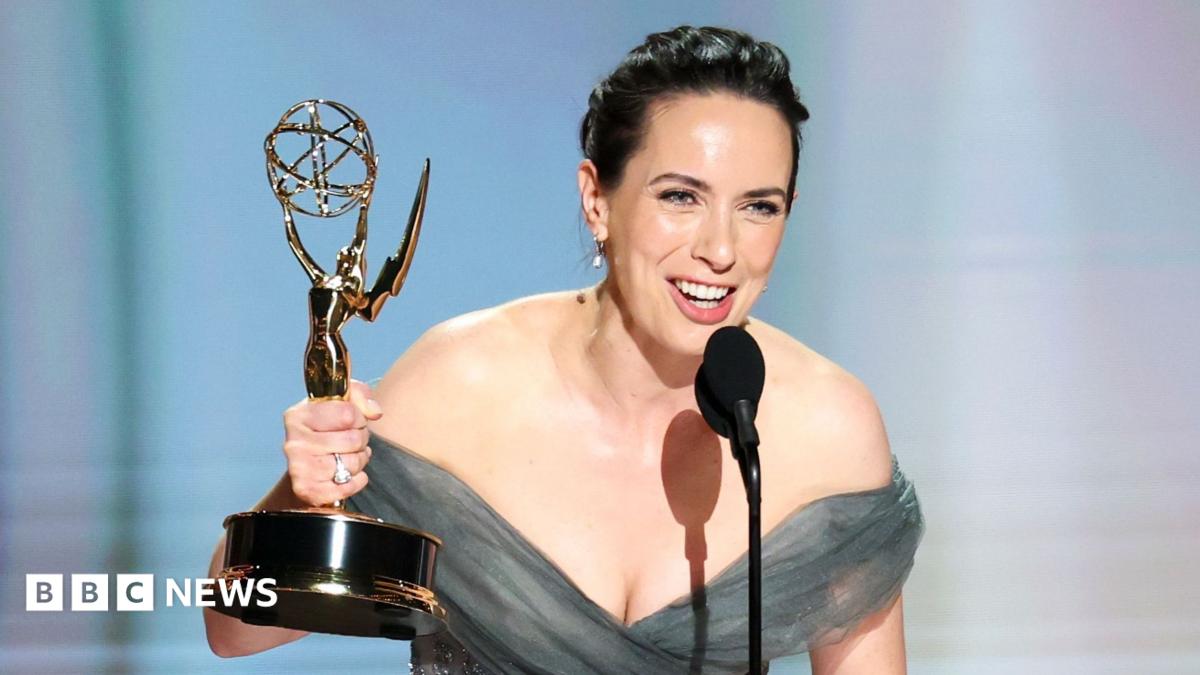
Houthi-run TV has aired drone video of Yemen’s Mocha International Airport, empty and abandoned after the Iran-backed group took control of the city. The Houthi capture of the Red Sea coast puts a key global trade route at risk.
“No more imported rice” sign at a recent protest. (Archive)
Caracas, September 14, 2026 (venezuelanalysis.com) – The US Department of Agriculture’s (USDA) Foreign Agricultural Service announced a package of measures to boost US agricultural exports to Venezuela amid growing concerns about the South American country’s national production.
According to the USDA, the plan will facilitate Venezuelan corporations’ purchase of US food products and agricultural commodities through government-backed credit and will include the delivery of food assistance and training for Venezuelan technicians.
“The Trump administration is committed to Venezuela’s economic prosperity, and USDA is leveraging its export financing, market development programs, technical scholarships, and food assistance initiatives to address this situation,” said Under Secretary for Trade and Foreign Agricultural Affairs Luke J. Lindberg.
Lindberg added that he “looks forward to positioning US agriculture to help meet needs and build lasting trade relationships.” The US official visited Venezuela as part of an official delegation in early July.
Washington’s credit program for food exports will be provided through the reactivation of the GSM-102 guarantee program. The mechanism offers guarantees to exporters that reduce the risk for financial institutions backing the transactions in case importers fail to meet their commitments.
The Agriculture Department also announced that it will lift restrictions to allow foreign banks to back Venezuela-related transactions.
A USDA report had already estimated that Venezuela would need to import 1.5 million metric tons of wheat during the 2026-2027 marketing year. Corn and soybeans are likewise identified as key staples to be exported to the Caribbean nation. The latest initiative
The Trump administration also lifted restrictions under its Feed the Future Agricultural Resilience Mission Initiative and plans to include Venezuela in a regional agribusiness trade mission scheduled for early 2027.
A bigger influx of US farm products will place an additional strain on Venezuelan food production, with local campesinos increasingly protesting against imports from agribusiness corporations that seek to drive crop prices down.
On September 9, rice growers from Guárico and nearby states organized a “tractorazo,” blocking a major highway in Calabozo with trucks and tractors to demand that the government halt the entry of imported rice during the domestic harvest season and ensure that agroindustrial companies adhere to established prices.
Protesters complained that imports from countries where food production is subsidized, including the US, create unfair competition and risk driving Venezuelan campesinos bankrupt. The latest mobilization was sparked by the reported arrival of a shipment of 355 thousand tons of rice, more than half of the Venezuelan production in 2025.
Rural organizations have likewise denounced the exoneration of tariffs and import taxes as another factor putting national production at a disadvantage. Venezuelan authorities, including the National Assembly and the Agriculture Ministry, have vowed to review the import issue but have offered no measures to date.
In the Calabozo protest, producers denounced that imported rice had saturated silos and storage facilities during the 2025-2026 winter-summer crop cycle, forcing them to sell below production cost or lose their crops altogether. Demonstrators demanded a $0.25-per-kilogram subsidy from the state to compensate for the losses incurred and vowed to take the protests to Caracas if they receive no response from authorities.
The September 9 “tractorazo” was the latest in a series of mobilizations in recent months in Venezuela’s main agricultural states. Rice growers have complained about high fuel and input costs and urged the government to establish and enforce fair crop prices.
According to agriculture lobby FEDEAGRO, more than 2.2 million metric tons of white corn, yellow corn, and rice have entered the country so far in 2026, more than triple the recent combined high of 709,000 metric tons in 2023.
“We cannot continue depending on a neighbor’s pantry. That is a failure. In Venezuela, we have the land, a committed agricultural sector, and people investing in farming, but excessive imports place us at a dramatic disadvantage,” stressed FEDEAGRO President Osman Quero.
Quero stressed that foreign producers have access to credit programs, fuel and fertilizer subsidies, and better infrastructure, while Venezuelan farmers face inflation and a lack of financing programs.
The 78th Primetime Emmy Awards saw a number of firsts: A first-time host, a first-time Emmy winner and the first to win two lead acting Emmys in a night. These notable achievements were coupled with moments of remembrance for legendary actors and creators, like Dolly Parton, Rob Reiner and Catherine O’Hara, among many others.
With Mariska Hargitay at the helm, the show ran at a quick pace without feeling rushed, giving room to winners to say their thanks in acceptance speeches while still having moments of fun in between. Here, our writers discuss some of the best moments of the ceremony. — Maira Garcia
Best moment of overdue recognition: Rhea Seehorn
Rhea Seehorn finally won an acting Emmy, an accolade that was long overdue.
(Robert Gauthier/Los Angeles Times)
If you appreciate Rhea Seehorn’s complex, subtle acting, her dynamic range and her deadpan humor, then you’ve probably found the Emmys to be maddening over the years. She famously wasn’t nominated for playing poker-faced attorney Kim Wexler on “Better Call Saul” until the show’s two-part final season. And she never won, not even for the raw, heartbreaking work she did in those last episodes. So seeing her win, finally, for her lead turn on “Pluribus” was thrilling, long overdue recognition that, given her history, made you wonder if it would ever come. Awards voters typically don’t appreciate nuanced acting, too often equating “best” with “most.” But Seehorn’s work on “Pluribus” was undeniable. Playing Carol Sturka, a sad woman forced to save the world from happiness and hive mind, Seehorn had the role of a lifetime and ran with it. This Emmy was a long time coming, and you could feel that when she choked up on stage accepting it. Her palpable joy thanking “Pluribus” creator Vince Gilligan, wiping away tears, is one reason why we keep watching the ceremony. — Glenn Whipp
Best double Emmy haul: Matthew Rhys
Matthew Rhys with his double Emmy haul for “The Beast in Me” and “Widow’s Bay.”
(Ronaldo Bolanos/Los Angeles Times)
It was the sort of epic night that might make life vest-wearing mayor Tom Loftis jolt from his boat seat in shock or compel the villainous real estate heir Nile Jarvis to scarf down a whole rotisserie chicken with a glint in his eye — Matthew Rhys, the actor who brought both characters to life on screen, won two Emmys during Monday’s ceremony.
In doing so, he achieved a feat no actor has accomplished in 78 editions of the Emmy Awards: he won two lead acting Emmys in the same night. He was recognized for lead actor in a limited series for his turn in Netflix’s psychological thriller “The Beast in Me,” where he played Nile equal parts charming and terrifying. Later, he took the stage to accept the lead comedy actor prize for his optimistic but skeptical take on a mayor of a small, haunted island town in Apple TV’s horror comedy “Widow’s Bay.”
Rhys didn’t react like his characters might have — instead, he thanked his homeland: “To the great and good people of Wales… we are a small but mighty nation!”) And he took in the moment being feted by his partner, Keri Russell, who hung on him with pride as he made his way back to the main seating area after his first win.
The double wins add to Rhys’s collection of gold across the acting categories. In 2018, he took home the prize for lead drama actor for “The Americans.” — Yvonne Villarreal
Best reaction to someone else winning: Martin Short
Martin Short, left, with his “Only Murders in the Building” co-star Steve Martin on the red carpet at the Emmys.
(Christina House/Los Angeles Times)
Rhys may have taken home lead actor Emmys for limited series and comedy series, but the award for best reaction belongs to Martin Short.
During Rhys’ acceptance speech for lead actor in a comedy, the camera briefly panned to Short, who was nominated for “Only Murders in the Building,” just in time to catch him ripping paper into pieces — presumably his speech — and throwing it on the floor in anger and disbelief.
It lasted only a few seconds, but Short took advantage of the moment.
The timing. The commitment. The expressive performance. Short’s full comedic arsenal was on display before the camera moved on. It was the kind of quick visual gag that was easy to miss, and plenty of people probably did. But for those who caught it, I hope it was worth the spit-take. I am certainly glad I had a napkin at hand.
Short may have lost the Emmy, but his comedic timing remains undefeated. Stay funny, Short. — Anthony Solorzano
Best emotional moment that emptied our tissue box: Michael J. Fox
Michael J. Fox received the Bob Hope Humanitarian Award for his work and advocacy on Parkinson’s disease.
(Robert Gauthier/Los Angeles Times)
In an Emmys telecast full of genuine emotion — Reba McEntire’s musical celebration of Dolly Parton, a heartbreaking In Memoriam segment that ended with Jamie Lee Curtis’ personal tribute to Rob Reiner — the most moving moments were claimed by Michael J. Fox, receiving the Bob Hope Humanitarian award.
Fox’s decades-long battle with Parkinson‘s disease, and for those who suffer from it, is well known, as is his refusal to let it define him or his career — he received his 19th Emmy nomination this year, for guest actor in “Shrinking.” But when he first came out on stage, in a wheelchair and classic black, he spoke first about his admiration for Bob Hope, a man whose tireless support of soldiers “and military families like mine” illuminated, for Fox, the necessity of showing up for others. “When it starts to get tough, you show up, you help, and if you add a little joy while you’re doing it, that’s so you know it’s even better.”
The utter silence of that room as he spoke, the admiration on all those famous faces said it all. Fox remains as he has long been — funny, sincere, wildly talented and one of the most courageous people many of us will ever know. — Mary McNamara
Best self-depricating host: Mariska Hargitay
Mariska Hargitay didn’t take herself too seriously as host, cracking a number of silly jokes throughout the night.
(Robert Gauthier/Los Angeles Times)
Host Mariska Hargitay was refreshingly lewd and charmingly self-deprecating as the first female host of the Emmys in 15 years.
By not taking herself too seriously, she set a laid-back tone for a high pressure show that for many nominees feels like a life or death moment.
Winning is not everything, Hargitay regularly reminded the crowd, with bits that grounded actors’ experience, like a clip from a 1984 B-horror film she starred in called, “Ghoulies,” which, as she explained to everyone, is a film, “where a monster pops out of a toilet.”
“Jamie Lee Curtis isn’t the only scream queen around here,” Hargitay quipped.
That joke came after an ongoing series of goofy, blue wisecracks, including one about “Law & Order” producer Dick Wolf, saying his real name was “Richard Penis;” that her “SVU” character, Olivia Benson, was “America’s sweetheart sex cop;” that aging fans who once loved and watched “Hannah Montana” would soon need “Hannah Mammogramas;” and an aside about her packed work schedule, noting that “Margo may have money troubles, but Mariska’s doing just fine.”
She ended the night with a mic drop by introducing Woody Harrelson and Matthew McConaughey as “my two favorite flavors of vape.” — Jessica Gelt
Best changes to a host’s hair: Hargitay and her hairstylist
A sampling of Mariska Hargitay’s hairstyles at the Emmy Awards.
(Robert Gauthier/Los Angeles Times)
Beach waves, bombshell, Targaryen-inspired twists, luscious locks and a tousled bob. Mariska Hargitay changed her hairstyle so many times throughout the Emmy Awards it was hard to keep track. One can only imagine the quick work happening backstage to get her hair coiffed amid costume changes. And one can only hope there was a wig wall somewhere inspired by Catherine O’Hara’s Moira Rose. The bombshell blowout was reportedly a tribute to her late mother, ‘50s starlet Jayne Mansfield — Hargitay took home two Emmys earlier this month for a documentary she directed about her. Her quick-turn tresses were yet another example of the first-time host’s infectious enthusiasm. — Brittany Levine Beckman
Best presenter who should host the next awards show: John Mulaney
John Mulaney introduced the award for lead actor in a drama series, but not before sending up men.
(Robert Gauthier/Los Angeles Times)
I’ll say it: I’m not sure how I feel about John Mulaney. I’ve waffled over the years. I used to love his work, then I found it tired, then I fell off the bandwagon altogether. So believe me when I tell you: I wasn’t sure how I’d feel about him presenting lead actor in a drama series. I wasn’t primed to like his speech. And yet.
He won me — I’m not necessarily a certified Mulaney hater, but certainly not a full-blooded Mulaney lover — over with a truly funny arpeggio of riffs about the mediocrity we accept from men and male actors. I was trepidatious, as was the live audience. (“This award is for the guys. Just men being men,” is a scary start.)
But then Mulaney rounded the curve with a tongue-in-cheek reference to the “Bluey” dad controversy and I sat up straighter. If the line, “some of the men in this category do method acting, and some do regular, less annoying acting” didn’t get me, then “they can play anything, these nominees, not just doctors — they can play a cop or an FBI agent or a secret agent, and then that’s it, no other examples,” certainly did. Don’t get me started on the DJ Khaled quote (I loved it).
Let this man host an awards show, as he is clearly trying to do. I recognize the game, and I respect it.
Also: a very honorable mention to Meg Stalter dressed as a literal Emmy statue. Meg, you are the only method actor I respect. — Laura Zornosa
Best Targaryen family reunion: Emma D’Arcy and Emilia Clarke
Emma D’Arcy and Emilia Clarke nodded to “Game of Thrones” before presenting the award for lead actress in a limited series or television movie .
(Robert Gauthier/Los Angeles Times)
One of the last things I ever expected to see on an awards show in 2026 is the Mother of Dragons speaking in High Valyrian on stage. So “Game of Thrones” star Emilia Clarke hitting the stage with “House of the Dragon’s” Emma D’Arcy to present the award for lead actress in a limited series or television movie was a pleasant surprise.
“In the ‘Game of Thrones’ universe, Emilia is my great-great-great-great-really-great granddaughter,” D’Arcy said. “And in honor of our shared Targaryen lineage, Emilia is going to address you in High Valyrian — our mother tongue — and I will translate.”
Clarke earned four Emmy nominations during “Game of Thrones’” run for portraying Daenerys Targaryen, one of the last surviving members of the family that long reigned over Westeros. D’Arcy, meanwhile, plays Rhaenyra Targaryen in “House of the Dragons,” which is set at a time when there are so many Targaryens that a war of succession became inevitable.
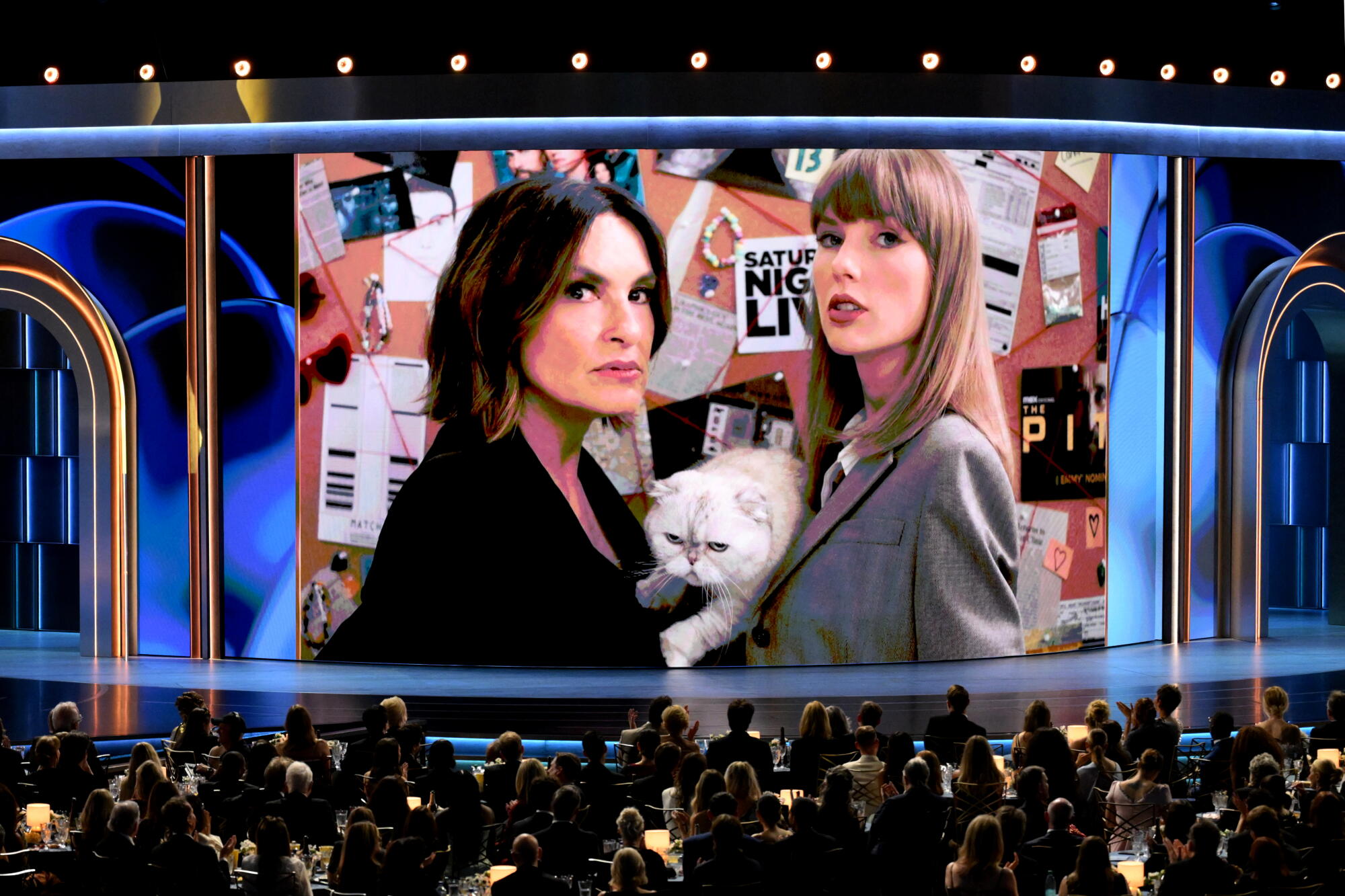
The Targaryen team-up was my favorite but it wasn’t the only name-based collaboration of the night. An earlier segment saw Olivia Benson, the fan-favorite “Law & Order: SVU” character played by Hargitay, share the screen with another Olivia Benson — Taylor Swift’s cat that is named after her. The cat made a surprise cameo along with the mega pop star in a pre-recorded segment about the likelihood of Swift appearing at the Emmys. — Tracy Brown
Best invitation to dinner at their house: Marcello Hernández
Marcello Hernández presented an award, but not before presenting some dinner invitations to a few people in the crowd.
(Robert Gauthier/Los Angeles Times)
When I saw “SNL’s” Marcello Hernández would be presenting at the Emmys, I knew it would be a special moment, and he didn’t let me down. The actor, who presented the award for directing for a comedy series, promptly made himself at home, shouting out, “Donde ‘tan los Latinos?” He then took the opportunity to say hello to a few fellow actors in the room.
“Very quickly, I would like to say hello to Harrison Ford,” he said, looking at the actor sitting in the audience, who gave an exasperated look and waved. “You are a legend and a real inspiration to me and I would like to invite you to have dinner at my house.”
The room erupted in laughter, but he wasn’t finished. He then extended an invitation to Zendaya and her partner, Tom Holland: “I want to say hi to Zendaya, you’re a beast and you’re amazing. And I saw you and I wanted to play it cool, and I decided I can’t do that. So I would like to invite you and Spider-Man to have dinner at my house.”
Then he proceeded to invite Oscar Isaac, the Guatemalan actor who utilizes his given name professionally, suggesting they might be related. “You are so good in ‘Beef’ and you are also Hernández, like I am. So we could be cousins, you never know. And I will see you at Christmas, I will cook you whatever you want.”
Lastly, he said a hello to Matthew McConaughey, and quoted his Cuban tía, who told him if he works very hard, he can hang out with “Matthew McCon-i-purse.” It was a light-hearted speech that spoke to anyone who suddenly finds themselves in a room wondering how they got there. — M.G.
ZAWTAR AL GHARBIYEH: The US ambassador to Lebanon on Tuesday visited a southern village that recently came under the control of the Lebanese army as part of a framework agreement with Israel.
The US-backed June agreement states that the Israeli military will withdraw from areas of south Lebanon it occupied in parallel with the deployment of the Lebanese army, starting with “pilot zones”, under the condition that militant group Hezbollah disarms.
An AFP correspondent saw a convoy carrying the US envoy, Michel Issa, entering the village of Zawtar al-Gharbiya, where he visited a church, according to Lebanon’s official National News Agency (NNA).
The news agency said an Israeli drone surveyed the area during the visit, reporting Israeli military vehicle movements in the neighbouring town.
Israeli troops remain deployed in what it calls a “security zone”, a stretch of Lebanese territory about 10 kilometres (six miles) deep along the border.
It recently blew up a strategic Hezbollah location at the Ali al-Taher ridge in the Nabatieh region, creating a blast so powerful that a 4.1 tremor was registered.
Fresh talks between Israel and Lebanon over the implementation of the framework agreement were due to be held this month, but were postponed to October.
A source from the Lebanese presidency told AFP that during the last round of talks in August, Israel refused to discuss new “pilot zones” without ensuring that the Lebanese army had full control of the first ones.
The Israeli and Lebanese ambassadors to Washington are due to meet this week to discuss the implementation of the agreement.
Lebanese President Joseph Aoun also visited Zawtar al-Gharbiya on Saturday, where his office said he inspected army units and observed nearby Israeli military positions.
Violence declined following the June framework agreement and a wider US-Iran deal, but Israel has pressed its attacks on Lebanon.
Hezbollah, which pulled Lebanon into the war in March with strikes on Israel, rejects the negotiations with Israel and refuses to disarm, but has not claimed any recent attacks.
Israeli strikes have killed more than 4,300 people since the hostilities began in March, according to Lebanese authorities.
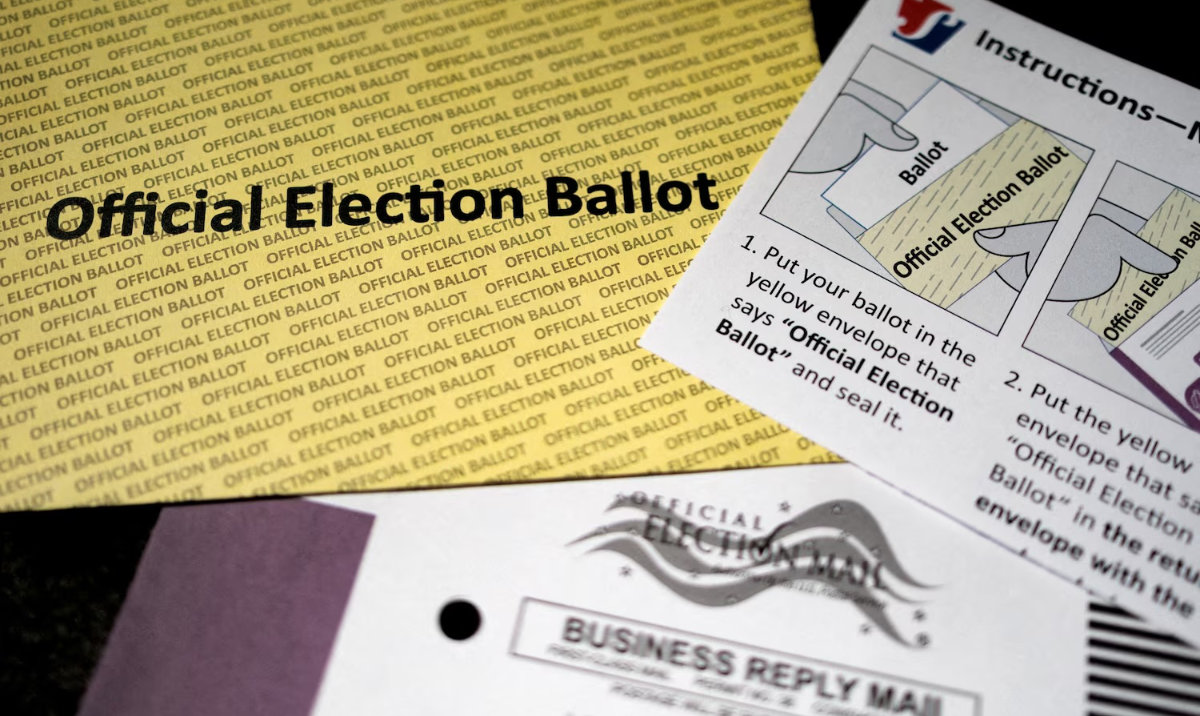
The United States Supreme Court has rejected Donald Trump’s bid to restrict voting by mail ahead of the November midterm elections, in a setback to the US president’s efforts to change rules governing elections.
The ruling on Monday by the conservative supermajority court allows states to continue sending out mail ballots as they have done for years, dealing a blow to Trump’s plans to stop the ballots before the elections and halting possible last-minute legal actions as voting begins in some states.
Recommended Stories
list of 4 itemsend of list
Trump has repeatedly cast doubt on the security of mail-in voting, citing debunked claims of widespread election fraud associated with it. That is despite the president voting by mail himself, including during the 2024 election.
Mail ballots, in place for decades, have been found to increase voter turnout and currently account for a third of all votes cast in the US.
Here’s what we know about the legal challenge to overturn them:
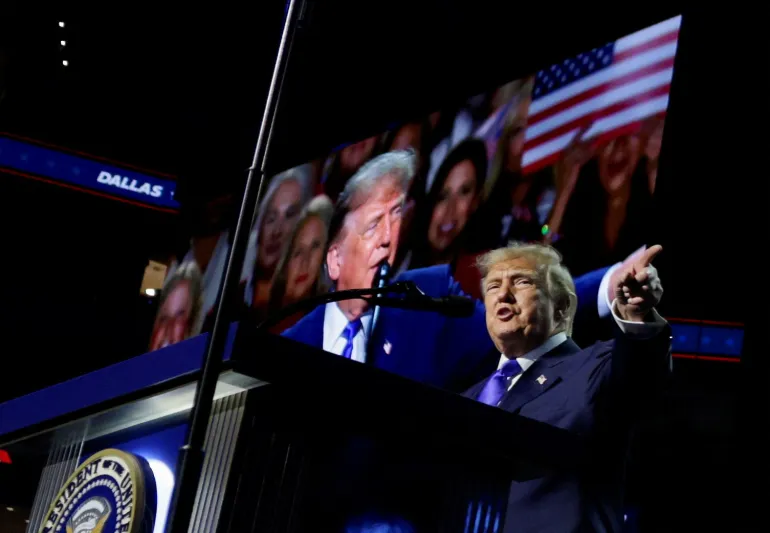
President Trump speaks at the Republican National Midterm Convention in Dallas, Texas, US, September 9, 2026 [Evan Vucci/Reuters]
What are mail-in votes?
Voting by post works by sending ballots to the homes of registered voters, who then mail them back before a deadline.
Eight states, several of them Democratic-leaning – California, Colorado, Hawaii, Nevada, Oregon, Utah, Vermont and Washington – as well as the District of Columbia, allow all elections to be conducted entirely by mail.
Others only allow smaller elections to be conducted by mail.
Although there are cases of forgery or repeat voting, they are rare and amount to just four in 10 million mailed votes, according to the Brookings Institution.
What has Trump said about the mail-in votes?
Trump falsely blamed his 2020 presidential election loss on mail-in voting fraud. He and his supporters also opposed changes made during the COVID pandemic to expand mail-in voting.
During the 2020 Republican National Convention, Trump called mail-in voting changes “the greatest scam in the history of politics”.
His attempt to push the SAVE America Act, which calls for sweeping voting laws, has stalled in the US Senate. The bill, passed in the House of Representatives in February, faces opposition over concerns that millions of voters will be disenfranchised.
How did Trump target mail-in votes?
In March 2026, Trump signed an executive order directing the US Postal Service to take control of mail voting by designing new envelopes with special barcodes that would allow the federal government to ensure ballots are only from eligible voters.
For the midterms, that move would force all states to adopt a uniform envelope style in a short time.
The order also required states to provide the US Postal Service with a list of eligible voters ahead of elections. Several government departments, including Homeland Security and US Citizenship and Immigration Services, would also have the voters’ lists.
The postal agency was additionally empowered to deny mailed ballots if they did not comply with new standards or were not associated with registered voters on the states’ lists.
What happened to the order?
Democrats and activists challenged the order in several courts, resulting in a series of back-and-forth rulings between May and August.
US District Judge Indira Talwani imposed an injunction against the rule in June on the basis that it likely violated the US Constitution. Talwani also noted in her injunction that Trump’s executive order would be impossible to apply when the midterms were already so close.
But her ruling was overturned by the conservative-majority Supreme Court in late August in a temporary judgement.
The Supreme Court had not decided at the time whether Trump’s move was constitutionally legal. Rather, it only sided with the Trump administration on procedural grounds after the administration argued that Democrats sued too soon.
What does the latest judgement mean?
In the latest and final decision, the Supreme Court refused to lift Judge Talwani’s injunction.
In a brief written order that did not go into detail, the court noted that the administration was likely to fail in its push to restrict mail-in votes ahead of the midterms.
Justice Brett Kavanaugh, who was appointed by Trump, voted with the majority against the administration, though he indicated he could support the policy at a later stage. Two judges, Samuel Alito and Clarence Thomas, dissented.
Critics have long warned that restricting mail-in ballots could disenfranchise some voters who typically rely on this method.
It could also disrupt the delivery of mailed votes, as some states, including Alabama, North Carolina and Wisconsin, have begun sending in midterm ballots.
After claims she is sexualising women’s sport, the criticism of Sydney Sweeney’s new advert is growing and TeamGB golden girl Amy Hunt explained why she has spoken out
11:10, 15 Sep 2026Updated 11:10, 15 Sep 2026
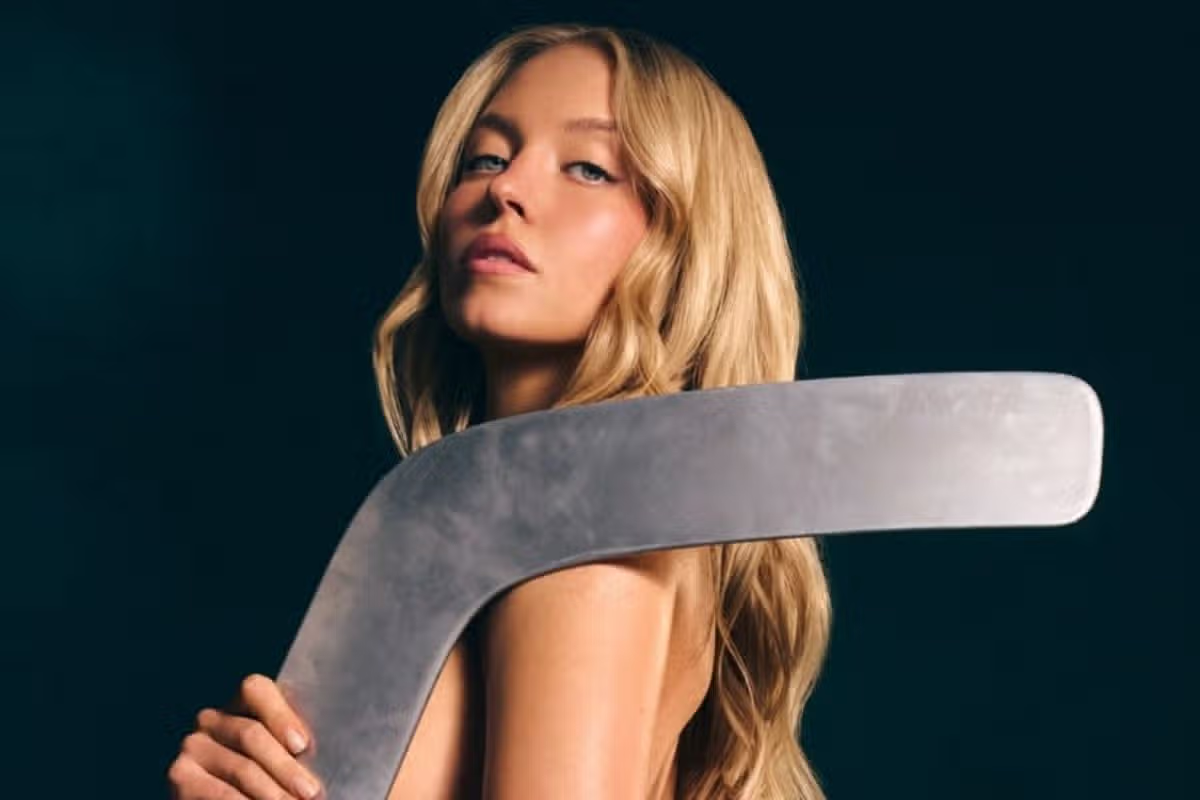
Sydney Sweeney featured in a promotional video for bookmaker Novig – and it’s not gone down well(Image: INSTAGRAM)
The American has been slammed following the campaign, which sees the 29-year-old with no clothes on as she pretends to play a number of different sports. The ad, for US sports prediction market company Novig, has been bashed with many suggesting sportswomen are still being defined by their appearance – and not their achievements.
British sprinter Amy Hunt, the four-time European champion, made a cutting comment after her race at the inaugural World Athletics Championship in Budapest on Sunday, saying: “Sydney Sweeney, this is what women in sport look like,” in her interview with BBC Sport after.
She is far from the only athlete hitting out. Sydney’s decision to take part has been widely criticised, with retired swimmer Ariarne Titmus saying she understood this type of “bulls**t”marketing” to be a thing of the past.
Water polo silver medallist Tilly Kearns joined the anger, saying, “I absolutely f***g hate Sydney Sweeney’s new sports ad”, while world champion boxer Skye Nicolson said the ad was making a “mockery” of women in sport.
Amy has spoken more about her decision to join the outrage, and appeared on Good Morning Britain to discuss her post-race remarks.
Telling presenters Susanna Reid and Ed Balls about her reasons for speaking out, the star sprinter said there are already enough barriers in place.
“I think when we’re trying to provide role models for young people and young women in sport,” she said. “We really want to show that it’s about what your body can do, not so much what it looks like. I think when we see the stats of 64 per cent of young girls drop out of exercise and sport before they reach the age of 16.
“We don’t need to place any kind of barrier whatsoever in their way in terms of providing the opportunity and the empowerment for them to still exercise, whatever that looks like, professional or kind of just going to do a park run with your friends.
“So it’s about empowering young girls and young women and young people to show that you really can just get out there and you don’t have to worry what you look like. You don’t have to worry about what you’re wearing.”
When grilled on whether the ad could impact how men view female athletes, she agreed and went on: “That was a big thing this year for us with the introduction of new kind of broadcasting regulations, in showing the correct or the more appropriate angles of women competing.
“It’s important to show kind of young people that it’s okay to be whoever you want to be, to wear whatever you want to wear, to look however you want to look, and you can achieve your dreams.”
While some suggested anger should be directed at the betting firm rather than the Euphoria actress, Novig said in a statement that Sydney is not just the face of the campaign, but has joined as “strategic partner and equity holder”.
Sydney finally responded and in a statement, said the campaign was “about embracing a fun idea”. She went on: “The concept is simple: cut through the noise and put the focus entirely on sports. The campaign brings that idea to life with confidence, humour and a playful edge.”
Watch Good Morning Britain weekdays from 6am on ITV
Fighting is continuing along Yemen’s western front, with government forces reporting strikes against Houthi positions in areas stretching from Taiz toward the Red Sea coast.
The government said on Monday that its forces targeted Houthi personnel, equipment and positions in Dhu Bab in Taiz governorate and Khokha in neighboring Hodeidah governorate.
The areas are strategically important because they lie along Yemen’s western coastline near the Red Sea and Bab Al-Mandab Strait, one of the world’s key maritime chokepoints connecting the Red Sea with the Gulf of Aden and wider Indian Ocean.
Dhu Bab is close to Bab Al-Mandab, while Khokha lies further north along the Red Sea coast. The fighting is taking place along territory that links the front lines around Taiz with Yemen’s strategically important western coastline.
Yemen’s armed forces spokesman, Col. Majid Al-Nazili, said government forces targeted Houthi equipment, personnel and positions in the two areas.
Military commanders also visited several front lines around Taiz, including areas near Bani Omar, Jardad and Al-Wazi’iyah, to assess combat readiness.
Maj. Gen. Abu Bakr Al-Jubouli, commander of the Tor Al-Baha axis, said government forces had inflicted heavy losses on the Houthis during recent clashes.
Artificial intelligence is increasingly being treated not simply as a technology sector but as a strategic capability tied to economic power, national security and geopolitical competition. Recent warnings from leading AI researchers and executives that increasingly autonomous systems could pose extreme risks have intensified debate over whether development should be slowed.
Yet the same warnings could make a slowdown less likely. If advanced AI can provide major military, economic and technological advantages, governments may view continued development as a strategic necessity. The result could be a paradox in which growing concerns about the dangers of AI encourage countries to accelerate the race to control it.
The United States and China are at the center of this competition. Both governments have strong incentives to maintain their technological advantage, while companies are investing enormous sums in data centers, chips and computing infrastructure.
The scale of investment shows why reversing course would be difficult. Goldman Sachs estimates that cumulative global AI spending through the end of the decade could reach as much as 5% of global GDP. At the same time, financial markets are increasingly sensitive to whether the extraordinary investment in AI infrastructure will ultimately generate sufficient economic returns.
Stay ahead of the geopolitical week.
MD Briefing delivers expert analysis across five global fronts — the Indo-Pacific, energy, geoeconomics, European security, and the Middle East — every Monday morning. Free.
Why it matters
The central question is no longer simply whether AI development should be regulated. It is whether governments can realistically agree to meaningful limits while competing for technological dominance.
A country that slows development unilaterally risks allowing competitors to move ahead. That creates a classic security dilemma: measures intended to reduce risk can themselves create strategic vulnerability.
The problem is particularly significant because AI has applications far beyond commercial technology. Advanced systems could affect cybersecurity, intelligence, military planning, financial markets, biotechnology and critical infrastructure.
That makes AI different from many previous technology debates. Governments may be willing to regulate individual applications, but they are less likely to accept restrictions that could permanently reduce their strategic advantage.
The investment dilemma
The AI boom has already become deeply connected to wider economic growth.
Companies are spending heavily on computing capacity and data centers, while investors have placed enormous valuations on firms expected to benefit from AI adoption. A significant slowdown could therefore have consequences far beyond technology companies.
Morgan Stanley has estimated that almost $200 billion in U.S. data center projects were cancelled or delayed amid political resistance to new infrastructure. The bank has also argued that capital expenditure linked to AI could account for roughly one third of U.S. GDP growth over the current period.
This creates another obstacle to restraint. AI investment is no longer only a corporate decision. It has become connected to employment, infrastructure, financial markets and national economic growth.
The longer the investment cycle continues, the more difficult it becomes for governments and companies to voluntarily step away from it.
Washington and Beijing
The geopolitical dimension makes a coordinated slowdown even harder.
U.S. policymakers increasingly view technological leadership in AI as an element of national power. China, meanwhile, sees AI development as part of its broader effort to reduce dependence on Western technology and strengthen its own economic and strategic capabilities.
That means Washington and Beijing have incentives to monitor each other’s progress rather than simply establish limits.
The political rhetoric surrounding AI increasingly reflects this competition. Trump has portrayed opposition to AI infrastructure as benefiting China, while Chinese state media has described warnings about AI as part of a broader geopolitical strategy against Beijing.
The result is a familiar strategic dilemma: if either side believes the other may continue developing advanced AI, neither has much incentive to slow down first.
Can international rules work?
Meaningful AI restrictions would ultimately require international cooperation.
Individual countries can establish domestic safety standards, require companies to conduct risk assessments or impose restrictions on specific applications. But those measures cannot fully address the geopolitical problem if competitors outside those jurisdictions remain free to develop more powerful systems.
The nuclear comparison illustrates the difficulty. The first nuclear weapon was developed in 1945, but the Nuclear Non-Proliferation Treaty did not emerge until 1968. Even after the treaty, nuclear proliferation continued beyond the five states formally recognized as nuclear-weapon states.
AI could present an even more complicated challenge because it is not confined to a small number of military facilities. Its development involves thousands of companies, researchers, data centers and computing systems spread across multiple countries.
Economic security could become the new arms race
The most important shift may be that AI competition does not need to resemble a conventional military arms race to produce similar strategic pressures.
Advanced AI could generate advantages in productivity, financial markets, scientific research, cybersecurity and military technology. Falling behind could therefore be perceived as an economic and national security threat even without the development of an explicit weapon.
This could produce what might be described as mutually assured economic dependence. Countries may recognize the dangers of uncontrolled AI while simultaneously believing that abandoning the technology would be even more dangerous.
That dynamic makes voluntary restraint increasingly difficult.
Implications and analysis
The growing warnings about AI may therefore have an unintended geopolitical consequence: they could accelerate the race they are intended to constrain.
If governments become convinced that highly capable AI could fundamentally alter national power, they are unlikely to leave its development to private companies or accept restrictions that allow competitors to gain an advantage. Instead, the technology could become more closely integrated with national security policy.
That could eventually mean greater government involvement in AI companies, computing infrastructure, semiconductor supply chains and access to advanced models.
The biggest danger is therefore not simply that AI becomes too powerful to control technologically. It may become too strategically important for governments to willingly slow down.
For meaningful safeguards to emerge, major powers would need to treat AI safety as a shared security interest rather than another arena of geopolitical competition. Without that shift, every warning about the potential consequences of advanced AI could strengthen the argument for moving faster.
The paradox is clear: the more dangerous AI becomes, the more governments may feel they need to control it. And the more they compete to control it, the harder it becomes to slow the race.
As the fall equinox approached from a week away, the Primetime Emmy Awards made its 78th visit, leaving trophies in some hands, the honor of just being nominated for others and bupkes for the rest of the thousands who make what we call television. Once again I have been called to witness (from afar) and report, so let’s get down to it.
It was the turn of NBC (and Peacock) in the round robin of major networks who broadcast the show, and to keep things literally in-house it was hosted by Mariska Hargitay, “America’s sweetheart sex cop Olivia Benson” from the network’s “Law & Order: Special Victims Unit” and broadcast from the Peacock Theater, formerly the Microsoft Theater, formerly the Nokia in #DTLA, formerly downtown Los Angeles.
When reviewing the Emmys, or any awards show, as television in its own right, the only real questions are what distinguishes it from its many previous appearances on the karmic wheel of life — how it tricks up the basic, immutable form, like different decorations on the same sugar cookie recipe you have been using forever. Anything unexpectedly or especially moving, rousing, funny or strange, things that go against the grain of a production that wants to keep things controlled in order to bring the ship in on time.
This year the critic has been given the gift of Hargitay, primarily a serious actor (and director and producer), following in a long line of comedians and comic actors. There have been other serious actors as host, for example, Raymond Burr in 1959, Tom Selleck in 1984 and Angela Lansbury in 1993. And certainly, if you’re looking for someone to represent the medium rather than merely to comment on, celebrate or joke about it, you could do no better than Hargitay, the longest-serving actor on the longest-running prime-time live-action series on American TV. She’s beautiful, glamorous, self-possessed. She was recently on Broadway in “Every Brilliant Thing,” which involved a degree of what comedians call “crowd work,” so standing up in front of a live audience of people no more famous than she wasn’t going to throw her. Professional comedian Nate Bargatze, who hosted last year, was much more of a dark horse.
Emmys host Mariska Hargitay with singer Taylor Swift and her cat Olivia Benson on screen during a skit the 78th Primetime Emmy Awards.
(Patrick T. Fallon / AFP via Getty Images)
Although I would have bet on a pre-filmed “Special Victims Unit” routine to open the show, which is why I’m not a gambler, it wasn’t until an hour in that it appeared. (It involved murder-style boards, concerning the Case of Whether Taylor Swift would be making an appearance; she did, in the bit.) The pre-filmed production number that did open the show began with Hargitay and her actual good friend New York Knick Jalen Brunson steaming their clothes when Hargitay suddenly realizes she is due across the country to host the show. This led to Joan Jett’s “I Love Rock ’N Roll” reconceptualized as “I Love TV Screens,” which included the “Widow’s Bay” sea hag revealed to be Jennifer Coolidge, bringing boba tea (rhymes with “TV”); other rhymes matched “eating beef” and “watching ‘Beef’” and “Ed Gein” and “mean.” It moved to the live stage, with Hargitay flanked by dancers with television heads. Both segments felt more effortful than funny, but not unfunny.
On her own, however, Hargitay was above all a woman having a good time, never less than likable and game and enthusiastic, managing the scripted patter as well as anyone might have. Her monologue included several jokes about age, one about “L&O” producer Dick Wolf’s real name (Richard Penis), and another about her inability to pronounce “finale” because she’d never been in one. As is practically an Emmys tradition, some of these were confusing (even to the people performing it), or went on too long (Nick Offerman, cornered at his table, describing his work as an erotic house painter), or just had the effect of having been put on their feet without much, if any, rehearsal. Presenting the final award, for outstanding comedy, Woody Harrelson and Matthew McConaughey, told to stretch — the show was actually running short — described the plot of their upcoming Apple series, “Brothers,” until they were allowed to move on.
As to what the Television Academy calls “creative elements,” everything that isn’t a presentation or a speech, they advertised tributes to the 30th anniversary of “Buffy the Vampire Slayer,” certainly a typo, and the 50th of “Charlie’s Angels,” a logical impossibility, but these were really just themed groupings of presenters — Sarah Michelle Gellar and David Boreanaz in the former, Kate Jackson, Cheryl Ladd and Jaclyn Smith in the latter. (The Angels managed a few words for Farrah Fawcett, but none for Shelley Hack, Tanya Roberts or David Doyle.) But there were full tributes to Dolly Parton (Sally Field enthused, Reba McEntire sang); to James Burrows, with Jamie Lee Curtis pivoting emotionally to talk about old friend Rob Reiner, who won a posthumous guest appearance Emmy this year for “The Bear”; and to Catherine O’Hara, with her “Home Alone” child Macaulay Culkin and “Schitt’s Creek” children Annie Murphy and Dan Levy, who spoke to “helping her build a TV character over the age of 60 that wears leather miniskirts and eight-inch heels and speaks in a strange, sometimes unintelligible transatlantic accent, and know that she will not scare an audience away.”
And there was Julianna Margulies presenting the Bob Hope Humanitarian Award to Michael J. Fox, who, in his usual way, was eloquent and funny, and let the people know about the goodness of Bob Hope, setting up a punchline in the bargain. Like a lot of you, I love Michael J. Fox, and I’m just going to leave that here, with a pile of soaked-through tissues.
John Mulaney stole the show as a presenter at the 78th Emmy Awards ceremony at the Peacock Theater in Los Angeles.
(Robert Gauthier / Los Angeles Times)
But what America will mostly remember from this night was John Mulaney, introducing the award for lead actor in a drama, and burning the house down with a routine that went wherever it wanted. “They can play anything, these nominees. Not just doctors. They can play a cop or an FBI agent or a secret agent. And then that’s it. No other examples.”
“Since the creation of television, men have been historically underrepresented,” Mulaney said, explaining that the medium was all “beauty contests and children talking to hand puppets until the early ’60s. Until a man walked out and said, ‘Enough. My name is Fonzie and the president’s been shot.’” Mulaney is a man who has convulsed crowds in arenas and stadiums, but, as a local, nothing made me laugh harder than the words, “You know, I was shooting down Barham last night at 90 miles an hour.”
Nothing against Hargitay, but it’s clear that Mulaney should host this show, and every awards show, from now on.
CAIRO: Egyptian President Abdel Fattah El-Sisi will meet Saudi Crown Prince and Prime Minister Mohammed bin Salman on Tuesday in Cairo to discuss a range of issues of mutual interest, Al Arabiya News Channel reported, citing the Egyptian presidency.
The two leaders will exchange views on regional developments amid the latest tensions and changes in the region, while also discussing ways to strengthen Egyptian-Saudi relations and expand bilateral cooperation.
Jean Smart earns fifth Emmy for “Hacks,” becoming the first to win lead comedy actress for every show season.
Published On 15 Sep 202615 Sep 2026
Emergency room drama “The Pitt” and comedy-horror “Widow’s Bay” have won television’s highest honours, the 78th Primetime Emmy Awards, presented in Los Angeles.
Set in a cursed New England town, “Widow’s Bay” won the best comedy series prize on Monday, overcoming last season’s winner, “Hacks”.
Recommended Stories
list of 3 itemsend of list
Matthew Rhys, starring in “Widow’s Bay”, made history by becoming the first person to win two lead acting honours at the same ceremony. Fellow actor in the TV series, Stephen Root, won best supporting actor in a comedy, beating favourite Harrison Ford of “Shrinking”.
“Thank you, sir, for all your many years of great, great, great acting,” Root told Ford during his acceptance speech.
“Hacks” actress Jean Smart won her fifth Emmy for portraying stand-up comic Deborah Vance, making her the first actress to win the award for best lead comedy actress for every season of a show’s run. Smart has won eight Emmys overall in her acting career.
“What a ride this has been,” Smart said after receiving a standing ovation.
Jean Smart accepts the award for outstanding lead actress in a comedy series for “Hacks” during the 78th Emmy Awards at the Peacock Theater in Los Angeles on September 14, 2026 [Chris Pizzello/AP]
Actress Julia Louis-Dreyfus is the only performer to come close to Smart’s comedy lead actress sweep, having won the award for six of the seven seasons of the political satire “Veep”.
Noah Wyle, who starred as Dr “Robby” Robinavitch on “The Pitt”, told the Emmy audience it felt overwhelming to win his second straight Emmy for best lead drama actor.
“The Pitt”, set in a Pittsburgh emergency department, won its second consecutive Emmy award for best drama series, beating fellow nominees including “Pluribus”, “Paradise” and “The Diplomat”.
“This is the only club I’ve ever wanted to join. Thank you for accepting me,” Wyle said while accepting the award.
US actor Noah Wyle, winner of Outstanding Lead Actor in a Drama Series and Outstanding Drama Series for “The Pitt”, poses in the press room during the 78th Primetime Emmy Awards at the Peacock Theater at LA Live in Los Angeles on September 14, 2026 [Frederic J. Brown/AFP]
Rhea Seehorn won best actress in a drama for playing the lone character on “Pluribus”, after being nominated twice without receiving any honours for her breakthrough role on “Better Call Saul”.
Vince Gilligan, who created “Breaking Bad” and its spin-off “Better Call Saul”, won best drama writing for “Pluribus”.
“The Late Show with Stephen Colbert” won for best variety series, concluding its farewell season with six total Emmys after CBS cancelled the programme, citing financial pressures.
Colbert rejected that explanation, accusing network executives of succumbing to pressure from President Donald Trump over his frequent mockery of the administration.
Emmerdale’s Joe Tate takes a sickening revenge on Caleb and Ruby Miligan next week, as spoilers reveal the moment he buries Ruby alive in a coffin, leaving her facing death
Emmerdale spoilers: Joe buries Ruby alive
Ruby in Emmerdale could die next week, as Joe Tate’s extreme revenge plan sees her buried alive.
Caleb Miligan and his wife face danger as Joe wants payback, blaming them for the death if his partner Dawn Taylor. So when Joe asks Graham Foster for a favour, we later see exactly what Joe has planned for them.
Spoilers for next week reveal that Joe struggles to deliver the eulogy at Dawn’s funeral, so Kim steps in. As Kim vows to keep the family together, a grieving Joe walks away. As Joe approaches a grave, it becomes apparent he’s buried Ruby alive.
As Joe torments a weakened Caleb about his wife Ruby, she wakes up in a coffin, unable to escape. As Ruby slips unconscious, Caleb begs Joe to release her but he refuses.
Vinny admits to Nicola and Joe that he was responsible for the car accident that killed Jimmy and Dawn. As Nicola heads to the pub to confront Gabby, she publicly reveals how Vinny caused the fatal crash while on the phone to Gabby.
Cain tells Moira that Sadie opened up to him about the loss of their child. Sarah and Jacob are relieved when Ross confirms he has no intention of fighting for custody of Leyla.
Lewis worries about his future with Vinny, while Kev panics that Nicola will find out he knew about Vinny causing the crash. It comes as scenes this week sparked death fears for Charity.
In the latest episode, Charity was struggling with Sarah refusing to change her statement – the police statement that had her charged with murder. Things came to a head when drugs were found in Charity’s cell, and she was told she would need to undergo a full body search.
Charity experienced a panic attack as memories of her horrifying assault at the hands of Dr Todd came flooding back, as the police prepared to force the search. Charity was placed in segregation after lashing out, where she was clearly traumatised.
As Mack feared for his wife’s safety and feared how she would cope if she remained in prison, Mack warned Sarah that she could have another death on her hands, meaning Charity, if she didn’t tell the truth. But will Charity be released?
WASHINGTON, United States: The US Supreme Court dealt a major blow Monday to President Donald Trump’s attempts to restrict mail-in voting before the November midterm elections, denying his request to lift an order halting the divisive plan.
Only two of the six conservative justices on the nine-member panel offered a dissent.
Justice Brett Kavanaugh, in a concurring opinion with the majority, said Trump’s plan may ultimately be legal in the long run, but “state and local election officials do not have sufficient time to reasonably implement the rule before the elections.”
Trump signed an executive order in March seeking to restrict mail-in voting, saying without evidence that it is vulnerable to fraud. The order quickly prompted multiple legal challenges.
Democratic-led states sued the administration on grounds that under the US Constitution, states — and not the federal government — retain broad control over the administration of elections.
Trump’s executive order would require the compilation of lists of eligible voters and for the US Postal Service (USPS) to deliver ballots only to voters who are on the lists.
Officials from several states had warned that a lack of legal clarity around the plan was sowing chaos months before the November 3 vote.
Several states, including North Carolina, have already begun sending mail-in ballots to voters.
A USPS whistleblower had also warned that millions of Americans may not receive ballots because the systems being used by the postal service have been put together in a “sloppy and rushed manner.”
Trump has long been a critic of mail-in ballots but has frequently used them himself, including last month when he voted by mail in Florida’s Republican primary.
The president has for years claimed without evidence that mail-in voting is highly vulnerable to fraud, repeatedly linking it to his false assertion that the 2020 presidential election was stolen from him by Democrat Joe Biden.
Polls show that Trump’s Republican Party faces a serious threat of losing its narrow control of Congress in November, particularly the House of Representatives.
If Democrats win, they have signaled they would block Trump’s agenda and could even move to impeach him for the third time.
Vigil aired its explosive finale on Monday night as series three came to an end
22:52, 14 Sep 2026Updated 22:57, 14 Sep 2026
Vigil aired its explosive finale on Monday night as series three came to an end (Image: BBC / World Productions / Mark Mainz)
Vigil viewers were all quick to make the same demand on Monday as series three came to an end.
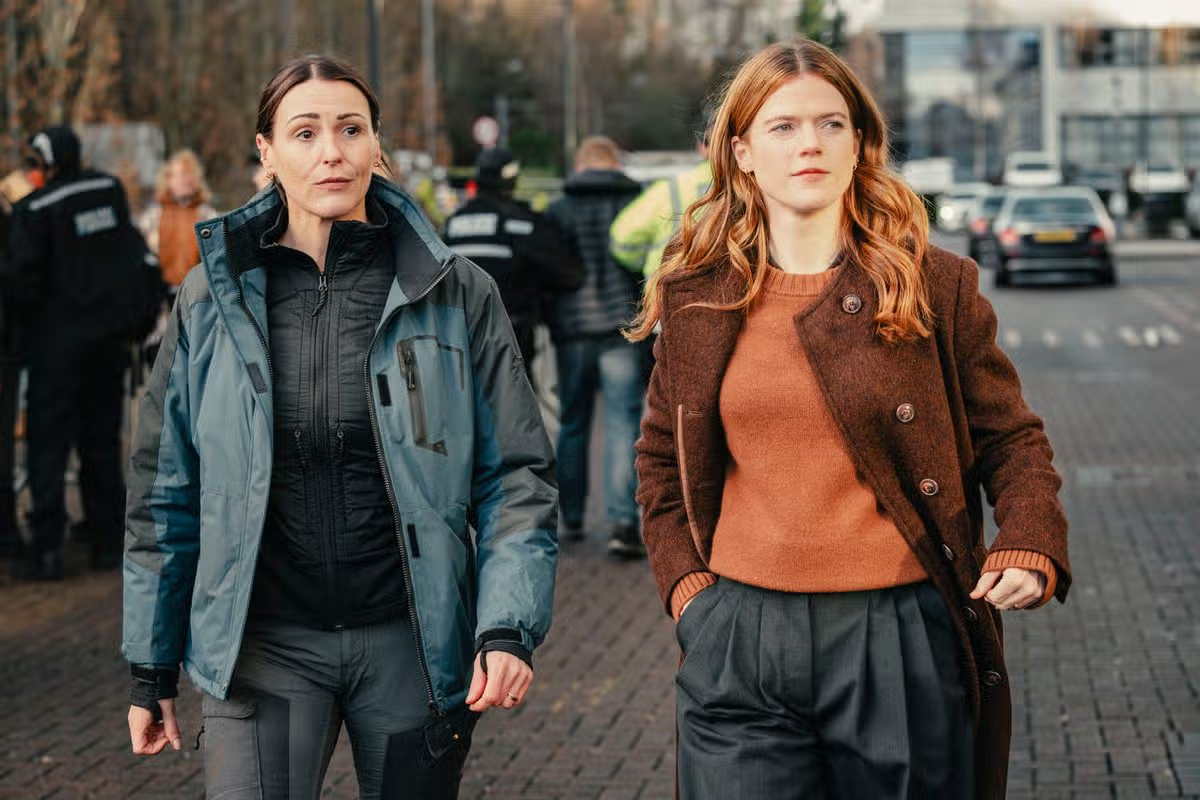
The hit BBC detective drama sees Suranne Jones as DCI Amy Silva and Rose Leslie as DI Kirsten Longacre. Series three has seen the murder of a British citizen in the Arctic, leading to DCI Amy Silva and DI Kirsten Longacre investigating the case.
It wasn’t long until Amy looked into a possible conspiracy on Scottish soil while Kirsten came up against uncooperative Russian inhabitants, who claimed foul play and obstructed her at every turn. As expected with Vigil, soon many twists came about, including the discovery of a missing person…
After five episodes full of suspense, Monday night saw the series finale as Amy and Kirsten returned to Scotland, only for danger to follow them there.
Meanwhile, Amy found herself on the wrong side of the law, and Kirsten put herself in danger to keep Amy safe and to get to the truth while under immense political pressure and personal jeopardy. The duo were faced with the hardest choice of their careers yet…
After Sir Ian Downing was arrested and politician Gordon Laity, Shen Jia was finally safe and able to share her research with the world. However, it was heartbreaking news for Amy as she faced severe action for refusing to hand Shen Jia over to the authorities.
Speaking to her boss, Amy asked: “Are you going to arrest me now?” to which he responded: “No, I don’t think there’ll be an appetite to bring charges… provided…”
With Amy answering: “Provided I resign?” to which her boss emotionally confirmed her question, saying he doesn’t like the idea but he doesn’t want to see her in prison either.
Amy then declared: “It’s been a privilege to work with you, sir” as she shook his hand. Meanwhile, emotional partner Kirsten said: “A wise colleague of mine once told me to never make this job personal” to which Amy insisted she has no regrets before walking off hand-in-hand with Kirsten.
Following the finale, viewers were quick to take to Twitter, now X, to share their thoughts, demanding a series four. One person said: “brilliant series enjoyed every episode more please #Vigil.”
A different account wrote: “End of the series. A fantastic series! #Vigil” while another fan put: “#vigil What a brilliant series.”
Elsewhere, another show watcher commented: “Vigil with the wildly talented Suranne Jones is a terrific tension filled mystery. The gripping drama, Line of Duty meets 24 with a hint of Chain Reaction, is f***in awesome. Support includes Rose Leslie as Detective Inspector Kirsten Longacre. Season 4? #Vigil.”
Will there be a Vigil season 4?
Only recently, creator Tom Edge teased whether viewers could see the duo return for a fourth series. Speaking exclusively to Radio Times, the writer said: “Regrettably, the world remains complicated and finds new ways to evolve towards instability, danger and the rest. So I don’t think we would ever find ourselves short of stories.”
He added: “I think certainly this time around, we put the show in a place where we feel that this arc across three seasons has been settled.
“I think we will see how it goes. But one of the pleasures of the show is it doesn’t feel like it is a show that has to return on an annual ticking clock basis. So I think we can leave it open, but certainly for this season, it felt like it was the culmination of a bunch of questions that we’ve asked across three seasons. I was happy to take it to that point.”
Opposition bloc leads in tight Swedish election with 95% counted.
Published On 15 Sep 202615 Sep 2026
Sweden’s centre-left opposition bloc has held a narrow lead as the far-right party saw its support slip, with about 95 percent of the districts counted.
The Swedish Election Authority reported on Monday that the four opposition parties were projected to hold 176 seats in the 349-seat parliament, called the Riksdag, while the remaining 173 would go to four parties that make up or support the current conservative-led government.
Recommended Stories
list of 3 itemsend of list
Results may not be clear until early votes and overseas ballots are counted on Wednesday. If the left-leaning bloc emerges victorious, it could take even longer to form a government because of ideological tensions among its parties.
Prime Minister Ulf Kristersson is seeking a second term and has been leading the country since 2022 with a centre-right coalition that relies on the Sweden Democrats, a party with neo-Nazi roots. He could remain in office if the left-wing bloc wins its thin majority but fails to form a government.
The Sweden Democrats saw an unexpected drop in support, losing three percentage points compared with the 2022 general election, slipping from 20.5 percent to 17.5 percent. This marked the first time the far-right party suffered a loss in voter backing since it entered parliament in 2010.
Magdalena Andersson’s Social Democrats held onto first place, but a 28.1 percent share registered as one of their worst performances in more than 100 years, complicating any bid to assemble a working majority.
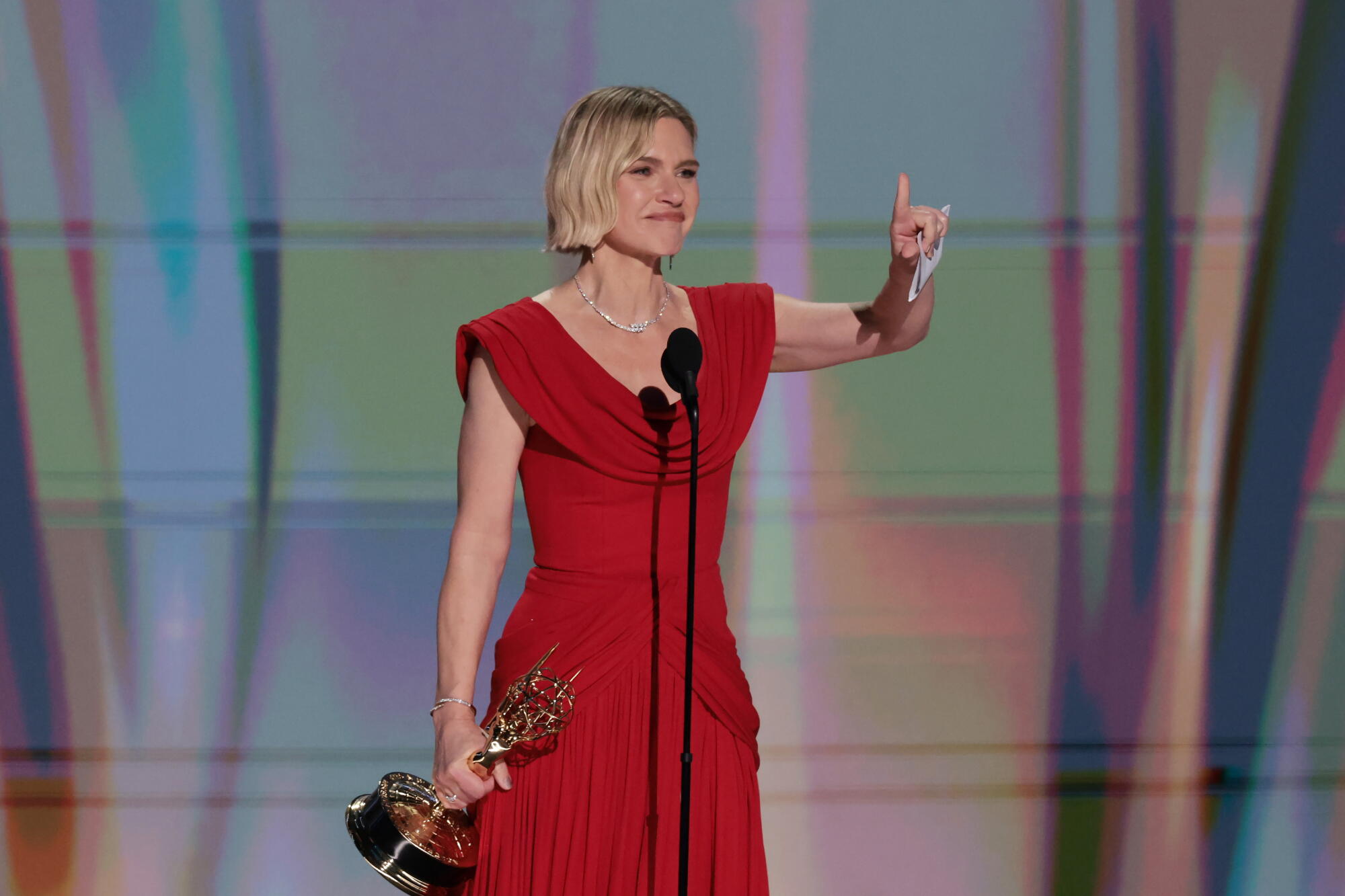
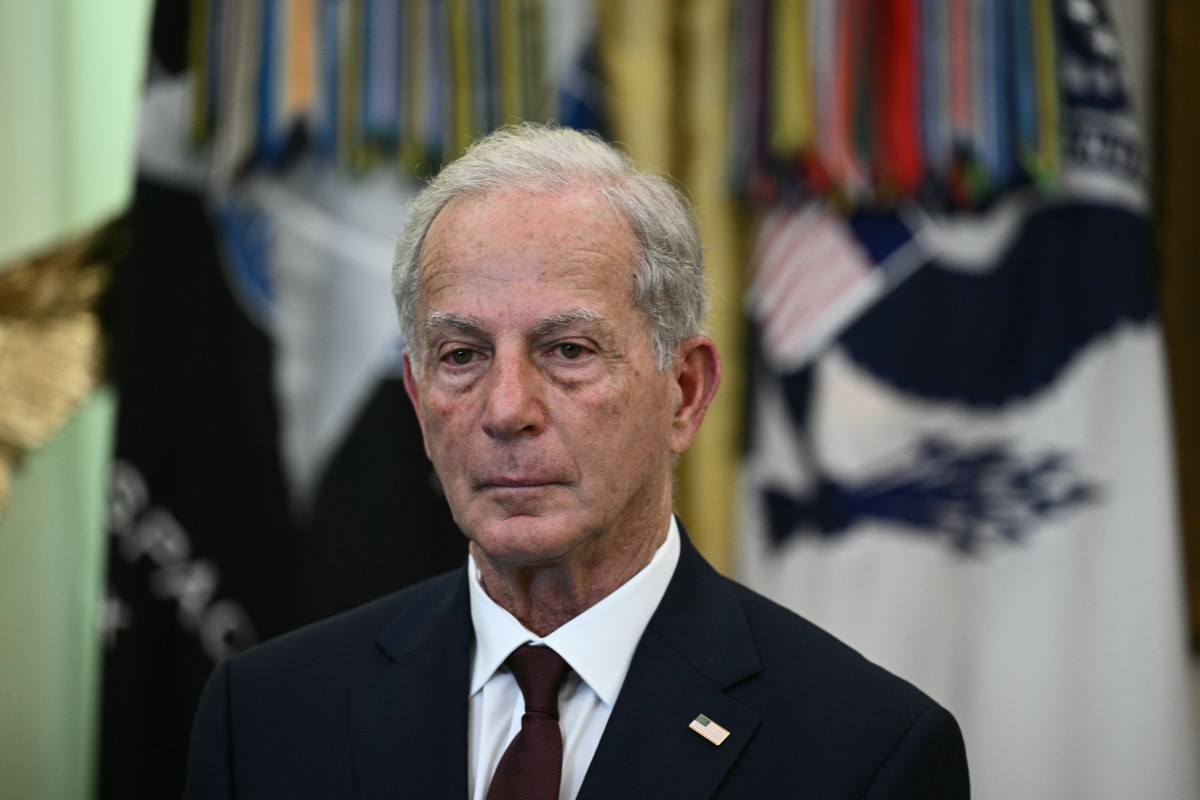
Moderate Party leader Ulf Kristersson (C) speaks during the Moderates’ election night watch party in Stockholm, Sweden, 13 September 2026 [Christine Olsson/Sweden Out/EPA]
While the result appears somewhat out of step with recent far-right gains across parts of Europe, including Germany and Italy, the Sweden Democrats remain firmly entrenched as a dominant force in parliament.
The dip in support could be tied to changing voter priorities. In the past, many people voted for the far right, “simply because they liked their stance on refugees”, without necessarily agreeing with other policy positions, Anders Sannerstedt, a political scientist at Lund University, told AFP.
Even with a reduced vote share, the Sweden Democrats retain substantial leverage.
A closely divided legislature leaves any future government with a fragile working margin, ensuring the party remains an unavoidable force in parliament.
More broadly, the Sweden Democrats have already rewritten the boundaries of Swedish politics. Over the past decade, its once-fringe demands for strict asylum caps, easier deportations and tougher policing have been absorbed into the mainstream, with both the centre-right coalition and the Social Democrats shifting rightward to match public sentiment.
The Emmy Awards take place in Los Angeles on Monday, with The Pitt, Hacks and Beef among the shows competing for trophies.
Many of this year’s prizes have already been handed out at the earlier Creative Arts Emmys, leaving only the most high-profile categories for the big night.
Here are the nominations for the main ceremony in full. This list will be updatied live throughout the night.
Drama series
Comedy series
Limited or anthology series
Lead actor in a drama series
Sterling K Brown – Paradise
Gary Oldman – Slow Horses
Mark Ruffalo – Task
Rufus Sewell – The Diplomat
Noah Wyle – The Pitt
Lead actress in a drama series
Carrie Coon – The Gilded Age
Chase Infiniti – The Testaments
Keri Russell – The Diplomat
WINNER: Rhea Seehorn – Pluribus
Zendaya – Euphoria
Lead actor in a comedy series
Yahya Abdul-Mateen II – Wonder Man
Steve Carell – Rooster
Matthew Rhys – Widow’s Bay
Jason Segel – Shrinking
Martin Short – Only Murders In The Building
Lead actress in a comedy series
Quinta Brunson – Abbott Elementary
Ayo Edebiri – The Bear
Elle Fanning – Margo’s Got Money Troubles
Lisa Kudrow – The Comeback
WINNER: Jean Smart – Hacks
Lead actor in a limited or anthology series or movie
Riz Ahmed – Bait
Jason Bateman – Black Rabbit
Charlie Hunnam – Monster: The Ed Gein Story
Oscar Isaac – Beef
WINNER: Matthew Rhys – The Beast In Me
Lead actress in a limited or anthology series or movie
Claire Danes – The Beast In Me
Sally Field – Remarkably Bright Creatures
Carey Mulligan – Beef
Sarah Pidgeon – Love Story: John F Kennedy Jr & Carolyn Bessette
Sarah Snook – All Her Fault
Supporting actor in a drama series
Patrick Ball – The Pitt
Billy Crudup – The Morning Show
Shawn Hatosy – The Pitt
Gerran Howell – The Pitt
Jack Lowden – Slow Horses
Tom Pelphrey – Task
Carlos-Manuel Vesga – Pluribus
Supporting actress in a drama series
Taylor Dearden – The Pitt
Fiona Dourif – The Pitt
WINNER: Allison Janney – The Diplomat
Katherine LaNasa – The Pitt
Sepideh Moafi – The Pitt
Julianne Nicholson – Paradise
Karolina Wydra – Pluribus
Supporting actor in a comedy series
Colman Domingo – The Four Seasons
Paul W Downs – Hacks
Harrison Ford – Shrinking
Nick Offerman – Margo’s Got Money Troubles
Stephen Root – Widow’s Bay
Michael Urie – Shrinking
Tyler James Williams – Abbott Elementary
Supporting actress in a comedy series
Dale Dickey – Widow’s Bay
Hannah Einbinder – Hacks
Janelle James – Abbott Elementary
WINNER: Kate O’Flynn – Widow’s Bay
Michelle Pfeiffer – Margo’s Got Money Troubles
Megan Stalter – Hacks
Jessica Williams – Shrinking
Reality competition programme
Dancing With the Stars
RuPaul’s Drag Race
Survivor
Top Chef
The Traitors
Variety series
Outstanding writing for a drama series
Debora Cahn – The Diplomat
Kirsten Pierre-Geyfman, R. Scott Gemmill – The Pitt
Valerie Chu – The Pitt
Vince Gilligan – Pluribus
Will Smith – Slow Horses
Brad Ingelsby – Task
Outstanding writing for a comedy series
Quinta Brunson – Abbott Elementary
Tim Robinson – The Chair Company
Michael Patrick King – The Comeback
Lucia Aniello – Hacks
Anthony King – Jury Duty Presents: Company Retreat
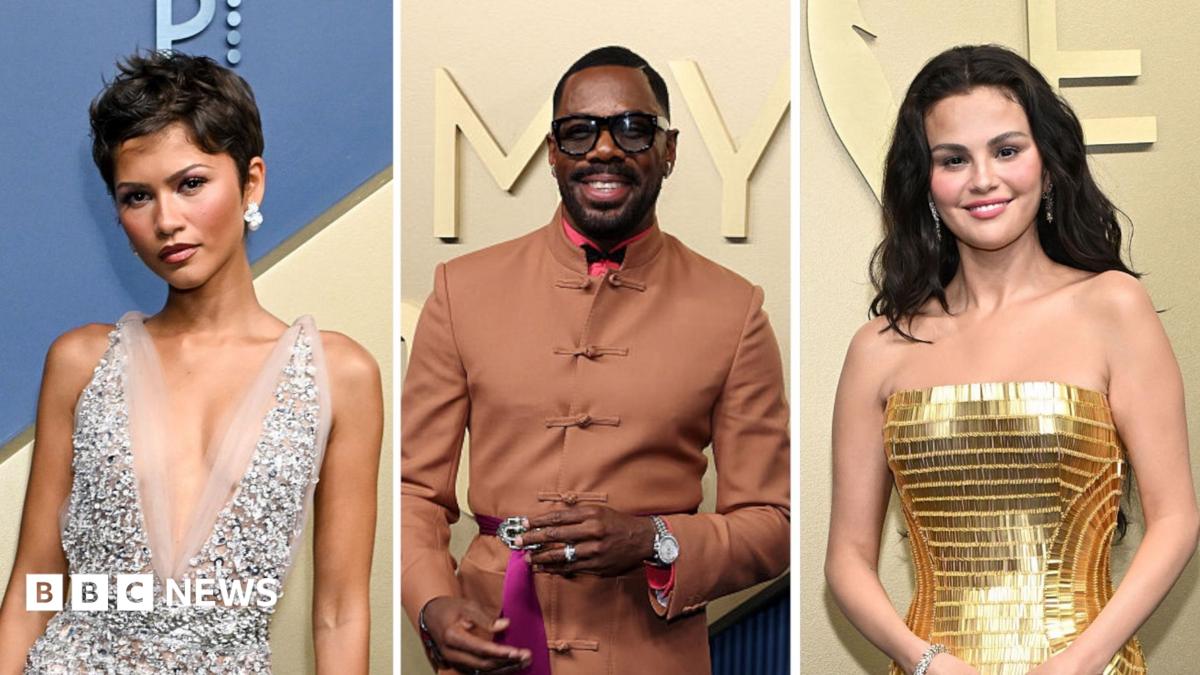
She stunned the LA carpet in her gilded attireCredit: APShe held the orb aloft as she posed for photos
Kayla, the over privileged and clueless assistant on the HBO’s hit series, was her first acting job.
Stalter is no stranger to outlandish red carpet attires.
In January she attended the Critics Choice awards with her co-star, mimicking Kylie Jenner’s all-orange look which she had worn with boyfriend Timothy Chalamet to the Marty Supreme premiere.
At last year’s Emmys, the actress opted for a simple pair of jeans and a T-shirt – in a deliberate non-statement.
Most read in Entertainment
Getting the gold memo – Selena Gomez arrived in a golden mirrorball gownCredit: GettyStalter is up for her first EmmyCredit: X/TelevisionAcad
In 2025 at the Las Culturistas Culture Awards, she wore a corset-style top made from actual Diet Coke packaging.
In April, the actress told Marie Claire: “Every red carpet appearance or anything that I get to do in front of people, I want to have fun and make the most of it because it’s my dream.
“We worked really hard to get here, and now I want to enjoy it.”
Stalter is up against her castmate Hannah Einbinder, who won the category last year, plus Janelle James for Abbott Elementary, Michelle Pfeiffer for Margo’s Got Money Trouble and Jessica Williams for Shrinking.
One amused commenter reacted to her look and said: “If they don’t give her the statue, she IS the statue.”
Hacks recently wrapped its fifth and final season which is up for 24 Emmy nominations at this year’s ceremony.
It is the second most nominated show this year, just trailing one award behind The Pitt.
This years Primetime Emmy Awards are being held at the Peacock Theater in Los Angeles.
It will air on NBC and Peacock and is hosted by Mariska Hargitay.
Israeli strikes across Gaza have killed at least one person and injured several. Residents say they were targeted outside tents in a Gaza City displacement camp.
Nato fighter pilots have shot down a drone that entered Lithuania’s airspace overnight, the Lithuaninan president said.
Authorities said the drone likely entered southern Lithuania, near the second-largest city of Kaunas, from Belarus shortly after midnight on Tuesday.
Lithuanian President Gitanas Nausėda wrote in a statement on X: “A drone that just entered Lithuanian airspace was destroyed by NATO fighter jets.”
The origins of the drone are yet to be determined, a spokesperson for the Lithuanian national crisis management centre said.
Drone alerts sounded across the capital Vilnius and surrounding region earlier on Tuesday.
Nausėda’s post on social media added: “With Russia intensifying its aggression against Ukraine, such readiness is vital for our region. Together with our NATO Allies, Lithuania will defend its airspace.”
Lithuania shares a large part of its southern and eastern border with Belarus, a key Russian ally.
Military drone incursions have become increasingly common across Europe since the beginning of Russia’s full-scale of invasion of Ukraine.
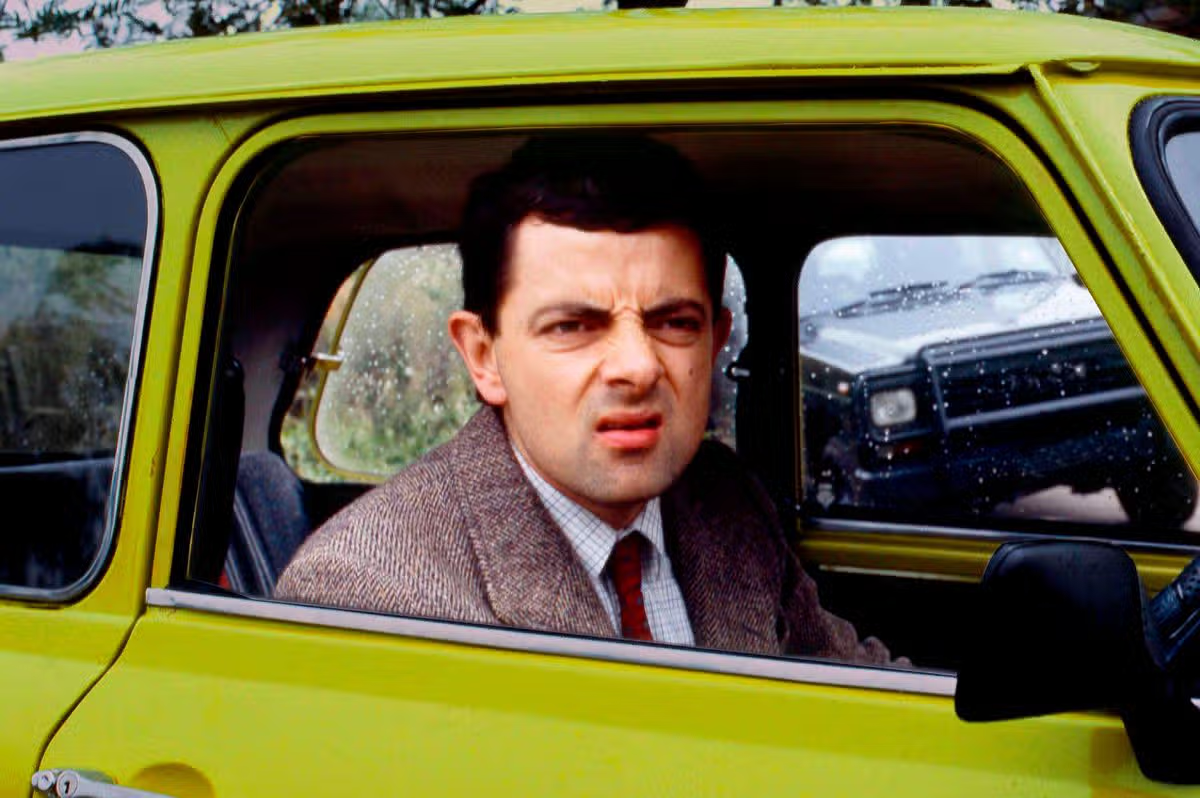
Mr Bean, the hapless character played by Rowan Atkinson between 1990 and 1995, will wreak havoc alongside Dennis the Menace, the Bash Street Kids and Minnie the Minx
Mischief maker Mr Bean in his mini in the sitcom which ran in the 1990s
He is clumsy, mischievous and causes chaos wherever he goes… so who better to run The Beano than Mr Bean?
The character, made famous by comedian Rowan Atkinson, will be taking the reins for four issues, wreaking havoc alongside Dennis the Menace, the Bash Street Kids and Minnie the Minx. And in his first act as boss, he renames the comic Mr Beano and promotes his brown knitted bear, Teddy, to “Teditor”.
His adventures will include rewriting the classroom rules when he accidentally ends up working at Bash Street School. And there are some back-alley shenanigans when his cat Scrapper meets Beano hounds Gnasher and Gnipper.
Rowan said: “I grew up reading Beano and always adored its anarchic style and tone – and as I regard Mr Bean as a natural-born anarchist and a child at heart, I’m surprised it’s taken us so long to explore a tie-up and finally exploit the Bean/Beano name connection. Its time has come.”
The eccentric character was first introduced to audiences in the eponymously named 1990s TV series before conquering Hollywood with Bean (1997) and Mr Bean’s Holiday (2007), as well as the ITV cartoon, Mr Bean: The Animated Series.
Mike Stirling, the Beano’s Director of Mischief, said: “Kids voted Rowan one of their top three mischief makers this year, so Mr Bean was always going to fit right in. Giving him the editor’s pencil was probably a terrible idea, but a funny one – as everyone will see.”
The collaboration is part of Beano’s Year of Mischief, marking the 75th anniversary of Dennis the Menace. The comic was first published in 1938 and is still created in its original Dundee HQ and printed in the UK.
The first issue will be available in supermarkets, newsagents and online from tomorrow.
WASHINGTON: Jason Eaton insisted he was acting on orders from the CIA and Mossad when he shot three Palestinian college students who were walking past his home a few days after Thanksgiving. He said the US and Israeli intelligence agencies transmitted the messages to him via FM radio and that God was commanding him to protect his Jewish neighbors.
Eaton’s claims were at the heart of his insanity defens e as he went on trial Monday on attempted murder charges in a case that shook Burlington, Vermont, and reverberated in the West Bank, where the three wounded men grew up and became friends as schoolmates in Ramallah before moving to the US for college.
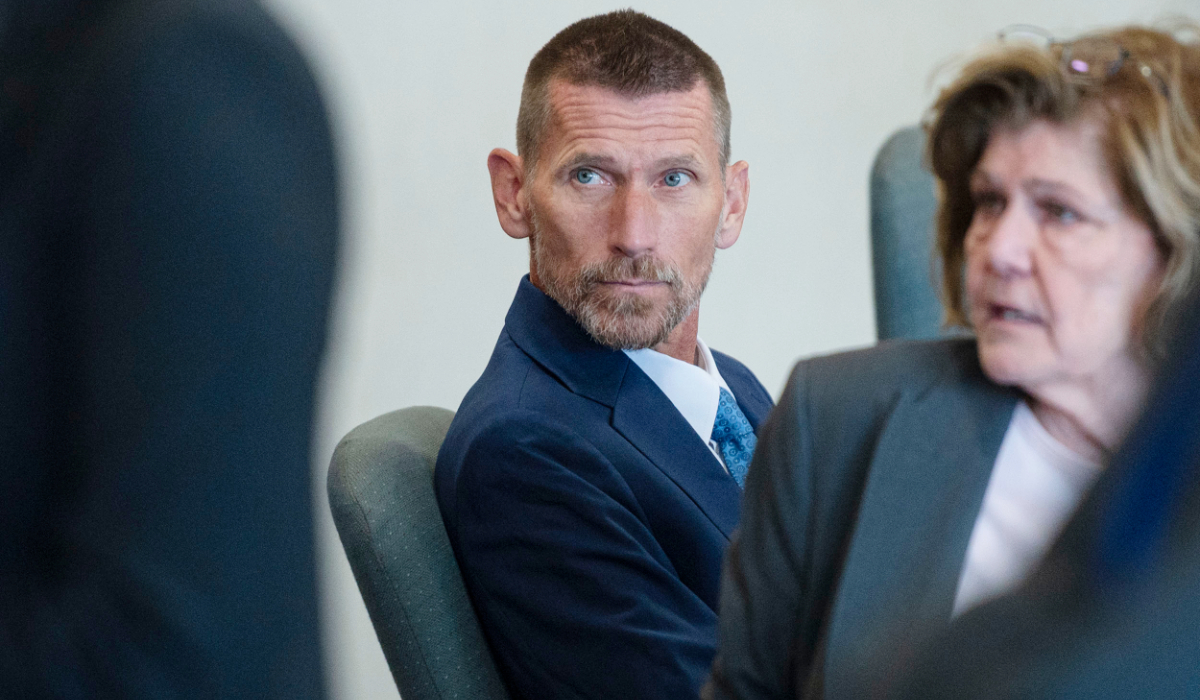
Jason Eaton appears in court during his trial in Burlington, Vt., Monday, Sept. 14, 2026. (AP)
The November 2023 shooting, weeks after the start of the Israel-Hamas war, spawned calls for a hate crime investigation. But no hate crime charges were filed as questions persisted about whether anti-Palestinian animus, an altered mental state or something else had compelled Eaton to open fire on Hisham Awartani, Tahseen Aliahmad and Kinnan Abdalhamid, who were all 20 at the time.
The men testified one after another as Eaton, now 51, watched stoically from the defense table in a Burlington courtroom. He has pleaded not guilty but doesn’t dispute that he was the shooter. If convicted, he faces up to life in prison. If found not guilty by reason of insanity, he could be ordered to undergo mental health treatment.
Defense lawyer Joshua O’Hara, previewing testimony from a defense psychiatrist, told jurors in an opening statement that Eaton was suffering from a delusional, psychotic disorder after losing his job at a credit union two weeks before the shooting.
While listening to a local NPR affiliate, Eaton believed he was hearing messages that he attributed to the CIA, O’Hara said. At first, the messages were encouraging and validating, the lawyer said, but subsequent messages turned dark, insisting that Eaton “has to go out and shoot somebody.”
Prosecutor Sally Adams told jurors that a state psychiatrist who is slated to testify concluded that Eaton did not have a mental disease or defect. Evidence will show he intended to kill the men, was not legally justified in shooting them, and does not meet the test of legal insanity, Adams said.
Authorities found three shotguns in Eaton’s apartment and a Ruger .380-caliber handgun that crime lab testing concluded was the gun used in the shooting, Adams said. Eaton had purchased the gun seven months earlier from a Vermont gun store.
“If the defense tries to focus on the story that Mr. Eaton tells about why he intended to kill these three young men, that story is only part of the whole picture,” said Adams, the chief administrative deputy at the Chittenden County State’s Attorney’s Office.
Awartani, Aliahmad and Abdalhamid, all of whom are now 23, told jurors of their holiday weekend visit to Awartani’s grandmother’s house, a trip to a bowling alley to celebrate his twin cousins’ birthday, and the walk they took near the University of Vermont campus after dusk that ended in bloodshed.
Awartani, who was studying at Brown University in Rhode Island at the time, said they were smoking cigarettes and speaking a mix of English and Arabic. Two of them said they were wearing traditional Palestinian scarves known as keffiyehs. Awartani said he first noticed Eaton standing on a porch as they approached the apartment house where he lived.
Within seconds, Awartani said, Eaton was off the porch and walking toward them. His face was expressionless and he didn’t say anything. As Eaton got to about five to 10 feet (1.5 to 3 meters) away, “he pulled out a handgun and started shooting at us,” said Awartani, who was paralyzed from the waist down in the shooting and now uses a wheelchair.
Jacob Pyne, who lived in a different apartment in the same house as Eaton, testified that he heard four to six gunshots, followed by footsteps going up the stairs of the apartment house. He said he ran outside and heard two men speaking, one of whom was more vocal and yelling, “I’ve been shot, help me.” He then brought the men blankets and called 911.
Abdalhamid, a student at Haverford College near Philadelphia, said he fled and hid behind another home after seeing Aliahmad fall to the ground. He said he only realized later when he sat down that he had also been wounded. Awartani was shot in the chest and the bullet ricocheted off his scapula, causing paraplegia in his spinal cord. Aliahmad, who was a student at Trinity College in Connecticut, was struck in the collarbone, and Abdalhamid was shot in the right buttock.
O’Hara, the supervising attorney at the Chittenden County Public Defender Office, told jurors that Eaton was confused by the messages he said he was receiving, and became convinced that the CIA and Mossad were enlisting him into “overwatch duty” to protect a Jewish family living across the street.
“These were delusions,” O’Hara said. “He believed in the moment that he was doing something that was right. He had been commanded to do this. And that he did not have the ability to appreciate the wrongfulness of his conduct in the moment because he believed he’d been instructed to do this by a government agency or God.”














![Moderate Party leader Ulf Kristersson (C) speaks during the Moderates' election night watch party in Stockholm, Sweden, 13 September 2026 [Christine Olsson/Sweden Out/EPA]](https://i0.wp.com/occasionaldigest.com/wp-content/uploads/2026/09/epa_6aa87247c6fc-1789424199.jpg?w=640&ssl=1)