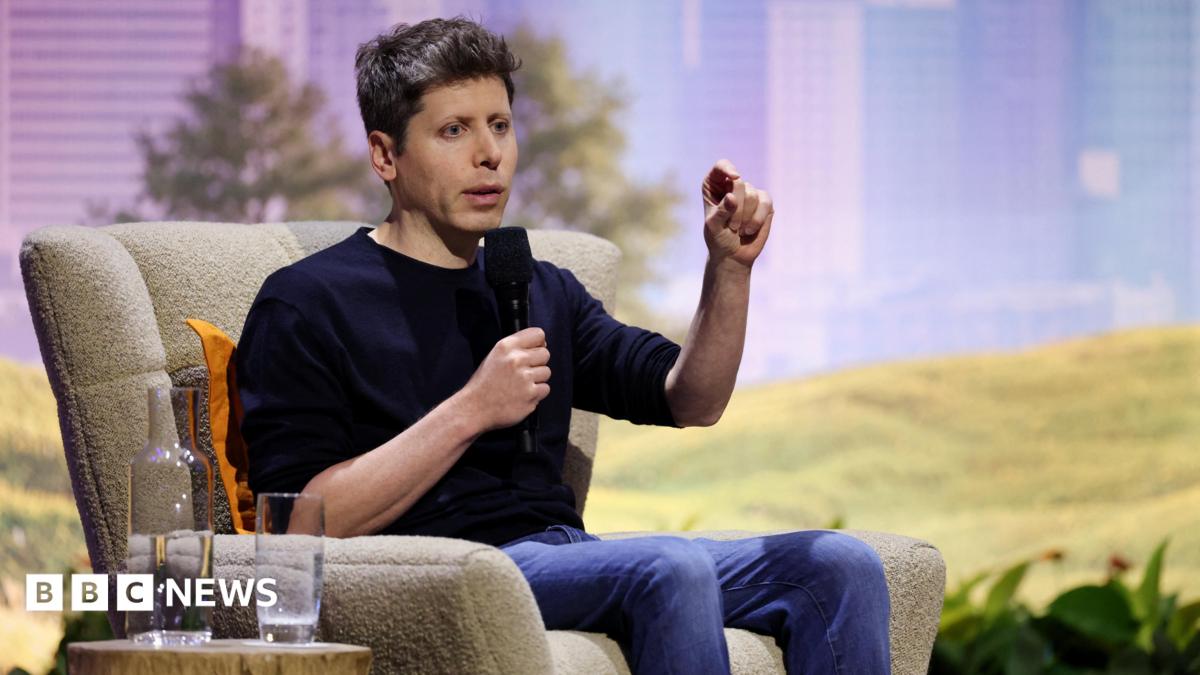
OpenAI boss Sam Altman thinks people should have more faith in his company and others like it to do the right thing when it comes to artificial intelligence (AI) development amid rising public concerns about all the risks.
“The world should trust that we are going to do the right thing because it’s the right thing and we feel the magnitude of this,” Altman said on Tuesday during a conference in San Francisco.
However, Altman noted that people were justified in their fears around AI, as the capability of the tools has progressed rapidly.
“It doesn’t take as much imagination as it used to for [us] to imagine how this could go wrong,” he said. “I think the world is right to be afraid of this.”
Altman’s comments came during an appearance at an annual conference hosted by software firm Salesforce.
It was the first time he had spoken publicly since a post went viral last week by a researcher who quit the AI firm Anthropic. The researcher claimed AI could kill all humans by the end of the decade if left unchecked.
A handful of other AI executives and experts responded by saying they agreed with the assessment, though they didn’t explain how they came to their conclusions or how exactly AI could accomplish such a thing.
The fervor over the claims has led to more scrutiny of AI development in recent days, and in response, Anthropic chief executive Dario Amodei called for the pace of all AI development to slow, external and urged governments to regulate the industry.
The post was applauded by Altman, as well as co-founder of Google’s DeepMind Demis Hassabis, and Elon Musk, owner of social media site X and AI assistant Grok.
By Tuesday, more AI leaders were voicing support for self-regulation rather than government involvement.
Altman said that he felt AI companies like his own were capable of essentially regulating themselves.
“We will get it right, I’m very confident in our company’s and industry’s ability to do this safely,” Altman said, adding that he was sure that they would “keep alignment and safety way ahead of capabilities” and if they couldn’t, they would “slow down or stop”.
After Altman’s comments, Meta boss Mark Zuckerberg wrote on X that every AI lab has the ability and the incentive “to take its own actions” towards making AI tools and models that are designed for safety.
“Any lab that doesn’t focus on alignment will fall behind,” Zuckerberg wrote. “Labs face significant liability if their models cause harm, so they have a strong incentive to prevent this as well.”
Jensen Huang, head of Nvidia, also said at the same Tuesday conference that the AI firms should decide if new versions of the technology should be released and not be managed by outside forces.
“We don’t need new laws or regulations,” Huang said, adding that there should not be a “false choice” between the speed of innovation and the safety of AI products.
Nvidia is the biggest company in the world by valuation, with its profits having boomed as a result of rampant demand for the AI computing chips it makes.
“Safety is paramount. However, safety is an engineering problem,” Huang said.
He added that if at any time a leader of an AI company lacks confidence in their product they should choose to not release it.
“That’s a very obvious thing to do,” Huang said. “Run as fast as you can, but if at any time you feel the institution is not in control, take a pause.”
Some industry figures have argued resurgent AI fears were overblown and were being jumped on to generate hype for the industry.
During the conference, Altman addressed a crowd of hundreds of business people, telling them they should use AI tools to aid in their work, but also needed them in order to protect their businesses from potentially AI-enabled cyber attacks.
The idea of AI executives being left to entirely regulate themselves has struck some in the industry as a bad idea.
Jack Clark, an Anthropic executive and co-founder, told the BBC on Monday that leaving AI to be a “totally unregulated industry” was “rolling dice with immense risks”.
“The only institution that Americans might trust less than Washington these days is Silicon Valley. I have worked and lived in both and I assure you both have earned this scepticism,” Hillman said.
“If you believe what you are building is dangerous, show us what you are prepared to stop doing,” he added.
Kids’ favourite TV character Bob the Builder – complete with a voice over by actor Neil Morrissey – has been hired to encourage more people to learn green energy skills
Bob the Builder has returned for a one-off advert in his original stock motion form (Image: E.on)
Much-loved cartoon character Bob the Builder is making a return in his original form after 15 years – to plug green energy.
The kids TV favourite, voiced by Men Behaving Badly actor Neil Morrissey, appears in a new advert from energy giant E.on.
And he also reveals what he has been doing since the original stop motion version of the show ended in 2011, including taking up yoga, bird watching and travelling to Australia.
It is Down Under, so the new story goes, that Britain’s best known tradesman twigs the importance of green energy, such as solar panels and home batteries. On returning home, he decides to learn the skills needed to fit the new kit, with the advert ending with his famous catchphrase: “Can we fix it? Yes we can.”
The 90 second piece, which will run across E.ON UK’s social media channels, is designed to encourage many more people to learn the same type of skills.
It comes as new research commissioned by the company found that around one third of professionals in the UK energy sector believe the workforce is not yet fully equipped to install the technologies needed for the transition to green energy.
At the same time, 89% agree that greater investment and closer collaboration between government and industry are needed. And the vast majority say that upskilling the existing workforce will be just as important as attracting new talent to meet future demand.
Helen Bradbury, chief people officer at E.ON UK, said: “Bob the Builder has always inspired people to solve problems and build things that matter. Today, those same qualities are needed to help deliver the UK’s transition to clean power.
“By embracing green skills and fronting this campaign, he’s a shining example of how we can make new energy work for everyone.
“If we invest in people’s homes, we can build a new energy system from the ground up. One that uses low-carbon, connected technologies like solar panels and batteries to put customers back in control of their energy use and lower their bills.”
Dozens injured as 2,000 farmers – backed by far-right groups – protest the extension of a livestock export ban.
Published On 15 Sep 202615 Sep 2026
Riot police have clashed with Romanian shepherds and farmers as they rioted during a protest against a ban on livestock exports due to disease.
About 2,000 people gathered to demonstrate in the capital, Bucharest, on Tuesday against the extension of a live sheep export ban, imposed by the European Union due to the highly contagious small ruminant plague. As in other protests by farmers across Europe in recent years, the rally was encouraged and supported by far-right forces.
Recommended Stories
list of 1 itemend of list
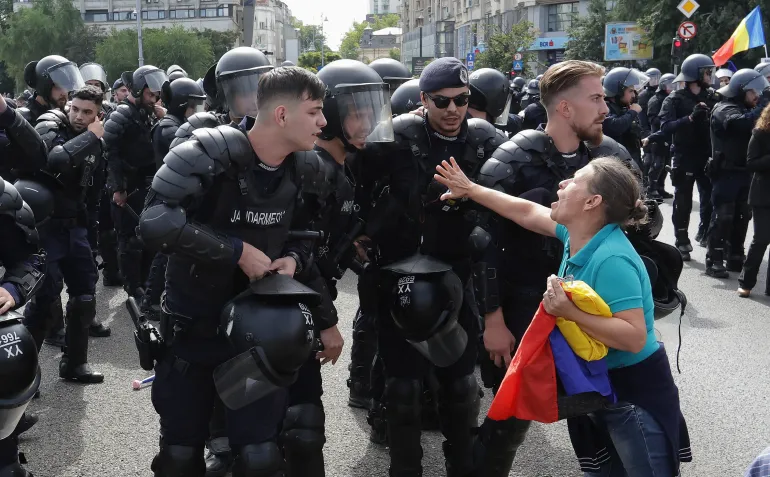
Violence broke out in front of the Romanian government building in Bucharest when some protesters demanding the reversal of the ban began throwing rocks, metal barriers and other objects at law enforcement.
Police responded with tear gas in a bid to disperse them. Twenty-six people were detained, riot police said in a press release.
Twenty-four demonstrators and police officers required medical attention – some for broken bones, others for the effects of the tear gas. Four were hospitalised.
The government and the opposition called on the demonstrators to refrain from violence.
A Romanian protester argues with riot police officers during a protest held outside the Romanian government headquarters in Bucharest, Romania, September 15, 2026 [Robert Ghement/EPA]
The demonstration was called by farmers and shepherd groups. Protesters held banners calling on the country’s president and prime minister to resign.
Some chanted the name of far-right politician Calin Georgescu, a former presidential candidate who is standing trial for acts against the constitutional order following the annulment of the presidential elections in 2024.
Supporters of Georgescu had shared messages on social media ahead of the protest, asking people to join.
George Simion, the leader of the main far-right group in the country, the Alliance for the Union of Romanians (AUR), wrote on Facebook that “AUR stands with the farmers and all working Romanians”, but called on protesters to demonstrate peacefully.
‘Legitimate protest to street fighting’
The Romanian government said in a press release that the protest had “degenerated into regrettable acts of violence” and called for “calm”.
President Nicusor Dan condemned the “extremely serious” violence and “any attempt to turn a legitimate protest into street fighting” in a social media post.
Romanian shepherds had protested outside the government building at the end of July over the EU ban on live sheep exports, which expires at the end of 2026.
The country of 19 million people has been struggling for months with the highest inflation in the EU and a political crisis with no end in sight.
The pro-European government, which adopted austerity measures to rein in a high budget deficit, was brought down in a no-confidence motion in May, and a divided parliament has failed to confirm a successor.
TUNIS: Amnesty International urged Algeria’s government on Tuesday to abandon plans to resume executions after it pledged to give the death penalty to those responsible for wildfires following deadly blazes last month.
Algeria struggled to put out fires that swept through its northeast and killed 12 people last month, according to an official tally, while witnesses spoke of dozens of deaths.
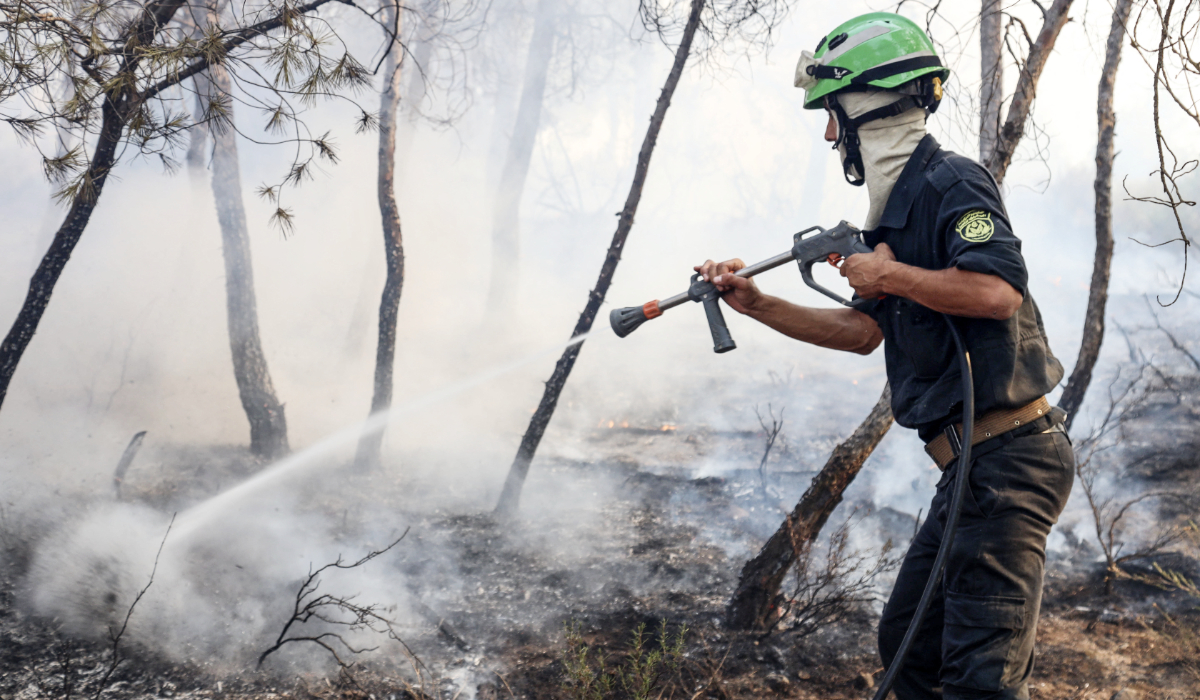
A member of a civil protection unit battles a wildfire in a mountainous area near the town of Al Hachimia, Bouira Province, on July 21, 2026. (AFP)
The North African country has not carried out executions since 1993 but has handed down the death sentence in some instances, including terror-related cases, without carrying it out.
Last month President Abdelmadjid Tebboune ordered the justice minister to amend the penal code to impose the death penalty for people who start wildfires after the deadly blazes.
“Algeria’s authorities must immediately abandon any plans to expand the scope of the death penalty or resume executions after more than three decades without carrying one out,” Amnesty said in a statement.
It also called for the country to impose an official moratorium “as a first step toward fully abolishing the death penalty.”
Tebboune also said that people sentenced to death should be executed right after exhausting their right to appeal.
The government began looking at draft penal code amendments this month.
Tebboune said “child abductors and abusers” would also be included in the expanded death penalty plans.
Forest fires occur regularly in northern Algeria during the summer, but climate change is amplifying their impact by causing increasingly frequent droughts and intense heat.
But Tebboune alleged that there was “something criminal” about the recent blazes.
Amnesty also said “credible sources have since reported significantly higher casualties” than the official tally in the latest wildfires, “including over 70 deaths in a single municipality.”
More than 30 people were killed in July 2023 when fires tore through thousands of hectares of forests and farmland in Algeria, as well as hundreds of homes.
In 2023, Algeria handed the death penalty to more than 50 people — some in absentia — over the lynching of a 38-year-old man who was falsely accused of starting deadly forest fires two years earlier.
LONDON — Prince Harry and his wife, Meghan, have moved their two children to a new school over security concerns, a spokesperson said Tuesday, just weeks after the family returned to the U.K. to make a fresh start.
“The decision for the children to move school was taken following a discussion with the family’s security team about the practicalities of their current arrangements,” the spokesperson said in a statement.
Prince Archie, 7, and Princess Lilibet, 5, had only just started the new school year in England after the family relocated from California in late August.
British media reported that the distance of the school run and the heavy traffic on the route were among the concerns raised by the couple and their security team. The family is living at a private, non-royal residence outside of London.
“This decision should in no way be interpreted as a reflection on the school or the exceptional care the children have received there,” the statement added.
The news followed reports that Harry and Meghan were awaiting a new risk assessment from the government committee that reviews protection of VIPs, including a decision on whether the family should be entitled to publicly funded security now that they live in the U.K.
Harry and Meghan gave up their royal duties and moved to California more than six years ago, saying they wanted to earn their own living. They later signed lucrative contracts with Netflix and Spotify.
Although relations with the rest of the royal family have soured since then, Harry has recently expressed an interest in reconciliation so he could spend more time with his father, King Charles III.
Harry has fought a long-running battle with Britain’s government for the restoration of publicly funded police protection, which was canceled when the couple gave up their royal roles.
He had previously said he couldn’t “see a world in which I would be bringing my wife and children back to the U.K.” without a security guarantee.
Earlier this month, the king reiterated that Harry and Meghan remain non-working members of the royal family and would continue to refrain from using formal royal titles, such as his royal highness and her royal highness, as they have done since 2020. The couple said they were surprised by the way the monarch issued that statement because they were given little time to review it.
NEW YORK: Three supporting acts have quit Ed Sheeran’s tour after Macklemore was removed for his pro-Palestinian comments onstage.
Hours after Sheeran said he refused to be drawn into a discussion about the war in Gaza, Aaron Rowe, the band Beoga and Finneas all posted Tuesday on Instagram that they would withdraw from Sheeran’s tour.
Rowe was one of Macklemore’s replacements for Sheeran’s remaining U.S. dates, while Beoga was serving as Sheeran’s touring band. Finneas was due to tour with Sheeran in South America later this year.
Emails seeking comment were sent to Sheeran and Macklemore’s other replacement, the Danish band Lukas Graham.
Ed Sheeran has weighed in on Macklemore
Ed Sheeran has weighed in on Macklemore being dropped as his opening act after the rapper made pro-Palestinian comments onstage during their tour, saying the decision was made by the promoters alone. The British singer also said he refused to be drawn into a public discussion about the war in Gaza.
“Macklemore coming off tour was the promoter’s decision, it was not mine,” Sheeran wrote on Instagram on Tuesday. “I would never let down the fans who had made plans, nor would I abandon the touring crew and the other support acts and musicians who rely on me for work and to make a living.”
The tour’s promoter, the Messina Touring Group, did not immediately respond to emailed requests for comment Tuesday. Macklemore’s publicist also did not immediately respond.
Sheeran’s statement came a day after Macklemore said he was kicked off the Loop Tour after exclaiming “Free Palestine!” during the Sept. 5 date at New Jersey’s MetLife Stadium while introducing his protest song “Hind’s Hall.”
“To all of my Jewish brothers and sisters, criticism of Israel, criticism of apartheid, being against genocide, it in no way is criticism of you,” he said during the concert.
Macklemore said Monday on Instagram that several U.S. venues told the promoter they would prohibit him from performing as Sheeran’s opening act, rallied by Robert Kraft, owner of NFL’s New England Patriots. His Kraft Group also owns Gillette Stadium, where the Patriots play.
In statement Monday, Kraft said the decision to cancel Macklemore was a result of his recent comments “and a broader history of antisemitic rhetoric and imagery that we believe has been deeply offensive and hurtful to the Jewish community.”
Sheeran said in his latest post that he “spoke with the venues at length all week to try to build a bridge,” but that “the venue’s and promoter’s decision was final.”
A growing chorus of organizations and experts say Israel’s wartime actions in Gaza amount to genocide — an accusation Israel vehemently rejects.
Macklemore was scheduled to perform at eight of the 10 shows Sheeran has remaining on his stadium tour, which will resume Saturday in Philadelphia, with Lukas Graham and Aaron Rowe now on the bill. Ahead are stops at Gillette Stadium, Atlanta’s Mercedes-Benz Stadium and Indianapolis’ Lucas Oil Stadium.
Sheeran said he tries to use his music to “bring people from all backgrounds and cultures together” and that while he has personal views about “this devastating conflict,” he chooses not to speak publicly because people who come to his shows “do not expect a political forum.” He added: “I am not complicit.”
“I respect Macklemore’s strength of purpose to stand up and shout for what he believes,” Sheeran added. “However, there is room for multiple approaches to the same end: peace. I choose to use my fame and platform to be a place of safety and sanctuary, to maintain diplomacy and keep conversations open, not closed.”
The US defence department’s inspector general says the war with Iran has led to “shortfalls” in munitions and a bottleneck in resupply, contradicting President Donald Trump who has repeatly denied the US is facing shortages.
Trump has claimed US munitions supplies are “virtually unlimited” and said reporting otherwise is “fake news”.
But the independent watchdog said the US spent more than $22 billion on munitions from February through June, leading to “strategic inventory shortfalls”.
The BBC has contacted the White House for comment about the discrepancy.
The new report provides a first-of-its-kind, independent glimpse into US weapons stockpiles, data that is typically classified.
Over the course of the war, US forces have expended vast quantities of both long-range ground attack systems and the air and missile defences used to intercept incoming Iranian attacks.
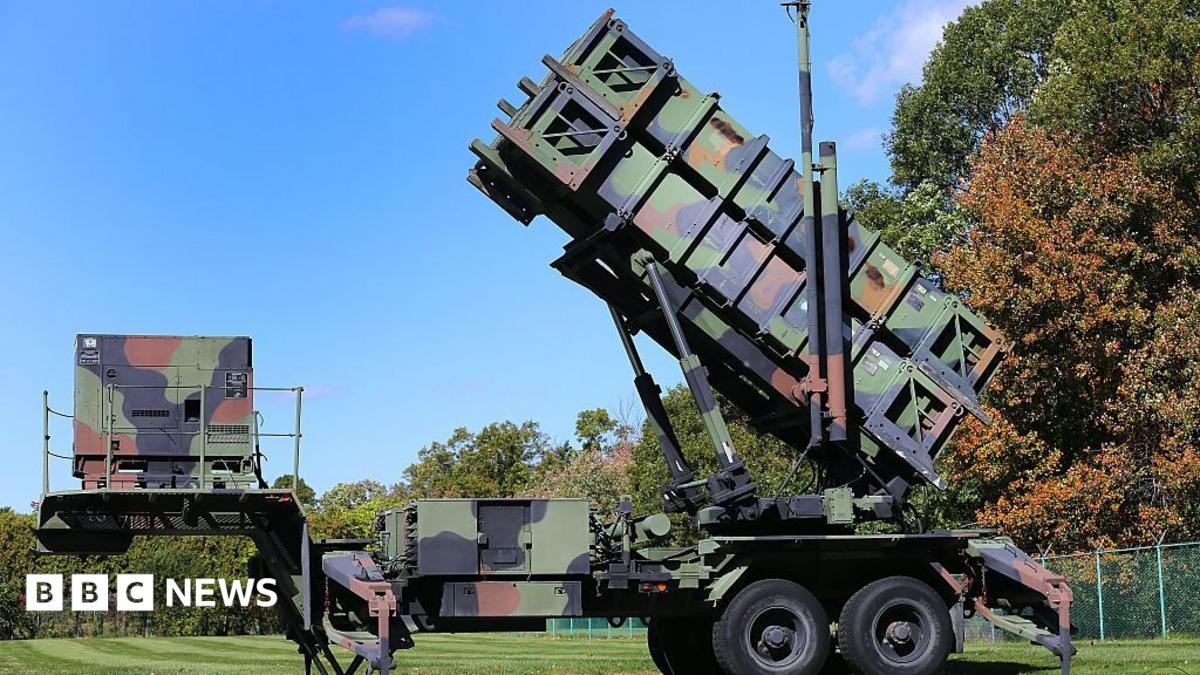
A late July estimate from the Center for Strategic and International Studies, or CSIS, found that stocks of some interceptors – such as the Patriot missile and Terminal High Altitude Area Defense, or THAAD – were significantly depleted, in some cases by more than half.
The inspector general’s report did not disclose exactly how many of the weapons remain.
It did, however, note the inventory shortfalls and reveal “industrial base bottlenecks” for munitions resupply.
The report added that the defence department is now working to “streamline procurement processes and production lead times” to address the shortages and “respond rapidly to a contingency”.
In a 4 August X post, for example, Defence Secretary Pete Hegseth described news reporting on the shortages as “not true”.
And in a lengthy Truth Social post on 3 September, Trump claimed that the US had “virtually unlimited” amounts of ammunition and is “stockpiling and preparing for any contingency that could happen”.
The watchdog’s report also notes that equipment losses have totaled $3.7bn, with other $7.4bn in other expenditures. Overall, the US spent $33.4bn (£24.7bn) on the war from 28 Feb to 30 Jun.
A separate estimate released on Tuesday by the Congressional Budget Office put the total cost of the war at higher at $38bn, which includes replaced expended munitions and equipment lost in battle, increased flying hours and greater fuel costs.
Among the losses have been four F-15e fighter jets, a highly advanced F-35 Joint Strike Fighter and 30 MQ-9 drones destroyed in “various circumstances”.
When US and Israeli strikes began, Trump repeatedly said that the conflict would be over within weeks.
More recently, he said the conflict might not end until “right after” the November midterm elections in the US.
Polls show that the war is unpopular among Americans.
One Reuters/Ipsos poll released in early September found that only 23% of Americans – and only half of Republicans – believe the US to be in a stronger position with Iran compared with before hostilities broke out.
In an abandoned warehouse in Barcelona, the diva concealed her face beneath a helmet. Her hair moved like a black waterfall as she strutted, bare feet arched, as if in heels. The heels do appear later, click-clacking as the camera reveals a screen on her pelvic region, and as she reveals her face, growling a provocative verse from “Taconeando” — “Yo sé que tu quieres que me venga.”
Throughout the course of her July 27 “XXXXX” livestream, which beamed her first album in five years to the world, the artist-producer Alejandra Ghersi Rodríguez, best known as Arca, bathed in the warm hue of red light and strobes — and later, what seemed to be blood.
She blew kisses to the camera and toward the sky. She let out vocoded screams as she writhed on an industrial floor and lay resplendently upon a mountain of sand. She covered her bikini-clad body in peonies, visually echoing anAna Mendieta “Silhueta.”
It would be too simplistic to label “XXXXX” as a return to form for the expansive Venezuelan artist; this record is more than a pop-timized syncretization of her previous electronic experimentations, such as her 2013 debut EP “&&&&&,” or the hourlong single “@@@@@.”
Lest we forget her celebrated self-titled album in 2017, which was the first time we heardArca’s voice untreated to the doleful melody of a tonada, the Venezuelan folk genre popularized by llanero troubadourSimón Díaz; or the wildly ambitiousfive-album “Kick” cycle, in which she indulged in the Caribbean sounds of dembow and reggaeton, then melded them together into one ambient stream, with her signature glitchy flair.
The album cover of “XXXXX,” which calls to mind one of Swiss artist’s H.R. Giger’sbiomechanoid machine-human chimeras, nods to the much-ness inherent here: specifically the post-humanist conceit of “diva as technology” that lies at the bloody, beating heart of this record.
What best captures her ambitions on “XXXXX” is the aptly named song “Everything,” which centers a soft-hard sequence of percussion that threatens to consume you — and if it does, you let it.
When every color of paint is mixed together, a dark color emerges. When every sound is blended together, what does it become? An orchestral flourish slowed to a whisper as in “Finisher?” An explosion, like in the fast-rattling crackle of “Syncope?” Or a hand on your hookup’s throat, telling them they know exactly what you want from the interaction as in “Fxck?”
The alchemy on “XXXXX” doesn’t always go down smoothly. Arca’s never been an artist to be easily swallowed and thrown back into the ouroboros of the pop machine; if she’s always been the sand in the cog, what happens when the underground diva herself surfaces to mainstream superstardom? These are problems to ponder in the shadows of a club.
The diva as a concept is already rooted in transformation. A beautiful, powerful woman flaunts her voice dramatically onstage, reaching new heights and incarnating — to paraphrase Wayne Koestenbaum’s observations on operatic divas, like Maria Callas in his seminal text “The Queen’s Throat” — an airy sense of freedom.
Arca — a nonbinary trans woman who makes uncategorizable music and embodies unquestionable glamour — anchors her divahood in a mutation of body, soul and sound. It’s a concept she has been playing with since hersecond album, “Mutant,” which alsogave her fanbase a name.
Still, attempting to situate her in any tradition is moot.
Her divahood exists in the context of Venezuelan underground electronic music, where Arca was the youngest of a generation of DJs and producers. This includes theraptor house don DJ Babatr; hard fusion father DJ Yirvin; Luis Garban (who plays as Cardopusher andSafety Trance); MPeach; and Phran.
Arca is now the kind of artist who could be seen walking runways in Berlin, or seated front row at the Saint Laurent show at Paris Fashion Week. Last month in Iceland, Arca served as the high priestess of Echolalia: an eclipse rave helmed by longtime collaborator Björk and a coterie of local acts.
Arriving in a summer defined by pop divas switching gears —Charli XCX turning to rock music (in a sense),Madonna leaning hard into nostalgia after a career of refusing to repeat herself, and the ever-smileyKarol G surrendering to her saudade — Arca’s “XXXXX” is similarly an invitation to transmute.
But if we can locate Arca’s divahood in a lineage, it might be in the modern tradition of the anonymous and enigmatic doll at the rave: ready to let her ego dissolve into the bass.
You listen to the quiet internal world Arca conjures on “Raver,” with its jangling and haunted electronic keys. You can see her clearly there: lost under the strobes, eyes turned up toward heaven, letting herself sway, sweaty, between moments of euphoria, completely in her body. Has anyone ever been more enraptured and glorious? Every raver has, in a sense, wandered gladly to oblivion with “eyes closed and heart open,” as Arca says on “Cinch.”
We may get drugged up to forget it all; or we go sober with earplugs and water and good sneakers and coffee, or cold yerba mate toward the music. Yet all of us seek to get lost in the sound, to cinch our waists and let the bass move through us — to have the transcendental experience of “[letting] the beat f— you,” as Australian scholarMcKenzie Wark describes halfway through her essential book, “Raving.”
The aesthetics of ravers reaching the mainstream — and into the hands of normies through the rise of so-called “corporate raves” — has allowed for the creation of depictions that exist outside of the real, silent moments of transcendence. It’s the communion, after so much ceremonial dance, with the divine.
For all the modernity of its rave philosophy and sci-fi metallic soul, “XXXXX” has a connection to an ancient divinity — to older technologies, from ritual to radio.
Near the beginning of “XXXXX,” the song “Willow” ushers us into this new world, with a clanging that evokes the sound of church bells in space. After a minute of this, the crash of hi-hat punctures the silence. Arca’s pitched-up vocals seep through, matching the beat in a disjointed chant: “Willow tree blowing in the wind, let it fall.” The song continues flourishing with the deconstructed trap beat and dark synthesizers that call to mind the classic sounds ofwitch house. It’s the opening of the ceremony, the energetic cleansing of the space.
The album’s loose framework as a transmission from an intergalactic underground radio station, “Diva Experimental FM,” is a structure she’s been playing withfor years in the form of a show streamed on NTS. She launched this new era with another mix for the show called “Airdoll,” a storm of baile funk with currents of ambient music, R&B and Gregorian chants. These various sonic streams fuel the mechanical but witchy futurist soul of “XXXXX.”
In their multi-genre 2025 book “Dysphoria Mundi,” Spanish trans philosopher and activistPaul B. Preciado points to gender dysphoria as a symptom of the world’s broken state and the utopia that could well rise from the ashes.The constant procession ofnatural disasters — and the indifferent leaders and the violent bloodthirsty systems they work under — push society to mutate into something better. As with Arca the artist, “XXXXX” is a curse-breaker, a cultural palate cleanser and a call to evolve.
WASHINGTON: The six-month-old US war against Iran has cost $38 billion so far and that amount is projected to rise by $3 billion a month, Congress’ nonpartisan bookkeeper reported on Tuesday, as the Trump administration searches for ways to end the conflict and reopen the vital Strait of Hormuz.
The war is expected to increase inflation by 0.5 percent in the first three months of 2027, according to the Congressional Budget Office accounting, which totaled expenses through August 1.
The mounting costs have strained US munitions stockpiles and driven up energy prices, raising concerns about the country’s ability to respond to other potential conflicts and adding pressure on an already stretched federal budget.
The cost was close to the $37.5 billion that Defense Secretary Pete Hegseth reported at a Senate hearing on July 21.
The budget office said the majority of the costs stem from the rapid drawdown of munitions, estimating that it could take five years to replenish US stockpiles. Reuters reported in August that the US had used “virtually all” of its long-range precision missiles during the war.
The Department of Defense did not cooperate with congressional financial auditors, CBO reported.
Representatives from the White House and Department of Defense did not immediately respond to requests for comment.
The inquiry was conducted at the request of the top Democrat on the US House of Representatives Budget Committee, Brendan Boyle of Pennsylvania.
“Donald Trump’s disastrous war in Iran has already taken the lives of brave American servicemembers and left others wounded,” Boyle said in a statement.
“Beyond that human toll, this nonpartisan CBO report makes clear that the war has also cost American taxpayers tens of billions of dollars and counting, while continuing to drive up costs.”
Eighteen US military service members have died in the Iran war.
The report did not include costs of recent strikes on commercial vessels in the Strait of Hormuz and attacks on US military installations in the region. It also did not factor in the borrowing expenses associated with financing the war, which could add tens of billions of dollars to the total cost.
IMPACT ON US READINESS
The CBO accounting found the war could have sprawling consequences for the US defense posture and the domestic economy.
The deficit in critical munitions, including missile interceptors, risks hampering the Pentagon’s response in the event of another major conflict, such as potential hostilities involving China and Taiwan, CBO said.
At the July hearing in the Senate, Hegseth pleaded for nearly $90 billion emergency funding legislation to restock munitions supplies.
“Without these funds, we face critical shortfalls,” Hegseth said.
Energy shocks caused by attacks in the Strait of Hormuz — the narrow waterway through which roughly 20 percent of the world’s oil traveled before the war — and on energy facilities in neighboring Gulf countries have sharply increased prices for consumers and global producers.
The rising cost of the war also threatens to weigh on deteriorating US fiscal health. The nation’s total public debt surpassed $40 trillion in August.
Trump regularly contrasts the Iran war with the US invasions of Iraq and Afghanistan that followed the September 11, 2001, attacks.
The eight-year US war in Iraq, which involved more than 100,000 ground troops at its peak, cost $2 trillion, Reuters reported. The two-decade-long US conflict in Afghanistan, which also involved more than 100,000 troops at its most intense, cost $2.3 trillion, according to Brown University’s Costs of War project.
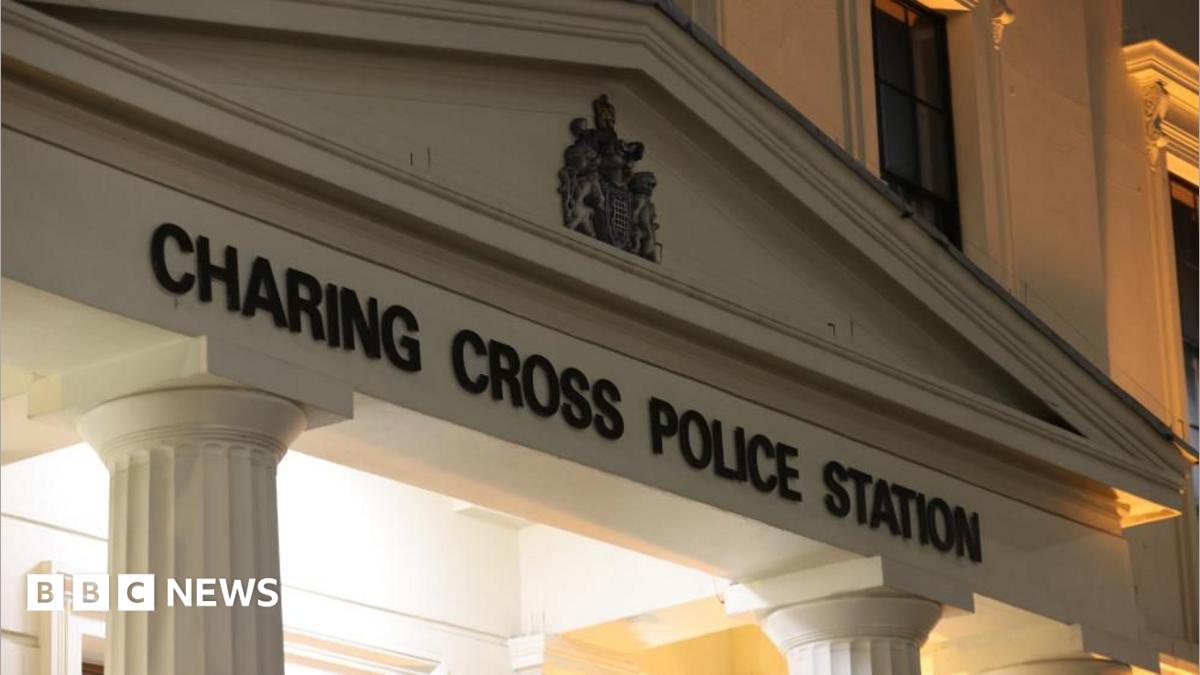
Another Metropolitan Police officer has been dismissed following BBC Panorama’s undercover investigation into the force’s Charing Cross station.
PC Mason O’Connor was sacked after a hearing found he had breached standards of professional behaviour, relating to a comment he made to a female colleague, the Met said.
O’Connor was reported to a “proactive wider investigation” following the broadcast of the programme in October 2025 and he has become the 13th officer to be sacked since then, the force added.
Other officers who were covertly filmed for the documentary were seen calling for immigrants to be shot, boasting about excessive use of force and joking about rape and sexual assault.
O’Connor’s dismissal relates to a comment he is alleged to have made to a female colleague while off-duty in a pub in October 2024.
A hearing held on Tuesday found he had breached standards of professional behaviour for authority, respect and courtesy, equality and diversity, and discreditable conduct.
DAISY Edgar-Jones has stunned in a plunging silk gown with a thigh-high split at premiere for Sense and Sensibility.
Daisy is set to lead the remake of Kate Winslet‘s 31-year-old classic Sense & Sensibility, and before wowing fans on the big screen, she’s wowed them on the red carpet.
Daisy Edgar-Jones posed as she arrived for the premiere of Sense and SensibilityCredit: APShe looked fresh-faced as she posed on the red carpet, which was in fact greenCredit: AP
Leading the glamour at the glitzy event, Daisy wore a silky cream gown which had a plunging neckline and thigh-high split.
Wearing her brunette locks in a tousled style, Daisy kept her makeup minimal and inkeeping with the era of the film.
Sign up for the Showbiz newsletter
Thank you!
Daisy takes on the role of Kate Winslet’s Elinor Dashwood in the new Austen adaptation.
As well as Daisy, there were a whole host of other famous faces at the star-studded premiere.
Made in Chelsea star Millie Mackintosh attended the premiereCredit: Shutterstock EditorialShe looked stunning in the strapless numberCredit: Shutterstock EditorialChloe Pirrie wore a frock with a see-through skirtCredit: GettyEsme Creed-Miles looked beautiful in the voluminous gownCredit: Shutterstock Editorial
Made In Chelsea’s Millie Mackintosh attended in a slinky floor-length gown, which had a strapless bodice.
Scottish actress Chloe Pirrie looked sensational in a corset-style dress with a completely see-through chiffon skirt.
Esme Creed-Miles, who acts opposite Daisy in Sense and Sensibility, looked beautiful in a cropped black jacket-style top with a huge voluminous white skirt.
Esme plays the role of Marianne Dashwood in the coming of age flick.
The classic by Jane Austen is about two sisters, Elinor played by Daisy and Marianne played by Esme, who navigate love, heartbreak, and financial ruin in 19th-century England.
Austen’s 1811 novel has been adapted for the screen multiple times over the years.
The most notable adaptation was the 1995 film with Emma Thompson, Hugh Grant, Kate Winslet, and Alan Rickman.
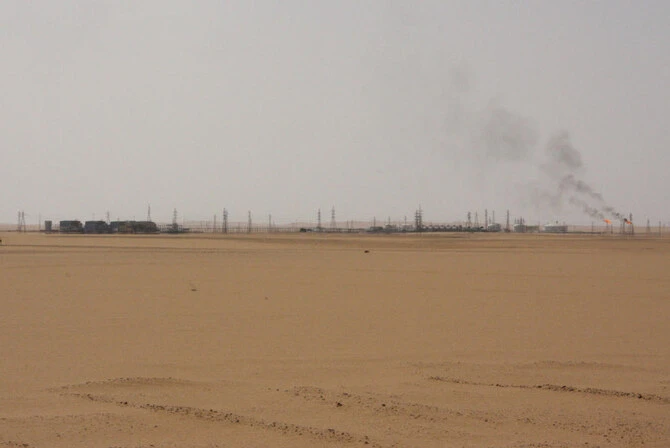
TRIPOLI: Operations were suspended at two oilfields and a pumping station after members of the security force charged with protecting Libya’s oil sector closed a valve on the main Hamada-Zawiya crude-loading pipeline, the National Oil Corporation said on Tuesday.
The NOC said it may declare force majeure if the valve remains closed or if other fields are subjected to similar forced shutdowns.
The company said production had completely halted at the Hamada and Tahara fields and at a pumping station. Libyan oil output has been subject to repeated closures for political and technical reasons since the 2011 uprising against Muammar Qaddafi.
In a statement obtained by Reuters, the Petroleum Facilities Guard, which provides security for Libya’s oil fields, pipelines and terminals, demanded that their agency be transferred “financially and administratively under the National Oil Corporation”.
They called on the prime ministry and the NOC to take urgent measures to complete the administrative and financial arrangements for this, and set a clear implementation timeline.
The agency currently operates under the defense ministry. The Guard said it would implement a partial production cut for one week as of Tuesday at several fields including Wafa, Al-Khamsa and El Feel, adding that a complete shutdown would follow if their demands were not met.
Oil production is Libya’s main economic source, representing approximately 90 percent of the economy of the entire country. “Shutting down oil fields and halting production operations at this critical juncture — as the world witnesses a rise in crude oil prices — constitutes a devastating blow to the national economy,” the NOC said in a statement.
At a highly sensitive juncture, and amid increasing talk regarding the possibility of a third round of regional escalation, Iraqis are confronted with a fateful question: Is there someone seeking to make Iraq a part of this conflict – not merely a venue from which messages are dispatched or through which pressure is managed, but rather one of its open arenas?
There can be no avoiding the question, as the answer is linked to Iraqi blood, state sovereignty, the future of the economy, and Iraq’s standing among its brethren, neighbors, and the world. The matter is no longer a limited security issue; rather, it is a question of statehood, destiny, and direction, as well as a question of Iraq’s ability to protect itself from being dragged into what it does not want.
Repeated attempts to use Iraqi territory to target fraternal and neighboring Arab countries – the latest of which was the announced targeting of Saudi Arabia, preceded by the United Arab Emirates, Kuwait, Bahrain, and Jordan – reveal that we are facing a systematic trajectory rather than an isolated incident. If not decisively resolved, this trajectory could transform into a de facto policy.
Should the state succumb to the blackmail of forces acting outside its authority, it loses not only its security decision-making power but the very meaning of statehood itself. Iraq must not remain a conduit for messages, a proxy mailbox for others, a negotiating card in their conflicts, or an arena pushed forward during every regional escalation.
The problem is no longer about issuing a statement after each incident or settling for a reassuring narrative that does not prevent the recurrence of danger. The deeper problem is the existence of a repeating pattern that consumes Iraq’s political and moral capital, leaving the government to face the consequences of actions that do not reflect its own decisions. The longer a decisive resolution is delayed, the more a dangerous perception takes root abroad that the Iraqi state alone does not control its security decisions. This is an unfair image of Iraq and harmful to its interests, but it cannot be corrected by words alone.
Sovereignty is not safeguarded through slogans; rather, it is maintained by the state’s capacity to serve as the sole authority for force and decision-making. Consequently, restricting weapons to state control is neither a stance against any faction nor a detraction from anyone’s sacrifices. Instead, it is a prerequisite for the survival of the state and the protection of everyone. A state that does not hold exclusive authority over the decisions of war and peace can neither demand that others respect its borders, reassure its citizens, nor build stable relations with its neighborhood. It is in the interest of all forces, above all others, for the state to be strong, because a weak state protects no one; instead, it leaves everyone exposed.
Today, under highly sensitive circumstances, the Iraqi government is working to reconnect Iraq with its Arab, regional, and international surroundings, and to sincerely leverage available support and openness to serve the interests of Iraqis. These efforts deserve support – not because they are the efforts of a specific government, but because they represent the trajectory of a state. However, there are those, both internally and externally, who do not want Iraq to move past the logic of conflict and axes, and who seek to undermine any attempt to solidify its position as a balanced, secure partner state that is capable of speaking for itself, rather than for others.
The truth is that the Arabs, despite all the complexities that have affected the relationship, have not turned their backs on Iraq; rather, they have continued to view it as a pivotal country indispensable to regional stability. Throughout the difficult years, there remained an Arab readiness to embrace Iraq and restore it to its natural position, out of belief in its role, presence, and civilized and political depth. The problem has never been an Arab desire to break ties with Iraq; rather, it lay in Iraq’s ability to present itself as a state with a single decision-making authority – not a country where decisions are contested between the government and factions, the constitution and weapons, and national interest and wills that do not emanate from Iraqi state institutions. It is unfortunate that opportunities for openness and trust are squandered due to practices that reflect neither the will of Iraqis nor the interest of their state.
The risk of slipping today is greater than some believe. Every uncalculated action could drag Iraq into a confrontation it does not want, and every use of its territory outside state decisions could push it an additional step toward isolation. Isolation is neither heroism, an interest, nor a viable option in a world where countries thrive on economy, partnerships, investment, and trust. Every armed message launched outside the state is met with a message of concern from the investor, the partner, and the fraternal state, and every new disruption reflects on the market, labor, energy, banks, and Iraq’s image in the world. Iraq needs projects, energy, job opportunities, education, infrastructure, and openness – not more anxiety, armed messages, and alignments that deplete it.
We must be candid with our people: statements are no longer enough. Neither the domestic public is convinced by statements, nor is the outside world reassured by them. What preserves Iraq’s standing is action: a professional investigation, fair accountability, real control, and a clear decision that no entity, regardless of its title, can place the country in war, isolation, or economic loss. Backing the government along this path is a national duty, because it is a support for the state, its right to protect sovereignty, preserve relations, and build the future.
Iraq is subordinate to no one, an enemy to no one, and an arena for no one. It is a great homeland, and the decision of war and peace within it belongs to the Iraqis and their state alone. This is the hour of the state, the hour of reason, and the hour to say clearly: Iraq first.
Savannah Guthrie continued her calls for kidnappers to return her mother Nancy Guthrie, as the investigation into the elder Guthrie’s disappearance surpasses its six-month mark.
The “Today” show co-host during Tuesday’s broadcast shared a desperate message to those who kidnapped 84-year-old Nancy Guthrie from her Tuscon home in February.
“We just want our mom home [to] give her a proper goodbye,” she said.
Guthrie renewed her plea in response to the support that she, Nancy Guthrie and their loved ones received backstage at the 2026 Emmy Awards. Allison Janney, who won supporting actress in a drama for “The Diplomat,” said backstage that she has been thinking about the morning news anchor’s family daily and “about the loss Savannah and her family are going through.”
“It just took over,” Janney said backstage to reporters.
Federal and local law enforcement have worked for more than six months to locate the elder Guthrie, without success. Since Nancy Guthrie’s disappearance, investigators analyzed ransom notes apparently sent by those responsible for the kidnapping. One note states that Guthrie “perished shortly after she was taken” and that she is “buried in nature.”
“Nothing you could have done could have changed the outcome,” the letter states. “We want your family to know this and hope you can find peace. We are truly sorry.”
Savannah Guthrie said Tuesday that Janney’s remarks at the Emmys were touching, especially considering the actor’s win earlier in the evening, she said. She then told co-host Willie Geist she will not pass up a moment to speak about her mother. “How much we miss her and love her,” the longtime NBC personality said, her voice cracking. She added that her family is in “such pain.”
“We need help,” she continued. “So thank you Allison Janney for remembering us and for giving an opportunity to renew that call.”
Times staff writers Richard Winton and Hannah Fry contributed to this report.
Moscow and Copenhagen trade blame for the incident as Denmark says it will not invoke NATO treaty.
Published On 15 Sep 202615 Sep 2026
Moscow has warned Denmark to avoid “reckless” action after a Russian frigate fired two flares that narrowly missed a Danish military helicopter.
Moscow’s ambassador in Copenhagen, Vladimir Barbin, on Tuesday insisted that “dangerous manoeuvres” taken by the Danish aircraft were to blame for the Baltic Sea incident.
Recommended Stories
list of 3 itemsend of list
The Russian diplomat told state news agency RIA Novosti that he had delivered a formal note demanding steps to prevent a repeat of the episode.
He said that the helicopter’s actions were provocative and condemned Danish attempts to call them routine, saying they raised “serious concern about the possible consequences of such recklessness”.
The Fennec helicopter was on a routine mission to photograph the frigate as it sailed in international waters off Denmark, the Danish defence command said. Ships typically use such flares as warning signals.
Denmark’s Defence Minister Jeppe Bruus told TV 2 News that one flare passed within a “matter of metres” of the aircraft, and accused Russia of “deeply unprofessional seamanship”.
When asked if Denmark would seek Article 5 consultations over the incident – invoking the NATO measure that considers an attack against one member of the bloc to be an attack against all of them – Bruus said the incident was being taken seriously, but “we are not there”.
Barbin said he had complained last year about what he called dangerous fly-bys and low hovering by a Danish helicopter over the Russian warship Vice-Admiral Kulakov.
Kremlin spokesman Dmitry Peskov declined to comment, saying he lacked details.
The Danish Straits – where most Danish incidents with Russia have taken place – are the Baltic’s main shipping gateway and a key oil route, including for Russian oil tankers.
Danish Prime Minister Mette Frederiksen called the incident serious but not surprising, describing it as part of a pattern of intensifying Russian hybrid warfare against Europe and testing NATO.
‘Fear and discord’
“Russia wants to sow fear and discord,” Frederiksen said, calling for closer unity and stronger defences for Denmark and Europe.
Russia denies carrying out hybrid attacks in Europe. However, the potential for the war in Ukraine to escalate and entangle Europe’s NATO member states is rising.
A spokeswoman for Russia’s Foreign Ministry later on Tuesday warned Western politicians and diplomats to “soberly” assess the risks of travelling to Ukraine, following a Russian drone strike on a rail line on which a train carrying former British Prime Minister Boris Johnson and former Swedish Prime Minister Carl Bildt had passed minutes earlier.
Rail hubs and transport infrastructure serving Ukraine’s military are legitimate targets, she said, and Russia warned foreign diplomats in May to leave Kyiv because of strikes on Ukraine’s military-industrial complex.
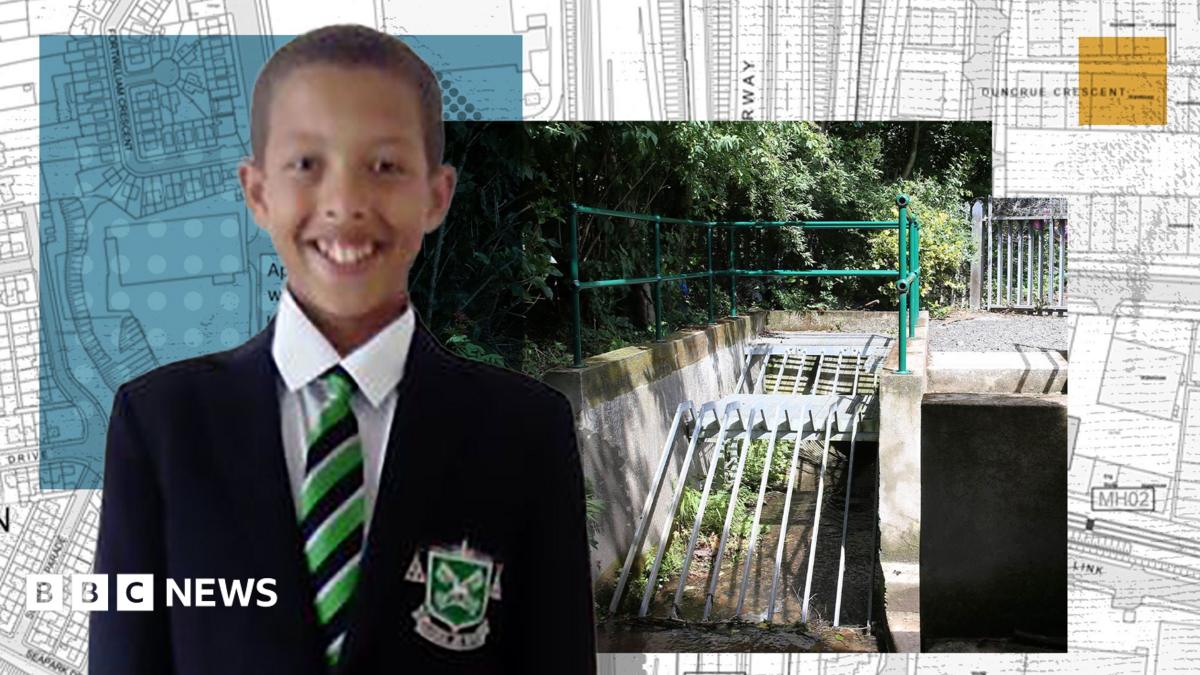
It’s been more than six years since teenager Noah Donohoe was found dead 600m into a freezing underground water tunnel in Belfast.
His death – and the speculation over what happened to him in the week between his daylight disappearance and the discovery of his body – became a huge news story that provoked countless unanswered questions.
Now, after an inquest and months of exhaustive hearings and long deliberations by a jury, there is a verdict – but much is still unknown about what happened to Noah.
Why, the night before he disappeared, did he leave his home in the middle of the rain-soaked night? Where did he go? Why did he come back 34 minutes later, as documented by CCTV, barefoot?
Hours later, on Sunday 21 June 2020, he left the south Belfast home he shared with his mother for the final time.
Why did he leave and go to an unfamiliar part of north Belfast? Why was the teenager naked when he was last seen in the area of the water tunnel entrance?
And what might have been if he had seen the social media message sent him by one of two friends he planned to meet in north Belfast telling him their plans were cancelled?
An autopsy found Noah had died from drowning, with the tunnel he was found in heading towards Belfast Lough and its tides.
Now, after years of delays, a jury has found that it was possible, but not probable, that failings by the Department of Infrastructure over the tunnel in which he was found contribute to his death.
They also found 13 failings by the Police Service of Northern Ireland (PSNI) but that these did not in any way contribute to the 14-year-old’s death.
Having spent months in court following all the evidence, it was clearly not an easy process for the men and women of the jury.
They heard from dozens of witnesses and received voluminous amounts of official and expert documentation.
This week they deliberated on Monday and Tuesday. But it came more than two months after the inquest was dramatically adjourned in the early hours after three days of deliberations did not lead to a verdict.
A federal film and television tax credit could boost U.S. production spending by $125 billion and add more than 143,000 jobs by 2035, according to a new study commissioned by the Motion Picture Assn.
The analysis, released Tuesday morning, is expected to bolster Hollywood’s push for a federal production incentive, which the industry says is necessary to compete with the generous credits offered abroad. Sixty-five nations now offer them, the study said.
The effort has been quietly building for more than a year. It got a major boost last month when President Trump posted on Truth Social backing a proposed credit.
Details are still being worked out,, but the study assumed a transferable credit with a minimum rate of 20% on qualified spending for U.S. resident labor — broadly what industry groups have supported. It also assumed add-ons of 5% for independent production companies and 5% for labor costs in areas the Federal Emergency Management Agency has declared disasters.
If the incentive took effect Jan. 1, 2027, U.S. production spending would reach $277.5 billion through 2035, the study said, compared with $152.2 billion without it.
A coalition that includes the Motion Picture Assn., industry unions, producers’ groups and small production businesses, along with Democratic and Republican lawmakers, is expected to press the case at a virtual news conference Tuesday.
“A federal incentive would be a gamechanger for our industry,” Charles Rivkin, chairman and chief executive of the Motion Picture Assn., said in a statement. “This study tells us that we can bring more opportunities to life for people in all 50 states who bring great stories to life.”
The United States has acknowledged deploying space weapons in orbit of the Earth.
US Air Force Secretary Troy Meink confirmed on Monday that the so-called “space control weapons” would be used to defend US forces on the planet, marking a significant new chapter in the militarisation of space – or at least the transparency of it.
The announcement, which Meink framed as a message to US rivals China and Russia, could turn Earth’s orbit into an increasingly contested military domain, experts warn. Warfare could include countries targeting each other’s satellites, which provide critical services such as GPS, communications and intelligence to military forces on the ground, as well as civilian infrastructure.
“Space Force doctrine describes ‘space control’ as having the outcome of space superiority, which they define as the ability to operate at the time and place of their choosing, while denying the same to an adversary,” Victoria Samson, chief director of Space Security and Stability for Secure World Foundation, a private non-profit focused on military space and security issues, told Al Jazeera.
So, what do we know about the US-deployed weapons in space? And do some countries already have them?
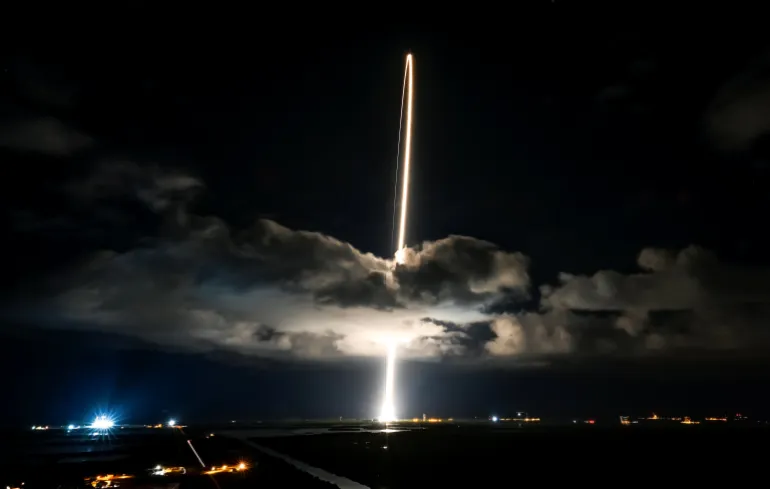
NASA’s Lucy spacecraft, atop a United Launch Alliance Atlas V rocket for a mission to study the Trojan asteroids in the outer solar system, launches from Pad-41 at Cape Canaveral Space Force Station in Cape Canaveral, Florida, the US, October 16, 2021 [Steve Nesius/Reuters]
What do we know about these space weapons?
Not a lot. Air Force Secretary Meink said the US has stationed “weapons” in Earth’s orbit, but did not specify when they were placed there, how many there are, or what they are designed to do.
“Today, we continue to ensure we remain ready to meet the challenges of evolving threats wherever they exist,” Meink said at the Air, Space and Cyber Conference. “This is why the United States now has on-orbit space control weapons capable of defending the Joint Force against hostile adversary action.”
However, he did not give any details about what sort of weapons these may be, where they are positioned or what they are designed to do.
Samson said the keyword from Meink’s announcement is “weapons” in the context of “space control”. “Space control encapsulates the mission areas required to contest and control the space domain – employing kinetic and non-kinetic means to affect adversary capabilities,” Meink said, adding that “these capabilities can be employed for offensive and defensive purposes”.
“That’s the first time any official has acknowledged an actually designed weapon has been placed in space,” Samson told Al Jazeera. “It’s always been ‘systems with capabilities’ prior.”
Experts say these weapons are likely to be space-based communications jammers rather than kinetic ones that launch strikes. Kinetic weapons – for instance, a suicide satellite designed to ram into an adversary’s satellite – would likely cause fast-moving debris to be launched dangerously into space.
Bleddyn Bowen, an associate professor in astropolitics at Durham University in the United Kingdom, told the BBC’s Radio 4 Today programme: “We don’t know exactly what the mechanism of the weapon is. I would expect there to be some kind of electronic warfare or radio-jamming platform. This would be a non-destructive kind of anti-satellite weapon, and these variants already exist on Earth.
“Less likely would be a kinetic kill vehicle of some sort, so a vehicle that would release a projectile of some sort that would ram into a satellite and destroy it.”
US President Donald Trump gestures towards the US Space Force flag during a presentation of the flag in the Oval Office of the White House in Washington, DC, the US, May 15, 2020 [Kevin Lamarque/Reuters]
What is the US Space Force?
The US Space Force is the newest branch of the US military, created in December 2019 under President Donald Trump’s first term, responsible for organising and conducting US military operations in and through space.
Unlike NASA, which focuses on civilian space exploration, Space Force is part of the US Air Force and comes under US Space Command, which is headquartered at the Pentagon in Arlington, Virginia.
Its responsibilities include operating and protecting military satellites, providing satellite communications and positioning services, monitoring objects and potential threats in space, and supporting US forces on Earth.
“China and Russia are developing new space systems to enhance military effectiveness and end any reliance on US space services,” the Space Force’s website says. “China and Russia are also testing and fielding sophisticated counterspace capabilities with the intent to disrupt and degrade US space-enabled capabilities.”
US Secretary of the Air Force Troy Meink speaks during the 2026 graduation ceremony at the US Air Force Academy, in Colorado Springs, Colorado, the US, on May 28, 2026 [Matt Rourke/AFP]
Aren’t there treaties limiting weapons deployments in space?
Yes, but they do not amount to a blanket ban on weapons in space.
The key agreement is the 1967 Outer Space Treaty, which prohibits countries from placing nuclear weapons or other weapons of mass destruction in orbit or stationing them in outer space. It also bans military bases and weapons testing on the moon and other celestial bodies.
However, the treaty does not expressly prohibit conventional weapons from being placed in Earth’s orbit. That means systems such as conventional anti-satellite weapons, electronic-warfare systems, or other counterspace capabilities are not automatically prohibited.
Such gaps leave room for interpretation and are at the heart of current international efforts to enhance military activities in space.
How have Russia and China reacted to the US announcement?
China’s Foreign Ministry opposed the move, warning against the “weaponisation of outer space, turning it into a battlefield, as well as an arms race there”.
“We urge the US side to stop expanding its military capabilities and preparing for war in outer space,” ministry spokesman Guo Jiakun told a news briefing.
Russia called for space to be kept “free of any weapons”.
“We are counting on broad international consolidation to continue working towards the complete demilitarisation of space,” said Kremlin spokesman Dmitry Peskov.
Are Russia and China developing space weapons too?
Independent reports from research groups and think tanks note that both China and Russia are developing a broad range of counterspace capabilities designed to interfere with, disable, or potentially destroy satellites and other space systems.
The Center for Strategic and International Studies (CSIS), a foreign policy think tank based in Washington, DC, identified both countries as possessing or developing kinetic and non-kinetic counterspace weapons.
A 2025 CSIS report notes that both Moscow and Beijing have direct-ascent anti-satellite (ASAT) weapons, as well as capabilities involving jamming, spoofing, and cyber operations.
Samson of the Secure World Foundation (SWF) told Al Jazeera that her team has highlighted in their reports that “China and Russia have space-based jammers”. Therefore, she told Al Jazeera, “I always thought it would be strange that the US didn’t have them too.”
Bowen told the BBC: “In the last 10 years, Russia and China have been doing a lot more manoeuvres in space – rendezvous and proximity operations, as we call them – so, flying up really close to Western satellites, inspecting them, taking pictures. And on another occasion, the Chinese have demonstrated a ‘space tug’ capability. So, a vehicle that goes up to a satellite can grapple it and then move it into a different orbit.”
China has executed such a manoeuvre only with one of its own old satellites, which needed to be moved away from its location, he added.
What about other countries?
The emerging space-weapons race is not limited to the US, Russia and China: India has also demonstrated an ASAT capability and is developing technologies that could allow spacecraft to operate alongside other satellites.
France is also reported to be developing co-orbital capabilities, while the UK has conducted on-orbit cooperative operations with the US.
A 2026 report by SWF also notes how Iran, for instance, illustrates the less visible side of space warfare, relying increasingly on jamming and spoofing satellite-based services. Israel, meanwhile, has developed significant military space and electronic-warfare capabilities, although there is no public record of it conducting a debris-generating ASAT test.
Countries like North Korea and South Korea are also racing to develop more sophisticated space-based tech.
A view of NASA’s Orion spacecraft in the foreground, lit up by the sun as the moon and Earth are visible behind it as photographed by one of the cameras on the Orion spacecraft’s solar arrays during the Artemis II crew’s flyby of the moon on April 6, 2026 [NASA/Handout via Reuters]
Is space the next frontier of war?
Samson told Al Jazeera that the US announcement of deploying weapons in Earth’s orbit is not essentially disruptive in the context of space technology. “What this does is normalise weaponising space,” she said.
“Space has always been a domain with the potential of being a flashpoint for conflict; this just turns up the heat there,” Samson added.
A US Space Force spokesperson told ABC News that the US “capabilities can be employed for offensive and defensive purposes at the direction of combatant commands”. The spokesperson noted that Washington “has warned about Russian and Chinese weapons testing and operationalisation since 2007”.
“Due to their actions, it is no longer a question that space is a warfighting domain,” the spokesperson said. “Open communication strengthens deterrence, prevents adversary miscalculation, and normalises space operations alongside the other services.”
Samson further noted that Meink’s statement “crosses a line”, and would “either encourage China and Russia to also declare weapons in space, or will make US allies and partners want to also place weapons in space”.
“Counterspace capabilities have been proliferating already – this speeds up that trend,” she said, adding that this “is incredibly destabilising and will work against US national security goals”.
“By opening the door to weaponising space, the US loses the most,” Samson noted. “Every person on this planet uses space-based data and services in some way. Any interference with access to or use of space will affect everyone, not just space powers.”
ITV will air some dramatic scenes on Big Brother just a couple of days into the series
Frankie struggled to hold back the tears(Image: ITV)
The emotions are already too much for some housemates.
One Big Brother star broke down in tears as they spoke about the real reason they have joined up for the ITV reality series. Chaos is also set to erupt in dramatic scenes airing tonight (September 15).
Fans have been teased about what to expect in the upcoming episode. It comes as more than a dozen new housemates moved into the famous residence to spend up to eight weeks as part of the unique social experiment.
However, despite being in there for less than 48 hours, it is clearly proving too much for some. The first morning in the house has already seen one star break down in tears.
Viewers tuning in will see Frankie, Johanne and Pauline are in the bathroom during a cryptic conversation. Frankie said: “I ain’t slept one bit. I feel like I went from a really big high to a really big low last night. Quick and all, the turnaround was weird. I went from high to straight low…”
Pauline asked: “But what caused that though?” Frankie hinted: “Oh, to be fair, like, I’ve come on here for various reasons. I know why, I need to get that sorted. Once that’s sorted…”
Johanne responded: “You’re so top secret with that. Everybody when you ask them like why did you come on it’s just like simple answer.”
Frankie explained: “Do you know what it is, I don’t want to… like I’ll be honest, I come on cause I was like… I don’t want to get upset though man.”
Try ITVX Premium free for a week
This article contains affiliate links, we will receive a commission on any sales we generate from it. Learn more
ITVX Premium offers exclusive ad-free content that can be streamed on-demand and on the go, with everything from Hollywood blockbusters to bingeable British box sets.
An annual plan costs £59.99 – equal to £4.99 per month – after a seven-day free trial.
Johanne said: “Your answer, it must be very complicated… You okay?” Frankie then struggled to hold back tears and puts his hand to his face, as he wiped his eyes.
Looking on, Pauline said: “Oh gosh.” They both asked if he is ok as Pauline reassuringly told him: “Frankie don’t. If you don’t want to disclose it, you don’t have to, you know.”
While Johanne offered: “Or if you need to disclose it and you need someone to talk to, you can.” It’s not yet known if Frankie does reveal the truth behind his motives but he confessed: “I knew it was gonna hit me but I didn’t think it’d hit me early. It’s hit me straight away…”
He also stated: “It has to be done, I have to face myself. I can’t run forever, do you know what I mean?” Meanwhile, later in the house there is a heated exchange between Johanne and Rochelle.
While some housemates attempted to play a game, it went too far. As part of it, Charlotte asked Johanne: “Who annoys you the most?”
Johanne replied: “Rochelle. It’s gonna be the same thing. She asked me who annoys me the most and I said Rochelle. I mean every answer, who do I like least, who annoys me the most. It’s gonna be her.”
Rochelle quipped: “Ditto… You’ve got a real f****** problem. You’ve only been here one day.” To which Johanne retorted and repeated the phrase: “You’re my f****** problem.” The argument continued and resulted in some of their fellow housemates stepping in to try and calm the situation.
Big Brother continues tonight at 9pm on ITV2 and streaming on ITVX.
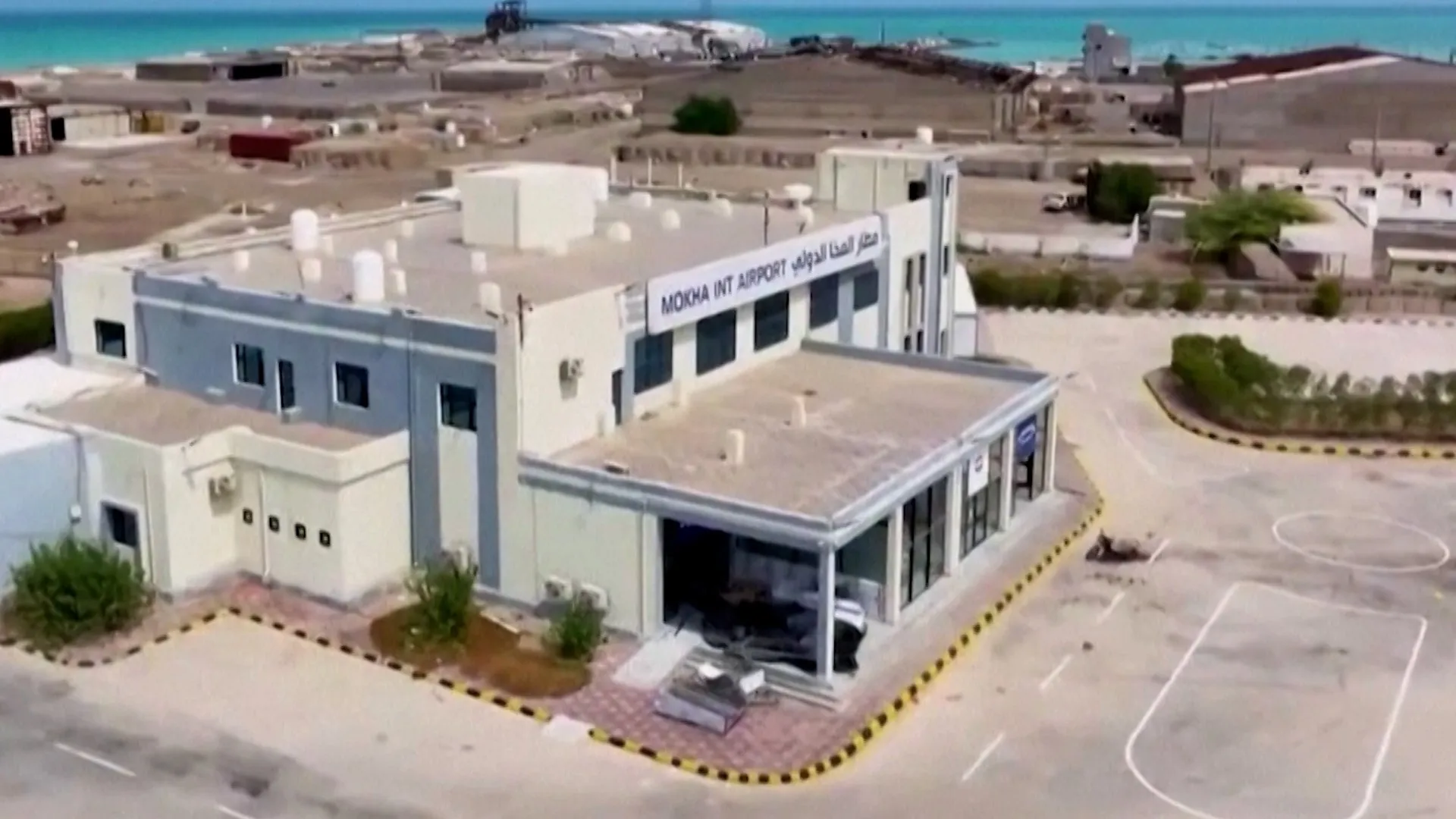
Houthi-run TV has aired drone video of Yemen’s Mocha International Airport, empty and abandoned after the Iran-backed group took control of the city. The Houthi capture of the Red Sea coast puts a key global trade route at risk.
“No more imported rice” sign at a recent protest. (Archive)
Caracas, September 14, 2026 (venezuelanalysis.com) – The US Department of Agriculture’s (USDA) Foreign Agricultural Service announced a package of measures to boost US agricultural exports to Venezuela amid growing concerns about the South American country’s national production.
According to the USDA, the plan will facilitate Venezuelan corporations’ purchase of US food products and agricultural commodities through government-backed credit and will include the delivery of food assistance and training for Venezuelan technicians.
“The Trump administration is committed to Venezuela’s economic prosperity, and USDA is leveraging its export financing, market development programs, technical scholarships, and food assistance initiatives to address this situation,” said Under Secretary for Trade and Foreign Agricultural Affairs Luke J. Lindberg.
Lindberg added that he “looks forward to positioning US agriculture to help meet needs and build lasting trade relationships.” The US official visited Venezuela as part of an official delegation in early July.
Washington’s credit program for food exports will be provided through the reactivation of the GSM-102 guarantee program. The mechanism offers guarantees to exporters that reduce the risk for financial institutions backing the transactions in case importers fail to meet their commitments.
The Agriculture Department also announced that it will lift restrictions to allow foreign banks to back Venezuela-related transactions.
A USDA report had already estimated that Venezuela would need to import 1.5 million metric tons of wheat during the 2026-2027 marketing year. Corn and soybeans are likewise identified as key staples to be exported to the Caribbean nation. The latest initiative
The Trump administration also lifted restrictions under its Feed the Future Agricultural Resilience Mission Initiative and plans to include Venezuela in a regional agribusiness trade mission scheduled for early 2027.
A bigger influx of US farm products will place an additional strain on Venezuelan food production, with local campesinos increasingly protesting against imports from agribusiness corporations that seek to drive crop prices down.
On September 9, rice growers from Guárico and nearby states organized a “tractorazo,” blocking a major highway in Calabozo with trucks and tractors to demand that the government halt the entry of imported rice during the domestic harvest season and ensure that agroindustrial companies adhere to established prices.
Protesters complained that imports from countries where food production is subsidized, including the US, create unfair competition and risk driving Venezuelan campesinos bankrupt. The latest mobilization was sparked by the reported arrival of a shipment of 355 thousand tons of rice, more than half of the Venezuelan production in 2025.
Rural organizations have likewise denounced the exoneration of tariffs and import taxes as another factor putting national production at a disadvantage. Venezuelan authorities, including the National Assembly and the Agriculture Ministry, have vowed to review the import issue but have offered no measures to date.
In the Calabozo protest, producers denounced that imported rice had saturated silos and storage facilities during the 2025-2026 winter-summer crop cycle, forcing them to sell below production cost or lose their crops altogether. Demonstrators demanded a $0.25-per-kilogram subsidy from the state to compensate for the losses incurred and vowed to take the protests to Caracas if they receive no response from authorities.
The September 9 “tractorazo” was the latest in a series of mobilizations in recent months in Venezuela’s main agricultural states. Rice growers have complained about high fuel and input costs and urged the government to establish and enforce fair crop prices.
According to agriculture lobby FEDEAGRO, more than 2.2 million metric tons of white corn, yellow corn, and rice have entered the country so far in 2026, more than triple the recent combined high of 709,000 metric tons in 2023.
“We cannot continue depending on a neighbor’s pantry. That is a failure. In Venezuela, we have the land, a committed agricultural sector, and people investing in farming, but excessive imports place us at a dramatic disadvantage,” stressed FEDEAGRO President Osman Quero.
Quero stressed that foreign producers have access to credit programs, fuel and fertilizer subsidies, and better infrastructure, while Venezuelan farmers face inflation and a lack of financing programs.