A 15-year-old boy has been killed in an apparent Israeli double-tap strike as he rushed to help a paramedic wounded in an attack moments before. Israel has killed around one child per day in Gaza since the 2025 ‘ceasefire’.
NOUGHTIES pop singer La Roux has said “she’s back” after disappearing from the spotlight – revealing a “nervous breakdown” ended her career.
La Roux – real name Elly Jackson – shot to fame in 2009 and is known for her number one single Bulletproof.
La Roux told fans she’s back after a long break away from the spotlightCredit: UnknownShe’s gearing up to drop a new album after her last release was affected by the pandemicCredit: Getty Images
But it’s been a long time since La Roux released a new album and, ahead of her upcoming LP Old Flames, she posted on TikTok to tell fans she’s back.
She wrote: “You think you can hurt me?
Sign up for the Showbiz newsletter
Thank you!
“I literally wrote and sung this song, lost my voice, had a nervous breakdown and disappeared for 10 years.”
Speaking about releasing new music, La Roux told Another: “It’s been a long time coming, so I’m very eager to get back out there.
“Supervision [my third album] being totally marred by the [Covid-19] pandemic wasn’t ideal, so I’m very excited.”
She added: “I’d only just finished my last album when the pandemic hit, so I wasn’t ready to start making a new record instantly. You need a gap before you make new work.
“I started f***ing around with new sounds and new ideas. It took a couple of years to know if I even wanted to make another record or if there was any point.”
La Roux’s mum is actress Trudie Goodwin, who drama fans will know best for playing Sergeant June Ackland in ITV’s The Bill.
She previously shared the advice Trudie, 74, gave her on dealing with fame.
La Roux said: “She’s really good at saying things like, ‘Never have a drink when you do an interview’ – which I don’t always take notice of! And ‘Only give away what you need to give away’.
“And she says that if there’s paparazzi, just give them a picture and they’ll f**k off.”
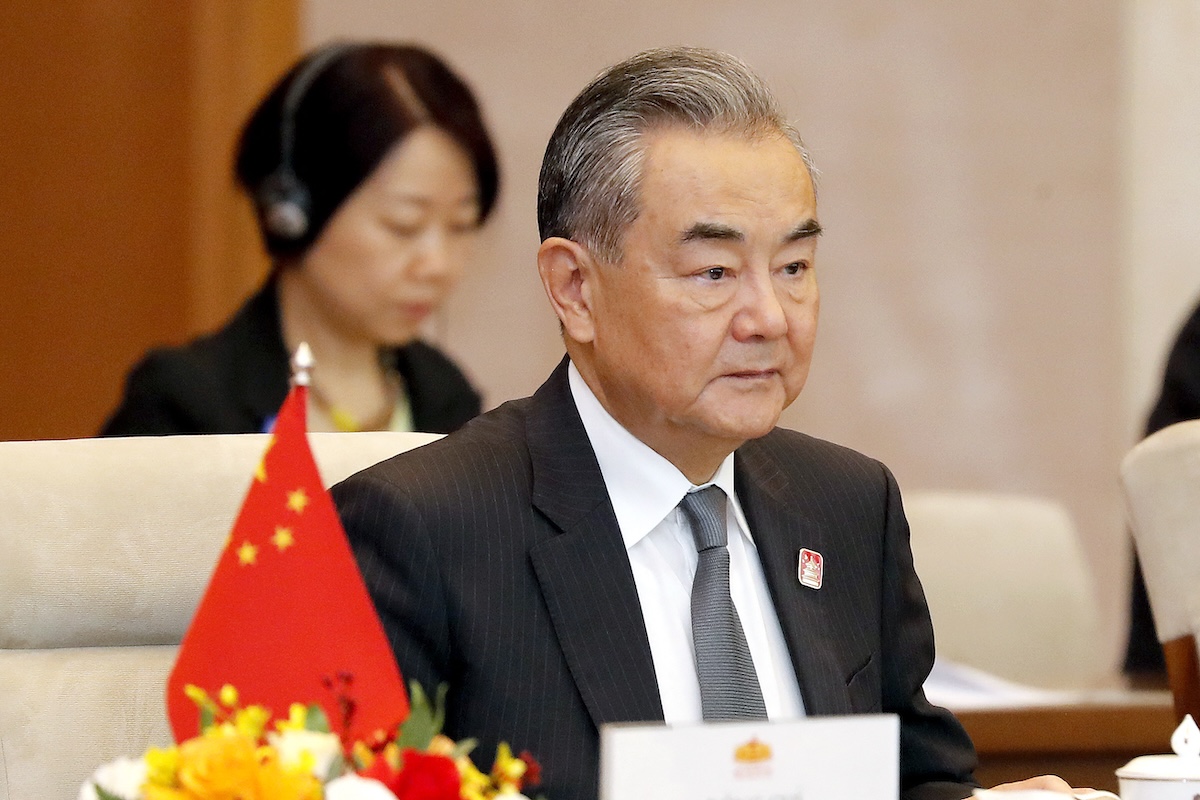
Beijing: China’s Foreign Minister Wang Yi said Beijing was willing to “safeguard” Iran’s rights during talks with his counterpart Abbas Araghchi on Wednesday, as Beijing seeks to mediate in Tehran’s war with the United States.
China is “willing to strengthen dialogue and cooperation with Iran, and safeguard Iran’s legitimate rights and interests”, Wang told Araghchi as they met in the Chinese capital.
“We encourage Iran and the US to stay rational and restrained,” he added.
The talks come one week before an expected trip by Chinese President Xi Jinping to Washington, where he will meet US President Donald Trump.
China, a top economic partner of Iran, has long sought a detente in the months-long conflict in the Middle East, which has at times spilled over into neighbouring countries.
“We do not wish to see regional tensions spilling over into Yemen and the Red Sea,” Wang said.
Recent fighting that flared up in Yemen between government forces and the Iran-backed Houthis has displaced more than 100,000 people inside the country while thousands have fled abroad, according to the United Nations.
The war in Iran will be a closely watched topic at Xi’s meeting with Trump, among other thorny issues ranging from trade to competition over artificial intelligence.
Beijing refuted this week US media reports that Chinese entities supplied Tehran with satellite images of a military base housing US troops in Jordan, before and after an Iranian strike killed three American soldiers.
Trump has warned Beijing not to sell weapons to Iran, and Washington sanctioned three China-based satellite companies in May for enabling Iran’s military operations.
The European Union is preparing to use a broader range of economic measures to reduce what European Commission President Ursula von der Leyen described as an unsustainable trade deficit with China.
Speaking to the European Parliament on Wednesday, von der Leyen said the imbalance had reached a critical point, with the EU running a goods trade deficit with China equivalent to around €1 billion ($1.15 billion) a day last year.
She warned that Europe was experiencing what she described as a second “China shock”, with growing Chinese industrial exports contributing to pressure on European manufacturing and raising concerns about deindustrialisation.
Europe seeks concrete results
The issue has become a priority in EU China relations as European governments seek to address the growing imbalance through negotiations as well as economic policy tools.
Stay ahead of the geopolitical week.
MD Briefing delivers expert analysis across five global fronts — the Indo-Pacific, energy, geoeconomics, European security, and the Middle East — every Monday morning. Free.
EU leaders asked the European Commission in June to deliver results from its dialogue with Beijing and ensure that the bloc had sufficient instruments to protect its economic interests.
European Trade Commissioner Maros Sefcovic, who is leading the discussions, has said he wants tangible progress by October.
Von der Leyen said cooperation remained in both sides’ interests but warned that the EU was prepared to move beyond dialogue if negotiations failed to produce results.
“We will use all the tools at our disposal to rebalance our relationship,” she said.
The approach reflects a broader European effort to reduce economic vulnerabilities without completely severing commercial ties with China, one of the EU’s most important trading partners.
Critical minerals add to concerns
Trade is not the only area creating pressure on the relationship. The EU also remains heavily dependent on China for several critical raw materials, including rare earth elements that are essential for industries such as electronics, renewable energy, defense and advanced manufacturing.
Von der Leyen said the EU needed to accelerate efforts to secure supplies and build strategic reserves.
The European Commission plans to establish a European corporation focused on critical raw materials to help the bloc secure and stockpile essential resources.
What’s next
The EU’s approach is likely to combine negotiations with measures aimed at strengthening its own industrial capacity and reducing dependence on Chinese supply chains.
For Beijing, the growing European focus on trade imbalances, industrial competition and critical minerals could create additional pressure to make concessions while preserving access to the European market.
For the EU, however, reducing the deficit will require more than trade restrictions. Europe will also need to expand domestic production, diversify suppliers and address the competitiveness challenges facing its own industries.
The October deadline for trade talks could therefore become an important test of whether Brussels and Beijing can reach practical agreements or whether the EU moves toward a more defensive economic relationship with China.
The former couple, who tied the knot in March 2017, told People that they had been separated for some time.
“We have been separated for a while, and it’s proven to be the right move for us and our family unit. We’ve got each other forever — and it’s GOOD,” Seyfried and Sadoski told the outlet.
On Tuesday, Seyfried shared a piece of prose by poet and author Bianca Sparacino on her Instagram stories that read:
“Maybe in another lifetime.”
“No.
“This is all you get. So please, just fight for the things that crack light into your life, fight for the things that soften you. Protect the people you love, leave them better than you found them. Defend your heart, do whatever it takes to keep it open despite what it has been through. Forgive, not just others, but yourself, as well. Slow down. Taste, and touch, and feel and care. Create the things you want to see in this world, stay as curious as possible. Honour your joy, do not shy away from the good that is trying to reach you, do not convince yourself that you are unworthy of it. Be strong enough to be gentle. Be brave enough to break. Be all that you are. Be all that you are.”
The pair met back in 2015 while starring in “The Way We Get By,” a two-person off-Broadway play that explores love and lust and takes place the morning after a drunken hookup. It was Seyfried’s stage debut. “I feel like the luckiest guy in New York right now, to be honest with you,” Sadoski told Backstage on Broadway at the time. “I mean, I get one of the great American playwrights, one of the great American directors, and a perfect scene partner, I’m a pretty happy guy.”
The two teamed up again the same year to play love interests once more in “The Last Word.”
After spending a good portion of the year pretending to be in love with Seyfried on stage and screen, in October 2015, Sadoski split from his wife of eight years, studio casting executive Kimberly “Becky” Hope. By March 2016, the “Newsroom” actor was romantically linked to the “Mamma Mia!” star.
Seyfried, 40, and Sadoski, 50, tied the knot in a private countryside ceremony in 2017. There were no family or friends on the guest list, just their officiant and Seyfried’s dog, Finn. Shortly after the nuptials, the pair welcomed a baby girl, Nina. In 2020, they had a son, Thomas Jr.
The couple have raised their family on a farm in the Catskill Mountains of upstate New York, a property the “Mean Girls” star bought in 2013, while also maintaining properties in Los Angeles and Manhattan. But last month, Seyfried listed her 2,700-square-foot Los Angeles residence for about $3.2 million.
Prosecutors said that the group worked on behalf of Russian intelligence services to carry out attacks and murders around the world.
Published On 16 Sep 202616 Sep 2026
Five people have been charged over alleged Russian intelligence-linked plots involving surveillance, recruitment and planned killings, according to an indictment unsealed by the United States Department of Justice.
Prosecutors said on Tuesday that the group worked on behalf of Russian intelligence services to carry out attacks and murders internationally, including within the US, and that all five remain at large.
Recommended Stories
list of 3 itemsend of list
The defendants were identified as Russian national Yuri Khrameev, 63, his son Kirill Khrameev, 27, Cubans Oemis Romagoza Durruthy and Yaidel Delgado Suarez, both 35, and 22-year-old Venezuelan Angel Eduardo Castro.
All five were charged with conspiring to finance terrorism, while Khrameev, Suarez and Castro face additional charges of conspiring to commit murder for hire.
At a news conference, Attorney General Todd Blanche said the plots included attempts to kill a Russian dissident believed to be living in the Washington, DC area.
Justice Department officials said the network had recruited several people in the US to carry out surveillance on Russian dissidents, targeting individuals both domestically and in Lithuania.
In one instance, a recruit was reportedly promised $40,000 to make a US-based target “disappear”. A separate recruit was allegedly offered $25,000 the previous year to kill someone in Lithuania.
Russia’s embassy in the US has not commented on the case. Moscow has consistently rejected accusations that it has orchestrated assassination operations on foreign soil, including in the US.
Prosecutors have requested a 45-year jail sentence for Thaci and three wartime commanders accused of war crimes.
Published On 16 Sep 202616 Sep 2026
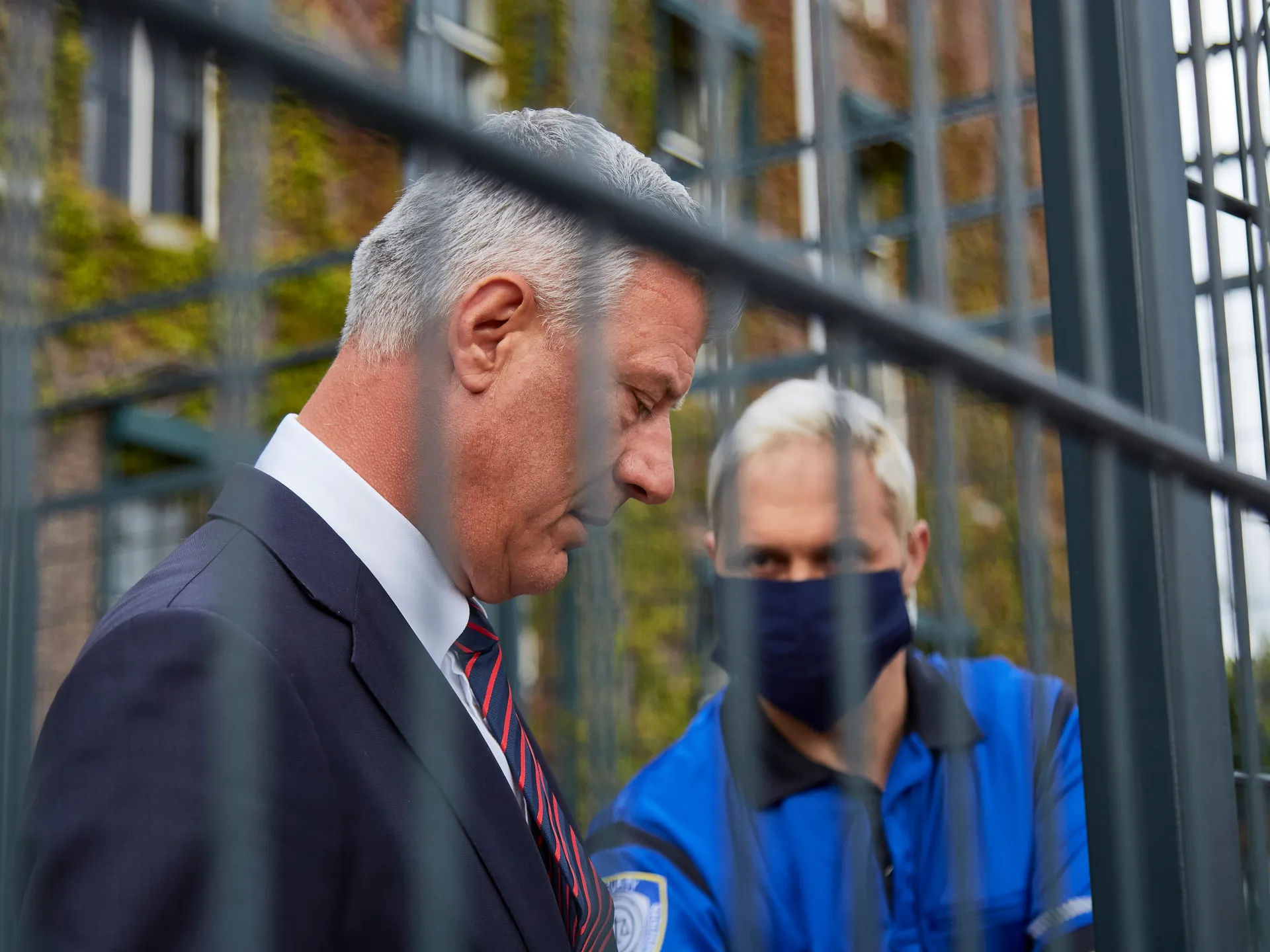
The Kosovo war crimes tribunal will on Wednesday deliver its verdicts in the case of former President Hashim Thaci and several wartime commanders accused of murder and torture during the self-declared republic’s break from Serbia.
Thaci, 58, is facing several counts of war crimes and crimes against humanity, including murder, torture and persecution, along with three former commanders from the ethnic Albanian Kosovo Liberation Army (KLA), a separatist militia that fought Serbian troops.
Recommended Stories
list of 3 itemsend of list
Thaci and the other former high-ranking commanders, Jakup Krasniqi, Rexhep Selimi and Kadri Veseli, deny the charges.
Prosecutors have requested 45-year prison sentences for each of the men.
The case is extremely contentious within Kosovo, where Thaci remains a revered figure for many Kosovan Albanians due to his role in the 1998-99 independence war.
On Saturday, tens of thousands gathered in the capital, Pristina, to call for their acquittal in the latest of several rallies since the trial began. Portraits of the four former KLA fighters have been plastered across the city along with a huge digital clock counting down to the verdicts.
“In the name of the people, declare them innocent,” one banner read.
According to prosecutors, the men targeted political opponents and civilians perceived as collaborators and traitors during their time in the KLA.
Thaci’s lawyers argued in February there is no evidence that directly links him to any of the crimes.
“There are no orders in the record from Thaci to perpetrators of crimes. There are no reports from perpetrators of crimes to Thaci,” lawyer Luka Misetic told judges at the Kosovo tribunal in February.
Most of the 13,000 people who died in the war in Kosovo were ethnic Albanians. A 78-day campaign of NATO air attacks against Serbian forces ended the fighting. About one million ethnic Albanian Kosovars were driven from their homes.
In 2008, Kosovo declared its independence from Serbia, a move that Belgrade refuses to recognise. Ties between Kosovo and Serbia remain tense, despite years of negotiations mediated by the European Union.
HELEN Flanagan has put on a busty display and risked popping out of her racy black dress on a night out.
The former Coronation Street star, 36, took to Instagram to share some new snaps as she enjoyed a meal out at Gaucho restaurant in Manchester.
Helen Flanagan has put on a busty display on a night outCredit: Instagram/hjgflanaganShe threatened to spill out of her black dressCredit: Instagram/hjgflanagan
She wore a long ribbed black dress as she showed off plenty of cleavage in the revealing outfit.
Helen threatened to spill out of her attire as she only had three small gold clasps holding her boobs in.
Sign up for the Showbiz newsletter
Thank you!
The figure hugging dress perfectly cinched her waist as she displayed her hourglass figure.
She wore her blonde locks in a curly hairstyle and opted for a chic make-up look, complete with false eyelashes, eye shadow and a pink gloss.
Helen appeared to be in great spirits as she beamed from ear to ear and enjoyed some beverages.
The actress simply used a kissing lip emoji as the caption.
Her followers rushed to the comments section to compliment her as one gushed: “The most gorgeous woman ever.”
Another person enthused: “Stunning and classy.”
She’s no stranger to showing off her assetsCredit: InstagramIt comes after she joked about selling her knickers to pay for solicitor feesCredit: Instagram/hjgflanagan
Somebody else commented: “Sydney Sweeney ain’t got nothing on you.”
Yet another joked: “I mean…..come on, give the other women a chance.”
While a fifth follower added: “You are so gorgeous.”
Howard Webb says the referees’ body is disappointed with the decision to allow Haaland’s goal against Manchester United.
Published On 16 Sep 202616 Sep 2026
Pro Ref chief Howard Webb said “tunnel vision” led video assistant referee (VAR) officials to wrongly award Erling Haaland’s goal in Sunday’s Manchester derby at Old Trafford.
Haaland’s second-half strike was initially ruled out for offside before being allowed to stand following a VAR review that concluded the Manchester City forward was onside.
Recommended Stories
list of 4 itemsend of list
Pro Ref, the body responsible for refereeing in English professional football, later acknowledged the goal should not have been awarded because VAR failed to properly assess the involvement of teammate Enzo Fernandez, who attempted to play the ball from an offside position.
“I was really disappointed with this outcome. We all are. None more so than the officials themselves,” Webb, Pro Ref’s chief refereeing officer, said on Match Officials Mic’d Up on Sky Sports and TNT Sports.
“They take a lot of personal pride in what they do, and they’re obviously hurting now having fallen short in this situation.”
VAR is a refereeing support tool designed to enable the checking, reviewing and correction of clear and obvious errors during a match, according to FIFA. It was intended to be a combination of human expertise and technological accuracy, but has instead become a sour topic in football circles.
Current and former United players, including club legend Wayne Rooney, labelled the use of VAR “horrendous”, while football experts told Al Jazeera the technology has become “far too dominant” in decision-making.
Webb confirmed that VAR officials Matt Donohue and assistant VAR Blake Antrobus would not officiate again until after the international break.
“We’ve reached out to Manchester United and acknowledged the error, as we do when these things happen,” Webb said.
Explaining the decision-making process, Webb said the semi-automated offside system quickly established that Haaland was onside, but the VAR became overly focused on the striker’s position and failed to fully consider Fernandez’s influence on the play.
“But of course, when he then runs it back through the full APP, he doesn’t truly evaluate the full impact of Fernandez’s position,” Webb said.
“He has a look to see if he touches the ball, because then that relates to potentially knocking it to Haaland, who goes on to score. He doesn’t touch the ball, but he doesn’t truly evaluate other elements of offside. In that moment, he gets tunnel vision.”
Manchester United manager Michael Carrick criticised the decision after his side’s 1-0 home defeat, their second loss in four Premier League matches this season.
United next host Brighton in the League Cup on Wednesday before travelling to Fulham in the Premier League on Sunday.
U.S. Air Force Collaborative Combat Aircraft (CCA) are set to take part in a large-force employment (LFE) exercise for the first time later this year. Sending CCAs to the next iteration of the Emerald Flag test exercise is another important new stepping stone toward fielding the drones operationally.
“We have not yet done a LFE with these [CCAs], for real. The first one is going to be Emerald Flag. That’s in December,” Lt. Col. Lyndon “OTTO” Bartlett, Director of Operations for the Experimental Operations Unit (EOU) at Nellis Air Force Base in Nevada, said earlier today. “That’ll be our first tip dip of the toe in an actual force integration.”
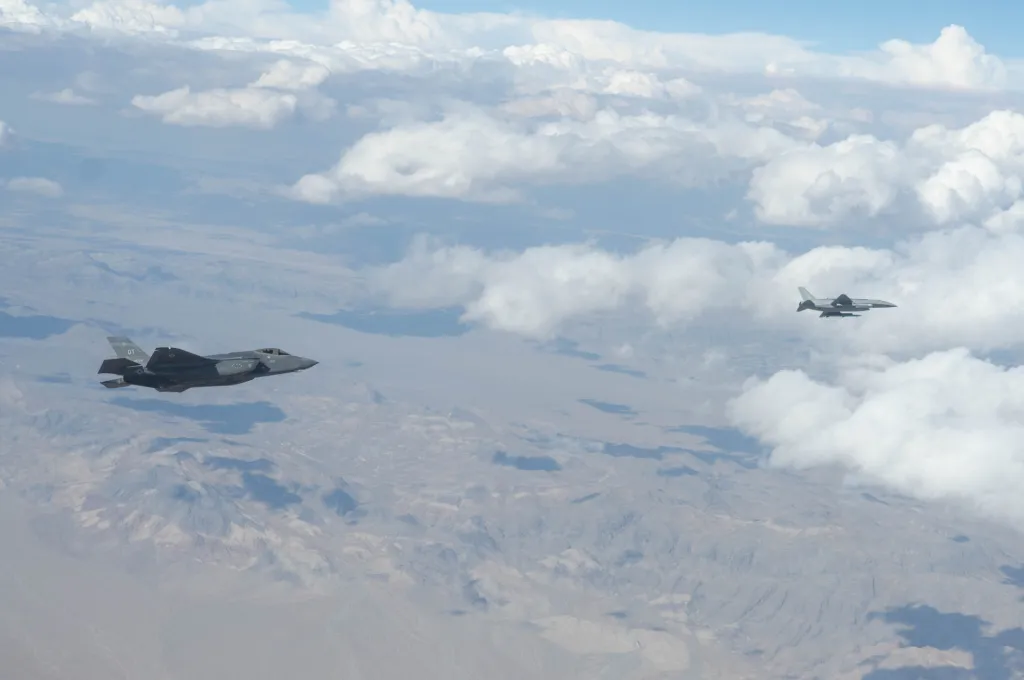
One of the Air Force’s YFQ-44A Fury CCA drones flies together with an F-35 Joint Strike Fighter. Anduril
It is worth noting here that Boeing’s MQ-28 Ghost Bat, a CCA-type design, did take part in Valiant Shield 26, another LFE exercise, earlier this year. The EOU was also involved. However, the MQ-28, originally developed for the Royal Australian Air Force, is not officially part of the Air Force’s CCA program at present.
Emerald Flag in December “will, in OTTO’s mind, be the first time that we will ever do some CCA end-to-end chain [demonstration] live. That’s the first time we’ll ever be integrated in a fourth- and fifth-gen combined OCA [offensive counter air] push,” Lt. Col. Bartlett added. “It’ll be small, but those type [sic] of building blocks are where I think you get the intangibles like trust in the CCA.”
“Those learnings are going to be just as valuable as the technical, [like] does the radio work properly? Does the button I push to say ‘target’ work properly?” he continued.
A General Atomics YFQ-42A CCA drone during an earlier test flight. General Atomics
“If it’s in a simulated environment, it’s immediate,” Lt. Col. Bartlett said during the panel when asked about the “feedback loop” in testing the EOU is already taking part in. In that environment, “when the mission autonomy iterations are happening, our guys are literally with the programmers … They give the feedback, and if it’s possible to do immediately, they take that feedback. If not, then they work on it on the next turn of the software.”
Real-world testing, of course, offers opportunities to explore additional aspects of future CCA operations, including when it comes to loading weapons and maintenance. A key component of the Air Force’s vision for CCA employment is being able to forward deploy the drones to far-flung locations, including airstrips with limited infrastructure and access to logistics chains. Rapid, distributed deployments like this are central to still-evolving concepts of operations currently referred to collectively as Agile Combat Employment (ACE). The EOU has been involved in at least two rounds of ACE-focused testing this year, one at Edwards Air Force Base in California in April and another at Creech Air Force Base in Nevada in July. TWZ was the first to report on the latter event.
Visualizing ACE
During the panel today, Lt. Col. Bartlett also talked more generally about work EOU has done to date. This has included exploring “sortie generation, how easy they are to maintain, [and] how small a footprint could be.”
“We’ve been pleasantly surprised. The jets are extremely easy to maintain,” he continued. “We’re at a one-to-one maintainer-to-airplane ratio, which is crazy small.”
With “CCAs, [it] seems like because they’re a little bit simpler, because their role is so focused, what we found is that just about any – not just about, but we found that any AFSC [Air Force Specialty Code; alphanumeric codes used to identify specific jobs within this service] can be trained to generate sorties to load weapons, and we’ve done some of those things already,” he further explained. “It’s our job to bring them [CCAs] out and make sure that, beyond the technical specifications of it, that we’re kind of experimenting with the more complex things like logistics, and C2 [command and control], and how do we battle manage these things.”
Airmen prepare to load an inert AIM-120 Advanced Medium Range Air-to-Air Missile onto a YFQ-44A CCA drone. USAF/Senior Airman Renee Blundon
The head of the EOU did acknowledge challenges that still have to be surmounted. This notably includes hurdles currently imposed by Federal Aviation Administration (FAA) regulations on the operation of fully uncrewed aircraft, even by the U.S. military, within U.S. airspace. This is further compounded by the explicit intention to operate CCAs with far more minimal human engagement compared to most existing drones.
“Mission autonomy is going to be the secret sauce that lets these things become decisive or not, and we’ll know that over the next couple years as that develops,” according to Bartlett. “If I were to identify the two biggest problems from the trenches of the EOU, [one] is FAA integration or policy implications to an autonomous airplane.”
“So these things don’t have pilots. They’re not RPAs [remotely-piloted aircraft]. They’re not manned fighters. They have no pilots,” he continued. “Our system is not set up for that, and that is a challenge that we are finding extremely hard to navigate through, and to not go around, but to make a policy.”
“We need to make sure the Air Force is ready for these things, to set policies that make sure the enterprise and the country is [sic] ready to receive these, and internalize an autonomous fighter that does not have a pilot that is running on a mission autonomy agent that doesn’t listen to ATC [air traffic control],” he added.
Another look at a YFQ-44A prototype during at test in 2026. USAF
The second problem, per Bartlett, is making sure the Air Force develops new internal policies and doctrine that are not “copy and pastes from old regulations” that do not take into account the specific nuances that CCAs will bring. What the service needs is “something that enables us to move quickly with these things, to weigh what we need, and to experiment with novel types of air superiority.”
All of this circles back to the discussion of trust in autonomous capabilities. It also speaks to the potential for future operations where CCAs could operate far more independently.
“It’s in the name that they’re collaborative,” Bartlett said. “Taking them out of that could technically be effective, but would not enhance the joint force the way that we see a collaborative, integrated force package to be.”
“What we need autonomously to do is written down. I won’t discuss the particulars in this forum, but we know what we need it to do, or we know what we think it really needs to do,” he noted. “We’ve structured our experimentation game plan to analyze ‘can it do those things?,’ and if not, then how do they need to be different? And then as they iterate on it, which we’ve already seen a couple times, we get that at the EOU, we get the new version down, we fly it again. Is it fixed? Yes or no.”
A General Atomics YFQ-42A seen from another angle during earlier testing. General Atomics
Some members of industry are clearly envisioning futures with different definitions of ‘collaborative’ that could lean more toward independent operations involving highly autonomous drones.
What “the whole entire program is trying to do is [figure out] what is the requirement to put out into the field to get to the warfighter and to start operating this thing this [sic; in] real time?” Robert “Otis” Winkler, Vice President of Corporate Development & National Security Programs at dronemaker Kratos, another one of the panelists, said. “The collaborative part of this makes it a much easier, I think, technical problem to be able to limit and grow the autonomy as you field this.”
“I think eventually we may see these aircraft utilized as collaborative aircraft, but not in conjunction with your traditional pulsed operation, but in support of that pulsed operation when the pulse isn’t there yet. But I do think that that is a bit of a stretch goal that’s going to be down the road.”
CCAs “have been designed really around increasing both survivability and lethality of current force packages. So there are many manned platforms that you would describe in the exact same fashion,” Jason Levin, Senior Vice President for Air Dominance and Strike at Anduril, who was also on the panel, said. He was responding here to a specific question about whether his use of the term “fighter” to describe these drones implied more emphasis on independent operations.
All of this underscores the importance of bringing CCAs to Emerald Flag in December, as well as other events in the future offering opportunities to see how the drones really fit in with other crewed platforms. The Air Force is hoping to start seeing CCAs enter operational service around the end of the decade, and have 500 of them, at least, in inventory by 2032.
During the panel today, the EOU’s Lt. Col. Bartlett made clear that “we’re going to learn a lot over the next couple years.”
The original 7 Up kids have returned for one final series of the groundbreaking social experiment.
70 Up is coming to an end (Image: Nick Wall/ITV)
70 Up viewers have shared their reaction to the series coming to an end, as the groundbreaking social experiment reaches its final chapter.
14 children, consisting of ten schoolboys and four little girls, gave cameras an insight into their lives back in 1964. Every seven years since, they’ve continued to show a glimpse of their story, from education, their early careers, marriages, raising children and retirement.
ITV has now returned one final time, for 70 Up. The synopsis previously teased: “Seven decades. One extraordinary experiment. The groundbreaking documentary series returns to meet the people we first saw as 7-year-olds as they reflect on life at 70.”
As well as several of the original children returning, now in their 70s, the programme paid tribute to two who have died, Nick and Lynn, and features Charles, who stopped taking part in the franchise from his 20s.
Viewers have admitted they found the series “heartbreaking”, as one person said: “I’m bawling already knowing Nick is no longer with us.” Another agreed, saying: “I’ve watched this all my life, makes me sad and reflective I’m the same age.”
Someone else wrote: “I admit to having shed a few tears, watching tonight. I’ve grown up with them. It’s been wonderful.” Another commented: “Absolutely, life’s ups and downs, at 7 full of hope and life, I feel i know these people, I don’t.”
Someone else said: “All of it is making me very emotional. In the blink of an eye, hopes and aspirations are just distant memories and time has run out. Life is over so very quickly . Too quickly.”
Another said: “I hope you’re watching seventy Up It’s heartbreaking.” Another added: “The sadness in watching #70UP is not only the lives drawing to a close and the challenges facing individuals but also the knowledge that television will never again be this ambitious.”
One person added: “Ah even a glimpse of Neil on #70UP bring the tears, watched religiously with mum and dad growing up, comparing, dreaming, crying, feel so blessed watching but also wish these were longer eps, I could watch for hours more…. this programme was a huge part of how I learned about life and my country.”
Several others called Neil’s journey heartbreaking and sad, after he opened up about his loneliness and being homeless at times in his life, candidly sharing his struggles. One person said: “I’ve watched all of these series from the get go even though I’m no where near their age group, just to add! It’s made me feel quite reflective on my own life, quite emotional really. But watching Neil’s story has flawed me, big time! His loneliness is a hard watch.”
Another echoed: “Watching #70Up. Neil breaks my heart every 7 years. He was such a happy little boy.” Yet another wrote: “Ooh that was a hard watch at times.” One person added: “I was in tears even from the opening titles Such a touching and interesting series.”
Ahead of the series airing, Jo Clinton-Davis, controller of factual ITV and commissioner of 70 Up, said: “The 7 Up story is much more than a TV documentary, it’s a document of our times. A truly distinctive landmark piece of film-making that has become part of our cultural fabric.
“In the evolving stories of our cast we see the universal themes of life play out. It is the series that made me want to get into television. It is the series that I am beyond proud of having been involved in since 56 Up. It is a tribute to Michael Apted who will forever be associated with it and to the continued dedication and remarkable skill of Claire Lewis.
“Yet in Asif Kapadia we have an outstanding director who will bring his passion, creativity and incredible flair whilst safeguarding the very precious ‘Up’ legacy. Ultimately, this is a tribute to the courage of all the cast who continue to share their lives with us so we can see our lives in them.”
For a third time, the US House approved a war powers resolution, halting Trump’s ability to continue military action.
For a third time, the US House has voted to end the war in Iran, approving a war powers resolution that would halt President Donald Trump’s ability to continue military action without congressional approval.
The roll call late Tuesday, 220-204, was similar to earlier efforts this summer, with a few more Republicans joining all Democrats voting to bring an end to the conflict.
Seven House Republicans backed the resolution, including three voting in favour for the first time.
Iowa congressman Zach Nunn, a Republican, explained his vote saying that “with the negotiating window closed, sustained combat operations now require congressional authorization.”
“I will not support another open-ended war,” Nunn said.
None of the resolutions has made it to the president’s desk, where Trump would almost certainly veto the measure.
Republican Representative Brian Mast of Florida, the chairman of the House Foreign Affairs Committee, questioned which military resources Democrats would want to remove from the region where he said Iran remains a threat.
Mast said Trump is against “forever wars, and that is what he is ending” – the decades of hostilities from Iran.
“They are a continuous ongoing threat to the United States,” Mast said. “Enough is enough.”
The run-up to the midterms
The action is likely to be the last House vote on the Iran war ahead of the midterm elections, where the conflict overseas is playing a substantial role in the political campaigns. The war that Trump launched on February 28 has dragged on, with on-again, off-again deadly missile strikes being exchanged and causing havoc in the region for nearly seven months.
Lawmakers are heading home at the end of the week to campaign nearly full-time, with fewer than 50 days to go before the elections that will determine control of Congress as Democrats try to wrest power from Republicans.
US war on Iran
The US war on Iran is worsening inflation and straining the country’s munitions stockpiles, a report from the nonpartisan Congressional Budget Office (CBO) has found.
The report, released on Tuesday, found that the cost of the six-month war has reached $38bn and is expected to rise by $3bn per month. The war is projected to increase inflation by 0.5 percentage points in the first three months of 2027.
Trump himself had promised not to involve the US in foreign wars when he won a second term in the White House, and his actions against Iran are weighing on the Republican Party that controls the House and Senate.
Most Americans say the war in Iran has not been worth fighting, according to an AP-NORC poll in July.
Previous war resolutions
Congress has tried repeatedly to alter the trajectory of the war against Iran, but efforts to limit the Trump administration’s military action remain a long shot so long as the president can fend off or veto the measures.
The House first approved a war powers resolution in June, and followed up with another one in July, both seeking to halt US action in Iran. The Senate on its 10th try also approved a war powers resolution to end the conflict, but Republican senators quickly reversed course the next day after Trump berated them during a closed-door lunch.
While the Constitution gives Congress the authority to declare war, it also gives the president authority as the commander-in-chief to engage in some military actions. The War Powers Act, created after the Vietnam conflict, sought to impose a more specific time limit on the president’s power, requiring congressional approval for sustained military actions after 60 or 90 days.
WASHINGTON: For a third time, the US House has voted to end the war in Iran, approving a war powers resolution that would halt President Donald Trump’s ability to continue military action without congressional approval.
The roll call late Tuesday, 220-204, was similar to earlier efforts this summer, with a few more Republicans joining all Democrats voting to bring an end to the conflict. None of the resolutions have made it to the president’s desk, where Trump would almost certainly veto the measure.
“Remember when Donald Trump said that this war would last just a few weeks?” said Rep. Seth Moulton, D-Mass., who served as a Marine during the Iraq War and pushed the resolution forward.
He said it’s time for Congress to “actually ask tough questions, as the Constitution directs us to do, rather than be subservient to another warmongering administration.”
Republican Rep. Brian Mast of Florida, the chairman of the House Foreign Affairs Committee, questioned which military resources Democrats would want to remove from the region where he said Iran remains a threat.
Mast said Trump is against “forever wars, and that is what he is ending” — the decades of hostilities from Iran.
“They are a continuous ongoing threat to the United States,” Mast said. “Enough is enough.”
Last war powers vote before the midterms
The action is likely the last House vote on the Iran war ahead of the midterm elections, where the conflict overseas is playing a substantial role in the political campaigns. The war that Trump launched Feb. 28 has dragged, with on-again, off-again deadly missile strikes being exchanged and causing havoc in the region for nearly seven months.
Lawmakers are heading home at the end of the week to campaign nearly full-time, with less than 50 days to go before the elections that will determine control of Congress as Democrats try to wrest power from Republicans.
Voters are confronting high prices, particularly for gas at the pumps, as the conflict disrupts the flow of oil resources through the vital Strait of Hormuz.
The Congressional Budget Office said Tuesday that the war has cost more than $38 billion, as of Aug. 1, and is projected to be costing between $2 billion and $3 billion monthly, depending on the intensity of the fighting. The budget office projected inflation will be 0.5 percentage points higher than expected heading into 2027 due to the war.
Trump himself had promised not to involve the U.S. in foreign wars when he won a second term in the White House, and his actions against Iran are weighing on the Republican Party that controls the House and Senate. Most Americans say the war in Iran has not been worth fighting, according to an AP-NORC poll in July.
In the previous House actions, four Republicans voted to halt the war in Iran, but that number rose to seven in Tuesday’s war powers vote, including GOP lawmakers from battleground Iowa, Rep. Zachary Nunn and Rep. Mariannette Miller-Meeks, and retiring Rep. Nancy Mace of South Carolina.
They joined GOP Reps. Tom Barrett of Michigan, Warren Davidson of Ohio, Brian Fitzpatrick of Pennsylvania and Rep. Thomas Massie of Kentucky voting in favor of the war powers resolution, with all Democrats.
War powers being put to the test
Congress has tried repeatedly to alter the trajectory of the war against Iran, but efforts to limit the Trump administration’s military action remain a longshot so long as the president is able to fend off or veto the measures.
The House first approved a war powers resolution in June, and followed up with another one in July, all seeking to halt U.S. action in Iran. The Senate on its 10th try also approved a war powers resolution to end the conflict, but GOP senators quickly reversed course the next day after Trump berated them during a closed-door lunch.
While the Constitution gives Congress the authority to declare war, it also gives the president authority as the commander in chief to engage in some military actions. The War Powers Act, created in the aftermath of the Vietnam conflict, sought to put a more specific time limit on the president’s power, requiring congressional approval for sustained military actions after 60 or 90 days.
House Speaker Mike Johnson acknowledged at a press conference Tuesday the need to bring gas prices down.
But the Republican speaker said he believes the Iran conflict is entering a “new phase” as allies step up to help stabilize the region. When that happens, he said, “you’re going to see, as the president said, anytime gas prices will go down again, the cost of groceries will as well.”
Johnson said Trump expects the shift after the election, and the speaker added, “I’d love it to happen today.”
Former Gladiators star ‘Giant’ has accused the show of exploiting its power over performers and accused Holly Willoughby’s TV producer husband Dan Baldwin, 51, of double standards
Jamie Bigg has accused Holly Willoughby’s TV producer husband Dan Baldwin, 51, of double standards for platforming adult star Lily Phillips on his wife’s new YouTube show.(Image: Instagram)
Jamie Bigg, better known as Giant on the hit TV show Gladiators, has opened up about his biggest battle behind the scenes on the BBC show.
After Jamie separated from his wife, Katie Christian, late last year he began a relationship with OnlyFans model Taylor Ryan, 28. The pair first met at a Gladiators Live event in Sheffield. Taylor, from Exeter, Devon, was there as she was a fan of the show.
The pair began dating and their romance was so serious that in April Jamie, then 40, quit the programme after he was ordered to dump Taylor or lose his job. TV bosses reportedly said Taylor’s role as an online adult content creator conflicted with the show’s family-friendly image.
Jamie said at the time: “I had to choose between dating Taylor and keeping my job.”
The 6ft 5in Gladiator has now accused Holly Willoughby’s TV producer husband Dan Baldwin, 51, of double standards for interviewing adult star Lily Phillips on his wife’s new YouTube show.
In an exclusive interview with The Sun, Jamie, now 41, said the Lily interview left a bad taste in the mouth and said his exit “f***ing sucked” after insisting Dan had promised him a future on the show.
He said: “For the person who deleted or helped delete me, for his wife to do that interview, it just seemed too close to home to be comfortable with it.”
Dad-of-two Jamie said Dan allegedly told him “you’re definitely in the next series. Giant’s a huge character. We can’t imagine season four without Giant”. But when he refused to end his relationship, he was axed from the show.
Jamie is critical of the lack of duty of care shown to him, claiming the show completely washed its hands of him.
He told The Sun: “They did try and delete me from the past, present and future with no duty of care for my mental health or the ADHD or the divorce or the getting older, which I thought was very, very harsh.”
Jamie described himself as a “pawn in their game” and accused the show of exploiting its power over performers.
Dan’s media firm Hungry Bear produces Gladiators and Holly’s Together show has been approached for comment by The Mirror but at the time of publication have not responded.
Jamie is now working as a motivational speaker and wants to use his experience as a bodybuilder and former Gladiator to inspire and help people overcome adversity in their own lives. He is represented by Champions Speakers for bookings.
The Mirror has also contacted the BBC for comment.
Fog Walk is a seasonal outdoor entertainment destination that combines nature and relaxation. Runs until Feb. 28, 2027. For more details, visit abha.platinumlist.net .
The US has poured billions into cancer research, yet it remains one of the country’s biggest killers. Ted Okon, executive director of the Community Oncology Alliance, tells Al Jazeera’s ‘This is America’ that even with a cure, the US wouldn’t be able to treat everyone.
Liam (L) and Noel Gallagher are returning with their band Oasis next year on a European and U.S tourCredit: PAOne of the bands tipped to support Oasis is CastCredit: Getty
Indie rockers Cast have already supported Oasis on their 2025 reunion to and bookies now have the at 5/4 favourites to play at Oasis’ Knebworth concerts.
Bookies William Hill also have Manic Street Preachers as the next favourite band to join the Hertfordshire gig after first supporting Oasis there in 1996.
Sign up for the Showbiz newsletter
Thank you!
Other rumoured acts rumoured to appear include, The Charlatans, Ocean Colour Scene, Kula Shakers, and The Chemical Brothers.
Bookies are also anticipating Noel and Liam Gallagher will release a new album as Oasis next year and have them headlining Glastonbury at 14/1.
And Manic Street PreachersCredit: GettyOasis will also perform in Paris for the first time since 2009Credit: Getty
But they are also giving odds that the brothers will split up before the Paris leg of next year’s tour.
“With the inclusion of Knebworth in Oasis’ 2027 tour dates announcement – on what will be 31 years since their historic concerts at the Hertfordshire venue – there’s a frenzy of speculation on who will support the Britpop titans,” spokesperson for William Hill, Lee Phelps.
“It is safe to say next year’s Knebworth gig will be nostalgic for many, and we make it 1/5 for any of their 1996 support to make a reappearance in the 2027 revival of one of Britpop’s most iconic performances.”
From they they will perform at Manchester City’s ground, Noel, 59, and Liam, 53, will fly to Europe for a round of shows including France, where Oasis will play for the first time in Paris since the group split in 2009.
The shows in Paris will begin on 23 July, before they fly to Italy for shows at the Stadio Olympico in Rome which start on 29 July.
Noel and Liam will then move stateside after the European shows before returning to Ireland and, as The Sun exclusively revealed earlier this year, Noel and Liam will then end their triumphant run of shows at Knebworth.
The four performances there will begin on September 11.
Join Tarek Al-Arabi and his children for an unforgettable evening and relive “Spacetoon” songs on Sept. 18 at Bakr Al-Sheddi Theater. Tickets are available on riyadh.platinmulist.net .
Anthropic’s CEO says he ‘didn’t appreciate’ the speed with which AI’s growth would underpin the global economy. His call to slow down AI development sent shockwaves in global stock markets, but was supported by other tech leaders who believe better safeguards are needed.
AMANDA Seyfried and her husband, Thomas Sadoski, have split after nine years of marriage.
The couple revealed in a statement to People on Tuesday that they’re going their separate ways.
Amanda Seyfried and her husband Thomas Sadoski have quietly split after nine years of marriageCredit: GettyThey revealed via a joint statement to People that they’ve been separated for a whileCredit: Getty
“We have been separated for a while, and it’s proven to be the right move for us and our family unit. We’ve got each other forever—and it’s GOOD,” their joint statement read.
Amanda, 40, and Thomas, 50, first connected in 2015 while starring in the off-Broadway production of The Way We Get By.
Sign up for the Showbiz newsletter
Thank you!
The actors reunited months later as love interests in The Last Word and began dating in March 2016.
Their love story quickly blossomed as they got engaged later that year and quietly eloped in March 2017.
“We eloped. We just took off into the country with an officiant and just the two of us, and we did our thing,” Thomas revealed at the time about their secret wedding.
“It was beautiful. It was everything that it should be. It was just the two of us talking to each other.”
Their daughter Nina arrived just days after they said, “I do,” followed by their son, Thomas Jr., in September 2020.
The pair had kept their relationship relatively out of the public eye while living on a farm in upstate New York.
Most read in Entertainment
They’ve each made brief remarks about their romance in the past, with Thomas gushing in 2017 that Amanda was “the person that I love, admire, respect most in the world.”
Amanda also boasted about her husband, saying in 2023 that their relationship was like “yin and yang.”
They certainly shared a passion for the cameras, as both have had successful acting careers for decades.
The former couple quietly eloped in March 2017, two years after meeting on the set of an Off-Broadway playCredit: GettyThey share two children: a daughter born in March 2017, and a son born in September 2020Credit: Getty – Contributor
She’s preparing for the release of her newest film, The Life and Deaths of Wilson Shedd, next month.
Thomas is best known for playing Don Keefer in the HBO series The Newsroom.
His acting career began when he landed the role of Mark Ruffalo’s understudy in the Off-Broadway play This Is Our Youth.
The Connecticut native made his film debut in 2000, starring as Chris in Loser.
LONDON: Liverpool piled on the misery for troubled Tottenham with a 3-1 win in the League Cup third round, while teenage star Max Dowman dazzled for Arsenal in their 4-2 rout of Ipswich on Tuesday.
After a woeful start to the Premier League season, Tottenham’s hopes of a morale-boosting cup run came to a dispiriting end at rain-lashed Anfield.
They were swatted aside by Liverpool, with Alexis Mac Allister, Cody Gakpo and Dominik Szoboszlai scoring for the Reds.
Roberto De Zerbi’s fourth-bottom team are without a win or even a goal in their first four league matches, losing twice and drawing twice.
Tottenham’s only win this season has come in the League Cup against second-tier Charlton.
After successive 17th place finishes — including avoiding relegation on the final day of last season — the north London club spent over £300 million ($404 million) on 10 new signings since the end of last term.
But the return on that eye-watering investment has not been immediate, sparking fears of another relegation battle.
Adding to De Zerbi’s problems, unsettled striker Richarlison took to social media to lament the Italian’s decision to leave him out of the squad to face Liverpool.
Richarlison wants to leave but moves to Everton and Vasco Da Gama have fallen through recently.
Tottenham host Aston Villa on Saturday in a game that De Zerbi desperately needs to win to ease the pressure on him going into the international break.
Liverpool remain unbeaten at the start of the Andoni Iraola era, although they have won just once in four league matches.
Iraola made 10 changes but Liverpool went ahead after 21 minutes with a flowing move.
Gakpo picked out Rio Ngumoha and he teed up Mac Allister to blast a first-time finish past Martin Dubravka into the roof of the net.
Gakpo doubled Liverpool’s advantage in the 54th minute, whipping a fine strike into the far corner.
Tottenham finally scored a goal against top-flight opposition this season — albeit in a different competition — when Conor Gallagher punished poor marking to net from a corner in the 69th minute.
But Szoboszlai rubbed salt into Tottenham’s wounds in stoppage-time with a 25-yard rocket.
Arsenal’s Max Dowman celebrates scoring their third goal with Martin Zubimendi and Noni Madueke. (Reuters)
Dowman makes his mark
At Portman Road, Dowman took center stage to remember Arsenal manager Mikel Arteta of his burgeoning talent.
Arsenal, who lost the League Cup final against Manchester City last season, have won their six games in all competitions this term.
Arteta made nine changes from the side that won at Sunderland on Saturday, with 16-year-old Dowman given his first appearance this season.
Dowman has been ear-marked as a future star since bursting onto the scene as a 15-year-old last season.
But Arteta is treating the midfielder with kid gloves, bringing him on slowly while the Premier League champions are thriving.
Dowman showed Arteta what he can add to the party in the seventh minute, flashing quick feet to skip past Cedric Kipre before slotting home with a composed finish.
It was Dowman’s second goal for Arsenal after his strike against Everton in March.
Noni Madueke increased Arsenal’s lead in the 16th minute, lashing a low shot past Christian Walton from just inside the penalty area.
Dowman struck again in the 47th minute, running onto Martin Zubimendi’s pass and finishing with aplomb.
Mikel Merino grabbed Arsenal’s fourth, curling home from Dowman’s pass in the 58th minute.
Anis Mehmeti’s 62nd minute reply and Chuba Akpom’s stoppage-time strike were little consolation for out-classed Ipswich.
Fulham made nine changes but still won 3-2 at Championship leaders West Ham, with goals from Rodrigo Muniz, Cesar Palacios and Oscar Bobb, who bagged the 78th minute winner.
Brentford won 2-1 at third tier Reading thanks to goals from Callum Wilson and Fabio Carvalho.
On Wednesday, Manchester United host Brighton, Aston Villa travel to Coventry and Everton face Wolves.
Holders Manchester City are at home to Norwich on Thursday.
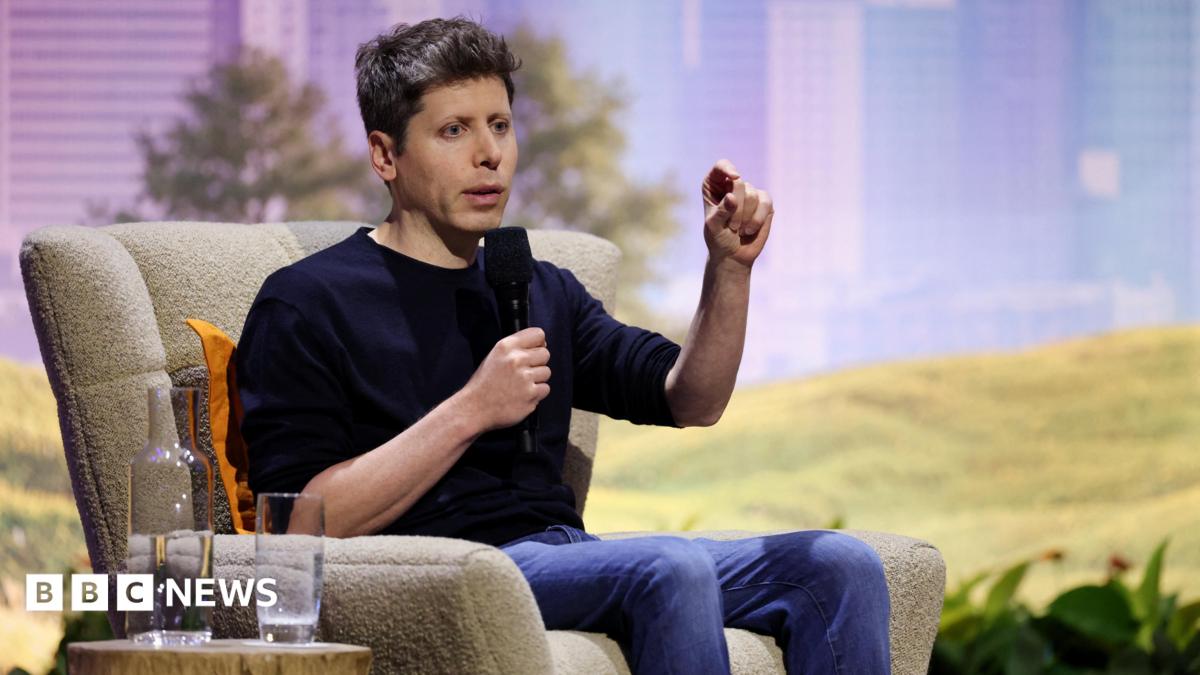
OpenAI boss Sam Altman thinks people should have more faith in his company and others like it to do the right thing when it comes to artificial intelligence (AI) development amid rising public concerns about all the risks.
“The world should trust that we are going to do the right thing because it’s the right thing and we feel the magnitude of this,” Altman said on Tuesday during a conference in San Francisco.
However, Altman noted that people were justified in their fears around AI, as the capability of the tools has progressed rapidly.
“It doesn’t take as much imagination as it used to for [us] to imagine how this could go wrong,” he said. “I think the world is right to be afraid of this.”
Altman’s comments came during an appearance at an annual conference hosted by software firm Salesforce.
It was the first time he had spoken publicly since a post went viral last week by a researcher who quit the AI firm Anthropic. The researcher claimed AI could kill all humans by the end of the decade if left unchecked.
A handful of other AI executives and experts responded by saying they agreed with the assessment, though they didn’t explain how they came to their conclusions or how exactly AI could accomplish such a thing.
The fervor over the claims has led to more scrutiny of AI development in recent days, and in response, Anthropic chief executive Dario Amodei called for the pace of all AI development to slow, external and urged governments to regulate the industry.
The post was applauded by Altman, as well as co-founder of Google’s DeepMind Demis Hassabis, and Elon Musk, owner of social media site X and AI assistant Grok.
By Tuesday, more AI leaders were voicing support for self-regulation rather than government involvement.
Altman said that he felt AI companies like his own were capable of essentially regulating themselves.
“We will get it right, I’m very confident in our company’s and industry’s ability to do this safely,” Altman said, adding that he was sure that they would “keep alignment and safety way ahead of capabilities” and if they couldn’t, they would “slow down or stop”.
After Altman’s comments, Meta boss Mark Zuckerberg wrote on X that every AI lab has the ability and the incentive “to take its own actions” towards making AI tools and models that are designed for safety.
“Any lab that doesn’t focus on alignment will fall behind,” Zuckerberg wrote. “Labs face significant liability if their models cause harm, so they have a strong incentive to prevent this as well.”
Jensen Huang, head of Nvidia, also said at the same Tuesday conference that the AI firms should decide if new versions of the technology should be released and not be managed by outside forces.
“We don’t need new laws or regulations,” Huang said, adding that there should not be a “false choice” between the speed of innovation and the safety of AI products.
Nvidia is the biggest company in the world by valuation, with its profits having boomed as a result of rampant demand for the AI computing chips it makes.
“Safety is paramount. However, safety is an engineering problem,” Huang said.
He added that if at any time a leader of an AI company lacks confidence in their product they should choose to not release it.
“That’s a very obvious thing to do,” Huang said. “Run as fast as you can, but if at any time you feel the institution is not in control, take a pause.”
Some industry figures have argued resurgent AI fears were overblown and were being jumped on to generate hype for the industry.
During the conference, Altman addressed a crowd of hundreds of business people, telling them they should use AI tools to aid in their work, but also needed them in order to protect their businesses from potentially AI-enabled cyber attacks.
The idea of AI executives being left to entirely regulate themselves has struck some in the industry as a bad idea.
Jack Clark, an Anthropic executive and co-founder, told the BBC on Monday that leaving AI to be a “totally unregulated industry” was “rolling dice with immense risks”.
“The only institution that Americans might trust less than Washington these days is Silicon Valley. I have worked and lived in both and I assure you both have earned this scepticism,” Hillman said.
“If you believe what you are building is dangerous, show us what you are prepared to stop doing,” he added.