News Desk

Harry Kane hopes Ballon d’Or produces ‘special night’ in hometown | Football

Kane, who scored 73 goals for club and country last season, is among the favourites for award with Lamine Yamal and Kylian Mbappe.

Bayern Munich striker Harry Kane is hoping for a “special night” at Monday’s Ballon d’Or ceremony in his hometown of London, where the England captain is the bookies’ favourite.

The 33-year-old scored 73 goals for club and country last season, the second-best mark in history after Lionel Messi’s 82 in 2010-2011.

Recommended Stories

list of 4 itemsend of list

But in continuing his habit of tormenting old foes Arsenal on Wednesday, the former Tottenham striker again demonstrated how complete a player he has become since moving to Germany in 2023.

At one point, dropping back to take goal kicks to ignite Bayern’s attack, Kane also set up Alphonso Davies’s first-half equaliser with a pinpoint long-range pass.

In the second half, Kane won and then converted a penalty, giving Bayern the lead before England teammate Declan Rice scored late to grab a share of the spoils for Arsenal with a 2-2 finish.

Open field

Kane is odds-on to claim what would be his first Ballon d’Or, but the outcome is anything but certain in one of the most open fields in recent memory.

The Bayern striker faces stiff competition from Spain’s World Cup-winning duo Lamine Yamal and Rodri along with France captain Kylian Mbappe and teammate Michael Olise.

While Yamal and Mbappe in particular have taken to the airways to extol their suitability for the award, Kane has been typically circumspect despite constant media questioning.

Repeatedly asked about his chances after Wednesday’s star showing, Kane said: “I try not to think about it. Obviously, it’s hard.

“There’s rumours flying around, so you try and stay away from it. I’m going to try and enjoy Monday night as much as possible. It’s a big occasion and a big event.”

Officially, there are three broad criteria upon which the Ballon d’Or is awarded: individual performances and impressive character, team performances and class/fairplay.

In recent years, recipients have either won the Champions League and/or World Cup or have made their case through sheer weight of numbers. Kane clearly satisfies the latter criteria.

Long criticised for a failure to win team trophies at Tottenham, Kane brought his total to five with Bayern after last year’s league and cup double, but the Bavarian giants’ dominance of Germany may count against him.

Bayern made the semifinals of the Champions League, going out narrowly to eventual champions Paris Saint-Germain.

England finished third at the World Cup with captain Kane scoring six times and laying on an assist.

‘Ridiculous’ Kane

After scoring against Arsenal, Kane has at least one goal in each of his past 10 Champions League matches, one short of Cristiano Ronaldo’s record of 11.

“Whenever you’re in any conversation with Ronaldo it means you’re doing something special, especially in this competition,” Kane said.

Bayern coach Vincent Kompany praised Kane’s team-focused efforts, saying: “What made Harry happy the most in recent years is that he finally won his first team trophies here.

“Now if he can crown his career or his season with the Ballon d’Or, that would be deserved for the way he plays for the team.”

After Wednesday’s match, Rice had special praise for his international captain.

“Harry is the clear winner [of the Ballon d’Or]. His numbers speak for themselves. The year he had is remarkable.

“For a striker to play that pass for their first goal, then take the penalty how he did, … he’s ridiculous. He’s such a good player.”

Former Three Lions midfielder Steven Gerrard on Wednesday joined Jude Bellingham in calling Kane “arguably the best England player there’s been” after Kane’s masterclass against Arsenal.

Michael Owen was England’s last Ballon d’Or recipient, winning it in 2001, while in 1981 another striker, Karl-Heinz Rummenigge, was the last Bayern player to claim the honour.

“Monday could be a special night. We’ll have to wait and see,” Kane said on Wednesday.

“I’m trying not to think about it too much because we have important games and another one on Sunday.

“I know it’s a massive event. I am looking forward to it for sure. Hopefully, it’ll be a special night.”

Source link

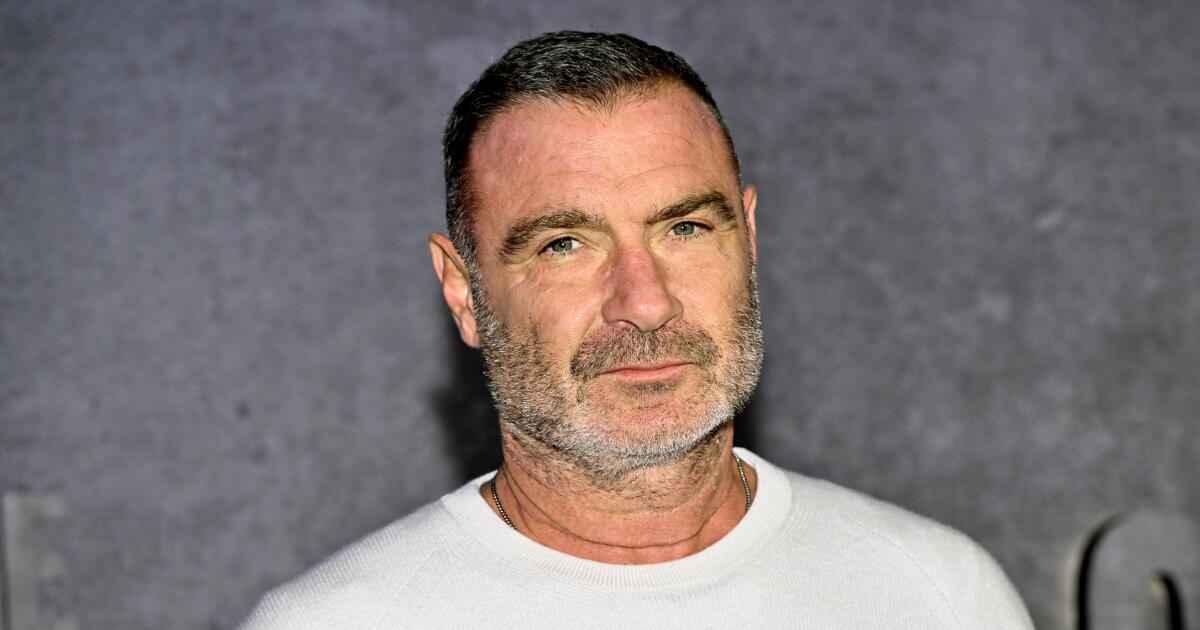
Liev Schreiber scolds Apple TV reporter on ‘Nocturne’ red carpet

Liev Schreiber appeared to be scolding an interviewer Tuesday during the red-carpet premiere for his new Apple TV series, “Nocturne.”

A bystander captured a behind-the-scenes snippet of the 59-year-old, who was seen speaking to a female reporter, likely part of the Apple TV team.

“Talk to people like they value what they do,” Schreiber said in the clip. “It’s not a f— sound bite, especially when we’re doing it in-house for our own people.”

The Tony Award winner added, “We’re trying to make the show compelling” and suggested that the reporter “engage” with the individuals involved in the project.

It is unclear what question was asked in the lead-up to the awkward interaction, although the “Ray Donovan” actor followed up with: “Three words isn’t gonna do anything for anybody and the monkey who f— thought of that is shooting themselves in the foot.”

The woman, who was holding an Apple TV microphone, continued to smile, telling someone in the background, “I hope you’re rolling on this.”

“What I’m trying to say is,” Schreiber continued, “if you wanna give them something that they can use, talk to people like they’re humans, not like they’re social media.”

The woman then appeared to reframe her question, to which the “Spotlight” actor agreed to respond on camera, adding, “That’s a real question; let’s talk about that.”

The Times reached out to Schreiber’s representatives and Apple TV but did not hear back.

Schreiber is both executive producer and star of “Nocturne,” which is set to premiere Oct. 30.

The drama is based on the Lars Kepler crime novels, including “The Sandman” and “Lazarus.” The series follows Jonah Lynn (played by Schreiber), an ex-soldier turned homicide detective who moves from Philadelphia to western Pennsylvania for a quieter life. But the town is shaken up by an imprisoned serial killer, Jurek Walter (“Adolescence” actor Stephen Graham), which prompts FBI agent Saga Bauer (“Atlanta’s” Zazie Beetz) to go undercover.

Source link

Europe needs a war economy | Russia-Ukraine war

For the past four-and-a-half years, the war on Europe’s doorstep has haunted policymakers. Yet they have treated it as a looming threat rather than one already eroding the very foundations on which Europe stands.

Russia’s war has devastated much of Ukraine’s south and east, even as the front lines have shifted only slowly. For Europe, however, the challenge has never been confined to the battlefield. Supporting Ukraine and constraining Russia have tested the continent’s economic resources and political unity. Now, as United States President Donald Trump seeks to force a disadvantageous settlement on Kyiv and repeatedly threatens to withdraw US support, Europe faces the prospect of shouldering even more of that burden alone.

Even if the latest crisis is averted, Europe can no longer assume that Washington will guarantee its security. It must develop the financial capacity to sustain Ukraine’s defence, the industrial strength to defend itself and the economic leverage to constrain Moscow. To meet these challenges, Europe must build a war economy.

The past four years offer lessons in how Europe can finance such an effort, but also warnings about the divisions that could undermine it. The European Union has already been at the forefront of Ukraine’s recent financing, moving from an 18.1-billion-euro ($21bn) share of the G7’s $50bn Extraordinary Revenue Acceleration (ERA) loans in 2024 to finalising a new 90-billion-euro ($100bn) loan this April, one that came without US commitment. Yet internal divisions remain over numerous issues, particularly as they pertain to constraining Russia. This month, the EU adopted its largest-ever round of sanctions listings. But while the measures added a record number of designations, they did little to broaden the scope of restricted activity and did not accelerate the phase-out of Russian energy imports, with pipeline gas imports still permitted until autumn 2027. European leaders have also expressed concern over Trump’s decision to waive new Russia-related sanctions as he seeks to grapple with the costs his foreign policy has wrought.

However, the US-Israel war on Iran has, if anything, shown that Europe’s measures against Russian hydrocarbons could have gone further. Before February, some 20 million barrels per day (bpd) of crude and oil products and roughly 110 billion cubic metres (bcm) a year of liquefied natural gas (LNG) passed through the Strait of Hormuz. By comparison, Russia exported about 6.5 million bpd of oil and products in September, and some 43bcm of LNG last year – about a third of Hormuz’s oil and two-fifths of its LNG. As the crisis continues and Trump seeks additional Russian supplies, Europe must complement its efforts to constrain Moscow with greater investment in its own security.

The first and most important step is to establish a standing framework for joint EU borrowing – not only to finance Ukraine’s continued defence, but also to fund the defence industry Europe will need to sustain its own defence and, if necessary, prevail against future threats from Russia. Crisis begets innovation, as demonstrated during the COVID-19 pandemic, when EU member states pushed past their long-held aversion to mutualised borrowing, creating the 750-billion-euro NextGenerationEU recovery fund in 2020. The EU’s contribution to the ERA loans and this year’s 90-billion-euro facility, both financed by common EU borrowing, extended that logic to wartime finance. But these remain crisis-by-crisis improvisations. Deepening fiscal and capital markets union and building a genuine fiscal-military state would provide the foundations of Europe’s power and its ability to deter and win wars.

The same logic plays out in the US today, where deep capital markets have given companies such as SpaceX, which invested heavily for years before seeing returns, the space to develop technologies such as its Starlink network that have reshaped modern warfare. The importance of this technology is now keenly felt on Ukraine’s battlefields, where Kyiv’s communications have rested on a network subject to the whims of one man, SpaceX CEO Elon Musk. Europe therefore needs the fiscal capacity to fund its own technological development and procurement.

There are understandable jitters about the existing indebtedness of European states such as France and the United Kingdom. However, Russia’s frozen sovereign assets offer a potential way to support further borrowing. Divisions remain over using these assets, with Belgium, which hosts the lion’s share at Euroclear, opposing such a move over fears of Russian legal action and damage to its position in the global financial system. The bloc must come together to share that risk, which is overblown in any case. Not all EU fiscal support needs to come in the form of direct joint debt either. Greatly expanding the EU capital markets union and creating tax-advantaged structures across the region for defence firms and technological innovators may prove even more effective.

Beyond the assets themselves, Europe must also take greater control over its continued economic linkages with Russia. That means intervening far more actively in cases such as that of Austria’s Raiffeisen Bank. In 2025, following a Russian court ruling, more than 2.1 billion euros were taken from Raiffeisen’s Russian subsidiary to compensate Rasperia, a company tied to the sanctioned oligarch Oleg Deripaska. A Vienna court’s ruling last month now paves the way for Raiffeisen to seek compensation from Rasperia’s frozen assets in the EU – using the same sanctions derogation through which Euroclear released some $3bn in 2025. It is precisely this kind of legalised dealing with Moscow that keeps threats like those levelled at Belgium credible: if the Kremlin can seize European assets and prompt the release of Russian-linked assets frozen in the EU, every expropriation becomes a bargaining chip.

Furthermore, the UK and the EU have increasingly made use of measures against circumvention that share some features with US secondary sanctions. Europe should now be more assertive in making it clear that firms helping Russia evade its sanctions risk losing access to European financial systems and markets. US firms will choose Europe over the Kremlin, even if Trump waives more sanctions.

Finally, Europe should seek to reduce US influence over its foreign and security relationships. Speaking in Qatar this week, US Ambassador to Turkiye Tom Barrack said Washington was moving away from its decades-old bargain of security for Gulf oil. Europe may not be able to offer the same level of security, but it can offer a mutually beneficial partnership that addresses both sides’ concerns. And it is Europe that is now stepping up in the Gulf, with the UK and France deploying jets, air defences and refuelling support to help Saudi Arabia against Houthi attacks. Unlike Washington, Europe can promise a deeper partnership in the future and serve as a reliable buyer of Gulf oil and gas exports in exchange for Gulf states doing more to address Europe’s security concerns about Russia through enhanced sanctions compliance and, first and foremost, ending the Kremlin’s role in OPEC plus.

Europe has the means to finance its own security. It must now find the will to borrow for it.

The views expressed in this article are the author’s own and do not necessarily reflect Al Jazeera’s editorial stance.

Source link

Lights will stay on this winter, grid operator says after concerns

Law firm Eversheds Sutherland, which carried out the independent investigation, said there were “high levels of stress and concern” within NESO’s Electricity National Control Centre over the “current state of the energy industry generally” and the longer-term ability to keep it balanced.

It said this was, according to evidence gathered from staff, due to the fact that traditional methods of electricity generation such as gas were “easier to manage”, compared to renewables, which were “less flexible”, and were making the job of ensuring supply meets demand “more difficult”.

The probe also found there to be a “significant disconnect” between those working in the control room and NESO’s leadership.

Multiple witnesses expressed the view that those in senior leadership and executive positions “do not fully appreciate or understand either the way in which the control room works, or the reality of the pressures faced by those on the frontline who are responsible for ‘keeping the lights on'”, Eversheds’ report said.

The investigation was prompted after Conservative shadow energy secretary Clare Coutinho said in July she had been contacted by a whistle-blower alleging that NESO had been “hiding information about how securely our grid is being run”.

One of the claims was that control room staff were encouraged to conceal or alter records to avoid leaving a paper trail linked to efforts to stabilise the grid during a period of extreme heat in June.

This was done in order for NESO, which is owned by the government, to avoid public scrutiny or reputational damage, according to the allegation.

Eversheds said its investigation did not substantiate any of the allegations from whistle-blowers but did identify “cultural, governance and control issues” that it said were “significant findings in their own right”.

Fintan Slye, chief executive of NESO, said the investigation identified “areas where we could improve how colleagues can raise concerns and how we respond to them”.

“I want all colleagues at NESO to feel heard. We will act on the recommendations, working closely with our trade unions, and be open with colleagues about the progress we make,” he added.

Source link

Good Morning Britain viewers slam ‘absolutely pathetic’ Storm Austen coverage

Good Morning Britain’s Ranvir Singh and Richard Madeley were on hand to detail the latest headlines to ITV viewers but one news segment sparked backlash

A Good Morning Britain star sparked concerns from viewers after reporting live from Cornwall during Storm Austen.

Fans of the ITV show have been left less than impressed with coverage of the first named storm of the season. During the programme, Good Morning Britain’s Ranvir Singh and Richard Madeley handed over to Jonathan Swain to share more information about the storm.

However, it wasn’t long before people commented on Jonathan being sent outside in the strong conditions, with many saying the same thing. On X, one person said: “Tiz the season for TV reporters to be out in the wind and rain shouting at the camera. Every autumn it’s the same.”

Someone else wrote: “I think most of us have experienced rough weather before. I don’t think we need a ‘roving reporter’ sent to Cornwall to show us what it’s like. Stop the fear mongering!” Another added: “FFS, why does GMB send reporters to storm spots? Absolutely pathetic.”

One person commented: “It’s windy and raining ffs. Scaremongering #storm.” As another added: “What is the point of having poor old Jonathan Swain out in horrible weather just to tell us it’s windy and raining? Your viewers aren’t so thick that they need to see a man struggling to broadcast to understand what wind and rain is. Get him back into the studio!” ITV has been contacted by The Mirror for comment.

When the camera showed Jonathan, he was seen outside battling the strong gusts while it was raining. He told viewers: “It’s certainly not peaceful down here in Newquay this morning. There have been gusts reported of 82mph here in Jersey.

“We’ve just been speaking to some locals in the area who have woken up to window rattling, fences falling over, people posting messages saying they’re feeling quite scared.”

The ITV star told viewers that it’s been reported that 5,000 homes have no power in Cornwall and parts of Devon. He continued: “We understand some schools are likely to have staggered starts later on today.

“It is pretty dangerous just being out here on the roads this morning, so that’s quite a sensible option to ensure people can get to schools safely.”

Ensure our latest TV stories always appear at the top of your Google Search by making us a Preferred Source. Click here to activate or add us as Preferred Source in your Google search settings

Speaking to one of the locals, he called the weather “horrendous” before revealing it’s the worst he’s ever seen in the county. Wrapping up his segment, Jonathan added: “This is the amber weather warning that’s down here in Cornwall. This is what it looks like, this is what it feels like. It’s going to be like this for certainly, most of the morning.”

According to Met weather, Storm Austen will move from west to east through Friday, with winds generally diminishing later in the day. However, on Saturday, Storm Boelo is expected to hit, as wet and windy weather is expected across the whole of the UK.

Good Morning Britain continues weekdays on ITV from 6am

Source link

Manchester United labelled ‘babies’ by club legend Wayne Rooney | Football

Manchester United manager Michael Carrick is under growing pressure, but club legend Wayne Rooney takes aim at players.

Manchester United great Wayne Rooney has labelled the current squad “babies” and “selfish” after a humiliating Champions League capitulation and post-match criticism by Bruno Fernandes of manager Michael Carrick.

Carrick’s men are 13th in the Premier League before Sunday’s visit by Bournemouth and could drop into the bottom three if results go against them this weekend.

Recommended Stories

list of 3 itemsend of list

With the club beset by infighting and off to their worst domestic league start for decades, Carrick was left clinging to his job after the 4-1 defeat at Como on Wednesday.

Deepening the sense of crisis, the captain Fernandes afterwards took aim at his manager’s tactics, saying United had to be more “brave”.

Defender Lisandro Martinez criticised the club’s board last week for not investing enough in the transfer market.

Rooney, United’s all-time leading goalscorer, said he was in “shock” and “disbelief” at the Como display.

A friend and ex-teammate of Carrick, former striker Rooney pointed the finger at the players.

“When Martinez came out, I said this is an absolute nightmare because it will rip the dressing room apart,” Rooney told The United Stand podcast on Thursday.

“That was the start. We’ve seen it now with Bruno and you’re going to see it with more players because these players, they don’t want to take responsibility.

“You can say whether Bruno was right or wrong in what he said but you have to take responsibility on the pitch. You have to take responsibility as a group of players.”

He added: “These players, they’re selfish. They don’t care about their teammates, don’t care about the manager, the staff or the fans; they care about themselves.

“If they’re not getting what’s right for them, they’re like babies and just throw their toys out of the pram and go and deflect the blame on to anyone else but themselves.”

Source link

FIFA President Infantino’s re-election endorsed in U-turn by Asian football | Football

The head of the Asian Football Confederation (AFC) says the body is endorsing Gianni Infantino for another term as FIFA president.

The AFC has 47 member confederations. Even if all the members do not follow Friday’s direction from Sheikh Salman bin Ibrahim Al Khalifa, those that do could be key to guaranteeing another mandate for Infantino, who leads the governing body of world football and is seeking a fourth term.

Recommended Stories

list of 4 itemsend of list

The FIFA election is in March. The deadline for candidates to file against Infantino is November 18, and so far, none has filed.

Sheikh Salman, speaking at the AFC’s extraordinary congress in Tokyo on Friday, embraced Infantino with a large hug in front of the membership as he delivered his endorsement.

“We affirm our full commitment to supporting you and your leadership as you seek a new mandate as the FIFA president.” Sheikh Salman said.

“You’ve visited a lot of countries in Asia. I’ve spoken to a lot of members within this continent. I know your feeling, and I think your commitment is clear as well.”

Addressing his remarks to Infantino, Sheikh Salman indicated not every AFC member would go along with the endorsement but most will.

“My feeling is, I’m sure, the feeling of most of my members,” the AFC president said. “And I’ve said that to you.”

A sudden about-face by AFC

This is an abrupt turnaround for Sheikh Salman. Just over two months ago, the AFC joined the football governing bodies of Europe and that of North and Central America in saying Infantino had committed a “fundamental breach of trust”.

Infantino apologised last week in Zurich to FIFA’s 37-member ruling council, which he chairs, for “mistakes” he made in assembling a now-scrapped $4.2bn plan to sell a stake in FIFA events, including the World Cup, to private investors.

Sheikh Salman referenced the differences with Infantino in his speech but glossed over any details.

“Gianni, I want to make it clear: Yes, we had some issues we spoke about in the past,” Sheikh Salman said. “But let’s not relate the two things together. I think the last few days we met in Zurich, you made it clear that there’s a true understanding between us.”

“The past I’m sure is part of our history,” he added, “We’ve all, I’m sure, learned important lessons from it. What matters now is how we move forward together. I think everyone has questions, and I’m sure the answers will be available, whether to us in Asia or the rest of the world. ”

Infantino’s electioneering around the globe

FIFA’s media office has been promoting Infantino’s travels around the world, seeking votes in exchange for millions of more dollars in financial support for small and large football countries.

“Thank you for being here,” Sheikh Salman said to Infantino. “I know you have been everywhere. I don’t know how you can do it. But I’m sure that you set a record for being in almost every country.”

Sheikh Salman then joked that, perhaps, Infantino had a “clone”.

That drew a laugh. But the largest applause came at the end of his brief address when he again repeated his support for Infantino.

“As one Asian family, we are ready to move forward, united in your support, Gianni,” Sheikh Salman added. “I want to make that clear today.”

Infantino accepts AFC’s support

Infantino took the podium after Sheikh Salman and kept his remarks light. But he did acknowledge some errors.

“When you do many things, you do – hopefully, as we did, many good things – you do some mistakes as well,” Infantino said. “The important, however, is, as you said, to learn, to learn always from the experience, from the mistakes, to apologise, to move ahead, to come together, to unite, to build for our future, for your future.”

The largest applause came as he mentioned how, under his leadership, millions more are flowing to FIFA’s patronage network.

“Before I started as FIFA president, each of you – some of you are still [here] and still remember that time – each of you was receiving $1m every four years” Infantino said. “As of the first of January of next year, it will be $25m.”

Source link

The five best moments from CMA’s Dolly Parton tribute

Tribute specials are always a bit macabre. They exist, and are sometimes quickly thrown together, to honor and celebrate an artist who impacted so many. They are also ratings and advertising cash grabs that air on major TV and streaming platforms.

“CMA Presents I Will Always Love You: A Celebration of Dolly Parton,” which aired Wednesday on ABC and Disney+, was a lovely tribute to the music and cultural icon who died from cancer in August. It also was a missed opportunity. As music superstar Vince Gill said toward the end of the two-hour program, “this is not a memorial; but a celebration of an undeniable force of nature. Dolly was somebody that everyone loved: City, country, young, old.”

But most likely because the event was put on by the Country Music Assn. — which naturally wanted to showcase its own talent — it lacked a chance to really celebrate that she and her music could not be contained by one genre.

This isn’t just ironic because Parton’s most-known song — a song that was both the title of the special and the end performance of it — was made all the more famous by Whitney Houston, another iconic performer and also one who happens to have been a woman a color and who did not have any other direct ties to the Nashville scene. Dolly herself, famously, appreciated so many other kinds of music. After her passing, Eminem shared on social media a letter she’d written to him to congratulate him on his 2022 induction to the Rock & Roll Hall of Fame.

“She definitely didn’t have to take the time to do it,” he said as part of the post. “Even for a kid who mostly listened to rap music, she was an icon. A superstar in every sense.”

That said, from Reba McEntire opening the show with stories of just how kind her friend was in real life to a pre-recorded tribute from Bono where his Irish accent briefly attempts to slip into a Southern one while emulating her conversations with him, there were some touching and memorable moments. We’ve rounded up five of them here:

Reba McEntire, “He’s Alive”

Technically, the song is meant to be the apostle Peter singing about Jesus Christ’s resurrection. But McEntire’s take on Parton’s take of the Don Francisco gospel brought in the very modern-day sense of fear that so many parents and partners feel when their loved ones go out to dangerous jobs or even just leave the house for school or concerts.

Carrie Underwood, “I Will Always Love You”

There’s no denying that this is a perfect song and that Underwood is a once-in-a-lifetime voice. And credit must be due to Underwood for pulling off an undertaking where any little slip would be pounced on by critics. But staging her to stand in front of one of the many animatronic butterflies that lined the stage in such a way that it looked like she had angel wings was … a choice.

Carly Pearce and Kristin Chenoweth, “9 to 5”

Both of these women, especially Tony winner Chenoweth, are masters of stage presence. Their banter with each other before singing, not to mention their duet itself, embraced the liveliness and feminine feminist-ness of that song.

Ella Langley, “Jolene”

This was not the most powerful performance of the night, as Langley seemed happier to dance on the stage than belt out the music. And it didn’t boil with the grief and seething rage of a scorned woman the way that Beyonce’s 2024 cover did. But it was nice to see a symbolic baton be passed to the “Choosin’ Texas” singer.

Zac Brown, “Butterfly”

Brown’s backstory of writing, and then recording, what would become his 2025 duet with Parton came off as sweet and genuine. It also helped it not feel awkward or gratuitous when he and the producers opted not to recast the Parton half of the song and instead let her voice carry through the speakers.


Source link

Venezuelans demand elections in first national protest in nearly two years | US-Venezuela Tensions News

Thousands of Venezuelans have taken to the streets in several cities to demand free elections and other political changes, in the first nationwide opposition protest in nearly two years.

US President Donald Trump and acting President Delcy Rodriguez have said there would be elections, but no date has been set for a vote to decide on a successor for Nicolas Maduro, after the former Venezuelan president was captured by US forces in a military raid in January.

Recommended Stories

list of 4 itemsend of list

Opposition leader and Nobel Peace Prize winner Maria Corina Machado, who has been outside the country for nearly a year after living in hiding following a contested 2024 election, has said elections must take place by July 2027.

Her Vente Venezuela movement organised the protest, which took place in the capital Caracas and other cities, including Valencia, Maracay, San Cristobal and Maracaibo.

“Seeing this makes me happy because I know change is possible,” said 18-year-old cosmetology student Leosmary Hernandez, as she gathered with hundreds of others in northern Maracay. “I’ve been through so many hardships, so many problems because of the dollar, and difficulties studying. I have high hopes for my country and for our next leader and president, Maria Corina.”

“I went out to protest before, when things were much tougher, and I’m even less afraid today because I want my voice to be heard,” she added.

Since January 3, the country has been led by interim President Delcy Rodriguez of the long-governing United Socialist Party of Venezuela (PSUV).

PSUV leaders have been accused of carrying out human rights abuses against political dissidents, including arbitrary arrest, imprisonment and torture.

After the United States launched a military operation to abduct and jail former President Nicolas Maduro, the PSUV remained in power with the support of the White House.

US President Trump has backed Rodriguez’s leadership, despite her having been Maduro’s vice president.

His administration has maintained an active role in Venezuela, exerting control over its oil resources and pressuring the Rodriguez government for reforms.

A supporter of Venezuela’s opposition waves a flag over a highway at a demonstration in Caracas to demand elections in 2027
A supporter of Venezuela’s opposition waves a flag over a highway at a demonstration in Caracas to demand elections in 2027 [Fausto Torrealba/Reuters]

Minimal security presence

Venezuela’s socialist movement, in power since 1999 under late President Hugo Chavez and then Maduro, has in the past deployed security forces against protesters, but government forces had minimal presence at protest sites on Thursday, and in many smaller cities demonstrators dispersed before dark.

The ruling Socialist Party called for its supporters to march from Caracas’ Plaza Venezuela, the same place the opposition planned to gather two hours later, to a location near the presidential palace to commemorate Breast Cancer Awareness Month.

Interior Minister Diosdado Cabello, known for his close ties to the security services, was pictured on state television attending the march, while the opposition supporters moved their protest to a nearby location.

US-backed talks continue

Talks between a faction of the opposition and the interim government, aimed at remaking the top court and the electoral council ahead of eventual elections, held their latest session this month, but changes could take significant time.

The negotiations, backed by the US, do not include Machado’s political movement, though she has said she will not stand in the way of their progress.

Machado’s proxy Edmundo Gonzalez Urrutia claims to have won the 2024 election according to vote tallies by the opposition. But the government, which never released full counts, backed Maduro, as did the country’s legal and electoral institutions.

Machado has for years sought US support, aligning with hawks in the Trump team who argued that Maduro, through alleged links to drug gangs, represented a direct threat to US national security. Maduro and his wife, Cilia Flores, are facing drug and torture charges in the US. They have pleaded not guilty.

Source link

Grenade exercise sparked deadly fire at Canada military base, army says | Military News

High winds propelled the blaze across the army base in Wainwright, killing four soldiers and injuring dozens more.

A fire that killed four soldiers at a western Canadian military base was sparked by an exercise using live grenades, a military official said.

The deadly fire broke out on a grenade launcher range during military exercises on Saturday, with high winds propelling it across the base, Brigadier-General Vanessa Hanrahan, commander of the Canadian Forces Military Police Group, told reporters on Thursday.

“A subsequent change in wind direction and velocity significantly increased the fire’s intensity,” she added, with the flames spreading to a training area at the Wainwright military base in Alberta.

Due to the blaze being in the “permanent danger area” of the range, firefighters were unable to directly combat it, Hanrahan added.

The fire spread on Saturday afternoon during high-intensity combat training involving Charlie Company of the 3rd Battalion, Princess Patricia’s Canadian Light Infantry.

The military base lies in the prairies, a landscape of wide, open grasslands, rolling plains and scattered groves of trees.

About 84 soldiers were split between a grenade range and an area where they practised attacks on simulated enemy positions. The fire swept into the second training area.

Four soldiers died and 39 were injured, with 27 requiring hospitalisation. The incident was one of the worst peacetime tragedies for Canada’s military.

The soldiers and reserve members were participating in exercises ahead of a planned deployment to Latvia, where Canadian forces have their largest international military operation.

The Wainwright base is one of the largest bases operated by the Canadian Armed Forces. It regularly hosts training exercises involving military personnel from NATO countries.

During the final months of World War II and for several months in 1946, the base was used as an internment centre for German prisoners of war.

Source link

DJ Lizz, Tomasa del Real reflect on 10 years of neoperreo movement

Amid all the turmoil of 2026, some may yearn to dial the culture back to 2016 — in all its rainbow-saturated, Rio de Janeiro Instagram-filtered glory.

Neoperreo, the Latin American genre born of that internet era, turns 10 this year. Artists built it as a reimagining of reggaeton music, by and for femmes and freaks: cis and trans women, as well as the frikis from Latin America’s punk and alt scenes, who never fit the mold. For them, this cutting-edge sound and the internet community around it offered a lifeline.

A decade after the term first circulated, neoperreo (as in, the new perreo) has exapanded from SoundCloud and DIY parties into a global network of artists, DJs and festivals.

The genre takes a distinctly techno-infused approach to the dembow rhythm, stripping reggaeton of any acoustic elements and assembling them anew on a laptop to sound colder and faster. With the bass hollowed out and Auto-Tune cranked up, the vocals take on a metallic sheen — as women spit risqué verses claiming their rightful place as subjects, as opposed to the sex objects that men would relegate them to.

Both released in 2016, two of the songs that defined the genre early on — Tomasa del Real’s “Bien y Mal” and Ms Nina’s “Tu Sicaria” — pair hooks you can perrear to with beats that sound like they were built in a bedroom, because they actually were.

Beyond its sound, the genre created worlds: digital networks where outsiders across the Americas and Europe found each other, and parties where queer, trans and friki Latines could show up exactly as they were.

As trans and Latine communities face mounting attacks on their rights and safety, those spaces, alongside the new ones they’ve inspired, keep carrying weight.

“It didn’t have a name yet, but it was born from this desire to experiment and create something new at its core,” says Elisa Espinoza, the 34-year-old Swiss Army knife of an artist known as DJ Lizz. Raised in the southern Chilean town of Hualpén, she traces that initial spark to her country’s history.

“Chile is a country [that experienced] a dictatorship, a country that always sought a kind of homogeneity — a sickness that hopefully we’d all think the same, look the same, act the same,” she says. “At that moment, everyone was trying to create something, to identify with [who] we really are. Out of that constant search comes experimentation, which goes hand in hand with sexual liberation, liberation from social class. That spoke to a revolutionary spirit.”

For Espinoza, that liberation meant reclaiming a femininity she had once feared, by drawing from drag culture and the ’80s vogue tradition. “I hypersexualized myself, I hyperfeminized myself, just like a drag queen — and that somehow empowered me even more,” she says, recalling men who yelled obscenities at her on the street or tried to grab her ass when she wore shorts.

“Men were the owners of women’s sexuality, and now we’re the owners of our sexuality,” she says.

From the other end of the country, artist Tomasa del Real, born Valeria Cisternas, began to approach music with a similar ethos in her hometown of Iquique, which sits on Chile’s northern coast. When both eventually moved to, and met in, Santiago, they realized that other artists from around the world were chasing the same idea.

“On the internet, people found freedom they didn’t find in their own country or city,” says Espinoza. “We were all united by the same search.”

From this virtual community came neoperreo’s signature sound: a hedonistic mix of reggaeton and Latin rhythms with industrial, electronic, funk and trap elements. “What came out was, for some people, a work of art; for other people, a monster,” says Espinoza.

As cisgender, straight women, the community they describe both includes and extends beyond their own identities. “It was the first time someone said, ‘No, this music I make, at least in Latin America, isn’t for men.’ It’s for women, and it’s for gays,” Espinoza says.

The term “neoperreo” came about almost by accident. On an episode of Red Bull Radio in 2016, Cisternas, now 39, says she tried to explain in her “basic English” that she wasn’t really sure the music she made should be called reggaeton at all. Reggaeton came from Puerto Rico, by way of reggae en español; her lyrics and rhythms were different, and the people collaborating with her came from electronica, not the island.

She didn’t want to appropriate a culture that wasn’t hers, so she reached for another way to describe it: not as the new reggaeton, but the new music you can perreo to. Twerking, she wanted to explain, a woman can do alone; but perreo takes two. “So I meant to say el nuevo perreo, but in English, I said neo — neoperreo,” she says.

And the name just stuck.

That same year, Cisternas and Espinoza started throwing parties in Santiago under the hashtag #NeoPerreo. They called in a crowd from society’s margins: a community “of DJs, dancers, strippers, tattoo artists, of the alternative world, the more gothic world, the misfits themselves,” says Cisternas.

At their first event, the line wrapped around the block.

“It was a really important moment for the history of reggaeton, because there were no spaces where someone gay could show up with [both] their metalhead friend and their crazy girlfriend to dance reggaeton. Those spaces didn’t exist; reggaeton was very marginal, completely removed from society. This brought us closer,” says Cisternas.

The scene also became a way to make money. “It gave work to a lot of us who didn’t have access to money that immediately; we created a lot of work for ourselves,” she says. “A lot of people built their careers at that moment too.”

Jorgelina Andrea del Valle Torres, the Argentine neoperreo artist known as Ms Nina, also remembers those first parties affectionately. “It widened the audience,” she says. “In the end, we created a community where everyone feels seen and safe.”

But neoperreo wasn’t always received so warmly. “People didn’t understand it because they weren’t used to it. They were used to basic reggaeton,” Torres says. “There was a scene in Spain too, with trap and reggaeton built on SoundCloud and turned-up Auto-Tune. [But it was] a new kind of music nobody else was making. Everybody kind of hated it. And now everybody’s doing it.”

Growing up in central Argentina, Torres always felt judged and bullied for being different; she’s spent the last 20 years in Alicante, Spain, where she says she finally feels free to explore her bisexuality. Still, the cumbia villera of her childhood — a heavily synthesized subgenre born in the outskirts of Buenos Aires in the late 1990s — runs through everything she makes.

Argentina, like Chile, was barely a generation out from a military dictatorship when it had partnered with Augusto Pinochet’s regime to hunt down dissidents. Music of the margins — which before neoperreo was punk rock and hip-hop — had been framed in opposition to polite society.

Although reggaeton originated in the streets, the genre hit its zenith in the mainstream this year, thanks to Bad Bunny’s historic Super Bowl halftime show and Karol G’s headlining set at Coachella. Yet Cisternas, despite having performed at Coachella herself in 2019, argues that neoperreo will never be mainstream in the same way.

“It’s too weird — and that’s fine,” she says. “The weirder, the better.”

For the often overlapping worlds of sex work and queer nightlife, the underground movement provided a natural shelter for those unsafe to be themselves in the mainstream, from the leading artists who candidly promote their music alongside erotic content on OnlyFans, to trans artists like Sasha Sathya, who discuss gendered violence and labor in their lyrics. And as governments in Argentina and the U.S. roll back protections for queer and trans people, the freedoms cultivated on the dance floor remain far from assured outside it.

“Above all, because of the trans laws, that’s where there’s still a long way to go,” she says. “It’s important that we keep going.”

Yet now, 10 years in, the movement’s heirs may not call themselves neoperreo at all.

On another late summer night in New York, under the red glow of the DJ booth and a canopy of globe string lights, the rooftop’s wooden floorboards dip beneath scores of platform heels. An outdoor thermometer clocks a temperature of 100 degrees as the sounds of Y2K-era reggaeton reverberate. There’s no shortage of snapbacks, piercings, baby bangs and baggy jorts.

For queer people who never had the canonical experience of grinding in their high school gym, a party called Trakata fills that primal need — and operates on the same queer, rebellious frequency as neoperreo.

At these incandescent parties, Trakata founder Tani Shimizu, a 26-year-old trans man, can be found entrenched on the dance floor, often perreando with one or more beautiful, curly-haired femmes. At a local Caribbean cafe, complete with pastel floral tiles, plastic-covered couches, and the trills of guitar from “Pa’ Que Retozen” echoing through maxed-out speakers, he explains how it all began.

When looking to fundraise for his top surgery last winter, the 26-year-old joined together with some friends from the trans collective Body Hack to throw a queer-friendly perreo party. Hosted at the Bush, a Brooklyn lesbian bar Shimizu had been infamously bartending at, the first event drew close to 600 attendees. “People were like, ‘Oh, my God, we’ve been dying for this,’” he says.

The turnout convinced Shimizu there was a market for the party, along with the chance to create paid work for himself and others. “I cared a lot about how this could be an opportunity for people to make money, myself included,” he says. “I believe in compensating people fairly, even my friends.”

Shimizu, a first-generation Peruvian from Los Angeles, admits he isn’t too familiar with the specifics of neoperreo. Though Ms Nina’s “Tu Sicaria” makes its way onto the playlist some nights, his resident DJs mostly stick to the classics at their parties, and that’s intentional.

Whereas artists back home innovate to push against the status quo, in predominantly white U.S. spaces — especially for queer Latines — the older reggaeton tracks feel more alt.

“Trans and queer people are often pigeonholed to this idea of being really alternative in sound,” he says. “There’s something arguably subversive about going, ‘No, it’s actually OK to honor culturally what we have always held onto’ — and what was principal in our identities, regardless of these other subversive or subaltern identities that we embody.”

While the sonic identity of the space roots itself in nostalgia and reconnection, Shimizu strives to balance novelty in the construction of the space, while reaffirming the desire for Trakata to reflect what has been historically true of queer gatherings.

“There’s this deeper desire and this deeper politic. It just so happens to take place in the context of a club on a Friday, or Saturday night, at these hours.”

Nearly a year into his transition, he reflects on a newfound enlightenment. “Transness has given me the liberty to not be so consumed with what I look like,” Shimizu says. “I’m not dwelling any longer, which is really freeing. [It] gives you a lot of mental space to focus on things that are more important.”

That freedom from the mirror is core to neoperreo’s mission: The pursuit of a dance floor where your body, and everyone else’s, are besides the point. Shimizu has built that into Trakata’s foundation. “I want people of all body types and existences,” he says.

Shimizu also wants to make it clear that Trakata isn’t for people who just want to look hot online. “It’s anyone who is interested in engaging with the cultural experience that we’re co-creating, and if you want to come to dance, and you want to stay off your damn phone.”

Trakata wasn’t created with neoperreo in mind; but with the same sweaty dance moves and the same people finding each other, it’s hard to tell where one stops and the other begins. Since Cisternas and Espinoza threw their first neoperreo party 10 years ago, their legacy has carried over to popular Boiler Room sets and underground queer sanctuaries in equal measure.

“[For] anyone who felt like a bit of a misfit, unwelcome in reggaeton,” says Cistnernas, “neoperreo is their home.”

This story was produced in partnership with the Trans Journalists Assn.

Source link

Israel arrests 36 Palestinians in the West Bank, attacks on farmers ramp up | Israel-Palestine conflict News

Israeli pogroms on Palestinian farmers and their lands during the olive harvest season intensify.

Israeli forces have arrested 36 Palestinians during raids across the occupied West Bank, as attacks on Palestinian farmers and their lands during the olive harvest season ramp up.

In Jenin governorate, Israeli forces raided towns and villages on Thursday, arresting 10 Palestinians, the Palestinian news agency Wafa reported, citing data from the Palestinian Prisoner’s Society.

Recommended Stories

list of 3 itemsend of list

Israeli forces also raided the town of Tuqu in the Hebron governorate on Thursday and arrested former prisoner Shorok al-Badan, along with five others from other parts of Hebron, according to Wafa.

The Colonization and Wall Resistance Commission said on Thursday that Israeli forces arrested 14 people in Khirbet Jawaya village of Masafer Yatta in Hebron, while Wafa reported that three other Palestinians were arrested across the Hebron governorate, citing a security source.

In Nablus and Jerusalem, three more Palestinians were arrested during Israeli raids in the village of Burin, the town of Awarta, and the Qalandiya refugee camp.

Attack pattern

The Colonization and Wall Resistance Commission said it documented 17 pogroms by Israeli forces and settlers on Thursday against Palestinian farmers and their land during the olive harvest.

The incidents were recorded across occupied West Bank governorates, including Hebron, Qalqilya, Nablus, Ramallah and el-Bireh, Jenin and Salfit.

According to the Commission, the attacks included assaults on farmers, preventing them from reaching their land, theft of crops and agricultural equipment, damage and burning of olive trees, as well as arrests, threats at gunpoint and live fire.

The Commission says the pattern represents an escalation in attacks targeting the olive harvest and undermines Palestinians’ ability to access and cultivate their land and maintain their livelihoods.

Israeli attacks on Palestinian farmers garnered international attention and condemnation. US Democratic congressional candidate Brad Lander was briefly detained on Wednesday by the Israeli military with a warning while volunteering to help Palestinian farmers harvest olives in the occupied West Bank.


Source link

USAF Confirms Bombers Could Have A Major Air-To-Air Combat Role

The U.S. Air Force is exploring options for adding air-to-air combat capabilities to its bombers as part of efforts adjacent to its latest fighter force structure plans. The service has raised the possibility of the B-21 Raider, specifically, taking on an air-to-air role, and potentially doing so in cooperation with Collaborative Combat Aircraft (CCA) drones, in the past. As TWZ has explored for years, the B-21’s inherent attributes – size, extreme range, high operating ceiling, broadband low-observability (stealthiness), and advanced sensors – could actually make it especially well suited to taking part in air-to-air combat missions. The Air Force’s other bombers could also be part of these future plans.

Aviation Week was first to report on the potential for bombers to help bolster the Air Force’s air-to-air combat capacity after obtaining a copy of a new long-term fighter force structure report submitted to Congress last week. Media coverage of this report first began to appear earlier this week following a roundtable on Tuesday with Lt. Gen. David Tabor, the service’s Deputy Chief of Staff for Plans and Programs. The full report, which is unclassified, was not disseminated to reporters at that time.

Pre-production B-21 Raider bombers at Edwards Air Force Base in California. USAF

The Air Force’s central goal now is having 1,509 combat-coded fighters in inventory by 2035, which is hundreds more than it has in service today. This will come from the acquisition of new F-35As, F-15EXs, and F-47s. There are already questions about how realistic this plan might be, and the service has acknowledged several hurdles it will need to overcome. You can read more about this in our initial reporting here.

The F-47, a rendering of which is seen here, is a critical component of the Air Force’s current future fighter force structure plans. USAF

“Accordingly, the USAF is also evaluating additional recapitalization options, including a new capacity fighter, increased reliance on CCAs [Collaborative Combat Aircraft], and developing air-to-air capabilities on bombers,” the latest fighter force structure report says, per Aviation Week.

“A new capacity fighter” may refer to the possible acquisition of new-production F-16 Vipers, which Lt. Gen. Tabor said at the roundtable could be an option in the future, according to an earlier story from Air & Space Forces Magazine. He also said making any such decision was not an “urgent” priority. This is just one possibility here. The Air Force has floated ideas for other new fighter concepts beyond the F-47 in recent years. Lockheed Martin has talked about the potential for expanding on the F-35 design.

The possibility of the Air Force buying a version of the current-generation Block 70 F-16, an example of which is seen here, has been raised. USAF A Bahraini Block 70 F-16D flown by members of the 416th Flight Test Squadron pulls away after receiving fuel from a KC-135 tanker with a crew from the 370th Flight Test Squadron during a sortie out of Edwards Air Force Base in California on March 7, 2024. USAF

At the roundtable on Tuesday, Tabor also made clear that the introduction of CCAs would influence future fighter force structure plans, but the expected scale and scope of those impacts remain unclear. He does not appear to have addressed the role bombers could play in this equation at that time. The new fighter report itself does not elaborate further on the potential use of bombers, based on Aviation Week’s story. TWZ is seeking more information.

When it comes to the possibility of Air Force bombers, and the B-21 more specifically, taking on an air-to-air role, this is not the first time the possibility has been raised, as mentioned earlier.

“As the NGAD [Next Generation Air Dominance] review goes forward, like, is it possible that what that ends up with could be the B-21 taking a larger role?” reporter Stephen Losey, working at the time for Defense News, asked then-Air Force Chief of Staff Gen. David Allvin at the Military Reporters & Editors (MRE) Conference in 2024.

“We have not taken that off the table,” the Air Force’s top officer said in response to Losey’s question, but did not elaborate.

B-21 Takeoff and Landing thumbnail

B-21 Takeoff and Landing

At that time, the Air Force’s NGAD program was undergoing a deep review, and the future of the sixth-generation fighter component of the effort had come into question. The decision was ultimately made to continue pursuing plans for what has now become the F-47.

For years now, TWZ has been highlighting how the B-21 could serve in multiple roles beyond just that of a traditional bomber, including in an air-to-air capacity. Air Force officials have themselves described the Raider as having multi-mission capabilities, which could extend into the realm of air-to-air combat.

“If we were to characterize it [NGAD] as a fighter, we would be… thinking too narrowly about what kind of airplane we need in a highly contested environment,” then-Air Force Maj. Gen. Scott Pleus told what was then just Air Force Magazine back in 2019. This could be “a B-21 that also has air-to-air capabilities” and can “work with the family of systems to defend itself, utilizing stealth – maybe that’s where the sixth-generation airplane comes from.”

Pleus’ comments had tied in with adjacent discussions at the time and thereafter about how the B-21 might operate together with future CCA drones. Pleus, who was subsequently promoted to lieutenant general and whose lasting posting was as Director of Staff at the Air Force’s top headquarters at the Pentagon, retired in August of this year.

A composite image showing the two drones – General Atomics FQ-42 Vengence and Anduril’s FQ-44 Fury – that the Air Force is acquiring now under the first phase of its CCA program. USAF

It remains unclear how the Air Force might be considering employing the B-21, or any of its other existing bombers, in air-to-air combat. This could entail loading out bombers for direct air-to-air engagements, or the integration of new capabilities to help them find targets or to otherwise enable new supporting roles, or a mix of all of the above. The process of achieving air superiority is not limited to neutralizing aerial threats, either.

As TWZ has written in the past in the context of an air-to-air role for the Raider in particular:

“The Raider has the potential to serve as a launch platform for air-to-air missiles, especially outsized very long-range types. Its payload capacity would give it the ability to carry a large volume of smaller air-to-air missiles, as well. B-21s could also employ air-to-ground munitions in support of the suppression and destruction of enemy air defenses mission (SEAD/DEAD), which is also part of the air superiority equation.”

“Maybe most significantly, the B-21s could also act as airborne nerve centers in support of counter-air missions, especially for controlling drones like the Air Force’s planned fleets of Collaborative Combat Aircraft (CCA), and have the ability to do so even in the most heavily contested of airspaces. Uncrewed aircraft, in turn, could feed targeting data back to Raiders with air-to-air loadouts. B-21s might even be able to launch some of those drones themselves.”

A head-on view of the first pre-production B-21 Raider. USAF

Deeply networked ‘kill webs’ that bring together distributed arrays of sensors and other supporting elements across vast distances and multiple domains, coupled with very-long-range air-to-air missiles, open up new operational possibilities more generally. This applies to Air Force bombers beyond the B-21.

When it comes to longer-range air-to-air missiles, the Navy has notably already fielded the AIM-174B air-launched version of the Standard Missile-6 (SM-6). The service more recently disclosed another such missile in flight testing now, the AIM-424 Malice.

A US Navy Super Hornet fighter seen carrying a load of AIM-424 missiles during a flight test. USN

The Air Force has pursued similar missile developments in the past and put out a call for a new anti-air missile with a maximum range of at least 1,000 nautical miles just in June. The service has been exploring multi-stage types with modular designs that could be configured for longer- and shorter-range engagements, as well. These are all just programs we know about, and do not speak to the developments the Air Force and others could have underway in the classified realm.

There is also the Defense Advanced Research Projects Agency (DARPA) LongShot program, which the Air Force, as well as the U.S. Army and Navy, have been involved with over the years. The aim of that effort is to demonstrate the concept of an air-to-air missile-carrying drone to help extend the reach and reduce the vulnerability of tactical fighters and bombers.

A rendering depicting LongShot drones being launched from a B-52 bomber, as well as F-15 fighters. General Atomics

On top of all this, tactical fighters are generally ill-suited to, and in some cases outright incapable of, carrying the kinds of outsized payloads being discussed here. This underscores the potential value of incorporating bombers into this equation as a means to engage targets at extreme ranges.

Even in a closer proximity support role of fighter aircraft, B-21s, as well as B-52s, could contribute to air-to-air fight as arsenal ships for longer-range weapons, firing on demand from the rear in coordination with crewed and uncrewed platforms operating at the tip of the tactical edge. B-21s could also use their penetrating capabilities to command drones of their own that provide penetrating fighter-like capabilities.

New air-to-air capabilities on Air Force bombers could include self-protection systems, too. Years ago now, the B-21’s prime contractor, Northrop Grumman, patented an anti-missile defense system for stealthy aircraft designed to fire hard-kill interceptors. The Air Force, as well as the Navy, have openly expressed interest in similar defensive capabilities for aerial refueling tankers and other larger planes. Just being able to provide localized close-in defensive ‘bubbles’ around individual bombers could impact the calculus when it comes to future air-to-air combat requirements.

Drawings from Northrop Grumman’s aircraft anti-missile defense system patent. USPTO

To reiterate, these are all concepts we have discussed in depth for roughly a decade.

Speaking more broadly about Air Force future fighter force structure demands, as we wrote previously:

“In recent years, sustainment costs, broadly, have only become an increasingly serious concern for the Air Force, as well as the other branches of the U.S. military, especially when it comes to complex manned platforms, such as the F-22 Raptor and the F-35 Joint Strike Fighter. Fleet size and the readiness of those fleets are also highly pressing issues. So, at least in the near term, it’s not surprising that NGAD may end up focusing more on exploring available lower-cost options with distributed capabilities as alternatives to traditional air combat assets with highly centralized capabilities, such as manned fighter jets packed with ‘exquisite’ technologies.”

Despite the decision in the end to proceed with the more exquisite F-47, these points have only become more pronounced as time has gone on. How many F-47s the Air Force ultimately intends to buy is another question that looks to remain unanswered by the latest fighter force structure report. At the same time, there are clear signs that the Air Force is planning to significantly increase its planned B-21 fleet size. The official acquisition target has long been at least 100 Raiders, but the Air Force and Northrop Grumman have said a new topline figure is expected to come in the Fiscal Year 2028 budget proposal next year. The service is now explicitly aiming to have at least 500 CCA drones in service by 2032, too. All of this will compete for funding and other resources, at least to a degree.

A pre-production B-21 seen during a test flight. USAF

In the meantime, there has been a “persistent decline in AA [aircraft availability] rates across the USAF tactical fighter fleet,” which “is the direct mathematical consequence of operating an inventory with an average age exceeding 31 years,” the Air Force’s latest fighter force structure report says, according to Aviation Week. “As legacy platforms – such as the F-16C/D, F-15E, and A-10C – operate well beyond their original engineering service lives, they experience compounding structural fatigue, widespread corrosion, and subsystem degradation.”

“Achieving the mandated AA rates required for a peer-conflict scenario necessitates aggressive divestment of the oldest airframes to fund the procurement of highly available, modernized platforms like the F-35A and F-15EX,” the report adds, per that outlet. Furthermore, “to counter the [Chinese] industrial capacity and numerical advantage in fielding fighters like the J-20 and J-16, the USAF must embrace a hybrid force of manned and unmanned systems.”

A Chinese J-20 fighter. PLAAF

With all this in mind, active consideration of new air-to-air roles for bombers, as well as the possibility of “increased reliance on CCAs” and the potential to acquire new current-generation F-16s, at least seems to reflect a hedge strategy on the part of the Air Force.

If nothing else, the door clearly remains open to bombers being a key part of the Air Force’s ‘fighter’ vision in the future.

Contact the author: joe@twz.com

Joseph is TWZ’s Deputy Editor, helping to oversee the site’s highly experienced and dedicated team, while also writing informative and impactful defense and national security content. He lives right in the thick of it in the Washington, D.C. area.


Source link

‘Heated Rivalry’ is coming to Regal, AMC and Cinemark theaters

“Heated Rivalry” will soon steam up a movie theater near you. Special Season 1 marathon screenings will celebrate the one-year anniversary of the smash sports romance series that set HBO Max ablaze last November.

Three sets of paired episodes will screen Nov. 6-30 in more than 650 theaters around the world (in the U.S., Canada, the U.K., Australia and New Zealand): over 275 Regal theaters and 375 others, including AMC and Cinemark locations, distributor Sphere Abacus announced Thursday.

Tickets will cost $9.99 per screening, and Regal showings will include filmed greetings from the cast and show creator-writer-director Jacob Tierney. (The show is based on the novel of the same name by Rachel Reid.) Advanced tickets are available now at Regal (showtimes: Episodes 1 and 2, 3 and 4, and 5 and 6).

”Heated Rivalry” is a global phenomenon creating a rush of social media and press activity wherever it lands. We’re very excited to give audiences the opportunity to watch the drama unfold on big screens,” Hana Palmer, Sphere Abacus’ executive director of global distribution and partnerships, said in a statement.

For a limited time, participating locations will offer themed cocktails, including “Summer in Montreal” and “Russians Don’t Blush.” Shane (Hudson Williams) plays for the fictional Montreal Metros hockey team; although Shane’s cottage, where Ilya (Connor Storrie) agrees to spend the summer, is technically in Lanaudière, Québec, two hours outside of Ottawa.

Ilya, a gruff Russian from Moscow, is a fellow professional hockey player for the fictional Boston Raiders. The latter cocktail references a scene in the Raiders’ locker room: One of Ilya’s teammates sees him secretly texting Shane. “You’re straight up blushing,” he tells him. “Never in life have I blushed,” Ilya snaps back. “Russians do not do this.”

"Heated Rivalry" stars Hudson Williams and Connor Storrie sit together at a table.

“Heated Rivalry” stars Hudson Williams as Shane Hollander and Connor Storrie as Ilya Rozanov.

(Sabrina Lantos / HBO)

“When a series connects with audiences the way ‘Heated Rivalry’ has, we look for ways to bring it to the big screen and give fans a reason to experience it together,” Regal’s SVP of U.S. content Brooks LeBoeuf said. “Nearly a year after its premiere, we’re proud to work with our partners to turn a season fans have watched again and again into a true theatrical event. It’s a chance to celebrate the story, its creators, and its performances before Season 2 arrives in 2027.”

Filming and production are still underway on Season 2, which is slated for release in spring 2027 on Crave and HBO Max.


Source link

US tech stocks tumble as investors fret over AI spending | Business and Economy News

Tech-heavy Nasdaq falls 2.6 percent as debate rages over whether AI is a bubble.

US tech stocks have dropped sharply amid market jitters over the sustainability of companies’ enormous capital investments in AI.

The Nasdaq Composite, which is dominated by tech firms linked to the AI boom, fell 2.6 percent on Thursday, its steepest fall since the index tumbled 4.2 percent on June 5.

Recommended Stories

list of 4 itemsend of list

The broader S&P 500 slid 1.21 percent, the benchmark’s biggest drop since a 1.52 percent decline on July 29.

Apart from Apple, each of the “Magnificent 7”, which make up more than one-third of the overall market, saw substantial losses.

Meta dropped nearly 7 percent after it raised its projected capital spending for this year to $135bn to $145bn in its latest earnings report, even as the Facebook parent company’s net profit fell short of expectations.

Amazon fell 4.6 percent, while Nvidia dropped 4.4 percent.

Tesla and Alphabet both fell 3.1 percent, while Microsoft declined 2.2 percent.

Apple rose 1.2 percent.

The sell-off extended to other major tech players, including Intel and Advanced Micro Devices, both of which fell about 8 percent, and Broadcom, which slid 4.3 percent.

Rising oil prices since February, due to the fallout of the US-Israel war on Iran, added to the downbeat mood.

Brent crude futures rose 4 percent on Thursday and continued to climb on Friday morning, taking the international benchmark above $114.20 a barrel, its highest since May.

Stocks slip in Asian trading

Major stock markets in Asia opened lower on Friday, following the losses on Wall Street.

Japan’s benchmark Nikkei 225 fell more than 2 percent in morning trading before recovering some ground, while South Korea’s KOSPI dropped as much as 3.5 percent.

The Hang Seng Index in Hong Kong fell about 0.5 percent.

Jay Goldberg, a senior analyst at Seaport Research Partners in San Francisco, said the swings in the market appeared to be driven more by sentiment than underlying fundamentals.

“In short, nothing has changed. Investors have just decided to be afraid this week. Everyone I speak to points to a different cause for the downfall … It’s just a giant wall of worry,” Goldberg told Al Jazeera.

“There are legitimate concerns about the AI trade, but this level of shift in the markets is driven much more by investor sentiment than any tangible reason.”

US tech companies’ huge investments in AI have stoked intense debate about whether a market bubble is forming similar to the one that preceded the 2000 dot-com crash.

While some Wall Street analysts view current levels of investment in datacentres and graphics processing units as unsustainable, others argue that AI will revolutionise society to a degree that justifies the eye-watering sums involved.

Global AI investment is forecast to reach $2.7 trillion in 2026 and $3.6 trillion in 2027, according to technology insights company Gartner.

Source link

Venezuela: Arts Students Demand ‘Dignified’ Conditions, Authorities Promise Answers

UNEARTE students have staged demonstrations in Maracay and Caracas. (El Siglo)

Caracas, October 22, 2026 (venezuelanalysis.com) – Students from the Venezuelan Experimental University of the Arts (UNEARTE) have staged multiple demonstrations in recent days to press for solutions to infrastructural and administrative issues.

Students from the UNEARTE branch in Maracay, Aragua State, blocked a major intersection on Tuesday to demand “dignified” studying conditions.

“We are staging a peaceful demonstration to demand improvements to our academic conditions,” student José Pérez told local reporters. “We do not have our own campus, and the facilities are inadequate for the artistic areas we are studying.”

Protesters held billboards and banners calling for a “dignified campus.” UNEARTE’s Maracay education programs function in different rented spaces, which students have complained are in deteriorating condition.

The Maracay demonstration followed a number of protests and sit-ins at UNEARTE’s main campus in Caracas. Students denounced that multiple university installations are shut down or in a state of disrepair. The Modest Bor center, which houses UNEARTE’s music program, has been partially closed for several years.

In addition, students decried that UNEARTE centers’ cafeterias have been shuttered for months, while many have additional grievances including inoperative bathrooms and software issues that  left many students unable to properly register for classes. 

In response to the protests, Venezuelan authorities vowed to address the concerns raised by students. UNEARTE Rector Ignacio Barreto approached students during a demonstration and promised that the registration process would start over.

The Ministry of Culture, which is responsible for UNEARTE alongside the Ministry of Higher Education, held an assembly with all university personnel and announced the creation of working groups with student representatives in several areas.

“This commission, apart from listening to the students and the authorities, should have a weekly plan that can be supervised,” Culture Minister Alejandro López told press. “Accountability before the students is key.”

López, Barreto and other officials were seen inspecting several university facilities last week. The minister pledged to address issues of running water, internet connectivity, and transportation in the near term.

UNEARTE was created by former President Hugo Chávez in 2008, bringing together several educational institutes dedicated to the arts with the aim of advancing a popular and anti-colonial pedagogical approach. It offers degrees in music, dance, film, theater, photography, and plastic arts.

The protests over UNEARTE’s disrepair and deficient conditions coincided with the Venezuelan government’s launch of the José Antonio Abreu Music University. Acting President Delcy Rodríguez headlined the inauguration ceremony earlier this month.

The new public university will have its state-of-the-art campus in the traditionally middle-class southwestern Caracas parish of El Paraíso, including three concert halls and a research center. It will also have 18 regional branches, with a maximum enrolment capacity of around 3,500 students.

Other Venezuelan universities have likewise seen student demonstrations in recent days. In the “Dr. Humberto Fernández-Morán” National Sciences University, students held a protest and an assembly on Monday over what they characterized as inadequate transportation.

The campus is located in Los Teques, some 25 kilometers outside Caracas, and was formally inaugurated in December 2024. Though the university promised to provide transportation, students have complained that the assigned buses are unreliable and have insufficient capacity.

Higher education trade unions have also been at the forefront of regular labor protests in recent months. Venezuelan working-class organizations have called for non-wage bonuses to be converted to salaries and for the restoration of collective bargaining agreements.

Edited by Lucas Koerner in Philadelphia, USA.

Source link

Clayface film review: This high-quality psychological thriller feels grittier than anything DC has done before

CLAYFACE

(18) 108mins

★★★★☆

One of the various faces of Matt Hagen, or Clayface, played by Tom Rhys Harries Credit: Warner Bros. Ent./Parisa Taghizadeh. All Rights Reserved
Tom’s character Matt Hagen undergoes experimental AI treatment Credit: Warner Bros. Ent. All Rights Reserved

YOU don’t need to be a DC Universe superfan to have heard of many of Batman’s nemeses.

The Joker, The Penguin and Catwoman have each been cultural references for decades.

But even the most ardent Detective Comics devotee may not have heard of Clayface, who first popped up in 1940 drawings.

In 1992, a two-part Batman TV series introduced Matt Hagen, a disfigured actor dependent on an experimental cream that restored his appearance — but this turned him into a shape-shifting monster.

Now, 34 years later, this brilliantly terrifying origin story shows us exactly why Clayface is who he is.

DULCIE PEARCE

Austin Abrams turned a tough gig into a compelling story with Whalefall


DULCIE PEARCE

One Night Only has huge plot holes & a flat ending that become a turn-off

Handsome actor Matt Hagen (Tom Rhys Harries) has risen from Gotham’s streets to become one of the world’s most sought-after stars.

We meet him at the height of his career — working non-stop, featured on the cover of every glossy magazine, and even nominated for an Oscar.

On top of that, he seems like a decent bloke who looks out for his mates and treats everyone with respect.

But soon, a sexy run-in at a nightclub leads to him having his face horrifically disfigured by a Gotham gangland boss, who puts out a smear campaign on his character.

With his career collapsing and his reputation in tatters, Matt turns to experimental scientist Dr Caitlyn Corr (Naomi Ackie), who is practising with various AI treatments to put right such disfigurements.

While she explains her research is in its early, undeveloped stages, Matt feels he has nothing to lose — and so they give it a try, naturally.

It restores said good looks, but it also begins to affect Matt other ways, giving him mind and face-altering abilities. Quite the combination for someone hell-bent on revenge for those who betrayed him.

This thrilling horror has experience at the helm, with Speak No Evil’s James Watkins directing and The Haunting Of Hill House’s Mike Flanagan writing the screenplay, along with Hossein Amini.

With a bevy of British talent playing Americans in the supporting cast — including Eddie Marsan as a dodgy lawyer and Max Minghella as a good cop trying his best in a corrupt city — this is a high-quality psychological thriller that often feels grittier than anything DC has done before.

Not to mention it’s also a superb introduction to a new DC character, who makes a great nemesis.

FILM NEWS

  • A SEQUEL to Crazy Rich Asians is on the way, with Henry Golding returning.
  • AUSTIN BUTLER and Michael B. Jordan are filming a Miami Vice remake.
  • WEDNESDAY star Jenna Ortega and Rose Byrne have signed on to the horror film Nasty.

GHOSTS: THE POSSESSION OF BUTTON HOUSE

(PG) 97mins  

★★★★☆

Laurence Rickard as caveman Robin, Mathew Baynton as Thomas Thorne, Simon Farnaby as Julian Fawcett and Jim Howick as Pat Butcher Credit: Mandozzi Photography/Guido Mandozzi

IT’S three years since BBC sitcom Ghosts shut the dusty doors on Button House and its crazy residents after five series of the show, which originated with the comedy troupe that created Horrible Histories.

This film sees series director Simon Hynd bringing back the spirited company of characters including disgraced Tory MP Julian (Simon Farnaby), Edwardian matriarch Fanny (Martha Howe-Douglas) and World War Two captain James (Ben Willbond).

The gang bicker and reminisce about the former living residents, Alison (Charlotte Ritchie) and Mike (Kiell Smith-Bynoe), who they miss dreadfully. So bored are the friendly ghosts that they learned a takeaway menu that was pushed through the door.

But soon a new crew enters their home – kids who want to play Ouija.

This kicks off an outer-and-inner-body adventure for the ghosts, who seek out Alison and Mike to help them keep their abode.

There’s gentle thrills and some rubbish local-cop car chases. Watch for funny cameos from great British comedians and nods to coming-of-age shows like Stranger Things.

Fun for the whole family.

ALI G: WHO IZ I?

(15) 89mins

★★★☆☆

Ali G (Sacha Baron Cohen) with pregnant girlfriend Julie (Morgana Robinson) Credit: Amazon Content Services LLC. All Rights Reserved

ON hearing that Ali G creator Sacha Baron Cohen was revisiting the character to make a film, I did a sharp intake of breath.

It feels like a dangerous climate for a white actor to play a character who claims to be black.

But the film addresses this early, with Slough-born Ali discussing cultural appropriation in the only way he can.

He reflects that many of his haters claimed he wasn’t black, and decides to head to America with his eight-months pregnant girlfriend, Julie (Morgana Robinson), to get back in the spotlight.

This brings together a fascinating, hilarious cast of characters who, like the successful original comedy show, are not in on the gag.

Having given them a good kicking in his Borat films, Baron Cohen again makes the endlessly ridiculous and terrifying right-wing Americans his targets, as well as the ultra-woke liberals.

And while I laughed out loud many times, some jokes felt tired. But the stunt at the end works brilliantly, and this formerly much-loved character just about gets away with it.

It’s in cinemas this weekend only.

Source link

Trump backs Ramaswamy ad featuring rival Amy Acton’s estranged mother | US Midterm Elections 2026 News

Trump advises the Republican gubernatorial candidate to keep running the controversial advertisement.

US President Donald Trump has backed Republican Vivek Ramaswamy amid controversy over an attack advertisement by the Ohio gubernatorial candidate against his Democratic rival.

Trump said in a social media post on Thursday that Ramaswamy should keep running the advertisement that features Democratic candidate Amy Acton’s estranged mother.

Recommended Stories

list of 3 itemsend of list

In the advertisement, Donna Arthur, Acton’s mother, disputes her daughter’s account of a childhood involving homelessness and ⁠⁠sexual abuse by her stepfather, urging Ohioans not to vote for her.

Acton says she has not seen her mother since 1978. Acton’s brother has supported her account of being sexually abused by her stepfather when she was a child. The stepfather, who died in 2004, was charged with rape.

“Anybody whose mother spoke about a daughter in that way would normally lead to the daughter being precluded from serving in office,” Trump said.

The US president also attacked Republican Ohio Governor Mike DeWine, who advised Ramaswamy to take down the advertisement, labelling him “disloyal” to the Republican party.

‘It’s wrong’

At a gathering with reporters at the Ohio Statehouse, DeWine recalled the painful experiences of rape victims he dealt with as a county prosecutor and state attorney general.

“It’s wrong to run this ad,” he said. “And, even at this late time – my wife, Fran, saw the advertisement just run this morning on TV – I would just urge the Ramaswamy campaign to take this down.”

Acton’s brother, Philip Stearns, called the advertisement ⁠⁠a “desperate, disgusting attack”, while Acton campaign spokesperson Addie Bullock called Ramaswamy’s decision to promote it “both despicable and entirely predictable”.

Vice President JD Vance, campaigning on Wednesday with Ramaswamy ⁠⁠and US Senator Jon Husted, an Ohio Republican, had brushed aside ⁠⁠the blowback.

Vance, a former senator from Ohio, expressed disgust with Republicans “whining” about the advertisement as low and in poor taste.

Ramaswamy’s campaign said it was spending $4m to promote the advertisement.

Opinion polls suggest Acton is narrowly leading Ramaswamy in a tight race to replace the term-limited DeWine.

Source link

ITV viewers ‘in tears’ minutes into Pride of Britain Awards as they say same thing

The Mirror’s Pride of Britain Awards has become a huge event in the calendar with the country’s unsung heroes being honoured for their bravery

The 2026 Mirror Pride of Britain Awards ceremony is being screened on ITV tonight (Thursday, October 22) as the nation’s unsung heroes are recognised for their inspiring contributions to society and acts of bravery.

The awards were presented inside at London’s Grosvenor House Hotel on Monday infront of a star-studded line up including King Charles, England legend Jude Belllingham, presenter Davina McCall and comedian Alan Carr.

Hosted by Carol Vorderman and Ashley Banjo, viewers will witness plenty of emotion and surprises along with inspirational stories of bravery, achievement and selflessness as well as a special performance from boyband Blue.

And just minutes into the broadcast of the awards – which have been a firm fixture since their launch in 1999 – ITV viewers could not hold back their emotion as they shared how important they think the awards are.

READ MORE: Tears and triumph as Pride of Britain Awards honour our greatest quiet heroes

One said: “Get the hankies ready (two crying emojis).” A second posted: “It’s that time of the year again…spend all night crying.” A third shared: “#PrideOfBritain never fails to put life into perspective The reminder that real heroes walk among us.”

Another said: “Pride of Britain shows that while the world can be cruel, it also shows there are some truly brilliant human beings around. It never fails to put a smile on my face just knowing there are still plenty of good folk about.” A fifth commented: “The #PrideOfBritain Awards shows how Beautiful, British #Heroes really are.”

One viewer expressed: “#Prideofbritain. Restores your faith in humanity. There are still the most wonderful people out there. We should be praising them all (clapping emojis).”

This year’s awards include the Child of Courage accolade which was won by quick-thinking Zac Howells who was just 12 years old when his mum Nicola Crump suddenly passed out while driving them at 60mph on a dual carriageway.

The mum and son, from Ebbw Vale, Wales, were on their way to a Christmas market last December when Nicola fainted, remaining unconscious for around seven minutes.

With her foot pressed on the accelerator, Zac steered the car to safety, bumping it into the central reservation to slow it down, preventing a potentially devastating high speed crash. He then called 999 and gave their location. Nicola says: “It must have been really frightening for him but he knew he had to do something.”

The mum and son appeared on Good Morning Britain on Tuesday, hours after the ceremony, when host Susanna Reid listened in to the 999 call Zac made. She admitted: “I’m in tears listening to it, oh my goodness.”

**Ensure our latest Strictly stories always appear at the top of your Google Search by making us a Preferred Source. **Click here to activate** or add us as Preferred Source in your Google search settings**

Other recipients included Elaine Oakey (P&O Cruises Inspiration Award) who has spent more than a decade transforming the lives of young amputees through football. Elaine’s mission was inspired by her son Jamie, 23, who was born without a foot and missing the lower part of his right leg.

Elaine Roberts received the Special Recognition award. Her son Andrew took his own life ten years ago, aged just 23, and she and her son-in-law Luke Ambler set up a male suicide prevention charity that has saved thousands of lives.

Andrew Franks from Manchester was handed the Outstanding Bravery award after tackling a knife-wielding terrorist during an attack on his synagogue last year, buying vital time for the congregation to barricade themselves behind the doors.

The Pride of Britain Awards 2026 are available to watch on ITVX

Source link

Almost all shallow-water coral reefs now face extinction risk, study warns | Climate News

The world authority on threatened wildlife classified 96 percent of all coral reef systems as “critically endangered”.

Almost all of the world’s shallow-water coral reefs face an extremely high risk of collapse in the next 50 years, the International Union for Conservation of Nature (IUCN) has warned in a new global assessment.

In a report released on Thursday, the world authority on threatened wildlife classified 96 percent of the planet’s coral reef systems as “critically endangered”, its highest risk category, with total extinction possible by 2075.

Recommended Stories

list of 4 itemsend of list

“The future threat of climate change is looming and severe, and that poses a very high risk to the survival of these ecosystems,” said Mishal Gudka, scientific lead of the IUCN Red List of Coral Reef Ecosystems assessment.

Corals are heat-sensitive and particularly vulnerable to human-driven climate change, which is warming the world’s oceans and increasing the frequency and intensity of damaging bleaching events.

When a reef collapses, hard corals disappear and are replaced by algae, rubble and sponges. As a result, the reef no longer supports a diverse ecosystem that can include everything from tiny invertebrates to reef fish like grouper.

The emergence this year of a “super” El Nino, the natural warming phenomenon, also presents a risk to corals, Gudka said at a news conference at the UN’s COP17 biodiversity summit in Yerevan, Armenia.

It’s the latest dose of bad news for coral reefs, which are critical sources for seafood and tourism and often serve as buffers against coastal erosion and storms.

Sometimes dubbed “rainforests of the sea”, they have some of the world’s richest biodiversity and support a quarter of marine species as well as coastal communities and businesses.

Most of the world’s famous reef systems – including the Great Barrier Reef in Australia, the Coral Triangle in the Western Pacific Ocean and Southeast Asia, the Mesoamerican Barrier Reef System and the Red Sea coral reefs – are critically endangered, according to the assessment.

Elevated risk of extinction

For its report, the IUCN used the “middle-of-the-road” scenario from the UN’s panel of climate experts that projects global temperatures rising 2.7C above pre-industrial levels by 2100.

Its analysis examined 127 tropical and subtropical coral systems covering 188,362 square kilometres.

A week ago, another IUCN study in the journal Nature found that nearly 44 percent of reef-building coral species face an elevated risk of extinction due to climate change. A year ago, a survey found that harmful bleaching of the world’s coral had grown to include 84 percent of the ocean’s reefs, the most intense of its kind in recorded history.

Despite its warning, the IUCN said coral reefs in most parts of the world “are not yet lost”.

“Coral reefs have shown a remarkable ability to bounce back from devastating bleaching events,” said Gudka. “Pockets of surviving, resilient coral reefs can still remain in the future, so we must do everything within our reach to set them up for success.”

Source link

Thousands protest across Poland for access to free and legal abortions | Human Rights News

Demonstrators gathered on the sixth anniversary of a near-total abortion ban imposed by Poland’s highest court.

Thousands of people have protested in more than 20 towns and cities across Poland, calling for access to free and legal abortion services.

Demonstrators gathered on the sixth anniversary of a near-total abortion ban imposed by Poland’s highest court.

Recommended Stories

list of 4 itemsend of list

Currently, abortion is only legal in Poland when a pregnancy results from a criminal act like rape or incest, or when it threatens the life or health of the mother.

Prime Minister Donald Tusk’s government promised to liberalise abortion laws ahead of its 2023 election victory, but divisions within the coalition have slowed progress.

The demonstrations come days after parliament passed two bills that would ease abortion restrictions in the mostly Catholic country, but are likely to be vetoed by Poland’s conservative President Karol Nawrocki.

Passing the draft laws now, a year before the next parliamentary election, is a case of “token gestures” rather than a genuine effort to reform abortion law, said Zofia Marcinek of the Abortion Dream Team, a reproductive rights activist group in Warsaw.

She said the liberal government knew the draft laws stand no chance of withstanding Nawrocki’s veto, and has merely tried to create the impression of taking action because it needs women’s support to win elections next year.

In the capital, Warsaw, about 1,000 protesters demonstrated in front of parliament despite rain.

“Over the last six years, nothing has really changed,” said 36-year-old Emilia Niemiec, who manages the AboTak abortion centre, which provides women with access to resources, including pills, and a space to be able to seek support or carry out a pharmacological abortion.

Two young women demonstrate with placards reading ‘How much longer do we have to wait?’ as they attend a nationwide pro-abortion rights protest
Two young women demonstrate with placards reading ‘How much longer do we have to wait?’ as they attend a nationwide pro-abortion rights protest [Mladen Antonov/AFP]

Abortion laws tightened

Restrictive abortion laws have been in place in Poland since 1993, with Polish women leading calls for the legalisation of abortion ever since. In 2016, nationwide demonstrations took place, with women donning black as a sign of protest.

But rather than being relaxed, Poland’s abortion laws were tightened further, banning abortions of foetuses with congenital defects in 2020 under the national-conservative Law and Justice (PiS) government.

Despite the laws, abortions remain common in Poland, with the overwhelming majority carried out by women at home using pills obtained from outside the country. Women who undergo abortions, including by taking pills, do not face criminal responsibility under Polish law. But people helping them, including doctors and family, can potentially be prosecuted.

Polish hospitals performed 573 abortions in the first half of 2026, compared with 452 in the whole of 2022 before Tusk came to power, according to data from the National Health Fund. But activists say tens of thousands of abortions happen yearly outside of hospitals.

Campaigners organising Thursday’s protests are claiming the Tusk government has betrayed Polish women – and that Tusk’s claims that women’s access to abortion has improved during his administration have actually complicated getting care for some women.

“The government’s promises act as a type of disinformation,” Marcinek said. “Women getting pregnant hear the prime minister say that everything is OK, that there is access to abortion, and then they end up in the hospital and see that is not the case. So they come to us when it’s very late and very complicated and expensive to help them.”

Source link