Five people died Saturday when an Indian Air Force cargo plane crashed during training. Image courtesy of UPI
June 13 (UPI) — Five Indian Air Force personnel are dead after a transport plane crashed during training in Assam, officials said Saturday.
“The Indian Air Force deeply regrets the loss of five personnel in the An-32 accident at Jorhat, Assam. Sqn Ldr Prashant Singh, Flt Lt Shubham Kumar, Sgt Jitendra Sharma, Agniveervayu Khemaram Kumawat and Agniveervayu Danish Alam made the supreme sacrifice in the line of duty. IAF extends its deepest condolences to the bereaved families and stands firmly with them in this hour of grief,” the Indian Air Force posted on X.
“Crash site management and initial enquiries are on at this time,” the Air Force said. It added that an investigation to find the cause of the crash is underway.
India’s air force operates a fleet of about 105 AN-32 aircraft, Al Jazeera reported.
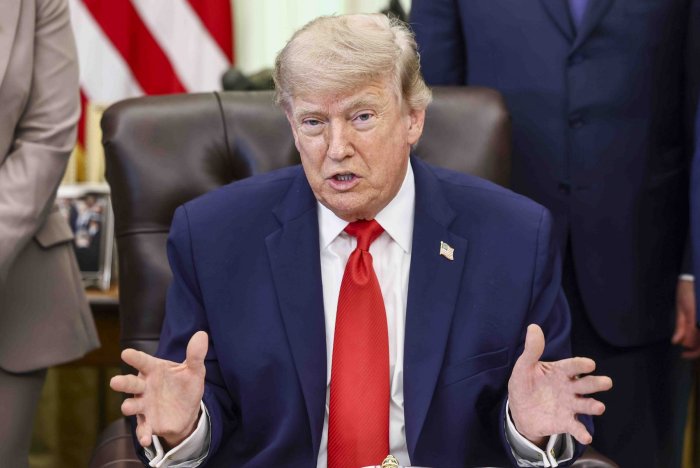
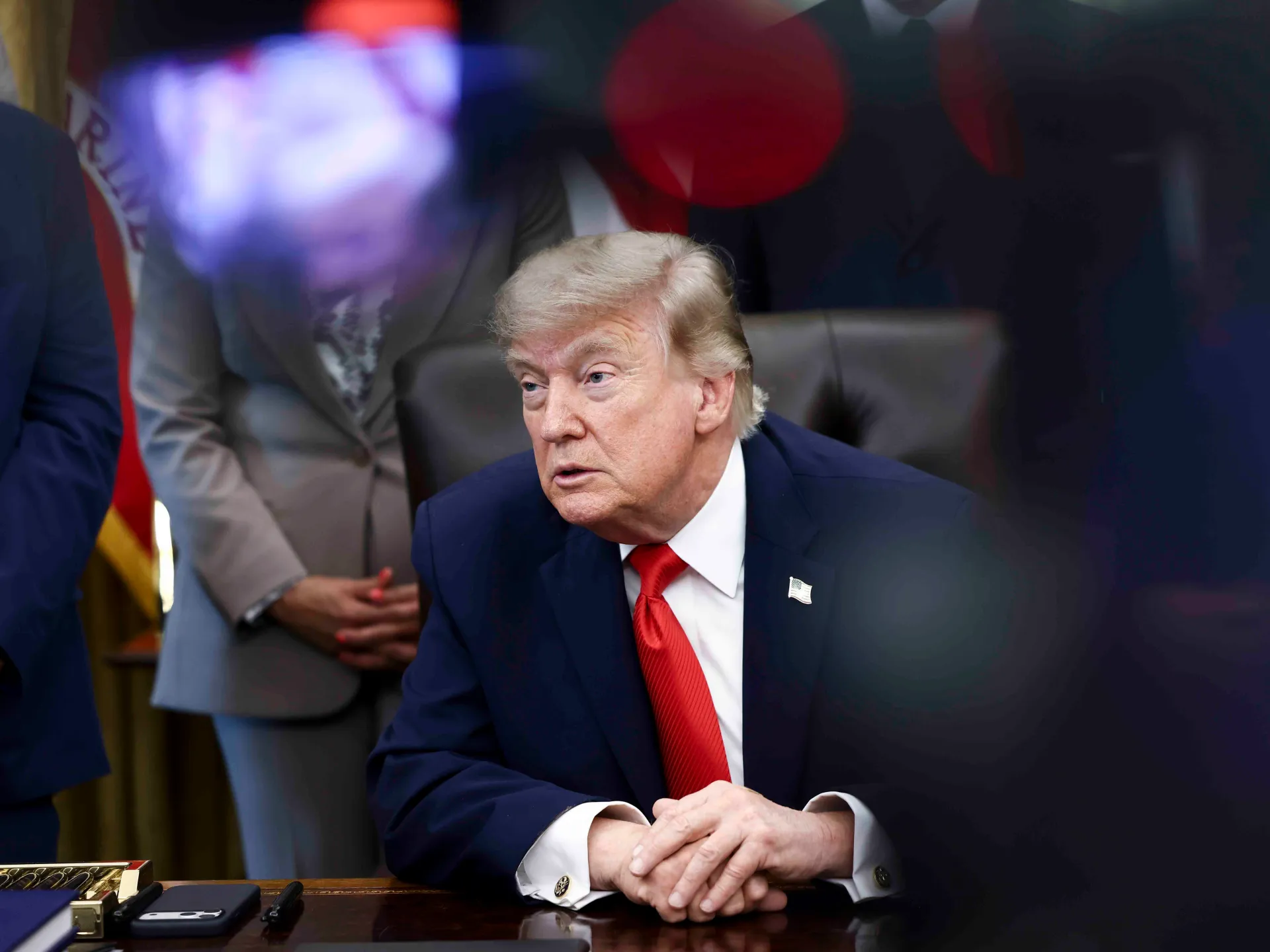
President Donald Trump speaks to reporters about restoring commercial fishing access to areas of the Pacific during a signing ceremony in the Oval Office of the White House on Thursday. Photo by Jim Lo Scalzo/UPI | License Photo
Asian Cup holders Qatar level in injury time to draw 1-1 with Switzerland in World Cup 2026 opening game.
Published On 13 Jun 202613 Jun 2026
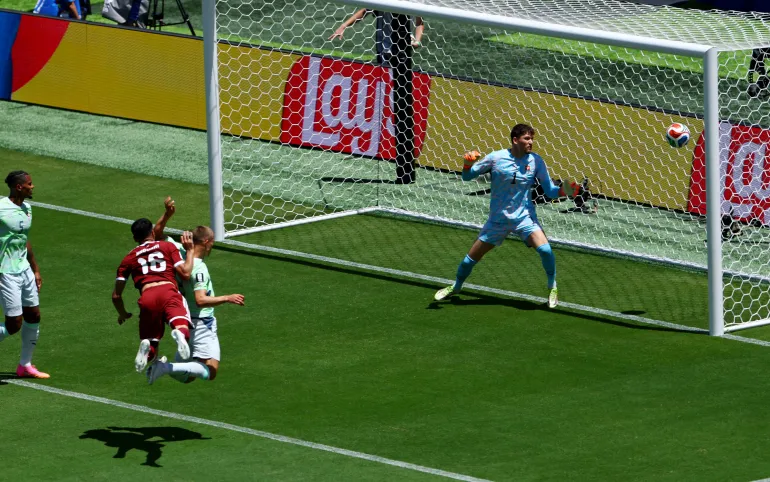
Boualem Khoukhi scored an equalising goal on a header in the fourth minute of stoppage time, and Qatar spoiled a dominant day by Switzerland in a 1-1 draw in Group B of the World Cup.
Several of the Qatari players fell to the ground on Saturday in celebration of the late goal, as others ran to each other to embrace.
Recommended Stories
list of 4 itemsend of list
Breel Embolo scored for Switzerland from the penalty spot in the first half just over a week after being cleared to enter the US following a visa delay, but the Swiss failed to capitalise on multiple other scoring chances.
In the 13th minute, Embolo was fouled by Qatar goalkeeper Mahmoud Abunada, who received a yellow card on the play. Abunada lay face down and appeared motionless for a couple of minutes before he began to move his legs and was able to stand up again.
When Embolo calmly sent his penalty into the upper left corner in the 17th minute, it sent the red-clad Swiss fans into a dancing frenzy in the stands of San Francisco Bay Area Stadium.
The 29-year-old forward applied for an urgent visa at the United States embassy in Bern on June 3, one day after he was denied boarding the team’s flight to travel for his third World Cup because of a 2018 criminal conviction that was only finalised in April.
Switzerland dominated the possession game on an unseasonably warm June afternoon — with sprinklers running during a first-half break.
Qatar’s Boualem Khoukhi scores their first goal past Switzerland’s Gregor Kobel [Eloisa Lopez/Reuters]
There were thousands of empty seats scattered throughout Levi’s Stadium, home of the NFL’s San Francisco 49ers. Brazil and Colombia drew 70,971 two years ago in a group match at the Copa America. The stadium in Santa Clara staged the Super Bowl only four months ago.
Switzerland goalkeeper Gregor Kobel made a save in the second minute after Edmilson Junior got through the defence for a one-on-one. Kobel corralled the ball again in the 90th on a close-range attempt by Ahmed Alaaeldin.
Switzerland is hoping to advance further than its round-of-16 showing four years ago before losing 6-1 to Portugal — when Goncalo Ramos delivered an improbable hat-trick playing in place of benched star Cristiano Ronaldo. The loss prompted Switzerland midfielder Xherdan Shaqiri to apologize the the fans.
The Swiss used consistency and experience to go unbeaten through qualifying against Sweden, Kosovo and Slovenia. Coach Murat Yakin’s team produced four wins and two draws to secure its sixth straight World Cup appearance and hasn’t missed one since 2002, but the team has never gotten beyond the quarterfinals.
Qatar, led by Spanish coach Julen Lopetegui, had to qualify through a playoff in November — beating the United Arab Emirates and Oman — after missing an opportunity from its group stage of Asian qualifying.
The Gulf state country became the first host nation to lose all of its group matches four years ago. It lost to Senegal, Ecuador and the Netherlands in the 2022 tournament, scoring its lone goal in a 3-1 loss to Senegal.
“The Listeners,” which premieres Friday on Starz, began unusually as a story written by Jordan Tannahill as the basis of Missy Mazzoli‘s 2022 opera, also called “The Listeners” (libretto by Royce Vavrek), which he turned into a 2021 novel, which became a 2024 BBC television series, also written by Tannahill. Starz has cut its original four episodes into five, which means that they end in odd places, but given its controlled, glacial pace, shorter might be better.
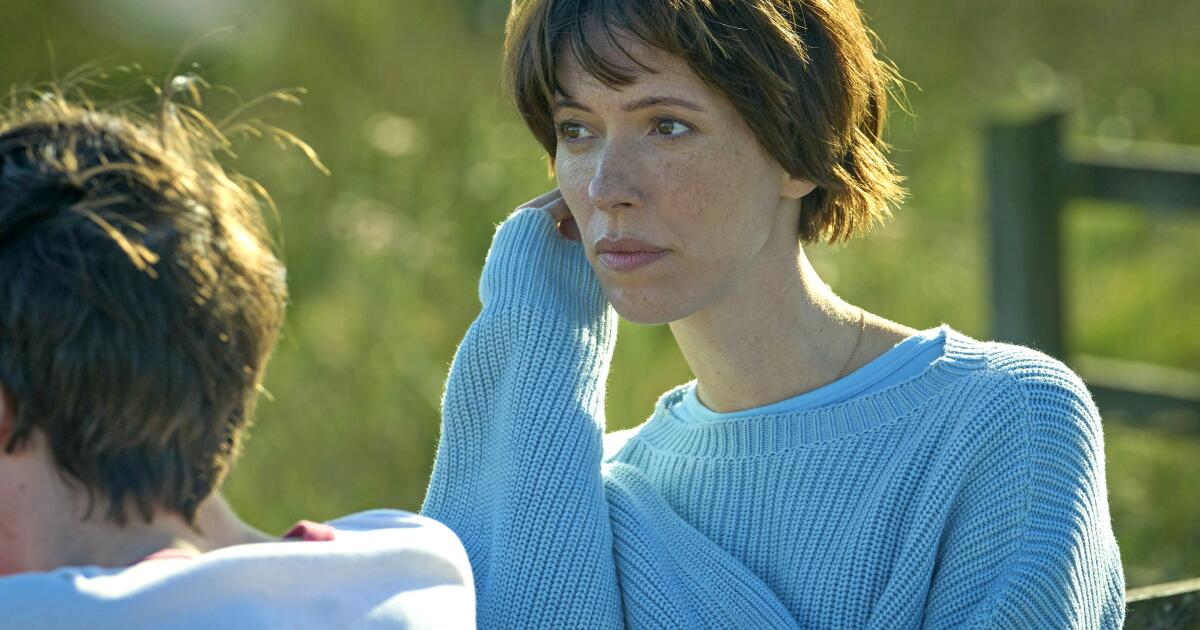
Tannahill’s inspiration is an unexplained phenomenon reported in the real world — though exactly how real it is is open to interpretation — generally called “the hum,” where people experience a low but persistent background noise inaudible to others. (It isn’t tinnitus, or any diagnosable medical condition.) One such sufferer is Claire (Rebecca Hall), a high school literature teacher with a husband, Paul (Prasanna Puwanarajah) and a teenage daughter, Ashley (Mia Tharia), with whom she gets along well. We begin on an up note, Claire and Ashley singing along to Richard and Linda Thompson’s “I Want to See the Bright Lights Tonight” as they drive to school (she also has Nick Drake on her phone). And then the 1970s British folk rock gives way to a less pleasant auditory landscape, as the hum appears, bringing on headaches and nosebleeds and affecting her concentration and mood, her work and family.
Any condition can be isolating from those who don’t share it, and Claire gets some relief when she’s approached by a student, Kyle (Ollie West), who also hears it. They go investigating possible sources of the sound — wind turbines, a radio telescope — and wind up eventually at something like a support group for hum-hearers run by Omar (Amr Waked) and Jo (Gayle Rankin). There is some sketchiness in their past, including a changed identity, and they like to keep the group on a tight rein, but the breathing exercises and visualizations seem pretty standard, and more benign than, say Scientology, and the suggestion that one may tame an affliction by embracing it is pretty reasonable. Claire’s mistake here is not to get a signed parental permission slip, as it were, or enlist a chaperone, and her growing closeness with Kyle (not romantic, not sexual we are assured) will cause them trouble, cost Claire her job and mess up her marriage. She makes some insufficiently careful decisions, but those around her tend to overreact. This is very much a story about listening and not listening.
Directed by Janicza Bravo and photographed with great intention by Jody Lee Lipes, it has the studied look and tempo of a 20th-century art film. (It is always great to look at.) I was reminded of Antonioni’s “Red Desert” and Bergman’s “Persona,” psychological studies of women going to pieces, but also, thematically, of Spielberg’s “Close Encounters of the Third Kind,” with its characters driven to what looks like madness by private bulletins from the ether, pushing them away from family and toward others who are getting the same message. No aliens here — not a spoiler — though I might have liked that ending more than this, which in its own way seems to drop from space.
You can look for metaphors and social comment here — there are references to conspiracy theories and industrial noise pollution and such — but it seems to me to operate most effectively as a beautifully rendered mood piece and character study, and, certainly in the case of Hall, whose story this is, a platform for some exquisitely subtle acting.
June 13 (UPI) — One person is dead and 22 others injured when a large tent collapsed at an outdoor church service Friday evening in Virginia.
The accident happened at East Lake Community Church in Moneta, Va., in the western part of the state. Moneta is about 25 miles from Roanoke.
“Prior to the collapse, a severe storm cell moved through the area, bringing heavy rain, lightning, and strong winds,” Bedford County said in a press release. “The weather conditions caused the tent structure to fail.”
The tent had passed an inspection conducted by the Bedford County Division of Building Inspections on June 9, the county said.
The church was celebrating its 20-year anniversary.
Pastor Troy Keaton said in a statement that he had just walked to the stage to release congregants to their cars when a burst of wind lifted the tent.
“Sadly one of our dear brothers suffered a fatal injury,” Keaton said. “Our hearts are broken for his precious family.”
The man’s identity hasn’t been released.
“We would appreciate your prayers and your patience as we navigate this situation,” the church said. “We are trusting in the Lord for his care, strength and help.”
President Donald Trump speaks to reporters about restoring commercial fishing access to areas of the Pacific during a signing ceremony in the Oval Office of the White House on Thursday. Photo by Jim Lo Scalzo/UPI | License Photo
AS the biggest heart-throb on the planet, Harry Styles is the last person you’d expect to be ringing in New Year alone.
But the pop superstar has revealed how he “shut out” the world after struggling to live up to the “perfect” image his fans projected on to him.
Sign up for the Showbiz newsletter
Thank you!
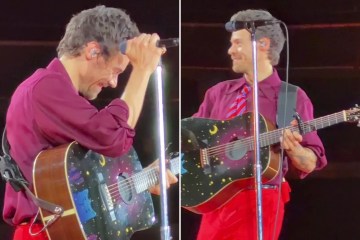
Harry Styles has opened up about becoming a hermitCredit: Anthony PhamHarry kicked off a record-breaking 12-night run at Wembley on FridayCredit: Anthony Pham
In a candid new interview, the 32-year-old, who kicked off a record-breaking 12-night run at Wembley Stadium on Friday, said: “I was supposed to spend New Year’s with friends and I landed in Italy and felt really unwell, so I just went home.
“And I woke up and I had this kind of beautiful New Year’s by myself. I was feeling the most alone I’d felt in a really long time, but in the most beautiful way. I didn’t feel lonely at all.”
Harry added that he became a “hermit” after his last tour ended in 2023.
Flying into Italy for a “quiet time”, he rejected all invites as he recuperated from the gruelling Love On Tour series of live shows.
In an interview on the Q With Tom Power podcast, Harry said: “I was just feeling myself kind of shut out from a lot of the world.
“I think I got used to saying no to invites from friends and maybe a weekend trip or a birthday party or something.
“I just got used to, you know, if I have a week at home, I don’t want to go somewhere else for three days. I just want to stay home.
“And when I got to Italy and was in this quiet place, I felt like, ‘OK, if I’m going to spend all this time out here and I’m going to keep saying no to everything, I’m just going to shut myself off from the world’.”
Together, Together tour is currently making history at London’s WembleyCredit: Anthony PhamShania Twain as support actCredit: Anthony Pham
Harry released his latest album — Kiss All The Time. Disco Occasionally — in March and it immediately shot to No1 in the charts.
And his Together, Together tour is currently making history at London’s Wembley.
But the As It Was singer admits that he struggled to live up to his fans’ adoring perception of him, saying: “I had this relationship with my own image where people had this projected version of me that was perfect.
“And when the standard you hold yourself to is this perfect person, it’s impossible not to feel like you’re falling short.”
He confessed that any criticism could take a devastating toll, saying: “If you don’t feel great about yourself and someone says you’re terrible, it’s like the claw is in and it’s ripping you.
“But if you have a more solid sense of yourself, you can hear those things and it doesn’t destroy you in the same way.”
It is a frank admission from a man who has conquered the world of pop, and America, after spending half his life in the glare of the global spotlight.
Harry was 16 when he stepped on to The X Factor stage in 2010, where music mastermind Simon Cowell grouped him with four other hopefuls to form One Direction.
What followed was global hysteria. And as the breakout star of the record-breaking boy band, Harry was propelled from a quiet Cheshire upbringing into a whirlwind of stadium tours and platinum records.
He then defied the odds to build a critically acclaimed solo career, with hits such as Watermelon Sugar, and a £235million fortune, according to the Sunday Times Rich List.
But during his period of isolation in Italy, Harry realised that avoiding the downsides of global fame also meant missing the best parts of life.
He added: “You can sit at home and think it’s hard for me to do these things — people are looking at me, taking pictures. But when you shut out those things that might be negative, you also shut out a ton of positive things.
Harry added that he became a ‘hermit’ after his last tour ended in 2023Credit: GettyHarry also said that he has spent the past two years learning to love himself and accept that he can make mistakesCredit: Getty
“If you think it’s hard to go to a bar and hang out with friends because people might act a certain way, there are also incredible people you could meet in that bar that you’re shutting out.”
Taking his own advice and stepping back into the world clearly paid off.
It was during this period that Harry met his fiancée, US actress Zoe Kravitz.
The couple, who began dating in late 2025, are reportedly planning a small wedding in London this winter.
Harry also said that he has spent the past two years learning to love himself and accept that he can make mistakes.
He said: “I’m still figuring a bunch of stuff out and it’s OK to have a little self-compassion around making mistakes. For a long time, I struggled to admit when I’d made a mistake because the reward when you meet people’s expectations is so loud and shiny.”
Ultimately, Harry believes that taking a step back from the spotlight saved him.
He reflected: “Having time to sit at home and be bored and really look at the emotions I was feeling allowed me to lean into them instead of being afraid of them.
“And it means I’m now in a much healthier place than I was last time I was putting music out.”
Now back on the road, he wants his latest dance-pop record to be less about his personal life and more about his fans’ experiences.
He said: “With this record, I want the listener in the front seat and I’m in the seat behind you.
“It’s not really about me or what clubs I’m going to or who I’m hanging out with — it’s about you having your own experience.”
He smashes first of historic 12 nights
EVER the charismatic charmer, Harry pranced around the stage with mammoth energy and gusto on the opening night of his record-breaking, 12-night, homecoming residency at Wembley.
He even laid on a special treat for his mum Anne Twist, with her favourite singer, Shania Twain as his support act.
The country music legend’s vocals were flawless and she warmed the crowd up well with her hits Man! I Feel Like A Woman! and That Don’t Impress Me Much.
But the gig, which marks the release of Harry’s fourth album – the eccentrically-titled Kiss All the Time. Disco, Occasionally – was all about the pop heart-throb.
He has a relaxed air about him now. It is far from his first rodeo, yet performing for 80,000 fans is no mean feat.
Harry was feeling the love and in a grateful mood, twice referencing X Factor – the show which catapulted him to global fame – and his family, who were watching from the crowd.
He said: “Just outside of this building 16 years ago, my sister brought me to London for the very first time for my X Factor audition.
“So driving here today, and anytime I come through Wembley, means so much to me. It was in that building that I was put into a band, my sister is here tonight. It means a lot to be here tonight.”
He added: “My mum entered me into the X Factor without me knowing and I wouldn’t be here today if she hadn’t done that, so thank you so much. You changed my life, all of you, so thank you so, so much.”
Harry’s devoted fans performed their own dance routines to his songs, above, which involved lying on the ground in formation to the joyful Fine Line and doing a mass conga to the electric Treat People With Kindness.
One thing’s for sure, Harry’s certainly at home on stage . . .
Ariana risk for musical
Ariana Grande is set to drop out of musical Sunday In The Park With GeorgeCredit: Getty
RUMOURS are sweeping theatreland that Ariana Grande is set to drop out of musical Sunday In The Park With George.
The singer was due to appear opposite her Wicked co-star Jonathan Bailey at London’s Barbican Centre next summer, but ticket sales have been delayed until autumn.
I’m told that bosses have also met with actresses who could step in to replace Ariana, who last week kicked off her energetic Eternal Sunshine Tour.
A source said: “Ariana has a lot on her plate and there are concerns she is over-subscribed.
“It’s too risky to start flogging tickets until it’s all locked down. It will be a demanding production with eight shows a week.”
In the last few years, Ariana has transformed herself into a fully-fledged actress as Glinda in the Wicked films.
She will appear in the 13th series of American Horror Story and will voice a character in the 2028 animation Oh, The Places You’ll Go!.
Ariana, whose tour includes a ten-night residency at London’s O2 Arena in August, said: “I’m very excited to do this small tour. But I think it might not happen again for a long, long time.”
I hope we do get to see her treading the boards . . .
Wa-Haye David
David Haye is active on Raya looking for a third to join him and girlfriend Sian OsbourneCredit: supplied‘I’m a selfish prick, nothing is ever good enough. I always want more, rarely satisfied. But I’m working on it’, says DavidCredit: Instagram/davidhaye
The ex-boxer posts with a tux snap: “I’m a selfish p***k, nothing is ever good enough. I always want more, rarely satisfied. But I’m working on it.”
Isle Of Wight Festival headliner Lewis CapaldiCredit: Getty
THE Isle of Wight Festival kicks off on Thursday with some surprises in store.
As well as headliners Calvin Harris, The Cure and Lewis Capaldi, chief John Giddings says: “We’ve introduced new areas, the Last Chance Saloon, our country music destination, and new onsite pub Wild Horses.”
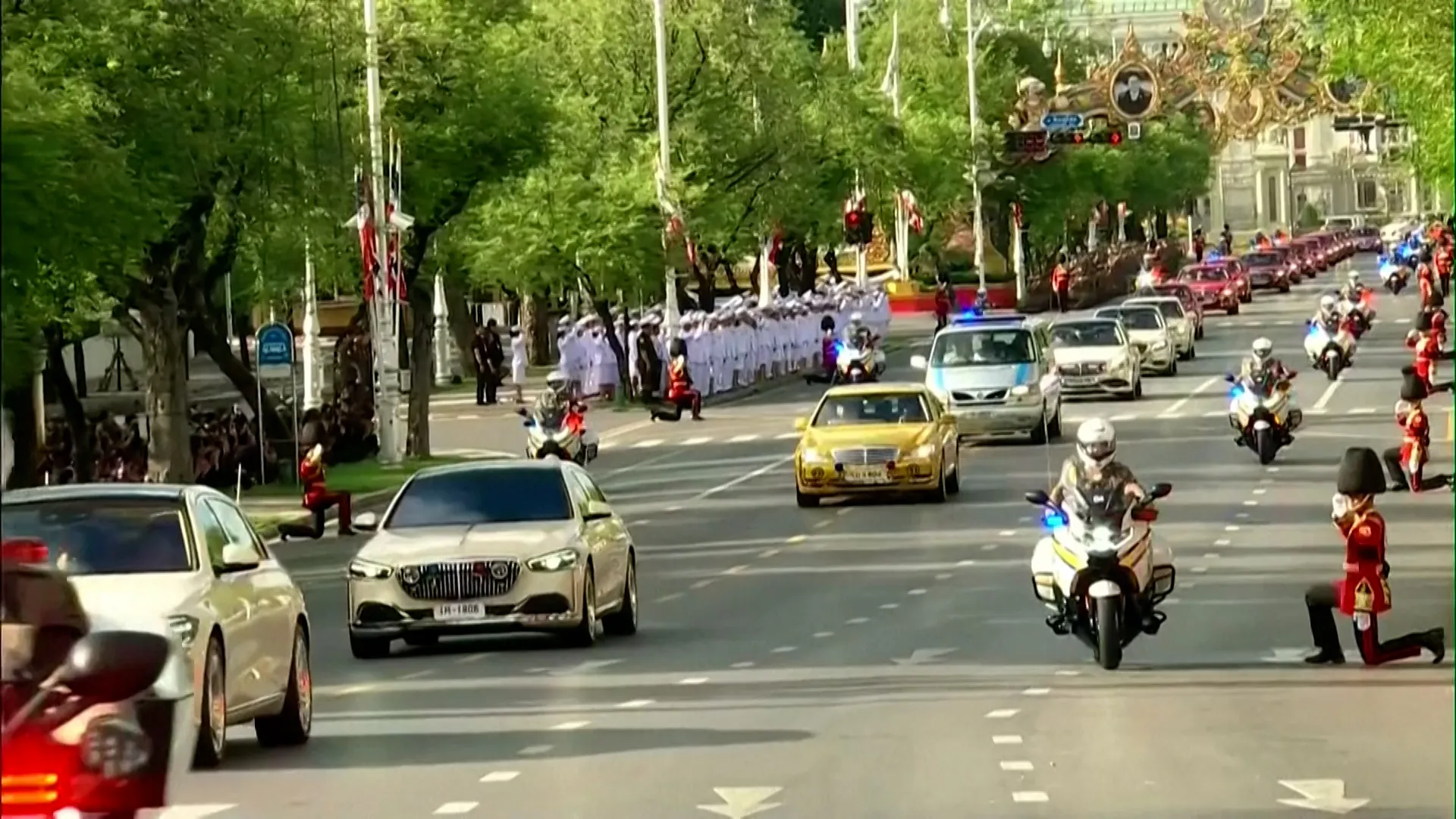
Thousands of mourners lined Bangkok streets as the body of Princess Bajrakitiyabha, daughter of Thailand’s king, was brought to the Grand Palace in a royal procession. The 47-year-old princess had been in a coma for more than three years before dying from an abdominal infection.
For two weeks, the fate of Major General Rabe Abubakar (rtd) had become a barometer for testing whether Nigerian authorities could secure the release of a high-ranking military officer from the hands of terrorists operating in the northwestern region.
The answer came on Saturday, June 13, in a press statement by Nasiru Muazu, Katsina’s Commissioner for Internal Security and Home Affairs. The retired general could not be rescued, the Katsina government itself said. Rabe, who served as the Director of Defence Information at Nigeria’s Defence Headquarters between 2015 and 2017, died while in detention at the hands of the terrorists who abducted him.
Rabe was abducted alongside his wife, Hajia Amina, on May 30. A native of Batsari from Katsina State, he was kidnapped on the Matazu–Sayaya road, a road that has now become one of the most volatile in the North West.
“It is with profound sadness that we confirm the General’s death while in bandits’ captivity. Despite the relentless and concerted efforts of the State Government and various Security Agencies to secure his safe release, the situation ended in this tragedy. The deceased Retired General died a natural death from complications of diabetes and hypertension,” Nasiru said in the statement.
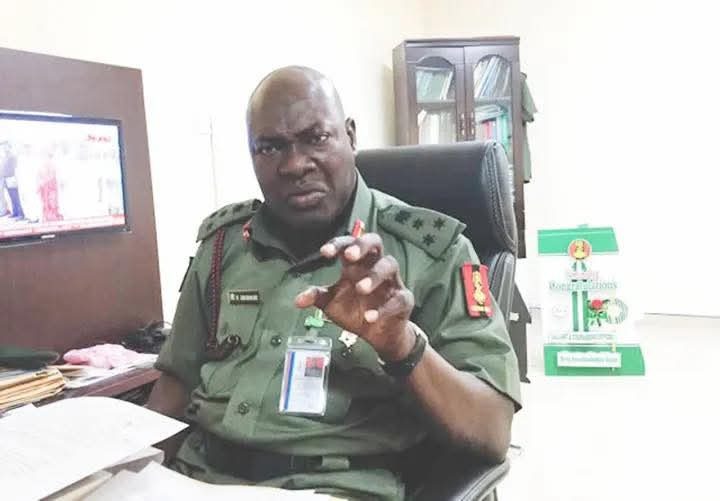
File: Major General Rabe Abubakar in service.
The abduction of the general had exposed how deeply terrorism has eaten into the fabric of Nigeria, especially the North West, where criminals have turned into full-time armed gangs that engage in kidnapping, pillaging, and other forms of terrorism.
For over a decade, Katsina and other states in the region have faced incessant attacks from these terrorists, forcing local authorities to consider a “reconciliation” with the armed groups to restore peace. Some local government areas in Katsina, such as Jibia, Batsari, Kurfi, Safana, Danmusa, Matazu, Musawa, Kankara, Faskari, Malumfashi, and Bakori, have agreed to establish peace accords with terrorists in their areas.
However, while some of these areas have seen relative calm, the situation in Matazu, Bakori, Musawa, Kankia, and Malumfashi has only deteriorated. The Marabar Musawa – Musawa – Matazu – Kafin Soli road (where the General was abducted) became volatile after the peace deal broke.
Even before May 30, there were several cases of abduction on the road as well as attacks on communities and towns in the area. HumAngle reports that Muhammadu Fulani, the terrorists’ leader in the Matazu – Musawa area, is accusing the state government of arresting three of his men and seizing his livestock.
Ambush on a wedding road
Rabe was travelling with his driver and wife to Katsina for a wedding ceremony when the terrorists emerged near a village called Zakin Baure, blocked the road, and opened fire on his vehicle, a red coloured Peugeot 406 car, according to media reports. That forced the vehicle to a halt, enabling the terrorists to abduct him and his wife and push them into a nearby forest. His driver, however, escaped with gunshot injuries and was later admitted to a hospital.
File: The Rabe’s family. Photo: Mohammed Danjuma Katsina.
They were heading toward Katsina city for a family wedding through the perilous corridor, Marabar Musawa–Musawa–Matazu–Kafin Soli, which sits at the fault line of a regional peace architecture that has become increasingly fragile.
Abductiontimeline
June 6: The terrorists released a video clip of the couple begging for the government to rescue them. The wife, who spoke, asked the government to facilitate the release of some three terrorists arrested by security agents in exchange for the couple’s freedom.
June 8: The terror group leader, Muhammadu Fulani, said he would not release the wife of the General, Amina, as promised, after the government dispatched security agents to the area to fight him.
The remains of Maj. Gen. Rabe Abubakar during his funeral rites in Katsina on June 13. Photo: Mohammed Babangida Mafara/HumAngle
June 11: A video clip of the General, his wife and four others went viral on social media. HumAngle checks revealed that the other four persons in the video were members of the All Progressive Congress (APC) from Danja Local Government Area of the state who were abducted last month on the same road.
June 12: A special prayer session was organised at the Sa’ad Bin Abi Waqqas Mosque in Barhim Estate, Katsina city, at 5 p.m.. Several relatives and friends of the Major General attended the prayer session, where the Imam called on the government to ensure the safe return of Rabe, his wife, and all abducted victims.
June 13 (morning): A WhatsApp message began circulating, especially in Katsina. The message said the General had died Friday night, June 12. “Innalillaihi wa ina ilaihil rajiun. This is to announce on a sad note. The death of General Rabe Abubakar last night at the hands of the bandits.” A HumAngle reporter also received a message from a retired civil servant asking for confirmation.
June 13 (afternoon): The Katsina State government, through the Ministry of Internal Security and Home Affairs, confirmed the General’s death, saying that he died “a natural death from complications of diabetes and hypertension”.
Get our in-depth, creative coverage of conflict and development delivered to you every weekend.
Subscribe now to our newsletter!
General Rabe’s death has reverberated through Nigeria’s security establishment and social media platforms precisely because of who he was: a man who had once stood before cameras explaining the state’s fight against terrorism. It also brings renewed attention to Nigeria’s growing terrorism and persistent security challenges facing several northern states despite ongoing military operations against the armed groups.
Dikko Umaru Radda, the Katsina State governor, called the episode a “dark moment,” saying it highlighted the urgent need for a stronger, more coordinated security response, while pledging that those responsible would be pursued.
For residents of Katsina’s volatile corridors, Rabe’s death is a confirmation of what many have long understood: on the state’s insecure roads, rank, fame, and a lifetime of service offer no immunity at all.
His wife’s status was not addressed in Saturday’s statement, and her deceased husband was buried according to Islamic rites, but sources told HumAngle she was released alongside her husband’s remains.
Major General Rabe Abubakar, a retired officer from Nigeria’s Defense Headquarters, was abducted along with his wife on May 30, 2023, by terrorists in the volatile northwestern region of Nigeria. Despite efforts from the government and security agencies, he died in captivity on June 12 from complications of diabetes and hypertension. His death underscores Nigeria’s persistent battle with terrorism, especially in the North West, where areas have seen increasing attacks and failed peace agreements.
The abduction occurred as the couple traveled to a wedding, bringing attention to the terror threats on roads like the Marabar Musawa-Matazu-Kafin Soli corridor. Nigerian authorities have been criticized for their inability to secure his release, highlighting the deep-rooted insecurity facing the region. Rabe’s death, confirmed by the Katsina State government, signals urgent needs for coordinated security efforts, as eloquently stated by the Katsina State governor, Dikko Umaru Radda. Rabe’s abduction and demise spotlight the widespread and growing terrorism despite ongoing military interventions in northern Nigeria.
NOT everyone sees their childhood dream become a reality, but Sian Welby is one of the lucky ones.
The This Morning and Capital radio presenter has wanted to be in Toy Story since she was ten.
Presenter Sian Welby says she was so surprised to be called up for the new Toy Story movie that she initially thought she was being pranked by one of her co-hostsCredit: Olivia WestSian Welby and Tom Hanks at the Toy Story 5 UK launch event in MayCredit: Getty
And Sian says she was so surprised to get the call asking her to be in the new movie that she thought she was being pranked by one of her co-hosts.
In an exclusive interview, the 39-year-old, who voices the Inflatable Flamingo, says: “If you’d told me as a nine or ten-year-old when the very first Toy Story movie came out, that one day I’d have a role in one of the sequels and that I’d be laughing and joking with Tom Hanks, I’d have never believed you.
“If a clairvoyant had predicted it, I’d have said, ‘No way, what a con’.
“I’m from a village in the Midlands with no showbiz connections, without a hope or a prayer of making it in the TV industry so what’s happened to me is just magical.”
Sian and her radio co-host, I’m A Celeb star Jordan North, 36, were talent-spotted by the Disney UK team, who were looking for people to do regional voice cameos.
Jordan plays a Garden Gnome in the film, which will be released in cinemas on Friday.
Sian says: “I honestly thought it was a Capital Radio prank by Jordan and Chris Stark, because we always begin the year telling each other what’s on our bucket list.
“Jordan said he wanted to interview Barack Obama, Chris said he wanted a barbecue with David Beckham and I said I wanted to be a little voice in a Pixar movie.
“Then, in March, I got the call. I was actually a bit angry as I thought, ‘That’s really mean to pretend I’ve got a role in Toy Story as they know it’s my dream’.
“I told my agent the email must be a con but she came back and said, ‘I have double-checked and triple-checked and it’s definitely from Disney’.”
Weeks later Sian, who has presented the flagship breakfast show since 2020 and been a main studio co- host on This Morning since 2024, recorded her voice role.
Then she was given the job of interviewing Tom Hanks, who plays cowboy doll Woody, and Tim Allen — Buzz Lightyear himself — before the film’s premiere last month.
Sian is planning her wedding to Heart Breakfast producer Jake BeckettCredit: Sian WelbySian says her biggest challenge to date is juggling her career with being a mum to her two-year-old daughter, RubyCredit: Instagram
Sian has spoken to many A-list celebrities but giggles as she says: “I grew up watching Tom Hanks in Big and I loved Tim Allen in The Santa Claus.
“These guys are absolute legends and there I was, meeting my heroes.
“I’ve interviewed huge stars like Harrison Ford, and they make you feel on edge the entire time, but Tom and Tim were so nice and warm and giving. They were brilliant.”
And when the duo took to the red carpet, Sian says Oscar-winner Tom treated her like a “full-on co-star”.
Sian doing her day job as a presenter on Capital FMCredit: Capital FMThe presenter at Capital’s Summertime BallCredit: Splash
She says: “I had chronic imposter syndrome, but he was such a decent man and included us in all the cast photos. He was so welcoming.
“I was in disbelief the whole time and literally felt like a competition winner, but I rem- ember Tom saying to me, ‘You’re in good company, co-star’. We had such a laugh.
“I have to pinch myself most days at the moment. Every week, something else happens where I think, ‘Is this my actual life?’.”
In 2010, Sian, who hails from Newark in Nottinghamshire, would record videos from the New Look store where she worked as a shop assistant to try to get on TV.
One, filmed in the fitting room, was spotted by former Channel 5 boss Richard Desmond and Sian became the station’s lead weather presenter, despite having no experience.
She went on to present Channel 5’s Formula E: Street Racers show about electric car racing before landing a hosting role on Heart FM in 2017.
Instead of feeling over- whelmed when meeting and interviewing high-profile celebrities, Sian has ended up becoming friends with many of them.
Kylie Minogue stayed in touch after they chatted and American actor Chris Pratt even forgave her for giving him an electric shock with a cattle prod.
Sian recalls: “I got on famously with Chris Pratt. There was a scene in the Jurassic Park movie where they use electric shocks on dinosaurs, so we found these mini electric shock things and did a quiz where if you got an answer wrong, you electrocuted each other.
“Chris was like, ‘Sian, I can’t electrocute you’, but I said, ‘You can, because I’m going to get you’, then I gave him a proper zap like you’d feel from a TENS machine when you’re giving birth, and he said, ‘I kind of liked that’, so we carried on.”
Sian also bonded with Mariah CareyCredit: Getty‘She has this special Mariah Carey light — like a floor light, that lights upwards’, says SianCredit: Splash
Another famous name who got on board with Sian’s sense of mischief was Mariah Carey, who she interviewed a year ago.
Sian says: “I bonded with her and we talked about the fact that she gets followed around with this Mariah Carey lighting rig and gets a lot of jip for it.
“She has this special Mariah Carey light — like a floor light, that lights upwards.
“I said to her, ‘You get a lot of heat for being a diva, but I bet you carry these lights because you’ve had some interviews where you were lit so badly and you felt gross’, and she was, like, ‘I’ve had hundreds’. She was basically saying that she did so many interviews where she felt like she looked awful because of the lighting that she was, like, ‘I’m solving this problem and I’m bringing my own’, and I really applauded it.
“I thought she was actually a very nice person — very sweet. And I don’t know how to phrase this without swearing, but I think that she is just a diva, not a d*ck.
“She’s not awful for the sake of it or difficult for the sake of it, but she’s definitely got high standards.”
The one celebrity who almost made unflappable Sian lose her cool was Bridgerton, Wicked and Jurassic World Rebirth actor Jonathan Bailey, who was voted People Magazine’s Sexiest Man Alive last year.
Sian says: “Whether you’re boy, girl or beast, there is something about that man. He’s gay, but absolutely everyone fancied him and he’s got the most charming charisma you could ever ask for.
“I was interviewing him for Capital last summer and when he entered the room, I just got lost. I was hanging off every word he said.
“And what was really lovely, too, was that even though he’s been in these massive movies and might have gone all Hollywood, he was just really nice and down to earth.”
But she says her biggest challenge to date is juggling her career with being a mum to her two-year-old daughter, Ruby.
Sian is also planning her wedding to Heart Breakfast producer Jake Beckett, 33.
She says: “I try not to think too much about how I do it, or I’ll have a nervous breakdown.
“There have been moments when I have been physically and emotionally exhausted, and I’ve burst out crying.
“I’ve literally been running from a Timothee Chalamet interview to sort out an explosive nappy at home.”
When she and Jake get married next year, little Ruby will play a key part in the ceremony.
Sian says: “It’s great Ruby will be old enough to be involved. Jake is my biggest fan and I’m his, and we make such a good team. He’s definitely the groomzilla — he’s a man that plans an outfit three months in advance.
“But because my job is so stressful, I’m way more relaxed. I’ve learned to just go with the flow.”
First though, Sian will be celebrating her 40th birthday this September.
Laughing, she says: “It feels like being a proper grown-up and I feel like I have been masquerading as an adult for years. When I look back at my sliding doors moments in my career, it was probably a bit of skill versus luck versus chance versus opportunity.
“As for the future, I still want to be doing radio.
“I’d love to do a big Saturday night TV show and maybe I could co-star in a comedy movie with Tom Hanks.
“We could be the new comedy double act no one saw coming.”
June 13 (UPI) — President Donald Trump and Pakistan have said that a memorandum of understanding extending the cease-fire between the United States and Iran will be virtually signed Sunday, though Iran has not confirmed the meeting.
Trump posted on Truth Social at 12:45 p.m. EDT Saturday: “The Deal is scheduled to get signed tomorrow, and immediately after it is signed, the Hormuz Strait is OPEN TO ALL.”
He also posted a screenshot of a Saturday morning tweet by Pakistani Prime Minister Shehbaz Sharif: “We are closer to a peace deal than ever before. With finalization expected in the next 24 hours, Pakistan is preparing for the electronic signing of the peace deal immediately after, followed by technical level talks next week.”
The Pakistani foreign minister confirmed that the signing was set for Sunday, Axios reported.
But Iran said there were no talks planned for Sunday. Iranian Foreign Ministry Spokesperson Esmail Baghaei said there were no plans for an Iranian negotiating team to travel to Geneva or elsewhere in the next day or two, according to IRIB, Iran’s state broadcaster, The New York Times reported. While Iran could also sign electronically, it’s unclear if the signing event will happen.
One of the main reasons the signing will be virtual is that Vice President JD Vance, who has been negotiating the peace deal, wouldn’t be able to go to the signings and be back in the United States before Trump leaves for the G7 summit in France Monday, Axios said.
Also, Sunday is the president’s 80th birthday and the day of the UFC fight on the White House lawn.
In “The Little Sister,” a teenager tries to hide in plain sight. Although everyone comments on her beauty, 17-year-old Fatima prefers to tie her hair back in a ponytail, her bright eyes buried underneath a black ball cap, her body concealed in unflattering tracksuits. As played by first-timer Nadia Melliti, who won the actress award at last year’s Cannes Film Festival, Fatima is encased in a kind of armor, an outward manifestation of her hesitancy to share her sexual orientation with a world she knows will judge her. This graceful film chronicles the process by which Fatima gradually sheds that reserve.
Adapted from Fatima Daas’ 2020 novel “The Last One,” a work of autofiction detailing the French author’s own coming out, “The Little Sister” takes place over five seasons, observing Fatima as she completes grade school and begins attending university. An adept athlete with a tomboyish demeanor, Fatima disappears inside a friend group consisting of immature teen boys who treat her like one of the guys, including her in their raunchy sex talk. Fatima has a boyfriend, Adel (Ahmed Kheloufi), but the relationship feels vestigial, with him constantly complaining that she should dress more feminine. Just as upsetting to Adel: When he tells Fatima that he loves her, she doesn’t respond in kind.
This is the third feature from French actor and director Hafsia Herzi, who herself made an acting splash in 2007’s “The Secret of the Grain.” For “The Little Sister,” Herzi takes a cue from Daas’ book, mapping Fatima’s inner journey as a modest series of tentative steps forward and anxious steps back. Fatima has reason to be skittish. The youngest of three daughters in a loving French-Algerian Muslim family, she conceals any hint of her sexuality from her mother, father and sisters, anticipating their disapproval. Many queer coming-of-age movies position the character’s awakening as an act of defiance. For Fatima, a practicing Muslim who adores her parents, the stakes feel even higher. Melliti’s performance is one of silent suffering, illustrating Fatima’s deference to her family.
But as much as she smothers her desires, others can sense them. An altercation between her friends and a gay male classmate gets heated once the classmate accuses her of being closeted, which she vehemently (and violently) denies. Soon after, Fatima secretly joins a dating app, hoping to understand her queerness. Her first date, in which she uses a fake name, focuses on learning terminology such as scissoring, and she approaches each new encounter like a fact-finding mission. Melliti keeps the shy teenager’s reactions neutral, Fatima’s stoicism a strategy to prevent exposing her inexperience.
That’s when she meets Ji-Na (Park Ji-min, the free spirit of “Return to Seoul”), a physician’s assistant who practically glows in her presence, overwhelming Fatima’s cautious nature. Ji-Na and Fatima’s love story — its blossoming, its unraveling, its possible resuscitation — forms the heart of “The Little Sister,” which also received the Queer Palm at Cannes. Melliti and Park exude a frisky, lusty chemistry, but it’s a film as much about self-love, as Fatima seeks to become comfortable in her own skin. Ji-Na is open and confident while Fatima remains closed off, her shame about her sexuality deeply culturally ingrained. When our main character starts lowering her defenses, however, that’s when she’s hit by a jolt that sends her spiraling.
Herzi’s slender, unassuming drama contains few emotional crescendos or grand insights, although this is the rare French film to center on a Muslim lesbian as its protagonist. “The Little Sister” grows even more intriguing once the love affair runs aground, forcing Fatima to flounder in her heartache. Her odyssey will lead to threesomes and lonely nights, but also difficult questions regarding how her faith and family may leave her perpetually adrift.
“The Little Sister” leaves much unspoken, which is fitting for a protagonist who rarely expresses herself in clear terms. Even during a touching scene near the finale, as Fatima sits at the dinner table weeping, upset over the end of a relationship, she and her mother (Amina Ben Mohamed) engage in a nimble dance: Fatima doesn’t feel safe explaining precisely why she’s crying, while her supportive mom chooses her words carefully, perhaps knowing more about her daughter than she dares say aloud. But despite the character’s rocky path to sexual awakening, Herzi navigates toward a hopeful conclusion that doesn’t peddle phony uplift. Fatima still faces a community that won’t embrace her true self. But maybe, at last, she’s willing to be seen.
‘The Little Sister’
In French, with subtitles
Not rated
Running time: 1 hour, 48 minutes
Playing: Opens Friday, June 12 at Laemmle Glendale
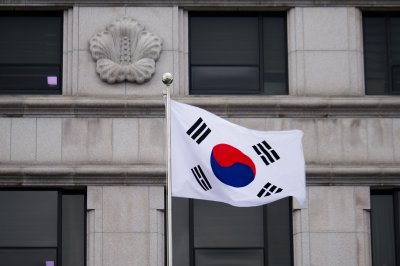
June 13 (UPI) — South Korea had a trilateral meeting with officials from the United States and Japan in Tokyo on North Korean affairs this week, the foreign ministry said Saturday.
The ministry said the talks took place Friday involving Kim Sang-il, head of the ministry’s North Korean Nuclear Affairs Policy Division; David Wilezol, U.S. deputy assistant secretary of state for Northeast Asia; and Kengo Otsuka, deputy director-general for Asian and Oceanian affairs at the Japanese foreign ministry.
The officials shared their views on recent affairs on the Korean Peninsula and in the rest of Northeast Asia, and also reaffirmed their commitment to denuclearize North Korea and to ensure the implementation of U.N. and autonomous sanctions, Seoul’s foreign ministry said.
“We explained our effort in easing tension and building trust in inter-Korean relations, and also exchanged views on trilateral cooperation in ensuring peace and security on the Korean Peninsula,” the ministry added.
In a press release issued Friday, the Japanese foreign ministry noted the three officials “expressed their serious concerns over North Korea’s nuclear and missile development.” They also agreed to work closely on the advancement of Russia-North Korea military cooperation and North Korea’s malicious cyber activities, Tokyo’s ministry said.
Also in Tokyo on Friday, the three countries held their trilateral secretariat managing board meeting. Wilezol and Otsuka were joined by Yi Won-woo, director-general for North American affairs at the South Korean foreign ministry.
These officials reviewed progress on three-way cooperation on issues such as security, the economy and technology, and discussed specific ways that can produce concrete outcomes, the ministry here said.
Weekly insights and analysis on the latest developments in military technology, strategy, and foreign policy.
Welcome to Bunker Talk. This is a weekend open discussion post for the best commenting crew on the net, in which we can chat about all the stuff that went on this week that we didn’t cover. We can also talk about the stuff we did or whatever else grabs your interest. In other words, it’s an off-topic thread.
This week’s caption reads:
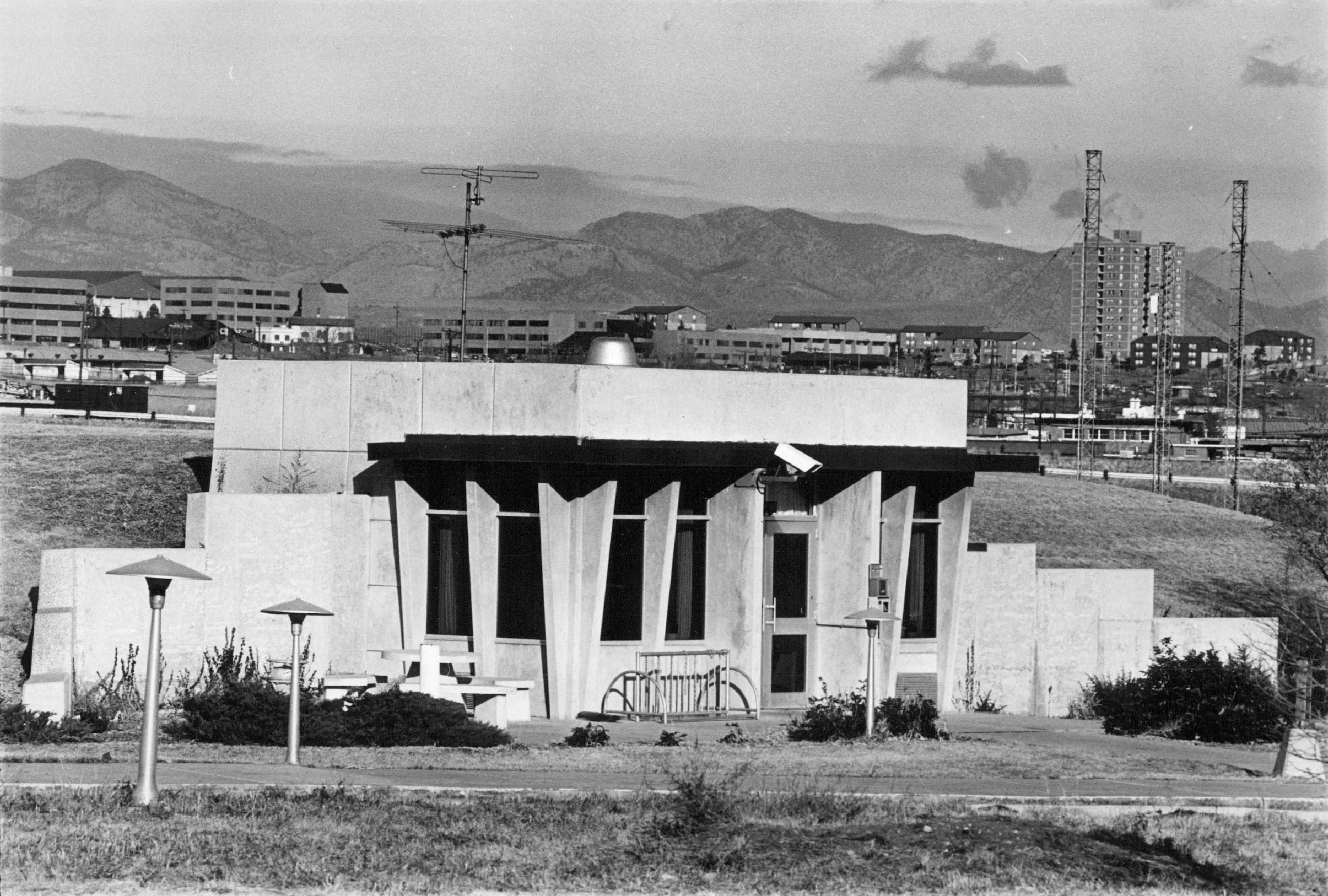
FEB 22 1981; Federal Emergency Management Agency (Underground Bunker At Den Fed CTR); (Photo By Dave Buresh/The Denver Post via Getty Images)
Prime Directives:
If you want to talk politics, do so respectfully and know that there’s always somebody that isn’t going to agree with you.
If you have political differences, hash it out respectfully, stick to the facts, and no childish name-calling or personal attacks of any kind. If you can’t handle yourself in that manner, then please, discuss virtually anything else.
No drive-by garbage political memes. No conspiracy theory rants. Links to crackpot sites will be axed, too. Trolling and shitposting will not be tolerated. No obsessive behavior about other users. Just don’t interact with folks you don’t like.
Do not be a sucker and feed trolls! That’s as much on you as on them. Use the mute button if you don’t like what you see.
So unless you have something of quality to say, know how to treat people with respect, understand that everyone isn’t going to subscribe to your exact same worldview, and have come to terms with the reality that there is no perfect solution when it comes to moderation of a community like this, it’s probably best to just move on.
Finally, as always, report offenders, please. This doesn’t mean reporting people who don’t share your political views, but we really need your help in this regard.
Get exclusive awards season news, in-depth interviews and columnist Glenn Whipp’s must-read analysis straight to your inbox.
By continuing, you agree to our Terms of Service, which include arbitration and a class action waiver. You agree that we and our third-party vendors may collect and use your information, including through cookies, pixels and similar technologies, for the purposes set forth in our Privacy Policy such as personalizing your experience and ads.
That Super Bowl in question was Super Bowl LIX, pitting the Philadelphia Eagles against the Kansas City Chiefs. Melton hosted a watch party, and since he considers Kansas home and played football for Kansas State University, you might think he’d be rooting for the Chiefs.
Nope.
“When I was living in Germany, I fell in love with Donovan McNabb,” Melton, an army brat, tells me, name-checking the longtime Eagles quarterback.
Spaeny, it turns out, was the only Chiefs fan at the party. To enter Melton’s home, she had to step on a doormat that was fitted with a red-and-white Chiefs jersey. (“It got real dirty,” Melton says with pride.)
Melton and Spaeny enjoy a relaxed and playful give-and-take, borne from the months they spent preparing to play Austin and Ashley, a Gen-Z couple working at a Montecito country club, dreaming and scheming toward upward mobility in “Beef.”
(Erik Carter / For The Times)
The most memorable episode they shared found the couple in an overcrowded, ninth-circle-of-hell emergency room with Ashley, uninsured, experiencing severe ovarian torsion. Her concerns are dismissed and she begs for someone to save her.
“Unfortunately, it’s an all-too-common experience,” Spaeny says. “I probably have a conversation once a month with female friends who go to the doctor’s office and are gaslit by the system, just being made to feel like what they’re experiencing isn’t really happening or they’re making it up. It’s scary.”
Still, being “Beef,” the episode has its share of mordant humor, like the scene where a nurse asks Ashley to rate her pain, zero being pain-free and 10 being excruciating.
“Oh, I thought it was like Letterboxd,” Ashley replies, referring to the movie review social platform. “Two-and-a-half stars out of five is average.”
“My whole life I’ve been a six or seven,” Melton says, noting his own personal pain scale. “I’ll have a cold and I’ll be like, ‘Six or seven.’”
“That sounds like you,” Spaeny says.
“I can get pretty dramatic,” Melton says. “It’s really like the end of the world when I’m sick.”
Spaeny deleted her Letterboxd account because she gets anxious about anything online containing reviews.
“It takes two buttons to click on a movie that I’ve been in and see what people say about me,” Spaeny says. “So I forgot my password and left it that way.”
Melton is an enthusiastic adopter and says he has twice shared his four favorite films, a feature where actors, usually on the red carpet, list a quartet of beloved movies. (Here’s one at the “May December” premiere where Melton enthuses over “The Matrix,” “In the Mood for Love,” “Brokeback Mountain” and “Persona.”)
“I saw them at another event and they were like, ‘Charles, so good to see you.’ And I was like, ‘Do you want my four favorite films?’ And they said, ‘No, you’ve already done it enough,’” Melton laughs. “What can I say? I love movies!”
United States President Donald Trump has said an initial agreement to end the US-Israeli war with Iran is “scheduled to get signed tomorrow”.
But that announcement, made on Trump’s Truth Social account on Saturday, contradicts an earlier statement by Iranian Ministry of Foreign Affairs spokesman Esmaeil Baghaei.
Recommended Stories
list of 3 itemsend of list
In remarks carried by Iran’s IRNA news agency, Baghaei said a memorandum of understanding would not be signed on Sunday and that negotiators are not planning to travel immediately to Geneva, Switzerland, in preparation for such an event.
According to Baghaei, a signing could happen “in the coming days”.
Hours later, Trump wrote, “The Deal is scheduled to get signed tomorrow, and immediately after it is signed, the Hormuz Strait is OPEN TO ALL.” Sunday marks Trump’s 80th birthday.
In recent days, Iran and the US have repeatedly contradicted each other when describing the details of the anticipated agreement, even as both sides have broadly signalled that a deal was closer than ever before.
Still, no terms have been officially released, with US and Iranian officials on Friday stressing that the agreement had not been finalised.
Beyond opening the Strait of Hormuz, Trump said in Saturday’s post that the agreement would be a “A WALL TO NO NUCLEAR WEAPON!” and that “no money would exchange hands”.
Trump also maintained that “at the appropriate time, when all is calm, we will go in and get the Nuclear Dust”, referring to Iran’s stockpile of enriched uranium.
But speaking on Iran’s Press TV on Friday, Iranian Foreign Minister Abbas Araghchi said the initial memorandum of understanding would only be a launch point for negotiations about the future of Iran’s nuclear programme.
He added that the signing would result in an immediate pause in fighting, but that Iran and Oman would continue to administer the Strait of Hormuz.
The issue of lifting foreign sanctions against Iran and unfreezing the country’s assets would be discussed following the signing of the memorandum of understanding, Araghchi said.
From threats to diplomacy
The latest flurry of diplomacy came after the US and Iran traded strikes for two days this week, threatening to end a pause in fighting that has persisted since April 8.
The US and Israel launched the war on Iran on February 28, amid ongoing indirect talks on the future of Iran’s nuclear programme.
The US and Israel had also launched a 12-day war on Iran in 2025, during another round of nuclear talks.
Iranian officials have said that deep distrust towards the US has slowed the progress towards creating a lasting agreement to bring the current war to an end.
Trump, meanwhile, has repeatedly pledged to reach a deal that would surpass the 2015 Joint Comprehensive Plan of Action (JCPOA), struck under his Democratic rival, former President Barack Obama.
That agreement, from which Trump unilaterally withdrew in 2018, saw Tehran agree to limit its nuclear programme and allow for international inspections in exchange for sanctions relief.
For years, Iran has maintained that it is building a nuclear programme for civilian use only and is not seeking a nuclear weapon.
In his post on Truth Social, Trump again pledged that any deal reached would be more stringent than the JCPOA.
“Our relationship with Iran is a much different and better one than previous Administrations have had,” he said.
“Hopefully, this process will all work out quickly, easily, and smoothly,” he added.
“If it doesn’t, we have the ultimate alternative, hopefully never to be used again!” he wrote, without elaborating on what his threat meant.
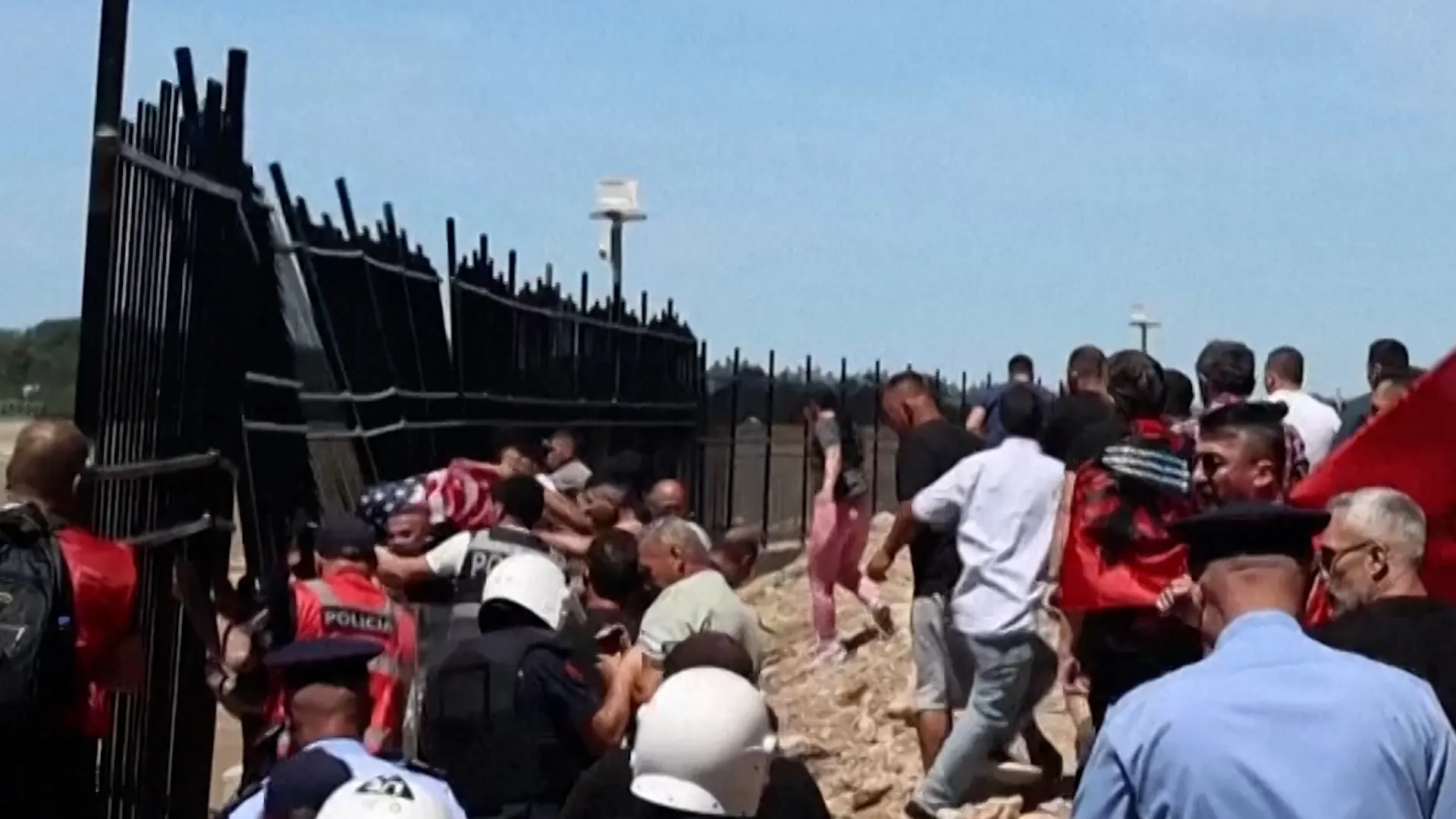
Protesters clashed with Albanian police at the site of a luxury holiday resort being built with the backing of Jared Kushner – Donald Trump’s son-in-law. Large demonstrations also took place in Tirana on Friday as opposition to the $5.7 billion project near protected wetlands grows.
On a Thursday in early June, under the hot bright lights of the famous Blue Note jazz club in Hollywood, the legendary trumpeter and composer Arturo Sandoval took center stage with a microphone in hand — and a hip wiggle for good measure. Rocking a silk shirt adorned with rhinestones, and backed by his incredibly nimble band, the Cuban-born virtuoso kicked off his four-night residency at the club with sizzling banter and panache.
“I had to watch what I said in Cuba,” he told the audience. “Now I live in the United States of America, man — I say whatever the hell I want. Do you like it? Well, if you don’t, I don’t care!”
Now 77, Sandoval feels he was liberated by the power of jazz. Released in May, his dynamic new album, “Sangú” — Spanglish for “sounds good!” — is bursting with the free-spirited energy he’s cultivated in the decades since he came to the United States from Cuba. Sandoval maintains a fiery pace throughout the album, commanding not only the trumpet, but the timbales and piano. (He even recorded his own scat singing for the appropriately-titled track, “Scat.”)
Once derided by the revolutionary government as “Yankee imperialism,” jazz music became a staple of Sandoval’s daily diet. As a young trumpet player in Cuba’s national band, he sought refuge in the sounds of Charlie Parker and Dizzy Gillespie by tuning into Voice of America: a radio program covertly broadcast from the States. Sandoval eventually served three-and-a-half months in jail in the 1970s when he was caught listening to the program — but with famed pianist and director Chucho Valdés, Sandoval would pioneer a distinctly Afro-Cuban jazz fusion with the Orquesta Cubana de Música Moderna, which was renamed Irakere and won a Grammy for best Latin recording in 1980.
“Jazz is synonymous with freedom,” he said. “And I’ve always said the most important word in any dictionary around the world is the word ‘freedom.’”
Inside his Tuscan-style home in the Valley, Sandoval’s shelves are lined with the myriad of awards he’s collected in the time since he arrived in the States: an Emmy award for scoring the 2000 movie based on his own life, “For Love or Country,” which starred Cuban American actor Andy García; 10 Grammy statuettes and the Presidential Medal of Freedom, which was presented to him by President Obama in 2013.
Just last month, Sandoval was also awarded knighthood by the King of Spain. “Does that make me Don Arturo Sandoval?” he audibly asked the ChatGPT application on his phone; indeed, it does. (“My wife gets a little jealous of ChatGPT,” he added with a laugh.)
Come July 4, Sandoval will perform at the America250 concert in Washington D.C., which is a bipartisan celebration of the United States’ 250th birthday. Co-chairs of the event include former President George W. Bush, former First Lady Laura Bush, former President Obama and former First Lady Michelle Obama. Seated next to his Bösendorfer grand piano, Sandoval spoke with The Times while on break from his world tour to discuss the new album, his collaborations with Karol G and Ariana Grande, as well as his weakness for a good cigar.
This interview was edited and condensed for clarity.
Share via
What keeps you playing the trumpet after all these years? I have no choice. The piano is not that complicated, but the trumpet is a pain in the butt. The trumpet is merciless. You have to practice every single day, otherwise it sends you a bill.
How do you smoke cigars and stay healthy enough to play the trumpet? I’ve been a big time cigar smoker since I was 14 years old. I never miss a day. I had a good one already. Every year they put me in the MRI to check my lungs. And the doctor always says, “Man, you have lungs like a person who never smoked.” A cigar is completely different from cigarettes. [With] a cigar you don’t inhale to the bottom of the lung, you know, it’s from here [taps his throat]. That’s the art.
You’ve been knighted by the king of Spain! How does that feel? Great! We’re having 30 people over tonight. My wife is cooking for everyone. The consul [from Spain] called me three or four days ago [and] said, “Arturo, I got a surprise for you. I just got a package from the king at my house, ready to give it to you.” And I said, “What kind of joke is that?” My four grandparents came from Spain to Cuba — from my mother’s side, they were from Tenerife, Isla Canaria. From my dad’s side, they were Gallegos from Galicia. Even if I weren’t related to my family in Spain, whatever — I love Spain!
Given how restricted music and expression were in Cuba, how did you get into the international jazz community? We put together a big band called Orquesta Cubana de Música Moderna [later called Irakere]. I met a journalist who played the saxophone — he said, “Man, you ever hear any jazz music?” He played for me a compilation or recordings of Dizzy Gillespie and Charlie Parker. That was in ’67 or ’68. Ten years later, I got a phone call from the guy — there was a jazz cruise going around the Caribbean and they [were in Havana] for 48 hours. I told him, “Pretend we never had this conversation!” But I went to the harbor. When the boat arrived, I saw Maestro Gillespie coming down the stairs. I didn’t know how to say one word in English. But God has always been good to me.
A guy behind him started talking to me in perfect Spanish. He was a percussionist playing with the great Stan Getz … a bunch of good musicians there. Dizzy started asking me questions through him. They said, “You have a car?” I had a Primo 1951, but it was falling apart. He said, “Ok, show me Havana.” He stayed for a jam session that night with Irakere. Gillespie went back to New York and told everybody about those musicians he heard in Cuba. Then one day a guy came to Irakere’s rehearsal and introduced himself with a translator — he was the president of CBS Records. A few months later, he put us on the plane [to New York] and drove us in a little bus straight to [perform at] Carnegie Hall. CBS made a recording of that, [which gave us] our first Grammy.
Many years later, in 2013, you were awarded the Presidential Medal of Freedom. What’s something special you remember about that night? My granddaughter Lola was there, she was 6. It’s customary to take a photo with the president and the first lady. And we did, the whole family. When we got together for the photo, Lola started pulling at Obama’s jacket. He looked her and said, “May I help you?” She said, “Mr. President, I missed school today. I need a note from you.”
I said, “Oh Lord.” But Obama smiled and said, “Of course.” Then he got a paper with the White House [logo] on top and wrote, “Please excuse Lola from the school today … [Signed,] Barack Obama.”
Legendary jazz trumpeter Arturo Sandoval, shown performing at Dorothy Chandler Pavillion in Los Angeles in 2016.
(Courtesy of Timothy Norris)
Your new album is so cinematic. What’s the story behind it? One day my son and his wife, who’s my manager, came over and said, “Papa, you’re getting old. You have to change your repertoire.” I said to my son, “I’ve been feeding you for 50 years and then you come and tell me what to do? Gimme a break!” But to be honest, when the pandemic happened, I was locked [inside] here. I used to travel a lot, and I was so frustrated and sad. So for two-and-a-half years, I started writing two or three new tunes a day and recorded a few hundred on my own. They picked 100 out of those; I said, “[Now] pick 12.”
When I got with the band, when somebody told me what to play — a little faster, a little slower — I said, “What the heck, man?” But I did it. And they were right. I’m so happy, blessed and grateful because they are amazing musicians. Nobody’s weird. No drugs, no alcohol, strictly into the music.
You joined Karol G’s band at Coachella this year — how did that happen? As an old man, it’s not every day you have the opportunity to play Coachella. She called me last year to play on a tune in her latest album, “Ivonny Bonita.” So when they invited her to Coachella, she said, “Arturo, we’d like to play with you there.” She’s got great charisma and knows how to put a show together. To play for [more than] 150,000 people each night? That’s not my daily gig. I was nervous, but grateful for the opportunity. And when I checked my followers on Instagram, I got like 5,000 people in a few days — that never happens to me!
Let’s talk about Instagram! Oh that’s a funny story. [In 2018] I did an album of duets with Stevie Wonder, Pharrell Williams, Ariana Grande … big time people. When Pharrell wrote a song for our duet, we were in the studio, cutting the track. He said, “Arturo, I’m producing for Ariana Grande in a studio across the hall. You would like me to call her?” I said, “Of course, man.” They sang together, Pharrell and Ariana. And by the end, I got my phone and said, “Ariana, can we take a photo with Pharrell?” She took my phone out of my hand to take [a selfie] and said to me, “Put it on Instagram.” I didn’t know what that was. She said, “You don’t know what Instagram is?” Sorry, I’m old! But I put it on Instagram, thanks to Ariana Grande. She’s so talented, man.
How do you stay dedicated to music after all this time? People talk a lot about the word “talent.” What’s that? A lot of people supposedly have big talent, but they don’t have the passion, the discipline, the commitment. See those roses in my yard? If somebody gave you a seed, you put it in a vase with fresh dirt. Add some vitamins and water, and if you’re lucky, you’re gonna have a rose. But if they gave somebody the exact same seed and they left it on a table somewhere, that rose is gonna die! I’m 77 years old and I still practice every day. Nothing goes to my head. All those awards would mean nothing if I didn’t take care of what I had.
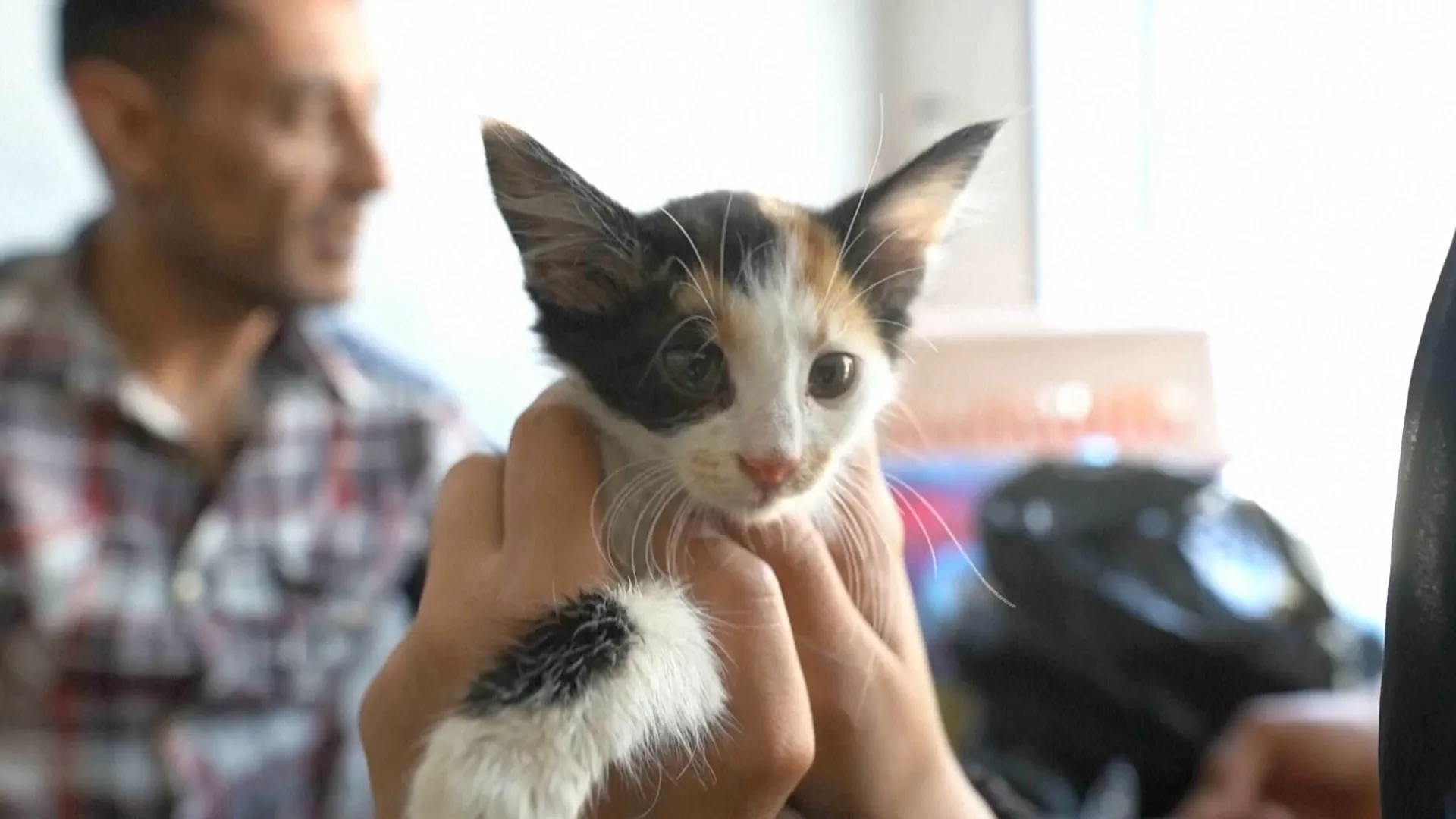
Animal lovers in Gaza are resorting to desperate measures to keep their pets alive and healthy. Only two pet clinics are still operating, and critical veterinary supplies and animal food are running low. Vets are warning animal deaths will rise unless supplies arrive soon.
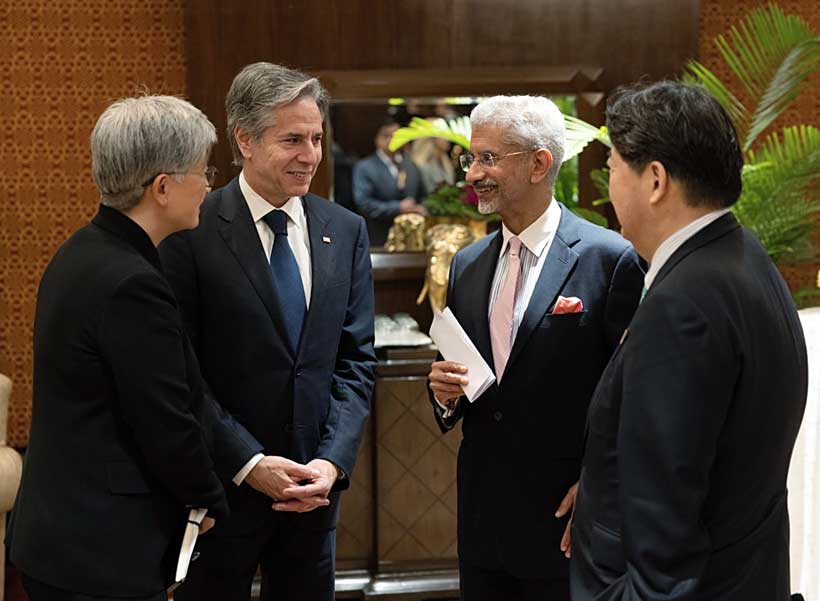
With its recent Foreign Ministers’ meeting in Delhi, the Quad has again shown it remains active, defying widespread rumours of collapse.
While the Japanese and Australian foreign ministers highlighted their countries’ strong relations with India and the Quad’s central role in shaping the Indo-Pacific security architecture, Marco Rubio’s four-day visit to India was the most noteworthy aspect, as he repeatedly emphasized the significance of Indo-US relations.
Speculations about the Quad’s potential dissolution, reminiscent of developments in the 2000s, were fuelled by the postponement of the leaders’ summit, President Trump’s apparent lack of interest, and a more conciliatory approach toward China. Even so, the meeting reaffirmed the US’s ongoing engagement in the region and its support for the Quad.
The Quad’s momentum currently faces its principal challenge not from India’s or the US’s relations with Australia and Japan, but from a complicated Indo-US relationship.
Two factors show why India-US relations are central to the Quad’s minilateral framework.
Over the past year, India has faced unprecedented criticism from the US administration, particularly from President Trump, who has been critical of India on trade and security fronts. Issues such as tariff disputes, H-1B visa restrictions affecting Indian professionals, deepening US relations with the Pakistan Army, and increased US involvement in Bangladesh and Nepal have contributed to growing distrust about the US’s willingness to cooperate with India and promote stability in the Indo-Pacific.
In response to several contentious statements by President Trump directed at India, Rubio’s visit served as a diplomatic effort to restore bilateral relations. His repeated emphasis on India’s role as a strategic partner signalled a commitment to improving ties. While a single visit cannot resolve all tensions from the past year, it reassures India and reduces the risk of further deterioration.
The Quad Foreign Ministers’ meeting became feasible only after India and the US undertook concerted efforts to revive bilateral relations. Notable examples include India’s invitation to the US to attend the AI Impact Summit in February 2026, ongoing trade agreement negotiations, and the US decision to invite India to the Pax Silica initiative. The meeting occurred only after a certain level of normalization had been achieved. Even so, a leaders’ summit is unlikely unless President Trump and Prime Minister Modi demonstrate a clear commitment to advancing India-US relations.
Second, without proactive American engagement, Japan, Australia, and India may develop their own trilateral regional strategies, perhaps with some Southeast Asian countries such as Indonesia, the Philippines, and Singapore. However, the impact of such an alternative would be limited and localized. Japan could take a greater role in sustaining and rebuilding regional economic frameworks, replicating the Trans-Pacific Partnership experiment. Still, due to constitutional and capacity constraints, Tokyo is unlikely to replace Washington as the region’s primary security guarantor soon.
Although the Quad’s resilience is maintained by the agency and commitment of Australia, India, and Japan rather than by exclusive US leadership, strong US involvement in the Indo-Pacific security mechanism will remain a cornerstone of the Indo-Pacific architecture.
China’s persistent assertive behaviour remains the central factor. It continues to employ coercive tactics and expand its influence in regions critical to the US and its partners, so the original motivations for revitalizing the Quad remain relevant. Although the US approach to China is evolving, the fundamental dynamics of US-China relations remain unchanged. In the long term, Washington will require frameworks such as the Quad to maintain stability in the Indo-Pacific and prevent the erosion of its strategic influence. Consequently, the Quad is likely to remain central to regional strategy, with India as a key partner.
The US Deputy Secretary of State Christopher Landau’s statement that the US is not going to make the same mistakes with India that it made with China 20 years ago must not guide Indo-US relations. The US needs India as much as India needs the US, and unlike China, India-US relations rest on shared values – democracy, freedom of speech, multiculturalism, and a common vision of maintaining a rules-based liberal international order. Both countries require mutually beneficial cooperation to advance their strategic objectives. Other Quad members and Indo-Pacific stakeholders also depend on collaboration between Washington and New Delhi to maintain strategic equilibrium and preserve the bloc’s cohesion.
The US regards India as a responsible stakeholder and a regional counterweight to China, especially after the limited outcomes of President Trump’s recent visit to China. Conversely, India depends on the US for advanced technology, strategic investments, and long-term defense needs. This mutual dependence makes both countries indispensable to each other, and significant short-term trade diversification is unlikely. Even if achieved, it would likely harm both parties.
The US must strengthen its engagement in the Indo-Pacific by leveraging the Quad and its member states to develop an effective regional strategy. Closer strategic coordination among Quad partners, particularly with India, is essential to this effort.
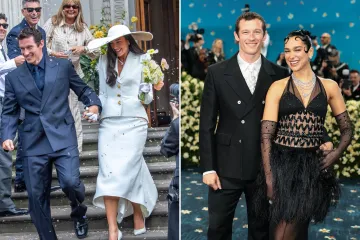
NEWLYWEDS Dua Lipa and Callum Turner were spotted kissing in the sea as he squeezed her bum while on their honeymoon in Italy.
The pop star, 30,and heractorhusband Callum, 36, have been enjoying married life at the luxury San Domenico Palace hotel in Taormina near Catania.
Sign up for the Showbiz newsletter
Thank you!
Dua Lipa and Callum Turner were spotted kissing in the sea as he squeezed her bumCredit: BackGridThe newlyweds are enjoying a luxury honeymoon in ItalyCredit: BackGrid
The couple arrived at the hotel on Monday after they drove from Palermo where they had a huge wedding bash that was attended by several A-listers.
In new photos, the pair looked every inch the loved-up couple, as they soaked up the sunshine in Sicily.
They were pictured in the sea on a float with their hands all over each other.
In one snap, Dua was seen on top her new husband as they enjoyed a kiss, while he couldn’t resist but give her bum a squeeze.
The pair looked loved-up with their hands all over each otherCredit: BackGridThe happy couple were seen enjoying a string of kisses in the waterCredit: BackGridThe One Kiss hitmaker was seen soaking up the sunshine in an inflatable floatCredit: BackGridThe actor and the pop star have been making the most of married lifeCredit: BackGrid
Dua showed off her toned figure in a silver thong bikini and matching top.
They were also seen with their eyes firmly locked on each other as they gazed into each other’s eyes, with Dua placing her hands on his face.
The duo looked smitten as Callum wrapped his arms around Dua’s waist.
The One Kiss hitmaker animatedly pulled an excitable expression with her hands up in the air.
Dua was then seen relaxing on the inflatable float, while Callum held onto the side.
Dua showed off her incredible figure in a silver thong bikiniCredit: BackGridThe singer looked in her element as she soaked up the sunshine in the metallic two-pieceCredit: BackGridThey were seen gazing into each other’s eyesCredit: BackGrid
She showed off her sunkissed glow in the two-piece swimwear and wore a black and white bandana on her head.
The couple are staying at a lavish £4k-a-night Italian hotel.
Earlier this week, they were seen walking through the town of Taormina hand-in-hand as they explored.
The hotel where the pair are residing for their honeymoon might be recognisable to some, this is because it was made famous in the HBO series The White Lotus.
Dua partied with A-listers including Donatella Versace at her wedding in Italy last weekendCredit: ReutersDua and Callum first married at Old Marylebone Town Hall in London on May 31Credit: Madison Phipps
Known for its stunning clifftop setting and jaw dropping view of the volcano Mount Etna, the resort is more than fit for the A-listers.
The hotel is The Four Seasons Hotel San Domenico Palace, and it was the main location for the second season of the hit HBO series.
The pair tied the knot last weekend prior with a string of famous faces in attendance.
Elton John, 79, who flew in by private jet for the ceremony, and Dua are close friends after they collaborated on the track Cold Heart in 2021.
Italian fashion designer Donatella Versace, 71, was also at the wedding, held in the grounds of the 18th-century Villa Valguarnera in Bagheria, and is believed to have designed Dua’s dress.
Other A-list guests at their Sicily bash included Brit actor Joe Alwyn, American actress Grace Gummer and her husband DJ Mark Ronson, and pop star Charli XCX and her husband George Daniel, the drummer with The 1975.
Some guests were understood to have signed non-disclosure agreements to protect the privacy of the star-studded three-day celebrations, which kicked off on Friday.
The villa where the lavish wedding bash happened, which also featured in HBO drama The White Lotus 2, is widely considered one of the most historically and culturally significant villas in Sicily.
Amid the vow renewal, following their London ceremony, music legend Elton John serenaded the couple with a rendition of his smash hit ‘Your Song’ in an incredibly emotional and touching moment.
The ceremony kicked off at 5pm and lasted for around an hour with guests arriving from 3:30pm in a whopping 60 minivans.
The bride and groom turned up in a luxury Mercedes Maybach Class V at 3pm prompt to greet their guests ahead of the nuptials.
Israeli attack reportedly kills one person in central Gaza’s Bureij camp, as a disabled Palestinian is shot in the West Bank.
Published On 13 Jun 202613 Jun 2026
Israeli forces have carried out a deadly attack in a refugee camp in central Gaza, according to Palestinian media reports, as casualties continue to mount in the enclave despite a “ceasefire” declared months ago.
The Israeli drone attack in the Bureij camp on Saturday killed one person and injured two others, reported the Wafa news agency.
The Palestinian Information Center identified the person killed as Muawiya al-Aydi, a local municipality worker.
Further north, a separate Israeli attack injured a person at a gathering in Gaza City’s Tuffah neighbourhood, according to Wafa.
Despite a ceasefire technically in effect since October, Israel’s military has regularly attacked Gaza, over half of which is under Israeli military control in defiance of the ceasefire’s terms.
According to Gaza’s Health Ministry, at least two Palestinians have been killed and 11 injured in Israeli attacks on the enclave in the past 48 hours.
The ministry said 983 people have been killed and 3,122 injured in Israeli attacks since the ceasefire was declared.
Hamas has accused Israel of repeatedly violating the agreement through its continued attacks and by shifting the so-called “Yellow Line” that demarcates Israeli-controlled areas in Gaza.
“Israeli actions reflect its unwillingness to implement the ceasefire agreement and aim to blow up the negotiation track and thwart the efforts being made, while continuing escalation to serve political and electoral considerations,” said Hamas spokesman Hazem Qassem on Friday.
Disabled Palestinian shot, injured in West Bank
Israeli troops also carried out a series of violent raids in the occupied West Bank on Saturday, part of a pattern of near-daily operations since the Hamas-led attacks on Israel on October 7, 2023.
According to Wafa, Israeli forces deployed stun grenades and tear gas during two separate incidents near Bethlehem, causing numerous injuries: one during a raid on the Dheisheh refugee camp and the other while blocking access to the Solomon’s Pools reservoirs.
A disabled Palestinian man was also shot and injured in the town of Duma, near Hebron.
Wafa said Israeli forces shot the man, while Israeli media cited Israeli police as saying an Israeli settler was responsible. According to Israeli police, the settler felt threatened by the man who was carrying a rock.
Other Israeli settlers attacked Palestinians and vandalised property near Bethlehem, including assaulting Palestinian electrical workers and stealing water pipes, said Wafa.