Red Dwarf star Chris Barrie is set to return to the beloved comedy series as narrator of new prequel
18:26, 17 Jun 2026Updated 18:27, 17 Jun 2026
The Red Dwarf star is set to return to the beloved comedy universe
(Image: UKTV)
A Red Dwarf star has expressed his delight after being confirmed to return to the cherished comedy series.
Chris Barrie is making his way back to the Red Dwarf universe, having been announced as the narrator for the audiobook of the new spin-off novel, Red Dwarf: Titan.
The actor, who famously portrayed Arnold Rimmer in the cult sci-fi comedy, will voice the latest book, written by Red Dwarf co-creator Rob Grant and Andrew Marshall, reports Radio Times.
Discussing his latest project, Chris said: “I am finding Red Dwarf: Titan to be a very entertaining read. Recording any audiobook is always a challenge with so many characters to cover.
“But Red Dwarf: Titan, loaded as it is with laugh-out-loud lines and situations, is simply a joy!”, reports the Liverpool Echo.
The star added: “I’m delighted that the portrayer of Arnold J Rimmer himself, the fabulous multi-voiced Chris Barrie will be reading the audiobook of Red Dwarf Titan.
“And I’m certain that Rob would be too. In fact we would be noisily competing as to whom was the most delighted. Currently that’s me.”
Besides his iconic portrayal of Rimmer throughout Red Dwarf’s 13 series, Chris previously narrated the first two Red Dwarf novels: Infinity Welcomes Careful Drivers (1992) and Better Than Life (1995).
Red Dwarf: Titan will serve as a prequel to the BBC sci-fi comedy, which followed Craig Charles’s Dave Lister who wakes after three million years to find he’s the last remaining human.
His sole companions are a hologram of his deceased bunkmate, Arnold Rimmer (Chris Barrie), and a humanoid creature descended from his pet cat (Danny John-Jules).
In conversation with Radio Times just weeks before his death, co-writer Grant revealed of the novel: “It’s Lister and Rimmer before the accident on shore leave on Titan.
“It’s set one universe to the side, so we can have familiar characters but we can do different things with them, because the difficulty was writing something that was going to be original and fresh and using the same characters without breaking the canon. “.
He further disclosed that the tale would see Lister and Rimmer “get a message from the far future warning them that all realities are going to collapse unless they do something about it.
“Grant also assured us that Red Dwarf’s signature silliness is back in full force, with the writer promising that fans will “laugh their little chippers off”.”
Red Dwarf is available to stream on BBC iPlayer and Red Dwarf: Titan will publish in hardback, ebook and audio on July 16
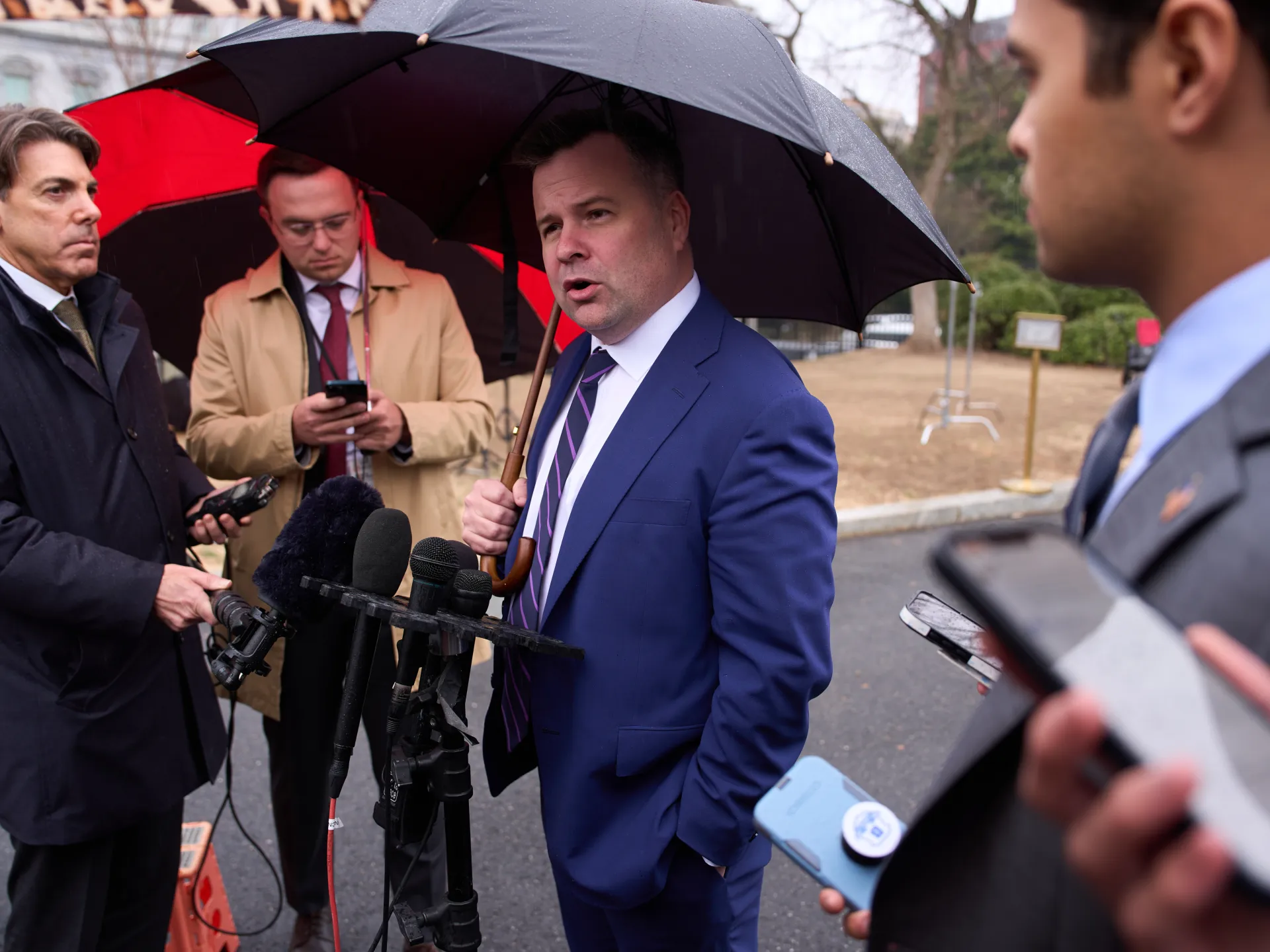
Trump says plan to keep controversial acting DNI head, Bill Pulte, in role as he pushes for surveillance, voter ID law.
United States President Donald Trump has delayed the confirmation of his nominee for director of national intelligence (DNI), while calling for lawmakers to pass legislation on surveillance and voter identification requirements.
Trump made the announcement in a Truth Social post on Wednesday, saying he planned to keep acting DNI Bill Pulte in the role and postpone the confirmation of his nominee, Jay Clayton.
Recommended Stories
list of 3 itemsend of list
Clayton had been scheduled to appear for a Senate confirmation hearing on Wednesday afternoon before Trump forced the delay by directing him to not appear.
The president cited his desire to pressure Democrats to pass a controversial surveillance law and a measure requiring voter identification, as well as his wish not to remove Clayton from his post as federal prosecutor until his replacement was confirmed.
“In the meantime, Bill Pulte will remain as the Acting Director of National Intelligence,” Trump said.
The US president’s nomination last week of Clayton had been a welcome relief to many lawmakers, including prominent Republicans, who raised concerns about Pulte and his lack of experience.
A Trump loyalist and housing official, Pulte had never held intelligence or military positions. The DNI oversees Washington’s 18-agency intelligence community.
Clayton, in contrast, currently serves in what is considered one of the Department of Justice’s most prestigious posts: He works as the US attorney for the southern district of New York in Manhattan.
The DNI vacancy emerged after Tulsi Gabbard announced her resignation in May, citing her husband’s cancer treatment.
FISA and voter identification
Clayton’s confirmation was meant to be fast-tracked to win Democrats’ support for a controversial provision of the Foreign Intelligence Surveillance Act, which is currently up for renewal.
Section 702 of the law allows spy agencies to collect the communications of targeted foreigners located outside the US without first acquiring a warrant. Civil rights advocates have condemned the tool, saying it exposes US citizens to the government indirectly collecting their data.
Democrats had pledged not to renew the provision if Pulte remained in his role.
In his post, Trump maintained that Clayton could be confirmed before the vote on FISA, giving Democrats the opportunity to change their position.
Trump also added another condition, saying he would not approve FISA without lawmakers also passing a law requiring voter IDs in US elections. The legislation has been a key priority for Trump in advance of the midterm elections in November, but he has not been able to overcome a 60-vote threshold in the Senate.
“Therefore, to add a slight bit of intrigue but, for the Good of the Nation, and the People of our Country, I will not approve FISA without THE SAVE AMERICA ACT going along with it,” Trump said in his Truth Social post.
Despite the statements, Republican Senator Tom Cotton, the chairman of the Senate Intelligence Committee, initially said he would proceed with Clayton’s confirmation hearing on Wednesday unless Trump withdrew his nomination or ordered him not to appear.
Trump ultimately did direct Clayton to skip the hearing. That, in turn, forced Cotton to postpone the hearing. Afterwards, the senator issued a statement expressing regret at the circumstances.
“It’s regrettable that the president has directed Jay Clayton not to appear at his confirmation hearing today,” Cotton said in a statement.
“Mr. Clayton is a patriot and a highly qualified nominee, as the president has said repeatedly. While today’s hearing is now unfortunately postponed, I look forward to proceeding with his confirmation in the near future.”
Democrats, meanwhile, described the situation as chaotic.
“At every turn, the president has injected more uncertainty into a process that should be focused on one thing: keeping the American people safe,” Senator Mark Warner said in a statement.
“The president’s latest intervention only underscores a simple reality: the biggest obstacle to resolving these issues has not been Senate Democrats or Senate Republicans. It has been the chaos and confusion coming from the White House itself.”
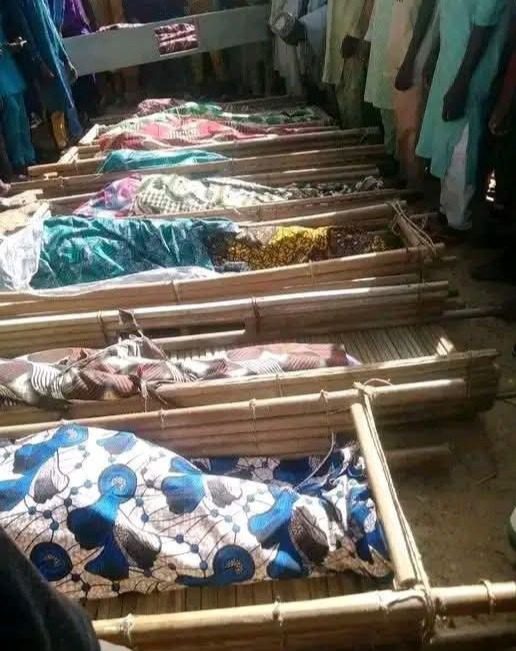
When dozens of farmers bade farewell to their family members on the morning of Friday, June 12, and headed out in different directions to work on their farms, 17 of them were not lucky enough to return home alive. The farmers were killed after terrorists invaded their fields in the Maradun Local Government Area (LGA) of Zamfara, North West Nigeria.
Locals say 13 other farmers were injured during the attack, with three of them referred to the Usmanu Danfodiyo University Teaching Hospital (UDUTH) in Sokoto. A survivor of the attack, who identified himself only as Bello, told HumAngle that he was on his farm in the outskirts of Gora in the Maradun LGA, at around 9 a.m., when he heard the first gunshot. He said he thought it was one of the Yan Sakai local security guards, but it became clear that it was a terrorist attack when the gunshot sounded a second time. Yan Sakai security volunteers are young people carrying weapons to protect residents from terrorist attacks.
Bello recalled that he was lying face down while others fled. As the gunfire persisted, he managed to pull himself to the other side of the road before running home. “I was lucky, my farm is right on the side of the road; most of those killed had their farms a little bit away from the road,” he said.
For over ten years, rural terrorism has become widespread and persisted in Zamfara and other northwestern states. In many ungovernable areas, farmers are compelled to pay a farming tax before they are permitted to work on their fields as the wet season arrives. The armed groups also require farmers to make payments running into millions to cultivate their crops. Even after paying, not all communities are granted access to their farmlands. Many communities have been displaced, and food stores have been torched because residents failed to pay the required farming tax.
HumAngle recently reported that about 40 leaders of a farming community were abducted at a peace deal meeting with a terrorist leader in a village in the Maradun LGA. The community leaders were lured into a meeting to discuss how much they would pay to a terror group, only for them to be abducted by the leader of the criminal syndicate. In a separate report, we also documented how farmers were being displaced after paying millions of naira as farming tax to terrorists in Zamfara.
“There were a lot of motorcycles with bandits on top, shooting sporadically, but I managed to escape. The bandits [terrorists] must have divided into groups because there were gunshots from all corners,” Bello said.
The chairman of the Maradun LGA, Sanusi Dosara, stated that the recent devastating attack reflects the ongoing efforts of terrorists to disrupt farming activities in the state. Since early June, there has been an increase in attacks aimed at farmers in Zamfara.
Prior to the latest incident, two farmers were killed while tending to their fields near the Kaya community, not far from Gora in Maradun. Earlier, eight farmers were killed in an attack in Gima village, located in Anka LGA. According to locals, the farmers who lost their lives in the Gima assault were: Sani Kanen Tidurogo, Salisu Kadda, Bello Kyabe, Ibrahim na Yakubu Ziti, Yusuf Malan Rabi, Masaudu Sani Adake, Abdulmajid Sani, and Adamu Dungo.
Funeral for the 17 farmers killed in Gora. Photo provided by Ibrahim Kaya.
“The terrorists are intentional about what they want,” Abdulmudallib Anka, a resident, told HumAngle. His house in Anka is filled with internally displaced persons from Gima and other villages. “The day of that attack, the terrorists circled a group of farmers working on their farms before they started shooting sporadically.”
Abdulmudallib noted that the recurring attacks have shown the terrorists are ready to continue their onslaught against the civilian population, so as to stop them from gaining access to their farms. There have also been reports of attacks in which farmers were killed in the communities of Kaura Namoda, Tsafe, Zurmi, and Birnin Magaji LGAs over the past few days.
Sulaiman Abdullahi, a youth leader in Birnin Magaji, said the situation has forced several farmers to stop going to the farm.
“Early June, farmers were attacked outside Tungar Danjuma and Gidan Kyafda, which led to the death of about six farmers with several others injured,” Sulaiman said. “That same day, farmlands on the Birnin Magaji – Kaura Namoda road were also attacked around 1 p.m.”
In Zurmi LGA, the terrorists struck on June 7 and invaded the outskirts of the town, along the road to Kaura Namoda, killing two farmers working on their farms.
Seventeen farmers were killed, and thirteen injured in a terrorist attack in Maradun LGA, Zamfara, Nigeria. This is part of a broader issue where rural terrorism has thrived for over a decade, forcing farmers to pay exorbitant “farming taxes” to militant groups for access to their fields.
Despite payments, many communities are displaced, and attacks on farmers are increasing, disrupting agriculture activities.
Local security has been ineffective as indicated by repeated incidents, including the abduction of about 40 community leaders under false pretenses. Recent violence has persisted across various local government areas of Zamfara, further highlighted by incessant attacks which resulted in deaths and injuries of numerous farmers.
The ongoing threat deters farming activities and devastates local economies, leaving residents in fear and uncertainty.
The Scream movie series is one of horror’s most successful franchises and has seven films under its belt
17:36, 17 Jun 2026Updated 17:37, 17 Jun 2026
Horror movie star reveals surprising amount they still make from hit 1990s Scream film(Image: Gh0st/YouTube)
A star from the horror film franchise Scream has revealed the surprising amount he still earns from one of the movies.
Back in 1996, the Scream series kicked off with its first instalment. Directed by Wes Craven, the film followed Sidney Prescott and her friends being targeted by a sadistic killer who donned a black cloak and white mask: Ghostface.
Due to the first film’s success, several more movies followed including a sequel in 1997, and a third instalment in 2000. Then, after 11 years Scream 4 was released in 2011.
And more recently, the slasher franchise was brought back in 2022 for a fifth movie and 2023 for a sixth. This year, a seventh film was released which became the highest-grossing film of the series so far.
The satirical whodunnit was a huge hit thanks to a clever script penned by Kevin Williamson and Wes Craven’s direction, while the characters’ awareness and acknowledgement of horror film clichés was uncommon at the time. Scream helped to revive interest in the teen slasher genre.
And this week, a star from Scream 2 revealed his residual pay from the film 29 years after its release. Actor and comedian Craig Shoemaker appeared in the sequel, Scream 2 – which made $172 million at the box office.
Craig played the role of ‘Artsy Teacher’ in the instalment. Taking to his Instagram, he shared a photo of his residuals cheque which revealed he made a total of $34.09.
He captioned the post: “In 1999 | was cast in the role of the film professor in the sequel of the original Scream movie, Scream 2, where I lead a conversation in class about film sequels. The residuals keep rolling in, baby! What should I buy with my 34 bucks?”
Content cannot be displayed without consent
The latest Scream movie, Scream 7, was released earlier this year. The film shifted the focus back to the original final girl, Sidney Prescott – played by Neve Campbell and her teenage daughter Tatum, played by Isabel May.
Neve didn’t appear in the sixth Scream film in 2024, which starred Jenna Ortega and Melissa Barrera as sisters who discover a serious connection to one of the original Ghostface killers, Billy Loomis.
Neve announced she would be stepping away from the 2024 Scream film after a dispute over pay. She said in a statement: “Sadly, I won’t be making the next Scream film. As a woman I have had to work extremely hard in my career to establish my value, especially when it comes to Scream.
“I felt the offer that was presented to me did not equate to the value I have brought to the franchise. It’s been a very difficult decision to move on,” Neve added.
She continued: “To all my Scream fans, I love you. You’ve always been so incredibly supportive to me. I’m forever grateful to you and to what this franchise has given me over the past 25 years.”
Passengers wait to drop their luggage while traveling during the holiday season at Ronald Reagan National Airport in Washington, D.C., on December 22. The airport is scheduled to close for most of July 4 to accommodate events celebrating Independence Day in the capital. File Photo by Bonnie Cash/UPI | License Photo
June 17 (UPI) — Officials at Ronald Reagan Washington National Airport announced Tuesday that the airport is scheduled to be closed for much of July 4 amid a predicted record-breaking week of travel for the holiday.
There are no scheduled flights to or from the airport after noon on July 4, the Metropolitan Washington Airports Authority announced in a release. The day before will also have no flights for several hours in the early afternoon.
The MWAA said the schedule disruption is to accommodate Independence Day celebrations coinciding with the country’s 250th birthday.
“Many events will include downtown flyovers or other aerial displays such as fireworks or parachute jumps, which will affect flights periodically at Reagan National,” the agency said.
Airport officials expected flight operations to return to normal July 5.
AAA projected Tuesday that a record-breaking 72.2 million Americans will travel at least 50 miles away from home to mark Independence Day between June 27 and July 5. That’s up from 71.8 million in 2025.
Stacey Barber, vice president of AAA Travel, said traveling for the July 4th holiday “is tradition.”
“The 9-day travel forecast includes travelers who are vacationing all week and people just getting away for the long holiday weekend,” Barber said. “While the overall number of Independence Day travelers appears to be plateauing, we’re still expecting record volumes this year.”
Among those traveling for the holiday, AAA projected the vast majority — 61.4 million — will do so by car, 5.85 million by air and 4.93 million by other modes of transportation such as bus, train or cruise.
The Top 10 domestic destinations for the holiday week are Seattle; Orlando, Fla.; Anchorage, Alaska; Miami; New York City; Chicago; Fort Lauderdale, Fla.; Fairbanks, Alaska; Denver; and Boston. The Top 10 international destinations are Vancouver, Canada; Rome; Dublin; Paris; London; Calgary, Canada; Reykjavik, Iceland; Amsterdam; Athens; and Barcelona, Spain.
President Donald Trump and UFC CEO Dana White stand in the octagon after the UFC Freedom 250 event on the South Lawn of the White House in Washington, on June 14, 2026. Photo by Bonnie Cash/UPI | License Photo
Weekly insights and analysis on the latest developments in military technology, strategy, and foreign policy.
A newly emerged video offers what appears to be a first look at China’s R6000 uncrewed tiltrotor aircraft in free flight, marking a significant step beyond the tethered hover tests that had been seen previously. The design has attracted interest on account of its similarities to Bell’s MV-75A Cheyenne II, America’s crewed second-generation tiltrotor. More broadly, the development of this aircraft could have very significant implications for the People’s Liberation Army as well as civilian operators.
The footage, which first appeared on Chinese social media, shows the large drone in vertical flight, making a pedal turn (rotating around its vertical axis in the hover), and in sustained forward flight with its twin proprotors fully tilted. Previous imagery was limited to tethered evaluations that demonstrated basic hover capability. Now, with flight testing advancing, more could be revealed about the aircraft’s performance envelope.
As in the previous imagery, the aircraft’s engines are unshrouded, with their streamlined fairings removed. Like the MV-75, the R6000 features fixed engine nacelles with hinged proprotors, in contrast to the first-generation tiltrotor design found on the V-22 Osprey, in which the entire nacelle pivots up and down as a complete unit.
Previous imagery showing the R6000 conducting a tethered hover test had begun to circulate last November, as we discussed at the time.
An R6000 prototype seen undergoing tethered hover testing. United Aircraft via Chinese internet
While no details have been released about the scope of the current trials, the ability to conduct sustained untethered flight is a key milestone for any tiltrotor program, given the complexity of the aircraft’s aerodynamics and flight-control systems. Tiltrotor designs are especially challenging, as evidenced by the V-22’s checkered record through the years.
In October 2024, a photo emerged showing the first completed prototype of the R6000 at the Wuhu United Aircraft Production Workshop in China’s eastern Anhui province. United Aircraft had unveiled the design, also referred to as the UR6000 and Zhang Ying (or Steel Shadow), at the 2024 Singapore Airshow.
A photo shows what is said to be the first completed UR6000 prototype on the production line at the Wuhu United Aircraft Production Workshop in the Wuhu Aviation Industrial Park in China’s eastern Anhui province. United Aircraft
Developed by the Chinese firm United Aircraft, the R6000 is one of the largest uncrewed tiltrotor designs currently in development anywhere in the world. Combining the vertical takeoff and landing capabilities of a helicopter with the speed and range advantages of a fixed-wing aircraft, it is — officially, at least — aimed at logistics, disaster relief, offshore support, and other missions requiring access to areas without prepared runways. United Aircraft has presented both crewed and uncrewed versions of the R6000 in the past.
As we have outlined previously, a crewed or uncrewed tiltrotor in the R6000 class could fulfill various military applications for the People’s Liberation Army (PLA).
Concept artwork of an apparent crewed version of the UR6000 in a generic civil-type color scheme. United Aircraft
This kind of aircraft could support overseas deployments and regional contingencies, including a potential operation against Taiwan, by moving troops, supplies, and equipment between dispersed locations without relying on prepared runways.
In particular, the R6000 would be well suited to operating from the Type 076 amphibious assault ship and other large People’s Liberation Army Navy (PLAN) amphibious ships, greatly extending their reach for logistics, reconnaissance, and other missions.
China’s first super-sized Type 076 amphibious assault ship, the Sichuan.
As well as logistics, a fully developed R6000 has clear potential as a multi-mission platform. Its payload capacity could also accommodate intelligence, surveillance, and reconnaissance (ISR) equipment, electronic warfare payloads, communications relay systems, or potentially even precision-strike weapons. It is worth noting at this point that a special operations version of the MV-75 is already in the works, with a gunship variant likely, and a sea control concept has been displayed, too. China is likely to at least explore similar development paths for its tiltrotors.
A view of Bell’s MV-75 sea control concept model at this year’s Modern Day Marine exhibition. Eric Tegler
In this respect, the R6000 also makes for an interesting comparison with Bell’s V-247 Vigilant, which was originally pitched to meet the U.S. Marine Corps multirole, VTOL-capable drone program, known as MUX. The V-247 has also been pitched to the U.S. Navy, while Bell has presented renderings showing V-247s operating together with the crewed V-280 Valor tiltrotor design, which the U.S. Army’s MV-75 is based on.
Concept artwork depicting V-247s operating together with a version of the V-280 Valor tiltrotor. Bell
At least one picture on United Aircraft’s website shows the UR6000 in People’s Liberation Army markings. United Aircraft
In the vertical-lift segment, China is also busily exploring crewed tiltrotor designs.
Earlier this month, new footage emerged showing what is understood to be China’s first crewed tiltrotor aircraft during flight trials. That aircraft had first broken cover in August of last year, as we wrote about at the time.
A photo that appeared on June 1, showing the crewed tiltrotor aircraft while in flight. Chinese internet via X
Although the R6000 has, in the past, been pitched primarily for civilian applications, the technology has obvious military relevance. Large autonomous tiltrotors could provide rapid resupply to dispersed forces, support operations in remote regions, or deliver cargo to ships and austere bases without the need for conventional runways. Tiltrotors have huge potential for the PLA, which has major littoral mission demands and a growing fleet of amphibious warships to which these kinds of aircraft are especially well suited.
As such, the R6000 is worth watching as another indicator of the Chinese military’s increasingly ambitious vertical-lift programs, as well as its diverse and growing series of uncrewed aircraft.
From a devastating cancer battle to her many failed romances on the street, Sally’s 40 years in Weatherfield have not been short of drama. Especially as her marriage to husband, Tim (Joe Duttine), hasn’t always been smooth sailing.
It’s fair to say Sally is a soap legend and has played a part in several big storylines, and is much-loved for her comedy appeal and status as a street busybody.
Away from the soap, actress Sally is loved up with her husband, Tim, whom she married in 1995. Tim is a successful screenwriter who has worked on the ITV soap Emmerdale, as well as on the TV series The Drowning and Desperate Measures. According to IMDb, Tim has written more than 2,000 episodes of Emmerdale between 1995 and 2016.
His last credited episode aired in January 2016 and followed Diane Sugden (Elizabeth Estensen) as she tried to sell her half of The Woolpack, while Adam Barton’s (Adam Thomas) emotional attachment to baby Johnny Woodfield became a problem.
Sally recently delighted fans after giving them a look into her private life with Tim. Taking to her Instagram, she shared several snaps from their recent trip to Iceland, where the happy couple was taking in the glorious sights.
Content cannot be displayed without consent
She captioned the post: “Well, that was an adventure. What a wonderful, beautiful country Iceland is”. As expected, fans and co-stars were left gushing over the post.
Jane Danson commented: “Pretty special I really want to go again. Glad you had a fab time Sal”. Sally Ann Matthews penned: “Oh wowzers”, while Jude Riordan added: “I’m going next week!”
Sally and Tim share three children together, including daughters Phoebe, 31, and Hattie, 22, and son Sam, 29 Both of the girls have followed in their footsteps and are enjoying careers in television.
Who are Sally Dynevor’s famous daughters?
Hattie Dynevor stars on the BBC drama Waterloo Road, playing Libby Guthrie, the daughter of history teacher Neil (Neil Fitzmaurice), and has so far appeared in series 13 – 17.
She also appeared in the recently released gripping Netflix series Legends as Arabella, which also stars Steve Coogan and Tom Burke.
Hattie’s older sister, Phoebe, also launched an acting career on Waterloo Road, playing Siobhan Mailey between 2009 and 2020.
Bridgerton fans will also recognise the actress as Daphne, the wife of Simon Basset, the Duke of Hastings, played by Regé-Jean Page, between 2020 and 2022. Speaking to Collider, Phoebe opened up about a possible return to the Netflix period drama.
She said, “When the first season came out, they didn’t know what they needed to put in play. We were the ones that got away, in a certain way.
“I can only speak for myself, I would always come back if I was asked. I have not received a call. When I get that call, I will be there if I can.”
She has since starred in a long list of popular television shows, including The Musketeers, Dickensian, Snatch, and Ten Percent. Away from the small screen, Pheobe has starred in the movies The Colour Room, Inheritance, and Thrash.
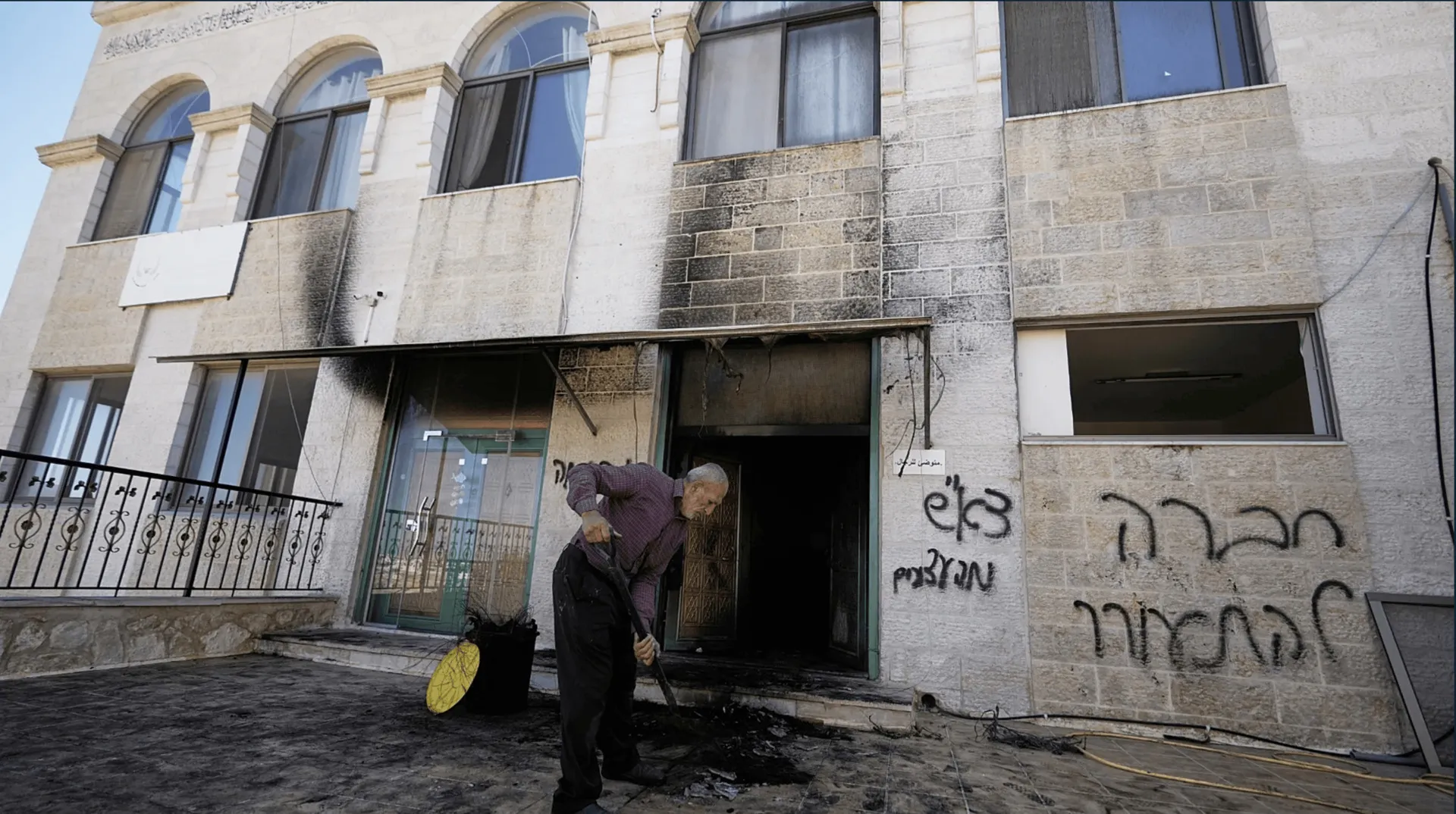
Israeli settlers have vandalised and burned a mosque in the occupied West Bank village of Jaljulia, north of Ramallah. Racist slogans were scrawled on the walls by the settlers.
Russian artist Robert Kuzakov, known as Semyon Skrepetsky, was shot dead in Poland just three days after a performance protest in Berlin near the Russian embassy. He was known for his caricatures of politicians including Vladimir Putin and Alexei Navalny.
Diversity in last year’s streaming films followed the same downward trend as theatrical releases, a new study found, with the percentage of people of color directing, writing and leading films diminishing.
In past years, streaming was considered a more accessible outlet for early-career female or BIPOC filmmakers, which was reflected in data about gender and racial representation. According to Part 2 of UCLA’s 2026 Hollywood Diversity Report, which was released Wednesday and analyzed all of the original English-language films distributed on major streaming platforms in 2025, that trend reversed across every category studied.
The share of streaming films directed by women declined to just over 23%, the lowest it’s been since 2022, when the annual study began analyzing streaming and theatrical films separately. Among those female directors, an overwhelming majority (81%) were allotted budgets below $20 million, while more than a quarter of the films directed by white men exceeded $50 million.
Only about 31% of streaming films last year had BIPOC directors, down 10% since 2024, when the proportion more closely reflected U.S. demographics.
“This is an industry in flux — and in reverse, especially when it comes to diversification,” Darnell Hunt, UCLA’s executive vice chancellor and provost and the report’s co-founder, said in a statement.
“Unfortunately, as we’ve seen with theatrical films, we’re now seeing the impact of this current political climate in very meaningful and concrete ways,” he continued. “As budgets tighten, opportunities for filmmakers of underrepresented backgrounds are always the first to be squeezed out.”
Despite losing ground behind the scenes and in front of the camera, women and people of color continued to drive streaming viewership in 2025, the report found.
The year’s biggest streaming hit, “KPop Demon Hunters,” was also the most-watched original Netflix film of all time, and according to Neilsen ratings, it was most streamed by women in Latinx households, followed by women in Asian and Black households. The report acknowledged the film as a “bright spot” in a disappointing year for diversity.
Michael Tran, a sociologist who co-authored the report, noted that the film’s impact and earnings potential could have been even greater with a theatrical release.
“It was a missed opportunity for theaters,” Tran said. “We’ve tracked how diverse films tend to succeed at the box office, here and abroad. For ‘KPop Demon Hunters,’ we could have been talking about record-breaking box office receipts in addition to topping the ratings.”
When “KPop Demon Hunters” did briefly screen in theaters — for two days last August, with over 1,750 locations domestically and more than 1,150 sold-out screenings — it was the No. 1 movie that weekend, earning about $18 million in ticket sales (though Netflix does not report exact box office figures).
Data from the report also indicated that streaming films with at least somewhat diverse casts tended to outperform in terms of audience and social media engagement.
However, overall cast diversity in streaming films declined in 2025. For the first time since 2022, films with a majority-BIPOC cast did not represent the plurality of streaming titles. Most notably, the percentage of lead actors of color dropped from a high of 51% in 2024 to 36% in 2025.
Report authors called it an “industry-wide chilling effect” reminiscent of a similar decline in diversity among theatrical films in 2024. That said, streaming films continued to star BIPOC leads more often than their theatrical counterparts, the study found.
The overall number of streaming films also declined. While the annual UCLA report typically examines the top 100 original, English-language movies across streaming platforms, this time, there were only 89 for researchers to analyze.
In addition to studying race and gender demographics in the film industry, the report also examined on-camera representations of disability. According to the study, while adults with a disability make up at least 26% of the U.S. population, actors with a known disability represented 6.5% of total streaming movie actors, which is in line with the previous year.
According to the study’s authors, streamers hoping to compete in a fast-paced, globalized market should increase their diversity efforts in light of these results.
“Kids under 18 are already majority BIPOC. There’s no going back if a studio wants to be profitable and relevant to Gen Z and Gen Alpha,” said report co-founder and co-author Ana-Christina Ramón. “Severing all brand loyalty now will only make it more difficult to regain long-term subscribers in the future.”
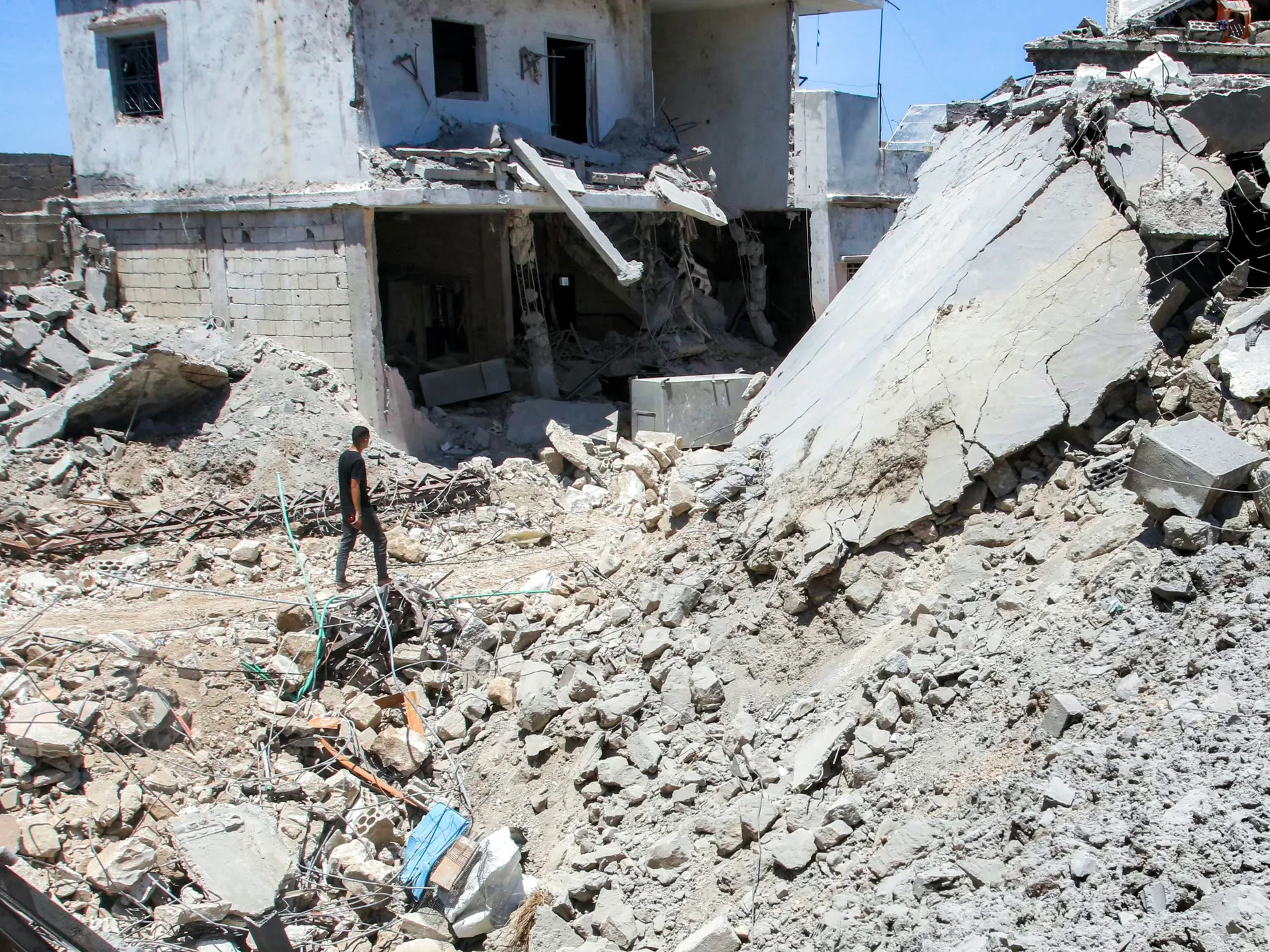
Israeli air strikes have continued to target towns in southern Lebanon despite an agreement between the United States and Iran set to be formally signed on Friday to end the war on all fronts.
Israeli drones carried out three attacks in Tyre that resulted in injuries while a drone also targeted the Bint Jbeil district in Nabatieh, Lebanon’s state-run National News Agency said on Wednesday.
Recommended Stories
list of 4 itemsend of list
The fighting in Lebanon is considered one of the biggest threats to the framework agreement in the US-Israel war on Iran with Tehran warning that new Israeli strikes on Lebanon and continued occupation of its territory would be regarded as a violation of the deal.
Earlier on Wednesday, Al Jazeera Arabic correspondents on the ground reported that Israeli forces carried out an air strike on the outskirts of Kfar Tebnit, also in the Nabatieh district. They also launched raids on the town of Nabatieh al-Fawqa and shelled the Ali al-Taher heights and the outskirts of the town.
Hezbollah fighters, meanwhile, launched at least 10 rockets towards Israeli forces near Kfar Tebnit.
There has been a reduction in violence since the US-Iran agreement was announced, but attacks have not stopped, Al Jazeera’s Zeina Khodr said, reporting from Beirut.
“Security sources believe that the Israeli army is trying to occupy more ground, especially strategic high ground around Nabatieh,” she said.
“Yes, families have started to return to their villages, but people are worried. They say they don’t trust that Israel will abide by the ceasefire.”
United Nations spokesperson Stephane Dujarric said the number of projectiles fired between Israeli forces and Lebanon fell to 174 on Sunday, compared with 705 the previous Sunday.
Of these, 169 were attributed to Israel and five to Hezbollah, he said.
Lebanon ‘most sensitive issue between the sides’
The situation in Lebanon is one of the main pillars of the US-Iran agreement, Al Jazeera’s Almigdad Alruhaid said, reporting from Tehran.
“As we approach the signing of the deal, it is becoming the most sensitive issue between the sides,” Alruhaid said.
Iran said the Israeli military has violated the ceasefire in Lebanon 84 times in the past two days and warned that Israel should expect “a harsh response” if it does not stop its attacks, he reported.
This came after Iranian Foreign Minister Abbas Araghchi said the withdrawal of the Israeli military from Lebanese territory is one of the core demands right now to move forward with the framework agreement Iran has with the US, Alruhaid said: “So the Iranians say the situation in Lebanon, in particular southern Lebanon, is an integral part of the memorandum of understanding.”
Lebanon was among the top priorities for the Iranians when they started negotiations with US President Donald Trump’s administration, according to Mohammad Eslami from Tehran University.
“Once the Iranians not only retaliated against the Israeli attacks on Dahiyeh and Beirut but also pre-emptively attacked Israeli territory, they showed right from the outset they are determined and very serious about supporting Lebanon, the Lebanese people, the Lebanese government and the resistance factions in Lebanon,” Eslami told Al Jazeera.
Israel’s invasion akin to ‘war crimes’
Meanwhile, the human rights group Amnesty International said on Wednesday that the Israeli army’s mass forced displacement orders in Lebanon amount to war crimes under international law.
“In parts of southern Lebanon, the Israeli military’s forced displacement of civilians and prevention of their return amounts to unlawful transfer – which is a war crime,” Amnesty said in a statement.
The Israeli army has “radically expanded” its use of such orders, displacing hundreds of thousands of people across Lebanon, it said.
“Instead of forcibly uprooting communities and designating entire swathes of Lebanese land as ‘no-go zones’ for civilians, Israeli forces must immediately withdraw from Lebanese territory,” said Kristine Beckerle, Amnesty International’s deputy regional director for the Middle East and North Africa.
The Israeli military declared about 4.6 percent of Lebanon as a “no-go zone” on November 28, 2024, a day after a previous ceasefire took effect, Amnesty noted.
This year, just three days after an April 17 ceasefire announcement, the restricted area was expanded to about 6 percent of the country, and residents were ordered not to return to villages previously home to tens of thousands of civilians.
Lebanese officials said Israel, which has been carrying out a large-scale offensive in the country since March 2, has killed more than 3,800 people, wounded 11,850 and displaced more than one million.
US President Donald Trump has accused his predecessor Barack Obama of ‘bribing’ Iran to agree to the 2015 nuclear agreement, by referring to a $1.7B settlement of a decades-old lawsuit. He used profanity in his brief comments to the media alongside Egyptian President Abdel Fattah el-Sisi.
One of the most devastating moments in world history will be brought to life on Disney+ by a beloved star of The Night Manager and Marvel blockbusters
The Night Manager star bags role in ‘gripping’ period drama(Image: BBC)
It’s shaping up to be one of the year’s most gripping docudramas.
BBC The Night Manager star Tom Hiddleston will be playing time detective in an immersive new historical series coming to National Geographic and Disney+ later this year.
Pompeii: Out of Time will reunite the iconic Marvel star with Loki executive producer Kevin R Wright for the three-part series that promises to lift the lid on the explosive historical moment.
The first-look trailer has given fans a glimpse of Hiddleston stepping into his new role as he makes the case that the eruption of Vesuvius wasn’t just a catastrophic day of death and destruction.
His latest series will feature an eye-opening investigation into those who may have survived the blast, brought to life with immersive and thrilling dramatisations.
Along for the journey is a team of ancient Rome experts, from archaeologists and historians to geologists and disaster experts, who will uncover remarkable real-life stories that challenge assumptions people have about the fateful day in 79 AD.
A teenage apprentice, a powerful businesswoman and a mysterious Praetorian Guard are all vital pieces of the puzzle as Hiddleston steps back in time to explore the hours before and during Vesuvius’ eruption in what is shaping up to be an essential watch for any history buff. A synopsis from Disney+ teases: “As the volcano awakens and the countdown to catastrophe begins, the evidence converges in a gripping race against time to uncover who survived, who perished, and what determined their fate.”
Hiddleston says in a statement: “The ancient world has compelled my imagination and curiosity for as long as I can remember: I’ve been fascinated by it all my life.
“Classical Antiquity is the foundation and cornerstone of Western and European culture. To visit Pompeii is to feel the distance of the 2,000 years between now and then compress. The past becomes the present; the past feels so close. Tangible, honest and real.
Content cannot be displayed without consent
“Our relationship with the past is alive — studying who we were in order to understand who we are. Pompeii is a gateway for that conversation. It’s a privilege to host this visually immersive and dynamic series.”
He added: “Pompeii is often remembered for how its story ended. But by looking closer, we can uncover the details of people’s lives, the choices they made, and the moments that came before the city was buried.
“To revisit the final hours of those ordinary people, caught in an extraordinary moment, and to help bring these remarkable human stories back into the light, is a genuine honour.”
The upcoming series is already generating excitement amongst fans, with one user commenting below the trailer on YouTube: “Omg this seems so interesting.”
“This is absolutely fascinating — Pompeii is an incredible place, and this approach brings its story to life in a very powerful way,” someone else replied, adding they’re “really looking forward” to tuning in.
Get Disney+ for £3.99 for three months
This article contains affiliate links, we will receive a commission on any sales we generate from it. Learn more
Disney+ is offering a discounted subscription at £3.99 per month for three months when signing up by May 6. This provides cheaper access to hit series like Rivals, Only Murders in the Building and The Bear, plus countless titles from Marvel, Star Wars, Pixar and more.
“I want to see it NOW!” another fan exclaimed, and a final fan wrote: “For someone who’s survived Ragnarok, Tom Hiddleston couldn’t be better suited for this doc. Looking forward – or back – to it.”
Mark your calendars, as all three episodes will be available to stream in just over a month’s time.
Pompeii: Out of Time with Tom Hiddleston premieres Thursday, 23rd July on National Geographic and Disney+.
Toronto, Canada – When Diana Gallego listened to Canadian Prime Minister Mark Carney’s widely touted speech at the World Economic Forum at the start of this year, she couldn’t help but feel a disconnect.
Carney had made an impassioned plea to the world’s “middle powers” to break with a United States-led international order that he said was no longer working, and his words found receptive audiences around the world.
Recommended Stories
list of 3 itemsend of list
But for Gallego, co-executive director of FCJ Refugee Centre, an organisation that supports refugees and asylum seekers in Canada’s largest city, the prime minister’s statements rang hollow amid his government’s hardening approach to immigration.
“We saw the [prime] minister going to Davos [with] this beautiful discourse, saying we should not copy our neighbours … But internally, the policies are telling us another story,” Gallego told Al Jazeera. “Canada is closing the doors now.”
Gallego is among more than a dozen experts – from lawyers to professors, rights advocates and former government officials – who told Al Jazeera that Canada is at a “troubling” crossroads in its policies towards migrants and refugees.
As Canadians have grappled with rising economic and social pressures in recent years, a decades-old consensus on the benefits of immigration has frayed.
Hostile rhetoric blaming newcomers for Canada’s ills has intensified, and Carney’s government has slashed temporary visas and restricted access to asylum. Experts say a “generational shift” is under way.
“The general rhetoric is, ‘We don’t want you here’,” said Gallego.
Canadian Prime Minister Mark Carney’s Liberal Party won the 2025 elections [File: Christoffer Andersen/EPA]
Influx in temporary migration
A settler-colonial state, Canada has encouraged successive waves of immigration throughout its history, from largely European settlement in the early to mid-1900s to specialised programmes that brought refugees and high- and low-skilled workers to Canadian shores.
For decades, that influx of newcomers was widely viewed as a positive thing: immigration was fuelling the country’s economy, staffing key job sectors and counteracting a rapidly ageing population.
But over the past few years, Canada has seen one of the most dramatic shifts in how the public views immigration – and the government has tapped into increasingly negative sentiment to cut programmes and pass new, restrictive laws.
The policy changes began under former Prime Minister Justin Trudeau, whose Liberal Party government had dramatically increased temporary immigration during the COVID-19 pandemic to fill labour market gaps.
The figures shot up rapidly and, by October 2024, there were nearly 3.15 million non-permanent residents in Canada, accounting for roughly 8 percent of the population, according to official figures.
At the same time, systemic issues – from a shortage of affordable housing to high grocery costs and long hospital wait times – were putting the squeeze on many Canadian households.
Public attitudes quickly hardened, and a 2024 poll (PDF) found a majority of Canadians saying for the first time in decades that there was “too much immigration”.
Since then, several incidents of xenophobic violence have been reported, including in some of Canada’s largest cities, where the influx of migrants has been among the most visible.
Under pressure as angry discourse soared, the Trudeau government promised in 2024 to get immigration back to “sustainable” levels, and the cuts began, including most notably to international student visas.
“The reality is that not everyone who wants to come to Canada will be able to – just like not everyone who wants to stay in Canada will be able to,” Marc Miller, Canada’s former immigration minister, said in September that year.
A major intersection in Toronto, Canada’s largest city [Jillian Kestler-D’Amours/Al Jazeera]
‘Erroneous beliefs’
The numbers of arrivals dropped quickly as student and work visas were cancelled, forcing thousands of people to leave Canada or remain without legal status. By the start of this year, non-permanent residents totalled about 2.67 million, according to government figures, a 15 percent drop from the peak in October 2024.
“I don’t think you can blame the housing crisis in Canada on immigration, but there’s no doubt that the radically increased numbers under Justin Trudeau’s regime had a political effect,” Allan Rock, a former Canadian justice minister and Liberal lawmaker, told Al Jazeera.
The government, Rock explained, has been “reading the room and sensing that Canadians were connecting local economic and financial difficulties with migration”.
At the same time, right-wing politicians have seized on those public attitudes, with the opposition Conservative Party earlier this year pushing the governing Liberals to cut healthcare for people it described as “fake refugees”.
The Conservatives, also, have echoed US President Donald Trump in advocating for changes to “birthright citizenship”, claiming that the “outdated rule” that grants citizenship to anyone born in Canada “presents yet another strain on our immigration system that Canada can’t handle”.
“With over 7 per cent of Canada’s population here on temporary status – and arrivals massively outpacing the capacity of our housing, healthcare and jobs markets – something needs to change,” the party said.
Rights advocates have denounced that rhetoric while accusing policymakers of falsely linking migrants and refugees to social problems to absolve themselves of responsibility for a years-long failure to properly fund healthcare, education and other services.
On the housing issue, for instance, experts have found (PDF) that, while immigration increases demand for housing stock, its effect on prices is far less important than public discourse would have people believe.
“Leadership means not simply caving into public opinion when it’s based on erroneous beliefs,” Rock told Al Jazeera. “We’re buying into, and we’re supporting, a growing international trend to tighten borders and build walls and validate erroneous beliefs about refugees and migrants.”
“It’s a betrayal of values that this country has always stood for, and I find it troubling.”
Carney doubles down
Yet, since taking office in April 2025, Carney – the prime minister – has continued where his predecessor Trudeau left off on immigration.
In late March, Carney’s Liberal government passed a sweeping new law that grants Ottawa the power to cancel visas en masse, including for permanent residents, if it deems it in the “public interest” to do so.
The law, known as Bill C-12, also restricts access to Canada’s refugee status determination system in ways that lawyers told Al Jazeera are “arbitrary” and likely run counter to the country’s constitution, the Canadian Charter of Rights and Freedoms.
The government has justified the measure – which is expected to face a constitutional challenge in court – as part of an effort to streamline a backlogged asylum system and prevent “fraud”.
At the end of last year, nearly 300,000 cases were pending at the independent tribunal that adjudicates refugee claims in the country, known as the Immigration and Refugee Board of Canada (IRB).
A spokesperson for Immigration, Refugees and Citizenship Canada (IRCC), the federal immigration department, told Al Jazeera that it had introduced Bill C-12 “as global migration pressures intensify”.
The law introduces “measures to address challenges such as sudden increases in asylum claims and situations where existing processes may be used to circumvent regular immigration pathways”, the spokesperson said in an emailed statement.
“This means we can provide faster protection for those in need,” they said, adding that Bill C-12 also respects Canada’s obligations under the United Nations Refugee Convention as well as the Canadian Charter of Rights and Freedoms.
But experts say the law will do little to address the backlog at the IRB. They have also accused lawmakers of failing to dispel – and even of playing into – xenophobic rhetoric rather than addressing the real concerns of Canadians or structural problems in the asylum system.
The government is “creating this sense in the public that people are scamming us, they’re taking advantage of the system [and] there’s something broken that needs to be fixed”, said Julia Sande, a lawyer at Amnesty International Canada.
“People’s struggles are real. People are facing a housing crisis, inflation and unemployment, wage stagnation and widening inequality,” she told Al Jazeera.
“Then, instead of taking responsibility or making the changes needed to address these things, governments look for a group to blame – and who’s better to blame than people who don’t have the right to vote and can’t vote you out?”
Healthcare workers protest against cuts to a refugee health programme in Toronto, Canada, in April 2026 [Jillian Kestler-D’Amours/Al Jazeera]
Carney’s ‘honeymoon’ phase
Despite such concerns raised by rights advocates, Canada’s changing immigration policies do not appear to have drawn much attention – or pushback – from the wider public.
A wide-reaching effort by civil society groups earlier this year to get the government to make amendments to Bill C-12 failed to secure any meaningful changes.
In addition to that law, the Carney government also has rolled back a healthcare programme for refugees, extended a freeze on refugee resettlement applications, and announced significant funding cuts to several ministries, including the immigration department.
Planned cuts at the IRB – the board that adjudicates refugee claims – have also been reported, fuelling concerns that delays may get worse.
“The fact that there is no real plan in place to deal with this backlog [at the IRB] then contributes to negative opinion by the public about refugees,” said Maureen Silcoff, a refugee lawyer who previously served as a member of the tribunal.
“I think the government has a responsibility to proactively undo some of the myths that are circulating,” Silcoff told Al Jazeera. “This is especially important in times where we see in other countries that there’s a surge of anti-immigrant and anti-refugee rhetoric.”
Nevertheless, Carney continues to enjoy high approval ratings as he has justified government policies during his first year in office as part of an “elbows up” response to pressure from the Trump administration.
“The Carney government still seems to be [enjoying] a honeymoon of sorts,” said John Carlaw, an assistant professor at Toronto Metropolitan University who specialises in Canadian politics and immigration.
“We’re seeing a major withdrawal of social spending and then an investment in militarism and border enforcement,” Carlaw told Al Jazeera, describing it as a “troubling period” in Canada.
“I think C-12 really showed the government is not interested in hearing from communities that work with migrants and immigrants to make policies that are consistent with a human rights framework. They just don’t want to listen to dissent.”
Luisa Ortiz-Garza, a migrant rights organiser at Parkdale Community Legal Services, speaks during an event in support of migrants and refugees in Toronto in late April [Jillian Kestler-D’Amours/Al Jazeera]
‘Not immune’ to backsliding on human rights
Despite that, rights advocates say they will continue to push back against the direction Canada is heading on immigration.
“We can’t stop fighting,” Luisa Ortiz-Garza, a migrant rights organiser at Parkdale Community Legal Services, told a packed gymnasium at Trinity-St Paul’s United Church in downtown Toronto in late April.
Several dozen people joined the event, dubbed “No More Divide and Rule”, to denounce xenophobia and urge the government to grant legal immigration status for all migrants and refugees in Canada.
“What [the government is] doing is actually just putting people against each other,” Ortiz-Garza told Al Jazeera in an interview at her organisation’s office a few days before the gathering.
“It’s citizens against migrants [and] migrants against migrants because there is this idea that some migrants did things right and other migrants just jumped the queue or abused the system,” she said.
“We’re trying to have these conversations and bring people together: allies, citizens, migrants … so that we can actually talk about this and remind people about unity.”
That was echoed by Sande at Amnesty International, who warned that Canada is “not immune” to a backsliding on human rights. “Things will just continue to get worse until governments feel they’re held to account,” she said. “Yes, scapegoating may start with migrants, but it never ends there.”
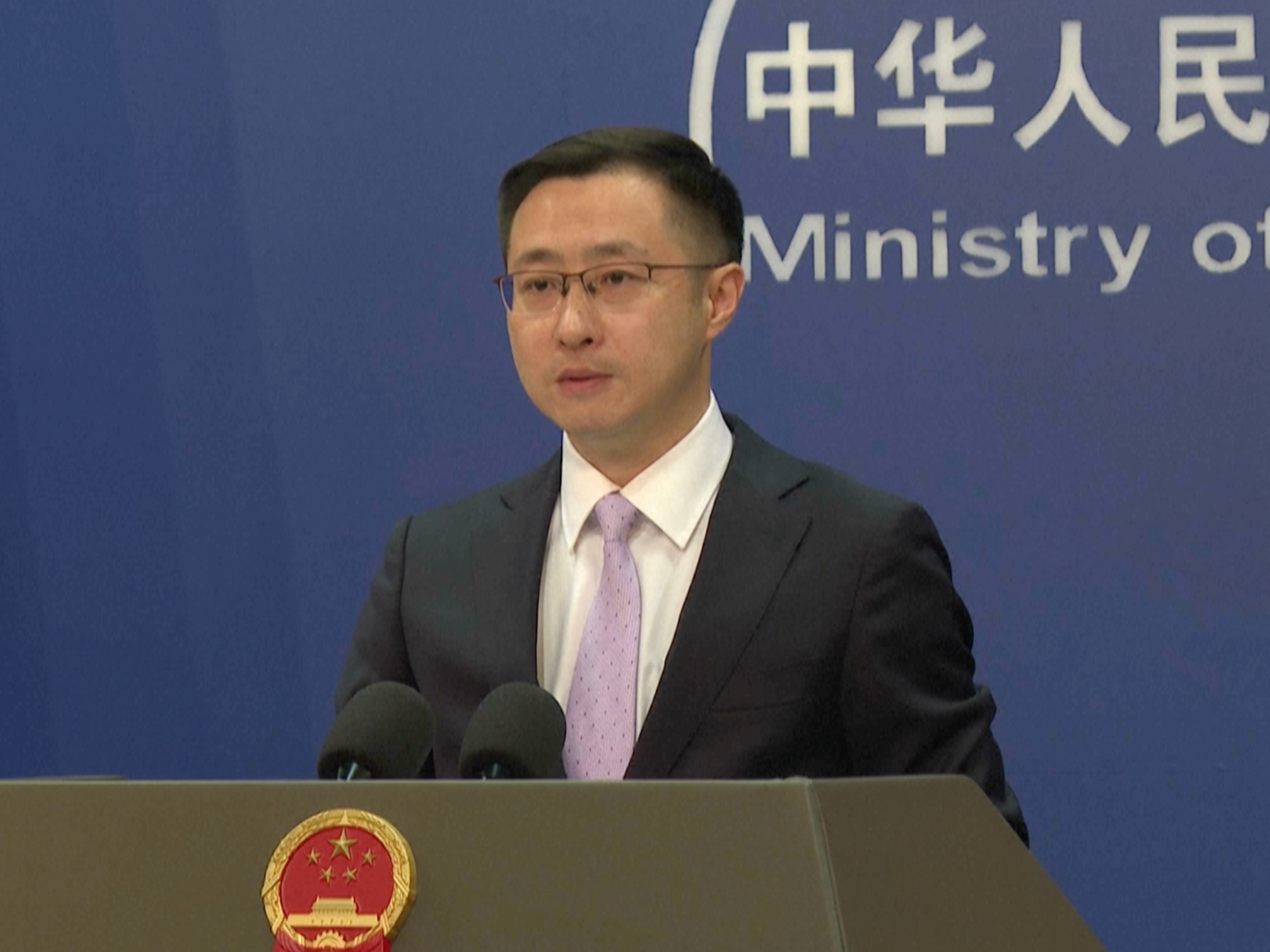
China has announced it will send a round of humanitarian aid to Lebanon and Iran and play an active role in fostering regional peace. The foreign ministry spokesman described Beijing as ‘deeply saddened’ by the humanitarian disaster.
Emmerdale and Coronation Street are missing from the ITV schedules for two days this week, before returning to the channel amid the football coverage – while EastEnders is still on
Soap fans have found their Emmerdale and Coronation Street schedules all over the place(Image: ITV)
With football taking over on ITV1 once more, the soaps are not airing in their usual time slots, or even on their normal days. EastEnders is also being hit by a schedule shake-up this week.
But EastEnders still airs on it’s normal days for this week, while Corrie is not on at all this Wednesday or Thursday. So when are the soaps on next?
For EastEnders fans, you will still get your soap fix on both Wednesday and Thursday. It’s a bit later than normal on BBC One though, airing for 30 minutes at 8:30PM, instead of 7:30PM.
As for Corrie and Emmerdale, fans will not get their next episodes until Friday 19 June. For once, both soaps will be in their usual time slots too.
So Emmerdale fans, your next episode will air on ITV1 at 8PM on Friday, followed by Coronation Street’s next episode at 8:30PM on the same channel. The episodes will also be dropping on ITVX that morning.
Of course with no episodes on Wednesday or Thursday, there will be no ITVX episode to stream on these days. But rest assured for this week, your next soap action is Friday.
Of course next week, it’s chaos again. Friday’s episode teases big moments ahead. On Corrie, Debbie Webster is trapped in a nightmare after the gun drama at the garage.
While she clashes with Tracy Barlow, an incident with a balloon leaves her terrified as she mistakes the noise of it bursting for a gunshot. Betsy Swain has some news for Lisa and Carla, which could tease an exit.
Sam Blakeman’s family rally around him, while he asks to see Roy Cropper. Maria Connor is suspicious of Gary Windass when he reveals he’s booked a holiday for the whole family.
She’s still assuming Gary and Sarah Platt are having an affair. Meanwhile, Kit admires the engagement ring he’s bought for Sarah.
As for Emmerdale, Lewis Barton gets kidnapped after preparing for a holiday with his love interest Vinny Dingle. As Lewis packs a suitcase and goes to make his way to the airport, a van suddenly pulls up near him.
Masked men jump out and Lewis is taken, and next week we find out who is holding him hostage. It’s all part of Kev Townsend’s return storyline, with more to be revealed.
Islamabad, Pakistan – The scoreline read 4-1 to Norway. Iraq had been heavily beaten in their first World Cup match in 40 years. Manchester City striker Erling Haaland scored twice in his World Cup debut as Norway cruised to victory in Group I.
But for Pakistan, the result barely mattered.
Recommended Stories
list of 4 itemsend of list
When Zidane Iqbal crossed the touchline for Iraq at Boston Stadium in Foxborough, Massachusetts, in the 59th minute on Tuesday, history was made. He became the first player of Pakistani heritage to appear in a FIFA World Cup.
Pakistan’s national team has never qualified for the tournament. It sits 198th in FIFA’s rankings. For decades, more than 250 million Pakistanis have watched football’s biggest event from the outside.
That changed, in its own complicated way, through a 23-year-old born in Manchester, England.
Between three nations
Zidane Ammar Iqbal was born on April 27, 2003, to a Pakistani father and an Iraqi mother. His father, Aamar, is from the city of Sahiwal in Punjab while his mother, Ayat, was born in southern Iraq.
Growing up in Manchester, Iqbal was eligible to represent England, Pakistan or Iraq. The decision he eventually made was not a calculated one.
Iraq found him the way many things happen now: through social media.
A large Instagram page tracking Iraqis around the world contacted him to ask whether rumours about his heritage were true.
Word eventually reached the Iraq Football Association, which pursued him through a series of video calls with Iqbal and his parents.
Asked by the sports news outlet The Athletic why he chose Iraq, Iqbal said: “All the love and support from the fans in Iraq and across the world and how hard the FA tried to bring me. When someone shows so much love, it’s only right that you feel it.”
He had never visited Iraq before receiving an under-23 call-up in 2021.
The culture shock, he admitted, was real. But he kept returning. Gradually, a country that had once been only part of his heritage began to feel like home.
The road not taken
Iqbal joined Manchester United’s academy at the age of eight and spent 12 years at the club. In December 2021 at 18, he became the first British South Asian player in nearly two decades to appear for United in the UEFA Champions League.
Iraq’s Zidane Iqbal celebrates scoring in a World Cup qualifying match against Indonesia in October 2025 [File: Reuters]
But regular first-team football never followed. He eventually moved to FC Utrecht in the Dutch Eredivisie for about 1 million euros ($1.1m).
His performances during Iraq’s gruelling 21-match qualification campaign, including a winning goal against Indonesia, kept him central to the team’s plans throughout.
The Pakistan Football Federation (PFF) had monitored his progress. But it was never truly a contest.
Ali Ahsan, editor of FootballPakistan.com, said the structural gap between the two football systems was simply too wide.
“We are struggling to attract players from bigger clubs, our ranking, the lack of a professional set-up. The PFF still has no technical director or dedicated national team recruitment staff,” Ahsan told Al Jazeera.
“For Zidane, he picked Iraq to be able to play major tournaments, which he probably wouldn’t have gotten with Pakistan,” Ahsan said.
“Had he chosen Pakistan, he could have had a big impact on raising Pakistani football’s profile internationally. He was still at United at the time. He could have started a serious conversation about how football needs to be improved, inspired kids to take it more seriously. Iraq is already a well-established team with a dedicated history, structure and fanbase.”
For Iqbal, the path led elsewhere. But for Pakistan, the moment still mattered.
“I hope there are children – whether Asian, Arab, whatever you are – who watch that and think they can do it,” Iqbal told The Athletic. “It’s definitely possible. And if I’ve done it, why can’t they?”
Iraq next face France on Monday before taking on Senegal in their final group match on June 26. Few expect them to advance. But few expected them to be there at all.
Against Norway, Iraq lost. For Pakistan, history was made anyway.
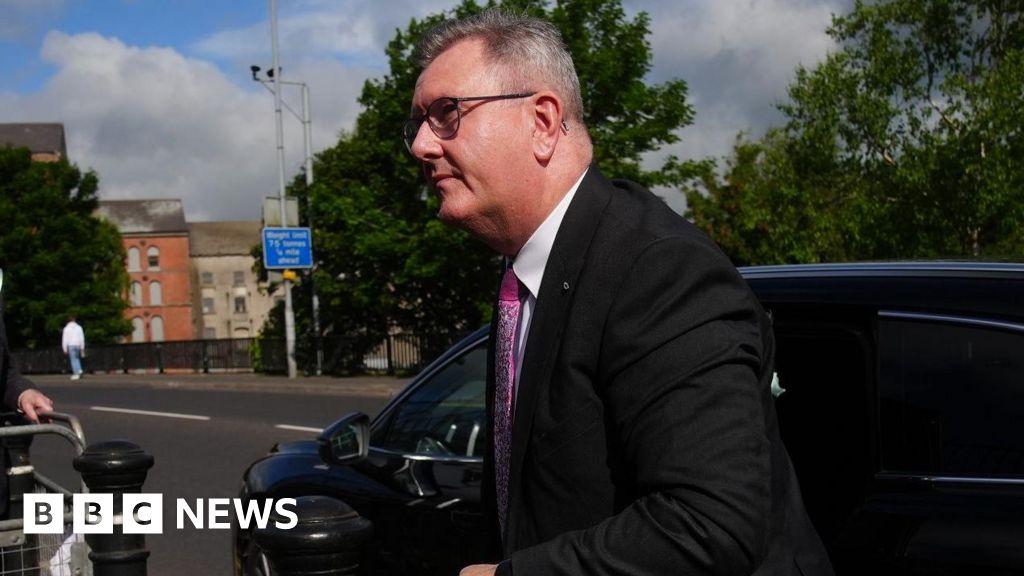
Sir Jeffrey Donaldson, the former Democratic Unionist Party leader, is on trial for 18 sex abuse charges, including one count of rape, all of which he denies.
Following Jeremy Clarkson’s emotional cancer admission, questions are being asked about the future of Clarkson’s Farm, which has already been rocked by behind-the-scenes health battles
Jeremy Clarkson warns Clarkson’s Farm viewers of ‘difficult watch’
The latest episodes of Clarkson’s Farm have taken a devastating turn, with Jeremy Clarkson announcing his shock cancer diagnosis.
The former Top Gear host reduced farm manager Kaleb Cooper to tears as he revealed he’d known about the “aggressive” prostate cancer since May. Following treatment, Clarkson confided in Kaleb that he’d had “10 per cent” of his prostate removed via ultrasound, explaining: “The prostate, 10 per cent of it’s dead. The 10 per cent where the cancer is.”
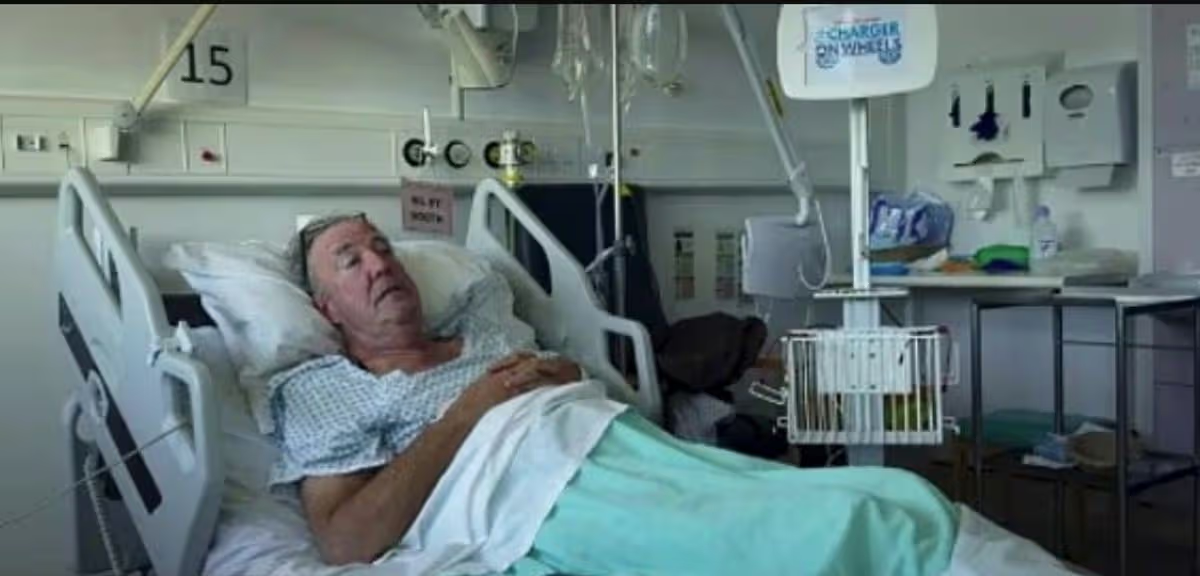
In the season finale, Clarkson addressed viewers from his hospital bed, sharing that there had been complications during treatment. The 66-year-old told fans: “What I wanted to say was if this is all successful, I’ll see you for season six, and if it isn’t, I won’t. Take care, everyone.”
Over on Instagram, ahead of the new episodes dropping, an emotional Clarkson warned followers that a “really, really difficult watch” was in store.
Holding back tears in a candid post, Clarkson said on Tuesday: “Ordinarily, we try to keep the show bucolic and charming and cheerful. But the final two episodes, which drop in the middle of the night tonight, are none of those things really. They’re a difficult watch. They’re really, really, difficult.”
Fans of the hit farming show will know all too well that Clarkson is not the first cast member to share his health battles, with other stars being struck with serious illnesses throughout its five-year run.
Now questions have emerged about the future of Clarkson’s Farm, which has been running since June 2021, with Prime Video yet to issue a formal statement on its continuation.
At present, the show has not been officially recommissioned. In February, Clarkson himself confirmed that, while some recording for the upcoming series had already taken place, some pausing had been required due to the weather.
In his column for The Sunday Times, the presenter wrote: “There’s no filming happening on the farm at the moment. Or farming. It hasn’t stopped raining since the beginning of the year, so I can’t plant anything, and I can’t do anything with my cows either because we are still locked down by TB.”
But planning documents submitted to West Oxfordshire District Council reportedly suggest that season six is in the works. According to The Independent, part of it reads: “Season five will air this year and season six has been commissioned and will air in summer 2027.”
Clarkson’s enthusiasm for the farming show shows no sign of waning. Speaking previously with The Sun, he said: “We’ll definitely do six – Amazon want to (do series six), and I want to. I’ve got a good idea for six. I said I’ll stop doing them when there are no more ideas. But I’ve got two quite good ones, so we’ll do six, and then we’ll see…”
The beloved farm has been plagued by setbacks and personal health struggles. Back in 2024, during the show’s third series, farmhand Gerald Cooper revealed he had prostate cancer.
The fan favourite, known for his distinctive mullet, has since confirmed that he is thankfully cancer-free. Discussing his diagnosis with Prostate Cancer UK, Gerald shared: “It was a shock – but everyone has really supported me.”
He added: “I received tremendous support from family, friends and Prostate Cancer UK – which was also a lifeline. I made it through, and I’m now cancer-free.”
Wanting to do something “joyful” following his recovery, the 77-year-old went on to launch a racehorse syndicate to help raise some all-important awareness of prostate cancer. The horse itself is, of course, named ‘The Mullet’.
Then, in June 2025, it was revealed that castmate Alan Townsend – aka Alan the Builder – was awaiting heart surgery. While carrying out building work on the Farmer’s Dog Pub, Alan confirmed to Clarkson that he had a “quadruple bypass coming.”
When asked whether he had any fears about the procedure, Alan admitted: “Oh, [I’m] frightened to death. I don’t even like thinking about it. That’s why I keep going to work — keep out of the way. They told me to really just take it easy and stay at home. But if you stay, you’ll be worrying to death about it.”
In the latest season, fans were delighted to see Alan back at work after undergoing a gruelling procedure. Opening up to Clarkson about returning to normality, Alan confirmed that the op had been “very painful”, adding, “I don’t want to show you on camera, but it’s a nasty cut.”
Alan shared that he’d been hospitalised because of issues with the arteries in his heart. He explained: “One had collapsed and curled itself up, and the others were about 85-90 per cent blocked. Horrible. I had a bit of a problem with the lungs, I lost 36 per cent of the lungs.”
Coincidentally, Alan and Clarkson had been neighbours at the same hospital, with Clarkson undergoing follow-up heart check-ups at the same time.
The presenter underwent a heart procedure in October 2024, after experiencing a tightness in his chest. Medics revealed he’d been mere days away from a heart attack, in a scare that led to him having a stent fitted.
Opening up about his brush with catastrophe on the first episode of season five, Clarkson blamed his health woes on the pressures involved in launching The Farmer’s Dog. He told Kaleb, “I’m back and not dead. The Grim Reaper will have to wait. It was f***ing close, though.”
Clarkson’s Farm season 5 is on Prime Video
Do you have a story to share? Email me at julia.banim@reachplc.com.
The small constituency of Makerfield in northwest England has found itself in the eye of the storm of British politics with a by-election on Thursday that will not only produce a new member of parliament but could also pave the way for a new prime minister.
The by-election was triggered last month when the previous MP, Josh Simons, stood down to allow Manchester Mayor Andy Burnham to contest the seat. If Burnham wins, he intends to challenge UK Prime Minister Keir Starmer for the leadership of the ruling Labour Party.
Recommended Stories
list of 4 itemsend of list
Starmer is facing mounting pressure to step aside following dismal council election results last month and this week’s resignation of Secretary of State for Defence John Healey and Armed Forces Minister Al Carns over the United Kingdom’s defence budget.
Seeking to derail Burham’s hopes for the Labour leadership, however, is far-right Reform UK candidate Robert Kenyon, whose campaign has been dogged by controversy over alleged sexist and misogynistic social media posts but who remains within striking distance in the polls. Reform came second at the last election in Makerfield, however, and are seen as presenting a real challenge to Labour, which has held the seat since its creation in 1983.
Here’s a closer look at the race, why it matters and how its consequences could extend far beyond Makerfield.
Why is a by-election happening in Makerfield?
Despite winning the 2024 general election in a landslide, Labour’s popularity has tanked over the past two years as support for the far-right, anti-immigration Reform UK has soared. In council elections last month, Reform swept up hundreds of council seats at Labour’s expense. Overall, Labour lost nearly 1,500 local council seats while Reform surged from 100 to about 1,450 seats.
On the right, Labour’s rhetoric on immigration has failed to stem support for Reform UK, which continues to attract both former Conservative voters and sections of Labour’s traditional working-class base – particularly in the north of England. On the left of the party, many voters who feel aggrieved by Starmer’s stance on Israel and cuts to welfare have shifted towards the Green Party.
Now, according to polling group Ipsos, Starmer is the most unpopular prime minister since it began voter surveys in the late 1970s.
As Labour’s internal tensions have grown as a result, Burnham has consistently emerged as one of the party membership’s preferred alternatives to Starmer. Recent polling suggests Starmer would defeat most potential challengers in a leadership contest, with one notable exception: Burnham.
As Mayor of Manchester, Burnham is not an MP and cannot currently stand for leadership of the Labour Party. Earlier this year, he was blocked from standing for Parliament via another by-election in Gorton and Denton, a seat Labour ultimately lost to the Green Party.
As pressure on the prime minister has mounted, however, Labour’s National Executive Committee has been increasingly unwilling to block Burnham from standing as an MP again.
Announcing his resignation as Makerfield MP following the council elections, Simons said Labour was heading towards a divisive leadership contest with “no hope, no energy that anything would change”. He described Makerfield as “where Andy Burnham has lived for 25 years” and said the mayor was “coming home”.
“Labour needs to change and the whole government needs to change,” Simons added.
Who is standing and what are they campaigning on?
Labour: Andy Burnham
Burnham currently serves as the highly popular Mayor of Greater Manchester, having left Westminster after previously serving in several cabinet positions under former Labour prime ministers Tony Blair and Gordon Brown.
As mayor, Burnham has built a reputation as one of Labour’s most recognisable politicians, benefitting from his distance from Westminster while arguing that it could learn from what he calls “Manchesterism” – a blend of pro-business policies designed to attract investment while bringing essential services back under public control.
Known by some supporters as the “King of the North”, Burnham gained national prominence for challenging the Conservative government during the COVID-19 pandemic and for his long-running campaign for justice for the victims of the Hillsborough disaster.
His appeal to Labour’s working-class base in the north of England has led some party members to view him as Labour’s strongest candidate for winning back the so-called “Red Wall” – former industrial constituencies that have increasingly shifted towards Reform UK in the north of England.
Political commentator and journalist Aaron Bastani told Al Jazeera that Burnham’s personal reputation “makes a difference” and that he represents Labour’s best chance against Reform UK.
“A lot of Reform voters actually like him. Many people have a good word to say about him, and he’s been a politician in the area for 25 years.”
But he added that, among some voters, he is still tarred by his “association with Labour as the party of government”.
“Many Reform voters see Labour as the party that backed the Iraq war, and there’s a deep sense of disillusionment with the political establishment … What’s interesting is that some Reform voters were making left-wing criticisms of Burnham, such as the cuts to winter fuel payments and broader dissatisfaction with the government’s direction.”
Reform UK: Robert Kenyon
Hoping to spoil Burnham’s chances is Reform’s Kenyon, affectionately referred to by some members of the UK media as “the plucky plumber” in reference to his profession. He represents a party whose rapid rise and anti-immigrant message has transformed Britain’s political landscape.
Reform UK’s rise has largely been driven by Nigel Farage, the architect of Brexit, whose party has capitalised on the collapse of support for the former ruling Conservative Party. Many big names from the Conservatives have defected to Reform in recent months. That has enabled Reform to attract both traditional right-wing voters and some former Labour supporters, largely on a platform that directs local grievances towards migration.
“For many voters, the proliferation of vape shops and takeaways on high streets has become a shorthand for a sense of decline,” Bastani told Al Jazeera.
“It’s often one of the first things people talk about when discussing immigration and changes to their local area. The concern isn’t really about vape shops themselves – they’re seen as visible symbols of a declining economic model, the loss of local identity and a feeling that places are deteriorating.”
Bastani, however, described Kenyon as “unimpressive”. His campaign has been overshadowed by allegations relating to historic social media activity.
Anti-extremism group HOPE not hate published posts attributed to Kenyon that included COVID-19 conspiracy theories, endorsements of sexualised comments about television presenter Carol Vorderman and remarks about female rugby players.
The group also highlighted comments on an online forum in which Kenyon allegedly described himself as sexist and suggested women make false rape allegations to obtain abortions.
Restore Britain: Rebecca Shepherd
Another factor is Restore Britain, a breakaway far-right party founded by former Reform UK MP Rupert Lowe, who argues that Reform UK has become too mainstream and is no longer hard enough on combating undocumented immigration.
Lowe, a former Reform member, was suspended by Reform UK in March 2025 after publicly criticising party leader Nigel Farage and was later expelled following a series of workplace bullying allegations and complaints from female staff members, which he denies.
Since launching the new party less than four months ago, Restore Britain claims to have attracted more than 96,000 members and 13 councillors, many of them former Reform figures. Should a significant share of those voters ultimately switch from Reform UK, it could dent Reform’s share of the vote just enough to benefit Labour.
Conservative: Michael Winstanley
Winstanley is the former mayor of Wigan, standing as candidate for the former ruling Conservative Party. He was elected as a councillor for the local ward of Orrell and 2000, and served for 16 years.
Conservative leader Kemi Badenoch called Winstanley “an excellent champion of the area having lived in, worked in and represented the local community for years”.
Observers do not expect any great show of Conservative voters at this election, however. In May’s local elections in Wigan, Labour won 42 seats, Reform 25, and the Conservatives got none. And, in the last general election in Makerfield, the Tories came in third – behind Labour and Reform – with just over 10 percent of the vote.
What do the polls say about the candidates?
Polling suggests the contest is effectively a two-horse race between Labour and Reform UK. The largest survey of the campaign, conducted by Opinium for Forward Democracy, indicates Burnham holds a narrow lead.
Based on a mixed-method survey of 543 local residents, Burnham leads Kenyon by five percentage points among voters most likely to cast a ballot. Among those rating themselves at least seven out of 10 likely to vote, Burnham stands on 46 percent compared with Kenyon’s 41 percent.
However, Kenyon’s share may have been damaged by the 7 percent that Shepherd is expected to win in Restore Britain’s first parliamentary outing. The Conservatives are polling at just 2 percent.
Furthermore, while Labour currently leads in the by-election campaign, the constituency’s longer-term political trajectory may ultimately favour Reform UK. When respondents were asked how they would vote in a future general election, Reform UK led with 42 percent compared with Labour’s 34 percent, suggesting that Burnham’s personal appeal may be helping Labour outperform its own national reputation.
In May, Labour lost all eight of its local council seats in Makerfield to Reform.
Tom de Grunwald, founder of Forward Democracy and StopReformUK.Vote, said tactical voting could prove decisive. “If you live in Makerfield and you would normally vote Green, Liberal Democrat, or anyone else, and you don’t want Reform UK to win this seat, the maths is clear: Andy Burnham is the only candidate who can stop them,” he said.
However, Bastani said he is sceptical that many Restore Britain supporters will ultimately return to Reform UK. “A lot of those voters now see Farage as part of the establishment,” he said, adding that Restore Britain could outperform expectations on polling day – which could split the far-right vote and benefit Burnham. While he expects Burnham to win, Bastani said the result should not obscure the rise of Reform.
“I’d be surprised if Burnham didn’t win. But if Reform were running a stronger candidate, this could look very different. If Farage somehow managed to win a seat like this against someone with Burnham’s profile, it would rank among the most significant political achievements of his career.”
Weekly insights and analysis on the latest developments in military technology, strategy, and foreign policy.
There are so many questions to be answered about what led to yesterday’s fatal mishap involving a B-52H bomber at Edwards Air Force Base. The crash was tragic on a level the base, which sits at the center of America’s flight testing ecosystem, has not experienced, at least to our knowledge, for 75 years. The human impact here is just hard to quantify at this time. At the same time, there will be a major developmental impact, too, especially when it comes to work that is being done to modernize the B-52. This is a constellation of programs that are seen as vital to U.S. national security, and are also already running far behind schedule and over budget.
“It was a B-52 that was on initial takeoff, supporting the Radar Modernization Program,” Air Force Col. James Hayes, Deputy Commander of the 412th Test Wing at Edwards, said at a brief press conference yesterday. “It was a local test sortie. It took off, and immediately after takeoff, crashed and burst into flames.”
U.S. Air Force Boeing B-52H Stratofortress strategic bomber crashed at the Edwards Air Force Base in California shortly after take-off.
The crash occured at approx. 11:20am local on Monday.
“Emergency crews immediately responded to the scene and the situation is ongoing. More… pic.twitter.com/u4IRGGjlV2
— Status-6 (War & Military News) (@Archer83Able) June 15, 2026
The 412th is the main unit at Edwards. As noted, the base serves as the Air Force’s main test and evaluation hub.
“After reviewing the footage of the crash, it was deemed that this was an unrecoverable crash and unsurvivable,” Col. Hayes added. The B-52 had “a mixed crew of military, government civilians, and government contractors supporting this test mission.”
“Right now, our thoughts and prayers are with the families of those that lost their loved ones,” he also stressed. “This is a tragedy.”
When reached by TWZ for comment today, Boeing reiterated a brief statement it made yesterday that confirmed two of its employees died in the crash. The company’s full statement is as follows:
“We extend our deepest condolences to the loved ones of the eight crew members who lost their lives in the B-52 crash at Edwards Air Force Base, California. It is with great sadness that we confirm two Boeing employees were among those on board. We are in contact with their families and are offering support.”
A side-by-side look at the existing AN/APQ-166 radar on a B-52, at left, and the new AN/APQ-188 integrated onto one of the bombers, at right. USAF
The RMP is one of many major upgrades planned for the Air Force’s entire fleet of 76 B-52s in the coming years. The bombers are also set to get all-new engines, improved communication suites, and more. The changes will be so substantial inside and out that the designation of the bombers will switch from B-52H to B-52J in the process.
B-52 Future Stratofortress: The Upgrades That Will Transform The B-52H Into The B-52J
“It is too early to tell,” a U.S. Air Force official told TWZ today when asked about potential impacts to the RMP.
We have also reached out to Raytheon.
The publicly stated plan for the RMP has called for the integration of the AN/APQ-188 radar onto two B-52s to support initial testing. Modification of those bombers began in Fiscal Year 2023, and the first example with the new radar touched down at Edwards in December 2025. Air Force budget documents say the second radar test B-52 is expected to be ready some time in Fiscal Year 2026, which began on October 1, 2025. Whether that milestone has already been reached is unclear.
The first B-52 equipped with the new AN/APQ-188 radar arrives at Edwards in December 2025. USAF
It is also not known how many AN/APQ-188s may be available at all at present. “The remaining test-phase radars are expected to be delivered through the summer of 2024,” Raytheon said in a press release back in 2023.
As noted, the RMP has already suffered significant delays. Under the original program schedule, flight testing was expected to start in 2024. The initial goal was for AN/APQ-188-equipped B-52s to begin flying operational sorties in 2027. As it stands now, the Engineering and Manufacturing Development (EMD) phase of the program is expected to run into the middle of 2029, with initial operational capability then coming in 2030.
These delays have also come along with substantial cost growth. In 2021, the estimated price tag for development of the AN/APQ-188 and integration of those radars onto the Air Force’s full fleet of 76 B-52s was pegged at nearly $2.4 billion, according to the Government Accountability Office (GAO). By 2023, the RMP’s costs had risen by 12.6 percent, per GAO. The program was eventually subjected to an extensive legally required review of its requirements and cost targets, which led to a scaling back of planned capabilities, at least initially.
“Part of what we did to control cost is to work at what are the main things that we need on this radar? As you may recall, we’re buying a radar that is largely a F-18 Hornet radar with some small modifications. We did that intentionally because that is what was on the market at the time,” Air Force Lt. Gen. Andrew Gebara, Deputy Chief of Staff for Strategic Deterrence and Nuclear Integration, explained in August 2025. “It would actually cost us more if we asked [a contractor] to design the new radar.”
An AN/APG-79 radar installed on an F/A-18 Hornet. Raytheon
Gebara’s remarks came during a virtual talk hosted by the Air & Space Forces Association’s Mitchell Institute for Aerospace Studies.
“Having said that, it doesn’t mean that we need everything on that radar that the Hornet had on it,” he continued. “We have a certain number of minimum things that we need to do to be able to do our B-52 mission. And so part of the cost saving [review] was looking at what are those things, to make sure that we’re prioritizing precious dollars on things that we need.”
Gebara said at that time that the revised RMP plan still kept the door open for “opportunities for growth in the future, if it comes to that.”
The AN/APQ-188 is still set to provide essential new capabilities, in part just by being a more modern AESA design. As TWZ has written in the past:
“In general, AESA radars offer greater range, fidelity, and resistance to countermeasures, as well as the ability to provide better overall general situational awareness, compared to mechanically scanned types. Increasingly advanced AESAs bring additional capabilities, including electronic warfare and communications support.”
“For the B-52, any new multi-mode AESA will improve the bomber’s target acquisition and identification capabilities, including when used together with targeting pods available for the bombers now. New radars for the bombers will also be helpful when it comes to guiding networked weapons over long distances to their targets and could provide a secondary ground moving target indicator (GMTI) and synthetic aperture radar surveillance capabilities. The radar upgrade could help defend B-52s from air-to-air threats, including through improved detection of incoming hostile aircraft.”
A B-52 bomber with its nose open for maintenance. USAF
“Boeing has already looked at some schedule improvement that we’ve seen,” Air Force Gen. Dale White, the service’s Direct Reporting Portfolio Manager for Critical Major Weapon Systems, also told TWZ and others more recently at a roundtable at the Air & Space Forces Association’s (AFA) annual Warfare Symposium in February. White was speaking at the time collectively about progress on the RMP and the Commercial Engine Replacement Program (CERP) for the B-52 fleet.
At that time, Gen. White also highlighted how the relatively small size of the B-52 fleet, combined with the operational demands placed on it, had created additional challenges for modernizing the bombers. The B-52s are in high demand to support conventional combat operations, as underscored by their heavy use in the recent conflict with Iran. A portion of the fleet is also a key element of the air leg of America’s nuclear deterrent triad, which imposes additional hard operational requirements for available aircraft.
USAF B-52 taking off from England on an Iran strike mission yesterday, carrying a load of 500-pound GPS-guided JDAM bombs. pic.twitter.com/23RGpCe8GB
“The challenge with B-52 that I think everybody forgets, it’s such a small fleet that has such a tremendous requirement in terms of readiness,” White said. “You’ve got to have a certain number on the ramp. That’s a requirement.”
With the B-52 fleet expected to fly into the 2050s, it is extremely likely that the Air Force will move to regenerate a bomber from storage to replace the one lost yesterday, just to meet general operational demands. That is typically a weeks-long process, at best, for an aircraft of this type and size.
A B-52H bomber nicknamed “Wise Guy” seen at Tinker Air Force Base in Oklahoma in the process of being regenerated to service back in 2020. USAF
With CERP and the other modernization efforts underway, there is high demand for resources to support B-52 test and evaluation work overall. This is reflected in a nearly tenfold year-over-year increase in the planned budgeting for B-52 test aircraft asset support at Edwards. The Air Force received just over $1.5 million to help pay for “the test aircraft, manpower, Bomber Modular Data Acquisition System (BMDAS), and facilities at the Air Force Test Center” in Fiscal Year 2026, according to official budget documents. The service is now seeking nearly $11 million in this same line item for the next fiscal cycle.
In the meantime, as mentioned, the Air Force has rightfully made clear that its immediate priorities following yesterday’s B-52 crash are engaging with the families of those who perished and working on the investigation, which could take months to complete. Edwards has also at least shut down flight operations today, primarily due to the state of the runway following the mishap.
The full scale and scope of the impacts to the RMP from yesterday’s loss remain to be seen.
The programme has received 508 complaints about the show that aired on June 9, the watchdog reported.
In a statement sent to The Daily Mirror, Ofcom confirmed the “complaints related to comments made during a discussion about the Scottish World Cup Bank Holiday”.
Good Morning Britain that day had seen Ed Balls and co-host Susanna discuss the news that Scotland would receive a Bank Holiday for qualifying for the World Cup.
Ed had said on the ITV daytime show: “This morning, in our five o’clock meeting, Susanna said, ‘I can’t believe this, the game’s on the Sunday morning, and they get bank holiday [more than] 24 hours later.’
“I said, ‘What?’ I couldn’t believe it. It never occurred to me that that was going on.”
Responding to viewers’ reactions, Susanna said, “It’s really outrageous. I mean, how long does it take Scots to get over the fact that they’ve played their first match?”
Viewers had been left fuming after hearing, with Susanna later issuing an apology.
One had seethed: “So many anti-Scottish comments from your presenters and guests this morning. Do you realise your show is shown on Scottish television? Unfortunately.”
Another blasted: “Extremely anti-Scottish. Not everyone is getting it, and not everyone wants it. I don’t even like football, but thought your comments were uncalled for!!!”
Yet another seething viewer said, “Not everyone is getting it. Jumping on the anti-Scotland bandwagon, I see.”
ITV also released a statement following the backlash, which read, as per The National Scot: “The editorial team feel discussion of the fact that some football fans would be drinking alcohol while watching the match is something that would be referenced in the discussion of any home nation’s participation in an international tournament.
“No sleight was intended toward Scottish fans in particular – it was more a reflection of football watching culture in the UK.”
It went on: “We’re aware this coverage has been distorted on social media by brief edited clips that do not represent the full four-minute discussion. Having reviewed the full segments, our feeling is that the issue of drinking and football would have been raised in a discussion of any home nation having an extra day off work following a game. We do note, however, that such discussions can play into national stereotypes. This was not the intention, and in no way was the focus of the discussion.”
The publication noted that ITV also said that the Good Morning Britain editorial team had taken on board “concerns about Ofcom’s rules relating to generally accepted standards, due accuracy and due impartiality, but taking into account the light-hearted nature of the news review discussion and the discussion that followed later in the programme, consider that the programme was in line with Ofcom’s standards”.
Susanna later issued an apology, admitting she had left fans “irate” and being accused of “jealousy”.
After welcoming two Scottish broadcasters on the programme earlier this week, who questioned Susanna on her comments, the former BBC Breakfast star said: “My Scottish ancestors would be turning in their graves, I can only apologise.
“Let me say, it’s outrageous that not everyone in Scotland has got today off as a bank holiday.”
Good Morning Britain airs weekdays from 6am on ITV1 and ITVX.