


News Desk

Cruz Beckham cops a cheeky feel of girlfriend Jackie’s boob in naughty mirror selfie

CRUZ Beckham and girlfriend Jackie Apostel appear to be firmly in the honeymoon phase of their relationship, judging by a cheeky selfie shared online.

The 21-year-old couldn’t keep his hands to himself as the couple posed for a bathroom mirror selfie, with Jackie smiling for the camera.

Jackie shared the playful snap as the couple got ready for a night out Credit: cruzbeckham/instagram
Cruz and Jackie appeared as loved-up as ever in the photo Credit: cruzbeckham/instagram

Cruz shared the snap to his Instagram as the pair got ready for a glam night out at London Fashion Week.

The son of David and Victoria Beckham has been dating German-Brazilian singer-songwriter and producer Jackie, 30, since 2024.

Jackie previously revealed they met when their managers put them in a studio to write songs together.

The model said their work turned into a friendship before it became anything romantic and that she was Cruz’s “biggest fan forever”.

CRUZ IN CONTROL

Why Cruz Beckham’s success is bitter pill to swallow for brother Brooklyn


heartfelt words

Cruz Beckham shares gushing post to family as Brooklyn supports Nicola

The couple met after their managers put them in a studio to write music together Credit: Getty
Cruz and Jackie joined David, Victoria and the family for a group photo Credit: Instagram/victoriabeckham

The loved-up snap comes after Cruz released his debut EP, Wear & Tear, last month.

He also performed with his band The Breakers at Reading Festival, with parents David and Victoria watching from the side of the stage.

The EP features a track called Wannabe, the same title as the song that launched mum Victoria, 52, and the Spice Girls to fame three decades ago.

But it is another track, Loneliest Boy, that has got fans talking amid the Beckhams’ rift with Cruz’s older brother Brooklyn.

In the song, Cruz candidly sings about a boy whose distance from his family is “breaking Mama’s heart”.

Brooklyn became estranged from his family following tensions that escalated around the time of his wedding to Nicola Peltz in 2022.

Source link

Brighton beat Arsenal 3-0 as Man City top Premier League without playing | Football

Arsenal in shock 3-0 loss at Brighton to lose top spot in the Premier League on goal difference to Manchester City.

Arsenal slumped to a first loss in their Premier League title defence – and it was a heavy one at Brighton.

After four straight wins for the champions, the 3-0 defeat at the Amex Stadium on Saturday came out of nowhere. Conceding the third goal from a corner — typically an area of strength for Arsenal – summed up an unusually sloppy performance from Mikel Arteta’s team.

Pascal Gross and Charalampos Kostoulas scored in the first half with shots from outside the penalty area, before Chema Andres completed the win with a header at the back post from Gross’s corner.

The victory will have been especially sweet for Brighton manager Fabian Hurzeler, who said “only one team tried to play football” after his team’s narrow home loss to Arsenal last season.

Arsenal have often struggled against Brighton, which was the last team to inflict such a heavy defeat on the Gunners in any competition — winning 3-0 at Emirates Stadium in May 2023.

It completed a brilliant week for Brighton, after beating Coventry 5-0 in the league last weekend and coming from two goals down in midweek to beat Manchester United 3-2 away in the English League Cup.

Manchester City — the other team to win their first four games — can now move three points clear in the standings by beating Sunderland on Sunday.

Source link

Djibouti refugee crisis worsens as more than 2,700 Yemenis arrive | Al Jazeera News

More than 2,700 Yemenis have fled to Djibouti, many making dangerous sea crossings to escape the conflict. Al Jazeera’s Hasan Razzaq spoke with some of those who have arrived in the northern town of Obock, where they are seeking shelter and assistance.

Source link

Strictly Come Dancing stars tragically no longer with us as new series begins

Since the Strictly Come Dancing launched on the BBC in 2004 a host of famous faces have tried on a pair of dancing shoes and kept viewers entertained for weeks, but the show has not been without its fair share of tragedy

Strictly Come Dancing has graced our screens for over 20 years now – and sadly, we’ve bid farewell to some of its stars along the way.

The dancing is, undoubtedly, a crucial part of the show, but the charm of the BBC programme also lies in delving into the personal lives and relationships of those participating.

Each week, fans gain an insight into their daily routines and the show casts a new light on both well-known and lesser-known celebrities. Heartbreakingly, over the two decades the programme has been on air, some of its celebrity competitors, staff and even presenters are no longer with us.

Ann Widdecombe

Former Tory MP Ann Widdecombe was found dead at her home in Haytor, Devon, in July. More than 100 friends, family and colleagues attended her funeral the following month.

After making a name for herself in the world of politics, Ann had been a surprise entry to the BBC’s Strictly Come Dancing in 2010 where she was partnered with Anton Du Beke. Despite their low scores, the duo became fan favourites making it all the way to quarter-finals.

Speaking to the Mirror ahead of the Strictly launch this weekend, her old sparring partner Craig Revel Horwood praised her courage.

“She was an amazing human being, and she was brave; brave enough to come on Strictly and give me what for.

“And then we ended up working together really closely for three years after and became good friends, and we’re still in contact, to this day. Well, we were in contact to this very day. It’s such a terrible thing that happened.”

Len Goodman

Just as much a legend as Sir Bruce Forsyth, Len Goodman was a cherished member of the BBC show and head judge from the show’s start until 2016. Len left fans heartbroken after stepping down from the show after 12 years, stating at the time that he didn’t want people to tire of him.

“In 2004, I was asked to take part in a brand new BBC Saturday night show and who would have thought me, old Len Goodman, would still be part of this amazing series more than 10 years on, he said at the time, ” he said at the time, “This adventure began when I was 60 and now that I’ve reached my 70s, I’ve decided after this year it’s time to hand the role of Head Judge to someone else.

“It is an honour being part of the wonderful Strictly Come Dancing family and I’m looking forward to my last series very much and to whatever comes next.”

In April 2023, his family confirmed that he had died following a bone cancer diagnosis. He had been living in a hospice in Tunbridge Wells in Kent prior to his death. Tributes flooded in for Len, with his Strictly colleagues sharing their love of his brilliant humour and kindness. Claudia Winkleman tweeted: “I’m so sad about Len. He was one of a kind, a brilliant and kind man. Full of twinkle, warmth and wit. Sending all love to his family and friends.”

Meanwhile, Craig Revel Horwood wrote: “I’ve just woken up to the sad news that my gorgeous colleague and dear friend Len Goodman has passed away. My heart and love go out to his lovely Sue and family. Len Goody Goodman is what I always called him and “It’s a ten from Len & seveeeeern”will live with me forever. RIP Len.”

Robin Windsor

Professional dancer Robin Windsor’s death in February 2024 left the dancing world devastated and in mourning, with his former co-stars and celebrity partners “broken”.

The performer featured on the programme from 2010 until 2013, but was compelled to withdraw from the show due to a back injury and was replaced by Trent Whiddon. He later revealed he had “no choice” in the matter.

After speaking openly about his battles with mental health and finances, he established his own company offering corporate motivational speaking services and corporate team building.

Robin reflected back in 2022: “Leaving Strictly wasn’t my choice. I had a horrible back operation and they decided that they didn’t want to ask me back the next year. It was probably for health and safety reasons, in case something happened, but I was physically fit.”

Sadly, two years later in 2024, Robin’s death was announced. When the news of his passing first broke, details such as the date or the cause of his death were not known. However, it has since been reported that the popular star was found dead inside a London hotel, after previously confiding in a friend about a “troubling incident” that took place over New Year.

Vincent Simone, who had known Robin since he was 17, revealed that a close friend of the dancer started frantically calling his mates when he went missing. But tragically, they were too late, and Robin, 44, was found dead in a London hotel room.

Vincent, who had plans to collaborate with Robin, shared how his friend’s loss has left him devastated. He told The Mirror: “The first thing I thought of when I opened my eyes this morning was Robin. He was the best man I ever met.

“Robin has had these moments in the past – it was an ongoing problem. He would detach himself from people for two or three days. Then he would come back to the world, to reality. But this time, he didn’t come back.”

Caroline Flack

As soon as Love Island host Caroline Flack stepped onto the dance floor, she dazzled everyone. Paired with professional dancer Pasha Kovalev, she triumphed in 2014 by impressing viewers with a series of stunning performances.

But it’s her beautiful Rhumba-inspired showdance to Robbie Williams’ Angels that is forever etched into fans’ memories. Caroline, attached to flowing pieces of fabric, performed a balletic routine with Pasha Kovalev that led them to victory on the show.

Tragically, Caroline took her own life at the age of 40 in 2020.

Lynda Bellingham

Initially known for her comforting ‘Oxo mum’ voice, Lynda became a household name after starring in All Creatures Great and Small, Doctor Who and Second Thoughts, among others.

In 2007, she joined the Loose Women panel and in 2009, she participated in Strictly with Darren Bennett. The duo were eliminated in week four after their Foxtrot to Calendar Girl failed to impress.

Sadly, Lynda was diagnosed with cancer in 2013 and passed away just over a year later at the age of 66.

Paul Daniels

Paul, the late husband of Debbie McGee, competed in Strictly seven years before her, in 2010. The magician was partnered with Ola Jordan, but they were unfortunately the second couple to be eliminated from the competition.

He passed away in 2016 at the age of 77. Debbie, who appeared on Strictly a year later, revealed to Hello magazine that performing on the show helped her rebuild her life after the loss of Paul.

“I had the best partner in Giovanni, and I was back in show business again,” she said, “People knew who I was before, but I was still the magician’s assistant. Since Strictly I’ve been Debbie McGee in my own right.

Neale Pirie

The Strictly family was left heartbroken in 2015 following the sudden death of hair stylist Neale Pirie. Neale, 42, had contacted a family member about chest pains, but medics who raced to his Leicester residence were unable to save him

Strictly’s head makeup artist Lisa Armstrong tweeted at the time: “Utterly devastated and heartbroken over the loss of my sidekick and dear friend.” Meanwhile, Karen Hauer, whose hair Neale had styled for her wedding to Kevin Clifton, posted: “Absolutely heartbroken at the loss of our beautiful friend @Nealepirie. I can’t believe your gone. RIP.

Gary Rhodes

TV chef Gary Rhodes left his kitchen behind to take on the ballroom back in 2008, where he was paired with professional dancer Karen Hardy. The duo became the third couple to leave the competition, following Phil Daniels and Gillian Taylforth

.Gary, who received an OBE in 2006, was a renowned restaurateur who had featured on numerous television programmes including MasterChef and Hell’s Kitchen. His passing at 59 sent shockwaves through the culinary community in November 2019.

The chef had fallen ill suddenly at his Dubai residence during downtime whilst recording a new television programme. His family later revealed that his death resulted from a fatal brain haemorrhage after he collapsed.

Gary’s wife of three decades, Jennie Rhodes, was by his side in his final moments as he succumbed to a subdural haematoma following his emergency hospital admission.

Dave Myers

Dave Myers was a fan favourite on Strictly during his time on the show in 2013. The Hairy Bikers star was partnered with Karen Hauer on the show and they made it all the way to week seven.

Sadly, Dave died in February 2024 after a battle with cancer. In a heartbreaking tribute, his co-star Si King wrote: “I’m afraid I bear some sad news. Most of you will know Dave has been fighting cancer for the past couple of years.

“All who knew Dave are devastated at his passing. His beloved wife brought him such happiness as did her children, Iza and Sergiu who Dave loved like his own. Personally, I am not sure I can put into words on how I feel at the moment.

“My best friend is on a journey that for now, I can’t follow. I will miss him every day and the bond and friendship we shared over half a lifetime. I wish you God’s speed brother; you are and will remain a beacon in this world. See you on the other side. Love ya.”

Jason Wood

Comedian Jason Wood holds the dubious honour of being the first contestant to be eliminated from Strictly Come Dancing back in 2004. The funnyman was partnered with professional dancer Kylie Jones, but their performances failed to win over the judges and they were sent packing in the first week.

The inaugural series had nearly half the number of celebrities compared to the current format, with the show running for a mere seven weeks from May to July. Following its massive popularity among viewers, the show returned for a second series just three months later.

Sadly, Jason passed away in his sleep six years after his Strictly stint, at the tender age of 38.

Willie Thorne

Snooker ace Willie Thorne discovered that dancing wasn’t as natural to him as his beloved sport when he took part in the 2007 series alongside Erin Boag. The duo were the third couple to be eliminated, following Brian Capron and Stephanie Beacham, after their Tango to Lisandro Adrover’s Obertura.

Willie was diagnosed with prostate cancer in June 2015 following routine blood tests ordered by a psychiatrist and underwent treatment. In March 2020, he announced that he had been diagnosed with leukaemia and in June 2020, he was placed in an induced coma after suffering respiratory failure in a Spanish hospital.

A day later, his carer confirmed that he had gone into septic shock and was not responding to treatment. He passed away aged 66 after his life support was withdrawn.

Bill Turnbull

After becoming part of the BBC Breakfast team in 2001 alongside Sian Williams, Sarah Montague, Mishal Husain and Susanna Reid, he stunned viewers by entering the third series of Strictly in 2005.

Teamed up with professional dancer Karen Hardy, the duo became the seventh couple to be eliminated despite impressing both judges and the public. After the programme, Bill went on to enjoy a thriving television career.

But in March 2018, he disclosed that he had been diagnosed with prostate cancer the year before.He passed away at his Suffolk home on August 31 2022, at just 66 years old. Bill’s devastated wife Sarah, known as Sesi, had issued a statement that was read aloud on BBC Breakfast.

Sir Bruce Forsyth

Recognised as Mr Strictly himself, Sir Bruce Forsyth served as the soul of the BBC dance competition, with much of its initial triumph credited to his role as an extraordinary, affectionate presenter.

The cherished British entertainer enjoyed an enormous career stretching over more than 70 years, during which he fronted numerous game shows including The Generation Game, The Price Is Right and Play Your Cards Right. Guinness World Records also acknowledged him in 2012 as holding the longest television career for a male entertainer.

Co-hosting Strictly alongside Tess Daly from 2004 to 2012, he became famous for his exceptional improvisation skills and informing some of the competition’s weaker dancers that they were his “favourite”.

Following his departure from the programme, he remained at home with spouse Wilnelia Merced, who looked after him whilst he battled poor health during his final years.

His final television appearance came in 2015 on Strictly Children in Need Special, and he subsequently had an operation for his abdominal aortic aneurysm, forcing him to withdraw from presenting the Christmas special. He was hospitalised several more occasions throughout the years with chest infections and passed away from bronchial pneumonia at his Wentworth Estate residence on August 18 2017.

Like this story? For more of the latest showbiz news and gossip, follow Mirror Celebs on TikTok, Snapchat, Instagram, Twitter, Facebook, YouTube and Threads.



Source link

Jerusalem Daily: Gaza’s children return to schools | Newsfeed

It’s the first official day back to school for Gaza’s children, but whether they’ll make it home alive is their parents’ biggest concern. Meanwhile, Israeli settlers and soldiers continue pogroms across the occupied West Bank.

Al Jazeera’s Marah Rayan has the latest.

Source link

CNN and MS NOW denied White House access after Trump ban

CNN and MS NOW journalists have been denied access to the White House after US President Donald Trump announced he was banning the outlets.

An MS NOW reporter and a photographer tried entering the White House grounds on Saturday morning, but their badges would not scan and an officer confiscated them, the outlet reported.

CNN also said Saturday morning that one of its reporters was denied access and had her badge seized.

Trump said on Friday he was barring MS NOW, CNN, and Politico – three major US media outlets – from the White House, accusing them of writing “fiction or lies” about his administration. Press freedom advocates called the move “unconstitutional”.

“The officer asked me to hand over my badge. He said that it was disabled,” MS NOW reporter Akayla Gardner said. “I asked why I was not able to get inside. He said it was above him.”

Gardner added that while her and her colleague’s badges were disabled, an MS NOW producer was still able to scan her badge to get in, though she was not given an explanation as to why the producer’s badge still worked.

CNN reporter Betsy Klein said a Secret Service agent told her her badge had been deactivated.

An MS NOW spokesperson said in a statement that the White House “belongs to the American people and the decisions made inside are funded by our tax dollars”.

“MS NOW intends to take any and all steps necessary to defend our First Amendment rights and the essential role of independent journalism in our democracy.”

It was not clear whether Politico reporter were at the White House on Saturday. Following Trump’s ban, all three outlets have spoken out against the decision, accusing Trump of violating their constitutional rights to free speech and freedom of the press.

“We have a right under the US Constitution to do our reporting without hindrance or interference from the government and this ban is an illegal assault on this fundamental right,” CNN said.

In his announcement, Trump did not mention specific stories or reporting from the three outlets that prompted the move, but later said “it’s really just cumulative stories over the last few years”.

Trump added that there “may be others to join them”, but has not given a directive banning additional news outlets. When later asked by a reporter what he meant by others to come, Trump responded: “Others to come in terms of fake news? Well, you know, the New York Times is fake news, the Washington Post is fake news.”

Several groups dedicated to the freedom of the press have called out Trump’s White House ban as illegal and unconstitutional.

A major group that provides legal services to the media – the Reporters Committee for Freedom of the Press – said it expected Trump’s ban to be struck down quickly by the courts because it was “flatly unconstitutional”.

“The First Amendment is clear that once the White House invites in some journalists, it can’t ban others because it doesn’t like their reporting,” said Bruce Brown, president of the Reporters Committee for Freedom of the Press, which provides legal services to the media.

It’s the latest in a series of moves by the administration to target media outlets Trump says are critical of him, including legal action against US and international outlets like The New York Times, The Wall Street Journal, and the BBC.

Some of the lawsuits have resulted in media organisations agreeing to pay multimillion dollar settlements. Trump’s lawsuit against the BBC is ongoing.

Additional reporting from Bernd Debusmann Jr and Max Matza.

Source link

Anthony Tommasini discusses Marian Anderson biography ‘Voice of a Century’

Born into an African American family with a grim history of enslavement, Marian Anderson was determined from an early age to master the art of singing for the concert hall. A contralto of great range and warmth, Anderson’s abundant gifts as a performer of spirituals, arias and German Leider brought her global fame even as she endured the indignities of racial discrimination at home. Her Easter Sunday performance at the Lincoln Memorial in 1939 in front of 75,000 spectators remains a touchstone of defiance in an age of racial violence.

Anthony Tommasini’s excellent biography of Anderson, “Voice of A Century,” reclaims the singer as a great artist who only embraced her power as a symbol of racial equality much later in life. I spoke with Tommasini about Anderson, Franz Schubert and Albert Einstein.

You’re reading Book Club

An exclusive look at what we’re reading, book club events and our latest author interviews.

✍️ Author Chat

Anthony Tommasini is the author of a new biography on Marian Anderson

Anthony Tommasini’s biography reclaims Anderson as a great artist who embraced her power as a symbol of racial equality later in life.

(Ahna Tessler Photography)

I feel like people know Marian Anderson in the abstract, but they regard her as a symbol rather than an artist. And among the virtues of your book is that you reestablish Anderson’s legacy as a great singer and performer.

She was a contralto, which is the lowest female vocal register. But that register had such resonance, and she had complete control over it. She also had enormous range; the uncanny, beautiful thing about Anderson’s voice is that when she started ascending even into the soprano sphere, she held those notes so beautifully. They were emanating from below, grounded in that low voice. It made for a mesmerizing sound. I’ve made a playlist to accompany the book.

She embodied this kind of fierce dignity and grace in the face of racial discrimination. But as you point out, she was reluctant to make herself a symbol of the civil rights movement, preferring to let audiences focus on her artistry.

In 1939, she was banned from performing in Washington’s Constitution Hall because of her race, and her manager, with help from Eleanor Roosevelt, arranged a performance in front of the Lincoln Memorial on Easter Sunday. Yet, the night before the performance, she was trying to get out of it. She felt the whole affair had turned into a civil rights demonstration. When it came time to write her memoirs in 1956, she wanted to excise the event from the book. She felt that what she could do is be an example of excellence and possibility for aspiring black artists.

She did play to segregated audiences, even long after she had become a national star.

[This type of segregated performance featured what] was called vertical seating. But she refused to forsake her career, which she had worked so hard to attain, and so she played these segregated shows. Eventually, there was a performance in Virginia which was boycotted, and that sort of broke the trend. She then performed in front of an integrated audience in Florida.

There is an encounter with Albert Einstein, of all people, who counsels her to take a stand against these racist booking policies.

In 1937, she showed up for a concert in Princeton, New Jersey, only to discover she was being refused a room at the Nassau Inn. As it turns out, she had a friend in Princeton who had seen her at Carnegie Hall and had meekly gone backstage to meet her. This was Albert Einstein, who was teaching at Princeton University at the time, and who offered to put Anderson up for the night at his house. He really pressed her on being more outspoken on racial equality.

Anderson played Europe multiple times in the 1930s, right before the rise of Hitler and the Third Reich. As you write, German audiences were blown away by Anderson’s mastery of their music, specifically Franz Schubert’s Lieder, or art songs, which were among Anderson’s most beloved repertoire.

So extraordinary, right? She also made two tours of the Soviet Union during that time. They went crazy for her in the Scandinavian countries, as well. But for the German audiences who are so nationalistic about their Leider, it was confusing. They couldn’t imagine how a Black American woman could sing their music so beautifully.

Anderson was the first Black soloist to perform at the Metropolitan Opera in New York, in Verdi’s opera Un ballo in maschera.

That was really a huge risk and a huge leap for her. She wasn’t a trained opera singer, and she had to dig deep into that material. She was already 58 by that time. There is a radio recording of the performance. There’s this dignity, like she’s calling upon this power. It’s exhausting and it’s draining, but it’s also exhilarating.

This Q&A was edited for length and clarity.

📰 The Week(s) in Books

Book jacket for "Body Language" by Meg Howrey

Book jacket for “Body Language” by Meg Howrey

(Los Angeles Times illustration; jacket from Doubleday)

Marlon James has published his highly anticipated new novel “The Disappearers,” a sprawling story about gay culture in ’80s Jamaica, and Mark Athitakis is quite taken with it. “James is … determined to unwind the cliches of gay fiction: the tragic victim, the heartwarming gestures of solidarity, the blunt porniness,” he writes. “Mere survival will have to be enough for most of these characters; the sense of fear is pervasive, but so is a determination to work through it.”

What’s it like to be the primary dissenting liberal voice on Fox News? Stephen Battaglio found out when he talked to Jesssica Tarlov about her hybrid memoir and self-help book “I Disagree.” “I have a good amount of shyness to me,” she tells Battaglio. “I have a lot of imposter syndrome. I’m constantly in wonder that I ended up getting to do this and that hopefully, am the right person to do it.”

Meg Howrey’s fifth novel, “Body Language,” a twisted family saga, is “smart, sardonic and powerful,” according to Meredith Maran.

Finally, Emily Wilson, the classicist who has been a lightning rod of controversy over her disparaging remarks in regard to the film version of “The Odyssey,” is going to translate Homer’s epic for a second time, reports Emily St. Martin.

📖 Bookstore Faves

The Hammer Museum's gift shop is one of the best art book shops in L.A.

The Hammer Museum’s gift shop is one of the best art book shops in L.A.

(Eric Petschek)

Sure, the Hammer Museum’s gift shop stocks the requisite art-themed mugs, tea towels and tchotchkes, but it’s also one of the best art book shops in L.A. Inside the sleekly designed Hammer Store is a vast inventory of monographs, children’s books and critical texts about modern and contemporary art. In an email exchange, store managers Sara Beattie and Brooke Berlin tell us what museumgoers are buying right now.

Hammer’s store is really the best museum bookshop in L.A. How do you decide what to put on the shelves?

We’re an eclectic bunch of book nerds and love the written word. We start by looking at upcoming programming, exhibitions and the season, and we buy accordingly. And we have a great team that gives us suggestions. We’ve learned to trust our instincts. The Hammer is an experimental institution, and we approach our buying in that spirit.

Do you have patrons that are not necessarily there to check out museum exhibits?

Of course! We’re not only a museum, but a cultural center, which means there’s always something happening — like mindful meditation on Thursdays, or family programming on weekends, or people coming in just to enjoy a meal at Lulu.

What kinds of books tend to do well for you?

Art monographs, especially on contemporary or Los Angeles artists; books about living more conscientiously; and everyone loves a children’s book (even if it’s just to heal your inner child). We love finding unique books that can’t be found elsewhere. Whenever we can, we work with small presses and book distributors. They often make books that can only fully be enjoyed or understood by seeing them in person.

Is there any particular title that is presently selling well?

“Mindfulness in the Garden: Zen Tools for Digging in the Dirt” by Zachiah Murray; Sanzu Wada’s “Vol. 1 Dictionary for Color Combinations”; “The Hippest Trip in America: By Land, Air and Sea” by Alake Shilling.

Why do we still enjoy art books, when we can look at millions of paintings and sculptures on the internet?

Why go outside if you can look through a window? There is a lot of talk of people returning to the analog or physical media, and that includes renewed interest in physical books. BookTok is huge. People love talking about books and showing off their special deluxe book editions on TikTok. Art books by their very nature are deluxe, image filled and thoughtfully designed. A well-produced book is an art object in itself. Nothing beats the experience of paging through a beautiful book. That experience can’t be replicated on a screen.

The Hammer Museum store is located at 10899 Wilshire Blvd., Los Angeles.

Source link

Aston Villa compound Tottenham’s misery despite Spurs ending goal drought | Football

Unai Emery’s side get first league win of season with goals from Johan Manzambi, Nicolas Jackson and Emi Buendia.

48he end to Tottenham’s Premier League goal drought came too late as Aston Villa won 3-2 in north London to compound a miserable start for Roberto De Zerbi’s men.

Spurs remain without a league win this season and only netted their first goals of the campaign after the visitors had surged into a 3-0 lead on Saturday.

Villa had also struggled for goals themselves since the side that won the Europa League last season was torn apart during the transfer window.

But new signings Johan Manzambi and Nicolas Jackson struck either side of half-time to give Unai Emery’s new-look team their first league win before Emi Buendia’s wonder strike.

Even Tottenham’s first late consolation needed the aid of a Villa deflection when Conor Gallagher’s effort went in off Matty Cash before Jan Paul van Hecke headed home in stoppage time.

Spurs splashed out more than 300 million pounds ($400m) on new players to try and avoid a repeat of the battle for survival they endured last season.

Yet there remains little return on that investment.

In keeping with recent performances, Spurs started brightly before fizzling out.

Twice in a matter of seconds, Savio was kept out by Suzuki before the Japanese goalkeeper spread himself to turn behind Archie Gray’s powerful strike.

Villa had picked up just one point from their opening four league games but have missed their club record signing Manzambi for most of that period.

The Swiss international opened his Villa account when he tapped home Boubacar Kamara’s cross.

However, Tottenham will protest about new laws that force a player off the field for at least a minute after receiving treatment for an injury.

A head knock to centre-back Micky Van de Ven left them a man down at the back when Manzambi swept home.

Spurs only had themselves to blame for the second goal as van Hecke failed to deal with a long ball straight down the middle.

Jackson did well to evade the Dutch defender and then fired down into the ground and past Antonin Kinsky.

The Czech goalkeeper was powerless to stop Villa’s third 11 minutes from time when Buendia took aim from long range and brilliantly picked out the top corner.

A chorus of boos greeted Buendia’s strike as thousands of home fans headed for an early exit.

But those that left missed finally have something to celebrate.

Fine persistence from Mohammed Kudus teed up Gallagher to find the bottom corner via the outstretched foot of Cash.

Van Hecke then bulleted in from Andy Robertson’s free-kick with virtually the last touch of the game.

Spurs now must stew on another defeat for a three-week international break while rooted in the relegation zone.

Villa, by contrast, will hope victory can prove the catalyst to storm up the table as they did last season.

Emery’s men failed to win any of their first five league games a year ago, but ultimately finished fourth.

Source link

Atletico Madrid vs Real Madrid: La Liga – preview, team news, prediction | Football

Who: Atletico Madrid vs Real Madrid
What: La Liga
Where: Metropolitano Stadium, Madrid, Spain
When: Sunday, September 20, at 4:15pm (14:15 GMT)
How to follow: Al Jazeera Sport will bring you all the build-up from 11:15 GMT before our live text commentary stream

Atletico host bitter city rivals Real for the Madrid derby as both sides look to keep up with early La Liga pacesetters Barcelona.

Madrid trail unbeaten champions Barcelona at the top of the table by three points, with Atletico third.

Atletico have bounced back from back-to-back defeats to Bilbao and Liverpool earlier in September, beating Real Sociedad 3-0 and Osasuna 4-0 in their last two games.

Real come into the game in decent form under boss Jose Mourinho but have had wobbles this month, with a defeat to Betis and scoring late to beat bottom club Elche after squandering a two-goal lead.

Improving Atletico cruise to win over Osasuna

Atletico Madrid thrashed Osasuna 4-0 on Wednesday to build some form in the run-up to Sunday’s derby clash against rivals Real Madrid.

Jonathan David, Lee Kang-in, Robin Le Normand and Alex Baena’s goals helped Diego Simeone’s side cruise to a comfortable home victory.

They were without injured striker Julian Alvarez, but it did not matter after they secured a second straight win to cut the gap on top two Barcelona and Real Madrid.

The comfortable victory was important for an Atletico side with lots of new faces still bedding in, after two defeats in their three matches prior.

“We controlled it in the first half even though we weren’t clinical,” said coach Diego Simeone. “We were clinical in the second half and controlled the game.”

Atletico Madrid's Spanish forward #10 Alex Baena (L) runs with the ball during the Spanish league football match between Club Atletico de Madrid and CA Osasuna at the Metropolitano stadium in Madrid on September 16, 2026. (Photo by Oscar DEL POZO / AFP)
Atletico Madrid’s Alex Baena runs with the ball during the win over Osasuna at the Metropolitano Stadium [Oscar del Pozo/AFP]

Mourinho rues lack of game control

Real ‌Madrid squandered a two-goal lead before substitute Carlos Espi struck in stoppage time to ⁠secure a dramatic 3-2 ⁠victory at Elche in La Liga on Tuesday.

Real went 2-0 up inside 33 minutes through a Matias Dituro own goal and Kylian Mbappe, but second-half strikes from Abiel ⁠Osorio and Fer Nino hauled Elche level before Espi restored the visitors’ lead in the 91st minute.

It was the second time in ⁠six league matches that the 21-year-old Espi had come off the bench to score a late winner, although Mourinho remained concerned by Real’s failure to control the second half in advance of Sunday’s derby against Atletico Madrid.

“The problem seems obvious to me. It’s harder to know why, but it’s easy to understand that there are matches that seem over and, in the end, aren’t,” said Mourinho.

“[There are] matches where we have three, four, five chances to finish them and don’t,” he said at the pre-match news conference.

“After failing to do so, it feels like we go from ease, because it seemed easy, to losing control.”

Mourinho said his team’s defensive issues were of concern.

“Not just for Sunday’s match, but for every match. I like my team to score goals … but I also like controlling matches,” explained Mourinho.

“I don’t like gifting control. It’s not about the goals, it’s about giving away control of the match.”

Real Madrid's head coach Jose Mourinho reacts during the Spanish La Liga soccer match between Elche and Real Madrid in Elche, Spain, Tuesday, Sept. 15, 2026. (AP Photo/Alberto Saiz)
Mourinho’s side gave him a fright during their win over Elche [Alberto Saiz/AP Photo]

Prediction

The Opta supercomputer has made Real Madrid the favourites, with a win probability of 46.6 percent. Atletico were given a 28.3 percent chance of winning, while a draw was estimated at a 25.1 percent likelihood.

Head-to-head

The rivals have faced each other on 243 occasions; Real Madrid won 125 games, Atletico won 60, while 58 matches ended as draws.

Last five encounters:

  • March 22, 2026: Real Madrid 3-2 Atletico (La Liga)
  • January 8, 2026: Atletico 1-2 Real Madrid (Spanish Super Cup semifinal)
  • September 27, 2025: Atletico 5-2 Real Madrid (La Liga)
  • March 12, 2025: Atletico 1-0 Real Madrid (Champions League last 16, second leg)
  • March 4, 2025: Real Madrid 2-1 Atletico (Champions League last 16, first leg)

What happened the last time the two clubs played each other?

Vinicius Jr scored ⁠twice ⁠as Real Madrid fought back to beat Atletico Madrid 3-2 at the Santiago Bernabeu in ⁠a breathless Spanish capital derby in March.

Atletico’s Ademola Lookman opened the scoring in the 33rd minute, finishing a slick ‌counterattack involving Matteo Ruggeri and a delightful back-heel from Giuliano Simeone.

Vinicius equalised from the penalty spot in the 52nd minute, after David Hancko clumsily tripped Brahim Diaz, and Federico ⁠Valverde capitalised on a ⁠Jose Maria Gimenez error three minutes later to make it 2-1 to Real.

Nahuel Molina silenced Real’s ⁠Bernabeu stadium with a thunderous 30-metre strike in ⁠the 66th minute, but ⁠Vinicius restored Real’s lead with a cracking solo effort six minutes later.

MADRID, SPAIN - MARCH 22: Vinicius Junior of Real Madrid celebrates scoring his team's third goal during the LaLiga EA Sports match between Real Madrid CF and Atletico de Madrid at Estadio Santiago Bernabeu on March 22, 2026 in Madrid, Spain. (Photo by Florencia Tan Jun/Getty Images)
Vinicius Jr celebrates scoring his team’s winner [Florencia Tan Jun/Getty Images]

What happened in the corresponding fixture last season?

Julian Alvarez scored twice as Atletico Madrid came from behind to thrash city rivals Real Madrid 5-2 in a pulsating derby in September 2025.

Atletico’s aggressive start paid off when Robin Le Normand opened the scoring with a header in the 14th minute.

However, Kylian Mbappe burst through to level with an unstoppable strike from close range in a quick counter in the 25th minute, with Arda Guler netting a volley from a Vinicius Jr cross 11 minutes later to put the visitors in front.

Alexander Sorloth’s header in added time before the break gave Atletico a boost, and they regained the lead five minutes into the second half when Alvarez converted a penalty after Guler’s high boot clipped Nico Gonzalez on the face inside the box.

After Alvarez extended their lead in the 64th minute with a sublime free kick into the top corner, substitute Antoine Griezmann sealed the win in a quick counter in added time.

MADRID, SPAIN - SEPTEMBER 27: Julian Alvarez of Atletico de Madrid scores his team's third goal from the penalty spot during the LaLiga EA Sports match between Atletico de Madrid and Real Madrid CF at Riyadh Air Metropolitano on September 27, 2025 in Madrid, Spain. (Photo by Angel Martinez/Getty Images)
Alvarez scores Atletico’s third from the spot [Angel Martinez/Getty Images]

Atletico Madrid’s team news

Alvarez, Pablo Barrios, and Sorloth are doubts, as all three are struggling with muscle issues.

Jonathan David is likely to continue up front if Alvarez is absent or starts on the bench.

Predicted starting XI:

Oblak (goalkeeper); Llorente, Romero, Le Normand, Grimaldo; Lee, Koke, Cardoso, Baena; David, Lookman

Real Madrid’s team news

Eder Militao, Rodrygo, and Ferland Mendy are unavailable due to injuries, but otherwise Mourinho appears to have a full squad to choose from.

Predicted starting XI:

Courtois (goalkeeper); Dumfries, Konate, Huijsen, Cucurella; Valverde, Tchouameni; Guler, Bellingham, Vinicius; Mbappe

Source link

80s rock icon who was in love triangle with Brad Pitt & Christina Applegate is unrecognisable at airport

AN 80s rock icon, who was once in a love triangle with Hollywood A-listers Brad Pitt and Christina Applegate, looked unrecognisable as he strolled through an airport.

This famous singer, now 58, passed by fellow travellers unnoticed – but can you guess who it is?

Can you guess who this 80s rock star is? Credit: BackGrid
The rocker was once in a love triangle with Christina Applegate and Brad Pitt Credit: BackGrid

The rock star in question is none other than Sebastian Bach, known for the heavy metal band, Skid Row.

The group shot to fame almost four decades ago with hits like Youth Gone Wild and 18 and Life.

With his trademark long locks tied back in a ponytail, Sebastian strutted through LAX Airport with his haul of luggage in tow.

The rocker is currently on tour with Skid Row and fellow heavy metal band Twisted Sister, and was jetting into Los Angeles after playing in Oklahoma.

More on unrecognisable stars

ALL GROWN UP

Noughties pop star looks unrecognisable as she flashes toned tum – guess who?


NEW LOOK

80s movie icon unrecognisable at 66 on rare day out in LA – can you guess who?

Sebastian was dressed down for his flight and was wearing a black t-shirt and matching jogging bottoms.

The singer went unnoticed in the airport as he got ready to head home, before his next gig in Washington at the end of the month.

Did you guess the singer in question is Skid Row’s Sebastian Bach? Credit: Alamy
The rocker got in the middle of Brad Pitt’s and Christina Applegate’s romance Credit: Getty

During his heyday, the rock legend was famously caught up in a love triangle with two of Hollywood’s now-elite stars.

The twice- married singer, who is currently wed to wife Suzanne Le, got in the middle of Brad Pitt and Christina Applegate‘s romance.

Known for his heartthrob status, back in 1989 Sebastian, who was 21 at the time, caught the eye of a 17-year-old Christina – who was dating rising star Brad Pitt, who was 25.

Things kicked off when the young couple attended the MTV Video Music Awards together that year.

Sebastian shot to fame in the late 80s with Skid Row Credit: Alamy
Christina opened up about Seb ‘catching her eye’ in 1989 Credit: Getty

However, despite having hunky Brad on her arm, Married With Children star Christina found her head had turned in the direction of Sebastian – and she ditched her date for the rocker.

Speaking in her memoir earlier this year, the actress told fans exactly what happened.

“I had spent all night staring at Bach, who was then a long-haired hunk fronting the band Skid Row,” she penned in her book, You With The Sad Eyes.

“I hate to put it like this, but Brad back then was still making his way as an actor, and he wasn’t yet THE Brad Pitt, the man of so many people’s dreams.”

Continuing, Christina wrote: “And it gets worse: Brad was left to sullenly drive my mom … home.

“Apparently, at a gas station on the way, Brad almost got into a fight with a bunch of gang members, and, not surprisingly, was subsequently very mad at me.”

The Dead To Me star also revealed that Brad didn’t speak to her after the incident for many years. – but added that they are “friends again” now.

“Eventually, we agreed that I’d been a kid, and though he deserved much better, it was time to forgive the child who dumped him for the lead singer of Skid Row,” Christina said.

“Of course, Brad is now THE Brad Pitt, and Sebastian Bach … well, he still has long hair, I guess.”

Sebastian also reflected on him stealing Christina, now 54, from Brad, now 63, and told Billboard earlier this year: “I was a single guy on tour, in a band, and I met a lot of girls and Iapologisee if I hurt her…If I hurt anybod,”.

“When you’re young you get thrown into the whirlwind of rock ‘n’ roll, meeting a lot of people and you’d better hold on tight.

“It’s like being on a roller coaster.

“It was a long time ago. If I hurt anybody, I apologise for it.”

Source link

An unaffordable car market highlights Iran’s cost-of-living crisis | Automotive Industry News

Tehran, Iran – Hossein, a 32-year-old marketing specialist based in Tehran, has been thinking of replacing his 13-year-old Iranian-made car with a newer model.

Even though he earns about four-and-a-half times the minimum wage after a recent pay rise – his salary is now close to 900 million rials (about $390 at the current exchange rate) – imported vehicles are not even remotely affordable for him.

Recommended Stories

list of 4 itemsend of list

Even finding a locally made car might be out of his budget, with an economic crisis gripping the country since the United States and Israel launched a surprise war on Iran on February 28 and later enacted a crippling siege and sanctions on the country.

“I’m losing hope of ever being able to buy a new domestic production car too, unless the country opens up and becomes a bit more normal again,” Hossein, who asked to keep his full name confidential for security reasons, told Al Jazeera.

His old manual Peugeot 206 model, an originally French-made car but now produced domestically after foreign counterparts left Iran due to sanctions, can fetch up to 10 billion rials ($4,350) if he sells it towards making a new purchase. However, his replacement options are limited.

Upgrading to a slightly improved Peugeot 207 with an automatic gearbox could cost him 28 billion rials ($12,170) now. This means that, after selling his car, he would need more than 20 months of his entire salary.

A domestic sedan Shahin model costs more than 31 billion rials ($13,480), and a crossover Reera is priced at more than 43 billion rials ($18,700).

With these options, he would need to save about 24 months and 37 months of his whole salary, respectively, and that is if prices remain stable and he does not spend a rial on anything else. But the reality of the fast-rising living costs and lagging incomes in Iran means he can barely put aside any money, let alone afford a new car.

Domestic car prices have mostly risen 40 to 80 percent since the start of the war, while some vehicles sell for more than 130 percent of their September 2025 costs.

The costs of maintaining the vehicles are also rising much faster than people’s salaries. Domestically produced tyres, motor oil, brake pads and clutch kits have at least doubled since last year, with some car parts having more than tripled in price.

Domestic vehicles have generally low safety standards, meaning that they contribute to staggering road accident deaths. At least 1,609 Iranians have been killed so far on intercity roads in the current month of Shahrivar of the solar Hijri calendar, which ends on September 22. More than 20,000 people lose their lives on the roads every year. In comparison, fewer people in the whole of the European Union, nearly five times Iran’s population, died on roads last year.

Iran’s fuel-guzzling cars also contribute to smoke-congested city streets, degrade vehicles faster and increase fuel costs, just as petrol prices have risen for users.

How did we get here?

Experts say, due to a combination of protected state-linked businesses, privileged access, economic isolation and a curtailing of imports, Iranian households have no choice but to pay exorbitant prices – compared with their salaries – to buy low-quality cars.

The damage from the war, including the extensive bombing of multiple steel giants by Israel and the US, has only added insult to injury. The naval blockade of Iran’s southern ports has prevented goods coming in from popular neighbouring markets like the United Arab Emirates.

Under such circumstances, domestic vehicle manufacturers have little incentive to improve.

End customers are also beset by government charges, currency and financing costs, margins levied by murky intermediaries – and in numerous documented cases, industry corruption.

“People are forced to buy expensive low-quality cars whose real prices should be a quarter of global prices, and this is a direct harm done to them,” Mohammad Rashidi, a member of the presiding board of Iran’s parliament, told local media on Saturday. “The traces of a mafia system are visible throughout the process.”

His claims echo those of other officials and state-linked media, who have openly described the industry as resembling an organised crime operation.

According to the latest figures released by state media, about 233,000 cars were manufactured or assembled in Iran in the first five months of 2026, compared with 366,000 the year before. Only about 25,000 vehicles were imported in that period.

Only a handful of state-linked companies or intermediaries are allowed to import vehicles, with duties plus value-added tax increasing final prices up to 200 percent.

The government and parliament have discussed lowering import tariffs this year, with no agreement announced so far.

STRAIT OF HORMUZ, IRAN - MAY 16: Cars leave a ferry as ships remain anchored on May 16, 2026 in the Strait of Hormuz near Larak Island, Iran. Negotiations between the U.S. and Iran over opening this critical waterway have largely stalled as the countries have rejected each other's proposals to end the war that began when the U.S. and Israel attacked Iran on February 28. (Photo by Majid Saeedi/Getty Images)
Cars leave a ferry as ships remain anchored on May 16, 2026 in the Strait of Hormuz near Larak Island, Iran [File: Majid Saeedi/Getty Images]

The premiums are more visible for high-end cars, with a 2026 Toyota Land Cruiser VXR going for approximately 660 billion rials ($287,000) in Iran at the moment, while the same model is available for about $86,000 in the UAE. The same story applies to most other models, at different rates depending on the rarity of the vehicle and the availability of parts.

The price of a mid-range Chinese-designed SUV sold as Exeed VX in international markets is listed at about $32,000 in China, while it is priced at about $42,000 in the UAE. The same car, assembled from imported parts by a state-linked company in Iran under a different name, currently costs Iranian customers the equivalent of $53,000.

The bizarre situation was on full display during a three-day “international” car exhibition in Tehran last week that mostly featured Chinese-manufactured vehicles. These remain available in Iran despite the US sanctions, since Tehran exports almost all of its oil to China and barters this for goods, including cars.

Some domestic manufacturers and importers were absent, either because they had no products to offer or because they had angry customers who registered months ago to get vehicles they never received. Spare parts for some of the vehicles on display are currently either not available in the Iranian market or cost several times their price in international markets.

Even the cheapest vehicles offered at the exhibition were completely unaffordable to the average Iranian. It would take a worker on the minimum wage with standard allowances 50 years to buy an XPENG G9, a Chinese-made electric SUV priced at 120 billion rials ($52,150), on his or her salary, without spending a rial on food, housing or clothing.

Still, there were huge queues outside the exhibition centre each of the three days.

“It was sad because most people just came to take pictures with the cars they knew they could never afford,” a young man who attended the exhibition told Al Jazeera. “The doors of the cars were locked too.”

Source link

New-Build F-16s For The USAF Is An Idea That Won’t Go Away, For Good Reason

Lockheed Martin and the U.S. Air Force are once again discussing new-build F-16s. The development comes as the service grapples with a fighter fleet that is simultaneously aging, shrinking, ballooning in sustainment cost and being called upon to do more. This also comes at a time when the Air Force is now investing heavily in the F-15EX, another fourth-generation type it hadn’t bought for many years after committing to an all stealth future fighter fleet in the 2000s.

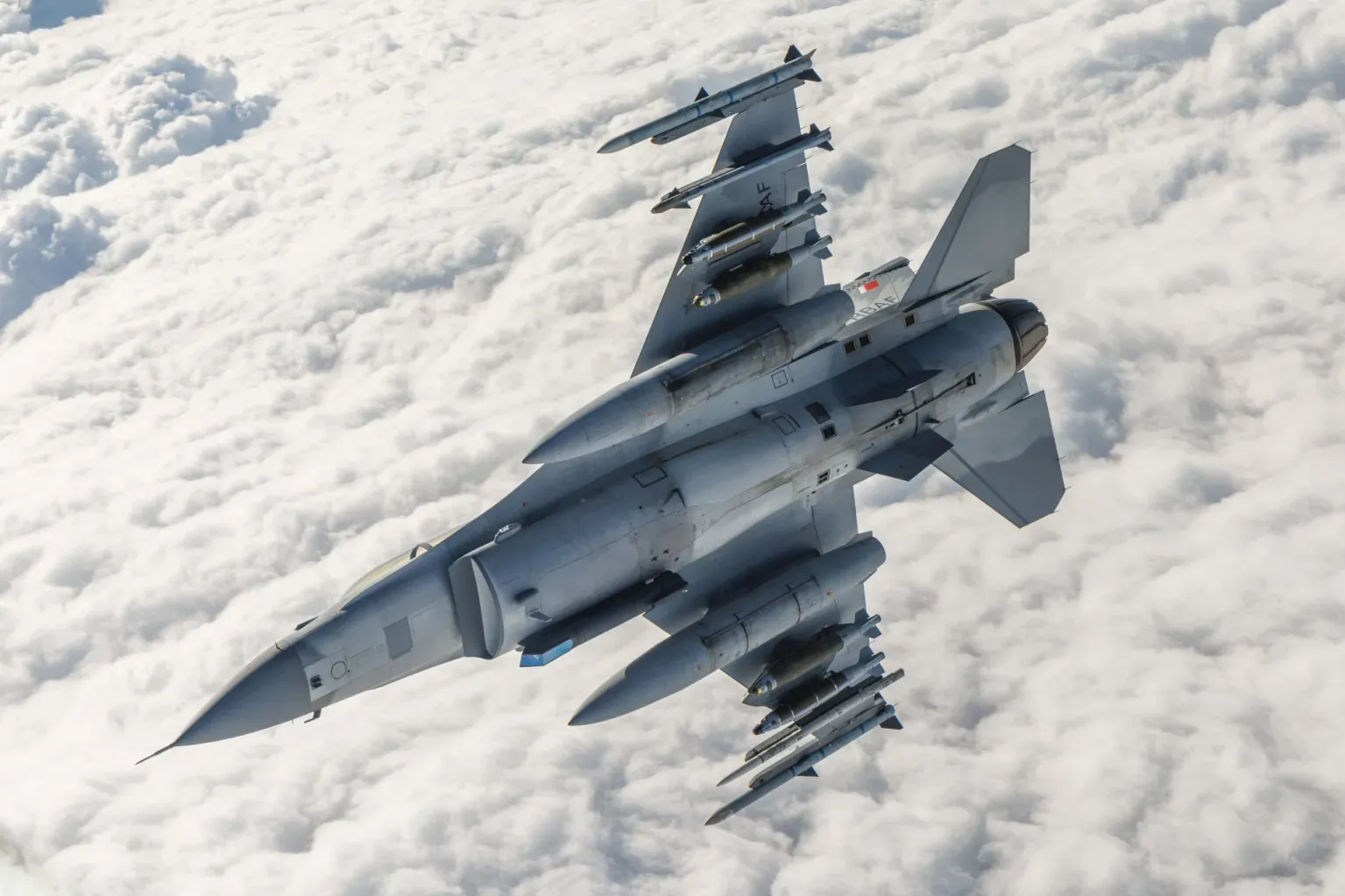
According to Aviation Week, the company has proposed an aircraft called the F-16G, an enhanced derivative of the F-16 Block 70. The proposed configuration reportedly incorporates conformal fuel tanks, 600-gallon wing tanks, an infrared search-and-track (IRST) system, a Sniper targeting pod, and a drag chute. All of these features have appeared on previous F-16s in one form or another. Lockheed is positioning the new version as a potential replacement for USAF F-16 units whose existing aircraft are approaching the end of their useful lives.

A Bahraini Block 70 F-16D flown by members of the 416th Flight Test Squadron pulls away after receiving fuel from a KC-135 tanker with a crew from the 370th Flight Test Squadron during a sortie out of Edwards Air Force Base in California on March 7, 2024. U.S. Air Force

The Air Force, for its part, says that it has not yet settled on either the requirements or the options for addressing the problem. As it stands, the service has not committed to buying any new F-16s. The proposal is nevertheless notable because it follows an earlier round of discussions in which the Air Force was already examining whether a new-build F-16 could help address the growing fighter gap.

In December 2025, Inside Defense reported that the Air Force had reached out to Lockheed Martin about pricing for Block 70 F-16s — the current export standard. The conversations were described as exploratory, with no firm procurement plan, but the reporting established that the idea had moved beyond a purely theoretical discussion. One congressional aide told the publication that officials were looking at ways to “plug their holes” as part of their future force-structure planning.

A new Viper variant based on the Block 70 would be cheaper than replacing an aging F-16 with an F-35, while allowing the Air Force to retain much of the infrastructure, training, and experience associated with the existing aircraft. This is a major advantage as the F-35’s unique infrastructure and support requirements are a costly addition to the aircraft’s base price tag. An even bigger factor is unrelated to acquisition and bed-down costs: a Block 70 is far cheaper to sustain and operate over its service life than an F-35, a difference that compounds significantly across a fleet. 

A formation of F-16 Fighting Falcons sit along the flightline during Operation Northern Cactus at Alpena Combat Readiness Training Center (CRTC), Mich., September 13, 2026. Northern Cactus tests the 149th Fighter Wing’s ability to deploy personnel and equipment, establish operations at an unfamiliar location, and accomplish mission objectives away from home station. (Air National Guard photo by Airman 1st Class Jonathan Rasco)
A line-up of F-16s assigned to the 149th Fighter Wing, a unit of the Texas Air National Guard. Air National Guard photo by Airman 1st Class Jonathan Rasco Airman 1st Class Jonathan Rasco

The idea of a new Viper buy had already reached the highest levels of Air Force leadership several months earlier.

In May 2025, Sen. Tom Cotton asked then-Air Force Chief of Staff Gen. David Allvin about the possibility of buying a U.S.-configured “Block 80” F-16 if Congress provided additional funding. Allvin did not endorse the proposal, but he did not dismiss it either, saying he needed to examine the time required to adapt the Block 70 design, where a U.S. aircraft could fit into Lockheed Martin’s production line, and what the industrial base could support. He also noted that the existing Block 70/72 line was already heavily occupied by foreign military sales.

At the same hearing, Allvin acknowledged the broader force-structure logic, saying the Air Force needed both the high-end capabilities required for an Indo-Pacific fight and other fighters that “may not need to be as sophisticated as our fifth-generation, sixth-generation.” He also emphasized that the first increment of Collaborative Combat Aircraft (CCA) was intended to augment rather than replace crewed fighters like the F-16.

General Atomics’ YFQ-42 for the first increment of the Air Force’s Collaborative Combat Aircraft program, which has now received the official nickname Vengeance. General Atomics

Taken together, the developments show that the concept has remained alive through the Air Force’s evolving force-structure debate.

The Numbers Game

At first glance, the idea of buying new F-16s for the Air Force in the late 2020s might seem puzzling. The F-16 entered U.S. service in the 1970s, and the Air Force stopped buying new examples for itself more than 20 years ago. The established plan has been to replace the legacy F-16 fleet with the F-35A. For a long time, the service’s stated ambition was ultimately an all-stealth tactical fighter force — but that vision has already largely melted away as budget, operational and industrial-capacity realities have set in.

Today, the fighter fleet is still far older on average than it needs to be and legacy fourth generation types, minus a handful of new F-15EXs, are now well over 20-years old at the youngest. The oldest of these aircraft are increasingly challenging and costly to support. Meanwhile, the F-35 has had its fair share of successes and challenges, but replacing all of the USAF’s oldest fighters with JSFs in a timely and efficient manner, and operating those aircraft over future decades, looks increasingly problematic. The F-47 is also on the horizon, but that aircraft fits a different capability set more aligned with the F-22 than the F-16 and will come at a much higher cost than any fighter currently being procured.

Above all else, the problem is that the Air Force’s fighter challenge is one of numbers.

The service’s 2025 long-term fighter force-structure assessment concluded that it needed 1,558 combat-coded manned fighters by 2035 to reach what it considers a low-risk operational posture. The Air Force had only 1,098 fighters in its inventory as of May 2026, below the statutory minimum of 1,145.

At the same time, the service is trying to retire old aircraft, expand F-35A procurement, introduce the F-47, acquire additional F-15EXs, and field large numbers of CCAs. Those programs address different requirements, but they all compete for money, industrial capacity, personnel, and infrastructure.

An MQ-28 Ghost Bat from Boeing Defense Australia and a U.S. Air Force F-15EX Eagle II, assigned to the 85th Test and Evaluation Squadron participate in Valiant Shield 2026 over the Philippine Sea, June 27, 2026. Exercises like Valiant Shield allow U.S. Pacific Command to integrate forces from all branches of service along with our allies to conduct precise, lethal, and overwhelming multi-axis, multi-domain effects that demonstrate our capabilities and commitment to a free and open Indo-Pacific. (U.S. Air Force photo by Tech Sgt. Thomas Barley)
An MQ-28 Ghost Bat and a U.S. Air Force F-15EX participate in Valiant Shield 2026 over the Philippine Sea, June 27, 2026. U.S. Air Force photo by Tech Sgt. Thomas Barley Tech. Sgt. Thomas Barley

For the Air Force, the question has not simply been whether the F-16 remains militarily useful, but also whether the aircraft provides a possible answer to a capacity shortfall, while also dealing with delays in F-35 deliveries, and the retirement of the A-10, blowing another hole in the inventory. Meanwhile, some older F-16s that had been expected to leave the fleet are instead receiving upgrades, including a new radar and electronic warfare suite, to keep them flying longer.

U.S. Air Force Senior Airman David Dussault, 52nd Aircraft Maintenance Squadron F-16 avionics journeyman, works to install a new active electronically scanned array (AESA) radar system onto a 480th Fighter Squadron F-16C Fighting Falcon at Spangdahlem Air Base, Germany, May 23, 2022. The AESA upgrade provides F-16s a massive leap in combat capabilities, making pilots even more effective than ever before while improving air defenses and overall aircraft survivability when faced with enemy forces. (U.S. Air Force photo by Tech. Sgt. Maeson L. Elleman)
A U.S. Air Force airman works to install a new active electronically scanned array (AESA) radar system onto a 480th Fighter Squadron F-16C at Spangdahlem Air Base, Germany, May 23, 2022. U.S. Air Force photo by Tech. Sgt. Maeson L. Elleman 2nd Lt. Maeson Elleman

That creates a difficult transition period. The Air Force wants to retire aging fighters, but it also needs to keep enough aircraft available while their replacements arrive. The F-16 keeps reappearing because it offers a way of addressing at least part of that problem with a very well known commodity and without requiring every legacy fighter to be replaced by an F-35 or F-15EX.

The Production Line Matters

There is another reason the F-16 procurement idea refuses to disappear: Lockheed Martin already has an F-16 production line operating in the United States.

The Greenville, South Carolina, facility was established to produce Block 70/72 aircraft for foreign customers and is now the world’s only F-16 production facility. The Air Force helped establish the line as part of its broader effort to sustain the F-16 industrial base through foreign military sales. The line moved there after the massive Lockheed Martin plant at Fort Worth, Texas — where the F-16 had been built for decades — transitioned fully over to F-35 production.

So, buying new F-16s would not require reviving a dormant production line or spinning up an entirely new aircraft program. The basic manufacturing infrastructure already exists, and the additional work required for a U.S.-specific aircraft may end up being minimal — potentially amounting to little more than taking an existing Block 70 and tweaking it, rather than a large-scale new engineering, testing, and weapons-integration effort.

A two-seat F-16D Block 70 on the production line in Greenville. Lockheed Martin

The Air Force has been aware of that possibility for years. In 2021, then-Air Force Assistant Secretary for Acquisition Will Roper argued that the service should consider the new F-16 production line as part of its capacity solution. Roper specifically pointed to the upgraded capabilities available from the South Carolina production line.

However, Greenville is not an empty production line waiting for a U.S. customer. Lockheed Martin’s F-16 facility already has a substantial Block 70/72 backlog for foreign operators, with the company reporting more than 100 aircraft in the queue and continued potential for additional international orders. It’s also unclear how much the facility could realistically be expanded, since it was designed around a relatively more modest foreign military sales production volume rather than the kind of surge a large U.S. order could require. Still, the USAF could step in and buy up open slots, which would also ensure the line stays open for the foreseeable future, which has major strategic and industrial protection benefits.

That brings us back to Gen. Allvin’s question in May 2025 about where a U.S. aircraft could fit on the production line. Even if the Air Force decided to buy the jets, it would have to compete for production capacity with an established international order book while developing whatever U.S.-specific configuration, testing, and integration work it requires.

This Is Not Your Dad’s F-16

The proposed F-16G is also significant because it is not simply another upgraded F-16C/D like the USAF already has.

Lockheed’s proposed configuration reportedly would add conformal fuel tanks and 600-gallon wing tanks, along with an IRST, and the latest Sniper targeting pod, as well as a drag chute. All of these systems are already fielded and available today rather than requiring new development.

Those additions point toward an aircraft intended to provide even more basing flexibility, range, persistence, weapons and sensing capability than the current F-16, which had already grown into a medium-weight fighter years ago. That is relevant to how such an aircraft might actually fit into the future Air Force.

U.S. Air Force Tech. Sgt. Ryan Keel, an avionics specialist assigned to the Ohio Air National Guard’s 180th Fighter Wing, prepares to install a Sniper Advanced Targeting Pod onto an F-16 Fighting Falcon at the 180FW in Swanton, Ohio, Jan. 26, 2023. The 180FW is the only F-16 fighter wing in the state of Ohio, whose mission is to provide for America; protection of the homeland, effective combat power and defense support to civil authorities, while developing Airmen, supporting their families and serving in our community. (U.S. Air National Guard photo by Airman 1st Class Sarah Stalder Lundgren)
A U.S. Air Force avionics specialist prepares to install a Sniper Advanced Targeting Pod onto an F-16. U.S. Air National Guard photo by Airman 1st Class Sarah Stalder Lundgren Staff Sgt. Sarah Stalder Lundgren

A contemporary F-16 is already a very different proposition from the aircraft that entered U.S. service decades ago. Modern AESA radars, electronic warfare systems, digital architecture, datalinks, advanced cockpit interfaces and weapons have substantially expanded its capabilities. The proposed F-16G would push that evolution further, but, like the F-15EX, it would still occupy a different part of the spectrum from the F-35 and whatever eventually emerges from the F-47 program.

That distinction could be useful in a larger force. An F-35 provides capabilities, particularly its combination of stealth and advanced sensor fusion, that an F-16 can never reproduce. But the Air Force does not conduct every mission in the most heavily defended portion of an adversary’s airspace. Homeland defense, training, defensive counter-air, a range of strike missions, and operations in permissive or partially contested environments don’t necessarily require the same characteristics as a penetration mission against an integrated air defense network. In a major conflict, no fighter will fight alone, either. Far from it. Operation Midnight Hammer, the B-2 strikes against Iran’s nuclear program, provides a salient example here, with F-16s flying deep into the country along with F-22s and F-35s, to clear the way for the B-2 strike force. By now, the Air Force is well-versed in leveraging the total-force fourth-and-fifth-generation mix, and it has discovered that they complement each other in unique ways that can be an advantage, not just compensation for lack of capability.

As far as the drag chute, that is a highly relevant addition to the USAF’s F-16 capability set. The chute would allow for the F-16 to better execute Agile Combat Employment (ACE), which includes operating from austere airfields within the enemy’s weapons engagement zone. The F-16 can get off the runway pretty quick, but landing is a different story. The chute can help greatly in this regard.

A U.S. Air Force C-5M Super Galaxy aircraft assigned to the 9th Airlift Squadron, Dover Air Force Base, left, sits beside an R-11 fuel truck and an F-16C Fighting Falcon aircraft assigned to the 122nd Fighter Wing on the flight line at the 122nd Fighter Wing, Fort Wayne, Indiana, July 24, 2025. The C-5 participated in an agile combat employment exercise that included wet wing defueling to the fuel truck which then provided fuel to the F-16. (U.S. Air National Guard photo by Tech. Sgt. David Sherman)
A U.S. Air Force C-5M Super Galaxy aircraft assigned to the 9th Airlift Squadron, Dover Air Force Base, left, sits beside an R-11 fuel truck and an F-16C Fighting Falcon aircraft assigned to the 122nd Fighter Wing on the flight line at the 122nd Fighter Wing, Fort Wayne, Indiana, July 24, 2025. The C-5 participated in an agile combat employment exercise that included wet wing defueling to the fuel truck which then provided fuel to the F-16. (U.S. Air National Guard photo by Tech. Sgt. David Sherman) Tech. Sgt. David Sherman

There is no question that an F-16 is not a replacement for an F-35. But it could help the Air Force better allocate its limited inventory of increasingly expensive fifth-generation and future sixth-generation aircraft while also maintaining a much larger overall fighter fleet.

CCA Changes the Calculus for Fourth-Gen Jets

One factor that is easy to overlook is Collaborative Combat Aircraft. CCAs are not just a complement to fifth- and sixth-generation fighters, they can also breathe new relevance into fourth-generation types like the F-16. Pairing stealthy, and even optionally expendable CCAs with a fighter like the F-16G could substantially boost its survivability and lethality by pushing sensing, shooting, and some of the risk forward onto uncrewed platforms, extending the F-16’s combat relevance even into higher-end scenarios where it would otherwise be at a disadvantage. In that sense, CCA may end up being arguably as relevant to fourth-generation aircraft as it is to fifth-generation ones.

In other words, CCAs are a positive factor in the F-16G’s business case.

A U.S. Air Force YFQ-44A Fury aircraft, assigned to the Collaborative Combat Aircraft Experimental Operation Unit, takes off for a mission flight during an Agile Combat Employment exercise at Creech Air Force Base, Nevada, July 21, 2026. The flight was part of a broader ACE exercise designed to test the resilience, adaptability, and combat effectiveness of the semi-autonomous fleet. (U.S. Air Force photo by Staff Sgt. Kristal Munguia)
A U.S. Air Force YFQ-44A Fury aircraft, assigned to the Collaborative Combat Aircraft Experimental Operation Unit, takes off for a mission flight during an Agile Combat Employment exercise at Creech Air Force Base, Nevada, July 21, 2026. The flight was part of a broader ACE exercise designed to test the resilience, adaptability, and combat effectiveness of the semi-autonomous fleet. (U.S. Air Force photo by Staff Sgt. Kristal Munguia) Staff Sgt. Kristal Munguia

While the F-22 and F-35 are slated to get CCAs first, the F-16G can be built ready to interoperate with them, which could be a massive force multiplier to what would be the most affordable crewed tactical asset in the inventory. CCAs can eventually be used to also help augment F-16Gs operating in a homeland defense mission and other more mundane roles as well.

The Guard Argument

New Block 70s could make particular sense for the Air National Guard.

The Guard continues to operate F-16s in large numbers, meaning that its personnel, facilities, simulators, and maintenance infrastructure are already built around the aircraft. A new-build F-16 could therefore replace an aging F-16 without requiring the same organizational transition associated with converting a unit to an entirely different fighter, and especially a highly complex fifth-generation type with all its unique support requirements.

That has financial implications beyond the aircraft itself. Replacing an existing F-16 squadron with Block 70s would reduce construction costs and training requirements because much of the existing infrastructure and expertise could be retained.

From left, two U.S. Air Force F-16C Fighting Falcons assigned to the 177th Fighter Wing, New Jersey Air National Guard, and two F-35 Lightning II aircraft assigned to the 158th Fighter Wing, Vermont Air National Guard, follow a KC-135 Stratotanker refueler aircraft assigned to the 171st Air Refueling Wing, Pennsylvania Air National Guard, to perform a routine aerial refueling mission on Oct. 9, 2024, off the coast of Atlantic City, New Jersey. The aircraft flew during "Devilsmoke” 2024, a three-day dogfighting competition organized by the 119th Fighter Squadron's 'Jersey Devils', which included F-15C Eagles from the 104th Fighter Wing of the Massachusetts ANG, A-10 Thunderbolt IIs from the 175th Wing of the Maryland ANG, and F-22 Raptors from the 1st Fighter Wing, Joint Base Langley-Eustis, Virginia. “Devilsmoke” 2024 also received aerial refueling support from tankers with the 108th Wing of the New Jersey ANG and the 101st Air Refueling Wing of the Maine ANG. Dogfighting is a core skill that all fighter pilots must master, and flying against dissimilar aircraft offers valuable experience for fighter pilots. (U.S. Air National Guard courtesy photo by Tech. Sgt. James Norman)
From left, two U.S. Air Force F-16Cs assigned to the 177th Fighter Wing, New Jersey Air National Guard, and two F-35As assigned to the 158th Fighter Wing, Vermont Air National Guard, follow a KC-135 Stratotanker off the coast of Atlantic City, New Jersey. U.S. Air National Guard courtesy photo by Tech. Sgt. James Norman Andrew J. Moseley

The Air Force would still have to pay for the aircraft and sustainment, but it would not be starting from scratch in terms of operating infrastructure, while the modernized fourth-generation capabilities of an F-16G would still mark a step forward for the Guard over its older F-16s.

It’s worth noting there has also been discussion of replacing more aging F-16s with additional F-15EXs instead. That path, however, is more expensive on both the acquisition and operating-cost side, and it would still require units to convert to a different airframe rather than simply recapitalizing in place.

Viper Refreshed

A new F-16 offers a fresh and highly mature airframe — one with a full service-life ahead of it, on the order of 12,000 flight hours without the need for structural upgrades — double that of the original F-16. This is compared to existing F-16s in the inventory with the decades of wear and fatigue already accumulated on them, with structural upgrades keeping them in the air. That difference in remaining structural life is arguably the single biggest advantage a new-build aircraft has compared with extending an existing one.

U.S. Air Force Tech. Sgt. Chase Brossia and Airman 1st Class Vance Weaver, aircraft armament systems specialists assigned to the Ohio National Guard’s 180th Fighter Wing load 20mm bullets into an F-16 Fighting Falcon’s M61A1 Vulcan cannon during Checkered Flag 26-2 and Weapons System Evaluation Program-East at Tyndall Air Force Base, Fla., April 29, 2026. Checkered Flag, a large-scale aerial exercise, hones the skills of the aviators and maintainers who fly and fix aircraft, fostering pride in their craft and ensuring they remain the most lethal combat force in the world. U.S. Air National Guard photo by Master Sgt. Kregg York) *Some photographic elements have been blurred for security purposes
U.S. Air Force aircraft armament systems specialists assigned to the Ohio National Guard’s 180th Fighter Wing load 20mm ammunition into an F-16’s M61A1 Vulcan cannon. U.S. Air National Guard photo by Master Sgt. Kregg York Master Sgt. Kregg York

Dumping more money into existing F-16s is becoming questionable. Service life extensions and technical upgrades can only go so far and supporting these jets is becoming harder as parts dry up and suppliers who made them are long gone. A new airframe would give the Guard many decades of highly efficient service and the piece of mind for future force planning that goes with it.

Also, just like F-15EX, the development of the Block 70 F-16 has already been paid for largely by foreign customers over many years. It is as off-the-shelf of a solution as it gets and that is a very attractive proposition to an air arm trying to balance its books.

Above all, F-16 sustainment and operating costs run far below the F-35’s — a gap that already holds true even with older F-16s, and one that would widen further with new-build jets.

The Argument Against Simply Buying More F-35s

One seemingly obvious alternative would be to accelerate F-35A procurement. But the F-35 is not simply another fighter that can be substituted one-for-one whenever an F-16 reaches the end of its service life. That would also be difficult to do in practice. F-35A production is effectively capped and there are dense order books, and the well-documented troubles with the Block 4 upgrade are a huge factor pushing the Air Force to look at alternatives like the F-16G in the first place.

The Air Force’s current force-structure plans call for significantly more fighters overall, while the service is simultaneously pursuing F-35As, F-15EXs, and the F-47.

A U.S. Air Force F-15EX Eagle II flies over the Gulf of America, September 16, 2025. The F-15EX, from the 40th Flight Test Squadron at Eglin Air Force Base, Florida, is one of the first F-15EXs in the Air Force, and is going through developmental and operational test series at Eglin to prepare the platform to be delivered to the warfighter.  (U.S. Air Force photo by Tech Sgt. Jacob Stephens)
A U.S. Air Force F-15EX Eagle II. U.S. Air Force U.S. Air Force photo by Tech Sgt. Jacob Stephens

Among the reasons why a modernized F-16 might be considered alongside those programs are concerns not only about the cost of those aircraft, but also about the timing of F-35 deliveries, something that has been disrupted by well-publicized problems with Joint Strike Fighter upgrades. At the same time, keeping older F-16s active through upgrades is an increasingly unattractive way of managing the shortfall.

The issue is therefore less about choosing the F-16 instead of the F-35 than about deciding whether the Air Force should use both aircraft for different portions of the force structure.

The service is already doing something along these lines with the F-15EX. It has accepted that a modernized fourth-generation aircraft can have a role alongside the F-35 and the F-22, rather than requiring every new fighter to be stealthy.

A new F-16 would extend that logic to a lower-cost segment of the fleet, potentially allowing the Air Force to use F-35s where their particular capabilities are most valuable while maintaining additional capacity with a less expensive aircraft.

What Could Happen Next?

Even if Air Force leaders conclude that the F-16G makes operational sense, Congress would still have to decide whether it is worth funding.

The December 2025 reporting identified the central problem: lawmakers would want the service to demonstrate that buying new aircraft is preferable to continuing to upgrade the F-16s it already owns. They would also have to weigh the proposal against the F-35 and CCA programs.

If an existing F-16 can be kept operational with a relatively inexpensive upgrade, a new aircraft has to justify its acquisition cost and the additional long-term sustainment burden. But if maintaining an increasingly old F-16 fleet doesn’t save large sums of money over the long haul, the new Block 70 variant begins to look more compelling.

A U.S. Air Force F-16 Fighting Falcon aircraft takes off at a base in the U.S. Central Command area of responsibility Aug. 10, 2026. (U.S. Air Force photo by Staff Sgt. Justin W. Moore)
A U.S. Air Force F-16 takes off at a base in the U.S. Central Command area of responsibility on August 10, 2026. U.S. Air Force photo by Staff Sgt. Justin W. Moore Senior Airman Justin Moore

There remains a substantial gap between Lockheed Martin pitching the F-16G and the Air Force actually buying it. The service told TWZ that it is “in the initial phases of analyzing options for the next Future Years Defense Program.” The Air Force spokesperson added: “At this stage, we have neither defined the precise mission requirements nor the spectrum of options that could fill it.”

That is consistent with the status described by Inside Defense nine months earlier. At the time, the Air Force had no plans to procure Block 70s, and the discussions with Lockheed were described as exploratory. Even if senior officials ultimately favored the aircraft, Inside Defense reported that the program could not appear in the Future Years Defense Program until at least fiscal 2028 because the FY2027 budget process was already too far along.

The F-16G therefore remains a proposal rather than a program. But the persistence of the idea is itself significant. It should be noted that the F-15EX buy emerged out of very similar machinations, with the benefits proving to be undeniable.

The new proposal would let some Guard and Reserve units swap their F-16s for vastly improved F-16s — the same logic that drove the F-15EX buy — while also keeping the Greenville line hot, which is a significant benefit in its own right. And it accomplishes both in the most efficient way possible: not just in acquisition cost, but in sustainment cost, which is really the more problematic burden of the two. In the end, this points to another glaring reality check for the all-stealth-force concept, a vision the Air Force has effectively already abandoned.

The Air Force has spent years describing the F-35 as the replacement for its F-16 fleet, yet it now has to contend with aging F-16s, delayed or constrained fighter production, a larger stated requirement for total fighter capacity, and the lengthy transition toward the F-47 and uncrewed combat aircraft. In that environment, a new-build F-16 provides an option that sits between extending legacy aircraft and buying the most sophisticated — and expensive — fighters available.

Regardless, there are so many priorities facing the force right now, buying new F-16s will be a challenge at every turn, but that doesn’t mean it won’t become too compelling of a proposition to accept. Still, many will argue that every dollar should be invested in higher-end fighter and uncrewed platforms that are more survivable against America’s primary pacing threat, China. That country is rapidly evolving its own air arm with stealth fighters and advanced uncrewed aircraft. Stepping back to the F-16 while facing down such a threat can appear to be counterproductive when taken at face value. At the same time, the F-16 is already slated to stay in the inventory by the hundreds for decades to come, which does take some of the bite out of that argument.

In the end, it is remarkable that the F-16 was supposed to have left the U.S. fighter equation years ago. Instead, every time the Air Force looks closely at the gap between the fighter force it has and the force it says it needs, the aircraft somehow finds a way back into the conversation.

Contact the author: thomas@thewarzone.com

Thomas Newdick is a staff writer at TWZ, where he covers military aviation, defense technology, weapons systems, and international security. Based in Berlin, Germany, he reports on conflicts, military modernization efforts, and emerging aerospace technologies around the world, with a particular interest in airpower and its role in contemporary warfare. His reporting is informed by deep expertise in modern and historical airpower, particularly in Europe, with a focus on military aviation, air campaigns, and aerospace developments across the continent and beyond.


Tyler’s passion is the study of military technology, strategy, as well as foreign policy, and he has fostered a dominant voice on those topics in the defense and national security space. Tyler was the creator of the hugely popular defense site Foxtrot Alpha before developing TWZ, which he continues to lead as the Editor-In-Chief to this day.


Source link

Lewis Hamilton sets the pace as he and girlfriend Kim Kardashian ride Lime bikes around London on low-key day out

KIM Kardashian and Lewis Hamilton swapped luxury cars for humble Lime bikes as they enjoyed a casual day out in London.

The couple, who are estimated to be worth a combined $2.5bn, looked happy to keep it low-key as they pedalled around the capital.

Kim Kardashian and Lewis Hamilton were pictured riding Lime bikes in London Credit: Goff
It’s a slower turn of pace than F1 star Lewis is used to Credit: Goff

Lewis, 41, might have swapped Ferrari red for lime green but he still set the pace and maintained his eye for fashion in a leopard print jacket.

While glam Kim, 45, who owns the leisurewear brand SKIMS, kept it simple in a white vest top and black leggings.


He might be a seven-time F1 world champ on four wheels, but Lewis was in no rush and swapped smiles with Kim as they cruised along.

The duo were joined by a minder who hung back and let the couple soak up the sights uninterrupted.

READ MORE ON KIM KARDASHIAN

TURNING HEADS

Kim Kardashian pours her curves into low cut dress for SKIMS party in London


KIM’S TEARS

Kim K breaks down in tears over diagnosis that’s ‘same thing’ her dad died from

The couple traded smiles as they biked side by side Credit: Goff
Lewis led the way, more familiar with the London streets Credit: Goff
They dismounted and pushed the bikes through a park Credit: Goff
Kim looked confident on two wheels after a night out celebrating her SKIMS brand Credit: Goff

Last night, Kim was more glamorous as she turned out for a SKIMS event in Regent Street in a nude figure-hugging dress.

The reality star and businesswoman was in her element waving to fans and taking pictures, before having a costume change and heading to exclusive members club Maison Estelle for the afterparty.

It followed a shock diagnosis Kim received in the latest episode of Keeping Up With The Kardashians.

Viewers watched her learn she has esophagitis, which is a condition characterised by the inflammation of the lining of the oesophagus, and is the same condition that led to her father’s death.

Robert, a top lawyer who represented O.J. Simpson, died from esophageal cancer in 2003 at the age of 59.

The revelation about her health made both Kim and her mum, Kris, tearful.

Lewis is more used to the famous Ferrari red Credit: Goff
The superstar couple have an eye-watering combined wealth Credit: Goff

Source link

Asian Games 2026: Top athletes and storylines to look out for | Athletics

Asia’s biggest sport stars will descend on Japan this week to battle it out for continental glory as the Asian Games get under way.

Aichi-Nagoya 2026 will see several athletes eyeing first-time podium finishes while others look to defend their crown.

Recommended Stories

list of 4 itemsend of list

This year’s edition will see six sports make their debut, while in some sports, a gold medal will double as automatic qualification for the LA 2028 Olympics.

From Olympic champions to teen sensations to breakout stars, Al Jazeera Sport takes a look at some of the top athletes to watch:

Alex Eala, Philippines — tennis

Tennis’s newest sweetheart will be the favourite for gold in women’s singles. The 21-year-old Filipino star is coming off a career-high season that saw her first WTA 1000 title last month and a third-round finish at the US Open.

Eala will compete at the Singapore Open just before the games, but will skip the concurrent Beijing Open – regardless of whether the WTA decide to punish her – since a gold medal at the Asian Games serves as automatic qualification for the LA 2028 Olympics.

Defending champion Zheng Qinwen and former world number one Naomi Osaka will not be competing in Japan, leaving it wide open for Eala to claim gold and upgrade from the bronze she won in 2022.

Eala acknowledges the crowd after defeating Mary Stoiana in the first round of the US Open in New York
Eala acknowledges the crowd after defeating Mary Stoiana in the first round of the US Open in New York [Adam Hunger/AP Photo]

Rumesh Pathirage, Sri Lanka — javelin

The javelin phenom has been collecting gold medals like Pokemon cards this year, and another one at the Asian Games will add to his Diamond League, Commonwealth, and Ultimate Champion crowns.

But gold is not the biggest prize for the 23-year-old, although it is almost guaranteed after his nearest contender, India’s Neeraj Chopra, withdrew with injury. Pathirage is eyeing the Asian record of 92.97m set by Arshad Nadeem at the Paris 2024 Olympics, which he is poised to break after becoming the only thrower this season to breach 92m twice.

Pakistan’s Nadeem, on the other hand, is far from fit and will be lucky to end his season with a medal after a string of subpar throws.

Sri Lanka's Rumesh Tharanga Pathirage celebrates with the trophy after his victory in men's javelin throw final during the World Athletics Ultimate Championship at the Gyula Zsivotzky National Athletics Centre, in Budapest on September 13, 2026. (Photo by Ben STANSALL / AFP)
Pathirage celebrates with the trophy after his victory in men’s javelin at the World Athletics Ultimate Championship in Budapest on September 13, 2026 [Ben Stansall/AFP]

Haruka Kitaguchi, Japan — javelin

Home favourite Kitaguchi is eyeing gold in the women’s javelin after being crowned Ultimate Champion in Budapest last week. Her 68.92m throw landed her a new national record and is tied for 10th-best in the world and second-best this season.

Surprisingly, the 28-year-old is making her Asian Games debut and will look to add continental gold in front of the home crowd after floundering at last year’s World Athletics Championships in Tokyo.

Yan Ziyi, China — javelin

Another javelin powerhouse to watch is world number one Yan Ziyi. She became only the sixth woman in history to surpass the 70m mark with her 71.74m throw in May that became a new Asian and World Under-20 record.

The Chinese teen sensation was unbeaten throughout the five Diamond League competitions she contested, but finished second to Kitaguchi at the Ultimate Championship after withdrawing with injury after one throw.

Should she recover in time, the 18-year-old can snatch back the crown from the Japanese veteran thrower to end the season on a high note.

XIAMEN, CHINA - MAY 23: Ziyi Yan of China poses with the results board after competes the women's Javelin Throw event during the Wanda Diamond League Xiamen on May 23, 2026 in Xiamen, China. (Photo by Lintao Zhang/Getty Images)
Yan Ziyi heads to the Asian Games as world number one in the women’s javelin throw [Lintao Zhang/Getty Images/File]

Vaibhav Sooryavanshi, India — cricket

As India look to defend their men’s cricket crown, all eyes are on 15-year-old Sooryavanshi to produce another phenomenal result on the pitch.

The left-handed top-order batter has already made headlines for being a generational talent, having broken records as the highest scorer in this year’s Indian Premier League and become India’s youngest men’s player.

Cricket - Third T20 International - England v India - Trent Bridge Cricket Ground, Nottingham, Britain - July 7, 2026 India's Vaibhav Sooryavanshi in action Action Images via Reuters/Andrew Boyers
India’s Vaibhav Sooryavanshi in action at the third India v England T20I in Nottingham [Andrew Boyers/Reuters]

Pan Zhanle, China — swimming

The Olympic champion returns to the stomping grounds where he first went sub-47 seconds in the men’s 100m freestyle – and became the first Asian male to do so – to break his own Asian record.

It was also on home soil at the Hangzhou 2022 games that he bagged a silver in the 200m and 400m freestyle, a bronze in the 50m, and a gold in the men’s 4x100m freestyle relay and 4x100m medley relay.

Pan Zhanle, of China, celebrates after winning the men's 100-meter freestyle final at the 2024 Summer Olympics, Wednesday, July 31, 2024, in Nanterre, France. (AP Photo/Petr David Josek)
Pan Zhanle celebrates after winning the men’s 100m freestyle final at the 2024 Summer Olympics [Petr David Josek/AP Photo]

Yu Zidi, China — swimming

The Chinese prodigy was only 12 when she made waves as the youngest-ever medallist at the 2025 World Swimming Championships. She narrowly missed a podium finish in her individual events but found redemption at the Chinese National Swimming Championships later that year with two golds, one silver, and an Asian record in the 200m Individual Medley.

Now 13, she is looking to dominate at her first, hopefully of many, Asian Games where she’s entered in the 200m IM, 400m IM and 200m butterfly events, alongside relays.

While training with the China team in Beijing, she told local media this month she was “excited” for her Asian Games debut.

“Train well, don’t slack off. Demonstrate the level of your training and work hard to break past yourself,” she said, according to state news agency Xinhua.

SHENZHEN, CHINA - MARCH 22: Yu Zidi of China competes in the Women's 200m individual medley final during day 4 of the China Open Swimming Championship at Shenzhen Universiade Center Aquatics Centre on March 22, 2026 in Shenzhen, China. (Photo by Lintao Zhang/Getty Images)
Yu Zidi of China competes in the Women’s 200m individual medley final at the China Open Swimming Championship in Shenzhen, China on March 22, 2026 [Lintao Zhang/Getty]

Source link

New Details About Secretive RQ-170 Sentinel Drone Squadron Shared With New Award

An annual award has gone to one of the U.S. Air Force’s most secretive drone squadrons, offering a very rare window into its activities. The 30th Reconnaissance Squadron is one of two units known to operate the stealthy RQ-170 Sentinel, and it is unusual to hear anything about its operational exploits. Much about the RQ-170 itself remains highly classified 17 years after its existence was first officially acknowledged.

The General Atomics Remotely Piloted Aircraft (RPA) Squadron of the Year award for 2025 was presented to the 30th Reconnaissance Squadron at the Air & Space Forces Association’s (AFA) 2026 Air, Space & Cyber Conference on Tuesday, at which TWZ was in attendance. The AFA’s Mitchell Institute for Aerospace Studies works together with General Atomics’ Aeronautical Systems, Inc. division (GA-ASI) to recognize an Air Force drone unit in this way each year.

“The RPA Trophy is awarded annually at the USAF level for outstanding performance of active duty, Air Force Reserve, and Air National Guard … squadrons in achieving persistent attack and/or reconnaissance over the preceding calendar year,” the Mitchell Institute told TWZ in a statement. “Squadrons are judged on performance across their specified mission sets, exercise participation, and squadron and individual achievements.”

The RPA Squadron of the Year trophy seen at the 2026 Air, Space & Cyber Conference this week. The name and unit insignia of the 30th Reconnaissance Squadron are seen on a plaque on the front of the base. Air & Space Forces Association

The institute sent an additional statement regarding this year’s particular award to the 30th Reconnaissance Squadron, which is as follows:

“Through relentless combat support, operational agility, and enterprise leadership, the 30th Reconnaissance Squadron – known as the Blackbirds – has set the standard for the remotely piloted aircraft community and strengthened the Joint Force’s intelligence advantage. In 2025, the 30th Reconnaissance Squadron conducted intrusive intelligence, surveillance, and reconnaissance missions across three areas of responsibility, filling critical intelligence gaps and disrupting enemy networks. In the face of urgent deployment requirements, the squadron demonstrated exceptional agility, rapidly pivoting resources to establish forward operating locations and execute critical missions under severely compressed timelines. The Blackbirds’ accomplishments paved the way for future remotely piloted aircraft capability, distinctly identifying them as the Air Force’s most outstanding RPA squadron.“

Larry Stutzriem, the AFA’s Executive Vice President, while presenting the award to representatives of the 30th Reconnaissance Squadron ahead of a panel at the Air, Space & Cyber Conference.

“In 2025, the 30th Reconnaissance Squadron conducted 87 ISR [intelligence, surveillance, and reconnaissance] missions across three different AORs [areas of responsibility], filled critical intelligence gaps, and disrupted enemy networks,” Stutzriem said. “On the unit mobility side, the Blackbirds executed 7.2 million dollars worth of airlift in six movements across four combatant commands, moving 250 tons of personnel, top secret material, and equipment to provide low-observable RPA support for a critical Secretary of War-directed mission.”

“With their deployments, the Blackbirds demonstrated exceptional agility under extremely compressed timelines,” he added.

The official unit insignia of the 30th Reconnaissance Squadron, with its prominent blackbird motif. USAF

Furthermore, during 2025, the squadron “also executed six large force exercises to develop tactics, techniques, and procedures; validated joint force tactical objectives in land and maritime environments; and provided combat-relevant training,” according to Stutzriem. “Instructors and evaluators graduated the largest ever combat mission-ready class, 30 percent ahead of schedule, and accelerated mission-ready status 33 percent, while increasing total unit aircrew by 26 percent.”

Though Stutzriem noted that the 30th Reconnaissance Squadron provided “low-observable RPA support,” no explicit mention was made of the RQ-170. Whether or not the squadron may now operate other kinds of low-observable (stealthy) drones is unknown. As mentioned, to date, the Air Force has only confirmed that Sentinels are assigned to two units, the other being the 44th Reconnaissance Squadron. Both the 30th and 44th are assigned to the 432nd Wing at Creech Air Force Base in Nevada. Between 20 and 30 RQ-170s, in total, are understood to be in the Air Force’s inventory.

What three specific AORs the 30th Reconnaissance Squadron operated in during 2025 is also not known.

However, at least one, and possibly two, RQ-170s took part in the mission to capture Venezuelan dictator Nicolas Maduro in January of this year, as you can read more about here. It’s very likely that the Sentinels were tracking Maduro ahead of the operation. In December 2025, Air Forces Southern (AFSOUTH) had also made a post on X that included a picture of an individual wearing a name patch with the silhouette of Sentinel and the sleeve insignia of the 432nd Wing, prompting questions about whether the drones were operating in the region. The post was subsequently deleted.

Further in the past, RQ-170s are also known to have been deployed to the Middle East, Central Asia, and the Pacific. The Sentinel first emerged publicly in Afghanistan in the late 2000s, prompting the U.S. military to confirm its existence in 2009. Sentinels are notably understood to have surveilled Al Qaeda founder Osama Bin Laden’s compound in Pakistan in the lead-up to the raid that led to his death in May 2011.

Later in 2011, one of the drones infamously went down in Iran while presumed to be on a mission to monitor aspects of that country’s nuclear program. With that in mind, it is possible, if not extremely probable, that RQ-170s likely played a role in relation to the Operation Midnight Hammer strikes on Iranian nuclear sites last year. Sentinels could have provided direct surveillance over the sites in question, as well as collecting post-mission bomb damage assessments and other intelligence. These are exactly the kinds of missions the drones were designed for and that operators have trained for.

A satellite image available through Apple Maps, seen below, also shows an RQ-170 at Naval Air Station Sigonella in Italy, likely in the 2023-2024 timeframe, based on the state of construction visible elsewhere at the base. It is not known how many Sentinels were deployed to Sigonella and for how long. The Apple Maps image does lend some credence to earlier reports that these drones may have flown missions in the Black Sea region, gathering intelligence on Russian forces on the heavily defended, occupied Crimean Peninsula, between 2022 and 2023.

Apple Maps

Overall, the RQ-170 does still appear to be a go-to for performing penetrating tactical reconnaissance missions, especially when there is a need to provide persistent surveillance in denied areas, resulting in extremely important intelligence collection.

Again, it is important to reiterate here that we do not know if the 30th Reconnaissance Squadron operates any other stealthy drones beyond the RQ-170, or has in the past. A very stealthy high-altitude, long-endurance (HALE) surveillance and reconnaissance drone commonly and unofficially referred to as the RQ-180, or an evolution thereof, burst into the public eye in March after it was spotted landing in broad daylight at a base in Greece. Much about the drone, including what units are involved in its operation and where the home base of the fleet is, as well as the reasons for its deployment to the region, has yet to emerge. It does seem unlikely that the 30th would have taken on operation of the RQ-180, which is a larger strategic reconnaissance-focused platform compared to the smaller, tactically-minded, and less exquisite RQ-170. This is also just one example of what could still be lurking in the classified realm.

Whether or not the awarding of the 2025 RPA Squadron of the Year trophy to the 30th Reconnaissance Squadron might now point to a new willingness to talk about that unit’s activities and/or the RQ-170 remains to be seen. Regardless, the award and its description are yet more reminders of just how important the Sentinel remains nearly two decades after it first appeared.

Contact the author: joe@twz.com

Joseph is TWZ’s Deputy Editor, helping to oversee the site’s highly experienced and dedicated team, while also writing informative and impactful defense and national security content. He lives right in the thick of it in the Washington, D.C. area.


Source link

Efforts to silence ‘NAZA’ filmmakers, Macklemore only amplifies them

There’s no better way to draw attention to an artist’s work than threatening to shut it down.

Take this week, when Macklemore was kicked off singer-songwriter Ed Sheeran’s tour at the behest of concert venue owners who found the rapper’s on-stage pleas to “Free Palestine” offensive.

Now Macklemore, who hasn’t had a major hit since the 2010s, is relevant again. He has the support of artists, fans and thousands more outraged by his dismissal and the humanitarian catastrophe in Gaza. The “Thrift Shop” rapper has emerged a hero, and a chastened Sheeran and Gillette Stadium owner Robert Kraft have pledged to donate millions toward humanitarian causes in “the region.”

The stakes are considerably higher for Israeli documentarians Yuval Abraham and Rachel Szor. Israeli Prime Minister Benjamin Netanyahu threatened this week to revoke their citizenship for what he called the “shocking incitement” that is of their forthcoming documentary, “NAZA.”

NAZA is an acronym used by Israeli military intelligence to describe the number of civilians it estimates will be killed in an airstrike. The documentary captures the actions of Israel’s military after the Oct. 7, 2023, Hamas attack in footage shot at night from Tel Aviv rooftops. “NAZA” also features anonymous interviews with intelligence officers and soldiers from the Israel Defense Forces, and builds on reporting first published by the Israeli-Palestinian publication +972 Magazine, the Hebrew-language outlet Local Call and The Guardian to make the case that mass civilian deaths were built into Israel’s target decisions in Gaza.

When “NAZA” premiered at the Venice Film Festival on Sept. 10, the documentary received a 25-minute standing ovation, setting a festival record. It went on to win the prestigious Special Jury Prize.

Soon after, the directors came under attack from members of Israel’s government, with Culture Minister Miki Zohar accusing them of “treason against the state” and calling for their citizenship to be revoked.

But it’s Netanyahu who’s providing free publicity for “NAZA,” ensuring that everyone outside the film festival circuit will know of the documentary by the time of its official North American premiere at the New York Film Festival on Sept. 26.

In a move that’s likely designed to quash “NAZA’s” release and silence its directors, the prime minster pledged this week to advance two bills that would address the “immense damage” done to Israeli soldiers in the film.

Netanyahu explained in a social media clip that one bill would “revoke the citizenship of anyone who defames soldiers, and the second [bill will] hit them in their pockets and increase the statutory damages for defamation they can ⁠be sued for by 20 times. We ⁠will hit them both in their pockets and in their citizenship, as their place is not with us.”

Macklemore lost his place on a pop music tour for speaking out against Israel’s military. Abraham and Szor may lose their place as Israeli citizens. The pair were already considered controversial for their 2024 documentary, “No Other Land,” a film chronicling five years of displacement and violence in the life of Palestinians in a small village in the occupied West Bank. It won the 2025 documentary feature film Oscar.

They explained in a statement why making “NAZA” was so important.

“We made this film out of a sense of obligation to use our position as Israeli filmmakers and journalists to examine the systems behind the mass killing of Palestinian civilians for which our country is responsible,” the statement said. “While filming members of Israel’s military on rooftops at night in Tel Aviv over the past three years, we found ourselves asking the very questions that were asked by our grandparents’ generation and throughout the 20th century: How does one group of people allow the total dehumanization of another? What do the inner workings of such a system look like? … The film lets us explore something deeper than we could in our investigative journalism alone: not only the words being said, but also those that are not said, the silence. It is up to all of us to break that silence.”

The filmmakers have said that they’re using an “innovative distribution model” to bring the film to audiences “as quickly as possible.” It’s slated to reach Los Angeles on Oct. 9 before rolling out in theaters nationwide.

“NAZA” may not need a robust marketing plan if Netanyahu and the Israeli government continue to condemn the film and threaten its creators with expulsion from their own country. Censorship, and worse, are the surest way to elevate an artist and their work. Just ask Macklemore.

Source link

East Asia: How AI is changing the way we bid farewell to loved ones | Technology

101 East meets innovators across East Asia using digital technology to transform how we grieve those we love.

East Asia is facing a demographic reckoning, with societies in Japan, South Korea and Taiwan ageing rapidly.

With a drastic shortage of burial space, a lucrative new market is emerging.

From AI avatars to DNA gems, technology is bringing loved ones back to life – in digital forms – raising questions about whether it will help heal or hinder the grieving process.

101 East investigates how new technology is transforming the way we bid farewell to those we love.

Source link

Africa’s Green Revolution threatens traditional foods | Agriculture

This year, AGRA, the donor-funded agricultural development initiative formerly known as the Alliance for a Green Revolution in Africa, is celebrating its 20th anniversary.

AGRA’s slogan is “sustainably growing Africa’s food systems”, but for years, researchers and farmers have warned that the policies it promotes are having a negative impact on African agriculture.

Our new research provides more evidence to that effect. We have documented how AGRA’s Green Revolution, with its well-funded promotion of commercial seeds, fertilisers and other inputs, has failed to spur the “productivity revolution” promised by its founders.

Worse still, its promotion of monocultures, such as maize, has led to the massive expansion of land dedicated to them. At the same time, more resilient and nutritious local crops, such as millet, are losing ground.

Funding the loss of traditional crops

Hunger continues to increase in Africa, driven by climate change, desertification, conflict and disruptions to international supply lines from international conflicts like the Ukraine war. The Green Revolution promoted by AGRA does not seem to have made much of a difference.

In countries where AGRA has had significant presence, the number of undernourished people has increased by about 60 percent – roughly the same rate as the rest of the continent.

The United Nations is calling for greater attention to “affordable healthy diets”. For Africa’s small-scale farmers, who grow what their families and communities eat, that means more, not less, crop diversity, which is the opposite of what the Green Revolution has produced.

In countries that have participated in AGRA projects, crops such as maize are promoted and funded with billions of dollars in subsidies and investment. Despite that, yields for maize have grown only modestly, just 40 percent over 18 years, well below the 100 percent improvement promised by AGRA.

Some countries, like Malawi and Ethiopia, have seen stronger yield growth for maize, but some, such as Kenya – where AGRA’s headquarters are located – have seen yields decline.

Maize production has soared across participant countries, driven mainly by the massive expansion of plantings as subsidies drive farmers to plant maize on new land.

In contrast, our research shows that traditional African staples such as sorghum, cassava, and groundnuts have lost land and investment. Since AGRA was launched in 2006, 13 countries that have participated have seen a decline in productivity of 21 percent for cassava and 10 percent for groundnuts in total.

But millet – a climate-resilient, nutritious grain – is the crop that has suffered the most. Before 2006, millet was as prevalent as maize in these countries. Since 2006, millet production has fallen 27 percent, while maize production has more than doubled. Millet yields have fallen 17 percent with the lack of investment. And as land allocated to maize production increased 71 percent, land for millet fell 12 percent.

Millet is not some backward crop waiting to be replaced by maize. For generations, it has fed communities across some of Africa’s driest regions. It can withstand heat and drought, grow with relatively few external inputs, and provide nutritious food where other crops struggle.

In 2023, the UN Food and Agriculture Organization (FAO) celebrated the “Year of Millets”, highlighting the multiple benefits of the crop to the environment and social welfare.

The same is true of many of Africa’s traditional crops – sorghum, fonio, cowpeas, cassava, indigenous vegetables and many others. They are part of the biological diversity of African farming, but also of our cuisines, knowledge and cultures.

At a time of climate change, pushing such crops aside makes particularly little sense. Farmers need more options in their fields, not fewer. A diverse farm spreads risk: when one crop suffers from drought, pests or disease, another may survive. Rotation and diversity of crops help keep soils more fertile.

Valuing diversity

Rhetorically, AGRA now professes to value the very crops that its Green Revolution helped push to the margins. It speaks of diverse, nutritious and climate-adapted crops, and its seed programmes include millet, sorghum, cowpea, groundnut and others.

We welcome serious investment in these crops. It is overdue. But there is no indication that AGRA and other Green Revolution proponents will abandon their chosen monocrops, such as maize. AGRA’s current seed strategy still emphasises improved varieties, certified seeds, faster variety turnover, commercialisation and market-oriented seed systems.

Investment needs to support farmers’ rights to save, use, exchange and develop their seeds, protect crop diversity and indigenous knowledge, and ensure that farmers and communities – not seed markets alone – determine which varieties survive and spread.

African farmers do not need saving, but their crops – millet, sorghum, cowpea, fonio, and other traditional crops need to be rescued from Green Revolution crop-breeders.

When a traditional crop disappears from farmers’ fields, we can lose locally adapted seed varieties, knowledge about how to grow and prepare them and foods that are central to local diets and identities.

This is why the decline of millet should concern us far beyond the millet field. Africa is already dangerously exposed to climate shocks and volatile international food and fertiliser markets. Diversity is one of our greatest protections against those risks. Yet we are subsidising its disappearance.

It is not enough for the UN to call for greater access for all to nutritious diets. For the majority of Africa’s rural populations, who are also among its least food-secure, crop diversity is key to diet diversity. It is time for AGRA, the African Development Bank, foreign donors and African governments to stop subsidising and promoting the crops that are driving the loss of such diversity.

The views expressed in this article are the authors’ own and do not necessarily reflect Al Jazeera’s editorial stance.

Source link

BBC’s Death in Paradise returns to screens with Kris Marshall as Humphrey Goodman

Death in Paradise has announced that a beloved detective will be returning as the BBC airs some classic repeat episodes

Death in Paradise has confirmed that DI Humphrey Goodman will be back on screens very soon.

In an Instagram post that has sent fans into a meltdown, the popular BBC series confirmed it would air two repeat episodes featuring Kris Marshall as DI Humphrey Goodman.

Sharing a picture of Kris and his former co-star Josephine Jobert, who played DS Florence Cassell, the show’s Instagram wrote, “Time to reveal what we’re watching next Thursday! Yep, it’s the London episodes: #DeathInParadise series 6 episodes 5 and 6. Watch along with us from 7pm on 24 September on BBC iPlayer, BritBox, or on DVD!”

Fans were thrilled by the announcement, with one writing, “Humphrey was truly the best. I adore them all, but he was really the best and I’m so glad he got his own show. Kris Marshall is a great actor! Hopefully, the entire franchise, all three shows, will continue for quite a long time because they are all phenomenal!”

Content cannot be displayed without consent

Another shared, “Florence, JP, Dwayne, and Mooney/Humphrey were the best time,” while a third added, “Yessssss one of the best two parters!!”

The plot for series six episode five reads, ” DI Humphrey Goodman and his team investigate the death of a sailing boat captain who was supposedly killed by the boat’s boom. Humphrey suspects foul play, and the clues lead them to a group of suspects who quickly catch a flight back to London.”

This leads them to London, where they continue the investigation on UK soil, marking a major change of scenery for the Caribbean-set show. It also introduces Humphrey Goodman’s replacement, DI Jack Mooney, who was played by Ardal O’Hanlon.

Episode six continues the story, “Working against the clock in a chilly and unfamiliar London, the team tries to solve the case, only to find their prime suspect murdered. They must solve two interconnected murders.”

Not only will fans see the return of Humphrey and Florence, but other characters include Danny John-Jules’ Dwayne Myers and Sally Bretton’s character, Martha Lloyd.

The episodes also see the exit of Di Humphrey Goodman after he decides to stay in London to be with his love, Martha. Despite the heartbreaking exit, fans can watch Humphrey and Martha’s love story unfold in the Death in Paradise spin-off, Beyond Paradise.

The cast, who are currently filming the upcoming series, have been spotted in Devon and Cornwall, where the show is set.

Death in Paradise returns on Thursday at 7pm on BBC One.

Source link

NFL star Azeez Al-Shaair speaks out after fine over Hind Rajab message | American Football

Houston Texans’ linebacker Azeez Al-Shaair has spoken to sports journalists about his $11,941 fine by the NFL for wearing the name of Palestinian child Hind Rajab, who was killed by Israeli forces in Gaza, on his eye black during a game.

Source link

Trump says US has ‘permanent control’ of Greenland security: Does it? | Military News

United States President Donald Trump claims the US has reached a deal with Denmark granting it “permanent control” over Greenland’s security “and all other needs”.

The announcement comes more than a year after the US president threatened to seize the self-governing Arctic territory, which is part of Denmark. Those threats roiled the NATO security alliance that Washington and Copenhagen are part of.

Recommended Stories

list of 3 itemsend of list

According to Denmark, the deal is expected to be signed during next week’s United Nations General Assembly meeting in New York. Copenhagen has stressed that it retains sovereignty over Greenland, and this deal will still need to be ratified in the Danish and Greenland parliaments.

Here’s what we know about the deal and what it could mean for the US and Greenland:

What’s in the deal?

The official text has yet to be released. But according to Trump, the deal gives the US permanent control over Greenland’s security and “all other needs”, at no cost to the US.

The deal bars US adversaries from establishing a military presence or making “sensitive investments” in Greenland without US approval, said Trump.

A US Department of State official cited by the BBC said the deal will mean non-NATO states won’t be able to set up bases in Greenland and will be barred from “making investments in Greenland that could threaten the United States”.

The official said that means China and Russia won’t be able to build bases or send troops to Greenland, and that those states would be blocked from investing “in sensitive sectors”.

However, Mikkel Olesen, a senior researcher at the Danish Institute for International Studies, told Al Jazeera that it is unlikely to be a major concession because “the Danes and Greenlanders never wished for Russia or China to have bases in Greenland.”

However, it is unclear whether other countries could similarly be labelled “adversaries” to the US in the future, subjecting them to these restrictions.

Trump called the deal an “‘Infinite Life’ Agreement”, meaning “it never ends”.

The State Department official also said the agreement gives the US the right to build more military sites on the island without Greenland or Denmark approving. According to the official, the deal would remain in force even if Greenland were to become an independent state in the future.

There was no specific mention of potential US mining rights in Greenland, which has a rich deposit of rare-earth minerals, including zinc, iron, uranium and graphite, that are likely to interest Trump. These minerals are highly sought after and are used in the manufacture of hundreds of technological products, from smartphones to fighter jets.

However, some observers think this could be what Trump means by his mention of “sensitive investments”.

The US president has sought to expand the US’s global access to rare-earth metals, especially as China, a global leader in the technology, AI and renewables industries with 60 percent of the world’s known deposits of these minerals in its territory, restricts their exports.

INTERACTIVE-Greenlands mineral resources-MARCH9-2025-1741681526
(Al Jazeera)

What have Greenland and Denmark said?

Greenland and Denmark acknowledged the deal on Friday, but neither gave specific details about its terms. They said the agreement would be announced next week.

Greenland’s Prime Minister Jens-Frederik Nielsen said it “recognises Greenland’s interests” and is “to the benefit of us all”.

Denmark’s Prime Minister Mette Frederiksen said it is “great for NATO and Europe”, as it “strengthens our common security in the Arctic and the North Atlantic Area”.

Olesen stressed that details of the deal remain unclear and that available information should be taken “with a grain of salt” as most of it has so far come from the US side.

INTERACTIVE-Where is Greenland basic history-1766595219
(Al Jazeera)

Does the deal give the US ownership of Greenland?

No, it does not meet Trump’s previously stated objective of “ownership”.

Denmark’s Frederiksen said the agreement “recognises the sovereignty and territorial integrity of the Kingdom and the Greenlandic people’s right to self-determination”.

Olesen said the deal could be positive for Greenland and Denmark as it “has the potential to end the crisis” caused by Trump’s insistence on acquiring Greenland last year, without sacrificing sovereignty.

Trump’s earlier threats to seize control of Greenland were met with high resistance on the island of 56,000 people. A January 2025 poll found that 85 percent of Greenlanders opposed becoming part of the US.

FILE - People protest against Trump's policy towards Greenland in front of the US consulate in Nuuk, Greenland, Jan. 17, 2026. (AP Photo/Evgeniy Maloletka, File)
People protest against Trump’s policy towards Greenland in front of the US Consulate in Nuuk, Greenland, January 17 [Evgeniy Maloletka/AP Photo]

What military rights does the US already have in Greenland?

A substantial number. Under a 1951 treaty, the US has broad overflight and basing rights on the island.

In addition to giving the US the right to build bases and maintain personnel, the treaty also stipulates that the US can “control landings, takeoffs, anchorages, moorings, movements, and operation of ships, aircraft, and waterborne craft”.

As part of the treaty, the US currently operates a Space Force base in a remote part of northwestern Greenland – the Pituffik Space Base. It has more than 100 personnel stationed there.

INTERACTIVE-GREENLAND - Military bases in the Arctic - JAN 21, 2026-1768987635

What would actually change under this new agreement?

That largely remains to be seen. Trump said the US will “immediately” begin building up a large military presence on Greenland. However, the US already had the right to build bases and send personnel there under the 1951 treaty.

Imran Bayoumi, a former Pentagon official, told the Reuters news agency that it would be new if the US could now build bases unilaterally, but “it seems that Washington could have achieved a lot of these ⁠objectives through diplomacy and dialogue without straining the broader US-NATO relationship.”

Trump has also said the US will support Greenlanders with “development and construction”, without elaborating.

Richard Weitz, a fellow at the NATO Defense College, told Al Jazeera the deal “defuses perhaps one of the most severe sources of internal tension” within NATO.

While Trump “backed down and settled for less” than he sought with respect to Greenland, he still “got pretty much everything he wanted, except formal annexation”, added Weitz.

Source link

Kim Kardashian pours her curves into low cut nude dress for SKIMS party in London

KIM Kardashian turned heads at the opening party for SKIMS’ flagship shop in London last night as she poured her curves into a daring low cut dress.

The American reality star shocked fans with three outfit changes in one night.

Kim Kardashian attended a SKIMS event on Regent Street last night Credit: Getty
The US reality star was seen putting on a daring display in a leather corset Credit: Splash

She arrived at her SKIMS event on Regent Street looking very glamorous in a nude gown.

The 45-year-old was seen beaming and waving to fans as she posed up outside the bustling shop.

Her plunging dress was embroidered with silver sequins, which showed off her curve appeal.

Later on, Kim was snapped in another incredible ensemble as she made her entrance at the SKIMS afterparty, which was held in lavish private members club Maison Estelle.

Read more on Kim Kardashian

KIM’S TEARS

Kim K breaks down in tears over diagnosis that’s ‘same thing’ her dad died from


CAR FLASHIAN

Busty Kim Kardashian goes braless to showcase her curves in tight white dress

The businesswoman’s boobs were barely contained in a brown leather corset, which she paired with a floor-length skirt.

She was seen fixing her hair as she strutted into the building, ready for a night of celebration.

Later on, Kim put on a sexy display as she left the venue in her third and final dress of the night.

The model and actress donned a tight-fitting nude two-piece, which showed off her rock hard abs.

Kim Kardashian left private members club Maison Estelle in a nude two-piece Credit: Splash
The 45-year-old flaunted her famous Kardashian curves Credit: Splash

Kim was this week awarded a symbolic one euro in compensation after she was robbed at gunpoint at a Paris hotel in 2016.

The award is reported to match what she asked for.

Kim and stylist Simone Harouche, also present during the robbery, said they “hope to now move forward”.

Kim, 45, had been staying at the five-star Hôtel de Pourtalès on October 2, 2016 when armed robbers stormed her suite and bound her with zip ties.

Among the jewellery stolen was a £3million engagement ring from her ex-husband, rapper Kanye West.

Most of the valuables, including the ring, were never recovered.

Source link