The raft of proposed changes includes a new constitution and anti-corruption office, and the ousting of the president.
Published On 22 Jun 202622 Jun 2026
Hungary’s Prime Minister Peter Magyar has launched a wide-ranging reform drive aimed at pulling the state out of the captivity into which it was forced by former Prime Minister Viktor Orban.
In a fiery speech to parliament on Monday, Magyar announced a raft of economic, political and legal measures dubbed “Operation Cleansing Fire”. The plan will see the Tisza Party government install a new constitution, purge the country’s institutions, establish a new anti-corruption office, and unseat the president.
Recommended Stories
list of 4 itemsend of list
“We will free our country from the captivity of the political and economic mafia that has ruled for the past 16 years,” Magyar said.
Magyar took office in April, unseating the former prime minister after 16 years of rule. Orban’s Fidesz party had spent that time using its majority to seize control of virtually every lever of power in Hungary. It was also accused of organising systemic corruption, pushing Hungary closer to Russia, and sowing discord within the European Union.
Tisza now faces a daunting task to untangle that web, to rid Hungary of corruption and to remove key Orban allies throughout the power pyramid.
The proposed changes are part of a reform race for Magyar’s government. Using Tisza’s constitutional majority, he is pushing to fulfil a deal with the EU to implement reforms that would unlock a total of 16.4 billion euros ($19bn) in funds – frozen due to rule of law concerns during Orban’s reign – by the end of August.
Key to that drive is the removal of President Tamas Sulyok. Magyar has called on the head of state – appointed by Orban – to resign, and on Monday proposed a constitutional amendment for his removal.
The president of Hungary has few formal powers, but can slow the adoption of legislation by returning it to parliament or forwarding it to the Constitutional Court.
Sulyok has maintained he had no political agenda. Fidesz lawmaker Gergely Gulyas called Magyar’s speech on Monday “slanderous and appalling”.
Magyar’s plans would see the election of a new president, for a maximum of five years, if Sulyok is removed.
A constitutional review, complete with public discussions, would, meanwhile, kick off in September and be subject to a referendum.
Other changes would set an age limit of 70 for judges at the Constitutional Court, forcing Orban ally Peter Polt to retire as head judge, and limit lawmakers’ terms to 12 years.
Citing figures that corruption has cost Hungarians 8 to 10 percent of gross domestic product in recent years, Magyar vowed that Hungary’s top talent would field the new anti-corruption authority.
“The best police officers, the best investigators and the best experts will work for this agency,” Magyar said.
Earlier this month, the Hungarian parliament passed a constitutional amendment limiting prime ministerial terms to eight years, effectively preventing Orban from returning in the future.
MPs also voted to scrap a provision underlying the establishment of the so-called Sovereignty Protection Office, which was created in 2023 to protect Hungary from “foreign influence” and was used to investigate critics of Orban.
Closing the office was among the priorities that rights group Human Rights Watch recommended in April, alongside “moving quickly to meet the rule of law milestones” required for the EU funds, including judicial independence and anti-corruption safeguards.
‘Too much change, but nothing really is changing for the better.’ Londoners shared mixed reactions to Keir Starmer’s resignation, voicing frustration over living costs, political turmoil and unfulfilled promises.
A Southern California music festival featuring only women musicians and created by Olivia Rodrigo? That’s not such a bad idea.
Rodrigo, fresh off the release of her junior album, on Monday unveiled her Daisy Chain Fields music festival and the roster of all-women artists set to take over Irvine’s Great Park on Aug. 29. The lineup will include Rodrigo, Chappell Roan, Katseye, Mitski, Doechii and special guests Karen O, Sarah McLachlan and Stevie Nicks.
The 23-year-old Grammy winner and vocal advocate for women’s rights said in her post that her dream festival has finally become a reality and that earnings from the spectacular will go to charities benefiting women and girls.
“The lineup is truly insane and full of my heroes and friends,” Rodrigo said in her announcement. “I firmly believe that joy, community, and music can be the drivers of meaningful change and I’m hopeful this festival will be just that.”
Artists Bikini Kill, Die Spitz, Eli, Garbage, Not for Radio, Quiet Light, Rachel Chinouriri, Santigold and the Breeders are also set to perform. Fans hoping to snag tickets can sign up for pre-sale access on the festival’s website.
Rodrigo’s Daisy Chain Fields comes to Irvine a month before the former Disney Channel star kicks off her massive Unraveled tour, promoting her latest release “You Seem Pretty Sad for a Girl So in Love.” She will take over Inglewood’s Intuit Dome for four nights in 2027: Jan. 12, 13, 16 and 17.
In his album review, Times pop music critic Mikael Wood writes that Rodrigo’s latest release sees the singer-songwriter approach romance and heartbreak with “new wisdom, drawing sophisticated conclusions about why people in love do the things they do (and don’t do the things they don’t).”
Israel is pushing humanitarian groups and rights defenders to scale down operations in Palestinian territories.
Published On 22 Jun 202622 Jun 2026
Children are “increasingly unprotected” as humanitarian groups and rights defenders are forced to scale back their operations in the Palestinian territories, the United Nations has warned.
Many civil society and aid organisations in Gaza and the West Bank have been labelled “terrorists” by pro-Israel groups or politicians, the UN Committee on the Rights of the Child warned in a statement issued on Monday, noting that their absence leaves children vulnerable.
Recommended Stories
list of 4 itemsend of list
“For more than three decades, these organisations have played a vital role in defending Palestinian children, including in the Israeli military courts, and in documenting grave violations against Palestinian children at the hands of Israeli forces,” the committee said.
“Without them, Palestinian children will be even less protected, and violations of their rights risk continuing with impunity,” it added.
Issued by the Office of the United Nations High Commissioner for Human Rights (OHCHR), the statement noted that tactics used to delegitimise these human rights groups also include “military raids, travel bans, personal financial sanctions, threats of arrest, destruction of records, and even threats of secondary sanctions against partners who support their work”.
The committee said this made it “increasingly impossible for these organisations to operate safely or protect the children and families who turn to them for help”.
The committee urged the international community to hold Israeli authorities accountable for the attacks committed against Palestinian human rights defenders.
It urged the Israeli authorities to lift the restrictions faced by humanitarian individuals and groups.
“Despite grave risks and limited resources, child rights defenders have continued to stand with Palestinian children and families in extraordinarily dangerous conditions. They must be protected, not punished,” the committee said.
Israel has cracked down significantly on humanitarian operations in Gaza since the “ceasefire” that began on October 10, banning Doctors Without Borders, known by its French acronym MSF, after it failed to provide a list of its Palestinian staff, further depriving Palestinians in the besieged enclave of life-saving assistance.
In February this year, 17 international aid groups petitioned Israel’s Supreme Court to be allowed to keep working in the Gaza Strip and other areas in the occupied Palestinian territory. The Israeli government has planned to halt their life-saving work.
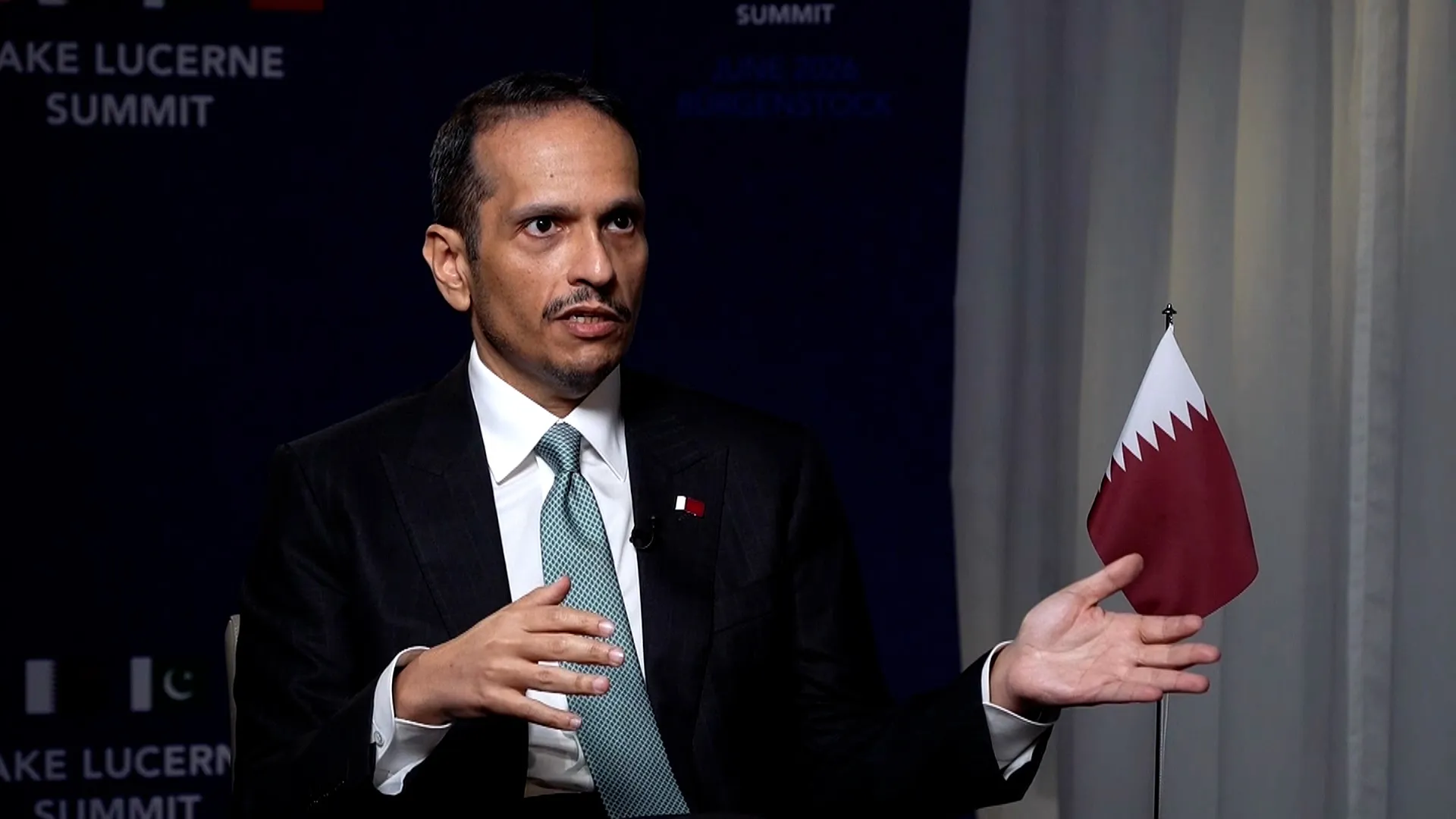
Qatar’s PM Sheikh Mohammed bin Abdulrahman Al Thani told Al Jazeera that safeguards have been put in place to prevent US-Iran negotiations from regional escalation, including tensions in Lebanon and the Strait of Hormuz, stressing diplomacy and respect for agreements.
HE stands to inherit his late dad Liam Payne’s £21million fortune, but nine-year-old Bear might not see a penny until he is at least 25.
His mum Cheryl Tweedy wants the legacy to be withheld until the lad is old enough to make informed financial decisions.
Cheryl, who was named an administrator of Liam’s asset, wants Bear to not gain full access to Liam Payne’s £21million fortune until he is much olderCredit: GettyBear is to be the sole beneficiary of the tragic singer’s £21million fortune
She has gone all out to protect their son since he was born in 2017, shielding him from the public eye in a bid to give him as normal a childhood as possible.
And she is keen not to expose him to the pressures of having such huge wealth at his young age.
High Court probate documents published over the weekend confirmed Bear is the sole beneficiary of his father’s fortune.
Parts of the estate — which includes the five-bedroom home at Chalfont St Giles, Bucks, that Liam bought for £3.25million in 2021 to be closer to his son following his split from Cheryl — can be used immediately to look after Bear’s needs.
However, Cheryl, who was named an administrator of Liam’s assets last year, would prefer he does not gain full access until he is much older.
“Protecting Bear is Cheryl’s priority in life,” a friend explained. “She is a devoted mother and will do everything she can to take care of him.
“Cheryl knows how difficult it can be to live in the public eye and has shielded Bear from that as much as she can.
“Inheriting this amount of money at a young age is enough to have the potential to send anyone sidewards — and that is what she wants to protect Bear from.
“She is going to stop him receiving Liam’s inheritance until he is at least 25 years old, if not older.
“For Cheryl, she feels that she wants Bear to be of an age where he can make informed decisions about the money.”
It was not until 2016 that they started dating, and Bear was born the following year.
The fortune can be used immediately to look after Bear’s needsCredit: Refer to CaptionCheryl never shows Bear’s face in social media photosCredit: Cheryl/Instagram
Their relationship ended in 2018, with Cheryl and Liam becoming devoted co-parents to their young son.
In a statement following their break-up, Liam wrote online: “We still have so much love for each other as a family.
“Bear is our world and we ask that you respect his privacy as we navigate our way through this together.”
In the years that followed, Liam regularly praised Cheryl’s ability as a mother and revealed she had stayed at home with their son while he pursued his solo music career.
He said of the former Girls Aloud star: “What I’ve learnt about being a dad is how hard it is to be a mum and she hasn’t had any help from anybody and she’s done it all herself.
“She supported me going off and doing my career and stuff. She is amazing.”
Cheryl, too, spoke fondly of Liam and revealed becoming a mother had changed the way she wanted to live her life. She said in 2019: “Everything changed for me from the moment Bear was born.
“My old brain came out of my head, and all my worries, anxieties and feelings of emptiness went, and a new brain replaced it.
Cheryl and Liam started dating in 2016 and Bear was born the following yearCredit: Refer to sourceThe couple split in 2018 but remained dedicated parents to BearCredit: PA:Press Association
“I knew the word ‘fulfilled’, but I’d never known what that felt like.
“Money, fame, success should have made me feel that, but they never did, which is probably why I looked for it in my relationships with men, but that never worked either.
“I was always angry at myself.
“And then, even though I’d had a really tough pregnancy because I had gestational diabetes, I felt more peaceful. The moment I held him in my arms I had that feeling: Fulfilment. It’s stayed with me. And I’ve changed so much. I really have.”
Together, Cheryl and Liam chose to keep their son out of the spotlight and, to date, the schoolboy is rarely seen.
She also continued to keep his face shielded from view, a decision she made with Liam when Bear was still a small child.
A friend explained: “Giving her son a normal and happy childhood is what Cheryl remains focused on.
“She wants him to have a life that other kids have. His parents might have been public figures, but Bear is not. Keeping that normality and stability for her son is paramount for Cheryl.
“It’s why the idea of him inheriting such a vast amount of money is worrying. Not everyone in this world has good intentions and Cheryl knows that.
“She wants him to still have ambition and the drive to succeed without the back-up of the money — and she’s aware that people may want to befriend him because they are aware of his situation.
“Guiding her son and controlling his access to the money will allow her to keep him safe. The older he is, the more wise he will be and, ultimately, when he is a man in his twenties with a job and a life of his own, he will be better able to make informed decisions with her guidance.
One Direction star Liam died suddenly in October 2024 without leaving a willCheryl and Liam chose to keep their son out of the spotlightCredit: Getty
“It is all any mother would want for their child.”
The singer fell to his death from a third-floor hotel balcony in Buenos Aires, Argentina, in October 2024.
An autopsy confirmed he died from multiple traumas and internal and external bleeding.
He had been with his girlfriend Kate Cassidy in the days leading up to the tragedy. She left the country to return to the house they shared in the US days before Liam died. Two men were arrested on suspicion of supplying him with cocaine before his death.
Liam’s body was repatriated to the UK for his funeral in Amersham, Bucks, which was attended by his closest friends and family.
Liam’s One Direction bandmate and close friend Niall Horan spent time with him in Argentina prior to his death after Liam flew there to watch him perform.
Liam’s passing at the age of 31 only fuelled Cheryl’s determination to allow their son to live a normal lifeCredit: Alamy
Three weeks ago, he spoke movingly about Liam and said he will cherish their last meeting. Niall revealed: “I’m glad of that, it means my last memory of him was happy. It still feels surreal.
“On day one I was, like, ‘Nah, it didn’t happen’. Our friendship was a bond that was there for ever, even if we hadn’t seen each other for a while.
“And it’s wild that one day, like the flick of a switch, he’s gone.
“All our families are in touch, they shared those experiences, too.”
Recalling the good times he shared with Liam, Niall added: “When I think of Liam’s passing, there is sadness, but it also makes me laugh because of the memories we had.
“I’ll go to places and think of something random that makes me laugh.”
In the days before the service, Cheryl issued a statement about Liam, saying: “As I try to navigate this earth-shattering event, and work through my own grief at this indescribably painful time, I’d like to kindly remind everyone that we have lost a human being.
“Liam was not only a pop star and celebrity, he was a son, a brother, an uncle, a dear friend and a father to our son.
“A son that now has to face the reality of never seeing his father again.”
She added: “Before you leave comments or make videos, ask yourself if you would like your own child or family to read them.
“Please give Liam the little dignity he has left in the wake of his death to rest in some peace at last.”
Since then, friends say Cheryl has devoted her time to caring for Bear and is determined to give him stability.
“Cheryl loves being a mum and doing all the normal things that parents do,” a pal explained.
“The school drop-off and pick-up, play dates with friends, cooking the dinners — she does it all while juggling work commitments.
“Cheryl knows there will be interest around Bear because of who his parents are. But that doesn’t mean he has to live that life — or even have any part in it. Protecting him from that and caring for him is all she cares about.
“She is a mother first and foremost. Her son will always be her number one priority.”
The logo of state-owned petroleum company QatarEnergy is shown in front of its headquarters in Doha, Qatar. An explosion at a liquefied natural gas plant in Qatar killed 13 and injured dozens Sunday. Photo by Hannibal Hanschke/EPA
June 22 (UPI) — An explosion at Qatar’s largest natural gas plant killed 13 people and injured about 66, authorities said.
The blast, caused by a technical malfunction, took place Sunday as the facility restarted its natural gas production after a shutdown caused by the Iran-U.S. war, authorities from the interior ministry said. It took place in the Ras Laffan industrial zone. The nearby Ras Laffan Port is the largest artificial harbor in the world and was targeted by Iranian strikes earlier this year, BBC News reported.
Saad Sherida al-Kaabi, Qatar’s energy minister, said that the explosion would not affect the country’s exports and that it was an accident and “not sabotage or hostile in nature.”
“We convey our deepest condolences to the families of those who have unfortunately passed away in the sad incident at Ras Laffan Industrial City last night,” the Embassy of India in Doha said in a social media post.
Liquified natural gas is important to Qatar’s economy, and the country is one of the world’s largest exporters of it. Ras Laffan is the largest site in the country for producing LNG. Qatar had ceased production earlier in the Iran-U.S. war and has said damage from attacks during the conflict could take years to repair.
The blast turned the city’s skyline orange and was felt by residents more than 43 miles away, BBC News said.
Messi scores twice to become all-time leading scorer in men’s World Cup history as Argentina reach knockout rounds.
Published On 22 Jun 202622 Jun 2026
Lionel Messi became the leading scorer in World Cup history as the captain struck twice to give Argentina a 2-0 win over Austria and send the champions into the last 32.
The player widely regarded as the greatest of all time pounced late in the first half in Texas on Monday with a trademark left-footed finish after neat build-up play.
Recommended Stories
list of 4 itemsend of list
The predatory goal added to his hat-trick in Argentina’s opening match to make it 17 in total at the World Cup.
The 38-year-old then sealed the match deep in injury time after a scramble in the box, as he outfoxed four defenders who lined up to keep the ball out.
It should have been even better for Messi, who missed a penalty early on, stunning a fiercely pro-Argentina 70,649 crowd at the air-conditioned home of the Dallas Cowboys.
With both sides knowing a win would put them into the knockout rounds with a game to spare, Lautaro Martinez was brought down in the box, sandwiched by two Austrian players.
Referee Amin Mohamed gave a penalty after a VAR intervention, and a wall of noise went up as Messi stepped forward on nine minutes.
But his run-up was slow and his weak effort off target, dragging it wide.
For all his brilliance, Messi – who turns 39 on Wednesday – is surprisingly poor from the penalty spot by his standards.
He also saw his spot-kick saved by Wojciech Szczesny in a 2-0 win over Poland at the 2022 World Cup, where Argentina went on to be champions, and missed at the 2018 tournament.
In the 19th minute Messi had a clear sniff at goal, only for Austria captain David Alaba to steal the ball off his toes at the last moment as he danced through on goal.
Alaba denied Messi again just after the half-hour mark, blocking his goalbound shot with goalkeeper Alexander Schlager stranded.
Ralf Rangnick’s Austria, who beat debutants Jordan 3-1 in their opener, were content to sit back. They did not have a shot on target in the first half.
Messi celebrates scoring Argentina’s first goal [Troy Taormina/Reuters]
Messi makes history
And then the came the big moment, Messi sweeping in on 38 minutes after being set up by Facundo Medina, with Thiago Almada cleverly letting the ball run through his legs to leave Argentina’s talisman all on his own and the goal gaping.
The Argentina fans, who greatly outnumbered their Austrian counterparts, rose to acclaim their hero.
Messi had equalled Miroslav Klose’s all-time mark of 16 World Cup goals when hitting a hat-trick in a 3-0 win over Algeria in the holders’ opening game.
Lionel Scaloni’s side failed to build on their lead, and the second half drifted, neither side creating much.
If anything, Austria threatened slightly more, but Argentina goalkeeper Emiliano Martinez was only once seriously troubled.
And then up popped Messi to have the last word at the death.
Julian Alvarez’s initial attempt was saved by Schlager but the rebound was worked to Messi who, after seeing his first shot blocked, pounced to drive in a low strike from six yards out that confirmed the points.
Ashley Cain was dropped by the BBC after historic degrading comments about women online came to lightCredit: BBCThe SAS Who Dares Wins star has now reportedly been dropped by his agentCredit: PA
The Daily Mail reports that Ashley has now been dropped as a client by his management company Off Limits amid recent events.
“Ashley has been dropped by Off Limits, who also represent stars such as Jimmy Bullard, Jesy Nelson and Harry Redknapp,” an insider told the publication.
“They have a roster of talent who are household names, they don’t want to be associated with him after the vile posts came to light.
“Ashley is now pretty much blacklisted in the industry, and it’s doubtful he will ever be on television again.”
The reality TV star presented BBC Three doc Into The Danger ZoneCredit: BBC/True NorthA second series has now been scrappedCredit: BBC
The Sun has reached out to Off Limits and Ashley Cain for comment.
Ashley no longer appears on Off Limits website as a listed client.
The Ex on the Beach star’s Twitter posts made in 2011 and 2013 are said to have referenced extreme sex acts and appeared to make light of consent.
He reportedly used offensive, sexualised and aggressive language about women.
Despite this, series one of Ashley Cain: Into the Danger Zone aired in April 2025.
It followed his journey to the world’s most dangerous places, interviewing young men who live on the fringes of society.
Filming for a second series took place earlier this year however, it will no longer air following The Guardian‘s report accusing Ashley of writing derogatory terms in 2014 and 2015 including “sl**s”, “b***hes” and “psychos”.
After the success of his documentary, he was picked to host, Sin City: The Real Las Vegas.
Ashley was flown out to Nevada to film the show but concerns were raised about his conduct.
Appearing to be drunk during filming of the show, the production was suspended and Ashley was ultimately dropped from the project and replaced by another presenter.
Despite this, the incident went largely ignored as Ashley returned to filming with the BBC earlier this year for the second series of his Into The Danger Zone series.
A BBC spokesperson told The Sun: “The posts by Ashley Cain, albeit from many years ago, are completely unacceptable.”
“The BBC has clear requirements around vetting and social media checks, which are undertaken by the production company.
“In this instance, the process clearly failed and we are investigating why.
“We are continuing to strengthen our processes to ensure everyone working for, and on behalf of, the BBC meets our values and standards.
“We have no plans to broadcast the new series of ‘Into the Danger Zone’, and no future projects with Ashley Cain.”
U.N. High Commissioner for Human Rights Volker Turk called on the international community to re-engage in support for the people of Myanmar as his office reported Myanmar’s military is responsible for more than 700 civilian deaths over a six month period. File Photo by Salvatore Di Nolfi/EPA
June 22 (UPI) — The United Nations Human Rights Office reported Monday that the Myanmar military is responsible for at least 702 civilian deaths between August and January.
The United Nations published its report on human rights abuses in Myanmar during conflict from the military’s announcement of elections through the end of the ensuing voting period. The United Nations notes that foreign actors have continued to supply the military with arms and ammunition, potentially facilitating human rights violations.
Of the deaths it says have been credibly verified, 476 were due to airstrikes. Victims included 224 women and 153 children. More than 500 civilians were killed in attacks from jet fighters, drones, paramotors and gyrocopters.
The highest volumes of civilian deaths spiked between two periods: August through September and December through January.
The absence of international assistance has also played a role, the United Nations said. Access to emergency healthcare declined due to military blockades and cuts to foreign aid.
U.N. Human Rights Chief Volker Turk called on the international community to re-engage in support for the people of Myanmar.
“As if the people of Myanmar have not suffered enough at the hands of the military, they have now seemingly been forgotten by those outside the country,” Turk said in a statement. “Funding for localised protection efforts was in many areas the only solace from the suffering caused by constant targeting and indiscriminate attacks by the military. The pullback just compounds the injury.”
Protesters urged the Venezuelan government to bring rice imports under control. (Archive)
Caracas, June 22, 2026 (venezuelanalysis.com) – Hundreds of rice producers took to the streets on Sunday in Calabozo, Guárico state, to urge the Venezuelan government to take action against agribusiness imports and price fixing.
The “tractorazo” saw local campesinos block one of the state’s major highways with tractors, trucks, and other heavy machinery carrying Venezuelan flags and signs with some of the main demands. Local sources estimated turnout at over 300.
“We are here on behalf of the producing states in Venezuela with a struggle that is just and urgent,” local spokesman José de la Cueva stated. “We urge the Venezuelan government to review its public policies so that national production is not destroyed.”
De la Cueva and other speakers emphasized the need for authorities to control imports, establish fair prices, and implement subsidies for the production of rice and other crops. Protesters contended that they have no conditions to compete with imports from countries where rice is subsidized, including Brazil and the US.
Rice growers, particularly in agricultural states Barinas, Cojedes, Guárico, and Portuguesa, have warned for months that agroindustry conglomerates have been importing massively since February.
According to agribusiness lobby FEDEAGRO, Venezuela has received more than 300,000 tons of imported rice in recent months. The amount is nearly half the 683,000 reportedly produced in the Caribbean country in 2025.
FEDEAGRO has complained that the exoneration of tariffs and import taxes is benefiting imported rice against national competitors. Imports of other crops such as corn have also skyrocketed, with purchases from the US more than tripling in the first five months of 2026 when compared to the previous year.
Meanwhile, campesinos have repeatedly denounced that local agribusiness corporations outright refuse to receive rice crops or attempt to impose prices as low as US $0.30 per kilo. Venezuela’s Agriculture Ministry established $0.40 per kilo following meetings with agroindustry and campesino representatives. Producers complained that the price did not take into account rising production costs and risked driving them bankrupt.
Alongside the latest street mobilization, rural organizations have likewise called for a boycott of Venezuela’s main agrifood conglomerates, including Polar and Iancarina.
The Small Farmers Movement (MPA), one of the organizations that took part in Sunday’s protest, issued a statement stressing that the defense of Venezuelan production and food sovereignty should become a “national unity cause.”
“This protest is about the survival of thousands of campesino families,” the text read. “It denounces the cruelty of agroindustry bosses whose voracious appetite for profit is fueling imports during harvest seasons to drive prices down.”
The MPA added that the growth of agricultural output in recent years has been based on “the exploitation of the work of thousands of campesinos” and urged social movements not to stay silent when it comes to the reality of small-scale producers in the countryside.
The campesino organization urged the government to adopt a series of measures, including implementing fair prices for rice and corn, reviewing import policies during harvest seasons, and investigating the “cartelization of prices” by agroindustry oligopolies. The MPA also called attention to the lack of credit for small-scale producers, which leaves them vulnerable to predatory lending agreements, including ones where they are offered seeds and inputs in exchange for a significant percentage of the harvest.
In a recent meeting with campesinos in Guárico state, National Assembly President Jorge Rodríguez vowed to investigate the issue of rice imports, claiming he was not previously aware of it. He urged agribusinesses to respect the previously agreed $0.40 price and called on public banks to reactivate credit for rural producers.
In recent years, with the economy heavily constrained by US sanctions, the Nicolás Maduro government moved to liberalize agricultural policies, transferring state competencies to the private sector, including provisioning of seed and fertilizer inputs and access to tractors. Fuel subsidies have also been phased out, with small-scale producers highlighting it as a major factor driving up production costs.
Holly Willoughby is reportedly planning to relaunch her television career in the coming days on a show which could rival ITV’s This Morning, which she stepped down from in 2023
Holly Willoughby is reportedly gearing up to be back on TV(Image: Ken McKay/ITV/REX/Shutterstock)
Holly Willoughby could be back on screens very soon. Since stepping down from ITV’s This Morning in 2023, the presenter has kept a relatively low profile, only appearing on two TV shows.
But according to reports, the 45-year-old has already participated in top-secret on-camera rehearsals for a new TV show, which could see her back on screens in no time. The new lifestyle series, which has recently been looking for staff ahead of its launch, will be titled Together.
And it comes as her This Morning replacement, Cat Deeley and co-star Ben Shephard are taking their summer break from the ITV magazine show. The firm behind the show, Hungry Bear, was recently advertising for a video editor, who would be required to work on “a new online series, producing high-performance, long-form content to be placed on YouTube“.
The hiring advert stated that the candidate would be required to start today or next Monday. The Daily Mail reports that the advert states: “Ideally starting Monday 22nd June (29/06 would be a possibility for the right candidate), the initial term will be four weeks, with the potential to extend to a year-long contract.”
Holly’s husband, Dan Baldwin’s firm, Hungry Bear Media, is behind the new show. She previously hinted at a return to work in a cryptic social media post. Sharing a snap on Instagram last week, Holly said: “Reunited with my absolute dream team today and my face, hair and outfit have never been more grateful.”
In her upload, she tagged make-up artist Patsy O’Neill, her stylist Danielle Whiteman, and hairdresser Ciler Perksah. She went on to add: “Nobody does it like the OGs. But honestly? The drive home might have won the day. My not so baby babies are waiting and that’s the only call time that really matters.”
The star has also filed trademark requests for a wide variety of products under the Together brand, indicating that Holly is keen to launch a spin-off, should the series become a success.
Holly stepped back from her telly roles with ITV in 2025, after appearing as a guest panellist on You Bet! Her time on This Morning came to an end in October 2023, after a plot to abduct her came to light. Since her departure, she has turned her attention to her lifestyle brand, Wylde Moon, which she launched five years ago.
Accounts for the firm from October 2024 show that current net assets amount to £4,831, a significant increase over the previous year’s £ 1,885. However, the company currently owes £733,485 to creditors, an increase from the £583,748 from the previous year. Creditors include HMRC with a £67,262 for Corporation Tax.
She later fronted Celebrity Bear Hunt with Bear Grylls, but the Netflix show was scrapped after just one season.
The Mirror has approached Holly’s spokesperson for comment.
House Energy and Commerce Committee Chairman Brett Guthrie, R-Ky., and ranking member Frank Pallone, D-N.J., announced the agreement that will set new standards for online platforms in respect to child users. File Photo by Annabelle Gordon/UPI | License Photo
June 22 (UPI) — Leaders in the House Energy and Commerce Committee announced a bipartisan agreement Monday to advance the Kids Online Safety Act.
Committee Chairman Rep. Brett Guthrie, R-Ky., and ranking member Rep. Frank Pallone, D-N.J., announced the agreement that will set new standards for online platforms in respect to child users.
The committee passed the Kids Internet and Digital Safety Act in March on partisan lines but Monday’s deal brings some changes to the bill.
“Coming into this Congress, we knew that protecting children and teens online would be one of the most significant challenges this committee would have to address,” Guthrie and Pallone said in a joint statement. “Through empowering parents, establishing safety as a default, strengthening privacy for children and teens, increasing transparency around data brokers, and holding Big Tech accountable, the KIDS Act delivers the 21st century protections parents have demanded and our kids deserve.”
The updated bill is expected to be considered on the House floor next week.
The Senate is considering a different version of the Kids Online Safety Act. If the House bill passes, the differences between the bills will need to be resolved.
One of the key distinctions in the House version of the bill is the absence of a duty of care standard which would require social media companies to design their platforms with the safety of children in mind. This includes implementing measures that block children from consuming age-inappropriate content and assures the platform’s design does not contribute to compulsive use.
States would be allowed to implement stricter regulations.
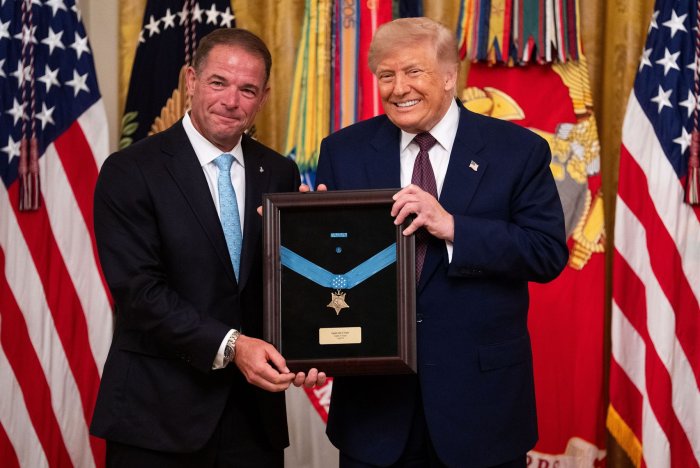
President Donald Trump presents a Medal of Honor to Tom Ripley on behalf of his father, John W. Ripley, during a Medal of Honor award ceremony in the East Room of the White House on Thursday. Photo by Aaron Schwartz/UPI | License Photo
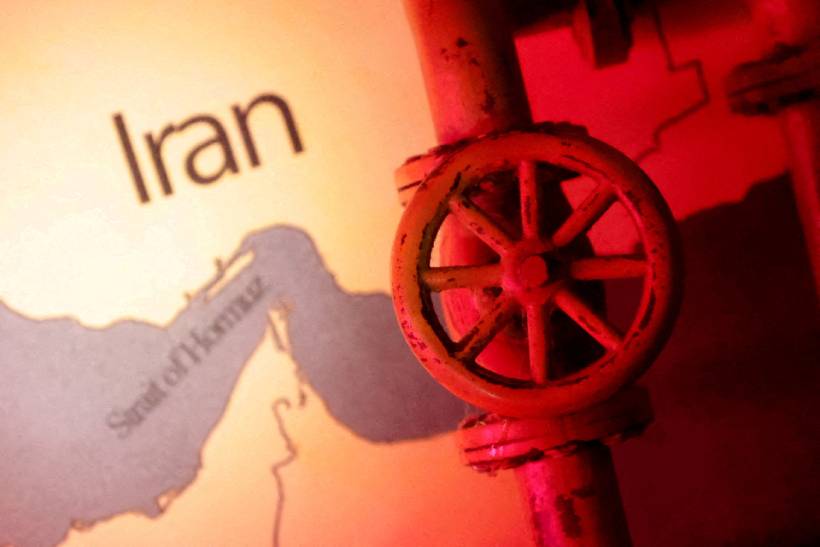
The disruption caused by the Iran war and the temporary closure of the Strait of Hormuz has prompted countries around the world to reconsider their energy security strategies. Governments that suffered economic damage from supply shortages and soaring prices are now looking to build larger strategic oil and gas reserves, potentially creating demand for hundreds of millions of additional barrels over the coming years.
Hormuz Crisis Exposed Energy Vulnerabilities
The near-total closure of the Strait of Hormuz disrupted around one-fifth of global oil and liquefied natural gas supplies for more than three months, sending shockwaves through energy markets.
Brent crude prices surged to nearly $120 a barrel as import-dependent economies faced rising fuel costs, supply uncertainty and growing inflationary pressures.
Emergency Reserves Helped Stabilize Markets
One of the key factors preventing a deeper energy crisis was the release of strategic petroleum reserves.
All 32 members of the International Energy Agency agreed to a record release of 400 million barrels from emergency stockpiles, helping offset supply disruptions and ease pressure on global markets.
The coordinated action highlighted the importance of maintaining large emergency reserves during major geopolitical crises.
China’s Stockpile Strategy Pays Off
China emerged from the crisis in a stronger position than many other major importers due to its massive strategic petroleum reserve.
The country has spent years building what is believed to be the world’s largest emergency oil stockpile, estimated at more than one billion barrels.
During the conflict, China significantly reduced crude imports, allowing it to avoid buying large volumes of oil at elevated prices and limiting the economic impact of the disruption.
Import-Dependent Economies Face Greater Pressure
Countries with limited strategic reserves faced much greater challenges.
Several Asian economies relied on emergency measures such as:
Fuel subsidies
Consumption restrictions
Reduced working hours
Energy-saving programs
The experience exposed vulnerabilities among countries heavily dependent on Middle Eastern energy supplies without substantial emergency stockpiles.
India Eyes Larger Strategic Reserves
India is among the countries most likely to expand its emergency storage capacity.
As the world’s third-largest oil importer and one of the fastest-growing energy consumers, India currently holds reserves covering only a small fraction of its import needs.
Meeting International Energy Agency standards would require hundreds of millions of additional barrels of storage capacity.
Recent plans under consideration suggest New Delhi is moving toward expanding its strategic petroleum reserve network.
Pakistan Also Reviewing Energy Security
Pakistan, which relied heavily on Middle Eastern oil and LNG imports before the conflict, is also examining ways to increase domestic storage capacity.
The Hormuz disruption underscored the risks facing countries that lack sufficient reserves to absorb prolonged supply interruptions.
Australia Moves to Address Reserve Gap
Australia, long criticized for failing to meet International Energy Agency stockpile requirements, has announced plans to significantly increase fuel reserves.
The move reflects a broader recognition that energy security has become a national security issue amid growing geopolitical uncertainty.
Europe Considers Additional Gas Storage
Europe already maintains extensive gas storage infrastructure to manage winter demand.
However, the war has renewed concerns about dependence on imported LNG, particularly as the region increasingly relies on overseas suppliers.
Additional government-controlled gas storage facilities may become part of future energy security planning.
Gulf Producers Seek Overseas Storage
The lessons of the Hormuz disruption are also influencing major energy exporters.
National oil companies in the Gulf are exploring opportunities to expand storage capacity outside the region to maintain export flexibility during future crises.
Additional overseas storage could help producers continue serving customers even if regional shipping routes face disruptions.
Oil Market Impact
The expansion of strategic reserves worldwide could create substantial new demand for crude oil and refined products.
At the same time, emergency reserves that were depleted during the conflict will need to be replenished.
Together, reserve rebuilding and new storage programs could generate demand for roughly one billion barrels over the coming years, providing support for global oil prices even if overall supply growth remains strong.
What It Means for Global Energy Security
The Hormuz crisis has reinforced a lesson many governments learned during previous energy shocks: supply security can be just as important as supply availability.
Countries are increasingly viewing strategic reserves not as emergency assets to be used rarely, but as a core component of economic and national security planning. The crisis has also demonstrated how large stockpiles can provide governments with flexibility to reduce imports during periods of market stress and extreme prices.
Analysis
The most significant consequence of the Iran war may not be the temporary spike in oil prices but the long-term shift in how countries manage energy security. The conflict exposed a clear divide between nations with large strategic reserves and those forced to absorb the full impact of supply disruptions. China emerged as a model for energy resilience, while countries such as India and Pakistan were reminded of their vulnerability to geopolitical shocks.
If governments follow through on plans to expand storage capacity, the global oil market could gain a major new source of structural demand. Reserve construction and replenishment may help absorb future supply surpluses and provide a floor for prices, particularly during periods of weak economic growth.
At the same time, larger strategic stockpiles could make future oil shocks less severe. Countries with substantial reserves are better positioned to reduce imports during crises, dampening demand spikes and limiting extreme price volatility. In the longer term, the world could emerge from the Hormuz crisis with a more resilient energy system, but one in which strategic stockpiles play a much larger role in shaping oil demand, trade flows and government policy.
Death in Paradise star Ralf Little has been acting for over three decades, and he has reflected on nearly 30 years since his Royle Family journey began.
17:50, 22 Jun 2026Updated 17:57, 22 Jun 2026
The BBC star left the drama in 2024(Image: (Image: BBC))
For four years, Death in Paradise audiences watched Ralf Little portray Detective Inspector Neville Parker in the enduring BBC drama. The actor departed the programme in 2024, with Don Gilet assuming the role as the lead DI in the cherished show.
However, prior to solving crimes in the BBC series, Ralf was recognised as Jonny Keogh in the sitcom Two Pints of Lager and a Packet of Crisps.
His acting journey commenced over three decades ago when he featured as Robbie in the 1990s ITV children’s drama Children’s Ward, which he credits with securing him a part in The Royle Family, the breakthrough that propelled his career.
In a clip he posted on Instagram from the programme Ricky & Ralf’s Very Northern Road Trip, he detailed the audition process for becoming Antony Royle, reports the Express.
He captioned the post: “It’s been nearly 30 years since my Royle Family journey began! It all started after I was on an ITV drama called ‘Children’s Ward’, which also launched the careers of Danny Dyer and Stephen Graham. Here’s the backstory, taken from ‘Ricky & Ralf’s Very Northern Road Trip’.”
Ralf told Ricky: “I’d done a few episodes of that, and I can only assume that Caroline (Aherne) and Craig (Cash), when they were doing the Royle Family, they couldn’t be bothered seeing hundreds of kids, like what normally happens.
“They said, ‘Just send three or four lads that you know’. I walked in, I sat down, and I read the script with them. I must’ve have been in the room more than three minutes, four minutes tops.
“I walked out going, ‘I did nothing, nothing interesting, nothing different’. Got to my car, got a parking ticket that was £50, which I couldn’t afford. It was like, ‘This is the worst day of my life. Got in the car, drove home back to Bury, got in, this was before mobile phones.
“I walked in, and my mum said, ‘Just had a phone call from Granada, they offered you the part’ before I’d even got home! Never happens like that, it was bonkers.”
It didn’t take long for the comments to flood in, with fans quick to reminisce about his iconic past role. One person said: “So glad they picked you to be in The Royle Family, leading to an amazing career for a fantastic actor.”
Another wrote: “Still going strong & still an incredible actor. Well done Ralf.” A third chimed in: “Right choice! And this was just the beginning of a versatile, great career. Thx for so many wonderful TV moments.”
One follower added: “Great story. Time is flying.” While another remarked: “Dang, I can’t believe it is going to be almost 30 years.”
Ricky & Ralf’s Very Northern Road Trip is available to watch on U.
The BYD logo is displayed at a BYD dealership in Beijing, China, on June 9. The Pentagon added Chinese companies Alibaba, BYD, and Baidu, among others, to a list of firms it said aid the Chinese military. Photo by Jessica Lee/EPA
June 22 (UPI) — China announced Monday that it is adding 10 U.S. defense companies to its export control list, restricting business with those firms.
The move prohibits Chinese companies from exporting certain items to those companies, including drones, robotic hardware and software that is used for defense and national security capabilities. There are also items for nonmilitary uses that are restricted.
The companies added to the export control list are: AVEOX, Red Cat Holdings, Teal Drones, IMSAR, Jaia Robotics, Ball Aerospace and Technologies, Oshkosh Defense, L3Harris Maritime Services, MP Materials and USA Rare Earth.
“Exporters are prohibited from exporting dual-use items to the aforementioned 10 entities, and any organization or individual from any country or region is prohibited from transferring or providing dual-use items originating in China to the aforementioned entities; any ongoing related export activities must be immediately ceased,” the Chinese Ministry of Commerce announced.
The Chinese Finance Ministry also announced that 46 U.S. companies are banned from participating in government procurement projects. Many of those companies are also defense contractors.
Companies that are banned from participating in government procurement projects include Lockheed Martin, Raytheon and General Atomics.
Both bans take effect immediately, however China has included some flexibility in situations where exporting is “truly necessary.”
China’s new trade restrictions are in response to the Pentagon accusing a number of Chinese companies of aiding its military. The Pentagon updated its list of companies believed to be aiding the Chinese military earlier this month, blocking the Department of Defense from awarding direct contracts to those companies.
The update included the additions of Alibaba Group, Baidu and BYD, a Chinese automaker.
The move, expected under the MoU, comes as Vice President JD Vance says there’s a ‘good foundation’ for a final deal.
Published On 22 Jun 202622 Jun 2026
The United States has partially lifted sanctions on Iranian oil exports following “encouraging” talks over ending their conflict.
The US Treasury issued a 60-day sanctions waiver on Monday, paving the way for the production, delivery and sale of Iranian oil to the US. The move came amid positive reports from mediators and the US vice president regarding talks in Switzerland between Washington and Tehran aimed at establishing a full peace deal.
Recommended Stories
list of 4 itemsend of list
The waiver is a condition included in the 60-day memorandum of understanding (MoU) signed by Tehran and Washington on June 17.
US Treasury Secretary Scott Bessent said that the US-Iran talks have been “productive” and that several of the MoU’s stipulations are moving ahead.
“Iran has committed to free and open transit in the Strait of Hormuz and to permit International Atomic Energy Agency (IAEA) inspectors into their country,” he wrote on social media. “As part of the framework, Treasury has issued a temporary 60-day general licence authorising the production, delivery and sale of Iranian oil.”
The licence lasts through August 21 and covers crude oil, petrochemical products, or petroleum products of Iranian origin. It permits Iranian oil to be imported into the US but does not authorise transactions involving US-sanctioned North Korea or Cuba, or Russian-occupied Ukraine.
There was no immediate response from Iranian government officials.
Oil prices continued their recent decline upon news of the waiver, with Brent crude dropping over 3.5 percent to $77.7 per barrel.
‘Good foundation’
Bessent’s announcement came as US Vice President JD Vance voiced optimism over the Tehran-Washington discussions in the Swiss resort of Burgenstock.
“We laid a very good foundation for a successful final deal,” he told reporters and shrugged off yesterday’s online tit-for-tat between President Donald Trump and top negotiator Mohammad Bagher Ghalibaf.
“Social media threats that they would walk out” did not come to fruition,” Vance noted. “There was a little bit of threatening, there was a little bit of whining, but at the end of the day the talks continued and we made great progress.”
Mediators at the talks said that Washington and Tehran had made “encouraging progress” at the first round, according to Reuters.
The vice president did not give a firm timeline for when nuclear inspections may start, but said conversations with the IAEA could happen as soon as Monday.
The US has said that the need to prevent Iran from developing a nuclear weapon was a key driver of its attacks, and demands that Tehran reopen its nuclear facilities to international oversight.
Iran has persistently rejected accusations that it seeks to develop a nuclear arsenal, insisting that its nuclear programme is purely for civilian purposes.
A busier waterway
Shortly before the waiver announcement, the Strait of Hormuz was reported to be seeing an increase in oil and gas tanker traffic, just two days after Iran said it would close the waterway again because of Israeli attacks on Lebanon.
Four Qatari-operated LNG tankers headed into the Gulf and through the strait on Monday, while two supertankers – which can carry up to four million barrels of crude oil – entered. One indicated its destination as the Iraqi port of Basra, according to ship tracking data.
Two smaller crude oil tankers, laden with just under two million barrels, sailed out of the waterway and into the Gulf of Oman on Monday, according to MarineTraffic.
“While daily transits remain below the 125 crossings prior to the Iran hostilities, the trend is positive,” said the shipping firm Clarksons.
The US has maintained that the strait was never closed for the second time and tracked 55 merchant ships loaded with more than 17 million barrels of oil on Saturday.
BBC fans can catch this one-off special before tuning into tonight’s World Cup match.
Hayley Anderson Screen Time TV Reporter
16:21, 22 Jun 2026
Superyacht Bayesian’s former captain Stephen Edwards(Image: BBC)
A BBC documentary takes a deep dive into how seven people “tragically perished”.
Fifa World Cup 2026 continues with France vs Iraq coverage kicking off from 9.30pm this evening, Monday, June 22, but there is more than just football on tonight.
At 8pm, viewers can tune into the hour-long documentary Millionaire Superyacht: Why Ships Sink on BBC Two.
The special takes a look at the intense storms of August 19, 2024 when the 54m superyacht Bayesian mysteriously sank off the coast of Sicily where seven people onboard died.
“As search and rescue teams scoured the coast for survivors, questions were asked”, the synopsis continues.
“Why did a multimillion-pound superyacht sink when others nearby didn’t?
“This documentary investigates what went wrong and what needs to be done to keep ships safe at sea.”
When the incident was taking place, all other vessels in the area mysteriously remained afloat but in that same year, aSea Story, a Red Sea dive boat, also capsized without warning.
Why Ships Sink features interviews with experts, including Bayesian’s former captain Stephen Edwards and Dr Sarah Martin who survived the Sea Story.
This documentary is part of a wider anthology series which takes a deeper look at why certain events happen.
BBC states that it delves into the “mysteries and science behind the stories that hit the headlines”.
BBC Two has previously looked at other memorable events, including “South Korea’s deadliest aviation disaster” and the three fatal shark attacks in Egypt in 2010.
Unfortunately, the “Why…?” franchise won’t be returning next Monday night as live coverage from Wimbledon will instead be shown.
Millionaire Superyacht: Why Ships Sink premieres on Monday, June 22, at 8pm on BBC Two.
Members of the Bolivian police and Army work to clear roadblocks in El Alto on Saturday after the declaration of a state of emergency. Photo by Luis Gandarillas/EPA
June 22 (UPI) — Bolivia began the week with 11 active roadblocks remaining across the national highway network — a sharp decline from the dozens that had disrupted transportation and commerce for more than 50 days, according to a road accessibility report from the Bolivian Highway Administration.
Local media outlets, including El Deber and La Razón, reported that reopening the country’s main transportation routes occurred shortly after President Rodrigo Paz declared a state of emergency Saturday in response to internal unrest.
Vehicle traffic and essential goods distribution have gradually returned to normal after a joint deployment of the Bolivian National Police and the Armed Forces, officials said. The operation dismantled much of the network of more than 50 critical roadblocks that had pushed the country toward a logistical and economic crisis.
The presidential decree, which the Legislative Assembly backed, temporarily authorized the Armed Forces to support police efforts to maintain order and guarantee freedom of movement.
In key areas such as El Alto and access roads to La Paz, security forces used excavators and other heavy equipment to clear tons of debris, dirt and rocks left on highways.
Negotiations also aided the reduction in roadblocks. Alongside the emergency measures, the government finalized a pacification agreement with the Bolivian Workers’ Center, the country’s largest labor federation.
Authorities also reported the peaceful removal of a 38-day blockade in the strategic municipality of San Julián in the eastern Santa Cruz department. Despite the large-scale demobilization, protests continue in several strongholds.
The remaining roadblocks are concentrated primarily in the Tropic of Cochabamba region and parts of Oruro and La Paz, Diario Libre reported.
Those areas are led by coca growers’ unions and Indigenous and peasant groups aligned with former President Evo Morales. The groups oppose the emergency decree, describing it as repressive, and continue to press political demands against the government.
Authorities reported isolated incidents during security operations, including chemical agents used in high-tension areas such as the Río Seco district of El Alto and roadways leading to Laja.
In those locations, protesters attempted to rebuild barricades and engaged in verbal confrontations with joint police and military patrols.
After the military deployment, Bolivia’s Ombudsman’s Office launched a nationwide monitoring plan. In a report released Sunday, the institution said most roads were reopened without the use of violent force.
With the country’s main transportation corridor restored, hundreds of fuel tankers and cargo trucks carrying food and medical supplies began to enter major cities as part of an emergency logistics effort to mitigate the economic damage caused by the prolonged conflict.
Ukraine says facility a ‘critical component’ in defence production as local Russian authorities confirm attack.
Published On 22 Jun 202622 Jun 2026
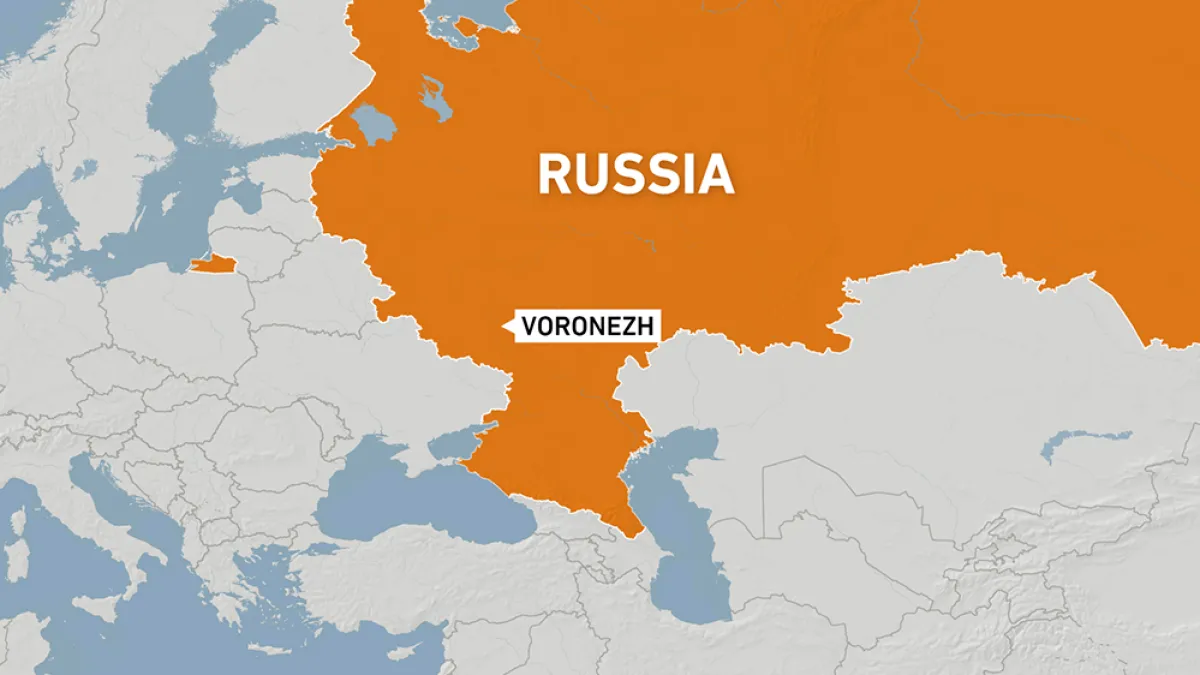
Ukraine’s military has said it struck a plant producing electronics for missiles in Russia’s Voronezh region, as well as the Dubna satellite communications centre in the Moscow region.
In a statement on Telegram on Monday, the Ukrainian General Staff said it had used air-launched cruise missiles to hit the plant in Voronezh, which it described as a “critical component” in Russia’s defence production.
Recommended Stories
list of 4 itemsend of list
Alexander Gusev, the Voronezh governor, said a production plant was damaged and three people were injured in the attack, without specifying the nature of the facilities.
Gusev said in a post on Telegram that air defence forces had destroyed several high-speed targets in the skies over Voronezh and warned residents of the danger of missile attacks.
The Ukrainian military also said it struck Russia’s Dubna satellite communications centre in the Moscow region, adding that heavy smoke was observed at the site and the extent of the damage was being assessed.
Eighty-four drones headed for Moscow were downed in the past 24 hours, the city’s Mayor Sergei Sobyanin said on Telegram.
He said emergency services had been dispatched to the areas where drones were downed, but gave no further information.
The airports of Sheremetyevo, Domodedovo and Vnukovo, as well as Zhukovskiy near the Russian capital, had temporarily suspended flights, the aviation watchdog said separately.
In total, Russian defence systems downed 301 drones overnight, local news agencies said, citing the Ministry of Defence. That tally included Russian-occupied areas of Ukraine.
The latest raids follow a drone attack that hit Moscow’s sole oil refinery last week, in one of the biggest air attacks on the city since Russia’s full-scale invasion of Ukraine in 2022.
Teenager killed in Ukraine
In Ukraine, authorities said a Russian drone attack early on Monday in the Sumy region killed a 13-year-old boy, his 36-year-old father, and his 73-year-old grandmother.
Regional governor Oleh Hryhorov said the 73-year-old was the mother of the man’s roommate.
Russian drone attacks in the southeastern Ukrainian city of Zaporizhzhia overnight and early on Monday killed two people and injured a further seven, Ukraine’s emergency services said.
Russia also hit the southern Odesa region with an Iskander ballistic missile on Sunday evening, killing one and injuring three people, regional governor Oleh Kiper said on Telegram. Vehicles and fuel storage tanks caught fire after the strike hit an agricultural facility, he said.
Elsewhere, the city of Sevastopol in Russian-annexed Crimea cancelled all open-air public events on Monday and will keep streetlights switched off, its governor, Mikhail Razvozhayev said, as he called on people to curb electricity usage.
Russian drones hit a Turkish dry cargo vessel, the Victress, which was sailing under the Panamanian flag, Ukraine’s navy said.
Deputy Prime Minister Oleksii Kuleba said a 58-year-old Egyptian cook was killed and eight other crew members, including Turkish and Indian nationals, had to evacuate on a lifeboat.
The leaders of Europe’s top military powers will meet on Wednesday in Berlin to discuss the Ukraine conflict and an upcoming NATO summit.
Chancellor Friedrich Merz plans to host the leaders of France, Britain, Italy and Poland, a spokesman said Monday, adding that the resignation announcement of British Prime Minister Keir Starmer had not changed those plans.
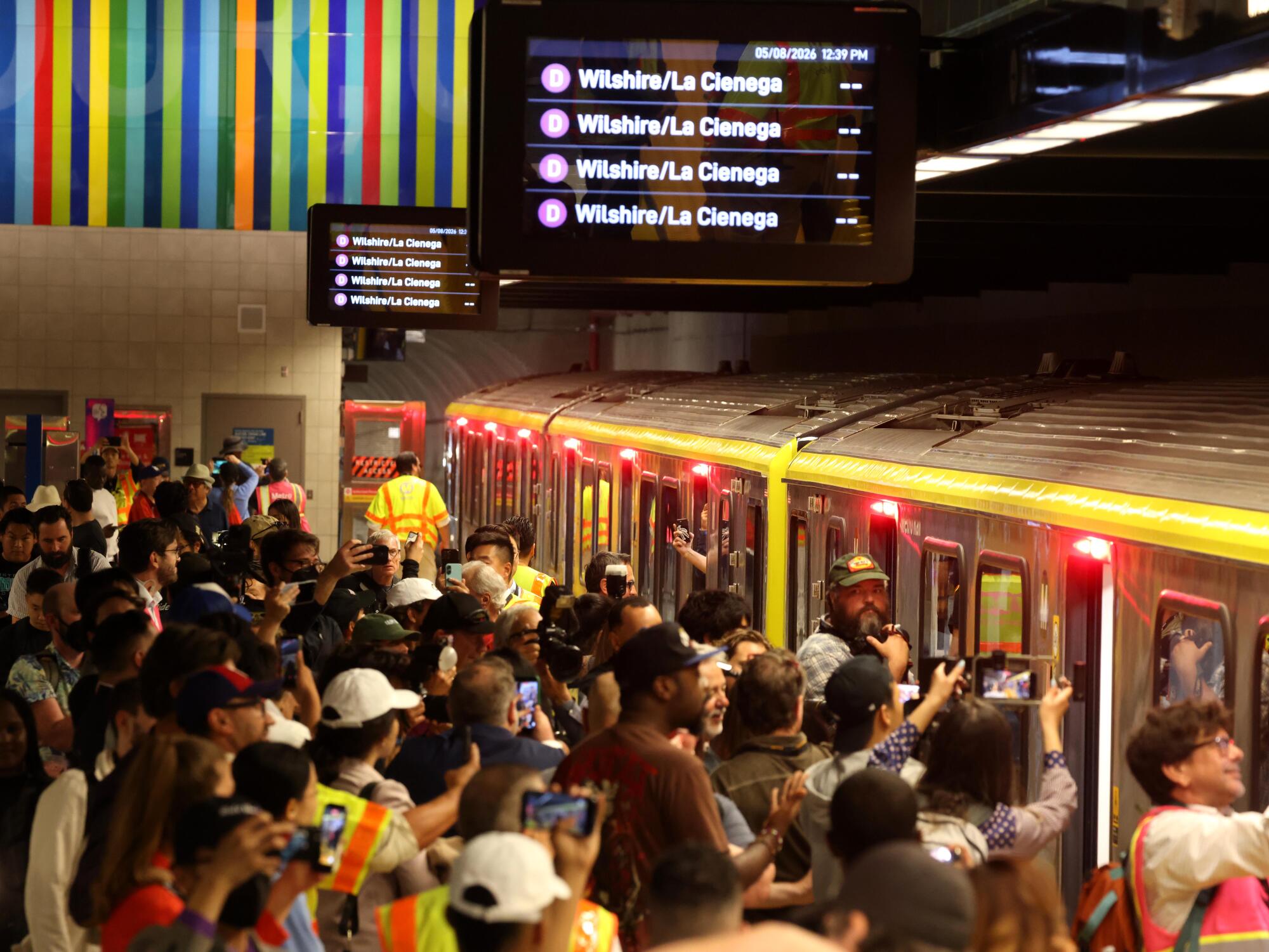
The Westside subway extension has long been L.A’s most stubborn urban fantasy: an infrastructural mirage chugging toward the sea, and then, with less sex appeal, Westwood. Stalled since the ‘80s, the first western leap of the elusive project is now real. And in the month or so since the Metro D Line pushed beyond Wilshire/Western to three new stations — Wilshire/La Brea, Wilshire/Fairfax, and Wilshire/La Cienega — multiple rides have made the benefits, and shortcomings, clear.
Suddenly the city feels different. Not transformed, exactly. But more connected. The fracturing grip of the city’s incomprehensible expanses, clogged arteries, and stagnant governance — all intimidating barriers to healthy civic life — feels a little looser. The dense belt tying the city together more complete, a critical mass of movement, still expanding, where there used to be a vestigial nub.
The stations, too, feel more connected, with art, architecture and infrastructure blending seamlessly into a cohesive experience, a tribute to Metro’s sharpened design approach and its ever-evolving commitment to public art. But above ground, it’s a tale of two (transit) cities. Outdoor plazas lack the kind of textured civic presence that’s been created below. Metro, which has become the most dominant regional force for urban transformation, is still less ambitious once it leaves the station box.
Passengers wait to board the first train to arrive at the Metro D Line at the Wilshire/Fairfax station in Los Angeles in early May.
(Genaro Molina / Los Angeles Times)
Before descending into the new stations, you might want to take a moment to appreciate that they exist at all, surviving, among other trials, a massive methane explosion, federal and local bans, major delays, and a battalion of lawsuits. Then notice how their myriad components work together. Art, for instance, is not simply attached to walls, but forms them, its patterns tracing your descent through space. Lighting doesn’t just illuminate surfaces, but becomes an artful complement to what’s around it. Escalators are not just conveyances, but reflective surfaces forming a utilitarian palette for art and light. The line between each piece becomes blurred, creating a sense that all is working together — a layered place that is intuitively easy to use.
This fluent incorporation of art builds on the long-running L.A. Metro Art program (formerly Metro Art in Transit), which since the early ‘80s has commissioned and installed over 200 artworks across the sprawling system, from mosaics and photography to multi-story murals. In fact, it’s quietly hummed along as one of the most successful public art programs in the country.
Artist Fran Siegel’s artwork at the Wilshire/La Brea Metro station is part of one of the most successful public art programs in the country.
(Carlin Stiehl / For The Times)
In many of its earlier iterations, art and architecture were conceived together to create strange, jaw-dropping, one-of-a kind spaces, like Peter Millar and Ellerbe Becket’s Santa Monica/Vermont station. Opened in 1999, this Red line stop featured among other things, a goliath stainless steel wing canopy topping a 42-foot-tall, raw concrete-clad escalator cavern, lit by massive skylights, etched with row after row of enigmatic questions.
Another personal favorite is Stephen Antonakos’ “Neons for Pershing Square,” a postmodern wonderland of suspended neon sculptures in the depths of downtown’s Pershing Square station that creates a kind of 3-D sculpture playing off the ‘80s gridded ceilings and Miami Vice white columns.
Wild creativity aside, these 20th century stations are marked by inconsistency in quality, comfort, and maintenance — and the lack of predictability can be confusing. (Wait, where do I go now?) This includes Metro’s inaugural A line, in which art-driven architecture, though fun, often feels like a quixotic gesture, unable to compete with loud, uncomfortable, concrete-dominated settings.
A man waits for a train on a platform at the Wilshire/Vermont station, which is along Metro’s B Line, formerly the Red Line.
(Brian van der Brug / Los Angeles Times)
Lines opened in the 2010s had their own issues. The Expo line (now the E line), barely 14 years old, features rather tentative wavy canopies and surface wraps and comparatively small spaces for artworks. With the new extension, Metro has found a balance between completely foregrounding art and relegating it to background. The new designs are guided by a “kit of parts,” a shared language of materials, lighting, signage, and wall systems that was developed first by local architects Johnson Fain and later by the global architectural firm Gensler, which served as the D Line’s systemwide station designer.
Yes, I miss the epic scale and immersive feeling of those older stations. But the tradeoff is a cleaner, brighter, more legible and human-scaled version, lending long-needed coherence to both the stations themselves and the system at large. And by the way, the art is still fantastic.
At the descending entryway of Wilshire/La Brea, for instance, the cosmic, angled lines of Eamon Ore-Giron’s “Infinite Landscape: Los Angeles Para Siempre,” which are embedded into porcelain enamel, channel not only the geometric forms of Wilshire’s Art Deco Buildings, but the visceral one-point perspective of a train speeding into a tunnel, and even the angled geometries of adjacent escalators.
Artist Eamon Ore-Giron’s “Infinite Landscape: Los Angeles Para Siempre,” at the Wilshire/La Brea Metro station.
(Carlin Stiehl / For The Times)
Heading down allows you to ponder its shifting mysteries. Circular abstractions might suggest headlights zooming along Wilshire, or perhaps a train’s fast-approaching lights? Its artfulness expands outward. Frosted glass panels wrapping the entry portal are clad with a similarly mystical language, accentuated by neon strips of light, with the lightweight canopy above reflecting the colorful lines. Art and architecture are working together, each feeding off the other.
A particularly fertile locale for drama at each station are the wide bands of art topping the tunnels themselves: beacon-like destinations for your eyes, not to mention invitations to occupy more of the platform. In the same station, Mark Dean Veca’s “Miracle of La Brea” takes its cues from the curvy ornament and stepped motifs of the nearby Wilshire Tower’s Art Deco façade. Look closer, and those crisp patterns dissolve into swirling, viscous forms that evoke the La Brea Tar Pits, flowing oil, and even barley-shaped references to the area’s agricultural past. The mural’s repeating forms also mirror the station’s rigorous order, its clean, syncopated forms and linear perspectives.
Another hallmark of the new stations is how they subtly make infrastructure itself into art. Celebrating — whether intentionally or not — the improbable engineering feat of carving a subway under one of the most dense, congested, and geologically and politically complicated parts of Los Angeles. Jogging white lines along concourse floors, meant as tactical guides for the vision impaired, rhythmically and playfully lead you forward. Glinting stainless steel railings, gridded perforated metal ceilings, and thin bands of suspended light bouncing off polished terrazzo floors, pull you forward on stairs and platforms, tracing the speed and linear movement of trains. Corduroy concrete walls, etched with endless vertical grooves, give tunnels a tightly rhythmic texture while still exposing their hefty bones.
The Wilshire/La Brea Metro station is part of the D Line extension and features evenly lit spaces, with porous surfaces and long sight lines to improve navigation and safety. Glass fare gate doors organize entry without turning the stations into fortresses.
(Carlin Stiehl / For The Times)
The quality of surfaces and experiences has been upgraded too. Unlike most older Metro stations, where low light and heavy surfaces can feel tired and oppressive, spaces are more evenly lit, with porous surfaces and long sight lines to improve navigation and safety. Glass fare gate doors organize entry without turning the stations into fortresses. Glass elevators and large cuts between levels create a sense of connected, kinetic openness.
Sometimes this palette feels too uniform and predictable. The heroic scale and quirkiness of older stations can be more exciting; more unique to their place. A surprise or two never hurt anyone. But overall it’s a good balance of unity, utility and identity, allowing the art to sing, but as part of a chorus, not a soloist.
The tune, however, shifts dramatically above ground. Station plazas wrap handsome modern architecture—clean, controlled, well-detailed portals of beveled stainless steel, frosted glass, and art peeking above entryways and on peripheral panels. But the hard plazas themselves are barren; lacking enough shade, art, greenery and invitation. Benches, where they exist, are tiny and defensive.
Pedestrians walk past the Metro D Line at Wilshire and LaBrea, which features a barren plaza lacking the beauty and design of the art-filled stations below.
(Kayla Bartkowski / Los Angeles Times)
These places seem scared to let people linger — clearly trying to avoid some of the city’s intransigent challenges, like homeless encampments, disorder, maintenance burdens, and controversy. This is understandable, but in avoiding those risks, the areas also avoid the purpose of public space: to create a place for everyone, not just a zone for people passing through.
Yet life appears anyway. At Wilshire/Fairfax, a dance class from a nearby studio recently gathered in a thin sliver of shade around the station. It was beautiful, and improvised, but also indicative of the underlying problem. Civic life was there, but the space had failed to make enough room for it. Imagine if that plaza had real shade, generous seating, creative sculpture, plantings, water, and edges that encouraged people to stay.
Another unresolved question is service. On multiple visits trains were not crowded. They also didn’t come often enough. Ten or 12 minutes of stagnant wait time does not feel like freedom if you are trying to lure Angelenos out of cars.
The last-mile problem doesn’t help. There is no easy parking near stations for those who don’t live close, no seamless transfer or final step. The bikes that Metro provides still have share docks, meaning you’ll need to find another dock on the far end (good luck). This remains, as it should, a system for people who already need transit. But for an institution struggling to add ridership, you wonder if it can become a system for people who have choices.
The Wilshire/La Cienega Metro station is part of L.A.’s new D Line extension. The outdoor plazas are not conducive to community or gatherings.
(Carlin Stiehl / For The Times)
Still, we should not understate what has happened. Los Angeles finally has subway stops that serve some of its densest, most public destinations, and Metro is still growing. The D Line makes the Miracle Mile feel less like a traffic corridor and more like a metropolitan spine. It suggests a Los Angeles in which neighborhoods, jobs, cultural destinations, and sidewalks begin to connect physically and with surprising immediacy. (Twenty minutes from LACMA to downtown feels like light speed!) It makes the city feel more like a city.
It also reveals the imbalance of power and imagination in Los Angeles. Metro, for all its flaws, has the ability to marshal money, planning, engineering and art at a scale the city itself generally cannot. All the more reason to branch more boldly beyond its tracks and stations.
The question remains: Can the agency coordinate with government, developers, cultural institutions, and neighborhoods to make these stations into places rather than portals?
The new stops prove that Los Angeles can design infrastructure artfully below ground. Above ground, however, it too often retreats into caution. The subway has arrived. The city around it still has to catch up.
LAUSD Superintendent Alberto Carvalho interacts with students in a classroom at Marlton School in Los Angeles on August 15, 2022. Carvalho submitted his resignation to the LAUSD school board on Sunday. File Photo by Etienne Laurent/EPA-EFE
June 22 (UPI) — The superintendent of the Los Angeles Unified School District, Alberto Carvalho, has resigned months after the FBI raided his home and offices, the school board announced Monday.
The LAUSD Board of Education said it received Carvalho’s letter of resignation Sunday.
“The Board remains steadfast in its commitment to ensuring stability, continuity and continued progress through strong leadership,” a statement said. “Our focus remains unchanged: providing every student with a high-quality education, supporting our dedicated workforce and maintaining the trust of the communities we serve.”
The board said former teacher and principal Andrés Chait would continue as acting superintendent until a permanent hire to replace Carvalho is made.
Carvalho’s letter, obtained by the Los Angeles Times, said he resigned to allow the district to focus on students “without distraction.”
The district put Carvalho on administrative paid leave after the FBI executed search warrants at his home and the district’s headquarters in February. Agents were spotted leaving Carvalho’s San Pedro home with boxes at the time.
The raid was connected to an FBI investigation into LAUSD contracts and a failed artificial intelligence project, KTLA-TV in Los Angeles reported.