The U.S Central Command said late Tuesday that its forces have halted all maritime traffic to and from Iran. File Photo by Ali Haider/EPA-EFE
April 15 (UPI) — The U.S. military’s maritime blockade of Iran has “completely halted” sea-based trade with the Middle Eastern country, U.S. Central Command said late Tuesday.
President Donald Trump announced the blockade on Sunday after negotiations to end the U.S.-Israeli war with Iran collapsed.
The blockade of 12 U.S. warships, more than 100 fighter and surveillance aircraft and more than 10,000 soldiers began at 10 a.m. EDT Monday, an effort to prohibit maritime traffic to and from all Iranian ports.
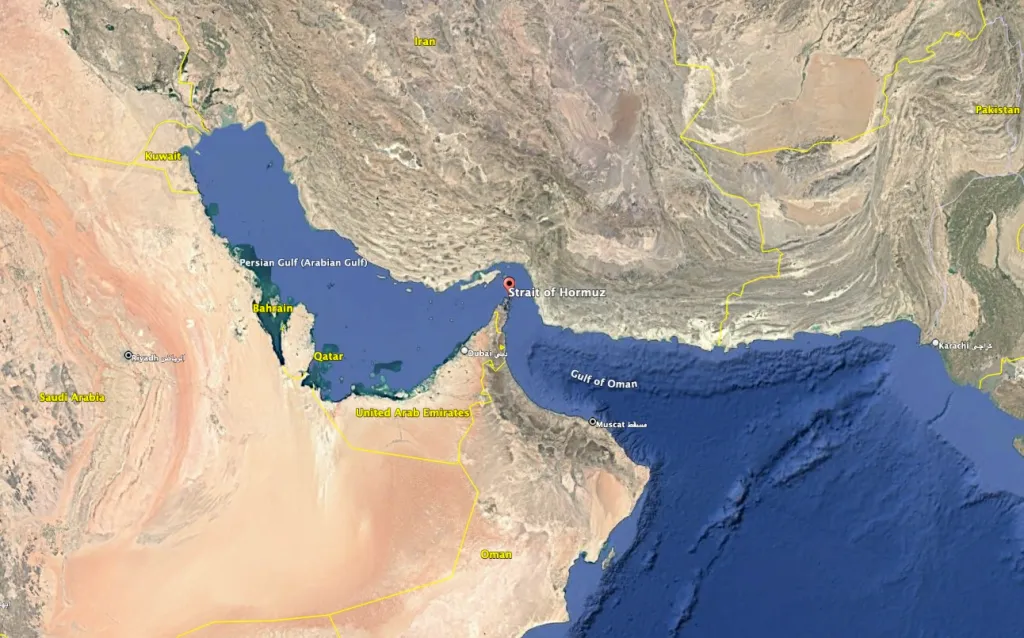
According to U.S. military officials, it covers the entire southern coastline of Iran, including ports on the Arabian Gulf and Gulf of Oman, between which lies the Strait of Hormuz.
“A blockade of Iranian ports has been fully implemented as U.S. forces maintain maritime superiority in the Middle East,” Adm. Brad Cooper, Central Command commander, said in a statement.
“In less than 36 hours since the blockade was implemented, U.S. forces have completely halted economic trade going into and out of Iran by sea.”
Central Command said earlier Tuesday that no ships had made it through during the blockade’s first 24 hours and that six vessels had complied with U.S. forces’ direction to return to an Iranian port on the Gulf of Oman.
“The blockade is being enforced impartially against vessels of all nations entering or departing Iranian ports and coastal areas,” Central Command said.
The blockade comes amid a two-week cease-fire between the United States and Iran that Trump announced on April 8. During the fragile truce negotiations on a permanent end to the war were to be conducted.
However, negotiations with Iran collapsed in Pakistan on Sunday, seemingly over disagreements on Iran’s nuclear program and control of the Strait of Hormuz.
Not long after the war began with the United States and Israel attacking Iran on Feb. 28, Iran sharply restricted vessel traffic to the Strait of Hormuz, an important trade route through which flows roughly 27% of the world’s maritime trade in crude oil and petroleum products as well as 20% of global liquefied natural gas trade, according to the U.S. Congressional Research Service.
Iran’s control of trade through the strait has caused gas prices to spike, threatening countries with energy crises.
The U.S. blockade appears aimed at financially squeezing Iran by cutting it off from maritime trade revenue.
According to Maid Maleki, senior fellow of the Foundation for Defense of Democracies, a nonpartisan Washington, D.C., research institute, the blockade could cost Iran about $435 million a day.
“The blockade makes continued resistance economically impossible,” he said in a statement.
At the end of every farming season, farmers across Kwapre, an agrarian community in Hong Local Government Area (LGA) of Adamawa State in northeastern Nigeria, come together to mark an annual event. Known for their guinea corn farming, the men in Kwapre take turns harvesting each other’s farms. A date is fixed for each farmer, and the rest join him on the farm. While the men work, a set of drummers line up behind them, and the women scatter across the field, singing and dancing to the melody of the talking drum.
Harvest season here was always a farming festival that held the community together for generations. It was the celebration of a bountiful harvest, and after every farmer’s crop had been harvested, the whole community came together to drink and make merry. The festival, however, would later stop as insurgency and violence steadily eroded the safety and cohesion of the community.
Buba Baba, a farmer who used to live in Kwapre, remembers the festival with nostalgia.
“We were living well. We had an abundant food supply, and our families were well taken care of,” he recounted.
Everything changed in 2014. The insurgency in the region intensified. The Boko Haram terror group peaked and began spreading its influence across Borno State through sustained attacks and by asserting control over captured communities. From Bama in Borno to Sambisa Forest, the group pushed into hinterland settlements, imposing its rule in areas under its control while terrorising those beyond it.
This influence extended across border communities, cutting through the edges of Borno and spilling into northern Adamawa. Violence moved easily through these indistinguishable boundaries, reaching rural communities in Adamawa. Places like Kwapre, Shuwari, Kaya, and several localities across Madagali, Hong, and Michika LGAs fell within the terror group’s reach. Across these local governments, communities faced the threat of displacement from their land and the loss of their ancestral culture, a fate that soon reached Kwapre.
That same year, terrorists invaded the community. The annual farming festival became inconsistent over the years and eventually stopped when the once-vibrant area was finally completely abandoned in 2025.
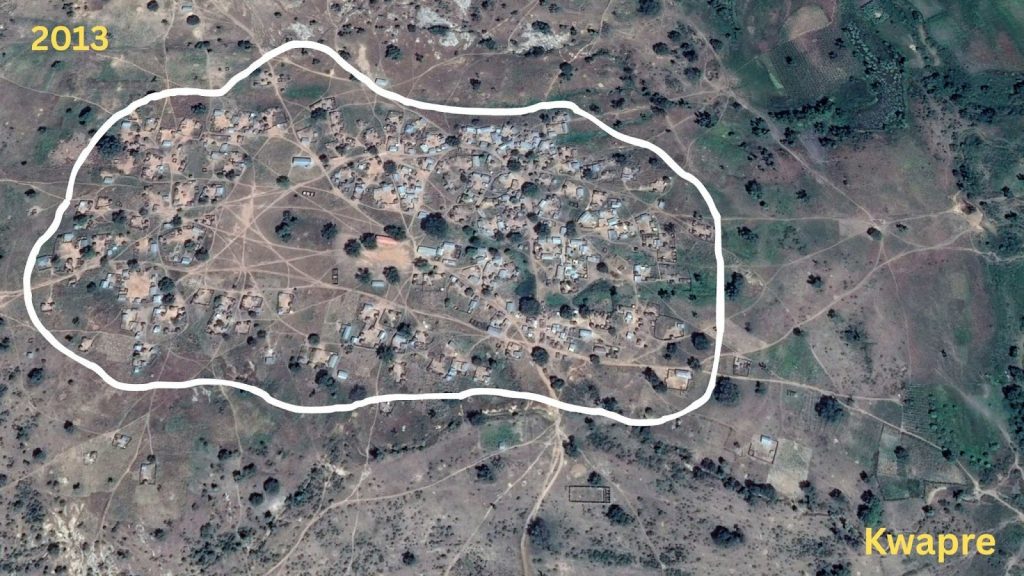
Despite repeatedly fleeing, residents kept returning to Kwapre. Google satellite imagery shows a strong tie to their homeland that keeps them returning and growing the communities despite periods of partial exodus. The latest attack led to a full abandonment in 2025. Map illustration: Mansir Muhammed/HumAngle.
The violence that broke ties
Buba is among the over 200,000 persons who have been displaced by Boko Haram in Adamawa State, with most of them from Michika and Madagali local government areas.
He told HumAngle that Boko Haram first attacked his community in 2014, and residents fled the area. After a year, the locals returned, but the terrorists kept storming the area at intervals. Some left for good, while others, like Buba, stayed behind, clinging to their ancestral inheritance and hoping that the violence would end.
“We go back when everything is calm and flee when the conflict starts again, but by 2025, we have all left, and there is currently no one in Kwapre,” Buba said.
Boko Haram has been displacing residents in Adamawa since 2014. About 40 people were killed after the terrorists attacked seven villages in Michika and its environs in 2014. In 2016, the group invaded the Kuda Kaya village of Madagali LGA and killed 24 people during indiscriminate shooting.
In 2019, Boko Haram struck again, but some of them were killed in Madagali after they tried to infiltrate a military camp. However, one soldier and a civilian were killed. In 2020, Kirchinga village in Madagali was attacked after the insurgents stormed the area. Houses were razed and shops looted, causing residents to flee.
Other attacks were unreported. Data from the International Organisation for Migration (IOM) shows that a total of 665 individuals from 133 households were displaced from their communities in Madagali by a non-state armed group in June 2022.
Chinapi Agara, a resident of Garaha, another community in Hong, told HumAngle that when the Islamic State West Africa Province (ISWAP), a Boko Haram breakaway group, attacked a military base in the area in February, communities within Garaha had experienced a surge in kidnappings in the last few years, which had forced many to flee.
“Lots of communities like Kwapre, Gabba, and Lar have been completely displaced,” he said. Chinapi’s relative died from a stray bullet during the attack.
Shuwari in Kirchinga, under the Madagali LGA of Adamawa State, is one community that has been deserted following insurgents’ attacks in the area. Despite the recurring attacks in the last decade, locals stayed back, but in February, the entire village was deserted after Boko Haram stormed the area and opened fire on locals. HumAngle learned that 21 people were killed, including the Shuwari community leader.
Bitrus Peter, a resident of Kirchinga, told HumAngle that this was not the first Boko Haram attack in the area. “Since we came back from displacement in 2015, we have been facing this challenge. Sometimes, they give a break of a year or two and then return,” he said.
Gambo Stephen, a survivor of the February attack in Shuwari who has since fled the area, told HumAngle that residents have now been scattered across various places.
Back in Shuwari, Gambo owned a barbing salon that brought in a modest income to support his wife and four children. “I opened the shop immediately after I was done with my tertiary education, and for years, it helped me to provide for my family,” he noted.
On February 24, when Boko Haram raided Shuwari, Gambo’s salon was burnt to the ground alongside other houses and properties in the area. “I narrowly escaped because five people who were running with me were all shot dead,” Gambo said.
Get our in-depth, creative coverage of conflict and development delivered to you every weekend.
Subscribe now to our newsletter!
These localities around Kirchinga are geographically at risk of cultural loss.
Kirchinga town itself is a border settlement between Adamawa and Borno states. It lies along the banks of a large river that sustains a livelihood built around fishing. Even with seasonal drying of the water, satellite imagery shows stretches of low-lying land between the levelled terrain, supporting farming during the dry season.
Beyond this, the area serves as a pathway between Borno and Adamawa, with a road tracing the river’s path and linking a chain of localities. Agricultural fields, water sources, and this road network connect these settlements across the local government area through markets and other primary commercial activities.
The land around the settlement dwarfs it. The road sustains movement and exchange, but along that same path is the spread of insurgent influence.
Illustration: Akila Jibrin/HumAngle
Zooming out from Kirchinga through satellite imagery reveals the other settlements facing similar patterns of displacement and abandonment. To the north lies Bikiti. While its layout differs from Kirchinga, the parallels are clear in the vast cultivation fields surrounding the settlement. Alongside these are a mix of swampy wetlands and local streams, supporting a range of ecosystem services, from farming to aquatic life and small game.
Beyond this lies a large stretch of uninhabited land, many times larger than the settlement itself, composed almost entirely of cultivated fields. Further out, this landscape opens into forested areas that connect toward Sambisa Forest, long associated with insurgent strongholds.
Though these places differ in their satellite layouts, their cultural identities are evident from above. Whether through farming, fishing, hunting or trade, the patterns on the land reflect the life of the people who lived there. These are the same patterns that begin to disappear as displacement takes hold.
Kuda Kaya, another such settlement, offers another case in point. Located northeast of Kirchinga, it has become known for both attacks and displacement.
It is a small settlement, easy to miss at a wider satellite scale. Within its tight layout are key structures: a primary school, a health post, and an administrative building, surrounded by clusters of homes. The settlement itself is heavily vegetated, with tree cover rising to roof level. Beyond this, shorter grasslands spread into cultivated fields, intersected by small streams. While hunting may not be the dominant activity, the landscape supports tree crops and grain farming.
Kuda Kaya is known for both attacks and displacement. Satellite illustration: Mansir Muhammed/HumAngle
The intent behind settlement patterns becomes clear when looking at historical imagery, even as far back as 2004, available on Google Earth. The ancestral communities chose flat terrain near rivers or streams, or large forest areas, settling in compact clusters while using the surrounding land for food production.
At present, signs of abandonment are not always as obvious as in parts of Borno or Benue in the country’s North Central. Some of these communities endured repeated attacks, with residents returning each time. But over time, the strain of persistent insecurity led to wider displacement and, in most recent cases, total abandonment.
In a few years, many of these buildings will begin to collapse. Roofs will give way, and some structures will be burned, patterns already observed across abandoned communities affected by insurgency in Nigeria. What will also become visible is the absence of farming. Recent imagery already shows early signs of neglect across what were once actively cultivated lands.
The same likely extends to the rivers. While satellite imagery cannot fully capture changes in aquatic life, the absence of regular human activity around these waters will affect both the ecosystem and the human systems tied to it, similar to what has been observed in parts of the Lake Chad region.
Zooming further out shows northern Adamawa marked by these border communities, many of which are now within displacement hotspots.
Some abandoned communities in northern Adamawa state. Map illustration: Mansir Muhammed/HumAngle
Today, many of their residents live in resettled communities and displacement camps still active across the region, some farther away, removed from the cultural heritage their ancestral lands once provided. They adapt to the host communities, the only available way for them. They can no longer point to land and trace ownership or inheritance. Even when they take up familiar activities like farming, fishing, or hunting, they remain outsiders for a time.
The geographic shift may not always be extreme, but the separation from their roots is. The connection is severed, even when practices are carried into new environments. For those displaced, especially across generations or into prolonged uncertainty, that break becomes harder to repair. It is reinforced by the trauma of the violence that forced them out.
Some still hold on to the hope of return. Others are already preparing to move on, regardless of what becomes of home.
Resettlement
When the terrorists returned to Kwapre in 2025, Buba faced a near-death experience, and that was the last straw. He fled with his wife and five children alongside other community members when the village was being set ablaze.
“I left home empty,” he stated, adding that his family didn’t flee with any belongings.
Buba moved into Hong town, where he settled with his family. With each passing day, he remembered home, but he knew it would be unwise to return. It’s been about a year since Buba resettled in Hong town. He describes the last couple of months as hell.
“We are suffering, and since I was born, I have never suffered like this,” he said. Buba is unsure of his exact age, but is estimated to be in his 50s. “We have to pay for house rent, and there is no money to do so. We are always pleading with the landlord. We are also managing food supply,” he lamented.
Back at Kwapre, Buba had his own house. As a full-time farmer, he said his harvest was always bountiful, and his family was always cared for, but now, they even struggle to feed themselves. He currently works as a labourer on a construction site. His task is to fill up trucks with sand and transport them, but the wage barely covers his family’s needs. Since he has been a farmer all his life, Buba acquired a plot of land in his new area so he could cultivate crops, keep some, and sell the rest to augment his income from his labouring job.
“I cultivated last year, but it was destroyed by cattle, and I couldn’t get even a bag of maize during the harvest,” he said.
While he considers himself lucky to be alive, Buba says life has taken a difficult turn. “I can’t even pay my children’s school fees. I registered them in a school here in Hong town but they have just been sent back home,” he said.
After making it out of Shuwari, Gambo travelled to Yola, the capital of Adamawa State, and settled in an old secondary school in Saminaka, a neighbourhood in the city.
“I didn’t leave with anything because they burnt everything, so someone gave me a student mattress to lie on,” he said.
After taking shelter at the school, he was able to phone his wife, who had made it out safely with his four children.
“They are currently staying with her relatives in Madagali town,” he said.
Gambo feels his family is better off without him because he has nothing to offer them.
“Thank God for relatives because they do buy things and give them, and also some friends. If I had left home with some of my valuables, I would have started a business, but I don’t have anything on me. They (Boko Haram) also burnt my farm produce, slaughtered all my cattle alongside others in the village,” he said.
If the violence ever ceases and peace is permanently restored, Gambo said he would never return to Shuwari, for he had seen enough.
“My friends died there, and it’s only God that protected me, especially my wife and children,” he said.
Gambo told HumAngle that the community is completely deserted and that his main concern right now is raising capital to start a business at his new location in Saminaka. If things somehow get better, he would send for his family to join him.
In 2025, HumAngle reported how many displaced persons from Adamawa are stuck in displacement camps for about a decade because their hometowns remain unsafe.
Ghost towns
While he has not kept in touch with anyone from his community since he fled, Buba fears that the name ‘Kwapre’ will be erased from history, as the once-lively village now lies empty and silent. He wished things were different. He dreams of a time when the terrorists will stop invading the area, and his people will return and carry on with their regular lives. He looks forward to the annual harvest festival, but he believes his aspirations are not enough to hold water.
“People from Kwapre have been scattered across different regions. It’s even difficult to keep in touch with close relatives,” Buba said.
But if the violence ceases and peace is permanently restored, Buba said he will return home even if it means he will be the only one living there. At least, he’ll have his house, his large farmlands and grains filled in his store. His children won’t go hungry, and he won’t have to labour day and night.
However, some questions linger in his mind: When will the violence end, and even if it does, will Kwapre be the same again?
According to Gambo, the fact that he misses Shuwari can’t be denied. It was the only home he had known all his life. “We used to celebrate together when we were in the village. We lived peacefully, but when the insurgency started, everything crumbled,” he said.
While he misses the community that has stood by him his whole life, Gambo has made up his mind: he is done with Shuwari.
“I won’t go back because the village is on the border of Sambisa Forest,” he said.
Studies have shown that the Boko Haram insurgency in Adamawa, which targets communities near the Sambisa Forest, has caused several communities within the Northern Senatorial District of the state to vanish. Madagali, Michika and Hong local governments specifically have the highest number of abandoned communities as attacks continue to intensify. From 2023 to 2025, villages in Kwapre, Zah, Kinging, Mubang, and Dabna in the Hong local government, with a combined population of over 10,000, were said to have been massively displaced, with many residents fleeing to safer towns.
Boko Haram insurgency in Adamawa targets communities at the Borno border, especially near the Sambisa Forest, causing several communities within the state’s northern region to vanish. Photo: Cyrus Ezra
Sini Peter, the youth leader of Kirchinga community in Madagali, told HumAngle that a lot of cultural festivals have stopped due to Boko Haram’s consistent attacks in the area.
The Yawal festival, the most popular cultural event in the area, was held annually in the middle of the year and is no longer held.
“A grass would be tied to a guinea corn stem, which is a year old, and we would go out early in the morning, around 3 a.m., to chant,” Sini recalls how the festival used to be held.
The Yawal festival was so significant to the Kirchinga people that the ritual had to be completed before locals could carry out their daily activities. The chants were traditional songs believed to ward off death from the community and were sung every morning on the day of the festival. Locals were always eager to participate in the ritual and sing the song until terrorists started invading the area.
However, they no longer believe in the ritual’s efficacy or mark the festival, according to Sini. “Boko Haram attacks made death a normal thing to us today,” he said.
According to the youth leader, the February attack on Shuwari, which had caused residents to flee the area completely, shows a broader displacement pattern across Madagali communities that have been affected in the area.
“Villages like Imirsa, Madukufam, Balgi and Yafa, which are bordering Kirchinga, are empty due to the Boko Haram issues,” he said, adding that the terrorists have been looting properties like roofing sheets in some of these communities from time to time.
While many have deserted these areas for good, including Kirchinga town, Sini is among those who stayed behind. “I know that wherever a Marghi man goes, he will remember home because he will not enjoy anywhere like home. Even with the killings, we don’t have anywhere like Kirchinga,” he stated.
One of the Motorcycles burnt in the Wagga-Mongoro community of Madagali after terrorists invaded the area in 2025 and killed civilians. Photo: Cyrus Ezra
Speaking on the security situation in the area, he noted that the security architecture in Kirchinga is very poor. “What should be done is not done because fear is all over us, including the security personnel,” he said.
When Ahmadu Fintiri, the governor of Adamawa State, visited the area following the attack in Shuwari, he vowed to secure the area, but Sini fears the promise will not translate into action.
“There are people trained now; they are called Forest Guards, and when the attacks happen, they do not have arms, but after the governor left, they were given AK-47s, but when they want to go for duty, they have to go to Shuwa to get the arms and return them after duty,” Sini said.
He explained that this strategy might not work, as the forest guards spend over ₦1,000 daily to obtain and return arms in Shuwa, as protocol demands.
It’s been a month since people treaded the Shuwari path, and with the community now completely deserted, Gambo fears that his children might never know their ancestral homes or experience the cultural heritage that once united their people.
What’s left of the ghost towns?
The analysis of satellite imagery from 2013 to 2025 across 14 communities in Adamawa State, using specialised satellite sensors (Landsat/Sentinel), shows environmental change linked to abandonment and displacement. When fields are left uncultivated, the land does not simply freeze in time. In some areas, weeds overtake cultivation, while in others, the soil and greenery collapse, leaving the land barren.
The vicinity of the abandoned communities. Green shows shrub reclamation. Red shows the growing barrenness of abandoned lands. Data source: Landsat & Sentinel/ illustration: Mansir Muhammed/HumAngle.
In communities like Larh and Dabna, the data shows a steady increase in shrubs and bushes. In recent times, peak vegetation values in Larh have risen by nearly 12 per cent, as weeds are left unattended in places where farmlands used to be.
The seasonal variation has also increased, indicating that the lands now support vegetation growth in response to rainfall rather than following a stable, cultivated rhythm. Mubang and Banga show similar trends, with significant growth in peak farmland weed growth over the same period. The land is reclaiming itself in a chaotic, unregulated way, with invasive, fast-growing plants dominating.
On the other hand, several communities tell a different story. Kirchinga and Kopa have experienced dramatic declines in greenness, with vegetation dropping by 27 per cent and 23 per cent, respectively. These are areas where abandonment appears to have compounded other pressures, such as erosion, burning, or neglect, leaving the soil exposed and vulnerable.
Shuwari and Yaza have also lost nearly one-fifth of their peak greenness over the same period. Unlike Larh or Dabna, these communities are not witnessing vigorous shrub growth. Instead, the land shows signs of degradation, with both peak greenness and seasonal variability shrinking, suggesting that vegetation’s capacity to recover is weakening.
This has long-term implications for returnees. The data highlights a dual response to abandonment. In some areas, the absence of farming has allowed nature to fill the gaps, though not always in ways that benefit local livelihoods. In others, the land deteriorates quickly once cultivation stops, leaving behind increasingly unproductive expanses.
These two observed outcomes will shape the future of the homes should locals return.
GEMMA Arterton has revealed she secretly welcomed a second child.
The actress – who is set to headline the new big budget ITV drama Secret Service later this month – has revealed she kept her entire pregnancy a secret last year.
Sign up for the Showbiz newsletter
Thank you!
Gemma Arterton has revealed she secretly welcomed her second child last yearCredit: GettyThe new mum looked incredible as she sported some bright red trousers earlier this week in the London sunshineCredit: BackGridGemma stepped out with her co-star Rafe Spall while promoting their new thriller Secret ServiceCredit: BackGrid
As reported by the Mirror, speaking on the Dish podcast with hosts Nick Grimshaw and Angela Hartnett, Gemma casually revealed she is now a mother of two.
Asked how she is on the latest podcast, she told the hosts: “I’m happy to be let out for the day.
Javokhir Sindarov wins the Candidates Tournament with a round to spare and will face India’s Gukesh next.
Published On 15 Apr 202615 Apr 2026
Uzbek grandmaster Javokhir Sindarov has clinched victory in the chess Candidates Tournament with a round to spare, drawing with Dutchman Anish Giri to set up a World Championship match against India’s Gukesh Dommaraju.
The 20-year-old stormed through the event in Cyprus on Tuesday, winning six of his 13 games and losing none in a dominant performance never seen at the Candidates.
Recommended Stories
list of 3 itemsend of list
Sindarov moved to 9.5 points, two clear of second-placed Giri on 7.5, after the Dutchman failed to convert a winning position against China’s Wei Yi in the previous round.
“It was the hardest week in my life. I even slept really bad the last few days. I am very happy to finish this tournament with a win,” Sindarov said after his win.
The tournament had been seen as a possible last opportunity for the old guard to mount another challenge for the world title, but Americans Fabiano Caruana and Hikaru Nakamura never seriously threatened.
Gukesh won the title in 2024, defeating China’s Ding Liren in the 14th and final game of their match. Ding had himself become champion by beating Ian Nepomniachtchi after Magnus Carlsen, the five-times champion who remains world number one, relinquished the crown, citing a lack of motivation.
“I do not want to think a lot about the upcoming World Championship match right now. I know it will be a very hard match,” Sindarov said.
“Gukesh has an experience of playing at this level. But I have a very good team. I have a lot to work on, and I will work a lot for this and take my chances.”
While Sindarov’s breakthrough and the broader rise of a younger generation are likely to prompt new speculation about a Carlsen comeback, the Norwegian has said he has no intention of returning to the classical World Championship cycle.
A precise date and a venue for the World Championship match have yet to be announced.
KATY Perry is at the centre of a police probe after Ruby Rose’s bombshell sexual assault allegations.
Victoria Police confirmed they are looking into the claims made by the Australian actress, who alleges the pop star assaulted her during a night out in Melbourne back in 2010.
Sign up for the Showbiz newsletter
Thank you!
Victoria Police are investigating sexual assault allegations against Katy PerryCredit: GettyThe allegations by Ruby Rose refer to an incident in Melbourne in 2010Credit: GettyPerry and Rose pictured together years agoCredit: BackGrid
A police spokesperson said: “Melbourne Sexual Offences and Child Abuse Investigation Team (SOCIT) detectives are investigating a historical sexual assault that occurred in Melbourne in 2010.
“Police have been told the incident occurred at a licensed premises in Melbourne’s CBD.
“As the investigation remains ongoing, it would be inappropriate to comment further at this stage.”
The alleged incident is said to have taken place at the Spice Market nightclub in Melbourne’s CBD while the pair were out together.
They previously told Variety: “The allegations being circulated on social media by Ruby Rose about Katy Perry are not only categorically false, they are dangerous reckless lies.
“Ms. Rose has a well-documented history of making serious public allegations on social media against various individuals, claims that have repeatedly been denied by those named.”
Ruby Rose, now 40, reportedly filed a formal complaint – triggering the investigation.
Most read in Entertainment
But she has since gone quiet on the claims, revealing police have told her to stop speaking publicly.
She wrote: “Last update on this: As of this afternoon, I have finalized all of my reports.
“This means I am no longer able to comment, repost, or talk publicly about any of those cases, or the individuals involved.
“It’s going to look like I am ignoring everything from supportive messages, to other people’s experiences, but I’m not.
“This is a standard request from the police and in many ways, quite the relief. I can start the healing process now. And temporary [sic] move forward. I love you all so much.”
The shock claims first exploded online on Sunday when Rose accused Perry, 41, of sexually assaulting her during her twenties.
The Firework singer, 41, is currently dating former Canadian Prime Minister Justin TrudeauCredit: InstagramThe pair were seen together at Coachella music festival in Indio, CaliforniaCredit: Katy Perry/Instagram
She said: “I’m now 40. It has taken almost two decades to say this publicly.
“Though I am so grateful to have made it long enough to find my voice, it just shows how much of an impact trauma and sexual assault takes. Thank you for seeing me.”
The Batman star spoke out in response to an article Complex Magazine had written about Katy going to Coachella.
In a series of graphic posts, Rose alleged the singer – who is currently dating ex-Canadian PM Justin Trudeau – assaulted her inside the club.
Writing to her followers on Threads, she said: “Katy Perry sexually assaulted me at Spice Market Nightclub in Melbourne.
“Who gives a s**t what she thinks.”
As fans reacted to Ruby’s shocking claims in the comments, the Orange is the New Black star shared more about the alleged incident.
“She saw me ‘resting’ on my best friend’s lap to avoid her and bent down, pulled her underwear to the side and rubbed her disgusting vagina on my face until my eyes snapped open and I projectile vomited on her,” Ruby added.
The actress also claimed she initially tried to laugh off what allegedly happened.
“After it, I threw up on her. I told the story publicly but changed it to be a ‘funny drunk story’ because I didn’t know how else to handle it.
“Later she agreed to help me get my US visa. So I kept it a secret. But I did tell ya’ll she wasn’t a good persona. Instead I got attacked by everyone.
“The psychological manipulation was strong with that one,” Ruby admitted.
More to follow… For the latest news on this story, keep checking back at The U.S. Sun, your go-to destination for the best celebrity news, sports news, real-life stories, jaw-dropping pictures, and must-see videos. Like us on Facebook at TheSunUS and follow us on X at @TheUSSun
NEW YORK, NEW YORK – SEPTEMBER 30: Ruby Rose attends the Build Series to discuss ‘Batwoman’ at Build Studio on September 30, 2019 in New York City. (Photo by Dominik Bindl/Getty Images)Credit: Getty
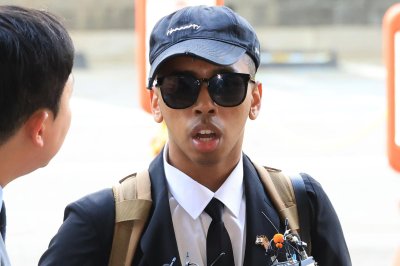
American YouTuber Johnny Somali answers questions from reporters before attending his sentencing trial at the Seoul Western District Court in the capital on Wednesday. Photo by Yonhap
American YouTuber Johnny Somali, who sparked outrage in South Korea two years ago after kissing a statue symbolizing Korean victims of Japan’s wartime sexual slavery, was sentenced by a court Wednesday to six months in prison and remanded in custody.
Somali was indicted by South Korean authorities on multiple charges, including obstruction of business and violations of minor public order laws.
He is accused of uploading a video of himself kissing a “Statue of Peace” that commemorates the former sex slaves in Seoul and performing a lewd dance in front of it in October 2024. He also provoked public outrage by causing disturbances on buses, subways and an amusement park, vandalizing a convenience store in Seoul’s Mapo district and playing obscene videos in public.
The Seoul Western District Court sentenced Somali to six months in prison and 20 days of detention and barred him from employment at institutions related to children and adolescents for five years.
The court then ordered him to be taken into custody immediately.
Copyright (c) Yonhap News Agency prohibits its content from being redistributed or reprinted without consent, and forbids the content from being learned and used by artificial intelligence systems.
The new officials were backed by a large majority of the legislature. (Archive)
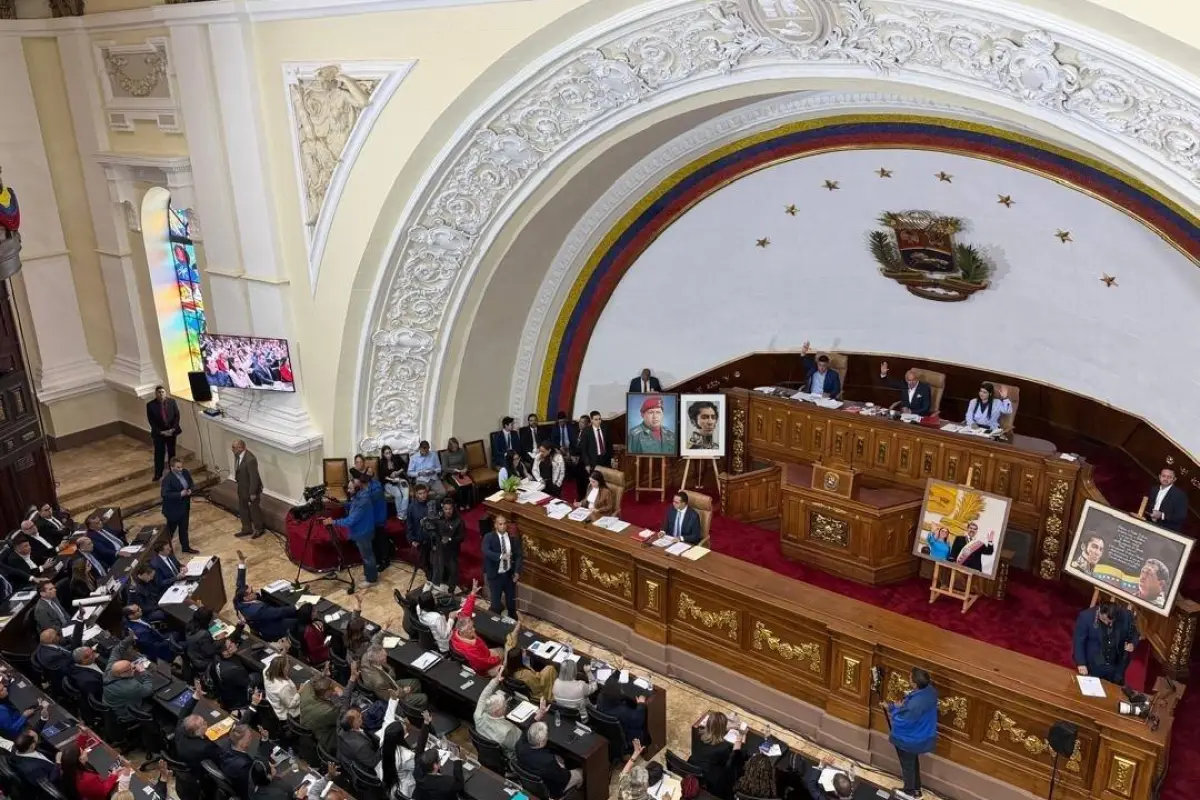
Mérida, April 14, 2026 (venezuelanalysis.com) – The Venezuelan National Assembly (AN) appointed Larry Devoe as the new Attorney General and Eglée González Lobato as the Ombudswoman during an ordinary session on Thursday, April 9.
The appointments were the result of a parliamentary selection process in the wake of the resignations of Tarek William Saab and Alfredo Ruiz, who previously held the positions, in February. The new officials will assume their roles immediately.
The National Assembly finalized the appointments following the review of a list of 71 candidates for Attorney General and 61 for Ombudsman. According to official reports, the selection focused on technical and academic backgrounds, while multiple deputies spoke of the need to select “consensus” candidates.
Devoe is a lawyer who has held various legal and diplomatic positions within the Venezuelan government, having served as the Executive Secretary of the National Human Rights Council. In recent years, he represented Venezuela before the United Nations (UN) and the Organization of American States (OAS) on human rights matters.
Devoe had taken over the Attorney General post on an interim basis following Saab’s resignation. Saab had served as the country’s top prosecutor since 2017. Following his appointment and swearing-in, Devoe used his official channels to vow that his office would be committed to “defending human rights” and “protecting our people.”
For her part, new Ombudswoman González is also an attorney and a university professor specializing in Administrative Law at the Central University of Venezuela (UCV).
She served as the Director of the UCV’s Democracy and Elections Chair and has worked as an institutional and electoral analyst. The parliamentary nominations committee highlighted González’s academic background and experience in human rights as primary factors for her selection to replace Ruiz.
Devoe and González were ratified on the posts with the approval of 275 of 285 National Assembly deputies, receiving the endorsement of the ruling Socialist Party (PSUV) and allies, as well as part of the opposition.
González, who has been identified as representing a sector of the moderate opposition, was proposed by David Uzcátegui from the Fuerza Vecinal party. Devoe’s candidacy was put forward by the PSUV.
Addressing the chamber, National Assembly President Jorge Rodríguez emphasized the importance of reaching political agreements and “respecting differences.”
The right-wing Libertad faction opposed the appointments, with legislator Henri Falcón stating that the appointees did not meet “autonomy and democratic plurality” criteria.
“In the past, the institutions have been used as politically partial spaces and ideological trenches,” stressed Falcón, a former presidential candidate.
The renewal of the Attorney General and Ombudsman’s Office coincides with the processing of thousands of amnesty requests currently under review by judicial authorities. According to the National Assembly, the Amnesty Law approved in February has benefited more than 8,000 beneficiaries in less than two months.
“The economy is the most important thing”
Parliamentary leader Jorge Rodríguez stressed the importance of “dialogue” among different political factions and working to “strengthen” state institutions in a recent interview with Spanish daily El País.
“We are rapidly pushing for changes so that people feel the country’s democratic institutions are functioning properly,” he stated.
When asked about the possibility of holding elections, Rodríguez argued that the country’s economy is “the most important thing right now.”
Since January, the Venezuelan legislature has fast-tracked a number of important new laws with support from the acting Delcy Rodríguez administration, including pro-business reforms to the country’s hydrocarbon and mining frameworks.
“The Venezuelan economy needs to gain enough momentum so that the population feels this entire process was worth it,” he added, in reference to the January 3 US bombings and kidnapping of President Nicolás Maduro which Rodríguez described as a “traumatic event.”
The Venezuelan official went on to argue that “there is much work to be done” ahead of an eventual electoral process, including the selection of an electoral authority that all political organizations can “trust.”
Starring Hollywood legends Michelle Pfeiffer and Kurt Russell, The Madison sees the Clyburn family experience a devastating tragedy which leads them to relocate to Montana in an attempt to heal from the events.
Even though it’s just been a matter of weeks since its premiere, Paramount+ has confirmed that The Madison has now been renewed for a third season, much to fans’ delight.
But given the drama’s quick rise to popularity, news of an early series renewal doesn’t come as too much of a surprise.
The Madison received a staggering eight million global views for its premiere episode in its first 10 days on Paramount+.
It’s officially been named as “Sheridan’s most-watched debut ever” with almost one billion minutes viewed during its first full week after release.
There was no doubt that it was going to return for a second series with filming for Seasons 1 and 2 completed back-to-back However, a Season 2 start date hasn’t yet been announced and until this is known, a potential release date pattern cannot be established for the upcoming third series.
When The Madison makes a comeback for Season 2, Matthew Fox won’t be returning as Preston Clyburn’s (played by Kurt Russell) brother Paul. They both died in the plane crash and while they have both featured in the flashbacks, only Russell will be returning for the second outing.
But going forward, this won’t be the case for series three with Russell already confirming his future absence from the show.
He told TV Insider: “This is a contained experience for me in the show, and I’m very happy about that. It’s been an incredible experience.”
Police in France have arrested students at Sorbonne University, Sciences Po and Paris-Saclay University during a sit-in against a controversial anti-Semitism bill that could outlaw criticism of Israel. Lawmakers are set to vote on the ‘Yadan law’, named after a pro-Israel French MP who sponsored the bill, on April 16.
Roelf Meyer will replace the South African ambassador who was expelled from the US by President Donald Trump in 2025.
Published On 15 Apr 202615 Apr 2026
South Africa has appointed Roelf Meyer, who helped negotiate the end of white minority rule in his country in the 1990s, as the next ambassador to the United States, according to local media.
Meyer’s appointment is seen as a sign that Pretoria is aiming to improve its relations with Washington following a “turbulent year”, according to the South African Broadcasting Corporation.
Recommended Stories
list of 4 itemsend of list
South Africa has gone without diplomatic representation in Washington, DC, since March 2025, when US President Donald Trump expelled Ambassador Ebrahim Rasool for his criticism of the Make America Great Again (MAGA) movement.
Posting on social media at the time, US Secretary of State Marco Rubio accused Rasool of being a “race-baiting politician” who hates the US and Trump.
Rubio’s post linked to a story by US conservative news site Breitbart that reported on a talk Rasool gave on a webinar organised by a South African think tank. Rasool had spoken in academic terms of the Trump administration’s crackdown on diversity and equity programmes, as well as immigration, and mentioned the possibility of a future US where white people would no longer be in the majority.
South African President Cyril Ramaphosa, centre left, and former minister and constitutional negotiator Roelf Meyer, centre right, during the first National Convention at the University of South Africa, Pretoria, in August 2025 [File: Phill Magakoe/AFP]
Trump last year also issued an executive order freezing most foreign assistance to South Africa amid the country’s legal action at the International Court of Justice over Israel’s genocide in Gaza and the passage of a controversial South African law aimed at correcting historic racial disparities in land ownership.
Tensions escalated further when Trump then launched a refugee programme for white South Africans, whom the US president claims face government-led persecution in their home country.
Meyer, 78, is a seasoned negotiator with experience working under pressure. As a member of South Africa’s white Afrikaans minority, he once served as a minister under the apartheid Nationalist Party government.
He rose to prominence in the 1990s, during the final days of apartheid, as the Nationalist Party held talks with the African National Congress (ANC) to end segregation and white minority rule. The talks paved the way for South Africa’s first democratic elections in 1994.
As the chief negotiator, Ralph had become acquainted with South Africa’s current president, Cyril Ramaphosa, who was then an ANC negotiator.
Meyer himself later joined the ANC in 2006.
He is set to take up the post as US ambassador once all protocols are complete in Washington, DC, according to Ramaphosa’s office.
Taylor Frankie Paul won’t face criminal charges in connection with alleged domestic violence incidents between her and her ex-boyfriend, the Salt Lake County district attorney’s office said Tuesday.
The embattled “Secret Lives of Mormon Wives” star’s cases were reviewed by multiple attorneys due to their high-profile nature, according to the district attorney’s office.
“After reviewing reports and evidence submitted to the Draper Police Department and West Jordan Police Department, the Salt Lake County District Attorney’s Office has declined to file charges against Taylor Frankie Paul,” the statement reads.
According to the news release, Dakota Mortensen, Paul’s ex and the father of her youngest child, reported several domestic violence incidents, “some of which occurred more than three years ago.”
“Any incidents of misdemeanor offenses which are alleged to have occurred more than two years ago are barred by the statute of limitations,” the district attorney’s office wrote, adding that “several incidents that were submitted do not rise to the level of criminal offenses.” The remaining incidents lack sufficient evidence to support filing criminal charges, according to the district attorney’s office.
Mortensen filed a report with the West Jordan Police Department in Utah in February alleging an incident of domestic violence that he said occurred in early to mid-2024. Utah’s Draper Police Department was also looking into a separate incident involving the former couple.
Days before the premiere of Season 22 of “The Bachelorette,” in which Paul was set to star, a leaked video of a 2023 domestic dispute between Paul and Mortensen circulated online.
That 2023 incident resulted in Paul being arrested. She eventually pleaded guilty in abeyance to aggravated assault, and Paul’s arrest was featured in the first season of “Secret Lives.”
Although the incident had already been addressed publicly and dealt with in court, the leaked video featured previously unseen footage of the dispute. As a result, Paul was hit with a restraining order, she temporarily lost custody of Ever, the 2-year-old son she shares with Mortensen, and ABC pulled “The Bachelorette.” Production on the hit reality series had already wrapped and the premiere was slated for March 22.
The exes are also ordered to appear remotely at a court hearing April 30 to review the merits of Mortensen’s protective order against Paul. Paul has also filed her own protective order against Mortensen, which a Utah judge signed off on last week.
Mortensen sought a protective order after two incidents in February that involved “grabbing, scratching, shoving, and striking” that allegedly left Mortensen with marks on his neck, according to police documents. A judge granted the order last month.
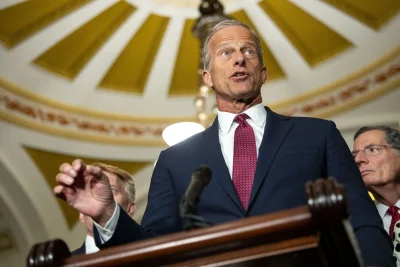
April 14 (UPI) — A budget resolution to fund federal immigration enforcement could hit the Senate floor by next week, Senate Majority Leader John Thune said Tuesday, as Republicans seek to bypass Democratic demands for reforms to Immigration and Customs Enforcement and Border Patrol.
Federal funding for Immigration and Customs Enforcement and Border Patrol lapsed on Feb. 14 after Republicans agreed with the Democrats to remove the Department of Homeland Security from a larger spending package and avert a government shutdown.
Neither agency has been funded through regular DHS appropriations since, though they continue operating through other, emergency funding.
Democrats began demanding reforms to the federal immigration enforcement agencies before agreeing to restore funding after two U.S. citizens were killed by federal immigration officers amid President Donald Trump‘s aggressive immigration crackdown.
Amid a stalemate in negotiations, Republicans are considering passing three years of funding for the agencies through a complicated legislative mechanism called a budget reconciliation bill that permits certain spending legislation to pass with a simple majority rather than 60 votes, Thune told reporters Tuesday in the Capitol.
“Republicans are going to stand with our Border Patrol, with our law enforcement agencies and we’re going to ensure that they are funded, not only today but well into the future,” Thune, R-S.D., said.
Sen. Lindsey Graham, R-S.C., is preparing the resolution to fund the agencies that will be followed by the reconciliation bill “to ensure the job gets done,” he said.
Democrats have blocked funding for ICE and Border Patrol until reforms — including requiring judicial warrants and banning officers from wearing masks — are made, but the reconciliation bill tactic could ensure funding without any votes from Democratic lawmakers.
The same tactic was used last year to pass Trump’s sweeping spending and tax cut bill, which provided $75 billion for ICE.
“All of the things that the Democrats made this about, which was supposed to be about reforms to the way that ICE and Border Patrol operate — they get none of that,” Thune said.
“And now, we’re going to fund those agencies for three years into the future. The only thing the Democrats got out of this was they now own the issue of open borders and defund law enforcement.”
Republicans hold a narrow 53-47 majority in the Senate, with two independents caucusing with the Democrats, as well as a 218-213 majority in the House.
The Senate has twice passed bipartisan bills to fund DHS aside from ICE and Border Patrol, which the House has balked at. Democrats blame the Trump administration’s influence on the lower chamber.
“Republicans are dragging the Senate through a partisan circus just to avoid basic accountability for ICE and Border Patrol,” Senate Minority Leader Chuck Schumer told reporters at the Capitol during a separate press conference on Tuesday.
He said Democrats will continue to push for immigration enforcement reforms.
“So, the pattern, unfortunately, with this administration is clearer and clearer,” the veteran New York Democrat said. “Chaos abroad — the war; chaos at home with not funding DHS with reforms. A failed war overseas, a manufactured crisis here in Washington — in both cases Republicans aren’t leading, they are following orders.”
Weekly insights and analysis on the latest developments in military technology, strategy, and foreign policy.
A day into the U.S.-imposed military blockade of the Strait of Hormuz, several ships have apparently transited the narrow waterway, including at least two that reportedly had previously stopped at Iranian ports. However, U.S. Central Command (CENTCOM) is pushing back against claims that vessels ran the blockade. As we noted yesterday, CENTCOM said the maritime exclusion operation would be “enforced impartially against vessels of all nations entering or departing Iranian ports and coastal areas, including all Iranian ports on the Arabian Gulf and Gulf of Oman.”
Meanwhile, there are indications that the U.S. and Iran may continue seeking a diplomatic offramp to the crisis, which began Feb. 28 when America and Israel began bombarding the Islamic Republic. We will discuss that in greater detail later in this story.
Strait of Hormuz (Google Earth)
Christianna, a Liberia-flagged cargo ship, “exited the Persian Gulf through the strait on Monday night, after leaving the Iranian port city of Bandar Imam Khomeini,” The New York Times reported, citing the global trade intelligence firm Kpler. It said the ship was not carrying any cargo.
In addition, Elpis, a methanol carrier, “traversed the strait roughly around the time that the U.S. blockade began, according to ship-tracking data,” the newspaper added, “Kpler said that the vessel had been at the Iranian port of Bushehr. The United States had placed sanctions on the ship last year under an earlier name, Chamtang, over its connections to the Iranian oil trade.”
It is unclear if these two ships fell within CENTCOM’s “grace period” around the deadline, had gained permission to pass or had somehow bypassed the blockade, the Times noted. We have reached out to CENTCOM and the White House for more details.
CENTCOM stated on X that during “the first 24 hours, no ships made it past the U.S. blockade and 6 merchant vessels complied with direction from U.S. forces to turn around to re-enter an Iranian port on the Gulf of Oman.”
“The blockade is being enforced impartially against vessels of all nations entering or departing Iranian ports and coastal areas, including all Iranian ports on the Arabian Gulf and Gulf of Oman,” the command reiterated. “U.S. forces are supporting freedom of navigation for vessels transiting the Strait of Hormuz to and from non-Iranian ports.”
All told, more than “10,000 U.S. Sailors, Marines, and Airmen along with over a dozen warships and dozens of aircraft are executing the mission to blockade ships entering and departing Iranian ports,” CENTCOM explained.
More than 10,000 U.S. Sailors, Marines, and Airmen along with over a dozen warships and dozens of aircraft are executing the mission to blockade ships entering and departing Iranian ports. During the first 24 hours, no ships made it past the U.S. blockade and 6 merchant vessels… pic.twitter.com/dpWAAknzQp
Several other Iranian-linked ships also exited the Strait, however, there was no indication they stopped at any Iranian port and thus would not have been subject to the blockade.
The Rich Starry, “sanctioned by the US for Iran-related trade, sailed east from Sharjah in the UAE through the strait overnight, data shows,” according to BBC. “The tanker Murlikishan, which is also under US sanctions for Iran-related trade, sailed from Lanshan in China and headed west through the strait overnight.”
BREAKING: US-sanctioned tanker, Chinese-owned Rich Starry, transited through the Strait of Hormuz on Tuesday despite a US blockade of the vital oil chokepoint, shipping data from LSEG showed. pic.twitter.com/yrIRltDvrI
Overall, shipping in the region has largely remained at a standstill. There are concerns this could exacerbate economic woes across the globe sparked by Iran’s near total closure of the Strait in the wake of U.S. and Israeli attacks. At the moment though, Brent Crude, a petroleum benchmark, was trading at just over $95 a barrel as of Tuesday at 11 a.m. EDT. That’s down from a high of nearly $110 a barrel on April 6, according to OilPrice.com.
“Little traffic is entering and leaving Iranian ports in the Persian Gulf and the Gulf of Oman on the first full day of the US-declared blockade,” CNN reported, citing ship-tracking data. “Shipping through the Strait of Hormuz also remains severely curtailed, with just a handful of tankers and bulk carriers transiting the waterway in the last day.”
Traffic deflates further after US blockade takes effect
Commercial traffic through the Strait of Hormuz remains well below typical levels, with just six vessels crossing on 13 April compared with 14 the previous day. While a ceasefire and the US naval blockade are now in place,… pic.twitter.com/swZQ6OYgPh
“Maritime activity in the Strait of Hormuz is entering its first full day under active U.S. enforcement, with early vessel behavior indicating a fragmented response to the blockade,” according to the latest report from Windward Maritime Intelligence.
Initial movements “show a mix of continued transit, route deviation, and potential blockade evasion,” Windward explained. “Sanctioned and falsely flagged vessels remain active, with some proceeding through the Strait while others delay, reverse, or shift routing patterns.”
At the same time, “Iranian oil flows continue to rely on indirect distribution networks, with significant volumes accumulating offshore rather than moving directly through the Strait,” the company continued. “Taken together, the operating environment is shifting from uncertainty to active enforcement dynamics, where compliance, evasion, and selective movement are all occurring simultaneously.”
Activity in the Strait of Hormuz is intensifying as sanctioned dark fleet vessels navigate the newly imposed blockade.
Two critical movements unfolding this morning:
• Starry Rich: A U.S.-sanctioned, falsely flagged tanker signaling laden. After reversing course yesterday, it… pic.twitter.com/lzBSBHljnL
Amid all this, Iran “is considering a short-term pause to shipments through the Strait of Hormuz to avoid testing a US blockade and scuppering a fresh round of peace talks,” Bloomberg reported, citing a person familiar with Tehran’s deliberations.
“The potential pause reflects a desire to avoid immediate escalation at a sensitive diplomatic juncture as Washington and Tehran sort logistics for another face-to-face meeting, the person said.”
China’s Foreign Ministry strongly condemned the blockade on Tuesday.
“The US’s targeted blockade and its increased military deployment are dangerous and irresponsible,” said ministry spokesperson Guo Jiakun. “At a time when the parties concerned have reached a temporary ceasefire arrangement, the blockade will only aggravate tensions, further destabilize the situation, undermine the already fragile ceasefire, and further jeopardize navigational security in the Strait of Hormuz.”
The US’s targeted blockade and its increased military deployment are dangerous and irresponsible, said a spokesperson for China’s Foreign Ministry on April 14, 2026.
Chinese FM Spokesperson Guo Jiakun was speaking on Tuesday, a day after the US military announced a blockade of… pic.twitter.com/81zAizEHUN
As the blockade continues, several countries have called for the Strait and by implication surrounding waterways to be reopened. Several hundred miles of Iran’s coastline sits along the Gulf of Oman, which is also included in the CENTCOM blockade.
“We have been clear from the outset that the security of the Strait of Hormuz must not be harmed by any escalatory moves,” said Majed Al-Ansari, a spokesman for the Qatari Foreign Ministry. “We reject any attempt to politicize the Strait and call for the immediate resumption of maritime activity without pre-imposed conditions, given its importance to the global economy. We are engaging with regional and international partners toward a solution. Regarding the talks in Islamabad, we remain in contact with Pakistan and support their mediation efforts, while focusing on strengthening regional coordination around this process.”
Dr. @majedalansari , Advisor to the Prime Minister and Spokesperson for the Ministry of Foreign Affairs, during the weekly media briefing:
We have been clear from the outset that the security of the Strait of Hormuz must not be harmed by any escalatory moves. We reject any… pic.twitter.com/4IEhz8bBl5
— Ministry of Foreign Affairs – Qatar (@MofaQatar_EN) April 14, 2026
French President Emmanuel Macron called for the Strait to “be reopened unconditionally, without restrictions or tolls, as soon as possible. Under these conditions, negotiations should be able to resume quickly, with the support of the key parties concerned.”
He added that “France and the United Kingdom will also host a conference in Paris this Friday, bringing together by videoconference non-belligerent countries ready to contribute, alongside us, to a multilateral and purely defensive mission aimed at restoring freedom of navigation in the strait when security conditions allow.”
Yesterday, I spoke with Iranian President Massoud Pezeshkian, as well as with U.S. President Donald Trump.
I urged the resumption of the negotiations suspended in Islamabad, the clearing up of misunderstandings, and the avoidance of any further escalation.…
To execute the blockade, American naval assets are not lingering near Iranian ports or in the Strait of Hormuz itself, The Washington Post noted.
“Iranian forces mined the strait, one of several flash points in negotiations, soon after hostilities began more than six weeks ago,” the newspaper reported. “The narrow, shallow corridor also leaves any vessels there vulnerable to attack.”
“Our net is the Gulf of Oman,” said one of the officials, who explained that the U.S. warships involved wait for an opportune moment — after observing vessels leave Iranian facilities and clear the strait — before intercepting the merchant ships and forcing them to turn around.
“There’s one way in and one way out,” the official said. “We’ve got the whole thing on lockdown.”
.@USNavy is watching each ship — and waiting for them to exit the Strait of Hormuz where more than a dozen U.S. warships await. “Our net is the Gulf of Oman,” one official said. Whether a vessel is stopped or not depends on it it was in an Iranian port after 10 am EST April 13.…
There have been no indications yet reported during the CENTCOM blockade, but more than 20 commercial ships have passed through the Strait of Hormuz recently, The Wall Street Journal reported. The publication added that it marks “an improvement in the flow of vessels through a critical chokepoint.”
WSJ: More than 20 commercial ships have passed through the Strait of Hormuz in the past 24 hours, according to two U.S. officials… Ships that aren’t visiting Iran’s ports aren’t subject to the blockade and are being allowed to transit freely.
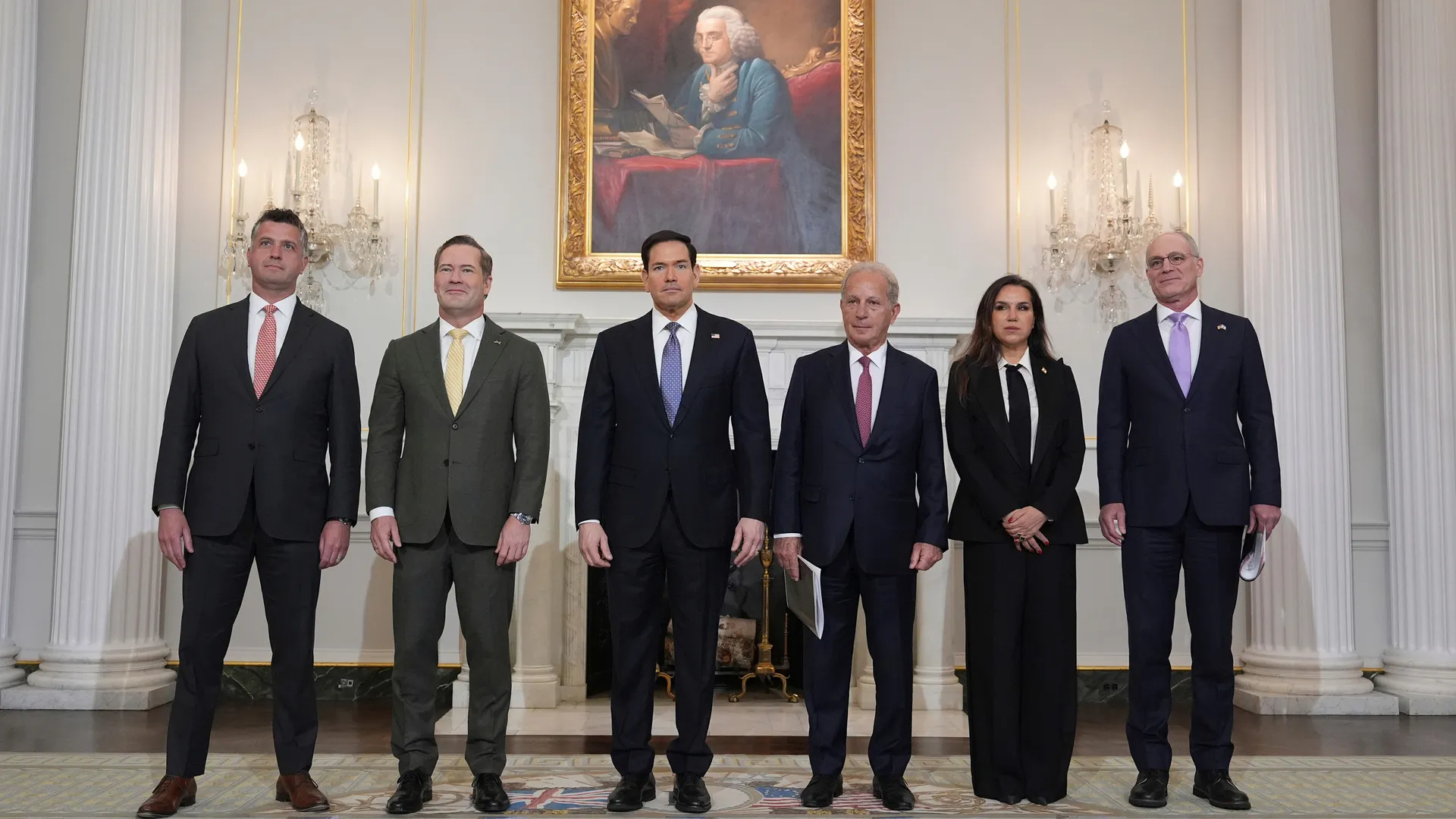
Following today’s trilateral meeting with Israel’s Ambassador to the U.S., Yechiel Leiter, said his country won’t allow Hezbollah to fire missiles into Israel.
Israeli Ambassador to U.S.:
“We will not allow a terror organization to continually fire missiles into our population centers,” after his meeting with Rubio and the Lebanese Ambassador, in Washington D.C.. pic.twitter.com/fEdmkyvgyI
UN Secretary-General Antonio Guterres stated that it’s “highly probable” talks to end the war will resume. He spoke after meeting with the Deputy Prime Minister of Pakistan.
UN Secretary-General Antonio Guterres says it’s “highly probably” talks to end the US-Israel war on Iran will resume.
CENTCOM offered some additional details about its blockade of Iran.
“An F-35B stealth fighter jet is prepared for flight aboard USS Tripoli (LHA 7) as the amphibious assault ship sails in the Arabian Sea,” CENTCOM stated on X. “Tripoli and its 3,500 Sailors and embarked Marines are executing the mission to blockade ships entering and departing Iranian ports. The blockade is being enforced impartially against vessels of all nations.”
An F-35B stealth fighter jet is prepared for flight aboard USS Tripoli (LHA 7) as the amphibious assault ship sails in the Arabian Sea. Tripoli and its 3,500 Sailors and embarked Marines are executing the mission to blockade ships entering and departing Iranian ports. The… pic.twitter.com/TrrT8qKT5t
The U.S. State Department provided some details of the trilateral meeting between the U.S., Israel and Lebanon. This meeting “marked the first major high-level engagement between the governments of Israel and Lebanon since 1993. The participants held productive discussions on steps toward launching direct negotiations between Israel and Lebanon,” the department stated.
“The United States congratulated the two countries on this historic milestone and expressed its support for further talks, and for the Government of Lebanon’s plans to restore the monopoly of force and to end Iran’s overbearing influence,” the State Department said in an email. “The United States expressed its hope that talks can exceed the scope of the 2024 agreement and bring about a comprehensive peace deal. The United States expressed its support for Israel’s right to defend itself from Hizballah’s continued attacks. The United States affirmed that any agreement to cease hostilities must be reached between the two governments, brokered by the United States, and not through any separate track. The United States underscored that these negotiations have the potential to unlock significant reconstruction assistance and economic recovery for Lebanon and expand investment opportunities for both countries.”
The State of Israel “expressed its support for disarming all non-state terror groups and dismantling all terror infrastructure in Lebanon and expressed its commitment to working with the Government of Lebanon to achieve that goal to ensure security for the people of both countries,” the message added. “Israel expressed its commitment to engage in direct negotiations to resolve all outstanding issues and achieve a durable peace that will strengthen security, stability and prosperity in the region.“
UPDATE: 3:01 PM EDT –
Stepping up the pressure on Tehran in what it calls Economic Fury, the Treasury Department said the short-term authorization permitting the sale of Iranian oil already stranded at sea is set to expire in a few days and will not be renewed.
Treasury is moving aggressively with Economic Fury, maintaining maximum pressure on Iran. Financial institutions should be on notice that the department is leveraging the full range of available tools and authorities and is prepared to deploy secondary sanctions against foreign…
Trump initially claimed that discussions were “happening, but, you know, a little bit slow” before indicating that a second round of direct negotiations to end the seven-week war would likely happen somewhere in Europe, the newspaper added.
About half an hour later, Trump called back with an update.
“You should stay there, really, because something could be happening over the next two days, and we’re more inclined to go there,” he said of Islamabad. “It’s more likely, you know why? Because the field marshal is doing a great job.”
Trump was referring to Pakistan Field Marshal Gen. Asim Munir.
BREAKING: President Trump tells a New York Post journalist to stay in Pakistan, saying peace talks are so close they could break at any moment.
Peter Doocy says the president believes a deal is now within reach over the next couple of days.
Days after in-person peace talks between the U.S. and Iran ended with no agreement, the two sides are still talking. There are also reports that there may be another round of meetings later this week.
“The United States and Iran have traded proposals for a suspension of Iranian nuclear activities but remain far apart on the length of any agreement,” The New York Times reported, citing Iranian and U.S. officials.
During the negotiations in Islamabad, “the United States asked Iran for a 20-year suspension of uranium enrichment,” the newspaper added. “The Iranians, in a formal response sent on Monday, said they would agree to up to five years, according to two senior Iranian officials and one U.S. official. Mr. Trump rejected Iran’s offer, according to a U.S. official.”
NYT: The US proposed a 20-year “suspension” of all nuclear activity. That would allow the Iranians to claim they had not permanently given up their right, under the Nuclear Nonproliferation Treaty, to produce their own nuclear fuel. In response, Iran renewed a proposal that it…
Still, despite the impasse and the U.S. imposed blockade on Iranian ports, “U.S. officials are discussing details for a potential second in-person meeting with the Iranians,” CNN noted.
Trump administration officials are discussing another meeting with Iranian negotiators before the ceasefire ends, with possible dates and locations under review, CNN reports. pic.twitter.com/vS6F3Ik1ll
Meanwhile, as the fighting continues in Lebanon between Israel and Hezbollah, Jerusalem and Beirut are scheduled to hold talks in Washington today. The first direct diplomatic discussion between the two nations in more than 30 years is aimed at preparing negotiations to end the conflict. However, there is little hope of any quick resolution.
Lebanon’s pre-condition is a full ceasefire, something Israel is refusing to do, CBC noted. Hezbollah’s chief Naim Qassem has called the discussions “pointless” and said just talking to Israel is akin to surrendering.
Hezbollah is a separate entity from the Lebanese government and is fighting Israel, not that nation. However, Beirut called for the meeting to discuss “the announcement of a ceasefire” between the warring parties “and the date for starting negotiations between Lebanon and Israel under American sponsorship,” The Washington Post explained.
The State Department said the talks will focus on “how to ensure the long-term security of Israel’s northern border and to support the Government of Lebanon’s determination to reclaim full sovereignty over its territory and political life,” the publication added.
“We’re not about to release the peace doves,” an Israeli official told The Times of Israel. As Israel prepares for its most senior in-person engagement with Lebanon in its 78-year history, expectations are being managed.
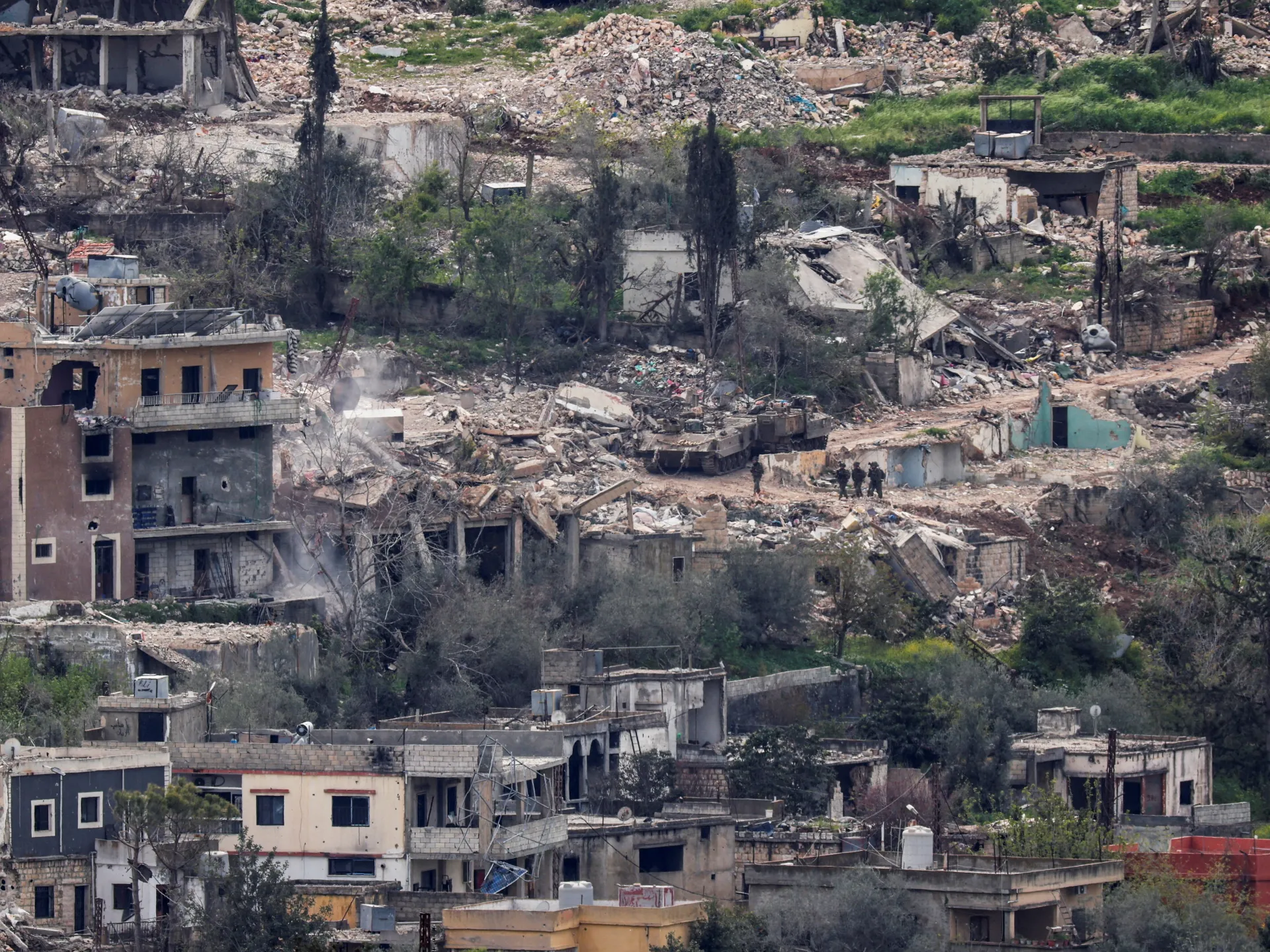
On the battlefield, the Israeli Defense Forces (IDF) and Hezbollah continue to attack each other.
The IDF claimed that “three soldiers were severely injured, and an additional soldier was moderately injured in a close-quarters encounter in southern Lebanon.”
It also said it struck more than 150 Hezbollah targets across southern Lebanon.
🎯⏰24HR RECAP: ~150 Hezbollah targets were struck in numerous areas across southern Lebanon.
Accomplishments: – Rocket launchers & UAVs struck – Military structures, anti-tank missile launch points & terror command centers were targeted – Terrorist cells that attempted to carry… pic.twitter.com/FYbntP7ml6
Hezbollah said it struck the Yiftah military barracks in northern Israel.
Hezbollah has released footage showing the targeting of the Yiftah Barracks in northern Israel using Sayyad-2 (also known as T2 and Sayyad-107) loitering munitions. pic.twitter.com/5vsNJlXDCJ
Mossad operated “in the heart of Tehran” during the recent US-Israeli campaign against Iran, the Israeli intelligence agency’s Director David Barnea said at a Holocaust Remembrance Day ceremony.
“We brought precise intelligence to the Air Force, and we hit missiles that threatened Israel,” he explained.
“But our mission has yet to be completed,” the spy chief added. “We didn’t think that this mission would be completed immediately with the end of the battles. But we planned intensively for our campaign to continue and achieve results even in the period after the strikes in Tehran.”
Mossad Director David Barnea:
Our mission will only be complete when the extremist regime in Iran is replaced.
We did not believe the mission would be finished immediately after the fighting subsided, but we did plan—indeed carefully—that our campaign would continue and be… pic.twitter.com/WvIaNQX54N
Chinese President Xi Jinping weighed in on the tense situation in the Middle East, issuing “four propositions on safeguarding and promoting peace and stability” in the region, according to Mao Ning, spokesperson for the Chinese Foreign Affairs ministry.
Xi is calling for commitments to preserving “peaceful coexistence…the principle of national sovereignty…the rule of law” and “a balanced approach to development and security.”
President Xi Jinping made four propositions on safeguarding and promoting peace and stability in the Middle East.
1️⃣ Stay committed to the principle of peaceful co-existence. The Gulf states in the Middle East are close neighbors that cannot move away. It’s important to support… pic.twitter.com/dBfGZCV9TF
The Chinese MFA took a much harsher stance in response to Trump’s threat to impose a 50% tariff on Chinese imports if it provides arms to Iran. Trump issued that warning in an interview on Sunday with Fox News. He was reacting to reports that U.S. intelligence determined Beijing was providing military support to Tehran.
“China always acts prudently and responsibly on the export of military products, and exercises strict control in accordance with China’s laws and regulations and due international obligations,” the MFA proclaimed on X. “Media reports accusing China of providing military support to Iran are purely fabricated. If the U.S. goes ahead with the tariff hikes on China on the basis of these accusations, China will respond with countermeasures.”
The MFA did not specify what those countermeasures might be.
China always acts prudently and responsibly on the export of military products, and exercises strict control in accordance with China’s laws and regulations and due international obligations.
Media reports accusing China of providing military support to Iran are purely… pic.twitter.com/cMW2EDhEZP
— CHINA MFA Spokesperson 中国外交部发言人 (@MFA_China) April 14, 2026
Author’s Note: We have adjusted the headline to better reflect the story.
It turns out Raven Johnson’s “revenge tour” wasn’t completely over.
The South Carolina guard was selected as the 10th overall pick by the Indiana Fever at the 2026 WNBA draft Monday, setting her up to be reunited with a former college teammate as well as a notable rival.
Described as “one of the most WNBA-ready players” in the mock draft by The Times, the two-time national champion was famously waved off by then-Iowa phenom Caitlin Clark during their Final Four matchup in the 2023 NCAA women’s basketball tournament.
During the first quarter, Clark declined to guard Johnson, who had the ball outside of the three-point line, with wave of her arm while turned away from her. Not only did Clark’s team go on to win, the taunt — much like a number of other moments involving the sharpshooting former Hawkeye — went viral.
Johnson has been open about how that moment and the online response took a toll on her mental health.
“I was all over the internet,” Johnson said while discussing some of the adversity she’s faced in her basketball career on a recent episode of the “I Am Next” podcast. “I got bashed, I got bullied, I got called all these things that I wasn’t … like a monkey [and] just things like that. I wanted to quit basketball at that time and I wanted to just go in this little bubble of isolation and just be by myself.”
She credited her faith and the support of her teammates and loved ones for being able to turn it around and use the moment to fuel her “revenge tour” the next year. South Carolina beat Clark’s Hawkeyes in the 2024 national championship to cap off an undefeated season.
Caitlin Clark and Raven Johnson at the 2024 NCAA women’s basketball tournament.
(Carolyn Kaster / Associated Press)
At least in part because of this history, the online response to Johnson being drafted by the Fever has been divided among the team’s fans as well as the supporters of each of the individual players. But the Fever staff were clearly elated to be able to nab Johnson off the board.
“Let’s go,” Fever coach Stephanie White said in a video call with Johnson posted on social media on Monday. “We are so excited.”
Johnson isn’t the only one who is set to join forces with a rival in the next chapter of their career. Following her trade from the Sparks, Rickea Jackson will be teammates with Chicago Sky center Kamilla Cardoso, whose game-winning buzzer beater for the Gamecocks took down the former’s Tennessee team at the 2024 Southeastern Conference tournament.
And that’s not to mention the Washington Mystics following their selection of UCLA center Lauren Betts as the fourth overall pick Monday by later drafting Texas standout Rori Harmon in the third round. Betts’ viral block is what sealed UCLA’s win over Texas at the Final Four en route to the Bruins’ championship win earlier this month. (The Mystics also selected UCLA forward Angela Dugalic in the first round.)
Despite the naysayers, Johnson appears excited to be joining a championship contender with the Fever. During a Monday news conference, Johnson mentioned Clark, Aliyah Boston and Kelsey Mitchell among the team’s vets she’s looking forward to learning from.
“She has taught me so much through my college experience,” Johnson said of Boston, her former college teammate. “She taught me what pro habits were. She taught me you have to bring those habits every day to practice. … She is a phenomenal person. She instills so much in young people and there’s no way you don’t want to play with somebody like that [and] look up to somebody like that.”
Pope Francis (3-R, 1936-2025) talks with Han
Yang-Won (2-L, 1924-2016), chairman of the Association of Korean Native
Religion, as he meets with South Korea’s religious leaders at Myeongdong
Cathedral in Seoul, South Korea. File. Photo by JUNG YEON-JE / EPA
April 14 (Asia Today) — More than 2,000 people took part in a marathon in southwestern South Korea to honor the legacy of Han Yang-won, a spiritual figure known for promoting coexistence and peace.
The third Haepyeong Marathon was held Saturday in Namwon, North Jeolla Province, the hometown of Han, who died in 2016. The event was organized by the Association for Coexistence and Peace and supported by the Ministry of Culture, Sports and Tourism.
The marathon commemorates Han’s lifelong efforts to promote interfaith harmony and shared national values. The event name comes from his pen name “Haepyeong,” reflecting his core philosophy of coexistence and peace.
Organizers said this year’s event also aimed to express solidarity with people affected by ongoing conflicts around the world and to call for an end to war.
Participants ran 5-kilometer and 10-kilometer courses, with ages ranging from 5 to 78, highlighting a cross-generational turnout.
“The message of coexistence and peace is more urgent than ever in a world marked by conflict,” said Kim Dong-gyu, secretary-general of the organizing group. “We hope this event can help inspire a future where people live together in peace.”
Han was a leader of a Korean indigenous religious tradition that incorporates elements of Confucianism, Buddhism and Taoism. He also founded a national council of Korean religions in 1985 and led it for more than three decades.
He was posthumously awarded one of South Korea’s highest civilian honors in 2017 in recognition of his contributions to religious harmony.
The killings mark the fourth US deadly strike in the past four days on vessels in the eastern Pacific Ocean.
Published On 15 Apr 202615 Apr 2026
The US military has killed four more people in its fourth deadly attack on vessels in the eastern Pacific Ocean over the past four days.
US Southern Command (SOUTHCOM) announced the attack in a social media post on Tuesday, alongside a video that showed a stationary boat with outboard engines being hit by a missile and exploding into a huge ball of flames.
Recommended Stories
list of 4 itemsend of list
SOUTHCOM, which is responsible for US military operations in Latin America and the Caribbean, claimed that the four people killed were “narco-terrorists”, but provided no evidence to support its claims.
Justification for the lethal attack, according to SOUTHCOM, was due to intelligence – details of which were not provided – that confirmed that “the vessel was transiting along known narco-trafficking routes in the eastern Pacific and was engaged in narco-trafficking operations”.
The latest killing of people on board vessels in international waters in the eastern Pacific Ocean and Caribbean brings the overall death toll to at least 175 since early September, when US President Donald Trump ordered the attacks to stop what the White House claims are Latin American cartels transporting drugs to the US.
Tuesday’s killings came after two people were killed in a US strike on Monday, and five people were killed in two separate strikes on Saturday, also in the eastern Pacific.
The Associated Press news agency reported that the US coastguard has suspended a search for one survivor from the two attacks reported on Saturday.
International legal experts and rights groups say the US military campaign amounts to “extrajudicial killings” in international waters and that the attacks have targeted civilian fishing boats.
Legal experts have said that if some vessels were involved in drug trafficking, those on board should face the law, rather than deadly attacks.
Critics have also questioned the effectiveness of the US military operation in part because the fentanyl behind many fatal overdoses in the US, which Trump has used to justify his campaign, is typically trafficked to the US over land from Mexico, where it is produced with chemicals imported from China and India.
JUSTIN Bieber’s private Coachella after-party had a guest list so exclusive that promoters and influencers who were initially invited wound up being turned away, The U.S. Sun can reveal.
The pop star was supported by the Kardashian-Jenner clan, along with actor Jacob Elordi, who was seen with them in the crowd – and later cozying up with Kendall at the after-party.
Sign up for the Showbiz newsletter
Thank you!
Justin Bieber with his wife Hailey and their son Jack dancing at ‘Bieberchella’ in CaliforniaCredit: InstagramJacob Elordi joined the Kardashians in the crowd for Justin Bieber’s headline set at CoachellaCredit: InstagramKendall Jenner went for a casual look at Coachella in a pair of white denim shorts, a white tank top, and a hat with shadesCredit: Instagram
Following Bieber’s headlining set on Saturday night in Indio, California, the star hosted a blowout bash with wife Hailey and A-list friends.
Kendall, 30, and Jacob, 28, were reportedly “all over each other” at the after-party.
A source told The U.S. Sun that the party was ultra-exclusive and hosted by Bieber’s new fashion brand, Skylrk, which also had a pop-up at the festival.
“Many people were turned down who had previously been invited,” they claimed.
“Promoters also had a lot of girls on their guest lists and I heard Hailey was turning them away.”
Influencer Zach Clayton echoed this by sharing a video on his TikTok showing a guy complaining, “They cut all my guest list off.”
He explained he invited 20 girls and they were all denied, joking that Hailey is a “boss,” and she was likely the reason they were not given access to the private event.
An insider also told The U.S. Sun that the party was off-grounds, as it’s well known Bieber purchased a $16.6 million estate in the ultra-exclusive Madison Club in nearby La Quinta.
Most read in Entertainment
The U.S. Sun has reached out to the Biebers’ reps for comment.
Kylie and other Kardashian family members also own property in the guard-gated community.
A source told The U.S. Sun that Kendall and Jacob are not serious but were seen getting close in the early hours.
“Kendall is 100 percent Jacob’s type. I heard they’re having fun and he hung out with her Sunday, too,” they said.
Australian Jacob has been single since splitting from influencerOlivia Jade Giannulliin October 2025.
The pair had an on-and-off relationship from December 2021 through late 2025.
They last stepped out together at a Frankenstein screening in New York on January 14, but are said to be over.
“Him and Olivia are so done,” the insider added.
The U.S. Sun reached out to Kendall and Jacob’s reps for comment.
Kendall was seen at the festival dressed casually in a pair of white denim shorts, a white tank top, an Adidas hat, and shades.
Jacob wore Bieber’s merchandise, including a black Swag cap, and was seen sneaking through the crowd as he enjoyed the set with the Kardashian-Jenners.
Meanwhile, Kendall has been single since her brief romance with rapper and actor Bad Bunny.
Following their December 2023 breakup, they were spotted together again in May 2024.
Kendall was also seen at the Super Bowl in February, awkwardly dancing to his halftime performance, while the rapper had reconnected with his ex-girlfriend, Gabriela Berlingeri.
Kendall’s new romance with a movie star has tongues wagging, as her sister, Kylie Jenner, is dating Oscar-nominated actor Timothee Chalamet, who was also seen at the festival.
Both actors were highlighted as key figures of this year’s awards season, often appearing together at events.
Kim Kardashian was also seen at Coachella, hiding in the crowd with new love Lewis Hamilton as they tried to go incognito.
Kendall, Kylie, and Kourtney were seen earlier in the weekend at the annual 818 Outpost event, which promoted the family’s brands, along with Hailey Bieber’s skincare line, Rhode.
Justin Bieber will return to the stage this weekend after a headline Coachella set that sharply divided fans.
The pop star opted for a stripped-back, intimate performance style — at times sitting behind a laptop, taking requests, and playing a mix of old music videos, childhood clips, and viral moments.
Some critics labeled the set “lazy” and “low effort,” arguing it lacked the polish expected from a major headliner.
Others, however, praised the nostalgic feel, as Bieber revisited his biggest hits alongside newer material.
Kendall Jenner, Kourtney Kardashian, and Kylie Jenner at the annual 818 Outpost at CoachellaCredit: InstagramJustin Bieber on stage during his set on the first Saturday of CoachellaCredit: Getty
1 of 3 | Stewart Rhodes, founder of the far-right extremist group the Oath Keepers, is among those Jan. 6, 2021-related convictions the Justice Department is seeking to dismiss. File Photo by Bonnie Cash/UPI | License Photo
April 14 (UPI) — The Justice Department on Tuesday asked a federal court to dismiss the convictions of Proud Boys and Oath Keepers members who were found guilty of leading and organizing the Jan. 6, 2021, riot and attack on the U.S. Capitol.
The request includes 12 former members of the groups, all of whom prosecutors said were ringleaders of the attack. After his return to office in 2025, President Donald Trump pardoned most of those who were convicted for their parts in the riot, a move affecting more than 1,000 people. However, the sentences of some, including these 12, were commuted to time served instead, freeing them from prison though the convictions remained.
The group involved in the Justice Department request on Tuesday includes Stewart Rhodes, a leader of the Oath Keepers who was sentenced to 18 years in prison for seditious conspiracy and other charges. Prosecutors said Rhodes and other Oath Keepers “began plotting to oppose by force the lawful transfer of presidential power” after the 2020 election, CBS News reported.
Others whose sentences were commuted are Proud Boys leaders Ethan Nordean, Zachary Rehl, Dominic Pezzola and Joseph Biggs, who were also convicted of seditious conspiracy for their role.
Appeals involving this group have continued, and the Justice Department requested Tuesday that federal appeals panels vacate the earlier convictions and drop the cases in whole.
“The United States has determined in its prosecutorial discretion that dismissal of this criminal case is in the interests of justice,” wrote Assistant U.S. Attorney Daniel Lenerz in the filing, Politico reported.
Greg Rosen, former chief of the Justice Department’s Capitol Siege Section, criticized the move, CBS News reported.
“It’s a reminder of what drove the pardons in the first place-the political violence is acceptable as long as your politics align,” he told CBS News. “And it’s a continuing and sad commentary on the current state of the department.”
After the first direct talks in decades, Israel and Lebanon have agreed to begin ongoing negotiations for the ‘security of both countries’. Al Jazeera’s Mike Hanna explains why US Secretary of State Marco Rubio sees this ‘milestone’ meeting as just the ‘start of the process’.
Coronation Street icon Beverley Callard, who played Liz McDonald on the ITV soap for 30 years, has admitted she is “trying to be strong” after receiving a cancer update
Beverley Callard has shared a cancer update with her followers (Image: INSTAGRAM/beverleycallard)
Beverley underwent the initial operation in March and expected to receive her results, which will indicate whether she is cancer-free or not, around four weeks later, but received one setback at the beginning of April when she heard that there was a “backlog” in the system. On Tuesday evening, Beverley took to Instagram once again to update her followers once again on the situation.
Beginning with a sigh, she said: “Oh well, I’ve been painting all day again and I’ve nearly finished it, which is amazing. God, I’ve put some hours in that room, but I really want it finished for when Jon gets back. As you know, I’m waiting for my results, which has made me paint for England, well, for Ireland!
“Anyway, I got a text just a couple of hours ago. It says that my consultant is away at the moment, but there is someone else who I have seen before, another consultant, who wants to discuss my results on Thursday at 12 o’clock, so I’ve got a consultation then. I don’t know what that means. So I’m sort of like, ‘Okay… I just thought that the nurse was going to ring.’
“I spoke to one of the cancer nurses last week, she was great, and she said they would ring me as soon as they know anything. So I’m thinking, ‘Well, why have they not rung me then?
“Or am I mistaken? I don’t know but I will know more on Thursday at 12 o’clock so I will be glad when Jon is home. I wasn’t going to tell him but [my daughter] Rebecca said to tell him, so I have just told him. There we are. I just wondered if this has happened to anyone else. Lots of love everyone – I’m being strong.”
Beverley, who is also known for starring in the classic sitcom Two Pints of Lager and a Packet of Crisps alongside Sheridan Smith, Natalie Casey and Will Mellor, wrote in the caption: “Had a bit of a weird update and not sure how to feel about it…trying to be brave and strong.”
The soap icon was immediately supported by fans following the update, with one writing in the comments section: “I got called in Monday, 2 hour drive, for follow up results from my scan after lung surgery from recurrance after 2yrs (not breast cancer) I had health anxiety for 2 weeks waiting for the appointment day thinking it must be bad or oncologist would just phone.
“Was in office 5 mins, she said all clear, we’ll do another scan September. It’s not always bad but i think they sometimes forget the anxiety of the wait. Sending love,” (sic), whilst another said: “Stay positive Bev. Be as strong as you were in the jungle darling, You’ve got this, beautiful lady!”
Trying to reassure her, a third wrote: “This is the phone call the nurse promised. The dr has to speak to you because, whatever the outcome, there will be a treatment plan which they need to go through with you. Try not to worry – it doesn’t mean it’s bad news xxx”
If you have been affected by this story, advice and support can be found at Breast Cancer Support.