Italy’s decision to suspend a defence agreement with Israel has more symbolic value than concrete consequences, but it is an unprecedented move by the Italian government and reflects deep unease over its longtime ally’s actions in the Middle East, analysts say.
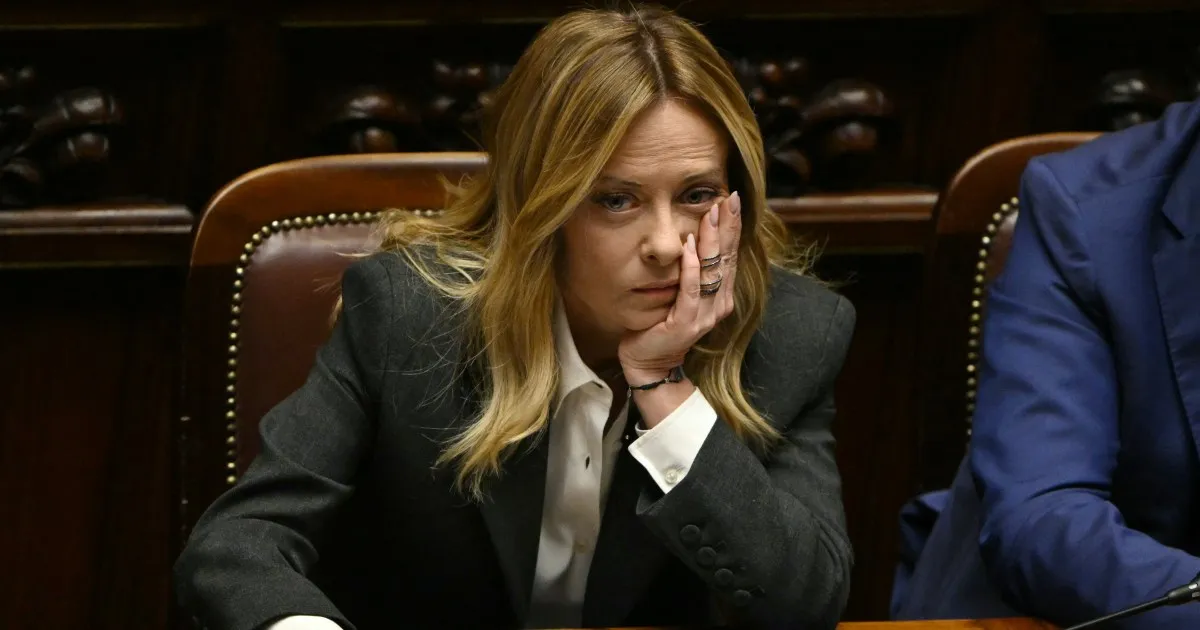
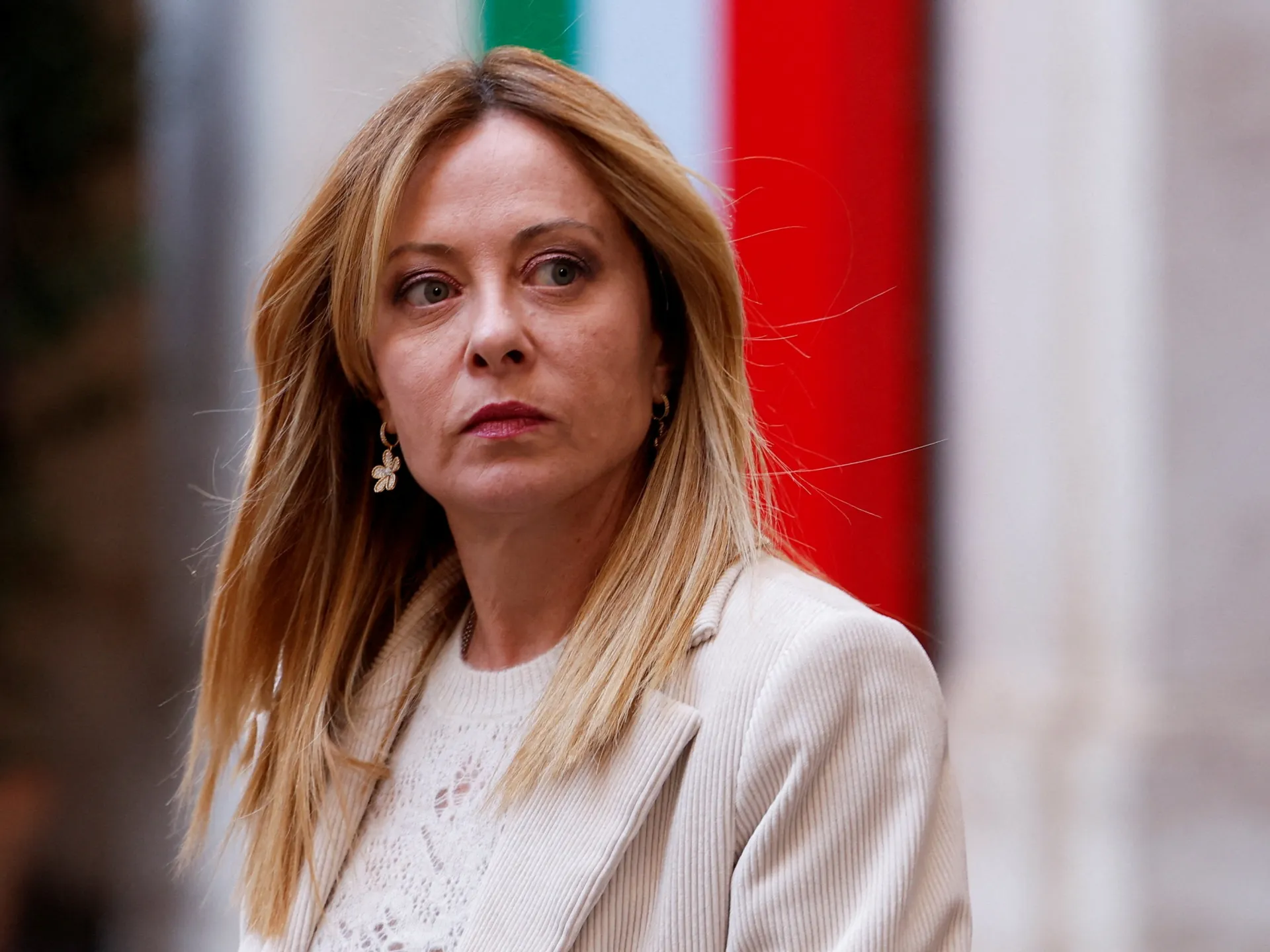
On Monday, Prime Minister Giorgia Meloni said Italy would not renew a memorandum of understanding – signed in 2003 and ratified in 2005 – between the two countries’ ministries of defence. The accord provided a framework for cooperation in “defence industry and procurement policy” and “import, export and transit of defence and military equipment”, among other things.
Recommended Stories
list of 3 itemsend of list
The memorandum was set to automatically renew every five years “unless a written notice of intention to denounce is given” by one of the two countries to the other.
That notice arrived on Monday in a letter written by Italian Defence Minister Guido Crosetto to his Israeli counterpart, Israel Katz.
The Israeli government has downplayed the move. Foreign Minister Gideon Saar said it was a deal that “never materialised” and did not have “substantial content”. “Israel’s security will not be harmed,” he wrote on X.
It is true that the Italy-Israel agreement constituted more of a political framework than a series of operational commitments between the two countries. Furthermore, the Italian government’s decision does not cancel it outright, as opposition parties and human rights advocates have long demanded, but merely suspends it.
Still, the move is a sharp reversal for a right-wing government that has been one of Europe’s staunchest allies of Israel.
Along with Germany, Italy has been one of the strongest opponents of calls to suspend a trade agreement between Israel and the European Union. Italy has largely supported Israel’s war on Gaza, which a United Nations inquiry says amounts to genocide, and it has refused to recognise Palestinian statehood.
But relations between Israel and Italy have soured recently.
On Monday, the Italian ambassador to Tel Aviv, Luca Ferrari, was summoned after Italy’s Foreign Minister Antonio Tajani condemned Israel for its “unacceptable attacks against the civilian population” in Lebanon during a visit there. And last week, the Italian government accused Israeli forces of firing warning shots at a convoy of Italian peacekeepers in southern Lebanon, prompting Tajani to summon the Israeli ambassador.
Israel also launched a massive attack across Lebanon last week, bombing 100 targets in 10 minutes on Wednesday, shortly after a two-week truce between Iran and the US was called. That series of strikes killed hundreds of people in one of the country’s worst mass slaughters since the end of the country’s civil war in 1990. Observers say the attack on Lebanon was an unwelcome disruptor to efforts to de-escalate tensions in the region.
De-escalating Middle East tensions
The Italian government’s decision to suspend its defence agreement with Israel “must be seen within a broader effort to progressively stabilise the region, including by reducing tensions in Lebanon”, said Michele Valensise, president of the Institute for International Affairs and former secretary-general of Italy’s Ministry of Foreign Affairs.
“Israel’s military operation there objectively constitutes an irritant, complicating negotiations with the Iranians,” said Valensise. “If the Lebanese front can be part of a deal with Iran, then everyone has an interest in de-escalation there.”
European governments, including Italy, have been watching nervously as the United States-Israeli war on Iran has unfolded. Following initial joint Israel-US strikes on Tehran on February 28, Iranian forces brought shipping traffic in the Strait of Hormuz to a near-total halt, causing the paralysis of the one-fifth of global oil and liquefied natural gas (LNG) exports that pass through the narrow waterway in peacetime.
Following a first failed round of high-stakes Iran-US talks in Islamabad last weekend – amid a fragile two-week truce – Washington imposed a naval blockade on Iranian ports, further aggravating fears of a protracted energy crisis. Italy heavily relies on gas imports.
‘Stop the genocide’
Possibly more importantly, Italy’s government and prime minister are preparing for elections next year.
“There is a general discontent over the war in Iran and the crisis in the Strait of Hormuz – a crisis that’s impacting Italian growth and, if it continues, could have a significant impact on citizens, something Meloni worries about in a pre-election year,” said Arturo Varvelli, a political scientist and senior policy fellow at the European Council on Foreign Relations.
Italian public opinion also has a strong pro-Palestinian component. Last October, more than two million Italians took to the streets as part of a general strike in solidarity with the Global Sumud Flotilla, which was intercepted by Israel while trying to bring aid to Palestinians in Gaza. The flotilla had been carrying 40 Italians among its passengers, calling on Israel to “stop the genocide”.
“There’s a concern that this will be a long agony, between an increasingly unmanageable Trump and the economic problems he and Netanyahu have caused with the war in the Middle East,” Varvelli said.
After years of efforts to emerge as US President Donald Trump’s “whisperer” in Europe, Meloni has been pushed by the war in Iran to put some distance between herself and Trump. Rome refused the US president’s request to join a naval coalition to force the opening of the Strait of Hormuz and to allow US bombers to refuel at a military base in southern Italy.
Trump had not commented on those decisions until yesterday, when, in an interview with Italian newspaper Corriere della Sera, he took aim at Meloni. The Italian PM had leapt to defend Pope Leo XIV after he became embroiled in a feud with Trump. Pope Leo had condemned the US president’s threat that Iran’s “civilisation will die” if it didn’t re-open the Strait of Hormuz. In response to that, Trump unleashed a storm of criticism at Leo, calling him “weak on crime” and “terrible for foreign policy”. He said he does not “want a Pope who criticises the President of the United States”.
Trump also posted a bizarre image of himself as a Christ-like figure healing the sick on social media. He has since claimed it was meant to depict him as a doctor, following widespread criticism.
Of Meloni, who he once affectionately called “a real live wire”, Trump said, “I’m shocked at her” during an interview with Corriere della Sera on Tuesday.
“Do people like her? I can’t believe it,” he said in the interview, adding, “I thought she had courage. I was wrong.”
The Dropout tells the story of the rise and fall of Elizabeth Holmes, the founder of biotech company Theranos, starring Amanda Seyfried.
Angie Quinn Screen Time Reporter
17:32, 15 Apr 2026Updated 17:33, 15 Apr 2026
The Dropout: Official trailer from Disney+
The true crime series starring Amanda Seyfried is now available to stream on ITVX.
The Dropout chronicles the true story behind the collapse of tech firm Theranos and its founder, Elizabeth Holmes.
The tale commences in 2002, when Holmes embarked on a chemical engineering degree at the prestigious Stanford University in California, where she quickly began developing concepts for groundbreaking inventions.
Professor of Medicine Dr Phyllis Gardner (Laurie Metcalf) advised Holmes of this, but she appeared to dismiss the academic’s knowledge as an underestimation of her capabilities.
Holmes insisted that she could “change the world” with this pioneering technology and garnered international acclaim, reports the Express.
She left Stanford before completing her second year to concentrate on her new venture, Theranos, which centred around an equally ambitious and potentially transformative piece of technology.
Nevertheless, when The Wall Street Journal launched an investigation into the firm, its reporting triggered a cascade of enquiries and increased scrutiny of Theranos, prompting it to become more transparent about its tightly guarded methods.
The Securities and Exchange Commission (SEC) launched an investigation, and 40 per cent of staff were made redundant a year later as the company went through restructuring.
Following the charges, the trial was postponed due to Holmes’ pregnancy and the COVID-19 pandemic, but eventually commenced in September 2021, with a jury convicting her on four counts of defrauding investors four months later.
No verdict was reached on three additional counts of wire fraud against investors, which the government later dropped, while Holmes was also acquitted on four counts of defrauding patients.
On 18th November 2022, Holmes received a sentence of 11 years and three months in prison, and she began serving her sentence in Texas on 30th May 2023.
The Dropout chronicles the dramatic downfall of the woman Forbes once dubbed the “youngest self-made female billionaire” in the world.
“Wow.. this show is insane. I want to start off by saying that I know movies and shows overdramatise true stories, so I’m speaking solely about the show right now. This goes from you rooting for the main character to you hating her.. like a real life Anakin Skywalker story”, one viewer commented about the series in a review on IMDB.
Another remarked, “The story itself is good. It moved at a quick pace, and everything they got is amazing. The one that played Edmund Ko, Stephen Fry as Ian Gibbons, are standouts for me. Sunny was also great.”
A third wrote: “Highly Watchable With Great Performances”, while another stated: “Wonderful! One of the very best shows you can see. Amanda Seyfried deserves every award to which she is eligible. Her performance as Elizabeth Holmes is off the chart.”
Roberto Sanchez, presidential candidate for the Juntos por el Peru party, speaks during a press conference in Lima, Peru, on Monday. Sanchez has moved into second place in the voting, which continues and will lead to a runoff June 7. Photo by John Reyes Mejia/EPA
April 15 (UPI) — Leftist candidate Roberto Sánchez has moved into second place in Peru’s presidential vote count, positioning himself for the runoff election as officials continue to tally ballots from the general election.
With about 90% of ballots counted, official results from Peru’s National Office of Electoral Processes show Keiko Fujimori leading with 16.9% of the vote, securing her place in the runoff. The race for second place remains extremely close.
After three days of slow vote counting, Sánchez climbed to second place with 12,05% of the vote, edging far-right candidate Rafael López Aliaga, who has 11.94%.
Ballots in Peru are processed in the order they arrive, favoring candidates with stronger support in major cities during the early stages of the count. That has kept the country in suspense, as the remaining rural vote could solidify Sánchez’s lead, La República reported.
Sánchez, a congressman and head of the leftist Juntos por el Perú party, ran as the political heir to former President Pedro Castillo, under whom he served as trade minister. During the campaign, he adopted Castillo’s signature wide-brimmed hat in public appearances.
His platform calls for sweeping state reforms through a constituent assembly, Peru’s entry into the BRICS bloc and greater state control over strategic resources without expropriation, seeking support in the Andean south and rural regions.
If Sánchez advances to the June 7 runoff, the result would echo Peru’s 2021 presidential election, when Castillo, then a little-known union leader, unexpectedly reached the second round against Keiko Fujimori with 18.9% of the vote.
As Sánchez gained ground, López Aliaga called the election a “systematic fraud” and demanded the vote be annulled, alleging manipulation in the electoral authority’s data transmission system and logistical chaos, El Comercio reported.
Election observation missions Tuesday backed the integrity of the process, describing the vote as credible and transparent despite logistical problems that caused delays and forced some polling stations to remain open longer, according to France 24.
Peru’s comptroller general also warned of serious problems in the distribution of tally sheets and election materials during the 2026 vote, which reportedly delayed polling station openings in parts of the country, Latina TV reported.
Election authorities said the prolonged count is largely due to the technical complexity of processing ballots that combined five simultaneous elections: president, national senators, regional senators, lower house lawmakers and Andean Parliament representatives.
Voters were asked to choose among 35 presidential candidates and nearly 10,000 candidates for Congress and the Andean Parliament.
Facing criticism and legal complaints over the delay, the electoral office director, Piero Corvetto, defended the process and urged calm as officials continue counting ballots from Peru’s most remote rural areas.
Weekly insights and analysis on the latest developments in military technology, strategy, and foreign policy.
The Cold War-era Lockheed AH-56 Cheyenne might have been plagued with issues, but there’s no doubt it was among the world’s most advanced helicopters of its day. The AH-56 was so fast, and its features so ahead of their time, that the U.S. Army has decided to port over its name for its highly anticipated MV-75 tiltrotor, now officially named the Cheyenne II. The name also continues the Army’s tradition of naming its helicopters after great Native American tribes, and will find its place among icons like the Apache, Chinook, and Lakota.
A rendering shows a pair of MV-75s, now named Cheyenne II. Bell
The Bell V-280 Valor was developed for the Army’s Joint Multi-Role Technical Demonstrator program as a precursor to the Future Long Range Assault Aircraft (FLRAA). Bell/Matthew Ryan
The rollout took place today at the Army Aviation Association of America’s Army Aviation Warfighting Summit in Nashville, Tennessee. Speaking to journalists, including TWZ, before that event, Maj. Gen. Clair A. Gill, the commanding general of the Army Aviation Center and Portfolio Acquisition Executive — Expanded Maneuver Air, announced the MV-75’s rollout as “a pivotal moment for Army Aviation, for our soldiers.”
In keeping with other Army rotorcraft, the MV-75’s name also honors a Native American tribe (more accurately, two tribes), the Cheyenne.
As Maj. Gen. Gill explained: This name reflects more than heritage. It reflects identity. The Cheyenne people inhabited the Great Plains for 400 years, adapting to a harsh and unforgiving environment as highly proficient hunters and gatherers. Their way of life required constant mobility, organized around nomadic buffalo hunting, enabling them to assemble, disassemble, and move quickly to meet the demands of their environment. In many aspects, that same ability to rapidly organize, reposition, and operate with precision is reflected in the MV-75 platform.”
“Life in that environment demanded resilience and strength,” Gill continued. “Tribes navigated rivalries, dirt, conflict, and adapted as Westward expansion reshaped the landscape around them. Today, the Cheyenne are represented by the Northern Cheyenne tribe in Montana, in the Cheyenne and Arapaho tribes in Oklahoma, whose legacy reflects the proud and enduring warrior tradition, ground and protection, provision and leadership. Those values demand capability, and in today’s fight, that capability comes in the form of speed, range, lethality, and adaptability. That spirit of mobility, resilience, and disciplined strength is what the name Cheyenne II represents.”
As for the other, historical Cheyenne, the AH-56, this was a first-generation attack helicopter drafted during the Vietnam War. Most impressively for the time, the helicopter could hit a 224-mile-per-hour cruise speed and dash at speeds up to 240 miles per hour, driven by a nearly 4,000-horsepower turbine engine and a pusher propeller on the tail boom.
F 03873 US Army Lockheed AH-56 Cheyenne multi weapon attack Helicopter
While it boasted incredible performance and was packed full of advanced features, the AH-56 was destined for failure. A combination of technical issues, program management shortfalls, changing procurement priorities, high cost, and a fatal crash in 1969 saw the program terminated. But despite never entering service, the Cheyenne left a profound impact on the concept of close air support and attack helicopter design and today holds a special place in military aviation history.
On the other hand, there are plenty of obvious differences between the AH-56 and the MV-75, not least their missions. They also had different prime contractors, and, the Army must hope, will have very different outcomes.
Maj. Gen. Gill continued: “What the [AH-56] Cheyenne was when it was initially conceived in the 1960s was a transformational leap ahead in technology. It was a rotorcraft when we were still learning how helicopters flew and how we could get the maximum utility, speed, and range out of them. And the Cheyenne, at the time that it was developed, was completely different. It had a pusher prop on it that allowed it to achieve speeds that we hadn’t seen before. You could draw a lot of parallels between going from the current fleet of rotorcraft that we fly, that is really 1960s, 1970s-era technology … to what we’re doing with the tiltrotor technology. Twice as far, twice as fast, vertical takeoff and landing, but flying at airplane speeds. You can certainly draw the metaphor there if you want, between the AH-56 back in the late 1960s and the MV-75 today.”
AH-56 Cheyenne firing rockets. U.S. Army
Continuing on the transformational theme, Brent G. Ingraham, the Assistant Secretary of the Army for Acquisition, Logistics, and Technology, provided his assessment of the MV-75, describing it as “a generational capability for the Army,” and one that “truly fundamentally changes how commanders think about distance, time, and maneuver on the battlefield.”
Ingraham continued: “It combines the vertical lift of a helicopter with the speed and range of an airplane, allowing us to project combat power from safer distances, penetrate deeper into contested environments, and deliver soldiers where they are needed most, faster than we ever have before.”
For the soldier, this means “restoring full-squad insertion at extended range, expanding medevac reach well beyond today’s Golden Hour, enabling large-scale, long-range air assault operations that can reshape the battlefield,” Ingraham added. Just as critically, the Cheyenne II will be able to self-deploy globally, reducing cost, complexity, and response time in a crisis. This is also especially relevant for future operations in the Indo-Pacific region, where operating locations and objectives are likely to be dispersed across large areas with limited options for making intermediate stops.
A rendering of an MV-75 launching drones. Bell
Ingraham also noted another key aspect of the program, namely the incredibly aggressive schedule to get it into service. Claiming the program as an “acquisition success story,” he described the team moving “with urgency while maintaining discipline.”
The MV-75 is designed around a modular, open-systems approach, with a digital backbone that should make it easier to adapt and upgrade as the program evolves.
“That means we can rapidly integrate new technologies, adapt to emerging threats, and avoid the costly redesigns of the past,” Ingraham said.
Soldiers are gaining hands-on experience with the future MV-75 through an immersive Virtual Prototype at Redstone Arsenal. U.S. Army/Matthew Ryan
Ingraham confirmed that the fielding timeline is being accelerated, which means the first Cheyenne II unit should be equipped in Fiscal Year 2030. Exactly how realistic that ambition is is something that we will discuss in a follow-on story.
As Ingraham said, speed matters, not just in the air, but in acquisition as well.
“We did it through strong partnerships across industry, the requirements community, and our operational units like the 101st [The 101st Airborne Division, the Army’s premier air assault unit, and the first unit set to get MV-75s], ensuring this platform is not just technologically advanced, but operationally relevant from day one. Simply put, the MV-75 Cheyenne II is how we deliver capability at the speed of relevance.”
For a rotary-wing program that puts a lot of emphasis on speed, its new Cheyenne II name is especially appropriate. Let’s just hope its warp-speed development doesn’t end the same way as its partial namesake.
Kirsty Soames is one of Coronation Street’s most infamous villains before she was sent to prison for her crimes over a decade ago
Joe Crutchley Screen Time Reporter
16:33, 15 Apr 2026
Where is Coronation Street’s Kirsty actress now 13 years after exit for abusing Tyrone(Image: ITV)
Coronation Street’s Kirsty Soames caused plenty of drama during her stint – but what has the actress been up to since her exit?
Back in 2011, Kirsty (Natalie Gumede) made her debut as the love interest of Tyrone (Alan Halsall). The pair soon hit it off – and even went on to welcome a daughter, Ruby, together in 2012.
However, things took a dramatic turn when Kirsty started to abuse Tyrone, often turning against him in violent rages. The nasty police officer ended up lying and accusing Tyrone of abusing her.
However, during his trial in 2013, Kirsty confessed that she was the abuser and Tyrone was cleared of any wrongdoing while she was convicted and sent to prison. She nominated Tyrone to have custody of Ruby, and he told her he never wanted to see her ever again.
A year later though, she was referenced on the long-running ITV soap when she sent Tyrone abusive texts after leaving prison in 2014. Fast forward to 2021 and Tyrone was informed that Kirsty had died. It was claimed that Kirsty died from an aneurysm, and she was discovered in her flat by a neighbour.
And over on the long-running soap this week, Tyrone’s domestic abuse past was mentioned after it came out that Todd Grimshaw (Gareth Pierce) has been abused by husband Theo Silverton (James Cartwright).
Talking about her decision to leave the soap, Kirsty actress Natalie previously said: “It was really tough, but I was ready to leave.
“I think it was a healthy time to go after such an intense storyline, but it’s surprising how a place kind of creeps under your skin, and I don’t think I could have wished to work with a better team so it did surprise me how emotional I was at leaving.””
After her cobbles exit, Natalie was in high demand. She appeared on BBC’s Strictly Come Dancing in 2013, and was partnered with Artem Chigvintsev. The pair lost out to Abbey Clancy & Aljaz Skorjanec and came joint second along with Susanna Reid & Kevin Clifton.
Her other TV credits include 2015’s ITV Jekyll & Hyde, Vera in 2019 and Netflix’s Free Rein from 2017 to 20192. Natalie also appeared in the 2022 Netflix smash Your Christmas or Mine? and it’s sequel in 2023, playing Kaye Taylor.
Speaking at the premiere of the movie, Natalie revealed it was refreshing to play the fun Kaye after always playing a “dark” and “sinister” character.
“Aunty Kaye is one of the my most favourite characters I’ve ever played. I’m always sort of the dark, slightly miserable character, a bit cold a bit sinister,” she said. Natalie added: “And so for the first time I could really just get my teeth into something where I could just be silly and have fun and I absolutely loved it.”
Coronation Street airs Monday to Friday at 8:30pm on ITV1 and ITVX
“Then I’ll have to fire him,” the president said on Fox Business. “If he’s not leaving on time — I’ve held back firing him. I’ve wanted to fire him, but I hate to be controversial. I want to be uncontroversial.”
Powell’s term as chair ends on May 15 and Trump does not have the authority to fire him without cause. But his nominated replacement, Kevin Warsh, hasn’t been confirmed by the Senate. If he doesn’t get confirmed, Powell could stay on as chair pro tempore.
“That’s what the law calls for. That’s what we’ve done on several occasions,” Powell said.
He said he plans to stay on the board.
“I have no intention of leaving the board until the investigation is well and truly over with transparency and finality,” Powell said.
The Senate Banking Committee is scheduled to have hearings on Warsh’s nomination on April 21.
Powell’s term as a Fed governor goes until 2028, but he said he hasn’t decided if he’ll serve out that term.
Complicating matters, the Trump administration has been trying to prosecute Powell for his role in the $2.5 billion renovation of the Fed headquarters. The building went far over budget, and Trump has implied that something illegal is happening.
U.S. attorney for the District of Columbia Jeanine Pirro tried to subpoena Powell over the renovation, but a judge denied it. Pirro admitted she had no evidence.
Sen. Thom Tillis, R-S.C., who is on the Senate Banking Committee, said he will continue to block Warsh’s confirmation until the investigation into Powell ends.
But Trump said he isn’t worried about Tillis.
Tillis “is an American; he knows what to do,” he said.
Trump said the investigation must happen.
“What they’ve done to that, so it is probably corrupt, but what it really is is incompetent, and we have to show the incompetence of that,” he said.
Trump has wanted Powell out of the Fed since he was elected to office for the second term. He has said he wants interest rates dropped, but Powell has taken a more conservative approach. Powell has lowered the rates, but not fast enough for the president.
“Does that mean we stop a probe of a building that I would have done for $25 million that’s going to cost maybe $4 billion? Don’t you think we have to find out what happened there?” Trump said in the interview at the White House. “I have to find out.”
He called Powell “a disaster.”
“Here’s a man who took this little, tiny building and a couple of other little, tiny complex, and he’s spending more than $3 billion. I want to know who the contractor is, because that contractor is making billions of dollars, perhaps.”
The Fed said the building’s cost overruns are due to “unforeseen conditions” requiring more spending, including “more asbestos than anticipated, toxic contamination in soil, and a higher-than-expected water table.”
Trump has also tried to oust Fed governor Lisa Cook on the allegation that she committed mortgage fraud.
Speaker of the House Mike Johnson, R-La., presents the family of Benjamin Ferencz with his Congressional Gold Medal during the Holocaust Memorial Museum’s Days of Remembrance ceremony at the U.S. Capitol on Tuesday. The gold medal was presented posthumously to Ferencz, who served in the Army during World War II and prosecuted Nazi war criminals during the Nuremberg Trials. Photo by Bonnie Cash/UPI | License Photo
Norway is preparing to lift restrictions preventing its $2.2 trillion sovereign wealth fund from investing in government bonds issued by Syria.
The move follows the political transition after the ousting of Bashar al-Assad and the rise of Ahmed al-Sharaa, whose government has been seeking economic recovery and international reintegration after more than a decade of war and sanctions.
At the same time, Norway plans to newly restrict investments in bonds issued by Iran, aligning with ongoing international sanctions.
Policy Shift and Financial Context
The Norwegian sovereign wealth fund, the largest in the world, plays a major role in global financial markets. Its investment decisions often influence broader investor behaviour.
The updated policy removes Syria from the exclusion list for government bonds while adding Iran, reflecting changing geopolitical and sanctions dynamics.
Although the fund does not currently hold investments in Middle Eastern government bonds, the policy shift opens the door for future allocations and signals a reassessment of risk and legitimacy.
Geopolitical Significance
Norway’s decision represents a notable step toward Syria’s re-entry into the global financial system. It comes alongside other developments, including the restoration of Syria’s financial links with international institutions after years of isolation.
The move also highlights a divergence in how states are being treated: while Syria is gradually being reintegrated, Iran remains economically isolated due to continued tensions and sanctions.
As one of the world’s most influential sovereign investors, Norway’s stance could encourage other countries and institutions to reconsider their own restrictions on Syria.
Analysis
The decision reflects a broader recalibration of international economic engagement based on political change and shifting strategic priorities. By opening the possibility of investment in Syrian bonds, Norway is signalling cautious confidence in the new government’s direction and stability.
At the same time, the move remains largely symbolic in the short term. The wealth fund has no immediate exposure to Syrian debt, and actual investment will depend on risk assessments, market conditions, and institutional safeguards.
More importantly, the policy underscores how financial tools are increasingly used as instruments of foreign policy. Inclusion or exclusion from global capital markets can legitimise governments, incentivise reforms, or reinforce isolation.
In Syria’s case, gradual financial reintegration could support reconstruction and economic recovery, but it also raises questions about governance, transparency, and long-term stability after years of conflict.
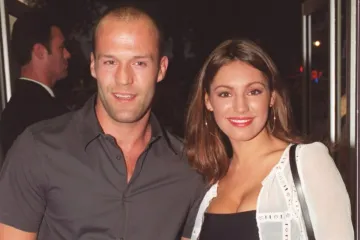
JASON Statham has shared some very rare family snaps from his holiday to Turkey with fiancee Rosie Huntington-Whiteley and their two young children.
The actor, 58, took to social media to post photos from their time at five star hotel Regnum at The Crown in Antalya, where rooms cost up to £3,000-a-night.
Sign up for the Showbiz newsletter
Thank you!
Jason shared a rare family update from their holiday to Antalya in TurkeyCredit: InstagramHe and son Jack, eight, were seen taking in the viewCredit: InstagramProud dad Jason messed around in the pool with four-year-old daughter IsabellaCredit: Instagram
Jason and model Rosie, 38, are parents to Jack, eight, and four-year-old Isabella.
Fast & Furious star Jason showed off his close bond with the kids while they relaxed at the hotel’s stunning crystal cove pool.
He and Jack were seen taking in the view with their arms around each other, while another snap showed the young lad standing on his dad’s shoulders in the pool.
Meanwhile Isabella was seen taking a dip in the water and one photo showed proud dad Jason lifting her into the air.
Jason didn’t include any photos of Rosie in his upload, which he captioned: “The cave.”
The couple have been together since 2010 and got engaged in 2016.
But Rosie previously confessed they’re in no rush to walk down the aisle.
She told Entertainment Tonight: “We’re looking forward to that time. It’s also not a huge priority for us, we’re so happy.
“I think it will be fun to do it when the baby’s [Jack] grown up a bit and he can be involved in the wedding.”
Rosie and Jack live in a Georgian townhouse in London and have spent two years renovating it together.
Revealing how the process has been, she told Vogue Australia: “Jason has the most impeccable taste.
“He taught me so much about architecture and furniture.”
Rosie added that being in a relationship with Jason for 16 years has been “very grounding”.
The father and son duo showed off their acrobatic skillsCredit: UnknownJason and Rosie have been together for 16 years – but are in no rush to tie the knotCredit: Rosie Huntingdon-Whitely and dau
England captain Ben Stokes was struck on the face by a cricket ball, which required surgery for a broken cheekbone.
Published On 15 Apr 202615 Apr 2026
England Test captain Ben Stokes has said he feels “quite lucky” to be alive as he recovers from surgery after being hit in the face by a cricket ball.
All-rounder Stokes required the procedure after suffering a broken cheekbone sustained by being hit by the ball during a net session while he was coaching academy players at his domestic county side Durham in February.
Recommended Stories
list of 4 itemsend of list
Stokes is set to play in two first-class County Championship games next month, but he revealed the incident could have been so much worse.
“I copped one straight in the face,” the 34-year-old told the England and Wales Cricket Board.
“Pretty nasty but, funnily, probably the best result of a bad situation, to be honest. Just a couple of inches one way or the other, I might not be here doing this interview, if I didn’t turn my head round.
“All things considered, although I had pretty major facial surgery to sort it out – it was a bit of a mess under here (cheekbone), I’ve got out quite lucky. So pretty thankful for that.”
He added: “Obviously it set everything back about a month, five weeks, with getting back to where I wanted to be to play at the start of the season for Durham, but just had to sort of quickly go back to the drawing board and put a plan together to get me ready to play a couple of games for Durham before the Test summer starts.
“At the back end of all that now, but it was a pretty scary situation. Thankfully still here and everything’s all right.”
Stokes is expected to be fit to lead England in the first Test of their home season against New Zealand at Lord’s starting on June 4, as they look to recover from their woeful 4-1 Ashes humiliation in Australia.
Stokes downplays rift with England coach McCullum
Stokes, meanwhile, has played down reports of disagreements with head coach Brendon McCullum but added that they do have different viewpoints at times.
British media reported that former New Zealand captain McCullum’s relationship with Test captain Stokes frayed during the Ashes series defeat in Australia, though the duo have publicly backed each other.
“I am very confident in mine and Brendon’s ability to be able to work together, because we’ve done it for such a long period of time now,” Stokes said in an interview with the England and Wales Cricket Board (ECB).
“But we work together in a slightly different way. The main point of me and Brendon is our alignment towards winning things and making this team as good as they can be.”
Since taking charge in 2022, McCullum and Stokes implemented an ultra-aggressive style of play known as “Bazball”, which has come under much scrutiny since England’s Ashes defeat, prompting the ECB to launch a thorough review into the team’s preparations.
“Agreeing on every single thing, that’s just impossible,” Stokes said.
“We agree 95% of the time on things, but those 5% things that we might have different views on, we talk about it between each other and then we end up getting to the place where we want to get to.
“We put a lot of our heart and soul into this job. Brendon certainly has for the four years he’s done it so far, and hopefully we’ll still be together at the end of 2027, winning what we want to win.”
England host New Zealand for a three-Test series in June before eight limited-overs matches at home to India.
With the global attention fixated on the diplomatic efforts to end the war on Iran, Israel has systematically escalated its attacks on Gaza and choked off vital aid, plunging the besieged enclave into what economic experts are now calling an “engineered, compounded famine”.
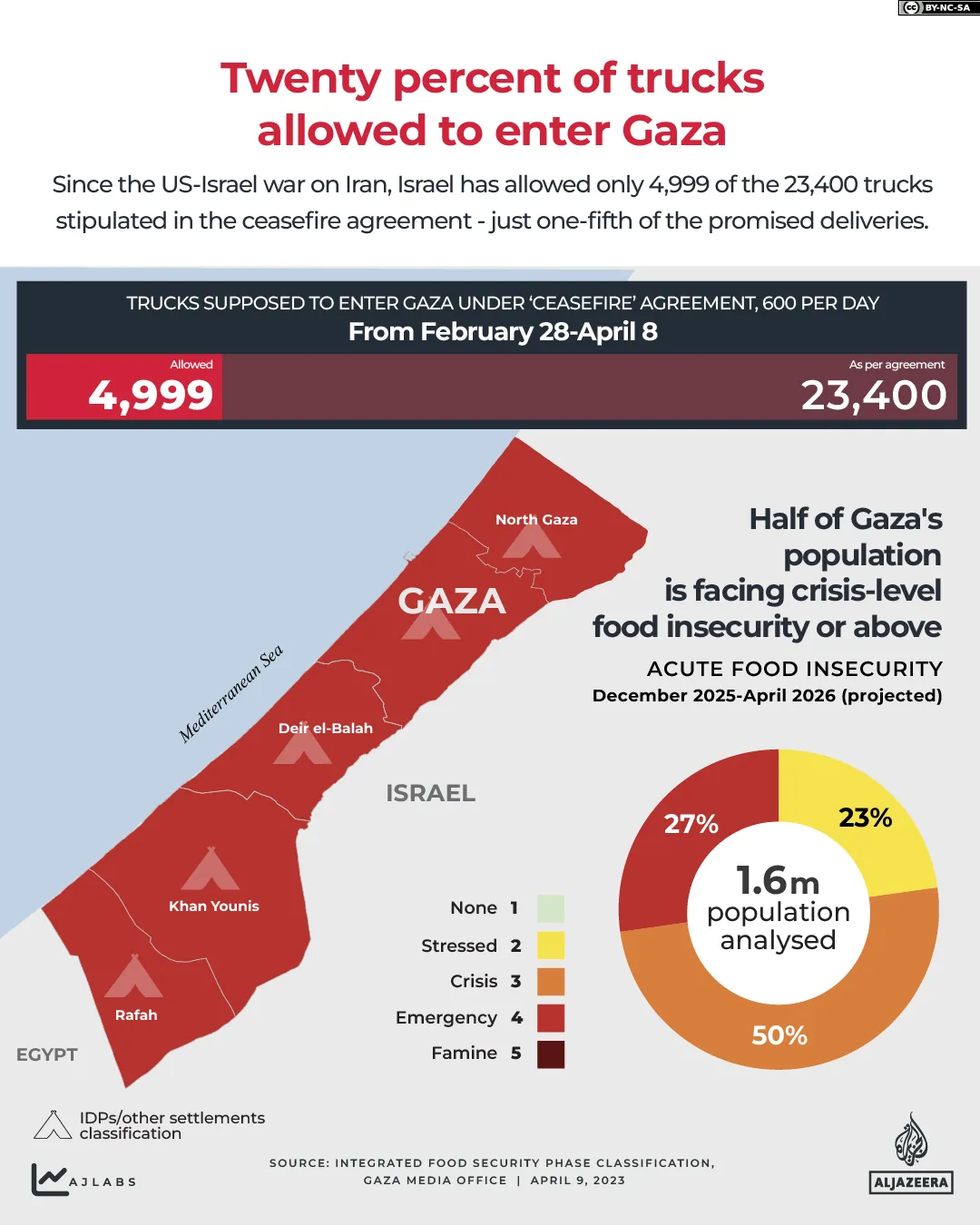
The number of aid trucks entering Gaza has dropped drastically in violation of the October 2025 ceasefire with Hamas. Since then, the Government Media Office in Gaza has recorded 2,400 military violations by Israeli forces, resulting in the killing of more than 700 Palestinians.
Recommended Stories
list of 4 itemsend of list
On Tuesday, Israel’s military killed at least 11 Palestinians, including two children, in separate attacks across the war-torn Strip.
The intensity of these attacks spiked during peak regional tensions. Between February 28 and April 8, while Israel and the US were engaged in a bombing campaign against Iran, Israeli forces bombed Gaza on 36 out of those 40 days.
In the last five weeks alone, more than 100 people have been killed, including Al Jazeera journalist Mohammed Wishah. Israel has killed more than 72,336 people since launching the brutal military offensive on October 7, 2023.
The ‘truck deception’
While Israel frequently claims it is allowing hundreds of aid trucks into Gaza, Palestinian officials and economic experts argue these figures are a deliberate mathematical deception.
According to the Government Media Office, only 41,714 aid and commercial trucks have entered Gaza over the past six months. This represents a mere 37 percent of the 110,400 trucks stipulated under the ceasefire agreement. The fuel situation is even more critical, with only 1,366 fuel trucks entering out of a promised 9,200 – an abysmal 14 percent compliance rate.
Recent daily logs highlight the severity of the bottleneck. On April 13, a total of only 102 aid trucks and 7 fuel trucks were allowed into the entire Strip, alongside 216 commercial trucks – a fraction of the more than 600 total trucks required daily under the “ceasefire” deal. By April 14, the numbers remained critically low with 122 aid trucks and 12 fuel trucks entering.
Crucially, Israeli authorities entirely shut down additional entry points like the Zikim and Kissufim crossings, which had processed dozens of commercial and aid trucks just a day prior, bottlenecking all limited traffic exclusively through Karem Abu Salem.
Mohammed Abu Jayyab, a Palestinian economic expert based in Gaza, told Al Jazeera that Israel utilises a “technical and commercial deception” to inflate these numbers.
“An Israeli truck carries up to 32 or 34 pallets… which are then unloaded into two or three smaller, dilapidated Palestinian trucks on the Gaza side,” Abu Jayyab explained. “Consequently, the UN and Israel count double or triple the actual number of Israeli trucks entering.” One pallet holds roughly 1 tonne of goods or food items.
Furthermore, Israel recently banned mixed-load shipments. If a merchant brings in 20 pallets of sugar, the remaining 12 pallet spaces on the truck must remain empty, yet it is still registered as a full commercial truck.
“The political agreement stipulated a ‘truck’ but did not specify quantities, weights, or the number of pallets,” Abu Jayyab noted, allowing Israel to weaponise logistics to restrict aid while appearing compliant.
Engineering starvation
This logistical strangulation is part of a broader strategy. Hassan Abu Riyala, undersecretary of the Ministry of National Economy in Gaza, stated in a meeting published on the ministry’s official Telegram channel that Israel is “engineering a policy of starvation”.
To ensure chaos in the local markets and sky-high prices, Israel has deliberately dismantled civil regulatory bodies. “The occupation targeted the majority of the crews that monitored prices, and assassinated the [former] undersecretary of the Ministry of Economy and five directors general during the war,” Abu Riyala said.
The results have been devastating, basic commodities have become scarce, and bread production has plummeted to 200 tonnes daily, far below the 450 tonnes required to feed the population.
“We manage this structural deficit under exceptional and coercive conditions,” Ismail Al-Thawabteh, director general of the Government Media Office, told Al Jazeera.
He described the ongoing reduction of supplies despite the truce as a “systematic restriction of basic supplies” that pushes the population towards dangerous levels of food insecurity. Fresh produce has skyrocketed, with 1kg (2.2lb) of tomatoes jumping from $1.50 to nearly $4 in a matter of weeks.
Moreover, the humanitarian catastrophe is being accelerated by the withdrawal of major aid groups. Al-Thawabteh noted that the scaling back or suspension of operations by key international institutions, most notably the World Food Programme (WFP), due to Israeli restrictions, represents a “highly dangerous development” that threatens the complete collapse of Gaza’s relief system.
“We issue an urgent appeal to the international community and the guarantors of the agreement to immediately pressure Israel to open the crossings… before reaching a point of no return and an imminent human explosion,” he said.
A ‘compounded famine’
The crisis has evolved beyond a simple lack of food; it is now a complete collapse of the Palestinian economy.
Abu Jayyab described the current situation as a “compounded famine”. With unemployment soaring to 80 percent and the destruction of more than 160,000 jobs across industrial, agricultural, and commercial sectors, the population has entirely lost its purchasing power.
“It has become illogical to link the entry of food supplies from the crossings to their availability to Palestinian citizens,” Abu Jayyab told Al Jazeera. Even when goods reach the market, between 70 to 80 percent of families simply cannot afford to buy them due to the total absence of income.
This extreme deprivation is forcing civilians into life-threatening alternatives. “The return of long queues for bakeries, and citizens resorting to burning plastic and waste in the absence of cooking gas, are dangerous field indicators of an unprecedented deterioration,” Al-Thawabteh warned, noting that government health facilities are currently struggling to treat respiratory and skin diseases resulting from this toxic pollution.
The medical blockade
Meanwhile, the stranglehold extends to Gaza’s most vulnerable patients. While the ceasefire agreement mandated the opening of the Rafah crossing for medical evacuations, Israel has kept the borders tightly restricted.
Over the past six months, only 2,703 people have been allowed to cross through Rafah out of an expected 36,800 – a compliance rate of just 7 percent. Consequently, only 8 percent of the severely wounded and chronically ill patients slated for urgent medical evacuation have been permitted to leave. According to the World Health Organization, roughly 18,000 people are still trapped in Gaza waiting for life-saving treatment abroad.
Families, in their various flavors, have been essential to television since that light first flickered on. They may be ideal or nightmarish, or both, or in between, and we take to them — be they Waltons or Addamses or Simpsons — according to our own experience or desires, having known families of our own or wanted something other than what we had.
In “Schitt’s Creek,” Dan Levy co-created — with his father, Eugene, yet — one of the medium’s greatest family comedies. It was a show that grew over time from a basic premise about rich people who lose their money and are forced to live at close quarters in adjoining motel rooms to a paean to love, understanding and acceptance. It swept the comedy categories at the 2020 Emmys, including acting awards for both Levys, Catherine O’Hara and Annie Murphy and writing and directing trophies for Dan.
“To family” are in fact the last words spoken in the first season of “Bad Mistakes,” Levy’s noisy, funny new show, co-created with Rachel Sennott and now streaming on Netflix — though given what precedes it, it’s less a blessing than a curse. Levy plays Nicky, a pastor at a sparsely attended suburban New Jersey church of no evident denomination. He’s out as gay, but supposedly celibate; that he has a boyfriend, Tareq (Jacob Gutierrez), is known only to Tareq; this, of course, creates a secret, which will create pressure, which will create comedy.
Sister Morgan (Taylor Ortega) is an elementary school teacher, a job that doesn’t quite jibe with everything else we see about her — it’s barely represented, anyway, summer having come — and a very longtime boyfriend, Max (Jack Innanen), who has decided that now is the moment to propose. She had once tried acting in New York, which means that she lived a wilder life once and is something of an improviser. Their mother, Linda (Laurie Metcalf), who owns a hardware store, is running for mayor and the campaign is being managed by extra daughter Natalie (Abby Quinn).
The series begins as their grandmother is dying, and at Linda’s command, they rush out to buy her a present — Linda is trying to squeeze in an “early birthday” before her mother passes. And because she is that sort of person, Morgan shoplifts what she imagines is a cheap necklace from a convenience store. (Attendant Yusuf, played by Boran Kuzum, will have much to do.) The necklace isn’t cheap, it turns out, for no particularly good reason, and the convenience store isn’t just a convenience store, but a kind of waystation for stolen goods run by local Russian mobsters. As a result, Morgan and Nicky find themselves forced to run errands for them, under threat of death, or worse.
The show gets very complicated on its way to a circular semi-conclusion; there is a lot going on, with Linda’s mayoral ambitions and various relationship issues. (Elizabeth Perkins plays Max’s mother, bridging storylines.) But it’s a good ride, and classic in its way; searching the phrase “get mixed up with gangsters” brings forth a host of old comedies. Through the dodgiest situations, brother and sister do not hesitate to argue. Nicky would love to be anywhere else, while Morgan finds it invigorating. Though it is all improbable, the parts do mesh neatly; they make television sense.
Finally, the series rests on the shoulders of the three principal players, who are just a pleasure to watch; the camera obliges by moving in close. Levy brings a soft-spoken breathlessness you may recognize from his David Rose on “Schitt’s”; his softly muttered “OK,” which might just mean “stop talking,” is almost a trademark. Ortega brings a kind of poignance to her reborn wild child, while Metcalf plays Linda with a kind of small-town operatic intensity, eyes popped and pronunciation precise — she’s like a country cousin to O’Hara’s Moira Rose — as if she were onstage pitching to the back row of the theater.
Michelle Pfeiffer and Elle Fanning in “Margo’s Got Money Troubles,” premiering April 15, 2026 on Apple TV.
(Allyson Riggs/Courtesy of Apple)
In “Margo’s Got Money Problems, premiering Wednesday on Apple TV, Elle Fanning plays the title character, a college student flattered into bed by her married-with-children writing professor, Mark (Michael Angarano), despite my shouting at the screen for her not to do it. Soon she is pregnant, and soon after that the essentially single mother of baby Bodhi, unable to find work or the time to write. (As the heroine, we assume her talent.)
Presumably in search of some normalcy, Margo’s mother, Shyanne (Michelle Pfeiffer), a former good time girl — but still sparkly — has become engaged to Kenny (Greg Kinnear), Christian, square and sincere; the Ralph Bellamy of the piece, you are not asked to take him quite seriously (though Kinnear plays him straight). Shyanne’s ex-husband is Jinx, a former professional wrestler, played by Nick Offerman with the low-key affect of Ron Swanson, dialed down even further; depression and drug addiction will do that to you. Fresh out of rehab, he trades a championship belt for a motorcycle and joins the household; though he left Margo early, and unlike Shyanne, he proves to have a marvelous, easy way with Bodhi. (The baby himself, or babies — they use twins for this job — are themselves marvelous.)
Also in residence is roommate Susie (Thaddea Graham), a chirpy cosplayer — and coincidentally Jinx’s biggest fan — whose skills will become valuable as Margo, needing cash, sets off into the world of OnlyFans. First picking up tips describing followers’ penises in terms of Pokémon (no explanation has been thought necessary), she pivots to video, mounting increasingly elaborate sexy sci-fi productions alongside Susie (sets and costumes), Jinx (narrative advice, stunt coordinator) and OnlyFans veterans KC (Rico Nasty) and Rose (Lindsey Normington), a fabulous tag team to whom Margo turns for advice. (Margo does seem to take things over, but it’s her name in the title, so there you go.) This introduces an element of Mickey and Judy, my uncle’s got a barn, let’s put on a show comedy. More important, it creates a team, melding the family you make with the family you have.
It’s as sweet as can be. Apart from sleeping with one’s professor — students, do not do this! — the show is positive about just about everything: motherhood, daughterhood, professional wrestling, second chances, sex work, cosplaying and the way art shows up in strange places. Only Marcia Gay Harden, as Mark’s mother, Elizabeth, is an outright villain, and you will hate her.
The series was created by David E. Kelley (Mr. Michelle Pfeiffer), from Rufi Thorpe’s 2024 novel, once again under the umbrella of Nicole Kidman’s Blossom Films (following their collaborations on “Big Little Lies,” “Nine Perfect Strangers” and “Love & Death”), with its house style of well-upholstered capital-Q Quality (as distinct, in its pop-cult, way, from prestige). (Kidman has a small role as a wrestler-turned-lawyer and it’s been a while since I’ve seen her this well used.) “Margo’s Got Money Problems” can be terribly sentimental, almost corny — the climax is pure Hollywood — but undeniably effective. And if its mix of comedy and drama can be a little destabilizing, you won’t need to worry about where it ends up.
Draw for the 24-team 2027 AFC Asian Cup, originally set for Saturday, moved to May 9.
Published On 15 Apr 202615 Apr 2026
The draw for the 2027 Asian Cup in Saudi Arabia has been rescheduled for May 9 in Riyadh as the United States-Israel war on Iran disrupts regional sporting events.
The draw, originally scheduled for last Saturday, will be held at the historic At-Turaif District in Diriyah. The Asian Football Confederation (AFC) said on Wednesday that the postponement was made to ensure the full participation of all key stakeholders and member associations.
Recommended Stories
list of 4 itemsend of list
A number of sporting events across the region have been postponed or cancelled due to the war, which began on February 28.
Saudi Arabia is set to host the 24-team, quadrennial continental championship for the first time from January 7 to February 5. With 23 of the 24 teams already confirmed, the draw will divide the qualified nations into six groups of four.
The final qualification place will be decided on June 4 when Lebanon face Yemen in a playoff.
Defending champions Qatar have already secured their place at the finals along with four-time winners Japan and fellow World Cup qualifiers South Korea, Iran, Jordan, Australia and Uzbekistan.
Three students and a teacher have been killed in the province of Kahramanmaras, according to the local governor.
Published On 15 Apr 202615 Apr 2026
A student has shot at least four people dead, including fellow pupils and wounded at least 20 others at a middle school in southeastern Turkiye, according to the local governor.
Wednesday’s deadly incident marks the country’s second school attack in two days.
Three students and one teacher were killed in the incident in the province of Kahramanmaras, Governor Mukerrem Unluer told reporters.
The shooter died in the attack.
The student was in the eighth-grade at the school and concealed their father’s guns in a backpack to carry out the attack, the governor added.
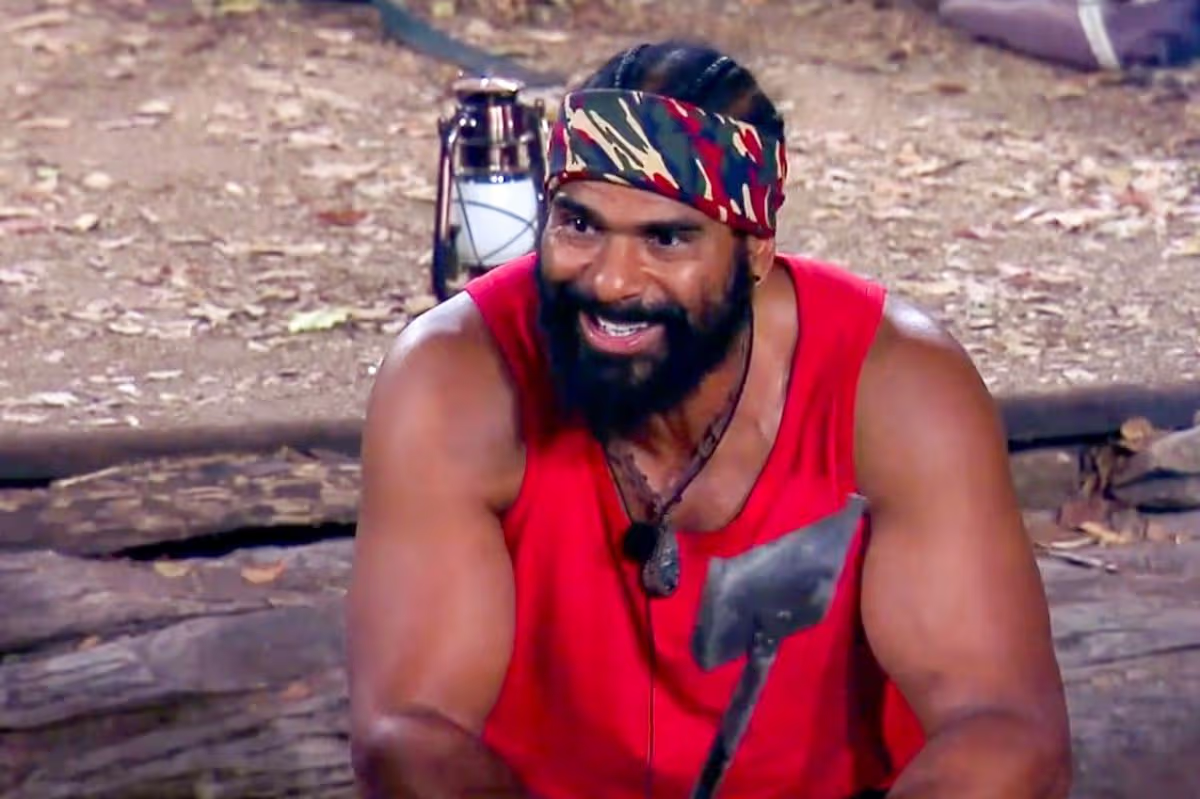
David Haye is set to target the Rhino’s dinner in tonight’s edition of I’m A Celebrity…South Africa amid what is already a controversial time in the jungle for the boxer
13:31, 15 Apr 2026Updated 13:31, 15 Apr 2026
David Haye is set to target the Rhino’s dinner in tonight’s edition of I’m A Celebrity…South Africa(Image: ITV/Shutterstock)
David Haye is set to target the Rhino’s dinner in tonight’s edition of I’m A Celebrity…South Africa. The boxer, 45, is currently taking part in the all-stars edition of Ant and Dec’s ITV reality survival show and is a member of the Lion’s team alongside Harry Redknapp and Ashley Roberts.
As the food is lowered into camp, David says confidently : “I can’t wait for the food to get here. It’s not going to be easy getting up there but where there’s a will, there’s a way.”
Immediately taken aback by his plan, Olympian Sir Mo Farah tells his teammate: “Damn, brother. No, I think we should just let them have it… technically they did win it.”
But David remains undeterred as he says: “This is the Lions’ lair, anything coming in here is getting eaten,” However, their conversation is overhear by Coronation Street star Craig Charles from the other side of the fence.
He says: “You’re not really going to steal the bag, are you? You can’t steal the bag off our girls who just won the challenge!” Whether he is successful in his ploy remains to be seen, but David wastes no time as he sets about King Harry’s throne to propel himself nearer to the food bag.
The boxing star has had quite the controversial time in camp already – having already made offensive comments about women and seemingly directed a joke about weight at Gemma Collins. After suffering a defeat in a trial, David admitted that he did not like losing and it would “eat him up for a while,” and it was then that Gemma went to comfort him over the loss, which left fans confused, especially after he made insulting comments to her earlier in the week.
He said: “It’s gonna eat me up for a while. They tried to get under my skin, and they have; that’s what they should do, and I expect nothing less. I don’t like losing any rounds.” It was at that point that Gemma, who, as a member of the team on the other side of the fence, made the forbidden move to speak to him, and he began by saying: “Hello sweetheart” when he saw her.
She said: “You’re not a loser, David. Don’t be hard on yourself, tomorrow is another day, dust it off, you’re always a champ, you know that. Love ya. Come on, it’s not the end of the world.” Gemma then hugged her co-star before heading off.
Then, in the Bush Telegraph, Gemma said: “Obviously, there’s been a bit of banter between us. I’ve seen a different side to David.” But fans were left taken aback as to why the TOWIE legend had been so kind and understanding towards him, especially as he made comments last night which seemingly referred to her weight.
David’s controversy all started innocently enough when it was suggested the group of celebs should meet up for a party when they left the show, and David said his girlfriend Sian was a great cook and could possibly provide food for the event.
He then added: “She’s like tall, blue eyes. She’s lovely. She’s got the personality of a proper ugly bird.” Scarlett Moffatt replied: “You can’t say that.”
But David brushed off the response and added: “She has. Most ugly girls realise they don’t they’re not pretty enough to….they gotta have a personality to banter and to tell jokes and s**t, so people overlook the fact that they’re not aesthetically amazing, straight away.
“Which is what’s called Ugly Duckling syndrome, where girls are ugly, when they start off, and then they and then they kind of they, they get pretty as they get older. But they still got the personality of when they’re ugly. Does that make sense?”
As Scarlett and others made shocked noises, David continued to express his opinions. Haye added: “You get a girl who’s pretty from day one, you get a girl who’s different day one. Everyone goes ‘You’re so beautiful. You’re amazing’. She grows up thinking, I’m amazing. Everyone loves me. I can open any door. I can go anywhere I want.” Later on, Gemma was talking about how “thick” her hair is, and David quipped: “It certainly ain’t thin.”
I’m A Celebrity…South Africa airs weeknights 9PM on ITV1, ITVX, STV AND STV PLAYER
April 15 (UPI) — U.S. President Donald Trump said peace talks with Iran “could be happening in the next two days,” with American negotiators most likely to return to Islamabad where the first round of talks at the weekend ended without a breakthrough.
In an interview with the New York Post on Tuesday, Trump said talks between the sides were “happening, but, you know, a little bit slow,” saying a new round of direct negotiations would probably be hosted by a country in Europe.
However, around 30 minutes after the interview had concluded, Trump called back to tell the Post that it should keep its reporter covering the talks in Islamabad in place and not bring them home.
“You should stay there, really, because something could be happening over the next two days, and we’re more inclined to go there [Islamabad]. It’s more likely, you know why? Because the field marshal is doing a great job,” Trump said, referencing Pakistan’s Field Marshal Gen. Asim Munir who has a direct line of communication with the regime in Tehran and a strong relationship with Trump.
“He’s fantastic, and therefore it’s more likely that we go back there. Why should we go to some country that has nothing to do with it?” added Trump.
The Washington D.C.,-headquartered Institute for the Study of War also said a fresh round of negotiations was likely this week but said it believed Iran’s approach would be to try to buy time by spinning out the talks
“Iran likely aims to protract negotiations as long as possible in order to prepare for a potential resumption of conflict,” ISW said in a post on X.
The developments, which came as a fragile cease-fire that took effect April 7 entered its second week, followed earlier reports in which unnamed White House officials told CNBC, CNN and NBC News that in-person negotiations could restart before the truce expires on Tuesday.
Vice President JD Vance said round one of the talks in Islamabad, which ran for more than 20 hours, foundered on differences over Iran’s nuclear program — which the United States wants it to give up completely to ensure it can never develop a nuclear weapon — and control of the Strait of Hormuz.
Reports later emerged that more progress had been made than initially suggested, with the sides getting close to agreement on nuclear enrichment after Iran countered U.S. demands for a 20-year suspension with an offer to halt all enrichment for 5 years.
Trump told the Post he was unhappy with the thinking that a moratorium on enrichment, instead of terminating the program, would make the regime in Tehran more amenable to a lasting peace agreement by providing them a face-saving “success” to sell to the Iranian people.
“I’ve been saying they can’t have nuclear weapons. So I don’t like the 20 years. I don’t want them [Iran] to feel like they have a win.”
Experts concurred with Trump’s analysis, saying the only way to guarantee Iran would not be able to pursue a nuclear weapon in the future was to make sure the entire program was put beyond use, in a verifiable way, and that it needed to happen while Trump was still in office.
Under the Joint Comprehensive Plan of Action, a 2025 deal between Iran and the United States, Britain, France, Germany, Russia and China, enrichment by Tehran of its 300 Kg stockpile of uranium was capped at 3.67%, in exchange for sanctions relief.
However, that deal lapsed in October, although in practice it was long dead after Trump pulled the United States out of the agreement in May 2018, during his first term, with Iran subsequently proceeding to enrich an expanded 441 kg uranium stockpile to around 60%, not far short of weapons grade.
Speaker of the House Mike Johnson, R-La., presents the family of Benjamin Ferencz with his Congressional Gold Medal during the Holocaust Memorial Museum’s Days of Remembrance ceremony at the U.S. Capitol on Tuesday. The gold medal was presented posthumously to Ferencz, who served in the Army during World War II and prosecuted Nazi war criminals during the Nuremberg Trials. Photo by Bonnie Cash/UPI | License Photo
ASML occupies a critical position in the global semiconductor supply chain as the sole producer of extreme ultraviolet lithography systems. These machines are essential for manufacturing the most advanced chips used in artificial intelligence applications. As demand for AI computing has surged, driven by data centre expansion and high performance processing needs, the semiconductor industry has entered a new investment cycle focused on capacity growth.
Strong earnings and upgraded forecast
ASML reported first quarter earnings that exceeded expectations and raised its 2026 revenue outlook to between 36 billion and 40 billion euros. This revision signals stronger than anticipated order inflows and reinforces the scale of demand emerging from the AI sector.
The company’s performance reflects a broader trend in which chip demand is outpacing supply. According to CEO Christophe Fouquet, customers are accelerating expansion plans well beyond the near term, indicating confidence in sustained AI driven growth.
ASML as a strategic enabler of AI growth
Investors increasingly view ASML as a foundational player in the AI ecosystem rather than a conventional manufacturer. Its tools are used by leading chipmakers such as TSMC, which produces advanced processors for firms like Nvidia and Apple.
This positioning places ASML at the upstream end of the value chain. Instead of competing in chip design or production, it supplies the essential infrastructure that enables both. As a result, its growth is tied to the entire semiconductor sector rather than any single company.
Supply constraints and industrial limits
Despite strong demand, structural constraints remain significant. Semiconductor fabrication plants require years to build and involve complex global supply chains. ASML itself faces production bottlenecks due to the precision and cost of its machines, which can reach hundreds of millions of dollars per unit.
Even with plans to increase shipments of its leading systems in 2026 and 2027, capacity expansion is gradual. This creates a persistent imbalance where demand continues to exceed supply, reinforcing pricing power across the industry.
Geopolitical and regulatory risks
A key uncertainty for ASML lies in export controls, particularly regarding sales to China. Proposed restrictions in the United States, including the MATCH Act, could limit the company’s ability to supply Chinese customers. Currently, China represents a significant portion of ASML’s revenue.
However, the global shortage of advanced chips may mitigate this risk. Reduced access to one market could be offset by demand from others, especially as countries and companies compete to secure semiconductor supply chains.
Market response and valuation concerns
ASML’s share price has risen sharply, reflecting investor optimism around AI driven growth. The company is often described as a “picks and shovels” investment, benefiting from the broader expansion of the industry regardless of which firms dominate end products.
At the same time, analysts caution that valuations are elevated. The current pricing assumes sustained high growth, leaving limited room for setbacks related to supply constraints or regulatory changes.
Analysis
The upgrade in ASML’s forecast highlights a structural shift rather than a temporary cycle. AI is not only increasing demand for chips but also reshaping the entire semiconductor value chain. ASML’s monopoly in EUV technology gives it a unique strategic advantage, effectively making it a gatekeeper for next generation chip production.
However, this dominance also exposes the company to geopolitical pressures and operational challenges. The interplay between technological leadership, supply limitations, and regulatory dynamics will determine whether current growth trajectories can be maintained.
ASML’s stronger outlook underscores the depth of the AI driven semiconductor boom. While demand momentum remains robust, the company operates within a constrained and politically sensitive environment. Its future performance will depend on balancing rapid industry expansion with the physical and geopolitical limits shaping the global chip ecosystem.
GLADIATORS star Jodie Ounsley has shared rare loved-up snaps with her rugby player girlfriend Ellen Ramsbottom.
The pair went public with their romance in July last year and now Jodie has called her other half “my calm in all the chaos” in a gushing birthday tribute.
Sign up for the Showbiz newsletter
Thank you!
Gladiators star Jodie Ounsley has shared loved-up snaps with her girlfriend Ellen RamsbottomCredit: InstagramShe shared a gushing tribute for Ellen on her birthdayCredit: Instagram
The BBC One star, known as Fury on the show, took to her Instagram feed to share a series of snaps of the two of them together as well as solo pictures of Ellen.
In one photo, the ladies are glammed up in stunning dresses as they hold hands while walking down a hotel hallway.
In another picture, the two are seen enjoying a beach day as Ellen plants a kiss on Jodie’s face.
She captioned the post: “The person who holds everything together behind the scenes, my calm in all the chaos and the one who makes me cackle like no one else.
“Happy Birthday, ya special human,” Jodie concluded.
Their fans flocked to the comments section to send the couple some love as one said: “Eugh the beautiful eyes in this relationship is unreal!”
Another person gushed: “You two seem like a ‘forever’ kinda couple. I love it xxxx.”
While a third added: “Happy birthday to your special person.”
Jodie and Ellen first met when they were 16, playing together at Loughborough Rugby.
They went public with their romance last Summer in a YouTube vlog and their relationship appears to be going from strength to strength.
The post comes after Jodie’s dad Phil Ounsley, 56, tragically died after collapsing on one of Yorkshire’s three peaks in December.
She shared the heartbreaking news on Instagram as she penned: “Heartbroken. Yesterday, my dad suddenly passed away while doing one of his favourite things—walking Pen-y-Ghent.
“He had hiked that peak countless times throughout his life, but none of us knew he wouldn’t walk back down that day.
“I don’t have the words. All I can say is that he was, and always will be, my absolute hero.
“He encouraged me to dream big and loved me wholeheartedly, and for that I will be forever grateful. Until we meet again, Dad.”
Jodie is known as Fury on GladiatorsCredit: InstagramShe tragically lost her dad in DecemberCredit: Instagram
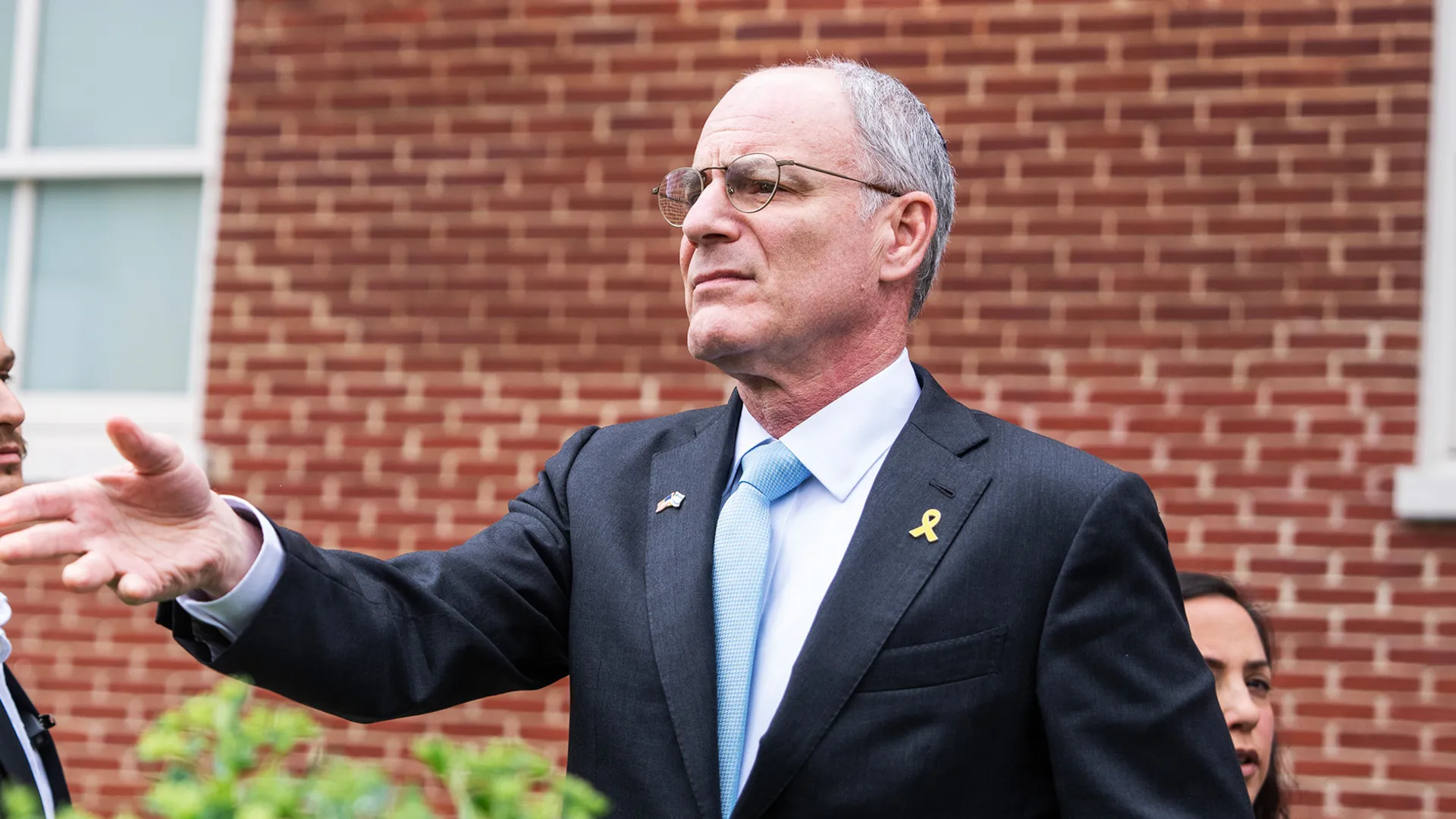
Israel’s ambassador to the US has held talks with his Lebanese counterpart. But as a pro-settler ‘activist’ and former soldier who took part in invading Lebanon, critics say Yechiel Leiter is a problematic negotiator.
Italy has suspended the renewal of a 20-year-long defence agreement with Israel, following recent tensions between the two countries after the Italian government accused Israeli forces of firing warning shots at a convoy of Italian peacekeepers in Lebanon.
HELEN Flanagan has admitted she “constantly suffers” with mum guilt – even when her three kids are spending time with their father.
The former Coronation Street star spoke candidly in an exclusive interview with The Sun, and told us she has to force herself to “look at the bigger picture”.
Sign up for the Showbiz newsletter
Thank you!
Helen Flanagan has candidly revealed her feelings of mum guilt in an exclusive chat with The SunCredit: makeupbyashleyuk/InstagramThe actress told how she ‘constantly suffers’ when she is away from her broodCredit: Helen Flanagan InstagramHelen shares three kids with ex fiance Scott SinclairCredit: InstagramShe has repeatedly locked horns with the footballer over their co-parentingCredit: Instagram/Scotty_sinclair
Dressed up in character this month, the panto star shared: “I am princess Jill today. I’m really, really loving this theatre tour so much.
“I miss my kids today. I’ve been away from them now for about a week as they are at their daddy’s for Easter.
“I definitely don’t think it gets easier sharing your children, it really doesn’t, but there’s so many of us that are in these situations and it can be really tricky.”
Helen’s comments about her former partner — and the positive nature of him spending time with their kids — seem to hint the pair have built bridges.
Their most recent explosive spat saw her clash with Scott after he missed their son Charlie’s nativity play because he was in Abu Dhabi for theF1.
She branded him a “piece of s**t” as he lived it up in the UAE instead.
On the prospect of her signing up for more dating shows, she told us: “My children just find it funny.
“My daughter and I are very close. She just sees it as me working and doing different things – we have such a close bond, so it’s all very normal to her.
“I’m very open-minded about it.
“I don’t think there’s an age where you suddenly have to stop doing things like modelling or dating shows.
“You can still feel beautiful and confident at any age, so I don’t think you can put a limit on it.”
Helen told how she has to look at the ‘bigger picture’ when it comes to managing her mum guiltCredit: InstagramShe told how she takes different acting jobs now to ensure she provides with her kidsCredit: Getty
South Korean Chief of Naval Operations Adm. Kim Kyung-ryul (L) and U.S. Pacific Fleet Commander Adm. Stephen Koehler (R) hold talks in Seoul on Wednesday. The two were also set to meet with Japan’s top naval commander for trilateral talks on strengthening maritime cooperation. Photo courtesy of South Korea Navy
Top naval commanders of South Korea, the United States and Japan gathered in Seoul on Wednesday to hold a series of talks aimed at strengthening their trilateral maritime security cooperation, the South’s Navy said.
The gathering brought together Chief of Naval Operations Adm. Kim Kyung-ryul, U.S. Pacific Fleet Commander Adm. Stephen Koehler and Adm. Akira Saito, chief of staff of the Japan Maritime Self-Defense Force, for bilateral talks and a trilateral dinner meeting, according to the armed service.
The meetings came amid heightened tensions in the Middle East, raising speculation over whether their talks would address the ongoing U.S. blockade of Iranian ports.
U.S. President Donald Trump earlier called on South Korea, Japan and others to send warships to the Strait of Hormuz to help secure shipping lanes.
In the bilateral talks between Kim and Koehler held earlier in the day, both sides exchanged opinions on the robust South Korea-U.S. combined defense posture as well as cooperation in the area of naval maintenance, repair and operations, the Navy said.
Kim and Saito, meanwhile, held in-depth discussions on expanding personnel exchange and resuming joint maritime search and rescue exercises (SAREX) as discussed in a ministerial meeting between their defense chiefs earlier this year, it added.
In January, Defense Minister Ahn Gyu-back and his Japanese counterpart, Shinjiro Koizumi, met in Japan and agreed to resume joint SAREX drills for the first time in nine years as part of efforts to strengthen bilateral defense cooperation.
The top admirals of the three countries were set to attend a dinner meeting later Wednesday to likely discuss trilateral coordination measures to respond to and deter North Korea‘s advancing nuclear and missile threats.
Copyright (c) Yonhap News Agency prohibits its content from being redistributed or reprinted without consent, and forbids the content from being learned and used by artificial intelligence systems.
Release of Mahdieh Esfandiari comes a week after Iran released two French citizens held on espionage charges.
Published On 15 Apr 202615 Apr 2026
Iranian national Mahdieh Esfandiari has returned home after being held in France for more than a year as part of what appears to be an exchange of detainees between the countries.
Iran’s state television reported on Wednesday that the “rights activist”, sentenced to one year in prison after making online comments supportive of Palestine and the 2023 Hamas attack on Israel that prompted the genocidal war on Gaza, had returned to Iran.
Recommended Stories
list of 2 itemsend of list
The University of Lyon graduate, who had been living in France since 2018, where she worked as a translator, was arrested in February last year on charges of promoting “terrorism”, and released on bail in October.
“I think it’s clear for everyone that there is no freedom of speech, at least not in France where I was. The court’s ruling was very unjust,” Esfandiari told state television in a Wednesday broadcast.
Esfandiari’s release comes a week after French citizens Cecile Kohler, 41, and Jacques Paris, 72, arrived in France after being held for more than three years in Iran.
Kohler and Paris were arrested by Iranian authorities in May 2022 but were freed in November last year, after more than three years in prison on espionage charges that their families vehemently deny.
They were taken by French diplomats to France’s mission in Tehran, where they lived under house arrest until their full release on April 7. Upon their release, they were driven from Iran to neighbouring Azerbaijan before taking a flight to Paris.
President Emmanuel Macron’s office said their release was the outcome of a “long-term effort”, but talks accelerated in recent weeks due to pressure from the US-Israel war on Iran, giving a sense of urgency to the situation.
While an exchange was not explicitly acknowledged by France, Iran’s state-run agency IRNA had previously said Tehran reached an agreement with Paris for the release of the French citizens in exchange for Esfandiari.