Jason Eaton faces up to life in prison after a jury rejected his insanity defence.
Published On 21 Sep 202621 Sep 2026
A jury in the US state of Vermont has convicted a man of attempted murder for shooting three Palestinian college students in 2023, rejecting his defence that he was not guilty by reason of insanity.
Jason Eaton, 51, faces up to life in prison for the attack near the University of Vermont campus in Burlington. It left Hisham Awartani paralysed from the waist down and wounded his friends Tahseen Aliahmad and Kinnan Abdalhamid.
Recommended Stories
list of 4 itemsend of list
The jury deliberated for several hours on Monday before reaching its verdict after a week-long trial that included testimony from the three men and psychiatric experts called by both the defence and prosecution.
Eaton was ordered jailed pending sentencing, which has yet to be scheduled.
Awartani and Aliahmad, who were sitting in the front row of the courtroom, smiled and hugged people around them as the verdict was read.
Eaton did not dispute that he shot the three men in November 2023. Instead, his lawyers argued that he should be found not guilty by reason of insanity.
The defence said Eaton was suffering from a delusional psychotic disorder and believed the CIA and Israel’s Mossad were transmitting messages to him through FM radio.
Joshua O’Hara, the supervising attorney at the Chittenden County Public Defender Office, told jurors that Eaton believed the intelligence agencies had enlisted him to “overwatch duty” to protect a Jewish family living across the street and that God was commanding him to act.
Prosecutors rejected the insanity defence, telling jurors that a state psychiatrist had concluded Eaton did not have a mental disease or defect and that the evidence showed he intended to kill the three men.
‘He pulled out a handgun and started shooting’
Awartani, Aliahmad and Abdalhamid, now 23, grew up together in Ramallah in the occupied West Bank before moving to the US for university.
They were visiting Awartani’s grandmother in Burlington over the Thanksgiving holiday when they went for a walk near the University of Vermont campus after dark.
Awartani testified that the friends were smoking cigarettes and speaking a mix of English and Arabic. Two of them were wearing keffiyehs.
He said Eaton was standing on the porch of the apartment building where he lived before approaching the friends without saying anything.
When Eaton was about five to 10 feet (1.5 to three metres) away, Awartani testified, he pulled out a handgun and began shooting.
Awartani, then a student at Brown University, was shot in the chest and left paralysed from the waist down. Aliahmad, who attended Trinity College, was shot in the collarbone, while Abdalhamid, a Haverford College student, was shot in the right buttock.
The shooting prompted calls for a hate crime investigation, but no hate crime charges were filed.
Police later found three shotguns in Eaton’s apartment as well as a Ruger .380-calibre handgun that crime laboratory testing identified as the weapon used in the shooting.
Trump later reacted to news of the lawsuit, calling the news organisations “Third Rate Clowns” and “Crooked and Corrupt Press” that “trivialise and demean” his achievements.
“Fake News people and publications that only write negatively, and who violate our National Security by writing false and defamatory stories with unknown ‘sources,’ shouldn’t be allowed access to the most important Office anywhere in the World,” Trump wrote on his Truth Social platform.
He added that “almost without question” his team will file an appeal.
The First Amendment forbids the government from “abridging” the freedom of the press – language that courts have traditionally interpreted as preventing the government from discriminating against the media based on the content of their coverage.
The statement from CNN, Politico and MS NOW said: “Without notice or process, the White House revoked our journalists’ credentials because it objected to our reporting.
“Left unchallenged, this threatens press freedom and the public’s right to independent journalism free from government interference.”
The media organisations filed the lawsuit on Monday in US District Court in Washington, asking a judge to quickly rule Trump’s ban unconstitutional and prevent his aides from enforcing it.
On Monday morning, major US TV networks pulled out of White House pool duties, which sees media organisations share material with each other to save on costs and space when broadcasting presidential events to the American public.
Fox News Washington bureau chief Bryan Boughton, who currently holds a rotating role helping to organise media TV crews covering the White House, wrote in an email seen by the BBC that “effective today, the TV pool will not be covering designated as pool coverage” of President Trump.
The message said the move followed the White House “preventing” CNN from fulfilling its pool duties for Trump’s trip to New York and that “there will be no replacement pool put in place”.
CNN – one of only five US news outlets in the White House press pool for live television – was originally due to cover Trump’s trip to the UN General Assembly in New York on Monday and Tuesday.
But on Monday morning, the five-seat CNN booth in the basement of the White House press area – typically manned throughout the day from the early hours of the morning – was empty and closed. Screens and monitors inside were turned off.
Instead, a CNN crew was outside the secured area of the White House grounds, broadcasting live from a public pavement.
Five TV networks, ABC, CBS, CNN, Fox News and NBC, issued a joint statement: “The public has a vital interest in receiving accurate, independent information about its government.
“No administration should restrict a news organisation because it objects to its reporting.”
Those five networks are considered the only ones with the money and infrastructure to distribute live coverage from the White House and presidential events.
For now, the White House media slot has remained vacant and instead the conservative TV outlet, Real America’s Voice, was listed as “secondary” crew on Trump’s trip to New York, where he will meet Mayor Zohran Mamdani and French President Emmanuel Macron on Monday.
TEAM GB stars Katarina Johnson-Thompson and Keely Hodgkinson looked on track for fashion golds at Burberry’s London Fashion Week event yesterday.
Daring heptathlete Katarina, 33, wore nothing under her blazer while 800m hero Keely, 24, teamed a silk shirt with velvet flares.
Track star Keely Hodgkinson, 24, teamed a silk shirt with velvet flaresCredit: GettyHeptathlete Katarina Johnson-Thompson, 33, wore nothing under her blazerCredit: Getty
They rubbed shoulders at the bash, held at Chelsea College of Arts, with models including Iris Law, 25, and Lila Moss, 23.
Iris opted for a denim two-piece while Lila wore a sparkling tweed minidress.
Rosie Huntington-Whiteley, 39, teamed a black Burberry mac with a £6,900 price tag, with a diamond necklaceCredit: GettyIris Law opted for a denim two-pieceCredit: Getty
Actress Jodie-Turner Smith, 40, turned heads in a purple all-leather outfit with long boots.
Also at the do — which coincided with Burberry celebrating its 170th anniversary — were Romeo Beckham, 24, and girlfriend Kim Turnbull.
Kim, 25, is a rising star of the catwalk and was sent Burberry items to show off including a £1,295 handbag and £1,460 cropped trench coat.
Runner Keely recently put on a leggy display as she celebrated her 400m win at Athlos.
Lila Moss wore a sparkling tweed minidressCredit: GettyMarvel star Chiwetel Ejiofor and Jason Statham at the bashCredit: Getty
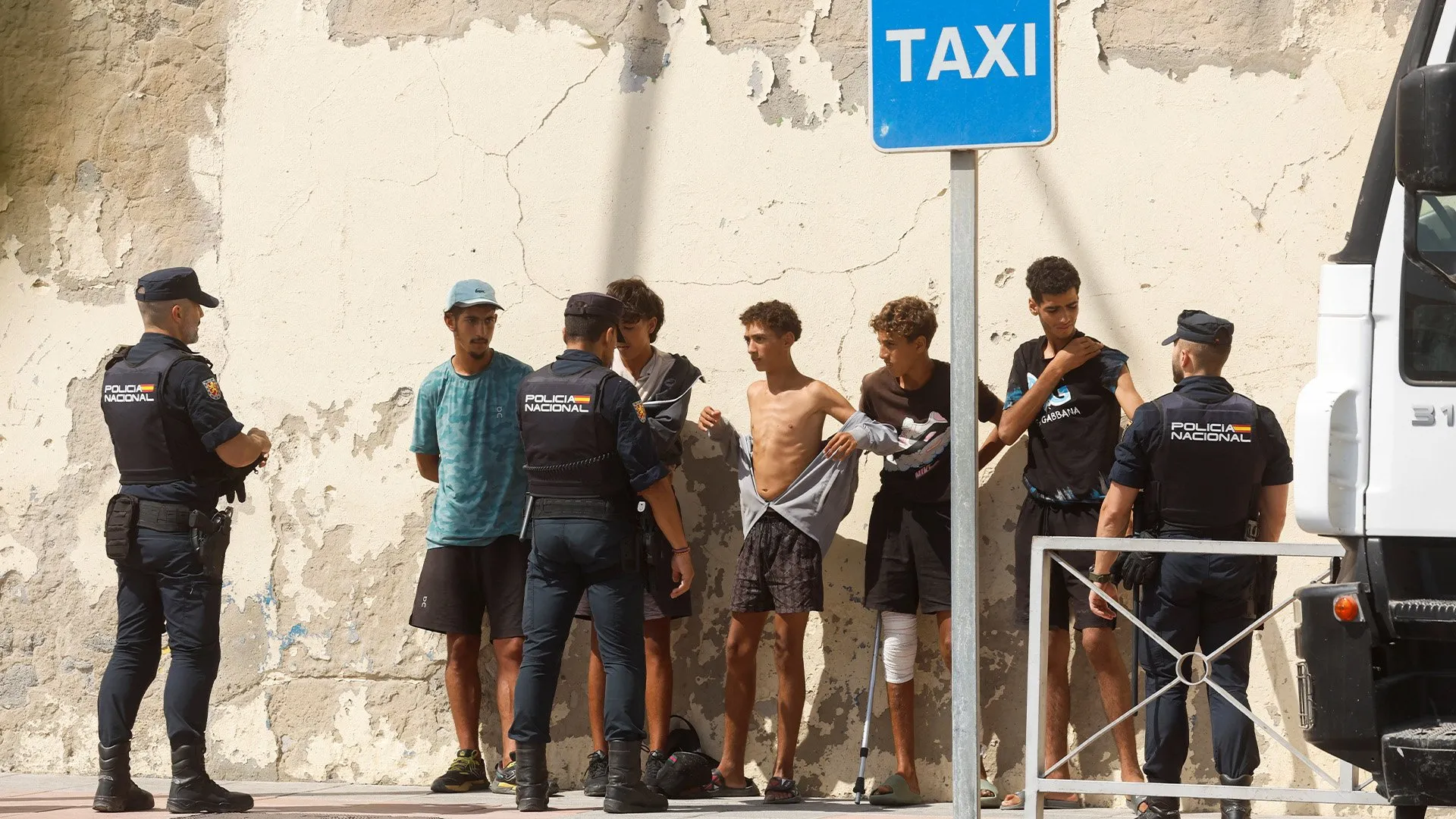
Authorities estimate that at least 10,000 people remain in the enclave of Ceuta after a record surge of 72,000 migrants crossed from Morocco to Ceuta over the course of two days in late July, overwhelming local resources and creating a humanitarian crisis.
Debris from a Chinese-made ballistic missile found in Yemen could have inadvertently revealed a previously undisclosed addition to Saudi Arabia’s secretive ballistic missile arsenal. Imagery circulating online appears to show the wreckage of a Chinese DF-15A short-range ballistic missile (SRBM), potentially marking the first known Saudi combat use of a weapon in this class, although both the identification and ownership remain unconfirmed.
The booster stage of a Chinese-made DF-15A (Dong Feng-15A) ballistic missile operated by Saudi Arabia fell in Raghwan District, Marib Governorate, northern Yemen. pic.twitter.com/dfSXMOiCzQ
It is also unclear what happened to the missile itself. The debris suggests a stage separation or the missile broke apart or crashed before reaching its target. The Houthis are not known to possess any weapons that could have intercepted it.
A screenshot from a video clearly shows the DF-15A name applied on the side of the missile. via X
The development comes amid a sharp escalation in the long-running Saudi-Houthi conflict. After years of relative de-escalation following the 2022 truce, fighting has intensified in recent weeks as Houthi forces have dramatically overrun Saudi-backed Yemeni government positions, including around strategically important Marib and Taiz. The Houthis have also escalated missile and drone attacks against southern Saudi Arabia, targeting military and energy infrastructure while threatening the kingdom’s ability to move oil through the Red Sea. The group has declared the Bab el-Mandeb closed to Saudi oil traffic, adding a direct threat to one of Riyadh’s critical energy-export routes.
You can catch up with our latest coverage of the fighting here.
As for the DF-15, also known by its NATO designation CSS-6, this is a road-mobile, solid-fueled SRBM developed by China during the 1980s. The system formed part of Beijing’s effort to develop a new generation of conventionally armed mobile ballistic missiles, including systems primarily intended for export.
As you can read about here, the DF-15 family has evolved through several variants, although open-source information concerning their capabilities remains inconsistent.
The DF-15A reportedly entered Chinese service in the mid-1990s. Estimates of these missiles’ maximum range vary substantially, from roughly 600 kilometers (373 miles) for the original DF-15 to as much as 900 kilometers (559 miles) for later versions.
Among the later versions of the DF-15 family is the DF-15B. A more substantial redesign, its most obvious external change is its triconic reentry vehicle fitted with control fins, a configuration widely interpreted as incorporating a maneuverable reentry vehicle (MaRV) warhead. Photo by GREG BAKER / AFP via Getty Images GREG BAKER
China is the only confirmed operator of the DF-15 family. There have been longstanding reports of Chinese transfers of the DF-15 or the related M-9 export version to Egypt, Iran, Pakistan, and Syria, but in each case, the export record is heavily disputed, with some reports likely conflating the DF-15 with the broadly similar DF-11.
While Saudi Arabia has never publicly acknowledged operating the DF-15 family, it has a well-established history of acquiring Chinese ballistic missiles.
In 2013, Prince Fahd bin Abdullah bin Mohammed, Deputy Minister of Defense, visited the Strategic Missile Forces of Saudi Arabia, and was given this model. YEARS of speculation on the smaller missiles (The large is DF-3). Now we know – they are DF-15 and DF-15A. pic.twitter.com/oOn8qiCgye
Saudi Arabia imported Chinese ballistic missiles to expand its long-range strike options. Its desire for a land-based strategic deterrent was initially driven by concerns over Iran, regional missile proliferation, and nuclear hedging. More recently, however, it shifted toward fielding more accurate, mobile systems with greater conventional military utility.
Riyadh secretly obtained DF-3A missiles from China beginning in the late 1980s, establishing a strategic ballistic-missile capability that remained largely outside public view.
The kingdom has also subsequently been linked to the DF-21 family. Satellite imagery and other open-source intelligence have provided evidence of Chinese-designed ballistic-missile infrastructure in Saudi Arabia.
While the Houthis have their own ballistic-missile arsenal, this is principally associated with Iranian technology, captured Yemeni systems, and locally produced or modified weapons.
Saudi employment of an SRBM in the current fighting would represent a notable expansion of the kingdom’s response options. If Saudi Arabia did indeed do this, its main advantage would be speed and responsiveness. A solid-fueled ballistic missile could reach targets deep inside Yemen within minutes while keeping Saudi aircraft and crews out of the immediate engagement area, providing Riyadh with a rapid strike option against fixed Houthi targets. That could be particularly valuable as the conflict expands and Saudi forces face pressure to respond quickly to Houthi attacks on military and energy infrastructure.
Saudi F-15 Eagles Live Missile Firing in Pakistan | Naseem Al-Bahr 13 Exercise
Previous losses at the hands of Houthi ground-based air defenses could also dissuade Riyadh from relying on crewed aircraft to strike targets on the ground deep inside Yemen. Houthi air defenses, while pathed together in many ways, are capable enough to give even U.S. airpower a serious run for their money.
At the same time, a conventional SRBM like the DF-15A can deliver a large warhead at very high speed, imparting significant kinetic energy, making it particularly useful against fixed, high-value, or hardened targets.
Use of an SRBM would also be in line with the current pattern of escalation, with the Houthis conducting missile and drone attacks against Saudi military and energy targets while Saudi-backed Yemeni forces are engaged in renewed ground fighting. Riyadh’s demonstration of an SRBM capability in this campaign would also signal that it is is willing to draw more heavily on its strategic missile inventory as the conflict intensifies, potentially further raising the stakes of the confrontation.
Such a move would carry a message beyond Yemen. Using a previously unacknowledged ballistic missile capability in combat would signal to Iran that Riyadh is now willing to employ this arsenal, after decades of keeping it very much in the shadows.
If the evidence ultimately points to a Saudi DF-15A launch, the discovery would offer a rare look at the operational use of an extremely secretive part of the kingdom’s arsenal, and add a significant new dimension to the rapidly escalating Saudi-Houthi war.
The Big Brother house has reportedly been locked down temporarily
22:32, 21 Sep 2026Updated 22:36, 21 Sep 2026
There has already been plenty of chaos in the Big Brother house(Image: ITV)
The Big Brother house has reportedly been locked down after a huge security breach.
Tensions reached boiling point in Monday’s (September 21) episode with explosive rows breaking out and the house divide continuing. Jedward, who entered the house for a week of double trouble this week, found themselves at the centre of drama after their hot tub chat took a dramatic turn.
When speaking to Rhianna, Edward told the former Made in Chelsea star: “I don’t think you’re gonna continue on in here if you don’t just get on with the vibes, you can’t be like looking at people…”
John added: “Yous aren’t in Love Island. Just letting yous know. For real… This is Big Brother, just always remember that.” Unimpressed, Rhianna told Chelsey who also became irate with comments made, but when word got back to Lynx, he attempted to confront Jedward before things turned heated.
Their the conversation quickly becomes sour when Lynx was seen annoyed with the comments and Jedward splashed him from the hot tub. Being forced to intervene, the housemates separated the group as the heated clash continued.
Big Brother was also seen intervening, calling Lynx to the Diary Room to calm down as well as separating Jedward from the rest of the group, meaning they had to sleep in another room for the night.
Despite the chaos being crowned “TV gold” by viewers, the drama comes following a security breach which reportedly put the whole house on a lockdown.
Housemates were allegedly told to leave the garden immediately and order into the house after fans were seen throwing tennis balls over the fence and into the garden.
In an attempt to communicate with the housemates, the act was deemed a security risk with security on hand to ensure the safety of the cast.
According to The Sun, a source confirmed: “The housemates were rushed into the house as tennis balls began flying over the compound walls and into the garden. Producers leapt into action and ordered them into the house and locked the doors.”
It was branded a “huge breach” as the housemates were on a lockdown as the team secured the site. It is no the first time fans of the show have attempted to communicate with the housemates.
It it also not known whether the security breach will be shown on TV or how long the lockdown will occur, but tensions continue to rise in the iconic house,with the drama continuing in tomorrow (September 22) night. ITV have been approached for a comment.
Big Brother continues tomorrow at 9pm on ITV2 and ITVX.
Victory of United Russia party strengthens Putin’s hand even as the war with Ukraine grows more unpopular.
President Vladimir Putin’s United Russia party has won a record supermajority in tightly orchestrated parliamentary polls that excluded virtually any genuine opposition, near complete official results show.
With over 58 percent of votes secured, United Russia, which has dominated Russian politics for 25 years, is on track to win more than three quarters of the seats in the lower house, the State Duma, according to the results announced on Monday after three days of voting that ended on Sunday.
Recommended Stories
list of 4 itemsend of list
The polls were the first parliamentary vote since Russian forces invaded Ukraine in 2022 and the first to include residents of four Ukrainian regions that were seized and illegally annexed by Moscow later that year.
Reporting from Moscow, Al Jazeera’s Dmitry Medvedenko said the results, along with a high voter turnout of almost 60 percent, “is likely to be seen by Moscow as emboldening, as public support for what it is doing, especially for what it’s doing in Ukraine for the continuation of the war”.
Ella Pamfilova, chair of the Central Electoral Commission, said Yabloko, the only registered anti-war party in Russia, did not win any seats at the national level. It had been removed from the ballot last month by Russia’s Supreme Court and only had a few dozen candidates in single-seat races.
A billboard in western Moscow promoting contract army service and reading ‘Time to Decide’, September 21, 2026 [AFP]
Yabloko did enter the regional parliament in western Russia’s Novgorod region. It said on social media that it received about 12,000 votes – just over six percent of votes and enough to enter the regional legislature.
Yabloko and the Communist Party, which has criticised some aspects of government policy but carefully avoided any criticism of Putin, said many of their observers were turned away from polling stations.
The Communists made it into parliament with 13.8 percent of the vote, securing 40 Duma seats. The nationalist LDPR party won 25 seats and the New People party 20.
Russia did not invite observers from the Organization for Security and Cooperation in Europe (OSCE), which the Foreign Ministry has accused of “double standards” for its criticism of the country. OSCE Parliamentary Assembly President Pere Joan Pons said the decision to exclude observers violated Russia’s commitments as a member.
‘Surprise to nobody’
Many Russians appeared unsurprised by the poll results.
“In the morning, I saw that United Russia was winning. It probably comes as a surprise to nobody,” said Moscow resident Tatyana.
Asked what she would like to change, she said: “Well, I guess everyone knows the most acute thing – the conflict in Ukraine. I’d like to see it end sooner, with peaceful methods if possible”.
The continuation of the war risks entrenching policies, which are increasingly affecting average Russians and the parliamentary supermajority may struggle to change the dynamic.
“Putin, of course, will interpret United Russia’s results as confirmation of the (public) support of the war, even though it is not the case: The overall demand for ending the war is growing,” said Tatyana Stanovaya of the Carnegie Russia Eurasia Center in an online commentary.
“The main question is: What now? There are great concerns about mobilisation, new repressions, harsher measures and escalation,” she wrote.
Western criticism
The EU’s top diplomat Kaja Kallas dismissed Russia’s “so-called” election.
“The Kremlin silenced dissent, barred the only registered party that opposed its war in Ukraine and shut out international election monitors. The veneer of democracy is all that remains in Russia,” Kallas said.
In a joint statement, five countries, including Australia, Britain and Canada, condemned Russia’s “sham” parliamentary elections in areas of occupied Ukraine, branding them “part of a wider system of occupation”.
US President Trump unveiled a new White House helicopter pad as major US TV networks stayed away in protest over CNN, a member of the network ‘pool’, being banned from the grounds. As Trump spoke, the thunder of a helicopter rendered the president inaudible from start to finish.
“By the time I present my final show in March 2027, I will have spent 46 wonderful years with BBC Wales. It’s been the privilege of a lifetime.”
Continuing, Roy said: “Radio has changed enormously over the years. Wales has changed too. But one thing has remained constant and that’s the privilege of being welcomed into your homes and lives.
Roy has been a BBC broadcaster since the early 80sCredit: ShutterstockThe star penned an emotional statement to his listeners revealing he was retiringCredit: Alamy
“The signs that retirement was approaching may have included my growing suspicion that ‘apps‘ were invented purely to confuse me. The odd hiccup in health has sent signals too.
“But the truth is I’ve simply reached a point where it feels right to begin a new chapter.
“After all, November will mark 84 of my years of yore. Apparently, 63 is the sweet spot or happiest age to retire so I’ve added a few furlongs to that.”
Roy ended by saying: “But for now, I simply want to say a heartfelt thanks to you all. It’s been an honour.”
Before finding fame on the airwaves in the early 80s, Roy was a teacher, but he left to pursue his passion for radio.
The presenter was an instant hit, and over the years hosted a number of different shows for BBC Radio Wales.
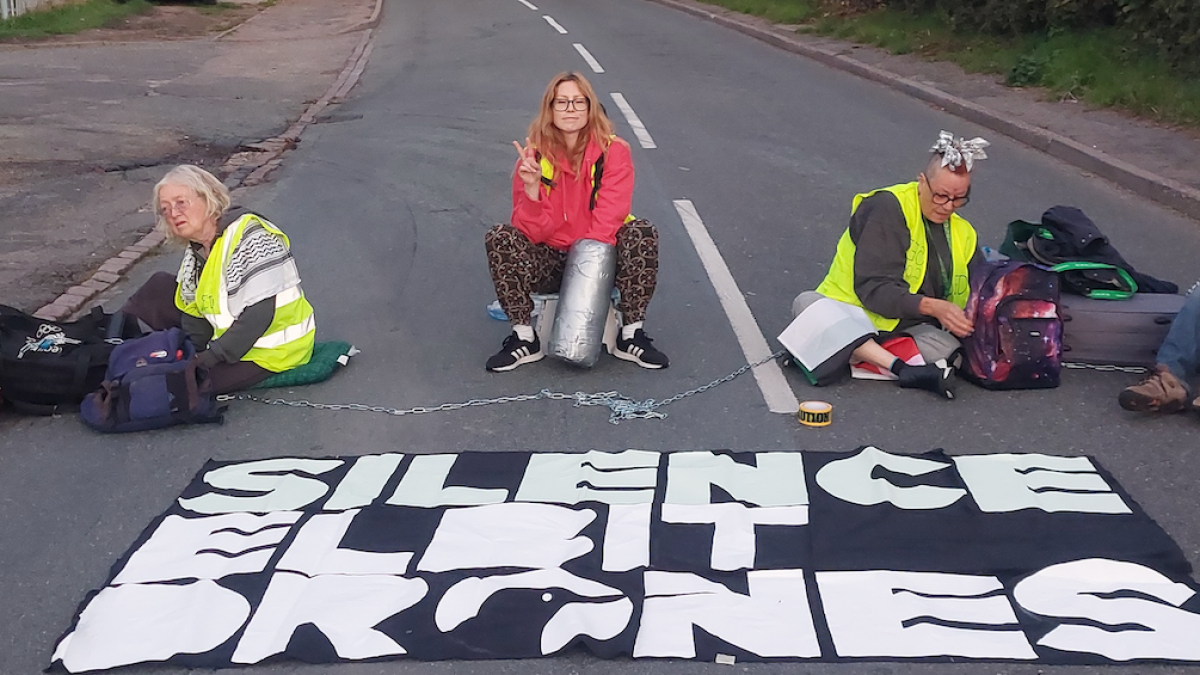
Nine protesters blocked access to Elbit Systems’ factory in Staffordshire by attaching themselves to five ‘lock-ons’ to launch the direct-action group ‘Silence Elbit Drones’. Al Jazeera spoke with spokesperson Audrey Corno, who said the group aims to disrupt Elbit’s operations over its supply of military equipment to Israel.
He went on to model for brands including Burberry, Dolce & Gabbana, and Bottega Veneta.
His father Rande Gerber, a well-known businessman, co-founded the Casamigos tequila brand with George Clooney.
In recent years, Presley Gerber had spoken openly about his mental health challenges and drug use.
In 2023, he told the Studio 22 podcast: “Having struggled with mental health, depression and some other things that come along with that, I think that whether I help one person or a hundred people get out of that place that I was in at one point in my life, that’s all I need to do.”
And in this month’s American Vogue, external, Kaia discussed her brother’s struggles with addiction. She said: “When something like that happens in a family, it kind of levels everyone.
“I think that’s also why I started to self-identify as the easy one and never wanted to ask for help.”
She added: “My parents for most of our lives were very, very private and didn’t share anything – and now we have this absolute teacher, my brother, who says, ‘I’m gonna be very human for everyone.’ There’s only so much you can hide from the world. And trying to put a lid on something just makes the person feel like you’re ashamed of them.”
HEIDI Klum thrilled fans as she tried to contain her boobs, as she buttoned up her corset ahead of Oktoberfest.
The model, 53, has been teasing fans with snippets of herself getting ready for the famous German festival, and her latest post sent her followers wild.
Heidi Klum shared her sexy outfit for Oktoberfest with fansCredit: Instagram/heidiklumThe star teased fans as her boobs spilled out of her dressCredit: Instagram/heidiklum
The mom-of-four took to Instagram to post a short clip of herself wearing a traditional Oktoberfest dress, called a dirndl.
Heidi could then be seen teasing fans as the buttons to the bodice wouldn’t do up because her boobs kept trying to spill out.
Sign up for the Showbiz newsletter
Thank you!
The sexy star’s blonde hair flowed down her face as she tried to hook the dress together.
It’s fair to say her fans went into meltdown at the sexy video and couldn’t contain their excitement.
One commented: “Your husband is such a blessed guy!”
While another added: “Just too hot to handle!”
The supermodel has got into the full Oktoberfest spiritCredit: Instagram/heidiklumHeidi teased fans with this sexy selfie yesterdayCredit: heidiklum/instagram
This fan cheekily joked: “Release the Kraken!”
In another clip, Heidi could be seen finally dressed, and with the buttons all done up, as she headed into an Oktoberfest event.
Most read in Entertainment
The star skipped along happily wearing the pink and white Bavarian style frilly outfit, with her blonde hair flowing.
Meanwhile, it comes just a day after Heidi and her daughter Leni, 22, shared pictures of themselves in matching white lace undergarments ahead of the German festival.
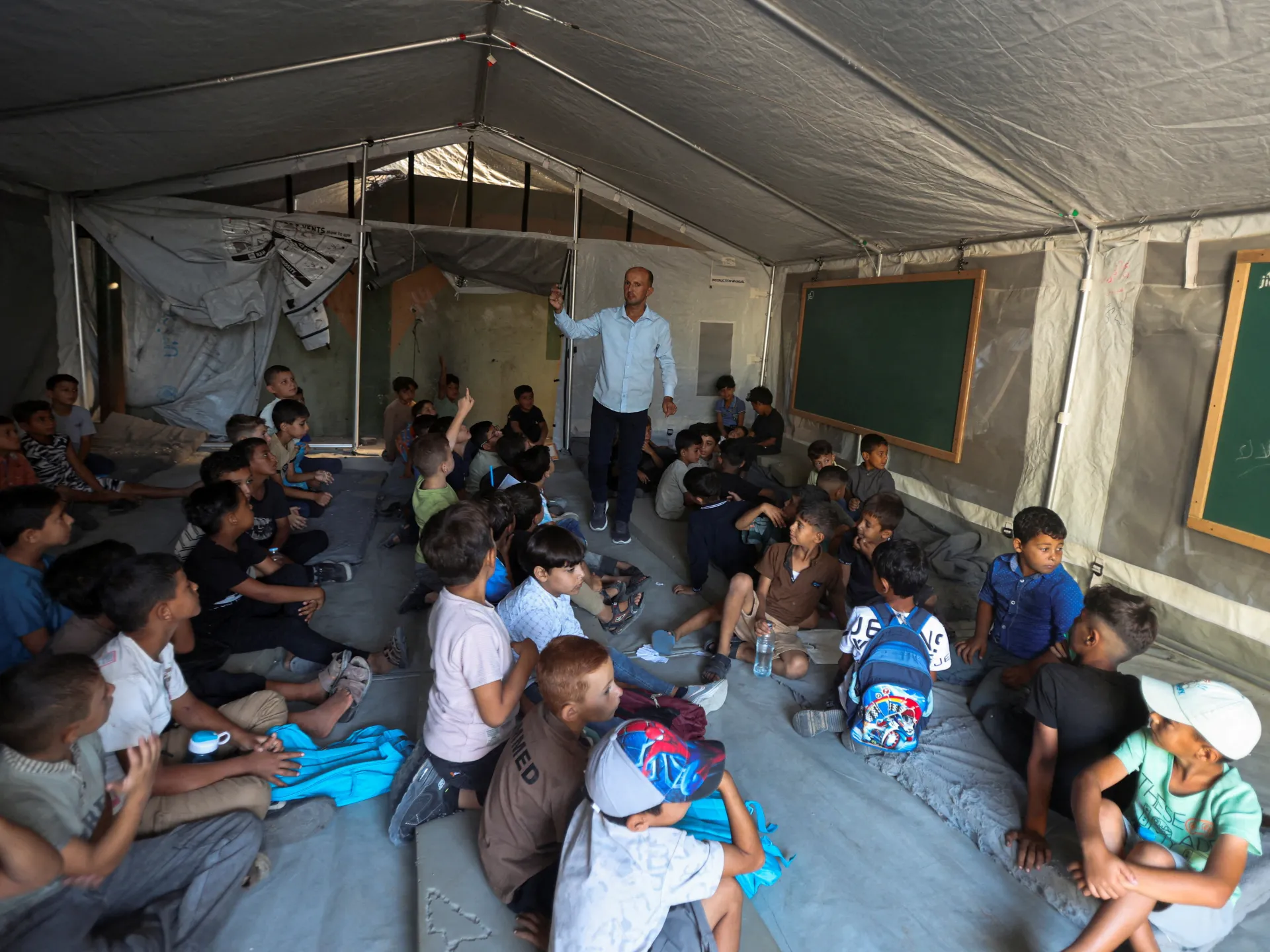
Hundreds of thousands of children returned to in-person classes in Gaza on Saturday for the first time in nearly three years, filing into damaged school buildings, makeshift classrooms and tents amid a severe shortage of basic supplies.
The United Nations Children’s Fund (UNICEF) says 98 percent of schools in the Gaza Strip were destroyed or damaged during Israel’s genocidal war on the enclave, while local education officials estimate about 660,000 students have been deprived of regular, in-person learning.
The reopening is a fragile milestone in a territory where about 22,000 students and more than 770 education workers, including 532 teachers, have been killed, according to Ibrahim Ramadan, director of education for eastern Khan Younis.
“The last time I have been to school was three years ago,” said student Moayed Abu Mustafa in Khan Younis. “Now, we are starting the school year; it is year of joy, happiness and success. Despite all of this, we will learn, we will learn even in a tent.”
Moayed has no proper shoes, notebook or pen, and will sit on the floor in a sweltering tent.
Across Gaza, the Ministry of Education, backed by aid agencies, has set up dozens of temporary schools from tarpaulins, sheet metal and wood. Some classrooms consist of a few mattresses and a blackboard; others still shelter displaced families.
“We studied on phones, and we haven’t seen our teachers. Now, we are back pursuing our dream … from one tent to another,” said 15-year-old Samar Abu Salmi, who lives in a tent with her family and can no longer afford school supplies that were cheap before the war.
Stationery trader Khaled Aliyan said Israeli import restrictions have driven prices up fivefold. “All stationery items are expensive,” he said.
Israeli forces still control more than 60 percent of Gaza despite an October 2025 “ceasefire” that halted large-scale fighting but left the underlying conflict unresolved.
The newly released picture from General Atomics’ Aeronautical Systems, Inc. division (GA-ASI), seen at the top of this story, shows an FQ-42 in flight together with an F-35A Joint Strike Fighter and an F-15E Strike Eagle. The company has also disclosed the delivery of another Vengeance drone to the Air Force, this time to the service’s main drone operations hub at Creech Air Force Base in Nevada.
“The FQ-42 that arrived at Creech will continue regular test and evaluation operations with the Air Force aimed at experimentation with the new aircraft,” according to a press release GA-ASI put out today. “Previous efforts with Vengeance and other GA-ASI jets, including [the] XQ-67A Off-Board Sensing Station and MQ-20 Avenger – have found the trio of combat jets flying in various scenarios that push the boundaries of combat aviation. GA-ASI’s jets have flown semi-autonomously and autonomously with various AI pilots and under collaborative control of human fighter pilots operating F-22 Raptor and F-35 Lightning II jets.”
From top to bottom, General Atomics MQ-20 Avenger, XQ-67 OBSS, and YFQ-42 drones. GA-ASI
As mentioned, the Air Force is steadily working to broaden the scale and scope of testing involving the FQ-42 and FQ-44 to include more and more operationally relevant scenarios. Both types are set to make their first appearance at a large-force employment (LFE) exercise in December, offering a valuable new opportunity for deeper and more realistic integration with crewed fighters.
The Air Force otherwise continues to lay the groundwork for future CCA operations, including through a major round of testing at Creech in July, which TWZ was first to report on. The service is heavily focused now just on figuring out how the drones will be deployed, launched, recovered, supported, and otherwise operated on a day-to-day basis. A dedicated test squadron called the Experimental Operations Unit (EOU), established at Nellis Air Force Base in Nevada, has been leading those efforts.
Work is also underway to demonstrate tactical capabilities, such as the FQ-44 launching an AIM-120 Advanced Medium-Range Air-to-Air Missile (AMRAAM) for the first time earlier this year.
New test footage: first missile shot from YFQ-44A.
YFQ-44A executed an end-to-end, beyond-line-of-sight strike against a simulated target.
“We’re on path right now to do our air-to-air shot coming up here in the near future,” Mike Shortsleeve, Vice President for Strategy Business Development at GA-ASI, told TWZ‘s Jamie Hunter on the floor of the Air & Space Forces Association’s (AFA) 2026 Air, Space & Cyber Conference last week.
Last week, GA-ASI separately announced a new demonstration of semi-autonomous air-to-air combat capability involving crewed F-5AT Advanced Tiger jets belonging to private adversary air contractor Tactical Air Support, Inc. and an unspecified “CCA test aircraft.” The company did use a picture of an Avenger drone to illustrate the press release. The F-5s and the CCA surrogate were equipped with infrared search-and-track sensors (IRST) during the testing.
The stock picture of an Avenger drone that General Atomics used to illustrate its press release last week. General Atomics
“The live exercise proved that a CCA and a manned fighter can collaborate to fuse sensor data from AMS-GRA-compliant sensors to track, engage, and eliminate an airborne target while using a Beyond Line of Sight (BLOS) data link to accomplish seamless coordination between the two aircraft,” according to the GA-ASI release.
“The demonstration utilized BLOS communication between the CCA and the airborne F-5, enabling the Advanced Tiger to send data about targets from an AMS-GRA-compatible system. These commands were relayed to the CCA’s TacACE [Tactical Autonomy Ecosystem software] system,” the release added. “This flight showed that many companies’ platforms can interoperate using the plug-and-play government reference architectures ecosystem. The U.S. Air Force isn’t locked into using a single vendor or system.”
IRSTs are especially valuable for helping spot stealthy targets with features designed to reduce their radar cross-sections since they detect and track infrared emissions. By extension, IRSTs are also immune to radio frequency electronic warfare jamming. As passive sensors, they do not emit their own signals that could alert a target to the fact they are being tracked, either. IRSTs can still be used to cue or otherwise be linked to other sensors, including active electronically-scanned array radars. Fusing data from multiple sources can provide higher fidelity tracks of multiple targets, as well as improved situational awareness overall.
An Avenger drone with a podded IRST sensor under its wing. General Atomics
Air-to-air combat is expected to be the primary mission set, at least initially, for Air Force CCAs. At the same time, an air-to-ground role for the FQ-42 and FQ-44, and/or other future CCA-type drones the Air Force might acquire, is emerging on the horizon. Anduril has already fit-checked a variety of air-to-ground ordnance on Fury.
As it stands now, the Air Force is looking to have its first operational CCAs in service toward the end of the decade. The service is also presently aiming to have a total fleet of at least 500 CCAs of all types by 2032.
“If we can’t be ready, then certainly you’re not going to have the forces that you need and the numbers that you need going forward. This signifies that mass is certainly important again, but also autonomy is just as important,” General Atomics’ Shortsleeve told us last week in talking about the Air Force’s CCA fleet size target. “So the ability to have these autonomous systems, whether they’re bringing in additional weapons, sensing capability, whatever it is, all of those working in a collaborative environment, whether it’s manned, unmanned teaming, or unmanned and unmanned capabilities, that right there is what’s going to help the warfighter in the future.”
FQ-42 Vengeance fighter drone update from General Atomics
“And when we say autonomy, it’s not just strictly this is going to go off and do its own thing. It’s going to be directed,” he added. “Whether it’s on the ground, in the air, [it] makes no difference to the system itself. It’s going to work hand-in-hand [with humans]. So that human-machine teaming, that’s what they’re really focusing on. There is figuring out how to best use this capability in the advancement of actually having to employ it in [the] real world.”
Though just flying in formation is very different from collaboration with a high degree of autonomy, the new picture of the FQ-42 together with the F-35A and the F-15E is a window into the future teamed operations the Air Force is hoping to build.
Some ITV The Chase viewers complained on X minutes into Monday’s programme.
ITV The Chase viewers issued the same complaint (Image: ITV)
The Chase viewers have been left asking the same question.
The ITV gameshow returned on Monday, September 21, but viewers were quick to notice a repeat episode was airing, rather than the new series, which launched weeks ago.
During the show, Bradley Walsh and Chaser Darragh Ennis put four contestants to the test, Faith from Holmfirth, George from Hertfordshire, Anne from Pontypool, and Jamie from Liverpool.
However, after noticing the episode had aired in 2025, viewers were left asking the same question, with one writing: “Why is it back on repeats already? For the coming week. Perhaps they’re really struggling with their contestant quota,” reports the Express.
“Repeats already?” another echoed. “At least repeat the decent episodes!” someone else fumed. Another fan wrote: “Is it just me, or is this a repeat I’m watching? As far as I know, this ep was first shown in January 2025! What is going on, ITV?!”
The episode saw the four contestants ultimately lose against The Chaser. “I hope you’ve enjoyed your day, all of you, it’s been lovely meeting you,” Bradley told them.
“Sadly, I’ve got to take the £4,000 away and tell you that you that Faith, Anne, George and Jamie, you have been caught.” He added: “Once more, the Menace is triumphant! Could you take him down? Get together and apply, we’ll see you on The Chase.”
The Chase’s repeat comes after spin-off series, The Chase Around The World, aired earlier this year on ITV. The six-part special saw six teams of two battling to win £100,000 as they took on the beloved quiz show in destinations all over Europe.
ITV had teased: “The Chasers – The Beast and The Governess – have set a series of quiz questions, puzzles and cryptic clues that the teams must solve in order to navigate their way across the city and find Bradley at the finish line.
“Their route could take them to some of Rome’s iconic landmarks, such as the Colosseum, the Trevi fountain and the Spanish Steps. The teams must answer questions correctly to complete the course but they better be correct as wrong answers have serious consequences, costing them time and taking them off-course.
“Competition is fierce as the team that finishes last in each city will face a head-to-head showdown with the Chasers themselves. In Rome, the Beast and The Governess await. The final pair will need to beat them to stay in the competition. Lose, and it’s the first flight home.”
Speaking about the series, Bradley shared: “I would describe it as The Chase… but around the world! It’s out and about. It was very different doing it on location, in these incredible places, instead of being in a studio.
“I’ve been locked in Elstree Studios for 17 years! The locations were unbelievable. I loved it, I really did, but then again, I wasn’t chasing around, literally chasing around, the cities we were in.
Madrid, Spain – Thirteen minutes into La Liga’s Madrid derby on Sunday, a banner was unfurled in the Metropolitano Stadium’s south stand stating: “Ceuta es Espana. Ni se arruga, ni se tapa.” (Ceuta is Spain. It is neither rolled up, nor covered.)
It was a reference to the controversy involving Real Madrid players Kylian Mbappe, Vinicius Junior and Ibrahima Konate, who in a previous football match against Elche had rolled-up shirts carrying a solidarity message linked to Ceuta, the Spanish enclave at the centre of growing political tensions between Spain and Morocco over the influx of migrants and refugees.
Recommended Stories
list of 4 itemsend of list
A record 72,000 migrants crossed from Morocco to Ceuta over the course of two days in late July, overwhelming local resources and creating a humanitarian crisis. The Spanish NGO Caminando Fronteras documented 141 deaths across both sides of the border in the immediate aftermath.
Mbappe and Konate have strong ties to the African continent. Konate was born and raised in Paris by parents who migrated from Mali, while France captain Mbappe grew up in Bondy, outside Paris, to parents who came from Cameroon and Algeria.
Mbappe said his gesture did not reflect a lack of support for Ceuta.
“I also wanted to think about all the people who are suffering, because in the end I am human and I don’t want to prioritise the suffering of one group over another,” he said.
He also said he wanted to acknowledge migrants who had suffered or lost their lives during the crisis.
Real Madrid later said it respected each player’s freedom to participate in the initiative. A day earlier, Barcelona had chosen not to wear the shirts before their La Liga game against Levante.
La Liga president Javier Tebas, meanwhile, criticised the three Real Madrid players and said he did not regard the campaign as political. David Aganzo, president of Spanish footballers’ union AFE, said players instead needed to be properly informed about what they were being asked to wear and why.
While the debate over Spanish football’s support for Ceuta followed Real into their derby against fierce rivals Atletico Madrid on Sunday, it also united supporters from both sides for two minutes as they joined in chants of “Ceuta no se vende, Ceuta se defiende” (Ceuta is not for sale, Ceuta must be defended) before the usual hostility of the derby resumed.
Mbappe and Vinicius were also the target of whistles from both sets of fans when Real’s starting XI was announced prior to kickoff.
Jorge Garcia, a 32-year-old Atletico Madrid supporter, believed they deserved the jeering.
Speaking to Al Jazeera after the match, Garcia termed the players’ move “disrespectful” to both Ceuta and Spain.
Fans hold a banner during the Atletico Madrid vs Real Madrid La Liga match at the Metropolitano Stadium in Madrid, Spain on Sunday, September 20, 2026 [Leyla Hamed/Al Jazeera]
The campaign was launched on September 11 by Asociacion Valenciana de Empresarios (AVE), a non-profit business association, which described the move as an expression of solidarity with Ceuta’s residents and businesses amid an influx of migrants and a message of “territorial and social cohesion in Spain”.
AVE is chaired by businessman Vicente Boluda, a former interim Real Madrid president whose maritime group also operates in Ceuta.
Spain coach Luis de la Fuente travelled to Ceuta with the World Cup trophy, declaring: “This is Spain, this is Ceuta.” Real Madrid president Florentino Perez later visited and said the trip had been organised weeks earlier and was not a response to the controversy involving his players.
Youssef Temsamani, a Spain-based Moroccan journalist, believes the players found themselves in a difficult position: wearing the shirt could be interpreted as taking a political position, but declining to do so could be portrayed as showing a lack of solidarity.
Temsamani said migrants should also form part of discussions about solidarity with Ceuta, and criticised descriptions of the crossings in parts of Spain’s political and media debate as an “invasion” or “occupation”.
Luhay Hamido, president of AD Ceuta football club, defended the right of individual players to make their own decisions and said he respected those who wore it and those who did not.
“We cannot force anyone to identify with a cause they do not understand,” he told Al Jazeera, suggesting footballers are sometimes simply told to put on a shirt in the tunnel without having received a full explanation.
The scale of the crisis that prompted the solidarity campaign remains difficult to quantify precisely. Spain’s Interior Ministry put the number of people who irregularly crossed into Ceuta on July 30 and 31 at 72,000, saying more than 70,000 initially returned to Morocco.
Seven weeks later, the government estimated that 9,000 to 10,000 migrants remained in Ceuta. RTVE reported on September 20 that around 8,300 people were being accommodated in different facilities while more than 4,000 remained on the streets, reflecting discrepancies between estimates compiled at different stages of the crisis. The new temporary centre at the port reached its capacity of 1,700 people within hours of opening.
Hamido said the crisis had also directly affected AD Ceuta, with several advanced signings collapsing because players and their families were worried by what they had seen on television. The club began paying for prospective signings to visit the city before making their decision.
At the same time, he described the support from Spanish football as “pure fuel for us”, giving Ceuta “strength, hope and energy”, and said AD Ceuta could act as an “amplifier” so the city was not forgotten.
Away from the stadiums and political arguments, football is also played in the neighbourhoods in Ceuta, where migrants had gathered in the largest numbers.
There, children could be seen playing barefoot in the street, marking out makeshift goals against walls and turning whatever space they could find into a football pitch. Some wore shirts bearing the names of Yamal, Hakimi or Mbappe – players whose own family histories stretch across borders.
For Hamido, ordinary people caught in the crisis should not be castigated.
“[These] people, in the end, are not to blame,” he told Al Jazeera.
Far-right Israeli minister Itamar Ben-Gvir has called for the death penalty for a Palestinian gunman that fatally shot an Israeli settler in the occupied West Bank, while Israeli forces stormed a hospital in Ramallah in a manhunt for the suspected attacker.
Nearly every summer, Tove Lo finds herself itching for a change.
Typically, the sweltering season will prompt the Swedish singer-songwriter to do something new, like dye her hair black or switch up her personal style. But even in the midst of this annual metamorphosis, she tends to find her way back to the same place: a small Swedish fishing village called Torekov.
Between recovering from her first heartbreak and overcoming burnout from her debut album “Queen of the Clouds,” the remote town has offered her a seaside refuge ever since childhood. Yet, with the making of her latest studio album “Estrus,” Torekov officially solidified itself as a mainstay in the singer’s artistic process.
“It’s kind of an emotionally triggering place for me, both good and bad,” Lo said, as she sank farther into the booth at Thai Angel on a humid August afternoon. “I needed a second to be in a place without distractions, where I’m more like a person than an artist … It almost offers a creative force field that I need to enter every process now.”
Torekov, as Lo describes it, is what the neighborhood in “‘The Truman Show’ is like before they hit record.” It’s somewhat of an idyllic place where the seashore is lined with wooden houses; sheep graze along the grassy cliffsides and residents wander around the shops in bathrobes and clogs, right after their morning swims.
However, when Lo visited during the off-season, its emptiness was “ominous” — unintentionally stirring her inner want to cause chaos. In true Tove Lo fashion, the surrounding serene village made her turn to the familiar sounds of heavy club electronica, further building on the contradictory ethos that comprises “Estrus.”
“Every song feels different. It’s like every feeling I’ve ever felt condensed into 13 songs,” Lo said, in between sips of her iced tea. “[Listeners] are getting this horny, rolly, aggressive bass line, and these super intimate, knife-to-the-heart kind of emotions in a very intimate way. I feel like they’re going to be emotionally exhausted.”
Under the dim red light of the Koreatown bar, the singer exuded an air of comfort, as she’s somewhat of a Thai Angel regular. The Swede, who’s lived in L.A. for nearly a decade, hosts a secretive, recurring party at the bar called SOUP. Usually the bar is a rowdy reprieve filled with sweaty bodies and pounding bass lines, with Lo situated behind the DJ decks. But on that Monday afternoon, hours before the bar opens, she had the place almost entirely to herself.
Tove Lo outside Thai Angel, a Koreatown bar where she hosts a recurring party.
(Jason Armond / Los Angeles Times)
With only the swirling sounds of an overhead air conditioning vent to cloud her thoughts, she explained that, at the beginning, “Estrus” was bogged down by an unprecedented wave of writer’s block. The singer had initially tried to get a head start on her sixth studio album at home in Los Angeles, but she felt a new kind of pressure hanging over her head.
“I had this feeling that this is my sixth album and I had something to prove, like I needed to have a message or some kind of advice,” Lo said.
She credits the newfound tension to her career’s longevity. The 38-year-old, raised in the suburbs of Stockholm, got her start in music as a songwriter in the early 2010s, earning credits on tracks including Ellie Goulding’s “Love Me Like You Do” and Lorde’s “Homemade Dynamite.”
She gave in to her pop-star ambitions in 2014, with the release of her debut album, “Queen of the Clouds.” The record featured her breakout hit “Habits (Stay High),” which details her getting the munchies, throwing up in a tub and going to sex clubs to get over a heartbreak. Lo said she likes to think that, with the early success of the rebellious anthem, she was “very clear from the start.”
“I’m a hot mess,” Lo remarked, between laughs. “Here you go.”
Since then, she’s continued to develop her raw pop sound by collaborating with DJs like Flume and SG Lewis, while adding to her library of cult-classic tracks like “disco tits” and “Glad He’s Gone.” But at this point in her career, she said it also felt like she “should’ve had all the answers” by now.
“I had this idea that I had to prove that I had become a better, bigger person,” Lo said. “But I’m just the same f— messy girl.”
And the sound of “Estrus” follows suit. Immediately, the opening song, “a lot of feelings, no solutions,” hits listeners with a punchy bass line and blatant lyrics about having no advice to offer. Throughout the 13-track record, she flip-flops between being vulnerable and playful while also being hedonistic and making sacrifices. For example, on “the bad one,” she takes accountability for being a “problematic” partner over staccato percussion and a cinematic synth, while also being grateful she got out of the relationship. Similarly, on “F.A.M.T,” she leans into her avoidant tendencies on top of a choir of high-pitched cyber chimes and resorts to sexual endeavors instead of looking inward.
Tove Lo is set to perform at the Greek Theatre on September 27 as part of the Estrus tour.
(Jason Armond / Los Angeles Times)
“We suppress a lot to be respectful to other people, and there’s nothing bad in that,” Lo said. “But if you never let your vices drive you for a night or a day, I think you’ll go absolutely crazy. You just need to have moments where you don’t think about the consequences. Just be hedonistic for a second. Indulge.”
Like much of Lo’s music, the new project, named after a female mammal in heat, is centered around the age-old tension between the body and mind. On her previous album “Dirt Femme,” released in 2022, she opened up about being unsure if she wants children, while denouncing the societal expectations that come with being a married woman.
And it’s still something she’s trying to figure out on “Estrus.” The album’s final track, “source of life,” offers up a mantra of contradicting adjectives like “feral,” “euphoric” and “fragile,” while questioning if she ruined her chances of motherhood by “partying late.”
“My body [says] well, maybe we should just have like one baby, and my mind is like, absolutely not,” said Lo. “I don’t know who’s gonna win. But I do feel like I’m in the final boss of adventures.”
By the end of “Estrus,” it’s apparent that the tug-of-war between her body and mind isn’t over. And she’s not sure if there will be a resolution. It’s still an ongoing battle — and it’s precisely what Lo says she was aiming for.
“There’s no good advice on this album,” she playfully reiterated. “Just don’t ask me.”
The UN chief’s mandate ends on December 31 this year, with a successor yet to be named.
Published On 21 Sep 202621 Sep 2026
The state of the world seems to be getting worse due to a “dramatic geopolitical divide” that is leaving “the most vulnerable countries and populations in very dramatic situations” and that “paralyses the Security Council”, United Nations Secretary-General Antonio Guterres has told Al Jazeera.
Speaking on Monday, the first day of the UN General Assembly (UNGA) in New York City, Guterres said that major military conflicts happening in the world at the moment, the Russia-Ukraine war and the US-Israel war on Iran, have created a crisis due to the continued violations of international law by “superpowers” that are key members of the UN Security Council (UNSC).
Recommended Stories
list of 4 itemsend of list
“That creates an environment of impunity, in which midsize powers believe that they can do whatever they want because nothing will happen to them,” Guterres told Al Jazeera, admitting that “wars are becoming multiplied, and more and more complex”.
The UN chief outlined the real-life impacts that these two wars are having on people on a humanitarian level, particularly around food accessibility, rising fuel prices, and global inflation.
“The combination of the war in Ukraine with the problems of exports of foods, fertilisers, and energy through the Black Sea, if you combine it with the difficulties in the Strait of Hormuz [in the Gulf], in the Bab al-Mandeb [in the Red Sea], and in the attacks [on] oil installations in several countries of the [Middle East] region, we are creating a situation that has a devastating impact on many economies around the world,” Guterres said.
He added that rising interest rates and fuel prices in developed countries could eventually be managed, whereas people in the developing world “are in a desperate situation” due to the increasing energy and food costs and the lack of fertilisers.
Dire need for reforms
Guterres, who previously served as prime minister of Portugal and UN high commissioner for refugees, has been the UN chief since January 1, 2017, though his mandate is coming to an end on December 31, 2026.
His successor, who is yet to be named, will take charge of an organisation that is grappling with multiple crises and is, in Guterres’s opinion, in dire need of reforms to stay relevant and important on the global stage. He notably cited the UNSC, saying it “still essentially represents the world of World War II”.
Candidates in the running to replace Guterres include the International Atomic Energy Agency’s Rafael Grossi, former Senegalese President Macky Sall and Ecuadorian diplomat Maria Fernanda Espinosa.
To be recommended by the UNSC, a candidate for UN secretary-general needs at least nine of the council’s 15 members to vote in favour and must avoid a veto from any of the five permanent members – China, France, Russia, the United Kingdom and the United States – before a final vote in the UNGA.
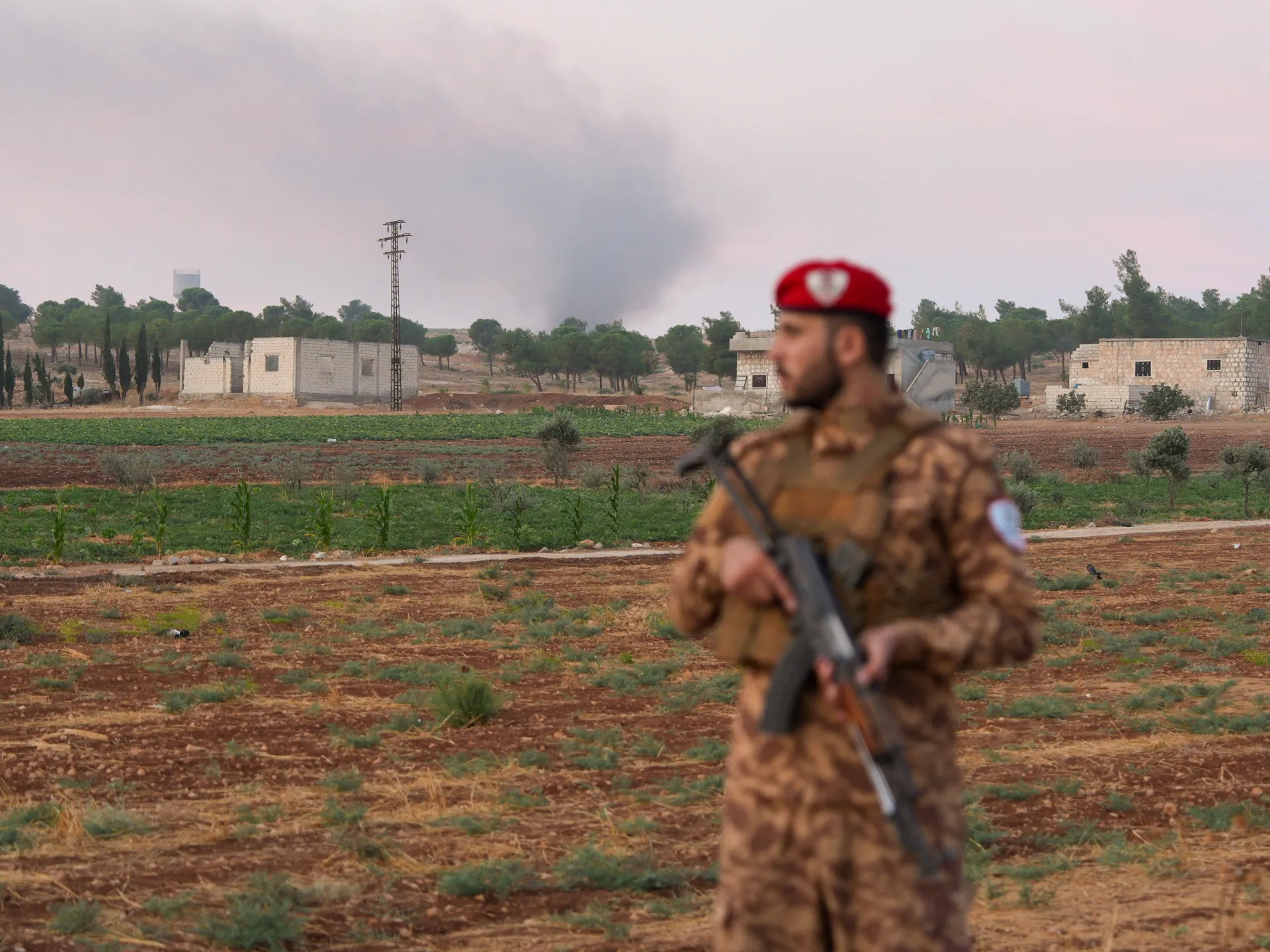
Repeated blasts at military sites expose the risks facing Syria as it rebuilds its army and consolidates weapons after years of war.
A series of explosions at weapons and ammunition sites across Syria this month have exposed the difficulties facing the country’s military in storing and moving munitions, as the armed forces rebuild after more than a decade of war.
The latest blasts injured at least four people in the early hours of Monday morning at an arms depot in al-Eis, south of Aleppo.
Recommended Stories
list of 3 itemsend of list
On Friday, a blast in Ayyash, west of Deir Az Zor, killed 11 soldiers. Another on September 9 killed 14 defence ministry personnel in Sarmada, Idlib. Also in Idlib, five people were killed when a vehicle carrying ammunition exploded in the town of Binnish on September 1 .
According to a tally by the Reuters news agency, at least 16 similar explosions have hit arms storage facilities since the fall of long-time President Bashar al-Assad in December 2024 after an opposition offensive.
Some have been attributed to poor storage conditions. The Syrian Defence Ministry said it is investigating the causes behind the recurrent explosions to prevent future incidents.
Long-time neglect
Security analysts are divided on the root causes, with some pointing to a lack of professional infrastructure and others highlighting the potential for foreign interference – although there is as yet no hard evidence for that.
Omer Ozkizilcik, a nonresident senior fellow for the Syria Project in the Atlantic Council’s Middle East Programmes, explained to Al Jazeera that the Syrian military is undergoing a period of huge change. It is reorganising from what it was under al-Assad, consolidating weapons from different sources and integrating various forces. All of that could be putting pressure on Syria’s storage infrastructure, which was already creaking after the long war and international isolation.
“The explosions could have happened due to neglect, Ozkizilcik said. “The Syrian army is receiving much more military aid than ever before. It gained control over the stockpiles of the former regime and the formerly US-backed [Syrian Democratic Forces]. The increase in quantity coupled with the need to protect weapons from potential Israeli airstrikes may have pushed the Syrian army to store weapons in inadequate places.”
Ozkizilcik emphasised that Syria’s military is still in a transitional phase. The former army was dissolved after the fall of the al-Assad regime and fighters from armed opposition groups were integrated into a new military structure. Damascus has also been working to integrate territory and forces previously controlled by the Kurdish-led SDF.
“The Syrian army has yet to become a professional army,” Ozkizilcik added. “These explosions are not the first that happen in Syria. Before the fall of al-Assad, similar things happened many times in Syria. [but] I don’t think these explosions will affect Syria’s military capabilities in any visible way. It’s merely a loss of some stockpiles that can be replenished.”
Weapons and ammunition, by their nature, need to be handled extremely carefully and stored properly. Storing large quantities of ageing ammunition for years in poor conditions, such as high temperatures or humidity, can accelerate their deterioration and lead to them becoming unstable.
“The current warehouse infrastructure suffers from severe ageing; most of it dates back decades and does not meet international safe storage standards,” said security expert Ismat al-Absi. “Storing ageing munitions in open or semi-closed environments without controlled cooling and humidity systems creates what we call a thermal runaway chain reaction.”
Possibility of sabotage
The repeated explosions have led to some fears of sabotage, particularly in light of repeated Israeli attacks against Syria since the fall of al-Assad, many of which have targeted the military, including the August strikes on the Abu al-Duhur airbase in Idlib.
Ozkizilcik noted that there was “no public information about possible sabotage” being behind the weapons depot explosions, and no evidence of any direct Israeli links. But the repeated explosions, coupled with Israel’s attacks in Syria and past intelligence operations against groups like Lebanon’s Hezbollah, mean it cannot be totally ruled out.
“Considering that the Israeli media recently wrote about the growing military capabilities of Syria, suspicions grow,” he said.
Al-Absi told Al Jazeera that the wide geographic scope of the explosions nevertheless meant that deliberate interference should be investigated.
“The main loopholes that [could have allowed sabotage operations] are the absence of smart surveillance, relying on traditional human guarding instead of remote sensors and thermal movement detection; weak securing of transport lines and administrative fragmentation,” al-Absi said. “The weakness of security discipline during the restructuring phase of the military institution has made some sites vulnerable to penetration or internal manipulation.”
Dolly Parton — the “queen of country,” benevolent ruler of Dollywood and America’s true sweetheart — died at age 80 last month. But she lives on forever at home in our living rooms, in the warm echo of a Tennessee twang from the speaker and, perhaps surprisingly (although that shouldn’t be so), in the flickering glow of our television screens.
Parton got her start on the small screen, appearing on the “Cas Walker Farm and Home Hour” when she was 10. Eleven years later, she had a down-home breakthrough on the widely syndicated “Porter Wagoner Show.” There were multiple interviews with Barbara Walters, “Tonight Show” appearances with Johnny Carson, two successive variety shows and many a guest spot, including on “Hannah Montana,” “Designing Women” and “Reba.”
At the Emmys on Monday, Reba McEntire sang a soulful tribute to Parton with a cover of her 1983 song “Appalachian Mountains,” one of McEntire’s all-time favorites. Before that, though, came a heartfelt speech by Sally Field, Parton’s co-star in “Steel Magnolias.”
“If there are truly angels on Earth, then we just lost one: Dolly Parton,” Field said. “It was my great good fortune to have worked with Dolly in a film called ‘Steel Magnolias.’ And over the years, I never stopped loving her, though we lived very far apart. I adored her from Day One; how could you not? She was genuine and humble, supportive and blisteringly funny, with a bawdy sense of humor that would send any rude guy looking for a place to hide.
“I couldn’t see then what a real giant Dolly was — not just as an artist, but as a human,” she added. “She was a humanitarian whose contributions have made a profound difference in the lives of so many in her home state of Tennessee, and across our country. God bless you, Dolly Parton, my friend. I am not the only one on Earth that will love you forever and ever.”
Then came an archival clip of Parton introducing “Appalachian Mountains” the year it came out. “I’m very, very proud of the fact that I had the kind of parents that I did, and grew up in the Smoky Mountains, the Appalachian Mountains,” she said. “And I have written a song that touches me very deep, and I’m sure that, in your own way, that you certainly will relate to this. This song, like I say, is very important to me, and I hope you like it. And if you don’t like it, well, if you don’t mind, I would rather not hear about it later, OK? It’s a song that I call ‘Appalachian Mountains.’ ”
Scott Bessent says airports and companies servicing Iranian carriers risk being cut off from the US dollar system.
Published On 21 Sep 202621 Sep 2026
United States Treasury Secretary Scott Bessent says Iranian airlines could effectively be shut out of international travel from Wednesday, as Washington threatens foreign companies with secondary sanctions if they continue servicing the country’s carriers.
“On September 23, all the Iranian airlines will be shut down around the world,” Bessent told CNBC on Monday.
Recommended Stories
list of 3 itemsend of list
The warning is aimed not just at the airlines themselves, but at the airports, fuel suppliers, ticketing companies and other businesses they rely on to operate abroad.
“If they land, you cannot provide them with fuel, you cannot provide them with landing services, you cannot sell them tickets, or you will be knocked out of the dollar system,” Bessent said.
The threat marks the latest step in US President Donald Trump administration’s escalating economic campaign against Tehran, which has continued alongside the war between the US and Iran.
Earlier this month, the US Treasury imposed sanctions on all remaining Iranian airlines that had not already been targeted, as well as companies outside Iran accused of supporting the country’s aviation sector.
Iran’s aviation industry was already heavily constrained by years of US sanctions, which have made it difficult for carriers to buy new aircraft and obtain spare parts and maintenance services.
The measures are part of a much broader sanctions regime aimed at isolating Iran from the international financial system. US secondary sanctions threaten foreign companies that do business with Iran across sectors including energy, shipping, technology, gold and digital assets with penalties of their own.
China ‘very engaged’ on Iran sanctions
Bessent’s comments came a day after talks with Chinese Vice Premier He Lifeng, ahead of Trump’s meeting with Chinese President Xi Jinping on Thursday.
China is one of Iran’s most important economic partners and diplomatic backers, making Beijing’s cooperation potentially significant to Washington’s efforts to financially isolate Tehran.
Bessent said Chinese officials had been “very engaged” in the US pressure campaign. Washington was holding what he described as positive talks with Chinese financial authorities, including People’s Bank of China Governor Pan Gongsheng, about compliance with US sanctions on Iran.

























![Fans hold a banner during the Atletico Madrid vs Real Madrid match in the Spanish La Liga at the Metropolitano Stadium in Madrid on Sunday, September 20, 2026 [Leyla Hamed/Al Jazeera]](https://i0.wp.com/occasionaldigest.com/wp-content/uploads/2026/09/Ceuta-banner-Atletico-Madrid-vs-Real-Madrid-Leyla-Hamed-1789993641.jpeg?w=640&ssl=1)