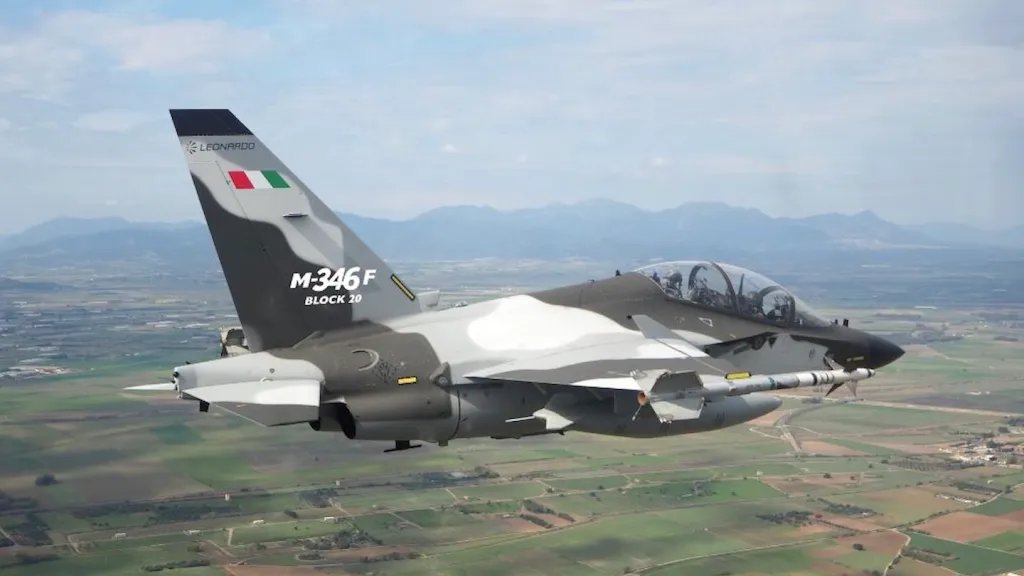
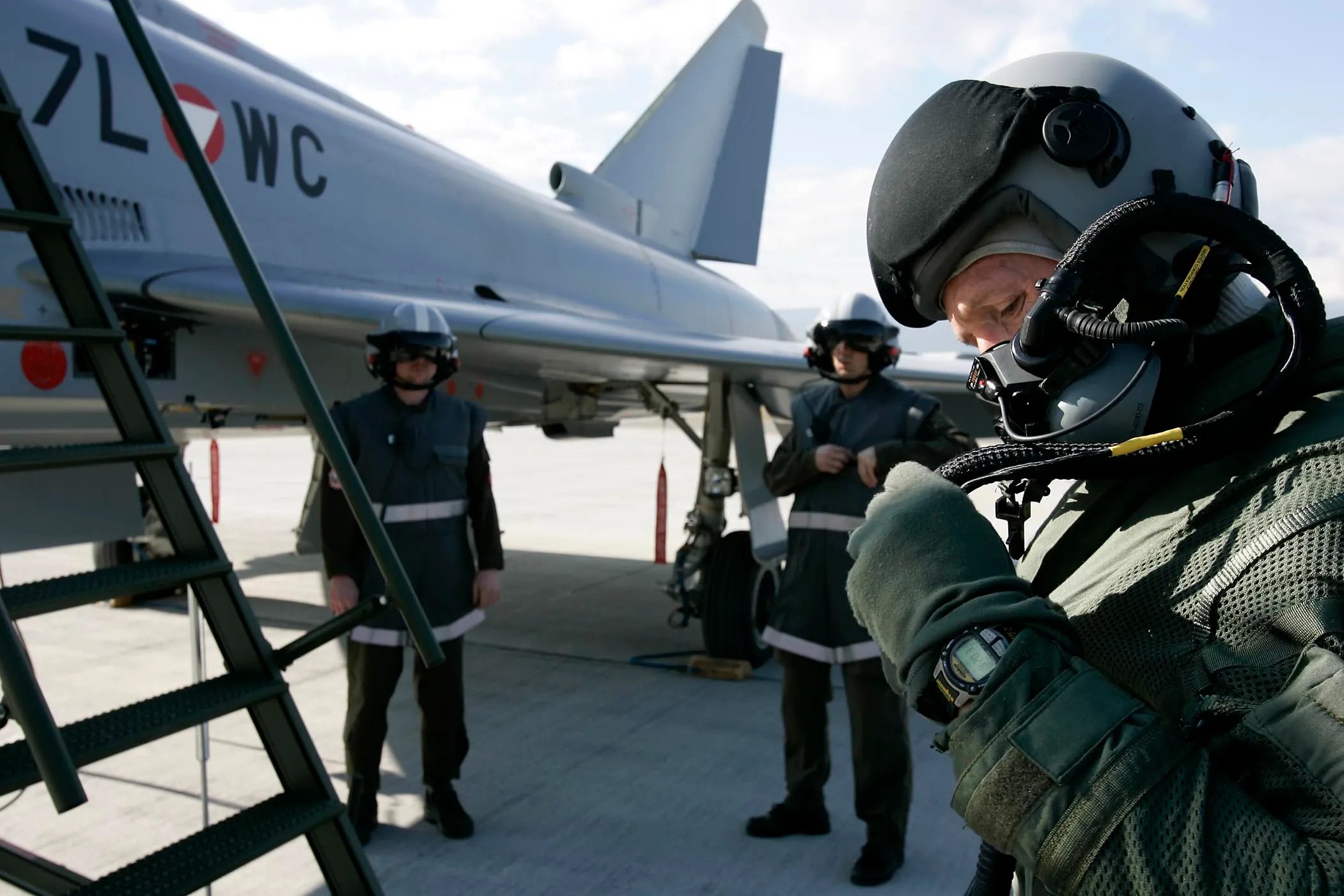
Austria is buying 12 M-346F Block 20 light combat aircraft from Italian defense contractor Leonardo, as part of an overhaul of its air force, the Luftstreitkräfte. Austria does already operate 15 Eurofighter Typhoons, which were procured under controversial circumstances. Those jets have notably limited capabilities compared to other Typhoons, as well as high operating costs, which have prompted attempts to offload them.
Leonardo announced the Austrian contract today. As well as the dozen M-346s, the deal includes simulation systems for pilots, training for maintenance technicians, spare parts and equipment, plus logistical support for six years. The total cost is around $1.7 billion, and the first aircraft is due to be delivered in 2028.
According to Leonardo, the Austrian Air Force will use the M-346Fs for the “defense needs of Austria’s national airspace and territory,” as well as for training.

M-346FA
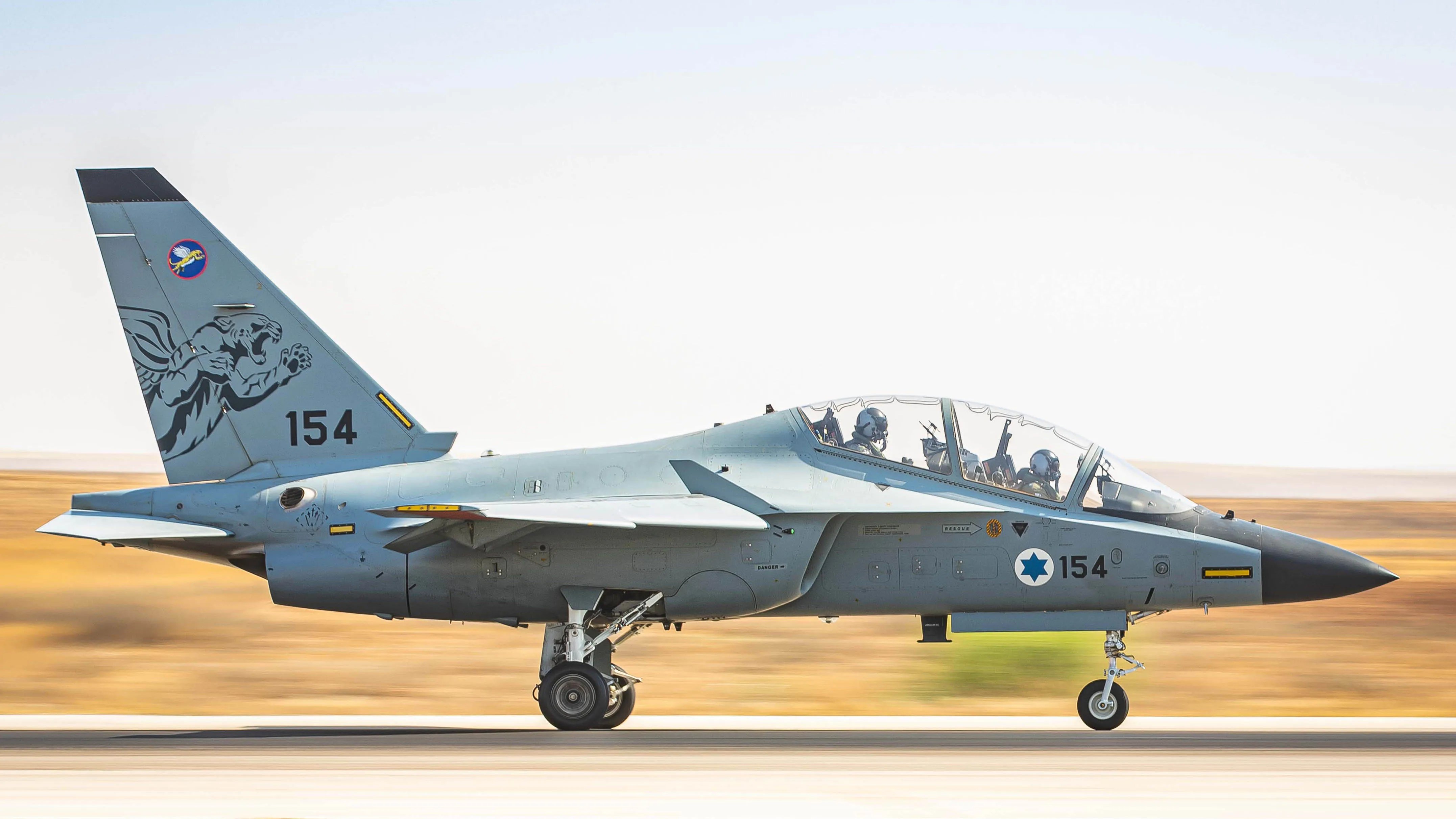
The two-seat M-346 was originally developed as an advanced jet trainer, but light combat versions have long been offered for sale. Block 20 standard variants are notably well-equipped for aircraft of their size and weight. They come with a pair of large-area displays (LAD) in each cockpit, an active electronically scanned array (AESA) radar, a Link 16 datalink, and electronic countermeasures. The jets are capable of being configured to employ various air-to-air and air-to-surface weapons options, but can also be operated as pure trainers.
In the trainer role, the M-346Fs will serve as a successor to the Austrian Air Force’s Saab 105 jets, which were retired in 2020, and are seen in the video below.

Action: Saab 105 im Flug
The M-346 has been developed by Leonardo as part of an integrated advanced flight training system. Beyond the jets themselves, this includes a ground-based training system (GBTS), which is based around the live, virtual, and constructive (LVC) concept. In this way, simulated elements and scenarios can be combined with real-life training flights.
Austria is already familiar with the M-346 as its pilots already train on it at the International Flight Training School (IFTS), which Leonardo and the Italian Air Force operate together in Decimomannu, Italy.

IFTS – International Flight Training School
According to Leonardo, the complete training system for Austria will include capabilities related to air-to-surface missions. This would be a new development for the Austrian Air Force, which is currently optimized for air defense.
It will also allow pilots to train for aerial refueling, something else that hasn’t previously been featured in the Alpine air arm’s operations. It is worth noting here that the Luftstreitkräfte does not currently operate any tankers itself.
Most notably, however, as well as advanced training, Austria will fly the M-346 in the “dual role of fighter for lower-intensity operations,” according to Leonardo.
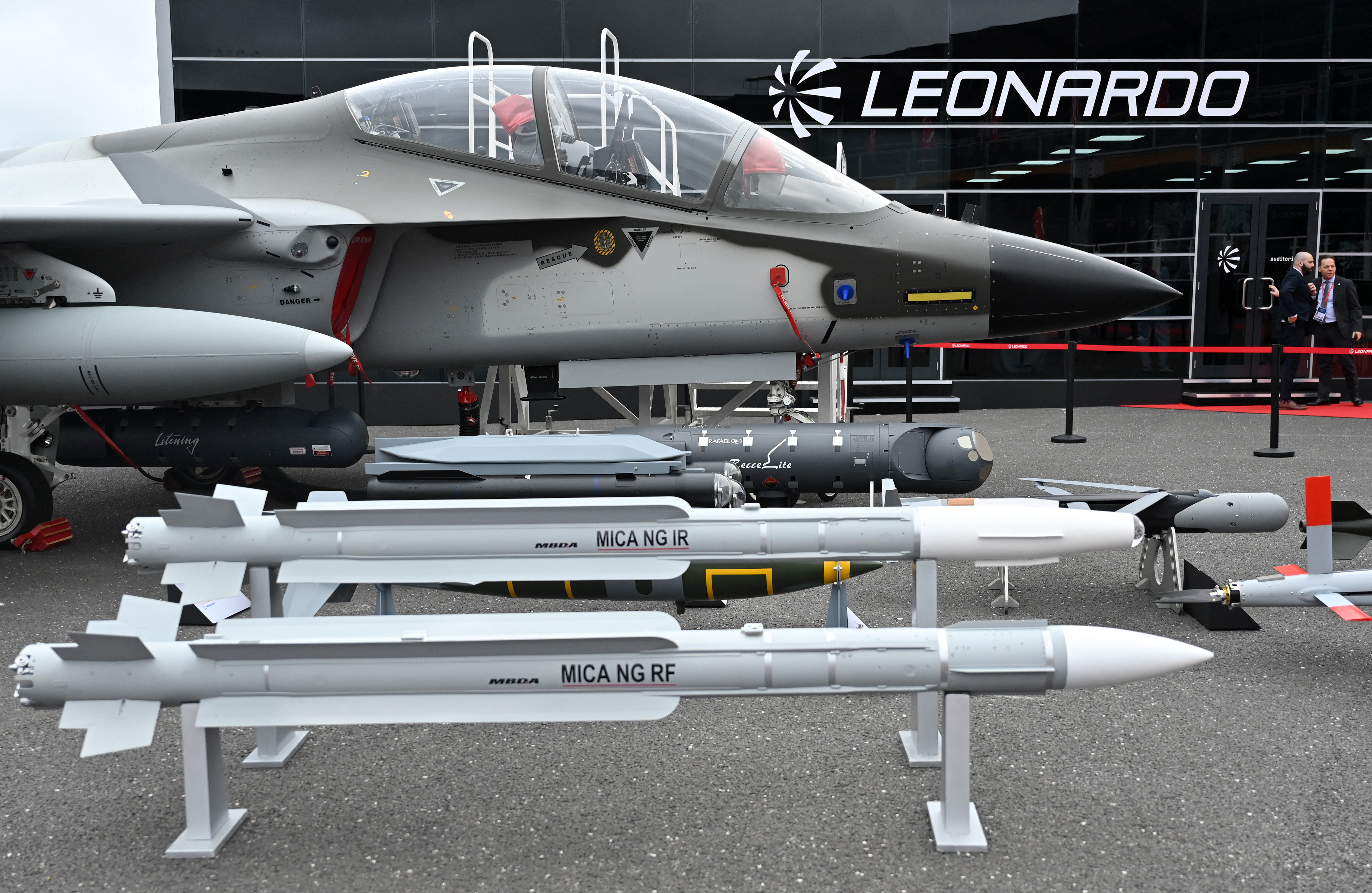
Imagery related to the M-346F Block 20 released to date includes pictures of a demonstrator aircraft armed with wingtip AIM-9L/M Sidewinder infrared-guided air-to-air missiles. It has also been seen loaded with laser-guided bombs and Joint Direct Attack Munitions (JDAM). Reportedly, Austria will integrate the IRIS-T infrared-guided air-to-air missile (already used on its Typhoons), 20mm gun pods, and LAU-32 seven-round rocket launchers for its M-346s, as well as Israeli-made electronic countermeasures pods.
While the now-retired Saab 105s had a limited air-policing role, the M-346F’s capabilities mean that certain, more expansive operational missions could be ‘downloaded’ from the expensive Typhoon and onto the smaller and more economical jet.
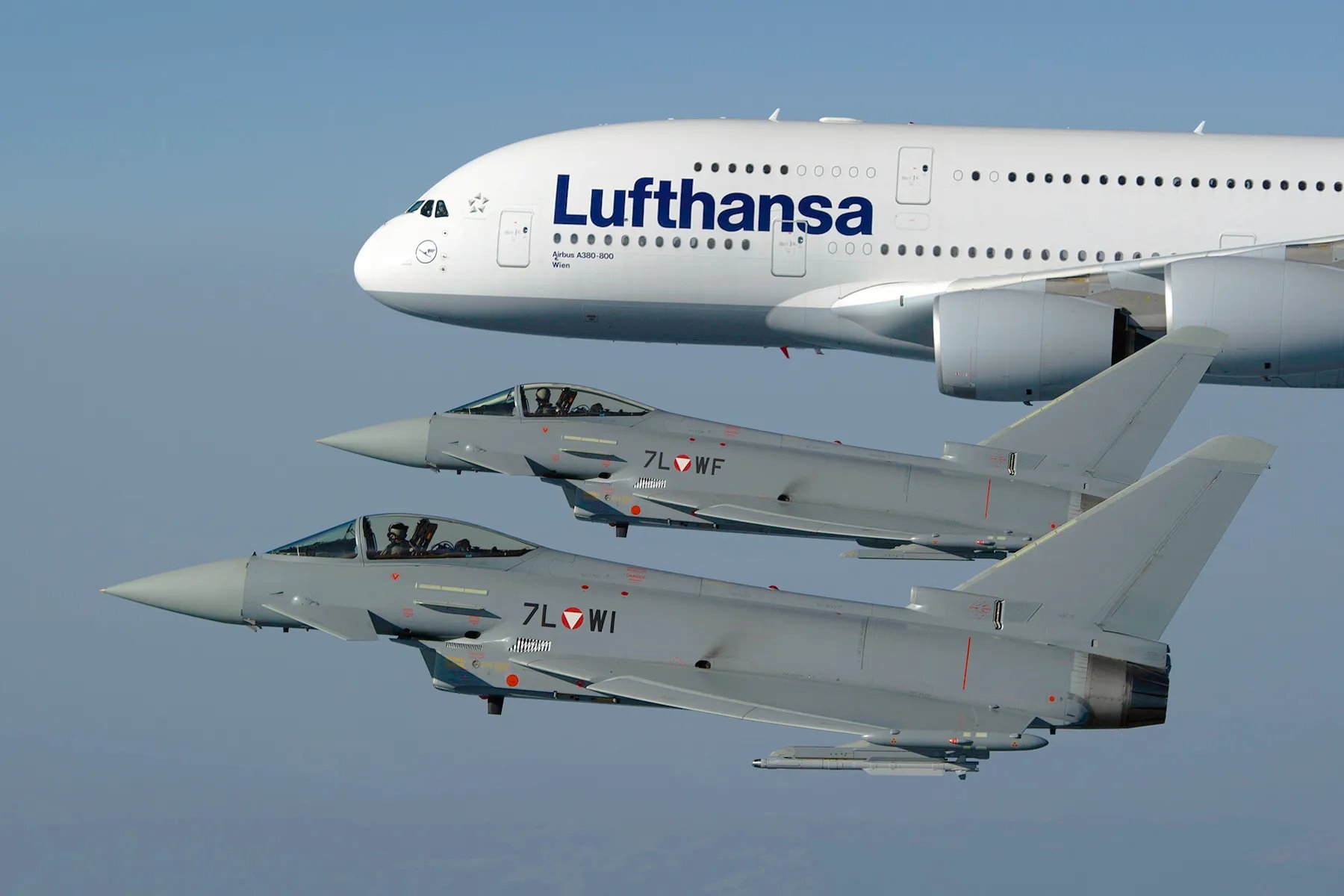
Nonetheless, this would still be a significant augmentation for the Typhoon force, not least because Austria is a small country and the M-346F would be capable of responding to most routine threats, especially thanks to its AESA radar.
Furthermore, the Austrian Typhoons have no beyond-visual-range air-to-air missile armament, so the M-346Fs wouldn’t be at a disadvantage in terms of weaponry, either.
In fact, an argument could be made for Austria having ordered the M-346F, or a similar light combat aircraft, rather than the Typhoon in the first place.
The Typhoon acquisition was far from straightforward. Austria selected the Eurofighter design over the Saab JAS 39C/D Gripen in 2002, but only finished paying off the €2 billion ($2.3 billion at the rate of conversion at the time of writing) purchase costs for the 15 single-seat jets (an order that was also reduced from a planned 18 aircraft) in 2014. The deal was also overshadowed by accusations of deception, fraud, and bribery, including a high-level lawsuit filed by the defense ministry against Airbus and Eurofighter.
Overall, the Austrian Ministry of Defense has been far from happy with the Typhoon. It has called into question the jet’s operating costs and lack of certain critical capabilities — including the PIRATE infrared sensor, a helmet-mounted display, and the EuroDASS self-defense suite. As mentioned above, the Austrian jets have no beyond-visual-range air-to-air missiles and lack any air-to-ground capability.

Österreichs Luftstreitkräfte – Luftraumüberwachung
As long ago as 2017, Austria outlined plans to phase out the Typhoons by 2023, arguing that it would be cheaper than upgrading them. Since these are the baseline Tranche 1 jets, equipped to the most basic standard, it is far harder to modernize them. At this time, it was envisaged that they would be replaced by 18 new fighters, which would also supersede the Saab 105s.
More recently, efforts were made to try to sell the Typhoons to Indonesia, as you can read about here.
Somewhat ironically, back in 2020, Austria’s Green Party called for the replacement of both the Typhoon and the Saab 105 with the M-346.
As TWZ noted at the time, “Austrian Typhoon pilots already train on the M-346 in Italy, and in many ways it would seem to make an ideal replacement for the two-seat Saab. However, it lacks the raw performance and sophisticated avionics of a modern fighter jet, which would render it less suitable for the air policing role now undertaken by the Typhoon.”
However, the M-346F Block 20 is a much more capable proposition in terms of avionics, although it remains subsonic.
As a non-aligned nation, Austria can’t rely on NATO support to defend its airspace, so having additional, more economical light combat aircraft to help do this job will be welcome.
The M-346 also has the benefit of an established user base and supply chains to go along with it. As a trainer, existing M-346 customers include Greece, Italy, Israel, Poland, Qatar, and Singapore. The Italian Air Force has also selected it as the future aircraft for its aerobatic team, the Frecce Tricolori.
Leonardo, as part of a team-up with Textron in the United States, has also been offering a navalized M-346N version to the U.S. Navy as a possible replacement for that service’s T-45 Goshawk jet trainers. You can read more about the M-346N, which was rebranded as a Beechcraft product earlier this year, here. Beechcraft is a wholly-owned subsidiary of Textron.
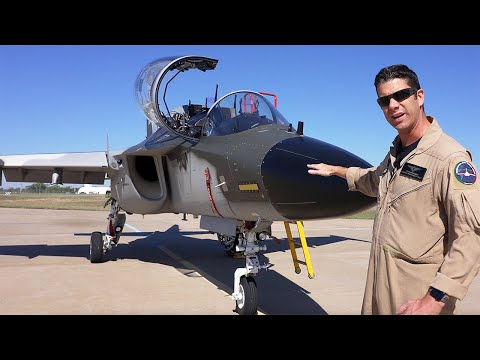
M-346 Jet Trainer Walk-Around Tour With Its Test Pilot.
The only country known to have already introduced a light combat aircraft version of the M-346 is Turkmenistan, which reportedly acquired just four M-346FA (Fighter Attack) versions, as well as two trainers. It’s unclear exactly what kinds of weapons the country’s jets carry.
However, Nigeria now looks to be lining up to buy the M-346FA, as well, with a potential deal for as many as 24 of the jets reportedly on the cards.
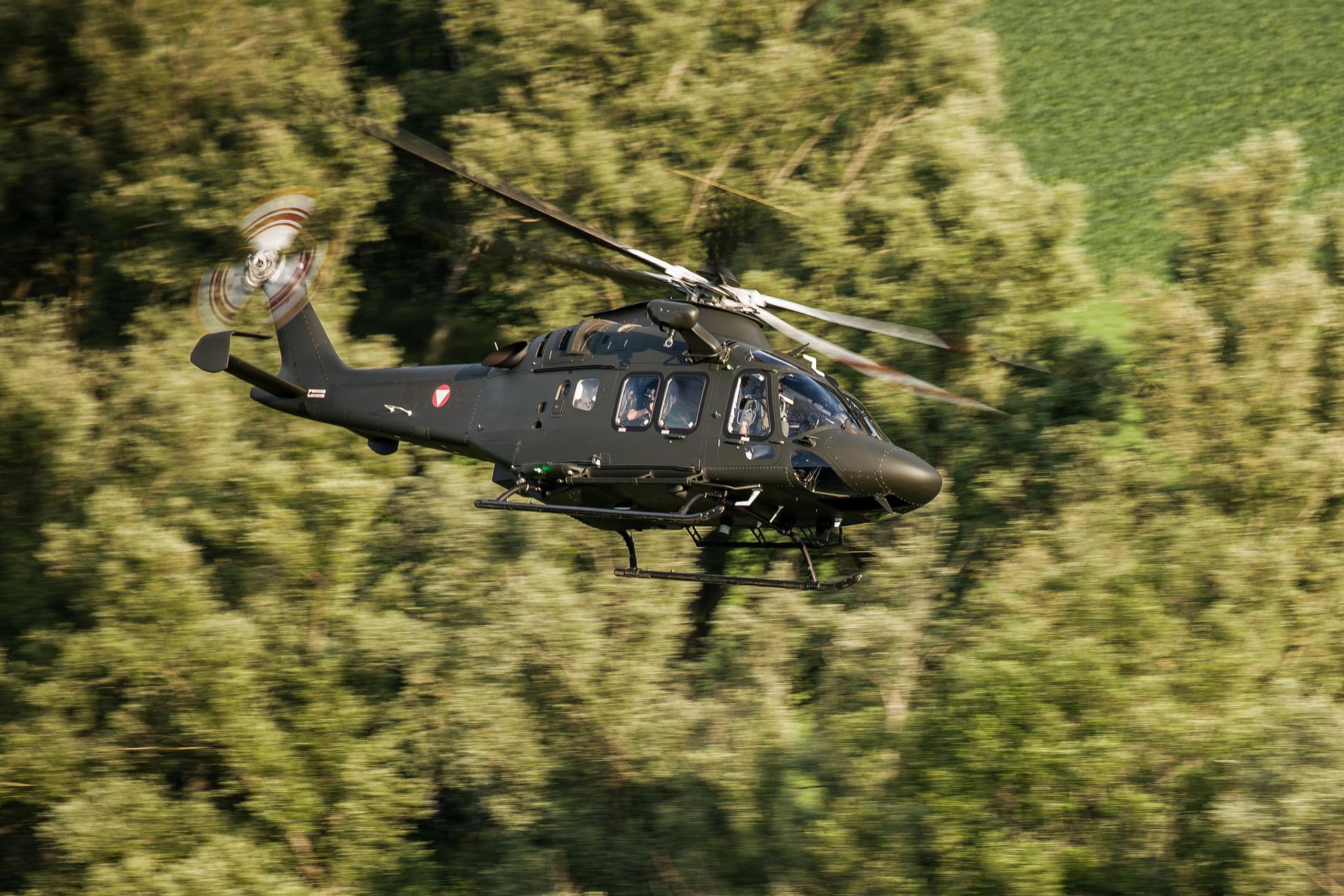
Buying the M-346 also further cements the Austrian Ministry of Defense’s own relationship with Leonardo, from which it previously acquired 36 AW169M Light Utility Helicopters (LUH) under two contracts signed in 2022 and 2023.
The Austrian order and the possibility of a larger sale to Nigeria are good news for Leonardo, which is continuing to evolve the M-346 from an advanced jet trainer into an ever more versatile multirole light combat aircraft.
The overall market space for light fighters based on advanced jet trainers is steadily growing globally, too. Korea Aerospace Industries has seen particular success with its FA-50 version of its T-50 trainer. The possibility of Boeing developing a light fighter based on its T-7 Redhawk for the U.S. Air Force has also come up in the past.
On the other hand, the Austrian Air Force remains stuck with the Typhoon, something of a costly white elephant when it’s considered that its primary mission is peacetime air policing over neutral airspace. Ultimately, perhaps, the Typhoon might be retired without a direct replacement, leaving the future M-346Fs to take on all frontline fighter roles.
Contact the author: thomas@thewarzone.com