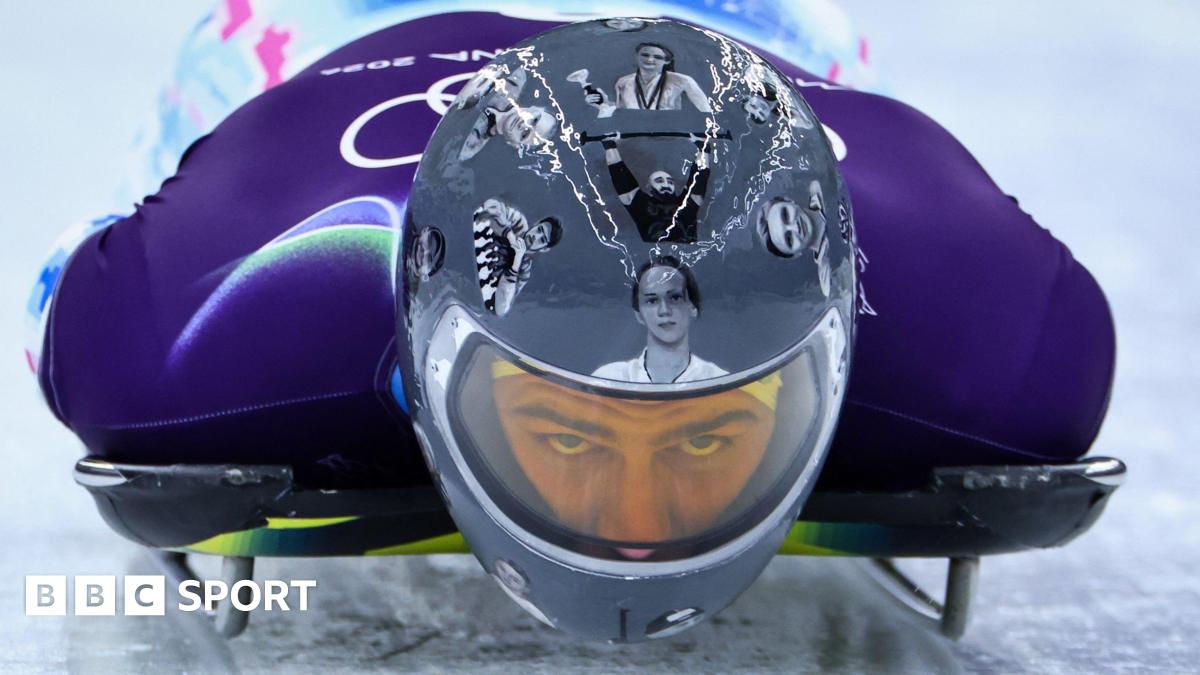
Ukrainian skeleton racer Vladyslav Heraskevych says he will wear his helmet of remembrance on race days “because these athletes deserve to be on the track” – despite the International Olympic Committee banning him from doing so.
Heraskevych wore the helmet, which features images of athletes killed during Russia’s invasion of his home country, during a training session on Thursday after being told it was not allowed.
The IOC says the helmet breaks the rules laid down in the Olympic Charter and suggests he could instead wear a black armband to pay tribute.
Heraskevych says he does not believe the IOC will impose sanctions on him for continuing to wear it, adding: “I believe we have all the rights to wear this helmet in competition because it is fully compliant with the rules.
“I believe the IOC doesn’t have enough black bands to honour all of the athletes.”
The IOC has not confirmed whether it would disqualify Heraskevych for continuing to wear the helmet, saying it is “not helpful to look at hypotheticals”.
Rule 50.2 of the Olympic Charter states “no kind of demonstration or political, religious or racial propaganda is permitted in any Olympic sites, venues or other areas”.
Mark Adams, a spokesperson for the IOC, said they will contact Heraskevych on Thursday to “reiterate his many opportunities to express his grief”.
The men’s skeleton heats begin on Thursday with the final runs on Friday and Adams says he can show the helmet in mixed zones and on social media but “the field of play is sacrosanct”.
“We really want him to compete, we want all athletes to have their moment,” Adams said.
“[It’s] not helpful to look at hypotheticals. It’s not helpful to speculate now, but there are rules and regulations the athletes want us to enforce. In the end it would be an IOC matter.
“We don’t want to prosecute this issue in public – the way we hope we can deal with this is on a human level. It is in everyone’s interest for him to compete.”
Heraskevych said that many of those pictured on his helmet were athletes, including teenage weightlifter Alina Peregudova, boxer Pavlo Ishchenko and ice hockey player Oleksiy Loginov, and some of them were his friends.
“With this helmet we keep memories about these athletes,” he said.
“Some of them were part of the Olympic movement – they were part of the Olympic family. I believe they deserve to be here.”
The IOC has previously disqualified athletes for displaying political messages.
Afghan breakdancer Manizha Talash, who represented the Refugee Olympic Team at the 2024 Paris Games, was disqualified for displaying a ‘Free Afghan Women’ slogan on her cape during a pre-qualifier dance battle.