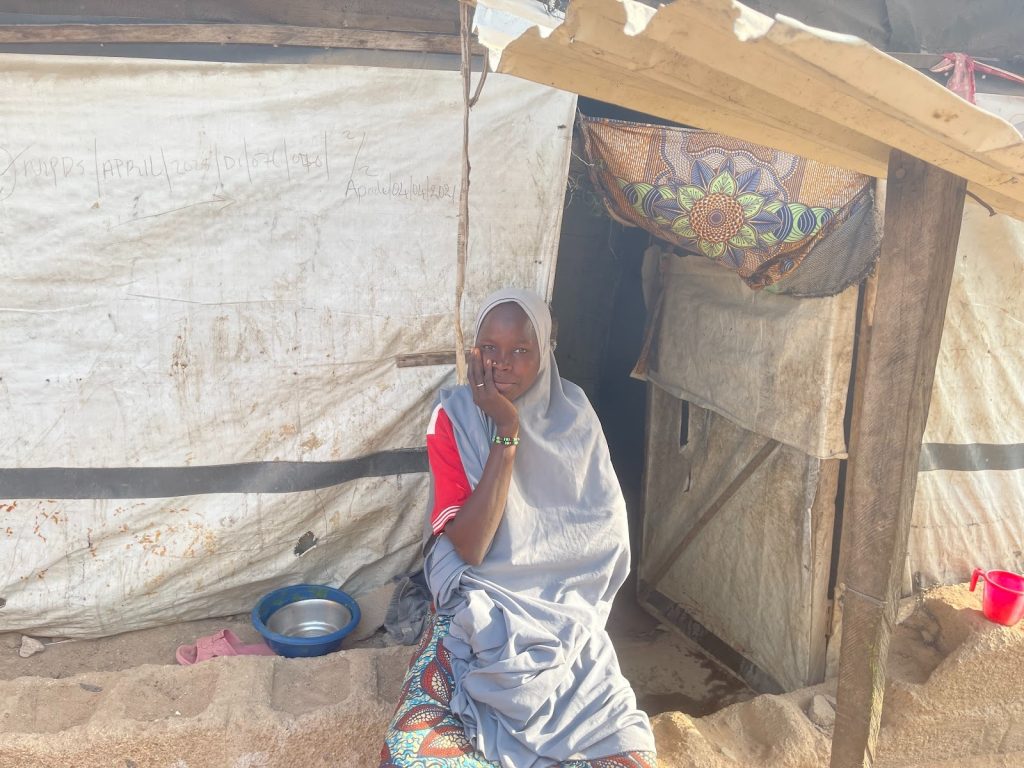
Fatima Abdullahi stands beside a group of children with a bowl balanced in her hands. As the children rally around her, she tries to give them instructions. “The pap is small, so you must be patient and take turns,” she tells the children, who are each holding a plastic spoon.
The 30-year-old mother of five then places the bowl on the ground, and the children swing into action, scooping and scraping. Inside is pap made of corn flour and plain water.
“It was never this bad,” Fatima tells HumAngle, glancing at the children whose spoons were colliding in the wooden bowl. “There was a time when each child had their own bowl, and the pap had sugar in it, but things got worse.”
In 2015, Fatima and her family fled the Boko Haram insurgency that ravaged her hometown in Gwoza Local Government Area, Borno State, in northeastern Nigeria, and claimed the lives of over 350,000 people and displaced millions of others. They were transported by the Nigerian Army to Malkhohi, a displacement camp in Yola, the Adamawa State capital.
Like Fatima and her family, most of the over 360 people living in the camp were displaced from communities in Borno State, such as Gwoza, Askira Uba, and Damboa.
Back at home, she was an entrepreneur who sold akara and chin-chin, earning money to support her family. Fatima’s husband was an accomplished farmer. Their displacement halted all of these efforts, but things were better when they arrived in Malkhohi. At first, many structures were put in place to make life easier for residents.
Each family was provided with a tent, mosquito nets, blankets, and sufficient food. Donations in cash and kind were made regularly. Fatima said there was a United Nations Children’s Fund (UNICEF)-run clinic, and the Red Cross was always on the ground to address emergency health needs. Local civil society organisations were also available to offer support.
“There were organisations that came from time to time with food,” she recounts. “Some of them came and taught us different skills.”
However, things eventually began to change.
When the aid stopped
UNICEF was the first agency to exit the Malkhohi IDP camp in 2023, a move that led to the closure of the camp’s clinic. A few months later, the Red Cross also withdrew. In 2024, the International Organisation for Migration (IOM) closed its office at the camp.
It was at this point that residents began to realise the gravity of their situation.
The departure of these agencies that had provided healthcare and other essential services to the IDPs significantly affected the community, with conditions worsening steadily over time.
That decline deepened in 2025, when other local organisations providing aid in the camp, particularly those dependent on USAID funding, also began to leave, shortly after the US government suspended foreign aid.
For families in the camp, the impact has been tough.
“Before, my children had regular three square meals, but now they eat depending on how available food is. Sometimes, it’s breakfast and nothing till the next day. Other times, we go to bed like that,” Fatima said. She noted that starvation has made her children aggressive. “Whenever they see food lately, they start fighting over it, each wanting the largest share.”
As food became scarcer, meals grew more basic.
“These days, I mostly make pap for them with just plain water and corn flour, and sometimes, we make tuwo with the corn flour and eat without soup,” she added.
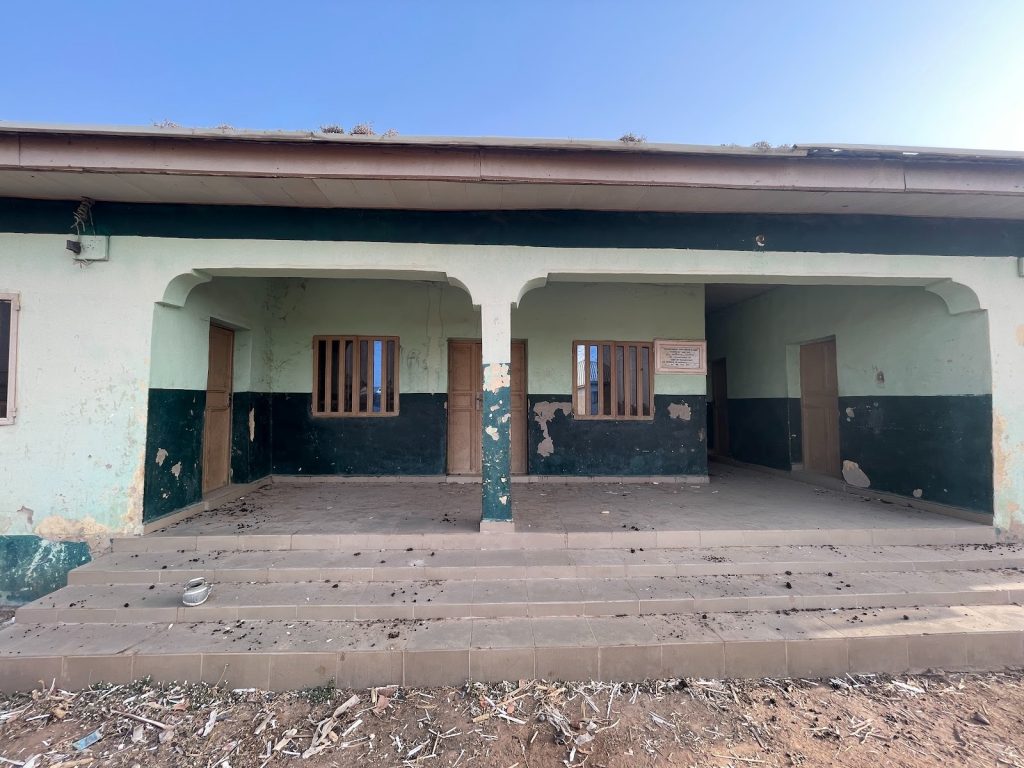
The withdrawal of aid also disrupted services beyond food. In addition to basic healthcare, UNICEF had played a key role in education, with about 285,000 Borno children reportedly trained in numeracy and literacy after being orphaned by the Boko Haram insurgency.
With the clinic closed, access to medical care has become increasingly difficult.
“We used to access free medicines and other healthcare services until the camp’s clinic closed,” Fatima told HumAngle. “If our children get sick these days, we go to the nearest clinic inside Malkhohi village. They charge a lot.”
She explained that private clinics require an upfront deposit of about ₦6000 before examining a sick child, a sum many families cannot afford. “If we are paying for malaria drugs, then it’s ₦6000, but if the child requires a drip, then it is ₦9000 and above,” she added.
Although there is a primary healthcare centre in Malkhohi, IDPs say it is far from the camp and difficult to access during emergencies, often taking hours to reach on foot.
“So when there is a health emergency, we just go to the private clinic closer to us,” Fatima said.
Living conditions in the camp have also worsened. Salome Ijarafu, the women’s leader at Malkhohi IDP Camp, told HumAngle that there are only a few standard toilet facilities in the camp.
“Sometimes, we have to wait till it is dark so that we can go and take our bath outside in the bushes because the bathrooms are not in good condition. Even then, we have to queue up and wait for others to get out before we make use of the good ones,” she said.
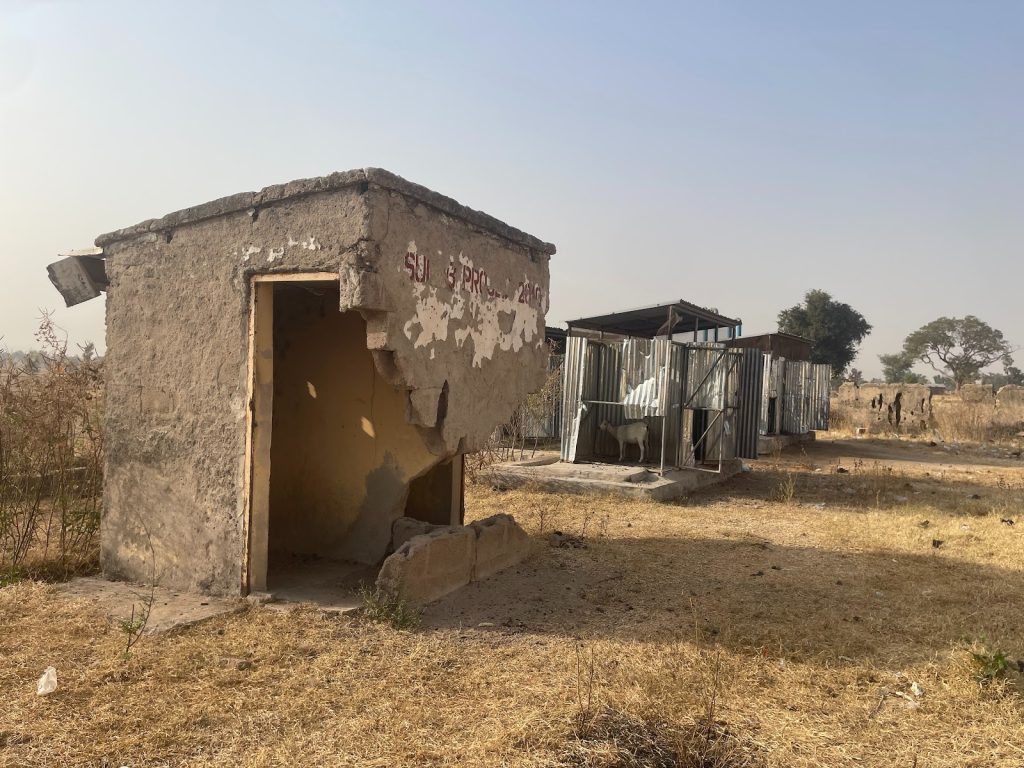
Following a rise in vaginal infections at the camp, some women don’t use the toilets; they now relieve themselves in nearby bushes.
“Our toilets and bathrooms are all worn out. We rely on the few in better condition, but there are a lot of us relying on them, so it gets messy all the time. Before, we used to receive soaps, detergents, and Izal from the organisations, but since the aid stopped, we just clean the floors with water,” Fatima said.
The women’s leader also noted that pregnant women in the camp have become increasingly vulnerable since the closure of the UNICEF clinic, as access to antenatal care and delivery services is no longer readily available.
“When women want to give birth, there is no way it can be done here, so they have to be rushed to the distant primary health care, and sometimes when the primary healthcare centre can’t handle it, we have to look for a means to transport them to Yola town,” Salome said.
Beyond healthcare, women in the camp are also grappling with rising costs of sanitary materials.
“Sanitary pads are expensive now, so we use rags during our period. Before, we used to receive donations of sanitary pads, but we no longer get them,” she said.
‘We hustle to survive’
Buba Ware, Chairperson of the residents at Malkhohi displacement camp, told HumAngle that the Adamawa State government ceased communication with the camp five years ago, bringing an end to the donations from the State Emergency Management Agency (ADSEMA), but the IDPs didn’t feel much of that impact until the international agencies began to exit, followed by local humanitarian organisations. By the end of 2025, no organisation remained in the camp.
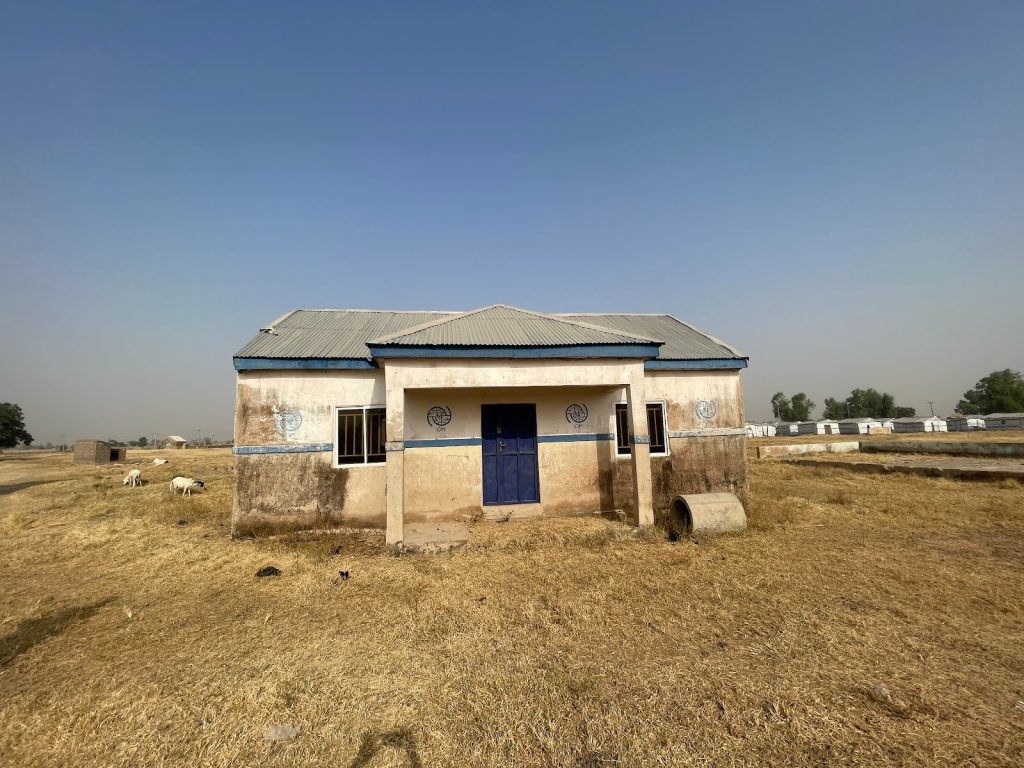
It has made it difficult for residents to renovate their tents, a responsibility that was carried out by IOM. “They fixed the leakages on our tents and replaced old structures, but now that they are gone, our tents are collapsing,” Buba said. “Even the local NGOs that came before no longer come, and that is why we go out and hustle so we can take care of ourselves.”
For many parents, that hustle has become a daily struggle to feed their children.
Forty-five-year-old Jummai Ali, a displaced person from Gwoza, has lived at the camp for the past decade. With seven children to care for, she has intensified her efforts to find food, especially now that aid is no longer forthcoming.
Every morning, Jummai joins other women in the camp to search for leftover grains on harvested farms. The women leave the camp at 6 a.m.. Each of them carries a basin, a broom, a sack, a hoe, and a small gallon of water.
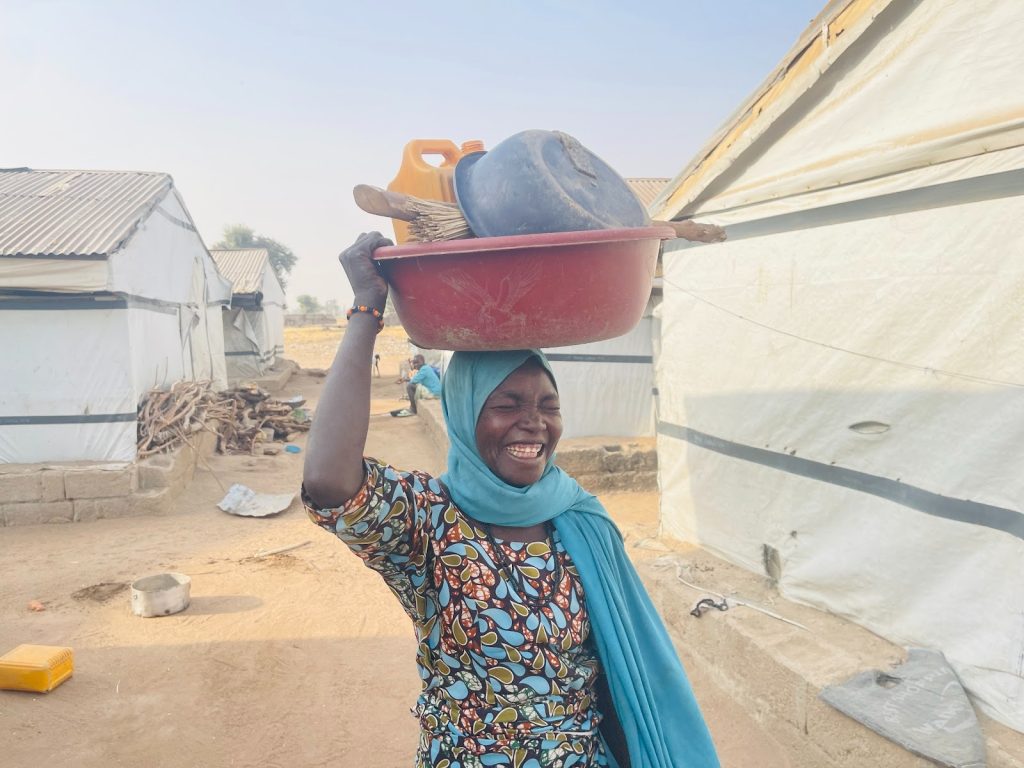
“We don’t have a destination or specific location,” she said. “We just keep walking, scouting for farms where work has already been done. We pluck out grains that farmers have mostly overlooked during harvest. Some of them are bad, and sometimes it’s just husk, but we sieve out and try to gather the ones that are edible.”
The women, Jummai said, walk in groups and stop at certain fields. When work at one site is done, they move to the next field until they have gathered enough. They mostly labour on rice farms because that’s where they can collect more grains.
“When we return, we sieve out the grain, work on it and cook. It’s not easy. There are times we walk for three hours to get to certain communities where there are large farms and then walk back to the camp when we are done,” she added, stressing that the search for food has become increasingly exhausting.
In addition to foraging, some women in the Malkhohi IDP camp prepare local foods such as akara, groundnuts, and moi moi, which they hawk in neighbouring communities to earn an income. According to Salome, the women’s leader, most of what the women earn from petty trading goes into buying medicines, especially during the harmattan season, when many children in the camp suffer from colds.
“We catch colds all the time. Our blankets are worn out. We’ve been using the same ones for the last ten years. Since the tent floor is not plastered, it’s easier for the sand to get cold and penetrate our mats,” Fatima said.
As women struggle to cope, many men in the camp have also turned to risky forms of labour.
HumAngle learned that a growing number of men have taken up logging. With the Malkhohi IDP camp located on the outskirts of Yola and surrounded by dense forest, the men venture into the bush to cut down trees, chop them into pieces, and sell the wood to survive.
Adam Agalade, one of the loggers, said hardship in the camp pushed him into the trade. Formerly a businessman and farmer back home in Gwoza, Adam said he had never swung an axe until last year.
“Sometimes, we spend days in the bush, trying to gather enough timber for sale,” he said. “We stopped during the rainy season but resumed in December.”
Once the trees are chopped, the men transport the wood in wheelbarrows into Malkhohi, where it is stacked along the roadside and sold to households and local food vendors.
“We sell some batches for ₦1000 while some for ₦2000,” Adam said.
While the trade has helped him support his family of ten, he noted that the income is uncertain. “There are days when we spend the whole day without selling anything,” he said.
Adam is currently injured after a log fell on his leg while he was cutting a tree in the forest. With his leg swollen, he said his life has come to a standstill as he is unable to join other loggers in the forest.
The rain will come
Beyond daily survival, residents say they fear what lies ahead.
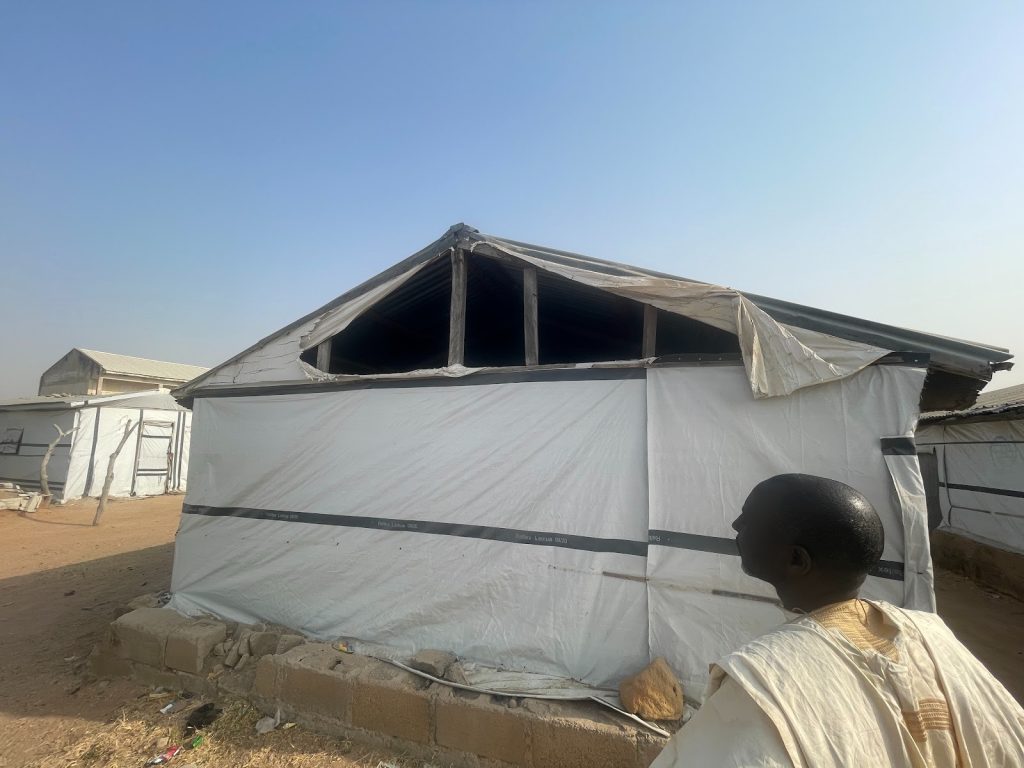
Some IDPs told HumAngle they are particularly anxious about the approaching rainy season, given the deteriorating condition of their tents. “All these planks supporting our tent have stayed for 10 years and have been eaten by termites. When the wind blows, the tents start to shake because the planks supporting them are worn out,” Adam said.
According to Buba, the camp chairman, most tents are leaking and require urgent repairs or replacement. IOM used to handle the maintenance, but they have left. While IDPs have made temporary fixes using sandbags to stabilise the structures, they say these measures are unsustainable.
“Once it is the rainy season, we get scared because of the condition of the rooms,” he said.
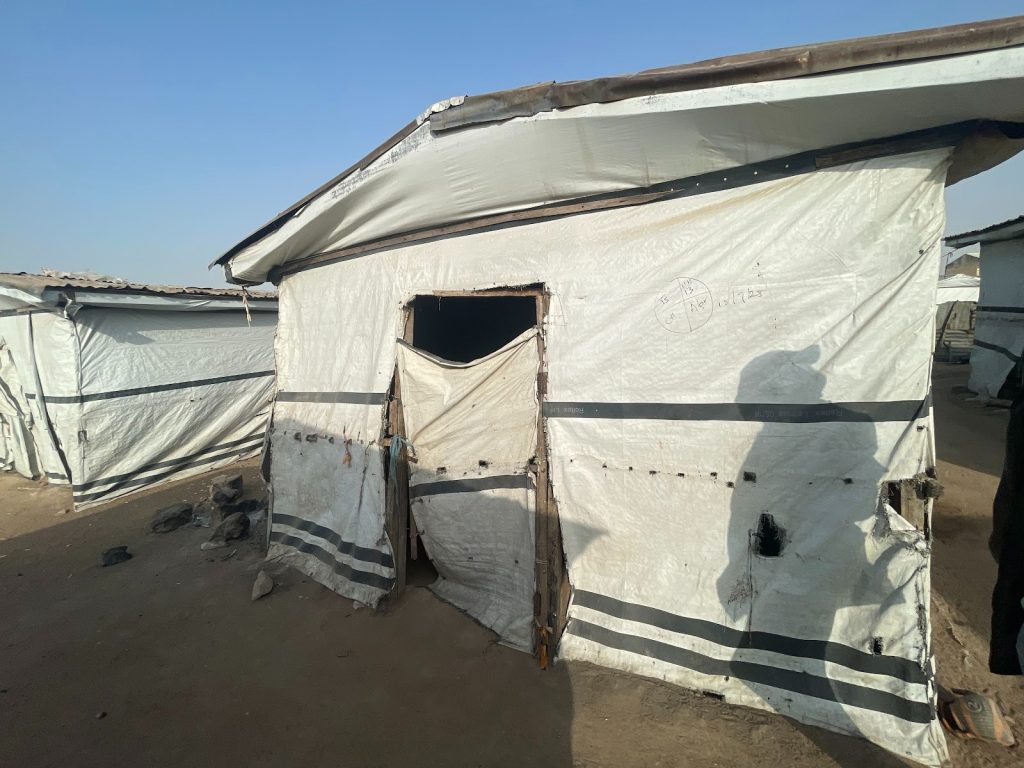
Buba added that heavy rains often cause tents to flood, forcing families to vacate them and seek shelter under trees until the storms subside. He recalled instances where tents collapsed on families, causing injuries, though no deaths were recorded.
Waiting for a way out
For years, residents of the Malkhohi displacement camp have waited for clarity on what comes next.
While the Borno State Government began closing displacement camps across Maiduguri in 2021, a move aimed at reducing long-term aid dependency, restoring dignity, and reviving local economies, those efforts have not reached displaced persons from Borno living outside the state.
Some IDPs within Borno were relocated to homes around their ancestral towns, but families in Malkhohi say they have been left behind. Still, even those in Borno who have been resettled complain of insecurity in their new location, lack of government support, and an absence of basic amenities.
However, for displaced persons from Borno living outside the state, such as those in Malkhohi, talks of resettlement have not reached them. The residents of the camp told HumAngle they no longer wish to remain there, but the lack of alternative shelter holds them back.
According to the camp chairperson, the IDPs have had no contact with the Borno State Government since their evacuation from the state over a decade ago. “They have never checked up on us. Our closest means to the government is the ADSEMA, but we have lost touch with them for more than five years now,” he said.
He added that the displaced persons had written several times to the Adamawa State government about the prevailing hardship in the camp, particularly the dilapidated condition of their tents, but had received no response to date.
“If the government will carry us back to where they took us from, then we are ready, because it’s not our wish to live here,” the camp chairperson added. “Alternatively, if the government can give us a place outside the camp or maybe build houses for us, we would prefer that, because once we have our homes, our struggles will reduce, and we will focus on providing food and other basic needs for our families.”
HumAngle reached out to the Adamawa and Borno Ministries of Humanitarian Affairs for comments, but received no response at the time of filing this report.