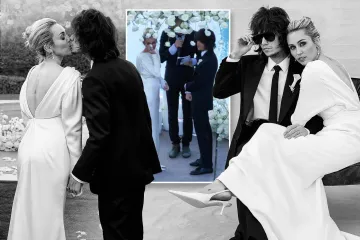
HIS Hollywood career was dogged by cheating claims, dubious friendships and a high-profile divorce from actress Demi Moore.
But now Ashton Kutcher is laughing all the way to the bank, with his shares in a series of US tech giant start-ups now said to be worth billions.
Ashton Kuchar at a fundraiser he hosted with shamed rapper P Diddy in 2009Source: GettyThe actor’s Hollywood career was dogged by cheating claims, dubious friendships and a high-profile divorce from actress Demi MooreSource: Getty
And the 48-year-old star is set to boost his fortune even further thanks to an early investment in AI company Anthropic, best known for its chatbot, Claude.
It began selling shares to the public on Thursday, creating massive windfalls across Silicon Valley.
Sign up for the Showbiz newsletter
Thank you!
But the road to such huge wealth has been a bumpy one for Ashton, whose marriage to Demi came crashing down in 2013.
The Two And A Half Men star — now wed to actress Mila Kunis — continues to be haunted by old sex scandals involving pals such as disgraced music mogul Sean “P Diddy” Combs and his rapist former co-star Danny Masterson.
While his onscreen career and public persona may have taken a hit over the years, the dad of two — who was already sitting on a personal fortune estimated north of $200million — has become a surprisingly impressive venture capitalist.
He made serious cash thanks to early investments in fledgling start-ups that nobody had heard of at the time, including Uber, Airbnb, Spotify, Skype, Duolingo and Affirm.
While Anthropic and Bitcoin have taken a battering in last week’s tech/AI stocks downturn, Ashton’s wide range of investments means he is still quids in and one of the richest men in Hollywood.
Even wife Mila was stunned by his success after admitting she had thought it was “the worst idea ever” for him to invest in Uber — along with a “horrible” move to put money into Bitcoin.
Demi Moore and Ashton in 2011, before their splitSource: GettyAshton with wife Mila Kunis at the Golden Globes in JanuarySource: Getty
But he has proved himself a force to be reckoned with in the tech space and his wealth has eclipsed many, including ex Demi, who is herself worth an estimated $200million.
A Hollywood insider says: “A lot of Ashton’s past behaviour keeps rearing its head and it has really not been helping his image.
“There has been a lot of speculation over the years. Now he’s hoping enough time has passed for people to forgive. He had friendships with people, yes — but he had no idea what they were involved in. He was hoodwinked as much as the rest of us.
“Ashton has taken a lot of time to reflect on things and work through it all with Mila.
“He is incredibly grateful for the business decisions he has made and loves being at the forefront of so many exciting tech projects.
“In recent years, he’s swapped the Hollywood Hills for Silicon Valley and it’s really paid off.”
Ashton first invested in Anthropic in 2023 through his venture capital company Sound Ventures with business partner Guy Oseary — Madonna’s long-time manager.
They ploughed $435million into the firm and that stake — roughly 0.5 per cent of the company — has now ballooned in value to an incredible $7billion.
This year has marked a slow return to the limelight for Ashton and Mila, 43.
After years in the shadows, Hollywood’s former golden couple — who were shunned by peers for supporting rapist Danny Masterson and over Ashton’s public silence about close pal Combs — attended the Golden Globes in January.
It was a brave move for the pair after the controversy they had faced.
Ashton’s carefully curated reputation as a progressive philanthropist imploded overnight in 2023 when it emerged he and Mila had written glowing character references to a judge pleading for leniency for their That ’70s Show co-star Masterson.
The actor had just been convicted of raping two women and was later jailed for 30 years to life.
Ashton had told the rape trial judge in Los Angeles that Masterson was a man who treated people “with decency, equality and generosity”, while Mila called him “an exceptional older brother figure”. The resulting public fury was brutal.
Within days, the couple were forced to issue a grovelling video statement insisting they had not intended to undermine the victims’ testimony or retraumatise them.
Following the backlash, Ashton stepped down as chair of his anti-child sex abuse organisation Thorn. And it was not the only scandal that caused unease in Hollywood circles.
Masterson was found guilty of raping two womenSource: UnknownAshton with Combs at the MTV Movie Awards in 2003Source: London Features International
Ashton’s 20-year friendship with Combs gained renewed interest when the rapper was arrested, then convicted in July 2025, on two counts of transportation to engage in prostitution.
In the past, Ashton even bragged about Combs’ notorious parties. In one resurfaced clip from YouTube show Hot Ones, he nervously laughed that he had “a lot I can’t tell” when asked about the bashes.
Ashton has never been accused of any wrongdoing in connection with Combs. But his stony public silence has not gone down well with fans.
It was not the first time Ashton had hit the headlines. For years, his off-screen antics threatened to overshadow his career.
None more so than the explosive collapse of his six-year marriage to Hollywood heavyweight Demi. He was just 25 and she was 40 when they met in 2003. Two years later, they tied the knot.
For a long time, they were Tinseltown’s ultimate power couple but in 2011, the wheels came off in spectacular fashion after Ashton was accused of cheating with two women.
Demi later addressed the split in her 2019 memoir Inside Out, claiming she had felt pressure to please her ex by having threesomes.
She claimed they introduced a third person into their relationship on two occasions, but said that it had been a mistake.
Explaining why the romps happened, she said: “I wanted to show him how great and fun I could be.”
Demi also claimed the threesomes appeared to give him a justification for being unfaithful, adding: “Because we had brought a third party into our relationship, Ashton said that had blurred the lines and, to some extent, justified what he’d done.”
It was in 2012, a year after splitting from Demi, that he reconnected with his former on-screen lover Mila, who was voted FHM’s Sexiest Woman In The World 2013.
They met for the first time in 1998, when she was 14 and he was 19, on the set of That ’70s Show. In the sitcom, their characters, Michael and Jackie, fell for each other.
Mila later revealed that her first-ever kiss had been on screen with Ashton.
In a 2002 interview on The Rosie O’Donnell Show, she revealed: “I’ve never kissed a guy. I was a 14-year-old little girl and I was extremely scared for my life.
“He was very nice about it, like, ‘Don’t worry about it’.” Joking about the age gap, Ashton said: “They were like, ‘You guys are going to be making out in this scene’.
“And I’m thinking, ‘Wait, this is slightly illegal’.” The inappropriateness did not end there, though, as it emerged their now jailed co-star Masterson had made a bet with Ashton to “use tongues” in the shot.
Masterson, Mila and Ashton starred together in sitcom That ’70s ShowSource: Getty – ContributorKutcher is set to boost his fortune even further thanks to an early investment in AI company Anthropic, best known for its chatbot, ClaudeSource: AFP
He revealed: “Danny bet me, like, 20 bucks I wouldn’t do it.”
Mila insisted: “I didn’t let him, but I think he tried.”
The couple married in 2015 and are now parents to Wyatt, 12, and nine-year-old Dimitri.
They both have impressive film careers behind them, although in recent years acting jobs have been few and far between for Ashton.
This year, he made his TV return to mixed reviews in Disney+ series The Beauty.
His most recent role before that had been the romcom Your Place Or Mine, which he shot in 2021.
Before finding fame, Ashton was an Iowa farm boy studying biochemical engineering and sweeping cereal dust off factory floors to pay for his college tuition.
Scouted in a bar, he swapped textbooks for the catwalk, landing top modelling gigs and stripping down for Calvin Klein ads before Hollywood came calling in 1998.
He starred in hit after hit and, after Charlie Sheen’s career imploded in 2011 when he was fired from Two And A Half Men, Ashton joined the show as billionaire Walden Schmidt, becoming one of television’s highest-paid actors on $700,000 an episode.
But that is nothing compared to what he has earned in recent years.
And while Hollywood may still be keeping him at arm’s length, he now definitely has enough cash to fall back on and never work again.
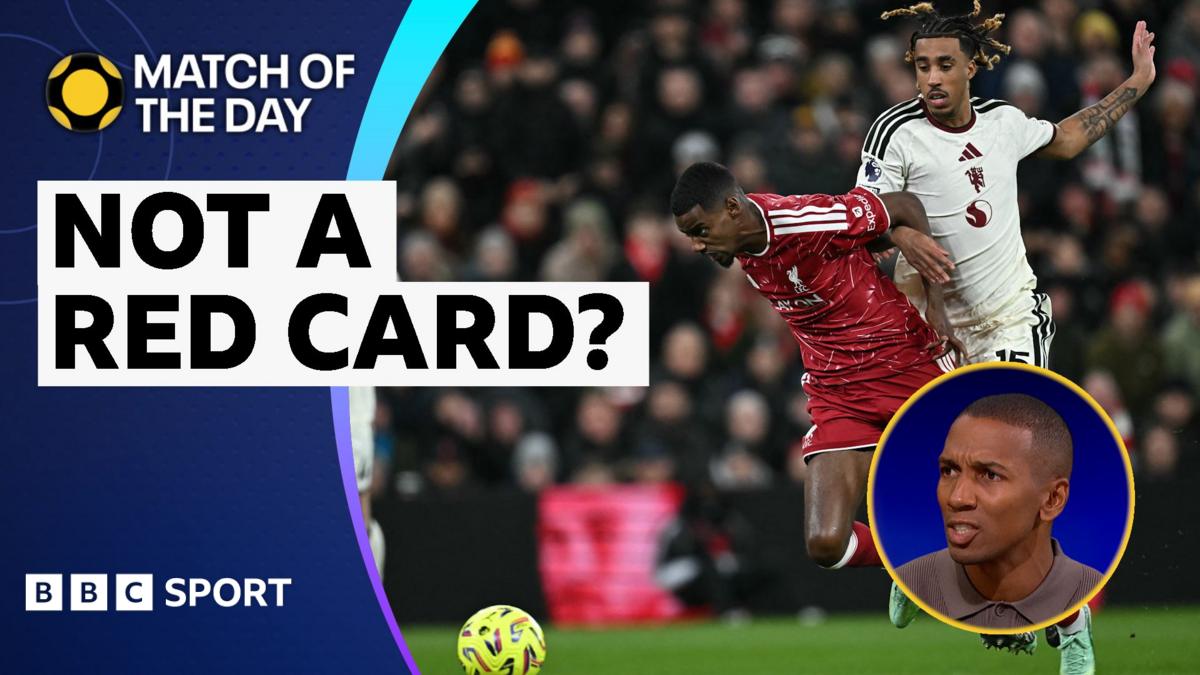
Match of the Day pundits Danny Murphy and Ashley Young believe that Liverpool were perhaps “lucky” when Manchester United’s Leny Yoro was sent off in the eighth minute at Anfield.
St. George was a cavalryman in the Roman army at Lydda, now in modern-day Israel. He was a Christian at a time when Rome was ruled by the emperor Diocletian, who was anti-Christian. In February 303, Diocletian issued an edict that every Christian soldier in the army should be arrested and all other soldiers should offer a sacrifice to the Roman gods. George renounced his Emperor’s edict and publicly claimed himself to be a Christian.
Diocletian attempted to convert George, even offering gifts, if he would make a sacrifice to the Roman gods. George refused and Diocletian ordered George’s execution for failing to obey his edict.
Before his execution, George had to endure various torture sessions, including laceration on a wheel of swords during which he was resuscitated three times.
George was executed by decapitation before Nicomedia’s city wall, on April 23rd 303.
Saint George is revered in Georgia as he is believed to be the special protector of the nation and is even said to have appeared and fought alongside Georgian soldiers in key battles in the country’s history.
The majority of Georgian churches were built in his honour and, as a result, every day there is a feast of the great-martyr George somewhere in Georgia.
His bravery in face of the torture on the wheel came to be honoured in Georgia on November 10th in the Julian calendar, which is November 23rd in the western Gregorian calendar.
According to tradition, this day was established by St. Nino, the Enlightener of Georgia. Nino was a relative of George and retold his story of bravery and martyrdom to the local population.
Fighting near DRC hospital disrupts Ebola efforts, putting patients and workers at ‘grave risk’, WHO warns.
Published On 23 Nov 202623 Nov 2026
The World Health Organization (WHO) chief has urged peace following heavy fighting in the Democratic Republic of the Congo’s (DRC) northeastern province, the epicentre of the Ebola outbreak.
WHO Director-General Tedros Adhanom Ghebreyesus said on Sunday that fighting near a hospital in the DRC’s Ituri province disrupted Ebola response efforts and forced health workers and aid partners to shelter inside a maternity ward for more than 24 hours.
Recommended Stories
list of 4 itemsend of list
“Heavy fighting has been ongoing since yesterday in the vicinity of a hospital in Ituri – in an area close to where the Ebola outbreak first emerged,” Tedros said on X.
“The situation has disrupted the work of the hospital and the wider Ebola response, putting patients, families and health workers at grave risk.”
Medical staff have been sheltering for their lives in a maternity ward in the facility for more than 24 hours, and the WHO is working to arrange a safe exit for the team and “for the hospital facilities, staff and patients to be protected,” Tedros also said.
“The best medicine is peace,” he added.
‘High-level transmission continues’
As of November 17, the WHO reported a total of 5,678 deaths out of 11,613 cases in the DRC, the largest and deadliest Ebola outbreak in the country.
The WHO said in a statement on Saturday that “while some areas had seen a slight decline in cases, sustained, high-level transmission continues overall in the country.”
Ituri and North Kivu, in the eastern part of the DRC, remain the most affected provinces.
The virus, which is transmitted through contact with bodily fluids, has spread across swaths of the DRC’s east and northeast, which have been plagued by violence for more than 30 years.
Earlier in November, armed men thought to be linked to an ISIL (ISIS)-affiliated group raided villages and killed dozens of people in North Kivu, forcing patients with confirmed and suspected Ebola infections to flee.
The outbreak is also occurring amid ongoing fighting between government forces and the Rwanda-backed M23 armed group, which has seized key cities in eastern DRC, making transport of healthcare resources to remote regions difficult.
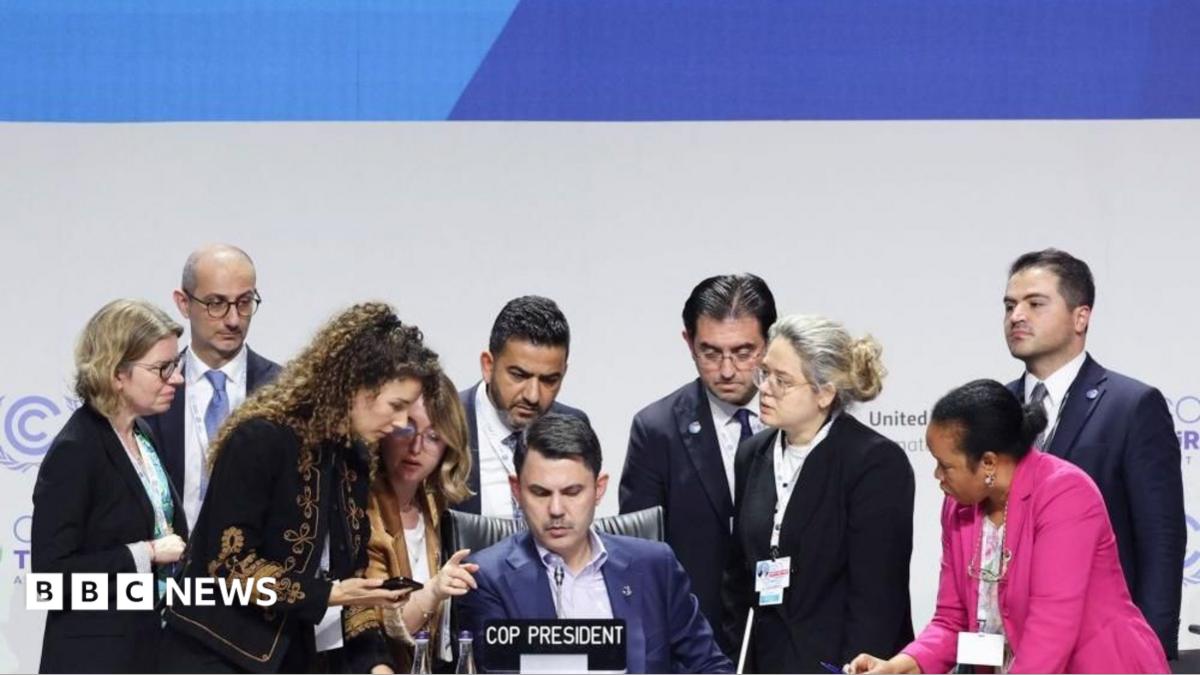
Countries have failed to reach a major new deal to tackle climate change after deep divisions over fossil fuels and money emerged at the UN COP31 talks in Turkey.
Negotiations were due to finish on Friday but ran late into Sunday in search of common ground, becoming the longest UN climate conference in history.
But the final deal proved unacceptable to the EU, Pacific island nations and others because it failed to directly mention fossil fuels, the main cause of global warming.
Meanwhile, many poorer countries objected to the absence of any clear financial commitments from richer nations to help them adapt to the impacts of rising temperatures.
The last time a COP’s main political agreement collapsed like this was in 2009 in Copenhagen.
UN Secretary General Antonio Guterres, in his last COP before he steps down, said he was “deeply disappointed”.
He took aim at what he called “powerful fossil fuel interests” who he said were taking “a page from Big Tobacco’s playbook: distorting the science, delaying policy, blocking action, and piling up huge profits while people everywhere pay the price”.
Australian Prime Minister Anthony Albanese, whose country co-hosted the talks, attributed the failure to “difficult geopolitical times”.
“That is the reality,” he said on Monday.
After two weeks of negotiations, exhausted delegates were presented with a new, draft deal in the early hours of Sunday to try to break the deadlock.
But the words “fossil fuels” did not appear anywhere in the text. The only indirect reference to coal, oil and gas was a nod to a deal agreed at COP28 in 2023, when countries agreed to “transition away” from fossil fuels in energy systems.
The EU’s representative, Irish Minister Darragh O’Brien, made it clear that the EU “strongly” objected, saying that the “decisions go nowhere near the level of ambition needed to tackle climate change”.
“It is unconscionable that we would have a climate pact that makes no mention of fossil fuels,” he said.
Other countries, such as Panama and the Marshall Islands, also criticised the deal for doing nowhere near enough to tackle the pace of climate change.
A first draft of the deal on Monday mentioned “fossil fuel” or “fossil fuels” six times, but that was unacceptable to oil-producing nations.
Saudi Arabia’s delegate Mohammad Ayoub said that Arab countries “continued to engage in good faith” but argued that they only accounted for a small proportion of historical greenhouse gas emissions.
Russia warned not to “turn to slogans” over coal, oil and gas, claiming that if countries moved away from fossil fuels too quickly it would lead to “fuel poverty”.
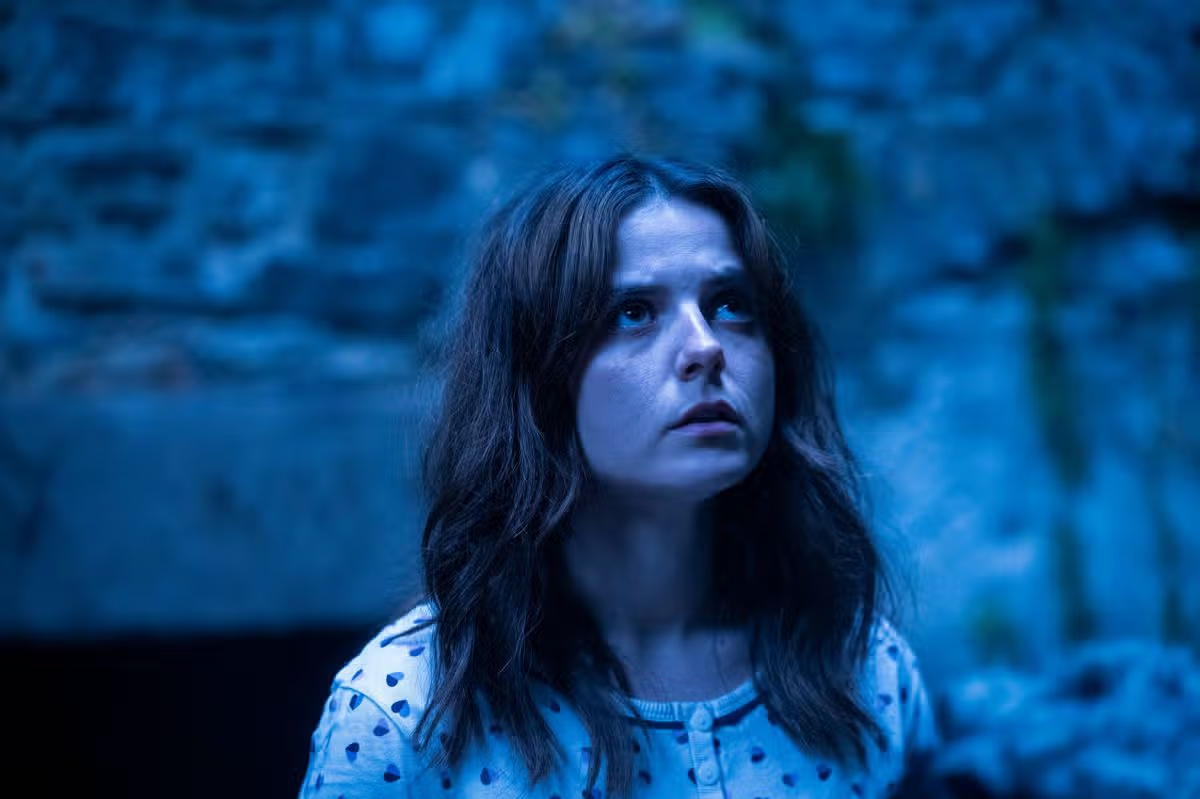
The Witch Farm, which has already been described as a ‘truly nightmarish’ story will hit screens on Sunday night
The Witch Farm launches on BBC One on Sunday night (Image: CREDIT LINE:BBC/Mammoth Film/Colin Hutton)
The Witch Farm will make its debut on BBC One tonight. The supernatural series, which consists of four episodes, is all set in 1989 and stars Gabreille Cheevy and Michael Socha as a couple who leave London for Wales only to become worried that their new home is haunted.
What follows is a steady escalation of uncanny, unexplained disturbances and an unsettling sense that they are not alone. As Bill and Liz begin to investigate, the house draws them deeper into a history that refuses to stay buried. And as the land yields its secrets, so too does their marriage – testing the limits of trust, belief, and what they’re willing to deny in order to survive.
The new TV series also stars Lewin Lloyd (His Dark Materials), Sian Gibson (The Power of Parker, Peter Kay’s Car Share), Robert Pugh (Game of Thrones, The Tuckers), Jeremy Swift (Ted Lasso, Downton Abbey), Edward Holcroft (Industry, The Agency), Roger Evans (Northern Lights, House of the Dragon) and more.
Writer Danny Robins has already achieved ground-breaking success with 2:22: A Ghost Story, which during its lengthy West End and UK tour runs has starred everyone from Cheryl to Lily Allen as well as former Love Island host Laura Whitmore, The Inbetweeners star James Buckley, EastEnders icon Jake Wood and Emmerdale actress Fiona Wade in the leading roles.
In 2022, Danny released a podcast titled The Witch Farm, which ran for a total of eight episodes, as a follow-up to The Battersea Poltergeist. Now, The Witch Farm has been adapted into a television series, but everything began way before the podcast as it is all in fact based on the true story of Liz and Bill Rich.
Ensure our latest TV stories always appear at the top of your Google Search by making us a Preferred Source. _Click here to activate
The couple have claimed to have experienced paranormal activity within the Welsh farmhouse over a period of seven years. When the couple first arrived in South Wales, Liz was pregnant with their first child and moved into the property that had been converted from an old barn.
They were joined by Bill’s son from his first marriage and, after spending the summer renovating the remote farmhouse, the couple started to notice eerie goings on such as doors slamming, bad smells and surges in the electricity meter.
Speaking about the series, Danny said: “The more I dug into it, the more it felt like something that merited a long-form approach and so we made the podcast series called The Witch Farm.
“Through that process, I met Liz and she told me her incredible story. We also found other witnesses and pieced everything together through a mix of audio drama and documentary.” Danny then decided to adapt the “truly nightmarish” story into a television series after feeling that was what it was better suited to than a traditional documentary film.
He added: “I absolutely want people to feel scared, but I also want them to be moved by it. It’s an incredibly powerful and emotional story, that was one of the things that grabbed me when I first came across it for the podcast.” The writer, ,who is also behind the BBC radio and TV series Uncanny, wants his viewers to question the possibility that ghosts could be real – without giving them a definitive answer through the series.
The Witch Farm premieres on November 22 on BBC iPlayer, BBC One and BBC One Wales
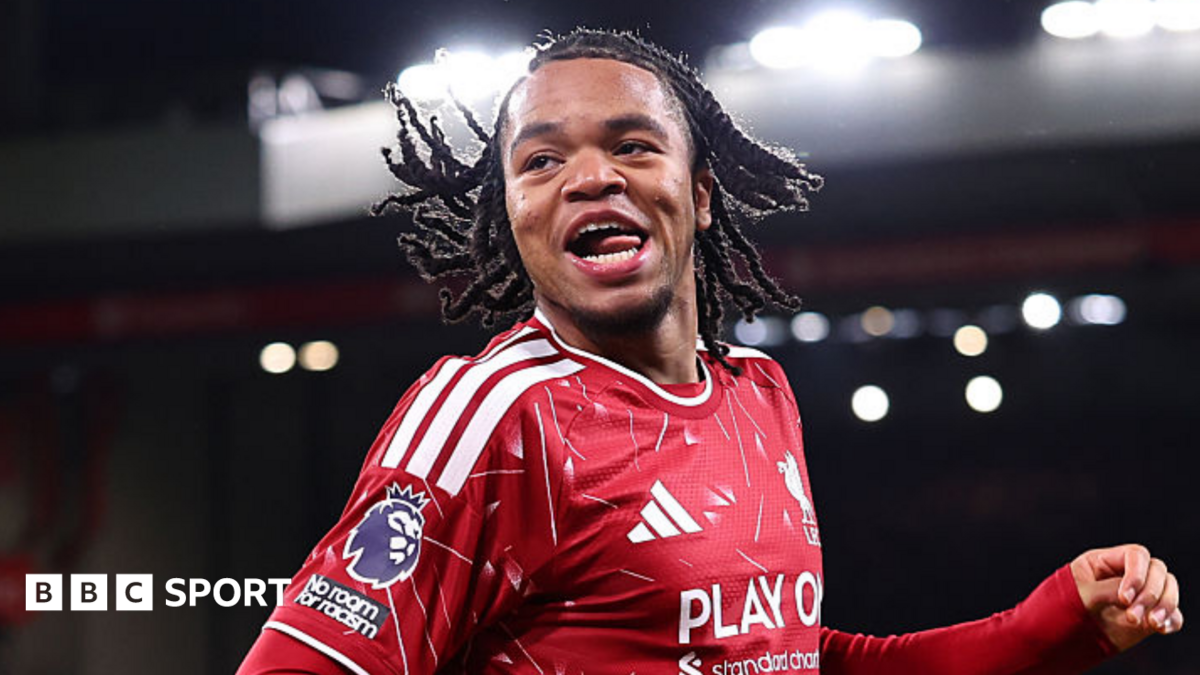
Sometimes it is actually harder when you are playing out wide against 10 men because you don’t get the same amount of space – United were not attacking the same way they would have done with 11, and they were sitting in more.
Yes, Ngumoha ran up the odd blind alley or got outnumbered but that is always going to happen. As he learns, and gets even better, his decision-making will improve too. He will know when to try to go past people or when to find that free man instead.
But he still showed all the bravery you want from a winger against United and, when you keep trying things the way he did, something is going to come off for you.
I look at Bradley Barcola in a similar way to Ngumoha – he can be frustrating but he tries things, and can be brilliant.
For Liverpool right now, one of the biggest positives is the competition they have in wide areas, with those two plus Victor Munoz and Cody Gakpo.
There are other areas of their squad, like left-back or central midfield, where that competition needs to improve, but I don’t really worry about the wide attacking areas in the same way.
Sunday was only Ngumoha’s second Premier League start of the season, and his first since the opening day.
He maybe only got his chance because Gakpo has a calf problem but, when everyone is fit, it is really exciting that they will all be thinking they have to play their best to push the manager and get in the team.
A second attack has been reported on a commercial vessel flying a Maltese flag off Benghazi. Libyan forces reportedly intercepted more than 20 naval drones. This follows a drone attack earlier in the day against a Russian ship docked at a Benghazi naval base in eastern Libya.
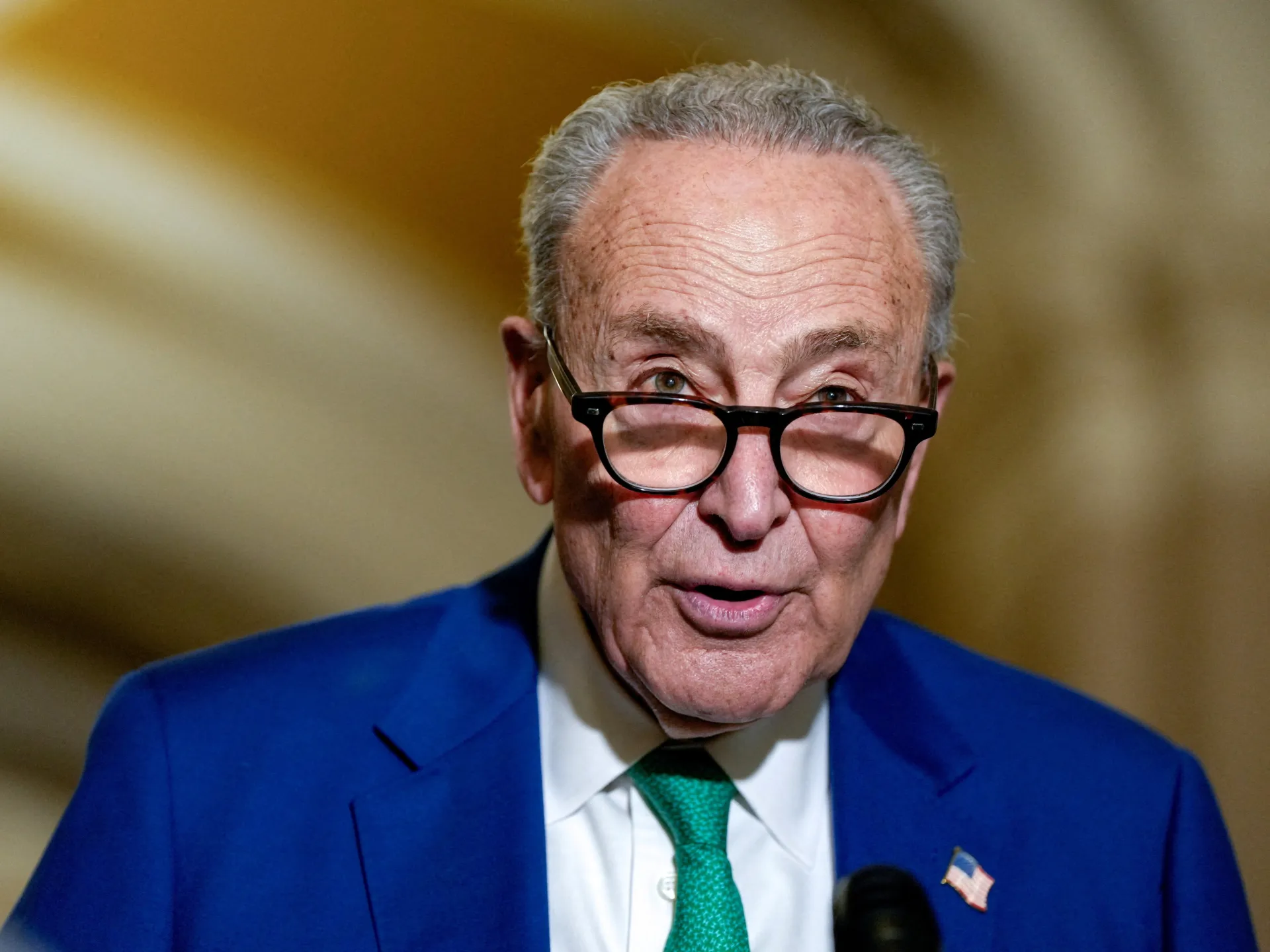
Schumer, who has led the Democratic caucus since 2017, faces a challenge from Chris Van Hollen in his bid to be the next Senate majority leader.
By Reuters and The Associated Press
Published On 22 Nov 202622 Nov 2026
Chuck Schumer, the top Democrat in the United States Senate, is facing backlash against his bid to serve as Senate majority leader in the incoming Congress.
On Sunday, President Donald Trump added to the ongoing criticism of Schumer’s leadership, signalling there would be tension with the White House if Schumer were picked again to lead the Democratic caucus.
Recommended Stories
list of 4 itemsend of list
“It is going to be very hard for me to work with Chuck Schumer should he become Senate Majority Leader,” Trump wrote on Truth Social.
“He failed badly as ‘Leader’ once before, one of the worst in history, and I have little doubt that he will fail again.”
The debate over Schumer’s leadership has underscored divides within the Democratic Party, particularly in the wake of the November 3 midterm elections.
Following a historic set of victories, Democrats are set to take control of both chambers of Congress in January.
Schumer, who leads the Democratic Senate minority, is hoping to retain his leadership position. A closed-door, secret-ballot vote is scheduled for December 1 to decide the majority leader.
A senator representing New York since 1999, Schumer has expressed confidence in his odds, saying he has the necessary votes to stay in charge.
“I will be elected majority leader,” Schumer told reporters last week.
But critics say Schumer, who will turn 76 on Monday, is ill-suited to lead a Senate Democratic caucus increasingly shaped by younger, anti-establishment lawmakers.
Maryland Senator Chris Van Hollen, backed by progressives, has mounted a campaign to challenge Schumer for the majority leader role.
Van Hollen told NBC’s Meet the Press on Sunday that he, too, was confident of winning.
“If you look at our caucus, you can see a huge appetite for change. They are seeing the American people and the Democratic Party calling for change. They also want to change the way we do business in the United States Democratic caucus and the United States Senate,” he said.
Schumer has also seen falling public approval ratings. In mid-November, a poll by the news agency Reuters and the research firm Ipsos found that 34 percent of self-identified Democrats viewed Schumer favourably. That percentage was down from 38 percent in February.
November’s poll also suggested that 43 percent of Democrats held an unfavourable view of Schumer, who has led Senate Democrats since 2017.
The Senate Democratic leader is the only unresolved role among Congress’s top four positions.
House Democrats last week nominated Hakeem Jeffries to be speaker in the next Congress.
Meanwhile, John Thune will continue to lead Senate Republicans, and Representative Jim Jordan will succeed Speaker Mike Johnson as the top House Republican.
Grace and her partner Bailey celebrated their “miracle” baby after Grace’s worrying health battle.
Grace did not think she would be able to have children (Image: CHANNEL 4)
Mum-to-be Grace feared she would never have children after doctors made a surprising discovery.
E4’s One Born Every Minute is back with more honest stories about parenthood and in the latest episode, Grace, 25, opened up on how her world was upended following a terrifying health problem. The 25-year-old, who was a week overdue with her baby girl, was in hospital being monitored as viewers witnessed her journey through to the birth.
“I have definitely always wanted to be a mum and then meeting Bailey, that increased like tenfold, where it was like… this is actually a really big priority for me now,” she explained as part of the new series as she opened up about a “really long period of health problems”.
After discovering she had cysts on her ovaries, she admitted: “I was really worried that I wouldn’t be able to have babies.” Grace had been in hospital for 36 hours and had an epidural to take the pain of the contractions away when viewers heard of her harrowing experience.
“When I was 20, I think we were just out shopping, and I just got this pain out of nowhere and I was like, oh my god, I actually feel like I’m dying, genuinely. It was like the worst pain I have ever felt. We must have gone at the weekend, as it was absolutely heaving, and literally at this point I’m on my hands and knees and I was like, something is going on.”
The couple rang the ambulance because of the level of pain Grace was in, and Grace continued to explain: “They sent me for an emergency scan and it was there they said, ‘Do you know you have a 9cm ovarian cyst?’ I felt like my world had been turned upside down.
“To remove the cyst, I’ve had seven surgeries altogether. They couldn’t stop that cyst from regrowing each time, so eventually they took out that left ovary; that was like 50% of my chance gone, of having children.”
She admitted she had convinced herself she would have a really rough time conceiving, but thankfully she conceived quickly. “My ideal is to have a natural birth, but I will go with whatever they recommend, if it doesn’t work out and we have to have a C-section, I’m more than happy with that,” she had previously shared.
Ensure our latest TV stories always appear at the top of your Google Search by making us a Preferred Source. Click here to activate or add us as Preferred Source in your Google search settings
“Bailey, on the other hand, because he is so unbelievably squeamish, he doesn’t want to cut the umbilical cord or anything.” While she started off having a natural birth, her labour was not progressing, so she ended up having a C-section.
“Holding this baby for the first time will be really special, even prior to health problems, it would have just been lovely, but I think it’s made us realise how big of a deal it actually is,” she reflected. “I’m so ready to be a mum at this point, I just can’t wait to meet her.”
Expressing his gratitude for baby Vienna, Bailey added: “I’m proud we have managed to get to where we are, it’s a testament to me and Grace and what Grace has been through, and how we have got here.”
“This is like a miracle baby, we are going to do so much together, I cant wait,” Grace concluded. Elsewhere in the programme, couple Faith and Femi leaned on family for support through a challenging labour. Charlotte and Alex also couldn’t wait to meet their second baby, just over a year after their first.
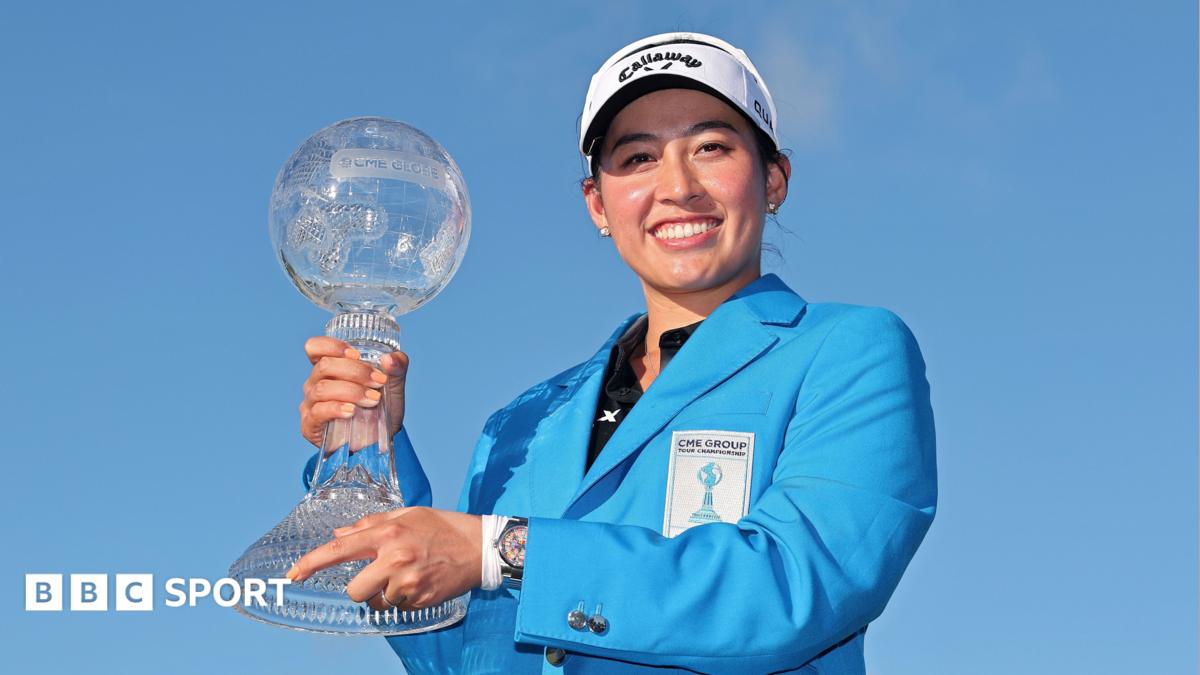
World number two Jeeno Thitikul produced a seven-under final round of 65 to claim a third successive CME Group Tour Championship title.
The 23-year-old from Thailand started the fourth round of the season-ending event with an eagle and went on to card five birdies as she finished on 24 under at the Tiburon Golf Club in Florida.
“The only words I have is not to change the course until I’m retired,” said Thitikul.
“It’s just me and the course, we just are best friends. I think she is my best friend on the tour.”
Her victory earned the $4m (£3.1m) top prize and also broke Annika Sorenstam’s career earnings record of $22,583,693 to become the tour’s all-time prize money leader on $24,292,858.
Japan’s Akie Iwai also carded a 65 in the fourth round to claim second place on 22 under, while American Nelly Korda’s 68 put her third on 20 under.
World number one Korda also overtook Sorenstam to move to second on the LPGA Tour career prize money list.
South Korea’s A-Lim Kim had an overnight lead of one shot but her challenge faltered after a double bogey and bogey on the first three holes as she finished with a 72 and tied seventh.
England’s Lottie Woad carded a 67 to end on 14 under, with compatriot Charley Hull one shot further back after a 73 in the final round.
At least 258 US House seats are now under Democratic control, with four more midterm races yet to be decided.
Published On 22 Nov 202622 Nov 2026
The Democratic Party has won at least 258 seats in the United States House of Representatives, its highest total since 1992.
On Sunday, a congressional race in North Carolina was decided after a recount, giving Democrats their 258th House seat, as a handful of races in the 2026 midterm elections are still being counted.
Recommended Stories
list of 3 itemsend of list
The race for North Carolina’s 5th congressional district saw Democrat Chuck Hubbard defeat Republican incumbent Virginia Foxx, who has served 11 terms in Congress.
The win was symbolic of a larger political shift in North Carolina and elsewhere, as longtime Republican strongholds flipped to Democratic hands, sometimes for the first time in decades.
Foxx was first elected in 2004, and in recent years, she was the chair of the House Rules Committee. According to The Associated Press news agency, only 330 votes separated Hubbard and Foxx as of Sunday, when the race was called in the Democrat’s favour.
Four House races have yet to be called, meaning Democrats may still expand their already sizeable majority in the 435-member House.
The party has now picked up about 47 House seats. Currently, in the outgoing Congress, Democrats hold 214 seats.
But the House was not the only congressional chamber to flip in this year’s midterm elections.
In the 120th Congress, set to be sworn in on January 3, Democrats will also hold 56 seats in the US Senate, its largest majority in more than a decade.
Those majorities give the Democratic Party significant power over legislation, although President Donald Trump, a Republican, has already pledged to veto bills the party puts forward.
Experts say the Republican Party’s drubbing in the midterm elections was driven by voter frustration with issues like the cost of living, the US-Israel war on Iran, corruption and immigration raids.
It was also widely interpreted as a referendum on Trump’s second term, which began in 2025.
As of November, only 32 percent of Americans approved of Trump’s job performance, according to a poll by the news agency Reuters and the research firm Ipsos.
Democrats have framed their electoral victory as a unique opportunity to shape the final two years of Trump’s presidency.
Representative Alexandria Ocasio-Cortez, a progressive who won her re-election bid in New York’s 14th congressional district, called the political shift a “mandate for change”.
“This is a historic moment for our country. This is one of the largest classes we have seen,” Ocasio-Cortez said at the US Capitol.
The party’s majority in the House will be larger than any since Democrat Bill Clinton was first elected president in 1992 with a 258-seat majority for his party.
It is also just above the 257 seats held by Democrats when Barack Obama was elected in 2008.
United States President Donald Trump will host a third private dinner for top investors in his meme coin $TRUMP, reigniting questions about potential conflicts of interest with his cryptocurrency ventures.
Sunday’s gala will take place at the Trump National Golf Club outside Washington, DC.
Recommended Stories
list of 3 itemsend of list
According to the dinner’s official website, the top 185 meme-coin holders will be invited to a gala dinner, where guests will include businessman Kevin O’Leary and boxer Floyd Mayweather.
The top 29 holders, meanwhile, will be given special access to a VIP reception where Trump will reportedly be present.
“There will be no private meetings with The President. No gifts will be accepted,” the website said of the VIP reception.
The event has been billed as “a once-in-a-lifetime experience — an evening you will talk about forever”.
But Democrats have accused the Republican leader of leveraging his public office for profit in violation of federal law. They see such dinners as an opportunity for private interests to pay for access to the president.
“Trump is continuing to exploit the presidency for his personal gain,” Kendall Witmer, the deputy communications director for the Democratic National Committee, said in a statement.
In October, shortly after the gala was announced, eight Democratic senators issued an open letter promising to investigate any conflicts of interest such an event might raise.
“President Trump’s continued monetization of his name and likeness once again raises serious ethical concerns, necessitating this request for a robust inquiry into the President’s financial entanglements and personal profiteering,” the letter said.
The Democratic Party has since won majorities in both chambers of Congress in the November 3 midterm race, paving the way for possible inquiries and subpoenas when the new members are sworn in next year.
Trump’s White House has dismissed the criticism, calling the dinner a “private event, not a government function”. It has also emphasised that “there is no promise of official government action in exchange for attending”.
Trump has also argued that many of his assets are held in a trust while he is in office, though that trust is largely run by his family members.
The president is a stakeholder in cryptocurrency firms like World Liberty Financial, and has made promoting cryptocurrency a central part of his second term.
Under his leadership, the US Treasury established a reserve of digital currency assets, as part of Trump’s effort to make the US the “crypto capital of the world”.
Sunday’s gala is believed to be the third such dinner for top $Trump meme coin holders.
Meme coins trade on a popular likeness from the internet. Trump launched his on January 17, 2025, days before the start of his second term.
To encourage meme-coin purchases, Trump and his business partners held private events on May 22, 2025, and again on April 25, 2026, for top holders of the cryptocurrency.
The first was held at the same Trump golf club outside Washington, DC, and the second took place at Mar-a-Lago, Trump’s Florida resort.
The May 2025 dinner reportedly required a minimum of $55,000 in $Trump coins to attend.
At the time, Chinese crypto investor Justin Sun was declared the winner of a “contest” for who held the most $TRUMP coins. Sun held about $18m of the coin in 2025, as well as tokens from World Liberty Financial.
Earlier this year, Sun sued World Liberty Financial, saying it had frozen his access to the assets he owned with it, making it impossible for him to sell them.
Trump’s inauguration in January 2025 proved a major boost for his coin, pushing its value to $74.
The $Trump coin has since lost value. On the eve of the gala dinner, it is worth about $0.88.
According to financial disclosure forms released earlier this year, Trump earned more than $2.2bn in 2025, the first year of his second term.
Much of that wealth came from meme coins, tokens and other digital assets. Some $636m came from $Trump meme coin sales.
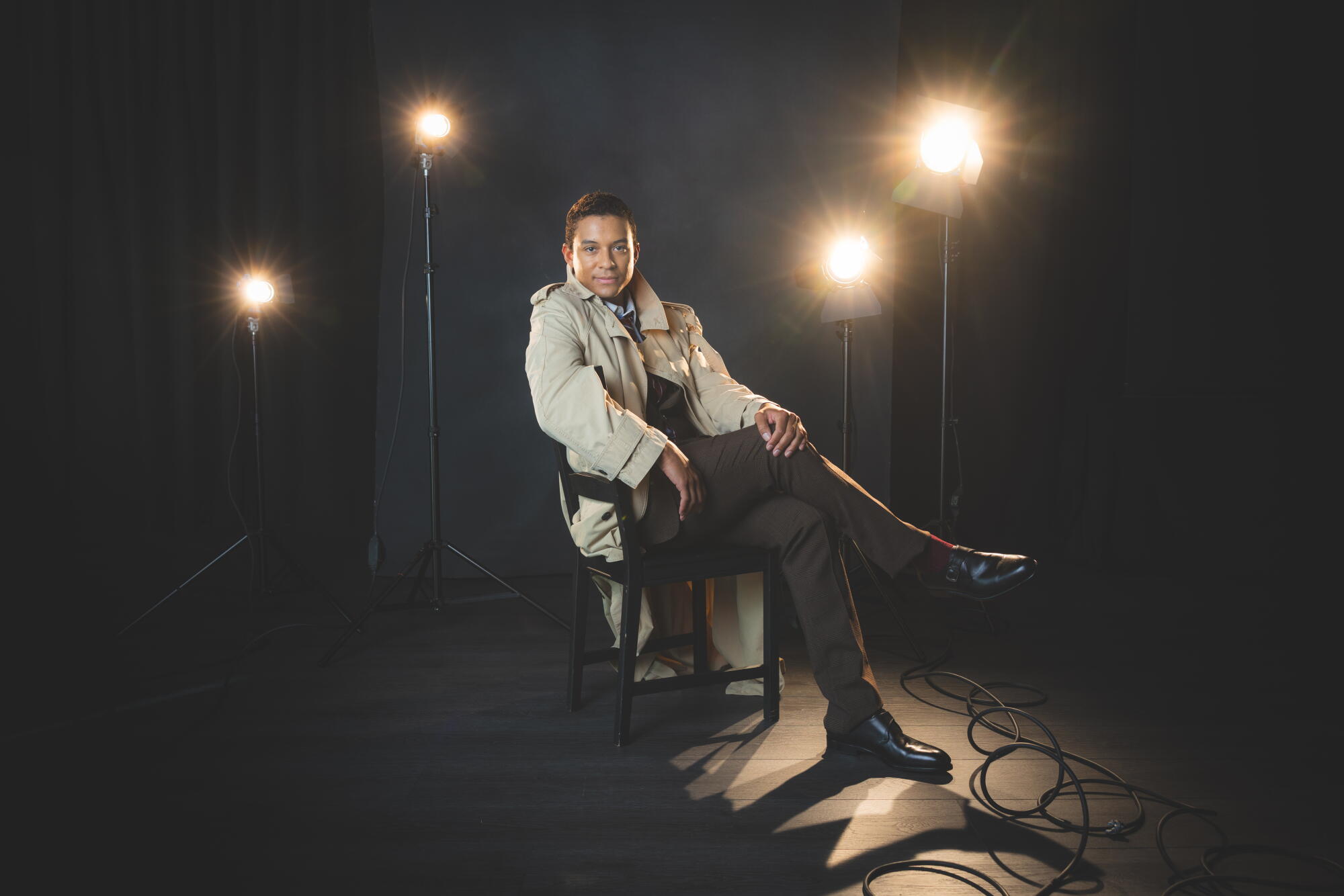
In this week’s episode of The Envelope podcast, Jaafar Jackson opens up about playing his superstar uncle in the $1-billion biopic “Michael.”
Kelvin Washington: Welcome to another episode of The Envelope. Kelvin Washington, Yvonne Villarreal. We have Mark Olsen as well. The crew’s all here. We’re in the Oscar season, Oscar vibes. And so we did a little fantasy football last time.
Yvonne Villarreal: Don’t make me do that again.
Washington: Listen, you had a ball. Stop it, OK? Let’s get to the music side. Maybe you’ll be more excited with that. We want to talk about things like, could be maybe the best soundtrack, maybe best song, maybe a score of a movie, but just something music-related. And there’s a reason why we’re doing music as we’ll get to who you had a chance to interview in a bit, Mark. I’ll start with you, Yvonne. Any song, soundtrack, anything jump out this season?
Villarreal: This is more my zone, so thank you. Is that the right terminology?
Washington: Yes, this is your zone, your area, your expertise, your vibe.
Villarreal: I know some of us have had our fill of Taylor Swift, and you’re well within your right, but “I Knew It, I Knew You” for “Toy Story 5,” I really enjoy that song. It’s feel-good. It’s hopecore. We need more hopecore. And I know you know this song well — you’ve got daughters.
Washington: Clearly. Three daughters. We saw the movie. They sing the songs. I want to throw the tablet out the window. But it is catchy. I mean, that’s what she does. And it goes well with the movie. It kind of just pairs well. It’s peanut butter and jelly. It goes together.
Villarreal: I sing it every time I’m in the car with my niece. It evokes those memories that I love and am creating with her, so I love it. But I have to say, because I spoke to Mark before and he’s mentioned “The Debut,” which he’s seen and I haven’t, he told me about Jesse Eisenberg writing music for it, for the musical part of it. And I’m just so excited to see this.
Mark Olsen: In the film, there is a musical, “Nosy Neighbors,” that he wrote, I think it’s seven songs, for the musical. He himself performs a number in the movie, and the sort of big showstopper goes, “This city has chewed me up, but it hasn’t spit me out.” And so they really had this just great musical theater quality, and they’re just super fun. But I also want to mention Tony Gilroy’s “Behemoth!” which stars Pedro Pascal as a musician who’s here in Los Angeles playing on sessions of film score recordings. And so the music that they’re making in the movie kind of becomes the score for the story as it’s unfolding. It’s just a really interesting way to use music in the storytelling. Also there’s just this murderers’ row of composers, including Michael Giacchino, James Newton Howard, Alan Silvestri, who all composed all this different music for the movie. It’s a really exciting use of music in the movie.
Washington: Speaking of music, there’s a reason why we’re doing this one — because, of course, you had a chance to speak with Jaafar Jackson, who starred as Michael, in “Michael.” Huge role, a huge kind of coming of age, big moment for him. Tell us a little bit more about your chat.
Olsen: Yes and no. It’s interesting that the audition process for Jaafar to get this role — he’s never acted before — took some two years for him to actually get the role. Obviously his father is Jermaine Jackson, his uncle is Michael, and so the emotional aspect of this is something I think it’s hard for any of us to understand. And also his grandfather, who he knew — Joseph Jackson, the sort of patriarch of the Jackson family, played in the film by Colman Domingo. He’s having to have these dramatic, intense scenes with an actor playing his own grandfather. The head-spinning qualities of this are —
Villarreal: Very meta.
Olsen: Exactly. And then on top of that, Jaafar is re-creating what are some of the most famous performances of the late 20th century with the famous Motown 25 performance, Michael onstage doing “Bad.” So there’s that aspect of it, the technical aspects and this emotional aspect of it. And it made for a really interesting conversation.
Washington: I’m glad you brought that up. Sometimes I think we take for granted that portion of it and how some families have chosen to make you earn that. I think of O’Shea Jackson [Jr.], Ice Cube’s son, when they did “Straight Outta Compton,” it wasn’t just gonna be “Hey, we’re giving this to you.” Ice Cube was very adamant, “You have to earn this.” And so that happens as well. So, without further ado, here’s that conversation with Jaafar now.
Jaafar Jackson.
(Jason Armond / Los Angeles Times)
Mark Olsen: Jermaine Jackson is your father, Michael is your uncle. Before this project came up, what was your relationship to the music and legacy of the Jackson 5 and Michael Jackson? Did it seem like the family business? Was it something that was just sort of around?
Jaafar Jackson: Growing up, it definitely surrounded me all the time, just hearing the music among many other artists. But it wasn’t something that was pushed on you. A lot of Jackson 5 was played, Michael’s music, my father’s, and as you got older, for me especially, I became such a fan of Michael’s videos, his short films. That kind of consumed me as a young child. “Thriller,” “Smooth Criminal,” and I had my favorites. And as I got older, I started to have a deeper understanding of the different lanes of my aunt [Janet]’s music, my dad’s solo career. The Jacksons. And there’s Michael’s music. So there’s so many different layers and different routes that they took artistically. So as I got older, I started to understand that a little more clearly.
Olsen: Did you have a favorite? Which lane did you gravitate to?
Jackson: I would say for me it was the Jacksons. Michael and then the Jacksons. The “Triumph” album was one of my favorites, “Destiny” and “Off the Wall.” Of course, it’s hard to pick. It changes all the time.
Olsen: But then you originally were a competitive athlete. You wanted to be a golfer?
Jackson: Growing up, at the age of 3, I got into golf. My dad started taking me to the course and before I could even swing the club, I was just throwing the balls out in the range because I was too young. And as I got around 4 or 5, I learned to really properly swing the club. And it was something I really loved as I got a little older. I kept begging my dad to take me back to the course. I wanted to play more. I wanted to hit some balls. So he got me a coach to really teach me all the fundamentals of golf. And it became something I fell in love with. I always loved the feeling of being on the course, at the driving range and just hitting balls for hours and hours. … I played up until I was around 12 or 13. But through that, I was playing basketball, I did track. I played tackle football, broke my wrist. So then I went back to golf because it’s the most safe sport you can play for your body. And then I got into music at around 13 years old and I kinda put golf aside.
Olsen: What drew you back to music?
Jackson: My dad took me to a recording session. I think he was working, he was creating a song. And I saw that process of creating something from scratch, a song. And I loved it. I loved seeing a song, working out the composition on a keyboard, on a piano, and then writing lyrics or coming out with melodies in the recording booth. And just seeing how all those different elements come together and at the end of it, you have a full recorded song. And I was fascinated by that. So I started coming to more of the sessions with him. Then I started taking piano lessons on my own, learning how to write a song. And then he gave me a task to learn a Jackson 5 song with my younger brother. And he said, “I want you to perform it for me in two weeks. You have two weeks to learn it and sing it live for me.” And I think it was a Jackson 5 song called “Touch.” And I was so incredibly nervous because I knew I can stay on pitch, but I didn’t know if I can sing or not because it wasn’t something I tried to pursue other than just having fun singing along to some songs. But now I had the pressure of actually putting together a performance and that was very nerve-racking. But I did it and he said he saw potential and he started teaching me a lot of the techniques that he learned as a kid, the process of recording a song and things like that. So I just became accustomed to that and wanting to do that more and more. And that kind of consumed my time more than golf at that stage.
Olsen: But then you’d never thought of being an actor. So when the “Michael” project came around, what was your response to the idea of it?
Jackson: It wasn’t like a “Would you wanna play Michael Jackson” type of conversation. It was more so Graham King, the producer, asking me what my ambitions were, like what do I want to do with my life, what am I working on? And I was just speaking about what I’ve been doing, what are my interests and things like that. And then he naturally saw something in me that he felt was very similar to Michael. Then he would just ask me questions: Have I acted before? Do I ever see myself acting? And I was being completely honest with him. I told him I’ve never acted before and I never thought of becoming an actor. I’ve always loved films, but I never thought of wanting to be in that industry. And one conversation led to the next, and we met in person after we had a Zoom initially, and he continued to feel something that was very natural, very Michael, that was in me that he felt during that meeting.
And he continued to ask, “Would you want to try acting? What if you tried a session with an acting coach? You may love it, you may hate it.” And I took some time to think about it and that led to the next thing. And a couple months went by and I sent him a voice note of me speaking as Michael out of the blue. And he called me right away and said, “This is unbelievable. I’m getting you a coach tomorrow. I would love to see what you think about a session, but you need to meet with a coach.” And I had that first lesson and I loved it. I was so nervous, but the feeling I got after that, that first acting session and the exercises I was put through, went through a monologue and things like that, I was really fascinated by that. And that consumed my time from then on.
Olsen: As I understand it, it was a multiyear period of you getting the role. And in retrospect, it seems so obvious, of course you’re going to get this role. Were there moments where you were unsure of what was happening or whether the role was going to be yours? What was that period like for you?
Jackson: That was a long period. It was just two years where I was pretty much auditioning for the role. I was working towards it every day. I was doing acting sessions one-on-one, to being in the acting class with other actors, to rehearsing the choreography with the choreographers. But all through that prep, I didn’t have an answer — “Oh, you have the part. It’s you, you’re playing Michael.” It was more so work towards it. We’re still working on all the other things surrounding the film: the script, who’s gonna be the [director of photography], the director. ’Cause it was very early on when I was brought on. There was no studio attached or director, just a rough draft of the script from John Logan. So all those different elements had to come together. And around the two-year mark or two-and-a-half year, I had a screen test. Prior to that, they said they were going to do worldwide casting. They were going to go out in the world and look for other Michaels while I was preparing and two years in. And for me, it put a lot more fire in me to want to work twice as hard, to kind of say, “No one’s going to come take this part from me.” One, I’ve been rehearsing for two years towards it, but also it means so much to me to tell the story, especially the way I feel like I can do my part and tell it. So I doubled my hours with everything I was doing from rehearsals to consuming other films and studying, reading books . But doing that screen test, I had the full hair and makeup prosthetics for the first time and wardrobe. And that was really the turning point that solidified that I was going to play Michael just by the reaction from everyone in the room, and then hearing the reaction of the studio when they saw that screen test. And without them saying “You have the part,” I just knew from that moment I had it.
Olsen: Now when Graham King, the producer, says, “I see something of Michael in you,” is that something you’d ever heard before or is that something you’d ever even felt before? I’d imagine given your family’s legacy, that’s heavy. That’s a serious thing for someone to say to you.
Jackson: I have a huge family. We have some similarities among many cousins and siblings, the way we speak — we’re on the softer tone side — and how we carry ourselves. But I guess the only thing I’ve heard that in correlation with my uncle is my singing voice or sometimes certain mannerisms maybe or my shyness. But I never heard in a sense of how Graham was explaining it when I was sitting down having lunch with him. I guess he thought I was kind of auditioning for him while I was just being completely myself. So I’ve never though of it from that perspective other than a similar singing voice, my tone or like where my voice sits. Sometimes when I say certain things or sing in a certain register, it’s similar to Michael.
Olsen: Especially having known Michael yourself, once you had the part and you were working on the role, was there anything specifically from your time with him that you were drawing from that you wanted to be sure to capture about him?
Jackson: From the memories that I have that I cherish very dearly, there’s that sense of just pure joy that I always felt when I was around him, a sense of play, the curiosity. That was a feeling I wanted to capture. And from that I just continued to research and get other people’s perspective on some of those specific moments. But for me, it was just diving into the music and to his journaling and a lot of his speeches, his poems that he would write and also having a deeper understanding of the child of the era of the Jackson 5 and understanding that before he became an adult and how he felt and what were those things that really made him who he was. And it was very important for me to understand that before getting into the later years.
Olsen: Did you have any conversations with your father about the role and, and about how you were going to portray his brother?
Jackson: Very few. For me, initially, I started off by telling myself I’m going to start at the very beginning as if I don’t know anything about Michael Jackson. I want to start at the earliest stage. And so I created a timeline, a full room, a timeline room, and I put it all on the wall. And I dated it from the day Michael was born until the mid-1990s. And with that timeline, I put everything he achieved, every song he wrote, every place he’s attended, events, charities, concert shows, radio shows. It was very in depth, and it took I think half a year for me to fully complete it, but that really helped me to understand the scope of Michael’s life and never feel like I’m lost in that timeline or in that scale. Especially when you’re reading a script, you’re jumping from time to time and things like that, and you’re not going to shoot in chronological order. So for me, I always felt grounded and safe when I would kind of look at that timeline and see, “Oh, this happened before he went to this show, he did this interview, then the next day what happened there.” So I tried to fill in all those blanks as best as possible and it really helped me.
Olsen: Especially during the sort of peak of his fame, around the “Thriller” era, things happened so quickly. There’s a huge event happening every week, if not every day. I can imagine it was hard to keep track of all that in the scope of the story.
Jackson: Especially for me, trying to keep track of that in your head is overwhelming. There’s too much, too many songs, too much history, to just try and think of that all in your head. So I would, one, keep a journal with me on set every day of all that information that I had in the timeline, but then I wanted a room I can fully walk into, and I was surrounded 360 by Michael’s world. So I put up images, quotes, mantras and just a full timeline. It’s like when you walk in there, you were completely in his world. And I would study in there. I did a lot of training in there and it just really allowed me to immerse myself in his world.
Olsen: And was that room at Hayvenhurst? I’m so fascinated that you did some of the preparation for the film at this family home, where you had lived as a child, where Michael had lived, and then the film was shot there as well. I can only imagine being in that space must have been incredible.
Jackson: Oh, it was really special. And yeah, that timeline room was at Hayvenhurst. Being able to use Hayvenhurst as a place to train and prepare for a role where the character actually lived, I feel like that’s a rare thing. The fact that I got that opportunity helped me in so many ways not to be too analytical about it. A lot of it was just a feeling, and it’s a spiritual feeling that I felt in those spaces. Like, for instance, I would train and rehearse a lot of the dances in the same room Michael would rehearse his choreography, specifically the “Billie Jean” Motown 25, he rehearsed it in a certain room at Hayvenhurst, and I was rehearsing it for the film, the same performance. So there’s a lot of moments like that where I would tell myself, “Wow, this is where he rehearsed that performance and I’m doing the same thing.” And it was just like a pinch-me moment to realize this is such a surreal thing, a full-circle moment. And at the same time, I would have a big, blown-up picture of Michael in the corner staring at me rehearsing just so I feel like he’s with me. But Hayvenhurst was such a godsend opportunity for me to really embody Michael in the truest way.
Olsen: Were there moments where you had to sort of step outside of it and think of it in a more objective way? Or did you feel like your personal connection, your emotional connection to this story, these people, these places, was something that you really tried to hold onto and take advantage of?
Jackson: It was a balance for me. At first, I tried to step out of it as far as understanding Michael and wanting to understand his point of view, how he felt from a child all the way up to his adult years. But then during those times of doubt, whenever I felt like I was overwhelmed or a little doubtful about my ability to get there, to feel like I’m at a place where I’m confident I can really pull off these performances or embody him, I would tell myself that I share the same blood as him. So just trust the work that you’re doing, trust the the process and divine timing will take place. And I would only go to that whenever I felt doubtful. But other than that, I just trusted what was in front of me, the work that I was doing, the research and my ability to inhabit and embody him in a way that I would be unaware of it. So for me, it was just immersing myself in those things and the music he would listen to and to the films he would watch, the food he would eat, the hours he would like to sleep at, things like that. Just a full-body immersion, so I can be more free when I arrived on set. So I didn’t have to think of those things. It was just naturally there.
Olsen: Some [of the] most intense dramatic scenes in the film are you with Colman Domingo as Joseph Jackson, your grandfather, who you knew. I can only imagine how head-spinning those scenes must have been to do.
Jackson: There were some very surreal moments where I would look at Colman and then have a memory come to my mind of my own experience with my grandpa in that same place, because we shot a lot of the actual scenes at Hayvenhurst. And I grew up there, and when my grandfather lived there, he would come in and out alongside my grandmother. So it was just a strange, bittersweet feeling because obviously he’s not alive and he wasn’t there, but then I have Colman fully embodying him in front of me in the same space where I grew up as a child having my memories of him. So it was emotional, but also it allowed me to just be very present and listen and bounce off of Colman and go in any direction he or Antoine Fuqua, our director, wanted to go. But I think that goes to show how much work Colman did to just fully embody Joseph. If it was someone who wasn’t really doing a good job or doing it to the best of their ability, I think that’s what would take me out of it. And the fact that he did it so well and just so natural, I was able to just be and to go in there and play with him in the best way.
Olsen: Tell me a bit more about re-creating some of the performance moments, specifically the Motown 25 that you mentioned, which is where Michael performed Billie Jean and introduced the moonwalk. I’m old enough to remember that performance and it really shook the world. It was a big, big deal. Were you trying to get those performances move-for-move perfect? Or was it more about capturing an energy and a spirit of what those performances were?
Jackson: For the Motown 25 specifically, that one had to be frame-for-frame. So we wanted to match what was shown on the television in 1983. We wanted to match every single nuance of that performance as close as possible. So that was the first performance, I think it was in 2021, I started to practice with Rich and Tone [Talauega], the choreographers.
Olsen: A real high point in the film, there’s a montage of the recording of “Don’t Stop ’Til You Get Enough.” And as I understand it, the vocals that we hear are a mix of you singing and of Michael’s vocals. What was it like for you to re-create those vocal performances?
Jackson: It was tough. I remember shooting the “Don’t Stop ’Til You Get Enough” scene when I’m in the booth with Quincy Jones and [engineer] Bruce Swedien. That day, just singing it all falsetto, the very next day my voice was gone. It was lost just from shooting that one scene. It just made me realize, hearing a record, you don’t realize the work that goes into doing that and into creating that … . That one was a tough one on my voice, singing that high. But it was really cool to match, or try to match, Michael’s vocal ability in that moment, in that scene, especially with that time, because that song was one of his favorites that he wrote in the early days. And just to see him have that opportunity to work with Quincy and to get that sense of independence, to go down that road, to kind of separate himself from the Jackson 5 with his sound and his image was an exciting thing to take on.
Olsen: What was it like for you when you see the final product and hear the way that sounded?
Jackson: When I first watched it, I tried my best to watch it from an audience’s point of view rather than judging myself, because it’s hard for me, to look at yourself do something and not judge it. Just to be completely out of it. I think I did pretty well. I was able to enjoy those sequences. But definitely the second time around, I enjoyed it a lot more.
Olsen: The film has been a huge box-office smash and earned more than $1 billion at the box office worldwide, but it also was largely rejected by critics because of what’s not in the film. What was that like, for you to have those two very different responses to the movie happening at the same time?
Jackson: Going into making this film, I knew it wasn’t being made for the critics. It was being made for the world, for the fans, for a newer generation who didn’t get the opportunity to see Michael or even hear his music, possibly, either from their parents or grandparents. So just to see what it did the opening weekend, I was emotional. And that’s what it was all about, just to see all the videos pouring in from people dancing in the aisles and doing these big dances as soon as they get out of the theater. And that is when I knew we won as far as really resonating with so many different people around the world, of [different] cultures and ages. And for it to be that successful just really solidified all the incredible talent and skillful people that were a part of the film. And it really made me realize, all the work that went into it paid off. That’s what meant the most to me.
Olsen: Even though it’s not scheduled yet, there are plans for a second film and one that will likely touch on some of those darker and uglier aspects of Michael’s life. And you’ve said in other interviews how you’re kind of ready to deal with that part of his life in the next film. Can you tell me a little bit more about that? What is it gonna be like for you to have to depict some of those really difficult moments in Michael’s life?
Jackson: Well, it’s so early on now. There’s nothing set in stone as of now [about] what’s going to be told, but I always say I’m fully prepared to continue telling Michael’s story, and I can’t wait to go down that road again, if I get that opportunity.
Olsen: One thing I think the movie does so well is it does portray Michael as someone with ambition — that he didn’t become the most famous person in the world on accident. He went for it. And it also shows his artistry in a way that we don’t often see, him at work in the studio. Was it important to you that those are sides of Michael that we see in the movie?
Jackson: It was most important to show a side of him from the early days growing up into his adulthood of what that was like, him seeking for independence, that creative freedom that really he was struggling with at first. And of course, he enjoyed all that work he did at Motown. It was the big, the best learning school for him to be among his brothers, but also to be among all those adults, those masterful performers like Stevie Wonder, Marvin Gaye, the Temptations and things like that. And he felt a need to eventually go off and do his own thing. He had that hunger, that spark that he felt like he had so much more to offer. He just needed to figure out a way to do it the best way. And that was [by] hiring his own his own team, his own people.
Olsen: Given how complicated Michael’s legacy is now, what is it that you most hope people would learn about him or take away from the movie?
Jackson: I would say him as the human being, because we’re so familiar with his music and all his performances and his music videos. Him as a person, we haven’t been able to get that up-close insight of how he was as a child growing up into his adulthood. And what I love that this film captures is a lot of those private moments, those moments where you feel he’s frustrated or he feels lost and he’s trying to find an answer. And it just shows not everyone has it figured out, even though from the outside, it feels like it’s all polished and looks like everything is planned and straight to the point. But no, he was figuring things out like a lot of other people, and especially a family member who felt a little stuck. And I think it really shows those dynamics of the family but also the creative aspect of him not being able to do certain things and what that was like for him. Also, the challenges of overcoming the severe burn that he was faced with. Michael was so self-conscious and to see him go through that, especially when he didn’t want to do it, really was a turning point for him. And I think it was important to show those moments and then to show that side of him where he’s the business side of Michael, how he was so specific of what he wanted to achieve, to then showing the onstage Michael and also the offstage of him communicating and having those quiet moments with his pets and animals and very sincere and sweet. I think it’s a good scope of understanding him as a person, which I’m incredibly proud of.
Olsen: You’ve already shot one other film. Is it exciting for you to continue acting? Are you excited for people to see a side of you that’s not Michael, not the Jackson family, sort of a more of a straight acting role?
Jackson: I’m so excited. I got the opportunity to shoot a film called “Supermax” in Australia, and it was so fun just to be on a different set and work with a whole new crew and cast and especially to be a different character that’s so different from how Michael was. It was a little nerve-racking, but also really eye-opening to want to just continue to do that. I’m inspired by wanting to do great work and play different people that no will expect of me. So this is one of those opportunities that I don’t think people would expect me to play, which I’m most excited about.
IQVIA Holdings Inc. (IQV) is nearing a roughly $1.1 billion takeover of Quotient Sciences.
A deal for the Nottingham, UK-based drug development and manufacturing firm could be announced as soon as Monday, barring any last-minute hiccups, according to a Bloomberg
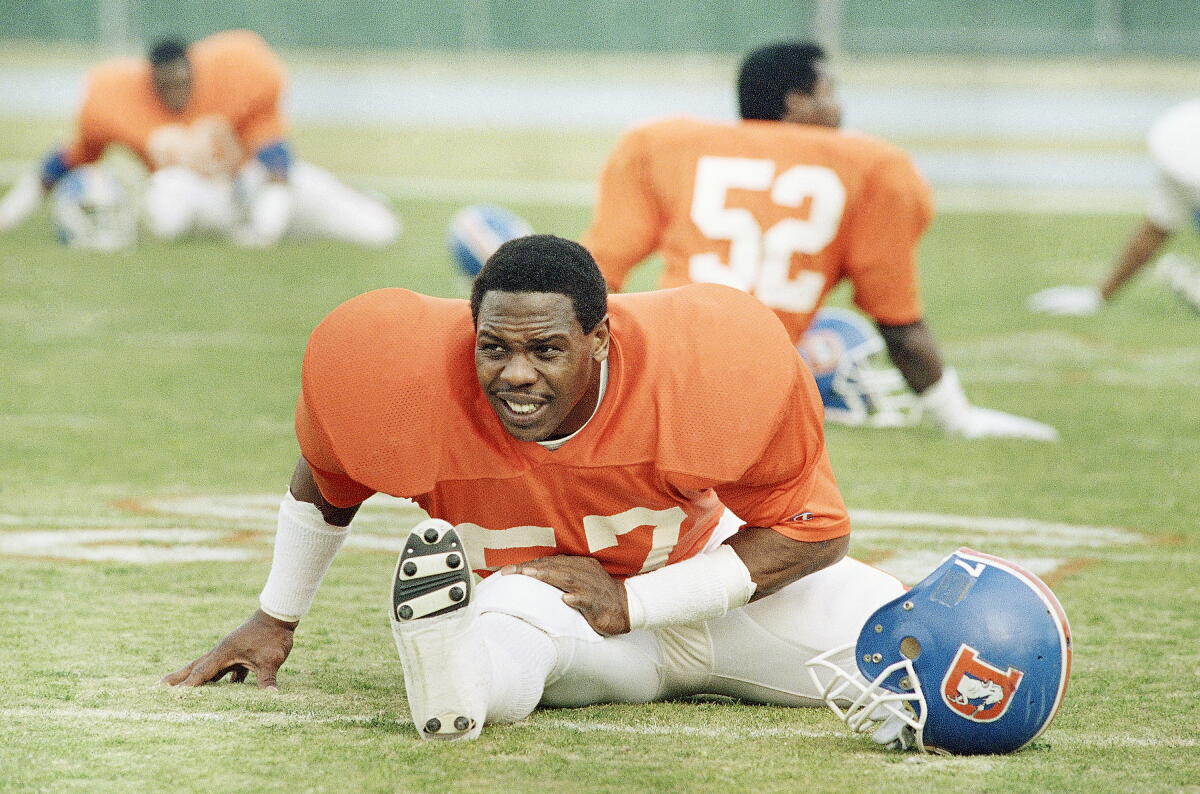
Tom Jackson, a fiery cornerstone of the “Orange Crush” defense with the Denver Broncos who went on to even more fame as a beloved broadcaster on ESPN, has died, his family and the network announced Sunday. He was 75.
Jackson’s family informed ESPN that he died Friday, but it was their wishes that his death not be announced until the start of the network’s “Sunday NFL Countdown” show by Jackson’s longtime friend and on-air partner Chris Berman. A cause of death was not given.
“Tom was so much more than an accomplished NFL analyst. There was nobody kinder, more thoughtful, more loyal or more engaging than him. And when it came to laughter, Tom’s was frequent and unmistakable,” Berman said. “Tom was my best friend professionally and personally. If you ever met him or just knew him from watching ESPN, he was your best friend too.”
Berman said Jackson made a surprise visit a couple of weeks ago to ESPN, where he worked for 32 years over two stints after playing 14 seasons for the Broncos, and that the two talked on Tuesday.
Denver Broncos linebacker Tom Jackson laughs at a teammate’s joke while stretching in preparation for a workout on Jan. 22, 1987, in Irvine.
(Ed Andrieski / Ap Photo/ed Andrieski)
A fourth-round draft pick out of Louisville in 1973, Jackson was an inspirational leader of Denver’s first Super Bowl team in 1977. He started 177 games for the Broncos between 1973 and 1986, retiring after the team’s second Super Bowl appearance. He was a first-team All-Pro in 1977 and a second-team All-Pro the following season; he also was a three-time Pro Bowl selection.
Following his playing days, Jackson had a second career at ESPN from 1987 to 2016 and was featured on “Sunday NFL Countdown” and “NFL Primetime.”
Before the internet and NBC took over the Sunday night package in 2006, “NFL Primetime” was must-see viewing for fans and players because it showed highlights from all the games, as well as the interaction between Berman and Jackson, who often finished each other’s sentences.
“I can remember coming from games and waiting in a rush to get home, to watch ‘Primetime’ because all I wanted to know was, what were you and Tom Jackson gonna say about one, the team?” ESPN analyst and Hall of Fame wide receiver Randy Moss said to Berman.
ESPN commentators Tom Jackson and Chris Berman watch a Monday Night Football game between the Bears and Rams on Dec. 11, 2006.
(Al Messerschmidt / Getty Images)
Jackson briefly returned to ESPN in 2019 and reunited with Berman to do an online version of “NFL Primetime.” He was awarded the Pete Rozelle Radio-Television Award from the Pro Football Hall of Fame in 2015.
“In my lifetime there was Howard Cosell doing ‘Monday Night Football’ halftime highlights and then there were Boomer and TJ doing ‘Sunday NFL Countdown.’ I am not here as a colleague but as one of million who watched, learned from and idolized the two of you,” ESPN host Mike Greenberg said during Sunday’s show.
ESPN’s studio crew wore orange ties in honor of Jackson during the three-hour show.
Berman said Jackson was the last of seven people interviewed for the studio analyst job and that the last person rarely gets the job. But Jackson nailed the interview.
“Tom Jackson was one of the most influential and beloved figures in ESPN’s history. He brought the credibility of an All-Pro NFL player, the insight of a gifted analyst and a warmth and authenticity that connected with generations of football fans. Alongside Chris Berman, he helped make NFL Primetime an iconic part of our football weekends,” ESPN chairman Jimmy Pitaro said in a statement. “Away from the set, Tom was a trusted colleague, generous mentor and dear friend to many. … His legacy at ESPN, throughout the NFL and among the countless fans who admired his incredible work will endure.”
ESPN’s NFL studio in Bristol, Conn., is named the Chris Berman-Tom Jackson Studio. It is the only named studio on ESPN’s campus.
“The Denver Broncos are heartbroken by the passing of Ring of Fame linebacker Tom Jackson, a cornerstone of the legendary Orange Crush defense and one of the most beloved players in franchise history,” the Broncos said in a statement.
“An inspirational leader and fierce competitor, TJ was a proud member of the Broncos’ first Super Bowl team that helped establish a winning tradition in Denver. Off the field, Tom carried himself with class, warmth and humility, forging deep connections and lifelong friendships with teammates and throughout Broncos Country.”
Jackson is survived by his wife, Jennifer, and daughters Taylor and Morgan.
Washington, DC – Trinity Rodman sat on the pitch and held her face in her hands, trying to hold back tears as the final whistle ended her Washington Spirit’s quest for the National Women’s Soccer League (NWSL) with a 2-1 loss to the Kansas City Current.
For Rodman, who could be seen wincing in pain throughout the match after an early shoulder injury, the loss in the final on Saturday night was a familiar feeling. She and the Spirit had reached, but lost, the two previous finals.
Recommended Stories
list of 4 itemsend of list
This one, however, was different. The Spirit were playing in front of their home fans – a sold-out crowd at Audi Field in Washington, DC, and palpable support across the city.
The third time was not the charm for the Spirit.
The stakes were high on Saturday night with a huge turnout at the stadium and increased interest in women’s football across the country. Former footballer Tobin Heath compared the NWSL to the National Football League (NFL), the most-watched sports league in the US.
And with their cult-like following, the Spirit were hoping to leave local fans with a memory of sporting glory that would last a lifetime.
“The ladies fought hard. I don’t think it was the best performance, but they fought hard. They fought to the end. They were still in it in the 90-something minute, but I wish they would have won,” Spirit fan Angel Ughiovhe told Al Jazeera.
After the KC Current went 2-0 up, Rodman had clawed a goal back in the dying moments of the match, cutting the deficit in half, giving fans a glimmer of hope for a historic comeback that never materialised.
“We were saying internally, third time is a charm,” Kim Bolt, chief marketing and strategy officer at the Washington Spirit, told Al Jazeera on Friday.
“I think especially because our fans mean so much to us, it would just be absolutely incredible if we could get the win in front of our, you know, rowdy Audi crowd.”
That belief was shared across the city. But it just wasn’t meant to be.
Despite the defeat, the final highlighted the passion for women’s football in the US capital and the adoration for the local team.
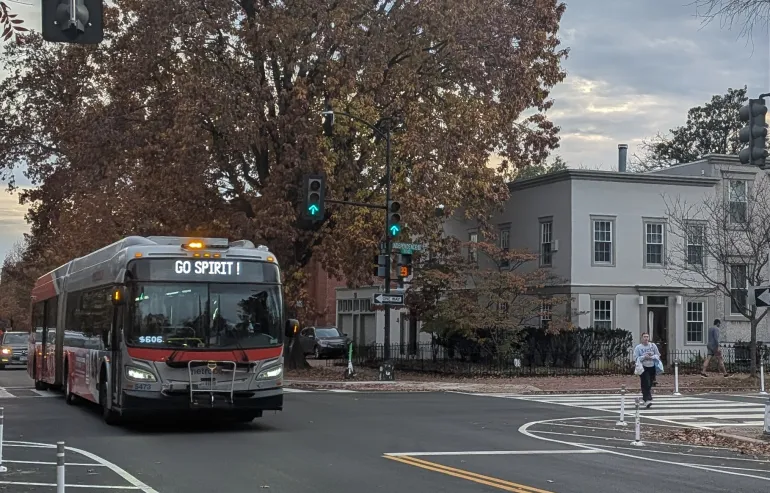
The soaring arches of the Frederick Douglass Memorial Bridge glowed with the team’s green and pink colours ahead of the final. People across the city walked around with the team’s top that features Washington’s famous cherry blossom. Even the public buses said, “Go Spirit!”
For many Spirit fans, the final was more than a game. Chants of “Free DC” rang out in the stadium at the end of the 51st minute as they have for the past year since President Donald Trump deployed federal troops in the city.
The chant, which is timed to reflect DC’s quest to become the 51st US state, was echoed by spectators outside the stadium at nearby watch parties, highlighting the popularity of the political culture that fans had built around the team.
The capital city is home to nearly 700,000 people who do not have voting members in Congress because DC is not a state.
Carlene Reid said she was disappointed by the outcome of the match on Saturday but she took solace in that people across the country heard the demand for DC statehood.
“This is probably the most inclusive game I’ve ever come to and the most politically sound game,” Reid told Al Jazeera.
“It was absolutely amazing to hear the chant happen as a DC resident. So I’m happy that the message is getting out there that we are fighting for statehood.”
A bus in Capitol Hill in Washington, DC, says ‘Go Spirit!’ ahead of the NWSL final, November 21 [Ali Harb/Al Jazeera]
KC Current midfielder Vanessa DiBernardo scored directly from a corner in the 54th minute on Saturday shortly after the stadium erupted with the politically charged chant. Brazilian legend Debinha added a second for the champions from a counterattack in the 97th minute.
Rodman scored from a header minutes later.
The win cements Kansas City’s status as a football hub for the men’s and women’s games. Despite its relatively small population of 520,000 people, the city also has a team in the country’s top men’s football league, Major League Soccer (MLS), and it hosted six FIFA World Cup matches over the summer.
Football has been growing in popularity in the US, especially after Argentinian legend Lionel Messi joined Inter Miami in 2023. Cohosting the World Cup with Canada and Mexico only accelerated that trend. The US also hosted the Club World Cup in 2025.
Bolt said the surging interest in men’s football has not come at the expense of the women’s game.
“We have our own fan base that is passionate, that is hungry for content, that is hungry for our merch, hungry for our ticket sales,” Bolt told Al Jazeera.
“The growth in the men’s game – we’re not seeing that cannibalise or stunt our own growth because I think the fan bases are pretty unique.”
Attendance at Spirit’s home games at Audi Field – a 20,000-seat stadium – backs that theory. The Spirit played in front of sold-out crowds in the quarterfinal and semifinal.
And there wasn’t an empty seat on Saturday night despite the skyrocketing ticket prices, which started at more than $300 on the resale market.
The Spirit partnered with DC Mayor-elect Janeese Lewis George to give away 400 tickets through a raffle.
Audi Field on Saturday featured some of the top players in the game between the two squads, who could play key roles for their national teams at the Women’s World Cup in Brazil next year.
On the Current side, Croix Bethune and Michelle Cooper are likely to feature for the US Women’s National Team (USWNT). Temwa Chawinga, who led Malawi to the Women’s Africa Cup of Nations (WAFCON) final earlier this year, is expected to lead her country at the World Cup.
For the Spirit, Rodman was a young, rising star at the last tournament, but she heads into next year as one of the most renowned players in the sport as the USWNT push to reclaim the title from Spain.
The Spirit’s number 10, Leicy Santos, is also set to shine on the international stage with Colombia, while defender Esme Morgan is likely to be called up for England. Sandy MacIver is expected to start between the sticks for Scotland.
Algeria’s Melissa Bethi could also feature at the tournament after her team secured qualification by reaching the WAFCON semifinals.
“One of the best things about DC is that it is an international city,” Bolt said.
“We love the fact that our team is a reflection of the city, the diversity of the city – that we have so many international players.”
As with everything in filmmaking — and maybe life in general — director David Fincher has a particular process for reading a screenplay for the first time.
“If I read a script that I’m going to consider spending two years of my life making, I come into the office on a Saturday at 8 or 9 in the morning and I turn the f—ing phones off and I sit down and I go, ‘OK, fade up, curtains, here’s what it is,’ ” he says. “And you read it all the way through with the idea that you’re going to see it.”
The only guide you need for holiday entertainment.
Fincher, 64, sits in the gray-carpeted editing bay of the Hollywood building where he’s worked for roughly 25 years, a 1930s Art Deco-style building with a tower on top that used to be a bank. By the front desk are 48 neatly stacked boxes containing all the footage he shot making “Fight Club.” (Walking by them, Fincher stage whispers proudly, “It’s not everything.”) This is the place where so many of his features were cut and finalized, including “Zodiac,” “The Curious Case of Benjamin Button,” “The Social Network” and “Gone Girl.”
It’s also where you can imagine Fincher coming on a quiet weekend some time ago and committing a few hours to an early read of “The Further Mis-Adventures of Cliff Booth,” his latest movie, a sequel to 2019’s “Once Upon a Time … in Hollywood.” In a first for its distributor, Netflix, the film, written by Quentin Tarantino, will be released in Imax theaters on Wednesday for a limited theatrical run before launching on the streaming service Dec. 23.
“I wasn’t looking for work and a friend of mine who I adore said, ‘Can I give you something to read?’ ” Fincher remembers. (The friend is Brad Pitt, with whom he’s now made four films.) But something in Fincher hesitated. He wanted Tarantino’s blessing first, so he could read it as more than just a fan.
“Because it’s a different mindset for a director,” he explains. “That first hit is all you have to live off of. That’s the two-year hit. And so you have to trap it in aspic for yourself. That’s the thing you’re always building a tendril back to: Why was I excited about this?”
To watch “Cliff Booth” is to know Fincher found the excitement he needed. Set in the smoggy disco-and-“Star Wars”-saturated Los Angeles of 1977, eight years after the events of the first film, the story is less about a stuntman watching his options narrow than a fixer unafraid to use a little force. (Pitt remains as charming as ever, even if his game has changed.) Some of these characters are glamorous, others less so.
“When I cut 60 pages, I gave it back to Quentin,” Fincher says. “He was like, ‘OK, that makes sense. I get what you want.’ It was not like, ‘Oh my God, you’re chopping my fingers off with a belt sander.’ ”
(Inez & Vinoodh)
“The body count was high enough that it certainly fit into my filmography,” Fincher jokes, tapping his sneakers. But in a deeper way, you can see two signature American voices fusing on a molecular level into a chimera that shouldn’t survive but somehow does: the chatty, freewheeling Tarantino and the sleek, hyper-ironic Fincher. The project seems to have loosened the latter up, while also bringing into focus so much of what he does well as a technician and a storyteller.
Getting there took some doing. First came the potentially intimidating task of tightening the script of a two-time Oscar winner. Fincher says he cut roughly a quarter from Tarantino’s dialogue-heavy 230-page screenplay, both as a matter of pacing and at his own discretion as the director.
“I knew this was something that was a treasure to its creator,” Fincher says, alluding to conversations about the ultimate shape. “They wanted it handled with a kind of deftness. They saw me as the answer to their problems. When I cut 60 pages, I gave it back to Quentin. He was like, ‘OK, that makes sense. I get what you want.’ It was not like, ‘Oh my God, you’re chopping my fingers off with a belt sander.’ ”
Fincher describes his relationship with Tarantino as friendly, dating back to 1991 when he was invited to watch an early cut of “Reservoir Dogs.” Part of what made his edit of the “Cliff Booth” script work, Fincher thinks, was his clarification of a new Tarantino creation: leggy, no-nonsense, Australian-born showbiz agent Karen Crosby, who becomes exactly what an ex-stuntman desires. As played by Elizabeth Debicki, a film-long flirtation with Pitt comes to a blaze.
“It was mostly trying to understand and make room for Karen,” Fincher says, calling her one of the story’s many “Robert Towne women,” a term he uses with the highest praise: broad-shouldered, loose-limbed, turned on by competency. “They’re not quite sure how it’s all going to work out,” he says, “but they’re going to have some say in how it goes down.”
Brad Pitt and Elizabeth Debicki in the movie “The Further Mis-Adventures of Cliff Booth.”
(Netflix)
Towne, the legendary screenwriter of “Chinatown,” “Shampoo” and “Personal Best,” who died in 2024, remains a paragon to Fincher. They were close friends and near-collaborators on a “Chinatown” prequel series.
The Towne connection is also a clue into the kind of L.A. that Fincher wanted to imprint on his take on a Tarantino movie: not as romantic as the last film’s, more paranoid and violent (apparently taking out the Manson family doesn’t help matters) and yet still somehow a mid-’70s dream city, both gauzy and rough-edged. That noirish solo trumpet you hear on the soundtrack — just like the one in “Chinatown” — is courtesy of longtime Fincher collaborators Trent Reznor and Atticus Ross, whose original score is decidedly new ground for them.
“You’re not hearing the horn, you’re hearing the echo of the horn,” Fincher says excitedly. “So it’s like the horn is three blocks down and then in the parking lot a block over.”
Meanwhile, who’s the person responsible for adding two needle drops of lordly prog-rock gods Emerson, Lake & Palmer into the movie, including their bouncy version of “Peter Gunn”? “Me,” Fincher says, quietly turning away, though the uncool song choices work beautifully. “Originally we were looking for a lot of King Crimson to try. It was too mathematical.”
There’s a lot of its director in “Cliff Booth,” from the film’s greenish cast to its dark humor. Even when Fincher re-creates some of the city’s most beloved sites of nostalgia — the shuttered Lucy’s El Adobe Cafe on Melrose gets a special resuscitation — his influence is hard to miss, like the pine-tree air freshener that dangles from Cliff’s rearview mirror, maybe a tiny totem to “Seven.”
Capturing the city would seem a prerequisite for anyone attempting a sequel to “Once Upon a Time … in Hollywood,” the masterpiece that has come to eclipse almost all of Tarantino’s work. (Director Steven Soderbergh gave Fincher the idea of adding onscreen mileage distances from Sunset and Vine with every new location.)
“I love L.A.,” says Fincher. “It’s my home. It’s a chosen home. I’ve lived here 40 years. I came in the summer of ’84 after everyone told me, ‘I can’t believe the traffic.’ I was working seven days a week and I was making music videos, so I didn’t know.”
Even though he’s spent much of his career capturing the solid-state thunk of analog tech from 50 years ago, Fincher remains fixated on the future and its potential freedoms. He’s not in thrall of fetishized 35mm prints or VistaVision cameras. His thoughts on AI — “I’m not a Luddite, so I don’t fear the unknown” — would antagonize many.
“Is everyone satisfied that we have figured this art form out enough that what we really need to do is go back to celluloid?” he asks. “How long have people painted? 40,000 years? We’re talking about a thing that’s a hundred years old and everyone’s going, ‘Stop. Pencils down. No more iterating. It’s not necessary to have at your fingertips the ability to change the color of that person’s eyes.’ Well, it exists. Should we not use it?”
Tools, options, tweaks, corrections — these are what he likes, and he has never apologized for taking his time. The whole “David Fincher does too many takes” thing still annoys him intensely.
“I love Amanda Seyfried,” he says of his “Mank” star, whom he directed to some of her greatest acclaim. “But to say that Amanda knows everything that’s going on around her at all times when she says, ‘I must have done 200 takes of that.’ We may have done 200 takes in this entire scene over the course of eight days, but you can’t do 200 takes in a day. It’s not possible.” (Yes, he’s seen “You Can See Everything” and appreciates her all the more.)
But after decades of doing this, is he finally having fun? Pitt and Debicki, arguably two of the most attractive people on the planet, making eyes in a Shakey’s Pizza Parlor, the Bad News Bears running around them — it seems like a fine way to pass a career. He answers me like a true filmmaker.
“No,” he says flatly, “I love this cast. I love my time with them. But I don’t like the ulcer-producing … I don’t like marinating in one’s own anxiety.”
He is most himself when he is solving some daunting problem.
“And I’m not going to say master because I don’t think anybody ever masters cinema,” Fincher adds. “In the beginning, it gets the best of you. In the middle of it, you get the best of it. Sort of at the end: six to one, half a dozen of the other? A coin toss.”
He cut three different full versions of “Cliff Booth,” working the material until it felt right to him. “Went all the way through — ‘That’s not it’ — tore it back to the studs, started over again, built it all again.”
But he doesn’t begrudge the effort.
“That’s not perfectionism,” he says. “It’s tough to care that much.”
NEW YORK — A weekend of Big Ten upsets battered its teams in the Associated Press Top 25, with Sunday’s poll absent a single program from the conference among the top five for the first time since 2021.
Georgia, Utah and Notre Dame all won to hold steady as the top three teams in the survey of the 69-person media voting panel with one week left in the regular season. The Bulldogs earned 56 first-place votes, Utah received 12 (two more than last week) and the Fighting Irish got one.
From there, changes were everywhere, starting with UCLA dropping six spots to No. 10 — the best of the six Big Ten teams in the poll — after an 18-16 loss in triple overtime at Michigan. Indiana also fell — from No. 6 to No. 12 — after its 27-24 overtime loss at Washington. The Bruins will next face crosstown rival USC, which moved up three spots after a win over Maryland.
It is the first time since Nov. 7, 2021, that the Big Ten hasn’t had a team ranked in the top five.
Ohio State’s briefly resurgent playoff hopes took a fatal blow after a 31-28 loss at Nebraska. The Buckeyes fell nine spots to No. 25, with something similar expected Tuesday night in the College Football Playoff rankings, where they had climbed to 14th last week.
Despite convincing wins over the weekend, two-loss Iowa and three-loss Oregon stayed put in the poll, at Nos. 13 and 14 — another less-than-encouraging sign for the conference that has produced the last three national champions. Even so, they remain in the hunt for a spot in the CFP, with the Ducks having an inside track (along with UCLA) for a spot in the conference title game.
There was a significant 100-point gap in poll voting between No. 3 Notre Dame and fourth-ranked Miami, a sign that the AP voters have made up their minds who the best teams are. Notre Dame was ranked sixth by the CFP last week.
Rounding out the AP top 10 were No. 5. Texas, followed by Alabama, Tennessee, Wake Forest, Texas Tech and UCLA. Texas leapfrogged Alabama after a 45-3 win over old rival Arkansas while the Crimson Tide beat FCS team Chattanooga 47-0.
Another key upset Saturday — the first week in three years without a matchup between AP Top 25 teams — was San Diego State’s 22-20 win over Boise State in the Pac-12.
The loss dropped the Broncos seven spots to No. 22. Boise State, which was the only Group of Six team in last week’s CFP rankings (but one of three in the AP poll), is now a spot behind Conference USA leader Liberty in the AP rankings.
In and out
In: Oklahoma climbed back into the poll for the first time since Week 3 at No. 19 after a 28-7 victory over Texas A&M.
In: Missouri, which beat Kentucky 28-14, is back in the poll at No. 24 after a three-week absence.
Out: Kentucky fell out after its second straight loss.
Out. Memphis dropped out after a 38-34 loss to Navy.
Poll points
— At No. 8, Wake Forest has its highest ranking in program history.
— BYU moved up one spot to No. 11 after struggling to a 31-29 victory over Kansas in triple overtime.
— New Mexico, which made its first-ever Top 25 appearance earlier this month, was first on the “also receiving votes” list the week after a loss to UNLV that dropped the Lobos out of the poll.
— Not since 2011 has Ohio State been unranked in a non-COVID season.