Month: September 2026

Ivy League play begins, and SoCal players seek balance

Jackson Renger, the star outside linebacker on Los Alamitos’ Southern Section Division 2 championship football team last season, packed his bags and boarded a flight on Aug. 14 to begin life as an Ivy Leaguer at Cornell University in Ithaca, N.Y.

Armed with a 4.4 grade-point average and memories of winning a championship with his best friends, Renger is entering the world of college football while competing in an academic environment featuring the best of the best.

“I’ve been told football might be the easiest part,” he said. “I’m coming in to be surprised.”

The Ivy League continues to recruit players from Southern California. Former St. John Bosco quarterback Caleb Sanchez is entering his junior year at Columbia, which has 10 Southland products on its roster. St. John Bosco defensive back Dorian Franklin is committed to Harvard.

Aiding Renger are eight other players from Southern California on the Cornell roster.

“They said it will be fine and help me,” he said of the transition.

Renger visited Cornell three times last year but has done little preparation this year for what he will be facing in his balancing act of football and academics. He’s going to trust his skills and previous experiences.

“My biggest concern is the academics,” he said. “Throw on top of that football, that’s going to be a real challenge. They said you have to be on top of your stuff and can’t let either get on top of you.”

When Renger left home last month, he packed what he could, flying to New Jersey to visit family, then drove to New York with his parents before moving in on a Sunday. He had hernia surgery in July and spent six weeks recovering and still believes he should be able to contribute on the field as a freshman.

One thing he didn’t bring to Cornell was a warm jacket for snow. He didn’t trust the stores in Orange County.

“That’s what I’m thinking,” he said. “They’re going to sell me something useless.”

So he’ll trust the stores in New York or maybe receive recommendations from teammates once the snow comes.

He’s going off to college to explore and test himself on and off the field. That’s what Ivy Leaguers do.

“Cornell is such a unique and big school,” he said. “I’m not sure what I want to do. I want to try different things when I’m there.”

Football has taught him the most important lesson for anyone who plays sports — never quit.

“This is a whole new challenge. I’ll put my head down and try,” he said.

Friends are welcome to send mittens, ski caps and hot soup when the snow comes. Football begins on Sept. 19. The Southern California natives are sure to shake hands after games and discuss happenings back home while never forgetting that “Winter is Coming.”

The breath of a dragon won’t save them but a warm coat will.

A look at players from local schools on Ivy League rosters:

Harvard: DB Chase Mason, San Juan Hills; DB Iroc Cordova, Inglewood; K Dylan Fingersh, Capistrano Valley; OL Nate Turk, Loyola; DL Mikhal Johnson, Sierra Canyon.

Brown: DL Caden Harman, Sierra Canyon; DL Mitch Mooney, San Marino.

Yale: DB Dillon Rickenbacker, St. John Bosco; WR Davis Wong, Brentwood.

Pennsylvania: LB Trevor Pajak, Mater Dei; WR Tyler George, Corona Centennial.

Columbia: WR Caden Butler, Chaparral; WR Bryce Coleman, Crean Lutheran; WR Elliot Cooper, Sherman Oaks Notre Dame; DB Ethan Fullerton, Sherman Oaks Notre Dame; QB Caleb Sanchez, St. John Bosco; DL Austin Coronado, Glendora; WR Jarod Sersansie, JSerra; DL Will Matthew, Orange Vista; TE Santiago Hernandez, Harvard-Westlake.

Cornell: WR Cameron Shannon, JW North; DL Darryl Davis, Culver City; TE Brandon Gilbert, Murrieta Valley; TE Adrian Ortiz, Redondo Union; LB Jackson Renger, Los Alamitos; K AJ Salo, Chaminade.

Dartmouth: OL Ryan Turk, Loyola; LB Timothy Ioane Jr., Tustin.

Princeton: LB Fifita Tauteoli-Moore, Corona Centennial; QB Wyatt Becker, Sierra Canyon; RB Kai Honda, Gardena Serra.

Source link

Philippines set for historic vote in Bangsamoro after decades of conflict | News

The Bangsamoro region in the southern Philippines is holding its first elections on Monday, after a five decade-long armed struggle that claimed over 120,000 lives. The vote is the result of a 2014 peace agreement between the Philippine government and the Moro Islamic Liberation Front.

Al Jazeera’s Barnaby Lo reports.

Source link

First-Ever Kill Of A Drone Boat By Another Drone Boat Claimed By Ukraine

The Ukrainian Navy is claiming one of its uncrewed surface vessels (USV) sank a Russian USV, marking the first time one of these weapons, also known as drone boats, destroyed another. The engagement is the latest iteration in the use of combat drone boats, which Ukraine has employed to devastating effect against Russia’s Black Sea Fleet vessels and facilities, forcing the general evacuation of Russian naval assets from occupied Crimea to bases in Russia proper. The use of weaponized USVs is now proliferating around the globe at an increasing rate.

The incident took place somewhere in the Black Sea, said the Ukrainian Navy, which provided no details about when it happened or exactly where. TWZ cannot independently verify this claim; however, we cannot find any evidence of a drone boat killing another drone boat in the past.

“Units of the Main Intelligence Directorate (GUR) detected the target,” the Ukrainian Navy stated on Telegram. “The Ukrainian Navy’s ‘Sargan 3000’ unmanned boat, equipped with a remotely operated weapon station (RWS) Protector 12.7 mm, successfully destroyed it. This is the first naval battle in history between unmanned boats.”

An 81-second video released by the Ukrainian Navy opens with a view from the Sargan 3000’s onboard camera. It shows the Ukrainian USV acquiring, then engaging the Russian USV with its machine gun. It then cuts to a closer view of the Protector gun system firing at the Russian drone boat. At about the 30-second mark, the view switches to a feed from an aerial platform, though it is unclear if it is piloted or a drone. The video continues with the Sargan 3000 raking the Russian USV with its heavy machine gun until pieces start flying off and it eventually sinks, stern first.

The Sargan 3000 (the name means needlefish in Ukrainian) was first introduced by Ukrainian President Volodymyr Zelensky in April as a “multi-purpose platform that has undergone testing and entered service with the Ukrainian Navy. These uncrewed vessels are highly maneuverable and capable of carrying out strike missions.”

Though initially designed as a kamikaze weapon, it evolved into a platform for remote-controlled weapons, according to the Russian AmalNews outlet.

“The maritime drone features a specialized low-profile hull with distinctive hydrodynamic lines and is constructed from materials that reduce its radar signature,” the publication explained. “The Sargan-3000 USV is equipped with a waterjet propulsion system (presumably powered by a diesel or hybrid engine to ensure a long operational range).”

AmalNews states that the Sargan 3000 is 6.9 meters (about 22.6 feet) long, 2.2 meters (about 7.2 feet) wide, with an operational radius of up to 1,600 km (about 994 miles) and can carry a payload of 450 kg (about 992 pounds). It travels at an estimated speed range of 40-55 knots.

During operations, the Sargan 3000 connects to Ukraine’s Delta situational awareness system, “enabling the real-time transmission of target data, video feeds, and telemetry to operators,” AmalNews noted. “It features multi-channel control capabilities, including redundant satellite communication terminals (utilizing secure Western commercial networks and NATO military networks).”

It is also equipped with “an autonomous inertial and optical navigation system to ensure operation in the event of GPS jamming, and it incorporates electronic countermeasures (ECM) modules.”

There are several variants of this USV. They include those equipped with machine guns; rockets; FPV drones; an electronic warfare version and one that lays mines, the publication added.

The Sargan 3000’s Protector remote weapon station is made by Kongsberg.

The drone boat’s first publicly known combat engagement took place in July, when one “destroyed the Russian Federation’s FSB border guard ship Izumrud,” the Ukrainian Navy stated at the time.

“Ukrainian naval sailors sank the border guard ship of the 2nd rank with the Sargan-3000 maritime unmanned complex near Novorossiysk,” the Ukrainian Navy claimed on Facebook. “Among the crew of the ship are dead and wounded.”

It is unclear whether the USV acted as a kamikaze vessel or a weapons platform, although the former is most likely.

“It was Izumrud that on November 25, 2018, participated in the attack on the ships of the Ukrainian Navy in the Kerch Strait,” the service added. “Revenge is inevitable.”

One sea drone killing another is a notable development given the damage these systems can inflict and the challenge of locating and destroying them on open waters. Being able to operate on the water over long distances and timeframes, they can be used to hunt down other drone boats, as what appears to have taken place in this engagement, or serve as a picket line of sorts to protect harbors, vessels and other targets that have been attacked by USVs in the past.

The Russian drone boat, which is not identified, did not appear to be armed.

The Houthi rebels of Yemen actually pioneered the operational use of kamikaze USVs years ago. We first reported about this capability in January 2017, when an explosive-laden Houthi USV struck a Saudi frigate. Before that, Iran developed various crude kamikaze USVs and those capabilities soon migrated to its Houthi proxies, which put them to use in the Red Sea for the first time.

Ukraine has led the way in advancements of these systems, first employing them as kamikaze weapons, but then adding machine guns and rockets and later missiles, which were used to shoot down Russian helicopters and jets. Ukraine has also used these to launch FPV and bomber drone attacks as well as deliver uncrewed ground vehicles (UGV) into enemy territory.

You can see that delivery in the following video.

In the wake of the Ukrainian success with these weapons, Russia developed its own drone boats, and in August 2025, launched its first attack on a Ukrainian vessel.

The U.S. used drone boats as kamikaze weapons for the first time in July, during an attack “on a submarine and ship maintenance facility in Iran,” U.S. Central Command (CENTCOM) announced on X at the time.

Regardless, it looks like history was made with this incident in the Black Sea. But this involved a sea drone hunting down and destroying another that couldn’t fight back. Given the rapid pace of weapons development by both sides in the Ukraine war, it seems inevitable that a duel between two armed drones boats could soon follow.

Contact the author: howard@twz.com

Howard is a Senior Staff Writer for TWZ. He writes frequently about conflict, focusing heavily on the Middle East and Ukraine, and interviews with military and intelligence officials and industry leaders from around the globe. He lives near Tampa, Florida, home of U.S. Central Command, U.S. Special Operations Command.


Ian executes TWZ’s full-spectrum social media strategy, brings his interpretive graphics skills to our editorial team as a Staff Writer and OSINT researcher, and maintains the weekly carrier tracker and newsletter.


Source link

‘The Uprising’ review: Andrew Garfield kicks off a revolution

Filmmaker Paul Greengrass is often associated with a cinematic aesthetic colloquially known as “shaky cam” — handheld cinematography enabled by lightweight digital cameras that function a lot like another character in the room, on foot, at eye-level, responding and reacting to action and dialogue the way a person would.

It’s a style that has served him well in modern action thrillers like his installments of the “Bourne” franchise, and films depicting recent real-world events like “Captain Phillips” and “The Lost Bus.” Now, Greengrass applies his signature style to the Middle Ages — can shaky cam work in a medieval movie?

It may seem odd, but it’s a brilliant creative choice when considering that while “The Uprising” is technically about the 1381 Peasants’ Revolt in England, that’s not really what it’s about. It’s about right now.

The shaky cam is intended to jolt us into that awareness. When we pick up with our protagonist, a pathetic ploughman (Andrew Garfield) living a grief-filled and wretched existence, a plague has wiped out half the population. A small group of men hoards wealth and resources, while the peasant class is heavily taxed, laws brutally enforced. As Greengrass lays out the bare facts of this situation with a cinematic style that’s more news documentary than stuffy period piece, the parallels to our own current situation are laid bare.

“The Uprising,” which Greengrass wrote and directed, is told in a fairly simple fashion, with an emphasis on visual storytelling and visceral sensation (the disparate English accents are also lost in the melee of the mob). All we need to know is that the council advising the 14-year-old King Richard II (Woody Norman) conspires while the young royal prays and his mother (Katherine Waterston) glowers. Outside, a bloodthirsty mob armed with farm tools marches on London, led in part by Garfield’s ploughman, who started his own local uprising when he fought back against the taxman. He joins forces with Wat Tyler (Cosmo Jarvis), a former soldier, and John Ball (Jamie Bell), a priest deemed heretic, as the crowd demands an audience with the king.

As the chaos unfolds, Greengrass doesn’t pontificate on the morality of these events and, in fact, maintains a rather neutral stance on them for most of the film, withholding judgment. A revolution is not right or wrong for most of “The Uprising.” It is simply inevitable under the conditions the film presents.

The ploughman wants to play by the rules, but it’s how the revolt plays out that radicalizes him. While Greengrass shows us the uprising in all its messy confusion as the logical outcome of oppression, by following our protagonist as he witnesses treachery and deceit, Greengrass ultimately arrives at the belief that revolution is necessary, even in failure, and that freedom is worth more than anything.

The opening and closing of “The Uprising” are bracing and stark in their storytelling — the middle is a bit mushy and confusing. But it’s the performances that carry us through. Garfield, sensitive and earthy, is our bellwether as the events descend into bloody carnage dictated by muddled agendas. When he turns, we turn, and the anguish that Garfield wordlessly conveys is our compass.

Greengrass surrounds Garfield with actors who deliver bigger performances, like Jarvis as the brutish but shrewd Tyler, and Bell as the fervent Ball. Thomasin McKenzie plays a young woman, Alyce, steeped in her own trauma and loss, who attaches herself to the ploughman, and her ability to express wide-eyed, barely contained hysteria and fear is unmatched. Young Norman is riveting as the increasingly dastardly king.

The Peasant’s Revolt of 1381 is a fascinating moment because it’s a time when the notion of democracy wasn’t even a twinkle in a feudal servant’s eye. The mob’s actions are frustrating because they’re religiously bound to the king, who they believe is an emissary of God, and desperate to change their day-to-day existence. When those two instincts collide, it’s bound to be complex and conflicting, and Greengrass delivers that with a boots-on-the-ground style.

The murkiness of it all clarifies by the end of the film, not just in terms of its heroes, villains and message, but Greengrass also situates this story within a recognizable cinematic and storytelling history. There’s a thrill as it all comes together. Greengrass might be taking a big swing (of the scythe), but his blade finds its target nevertheless.

Walsh is a Tribune News Service film critic.

‘The Uprising’

Rated: R, for violence/bloody images

Running time: 2 hours, 8 minutes

Playing: Opens Friday, Sept. 11 in wide release

Source link

Arab News | Saudi EV maker Ceer prepares to unveil first electric sedan, SUV

RIYADH: Saudi Arabia’s first automotive company and original equipment manufacturer, Ceer, will unveil its first flagship electric vehicles, a sedan and an SUV, on Sept. 21, marking a major milestone in the Kingdom’s efforts to establish a domestic automotive industry.

The reveal comes as Saudi Arabia accelerates its push to develop advanced manufacturing capabilities and build an electric-vehicle ecosystem under Vision 2030, supporting economic diversification and strengthening the Kingdom’s position in the global automotive industry.

Established in 2022, Ceer is moving from vehicle development to the unveiling of its first models as Saudi Arabia seeks to establish itself as a regional hub for electric-vehicle manufacturing.

James DeLuca, CEO of Ceer, said: “At the beginning of this year, we said that 2026 is the year of Ceer. I am happy to announce that we’ve set the date for the reveal of our first flagship vehicles.”

He added: “The world is about to witness a historic moment, the result of an incredible journey from initial design and intensive engineering to the buildup of one of the most advanced manufacturing facilities in the world, in record time.”

Saudi Arabia’s EV push

The Public Investment Fund is driving the Kingdom’s electric vehicle ambitions through investments in companies including Ceer and Lucid, while supporting a broader ecosystem covering manufacturing, infrastructure, technology and supply chains.

Ceer was established as a joint venture between PIF and Foxconn to develop Saudi Arabia’s automotive industry. The company designs, engineers, sources, validates and manufactures vehicles, with plans to sell and service them in the near future.

Workforce and local impact

Since its establishment, Ceer has expanded its workforce from 20 to 2,300 employees, bringing together Saudi talent and global automotive experts.

The company has secured partnerships with international companies including BMW, Hyundai Transys and Rimac, as well as Siemens, Sabelt, Isoclima, ANDRITZ Schuler, Durr and XYG.

These partnerships support Ceer’s target of achieving 45 percent local content by 2034. The company is also developing an advanced manufacturing complex and vehicles tailored to the needs of Saudi Arabia and the wider region.

Ceer is expected to contribute around SR30 billion ($8 billion) to Saudi Arabia’s gross domestic product, improve the trade balance by SR80 billion and create about 30,000 jobs, with Saudis accounting for 80 percent of direct employment.

The company also supports the Saudi Green Initiative’s target of achieving net-zero emissions in the Kingdom by 2060.


Source link

He was called ‘MAGA’s Man’ in Latin America. Now he’s charged with murder

He’s been called the “MAGA man” of Latin America, a brash political provocateur whose social media assaults boosted right-wing campaigns from his native Argentina to Central America.

His career as political consultant and co-founder of an ultra-right online outlet made him a rich man and helped elect Trump-aligned politicians across the region. The Economist gave him the “MAGA Man” label, while political commentators gave him another nickname — the “Steve Bannon of Latin America” — a nod to the longtime Trump ally and advisor.

Now, however, Fernando Cerimedo, 45, sits in a maximum-security prison in Bolivia, accused of masterminding a murder-for-hire plot: The attempted femicide of his pregnant mistress, Nadia Beller, 33, a Bolivian lawyer and activist.

It’s a stunning collapse for a onetime ad man with a dodgy reputation who rose to become the go-to digital campaign guru for Latin America’s ascendant right wing. Cerimedo’s signature boasts, exaggerations and peddling of false election-fraud narratives reflected those of his political model, President Trump.

Cerimedo also is another example of how right-wing political operatives outside the United States — as recently in Colombia and Germany — have adopted Trumpian tactics and messaging.

The fall of the “King Midas of the Latin American right,” said Daniel Matamala, a prominent Chilean journalist, stunned “the ecosystem of fake news, bots, trolls and disinformation that has taken this region by storm in recent years.” Speaking on his podcast, Matamala added, “The name of Cerimedo looms like a ghost over the summit of the radical right.”

The Aug. 17 attack on Beller was a seemingly well-planned ambush that was captured by security cameras, the grainy images widely disseminated on social media.

One of two would-be assassins dressed as fast-food deliverymen pulled out a pistol and shot Beller point blank outside a hotel in the eastern Bolivian city of Santa Cruz. She fell to the ground and, according to her account, feigned death. The next day, at dawn, Cerimedo was arrested as he was about to board a plane to Buenos Aires.

Cerimedo set up the hit, prosecutors charge, in a nefarious attempt at damage control. Beller had threatened to expose his alleged criminal behavior and physically abusive behavior toward her while revealing Cerimedo, a married man with two children, as the father of her unborn child.

Cerimedo is also under investigation for alleged illegal enrichment and potential links to cocaine trafficking.

He has denied any wrongdoing.

Even before Cerimedo’s arrest, Latin American journalists had begun unmasking Cerimedo as a prodigious purveyor of fake news — about himself. New reports revealed that his frequent boasts about U.S. connections — that he attended Harvard, trained with U.S. Navy SEALs, worked in the Obama White House — were fanciful.

“He certainly exaggerated things,” said Damian Merlo, a Miami-based consultant who worked with Cerimedo on the 2023 campaign of Argentine President Javier Milei, a Trump favorite. “I never really got the impression that Cerimedo was ‘MAGA’s man in Latin America.’ The guy could hardly speak English! But that’s how he sold himself.”

Many times, the sales pitch worked. It was Cerimedo who helped broker then-candidate Milei’s celebrated 2023 interview with Tucker Carlson, at the time a Trump confidant, an appearance that thrust Milei into the international spotlight.

Like Milei, Cerimedo seemed to relish any proximity to Trump-land.

In February, at the inaugural “Hispanic Prosperity Gala” — a right-wing pep rally held at Trump’s Mar-a-Lago estate — Cerimedo was honored as “Hispanic Political Consultant of the Year.’” From the podium, he spoke of Latin America’s “culture war” and the need to ensure that “the left never again returns” to governments that have elected conservative leaders.

Switching to heavily accented English, Cerimedo gave a shout-out to Brad Parscale, Trump’s former campaign manager, whom Cerimedo thanked for “believing [in] me all the time and giving me your technology.”

Parscale declined to comment.

Fernando Cerimedo

Fernando Cerimedo, an advisor to the National Party, points at a map of Honduras on Dec. 1, 2025, one day after voters went to the polls to elect Nasry Asfura president.

(Moises Castillo / Associated Press)

Both Cerimedo and Parscale were involved in last year’s campaign that resulted in the election of Honduran President Nasry Asfura, whom Trump backed publicly.

Last year, Cerimedo was a key player in the election of Bolivian President Rodrigo Paz, the center-right, U.S.-educated son of a former president who transitioned from Marxist firebrand to moderate. The ascension of Paz broke almost two decades of leftist rule by the Movement for Socialism party of ex-President Evo Morales.

Cerimedo had no official capacity in Paz’s government, but he enjoyed insider status. He accompanied Paz in March to Trump’s anti-narco “Shield of the Americas” summit, a confab of mostly conservative leaders at Trump’s Doral resort in south Florida.

Among the items found in searches of Cerimedo-linked properties, authorities say, was a business card listing him as Paz’s “chief adviser” — a nonexistent post.

“Mr. Cerimedo never had the authorization to represent … the presidency, the government or my family,” a deeply discomfited Paz said in Facebook message last month.

How exactly Cerimedo got into politics — and how he became a right-wing rabble-rouser — remains somewhat opaque. According to media accounts, he worked a series of uninspiring jobs — including stints as a taxi driver, a schoolteacher and an employee of insurance and computer firms — before veering into advertising. In 2019, he assisted the campaigns of several leftist Peronist candidates in provincial races in Argentina, and later founded his own consultancy, Numen.

Cerimedo first gained prominence in neighboring Brazil. That’s where he championed false election-fraud narratives following the narrow reelection defeat in 2022 of President Jair Bolsonaro — a MAGA stalwart — in his reelection bid against Luiz Inácio Lula da Silva, a leftist. Cerimedo’s “Brazil Was Stolen” livestream exacerbated the sense of outrage among Bolsonaro loyalists, who took to the streets in mass protests.

The Brazil exposure helped catapult Cerimedo into successful presidential campaigns in Argentina (Milei), Honduras (Asfura) and Bolivia (Paz). His arrest prompted Chilean lawmakers to create a commission to investigate Cerimedo’s possible role in that nation’s recent electoral shift to the right.

With Cerimedo’s name now toxic, Paz, Milei and other former allies have distanced themselves.

Also ditching Cerimedo was his close partner, Javier Negre, a right-wing Spanish media entrepreneur who, in 2024, purchased 50% ownership of Cerimedo’s La Derecha Diario (The Daily Right), an online, Spanish-language MAGA megaphone. The site strongly backed Colombian President Abelardo de la Espriella — who had Trump’s support — during his tight campaign this summer.

Following Cerimedo’s arrest, Negre announced that he had bought out his former partner in La Derecha Diario.

In Bolivia, the Cerimedo scandal has taken on the character of a Latin American telenovela.

A recovering Beller, shot three times in her upper body, granted interviews from her hospital bed, dishing on her lover’s alleged brutality and criminality.

According to Beller’s testimony to authorities, Cerimedo tricked her into the near-fatal rendezvous outside the hotel. He told her that a source was waiting to share details about the purported rape of a 13-year-old, she said. The supposed rapist? Bolivian ex-President Morales — a despised figure on the Latin American right.

The case has seen the once high-flying Cerimedo reduced to a slumping presence in a hoodie as authorities have shuffled the baldish, heavyset figure to hearings and lockups. Last week, he was transferred while awaiting trial to Bolivia’s maximum-security Chonchocoro prison, infamous for its high-altitude, ill-heated confines.

“I want to see my children!” a sobbing Cerimedo declared at one point in earshot of the media.

His legal team has pushed back. A defense lawyer, Margarita Arce, questioned whether Cerimedo had impregnated Beller and asserted to reporters that Beller staged a “self-inflicted attack” to smear Cerimedo and undermine the Bolivian government.

But prosecutors have sided with Beller, who told the Argentine daily Clarín: “Fernando Cerimedo wanted to kill me because I can tell everything that I know.”

Times staff writer Ana Ceballos in Washington and special correspondents Andrés D’Alessandro in Buenos Aires and Cecilia Sánchez Vidal in Mexico City contributed to this report.

Source link

Arab News | Hail Municipality offers 5 new investment opportunities

RIYADH: Hail Municipality has unveiled five new investment opportunities for investors, aiming to boost investment prospects in the region, develop commercial, agricultural and recreational activities, and make use of municipal sites in ways that support economic development and improve the urban landscape.

The investment opportunities include the establishment, operation and maintenance of a mixed-use site in the Al-Nuqrah district covering 5,129 sq. meters, with a contract term of up to 20 years, the Saudi Press Agency reported.

They also include an agricultural nursery site in the Al-Rawabi Al-Awwal district covering 9,999 sq. meters, with a contract term of up to 10 years, and a second nursery site covering 16,828 sq. meters, with a term of up to five years.

The opportunities also include the establishment, operation and maintenance of a commercial complex in the Hittin district covering 6,297 sq. meters, with a contract term of up to 20 years, and the establishment, operation and maintenance of a mixed-use site on Jubbah Road covering 20,326 sq. meters, with a contract term of up to 20 years — offering investors diverse opportunities in commercial, agricultural, recreational and tourism activities, and supporting the development and investment of municipal sites in the region.

The Hail Municipality said the opportunities build on its efforts to empower the private sector, encourage investment, and develop commercial, agricultural, recreational and tourism activities, in line with the goals of Saudi Vision 2030 to strengthen partnership with the private sector, support sustainable development and improve quality of life. It invited the public to view details of the opportunities through the municipality’s investment platform.

Source link

Saudi Arabia Shuts Oil Pipeline as Houthis Tighten Grip on Red Sea Shipping

Saudi Arabia has closed its East-West oil pipeline due to a drone attack linked to Iranian-backed militias in Iraq. This pipeline is crucial for Saudi Arabia, as it allows the country to bypass the congested Strait of Hormuz, which has faced reduced tanker traffic due to an ongoing conflict between the U.S. and Iran. The Saudi Energy Ministry stated that the closure is a precautionary measure; the pipeline typically carries about 4 to 5 million barrels of oil per day, contributing 4% to 5% of global oil supply. The attack caused injuries and damage, but the exact impact on oil exports is still being evaluated.

President Trump, while attending a golf event in Ireland, suggested that Iran was likely responsible for the attack and predicted that oil prices would drop after the upcoming U.S. midterm elections. Recently, oil prices have surged, with diesel prices in the U.S. topping $6 a gallon due to tensions in the region. Reports surfaced that the Houthis, aligned with Iran, seized the strategic Perim Island in the Red Sea.

Crown Prince Mohammed bin Salman of Saudi Arabia reached out to Trump for military assistance against the Houthis, but Washington decided not to intervene directly at that moment, offering intelligence support instead. There were concerns that the attacks on the pipeline and Perim Island could escalate tensions further, especially since diplomatic efforts to resolve the war have stalled.

Iran’s parliamentary committee has stated that negotiations are futile unless the U.S. meets Iran’s demands, particularly concerning recognition of its control over the Strait of Hormuz. The Iranian foreign ministry announced plans for discussions with Gulf states in Oman regarding the strait. Meanwhile, Iraq’s government dismissed a military commander connected to the attack and has closed the Shalamcheh border crossing with Iran as a precaution to prevent further incidents.

The Saudis have not retaliated yet, following a request from Iraq’s prime minister, but they maintain the right to take necessary actions to protect their interests. Saudi Arabia’s oil production has plummeted to its lowest level in over 30 years, partly due to attacks on maritime vessels by Houthi factions. These forces, supported by Iranian guidance, are reportedly planning counterattacks to reclaim territories lost to the Houthis, who have advanced significantly along Yemen’s coast under Iranian direction. The Houthis have claimed that maritime navigation remains safe, except for Saudi vessels, which are subject to a ban.

With information from Reuters

Source link

Mis-Teeq fans go wild as original member Zena McNally join band for epic reunion at Wembley concert

MIS-TEEQ sent fans wild at their reunion gig on Saturday night, as original member Zena McNally joined the girl group on stage to perform their debut single.

The highly-anticipated show saw Alesha Dixon, Sabrina Washington and Su-Elise Nash regroup for a comeback performance at London’s OVO Wembley Arena.

Mis-Teeq fans went wild as original member Zena McNally joined the band for an epic reunion at Wembley Credit: The Sun
The highly-anticipated show saw Alesha Dixon, Sabrina Washington and Su-Elise Nash regroup for a comeback performance at London’s OVO Wembley Arena Credit: The Sun

And fans were treated to an extra hit of noughties nostalgia as OG member Zena took to the stage as a special surprise guest.

Zena was only part of Mis-Teeq for the band’s first year, just appearing on their debut single, Why?

She left in 2001 and attempted to launch a solo career, only releasing two songs, before becoming a DJ for Radio 1 Xtra and eventually moving to the US with her then beau, US soccer [football] player, Cory Gibbs, who she married in 2008 but split from in 2014.

Since her divorce, her work has included being an entertainment manager in LA, as well as working as the director of a property investment company.

NO MIS-TEEQ WE’RE READY

Mis-Teeq ‘to put on performance of a lifetime’ at huge one-off show


comin’ back strong

Mis-Teeq in talks to reunite ahead of band’s 25th anniversary

The group welcomed her to the stage and their excitement to be back together as a four-piece was palpable Credit: The Sun
The ladies then sat in a line on four stools and delivered their track Why? for the adoring crowd Credit: The Sun
Zena was only part of Mis-Teeq for the band’s first year, just appearing on their debut single (pictured in 2000) Credit: Getty
Zena left in 2001 and attempted to launch a solo career, only releasing two songs, before becoming a DJ for Radio 1 and eventually moving to the US with her footballer husband Credit: Instagram / @zena.anez_

But as the group welcomed her to the stage at Wembley on Saturday night, their excitement to be back together as a four-piece was palpable.

Zena looked stunning in a black leather ensemble and hugged the other three ladies as she arrived on stage, with Alesha seen jumping up and down at the reunion in The Sun’s exclusive video.

“How beautiful is Zena?” she exclaimed, before telling the crowd: “You didn’t see that one coming did you?”

Alesha went on the explain that they didn’t want to perform the song that launched them unless Zena sang it with them.

She said: “We could not sing this song without our girl, who, as the day one’s know, is in the video.

“Her vocals are still on the record – she had a sweet voice!”

Alesha turned to Zena and said: “The fans are always talking about you!

“I don’t think they think we like each other – we love each other!”

Zena affirmed that there was no bad blood between the girls, saying: “It’s all love!”

She added: “I want to thank you for having me here tonight – such a special moment.

“I’m hoping you’ll have fun with this – let’s do it!”

The ladies then sat in a line on four stools and delivered their track Why? for the adoring crowd.

The reasons behind Zena’s abrupt 2001 departure have been widely speculated, and the former Mis-Teeq queen has kept relatively tight-lipped.

The only occasion she seemed to shed any light on the split was in an 2010s blog post by writer and speaker Anika Allen where Zena spoke of her initial joy of being in a group before things soured.

She said: “Everything was fine in the beginning and it fun. But as time went on, I began to notice an imbalance in the group as the other members [Sabrina and Alesha] had been their first.”

Sabrina continued: “I felt they were focused on a bit more by the production team, who were suppressing my ideas. I write a lot also. We’re a team, but there was no compromising. I became unhappy.”

The 2026 reunion show has been nine months in the making, since the group announced their comeback at the start of 2026, with The Sun revealing this week that it would be an extraordinary gig for the fans.

Celebrating the 25th anniversary of their debut album Lickin’ On Both Sides, the Scandalous singers locked themselves inside Soundstage Studios in North London in the days leading up to the gig.

“This concert means everything to Alesha, Su-Elise and Sabrina and they have been working so hard to put on the performance of a lifetime,” an insider explained.

The trio performed live together in May, delivering a medley of their hits at the final of Britain’s Got Talent, and sang again as the surprise guests during Capital’s Summertime Ball, thrilling the 80,000-strong crowd.

The insider continued: “When they reunited at BGT and Summertime Ball, they loved being back performing together but they have taken it up a notch for their Wembley concert.

“This past week they’ve been pushing themselves in rehearsals to make sure their moves are flawless.”

The noughties group had seven consecutive top-10 singles and two top-ten albums across US, Europe, Asia and Australia, including their double platinum second album Eye Candy which was released in March 2003.

In spite of this success, the group would disband 2005 while recording their never-released third album, with all three members turning their focus on their respective solo careers.

Source link

Arab News | S&P affirms Saudi Arabia at A+ with stable outlook

RIYADH: S&P Global Ratings affirmed Saudi Arabia’s long- and short-term sovereign credit ratings at A+/A-1, with a stable outlook, saying the Kingdom’s diversified energy infrastructure and fiscal buffers will help it withstand pressures from the ongoing Middle East conflict.

The stable outlook reflects S&P’s assessment that Saudi Arabia can absorb the impact of regional disruptions while maintaining non-oil growth and fiscal flexibility. The agency highlighted the Kingdom’s ability to redirect crude exports to the Red Sea through the East-West oil pipeline, as well as its substantial oil storage and refining capacity at home and abroad.

S&P expects real gross domestic product to contract 0.9 percent in 2026, before rebounding 8.2 percent in 2027 on higher oil production. Growth is then forecast to average 3.3 percent in 2028 and 2029. The sharp swing reflects the impact of the current disruption on oil activity and the expected increase in production next year.

“The authorities and the country’s sovereign wealth fund are recalibrating the pace of project implementation under Vision 2030, which should help contain fiscal deficits and the pace of general government debt accumulation,” S&P said.

The agency noted that non-oil activities have remained resilient despite regional tensions, supported by continued consumer spending, with the non-oil sector, including government activities, now accounting for around 70 percent of GDP, up from 65 percent in 2018.

The affirmation follows Fitch Ratings’ July decision to maintain Saudi Arabia’s “A+” rating with a stable outlook, citing strong fiscal buffers. The International Monetary Fund also upgraded its 2027 growth forecast for the Kingdom to 5.5 percent from 4.5 percent in April, citing its diversified export infrastructure.

Fiscal picture

S&P forecasts a fiscal deficit of 5.8 percent of GDP in 2026, narrowing to an average of 3.4 percent of GDP in 2027-29. The agency also identified Saudi Arabia’s substantial net general government asset position as a key credit strength and said foreign-exchange reserves had reached their highest level since early 2020.

Daniel Al Banna, financial market analyst and wealth management specialist at Hewar Group, told Arab News the affirmation is a strong recognition of the Kingdom’s economic resilience and strategic strength.

He noted that Saudi Arabia had demonstrated strong strategic thinking, flexibility and the ability to protect the continuity of its economic activity without becoming directly involved in the conflict.

Al Banna said: “The rating reinforces Saudi Arabia’s position as one of the strongest sovereign credit stories in the region,” describing current geopolitical pressures as “primarily short-term factors” that have not altered the Kingdom’s broader economic trajectory.


Source link

California prison towns grasp for new jobs after closures

California prison towns made a grim bargain decades ago.

They built their economies around an industry that relied on an ever-growing prison population, mostly from California’s major metropolitan areas. Then, about 15 years ago, legislators changed sentencing laws in ways that caused the prison population to drop, and the prisons started going away.

Gov. Jerry Brown oversaw massive reductions in California’s prison population in the 2010s. Gov. Gavin Newsom has closed five prisons since taking office in 2019. Now, some of those towns face difficult choices if they’re going to survive. One prison town is still fighting the closure, one is betting on businesses to make up its losses and a third — the town of Susanville — is remote, isolated and in deeper trouble than the rest.

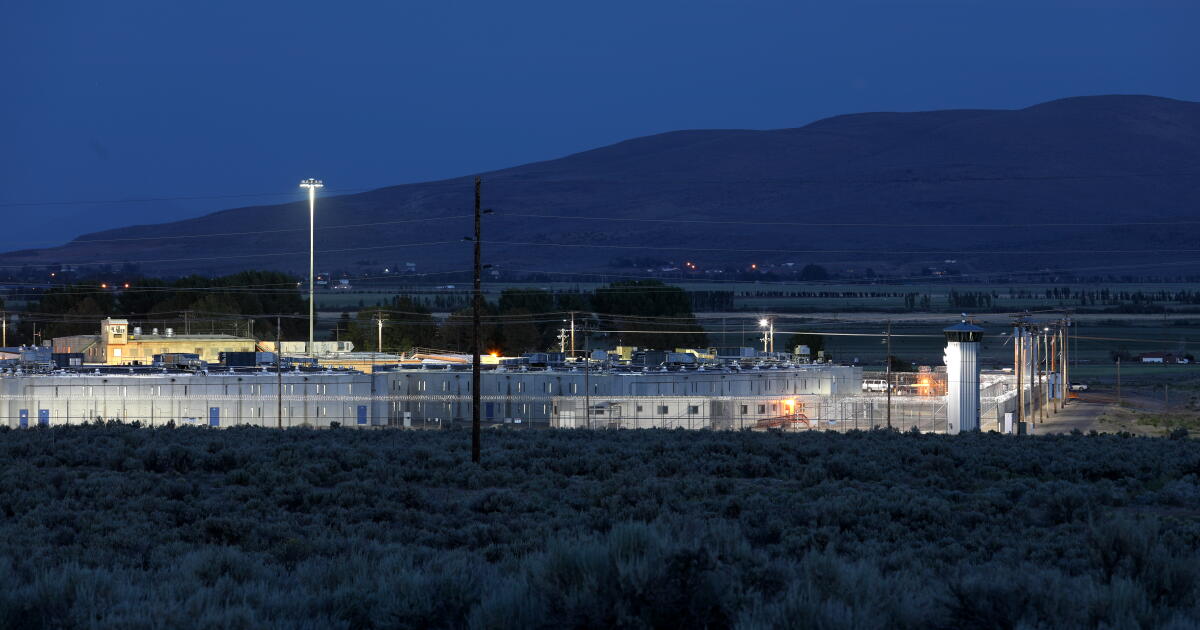
Perched on one of the last major stops before Reno and the desert deep in the Lassen National Forest, Susanville has always been the kind of place California puts the things it doesn’t want to see, hear, smell or really even think about.

“Prisons in communities are not popular, so they tend to be located in areas that are desperate economically,” said Dan Newton, who worked for the city of Susanville for 20 years and was its city manager until recently. “That would describe this area.”

The city’s management was informed in 2021 that the prison was scheduled for closure. They went to court to challenge the closure, arguing the state’s environmental review process hadn’t taken into account the prison closure’s impact on the town. Newsom had a solution: A budget bill that exempted correctional facility closures from the environmental review process.

“There was initially a lot of panic,” said Susanville Mayor Mendy Schuster. “Houses went on the market. People left town. State jobs are good jobs with a good income, and they were going to leave.”

Since the closure announcement, the population of Susanville has fallen from a peak of about 16,000 in 2021, the year Newsom announced the prison would close, to 14,000 in 2024, the last year for which American Community Survey data were available.

Not all of the 1,100 former prison employees left town. Some transferred to a nearby prison, and some retired and stayed in the area. The elementary school lost 10% of its enrolled students between 2021 and the 2025-2026 school year.

The town’s remoteness is also one of its attractions. The surrounding area offers some of the most stunning vistas in far Northern California, sweeping views from highway lookout points over miles of desert rimmed by the mountains of the Cascade Range where it meets the Sierra Nevada.

The history of this area is one of the state or federal government telling its residents that it needs them — to mine for gold, to cut down trees for timber, to guard all the people they sent to prison — and then coming along later to tell residents that their services are no longer needed.

Susanville, the spot on the map, is an immutable intermingling of unique geologic formations. Susanville, the incorporated city, is running out of time.

“We’re heading toward insolvency,” Newton said before he resigned as city manager to take a position in Tehama County government.

The prison building boom

When the state’s three-strikes law still imposed mandatory life sentences on anyone with two or more prior convictions for violent felonies, California needed places like Susanville to put its skyrocketing prison population.

According to Brown University’s Prison Proliferation Project, states and the federal government operated 511 prisons in 1970. By the end of the prison building boom in 2000, that number had risen to 1,663.

The prison guards who lived in Susanville coached Little League and bought bread at the bakery downtown. They had steady jobs with top-tier health and retirement benefits; today experienced correctional officers earn $9,650 a month in base pay.

The town benefited from carceral policies that pulled prisoners hundreds of miles from their families, even as Lassen County counted those inmates as residents until 2022 and built around a prison boom that showed no signs of ending.

Until, of course, it did.

In 2006, overcrowding forced some of the state’s 170,000 prisoners to sleep in hallways and multipurpose rooms. But sentencing policies changed in the early 2010s to put more people in jail than prisons, and when people went to prison, they went for shorter sentences. Now, the California Department of Corrections and Rehabilitation is down to 90,000 prisoners, and has 8,000 more beds available than it has people in custody.

An emergent field of research in the last 15 years has focused on the era of the “prison bust,” when prison closures have outnumbered prison openings. Criminal justice policy researchers have found that the proposed economic benefits of prisons to small, rural communities were probably overstated to begin with.

“A large portion of prison jobs (were) filled by residents of neighboring towns,” wrote the authors of a 2024 article in the journal Punishment & Society. “Even those who moved to the area for prison jobs often settled in adjacent communities, providing little direct benefit to the local economy.”

Not only might prisons not be engines of economic growth, according to a seminal 2010 study from researchers at Washington State University, they might have stymied the development of other industries warded off by the presence of the prison.

Brown University associate sociology professor John Eason, whose book “Big House on the Prairie” focused on a prison in the rural South, found that the economic fate of prison towns is most closely correlated to when they were built, more than where they were built.

“Towns that adopted prisons earlier in the prison boom received a short-term boon compared to those that did not build, but the effects were not lasting,” Eason wrote.

Towns that built a prison early in the boom saw increased median home values and median income, Eason wrote, with reduced poverty and unemployment, but those effects did not last longer than a decade, which he called “a decay effect.”

But the residents and leadership of the city of Blythe, where the shuttered Chuckwalla Valley State Prison was built in 1987, are certain that their economic problems began and ended on the day in 2022 when the prison closed down.

Desert town tried to keep prison open

“We still haven’t got nothing from the state,” said Blythe Mayor Joseph DeConinck. “I hate to say it, but Blythe’s in the middle of nowhere, we’re the furthest from Sacramento, I just hate to say it again, we’re only a few votes out here.”

The mayor of the small desert city in Riverside County near the Arizona border watched the failed lawsuit over the Susanville prison closure and decided against filing their own litigation after Newsom ordered the Blythe prison closed just before Christmas 2022.

Instead, Blythe chose honey over vinegar and launched a lobbying effort to convince state legislators and the governor that the town needed some kind of economic rescue.

It has, so far, failed to produce results.

“We took these prisons when nobody else wanted them,” DeConinck said. “And we adapted to them because they became a strong economic generator for our area.”

Blythe’s population of 18,000 in 2022 had fallen to 17,400 by 2024, the last year for which census statistics are available. A drop of just 3% of the population might not sound drastic, but Blythe was in trouble long before the prison closed.

The population has been dropping since a peak of about 20,000 in 2010. A Riverside County civil investigation in June 2022 found that the city can’t pay its bills, its population is fleeing to Phoenix or the Coachella Valley, and neither the city nor its residents have bright prospects.

Six months after that investigation, Newsom announced the prison closure.

DeConinck said city leadership flew to Sacramento and tried, in vain, to get any traction. He recalled one meeting between the Blythe city manager and representatives of the governor in which he said the city itself was promised direct financial assistance.

The era of sweet-talking the state is over now, DeConinck said.

“They wouldn’t even have a conversation with us,” said Vice Mayor Johnny Rodriguez. “They’re not doing anything to assist us because they have this political mantra that all prisons are bad.”

Rodriguez said the California Department of Corrections and Rehabilitation and the Department of General Services sent representatives to a meeting on the future of the shuttered prison site. It didn’t go well.

“We had just one meeting with a potential developer who had some interest in it, and all the state provided was, what you can’t do, what they won’t do,” Rodriguez said. “They won’t give a timeline when they would start talking about it, so what’s that going to do?”

Newsom’s office referred questions to the California Department of Corrections and Rehabilitation.

Will Matthews, a corrections spokesperson, said in a statement after this article first published that the state sent $995,000 to the Riverside County Workforce Development Division in August 2024.

“State representatives met with local leaders in July 2024 to discuss these resources and other available assistance,” Matthews said. “There was no commitment to providing direct financial assistance to the City of Blythe.”

Matthews said until the Blythe prison site’s infrastructure is separated from neighboring Ironwood State Prison and its bond obligations are resolved, the property can’t move through the state’s process for dispensing with surplus property.

In a March hearing before a Senate budget subcommittee, Corrections Secretary Jeff Macomber said he’s eager to end his agency’s control over closed prison sites.

“I don’t want to hold on to closed facilities,” Macomber said. “Believe it or not, I have to provide a little bit of staffing. It’s unpopular, there’s security risks. We have people break in because who doesn’t want to run in, to break into a closed prison?”

Newsom began closing prisons with the deactivation of the Deuel Vocational Institute in Tracy, followed by the prison in Susanville, and then a prison in Blythe near the Arizona border. The state also ended its contract with a private prison in Kern County, a site now being operated as an immigrant detention center. A prison in Norco, also in Riverside County, is scheduled to close in October.

More prisons probably will close. The Legislature this year passed a budget that called for the state to shut at least one more. Its passage reflected Democratic lawmakers’ desire to save money — about $150 million a year per prison — by eliminating underused correctional facilities.

And some state prisons have astronomical deferred maintenance bills. The state auditor recently released a report estimating that five of them need repairs that would cost $2.4 billion.

Rodriguez is still fighting for a prison on the shuttered site. He has plans to pitch the federal government on opening a women’s prison there to account for the closure of the Federal Correctional Institution in Dublin, which closed after 10 guards were charged with sexually abusing the prisoners.

“Closing Chuckawalla was a mistake,” said Assemblymember Jeff Gonzalez, a Coachella Republican. “For our rural communities, these facilities are critical employers that support local families and local economies.”

Ready for change on edge of Bay Area

If any town was prepared for a prison closure, it was Tracy.

Optimism abounds, even on the city website, which promotes it as “one of the fastest growing suburbs of the San Francisco Bay Area.” The city has for decades been a bedroom community for commuters to the East Bay Area and San José.

The offers are pouring in to fill the abandoned prison site, said San Joaquin County Supervisor Robert Rickman, who was mayor of Tracy from 2016-2020.

“We’ve been in contact with folks in the agricultural industry, the education industry and even some of them who are interested in opening a casino,” Rickman said. “I would say [the prison closure] was neutral. The property isn’t sitting forgotten. South county is a very prosperous portion of our county.”

Prison guards and support staff mainly transferred to the California Health Care Facility in Stockton, Rickman said.

“I guess you’re never really prepared for a closure,” Rickman said, “but the good thing is that nobody lost their jobs.”

Tracy has the advantages that Susanville does not: It’s next to Interstate 5 along a busy commercial corridor in a populated and growing section of the state. Tracy also doesn’t have the drawbacks of Blythe and the Inland Empire desert — the weather never gets too hot, and there is reliable access to water.

Instead of challenging the state government like Blythe, Rickman gets to play host and pitch man to businesses.

Back in Susanville, it’s been a struggle to get any business to return calls.

Hard choices in Susanville

“For the last two years, we’ve adopted deficit budgets,” said Newton, the erstwhile city manager. “We’re deficit spending in order to fill public safety vacancies, and expenditure increases are outpacing our revenue increases.

“It’s going to start eating at our cash reserves.”

The town is hoping some industry — any industry — can come in and save it. City leaders have little hope for state assistance. But the city also has its own limitations.

First, Newton said, it’s hard to make a businesses on the border of California and Nevada choose California, with its higher taxes and stern regulatory environment. That choice in finance terms is known as regulatory arbitrage.

Second, industry needs power, and Susanville doesn’t have a lot of power on the grid, nor the infrastructure to support it. A bad thunderstorm can knock out the lights to half the city. The city’s transmission lines can’t handle the wattage demanded by heavy industry.

Third, the city and county’s limited population is working against it. Prisons force people to work and live in an area, and the state supplies the workforce. But there is no big workforce base on which to draw for any industry. When the prisons close, the guards transfer to new locations or retire and leave the rural, geographically isolated area.

The pandemic didn’t help. Downtown businesses were already struggling when people started buying more retail goods online, a trend that didn’t abate when lockdowns ended, Schuster said.

Now, some of the largest tax generators in town are on sales from online shopping and fuel taxes — people stop in town to get gas because Susanville has the only gas stations for 20 miles in any direction.

A baseball grandstand burned down last year, and in March, a lumber mill that employed about 30 people caught fire. No one was injured, but the mill burned to the ground.

Now the 8,000 people in this remote corner of California have to ask themselves what more they can wring from the land, what more they can take and what more it can yield. One idea includes a new truck stop.

Whatever salvation comes for the town, if any salvation comes at all, won’t be at the hands of the state government that built a prison and then took it away, Newton said.

“No one is coming to save us.”

This article was updated to include information that the California Department of Corrections and Rehabilitation shared after publication.

Duara writes for CalMatters.

Source link

Trent Mosley’s stellar season continues as No. 14 USC beats Louisiana

At the end of a topsy-turvy Saturday that saw the Big Ten’s top contenders tumble, Trent Mosley stood just inside USC’s 15-yard line, looking skyward.

By that point, Ohio State had just blown a 20-point, fourth-quarter lead to Texas, and Oregon had, hours earlier, been stunned by Oklahoma State. The path to the top of the Big Ten suddenly seemed open as ever, just as the Trojans’ tremendous freshman caught the punt and took off in search of an opening himself.

With his stunning start to the season, no one player at USC — and perhaps in all the nation — had manufactured more hope through two games. While the conference’s other top teams spent the day licking their wounds, here, once again, was Mosley weaving joyfully through the open field and conjuring the very same magic from thin air. He shook off one tackle, then another. Soon enough, he was gone for an 86-yard punt return, and the No. 14 Trojans were rolling, comfortably on their way to a 49-30 win over Louisiana.

The second half didn’t feel quite as hopeful, as the Trojans let up and let Louisiana linger around through a victory that coach Lincoln Riley deemed “up and down.”

Still, the win was USC’s 10th straight at home, going back to the 2024 season, and gives the Trojans’ a spotless nonconference slate in 2026 — not that anyone would confuse their early-season schedule for a murderer’s row. There won’t be any easy home wins from here, though, with USC’s next three games against Oregon, Washington and Ohio State.

“It’s been good getting adjusted to this,” Mosley said. “But now we go on the road, so that’ll be a new adjustment.”

USC has, in glimpses this season, looked like a team that belongs among those Big Ten behemoths. And the most encouraging of those moments have largely come from the Trojans’ talented freshman class.

Mosley, who also had an acrobatic receiving touchdown Saturday, wasn’t the only one who made his presence felt. Tight end Mark Bowman had his eagerly anticipated breakout game, as he exploded for six catches, one of which he capped by hurdling two defenders. He finished with 83 yards and two touchdowns, all in the first half. Defensive tackle Luke Wafle, meanwhile, continued his streak of early dominance by tallying a team-leading seven tackles.

USC tight end Mark Bowman hurdles over Louisiana safety Kody Jackson.

USC tight end Mark Bowman hurdles over Louisiana safety Kody Jackson during the first half Saturday.

(Kevin Terrell / Getty Images)

“I feel like our peak, our trajectory should be even higher because of how many young guys are playing,” Riley said.

The win wasn’t nearly as dominant an effort for the rest of USC’s defense, which was coming off of a shutout of Fresno State. Louisiana averaged 7.6 yards per play and scored 20 points in the second half, led by dual threat quarterback Lunch Winfield, who scampered to 91 rushing yards.

“We’re just gonna take this as a learning moment,” defensive tackle Jide Abasiri said. “I just feel like sometimes we’ll get comfortable or complacent, then that’s something we need to, going forward, fix when adversity hits.”

It wasn’t the sharpest night for the Trojans’ offense, either. Though, you wouldn’t know it from the box score. While USC rushed for 214 yards, nearly 100 came in the fourth quarter, with the game well in hand. Quarterback Jayden Maiava put up numbers once again, as well, completing 19 of 29 passes for 261 yards and five touchdowns.

USC receiver Trent Mosley makes a touchdown catch under pressure from Louisiana safety Maurion Eleam Saturday.

USC receiver Trent Mosley makes a touchdown catch under pressure from Louisiana safety Maurion Eleam Saturday at the Coliseum.

(Mark J. Terrill / Ap Photo/mark J. Terrill)

The five passing scores tied a career high. But Maiava said after the game that it “definitely didn’t feel like” that strong of a performance.

Through two games, Maiava had accounted for as many touchdowns (six) as he had incomplete passes entering Saturday’s game. But on Saturday, he missed his first three passes, the third of which went directly to a Louisiana defensive back.

The interception was Maiava’s first of the season, and it led to a Louisiana field goal, giving the Ragin’ Cajuns (1-1) an early lead. It was also the first time the Trojans trailed this season.

USC (3-0) and its quarterback settled down after that. The Trojans mounted a 12-play scoring drive on the ensuing possession, and Maiava found Bowman for a five-yard score. Then, they mounted a 10-play drive, and Maiava found Bowman again.

By that point, USC’s offense had piled up almost 200 yards, while Louisiana had scraped together just 18.

But the Ragin’ Cajuns refused to go away — for the moment, at least. They marched the length of the field and scored, cutting USC’s lead to 14-10.

That was the closest they’d get. The Trojans mounted a third straight drive of 10 plays or more, and this time, Maiava fired a touchdown pass through the hands of a Louisiana defensive back on its way to freshman Kayden Dixon-Wyatt.

The knockout blow came soon after that. After its follow-up drive went nowhere, Louisiana made the mistake of punting to Mosley, who took off sprinting to his right and didn’t stop until he reached paydirt.

The punt return was his fourth score of the season. He added a fifth before the final buzzer sounded.

The rest of the night wouldn’t go nearly as smoothly. The intensity, Riley said, “dipped a little bit.” Louisiana would linger, well into the fourth quarter.

But by then, the Trojans could safely coast their way to a clean non-conference sheet, knowing the trust test of their season – and their stellar true freshmen – is still to come.

Source link

Voting under way in Sweden election that could see far right enter gov’t | The Far Right News

The far-right Sweden Democrats party could enter government for the first time if right-wing bloc wins.

Voters in Sweden are heading to the polls in an extremely close general election that will see either the far right enter government for the first time or the centre-left opposition reclaim power.

Opposition leader Magdalena Andersson of the Social Democrats was among the first to cast her ballot after polling stations opened at 8:00am (06:00 GMT) on Sunday.

Recommended Stories

list of 3 itemsend of list

The 59-year-old, who in 2021 became the first woman to serve as Sweden’s prime minister, voted with her husband at a school in her home municipality of Nacka, south of Stockholm.

Pre-election opinion polls have long credited the four parties in her left-wing bloc with a comfortable lead over conservative Prime Minister Ulf Kristersson’s four-party alliance, which includes the far-right Sweden Democrats.

But the gap narrowed significantly in the final days of the campaign.

Social Democratic Party leader Magdalena Andersson (L) and her husband Richard Friberg (R) cast their votes at a polling station in a school during Sweden’s general election, in Nacka on September 13, 2026 [AFP]

“It is now up to the Swedish people to decide which direction our country should take. Should we have a government entirely dominated by the Sweden Democrats? Something that has never happened in Sweden before? Or should we have a government led by me, which will steer Sweden in a new spirit of cooperation?” Andersson told reporters after voting.

Her party has pledged to boost the welfare state and help struggling households cope with the rising cost of living.

Outgoing Prime Minister Ulf Kristersson is seeking a second four-year term at the helm of the European Union nation.

He has led Sweden since 2022 with a three-party centre-right coalition. It relies on outside support from the Sweden Democrats, an anti-immigration, far-right party that has moved towards the political mainstream, for a parliamentary majority.

If the right-wing bloc is re-elected, the Sweden Democrats can expect Cabinet posts in the next government.

Kristersson has promised to focus on improving Swedes’ everyday lives, following his government’s clampdown on organised crime and immigration.

“We want to use our new and far better preconditions to improve the lives of ordinary people … to make Sweden great again,” Kristersson told news agency AFP before the vote.

epa13233732 Sweden Democrats party leader Jimmie Akesson (L) votes in Rinkeby, a suburb of Stockholm, Sweden, 12 September 2026, the day before the general election. Sweden's general election will take place on 13 September 2026, with voters electing members of the Riksdag as well as representatives in regional and municipal elections. EPA/CLAUDIO BRESCIANI SWEDEN OUT
Sweden Democrats party leader Jimmie Akesson (L) votes in Rinkeby, a suburb of Stockholm, Sweden, September 12, 2026, the day before the general election [Claudio Bresciani/EPA]

The Sweden Democrats, a party with neo-Nazi roots, took 20.5 percent of the vote in the 2022 election to become the biggest party on the right.

Kristersson announced in April that his conservative Moderates would allow the party into government if the right has a majority – though he would remain prime minister even if the Sweden Democrats are the stronger party.

Voting stations close at 8:00pm (18:00 GMT) when exit polls are expected to be published, with the first reliable results expected several hours later.

Some eight million people are eligible to vote in the election, in a country of 10.6 million where voter turnout regularly tops 80 percent.

About half of voters have cast their ballots in advance.

Source link

Andy Hernández: ‘We Must Defend Our Institutions even if We Do Not Agree with the Gov’t‘

Andy Hernández. (Venezuelanalysis)

Andy Hernández is a Venezuelan economist and grassroots activist. He currently serves in the parliament of the 5 de Marzo Comandante Eterno Commune in El Valle, Caracas, and has played an active role in the Communard Union, a national alliance of communes. In this exclusive interview, Hernández offers his perspective on local, state-backed projects within the current context of undermined sovereignty.

The 5 de Marzo Comandante Eterno Commune immediately mobilized in response to the double earthquake on June 24. Tell us a little about this and other recent initiatives by the commune.

After the twin earthquakes on June 24, community organizations sprang into action immediately. Collection centers were set up even before the government announced them. In our case, we set up a collection center on the premises of our communal social enterprise (EPSDC) Somos Karive.

At the same time, we noticed that around Somos Karive, many elderly people began leaving their homes, frightened, and taking to the streets. We brought them coffee, talked with them, and before we knew it, we had 300 people inside Somos Karive. There, with the support of the Ministry of Communes and the Caracas Mayor’s Office, we set up a shelter for a few days, until the panic subsided and people felt calm enough to return to their homes.

Somos Karive is one of the community’s main projects. How is it currently operating?

This initiative originally arose from a need to have a space to store food and expand our collaboration with the Pueblo a Pueblo Plan, a rural collective that organizes with urban counterparts to deliver produce at fair prices. The project then grew and now has several branches. The main operation, which generates the most cash flow, partly because it’s coordinated with the Ministry of Commerce, is the meat-processing plant. There, various cuts of meat are cleaned and portioned, vacuum-sealed, and then sold retail and wholesale to about 30 grocery stores in El Valle.

The second most important activity is our supermarket, which sells groceries and other products. There’s also the café, a space at the entrance that serves coffee, breakfast, and lunch. In fact, we also prepare large-scale lunches on demand. Another project here is a water treatment plant. And finally, a Family Production Unit (UPF) operates here, selling screws and other tools. This UPF contributes to the community through the social reinvestment fund. For now, that fund is used to support community activities. But according to the Law of Communes, the fund must be managed by the communal bank, which we are currently reactivating.

In short, Somos Karive has had its successes and failures, but it is a key initiative. I believe the most complex issue is establishing a management model. While all economic activity must generate a surplus, social property companies propose a different framework for labor relations. There is no boss; rather, there is administrative coordination that answers to the commune. No taxes are paid; instead, contributions are made to the social reinvestment fund. There are no social security contributions, but there must be a fund to support producers and a fund for necessary reinvestments. So we’ve been facing these challenges, in addition to the difficulty of operating EPS in the city, where retail activity makes sense but there is a lot of competition.

Hernández in a communal activity in Caracas. (MinComunas)

The Venezuelan government announced a new popular consultation [for communities to select state-funded projects] for October. What has been the outcome of previous consultations in the commune?

The consultations have led to progress and also provided valuable lessons in our territory. Before the first consultation in 2024, we drew up a wish list without asking ourselves whether those items were feasible or not. Now, after several votes, and with some tools provided by the Venezuelan government for systematic planning, such as the Concrete Action Agenda or the Map of Solutions, we’ve been able to ground the projects in reality. Today we can say that we manage the proposed initiatives and the resources obtained much more effectively. Sometimes we even prepare two reports: one institutional and one community-based.

The most recent one was an extremely complex water project. Our community has gone 30 years without a regular water supply. There are no formal water supply connections, just hoses everywhere. First, the project was formulated: to fix the problem for 291 families without service, and it really did have a significant impact. 

Other initiatives proved more difficult. For example, with a project to purchase water tanks, the funds raised were enough for only 10 tanks, yet hundreds of families needed them. The same thing happened with the project from the last consultation, which was to replace gas cylinders. We’ve managed to replace about 500, but there are 2,700 in total that need replacing. And the biggest challenge was with the rooftops. We needed 16,000 zinc sheets, but the project funds only allowed us to purchase about 850. So in situations like these it is difficult to manage everyone’s needs. In the end, we identified the most vulnerable homes, but we were only able to assist 65. No matter how well we manage the resources, they simply aren’t enough.

So we’ve had our share of setbacks, along with a lot of lessons. People now understand that we have to identify the scope of the problems that can actually be solved through these consultations. Rather than having a wish list, we’re learning to formulate real, concrete, and feasible projects.

What do you think of Acting President Delcy Rodríguez’s proposal to extend consultations to condominium boards and neighborhood associations?

To be honest, I find it interesting. The initial reaction, which I’ve seen in discussions with comrades, is to view it with suspicion, thinking of middle-class condominiums that have never believed in popular power.

The central issue is that a condominium board merely manages infrastructure, whereas the commune must implement policies on health, education, recreation, etc. It must act as the government in the territory, even if we aren’t fully exercising that role. So it might seem that by extending the consultation to condominiums, our presence is being undermined. However, our legislation doesn’t prevent condominium boards from participating in these processes.

Ultimately, the commune is the structure that defines the methodology for these consultations. Perhaps if, at some point, the consultations begin to prioritize the perspective of condominium boards, this concern would be justified. To me, that would indeed be a colossal mistake because it would violate the principle that the citizens’ assembly is the body that decides and has the final say on local projects.

The Somos Karive social property company is one of the 5 de Marzo Commune’s main economic initiatives. (MinComunas)

Turning to the national scene, some analysts describe the situation in Venezuela as “tutelage,” while others call it a “protectorate,” where the country’s fate is essentially decided in Washington. In this context, what role should grassroots organizations play? Is it justified to maintain unconditional support for the government?

Here I will speak in a personal capacity, not on behalf of my commune or the Communard Union, because this is a complex and highly contentious debate taking place within social movements, with many different perspectives.

There are several positions: some speak of tutelage, others of a protectorate, and others of a new form of neocolonialism. I believe we must ask ourselves what defines sovereignty. For me, there are two models of sovereignty currently clashing worldwide: one defined by corporations and the other by organized peoples. Now, in more concrete terms, I defend the Venezuelan revolutionary process, our history, and our struggle. I do not agree with some of the government’s decisions, but it remains my government nonetheless.

However, this is a very complex context in the wake of a foreign military intervention. How can a government be evaluated while under military coercion? That is a difficult question to answer. Regardless of whether or not one supports the government, January 3 [US military strikes and kidnapping of Maduro] is a turning point in our process. For me, the central issue is not whether to defend the government or not, but rather to defend our institutions. For example, I do not agree with reestablishing relations with Israel, nor do I agree with the terms of our relationship with the United States. But this is still my government.

I know this may sound illogical or contradictory, but as a popular movement we must understand that sovereignty is being contested on a global scale. Our goal is to build a new form of state, one that has the commune as its foundation. We must strive to ensure that these 5,400 communal circuits form a network for the defense of the territory, fighting for a new hegemony, and with a leadership that allows us to advance and influence national politics. However, this begins with exercising power from the territories in a coordinated manner, managing resources, and sustaining new social relations.

The communes are not even at 10% of our potential. Public consultations, for example, are a glimpse of what we can do, but they account for less than 1% of the national budget. This means that social organizations are not managing oil revenues, which are our primary source of wealth. We must develop political awareness not only to identify imperialist interests in our resources but also to create economic models that can scale up so we can challenge the status quo on different terms. For example, we could envision a communal corridor to exploit minerals in an alternative way. This would turn us into a real threat to those who seek to impose corporate sovereignty. 

But returning to the more practical question: should we support the government or not? I believe we must support it because it is the government that establishes our institutional framework, even if it takes the form of a bourgeois state that we want to transcend. Now, should we support every decision? Of course not. But defending sovereignty means defending our institutions against foreign powers that seek to impose themselves upon them. For example, the assassination of Niño Guerrero struck me as a very dangerous precedent.

Finally, I believe it is important to have these discussions, both individually and within our organizations. In the case of the Communard Union, we are preparing a congress where we will need to collectively establish positions regarding this reality and, from there, define the actions we will take to try and revert the situation we are currently facing.

In recent months, we have seen a series of measures and reforms clearly geared toward the interests of transnational capital, such as the reform of the Hydrocarbons Law. What stance should communards take on these issues of national interest?

The reform of the Hydrocarbons Law is an example of this advance of the corporate sovereignty model. And in our context, the coercion and plundering began immediately after January 3. The attacks against Venezuela to seize its resources did not begin a few months ago, but before there was some care about appearances. Now the United States has moved on to directly stealing the country’s export revenues. This is like going back to the 19th century.

It is a complex time for the world. We are sometimes a bit chauvinistic; we believe that Venezuela determines what happens everywhere else. Although we certainly have an impact. We have the world’s largest energy reserves, minerals, fresh water, and other resources. Naturally, without independence there is no commune, and defending the process means defending national independence in order to envision a different world.

Now, what steps should we take to defend ourselves against this plundering? We have our Constitution, but this scheme falls outside even the international legal framework. Some might say the solution is to sabotage our own oil industry, but others would ask whether that would help shift the correlation of forces. Because we’re not just interested in being right. We want to change reality. We could issue a statement from the Communard Union right now, outlining everything we disagree with, and perhaps we should do so, but we must collectively decide what our coherent course of action will be, in terms of politics, communication, and so on, to defend our national project.

“Always loyal / Never gringos / Venezuela is not a colony” mural in Caracas. (Archive)

Venezuelan communes have also been characterized by their internationalism. How do you assess recent events, ranging from “joint” military operations with the US to the reestablishment of ties with Israel?

We believe that the commune is a civilizational project that we are implementing in a specific territory: Venezuela. Elsewhere, people may call it something else or pursue it with a different strategy, but we believe it is a civilizational project that is being debated around the world. So, based on that, the commune is obviously anti-Zionist and anti-imperialist. However, we are being subjugated and subdued. Not just the communes, but the country as a whole.

I believe that in the aftermath of January 3, elements such as the rapprochement with Israel were imposed on us. January 3 and the subsequent coercion were decisive in shifting the balance of institutional power, both within the Venezuelan state and in its foreign relations. The United States violated the Constitution, subdued our armed forces, and killed more than 200 people, including those extrajudicially murdered at sea, not to mention the piracy of hijacking our oil tankers. Thus, these disastrous changes are an imposition based on the logic of the military victor getting the spoils. In fact, US officials have openly stated this.

But the concept of the commune is and always will be anti-imperialist, anti-Zionist, and in support of the self-determination of peoples, with a vision of how resources and community life should be organized, the full exercise of our sovereignty, and so on. In this context, the communes must resist by demonstrating their existence, their socially owned enterprises, their assemblies, and their impact on the territory. Demonstrating that another way of life is possible is a way to fight back both locally and internationally.

Source link

Laura Whitmore and Katherine Ryan let loose on the dancefloor at Emily Atack’s star-studded Spanish wedding

GAL pals Laura Whitmore and Katherine Ryan wasted no time in letting loose on the dancefloor in Spain over the weekend.

And there was plenty to celebrate, as they attended Emily Atack‘s star-studded wedding to Alistair Garner in the hilltop town of Mojácar.

Laura Whitmore and Katherine Ryan wasted no time in letting loose on the dancefloor in Spain over the weekend Credit: Instagram/@thewhitmore
And there was plenty to celebrate, as they attended Emily Atack’s star-studded wedding Credit: Instagram/@thewhitmore

Mum-of-two Laura, 41, looked stunning in a low-cut blue and white floral dress with a leg split, as she wore shades on the dancefloor and sipped from a bottle.

Katherine, who is proud mum to four kids, joined her friend for a dance, mimicking her with her own pair of shades, despite the late hour.

The comedian, 43, looked sensational in an off-shoulder gown in various splashes of pink.

Laura shared a video of them enjoying their night off from motherhood, captioning it: “Moms out!”

I do, again

Emily Atack stuns in off-the-shoulder gown as she weds Alistair Garner in Spain


twice as nice

Emily Atack spotted in Spain ahead of 2nd wedding as Rivals co-star jets in

Laura looked stunning in a low-cut blue and white floral dress with a leg split, as she donned shades Credit: Instagram/@thewhitmore
Mum-of-two Laura, 41, hit the dancefloor and sipped from a bottle Credit: Instagram/@thewhitmore
Rivals star Emily, 36, said “I do” again, just three weeks after she tied the knot at a local church in Bedfordshire Credit: Splash
Emily and scientist husband Alistair Garner exchanged vows in a private ceremony in Mojacar Credit: Splash

Laura’s Love Island narrator husband Iain Stirling was also in attendance, as was Katherine’s partner Bobby Kootstra.

Rivals star Emily, 36, said “I do” again, just three weeks after she tied the knot at a local church in Bedfordshire.

The latest sun-drenched fiesta featured a 200-strong guestlist, including David Tennant, Alex Hassell, Rufus Jones, Bella Maclean and Victoria Smurfit from Rivals, as well as the show’s writer Dominic Treadwell-Collins.

Other stars included American actor Stanley Tucci and actress wife Felicity Blunt, as well as Emily’s old pal Leigh Francis AKA Keith Lemon.

The wedding party also included her pop star father, Keith Atack and her actress-comedian mother, Kate Robbins, as well as siblings Martha and George and other family members.

Guests arrived just after 4pm and were handed white parasols to protect them from the afternoon sun.

Emily kept the anxious groom waiting not arriving until 5.35pm, pulling up with her chief bridesmaid in a red Cadillac convertible and walked down the aisle by dad Keith.

The couple – who welcomed baby Barney in June 2024 and got engaged in July 2025 – originally wed at a romantic church service before a party in the garden of their Bedfordshire home where guests were treated to a McDonald’s from a personalised van parked outside.

Writing on Instagram after downing champagne, a thrilled Emily joked: “Christ, we have fun don’t we. I can’t believe we get to do all that again in a few weeks time.”

The party moved to Mojácar in the Costa Almería, a sentimental spot where the TV fave spent childhood holidays at her musician dad Keith’s old summer pad.

The town’s iconic Mirador viewpoint and two top eateries are being completely shut down for the exclusive star-studded bash.

The Inbetweeners star said earlier this year that her second wedding would be a “fat, f***-off party”.

Source link

Arab News | Israeli strike kills two people in Gaza, medics say

CAIRO: An ‌Israeli airstrike on Sunday killed at least two Palestinians in a vehicle and wounded 13 others in the Gaza Strip, medical staff said.

The strike in the Tel Al-Hawa neighbourhood in western Gaza City, left the vehicle mangled, according to footage circulated on social media. Local medical staff told ‌Reuters that ‌they urged people to provide ‌information that could help identify the two people who were killed and whose bodies were dismembered by the explosion.

The Israeli military said the strike targeted two Hamas militants, without giving further information.

An October 2025, U.S.-backed, ceasefire halted large-scale fighting in ‌Gaza, but ‌it has not ended Israeli strikes and ‌there has been little progress on ‌steps towards permanent peace. Hamas accuses Israel of violating the ceasefire and undermining efforts to implement U.S. President Donald Trump’s broader plan ‌to end the Gaza conflict, which includes the Israeli withdrawal from the strip and the disarmament of Hamas. Israel says Hamas has been violating the deal.

More than 1,300 Palestinians, mostly civilians, have been killed in Gaza since the ceasefire took effect, according to the territory’s health officials, while the Israeli military says four Israeli soldiers have been killed.

Hamas does not usually disclose information about fatalities among its fighters.


Source link

I visited Dolly Parton’s brand new Nashville hotel

A GIANT glittery guitar hangs next to bright pink awnings and a huge sign that reads: “Dolly Parton’s SongTeller Hotel”.

The 12-storey building was one of the music icon’s final projects — and while she won’t get to see it open following her death at the age of 80 last month, it will ensure her legacy lives on in Nashville.

Music legend Dolly Parton died aged 80 in August Credit: Camera Press
The SongTeller Hotel opens this month Credit: AP

Parton was heavily involved in the creation of the 240-room hotel, which is a glittering addition to the Tennessee skyline and an absolute must-visit for fans.

It opens to the public on September 29, and I was one of the lucky few granted a first look.

A number of Parton’s costumes will be exhibited in the lobby in a nod to Dolly’s Life of Many Colors Museum on the third floor, where interconnected digital screens tell a 15-minute story of her life.

General manager Shannon Foster says: “We are expecting ­people to walk in even when they’re not staying here. We want everyone to feel welcome.”

WAIL OF A TIME

I drove Irish Route 66 with deserted golden beaches and pirate-like islands


TEMPTED?

Tiny ‘Bali of Europe’ town with stunning beaches, €3 cocktails and £20 flights

Hotel guests will encounter more moments of magical discovery as they move through the elegant building, where song lyrics are etched on to doorframes.

Guests can choose from four room categories — even the most basic of which has the wow factor. But those with cash to splash can spoil themselves with a night in the Acoustic Suite, which is completely geared up for songwriters.

Its living area comes with a keyboard, while drawer liners adorned with Parton’s famous quotes add a personal touch.

The most heartwarming element of the hotel, however, are the Six Sisters rooms on every floor.

The must-visit Country Music Hall of Fame Credit: Getty
Nashville is music city Credit: Jeremy Poland

“When the designers asked Dolly what she wanted most in the hotel, she replied that she’d always wanted to share a room with her five ­sisters,” Foster explained.

The result is a touching tribute to the Parton family bond — a suite with three double beds separated by candy-stripe curtains and a washroom with two showers and toilets.

The rooms are connected by a ­living area in the middle with a curved sofa, a side table painted with each sister’s favourite flower and a chandelier decorated with the siblings’ birthstones.

Foster considers the second floor to be the heart of the operation, though, with guests taking a lift up to a gold sparkling desk to check in.

Parton’s Live — cosy seating around a stage, and bar space ­created to showcase upcoming talent — sits opposite.

But the jewel in the hotel’s crown looks likely to be the late-night lounge Jolene’s, on the top floor.

It will open daily from 5pm and serve punchy cocktails, and a food menu to suit.

A spectacular view over Second Avenue and the Cumberland River — where the famous 4th of July fireworks take place — means Jolene’s will, arguably, have the best seat in the house for the celebration.

The opulent bathroom Credit: Supplied
The Six Sisters room Credit: Supplied

The hotel may be opening a month after the singer’s tragic death but her touch is everywhere.

It’s in the diamante trim on bottle-green barstools, in the corset lacing on the back of a pink ­velvet chair and in the words etched into the corner of a mirror.

“Dolly approved every single rendering that became a reality,” Foster said.

“The hotel is Dolly’s gift to Nashville.”

Parton’s influence on her spiritual home is undeniable and if you plan to visit, it’s well worth exploring beyond the hotel.

Her star in the Music City Walk of Fame Park, near the hotel, remains encircled with floral tributes.

The Country Music Hall of Fame and Museum, opposite the park, has been running a special exhibition about the music legend for the past 17 months.

Dolly Parton — Journey of a Seeker is due to end in October but the singer is honoured throughout for her music and activism.

A number of Parton’s costumes will be exhibited in the lobby Credit: Supplied
A Dolly’s Life of Many Colors Museum is on the third floor, where interconnected digital screens tell a 15-minute story of her life Credit: Supplied

Parton, whose Imagination Library has gifted over three million books to children worldwide — unwittingly entwined her identity into Nashville when she debuted at the Ryman auditorium at the age of 13.

She would not have known she would return to that very stage bigger and brighter each time.

And she definitely would not have dreamed that some day, she would own a hotel just three minutes away from the auditorium.

This is Dolly’s parting gift to Nashville. And it’s worth working 9 to 5 to bag yourself a room.

GO: NASHVILLE

GETTING THERE: British Airways flies from London Heathrow to Nashville from £677pp return, including 23kg luggage.

See britishairways.com.

STAYING THERE: Rooms at Dolly Parton’s Songteller Hotel cost from around $501 (approx £370) per night.

See songtellerhotel.com.

Source link

Ryan Garcia defends his welterweight title with TKO of Conor Benn

After taking 10 years to win his first world championship, Ryan Garcia needed only 4 minutes and 25 seconds to finish off Conor Benn on Saturday night in the first defense of his WBC welterweight title.

“I kind of figured he would just come at me crazy,” Garcia said. “Second round, I said I’m tired of him coming forward; I’m gonna stand my ground a little bit … and then he got caught with a hellacious one.”

Garcia’s sharp right hand to the jaw put Benn on the canvas early in the second round. Moments later, with the Englishman on the ropes, Garcia (26-2, 21 KOs) served a flurry of punches that prompted referee Thomas Taylor to step in and end the contest at the 1:25 mark and send the announced sold-out crowd of 18,855 into a frenzy.

”He’s exactly what I thought he was; he went in and tried to fight me. I think he needs to be a little bit more patient,” Garcia said. “I don’t think he has enough experience. I think he will be back. I have a new level of respect for him.”

Garcia closed -300 at BetMGM, meaning bettors would have had to put down $300 to win $100.

WBC welterweight champion Ryan Garcia celebrates after defeating Conor Benn in the second round Saturday.

WBC welterweight champion Ryan Garcia celebrates after defeating Conor Benn in the second round Saturday.

(Steve Marcus / Getty Images)

The bout was more than another high-profile main event, as it marked a career-defining crossroads for both fighters.

For Garcia, he solidified himself in the 147-pound weight class as a durable, legitimate titleholder rather than a gifted attraction whose career has often been defined by controversy, inconsistency and unrealized potential.

The convincing victory positioned Garcia for a lucrative welterweight fight against the division’s other leading names, including Teofimo Lopez, who was ringside, or another major showdown with Devin Haney, who was also in attendance.

For the 29-year-old Benn (25-2), it’s likely back to the middleweight division after failing in his first world-title opportunity and a chance to escape the considerable shadow of his father, former two-division champion Nigel Benn.

Benn was transported to a hospital after the fight for observation.

In the co-main event, Jai Opetaia (31-0, 24 KOs) patiently weathered several cagey rounds before stopping Noel Mikaelian in the ninth round of their scheduled 12-round lineal cruiserweight championship fight.

Opetaia stunned Mikaelian (28-4) with a multi-punch combination and two crushing hooks, then sent him backward into the ropes with a powerful right hand. Referee Harvey Dock administered a standing eight-count before determining Mikaelian could not continue, ending the competitive fight by TKO at 1:30.

Da’Mazion Vanhouter (13-0, 10 KOs) wasted no time in his scheduled eight-round heavyweight bout, delivering a crushing right hand at the 1:58 mark of the first round for a knockout of Raphael Akpejiori (19-4).

In the 10-round lightweight bout that opened the main card, Andres Cortes (26-0) retained his belt with a unanimous decision over Mark Magsayo (29-3), with all three judges scoring the fight 97-93.

Ramirez writes for the Associated Press.

Source link

Mosque and homes damaged in Saudi Arabia after alleged Houthi strike | Houthis

Saudi Arabia has released video showing the damage caused by a projectile it says was fired by Yemen’s Iran-backed Houthis. A mosque and several buildings sustained damage, although the Houthis say they were targeting a Saudi military base.

Source link

Jeremy Clarkson’s partner Lisa Hogan is ‘so proud’ star decided to go public with cancer battle

JEREMY Clarkson’s partner, Lisa Hogan, is “proud” of his decision to go public with his cancer diagnosis, saying it has helped thousands of people.

The former Top Gear presenter is in remission after revealing on the latest series of Clarkson’s Farm that he had been diagnosed with “aggressive” prostate cancer.

Lisa Hogan revealed she was ‘proud’ of her partner-of-nine-years for going public with his battle Credit: PA
Jeremy revealed his diagnosis in a heartbreaking episode of Clarkson’s Farm Credit: Amazon Prime

Lisa says The Sun columnist was initially reluctant to share his diagnosis with the public.

Speaking to the Daily Star, she said: “I’m really happy he caught his prostate cancer early and I’m really proud of him for putting it on the show, because that was a really big decision.

“When I was filming him in hospital, at first he said please don’t.

“It was (producer) Andy Wilman who convinced him to do it, to help everybody else.

baby gaga!

Lady Gaga seen with new baby for first time after superstar welcomed first child


GET WELL SOON

Angie Best reveals she’s back in hospital following battle with cancer

Jeremy broadcasted some of his trips to hospital on the show Credit: Amazon Prime

One in eight men will get prostate cancer

The risk of developing prostate cancer depends on many factors, here are some of the facts about the disease and how many men it affects.

  • One in eight men will get prostate cancer in their lifetime
  • It is the fourth most common cancer worldwide, and the most common in men
  • There are 55,000 new cases every year in the UK, and 1.4million globally
  • Around 12,000 people lose their lives to prostate cancer annually in the UK and almost 400,000 around the world
  • Prostate cancer accounts for 28 per cent of all new cancer cases in men in the UK, and 14 per cent of all new cancer cases in men and women combined
  • Prostate cancer survival has tripled in the last 50 years in the UK
  • More than three-quarters (78 per cent) of patients survive for 10 or more years
  • About 490,000 men are living with and after prostate cancer in the UK
  • It is most common in men aged 75 to 79
  • Since the early 1990s, cases have increased by 53 per cent in the UK
  • Mortality rates are up 16 per cent since the early 1970s in the UK
  • Incidence rates are projected to rise by 15 per cent in the UK between 2023 to 2025 and 2038 to 2040
  • Mortality rates are expected to fall five per cent in the UK over the same years
  • Source: Prostate Cancer UK, World Cancer Research Fund International and Cancer Research UK

“When the show came out, Prostate Cancer UK had 30,000 people going on to their website in one day.”

The charity confirmed that in the 24 hours after Jezza, 66, dropped the bombshell news, some 16,749 men took their online risk checker.

That was the highest figure since former Prime Minister David Cameron, 59, revealed last year that he’d also had prostate cancer.

The organisation also had 43,543 visitors to its website – the highest of the year so far and double the number they’d normally receive.

Hogan says Clarkson has also benefited from opening up to those around him.

“Yes, of course it was a terrible worry,” she added. “But what I did encourage him to do was to talk to his friends.

“He didn’t want to initially, but he’s got lots of friends who’ve been through the same thing and he’s been talking to them about it. I think that’s really helped.”

Clarkson revealed in June that he is in remission.

Recently speaking with The Times, Jeremy said of his health: “I am well. I am not unwell.

“I mean, I was unwell, but only for a very short period of time.”

He also revealed in June lifestyle changes after his cancer battle as he admitted “I want to see my grandchildren grow up”.

Jeremy said to The Sunday Times: “I really like seeing my grandchildren. I want to watch them grow up.

“I drive much more slowly. I’m a bit of a dawdler. I go for walks a lot. I have vegetarian food.”

He shares three children – Emily, Finlo and Katya – with his ex-wife Frances Cain.

His eldest, Emily Clarkson, has two children with her husband Alex Andrew.

The NHS has also revealed a new study which will see thousands more men have access to the prostate cancer test used to diagnose Jeremy.

The Stockholm 3 blood check is said to be more accurate at spotting aggressive tumours than the prostate-specific antigen test currently used by the NHS.

The test will be offered to up to 10,000 men aged 45 to 74 at a discounted £99 and given free on the NHS to 2,000 more on lower incomes.

It would typically cost £500 at a private clinic.

Source link