Former adversaries say they will settle differences as fears grow of expanding war in Ethiopia.
Published On 21 Sep 202621 Sep 2026
Seven Ethiopian armed groups have formed an alliance aimed at overthrowing the government of Prime Minister Abiy Ahmed.
The groups announced the alliance on Sunday, saying that they would work together to set up an inclusive transitional government.
Recommended Stories
list of 2 itemsend of list
“We have established a joint alliance called the Ethiopian Peoples’ Forces Alliance for Survival, known in short as the Alliance for Survival,” the groups said in a joint statement.
The alliance includes the Amhara Fano National Movement, a coalition of Fano factions that has fought federal forces in the Amhara region since 2023; the Tigray People’s Liberation Front (TPLF), which dominated Ethiopian politics for nearly three decades before Abiy took office; and the Oromo Liberation Army (OLA), which has fought federal forces in Oromia since 2018.
Four smaller groups – the Ogaden National Liberation Front (ONLF), the Afar Revolutionary Democratic Unity Front (Ugugumo), the Benishangul Peoples’ Liberation Movement and the Gumuz Peoples’ Democratic Movement – make up the rest.
Abiy Ahmed has served as Ethiopia’s prime minister since 2018, when he came to power promising sweeping reforms. [File: Reuters]
The groups’ leaders had been talking to form the alliance for about a year, a source close to Fano told Al Jazeera on Sunday.
The announcement comes weeks after clashes in the northern region of Tigray, one of the most serious breaches yet of a 2022 peace deal, deepened fears of a return to full-scale war.
Fighting has gripped parts of Oromia since 2018 and Amhara since 2023.
Abiy came to power in 2018 promising sweeping reforms. He freed journalists, activists and other political prisoners and revoked bans on many political parties after taking power.
But his opponents and human rights activists accuse his government of reversing those gains in recent years.
In the statement, the alliance accuses the government of imposing “dictatorial rule” that has pushed the country towards break-up.
It also says a transitional government guided by a charter would work to end the wars, protect rights and open a national dialogue.
Jaal Marroo, the OLA’s military leader, told a local broadcaster earlier this month that they had met several times before settling on the final announcement.
Zemene Kassie, the Fano leader, first publicly indicated that deals had been reached in an interview with the Swiss newspaper Le Temps, published on August 16.
The government has not publicly commented on Sunday’s announcement.
Fano fought alongside federal forces against Tigray’s fighters in the Tigray war of 2020 to 2022, which killed hundreds of thousands.
Amhara and Tigray also both claim Western Tigray, which Amhara nationalists have administered since the war ended.
Ethiopian academic Eyob Tilahun told Al Jazeera on Sunday that the competing groups had agreed to have a dialogue and form an alliance “in the best interests of the public”.
“Those allied forces believe that they all face a survival threat from the government,” Eyob said.
The 2022 peace agreement, signed in Pretoria, South Africa, ended the war between the federal government and Tigray’s forces but left disputes over disarmament and the TPLF’s legal status unresolved.
In mid-July, the TPLF declared the 2022 Pretoria peace deal “effectively dead”.
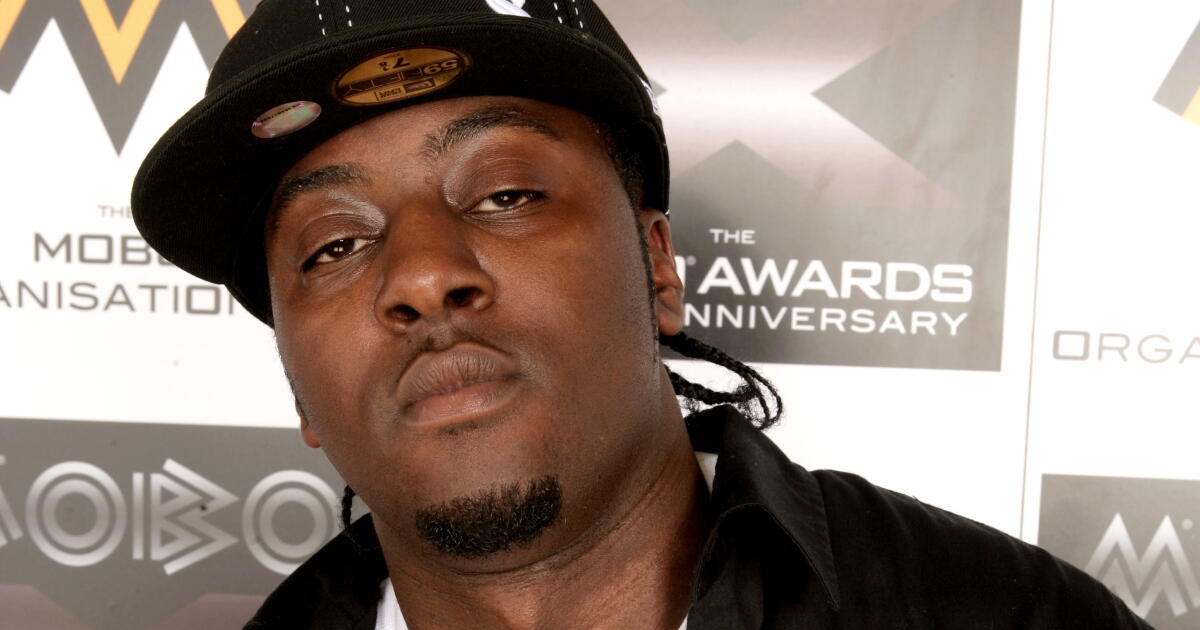
Sway Dasafo, a pioneering British Ghanaian rapper known for his lyric storytelling and championing of British music, has died. He was 44.
The rapper and producer’s death was announced Thursday on social media by the Mobo Awards, which celebrates music of Black origin. Dasafo’s friend Kash Ahmad confirmed to the BBC that he died at his home in Ghana. No cause of death was provided, but the outlet reported that Dasafo had been diagnosed with Hodgkin lymphoma in 2010 before going into remission later that year.
“We’re deeply saddened to hear of the passing of Sway,” Mobo wrote on Instagram. “Sway will always hold a special place in MOBO history.”
In 2005, Dasafo became the first unsigned artist to win the Mobo award for hip-hop act before he released an official album. He won over other established artists including 50 Cent and the Game off the strength of his mixtapes, “This Is My Promo” volumes one and two.
“Mixtapes effectively provide a diary of my life,” Dasafo told the Guardian in 2005. “They feature skits and interviews of me on radio. When people follow your story, they feel closer to you — it’s like a soap opera. People want to know what’s going to happen next.”
“It was a huge moment,” Mobo’s Instagram statement said of Dasafo’s win. “Not just for Sway, but for UK Hip Hop. At a time when British rappers were still fighting to be recognised alongside their US counterparts, his win made a real statement about the talent, creativity and potential coming out of the UK. … [W]e will always be proud that he was part of the MOBO story and of the history we shared together.”
Born Derek Andrews Safo on Sept. 5, 1982, in Hornsey, north London, to Ghanaian parents, Dasafo grew up primarily in England where he developed a love for literature and music. He started rapping as a hobby when he was 10 and was making beats on his computer at 13.
The versatile rapper got his start in groups such as Phynix Crew and One before going solo and releasing his series of mixtapes. Among his early hits were “Up Your Speed” and “Little Derek,” from his debut alum, “This Is My Demo,” which he released from his own label, Dcypha Productions.
“I’m a positive person and this positivity comes out in my music,” Dasafo said in his 2005 Guardian interview. “I don’t go round holding guns to people’s heads, so I won’t rap about holding guns to people’s heads. Trouble attracts trouble. If you rap about trouble, it will come to you.”
From early in his rap career, he expressed his desire to become a producer so he could sign and nurture other talent. Dasafo has collaborated with artists including Riz Ahmed, Ed Sheeran, Lupe Fiasco and Chamillionaire.
BBC Radio 1Xtra broadcaster Remi Burgz called Dasafo a “UK Rap pioneer” and “one of north London’s finest” during her program, according to the BBC.
“He was mine and many others’ first experience of U.K. rap [and] hip-hop in mainstream media,” she said. “He was a literal example of paving the way and showing that U.K. rap can take up space in music.”
Dasafo is survived by his two sons, Jalil and Ammar-Joseph, and twin daughters, Queen-Inaya and Queen-Imara.
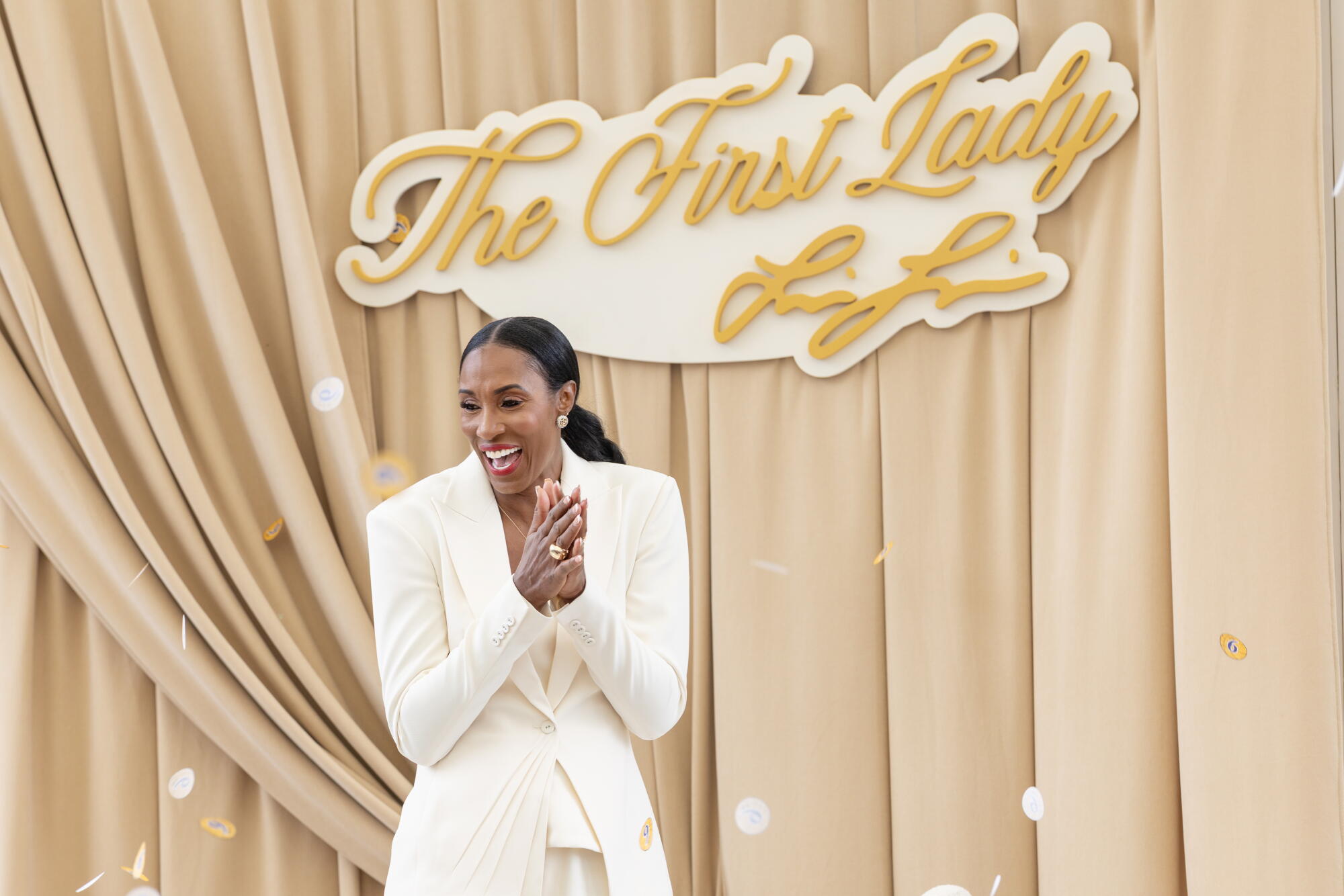
Leslie, a two-time WNBA champion and member of the Naismith Memorial Basketball Hall of Fame, became the first female professional athlete to receive a statue outside of Crypto.com Arena on Sunday. After the ceremony, the Sparks earned a 105-84 win over the Portland Fire.
Leslie’s friends and family gathered outside the arena for the unveiling of the statue Leslie dubbed “The First Lady,” celebrating her 12-year pro basketball career in Los Angeles. Many speakers, including former Sparks coach Michael Cooper and Lakers legend Magic Johnson, noted Leslie’s accomplishments while also saluting her as a kind person.
Leslie became the second WNBA player to be honored with a bronze statue outside of a U.S. pro basketball arena, joining the Seattle Storm’s Sue Bird.
Lisa Leslie celebrates on stage after her statue is unveiled outside Crypto.com Arena on Sunday.
(Jason Armond / Los Angeles Times)
“We know there is a low percentage of women who have statues in our country,” Leslie said. “I just feel like we are just starting to get our flowers and reap some of the benefits of hard work, blood, sweat and tears that we put into it.”
Leslie sat courtside with her family watching her former team beat the expansion Fire. Rae Burrell led the Sparks with 20 points and added two assists. Nneka Ogwumike finished with a double-double and Ariel Atkins had 14.
Burrell led the team with 13 first-half points. The Sparks led by as many as 20 points in the third quarter, during which several Sparks reached double-figure scoring.
The Sparks kept their foot on the gas in the fourth quarter despite playing without Cameron Brink, Dearica Hamby and Aaliyah Nye.
Many Sparks said they felt blessed to have formed relationships with Leslie. Burrell said Leslie has been a big help during her career. The retired star has responded when players around the WNBA have sought advice.
Ogwumike said the team was happy to attend the pregame statue reveal.
Sparks legend Lisa Leslie takes photos with family and friends at her statue unveiling outside Crypto.com Arena on Sunday.
(Jason Armond / Los Angeles Times)
“That’s history, you know? I am very adamant about players coming in and knowing their history,” Ogwumike said. “That’s something you can’t let go of. I think we can see, especially in the NBA, where they are honoring these legends and they are coming back. I think we’re entering an era where there is so much history.”
Leslie grew up in Compton. During the ceremony, she spoke about watching her siblings whenever her mother went to work as a truck driver. She said she pushed to make good things happen for her siblings and didn’t quit or make excuses when life was difficult. She embraced challenges and often challenged herself.
Cooper said Leslie would go head-to-head with some of the Lakers players during practice to give herself a bigger challenge and it was impressive to watch her hold her own. Leslie was determined to be the first player in the WNBA to dunk, which helped redefine what was possible in women’s basketball.
The statue outside of Crypto.com Arena depicts her dunking a basketball.
Lisa Leslie and her family celebrate as her statue is unveiled outside Crypto.com Arena on Sunday.
(Jason Armond/Los Angeles Times)
“I hope they see themselves out there. I hope you can find a girl that looks like you, whether she has long hair or short hair,” Leslie said. “That’s the key for kids in general. You have to see yourself. If you see it, then you also start to dream and believe that you can be it.”
Leslie recalled walking around Los Angeles as a child. Her affection for the city receiving a statue here more meaningful.
“I also feel a certain level of pride,” she said. “I feel like we are such good people in L.A.”
Leslie’s statue stands next Lakers Hall of Famer Kobe Bryant and his daughter, Gigi Bryant. Leslie called Kobe her younger brother during the ceremony and is happy to be close to him again.
Leslie’s career will be hard to repeat, but she sees it as a blueprint WNBA players can follow.
She said she is pleased with the direction the WNBA is heading, leaps and bounds ahead of her experience joining the league in 1997. She said it’s been great to see sponsors pouring in and helping the game grow.
“I am so proud of where the women’s game is,” Leslie said. “But the dream was always that we hoped that our USA, everybody across the board, could see the beauty in us, could see the strength in us and our resilience. I am so proud of the product that’s on the floor.”
For a decade, the United Nations’s most visible role in the Sahel was its peacekeeping mission in Mali.
The United Nations Multidimensional Integrated Stabilization Mission in Mali (MINUSMA) was established by the Security Council in 2013. Its mandate was terminated in June 2023 at the request of Mali’s transitional government, and the mission completed its withdrawal by the end of that year.
But the end of MINUSMA did not end the UN’s engagement with the region.
Its political work continues through the UN Office for West Africa and the Sahel (UNOWAS), while the wider UN system remains involved in humanitarian and development work.
What has changed is the space in which that engagement takes place.
Burkina Faso, Mali and Niger formally left the Economic Community of West African States (ECOWAS) on January 29, 2025. The three countries have also deepened cooperation through the Alliance of Sahel States (AES), putting sovereignty and strategic autonomy at the centre of their political message.
The humanitarian pressures, meanwhile, have not eased.
Displacement, insecurity, food insecurity and other pressures continue to cross borders, even as governments increasingly insist on handling their security and political affairs on their own terms.
The question is what influence the UN can exercise after the departure of the peacekeeping force that once represented its most substantial presence in the region.
What does the UN’s presence look like now?
The UN’s role today is less about troops and more about diplomacy, mediation, humanitarian assistance and development.
UNOWAS is a special political mission rather than a peacekeeping operation. Its work includes preventive diplomacy, good offices, political mediation, conflict prevention and support for political dialogue.
“The influence the UN can actually exercise is narrow. The AES states have stripped away the mechanisms that once gave outside institutions leverage, leaving ECOWAS and the Rome Statute, and building their own confederation and joint force instead,” said Mubarak Aliyu, a political and security analyst in Nigeria.
In February 2026, the Security Council extended UNOWAS’s mandate until January 31, 2029, while requesting an independent strategic review of its mandate and activities, to be finalised by September 30, 2026.
The review comes as West Africa’s political landscape is being reshaped by military governments, new regional alliances and a stronger emphasis on sovereignty.
Russia has also become an important part of that changing security picture.
“What has actually shaped events this year is Russia’s Africa Corps, which helped Mali’s and Niger’s military governments survive shocks the UN was never positioned to influence, functioning mainly as regime protection rather than counterinsurgency,” Aliyu said.
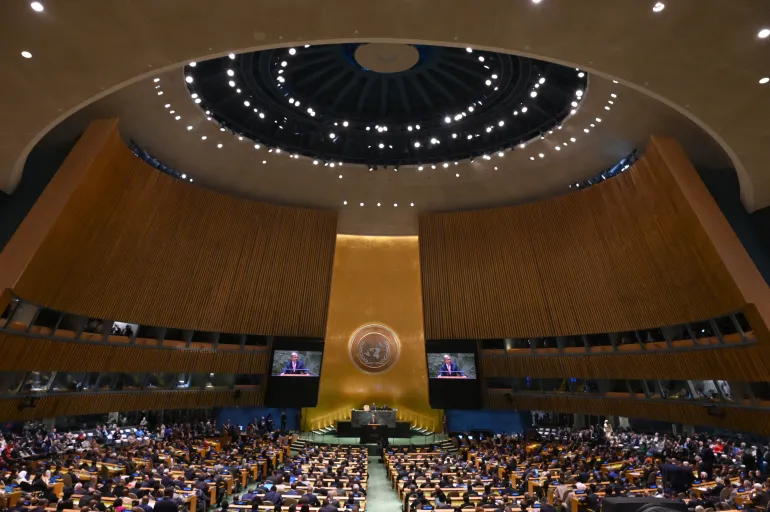
UN continues its engagement in a Sahel where governments are placing greater emphasis on sovereignty and strategic autonomy [File: Timothy A Clary/AFP]
“Moscow’s leverage extends into the Security Council chamber too, since its veto shapes what collective action the Council can attempt on Mali in the first place.”
Kabir Adamu, founder and managing director of Beacon Security and Innovations Limited, an Abuja-based firm that provides security solutions in Nigeria, the Lake Chad Basin and the Sahel, said the UN should shift its approach away from large deployments of UN troops to diplomatic and towards diplomatic and development solutions.
“Looking ahead, the UN’s priorities in the Sahel should promote effective security sector governance and security sector reform. This will mean pivoting from traditional, large-scale peacekeeping to deep-rooted and core preventive strategies and diplomacy that addresses the root causes of fragility, conflict and violence, as well as instability,” Adamu said.
For the United Nations, diplomacy has become more important as governments turn to other security partnerships and regional arrangements.
How has sovereignty changed the political space?
Burkina Faso, Mali and Niger have made sovereignty and strategic autonomy central to their political outlook and built the AES as a framework for closer cooperation.
Their departure from ECOWAS has changed the regional architecture through which West African governments have traditionally dealt with political and security crises.
The UN still works with regional organisations, including ECOWAS and the African Union, but governments no longer share one political framework or the same approach to external engagement.
Consequently, for the UN, maintaining vital political channels has become potentially more difficult.
Adamu said the fragmented security architecture means the UN should seek to work with and through regional organisations and groups, rather than establishing its own large-scale forces.
“As national security structures remain weak and extractive, and regional security architecture fragments, marked by the rise of the Alliance of Sahel States and shifting ECOWAS dynamics, the UN should prioritise pragmatic, inclusive mediation to bridge divides between Sahelian and coastal states, while actively bolstering alternative, functioning frameworks like MNJTF [Multinational Joint Task] and the Accra Initiative,” he said.
Have the problems in the Sahel gone away?
The retreat of peacekeepers has not removed the pressures that brought international organisations into the region in the first place.
Displacement, armed violence, organised crime, food insecurity and climate pressures continue to overlap across the Sahel.
Climate change is perhaps not the root cause of the instability, but environmental and economic pressures can add to existing vulnerabilities, particularly where state institutions are weak and communities are already dealing with conflict and displacement.
For the UN, humanitarian work remains one of the areas where engagement can continue, even when governments reject large-scale military intervention.
Humanitarian work also places greater emphasis on local and regional capacity.
“Crucially, the UN must double down on the core UNISS pillars of governance, resilience, and security by integrating climate-peace initiatives and empowering local capacities, ensuring that international engagement remains flexible, locally owned, and focused on sustainable, multidimensional stability rather than solely militarised responses,” Adamu said.
While the UN cannot determine the security partnerships of sovereign governments or force political processes on authorities that reject them, it can still facilitate dialogue, support humanitarian operations and raise regional crises before the wider international community.
What does UNGA 81 mean for the Sahel?
The 81st session of the United Nations General Assembly opened on September 8, 2026, with its General Debate due to begin on September 22.
The UNGA meets with no UN peacekeeping mission in Mali and with Burkina Faso, Mali and Niger outside ECOWAS, while the AES has become a separate framework for their political and security cooperation.
“That leaves the UN closer to an advocate and service provider than a shaper of outcomes,” Aliyu said. “It can report, brief, fund aid operations and press for access, but it cannot compel it or offer the regime security that has made Russia indispensable to the military governments.”
Yet for the Sahel, insecurity, displacement, humanitarian needs and economic and climate pressures remain.
In the changed regional environment, the UN’s influence is more likely to come through diplomacy than force, through access rather than authority, and through regional relationships rather than a large international security presence.
Officials urge civilians to stay away from site in Al-Eis near Aleppo after series of explosions.
Published On 21 Sep 202621 Sep 2026
Powerful explosions at a weapons depot in northern Syria have injured at least four people, according to state media, with officials urging the public to stay away from the site.
The explosions occurred early on Monday at a Syrian army site in the vicinity of the town of al-Eis, south of the city of Aleppo, the state-run SANA news agency reported.
The cause of the explosions was not immediately clear.
Faisal Mohammad Ali, the head of civil defence operations in Aleppo, told SANA that rescuers have evacuated four injured people from the site.
Al Jazeera’s Obaida Hitto, reporting from Aleppo, said a series of blasts has followed the initial explosion.
“The explosions are audible from a few kilometres away from the site. We have now seen a series of ambulances and fire trucks enter towards the position,” he reported.
Aleppo Governor Azzam al-Gharib urged residents not to leave their homes for the time being, adding that “hospitals, ambulance and emergency teams are on full alert”.
Roads leading to the site of the explosions were closed “to ensure the safety of civilians”, Aleppo’s Internal Security Command said.
A resident of Aleppo’s Hamdaniyeh neighbourhood told the AFP news agency that they heard a “huge explosion” and when they went up to the roof could see “large flames in the distance”.
Several such blasts have previously occurred in Syria, which is emerging from more than a decade of civil war following the toppling of longtime ruler Bashar al-Assad in late 2024.
An explosion of unknown origin killed 11 people at a military site in the eastern province of Deir Az Zor on Friday.
Earlier this month, an explosion at a weapons depot belonging to the Ministry of Defence killed 14 people and injured 11 in Syria’s northwest Idlib province.
Five people were killed just over a week earlier in the same area when a vehicle carrying munitions exploded.
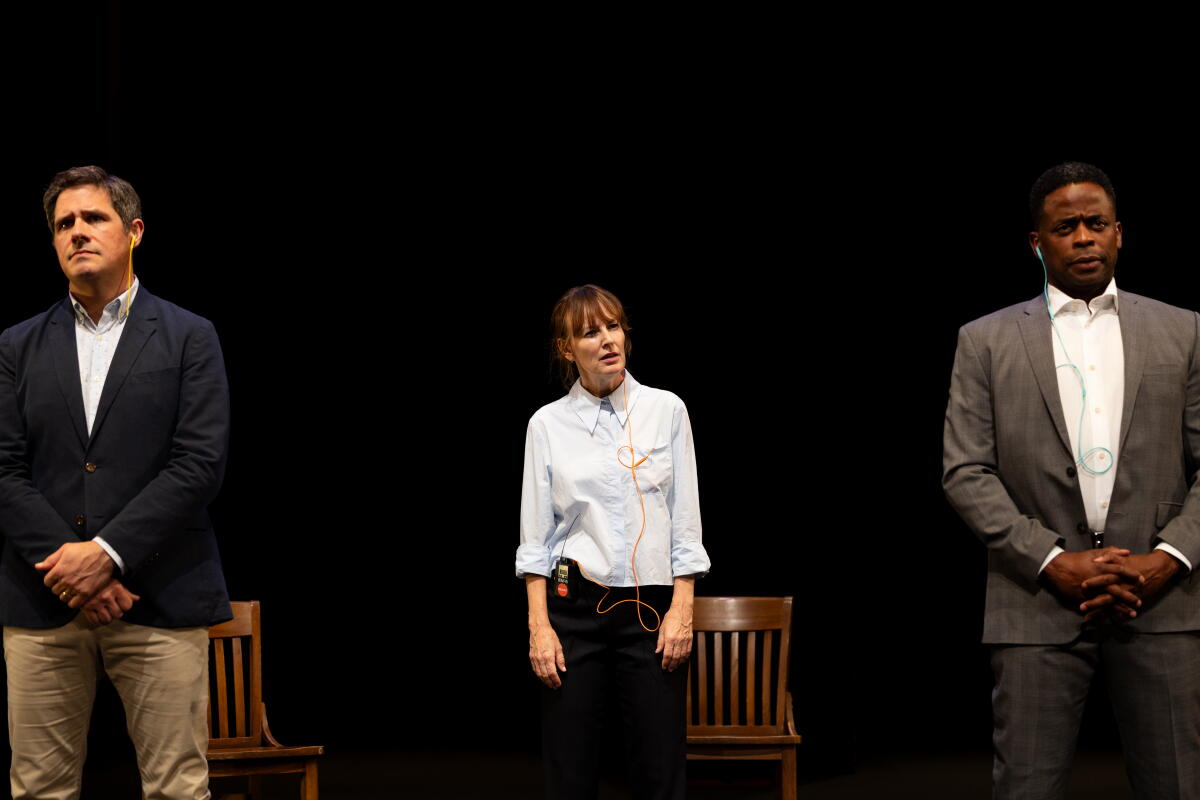
The staging is simple. A circle of nine stately wood chairs on a bare stage. Four actors, affixed with in-ear monitors, occupy different seats as testimony is elicited, provided and undermined.
The Senate Judiciary Committee is back in session in “The Ford/Hill Project,” now at REDCAT through Saturday. What follows is some of the most riveting and distressing testimony ever delivered in such a setting.
Anita Hill and Christine Blasey Ford are called back to testify under oath about the Supreme Court nominations of Clarence Thomas and Brett Kavanaugh, respectively. This documentary drama, created by Elizabeth Marvel and director Lee Sunday Evans, is composed from the verbatim transcripts of these painful proceedings.
In 1991, Hill testified that Thomas had repeatedly sexually harassed her when he was her supervisor at the U.S. Equal Employment Opportunity Commission and the Department of Education. In 2018, Ford testified that she had been sexually assaulted in 1982 by a 17-year-old Kavanaugh when she was 15.
Marvel and Evans create a double helix from excerpts of these two hearings, which are separated by nearly 30 years yet reveal highly entrenched patriarchal patterns. Two women, summoning the courage to tell what they know about two men who are about to be entrusted with the most consequential governmental power, are put through the wringer as the political machine shifts into gear.
The actors wear in-ear monitors that feed them edited clips from the real audio of the hearings.
(Angel Origgi / REDCAT)
Marvel, one of the treasures of New York theater, takes on the role of Ford at the Brooklyn Academy of Music in a run that ends Sunday. (The piece premiered at Woolly Mammoth Theatre Company in 2024.) At REDCAT, the superb Rosemarie DeWitt assumes Marvel’s place, standing in for Ford but never attempting anything as crass as an impersonation.
The production, under Evans’ precise direction, manages to find a tone that might be paradoxically described as emotionally resonant neutrality. Those in-ear monitors that the actors are wearing feed them edited clips from the real audio of the hearings.
Ford, a psychology professor with an expertise in biostatistics, answers prosecutorial questions about a life-altering trauma in a manner that leans on her scientific training for security. Hill, a Yale-educated lawyer asked to elaborate on the prurient conduct she was chronically subjected to at work, never loses her professional composure.
“Indelible in the hippocampus is the laughter,” Ford tells Sen. Patrick Leahy when asked about the strongest memory she has of the incident. (Ford’s voice, resounding at the start of the production, keeps the brutality of the assault at the forefront of our minds.)
Hill, played by Betty Gabriel, describes the threatening nature of the unwanted advances that created such a toxic work environment. Aware of the damage that Thomas could inflict on her young career, Hill was determined to do what she could to salvage an extraordinary legal opportunity.
At times during Thursday’s performance, Gabriel appeared to stumble on her lines, but it was hard to tell because Hill is speaking extempore in the most difficult of public forums and she doubles back on her sentences, carefully parsing out her words. What both DeWitt and Gabriel honor exquisitely in their performances is the quiet integrity of these women as they willingly expose themselves to political attacks for the sake of causes greater than themselves — the truth, first and foremost, but also gender equality and the Senate’s advisory role as a cornerstone of American democracy.
The actors change not only their seats but also their roles.
(Angel Origgi / REDCAT)
Dulé Hill channels the presence of Thomas, who eventually theatrically hijacks the hearing by referring to the experience as a “high-tech lynching for uppity Blacks.” Rich Sommer gives us the voice of Kavanaugh extolling the pleasures of beer and barking at senators who pointedly ask about the extent of his drinking.
The actors change not only their seats but also their roles. The interrogated become the interrogators in a way that gets a little blurry when the focus initially shifts from Hill and Ford to Thomas and Kavanaugh. But the murkiness doesn’t last long in a production that achieves an admirable balance between objectivity and emotion, abstraction and representation.
The restraint imposed by the production adds to its power. There’s no need to editorialize. The proceedings skewer themselves.
When Sen. Alan Simpson quotes from “Othello” in defense of Thomas, he uses Shakespeare’s lyrical authority but fails to realize that he is in fact invoking the false words of the tragedy’s villain, Iago. Not that the easily impressed senators, eager to exculpate a favored man, took note of the irony.
The patriarchy cares mostly about shoring up its own power. Thomas and Kavanaugh were part of the Supreme Court majority that voted to overturn Roe vs. Wade.
The ending, the only time when Evans’ direction loses its poise, blares “make it right,” performed by the Tune-Yards, as Thomas and Kavanaugh, adorning themselves in black robes, find their seated place according to seniority among the nine chairs. The theatrical flourish seems jarring, but so too is the historic moment.
“The Ford/Hill Project” filled me with sadness but not despair. The bravery of Hill, who educated a nation on sexual harassment, and the emotional strength of Ford, who bared her trauma for public enlightenment, live on in the American consciousness as it progresses, in fits and starts, toward justice.
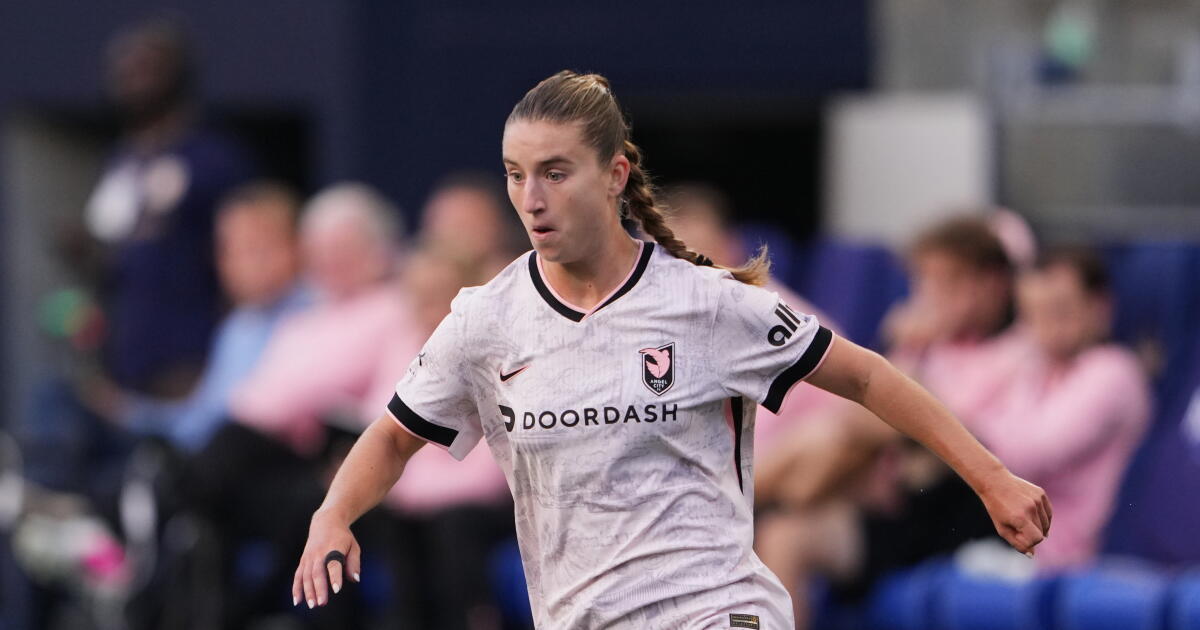
Angel City cruised to a 3-0 road victory over a shorthanded Utah team that received two red cards in the first half.
Defender Paige Cronin and midfielder Ana Tejada were ejected by the 24th minute. Two minutes later, Ally Sentnor converted the resulting penalty kick past goalkeeper Mandy McGlynn to put Angel City (11-8-6) ahead in Sandy, Utah.
Two minutes after coming off the bench for the second half, Taylor Suarez made it 2-0 with a one-touch finish off a pass from Gisele Thompson.
Sveindis Jonsdottir capped the scoring in the 67th minute, dispossessing Tatumn Milazzo deep in Utah territory before rolling a shot past McGlynn’s right side.
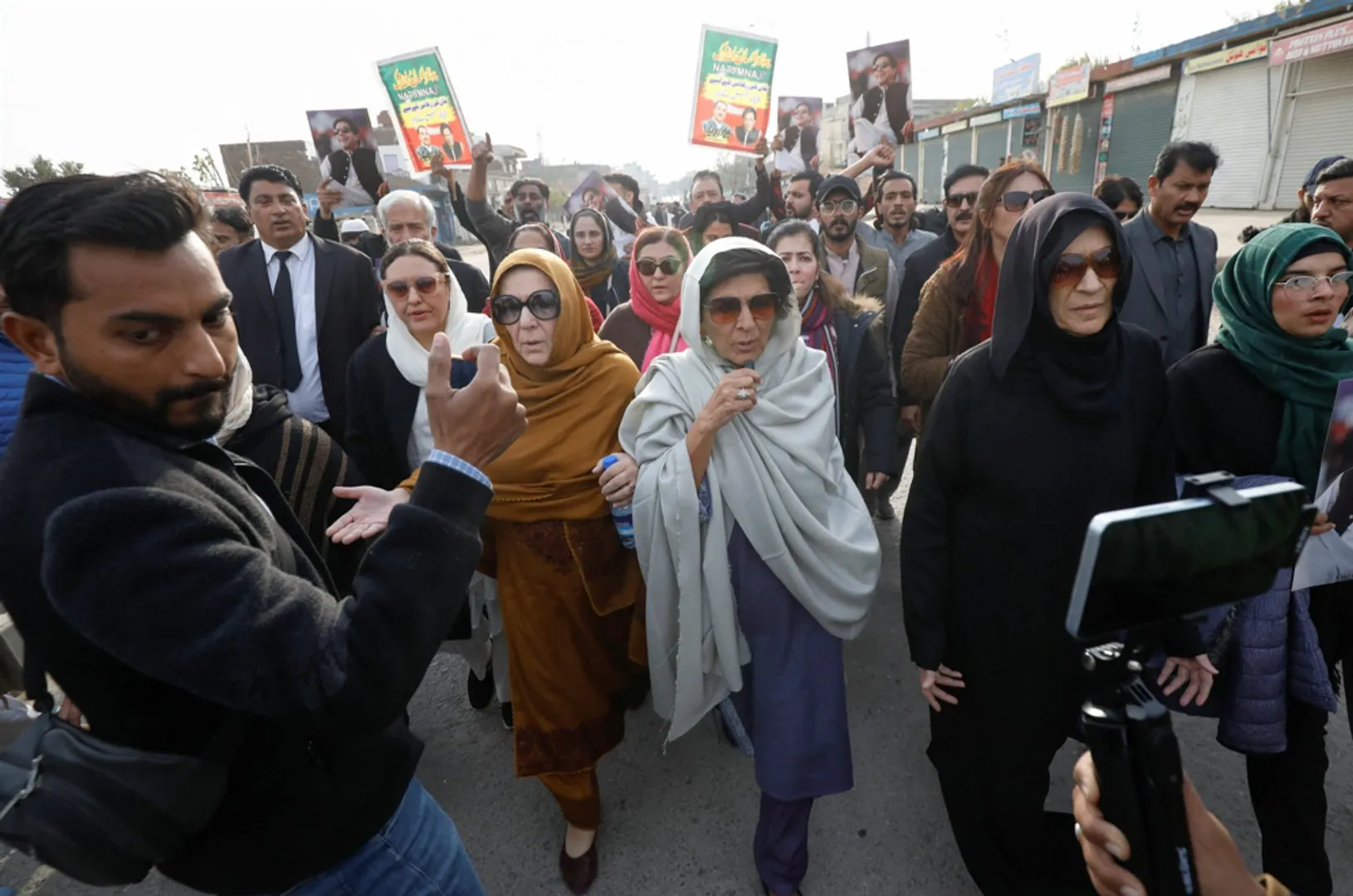
Imran Khan’s family and PTI officials say three of the jailed former PM’s sisters have been detained in Lahore ahead of a September 27 march on Islamabad demanding his release. Authorities have confirmed Aleema Khan was ordered to be held for 30 days.
The broadcaster has been accused of ‘classic overkill’ after it removed 11 sketches from the comedy duo’s BAFTA-winning television show amid concerns of racism and racial stereotyping
Rachel Vickers-Price UK and World News Reporter and Rachel Vickers-Price
03:01, 21 Sep 2026Updated 03:01, 21 Sep 2026
Removed material included scenes featuring war re-enactors in blackface, a joke about Jimmy Savile and a sketch about a contestant on a makeover show wearing a burka(Image: Channel 4)
The BBC has removed several sketches from That Mitchell and Webb Look on iPlayer after deciding some of the comedy show’s material “no longer works today”.
To celebrate the sketch comedy programme’s 20th anniversary, the national broadcaster added four seasons of the smash-hit show onto iPlayer for fans to enjoy – but with a few notable omissions.
A total of 11 sketches have been edited out amid fears of racism and ethnic stereotyping.
“That Mitchell and Webb Look has been made available on BBC iPlayer,” the British broadcaster said in a statement. “This is a 20-year-old sketch show; in consultation with the programme makers, we have included the ones that still work today and not the ones that don’t.”
As per The Times, material removed from the programme included scenes featuring war re-enactors in blackface, a joke about Jimmy Savile, and an indigenous tribe living in a garden centre.
One now-deleted sketch sees Mitchell play a woman in a burka in a scene sending up reality TV programming.
The sketch then cuts to the pair – as themselves – discussing whether or not the sketch itself is actually offensive.
“I’m not sure we quite know what we’re trying to say,” Webb suggests, asking: “Aren’t we just taking the piss out of people’s sincerely held beliefs?”
Mitchell says: “I think you can worry too much about this kind of thing. I mean, what’s offensive to one person is just good, clean fun to another.”
He then pulls off the burqa to reveal he is wearing blackface underneath.
Comedian Dom Joly told The Times: “I totally get it if the BBC is putting out something really racist, which is laughing at and encouraging other people to feel that it’s OK to do that.”
He dubbed the decision to cut the scenes as “classic BBC overkill” and an act of “hysterical censorship”.
“But it’s so clear that Mitchell and Webb are not doing that. Their intent was not to be racist.”
As a possible alternative solution, broadcasters could put trigger warnings on older programmes if they believed they were necessary, he told The Times.
A smash-hit in its day, the three-season skit show began in 2003, starring David Walliams and Matt Lucas, who also wrote the gags.
But it was later pulled from the BBC’s Player in 2020 due to its offensive content, such as the use of blackface, homophobic jokes, and ablesit humour. The series did return to iPlayer in late 2022, but in an edited format, complete with removed scenes and a trigger warning for audiences.
Match of the Day pundit Rob Edwards says Liverpool’s Alexander Isak is playing with greater “confidence” after scoring four goals this season – one more than he managed in the whole of last season.
Measures targeting the court itself could disrupt payments, IT services and investigations.
Published On 21 Sep 202621 Sep 2026
The Trump administration is reportedly preparing sweeping sanctions against the International Criminal Court (ICC) that could disrupt the tribunal’s finances and day-to-day operations.
The US sanctions would prohibit most transactions with the ICC after a grace period of six to seven months, The Wall Street Journal reported on Sunday.
Recommended Stories
list of 2 itemsend of list
The move would mark a sharp escalation in Washington’s campaign against the Hague-based court by targeting the institution itself rather than individual judges and prosecutors.
The Trump administration plans to announce the sanctions soon, according to the Reuters news agency, quoting two sources familiar with the matter.
The Journal, citing anonymous officials, said a decision could be finalised during this week’s United Nations General Assembly gathering in New York or soon afterwards.
If imposed, the measures would generally bar US citizens and companies from providing the ICC with money, goods or services without a licence from the US Treasury.
Banks and other companies often take an especially cautious approach to US sanctions because they rely on access to the American financial system.
The ICC president and registrar have previously warned that sanctions on the organisation as a whole could interfere with its ability to buy information technology and insurance services, hire investigators and make routine payments, including salaries for American employees.
The ICC was created in 2002 to prosecute individuals accused of genocide, war crimes and crimes against humanity when national authorities are unable or unwilling to do so.
Washington has already sanctioned more than a dozen ICC judges and prosecutors under an executive order signed by President Donald Trump in February 2025.
The Trump administration says the court has exceeded its authority by pursuing officials from countries that are not ICC members.
Relations deteriorated sharply after the court issued arrest warrants in November 2024 for Israeli Prime Minister Benjamin Netanyahu and former Defence Minister Yoav Gallant over alleged war crimes and crimes against humanity in Gaza.
Israel, like the US, is not an ICC member and rejects the court’s jurisdiction.
Washington has also objected to an earlier ICC investigation into alleged abuses in Afghanistan involving US personnel.
US Secretary of State Marco Rubio announced a campaign in July to further isolate the court and urged other countries to withdraw from it.
Trump’s move adds to growing opposition to the ICC in recent months.
Chad and Venezuela moved in July to withdraw from the court, following Burkina Faso, Mali and Niger.
Four US-based rights groups sued the Trump administration in August, arguing that existing sanctions obstruct their legal and human rights work.
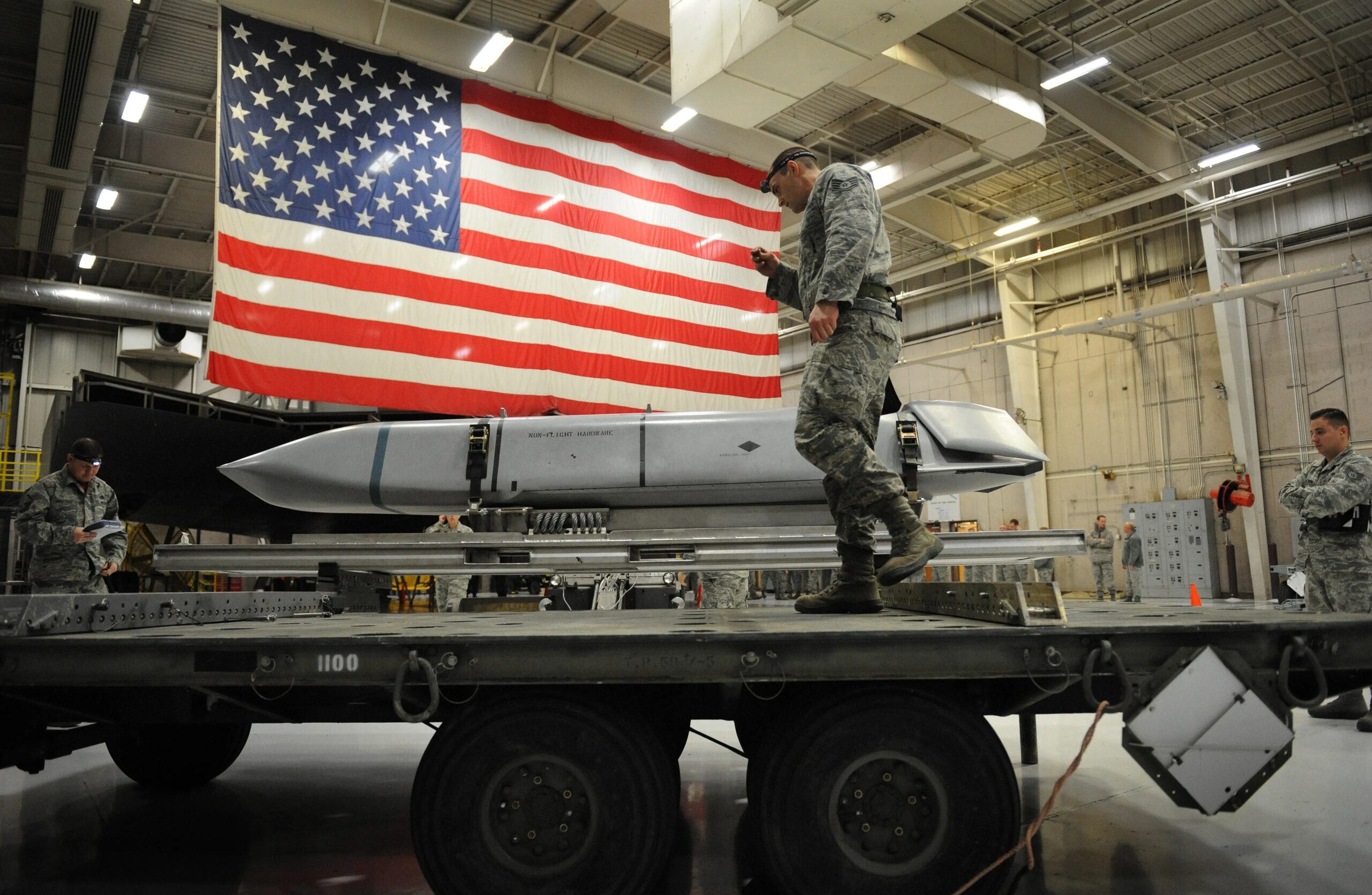
Lockheed Martin has unveiled a modular airframe concept for its stealthy and combat-proven AGM-158 Joint Air-to-Surface Standoff Missile (JASSM) family that could support multiple configurations, launch methods, and sensor packages while making use of the existing JASSM and Long-Range Anti-Ship Missile (LRASM) production infrastructure. Highly survivable, the missiles are an incredibly important and staple weapon for the U.S. military, and for select export customers.
Called AGM-158 FLEX, the new concept is centered on a common airframe with interchangeable components. Lockheed Martin says it has invested more than $35 million of its funds in the effort so far, including airframe design, testing, prototype production, subsystem qualification, and work with suppliers.
An Air Force load crew member prepares to load an AGM-158 Joint Air-to-Surface Standoff Missile onto the B-2 Spirit weapons load trainer during a weapons load competition at Whiteman Air Force Base, Missouri. U.S. Air Force photo by Airman 1st Class Joel Pfiester/Released Tech. Sgt. Joel Pfiester
The company says the FLEX design will use removable nose sections that can accommodate sensor suites associated with the AGM-158 family. A removable boat tail would allow the same basic airframe to be configured for different launch methods, including air, surface, and subsurface launch. That would open the AGM-158 architecture up to ground-, ship-, and submarine-launched applications, although Lockheed Martin has not provided details on the specific launchers, platforms, or configurations envisioned. It’s worth noting the LRASM has been tested in vertical launch configuration for vessels equipped with the Mk 41 launch system.
A 2016 test of LRASM from a Mk 41 launcher on the Navy’s Self Defense Test Ship. Lockheed Martin
In addition to the Navy vertical launch tests, the idea of moving the JASSM family beyond its traditional combat aircraft launch platforms is not new. The Air Force’s Palletized JASSM concept, better known as Rapid Dragon, has demonstrated the ability to deploy JASSM-ER from palletized launchers carried inside cargo aircraft, using an expendable airdrop system. FLEX takes a different approach by building those kinds of launch options into the airframe architecture itself, with modularity supporting various launch configurations for the same basic weapon.
Rapid Dragon Flight Test
For aircraft-launched weapons, Lockheed Martin says FLEX will retain compatibility with current and future JASSM and LRASM launch platforms.
An F-35B carrying the AGM-158C Long-Range Anti-Ship Missile (LRASM). U.S. Marine Corps Kyra Helwick
The company is also proposing multiple airframe lengths. A 206-inch configuration is associated with the supersized JASSM-XR, while a 168-inch version is consistent with the dimensions of JASSM-ER. Lockheed Martin says JASSM-XR will be the first configuration of the FLEX airframe.
The Brand New AGM-158 Extended Range
The AGM-158 family has already grown well beyond the original JASSM. The AGM-158A is the baseline stealthy air-launched land-attack missile, with a publicly reported range of roughly 230-330 miles, while the AGM-158B JASSM-ER uses a more efficient engine and additional fuel to roughly double that reach, to around 575 miles or more.
Alongside the land-attack variants is the AGM-158C LRASM, which uses the JASSM airframe but substitutes a sophisticated imaging infrared anti-ship seeker, electronic support measures, datalink, and other capabilities, for operations against heavily defended surface combatants.
A B-2 deploys an AGM-158C Long Range Anti-Ship Missile to support a live-fire sinking exercise as part of Valiant Shield 2026 over the Philippine Sea, June 27, 2026. U.S. Air Force photo by Tech Sgt. Thomas Barley Tech. Sgt. Thomas Barley
Finally, the much larger JASSM-XR is being developed with a substantially stretched fuselage to carry more fuel and a larger 1,000-pound-class warhead, with a range expected to approach or exceed 1,000 miles. This would give it a similar striking capability as the Tomahawk cruise missile, although in a stealthier package.
Beyond range and launch options, the company is pitching its new FLEX concept as a way to simplify future upgrades. Components could be replaced as they become obsolete or new capabilities become available without necessarily requiring a completely new missile design.
That approach could have an industrial-base advantage, particularly as the United States seeks to increase production of long-range weapons. Lockheed Martin says FLEX would use the existing JASSM/LRASM production line, supply chain, mission-planning infrastructure, and software ecosystem rather than establishing an entirely new manufacturing and support architecture.
The company says its JASSM/LRASM production infrastructure includes a 225,000-square-foot facility opened in 2022 with increased automation and a robotic paint line.
For example, as part of a slew of low-cost cruise missile offerings, the service has been moving ahead with the Extended Range Attack Munition, or ERAM, a new air-launched missile explicitly intended to provide a relatively low-cost, rapidly producible standoff weapon. The Air Force conducted a live-warhead ERAM test in January of last year, less than 16 months after the program received its initial contract, and described the weapon as a means of generating mass against fixed targets. ERAM is understood to have a range of between 150 and 280 miles, putting it below the reach of the baseline JASSM, let alone the JASSM-ER or XR.
The Extended Range Attack Munition live-fire test on Jan. 22, 2025, at Eglin Air Force Base, Florida. via U.S. Air Force
However, the emerging class of lower-cost weapons are intended very much more to complement than compete with JASSM. While the Air Force plans to buy thousands of the cheaper missile, the JASSM will still be needed to take up the higher end of the cost and capability list.
Lockheed Martin mentions that FLEX should “unlock future cost savings,” but this sounds more about giving customers the ability to swap out components and upgrade capabilities on existing missile rounds, to avoid obsolescence, rather than facilitate mass production.
As it stands, JASSM has evolved into a family of increasingly capable and longer-range weapons, but those capabilities necessarily come with a different set of cost and production considerations than a weapon designed from the outset around large-scale production. Lockheed Martin’s announcement does not disclose a target unit cost for FLEX, nor does it explain how the eventual cost of a FLEX-derived weapon would compare with a baseline JASSM or LRASM. The unit price of the latest subvariants of the JASSM-ER is around $1.2 and $1.5 million, according to official budget documents.
The new weapon is a way of getting more variants and launch options out of the established JASSM/LRASM architecture, potentially with less development work than creating entirely new weapons. Whether that translates into enough savings or production capacity to satisfy the military’s growing demand for large numbers of standoff weapons remains to be seen.
For Lockheed Martin, the proposal also offers a way to extend the relevance of the AGM-158 family as the company and the Pentagon pursue additional range, new launch platforms, and potentially new launch methods.
The flexibility of the missile could be particularly relevant to the Agile Combat Employment concept, and the wider U.S. military in the Indo-Pacific, where forces are expected to operate from a larger number of dispersed and potentially austere locations. A common missile architecture that can be adapted to different launch platforms and different target sets could allow weapons to be positioned and employed across a distributed force rather than tying particular missile variants to particular launchers.
The original JASSM/LRASM has also become a significant export weapon, with Australia, Finland, Poland and several other U.S. allies cleared to acquire variants of the missile. While the advanced capabilities of the weapon have seen its export opportunities carefully controlled, FLEX could potentially open up the market to more customers, including less-advanced, ‘sanitized’ versions.
Pilot and Weapon Systems Officer conduct a pre-flight check on the JASSM-ER loaded to a Royal Australian Air Force F/A-18F Super Hornet at RAAF Base Amberley, Queensland. Australian Department of Defense LAC Campbell Latch
Lockheed Martin’s announcement provides few details on FLEX’s eventual cost, production rate, schedule, or specific performance beyond the stated airframe dimensions. For now, the concept demonstrates that the company is seeking to create a more adaptable architecture around an established missile family, one that has played a critical role in numerous operations since its introduction.
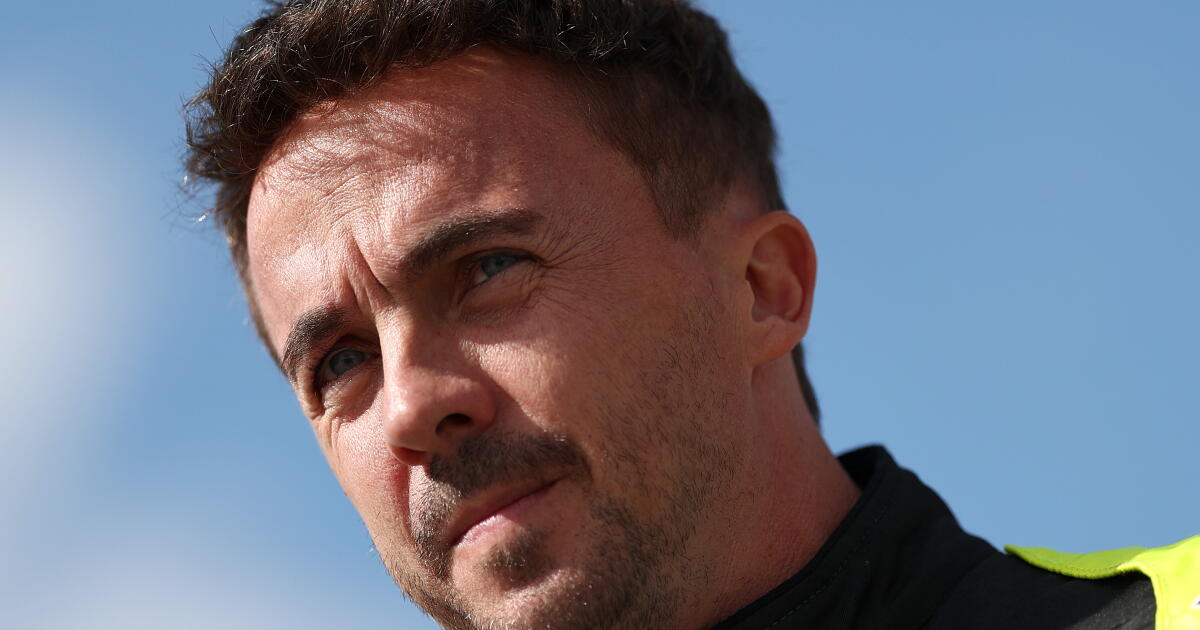
Frankie Muniz had a vulnerable moment on social media Friday, revealing he’s hit rock bottom following the announcement of his split from wife Paige Price.
The “Malcolm in the Middle” star announced he and Price were calling it quits after seven years of marriage in July, and now the actor is revealing he’s experienced some painful introspection in recent weeks.
“The last 6 weeks of my life have been a nightmare I’m praying to wake up from,” he wrote on Instagram. “Everything felt heavy, unclear, and like it was falling apart at the same time. I wouldn’t wish this season on anyone.”
He continued that despite the painful experience, “the unexpected gift in the middle of it is that I’ve had nowhere to hide.”
The actor-turned-race car driver said he’s spent the last several weeks reflecting and can now see the areas of his life where he thinks he can improve.
“I want to become a better version of me. Not the polished version I show the world … the actual one,” he wrote.
“I read that sometimes hitting rock bottom is the thing that wakes you up. It forces the changes you needed to make all along so you can live the best life possible. That idea has been sitting with me. In five years I believe I’ll look back at this exact low point and feel grateful for it, because the high I’ll be standing on then only exists because I went through this.”
He told his followers that this period isn’t the end of the story, but the catalyst for change.
“It’s the part where I start doing the work … the uncomfortable, unglamorous, necessary work. I’m choosing to treat this season as the foundation, not the finish line.”
Shortly after Muniz’s post, Price posted an Instagram story with a message that some followers speculated may be a response to the actor’s admission.
“Life is all about perspective. If you ask the grass, the zebra is the monster and the lion is the protector,” Price wrote.
Muniz is best known for his titular starring role in the beloved Fox sitcom “Malcolm in the Middle,” which ran for seven seasons in the early aughts. In April, the series returned for a four-episode reunion arc on Hulu starring returning fan favorites Bryan Cranston as Hal, Jane Kaczmarek as Lois and a couple of Malcolm’s TV siblings.
In 2006, when “Malcolm in the Middle” wrapped, Muniz transitioned away from acting and pursued race car driving.
In 1874, Britain took control over parts of Ghana, naming them the British Gold Coast.
Britain was weakened by the efforts of World War II and following a rising desire for independence, Ghana was the first sub-Saharan African country to achieve independence, on March 6th 1957.
Dr. Nkrumah was the driving force behind the independence of Ghana from British rule and founded the Convention People’s Party (CPP).
Nkrumah will always be remembered for the powerful speech he delivered on the day Ghana gained independence, March 6th 1957, proclaiming “Ghana will be free forever”, from British rule, to millions of Ghanaian gathered at the Independence Square now Black Stars Square. The speech was significant as it relinquished the British control over the Gold coast.
In 1960, Prime Minister Osagyefo Dr. Kwame was sworn into office as the first President of the country and the republic was proclaimed on July 1st 1960.
In February 1966, while Nkrumah on a state visit to Vietnam and China, his government was overthrown in a military coup. Nkrumah never returned to Ghana and died in April 1972.
In September 2009, President John Atta Mills declared September 21st (the centenary of Kwame Nkrumah’s birth in 1909) to be Founder’s Day, a statutory holiday in Ghana.
Nkrumah designed the national flag of Ghana. Its design was inspired by Ethiopia’s green-yellow-red Lion of Judah flag with the lion replaced by a black star. Red symbolizes bloodshed and struggle; green stands for beauty and agriculture; yellow represents mineral wealth; and the Black Star represents African freedom.
Tens of thousands of people walk in and out of Dodger Stadium on any given night, paying scant attention to the trees, plants, and other foliage surrounding it on all sides. Chaz Perea made his peace with that a long time ago.
“Getting to Dodger Stadium is not a small thing,” said Perea, 41, the stadium’s landscape manager. “You’ve got to park in this monster,” he said, motioning to the acres of asphalt around him, “and then go find your seat in that monster.”
1
2
3
1.The agave garden sits outside Lot B at Dodger Stadium on Friday.(Gina Ferazzi/Los Angeles Times)2.Dodgers fans walk past vibrant plants behind photos of former Dodgerss outside center field at Dodger Stadium on Friday.(Gina Ferazzi/Los Angeles Times)3. A group visits agave island during a tour of Dodger Stadium’s botanic garden on Tuesday.(Christina House/Los Angeles Times)
For the past 17 years, Perea and his four-person crew have been responsible for every bit of stadium landscaping that isn’t the field itself. That’s roughly 300 acres, encompassing the parking lots, the hillsides meeting the 110 Freeway, and 149 concrete planters nicknamed “martinis” for their glass-like shape. The planters are original to the stadium’s 1962 construction, and many had crumbled badly enough over the decades to need painstaking repair.
The landscaping isn’t just about plants and planters. Behind a fence beyond the iconic orange 76 ball in the parking lot once sat a hidden garden. Its centerpiece was an eight-foot-tall stone lantern given to then-Dodgers owner Walter O’Malley by Japanese sports columnist Sotaro Suzuki and his wife, Toku, who had attended the stadium’s grand opening in 1962. Suzuki commissioned the 3,921-pound Kasuga-style lantern, which arrived in five pieces in late 1965 and became the centerpiece of a garden that also featured a small wooden bridge and a collection of rocks.
“For years, it was maintained by our gardener with great pride,” said former Dodgers owner Peter O’Malley, Walter’s son. “But it was remote, and fans couldn’t really get up there easily to see it or sit in the garden. And it got neglected for a few years. Some years later, I forget how many, we had to fence in the whole property.”
In 2024, shortly after the Dodgers signed two-way sensation Shohei Ohtani, the club moved the lantern to a place of prominence outside the top-deck gates, overlooking the downtown skyline. The move was an elaborate, delicate production. Bundled and boarded up, the lantern inched across the parking lot on the back of a flatbed truck that climbed a ring road steep enough to cause concern.
“It was like they were moving the Ark of the Covenant,” Perea said.
No one exhaled until the cargo was unloaded, unswaddled, and confirmed to be in one piece.
An 8-foot-tall stone Kasuga-style lantern is displayed at Dodger Stadium on Tuesday.
(Christina House/Los Angeles Times)
Perea’s crew works out of a large metal shed at the far end of a parking lot, a shop they affectionately call “the Oasis.” Much of what’s inside was retrieved from a dumpster, or scavenged before it landed in one. Perea, who describes himself as a bargain shopper, is passionate about repurposing whatever he can; many of the succulents at the stadium came from his own clippings.
“My general philosophy is I don’t treat the Dodgers like I’m salaried management,” he said. “I treat them like I’m a contractor that they don’t want to get rid of. So I manage the expenses and the labor as such.”
He doesn’t have much interaction with players and executives, though he’s occasionally been called to their homes to help with landscaping problems. One visit stands out.
“Vin Scully is the coolest one I’d stake a claim to,” he said of the legendary play-by-play man. “He was an unbelievable class act. He had a tree issue. He had us out, and was so attentive and appreciative, it was just stunning to me.”
1
2
3
4
1.Landscape manager Chaz Perea gives a tour of Dodger Stadium’s botanic garden.(Christina House/Los Angeles Times)2.A ceramic dog and monkey sit on a golf cart inside the Dodger Stadium landscape team’s shed on Tuesday.(Christina House/Los Angeles Times)3.A photo of Jim Lefebvre, Dodger player from 1965-1972, is surrounded by plants at Dodger Stadium on Tuesday.(Christina House/Los Angeles Times)4.Adolfo Hinojosa checks on the planters near center field at Dodger Stadium on Tuesday.(Christina House/Los Angeles Times)
On the hillside above the shop is an open-air lunch area, its seating made from wooden bleachers salvaged from the old right-field pavilion. Peek through the bushes and the stadium is visible in the distance. Inside the shop, the walls are lined with neatly organized shovels, pickaxes, and ladders. Above them hang paintings, art being another of Perea’s passions, most of them made by his friends.
Perea freely admits he’s an odd fit for the job. He’s not a baseball fan; he prefers beach volleyball and mixed martial arts. He had a rough upbringing in Arizona, dropped out of high school, and got by on $6.75 an hour doing golf-course maintenance, supplementing it with landscaping gigs he ran out of his pickup truck before eventually returning to school.
He came back to the classroom with a purpose, not only finishing high school but going on to earn multiple advanced degrees and, ultimately, a Ph.D. He’s now a professor of horticultural science and co-chair of agricultural science at Mt. San Antonio College.
But it’s his day job that draws clusters of Dodger fans willing to pay $52.25 each for his 90-minute botanic garden tour of the grounds. They explore “Agave Island” near the main entrance, a wedge of land planted with nine palm trees to match the number of players on a baseball field, and the planters outside the club-level entrance, where the crew grows chilies (jalapeños, serranos, habaneros), along with basil, mint, tomatoes, onions, and garlic. That garden spawned an annual salsa competition, in which club employees harvest their own ingredients from the planters, make salsa at home, and bring it back to be judged. Perea and his crew make handmade tortillas and quesadillas for the event.
Landscape manager Chaz Perea gives a tour of Dodger Stadium’s botanic gardens on Tuesday.
(Christina House/Los Angeles Times)
Two more planted islands are devoted entirely to tequila agave. It takes nearly a decade for the plant to mature, and about 110 pounds of its core to yield a single liter of tequila through processing. Perea and his crew hope to eventually try making some themselves, as an in-house project rather than a commercial one.
The landscape looked very different before Perea arrived. He describes the old look as Disneyland-esque: heavy on lawns and flowers, constantly in need of replacement, and thirsty for water. About two years into the job, he began swapping annual flower beds for drought-tolerant succulents. When one executive noticed and ordered the flowers put back in a particular spot, Perea complied there, then made the same swap a little farther down the hillside, out of view.
Turnover among executives and ownership gave him repeated openings to make wholesale changes, a shift that coincided with California’s drought crisis. Within a few years, he had planted 10,000 cuttings and stripped every flower bed from the property.
“A lot of people look at this as the last unpainted canvas in Los Angeles,” Perea said.
Chaz of Chavez Ravine, perpetually painting the corners.
U.S. Space Force’s top officer has shared new details about his service’s use of electronic warfare capabilities during Operation Epic Fury against Iran earlier this year. This underscores how space is steadily becoming an arena where conflict actually occurs, and the implications this has for forces operating inside and outside of the Earth’s atmosphere.
Chief of Space Operations Gen. Douglas Schiess highlighted the actions of a member of the 42nd Electromagnetic Warfare Combat Detachment (EWCD) in support of Epic Fury during a keynote speech earlier this morning. Schiess’ remarks came at the Air & Space Forces Association’s (AFA) 2026 Air, Space & Cyber Conference, at which TWZ is in attendance. This is his first major engagement since taking over as head of Space Force less than two weeks ago.
A previously released picture showing a member of the 42nd Electromagnetic Warfare Combat Detachment forward-deployed somewhere in the Middle East in 2024. USAF/Senior Airman Zeeshan Naeem
“During Operation Epic Fury, our components, notably at U.S. Central Command and Space Command, with support from our components at European Command and Pacific Command, demonstrated that Guardians [the official term for uniformed Space Force personnel] are not supporting from the sidelines as a nice-to-have [sic], but we are delivering space power directly into the fight as a need-to-have,” Schiess said. “One of those impressive Guardians is Specialist Gray, who hails from Tampa, Florida. She joined the Space Force just two years ago, but listen to the impact she [has] made in her short term already.”
“She deployed to the CENTCOM AOR [Central Command area of responsibility] as a part of the 42nd Electronic Warfare Detachment [sic], and within hours of OEF kicking off, she received a top priority target package with one critical objective: reconfigure her weapon system and execute critical non-kinetic fires,” he continued. “She locked onto the target, optimized her weapon system, and waged electromagnetic warfare against a determined adversary. Even as ‘Alarm Red’ sirens were blaring, and incoming missiles targeted her site, she courageously held the line, protecting forces, denying adversary capability, and delivering space effects, until her commander had to literally pull her from the console to safety.”
“Specialist Gray is just one of the outstanding members of the entire enterprise of dedicated guardians, including the acquisition professionals that developed and fielded the weapon system that she operated, the intel Guardians that developed the targeting package that she used, and the cyber guardians who ensured communication, connectivity, and network defense for the command and control, the guardian instructors who trained her for combat, and the list goes on and on,” the Chief of Space Operations added.
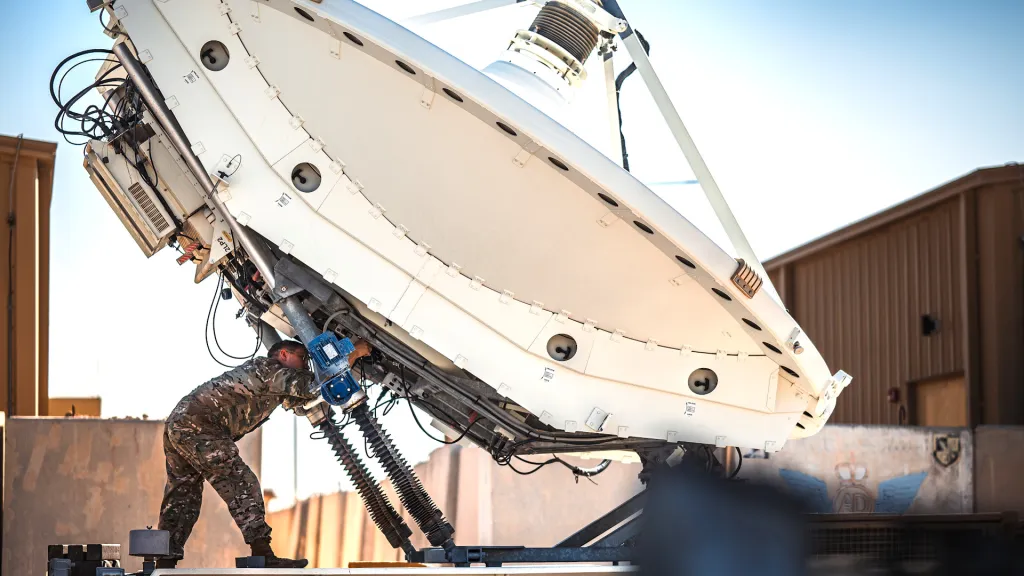
Schiess did not name the system in question or elaborate further on how it was employed. However, previously released pictures of elements of the 42nd EWCD in the Middle East have shown personnel working with trailer-mounted multi-band antennas that have been associated in the past with variants of the Counter Communications System (CCS). CCS is a family of ground-based electronic warfare jammers primarily designed to disrupt enemy space-based communications capabilities. Prior to yesterday, CCS was the U.S. military’s only publicly acknowledged anti-satellite weapon. Space Force has now confirmed it also has weapons in orbit, which we will come back to later on.
Members of the 42nd EWCD pose in front of a trailer-mounted antenna at an undisclosed location in the Middle East in 2024. USAF/Senior Airman Zeeshan NaeemA picture released in 2020 showing members of the 4th Space Control Squadron standing in front of what is explicitly said to be an element of the Block 10.2 version of the Counter Communications System. USAF
The 42nd Electromagnetic Warfare Combat Detachment has been operating in the Middle East since at least 2024 under the umbrella of Space Force’s main headquarters in the region, U.S. Space Forces – Central (SPACECENT). President Donald Trump briefly called attention to the detachment’s “cutting-edge defense activities” during a Christmas Eve conference call with deployed service members last year.
“Sometimes we have to be within the footprint of the satellite, and so that’s why Guardians go into harm’s way,” Gen. Schiess did tell TWZ and other outlets at a roundtable after his speech this morning when asked for more details about the 42nd EWCD’s role in Operation Epic Fury, and what lessons Space Force has been learning from the conflict more broadly.
“Electromagnetic warfare was a big part of that, but also satellite communications,” he added. “The ability to keep communications, obviously GPS and PNT [positioning, navigation, and timing], were important there.”
“And then, really, missile warning and missile tracking was [sic] incredibly important. Both [Air Force Chief of Staff] Gen. Wilsbach and I talked about ‘Red Alarm’ situations,” the Chief of Space Operations continued. “Being able to tell our forces to be able to take cover was extremely important. And as we’ve seen from Ukraine to Iran, the amount of missiles and the amount of things, the folks that are doing that each and every day are incredible, and they are saving lives.”
Chief of Space Operations Gen. Douglas Schiess. USAF
Gen. Schiess’ anecdote about Specialist Gray and the 42nd EWCD did highlight how Iran, especially in the opening phases of the conflict earlier this year, was able to deal real blows to U.S. and allied facilities and forces across the Middle East. Iranian missiles, drones, and other capabilities were able to damage and/or destroy a variety of high-value assets, including aircraft and radars, and cause hundreds of casualties, as TWZ has drawn attention to on several occasions in the past. This has already been a sobering wake-up call with serious implications for potential future conflicts against larger and even more capability opponents, especially China.
“I think the whole joint force is learning a lot from Operation Epic Fury, the previous operation there, on exactly what needs to be in underground facilities, [and] what maybe can we do from remote locations,” the head of Space Force said at the roundtable today. “You could also look at what can we do from space to do some of those things? And so we’re looking at all those [lessons learned].”
Gen. Schiess mentioning subterranean facilities and remote operations is particularly notable. Even before Operation Epic Fury began, the U.S. Air Force had been working to expand options for directing operations in the Middle East from a command center in the United States. The service had also been looking to push certain command and control functions at Al Udeid Air Base in Qatar underground. Al Udeid was among the many bases Iran subsequently targeted.
For Space Force, operations against Iran have provided a broader opportunity for the service to demonstrate its active role in forward-deployed operations. That, in turn, has generated its own lessons learned beyond just steps needed to help better protect units in the field.
Then-Lt. Gen. Douglas Schiess meets with forward-deployed members of the 42nd Electromagnetic Warfare Combat Detachment in 2025. Schiess was head of US Space Forces – Space (S4S) and the Combined Joint Force Space Component Commander at SPACECOM at the time. Space Force
This extends to “reconstitution [of forces] in a combat environment, the logistics and the importance of that relationship with TRANSCOM [U.S. Transportation Command] and to be able to get supplies and replenishment into the theater,” Chief Master Sergeant of the Space Force John Bentivegna also said today, speaking alongside Gen. Schiess at the roundtable. That is “something we haven’t really worked on before. So definitely, it was a great lesson learned.”
Space-based capabilities including early warning, general intelligence gathering, weapons guidance, near-real-time communications, and more, are already absolutely central to U.S. military operations. America’s long-standing dominance in space is also steadily being eroded, with China, in particular, surging ahead in the deployment of new satellites to support a host of mission requirements, including intelligence-gathering and long-range targeting. The ability to leverage space is also proliferating to smaller adversaries, including Iran.
In addition, as mentioned, the space domain is no longer limited to just supporting operations within the atmosphere, but is a place where real engagements happen. The U.S. military is now capable of generating so-called counter-space effects using forces and assets within the atmosphere as well as in orbit, as was just disclosed yesterday.
Overall, Gen. Douglas Schiess’ comments today about the role played by Specialist Gray and the 42nd EWCD during Operation Epic Fury are indicative of not just what is to come in future operations, but how the Space Force is already engaged in combat missions now.
BBC Radio 2 legend Bob Harris has shared a new health update amid his cancer battleCredit: whisperingbob/ InstagramBob presented The Country Show from April 1999 to April 2026Credit: Instagram/whisperingbob
Bob’s Instagram followers flocked to share their reactions to his newsCredit: whisperingbob/ InstagramLast month, Bob shared an update saying the cancer was “taking more of a hold”Credit: instagram
“I was speaking this morning with my oncologist, the amazing Costi and we are going to continue with my cancer treatment.
“We’re getting back under control, I was a little bit worried a short time ago, but everything is getting back under control now.
“I can see the pathway of my life ahead of me opening up again.”
At this point, Bob revealed he also had a second piece of news to share, but would reveal it on Tuesday at 10am.
One person commented: “Excellent news Bob!!!!”
Another added: “Excellent news Bob, everyone is 100% backing you for your recovery.”
It comes after Bob shared a devastating health update on his cancer battle last month, as he revealed the disease is “taking more of a hold.”
He said: “It has been a while since I last posted a health update and I want to let you know how I’m getting on, because there have been some changes with my cancer diagnosis.
“As regular followers will know, earlier this year I was forced to step back from BBC Radio 2 to concentrate on treatment and rest.
“I have been missing my programmes so much, but this space has given me a most beautiful summer here at home, enjoying a most precious commodity… TIME.“
Bob continued: “I feel very blessed to have been able to spend lovely moments with family and friends (some of which I’ve posted here on Instagram) in the glorious summer sunshine, but during this time my cancer has been getting more of a hold.
“I still feel well but I am now at the start of an intensive course of intravenous radiotherapy which we are confident will keep things at bay. I should know the outcome quite soon.”
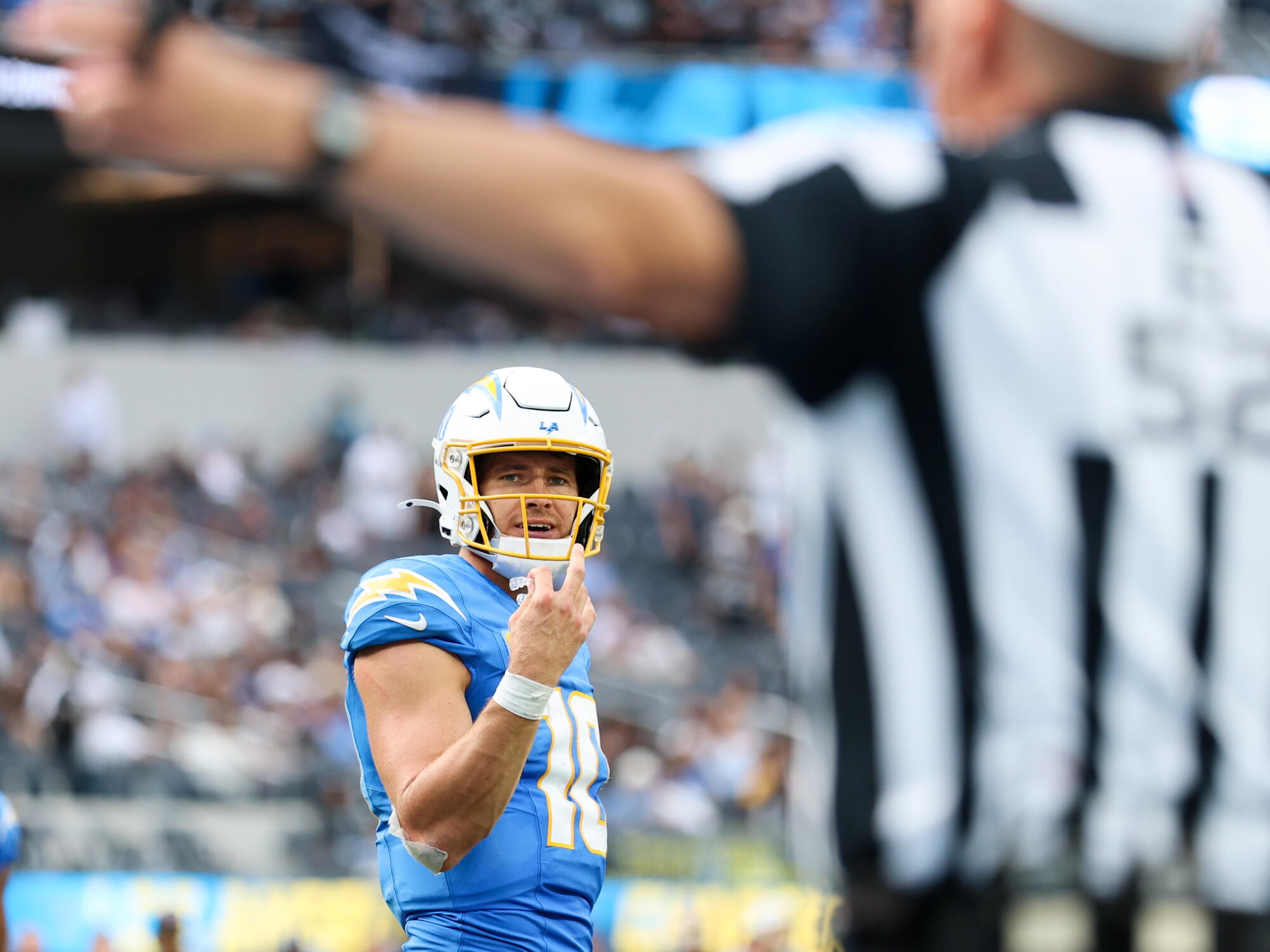
Maybe this is what the Chargers are — lurching, sputtering and unable to consistently move the football, despite an offensive overhaul packed with high expectations.
Just as they did in their abysmal season opener, the Chargers struggled at home Sunday and failed to establish a rhythm on their way to a 26-14 loss to the Las Vegas Raiders.
The Chargers lost their opener to the Arizona Cardinals by an identical score — 26-14.
A week after losing an opener for the first time in his career as an NFL head coach, Jim Harbaugh is off to his first 0-2 start as a coach in college or the pros.
It won’t get any easier. The Chargers play at Buffalo on Sunday against the 2-0 Bills, who have scored a combined 77 points in victories over the Houston Texans and Detroit Lions.
After that, the Chargers play at Seattle, at home against Denver, at Kansas City, and against the Rams as rare visitors at SoFi Stadium. Four opponents, four Super Bowl-winning coaches.
These first two games were supposed to be the soft start, of at least a relatively gentle ramp-up to the thorny part of the schedule.
Well, that’s out the window. The Chargers were dominated by Arizona, a team that won just three games last season, then dropped another home game to the Raiders. As head coach of the Chargers, Harbaugh had won all four of his previous matchups against Las Vegas.
The Chargers last started 0-2 in 2023, when they went on to finish 5-12.
Sunday, the Chargers were unable to get the ball downfield and repeatedly committed penalties and miscues that short-circuited drives. For instance, normally sturdy tackle Joe Alt was flagged for false starts three times.
Snapshot of another major problem: Trailing by a field goal late in the third quarter, the Chargers had a third-and-inches on their side of the field. They could have run a tush-push with 6-foot-6 Justin Herbert. They could have used 220-pound running back Omarion Hampton to hammer up the middle for a first down.
Instead, they had Herbert drop back into shotgun and sent Tre’ Harris in motion from right to left. Then, they snapped the ball at the precise moment the receiver was between center Jake Slaughter and the quarterback. The snap bounced off Harris’ knee, Herbert had to pounce on the loose ball and the threat was thwarted.
The normally stoic Herbert couldn’t hide his frustration. He appeared to angrily yell before retreating to the home sideline.
Chargers quarterback Justin Herbert reacts after an offensive holding penalty on Joe Alt results in a safety late in the fourth quarter Sunday against the Raiders.
(Allen J. Schaben / Los Angeles Times)
Later, with slightly less than four minutes remaining, when the Chargers seemingly had a bit of momentum. They had just gotten a first down on a Raiders penalty — 12 men on defense — and had inched across the 50.
Herbert handed off to Hampton on a draw, and the second-year back was met by linebacker Nakobe Dean and promptly fumbled — one of six on the day for the Chargers. Safety Jeremy Chinn scooped up the ball and returned it 43 yards to the 16.
The final insult came on the Chargers’ last possession when Alt drew a holding penalty while trying to stop pass rusher Maxx Crosby, resulting in a safety.
Raiders fans at SoFi Stadium erupted in glee. For the Chargers, that singsong, taunting “Raiii-derrrs” chant will surely haunt their dreams. The TV cameras didn’t help matters, finding a lone Chargers fan amid an ocean of Raiders fans, a blue dot bobbing in a silver-and-black sea.
Three plays later, Kirk Cousins found Cody White with an 11-yard pass, the second touchdown of the day for the erstwhile practice-squad receiver.
The Chargers took a 14-10 lead midway through the third quarter when Herbert connected with tight end Oronde Gadsden II for a 10-yard touchdown.
But the Raiders responded on the ensuing possession when Cousins threw a 13-yard touchdown pass to White to put Las Vegas up, 17-14.
A key play in that drive showed the creativity of Klint Kubiak, in his first season as coach of the Raiders. Cousins took the snap and pitched the ball to Ashton Jeanty, who in turn threw it back to Cousins.
The quarterback then hit a wide-open Dareke Young for a 27-yard gain, giving the Raiders the ball deep in Chargers territory.
The Raiders led at halftime, 10-7, breaking a tie with four seconds remaining in the second quarter when Matt Gay kicked a 59-yard field goal.
Both teams struggled to find an offensive rhythm in the first half, and each quarterback was picked off.
The Raiders scored first on a 40-yard touchdown reception by Tre Tucker, who was so wide open behind the defense he was able to turn and wait for the ball to arrive.
The Chargers answered in the second quarter when Hampton pounded across the goal line from the one.
That’s something the Raiders failed to do at the end of the opening quarter, when they had a first-and-goal from the four, yet couldn’t score on four consecutive Jeanty runs.
The Chargers had a similarly frustrating moment in the first quarter when Herbert found tight end David Njoku behind the Las Vegas defense and delivered the ball for what should have been a big gain.
Njoku bobbled the pass, however, and the ball was grabbed by rookie safety Hezekiah Masses, who had another pick in the fourth quarter during his first career start.
Making matters worse, Njoku suffered a knee injury on the play and did not return.
Russian President Vladimir Putin has cast the vote as a test of support for his ongoing war in Ukraine.
Published On 20 Sep 202620 Sep 2026
Polls have closed in Russia’s first wartime parliamentary elections, with the ruling United Russia party on course to win the tightly controlled vote.
The Kremlin wants the elections, the first parliamentary vote since the start of the full-scale invasion of Ukraine in 2022, to showcase popular support for the war and legitimise its action.
Recommended Stories
list of 3 itemsend of list
Russian government officials accused Ukraine of trying to disrupt voting after Kyiv launched hundreds of drones at Moscow and other regions in what the TASS state news agency said was the biggest attack of its kind since the war began.
The drone strikes on Sunday killed at least three people in the Moscow region and two more in the Russian-held part of Ukraine’s Kherson region, including an election official, according to the region’s governor and the election commission.
Initial results showed the United Russia party comfortably ahead, and Russia’s Central Election Commission said turnout at the close of polls stood at 56.66 percent.
The first official results and turnout are expected on Monday morning.
Voting in Russian-held Ukrainian areas
The vote, which began on Friday for 111 million eligible voters, included residents of four Ukrainian regions that Moscow illegally annexed after the war began, but still doesn’t fully control, as well as those in Crimea, the Black Sea peninsula that was illegally annexed by Russia in 2014.
Authorities in Kyiv denounced the voting in the Russian-held areas as illegal and urged foreign governments not to recognise the result. The European Union on Friday called the action a “blatant violation of international law”.
Voters cast two separate ballots, filling half of the lower house’s 450 seats by selecting political parties listed on the ballot. The rest are contested in single-seat constituencies, with voters choosing individual candidates.
The main Kremlin party, United Russia, is widely expected to retain its overwhelming control of the State Duma. Several smaller parties of the “systemic opposition” that vote in sync with Putin’s views on all key issues are also expected to maintain their presence.
A massive state media campaign and tight control over the elections in the absence of genuine opposition all but assure the Kremlin will keep tight control of Russian politics amid mounting economic costs and increasing Ukrainian drone attacks deep inside the country.
The liberal Yabloko party, the only registered political entity that dared to publicly criticise the war, was removed from the ballot last month by Russia’s Supreme Court. It only has a few dozen candidates in the single-constituency races.
Additionally, some anti-war politicians were imprisoned or forced to flee abroad ahead of the campaign.
Russia didn’t invite election observers from the Organization for Security and Cooperation in Europe. The Russian Foreign Ministry has accused the body of “double standards” for its criticism of Russia.





![UN continues its engagement in a Sahel where governments are placing greater emphasis on sovereignty and strategic autonomy [File photo: Timothy A. Clary / AFP]](https://i0.wp.com/occasionaldigest.com/wp-content/uploads/2026/09/33VL2ZN-highres-1695130635.jpg?w=640&ssl=1)