He told me he had sent his children to a displacement camp because they could no longer cope with the shelling and gunfire. He had stayed with his wife and sisters to look after their animals.
“I am terrified,” he said, “but I have no choice, we will all go hungry without our animals and die anyway.”
He gave only his first name, fearful of repercussions if the Houthis take over the area in the days ahead. Contacts from the Houthi side have told us they are consolidating troops, preparing for a major offensive. When we asked government forces about this they said they are aware and were preparing too.
At the closest checkpoint to the front line, we met some fighters who had just returned from positions high on the mountain, just a few hundred metres from advancing Houthis. One of them said the bodies of 18 government soldiers lay in an area his unit could fire across but not reach.
“We shoot over them, but we can’t pull them out,” he said.
Fighting around Taiz has intensified since the Houthis seized the strategic Red Sea port of Mokha, 85km to the west of the city, on 10 September, after a ceasefire that had largely held for four years unravelled.
The group took control of a swathe of territory overlooking the strategic Bab al-Mandab Strait – a crucial shipping corridor linking Europe and Asia. This contributed to a rise in oil prices as fears rose of further disruption to supplies from the region.
VENEZUELA FURY may have crashed out of the running in I’m A Celebrity . . . The Wild Frontier, but boxing champ TYSON’s teen daughter is still sitting pretty.
I can reveal the young entrepreneur aims to launch her own make-up and skincare line.
Venezuela Fury with her husband Noah PriceCredit: ShutterstockVenezuela’s aunt Molly Mae Hague and her uncle Tommy Fury pictured with their children Bambi and MidasCredit: Instagram
Plans are afoot for a firm called No Tomorrow, and Venezuela hopes to unveil the range next year as she makes the most of her growing profile.
She also has brilliant inspiration in her corner – her aunt Molly-Mae Hague.
Sign up for the Showbiz newsletter
Thank you!
Molly, who is engaged to Venezuela’s uncle Tommy, is now worth an estimated £20million thanks to years of hard graft in the fashion and beauty industries.
A source said: “Venezuela has just turned 17 so it’s a huge achievement to be launching her own business and she’s so excited.
“She has a top team behind her but the ideas are all hers.
“She wants to make her family proud.
“Having Molly-Mae and obviously her mum Paris as inspiration is a huge boost too.”
While details are still being worked out, it is likely that the No Tomorrow x Venezuela Fury range will include everything from make-up and skincare to fake tan and false eyelashes.
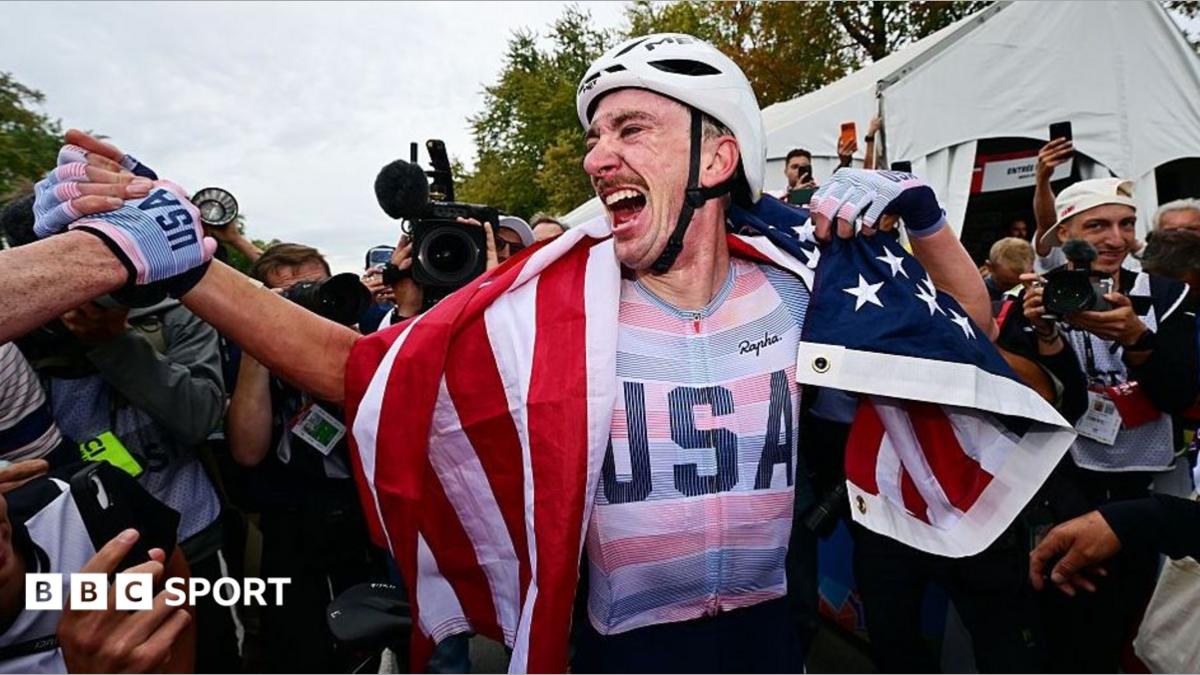
Brandon McNulty became the first American winner of the men’s road race world title in 33 years with a stunning victory in Montreal.
The 28-year-old put his hands on his head in disbelief as he crossed the line 13 seconds clear of the chasing pack, completing the gruelling 273.4km course in six hours and 17 minutes.
Australian Michael Matthews was second, with former winner Mathieu van der Poel, of the Netherlands, in third.
The last American winner of the race was Lance Armstrong in 1993.
“Until the last 800m I didn’t believe, I was so tired,” said McNulty.
“I’m at a loss for words. I knew something could happen but it would take a miracle and I guess today a miracle happened”.
He launched an attack going into the final 30km and was 50 seconds clear going into the last lap.
McNulty visibly began to tire on the final climb and his lead was cut to just 10 seconds, but the chasing pack were unable to reel him in.
Britain’s Tom Pidcock finished seventh, with Ireland’s Ben Healy 10th and Remco Evenepoel of Belgium in 12th place.
Cuba’s deputy foreign minister slams US sanctions, labelling them ‘equivalent to genocide’.
Published On 27 Sep 202627 Sep 2026
A senior official in Cuba has warned that any prospective United States military action taken against the island nation would constitute a serious international crime, and has rejected claims made by US President Donald Trump that Cuba is a failed state.
On Sunday, Carlos Fernandez de Cossio, the country’s deputy foreign minister, told the US cable television channel C-SPAN’s flagship programme, Washington Journal, that it would be an “atrocious international crime for the US to use military force against Cuba, which is a peaceful neighbouring country”.
His comments come after Trump said during his Tuesday speech at the United Nations General Assembly (UNGA) that “freedom will be coming” to the island. His remarks prompted the Cuban delegation to exit the assembly hall. On Saturday, Trump brought up military action, telling reporters, “I don’t think we’ll need the military. Cuba is failing very badly.”
Fernandez de Cossio said that coercing nations who do not “submit” by disrupting their commercial shipments, attempting to handicap a population through starvation, depriving it of stable healthcare and withholding fuel, as the US has “done for nine months now”, is “equivalent to a genocide”.
The US has maintained a foreign policy of maximum economic pressure against Cuba for more than 60 years. The Trump administration has previously said that it wants a shake-up in Cuba’s government. Earlier this year, the administration enforced an additional oil and fuel blockade against the island, which has crippled the nation’s infrastructure, causing widespread fuel scarcity and rolling power outages. Government officials in Cuba cited systemic difficulties in securing food supplies and other basic necessities for the country of more than 10 million.
Fernandez de Cossio said Havana must ready its citizens for the prospect of US military aggression, adding that while Cuba recognises it might stand alone, it will still exercise its legitimate right to self-defence.
He explained that bilateral diplomatic channels with the US remain open but have yielded minimal results due to the economic stranglehold of ongoing sanctions, adding that Havana remains willing to engage with Washington in a “respectful manner” only if discussions accommodate mutual dignity, benefit both populations, and respect state sovereignty.
Several countries condemned the US’s continued economic sanctions and blockade of Cuba during the UNGA earlier this week.
President Donald Trump’s departure from the White House South Lawn earlier today marked the first operational use of its new granite helipad, and the VH-92A Patriot — not the older VH-3D Sea King or VH-60N White Hawk — was the airframe that carried him off the pad. The flight represented a dual milestone: the first time a VH-92A had carried the president from the White House, and the first operational use of the roughly $5-6 million helipad that was built to enable regular operations by the helicopter from this location.
Trump marked the occasion with a ribbon-cutting on the South Lawn, using a pair of oversized gold scissors to sever a red, white, and blue ribbon before shaking hands with White House officials and members of the construction crew. Auxiliary power unit noise from the waiting VH-92A drowned out any remarks Trump may have made on the landing area; he instead posted afterward that the flight was the “maiden voyage” from the newly completed pad. He did not stop to take shouted questions from reporters before boarding for the helicopter’s first flight off the new surface. The VH-92A took Trump to Joint Base Andrews, Maryland, with his final destination New York, where he will be at the UN General Assembly this week.
President @realDonaldTrump just performed the official ribbon-cutting ceremony on the new @WhiteHouse helipad, thanked the construction professionals that made it so beautiful & flew off in the new Marine One to address the United Nations General Assembly on continuing MAGA wins. pic.twitter.com/z75dayaVo7
The VH-92A’s operational limitation in this context had been its exhaust and rotor system. Heat and rotor wash directed downward from the helicopter had scorched and torn up the South Lawn’s turf badly enough that the Marine Corps continued relying on the VH-3D and VH-60N for White House landings even after the VH-92A entered presidential service under Biden in August 2024. Trump has said the newer helicopter is roughly two and a half times more powerful than the airframes it’s replacing — powerful enough, by his account, that a single landing once left “half of the grass…sitting in front of the Oval Office front door.”
For decades, Marine pilots set down on a simple metal disc placed directly on the South Lawn turf — a low-tech solution that worked well enough for the lighter VH-3D and VH-60N, but that pilots occasionally missed, tearing up grass around the marker in the process.
Construction of the new helipad began in late June but hit a snag in early August. As you can read about here, Trump ordered contractors to tear out and redo weeks of work — including a 100-foot-wide carved granite presidential seal that was already taking shape — reportedly over dissatisfaction with the pad’s appearance and the slope of the surrounding lawn.
Scoop: Trump has ordered workers to redo weeks of work on his planned White House helipad
new WaPo photos show how past work was removed over weekend
Trump is contemplating changes to White House lawn’s slope, raising bigger Qs about project and costhttps://t.co/tGrkmg6Go3
The South Lawn’s natural grade, reported at up to 20 degrees in places, exceeds FAA heliport guidance calling for landing surfaces to be reasonably level. In the interim, Trump had been using the Ellipse, a park south of the White House, as a temporary landing zone — a workaround today’s flight presumably does away with.
Sikorsky, the Lockheed Martin subsidiary that builds the VH-92A, is financing the helipad project. Trump has said this is intended, at least in part, as compensation for not fully disclosing how disruptive the helicopter’s exhaust characteristics would be. The four-inch-thick granite, quarried in California, has been promoted by Trump as effectively indestructible, with a “million-year” lifespan. That claim, like similar durability promises made about his Lincoln Memorial Reflecting Pool refurbishment — which reportedly saw paint fade and its liner peel within days — has not been independently substantiated.
The helipad is the latest in a string of exterior additions Trump has made to the White House since returning to office, most notably two roughly 88-foot flagpoles installed on the North and South Lawns in June 2025. Trump said the building had “needed flagpoles for 200 years” since the only flag previously flew from the roof, and described paying for the poles — about $50,000 each — himself.
President Donald Trump leads a group of people on the south lawn of the White House in Washington, DC, on September 8, 2026. The new helipad his visible in the foreground. Photo by Finn Gomez/Getty Images Finn Gomez
Landing on the White House lawn is only the most visible of the VH-92A’s issues. TWZ has tracked the $5-billion, 23-aircraft program’s string of setbacks for years.
A 2021 Pentagon testing report found the helicopter failing to meet the reliability, availability, or maintainability thresholds set for it, judging it fit for routine “administrative” runs but not for the emergency contingency missions the role actually demands. Central to that finding were flaws in the aircraft’s Mission Communication System, the secure link meant to keep the president connected to the National Command Authority in a crisis — a system a Pentagon summary said often delayed critical communications at the beginning of contingency missions.
Meanwhile, today’s flight doesn’t necessarily mean the older airframes are done at the White House.
The Marine Corps has said it intends to retire the iconic VH-3D Sea Kings fully this year, but plans to keep flying the VH-60N through at least 2030 for its hot-and-high-altitude performance. This means the ‘White Hawk’ could make occasional South Lawn appearances even with the VH-92A now cleared for routine use.
Whether today’s departure becomes the new baseline, or proves to be a one-off tied to the ribbon-cutting itself, will be revealed in how often the VH-92A — versus the older ‘White Top’ fleet — appears on the pad in the weeks ahead, particularly once the higher-profile test of Chinese Premier Xi Jinping’s state visit arrives.
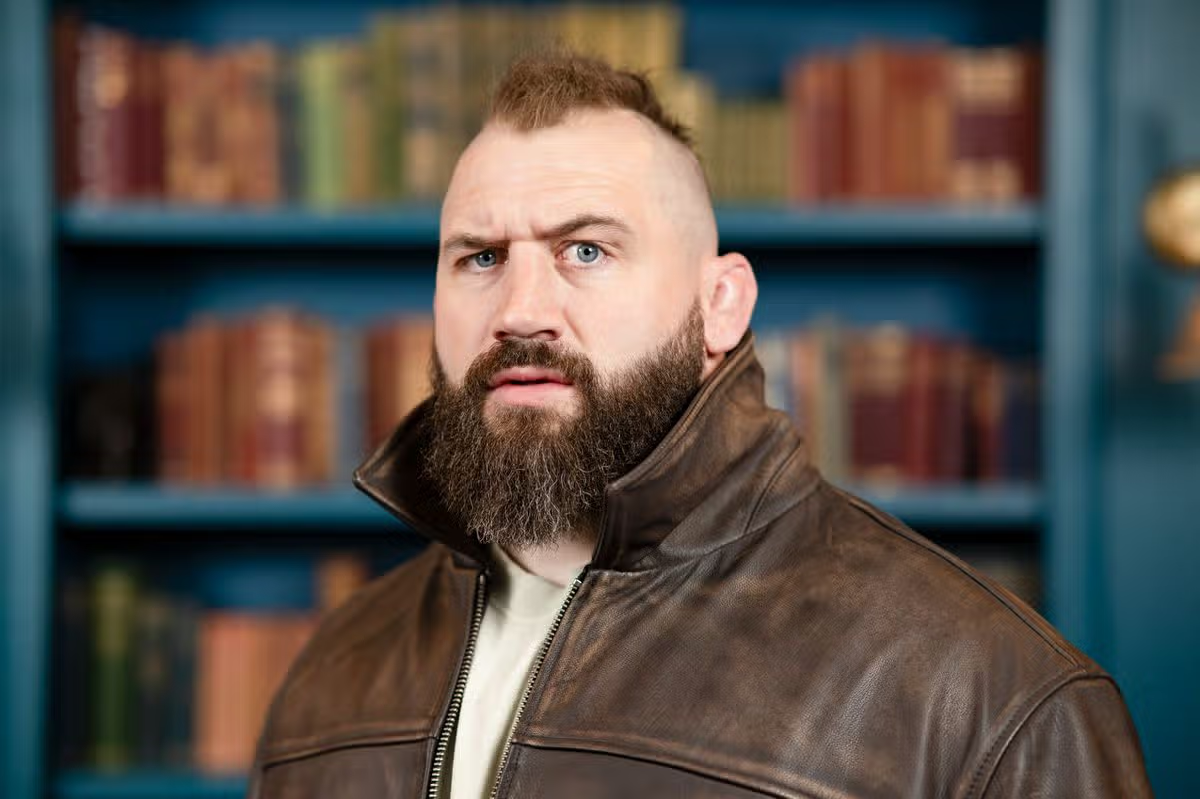
Joe Marler has revealed that he put on a stone during filming for Celebrity Traitors after overindulging in the extravagant breakfasts that are on offer for players
21:04, 27 Sep 2026Updated 21:04, 27 Sep 2026
Joe Marler has revealed that he put on a stone during filming for Celebrity Traitors(Image: CREDIT LINE:BBC/Studio Lambert/Paul Chappells)
Joe Marler has revealed that he put on a stone during filming for Celebrity Traitors. The rugby star, 36, was one of several famous faces to enter the famous castle last year before comedian Alan Carr walked off with the top prize.
“I was in the room, you put a card under the door, your food gets brought to you, you can have as much as you like. “There’s no interaction with anyone, any other contestants and then you’re taken to the castle.
“For the first bit of enjoying yourself, just watch what you’re eating, to go in there and put on eight kilos. Some people engage in a second breakfast, some people it would be their first breakfast. Some people it might be a third breakfast.”
During his time on the programme, Joe, a Faithful, reached the final and correctly sussed that Alan, along with Cat Burns, were Traitors. But in a shock move, he was banished in the final at the last minute, meaning that Alan could walk away from the show victorious.
Viewers are just days away from the new series of Celebrity Traitors, which will launch on October 1 and feature will feature a stellar line-up of names including Coronation Street legend Julie Hesmondhalgh, Little Mix star Leigh Anne Pinnock and singer James Blunt.
Maya Jama, best known for fronting Love Island, as well as best friends and comedians Rob Beckett and Romesh Ranganathan will be seen taking part as well, amongst a host of others.
Before the official release date was confirmed, Joe appeared alongside Pointless star Richard at an event and it seemed as if the pair had accidentally revealed the launch date, although this turned out not to be the case.
It’s reported that he asked Joe if he had any advice for the upcoming group of contestants, and he said: “What is it, September 23, the next series?”
Then, Richard replied: “By the way, to point out, it’s absolutely embargoed that it starts on September 23. Let’s talk about what we call the events of September 23 this year … the cat’s out of the bag, isn’t it? Not to repeat it.” A BBC spokesperson declined to comment.
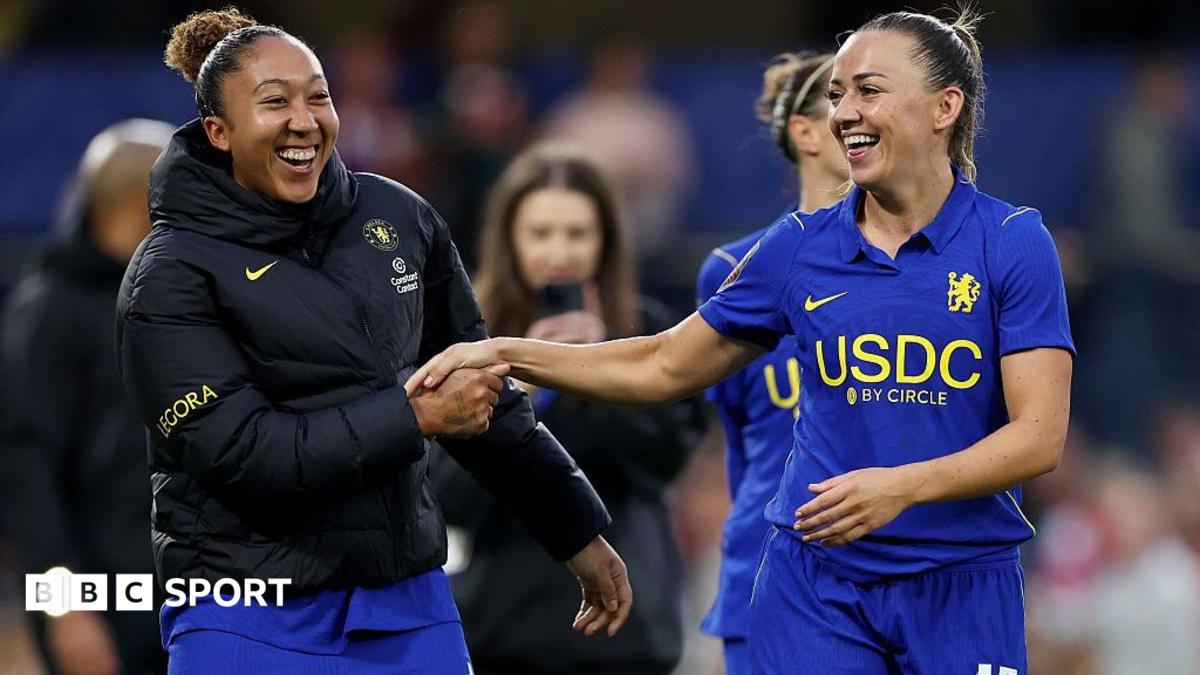
It is a result that could be the catalyst Chelsea needed to push on and put pressure on Manchester City, who face Arsenal next in the WSL (Sunday, 16:30 BST).
Chelsea’s match-winner Alyssa Thompson said their victory over the Gunners was “amazing for team morale”.
Even Bompastor admitted Chelsea are “a different team from last season” and there are tangible examples of their improvements.
England midfielder Keira Walsh was a standout performer against Arsenal and it was her strike which was parried into the path of Thompson for the only goal.
Her new parternship with 20-year-old Lexi Potter is flourishing and has allowed Walsh to get further up the pitch and play with more freedom.
Bompastor said the 29-year-old was “a boss on the pitch” when she reaches those levels and it helps the team have “better foundations”.
Goalscorer Thompson has consistently delivered up front, while the arrival of summer signing Melvine Malard from Manchester United has given them an outlet.
The French striker missed their opening two matches with a minor injury but scored on her debut against Birmingham City and caused havoc against Arsenal.
“She’s massive for us. She puts in work off the ball and sets off the press,” said team-mate Walsh.
“Her awareness of people around her and her ability… She’s an incredible striker and she will be very good for us.”
That press, led by Malard, has moved higher up and teams have struggled to break through, while full-back Ellie Carpenter continues to overlap dangerously.
Katie McCabe, who switched from Arsenal to Chelsea this summer, has brought leadership and bite – an aggression that was lacking at times last season.
Most of all, the Blues look like a team who believe they should be champions and are willing to work for it.
It was in contrast to toothless Arsenal, who have one victory in their first four WSL games and scored just twice.
“We’ve got both sides to our game and we showed that tonight in spells. Everyone was fighting for each other. Every first and second ball was ours,” added Walsh.
Israeli road closures and delays to simple journeys have become a part of daily life for Palestinians in the occupied West Bank. A 45-minute drive turned into a five-hour marathon for Al Jazeera’s Leila Warah after Israeli forces shut routes around the city of Ramallah.
Details continue to come in, but police in the United Kingdom have declared a “major incident” and ordered evacuations near RAF Fairford after the arrest of “several men on suspicion of offenses under the explosives act,” the Gloucestershire Constabulary stated.
RAF Fairford is a major hub for U.S. military aircraft in the United Kingdom. It is a regular host of strategic assets, including bombers and U-2 spy planes. It also acts as a pit stop for other aircraft, including fighters, that are being ferried to and from the United States. Bomber strikes launched from Fairford were a central aspect of major U.S. combat operations against Iran earlier this year.
“A number of properties are currently being evacuated in the Whelford area following the declaration of a major incident,” the Gloucestershire Constabulary also announced today in light of the incident.
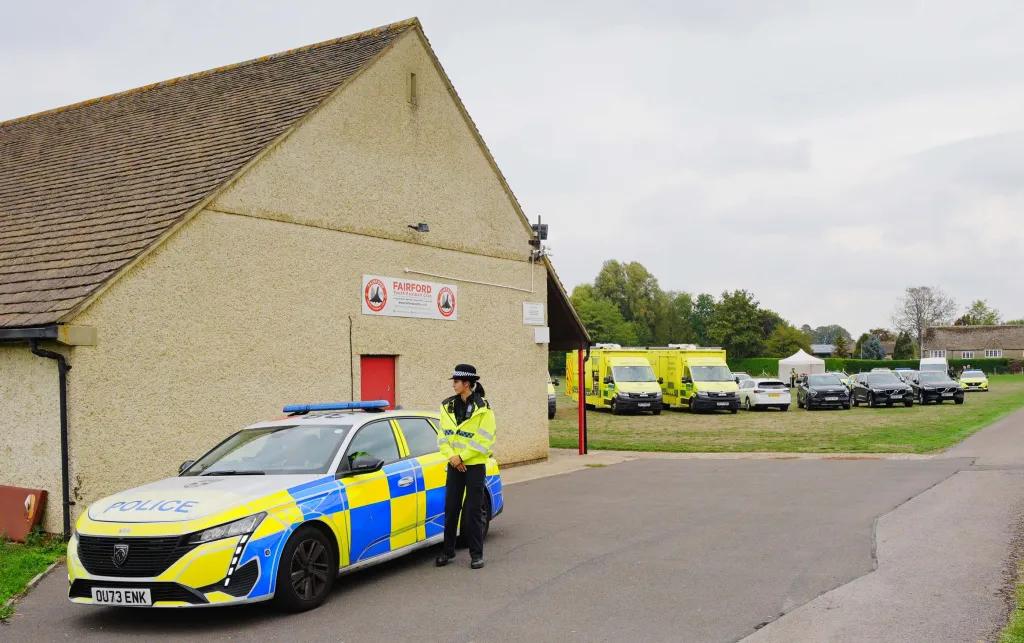
Emergency services in Fairford after a major incident has been declared, with armed police manning a cordon near the village of Whelford in Gloucestershire, near RAF Fairford, which is used by the United States Air Force (USAF). (Photo by Ben Birchall/PA Images via Getty Images) Ben Birchall – PA Images
The evacuations were spurred by the arrests.
“The Army’s specialist explosive ordnance disposal team are currently examining a number of vehicles,” Gloucestershire Constabulary added. “The local residents are being evacuated to a nearby leisure center.”
“A cordon is currently in place, but we’d like to reassure people that we believe this incident is contained,” the law enforcement agency explained. “We are working closely with our partners and are enacting the well-rehearsed plans we have in place.”
The incident began around 12:45 AM local time Sunday “when police received a call relating to three suspicious vehicles traveling towards RAF Fairford,” according to Gloucestershire police Assistant Chief Constable Richard Ocone. “Armed officers responded and subsequently arrested five men in the Whelford area on suspicion of committing offenses under the Explosives Act. The men were taken into custody, where they remain.”
“A 400-meter cordon has been put in place around the vehicles while the army’s explosive ordnance disposal unit examined them,” Ocene continued. “As a precaution, around 85 households have been advised to evacuate while these examinations take place.”
BREAKING:
The British authorities issue a first official statement on the suspected terror plot against RAF Fairford
They sent in a local low-ranking policemen to deliver a statement saying 5 men have been arrested and that people shouldn’t speculate about the case.
Video has emerged showing British military explosive ordnance disposal robots reportedly defusing the vans used by the suspects.
“We are aware of the current reporting, for questions regarding off-base incidents please contact the local authorities,” a U.S. Air Force spokesperson told us in response to our questions about whether the incident had raised force protection levels at RAF Fairford or other installations in the area hosting American forces. Unconfirmed reports by the local aviation spotter community claimed RAF Fairford had been placed under what is called FPCON Delta, the highest level of alert at U.S. military installations.
The incident at RAF Fairford has been escalating overnight, this is what is clear so far.
Gloucestershire Police has announced that they have arrested multiple men on suspicion of offences under the Explosives Act, and that they have declared a Major Incident.
“For operational security reasons we will not discuss specific force protection measures,” the Air Force spokesperson added. “The 501st Combat Support Wing and our fellow UK-based Wings remain vigilant and will take appropriate actions to ensure the safety and security of our U.S. service members, civilians, contractors, and their families. We constantly assess a variety of factors that determine what measures we institute or modify to protect our installations, our people and their families.”
It is unclear if airfield operations at RAF Fairford have been affected. U.S. Air Force officials did not immediately respond to our request for comment.
The British Defense Ministry did not immediately provide comment on this unfolding event.
RAF Fairford is a major hub for U.S. military aircraft, with strategic assets, like B-1B Lancer bombers, being forward deployed to the base and tactical and other assets often using it as a pit stop during flights ‘across the pond.’
A U.S. Air Force B-1B Lancer at RAF Fairford. (U.S. Air Force photo by Tech. Sgt. Robert M. Trujillo) Tech. Sgt. Robert Trujillo
As mentioned, RAF Fairford played a key role in major combat operations against Iran earlier this year. No connection has been established yet between today’s incident and any particular group, but the base has drawn direct threats from the regime in Tehran in the past.
“The American aggressor army, which used to launch cruise missiles from its vessels in the Indian Ocean in its aggression after the official resumption of the war, with the end of the missile reserves of the aforementioned vessels, yesterday switched to using B1 planes flying from Fairford Air Base, England,” Tasnim News Agency, a quasi-state outlet in Iran with ties to the country’s powerful Islamic Revolutionary Guard Corps (IRGC), claimed on Telegram on July 23. “As the officials of the Ministry of Foreign Affairs also stated, any base that is used to invade Iran’s territory is our legitimate goal.”
the enemy must pay the price for its breach of promises, and this time we will not allow America to use deceptive ceasefires to replenish its oil and ammunition stockpiles and then resume attacks once again.
Considering its importance to U.S. military operations, the base is a major potential target for nefarious actors, in general. Like other bases across Europe, it is a major potential target for Russia’s ‘hybrid war’ or ‘gray zone’ activities, as well.
Asked about the threats at the time, a British official told us that the country was prepared to defend itself.
“Our Armed Forces are ready to keep the United Kingdom safe from any kind of attacks, whether it’s on our soil or from abroad,” a government official told TWZ. “The UK stands ready 24/7 to defend itself. This includes through operating a layered approach to air and missile defense, provided by Royal Navy, British Army and Royal Air Force assets equipped with a range of advanced capabilities, working closely with our NATO allies.”
“In the Defense Investment Plan we have made air and missile defense a priority after years of underfunding, dedicating £790 million to enhance protection of the UK homeland and overseas bases from air, drone and missile threats,” the official added. “That is complemented by more than £2 billion of funding to deliver further air defense and counter-drone capabilities, and to upgrade and sustain our Typhoon fleet.”
This is a developing story.
UPDATE: 10:49 AM Eastern –
A Temporary Flight Restriction (TFR) has been imposed over Whelford, Gloucestershire, following the incident. It applies to all aircraft, including “any small balloon, any kite, any UAS and any parachute, including a parascending parachute or paramotor,” according to the FAA. “Pilots are forbidden to fly within the designated area without permission.”
Backstreet Boys are returning to the UK next year for a string of huge showsCredit: EPANick Carter, Howie Dorough, AJ McLean, Brian Littrell and Kevin Richardson have been locked in rehearsals at a facility in BedfordshireCredit: Getty
But I can reveal the band are in advanced talks to perform their first shows in Blighty since the 2022 DNA World Tour.
A source said: “Backstreet’s back — and they’re coming to London.
Sign up for the Showbiz newsletter
Thank you!
“All the details are under lock and key but the residency means the guys are on top form and are ready to head out on tour.
“The concerts will take place next year, with one at London’s O2 Arena which will make up part of the venue’s 20th anniversary celebrations.
“The lads are beyond excited about this and have been working so hard.”
Earlier this year, Backstreet Boys kicked off their Into The Millennium residency at The Sphere in Las Vegas.
The show is now in Germany before more dates in Sin City in December and January.
The lads have sold more than 450,000 tickets for the residency in Dusseldorf, with fans being treated to a 26-song set list.
As a group, Backstreet Boys dominated Germany in the early days of the band, with fans there catching on early as to what huge stars they would become.
After the residency began, Brian said: “When we talk about this being a homecoming, it’s because Germany is where everything clicked for us.
“It’s where our dream stopped being hypothetical and became something real.
“Coming back for these shows feels full circle.”
After they struck gold, the band went on to become one of the biggest groups in the world, selling more than 150million records worldwide and achieving 16 UK Top Ten singles, including No1 hit I Want It That Way in 1999.
As a huge fan, I shall be jumping in the queue for tickets once the show is announced.
Rita can go Anywhere
Rita Ora finally got her licence and posed proudly with her certificate in front of her Dollar Driving School car in Los AngelesCredit: instagram/ritaoraRita’s cute four-legged friendCredit: instagram/ritaora
LIKE me, Rita Ora was a late starter when it came to passing her driving test.
But, aged 35, she’s now finally got her licence and posed proudly with her certificate in front of her Dollar Driving School car in Los Angeles.
The company previously taught stars including model Winnie Harlow how to drive.
See you on the M1, Rita – and feel free to bring your cute four-legged friend along too.
MARIAH HERE TO BRING MORE FESTIVE CHEER
IF you missed out on tickets for Mariah Carey’s upcoming UK Christmas tour dates, I have good news.
I’m told the star is in advanced talks to perform at this year’s Capital Jingle Bell Ball.
My moles tell me the annual event will take place on December 5 and 6 at London’s O2 Arena, with bosses working around the clock to secure the US chart queen as a performer.
A source said: “Bosses are still locking in the exact line-up but it’s looking likely Mariah will be a special guest at one of the dates.
“They think she would be an amazing addition to the line-up.”
We revealed in July how Mariah was set to return to our shores to play her first run of winter shows here in eight years.
She will begin the gigs on November 27 in Birmingham before concerts in London and Manchester.
Welcome back, Mimi.
We’ve missed you.
It’s heavy petal for Olivia
Olivia Rodrigo could be lining up a partnership with Interflora, if the opening night of her Unraveled Tour was anything to go byCredit: GettyOlivia performed in a sea of giant flowers – with 16 gardeners on hand to rearrange the blooms as her US show in Connecticut went onCredit: GettyOlivia performed nearly every song from No1 album You Seem Pretty Sad For A Girl So In LoveCredit: Getty
OLIVIA RODRIGO could be lining up a partnership with Interflora, if the opening night of her Unraveled Tour was anything to go by.
The Drop Dead singer performed in a sea of giant flowers – with 16 gardeners on hand to rearrange the blooms as her US show in Connecticut went on.
As well as singing tracks from her previous two records, Olivia performed nearly every song from No1 album You Seem Pretty Sad For A Girl So In Love.
She repeatedly changed dresses during the 23-song set – and wowed fans when a white frock she was wearing dissolved as “rain” fell on stage, to reveal a bright-red corseted number underneath.
She will bring the show to the UK for a nine-night run at London’s O2 Arena next April.
CELINE’S DOLLED UP FOR XMAS
Celine Dion is being immortalised as a Barbie doll to celebrate her incredible live music comebackCredit: Getty
CELINE DION is being immortalised as a Barbie doll to celebrate her incredible live music comeback.
I can reveal the My Heart Will Go On singer, who is playing a residency in Paris, will have her own limited edition doll released just in time for Christmas.
A source said: “Celine was contacted by Mattel last year and was told bosses were keen to turn her into a collectable Barbie.
“Naturally, she was honoured, and agreed to the partnership straight away.
“The doll will be based on one of her most iconic looks.”
Celine is not the first star to be turned into the famous toy.
In February, Kylie Minogue had a plastic-fantastic makeover, while Marilyn Monroe got her own doll to celebrate what would have been her 100th birthday in August.
POP star Mabel has given birth to her first child, a year on from her wedding to record label executive Preye Crooks.
The singer, who hadn’t revealed she was pregnant, shared a home video on Instagram yesterday of their newborn and was congratulated by fellow artists including Craig David, Fleur East, Tinie Tempah and Ella Eyre.
POP IDOL WILL GOES LIVE AT 25
Will Young is heading out on tour next year to mark 25 years since he won Pop IdolCredit: Getty
WILL YOUNG is heading out on tour next year to mark 25 years since he won Pop Idol.
The Evergreen 25th Anniversary gigs will see Will, inset, perform with his band.
The shows kick off at Manchester’s O2 Apollo on February 20 before other stop-offs include Glasgow, Sheffield, Nottingham, Birmingham, Southend, London and Cardiff.
Will said: “I can’t wait to celebrate with the full band and play Evergreen, as well as all the songs that have come since, from Light My Fire to Leave Right Now.”
X Factor star Olly Murs has also confirmed a string of summer shows for 2027.
His eight-date run will start at Bristol’s Good Times Festival on May 30.
Tickets for Will’s and Olly’s shows go on sale at 10am this Friday.
THE WEEK IN BIZNESS
TOMORROW: Pussycat Dolls kick off the long-awaited UK leg of their reunion tour in Birmingham, while Swedish folk sisters First Aid Kits put on the first of two special shows at London’s Royal Albert Hall.
FRIDAY: Tom Cruise returns to cinemas in the satirical comedy Digger, while Dakota Johnson’s new thriller Verity, based on the novel, is also out.
SUNDAY: Prepare for an online bunfight as £408 tickets for Glastonbury 2027 go on sale.
An estimated 2.5million people tried to get tickets for the 2025 event, with even more expected to log on this time around.
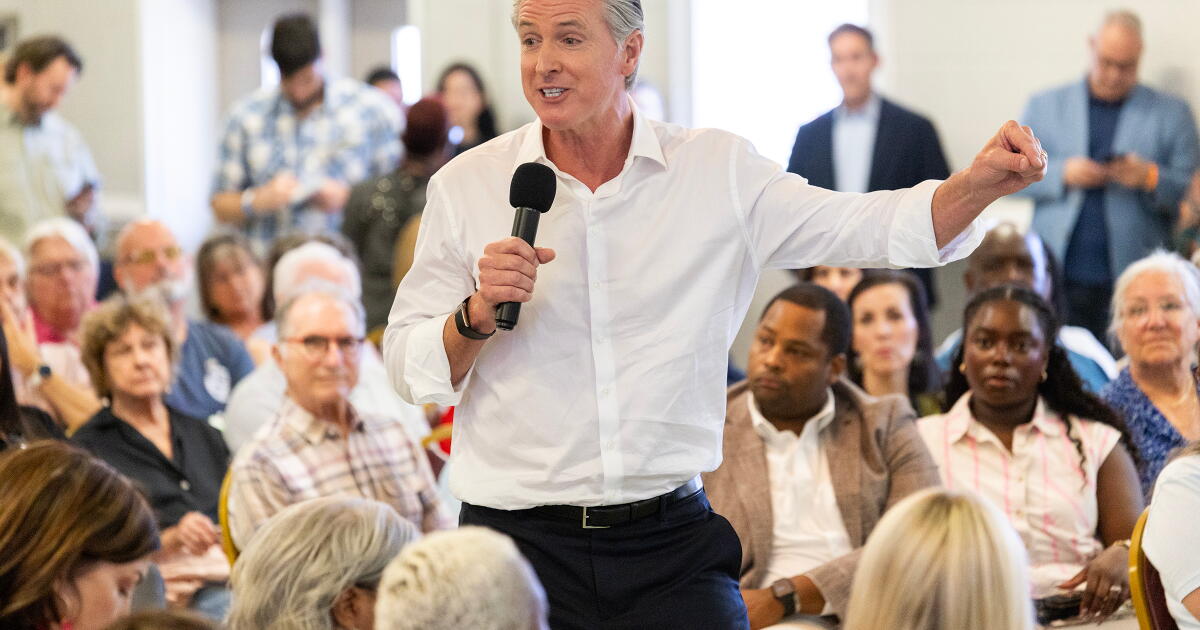
California Gov. Gavin Newsom on Sunday signed legislation that bars public officials from issuing meme coins and restricts cryptocurrency platforms from offering certain tokens linked to politicians to California residents.
Assembly Bill 2409, authored by Assemblymember Avelino Valencia, is aimed at preventing
The Republic of Ireland and Israel players did not shake hands with each other before Sunday’s controversial Uefa Nations League game in Hungary.
After walking on to the pitch at Nagyerdei Stadion, the Republic of Ireland squad stood for their national anthem and appeared to bow their heads before Israel’s anthem.
Following the anthems, the two teams did not line up for the traditional handshakes.
There was also no exchange of pennants between Republic of Ireland captain Dara O’Shea and Israel skipper Manor Solomon, who did not shake hands.
The fixtures have been embroiled in controversy since February when the two teams were drawn to play each other in Group B3.
The Republic of Ireland players have faced calls to withdraw from the games because of the ongoing Israel-Gaza war with a “Stop The Game” campaign – organised by the pressure group Irish Sport for Palestine – gathering pace.
However, the players voted to fulfil the fixture during a lengthy meeting at the team’s hotel in Debrecen on Saturday.
Later on Saturday, goalkeeper Gavin Bazunu confirmed he had withdrawn from the squad, saying he felt it “would be wrong to participate” in Sunday’s game and the return fixture in Serbia on 4 October.
South Korea’s presidential office criticises Ukraine for denying POW nondisclosure agreement.
Published On 27 Sep 202627 Sep 2026
The South Korean president’s office has expressed “strong regret” over Ukraine’s disregard for a nondisclosure agreement with Seoul in the transfer of two North Korean prisoners of war (POWs) to Seoul, South Korean media reported.
Last week, Ukraine’s President Volodymyr Zelenskyy said in an address to the United Nations General Assembly (UNGA) that his country transferred two North Korean POWs to South Korea.
Recommended Stories
list of 3 itemsend of list
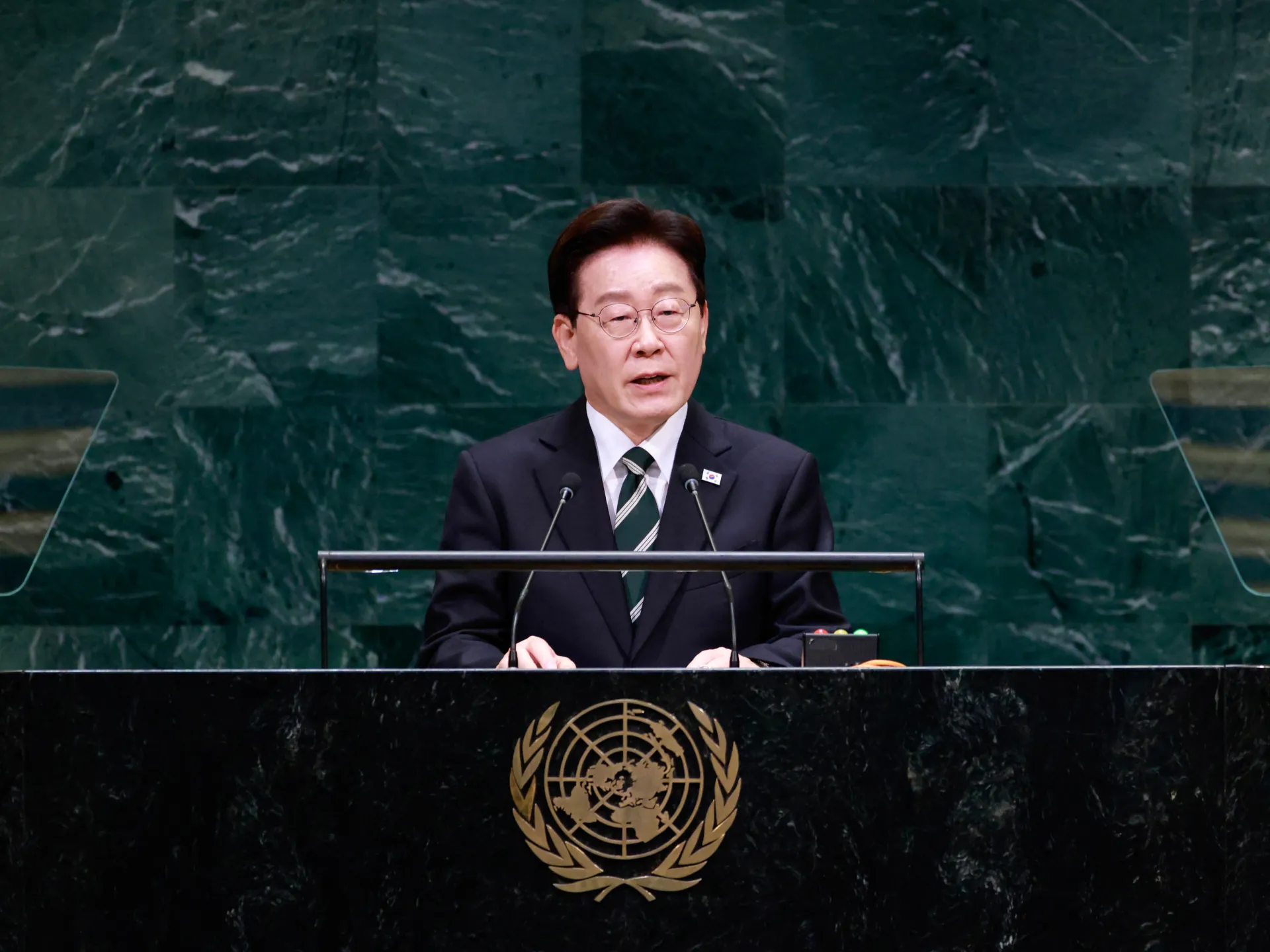
President Lee Jae Myung’s office “expresses strong regret over Ukraine’s unilateral disclosure [of the transfer] and its subsequent false announcement that there had not been a non-disclosure agreement”, the Yonhap news agency quoted Seong Ghi-hong, South Korea’s senior presidential secretary for public relations, as saying in a statement on Sunday.
The office said the nondisclosure agreement aimed to safeguard the soldiers from dangers they could face if their transfer were to be disclosed, in accordance with international law and humanitarian principles.
According to Yonhap, a South Korean media outlet, the Ukrainian presidential office said it had disclosed the transfer of the POWs without extensive details on the process, claiming that it would have been strange to keep the entire transfer a secret. Ukrainian media outlets reported a Ukrainian presidential source as denying the existence of a confidentiality agreement with Seoul, Yonhap said.
The South Korean presidential office said the Ukrainian presidential office’s “false” denial of the confidentiality agreement “seriously hampers” bilateral trust and causes serious disruptions to bilateral friendship.
Seong Ghi-hong said the government was considering additional measures over the issue, if necessary, Yonhap added.
North Korean POWS
Ukrainian forces captured the two North Korean soldiers in Russia’s Kursk region in January 2025.
Mounting evidence, including from intelligence reports and testimonies of defectors, has indicated that North Korean soldiers resorted to self-detonation or other forms of suicide rather than be captured.
In his UN address, Zelenskyy said, “These guys are not easy to capture alive.” He added, “One of them, when he realised he was going to be taken prisoner, tried to kill himself. And he was shocked that fate did not let him die.”
South Korean media reported that the two captured soldiers had expressed their desire to defect to South Korea.
The issue of North Korean prisoners of war was a key topic during the NATO summit in Ankara, Turkiye, where Lee met Zelenskyy in July.
Senior presidential spokesperson Kang Yu-jung stated afterwards that both leaders agreed to resolve the status of North Korean POWs in accordance with international law. This built on a prior agreement reached during the South Korea-Ukraine foreign ministers’ meeting in March, where both nations pledged to cooperate on the POW issue.
According to South Korean intelligence, North Korea is estimated to have deployed approximately 14,000-15,000 soldiers to support Russia’s efforts in its war with Ukraine since 2024, primarily in the Kursk border region. South Korean, Ukrainian and Western officials said they suffered heavy casualties, with more than 6,000 North Korean soldiers killed in the fighting.
The transfer comes as South Korea has backed efforts to revive dialogue with North Korea, while United States President Donald Trump has renewed his willingness to engage with Pyongyang.
A month after catastrophic floods tore through Nepal, 5,285 people remain missing and more than 1,100 are still in holding centres. Fresh rains are now worsening conditions for displaced families living in temporary shelters, as the country faces a $4.78bn rebuilding bill.
EXCLUSIVE Some of the biggest stars of Coronation Street, EastEnders and Emmerdale have united for a new staging of a classic play and looked back on their time on the world’s longest-running TV soap
17:35, 27 Sep 2026Updated 18:05, 27 Sep 2026
Twelve Angry Men is on tour across the UK
Coronation Street, Emmerdale and EastEnders have been the UK’s biggest soaps for decades and now the stars truly have aligned as a group of actors from each of them have united to take on a stage production based on a film that is often one of the greatest films ever made
Soap legends Bill Ward, Tristan Gemmill, Ben Nealon and Gray O’Brien have teamed up together to appear as four of the jurors in Twelve Angry Men, which follows a jury as they deliberate the guilt of a boy on trial for murdering his father. All four of them have gone on to carve out successful careers on the boards since their time on screen, but Gray, 58,who played the villainous Tony Gordon on Coronation Street, has admitted he would be keen to return to TV if the opportunity was there.
“It’s not that I choose to do theatre, I’ll be brutally honest. It’s because nowhere in telly will employ me. That’s the thing about men coming out of soaps. Look at some of the best actresses we have in this country, Suranne Jones, Katherine Kelly, they’ve all used Coronation Street as a springboard into other things but it doesn’t work that way for men and I don’t know why that is,” he tells The Mirror.
Tony was the second husband of Underworld boss Carla Connor (Alison King). Introduced as a ruthless businessman, things quickly turned evil and he raped Carla before tying her up in the factory and setting it on fire during a major siege week in 2010. Carla made it out alive, but Tony did not. Gray admits he had no idea where the character was going when he first signed up to appear, but didn’t expect things to pan out as they did.
“It’s only supposed to be about seven houses,” he laughs when discussing the increasingly dramatic nature of the programme. Prior to joining Coronation Street, Gray had appeared in Casualty and River City, but joining the Manchester-based soap was a poignant moment for Gray because his father was such a fan.
“My father was a huge fan of Coronation Street, everyone says they are the biggest fan, but he was. Unfortunately, he died in 2000 and I joined in I think 2007 so he didn’t get to see it and he would’ve loved the part,” he adds.
But the star is happy with his latest role as touring fits in with his lifestyle and ultimately has happy memories of his time on set. It’s a similar case for Bill Ward, who played Charlie Stubbs and, after years of high-profile storylines, one of which saw Charlie abuse Shelley Unwin (Sally Lindsay), his character was murdered by girlfriend Tracy Barlow (Kate Ford) almost 20 years ago.
“I loved it, and people do still talk to me about it,” he smiles, adding “It was a really, really great piece of writing. The writers, I was very, very lucky. The writers really, really wrote for that character, for Charlie Stubbs, and I always used to look forward to getting the next week’s script to see what he would be up to because it was always it was very thoughtful, but it was also very innovative. A lot of the kind of the absolute delight, and I loved my time on it.”
Following his stint in Coronation Street, Bill, 59, went on to play James Barton in Emmerdale, but has also enjoyed a stellar career in theatre, starring in productions of Legally Blonde and Everybody’s Talking About Jamie amongst a host of others.
Things are never safe in soap land and a decade on from Charlie’s dramatic exit, former Casualty star Tristan Gemmill, 59, arrived to play Tracy’s ex-husband Robert Preston. Like Charlie, Robert did not exit in a black cab and his departure from the street was also explosive – being shot through the door of the Rovers Return Inn on Christmas Day.
At the time, Tristan’s children were young and he recalls having to calm them down when they saw the hard-hitting scenes. “Being shot through the door of the Rovers was harsh. It a hell of an exit. We all watched it on Christmas Day with my kids. I thought ‘Oh, look, we’ve had Christmas lunch. Let’s sit down and watch Daddy’s episode of Coronation Street because it’s where he leaves the show.’ It was a big mistake! They got so upset and I spent hours calming them down!”
For Ben Nealon, who played Alex Harkinson on EastEnders but is better known for starring as Capt Jeremy Forsythe on Soldier Solider, the theatre is definitely home, but he is always pleasantly surprised when members of the public recognise him for his signature role.
“With Solider Solider, it’s strange. In some ways, was really lucky, and all of us who were in it were really lucky to be last bastion of a show that was on television when there were still only five channels
“We had 17 million viewers, which is bigger than Game of Thrones now. I’m still amazed that that people come up and say ‘Hey, Jeremy!’ because it’s such a long time ago.” When asked if there is one genre he prefers, Ben, 59, admits he feels “really lucky” to have had a career spanning over three decades to begin with.
“I love doing theatre because of the rehearsal process, the immediacy of it. Of doing, it changes every night based on where you are, what the audience are like.
“I think in television these days, very rarely do you get a chance to rehearse much at all. You might do a couple of rehearsals for the camera and then off you go, so to have that in-depth analysis that you get in a in a rehearsal room for two or three weeks is is a real joy, and, and I think why most of do this job.”
After decades of starring on stage and screen, the four actors are keen to discuss taking on roles of various jurors in a new production of Reginald Rose’s legal drama. “It’s things like social justice, immigration, racism, one man standing against a mob, these are all ideas that he comes back to again and again and again.
“And so I’ve sort of gone backwards into his other work, if you see what I mean, and tried to find reasons, and I’ve researched the period,” Bill says.
Having already hit a few venues in the UK on its lengthy tour, Tristan is thrilled with the way audiences have responded. He explains, “We’re finding that the audiences are, are really engaged because the, Reginald Rose, the writer, has, has structured it in such a clever way where, where by, at the, at the beginning, you just see 12 blokes walk into a room.
“You know that it’s a jury deliberating on a murder case, but you don’t know any more than that. And then as, as time goes on, you almost fill in the gaps backwards, so that eventually you know what everybody in the room knows, because they’ve sat in the court for three days and listened to the proceedings. So, the way he drip-feeds the information is, is really clever.”
Gov. Gavin Newsom signed a package of bills Saturday that increases protections for LGBTQ people in California, saying the legislation was needed because of recent moves by the Trump administration that threaten that support.
One of the six bills would provide housing, employment and other help to service members discharged from the U.S. military as a result of President Donald Trump’s efforts to ban transgender people from serving.
“I’m grateful to Governor Newsom for signing this legislation and proud that California is standing with the veterans who were unjustly forced out of uniform,” said Assemblymember Chris Ward (D-San Diego), the author of Assembly Bill 1775.
Other bills Newsom signed create stronger privacy protections by limiting the sharing of sexual orientation and gender identity, while also requiring healthcare providers to notify the California Attorney General when they receive a subpoena regarding healthcare activities the state protects.
Another new law will enhance access to drugs known as PrEP and PEP, which are aimed at preventing HIV.
“The Trump administration has launched an all-out assault on the LGBTQ community, using medical records to target U.S. servicemembers and civilians alike, hurting countless people and betraying hard-won trust,” Newsom’s office said in a press release. “California will not stand for it.”
The bills Newsom signed Saturday were priority bills of the California Legislative LGBTQ Caucus.
Since taking office in 2019, Newsom has signed dozens of bills adding protections for LGBTQ people.
The governor’s office noted that this year’s state budget included $66 million to help people get access to gender-affirming care and abortion.
“I’m proud of the work our Caucus has done to advance legislation that meets the real needs of our community, and I thank Governor Newsom for signing these important bills,” said state Senator Sabrina Cervantes (D-Riverside), who is chair-elect of the LGBTQ Caucus.
“This progress reflects what we can accomplish when we work together to build a California where LGBTQ+ people and their families can live with greater safety, opportunity, and dignity,” Cervantes said.
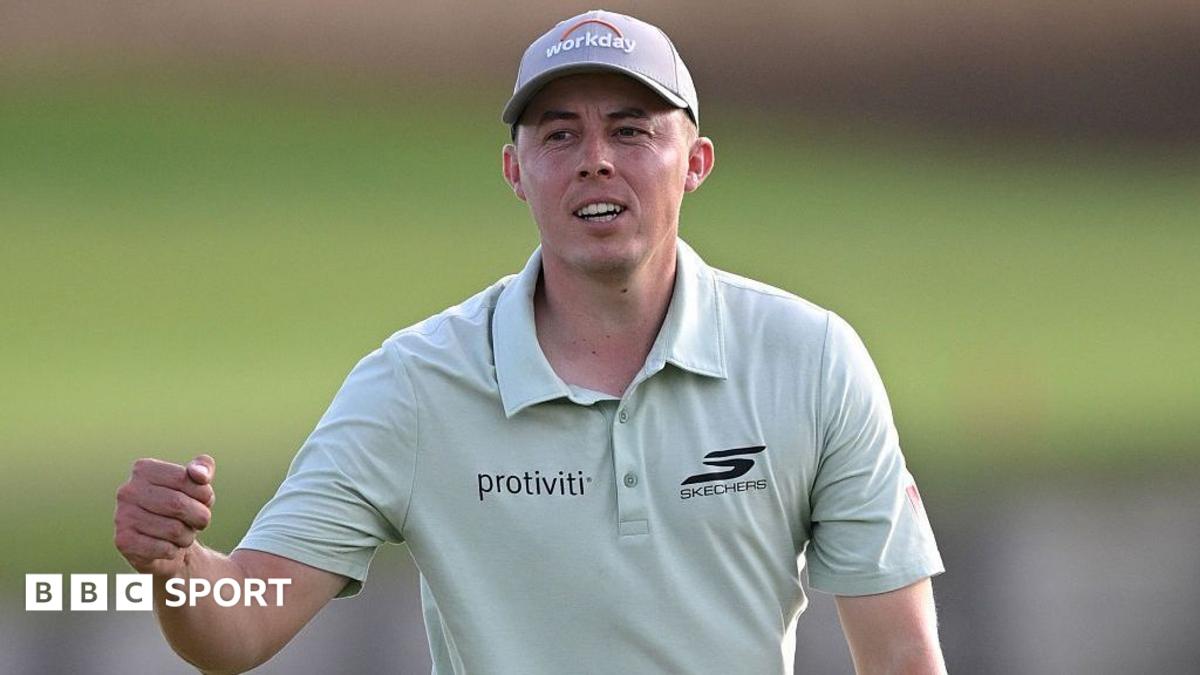
England’s Matt Fitzpatrick secured his fourth title of the season with a three-shot win at the French Open in Paris.
Fitzpatrick carded a one-under-par 70 to hold off the challenge of Spain’s Angel Hidalgo at Le Golf National.
The 32-year-old has already won the Valspar Championship and RBC Heritage titles on the PGA Tour this year, as well as the Zurich Classic team event in New Orleans alongside younger brother Alex.
He led by five shots going into the final day, but a run of 12 successive pars allowed the chasing pack to cut that advantage to two.
However, crucial birdies on the 13th and 15th pushed Fitzpatrick further clear and even a bogey at the last could not deny him an 11th European Tour title.
“Delighted to get it over the line, it was definitely a battle today,” he said.
“I didn’t have my best stuff for the first 12 holes and then managed to find some of my best stuff.
“In a way I was quite lucky – I left myself in some nice spots where you can still get up and down from, but I fully took advantage of that and did really well.”
Matthieu Pavon shot the best round of the day, with a seven-under 64 ensuring he finished tied for fourth alongside French compatriot Tom Vaillant, Spain’s Eugenio Lopez-Chacarra and Norway’s Kristoffer Reitan.
As part of previous negotiations aimed at ending its war on Iran, the United States offered to sell Tehran uranium for use in a civilian programme, but Iran refused, a top US official said on Sunday.
“Heck, our negotiators even offered to sell them uranium,” US Ambassador to the United Nations Mike Waltz said on NBC’s Meet the Press. He said the agreement would have been akin to that with the United Arab Emirates, which has “a peaceful programme, right there in their neighbourhood, and they abide by international law and inspection regimes”.
Recommended Stories
list of 3 itemsend of list
Waltz said the administration of US President Donald Trump was open to allowing Iran to keep a civilian nuclear programme, provided it agreed to its obligations in accordance with international law and the Nuclear Non-Proliferation Treaty (NPT).
There were “a number of ways” President Trump was open to dealing with Iran to ensure it did not have access to highly enriched uranium, or the ability to reconstitute highly enriched uranium, including by having Tehran “hand over” any such material it currently has, Waltz said.
The UAE, a signatory to the NPT, generates electricity from a nuclear power plant and signed an agreement with the US in 2009. Under those agreements, the UAE has agreed not to produce enriched uranium domestically, and not to reprocess spent fuel on its own. Trump said Saudi Arabia and the US reached an agreement on civilian nuclear use this year, but details have not yet been made public, and the US president has also claimed the deal is contingent on Riyadh agreeing to the controversial Abraham Accords. Around the region, Egypt and Turkiye also operate civilian nuclear programmes.
Pakistan openly operates a nuclear arsenal, while experts have long believed Israel secretly possesses one of its own. Neither country is a signatory to the NPT.
A key point of contention between Iran and the US has been what should be done with the uranium that Tehran currently has, and how, or even if, to ensure any future supply of the material is not capable of being used for producing a nuclear weapon. Iran has insisted it has no plans to create a nuclear weapon, and any uranium it possesses and enriches is only for civilian purposes, including for generating electricity and use in medical treatments and scientific research.
Iran is estimated to have more than 440kg (970lb) of uranium enriched at 60 percent purity. Uranium enriched to around 90 percent purity is suitable for a nuclear weapon. Enriching uranium is a complex process that involves isolating the most radioactive isotope in a quantity of uranium. Under the 2015 Joint Comprehensive Plan of Action (JCPOA), Iran agreed to cap its uranium enrichment at 3.67 percent under strict international supervision in exchange for lifting sanctions against its economy. Trump scrapped that deal in 2018, saying it was too generous to Iran.
On September 10, the International Atomic Energy Agency (IAEA) said it was concerned over Iran’s “continued noncompliance” with the Nuclear Non-Proliferation Treaty, of which it is a signatory. Under the treaty, Iran agrees not to produce nuclear weapons and to meet IAEA safeguards to control its supply of uranium used for civilian purposes. The agency has not had access to key Iranian nuclear facilities since June 2025, when Israel and the US attacked sites in the country as part of a 12-day war.
Iranian officials have responded to the IAEA by saying the finding was made “under political pressure from the US and its allies”, and that they have not stopped respecting their treaty obligations, but could not allow inspections until facilities were safe from US and Israeli attacks.
At times, Trump has said he will destroy the enriched uranium Iran has or retrieve it by force. In April, the US president claimed to have convinced Iran to turn over the enriched uranium it had, which he referred to as “nuclear dust”. Iranian officials quickly dismissed those claims, saying enriched uranium would not be transferred outside the country under any circumstances.
On Saturday, Trump rejected a plan submitted by Iran to reopen the Strait of Hormuz within seven days, as Tehran continued to insist that only diplomacy can solve the conflict between the two countries. Speaking to reporters at the White House, Trump said on Saturday that Iran wants to make a deal to open the vital maritime corridor immediately only “because they are losing so badly”.
In an interview on Meet the Press on Sunday, Iran’s foreign minister, Abbas Araghchi, said that Iran is prepared for war to resume, “even if it comes to a doomsday war”.
He added, “If you ask us, there is no reason why we should go back to diplomacy. But I’m still trying diplomacy, because I think we shouldn’t miss any chance for peace.”
The two pandas, Ping Ping and Fu Shuang, arrived from southwestern China.
Published On 27 Sep 202627 Sep 2026
Two giant pandas, Ping Ping and Fu Shuang, have arrived in the US state of Georgia on a 10-year loan as a soft-power gesture from China.
A new agreement between Zoo Atlanta and the China Wildlife Conservation Association makes Atlanta one of three zoos in the US to house giant pandas.
The diplomatic gifts departed early on Sunday from Chengdu Shuangliu International Airport in southwestern China, according to Chinese state media. They arrived after the high-level three-day Washington summit with China last week, where closed-door talks between United States President Donald Trump and Chinese President Xi Jinping yielded no major policy breakthroughs on prickly issues such as AI, trade, Taiwan and the war with Iran.
Although the pandas’ transfer had been finalised back in April, Xi officially announced the arrival timeline on Thursday at the White House, noting that the black and white mammals could reach Zoo Atlanta from the Chengdu Research Base, China’s premier hub for giant panda conservation, breeding and research, within the next few days. The dispatch of the vulnerable species aimed to signal a renewed bilateral friendship between the leaders of the world’s two biggest economies.
Ahead of their arrival, Zoo Atlanta had upgraded its panda habitats and secured a stable, long-term supply of locally grown Atlanta bamboo, which shares a near-identical climate with Chengdu.
The bears completed a 16-hour charter flight across the International Date Line, landing in Atlanta, Georgia, shortly before 7:00am (11:00am GMT).
Midway through its journey through Alaska, the FedEx Boeing 777 had spiked to the top of Flightradar24’s global tracking charts.
Steamed corn buns, bamboo shoots and carrots were prepared to keep the pandas nourished during their flight, Chinese state-run media reported. The US also mobilised a specialised care team to accompany the duo on their flight, they said.
A spokesperson for the zoo told Al Jazeera that their team had “done everything possible to accommodate them”, but a definitive timeline for their arrival – much less their public debut – remains “unconfirmed”.
“This is a thrilling day for Zoo Atlanta and a historic moment for the City of Atlanta, the state of Georgia and beyond,” Zoo Atlanta President and CEO Raymond B. King said in a statement. “We are elated to welcome Ping Ping and Fu Shuang and could not be more excited about sharing that joy with our Members, guests, city and community in the coming weeks.”
Zoo visitors will have to wait a while to see Ping Ping and Fu Shuang, officials said. The bears will be quarantined for about a month in a biosecure area of the wildlife park’s new giant panda complex. The zoo last had pandas in 2024.
Ping Ping, a male, and Fu Shuang, a female, were born in 2020.
Globally revered, the iconic furry animals have been sent across the globe for decades, serving as diplomatic emissaries loaned by China under its infamous “panda diplomacy” initiative through soft-power projection. Beijing leverages the animals’ immense public appeal to cultivate international goodwill, seal lucrative trade deals and burnish its geopolitical image abroad. Similarly, when foreign relationships fray or tensions arise, Beijing lets the loan agreements expire.
Xi has said this latest loan programme was an example of “friendship between the Chinese and Americans”.
Last week’s summit was Xi’s first visit to Washington in more than a decade and the second meeting this year with Trump.
Tangible outcomes of the meetings remain modest, restricted to a two-month extension of the trade truce, Beijing’s revival of giant panda loans and Xi’s support for Trump’s rebranding of artificial intelligence as “super intelligence”.
Deadliest Catch’s Todd Meadows fell overboard to his death in a tragic fishing accident in February 2025Credit: Facebook/Todd MeadowsThe 25-year-old had an eerie last FaceTime call with his children just moments before he fellCredit: Facebook/Todd Meadows
The rookie deckhand fell off the Aleutian Lady in a fishing accident on The Bering Sea and died from downing with possible hypothermia on February 25, 2026.
In the final episode of Season 22, a touching segment showed before and after his death, and captured his final conversation with his children just moments before the accident.
Sign up for the Showbiz newsletter
Thank you!
In a FaceTime call, he told his three children, all under five, that he was “being safe” and promised a fishing trip when he saw them again.
“I hope you’re being safe,” his daughter said on the call.
He promised his son a salmon fishing trip when he returned, telling producers on-camera that it was a “heart-wrencher” to leave his children at home for long stretches.
“It’s been one of my dreams and goals to make it up here,” he said, speaking of joining the crew for the season.
Most read in Entertainment
“That’s why I’m up here to make it and to try to support my family.”
Another part of the season finale captured the chaos surrounding the moment he fell overboard, without the actual fall or subsequent actions being shown on camera.
Captain Rick, who announced Meadows’ death, is filmed manning the vessel and asking “Everybody OK?” before the crew say that a man has gone overboard.
As he turns the boat and instructs them to ready the ring and crane, he tells the crew: “I got my eye on him.”
They successfully got Meadows out of the frigid sea and the Captain instructed them to perform CPR.
“Come on, man, come on, someone go get the AUD right now,” he says off camera with him tearfully telling the crew to “keep pumping” before a producer says, “He’s gone, Rick.”
In his last conversation with his three children, Meadows told them he was being safe and promised to take his son on a fishing trip when he was backCredit: DiscoveryThe impact of Meadows’ death on the crew was depicted in the season finale of Season 22Credit: Facebook/Todd Meadows
A statement on screen read: “On February 25th, 2026, deckhand Todd Meadows went overboard.
“After six minutes and twenty-six seconds in the water, he was recovered unresponsive.”
The episode then showed the aftermath of his death and its impact on the crew.
It ends with a cut back to Meadows as he prepares food in the kitchen and answers a producer’s question about what he would want to say to his children.
“Work towards your dreams and goals, don’t let anything slow you down. If you put your mind to it, you can do anything.
“Just want my kids to know I want them to work hard and be successful in life.”
Weeks before his fall, Meadows suffered a serious head injury onboard and was sent home on medical leave before being cleared again for work on September 18.
His week of medical leave saw him go back to his family while nursing his concussion which would tragically be the last time he saw them.
“The last photo I got of him was when he was building a fire. He was listening to music in the moment and was so happy,” his mom Angela said at the time.