Month: September 2026

UK tries to stop Trump’s diesel export ban

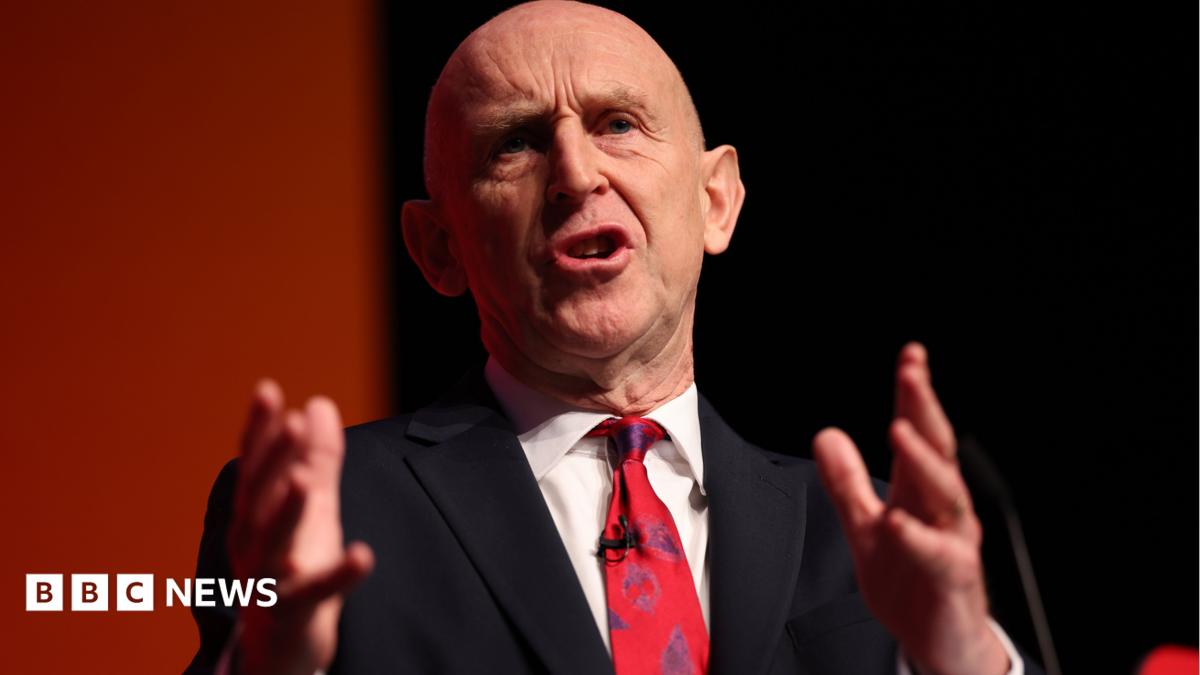
The UK is in talks with US authorities over a potential stoppage of diesel exports and has started preparing for a ban, Chancellor John Healey has told BBC News.

Diesel prices in the UK reached a new high on Monday due to supply pressures springing from the US-Israel conflict with Iran and Russia’s war with Ukraine.

Fuel prices are rising globally and US President Donald Trump has threatened to ban diesel exports, stating at the weekend: “We’re thinking about it very seriously.”

Healey, who admitted that UK diesel prices are “extreme”, said the government was in discussions with the US, adding: “We’re also making the provision that we may need to and we have our own stocks in the UK.”

Speaking on the sidelines of the annual Labour Party Conference in Liverpool, Healey said: “We work very closely with the Americans.

“In the end, we’re also working with the Americans where we can try and put in place what will solve this, or at least significantly ease it, which would be a diplomatic settlement [and] an end to the fighting with Iran.”

The UK depends on the US for around a third of its diesel imports and a ban would send prices even higher.

US sources suggest that Trump is considering a ban to attempt to bring down prices for domestic consumers ahead of the critical midterm elections.

The BBC has contacted the White House for comment.

In the UK, the average price for a litre of diesel reached 199.33p on Monday, according to the RAC motoring organisation, surpassing a previous high of 199.09p in June 2022 after Russia launched its full-scale invasion of Ukraine.

Petrol prices are also still rising, with a litre currently costing 174.23p.

Over the past seven months, the Iran war has severely disrupted the production and transportation of wholesale oil across the region, causing the price of fuels made from oil to surge.

The RAC said diesel prices had entered “uncharted territory” and served as a reminder of “just how exposed the UK is to events occurring far away”.

Healey said he was “very aware” of these cost of living pressures as he prepared what he called a “breathing space” Budget on 28 October.

A freeze on fuel duty, first implemented by the Conservative government in 2022, is due to expire at the end of the year. Duty is scheduled to increase by 3p in January and a further 2p in March.

Healey said: “Fundamentally, what we need is a settlement in the Middle East. We need an easing of the pressure of costs on business, the costs on households and on ordinary families that we see at the pumps in the most extreme level today for diesel.”

Source link

Tom Cruise, Alejandro G. Iñárritu unveil new Ed Ruscha ‘Digger’ poster

Academy Award-winning filmmaker Alejandro González Iñárritu and Pop artist Ed Ruscha have a long history of admiring each other’s work. Twenty-four years ago, a nervous Iñárritu visited Ruscha’s Venice studio to offer him the role of the gynecologist in “21 Grams.” They needed a doctor with noble features and blue, believable eyes. That plan didn’t pan out, schedule-wise, but the filmmaker and the artist finally found a way to collaborate.

The result — a Ruscha-designed poster for Iñárritu’s new film “Digger,” starring Tom Cruise — was unveiled Sunday at an intimate brunch at the Los Angeles County Museum of Art, attended by Iñárritu, Ruscha and Cruise, as well as “Digger” actors John Goodman, Jesse Plemons, Michael Stuhlbarg and Ross Hatt.

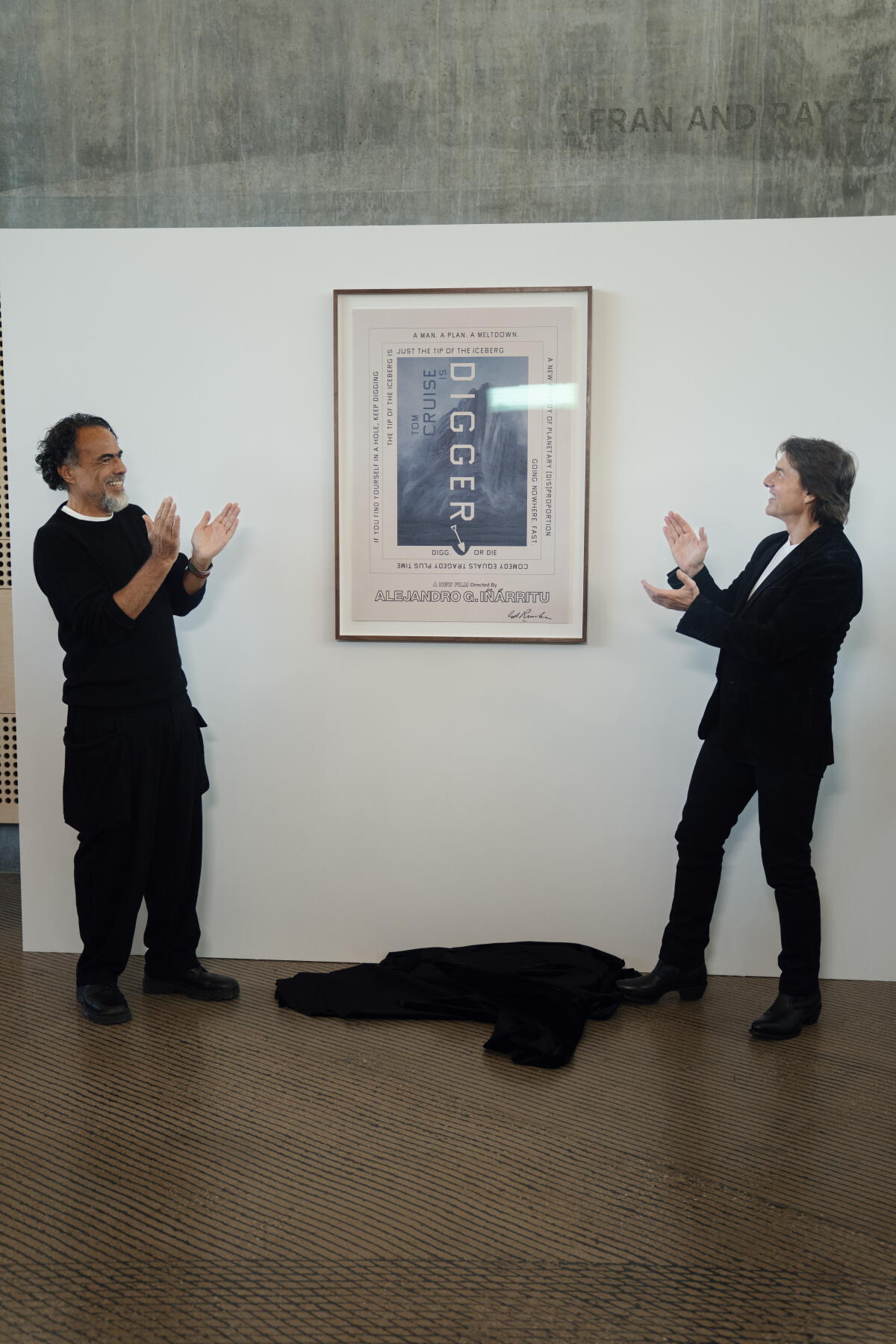
Iñárritu and Cruise laughed as they made a clumsy attempt at a countdown before whipping aside a black velvet curtain to reveal the poster for the first time: a very Ruscha, text-heavy work on a slate gray background with a beige border. A looming ice shelf in the background is surrounded by phrases including, “A Man. A Plan. A Meltdown,” and “Comedy equals tragedy plus time.”

Alejandro Iñárritu stands to the left of the blue-gray 'Digger' poster with an angular font, Tom Cruise stands to its left.

Filmmaker Alejandro Iñárritu and “Digger” star Tom Cruise unveil Ed Ruscha’s new poster for the film. (They just pulled off the black velvet curtain on the floor below.)

(Kevin Garrison)

“Well, the movie blew my hair back,” Ruscha said at the unveiling brunch inside LACMA’s new (still unopened) restaurant, with LACMA Director and Chief Executive Michael Govan by his side. “And not only that, it parted it down the middle. It has since grown back.”

The crowd laughed knowingly. “Digger,” which opens Friday, is a satirical black comedy that follows oil tycoon Digger Rockwell as one of his drilling rigs in Greenland explodes, dislodging an ice shelf that floats away to cause a global disaster. As a dark parable for the dangers of climate change, the film has already proved polarizing, with early reviews coming in mixed.

Ruscha noted that he first saw “Digger” at a screening about six months ago, alongside Govan. “I knew I had seen an epic production, an epic product from an epic producer,” Ruscha said. “So I jumped at the idea of doing the poster. And I thought about it, and I think about this movie, and it reminded me of a kaleidoscope. It’s got so many running-around ideas. It was kaleidoscopic in its message, and its content and its humor.”

Ruscha turned his attention to Iñárritu, “It’s got something to offer to the world, and I thank you for that.”

The filmmaker loved the poster, and the fact that the ice shelf sat front and center.

Eight men, in black, brown and blue blazers and suits, pose in front of a framed blue-gray poster on a white wall.

From left to right — “Digger” actors John Goodman and Jesse Plemons, filmmaker Alejandro G. Iñárritu, artist Ed Ruscha, actor Tom Cruise, LACMA director Michael Govan and actors Ross Hatt and Michael Stuhlbarg — pose with Ruscha’s new poster for the film.

(David Jon)

“The billing is nature: We are human beings, we are in a war against nature,” Iñárritu said — describing what he feels the poster relays — in a phone interview from Mexico City a day before the event. “We think that we are different from nature. So nature, in a way, becomes our enemy. We are fighting a fight against nature, and the enemy is an ice shelf going to Europe. And he just put [that] in the center of it, [like] a disaster movie, which is very clever, as he always is.”

“Those decisions that he made with a very prominent element in a simple way, with one or two words, it just says so much with so little,” Iñárritu continued. “And then he [put] some lines around [it], very Ruscha, that in a way convey the spine or the character itself.”

The director had the same feelings two years ago, at LACMA’s Ruscha retrospective. He said so much with so little, Iñárritu thought, and that “less is more” thinking could hold so much power in a film poster.

Iñárritu, too, has been exhibited at LACMA: earlier this year, with the film installation “Sueño Perro,” a resurrection of lost footage from “Amores Perros;” and in 2017-2018, with the virtual reality installation “CARNE y ARENA,” which explored the human condition of immigrants and refugees.

The director’s collaboration with Ruscha is proof of concept for LACMA’s annual Art + Film gala, entering its 15th year, which seeks to highlight and strengthen the connections between film and visual art by bringing the two communities together at a splashy party — often creating lasting connections between the two groups.

Both Ruscha and Iñárritu have been honored at the gala, the former in 2012 (with Stanley Kubrick) and the latter in 2015 (with James Turrell). “This is a beautiful encounter of art and film,” Govan said at the unveiling.

“Digger” has evolved over nine years, Iñárritu said. It’s been a long journey of taking note of current events, including where the world is going, as well as people’s obsessions and fears.

“The film is a love letter for the young generation,” Iñárritu said. “I think it’s kind of a warning, or a wake-up call. But you can have fun about it, because it’s the only way to — humor allows us to have space and recognize ourselves in that absurdity. So I feel that it’s a human, urgent, now film.”

Source link

State attorney general to oversee Kaiser’s medical arbitration system under new law

The California attorney general will help oversee healthcare giant Kaiser Permanente’s medical arbitration system to ensure it operates fairly under legislation Gov. Gavin Newsom signed late Sunday.

Patients, their families and lawyers have complained that Kaiser’s private and confidential system of handling medical malpractice complaints is designed to favor the health plan over those bringing the claims.

Under legislation known as Assembly Bill 1770, the attorney general will decide what actions justice officials should take to ensure private arbitrations required by any health plan are handled fairly and in line with state law.

To do that work, the state plans to add as many as four deputy attorneys general, a legal analyst and three legal secretaries, according to a legislative analyst’s report.

“We look forward to continuing to resolve claims through an independently administered system that provides a fair and efficient process for members and patients,” Kaiser Permanente said in a statement Monday.

Roughly 1 of every 4 Californians get healthcare from Kaiser. To join the plan, each one had to check a box, agreeing to use arbitration to settle any dispute.

Many companies and other organizations, including some hospitals and physician groups, require customers or patients to take their complaints to private arbitration rather than to court.

But unlike most other companies, which send claims to large arbitration firms, Kaiser created its own system.

Under Kaiser’s system, once a neutral arbitrator is selected, either party can opt to disqualify that person without cause. There is no limit on the number of disqualifications.

While the health plan designed the system to be fair, patients and their lawyers have alleged that Kaiser’s greater knowledge of arbitrators’ past rulings and its ability to veto arbitrators gives it an advantage to pick favorable judges.

Critics also say the hourly fees paid to arbitrators provide them with a financial incentive to rule in Kaiser’s favor so they will be selected for future cases. Most of the arbitrators are retired judges.

Kaiser has previously defended its arbitration system, saying it was fair for both patients and for the nonprofit.

The bill was authored by Assemblyman Robert Garcia (D-Rancho Cucamonga), a longtime Kaiser member.

Support for it was led by Stephen Martinez, a retired aerospace engineer from Bellflower, who with his wife, Lindalee Iverson, spent $350,000 to bring two arbitration cases against Kaiser. The arbitrator ruled against the couple in both cases.

Iverson died of cancer in 2023.

Martinez told legislators at a hearing this year how his wife had found a lump in her breast and asked for an appointment with her longtime caregiver at Kaiser to examine it. Instead she was sent to a physician assistant, who dismissed it, he said. Later, it was found to be cancer that had spread.

A chief breast surgeon at Kaiser and another surgeon who had retired from that job both testified that the Kaiser physician assistant failed to follow the health system’s guidelines.

Kaiser’s expert argued that the physician assistant did an appropriate exam and that his low suspicion of breast cancer was reasonable. The neutral arbitrator sided with the health plan’s expert.

Martinez has spent years trying to get legislation to make the system more fair.

“I’m elated,” Martinez said of Newsom’s signing of the bill, which was named Lindalee’s Law. “It’s been a long road.”

According to the annual report prepared by the independent administrator of Kaiser’s system, the “most common” complaint the office heard last year was about the neutral arbitrator.

“Most complained that the arbitrator was biased, partisan, unjust, and in Kaiser’s favor,” the report said.

Source link

Gianni Infantino: Fifa president indicates there could a greater cash pledge to members

Gianni Infantino has indicated a greater amount of money could be distributed to Fifa members from its estimated £4.4bn cash reserves.

In a letter seen by BBC Sport, and sent to the governing body’s six continental confederations on Monday, Fifa president Infantino said he would support “the greatest level of additional funding that can responsibly be delivered”.

Infantino has come under increasing pressure over his aborted Fifa Forward Enterprise (FFE) plan, which proposed selling stakes in the World Cup and other competitions to private investors, sparking a major backlash.

His letter comes after Uefa and Concacaf – the confederations for Europe and North America, Central America and the Caribbean – demanded Fifa pays $10m (£7.5m) to all 211 members from its reserves.

The proposal will be considered by the Fifa Council when they meet on 15 October.

“I will not prejudge the amount,” Infantino said in the letter.

“A single figure can begin the discussion, but it cannot complete a global policy.”

Infantino issued his latest defence of the failed proposal to sell a slice of the World Cup commercial rights that brought calls for his resignation, again claiming it had been intended to generate additional money for the game.

“The recent commercial proposal, now withdrawn, was intended to enable Fifa to invest more in football,” wrote the Swiss-Italian.

Earlier this month, Football Association chair Debbie Hewitt, a Fifa vice-president, told Infantino to release all documents relating to his controversial plan, and called for an independent review of FFE.

Infantino will stand for election for a fourth time in March 2027, with his opponents having until 18 November to find an alternative candidate.

Source link

Anti-South Asian ‘hate speech’ has exploded online in US, report finds | Racism News

Hate speech against Indians, Bangladeshis and Pakistanis in the United States has risen sharply online, according to a report that traces the surge to US President Donald Trump’s immigration crackdown and rhetoric, economic anxiety, and the South Asian community’s growing visibility in US life.

The report, titled “The Rising Tide of Anti-South Asian Hate in the United States”, by the Center for the Study of Organized Hate (CSOH), published on Sunday, found that the monthly volume of hate towards South Asians in the US on the social media platform X rose 240 percent between January 2024 and June 2026, from 12,904 posts to 43,843.

Recommended Stories

list of 4 itemsend of list

Researchers identified more than 542,000 hateful posts on the platform between January 2025 and June 2026 alone towards people from South Asia living in the US, with five of the six highest-volume months falling at the end of that period.

The researchers used the United Nations definition of hate speech. They tracked recurring anti-South Asian slurs and narratives online, reviewing posts to exclude criticism that did not meet the UN threshold.

They found that nearly half of the hate posts on X accused South Asians of invading the US, stealing jobs or threatening the country demographically, while the derogatory slur “pajeet” and its variants showed up in 30 percent of hateful posts on X and 45 percent on fringe platforms.

Posts depicting South Asians as dirty or unhygienic grew by 171 percent on X, “the fastest of all narratives”.

The hate frequently collapsed South Asian ethnic and religious groups into one, with Indians, Pakistanis and Bangladeshis conflated with one another, and Hindus, Muslims, Sikhs and Christians also treated as a monolith.

So why now?

Racism against Indians, Bangladeshis and Pakistanis has a long history in the US, but researchers argue the current surge reflects a confluence of longstanding prejudices and new political and economic pressures.

The report points to the H-1B visa programme, which allows US employers to hire skilled foreign workers, as a major flashpoint. Indians account for more than 70 percent of H-1B visa holders, and researchers linked several spikes in anti-South Asian hate to political fights over the programme, such as when Trump imposed a $100,000 payment requirement on certain new H-1B petitions in September 2025.

“Such actions serve a powerful symbolic function, in the bargain reinforcing the hostility of Trump’s base toward South Asians,” said the report.

The report makes the same argument about the administration’s rhetoric, highlighting Trump’s speech at an AI summit in July 2025, in which he criticised US technology companies for outsourcing jobs to India, after which researchers saw a sharp spike in anti-South Asian rhetoric online.

As more recent examples, the report points to a since-deleted September 2026 Department of Homeland Security post titled “Transformers: Age of Deportations”, featuring a Sikh man identified as “Mr Singh” and telling him to “get off our roads”.

Days later, the Department of Education posted “Make College Football Great Again”, after Texas Republican Bo French had complained about the presence of South Asians at a University of Texas football game.

The report argues that such rhetoric reinforces the idea of South Asians as outsiders who “can never truly belong in the country”.

From ‘model minority’ to job thieves

Economic resentment is another factor, researchers wrote, with the success of some South Asians increasingly being weaponised against them.

Indian Americans once stereotyped as a “model minority” are now portrayed as “opportunists and cheats”, and South Asians are used more broadly as a scapegoat for anger over jobs and the economy.

This comes as South Asians have become increasingly visible in US politics, from former Vice President Kamala Harris and New York Mayor Zohran Mamdani to Vice President JD Vance’s wife, Usha Vance, and politician Vivek Ramaswamy. The report documents racist attacks against figures across party lines and highlights how, for example, Mamdani’s primary and mayoral victories triggered spikes in anti-South Asian and Islamophobic abuse.

Researchers say both trends are now also tied up with “anxieties on the part of the majority about loss of status”, and feed the “Great Replacement Theory”, a conspiracy about the white population in Western countries being replaced by an orchestrated takeover.

Social media has also turned those narratives into targeted harassment.

Researchers found X accounts doxxing South Asians accused of taking jobs or committing visa fraud, while influencers have confronted people at their homes and workplaces and posted the encounters online. Doxxing refers to exposing a person’s private details, such as their home address, online.

In one example, right-wing influencer Sara Gonzalez posted a video to more than half a million followers in which the report says she harassed a South Asian person she accused of exploiting the H-1B programme.

Meanwhile, generative AI has made that content even easier to produce, researchers say, depicting South Asians as  “filthy and unclean, sexually predatory, culturally backward, or a demographic threat”.

While the report tracks hate largely through what is happening online, researchers write that online hate “does not exist in isolation from offline forms of hostility”. It cites a July incident in which an Indian Muslim mall employee in Utah was repeatedly stabbed in an attack that federal prosecutors charged as a hate crime. In September, a Sikh truck driver was stabbed 17 times at a Wyoming truck stop.

“Online and offline hate can reinforce one another”, the researchers wrote, “as narratives, stereotypes, and forms of demonization move between digital platforms, political discourse, media, and everyday life”.

Source link

Hundreds set up tent encampments in Madrid over housing crisis | Tourism

Hundreds of protesters have set up tent encampments in central Madrid to demand government action on soaring housing costs and evictions, as demonstrations spread to Barcelona. Spain currently faces a deficit of 750,000 homes, with the central bank warning the shortage could exceed one million by 2028.

Source link

ITV The Blame viewers spot baffling detail as they all issue same complaint

The Blame was back for another instalment on Monday, with viewers quickly issuing a complaint

The Blame: Michelle Keegan stars in trailer for ITV drama

ITV’s thrilling crime drama The Blame returned to screens on Monday.

The six-part series stars Michelle Keegan and Douglas Booth as DI Emma Crane and DI Tom Radley, who attempt to expose corruption and deep-rooted misogyny within the police force after the death of a teenage girl. But unexpected twists and secrets soon leave Emma questioning who she can really trust.

The official synopsis teases: “The drama dives into secrets, suspicion and systemic corruption – all under the surface of this seemingly quiet town. The series begins when the body of teenage figure skater Sophie Madsen is discovered, sending shockwaves through the town of Wakestead.

“As DI Crane and DI Radley dig deeper, what starts as a tragic death, spirals into a tangled web of lies, institutional cover-ups, and moral compromise. As the clock ticks and trust fractures, Crane must navigate both a murder investigation and the treacherous politics inside her own team,” reports Wales Online.

During the latest instalment on Monday (September 28), Emma and her colleague DC Lewis Brimah (Nathan Mensah) visited Tom, after he was put under investigation. As the police officers discussed the case, many viewers were left distracted by the ex-cop who was hidden in the bushes outside.

One person felt that the detail was “really odd”, while several others shared their frustration. That’s not all, as the drama soon continued when Tom’s house was later raided by a swarm of officers.

Viewers quickly questioned why so many detectives had been instructed to attend the scene. One person asked on X: “Omg what are they doing at Tom’s house.”

Another added: “200 police to search Tom’s house,” while a third said: “So they need 20 coppers to arrest one man???” Someone else commented: “All raiding Tom’s house! OMG!”

Despite the confusion, The Blame has garnered largely positive reviews from critics and viewers since its debut last week. One IMDb user wrote: “We found this an amazing series. Keeps you guessing all the way through. This is no slow burner.”

Another added: “I binge watched this series in one day and loved it. Highly recommend this series. The acting was superb especially by Michelle Keegan, Douglas Booth, Nathan Mensah and Ian Hart. The script was really well thought out and it was a massive shock to read the team group message chats – taken from actual UK police officers, that have since been dismissed from the force.”

Someone else commented: “Loved this show. The acting was really good. The twists kept twisting and the turns kept turning right till the end. I usually have these things figured out but I was genuinely surprised by this show.”

The series has been adapted by Megan Gallagher with co-writers Ashley Sanders and Namsi Khan from the 2023 novel of the same name by Charlotte Langley.

The Blame is available to stream on ITVX

Source link

UBS $125M Fine Signals Crackdown on AML Gaps

A record fine on the Swiss bank highlights U.S. regulators shifting focus to fill anti-money laundering gaps.

This article appears in the October issue of Global Finance Magazine.

A record $125 million fine handed out to UBS by U.S. regulators in August could herald increased scrutiny of banks.

How banks react to stricter compliance with anti-money laundering laws will be key as U.S. foreign policy and enforcement go together.

“As sanctions and tariffs continue to define U.S. foreign policy, this trend will likely continue. The U.S. and European banks are intertwined the most with the global economy, so the probability of them being under increased scrutiny is likely,” said Salar Ghahramani, associate professor of business law and international law & policy at Penn State Abington.

The U.S. Treasury Department’s Financial Crimes Enforcement Network (FinCEN) settlement resolves allegations made by the Securities and Exchange Commission, the Commodity Futures Trading Commission and the Financial Industry Regulatory Authority.

Johann Scholtz, senior equity analyst for Morningstar, suggests that the fine is a result of the market that the Swiss bank targets. 

“These banks are particularly exposed to the risk of fines and regulatory intervention just by virtue of their business model. Banking, politically connected individuals, banking high-net-worth people, I think it exposes them to particular risk from an anti-money laundering perspective,” Scholtz said.

The fines were for not sufficiently monitoring 61,500 foreign exchange transactions and not flagging suspicious activity. The record amount is partly because UBS Group AG was fined $14.5 million in 2018 for similar activities with regulators discovering that remedial action had not been taken. 

“The 2018 fine may have convinced the UBS board that they were standing on very shaky PR and legal grounds due to the previous track record, likely propelling them to agree to the terms of the fine,” added Ghahramani.

Outcome-Focused Compliance

Although there is no current political push to modify AML laws, the UBS judgement may constitute shifting priorities by U.S. regulators.

 “The direction of AML regulations in the U.S. seems that it’s becoming more outcome-focused and less of a tick-box exercise. They really want banks to prove that they have a robust system in place rather than just ticking boxes,” Scholtz said.

How can banks protect themselves? By updating their risk management systems to ensure compliance through internal audits. The technical description of UBS’ settlement was unduly specific. Blaming an error in AML surveillance data feeds, a lack of verification of account holder addresses, no reliable unique identifier to match transactions, an absence of any exception queue and errors in the Excel spreadsheet used for foreign exchange transfers

“The announcement brings closure to this legacy matter. UBS has cooperated fully with its regulators and has made significant investments to remediate and strengthen its AML program in line with leading industry practices,” A UBS spokesperson said. 

Nic Wirtz is a contributing writer based in Guatemala.

Source link

Fehi Fineanganofo: Newcastle Red Bulls agree deal delay

Free-scoring All Blacks wing Fehi Fineanganofo has convinced Newcastle Red Bulls to delay his arrival on Tyneside so he can chase his dream of playing at the Rugby World Cup.

It was originally announced back in January that the 24-year-old had agreed a two-year deal with Newcastle, beginning at the start of the current campaign.

However, Fineanganofo’s exceptional form with the Wellington-based Hurricanes in Super Rugby then propelled him into Test reckoning.

He made his New Zealand debut against France in July.

Under All Blacks selection rules, a move overseas this year would have put Fineanganofo’s emerging international career on ice and ruled him out of contention for the Rugby World Cup, which begins in October 2027.

Newcastle have therefore allowed Fineanganofo to stay with the Hurricanes, for whom he broke the record for the most tries in a single Super Rugby campaign this year, for an extra season.

His Newcastle deal is still for two campaigns, but now covers the 2027-28 and 2028-29 seasons instead.

“I’m really grateful to Newcastle Red Bulls for the support and understanding they’ve shown me,” said Fineanganofo.

“The opportunity to stay in New Zealand and push for selection for the Rugby World Cup means a huge amount, and I’m fully committed to joining the club after the tournament and giving everything I can to the team.”

Newcastle’s sporting general manager Neil McIlroy said: “We are fully supportive of Fehi’s desire to represent his country at Rugby World Cup 2027, which marries with our own philosophy of aiming high and enabling our athletes to achieve their ambitions.

“Fehi’s arrival in 2027, with additional international experience that will only add to his already devastating qualities as a top-class winger, is another statement of intent around where this club is going.”

The compromise ends long-running uncertainty about Fineanganofo’s future.

In June, New Zealand Rugby denied they were attempting to put together a deal to get Fineanganofo out of his Newcastle contract.

Just a few weeks ago, Red Bulls’ head coach Dan McFarland said he expected Fineanganofo to arrive in November and play in the current campaign.

His side began the Prem season with former Ulster man Werner Kok, signed in June as doubts over Fineanganofo’s move increased, and 35-year-old Christian Wade as their first-choice wings.

McIlroy kept open the possibility of adding to the club’s options in that position.

“We are more than happy with the quality and depth that our existing squad possesses, but may yet choose to add to the outside back position if a player of the required standard becomes available,” he said.

Newcastle lost 59-26 away to defending champions Northampton on Friday in their league opener, and will take on Leicester at home on Saturday.

Source link

Trump announces $15bn steel mill project in Iowa before US midterms | Manufacturing News

Amid tight Iowa midterm races, President Trump emphasises steel industry revival with project announcement.

Just weeks before the midterm elections, United States President Donald Trump has announced that a Minnesota-based steel manufacturer intends to build a $15bn steel mill project in Iowa, as the White House tries to highlight its focus on domestic manufacturing.

On Monday, joined by executives from Mesabi Metallics, which recently opened Minnesota’s first new iron ore mine in 50 years, Trump announced the project. It is expected to begin production in 2030 and could bring more than 1,700 jobs to the region, with an initial production capacity of 7.5 million tonnes per year.

Recommended Stories

list of 4 itemsend of list

The first phase of construction for the project will generate 5,000–6,000 construction jobs, a White House official told Al Jazeera.

The plant in Iowa will use iron ore from the Mesabi Iron Range in nearby Minnesota. Mesabi, which is owned by Indian conglomerate Essar Group, invested more than $2.5bn to build the mine in Minnesota.

“President Trump is delivering on his promise to rebuild American industry, re-shore manufacturing, and create new jobs. Today’s announcement underscores the president’s historic efforts to revitalize the US steel industry—supporting local communities, strengthening supply chains, and protecting our national security,” White House Spokeswoman Taylor Rogers said in a statement to Al Jazeera.

The steel industry has loomed over the first half of Trump’s second term in office. The president imposed 50 percent tariffs on steel and aluminium imports last year in an effort to boost domestic production, but also threatened to increase prices of products that use those materials, from soda cans to washing machines to cars.

“These are your 232 tariffs, the steel tariffs at work. Without those tariffs, this mine does not get built, and this steel plant does not get built”, US Commerce Secretary Howard Lutnick said in the Oval Office on Monday.

Trump also solidified the US government’s stake in US Steel, which was acquired by Japan’s Nippon Steel in June 2025. As part of the deal, the US government received a so-called “golden share”, which gives the president the authority to appoint a board member to weigh in on decisions that would impact domestic steel production.

Midterm stakes

The announcement comes a little more than a month ahead of the US midterm elections, and the economy is top of mind for US voters.

Among Republicans, Trump is losing steam on his handling of economic issues, with a new September 21 Ipsos poll finding that 56 percent approve of his handling of the economy, down from 80 percent.

Iowa is in play as a seat Democrats could flip in the midterm elections, with Republican Ashley Hinson facing Democrat Josh Turek in November and with polls suggesting a tight race.

Hinson joined the president in the Oval Office for the announcement.

A poll conducted by the Republican-aligned pollster the Trafalgar Group showed Hinson with a two-point lead, while an InsiderAdvantage poll, which is considered more nonpartisan, found Turek leading by two points.

Source link

‘Heartbreaking’ ITV drama with late Peaky Blinders icon soars into Netflix charts

Netflix viewers have hailed this latest ITV release as an “utterly absorbing” watch.

ITV viewers can’t get enough of this forgotten “brilliant” drama from a Peaky Blinders legend.

Peaky Blinders might be over but fans are still discovering some of its stars’ best work years before they even stepped foot into Tommy Shelby’s (played by Cillian Murphy) chaotic world.

One series that’s just started to grab fans’ attention is three-part ITV drama Leaving which originally made its debut 13 years ago.

Leading the cast is none other than actress Helen McCrory who portrayed Polly Gray, the dangerous matriarch of the Shelby family in Peaky Blinders’ first five seasons.

She isn’t the only recognisable face though in Leaving as McCrory is joined by Masters of the Air star Callum Turner who married singer Dua Lipa earlier this year.

Leaving revolves around 45-year-old wife Julie Ranmore (Helen McCrory) whose job as a hotel events manager keeps her from thinking too much about her loveless marriage. But things quickly change when she is introduced to unemployed 21-year-old Aaron (Callum Turner) who is still living with his parents.

They start working at the same hotel and what starts off as a flirtationship quickly escalates into a full-blown affair with the couple having to deal with the consequences.

Taking to IMdB to sing the show’s praises, someone simply described it as a “little gem”.

A fellow viewer said it was “utterly absorbing”, adding: “Brilliantly acted, often tense and heartbreaking, this is an outstanding drama…the late Helen McCrory gives an unforgettable performance.”

Another labelled it as “maddening all the right ways” and others hailing it as perfect for a “little binge on a rainy afternoon”.

McCrory sadly died of breast cancer in 2021 at the age of 52, keeping her illness private and only telling those closest to her.

She died ahead of the sixth series of Peaky Blinders being filmed which was postponed during the coronavirus pandemic.

Her husband and Homeland star Damian Lewis said at the time she had a “heroic battle with cancer”, stating that she was a “beautiful and mighty woman”.

He added: “She died as she lived. Fearlessly. God we love her and we know how lucky we are to have had her in our lives.”

Leaving is available to watch on Netflix.

Source link

Senate is set to vote on a sweeping college sports bill. Here’s what it would do

The Senate on Monday is expected to approve a bipartisan bill that would give the NCAA and its member conferences the authority to enforce uniform national rules on college athletics.

If the bill is passed by the Senate, it would move to the House and, if approved, on to President Trump for his signature to become law.

What the Protect College Sports Act would do

Under the Protect College Sports Act — co-authored by Sen. Maria Cantwell (D-Wash.) and Sen. Ted Cruz (R-Tex.) — the NCAA would be granted a limited antitrust exemption that would allow the organization to create standardized rules around athlete eligibility, limit conference realignment and prevent the creation of a super league — a private-equity model for college sports that would replace NCAA subdivisions.

The bill is also an attempt to codify the $2.8-billion antitrust settlement reached last year in House vs. NCAA, which allowed Division 1 schools to share revenue with their current players and compensate past players. The new bill would increase the revenue sharing cap to around $50 million per school from $21.5 million, albeit with a more strict and enforceable model.

Under Name, Image and Likeness deals, wealthier schools were able to circumvent the “soft” $21.5-million cap by lining up lucrative corporate sponsorships and endorsements for prospective athletes. The bill would allow the NCAA to crack down on attempts to bypass the limit by incorporating booster or affiliated-entity money into total revenue sharing calculations, while also giving schools an additional $27 million in the funding cap to retain current athletes.

Potential boost for smaller schools

A potential consequence of the bill could be that big-name programs lose their ability to draw the best college athletes with promises of massive compensation, allowing smaller programs to compete under NCAA regulations.

The NCAA and its affiliates have spent tens of millions of dollars lobbying for congressional intervention on its rule-making power over the last seven years. Supporters of the bill, including Cruz, have said the bill would bring order and consistent regulation to college sports.

“If we’re going to be having a national competition … it is only Congress that can establish a clear and enforceable legal rule book,” Cruz said on the Senate floor last week.

Influential figures in college sports, including former Alabama head football coach Nick Saban and ESPN analyst Pat McAfee, have publicly called on Congress to pass the measure. It has also drawn support from 24 of the NCAA’s athletic conferences.

“Congress does need to fix the mess in the courts and create a national framework so the people inside college sports can enforce fair rules,” Saban said during a Senate Commerce, Science and Transportation committee hearing in June. “Without that legal certainty, every rule becomes another lawsuit, every standard becomes another risk, and the system keeps drifting toward a professional model.”

What the opponents say

The legislation is not without its opponents. Some players, labor organizations and members of Congress argue that the bill would prevent highly sought-after college athletes from participating in their own negotiation process.

“What this bill does, at its core, is protect a system of exploitation,” Sen. Chris Murphy (D-Conn.) said in an AFL-CIO trade union press release. “This bill protects the billions of dollars that coaches and executives are making by suppressing compensation for some of the most highly valued athletes in the world.”

The Congressional Black Caucus and the NAACP have also brought forward concerns that the bill does not allow Black athletes — who make up a majority of players in the football and basketball programs — into the collective bargaining process.

The NCAA plans to enforce a five-year eligibility rule, cap agent fees at 5%, put penalties on second transfers and codify student-athlete protections, such as 10-year degree completion assistance and post-eligibility healthcare. If the bill passes, all challenges to these rules would have to be handled in federal court.

Some senior Republican officials in the House, including Rep. Tim Walberg (R-Mich.) and Rep. Brett Guthrie (R-Ky.), have expressed some hesitance in passing the legislation without clarity as to whether student-athletes will be considered employees and if further limits should be placed on international student-athletes. If changes are made in the House, the bill would be returned to the Senate for another vote.

Support from Trump

Trump, on the other hand, has expressed strong support for the bill.

“THE PROTECT COLLEGE SPORTS ACT is a great Bill, and the Senate will hopefully stay in D.C. until it passes,” he wrote on Truth Social last month. “Without this Bill, millions of young Athletes will be hurt, programs will be canceled … the fans will be robbed, and Universities will go broke”

Source link

NFL asks DHS to remove Brian Dawkins video from immigration post

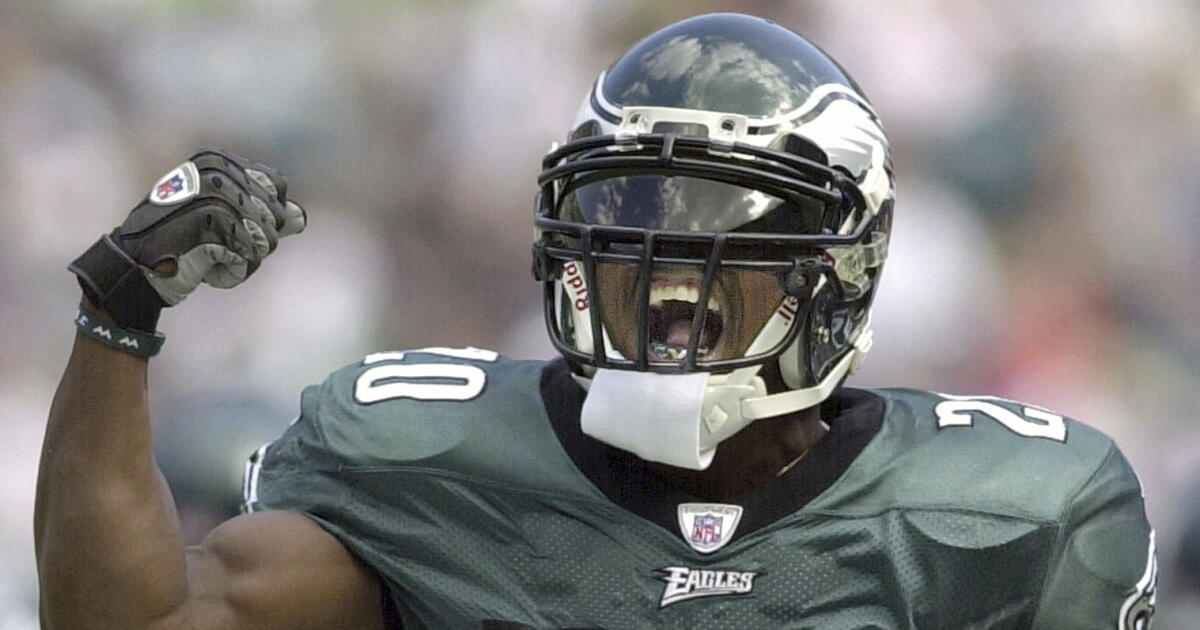
The NFL confirmed Monday that it has asked the Department of Homeland Security to remove a video featuring hard-hitting highlights of Hall of Fame safety Brian Dawkins from a social media post in reference to a report about a caravan of immigrants approaching the U.S. border.

On Sunday afternoon, the verified X account of the DHS reposted another account’s report of the purported caravan, along with the comment, “Our time has come,” and a 39-second clip of the former Philadelphia Eagles and Denver Broncos star delivering one bruising hit after another.

“The league requested DHS take down the video,” NFL spokesperson Brian McCarthy told The Times in an email.

Dawkins told ESPN in a text that he had “very respectfully not given permission” for the DHS to use his video.

About two hours after the initial post went up, the DHS responded in the comment section with a still photo of Dawkins and the caption, “The Border Is Closed.” As of early Monday afternoon, both posts remained intact.

The Times reached out to the DHS by email and asked if it had initially sought the NFL’s permission to use the content, if it planned on taking down the content as the league requested and why it chose to use Dawkins’ imagery with the posts.

The department sent a statement in response that appears to refer to the nine-time Pro Bowl selection’s nickname “Weapon X.”

“DHS is playing lockdown defense at the border. We will use every Weapon at our disposal, from A to X, to keep Americans safe,” the department wrote.

“The United States Border Patrol is actively tracking a migrant caravan which departed San Pedro Sula, Honduras on September 20, 2026. USBP is closely engaged with its international partners to monitor their movement and any additional developments. USBP reminds migrants that under the leadership of President Trump and Homeland Secretary [Markwayne] Mullin, the border has remained closed and secured for the last 16 months.

“Migrants considering making the dangerous journey to our country should also be aware that the days of ‘catch and release’ are over, and [former President] Biden’s disastrous open border policy has been SEALED SHUT. Anyone attempting to illegally enter the United States will be apprehended, prosecuted, and removed from the country.”

Source link

Apple ordered to pay $5.7bn in patent infringement case | Business and Economy News

California jury finds Apple infringed two Taction patents but did not willfully violate them; Apple plans to appeal.

Apple has been ordered to pay more than $5.7bn for using patented technology from Taction Technology to power haptic feedback, the vibrations users feel when they receive a notification or press a button.

A jury in federal court in the Southern district of California found that the iPhone maker infringed two patents owned by the San Diego-based company.

Recommended Stories

list of 4 itemsend of list

“We’re happy the jury found for Taction and vindicated its patent rights,” said Taction attorney Lance Yang following the verdict on Friday.

The verdict is the culmination of a legal battle that began in 2021, when Taction first filed its lawsuit against Apple. In 2023, a federal judge ruled that Apple had not infringed Taction’s patents, but an appeals court revived the case last year.

“Apple is capitalising on Taction’s innovation and success by selling devices that infringe Taction’s patents. Apple is utilising Taction’s patented inventions without license or authority from Taction. Taction has brought this action to remedy Apple’s infringement,” Taction said in the original 31-page complaint.

It also claimed that Apple “at a minimum believed there was a high probability that the accused products were covered by Taction’s patents, but willfully blinded itself to Taction’s patents and the infringing nature of the Accused Products”.

The jury, however, found that Apple did not wilfully infringe the patents.

Apple said it plans to appeal the verdict.

“Apple’s Taptic Engine is fundamentally different from Taction’s technology, which Taction’s own testing of Apple’s products confirmed during trial,” Apple said in response.

The verdict comes at a pivotal moment for the company, amid transitions in its C-suite. In September, John Ternus took over as CEO from Tim Cook, who led Apple for 15 years. The leadership change comes as the Cupertino, California-based tech giant lags behind other major technology companies in rolling out its artificial intelligence products.

Apple shares fell on Monday, declining about two percent as trading got underway.

Source link

Myanmar army air strike kills dozens in Rakhine state | Conflict News

Nearly half a million people are displaced in Rakhine as a result of the conflict between the military and rebel groups.

An air strike carried out by Myanmar’s military has killed at least 33 people in territory controlled by rebel factions.

The attack near a market in the north of the Rakhine state in the west of the country on Monday also wounded 36 people, rescue and rebel group officials reported. The strikes are the latest in a series of assaults against pro-democracy and ethnic armed groups by the military government, which took power in a coup in 2021, sparking armed opposition.

Recommended Stories

list of 4 itemsend of list

The Arakan army said a fighter jet dropped two bombs near a local market in the town of Kyauktaw at noon local time (0530 GMT), killing 33 people, including vendors, shoppers, and pedestrians. It said the death toll “may continue to increase”.

Wai Hun Aung, a senior rescue official in Rakhine, confirmed the details to the Associated Press news agency. He said the market was the region’s main wholesale centre, drawing traders and shoppers from across the state.

“This is one of the most severe airstrikes in Rakhine,” he said. Photos and videos posted on social media showed buildings on fire, damaged vehicles and parts of a nearby bridge destroyed.

Myanmar’s military did not immediately comment, but it has previously said it strikes only legitimate military targets and accused resistance groups of “terrorism”.

Smoke billows from fires in a residential area following a Myanmar military air attack on a market and adjacent bridge in Kyauktaw, Rakhine state, September 28, 2026 [AFP]

Myanmar has been gripped by ⁠conflict since the elected ⁠government led by Aung San Suu Kyi was ousted in the 2021 coup. A nationwide resistance movement has since evolved into a civil war between the ‌military government and an array of armed ethnic and pro-democracy groups.

President Min Aung Hlaing, Myanmar’s former military government chief, was elected by ‌a military-backed Parliament in April, formalising his grip on power after five years of army rule.

The Arakan army is a well-trained and well-armed military group seeking autonomy for Rakhine’s ethnic minority. It launched an offensive in November 2023 and has since captured strategically important military headquarters and 14 of the state’s 17 townships.

The military has imposed severe restrictions on trade routes to Rakhine since the fighting there intensified, worsening food shortages.

In December, a military airstrike on a hospital in Rakhine’s Mrauk U township killed at least 33 people and wounded 70 others.

Nearly half a million people are displaced in Rakhine as a result of the conflict, according to United Nations data. The UN added in August that the human rights situation in Myanmar has plummeted “to a new low”, citing “brutal abuse” against the Rohingya minority and the devastating impact of illicit economic activity, including illegal mining for rare earth minerals.

Rebel groups and Myanmar’s military are now both using drones in the protracted conflict, which has killed more than 100,000 people, according to the Armed Conflict Location and Event Data (ACLED) project.

Source link

Emmerdale Sadie’s downfall ‘rumbled’ and a sad split seals another exit

Emmerdale’s latest episode saw a character brutally dumped, paving the way for a sad exit on the ITV soap, while another character’s lies could finally be exposed by a character

Monday’s visit to Emmerdale could seal the end of TWO characters.

We’ve got someone’s secret possibly being exposed by someone known for taking action. Then we’ve got a brutal dumping that no doubt deals a departure for a character after their recent crime.

Sadie King may have just exposed her lies about her faked relationship with Jimmy King. Fans know that she’s made out to Jimmy’s grieving widow Nicola King that they were having a secret relationship for three years.

She’s actually after his money, and she’s in cahoots with Robert Sugden to find it. So when she drunkenly let slip to Ruby that the recent fling she had in Paris was in December last year… will Ruby realise she can’t have been with Jimmy, and has lied?

Ruby could use this information to expose Sadie’s lies and her real plan, no doubt triggering her downfall. Question is, will Ruby keep quiet?

Elsewhere, Lewis Barton ended his relationship with Vinny Dingle after finding out Vinny caused the fatal crash that killed Jimmy, and caused Dawn Taylor’s death too. With Vinny facing prison, Lewis tearfully ended things with him.

So with Vinny facing prison and now having lost his partner, with the villagers also turning on him, will he flee? Will he take his punishment and go to prison, either way confirming an exit for the character?

It comes as Lewis actor Bradley Riches told the Mirror what was ahead. Bradley teased: “It’s always going to be hectic. For Lewis, he doesn’t know where the relationship is gonna go. But also, his people will be there to support him.

“There’s a lot of things going on but at the end of the cycle, what we are filming now for later on, it’s joyful and fun. Lewis becomes friends with the women in the village.

“We did a scene the other day where it was Lewis, Sadie King, Vanessa Woodfield, Manpreet Sharma and Ruby Miligan. We were all together having drinks, as Lewis invites himself, as he often does.

“There is drama happening there but it’s so much fun, comedy and silliness. I think it’s needed from time to time in soap.” Asked to describe winter on the soap, he teased: “Christmassy, togetherness, community, and vulnerability.”

Bradley also teased the repercussions of Vinny’s crime coming to light. He shared: “There’s a lot of layers to it. Vinny was responsible for killing Jimmy and Dawn, and it’s one of those things where Lewis has to navigate being there for Nicola but also deciding what to do about his relationship.

“It is gonna be overwhelming for him. Normally everyone babies him, and people make decisions for him, but I think maybe this is the first time where Lewis is like, ‘I’m gonna do what I wanna do,’ and he deals with the situation on his terms.”

Emmerdale airs weeknights at 8pm on ITV1 and ITVX. * Follow Mirror Celebs and TV on TikTok , Snapchat , Instagram , Twitter , Facebook , YouTube and Threads .


Source link

Southern Democrats see hope for first time in years, seek to build on discontent of midterm voters

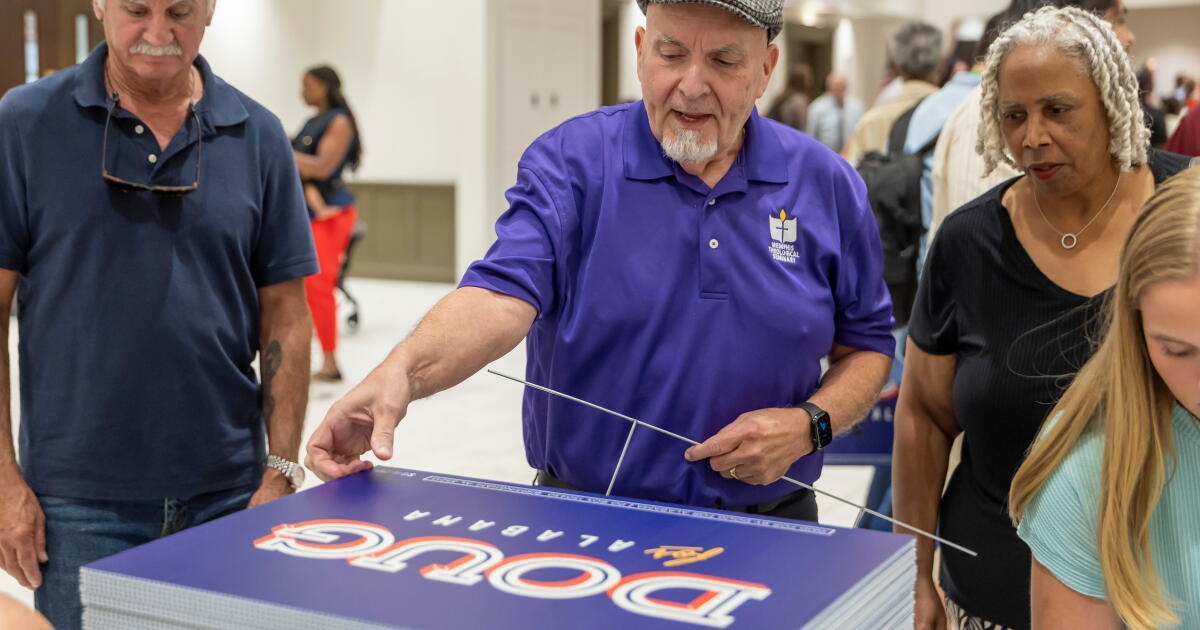
People crowded shoulder to shoulder upstairs in a south Alabama coffee shop, in a region sometimes called the reddest in the heavily conservative state.

They were there to hear Doug Jones, the Democratic nominee for governor and the last Democrat to hold statewide office in Alabama.

“Alabama has been under Republican control for almost two decades. We’re not getting any better,” said Jeff Scroggins, 61, a government contractor from Slocomb who was part of the crowd that came to Mural City Coffee Company and said he is voting for the Democrat.

Scroggins, who usually votes Democratic, called himself the “black sheep of the family” in supporting Jones this fall against Republican U.S. Sen. Tommy Tuberville, but said there are more Democrats and “stubborn independents” in the state than people realize.

Jones and other Democrats running in Alabama and neighboring states are banking on it.

“People want change,” Jones said after an hour of talking with people who came to see him. “That is the real key. People are not satisfied with their government of Alabama.”

Democrats sense a shift among voters

Deep South Democrats, largely absent from statewide offices, are aiming for a comeback this year. They are seeking to mobilize Black voters who are angered about the Republican moves to dismantle minority congressional districts, as well as voters who are frustrated with high gas prices, the Iran war, data centers and other issues.

Jones is trying to win a rematch with Tuberville after the Republican ousted him in a 2020 Senate race. Jones would be the first Democrat since 1998 to win an Alabama governor’s race.

In Mississippi, prosecutor Scott Colom is trying to unseat Republican Cindy Hyde-Smith and become the state’s first newly elected U.S. senator since 1946. In Georgia, former Atlanta Mayor Keisha Lance Bottoms is trying to reverse a losing streak in races for governor that began for Democrats in 2002. Elsewhere, Democrats are trying to pull off U.S. Senate upsets in Louisiana and South Carolina.

In Alabama, Jones’ town halls have attracted hopeful Democrats, some independents and even a few Republicans. Their concerns mirror those of voters nationwide: the rising cost of living, worries over data centers and the affordability of healthcare, issues they say have gone unaddressed by the Republicans who control the state.

Some said state policies, including an abortion ban that makes no exemption for rape, have been too extreme. Others said some comments by Tuberville, such as calling Islam “a cult,” are embarrassing to the state.

Still, the math across the Deep South has been difficult for Democrats. Other than Jones’ victory in the special U.S. Senate election, the last Democrat holding statewide office in Alabama was defeated in 2012. Statewide Democratic candidates have hit a ceiling of around 40% of the vote in recent elections.

The results are similar in most other Deep South states. In Georgia, U.S. Sens. Raphael Warnock and Jon Ossoff, who is seeking reelection this year, offer a bright spot for Democrats.

Jones noted that Alabama saw a surge in the number of people voting in the Democratic primary. While about 58% of primary voters were Republican, the Democratic primary vote doubled since 2022. Some counties, including a tech hub in north Alabama, saw more Democratic votes than Republican.

Optimistic about their chances, Democrats are running candidates in all major state races for the first time in years.

“The numbers are there,” Jones said. “It’s a question of getting those voters out.”

Republican gerrymandering creates a backlash

In nearby Troy, a crowd gathered on the campus of Troy University to hear Jones speak alongside Shomari Figures, one of Alabama’s two Black U.S. House members. The district was substantially redrawn by Republicans after the U.S. Supreme Court earlier this year gutted the Voting Rights Act.

Figures said there is an excitement he has not felt since Jones’ 2017 Senate victory. Figures won election two years ago after a federal court ruled that Alabama had been illegally diluting the voting power of Black Alabamians and ordered new district lines. The Supreme Court’s reversal this year allowed state Republicans to reshape the district and substantially reduce the percentage of Black voters who align with Democrats.

Figures said the goal of the redraw was obvious: to reduce Black representation.

“But we are going to win it in November,” he said.

Figures has often emphasized the economic needs of the district at a time when affordability is one of the main topics of the midterms. He noted that the individual median income in Alabama is $34,000.

“Let that sink in — $34,000 before taxes, before rent, before water, before lights, before gas, before cellphone, before health insurance, before car insurance, before childcare, before food,” he said.

Alabama is one of 10 states that did not expand Medicaid under the Affordable Care Act, a decision that Jones and Figures said leaves thousands of working people without access to healthcare coverage.

Figures faces Trump-endorsed Republican Rhett Marques, a state lawmaker. Marques framed the race as “common sense” versus “craziness.” Both have raised about $1.3 million so far.

In Mississippi, Colom looks to make history

Colom echoes many of Jones’ and Figures’ arguments in his bid against Hyde-Smith.

“We’ve been gifted an opportunity,” he said, pointing to Mississippi’s large base of Black Democratic voters, Hyde-Smith’s relatively low profile in her first full Senate term and voters’ frustrations over the economy.

With the largest share of Black voters of any state, Mississippi’s general elections have been closer for years than its immediate Southern neighbors. Trump won by double digits in each of his three presidential contests, but in 2023 Republican Gov. Tate Reeves managed to win reelection by a margin of just 3 percentage points.

Colom insists he can close the gap by increasing Black turnout and peeling off enough disenchanted white voters from Republicans. It is the same kind of electoral math that propelled Ossoff and Warnock in Georgia.

“For me, it can’t be just about getting a Senate majority,” Colom said. “It’s got to be about having a party that represents rural America again, suburban America, urban America — a party that makes sure we actually deliver for voters in ways that make their lives better, and we don’t come up with excuses as to why we can’t do it.”

Republicans say they aren’t worried

Alabama’s Republican Party chairman, Scott Stadthagen, said Democratic priorities, in his opinion, “are far outside the views of conservative Alabamians.” He said there has been previous chatter of a Democratic resurgence, and “each election cycle, we remain the brightest red state in the decidedly conservative southeastern United States.”

Tuberville has declined Jones’ challenge to debate. Expressing confidence about November, Tuberville said he is running “against an ideology that’s not very compatible with the people of Alabama.” He will appear with Trump at a rally in Mobile next week.

“I’ve been representing Alabama for six years, and we’ll turn it over to the voters here in about six, seven weeks and see what they say,” Tuberville told reporters.

As the November election draws closer, Democratic candidates are attracting impressive crowds.

To Sam Phillips, who attended the rallies in Dothan and Troy, the crowds and energy felt different from previous election years.

“It doesn’t get any redder than here, and there was a whole lot of excitement in both places,” the 67-year-old said. “So I feel optimistic.”

Gwendolyn Davis, a 67-year-old retired special education teacher, left the town hall in Troy with an armful of yard signs for Figures and Jones. She said she is determined to reach people who have been sitting out elections.

“If we don’t get people out to vote, it will be kind of heartbreaking,” she said.

Chandler and Barrow write for the Associated Press. Barrow reported from Atlanta.
Source link

Patriots QB Drake Maye doesn’t look like MVP runner-up from 2025

Drake Maye was almost the NFL’s MVP last year.

The New England Patriots quarterback finished second in the Associated Press poll of national media members, with 23 first-place votes and 361 total points. Rams quarterback Matthew Stafford edged him out with 24 first-place votes and 366 overall points.

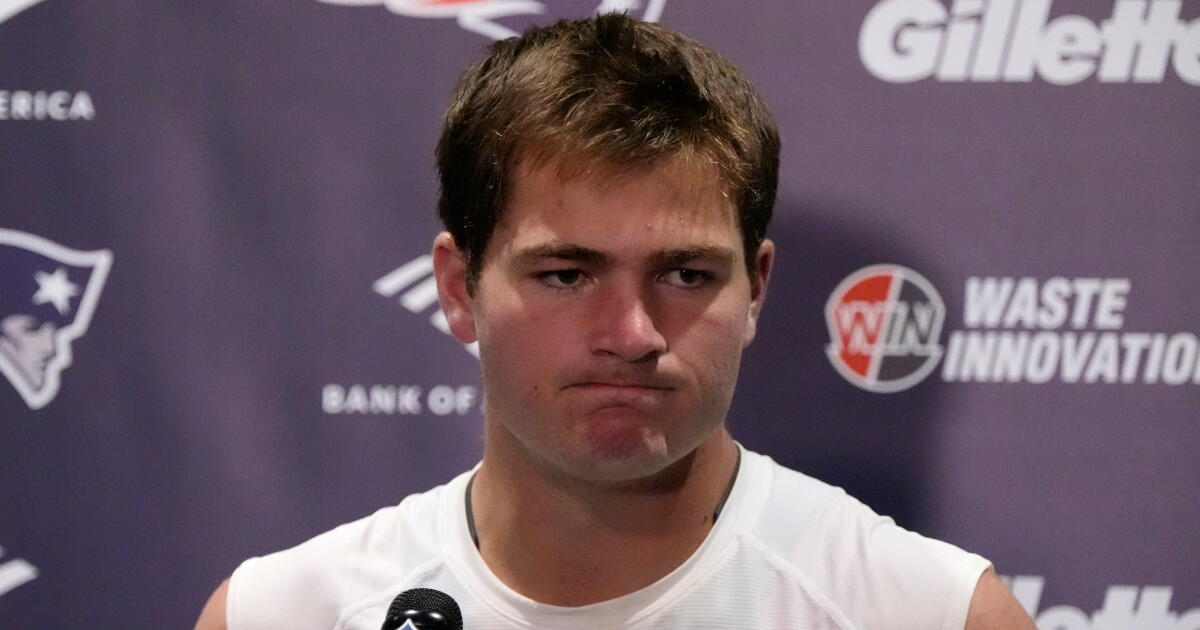
Chances are, Maye won’t be receiving any votes this year — at least not if the first three games are any indication of how the rest of the season will go. Months after helping the Patriots to a surprise Super Bowl appearance, the third-year player and two-time Pro Bowl selection is not playing close to the standard he established last year.

Maye has thrown only one touchdown pass so far this season after tossing 31 a year ago. And he has been intercepted six times already in 2026 after getting picked off only eight times total last season.

The Patriots are 1-2 at the moment, the same record they had after the first three games last season. But Maye showed promise in those games a year ago, throwing for five touchdowns and two interceptions.

During a 35-6 loss to the Jacksonville Jaguars on Sunday, Maye was picked off twice and also fumbled two times, losing one. The lost fumble came first, when an untouched Maye lost grip of the ball while reaching back to pass late in the first quarter.

After the game, Maye told reporters that blood from center Jared Wilson’s hand had gotten on the ball and made it slippery. But, he added, “at the same time, I’ve got to hold onto the football.”

Jaguars two-way player Travis Hunter, the 2024 Heisman Trophy winner and second overall draft pick in 2025, got his first NFL interception when he picked off Maye in the end zone late in the second quarter.

Then in the third quarter, on the Patriots’ first play from scrimmage after falling behind 21-3, Maye had a pass intercepted by Jacksonville’s Jarrian Jones. Jones stepped in front of a pass intended for Kyle Williams and returned it to the New England 5-yard line.

The Jaguars scored on the next play to take a 28-3 lead, after which Patriots coach Mike Vrabel could be seen on the sideline with both hands on Maye’s shoulders in an apparent attempt to comfort his quarterback.

“My conversations with each person on that sideline, I have to do my best each and every play, whoever I’m communicating with, to try to get the best out of them,” Vrabel told reporters Monday. “So I’ll have conversations with a lot of people. I’ve got a lot of faith and confidence in everybody that’s here. That’s why they’re here.”

Maye, who completed 14 of 25 passes for 199 yards and was sacked three times, finished with a passer rating of 48.6, the second-lowest of his career.

“It’s disappointing,” Maye told reporters after the game. “I think the ball starts rolling like that, we can’t get out of our own way — can’t get out of my own way, personally. So I gotta look myself in the mirror and take it to the turning point. … I’ve got to start with myself and lead these guys and we’ve got to get back after it.”

After the 2025 season, Maye revealed that he had injured his throwing shoulder during the AFC championship game against the Denver Broncos and received an injection to help with the pain before the Patriots’ 29-13 loss to the Seattle Seahawks in Super Bowl LX. Both he and Vrabel have said they don’t feel there have been any lingering effects from that injury.

On Sunday, Maye told reporters that his confidence hasn’t wavered despite the rough start to the season.

“This is an opportunity to band together and realize that the best football that we play is together,” he said, “and realize that’s going to start with me, protecting the football and protecting this team. Because that’s my job and I’ve been failing to do that.”

Source link

American and six Ukrainians released by India after six months in jail | Crime News

Matthew VanDyke and six Ukrainians were accused of smuggling weapons and drones to armed ethnic groups fighting India.

Matthew VanDyke, a United States citizen held in India for more than six months and accused of supporting ethnic separatist groups, has been temporarily released on bail and returned to the US.

The 47-year-old arrived on Saturday morning and reunited with his family, according to a family spokesperson.

Recommended Stories

list of 3 itemsend of list

VanDyke, who runs a Washington, DC-based consultancy that says it provides “free security consulting, training, supplies and other services to vulnerable populations”, was detained in March by Indian authorities, along with six Ukrainian nationals who were also released on Saturday.

India’s main opposition Congress party said that, despite being “accused of plotting terrorist acts”, VanDyke was allowed to return home from New Delhi.

“Obviously US pressure determined this outcome, but what did India get in return?” Jairam Ramesh, a legislator and spokesperson for the party, posted on X.

VanDyke’s family told Al Jazeera before his release that his health was failing and he had lost weight after going on a month-long hunger strike in Tihar Jail to try to improve conditions in prison. He had to use a wheelchair to attend hearings, according to his mother, Sharon. VanDyke denied the accusations against him, and his family said he was in the region documenting the situation faced by minority ethnic groups.

Matthew VanDyke, who spent months in Libyan prisons before joining rebel forces who opposed dictator Moammar Gadhafi, speaks with reporters after his flight arrived at Baltimore-Washington International Airport, Saturday, November 5, 2011.
Matthew VanDyke, who spent months in Libyan prisons before joining rebel forces who opposed dictator Moammar Gadhafi, speaks with reporters after his flight arrived at Baltimore-Washington International Airport, Saturday, November 5, 2011. [Patrick Semansky/Reuters]

Earlier this month, Indian prosecutors declined to bring terrorism charges against VanDyke and the others. Instead, prosecutors formally accused them of visa violations for entering restricted areas along the Myanmar border.

The Maryland native is a former filmmaker and rebel fighter during the Arab Spring and spent about six months in a Libyan prison during the Muammar Gaddafi regime. He was held alongside James Foley, a journalist who was later killed by ISIL in Syria. In recent years, VanDyke was based in Ukraine, where his consultancy helped train Ukrainian military forces.

In a statement to Al Jazeera before VanDyke’s release, James Foley’s mother, Diane, who now heads a foundation named after him, said she was “deeply saddened by his arrest in India and by his apparent poor health.” She added that her foundation called for “his release on humanitarian grounds.”

Source link